You know that feeling when you finally find the *perfect* handcrafted bench on Pinterest, the one that looks exactly right for your backyard? But then you wonder… could I actually make that happen? We’ve been there. After filtering through hundreds of options, we narrowed it down to 31 handcrafted outdoor bench ideas that truly deliver. This isn’t just a list; it’s a curated guide to finding or DIY-ing the bench that will become the heart of your outdoor space, covering styles from rustic live-edge to sleek industrial.
For 2026, it’s all about infusing our patios and gardens with personal, unique pieces that tell a story, moving beyond the generic big-box store sets. And stay until the end — we break down the most common mistakes that can ruin these amazing looks. 📌 Save this to Pinterest for later — you’ll want to revisit these ideas.
1. The Quintessential Custom Garden Bench
A custom garden bench is the easiest way to make a statement, but placement is everything. Don’t just stick a bench against a wall. Instead, use it to create a destination. Position your bench where it offers the best view *of* your garden, not just a view *from* the house. The goal is to draw people out into the yard. A great rule of thumb is to place it at the end of a path or under a mature tree to create a natural focal point and an invitation to come and sit for a while. Think of it as punctuation for your garden’s story.
💡 Designer Tip
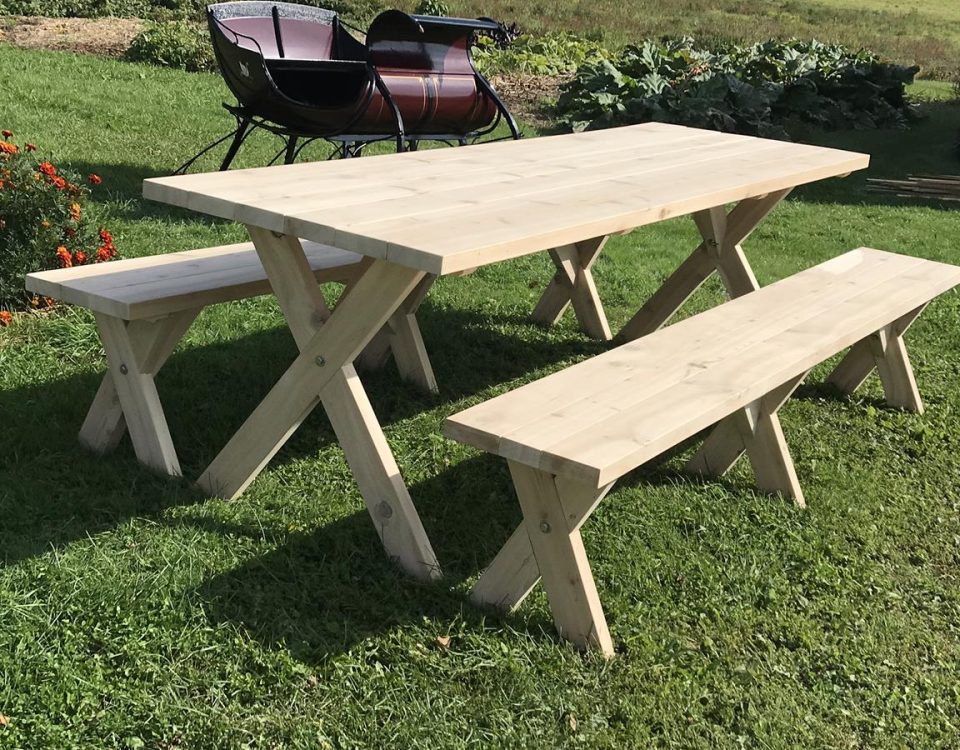
Creating a custom look doesn’t always mean a custom price tag. Here’s a possible breakdown for a high-quality wooden bench build.
- Lumber (Cedar or Redwood): $200 – $400
- Exterior-grade screws and hardware: $30 – $50
- Sealant or exterior stain: $40 – $60
- Tools (if you don’t own them): $100 – $300 (rental can be cheaper)
- TOTAL: $370 – $810
- Budget Alternative: Use pressure-treated pine and let it weather naturally or find free plans online and source reclaimed wood for under $150.
2. Embrace Organic Form with a Live-Edge Wavy Bench
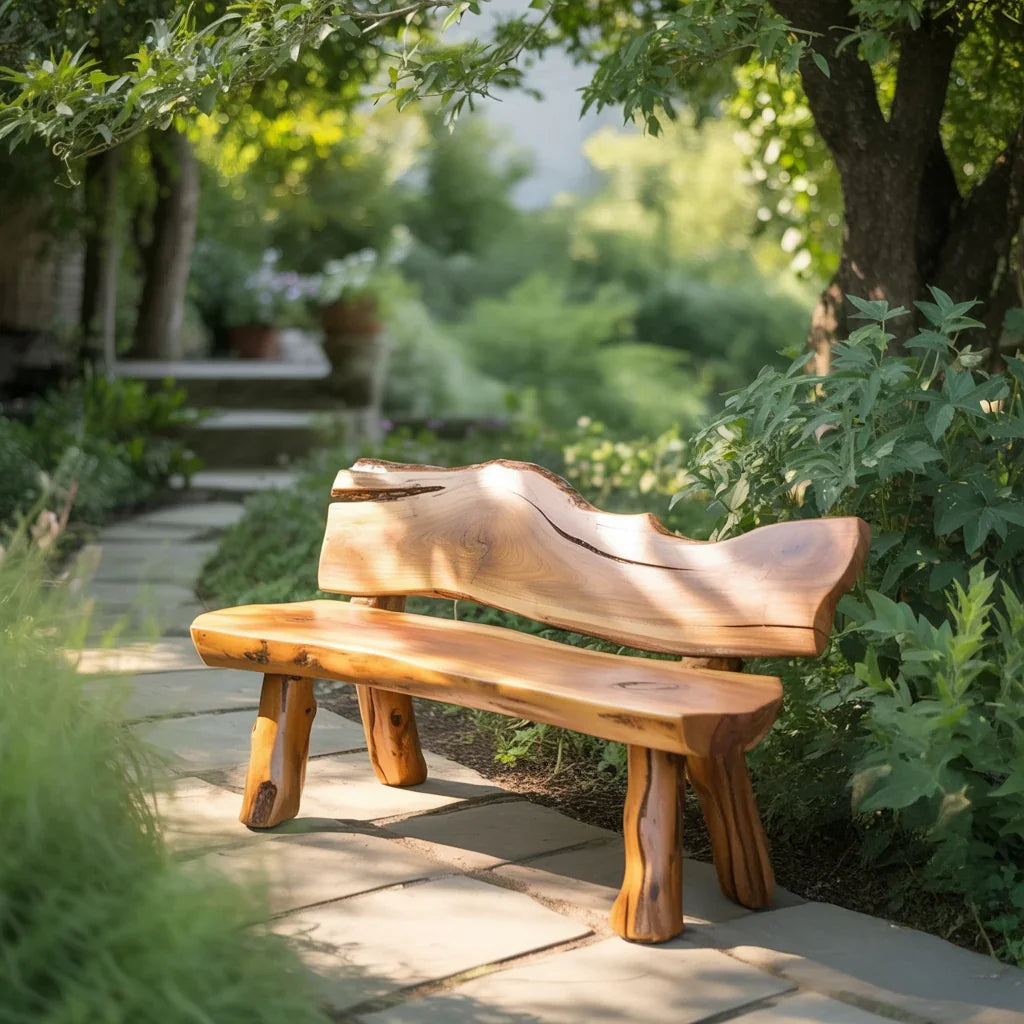
This bench is more than just a place to sit; it’s a piece of functional sculpture. What makes it work is the powerful contrast between the wild, unpredictable lines of the live-edge wood and the formal, geometric shapes of the flagstone path. The wavy, natural backrest mimics the organic forms of the surrounding garden, making the bench feel like it grew right there. It blurs the line between man-made furniture and the natural landscape, which is the secret to a garden that feels both designed and completely effortless at the same time.
⚠️ Real Talk
A live-edge bench is a stunning natural element, but it requires specific care to keep it that way. To prevent the beautiful light brown wood from graying and cracking, you must seal it annually with a high-quality marine spar varnish or tung oil. Pay special attention to the end grain, which soaks up moisture. Due to its irregular shape, cleaning can be tricky. Use a soft brush to get into the crevices where dirt and pollen love to hide. Avoid pressure washing, as it can strip the wood’s natural texture and damage the sealant.
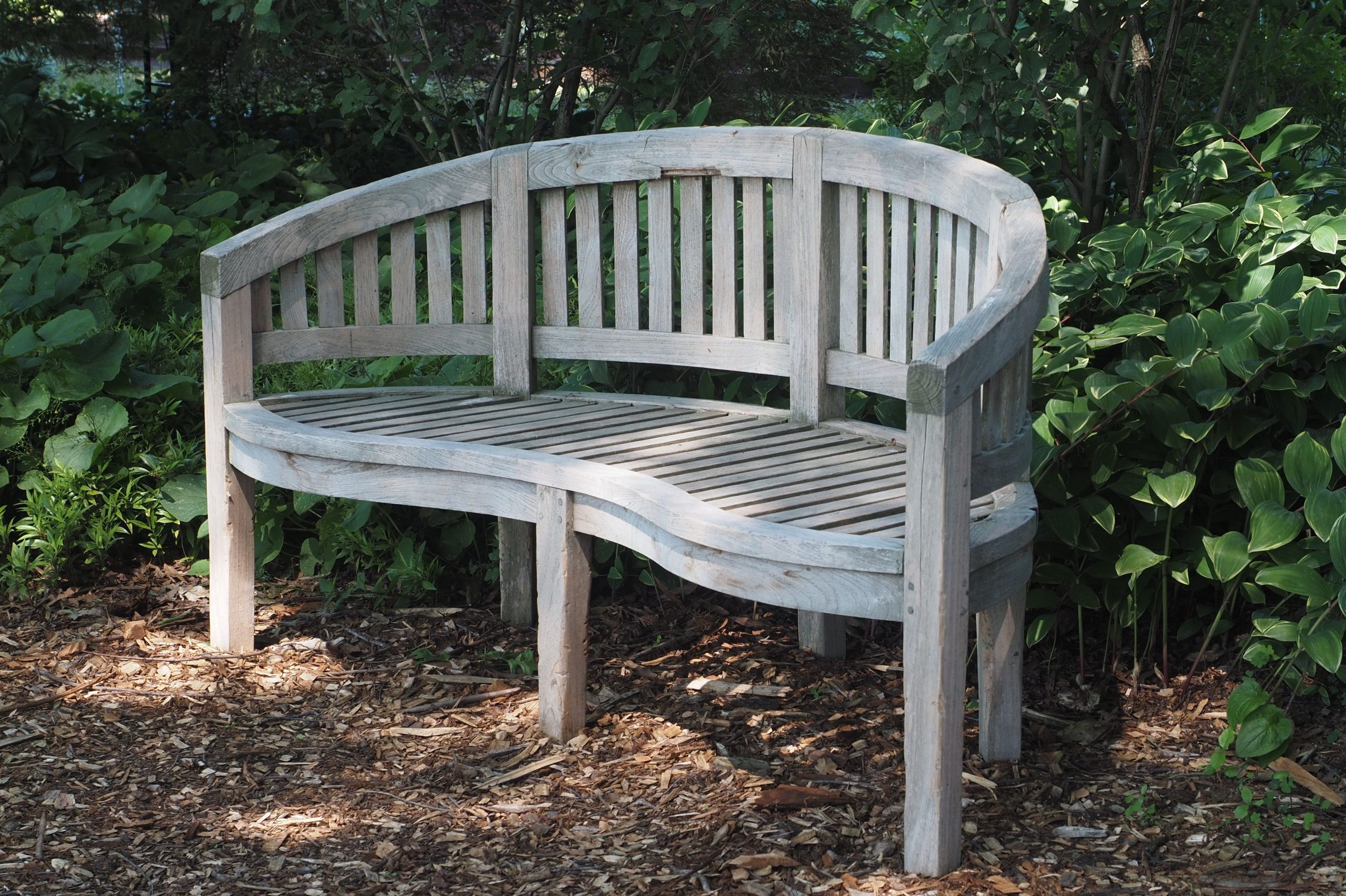
3. Add Character with a Curved and Weathered Slatted Bench
The single most important element here is the gentle curve. A straight bench in this exact spot would have felt rigid and formal. The curve, however, feels like a soft embrace, echoing the natural lines of a garden path or a winding stream. It makes the seating feel more communal and conversational. If you were to remove that curve, you’d lose the sense of welcome. It’s a subtle but powerful design choice that transforms a simple slatted bench into a more thoughtful and integrated part of the landscape, inviting you to settle in rather than just perch.
📏 Scale Guide
An idea like this curved bench is perfect for defining a specific zone in a larger garden. It works best nestled into a natural alcove created by planting beds or under the canopy of a large tree. You need a space at least 10-12 feet wide to allow the curve to feel graceful, not forced. The bench itself is likely 6-8 feet long, so ensure you have at least 2-3 feet of clearance on all sides for plantings to fill in without overwhelming it. This isn’t the right choice for a small, square patio where it might feel cramped. Compare it with the more compact design in Idea #26.
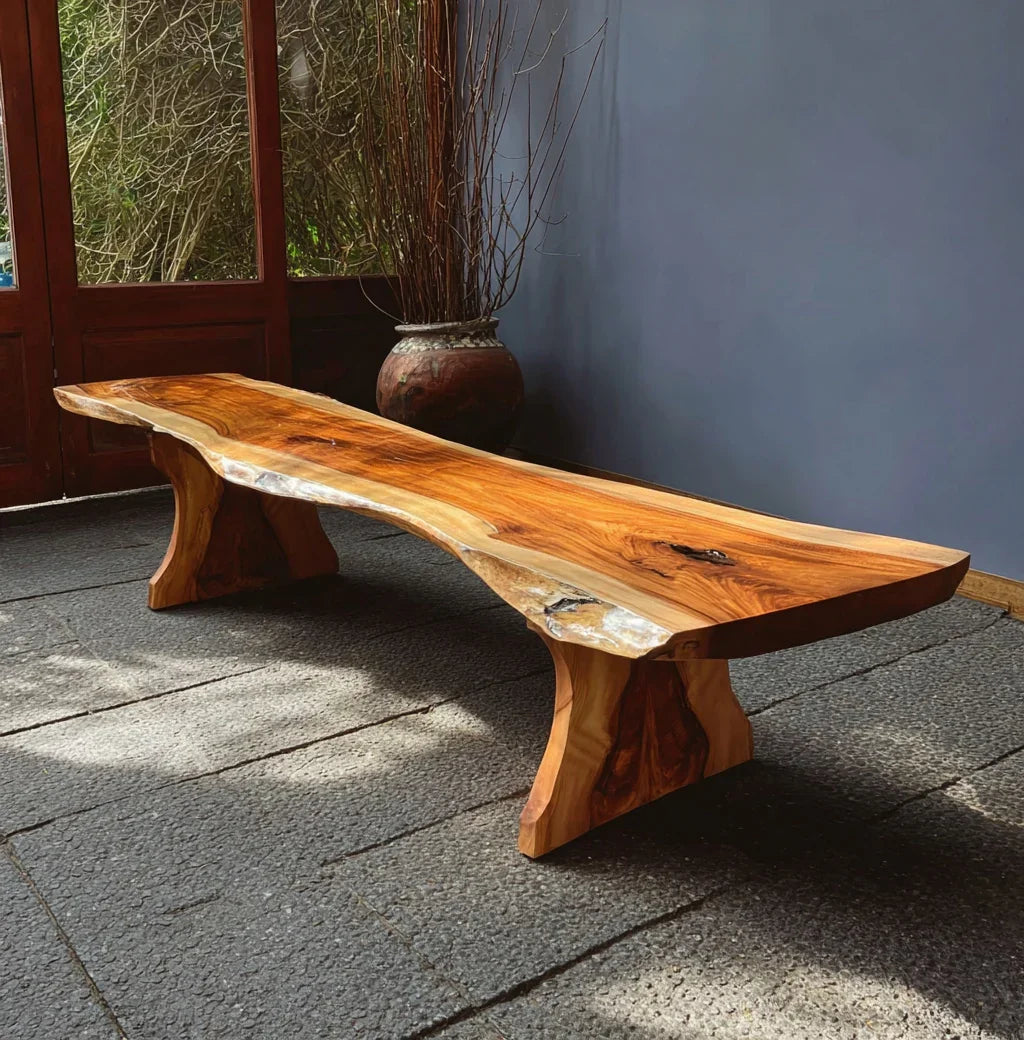
4. Create Drama with a Glossy Live-Edge Bench on a Dark Patio
This look is all about confident contrast, and you can replicate it with a simple formula: 60% rustic texture + 30% deep, moody color + 10% organic accent. The long, glossy live-edge bench provides the rustic texture. The dark blue accent wall and pebbled gray patio floor deliver the moody color base. Finally, the distressed pot with dried branches offers that essential organic touch. You could swap the elements—a dark-stained concrete wall, a reclaimed wood bench, and a pot of tall grasses—and the sophisticated, earthy vibe would remain intact.
🔧 How-To Brief
Let’s be honest: a dark blue wall outdoors is a COMMITMENT. While it looks incredibly chic, dark paint colors are prone to fading much faster in direct sunlight than lighter shades. You will need to use a high-quality exterior paint and expect to touch it up or repaint it every 3-5 years to maintain that deep, saturated color. Also, a pebbled patio surface, while beautiful, can be a pain to keep clean from leaves and debris. This is a high-style, higher-maintenance look, similar in daring to the rustic patio in Idea #20.
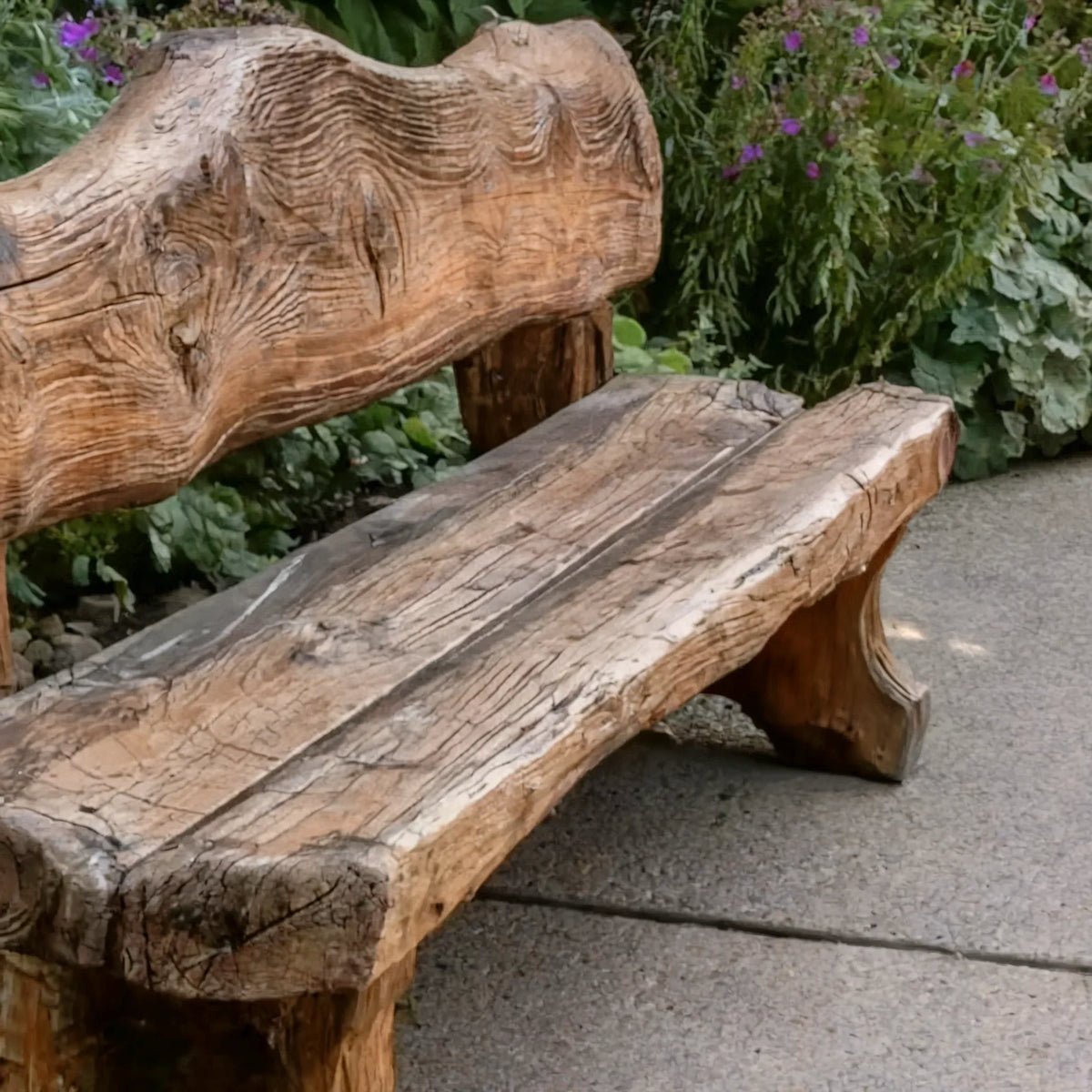
5. Hand-Carved Rustic Log Bench with Live Edge Details
The charm of this bench is its hand-carved finish. You can achieve a similar wavy, textured effect on a simple wood plank with a power carver or an angle grinder with a flap disc. Here’s a mini-guide:
🎯 What Makes It Work
- Securely clamp your wood plank (a 2×10 works well) to a sturdy workbench.
- Sketch faint, wavy lines along the edge you want to shape.
- Wearing full safety gear (goggles, mask, gloves), turn on your angle grinder and gently begin to scallop the edge, following your lines. Use shallow passes.
- Vary the depth and angle of your cuts to create an organic, irregular texture.
- Once shaped, switch to a finer grit flap disc or an orbital sander to smooth out any rough spots, without erasing your texture.
- Seal with an exterior-grade oil to pop the grain.
This project should take 2-3 hours and cost around $50 in materials (plus the tool).
You don’t need to be a master carver to get this rustic look. Instead of a custom-carved piece, search Facebook Marketplace or Craigslist for “log bench” or “chainsaw carved bench.” You can often find artisans selling similar pieces for $150-$300. For a true budget version, create the base from simple 4×4 posts and use two half-round landscape timbers (available at Home Depot or Lowe’s for about $20 each) for the seat. A weekend and some exterior screws will get you 90% of this vibe for less than $100.
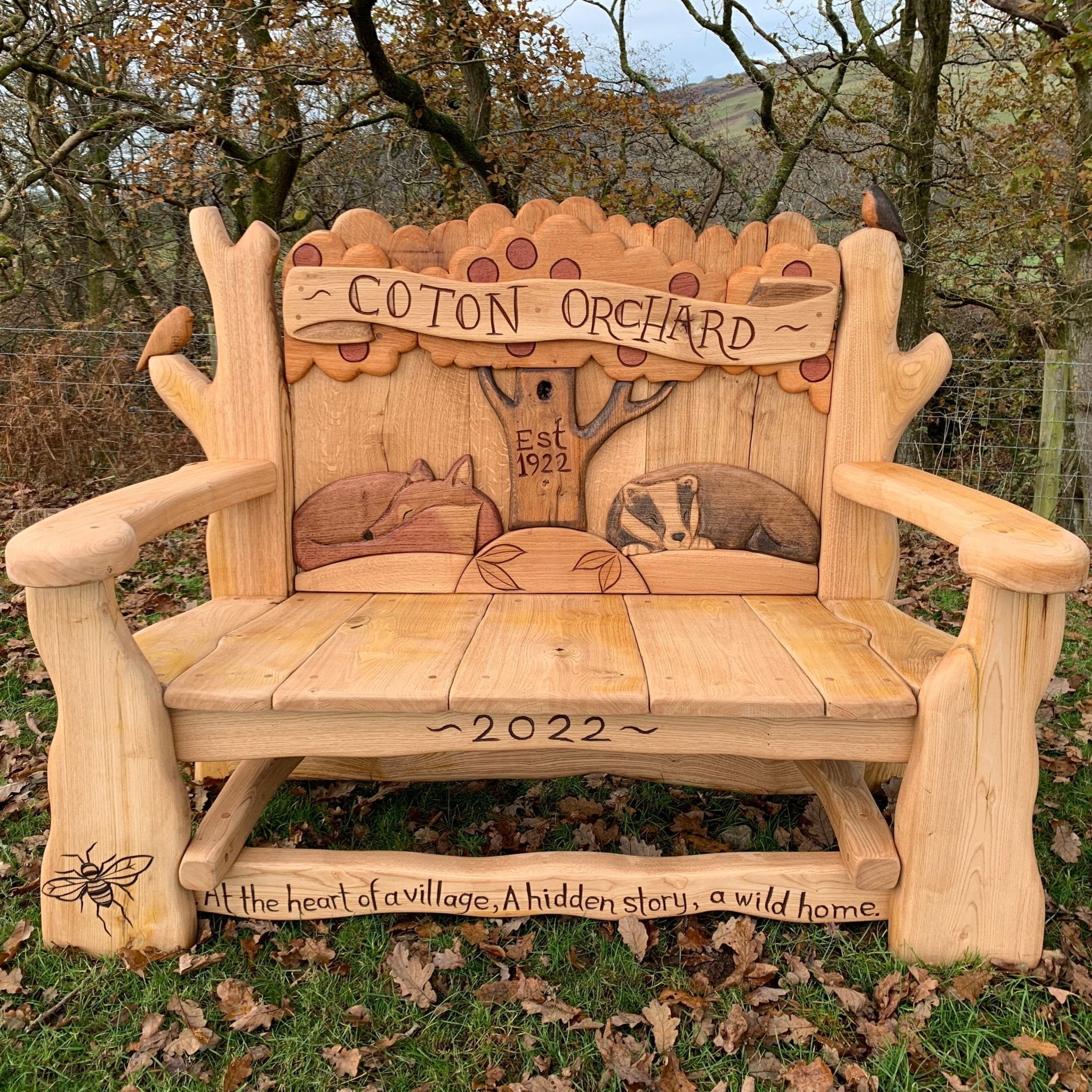
6. Whimsical Carved Woodland Animal Bench
There’s a growing movement towards “garden storytelling,” where outdoor spaces feature elements that are deeply personal and narrative-driven. This carved bench is a perfect example. It’s not just furniture; it’s a piece of folklore placed right in the yard. As people seek to make their homes unique sanctuaries, we’re seeing a rejection of generic, mass-produced items in favor of handcrafted pieces with personality and charm. This trend has real staying power because it’s rooted in individuality, not a fleeting aesthetic.
💰 Budget Breakdown
This bench works because it understands its audience: it’s for a garden that doesn’t take itself too seriously. The success lies in the execution of the carving—it’s skilled and detailed, not crude. The choice of a light, natural wood keeps it from feeling heavy or dated. Furthermore, the design cleverly integrates the whimsical elements (the sleeping fox and badger) into the bench’s structure, making them feel intentional rather than just tacked on. The curved armrests soften the overall look, adding a touch of classic craftsmanship to the playful theme.
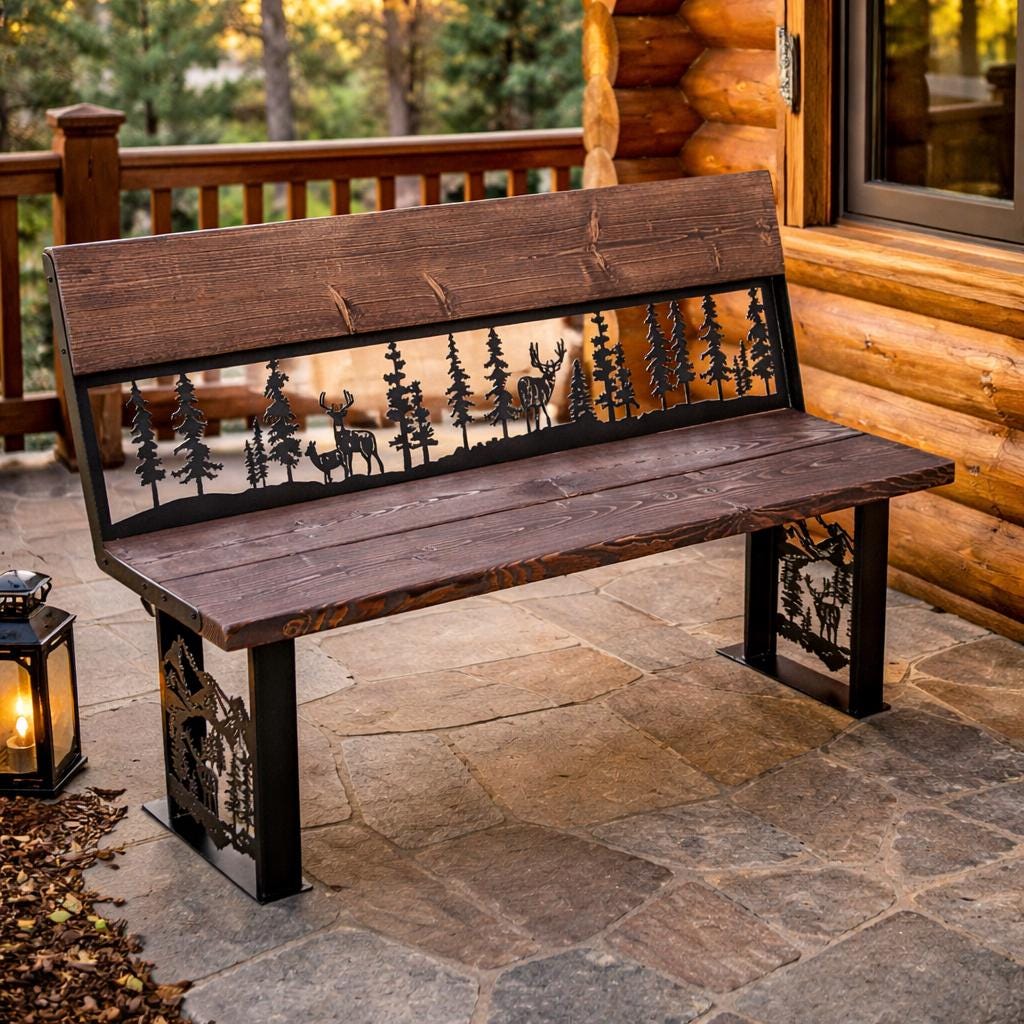
7. Rustic Cabin Bench with Metal Forest & Deer Motif
When incorporating thematic metal art like this, the key is to allow it to be the star without letting it become kitschy. The designer made a smart choice here by keeping the wood simple and dark. Staining the planks a deep, uniform brown creates a quiet backdrop that makes the black metal forest scene pop. If the wood were a busy, knotty pine or a trendy gray wash, it would compete for attention. Always pair intricate metalwork with simple, solid wood forms to maintain a sense of sophistication. This lets the craftsmanship of the metal panel shine through.
⭐ The One Thing
It’s all about the laser-cut metal backrest. Without that single element, this is just a generic (though perfectly nice) wooden park bench. The metal panel is what gives the bench its entire identity and narrative. It instantly tells you this is a rustic, cabin, or lodge-style space. It evokes a specific feeling of being in the mountains or the woods. Removing it would strip the piece of its main story, proving that sometimes, one bold, thematic detail is more powerful than a dozen smaller, subtle ones.
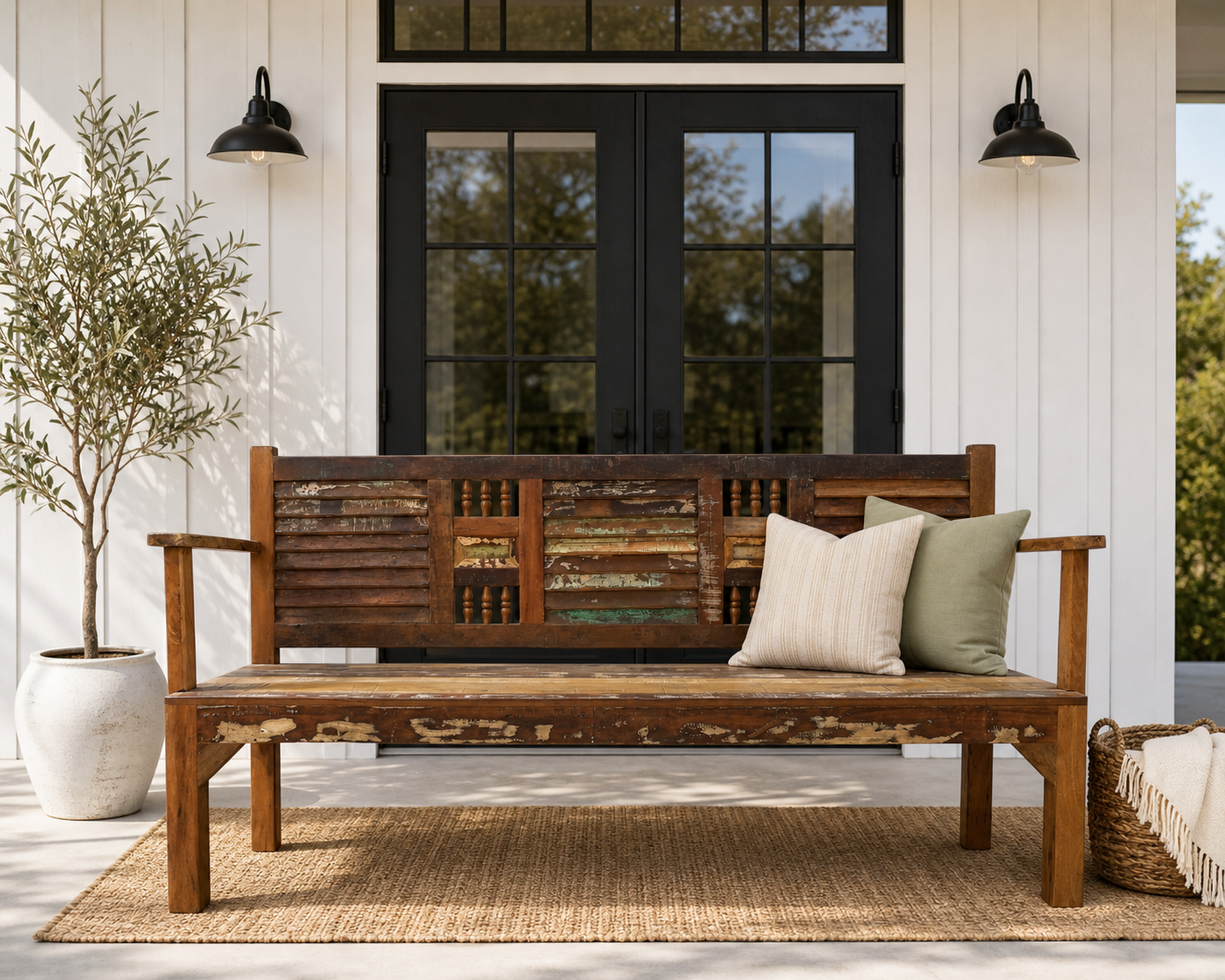
8. Farmhouse Bench with Black Doors and an Olive Tree
This inviting farmhouse scene is a careful balancing act. Think of it as: 50% rustic texture (the weathered wooden bench, the woven rug) + 30% sharp, modern contrast (the bold black doors and sconces) + 20% soft, natural elements (the potted olive tree, the sage green and cream pillows). This formula is incredibly versatile. You could swap the bench for a more rustic piece like the one in Idea #19, change the olive tree to a ficus, and switch the pillows, and the balanced, modern farmhouse feel would remain thanks to that core ratio of textures and colors.
🧹 Maintenance Reality
Before you commit to creating this look, run through this quick checklist:
- Do you have a protected spot? The natural fiber rug and pillows mean this setup is best for a covered porch or patio, not open to the elements.
- What’s your light situation? An olive tree needs at least 6-8 hours of direct sunlight. If your spot is shady, opt for a more shade-tolerant plant like a fern or aspidistra.
- Is the scale right? This look needs a solid wall to anchor it. The bench is likely 5-6 feet long; ensure your wall space is at least 8-10 feet wide to avoid looking cramped.
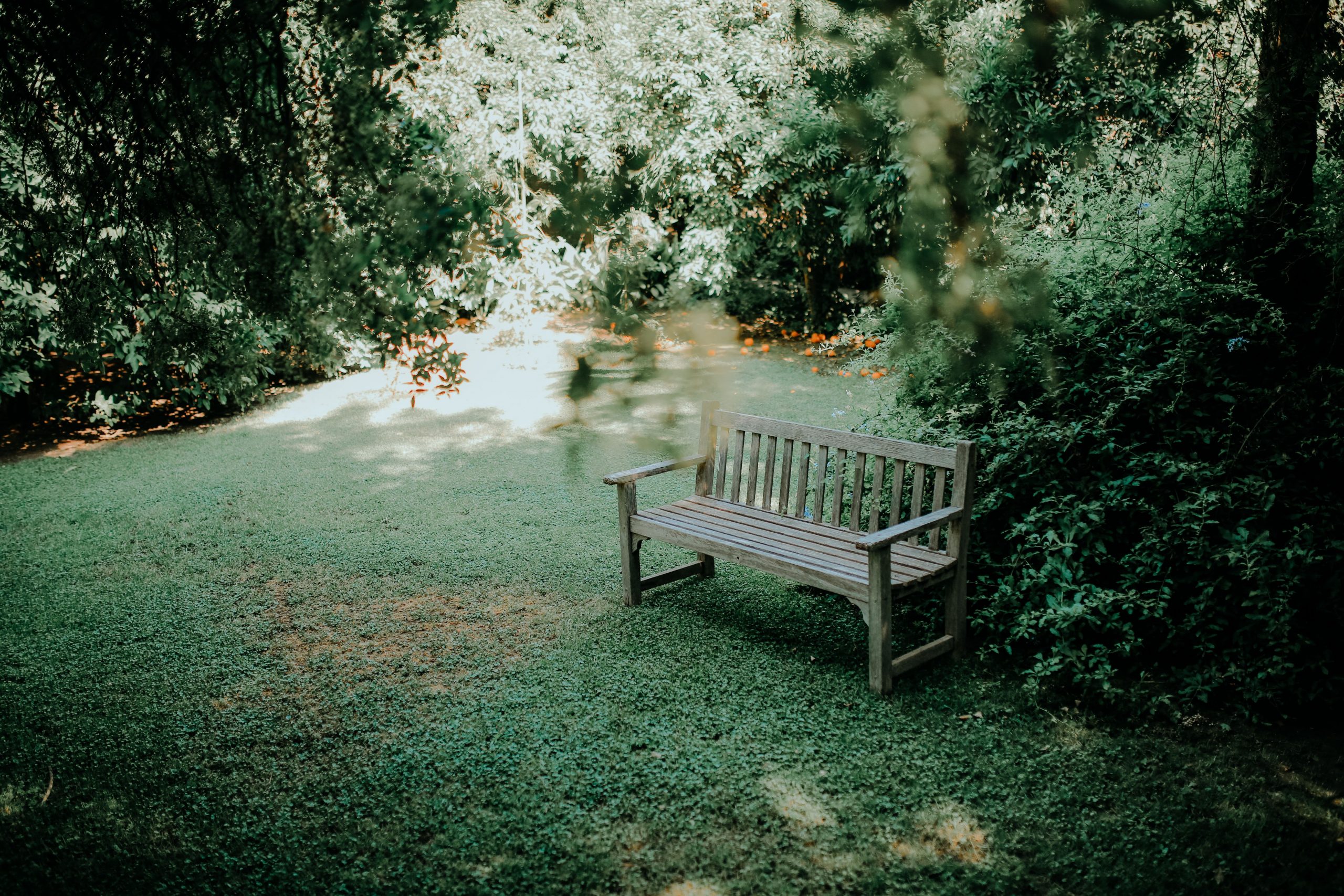
9. secluded Weathered Wood Bench in a Lush Green Nook
This idea is all about creating a secret garden feel. It’s not meant for a main patio but for a forgotten corner of the yard. The ideal spot is a small clearing, no more than 8×8 feet, surrounded by dense, mature plantings. The key is that the foliage—not a wall or fence—defines the space. A bench around 4-5 feet long is perfect; anything larger would overwhelm the intimate scale. This look relies on being enveloped by greenery, so it won’t have the same effect in a new garden with small plants. It needs that sense of lush, established nature.
💸 Get This Look For Less
A bench completely surrounded by dense foliage looks dreamy, but it comes with a few realities. First, moisture. This shady, enclosed spot will hold dampness, which can accelerate the weathering of the wood and encourage moss or mildew growth. Second, bugs. Spiders, mosquitoes, and other critters love sheltered, leafy areas. You’ll be sharing your quiet spot. Lastly, maintenance. Falling leaves, twigs, and blossoms from the overhead canopy will constantly collect on the bench, requiring frequent sweeping to keep it usable.
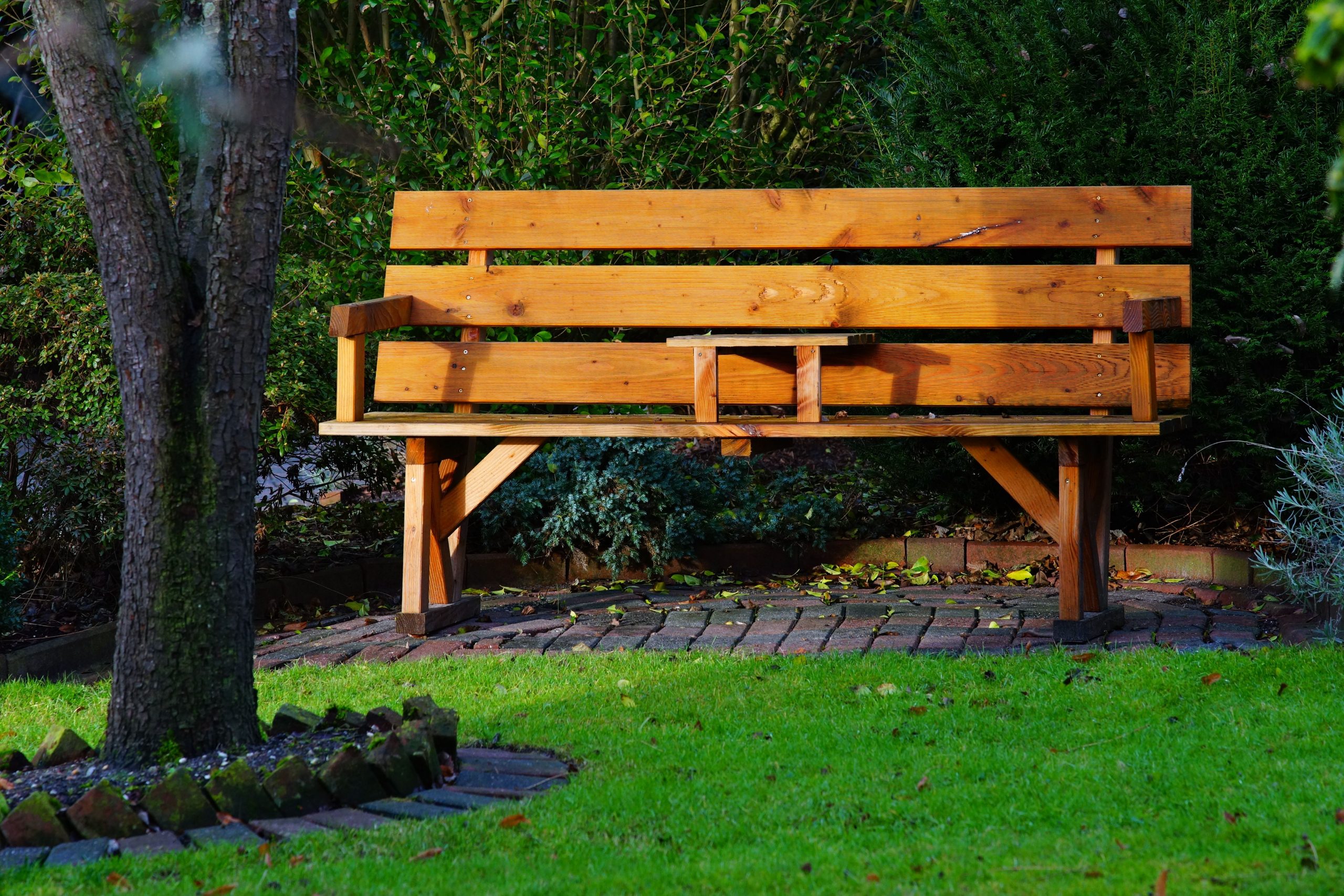
10. Integrated Seating: The Slatted Bench with a Built-In Table
The genius of this design lies in its thoughtful functionality. It’s not just a bench; it’s a self-contained conversational nook. The integrated table provides the perfect spot for a couple of drinks, a book, or a small potted plant, eliminating the need for a separate, clunky coffee table. This makes the entire setup feel more intentional and streamlined. It’s a design that acknowledges how people actually use outdoor seating—we always need a place to put things down. By building it right in, the bench becomes a complete, practical solution for a small patio or garden corner.
✅ Before You Start
Many retailers sell versions of this ‘conversation bench’ for $300-$700. But you can easily DIY this concept. Build two simple, identical slatted benches using cedar or pressure-treated 1x4s for the seat and back. Then, build a simple small box or cube table from the same material to connect them. There are countless free plans online for a basic outdoor bench. Just build two and join them with a 20×20 inch table section. This approach gives you the exact same functionality for the cost of lumber, likely between $150 and $250.
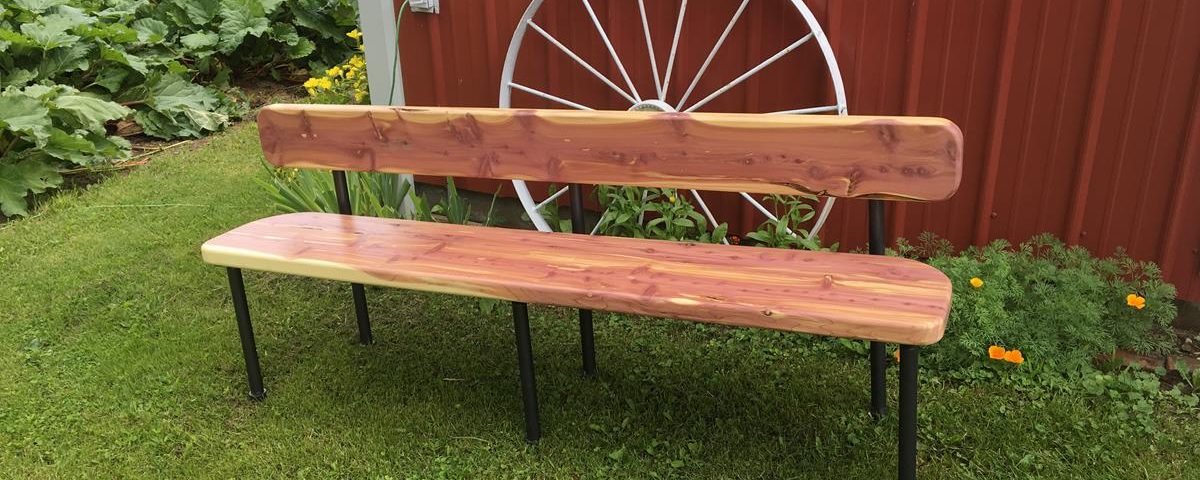
11. Classic Cedar Sitting Bench for an Upstate Garden
When you have a bench with a beautiful natural wood tone like cedar, your first instinct might be to stain it. Resist! Instead, let it age naturally. Cedar will slowly transform from its warm, reddish-brown to a beautiful, soft silvery-gray over the course of a few years. This weathered patina allows the bench to blend seamlessly into a garden environment, making it feel like it’s been there forever. If you must protect it, use a clear, matte-finish UV-protecting sealer that won’t add any gloss or color, preserving the wood’s organic character.
📐 Style Math
Building a sturdy, classic cedar bench like this is a timeless weekend project. The cost is primarily in the quality of the wood, as cedar is more expensive than pressure-treated pine but offers superior weather and rot resistance.
- Cedar Lumber (2x4s and 2x6s): $250 – $450
- Exterior-grade decking screws: $25 – $40
- Clear UV-protectant sealer (optional): $50 – $70
- Circular saw & drill (if not owned): $150 – $250
- TOTAL: $325 – $810
- Budget Alternative: Build the same design using pressure-treated lumber for a total material cost of around $100-$150.
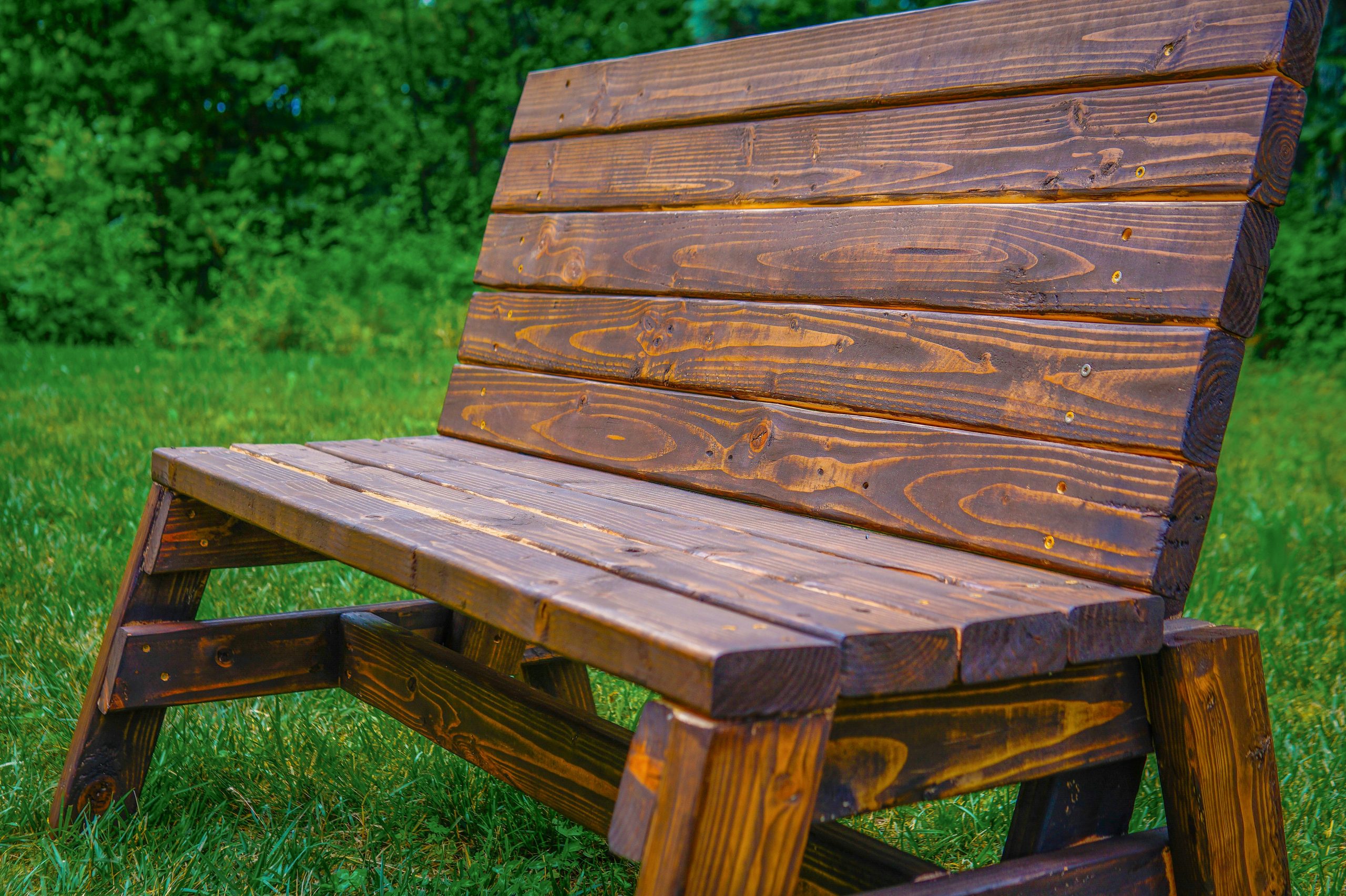
12. Simple and Sturdy Dark Woven Wood Bench
The defining feature of this bench is its simplicity. In a world of overly complex designs, this piece stands out because of what it *doesn’t* have: no ornate carvings, no mixed materials, no fancy finishes. Its beauty comes from its straightforward, honest construction. The slightly reclined slatted back and flat seat are purely functional, and the dark stain is uniform and quiet. It’s a testament to the idea that good design doesn’t need to shout. Its power lies in its unpretentious, sturdy form, promising a reliable place to rest without any fuss.
🔥 Trending Context
The ‘woven’ appearance of the slats is a great way to add subtle texture. You can create this look on a simple bench backrest with this method:
- Construct your main bench frame, including the vertical supports for the backrest.
- Starting from the bottom, attach your first horizontal slat to the *front* of the vertical supports.
- Attach your second slat to the *back* of the vertical supports.
- Continue this alternating pattern—front, back, front, back—all the way up the backrest.
- This creates a subtle offset between the slats that gives a shadow line and a sense of depth.
- Secure all slats with two exterior-grade screws at each connection point for stability.
This technique adds visual interest without complicating the build.
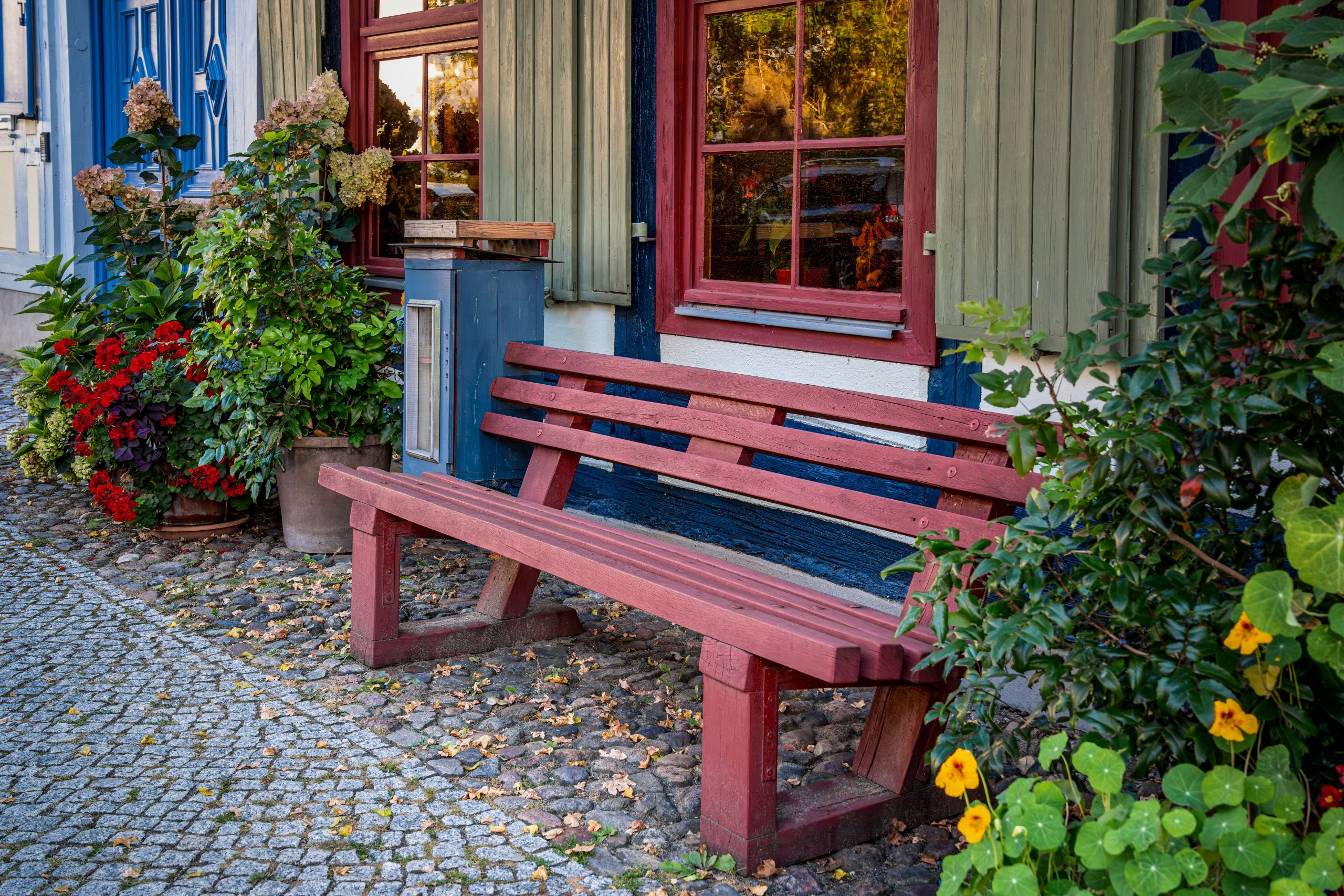
13. A Pop of Color: Deep Red Slatted Bench on Cobblestone
This scene is a masterclass in color theory. The deep red of the bench works so beautifully because it’s a complementary color to the green shutters and foliage. Red and green are opposite each other on the color wheel, meaning they create the most vibrant contrast when paired. The designer then cleverly used the same deep red in the window frames and potted flowers, and a related blue tone on the siding, creating a cohesive and intentional palette. It feels rich and harmonious, not chaotic, because the colors are all related and purposefully repeated.
💡 Designer Tip
A brightly painted bench is a fantastic way to inject personality, but it requires more upkeep than a stained or natural wood bench. Chipping is inevitable. To get a durable finish, you MUST do the prep work: sand the wood thoroughly, use an exterior-grade primer, and apply at least two coats of high-quality exterior paint. Even then, expect to do minor touch-ups every year or two, especially on the seat and armrests where there’s the most wear. The charm of a painted bench comes with the understanding that it will age and patina over time.
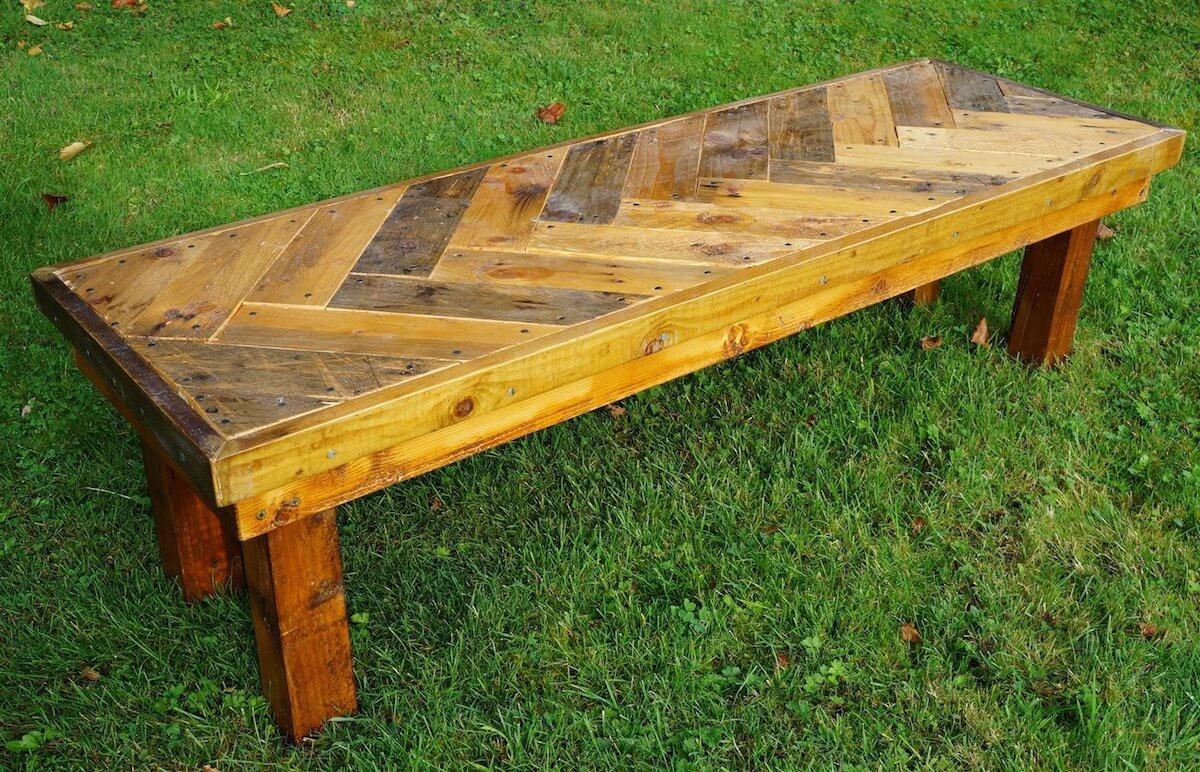
14. Rustic Herringbone Bench from Reclaimed Wood
The herringbone pattern is, without a doubt, the element that makes this bench special. Take it away, and you have a very basic, chunky wood bench. But by arranging the reclaimed wood pieces in that classic V-shape, the creator has added a layer of sophistication and craftsmanship. It elevates the piece from a simple DIY project to something that feels more like a custom piece of furniture. The pattern creates movement and visual texture, drawing your eye across the surface and highlighting the varied tones of the old wood. Compare it to the simpler slab bench in Idea #16 to see the difference pattern makes.
⚠️ Real Talk
As homeowners increasingly look for sustainable and unique decor options, reclaimed wood has become a major trend. This bench perfectly captures that spirit. It’s environmentally conscious and ensures that no two pieces are exactly alike. The visible nail holes and variations in color aren’t flaws; they’re part of the story. This trend is about celebrating imperfection and the history of materials. In 2026, we’re seeing this move beyond indoor tables to outdoor furniture, bringing a sense of rustic history to our backyards.
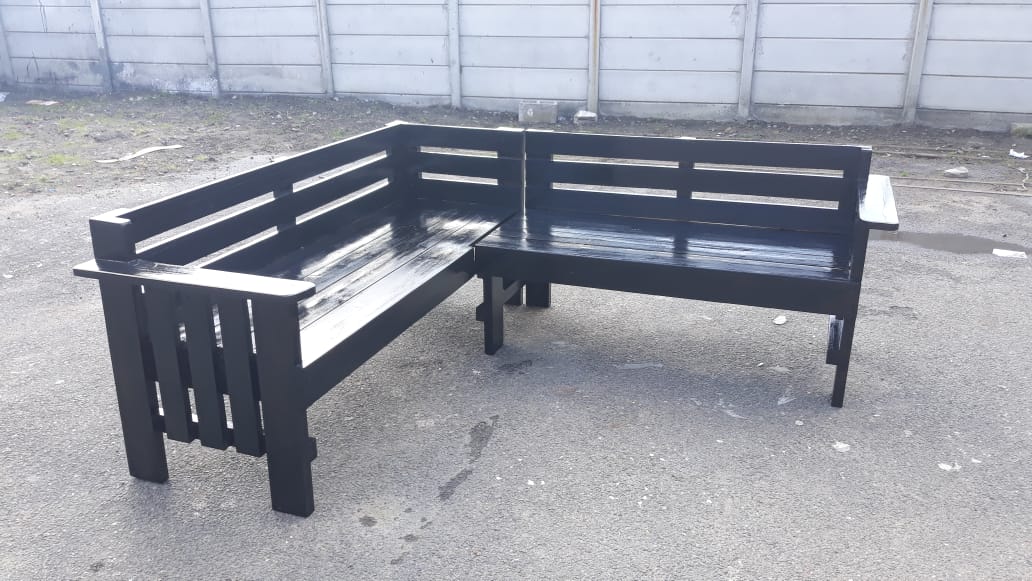
15. Modern L-Shaped Corner Bench with a Glossy Black Finish
This L-shaped bench is a space-saving powerhouse, perfect for defining a corner on a patio or deck. It works best in a dedicated right-angled space, like against the corner of a house or a retaining wall. To pull this off, you need a minimum footprint of about 6×6 feet for a small version, but it shines in a larger 8×10 foot corner where it can really anchor the zone. Because it’s backless in parts and has a strong geometric form, it’s less suited for open areas where it might look blocky. Its strength is in maximizing seating in a structured, architectural corner.
📏 Scale Guide
A glossy black finish looks incredibly sharp and modern, but it’s a magnet for dust, pollen, and water spots, all of which will be highly visible against the dark, reflective surface. To keep it looking its best, you’ll need to wipe it down regularly with a damp microfiber cloth. The glossy finish is also more likely to show scratches than a matte or satin one. Be mindful of dragging sharp objects across it. While durable, the high-gloss look is definitely a higher-maintenance choice than a simple stained wood finish.
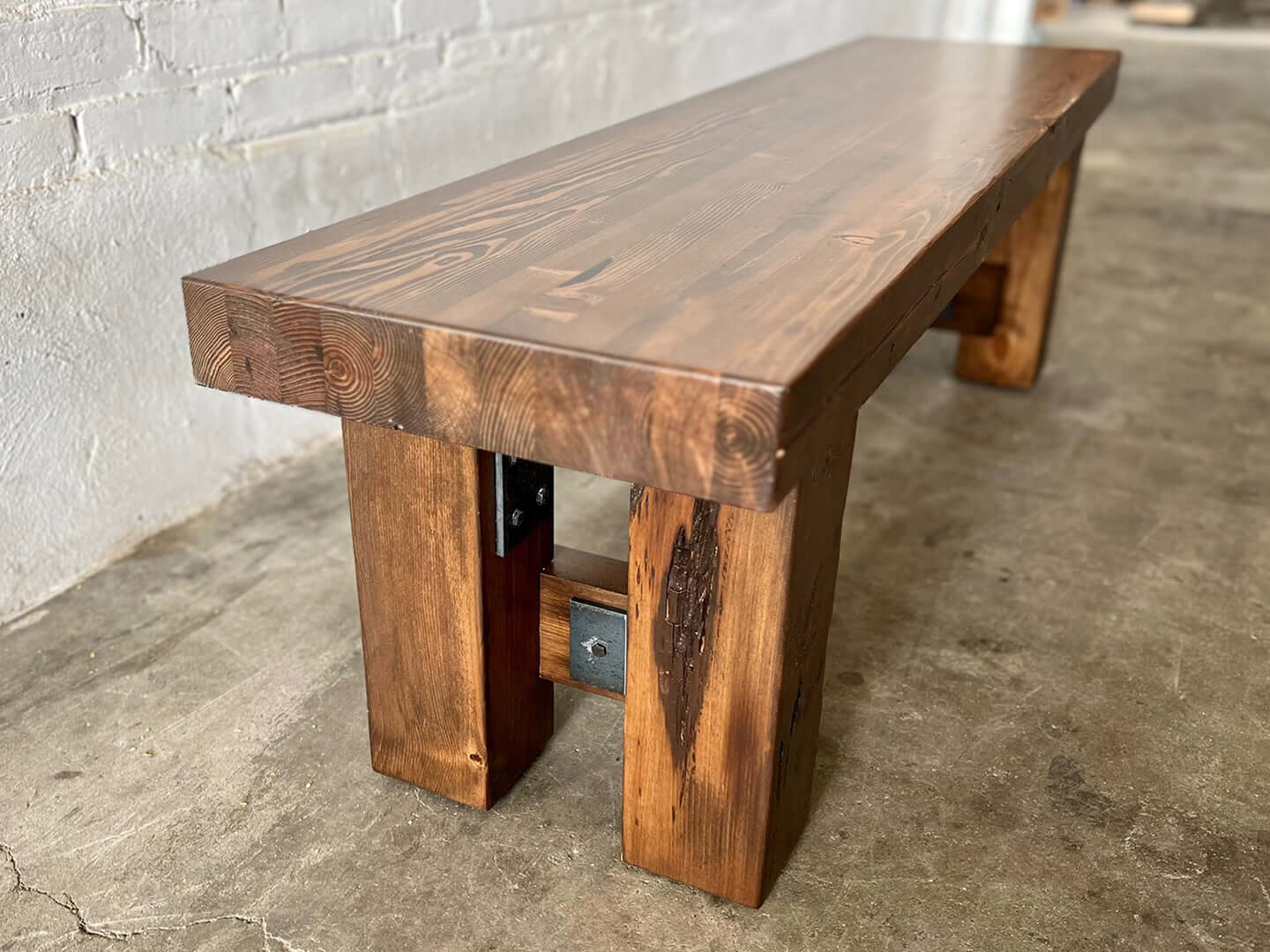
16. Industrial-Rustic Slab Bench with Metal Brackets
The appeal of this bench comes from marrying rugged materials. The thick, dark-stained wooden slab brings a natural, rustic warmth, while the heavy-duty metal brackets add a sharp, industrial edge. It works because neither element overpowers the other. The wood’s visible grain keeps it from feeling too polished, and the metal’s raw, functional appearance keeps it from feeling too decorative. It’s a balanced composition of textures—the smooth top surface of the wood contrasts with the rougher texture of the legs and the cool feel of the metal hardware.
🔧 How-To Brief
You can get this industrial vibe for a fraction of the cost of a custom-built piece. Start with a thick, solid wood plank from a hardware store—a laminated pine or acacia ‘project panel’ works great and costs around $60-$100. Distress it a bit with a hammer and chain, then apply a dark walnut or ebony gel stain. The key element—the metal brackets—can be found on Amazon or Etsy; search for “heavy duty shelf brackets” or “industrial corbels.” A pair of robust-looking brackets will cost between $40 and $80. Mount the stained plank onto the brackets, and you have the look for under $200.
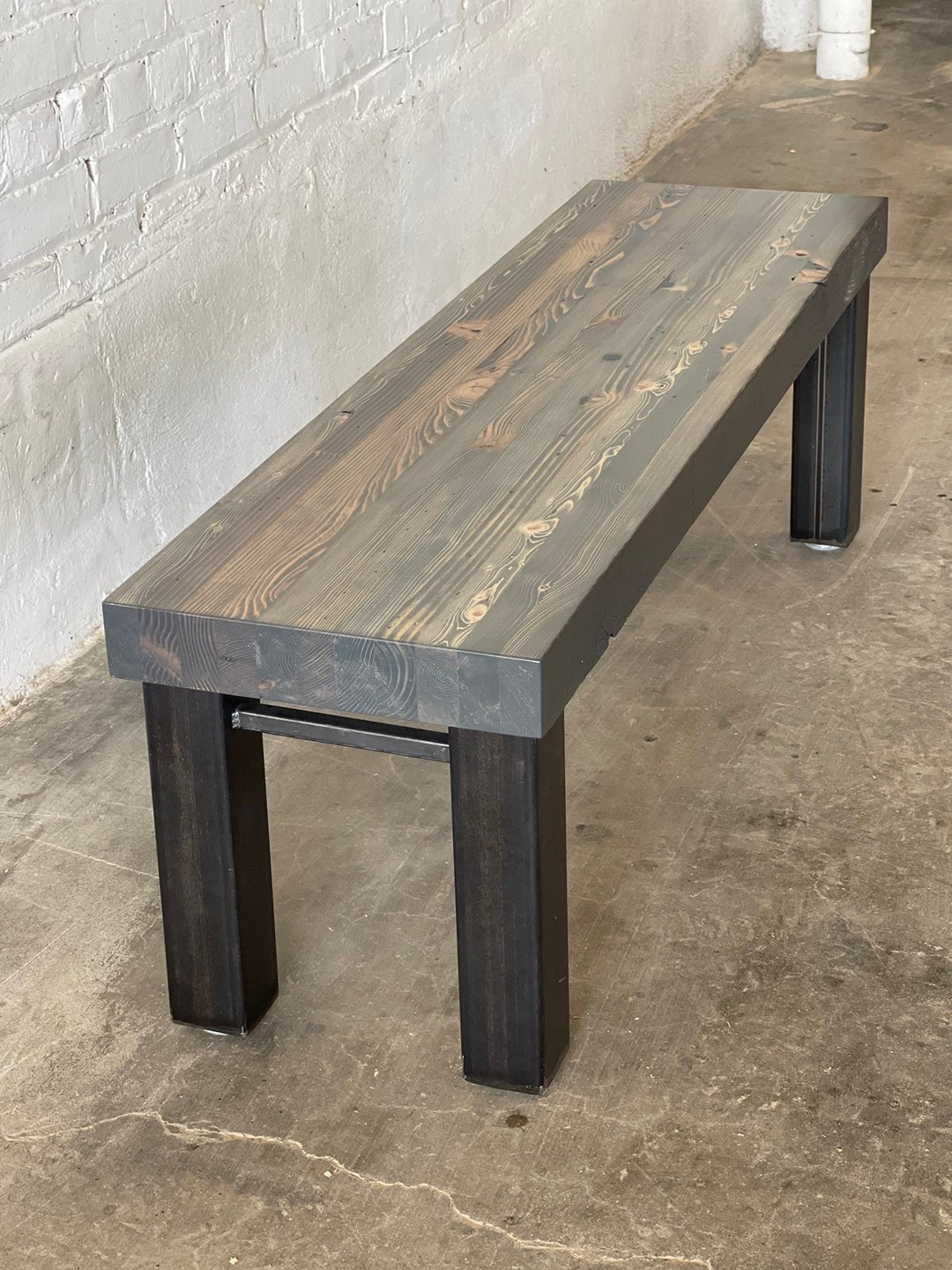
17. Sleek Industrial Bench with a Grey-Stained Top
The formula for this sleek, minimalist look is simple and effective: 80% clean lines + 20% natural texture. The square metal legs and the crisp rectangular top provide the strong, clean lines that define its industrial character. The visible wood grain and knots are that crucial 20% of texture, preventing the piece from feeling sterile or cold. You could change the wood to a warmer tone or the metal to a brighter finish, but as long as you maintain that ratio of simple geometry to organic detail, the modern industrial essence will remain.
🎯 What Makes It Work
A bench like this looks fantastic, but it’s not the most comfortable for long-term sitting. The flat wooden top and lack of a backrest make it more of a stylish, short-term perch than a place to lounge for hours with a book. Think of it as perfect for an entryway, a spot to put on shoes, or as auxiliary seating for a party. If you plan to use it as primary seating around an outdoor dining table, you will absolutely want to invest in some thick, comfortable bench cushions to make it more inviting.
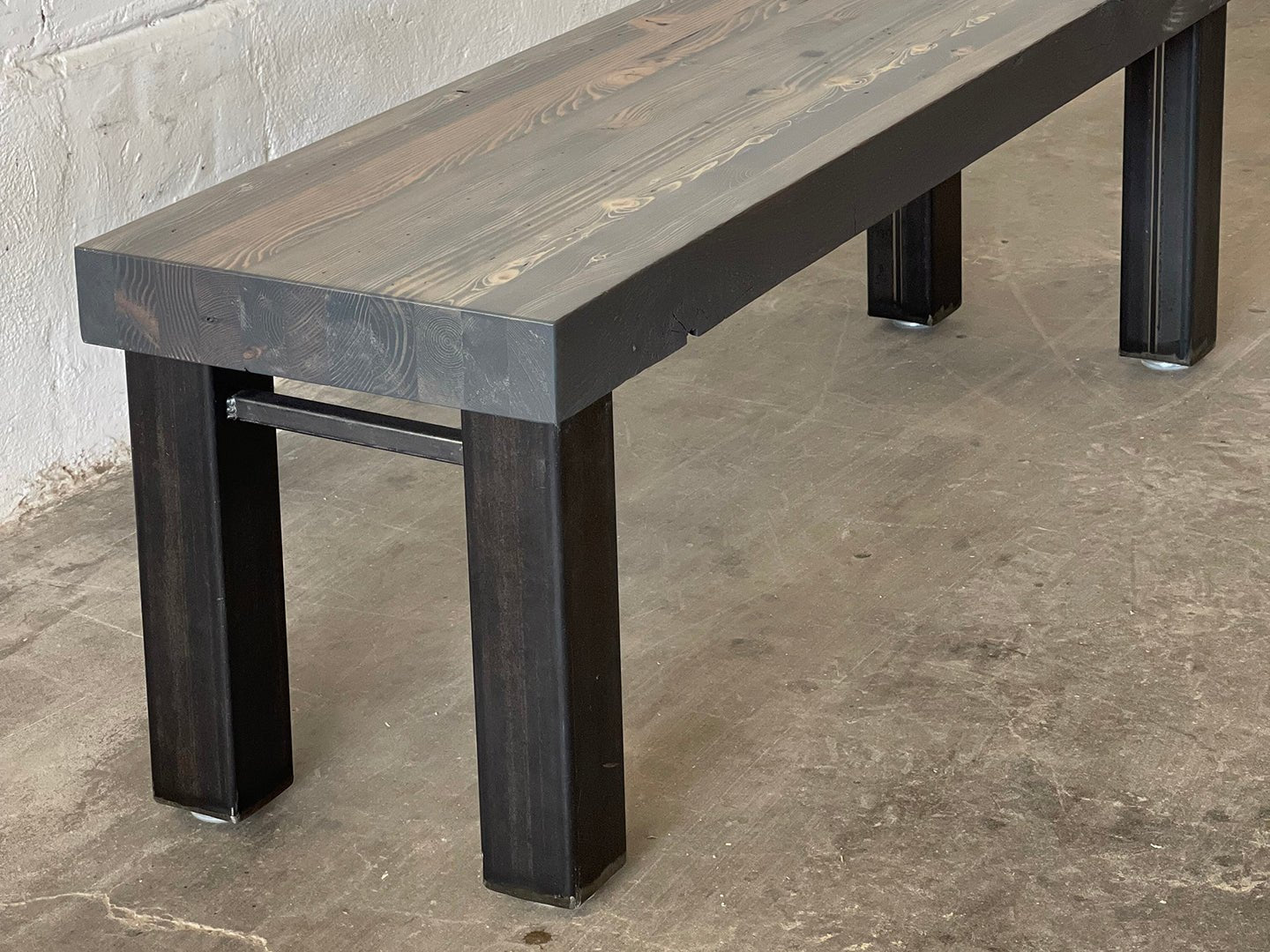
18. Minimalist Grey Wood and Black Metal Bench
The legs are the defining feature of this bench. While the grey-stained wood top is handsome, it’s the robust, square-profile black metal base that gives the piece its strong industrial identity. The simple, geometric form—four vertical posts connected by horizontal crossbars—is a classic industrial design trope. It communicates sturdiness and a no-fuss aesthetic. If you were to swap these legs for simple wooden ones, the entire character of the bench would change from industrial-modern to rustic-simple. It’s all in the base.
💰 Budget Breakdown
When working with a minimalist design, every detail counts. Notice the small, white feet glides on the bottom of the black metal legs. These are not just a practical addition to protect the floor; they are a subtle design choice. They create a tiny, almost imperceptible ‘lift,’ making the heavy base feel just a little lighter. It’s a tiny detail that breaks up the solid black mass of the legs and adds a touch of finish. When your design is this simple, small touches like this make a huge difference in elevating the piece from ‘basic’ to ‘designed’.
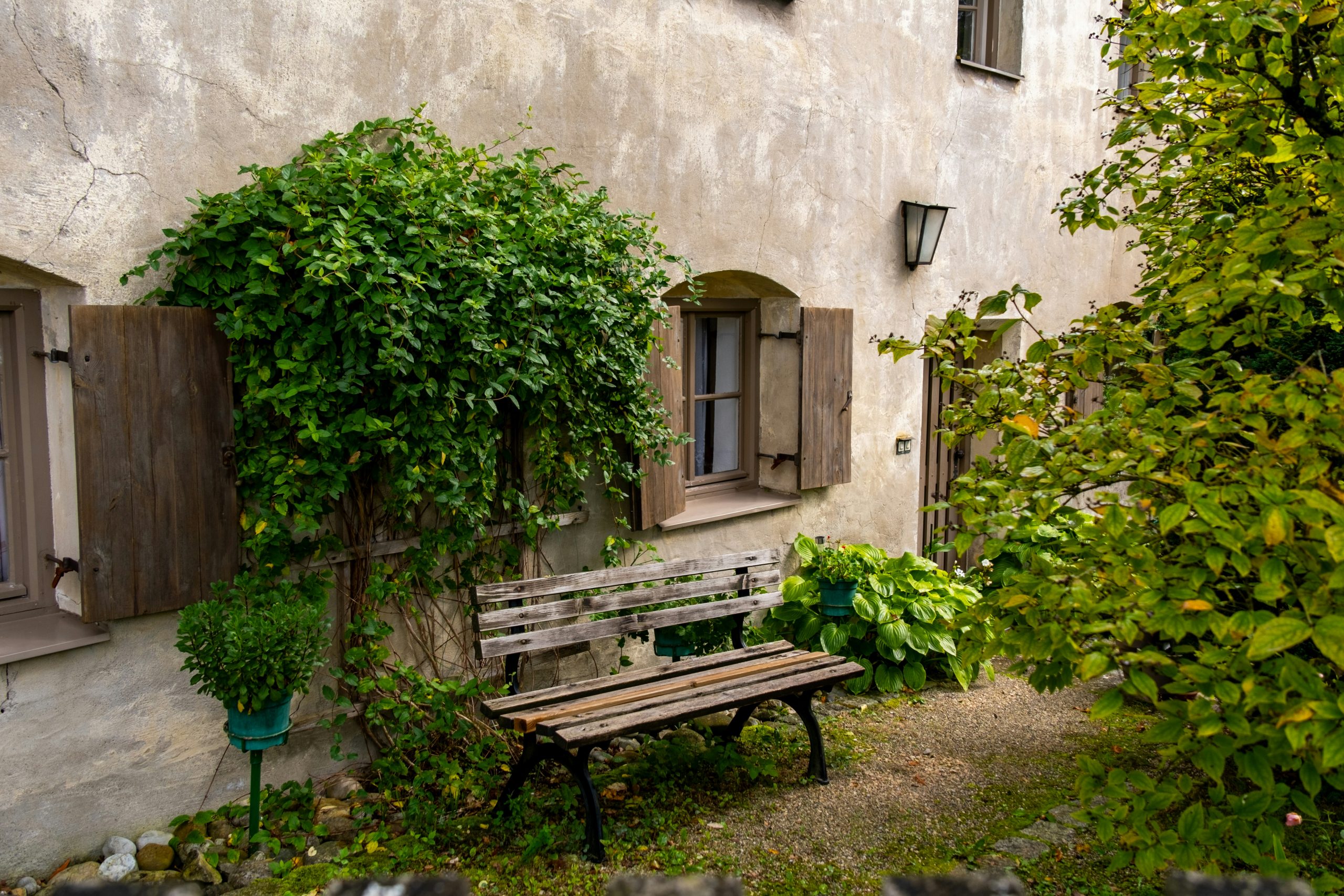
19. Aged Wooden Bench in a Vine-Covered Corner
This scene feels so serene and established because of the layering of aged textures. You have the weathered wood of the bench slats, the rough, light-colored stucco of the building wall, the deep green of the climbing vines, and the dark, forged look of the metal lantern and legs. Nothing is new or shiny. This harmony of different patinas creates a rich, authentic atmosphere that speaks of history and permanence. It feels less like a decorated space and more like a corner that has evolved gracefully over many years. This is a great example of a space that feels more complete than the modern farmhouse look of Idea #8.
⭐ The One Thing
As our lives get more digital and fast-paced, there’s a strong design counter-movement towards creating slow, peaceful, and authentic spaces. This is often referred to as the ‘cottagecore’ or ‘romantic academia’ aesthetic. It’s about celebrating age, nature, and a sense of history. This little nook, with its weathered bench, climbing vines, and old-world lantern, is the perfect embodiment of that trend. It’s not a sterile, modern outdoor lounge; it’s a quiet, romantic retreat, and that’s a feeling many people are craving in 2026.
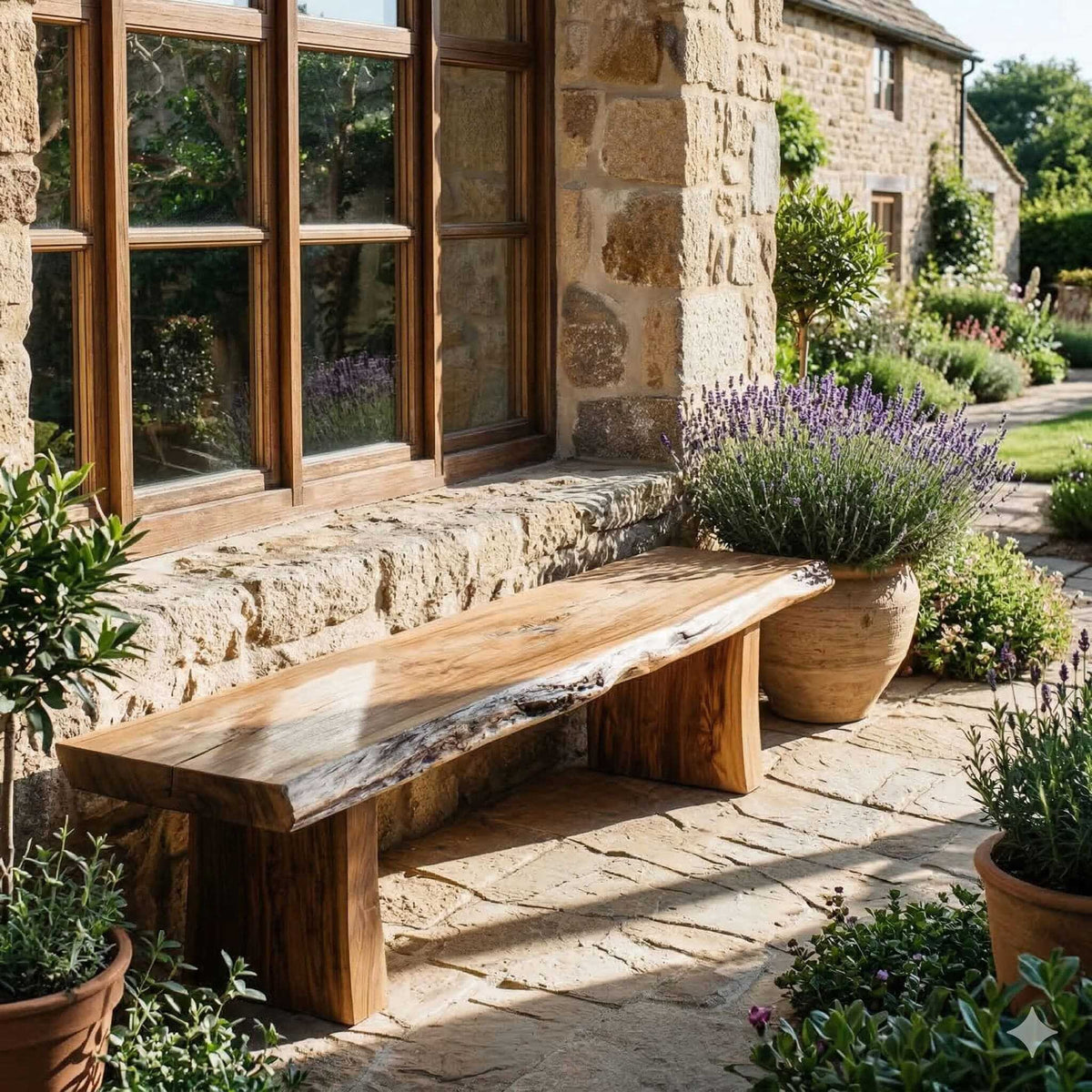
20. Rustic Live-Edge Bench with Lavender and Terracotta
This beautiful, rustic patio scene follows a classic Mediterranean formula: 40% warm, natural wood + 30% earthy stone + 20% terracotta + 10% soft color. The live-edge bench provides the dominant wood element. The stone building facade and cracked pavers give it a sun-baked, ancient feel. The terracotta pots are essential for that warm, earthy orange tone. Finally, the soft purple of the lavender adds that final, gentle touch of color. This palette is timeless because it’s drawn directly from the landscape of Provence or Tuscany.
🧹 Maintenance Reality
A cracked stone patio has immense character, but those cracks are a magnet for weeds and moss. You will either need to embrace the weedy, natural look and let it go, or commit to regular weeding (either by hand or with a torch weeder) to keep it looking tidy. Also, large terracotta pots are gorgeous but they are heavy, porous, and can crack in freezing temperatures if the soil inside is wet. If you live in a cold climate, you will need to protect them or bring them indoors during the winter, which can be a significant chore.
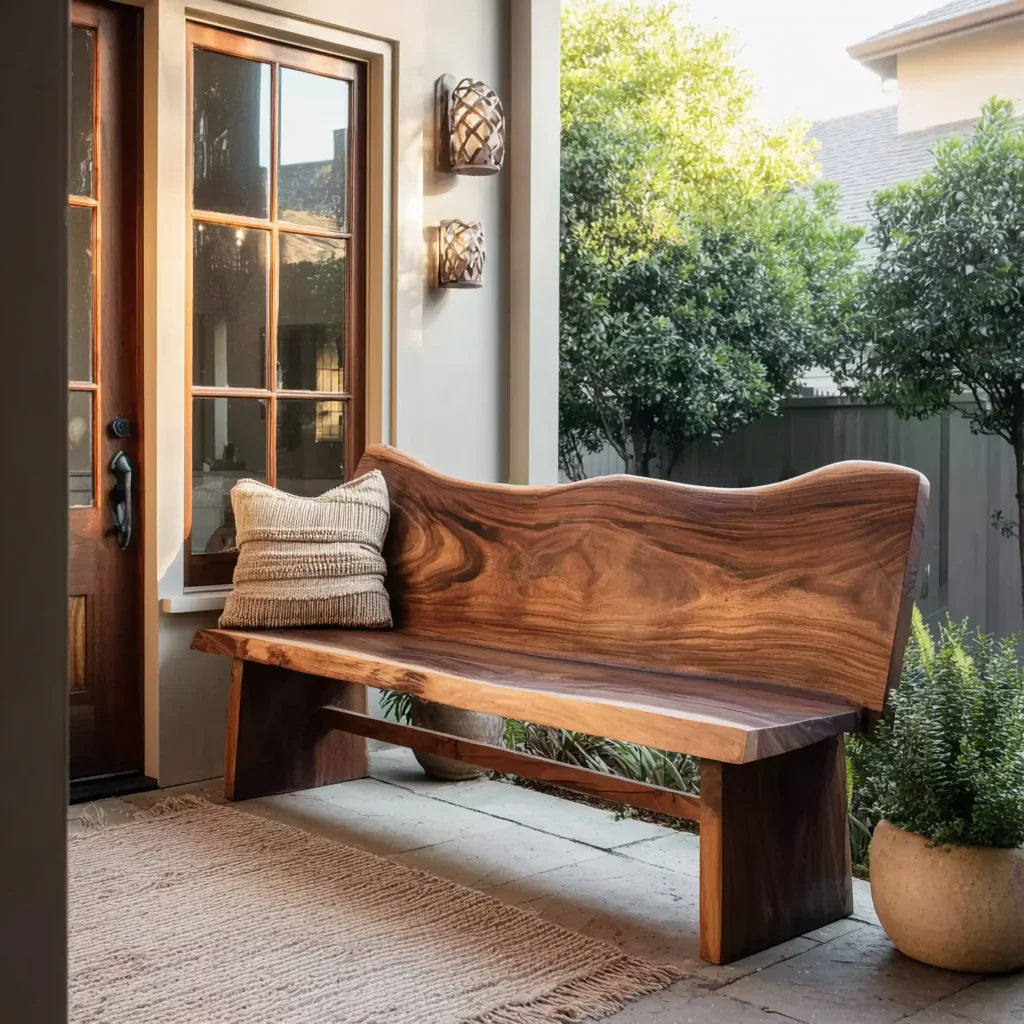
21. Cozy Patio Nook with a Carved Live-Edge Bench
What makes this corner so inviting is the masterful layering of textures. You have the rough, organic live-edge wood of the bench, the coarse texture of the stone patio tiles, the smooth, painted wall, and the soft, nubby feel of the woven pillow and wall sconces. All of these different surfaces play off each other, creating a space that is incredibly rich to the eye and touch. It has a depth and warmth that couldn’t be achieved if everything was made of the same material. It feels cozy and curated, like the outdoor equivalent of a layered modern farmhouse living room, as seen in Idea #8.
💸 Get This Look For Less
This look is perfect for a small, protected entryway or patio corner. Before you start, check these items:
- Is there an electrical source? Those beautiful woven sconces require wiring. If not, you could get a similar look with solar-powered or battery-operated versions.
- What’s your wall surface? This rustic look works best against a textured surface like stucco, stone, or even board-and-batten siding. It might feel out of place against slick vinyl siding.
- Do you have cover? A bench with a pillow and a nearby rug needs at least a roof overhang to protect it from rain.
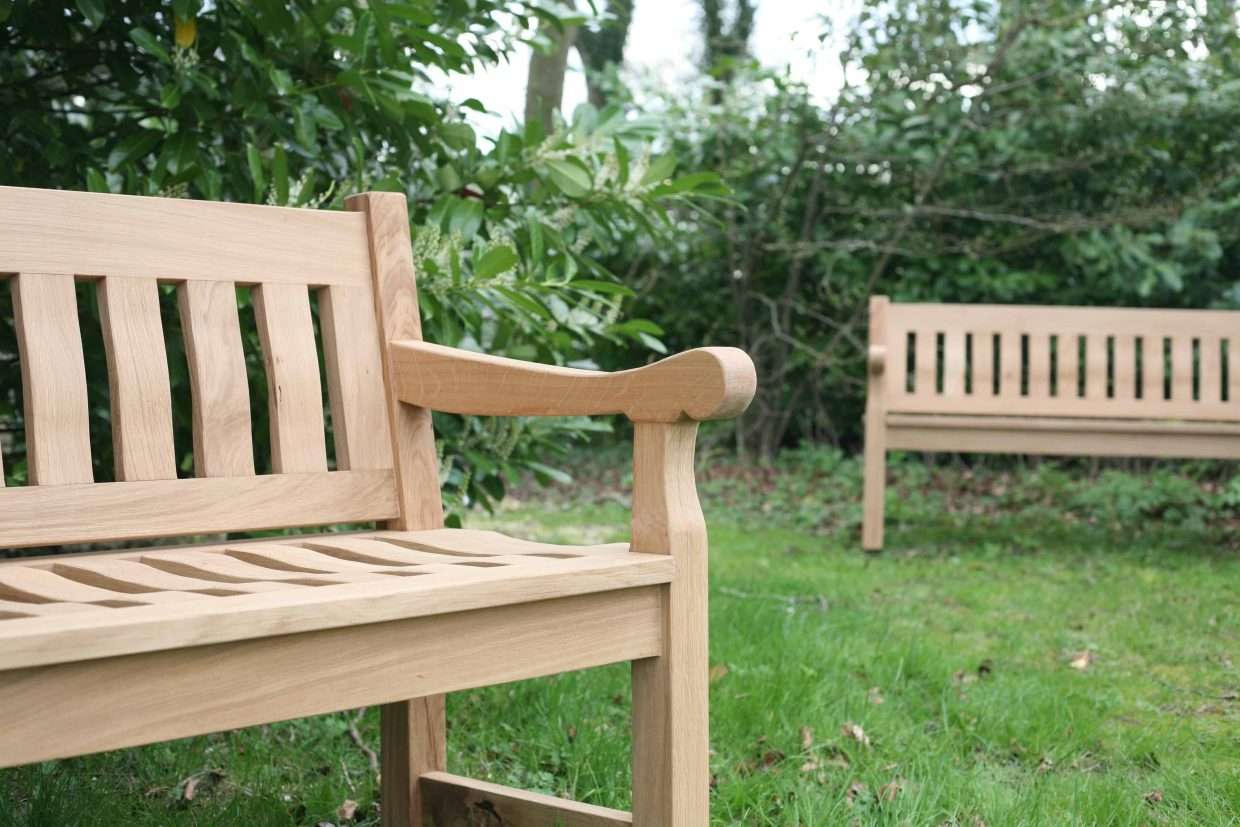
22. Classic English Oak Garden Bench
An English oak bench is a lifetime investment, but oak requires specific care outdoors. Untreated, it will develop a beautiful silvery-grey patina but can also be susceptible to dark water stains and mildew if it stays damp. To maintain its warmer, honey-colored tone, you must treat it with an oak-specific finishing oil—not a generic deck sealer, which can be too heavy. Apply the oil every one to two years. The key is to keep it clean of fallen leaves and debris, as trapped moisture is the primary enemy of oak furniture.
✅ Before You Start
This is a statement bench, designed to be a significant feature. A classic English garden bench is typically 5 to 6 feet long and has a substantial presence. It works best in a medium to large garden where it has room to breathe. Place it at the end of a long vista, on a generous lawn, or on a spacious stone patio. In a small backyard or on a narrow balcony, its heavy, traditional form could feel overwhelming and bulky. It needs space to assert its formal, stately character effectively.
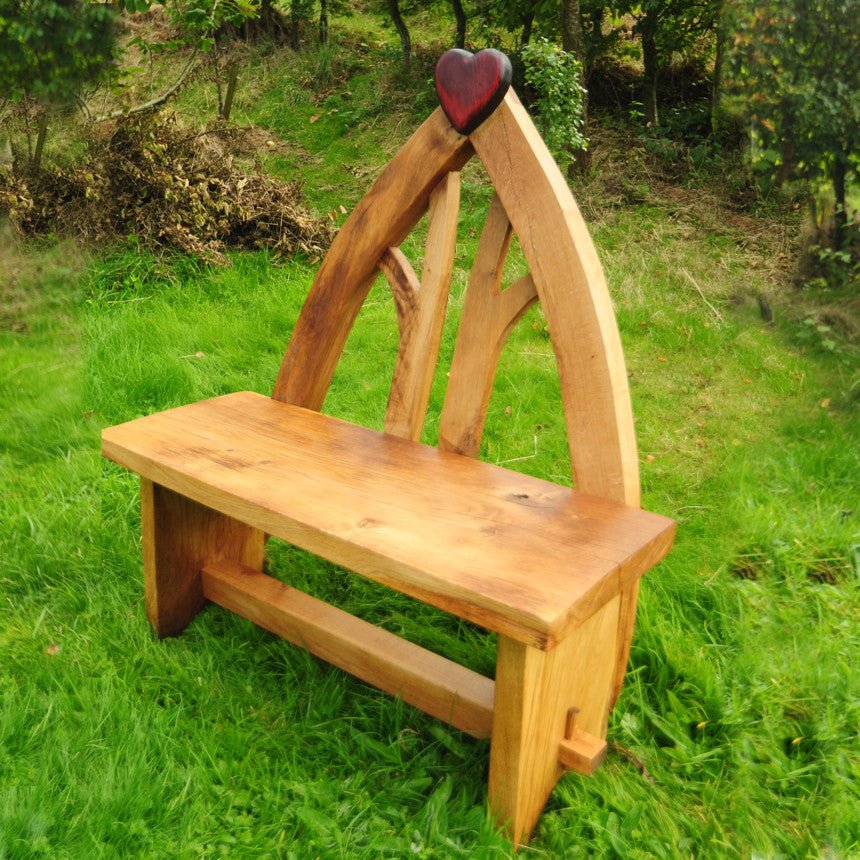
23. Charming Handcrafted Bench with Arched Back and Heart Detail
It’s all about that little red heart. Without it, this is a nicely made, rustic wooden bench. With it, the bench is transformed into something with personality, charm, and a touch of sweet whimsy. It’s a tiny detail that completely changes the emotional tone of the piece. It tells you this wasn’t mass-produced; it was made with care, maybe even with love. That small pop of color and symbolic shape is what elevates the design from simple woodwork to a piece of garden art that makes you smile.
📐 Style Math
You can create this look without being a master woodworker. Find a basic, unfinished pine or cedar bench online or at a home improvement store for $100-$150. Then, find a pre-cut wooden heart shape at a craft store like Michael’s or Joann for a few dollars. Paint the heart with a bright, exterior-grade red paint. Once dry, attach it to the top center of the bench’s backrest with a strong, waterproof construction adhesive. For under $160 and an afternoon of effort, you can capture the same handcrafted, whimsical charm.
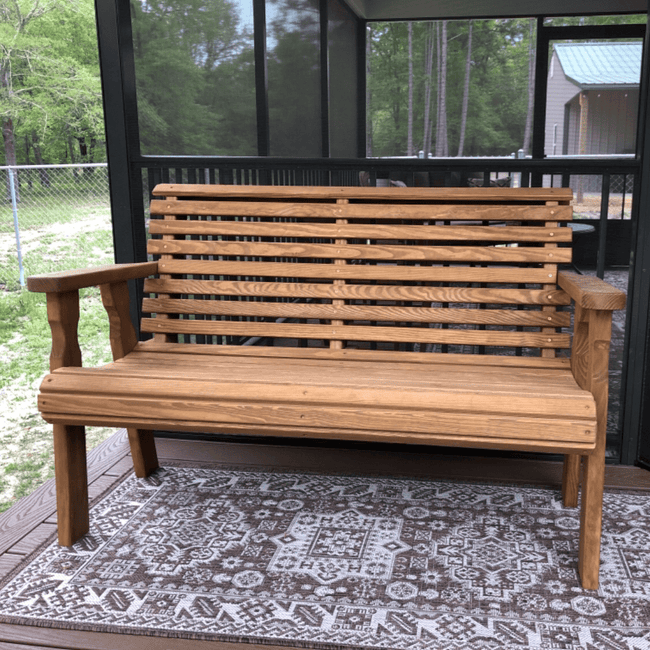
24. Cozy Screened Porch with a Slatted Bench and Patterned Rug
The success of this cozy corner lies in the interplay between the simple and the complex. The wooden bench itself is incredibly simple—clean, straight lines, uniform slatted construction, a basic light brown wood. This simplicity provides the perfect neutral foundation for the star of the show: the ornate, geometrically complex outdoor rug. If the bench were also ornate, the two pieces would fight for attention. But because the bench is so quiet, the rug gets to be the hero. This pairing creates a space that feels balanced, stylish, and relaxed.
🔥 Trending Context
An outdoor rug is the fastest way to define a space and add a layer of comfort and style. Here’s a pro tip for sizing: make sure the rug is large enough that at least the front legs of all your furniture pieces are sitting on it. For a bench like this, you want the rug to extend at least 6-12 inches beyond the ends of the bench and come out far enough in front to feel generous. A rug that’s too small and just ‘floats’ in the middle of the furniture looks awkward and cheapens the whole look. Go bigger than you think you need.
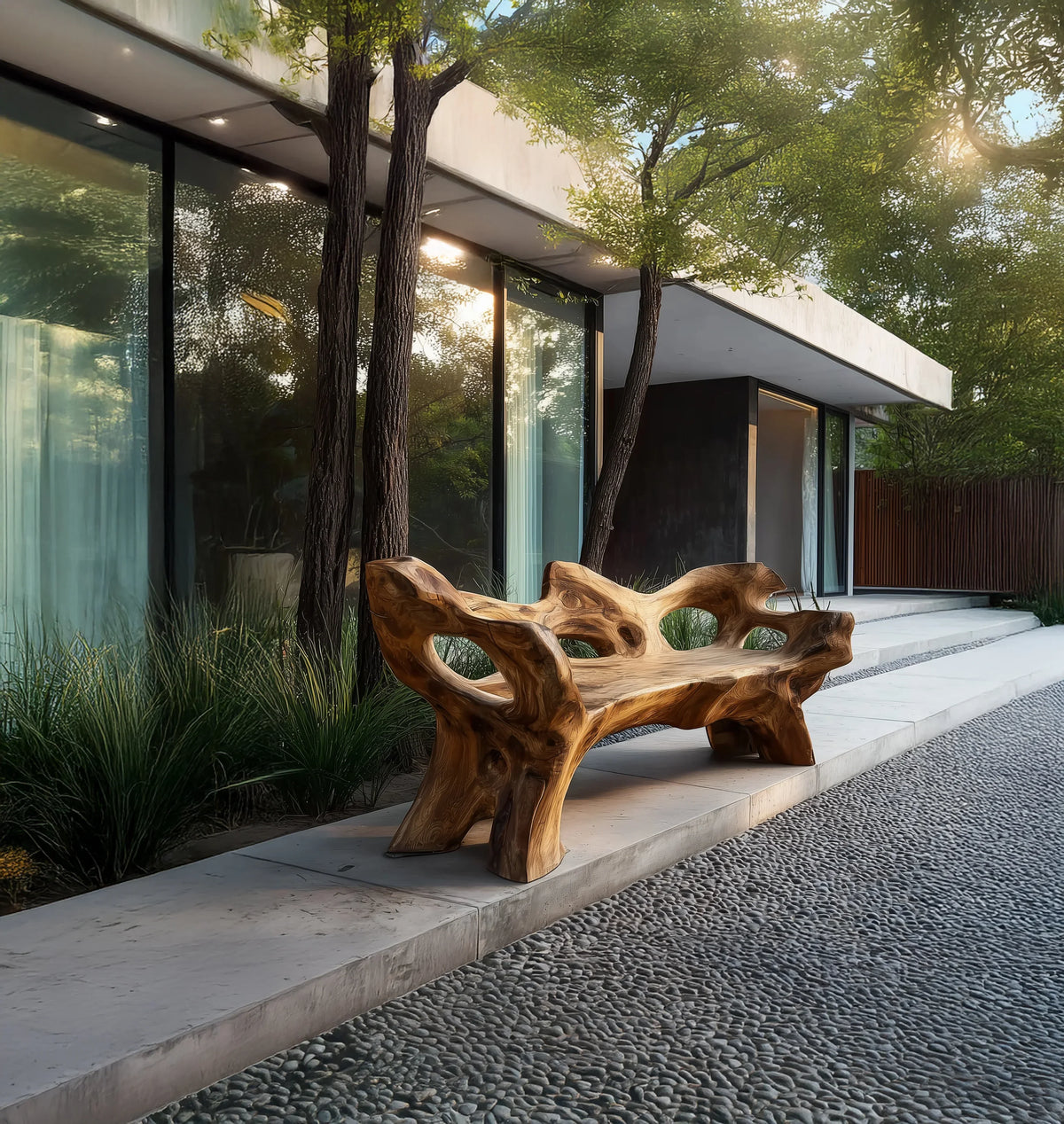
25. Striking Contrast: An Organic Carved Bench Meets Modern Architecture
The single most powerful element in this scene is the high-contrast pairing of the raw, organic bench with the severe, minimalist architecture. The bench is all curves, natural wood, and unpredictable shapes. The building is all sharp angles, glass, and smooth concrete. It’s this direct opposition that creates such a memorable visual dialogue. The bench softens the building, and the building highlights the bench’s sculptural form. Without this stark stylistic contrast, the impact would be completely lost. It’s a bold choice that pays off in a big way.
💡 Designer Tip
A large-scale sculptural bench like this demands a grand setting. This is not an idea for a typical suburban backyard. It works here because it has ample negative space around it and is set against the backdrop of a large, modern building. You need a minimum space of 20×20 feet with a simple, uncluttered background (like a concrete wall or a wide expanse of lawn) to allow the bench’s form to be appreciated. Placing a piece this dramatic in a small or busy space would make it feel cramped and chaotic, completely undermining its artistic power.
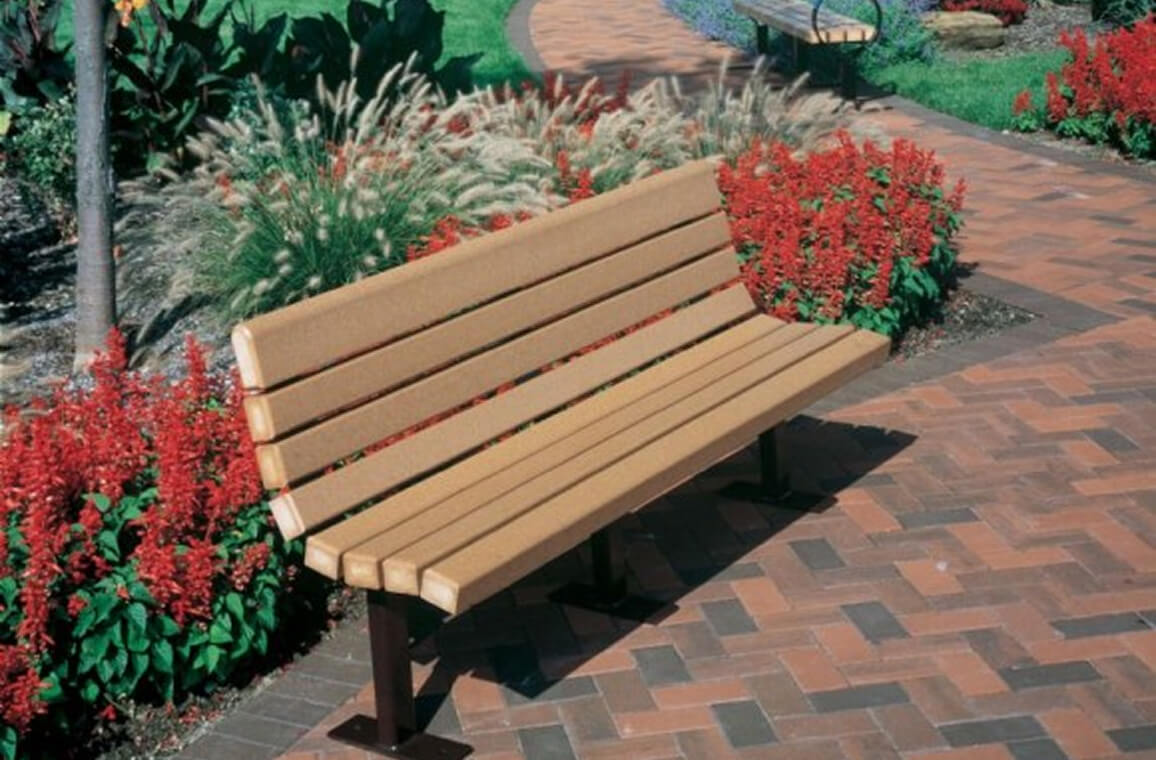
26. Garden Bench with Metal Base on a Herringbone Brick Path
This design works because of its thoughtful repetition of form and color. The herringbone pattern of the terracotta bricks creates a sense of movement and texture on the ground. The simple, linear slats of the light brown bench provide a calm, orderly place for the eye to rest. The dark metal base of the bench ties in with the darker tones in the brickwork, creating a subtle but important visual link. The surrounding green foliage and red flowers then add a soft, natural frame. The result is a composition where every element feels connected. Notice how this brick path adds more warmth than the flagstone in Idea #3.
⚠️ Real Talk
A bench like this from a high-end outdoor furniture store could run $500+. To get this look for less, start with a simple DIY bench top using standard cedar 1x3s, spaced about a half-inch apart. For the base, you can find simple, modern metal bench legs on sites like Etsy or Amazon for around $100-$150. Just search for “metal bench legs U-shape.” Attach the legs to your homemade wooden top, and you have a nearly identical bench for under $200. The key is the contrast between the warm wood slats and the simple, dark metal base.
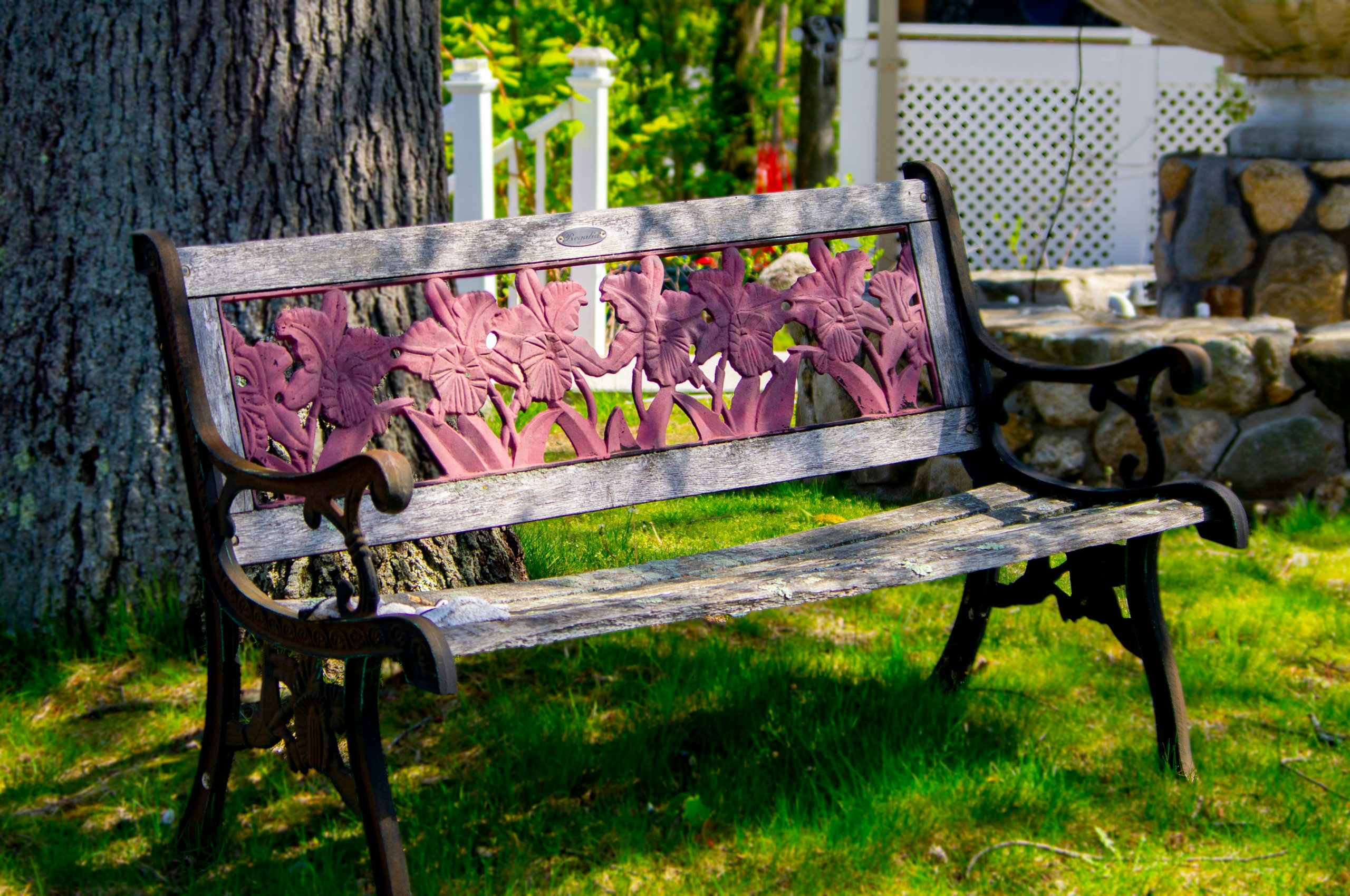
27. Antique Charm: Weathered Wood Bench with a Floral Cast Iron Back
The element that absolutely makes this bench is the decorative cast iron backrest. The weathered wooden slats are nice, but they are a supporting player. It’s the intricate, repetitive floral design and the unexpected pop of faded purple-pink that gives this piece its unique antique personality. It would be a completely different and far less interesting bench without that ornate backrest. It’s a perfect example of how structure and decoration can be one and the same, creating a piece that is as much a garden sculpture as it is a place to sit.
📏 Scale Guide
Want to restore a vintage cast iron bench or give a new one an aged look? Here’s how to get that faded floral finish:
- First, remove any loose rust from the cast iron with a wire brush.
- Spray the entire backrest with a matte black rust-inhibiting spray paint. This is your base coat.
- Once dry, choose your color (like this purple-pink). Lightly spray it over the black, holding the can further away for a less-even coat.
- Before the color coat fully dries (after about 10-15 minutes), take a rag lightly dampened with mineral spirits and gently wipe the raised parts of the floral pattern.
- This technique removes some of the top color, revealing the black underneath and instantly creating a faded, aged patina.
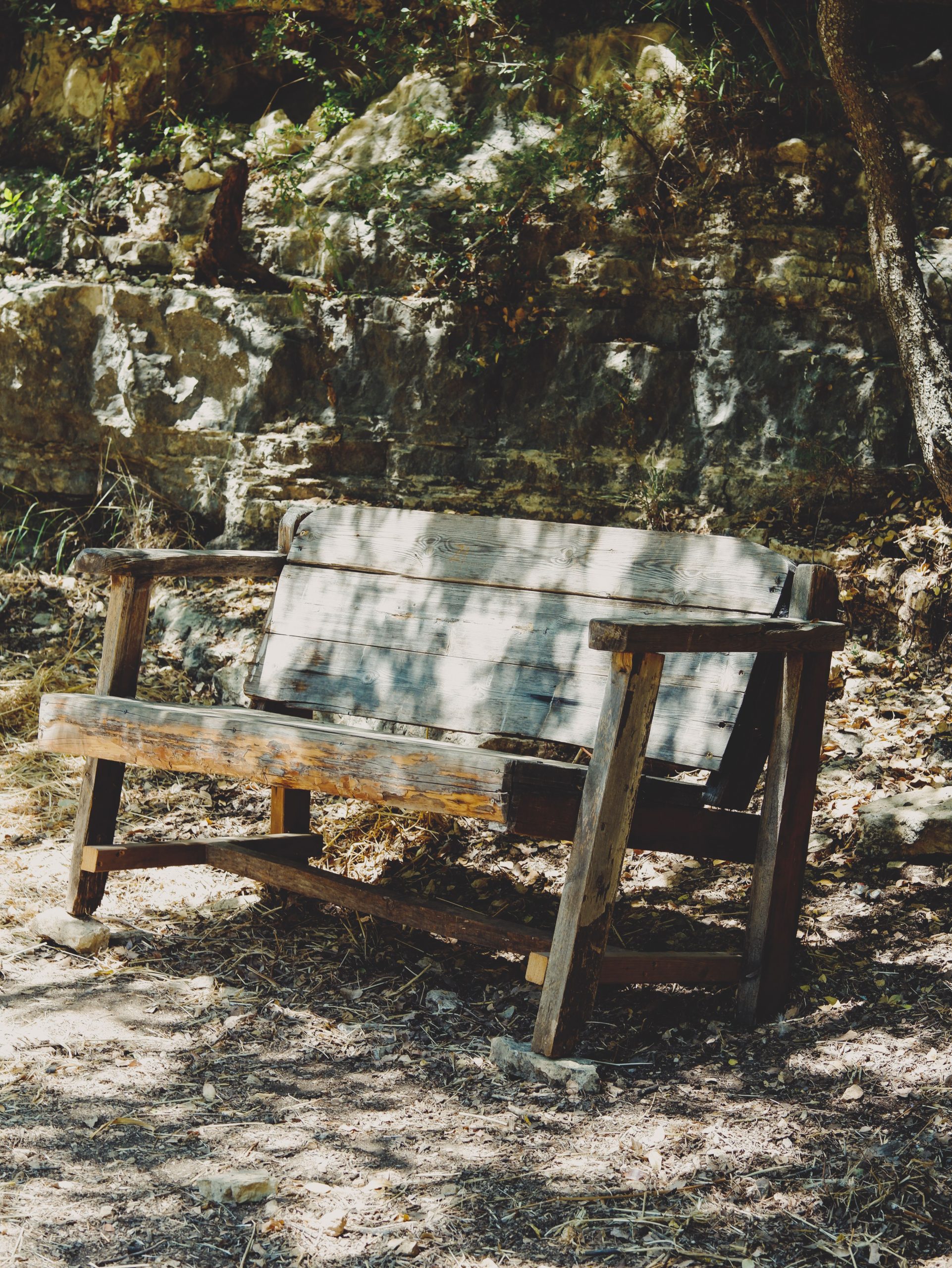
28. A Rustic Perch: Weathered Wood Bench Against a Rocky Backdrop
This bench feels so right in its setting because its texture mirrors its environment. The weathered wood, with its visible planks and graying patina, has the same rustic, unrefined quality as the rocky cliff face behind it. The dappled sunlight filtering through the trees further breaks up the scene, creating a mosaic of light and shadow that ties the whole view together. The bench doesn’t look like it was just placed there; it looks like it belongs there, as if it were crafted from the very same trees and has aged with the landscape over time.
🔧 How-To Brief
A bench made of simple, weathered planks is the epitome of low-maintenance outdoor furniture. There are no delicate finishes to protect, no paint to chip. Its beauty is in its imperfection. The most you’ll ever need to do is give it a scrub with a stiff brush and some water if it develops any surface mildew from being in a damp, shady spot. Otherwise, you can simply let it be. The sun will continue to bleach it, and the rain will continue to age it, and that’s the whole point. This is the perfect choice for someone who wants character without chores.
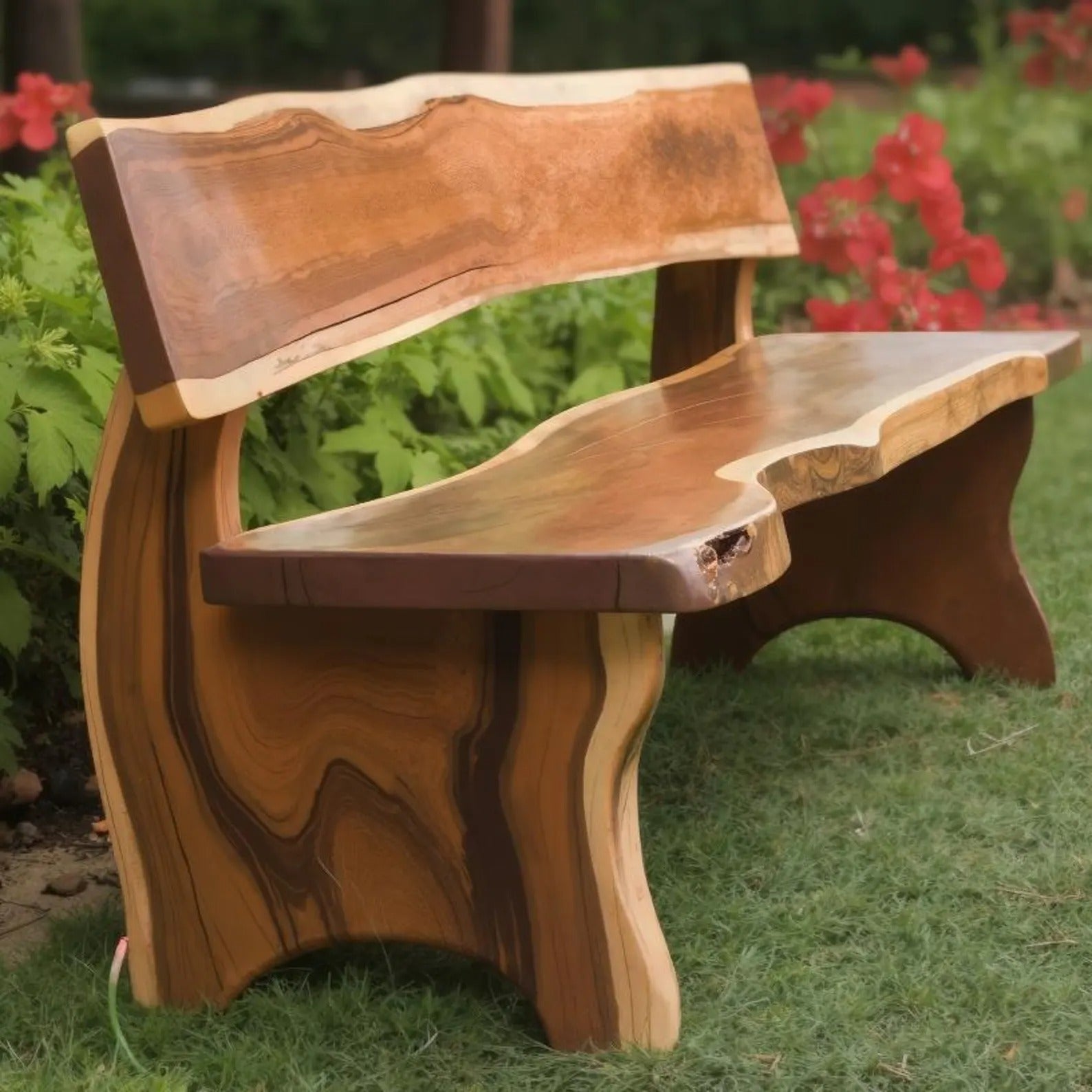
29. Handcrafted Live-Edge Teak Bench with Flowing Curves
The soul of this bench is the uninterrupted sweep of the wood grain. The maker clearly chose this specific slab of wood for the beautiful, flowing patterns that run the entire length of the seat and backrest. The design is intentionally simple—no extra ornamentation, no complex joinery—to ensure nothing distracts from the natural artistry of the wood itself. The curved, live edges of the seat and back further emphasize this organic movement. It’s a piece that invites you not just to sit, but to run your hand along the surface and appreciate the material.
🎯 What Makes It Work
When you have a piece of furniture where the wood grain is the star, the finish is critical. Don’t use a heavy, glossy varnish, as it can create a plastic-like barrier that cheapens the look. Instead, use a penetrating oil finish, like a teak oil or a tung oil. These oils soak into the wood rather than sitting on top of it. They provide protection from the elements while enhancing the natural depth and color of the grain, resulting in a rich, satin sheen that looks and feels like real wood. You’ll need to reapply it once a year to keep it looking fresh.
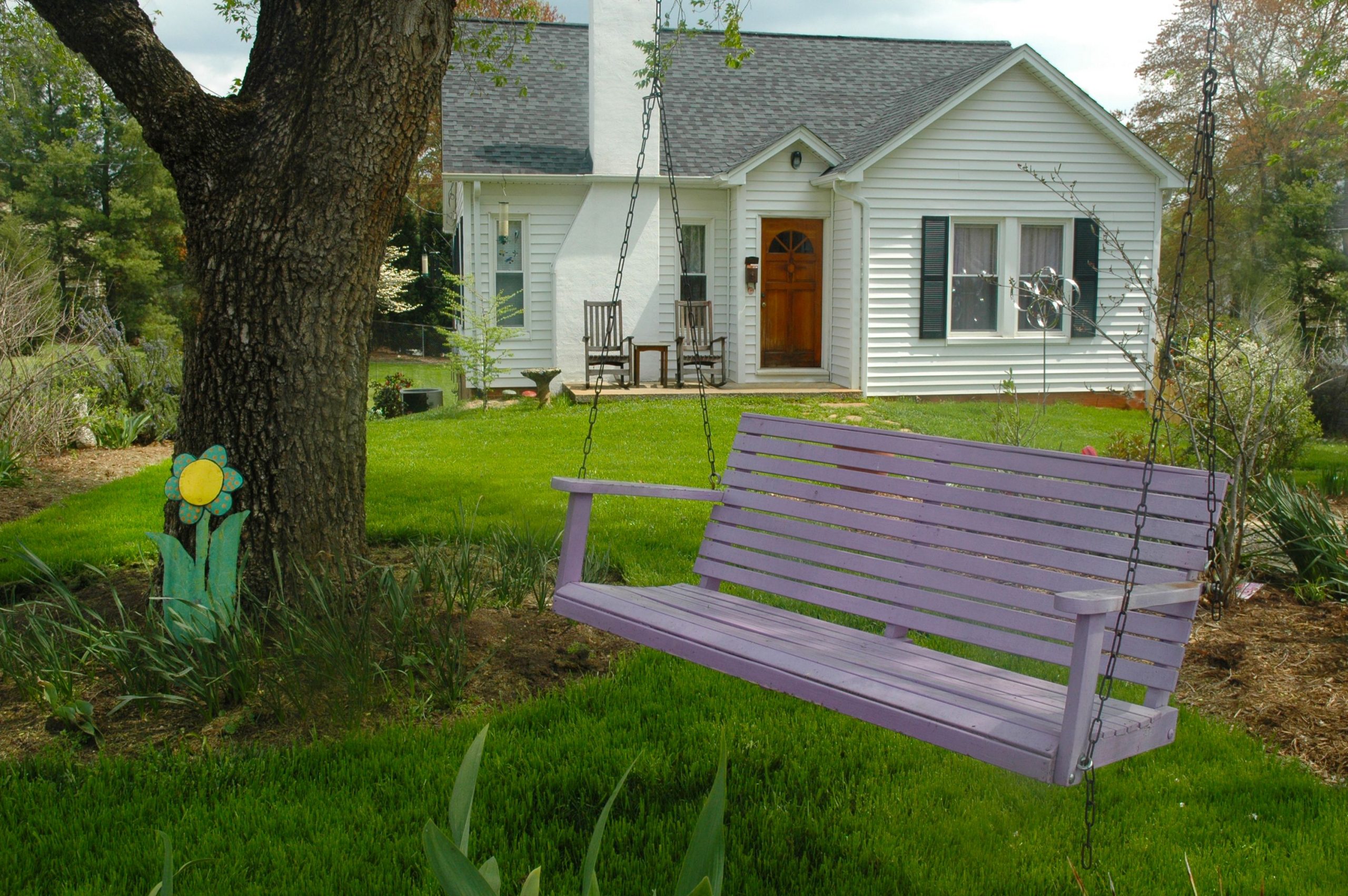
30. Charming Lavender-Painted Porch Swing
The choice of lavender paint is what makes this scene so utterly charming. It’s an unexpected, playful color for outdoor furniture, and it works beautifully against the lush green of the lawn. The color elevates a simple slatted swing from a common backyard feature to a whimsical statement piece. The use of dark metal chains adds a touch of visual weight and contrast, grounding the airy pastel color. It feels sweet and nostalgic, but the clean lines of the swing and the dark hardware keep it from feeling overly sentimental. It’s a look that feels more curated than the antique vibe of Idea #27.
💰 Budget Breakdown
A porch swing looks idyllic, but safety is paramount. You cannot simply hang it from any old tree branch. A mature, healthy hardwood tree is a must, and the limb needs to be at least 8 inches in diameter, with no signs of disease or cracking. The hardware must be heavy-duty; use eye bolts drilled all the way through the limb, not just screwed into it. Even better, hang it from a purpose-built A-frame stand or a structurally sound porch ceiling joist. When in doubt, consult a professional arborist or contractor. The safety of your family and friends is worth it.
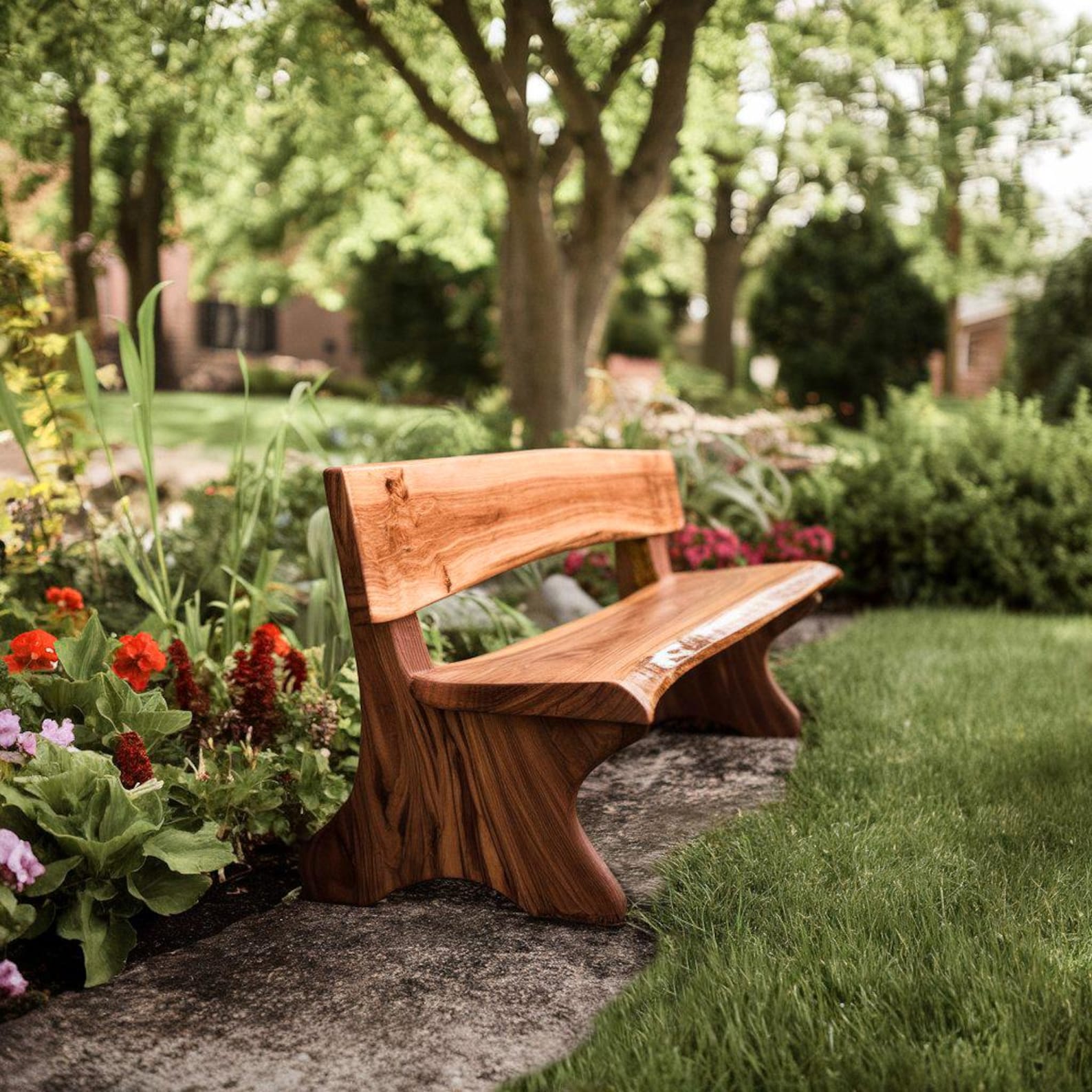
31. Richly Stained Live-Edge Bench in a Vibrant Garden
This lush garden scene is a beautiful composition of color and texture. The formula is: 50% vibrant, living color + 30% rich, dark texture + 20% neutral ground. The deep green lawn and the bright red and purple flowers provide that burst of life. The richly stained, contoured live-edge bench offers the necessary dark, grounding texture. The mottled grey path acts as a neutral stage that allows both the bench and the plants to shine. This balance ensures the bench is a focal point, but not one that overwhelms the beauty of the garden itself.
⭐ The One Thing
A beautiful wooden bench deserves a worthy setting. Before you invest in a stunning piece like this, evaluate its potential home:
- Is the ground level? A live-edge bench is heavy and needs a stable, level surface like a stone path or a well-compacted gravel pad to sit securely without wobbling.
- Will it have breathing room? Don’t crowd a sculptural bench. Ensure you have at least 3 feet of space around it so its beautiful shape can be appreciated from all angles.
- What’s the backdrop? A bench with a dark, rich stain looks best against a lighter or more colorful backdrop, like a green lawn or bright flower bed, which makes its silhouette pop.
Your Perfect Outdoor Perch Awaits
We hope these 31 ideas have sparked some genuine inspiration for your own outdoor space. The right handcrafted bench isn’t just a piece of furniture; it’s a destination for morning coffee, a quiet reading spot, and a witness to conversations with friends. It’s a small project that can completely change how you use and feel about your yard.
Ready to create your own quiet corner? Start by saving your favorites to Pinterest and make a plan to bring your vision to life.