You know that feeling when you finally find the spilled flower pot idea that looks exactly right for your space? That perfect blend of playful whimsy and thoughtful design can stop you mid-scroll. We spent serious time browsing the latest from Terrain, Home Depot, and even local garden centers to bring you only what’s worth your attention this year. Our search covered everything from budget-friendly DIY setups around $50 to more elaborate creations costing upwards of $400.
Inside, you’ll find 28 curated ideas that showcase the best of this trend, from rustic barrels overflowing with annuals to modern bowls spilling colorful succulents. What makes this look so popular in 2026 is a collective move towards gardens that tell a story, creating miniature, magical scenes right in our own yards. And stay until the end — we break down the most common mistakes that can ruin these looks. 📌 Pin this guide for later — your future self will thank you when it’s time to actually do this.
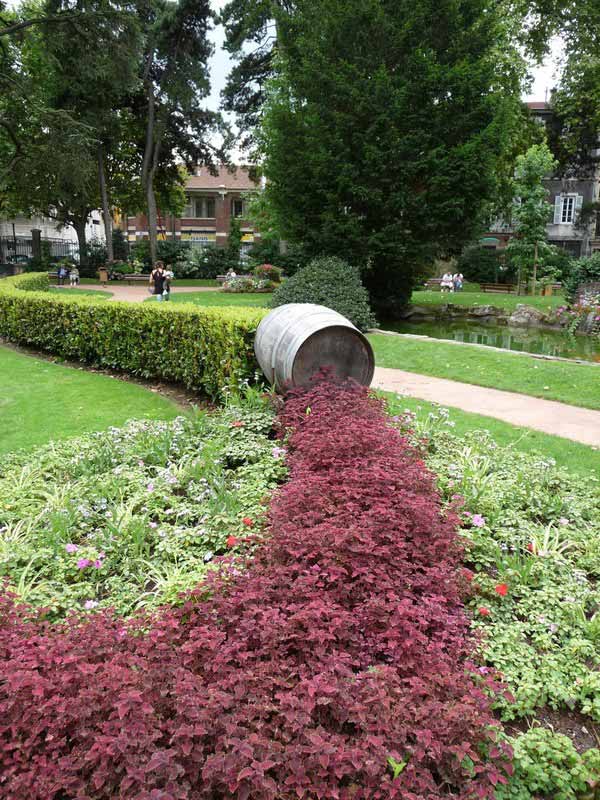
1. A Wine Barrel Spilling a River of Red Foliage
There are two powerful design principles making this look so effective. First, the intense color contrast between the deep red foliage and the vibrant green lawn creates a dramatic focal point that immediately draws the eye. It’s a bold choice that pays off. Second, the use of a large, rustic object—the wine barrel—adds a sense of history and narrative. It’s not just a planter; it’s a prop in a story, turning a simple garden bed into a scene of beautiful, intentional overflow.
💡 Designer Tip
While this is a stunning display, let’s be honest about the upkeep. The “spilled” foliage, likely a vibrant Coleus, will require consistent pruning to maintain that perfect, liquid-flow shape and prevent it from becoming leggy or sparse. You’ll also need to be vigilant about weeding the edge where the red meets the green groundcover to keep the line crisp. In lower light conditions, the red color may not be as intense, so choosing a spot with at least a few hours of direct sun is key to keeping it this vivid.
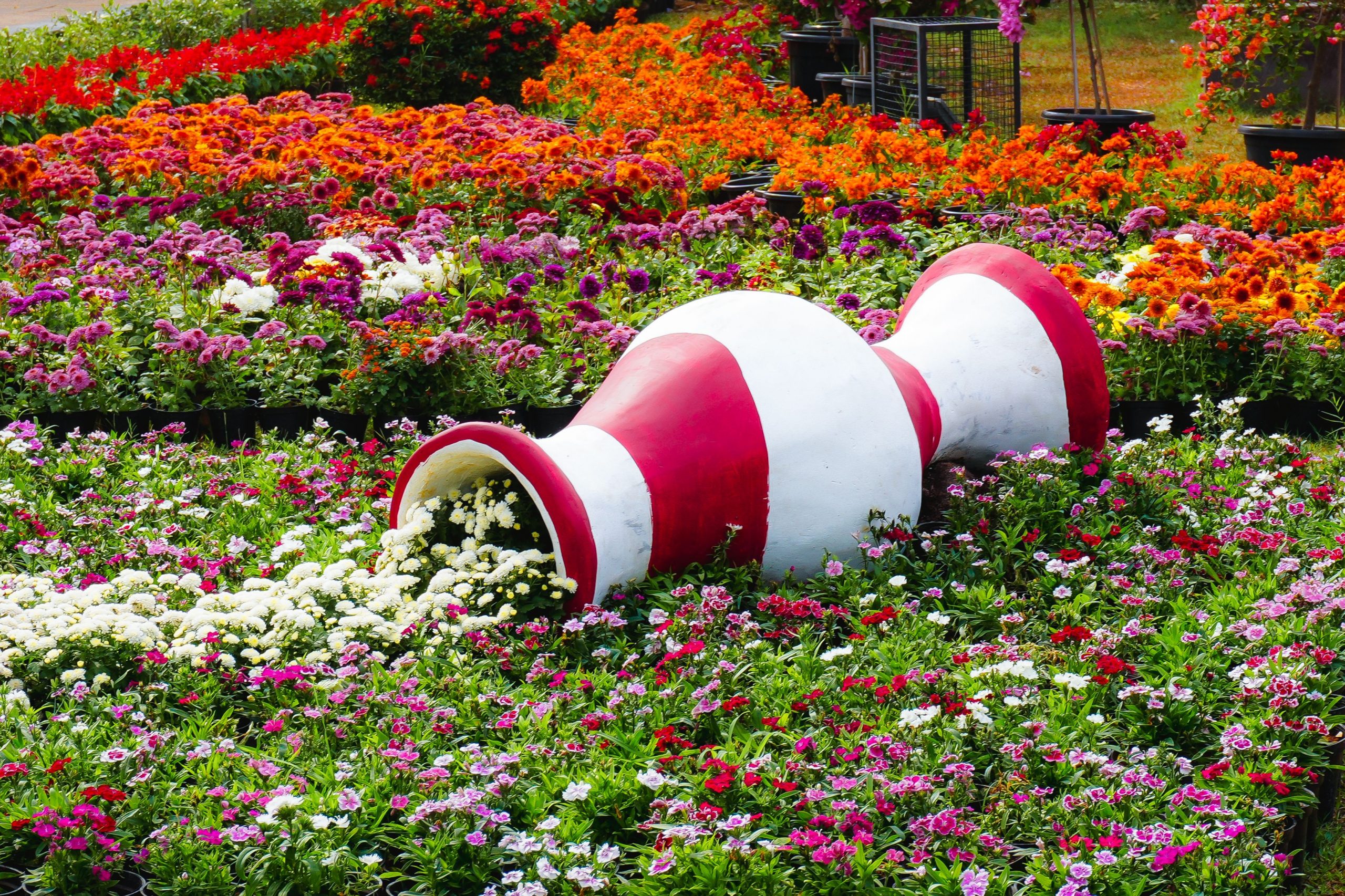
2. A Cheerful Tumble of White Flowers from a Striped Pot
To make a spilled pot feel truly integrated, tuck the pot’s opening about 3-4 inches *into* the existing garden bed mulch or soil. This simple trick makes it look like the spill is flowing from within the garden itself, not just sitting awkwardly on top. Use the same top dressing from your garden bed to blur the lines around the pot’s edge, which helps sell the illusion that it has been there for ages and the flowers have naturally taken over.
⚠️ Real Talk
This look is all about a simple but effective formula: 40% bold, patterned container + 60% monochromatic floral spill. Here, the red-and-white stripes provide the graphic punch, while the mass of pure white flowers creates the visual “flow” and keeps it from feeling too chaotic. You could easily adapt this: try a cobalt blue patterned pot with the same white flowers, or keep the striped pot and switch to a spill of all-blue lobelia for a different yet equally striking effect. The ratio is the key.
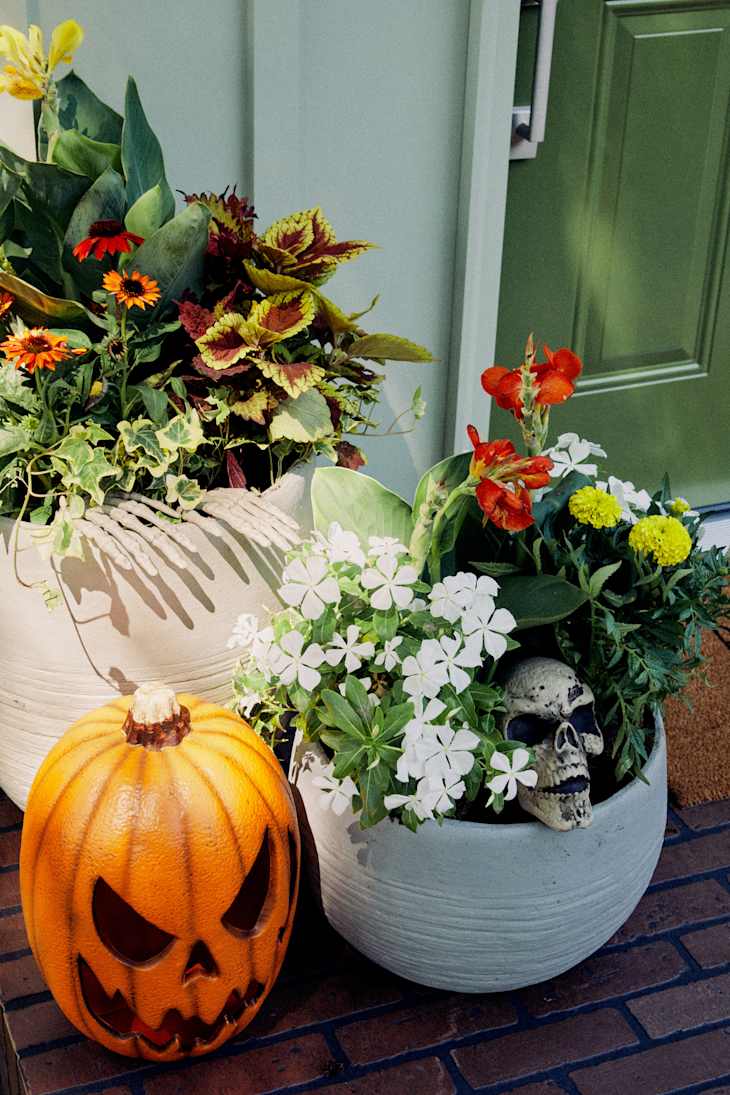
3. Festive Autumn Planters with a Spooky Twist
You don’t need to spend a fortune to create this fun, seasonal display. The planters themselves are the main investment, but the decorative elements can be sourced affordably. Check out stores like Target or Michael’s for foam pumpkins and skulls right after Halloween, when they are heavily discounted for next year. A single large bag of assorted mums from a garden center, often under $30, can be split between the pots to create that full, overflowing look. The key is to pack the plants in tightly for instant impact.
📐 Style Math
There’s a reason your Pinterest feed is filling up with outdoor seasonal decor that goes beyond a simple wreath. We’re increasingly treating our patios, porches, and garden beds as extensions of our indoor living spaces. This thoughtful, layered approach for autumn—complete with characters like skulls and pumpkins—shows a desire to celebrate the season in a more immersive way. It’s about creating a specific mood and telling a small story, and this trend has real staying power because it’s so personal and fun.
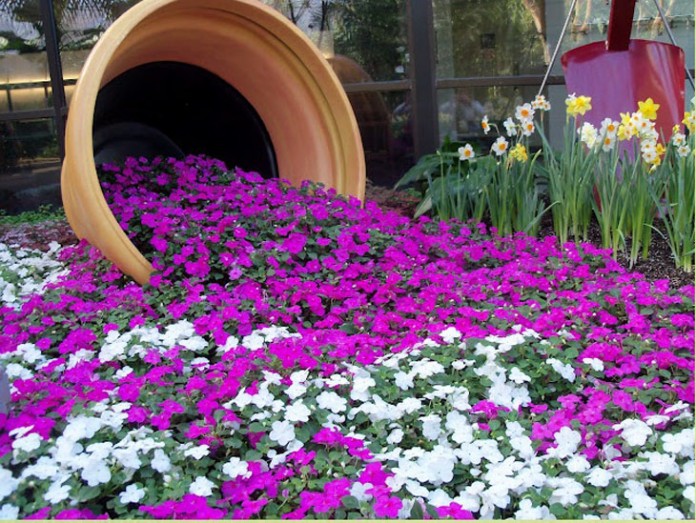
4. Oversized Terracotta Pot with Cascading Magenta and White Flowers
What makes this design so successful is its brilliant use of color and form to create a sense of movement. The vibrant magenta acts as the primary “liquid,” establishing a clear visual path from the mouth of the pot. The scattered white flowers are then used as “splashes” or “foam,” breaking up the solid color and adding a layer of detail that makes the spill feel more dynamic and realistic. The contrast with the tall, vertical daffodils in the background also helps to frame the scene perfectly.
🔧 How-To Brief
This idea works best in a medium to large garden bed where it has room to breathe. You need a minimum area of about 4 feet by 6 feet for the “spill” to feel substantial and not cramped. The oversized pot is key; a small pot would lose its impact. This concept is perfect for a corner of a yard or as a feature at the end of a pathway. For smaller spaces, consider the more contained succulent version shown in Idea #16, which provides a similar whimsical feeling on a tighter scale.
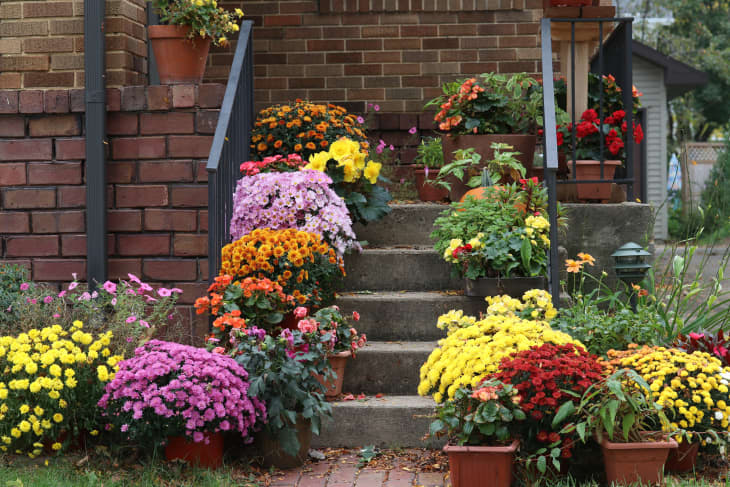
5. Concrete Steps Adorned with Mums and Begonias
Recreating this lush, multi-level autumn display is surprisingly achievable. The key is buying grower’s pots in bulk and using a few nicer terracotta ones as focal points. This look is a masterclass in affordable abundance.
- Main Plants (Mums, Begonias): $70 – $150
- Feature Terracotta Pots (2-3): $60 – $120
- Basic Plastic Pots (10-15): $40 – $80
- Decor (Lantern): $20 – $40
- TOTAL: $190 – $390
- Budget alternative: Focus on just one or two steps and use mums exclusively, which are often sold in multi-packs for a lower cost per plant.
📏 Scale Guide
When arranging pots on steps, always place the tallest, most voluminous plants on the lower steps and the shorter, more compact ones on the upper steps. This prevents the display from looking top-heavy and ensures you can still see the distinct layers of color and texture from a distance. It also keeps the walkway safer by preventing larger plants from obstructing the path at eye level. Aim for a triangular overall shape for the most professional look.
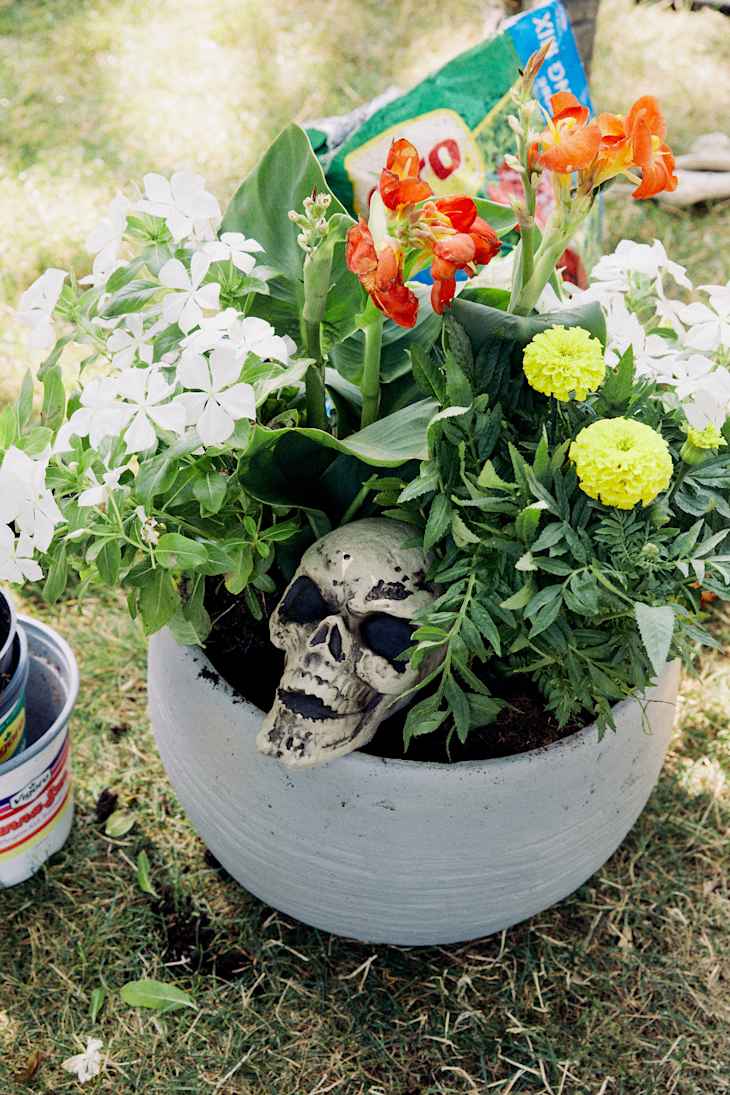
6. Concrete Planter with Skull and Mixed Flowers
The single element that makes this planter memorable is the cheeky placement of the decorative skull. Without it, this is a perfectly nice arrangement of colorful flowers in a modern pot. With the skull, it tells a story. It introduces a touch of humor and personality, transforming the planter from a simple decoration into a conversation starter. It’s a reminder that good design doesn’t always have to be so serious; a little bit of playful spookiness can go a long way.
🔥 Trending Context
While this planter is full of life, be prepared for some plant-specific care. The orange canna lilies are sun-lovers and will need consistent watering to thrive, while the white vinca is a bit more drought-tolerant. The marigolds will benefit from deadheading—pinching off spent blooms—to encourage continuous flowering throughout the season. Because of these mixed needs, this planter is best for someone who enjoys the daily ritual of tending to their garden, rather than a “set it and forget it” type.
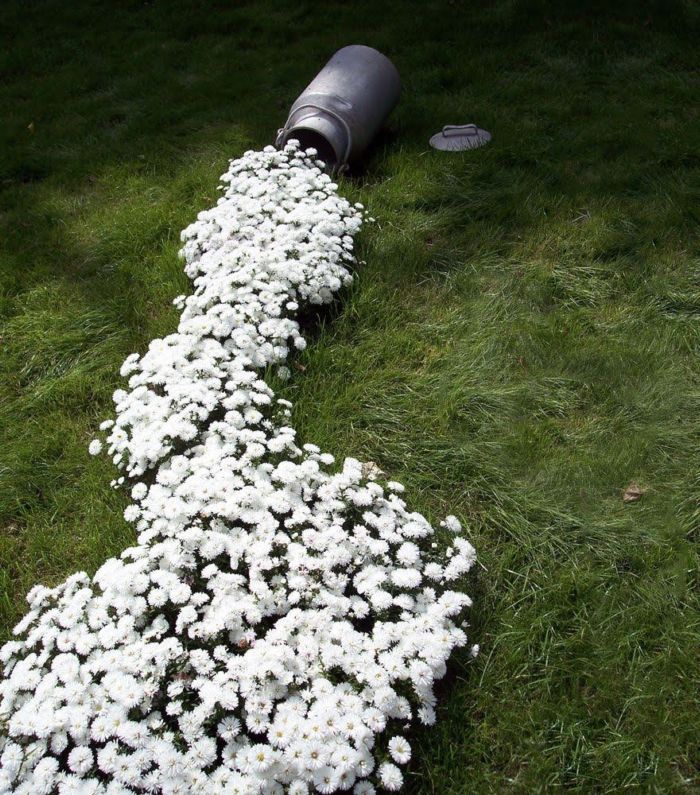
7. An Old Milk Can Spilling a Stream of White Flowers
This composition is pure magic because of its masterful use of negative space and a single, flowing line. The wide, green lawn acts as a simple canvas, allowing the whimsical “spill” of white flowers to become the undeniable hero of the scene. The winding, river-like path of the flowers feels natural and effortless. Placing the detached lid nearby is a crucial finishing touch, adding to the narrative that this was a happy accident, rather than a meticulously planned garden feature. Compare this rustic charm with the more formal barrel in Idea #25.
✅ Before You Start
You don’t need an antique milk can to get this vibe. Check Facebook Marketplace or local thrift stores for old watering cans, metal buckets, or even vintage-style churns for under $20-$30. For the “spill,” a few flats of sweet alyssum or white lobelia will provide that carpet of tiny white flowers for a fraction of the cost of larger, more established plants. The entire project could easily come in under $50 if you’re a savvy shopper.
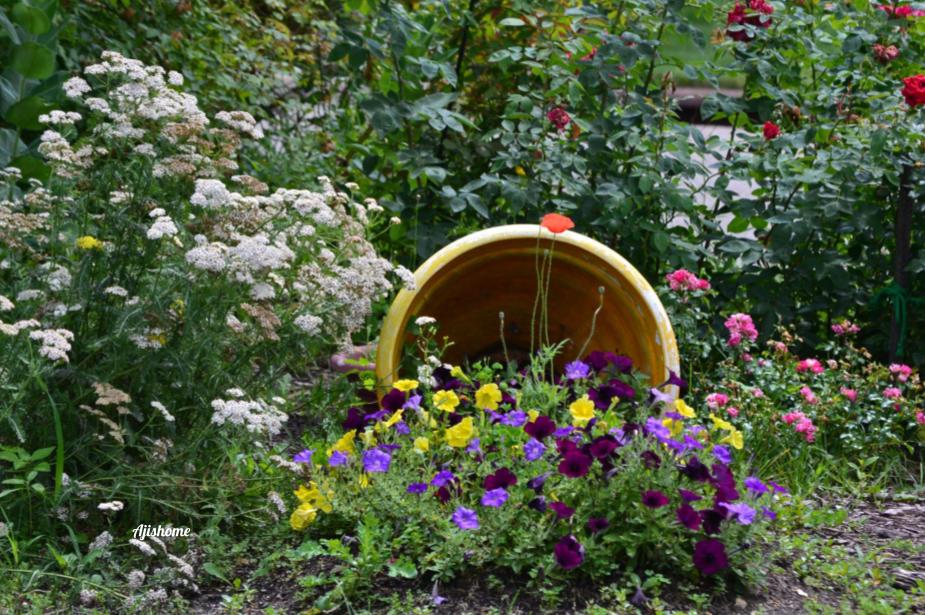
8. Spilled Yellow Pot with Petunias and a Red Poppy Accent
The success of this arrangement lies in a “Complementary Color” formula. Here, it’s approximately 70% purple and yellow flowers + 20% lush green foliage + 10% surprise accent color. The purple and yellow are opposites on the color wheel, so they naturally make each other pop. The single orange-red poppy is the 10% surprise—it doesn’t match, which is exactly why it works, preventing the scheme from feeling too predictable and adding a designer touch.
🎯 What Makes It Work
A beautiful arrangement like this requires a bit of a reality check on longevity. Petunias are annuals, meaning they will provide stunning color for one season but won’t come back next year. The poppy has an even shorter bloom time. This is a high-impact, short-term display. To keep it looking its best, you’ll need to deadhead the petunias regularly. If you love the look but want something more permanent, you could try recreating it with perennial groundcovers, though the color burst might be less dramatic.
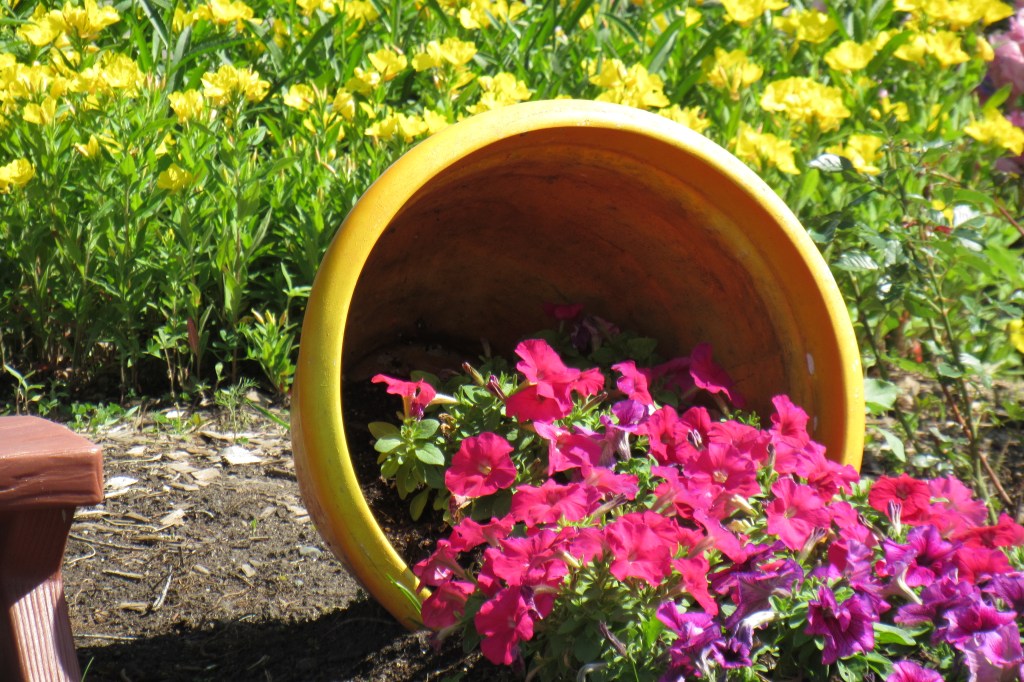
9. Tilted Yellow Pot Creates a Cascade of Pink and Purple Blooms
For a truly natural-looking spill, create a shallow, winding trench (only 2-3 inches deep) where you want your flowers to flow. Plant directly into this trench. This slight recess helps contain the mulch or soil, creates a defined edge, and makes the flowers look like they are emerging from the ground rather than placed on top of it. It also helps channel water directly to the roots of the spill plants, which can be a huge benefit during dry spells.
🧹 Maintenance Reality
This design works so well because of the clever use of color theory. The bright yellow pot provides a warm, sunny base, while the cool tones of the pink and purple flowers create a vibrant contrast. This is known as a split-complementary color scheme, and it’s almost always a winner. The lush green foliage in the background acts as a neutral backdrop, making the yellow and purples appear even more saturated and lively. It’s a color combination that feels both intentional and joyfully energetic, much like the similar palette in Idea #22.
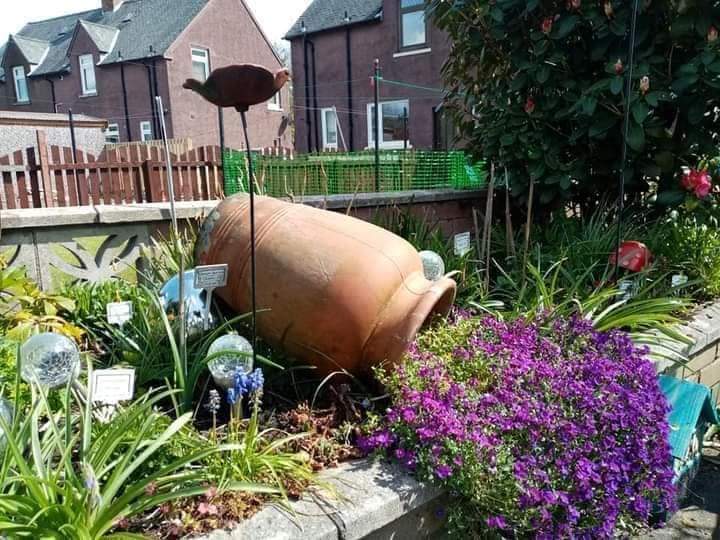
10. Terracotta Pot Spilling a Stream of Purple Flowers
The single element that elevates this from a simple spilled pot to a piece of garden art is the inclusion of the spherical glass ornaments. These “bubbles” reinforce the illusion of liquid flowing from the pot, adding a touch of magic and catching the light in a beautiful way. Without them, it’s a lovely floral display. With them, it’s a whimsical story. It shows a commitment to the concept that makes the entire scene feel more deliberate and enchanting. A similar look with different flowers can be seen in Idea #18.
💸 Get This Look For Less
This idea is ideal for a raised garden bed or a berm where the “spill” has a gentle slope to flow down. A flat surface wouldn’t do it justice. The minimum practical space for this would be about 5 feet long by 3 feet wide to allow the stream of purple flowers to look generous. The scale of the pot is also important—it should be large enough to look like it *could* contain the entire river of flowers, which helps the illusion. A 24-inch diameter pot is a good starting point.
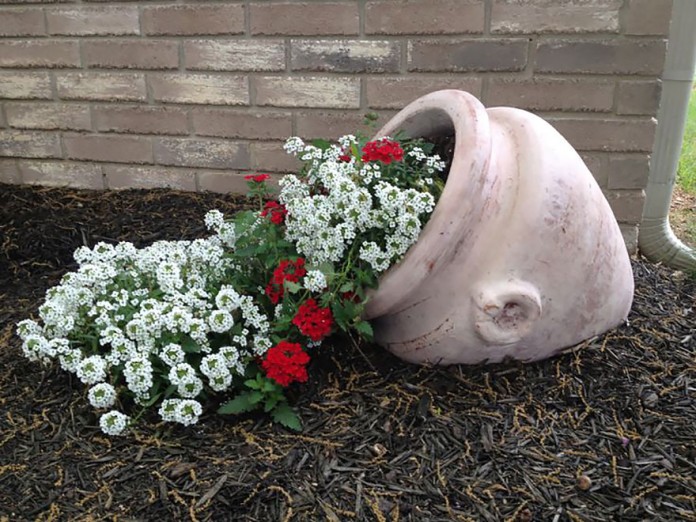
11. Weathered Terracotta Pot Spilling White and Red Flowers on Mulch
This is a gorgeous look, but mulch management is a real factor. The dark brown mulch provides a beautiful, rich contrast for the flowers, but the tiny white Alyssum-like flowers will inevitably drop their petals, creating a confetti effect that can look messy over time. Furthermore, keeping a clean line between the flower “spill” and the surrounding mulch will require careful weeding and occasional refreshing of the mulch to stop it from mixing in with the plants. This is a great example of getting the plant choice right — something we cover in our common mistakes section.
⭐ The One Thing
Before you commit to building your own version of this charming look, run through this quick checklist to ensure success:
- Have you chosen plants that will thrive in your specific light conditions? Both Alyssum and Verbena prefer full sun.
- Is your chosen spot well-drained? These annuals hate “wet feet” and will rot in soggy soil.
- Do you have enough plants? You’ll need at least 3-4 small plants to create a spill that looks substantial from a 12-inch pot.
- Is your pot weathered? A brand-new terracotta pot won’t have the same rustic charm. You can speed up the aging process by brushing it with yogurt!
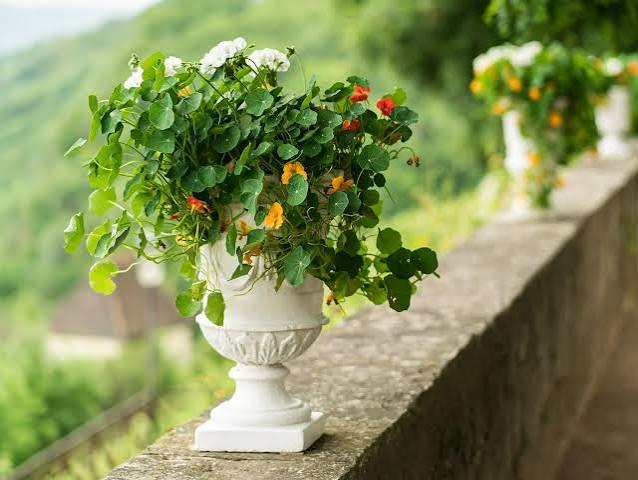
12. Lush Cascading Flowers in a Window Box
The secret to a lush, overflowing window box or hanging basket is the “thriller, filler, spiller” method. The “thriller” is a tall, upright plant in the center (like a geranium). The “filler” are mounded plants that fill the middle (like petunias). The “spillers” are the cascading plants that trail over the edge (like calibrachoa or sweet potato vine). Plant them much closer together than you would in a garden bed—you want them to be slightly crowded to achieve that abundant look right from the start.
💰 Budget Breakdown
An arrangement this dense and beautiful requires a serious commitment to watering. A hanging basket or window box, exposed to sun and wind on all sides, can dry out in a matter of hours on a hot summer day. You will likely need to water it thoroughly every single day, sometimes even twice. If you travel frequently or are prone to forgetting, this might not be the right project for you unless you install a drip irrigation system on a timer. Self-watering planters can help, but they still need to be filled regularly.
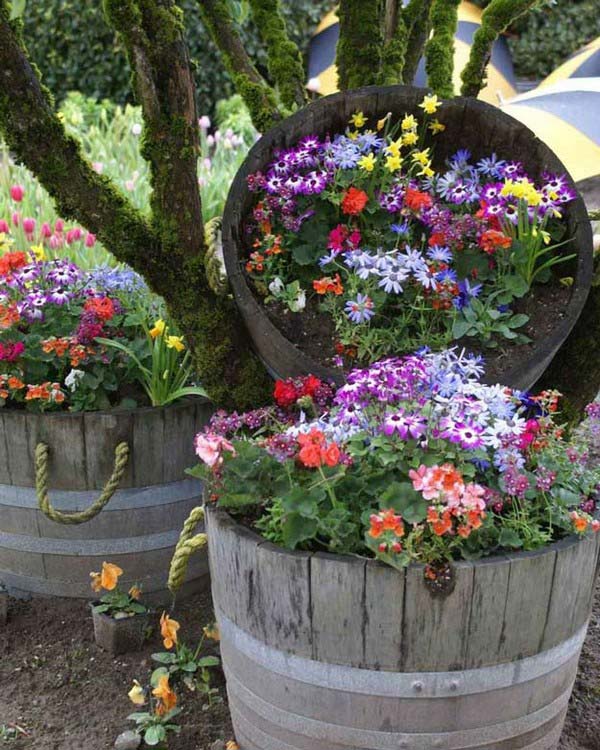
13. Colorful Flower Spill from Rustic Wooden Barrels
The genius of this design is the layering effect, both in terms of height and color. By having one barrel upright and the other tilted, it creates immediate visual interest and depth. The flowers aren’t just on one level; they cascade down, drawing the eye through the entire composition. The wild mix of colors works because it’s unified by the consistent rustic texture of the wooden barrels and the natural, mossy background. It feels intentionally chaotic and abundant.
💡 Designer Tip
Getting this vibrant, rustic look involves investing in a few key pieces, but the floral bill will be the main component due to the sheer volume.
- Wooden Barrels (2): $150 – $300 (Newer, from a garden store)
- Assorted Annual Flowers (flats): $100 – $200
- Potting Soil & Compost: $40 – $60
- TOTAL: $290 – $560
- Budget alternative: Search for used wine or whiskey barrels on Facebook Marketplace ($50-$80 each) and fill them with perennial groundcovers that will spread over time, reducing the annual plant cost.
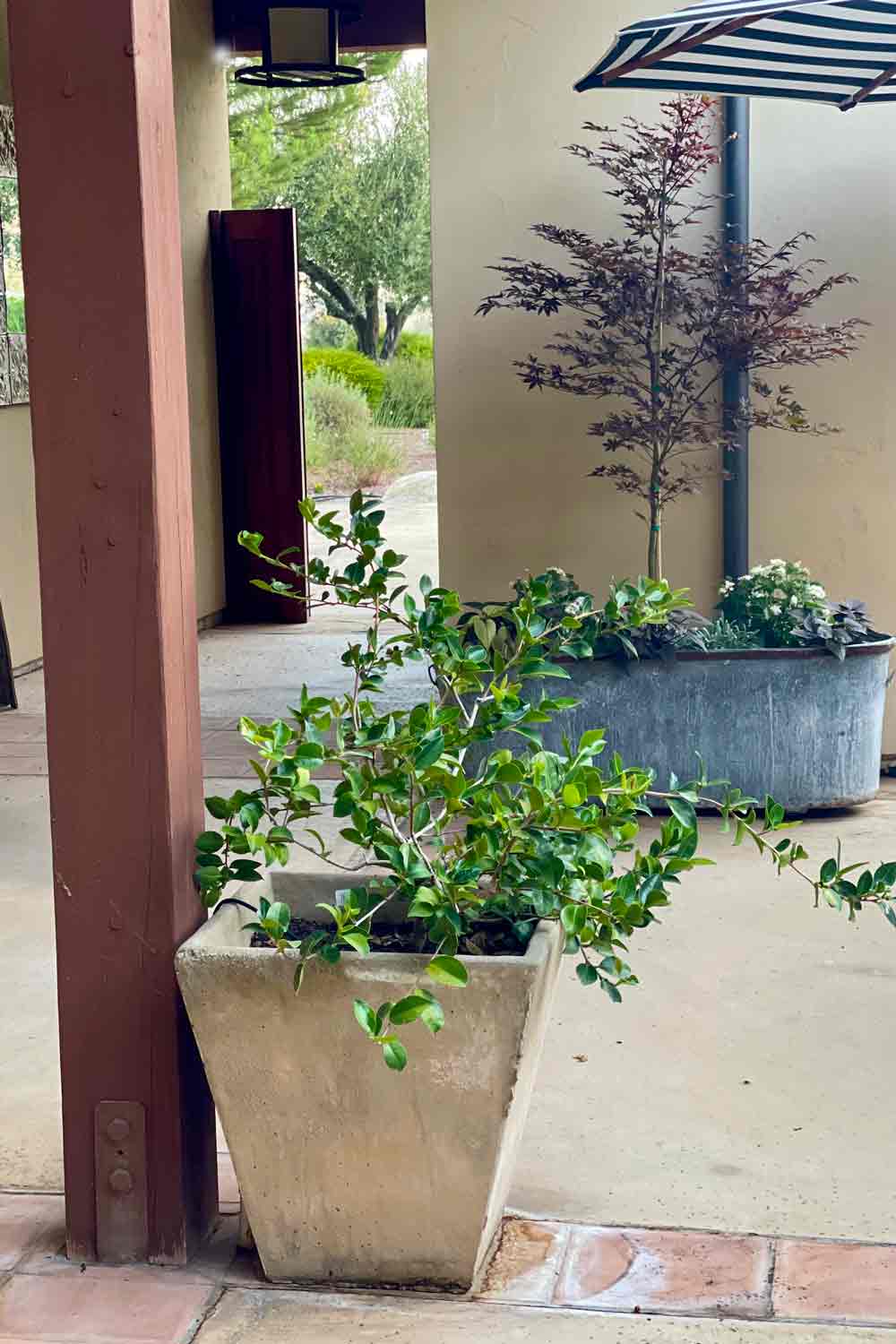
14. Tapered Concrete Planter with Cascading Greenery
This modern, earthy look follows a minimalist formula: 50% structural container + 40% monochromatic foliage + 10% architectural detail. The tapered concrete planter provides the strong, geometric form. The single species of vibrant, cascading green plant offers texture and life without fussy colors. The final 10% comes from the clean lines of the wooden beam and the single row of red tiles—small details that ground the planter and tie it to the surrounding architecture. It’s a very controlled, intentional design.
⚠️ Real Talk
Concrete planters are fantastic for their modern aesthetic and durability, but they are incredibly heavy. Position this planter *before* you fill it with soil and plants. Once full, it will be a major effort to move. Also, concrete can leach lime into the soil, raising the pH over time. For most plants, this isn’t a major issue, but if you’re planting acid-loving species, you may want to use a plastic liner inside the concrete pot to create a barrier and maintain the proper soil chemistry.
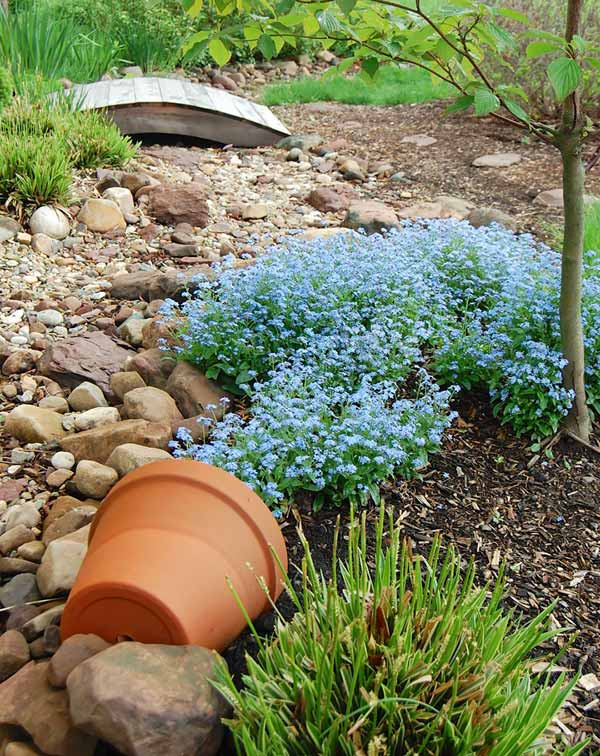
15. Terracotta Pot Spilling Blue Forget-Me-Nots onto a Rock Bed
that makes this idea truly special is the choice of a single, delicate flower type—the forget-me-nots. Instead of a riot of different colors and textures, the uniform sea of brilliant blue creates a powerful visual statement. It reads like a literal pool of water that has spilled from the pot, making the whimsical concept feel more believable and serene. Using a flower with such a classic, storybook name only adds to the charm. The simplicity is what makes it so striking.
📐 Style Math
Want to create this charming forget-me-not spill? It’s easier than it looks. Here’s a quick guide for this weekend project:
- Position the Pot: Lay your terracotta pot on its side, nestling it firmly against larger rocks so it won’t roll away. Dig it into the soil slightly.
- Prepare the Soil: Rake the area of the “spill” and amend the soil with a little compost.
- Define the Shape: Pour a small amount of soil out of the pot’s mouth to create the start of your spill.
- Plant the Flowers: Gently place your forget-me-not plants, starting from inside the pot’s rim and flowing outwards in a gentle, curving shape.
- Mulch and Water: Fill in any gaps with your surrounding mulch or rock to blend the edges, and water thoroughly.
This project should take about 1-2 hours and cost around $40 for the plants and a bag of mulch.
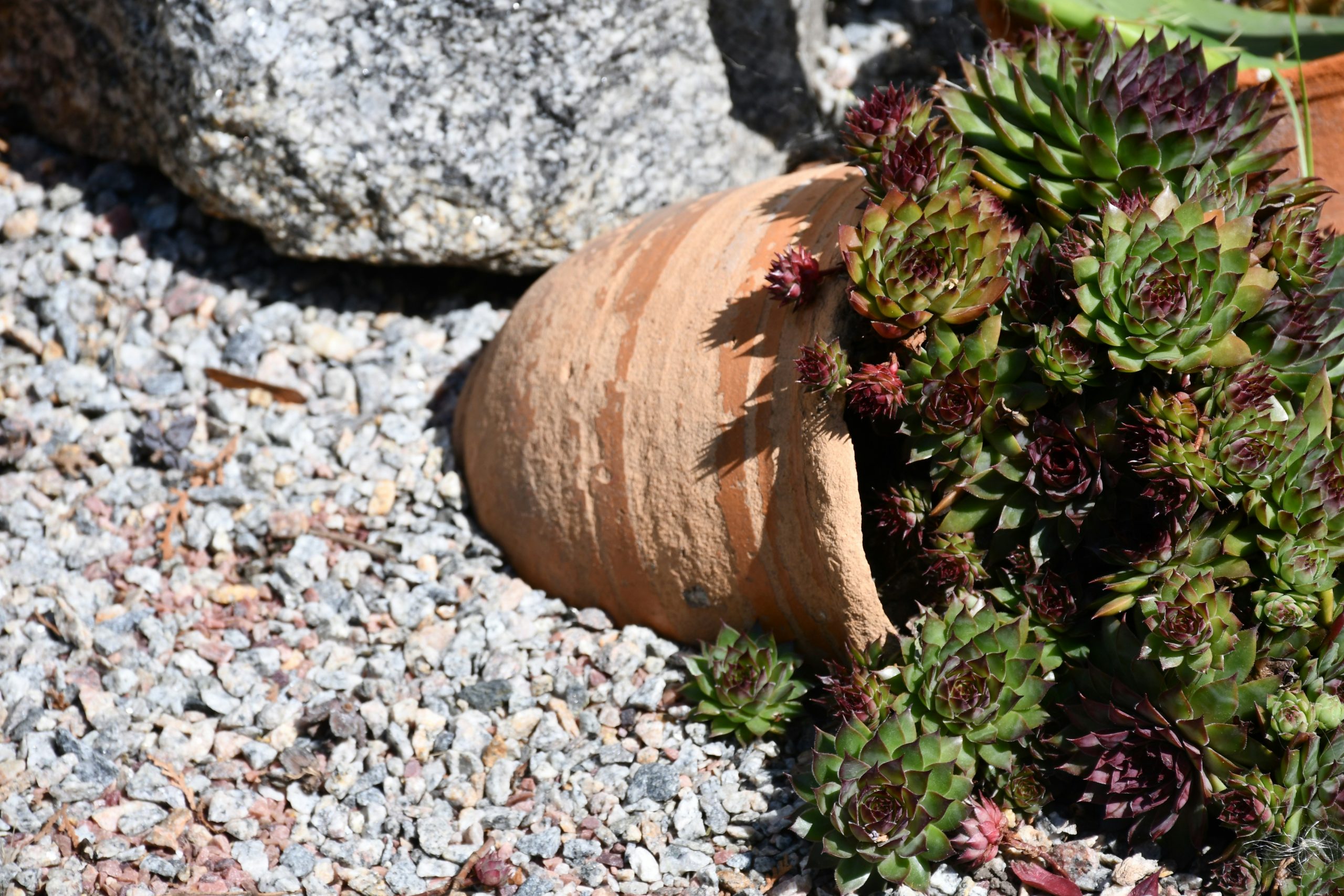
16. Terracotta Pot Spilling Green and Maroon Succulents on Gravel
This design is a masterclass in texture. The contrast between the smooth, rounded forms of the succulents and the sharp, irregular shapes of the gravel creates a rich visual and tactile experience. The color palette is equally smart; the warm terracotta of the pot is a perfect complement to the cool greens and deep maroons of the plants. It feels balanced and harmonious because it pulls from a natural, desert-inspired palette. This is a much calmer and more modern take than the floral spills, like the one in Idea #4.
🔧 How-To Brief
Succulents are famously low-maintenance, but “low” doesn’t mean “no.” The biggest mistake you can make with a design like this is overwatering. The pot and the gravel bed must have excellent drainage, or the succulent roots will rot. In very hot climates, the terracotta pot and the surrounding gravel can get extremely hot, potentially scorching the plants. This arrangement will thrive on a bit of neglect, but it’s not completely indestructible. Also, keeping the gravel free of fallen leaves and debris will be a regular task.
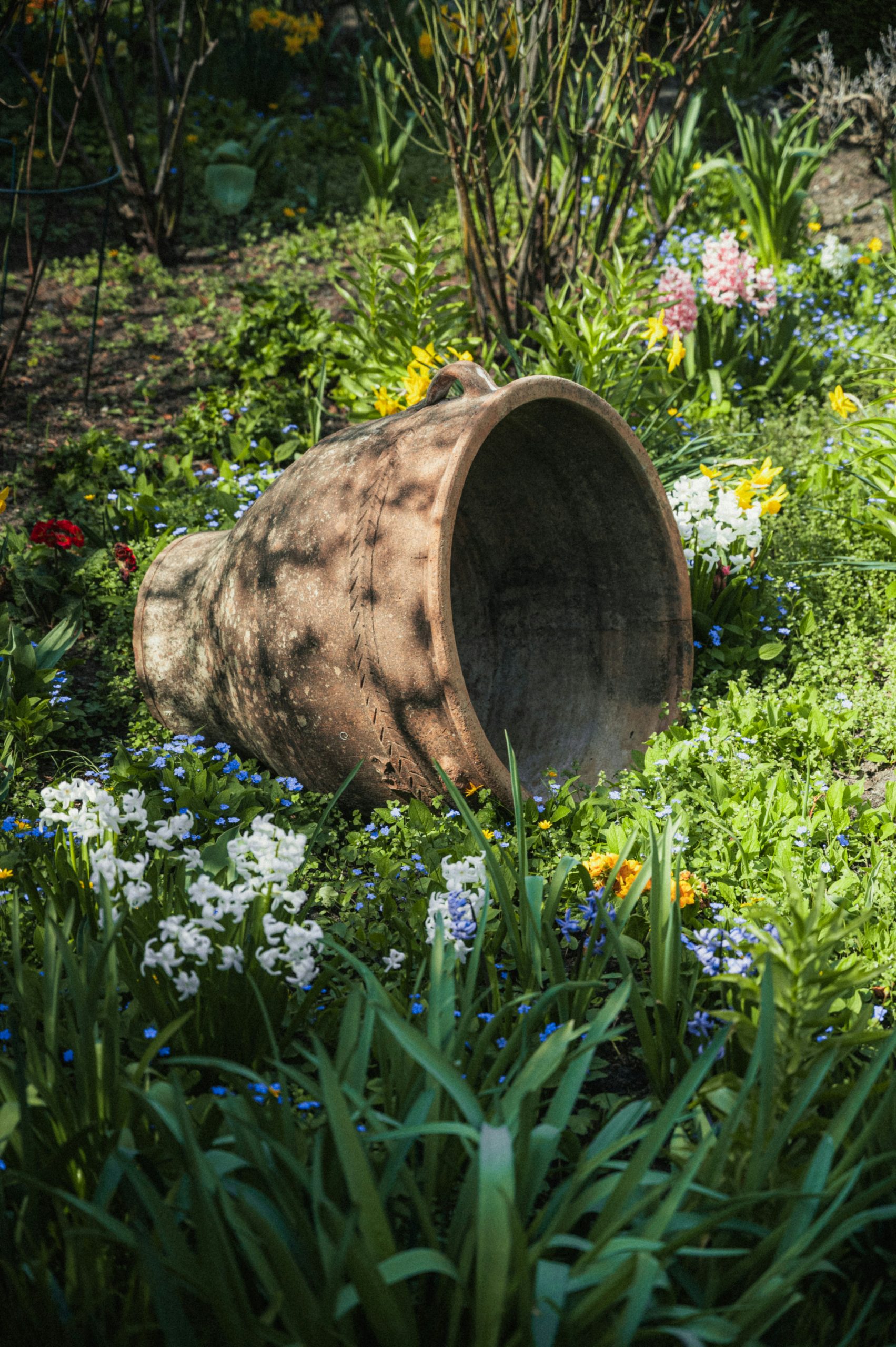
17. Fallen Terracotta Urn in a Blooming Spring Garden
To get this “ancient ruins” vibe, don’t just tip over a new pot. Use a pot that already has some weathering and character. If your pot is new, you can age it quickly yourself. Mix one part plain yogurt or buttermilk with one part water and paint it onto the terracotta surface. Let it sit in a shady, damp spot for a few weeks, and natural moss and algae will begin to grow, giving it a beautiful, aged patina that makes the whole scene feel more authentic.
📏 Scale Guide
This look taps directly into the “Romantic Cottagecore” and “Secret Garden” trends that dominate garden aesthetics right now. It is a backlash against perfectly manicured, overly formal landscapes. People crave gardens that feel personal, a little wild, and full of stories. A “fallen” urn surrounded by a riot of spring bulbs suggests a narrative—a beautiful space reclaimed by nature. It’s less about perfect design and more about creating an emotional, enchanting experience.
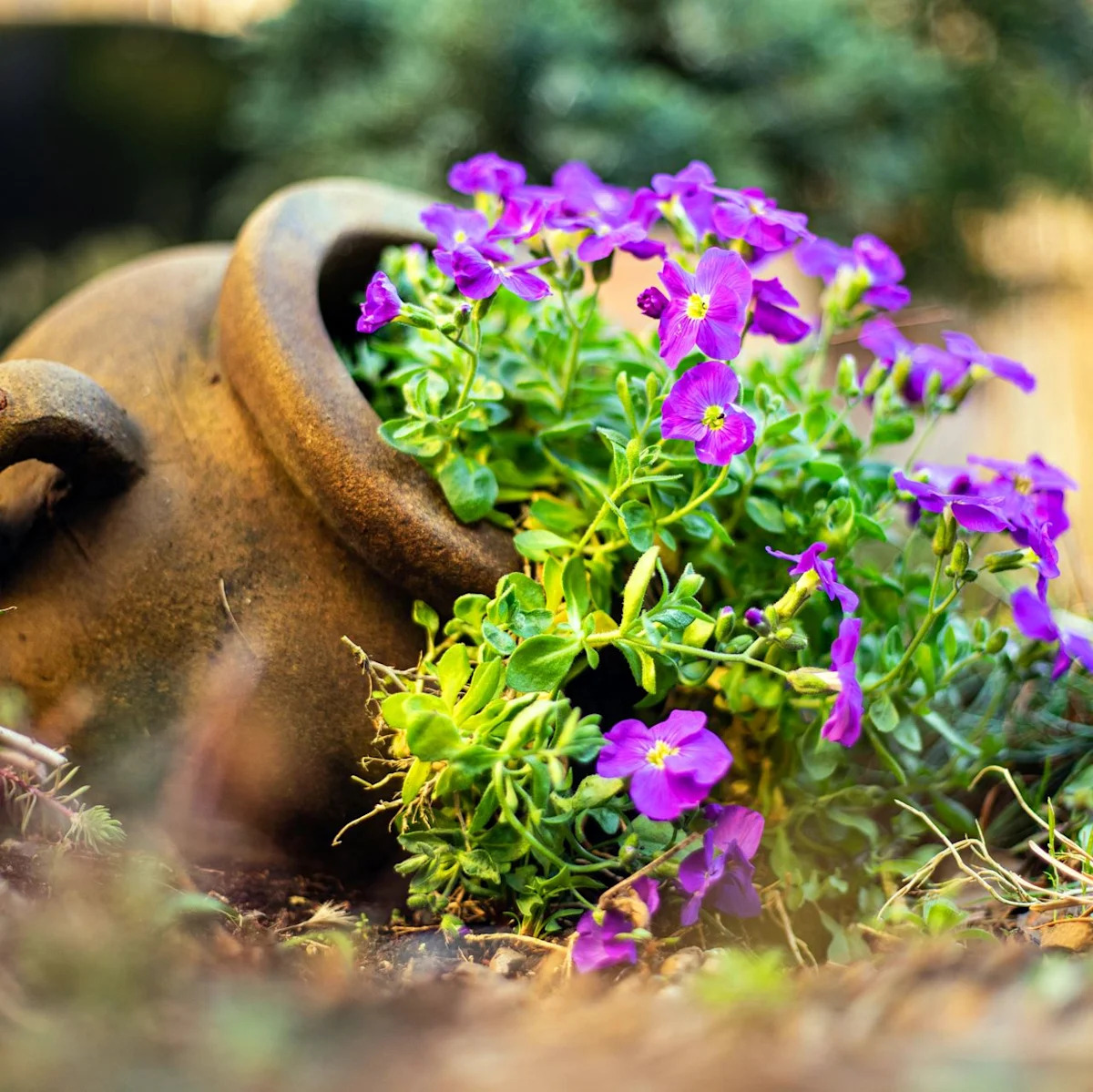
18. Purple Aubrieta Spilling From a Rustic Terracotta Pot
The powerful impact of this design comes from its monochromatic simplicity. By using only one type and color of flower—the vibrant purple Aubrieta—the “spill” becomes a solid, unbroken river of color. This makes the concept incredibly clear and visually strong. If it were a mix of five different flowers, the “spill” illusion would be diluted. Here, the sheer density of the single purple hue against the dark soil is what creates the drama and makes the whole thing feel intentional and powerful. Compare this to the similar pot in Idea #10 which adds ornaments for a different feel.
🔥 Trending Context
This is a perfect idea for smaller gardens, rock walls, or the edge of a pathway. Because Aubrieta is a low-growing, mat-forming perennial, it’s ideal for creating a dense spill without taking up a huge amount of space. You could execute this beautifully in an area as small as 3 feet by 3 feet. The key is making sure the pot itself isn’t too oversized for the space, which would throw off the delicate balance. A pot around 15-18 inches in diameter is just right for this scale.
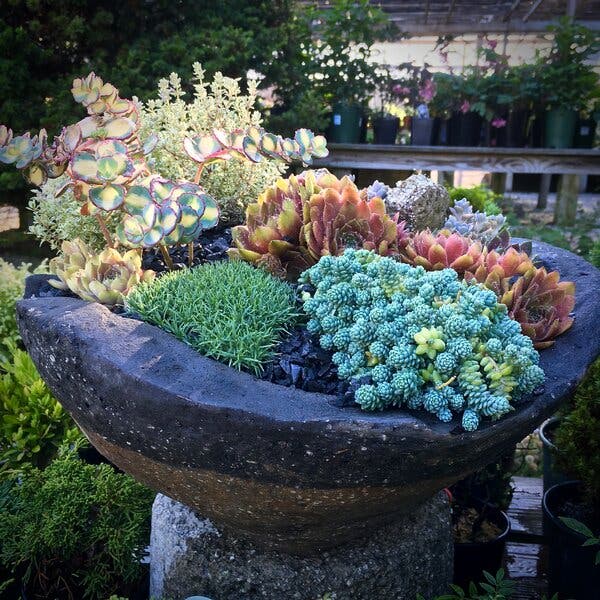
19. A Concrete Bowl Planter with a Diverse Succulent Arrangement
A high-end succulent bowl from a designer nursery can be pricey, but you can recreate this look for much less by assembling it yourself. The bowl is the biggest one-time cost.
- Large Concrete Bowl Planter: $80 – $200
- Individual Succulent Plants (8-12): $40 – $100
- Cactus/Succulent Potting Mix: $10 – $15
- Black Top-Dressing (Gravel or Mulch): $15 – $25
- TOTAL: $145 – $340
- Budget alternative: Start with a smaller bowl and fewer “specimen” plants. Fill in gaps with hens-and-chicks, which multiply quickly on their own in a season or two.
✅ Before You Start
The beauty of this arrangement comes from its incredible diversity of texture, color, and form within a single container. You have spiky, rosette, trailing, and tightly clustered shapes all working together. The composition works because it is unified by a consistent theme (succulents) and a neutral container. The dark concrete bowl and black top dressing make the varied greens, blues, and reds of the plants the absolute stars of the show. It’s a living sculpture.
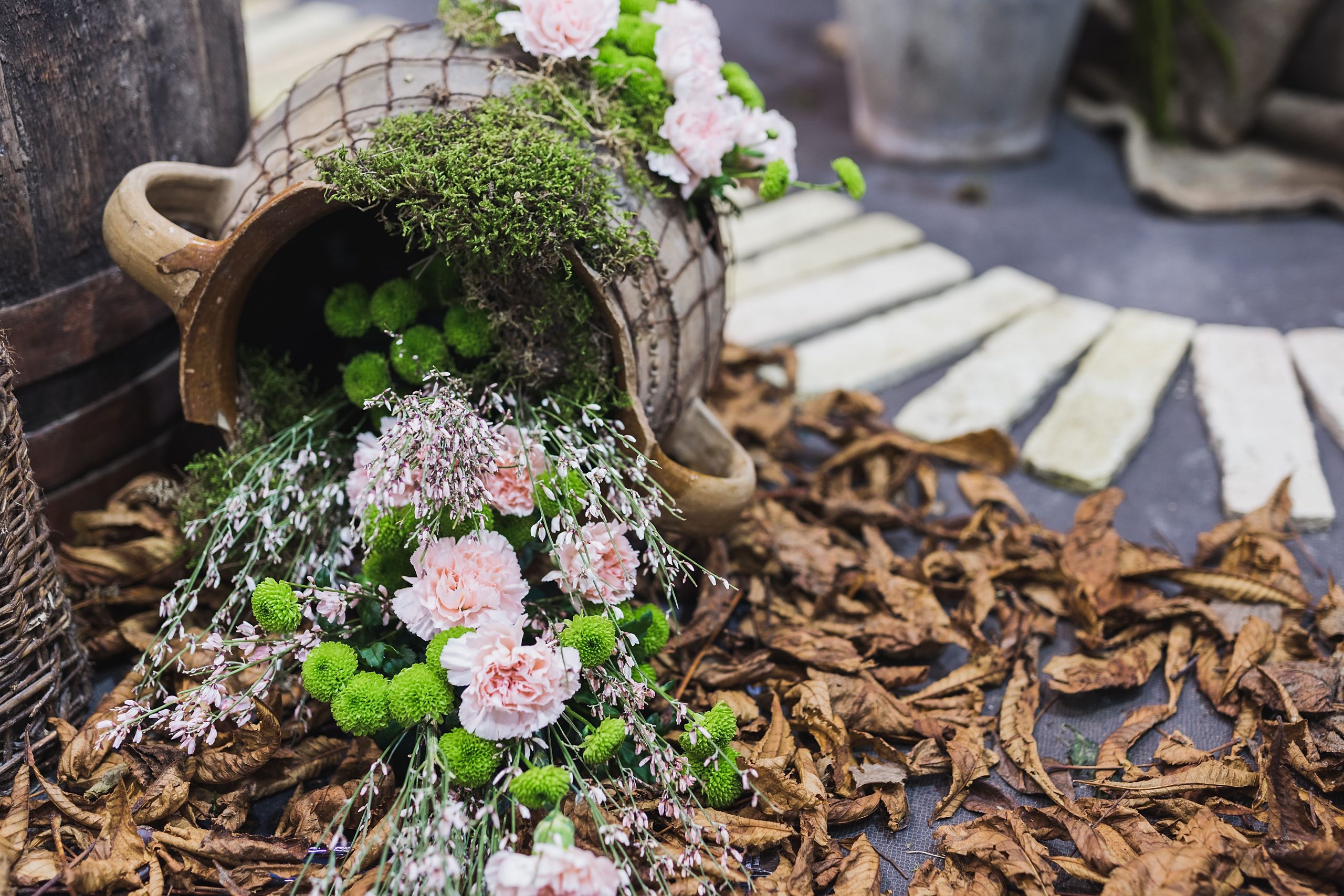
20. Fallen Clay Pot with Pink Carnations, Moss, and Green Flowers
This rustic, delicate look is pure artistry, and it follows a clear recipe: 60% soft, romantic elements + 30% rustic texture + 10% unexpected detail. The soft pink carnations and light sprigs provide the romance. The weathered clay pot and bed of dried leaves offer that crucial rustic, earthy grounding. The unexpected 10%? The spherical green flowers (possibly Viburnum or Dianthus ‘Green Ball’). They add a surprising shape and a pop of zesty color that keeps the arrangement from feeling too traditional.
🎯 What Makes It Work
This is a stunning floral arrangement, but it’s important to understand that this is likely a temporary, styled composition rather than a permanent garden installation. Carnations are typically cut flowers, and keeping them fresh in this arrangement would be difficult. The moss would require shade and moisture, while the carnations would prefer more sun. Think of this as inspiration for a special event centerpiece or a beautiful photograph, not necessarily a long-term, low-maintenance garden feature.
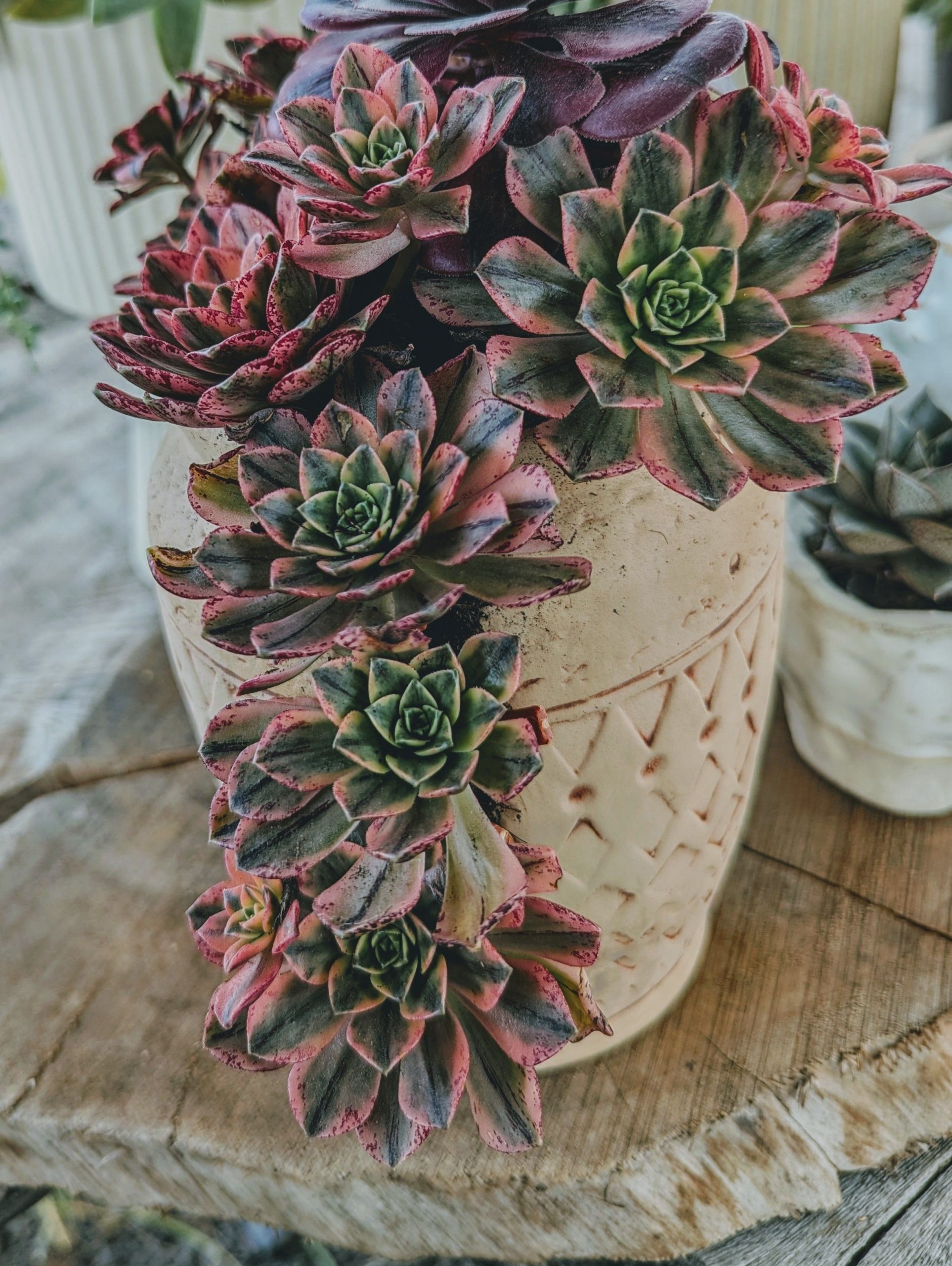
21. Variegated Succulent Spilling from a Patterned Ceramic Pot
that makes this composition so compelling is the perfect harmony between the plant and the pot. The intricate, etched geometric pattern on the ceramic pot echoes the natural, rosette-like geometry of the succulent itself. Furthermore, the beautiful pink, green, and dark red hues of the plant’s leaves are a perfect complement to the pot’s neutral light beige color. It’s a pairing that feels incredibly intentional and thoughtfully curated, elevating both the plant and its container.
🧹 Maintenance Reality
To truly showcase a special plant and pot pairing like this, pay attention to the surface it sits on. Placing it on a generic patio slab would be a missed opportunity. Here, the sliced wood surface adds another layer of natural texture and warmth that complements both the earthy ceramic and the living plant. It completes the picture. When you have a beautiful pairing, don’t stop there—think about the “stage” you set for it to really shine. An old wooden stool, a stack of slate tiles, or a flat-topped boulder can all work.
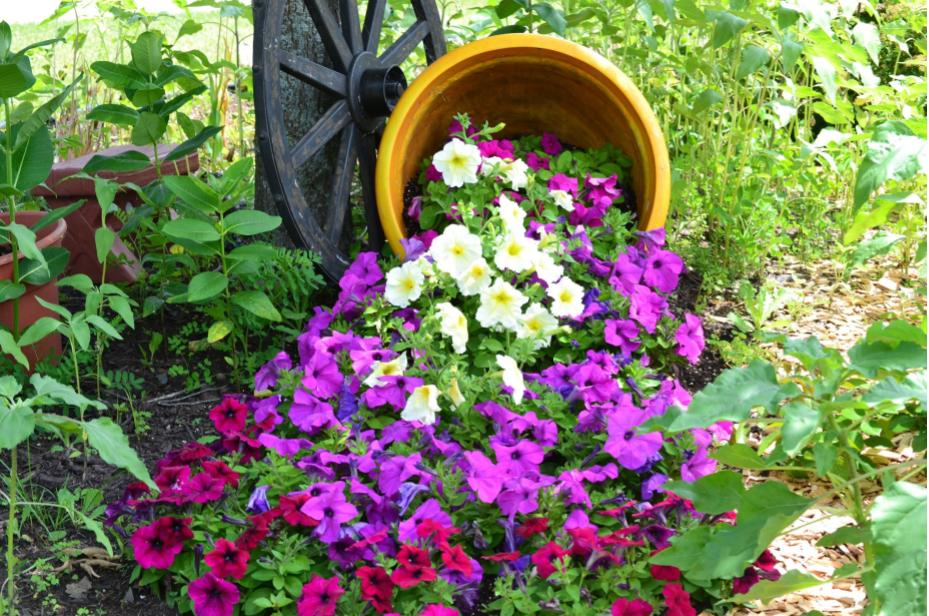
22. Tilted Orange Pot Spilling Petunias by a Wooden Wheel
This scene works because it’s a masterclass in using complementary colors. The bright orange of the pot is directly opposite the purples and blues on the color wheel. Placing them together makes both colors appear more intense and vibrant. The dark brown of the rustic wheel and tree trunk acts as a grounding neutral, providing a visual resting place and making the bright colors pop even more. The fuchsia and white flowers add variance and prevent the composition from being too rigidly color-blocked.
💸 Get This Look For Less
You don’t need to spend a lot to get this look. An affordable plastic pot from a big box store can be transformed with a can of orange spray paint specifically formulated for plastic (about $8). The “spill” is made of simple petunias, which are some of the most budget-friendly, high-impact annuals you can buy—a flat of them often costs less than $20. The wooden wheel is the trickiest part, but keep an eye out at flea markets or antique shops; you can often find decorative ones for under $50.
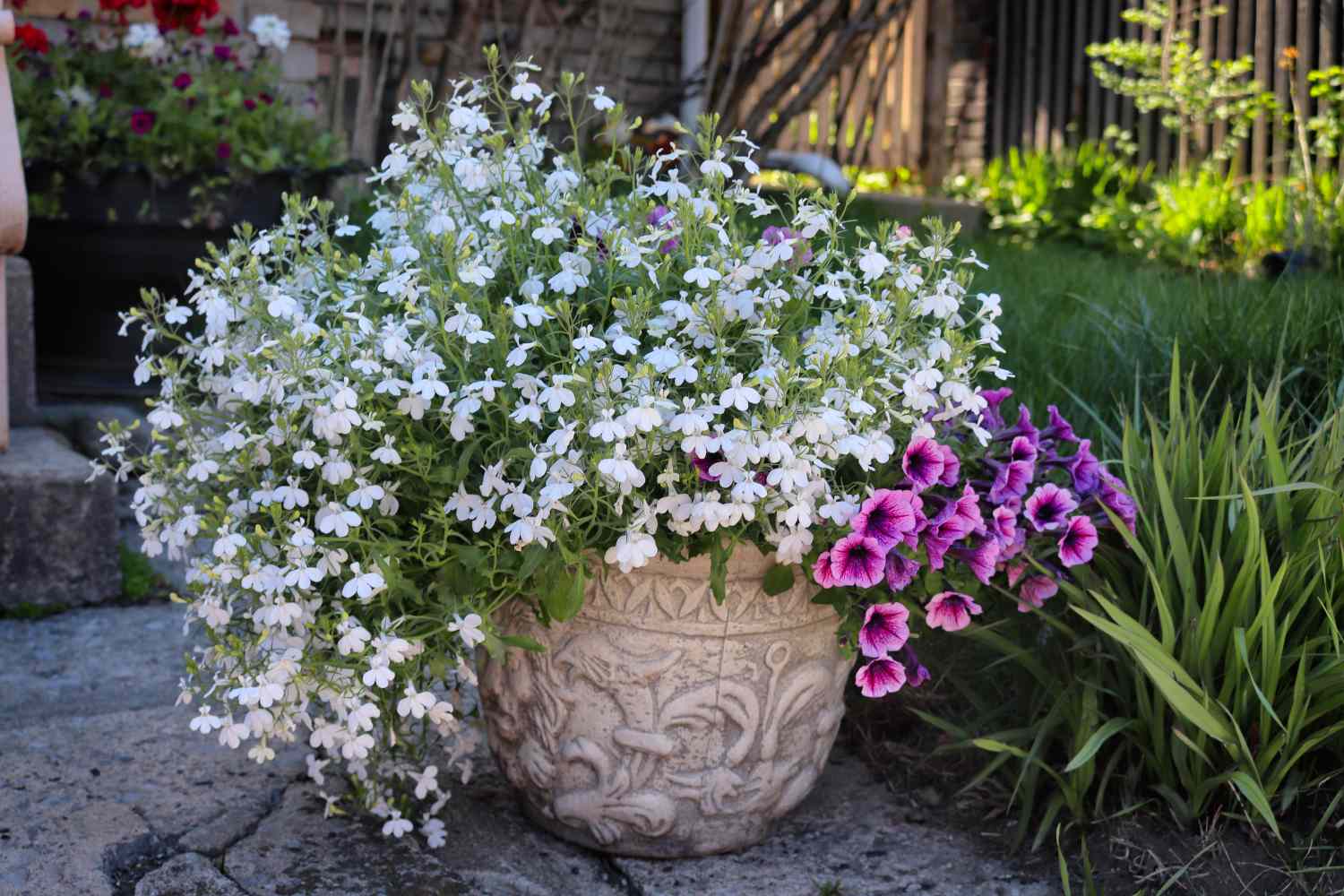
23. Beige Embossed Pot Cascading White and Purple Flowers
The single element that makes this planter so spectacular is the sheer, unapologetic abundance of the flowers. The planter isn’t just full; it’s literally overflowing, with cascades of white and purple blooms spilling onto the patio. This generosity is what creates the sense of lushness and luxury. It shows that the designer wasn’t afraid to pack in the plants, prioritizing a dramatic, immediate effect over spacing them out for future growth. It’s a “more is more” approach, and in this case, it absolutely works.
⭐ The One Thing
A planter this packed with vigorous annuals like petunias and lobelia is a heavy drinker and a heavy feeder. Be prepared to water this thoroughly every single day in the summer heat. To keep the blooms coming all season long, you’ll also need to feed it with a water-soluble fertilizer every 1-2 weeks. Finally, a mid-summer “haircut”—trimming back some of the leggier stems—will encourage a fresh flush of growth and prevent it from looking tired by August. This is a high-maintenance but high-reward display.
24. A Terracotta Pot’s Whimsical Succulent Spill
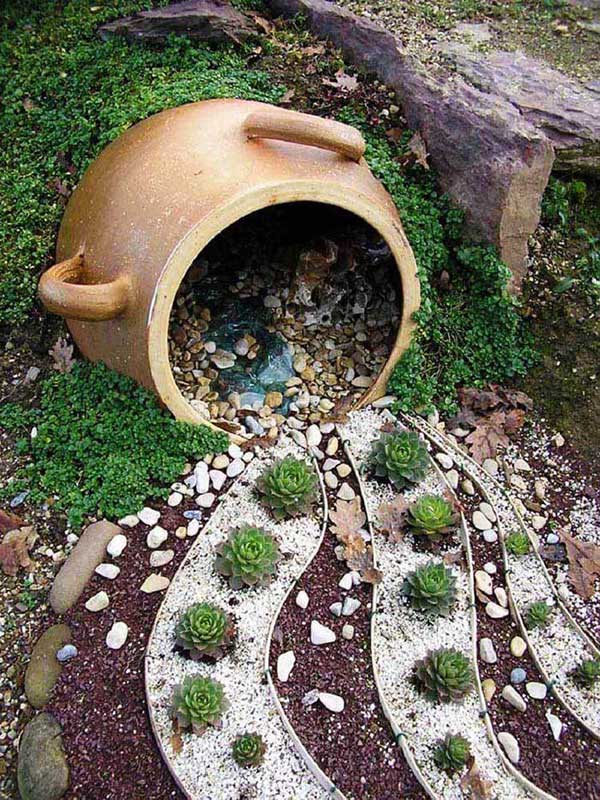
You can create your own version of this flowing succulent river with a bit of planning. This isn’t a quick one-hour project, but it is very rewarding!
- Place the Pot: Position your large terracotta pot on its side, digging it slightly into the ground to secure it.
- Outline the Flow: Use a garden hose or rope to create the curving, meandering shape of your “spill” on the ground.
- Create the Banks: Dig a shallow trench along your outline and fill it with the reddish-brown mulch. This will define the edges of your “riverbed.”
- Fill the River: Fill the area between the mulch banks with the white gravel, creating your “water.”
- Plant the Succulents: Carefully remove gravel from spots within the river and plant your small green succulents. Brush the gravel back around their base.
- Final Touches: Scatter a few extra pebbles and rocks along the edges to blend it all together.
💰 Budget Breakdown
This charming idea succeeds because it cleverly subverts expectations. We expect water to flow from a tipped container, but here, that “water” is represented by stark white gravel. The green succulents then become the “life” or “foam” within that river. The design tells a whimsical story using simple, sculptural materials. The flowing, organic shapes of the gravel paths contrast beautifully with the static, solid form of the terracotta pot. It’s a perfect example of using landscape materials to create a narrative. It’s a more complex version of the succulent spill seen in Idea #16.
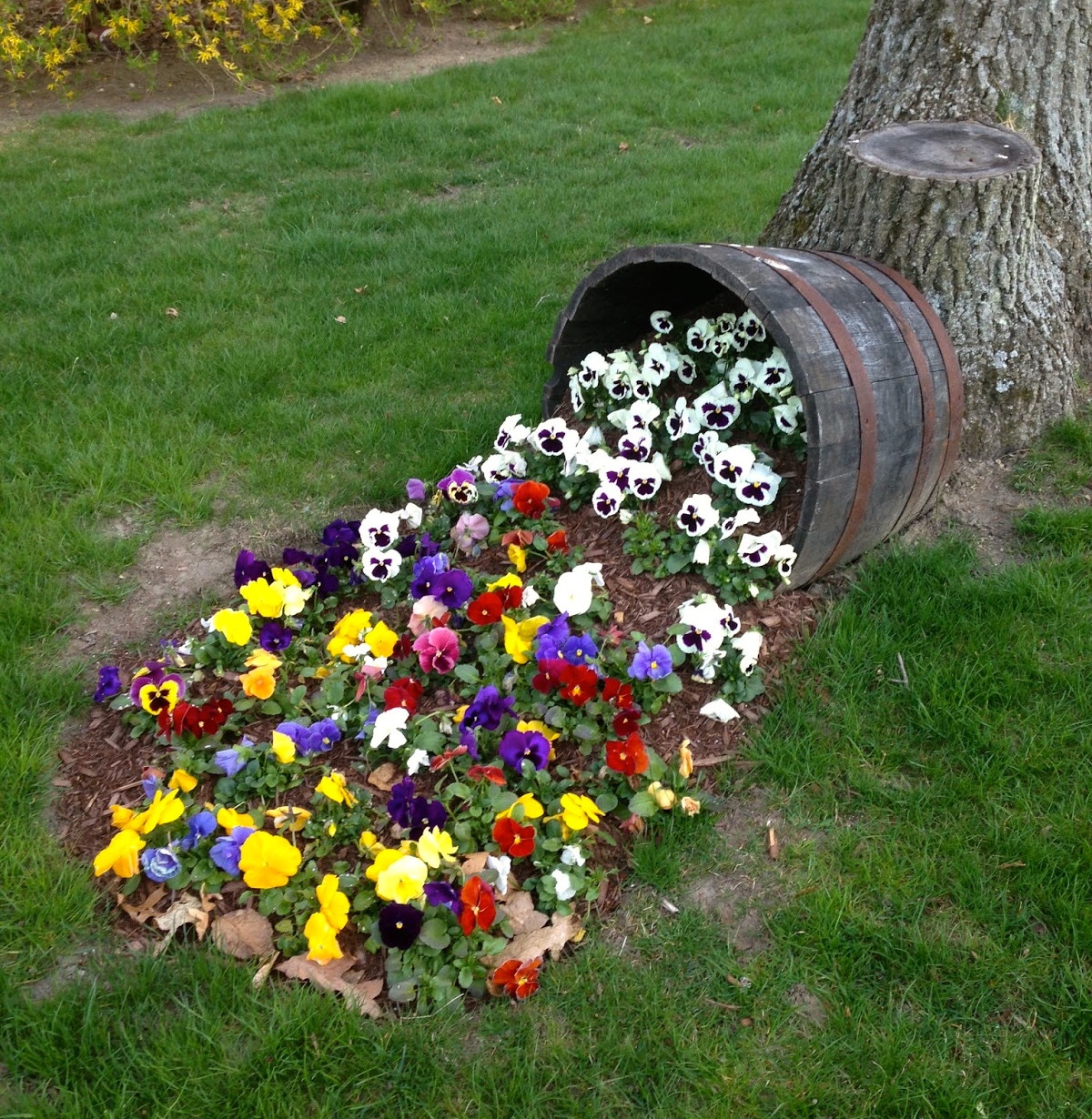
25. Tipped Wooden Barrel Spilling Colorful Pansies
The key to making a spilled container look grounded and natural is to nestle it firmly against a larger, permanent feature. Here, the barrel is tucked right up against the tree trunk. This makes it feel anchored and intentional, as if it has always been there. If the barrel were just floating in the middle of the lawn, it would look staged and temporary. By connecting it to the tree, it becomes part of a larger, cohesive scene. A similar effect is achieved with the house siding in Idea #26.
💡 Designer Tip
While this is a beautiful spring scene, pansies are cool-weather lovers. As soon as the summer heat truly kicks in, they will start to fade, stretch out, and stop blooming. This is not an all-season display. You should plan to replace them with heat-tolerant annuals (like vinca or zinnias) around early June to keep the “spill” effect going through the hotter months. Think of this as the first act in a season-long play, not the entire show.
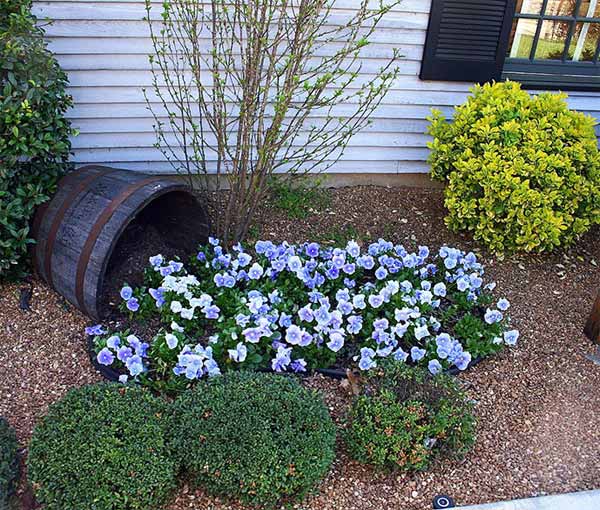
26. A Whiskey Barrel Spilling Blue Pansies by a Blue House
This composition is so pleasing because of its sophisticated, analogous color scheme. The design primarily uses colors that are next to each other on the color wheel: blues and greens. The vibrant blue of the pansies is a direct echo of the soft blue-grey of the house siding, creating an immediate sense of harmony. The various shades of green in the shrubs and the yellow-green accent bush add life without competing. The dark brown barrel acts as a perfect neutral anchor for all the cool tones.
⚠️ Real Talk
Ready to try this rustic look? A quick check can save you a headache later.
- Barrel Check: Does your whiskey barrel have drainage holes? If not, you’ll need to drill several large holes in the bottom to prevent the wood from rotting and the plant roots from drowning.
- Sun Check: Pansies love cool sun. Does this spot get morning sun and some afternoon shade? All-day, blistering sun will cause them to fade fast.
- Soil Check: Are you planting directly into the ground? Make sure the soil is loose and well-draining. Adding a bag of compost will give the pansies a strong start.
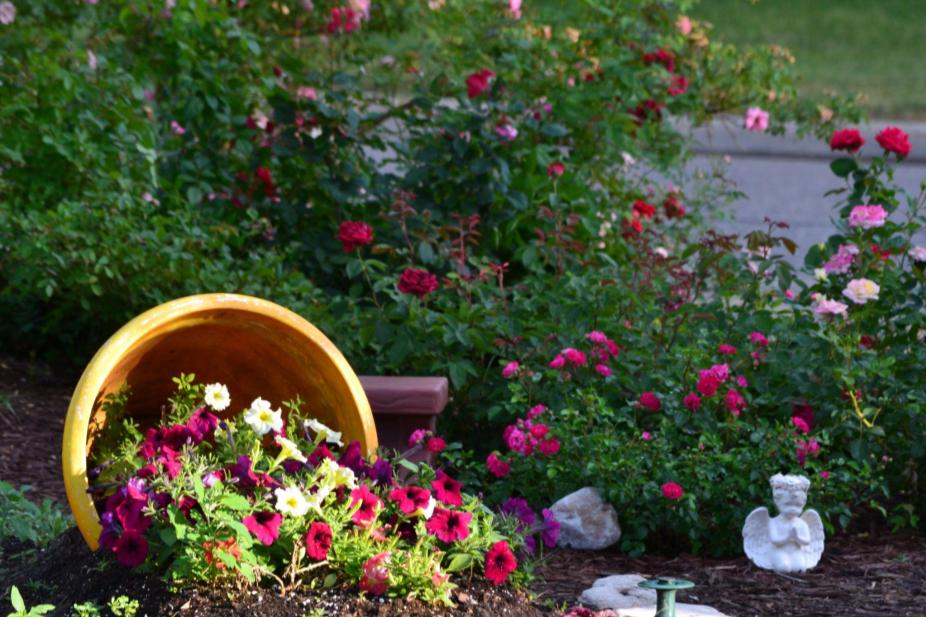
27. A Yellow Pot Spilling a Riot of Petunias in a Rose Garden
This vibrant scene is a perfect example of the “90/10” color rule. About 90% of the scene is a lush, harmonious blend of greens, pinks, and reds from the established rose bushes. The final 10% is the high-contrast, unexpected pop of the bright yellow pot and its accompanying spill of purple and red petunias. This small but mighty accent color is what commands attention and gives the whole garden bed a playful, energetic personality. Without the yellow pot, it would be a lovely rose garden; with it, it’s a statement.
📐 Style Math
This idea is brilliant for adding a layer of interest to an existing, established garden bed. It doesn’t require a huge open space. As long as you have a 3×3 foot patch of mulch or open ground at the foot of your taller plants (like these rose bushes), you can tuck in a spilled pot. It’s a fantastic way to fill in those “bare ankles” at the base of shrubs and add color at a lower level. The key is to choose a pot color that will pop against the existing foliage.
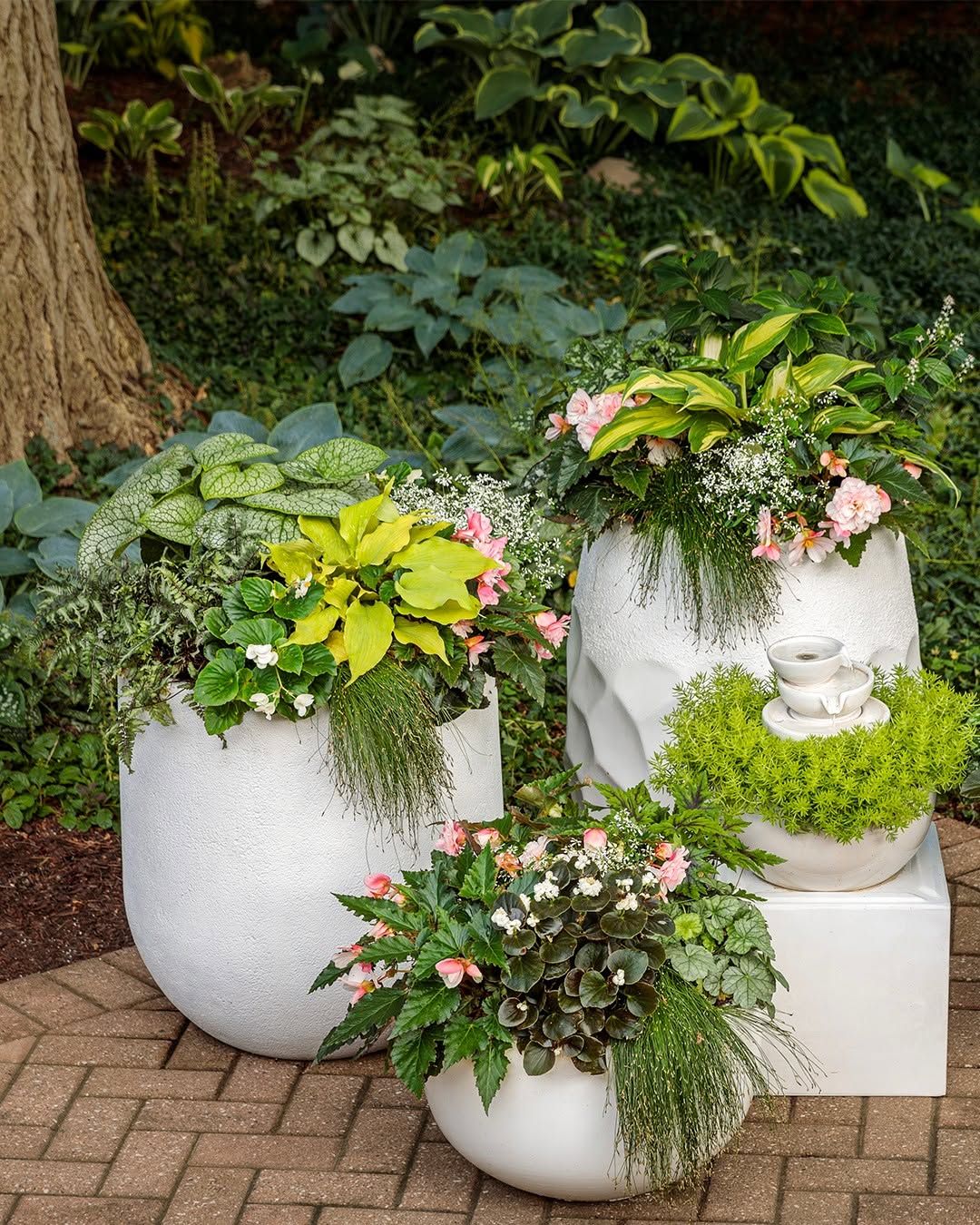
28. White Ceramic Planters with a Mix of Foliage and Flowers
The single element that ties this grouping together and makes it feel cohesive is the consistent use of clean, white ceramic planters. Even though the plants within them are all different—ranging from broad-leaf hostas to delicate pink flowers and even a water feature—the matching planters make them read as a deliberate collection. This allows for a great deal of variety and creativity in the plantings without the overall scene looking chaotic or messy. The white acts as a clean, unifying frame for the diverse greenery.
🔧 How-To Brief
Achieving this serene, coordinated look is an investment in containers, but the plants can be quite affordable and long-lasting if you choose perennials.
- Large White Ceramic Planters (3): $250 – $600
- Assorted Perennial Plants (Hostas, Ferns, Sedum): $80 – $150
- Annual Flowers (Begonias): $20 – $40
- Tabletop Water Fountain Insert: $40 – $90
- TOTAL: $390 – $880
- Budget alternative: Get the same look for less by using large plastic planters and painting them with a high-quality white paint that adheres to plastic.
Your Garden’s Next Chapter Begins with a Spill
Whether you go for a dramatic cascade of flowers or a modern river of succulents, the spilled pot is a fantastic way to inject personality and storytelling into your garden. Don’t be afraid to start small and experiment with what brings you joy. Find more daily inspiration and save your favorite ideas by checking out our boards on Pinterest!