You know the feeling—you’ve saved dozens of long driveway pins, but your own entrance still feels more like an afterthought than a grand arrival. It’s the first and last thing guests see, and getting it right can feel overwhelming. After filtering through hundreds of options from high-end landscape suppliers to accessible finds at Home Depot and Lowe’s, we narrowed it down to the looks that truly deliver. This guide includes 31 curated ideas covering everything from rustic gravel paths to sleek, modern concrete, with options from a few thousand dollars to over $50,000. These aren’t just pretty pictures; they are real-world examples that work. And stay until the end — we break down the most common mistakes that can ruin these looks.
📌 Save this to Pinterest for later — you’ll want to revisit these ideas.
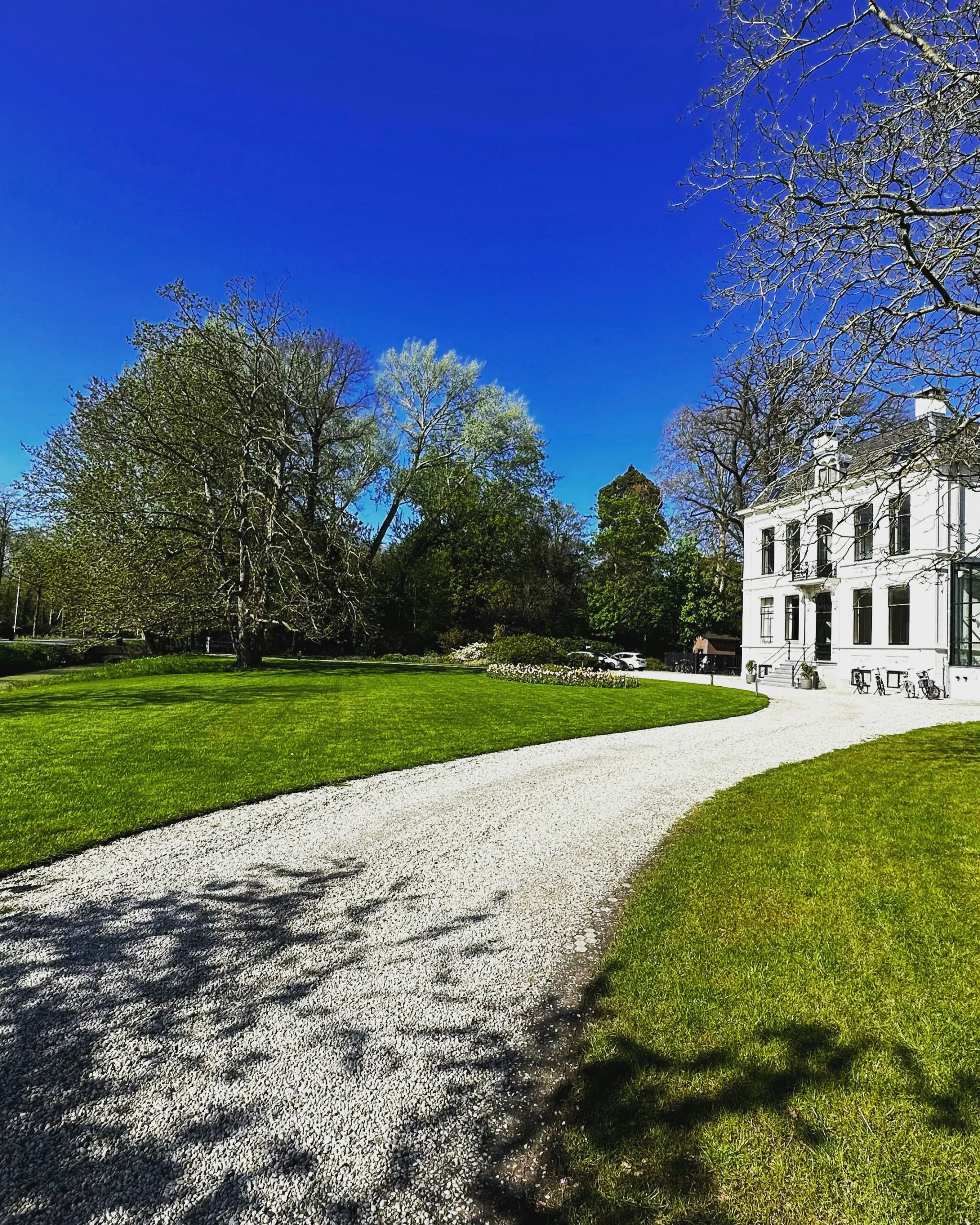
1. Regal White Gravel Driveway Winding Through an Expansive Lawn
The magic here is in the confident contrast and graceful curves. The bright white of the gravel creates a stunning visual path that cuts through the vibrant green lawn, guiding the eye directly toward the traditional white home. It’s a classic color pairing that always feels fresh and sophisticated. The gentle, winding path feels more natural and less severe than a straight shot, transforming the approach from a simple utility into a serene experience. The scale is also key; the wide driveway feels proportional to the large house and expansive grounds, creating a balanced and harmonious composition.
💡 Designer Tip
A white gravel driveway is undeniably beautiful, but it requires a commitment to maintenance. The crisp white color that makes it so striking also makes it prone to showing dirt, fallen leaves, and organic stains. To keep it looking pristine, you’ll need to rake it regularly to smooth out ruts and redistribute the stones. Periodic top-dressing with new gravel every few years will be necessary to maintain its color and depth. Also, be prepared for effective weed control, as unwanted growth can quickly spoil the clean, manicured look.
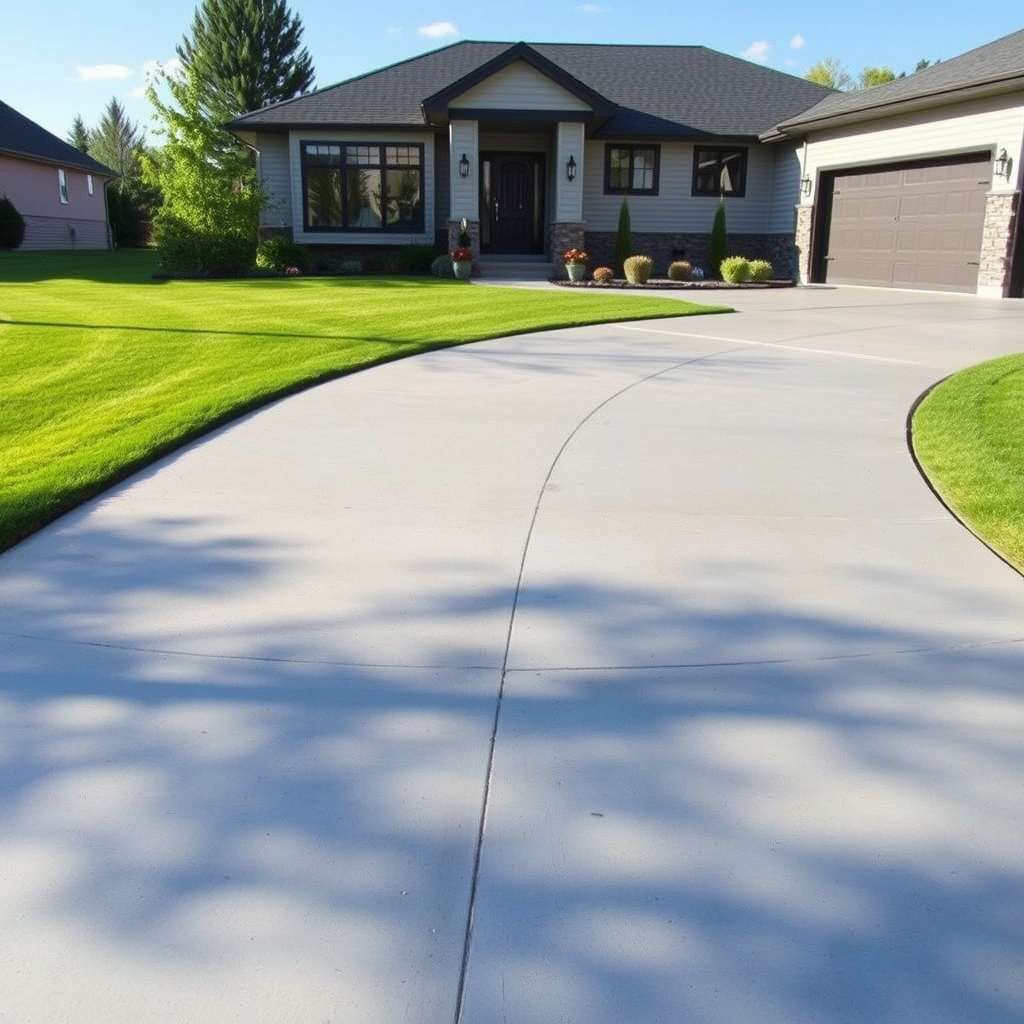
2. Curved Concrete Driveway Flanked by Manicured Lawns
When pouring a concrete driveway with a curve, the radius is everything. For a gentle, sweeping curve like this one that accommodates vehicles easily, aim for a minimum inside radius of 25 feet. A tighter radius can make it difficult for larger vehicles to navigate without driving onto the lawn. To add a high-end touch, ask your contractor about a “broom finish” with a perpendicular border. Running the broom texture across the width of the driveway, with a smooth border along the edges, adds subtle definition and a more custom look.
⚠️ Real Talk
This look is a beautiful equation of clean lines and soft textures. Think of it as: 60% smooth, light concrete + 35% lush green lawn + 5% dark architectural accents (like the garage door and roof). The formula creates a look that is modern, but not stark. You could swap the materials while keeping the ratio: replace the concrete with tightly packed light gray pavers and switch the dark brown accents to charcoal or black for a slightly cooler, more graphic variation that still feels balanced and welcoming. The key is the dominance of the two primary, clean surfaces—the driveway and the lawn.
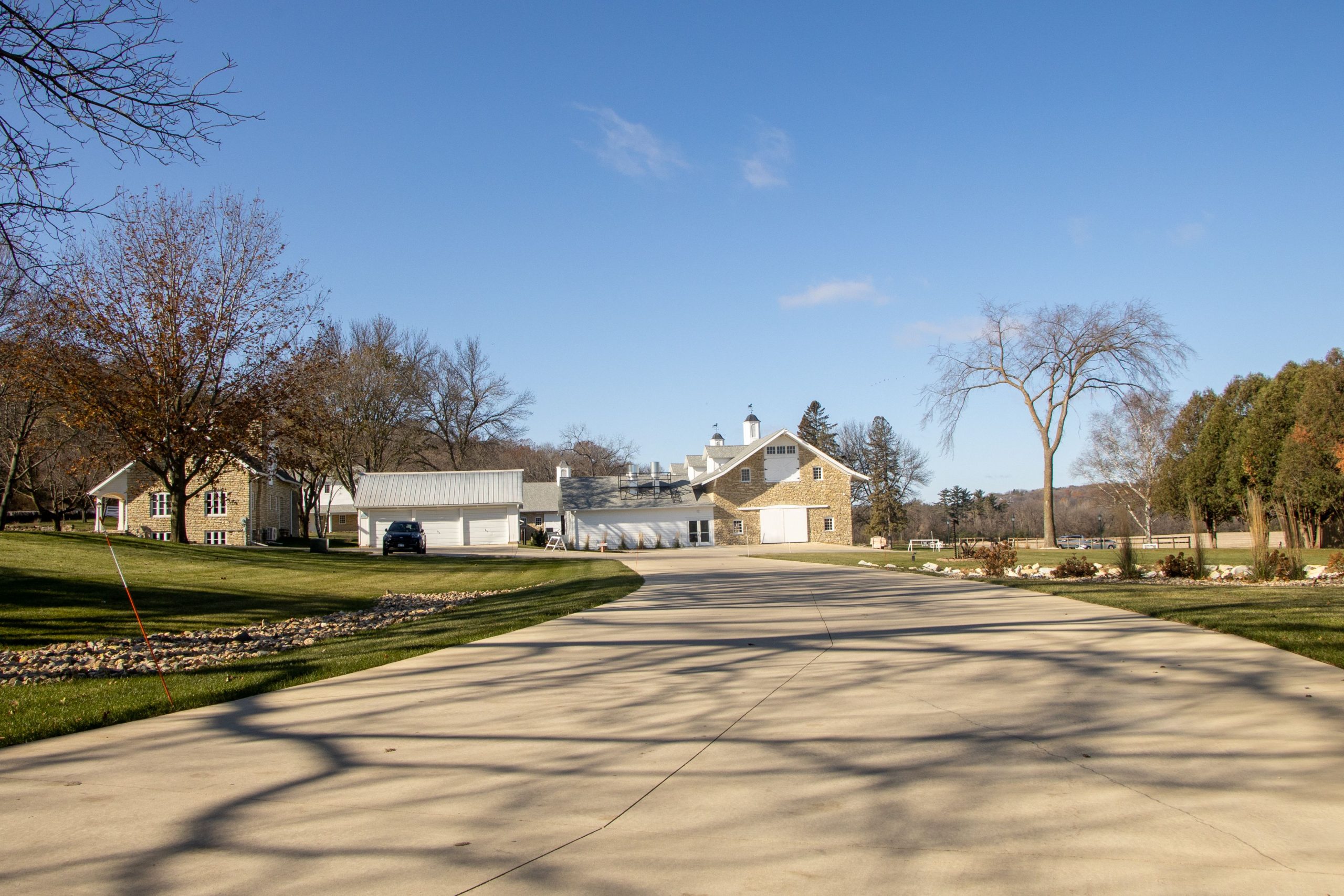
3. Expansive Concrete Driveway Serving a Complex of Rural Buildings
An expansive, multi-building layout like this is best suited for properties of at least two acres. The wide, curving concrete driveway requires significant square footage not just for the pavement itself, but for the sweeping green spaces and landscaped beds that prevent it from feeling like a parking lot. The minimum width for a driveway serving multiple buildings or garages should be 12 feet to allow for easy passage, with a wider apron (around 20-24 feet) where it meets the main road and where vehicles will turn into garages. This ensures functionality without sacrificing the open, serene feeling.
🔧 How-To Brief
that makes this design work so well is the use of a single, unifying driveway material. With multiple buildings featuring a mix of stone, white siding, and different rooflines, the visual landscape could easily become chaotic. The light-colored concrete acts as a clean, consistent ribbon that ties the entire property together. It creates a cohesive ground plane that grounds the varied architecture, making the entire complex feel intentional and harmonious rather than disjointed. Without this simple, unifying element, the entire scene would lose its serene and expansive character.
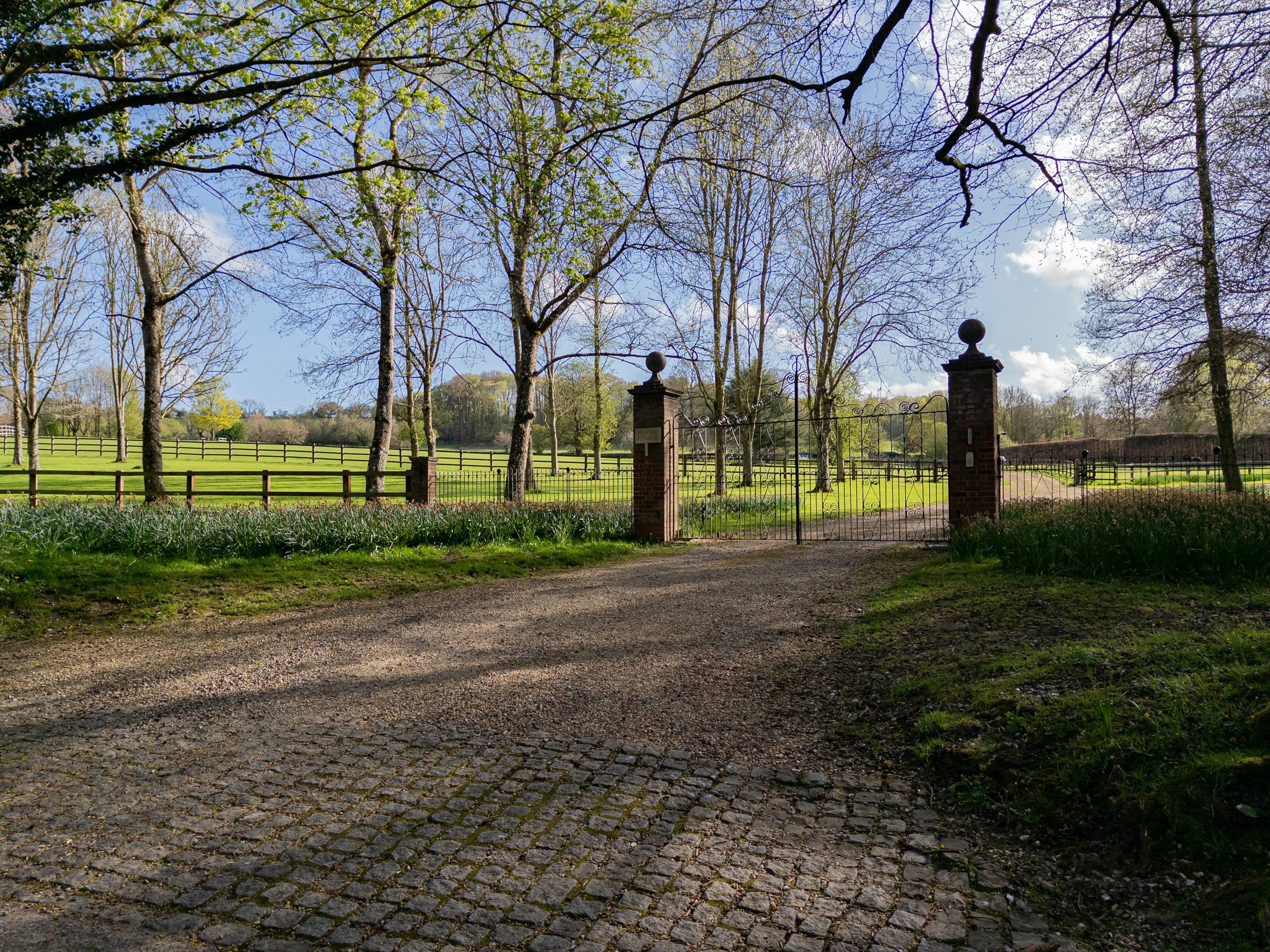
4. Formal Entrance with Wrought Iron Gates and a Cobblestone-to-Gravel Path
Achieving this level of grandeur requires a significant investment in hardscaping and materials. The combination of custom gates, brick pillars, and a dual-material driveway is a high-end choice.
💸 Get This Look For Less
- Wrought Iron Gates & Automation: $8,000 – $25,000
- Brick Pillars & Finials: $5,000 – $15,000
- Cobblestone Apron (200 sq. ft.): $4,000 – $8,000
- Gravel Driveway (1,000 sq. ft.): $1,500 – $4,000
- TOTAL: $18,500 – $52,000
Budget alternative: Opt for pre-fabricated aluminum gates, brick-veneer pillars, and use only gravel for the driveway to achieve a similar feel for around $6,000 – $12,000.
Before you commit to a grand entrance, verify a few key details. First, check your local zoning ordinances and any HOA restrictions regarding gate height, setback from the road, and required permits for pillars and electrical work. Measure the entrance width carefully; a standard double gate requires a 12- to 14-foot opening for residential access. Finally, assess your long-term budget not just for installation, but for the maintenance of an automated gate system, which can require periodic servicing.
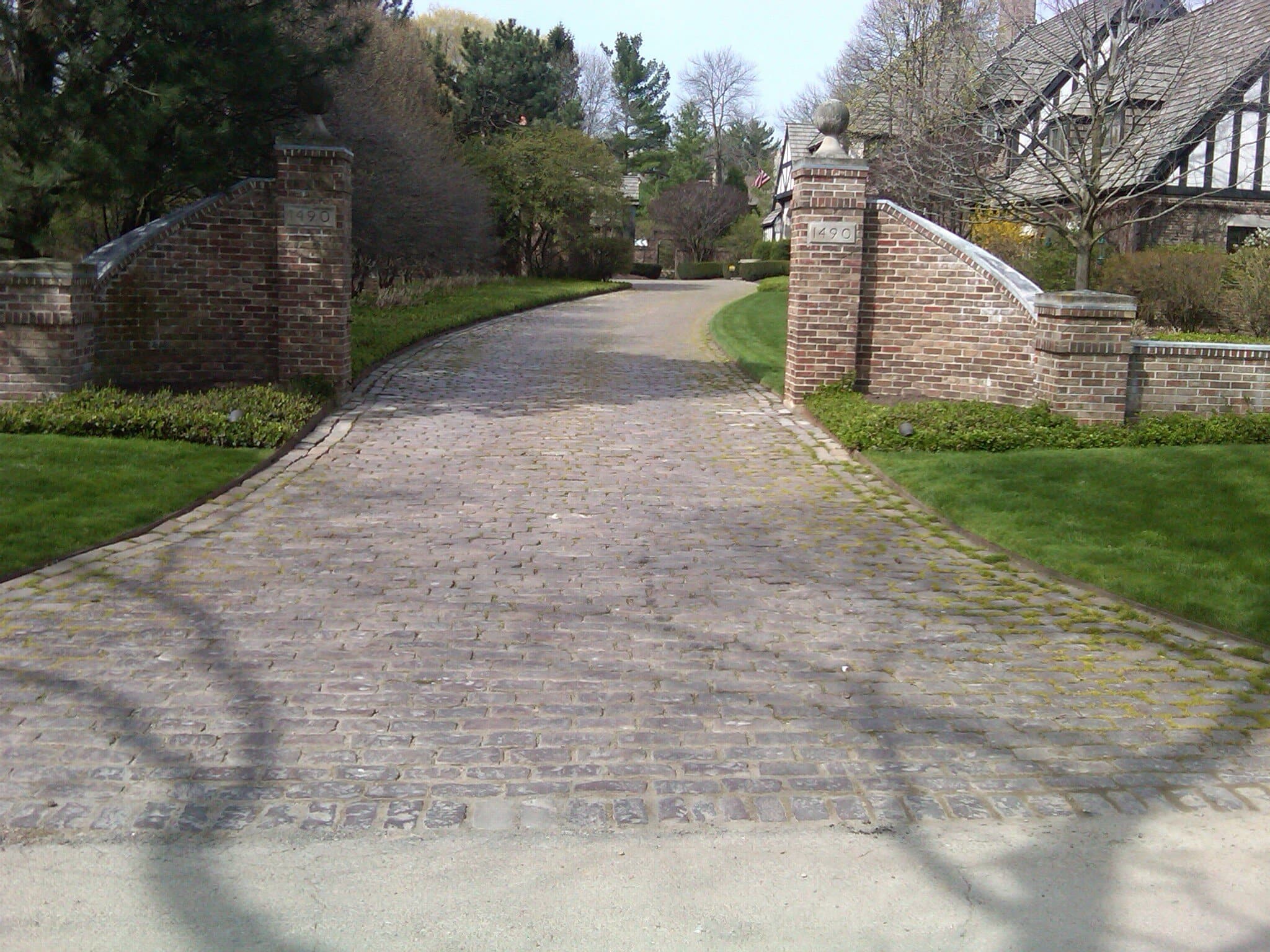
5. Historic Charm with a Full Cobblestone Driveway
A genuine cobblestone driveway is as durable as it is beautiful, but it’s not a set-it-and-forget-it surface. The primary maintenance task is managing the joints between the stones. Over time, sand-filled joints can wash out or allow weeds to sprout. You’ll need to sweep new jointing sand into the gaps every 2-3 years to keep the stones locked in place and inhibit weed growth. Sealant can be applied to make cleaning easier and prevent stains, but this will need to be reapplied every 3-5 years, adding to the long-term cost and effort.
📏 Scale Guide
In an era of mass-produced materials, there’s a growing desire for authenticity and a sense of history in home design. A cobblestone driveway taps directly into this trend, offering a story and a texture that modern concrete or asphalt can’t replicate. It evokes images of historic European streets and grand, established estates. This move towards ‘old-world’ materials is a reaction against the sleek, sometimes cold, minimalism of recent years. Homeowners on Pinterest are increasingly searching for surfaces with patina, character, and a timeless quality that won’t feel dated in a decade.
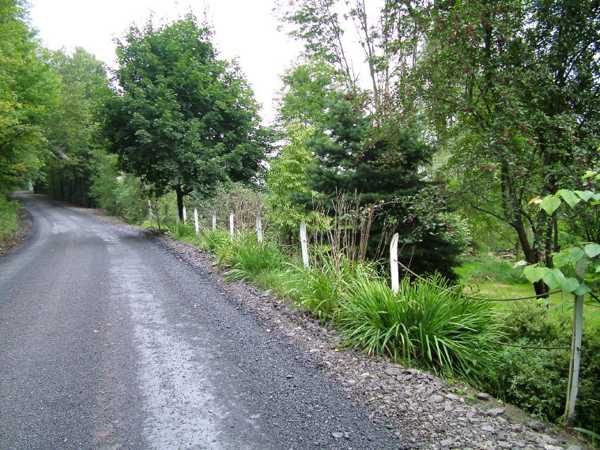
6. Rustic Gravel Driveway Curving Through Natural Greenery
This secluded, natural look is one of the most budget-friendly driveway options available, perfect for a long, rural path. A professionally installed gravel driveway typically costs between $2 and $5 per square foot. For a 1,000-foot-long, 10-foot-wide driveway, you could expect to pay between $20,000 and $50,000. However, you can achieve this rustic version for much less. Focus on minimal grading, using a good geotextile fabric base to prevent weeds, and sourcing local crushed stone. By simplifying the base preparation and using simple wire fencing found at any farm supply store, the cost can be kept at the lower end of that spectrum. This is a far cry from the expense of the formal gravel look in Idea #1.
🎯 What Makes It Work
This design’s success lies in its embrace of nature, not its dominance over it. The driveway doesn’t try to be the star; it acts as a quiet guide. The simple curve feels organic, as if it’s following the natural contour of the land. The dark gray gravel provides a soft, textural contrast to the vibrant, chaotic greenery without being jarring. The humble materials—gravel and a simple wire fence with white posts—reinforce the rustic, unpretentious aesthetic, making the entire scene feel peaceful and secluded.
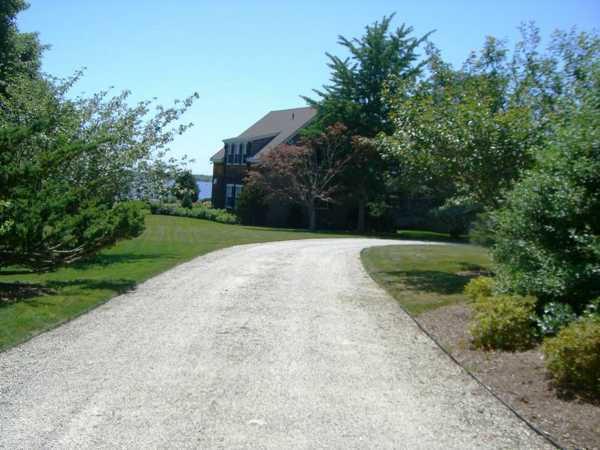
7. Curved Light Gray Gravel Driveway Leading to a Hillside Home
The single most important element here is the gracefully executed uphill curve. It’s not just a way to get from A to B; it’s a design feature that creates a sense of journey and reveal. As you travel up the driveway, the house slowly comes into full view, building anticipation. This gradual unfolding of the vista, including the house and the distant water, makes the arrival feel like an event. A straight, steep driveway would have been jarring and utilitarian, completely losing the private, established mood that this curve cultivates.
⭐ The One Thing
For a long gravel driveway on a slope, drainage is non-negotiable to prevent washout. The best practice is to give the driveway a slight ‘crown’—making the center about 4% higher than the edges. This encourages water to run off to the sides rather than forming a channel down the middle. Additionally, installing culverts or drainage swales lined with river rock at strategic low points along the curve will capture and redirect heavy runoff, protecting your investment and keeping the gravel in place.
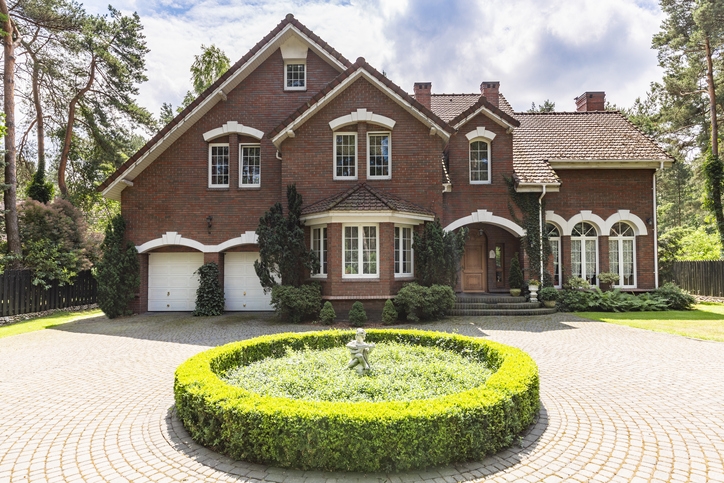
8. Grand Red Brick House with a Circular Cobblestone Driveway
This grand, traditional look follows a classic formula: 50% stately architecture (the red brick) + 30% structured hardscaping (the circular cobbled drive) + 20% formal greenery (the evergreens and central garden). The key to the balance is that the hardscape and landscape elements directly reflect the formality of the house. You could adapt this by keeping the circular driveway but swapping the cobblestones for brick pavers to match the house, which would shift the ratio and create a more monolithic, color-saturated appearance.
📐 Style Math
You can create a formal central garden bed, even a small-scale version, to elevate your entrance. Here’s a quick guide:
- Define the Circle: Use a stake, string, and marking paint to draw a perfect circle. A diameter of 8-12 feet is great for a residential scale.
- Install Edging: Dig a trench and install steel or stone edging along your marked circle to create a clean, sharp boundary that contains the garden.
- Prepare the Soil: Remove the grass and topsoil from the interior and amend it with high-quality compost to give your plants a strong start.
- Plant Symmetrically: Choose a central, structural plant like a boxwood, small statue, or urn. Then, plant smaller, repeating shrubs or flowers in a symmetrical pattern around it.
Time estimate: 1 weekend. Material cost: $200 – $800.
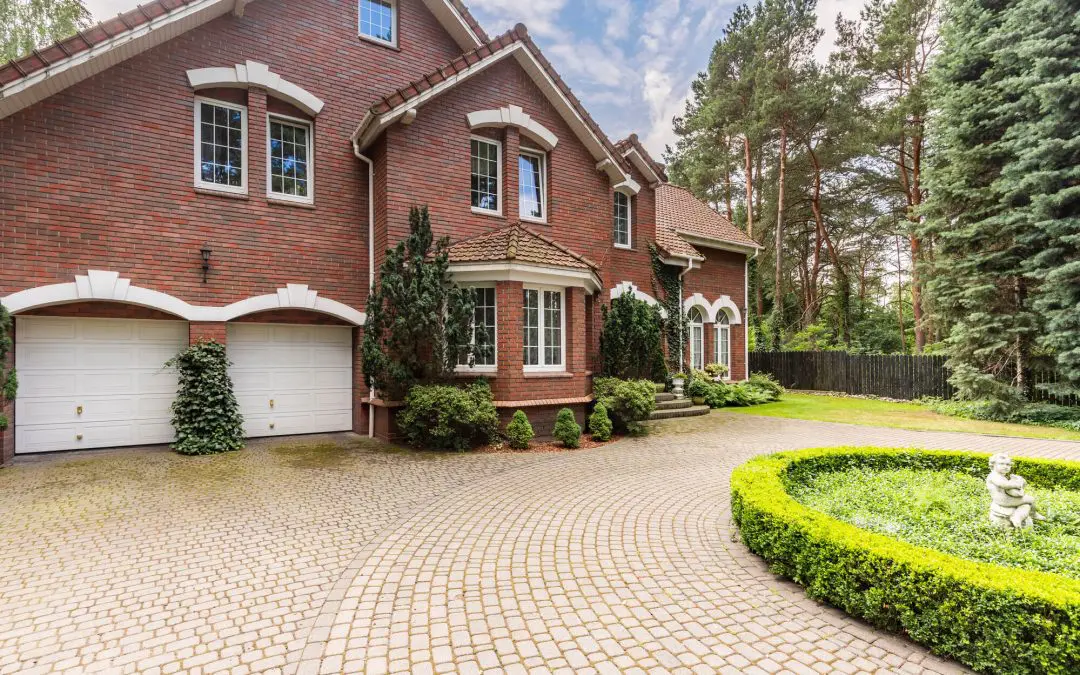
9. Stately Brick Home with a Winding Light-Colored Paver Driveway
A driveway of this magnitude, with its wide curves and integrated circular hedge garden, demands a large and relatively flat front yard. This design works best on properties of at least one acre with a minimum of 100 feet of road frontage. This allows the curves to feel generous and sweeping rather than cramped. The driveway itself, at its widest points, likely spans 18-20 feet to accommodate turning and passing. For a smaller property, you could adapt this by keeping the paver material but opting for a simple curved or straight driveway, forgoing the large central garden feature.
✅ Before You Start
While the light-colored pavers are stunning against the red brick, they are high-maintenance. Light beige or grey pavers are unforgiving when it comes to tire marks, oil drips, and stains from wet leaves. To keep this look sharp, you will need to commit to regular pressure washing at least once or twice a year. Sealing the pavers every 2-3 years is also highly recommended. This protective layer will make cleaning easier and help prevent stains from setting in, but it is an ongoing cost and task to consider.
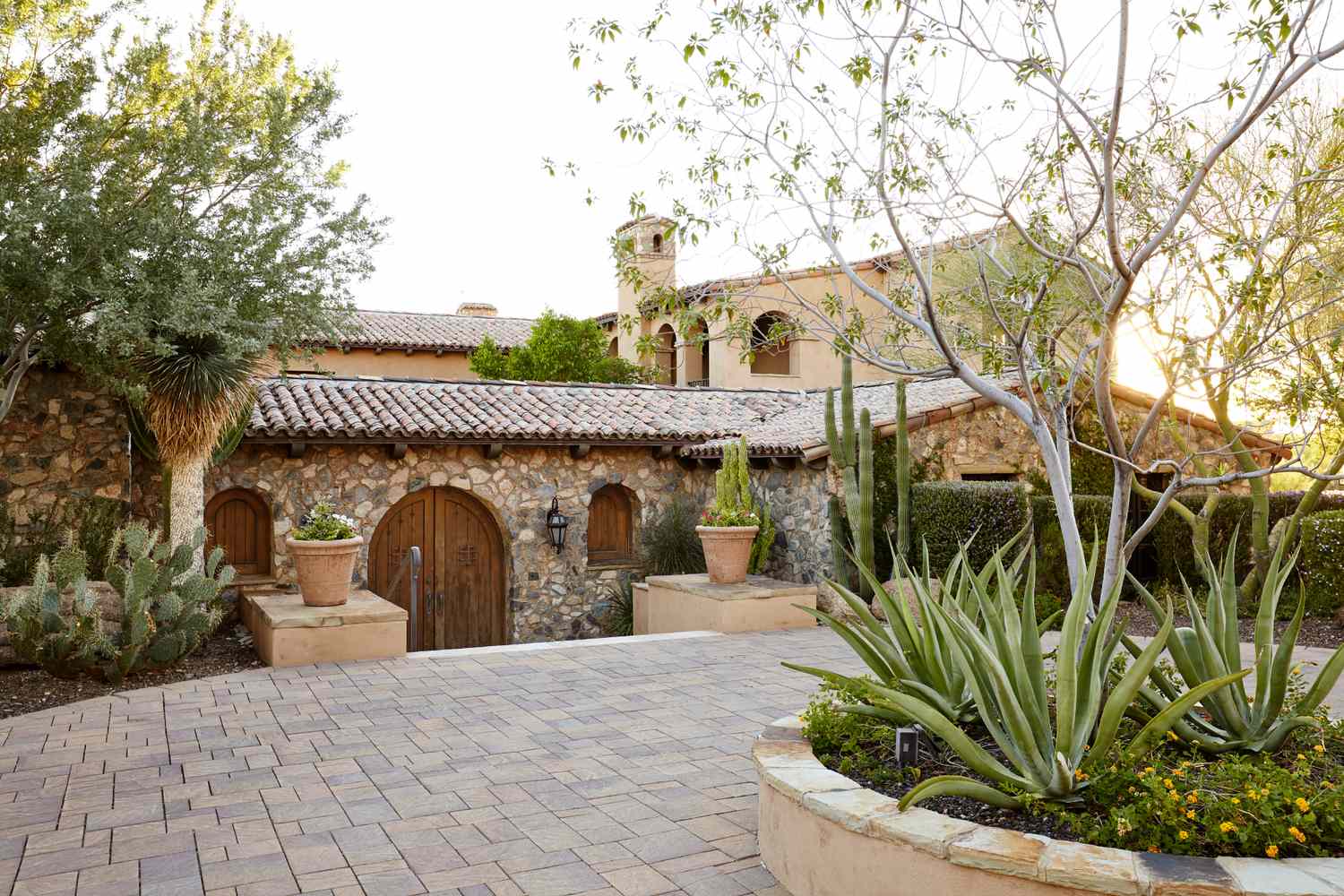
10. Tuscan-Inspired Home with a Stone Paver Entry Court
The success of this design lies in its cohesive material palette and embrace of its environment. The warm tones of the stone facade, red clay roof, and tan pavers all belong to the same color family, creating a harmonious, sun-baked look. There are no jarringly cool colors. Furthermore, the choice of drought-tolerant landscaping like cacti and agave is not only practical for a warm climate but also visually consistent with the Mediterranean/Tuscan theme. It feels authentic and integrated, rather than like a theme forced upon an unsuitable landscape.
💰 Budget Breakdown
While drought-tolerant landscaping is wonderfully low-water, it isn’t ‘no-maintenance’. Many cacti and agave species can grow quite large and may need to be thinned or pruned to prevent them from overtaking the space or becoming a hazard near walkways. The paver stones, with their many joints, can be a magnet for weeds, especially in warmer climates. Regular application of a pre-emergent herbicide and manual weeding will be necessary to keep the area looking tidy and well-kept. The stone planters also require checking for proper drainage to prevent root rot.
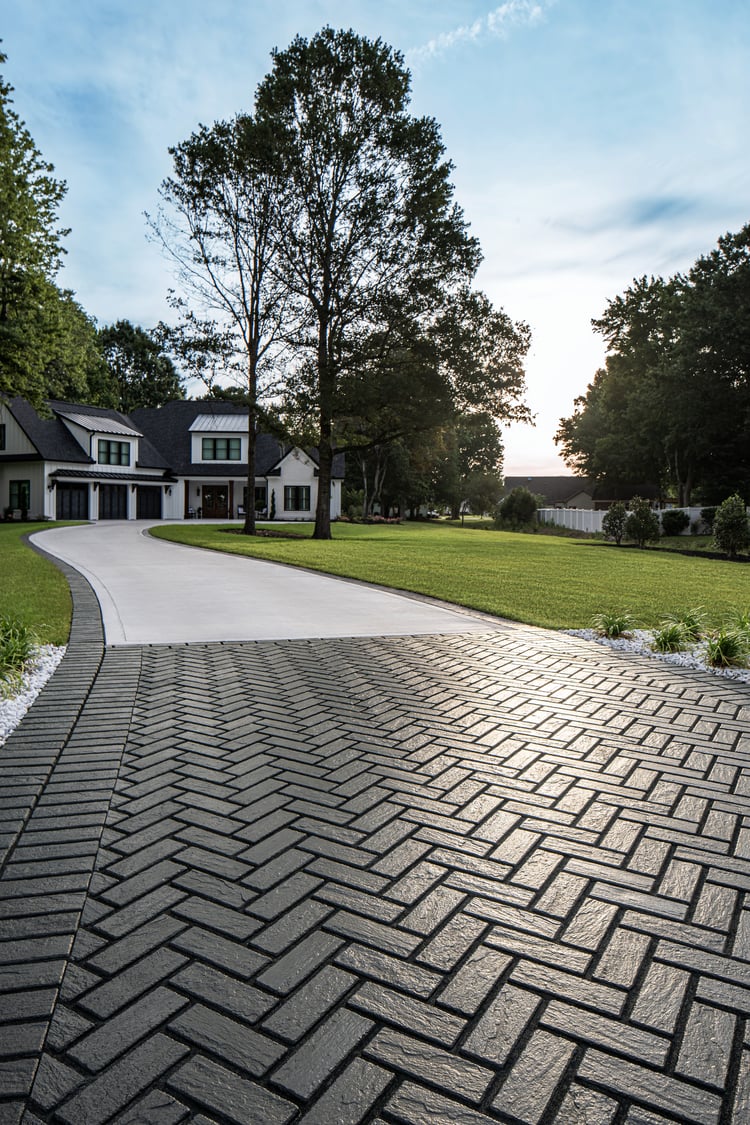
11. Modern Farmhouse with a Herringbone and Concrete Combination Driveway
When combining two different driveway materials, the transition is the most critical detail. To create a seamless and intentional look like this, use a clean, sharp dividing line. A
12. Modern Natural Driveway with Mixed Materials and Metal Edging
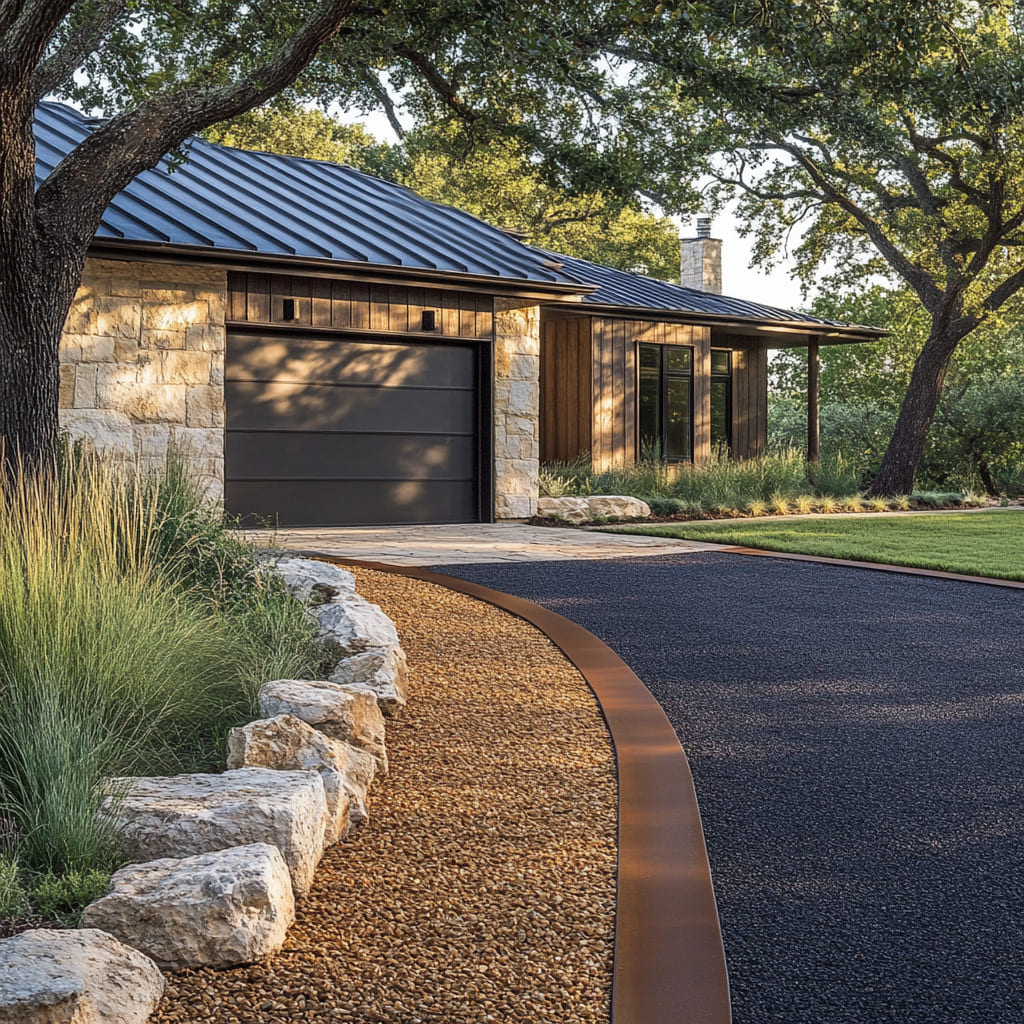
This look is a sophisticated blend of textures and tones. The formula is approximately 60% dominant paving (the textured black surface) + 20% soft shoulder (the light gravel) + 15% natural stone accents + 5% defining metal edge. The rusty brown of the metal curbing is the warm element that connects the cool black asphalt, the neutral stone, and the warm brown gravel. You could swap the textured black surface for smooth, dark concrete and the light gravel for a finer pea gravel and still achieve this balanced, modern-natural vibe.
🔥 Trending Context
You can get this high-end, mixed-material look for significantly less. Instead of a custom textured asphalt, use standard black asphalt for the main driveway—it’s one of the most cost-effective paving solutions. For the shoulder, use affordable pea gravel from a big-box store like Lowe’s or Home Depot. The real key is the metal edging, which you can find in affordable steel or aluminum options online or at landscape supply stores for $5-$10 per linear foot. This one detail elevates the entire look, making the simple materials feel intentional and designed.
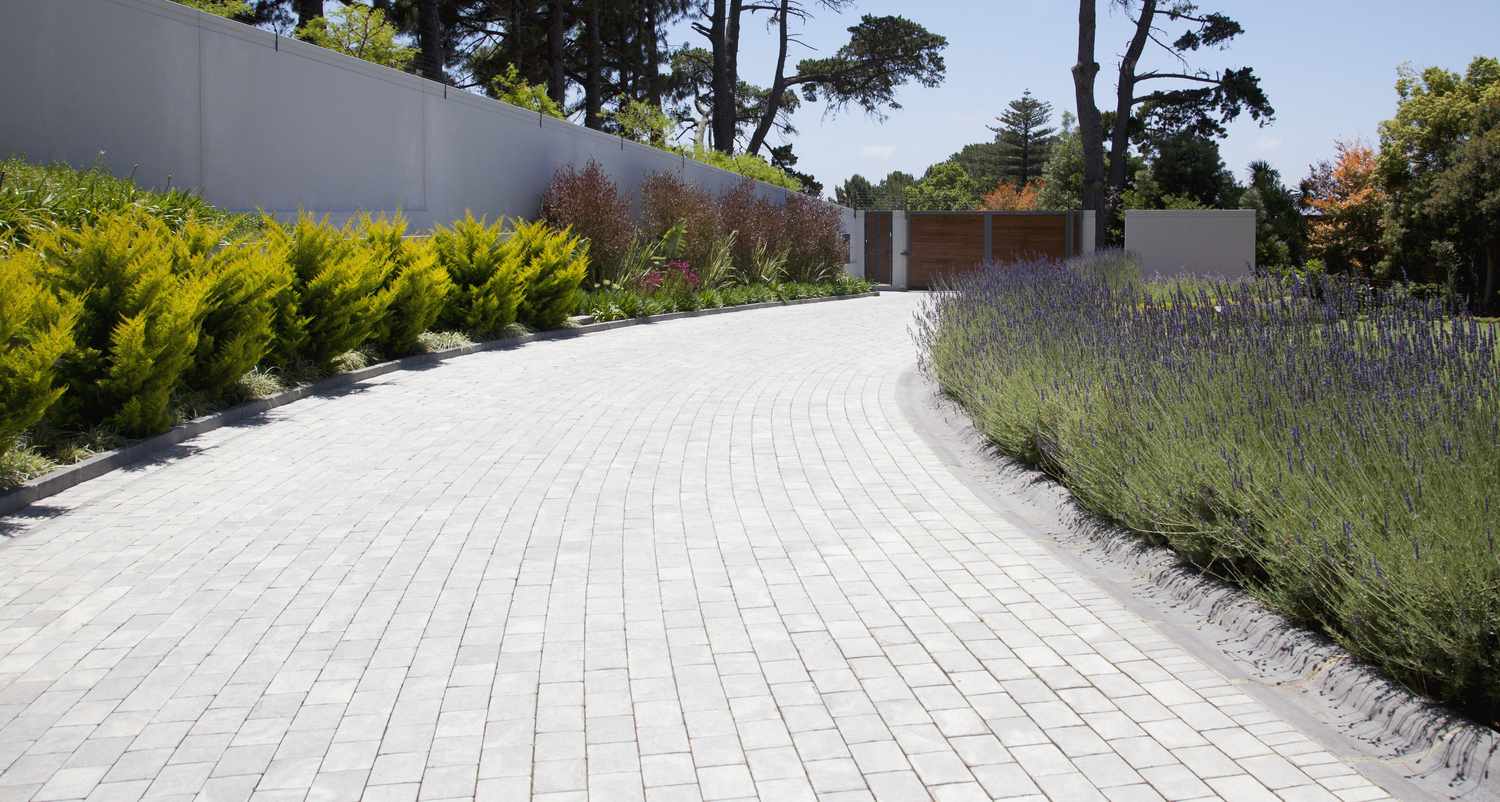
13. Curved Paver Driveway Bordered by a Tall White Wall and Lavender
A dense lavender border creates a stunning sensory experience. Here’s how to plant one:
💡 Designer Tip
- Choose the Right Variety: Select a variety like ‘Munstead’ or ‘Hidcote’ that stays relatively compact. You’ll need full sun—at least 6-8 hours a day.
- Prepare the Soil: Lavender demands excellent drainage. Amend your soil with sand or fine gravel to improve drainage, especially if you have heavy clay.
- Spacing is Key: For a dense hedge, space your plants about 18-24 inches apart. This allows them to grow into each other without being overly crowded.
- Planting: Plant them no deeper than they were in their nursery pots. Water them thoroughly after planting to settle the soil.
- Mulch Correctly: Use rock or pea gravel as mulch instead of wood chips, which can hold too much moisture.
Time estimate: 4-6 hours for a 50-foot border. Material cost: $150 – $400 for plants and soil amendments.
This look is beautiful, but requires the right conditions. Here’s your checklist before you start buying plants:
- Sunlight Test: Does the entire length of your proposed border get at least 6 hours of direct, uninterrupted sunlight per day? Lavender will not thrive in shade.
- Drainage Check: Dig a hole and fill it with water. If it doesn’t drain within an hour, your soil is too heavy, and you will need to build a raised bed or heavily amend the soil.
- Wall Color Lock-in: Are you committed to the white wall? The contrast is key to this look. A different colored wall will dramatically change the aesthetic.
- Water Source: Is there a hose or irrigation system that can reach the new plants during their first year as they get established?
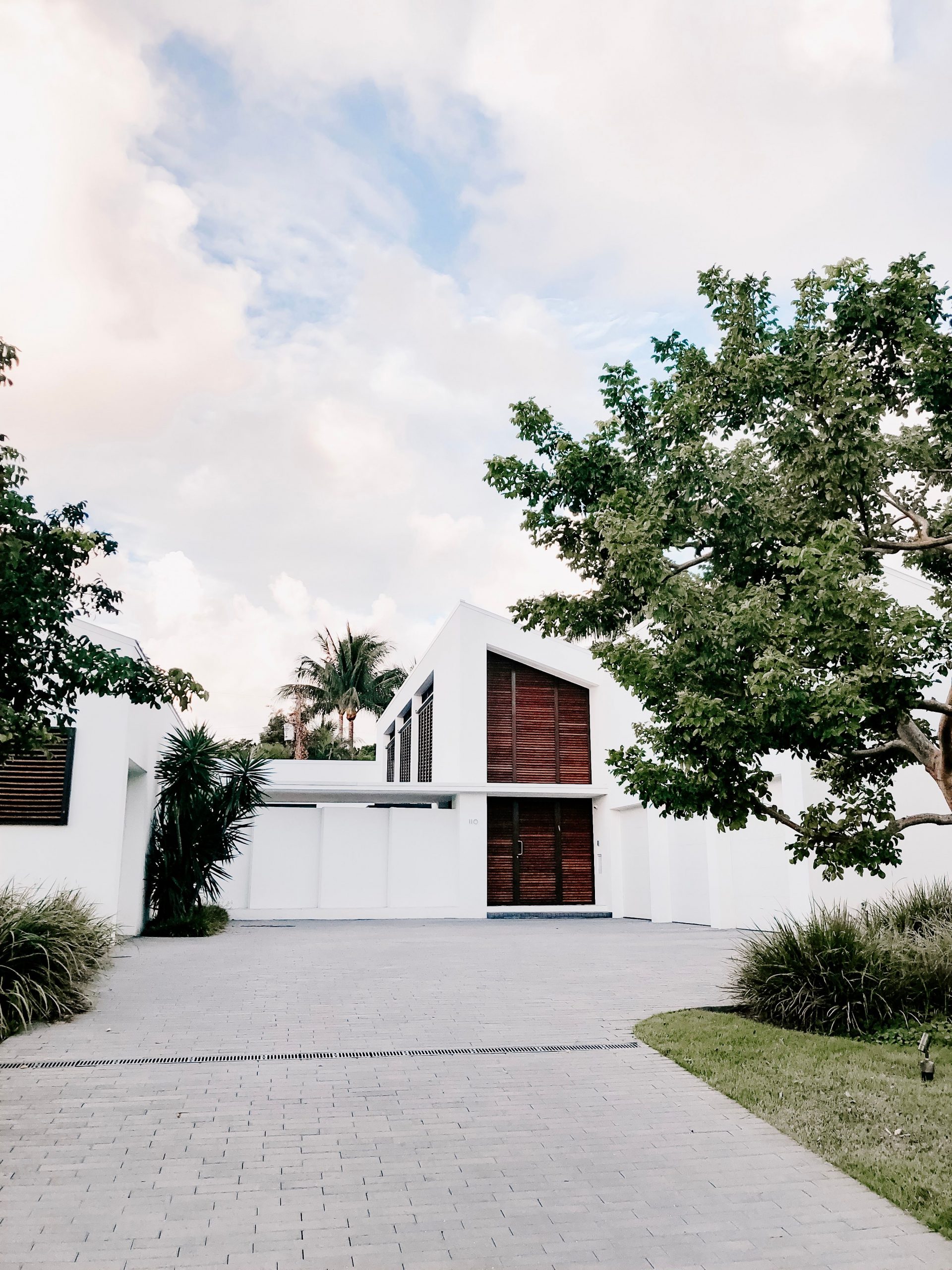
14. Modern White House with Dark Wood Accents and a Gray Paver Driveway
A pristine white house exterior is a commitment. In many climates, white siding is susceptible to showing dirt, pollen, and mildew, especially on facades that don’t get direct sunlight. Plan on power washing the exterior every 1-2 years to keep it looking crisp. The dark wood accents are gorgeous but will require regular maintenance. To prevent the wood from fading to gray or warping, it will need to be cleaned and resealed with a UV-protectant finish every 2-3 years, depending on your sun exposure.
⚠️ Real Talk
This design is a masterclass in balancing contrasts. The clean, sharp, geometric lines of the white house could feel sterile on their own. However, they are balanced by the organic shapes of the lush green landscaping and the gentle curve of the gray paver driveway. Similarly, the coolness of the white siding and gray pavers is warmed up by the rich, dark wood panels and gate. This interplay of hard and soft, cool and warm, and straight and curved is what gives the design its sophisticated and dynamic energy.
15. Contemporary Home with a Geometric Grass and Concrete Paver Driveway
Permeable paving systems like this are gaining huge traction for both aesthetic and environmental reasons. As municipalities enact stricter regulations on stormwater runoff, driveways that allow rain to soak into the ground are becoming a popular, eco-conscious solution. From a design perspective, this trend reflects a desire to soften modern architecture and better integrate it with the landscape. Pinterest boards are filling up with “checkerboard driveways” and “grass driveway” ideas as homeowners seek to break up large expanses of hardscaping with living, green elements.
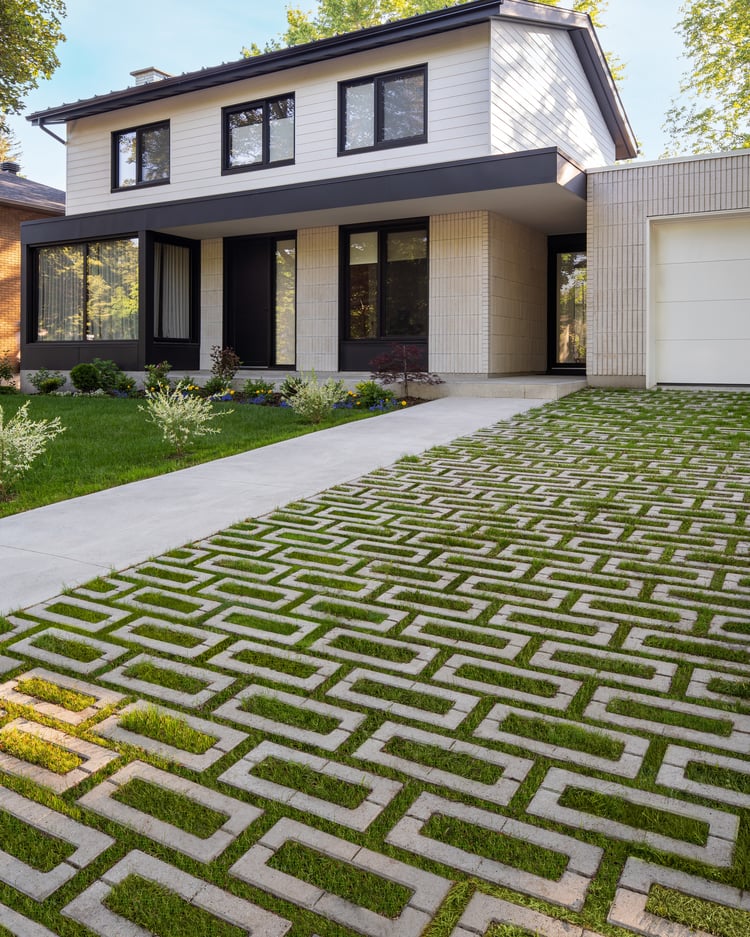
🔧 How-To Brief
While grass pavers look amazing, they are not for the faint of heart. The grass squares require the same care as a lawn—mowing, watering, and fertilizing. Mowing can be tedious, as you need to be careful not to scalp the grass or damage the mower blades on the concrete edges. The small grass patches are also more susceptible to drying out and heat stress than a full lawn. In high-traffic areas, the soil can become compacted, and the grass may struggle to survive. Consider using a durable, low-growing grass variety like Zoysia or installing a drip irrigation system. Compare this to the solid grass island in Idea #21 for a lower-maintenance green alternative.
16. Interlocking Paver Driveway in a Warm, Earth-Tone Palette
When using multi-colored pavers, the magic is in the mix. Don’t just alternate colors in a predictable pattern. For a natural, blended look, insist that your installers pull pavers from at least three different pallets simultaneously. This ensures a random distribution of the grey, beige, and brown tones, preventing noticeable color blocking or patchiness. This technique gives the finished driveway a more organic, stone-like appearance rather than a manufactured one.
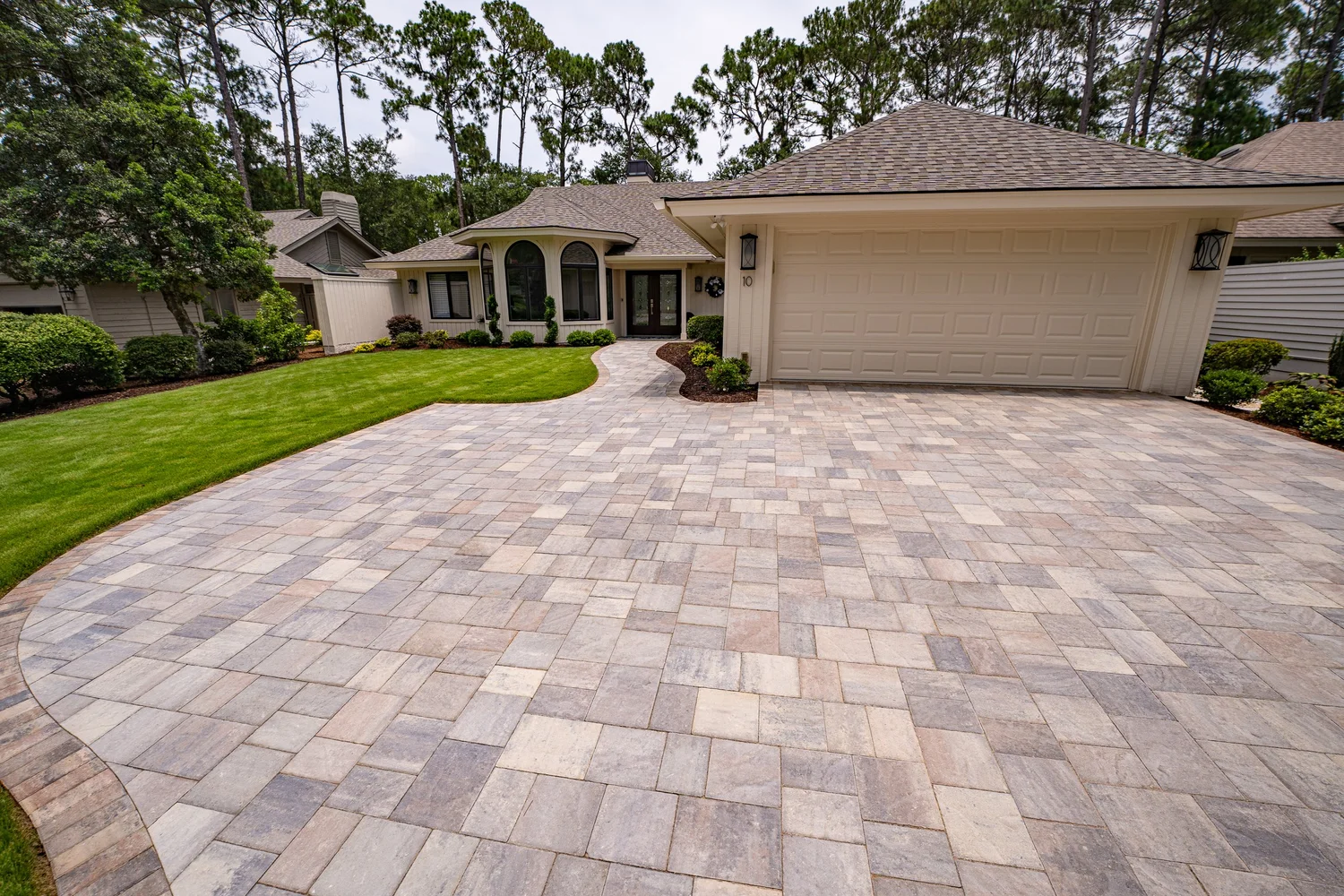
💸 Get This Look For Less
A broad, multi-toned paver driveway works beautifully with a medium to large-sized home, particularly one with a simple, light-colored exterior like this stucco finish. The textured, variegated driveway adds visual weight and interest that can overwhelm a very small house. This style is ideal for a suburban lot of a quarter-acre or more, where the driveway makes up a significant portion of the front yard’s visual real estate. The curving walkway branching off to the front door is a great feature for homes set back at least 40-50 feet from the street.
17. Asphalt Driveway with an Integrated Stone Paver Walkway
The single element that elevates this entire design is the winding stone paver walkway. An asphalt driveway leading to a garage can feel purely functional and a bit bleak. But by carving out this graceful, contrasting path, the design creates a dedicated and welcoming journey to the front door. It separates the pedestrian experience from the vehicle space. The addition of landscape lighting along this path further emphasizes it as the intended, beautiful route to the entrance, making the home feel instantly more inviting and thoughtfully designed.
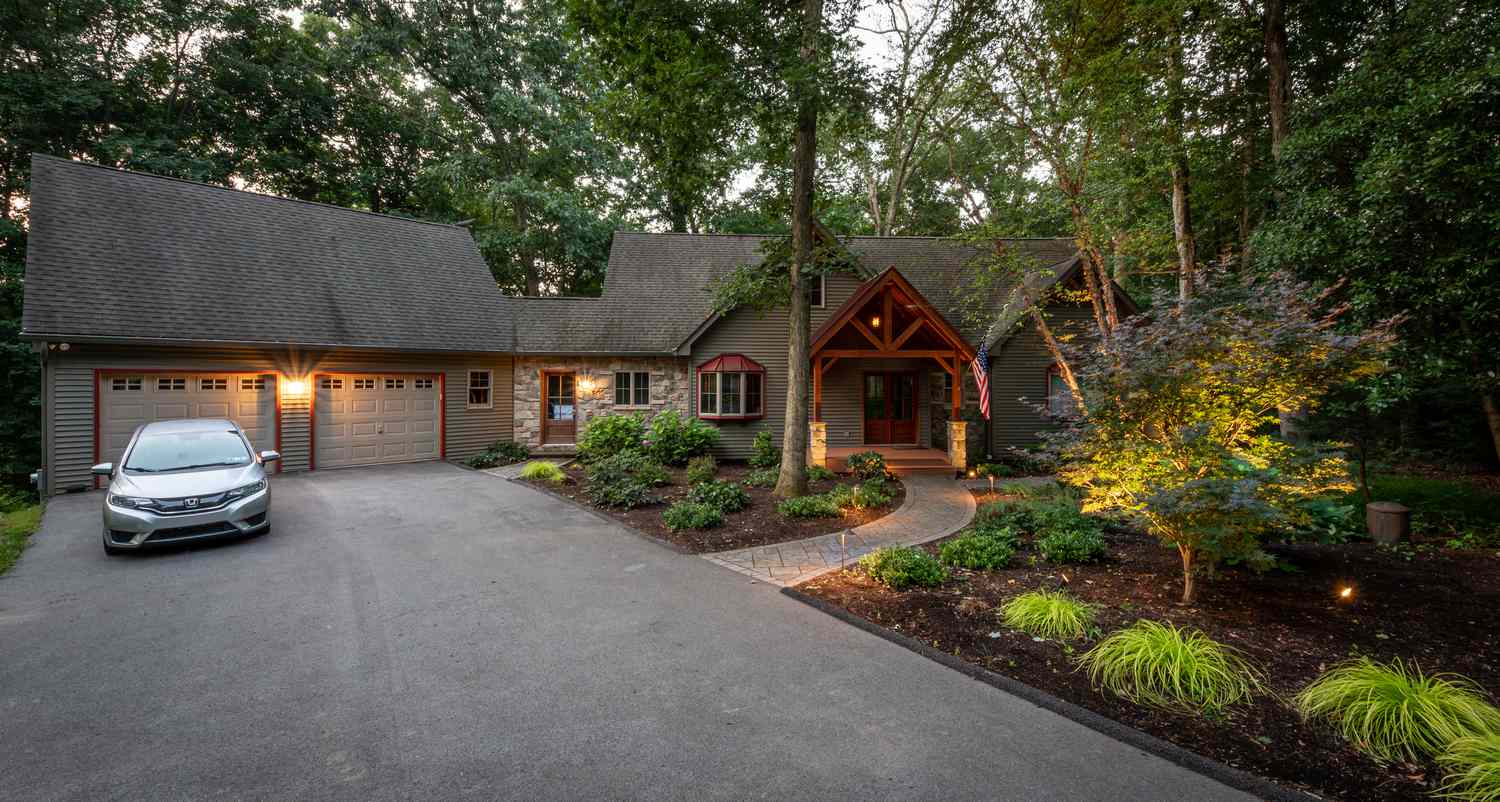
📏 Scale Guide
This combination offers a smart way to balance budget with high-impact curb appeal. Asphalt is cost-effective, while the paver walkway provides the expensive, custom look where it matters most.
- Asphalt Driveway (800 sq. ft.): $4,000 – $8,000
- Stone Paver Walkway (150 sq. ft.): $3,000 – $6,000
- Landscape Lighting (10 fixtures): $1,500 – $3,500
- Plantings & Mulch: $1,000 – $2,500
- TOTAL: $9,500 – $20,000
Budget alternative: Use stamped concrete for the walkway instead of individual pavers and opt for solar-powered landscape lights to get a similar effect for about 40% less.
18. Elegant Entry with Light Grey Shingles and an Arched Wooden Door
This entrance feels so substantial and elegant because of its masterful mix of textures and forms. The fine, horizontal lines of the grey shingle siding create a calm, orderly backdrop. Against this, the robust, natural texture of the stone pillars and the smooth, dramatic curve of the arched wooden door truly stand out. The warm copper of the gutters adds a metallic glint that catches the light and prevents the grey-and-wood palette from feeling flat. It’s a composition where every material is allowed to have its own voice.
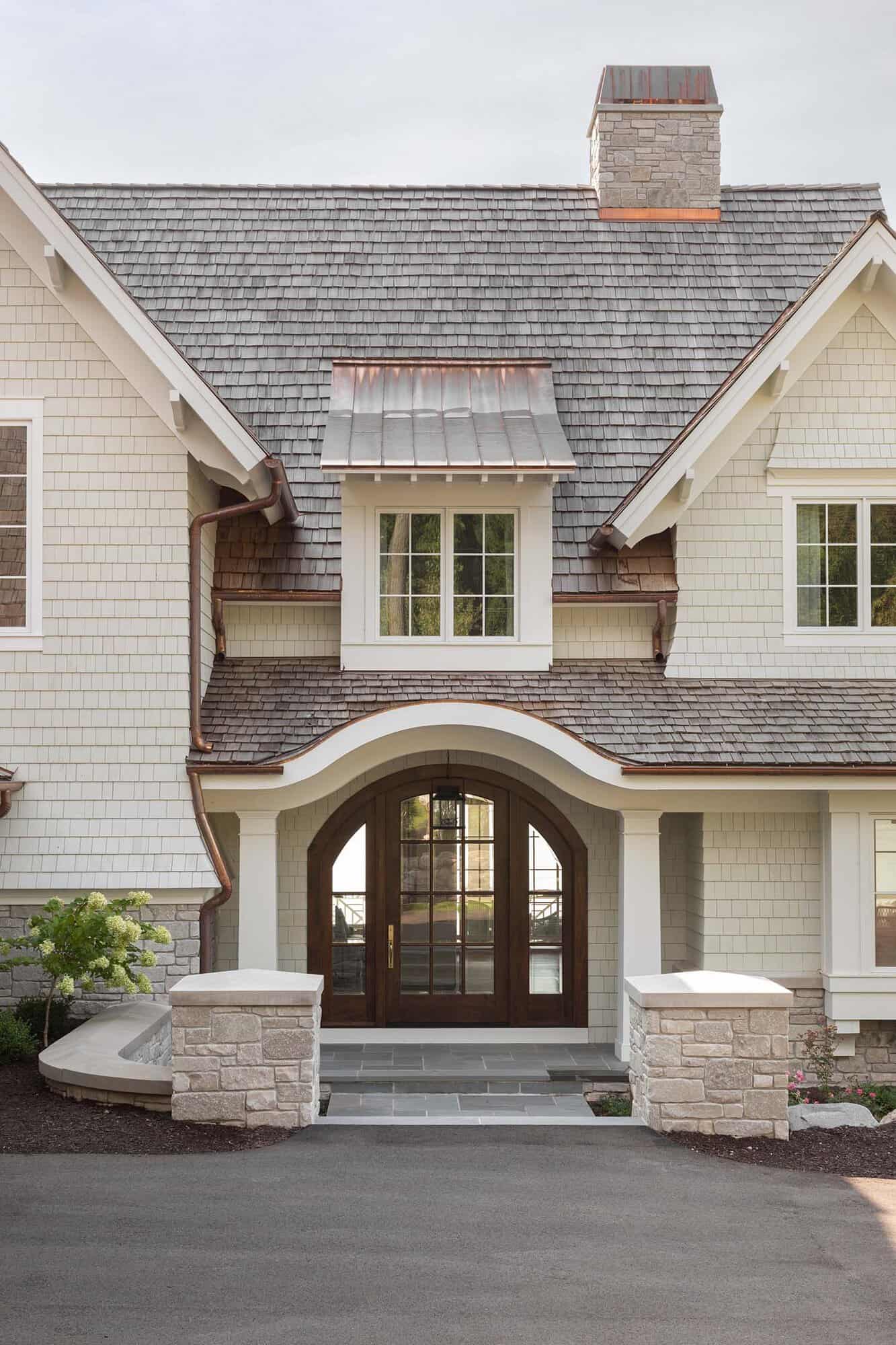
🎯 What Makes It Work
The visual recipe here is one of subtle sophistication: 50% textured neutral siding + 25% natural stone + 15% statement wood + 10% warm metallic accents. The key is that the dominant siding is a quiet, cool neutral, which allows the warmer, more expressive materials like the wood and copper to become focal points. If you were to change the siding to a bold color, you would need to simplify the other elements—perhaps by painting the door—to avoid visual overload.
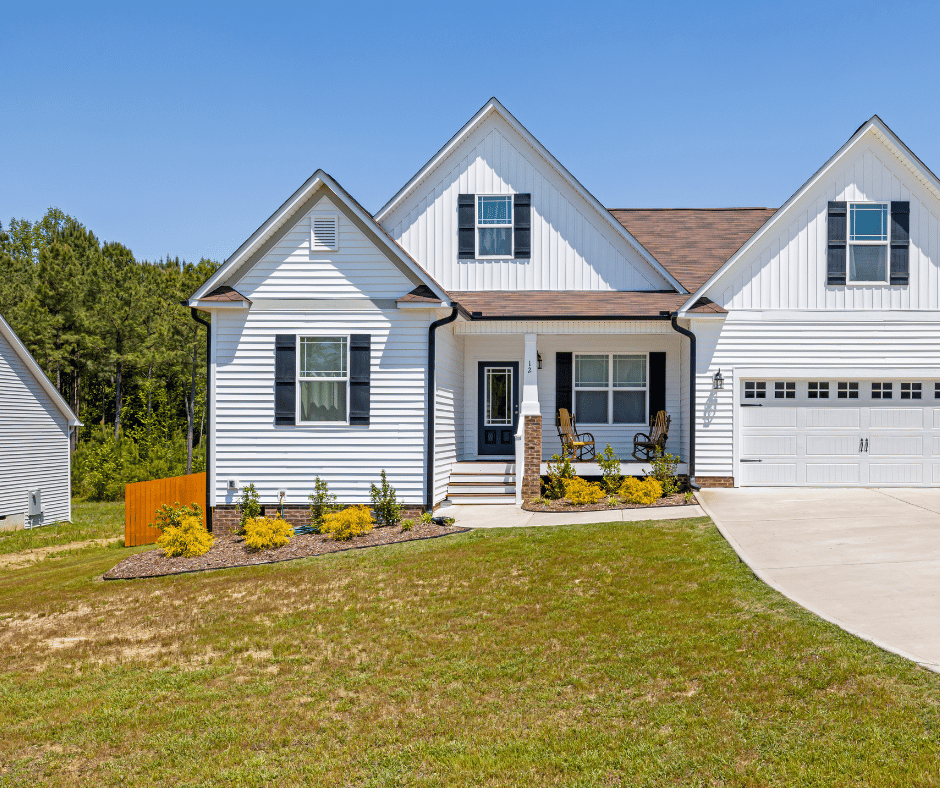
19. Classic White Farmhouse with a Simple Concrete Driveway
This iconic American look is more attainable than you might think. A simple poured concrete driveway, like the one shown, is one of the most durable and cost-effective options, typically running $6-$10 per square foot. The classic white siding with black shutters is a timeless combination you can achieve with budget-friendly vinyl siding and off-the-shelf shutters from stores like Home Depot. The welcoming feel is completed with simple landscaping—yellow flowering shrubs like Forsythia are inexpensive and fast-growing—and classic wooden rocking chairs that can often be found secondhand on Facebook Marketplace for under $100.
⭐ The One Thing
While charming, a concrete driveway in front of a white house can be a real battle with stains. Tire marks, fluid leaks, and even rust stains from outdoor furniture or sprinklers will be highly visible on the light surface. To keep it looking clean, you’ll need to power wash it annually. For stubborn oil or rust stains, you’ll need specific chemical cleaners. Sealing the concrete every 3-5 years is your best defense; it makes cleaning much easier and prevents stains from penetrating the porous surface. Think of it as a necessary part of maintaining that crisp, clean aesthetic which is so different from the modern farmhouse in Idea #11.
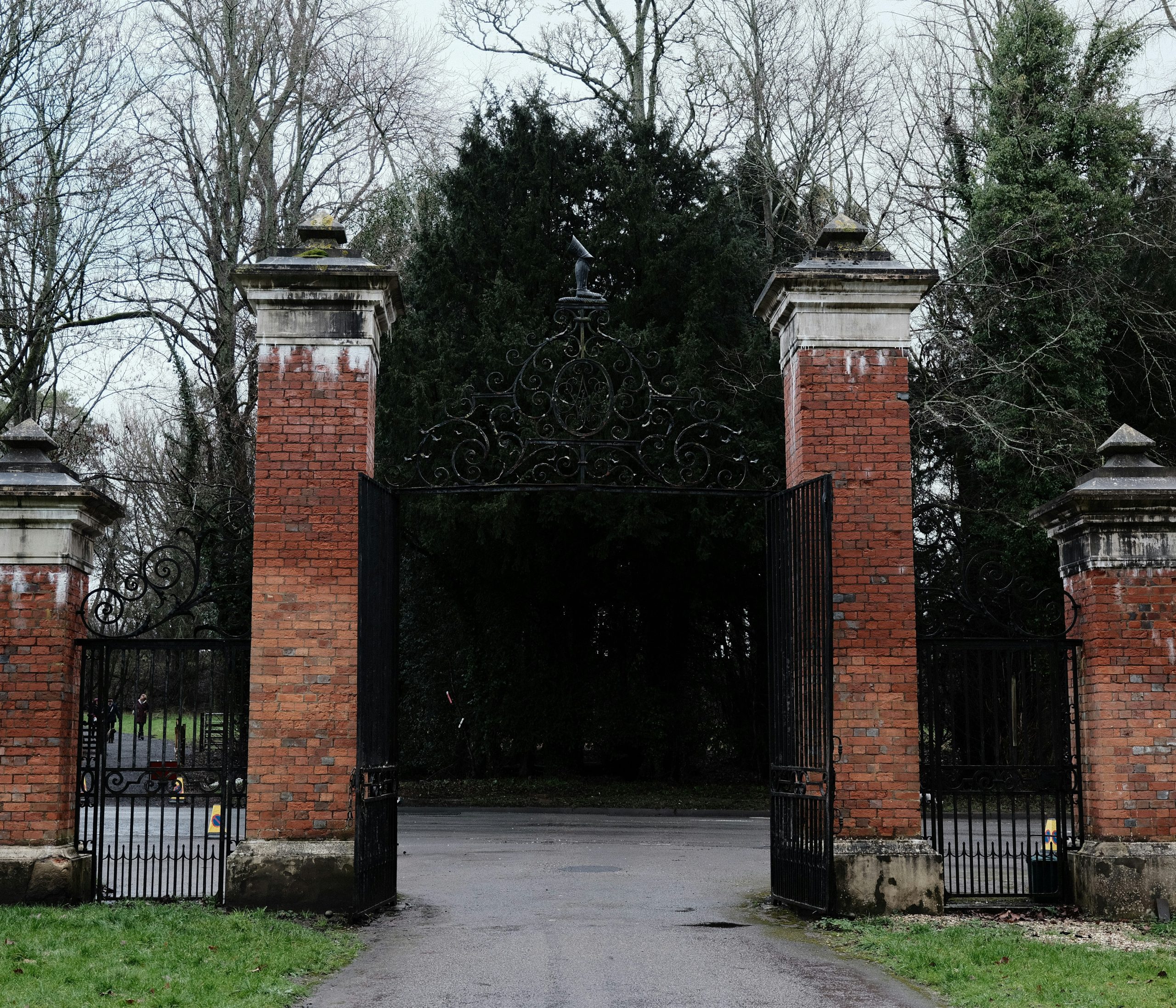
20. Grand Entrance with Weathered Brick Pillars and Ornate Wrought Iron
The single element that gives this entrance its soul is the patina of age. The weathered brick, with its moss and discoloration, tells a story of time and permanence that brand new materials simply cannot. The ornate but slightly rusted wrought iron gates contribute to this narrative. If the bricks were perfectly pointed and the gates had a fresh coat of glossy black paint, the entrance would still be grand, but it would lose all of its romantic, historical character. It’s the imperfection that makes it perfect.
📐 Style Math
There’s a growing movement in design, sometimes called ‘Dark Academia’ or ‘English Country’, that celebrates moody, atmospheric, and historical aesthetics. This type of entrance is its perfect outdoor expression. It pushes back against the bright-and-airy modern farmhouse trend by embracing shadow, texture, and a sense of history. People are drawn to the feeling of an entrance that has stood for generations, suggesting a home with deep roots and a rich story. It feels less like a new build and more like an inheritance.
21. Concrete Driveway with a Central Grass Island Focal Point
Creating a grass island is an advanced concrete project, but it adds incredible custom appeal. Here is the process:
![Circular Driveways [An Introduction]](https://nestmood.com/wp-content/uploads/2026/07/circular-driveways-an-introduction-1.jpg)
✅ Before You Start
- Form the Perimeter: The concrete crew will build two sets of forms—one for the outer edge of the driveway and one for the inner edge of the island—typically using flexible lumber for the curves.
- Add a Concrete Curb: A crucial step is to pour an integrated 6-inch concrete curb around the island’s inner edge. This contains the soil and prevents the island’s edges from crumbling.
- Pour the Driveway: Concrete is poured between the two forms. Expansion joints are cut in to control cracking.
- Prepare for Planting: After the concrete cures, the island is filled with a layer of gravel for drainage, followed by high-quality topsoil.
- Sod or Seed: Finally, the island is sodded or seeded. Sod gives an instant result and is usually better for preventing weed intrusion.
Time estimate: 3-5 days for concrete work, plus planting. This is a job for experienced pros.
When designing a driveway with a central island, ensure the driving lanes on either side are wide enough for easy navigation. The absolute minimum width for each lane should be 10 feet. However, for a more comfortable feel, especially if you have larger vehicles or frequent guests, aiming for 12-foot lanes is ideal. This prevents drivers from feeling squeezed and reduces the risk of tires running over the grass or curbing. Also, check out the permeable grass paver option in Idea #15 for a different way to integrate lawn and driveway.
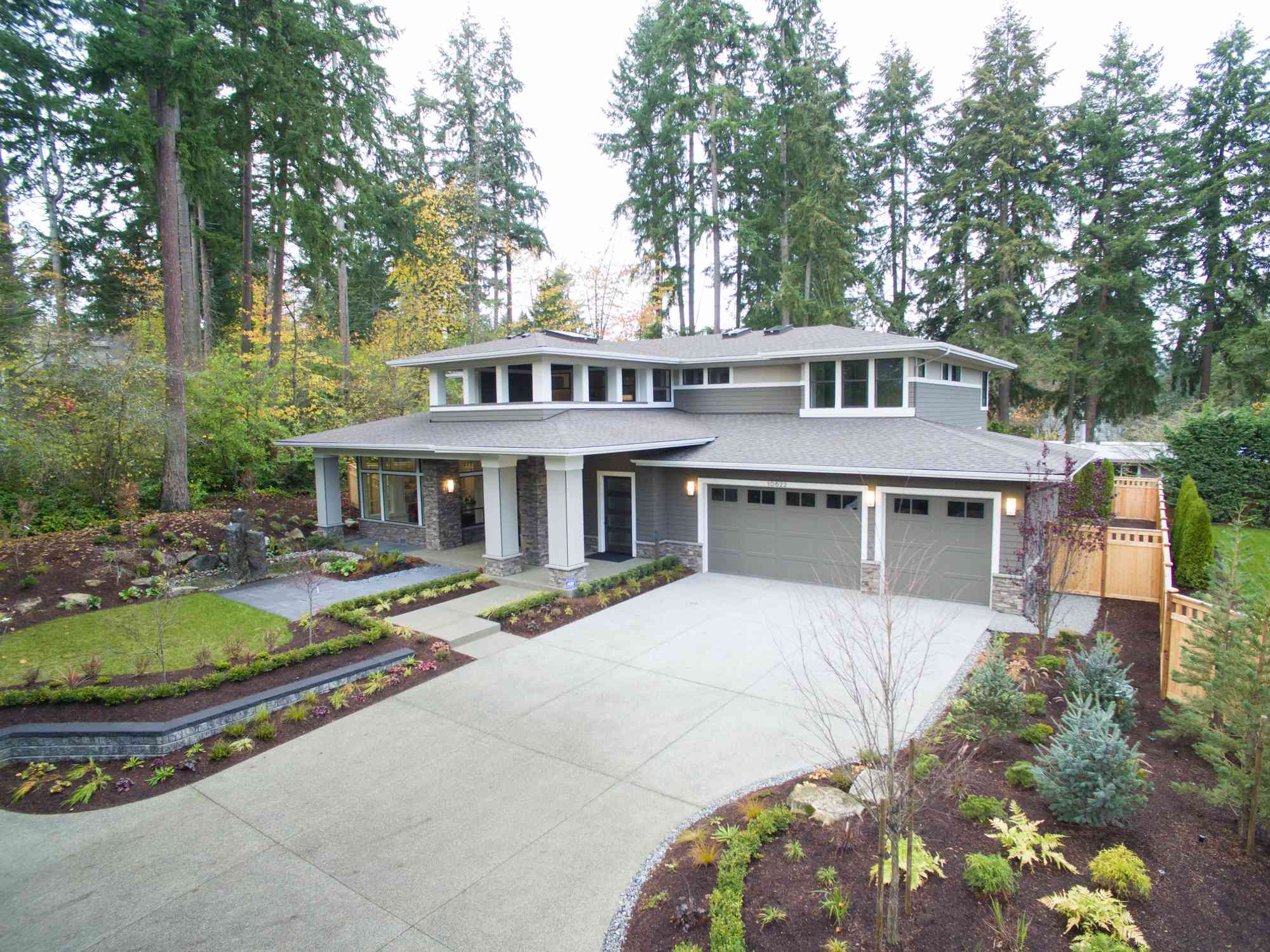
22. Modern Split-Level Home with a Curved Concrete Driveway
This style of a wide, curving concrete driveway is perfectly suited for a property that is wider than it is deep. It requires significant frontage, ideally 80 feet or more, to allow the curve to feel generous and provide space for the surrounding landscape beds. The split-level design of the house works well with a sloping lot, and the concrete driveway can be expertly graded to provide a smooth transition from the street to the garage. This design is less suited for narrow, deep lots, where a straight driveway would be more practical and cost-effective.
💰 Budget Breakdown
This design works because it masterfully blends manufactured and natural elements. The clean, hard lines of the concrete driveway and the grid pattern on the garage doors are softened by the rugged texture of the stacked stone accents. In turn, the architecture is nestled into a deeply natural setting, with mature pine trees and informal shrubbery that contrast with the home’s geometric forms. The raised planting beds with dark mulch act as a neat, defined transition zone between the hardscaping and the wilder landscape beyond.
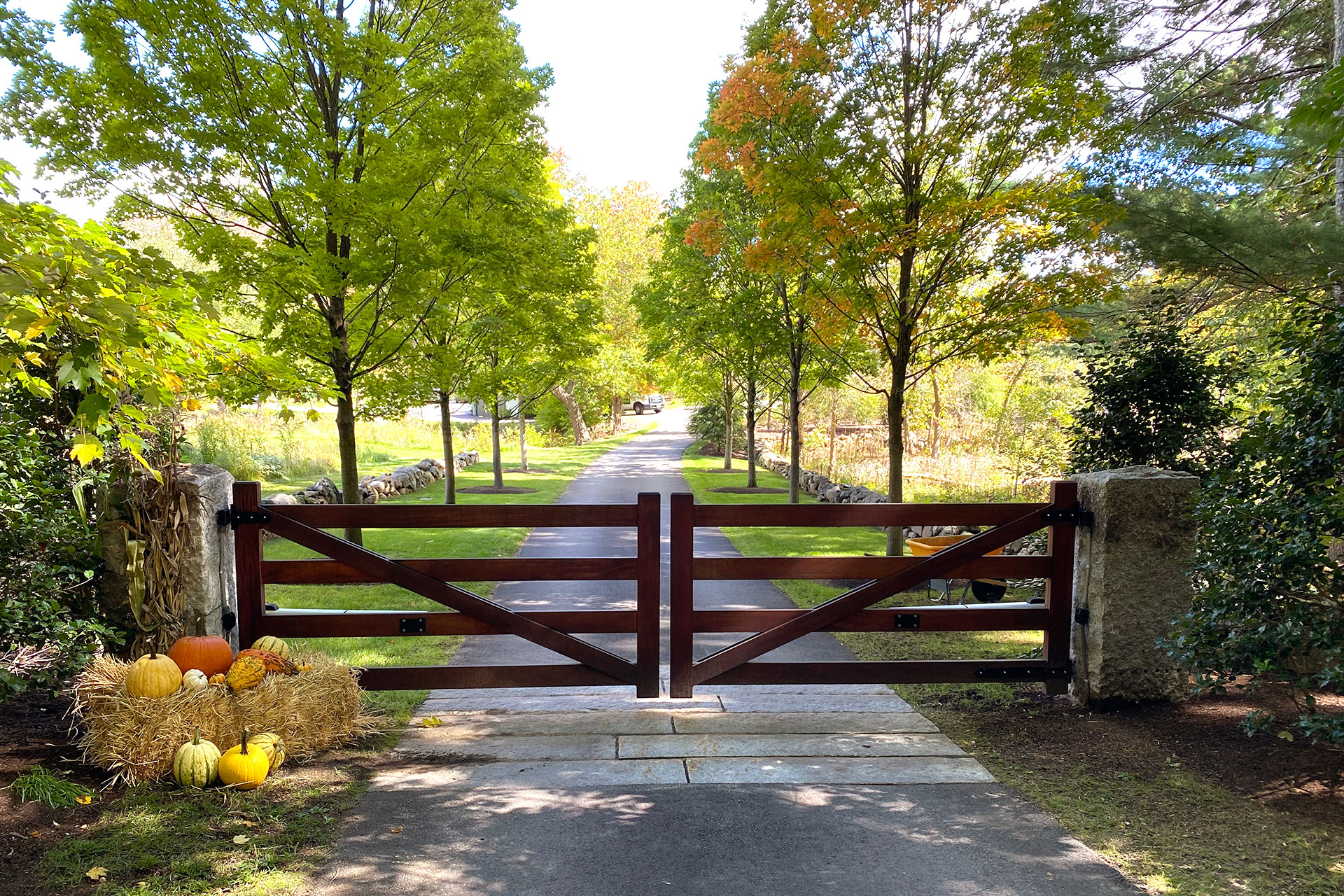
23. Tree-Lined Asphalt Drive with a Rustic Wooden Gate
The beauty of this entrance is in its orderly, natural repetition. It’s an approachable look that can be built over time, but here’s a cost estimate for doing it all at once for a long driveway (approx. 500 feet).
🧹 Maintenance Reality
- Asphalt Driveway (500’x10′): $20,000 – $35,000
- Stone Gate Pillars: $4,000 – $12,000
- Custom Wooden Gate: $3,000 – $8,000
- Young Trees (20 total, 10 on each side): $2,000 – $5,000
- TOTAL: $29,000 – $60,000
Budget alternative: Use gravel instead of asphalt, install the gate and pillars now, and plant smaller, younger trees that will mature over 5-10 years. This could bring the initial cost down to $10,000 – $18,000.
Before you commit to lining your driveway with trees, it’s essential to plan for their future growth. Check the mature root system of your chosen species; aggressive roots can damage asphalt or concrete over time. Also, consider the mature canopy width. You need to plant them far enough from the driveway’s edge so that branches won’t scratch cars or drop debris directly onto the pavement in a few years. A good rule of thumb is to plant trees at a distance of at least half their mature canopy width from the driveway edge.
24. Sloped Interlocking Paver Driveway with a Dark Paver Border
This stately look is all about contrast and framing. The formula is: 70% light, neutral field pavers + 15% dark border pavers + 15% vibrant landscaping. The dark grey border is the key; it acts like a frame for a painting, giving the large expanse of light grey pavers a crisp, finished edge. This same dark grey is then repeated in the house’s siding, tying the hardscaping directly to the architecture. The vibrant red of the autumn foliage provides a powerful, seasonal accent color that pops against the cool grey palette.
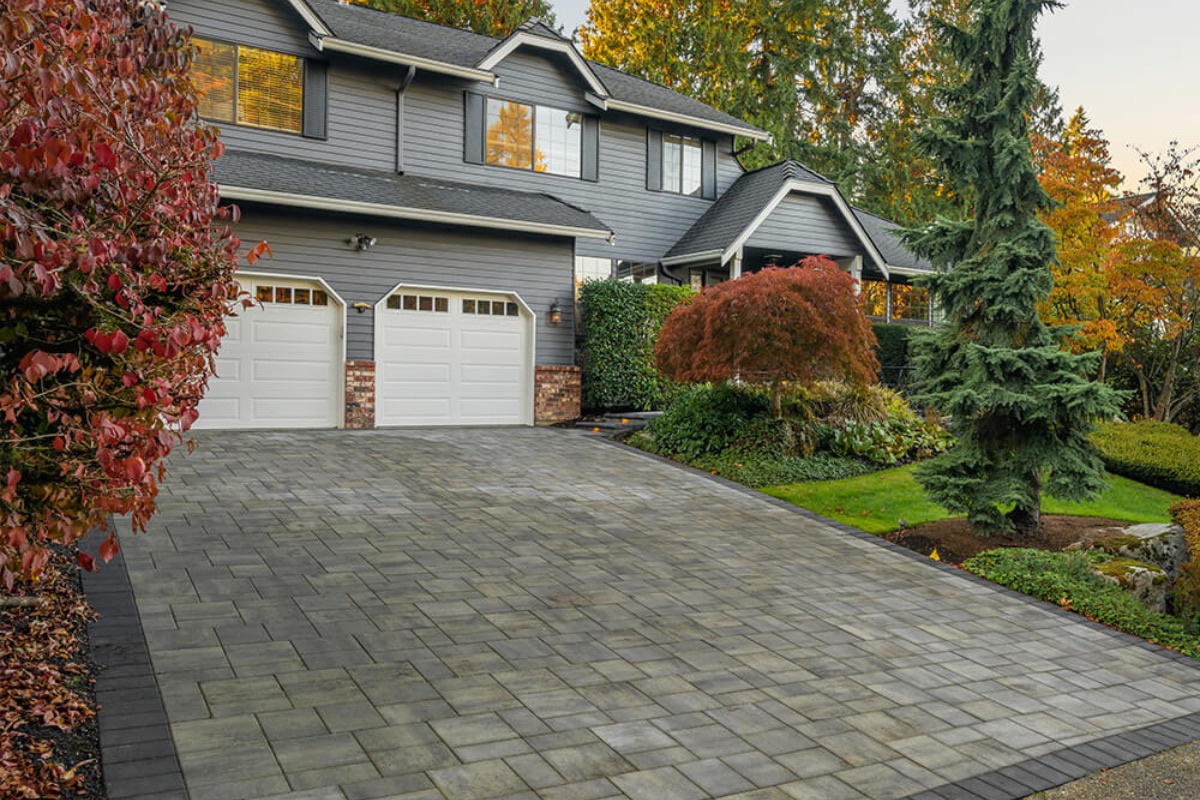
🔥 Trending Context
Interlocking pavers on a slope require specific installation to prevent shifting and creeping over time. A thick, well-compacted base is non-negotiable. Most importantly, the driveway must have a heavy-duty concrete bond beam at its lowest point (usually where it meets the street). This buried concrete edge provides a solid stop that the entire system of pavers rests against, preventing gravity from slowly pulling them downhill. Additionally, keeping the paver joints filled with polymeric sand is crucial, as it locks them together and prevents water erosion from undermining the system.
25. Modern Grey Home with a Bold Orange Door and Grass Block Pavers
When working with a neutral, monochromatic exterior like this grey facade, a single, bold accent color on the front door is the most effective way to add personality and a clear focal point. For maximum impact, choose a color that is a direct complement or a vibrant contrast. Here, the fiery orange pops against the cool grey. The key is to use it sparingly. The temptation might be to add more orange elsewhere, but its power comes from its isolation. Let the door be the one and only statement piece.
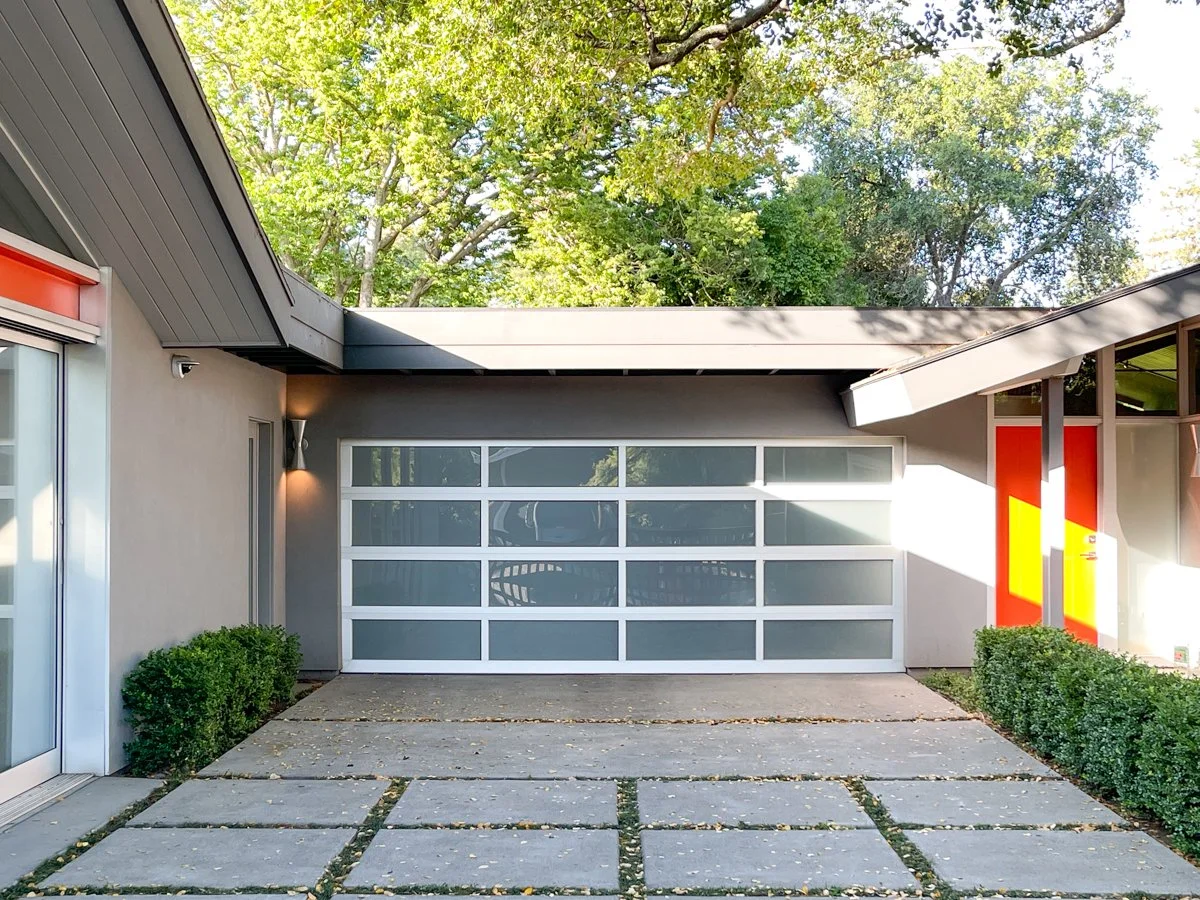
💡 Designer Tip
The single element that makes this design feel truly modern and architectural is the choice of the block pavers with grass joints. A standard concrete or asphalt driveway would have been functional, but it would have made the entrance feel conventional. The geometric grid of the pavers, softened by the integrated grass, speaks the same design language as the clean lines of the house. It shows a commitment to a cohesive design vision from the street all the way to the front door, turning a utility space into a significant architectural feature.
26. Classic Curved Red Brick Driveway in a Herringbone Pattern
A brick driveway, especially one set in a beautiful herringbone pattern, is a timeless and high-end choice. However, be prepared for the realities of brick. It’s more porous than concrete, making it susceptible to moss, mildew, and staining, especially in shady or damp areas. The countless joints are also prime real estate for weeds. While polymeric sand helps, some weed growth is inevitable. Also, in climates with heavy freeze-thaw cycles, individual bricks can heave or crack over time and may need to be reset or replaced. Compare the maintenance with the brick and floral option in Idea #28.
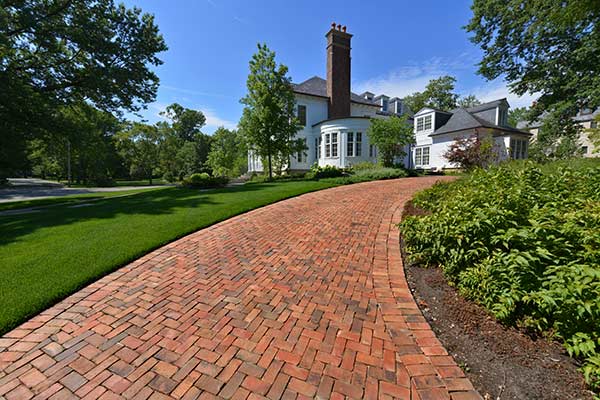
⚠️ Real Talk
This design is so successful because it perfectly balances formal and natural elements. The red brick herringbone pattern is inherently formal, structured, and traditional. However, the driveway’s long, gentle curve softens this formality, making it feel less rigid. This feeling is amplified by the landscaping choices: on one side, a manicured lawn reinforces the classic look, while on the other, dense, untamed foliage provides a lush, natural counterpoint. This ‘best of both worlds’ approach creates an entrance that feels grand yet welcoming.
27. Gravel Driveway Flanked by Stone Pillars and Wooden Gates
To get the grand feeling of this entrance without the five-figure price tag of custom stone masonry, you can use faux stone pillar wraps. These are prefabricated panels or column kits made from high-density polyurethane that mimic the look of stacked stone. You can find them at big-box stores like Home Depot or online for $300-$600 per pillar. Build a simple and sturdy frame with pressure-treated wood, clad it with the faux stone panels, and top it with an affordable pre-cast concrete cap. This approach gives you 90% of the look for about 20% of the cost of traditional masonry. This is a much more accessible version of the gated entrance seen in Idea #4.
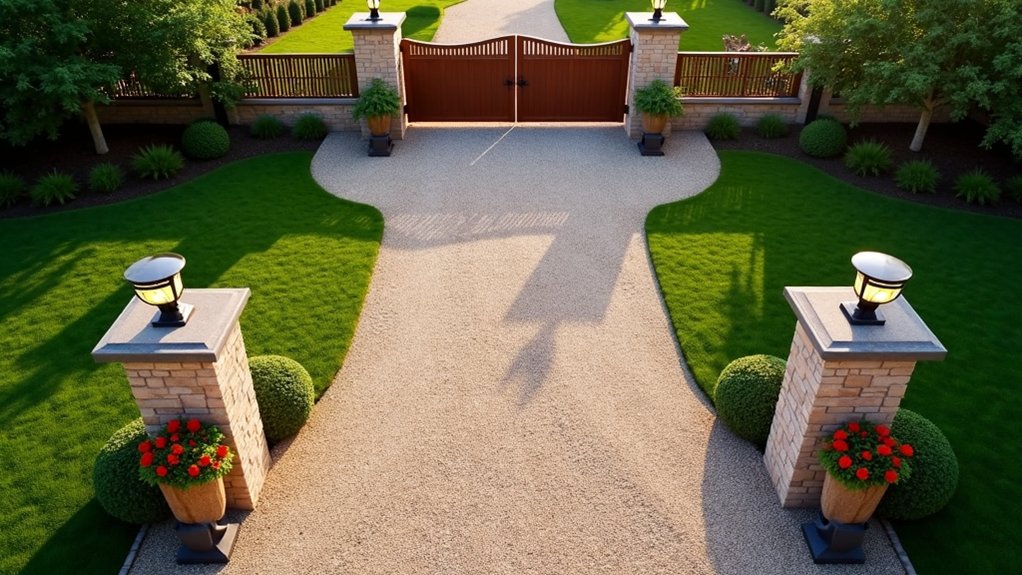
🔧 How-To Brief
You can add affordable, high-impact lighting to your entrance pillars with solar-powered cap lights. It’s a simple DIY project.
- Choose Your Light: Purchase solar-powered fence post or pillar cap lights. Make sure the base dimensions match the top of your pillar.
- Mark the Spot: Place the light on the pillar cap and mark the screw holes with a pencil.
- Drill Pilot Holes: If drilling into a stone or concrete cap, use a masonry drill bit that is slightly smaller than your screws to create pilot holes.
- Secure with Adhesive & Screws: Apply a bead of durable outdoor construction adhesive to the base of the light, place it over the pilot holes, and then fasten it securely with the provided screws.
Time estimate: 15 minutes per pillar. Material cost: $40 – $100 per light.
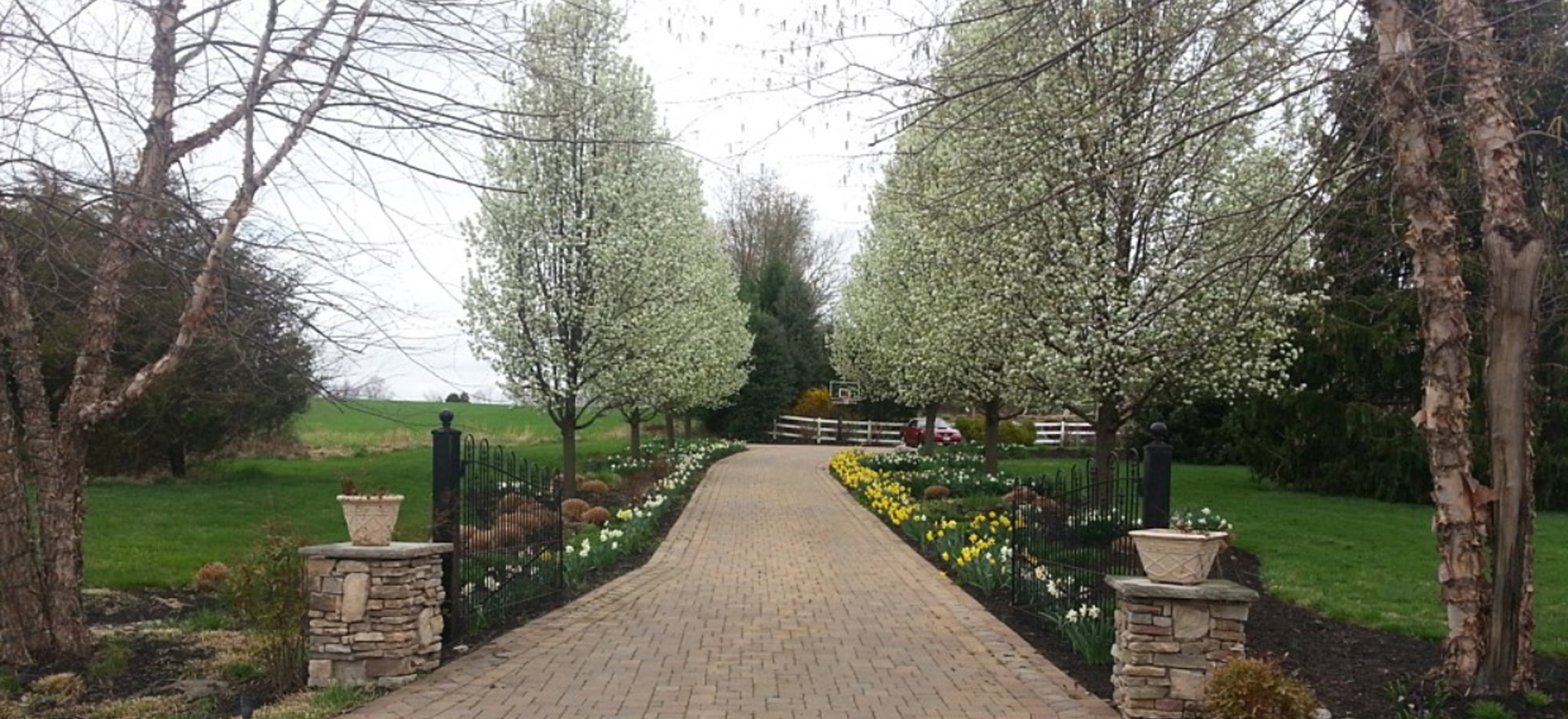
28. Flowering Brick Paver Driveway with Manicured Garden Beds
This lush, floral-lined look is stunning, but it requires a significant gardening commitment. Before you invest in hundreds of plants, run through this checklist:
💸 Get This Look For Less
- Sun Mapping: Does the entire driveway border receive the same amount of sun? A mix of full sun and partial shade areas will require different plant choices to look uniform.
- Soil Quality: Test the soil along the driveway. It’s often compacted and of poor quality. You will likely need to bring in significant amounts of garden soil and compost to create these raised beds.
- Watering Plan: How will you water everything? A built-in drip irrigation system is almost essential for a planting of this scale to ensure consistent moisture without wasteful runoff.
- Maintenance Time: Honestly assess how many hours per week you are willing to dedicate to weeding, deadheading, and general garden care. This is not a low-maintenance landscape.
When designing deep flower beds next to a driveway, layering your plants by height is critical. Place the tallest plants, like these flowering trees, at the very back. In front of them, plant your mid-height shrubs or perennials (like the yellow blooms). Finally, use your lowest-growing flowers and groundcovers as an edging right along the pavers. This creates a lush, tiered effect where every plant is visible, and it gives the bed a professional, intentional look rather than a chaotic jumble.
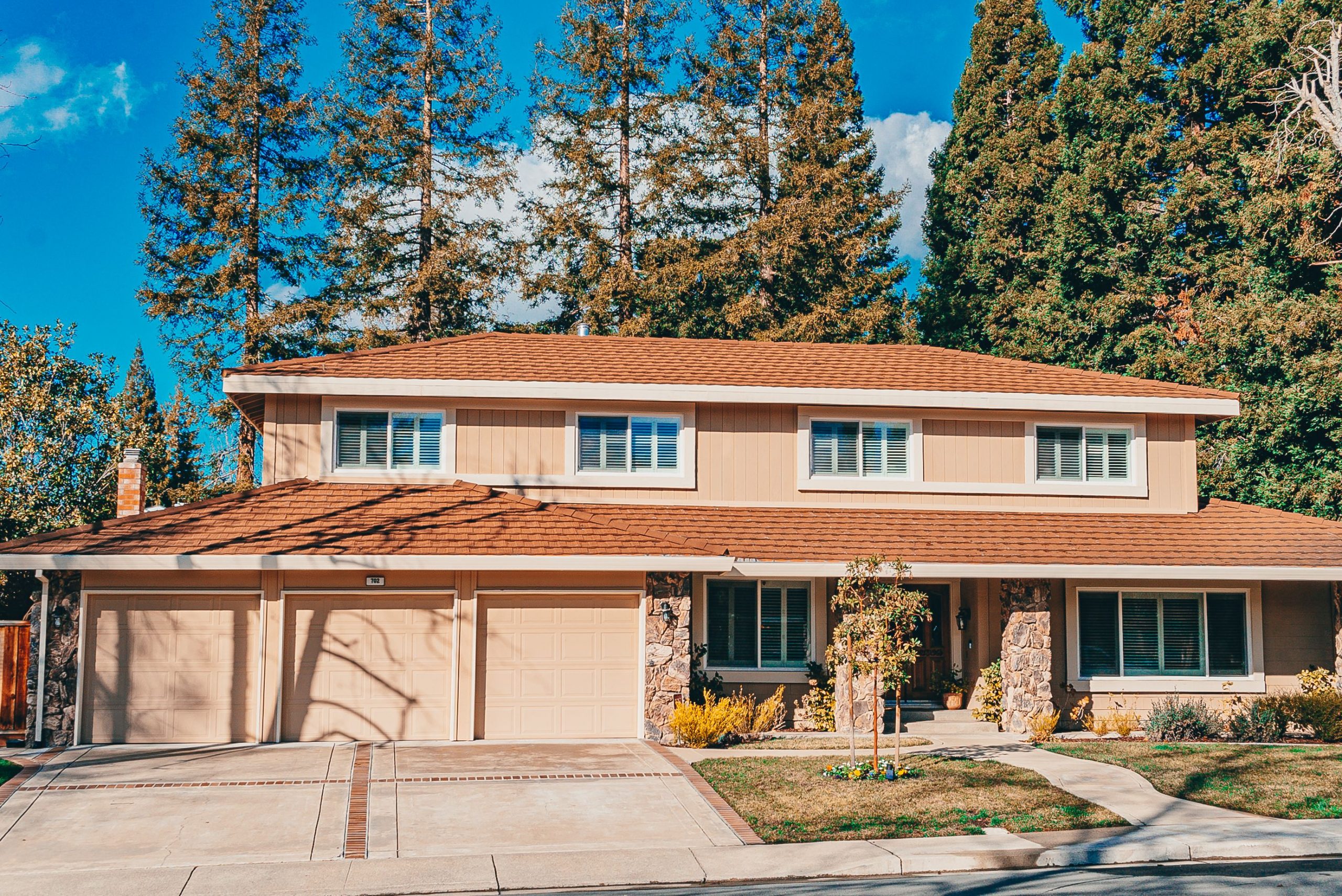
29. Concrete Driveway with Refined Brick Inlay Borders
The decorative brick inlay is, without a doubt, the one thing that elevates this driveway from standard suburbia to something more custom and refined. A plain concrete slab would have been perfectly functional, but it would have done nothing to complement the home’s mixed-material facade. The brick border picks up on the warm tones of the shingle roof and echoes the texture of the stone columns, tying the driveway into the overall design of the house. It’s a small detail that makes a huge difference in perceived quality and curb appeal.
📏 Scale Guide
This design demonstrates a balanced suburban formula: 70% simple, durable base (the concrete) + 20% classic accent material (the brick inlay) + 10% sophisticated architectural details (the stone veneer and louvered blinds). The concrete keeps it practical and relatively affordable, while the brick adds a touch of custom luxury. You could change the equation by swapping the brick for a dark grey stone paver to match a grey roof, which would result in a cooler, more contemporary feel while maintaining the same successful ratio of base-to-accent.
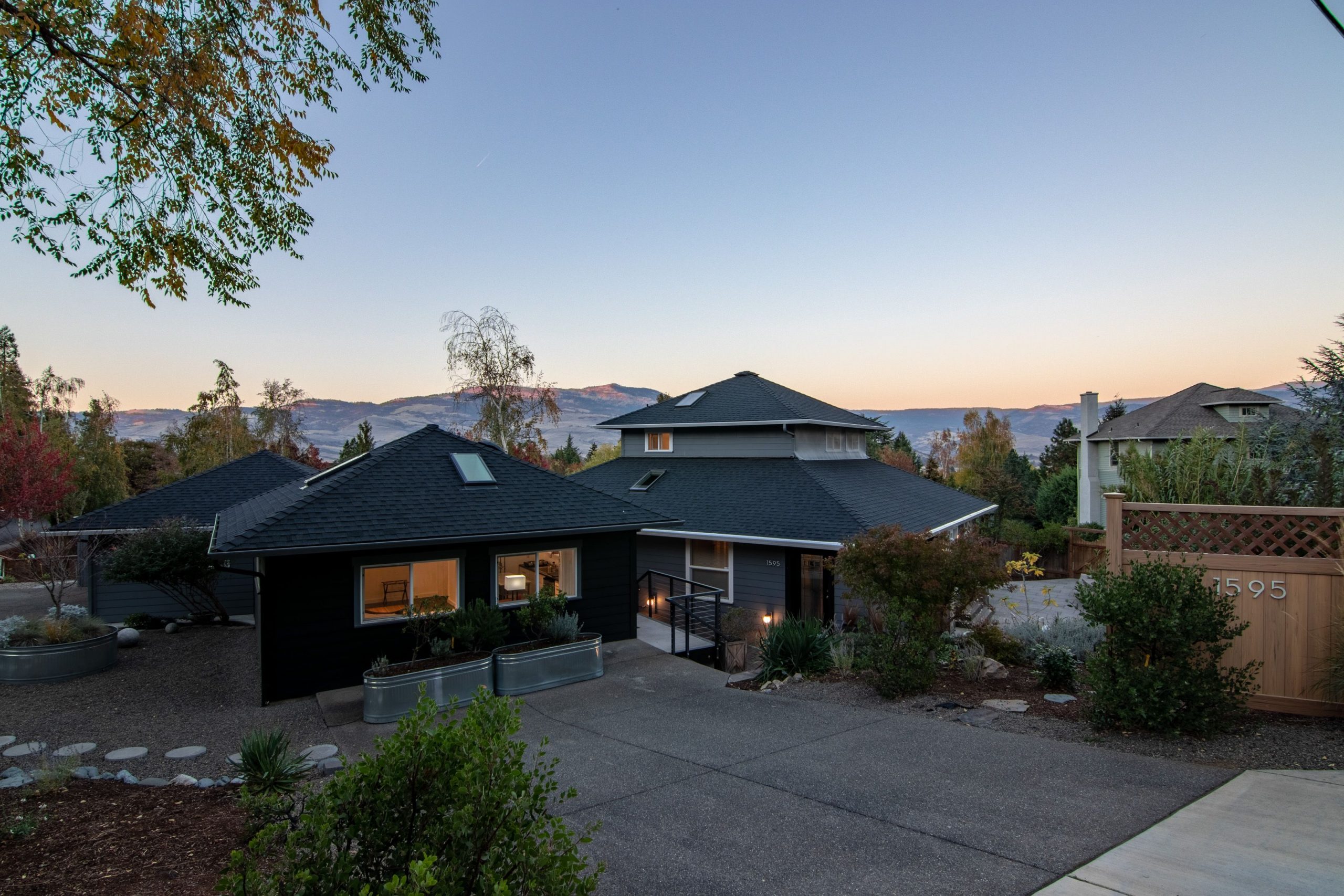
30. Modern Hillside House with a Winding Driveway and Mountain Views
A driveway for a hillside home like this is more of an engineering project than a simple paving job. This design is only suitable for properties with significant elevation changes. The winding path, or switchback, is necessary to create a manageable slope for vehicles, typically not exceeding a 15% grade. This requires a lot of land and extensive excavation and grading. Retaining walls, like the subtle ones suggested by the metal trough planters, are often required to stabilize the land around the driveway. This is a complex, high-budget scenario for multi-acre lots.
🎯 What Makes It Work
Living on a hillside with a long, winding driveway comes with its own set of challenges, especially in colder climates. Snow and ice removal can be a serious issue on a sloped surface. Before committing to a home like this, you need a solid plan, whether that’s a contract with a reliable plowing service that has experience with steep grades, or investing in a heavy-duty personal snowblower or plow. Heated driveway systems are a luxury option, but they are extremely expensive to install and operate. Also, consider access for delivery trucks and emergency vehicles, which can be difficult on narrow, winding paths.
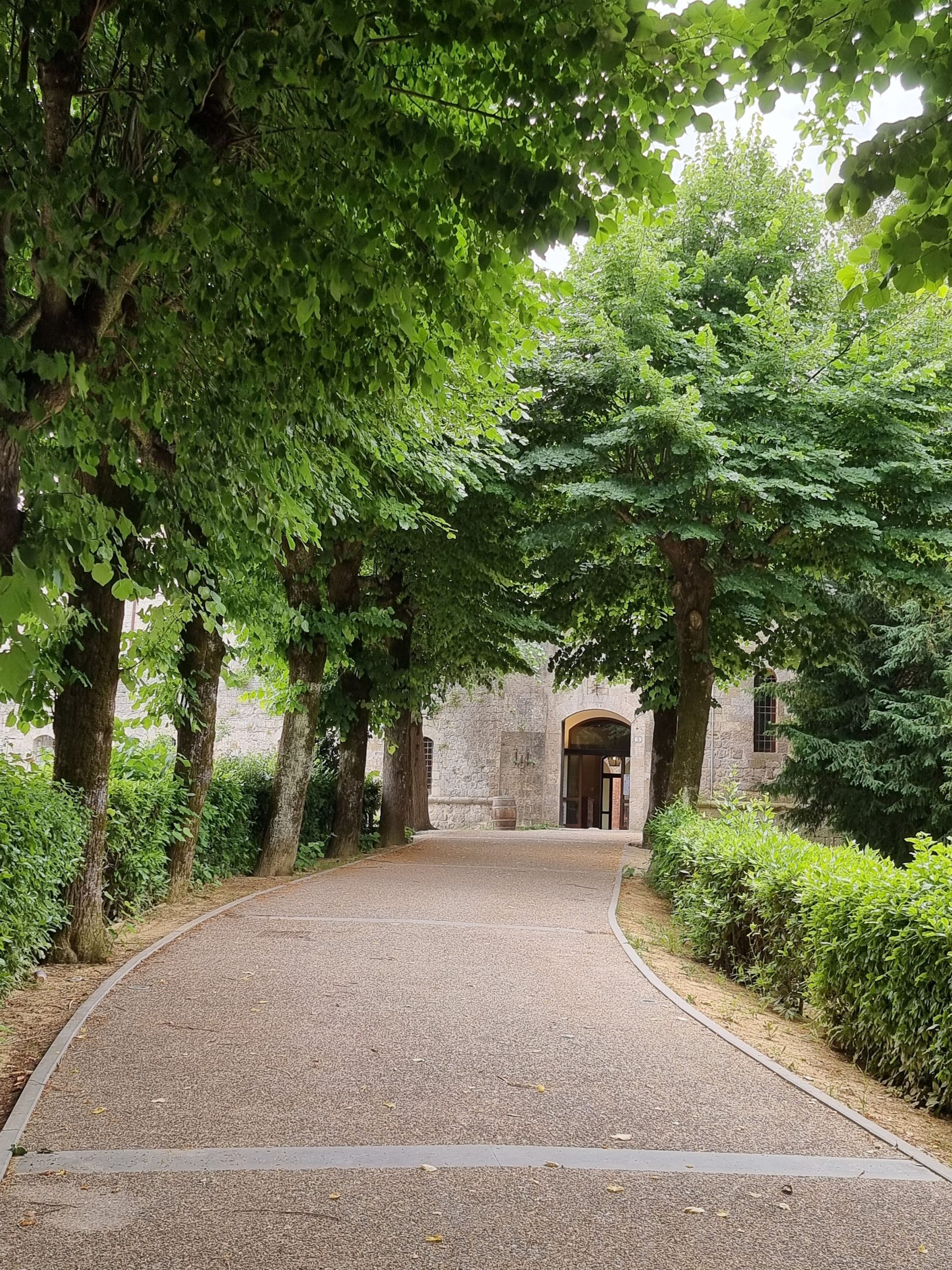
31. Secluded Gravel Driveway Leading to a Stone Archway
This driveway’s enchanting, historical feel is achieved through a masterful use of framing and destination. The dense, green hedges and tall trees create a natural tunnel, focusing the eye down the path. This sense of enclosure makes the journey feel intimate and secluded. The driveway doesn’t just end; it leads to a clear and compelling destination: the romantic stone archway. This strong focal point at the end of the visual tunnel creates a sense of arrival and mystery, inviting you to discover what lies beyond.
⭐ The One Thing
Here’s how to get this ‘enchanted path’ vibe on a smaller budget. The key is creating the sense of enclosure. Instead of waiting decades for mature trees, plant fast-growing, affordable options like Lombardy Poplars or Emerald Green Arborvitae to form your ‘walls’ of green. Use standard, inexpensive pea gravel for the driveway surface. The destination is key, so create your own ‘ruin’ at the end. You can build a simple garden arch from a kit and cover it with fast-growing ivy, or even build a small, decorative wall using stacked stone veneer panels to create that historical focal point without the historical cost.
Your Grand Entrance Awaits
That first impression is everything, and your driveway is where it begins. Whether you’re dreaming of a rustic gravel lane or a formal paved court, the perfect entrance is within reach. Pick the elements that speak to you, and start planning your transformation.
Don’t forget to save your favorite ideas to your ‘Dream Home’ board on Pinterest! When you’re ready to start, you’ll know exactly where to find them.