Still scrolling through “Aesthetic Room Ideas” photos on Pinterest without knowing where to start? It can feel like an endless sea of inspiration with zero direction. We get it. We spent serious time browsing IKEA, Target, and West Elm to bring you only what’s worth your attention this year. Inside, you’ll find 27 curated ideas covering all the top styles for 2026: Modern, Rustic, and Cozy Minimalism. The trend for 2026 is all about creating personal, functional spaces that feel authentic, which is why these real-home examples are so powerful. And stay until the end — we break down the most common mistakes that can ruin these looks. 📌 Save this to Pinterest for later — you’ll want to revisit these ideas.
1. Embrace Natural Light with a Distressed Wood Accent Wall
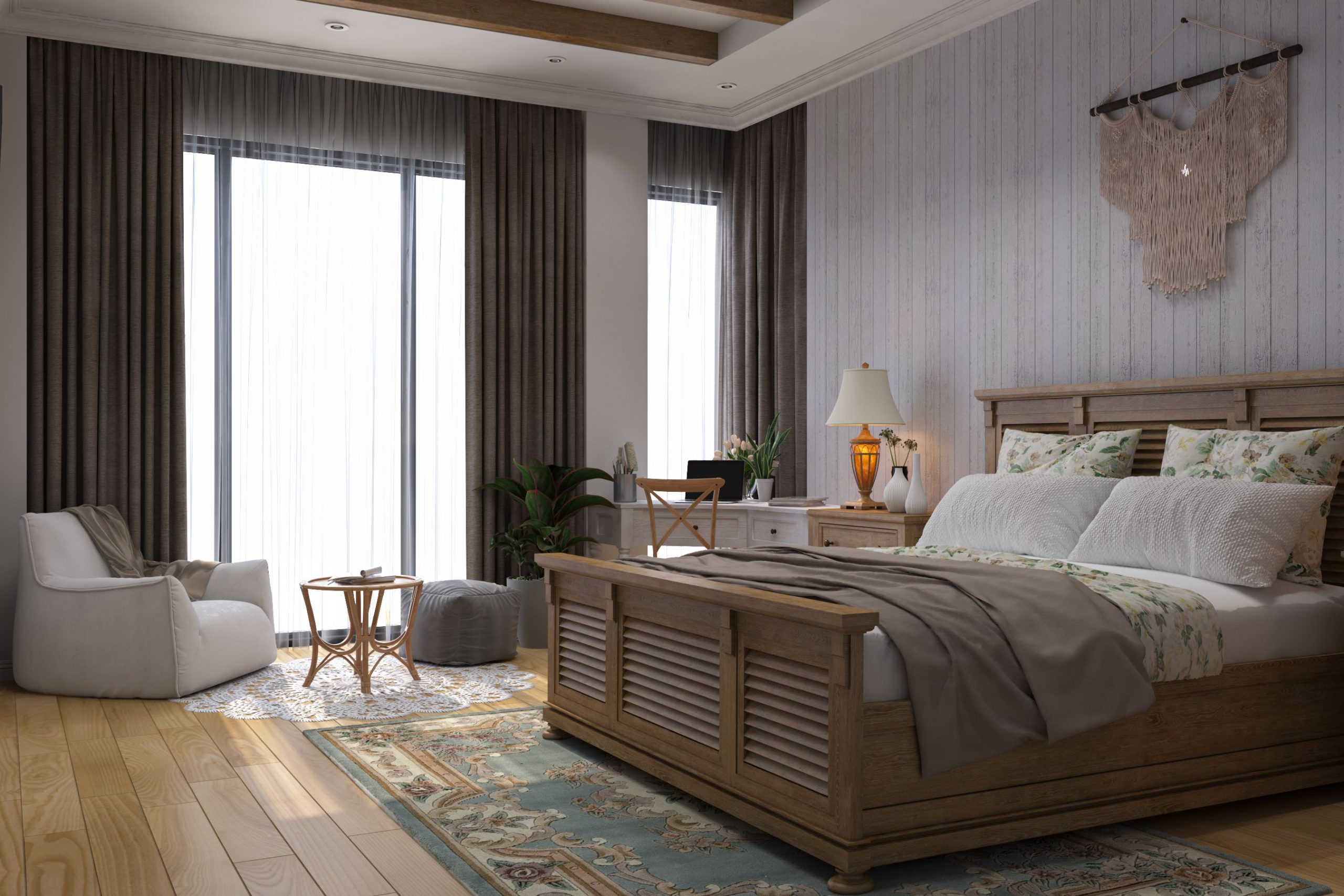
What makes this room feel so incredibly calm and put-together? It’s a masterclass in texture and balance. The design brilliantly plays rough against smooth. You have the rustic, distressed wood paneling on the wall providing a tactile backdrop, which is then softened by the sheer curtains, a plush white armchair, and the soft yarns of the macrame hanging. This contrast is what creates visual interest without feeling busy. It also uses vertical space beautifully, drawing the eye up with the tall windows and the wall hanging, making the room feel open and airy.
💡 Designer Tip
Getting this look is more accessible than it seems. Here’s a rough breakdown of where the investment goes. Keep in mind, hunting for vintage finds or waiting for sales can change these numbers dramatically.
- Main Furniture (Bed, Nightstand, Armchair): $1200 – $2500
- Wall Treatment (Distressed Paneling): $500 – $1500
- Textiles (Rug, Curtains, Bedding): $400 – $900
- Decor (Macrame hanging, accessories): $100 – $300
- TOTAL: $2200 – $5200
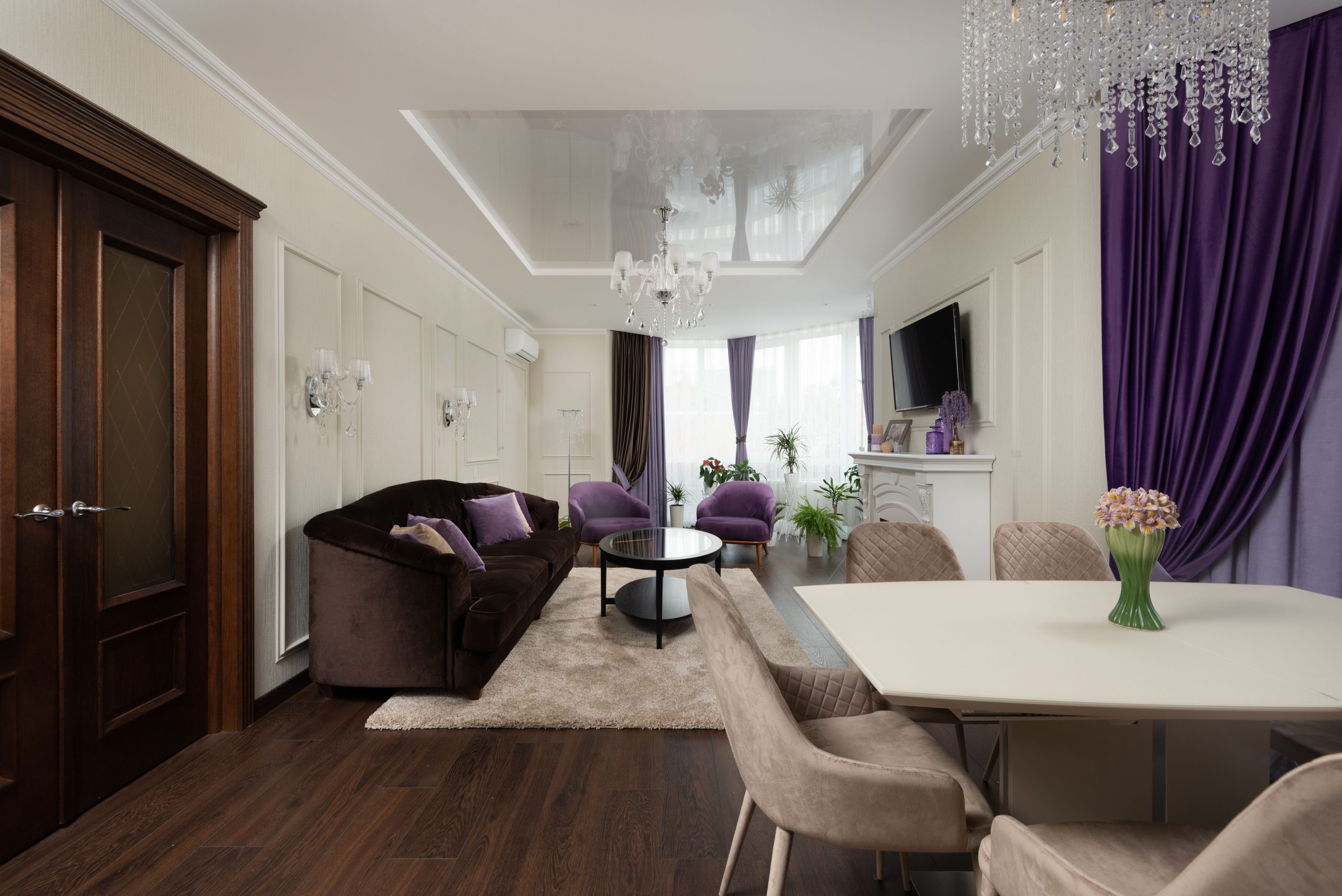
2. A Splash of Luxe: Stylish Living Room with Purple Accents
When using a bold, luxurious color like this deep purple, the key is to control its application. A professional trick is the ‘three-point’ color rule. Introduce the accent color in three different locations or forms within the room to make it feel intentional and balanced. Here, you might see it in a sofa, a piece of art, and smaller decorative objects. This repetition guides the eye around the room and integrates the color naturally, rather than having one lonely, overpowering purple element.
⚠️ Real Talk
Why are we seeing these rich, jewel-toned purples making a comeback? After years of minimalist beige and grey, there’s a collective craving for personality and depth in our homes. Purple, especially in these muted, sophisticated shades, offers drama and luxury without being shouty. It feels both modern and timeless, signaling a move towards more expressive and personalized interiors. It’s a color that says you’re confident in your style and not afraid to move beyond the neutral safety net.
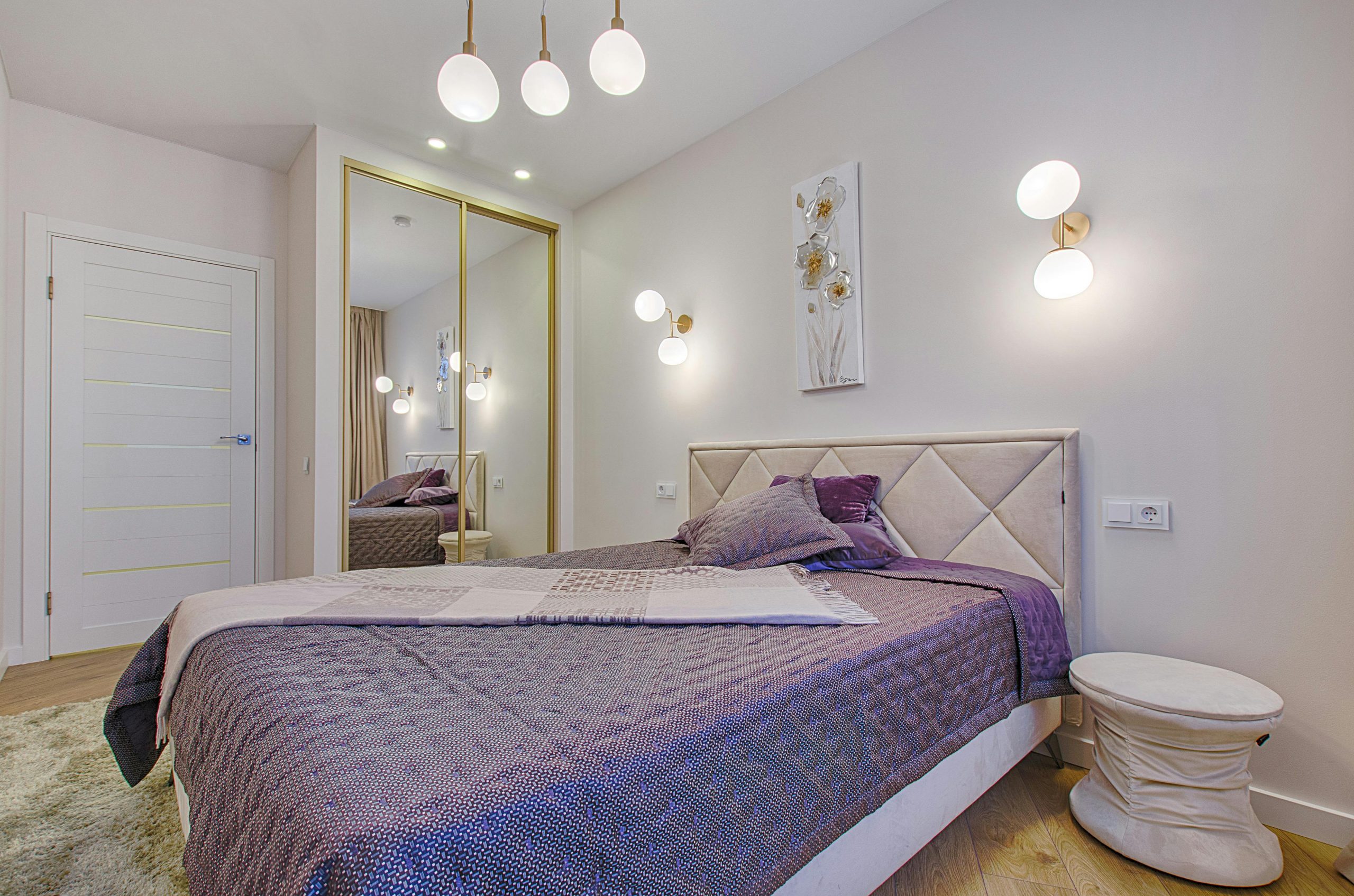
3. Serene Slumber with Violet Hues and Diamond-Quilted Details
This room’s serene and coordinated feel comes from a simple but effective formula: 60% neutral base + 30% monochromatic color + 10% metallic accent. The walls, rug, and wardrobe are the neutral 60%, creating a calm canvas. The 30% comes from layering various shades of violet and purple in the bedding and art, which adds depth without chaos. The final 10% is the touch of gold in the wardrobe frame and light fixtures, adding a necessary bit of warmth and sparkle. You could easily swap the purple for dusty blue or sage green and get the same balanced effect.
✅ Before You Start
Here’s the reality of a room with this much light-colored upholstery and a mirrored wardrobe: it requires mindful maintenance. A mirrored wardrobe of this size will show every fingerprint and streak, so be prepared for weekly wipe-downs with a good glass cleaner. Similarly, a light-colored upholstered headboard can absorb oils from hair and skin over time. It’s beautiful, but maybe not the best choice if you have children or pets who love to jump on the bed. Compare this to the wood headboard in Idea #1 for a lower-maintenance option.
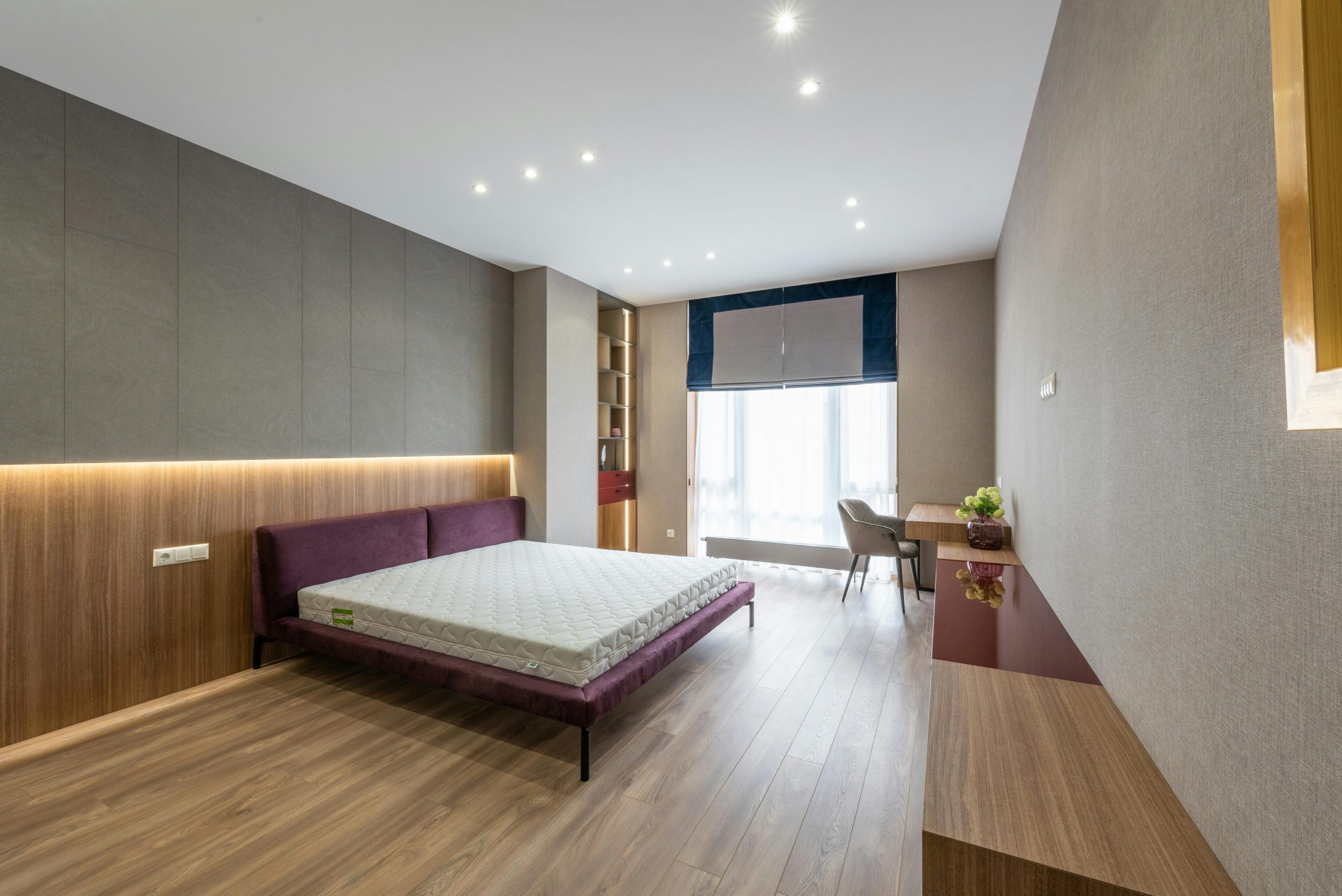
4. Sleek and Illuminated: An Integrated Wood and Tile Wall with a Plum Bed
The single most impactful feature in this room is the integrated wall lighting. Without it, the wood paneling and grey tiles would be a nice, but static, feature wall. With the backlight, however, the entire wall comes to life. It creates a soft, ambient glow that separates the textures, makes the headboard area feel like a deliberate focal point, and provides a high-end, hotel-like vibe. It turns a simple wall into a piece of architectural art. Everything else, even the lovely plum bed, is secondary to this luminous effect.
🔧 How-To Brief
This look, with its large wall tiles and multi-material headboard wall, is best suited for rooms with at least 10 feet of horizontal wall space and standard 8-foot or higher ceilings. A smaller room might feel overwhelmed by the scale of the tiles. The integrated lighting also requires a certain depth, so the wall will come forward a few inches. If your space is tighter, consider the more minimalist approach in Idea #23, which uses cove lighting to create a similar glow without a bulky feature wall.
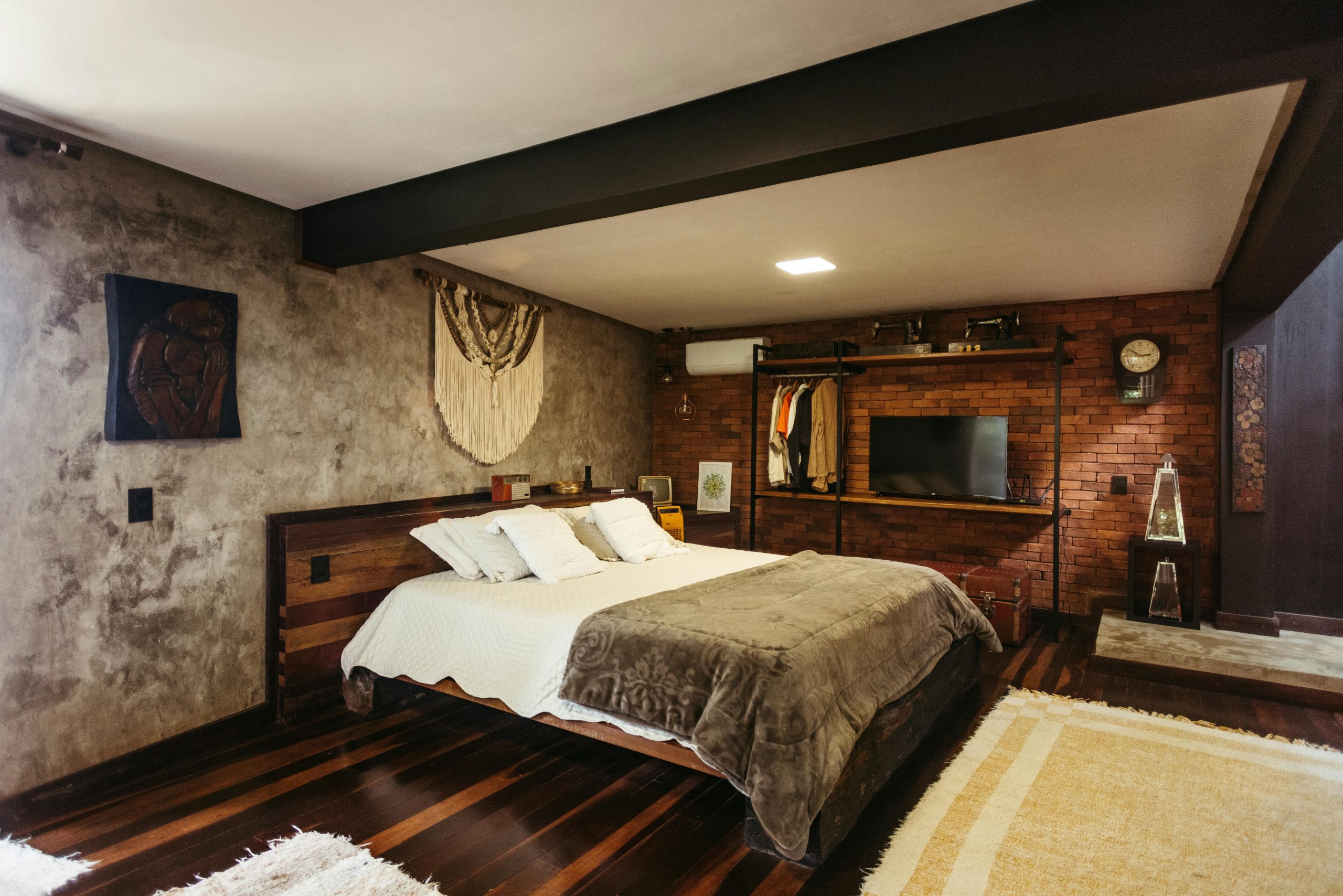
5. Industrial Meets Rustic with Exposed Brick and Concrete
Living with exposed brick and textured concrete walls is a commitment. Brick, being porous, can collect a surprising amount of dust, so you’ll want to vacuum it with a brush attachment every few months. Sealing the brick can make it easier to wipe down but will add a slight sheen. The textured concrete wall is more forgiving day-to-day, but scuffs can be tricky to clean without disturbing the finish. This is a look that celebrates imperfection, so a few marks here and there just add to the character. If you love this style, check out the brick in Idea #6 for a slightly more finished take.
💸 Get This Look For Less
You don’t need an authentic industrial loft to get this vibe. High-quality faux brick and concrete wallpaper or panels can create a shockingly realistic effect for a fraction of the cost and effort. A full wall of faux brick panels from a home improvement store might run you $200-$400, versus the thousands it could cost for a mason. For the furniture, scour Facebook Marketplace for a used wood bed frame—they are plentiful. You can often find rustic metal shelving units at places like IKEA (check their FJÄLLBO series) for under $150.
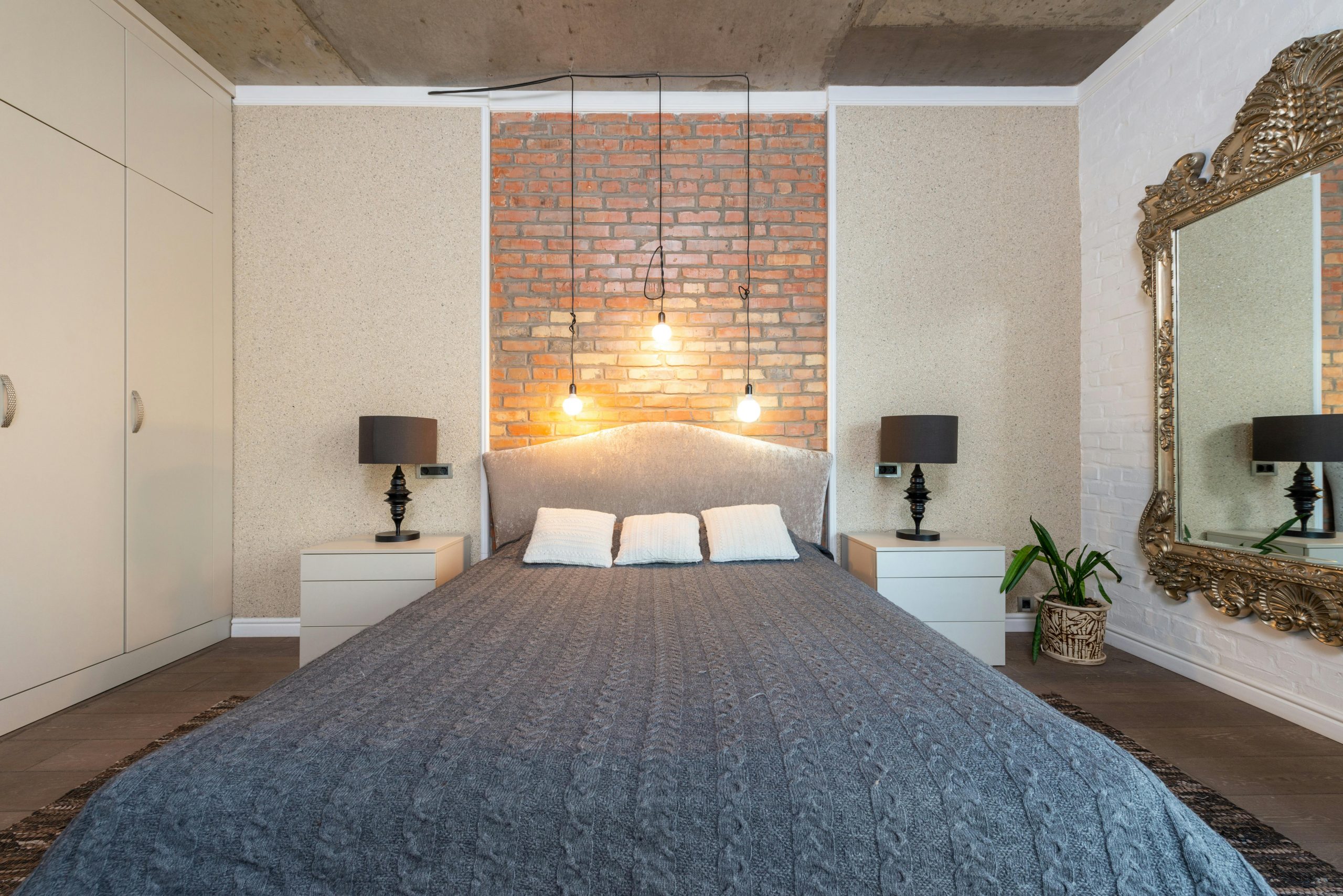
6. Cozy Up with an Exposed Brick Wall and an Ornate Gold Mirror
This bedroom nails the ‘cozy industrial’ aesthetic by mastering the art of contrast. The rough, masculine energy of the exposed brick wall is perfectly balanced by the elegant, feminine curves of the ornate gold mirror. Neither element would feel as special without the other. Furthermore, the design mixes different eras and styles—industrial Edison bulbs, a classic ornate mirror, and a modern cable-knit blanket—to create a layered, personal space that feels collected over time rather than decorated all at once.
💰 Budget Breakdown
Want to recreate that cluster of suspended Edison bulbs? It’s a surprisingly simple DIY. Here’s a quick guide.
Time: 1-2 hours | Cost: $50 – $150
- Purchase a multi-pendant light cord kit online. Choose one with 3-5 cords of varying lengths.
- Select vintage-style Edison LED bulbs. They provide warm light and are energy-efficient.
- Install a small hook or mounting plate on the ceiling where you want the cluster to hang from. Make sure it’s anchored securely.
- Drape the cords over the hook at different heights to create a staggered, organic look.
- Plug it into a nearby outlet (or have an electrician hardwire it for a cleaner installation). Voilà, instant industrial charm!
7. Reflect on Color: A Mirrored Wardrobe with a Pop of Purple
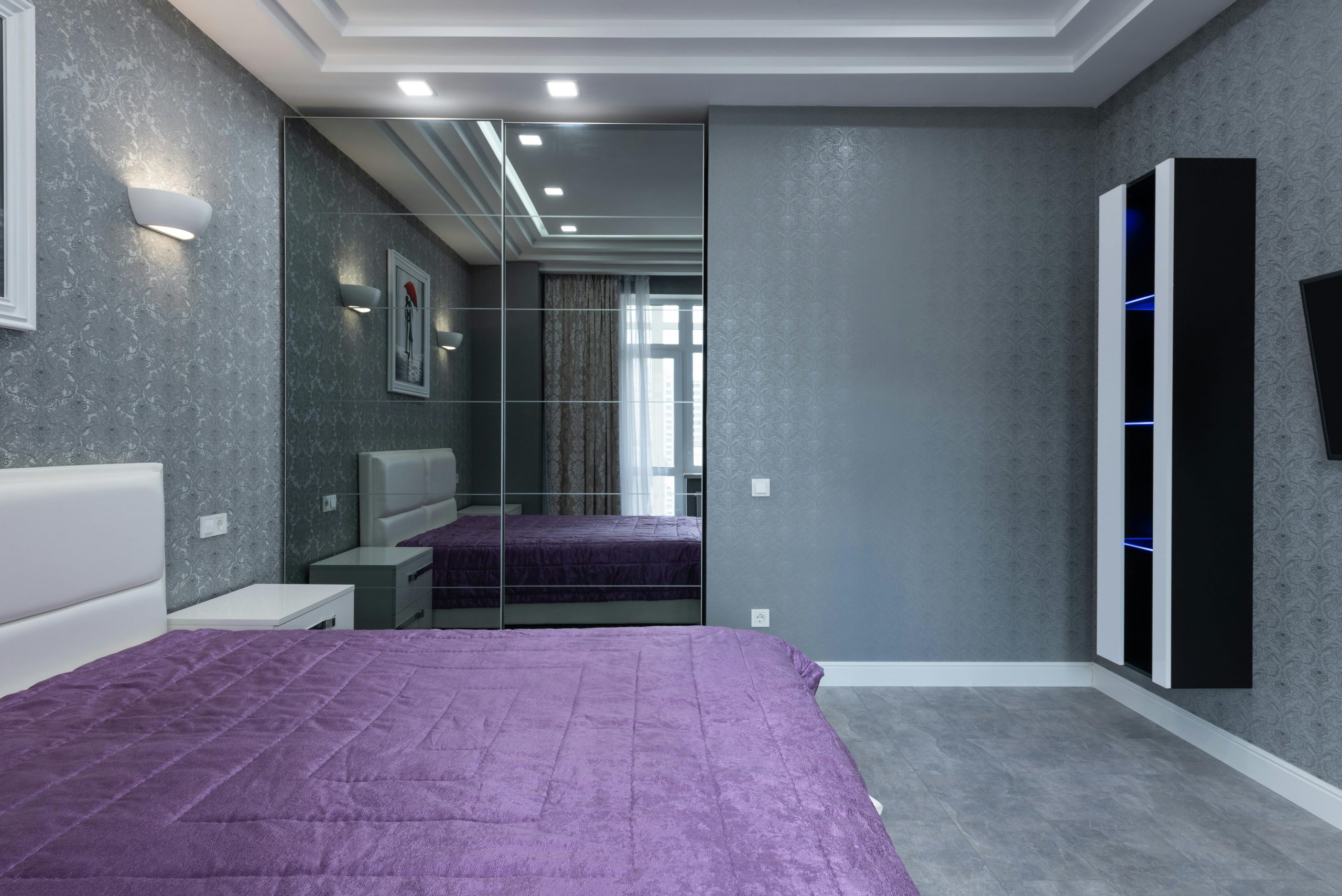
The mirrored wardrobe is the undeniable game-changer in this bedroom. It does more than just store clothes; it fundamentally alters the perception of the space. By reflecting the entire room, it visually doubles the square footage, making what might be a standard-sized room feel expansive and open. It also bounces light from the windows and sconces, brightening the space significantly. The wardrobe isn’t just furniture; it’s an architectural feature that manipulates light and space. Without it, the room would feel much smaller and darker.
🎯 What Makes It Work
When you have a dominant feature like a full mirrored wall, you need to be strategic with your accent color. Notice how the vibrant purple is confined almost exclusively to the bed’s quilted spread. This is a deliberate choice. It allows the color to be a bold, singular statement without overwhelming the senses. If the purple were repeated on the walls or in other large items, it would fight with the reflection and create a chaotic, fun-house effect. When one element is this big and reflective, let your color be a focused punch.
8. Modern Minimalism Meets a Deep Purple Accent Wall
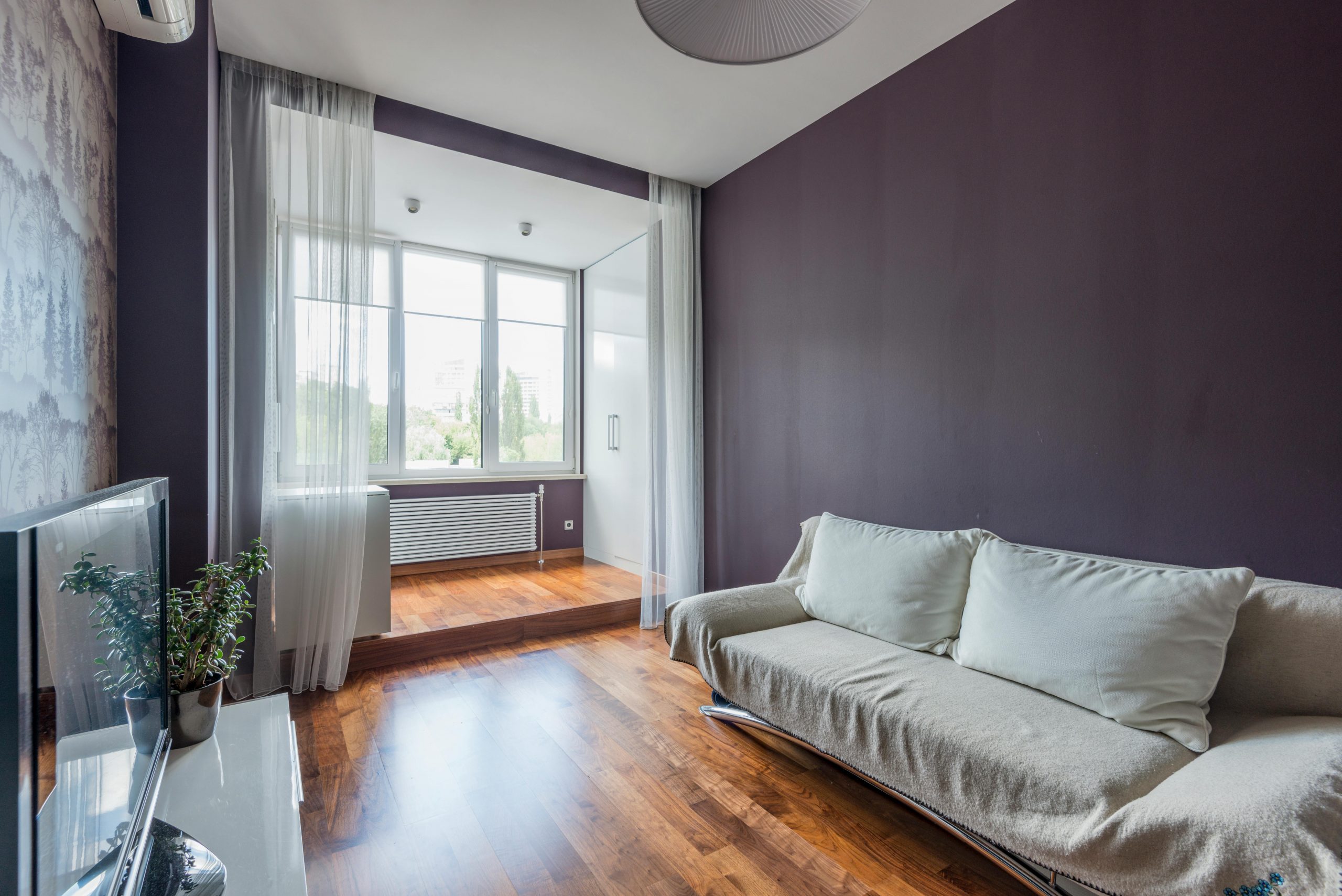
The formula here is all about dramatic simplicity: 80% minimalist canvas + 20% bold statement. The overwhelming majority of the space—walls, ceiling, curtains, console table—is crisp white. The flooring is a light, neutral wood. This creates a gallery-like feel. Then, the deep purple accent wall is introduced as that powerful 20%. It’s not just a splash of color; it’s a confident, anchoring block of it. The beige sofa acts as a bridge between the white and the purple. You could swap the purple for a deep forest green or a charcoal grey and the balanced, modern feel would remain.
🧹 Maintenance Reality
Thinking of painting a bold accent wall? Run through this checklist first:
- Which wall? Choose a wall without too many doors or windows, as this can break up the color block and reduce the impact. The wall your main furniture (sofa, bed) is on is usually the best candidate.
- Lighting check: Look at the wall throughout the day. Does it get direct sun, or is it always in shadow? This will dramatically affect how the color appears. Test a large paint swatch first!
- Flow: Does the color connect to anything in the adjoining rooms? It doesn’t have to match, but it shouldn’t feel completely random.
9. A Burst of Energy with Teal Walls and Bright Orange Accents
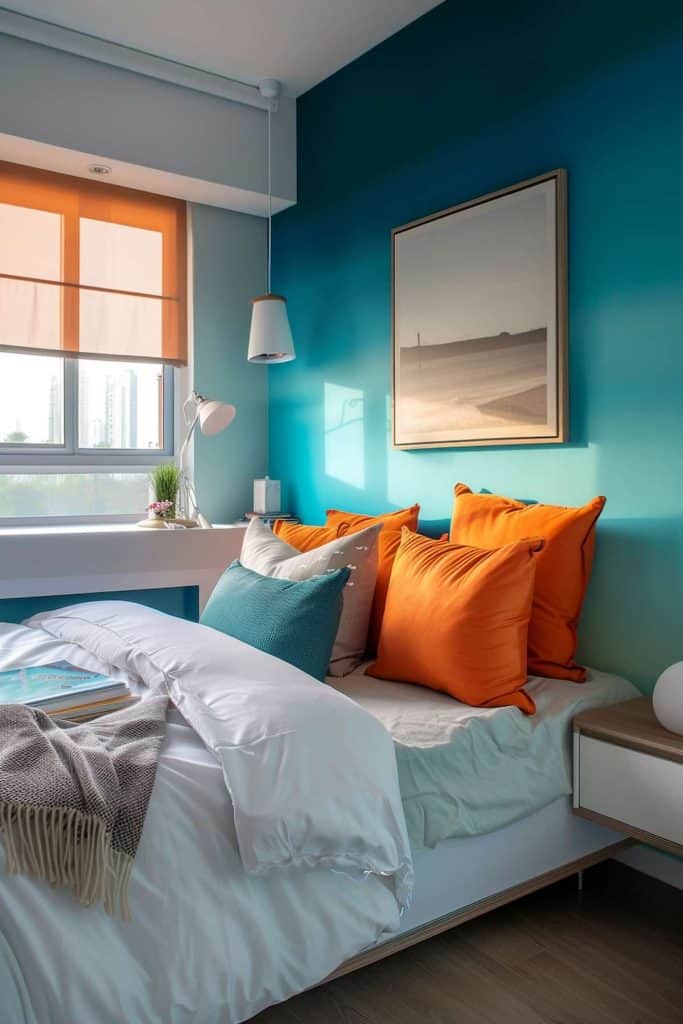
This room is a fantastic example of using a complementary color scheme effectively. Teal (a blue-green) and orange are opposites on the color wheel, which is why they create such a vibrant, high-energy contrast when paired together. The design works because it doesn’t use them in equal measure. Teal dominates the largest surface (the wall), while the more intense orange is used in smaller, punchy doses—the pillows and the blinds. This creates a sense of excitement without being visually jarring. The abundant use of white gives the eye a place to rest, which is crucial when working with such bold hues.
⭐ The One Thing
A color scheme this bold can be absolutely stunning, but it has a very specific energy. This is a great choice for a bedroom if you’re someone who feels energized by color and wants a stimulating space to wake up in. However, if you’re sensitive to visual stimulation or prefer a very tranquil, sleepy environment, this might not be the best palette for your primary bedroom. It could be perfect for a guest room or an office where you want to feel creative and awake. Also, be prepared for this to feel dated more quickly than a neutral room.
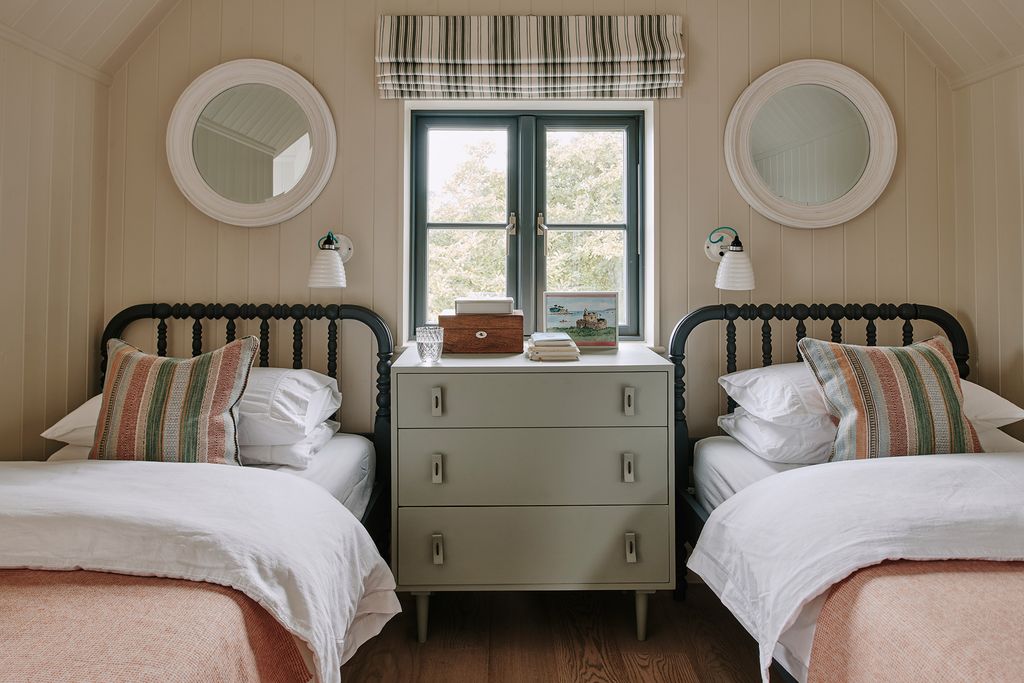
10. Perfectly Balanced with Twin Beds and Vertical Plank Walls
The power of symmetry is the single most important element making this room work. The entire design hinges on the perfect balance created by the twin beds, the matching circular mirrors, and the identical wall sconces. This classic design principle creates an immediate sense of order, calm, and intention. It makes the room feel structured and thoughtfully planned. If you were to remove one bed or use mismatched mirrors, the entire feeling of serene equilibrium would be lost. It’s a simple, foolproof way to make any shared space feel cohesive.
📐 Style Math
When decorating a room with strong symmetry, add a small, subtle break to keep it from feeling too rigid or hotel-like. In this room, notice the striped Roman blind on the window—it introduces a different pattern and is a singular element that isn’t mirrored on both sides. You could also achieve this with a unique lumbar pillow on just one bed or a different plant on each nightstand. This small touch of asymmetry adds personality and keeps the room from feeling stiff.
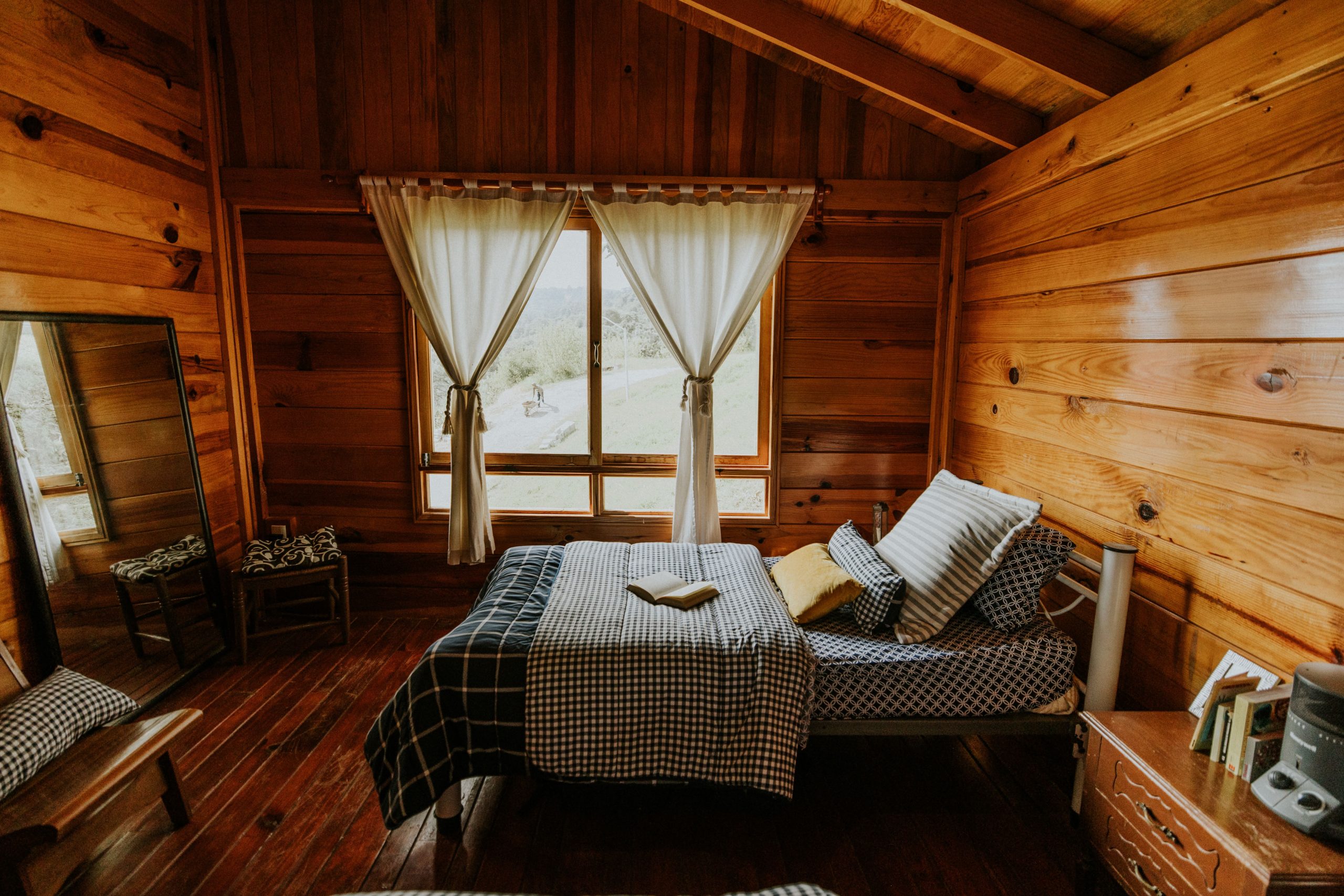
11. A Rustic Escape in a Cabin with Wood-Paneled Walls
What makes this room the ultimate cozy cabin fantasy? It’s the full commitment to a single material: wood. By wrapping the walls and ceiling in warm wood paneling, the room creates an immersive, cocoon-like effect. The exposed beams on the sloped ceiling add architectural interest and enhance the rustic feel. The design cleverly avoids feeling dark or heavy by bringing in a large window and plenty of white textiles—the curtains, bedding, and mirror frame—which bounce light around and provide a crisp contrast to the warm wood tones.
📏 Scale Guide
Wood paneling is beautiful, but it’s not zero-maintenance. Over time, wood can dry out, especially in a heated home. To keep it from looking dull or faded, it will benefit from a conditioning treatment or a fresh coat of sealant every 5-7 years, depending on the climate and sun exposure. The grooves between panels can also be a magnet for dust and cobwebs, so a quick pass with a vacuum extension hose or a long-handled duster is a good idea for your spring cleaning routine.
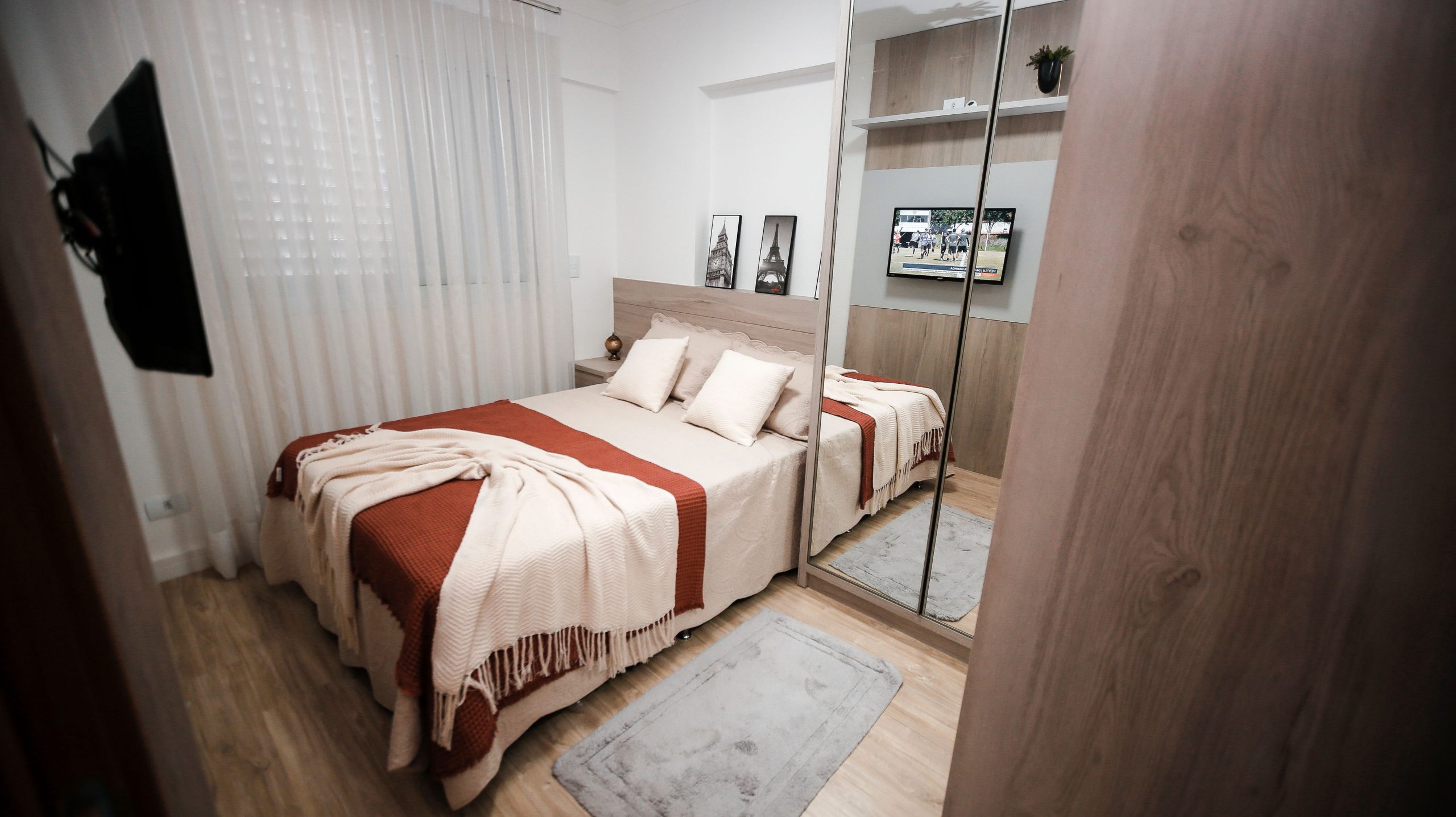
12. Earthy and Modern with a Mirrored Wardrobe and Rust Accents
This room achieves its warm, modern feel with a carefully balanced equation: 50% light neutrals (white walls, beige bedding) + 40% natural wood tones + 10% earthy accent color. The neutrals and wood create a soft, organic base that feels very calming. The critical 10% is the pop of rust in the throw blankets, which adds warmth and a trendy, earthy element. The mirrored wardrobe acts as a multiplier, reflecting all these elements and making the formula feel even more immersive. The small touch of green from the plant is the final organic touch.
🔥 Trending Context
A full-wall mirrored wardrobe works best in rooms that are at least 10×10 feet. In a smaller space, the reflection can sometimes feel overwhelming or disorienting. For this particular combination of a bed, side tables, and a full wardrobe, you’ll want a room with a minimum width of about 12 feet to allow for comfortable clearance. If your room is smaller, consider a wardrobe with only one or two mirrored doors instead of the full span, which gives you a similar space-enhancing effect without being quite so intense.
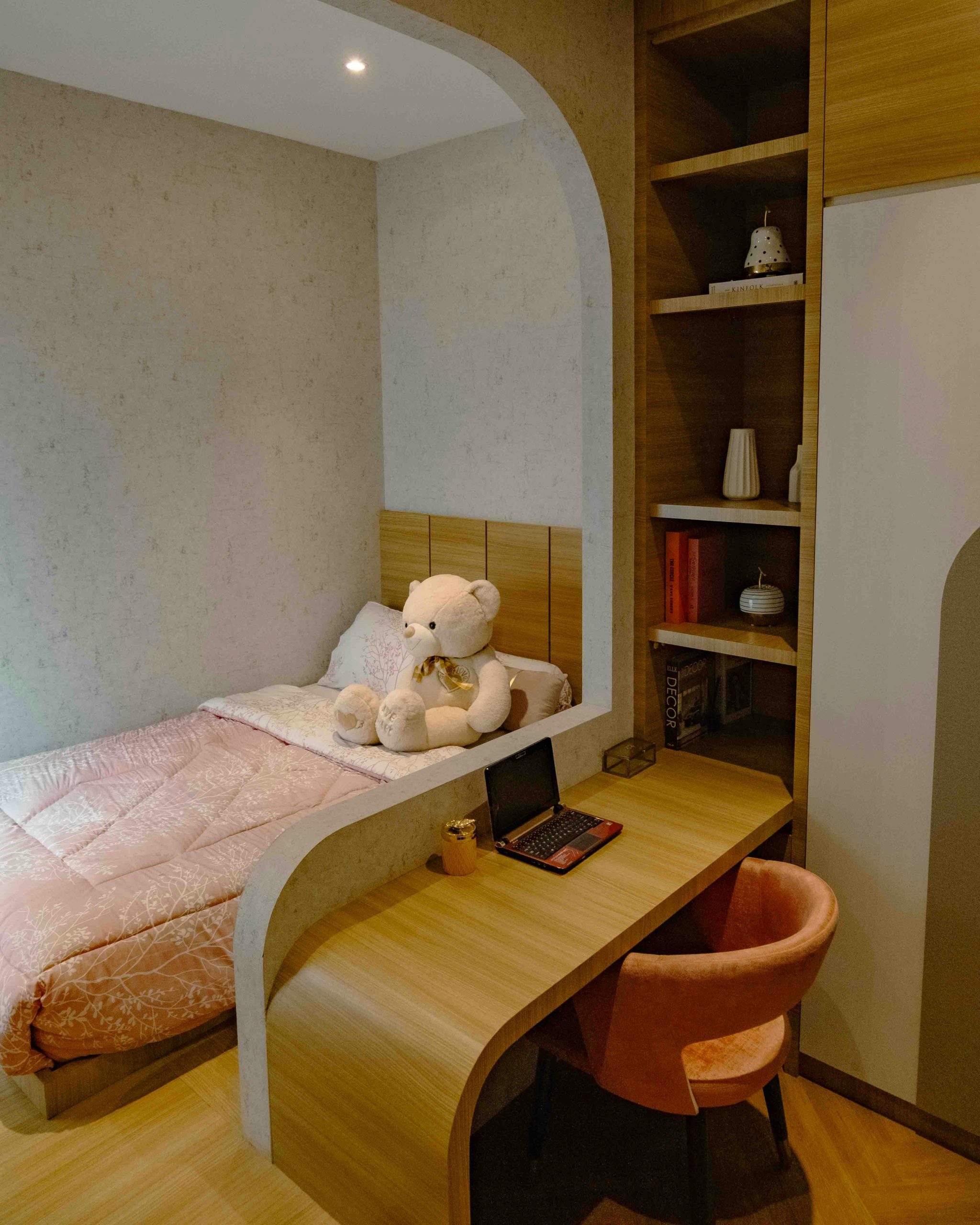
13. A Cozy Nook Created by a Graceful Archway Partition
The arched partition is, without a doubt, the hero of this design. It’s a brilliant architectural element that accomplishes so much. It separates the sleeping area from the small workspace, creating a cozy, protected feeling for the bed. But because it’s an open archway rather than a solid wall, it doesn’t stop light or make the small room feel cramped. It adds a soft, organic shape to a typically boxy room, making the entire space feel more custom, gentle, and thoughtfully designed. It’s both functional and incredibly stylish.
💡 Designer Tip
This design is a masterclass in making a small space multifunctional without sacrificing style. The key is the integration of curved forms. The curve of the archway is echoed in the curve of the built-in desk, creating a sense of flow and connection between the two zones. This repetition of a single shape makes the design feel cohesive and intentional. The warm, consistent color palette of light beige and natural wood further unifies the space, preventing the different functional areas from feeling disjointed.
14. Minimalist Calm with Light Wood Paneling and Mirrored Doors
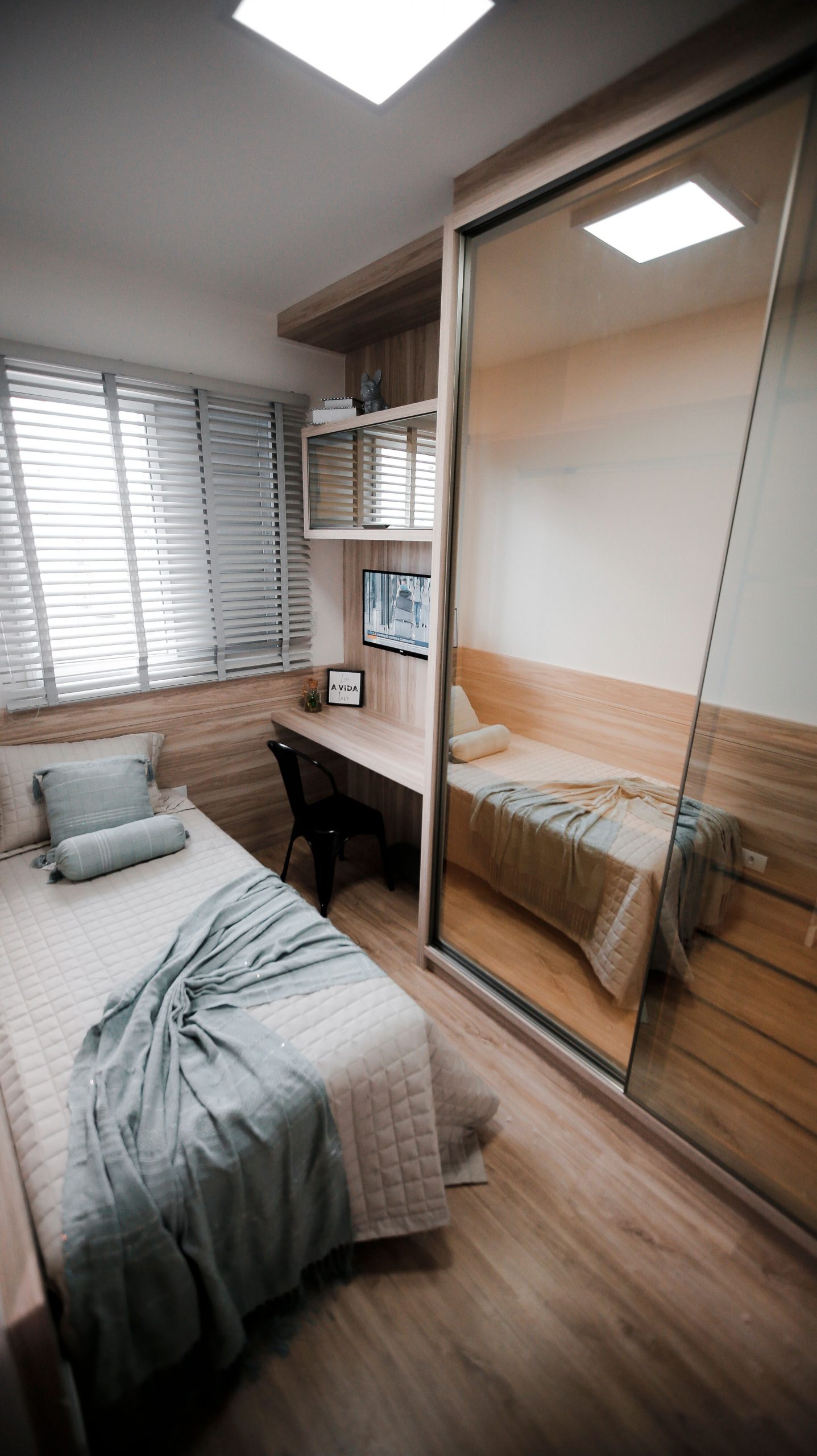
That beautiful, serene wall of light wood paneling doesn’t have to be custom millwork. You can get a very similar look using peel-and-stick vinyl planks or wallpaper. Brands like Stikwood offer real wood planks that are easy to install for a DIYer, costing around $8-$15 per square foot. For a super budget-friendly option, a high-quality wood-look wallpaper can be had for under $2 per square foot. For the mirrored closet, IKEA’s PAX system with mirrored doors (like the AULI or VIKEDAL doors) offers this exact functionality for a few hundred dollars, a fraction of the cost of a custom closet.
⚠️ Real Talk
While the mirrored closet is a fantastic trick for making a room feel larger and brighter, it comes with a practical consideration: you can’t be messy. A mirrored door reflects *everything*, including the pile of clothes on the chair across from it or the unmade bed. This look is best suited for people who are naturally tidy or are willing to become tidy. If you prefer to have a bit of organized chaos, a closet with solid doors might be a less stressful choice. Consider the minimalist vibe of Idea #24 as an alternative.
15. A Cozy Retreat with a Wooden Ceiling and Built-in Bookshelf
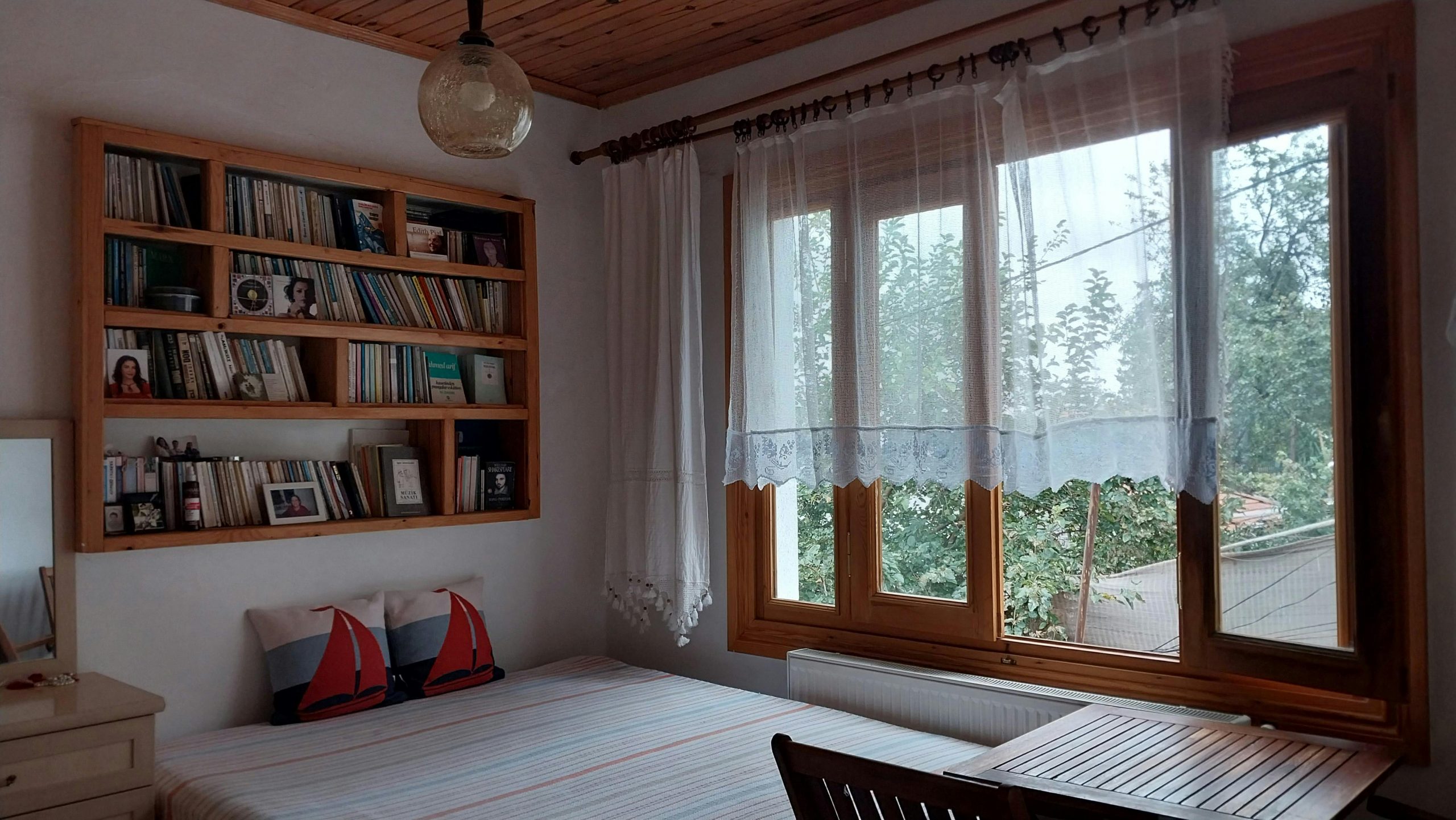
This room feels so personal and inviting because it perfectly marries architecture with personal belongings. The wooden ceiling panels and the large built-in bookshelf create a strong, warm structure. Instead of feeling stark, this structure becomes the backdrop for a life story told through books, photos, and objects. The design makes the ‘clutter’ of everyday life feel intentional and celebrated. The window overlooking the dense foliage further connects the cozy interior to the natural world, enhancing the feeling of a rustic, personal sanctuary.
✅ Before You Start
In a world of digital everything, there’s a growing trend towards creating spaces that celebrate the physical and the tangible. This is why built-in bookshelves and ‘shelfies’ are so popular on Pinterest and Instagram. We’re craving rooms that tell a story about who we are. This look leans into that desire, rejecting stark minimalism in favor of a cozier, more lived-in aesthetic that showcases personality. It’s less about having a perfect, magazine-ready room and more about having a home that reflects a life well-lived.
16. Functional Serenity: An Integrated Desk and a Turquoise Headboard
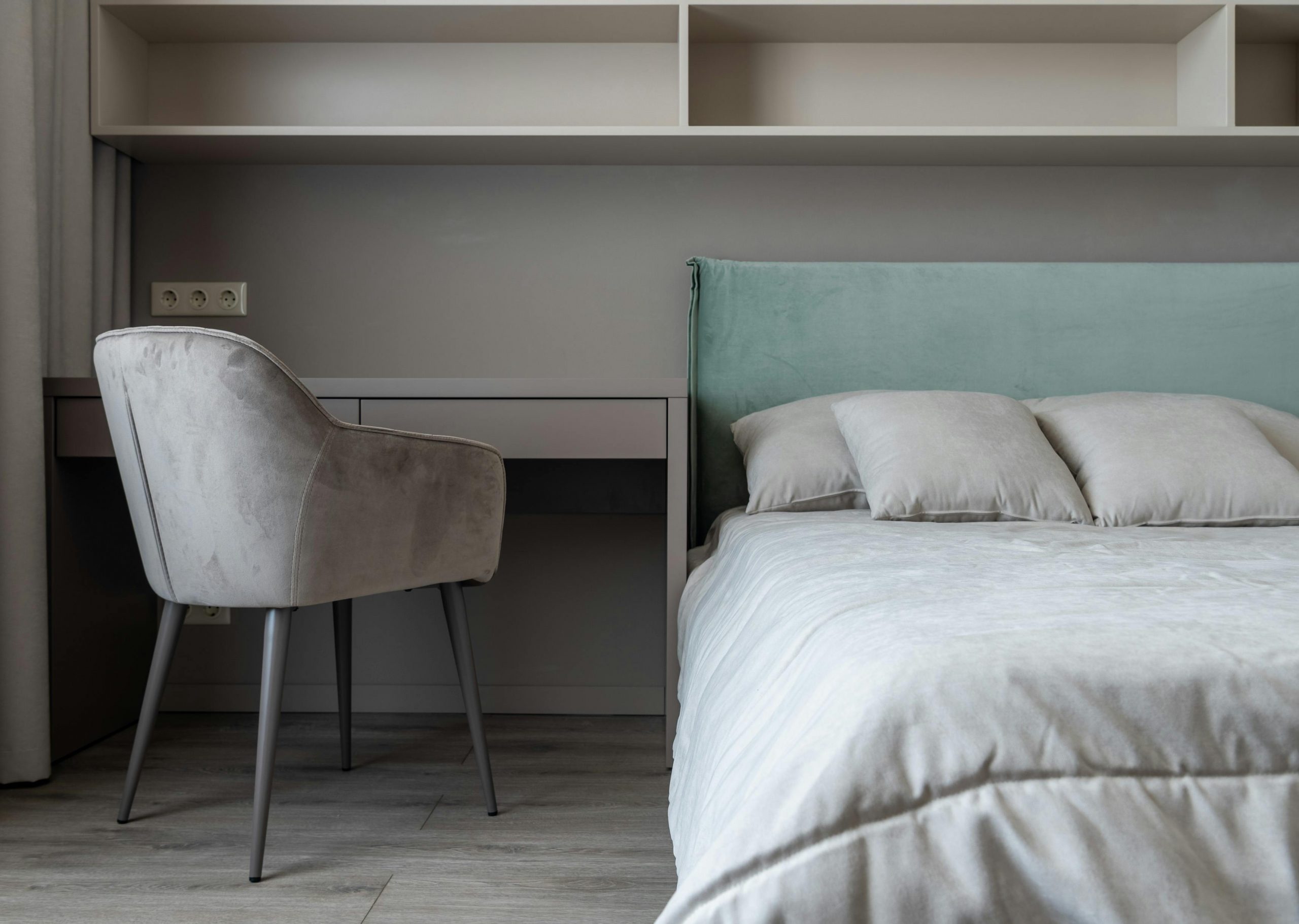
This integrated desk and shelving concept is ideal for bedrooms where you need a workspace but don’t want it to take over the room. It works best in rooms with at least 12 feet of length to accommodate both the bed and a functional desk area without feeling cramped. A minimum width of 9-10 feet is also recommended to allow for chair push-back and circulation space. For smaller rooms, consider a floating desk with open shelving above to create a lighter, less bulky feel than a full built-in unit.
🔧 How-To Brief
When you have a neutral, monochromatic room like this (mostly greige and light wood), your choice of a single accent color becomes incredibly important. The key is to make it count. Don’t just add a few small turquoise pillows. Committing to a large, unmissable block of color, like this prominent turquoise headboard, makes the design feel confident and intentional. It turns the bed into the undeniable focal point of the room. A smaller dose of color would have gotten lost; this bold application makes the entire design sing.
17. A Pop of Teal and Pattern Against a Soft Gray Backdrop
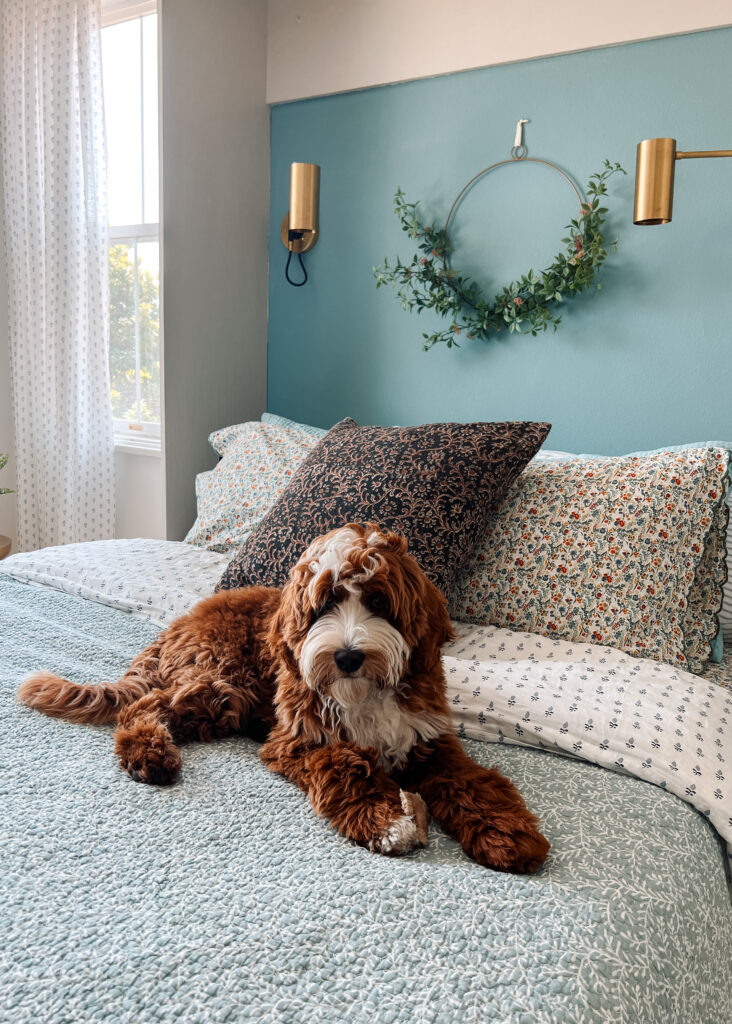
The single element that elevates this room from nice to noteworthy is the pattern play. Without the mix of patterns in the bedding and curtains, this would be a simple room with a teal accent wall. But the combination of the quatrefoil-like pattern on the duvet, the dark patterned pillow, and the subtle print on the sheer curtains adds a layer of sophistication and visual interest. It shows that you don’t have to be afraid to mix patterns, as long as you stick to a cohesive color story. It’s the patterns that give the room its personality.
💸 Get This Look For Less
Recreating that simple, elegant wreath above the bed is an easy 30-minute project. Here’s how:
Time: 30 minutes | Cost: $20 – $40
- Start with a simple metal hoop, which you can find at any craft store. A 14-inch or 18-inch hoop works well above a queen bed.
- Buy one or two branches of high-quality faux greenery, like eucalyptus or olive branches.
- Using thin green floral wire, attach the stem of the greenery to the bottom of the hoop, wrapping it securely.
- Continue to attach the greenery, following the curve of the hoop. You can cover the entire hoop or just the bottom half for a more modern, asymmetrical look.
- Create a small loop with the floral wire at the top for easy hanging.
18. Elegant Contrast with a Navy Wall and Nailhead Headboard
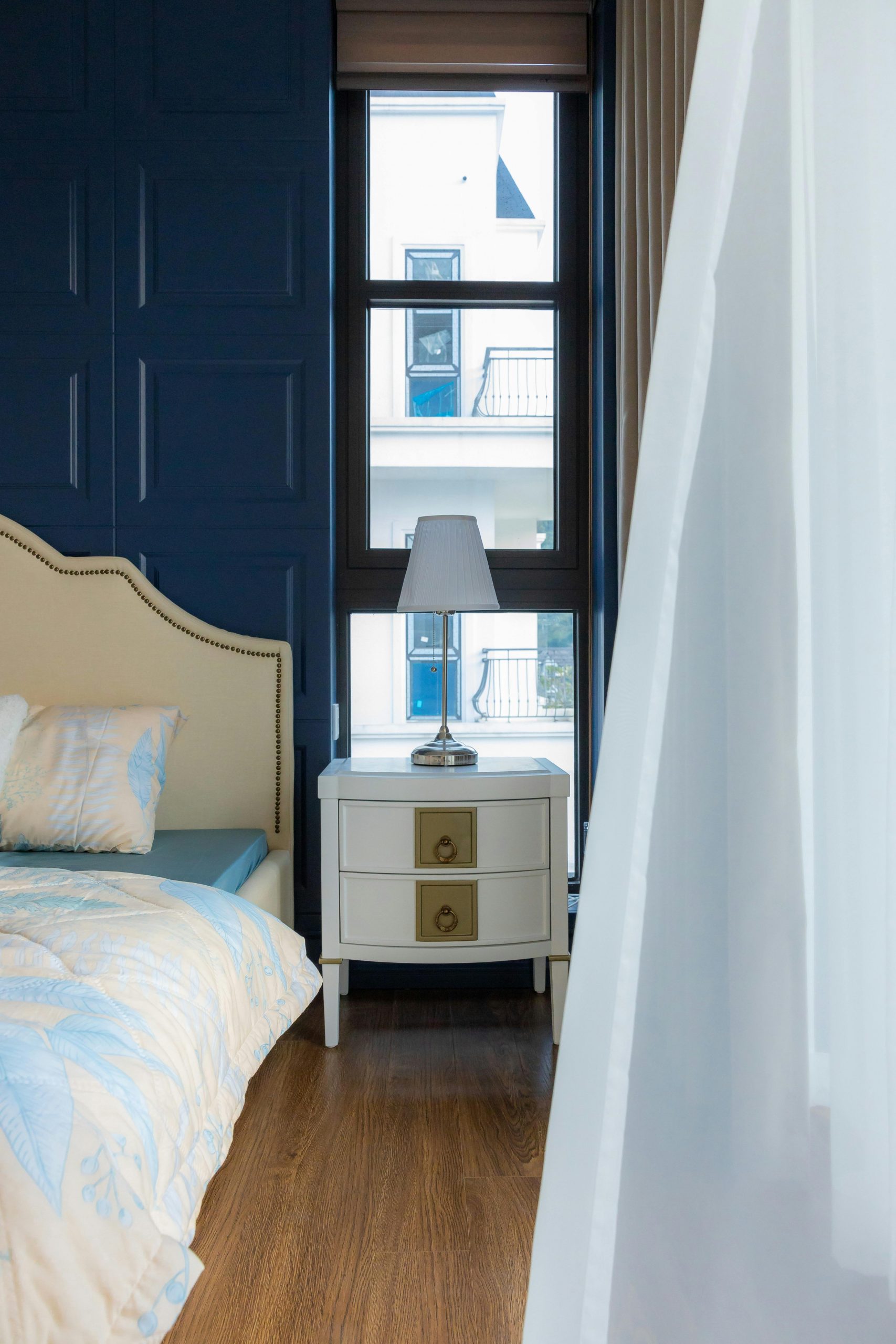
This corner is a study in sophisticated contrast. The deep, matte navy blue of the paneled wall provides a rich, dramatic background that makes the lighter elements pop. The cream upholstered headboard stands out, its soft texture and nailhead trim adding a touch of classic detail against the modern, clean lines of the wall. The design also expertly mixes metals—gold hardware on the nightstand, silver on the lamp—which adds a curated, layered feel. It proves that you don’t have to stick to just one metallic finish.
💰 Budget Breakdown
This look feels expensive, but it can be recreated on a reasonable budget. The biggest impact comes from the paint and headboard. The rest can be sourced affordably.
- Paint (High-quality navy): $70 – $120
- Upholstered Headboard (Queen): $250 – $600
- Nightstand: $100 – $350 (or find a thrifted piece and paint it!)
- Lighting & Decor: $150 – $400
- Bedding: $150 – $300
- TOTAL: $720 – $1770
19. Glow Up: A Gamer’s Retreat with Immersive Purple LED Lighting
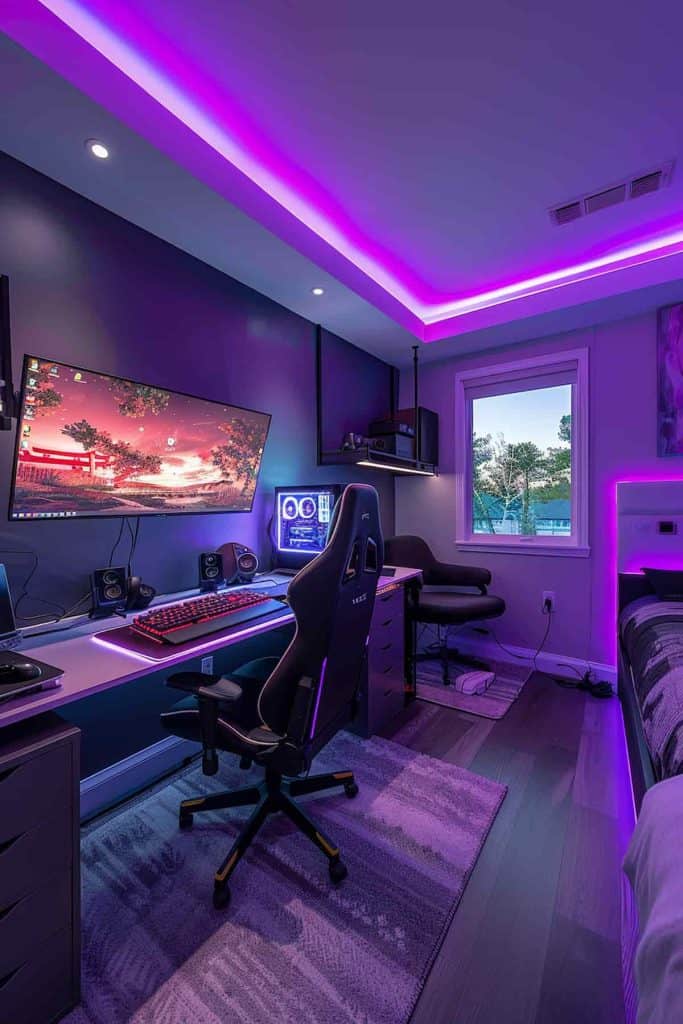
The LED lighting is not just an accessory in this room; it *is* the design. Without the vibrant purple glow, this would be a fairly standard modern room with dark floors and simple furniture. The integrated lighting completely transforms the atmosphere, creating an immersive, futuristic, and highly energetic environment. It defines the zones of the room—the gaming station, the sleeping area—and turns static architectural features like the ceiling cove into dynamic light sources. It’s a perfect example of how light itself can be the most powerful decorative tool.
🎯 What Makes It Work
A full-on LED-lit room like this is a vibe, but it’s not for everyone. The constant colored glow, especially in a stimulating shade like purple, can sometimes interfere with your natural sleep cycle if it’s too bright or used too close to bedtime. It’s crucial to install dimmable LED strips and, ideally, ones where you can change the color. This way, you can switch to a warmer, softer color like orange or a dim white as you wind down for the night, saving the vibrant purple for gaming or socializing. Versatility is key to making this look livable long-term.
20. A Global Vibe with a World Map Wall and Teal Shelving
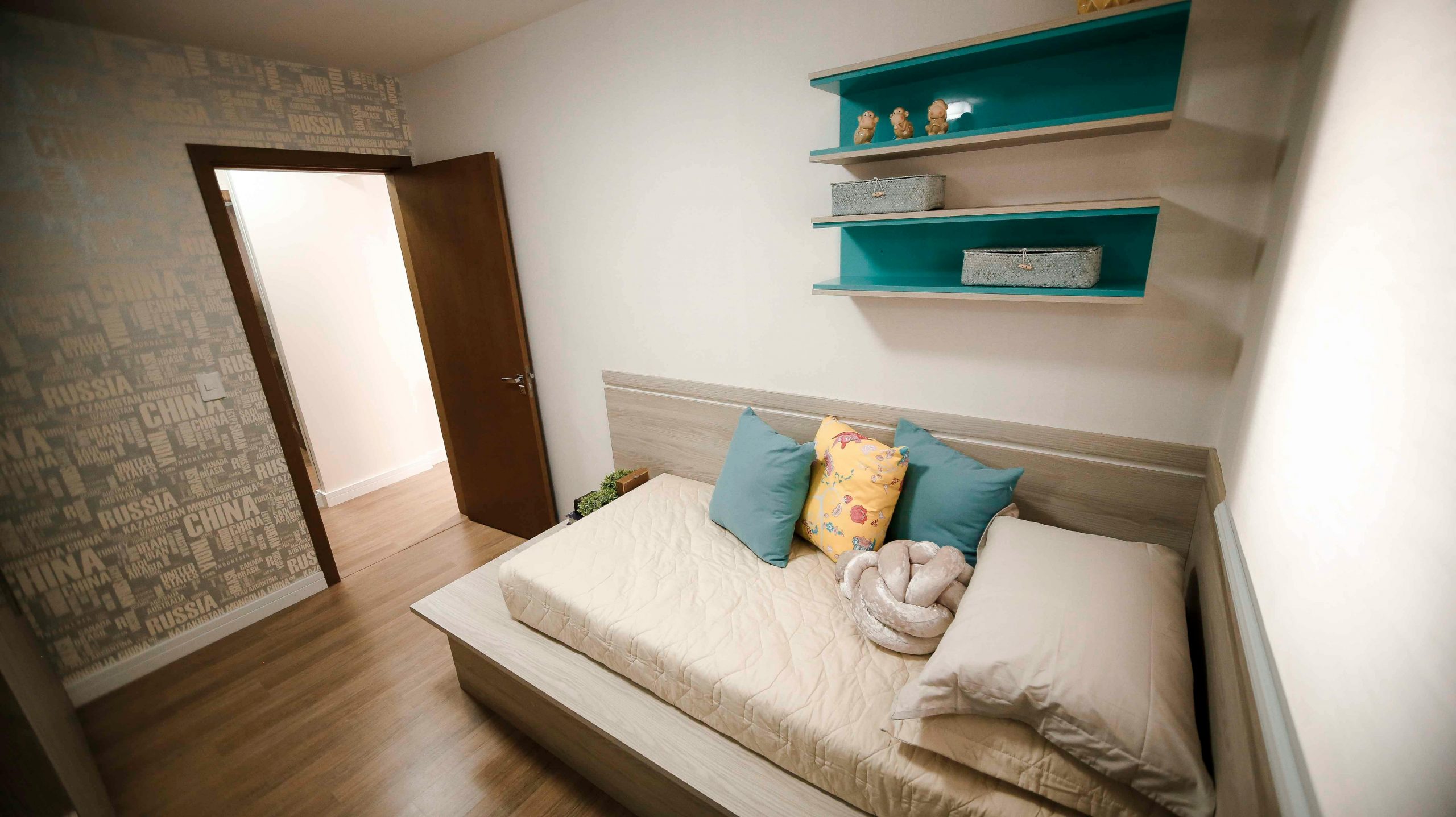
This is a super achievable and budget-friendly look for a teen’s room. The ‘world map’ accent wall is just wallpaper, which can be found from many online retailers for under $150 for a full wall. The floating shelves are a classic, inexpensive storage solution; IKEA’s LACK shelves or similar styles from Target are often less than $20 each. The simple, light-wood bed frame is another budget staple. This room proves you don’t need a huge budget to create a space with a strong theme and a ton of personality. The investment is in the idea, not expensive materials.
🧹 Maintenance Reality
The design of this room works so well because it balances learning and style. The text-based world map wallpaper is educational and serves as a sophisticated, graphic element—much more modern than a colorful, cartoonish map. The bold teal of the shelves provides a necessary pop of color against the neutral backdrop of the wood and white walls. This creates a focal point and adds a youthful energy. The combination feels both smart and fun, a perfect mix for a teenager’s evolving tastes.
21. Whispers of Lavender and Mauve in a Softly Patterned Bedroom
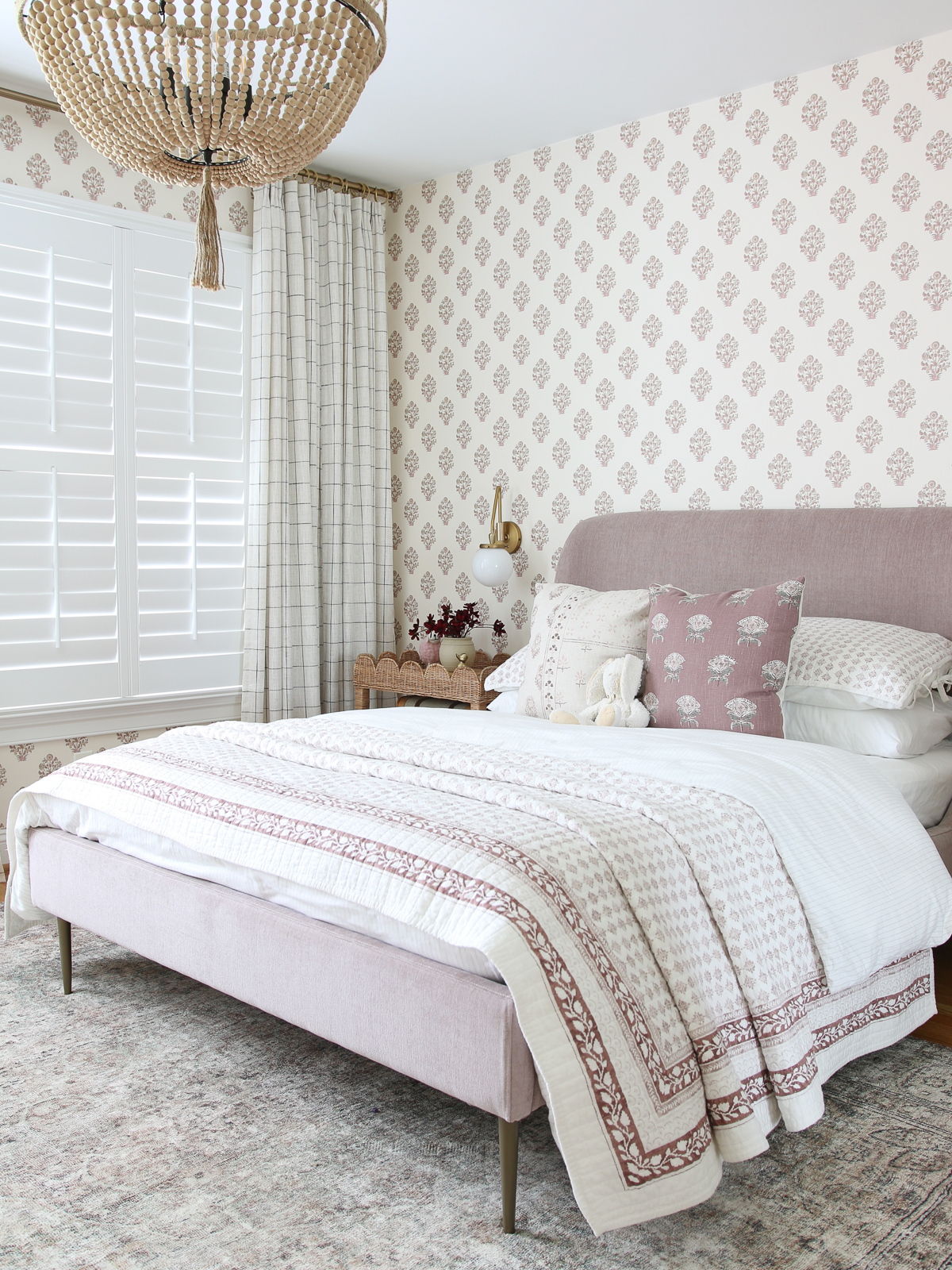
When mixing multiple patterns in one room, the secret is to vary the scale. Notice how the wallpaper has a small, delicate, repeating print. The throw quilt, in contrast, features much larger blocks of color and pattern. The plaid curtain introduces a third, geometric pattern. This works because your eye can easily distinguish between them. If all the patterns were the same small scale, the room would look busy and chaotic. Rule of thumb: Combine one large-scale pattern, one medium-scale pattern, and one small-scale pattern.
⭐ The One Thing
This room’s dreamy aesthetic can be broken down into a simple recipe: 50% soft texture + 30% subtle pattern + 20% natural materials. The upholstered bed, fluffy quilt, and curtains provide the all-important softness. The wallpaper, quilt, and curtain add the layer of pattern. Finally, the beaded wooden chandelier, woven side table, and plantation shutters bring in the grounding, natural elements that keep the design from feeling too sweet or one-note. The touch of gold on the bed legs is the final punctuation mark.
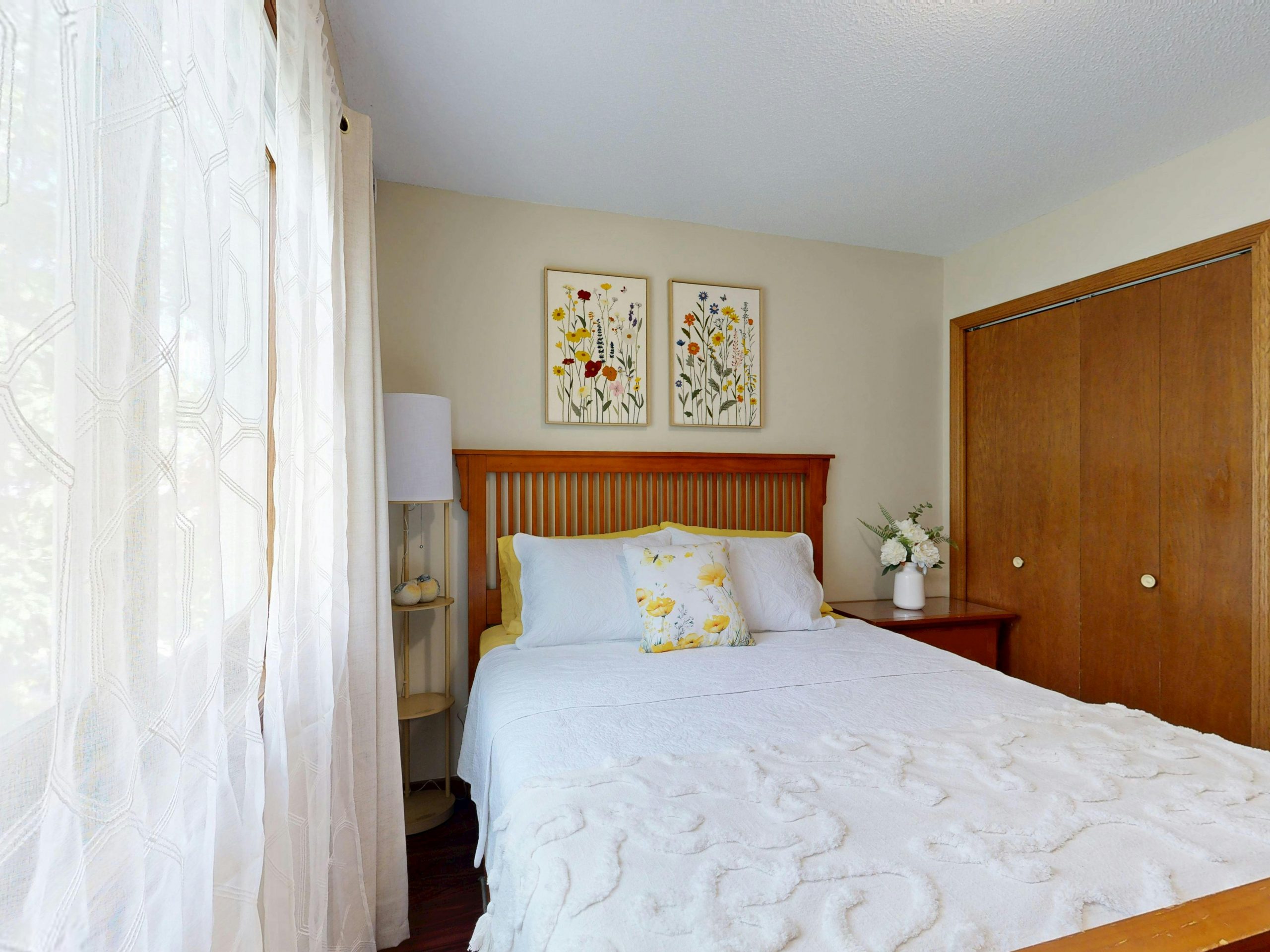
22. Sunny and Simple with Yellow Floral Accents and Warm Wood
This bright and cheerful look is incredibly easy to achieve on a dime. The core elements are a simple wooden bed frame (you can find these for under $300 from brands like Zinus or at IKEA) and basic white bedding. The personality comes from affordable accessories. A set of bright yellow sheets from Target or Walmart can be less than $40. The wildflower art can be a set of prints from Etsy, which you can frame yourself using inexpensive frames from a craft store. It’s a perfect example of how a few thoughtful, colorful touches can completely define a room.
📐 Style Math
The single element holding this entire design together is the color yellow. It’s used sparingly but with great impact. It appears in the bed sheets, the center of the floral pillow, and is picked up in the tones of the wildflower art. Remove the yellow, and you have a pleasant but generic bedroom with a wood-framed bed. With the yellow, the room instantly has a mood: sunny, happy, and inviting. It’s the thread that connects the bedding to the art and gives the whole space a cohesive, intentional point of view.
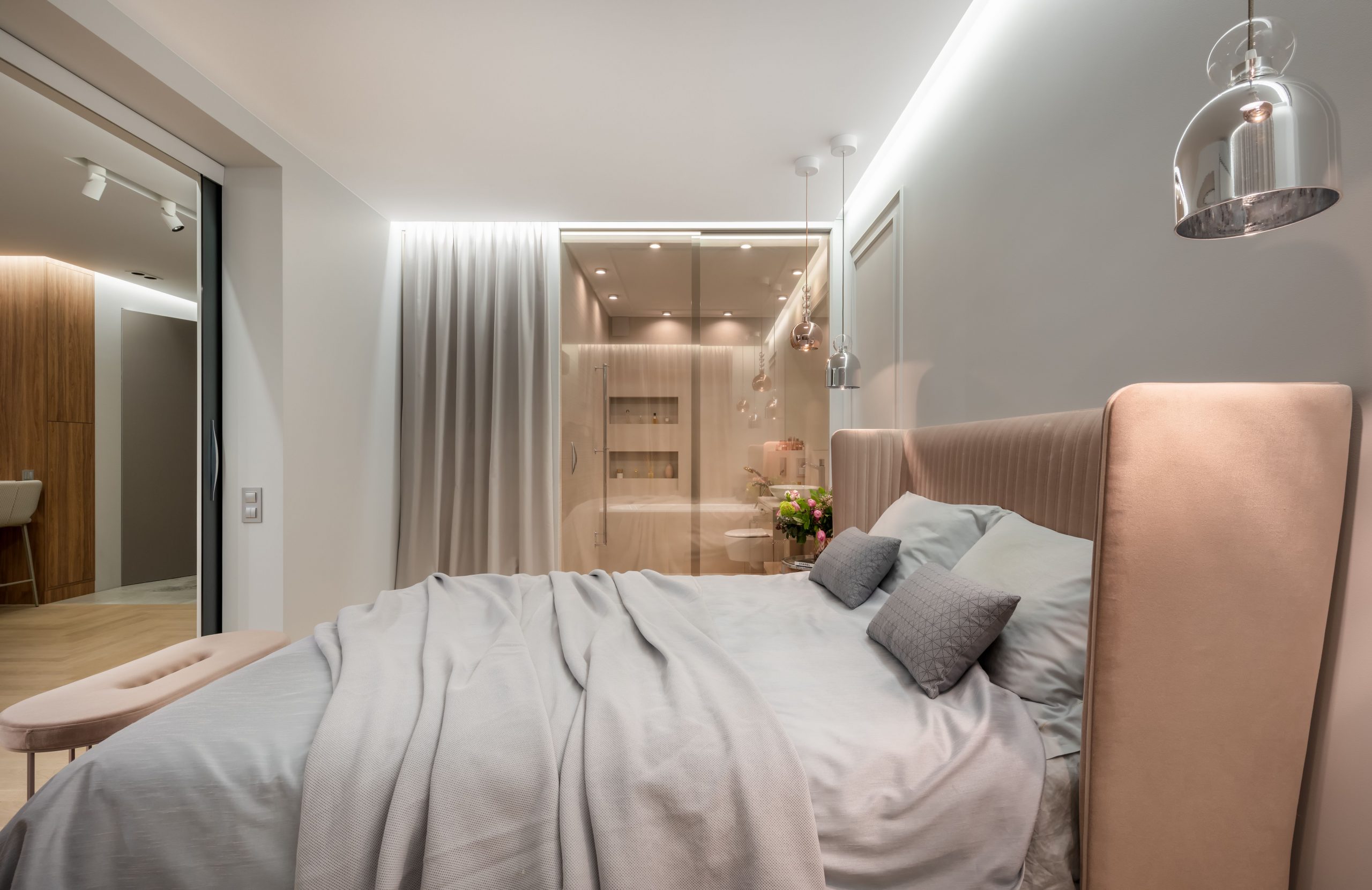
23. Modern and Minimal with a Glass-Walled Bathroom
Let’s be honest: the glass partition into the bathroom is a stunning architectural feature, but it’s not for the shy. This is a design choice that prioritizes an open, airy, hotel-suite aesthetic over personal privacy. It’s perfect for a single person’s primary suite or a couple who are *very* comfortable with each other. Before committing to this, have a frank conversation about whether you’re really okay with the bathroom being visually integrated into the bedroom. For many, a traditional solid wall is still the more practical, long-term choice.
📏 Scale Guide
A design featuring a glass wall partition requires significant space to feel luxurious rather than cramped. This idea is best suited for a large primary suite, likely 250 square feet or more, including the bathroom area. The goal is to create a seamless, open vista. For it to work, the bedroom portion itself should be at least 15×15 feet. This ensures that the bed doesn’t feel crammed up against the glass and that there’s ample room for circulation. In a smaller space, this can look less like a luxury suite and more like a studio apartment compromise. Compare with the arched partition in Idea #13 for a small-space-friendly way to divide a room.
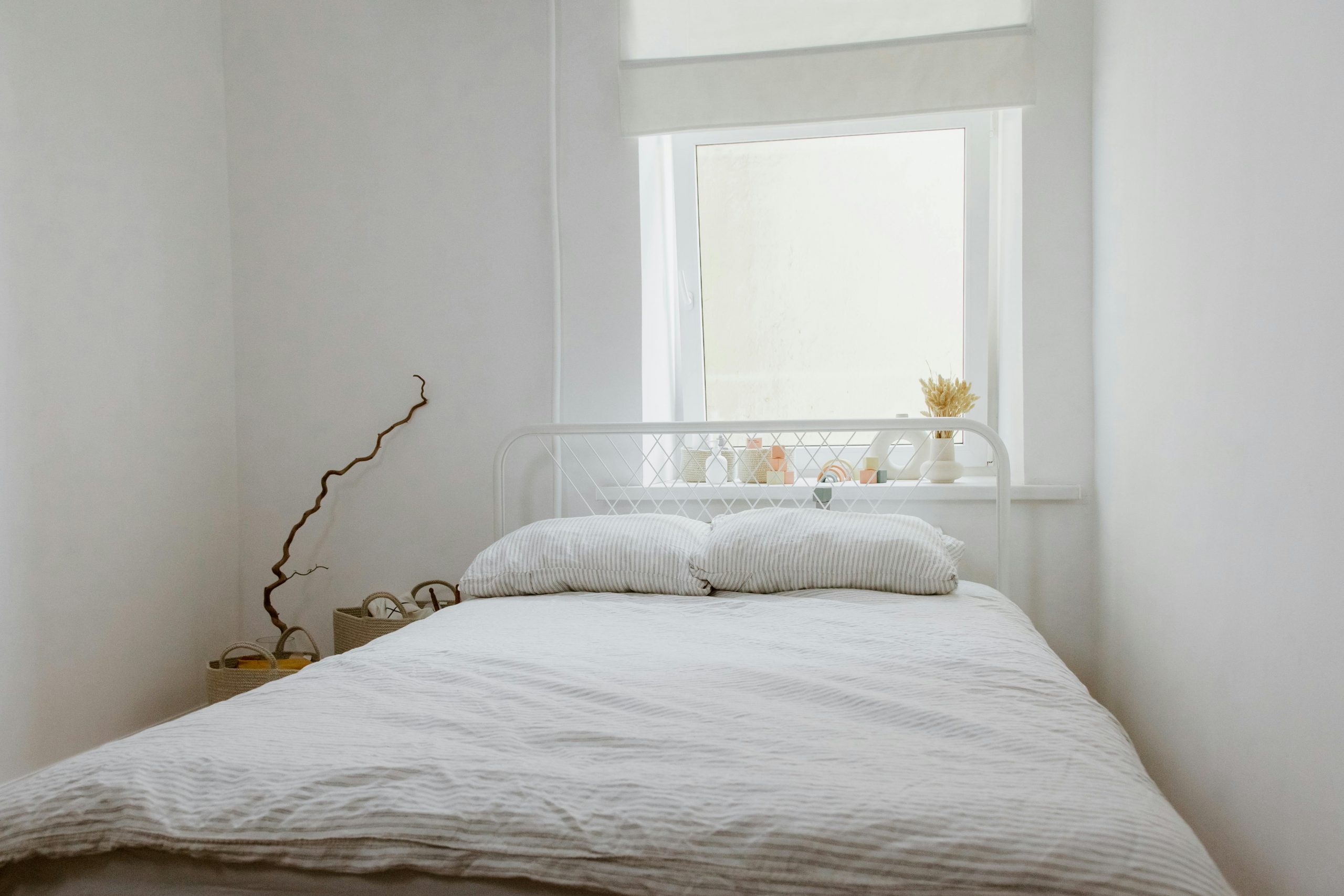
24. The Art of Simplicity in a Minimalist White Bedroom
Why does this incredibly simple room feel so calming and not at all boring? The secret is the subtle introduction of natural textures. Against the clean, crisp backdrop of the white walls and white metal bed frame, the design layers in a variety of organic elements: the light stripes in the bedding, the woven texture of the baskets, and the beautifully gnarled shape of the decorative branch. These natural touches add warmth and visual interest, preventing the minimalist white palette from feeling sterile or cold. It’s minimalism done with soul.
🔥 Trending Context
This is perhaps the most budget-friendly aesthetic you can create. The foundation is a simple white metal bed frame, like IKEA’s NEIDEN or SAGSTUA, which are very affordable. The key is to paint your walls a clean, fresh white. The rest is about curation, not cost. The baskets can be found at a thrift store or Target for a few dollars each. The decorative branch? That’s free—a beautiful piece of driftwood found on a beach walk or a fallen branch from the park (just be sure to clean it well!). This look is about editing down to the essentials and finding beauty in simple forms.
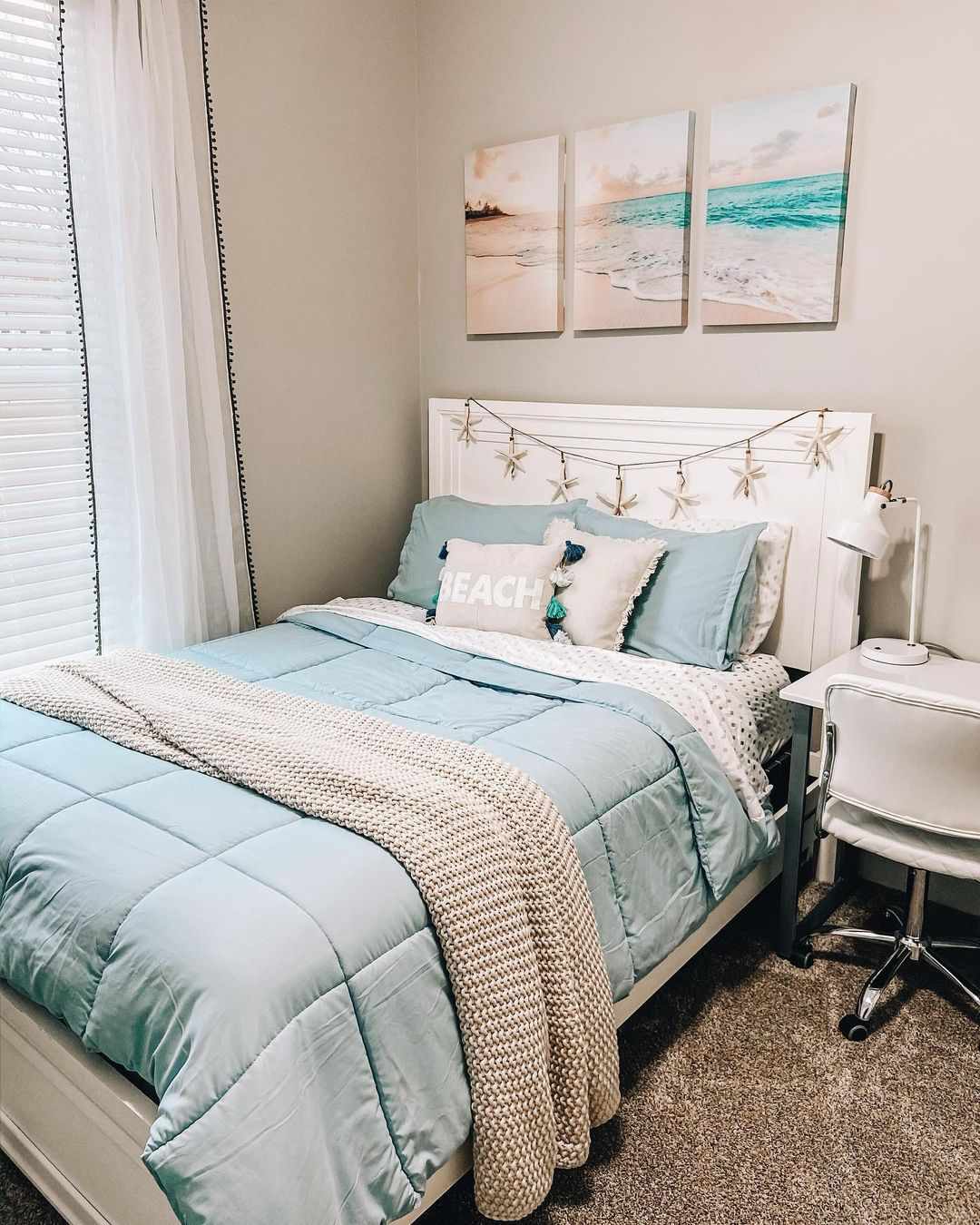
25. A Touch of the Coast with a Starfish Garland and Teal Bedding
When creating a themed room like this beachy space, the trick to keeping it chic and not childish is to use a restrained color palette and focus on texture. The room wisely sticks to a simple scheme of teal, white, and light grey. The ‘theme’ elements are subtle and textural: the rough texture of the starfish garland, the light airiness of the sheer curtains, and the weathered look of the art. Avoid using too many literal beach motifs (like seashell-printed everything). A few key pieces are all you need to set the mood.
💡 Designer Tip
That simple starfish garland is a quick and charming DIY project that instantly sets a coastal tone.
Time: 20 minutes | Cost: $15 – $25
- You’ll need a piece of jute twine or thin rope, about 5-6 feet long.
- Purchase 5-7 starfish from a craft store or online. Look for ones that are 3-5 inches in diameter.
- Grab a hot glue gun.
- Lay out your twine and space the starfish evenly along it, about 6-8 inches apart.
- Apply a generous dot of hot glue to the back of each starfish and press the twine firmly into it. Hold for 30 seconds until it sets.
- Tie a small loop at each end of the twine for easy hanging, and drape it over your headboard.
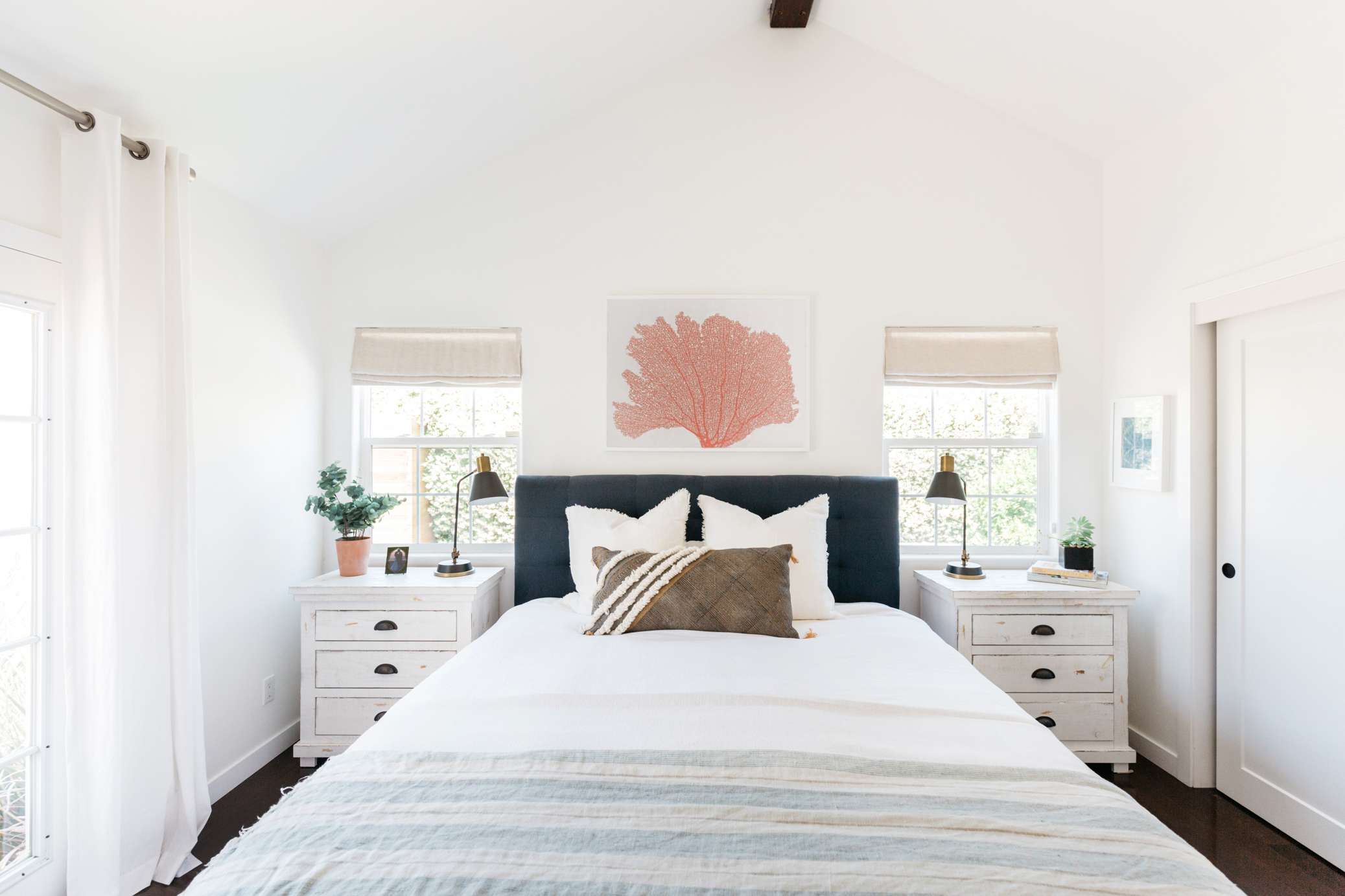
26. Airy and Bright with a Navy Headboard and Coral Artwork
The single element that gives this room its unique personality is the large, reddish-orange coral artwork. Against the serene backdrop of white walls and a classic navy headboard, this pop of unexpected color is a brilliant focal point. It injects energy and a touch of the tropics into an otherwise traditional and calm space. Without that specific piece of art, the room would still be lovely, but it would lack its defining feature and its memorable color story. It’s the perfect example of how one piece of art can completely transform a room.
⚠️ Real Talk
This design works because it follows the principles of a classic color triad with a twist. It uses two primary colors, blue (in the headboard) and red (in the coral art), but frames them with an abundance of white. The white walls, nightstands, and curtains act as negative space, allowing the bold colors to stand out without competing. This makes the room feel both vibrant and restful at the same time. The symmetry of the matching nightstands and lamps provides a sense of order that grounds the bold color choices.
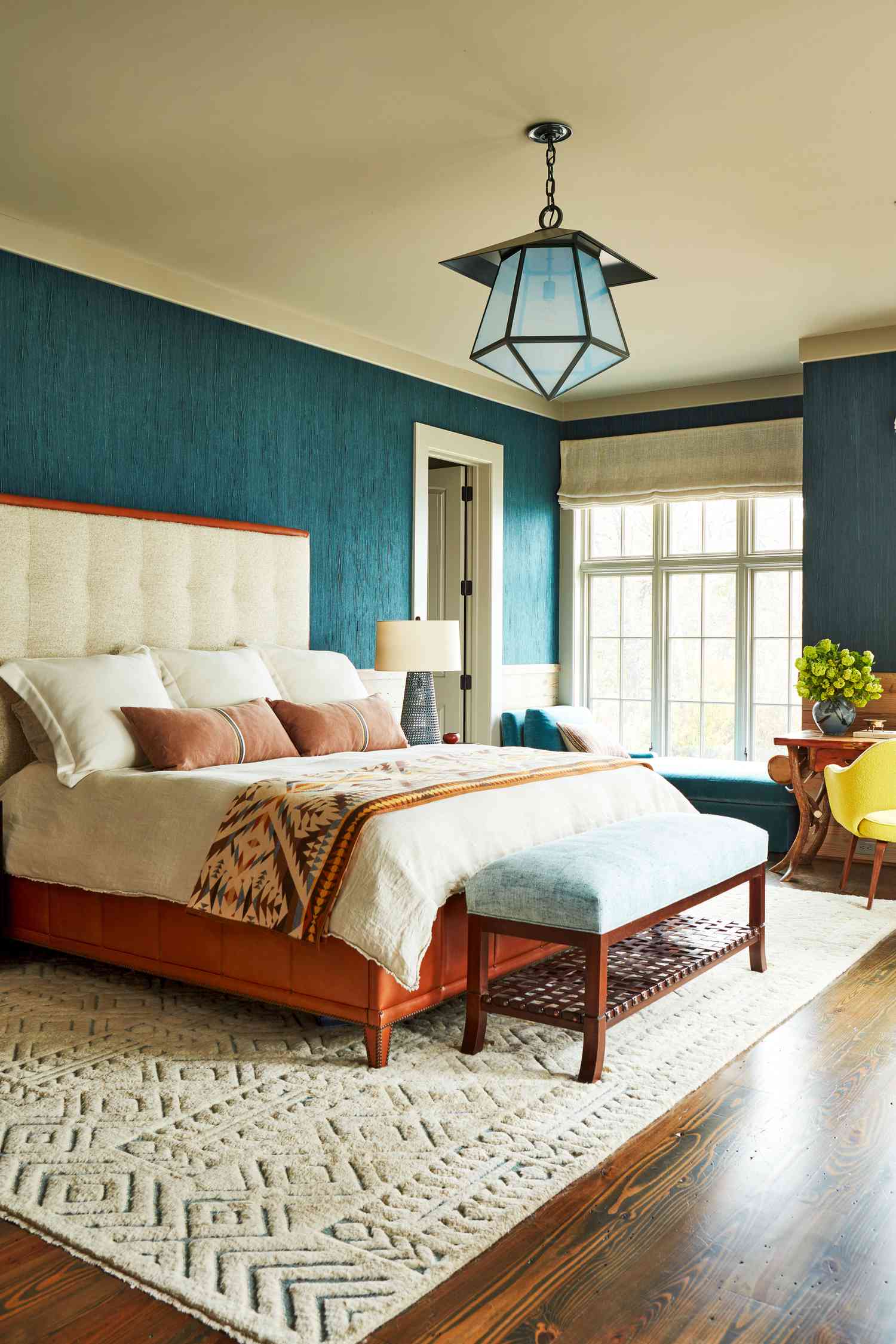
27. A Cozy Nook Featuring Textured Teal Walls and Earth Tones
This inviting room pulls its look together with a warm, earthy formula: 50% dominant color (the textured teal walls), 30% soft neutrals (the cream headboard and light rug), and 20% warm accents (the dark wood floor, tan duvet, and yellow chair). The teal provides a bold, enveloping backdrop, while the neutrals keep it from feeling overwhelming. The pops of wood, tan, and yellow add a necessary layer of warmth and create a connection to nature, making the space feel grounded and cozy.
✅ Before You Start
Ready to commit to a textured wall treatment like this? They are fantastic for adding depth and hiding imperfections, but here are a few things to check off your list first:
- Sample it: Always get a sample of the texture and apply it to a large board. The effect can look very different on a full wall than it does on a tiny store sample.
- Consider the future: Textured walls are more difficult to paint over or remove than flat paint. Are you prepared for the extra work down the line if you decide to change it?
- Check your light: The shadows created by the texture will change dramatically throughout the day. Watch how your sample board looks in morning, afternoon, and artificial light before you commit.
Your Aesthetic Room Story Starts Now
Don’t just save these ideas—start planning! Pick one detail from a photo you love and think about how you could bring it into your own space. It doesn’t have to be a full makeover to make a big difference. Ready for more inspiration? Follow us on Pinterest for daily tips and aesthetic finds!