You know that feeling when you finally find the Farmhouse Window Treatment Ideas that looks exactly right for your space? It can feel like searching forever, scrolling through endless photos trying to land on something that feels both fresh and timeless. After filtering through hundreds of options across IKEA, Target, and Facebook Marketplace, we narrowed it down to 28 ideas that actually deliver. We’ve curated looks across every price point—from $50 DIYs to $5,000 custom setups—covering styles from modern rustic to coastal cottage. These aren’t just generic suggestions; 2026 is all about making your home a true reflection of you, and the right window treatments are a huge part of that story. And stay until the end — we break down the most common mistakes that can ruin these looks. 📌 Save this to Pinterest for later — you’ll want to revisit these ideas.
1. A Pop of Pattern with a Blue Roman Shade
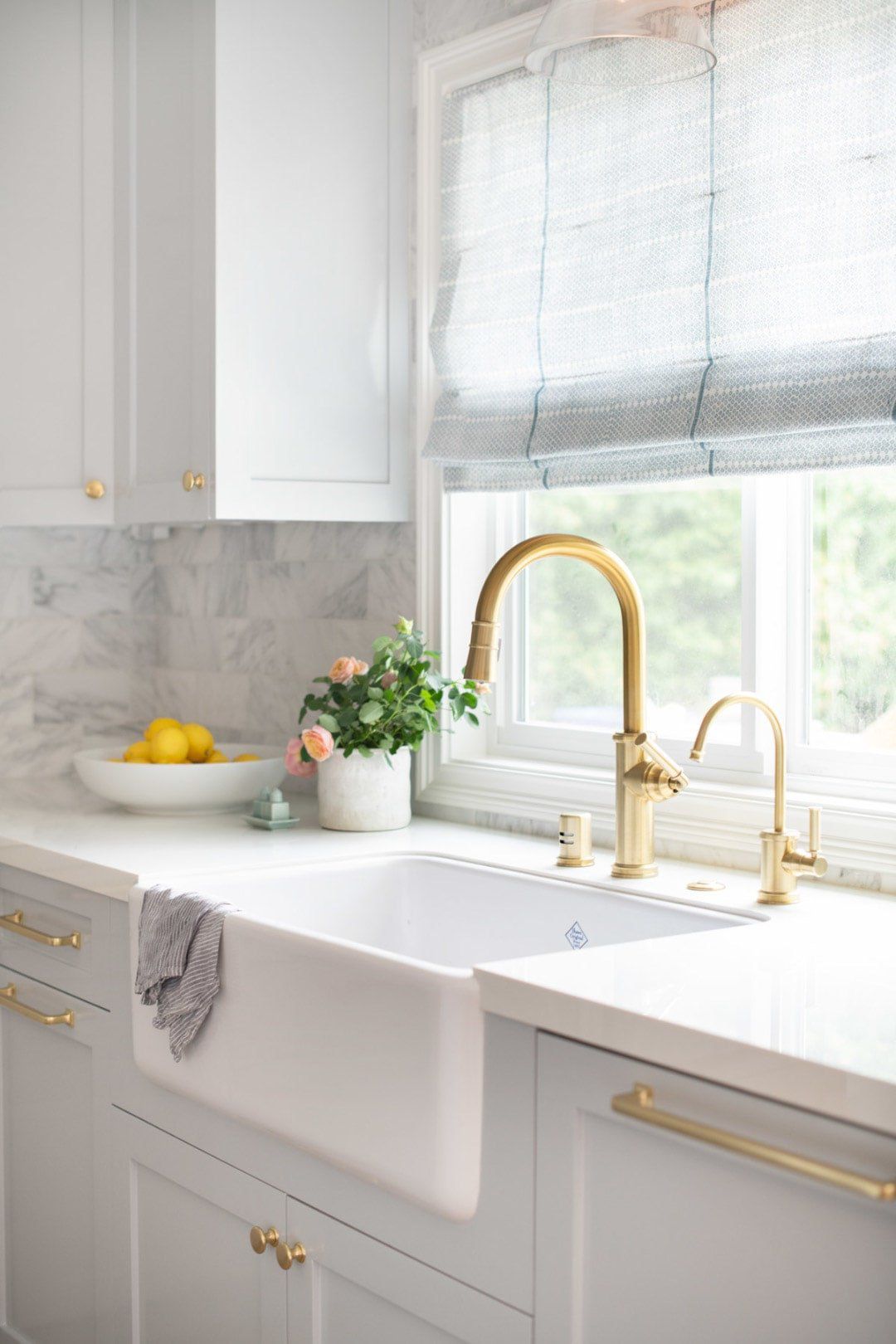
What makes this kitchen feel so special isn’t just the classic white shaker cabinets or the elegant brass fixtures. It’s the single, expertly chosen moment of color and pattern in the Roman shade. In an otherwise neutral space, the light blue and white fabric acts as a focal point, drawing your eye to the window and the light pouring in. It breaks up the monochrome palette without overwhelming it, proving that sometimes one great textile is all you need to bring a room to life. The soft pattern injects personality while the clean lines of the shade keep the overall feel crisp and tailored.
🔧 How-To Brief
When you’re working with a monochromatic room, the scale of your pattern is key. For a kitchen backsplash with smaller tiles, like the marble subway tile here, opt for a larger-scale pattern on your window treatment. A pattern that’s too small or busy will visually compete with the tile grout lines, creating a chaotic effect. A larger, more open pattern, like the one on this Roman shade, provides a restful counterpoint to the grid of the tile, allowing both elements to be appreciated without clashing. As a general rule, make your pattern at least twice the scale of any pattern nearby.
2. Frame an Architectural Arch with Neutral Drapes
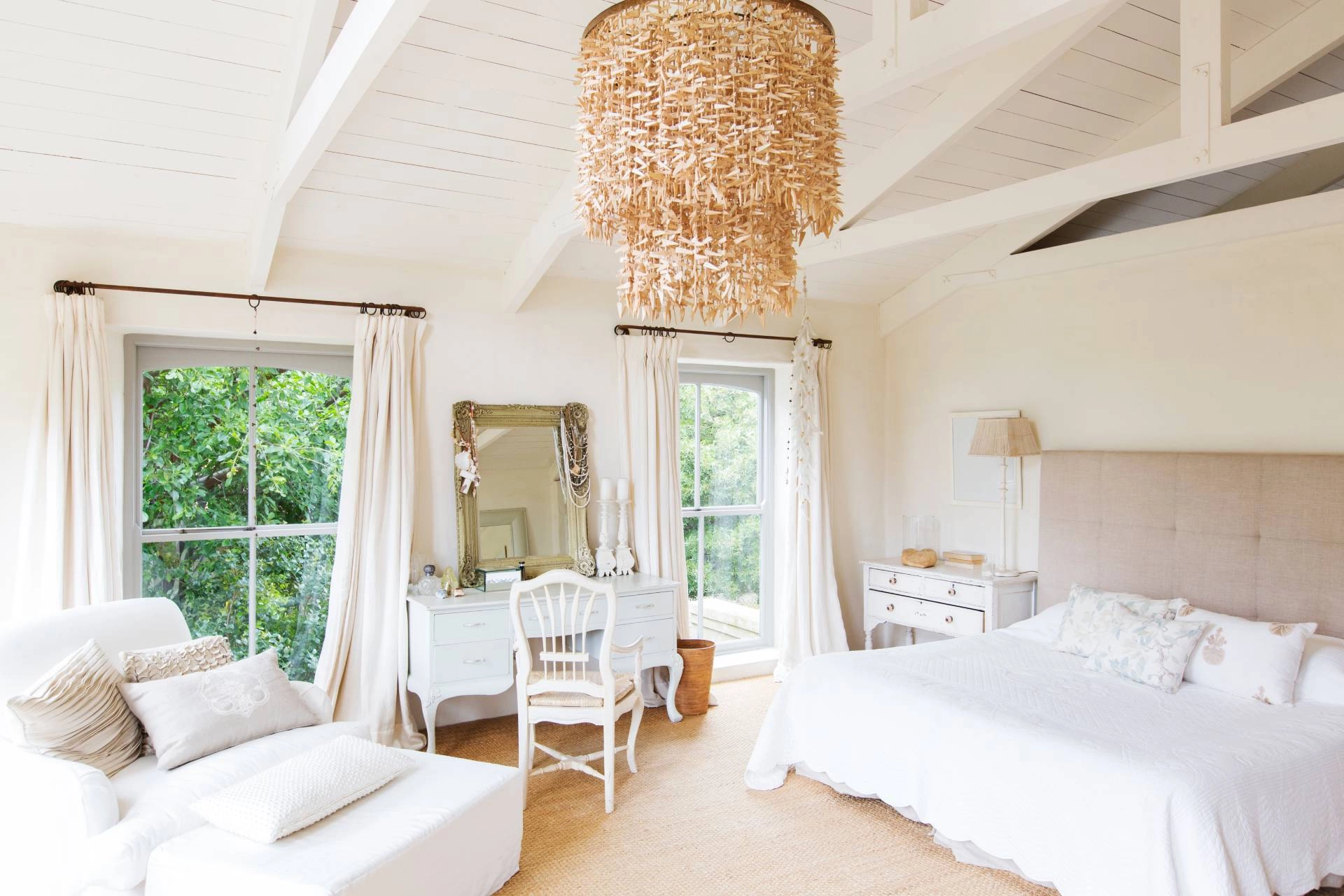
While the floor-length drapes are lovely, the one thing that truly defines this space is the gentle arch of the window frames themselves. The window treatments are smart because they don’t try to hide this feature—they celebrate it. By hanging the dark curtain rod high and wide, the full curve of the arch remains visible, becoming a soft, structural design element. Without that subtle architectural detail, the room would be far less memorable. The drapes are there to soften the edges, but the arch is the star of the show, lending a bespoke, custom feel to the entire room.
⭐ The One Thing
Floor-length drapery like this works best when you have the vertical space to let it breathe. To get this look right, you need a minimum ceiling height of 8 feet, but it’s even better with 9-foot or taller ceilings. The goal is to hang the rod at least 4-6 inches above the window frame and have the drapes either just “kiss” the floor or puddle slightly (about 1-2 inches extra fabric). In rooms with lower ceilings, this much fabric can feel heavy and visually shrink the space. For smaller rooms, consider the woven shades seen in Idea #4, which keep the focus within the window frame.
3. Create a Cozy Nook with a Beige Roman Shade
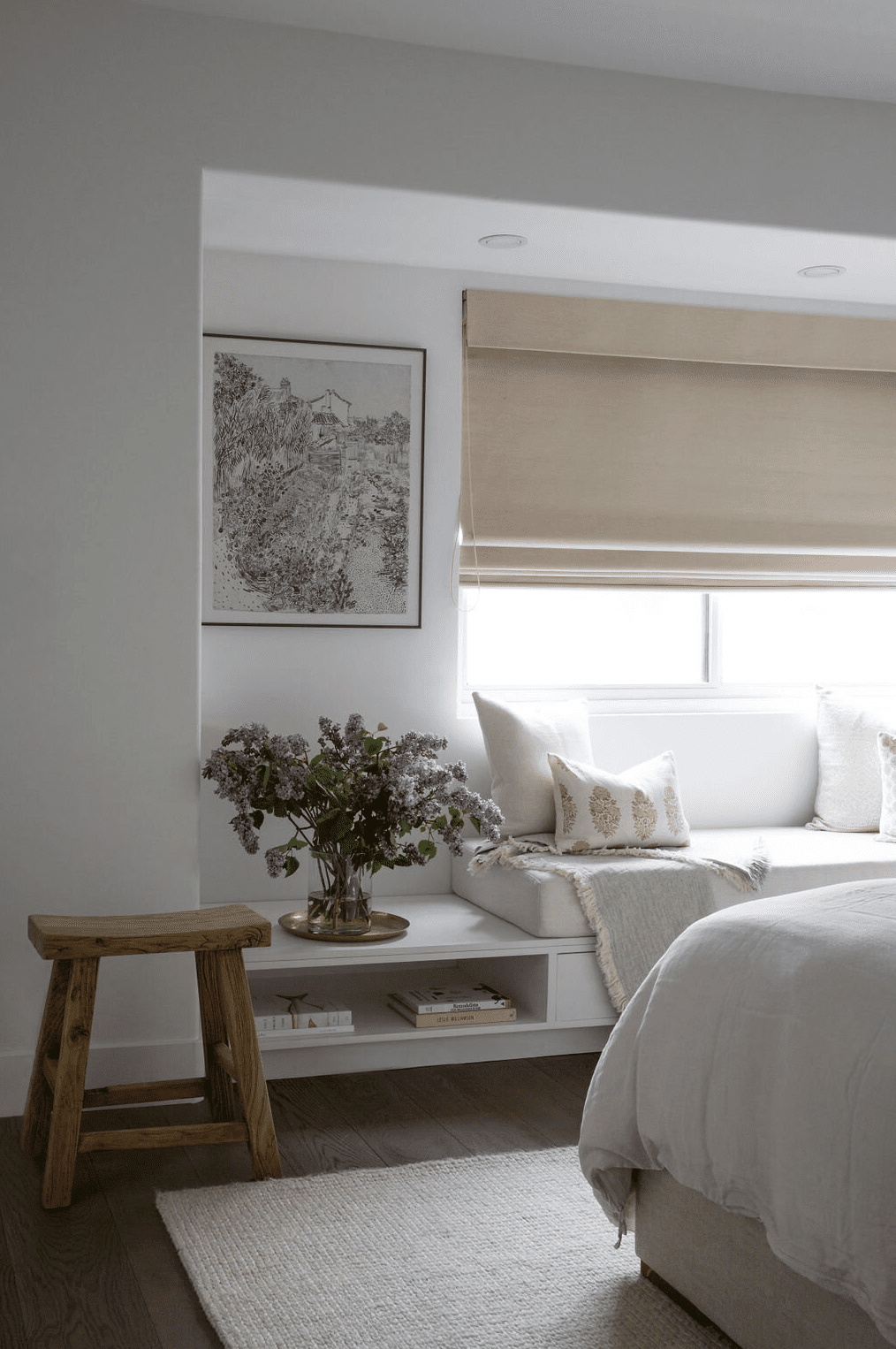
This serene corner masters the art of tone-on-tone layering. The formula is simple but effective: 70% soft neutrals (the white built-in seating, the beige Roman shade, the light rug) + 20% natural texture (the wooden stool, the woven fibers in the pillows) + 10% sharp contrast (the black-framed artwork). By keeping the major elements within a tight, calm palette, the space feels incredibly cohesive and restful. The small dose of black adds just enough graphic punch to keep it from feeling bland, grounding the airy neutrals and giving the eye a place to land.
📏 Scale Guide
A window seat is a charming and practical addition to any home, but let’s be honest: it can quickly become a clutter magnet. Before you commit, think about how you’ll use it day-to-day. Is it for morning coffee, or will it become a drop zone for mail, bags, and whatever else comes through the door? The built-in shelves underneath are a smart solution, but they require discipline. If you’re not a naturally tidy person, consider opting for closed cabinetry instead of open shelving to keep the visual peace. A beautiful nook like this only stays beautiful if it’s kept clear and styled.
4. Add Natural Texture with Woven Wood Blinds
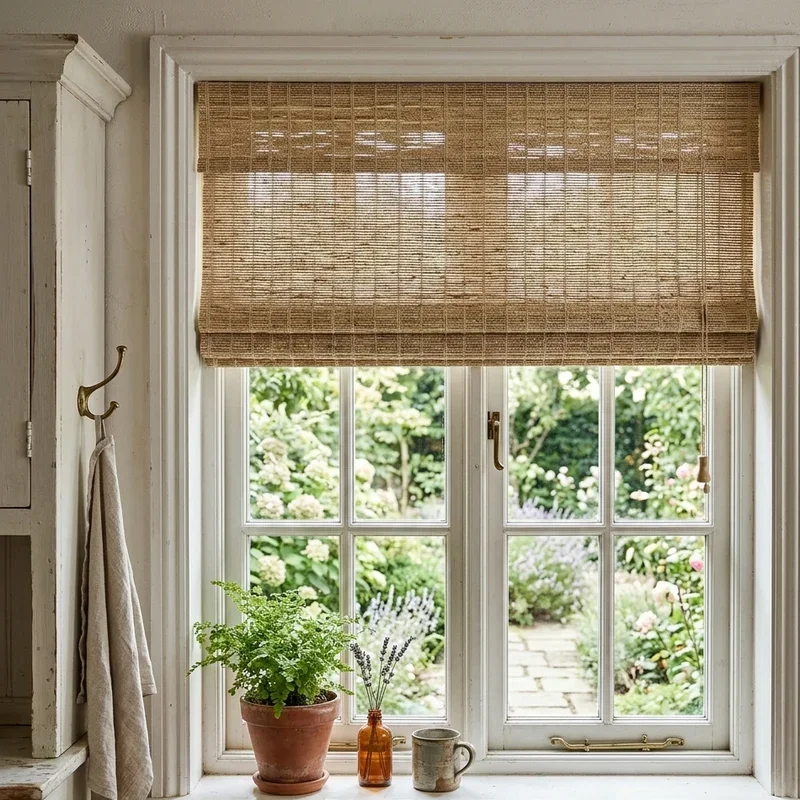
Woven wood and bamboo shades bring incredible warmth and texture to a space, but they do require a little TLC. Their natural fibers have a tendency to collect dust in the weave. Plan on a monthly cleaning with a feather duster or the soft brush attachment of your vacuum. For a deeper clean once or twice a year, you can use a slightly damp cloth with a mild soap-and-water solution, but always test in an inconspicuous area first, as moisture can sometimes cause the natural dyes to run. Avoid harsh chemical cleaners at all costs, as they can dry out and damage the fibers over time.
🎯 What Makes It Work
You don’t need custom-fit blinds to get this earthy, rustic vibe. Stores like Target and IKEA offer a fantastic range of off-the-shelf bamboo and woven wood roll-up blinds for a fraction of the cost, often starting around $30-$50 per window. The key is to mount them *inside* the window frame for that clean, built-in look. If your window isn’t a standard size, you can buy a slightly wider shade and mount it on the outside of the frame, just above the window. It gives a very similar effect and makes a huge impact for a small investment.
5. Contrast a Woven Shade with Beadboard and Gray Cabinets
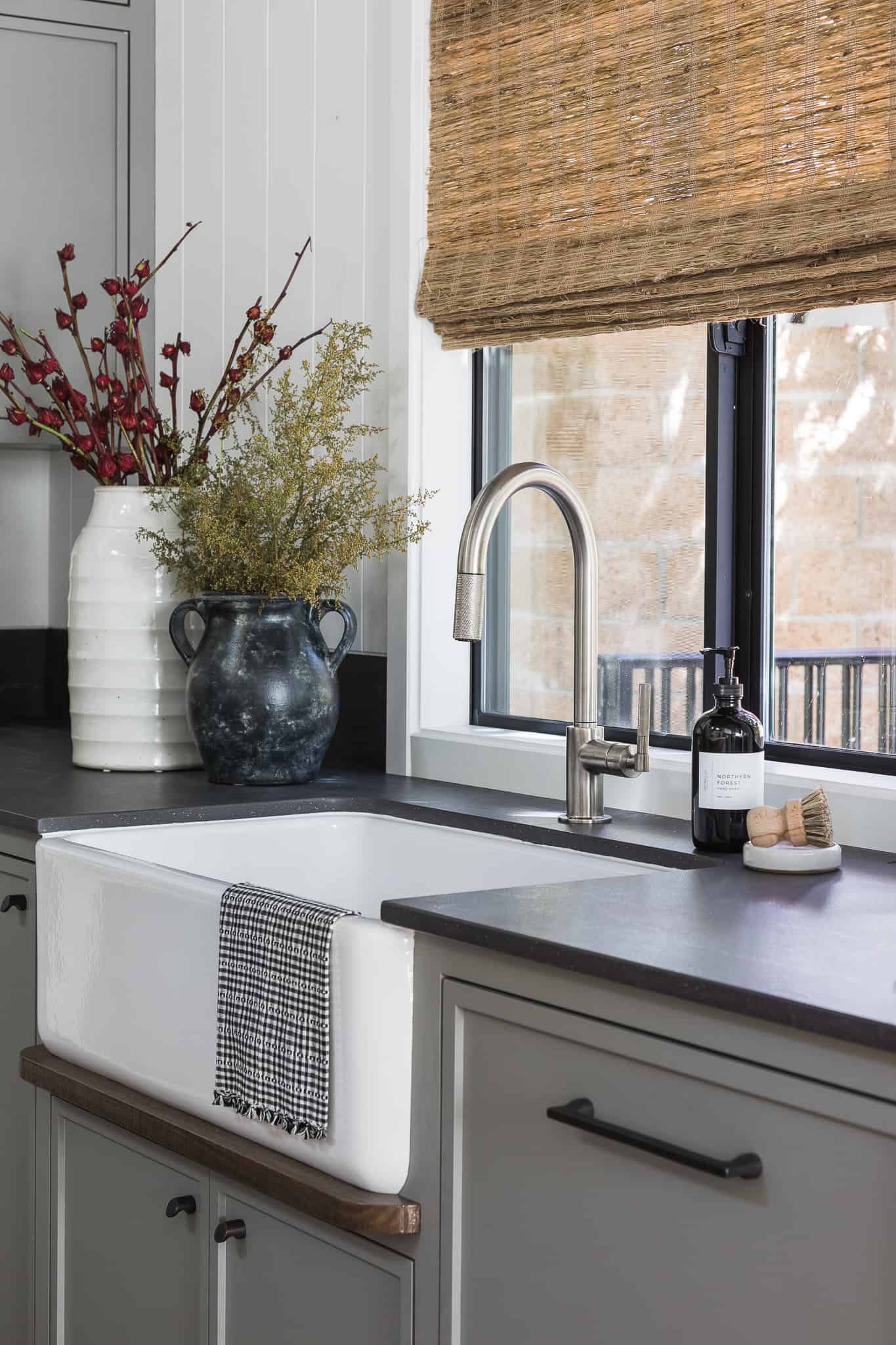
This kitchen excels at tactile and visual contrast, which is what gives it such an inviting, layered feel. The rugged, natural texture of the woven Roman shade is set against the clean, vertical lines of the white beadboard wall. Both of these elements then contrast with the smooth, cool surfaces of the dark countertops and gray cabinetry. It’s a trio of textures that all balance each other perfectly: the natural, the linear, and the sleek. This prevents any single element from feeling too dominant and creates a rich, dynamic space that feels curated over time.
✅ Before You Start
Before you commit to an inside-mount woven shade like this one, a few quick checks will save you a major headache. An inside-mount offers a clean, custom look, but it requires precise measurements. Here’s your checklist:
- Measure the inside width of your window frame at the top, middle, and bottom. Use the smallest of the three measurements when ordering.
- Measure the depth of your window frame. Ensure it’s deep enough to accommodate the headrail of the shade you’re choosing, typically needing at least 1-2 inches of depth for a flush mount.
- Check for obstructions. Make sure the shade won’t interfere with window locks or cranks when fully lowered.
6. Coordinate Floral Drapes and a Matching Roman Shade
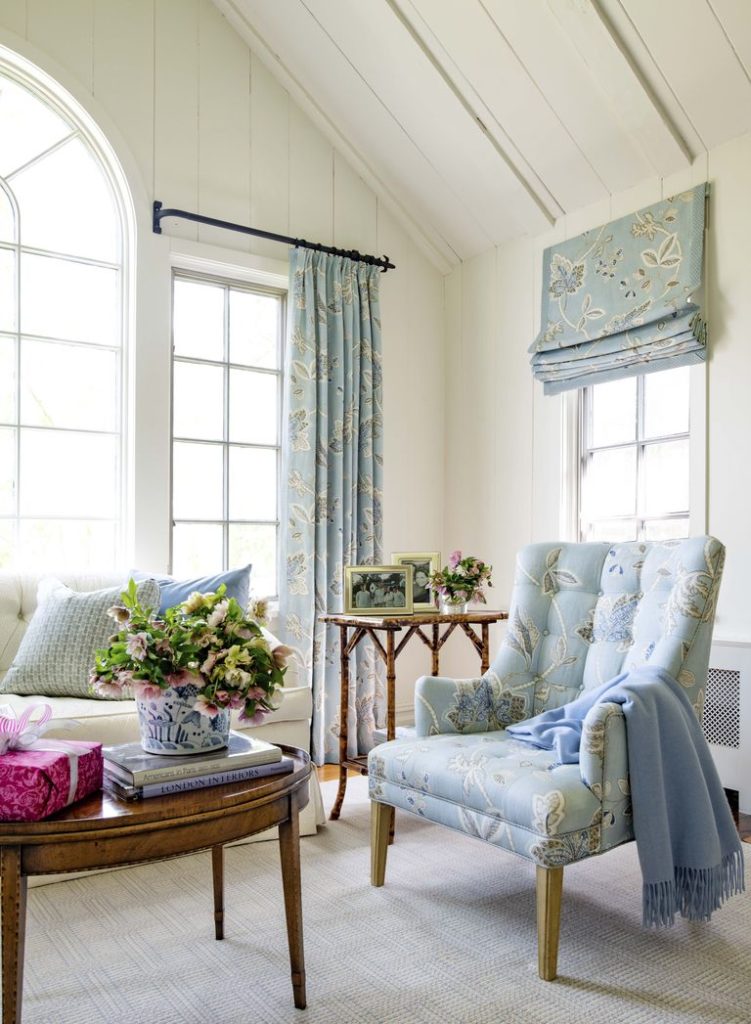
Using the same fabric for different types of window treatments in one room is a classic designer move that creates instant cohesion. Here, the light blue floral fabric is used for both a full-length drape and a Roman shade. This strategy works beautifully to unify different window shapes and sizes—like the arched window and the standard adjacent one. It tells a consistent story with the fabric, making the space feel intentionally designed and harmonious. To keep it from feeling too heavy, the walls and trim are kept a simple, clean white, allowing the floral pattern to be the star.
💰 Budget Breakdown
Committing to a distinct pattern like this beautiful floral is a big decision. It’s a stronger statement than the simple neutrals in Idea #3. Before you go all-in, order the largest fabric swatch you can—at least 12″x12″. Live with it for a few days. Tape it to the wall and see how the colors look in the morning light, afternoon sun, and with your lamps on at night. A pattern can look completely different depending on the lighting, and you want to be sure you love it at all hours of the day before you invest in yards of fabric and custom fabrication. This is especially true for a pattern you’re repeating across multiple windows *and* furniture.
7. Warm Up a Room with Linen Curtains and Brass Hardware
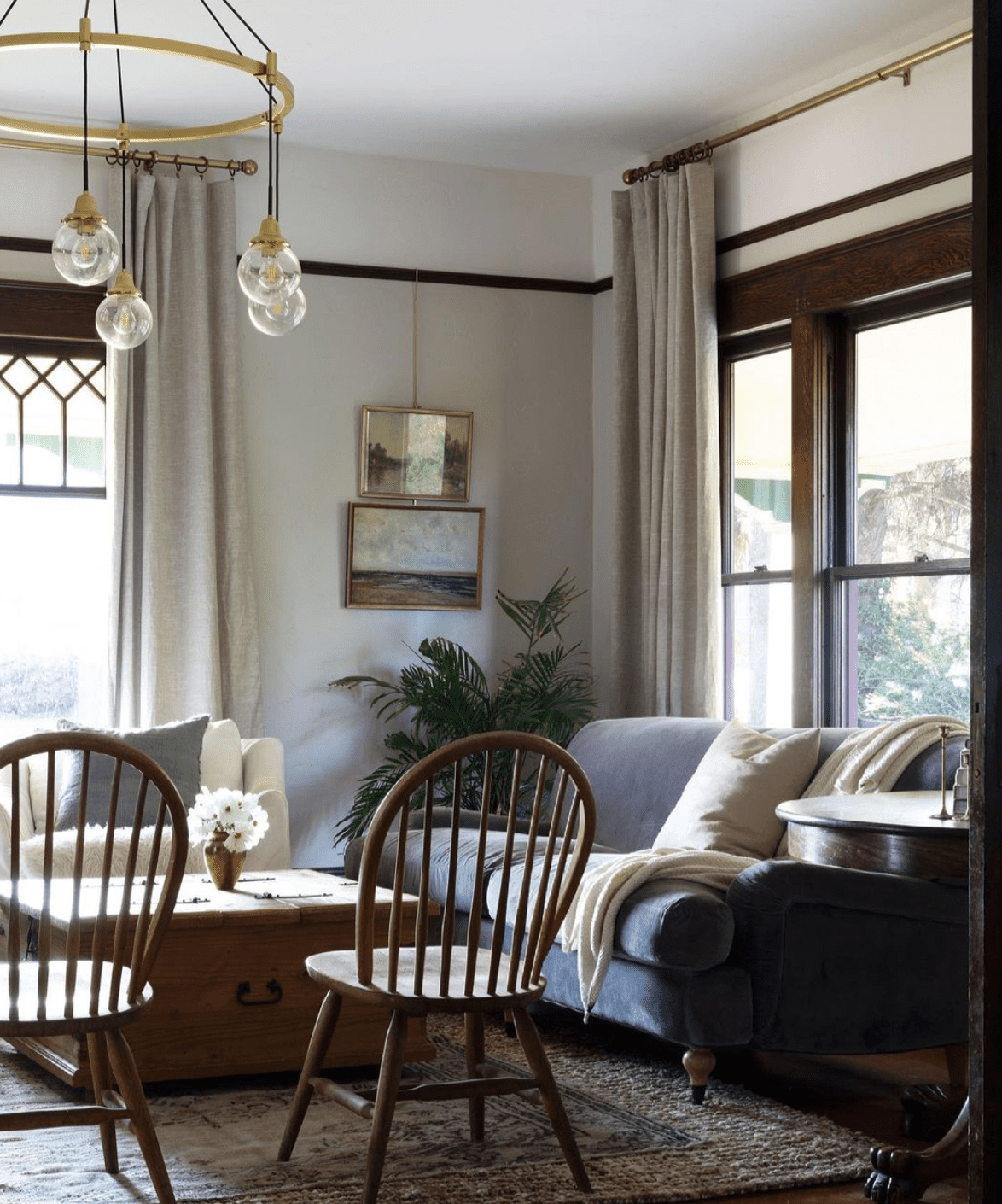
The single element that makes this window treatment so successful is the masterful mix of warm and cool tones. It’s the combination of the warm, almost glowing brass curtain rod and rings against the rich, cool-toned dark wood of the window frames. The light greige linen curtains act as a neutral bridge between the two. This purposeful mixing of metal and wood, light and dark, creates a sophisticated tension that feels both timeless and completely modern. If you used a dark rod, it would get lost against the trim; a silver rod would feel too cold. The brass was the perfect choice.
💡 Designer Tip
Recreating this warm, traditional look feels luxurious but can be adapted to different price points. The key is in the materials.
- Main Furniture (if applicable): $0 (using existing)
- Lighting: $0
- Textiles (Linen Drapes, 2 panels): $150 – $400
- Hardware (Brass Rod & Rings): $100 – $300
- Decor/Accessories: $0
- Paint/Wall Treatment: $0
- TOTAL: $250 – $700
Budget alternative: Faux-linen curtains from Target ($50) and a brass-finish rod from Amazon ($60) can achieve a very similar vibe for around $110.
8. Layer Striped Valances Over Wooden Blinds
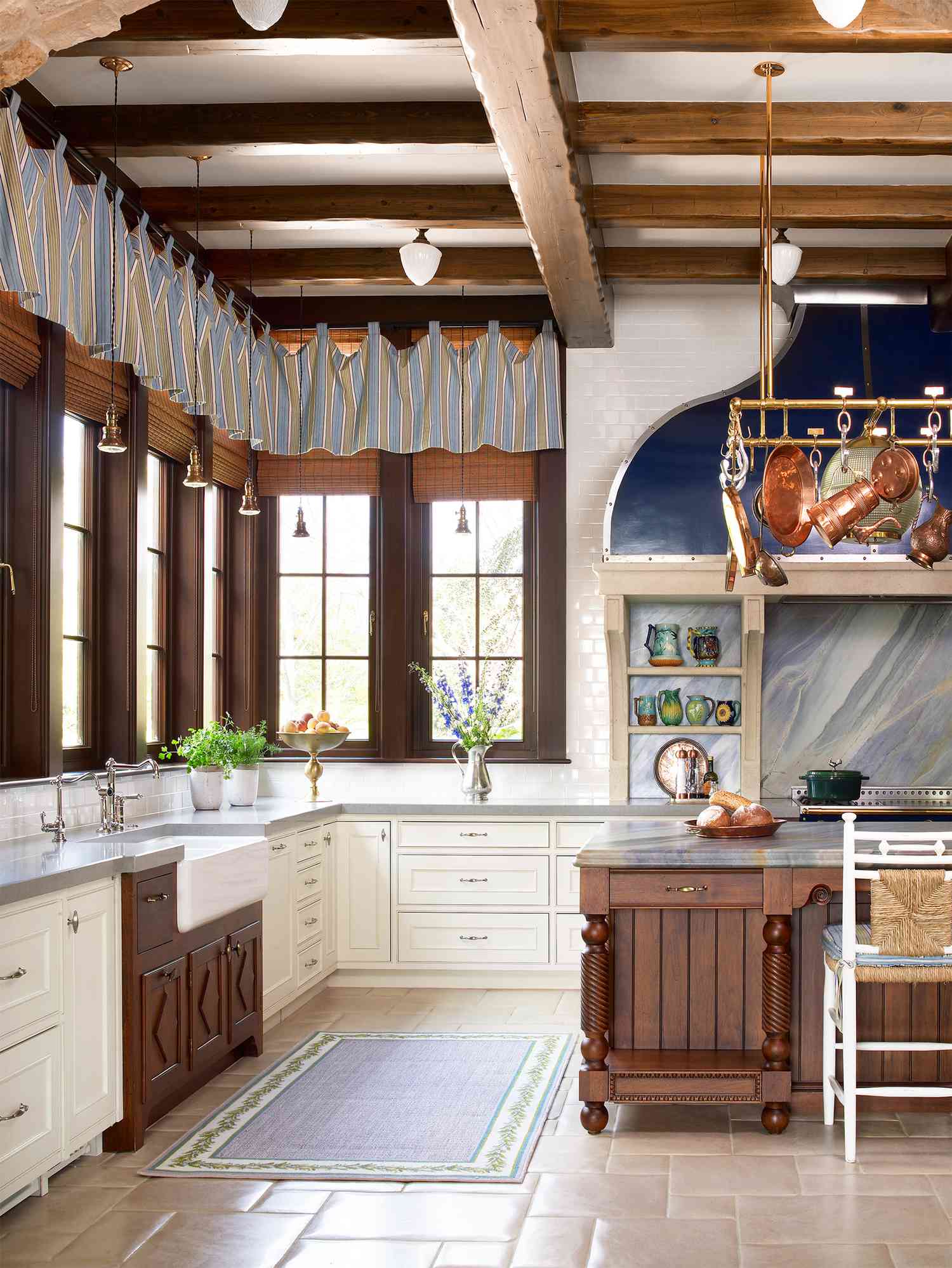
This cozy treatment is a perfect example of layering for function and style. The visual formula is all about balance. Think of it as: 50% Hard Material (the dark wood window frames and light wood blinds) + 50% Soft Material (the striped fabric valances). The wooden blinds provide excellent, adjustable light control and privacy, while the valance adds a layer of softness, color, and pattern that keeps the all-wood-and-slats combination from feeling too severe or office-like. This balance of hard and soft is a hallmark of classic, comfortable design. The valance is just enough fabric to feel finished without the formality of full drapes.
📐 Style Math
This layered valance-and-blind combination works best on windows that are at least 30 inches wide and 48 inches tall. On smaller windows, the combination can feel bulky and may block too much precious natural light, even when the blinds are open. The valance needs enough visual space so it doesn’t feel crammed against the ceiling. Ideally, you want at least 6-8 inches of wall space above the window frame to mount the valance. This look is particularly effective on a bank of two or three identical windows, like in a dining room or living room, where the repetition of the valances creates a pleasing rhythm.
9. Contrast Dark Wood Frames with Light Horizontal Blinds
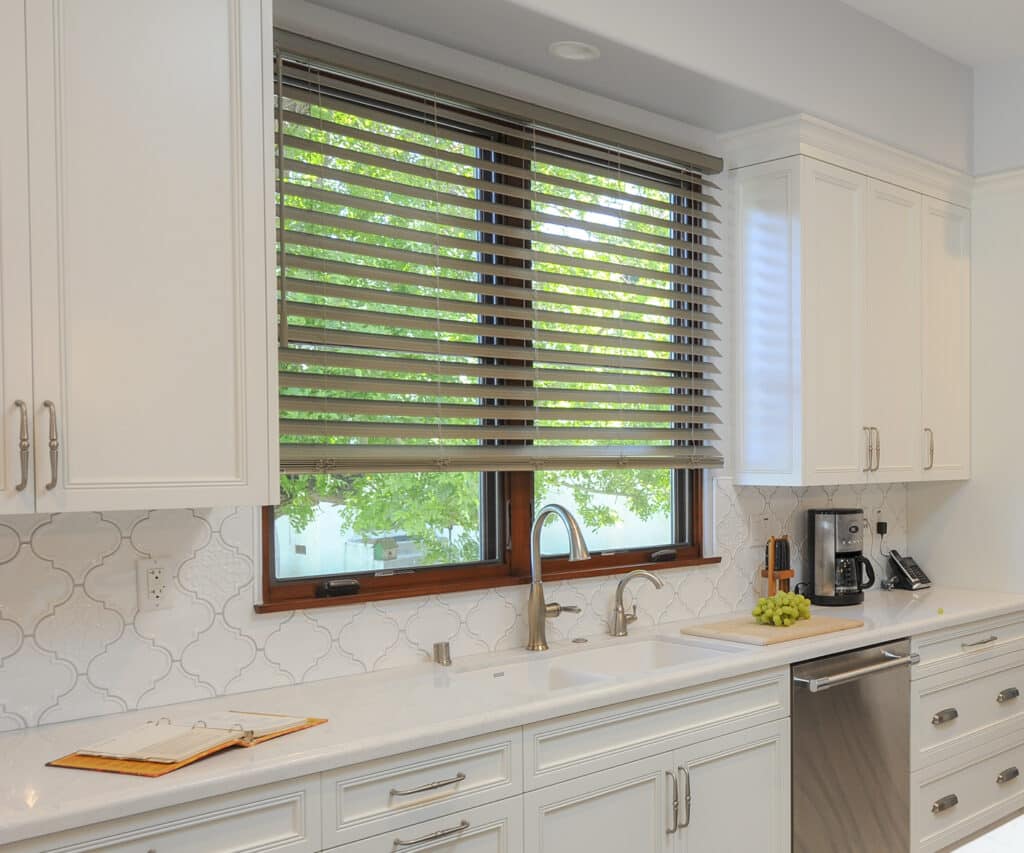
The beauty of this simple treatment lies in its sharp, clean contrast. The rich, dark brown wood of the window frame acts as a bold picture frame, while the light tan horizontal blinds inside provide a bright, reflective surface. This high contrast makes the window a distinct feature in the room, drawing the eye without the need for fabric or pattern. It’s a minimalist approach that still feels considered and intentional. The light color of the blinds maximizes the sunlight coming into the kitchen, bouncing it off the white cabinets and arabesque tile for a bright, functional workspace.
🧹 Maintenance Reality
Horizontal blinds, whether wood, faux-wood, or aluminum, are champions of light control, but they are also notorious dust collectors. Each slat is a tiny shelf for dust, kitchen grease, and pet hair. For a kitchen window like this one, you’ll want to give them a weekly once-over. The easiest way is to close the slats and dust with a microfiber duster, then reverse the slats and do the other side. For greasy buildup, a damp cloth with a bit of vinegar or mild dish soap works wonders. It’s a bit tedious, but staying on top of it prevents a major cleaning headache down the road.
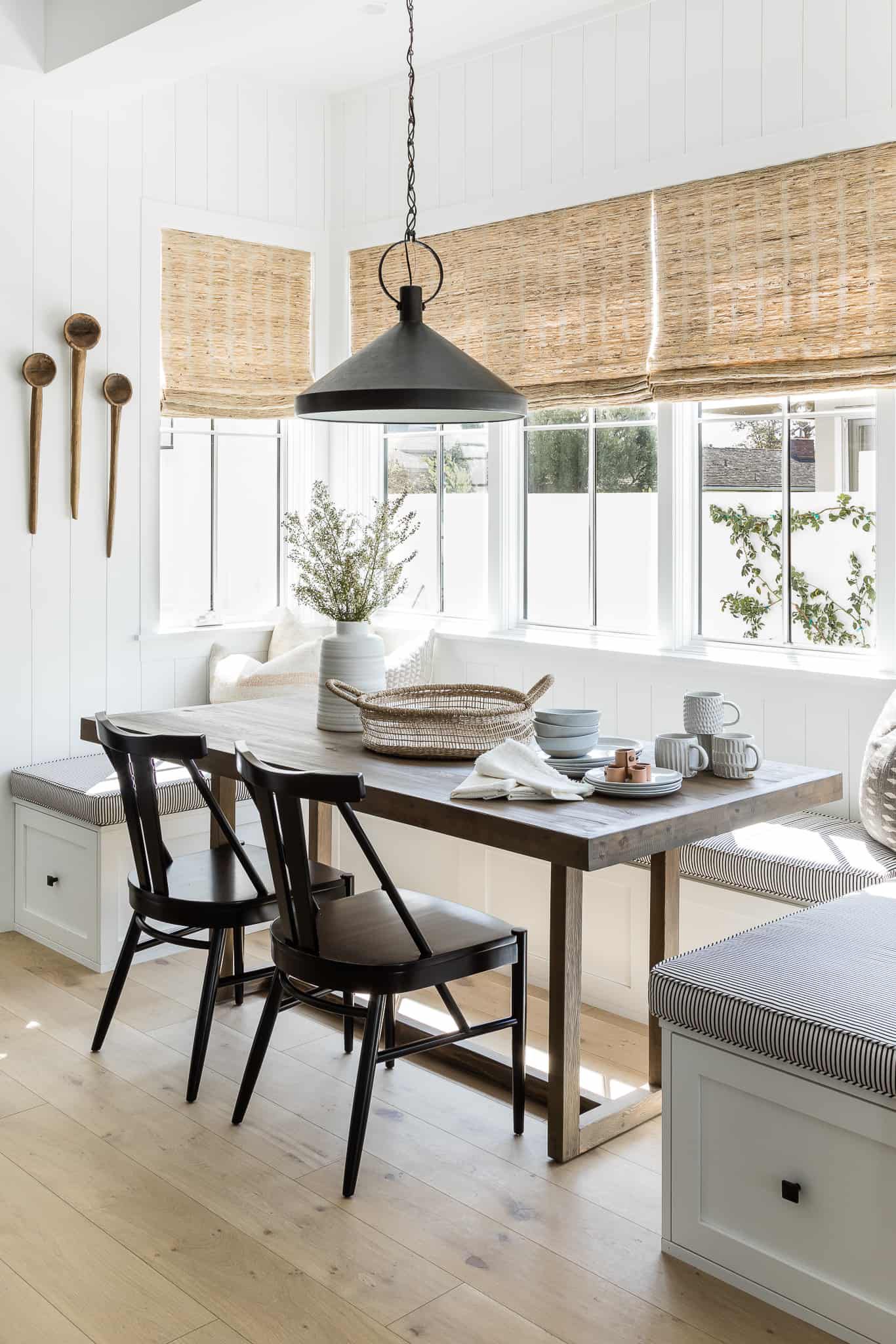
10. Soften a Dining Nook with Woven Roman Shades
If your windows are low or face a neighbor directly, you don’t have to sacrifice light for privacy. Take a cue from the frosted lower panes in this bay window. Applying a simple frosted or rice-paper-look window film to just the bottom half of the glass gives you round-the-clock privacy where you need it most, while leaving the top half clear to let in maximum sunlight. This two-part solution is incredibly practical. It means you can keep your woven shades pulled up during the day to enjoy the light, without feeling like you’re on display. It’s a pairing that offers the best of both worlds.
💸 Get This Look For Less
Woven wood and bamboo shades can get pricey, especially for custom sizes. For a similar look on a budget, check out natural fiber roll-up blinds from retailers like Walmart or Amazon, which often sell for $25-$40 per panel. They offer the same warm, organic texture as the shades pictured here. While they may not have the top-down/bottom-up functionality, they provide the same aesthetic when fully or partially lowered. This is a great way to get the high-impact textural look seen here and in Idea #11 without the custom price tag.
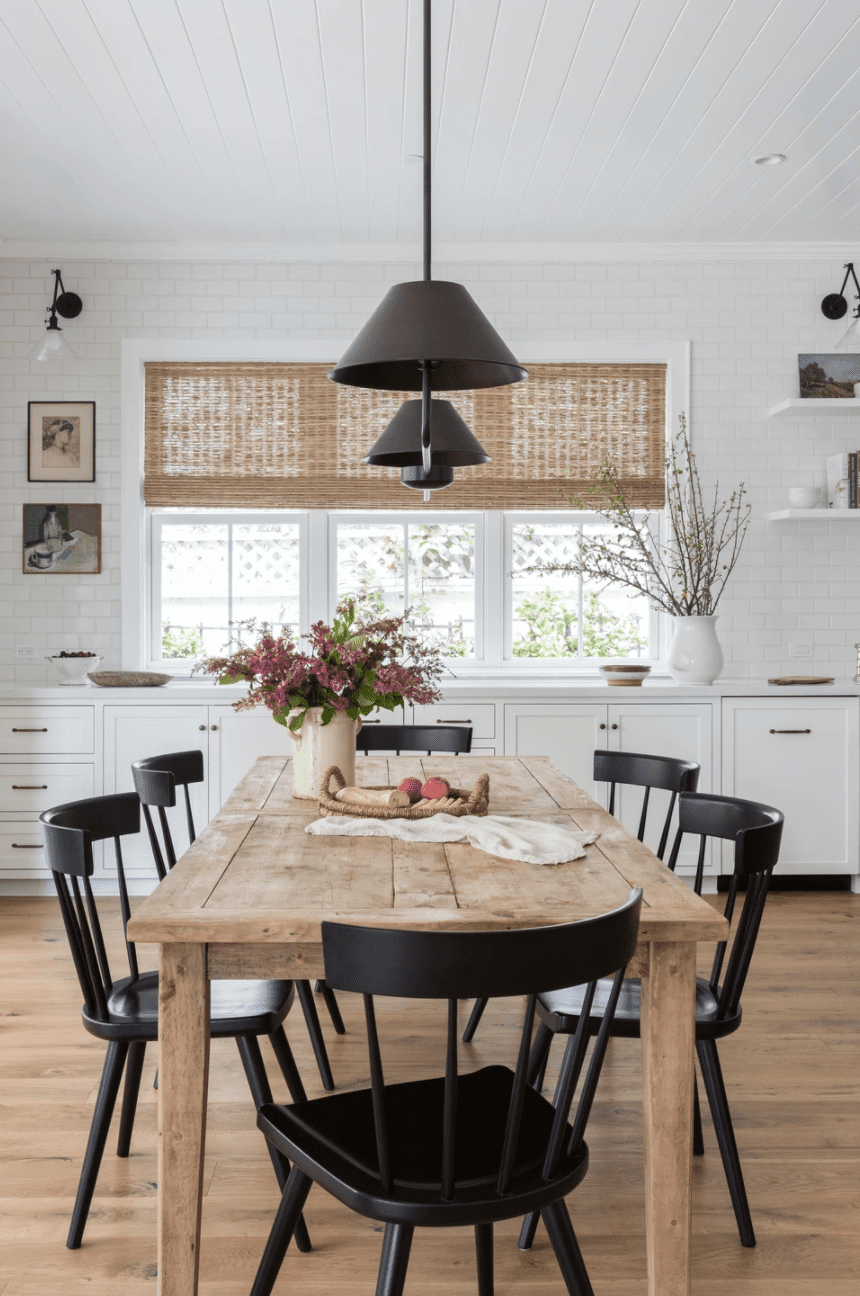
11. Unify Split Windows with a Single Woven Wood Blind
The single most clever decision here is the use of one wide woven wood blind to span all three separate windows. Instead of treating each small window individually, which could look busy and fragmented, the single shade unifies them into one cohesive visual statement. This makes the entire wall feel more intentional and grander in scale. It’s a bold move that simplifies the architecture and creates a clean, uninterrupted plane of texture that complements the rustic dining table below. It’s a perfect example of how a window treatment can solve an architectural quirk.
⚠️ Real Talk
Using one large shade to cover a bank of multiple windows is a fantastic strategy, but it works best when the total width isn’t excessive. Generally, this technique is ideal for a combined width of up to 96 inches (8 feet). Beyond that, a single blind can become very heavy and difficult to operate, putting a lot of strain on the cords and mounting hardware. For a very wide expanse of windows, you’re better off using two or three individual shades mounted side-by-side. This still provides a cohesive look while ensuring practical, long-term functionality.
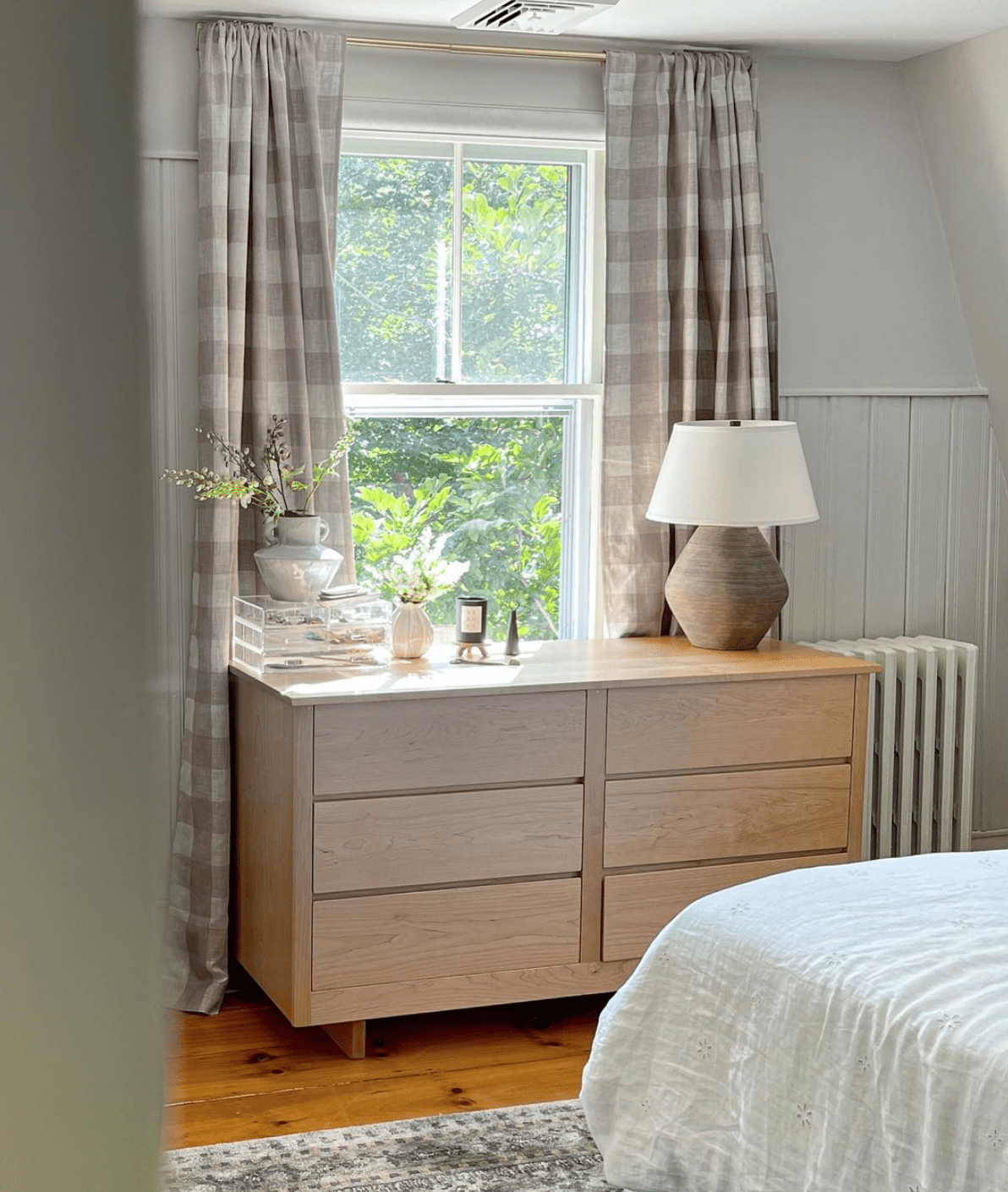
12. Frame a Window with Light and Airy Plaid Curtains
This look is a masterclass in using pattern in a subtle, sophisticated way. The formula here is all about low contrast and large scale. Let’s call it: 80% Neutral Base (the white background of the curtains, the white window frame) + 20% Low-Contrast Pattern (the large-scale beige plaid). Because the beige and white are tonally similar, the plaid reads more as a gentle texture than a busy pattern from a distance. This keeps the feeling light and serene, avoiding the visual clutter that a high-contrast plaid could create. The gold rod adds just the right amount of warmth to finish the look.
🔥 Trending Context
Hanging curtains high and wide is the oldest trick in the book for a reason—it works. It makes your windows look bigger and your ceilings taller. Here’s how to do it in 5 minutes:
- Get the height right: Mount your curtain rod 4-6 inches above the top of the window frame. Don’t mount it right on the trim!
- Get the width right: Extend the rod 6-10 inches past the window frame on each side. This allows you to pull the curtains completely clear of the glass, maximizing light.
- Measure for length: Your curtains should just skim the floor. Measure from the rod down to the floor to get your ideal curtain length.
- Choose your hardware: A simple rod with unobtrusive finials keeps the focus on the fabric and the view.
This simple adjustment can make a $40 pair of curtains look like a custom high-end treatment.
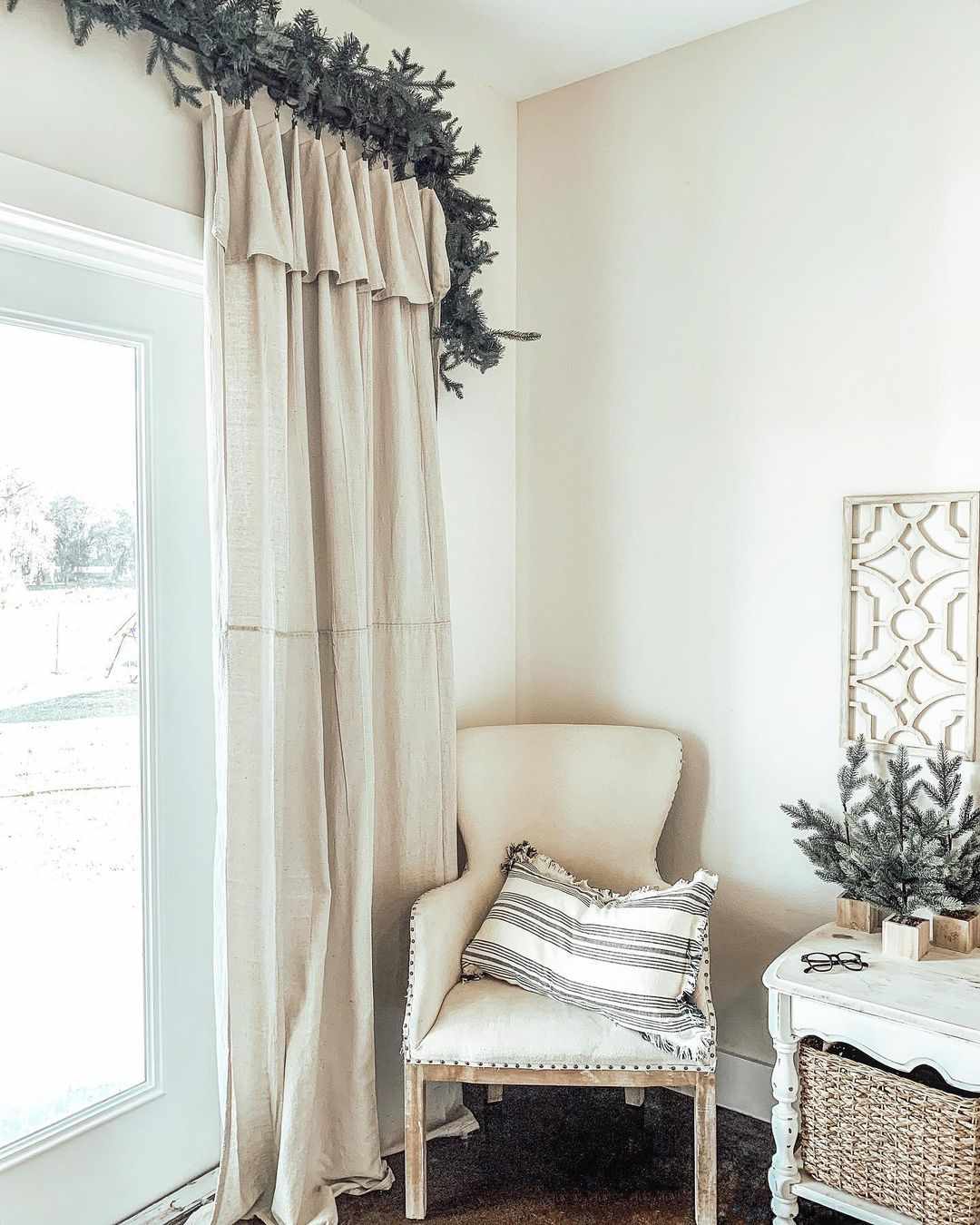
13. Add Seasonal Charm with a Garland-Draped Curtain
This simple setup works because it perfectly balances rustic texture with a touch of softness. The coarse, natural texture of the evergreen garland contrasts beautifully with the soft, flowing linen of the curtain panel. It’s an unexpected pairing that feels both festive and effortlessly chic. Furthermore, using a single, asymmetrical curtain panel to frame the doorway feels casual and welcoming. A pair of formal drapes might have felt too stuffy. The single panel, combined with the organic shape of the garland, creates a look that is relaxed, inviting, and full of personality.
🔧 How-To Brief
A curtain on a frequently used door can be a bit of a dance. While this single panel looks stunning, consider the daily logistics. Will it get caught in the door every time you open or close it? Will pets or kids be constantly pulling on it? A sturdy tie-back is a must to keep it out of the way during high-traffic times. Also, a single panel means you’re covering the entire door when it’s closed for privacy. For a door you want to see out of, this might not be the most practical solution year-round, but it’s a beautifully cozy touch for a secondary entrance or during colder months.
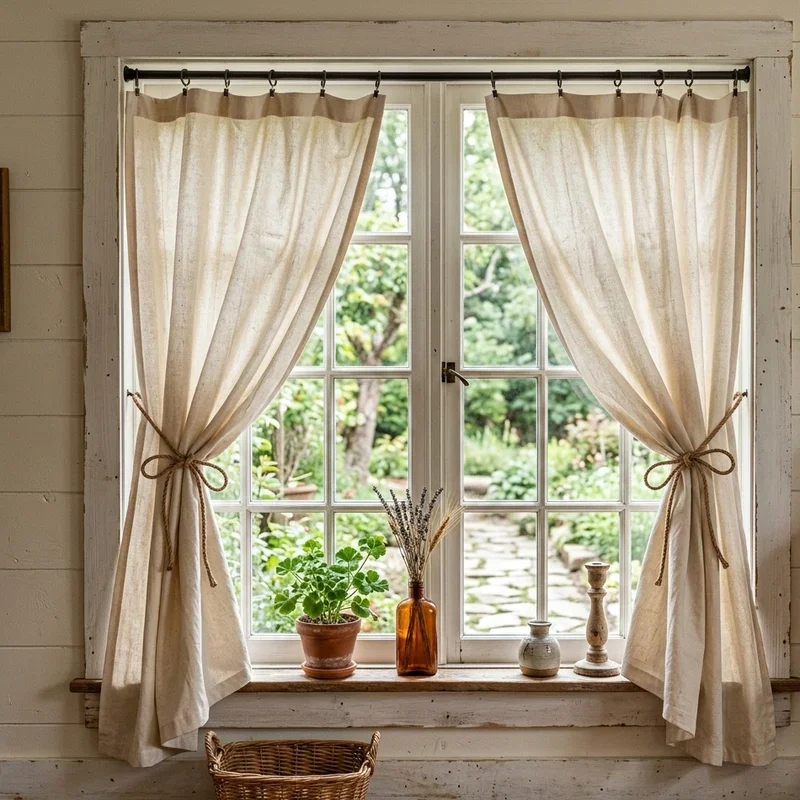
14. Soften a Gridded Window with Sheer Curtains and Rope Tie-Backs
This rustic, airy look is incredibly budget-friendly to replicate. You can find simple sheer curtain panels at IKEA or Walmart for as little as $10-$15 a pair. The real charm, however, comes from the rope tie-backs, which you can easily DIY. All you need is a length of natural fiber rope from a hardware store (about $5 for a generous amount). Simply loop it around the curtain and tie a knot. For a more finished look, you can buy inexpensive wall hooks or cleats to wrap the rope around, giving you that perfect, effortless drape without the cost of custom hardware.
⭐ The One Thing
The placement of your tie-backs dramatically changes the look of your curtains. For a classic, elegant drape, the standard position is one-third of the way up from the bottom of the curtain. However, for this relaxed, rustic farmhouse style, placing the tie-back slightly lower—about one-quarter of the way up from the floor—creates a more casual, slouchy effect. The key is to avoid placing the tie-back exactly in the middle of the curtain’s height, which can make the window look short and visually cut it in half.
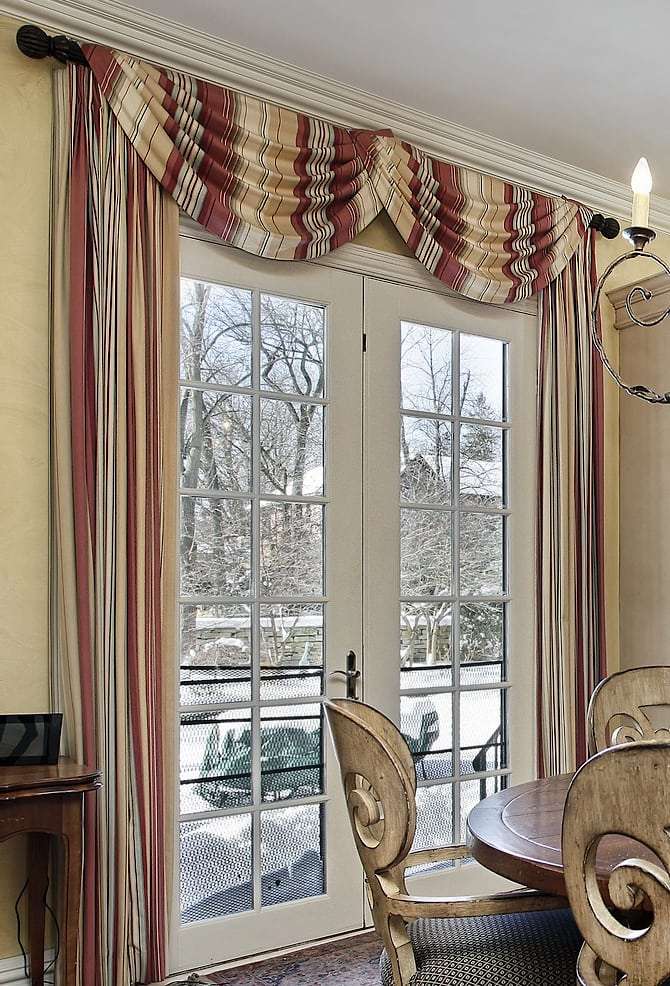
15. Dress a French Door with a Simple Fabric Valance
French doors present unique challenges for window treatments. A simple valance can be a perfect solution, adding softness without interfering with the door’s function. Before you install one, run through this quick checklist:
- Check Door Swing: Ensure the depth of the valance and its hardware won’t prevent the door from opening fully, especially if it opens into the room.
- Handle Clearance: Make sure the fabric won’t get caught on or obstruct the door handles. A valance hung high enough should clear them easily.
- Mounting Surface: Confirm you have a solid surface (ideally wood) above the door trim for mounting the brackets securely. Drywall alone won’t hold.
📏 Scale Guide
When selecting a valance for a set of French doors, opt for an outside mount that is at least 2-3 inches wider than the door frame on each side. This visual extension makes the doors feel grander and more integrated into the room’s design. Additionally, hanging the valance 3-5 inches above the top of the door trim, rather than directly on it, draws the eye upward and adds a sense of height to the room. It’s a subtle trick that makes a significant difference in the overall presence of the doors. Compare this idea with the full drapery on the arched doors in Idea #17.
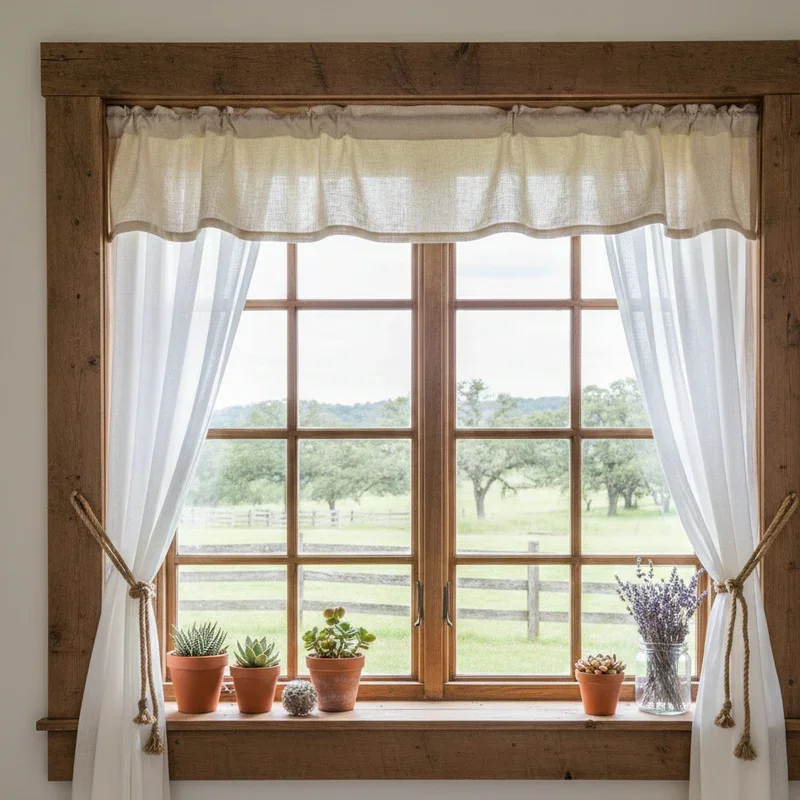
16. Frame a Window with Chunky, Natural Wood Trim
The single element that defines this window is the thick, rustic wood trim. It’s not just a frame; it’s a statement. This chunky, natural-wood casing acts as its own architectural feature, immediately establishing a rustic, earthy tone for the entire room. The actual window treatments—the sheer curtains and simple valance—are secondary. They are soft, quiet supporting actors. Without the substantial wood frame, the window would be ordinary. With it, it has character, history, and a powerful presence that feels authentic and grounded.
🎯 What Makes It Work
This look is a beautiful study in layering textures. The visual formula breaks down like this: 60% Rustic Wood (the dominant trim) + 30% Soft, Muted Fabric (the off-white valance and sheer curtains) + 10% Natural Elements (the potted succulents and view to the green landscape). The wood provides the strong, foundational element, while the fabrics soften it and prevent it from feeling too harsh or cabin-like. The small pop of green from the plants connects the indoor space with the outdoors, creating a seamless, nature-inspired vignette.
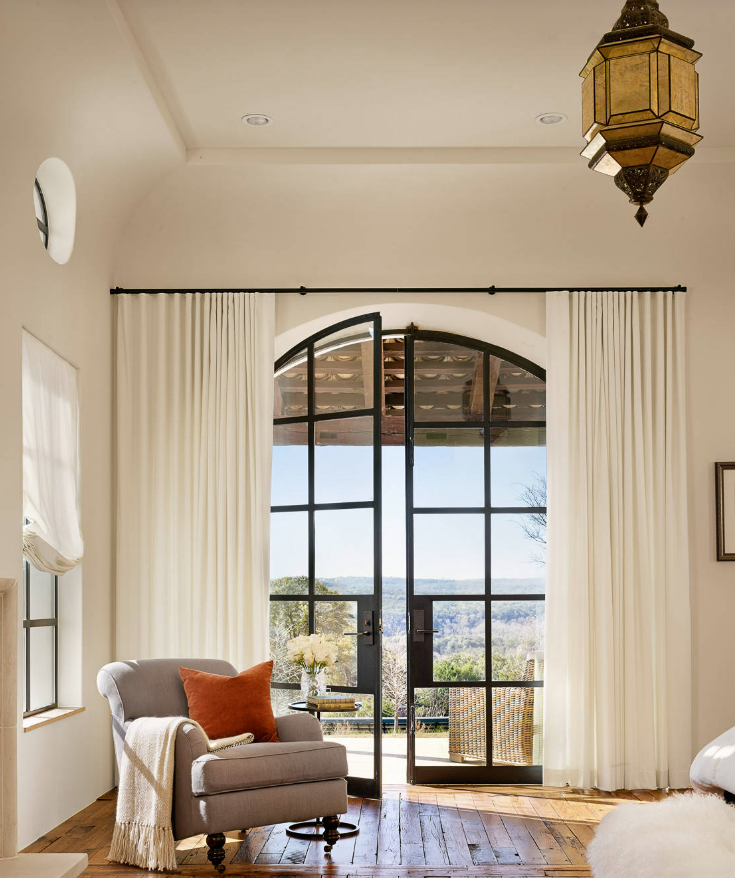
17. Soften Arched Iron Doors with Pleated Cream Drapes
This entrance is all about the powerful contrast between hard and soft. The black iron-framed doors have a strong, graphic, and industrial feel. The pleated cream-colored drapery provides the perfect counterbalance. Its softness, gentle folds, and warm color prevent the space from feeling cold or stark. The drapes don’t hide the beautiful architecture of the arch; they frame it, adding a layer of luxury and comfort. This juxtaposition is what creates the elegant yet inviting atmosphere, blending architectural strength with plush texture.
✅ Before You Start
A grand treatment like this is all about scale. These floor-to-ceiling drapes on large, arched doors require significant height and width to look right. This idea is best suited for rooms with ceilings that are 10 feet or higher and with an entryway that is at least 6 feet wide. In a smaller space with standard 8-foot ceilings, this much heavy drapery would overwhelm the room and make it feel smaller. For lower ceilings or smaller arched windows, consider the simpler approach in Idea #2, which uses a less voluminous treatment to honor the arch.
18. Create a Modern Look with Flat Gray Roman Shades
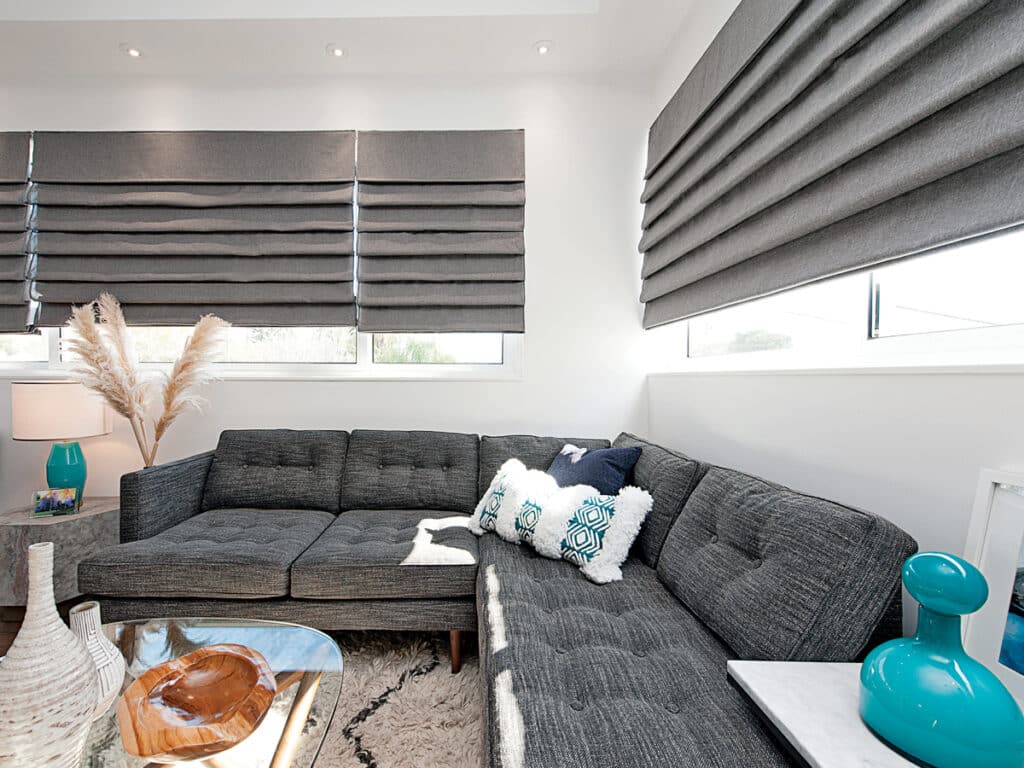
For a clean, contemporary living space like this, choosing the right shade opacity is crucial. These gray Roman shades appear to be light-filtering rather than full blackout. This is an excellent choice for a main living area because it cuts the harsh glare of the sun and provides privacy, but it still allows a soft, diffused glow to fill the room throughout the day. Full blackout shades can make a living room feel like a cave. Unless you’re designing a dedicated home theater, always opt for light-filtering fabrics in your primary daytime spaces to maintain a bright, airy ambiance.
💰 Budget Breakdown
This tailored, minimalist approach to window treatments is right in step with the broader “quiet luxury” trend. In 2026, we’re seeing a move away from overly ornate or fussy designs and a return to high-quality, functional pieces. These flat Roman shades are a perfect example. Their beauty lies in the quality of the gray textile and their perfect, crisp folds. There’s no extra pattern or embellishment needed. It’s a confident, understated look that signals a focus on materials and craftsmanship over loud decoration. It’s a style with serious staying power because its appeal is rooted in simplicity and function.
19. Coordinate a Window Seat with Patterned Roman Shades
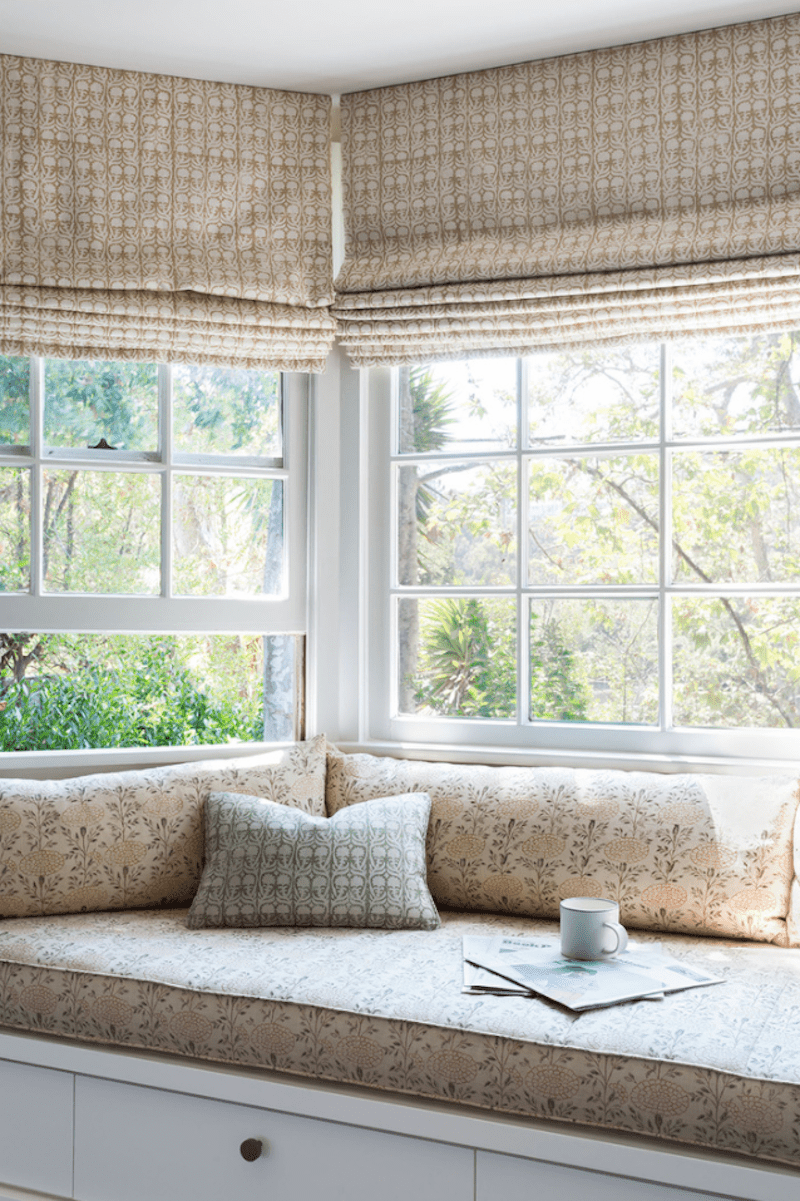
Creating a plush, custom-look cushion for your window seat is easier than you think and doesn’t require a sewing machine. Here’s a quick no-sew method:
- Get the foam: Have a piece of 3-4 inch thick upholstery foam cut to the exact dimensions of your window seat bench at a fabric or craft store.
- Wrap in batting: Use a spray adhesive to wrap the foam in a layer of polyester batting. This softens the edges and gives a professional, rounded look.
- Position your fabric: Lay your chosen fabric (the same as your Roman shades!) pattern-side down on a clean floor. Place the foam/batting combo on top.
- Secure the fabric: Pull the fabric taut and use a staple gun to secure it to a thin piece of plywood or sturdy board on the underside of the foam. It’s like wrapping a present!
This project takes about an hour and costs around $75-$150, depending on your fabric choice.
20. Layer Sheer Cafe Curtains Over Slat Blinds
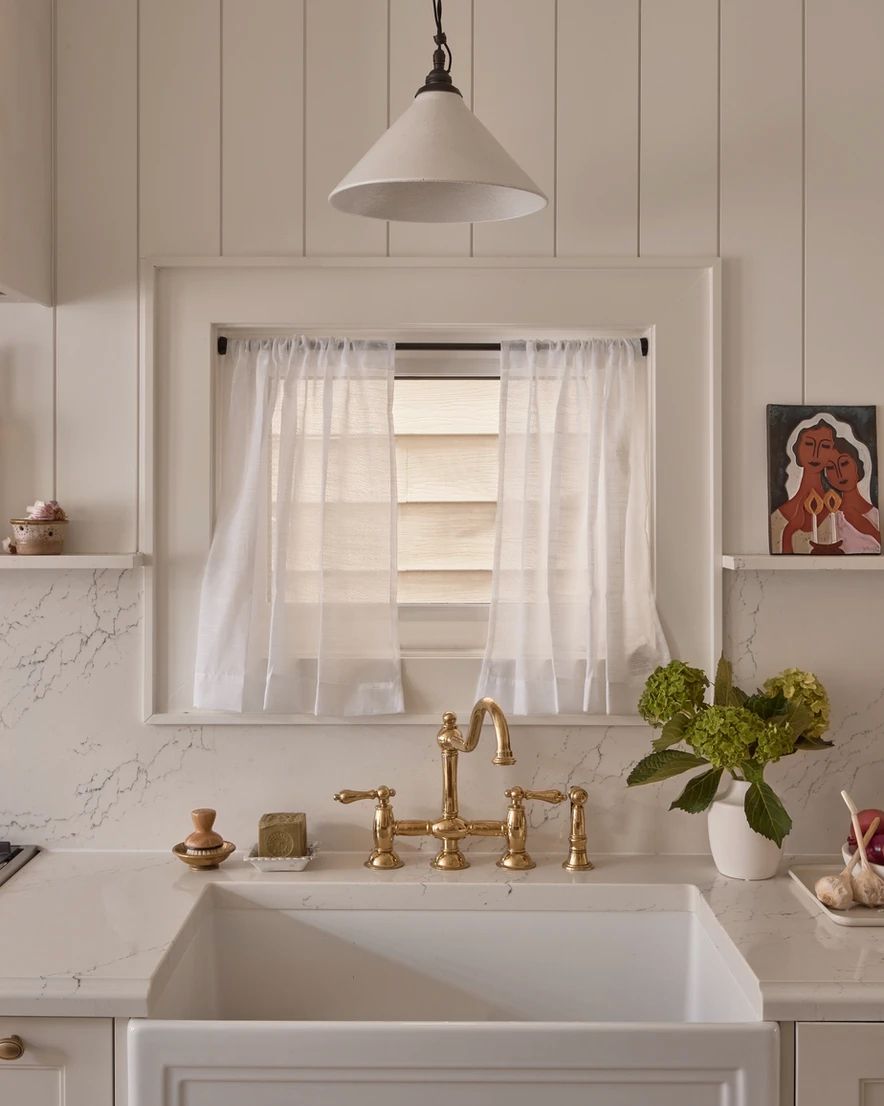
This kitchen window treatment is a masterclass in layered functionality. It provides three distinct options for light and privacy control. The slat blinds can be tilted open or closed for adjustable privacy. The sheer cafe curtain offers a soft, diffused light and daytime privacy for the lower half of the window while leaving the top open. When combined, you get full privacy with a soft, textural look. This layering transforms a simple window into a highly functional and stylistically rich feature, perfectly blending the practicality of blinds with the soft charm of a cafe curtain.
📐 Style Math
Achieving this charming, layered look doesn’t require a big budget. A simple set of white faux-wood or vinyl slat blinds from a home improvement store can cost as little as $20-$30. For the cafe curtain, you can often find single sheer white panels at Target or Walmart for under $10. The mounting hardware is also inexpensive; a simple tension rod for the cafe curtain costs about $5. This entire three-part layered solution can easily be put together for under $50, making it one of the most cost-effective yet stylish options for a kitchen window.
21. Add a Pop of Color with Teal Honeycomb Blinds
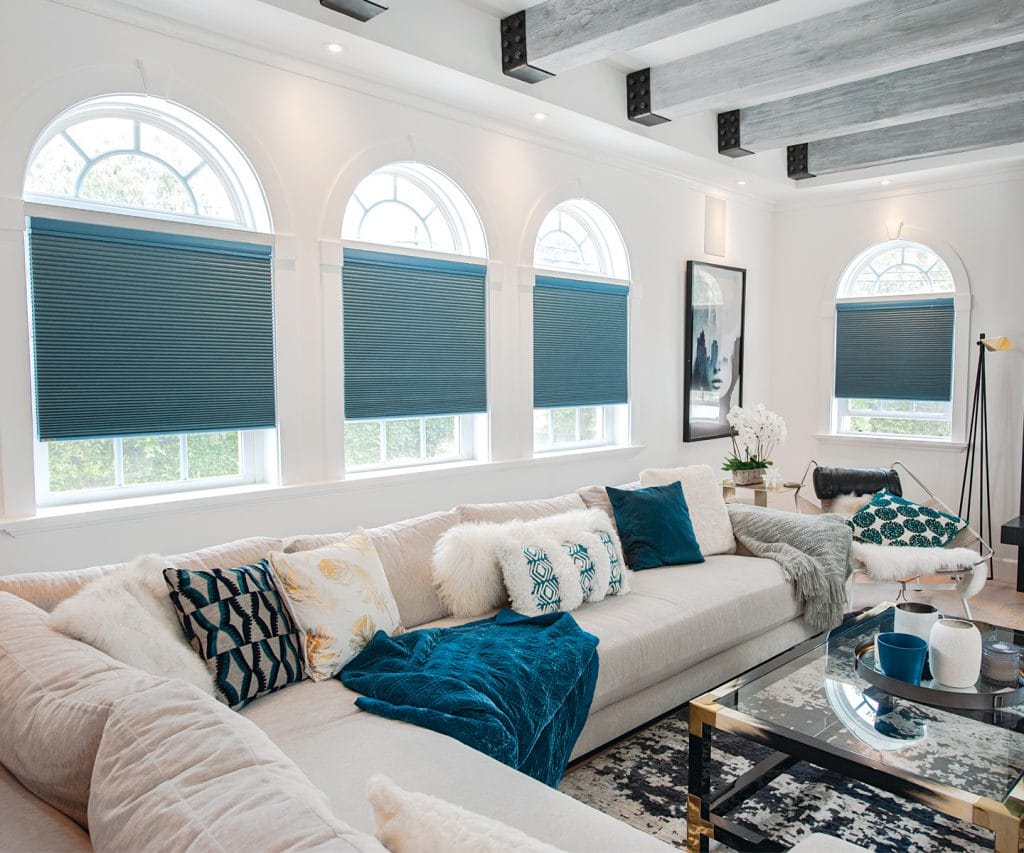
In this bright, airy room with its white walls and light-washed beams, the one thing that brings it all to life is the jolt of saturated color from the teal honeycomb blinds. It’s an unexpected and confident choice. Without that vibrant accent, the room would still be beautiful, but it might feel a bit one-note. The teal adds personality, depth, and a modern edge that keeps the rustic ceiling beams from feeling too traditional. It proves that a window treatment doesn’t have to be neutral to be sophisticated; sometimes, a bold color is exactly what a room needs to feel complete.
🧹 Maintenance Reality
Honeycomb or cellular shades are fantastic insulators, but their cellular structure can be a trap for dust and small insects. For regular cleaning, use the brush attachment of your vacuum cleaner on a low setting. For a deeper clean, many fabric-based cellular shades can be gently spot-cleaned with a damp cloth and mild detergent. However, the biggest challenge is cleaning *inside* the cells. A can of compressed air (like you’d use for a computer keyboard) is the best tool for blowing out any trapped debris. Do this twice a year to keep them looking fresh.
22. Layer Intricate Macrame Lace with Simple Linen Curtains
This window treatment perfectly captures a rising design sensibility through a simple formula: 70% Boho Cottage + 30% Classic Farmhouse. The intricate, light-yellow macrame lace provides that handmade, bohemian texture and vintage charm. The heavier, light-beige linen curtains, dark metal rod, and rich wood frame ground the look with classic, substantial farmhouse elements. This mix feels personal and collected, rather than decorated straight from a single store. It’s the tension between the delicate lace and the rustic linen that makes it so compelling.
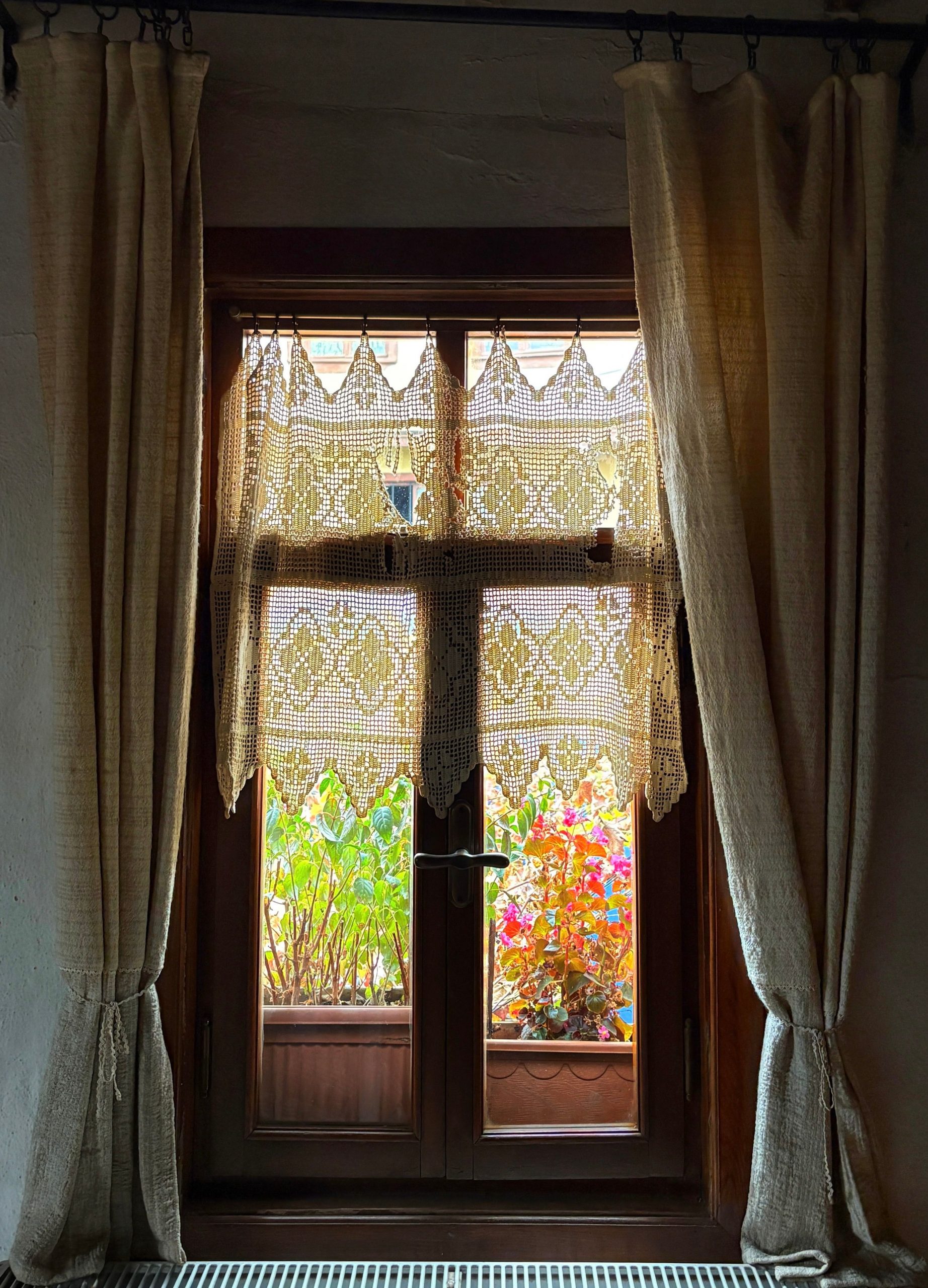
💸 Get This Look For Less
The trend of mixing handmade or vintage-inspired pieces with more classic, rustic staples is often called “Grandmillennial” or “Modern Eclectic,” and it’s a direct response to years of minimalist dominance. Homeowners in 2026 are craving spaces that tell a story and feel unique. Layering a detailed, almost nostalgic piece like a macrame curtain with timeless linen drapes is a perfect example. It’s about honoring craftsmanship and personality, creating a home that feels curated with love, not just filled with new things. This look has staying power because it’s rooted in personal expression.
23. Get a Finished Look with Woven Blinds and White Drapes
When layering drapes over blinds, the mounting is everything. For this clean and classic look, you’ll use two types of mounts. The natural woven blinds should be mounted *inside* the window frame. This keeps them snug and contained. The drapery rod should be mounted *outside* the frame, about 4-6 inches above it and extending 6-10 inches on either side. This combination makes the window appear larger while allowing the woven blinds to provide texture and privacy even when the drapes are open. For an even more professional setup, consider a double curtain rod if you want to layer sheers and blackout drapes.
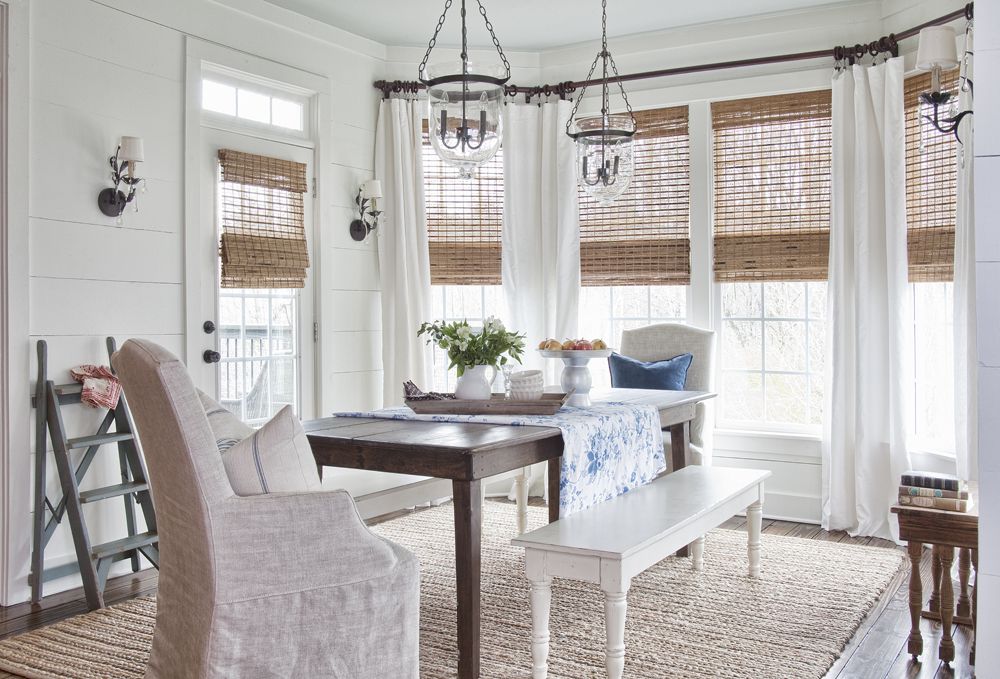
⚠️ Real Talk
Layering window treatments gives a truly custom, high-end feel. Here is an estimated cost for a standard 48″ wide window.
- Textiles (2 White Drape Panels): $80 – $300
- Textiles (1 Woven Wood Blind): $70 – $250
- Hardware (Dark Metal Rod & Brackets): $50 – $150
- Decor/Accessories: $0
- TOTAL: $200 – $700
Budget alternative: You can achieve a very similar layered effect using budget-friendly options. An off-the-shelf bamboo blind from IKEA ($35) paired with their RIKTIG curtain hooks and simple white panels brings the total closer to $90. This is a much more approachable version of the purely woven look in Idea #11.
24. Add a Touch of Whimsy with Burlap Sack Curtains
Using authentic burlap sacks as curtains is a bold, rustic statement, but there are a few practical things to consider. First, burlap is not a light-blocking material; it will filter light but won’t provide much privacy at night. Second, and perhaps more importantly, vintage or new burlap can have a distinct, earthy smell that can take a long time to dissipate. Finally, the material is quite coarse and can shed fibers. It’s a fantastic look for a low-traffic area or a kitchen where you don’t need total darkness, but it might not be the best choice for a bedroom where softness and light control are priorities.
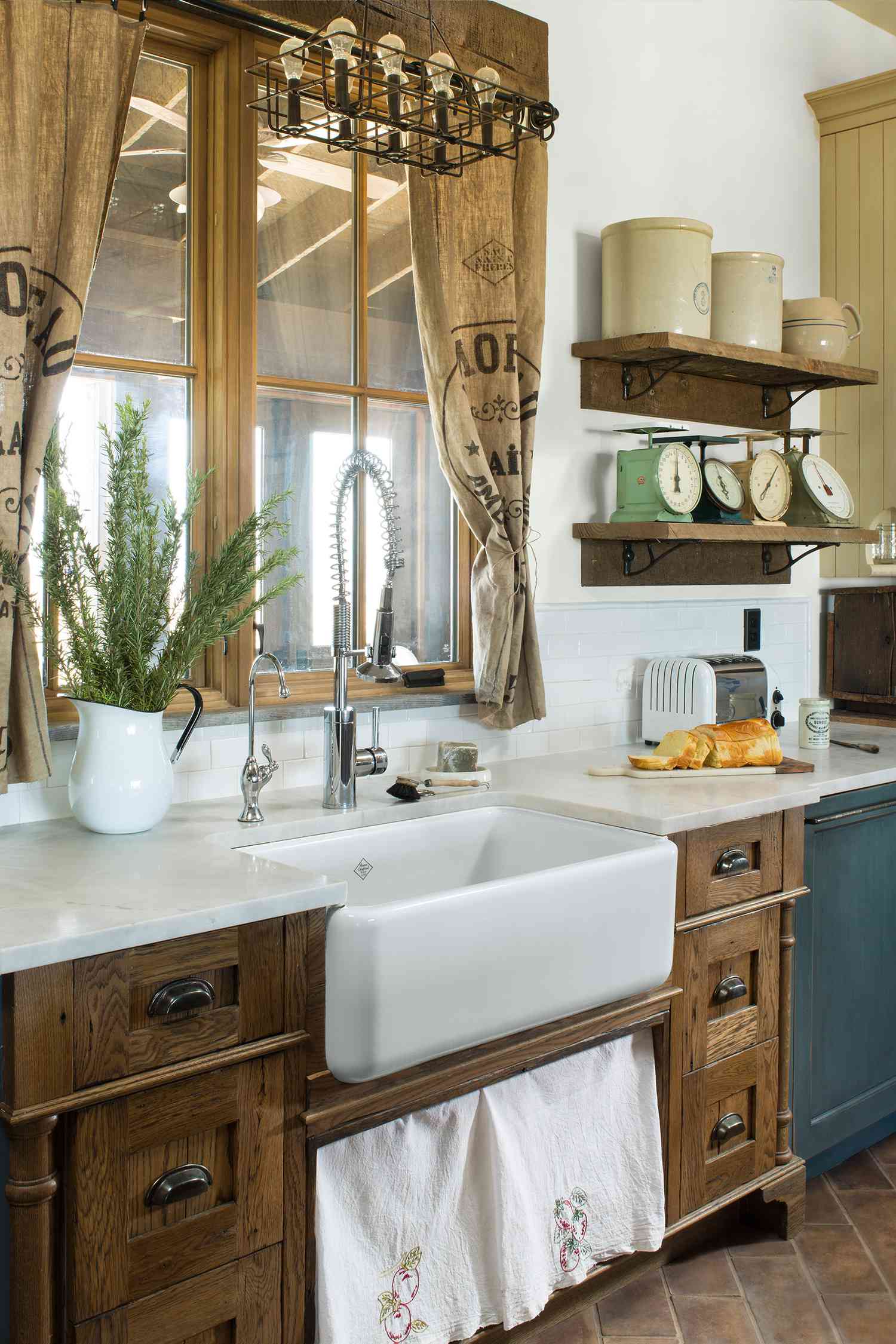
🔥 Trending Context
You can create this rustic look in under 30 minutes with no sewing required. It’s a simple and charming DIY project.
- Source your sacks: Find vintage coffee or grain sacks online (Etsy, eBay) or new ones at a craft store. Look for ones with interesting typography.
- Wash with care: Wash them on a gentle cycle with a bit of fabric softener to reduce stiffness and smell, then hang to dry. Don’t use a machine dryer, as they can shrink or fall apart.
- Add clip rings: Purchase curtain rings with clips. Simply fold over the top edge of the sack by an inch or two to create a clean line.
- Clip and hang: Evenly space 5-7 clips along the top edge of each sack, and then slide the rings onto your curtain rod. Done!
This entire project can cost as little as $30-$60, depending on the price of your sacks.
25. Combine Woven Shades with White Grid-Patterned Windows
This pairing works because it’s a study in balanced geometry and texture. The window frames have a distinct, traditional grid pattern—a series of clean, white, straight lines. The natural woven shades introduce a soft, organic, and slightly irregular texture. This contrast is visually engaging. The shade’s texture softens the hard lines of the window grid, while the grid provides a structured backdrop that keeps the woven material from feeling too rustic or messy. Together, they create a look that is both clean and cozy, modern and classic.
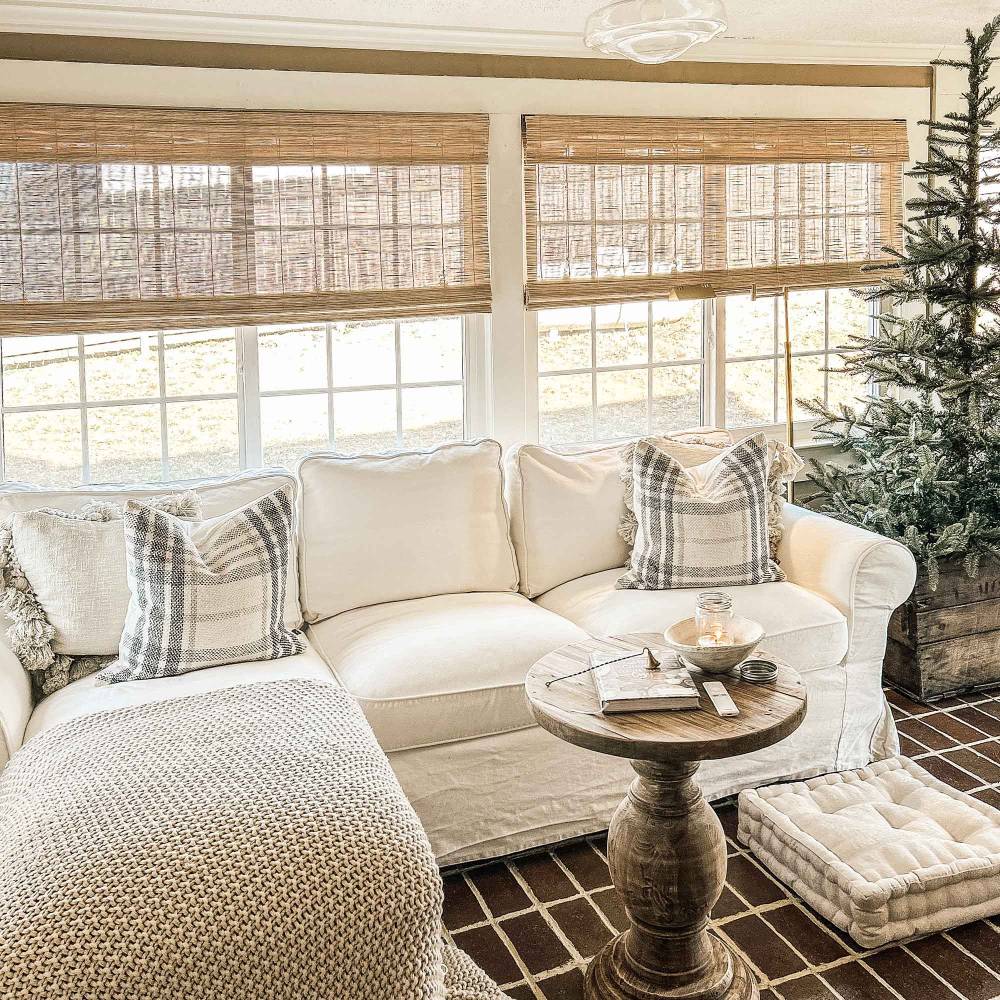
🔧 How-To Brief
When dealing with a side-by-side pair of large windows like this, you have two primary options: one single, wide shade that covers both, or two individual shades. The choice depends on aesthetics and function. Two individual shades, as seen here, offer more versatile light control—you can have one open and one closed. This approach works best for windows that are 36 inches or wider each. For smaller windows (less than 30 inches wide), using a single, oversized shade that covers both can create a cleaner, less cluttered look, as explored in Idea #11.
26. Elevate Drapes with a Contrasting Patterned Trim
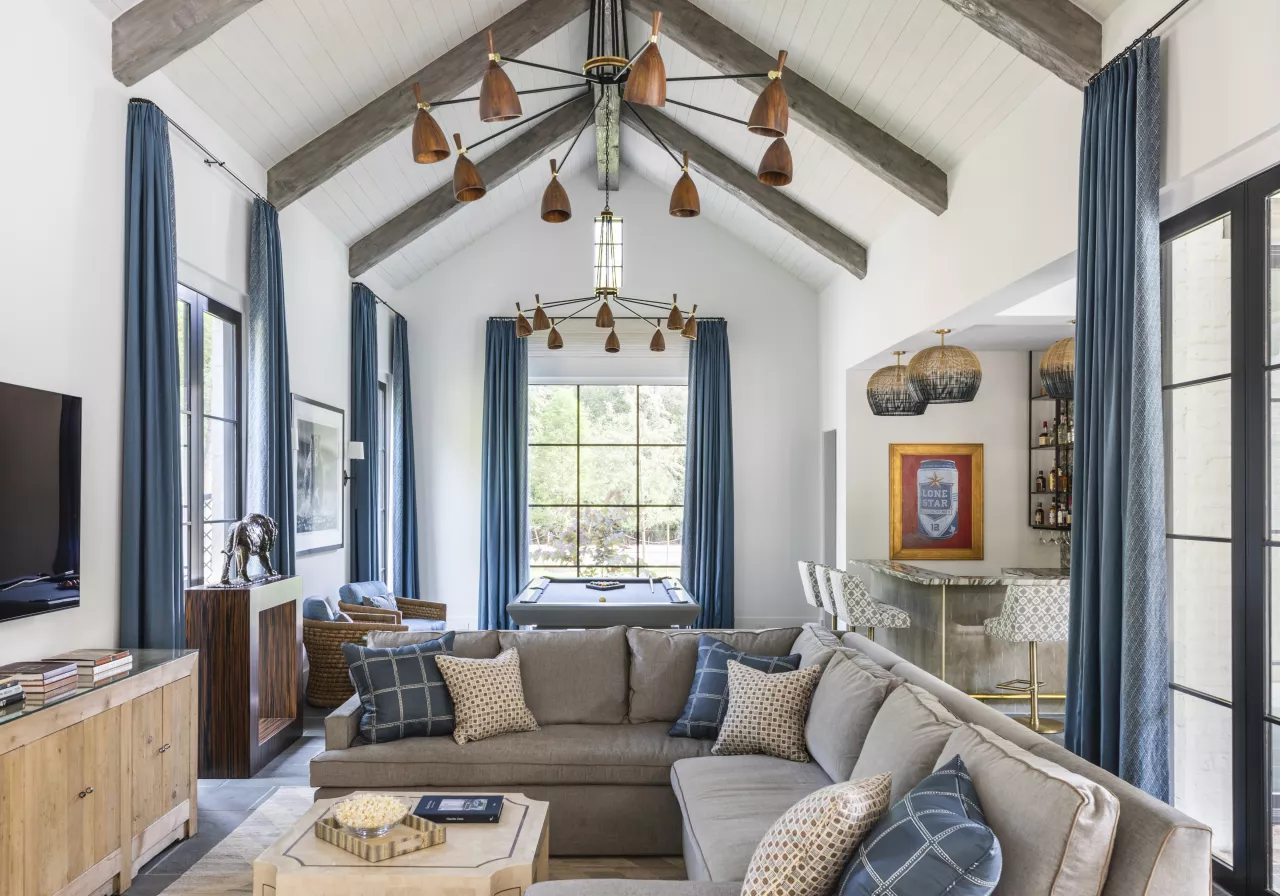
The single detail that elevates these drapes from simply nice to truly exceptional is the patterned trim along the leading edge. It’s a custom touch that adds a layer of polish and personality. The solid blue fabric is beautiful on its own, but the addition of the geometric trim band makes the entire treatment feel bespoke and professionally designed. It’s a small detail that makes a huge impact, drawing the eye vertically and providing a crisp, graphic counterpoint to the soft folds of the drapery. This is what separates a good design from a great one.
⭐ The One Thing
When adding a decorative trim or tape to drapery panels, the key is to choose a pattern that complements, rather than competes with, the main fabric. The best way to do this is to pull a color directly from the trim pattern that matches the solid curtain fabric. Here, the dark blue in the geometric trim perfectly matches the rich blue of the drapes. This shared color creates a harmonious link between the two elements. The trim should act as an accent, so keep the width proportional—a 2-to-3-inch wide trim is usually perfect for standard 8-to-9-foot high curtains.
27. Add Subtle Texture with Diamond Tufted Curtains
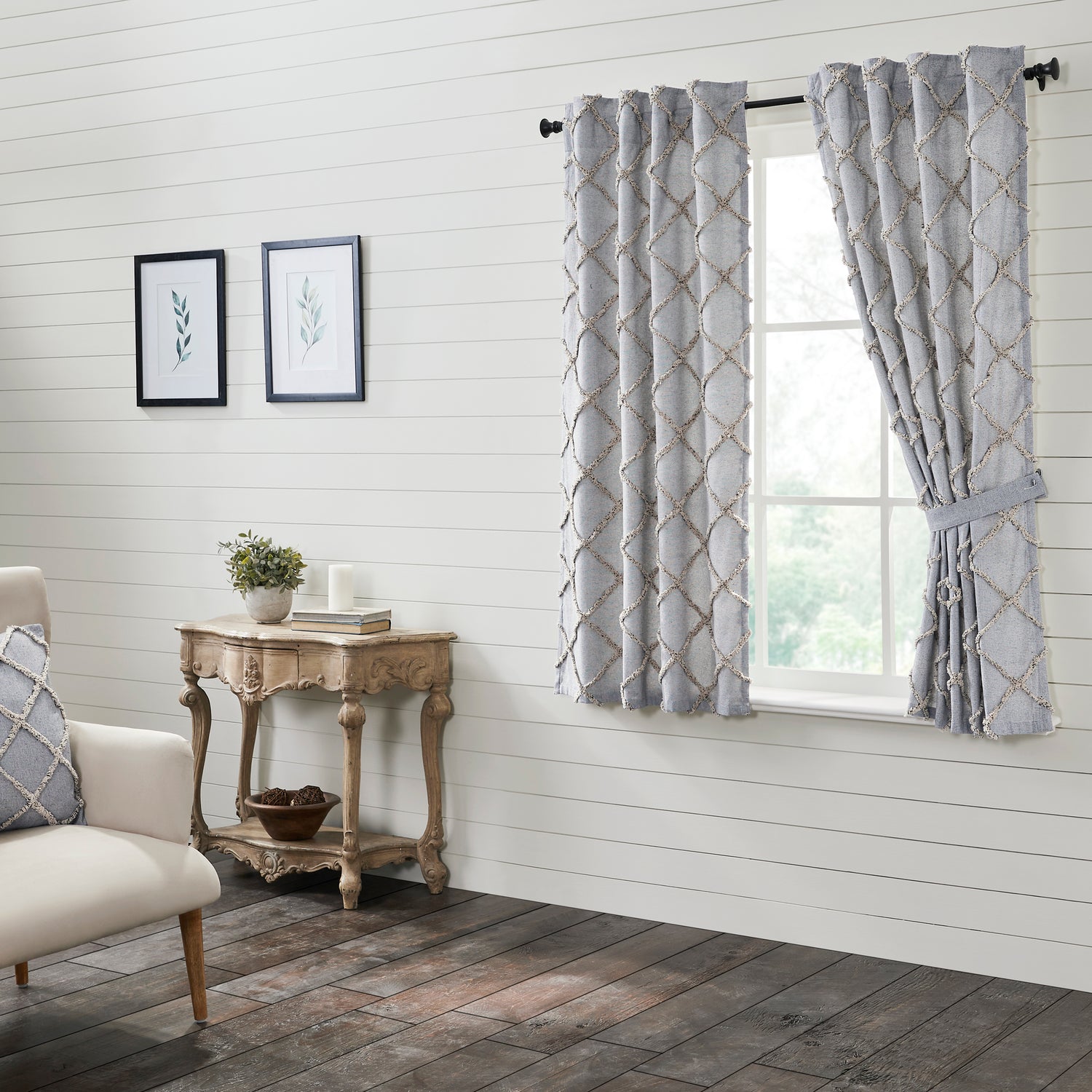
In a room with a quiet, calm color palette, texture can be a powerful substitute for bold patterns. This window treatment illustrates a simple but effective formula: 90% Monochromatic Color + 10% Tactile Texture. The curtains are a soft, light blue, tonally very similar to the white shiplap walls. Instead of using a contrasting color or a busy print to create interest, the designer chose a fabric with a diamond-tufted pattern. This creates subtle shadows and highlights, adding visual weight and a cozy, plush feel to the room without disrupting the serene, monochrome vibe.
📏 Scale Guide
Textured and tufted curtains, like a cozy sweater, can be beautiful, but they can also be dust magnets. The raised pattern and crevices are prime spots for dust and allergens to settle. This is especially true for heavier fabrics like velvet or chenille. If you have allergy sufferers in your home, or if the window is in a high-dust area (like near a busy street or in a bedroom), you’ll need to commit to vacuuming your curtains with a brush attachment at least once a month. For a lower-maintenance option with a similar cozy feel, consider a simple, thick linen instead.
28. Create a Seamless Look with Dark Wood Venetian Blinds
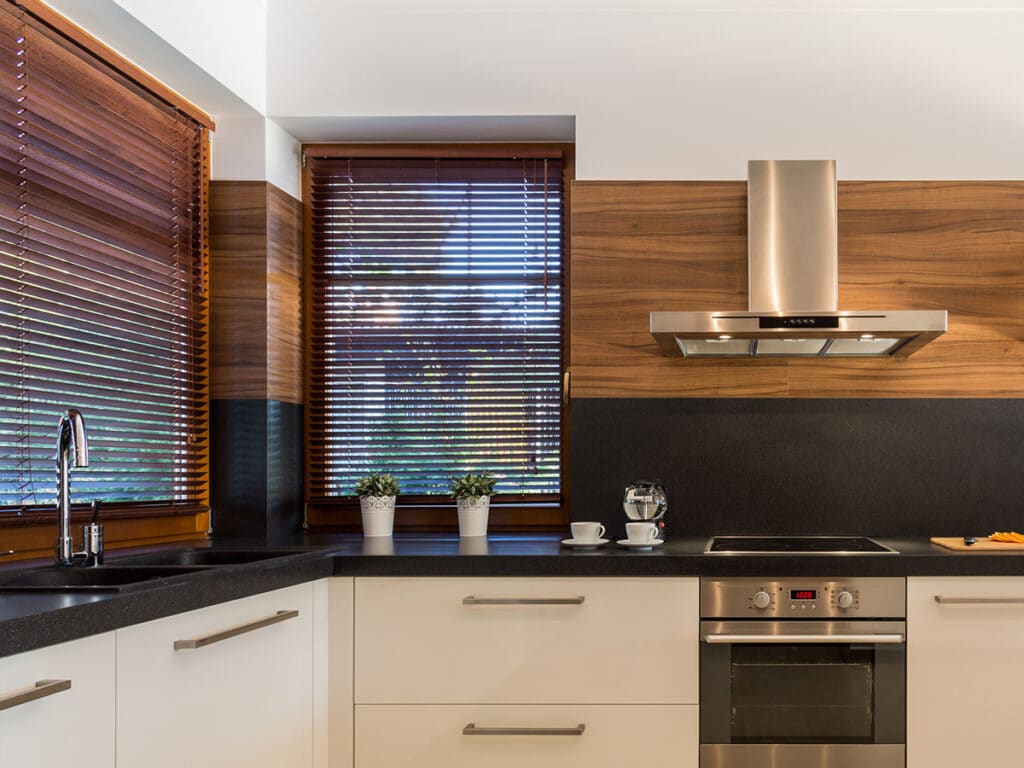
Wooden blinds in a kitchen require a bit more care than those in other rooms. The combination of cooking grease and steam can create a sticky film on the slats that attracts dust. To combat this, wipe them down every few weeks with a cloth lightly dampened with a 50/50 solution of water and white vinegar. For stubborn grease, a drop of mild dish soap can be added. The key is to dry them immediately with a soft, clean cloth to prevent water spots or warping of the wood. Faux-wood blinds are a more forgiving alternative for a high-moisture environment.
🎯 What Makes It Work
The success of this window treatment lies in its cohesion. By matching the dark wood of the Venetian blinds to the dark wood of the window frames, the designer has created a seamless, integrated look. The window doesn’t feel like a hole in the wall with a treatment applied on top; it feels like a complete architectural unit. This continuity allows the eye to flow smoothly across the space, making the kitchen feel clean, warm, and intentionally designed. This is a great strategy when you want a functional treatment that feels more like a permanent fixture than a decorative addition.
Let the Light In, Your Way
Your windows are the eyes of your home, and dressing them is one of the most impactful design decisions you can make. Whether you go for the simple texture of a woven shade or the soft elegance of linen drapes, the right choice can completely change the mood of a room. Don’t be afraid to mix, match, and layer to find what tells your story. Now, head to your Pinterest board and start saving your favorites—it’s time to create a home you love, one window at a time.