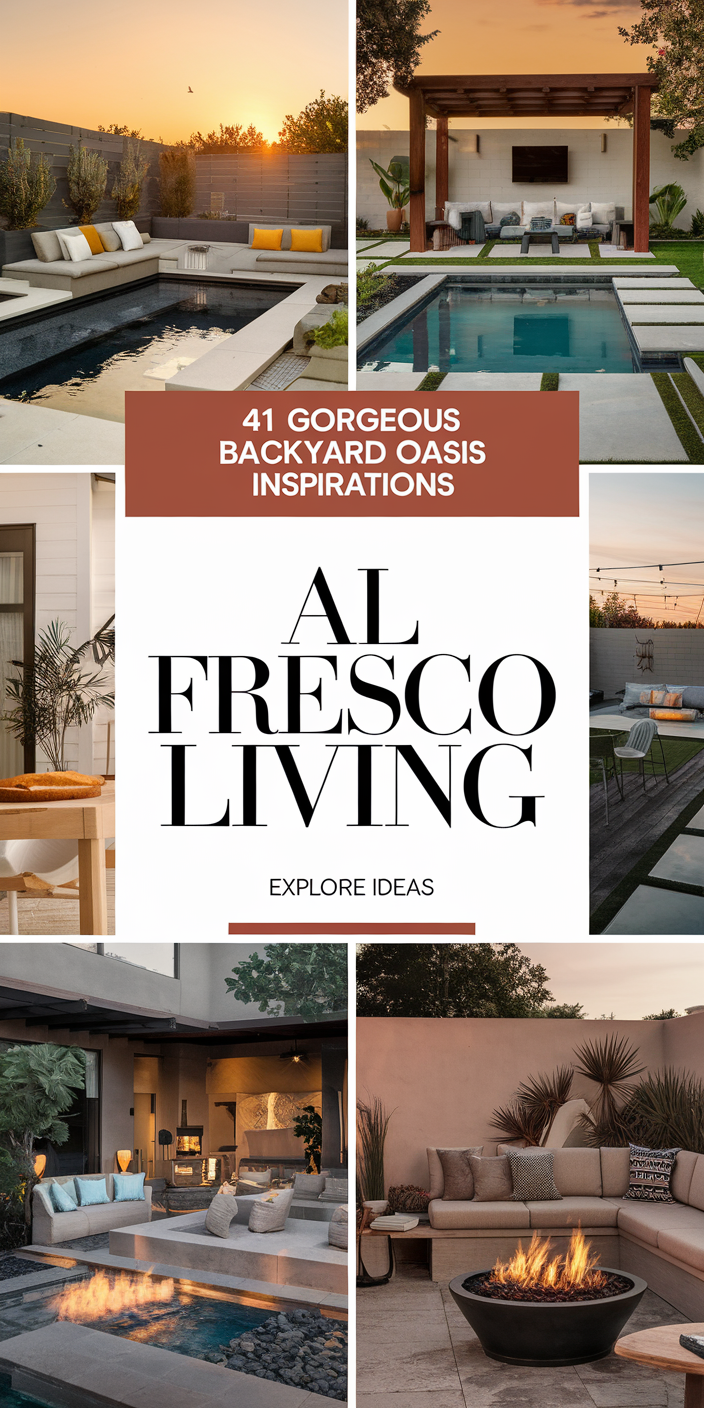
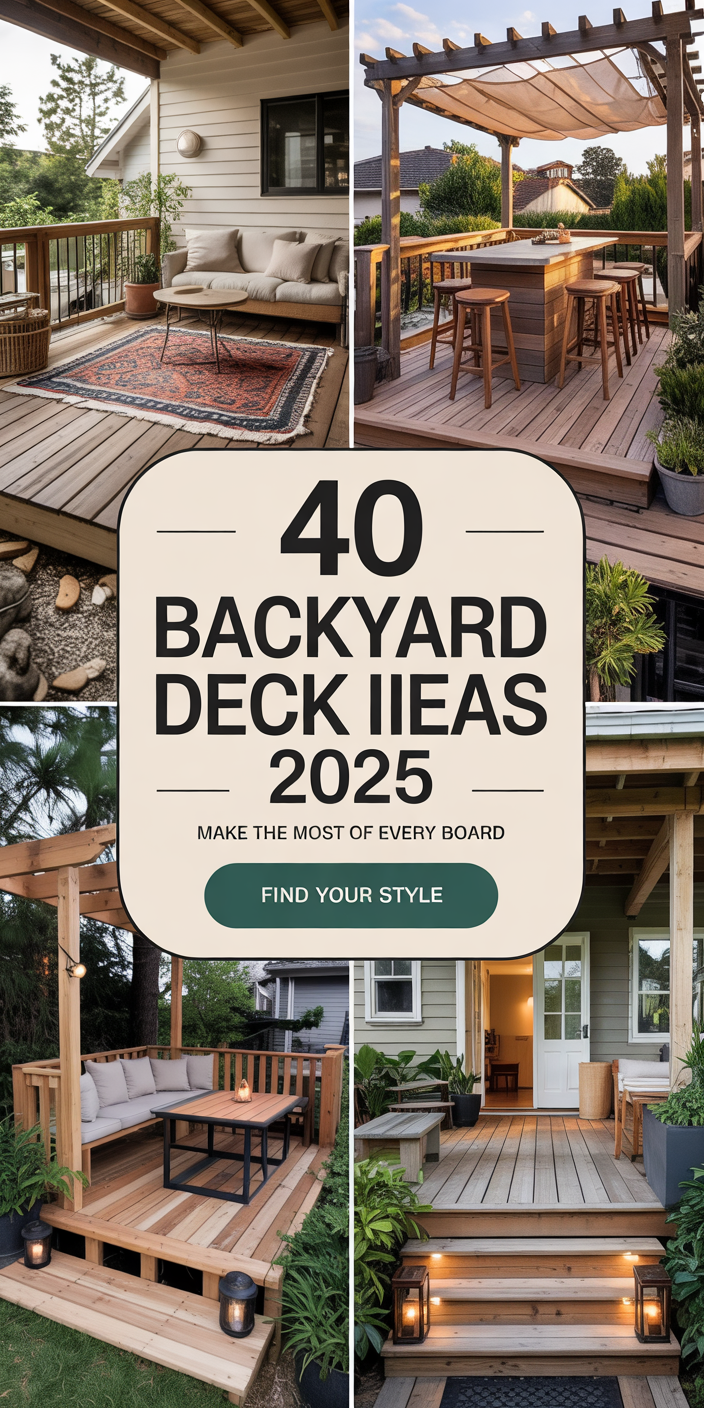
Is your Pinterest board for ‘Deck Privacy Ideas 2026’ a mile long, but your actual deck still feels like a stage for the whole neighborhood? You’ve got the vision, but turning those perfect pins into a reality that feels both private and personal is the real challenge. We’ve done the deep dive for you, sorting through hundreds of concepts to find what truly works for creating a secluded backyard retreat.
This isn’t just another list of fences. We’re bringing you 29 distinct, designer-approved ideas, from modern slatted screens and intricate metal panels to lush living walls. This guide is packed with real-world solutions that are shaping how we create intimate outdoor spaces in 2026. And stay until the end — we break down the most common mistakes that can ruin these looks.
📌 Save this to Pinterest for later — you’ll want to revisit these ideas.
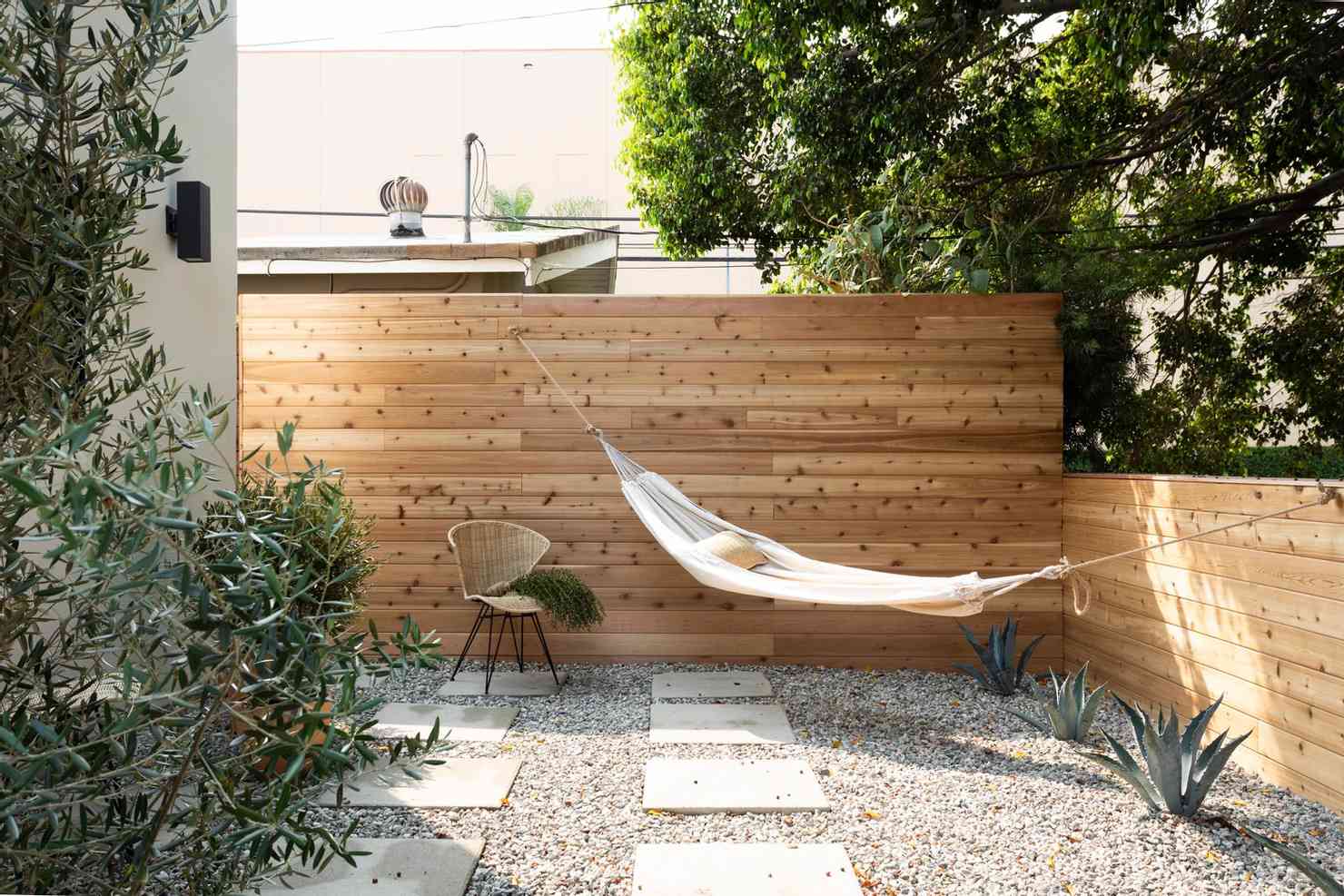
1. Modern Wood Fence with a Hammock Nook
This design creates a perfect pocket of peace by pairing a long, horizontal wood plank fence with a simple white hammock. The clean lines of the fence feel modern, while the natural wood tone keeps it warm and inviting. What makes it work is the textural contrast—the smooth wood, the soft hammock fabric, and the crunchy grey pebbles underfoot create a rich sensory experience. It’s a masterclass in using materials to define a mood of total relaxation.
💡 Designer Tip
When hanging a hammock from a fence, always secure it to the main support posts, not the horizontal slats. For a 4×4 or 6×6 wood post, pre-drill a hole slightly smaller than the diameter of your heavy-duty eye hook. The hook should be at least 4-5 inches long to ensure it’s anchored deep into the core of the post. This prevents the wood from splitting and ensures the anchor can handle the dynamic load of a person relaxing in the hammock. It’s a 10-minute step that prevents a major headache later.
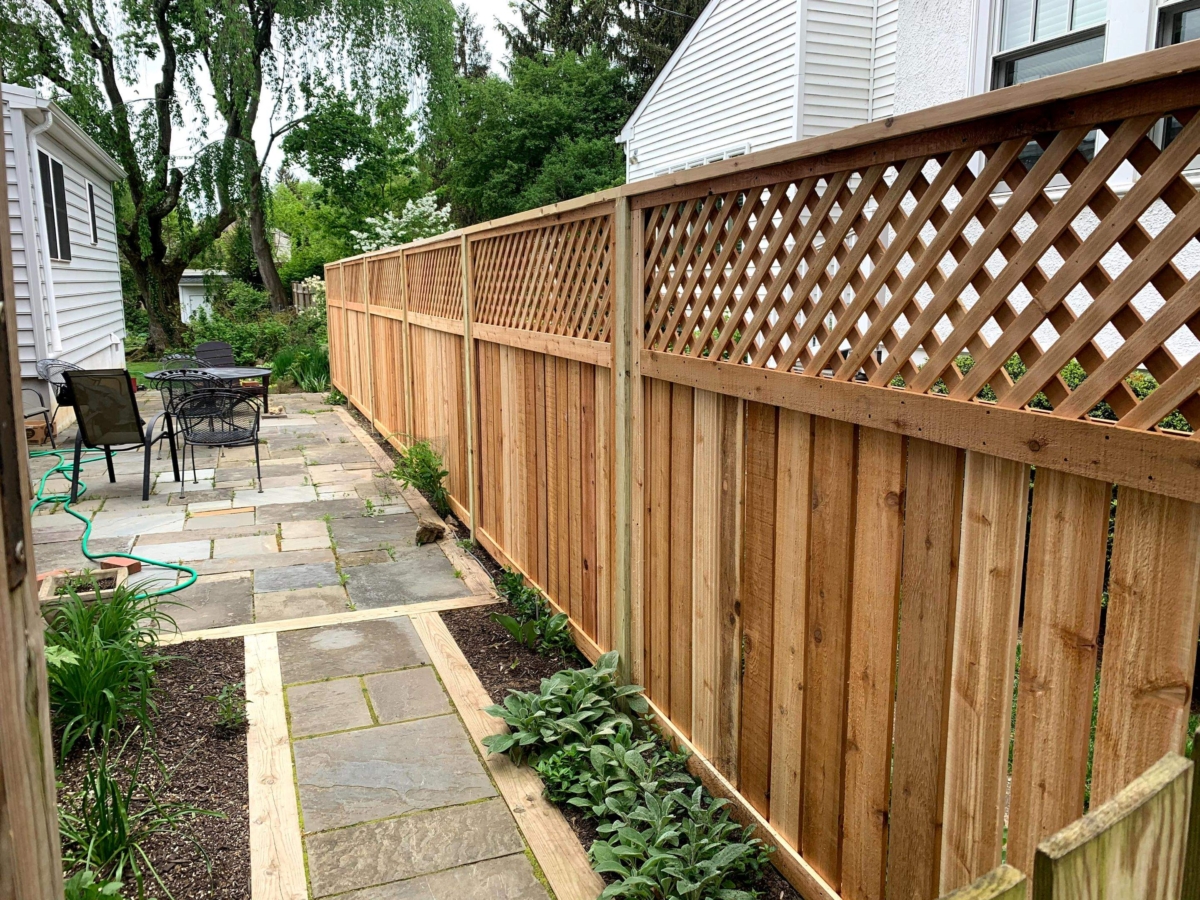
2. Classic Picket Fence with a Lattice Topper
This look is a beautiful compromise between total privacy and a friendly, open feel. The visual formula is straightforward: 60% solid vertical picket fence for security + 40% decorative diagonal lattice for airiness and light. The lattice top breaks up the visual weight of the solid fence, preventing it from feeling like a fortress. You can change the ratio, of course. For more privacy, go 80/20; for a more garden-like feel, try 50/50. The key is that the styles are balanced.
⚠️ Real Talk
A wood fence, especially one with intricate lattice work, is not a ‘set it and forget it’ feature. To keep it from turning grey and weathered, you’ll need to clean it and re-stain or seal it every 2-3 years, depending on your climate’s sun and moisture exposure. The lattice section is particularly vulnerable to collecting dirt and mildew in its crevices. Be prepared for a weekend of work with a power washer (on a low setting!) and a good quality exterior stain to keep it looking sharp.
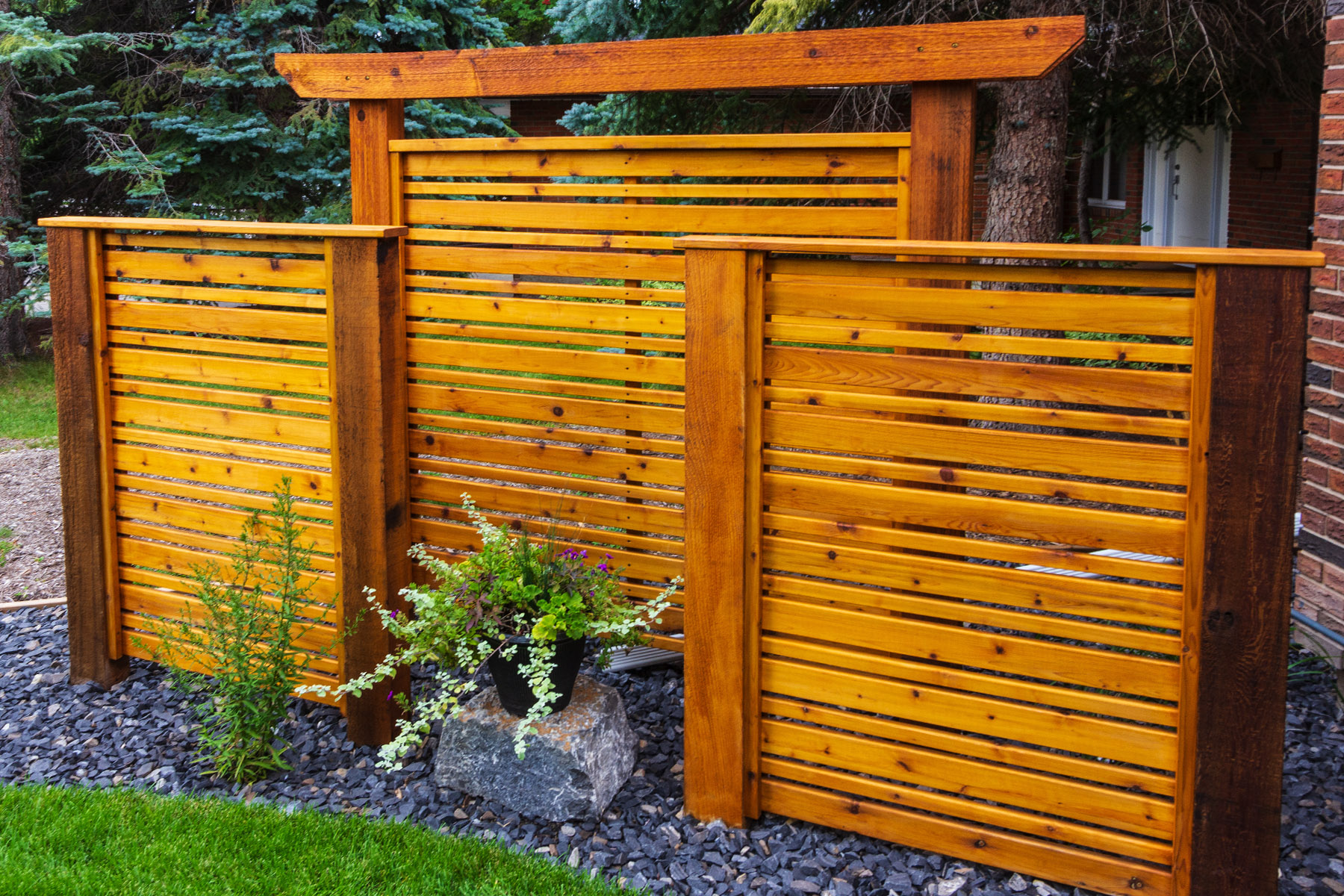
3. The Enduring Appeal of Horizontal Slat Screens
There’s a reason horizontal slats are a perennial favorite on Pinterest. They are incredibly versatile and have a subtle optical illusion effect. The strong horizontal lines draw the eye outward, making a small patio or deck feel wider and more expansive than it actually is. They offer substantial privacy while still allowing air and light to filter through, so you don’t feel completely boxed in. It’s a modern look that complements almost any style of home, from rustic to contemporary.
🔧 How-To Brief
You can get this high-end look on a serious budget. Instead of expensive cedar or composite slats, use pressure-treated pine 1×6 boards from a big-box store like Home Depot (around $8-$12 per 8-foot board). Set 4×4 posts in concrete, then nail or screw the horizontal boards to the posts, using a spacer block (a simple scrap of 2×4) to keep the gaps even. A weekend of work and a few hundred dollars can give you a screen that looks like it cost thousands. A dark, solid stain will elevate the pine and make it look much more expensive.
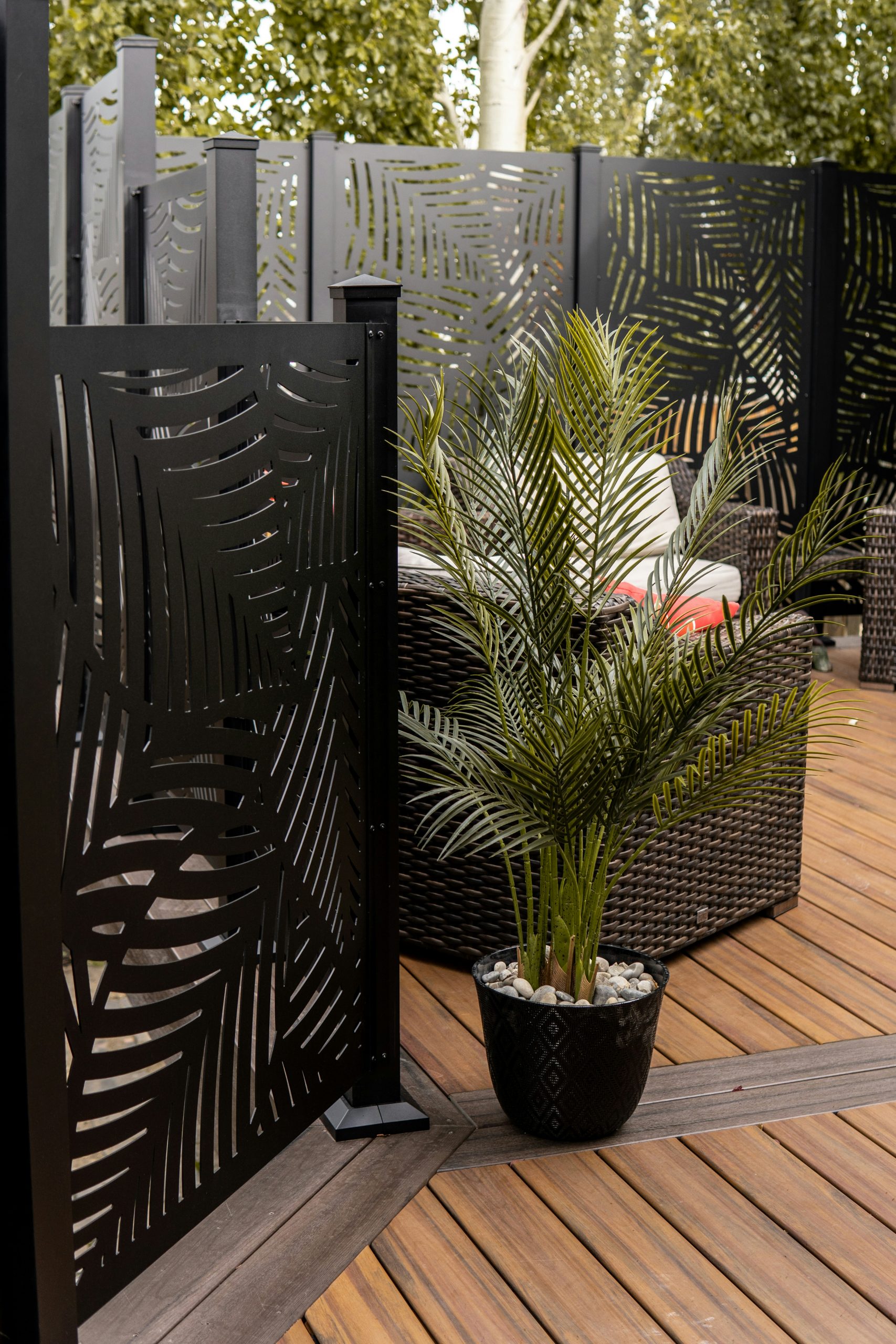
4. Modern Privacy Screens with Tropical Leaf Cut-outs
The single element that elevates this entire setup is the intricate, tropical leaf cut-out pattern in the black screens. Without it, you’d just have plain black panels. With it, you get dynamic, shifting shadows and a hint of exotic style that transforms the deck into a destination. The pattern provides privacy but also creates art. It’s a perfect example of how a functional item can—and should—be beautiful and engaging in its own right, proving privacy doesn’t have to be plain.
✅ Before You Start
Laser-cut metal screens are fantastic for creating dappled light. To maximize this effect, position them where the afternoon sun will shine directly through the cut-outs, casting patterns across your deck floor or an adjacent wall. Think of the screen as a giant stencil for sunlight. This adds a layer of visual interest that changes throughout the day, making the space feel more alive. Don’t be afraid to pair it with real plants, like the potted palm here, to blur the line between the artificial pattern and natural foliage.
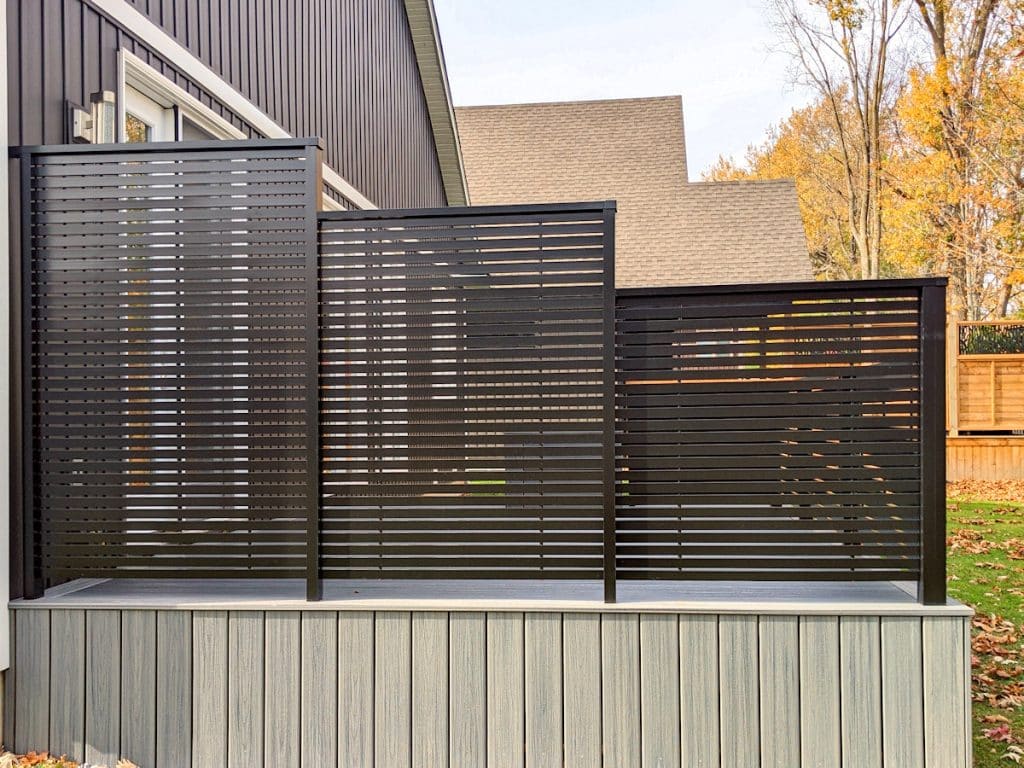
5. Sleek Black Horizontal Slatted Privacy Screens
This type of simple, low-profile slatted screen is ideal for smaller decks or patios where you need to define a zone without overwhelming the space. Because the slats are thin and the overall color is a neutral black, they read as a cohesive, modern wall that recedes into the background. This idea works best for spaces from 100 to 250 square feet. For a much larger area, you might need taller screens or to break them up with planters to avoid a monotonous, fence-like feel. Compare the effect to the grander scale of Idea #10.
📏 Scale Guide
Powder-coated aluminum or steel screens are incredibly durable, but they aren’t completely maintenance-free. In areas with hard water or lots of dust and pollen, they will show water spots and a film of grime. Plan on hosing them down once a month and giving them a gentle wipe with a soft cloth and soapy water 2-3 times per season to keep that sleek, matte black finish looking its best. Avoid abrasive cleaners, which can scratch the powder coating and lead to rust.
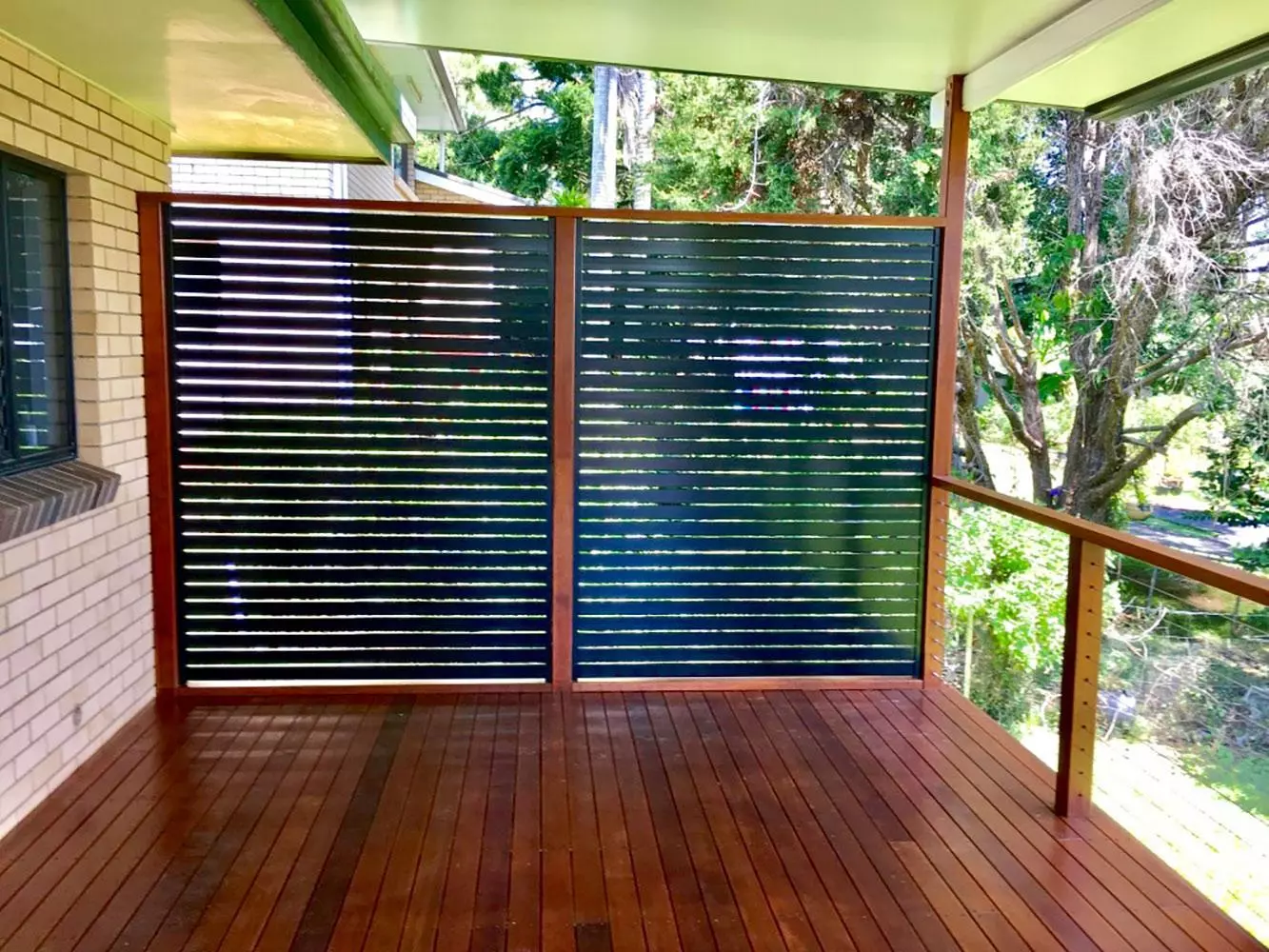
6. Mixed-Material Privacy: A Dark Screen with a Warm Wood Frame
This is a perfect example of warming up modern design. The dark, industrial feel of the slatted screen could feel cold on its own. By framing it in natural wood that matches the deck and railings, the entire structure feels integrated and intentional. The wood adds a layer of organic texture and a warm tone that balances the cool, dark screen. This mixing of materials—sleek man-made screen, natural wood, and the rougher texture of the brick wall—is what gives the space its sophisticated, custom-designed feel.
🔥 Trending Context
Building a wood frame for a pre-made privacy panel is a great weekend project. Time: 2-3 hours. Cost: $50-$100 in lumber.
- Measure your panel. Let’s say it’s 36″ wide by 72″ tall.
- Buy four 2×4 boards. Cut two to 72″ for the sides (verticals) and two to 39″ for the top and bottom (horizontals). The extra 3″ on the horizontals accounts for the 1.5″ thickness of each vertical board.
- Lay the four frame pieces on a flat surface. Pre-drill and screw them together at the corners to form a rectangle.
- Center the pre-made panel inside the frame.
- Use L-brackets or screw directly through the frame into the panel’s existing structure to secure it in place.
- Stain or seal the wood frame to match your deck before or after installation.
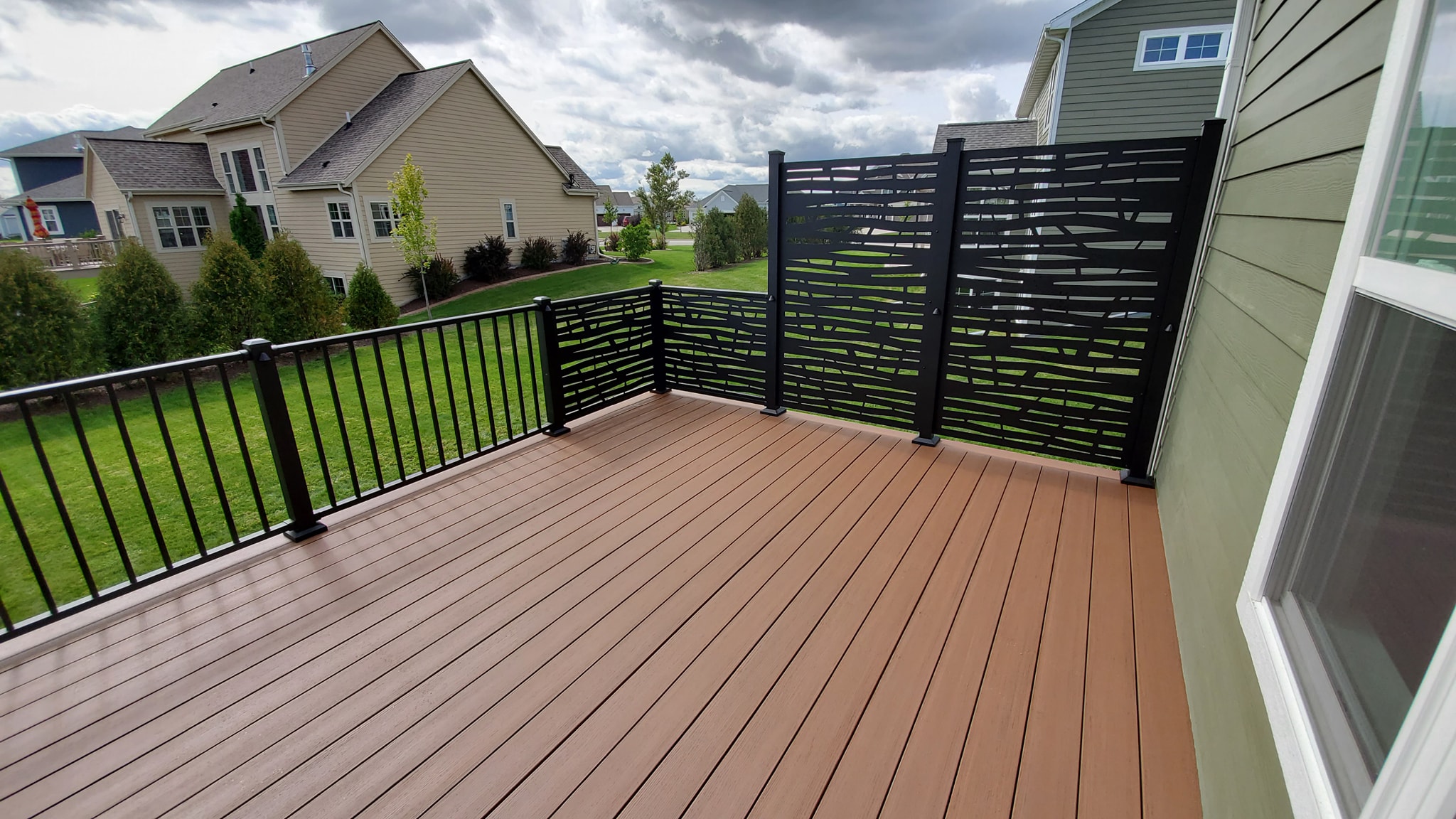
7. Black Metal Screens with Abstract Horizontal Cutouts
The formula here is simplicity and subtlety. Think: 90% minimalist structure + 10% abstract detail. The bulk of the visual is clean, black, vertical lines from the railing balusters. The privacy screen portion introduces a quiet disruption with the horizontal cutouts. It provides screening without yelling ‘I am a privacy screen!’ This is a great approach if you dislike the look of solid fencing. You could swap the abstract cutouts for a geometric or floral pattern, like in Idea #4, to shift the ‘10%’ accent and change the whole vibe.
📐 Style Math
A key detail that makes this work is the seamless transition from standard-height railing to the taller privacy panels. This is often a custom job. If you’re retrofitting panels onto an existing deck railing, it can be tricky to make it look this integrated. Ensure the color, material, and post style match exactly. A slight difference in the black finish or post cap style can make the privacy section look like a mismatched, obvious addition rather than a cohesive part of the original design.
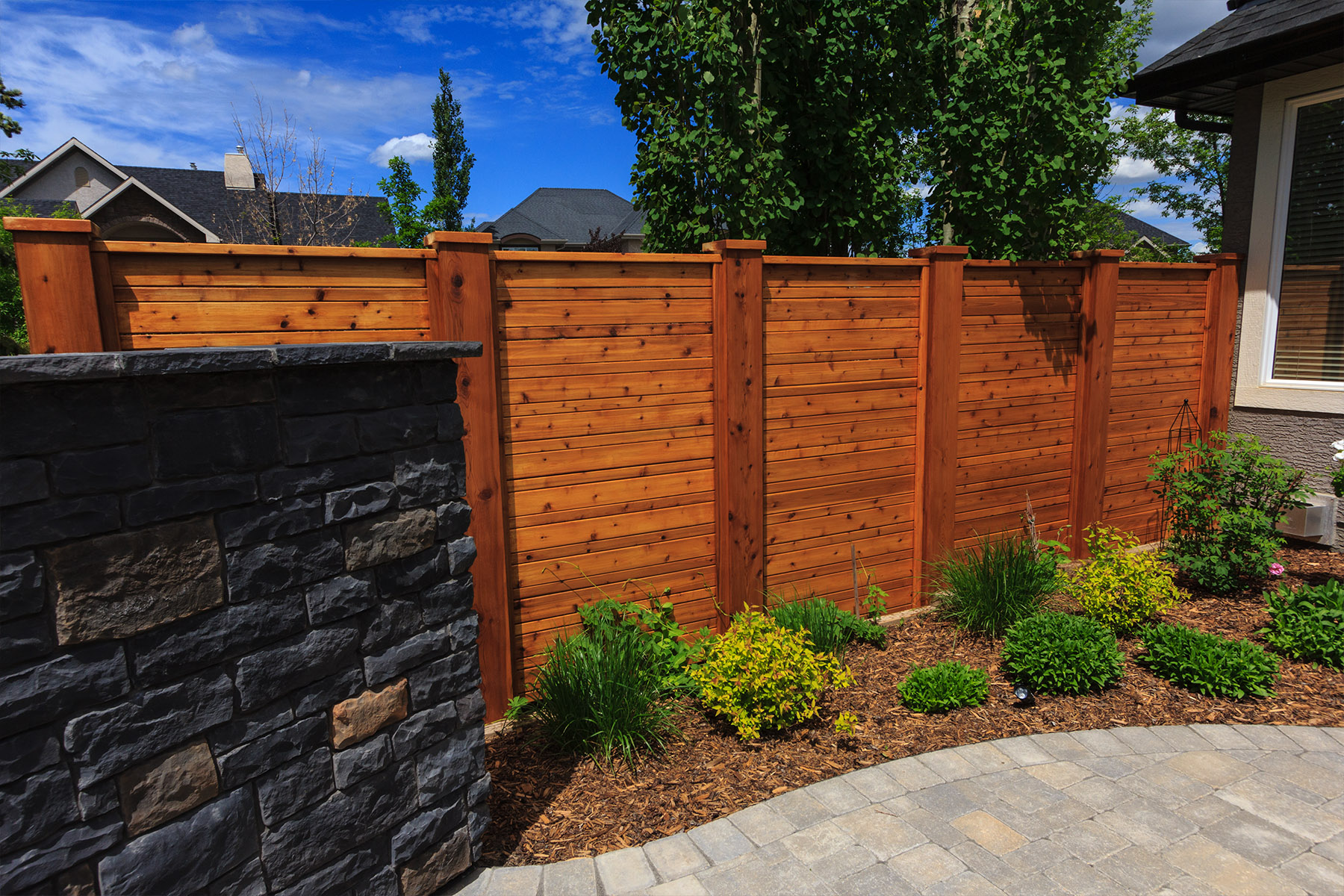
8. Classic Horizontal Wood Screens for a Timeless Look
This is a foundational look that never goes out of style, and its cost can vary dramatically based on your choices. It’s the perfect blank canvas for any deck.
- Lumber (Pressure-Treated Pine): $400 – $700
- Lumber (Cedar or Redwood): $1,200 – $2,000
- Hardware (Screws, Fasteners): $100 – $150
- Stain/Sealer: $150 – $250
- Labor (if hiring): $800 – $1,500
- TOTAL (DIY Pine): $500 – $850
- TOTAL (Pro-Installed Cedar): $2,150 – $3,750
Budget alternative: Use pre-made lattice panels painted a dark color instead of individual slats. This can cut material and labor costs by 50-60%.
🎯 What Makes It Work
Why is this simple design so effective? It’s all about repetition and rhythm. The repeating horizontal lines create a calm, orderly pattern that is soothing to the eye. Unlike a solid fence, the small gaps between the slats provide a sense of texture and depth, allowing light to play across the surface. This design, especially when set against a lush green backdrop as seen here, feels both structured and natural. It’s a quieter approach than the patterned screens in Idea #24.
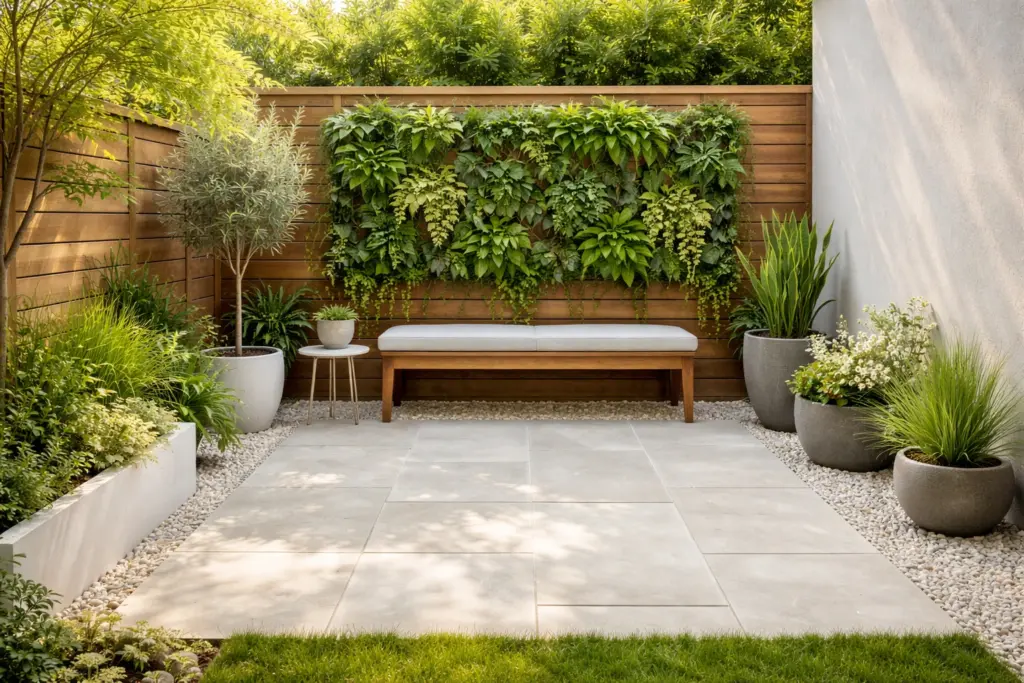
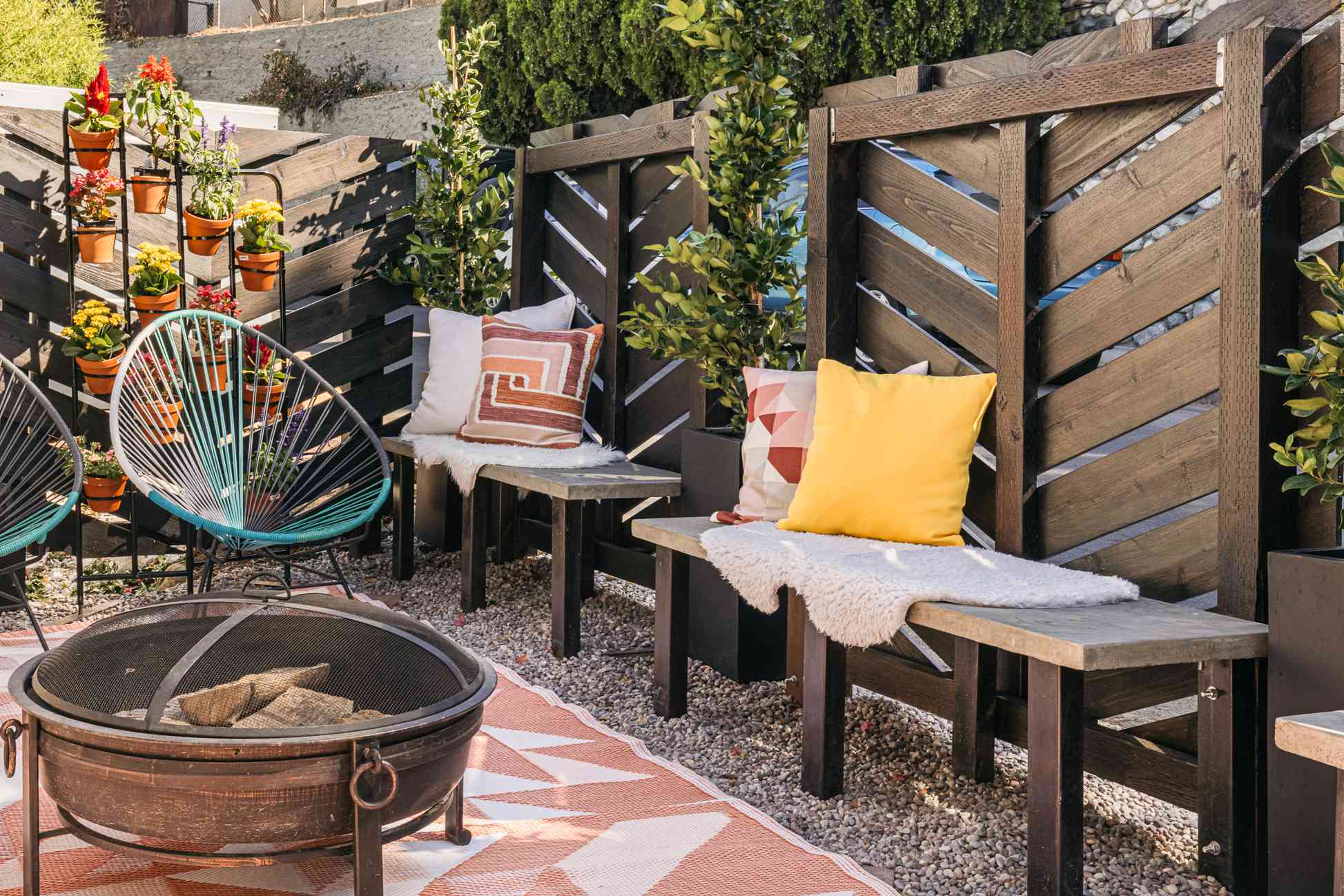
9. A Cozy Nook with an Integrated Planter-Bench Fence
The singular element defining this space is the integration of fence, planter, and seating into one cohesive unit. Removing any one of these would drastically diminish the result. The fence isn’t just a backdrop; it’s an active part of the seating and gardening experience. This multi-functionality is what makes the small area feel so complete and purposeful. It’s a brilliant solution for maximizing utility in a compact footprint and creating a truly immersive little world.
🧹 Maintenance Reality
This design taps directly into the huge ‘outdoor room’ trend. We’re no longer content with a simple deck and a few chairs; we want our outdoor spaces to have all the comfort and functionality of our indoor ones. This setup, with its built-in seating, soft throws, and integrated greenery, essentially creates a small, open-air living room. It’s about blurring the lines between house and garden, creating a destination for relaxing and entertaining, not just a place to pass through.
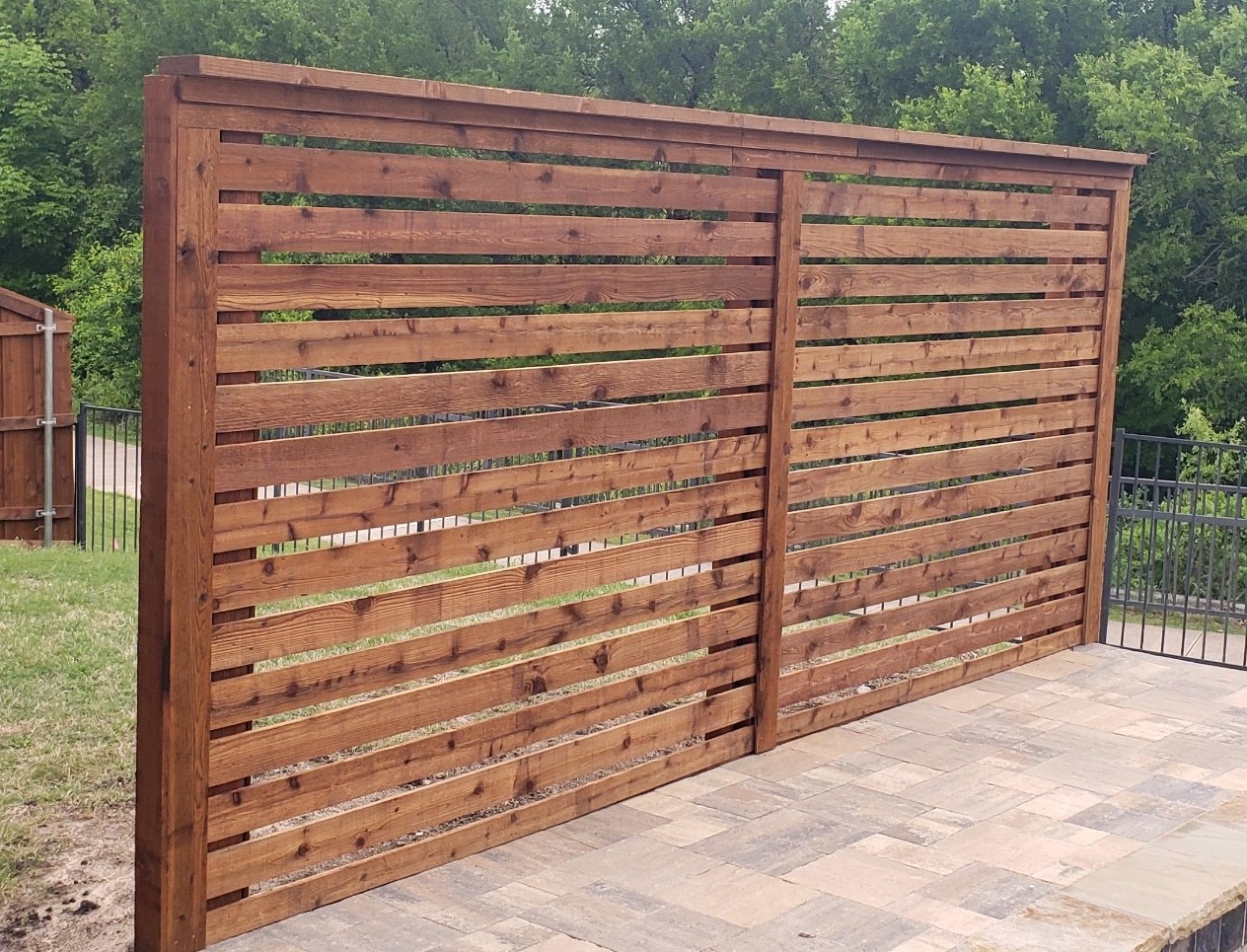
10. Large-Scale Horizontal Wood Screen for a Patio
A tall, wide privacy screen like this one is a powerful architectural statement, best suited for larger patios or yards where it can define a separate ‘room’. It works well for spaces 300 square feet and up, with at least 15-20 feet of linear distance to cover. In a small space, its scale would be overwhelming and make the area feel cramped. This is a look that requires breathing room to be appreciated, acting as a dramatic backdrop for a dining area or outdoor lounge, rather than just a simple barrier.
💸 Get This Look For Less
Before you commit to a screen of this size, you absolutely must consider wind load. A large, solid surface acts like a sail. The support posts need to be substantial (6×6 posts are better than 4×4) and deeply anchored in concrete footings—at least 3 feet deep in most regions, or below the frost line. Under-building the support structure is a common and dangerous mistake that can lead to the entire screen leaning, warping, or even failing completely in a heavy storm.
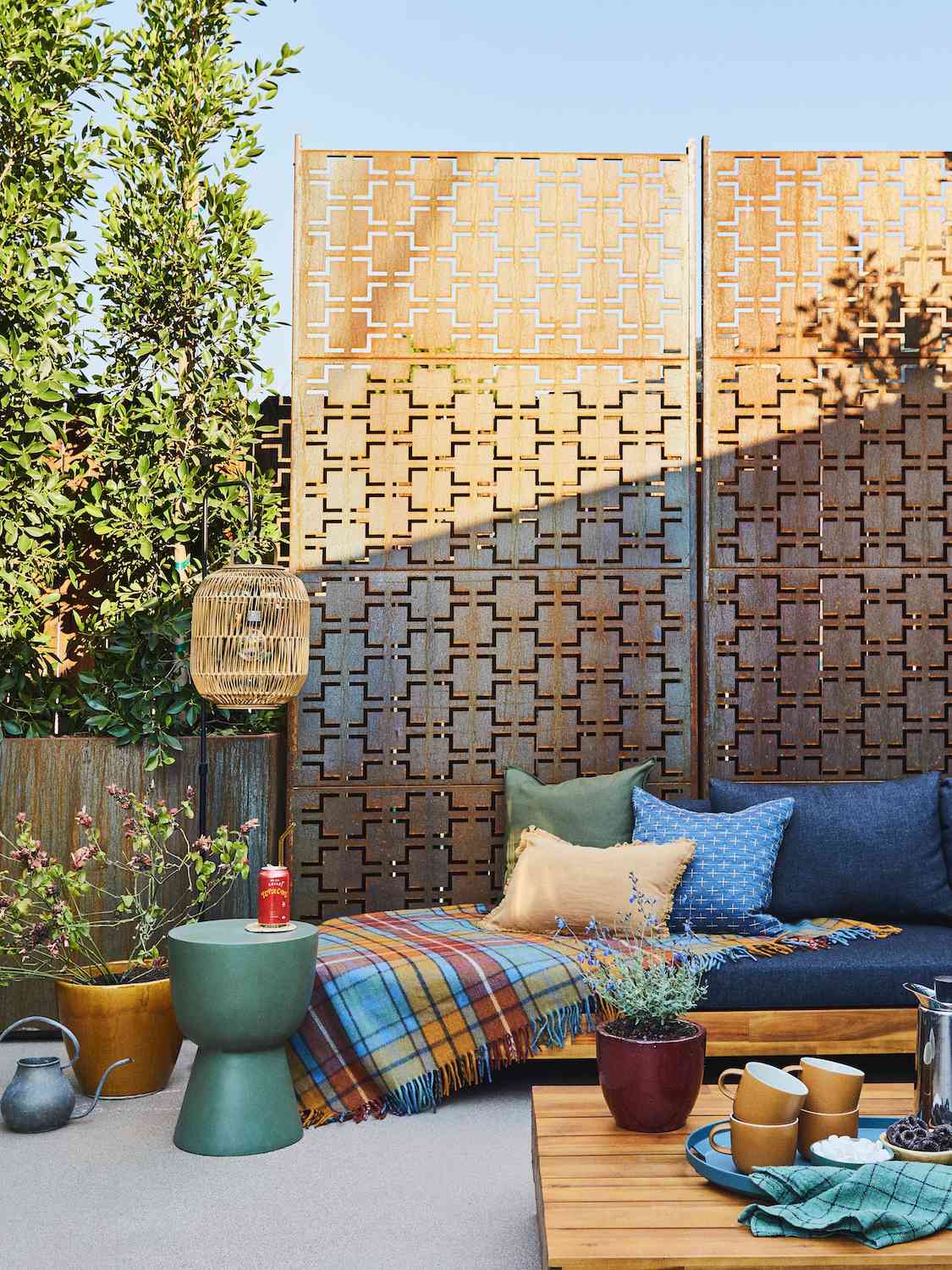
11. Patterned Corten Steel Screens Behind a Lounge Sofa
The magic here is in the color and material theory. The warm, rusty orange-brown of the Corten steel is a perfect complement to the cool navy blue cushions. They are opposite each other on the color wheel, creating a dynamic, high-contrast look that feels both energetic and balanced. The plaid blanket then cleverly ties the two primary colors together, along with other accent tones, making the entire composition feel harmonious and intentional. It’s a sophisticated palette that feels curated and cozy.
⭐ The One Thing
Corten steel is prized for the beautiful, stable rust-like patina it develops over time. However, be aware that during the initial weathering process (which can take several months), it will produce rust runoff that can stain adjacent surfaces like concrete, pavers, or light-colored decking. It’s best to install it over a gravel or garden bed where staining won’t be an issue, or use a planter tray to catch the runoff until the patina has fully stabilized. Once stabilized, the runoff is minimal.
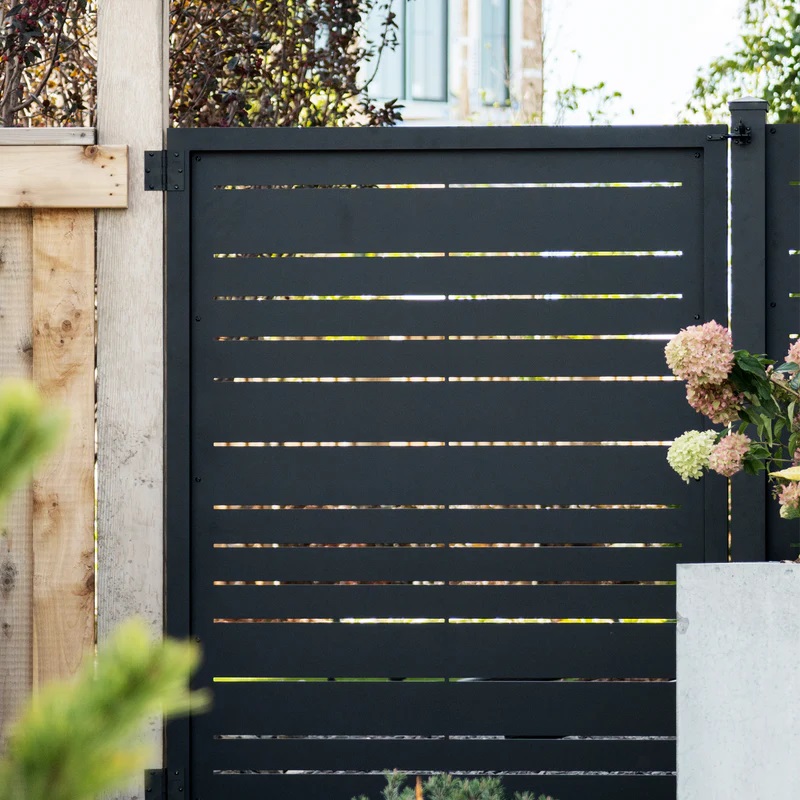
12. Versatile Slatted Panels for Custom Privacy
Slatted panels are a fantastic, flexible solution, but a little prep goes a long way. Before you buy, make sure you’ve covered these bases to avoid common pitfalls:
- Check Local Codes: Does your city or HOA have height restrictions for fences or ‘structures’ on your deck? A quick call or search can save you a huge fine. Most areas have a limit, often 6 or 8 feet.
- Measure Twice, Buy Once: Get the precise length and height you need to cover. Will you need to cut panels down to size? Do you have the right tools for that?
- Assess Your Foundation: What are you mounting these to? Deck joists? Concrete patio? Dirt? The mounting hardware and post requirements are completely different for each.
- Consider the Sun’s Path: Observe where the sun is at the time of day you most want privacy. A screen might cast a great shadow in the morning but be useless for blocking the view of your neighbor’s window in the afternoon.
💰 Budget Breakdown
When installing slatted panels, the gap size is just as important as the slat size. For maximum privacy, a gap of 1/2 inch or less is ideal. For a more open, airy feel that still offers some screening, a gap of 3/4 inch to 1 inch works beautifully. Use a scrap piece of wood cut to your desired gap width as a spacer when installing the slats to ensure every gap is perfectly consistent. This small trick is what gives a DIY project a professional finish.
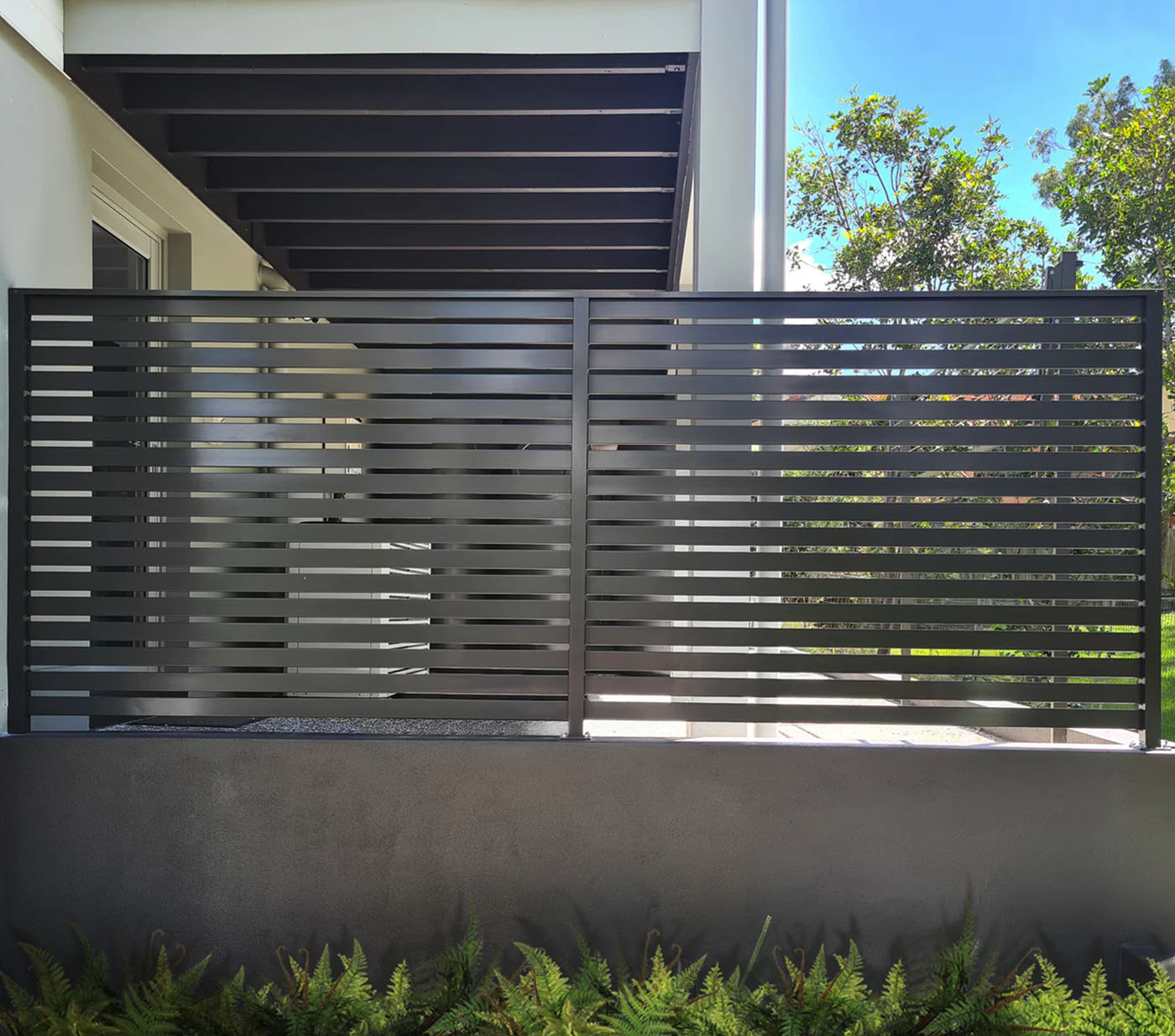
13. Modern Dark Gray Slatted Screen Above a Fern Garden
This composition is all about powerful, clean geometry. The strong vertical lines of the screen’s supports and the crisp horizontal lines of the slats create a modern, architectural grid. This man-made structure is then perfectly softened by the organic, feathery shapes of the ferns growing at its base. The contrast between the rigid screen and the delicate plants is what creates the visual interest and prevents the dark gray from feeling too severe or monolithic.
💡 Designer Tip
You can break this look down into a simple formula: 70% structured privacy screen + 30% soft, unstructured planting. The key is the high contrast in form. You could swap the dark gray slats for warm wood, or sub the ferns for soft ornamental grasses. As long as you maintain that 70/30 balance between the architectural element and the wilder, natural element, you’ll achieve the same sophisticated, modern-meets-natural vibe.
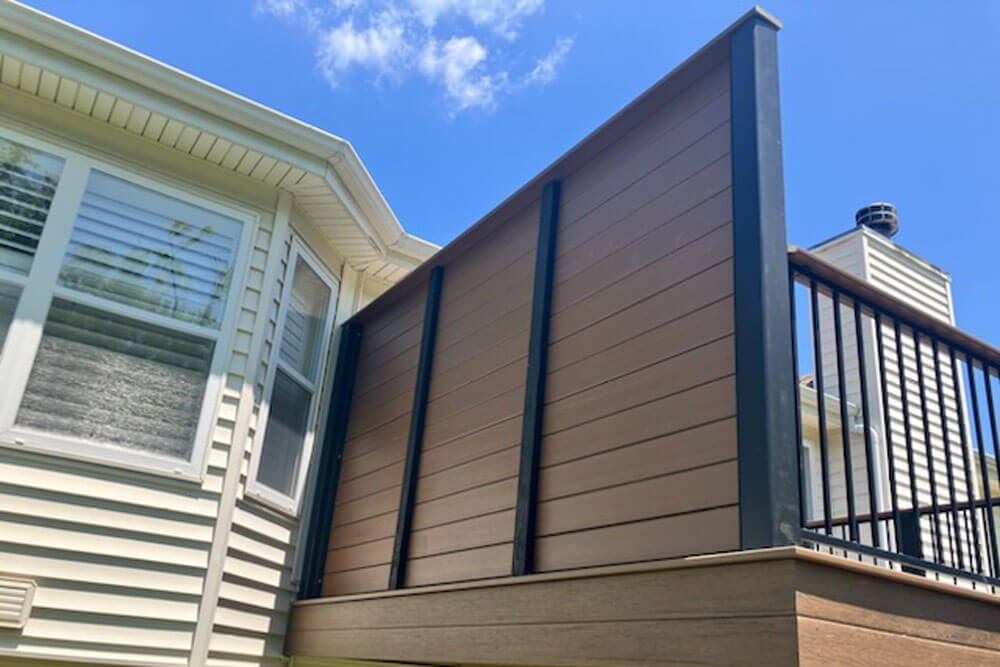
14. Composite Privacy Screen with Contrasting Dark Posts
Composite decking and fencing materials are a popular choice for a reason: they are incredibly low-maintenance. Unlike wood, they don’t require annual staining or sealing. A simple wash-down with soap and water once or twice a year is usually all that’s needed to remove grime and keep the color looking fresh. They are also resistant to rot, insects, and warping. This makes them a fantastic long-term investment if you want a beautiful privacy screen without the recurring weekend chores of wood upkeep.
⚠️ Real Talk
While composites are durable, they are not indestructible. Be aware that some lower-quality composites can be susceptible to scratching, and deep gouges are difficult to repair. Also, in very hot, direct sun, dark-colored composite boards can get extremely hot to the touch. If you’re building a bench or a railing cap out of the same material in a sunny climate, this is a serious consideration, especially if you have children. The rich brown color is beautiful, but it will absorb a lot of heat.
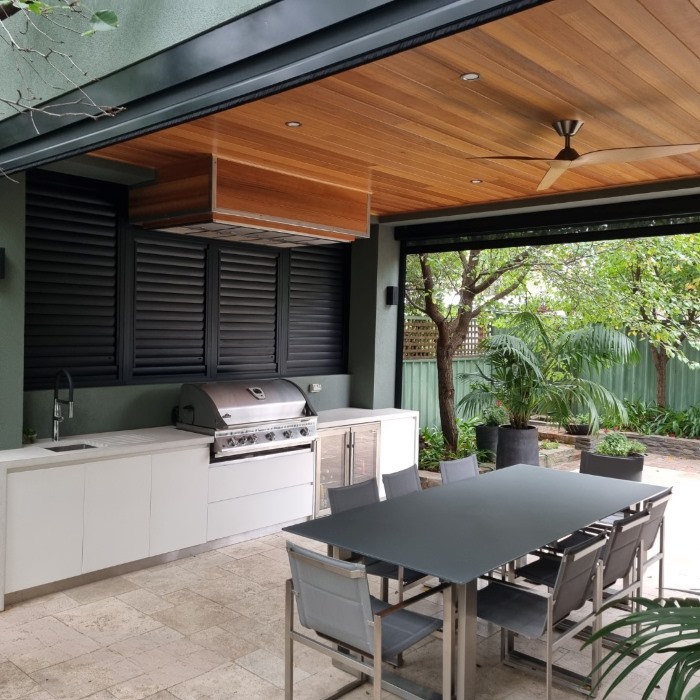
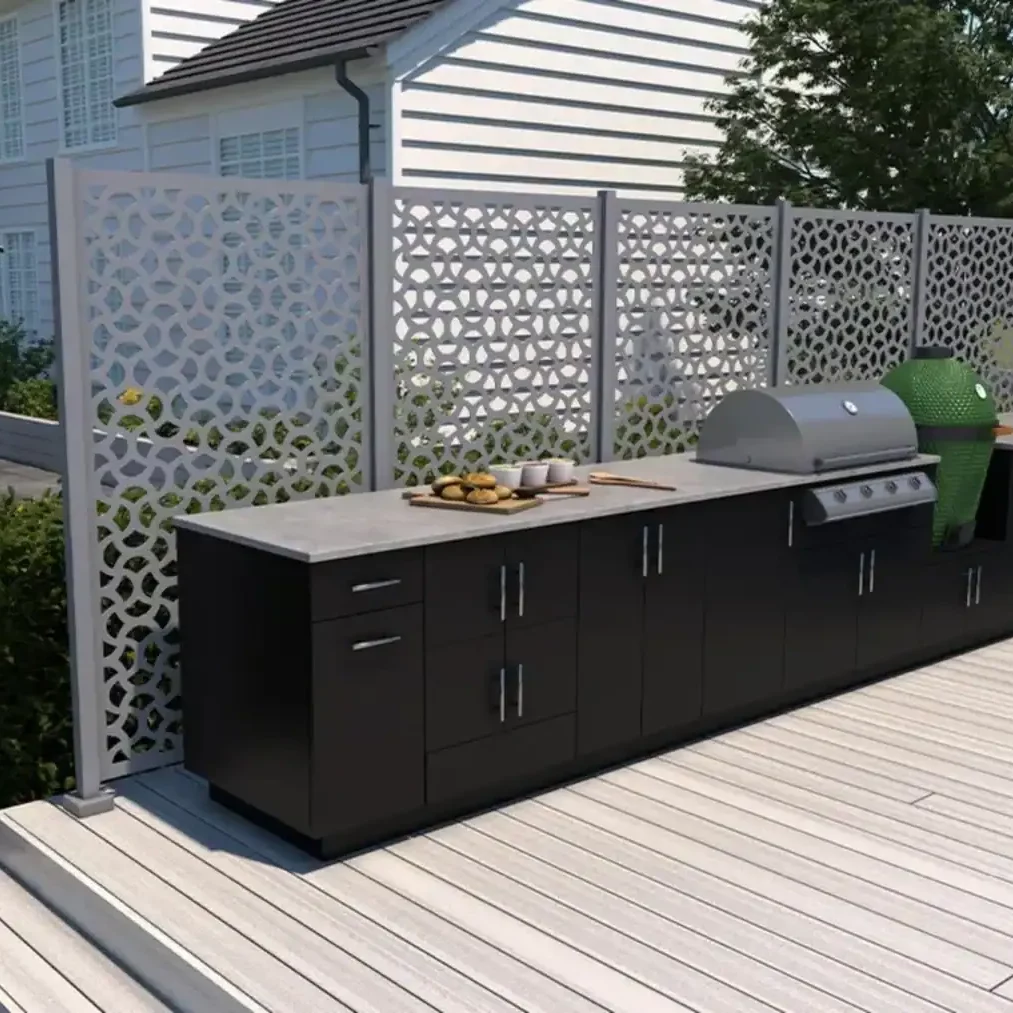
15. A Deck with a Decorative Screen and an Outdoor Kitchen
The single feature that makes this space so functional and modern is the seamless integration of the outdoor kitchen island with the deck’s edge. The privacy screen acts as a stylish backsplash and defines the ‘work’ zone, while the long, clean lines of the island provide ample prep space and house the appliances. It’s a highly efficient use of space that turns a simple deck into a high-performance area for entertaining. It feels less like an afterthought and more like a dedicated outdoor room.
🔧 How-To Brief
When planning an outdoor kitchen, island placement is everything. Here, placing it along the perimeter of the deck is a brilliant move. It keeps the main flow of traffic open and separates the cooking zone from the lounging or dining areas. A common mistake is plopping an island in the middle of a small deck, which creates awkward traffic jams on all sides. Pushing it to the edge, as shown here, maximizes usable floor space and creates a more organized and pleasant environment.
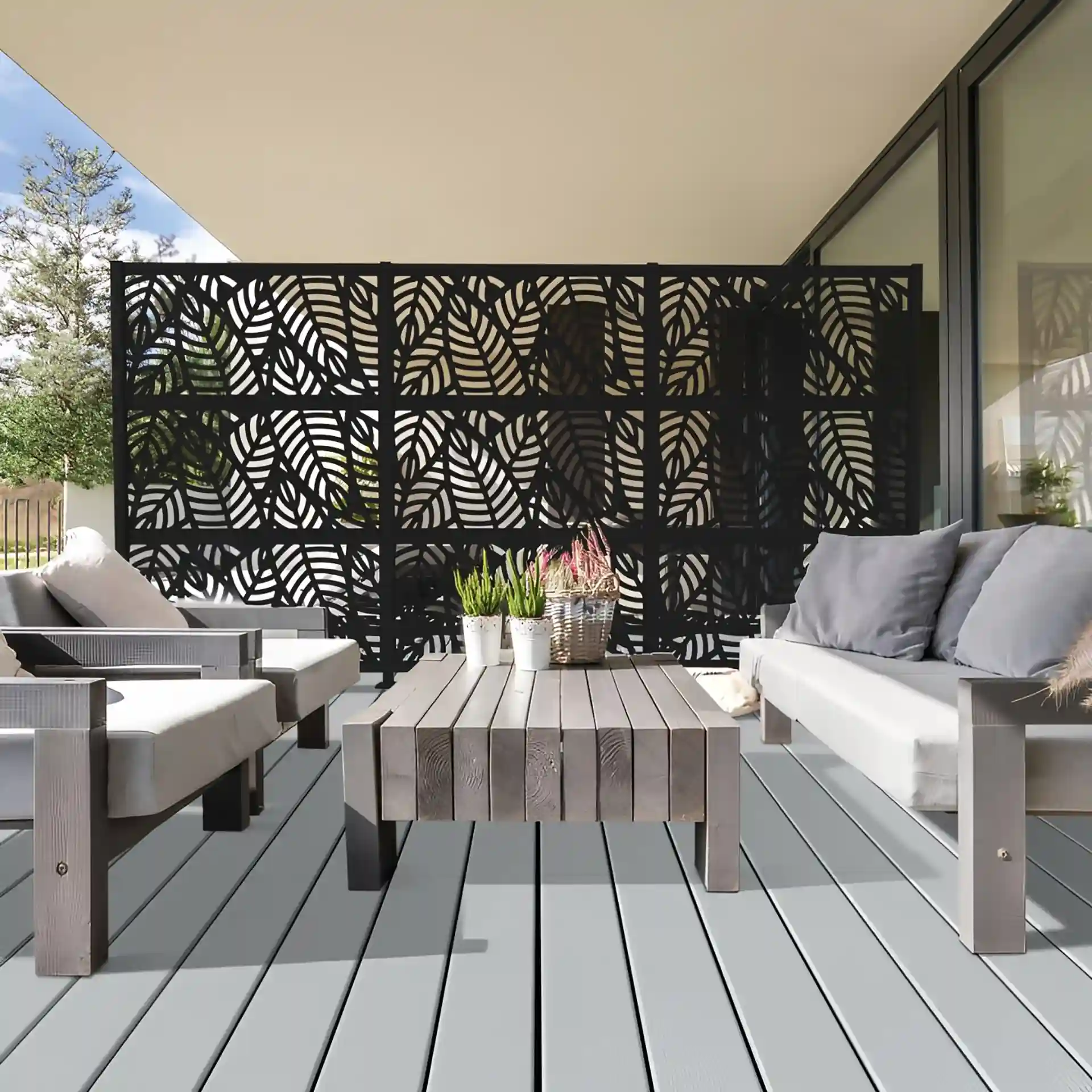
16. Modern Grey Patio with a Leaf-Pattern Privacy Screen
This space feels so serene and cohesive because of its strict, monochromatic color palette. The light grey of the decking, the slightly darker grey of the sofa cushions, and the charcoal grey of the privacy screen all belong to the same color family. This creates a calm, uncluttered backdrop. The natural wood of the coffee table and the green of the plants are the only major elements that deviate, and they act as warm, organic accents that bring life to the cool grey landscape. It’s a very controlled and sophisticated approach.
✅ Before You Start
You don’t need custom furniture and flooring to achieve this minimalist grey vibe. IKEA’s ‘NÄMMARÖ’ or ‘SEGERÖN’ outdoor furniture series offer similar clean lines and grey cushions at a fraction of the designer price. For the flooring, consider composite deck tiles from stores like Target or Walmart which can be laid over an existing patio for an instant modern update. A single decorative panel, like those available from Wayfair, can provide the focal point without the cost of a full wall.
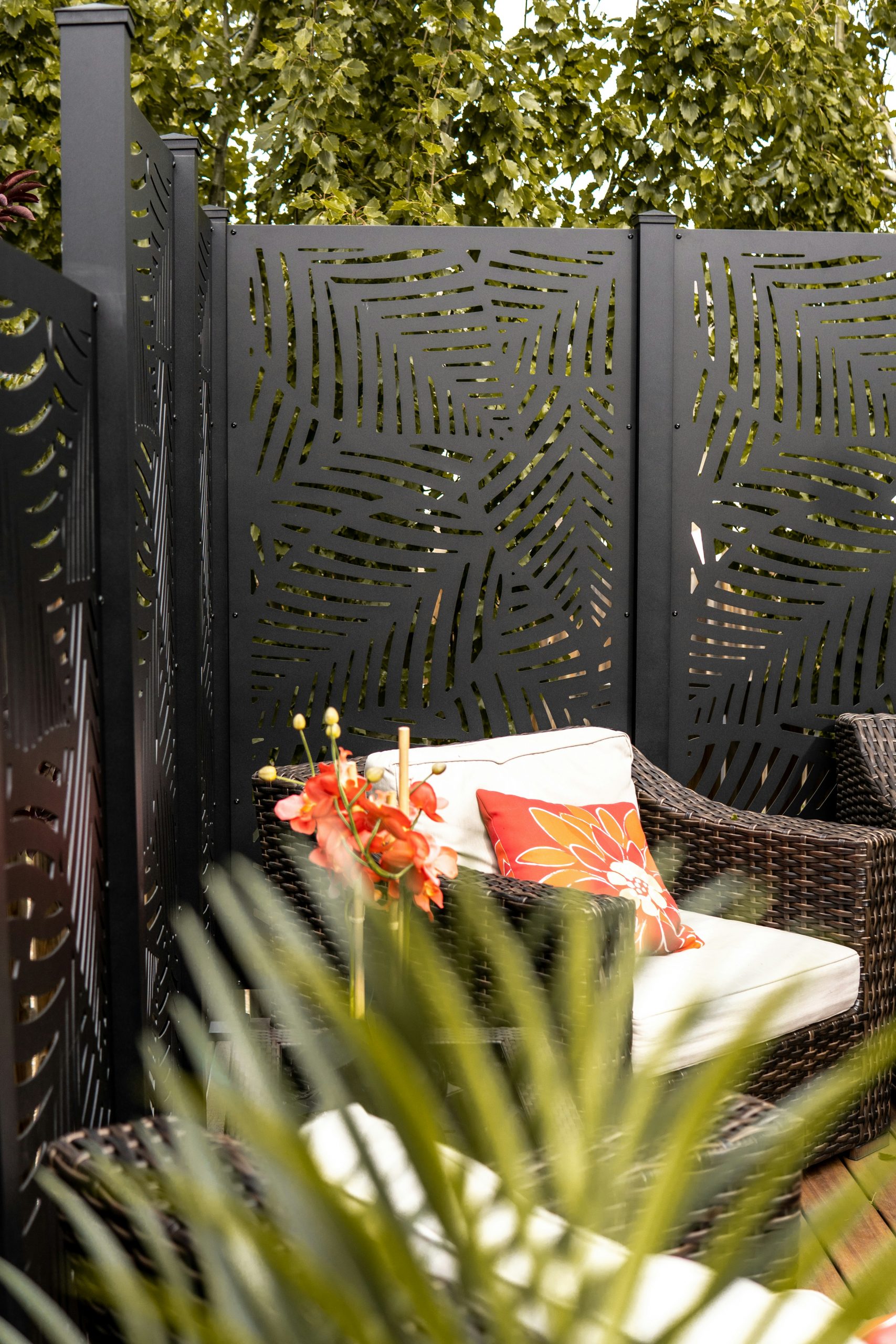
17. Wicker Seating Nook with a Dark Patterned Screen
This cozy corner follows a simple recipe for success: 50% bold privacy screen + 30% classic, textural furniture + 20% bright color pop. The dark, intricately patterned screen provides a strong, modern backdrop. The timeless wicker chairs add natural texture and a more traditional feel. Finally, the vibrant orange and white pillow cuts through the neutrals and brings a dose of energy and personality. You could easily change the accent color to turquoise, yellow, or fuchsia to completely shift the mood while keeping the same successful formula.
📏 Scale Guide
When working with dark privacy screens and furniture, adding a touch of bright color is essential to keep the space from feeling gloomy or cave-like. An accent pillow is the easiest and most affordable way to do this, but don’t stop there. Consider a colorful outdoor rug, a painted side table, or even a planter in a bold, sunny hue. These small pops of color will draw the eye and make the entire seating area feel more inviting and intentional.
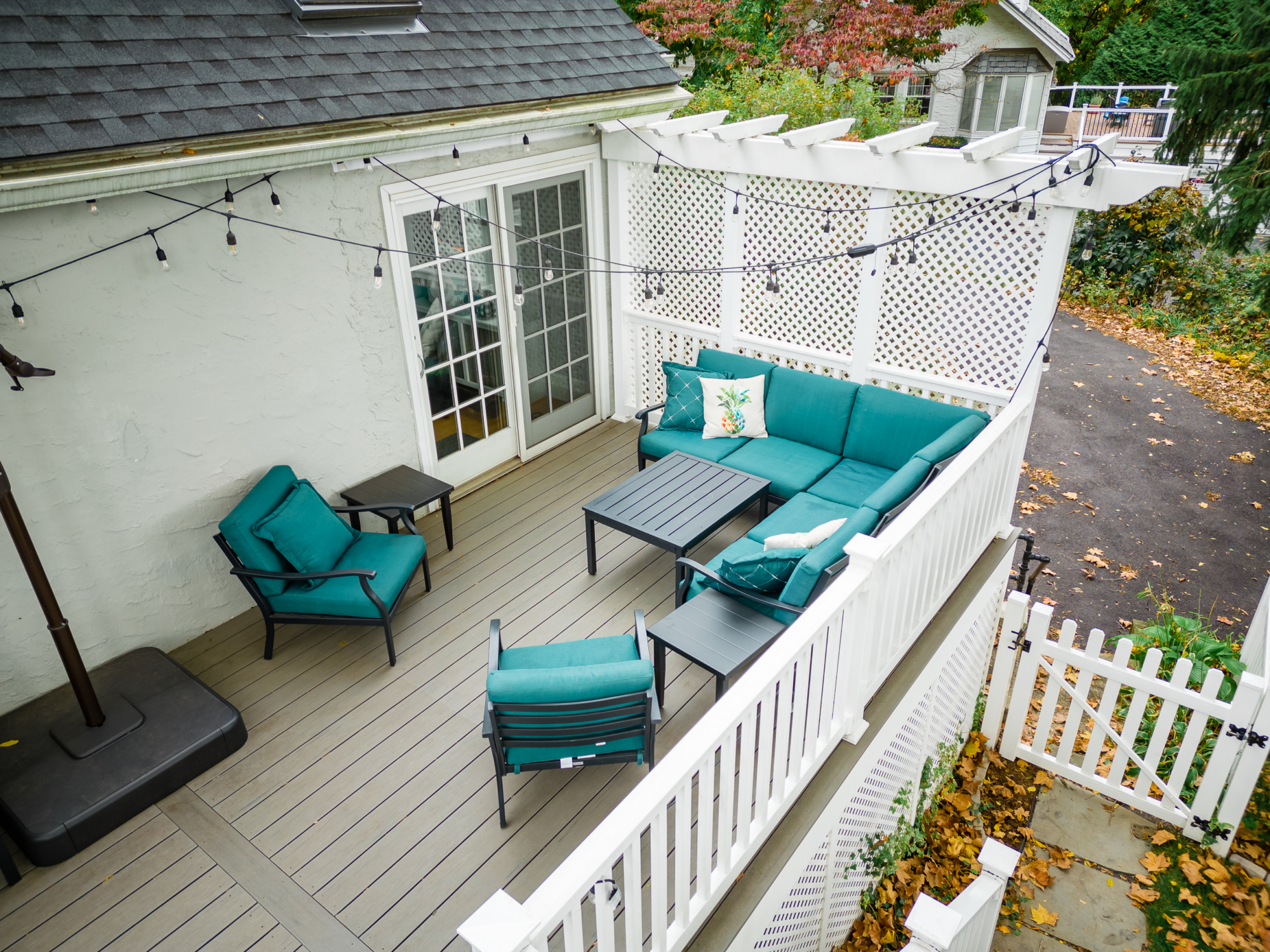
18. Deck Seating Area with White Lattice and Teal Accents
The combination of classic white lattice and bold teal furniture works so well because it feels both nostalgic and completely current. The white lattice brings a timeless, almost coastal or cottage-like charm. The teal sectional is a jolt of modern, unapologetic color. The string lights overhead add a layer of pure magic and coziness. It’s the tension between the classic backdrop and the contemporary color choice that makes this space feel so fresh, personal, and inviting—a perfect blend of old and new.
🔥 Trending Context
After years of neutral-dominated outdoor design (think beige, grey, and more grey), bold, saturated colors are making a huge comeback. People want their outdoor spaces to feel joyful and expressive, not just like a muted extension of their living room. This vibrant teal is a perfect example of this shift. It’s confident, fun, and turns the furniture into the undeniable star of the show. We’ll be seeing much more of this color-drenched approach through 2026.
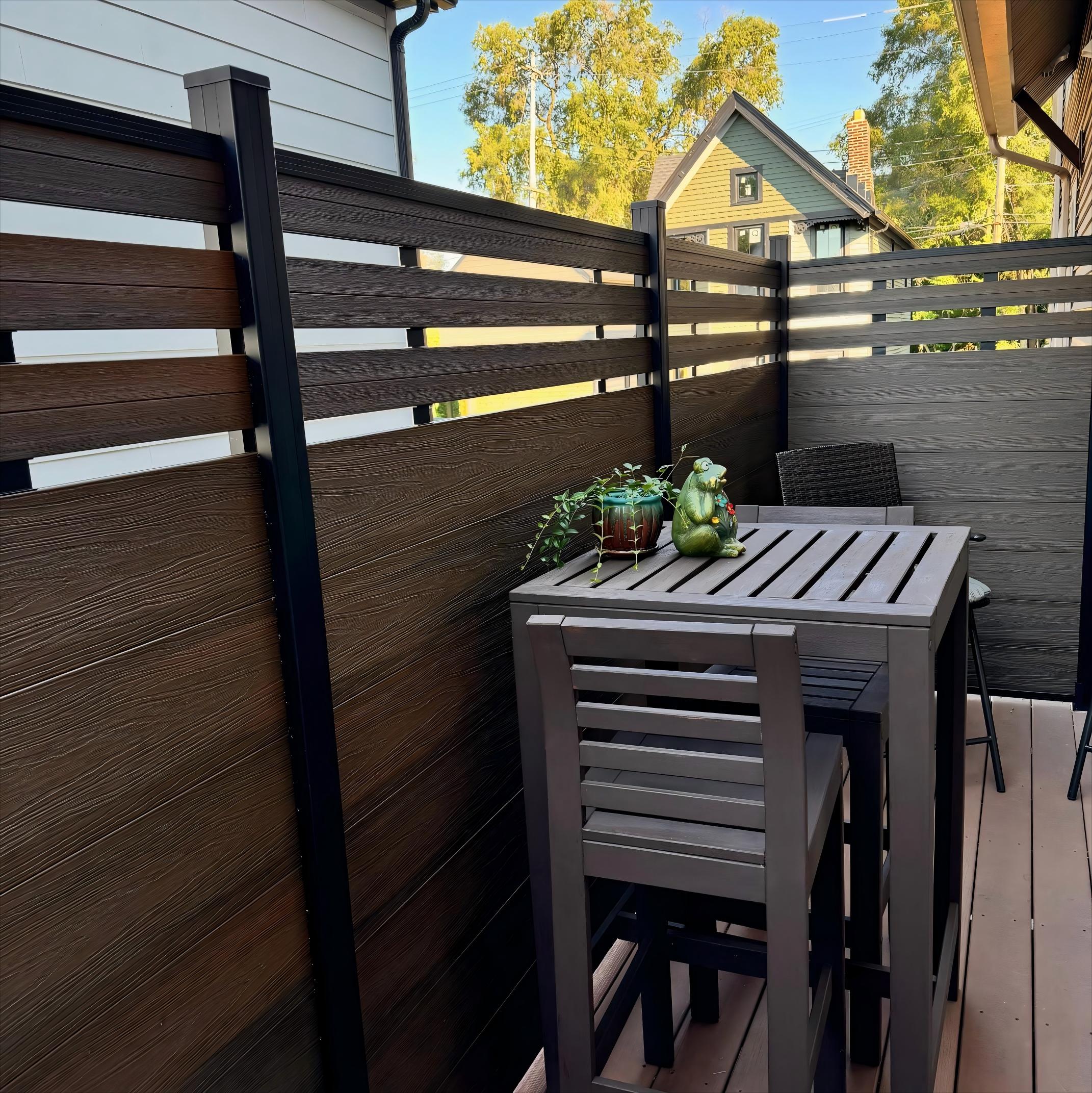
19. Composite Slat Fence with an Integrated Bar-Height Table
that makes this idea so smart is its space efficiency. By pushing a narrow, bar-height table and chairs directly against the privacy fence, you create a functional dining or cocktail spot using a sliver of space that might otherwise go unused. This leaves the majority of the deck open for traffic flow or other furniture. It’s a perfect solution for long, narrow balconies or small decks where a traditional dining set would feel bulky and obstructive. Compare this to the cozier, low-slung setup in Idea #23.
📐 Style Math
This ‘lean-to’ bar concept works best in spaces that are at least 4-5 feet wide. You need about 30-36 inches of clearance from the edge of the table to the opposite wall or railing to comfortably pull out chairs and allow for passage behind someone who is seated. This makes it an excellent choice for a typical apartment balcony or a small side deck that needs a functional, space-saving feature to make it usable.
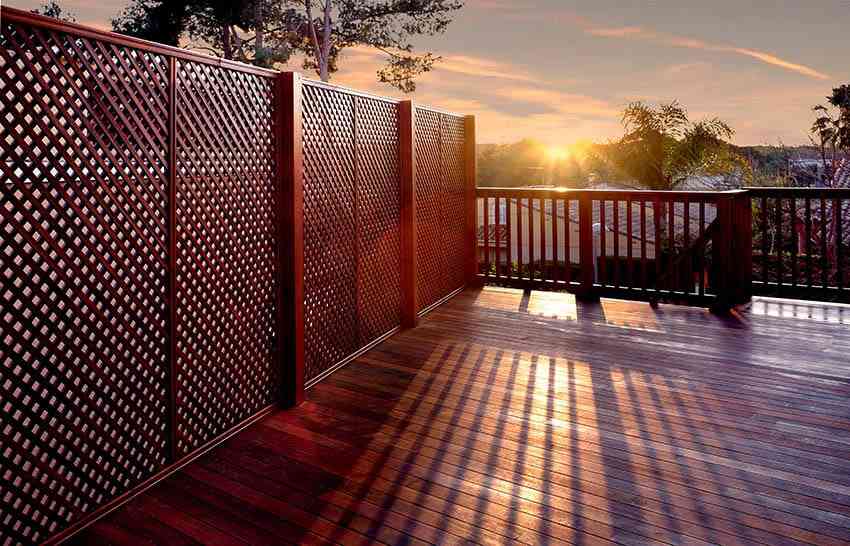
20. A Private Deck with a Dark Wood Lattice Wall
The beauty of this design lies in its use of light and shadow. The dark-stained lattice acts as a filter, breaking up the harsh afternoon sun into a beautiful, geometric pattern across the deck floor. This not only provides privacy and shade but also adds a dynamic layer of texture and visual interest to the space. It makes the deck feel like a serene, secluded room, protected from the outside world while still being connected to the elements. The effect is calming and almost meditative.
🎯 What Makes It Work
When staining a lattice wall, a paint sprayer will be your best friend. Trying to use a brush or roller to cover all the intersecting angles of a lattice panel is incredibly time-consuming and almost guarantees drips and missed spots. A sprayer provides even, consistent coverage in a fraction of the time. Just be sure to mask off the surrounding deck and house siding carefully with painter’s tape and plastic sheeting to protect them from overspray.
21. Modern Cedar Slat Fence Along a Flagstone Path
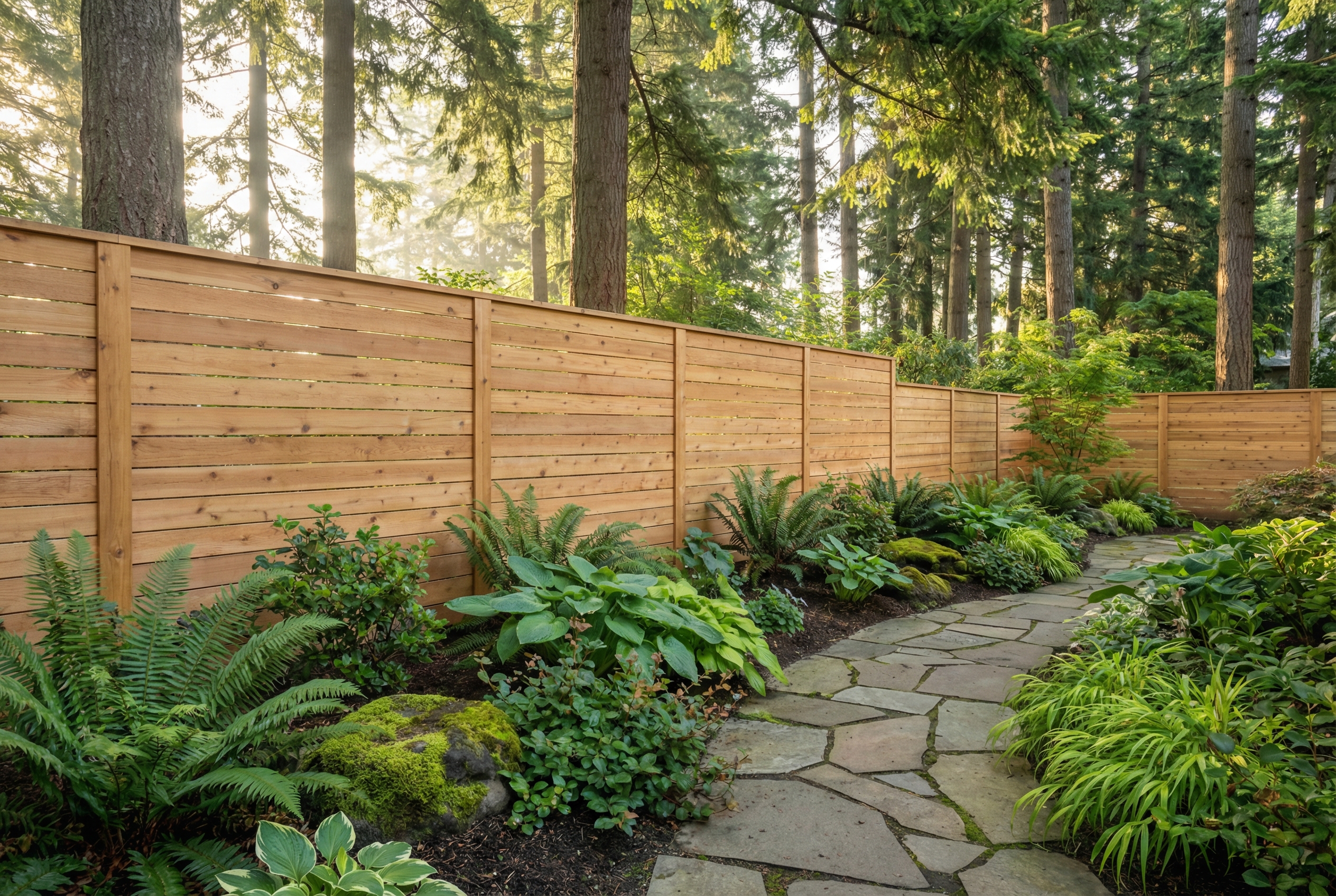
The defining feature here isn’t just the fence itself, but the masterful combination of the clean, modern fence with the lush, wild undergrowth. The straight, crisp lines of the horizontal cedar slats create a perfect counterpoint to the organic, rambling shapes of the ferns and hostas. This juxtaposition is what gives the entire scene its high-design, sophisticated feel. It’s evidence that what you plant *at the base* of your privacy screen is just as important as the screen itself.
🧹 Maintenance Reality
Achieving this kind of dense, thriving garden bed at the foot of a fence requires good planning. A new fence can cast a lot of shade, so you must choose plants that thrive in partial or full shade, like the hostas and ferns seen here. Also, consider root systems. Don’t plant large shrubs or trees with aggressive roots too close to the fence posts, as they can disrupt the footings over time. Lastly, ensure you have a plan for irrigation; the soil right next to a solid fence can sometimes become a ‘rain shadow’ and stay surprisingly dry.
22. A Modern Grey Fence with a Decorative Wave Panel
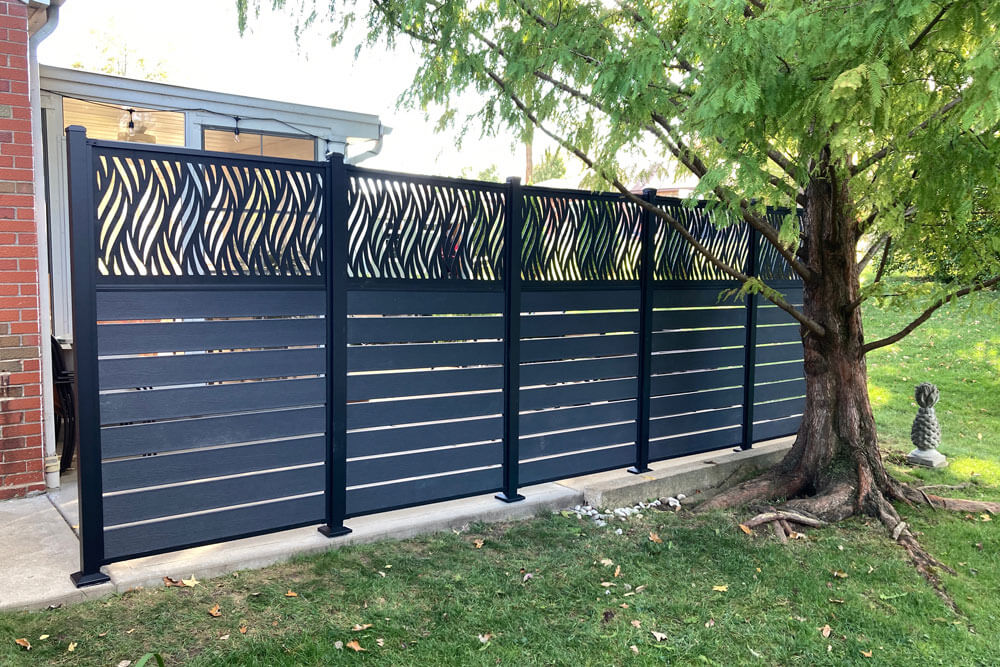
This design succeeds by introducing one small, playful element into an otherwise straightforward structure. The main fence is composed of simple, dark grey horizontal slats—functional and modern. But the addition of the single, wave-patterned panel at the top adds a touch of personality and artistic flair. It breaks the monotony of the straight lines and turns a utilitarian fence into a unique design feature. It’s a great reminder that you don’t need to go overboard; sometimes one decorative touch is all it takes to elevate a project.
💸 Get This Look For Less
Decorative metal or composite panels can be pricey. To get a similar effect on a budget, you can create your own ‘decorative’ section on a standard wooden fence. Use a jigsaw to cut a simple wave, scallop, or geometric pattern into the top one or two boards before you install them. Or, build the main fence and then attach a standard, affordable piece of diagonal lattice to the top section and paint it a contrasting color. This gives you that custom, two-texture look for a fraction of the cost.
23. A Cozy Garden Dining Nook with Trellis Fencing
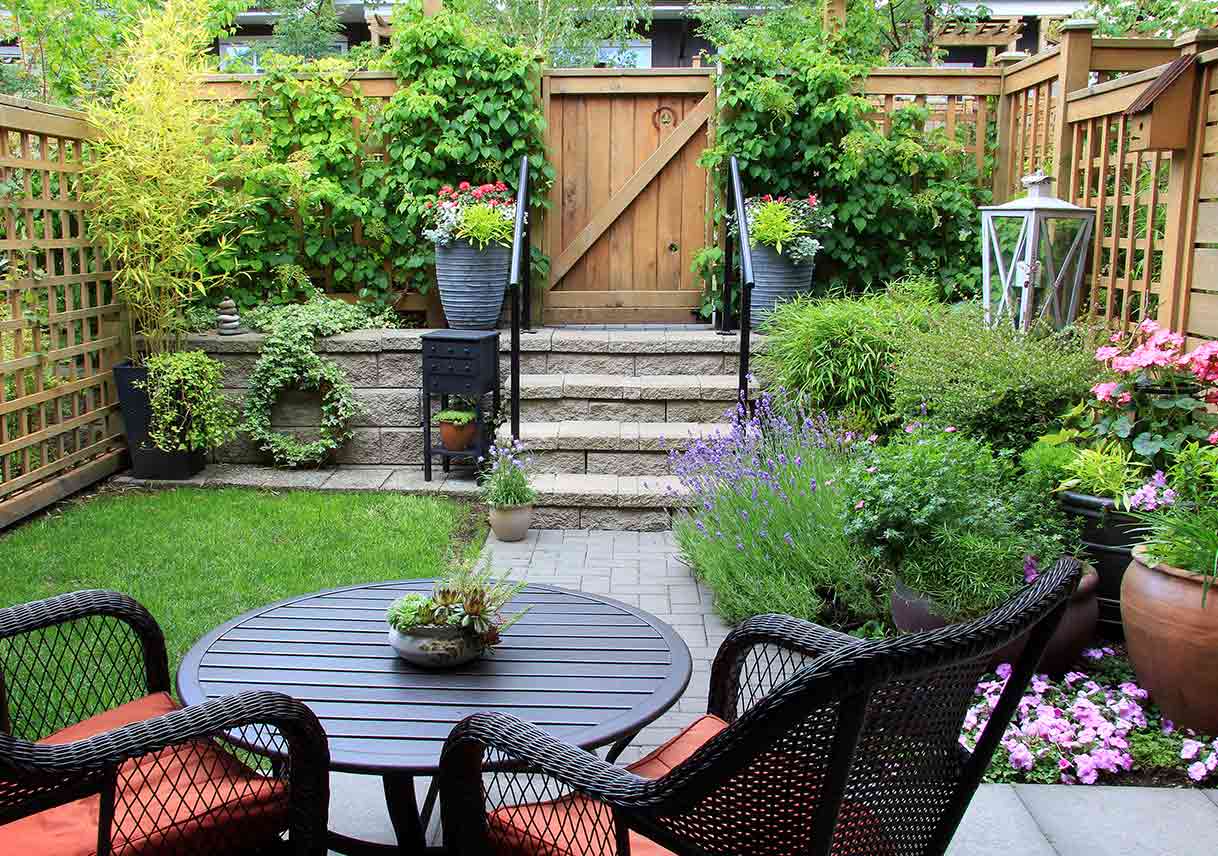
This kind of intimate, enclosed dining nook is perfect for very small outdoor spaces, from 60 to 120 square feet. It leverages vertical space by using trellises and climbing plants to create a sense of privacy and enclosure without a bulky, solid fence. The round table is another great space-saving choice, as it has a smaller footprint and allows for easier flow around it than a square table. This setup proves you don’t need a huge yard to create a charming and private outdoor room; you just need to be clever with your choices.
⭐ The One Thing
This lush, romantic look is a wonderful mix of textures and forms. The visual recipe is approximately: 40% living greenery (climbing vines, potted plants) + 30% warm, natural materials (woven chairs, wood table, trellis) + 20% hardscape (stone steps) + 10% bold color accent (the orange cushions). The high percentage of plant life is key to the cozy, ‘secret garden’ feeling. Without it, the space would feel much more stark and less inviting.
24. Modern Black Privacy Screens with Varied Slat Cutouts
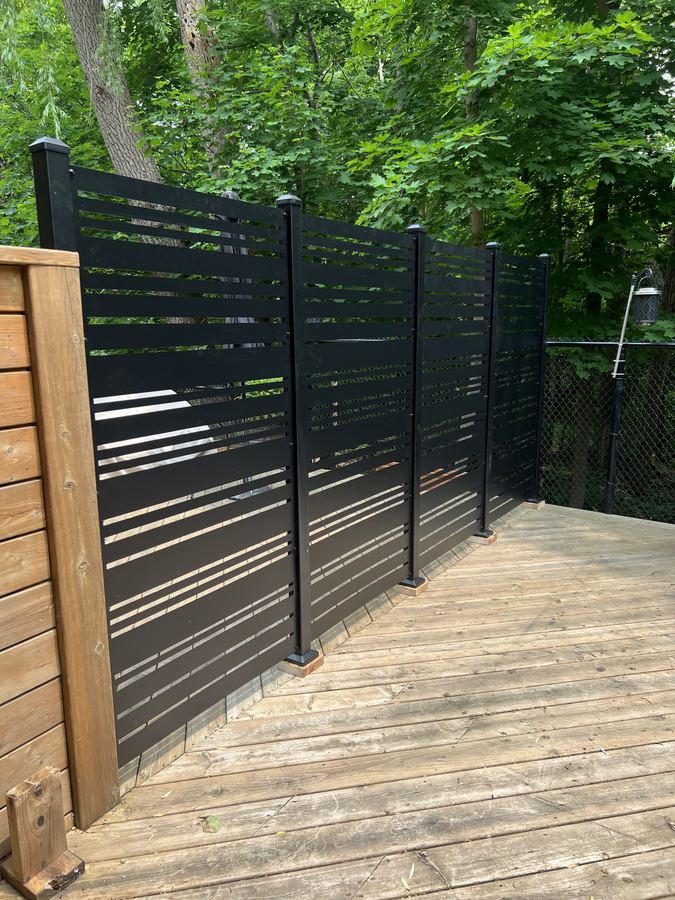
The random, variable lengths of the horizontal cutouts are what make these screens so visually interesting. Unlike a simple, uniform slat pattern, this design feels more organic and less rigid. It creates a sense of movement and rhythm, and the privacy it offers is partial and playful. Your eye is encouraged to dance across the panels rather than just seeing them as a solid barrier. The contrast between the stark black color and the weathered, light wood deck also adds to the modern, graphic appeal. Check out the different pattern on Idea #25.
💰 Budget Breakdown
When using multiple decorative screen panels in a row, consider staggering their heights slightly (by just a few inches) or breaking up the run with a tall, narrow planter between two of the panels. This breaks up the long, monotonous line of the ‘fence’ and adds architectural interest. A continuous, perfectly level run can sometimes look too severe or wall-like. Adding a little variation makes the installation feel more custom and thoughtfully designed.
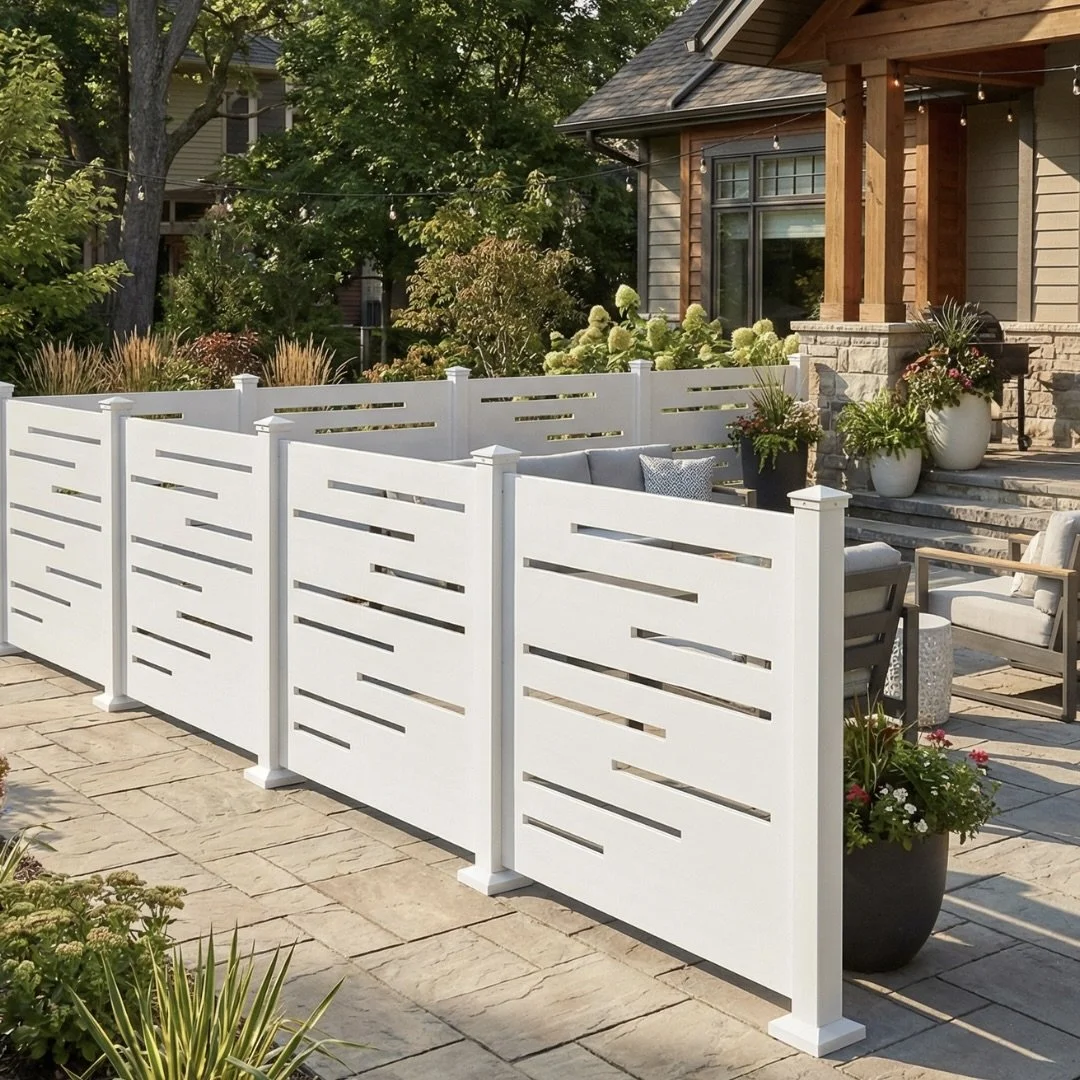
25. White Privacy Screens with Abstract Horizontal Cutouts
The single most important choice here is the color: white. If these exact same screens were black or grey, the entire feel of the space would change. The white finish makes them feel light, airy, and sculptural rather than heavy or imposing. It reflects sunlight, helping to keep the patio feeling bright and open, even while providing a visual screen. It’s a brilliant way to get privacy without sacrificing brightness, making it ideal for smaller patios or areas that don’t get a ton of direct sun.
💡 Designer Tip
Let’s be honest: white shows everything. Pollen, dust, dirt splashed up by rain, and mildew will all be much more visible on a white screen than on a dark one. To keep these looking crisp and clean, you’ll need to commit to regular cleaning. A quick spray with the hose might work sometimes, but plan on a more thorough cleaning with a soft brush and a product like ‘Wet & Forget’ or a diluted vinegar solution at least once or twice a season to prevent mildew from taking hold.
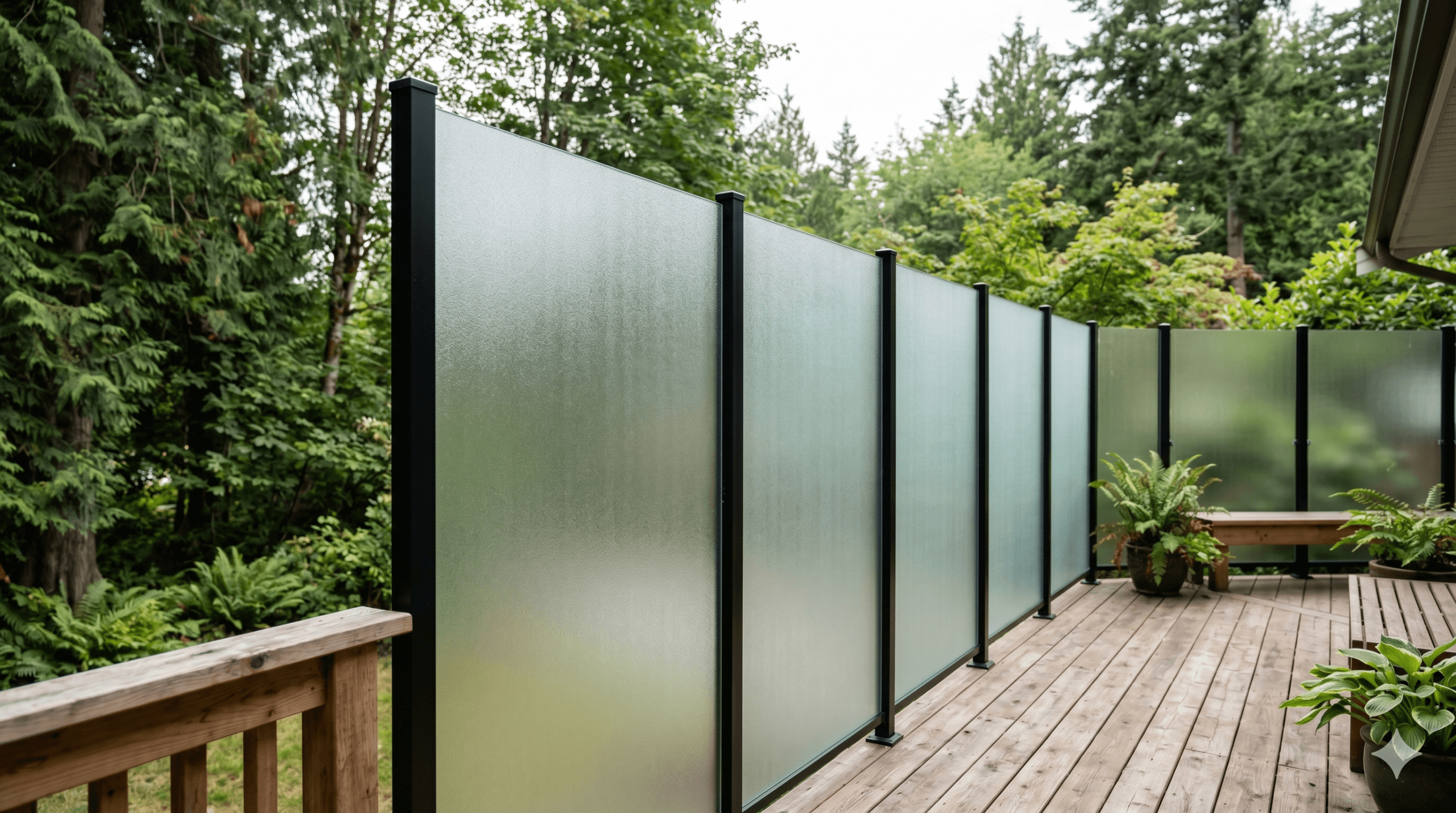
26. Frosted Glass Panel Screen on a Wooden Deck
This is the ultimate solution for privacy without sacrificing light. The frosted glass panels obscure the view completely, offering total visual privacy, but they still allow almost all the ambient light to pass through. This keeps the deck feeling bright and open, unlike a solid wood or composite fence which can cast a dark shadow. The combination of the sleek, modern glass and metal with the natural wood deck and surrounding greenery creates a beautiful, high-end look where different materials work in harmony.
⚠️ Real Talk
Glass panels, even frosted ones, are magnets for water spots, dust, and bird droppings. To keep them looking pristine and not streaky, you’ll want to squeegee them down after hosing them off. For a really clean finish, a solution of white vinegar and water is excellent for cutting through grime without leaving streaks. Because they are so transparent to light, any dirt becomes immediately obvious, so a regular cleaning schedule is key to maintaining this clean, sleek look.
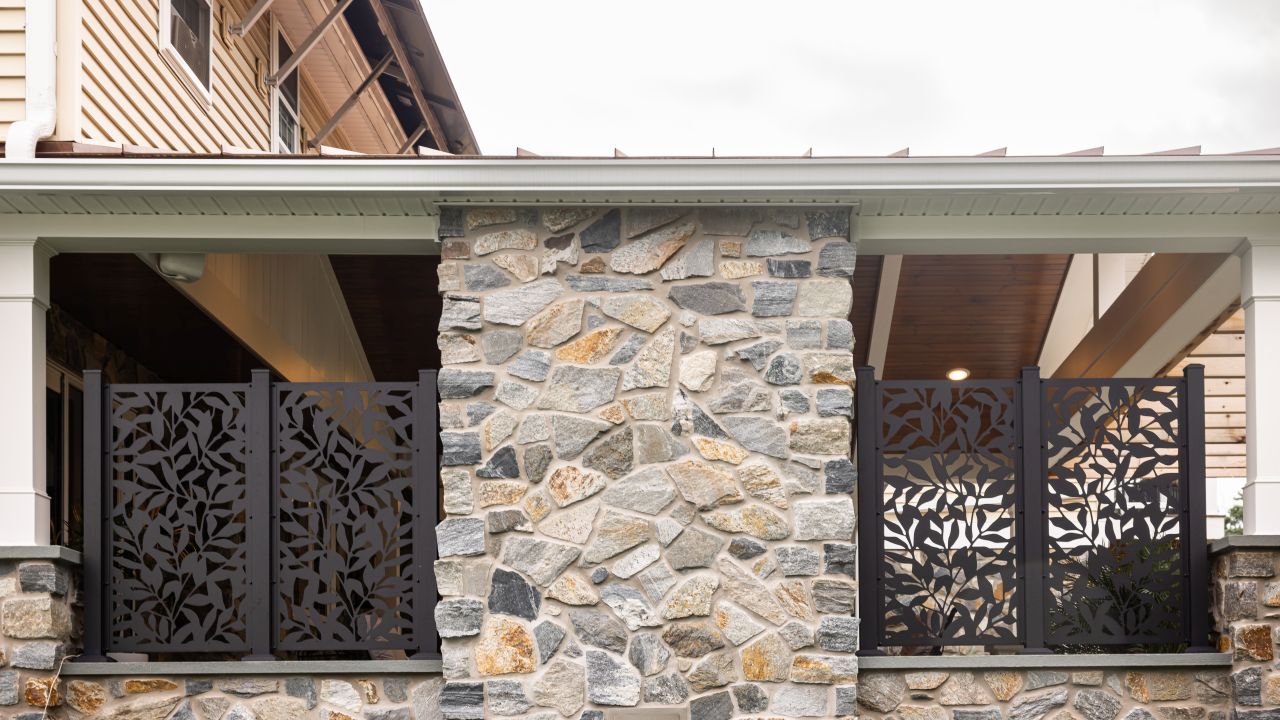
27. Dark Metal Panels with Leaf Cutouts on a Stone Pillar
The key to this design’s success is the integration of the decorative panels into the permanent architecture of the home. These aren’t just screens placed on a deck; they are built *into* the structure, flanked by a substantial stone pillar and wall. This makes them feel intentional, permanent, and high-end. It’s a decorative element that is also part of the home’s bone structure, blurring the line between a privacy feature and a custom architectural detail.
🔧 How-To Brief
If you’re building a new porch or deck, incorporating privacy screens into the initial design is far more effective and cohesive than adding them as an afterthought. You can design posts and beams to perfectly frame the panels, and even run wiring for integrated lighting to uplight or backlight them at night. Thinking about privacy from day one of the design process, as was done here, always yields a more seamless and professional result.
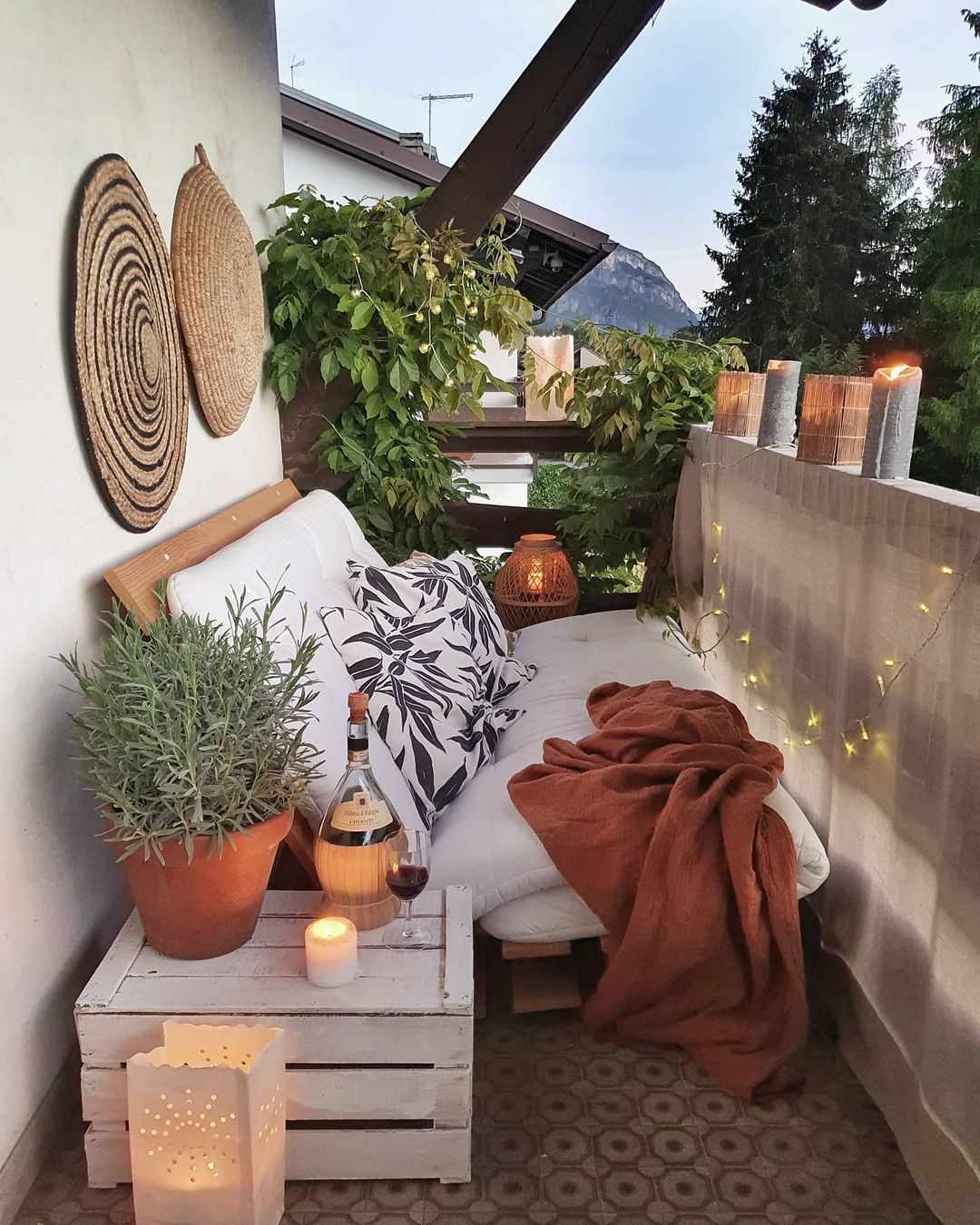
28. A Cozy Balcony Daybed with a Fabric Privacy Screen
This look is the king of budget-friendly coziness. A simple, light-colored fabric panel or even a painter’s drop cloth from a hardware store ($20-$30) can serve as an effective and stylish privacy screen. The daybed can be created with a simple wooden frame and an affordable outdoor mattress or cushions from Target or Walmart. The key is in the styling: lots of pillows, string lights (often under $20), and a few potted plants. You can achieve this entire intimate vibe for under $300 if you’re thrifty.
✅ Before You Start
You can create a charming, temporary lighting feature for a fabric screen with just a few items. Time: 15 minutes. Cost: $25-$40.
- Purchase a set of battery-powered fairy lights with a warm white glow.
- Get several clear glass jars or vases of varying heights.
- Divide the string of lights among the jars, loosely coiling them inside.
- Place the jars at the base of the fabric screen.
- For extra style, wrap the jars with twine or place them on a rustic wooden tray.
- Turn them on at dusk for an instant magical, cozy glow without any wiring needed.
29. A Shaded Gazebo with Ornate Lattice Walls
The magic of a lattice-walled gazebo is its ability to create a space that feels both enclosed and open at the same time. The lattice provides a strong sense of architectural definition and privacy, clearly marking the ‘room’ and filtering the view. However, it allows dappled sunlight and breezes to pass through, so you never feel completely cut off from the surrounding nature. The patterns of light and shadow that move across the floor throughout the day make the space feel alive and constantly changing.
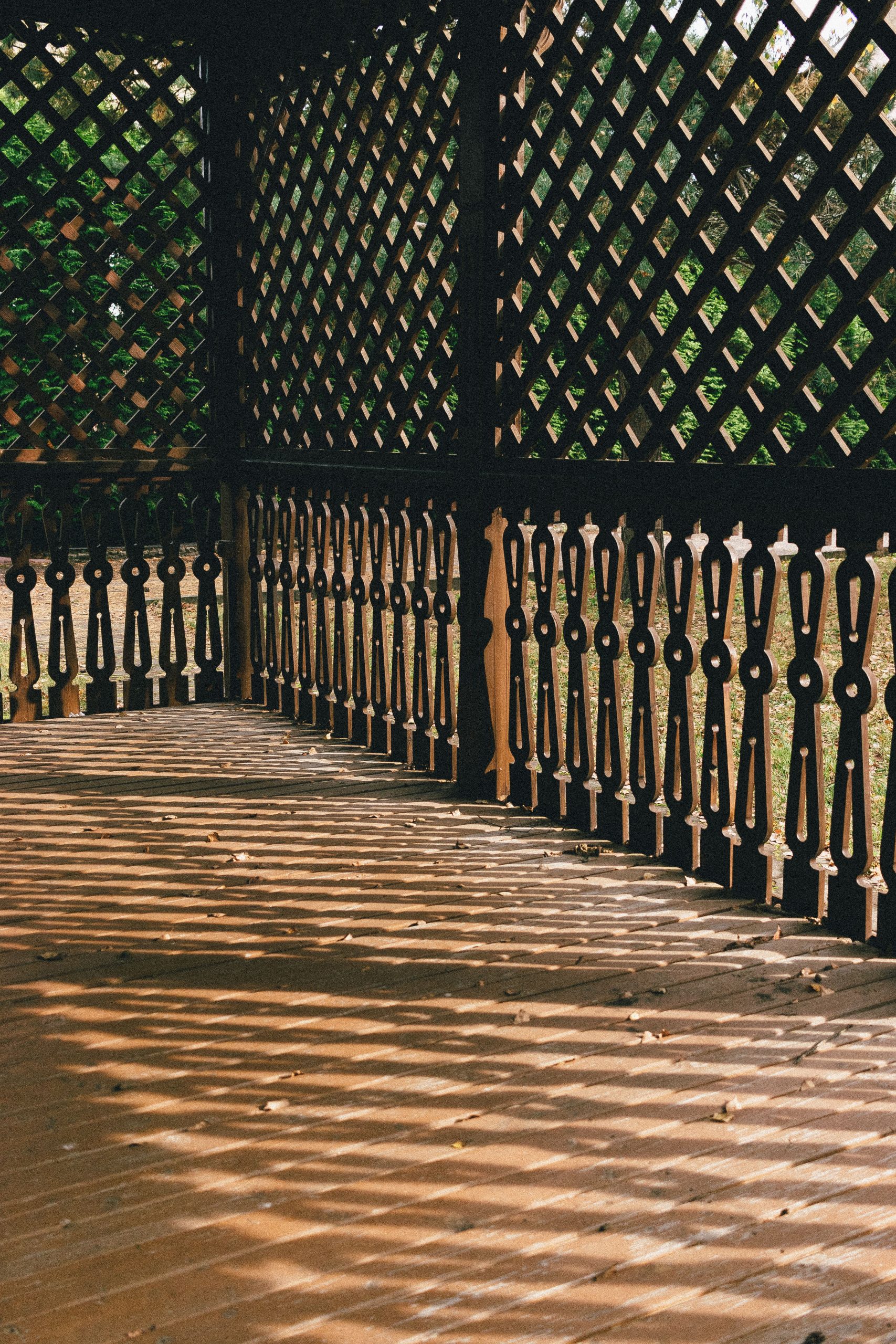
📏 Scale Guide
A structure like this, with its intricate lattice and carved details, is a significant investment in maintenance. The many small openings in the lattice are perfect traps for dirt, cobwebs, and pollen. The carved wooden balusters have nooks and crannies that are difficult to clean and re-stain. To keep a wooden gazebo looking its best, it requires a dedicated annual cleaning and sealing, which is a much more painstaking job than maintaining a simple, flat fence.
Your Private Outdoor Oasis Awaits
Creating privacy on your deck isn’t just about blocking a view; it’s about creating a feeling of sanctuary. As you’ve seen from these 29 ideas, there are endless ways to do it, from a simple fabric panel to a fully integrated architectural screen. Start with one corner, one idea that speaks to you, and build from there.
Feeling inspired? Follow us on Pinterest for a daily dose of achievable, stylish home and garden ideas that you’ll actually want to do.