29 Jaw-Dropping Kids Desk Ideas for a Seriously Stylish Homework Station Setup in 2026

You know that feeling—after hours of scrolling through Pinterest—when you finally find the one kids desk idea that looks *exactly* right for their room? It feels like a huge win. But then reality hits. Will it actually fit? Will it work for homework AND hobbies? We spent serious time browsing IKEA, Pottery Barn Kids, and Wayfair to bring you only what’s worth your attention this year. From IKEA’s latest drops to independent designer pieces, we pulled the best kids desk ideas across every price point—from around $150 to over $2500.
Inside, you’ll find 29 curated homework stations, covering every style from minimalist modern to playful and colorful built-ins. These aren’t just pretty pictures; they’re real, functional spaces that kids will actually use. The focus for 2026 is all about creating hardworking, personalized zones that can adapt as your child grows, a direct result of our homes working harder for us than ever before. And stay until the end—we break down the most common mistakes that can ruin these looks. 📌 Save this to Pinterest for later—you’ll want to revisit these ideas.
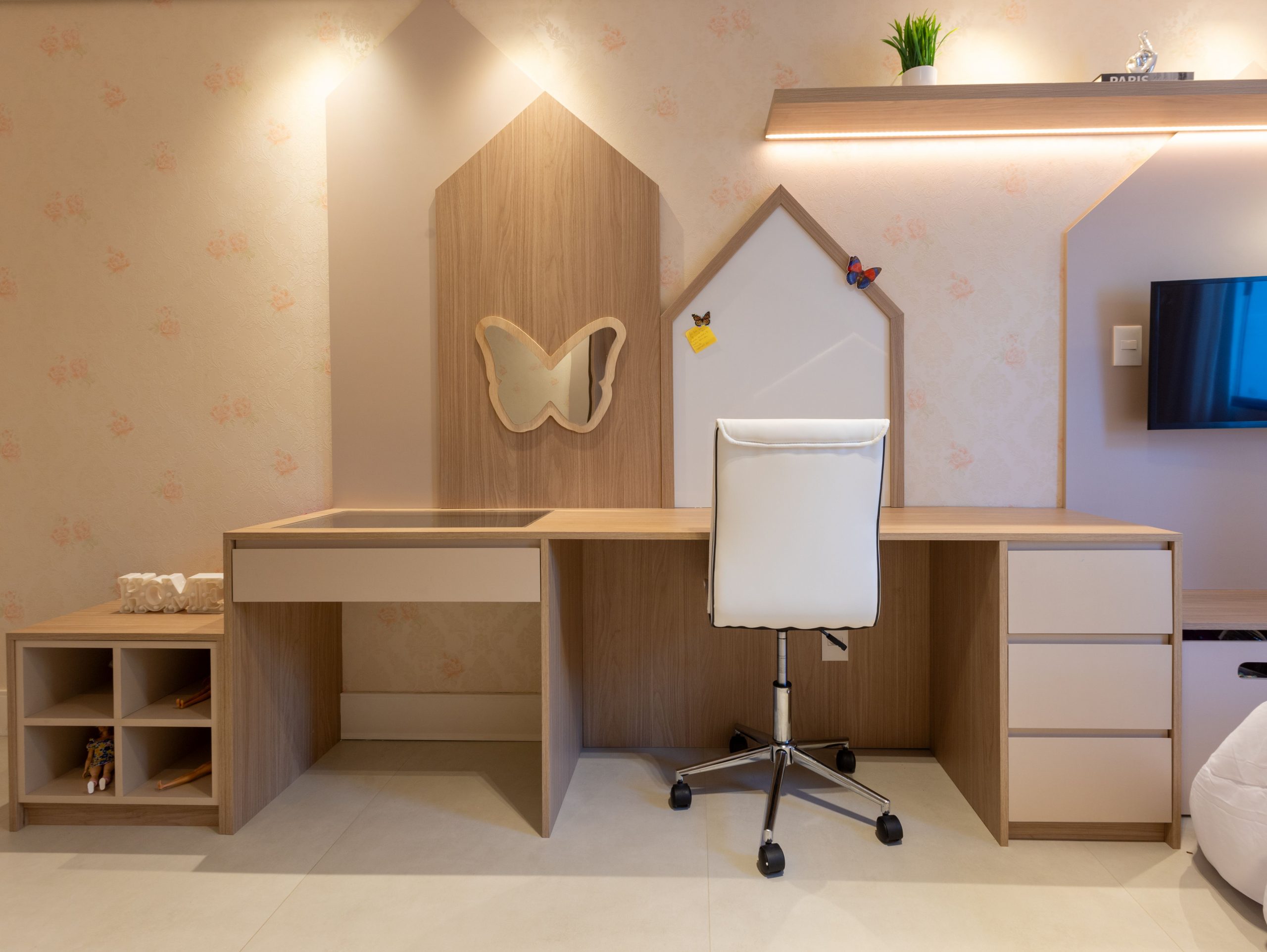
1. A Light Wood & Pale Pink Study Area with House-Shaped Accents
This setup is so successful because it perfectly blends playfulness with practicality. The house-shaped wall accents and butterfly mirror feel whimsical and personal, ensuring the space doesn’t feel like a stuffy office. Yet, the design is highly functional. The desk offers ample surface and storage, the chair is supportive, and the integrated lighting is task-oriented. It’s this balance that makes a kids’ space feel both inspiring for them and sensible to you. The design also relies on a tight color palette of light wood, pale pink, and white, making it feel cohesive and calm.
💰 Budget Breakdown
To prevent a theme from feeling too juvenile too quickly, ground it with sophisticated elements. Here, the clean lines of the desk unit and the chrome base of the office chair add a touch of modern polish. For the wallpaper, choose a pattern that is small in scale and somewhat abstract. A delicate floral like this one reads as a soft texture from a distance, giving it more longevity than a large-scale cartoon character print would. This ensures the space can evolve with the child’s age with only minor changes to the accessories.
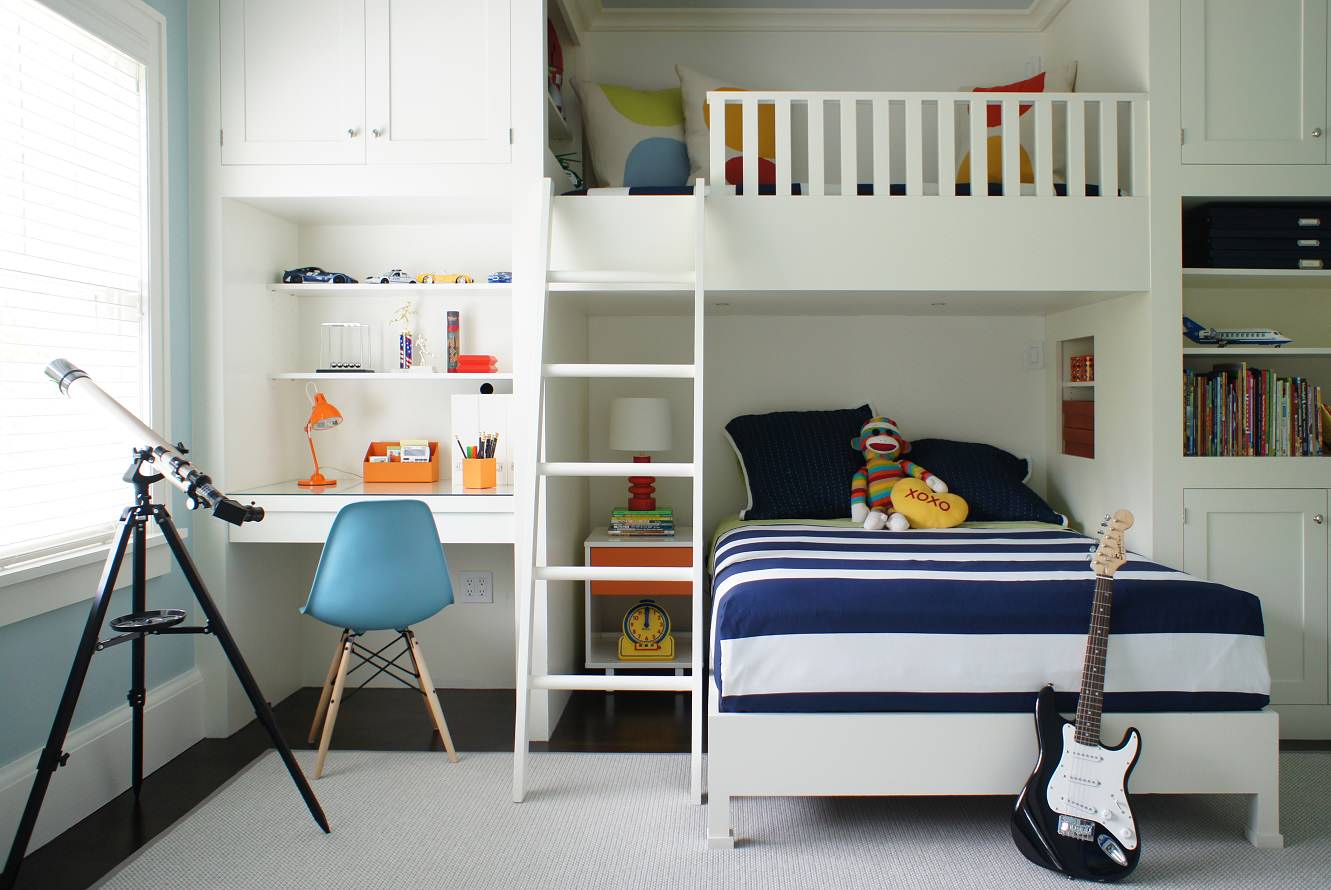
2. An Integrated Bunk Bed and Desk Nook with a Pop of Orange
A combined bunk bed and desk unit is a classic space-saver, perfect for rooms that are tight on square footage. This idea works best in a bedroom that’s at least 80 square feet, with a standard 8-foot ceiling. The key is the verticality; by stacking the sleep and study zones, you free up crucial floor space for play. Make sure you have at least 10 feet of wall length to accommodate the full unit without it feeling crammed. The integrated shelving is non-negotiable—in a small room, every bit of storage counts. This is a brilliant solution for maximizing function in a compact footprint.
📐 Style Math
Let’s be honest: ladders on bunk beds can be a safety concern, especially for younger kids or during middle-of-the-night bathroom trips. Always check the weight limits and ensure the ladder is securely fastened to the frame with no wobbling. Also, a built-in desk like this can sometimes lack adequate lighting. The overhead room light is often blocked by the top bunk, casting shadows on the workspace. You will absolutely need to add dedicated task lighting, like the cheerful orange lamp shown here, to make it a viable homework spot.
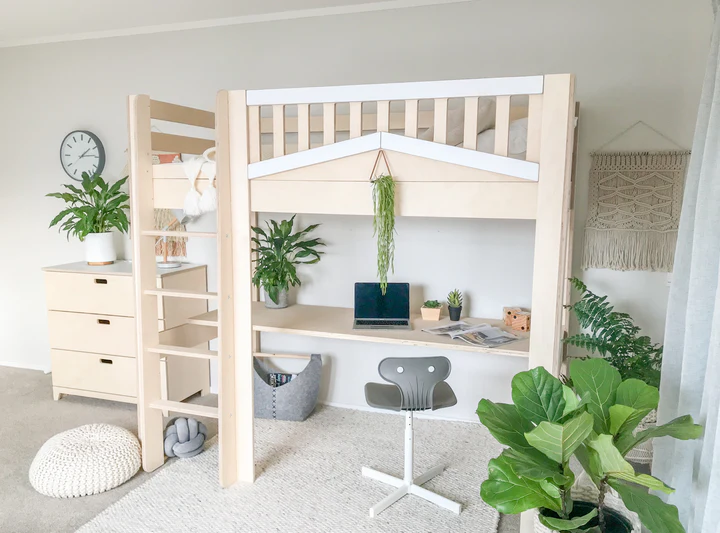
3. A Scandi-Style Natural Wood Loft Bed with an Integrated Desk
- Main Furniture (Loft Bed/Desk Combo): $800 – $2,000
- Ergonomic Chair: $150 – $400
- Textiles (Rug, Bedding): $200 – $500
- Decor & Accessories (Plants, Art): $100 – $250
- TOTAL: $1,250 – $3,150
- Budget alternative: Find a used loft bed on Facebook Marketplace ($200-$500) and pair it with a separate simple desk from IKEA ($100). The total cost could be brought down to $600 – $1,000.
✅ Before You Start
The single element holding this entire design together is the loft bed structure itself. Without it, you just have a desk and a bed taking up twice the floor space. The loft bed is the architectural heart of the room; it dictates the layout, creates the cozy desk nook underneath, and frees up a significant amount of floor area for other activities or, in this case, a feeling of spaciousness. Removing it would completely dissolve the room’s core concept of smart, vertical space-saving. It’s much more than just a piece of furniture—it’s a complete room solution. Compare its all-in-one form to the setup in Idea #18.
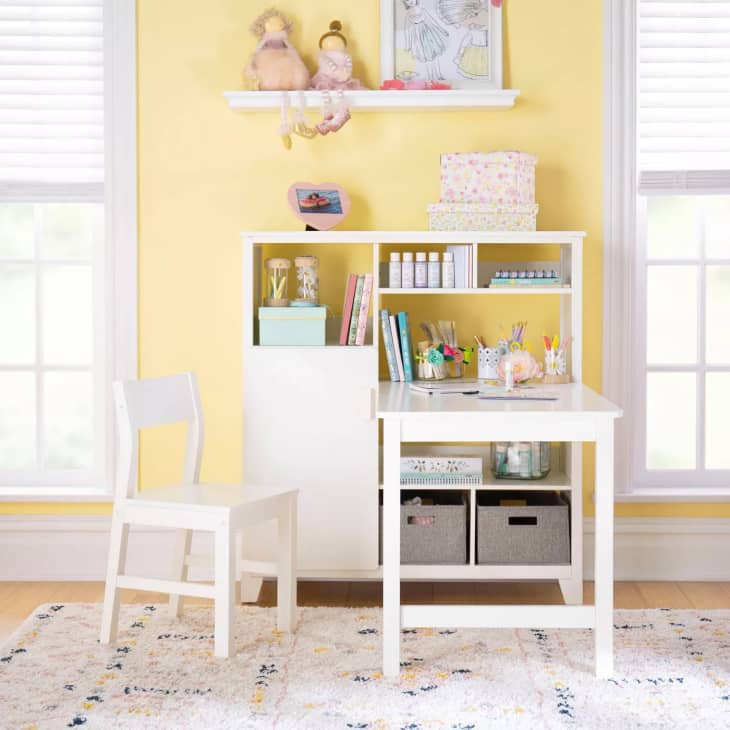
4. A Cheerful Study Space with a White Desk Against a Bright Yellow Wall
The formula here is simple and incredibly effective: 60% neutral foundation + 30% bold color + 10% curated accessories. The white desk, chair, and shelving provide a clean, neutral base that prevents the room from feeling overwhelming. The bright yellow wall is the confident splash of personality, covering a significant surface area for maximum impact. The final 10% comes from the small, playful items in various pastel colors that add detail and character. You could easily swap the yellow for a vibrant teal or even a deep magenta and the formula would still work perfectly.
🔧 How-To Brief
You don’t need a custom built-in to get this bright and organized vibe. IKEA is your best friend here. A simple white desk like the ‘MICKE’ or ‘LINNMON’ can be had for under $100. Pair it with a basic white ‘ADDE’ chair ($20) or a more substantial ‘JULES’ junior chair. The key is the paint color. A gallon of high-quality, cheerful yellow paint from a brand like Behr or Sherwin-Williams will run you about $40-$60 and will do all the heavy lifting in defining the space’s happy, energetic mood. The entire core setup could be yours for under $200.
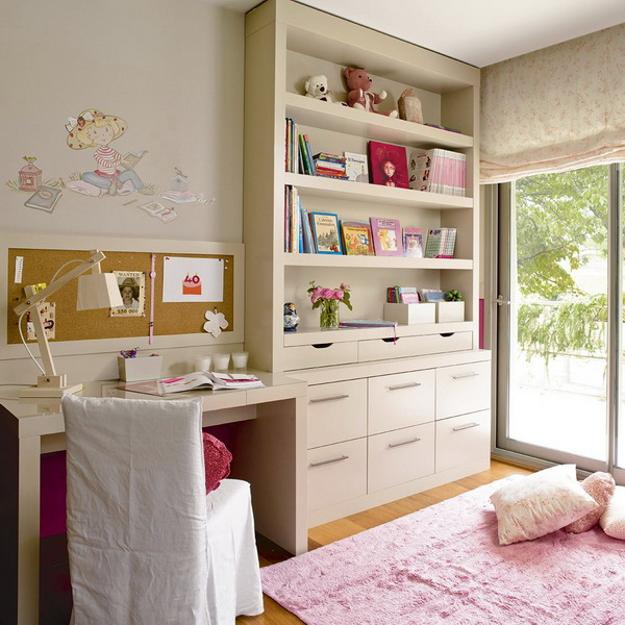
5. A Calm and Playful Study Nook in Beige and Pink
This nook feels incredibly serene and custom-made because of the seamless integration of furniture and wall color. By painting the built-in shelving unit the exact same light beige as the walls, the whole structure recedes visually, making the space feel larger and less cluttered. The color choice itself—a warm, sandy beige—is calming and sophisticated. The pops of soft pink on the rug and decal add a necessary dose of youthful playfulness without disrupting the overall tranquil atmosphere. The large cork board is another masterstroke, providing a huge canvas for personalization that can be changed in an instant.
📏 Scale Guide
- Measure Everything Twice: For a built-in look like this, precision is key. Measure the width, depth, and height of your nook. Don’t forget to account for baseboards or any unevenness in the walls.
- Assess Your Light Source: This area is successful because it’s right next to a massive glass door. If your chosen spot is dark, you’ll need to plan for integrated under-shelf lighting from the start.
- Check Existing Furniture: Do you have a chair that will work? The height of the desk needs to be compatible with the seating, typically around 29-30 inches for a standard chair.
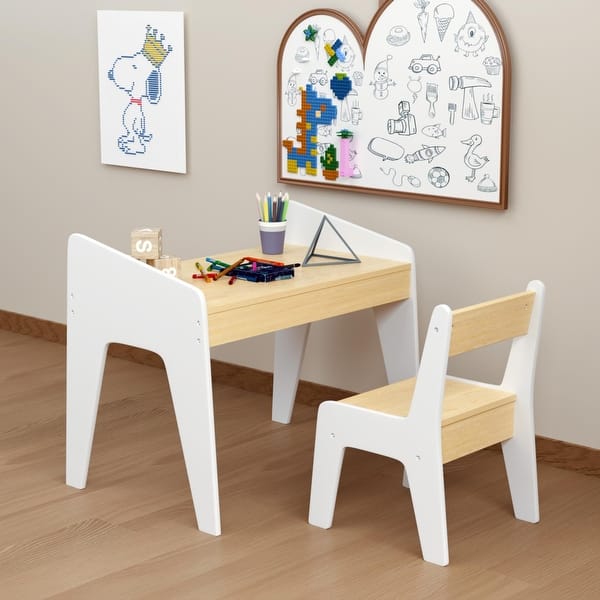
6. A Modern Minimalist Desk Set in White and Natural Wood
that makes this simple setup truly special is the arch-shaped magnetic whiteboard. It elevates the corner from just a desk and chair to a dedicated ‘idea zone.’ The playful drawings and colorful magnets instantly communicate that this is a space for creativity, not just tedious homework. Its unconventional shape breaks up the rigid lines of the desk and floor, adding a soft, modern curve that feels very current. Without it, the space would still be functional, but it would lack that central point of visual interest and fun that makes it so inviting for a child.
💸 Get This Look For Less
A mostly-white desk area looks fantastic… when it’s clean. The reality with kids, however, involves markers, paint, glue, and mysterious sticky spots. A white surface, especially a painted or laminated one, is prone to staining from errant ink. Be prepared for regular wipe-downs. For stubborn marks from permanent markers, a magic eraser or a bit of rubbing alcohol can often work wonders, but always test on an inconspicuous spot first. Opting for a satellite or melamine finish over a simple painted wood will give you much better durability and stain resistance.
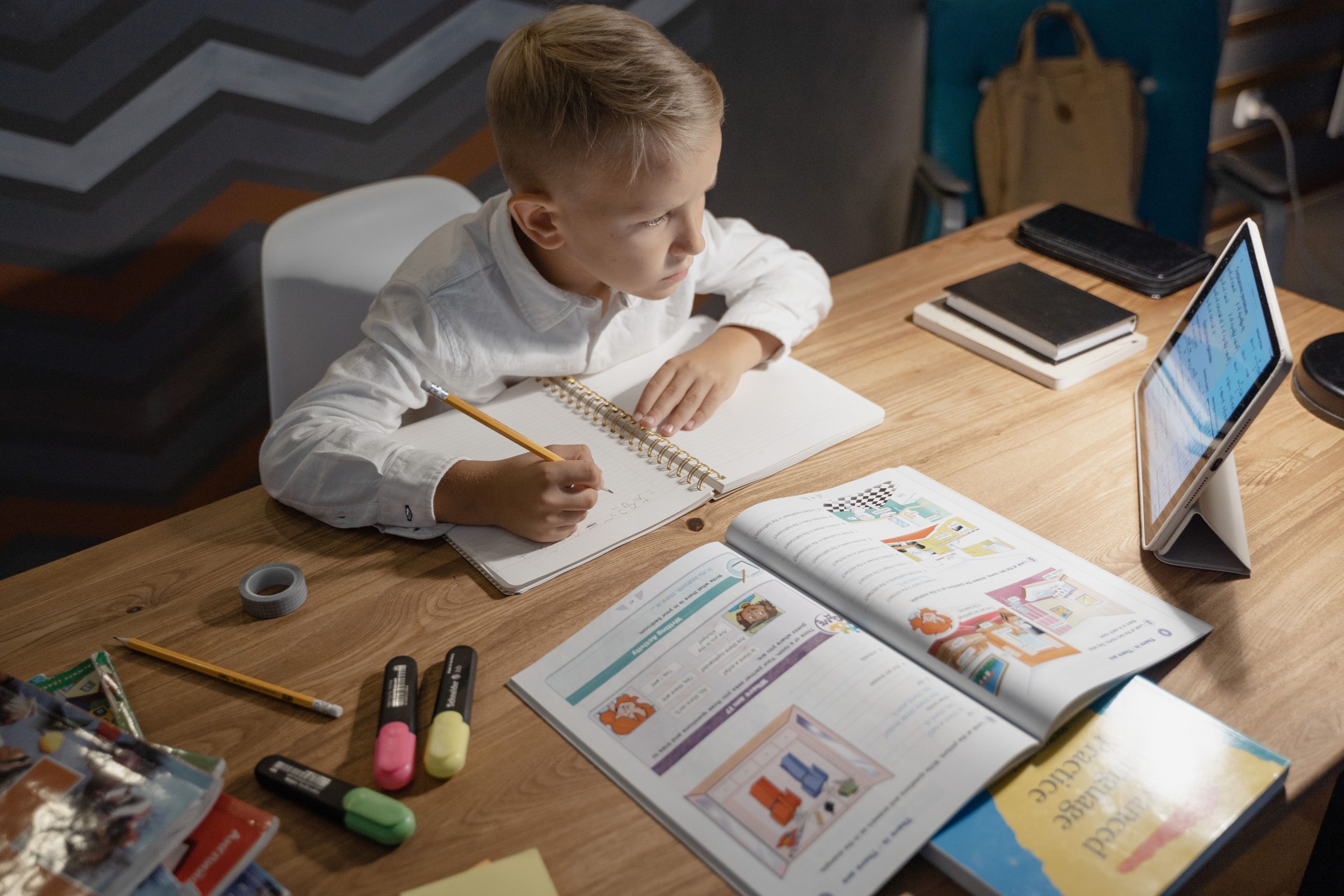
7. A Modern Kid’s Study Corner with Integrated Tablet
This image perfectly captures the reality of homework in 2026: a hybrid of digital and analog tools. The presence of a tablet alongside an open textbook and a handwritten notebook is no longer a novelty; it’s the standard. Today’s study spaces must be designed with this in mind. This means having enough surface area for both a screen and papers, as well as easy access to charging points. The trend is moving away from bulky computer towers and monitors towards more flexible setups that accommodate portable, multi-use devices a child can use for both research and relaxation.
🔥 Trending Context
When selecting a desk, look for a depth of at least 22 inches, preferably 24. Many compact or ‘small space’ desks are only 18-20 inches deep. While that might seem sufficient, by the time you place a tablet stand or a laptop on it, you’re left with very little room in front for an open textbook or a notebook. A child will end up hunched over or constantly shuffling things around. Those extra 2-4 inches of depth make a world of difference in creating a comfortable, un-cramped workspace where both digital and physical tools can coexist peacefully.
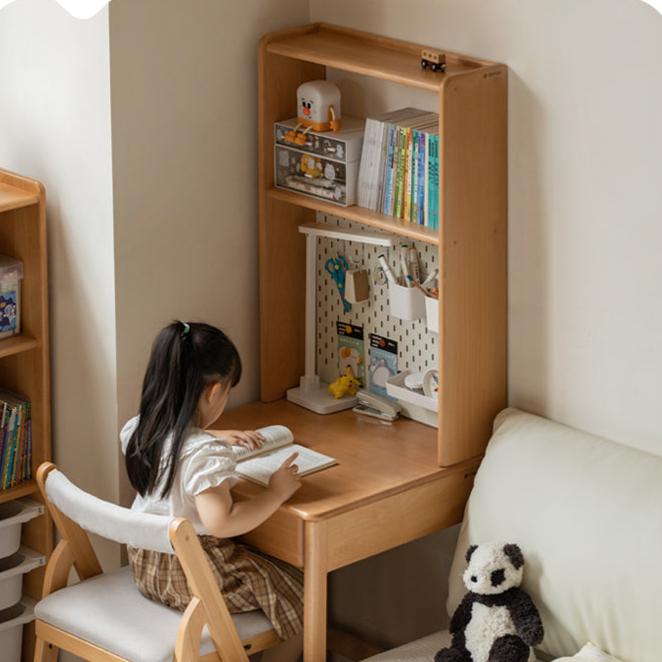
8. Light Wood Kids Desk with Pegboard and Integrated Shelving
This desk design is a masterclass in maximizing vertical space. By integrating shelving above the desk and a pegboard backsplash, the unit provides a huge amount of storage without increasing its footprint. This is crucial for keeping a small desk surface clear and ready for work. The use of a single material—light wood—for both the desk and chair creates a calm, cohesive look, while the white pegboard and organizer add a touch of brightness and modernity. It feels compact but not crowded, a direct result of its thoughtful, all-in-one design.
💡 Designer Tip
How-To: Create a Pegboard Organizer Wall
- Time Estimate: 1 hour. Cost: $40-$80.
- Measure & Buy: Measure the wall area behind your desk. Purchase a pegboard panel (standard at hardware stores) and have it cut to size if needed. Also buy a pegboard hook and accessory kit.
- Create a Frame (Crucial!): Cut 1×2 wood strips to create a frame for the back of the pegboard. This creates the necessary space for the hooks to be inserted. Screw the frame onto the back perimeter of the pegboard.
- Mount to Wall: Locate the wall studs using a stud finder. Drill pilot holes through the frame and into the studs. Secure the entire panel to the wall with long screws.
- Accessorize: Now for the fun part! Arrange your hooks, shelves, and containers on the pegboard to hold supplies.
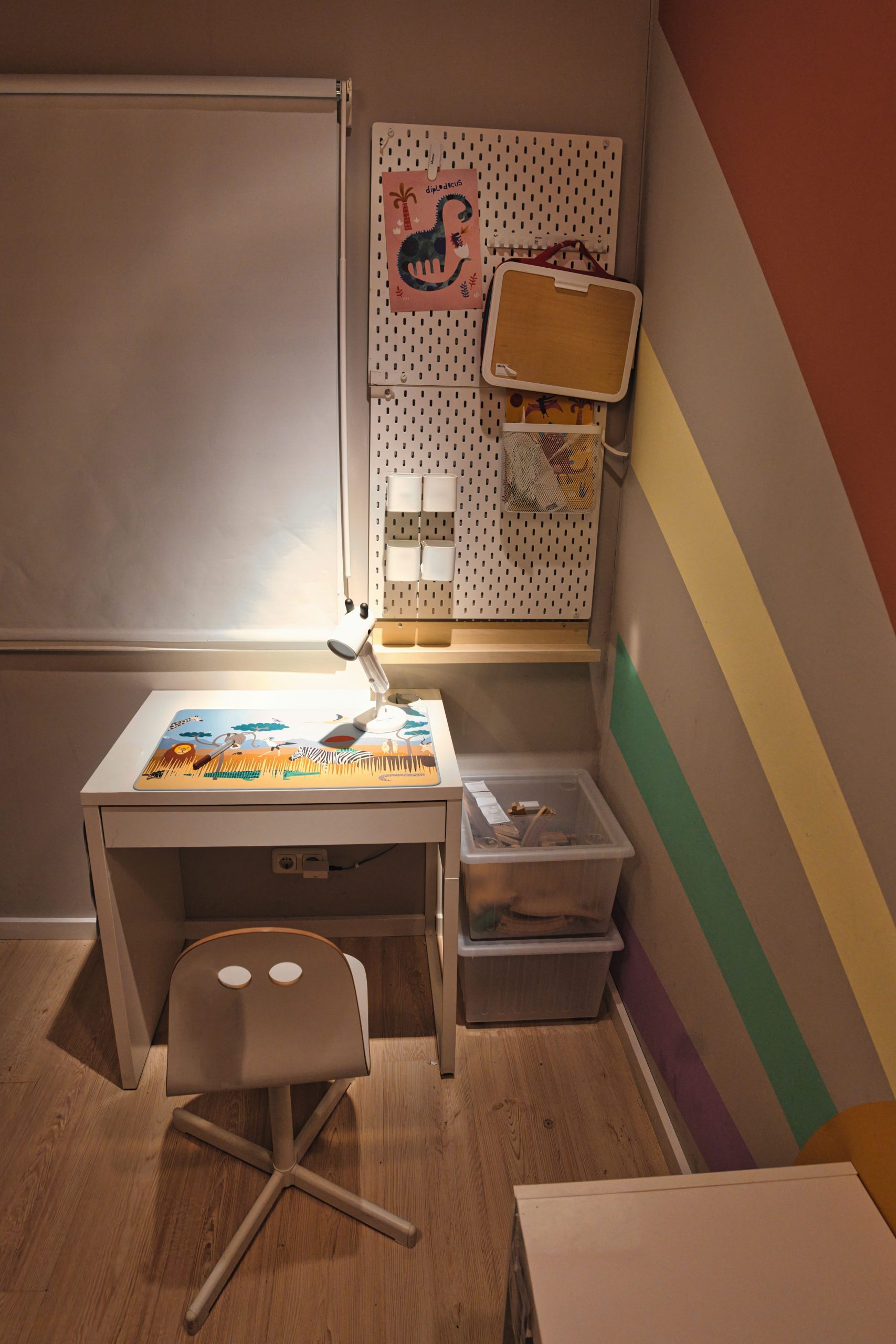
9. Kids’ Desk with Colorful Striped Accent Wall
Undoubtedly, the diagonal striped accent wall is the hero of this space. It injects a massive dose of energy and personality that the simple white furniture alone could never achieve. It acts as a piece of large-scale art, defining the zone and making it feel special. The choice of broad, diagonal stripes is more dynamic and playful than standard vertical or horizontal ones. If you were to paint that wall a solid, neutral color, the desk area would instantly become more generic and forgettable. It’s a perfect example of how a bold paint treatment can be the most impactful element in a room. Compare this use of a pegboard to the one in Idea #10.
🧹 Maintenance Reality
The core components here are wonderfully affordable. The star of the show—the striped wall—is just a few sample pots of paint and a roll of painter’s tape. You can get a basic white desk and a simple swivel chair from Target or Walmart for a combined total of around $150-$200. The pegboard, a fantastic vertical storage solution, can be found at any home improvement store for about $25. This look is all about the creative application of paint, not expensive furniture. It’s a high-impact design on a surprisingly low budget.
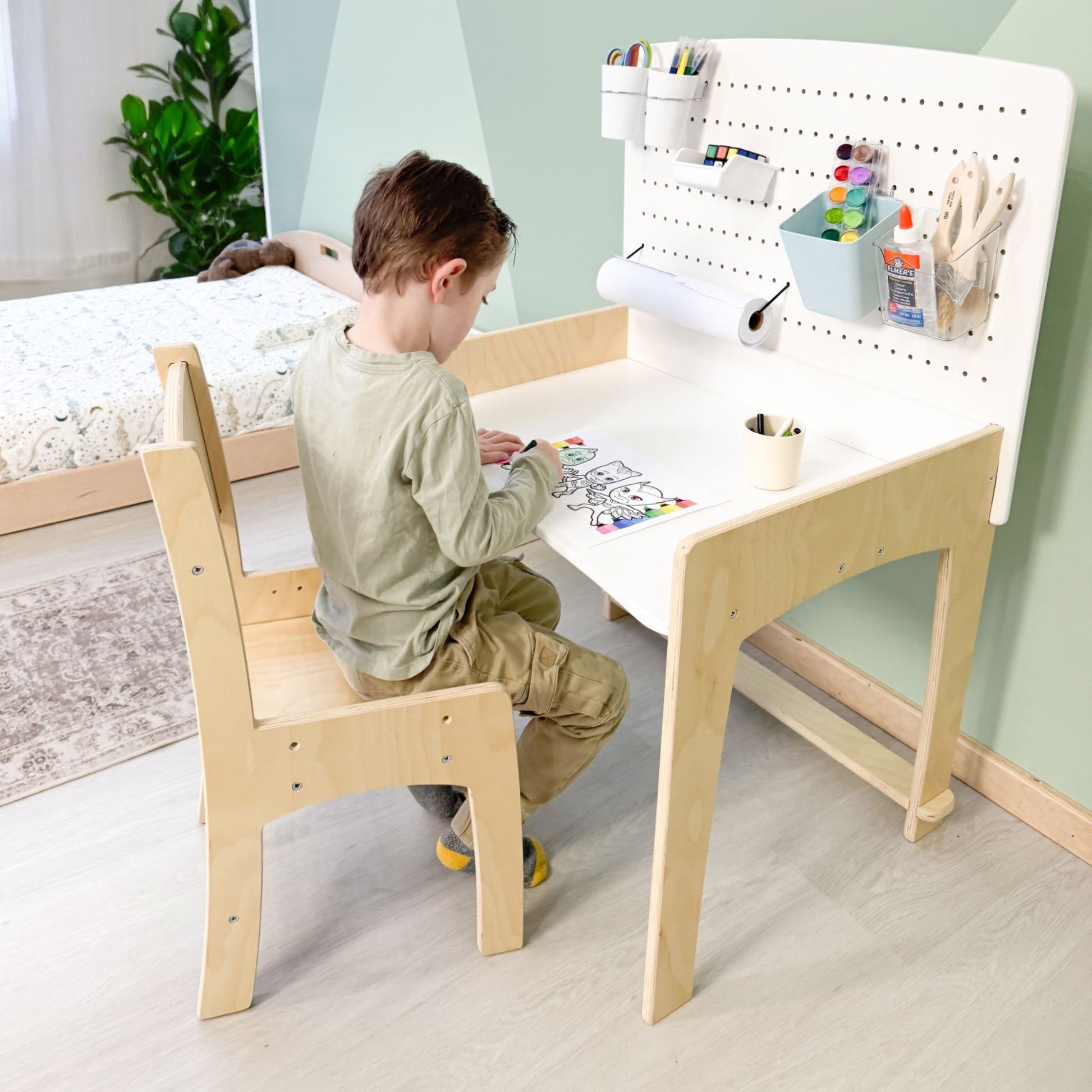
10. Plywood Desk with White Pegboard Storage and Integrated Paper Roll
The genius of this desk lies in its ‘creative-first’ design. It’s not just a place for homework; it’s a dedicated art station. The integrated paper roll is a brilliant feature that encourages spontaneous drawing and minimizes the mess of loose papers. The plywood construction gives it a sturdy, workshop-like feel that can stand up to serious creative endeavors, while the white pegboard keeps all the necessary tools visible and within arm’s reach. This focus on function and accessibility makes it an incredibly inviting space for a young artist to get lost in their work.
⚠️ Real Talk
Plywood furniture has a cool, modern, slightly industrial vibe, but not all plywood is created equal. For a piece that a child will be interacting with up close, ensure it’s made from high-grade, zero-VOC plywood to avoid off-gassing. More importantly, the edges need to be expertly finished. Raw, splintery plywood edges are a definite hazard for little hands. Look for pieces that have been smoothly sanded and sealed with a durable, non-toxic lacquer. If you’re DIY-ing, spend extra time on sanding and finishing the edges—it’s a critical safety step.
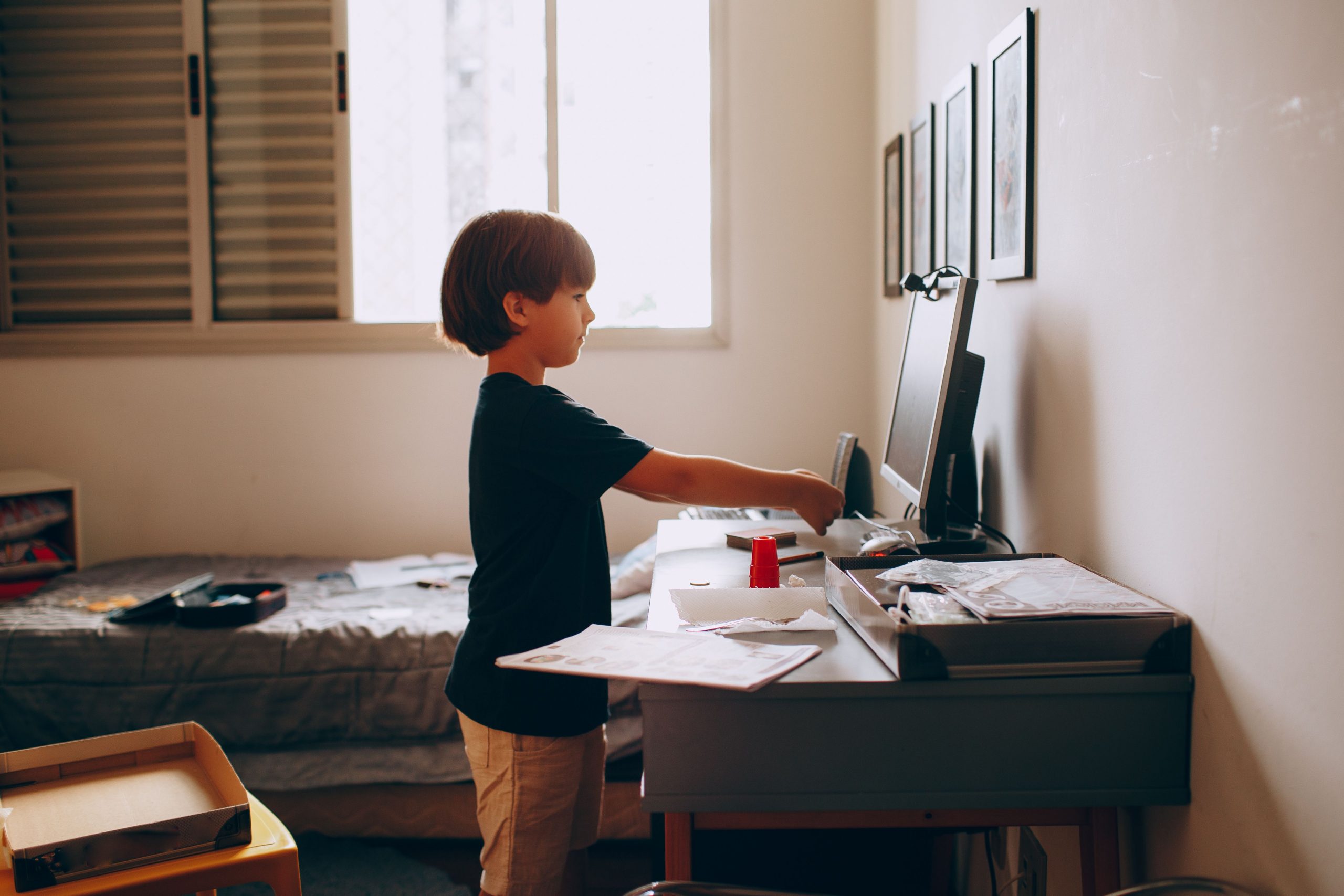
11. A Quiet, Neutral-Toned Study Space with Framed Wall Art
This room follows a classic and calming formula: 70% warm neutrals + 20% grounding black + 10% wood tones. The light tan walls and gray bedding create a soft, neutral envelope that feels quiet and restful. The black elements—the desk legs, speaker, and especially the picture frames—act as punctuation marks, adding structure and a touch of graphic sophistication. The final 10% is the warm wood tone of the desk legs, which prevents the space from feeling too cold or stark. This balanced recipe is perfect for a child who is easily distracted and needs a calm environment to focus.
⭐ The One Thing
When creating a gallery wall in a child’s room or study area, resist the urge to hang the art too high. The midpoint of the art grouping should be at the child’s eye level when they are standing, not yours. This makes the art feel like it belongs to them and their space. For a desk area like this, hang the frames so the bottom edges are about 8-10 inches above the desk surface. This connects the art to the furniture, making the entire wall feel like a single, cohesive composition rather than disconnected floating frames.
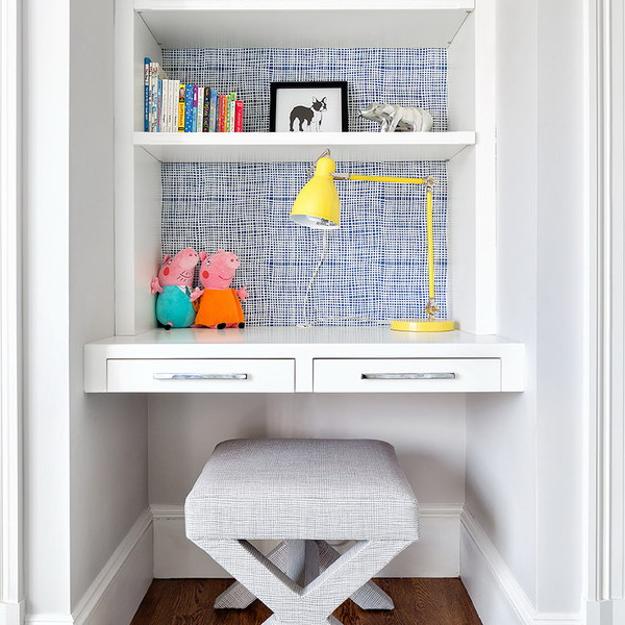
12. A Playful Built-in Desk Nook with Patterned Wallpaper
The patterned wallpaper is the undeniable star of this show. By limiting it to the back wall of the alcove, it acts like a framed piece of art, adding depth, pattern, and personality without overwhelming the room. It transforms a simple architectural feature into a major design moment. The high-contrast blue and white pattern is bold and playful, setting a youthful tone, while the simple white desk and shelves allow it to remain the focal point. Without the wallpaper, this would just be a practical nook; with it, it’s a destination.
🎯 What Makes It Work
How-To: Wallpaper a Nook
- Time Estimate: 2-3 hours. Cost: $50 – $200 (for peel-and-stick).
- Prep the Wall: Clean the wall thoroughly with a mild soap and water, then let it dry completely. Remove any outlet covers.
- Measure and Cut: Measure the height and width of your nook. Cut your first panel of peel-and-stick wallpaper a few inches longer than the height.
- Apply the First Panel: Starting at a top corner, peel back about 12 inches of the backing. Align the top edge and gently smooth it down with a plastic smoother, working from the center out. Continue pulling off the backing and smoothing as you work your way down.
- Match the Pattern: For the next panel, carefully align the pattern with the first panel before sticking it down. There will likely be a slight overlap.
- Trim the Edges: Once all panels are up, use a sharp craft knife and a straight edge to cleanly trim the excess at the top, bottom, and corners.
13. An Adjustable School-Style Desk and Chair Set
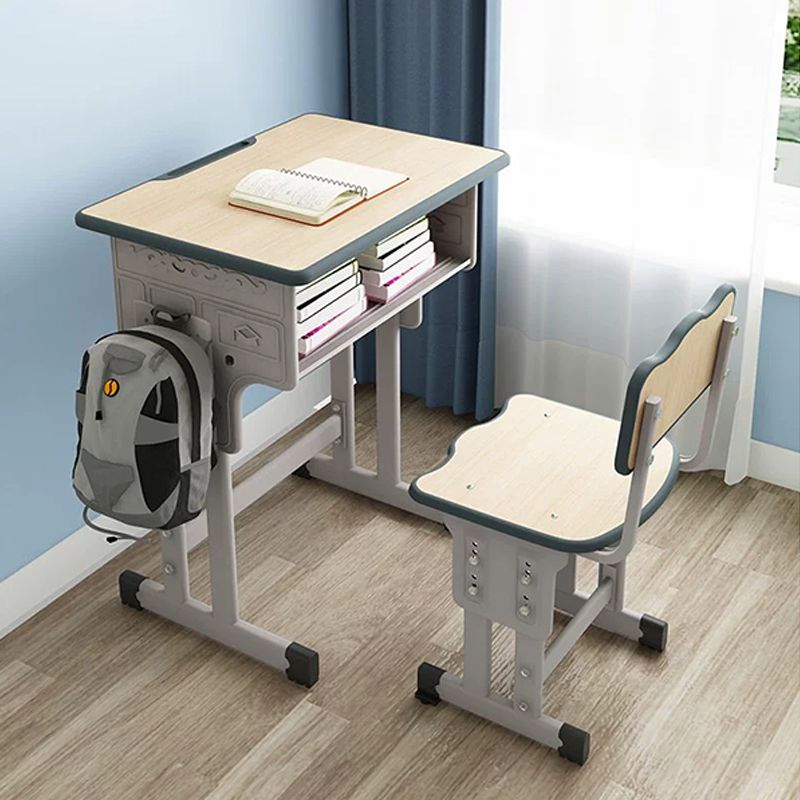
The biggest strength of this desk set is its ergonomic intelligence. Both the desk and chair are adjustable in height, meaning they can be perfectly tailored to a child’s proportions and grow with them over several years. This is a huge advantage over fixed-height furniture, ensuring proper posture (feet on the floor, elbows at a 90-degree angle) which is crucial for comfort and focus during homework. The practical features, like the under-desk shelf and backpack hook, are designed with a real school day in mind, encouraging organization from a young age. This is a purchase that prioritizes long-term health and usability. Compare this modern take to the vintage version in Idea #14.
💰 Budget Breakdown
Desks with this type of light wood laminate surface are generally durable, but they have an Achilles’ heel: the edges. The gray polymer or plastic trim that seals the edge of the particleboard can sometimes peel or chip, especially if the desk is bumped or if a child picks at it. Once moisture gets into the particleboard underneath, it can swell and crumble. To keep it in good shape, avoid placing it in high-traffic areas where it might get knocked, and teach your child that the edge trim isn’t a toy to be peeled away.
14. A Rustic-Inspired Vintage School Desk
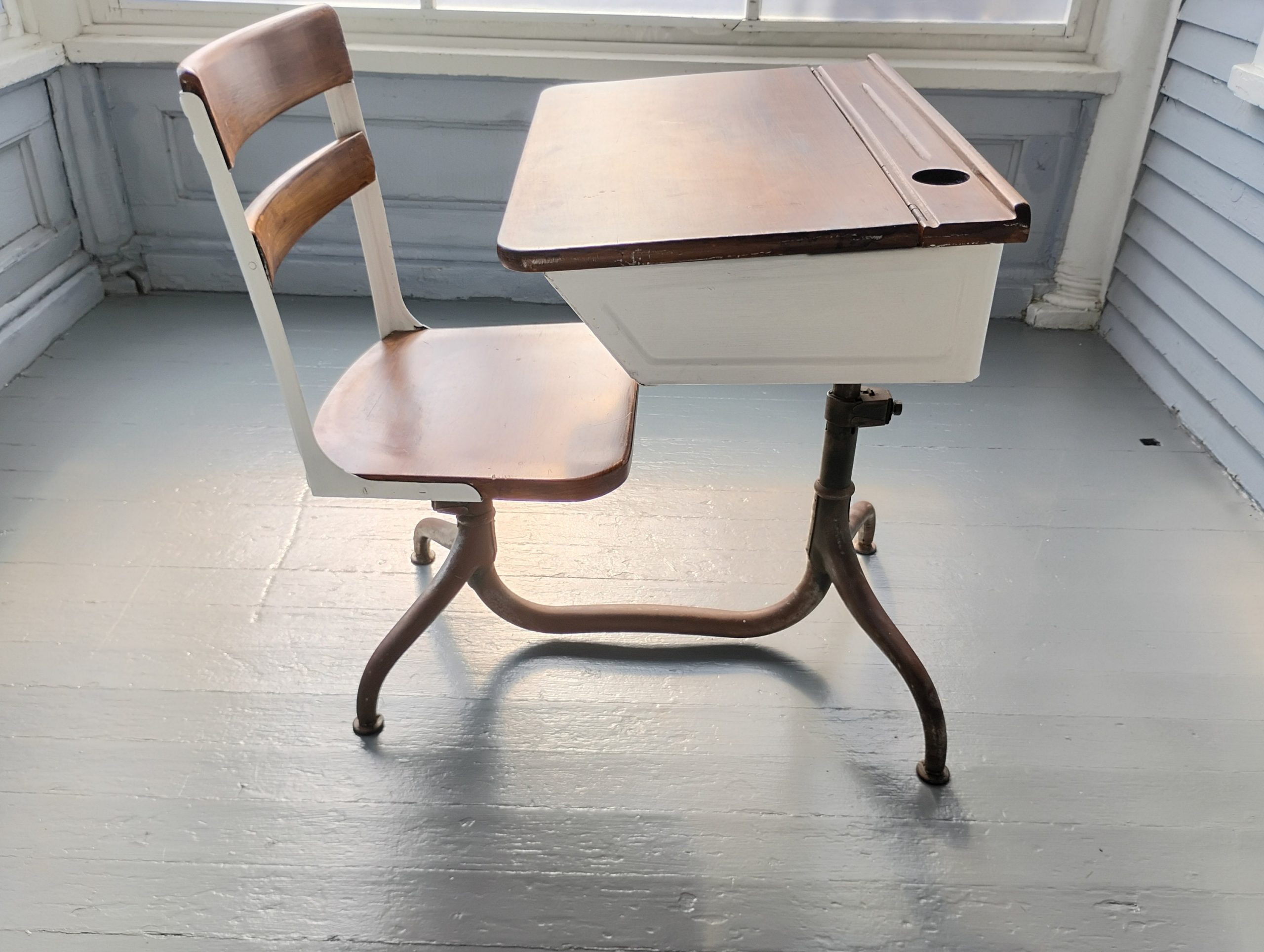
There’s a growing appreciation for nostalgic, built-to-last pieces, and this vintage-style school desk fits right in. In an era of disposable flat-pack furniture, items that evoke a sense of history and sturdiness are having a moment. This desk taps into the ‘modern farmhouse’ and ‘academic’ aesthetics, offering a sense of authenticity. It’s not just a desk; it’s a story piece. Parents appreciate the solid wood and metal construction, a welcome contrast to plastic, while kids enjoy having a ‘real’ school desk at home. It’s character-rich and feels more permanent than many contemporary options.
📐 Style Math
While charming, vintage or vintage-style school desks often lack modern ergonomics. The chair and desk are typically fixed in their height and relationship to each other, so you can’t adjust them as your child grows. The seats are often hard wood with no contouring, which can be uncomfortable for long study sessions. And let’s not forget storage—the little compartment under the lid is cute, but it’s not designed to hold today’s binders, textbooks, and devices. This is a great choice for shorter tasks like drawing or occasional homework, but maybe not for hours-long study marathons.
15. A Natural Wood Desk with an Adjustable Green-Cushioned Chair
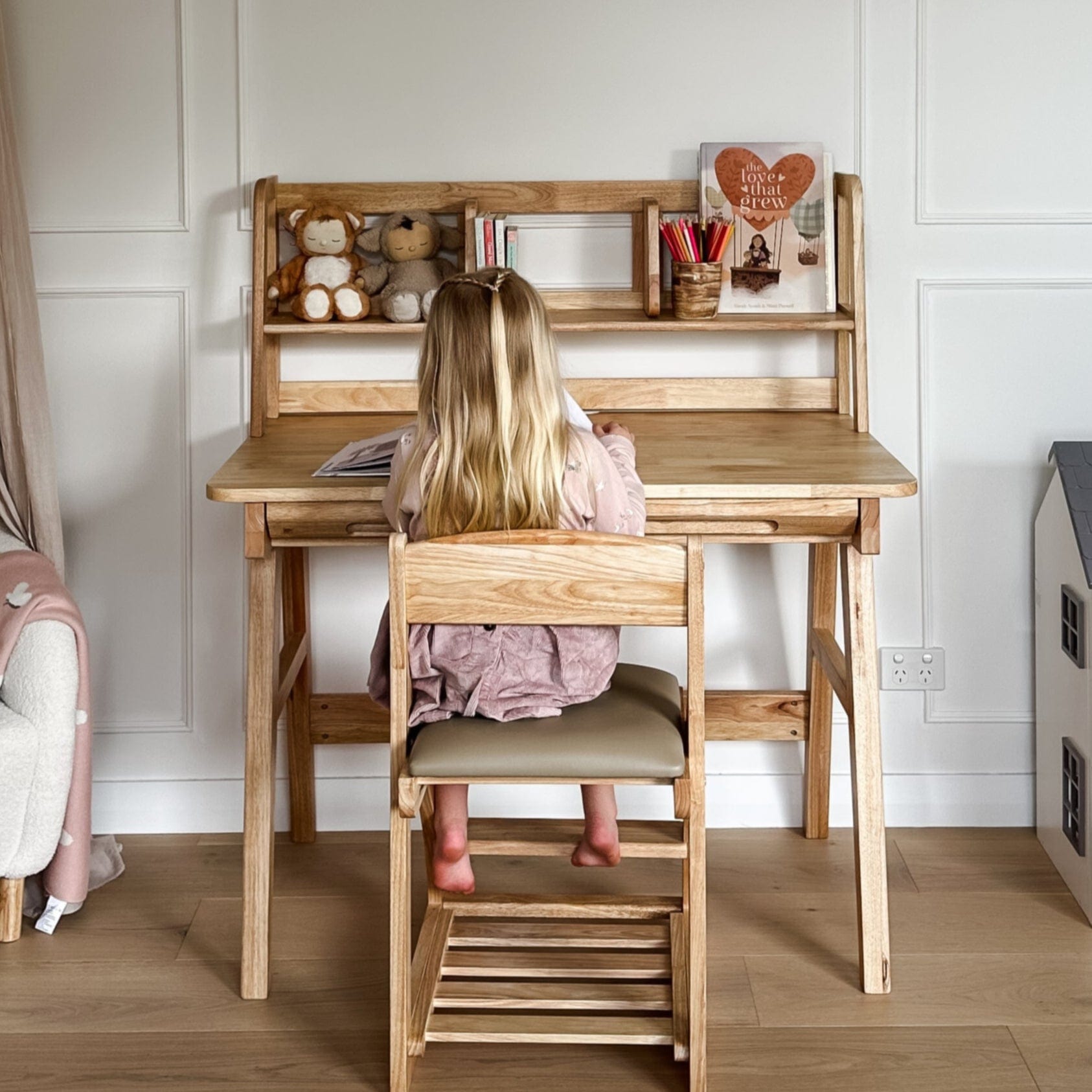
An adjustable footrest on a child’s chair is a game-changer for ergonomics, especially for younger kids whose feet don’t yet reach the floor. Proper posture starts from the ground up. When feet are dangling, it puts strain on the lower back and encourages slouching. A solid footrest provides that crucial stability, allowing the child to sit back properly in their chair and maintain focus for longer. It’s a feature that many parents overlook, but it makes a significant difference in comfort and skeletal support during formative years.
✅ Before You Start
This study area exudes a sense of calm and order, primarily due to its material consistency and thoughtful design. The desk, chair, and even the flooring are all in a similar light, natural wood tone, which creates a harmonious and unified look. The integrated hutch provides ample vertical storage, keeping the main desk surface clear and ready for tasks. The pop of soft green on the chair cushion adds a touch of gentle color without being distracting. Finally, the white paneled wall provides a clean, textured backdrop that feels classic and bright.
16. A Personalized White Desk with Built-in Shelving
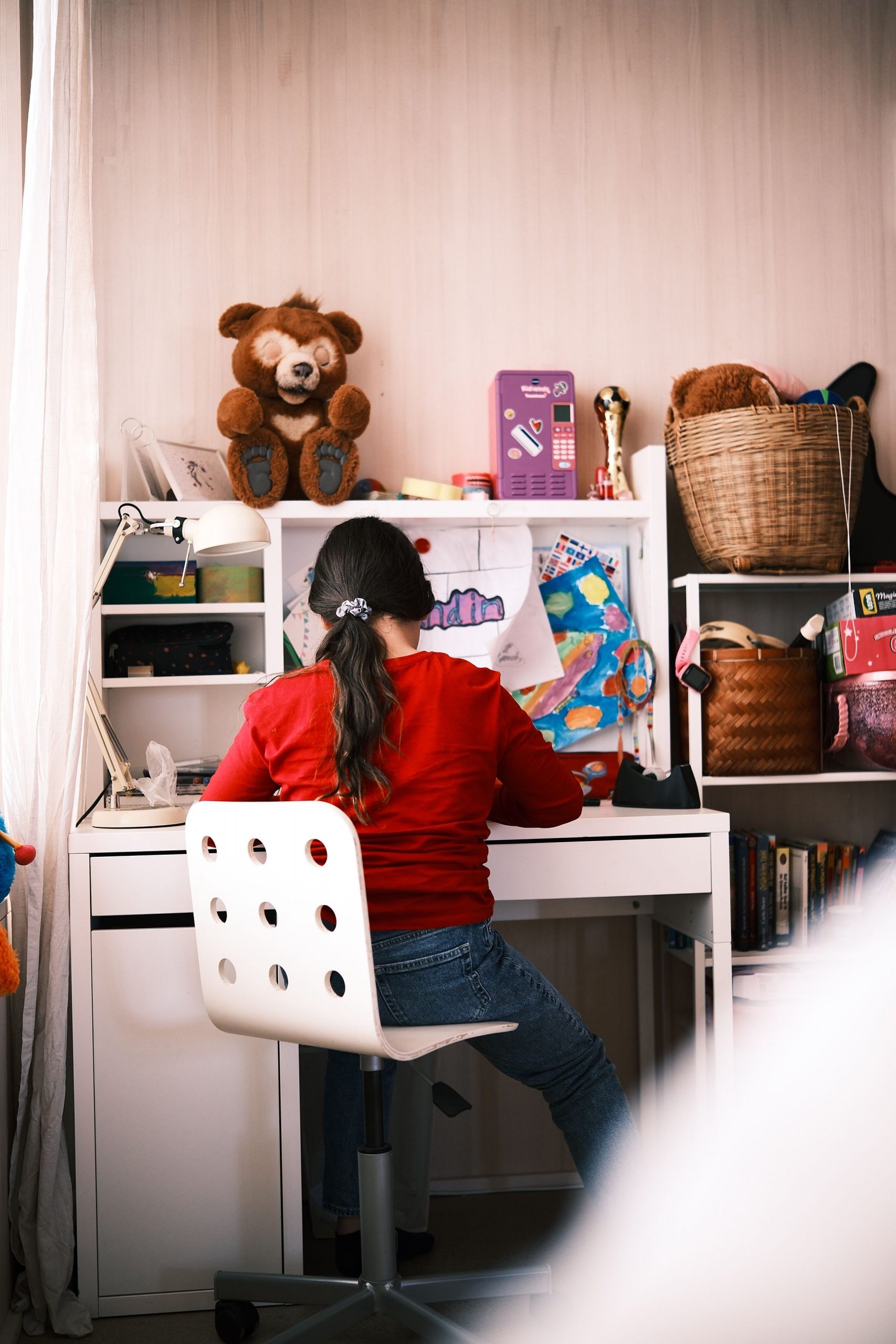
The key to this desk’s success is its celebration of personality. While the furniture itself is a simple, practical white desk with a hutch, it’s the curated chaos of personal items that brings it to life. The teddy bear tucked into a shelf, the woven baskets, the specific choice of books and supplies—it all tells the story of the child who uses it. This isn’t a sterile, magazine-perfect setup; it’s a lived-in, functional workspace that reflects individual interests. Removing the personal decor would leave you with a functional but soulless piece of furniture. This is a space that says ‘this is my spot’.
🔧 How-To Brief
A desk with an integrated hutch like this one is a fantastic all-in-one solution, but it has visual weight. This idea works best on a solid wall, clear of windows, that’s at least 5-6 feet wide. This allows the unit to feel anchored and intentional, rather than crammed in. The ideal room would have at least 8-foot ceilings to prevent the top of the hutch from feeling oppressively close to the ceiling. In a room with lower ceilings or less wall space, a similar unit could make the room feel top-heavy and crowded. Consider a desk with separate, wall-mounted floating shelves for a lighter feel in smaller spaces.
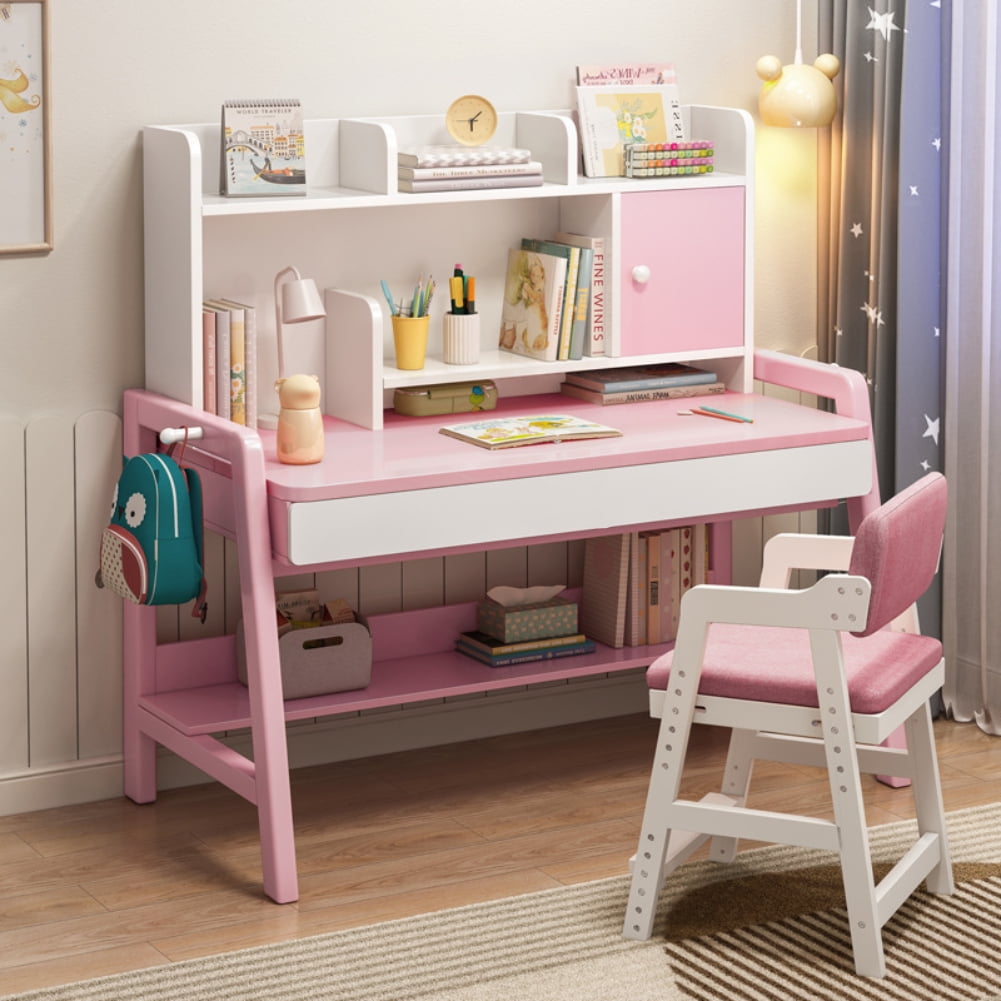
17. A Bright Pink and White Kids Desk with an Integrated Bookshelf
This vibrant space operates on a confident 50/50 split. About 50% of the furniture’s surface area is bright, saturated pink, and the other 50% is clean, crisp white. This bold pairing creates a high-energy, cheerful look that’s unapologetically fun. The formula is balanced by keeping the background simple—the light-colored carpet and neutral curtain don’t compete for attention. This allows the desk itself to be the absolute focal point of the room. The key is the commitment to the two-tone scheme across the entire piece, which makes it feel cohesive and intentional.
📏 Scale Guide
A desk that’s this intensely color-specific can be a challenge long-term. A child who adores bright pink at age 7 might be completely over it by age 10. While this look is incredibly fun, be prepared for its potential expiration date. If you’re not up for replacing the entire unit in a few years, consider a more neutral desk (like white or wood) and bring in the bold color with elements that are easier and cheaper to swap out: the chair, a desk lamp, storage boxes, and wall art. This gives you the same fun-loving vibe with much greater flexibility.
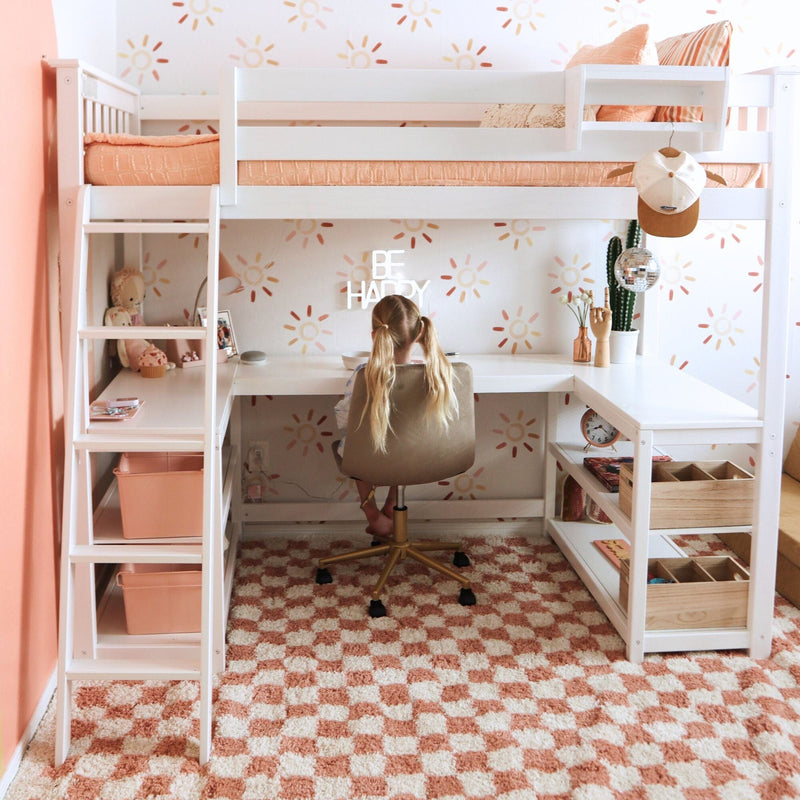
18. A Sunny White Loft Bed with an L-shaped Desk Below
The brilliance of this setup lies in its clever use of decals and textiles to create a cohesive theme. The varied sun decals scattered on the wall establish a cheerful, sunny mood instantly. This motif is then perfectly echoed in the peach and white checkered rug, which grounds the space and adds softness. The ‘BE HAPPY’ neon sign reinforces the positive vibe. It’s a great example of how you can build a strong theme using relatively simple, non-permanent elements, all unified by a warm and inviting color palette of white and peach. This is a much more flexible approach than, say, a bed shaped like a castle.
💸 Get This Look For Less
You can achieve this sunny look for much less. Search for a basic white loft bed with a desk on a secondhand site like Facebook Marketplace—they are plentiful as kids grow up and move out. The real personality comes from the decor. You can find packs of wall decals on Etsy or Amazon for under $30. A cheerful checkered rug can be sourced from stores like Target or Rugs USA during a sale for around $100. The key is to commit to a simple color scheme (like white and peach) and repeat it across these affordable, easy-to-change elements.
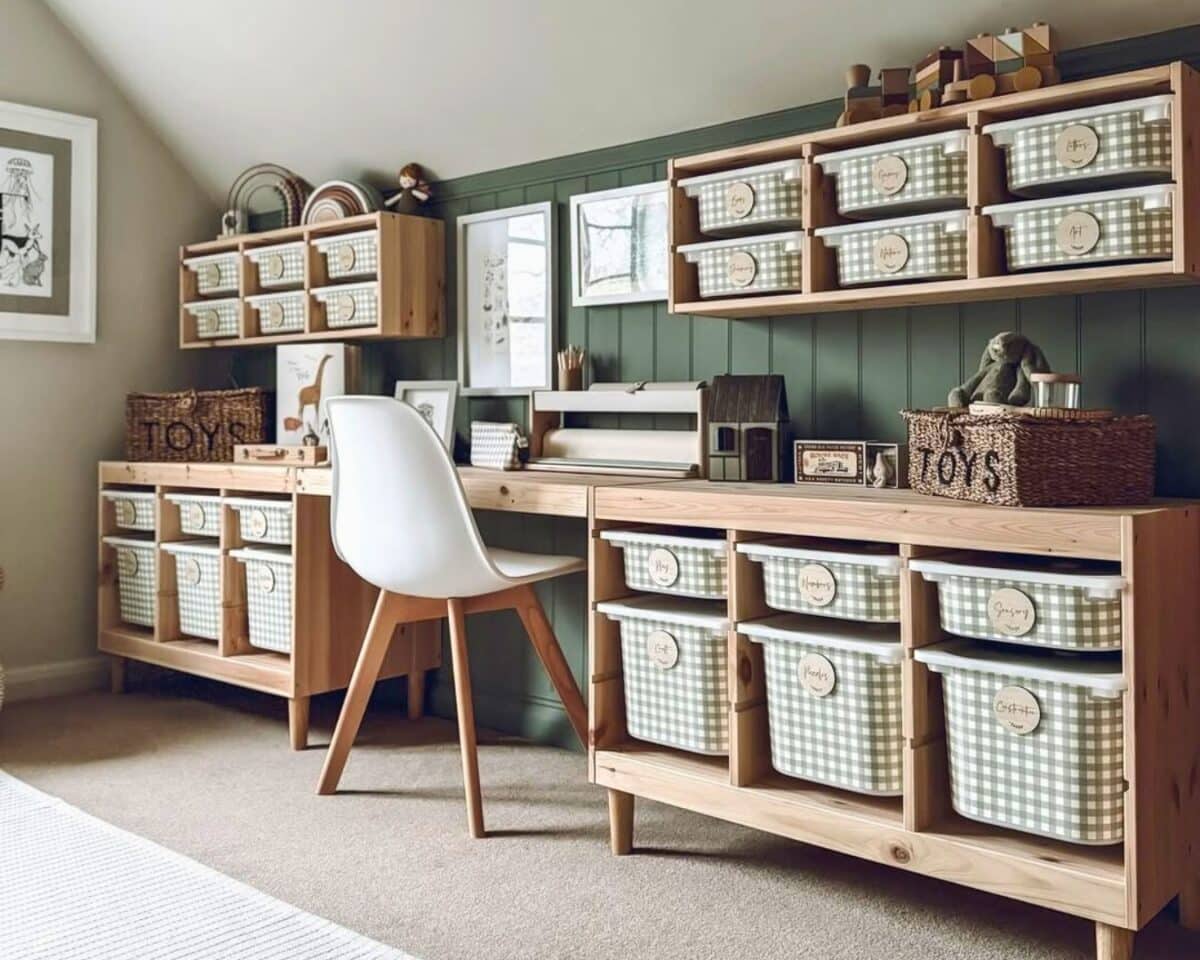
19. A Natural Wood Desk Paired with a Dark Green Paneled Wall
For an accent wall that really makes an impact, go deeper and darker with your color choice than you might think. A rich, dark forest green like this one provides a dramatic and sophisticated backdrop that makes the light natural wood of the furniture pop. People often worry dark colors will make a room feel small, but when used on a single feature wall, it actually adds depth and character. The key is to balance it with plenty of light-colored elements—like the beige carpet and walls here—to keep the overall feeling bright.
🔥 Trending Context
This calming and organized look is built on a sophisticated ratio: 50% natural textures, 40% calming neutrals, and 10% bold color. The light wood desk, woven toy baskets, and wood-framed art make up the textural base. The beige-grey walls and carpet provide the large, quiet neutral backdrop. The final, impactful 10% is the dark green paneled accent wall, which acts as the focal point. The gingham storage bins are a clever bridge, combining the neutral white and a softer green to tie everything together seamlessly.
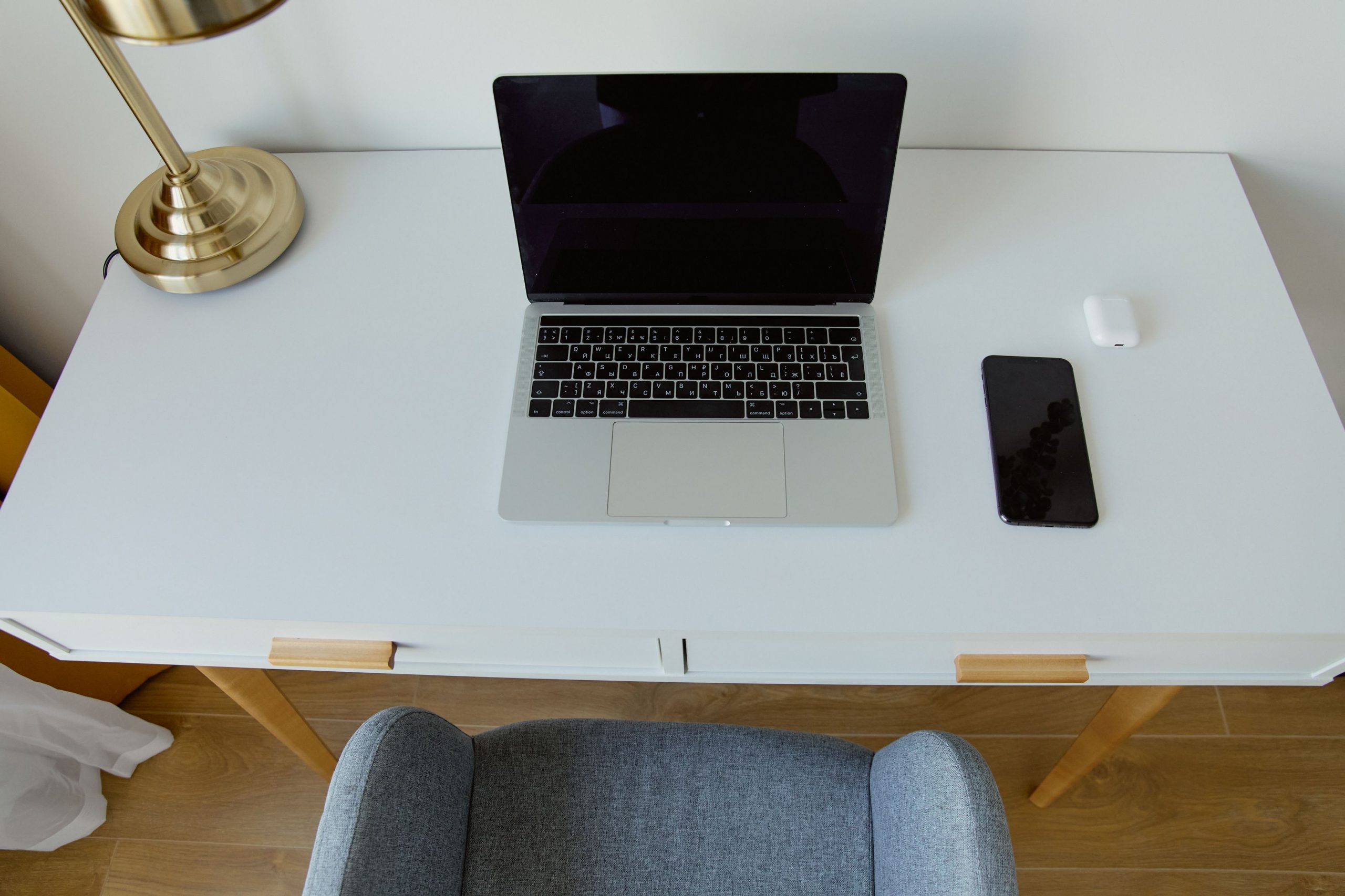
20. A Modern Minimalist White Desk with Laptop and Brass Lamp
This setup works because it perfectly embraces the ‘less is more’ philosophy. Every single item has a purpose and a place. The desk is free of clutter, allowing for maximum focus. The minimalist design is executed through a mix of clean lines and elevated materials. The warmth of the brass lamp and wooden drawer pulls provides a beautiful contrast to the cool white of the desk and the silver of the laptop. This contrast is what gives the space its visual interest and prevents it from feeling sterile. It’s a grown-up, sophisticated take on a workspace that’s perfect for a teen or a distraction-free homework zone. Compare this to the floating desk in Idea #25.
💡 Designer Tip
A minimalist desk setup like this is incredibly versatile and can work in almost any size room, which is its great advantage. Because it’s visually light and not bulky, it doesn’t dominate a space. You could tuck this into the corner of a small bedroom (a 10×10 foot room would be plenty) or have it sit proudly in a larger multi-purpose room. The key isn’t the room’s square footage, but rather the commitment to keeping the surrounding area just as uncluttered. This look fails if it’s placed in an otherwise messy, overstuffed room.
21. A Whimsical Bedroom with Integrated Pink and Wood Furniture
The single element that makes this room a triumph is the custom-built, fully integrated furniture system. The desk, bed, and storage aren’t separate pieces; they are one cohesive unit that flows together. This approach creates an incredibly clean, organized, and bespoke look that you can’t achieve with standalone furniture. The way the light wood platform bed merges seamlessly into the desk area is particularly masterful. It’s this commitment to a single, unified structure that gives the room its unique architectural quality and makes it feel so thoughtfully designed.
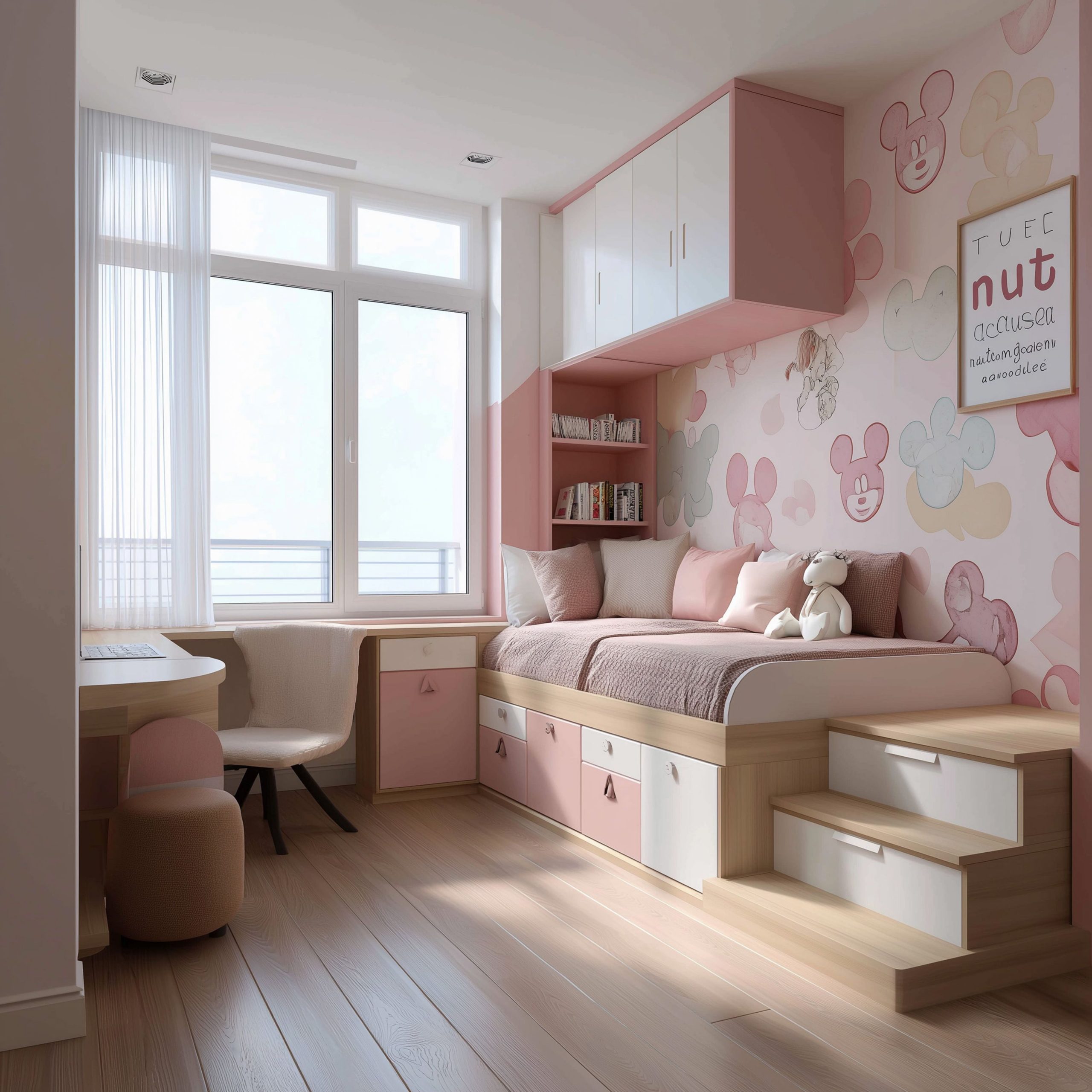
🧹 Maintenance Reality
A fully integrated, custom bedroom like this is a dream, but it’s a significant investment and a permanent commitment. This isn’t a design you can easily change when your child’s tastes evolve from pastel cartoons to something new in a few years. Dismantling a built-in unit can be a major undertaking that may require drywall repair and repainting. Before you commit to a design this specific, have an honest conversation about its longevity and whether you’re prepared for a more involved renovation down the road when it’s time for an update.
22. A Cozy Kids’ Room with Mixed Wallpapers and a Green Rug
This room shouldn’t work, but it absolutely does, thanks to a few clever design tricks. The key is the shared color palette and the grounding effect of the wainscoting. Although the two wallpapers have different patterns (one striped, one floral), they both share the same light pink and cream tones, creating an underlying harmony. The crisp white wainscoting and crown molding act as a visual ‘frame,’ tidying up the look and preventing the patterns from clashing. Finally, the bold green rug provides a single, confident block of contrasting color that anchors the entire room and stops it from being too sweet.
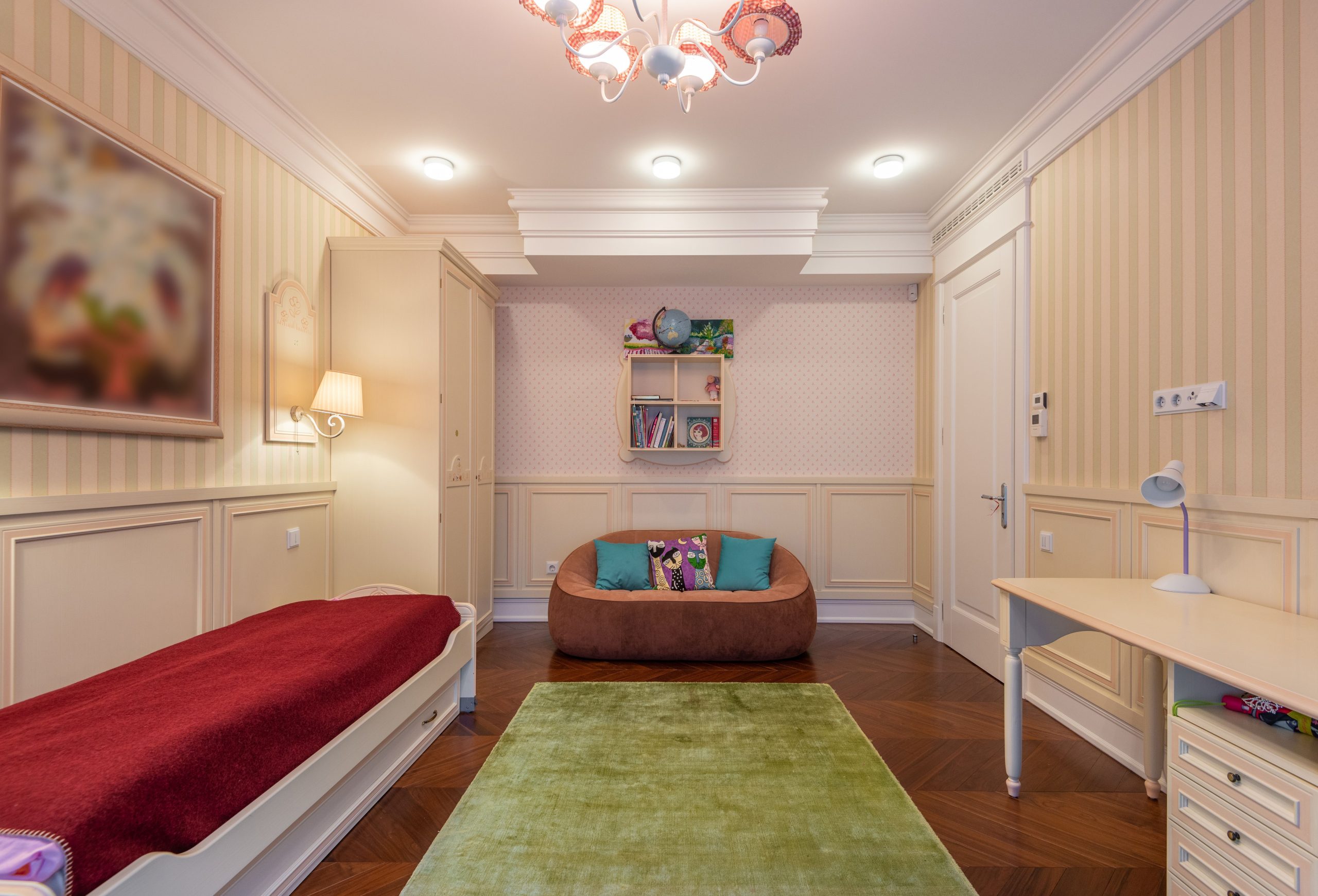
⚠️ Real Talk
When mixing patterns in a room, the secret is to vary the scale. Here, we see a medium-scale stripe paired with a small-scale floral pattern. This works beautifully. If both patterns were large and bold, they would fight for attention and create a chaotic feeling. A good rule of thumb is to combine one large-scale pattern, one medium-scale pattern, and one small-scale pattern, all linked by a common color. This creates a layered, sophisticated look that feels intentional, not accidental.
23. A Simple Wooden Desk with Books and Monster Trucks
that makes this image so charming and effective is its honesty. This isn’t a staged, overly tidy desk. It’s a snapshot of real life, where study and play collide. The presence of the toy monster trucks right next to the stack of books acknowledges that a child’s workspace is a multi-purpose zone. It’s for homework, yes, but it’s also for imagining, creating, and playing. This blend makes the space feel approachable and realistic, a welcome contrast to hyper-curated images that can feel intimidating to replicate.

⭐ The One Thing
This is perhaps the most achievable look of all. You don’t need fancy built-ins or expensive furniture to create a functional study spot. A simple, sturdy wooden desk can be found secondhand on Facebook Marketplace or at a thrift store, often for less than $50. The beauty of this setup is its simplicity. It’s just a flat surface and a chair. Focus your budget on a good, comfortable chair and a decent task light, and let the desk itself be a basic, affordable workhorse. The personality comes from your child’s own books and toys.
24. A Bright, Built-in White Desk with Integrated Window Seat
This design is so successful because it masterfully combines three distinct functions—work, storage, and relaxation—into one seamless architectural unit. The desk provides a dedicated workspace, the flanking Shaker-style cabinetry offers ample closed and open storage, and the window seat creates a cozy spot for reading or daydreaming. By painting the entire built-in white, the unit feels light and airy rather than bulky, and it allows the subtle green wall color and decorative objects to stand out. It’s a perfect example of multifunctional design that looks both elegant and incredibly practical. The design feels similar in spirit to Idea #5, but with a more traditional cabinetry style.
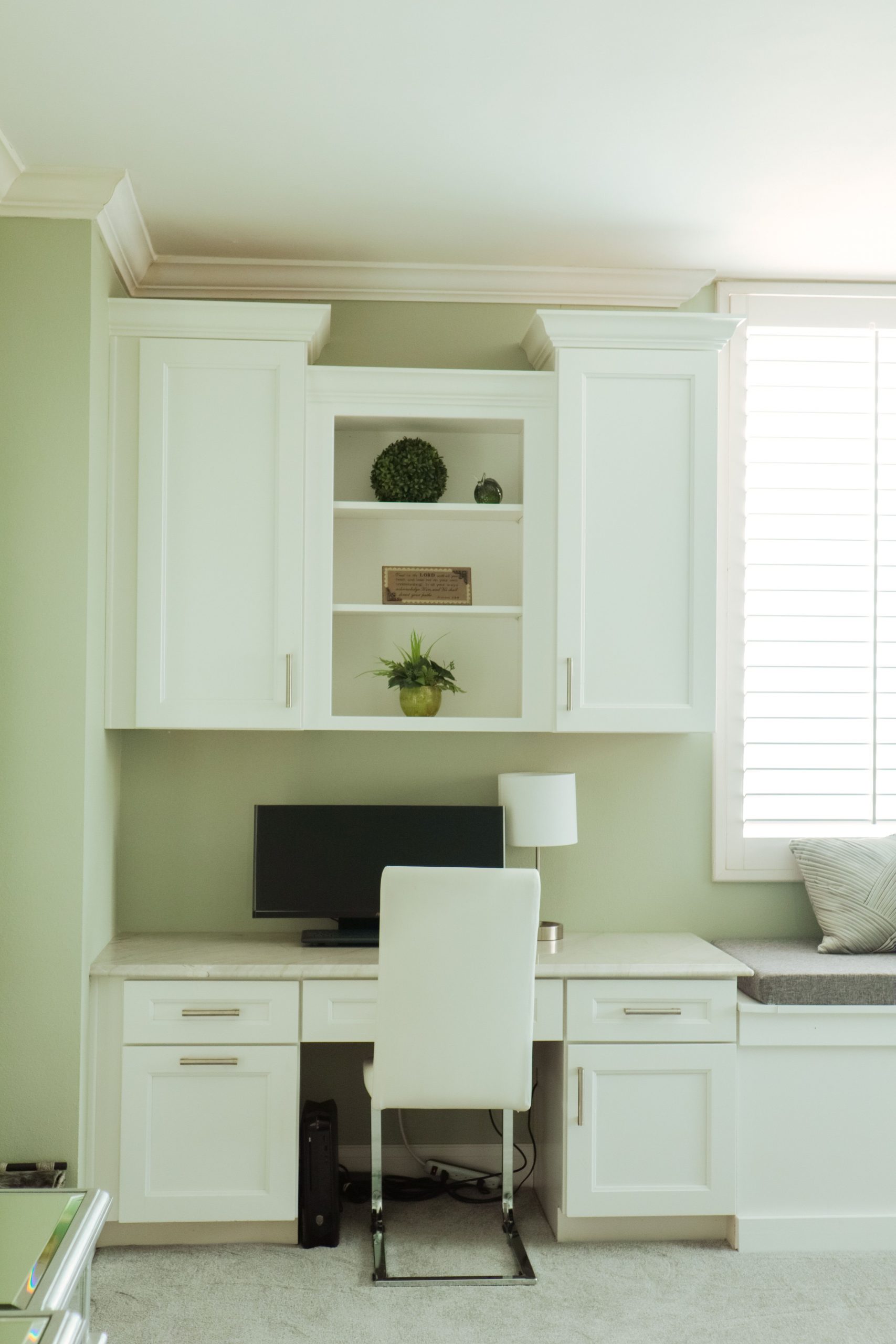
🎯 What Makes It Work
- Verify Your Budget: A custom built-in of this scale is a significant investment. Get quotes from at least two local carpenters or cabinet makers before you begin. A project like this can easily run from $3,000 to $8,000+.
- Map Your Electrical Needs: Where will the computer plug in? Do you want outlets inside a cabinet for charging devices? Will you need to add a switch for an overhead light? Plan all electrical with an electrician *before* the cabinetry is built.
- Confirm Window Height: The success of an integrated window seat depends on the sill height. A standard seat height is 18-20 inches. Ensure your window is at an appropriate height to make this work comfortably.
25. A Minimalist Floating Wood Desk with Open Shelves
A floating desk is the epitome of clean, minimalist style, but it comes with a maintenance reality: visible cord chaos. Since there are no legs to hide behind, you must have a solid plan for cable management from the outset. This could involve having an electrician install an outlet on the wall directly behind where the desk will sit, or using a sleek, paintable cord channel to bundle and hide the wires running down to the baseboard. Without this, the beautiful, airy illusion of a floating desk is instantly ruined by a tangle of black cords dangling in plain sight.
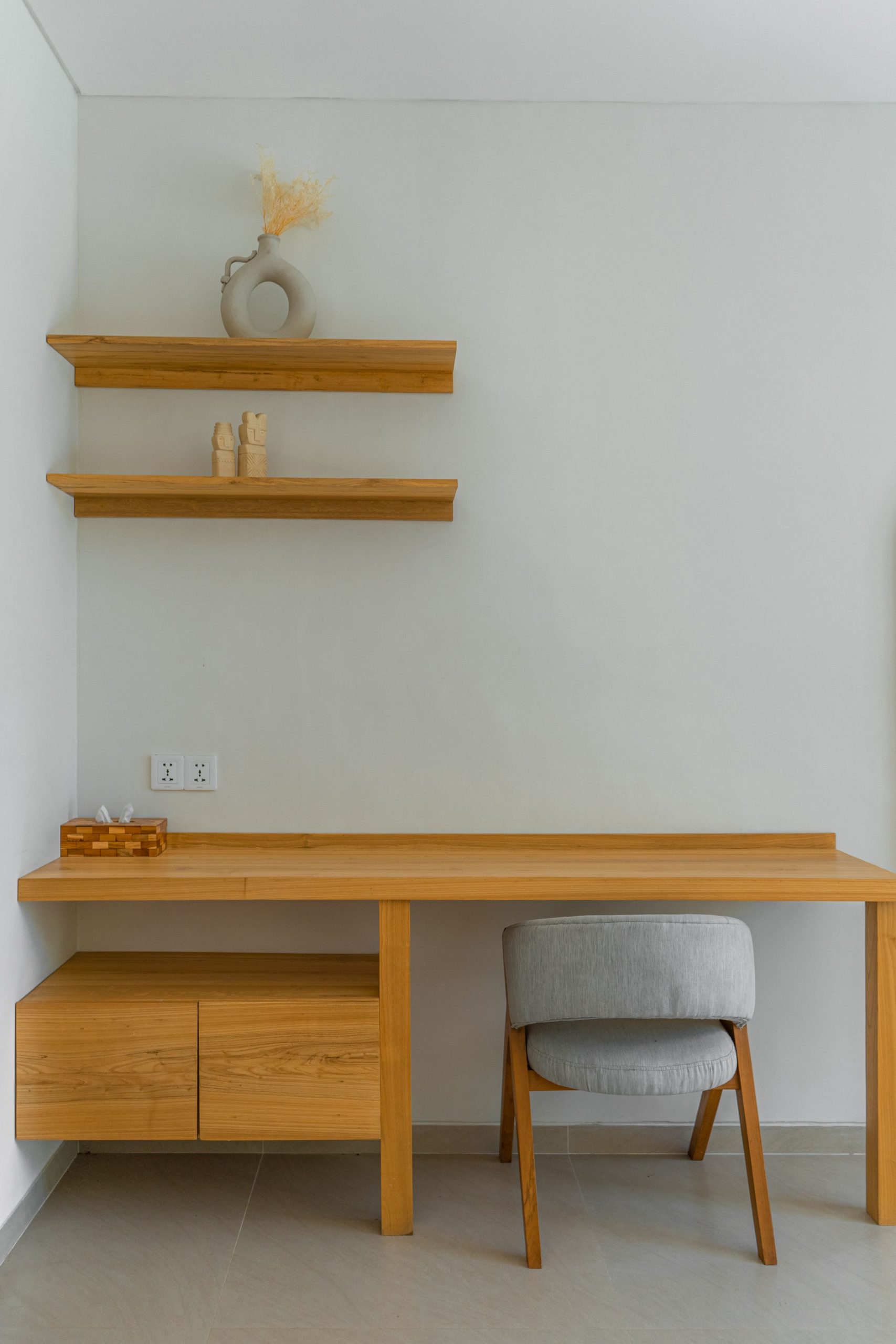
💰 Budget Breakdown
To keep a minimalist setup like this feeling calm and not just empty, the key is in the styling of the open shelves. Follow the ‘Rule of Threes.’ Group objects in odd numbers— threes or fives work best. Vary the height and shape of the objects within each grouping: a tall vase, a low bowl, a stack of books. Make sure to leave some ‘negative space’ or empty areas on the shelves; don’t fill every inch. This allows each object to breathe and be appreciated, creating a curated, gallery-like feel rather than a cluttered storage look.
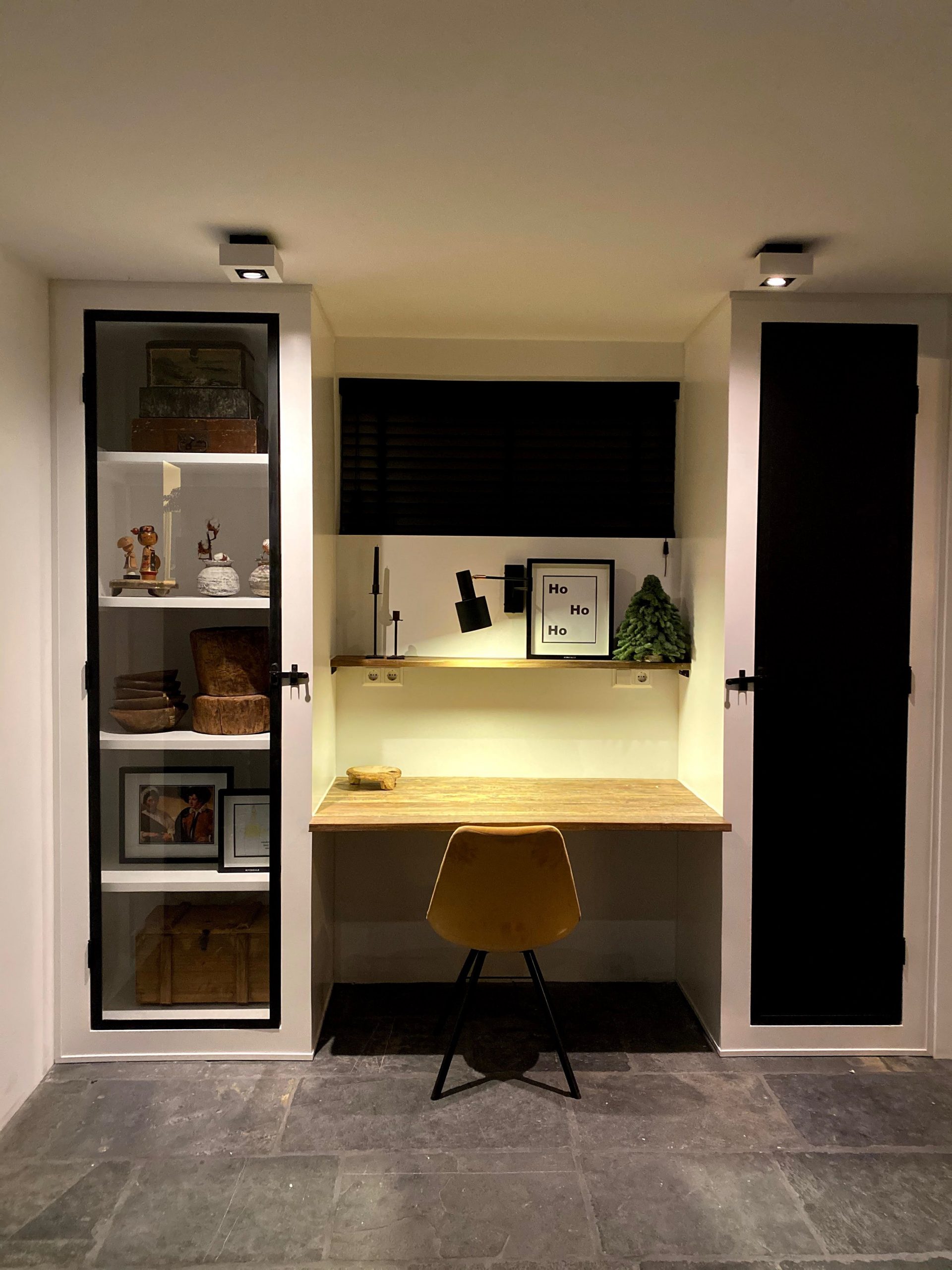
26. A Cozy Recessed Nook Desk with Integrated Storage
This nook design works because it creates a ‘room within a room.’ By recessing the desk and flanking it with floor-to-ceiling storage, it carves out a distinct, enclosed zone that feels incredibly cozy and private. The use of warm wood for the desk and shelf, combined with the integrated strip lighting, enhances this intimate atmosphere. The contrast between the open, light-filled room and the sheltered, focused workspace is what gives this area its unique appeal. It’s a psychological trick; sitting down here signals that it’s time to focus, free from the distractions of the larger space.
📐 Style Math
A beautifully designed nook like this can look amazing, but it can also be a ‘dark hole’ if not lit properly. This design cleverly avoids that problem with integrated LED strip lighting under the shelf, but that’s a non-negotiable feature, not just a nice-to-have. Relying on the room’s main overhead light would leave the desk surface in deep shadow, making it unusable. Planning for multiple layers of light—ambient (the strip light) and task (the black lamp)—is absolutely critical to the success of any recessed desk area. Budget for the electrical work from day one.
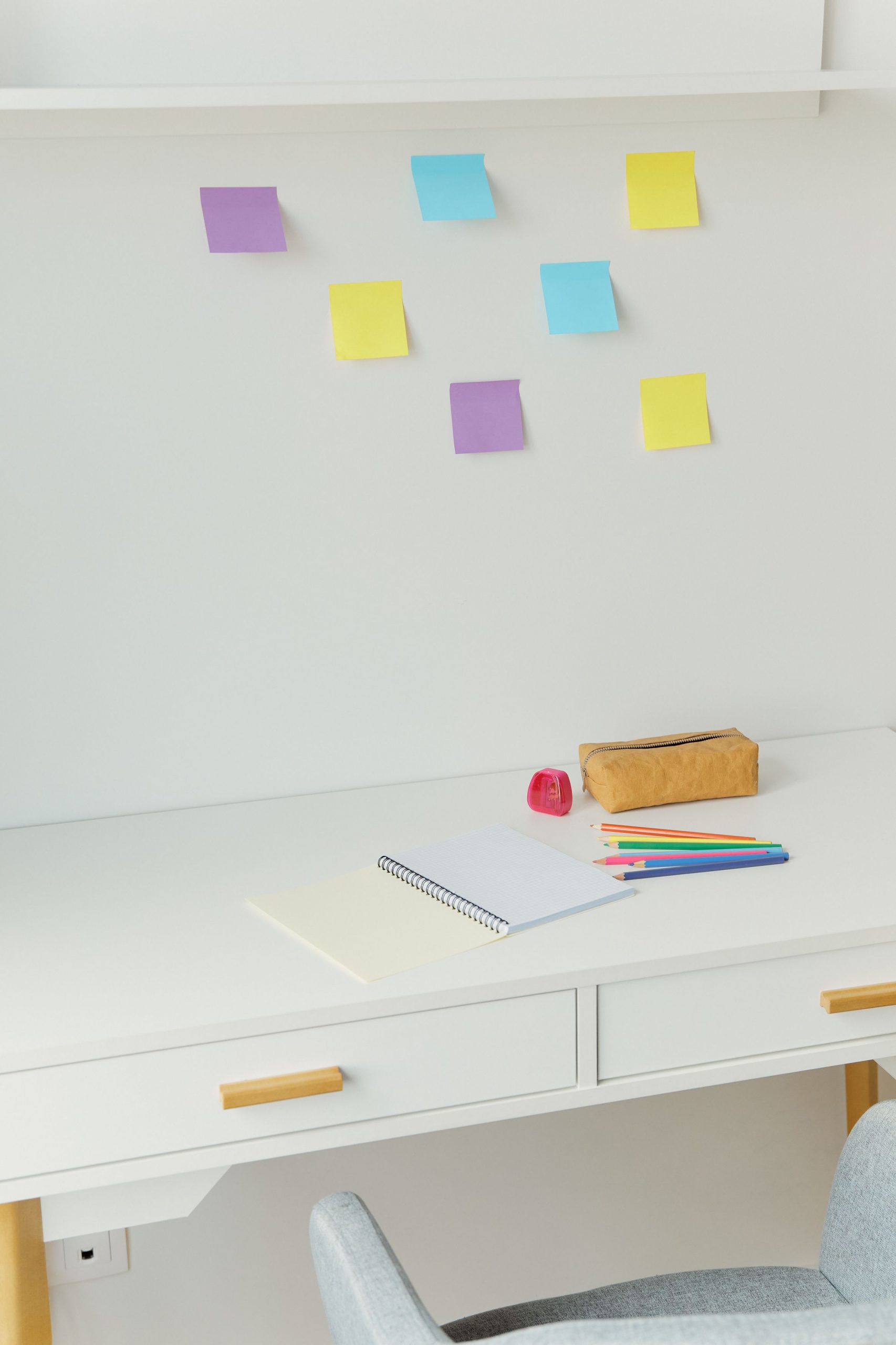
27. A Minimalist White Desk with Wood Handles and Sticky Notes
This look is a study in quiet, playful minimalism. The formula is approximately 90% clean white + 5% warm wood + 5% colorful accents. The overwhelming white of the desk and wall creates a gallery-like backdrop that is calm and uncluttered. The small touch of natural wood on the drawer handles is just enough to add warmth and a connection to nature, preventing the space from feeling sterile. The final 5% comes from the pastel sticky notes and colored pencils, which provide a low-commitment, easily changeable splash of personality and color.
✅ Before You Start
This is a super achievable look on a tight budget. A simple white parsons desk or a desk with drawers can be found at Target, Walmart, or on Amazon for $100-$150. The key detail—the wood handles—can be a simple DIY upgrade. Most desks come with basic metal knobs. You can buy stylish, modern wood handles from a hardware store or an online retailer for under $20 and swap them out in minutes. The ‘decor’ is just office supplies! A pack of colorful sticky notes and some colored pencils provide the personality for just a few dollars.
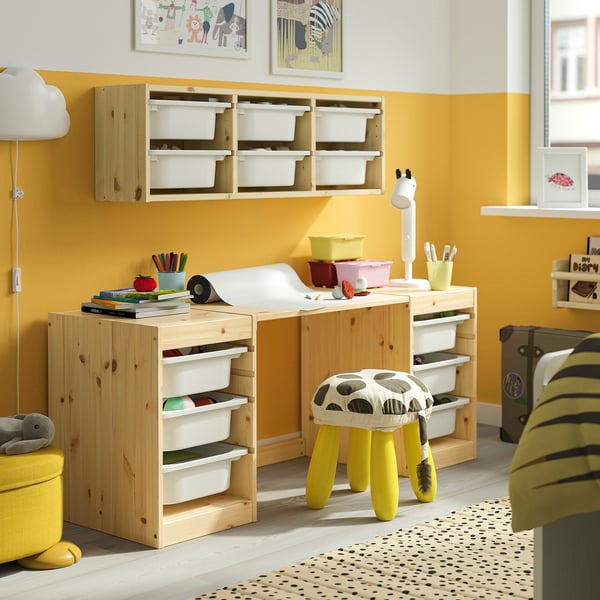
28. A Modular Wood and White Desk with Bright Yellow Walls
The success of this space comes from its smart use of a modular system and a bold, two-tone wall. The Kallax-style unit from IKEA (or a similar product) offers incredible flexibility; the bins can be rearranged, and the desk can be set at different heights. This modularity is matched by the playful energy of the half-painted wall. Painting only the bottom portion of the wall in bright yellow adds a huge splash of color without overwhelming the space. The cloud-shaped light and animal print stool reinforce the room’s creative, anything-goes vibe. It’s a great example of pairing an affordable, practical storage system with a high-impact, low-cost paint idea. This is another take on a colorful room, like Idea #4, but with a more modular feel.
🔧 How-To Brief
How-To: Create a Two-Tone Wall
- Time Estimate: 3-4 hours (plus dry time). Cost: $50-$70.
- Choose Your Height & Mark a Line: Decide how high you want your color to go. A common choice is one-third or one-half of the wall height. Use a measuring tape and a level to make several pencil marks, then connect them with a chalk line or a laser level.
- Tape Your Line: Apply high-quality painter’s tape (like FrogTape) precisely along the top edge of your marked line. Press the edge firmly to prevent bleeding.
- Paint Below the Line: Cut in along the baseboards and corners with a brush, then use a roller to paint the main section. Apply two coats for best coverage.
- Remove the Tape: This is the most important step! Remove the tape while the second coat of paint is still slightly wet. Pull it off at a 45-degree angle for the crispest line.
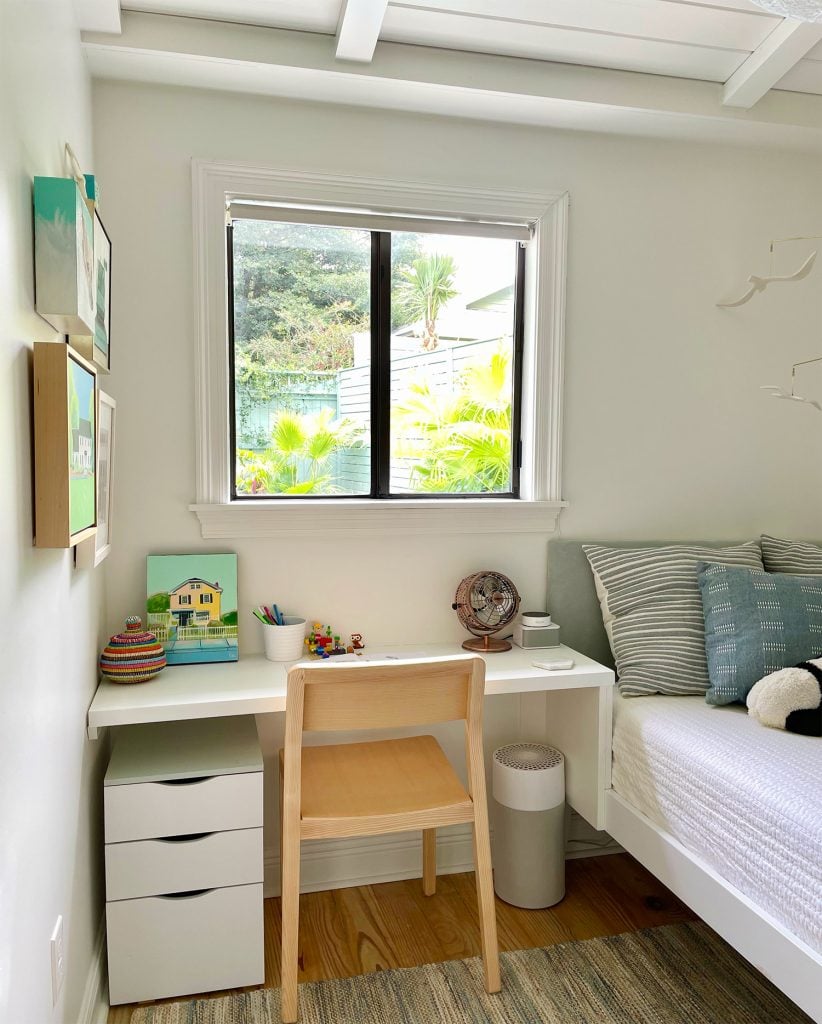
29. A Compact Floating Desk and Chair in a Bright White Bedroom
This floating desk is a brilliant solution for narrow rooms or awkward corners where a traditional desk with four legs would feel bulky and obstructive. To work, you need a solid wall to mount it on—drywall alone won’t cut it, you must anchor it to studs. The magic of this setup is that it preserves the visual floor space underneath, making the entire room feel larger and more open. This specific idea would work perfectly along a wall in a room as narrow as 7 or 8 feet wide, as it provides function without eating into the critical walkway path.
📏 Scale Guide
When you have a compact desk area, think vertically for personalization. Instead of cluttering the small desk surface with photo frames and decor, create a curated gallery wall next to it, as shown here. This draws the eye upward and adds a ton of personality without sacrificing a single square inch of precious workspace. Use a mix of frame sizes and styles, but keep the color palette cohesive to tie it all together. It’s the perfect way to combine function and personal expression in a tight spot.
The Homework Station They’ll Actually Want to Use
Creating a space that feels personal and functions brilliantly is the ultimate goal, and now you have 29 distinct paths to get there. Whether you’re drawn to a simple, budget-friendly setup or a fully integrated built-in, the right homework station can genuinely make a difference in your child’s daily routine. Don’t forget to save your favorite ideas—your future self will thank you!
Ready to get started? Pin this article to your favorite board and let the transformation begin!