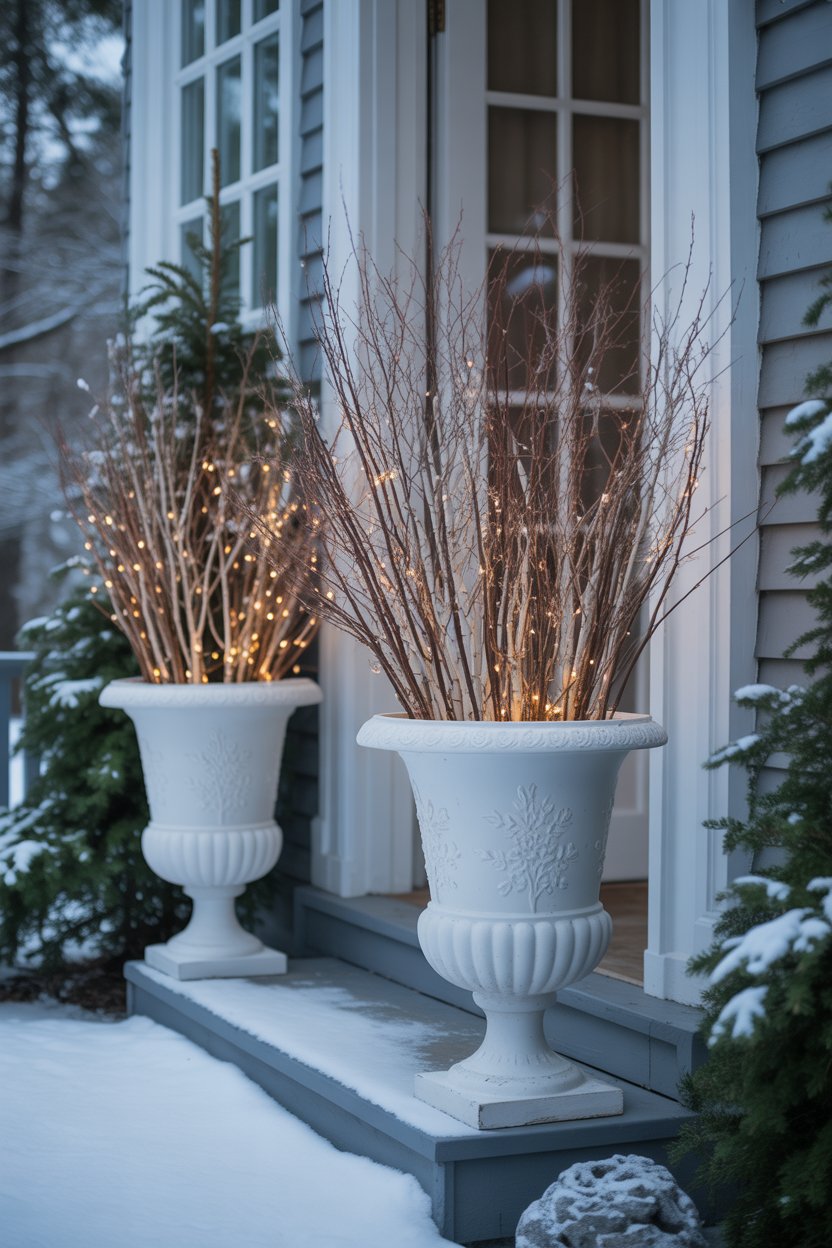
33 Jaw-Dropping Orange Christmas Tree Ideas You Absolutely Need to Try in 2026

Orange Christmas trees are having a major moment on Pinterest right now — and not the timid, one-or-two-ornament kind. We are talking full persimmon, burnt orange, tinsel, and dried citrus, styled against navy walls, dense gallery walls, and glowing fireplaces.
We spent serious time browsing Walmart, Target, Dollar Tree, and Michaels (plus a lot of thrift-store rabbit holes) to bring you only what is worth your attention this year, pulling the best orange tree ideas across every price point from about $4 worth of oranges to a $1,900 living-room transformation.
Inside you will find 33 curated ideas, from rustic citrus-and-gingerbread evergreens to jewel-tone maximalist setups, with budget and luxury versions compared side by side and shoppable details for each. And stay until the end — we break down the most common mistakes that can ruin these looks.
Some links in this post are affiliate links, which means we may earn a small commission at no extra cost to you. 📌 Save this to Pinterest for later — you will want to revisit these ideas.
1. A Modern Orange Tree as the Room’s Only Color
Orange is a high-chroma color, which means every other object in the room either supports it or fights it. In a modern scheme, treat the tree as the single saturated moment: keep the walls within two shades of your existing neutral, pull the tree 18 to 24 inches off the nearest wall so it reads as a sculptural object instead of a corner filler, and match ornament finish to your floor. Glossy orange ornaments pop beautifully over light oak; matte ones sit calmer over dark floors.
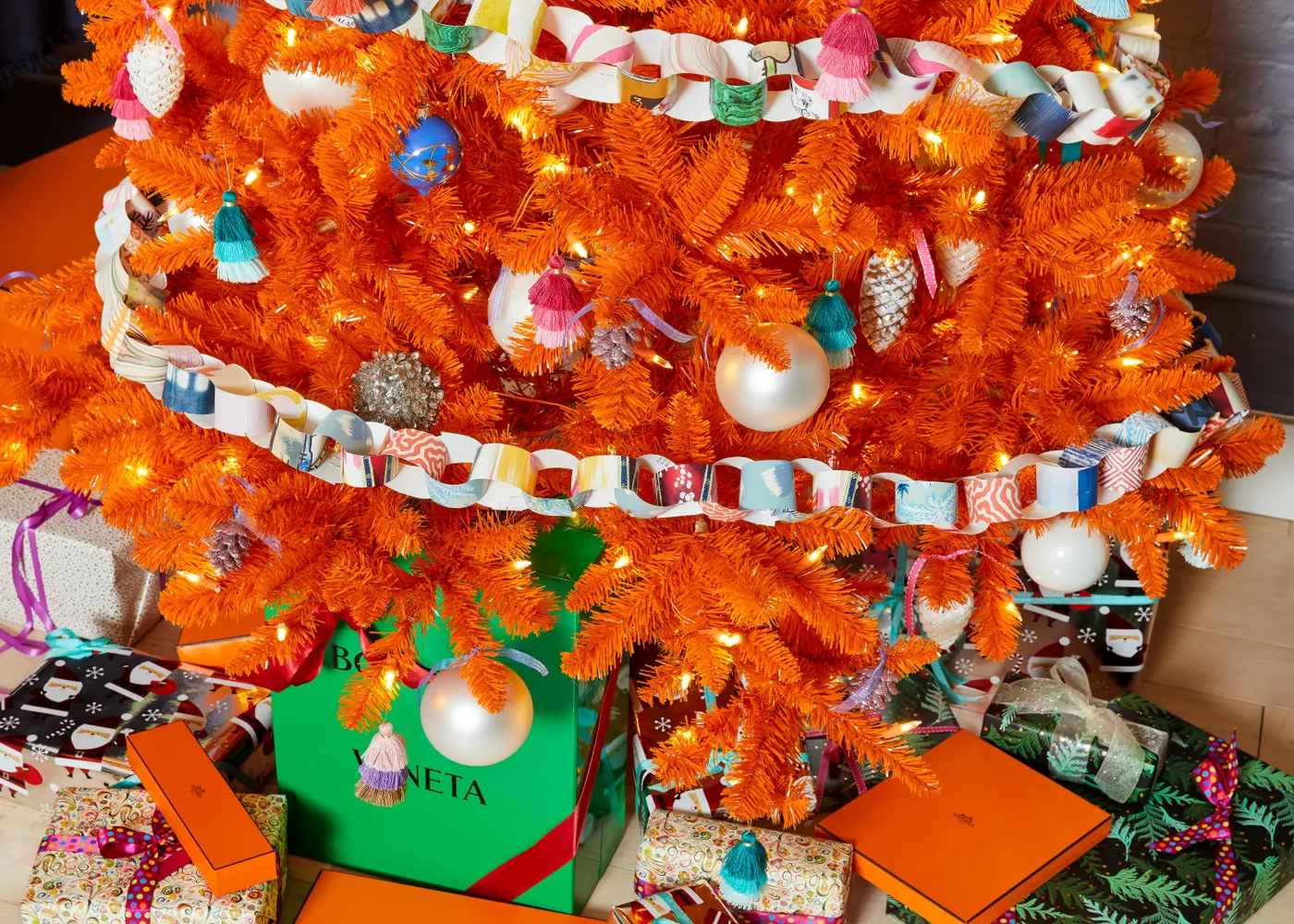
This look wants height more than width. A 7.5-foot orange tree needs at least a 9-foot ceiling so the topper clears by 6 inches, and roughly 100 to 130 square feet of open floor around it to walk past comfortably. Working with 8-foot ceilings? Drop to a 6-foot tree on a low plinth — the same silhouette reads nearly as tall. In a narrow hallway, a slim 6-foot profile is the difference between modern and cramped.
2. A Citrus-First Tree Where Dried Orange Does All the Talking
Two principles do the heavy lifting here. First, repetition: one motif used 40 or 50 times reads as intentional, while five different ornament types read as clutter. Second, contrast of finish — dehydrated citrus is matte and slightly translucent, so it softens the shine of artificial needles and stops the tree from looking plastic. Add warm 2700K bulbs and the fruit glows from the inside out.
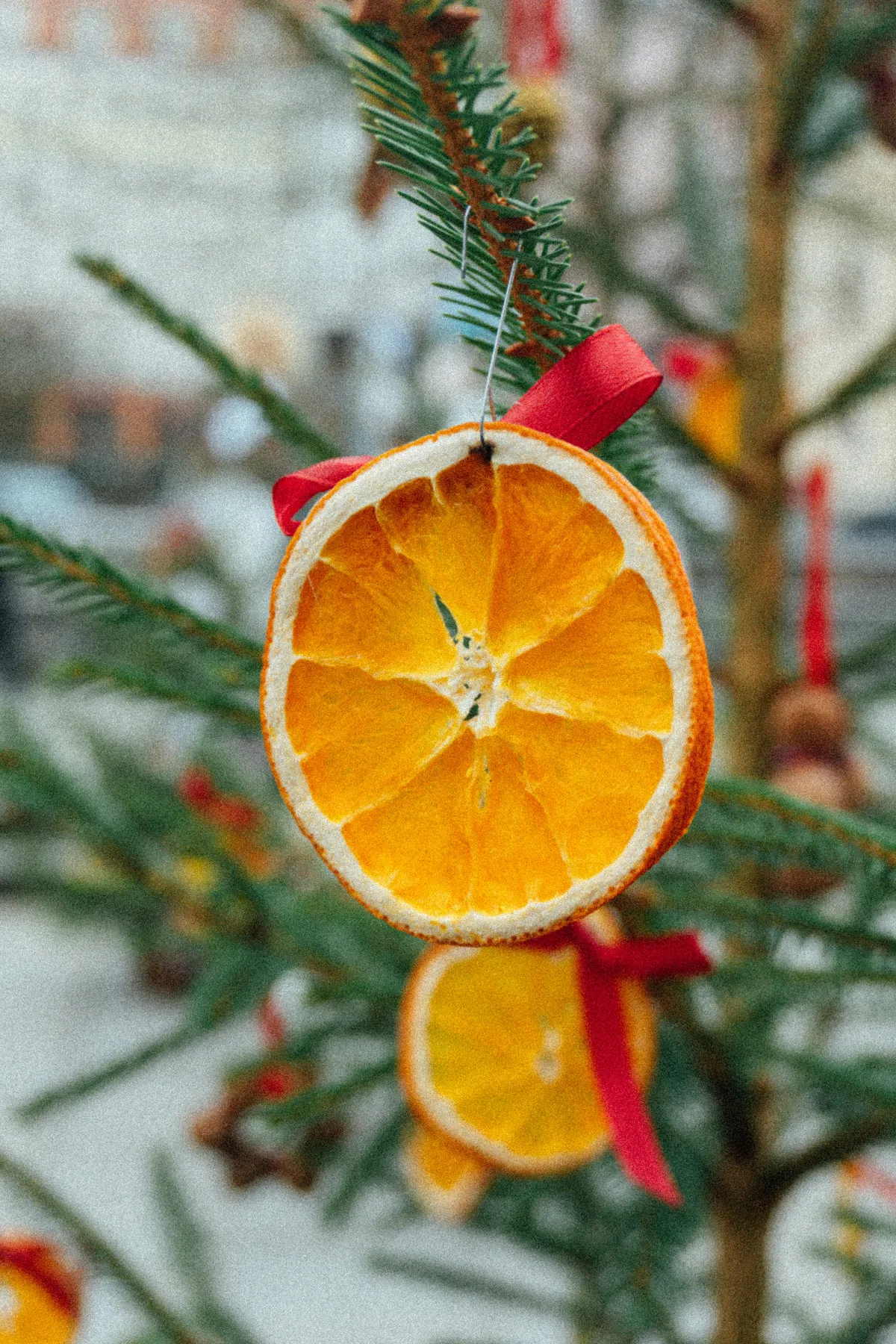
The dried orange slices are the whole story. Remove everything else and this tree still works. Slices cost about 30 cents each when you dry your own, they weigh almost nothing, and they photograph like little stained-glass windows. Take them off and you are left with a plain green tree that has nothing to say.
3. An Orange Tree Against a Floor-to-Ceiling Gallery Wall
Maximalism stopped being a rebellion and became a decorating strategy. In 2026, Pinterest boards are full of rooms that are crowded on purpose, with an orange tree standing beside vintage theater chairs and a wall packed with framed art. The logic: when color, pattern, and artwork all shout at the same volume, nothing reads as a mistake. Collected rooms also age better than trend-driven empty ones.
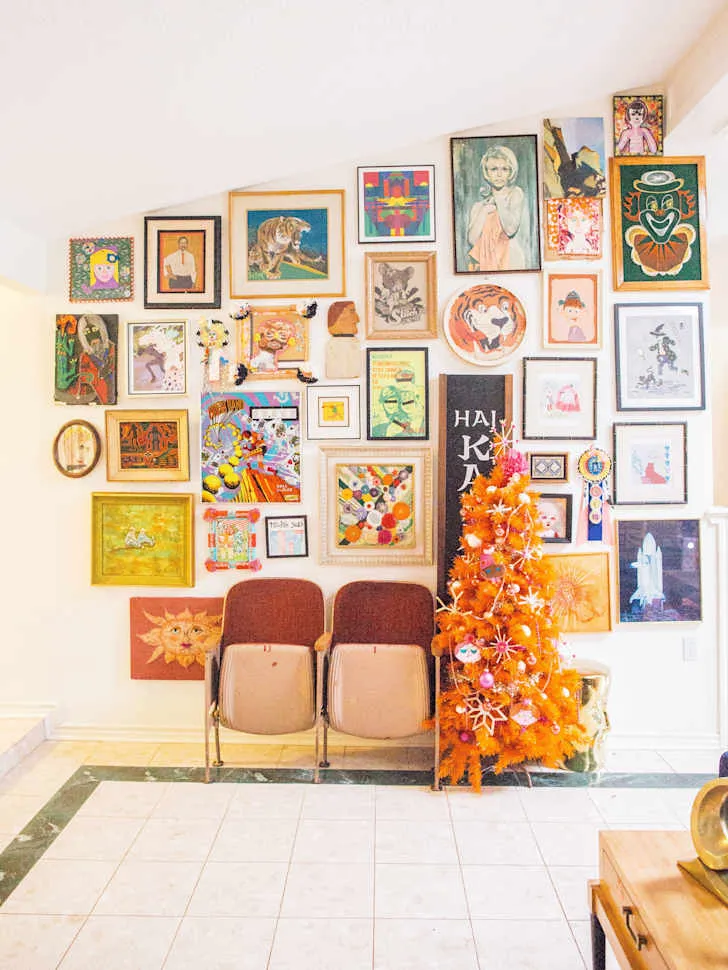
Here is the trick with a wall that dense. Give every frame at least 2 inches of breathing room, then let the artwork overlap the tree silhouette from the front, which means pulling the tree 14 to 16 inches off the wall instead of tucking it into a corner. Keep ornaments in fewer, larger clusters — a busy background punishes small, evenly scattered decorations. Pink and white star ornaments at three scales finish the eclectic mix.
4. Dried Orange Slices Mixed With Gold, Red and Silver
Warning: gold, silver, red, and orange can turn muddy fast when they all sit at the same scale, and the eye stops reading any of it as special. A few practical notes too — glittered ornaments shed, dried fruit is edible to curious pets, and silver beaded garland tangles the second you unbox it. Keep breakables and glitter on the top two-thirds of the tree and let the dog own the bottom.

The formula underneath is roughly 50 percent dark green needles, 25 percent warm orange from dried slices, 15 percent mixed metallics, and 10 percent red as the jolt. Swap silver for antique brass and the whole tree warms up; swap red for deep plum and it goes moody. Those percentages are what keep a mixed tree looking styled rather than stacked.
5. Backlit Orange Slices That Look Like Stained Glass
The single detail that makes this version unforgettable is what sits behind the fruit, not on it. Because the slices are thin and translucent, a bulb placed directly behind them turns each one into a small glowing window. Hung on nearly invisible black thread, they seem to float among the branches, with small clusters of white berries for contrast. Without that backlighting, the same slices are just beige discs.
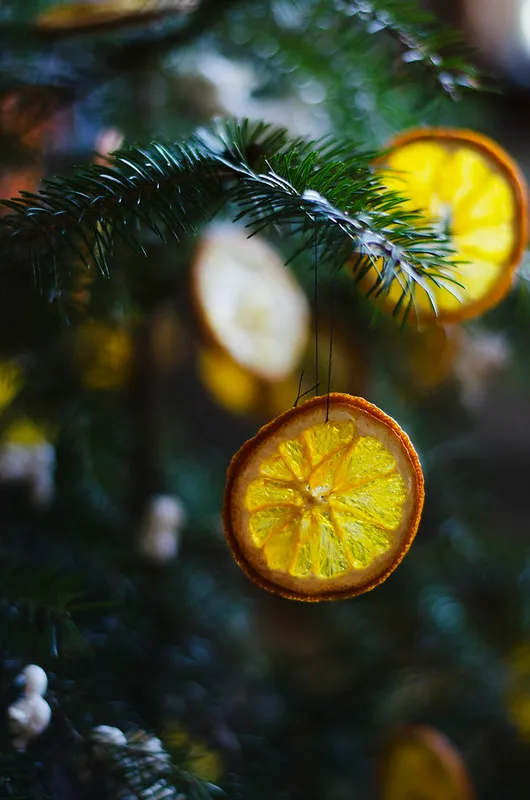
Floating the slices takes an evening, not a weekend.
- Dry orange slices at 200°F for 3 to 4 hours, flipping once, until leathery.
- Cut black thread into 6-inch lengths and knot each around a slice.
- Clip white berries into the same branches for contrast.
- Hang each slice about 2 inches in front of a bulb.
- Step back and check from three angles — backlighting is unforgiving.
Cost: about $8 for citrus and thread. Compare with Idea #4 for a sparklier metallic mix.
6. Red-and-Cream Ribbon With Twine-Hung Orange Slices
This cottage version runs softer and warmer than a full citrus tree: roughly 70 percent green foliage, 15 percent off-white, 10 percent red, and just 5 percent orange — enough to feel cozy, not enough to feel themed. A red-and-off-white striped ribbon, a faint wooden snowflake, and twine-hung slices carry it. Trade the stripe for ticking if you want it calmer, or gingham if you want it sweeter.
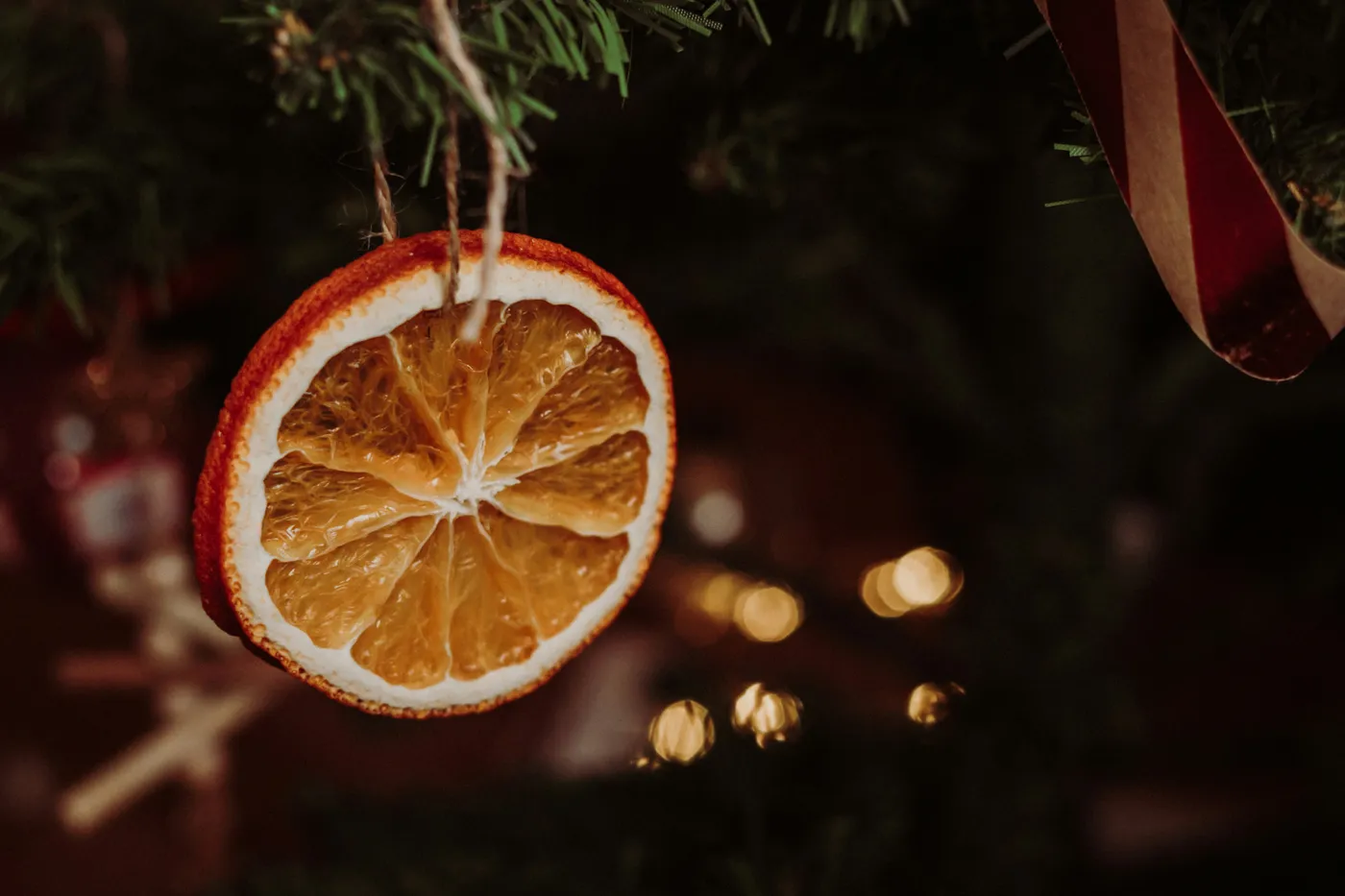
You do not need a boutique ribbon budget. A 10-yard roll of red-and-cream striped ribbon runs $6 to $9 at Target or Walmart, and thrift stores hand over wooden snowflakes and jute twine for pennies. Dry your own orange slices for about 30 cents each instead of $2 to $4 apiece online, and hunt Facebook Marketplace in early November, when people dump last year’s decorations before buying new ones.
7. Oversized Orange Spheres and Pretzels on Evergreen
Outdoor scale is a completely different sport. Ornaments that look generous indoors disappear outside, so size up by four to six times: 6-to-8-inch orange spheres instead of 2-inch baubles, and garlands with chunky silhouettes. Anything under 4 inches will be invisible from the sidewalk. Keep your best pieces at 5 to 6 feet — the height your eye actually travels past when you walk up the path.
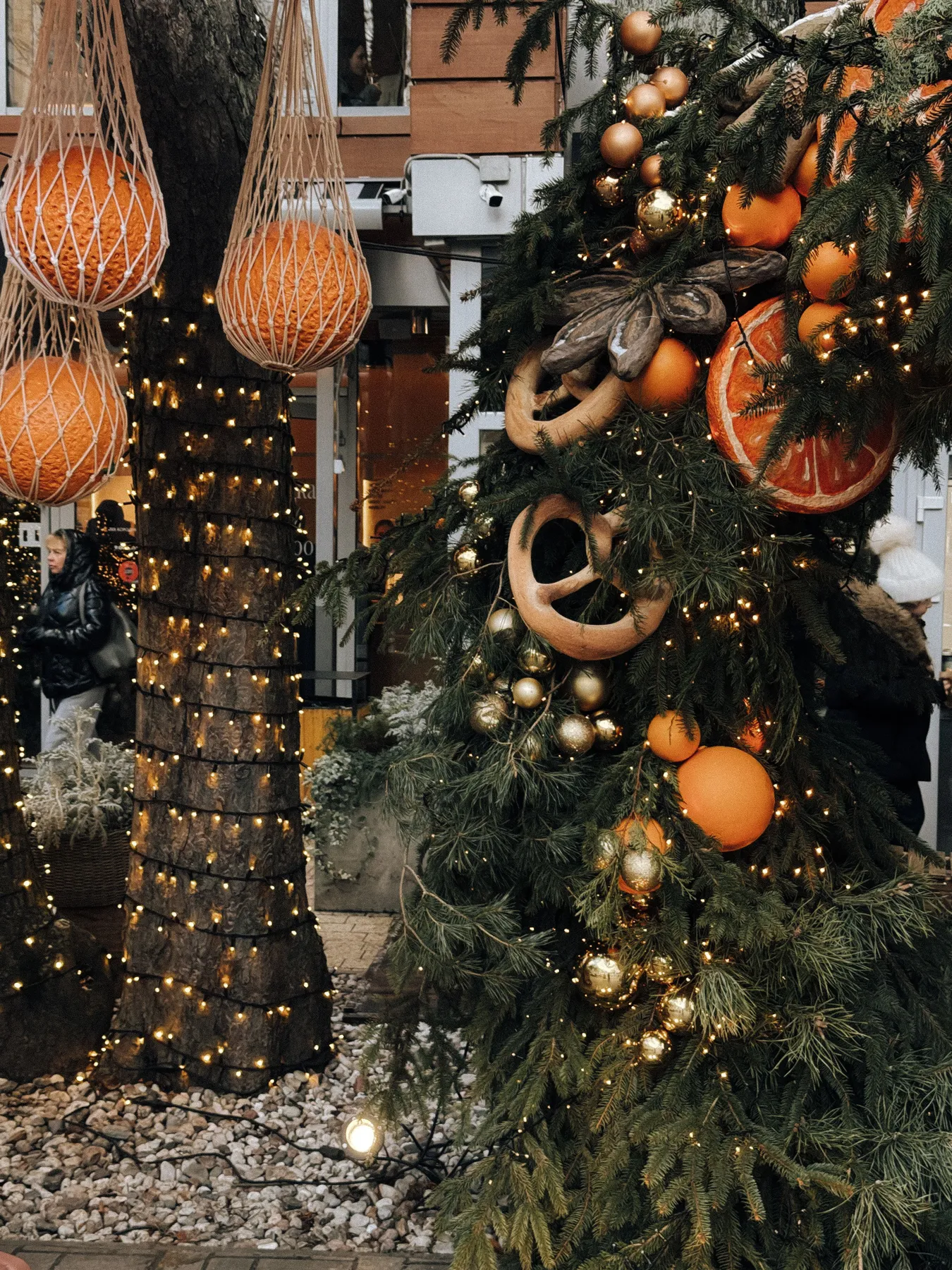
What makes this arrangement feel designed is that orange repeats at three different scales: small slices tucked into the greenery, big spheres suspended in macrame hangers, and gold balls filling the gaps between. The pale pebble bed underneath bounces light up into the branches at night, which is why the whole corner glows instead of just the wrapped tree trunks.
8. A Sunlit Evergreen With Gingerbread and Red Apples
The gingerbread ornaments are the detail you would miss on a first glance and mourn if they vanished. Dried oranges and apples are classics, but hand-decorated cookies in snowflake and star shapes bring a homemade, faintly imperfect quality nothing store-bought can fake — and they smell fantastic in a sunlit room. Everything else, from the gray wicker basket to the wooden cart of plaid-wrapped gifts, just supports them.
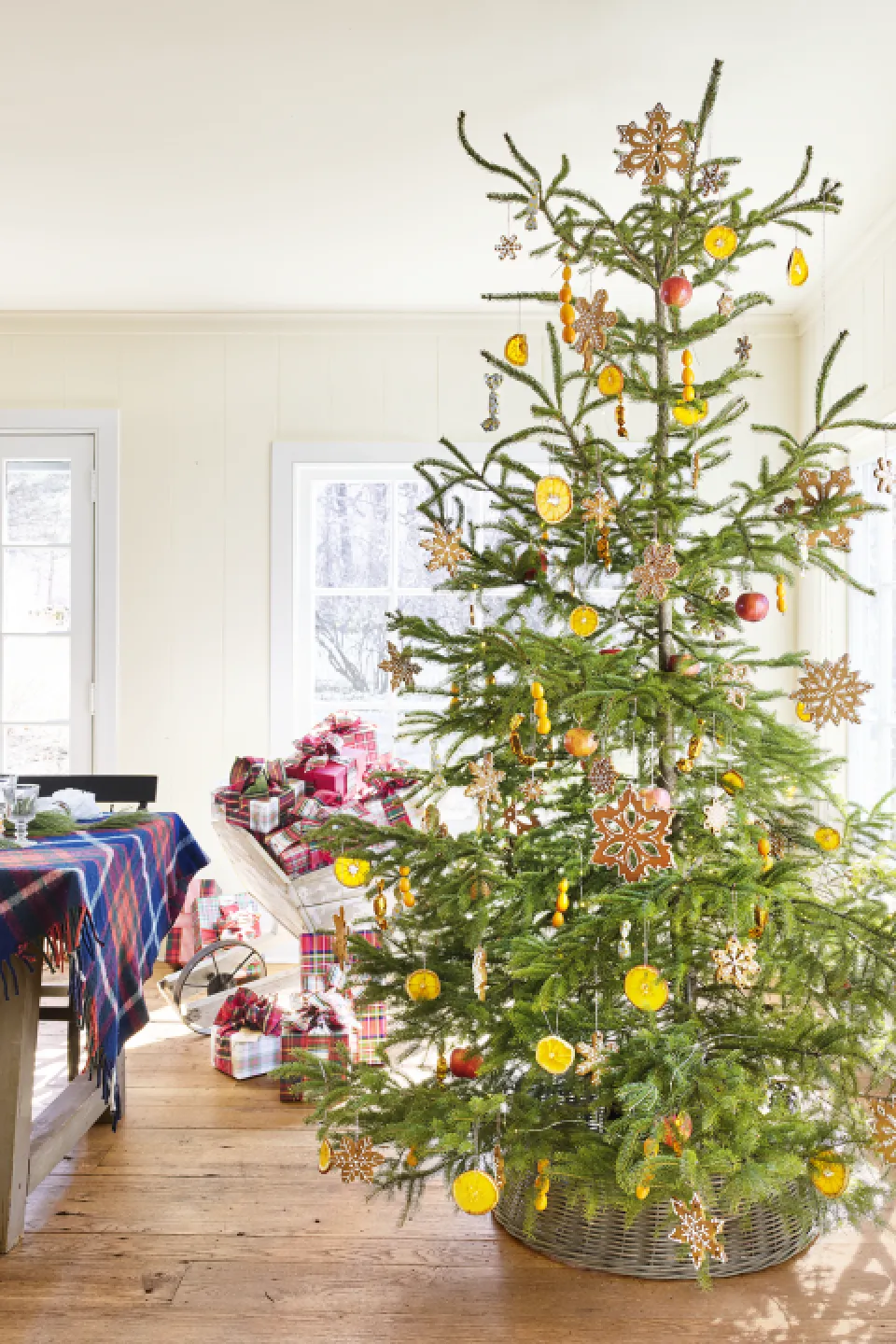
Two practical notes before you commit. Baked cookies and real apples are food: in a heated room they soften within a couple of weeks, and dogs will absolutely try. A coat of clear matte varnish helps the cookies survive the season. If that evergreen is real, keep it away from heating vents and water it daily, or the prettiest rustic tree becomes a needle storm by December 26.
9. A Small Orange Tinsel Tree With Matte Black Ornaments
The orange tinsel tree is riding two trends at once. Halloween decor has crept earlier and Christmas decor has crept warmer, and burnt orange sits exactly where they meet — which is why a tabletop tree with jack-o-lantern ornaments and matte black spheres can come out in October and stay up through New Year without anyone blinking. It is also the cheapest way to test orange in your house before committing to a full-size tree.
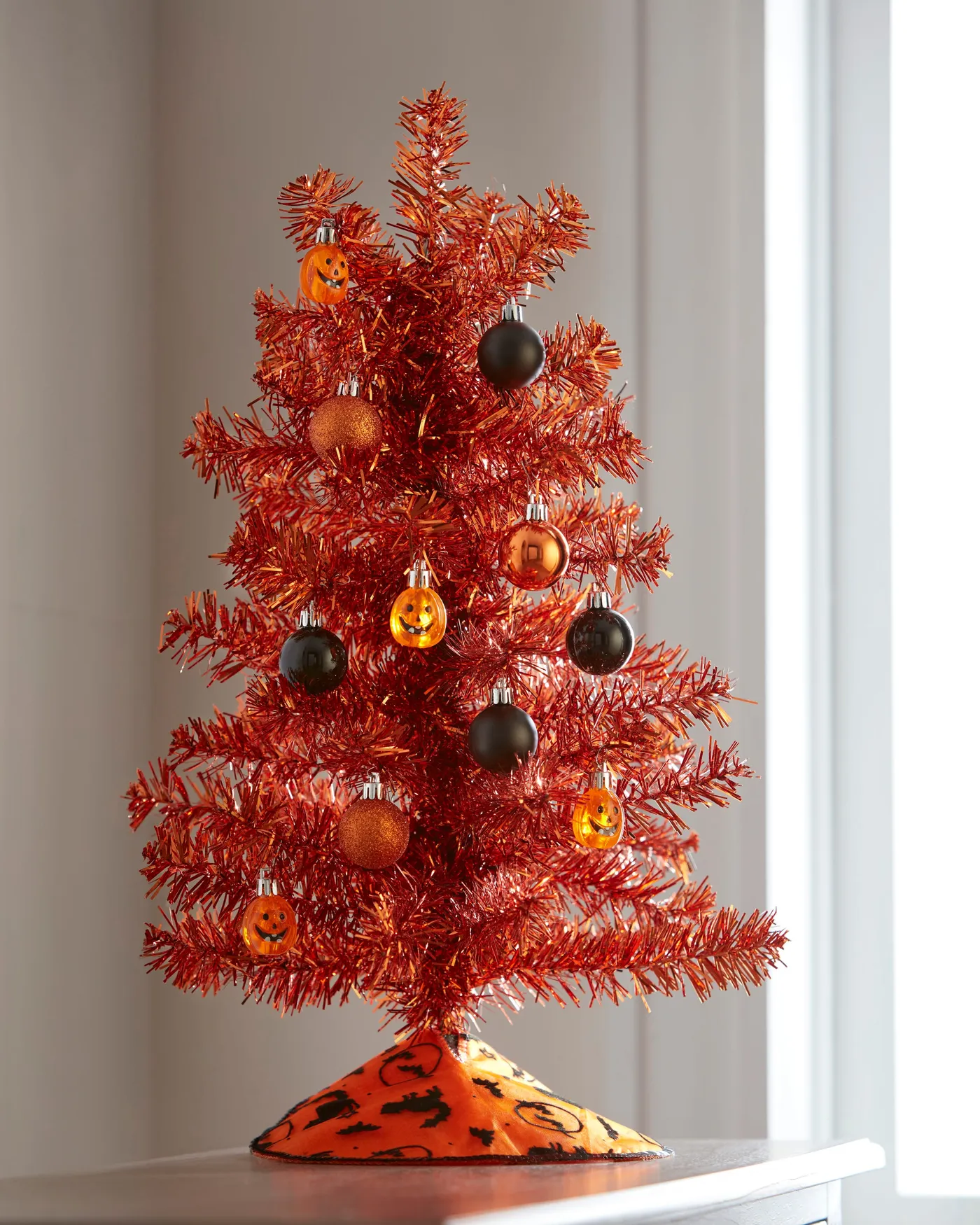
Tinsel is gorgeous and needy. It sheds fine metallic strands for the first week, collects dust like a lint trap, and static-clings to everything within three feet. A quick pass with a dryer sheet cuts the static, a soft brush handles the dust, and storing it in a sealed bag with tissue between layers keeps the shine for years. Plan on five minutes of fluffing every time it comes out.
10. A Rust Fabric Flower Garland in the Tree’s Core
The layered flower is easier than it looks. Give it one focused hour.
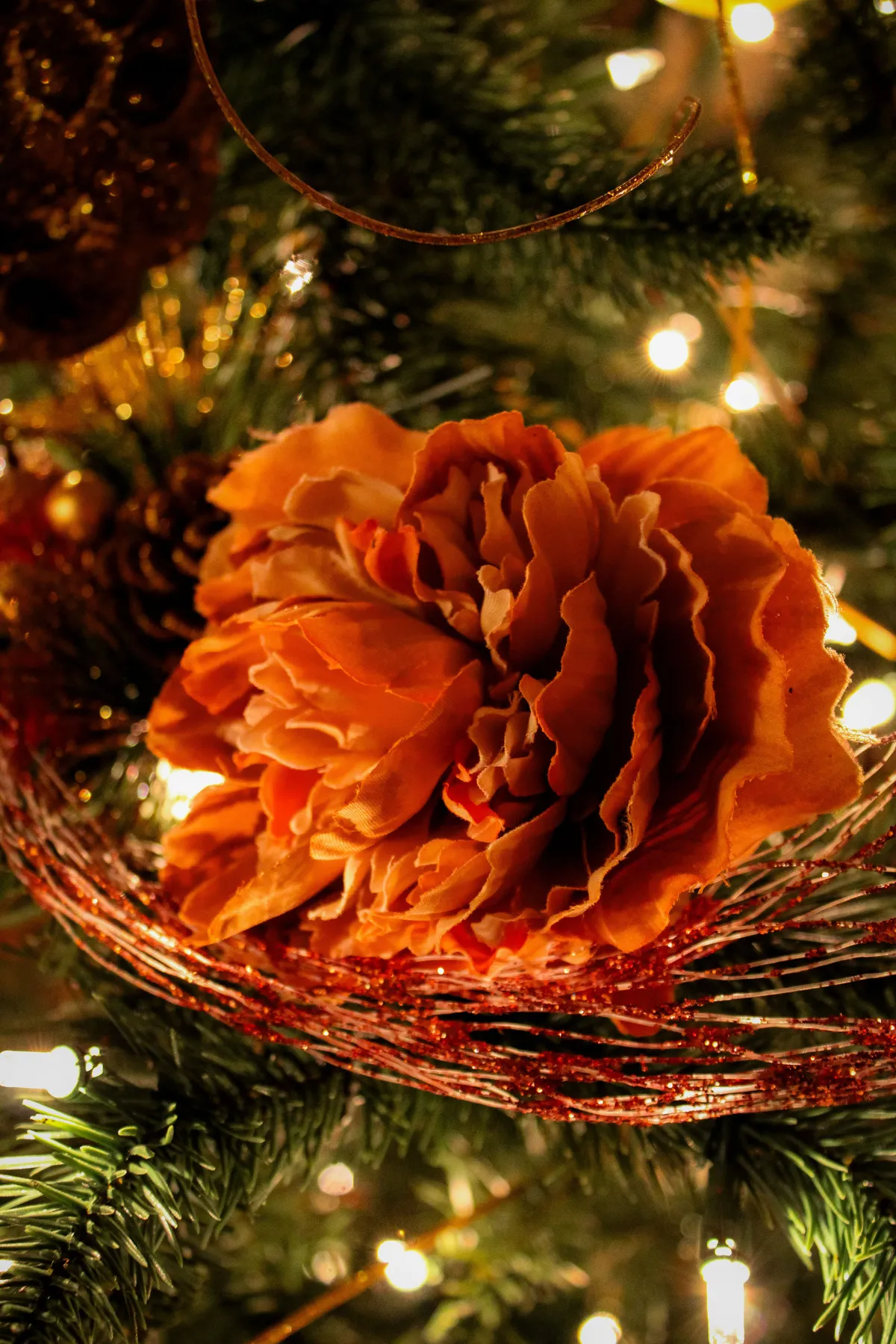
- Fluff the rust-orange fabric flower and pinch the petals outward so it sits flat.
- Nestle it about a third of the way into the branches, not on the outer tips.
- Coil the glittery wire garland in an 8-inch ring just behind the flower.
- Tuck a pinecone at the base to ground it.
- Clip one warm bulb directly above for a spotlight effect.
Materials: $12 to $18. Time: about an hour for three clusters.
Fabric flowers cost $8 to $20 each at craft stores and less in post-wedding clearance bins. Dollar Tree wire garland runs $1.25 year-round, and pinecones are free. Three handmade clusters land under $30 versus $90 to $150 for a comparable pre-made garland. See Idea #20 for the flocked, all-white version of this same flower trick.
11. A Boxwood Topiary With Dried Orange and Bronze Bells
The star here is not an ornament at all — it is the fact that there is no Christmas tree. A clipped boxwood topiary does the job while staying green and living all year, and the dried orange slices, small pinecones, green moss, and bronze jingle bells are just guests on it. Remove the fruit and bells and you still have a beautiful topiary. Remove the boxwood and you have a pile of decorations.
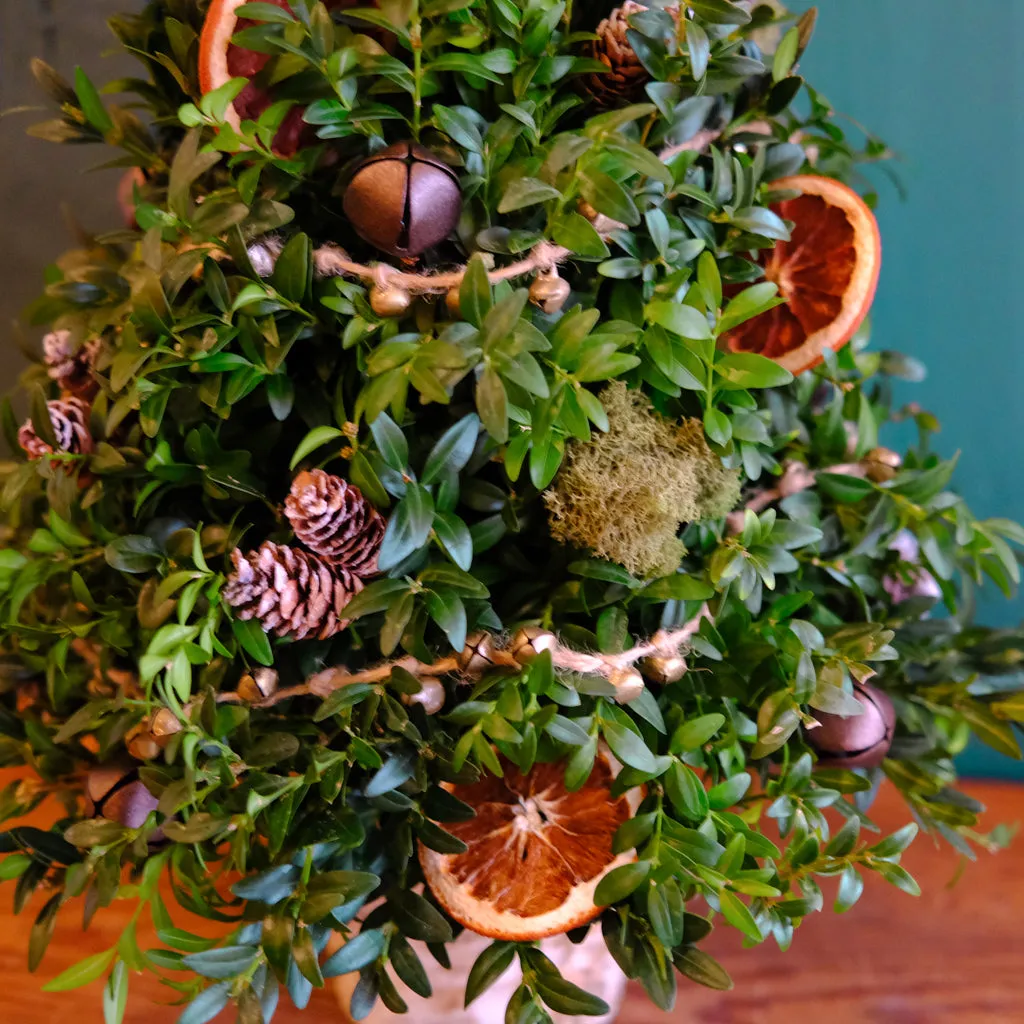
A real boxwood topiary dries out fast indoors, so water it in the sink once a week and let it drain fully before returning it to its pot. Attach ornaments with 24-gauge floral wire looped loosely around a stem instead of wire hooks — you avoid crushing new growth and nothing shifts when the door slams. Keep it at least 4 feet from heat vents or the leaves will drop by mid-December.
12. Orange Balls and Dried Slices Beside a White Armchair
- 7-foot real or realistic artificial tree: $90 to $300
- Orange globe ornaments, 40 to 60 count: $35 to $90
- Dried orange slices, 40 count: $12 DIY to $70
- White string lights, 300 bulbs: $18 to $40
- White armchair plus plaid throw: $250 to $900
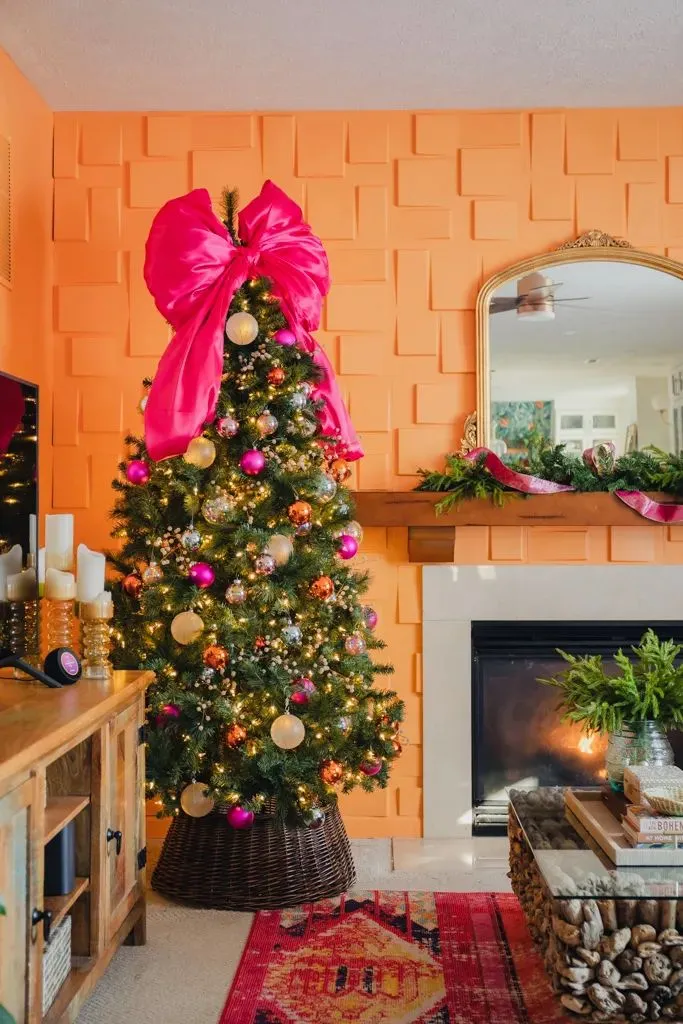
Total: roughly $405 to $1,400. Budget alternative: a 6-foot artificial tree from Walmart ($45), orange ball sets from Dollar Tree ($12), and a thrifted throw ($8) gets the same corner for under $150.
This arrangement needs a corner at least 8 feet wide and 7 feet deep so the armchair and tree do not crowd each other. Trees from 7 to 7.5 feet suit 9-foot ceilings, which puts the sweet spot at a 110 to 140 square foot living room. The white armchair with the white, grey, and orange plaid throw is what keeps the orange from taking over.
13. Citrus Decor Styled for Wildlife-Friendly Trees
Wildlife-friendly decorating follows one rule: if it falls to the ground, something might eat it. Citrus slices, pinecones, dried cranberries, and plain twine all break down politely. Plastic icicles, loose glitter, and fine tinsel are the dangerous ones, because birds and squirrels mistake them for food and cannot pass them. That single guideline explains every choice on a tree like this one.
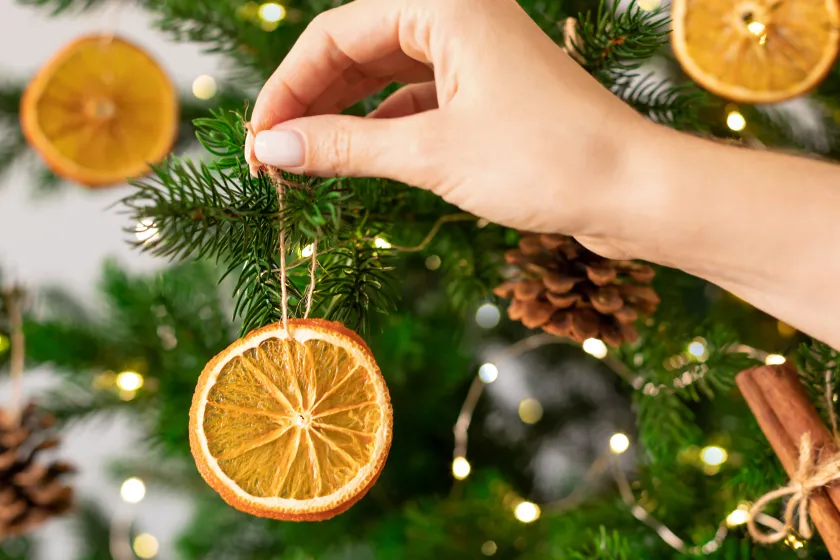
Squirrels will rob you. Anything edible on an outdoor tree is gone within days unless it hangs above 5 feet, and freezing temperatures crack cheap ornaments. Expect to replace fruit weekly and sweep the ground after storms. Indoors, skip peanut butter ornaments entirely — you will invite ants, and your dog will solve the problem for you.
14. Dried Orange Slices Placed Where the Bulbs Glow
Positioning beats quantity. A dried slice hung within 2 to 3 inches of a warm 2700K bulb glows like a paper lantern; the same slice 6 inches away looks like a coaster. Cluster them in threes along the front third of the tree and leave the side facing the wall mostly bare. Ten well-placed slices will always outperform forty scattered ones.
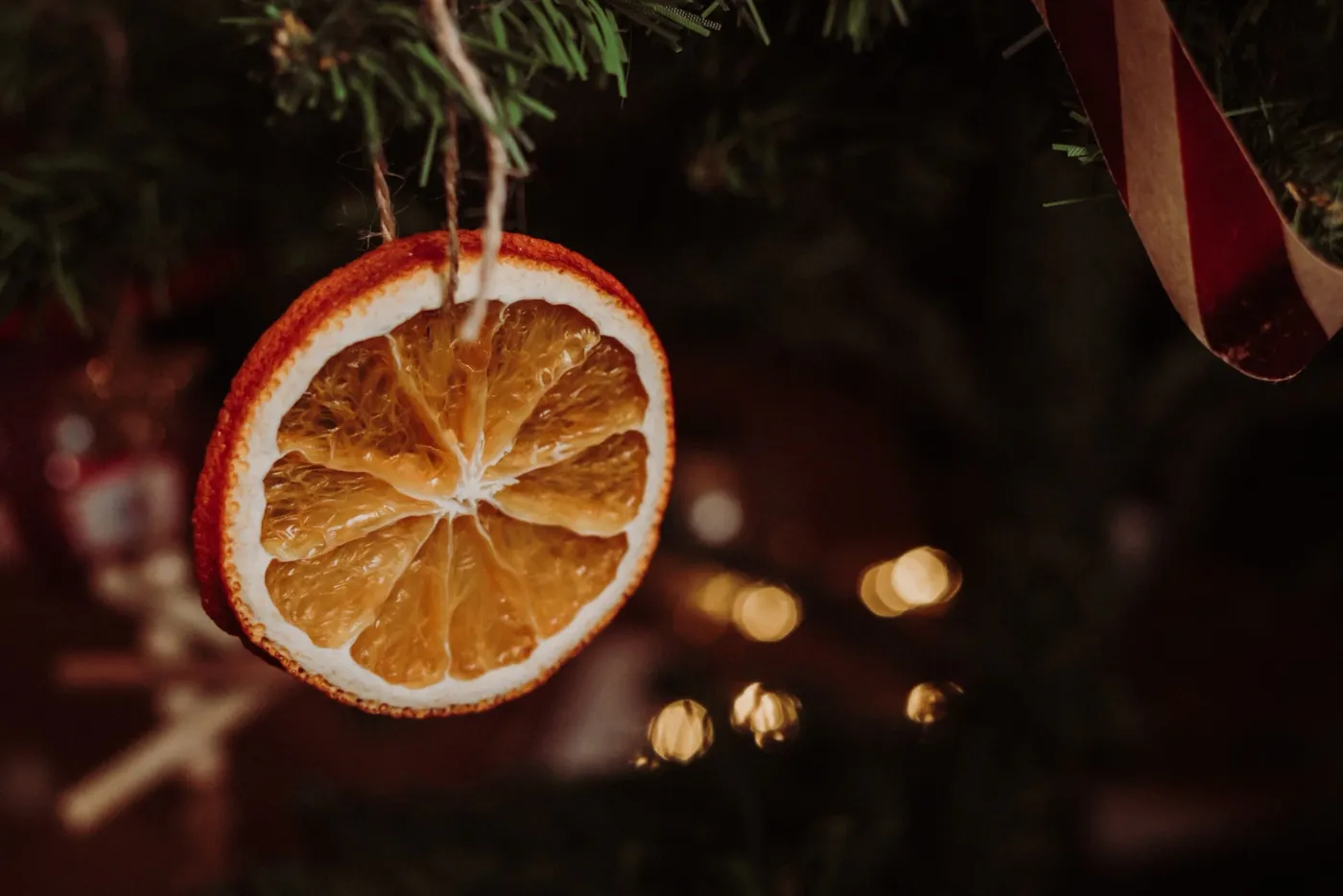
Dried orange keeps about one season. Humidity makes the slices soft and sticky, dry heat makes them brittle enough to snap when you rearrange them, and the color fades from bright orange to pale amber by February. Keep them away from exterior doors and kitchen steam, and store them in a zip bag with a silica packet to get two winters out of the good ones.
Slice count scales with tree height, not ambition: about 12 to 15 for a 4-foot tabletop tree, 20 to 25 for a 6-footer, and 30 to 40 on a 7.5-foot tree, spaced 4 to 6 inches apart. Under a 9-foot ceiling that spacing reads generous. In a low-ceiling apartment, drop to clusters of two so the tree does not feel busy.
15. Rustic Burgundy and Burnt Orange, Layered Softly
The palette works because burgundy and burnt orange are neighbors on the color wheel — close enough to blend, far enough apart to create depth. Think roughly 55 percent deep green foliage, 25 percent burgundy, 15 percent burnt orange, and 5 percent brass. Swap the brass for matte black and it turns moodier; swap burgundy for chocolate brown and it goes full cabin.
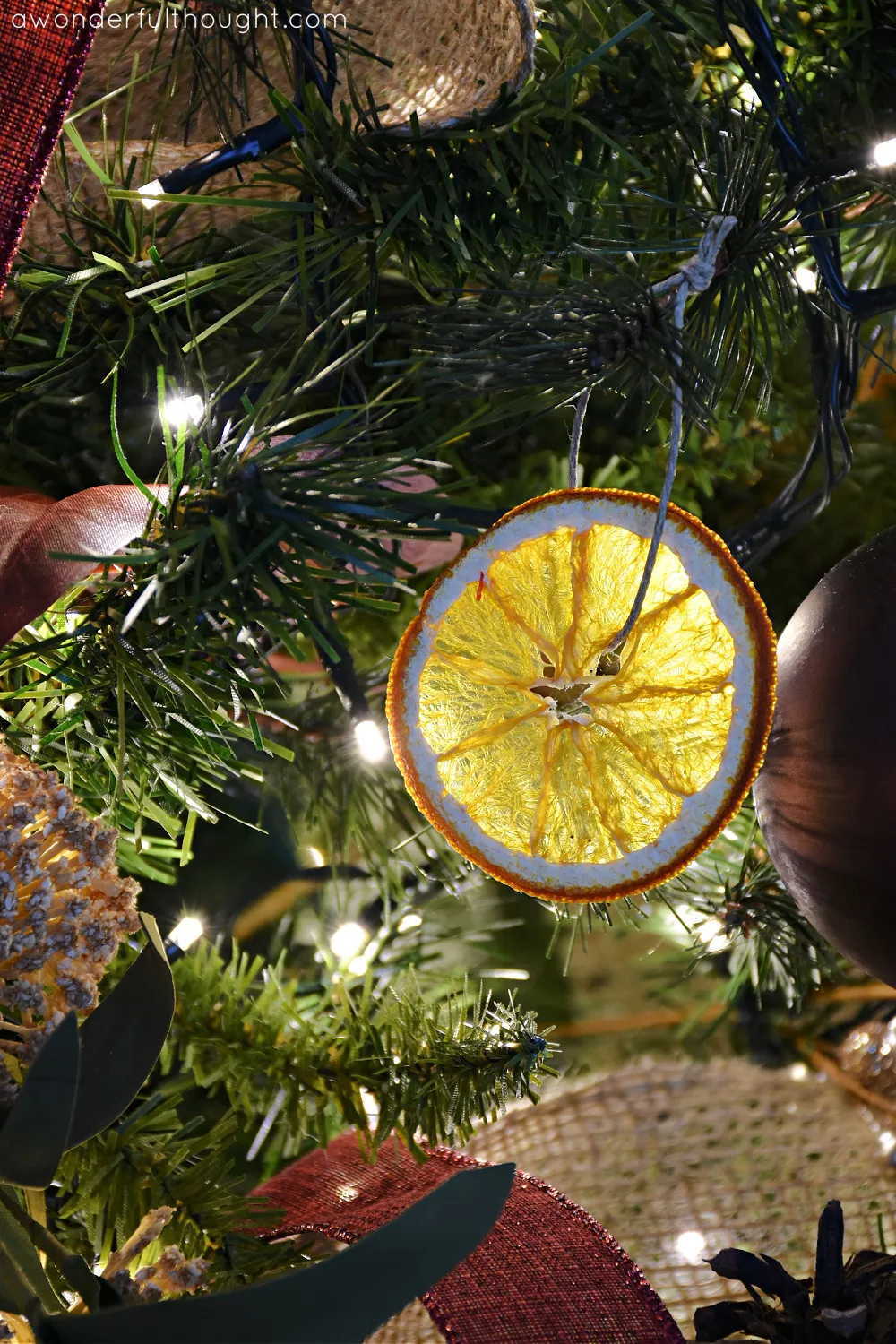
This is one of the cheapest palettes to fake, because deep colors hide cheap finishes. Burgundy velvet ribbon runs $5 to $8 a roll at Walmart, and mixed burnt orange ornament packs are $10 to $15 at Target after Thanksgiving. Spray paint is your best friend here — $6 cans turn thrifted ornaments and dollar-store fruit into a coordinated set. Three cans and a Saturday afternoon will save you $150 or more.
16. Zero-Waste Citrus Decor You Dry Yourself
- Oven holds 200°F and has a convection or dehydrate setting.
- You have 3 to 4 hours when nobody needs to bake.
- Counter space for a cooling rack and storage for finished slices.
- A sharp serrated knife for even 1/8- to 1/4-inch cuts.
- About 6 medium oranges, roughly 30 slices, for one tree.
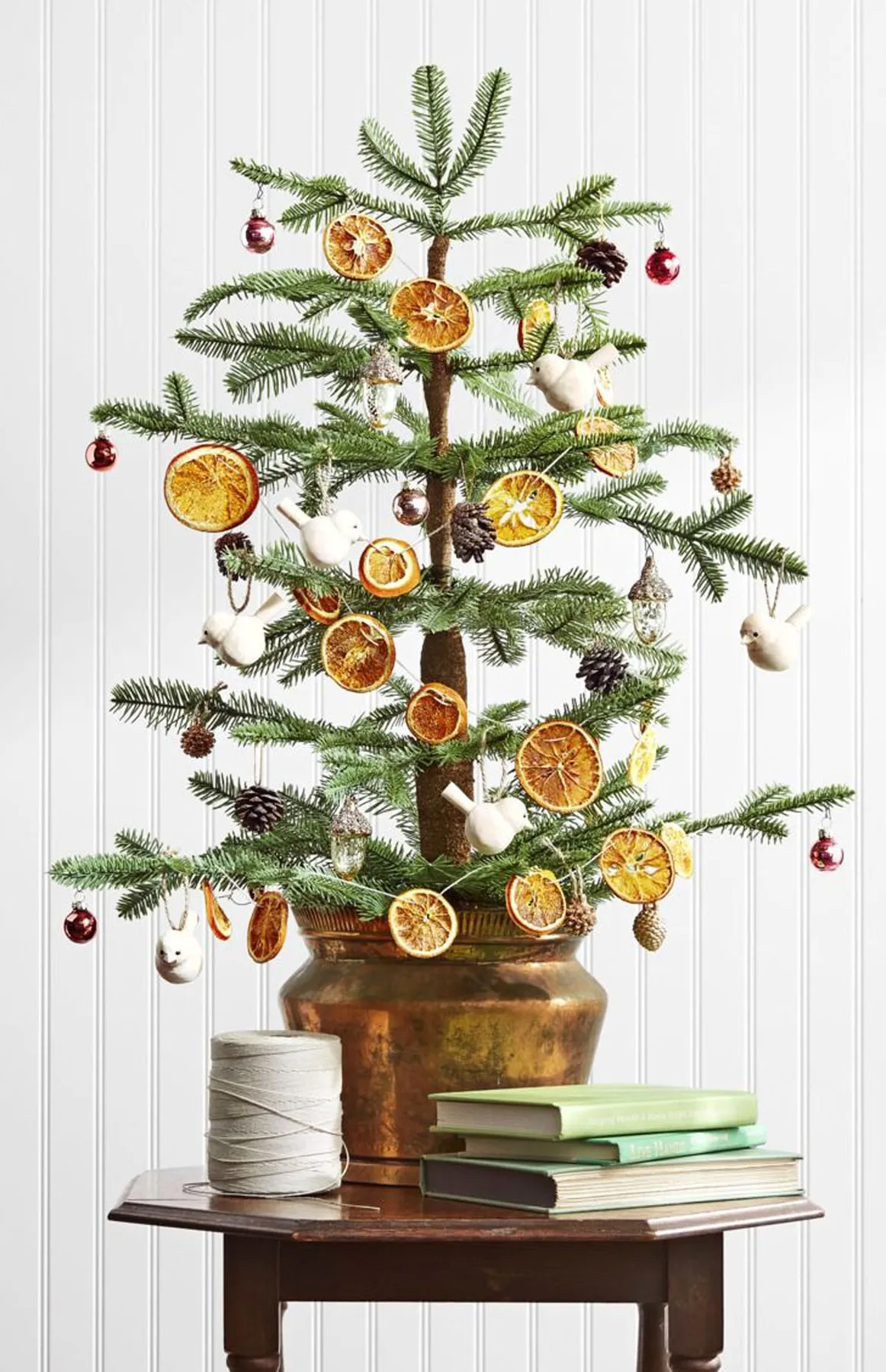
The whole process is four steps:
- Slice oranges evenly — thicker than 1/4 inch and they mold.
- Blot both sides with a clean towel.
- Bake at 200°F for 3 to 4 hours, flipping every hour.
- Cool completely on a rack, then store airtight until decorating.
Cost: about $4 of fruit, no plastic waste, no shipping. See Idea #2 for how to style the finished slices.
17. Cinnamon Bundles Tied With Deep Purple Satin
Deep purple and orange sit across from each other on the color wheel, which is exactly why this pairing can tip into Halloween before you blink. The ribbon rescues it: satin reads elegant, grosgrain reads crafty, velvet reads luxurious. Plan for satin’s weak spot too — it creases and shows every fold, so store ribbon on a cardboard roll rather than in a bag. Cinnamon scent fades in about three weeks; scratch the sticks lightly to revive it.
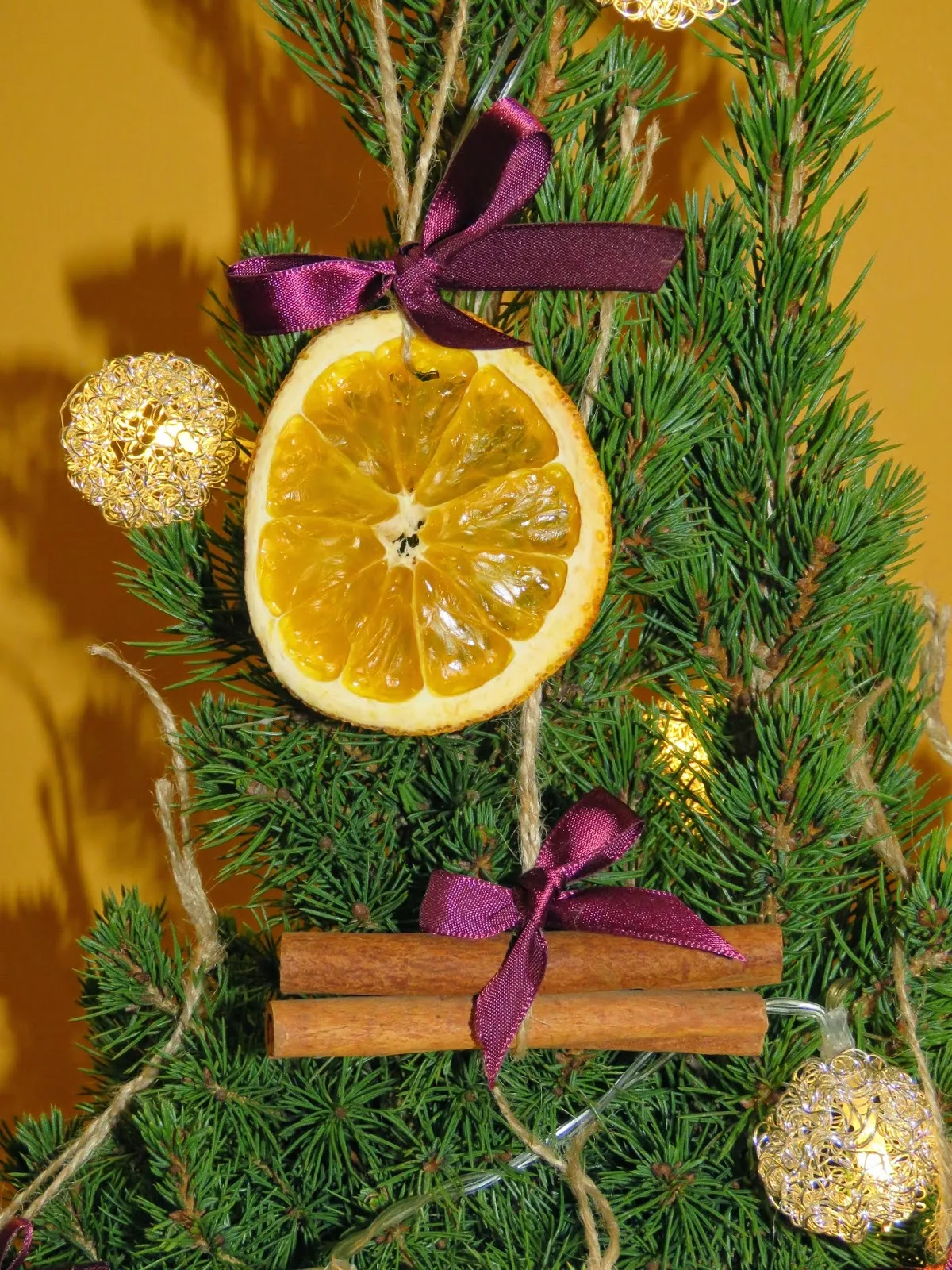
Three materials are doing all the work: golden wire-mesh string lights, deep purple satin, and cinnamon sticks bundled in jute twine with dried orange slices. Because the lights are metal and the ribbon is fabric, the eye reads one as sparkle and one as softness, and that contrast stops the branches from looking flat. Then there is scent, which no photograph shows but every guest notices.
18. An Orange Living Room Tree With Sunflower Warmth
The one element you could never recreate with ornaments alone is the sunflower — big, flat, gold-centered forms that read as flowers instead of decorations. They soften an orange living room tree the way fresh blooms soften a room: same palette, completely different temperature. Remove them and you have a pleasant orange and brown tree. Leave them in and the whole living room feels sunlit.
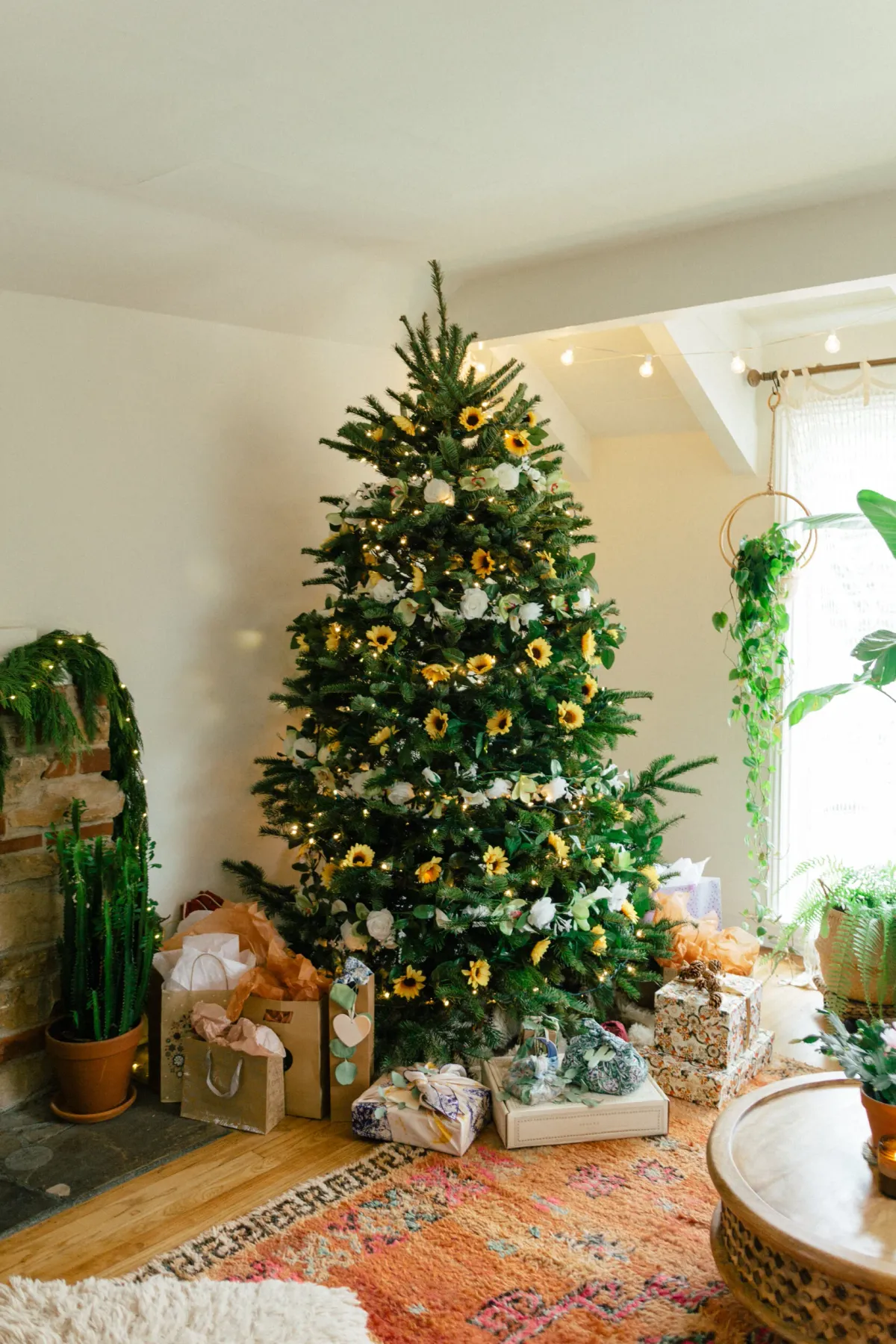
Silk sunflowers run $4 to $9 each in craft stores, and sunflowers are one of the few flowers you can also find in the dollar aisle almost year-round. Orange ball ornaments in bulk: $12 for 40 at Walmart. To land under $75, mix dollar-store sunflowers with thrifted rattan balls and keep the rest of the tree intentionally sparse — fewer, bigger elements always look more expensive than lots of small ones.
19. Citrus Oranges Against Blue-and-White Porcelain
This is a tall-room look. Blue-and-white porcelain and citrus want vertical space — ideally 9 to 12-foot ceilings with a tree in the 8 to 9-foot range, or a generous entry with 5 feet of clear wall. In a standard 8-foot living room, scale it down: a 6-foot tree, three or four porcelain pieces on a side table, and a narrower pop of orange. Cram it into a small room and the blue reads loud instead of collected.
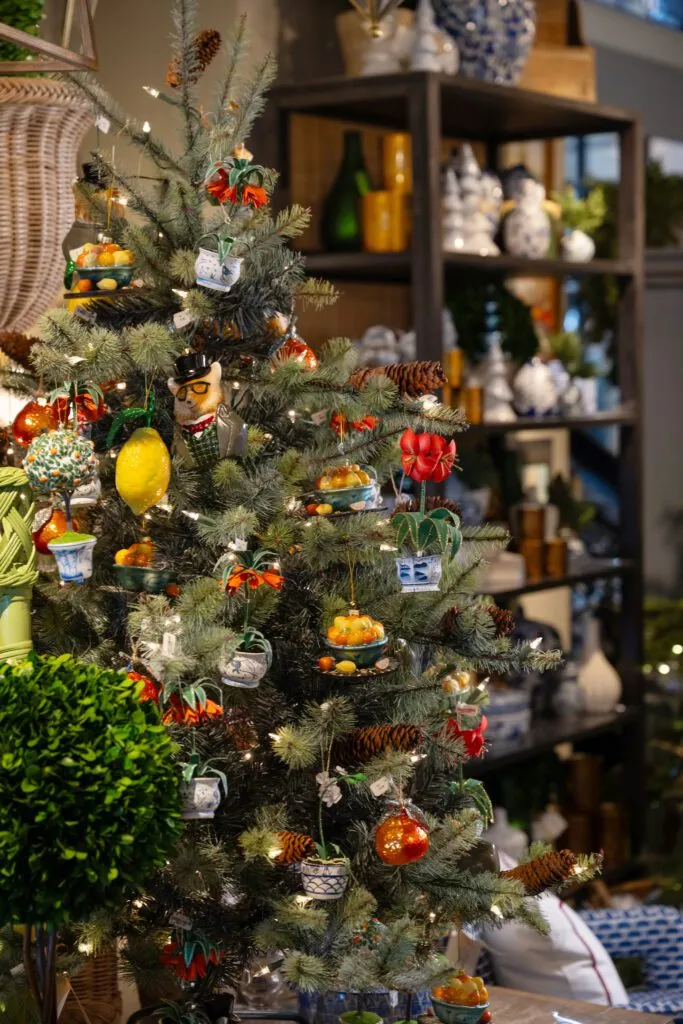
The Southern formula lands around 40 percent white and cream, 25 percent deep green, 20 percent blue-and-white, and 15 percent orange. Orange is a seasoning here, not the main course, which is what keeps the combination classic instead of citrus-soda. Swap blue-and-white for black-and-white transferware and the mood turns modern farmhouse instantly.
Layer the vignette in five passes:
- Start with the largest ginger jar on the floor or a low bench as the anchor.
- Add a second piece at a different height, 8 to 12 inches away.
- Tuck three dried orange slices where the two heights meet.
- Add a single boxwood sprig for green, never a full branch.
- Step back four feet and remove one thing — restraint is the finish.
Time: 15 minutes. Cost: $0 if you already own the pieces.
20. A Flocked White Tree With Peach-Orange Glass Baubles
Flocked trees eat details: white branches swallow small ornaments, so anything under 3 inches vanishes. Go big — 4-to-6-inch spheres, oversized fabric flowers, and gold leaf clusters spaced about 6 inches apart. Warm 2700K bulbs are non-negotiable here, because cool white light on white flocking turns the whole tree blue-grey and kills the peach-orange glow you paid for.
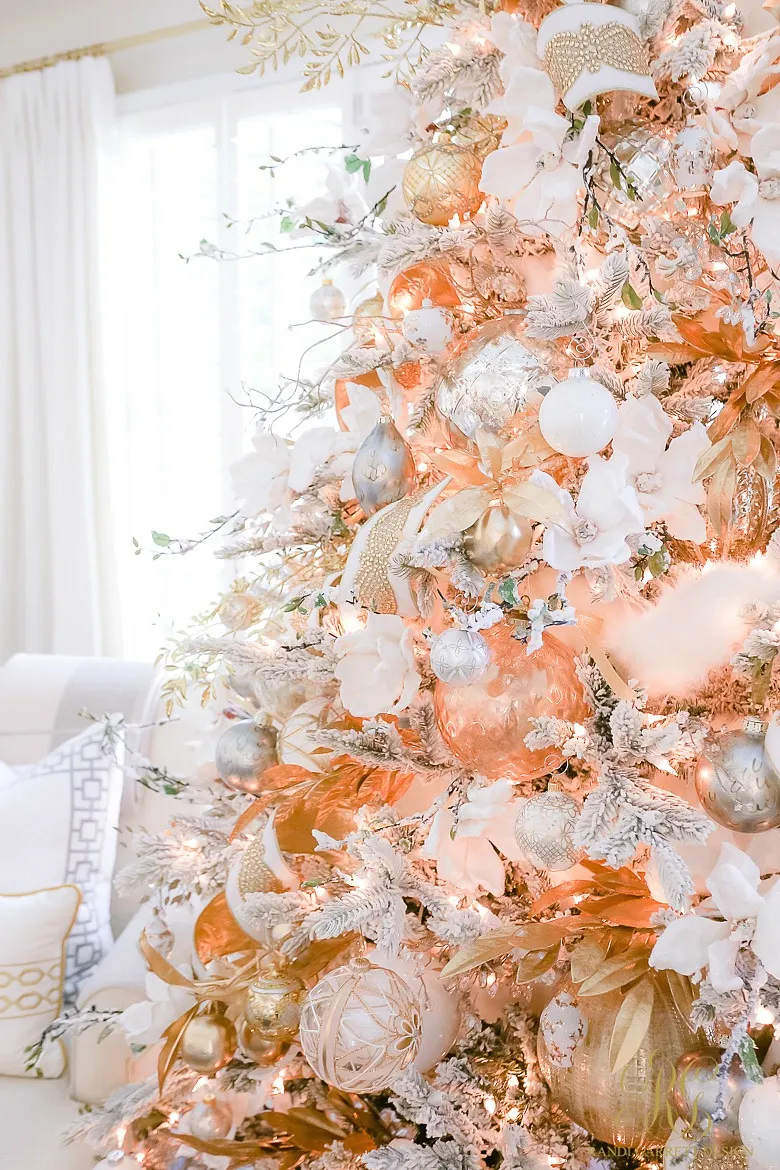
The reason this tree feels luxurious is contrast, not cost. Matte white flocking next to glossy glass gives the eye something shiny to land on, and the peach-orange baubles warm a palette that could easily turn icy. Count the colors — white, gold, silver, peach — and notice how they repeat at three scales: tiny gold leaves, medium baubles, oversized fabric flowers. Repetition plus contrast is what reads as expensive.
21. Orange Slice Ornaments, Dried in Your Own Oven
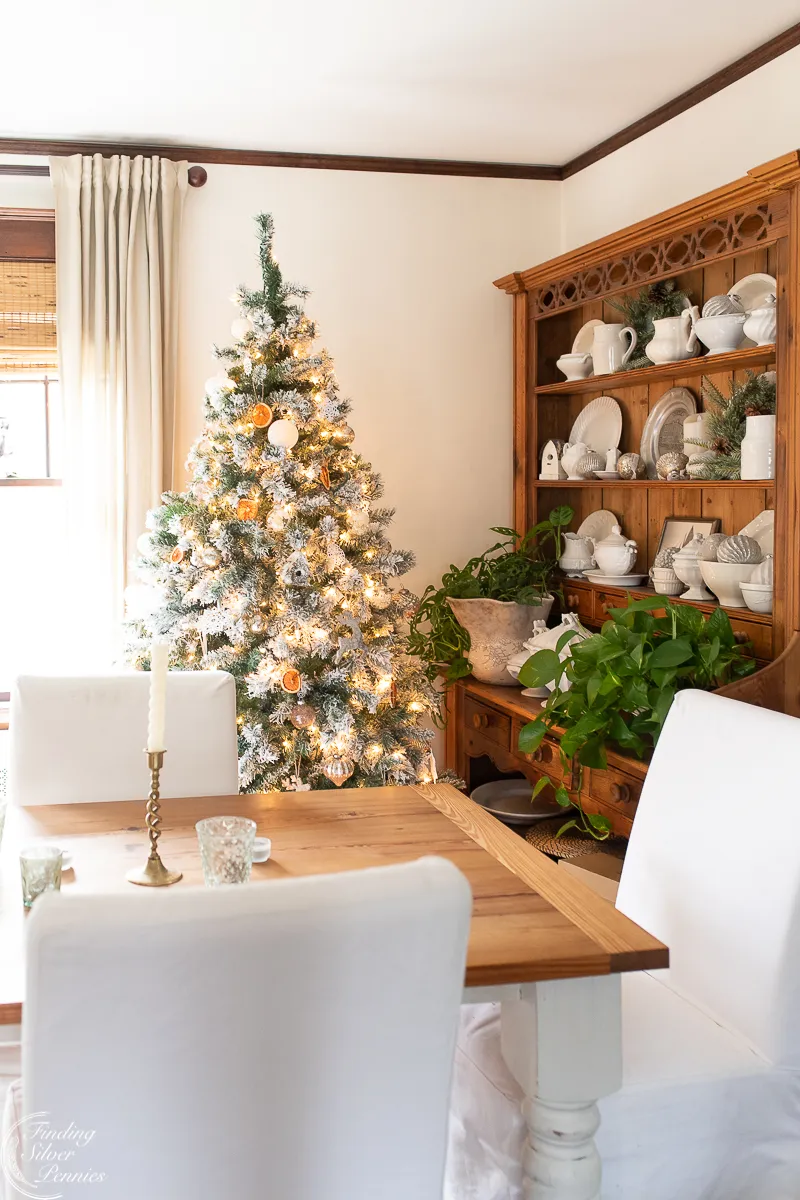
Dried citrus is not archival. In a humid climate, slices go tacky and can grow mold in a heated room; a quick clear varnish solves that but makes them slightly less translucent. In dry homes they simply fade. Citrus can also attract pantry moths and fruit flies if stored loosely, so keep finished slices in a sealed jar with a silica packet rather than a pretty open basket on the counter.
Ready in an afternoon:
- Preheat to 200°F and line two baking sheets with parchment.
- Slice oranges 1/8 inch thick with a serrated knife.
- Bake 3 to 4 hours, flipping hourly, until edges curl and centers dry.
- Cool 30 minutes on a wire rack.
- Thread with twine, leaving a 4-inch tail for hanging.
Cost: $4 to $6 of fruit for 25 to 30 ornaments. Time: 20 minutes of work, 4 hours of patience.
22. A Vintage Orange Tree With Retro Ornaments
Vintage trees are having a moment because the ornaments are the story — aged glass, faded satin balls, hand-painted figures you cannot buy new. Thrift and antique stores know this, which is why prices on 1960s glass ornaments have climbed steadily and why early-November estate sales have gotten competitive. The upside: a vintage tree never looks like it came out of a box, because it did not.
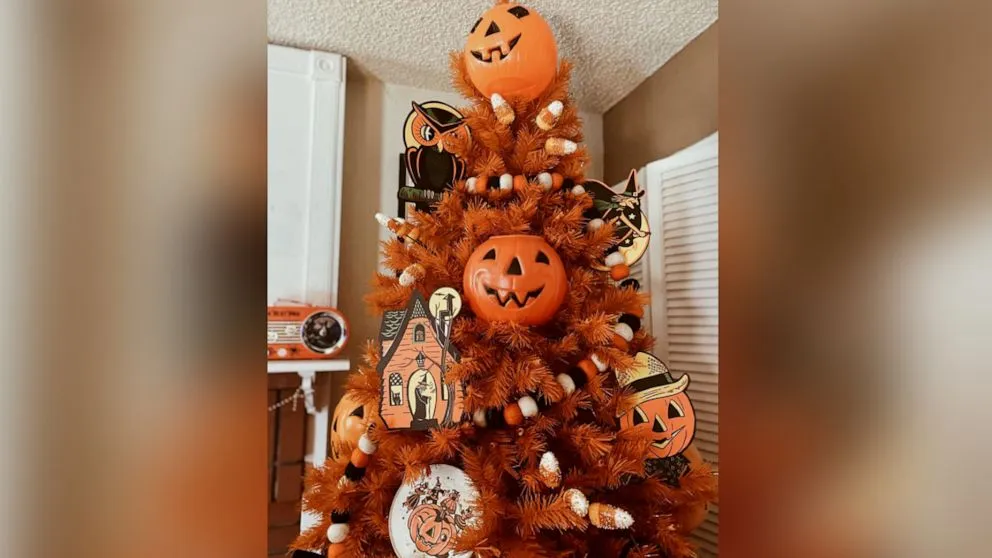
You can fake vintage for very little. Thrift stores price glass ornaments at 50 cents to $2 in mixed bags, and Marketplace sellers unload whole boxes for $10 to $20 in early November. Dollar Tree’s retro-looking baubles cost $1.25 for several. A $6 can of copper or gold spray paint turns plain ornaments and dollar-store fruit into a coordinated set — work in thin coats and let each one dry fully.
23. Orange and Gold Ornaments on a Deep Navy Wall
- 7.5-foot tree: $120 to $400
- Orange and gold ornaments, 60 to 80 count: $45 to $120
- Warm white string lights: $20 to $45
- Navy accent wall paint, 2 gallons plus supplies: $60 to $140
- Upholstered armchair: $300 to $1,100
- Textured throw: $30 to $90
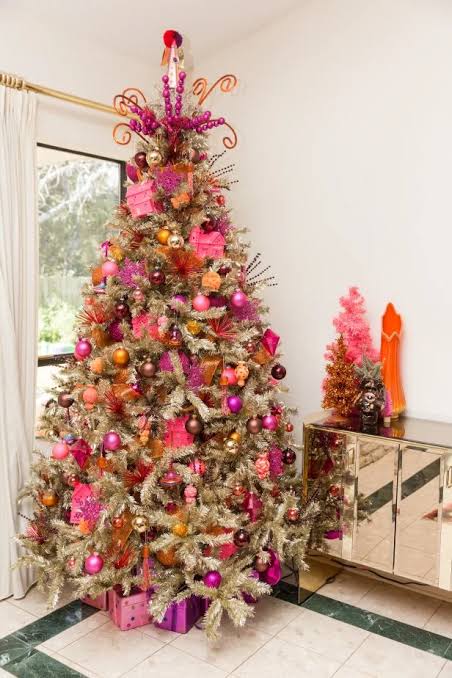
Total: $575 to $1,895. The navy wall is the smart saving here — $60 to $140 of paint does more for orange ornaments than $300 of extra decorations.
Navy is a commitment. It absorbs light, so a corner painted this dark needs at least three light sources — the tree, a floor lamp, and something low like a table lamp — or those orange ornaments will read brown after sunset. Eggshell or matte finishes hide wall imperfections while satin shows every bump. Test the paint in that corner at night before you buy two gallons.
24. Orange Ribbon Woven Through Red-and-White Stripes
Ribbon is where Christmas budgets quietly explode, and it is also the easiest place to save. Red-and-white striped ribbon runs $6 to $10 for 10 yards at Michaels or Walmart, solid orange satin $5 to $8, and Target’s post-holiday clearance drops ribbon to 70 percent off in late December, so buy for next year. Consider this the ribbon-forward cousin of Idea #12, where orange ornaments carry the corner instead.
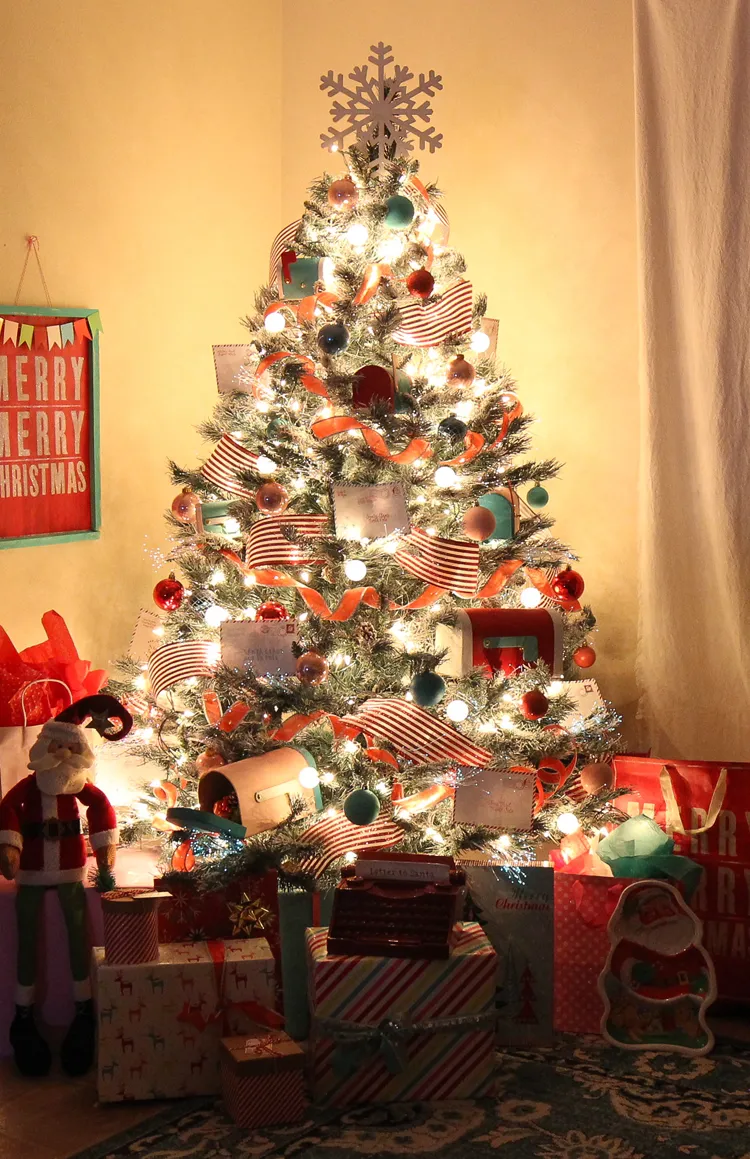
The ribbon trick is depth, not amount. Use 2.5-inch wire-edge ribbon, start at the top, and weave it 2 to 3 inches into the branches in big 18-inch loops. Flattening it across the surface is what makes a tree look like a craft project. Clip, do not knot. One 10-yard roll covers a 7-foot tree; buy two if you want the ribbon to read from across the room.
This one runs about 45 percent green foliage, 20 percent ribbon in red-and-white plus solid orange, 25 percent ornaments in red, teal, and copper, and 10 percent white snowflake accents at the top. Copper is the quiet hero — it bridges warm orange and cool teal so they stop arguing. Swap copper for bronze and the tree goes more traditional; swap teal for blush and it turns soft and modern.
25. Modern Country Orange: Warm, Not Loud
Modern country works in rooms that do not. An 8-foot ceiling with a 6-foot tree on a low basket, or a 90 to 110 square foot living room, is plenty — this style gets its charm from restraint, not volume. Keep 30 inches of walking clearance around the tree and you are fine. Larger rooms can go to 7 feet; past that, orange in this muted, woodsy register starts to feel heavy.
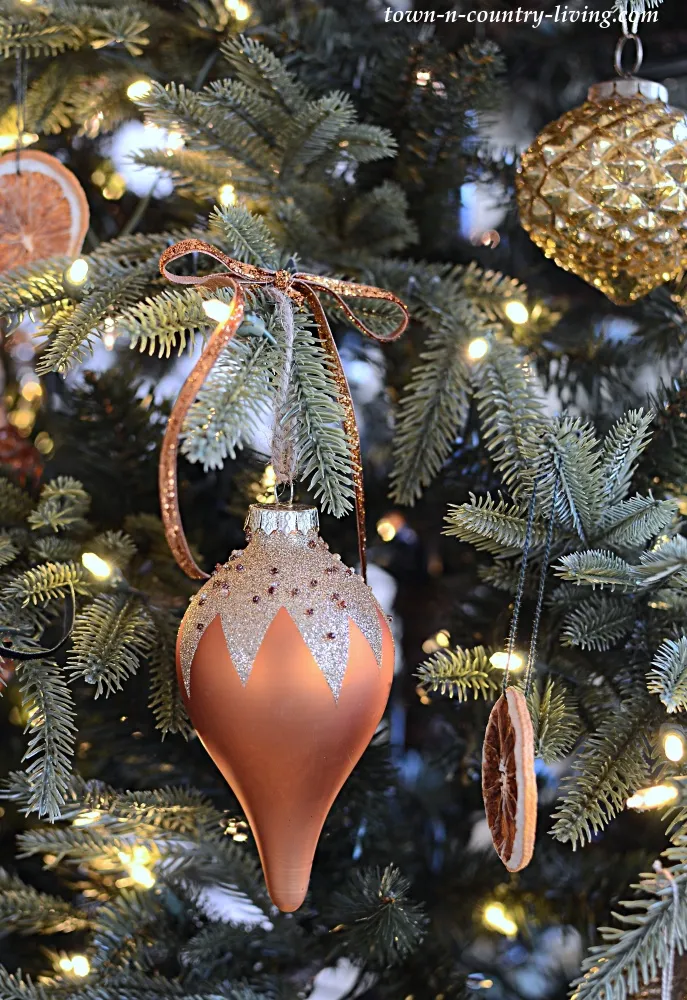
What keeps a country orange tree from getting loud is texture doing the job color usually does: matte wood beads, linen ribbon, natural twine, and worn metal. The palette stays inside two or three warm tones, and the tree is decorated in distinct clusters rather than evenly spaced rows. That unevenness is the entire point — evenly spaced ornaments read formal, clustered ones read home.
26. A Burnt Orange Tree With Hand-Gilded Ornaments
The gilded ornaments are the reason this tree looks expensive. Burnt orange is a forgiving, earthy color, but flat matte ornaments on a matte tree can go dull — a little gold leaf catches the string lights and wakes everything up. Skip it and you still have a pretty, warm setup. Add it and guests start asking where you bought the ornaments.
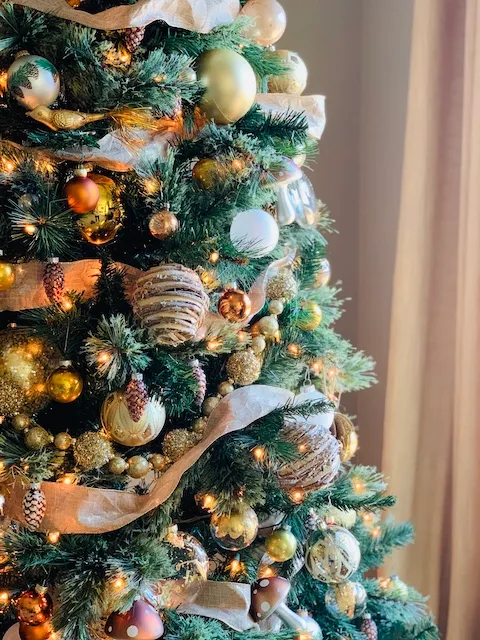
Gilding a dozen ornaments takes one evening:
- Wipe each ornament clean and let it dry fully.
- Brush on size adhesive in a thin, even coat.
- Wait 20 to 30 minutes until the size turns clear and tacky.
- Press gold leaf on with a soft brush, patching gaps after.
- Seal with a light coat of clear matte varnish.
Cost: $15 to $25 for 100 leaves and adhesive. Time: about 2 hours for 12 ornaments.
27. A Vintage Aluminum Gold Tree, Mid-Century Shine
about aluminum trees: they dent if you look at them wrong, the branches hold memory bends, and originals with the box can run $200 to $500 because collectors want them. Never put vintage incandescent bulbs on a metal tree — foil plus heat is a genuine hazard. Use modern LED string lights, handle branches by the trunk, and store it in a long box with tissue between the layers.
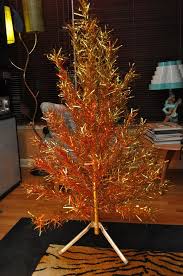
The formula for a metallic tree is different: about 60 percent shiny structure, 25 percent warm white light, and 15 percent saturated ornament color — think emerald, ruby, and orange glass so the metal has something to reflect. Because the tree is the color, ornaments should be glassy or metallic, never matte. Swap jewel tones for all-white and it goes glam minimal; add pink and it becomes a retro cocktail party.
28. Jewel-Tone Orange for a Bolder Modern Tree
Jewel tones look expensive and are not. Walmart and Target sell mixed jewel-tone ornament sets for $12 to $20 for 40 to 60 pieces, and thrift stores always have mismatched emerald and sapphire balls for under a dollar each. A $7 can of rust or copper spray paint upgrades dollar-store ornaments instantly. Buy one color a year in post-Christmas clearance and you will have a gorgeous mismatched set for under $60. See Idea #3 for the maximalist gallery-wall version of this energy.
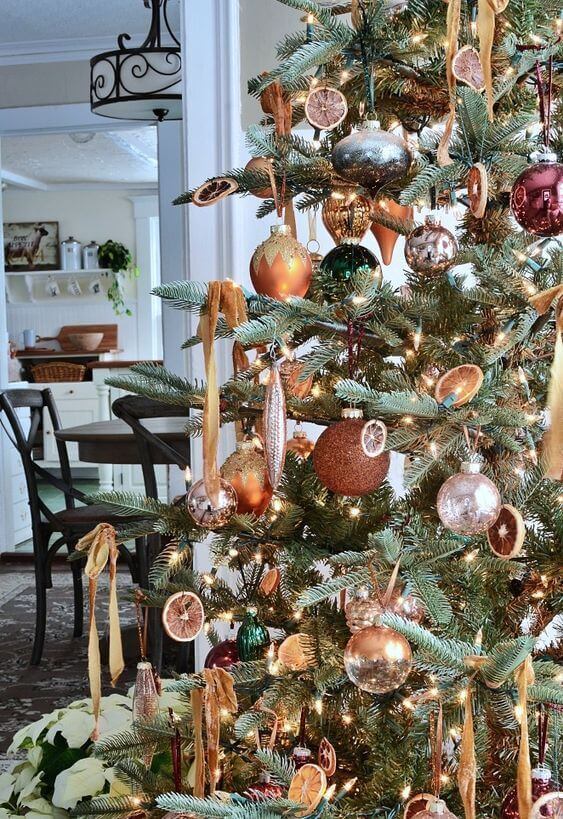
What makes this tree modern instead of chaotic is that almost nothing in it is matte. Glossy ornaments, satin ribbon, glass baubles, and reflective metal all bounce light off each other, so a crowd of strong colors stays lively rather than muddy. Add one matte element — a felt garland, a burlap ribbon — and the whole thing goes flat and country. Finish is what holds this look together.
29. A Themed Orange Tree With Character Ornaments
Themed trees went mainstream when hotels and resorts started building them for social media. Guests photograph a themed tree dozens of times, which is free advertising, and that is why character ornaments and single-story trees now show up in ordinary living rooms. It is a genuinely fun approach, but it works best when the theme is narrow: one movie, one color, one motif. A tree with five themes is just a tree with stuff on it.

Designer trick for a themed tree: build a base of 60 to 70 percent solid, plain ornaments in three colors pulled from the theme, then spend your character ornaments across the front between 4 and 6 feet. You will use half as many collectibles and the tree will photograph better. Put the rarest pieces at eye level — almost nobody looks at the top third of a tree.
30. Coastal Orange: Shell Ornaments on Warm Branches
Handmade shell ornaments are the heart of this tree. Orange-tinted shell pieces catch light with an iridescence no plastic bauble can copy, and every one is slightly different, which is why a shell tree never looks like a catalog page. Without them you have a nice warm-toned tree. With them you have the story of a beach trip hanging in your living room.
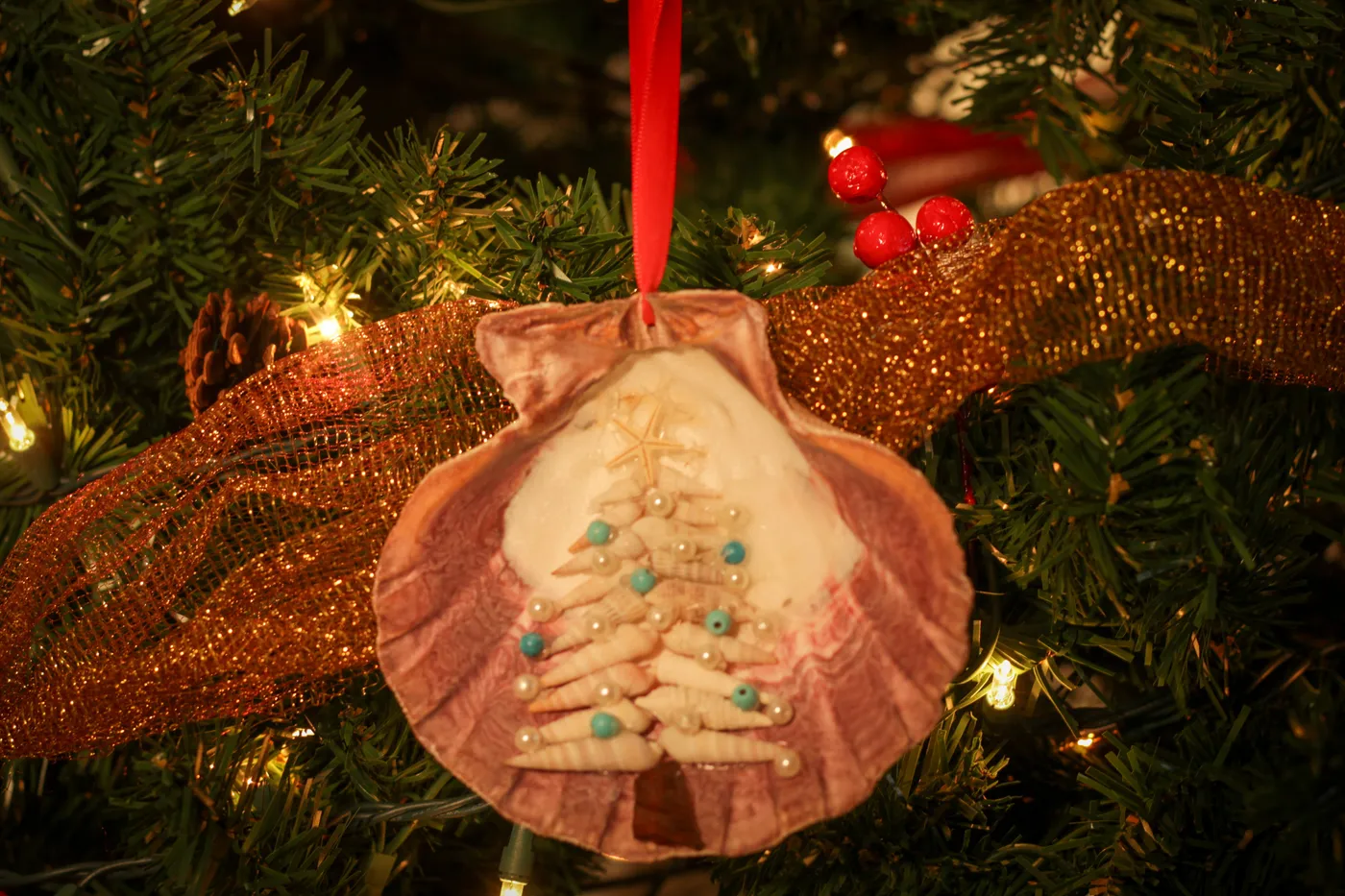
Shells are sturdier than they look, but they collect dust in the ridges, and a soft toothbrush is the only tool that reaches. Keep them out of direct sun or the color fades within a season. If one cracks, a dot of clear museum gel repairs it invisibly, and storing shell ornaments in a padded box instead of a bin saves your collection from a single dropped lid.
A bag of mixed shells costs $5 to $8 at craft stores, thrifted shell jewelry works too, and shells you collected yourself are free. Glue a small loop of twine to the back with hot glue or E6000 and you are done. Orange twine ties the coastal pieces back to the burnt-orange palette — a $10 project versus $8 to $15 per ornament at a boutique.
31. Citrus You Can Actually Snack On
Edible-decor trees belong in rooms where people gather near them: kitchens, dining corners, breakfast nooks. A 4-foot tree on a counter or a 5-to-6-foot tree in a dining corner is ideal, and you want at least 3 feet of clearance from the stove, since heat and humidity shorten citrus life fast. In a 60 to 90 square foot nook, this is one of the few tree styles that genuinely fits without a fight.

If anything on the tree is meant to be eaten, decorate above 4 feet, where kids and dogs cannot reach, and use food-safe twine or unbleached cotton instead of wire. Plan on replacing fresh pieces every two to three weeks — dried and preserved citrus lasts the season, fresh fruit does not. Wash your hands before you snack. Ornaments pass through a lot of hands in December.
32. A Dining-Room Orange Tree Set for a Party
Two things make a dining-room tree work: it sits below eye level when you are seated, and its light is warm instead of bright. That is why a 5-to-6-foot tree in the corner, or a tabletop version between courses, reads elegant — it frames the table without blocking conversation. Orange also flatters food and skin tones, which is why candlelit dinners in orange rooms photograph so well.

Practical hazards of decorating where you eat: a tree crowds the walking path around the table, real candles near dry branches are a genuine fire risk, and someone will spill red wine on the tree skirt. Keep 36 inches of clearance behind chairs, use LED candles inside the greenery, and wash the skirt before the party rather than after. If your dining room is under 100 square feet, a tabletop tree is the smarter call.
33. An Orange Tree Framed by a Traditional Fireplace
The fireplace is doing half the decorating. Flames, warm string lights, and orange ornaments all sit in the same temperature range, so the tree does not have to carry the room alone — it just has to match. Move that same tree to a bare wall and the oranges read brighter and colder. Keep it beside a working fireplace and everything settles into one warm glow.
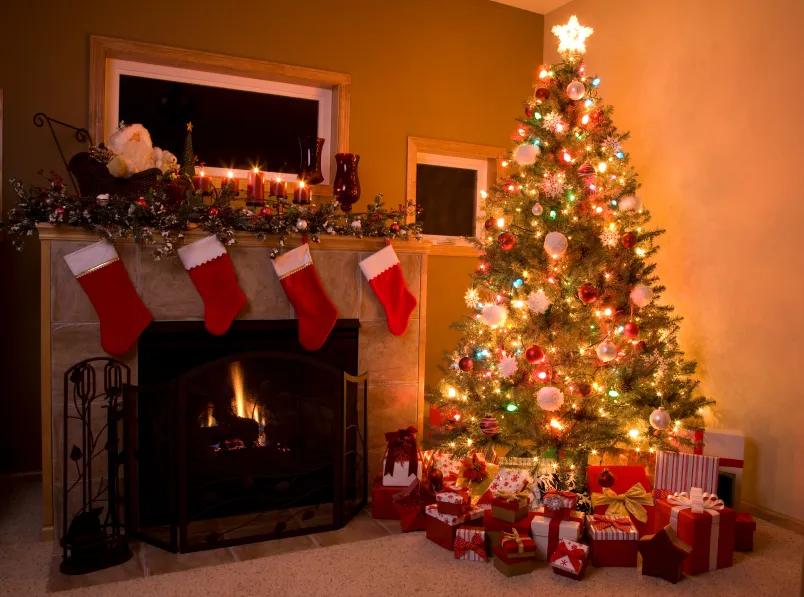
The balance here is roughly 50 percent orange ornaments in mixed sizes, 25 percent dark green foliage, 15 percent gold accents, and 10 percent warm white light — a simple two-color formula with a metallic finish. Keep a live tree at least 3 feet from an active firebox, and if the mantel is crowded, clear it down to one garland and two candlesticks. Compare with Idea #23, where the same orange-and-gold mix sits against navy instead of firelight. Still unsure about ornament scale? Our common mistakes section covers the one that trips up most people.
Your Orange Tree Era Starts Now
Orange is one of those choices that feels risky in the store and obvious once it is standing in your living room — warm, unexpected, and far more versatile than the same green tree everyone else has. Start with one idea above, not all thirty-three, and let your own light and your own walls tell you what to add next.
📌 Pin this guide to your Christmas board now so it is waiting for you when the ornaments come out of the attic.