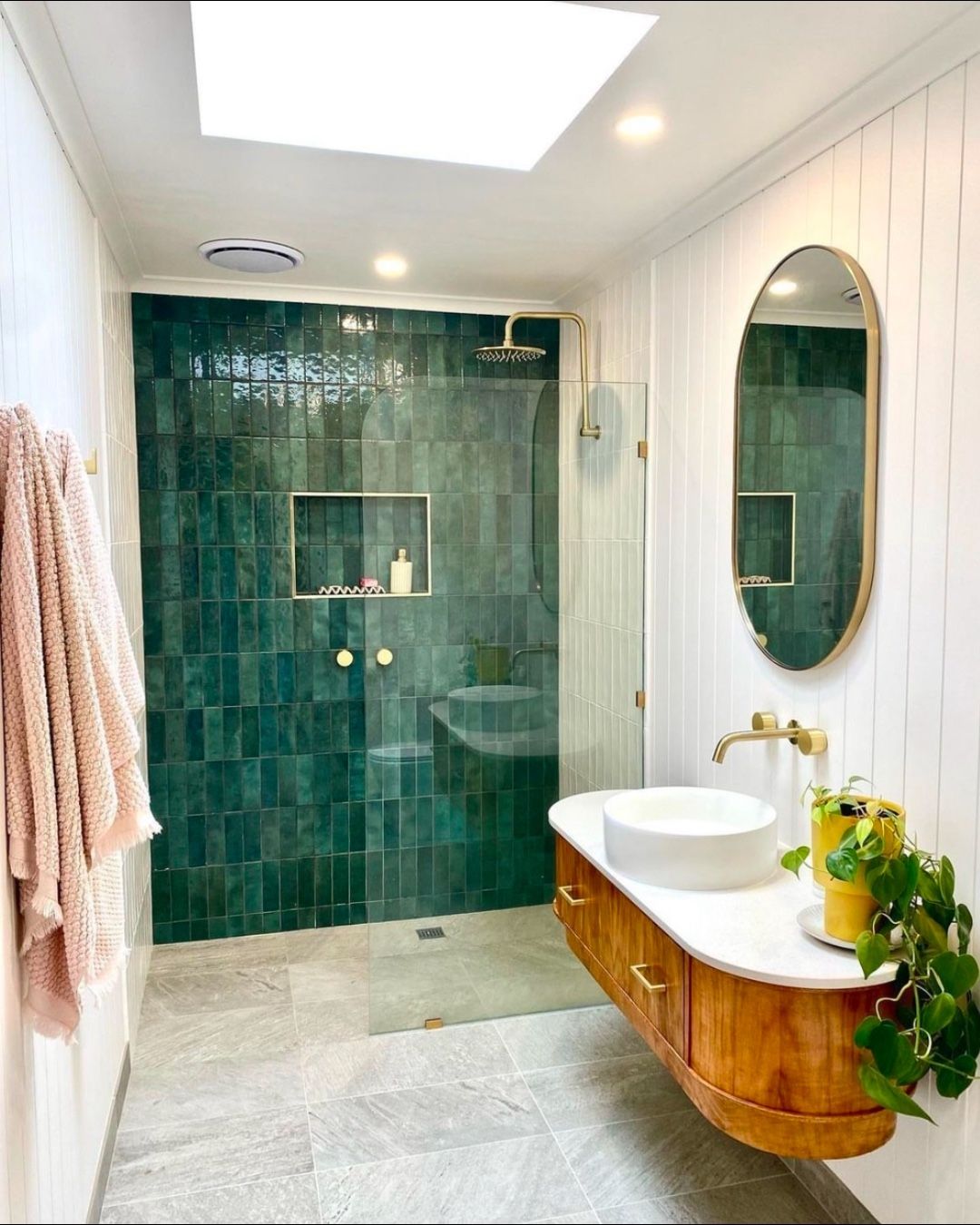
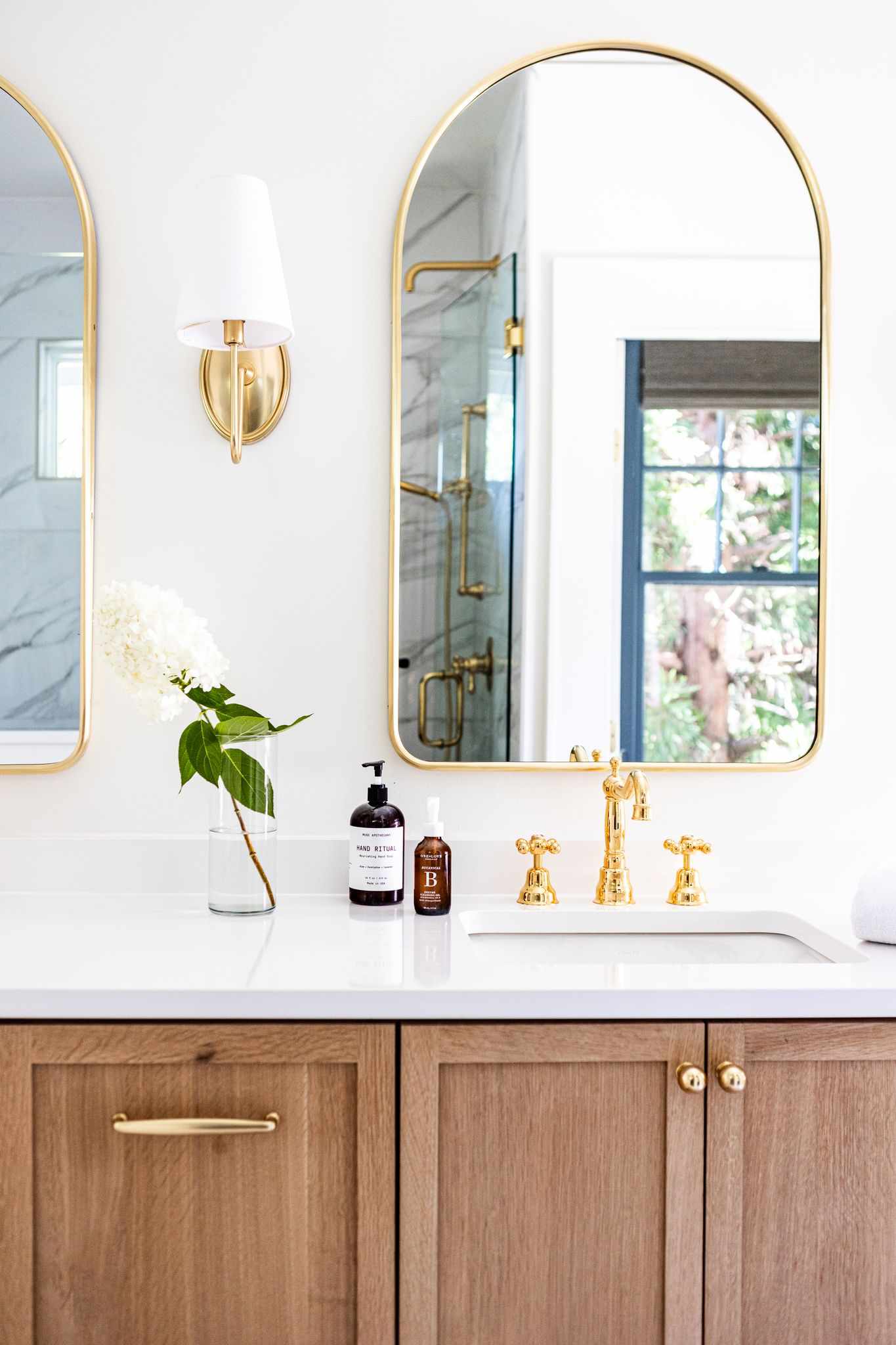
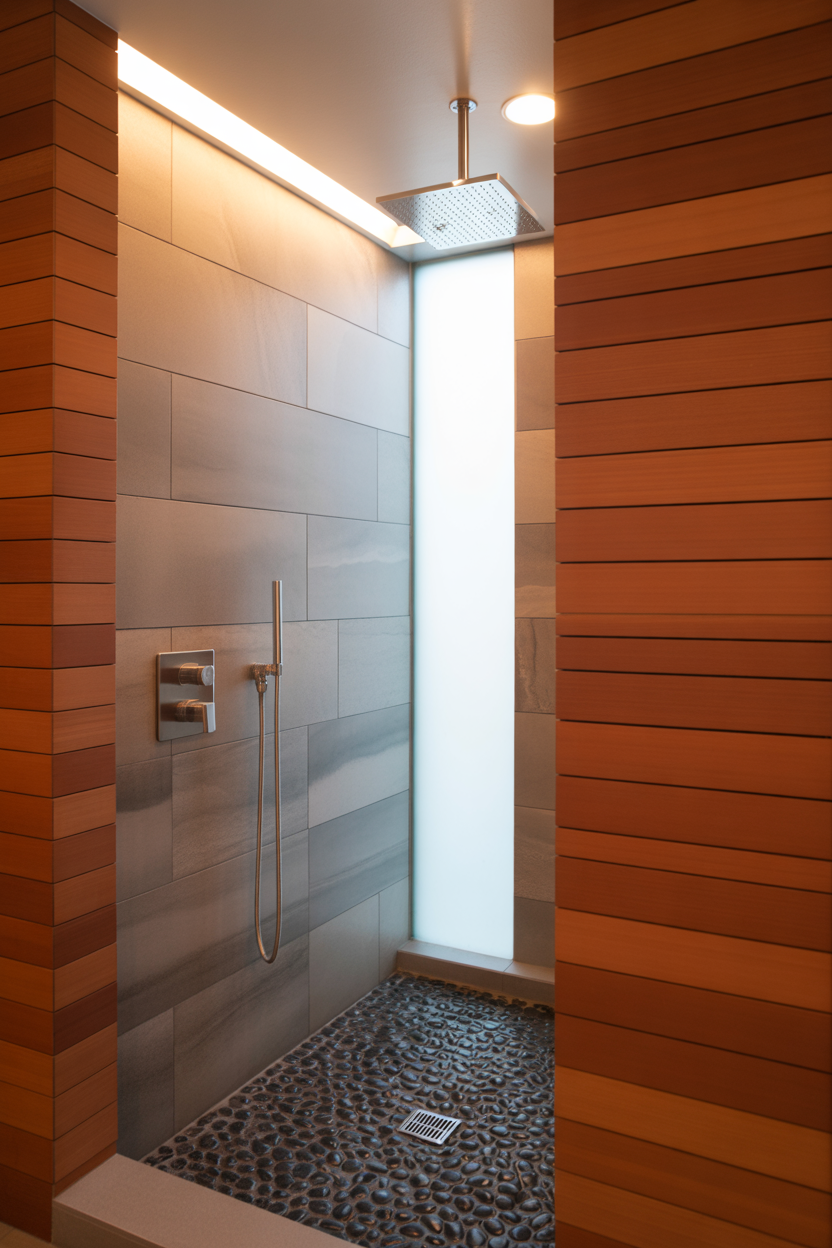
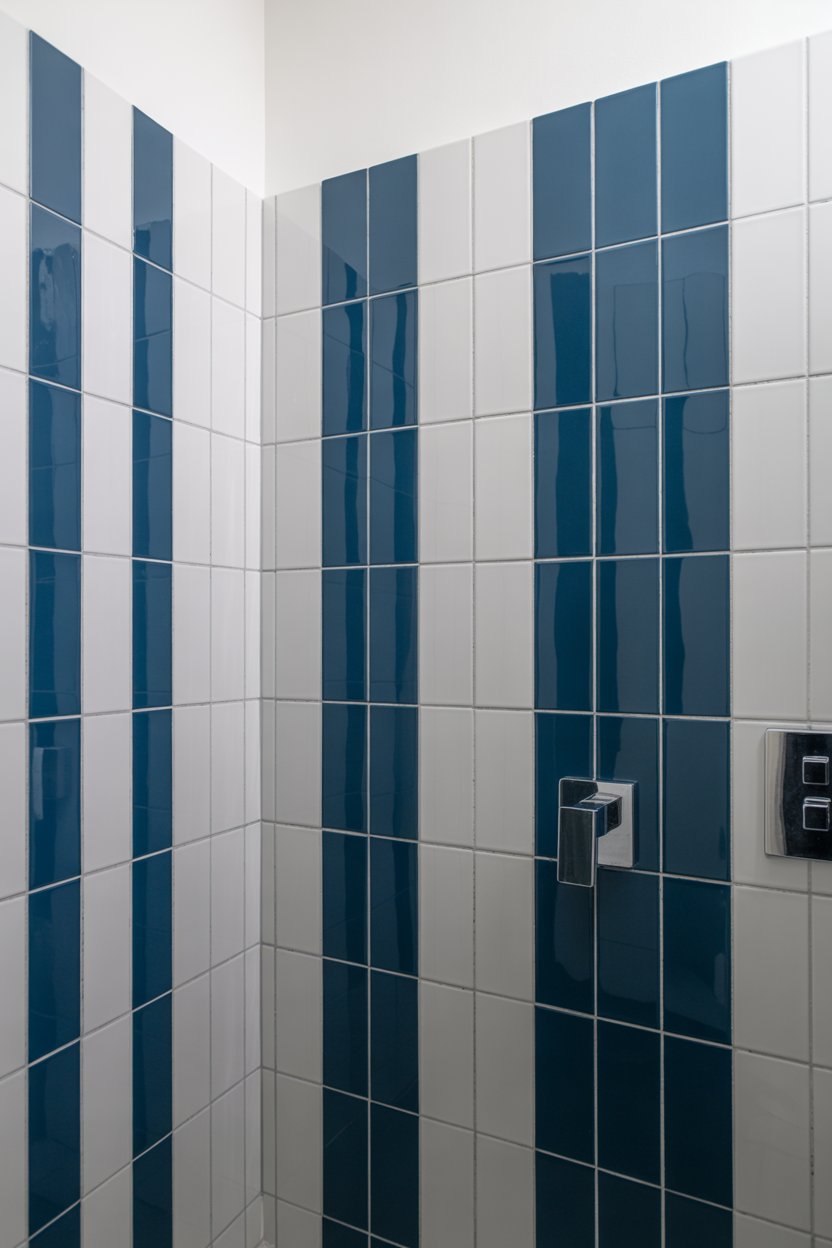
That feeling of scrolling through endless bathroom photos, saving pins that you love but have no idea how to actually translate into your own home? We get it. It’s easy to get lost in a sea of inspiration. That’s why we spent serious time curating this list, filtering through hundreds of designs to bring you only what’s worth your attention for the year ahead. We’ve boiled it all down to 30 distinct, achievable ideas that cover everything from modern minimalism to bold, bohemian statements.
For 2026, the biggest shift is toward creating a truly personal retreat, a space that feels less like a utility room and more like a private oasis. And stay until the end — we break down the most common mistakes that can ruin these looks. 📌 Save this to Pinterest for later — you’ll want to revisit these ideas.
1. Faux Stone Tile in a Compact, Neutral Bathroom
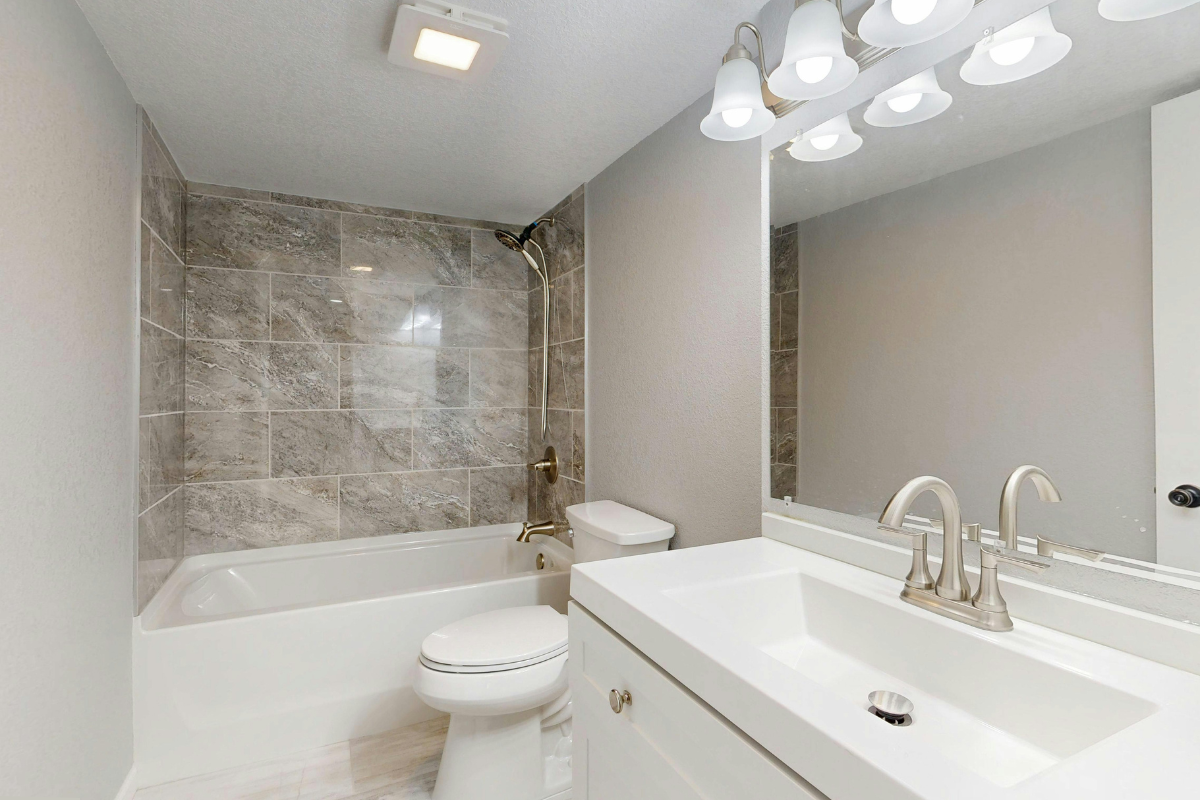
This design’s success lies in its smart use of materials to create a sense of space. Using the same large, rectangular faux stone tiles across the shower and bath area visually connects the zones, making the entire room feel more expansive than it is. The large, unframed mirror is another classic designer trick; it doubles the visual square footage and bounces light around, which is critical in a compact bathroom without a large window. The clean lines of the white vanity and integrated sink prevent the room from feeling cluttered.
💰 Budget Breakdown
Let’s be honest: a small, neutral bathroom can become a clutter magnet. The key to maintaining this clean look is ruthless simplicity. The white vanity top needs to stay clear, so invest in good medicine cabinet storage or drawer organizers. While brushed nickel fixtures are champs at hiding water spots compared to polished chrome, the grout between those handsome faux stone tiles will require a dedicated scrub brush and regular cleaning to prevent mildew, especially in a high-humidity shower zone.
2. Serene and Spacious With Muted Blue and Wood
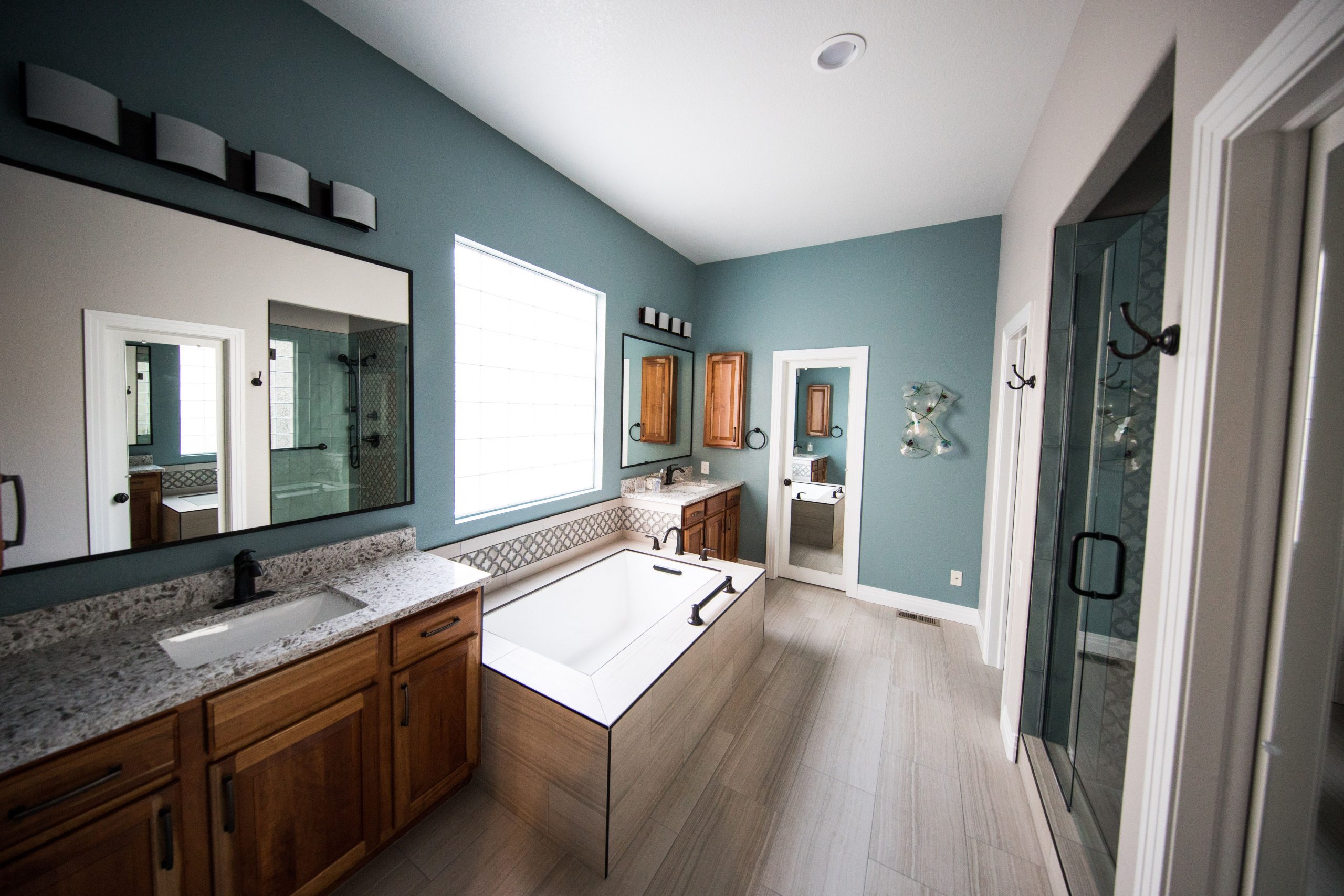
When you have dual vanities, lighting is everything. To avoid casting shadows on your face, flank each mirror with a dedicated sconce instead of relying on a single overhead light. Mount the center of each sconce roughly 66 inches from the floor, or at about eye level for the average user. This cross-illumination is what gives you that clear, even light that’s perfect for morning routines. Ensure the fixtures are rated for damp locations, a must for any bathroom lighting.
🔥 Trending Context
The visual harmony here breaks down into a simple formula: 50% calming color (the muted blue walls), 30% natural warmth (the beautiful wood on the vanities), 15% neutral foundation (the grey wood-look floor tiles), and a crucial 5% sharp accent (the black trim on the freestanding tub). You could easily swap the muted blue for a soft sage green to maintain that serene vibe, or change the wood to a dark espresso for a more dramatic, high-contrast effect without altering the successful ratio.
3. A Pop of Cobalt Blue Against Dramatic Marble
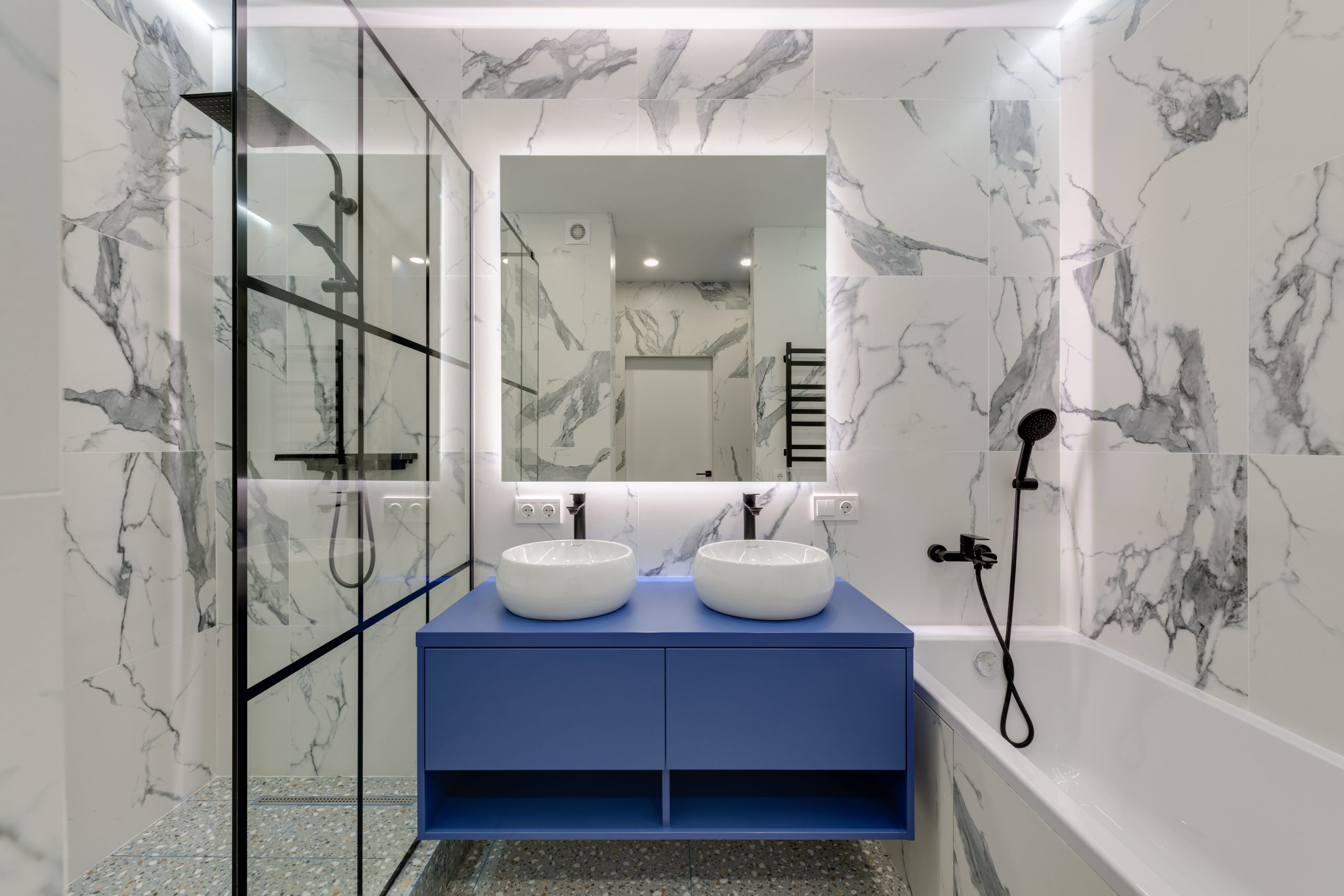
While the large-format marble-look tiles are undeniably luxurious and the matte black fixtures are perfectly on-trend, the single element that makes this bathroom unforgettable is the floating cobalt blue vanity. It’s the heart of the design. Remove it, and you have a beautiful, but fairly standard, modern bathroom. The jolt of saturated color injects personality and confidence, turning a functional piece of cabinetry into a bold statement piece. It proves that you don’t need color everywhere to make a massive impact.
📐 Style Math
- Large-format Marble-look Tile: $3,500 – $8,000
- Floating Cobalt Double Vanity: $2,800 – $6,500
- Matte Black Fixtures (sinks, shower): $1,500 – $4,000
- Integrated and Accent Lighting: $1,000 – $2,500
- TOTAL: $8,800 – $21,000
- Budget alternative: Get a similar effect by purchasing a more affordable stock vanity and painting it with a high-quality satin cabinet paint in a vibrant blue. Opt for more budget-friendly matte black fixtures from big-box stores.
4. Graphic Black and White with Herringbone Shower Tile
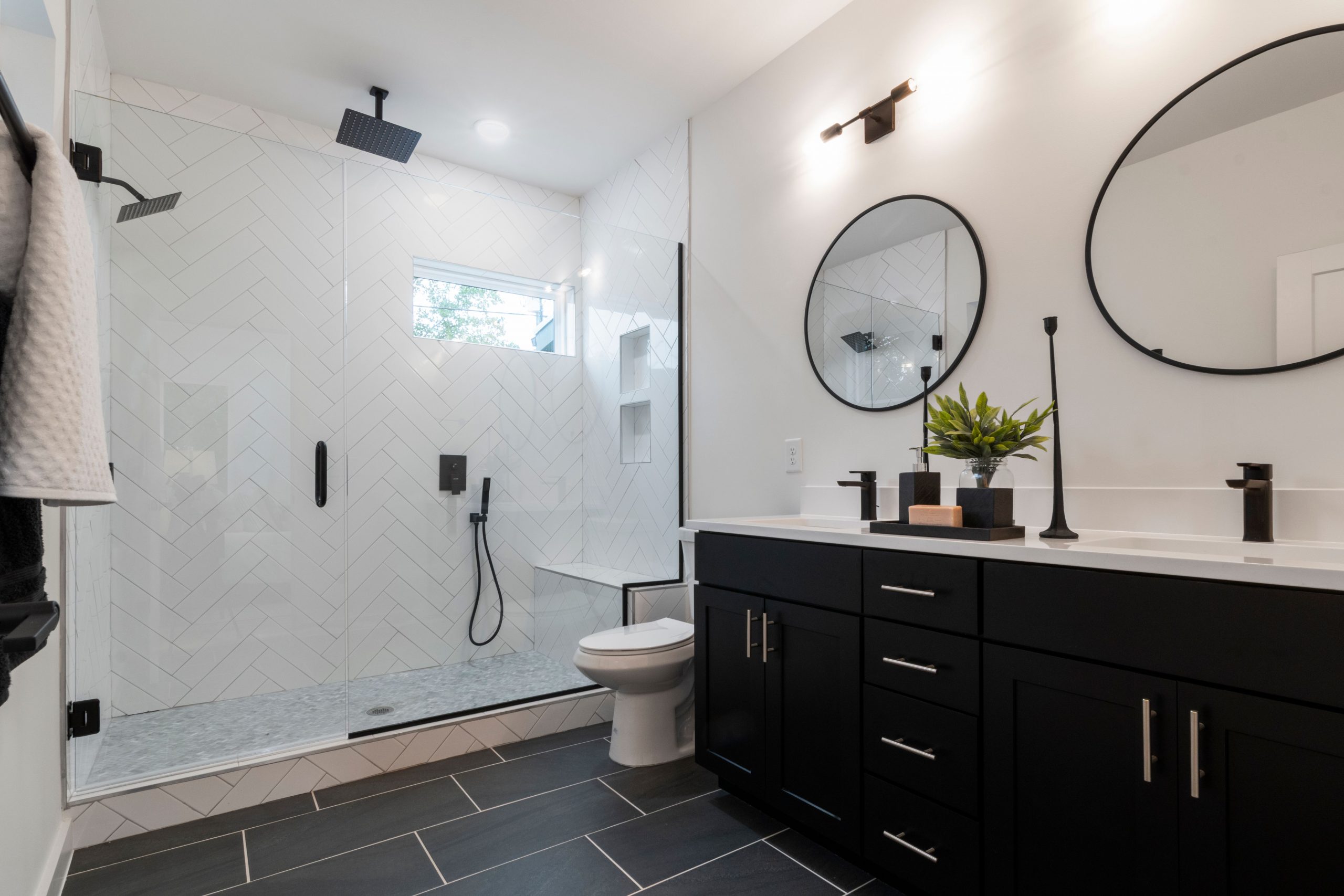
This high-contrast look is stunning, but it comes with a cleaning checklist. The white subway tile itself is easy to wipe down, but the light gray grout will be the first to show any hint of mildew. Sealing the grout annually is non-negotiable to keep it looking fresh. Matte black fixtures are notorious for showing water spots and fingerprints; keep a microfiber cloth handy to wipe them down daily. Finally, a glass shower enclosure only looks good when it’s crystal clear, so use a squeegee after every shower to prevent soap scum buildup.
🎯 What Makes It Work
Want to hang those chic round mirrors yourself? It’s a totally doable weekend project. Here’s a quick guide:
- Time Estimate: 1-2 hours.
- Material Cost: $20 for a good wall anchor kit.
- Step 1: Decide on the height. The center of the mirror should be at eye level, typically 60-65 inches from the floor.
- Step 2: Use a stud finder to locate studs. If a stud isn’t perfectly centered behind your mirror, you’ll need to use heavy-duty drywall anchors.
- Step 3: Hold the mirror up and have a partner mark the hanging point(s) with a pencil. Use a level to ensure it’s straight.
- Step 4: Drill your pilot holes and install the anchors or screws. Hang your mirrors and admire your work!
5. Cool Contrast with Black Hexagon Floor Tile
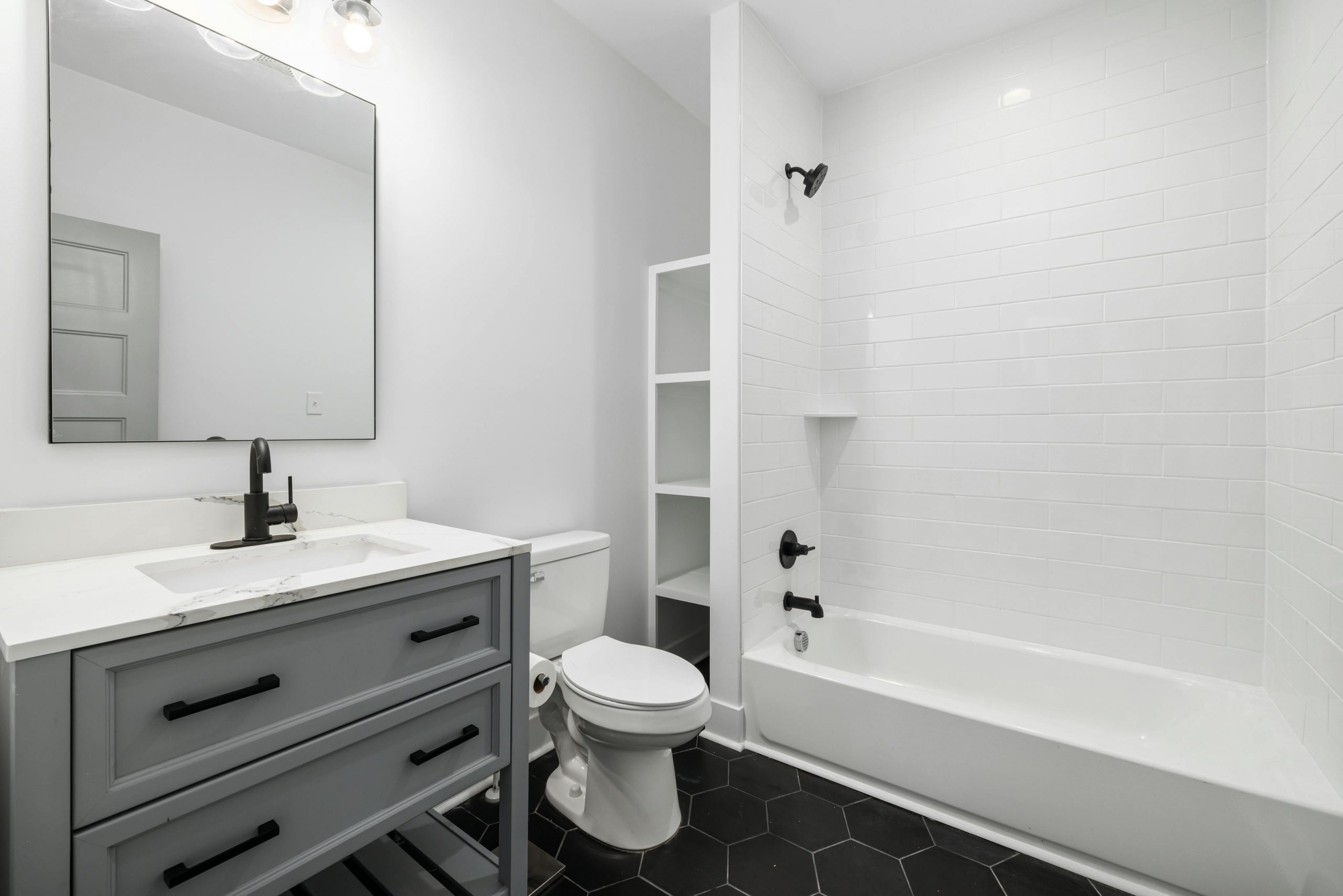
This bathroom is a masterclass in balanced contrast. The formula is roughly 40% stark black (the floor tiles, hardware), 40% crisp white (the subway tile, countertop), and 20% soft gray (the vanity). This careful distribution prevents the black from overpowering the space and keeps the white from feeling too clinical. Introducing a warm wood tone for the vanity is an easy way to adapt this formula, adding an organic touch without disrupting the core black-and-white harmony.
✅ Before You Start
You don’t need a massive budget to get this high-impact look. Black hexagon floor tile is widely available at places like Home Depot or Lowe’s, often for less than $8 per square foot. For the vanity, check out IKEA’s GODMORGON series, which gives you that same floating, minimalist feel for under $500. And matte black fixtures? They’re everywhere now. Amazon and Wayfair have countless stylish options for faucets and handles that cost a fraction of designer brands. This entire vibe is achievable for under $3,000 with some savvy shopping.
6. Elegant Minimalism with a Sleek Bathtub
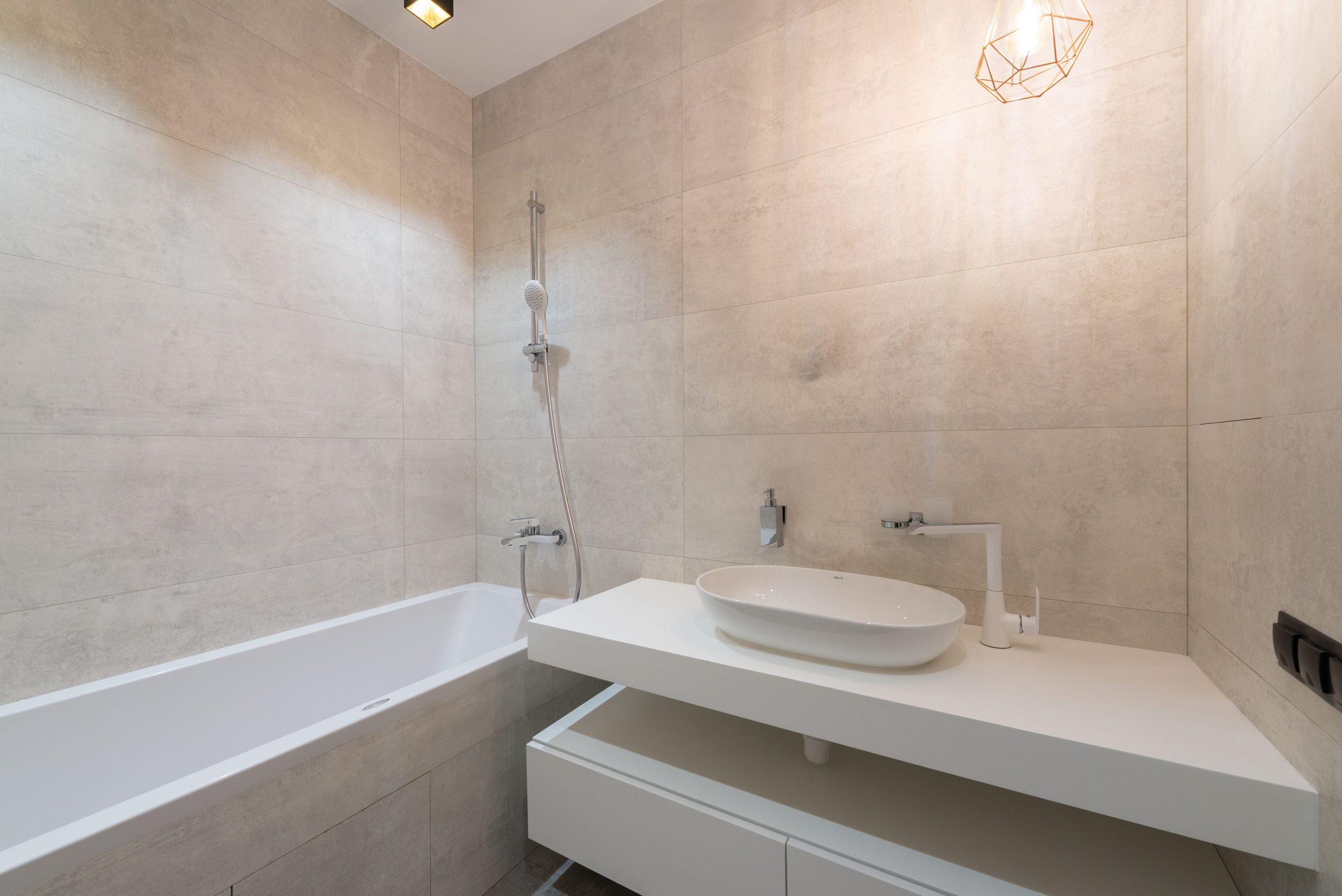
An uncluttered, minimalist aesthetic like this works best when it has room to breathe. This specific layout, with a distinct separation between tub and sink, is ideal for a primary bathroom of at least 100-120 square feet. A ceiling height of 9 feet or more will enhance the airy, open feeling. For smaller spaces, consider a similar minimalist approach but with a combined shower-tub setup to save space, like the one shown in Idea #1, to maintain that clean, functional feel without the room feeling crowded.
💸 Get This Look For Less
The move toward minimalist bathrooms reflects a broader cultural shift. We’re increasingly seeking to turn our homes into personal sanctuaries, and the bathroom is the epicenter of that trend. This isn’t about stark, cold minimalism of the past. The 2026 version is about ‘soft minimalism’—it’s clean and uncluttered but incorporates gentle curves, warm lighting, and a focus on high-quality materials. It’s less about deprivation and more about creating a serene, hotel-like experience at home, a trend that continues to dominate Pinterest boards.
7. Farmhouse Tiles for Warmth and Wellness
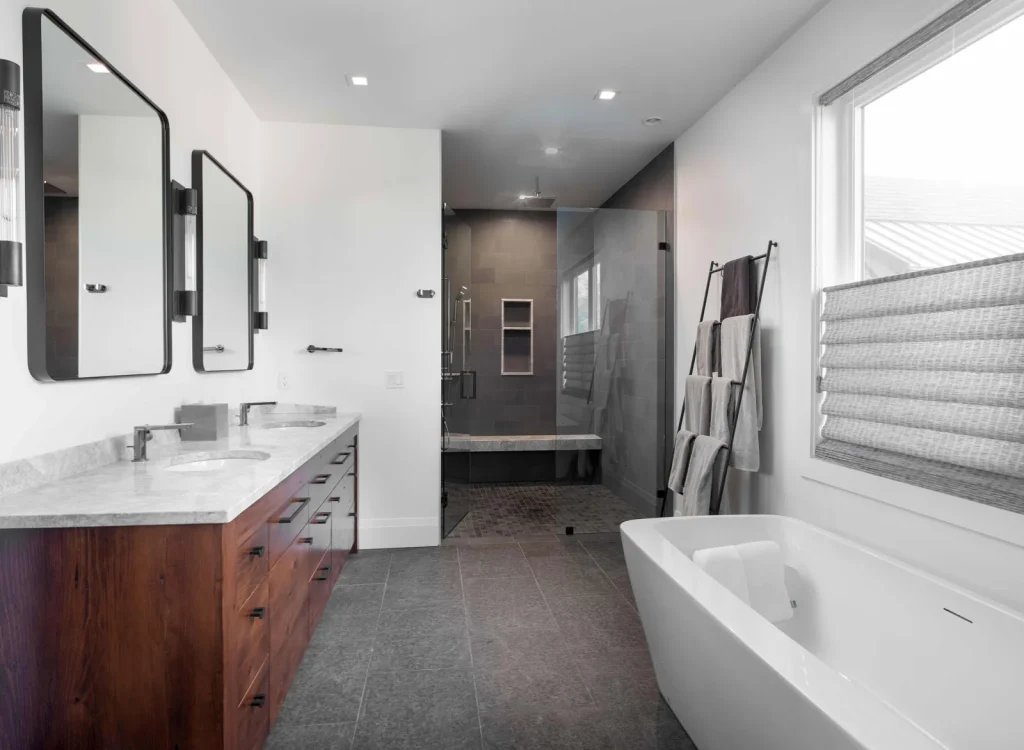
The modern farmhouse style excels at creating a feeling of warmth and comfort, and the tile choice is central to that success. Rather than cold, glossy surfaces, this aesthetic often leans on tiles with a handcrafted look, subtle texture, or a matte finish. This immediately makes the space feel more grounded and less sterile. Pairing these tiles with natural wood tones and classic fixtures strikes a balance between rustic charm and modern clean-lines, resulting in a space that feels both current and timelessly inviting.
⭐ The One Thing
While farmhouse style is incredibly popular, it’s important to get the balance right to avoid it looking dated or kitschy in a few years. Avoid leaning too heavily on distressed finishes or overtly rustic decor (like signs with folksy sayings). Instead, focus on authentic materials like wood, stone, and ceramic. Also, be mindful of grout with certain patterned or textured farmhouse tiles; a darker, stain-resistant grout might be a more practical long-term choice than bright white, especially for floor tiles.
8. Luxurious Modern Bathroom with Grey Cabinetry
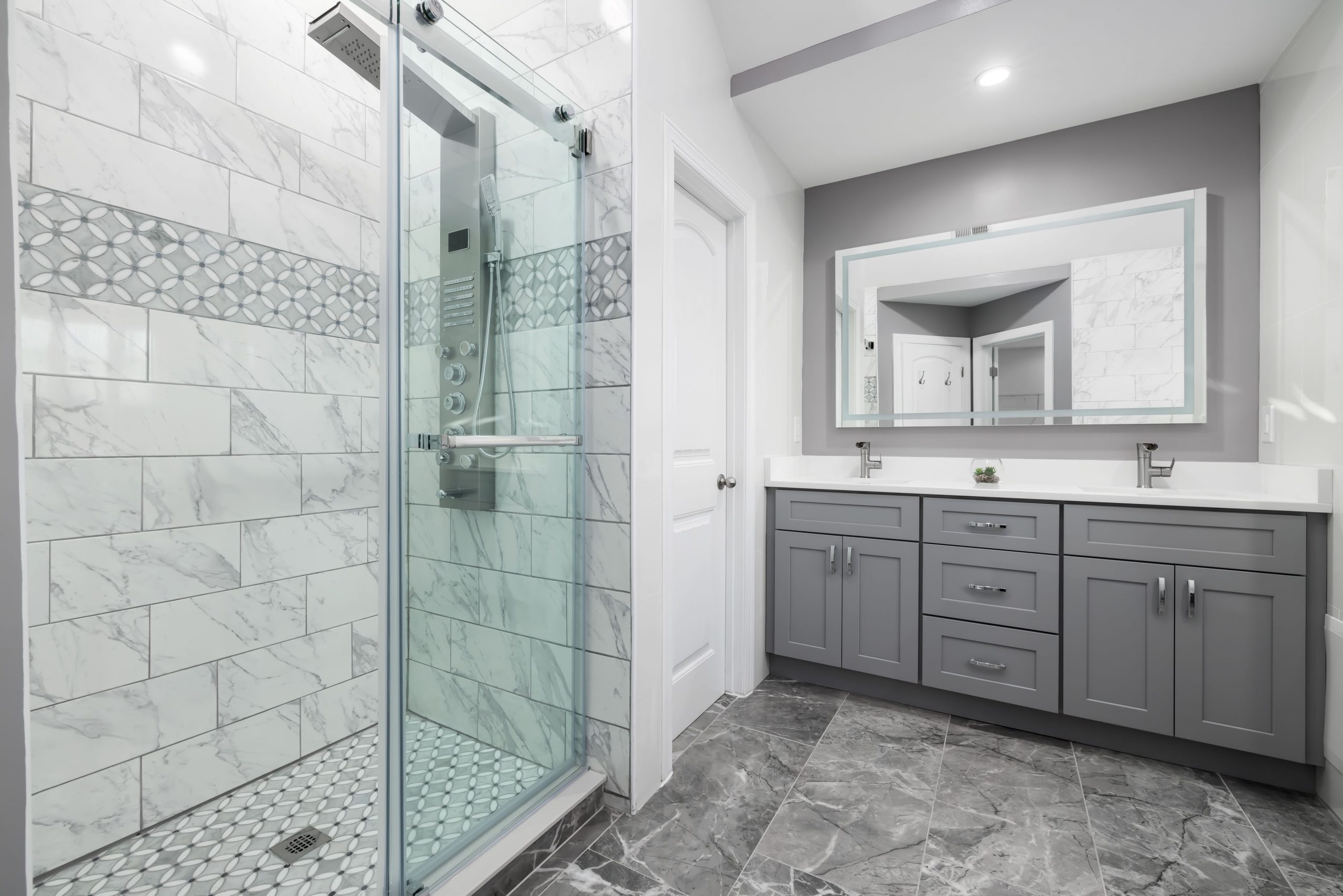
In this luxurious space, the one thing holding the entire design together is the consistent use of high-quality marble. It’s on the floor, it’s on the countertops, and it’s cladding the walls. This commitment to a single, dominant material creates an immersive, seamless experience of opulence. If you were to swap the marble walls for simple paint, for instance, the grey cabinets and other fixtures would still be nice, but the sense of an all-encompassing luxury retreat would be lost. The marble is the design’s core statement.
🔧 How-To Brief
A bathroom rich in natural marble is the definition of luxury, but it’s also the definition of high-maintenance. Marble is a porous stone, meaning it can easily stain from things like makeup, hair dye, or even certain soaps. It must be sealed by a professional upon installation and resealed every 6-12 months. For cleaning, you must use a pH-neutral cleaner specifically designed for stone—any acidic or abrasive cleaner can etch and dull the surface permanently. This is a look that requires commitment.
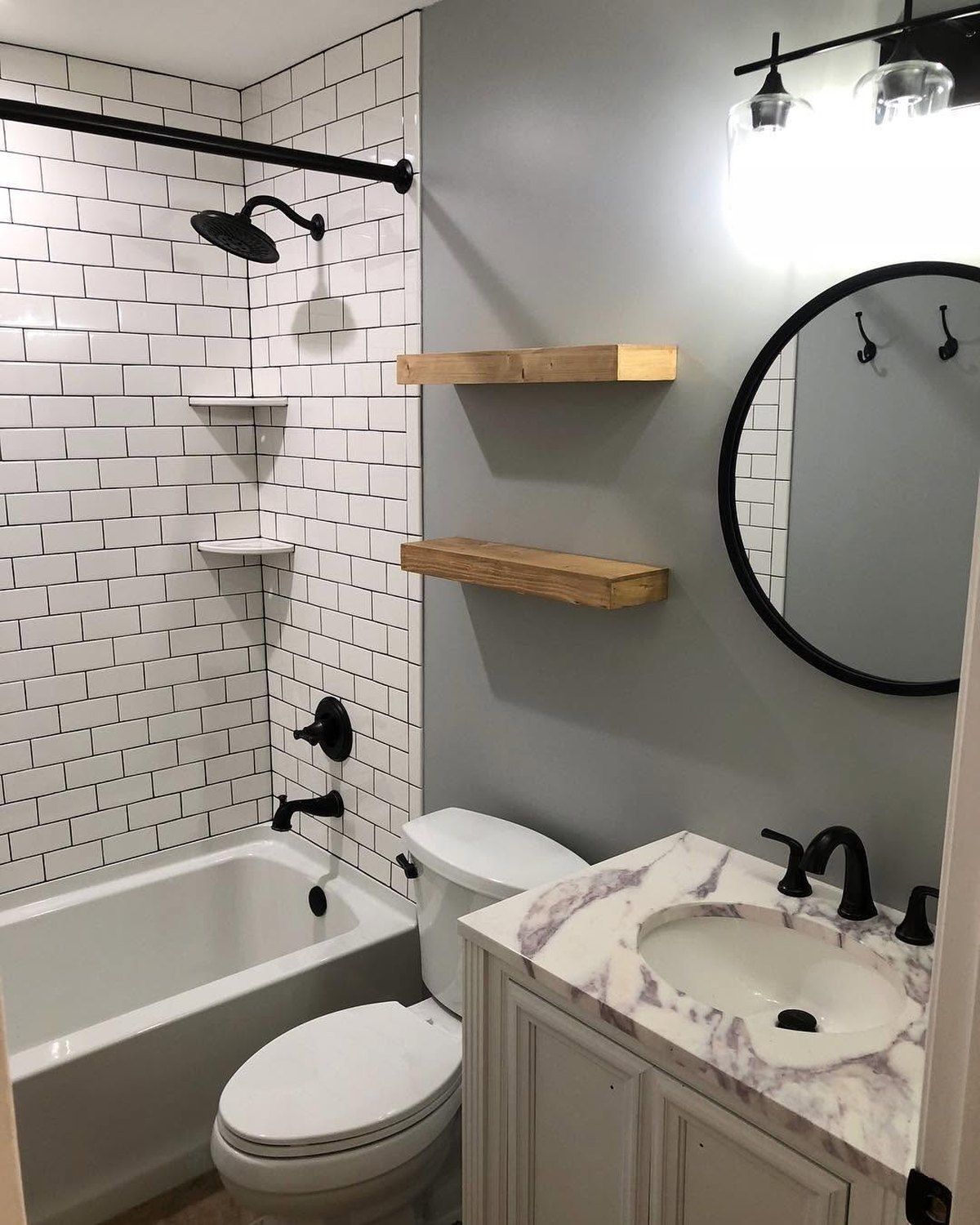
9. Classic Subway Tile with Floating Wood Shelves
This is a fantastic example of a stylish bathroom that is incredibly budget-friendly. White subway tile is one of the most affordable tile options on the market, period. You can find it for under $3 a square foot. Using a dark gray or black grout adds that graphic punch for pennies. The floating wood shelves can be a simple DIY project using brackets from a hardware store and a piece of stained pine. Even the matte black fixtures, once a high-end choice, are now widely available from affordable brands on Amazon or at Target.
📏 Scale Guide
Before you commit to this look, run through this quick checklist:
- Check your lighting: The dark grout and matte black fixtures absorb light. Do you have a window or a sufficiently bright vanity light to keep the room from feeling too dim? The clear glass shades on this vanity light are key.
- Assess your storage needs: Two small floating shelves are great for decor but don’t hold much. Does your vanity have enough drawer and cabinet space for all your toiletries?
- Confirm your DIY comfort level: Are you comfortable with tiling and grouting, or will you need to budget for a professional? A bad tile job will ruin the entire look.
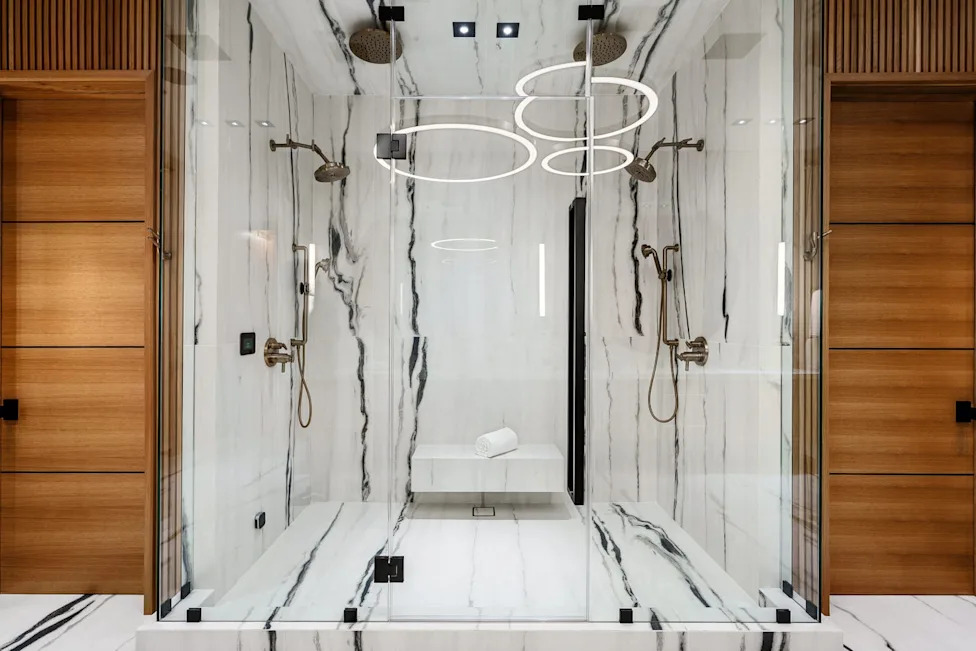
10. A Symmetrical Sanctuary with Marble and Bronze
When designing a large walk-in shower with dual shower heads, don’t just put them on opposite walls. For a more functional and luxurious experience, place them on the same long wall, at least 3 to 4 feet apart. This allows two people to shower simultaneously without spraying each other in the face. Also, ensure your shower floor has a proper slope towards the drain from all directions, which is especially crucial in a large, open-plan shower like this to manage the high volume of water.
💡 Designer Tip
This shower’s design works so well because of its masterful use of symmetry and repetition. The dual shower systems create a perfect mirror image, which is inherently pleasing to the eye and suggests order and calm. The repetition of the bronze tone in the shower fixtures and the pendant lights creates a cohesive visual thread, tying the space together. Finally, the contrast between the organic, dramatic veining of the marble and the clean, rigid lines of the glass and light wood doors adds a dynamic tension that keeps the design interesting.
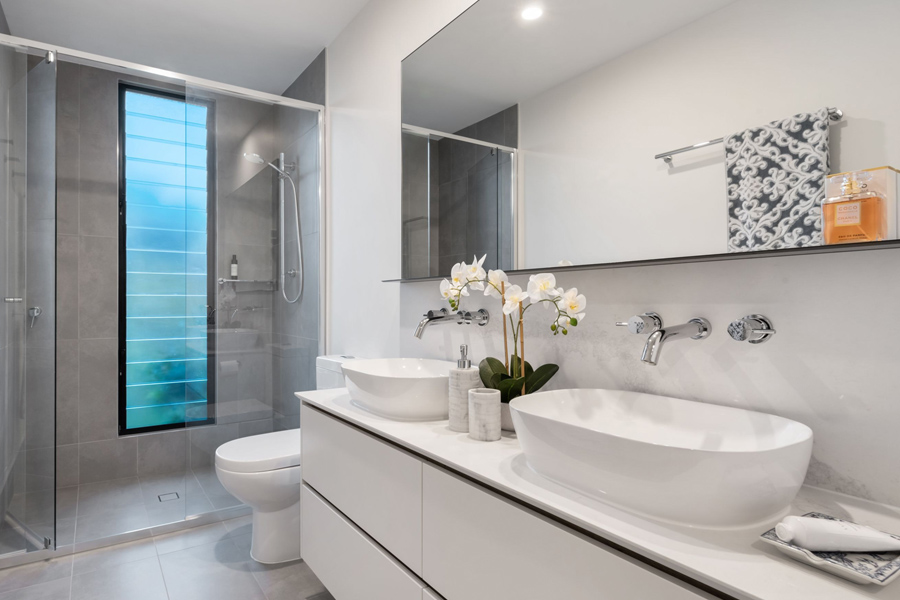
11. Minimalist Gray and White with a Floating Double Vanity
This sleek, minimalist design is perfect for a medium to large primary bathroom, typically in the 80 to 150-square-foot range. The key feature, a long floating double vanity, requires a wall span of at least 60 inches, and ideally 72 inches or more, to avoid feeling cramped. The walk-in shower with a simple glass panel works best with at least 3-4 feet of width. For smaller bathrooms, you can achieve a similar feel by using a single floating vanity and a more compact shower enclosure, as seen in Idea #21.
🧹 Maintenance Reality
A floating vanity looks incredibly chic and makes cleaning floors a breeze, but there’s a trade-off: storage. You lose the deep cabinet space that a traditional floor-mounted vanity provides. Before you fall in love with this look, be honest about how much stuff you have. You’ll need to be organized and ruthless about what you keep on hand. Also, wall-mounted faucets require more complex plumbing installation within the wall, which can be more costly and complicated to repair than standard deck-mounted faucets.
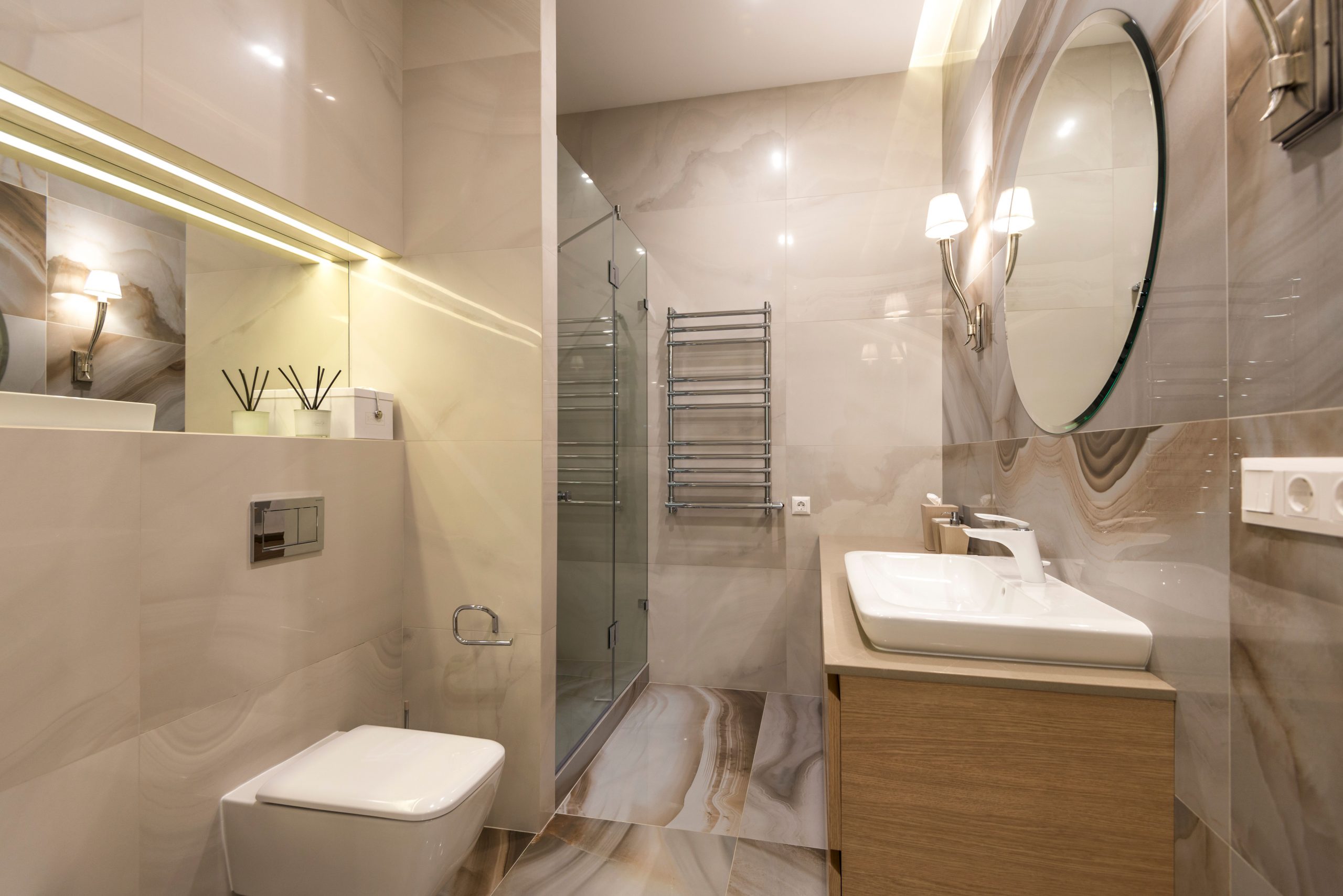
12. Modern Marble Bathroom with Sleek Fixtures
The use of large-format marble or marble-look porcelain tiles is a major trend for 2026. Why? Homeowners are craving the luxurious, seamless look of a high-end hotel, and these large tiles deliver exactly that with fewer grout lines to clean. This creates a clean, expansive feel that’s become a status symbol on Pinterest and Instagram. Paired with modern, minimalist fixtures, it signals a move away from fussy, decorative styles toward a more refined and lasting form of elegance.
⚠️ Real Talk
Want the luxe marble look without the five-figure price tag? The answer is porcelain tile. Modern printing technology has made marble-look porcelain tiles virtually indistinguishable from the real thing, for a fraction of the cost and with zero maintenance. You can find stunning options at places like Floor & Decor or TileBar. For fixtures, brands like Delta and Moen offer sleek, modern lines that give you a high-end feel without the designer markup. A large, simple mirror from IKEA or Target can replace a custom-cut one, saving you hundreds more.
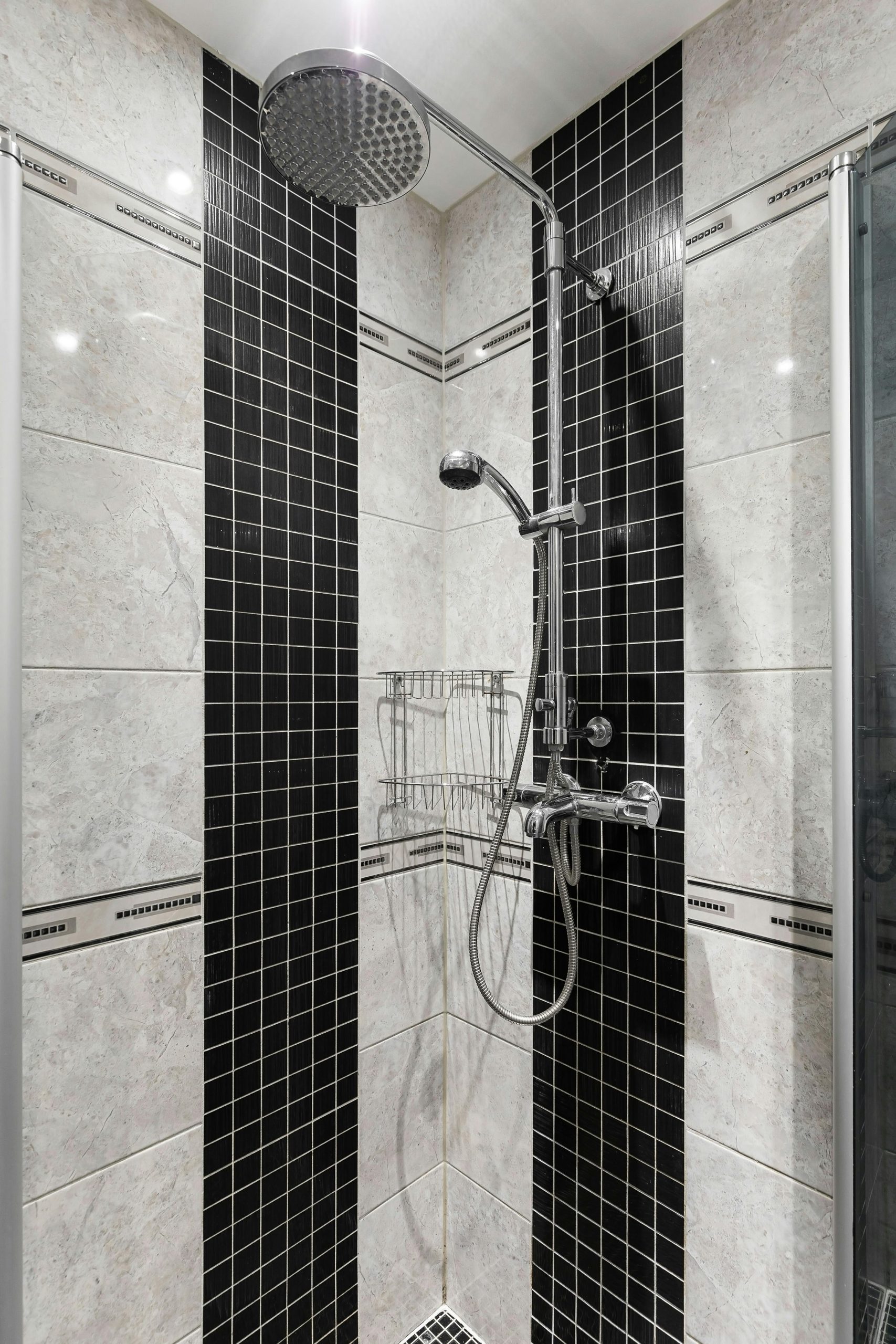
13. A High-Contrast Shower with Black Mosaic and Marble-Look Tile
This shower design succeeds by embracing bold contrast, but doing so thoughtfully. Placing the dark, small-scale black mosaic tiles next to the large-format, light gray marble-look tiles creates a powerful visual juxtaposition in both color and scale. This prevents the design from feeling flat. The consistent use of polished chrome for all fixtures acts as a unifying element, adding a touch of classic shine that bridges the two different tile styles and prevents the overall look from becoming chaotic.
💰 Budget Breakdown
When combining two very different tiles in a shower, the transition point is critical. Here, they’ve chosen a simple, clean butt joint at the corner, which works because both tiles are rectified (meaning they have sharp, precisely cut edges). If your tiles are more irregular, a better approach is to use a metal tile trim, like a Schluter strip, in a finish that matches your fixtures (in this case, chrome). This creates a clean, deliberate border between the two materials and gives the installation a professional finish.
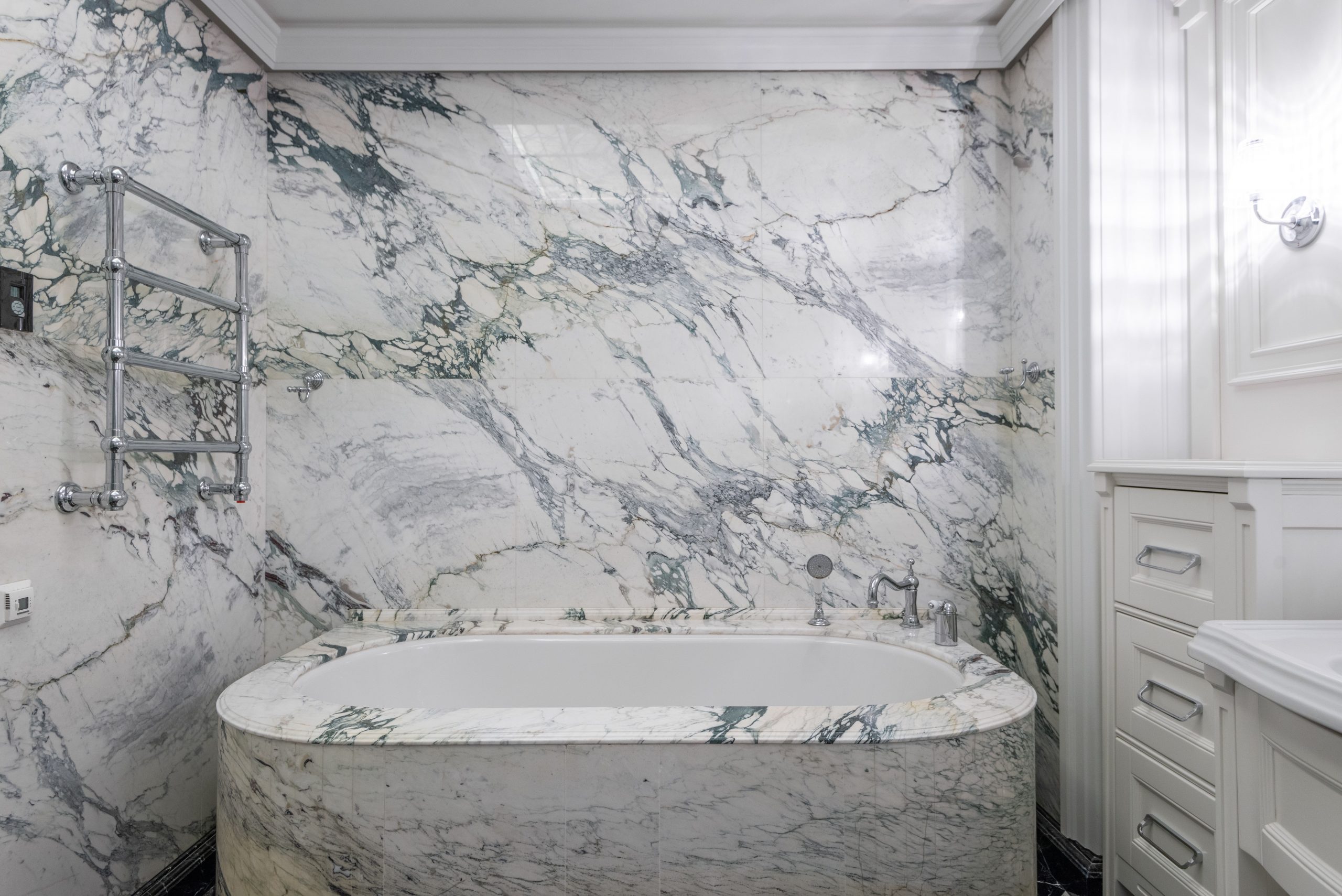
14. Opulent Serenity: A Bath Wrapped in Marble
The single defining feature that elevates this bathroom from simply ‘nice’ to truly ‘luxurious’ is the floor-to-ceiling marble cladding. It isn’t just a backsplash or a floor; it’s an entire environment. By encasing the built-in tub and extending the same marble across all the walls, the design creates a seamless, immersive experience. This extravagant use of a single, high-end material is what produces the room’s opulent and deeply calming character. Without the full-wall treatment, the effect would be significantly diminished.
🔥 Trending Context
Living with a full marble bathroom is a commitment to careful maintenance. Real marble is a soft, porous stone. It will scratch, and it will stain if spills aren’t wiped up immediately. Products like hair dye, certain bath bombs, or even acidic cleaners can cause permanent damage. The stone must be re-sealed every year (sometimes more in a wet area) to protect it. While stunning, this is not a low-maintenance choice. For a similar look with less worry, consider large-format porcelain slabs that mimic marble, as they are non-porous and far more durable.
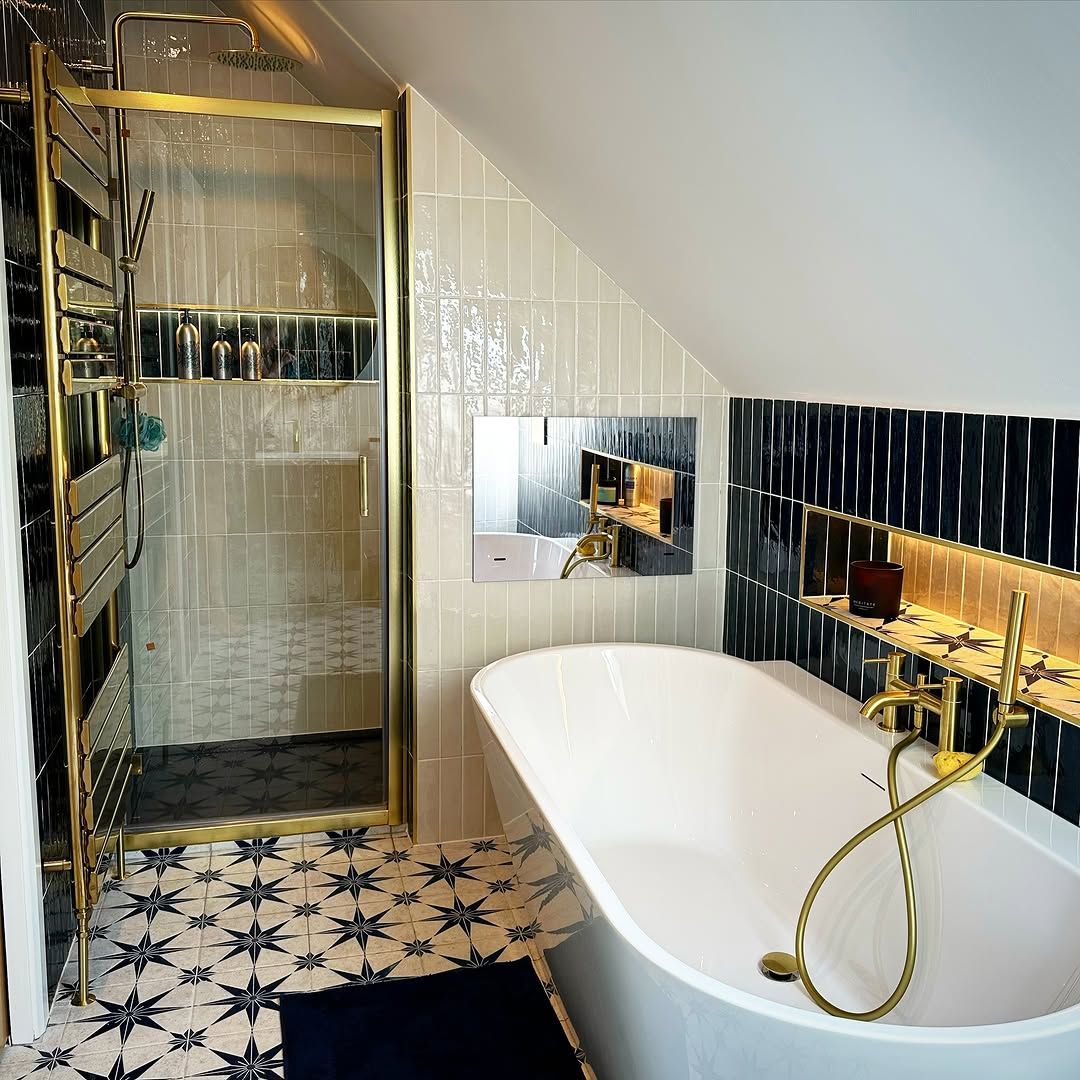
15. Bold Pattern Play with Black, White, and Gold
This bathroom’s success is a lesson in confident mixing. The formula is: 40% bold pattern (the black and white starburst floor), 40% quiet texture (the vertically stacked light wall tiles), and 20% glamorous accent (the gold-toned fixtures and shower frame). The patterned floor is the star, while the simple wall tile provides a calm backdrop, preventing the space from becoming overwhelming. The gold acts like jewelry, adding a final layer of polish and warmth. Keeping the color palette this tight is what makes it all work.
📐 Style Math
An illuminated niche is a high-end feature that’s surprisingly achievable. Here’s the simplified process:
- Time Estimate: 4-6 hours (plus tiling time).
- Material Cost: $100-$250 for waterproof LED strip and housing.
- Step 1: During framing, build a recessed box between wall studs. Standard depth is 3.5 inches.
- Step 2: Hire an electrician to run low-voltage wiring for a waterproof LED system to the niche location. This is not a DIY electrical job.
- Step 3: Install cement backer board inside the niche.
- Step 4: Apply a waterproofing membrane (like RedGard) to the entire niche.
- Step 5: Install the tile and the LED channel/diffuser according to the manufacturer’s instructions.
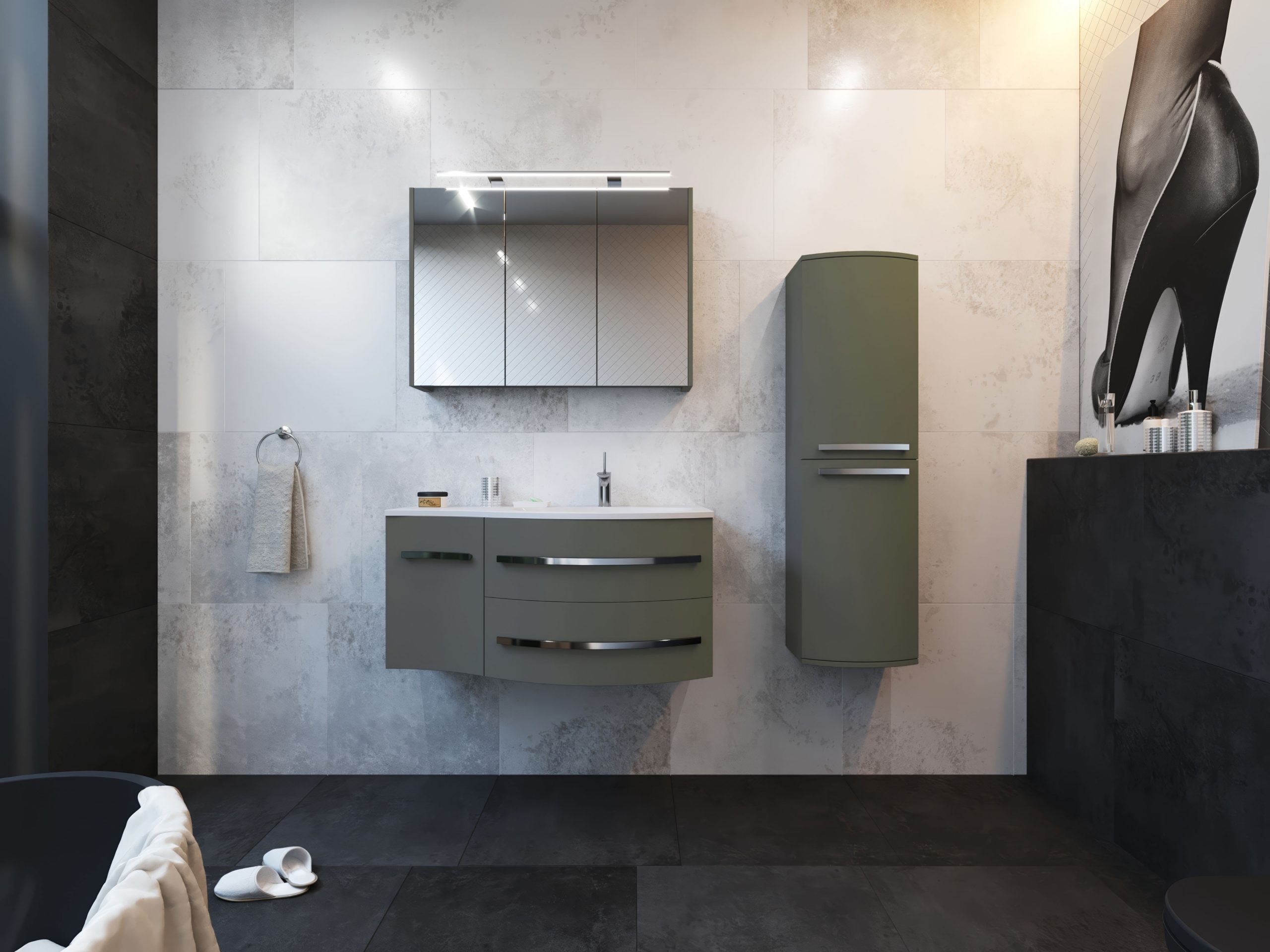
16. Modern Curves with Grey-Green Cabinetry and Concrete-Look Tiles
This design feels fresh and modern because it breaks away from the expected sharp, straight lines. The gentle curves of the vanity and tall cabinet soften the entire room, providing a beautiful contrast to the rigid grid of the wall tiles. The choice of a subdued, earthy grey-green for the cabinetry taps into the biophilic design trend, adding a touch of nature-inspired color that is calming and sophisticated. The large-scale black and white art provides a necessary focal point and a jolt of graphic energy.
🎯 What Makes It Work
Curved furniture, or the ‘soft-edge’ trend, is a direct reaction to the years we spent surrounded by boxy minimalism. In 2026, designers and homeowners are craving forms that feel more organic, gentle, and welcoming. These curved silhouettes are seen as more comforting and approachable. In the bathroom, this translates to arched mirrors, rounded vanities, and freestanding tubs with soft slopes. It’s part of a larger movement toward a more human-centric and less rigid approach to modern design.
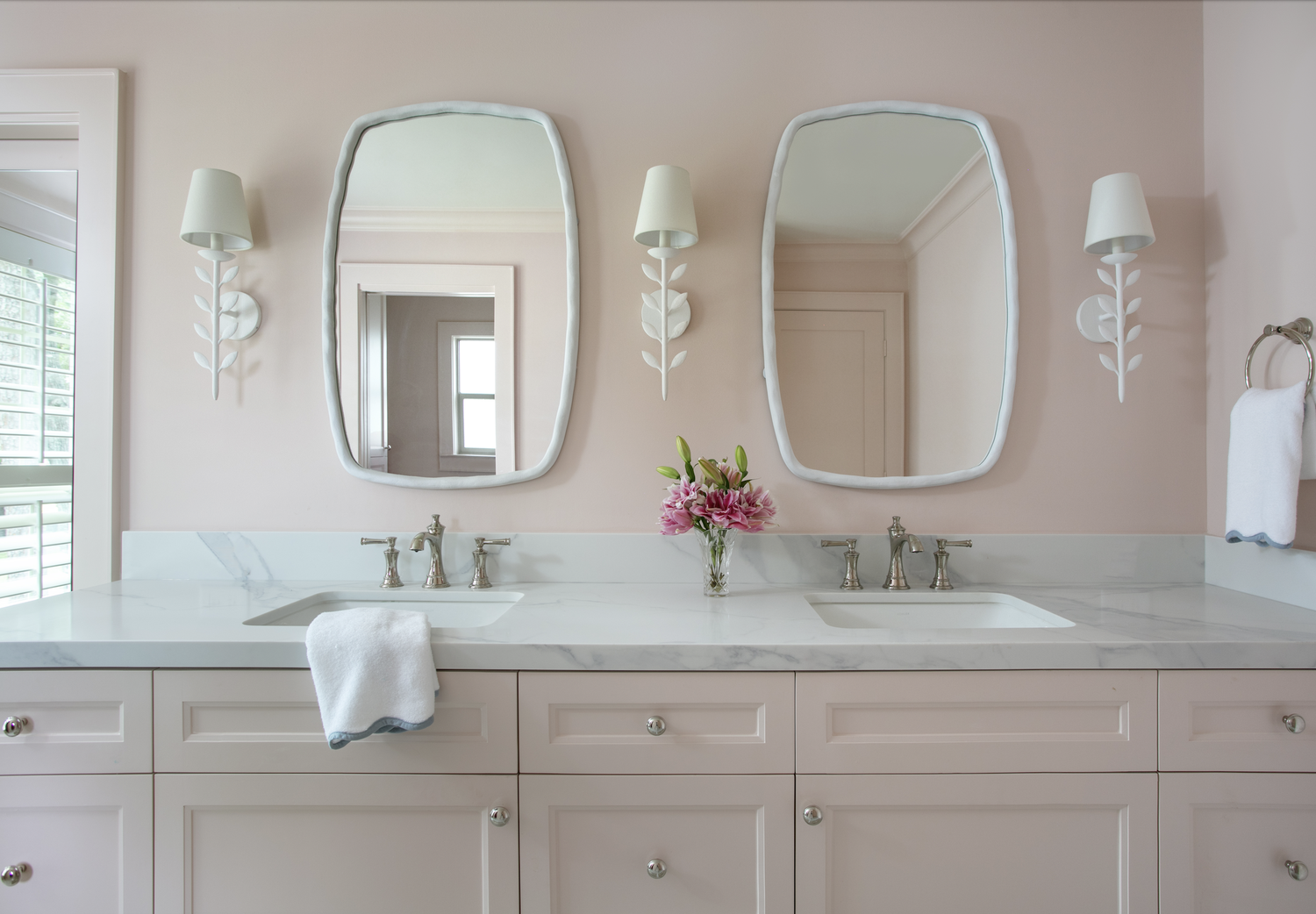
17. Soft and Elegant with a Blush Pink Vanity
In this beautifully soft bathroom, the unconventional custom sconces are the element that takes it to the next level. The leaf-inspired design adds a touch of organic artistry and whimsy that you simply can’t get from an off-the-shelf fixture. Paired with the irregularly shaped mirrors, they break the formal symmetry you’d expect over a double vanity, injecting a huge amount of personality and custom-made elegance. They transform the wall into a piece of functional art.
✅ Before You Start
When using a soft, subtle color like blush pink, the finish is everything. To prevent the color from looking too sweet or juvenile, opt for a high-quality paint in an eggshell or satin finish. These finishes have a slight sheen that reflects light beautifully and is also much more durable and easier to clean than a flat or matte finish—a crucial feature in a bathroom. For the vanity cabinetry, a professional-grade cabinet lacquer will provide the most durable and luxe-looking result.
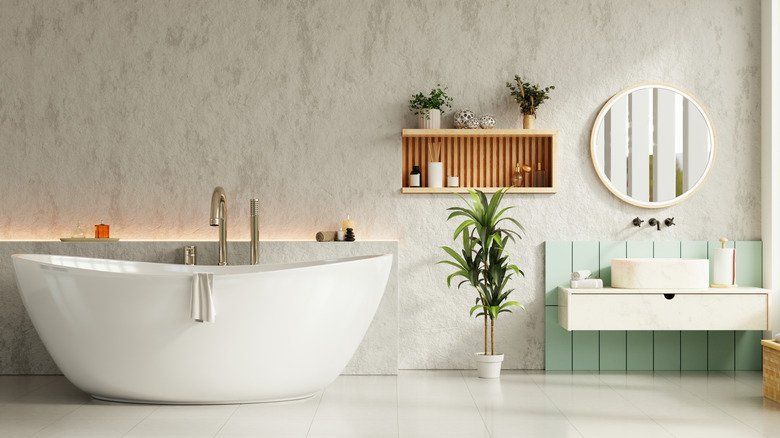
18. A Modern Spa Vibe with Soft Greens and Warm Wood
Thinking of creating a similar serene space? Here’s a quick checklist:
💸 Get This Look For Less
- Measure for the tub: A freestanding tub needs breathing room. Ensure you have at least 6 inches of clearance on all sides for cleaning, and more if you want it to feel spacious.
- Confirm plumbing for wall-mounted faucets: These require plumbing inside the wall. Is your wall thick enough, and are you prepared for the additional cost and complexity compared to deck-mounted taps?
- Plan your lighting layers: This look relies on soft, indirect light from the back-lit shelf and a single, stylish mirror. Do you have enough ambient and task lighting, or will you need to add recessed lights or a vanity bar?
This bathroom feels so calming because of its brilliant mix of textures and forms. The rigid, vertical lines of the light green wall paneling create a subtle, orderly backdrop that makes the other elements pop. This orderliness is then contrasted by the soft, organic shapes of the round mirror and the gentle curves of the freestanding tub. The natural wood shelf and potted plants introduce a layer of organic warmth and texture, preventing the minimalist design from feeling cold or sterile. It’s a perfectly balanced composition.
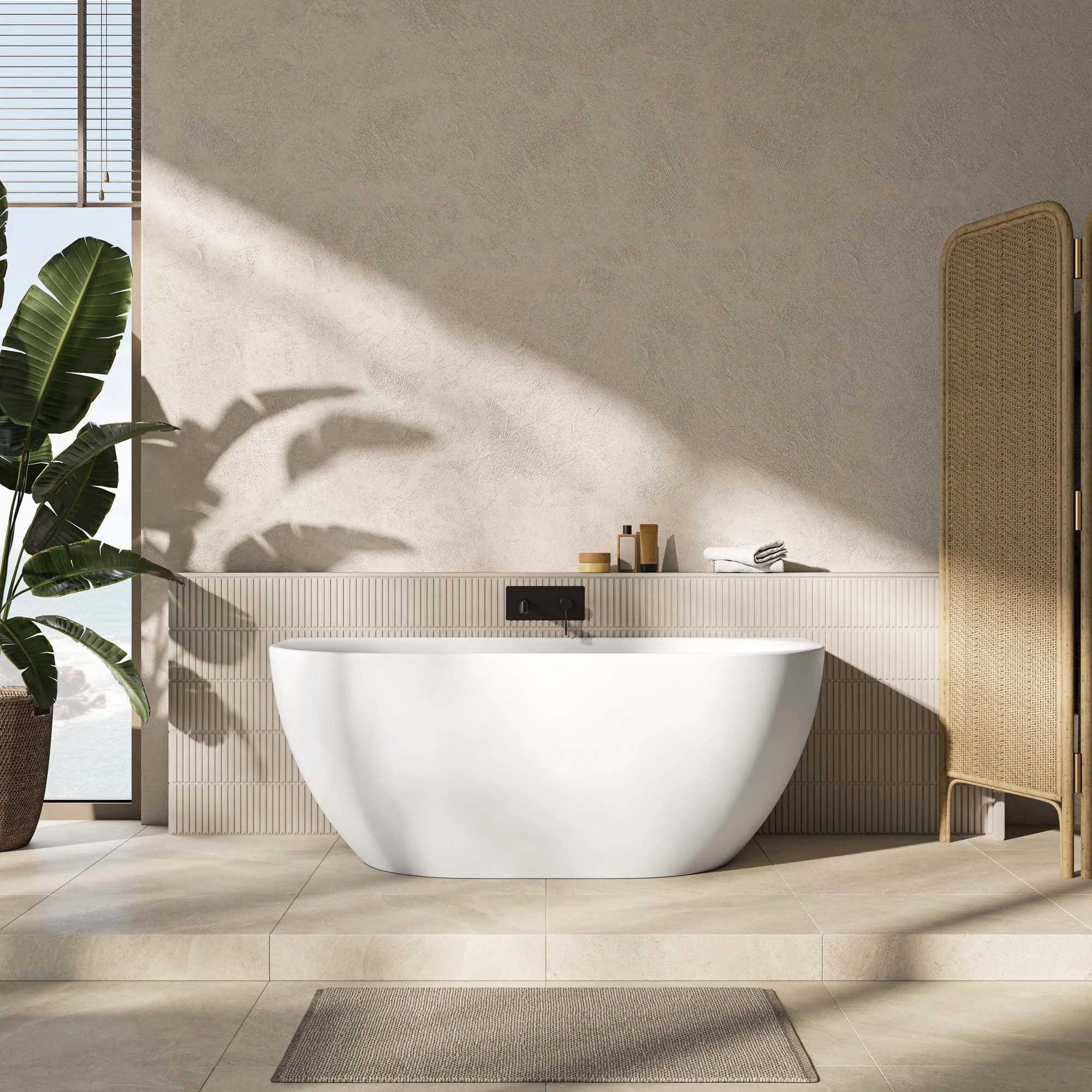
19. A Warm, Natural Retreat with a Recessed Bathtub
A bathroom rich in natural textures is a dream, but it requires some practical considerations. The beautiful textured plaster on the walls is stunning, but it’s not the best choice for an area that gets a lot of direct water splashes. It’s best used in a larger bathroom where it’s away from the immediate tub or shower spray. The wicker screen and basket are fantastic organic elements, but they will need to be kept dry to prevent mildew in a humid bathroom environment. The large plant will need consistent natural light from that window to thrive.
⭐ The One Thing
The serene feeling here comes from a simple but effective formula: 60% warm neutral texture (the beige plaster and ribbed tiles), 30% natural elements (the large green plant, wicker screen), and 10% sharp, modern contrast (the recessed black bath fixture). The warmth comes from the dominance of the beige tones, while the plant and wicker add life. The single black fixture provides a contemporary anchor point, preventing the look from becoming too rustic or washed-out. This ratio ensures a balanced, sophisticated, and calming space.
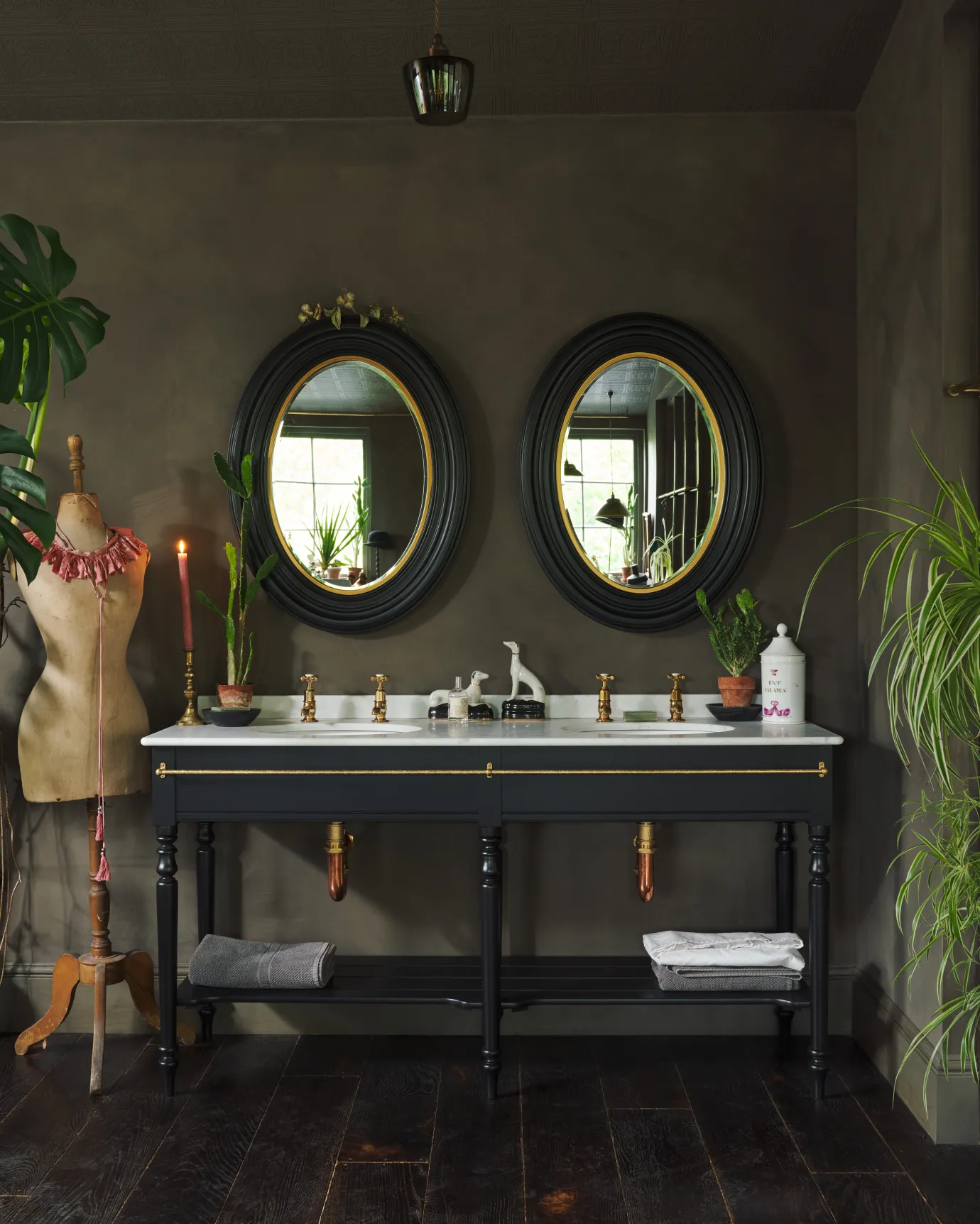
20. Dark Academia Elegance with an Ornate Double Vanity
The Dark Academia trend, born on social media, romanticizes classic literature, learning, and a slightly moody, intellectual aesthetic. In interior design, this translates to rich, dark colors, classic furniture forms, and materials with a sense of history. This bathroom is a perfect example: the deep olive-green walls, the black vanity with traditional turned legs, and the warm brass accents all evoke the feeling of a historic university library or a cozy, book-filled study. It’s a move away from bright and airy, toward spaces that feel layered, personal, and soulful.
🔧 How-To Brief
When going for a dark, moody wall color like this deep olive, don’t be afraid to take it all the way up and onto the ceiling, especially if you have patterned wallpaper. This creates a dramatic, jewel-box effect that feels intentional and immersive. To keep it from feeling claustrophobic, ensure you have plenty of layered lighting: bright task lighting from the vanity fixtures, and perhaps a central ambient light source. The reflective surfaces of the mirrors and brass fixtures will also help bounce light around the room.
21. Terrazzo Tiles Meet Warm Wood and Matte Black
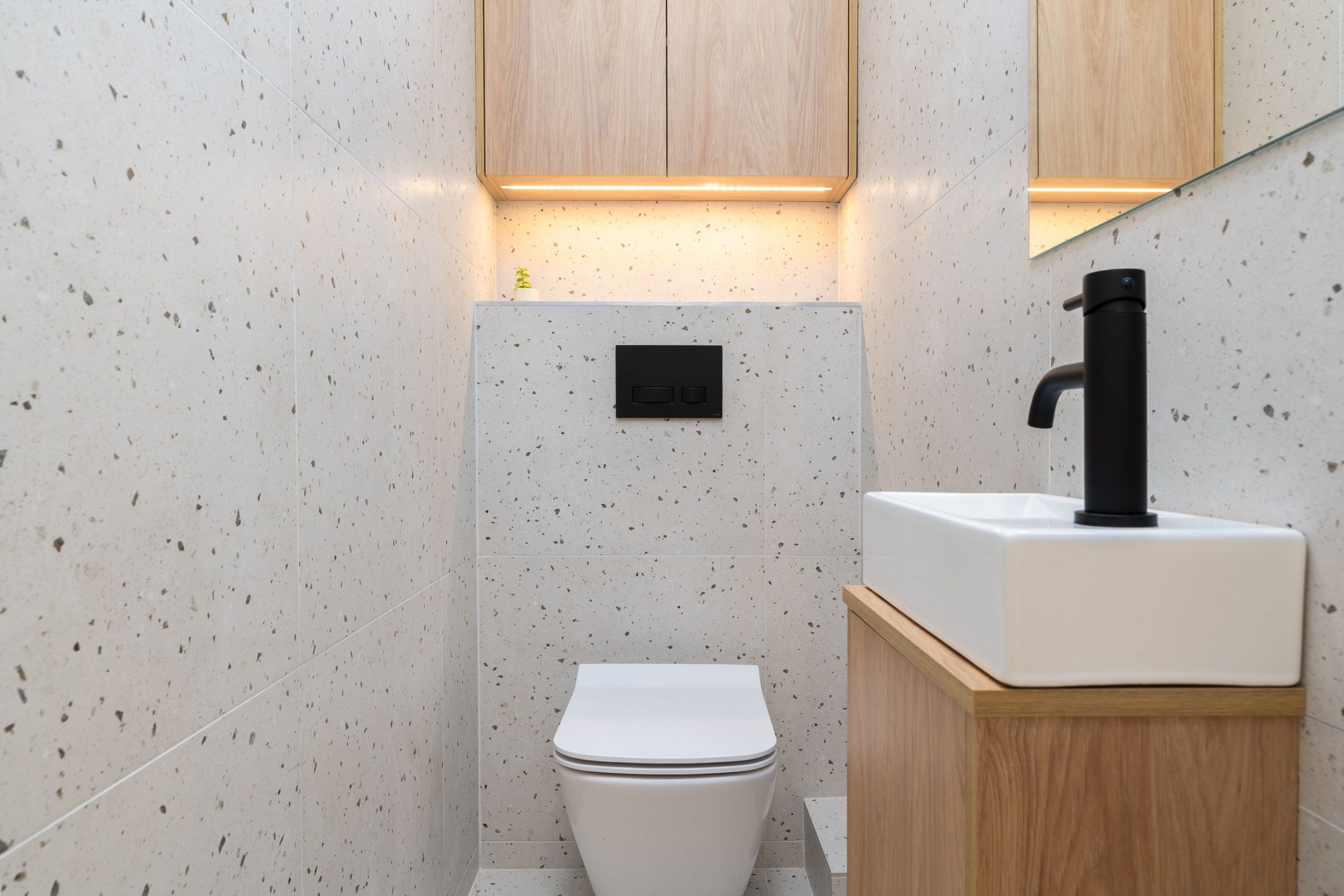
This compact, minimalist look is a brilliant solution for a small bathroom, particularly a powder room or en-suite, in the 30-50 square foot range. The wall-mounted toilet and floating vanity are key space-savers, as they free up floor space and make the room feel larger. Using the same terrazzo-patterned tile on all the walls creates a continuous, uninterrupted surface, which also helps to visually expand the space. The partial wall cleverly hides the toilet cistern while providing a functional shelf.
📏 Scale Guide
The design works so well because it’s a trio of perfectly balanced, modern materials. The light terrazzo-patterned tile provides subtle pattern and texture without overwhelming the small space. The warm, light wood tone of the cabinetry adds a much-needed organic and soft element, preventing the room from feeling too clinical. Finally, the matte black fixtures and flush plate act as sharp, graphic punctuation marks, adding a touch of industrial edge and defining the space’s contemporary feel. The combination is clean, warm, and sophisticated.
22. Modern Gray and White Bathroom with Striped Tile
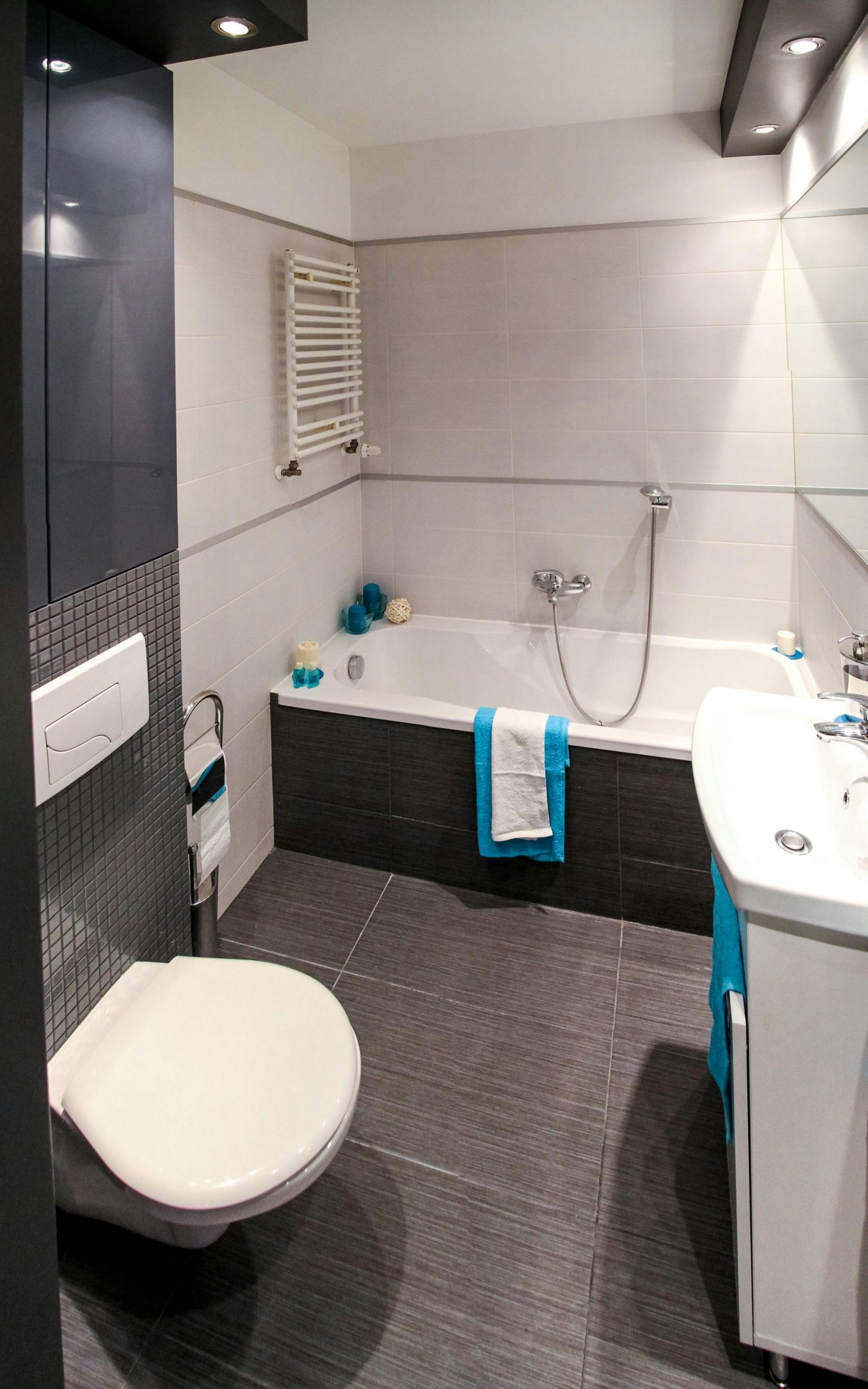
The single element that defines this bathroom’s modern character is the bold use of striped tiles. It’s an unexpected choice that injects a strong graphic quality into an otherwise straightforward gray and white space. By running the same tile from the floor up onto the bathtub cladding, the design creates a powerful, continuous visual statement. It’s a confident move that elevates the entire room from functional to fashionable. Without the stripes, the bathroom would be perfectly pleasant, but it wouldn’t have this memorable, designed look.
💡 Designer Tip
While a wall-mounted toilet looks sleek and saves space, it’s important to understand the practicalities. The tank and plumbing are hidden inside the wall, which means that repairs are significantly more complex and expensive than with a standard toilet. Accessing the cistern usually requires removing the flush plate, but for major issues, a plumber may need to open up the wall. Be sure to use a high-quality carrier system from a reputable brand like Geberit or Grohe to minimize the risk of future problems.
23. Navy Picket Tile with an Ornate Gold Mirror
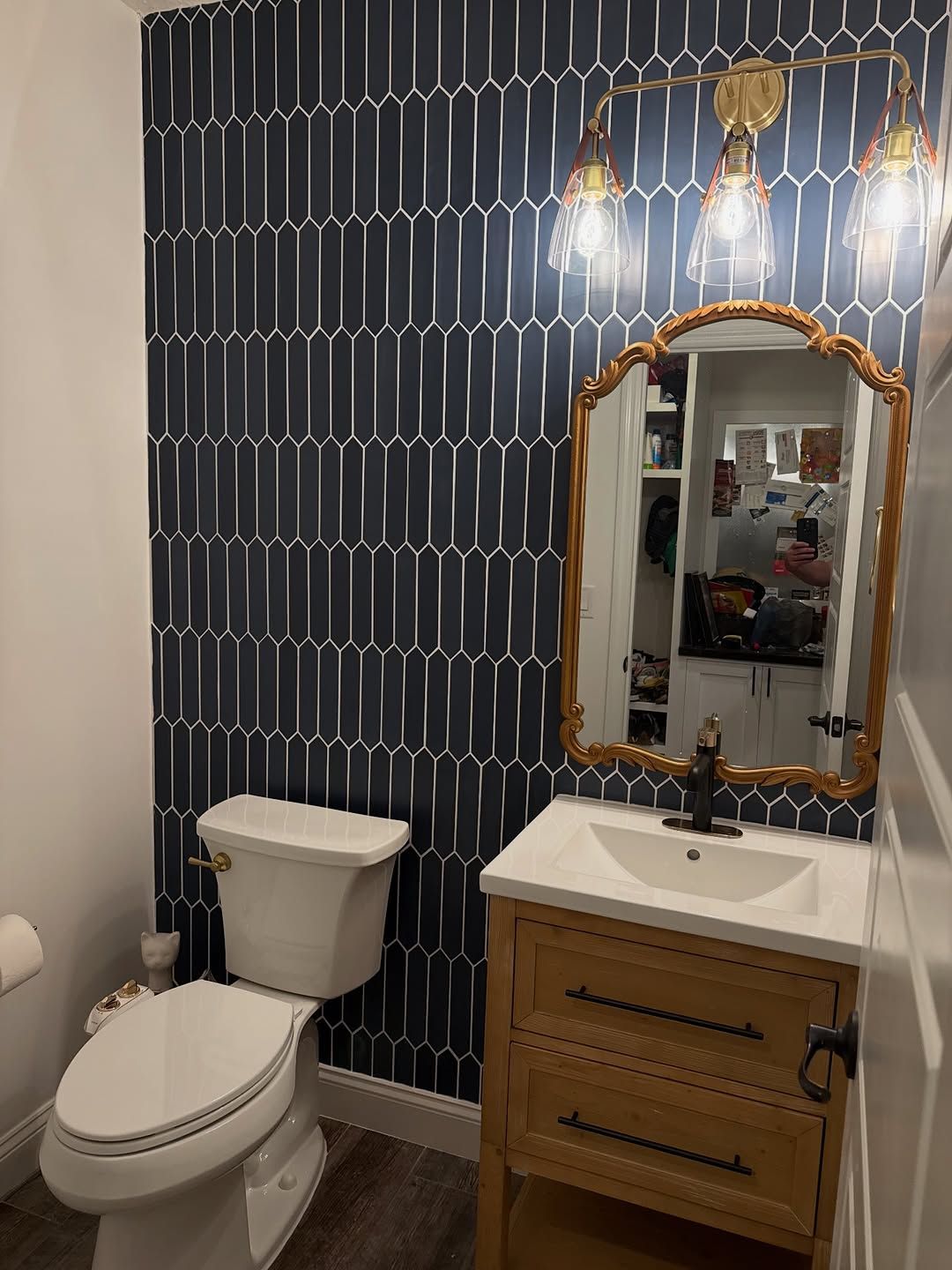
This small but mighty bathroom proves that bold choices pay off. The formula is a study in contrasts: 50% bold, modern geometry (the navy picket tile wall creating a strong vertical pattern), 30% vintage glamour (the ornate gold mirror and brass light fixture), and 20% natural warmth (the light wood vanity). The tension between the clean, modern tile and the ornate, classic mirror is what creates the eclectic energy. A different mirror, say a simple round one, would make this a completely different, more straightforwardly modern space.
🧹 Maintenance Reality
A statement wall doesn’t have to break the bank. You only need to tile one wall to get this effect, which saves a lot on material and labor. Navy picket tiles can be found at affordable online retailers. The real savings come from the decor. Scour thrift stores, flea markets, or Facebook Marketplace for a vintage mirror with an ornate frame—a can of gold spray paint can work wonders. For the vanity, a simple, inexpensive light wood model from Wayfair or Home Depot provides the perfect neutral base for the more exciting elements above it.
24. A Graphic Shower with Black and White Patterned Tile
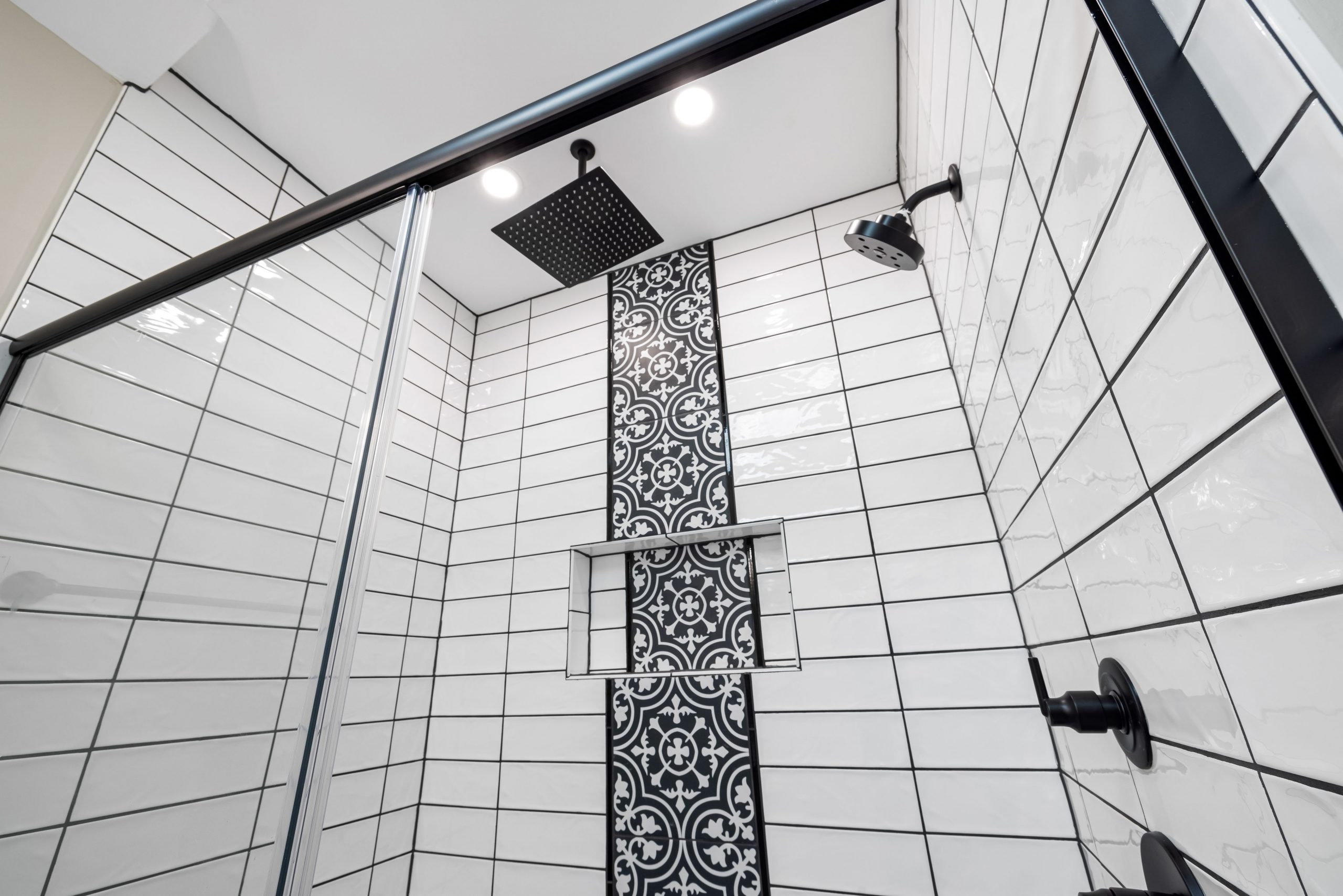
When using a heavily patterned tile as a vertical accent strip, the placement of your shower niche is critical. Don’t just stick it in the middle. Integrating it thoughtfully within the pattern, as shown here, makes it feel intentional and high-end. Plan the height of your niche to align with a full row of tiles to avoid awkward cuts. A standard niche should be placed about 48-60 inches from the shower floor, making it easily reachable without bending down or reaching up too high.
⚠️ Real Talk
Creating that perfect, crisp grout line with dark grout on white tile is an art. Here’s how the pros do it:
- Time Estimate: 2-4 hours for a standard shower surround.
- Material Cost: $30-$50 for grout, sealer, and tools.
- Step 1: Mix the dark grout according to the manufacturer’s directions until it’s a consistent, peanut-butter-like texture.
- Step 2: Apply the grout diagonally across the tiles using a grout float, pressing it firmly into the joints.
- Step 3: After about 15-30 minutes, use a damp (not wet!) grout sponge to wipe away the excess grout from the tile surface. Rinse the sponge frequently in clean water.
- Step 4: Once the grout has cured (24-72 hours), buff away any remaining haze with a dry microfiber cloth.
- Step 5: Seal the grout to protect it from stains and moisture!
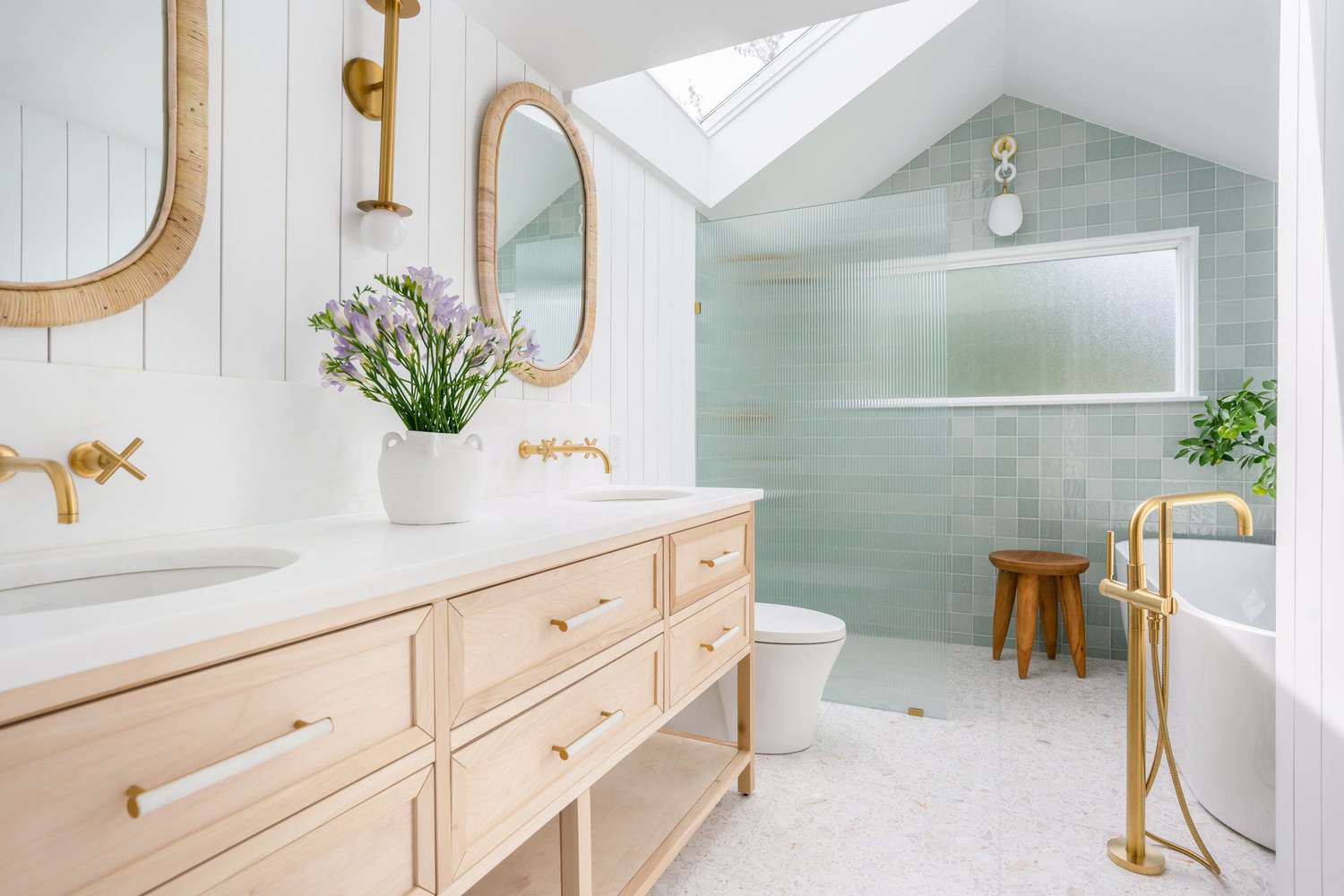
25. Bright and Airy with a Light Wood Vanity and Gold Accents
This bathroom feels so fresh and serene due to its masterful layering of light and texture. The foundation is a bright white canvas (walls, countertops), which maximizes the natural light. The light wood vanity and woven mirror frames introduce a layer of warm, natural texture, keeping the space from feeling sterile. The light greenish-blue tiles add a soft, watery touch of color, while the gold fixtures provide a hint of warmth and luxury. Finally, the fluted glass panel adds one more layer of texture and visual interest, diffusing light beautifully.
💰 Budget Breakdown
This bright and beautiful look has a few maintenance points. That fluted glass shower panel is gorgeous, but the ridges can be trickier to squeegee than a flat panel. You’ll need to be diligent to prevent soap scum buildup in the grooves. Gold fixtures, especially those with a polished finish, can be prone to showing water spots, so a quick wipe-down after use is a good habit. Lastly, the woven rattan on the mirrors could be susceptible to mildew in a very steamy, poorly ventilated bathroom, so ensure your exhaust fan is up to the task.
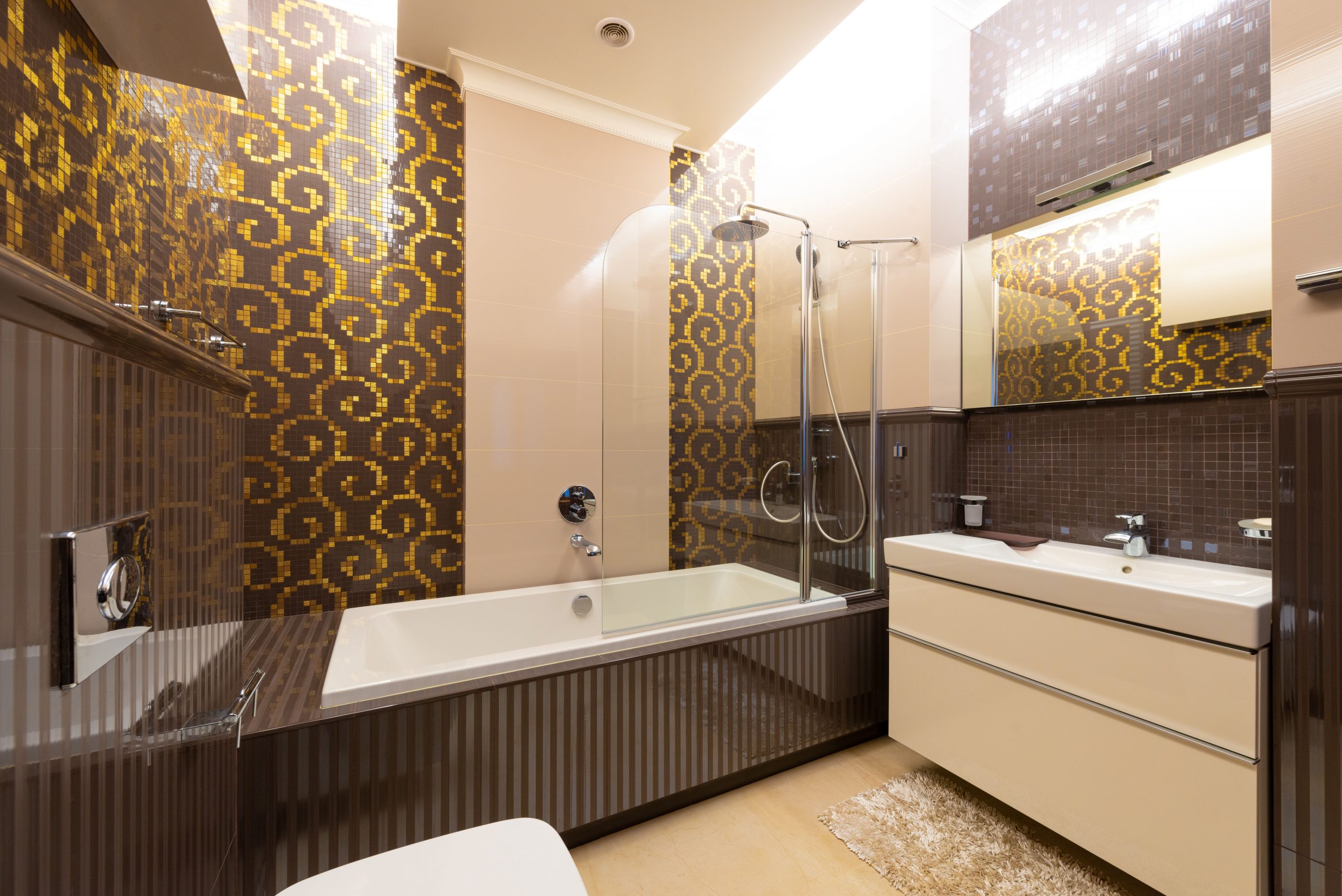
26. Luxurious Gold Mosaic and Dark Wood Bathroom
The undeniable showstopper in this bathroom is the dark brown and gold mosaic wall tile. It’s what gives the room its dramatic, luxurious, and slightly mysterious character. The swirling pattern creates a sense of movement and opulence that simple paint or tile could never achieve. While the other elements—the beige tile, the dark paneling—are important supporting players, the mosaic is the star. If you removed it, the entire personality of the room would change from bold and sophisticated to safe and neutral.
🔥 Trending Context
A design with this much bold pattern and dark color needs adequate space to work effectively. This look is best suited for a larger primary bathroom, 100 square feet or more, where the dark, intricate mosaic won’t feel overwhelming or claustrophobic. Ample lighting, both natural and artificial, is also critical to illuminate the details in the tile and prevent the room from feeling like a cave. In a smaller bathroom, consider using such a bold tile on a single accent wall, like behind the vanity, instead of on multiple surfaces. Compare with the accent wall in Idea #23.
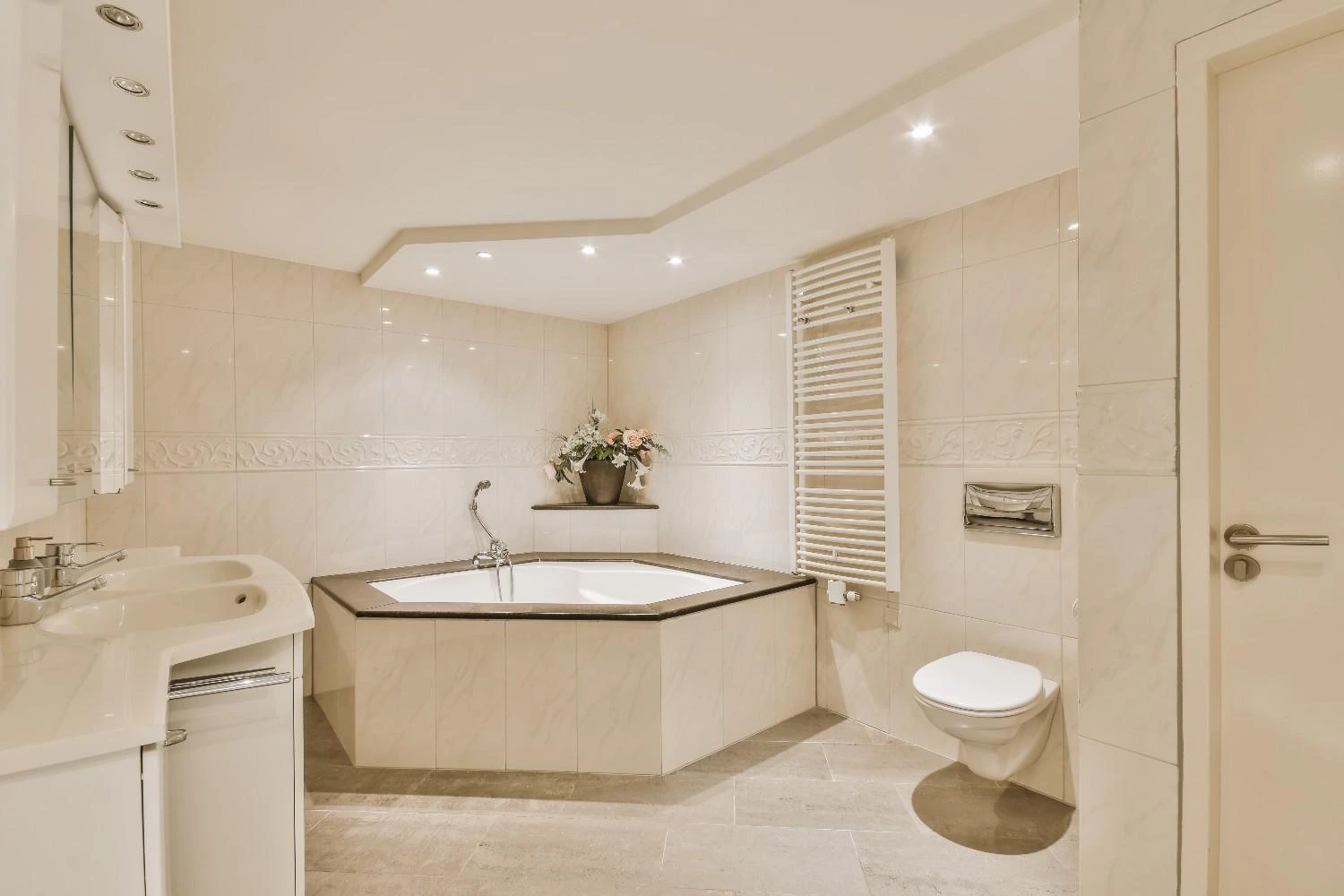
27. Cozy Traditional Bathroom with a Corner Bathtub
The cozy, enveloping feeling in this bathroom comes from a few key traditional design choices. The cream-colored wall tiles, with their soft tone and detailed relief border, create a sense of established elegance. Using these tiles generously throughout the space wraps the room in a warm, uniform texture. The choice of a large corner bathtub, as opposed to a freestanding or alcove tub, maximizes bathing space and creates a nook-like, protected feeling. Finally, the recessed lighting provides a soft, ambient glow that enhances the warm, inviting atmosphere.
📐 Style Math
- Corner Bathtub Unit: $1,200 – $3,500
- Wall and Floor Tile: $1,500 – $4,000 (for a medium-sized bathroom)
- Wall-mounted Toilet: $600 – $1,500
- Towel Warmer & Fixtures: $500 – $1,200
- TOTAL: $3,800 – $10,200
- Budget alternative: Look for more affordable ceramic tiles in a warm beige or cream. A standard alcove bathtub is much less expensive than a corner model. You can find stylish chrome towel warmers and fixtures at a lower price point if you opt for lesser-known brands online.
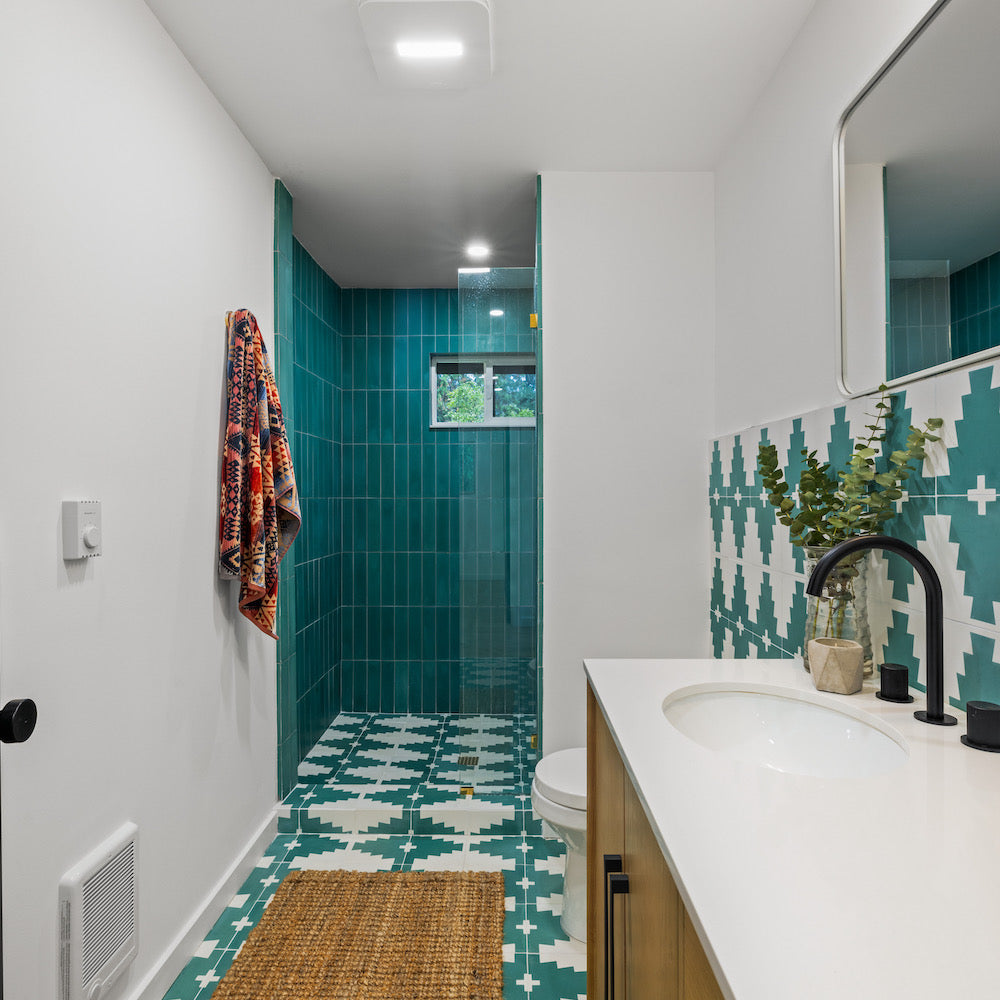
28. Vibrant Teal Moroccan-Inspired Tile
The soul of this bathroom is, without a doubt, the vibrant teal and white geometric tile. It’s the first thing you see and the element that defines the entire personality of the space. While the vertical subway tile and light wood vanity are excellent supporting choices, they are neutral players. The patterned tile is what infuses the room with energy, pattern, and a touch of worldly, bohemian flair. It proves that even in a small space, a bold design move can have an incredible payoff, a strategy also seen in Idea #15.
🎯 What Makes It Work
When you’re using a tile with this much pattern and color, let it be the star. Keep the other major elements relatively simple and neutral. Notice how the walls are a clean, simple white and the vanity is a calm, light wood. This visual quiet space gives your eyes a place to rest and makes the patterned tile feel exciting rather than chaotic. Too many competing patterns or colors would have resulted in a design that felt busy and overwhelming. Balance is key.
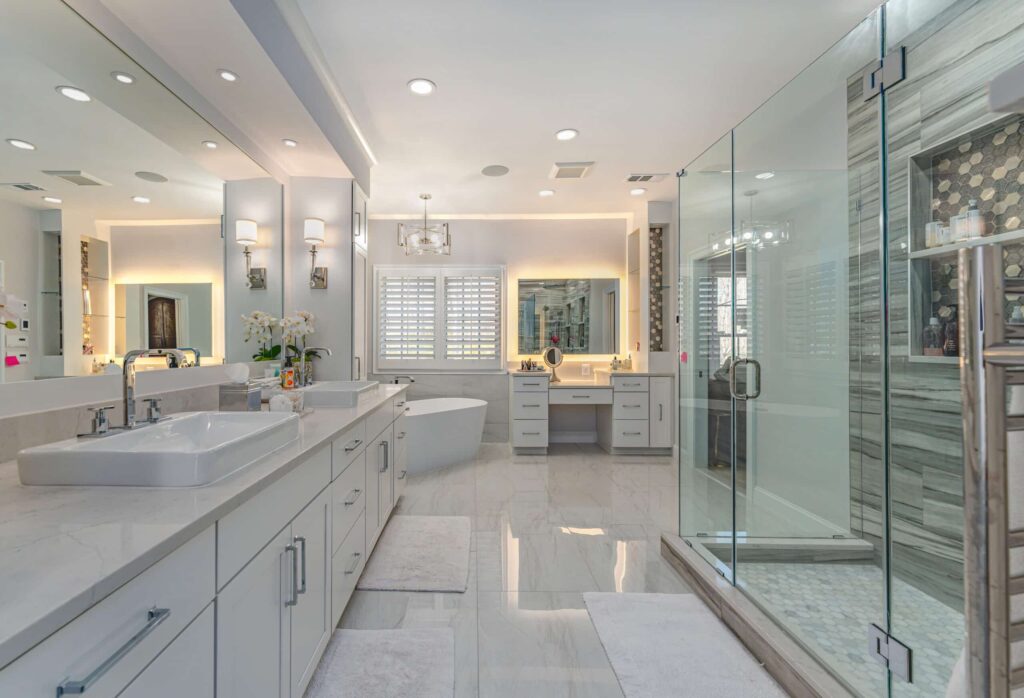
29. Serene Master Bath with Freestanding Tub and Glass Shower
This is a quintessential large primary bathroom layout, ideal for a space that is 150 square feet or larger. A long double vanity with two sinks requires a wall of at least 72 inches, while a freestanding tub needs significant clearance—at least a foot on all sides—to look its best and be easily cleanable. The spacious glass-enclosed shower also benefits from generous dimensions, ideally at least 4×5 feet, to feel truly luxurious. This layout is all about creating distinct zones for each function, which requires ample square footage.
✅ Before You Start
The serene and luxurious feeling of this bathroom comes from its ‘low contrast, high texture’ approach. The color palette is very tight—mostly white and light gray. This creates a calm, cohesive backdrop. The interest comes from the subtle variation in textures: the smooth porcelain of the tub and sinks, the polished chrome of the fixtures, the subtle veining of the marble-look tile, and the geometric pattern of the honeycomb tiles in the shower. This layering of textures within a minimal color palette is what makes the room feel sophisticated and peaceful, not boring.
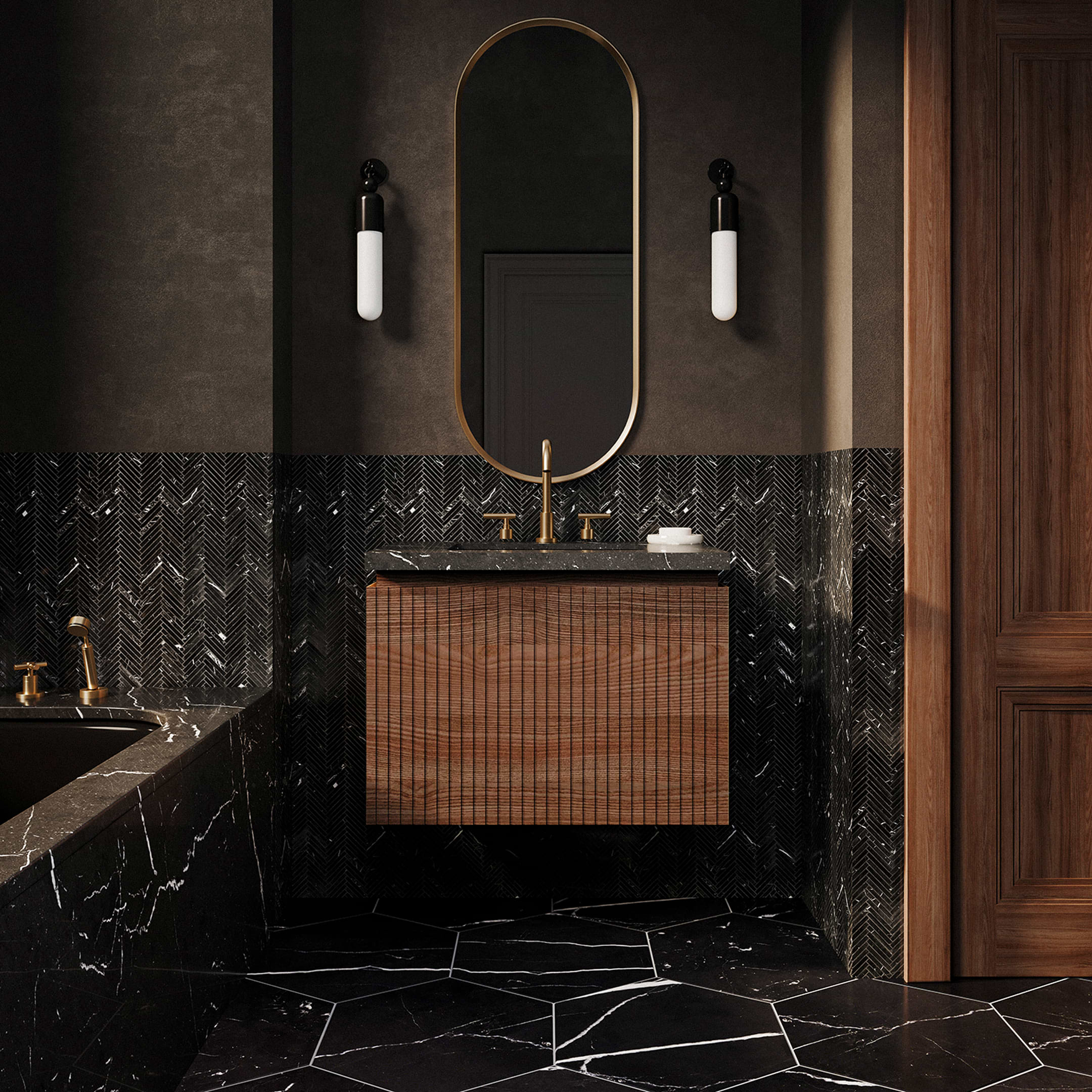
30. A Moody, Luxurious Bathroom with Dark Marble and Wood
This dark and dramatic look requires a specific cleaning routine. The black marble, while stunning, will show every speck of dust and water spot. The gold-framed mirror and brass fixtures will need frequent polishing to maintain their luster. The biggest challenge, however, will be the dark herringbone mosaic wall tiles. Those numerous grout lines will be a magnet for soap scum, and keeping them clean will require regular, detailed scrubbing. Using a daily shower spray can help reduce buildup significantly. This is a high-style, high-maintenance choice.
💸 Get This Look For Less
The sophisticated formula here is all about layering dark tones and rich textures. It’s approximately 50% dramatic stone (the black marble on the floor and tub), 30% deep texture (the dark herringbone and slatted wood vanity), and 20% warm metallic glow (the brass/gold fixtures and mirror frame). The key is the variation in texture; the smooth, veined marble contrasts beautifully with the small-scale, geometric herringbone tile and the linear, organic wood slats. The gold accents cut through the darkness, adding warmth and a necessary touch of light-reflecting glamour.
From Pinboard to Reality: Your Bathroom Oasis Awaits
Hopefully, these 30 distinct styles have sparked some real inspiration for your own space. The perfect bathroom isn’t about chasing a fleeting trend, but about creating a room that feels like a true escape for you. It’s about finding the right combination of color, texture, and function that makes your daily routines feel a little more special.
Ready to start planning? Head over to Pinterest and create a new board for your favorite ideas from this list. Your future self will thank you!