You know that feeling when you finally find the Midcentury Modern landscaping idea that looks *exactly* right for your home? That perfect blend of clean lines and natural rebellion that you’ve been saving to a secret Pinterest board. After filtering through hundreds of real designer projects, we narrowed it down to 32 concepts that truly deliver. Inside, you’ll find curated ideas covering everything from minimalist xeriscapes to lush, structured gardens. In 2026, the push for sustainable, water-wise curb appeal that doesn’t sacrifice style is bigger than ever, and these designs nail that authentic-meets-architectural vibe. And stay until the end — we break down the most common mistakes that can ruin these looks. 📌 Save this to Pinterest for later — you’ll want to revisit these ideas.
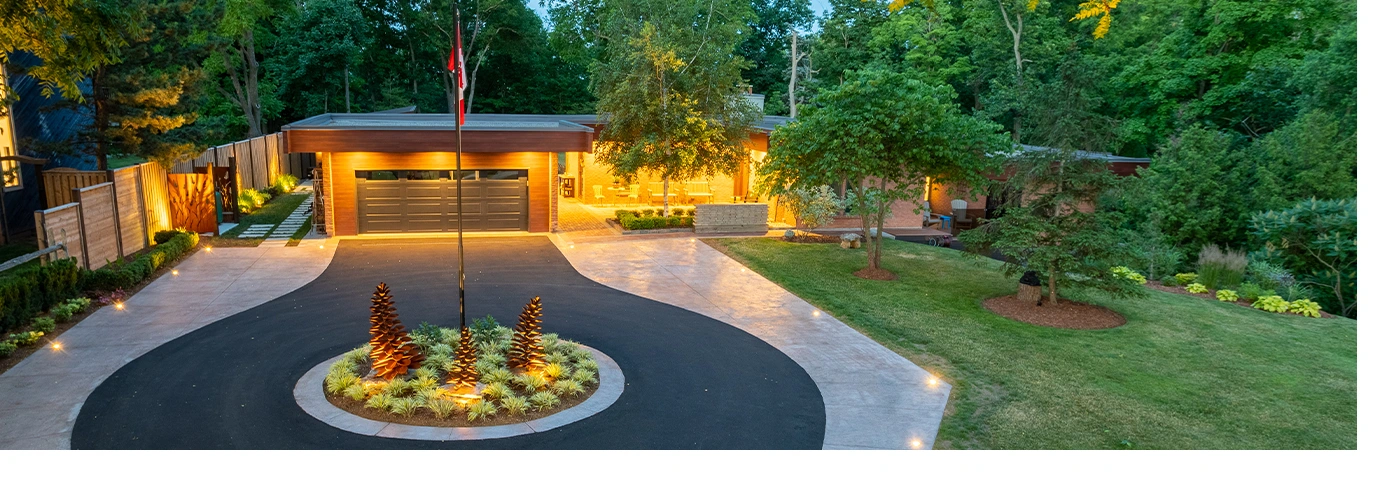
1. Modern Driveway with Landscape Lighting and Wooden Accents
This design succeeds by creating a rich visual dialogue between materials. The warm, organic feel of the brown wooden siding provides a necessary counterpoint to the cool, hard surfaces of the asphalt and concrete driveway. Repetition in the ground-level lights creates a rhythm that guides the eye (and your car) inward, making the entrance feel both prominent and welcoming. The circular garden bed breaks the straight lines of the home and driveway, adding a soft, sculptural focal point that feels intentional and artful.
⚠️ Real Talk
To recreate this illuminated and organized look, you’ll need to budget for a mix of hardscaping and high-impact features. The custom driveway is the biggest investment, followed by professional lighting installation.
- Driveway (Patterned Asphalt & Concrete): $8,000 – $15,000
- Landscape Lighting (inc. installation): $3,000 – $6,000
- Wood Siding Accent: $2,500 – $5,000
- Decor & Sculptures (Metal Pinecones): $500 – $1,500
- Plants & Lawn: $1,000 – $2,500
- TOTAL: $15,000 – $30,000
Budget alternative: Achieve a similar feel by staining your existing concrete, adding solar-powered path lights, and using pre-made wood panels for the accent wall for around $5,000 – $9,000.
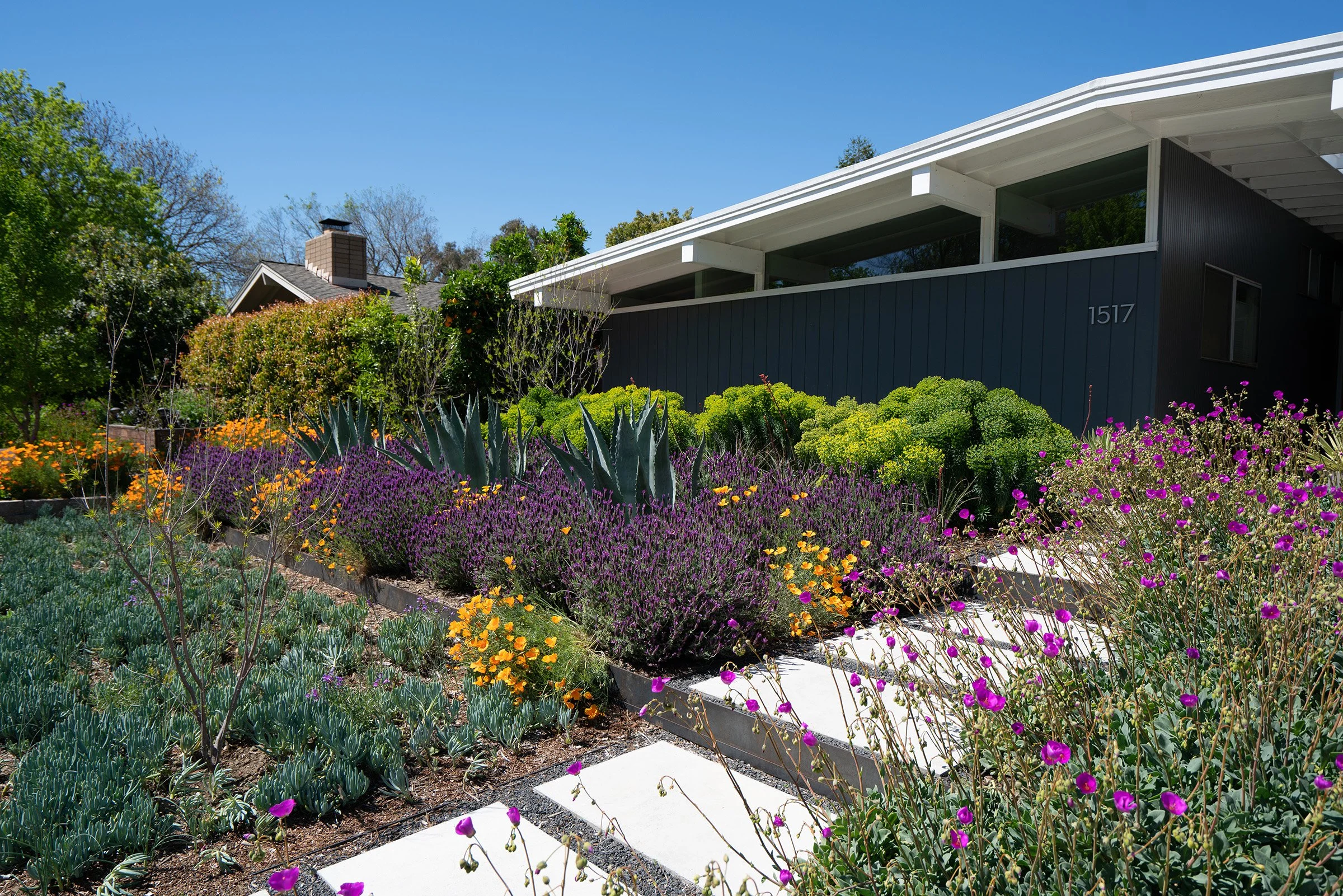
2. Lush, Colorful Drought-Tolerant Landscaping
The formula here is a masterclass in balancing bold architecture with vibrant nature. Think of it as 50% Stark Modern Base (the dark gray siding and white roof), 40% Colorful Plant Massing (groupings of purple lavender and bright orange flowers), and 10% Textural Hardscape (concrete steppers and dark gravel). By grouping plants in large, confident drifts of color, you create a painterly effect that stands up to the home’s strong lines. Swapping the deep purple for a fiery red echinacea or the orange for yellow coreopsis would keep the formula intact while changing the mood.
🔧 How-To Brief
While “drought-tolerant” is often marketed as “no-maintenance,” that isn’t the whole story. The gravel pathways are fantastic for drainage but are notorious for collecting leaves and airborne weed seeds. You will need to dedicate time to periodic weeding or use a leaf blower on a low setting to keep the surface looking clean. The lavender will also require annual pruning after it flowers to prevent it from becoming woody and sparse. This is a low-water landscape, not a no-work landscape, so be prepared for some upkeep to keep it looking sharp.
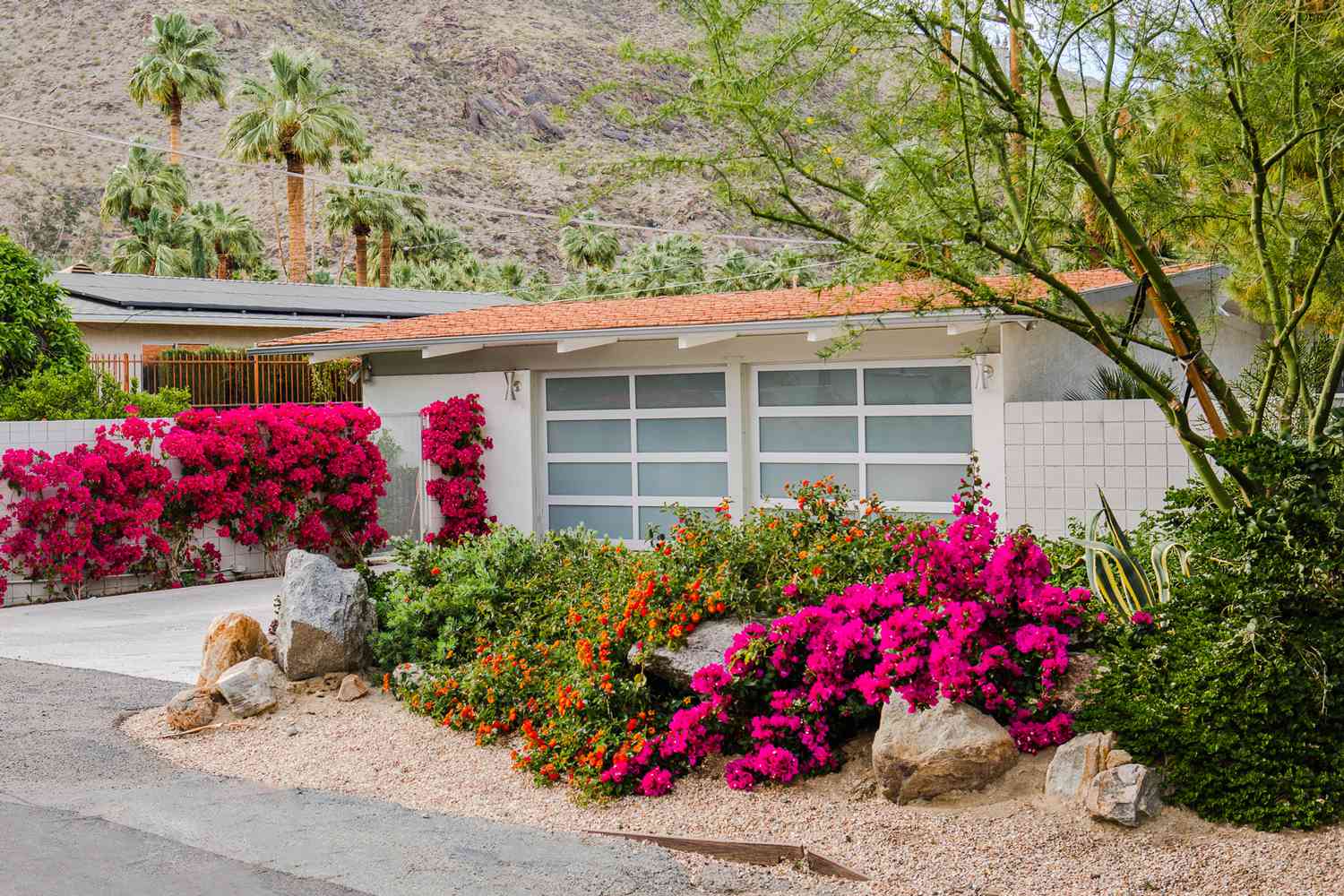
3. Desert Modern with Hot Pink Bougainvillea & Boulders
The single element that makes this entire design pop is the unapologetic use of hot pink bougainvillea. Remove it, and you have a pleasant but fairly standard desert landscape with nice stucco and rock features. With it, the yard feels electric. The intense fuchsia hue creates a stunning contrast against the neutral white walls and earthy gravel, proving that desert landscaping doesn’t have to be limited to muted greens and browns. It’s a bold, confident choice that injects pure joy and energy into the entire scheme.
💰 Budget Breakdown
When placing large boulders, always bury the bottom third. This one trick is what separates a professional-looking rock garden from an amateur one. Boulders that sit entirely on top of the gravel look like they were just dropped there, creating an artificial, temporary feel. Partially burying them gives the impression that they are rising naturally from the earth, providing a sense of permanence and stability. It anchors the whole design and makes the landscape feel as if it has been there for years.
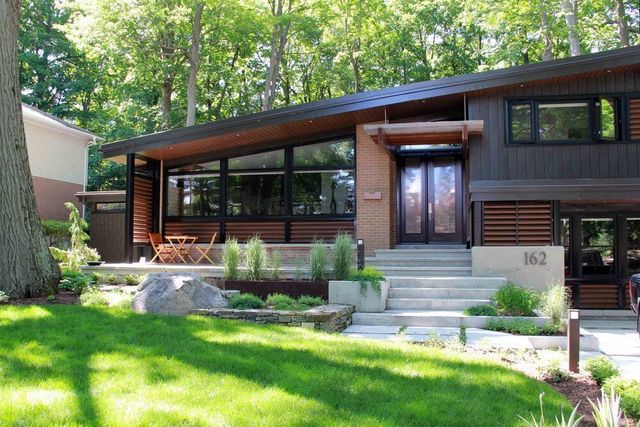
4. Modern Sloped Roof House with Tiered Natural Landscaping
This landscape works because it embraces, rather than fights, the home’s complex architecture. The use of multiple materials—dark wood, brick, and concrete—is mirrored in the tiered landscaping, which uses both natural stone and poured concrete. This repetition of mixed materials creates a cohesive link between the house and the yard. The sloped roofline is balanced by the horizontal lines of the tiered planters, preventing the home from feeling top-heavy and instead grounding it firmly in the landscape.
💡 Designer Tip
A multi-tiered design like this is ideal for properties with a gentle to moderate slope, typically on lots of at least 7,500 square feet. The tiers help manage water runoff and create usable flat areas on an otherwise challenging grade. This approach requires a decent amount of frontage to look intentional rather than cramped. For a smaller lot, consider a simplified version with just two tiers or compare it with the single-level design in Idea #5 which offers a similar mix of lawn and planting beds on a flat surface.
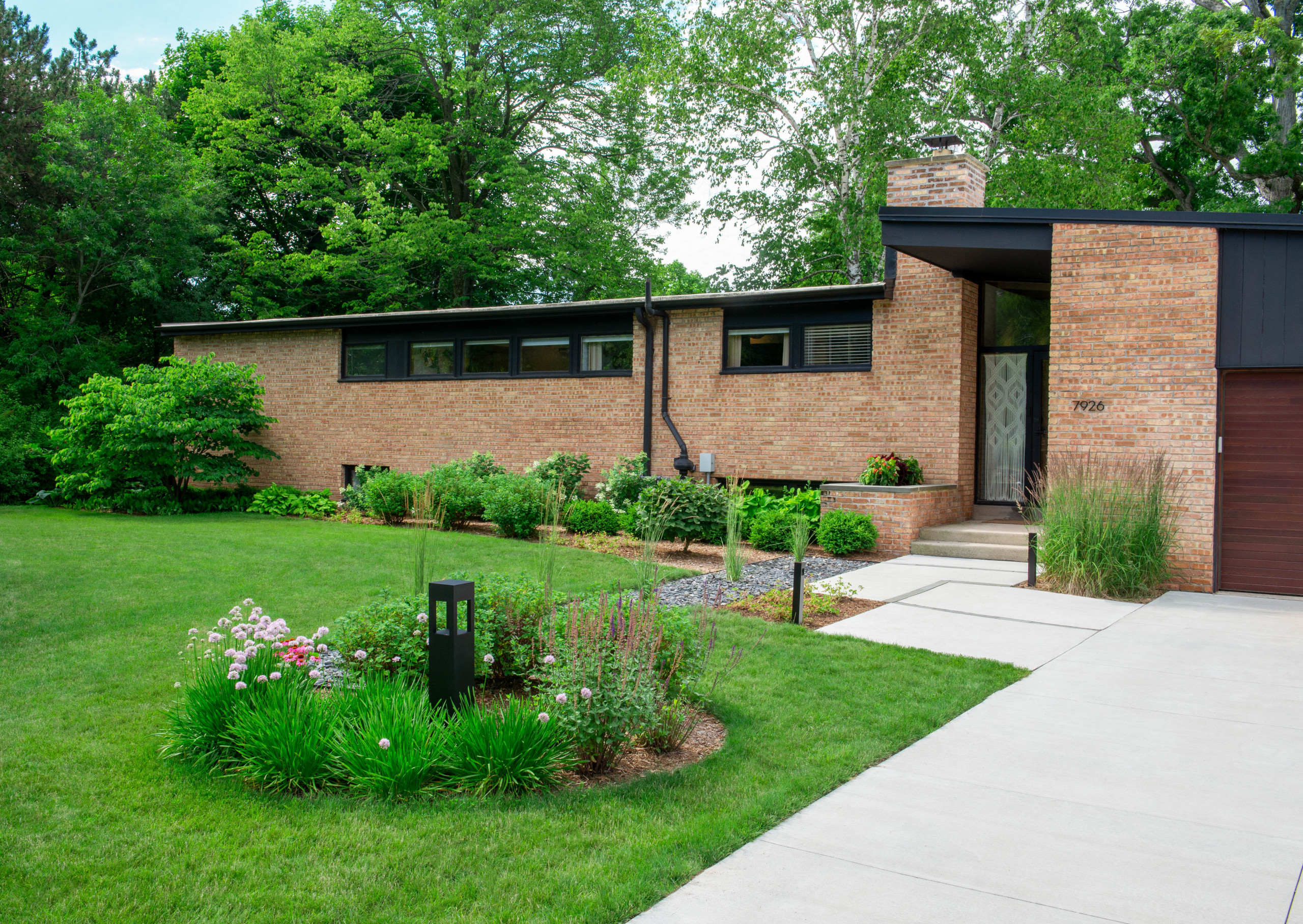
5. Brick Home with a Manicured Lawn & Geometric Path
This look follows a classic midcentury formula: 60% Natural Texture (the light orange brick and lush green lawn) + 30% Geometric Structure (the flat roofline and gridded concrete pathways) + 10% Dark Accent (the black trim, garage door, and light fixtures). The geometry of the concrete paths acts as a visual framework, organizing the softer, more organic shapes of the lawn and plant beds. This balance prevents the brick and lawn from feeling too traditional and pushes the entire exterior into modern territory.
📏 Scale Guide
A pristine, manicured lawn is a beautiful, cool surface for bare feet, but it requires significant upkeep. Expect weekly mowing during the growing season, regular watering (especially in drier climates), seasonal fertilization, and diligent weed control. The sharp, geometric concrete paths also demand clean edges to maintain their impact. You’ll need to use a string trimmer or edger every time you mow to keep the grass from creeping over the concrete. This is a high-input, high-reward aesthetic for homeowners who enjoy yard work.
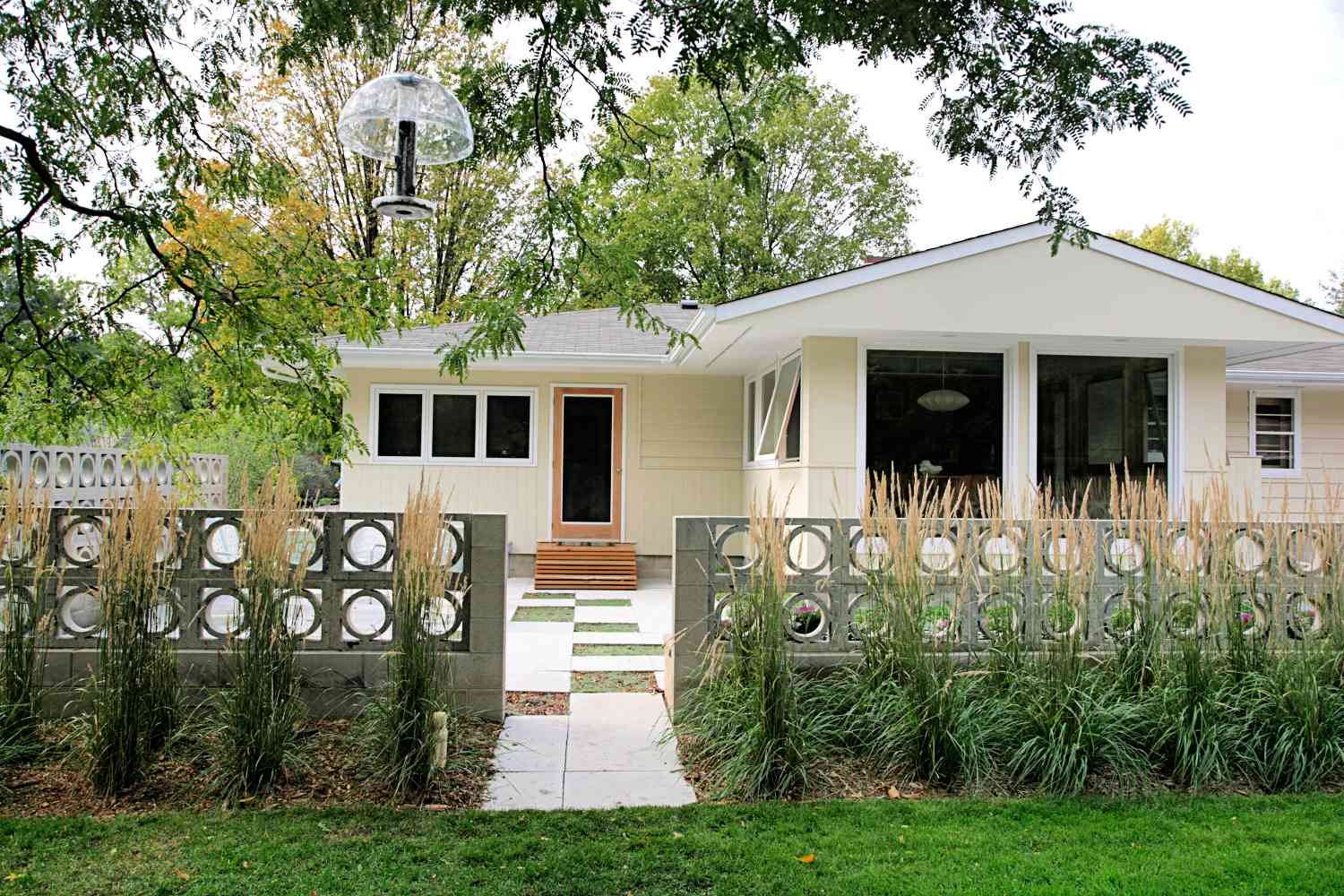
6. Decorative Cinder Block Wall With a Stepping Stone Path
That iconic breeze block wall is more achievable than you think. Here’s a quick guide to building a non-structural decorative wall. Time: 1-2 weekends. Cost: $300-$800.
- Prepare the Base: Dig a shallow trench (about 6 inches deep) and fill it with compacted gravel to create a stable, level footer.
- Lay the First Course: Mix concrete mortar and apply a 1-inch layer. Set the first row of standard blocks, ensuring they are perfectly level.
- Build Upward: Apply mortar between layers and stack your decorative “breeze” blocks, checking for level and plumb as you go.
- Finish the Top: Use solid cap blocks on the final layer for a clean, finished look and added weather protection.
🔥 Trending Context
You can get this structured, retro vibe for much less. Instead of a full mortar and block wall, look for composite decorative screen panels from home improvement stores like The Home Depot or Lowe’s, which often come in midcentury-inspired patterns for $50-$150 per panel. Install them on simple wood posts. For the walkway, check Facebook Marketplace or Craigslist for leftover pavers, or make your own with a bag of concrete mix and a few square molds for under $100. The key is mimicking the geometric patterns, not necessarily the exact materials.
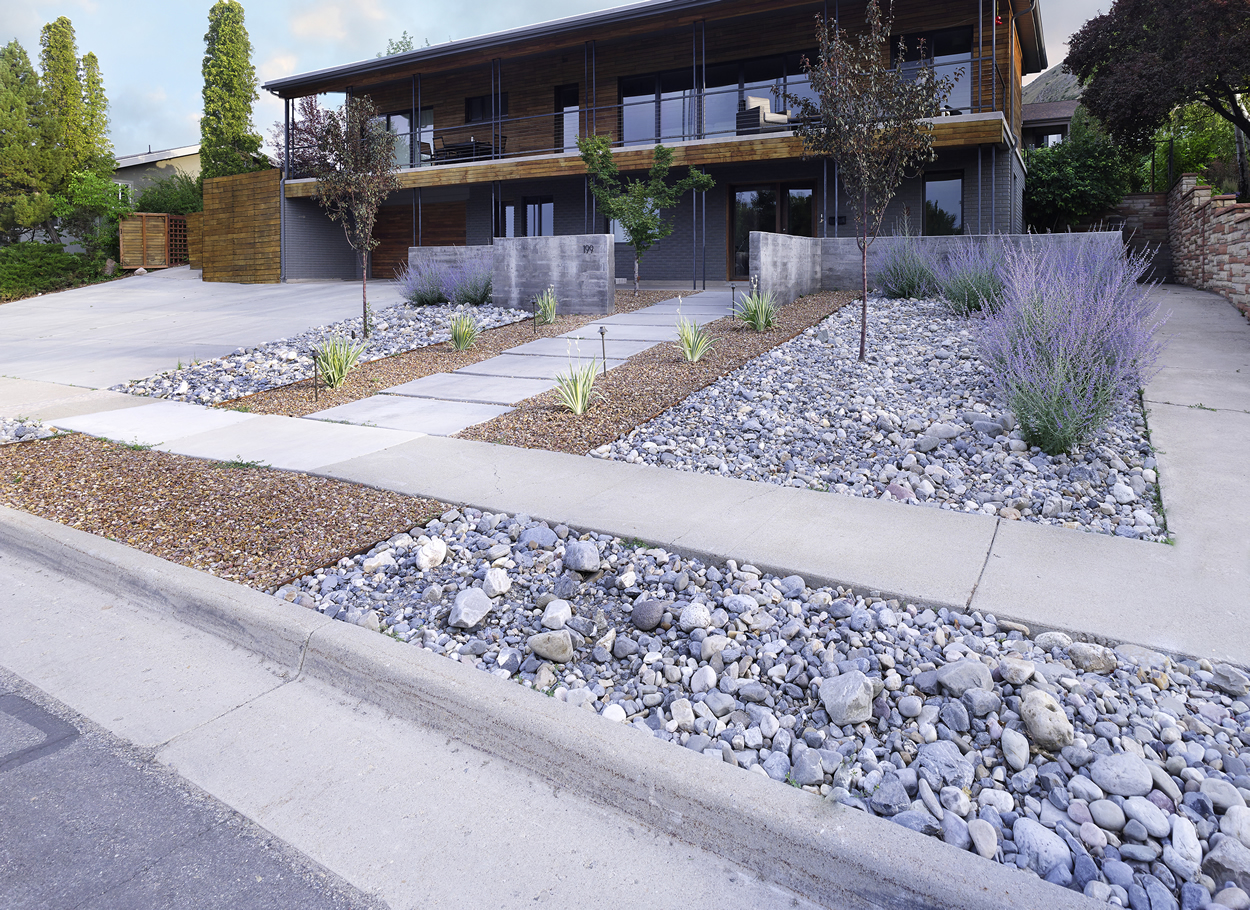
7. Minimalist Drought-Tolerant Landscaping with Mixed Stone
The crucial element here is the confident use of negative space. In this design, the ground cover—the light gray river stones and brown gravel—is just as important as the plants themselves. By leaving large areas unplanted, the focus shifts to the clean lines of the concrete pavers and the subtle textural differences between the various stones. This restraint is what creates the high-end, gallery-like feel. Overcrowding this design with more plants would completely undermine its minimalist power and transform it into just another garden bed.
📐 Style Math
A landscape this minimal and structured can be unforgiving. Every weed, every stray leaf, every misplaced stone will be immediately visible against the clean, uniform surfaces. This isn’t a “plant it and forget it” solution; it requires regular, meticulous tidying to maintain its sharp appearance. Additionally, light-colored river stones can show dirt and algae over time, and may require periodic pressure washing to keep them looking fresh. Be honest with yourself about whether you enjoy that level of garden grooming.
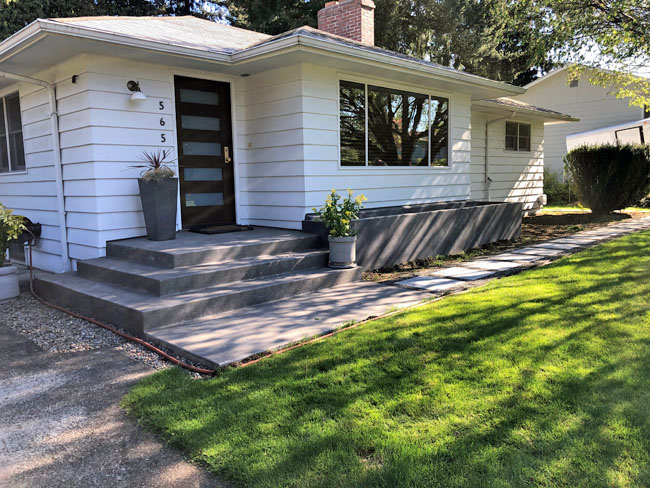
8. Modern White House with Grey Concrete Steps and Planters
This design’s success lies in its strict, minimalist color and material palette. By repeating the same dark grey concrete for the steps, the planter box, and even the stepping stones, the design establishes a strong visual rhythm and a sense of cohesion. This deliberate repetition makes the different elements feel like part of a single, unified architectural vision rather than a collection of separate pieces. The crisp white siding acts as a clean canvas, making the dark grey forms pop with architectural clarity.
🎯 What Makes It Work
When working with pre-cast concrete elements like these steps and planters, the magic is in the spacing. For a clean, modern look, ensure the gap between elements is consistent. A gap of 1/2 to 3/4 inch between the steps and the house, or between planters and a wall, creates a subtle shadow line that emphasizes the floating, sculptural quality of the concrete. Anything tighter can look accidental, while anything wider can feel disconnected. Precision is key.
9. Split-Level Concrete Steps Through a Landscaped Slope
This approach is perfect for a front yard with a noticeable but not dramatically steep slope. The wide, stacked concrete slabs create a generous and inviting ascent, turning a potential obstacle into a grand entrance. This design requires a minimum depth of about 15-20 feet from the street to the house to allow the stairs to feel integrated and not overly steep. The width of the stairs—at least 4-5 feet—is also key to its success, making it feel like a pathway rather than just a utility staircase. Compare with the steeper hillside solution in Idea #13.
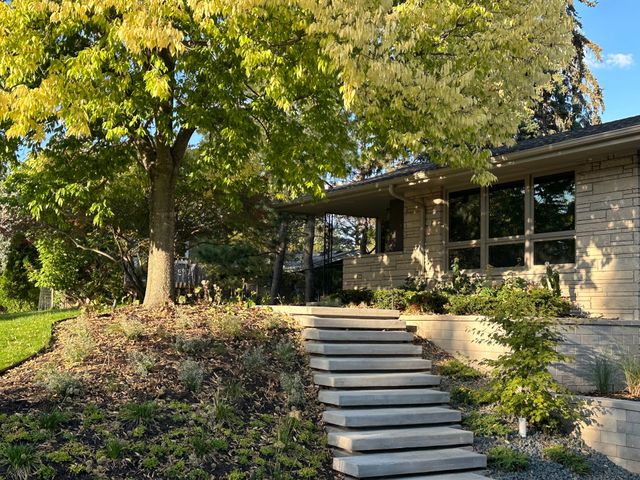
🧹 Maintenance Reality
Poured-in-place or pre-cast concrete slabs can be pricey. For a fraction of the cost, you can get a similar tiered look using landscape timbers to build the frame for each step and filling them with compacted gravel or decomposed granite. A single 8-foot timber costs around $15-$25. This creates the same multi-level effect and rustic texture. For the retaining walls, consider modular concrete wall blocks from a big-box store, which are designed for easy DIY installation and cost significantly less than natural stone.
10. Modern Succulent Pathway with a Natural Stone Column
This textured, arid look breaks down into a simple ratio: 40% structured hardscape (the concrete pavers), 40% fine texture groundcover (the blue-grey pebbles), and 20% sculptural planting (succulents and large boulders). The key is the interplay between the smooth, man-made pavers and the small, organic river pebbles. This contrast creates visual interest underfoot. The plants are used like punctuation—strong, sculptural forms that are placed deliberately rather than planted in dense masses to fill space.
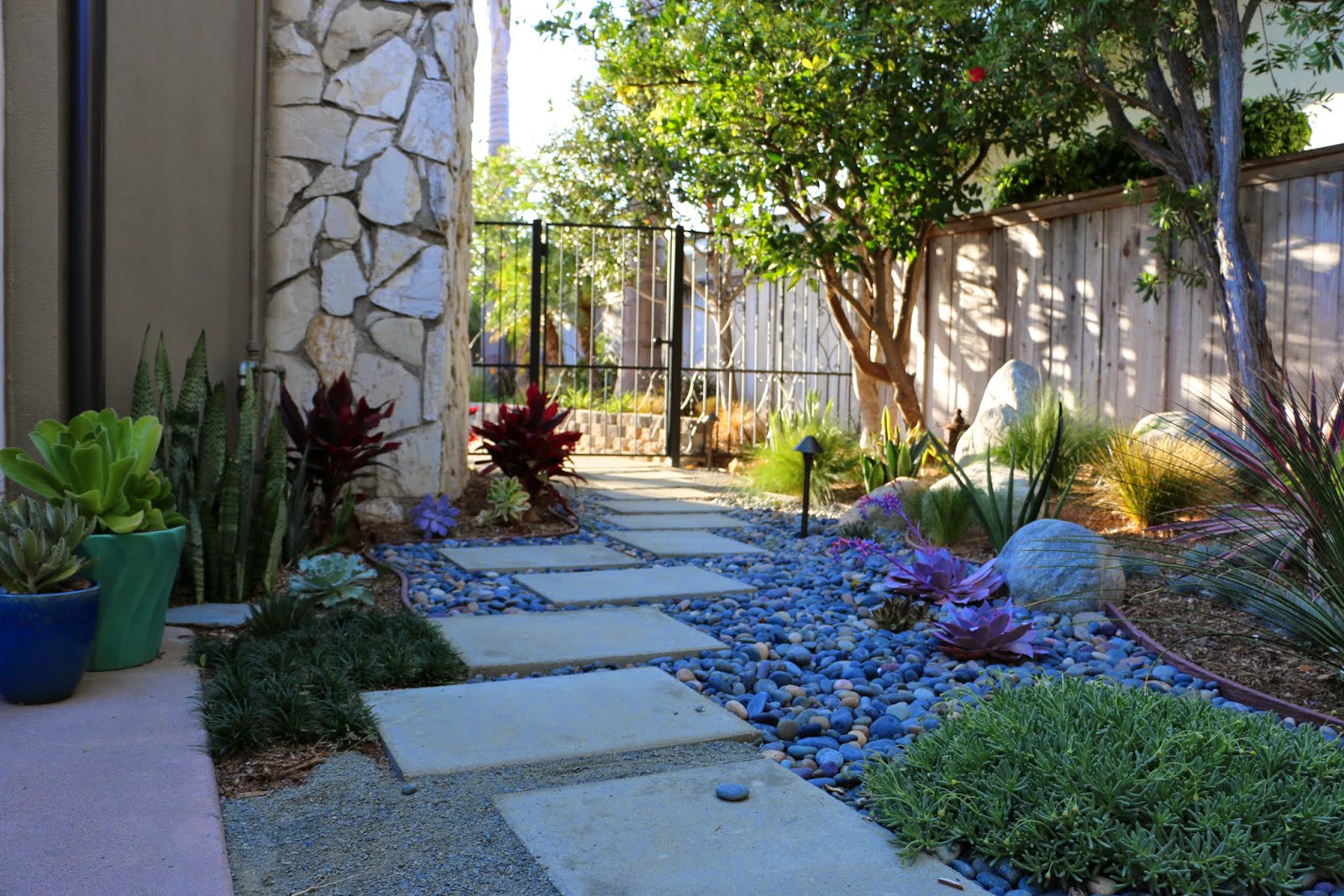
✅ Before You Start
The stacked natural stone column is the single element that elevates this entryway from nice to truly special. It provides a crucial vertical anchor in a predominantly low-to-the-ground design scheme. Without it, the eye would simply travel down the path and stop at the gate. The column interrupts that flow, draws the eye upward, and introduces a rustic, weighty texture that beautifully contrasts with the smooth concrete and delicate succulents. It adds a sense of importance and architectural gravitas to the entire composition.
11. Private Garden Patio with Brick, Gravel, and Pops of Color
This style, often called “Deconstructed Hardscape,” is gaining traction because it feels more organic and permeable than a solid sea of concrete. Interspersing pavers with gravel breaks up the visual mass, allows for better rainwater drainage, and adds a satisfying crunch underfoot. In 2026, as homeowners look for more sustainable and texturally interesting solutions, this move away from monolithic patios towards integrated, mixed-material surfaces feels fresh, modern, and environmentally conscious. The pop of yellow in the chairs is pure midcentury playfulness.
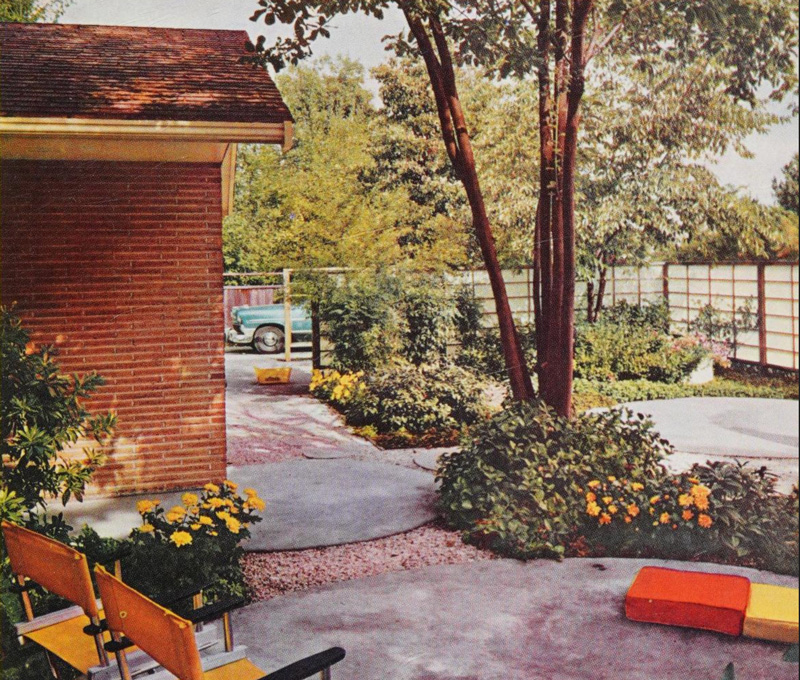
💸 Get This Look For Less
The key to a successful paver-and-gravel combination is scale. Use large format pavers (at least 18×18 inches) and keep the gravel joints relatively tight (2-4 inches). If the pavers are too small or the gaps too wide, the surface can feel busy and unstable to walk on. The large pavers provide solid footing, while the narrow gravel strips act as a textural accent, not the main event. This balance ensures both aesthetic success and practical function.
12. Minimalist Facade with Olive Trees and an Orange Door
The success of this design lies in its extreme restraint. The palette is limited to just a few harmonious, earthy tones—beige stucco, natural wood, and dark pebbles—which creates a calm, serene backdrop. This allows the two key features to have maximum impact: the single, bright orange door and the gnarled, sculptural forms of the olive trees. The home itself becomes a minimalist canvas, and the door and trees are the art. Any additional colors or elements would dilute the power of this focused composition.
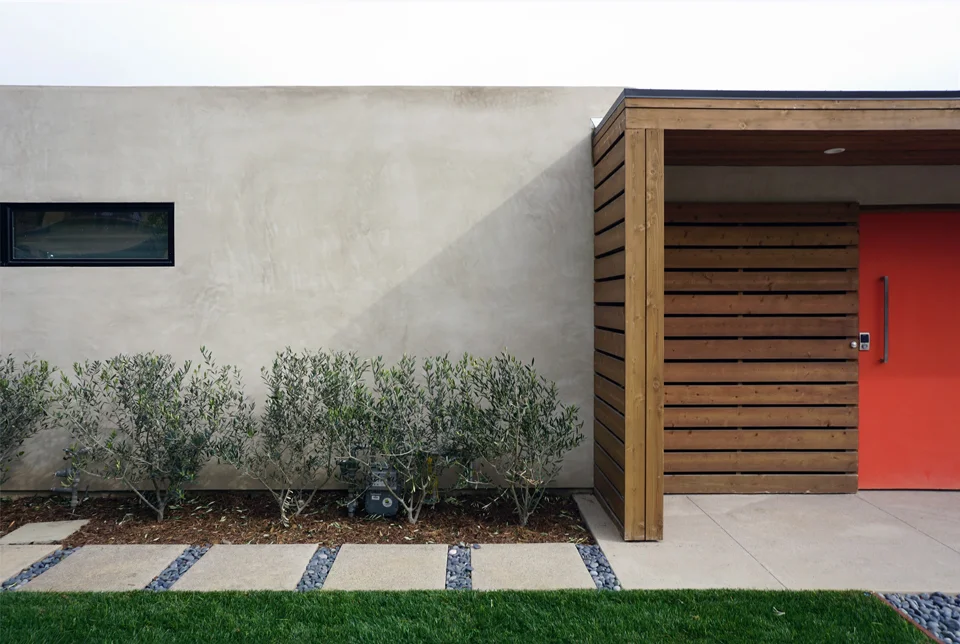
⭐ The One Thing
An orange door is a fantastic, high-impact statement, but be prepared for the realities of UV exposure. Bright, saturated colors like orange and red are more prone to fading from direct sunlight than are muted tones or dark colors. To keep it looking fresh, you may need to apply a new coat of high-quality exterior paint every 3-5 years, especially if the entrance receives a lot of afternoon sun. Using a paint with built-in UV protection is a must. See it as a small, recurring project that keeps your curb appeal at 100%.
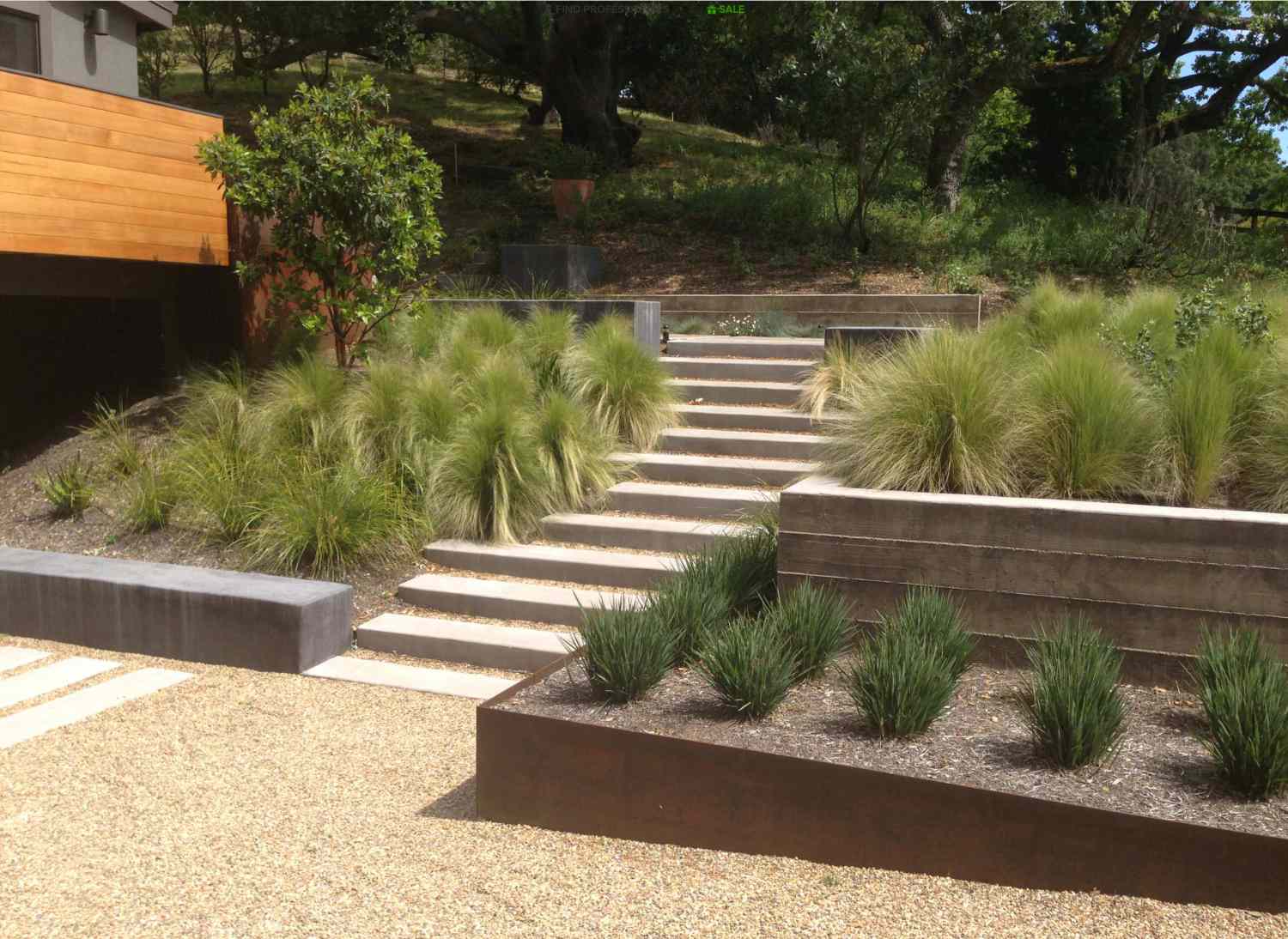
13. Concrete Steps and Planters with Ornamental Grasses
This raw, architectural look has big impact, but it requires the right canvas. Before you commit to a poured-concrete landscape, run through this checklist:
- Access Check: Can a concrete truck or wheelbarrows easily access the area? Pumping concrete can add significant cost.
- Drainage Plan: Concrete is impermeable. Do you have a clear plan for where rainwater will run off? Proper grading is essential.
- Soil Stability: Is your hillside prone to erosion? You may need deeper footings or additional reinforcement to ensure the concrete walls and steps don’t shift over time.
- Sunlight Mapping: The chosen grasses need at least 6 hours of direct sun. Track the light for a full day before finalizing plant choices.
⚠️ Real Talk
While this landscape appears minimal, the key materials have specific needs. Rusted steel (Cor-Ten) will continue to “bleed” rust onto the surrounding gravel or concrete for the first year or two, which can cause staining. This is a natural part of its patina process. The ornamental grasses are low-maintenance but will need to be cut back hard once a year in late winter or early spring to encourage fresh, vigorous growth. The gravel will also inevitably collect leaves and organic debris, requiring occasional raking or blowing to keep it looking clean.
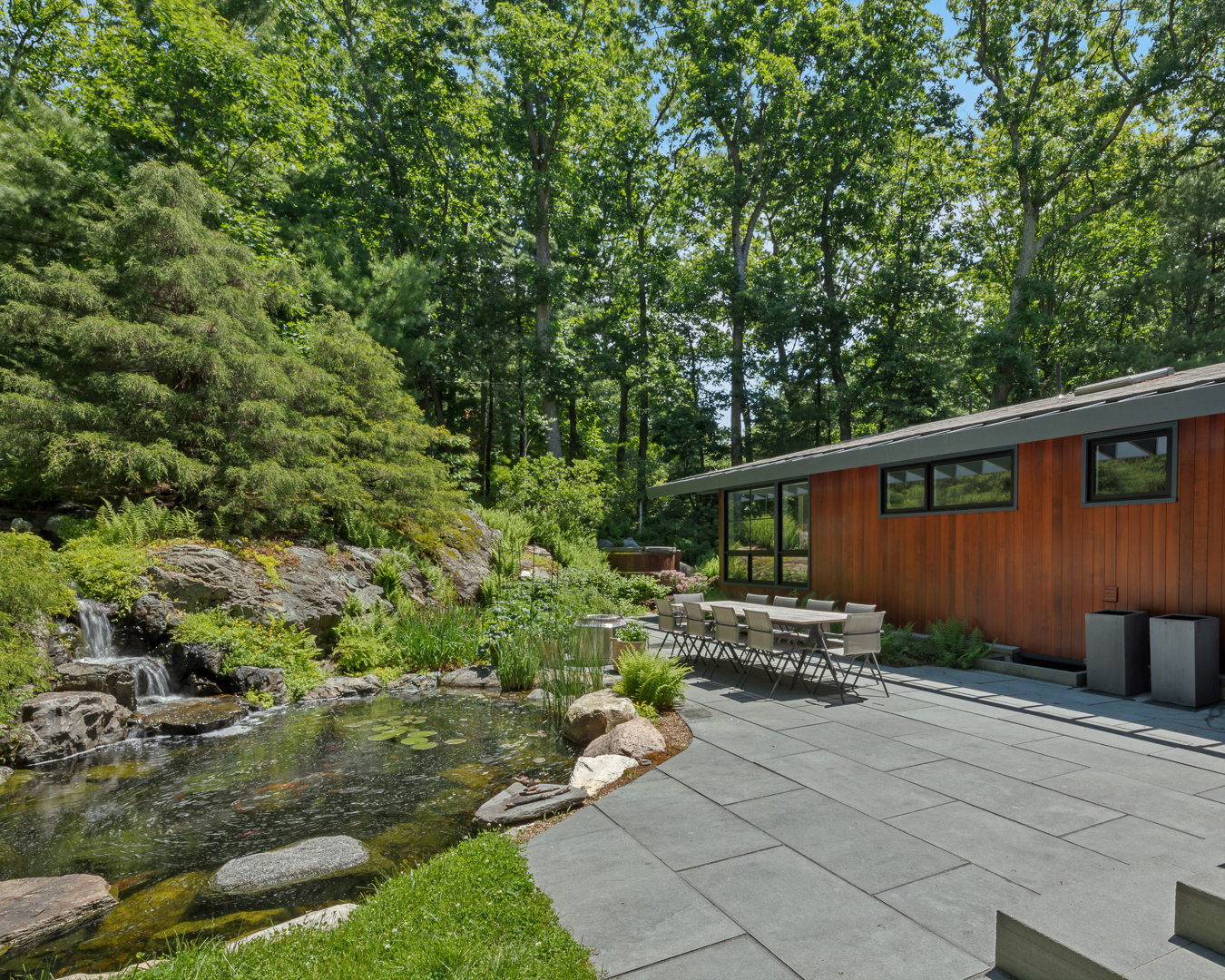
14. Modern Exterior Patio with a Built-in Pond
The integrated pond is unquestionably the heart of this design. It’s not just an accessory; it’s a sensory experience. The sound of the small waterfall provides a constant, soothing backdrop, masking neighborhood noise and creating a tranquil atmosphere. The reflection of the sky and surrounding greenery on the water’s surface adds a dynamic, ever-changing quality to the patio. Removing the pond would leave you with a nice seating area, but adding it transforms the space into a true backyard oasis. It’s an investment in serenity.
🔧 How-To Brief
Creating a seamless indoor-outdoor feel with a high-end patio and water feature is a significant investment. The flagstone patio and custom pond are the largest expenses, but don’t underestimate the cost of good quality outdoor furniture.
- Gray Flagstone Patio (materials & labor): $15,000 – $25,000
- Built-in Pond with Waterfall Pump & Filtration: $8,000 – $18,000
- Outdoor Dining Furniture: $2,000 – $7,000
- Plantings & Boulders: $2,000 – $5,000
- Wood Siding (as an architectural feature): $3,000 – $6,000
- TOTAL: $30,000 – $61,000
Budget alternative: Use concrete pavers instead of flagstone, opt for an above-ground fountain feature, and source furniture from Target or Wayfair to achieve a similar vibe for $8,000 – $15,000.
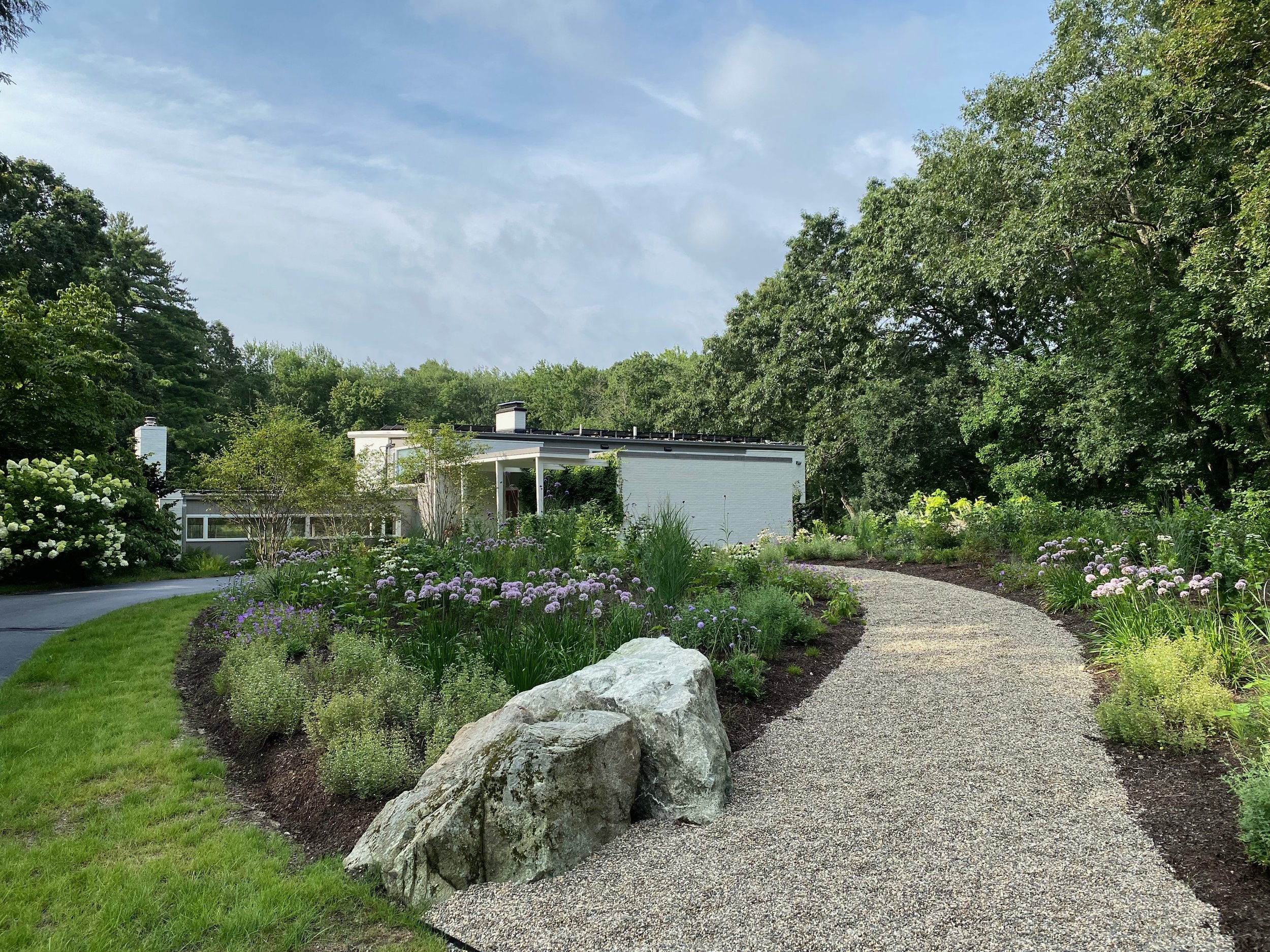
15. Winding Gravel Path Through a Lush Garden
This design masterfully uses a simple, winding path to create a sense of journey and discovery. Unlike a straight path that reveals the destination immediately, the gentle curves of the gravel walkway partially obscure the view of the house, inviting you to slow down and appreciate the journey. The informal, slightly meandering line feels more natural and less rigid, allowing the lush, overflowing garden beds to be the star. The massive boulders act as anchors, grounding the path and making it feel established.
💰 Budget Breakdown
A beautiful gravel path is one of the most budget-friendly landscape features you can install. You can get this look for a few hundred dollars and a weekend of work. Instead of large, expensive boulders, look for “urbanite”—free, broken-up concrete pieces from demolished sidewalks or driveways that mimic the look of natural stone. For the plantings, buy smaller, one-gallon perennials; they will be a fraction of the cost of larger specimens and will fill in within a season or two. This is a fantastic high-impact, low-cost project.
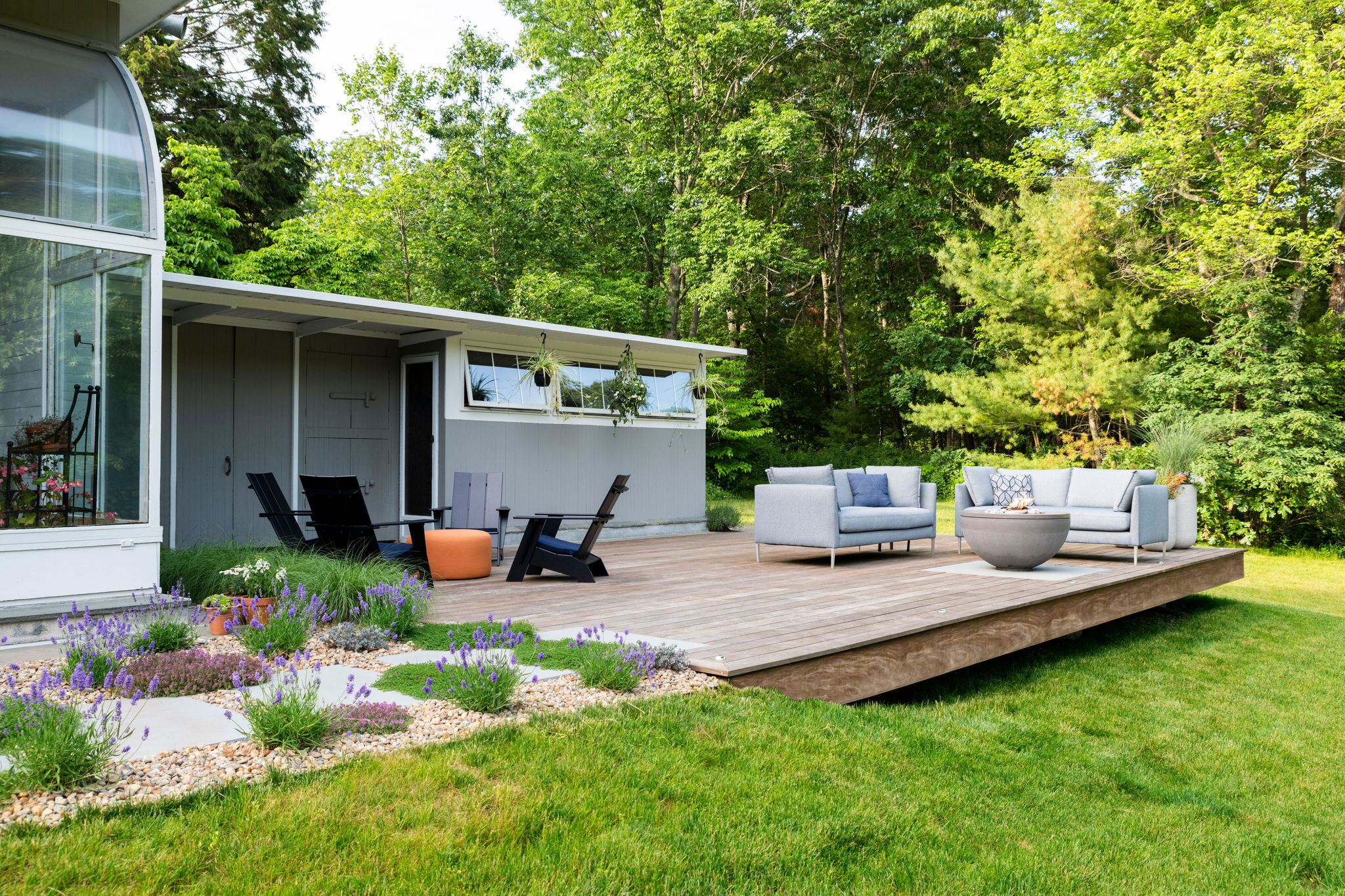
16. Elevated Wood Deck with a Modern Lavender Garden
The chic, serene atmosphere of this space comes from a disciplined formula: 50% Warm Natural Wood (the deck boards) + 30% Cool Gray Tones (the sofas and gravel) + 20% Soft Green & Purple Foliage (the lawn, lavender, and trees). The wood deck provides a warm, inviting foundation, while the cool gray of the furniture and pea gravel adds a layer of modern sophistication. The limited plant palette, focusing on the silvery green and purple of the lavender, keeps the look calm and curated rather than chaotic.
💡 Designer Tip
A pea gravel garden border is a simple DIY that adds instant texture and a clean edge. Here’s how to do it in a weekend. Time estimate: 4 hours. Material cost: $150-$300.
- Define the Edge: Mark out the intended shape of your garden bed with a hose or spray paint.
- Install Edging: Use a flat spade to dig a 4-inch trench along your line and install flexible steel or plastic edging to contain the gravel.
- Lay Down Fabric: Cover the entire bed area with a high-quality landscape fabric, pinning it securely to prevent weeds.
- Add Gravel: Pour in the pea gravel to a depth of 2-3 inches and rake it smooth.
- Plant: Cut X-shaped slits in the fabric and dig holes for your plants, like the lavender shown here.
17. Modern Patio with Multi-Toned Pavers and Integrated Planter
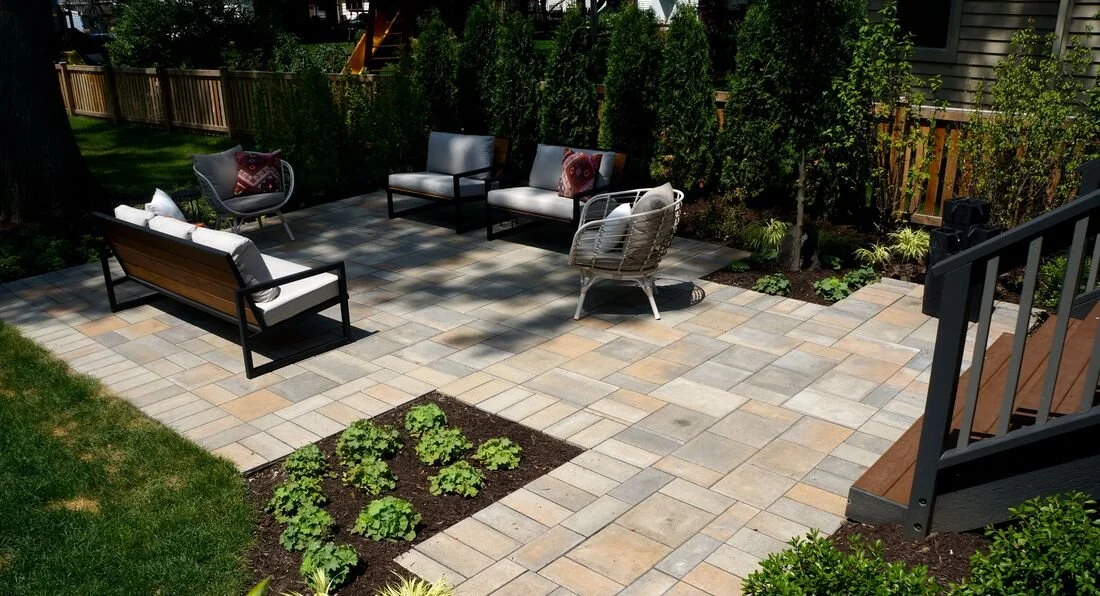
The single best idea here is the integrated garden bed cut directly into the patio. This move brilliantly breaks up the large expanse of pavers, preventing it from feeling like a monotonous slab. It literally grounds the seating area in nature, blurring the line between hardscape and softscape. Functionally, it places greenery right at your fingertips, adding life and color to the center of the space. It’s a custom touch that makes the whole patio feel more dynamic, thoughtful, and fully integrated.
📏 Scale Guide
When selecting pavers with multiple tones, the key to a sophisticated look is to choose a set that shares the same undertone. In this case, the beige, cream, and grey pavers all have a warm, slightly earthy base, so they harmonize rather than clash. Avoid mixing pavers with warm undertones (like yellowish beige) with those that have cool undertones (like bluish grey). Sticking to a consistent undertone ensures the final result feels like a subtle, natural variation instead of a chaotic patchwork.
18. Illuminated Concrete Path with a Water Feature
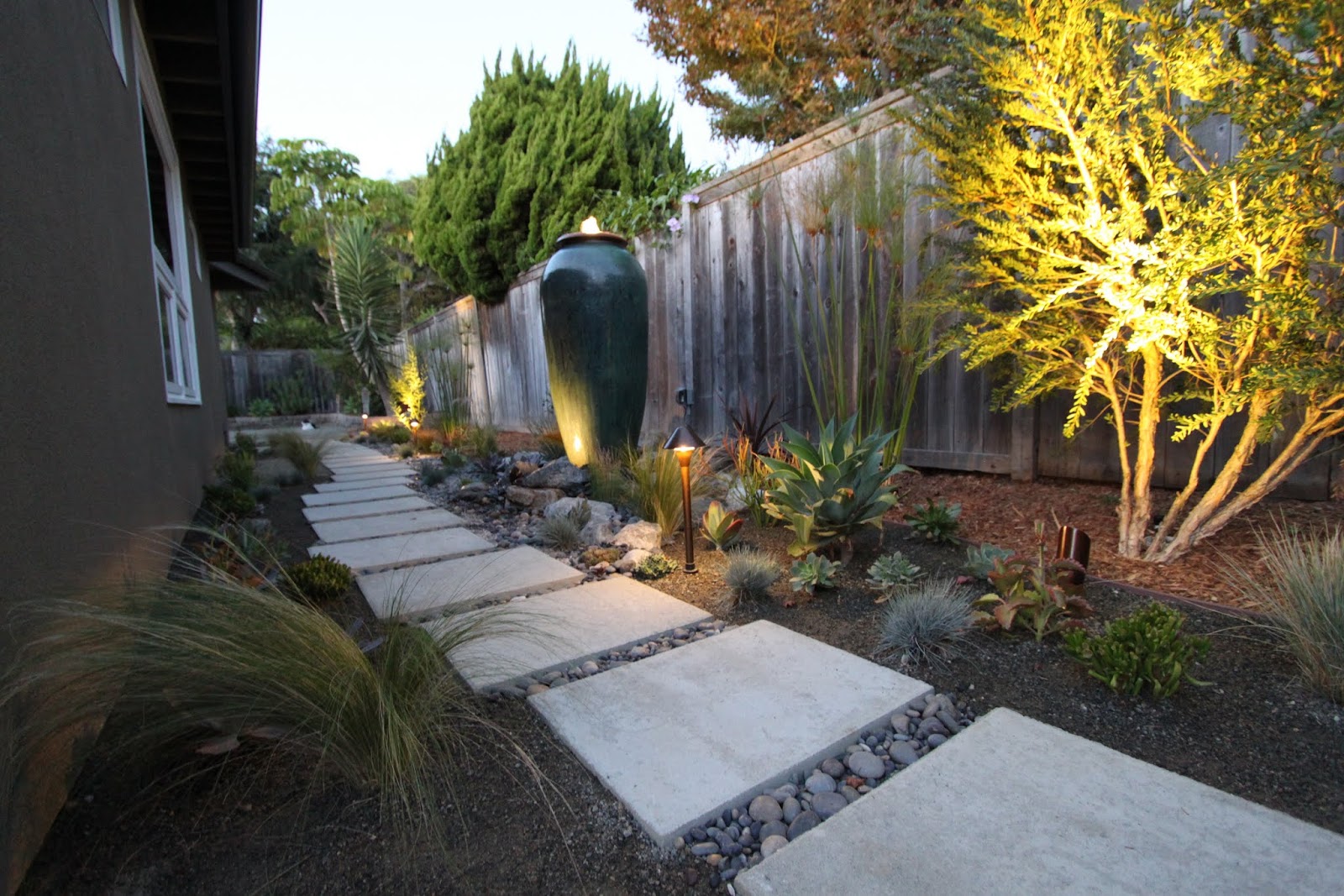
This landscape creates a powerful mood through the artful use of light. Rather than flooding the area with brightness, the lighting is strategic and layered. Low-level path lights create a clear, safe walkway while casting a gentle glow on the surrounding river rocks. A separate uplight focuses on the urn, highlighting it as a dramatic focal point and accentuating the texture of its dark green glaze. This selective illumination creates depth, mystery, and a serene, resort-like ambiance that a single, powerful floodlight could never achieve.
🔥 Trending Context
Open-top water features like this beautiful urn are a magnet for leaves, pollen, and mosquitos. To keep the water clear and the pump from clogging, you’ll need to skim the surface every few days. The pump’s filter will also require monthly cleaning. To prevent mosquitos, you must use “mosquito dunks” or a similar larvicide in the water, as the gentle bubbling isn’t always enough to deter them from laying eggs. It’s a stunning feature, but it’s an active part of your garden, not a static sculpture.
19. Classic Midcentury Home Foundation Planting
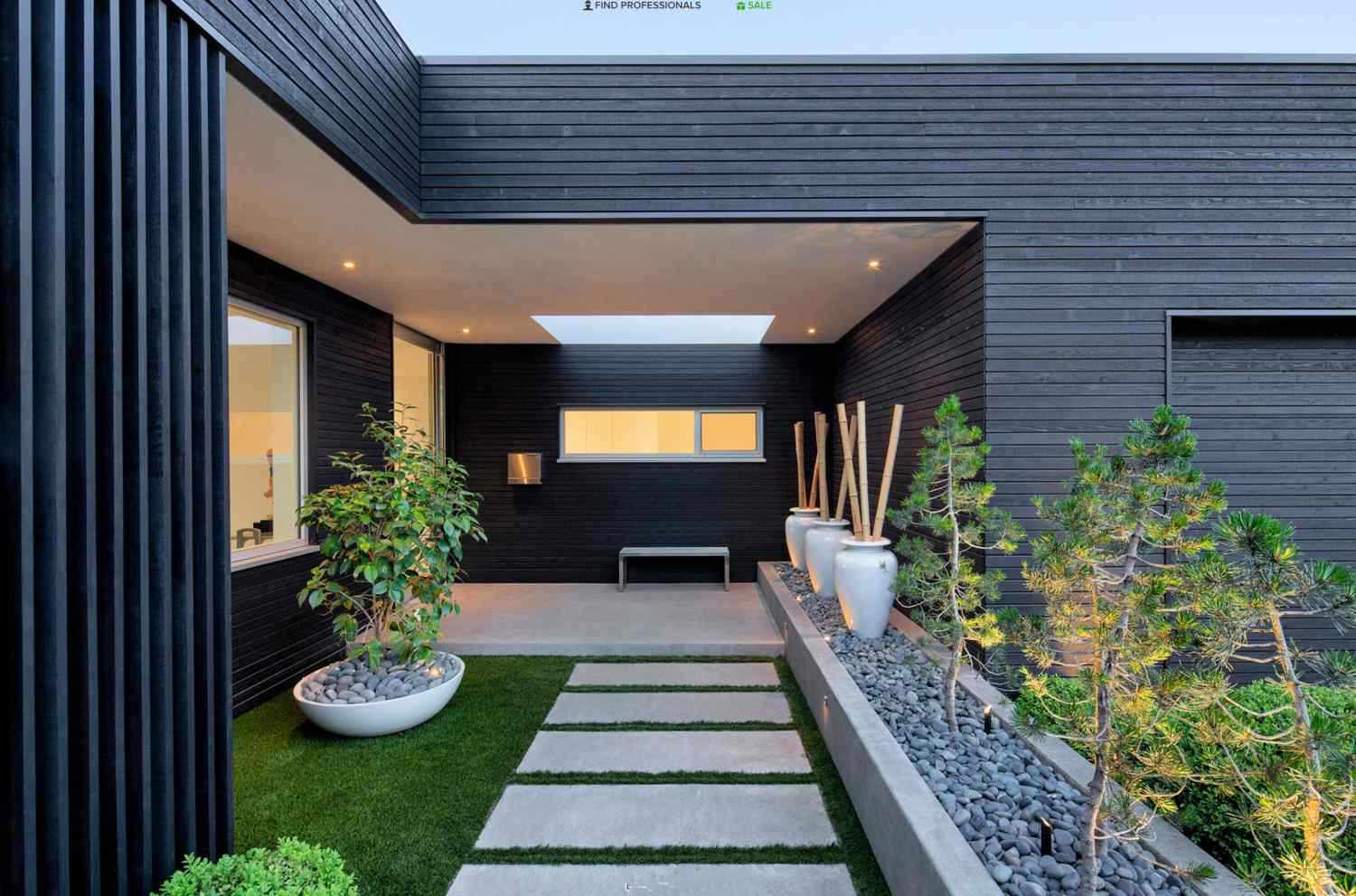
After years of minimalist xeriscaping dominating Pinterest, we’re seeing a return to more traditional, lush foundation plantings, but with a modern twist. The key difference in 2026 is a focus on textural variety and natural forms over rigid hedges. Homeowners are embracing the softness and maturity that a well-layered garden provides, moving away from sparse, rocky landscapes toward something that feels more established, green, and alive, which perfectly complements the warm, organic materials of classic midcentury architecture.
📐 Style Math
This look is all about layering and balance. The formula is approximately: 70% Evergreen Structure (providing a consistent green backdrop year-round) + 20% Textural Foliage (plants with different leaf shapes, sizes, and colors) + 10% Seasonal Color (perennials or annuals that provide pops of interest). This ratio ensures the garden looks good even in the depths of winter, with enough variety to keep it interesting as the seasons change. The structure is the canvas; the texture and color are the art.
20. Winding Stepping Stone Path Through a Mulched Bed
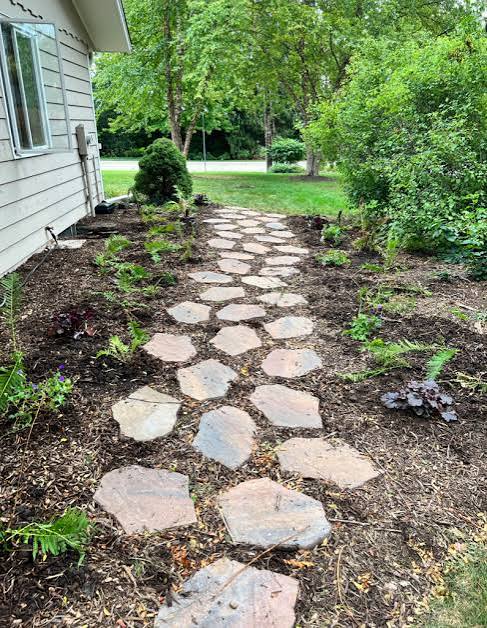
For a natural, organic pathway like this, the secret is to place the stepping stones where your feet would naturally fall. Before you permanently set them, walk the route several times and place the stones roughly in your stride. Then, adjust them for visual balance. The path should be comfortable to walk on, not a hopscotch course. A stride-based placement ensures the path is functional first, which in turn makes it look more authentic and intuitive. The slight irregularity is what gives it charm.
🎯 What Makes It Work
Flagstone can be expensive, often $5-$10 per square foot. To get this look for less, visit a local stone yard and ask for “broken flagstone” or “remnants,” which are sold by the pound at a steep discount. You’ll get irregular shapes just like these. For the plants, instead of buying multiple individual ferns and other perennials, look for a large, mature hosta or fern at the garden center and divide it into several smaller plants before planting. It’s a classic budget gardening hack that gives you more for your money.
21. Horizontal Slat Wood Fence for a Modern Lawn
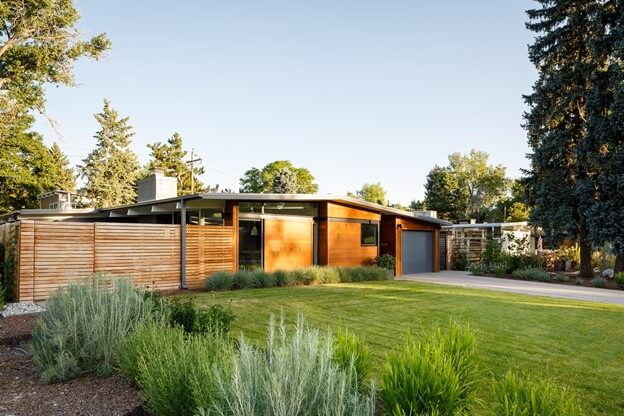
This design is a study in complementary lines. The strong horizontal lines of the low slat fence directly echo the horizontal lines of the home’s wood siding and the flat plane of the lawn. This repetition creates a powerful sense of cohesion and calm, visually widening the property. The fence acts as a “plinth” for the house to sit on, defining the private yard from the public street without creating a solid, unfriendly barrier. The soft, mounding shapes of the ornamental grasses provide a perfect textural contrast to all the straight lines.
🧹 Maintenance Reality
A natural wood fence is stunning, but it is not a zero-maintenance feature. To keep the wood from weathering to a dull gray and to prevent rot or insect damage, it will need to be cleaned and re-sealed or re-stained every 2-3 years. This involves a thorough cleaning, possibly light sanding, and application of a quality UV-protecting sealant. It’s a manageable weekend project, but one you must commit to if you want to preserve the warm, rich color that makes it so appealing in the first place.
22. Illuminated Multi-level Oasis with a Pool and Floating Steps
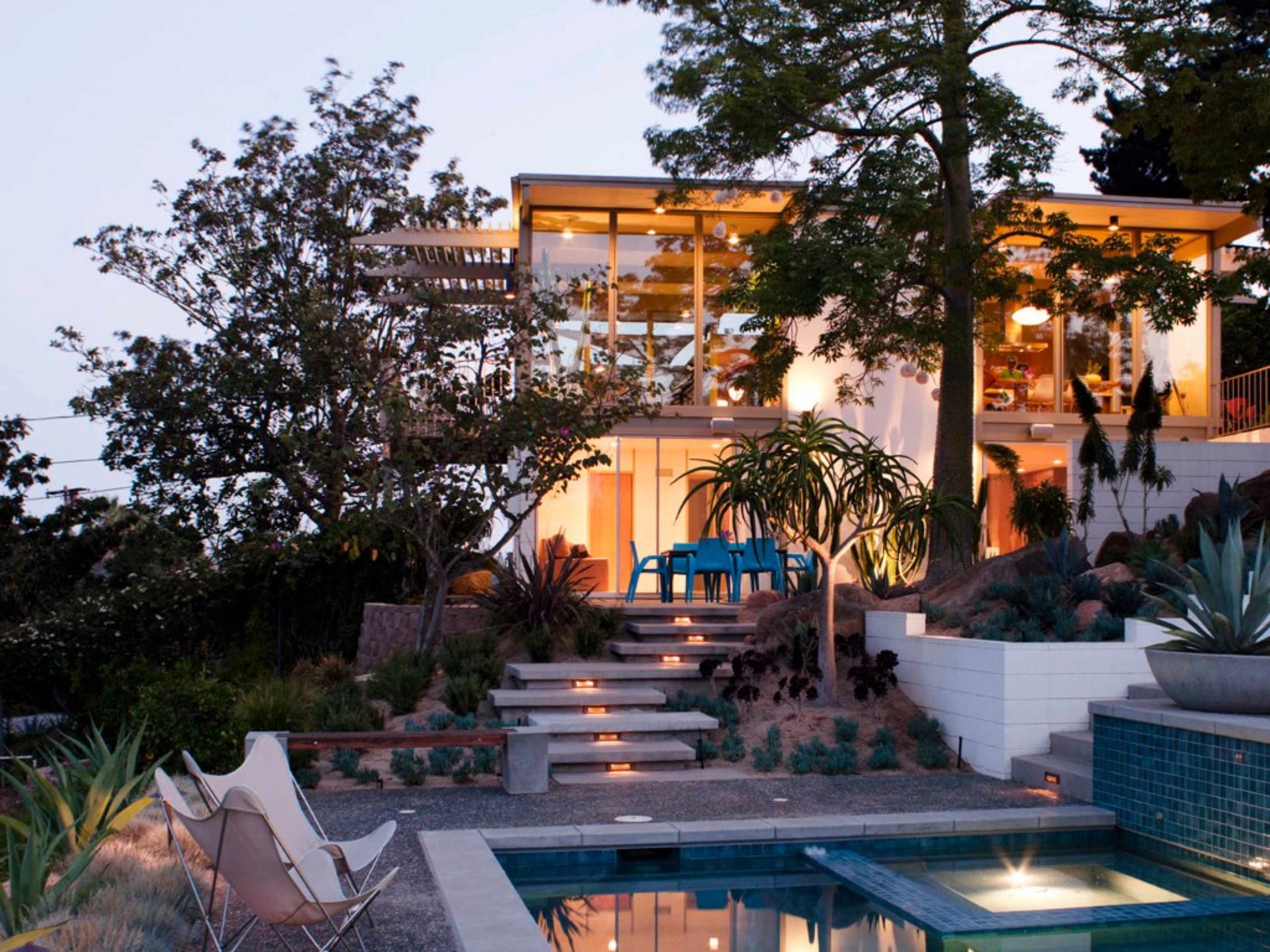
The single most transformative element in this luxurious design is the integrated lighting. Without it, you would have a beautiful multi-level patio and pool. With it, you have a magical, resort-like atmosphere. The lights embedded in the stair risers aren’t just for safety; they make the concrete steps appear to float. The uplighting on the plants turns them into dramatic nighttime sculptures. This thoughtful, layered lighting scheme is what extends the usability of the space into the evening and creates its sophisticated, awe-inspiring mood.
✅ Before You Start
Creating those “floating” steps is a job for a pro, but here is the basic principle so you know what’s involved.
- Form the Treads: A cantilevered design is created where the main concrete tread (the part you step on) is poured with significant steel rebar reinforcement.
- Create a Recess: The form for the riser (the vertical part) is set back several inches from the edge of the tread above it.
- Install Lighting: Low-voltage LED strip lighting is installed in the recessed space under the lip of the top tread before the final concrete pour or finishing.
- Conceal the Source: The setback hides the light source itself, so you only see the beautiful downward glow.
This detail requires careful planning with your concrete contractor and electrician.
23. Modern Patio with Segmented Paving and Structured Planting
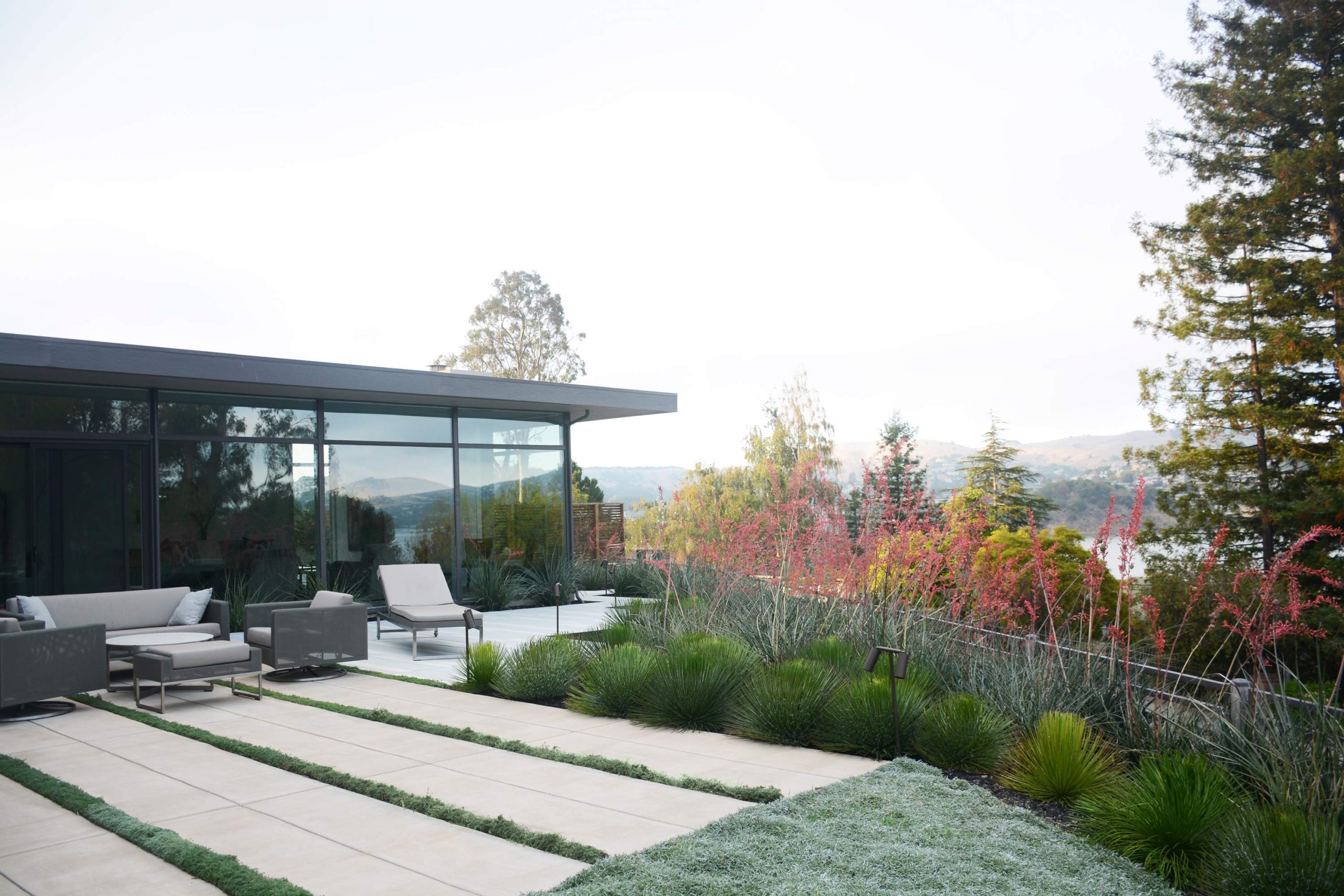
This design, where pavers are separated by strips of groundcover, is best suited for large, open patios. The grid pattern helps to break up a vast expanse of concrete, adding visual interest and permeability. To be effective, the patio should be at least 15×15 feet. On a smaller patio, this segmented style can look too busy and make the space feel smaller. It’s a technique for managing large scale, turning a potential weakness (too much pavement) into a graphic, modern strength. It’s less impactful in a compact area. For a smaller space, consider the simpler paver style in Idea #17.
💸 Get This Look For Less
The key to keeping this look sharp is choosing the right groundcover for the gaps. You need something extremely tough, low-growing, and tolerant of foot traffic. Corsican mint, Dymondia (Silver Carpet), or Dwarf Mondo Grass are excellent choices. Avoid anything that grows tall or spreads too aggressively, as it will quickly look messy and require constant trimming. The goal is a living mortar joint that stays put, not a plant that wants to take over the patio.
24. Modern Exterior with Stucco, Wood Slats, and Olive Shrubs
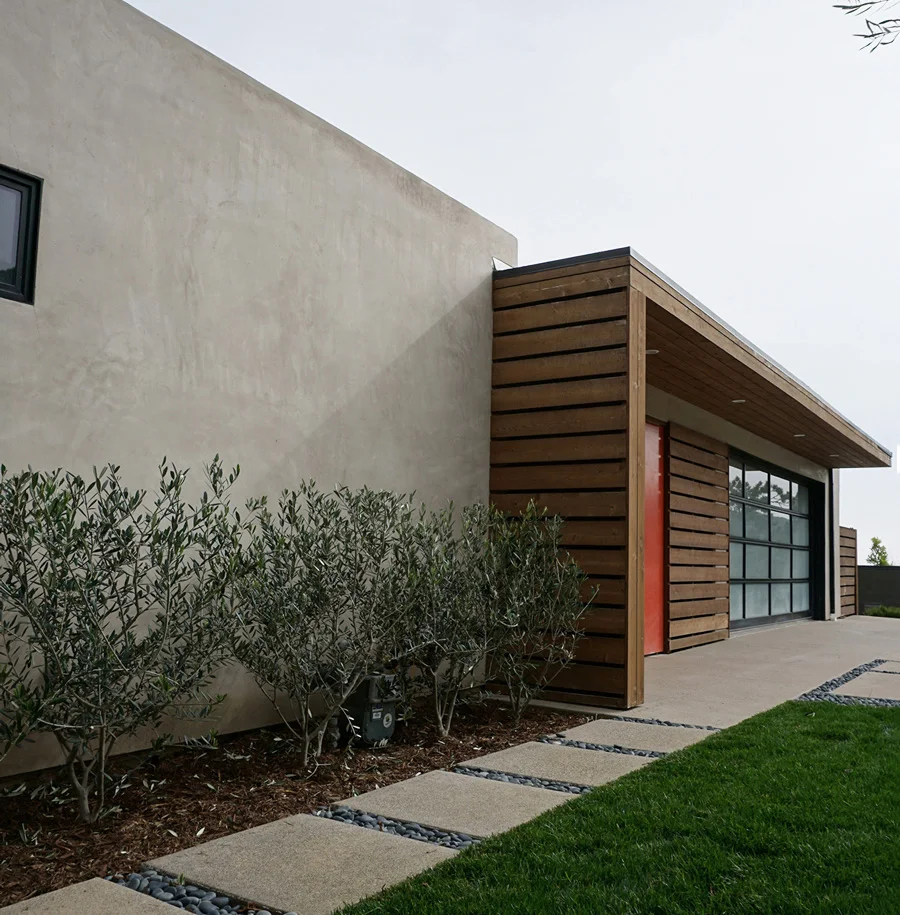
This exterior design feels so calm and cohesive because of its masterful use of texture and repetition. The smooth, light stucco provides a clean backdrop that makes the texture of the dark wood slats stand out. The linear nature of the slats is then subtly echoed in the lines of the concrete pathway. Even the choice of planting—a neat row of olive shrubs—reinforces this sense of order and rhythm. This thoughtful repetition of lines and balance of smooth vs. rough textures is what gives the design its serene, architectural quality. That pop of orange on the door is the perfect, playful disruption.
⭐ The One Thing
You don’t need real Ipe wood to get this look. You can achieve a very similar wood-slat accent wall using pressure-treated pine 1x4s stained with a dark, rich semi-transparent stain; this will cost about 70% less than exotic hardwood. For the walkway, instead of a fully poured concrete path, use large 24×24-inch concrete pavers from a home improvement store, set on a bed of sand and gravel. This turns a professional-grade concrete job into a manageable and affordable DIY project.
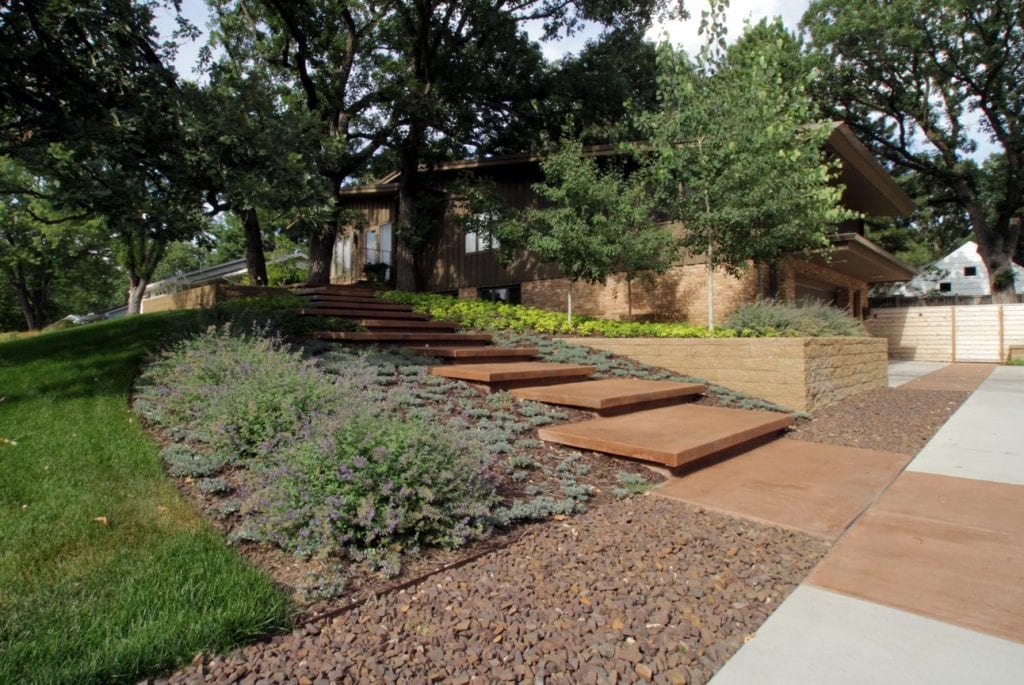
25. Floating Concrete Step Slabs on a Landscaped Hillside
This “floating slab” staircase looks incredible, but it comes with a major practical consideration: stability, especially in freeze-thaw climates. Each of those massive concrete slabs needs to be set on a deeply compacted gravel base to prevent it from shifting, tilting, or heaving over time. This is not a floating staircase you can simply place on top of the soil. Proper excavation and foundation for each individual step is non-negotiable and is where a significant portion of the installation cost lies. Skimping on the base preparation will lead to a wobbly, unsafe path within a few seasons.
⚠️ Real Talk
The defining feature of this design is the sheer scale of the individual steps. These aren’t just pavers; they are massive architectural slabs. Their generous width and depth force a slow, deliberate pace as you ascend the hill, turning the walk into a more contemplative experience. If these were replaced with smaller, standard-sized steps, the entire character of the design would change from bold and sculptural to merely functional. The oversized scale is everything; it’s what gives the pathway its dramatic presence and modern edge.
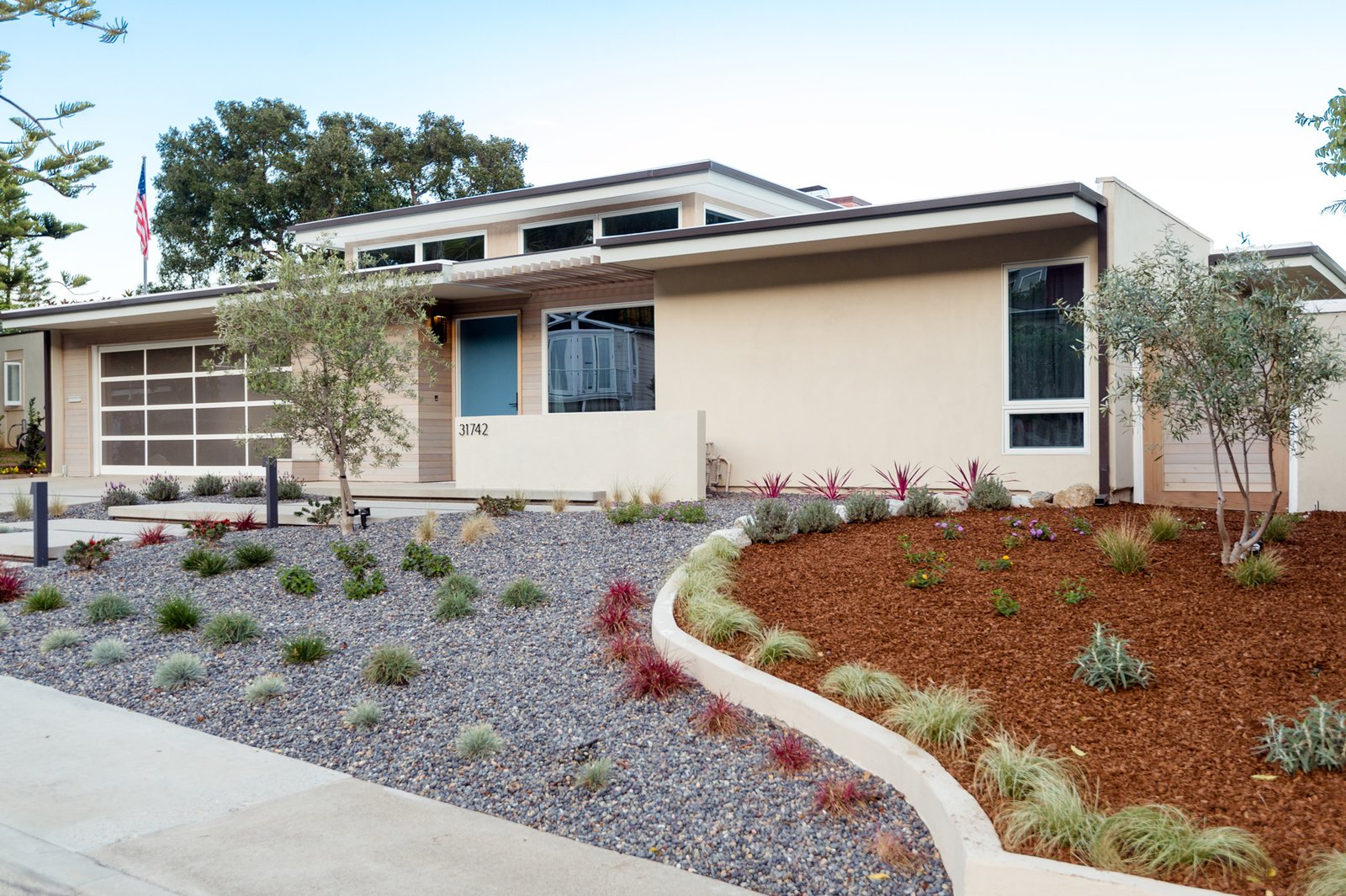
26. Modern Xeriscape with Gravel and Mulch Beds
This ultra-modern xeriscape achieves its graphic look through a clear formula: 50% Cool Toned Groundcover (the gray gravel) + 40% Warm Toned Groundcover (the reddish-brown mulch) + 10% Sparse, Sculptural Plantings. The curved concrete wall is the key—it creates a clean, decisive separation between the two different materials, turning them into large, graphic shapes. The plants are used sparingly, like living sculptures, chosen for their interesting forms and colors (silver-blue, deep burgundy) to stand out against the neutral backdrop.
🔧 How-To Brief
Before you commit to ripping out your lawn for a gravel and mulch xeriscape, consider these crucial points:
- Weed Barrier: You MUST install a high-quality, professional-grade landscape fabric underneath both the gravel and the mulch. Without it, you are signing up for a never-ending battle with weeds.
- Sun Exposure: Gravel and rock mulch can get extremely hot in direct sun, which can stress certain plants. Choose heat-loving, drought-tolerant species that are well-suited to these conditions.
- Local Sourcing: The cost of gravel and mulch is heavily influenced by delivery fees. Check with local landscape suppliers for the best pricing on bulk materials.
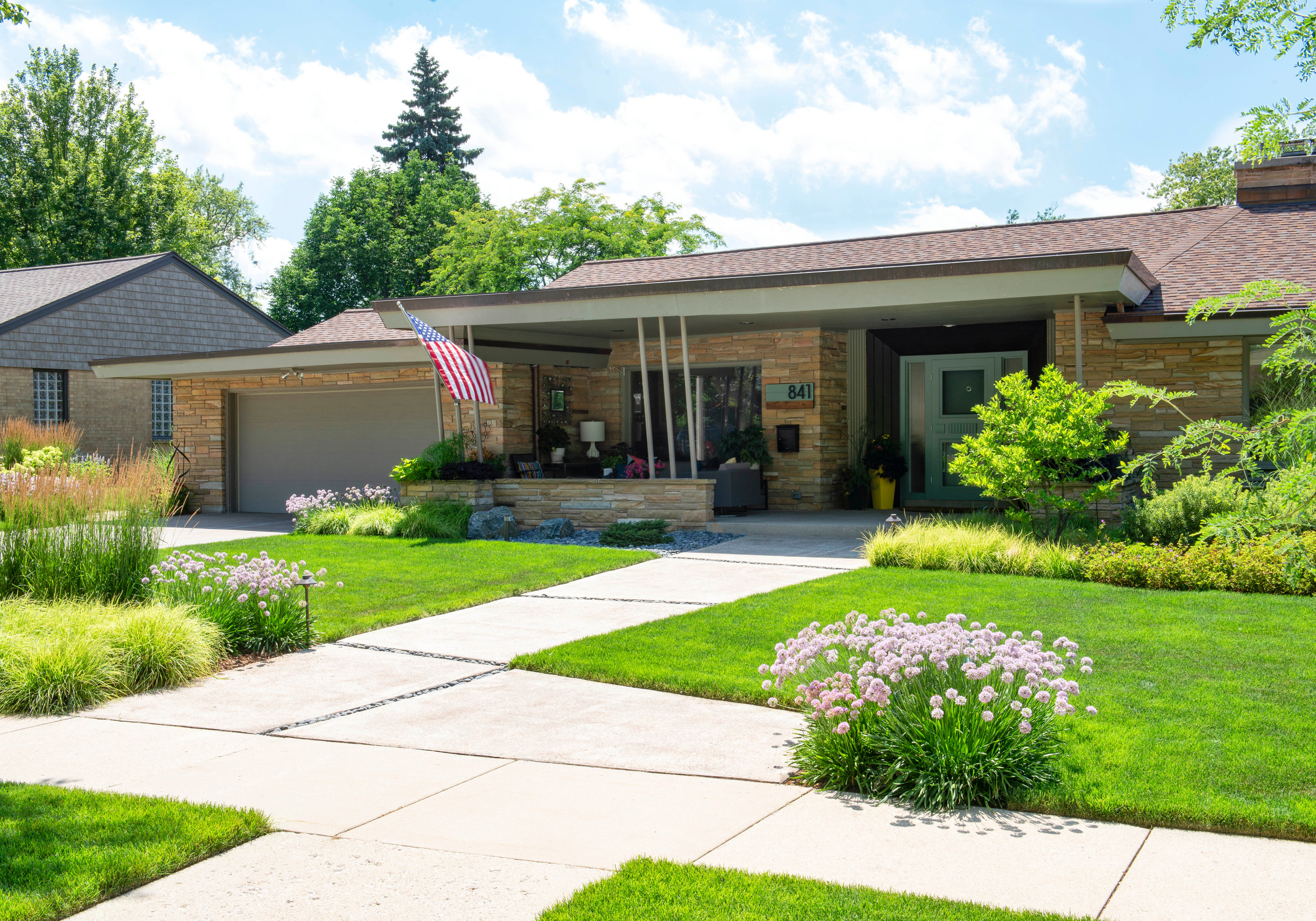
27. Midcentury Stone and Wood House with a Geometric Path
This entry is successful because it balances the rustic, heavy texture of the stacked stone facade with the clean, light geometry of the pathway. The square and rectangular stepping stones create a crisp, modern grid across the green lawn, preventing the natural stone and shingle roof from feeling too dated or “country.” The path acts as a modernizing element, signaling a clear midcentury design intent. The bright green door is the finishing touch, adding a playful, contemporary note that ties it all together.
💰 Budget Breakdown
Getting that geometric path look is easy and affordable. Instead of buying expensive pre-cast pavers, you can make them yourself for the cost of a few bags of QUIKRETE. Build simple square and rectangular frames from scrap 2×4 lumber. Lay them out on the lawn, remove the sod from inside the frames, fill them with the mixed concrete, and smooth the top. Once they cure, you have custom, in-place pavers for a fraction of the cost. It’s a classic, budget-friendly technique used in original midcentury homes.
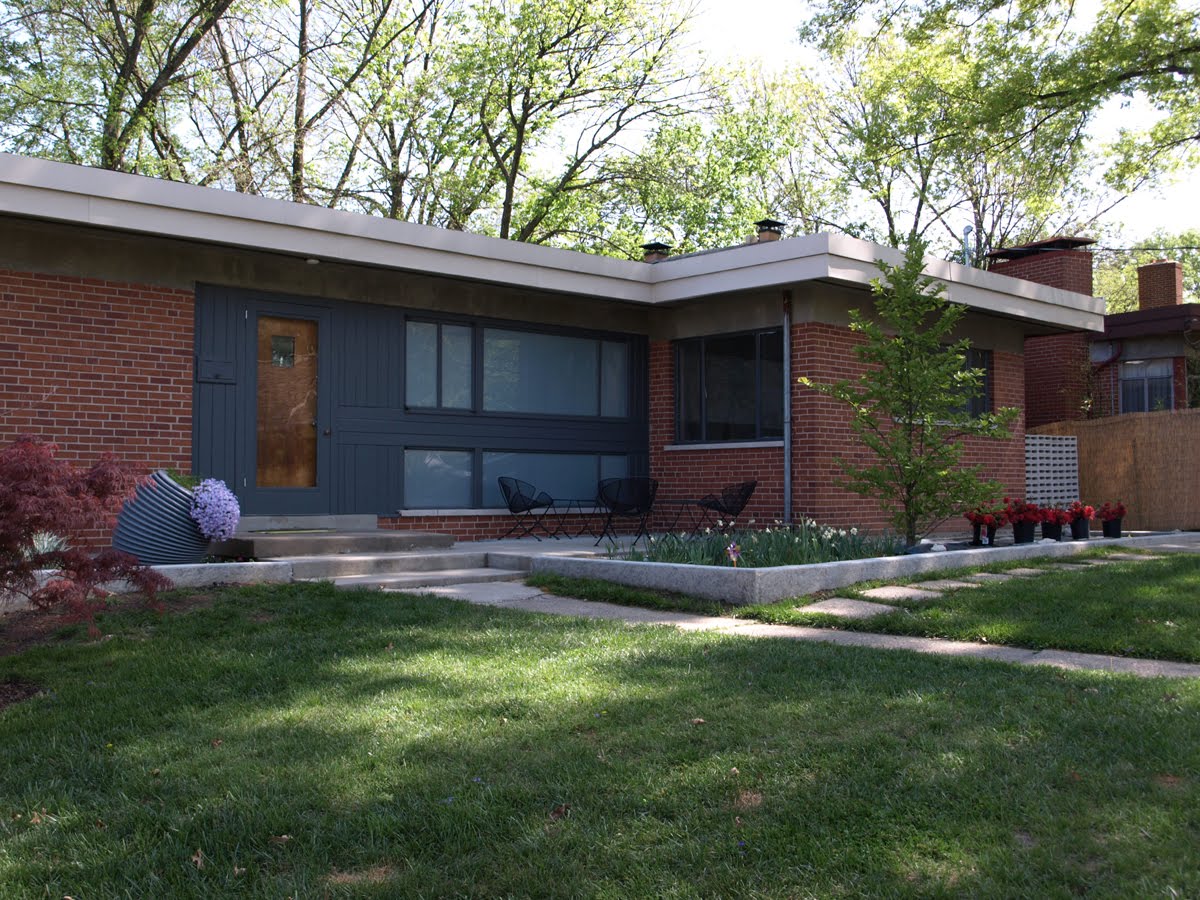
28. Brick Facade with Linear Landscaping and Raised Beds
The raised concrete garden bed is doing a lot of work here. By creating a clean, horizontal line across the front of the brick facade, it simplifies the visual information and emphasizes the linear nature of the ranch-style home. For maximum effect, the top of your raised bed should align with a strong horizontal line on the house itself—in this case, it’s roughly parallel to the bottom of the window sills. This alignment creates a deliberate, thoughtful connection between the landscaping and the architecture, making the whole design feel cohesive.
💡 Designer Tip
This linear, layered approach is exceptionally well-suited for single-story ranch or split-level homes on standard suburban lots (6,000-10,000 sq ft). The strong horizontal lines of the raised beds and pathways complement the low-slung profile of these houses. On a tall, two-story colonial, this design would feel out of proportion, as the horizontal emphasis of the landscape would fight with the verticality of the house. It’s all about matching the landscape’s dominant lines to the home’s architecture.
29. Layered Garden with Red Grass, Sedum, and Birch Trees
The success of this garden lies in its masterful combination of color and texture. The deep, moody burgundy of the ornamental grass offers a rich contrast to the pale pink of the sedum and the bright green leaves of the birch trees. Furthermore, the textures are distinct yet harmonious: the fine, wispy blades of grass; the dense, clustered heads of the sedum; the smooth, pale bark of the birch; and the solid mass of the gray boulder. This multi-layered sensory experience is what makes the composition so lush and interesting.
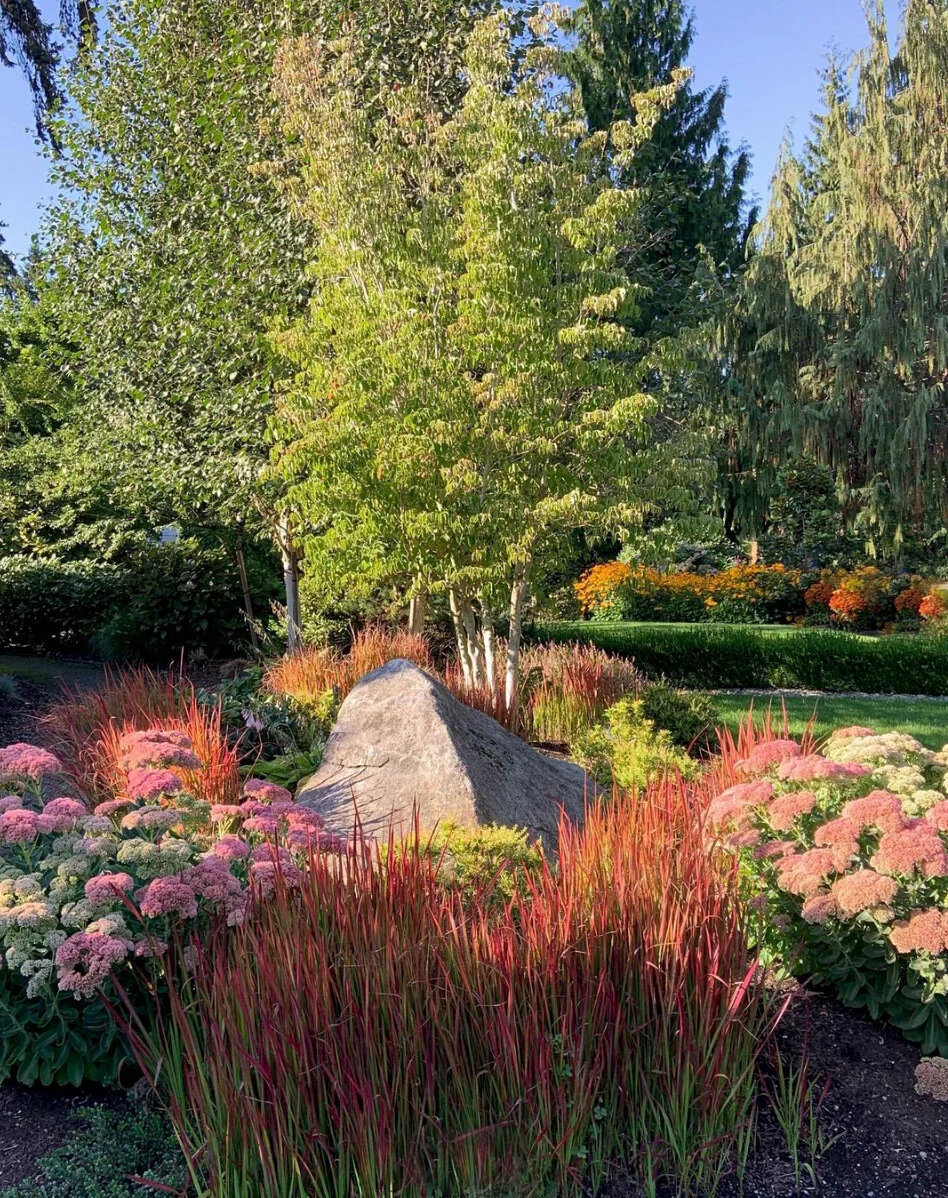
📏 Scale Guide
The single element holding this entire vignette together is the large gray boulder. It serves as a crucial visual anchor, providing a sense of weight and permanence that the ephemeral plants alone cannot. The plants sway and change with the seasons, but the rock is constant. It gives the softer elements something to play against, its solid, cool gray form making the reds, pinks, and greens around it appear even more vibrant. Without the boulder, the planting would feel like a pretty but untethered collection of plants.
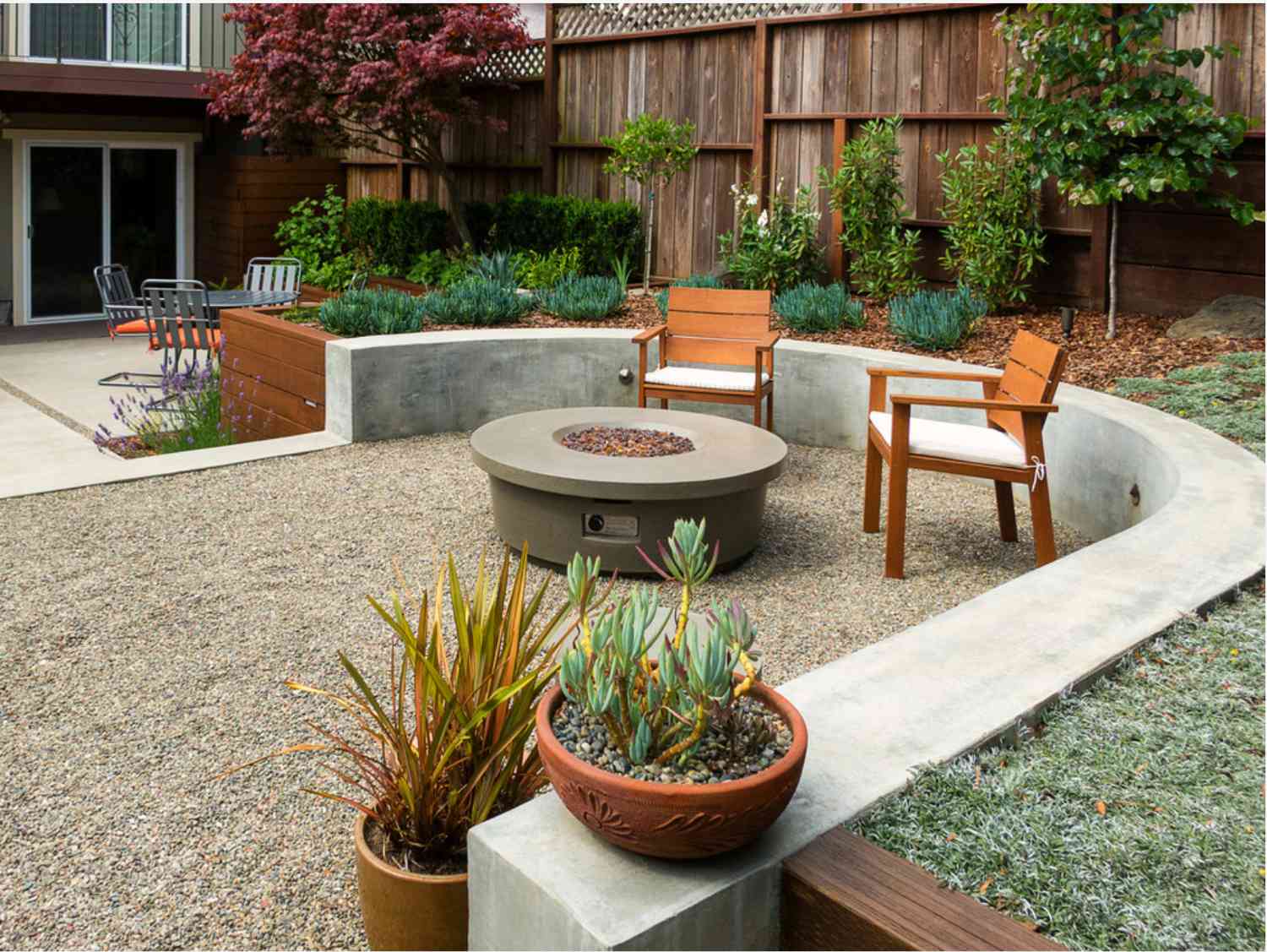
30. Concrete and Gravel Patio with a Fire Pit and Wood Seating
A cozy fire pit area is a fantastic addition, and can be done across a wide range of budgets. The key costs are the fire pit itself, the ground cover, and the seating. This example uses durable, stylish materials.
- Concrete Fire Pit (pre-cast or custom): $800 – $2,500
- Gravel Ground Cover (including base prep): $400 – $1,000
- Wooden Armchairs: $600 – $2,000 for a pair
- Concrete Retaining Wall / Bench: $1,500 – $4,000
- Plants & Fencing: $500 – $1,500
- TOTAL: $3,800 – $11,000
Budget alternative: Use a simple metal fire bowl ($150), pea gravel from a big box store ($200), and a pair of composite Adirondack chairs ($300) to create a similar gathering spot for under $1,000.
🔥 Trending Context
Before you build your dream fire pit zone, make sure you’ve covered the basics. It’s more than just aesthetics. Check these items off your list:
- Local Regulations: Check your city or county ordinances for rules on open flames, required distances from structures or fences, and whether you need a permit.
- Surface Safety: Ensure the fire pit is placed on a non-combustible surface like gravel, concrete, or stone—never directly on a wooden deck or dry grass.
- Wind Direction: Observe the prevailing wind patterns in your yard. Position your seating area upwind of the fire pit to avoid having smoke blow into your guests’ faces.
- Overhead Clearance: Make sure there are no low-hanging tree branches or flammable structures directly above the fire pit.
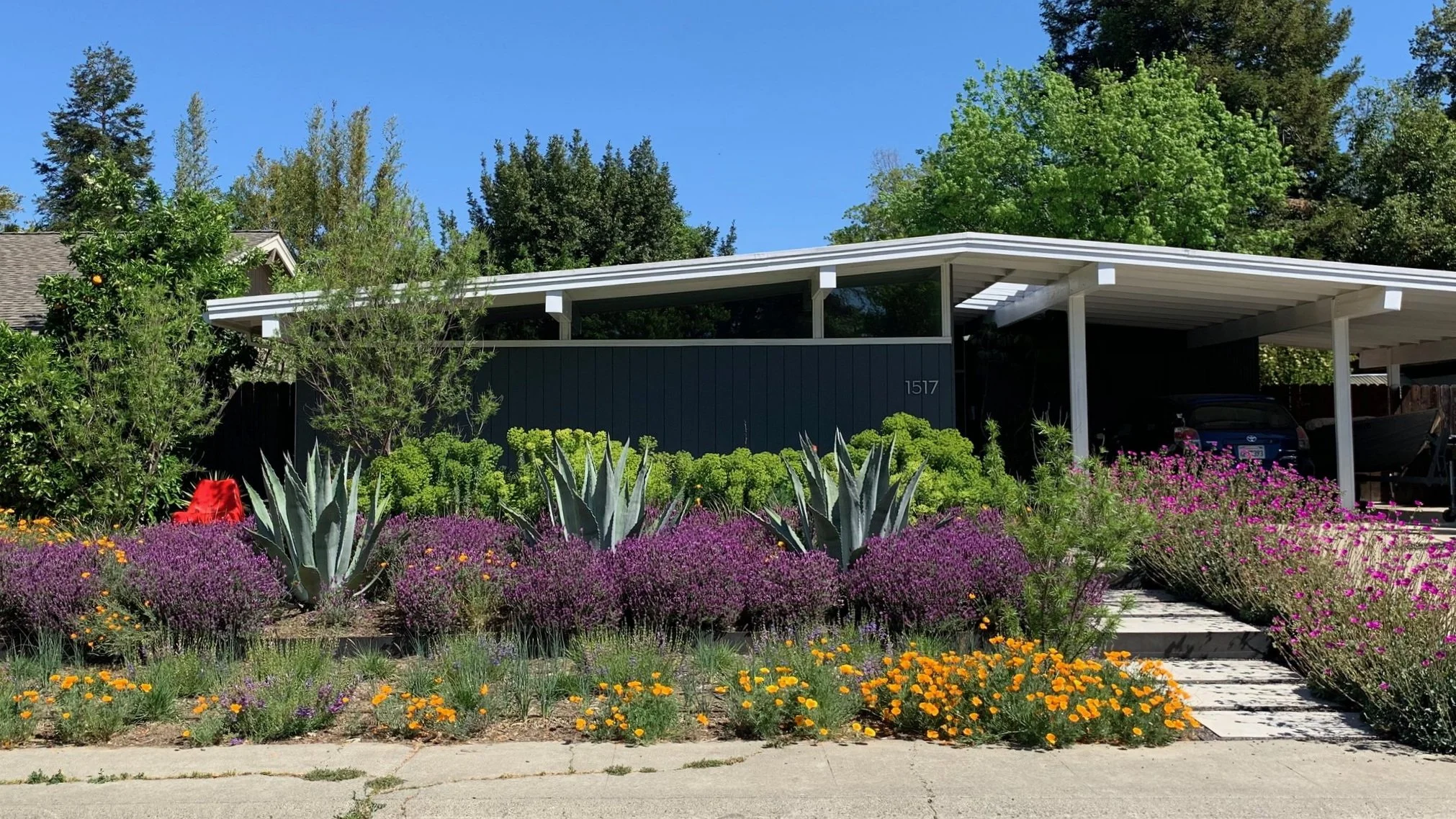
31. Vibrant Agave and Flowering Groundcover Facade
The dramatic curb appeal here is a simple but bold equation: 40% dark, moody architecture (the navy blue wall), 30% structural, sculptural greenery (the large agave plants), and 30% vibrant, low-level color (the dense purple and orange flowering groundcover). The dark blue wall is a fantastic choice, making the greens of the agaves and the purples of the flowers appear even more saturated and vivid. The flat white roofline acts like a clean frame, containing the explosion of color and texture below.
📐 Style Math
Those large, beautiful agave plants are stunning centerpieces, but they require respectful handling. Their leaves are often tipped with very sharp spines, and their sap can be a skin irritant for some people. This planting scheme is not ideal for a front yard where small children might be playing. When you do need to prune dead leaves, wear thick gloves and eye protection. Also, be aware that many agave species die after they flower, and removing a large, dead agave can be a significant and spiky undertaking. For a similar look with less bite, consider Idea #2.
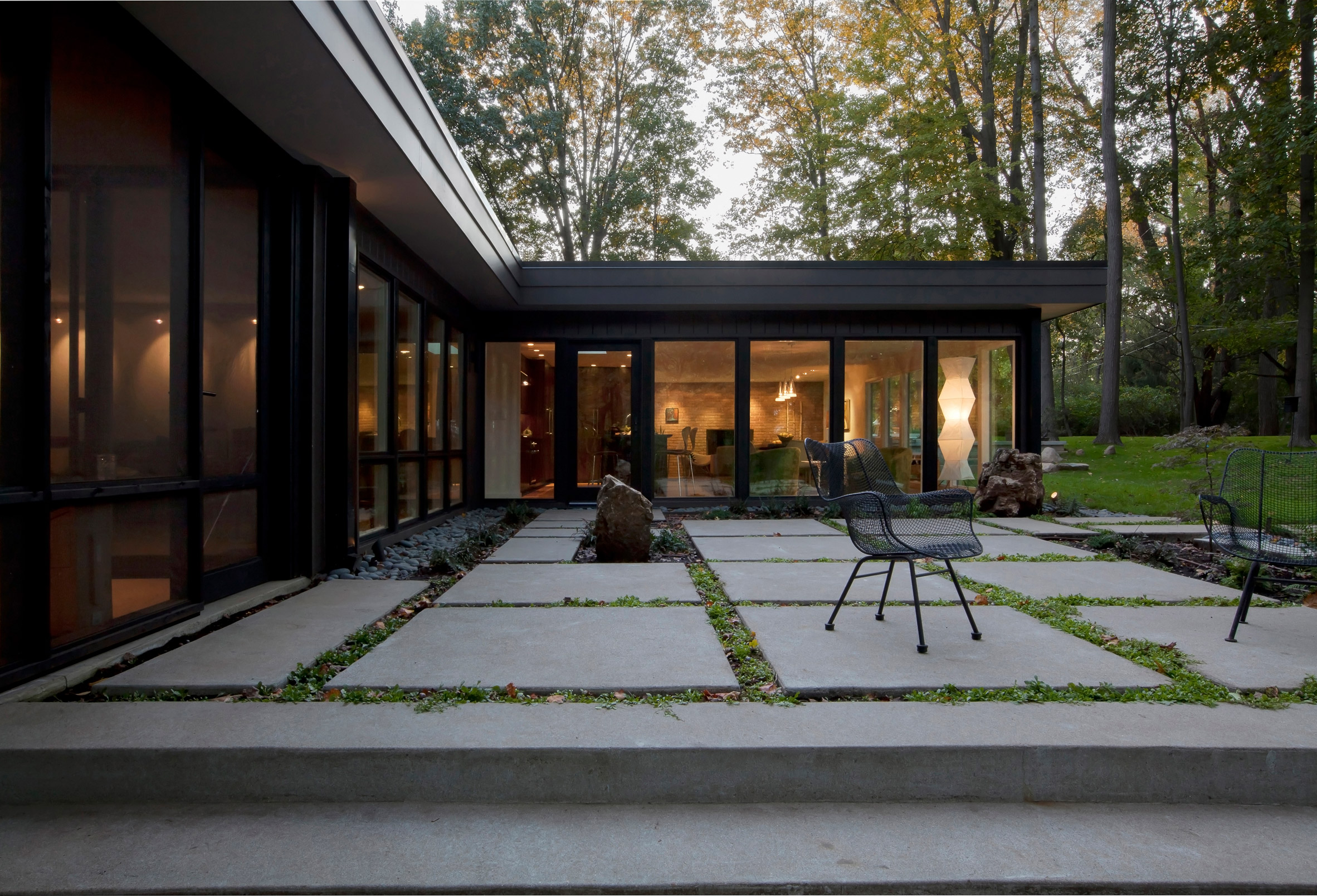
32. Modernist Patio with Concrete Pavers and Natural Accents
This design brilliantly succeeds by blurring the boundaries between inside and out. The floor-to-ceiling windows create a seamless visual connection, making the patio feel like a true extension of the interior living space. The choice of large, square concrete pavers on the outside mimics the scale and feel of interior flooring, reinforcing this connection. Finally, the placement of natural elements, like the large rocks, directly within the man-made paver grid creates a beautiful tension, as if nature is artfully reclaiming the structured space. A similar segmented paving look is used in Idea #23 but with a different feel.
🎯 What Makes It Work
Those dark metal mesh chairs look incredibly chic and minimalist, but think about comfort before you buy. Metal, especially dark-colored metal, can get screamingly hot in direct summer sun, making the chairs unusable for several hours a day. The mesh design also might not be comfortable for long periods without cushions. If you love the look, be prepared to invest in high-quality outdoor cushions (and a place to store them) or position the chairs in a consistently shady spot.
Your Midcentury Oasis Awaits
Remember, the magic of midcentury landscaping is in the harmony between deliberate structure and wild nature. You don’t have to tackle everything at once; pick one or two elements you truly love from these ideas and start from there. The goal is to create a space that feels like you. Now, go save your favorites to your Pinterest board to keep the inspiration flowing for your project!