25 Jaw-Dropping Chocolate Brown Christmas Tree Ideas That Will Elevate Your Holiday Decor in 2026

You know that feeling when you’ve pinned forty Christmas trees and none of them look like the one in your head — because the one in your head is brown, and everything you scroll past is crimson and pine? Same. That’s exactly how half of us ended up down the chocolate brown Christmas tree 2026 rabbit hole this year.
We spent serious time browsing Etsy, Target, and Anthropologie to bring you only what’s worth your attention — 25 ideas running from a $6 glitter bauble to a $480 statement tree, leaning across traditional woodland, glam lodge, quiet neutral, and vintage library styles. Budget and luxury versions sit side by side, and each idea is shoppable with direct product links.
Chocolate brown is the story of the season because it finally gave December permission to feel warm instead of loud. Brown velvet, bronze glitter, and kraft paper are quietly replacing the all-red boards that dominated for a decade. And stay until the end — we break down the most common mistakes that can ruin these looks.
📌 Save this to Pinterest for later — you’ll want to revisit these ideas.
1. A Single Textured Chocolate Ornament Against Dark Green Branches
There’s a reason this one ornament reads as the loudest thing in the frame even though it’s the darkest: contrast does the work. A single distressed brown sphere against dark green needles, ringed by tiny off-white floral pieces, gives your eye one place to land and then a soft place to rest. Strip out the cream and the tree goes muddy. Strip out the brown and it looks like every other tree on the block.
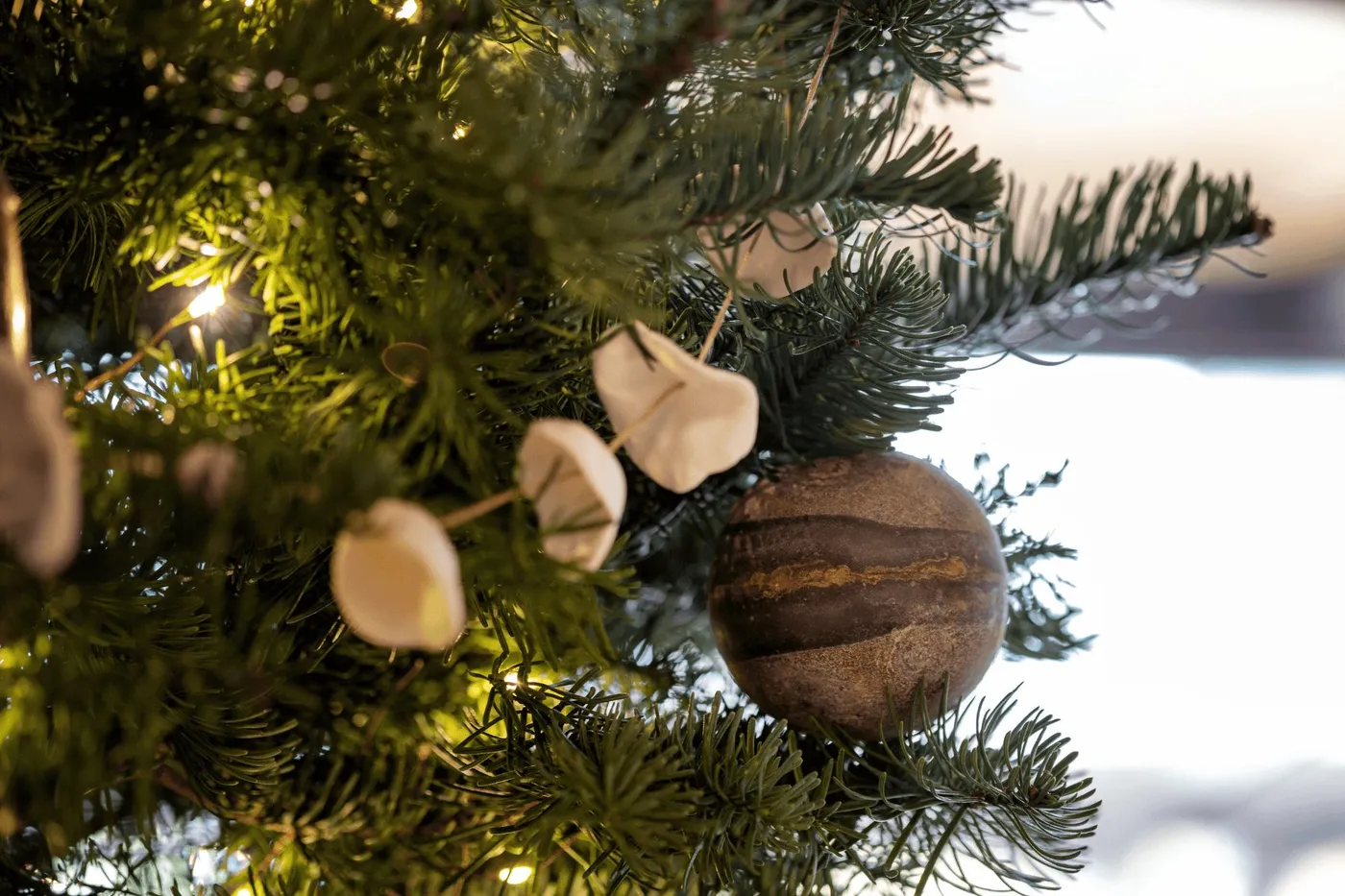
Scale is doing quiet work too. That brown sphere runs roughly three times the size of the little cream pieces around it, and that one-big-several-small ratio is what keeps a close-up like this from feeling cluttered.
Here’s the trick that separates a designer tree from a decorated one: hang your largest ornaments so their centers sit just behind the outer tips of the branches, not on top of them. On a 7-foot tree that means 1 to 2 inches of needle depth in front of the ornament. It creates shadow, and shadow is what makes warm white fairy lights look expensive instead of just bright.
2. Chocolate Brown Ornaments in a Kraft Box on a Checkered Cloth
That kraft box of brown ornaments isn’t storage — it’s staging, and it’s the easiest fifteen-minute holiday vignette you’ll ever build.
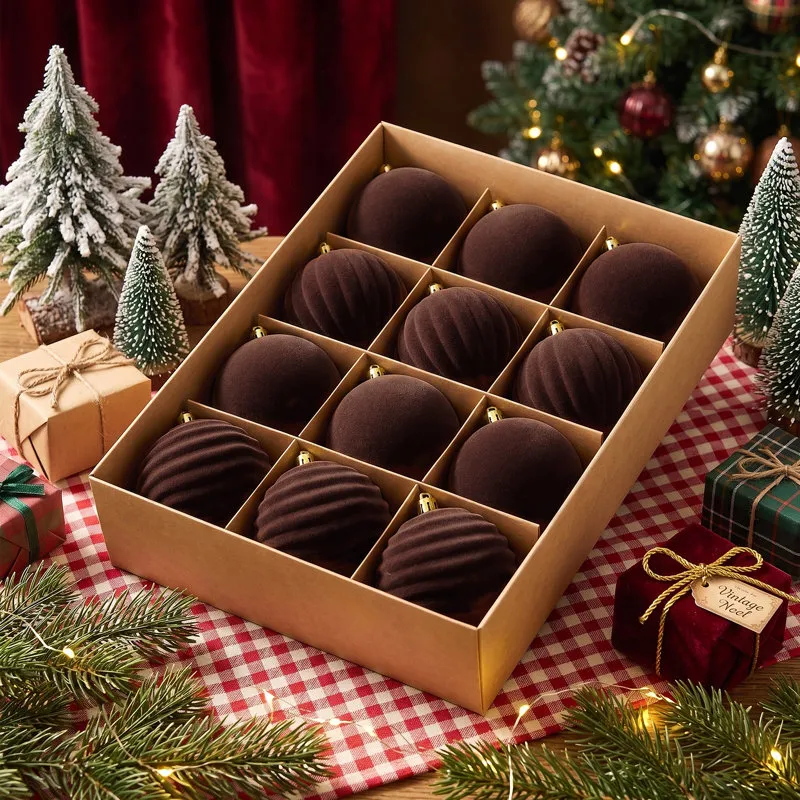
- Lay a red-and-white checkered cloth over a wood surface and let the corners fall unevenly.
- Set the open kraft box slightly off-center and fill it with brown ornaments, mixing smooth with textured.
- Tuck two miniature frosted pines behind the box for height.
- Run pine sprigs and a length of warm fairy lights along the front edge.
- Finish with two wrapped gifts — one tall, one flat — angled toward each other.
Time: about 15 minutes. Cost: free if you already own ornaments, roughly $35 if you’re starting fresh with a cloth, mini pines, and kraft paper.
on this one: checkered cloth and warm wood are unforgiving under cool overhead light. If your dining room has a fixture running daylight bulbs, those browns will read grey and the red will look orange. Swap to 2700K warm bulbs or add a small lamp nearby before you photograph anything.
3. Flocked Tree with Bronze Ornaments and a Brown Teddy Bear
The tree is lovely. The flocking, the gold and bronze metallic spheres, the warm white lights — all lovely. But the brown teddy bear perched on the stack of cream and gold wrapped gifts is the reason you’d remember this room a year later.
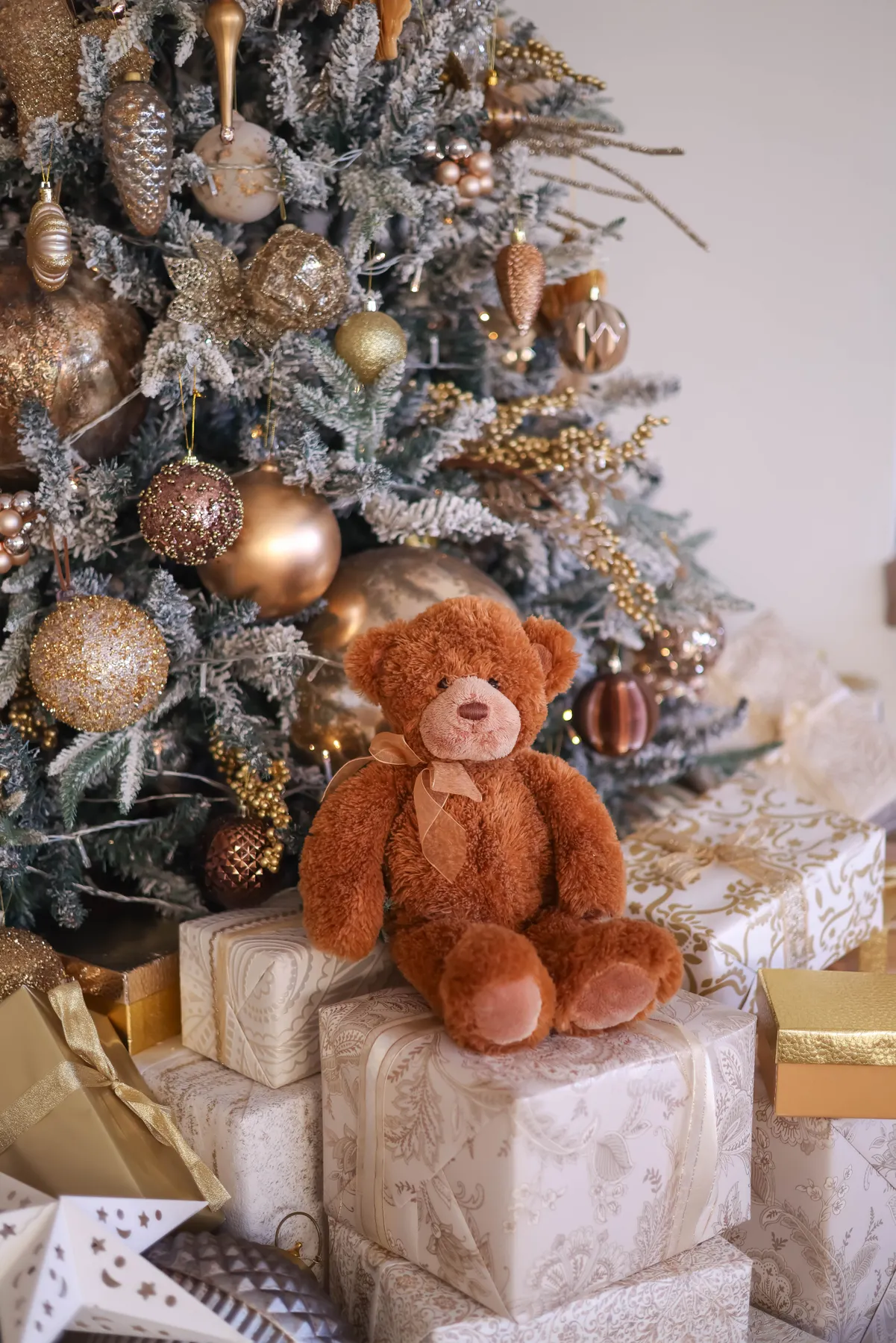
Remove the ornaments and you still have a beautiful tree. Remove the bear and you have a catalog display. It works because it’s the only soft, non-reflective thing in a scene made entirely of shine, and because a toy resting at the base of a tree reads as a memory rather than a purchase.
Flocked trees stopped being a novelty around 2023 and became the default for anyone chasing a soft, neutral December. What’s new going into 2026 is the pairing: flocking plus warm metallics plus one brown, distinctly un-glittery object. It’s the same instinct behind the whole quiet-luxury shift — people want their holiday to feel calm, not loud, which is exactly why Idea #12 goes darker instead of brighter.
4. Dense Red and Gold Traditional Tree with Berry Garlands
- Main tree, 7.5 ft traditional: $180–$450
- Lighting, 600 warm white LEDs: $30–$70
- Red and gold baubles plus figurines: $90–$260
- Red berry garlands, gold glitter sprigs: $45–$120
- Tree skirt and storage bins: $25–$60
- Total: $370–$960
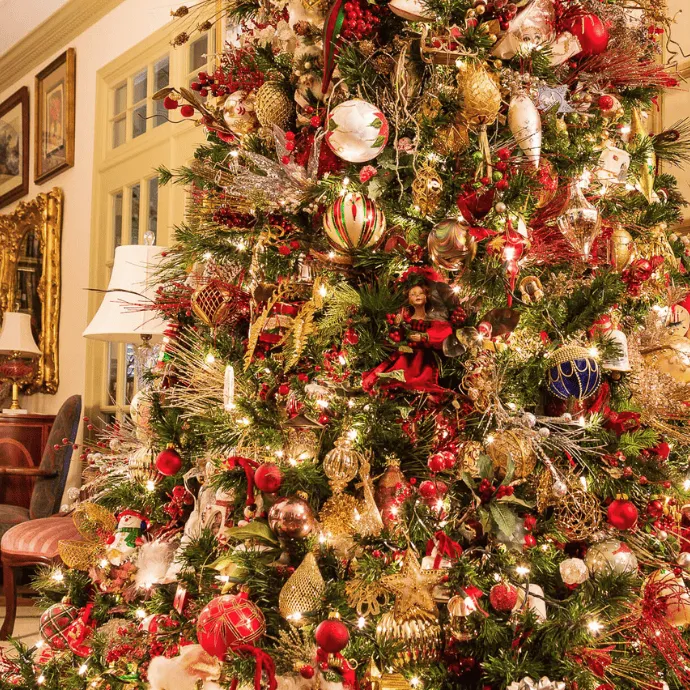
Budget alternative: skip the figurines entirely, keep the baubles and berry garland, and buy ornament sets in bulk after December 26. A 6-foot tree styled this densely usually lands between $160 and $240 when you shop post-season.
The formula here is roughly 55% green foliage and shadow, 30% red, 10% gold, 5% cream. Change the 30% to copper and the 10% to black and you get identical density with a moodier read. Swap the red for burgundy velvet ribbon and it slides into old-world territory without touching a single ornament hook.
5. Matte, Glossy, and Textured Brown Baubles with Pinecones
Three finishes, one color. That’s the entire trick of this tree, and it’s the easiest upgrade you can make to any brown scheme. Matte absorbs light and reads soft. Glossy throws tiny highlights. Textured or glittered surfaces catch the string lights and scatter them. Together they make one color behave like four.
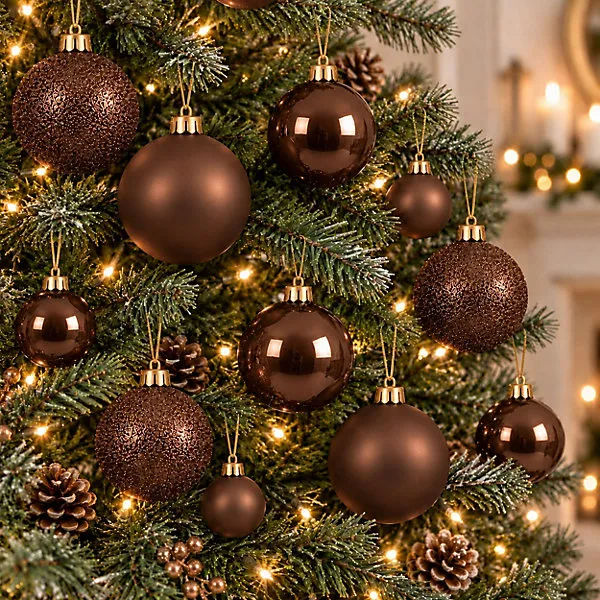
Buy brown ornaments in a 4:2:1 ratio — four matte, two glossy, one textured — for every seven you hang. Matte carries the volume, gloss gives you sparkle at eye level, and texture does its work near the lights. Pinecones slot into that last category for free if you’ve got a yard, or for about $6 a bag at a craft store.
The pinecones are what keep this from looking like a paint swatch. Brown ornament after brown ornament, no matter how many finishes, eventually reads as a single material. A natural pinecone has irregular edges, a matte surface, and a darker tip — exactly the kind of imperfection your eye needs to believe the tree is real.
6. Chocolate Bronze Ornaments in a Grand Gold-Columned Lobby
This is a commercial-lobby tree, and it’s worth knowing why it sings there but would eat a normal living room alive. That tree runs roughly 12 to 14 feet, which means a ceiling of at least 16 feet and about 100 square feet of floor to breathe. Under 12-foot ceilings, drop to an 8-foot tree and reduce the ornament count instead of shrinking the ornaments. Small ornaments on a big tree disappear; big ornaments on a small tree overwhelm.
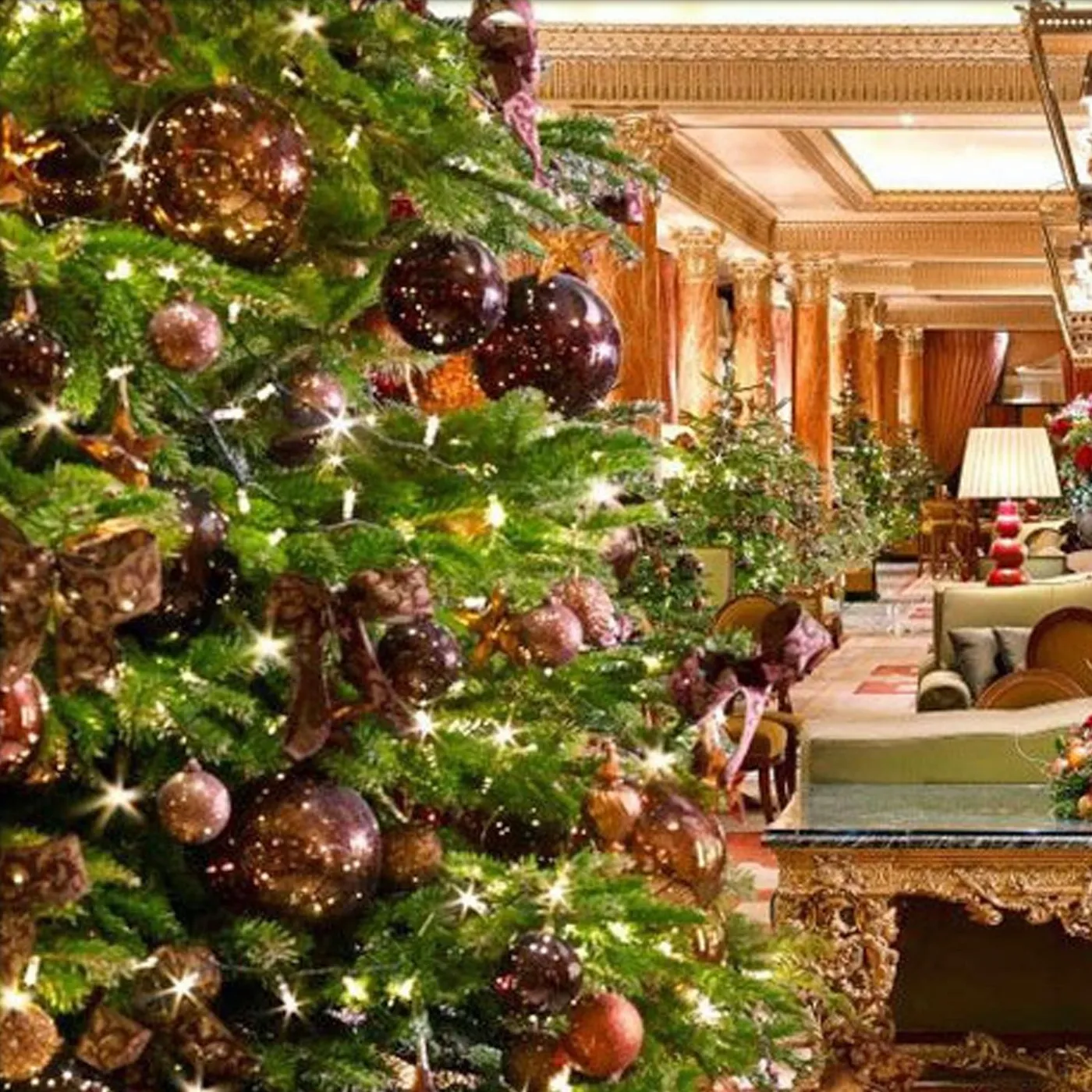
Two principles are doing the heavy lifting. First, repetition — the same chocolate and bronze palette repeats across the main tree and every smaller illuminated tree in the room, which is what makes a large space feel intentional rather than decorated. Second, echo: the gold columns, the coffered ceiling, and the carved console all share a warm metallic tone, so those brown baubles never look like they were dropped into an unrelated room.
7. Velvet Chocolate Ornaments on a Snow-Dusted Flocked Tree
Flocked trees shed. Not dramatically, but every time you brush a branch a small puff of fake snow lands on the floor, and by early January you’ll be vacuuming twice as often as usual. Velvet ornaments have their own quirk: the nap holds dust and pet hair, so plan on a lint roller pass before you pack them away, and store them in a fabric bag rather than a hard bin so the pile doesn’t crush flat.
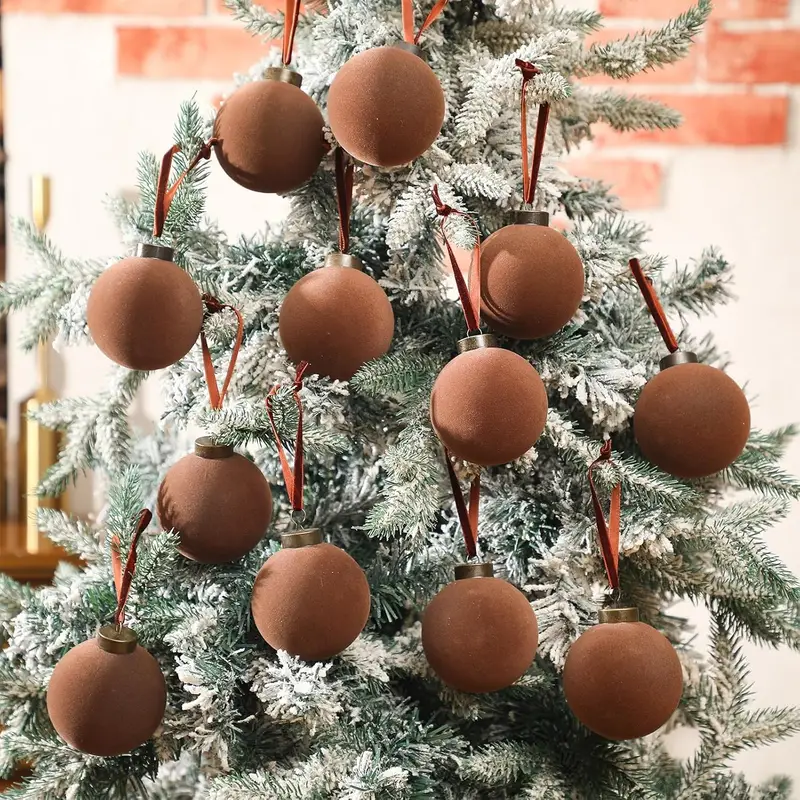
You can fake this look for under $60. Buy a plain unlit 6-foot tree and a can of spray snow ($8–$12) — that gets you about 70% of the flocked effect on the outer branch tips. Then hunt thrift stores and Facebook Marketplace for velvet-finish brown ornaments; January estate sales are goldmines. Swap the ribbon hangers for a $3 spool of brown satin from Walmart. Compare with Idea #16, where velvet takes a red-and-green turn instead.
8. A Woodland Scene at the Base of a Grand Foyer Tree
A woodland base is a 20-minute project that turns a tree into a scene.
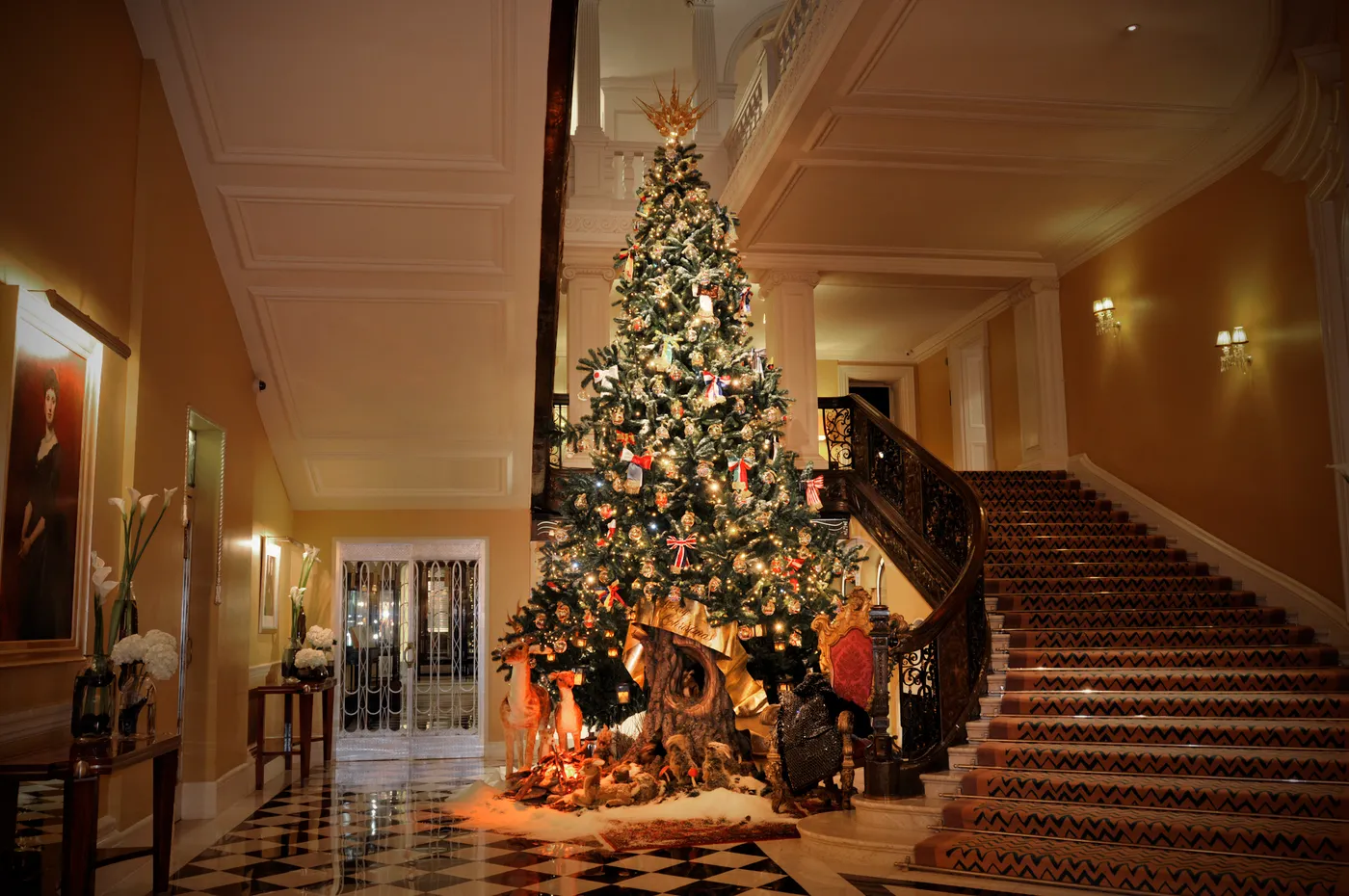
- Start with a white tree collar or a round faux-snow blanket ($20–$40).
- Add three or four animal figures in mixed scale — a deer, a fox, a pair of rabbits.
- Place the smallest figure closest to the front so the grouping reads in perspective.
- Tuck in birch logs or dried branches for height behind the animals.
- Sprinkle loose faux snow over everything last, so it falls naturally instead of getting wiped away.
Foyer trees need height more than width. This one sits in a two-story space with roughly a 20-foot ceiling, so a 12-footer doesn’t block circulation at the bottom of the curved staircase. If your entry is a normal 8-foot-ceiling hallway with a 36-inch walkway, use a 6- to 7-foot tree and skip the woodland scene — you need that floor for shoes.
Match your topper to your tree height: roughly 1 inch of topper for every foot of tree. That’s a 7-inch star for a 7-foot tree, 12 inches for a 12-footer. A too-small topper is the most common finishing mistake on tall trees.
9. Glittering Gold Spheres Against Frosted Evergreen Bokeh
Almost everything in this frame is the same color — gold light, gold ornament, warm yellow bokeh — and that’s exactly why it feels so rich. Depth comes from focus, not color. The frosted needles in front are sharp, the ornaments mid-frame are softer, and the background dissolves completely. Shoot your own tree from 12 to 18 inches away with a wide aperture this December and you’ll get the same glow without a single new purchase.

Call it 70% dark evergreen, 20% warm gold, 10% white frost. That’s the recipe. Swap the gold for rose gold and it gets softer and more romantic; swap it for antique bronze and it goes full lodge. Keep the frosted needles either way — that white is what stops the whole thing from turning into one muddy mass. For the chocolate-forward version of this exact formula, look at Idea #25.
10. A Cathedral-Scale Tree Wrapped in Stone Arches and Garland
Wrapping garland around architecture instead of only the tree is a 2026 tell. It’s part of a broader shift toward decorating the room, not just the tree — candelabras, mantels, stair rails, doorway arches, all of it. Some of that is practical: it spreads the holiday feeling through a space one tree can’t fill. Some of it is the old-house-Christmas aesthetic that’s been climbing on Pinterest since 2024 and shows no sign of letting go.
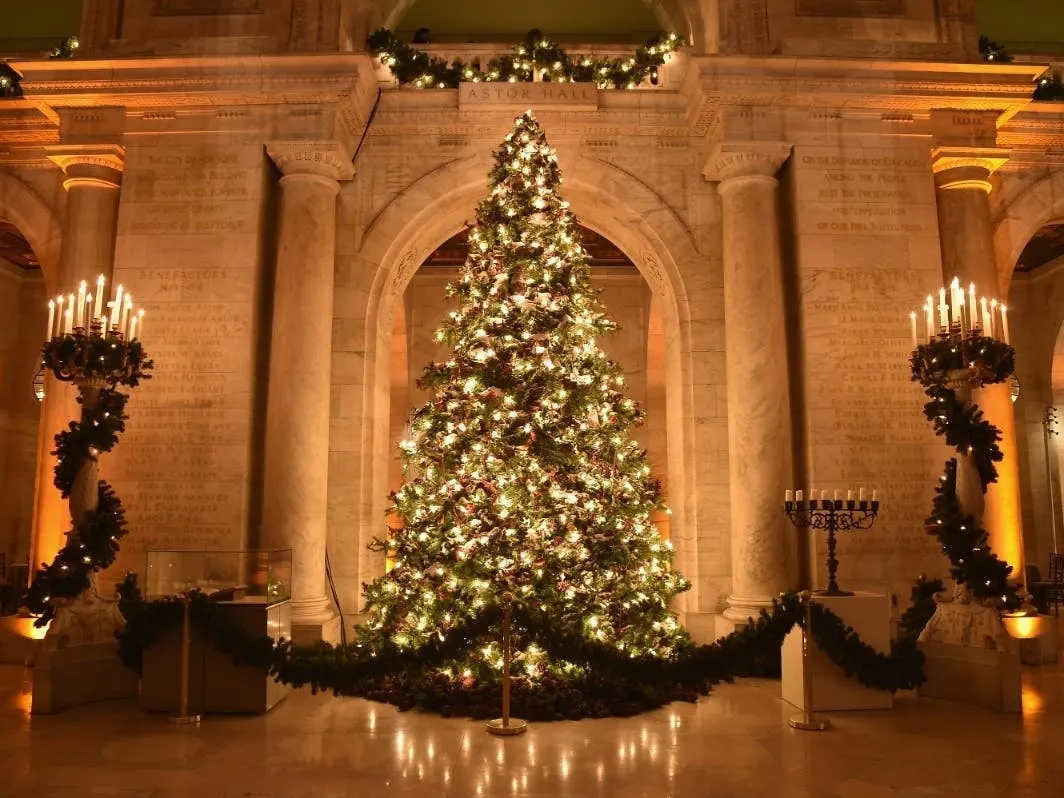
Architecture-scale garland needs actual architecture. This works in a space with 14-foot ceilings, stone columns, and a floor plan open enough that greenery won’t crowd a doorway. In a standard 8-foot room, the equivalent move is one swag across the mantel and a single candelabra on a console. Keep total greenery to roughly 10% of your visible wall surface, and honestly — skip it entirely in rooms under 120 square feet.
11. A Feathery Brown Tree with Gold Ribbons and Jute
- Feather or faux-branch brown tree, 6–7 ft: $140–$380
- Warm fairy lights, 300 count: $18–$40
- Gold and silver ornaments: $50–$140
- Thin gold ribbon, 2 spools: $8–$16
- Woven jute tree skirt: $35–$70
- Kraft paper, twine, and tags: $15–$25
- Total: $266–$671
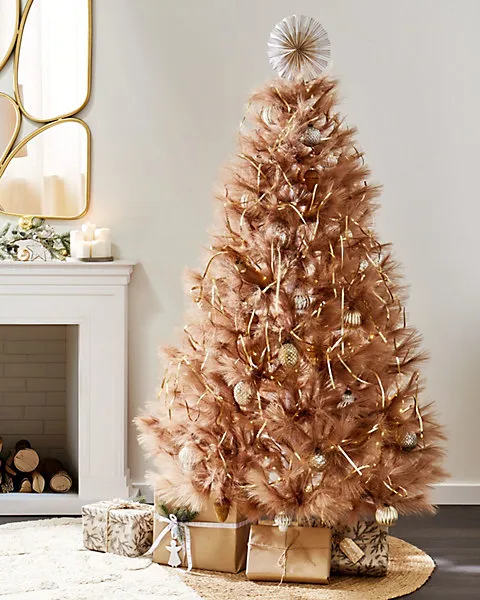
- Measure the wall first — this tree silhouette is wide and wants about 40 inches of clearance.
- Confirm ceiling height: feather trees top out near 7 feet and a pleated starburst adds 6 to 8 inches.
- Locate your outlet before committing to a lit tree, or budget for a cord cover.
- Check the room at 5pm — brown reads warm in sunlight and distinctly grey under cool bulbs.
The mix runs about 65% soft brown, 25% warm metallic, 10% organic texture like jute and kraft paper. Swap the metallic to matte black and it goes modern. Swap the jute skirt for a chunky knit and it goes cabin. Brown stays the constant in all three versions, and that’s what keeps the metallics feeling grounded instead of flashy.
12. An Almost-Black Tree with Gold and Champagne Ornaments
A dark brown or near-black tree is the most photogenic choice on this list and the most disappointing one if you under-light it. Dark needles absorb light instead of bouncing it, so a tree that looks generously lit in the store can go flat black in your living room. Plan on roughly 100 lights per vertical foot — that’s 700 to 800 for a 7-foot tree. If yours is pre-lit at half that, buy a supplement strand.
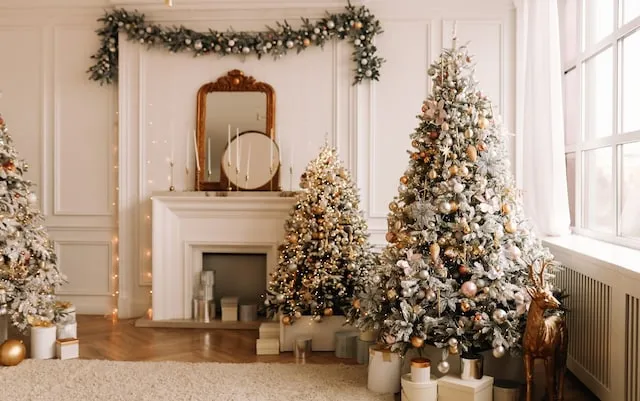
Also check your floor before you commit. A near-black tree on dark wood flooring with no skirt will visually merge with the room and lose its silhouette completely. That’s what the light fluffy skirt is doing here — drawing a soft line between tree and floor. If you’d rather skip the skirt, set the tree on a light rug or slide a cream tree collar underneath.
13. Chocolate Baubles with Hand-Painted Gold Leaf
The count here is simple: one color, one pattern, one ribbon, repeated. Chocolate brown at about 80%, gold leaf detail at 15%, golden-brown ribbon at 5%. That’s the whole equation. Run the same formula with forest green ornaments and copper leaf, or cream ornaments and silver leaf — it holds, because the pattern is the accent, not a second color.
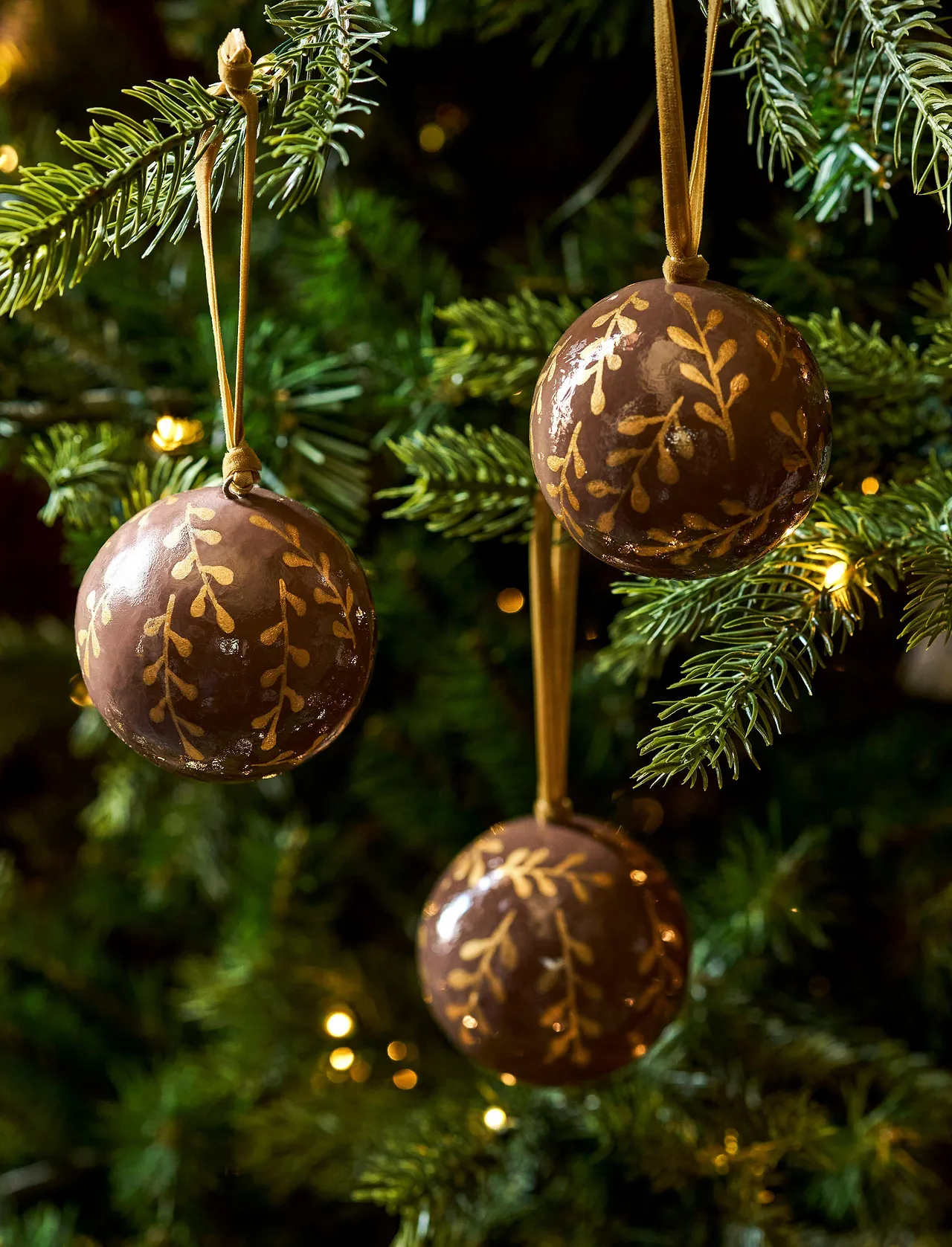
Hand-painted gold leaf ornaments run $12 to $30 each at boutiques, which gets expensive fast. The cheaper route: pick up plain brown glass or plastic baubles (Target often has six-packs under $10 in November), then add the gold leaf yourself with a $7 sheet of transfer foil and a little adhesive. It’s fiddly for the first one and mindless by the sixth, and nobody will guess. Same trick, different palette, over in Idea #20.
14. A Cozy Leather Living Room Lit by a Single Tree
- Decide whether this room can genuinely live at low light — the look depends on lamps, not overheads.
- Check that your leather and your tree skirt share an undertone: warm browns together, cool browns together.
- Measure the walkway around your largest furniture piece before adding a tree and a Santa cutout.
- Verify an outlet sits within cord reach of both the lamp and the tree.
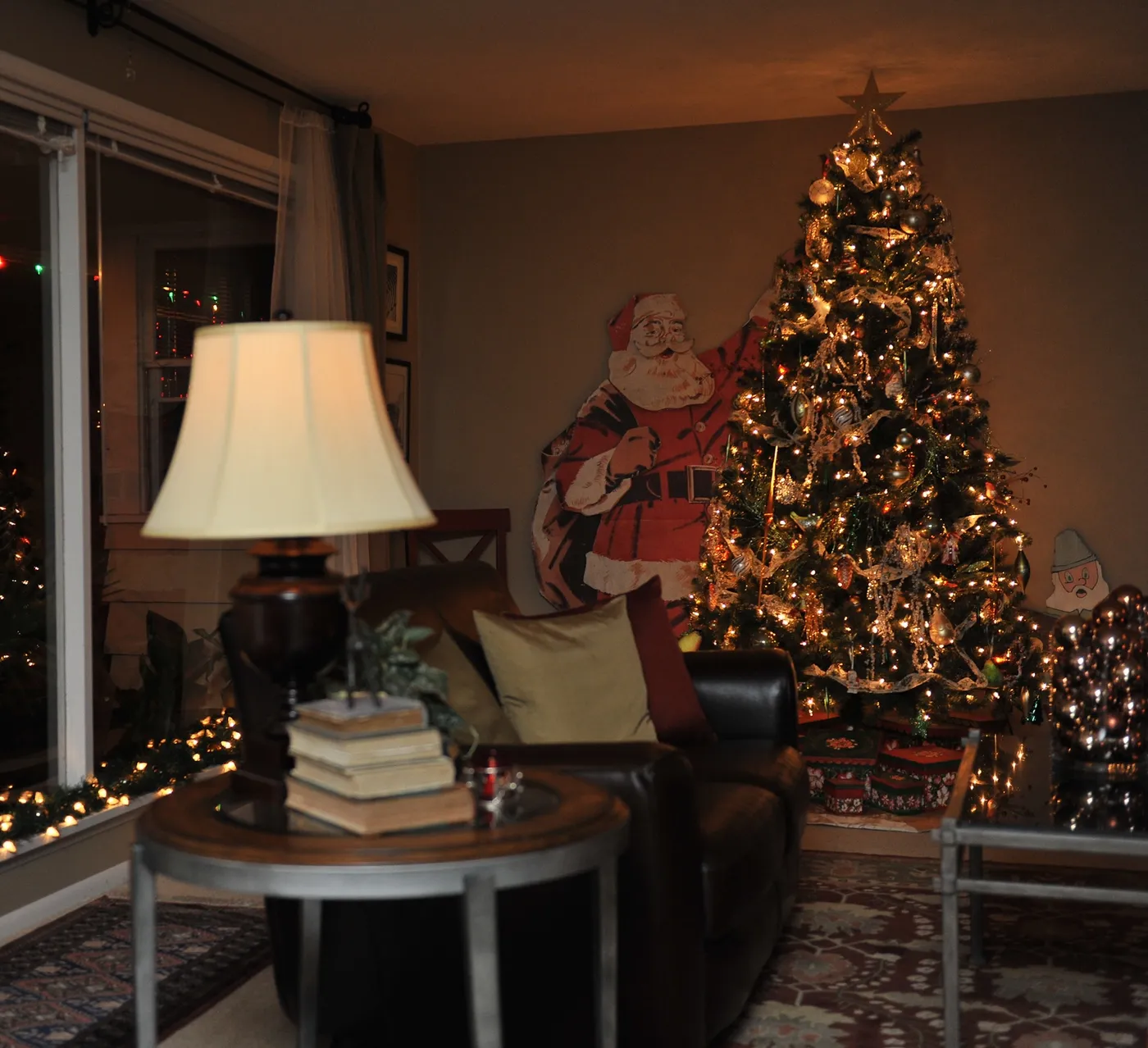
Low-light Christmas rooms are gorgeous in photos and mildly annoying in real life. If you actually read, wrap gifts, or host in this room, you’ll flip the overhead on and lose the entire mood. Fix it with a dimmable floor lamp plus a smart plug on the tree lights, so one switch gets you 80% of the effect without reaching under branches.
here is the lamp. Not the tree, not the cardboard Santa — the cream-shaded table lamp. It’s the only light source aimed at a wall rather than at a decoration, and it’s what makes the dark leather chair and burgundy rug feel like a room at night instead of a stage set.
15. Pinecones and Gold Glitter on an Evergreen Branch
Gold glitter multiplies fast. Here’s how to add it to a brown-and-pinecone scheme without turning the tree into a disco ball.

- Count your branches and plan one glitter ornament per three or four brown ones.
- Cluster them — two glitter baubles close together look intentional; spread evenly they look accidental.
- Place each cluster about a third of the way in from the branch tip so the lights catch the glitter.
- Balance with pinecones, which absorb light and give the sparkle somewhere to rest.
- Step back four feet and squint. If the glitter reads as a single line down the tree, you’ve overdone it.
Glitter isn’t a color, it’s a texture — and what makes it look expensive here is that it’s the only reflective surface in a frame full of matte pinecones and soft needles. The warm bokeh behind it does the rest. Out-of-focus lights turn a small cluster of ornaments into what reads as a much larger, much more elaborate tree.
16. Brown Velvet, Red Beads, and a Pinecone in One Branch
This ornament is a ball of fabric, not a sphere of glass, and that’s the entire point. The gathered, slightly pinched velvet catches light in folds instead of highlights, so you get a soft dark brown that photographs warm rather than flat. Take it away and the branch is pretty but ordinary. Keep it and the red beaded garland suddenly looks considered instead of store-bought.
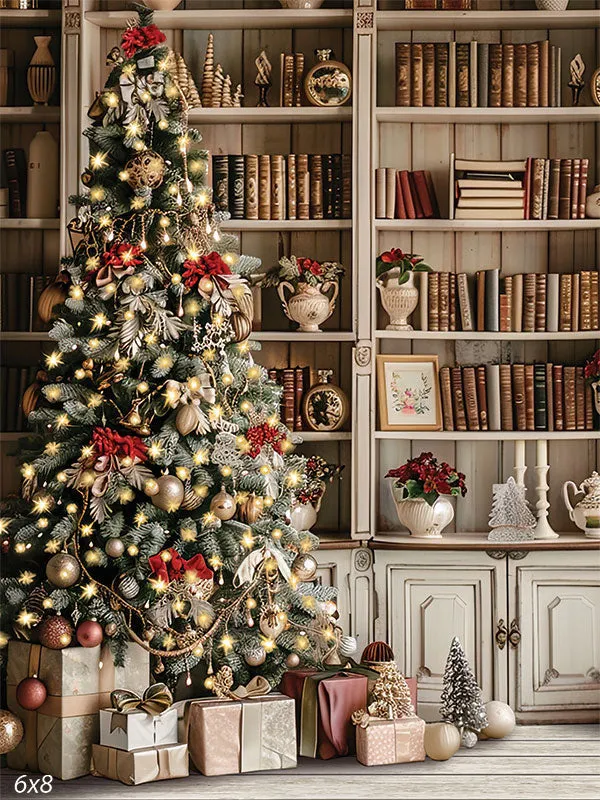
Three materials on one branch means three kinds of upkeep. Velvet collects dust and wants a shake-out or lint-roll each season. Glitter sheds — that red star will leave a fine trail on your floor and your hands, so hang it high and handle it once. Beaded garland is the low-maintenance hero of the trio: one damp cloth in January and it’s ready for next year.
17. A Library Tree with Red Bows and Distressed Bookshelves
- Pre-lit 7 ft tree: $150–$400
- Gold and silver baubles: $60–$180
- Red bows and berry stems: $25–$70
- Distressed bookshelf, if bought new: $300–$900 (often free secondhand)
- Gift wrap and ribbon: $20–$45
- Total: $255–$695, excluding shelving
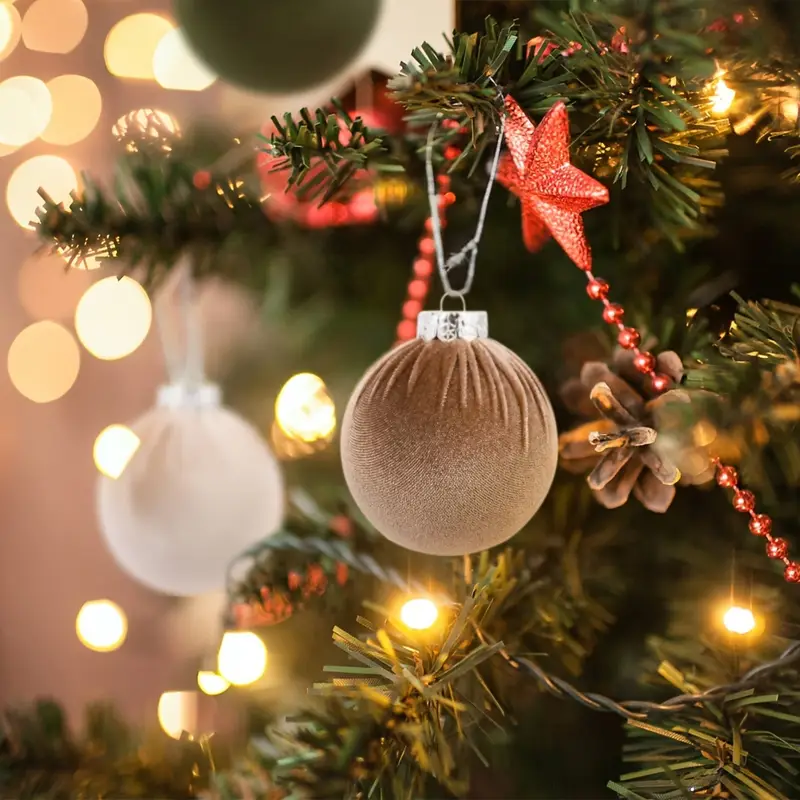
Budget alternative: bookshelf styling is where you save real money. Thrifted hardcovers with the jackets pulled off run $1 to $3 each, and a stack of them plus a few brass objects costs less than one designer coffee-table book. Facebook Marketplace has solid wood bookcases under $100 most weeks.
- Check shelf depth — paperbacks need 8 inches, oversized art books need 12.
- Confirm your tree won’t block a shelf row you actually use.
- Note how much direct sun hits the shelves; strong light fades spines and decor alike.
- Decide on a book plan before buying anything: old hardcovers, no jackets, warm tones.
18. Brown Velvet Leaves and Metallic Berries in the Branches
Faux botanical picks — velvet leaves, metallic berries, gold foliage — are the fastest-growing ornament category heading into 2026, and it’s because they solve a real problem. A tree full of spheres looks like a tree full of spheres. Picks break the silhouette, add movement when the heat kicks on, and fill the gaps that lights alone can’t cover.
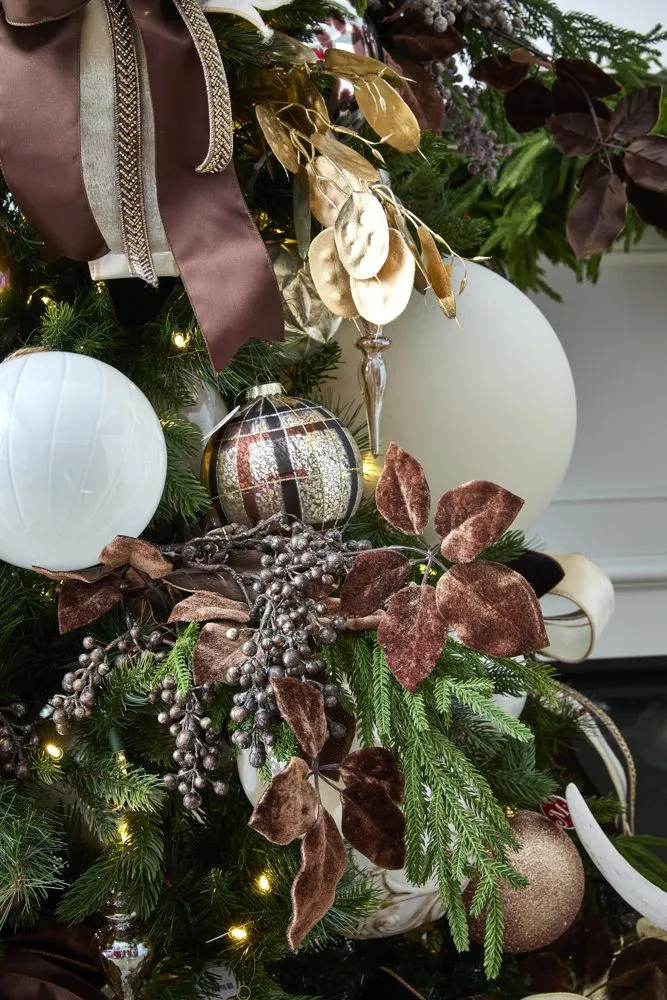
Use picks in odd numbers and vary their height: tall ones in the top third, medium in the middle, short near the bottom. Three velvet leaf sprays, two berry stems, and one gold sprig makes a balanced set for a 7-foot tree. Push each stem deep so only the leaves show — exposed wire stems are the giveaway of a rushed tree.
The mix runs about 55% green pine, 25% brown velvet and metallic, 15% gold, 5% cream or plaid. That last 5% is what keeps it traditional instead of monochrome — one plaid ornament or creamy white sphere gives your eye a break. Change the plaid to solid white and it goes modern instantly. Compare with Idea #5, which keeps the same brown and drops every pattern.
19. Gold Glitter Ornaments and Pinecones in Warm Bokeh
This is a detail shot, and it’s worth deciding early whether you’re decorating a whole tree or a set of vignettes. On a 6- to 7-foot tree, plan roughly six to eight ornament clusters like this one — each with a glitter bauble, a pinecone, and a little visible light — and let the rest of the tree breathe. Below 5 feet, drop to three clusters or you’ll have no negative space left at all.

What makes this cluster work is that every element is a different size: a large glitter sphere, a medium pinecone, and tiny points of light. Three sizes, one warm palette. Repeat that grouping around your tree and you get rhythm, which is the real difference between a decorated tree and a styled one. The shallow focus in the photo exaggerates it, but the principle holds — your eye wants variety in scale far more than variety in color.
20. A Chocolate Glitter Ornament That Says Chocolate Is Love
Novelty ornaments are a commitment, and I say that with affection. A hot pink phrase on a chocolate glitter ball is charming on a tree that’s already warm and playful — and jarring on a formal, muted one. If you’re building the restrained version of this palette, keep text ornaments grouped in one zone, or hang them at kid height where they genuinely belong. Also: glitter sheds. Expect pink flecks on the skirt by New Year’s.
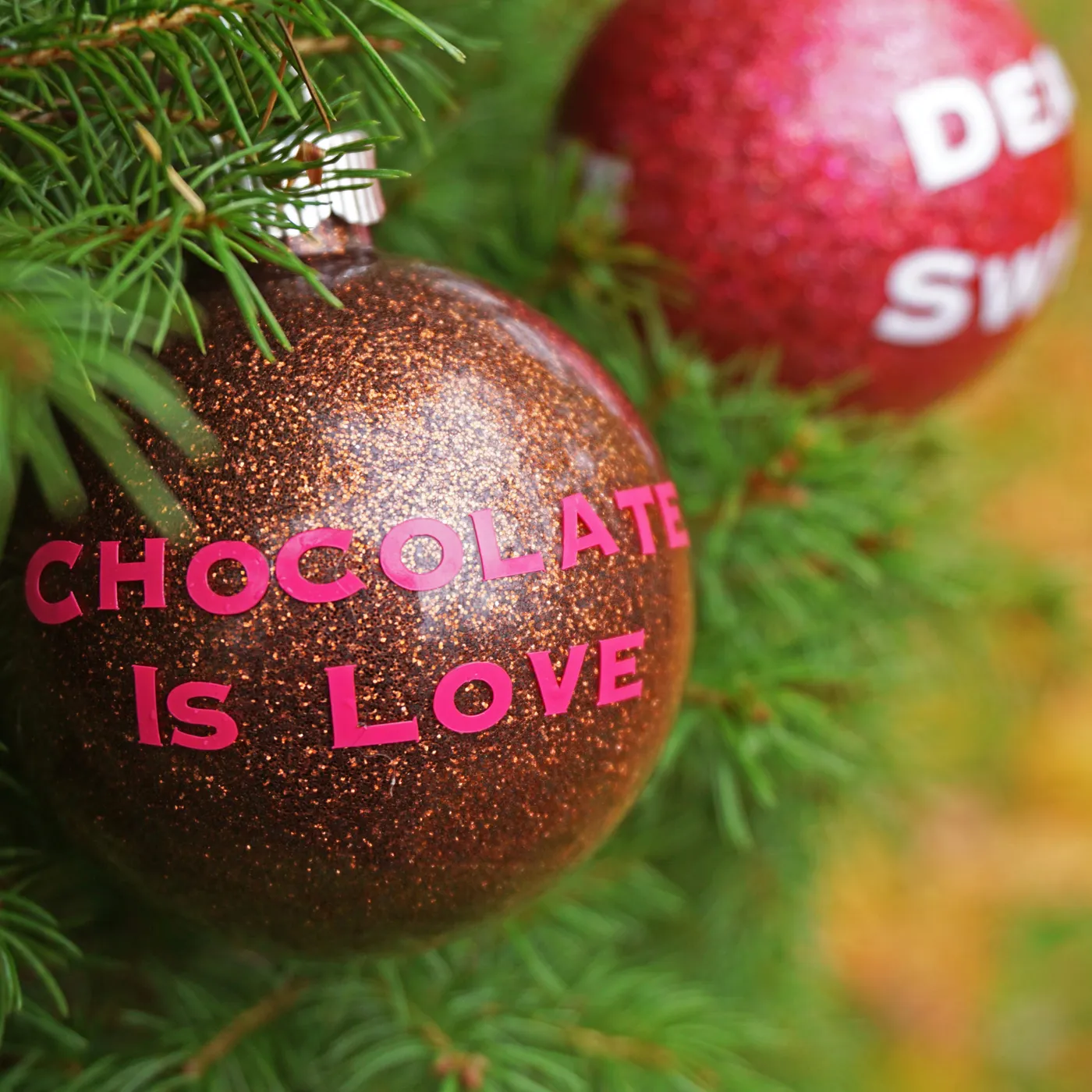
Personalized phrase ornaments run $15 to $28 from Etsy sellers, plus shipping and a two-week wait in December. The cheap version: buy plain brown glitter spheres for $3 to $6, then add adhesive vinyl letters from a craft store ($8 buys a whole sheet) or write the phrase with a paint pen. Ten minutes per ornament, and nobody has to know your handwriting did it.
21. Gold and Bronze Ribbons Across a Curved Hotel Lounge
- Three 8 ft commercial-grade trees: $900–$2,400
- Warm white lighting, 3,000 LED: $150–$350
- Wide gold and bronze ribbon: $60–$160
- Oversized metallic ornaments: $200–$500
- Dried foliage picks: $90–$220
- Total: $1,400–$3,630
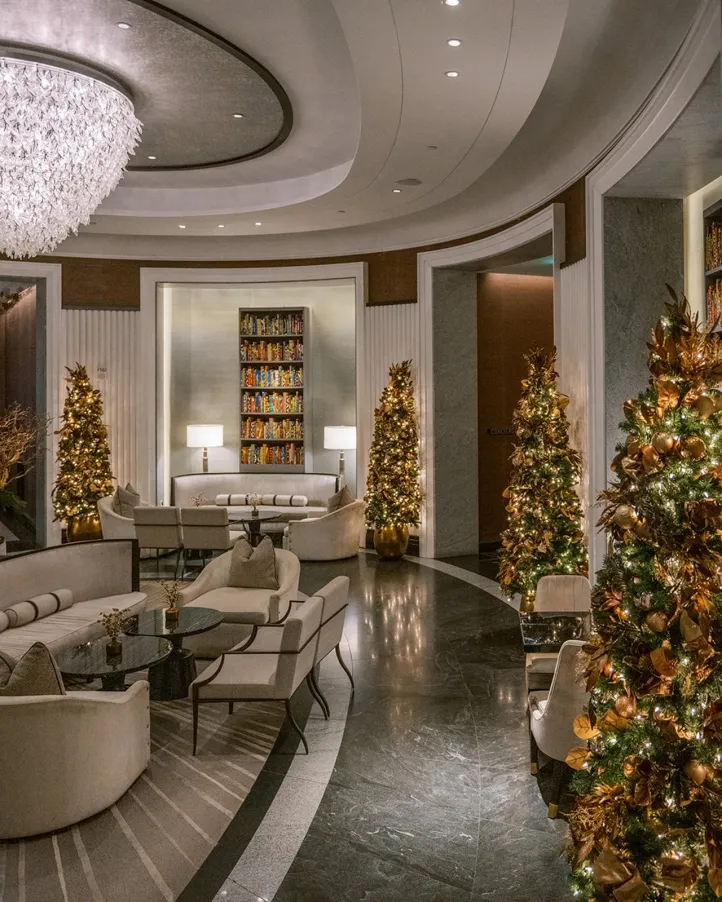
Budget alternative: the trick here is repetition of three, not tree size. Three $40 tabletop trees dressed with the same wide ribbon and a handful of oversized ornaments deliver nearly identical rhythm in a living room for under $250.
Commercial installs like this get touched by hundreds of people between November and January, which is why the ribbon is wired and the ornaments are shatterproof. At home, ribbon is what ages: it creases where it bends and fades in direct sun. Store it rolled around a cardboard tube rather than folded, and replace it every three or four seasons.
22. A Dark Brown Built-In Framed by a Red-Ornamented Tree
- Confirm your built-in isn’t the same undertone as the tree you’re buying, or the tree disappears into it.
- Measure the vertical gap between mantel and ceiling before hanging wreaths.
- Check whether the tree blocks sightlines to the TV or fireplace from your main seat.
- Decide where cords go before the tree arrives — built-ins usually hide outlets behind them.
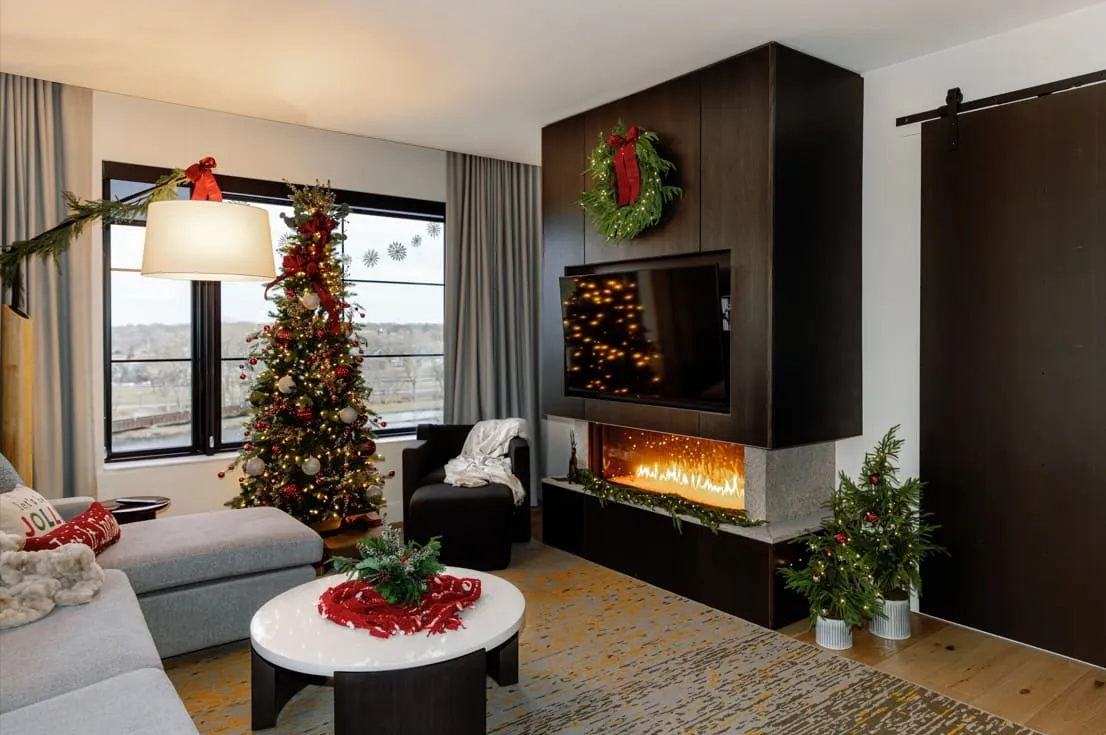
Against dark brown millwork, a green tree needs a bright anchor or it becomes a shadow. That’s why the red and white ornaments are pulling so much weight here — white adds light, red adds edge. On a dark brown wall, keep white ornaments to at least a third of the total and you’ll never lose the tree’s shape, even at night with lamps on.
Built-ins also change how big a tree you can use. In a 16-by-18-foot living room with 10-foot ceilings and millwork along one long wall, an 8-footer with 30 inches of clearance on both sides reads full without blocking traffic. In a 12-by-14 room, go down to 6 feet and let potted trees and garland carry the rest.
23. A Grey Sectional, Red Pillows, and an Ocean View Tree
One honest caution about a tree in front of a big window: sunlight. UV fades fabric, ribbon, and cheap glitter fast — a south- or west-facing window can visibly dull ornaments in a single season. It also heats the room unevenly, and if your tree is real, warm glass will dry it out faster than anything else in the house. A sheer curtain or rotating the tree 90 degrees solves most of it.
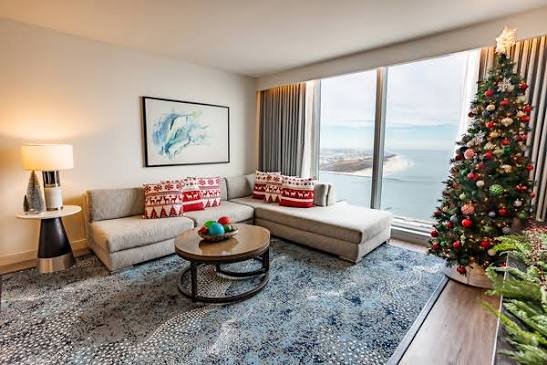
Multicolored ornaments against a bright view is the easiest palette to fake on a budget. Red and white pillows are a Target and Walmart staple by November, usually $12 to $20 each, and a mixed 100-piece ornament set in classic colors runs $25 to $45. The blue and grey rug is the expensive part — a Marketplace find saves $300 or more and still carries the room. See how Idea #4 handles this many colors without veering into chaos.
24. Glossy Brown and Matte Gold Baubles with Red Berries
Sheer gold ribbon woven through branches is what takes this from nice tree to styled tree. Here’s the method that actually holds.
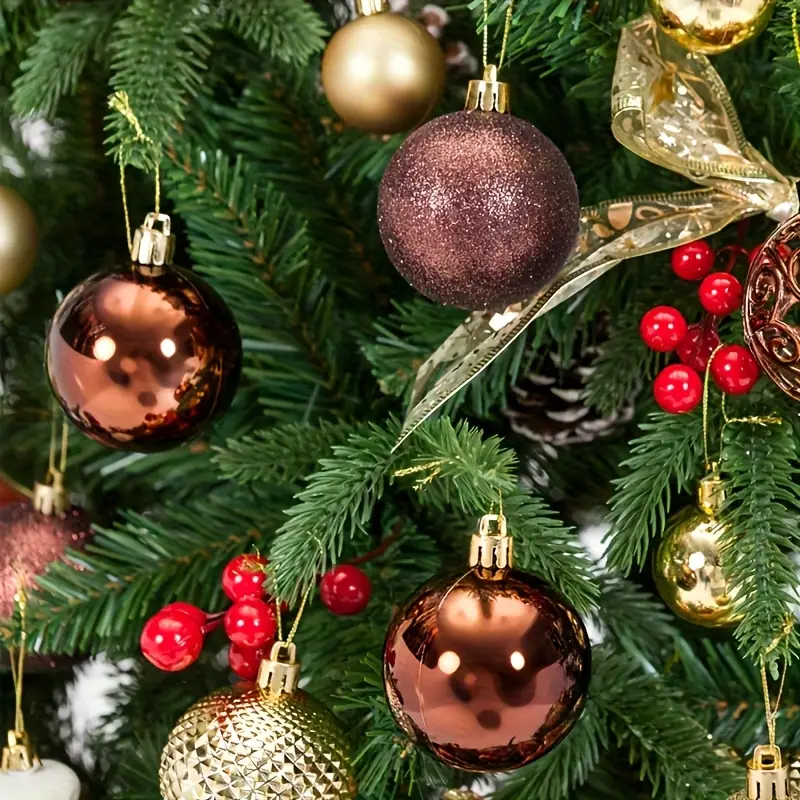
- Cut ribbons into 18- to 24-inch lengths — longer than you think, since you lose an inch to the branch.
- Start at the top and work down in a loose spiral, not a tight circle.
- Loop each piece around a single branch and let the tails fall 4 to 6 inches.
- Vary tail lengths so the eye doesn’t lock onto a pattern.
- Don’t loop every branch — roughly one ribbon per six ornaments is plenty.
If your tree is artificial, bend the branch tips slightly upward after decorating. Real branches hold their shape under ornament weight; synthetic ones droop, and a drooping tip hides the top half of every bauble you just spent an hour placing. It takes four minutes and changes the whole silhouette.
25. One Glittery Bronze Sphere on a Dark Green Branch
One ornament, one branch, nothing else in focus. This is the whole argument for texture over quantity: a single glitter-covered bronze sphere has more presence than a dozen flat ornaments, because the surface scatters light in every direction instead of reflecting it back in one. If you’re decorating a small tree, invest in fewer, better-textured pieces rather than more cheap ones. The math favors quality almost every time.
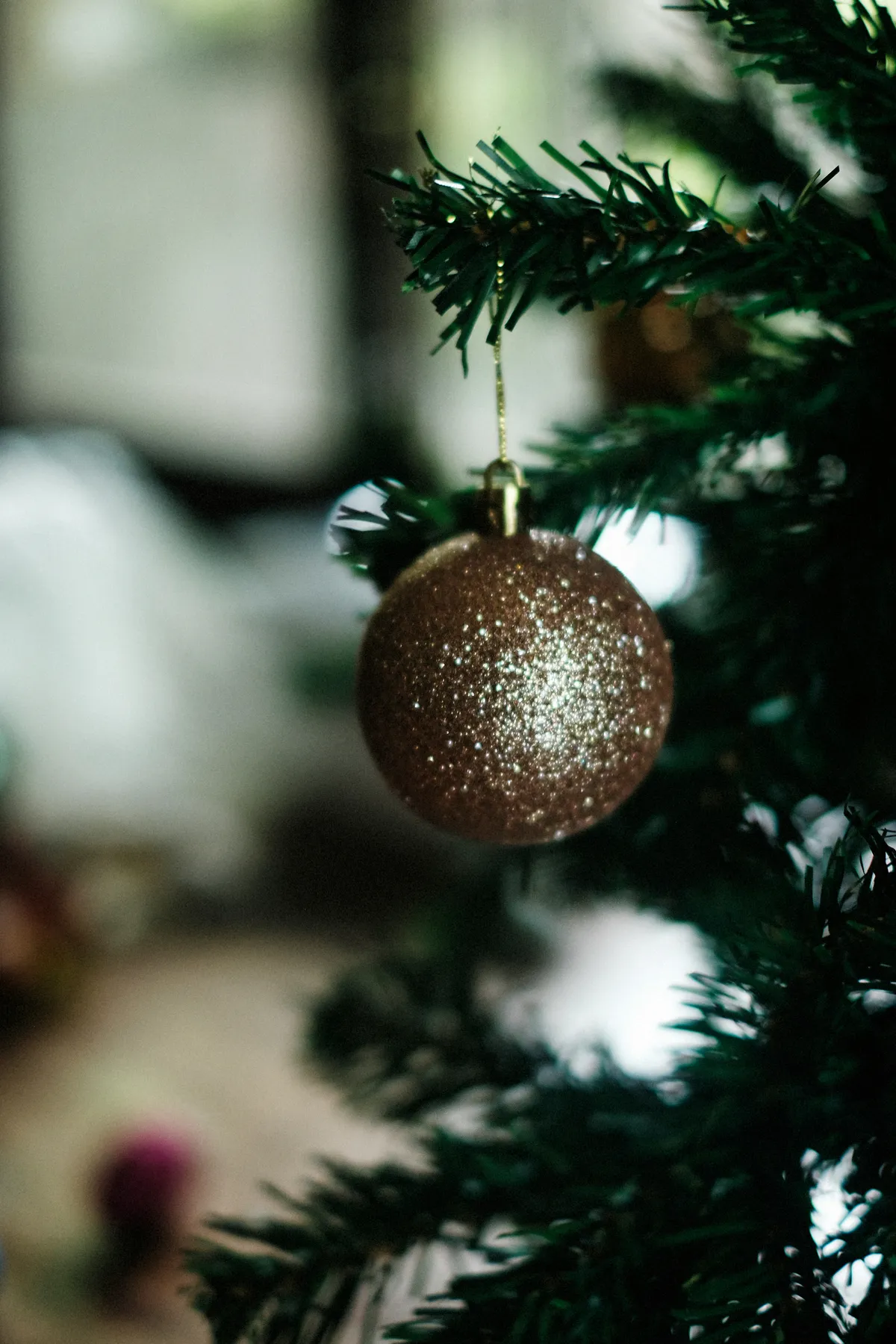
here is the gold-toned cap and that thin gold string. Swap it for a green wire hook and the ornament still looks nice — but it loses the detail that makes it feel like an heirloom rather than packaging. Caps and hangers are the cheapest upgrade in Christmas decorating: a $5 set of gold caps can lift an entire box of discount baubles into something that photographs beautifully.
Your Warmest, Brownest December Yet
Chocolate brown works at Christmas for the same reason it works in a living room: it’s warm, it’s forgiving, and it makes everything next to it look more expensive. Start with one idea that matches your room honestly — your ceiling height, your light bulbs, your floor — and build outward from there.
📌 Pin your favorites now, and when December rolls around you’ll have a plan instead of forty saved photos and a panic order on December 20th.