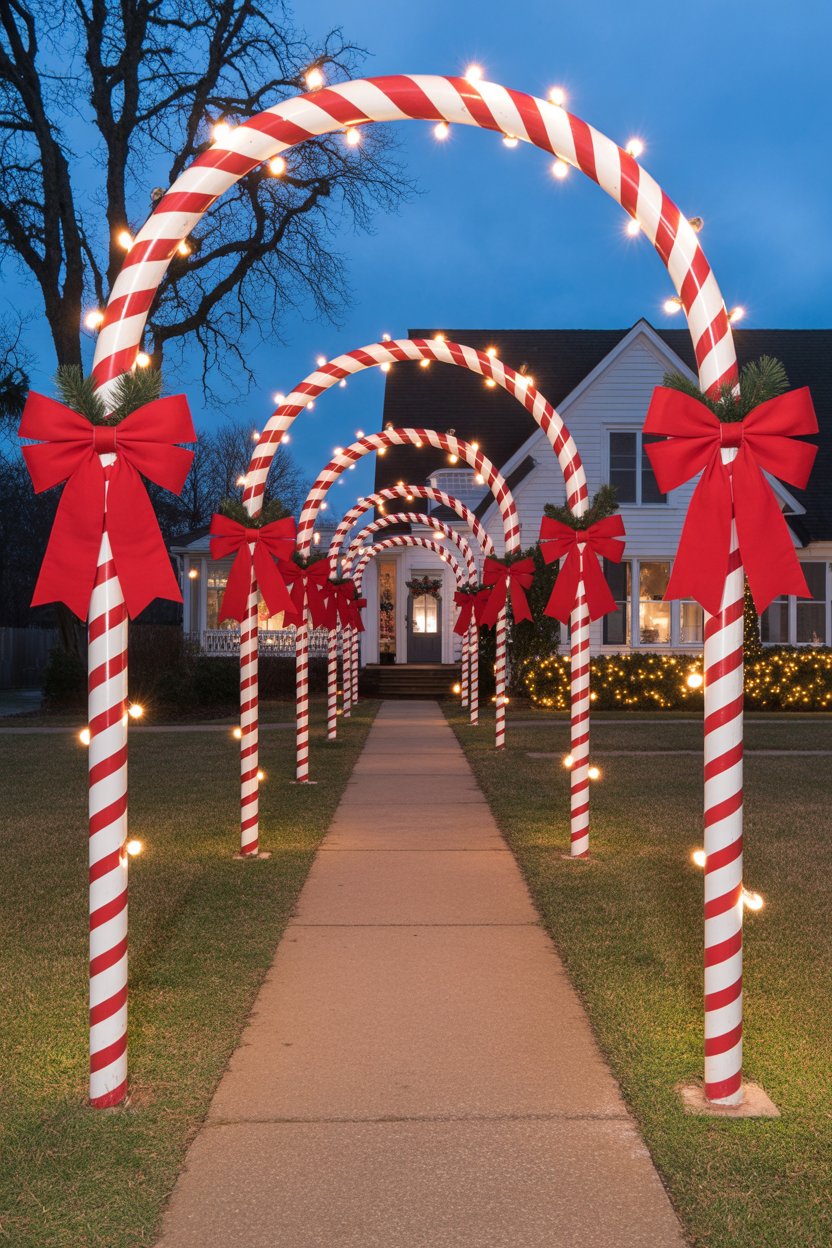
33 Jaw-Dropping Christmas Tree Trends for 2026 That Will Transform Your Holiday Decor

You know that feeling when you’ve saved forty Christmas tree photos and still can’t decide which one is actually yours? Same. So we did the scrolling for you.
After filtering through hundreds of trees, ornaments, garlands, and tree skirts at Target, Walmart, and IKEA — plus a fair amount of late-night Pinterest archaeology — we landed on 33 ideas that hold up in a real living room, not just in a photograph. Prices run from about $8 for a pack of honeycomb lanterns to $900 if you’re going all in on a tufted armchair, and budget and luxury versions sit side by side so you can see exactly where the money goes.
Expect four moods: traditional red-and-green, flocked pastels, maximalist jewel tones, and the stripped-back light-only tree. In 2026 the pendulum has swung toward trees that are either deeply personal or almost bare — the middle ground is where things get forgettable. And stay until the end — we break down the most common mistakes that can ruin these looks.
📌 Save this to Pinterest for later — you’ll want to revisit these ideas.
1. Red Ribbons and Dried Oranges Over the Mantel
The mantel garland is doing more work than the tree here, and it’s built from three cheap strands, not one expensive one. Zip-tie three 9-foot artificial pine garlands together at four points, then fluff until you can’t find the wire. Run the garland 1.5 times the width of your mantel so it breaks over the edge instead of stopping short, and tuck berries and dried orange slices in clusters of three — odd numbers read as gathered, even numbers read as placed.
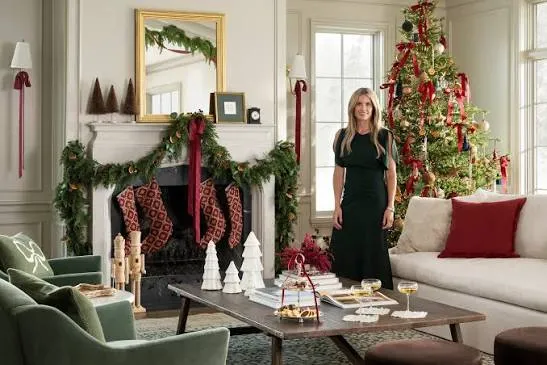
Here’s the recipe: 65% deep forest green (tree, garland, stockings), 25% red (ribbons, berries, patterned stockings), 10% warm gold and amber (mirror frame, orange slices, light glow). Swap the red for burgundy and the gold for brass and you get an older, moodier room without changing a single object. The reason it doesn’t feel like a craft store aisle is that every red element has a different finish — matte ribbon, glossy berry, woven stocking.
2. Paper Lantern Baubles on a Bright White Tree
Paper lanterns work because they’re the opposite of everything else on a Christmas tree: matte where ornaments are glossy, oversized where baubles are small, and light enough that the branches barely bend. The pink, orange, and white lanterns get repeated on the branch garland above the sofa, which is why the room feels deliberate instead of decorated. That repetition is the whole trick — one color story, told twice, at two different scales.
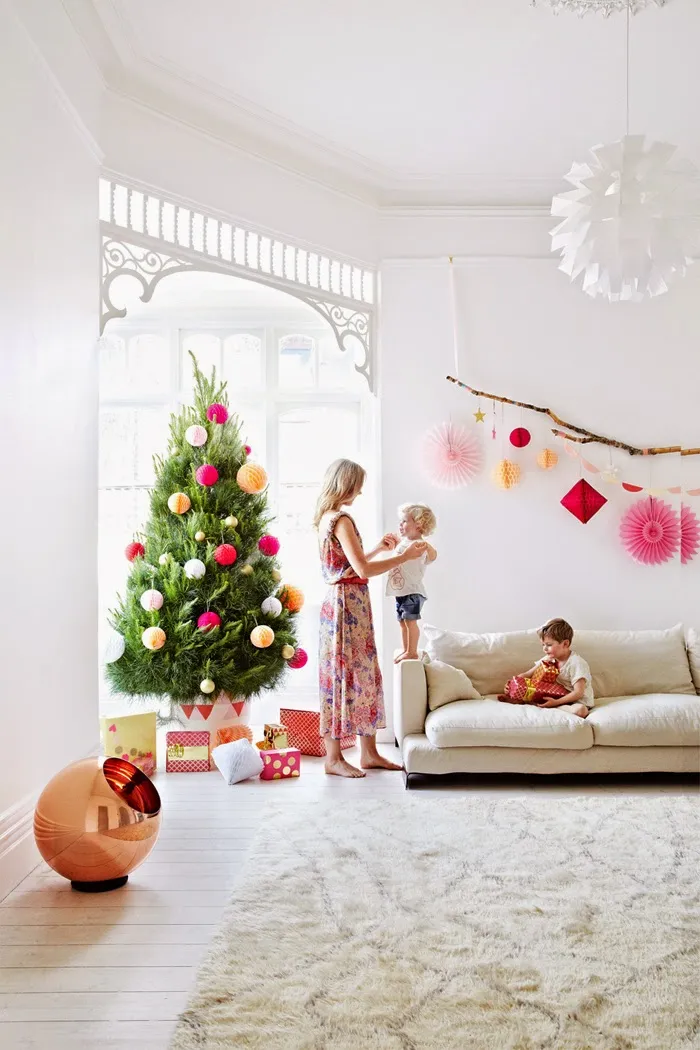
Honeycomb and paper lantern balls run $1 to $3 each at craft and party supply stores, so you can cover a 7-foot tree for under $60. Target and Walmart both stock multipacks in spring and summer — buy off-season and store them flat. The cream sofa and shaggy rug are the real budget lever: a washable cream slipcover over an existing sofa plus a faux sheepskin does 80% of this room’s work for under $100.
3. Silver Tinsel and Velvet Bows, Maximalist Style
It’s the tinsel. Not the bows, not the pom-pom garland, not the striped ornaments — the silver tinsel strands are what make this tree shimmer from across the room and read as vintage rather than new. Take the tinsel out and you still have a nice, full tree that photographs flat. Tinsel is the only element here that reflects light sideways, which is why it fills gaps you can’t fix by adding more ornaments.
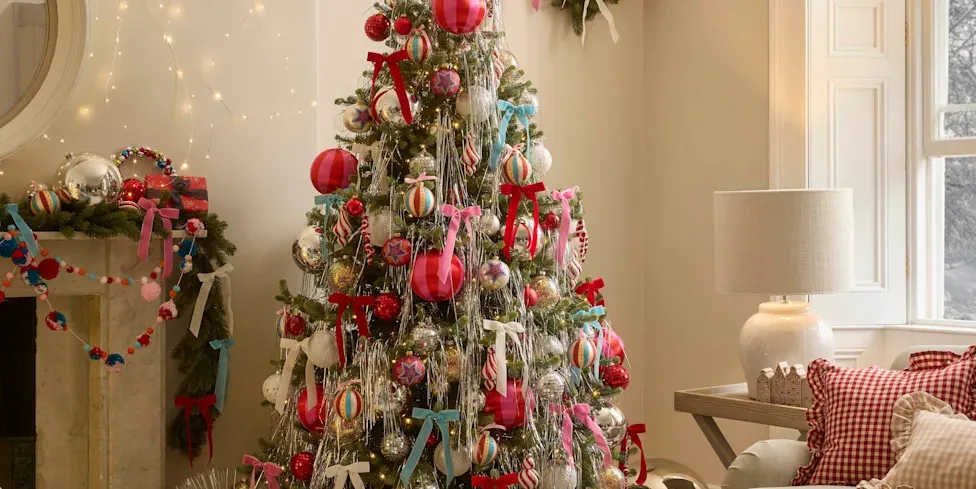
For velvet bows that hold their shape past New Year’s, buy 3-inch wire-edged velvet ribbon, cut 18-inch lengths, and pinch the center with 24-gauge floral wire instead of tying — tied bows collapse. Aim for 12 to 15 bows on a 7.5-foot tree, weighted toward the bottom third where the branches are widest. Everything above eye level should be ornaments only; bows up there just look cluttered.
4. A Pre-Lit Fir Against Snowy Grid Windows
- Pre-lit 7.5 ft tree: $180–$600
- White tufted armchair: $250–$900
- Two wicker baskets: $40–$120
- Warm throw and pillows: $50–$140
- Tree collar or skirt: $25–$70
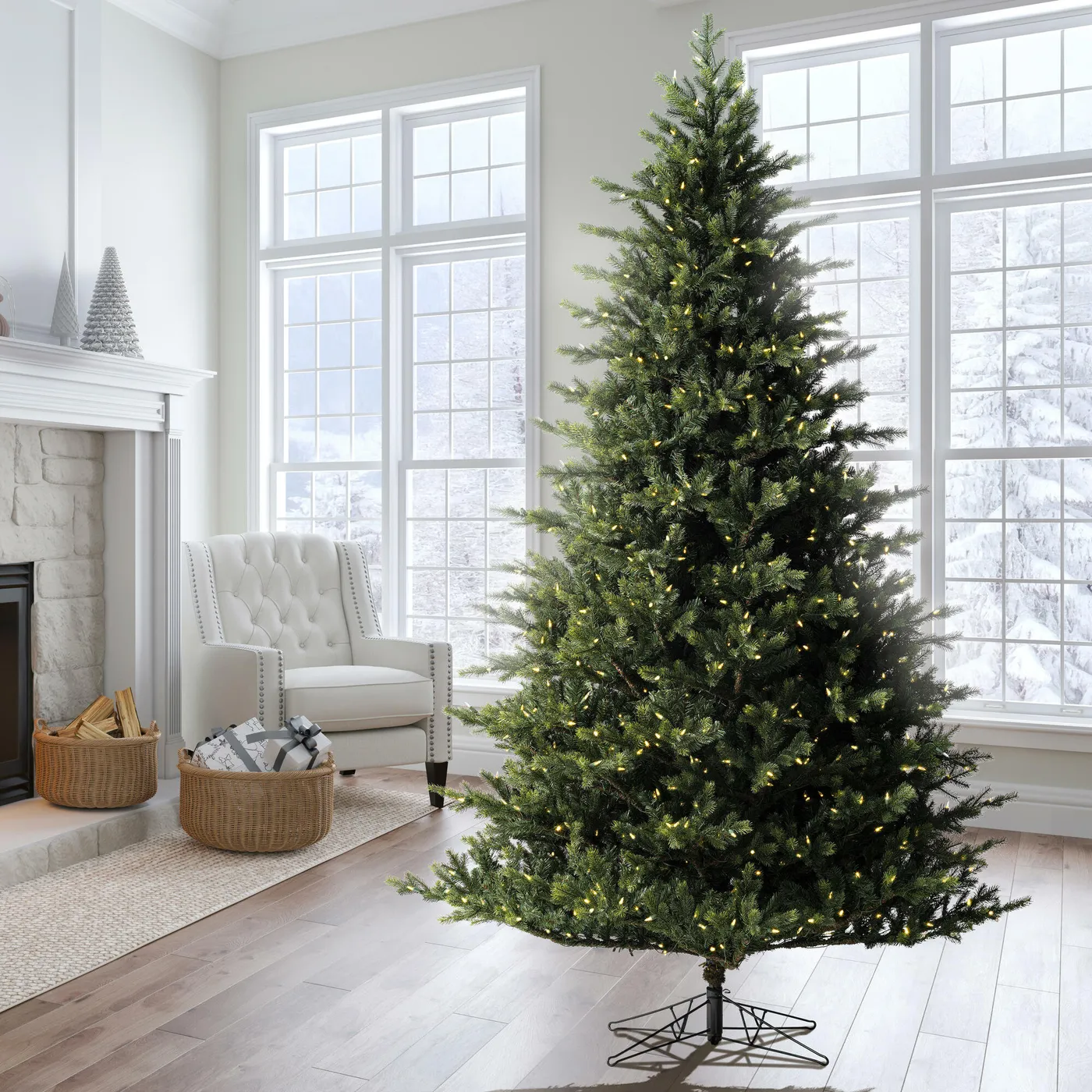
Total: roughly $545–$1,830
Budget alternative: a Marketplace tree at $60, a slipcovered thrift chair at $120, and baskets from a discount store at $30 get you within 40% of the look.
That white fireplace is doing your tree a big favor, and it’s also why light temperature matters so much here. Cheap warm-white bulbs read yellow-green next to white stone — you want 2700K, and every strand on the tree should match. Test new lights against the mantel before you commit; mixing two batches of warm white is the most common reason a tree in a bright room looks slightly off in photos.
Bright-room trees are having a moment because so many of us now photograph our homes, and a light-filled space with pale walls simply shoots better than a dark corner. The 2026 version leans into big grid-pane windows, white stone, and almost no color on the tree itself. It’s a look with staying power — you’re investing in light and architecture rather than trend-colored ornaments you’ll tire of.
5. The Barely-Decorated Tree in a Bay Window
The restraint. Somebody hung lights, stepped back, and stopped — and that decision is the entire design. What you lose if you add ornaments is the silhouette: the shape of the tree against those grey Roman blinds is the decoration. It only works when the tree is genuinely full and the lights are evenly spaced, because there’s nothing to hide behind.
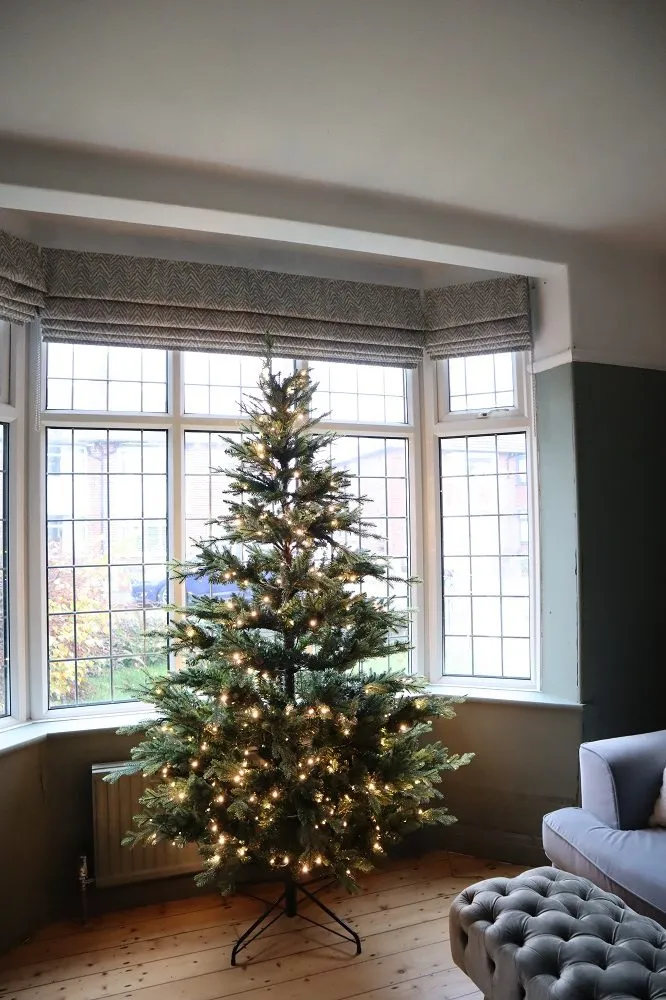
An undecorated tree shows everything. Dust settles on needles and reads as grey haze under warm bulbs, so plan on a monthly pass with a vacuum brush attachment, and wipe the bulbs with a dry microfiber cloth before the season starts. Put the lights on a timer, too — a bare tree glowing six hours a day loses impact fast, and a dead LED section is very visible with no ornaments to distract from it.
6. Flocked Branches in Champagne and Gold
The formula is 60% flocked white-green base, 30% champagne and matte gold ornaments, 10% shiny silver for sparkle. That last 10% matters — all-matte gold on white flocking goes flat and dusty-looking. Trade champagne for blush and you get a romantic tree; trade it for bronze and the whole thing turns woody and masculine. Keep the ratios and you can change the palette every year without relearning the balance.
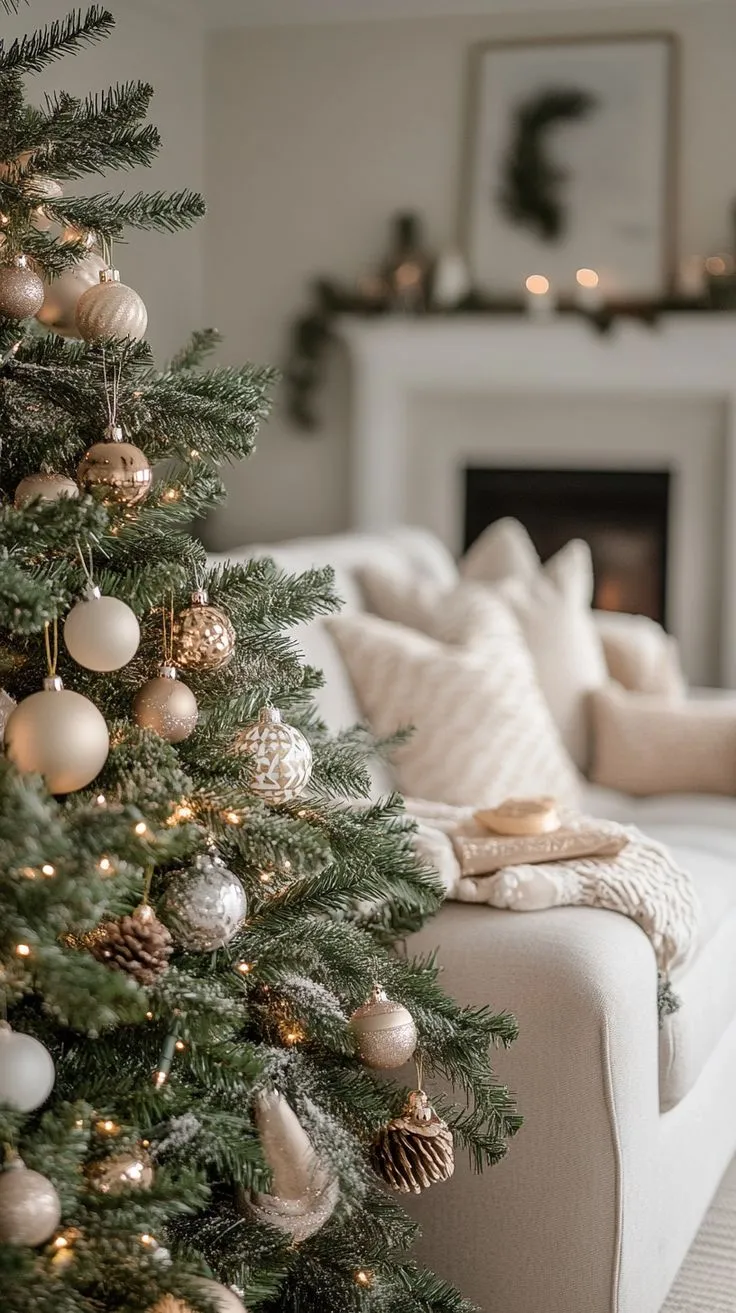
Hang ornaments on a flocked tree with narrow white ribbon loops, not metal hooks — a silver hook against white flocking is the fastest way to make an expensive tree look cheap. Skip mirrored baubles entirely. Flocking already gives you a matte, powdery surface, and a mirror ball in the middle of it reads like a mistake. Matte, pearlized, and lightly glittered finishes only.
7. All-Red Tree With Berries and a Disco Ball
Single-color trees are the biggest shift in Christmas decorating right now — people are treating the tree like a color-drenched room instead of a sampler platter. Red-only is the easiest version to pull off, because red already has the widest range of finishes available at every price point. It has real staying power, too: keep the tree and lights, swap the ornaments, and the whole thing reads new again.
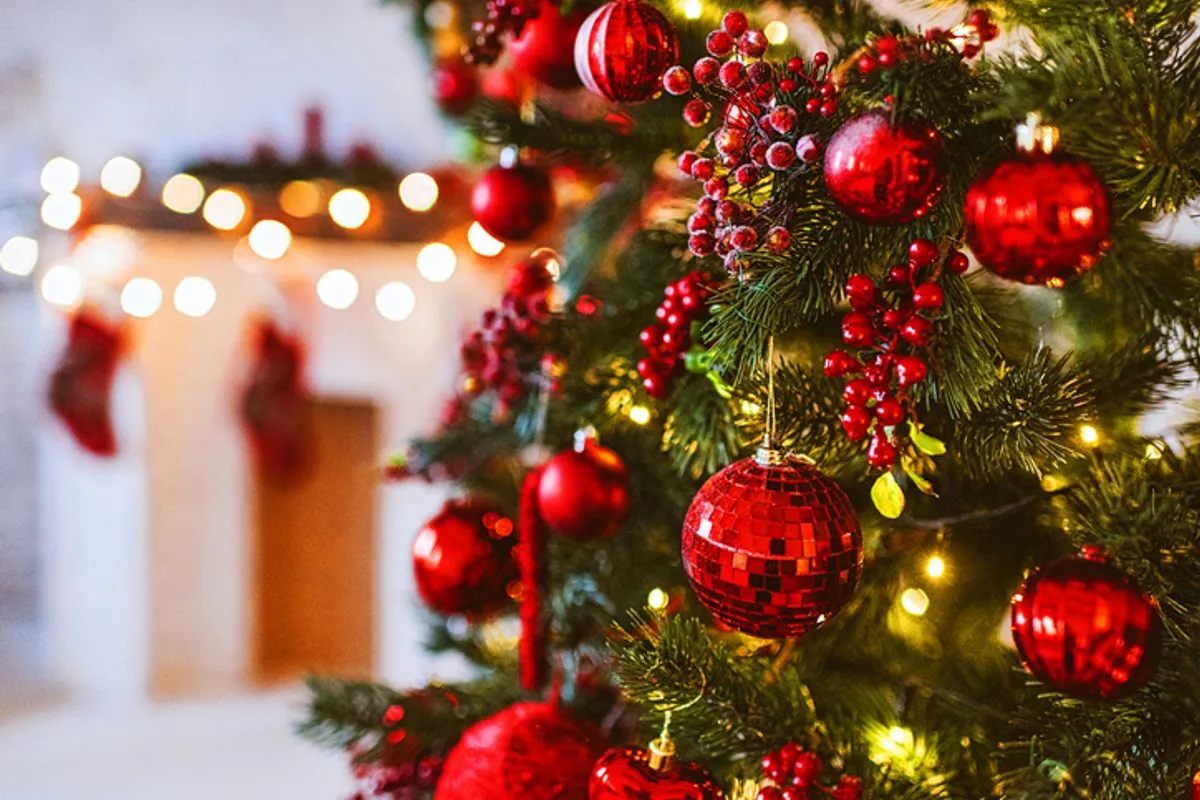
One hue, many textures. Glossy red baubles throw light, matte berry clusters absorb it, and a single red disco ball scatter-bounces everything else around the branches. That’s what stops a monochrome tree from looking like a bin of identical balls. The berry clusters with leaves are the quiet hero — they add an organic, slightly imperfect edge that keeps all that red from feeling like a retail display.
8. Enchanted Forest Birds, Mushrooms, and Jewel Tones
This layered, treasure-hunt style needs room to breathe: a 7.5- to 9-foot tree with a 4-foot base spread, at least 3 feet of clearance on the sides, and a 9-foot ceiling if you want a topper. In a 12×14 room or larger it sings. Anything tighter and the ornaments crowd each other until the fairytale reads as clutter — a light-only tree like Idea #5 handles small rooms far better.
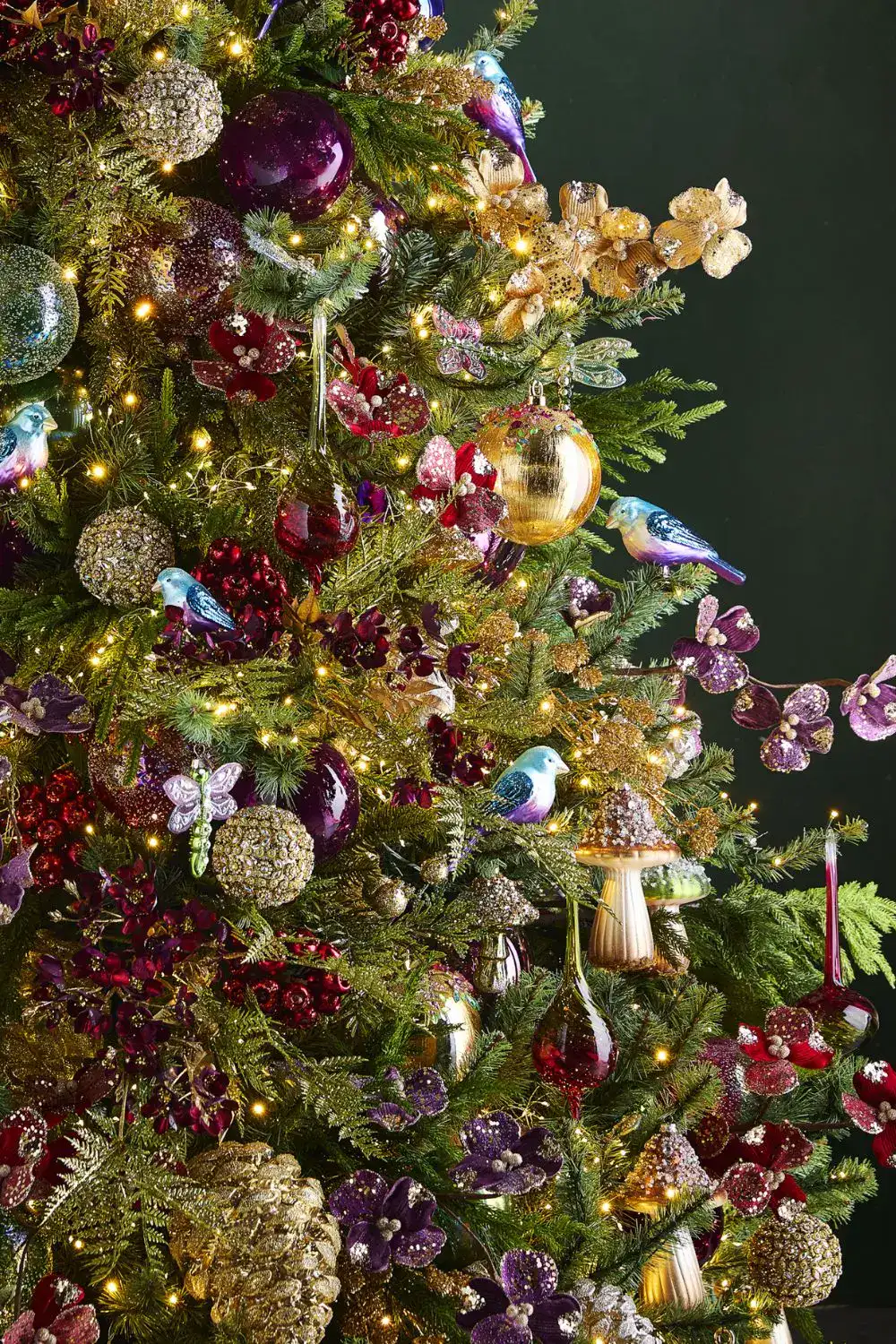
The novelty ornaments are the point — glittered glass birds, mushrooms, butterflies buried in the branches. They force you to walk around the tree and actually look, which almost nothing on a Christmas tree does anymore. Without them you’d have a very pretty jewel-toned tree that you admire once in December and never think about again.
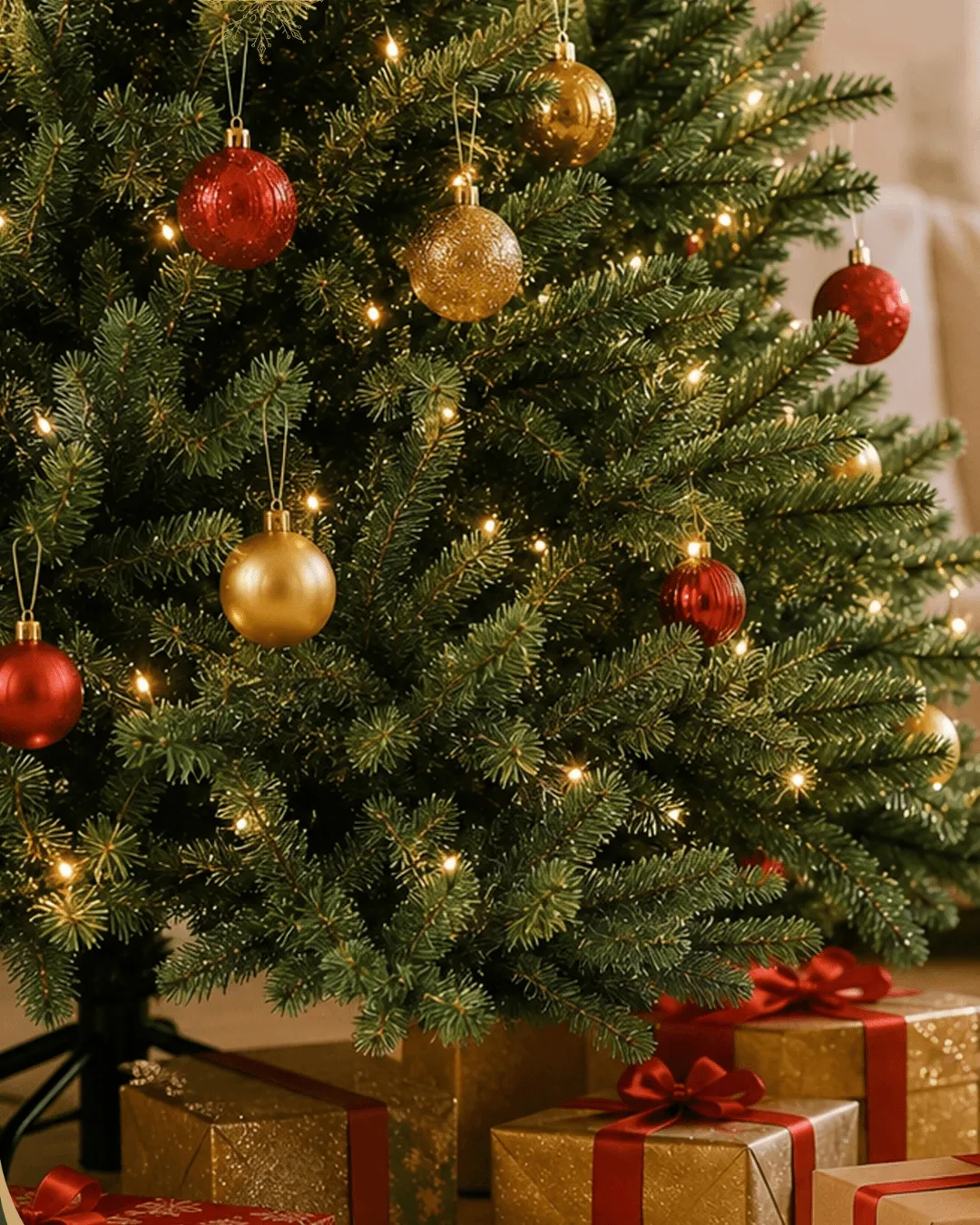
9. Red and Gold Baubles With Gifts Tucked Underneath
- 7 ft artificial tree: $120–$450
- 60–80 shatterproof red and gold ornaments: $60–$180
- Warm white lights if unlit: $20–$45
- Ribbon for bows: $15–$35
- Wrap and satin ribbon: $25–$60
Total: roughly $240–$770
Budget alternative: bagged ornaments from a thrift store run $5–$10 for 40 pieces, and nobody can tell once the lights are on and the room is dim.
Ornament density is where most people under-decorate. For this full, layered look, plan on 10 to 12 ornaments per vertical foot of tree — roughly 75 to 90 pieces on a 7.5-footer, and 100 to 120 on a 9-footer. Big baubles go deep in the branches near the trunk, small ones on the tips. If your tree looks sparse, it’s almost never the ornaments; it’s that they’re all hanging on the outer edge. Compare with Idea #8, which pushes that density even further into a full treasure hunt.
10. Blush Pink Roses on a Heavily Flocked Tree
Flocking is what saves this from being too sweet. A white, snowy base gives the blush pink and rose gold something cool to sit against, and the white feathers add softness at eye level where the branches are widest. The pink velvet sofa in the background does the same job as the ornaments — one color, repeated at a different scale, in a different material. That’s the entire system.
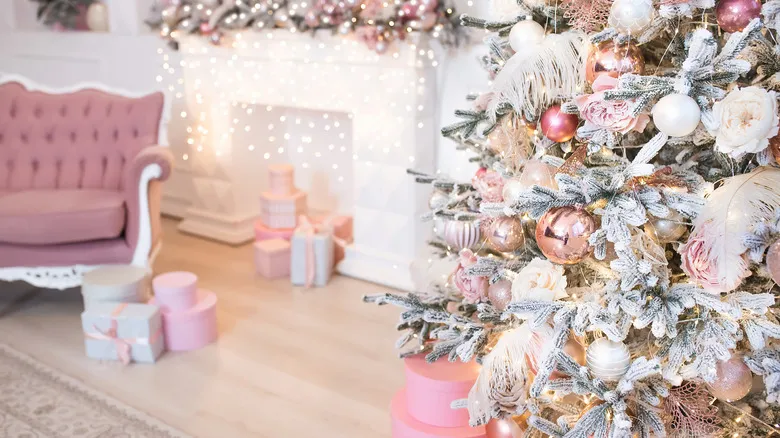
Pink is unforgiving. Cool pinks and warm rose golds fight each other under warm bulbs, so pick one temperature and stay there — this tree is entirely warm. Feathers shed, glitter transfers, and pale ornaments show dust and fingerprints, so budget for a lint roller in the drawer. If you have toddlers or a cat who climbs, keep the flocking and feathers above the 3-foot line and go shatterproof below it.
11. One Glittery Red Ornament, Up Close
Loose glitter is the tax you pay for this look. Glitter-shedding ornaments can be sealed with a light mist of hairspray from 12 inches away — let them dry completely before hanging — and interior-glitter ornaments give you the same sparkle with none of the mess. Store glitter pieces in tissue, not a shared bin, or every ornament you own will be lightly frosted by January.
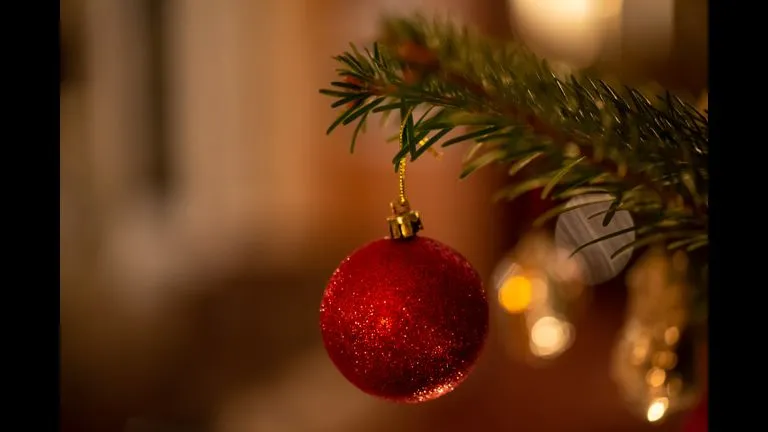
It’s the gold cap and string, not the glitter. A cheap ornament with a plastic cap and a bent wire looks cheap no matter how much glitter is on it; a real metal cap with a tidy gold loop makes a $3 bauble read as boutique. If you’re buying in bulk, check the caps first. It’s a two-second upgrade that nobody consciously notices and everybody feels.
12. Candy-Cane Balloons and Giant Red Spheres
Roughly 55% green tree, 30% red, 15% silver-gold-white — with the red split between the branches and the floor. That floor vignette is the part people forget to plan, and it’s what makes the tree feel like an installation instead of furniture. Swap the red spheres for matte white ones and the whole thing turns quiet and wintry; swap them for pink and you’re in candy-shop territory.

Oversized plastic spheres are $8 to $15 at party stores and Walmart, and they’re the cheapest way to buy visual weight — one 12-inch ball does more than a dozen small ornaments. Candy-cane balloon kits run about $12. A plush white rug can be an IKEA faux sheepskin at $30, and a thrifted cake stand finishes the scene. The whole floor moment lands under $100 if you shop it right.
13. Deep Red Velvet Bows and a Gold Star Topper
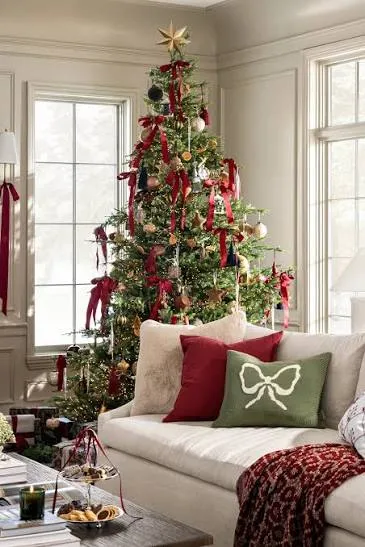
The small framed photos and tassels. This tree is a scrapbook disguised as decoration — dried orange slices, framed pictures, and little hand-tied things tucked between the gilded spheres. Take those away and you have a beautiful, generic red-and-gold tree that could belong to anyone. The personal pieces are the only reason it belongs to someone specific.
- Cut 20 inches of 2.5-inch wire-edged velvet ribbon
- Fold both ends to the center and pinch
- Wrap 24-gauge floral wire around the pinch six times
- Fan the loops and trim the tails on a diagonal
- Wire the bow onto a branch instead of hooking it
About 6 minutes per bow and roughly $8 of ribbon for a dozen.
Designer velvet bows run $10 to $18 each, which adds up fast when you want fifteen of them. A $12 roll of wire-edged velvet makes about fourteen bows, so you’re paying under a dollar apiece plus floral wire. The gilded spheres can be thrifted or bought as shatterproof multipacks, and dried orange slices cost pennies if you slice and bake them yourself at 200°F for three hours.
14. Gold on Gold, Decorated Branch by Branch
When the palette is one color, scale does the work color normally does. For every large 4-inch bauble, hang two 3-inch ones and three 2-inch ones nearby, and keep similar sizes at least a hand-span apart. Champagne floral picks should sit next to a light cluster, not in a gap — metallic picks only come alive when something is shining through them.
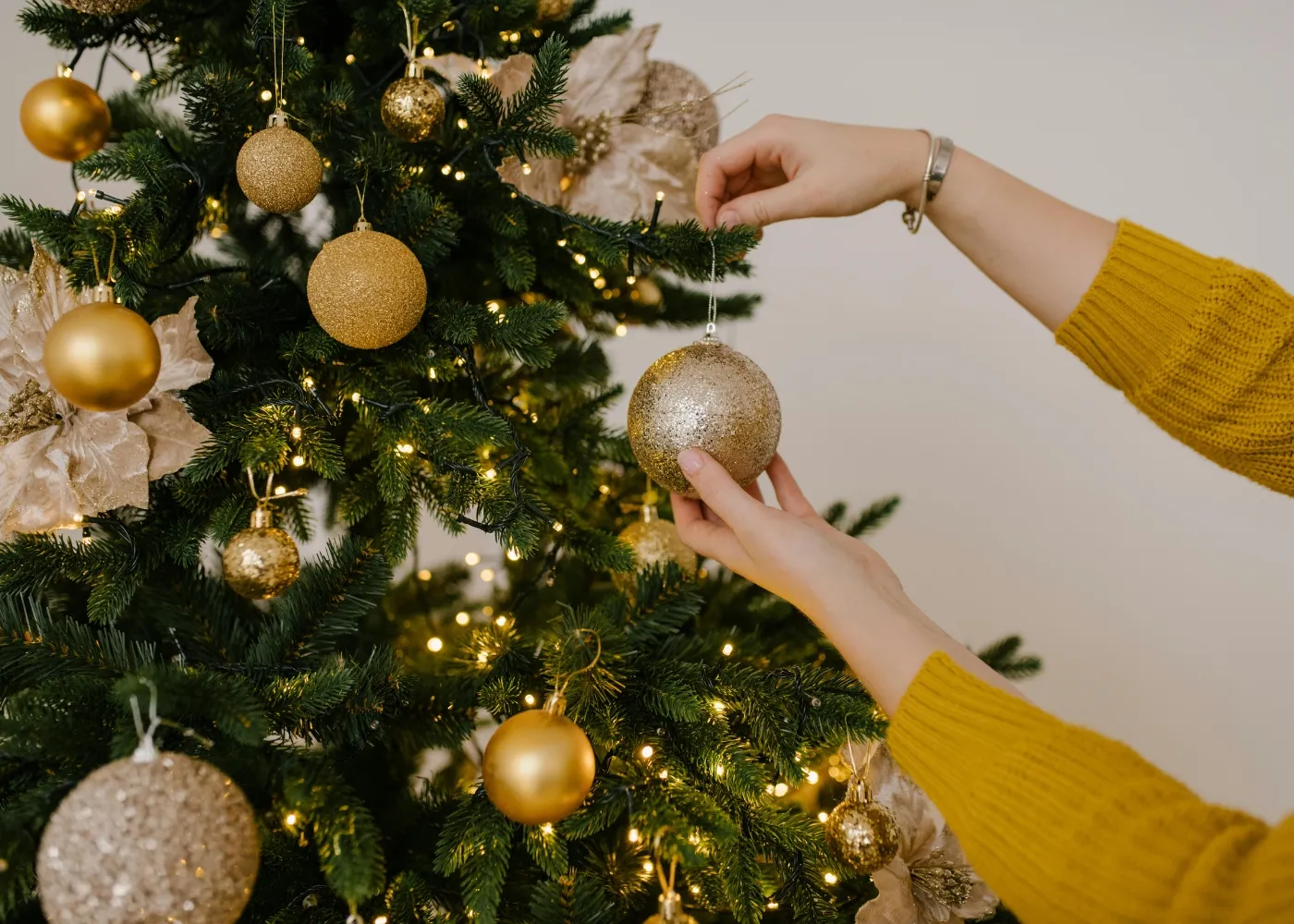
Leave 6 to 12 inches between the topper and the ceiling. With a standard 9-foot ceiling that means a 7- to 7.5-foot tree; with 8-foot ceilings, a 6.5- to 7-footer, and honestly skip the topper. If you have taller ceilings and want this gold-on-gold effect at full scale, Idea #8 shows what a 9-footer with a wide base can carry.
15. Matte Red Baubles and Star-Cutout Tinsel
Tinsel is back, and not ironically. The kitsch revival has people digging vintage garlands out of grandparents’ basements and buying new star-cutout versions that photograph like confetti. It’s partly nostalgia and partly economics — tinsel covers a lot of branch for very little money. Unlike most micro-trends, this one has forty years of proof behind it: it never fully went away, it just went quiet.
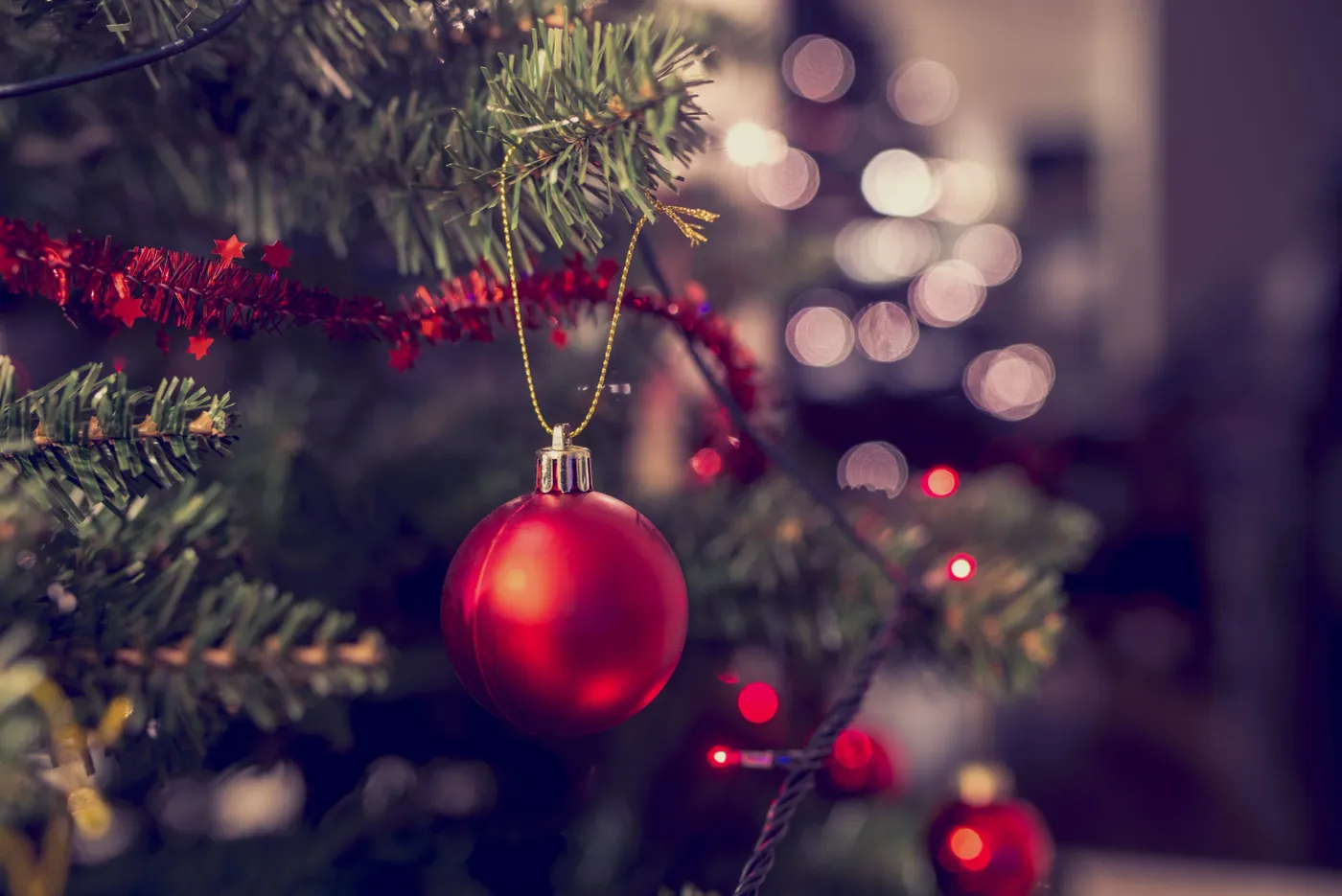
Every red element has a different finish: matte bauble, shiny tinsel, small red lights, gold string. That’s what keeps a two-color tree from going flat. The star cutouts are the clever bit — they punch holes in the garland so green shows through, which stops the tinsel reading as a solid red band. And the visible gold hanger thread makes the whole thing feel handmade rather than merchandised.
16. A Single Glossy Red Ornament With Water Droplets
A live tree drinks about a quart of water per inch of trunk diameter every day during the first week, and a dry tree drops needles on everything below it, ornaments included. Sap is the other issue: it bonds glass to metal caps and stains ribbon. Wipe caps with rubbing alcohol at the end of the season, and keep the stand reservoir topped up every morning and the tree at least 3 feet from any heat source.
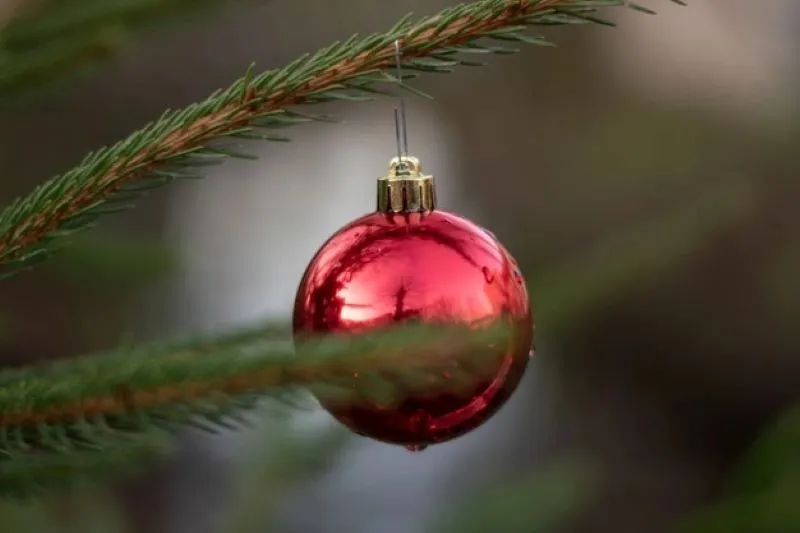
On a live tree, hang with ribbon loops instead of metal hooks. Hooks slide off wet, drooping branches and take glass with them. Heavy glass ornaments belong on the inner third of a branch, close to the trunk where the wood is strongest, and anything breakable should hang no lower than knee height — that’s where vacuums and dogs live.
17. Gold Ribbon and a Gilded Mirror Behind the Tree
70% evergreen, 20% gold (ornaments, woven ribbon, garland accents), 10% cream and white from the mantel and mirror frame. Swap gold for brass and the room reads a decade earlier; swap it for silver and the corner turns cool and formal. Keep the ratio and you can change the metal without changing the mood. Notice the ribbon is woven through the branches rather than draped across the front — that continuity is what separates this from a tree with a bow stuck to it.
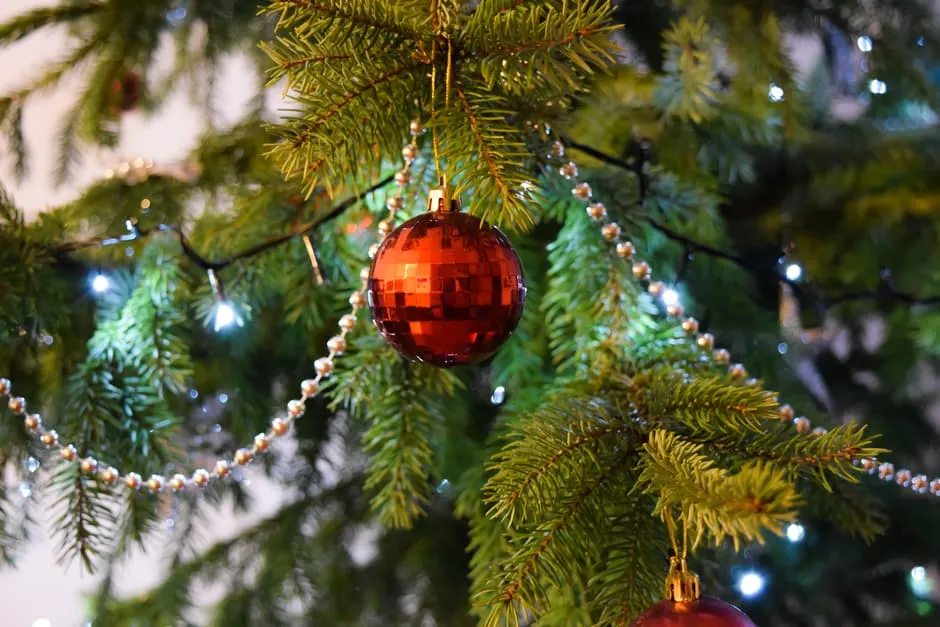
The mirror. It doubles the tree, bounces string lights back into the room, and turns a corner that would otherwise be a dead end into the center of the house. Take it away and you have a lovely tree in a dark corner. It’s the most underrated Christmas decorating move there is, and it costs nothing if you already own one.
18. Flocked Tree, Primary Colors, and a Burlap Skirt
Four colors on a flocked tree is one color away from chaos. Red, gold, and silver are all safe; blue is the wildcard, and it only works here because the blue ornaments are small and few. Keep blue under 10% of the total and cluster it rather than scattering it. Burlap sheds, so put a felt pad under the skirt if you have wood floors and shake it out over a bin before you lay it down.

Burlap runs about $8 a yard at a fabric store, or cut up a thrifted coffee sack for $3. Shatterproof ornament multipacks are $20 for 50 at Walmart and Target and are indistinguishable from glass at three feet. If you already own a green tree you love, a can of flocking spray ($12 to $18) plus a steady hand gets you most of the way — practice on the back first.
19. Evergreen Branches Wrapped in Warm String Lights
The bulbs are buried, not draped. Tucking each light against the trunk and letting the glow filter through two layers of needles creates that soft, candlelit density — a strand laid on the outside of the branches just looks like a strand on a tree. The dark background does the rest. Warm light against near-black is the oldest trick in the book and it still beats everything.
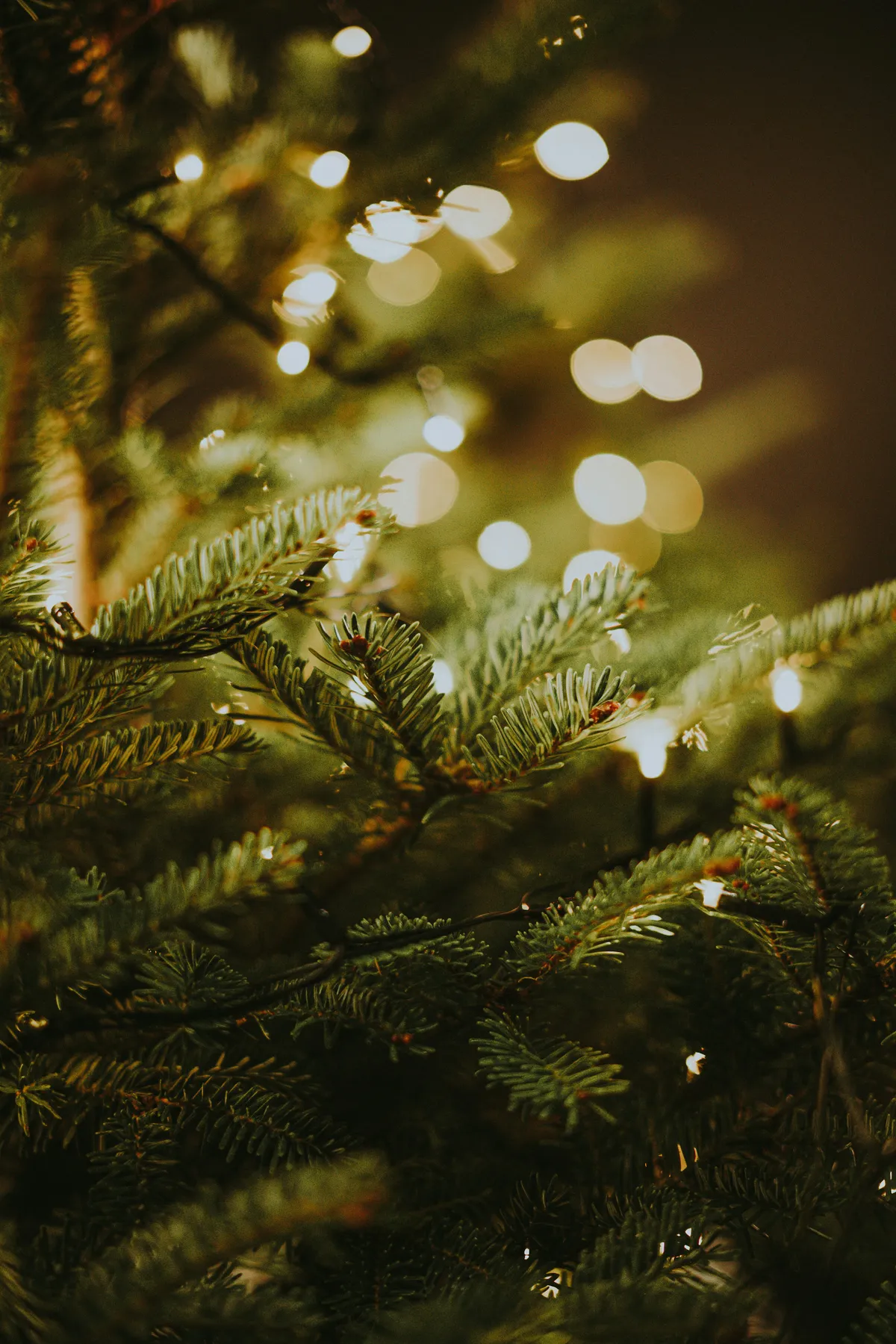
- Start at the base of the trunk with the plug end
- Wrap the trunk a few times, then work outward along one branch
- Tuck each bulb against the wood, about 6 inches apart
- Return to the trunk and repeat on the next branch
- Work bottom to top so you never reach through lit branches
Budget 100 lights per 1.5 feet of tree height and about 45 minutes for a 7-footer.
20. Hot Pink Marble Staircase Meets a Candy-Colored Tree
This is retail-as-theater, and it’s leaking into homes through dopamine decor — high-saturation pink, acid green, marigold yellow, arranged like a set. Stores figured out that a tree people photograph is a tree people post, and the 2026 home version borrows the logic: one oversized color moment instead of a tasteful spread. It will date, and it will be fun the entire time.
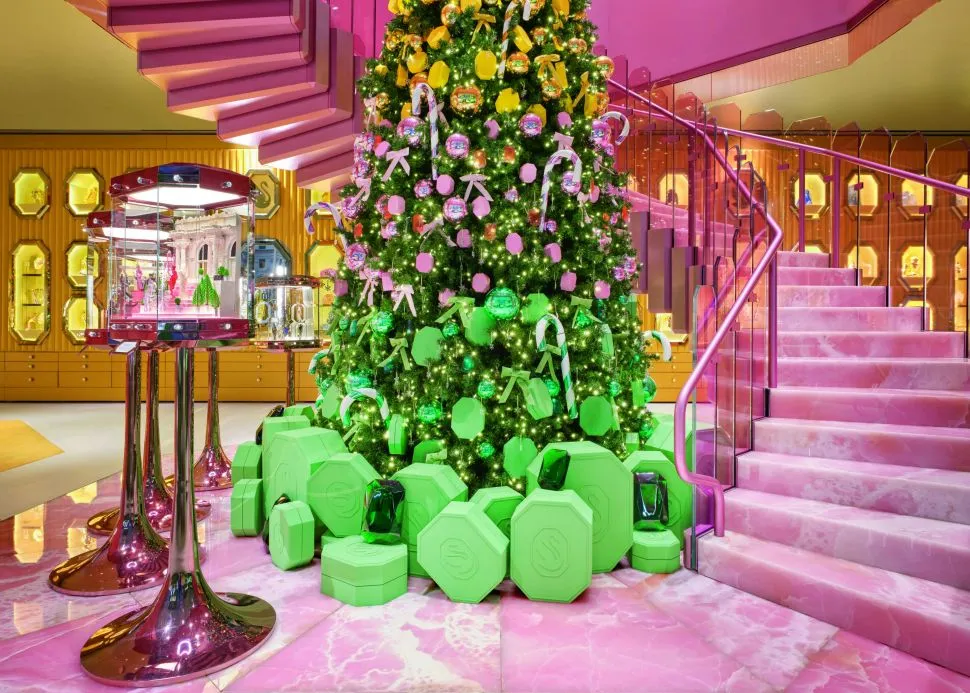
Be honest about volume. The full version needs double-height space, a staircase, and room to walk around the tree — call it 300 square feet minimum with 10-foot ceilings. At home, translate rather than copy: one oversized geometric display box, a cluster of 12-inch baubles, and a single saturated color will do it in a 12×14 room. For a home-scale pink tree, see Idea #26.
21. Wooden Mitten Ornaments and Cream Ribbon
- Cut 3 yards of 1.5-inch ribbon per pass
- Anchor the end deep near the trunk with floral wire
- Weave in and out of branches in loose 12-inch waves
- Pin every 18 inches so it can’t sag
- Finish by tucking the tail into the branches, not tying it
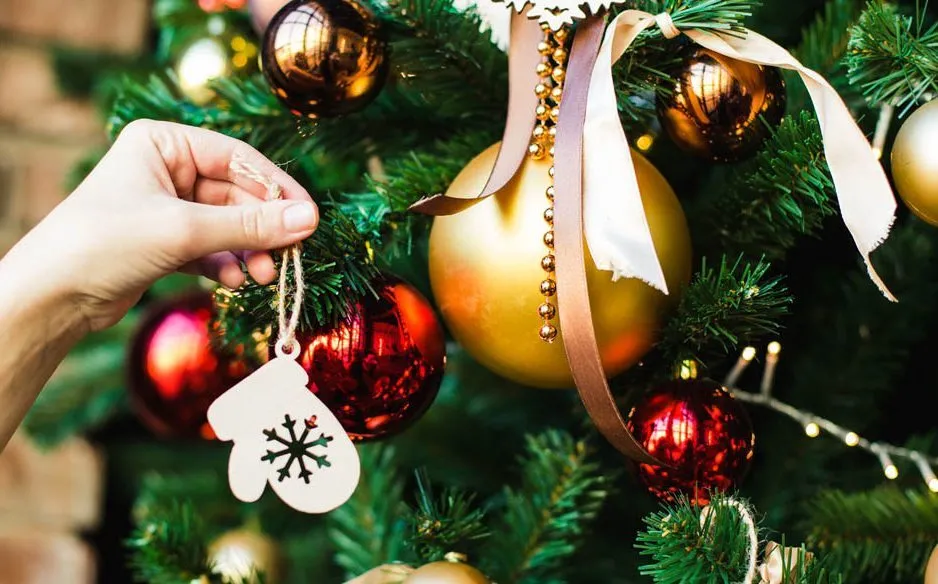
Two passes on a 7-foot tree takes about 30 minutes and one $20 spool.
60% green, 25% red, 10% gold and bronze, 5% cream ribbon. The bronze is the sleeper — reflective bronze ornaments catch warm light and add depth without introducing a new color. Swap bronze for copper and the tree gets warmer and more rustic; swap it for pewter and the palette cools off. The cream and brown ribbon is what keeps the red from turning into a Valentine’s display; it’s a neutral that isn’t white, which is exactly why it reads expensive.
22. A Glittered Nutcracker Guarding the Tree
- 4 ft wooden nutcracker: $60–$250
- 6.5 ft tree: $90–$350
- Assorted ornaments: $40–$120
- Warm white string lights: $15–$40
- Teal wrap and gold ribbon: $18–$35
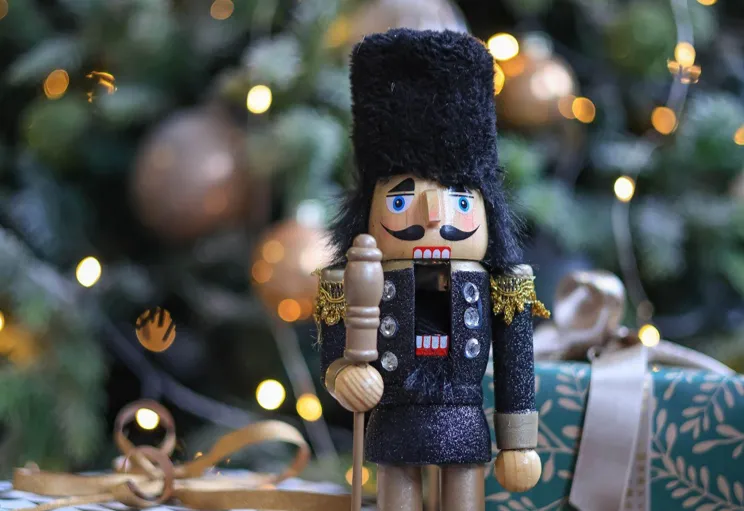
Total: roughly $223–$795
Budget alternative: Marketplace and estate sales turn up wooden nutcrackers for $20–$40, and dollar-store wrap under a good gold ribbon is indistinguishable once it’s under the tree.
Tall nutcrackers are top-heavy and they tip. Put yours on a flat, non-slip base or against a wall rather than at the edge of a rug, especially with a dog or a toddler in the house. The glitter finish collects dust and shows fingerprints, so keep a soft brush nearby. And check the paint on older imported pieces — some finishes you don’t want a teething kid chewing on.
23. Faux Fur Tree Skirt With Green-Ribboned Gifts
Faux fur is a magnet for needles, glitter, and pet hair. Vacuum it weekly with an upholstery attachment on low, spot clean with a foam cleaner rather than soaking it, and store it in a cotton bag — plastic traps moisture and matts the pile. Expect to replace a cheap one every three or four years; a decent faux fur with a real backing will outlast the tree standing on it.
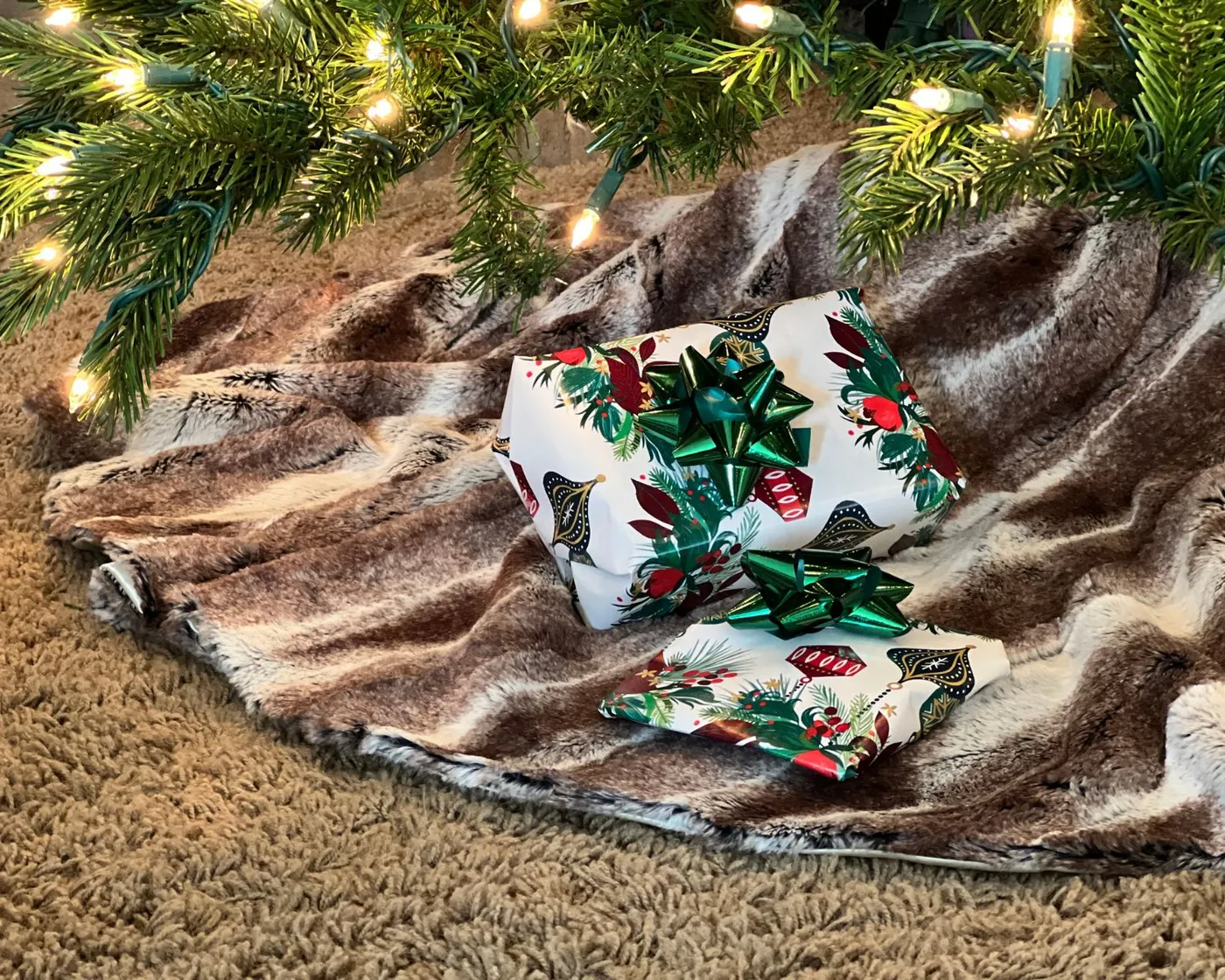
The skirt. It hides the stand, finishes the floor, and turns a pile of gifts into a scene. Without it, even a beautifully decorated tree looks like it’s standing in a bucket — because it is. A skirt is the difference between a tree that’s decorated and a tree that’s styled, and it’s the cheapest part of the whole setup.
24. Silver Baubles and Beaded Garland on Green
65% green, 25% silver, 10% warm light. That’s it — and the light is the variable people get wrong. Silver against cool white bulbs goes icy and slightly cheap; against 2700K warm bulbs it looks like candlelight on metal. If you want the icy version on purpose, commit to cool bulbs and lean in, but don’t mix the two on one tree.
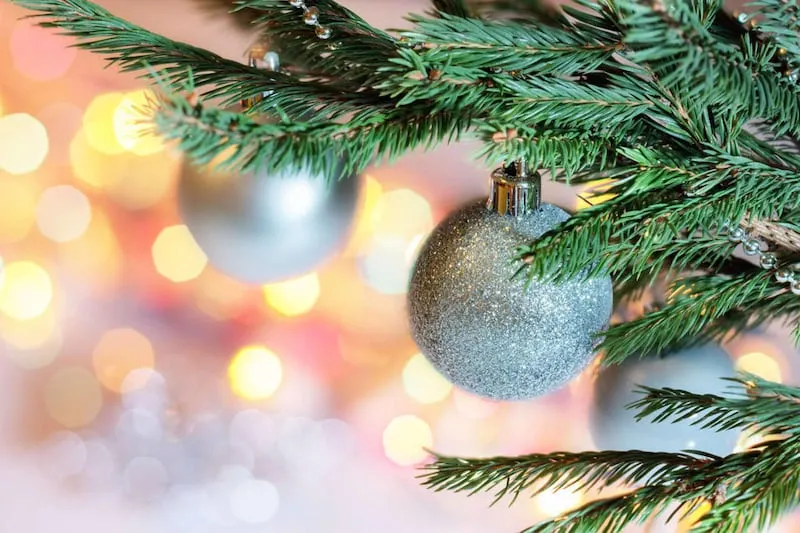
Beaded garland should swag, not spiral. Pin the end near the top, drape down in an uneven U, pin again, repeat — three or four swags per side, secured every 18 inches with floral wire. Plan on 9 feet of garland per swag on a 7.5-foot tree, which is why one strand is never enough and two always looks better than one.
25. A Completely Bare White Flocked Tree
A bare flocked tree has nothing to distract from its proportions, so the numbers matter more than usual. Look for a 7.5-foot tree with a base spread of at least 4 feet, place it 18 inches off the wall so the flocking reads in silhouette, and give it a room with pale walls and real daylight — this look dies in a dark corner. Compare with Idea #4, which solves the same problem with a window instead of a wall.
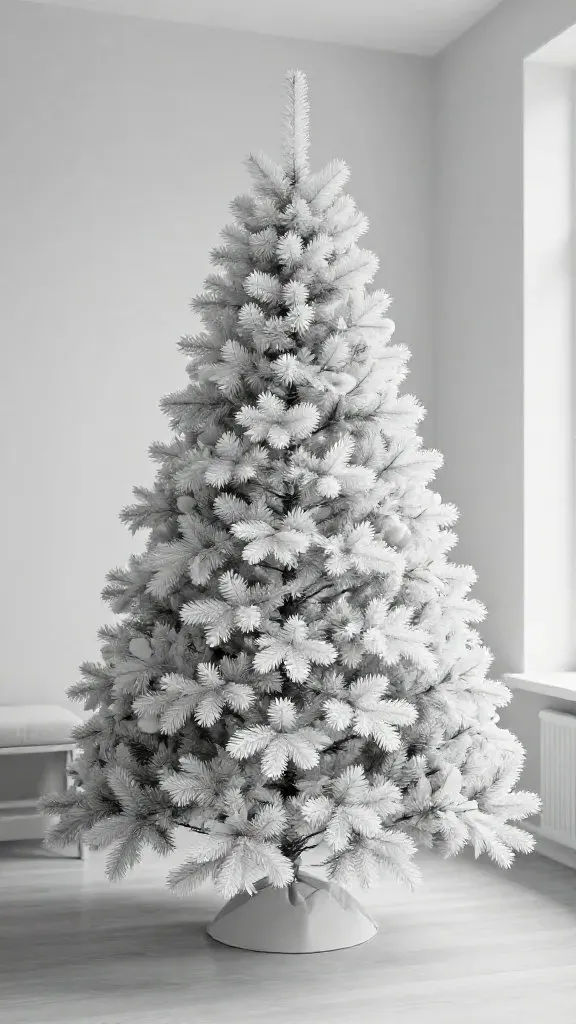
A good flocked tree runs $300 to $600, which is a lot for something with no ornaments on it. A can of snow spray or flocking powder costs $12 to $20 and will transform a $40 thrifted tree in an afternoon — work in sections, spray from 12 inches, and let it cure for 24 hours before standing it up. Skip the very cheapest cans; they yellow.
26. Hot Pink Stars on a Snowy Flocked Tree
Hot pink against white flocking is high contrast without any darkness — that’s rare, and it’s why this tree looks cheerful instead of heavy. The star ornaments break up the round shapes, which matters more than you’d expect after thirty spheres in a row. The rustic wood table in the background does quiet, unpaid labor: it keeps all that pink from floating off into candy land.
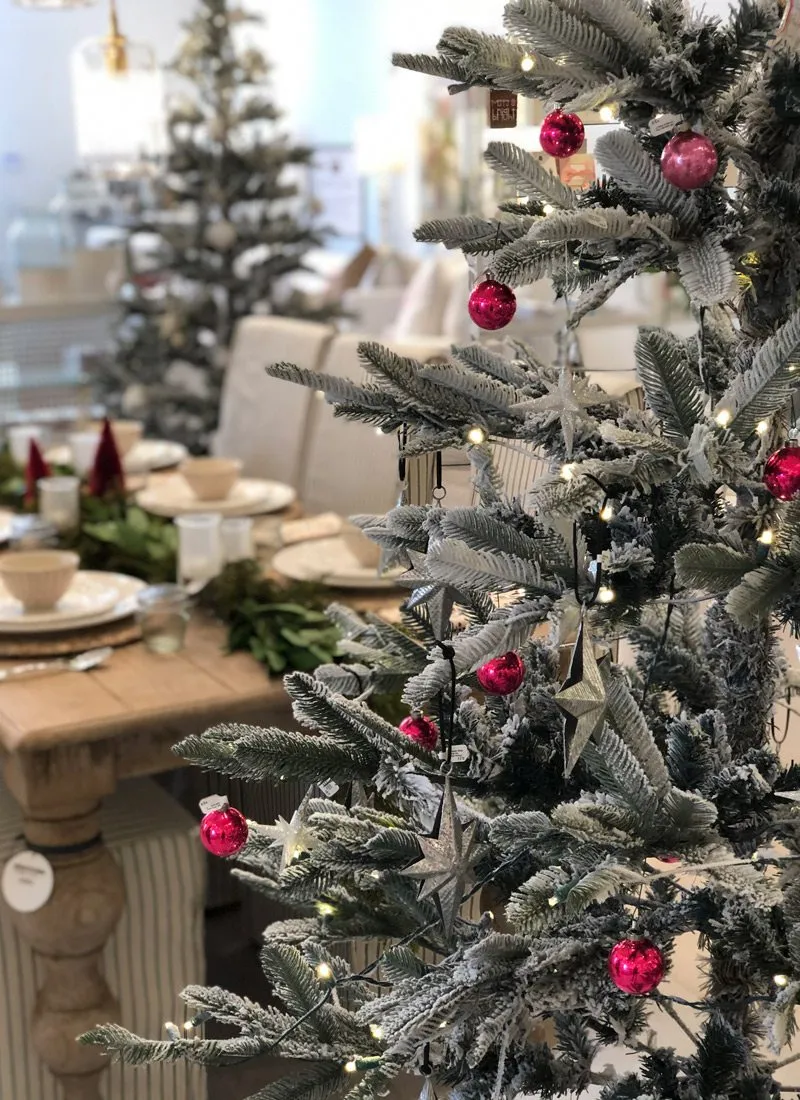
Pink flocked trees photograph better than they live. Flocking picks up color cast from the ornaments, so a white-flocked tree full of hot pink will look faintly pink itself by mid-December, and it can’t be washed. Keep the surrounding room neutral, keep the tree out of direct sun, and accept that this is a two-to-three-year look rather than an heirloom.
27. One Oversized Gold Ornament in the Glow
One oversized ornament per 2 square feet of visible tree face is the limit before it starts looking like a bubble machine. A 6- to 8-inch piece needs clear space around it — at least 6 inches of plain branch — or it’s just another ball. Hang it right beside a light cluster and let the glitter reflect; gold glitter in shadow looks like brown paper.
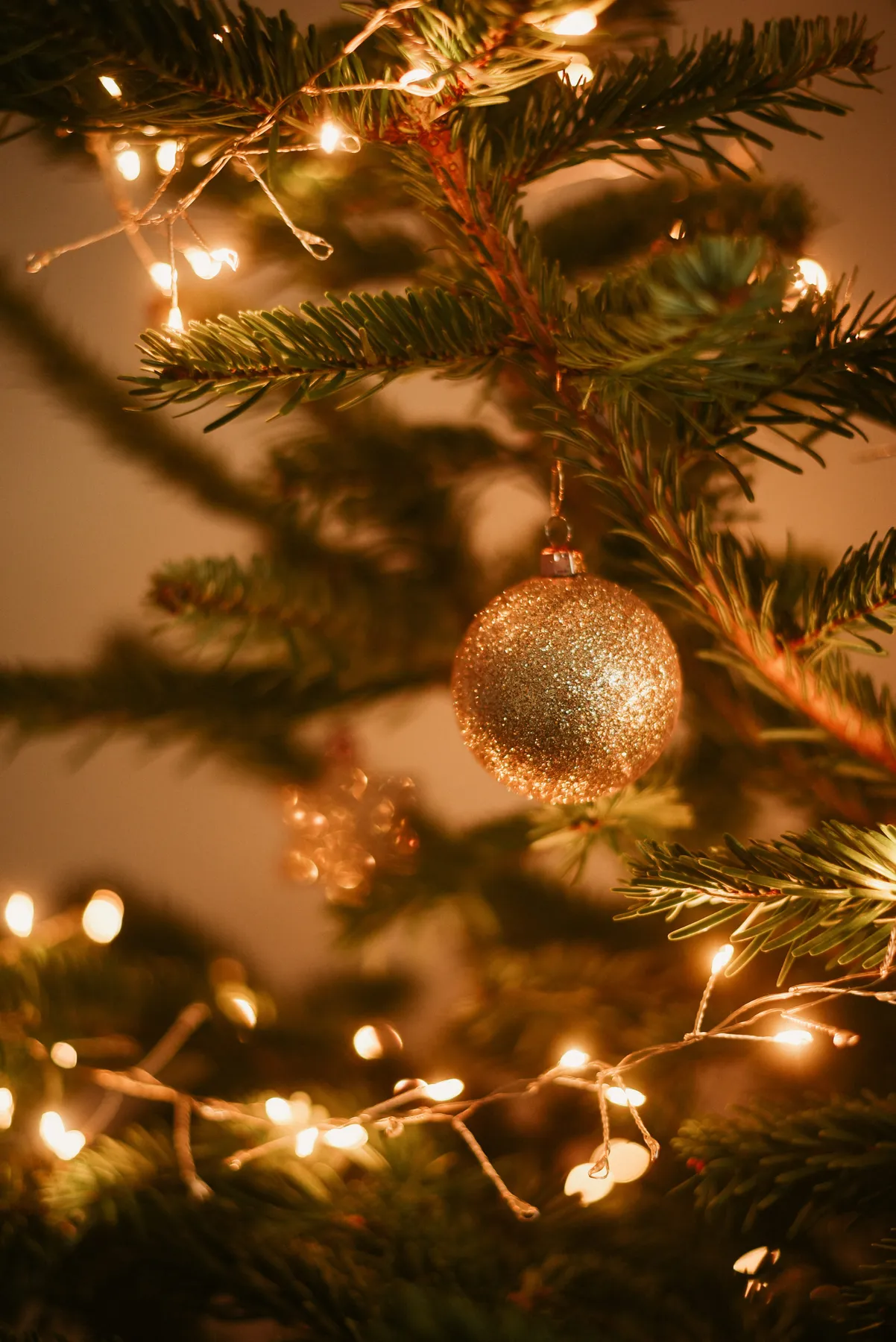
Glitter ornaments shed for the first two seasons, then settle down. Interior-glitter glass gives you the same effect with no fallout and is worth the extra few dollars if your tree sits over a rug you care about. Dust dulls gold faster than anything else — a quick pass with a dry microfiber cloth at the start of the season brings the shine right back.
28. Striped Felt Ornaments and a Rustic Joy Tag
- Cut two 4-inch felt circles per ornament
- Lay thin contrasting strips across one circle
- Sandwich with the second circle and pin the edges
- Blanket-stitch around the edge with embroidery floss
- Add a twine loop before closing the last inch
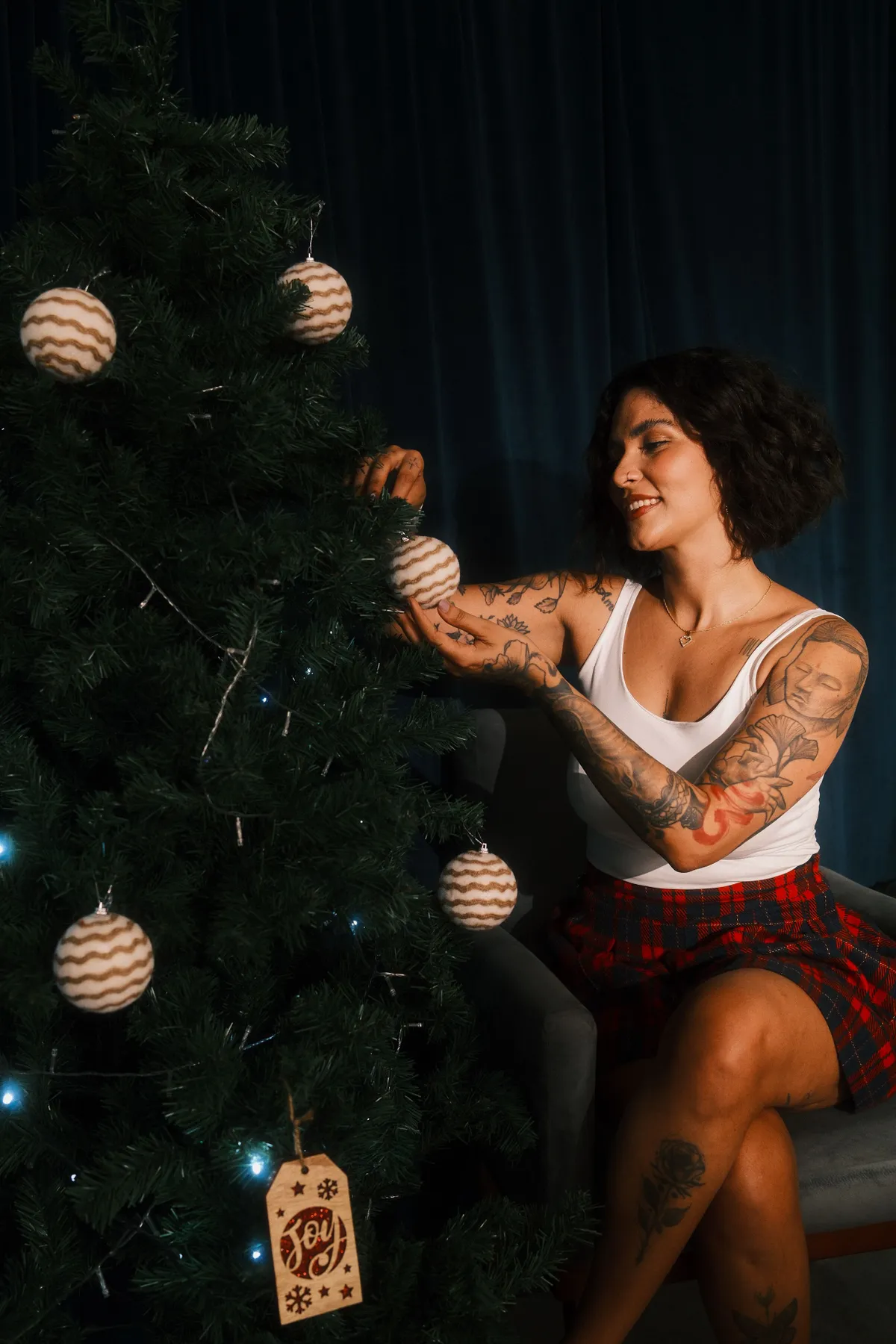
About 20 minutes each and roughly $8 of materials for a set of six.
The cool white fairy lights against that dark teal curtain. Everything on this tree is warm and handmade — felt, wood, twine, a glittered Joy tag — and the lights are deliberately cool, which makes the handmade pieces look softer and the greens deeper. Flip those bulbs to warm and the whole tree goes muddy. The backdrop is doing half the work.
29. Lobsters, Cocktails, and a Hawaiian Santa
Novelty ornaments are where department stores charge $18 for a resin lobster. Dollar stores, Target’s summer clearance, and aquarium gift shops sell the same charm for $3 to $6, and thrift stores are full of odd vacation ornaments nobody else wants. A Hawaiian-shirt Santa figure is a $15 thrift find. Budget $40 total and let the collection grow one weird ornament at a time.
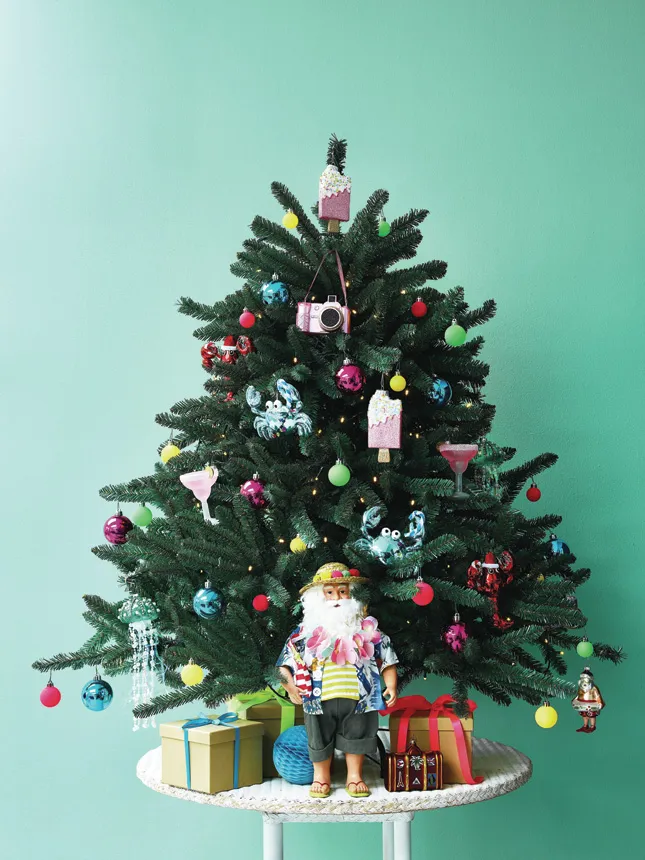
Coastal and tropical Christmas keeps growing because a huge share of the country doesn’t get a snowy December — and because kitsch maximalism is genuinely having a moment. The serious underpinning is personalization: ornament collections built from trips and inside jokes outlast any color scheme. Those beach-Christmas boards aren’t a backlash against tradition; they’re people making the holiday fit where they actually live.
30. The Day You Actually Assemble the Tree
- Sort branches by the color-coded tips, longest to shortest
- Insert the bottom row first, then work upward
- Fluff each branch from the inside out, separating every tip
- Bend tips upward and outward so they hold their shape
- Step back every ten minutes — front-lit fluffing hides gaps
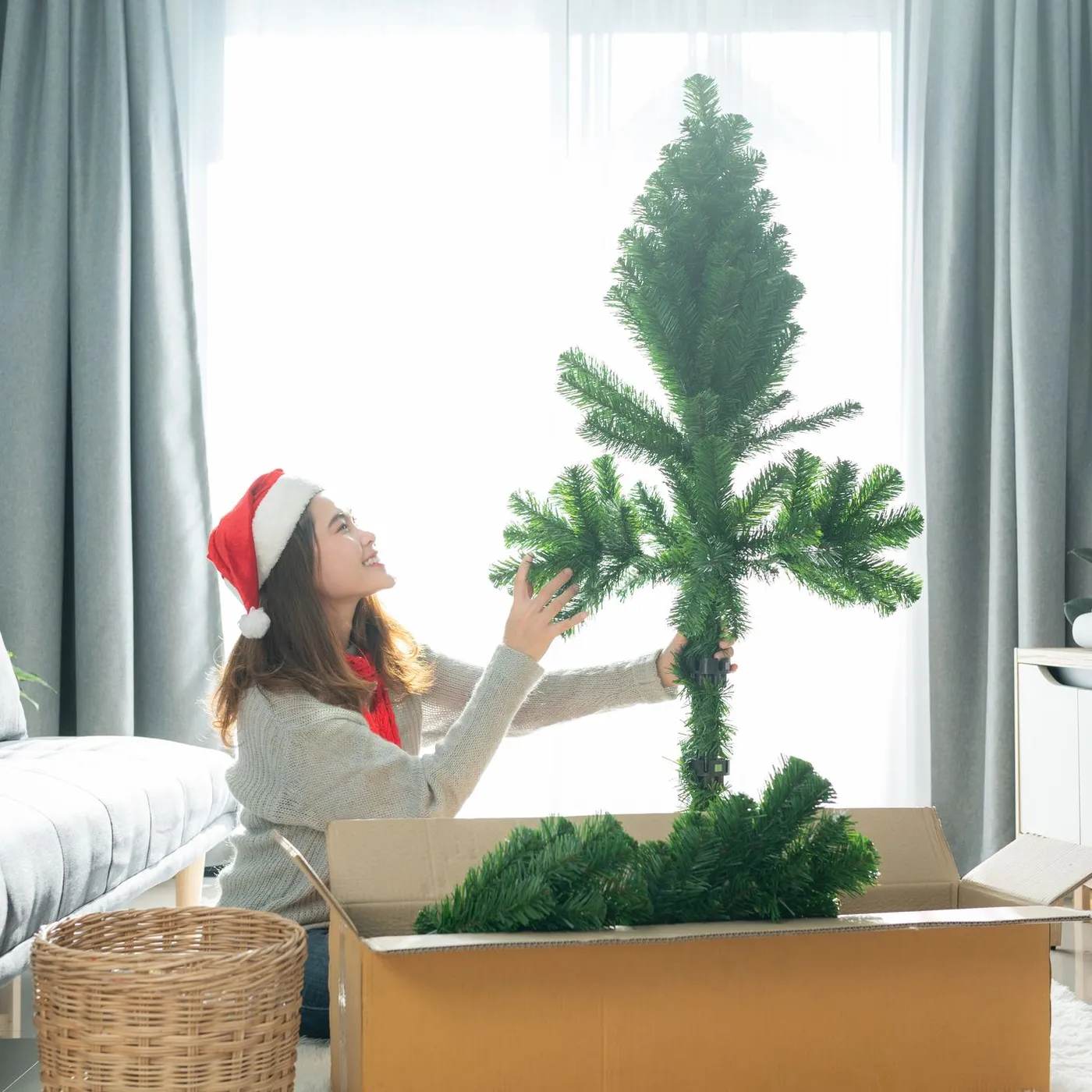
Plan 45 to 60 minutes for a 7.5-footer. Rushing this step is the real reason trees look thin.
Measure before you assemble: ceiling height minus topper clearance (6 to 12 inches) minus stand height (about 6 inches). An 8-foot ceiling realistically takes a 7- to 7.5-foot tree if you want a star. Clear a 5-foot-diameter circle for assembly, too — the box, the loose branches, and you need more floor than the finished tree will. For sizing the decorated result, see Idea #14.
31. Silver Tinsel, Blue Baubles, and Red Poinsettias
60% green and white, 25% silver and light blue, 15% red. The red never touches the tree — it lives entirely in the poinsettias at table height, which is why the tree stays calm and the room still feels like Christmas. Move those plants onto the branches and the whole scheme collapses into a jumble. Keep that temperature contrast and you can swap the poinsettias for red amaryllis in January.
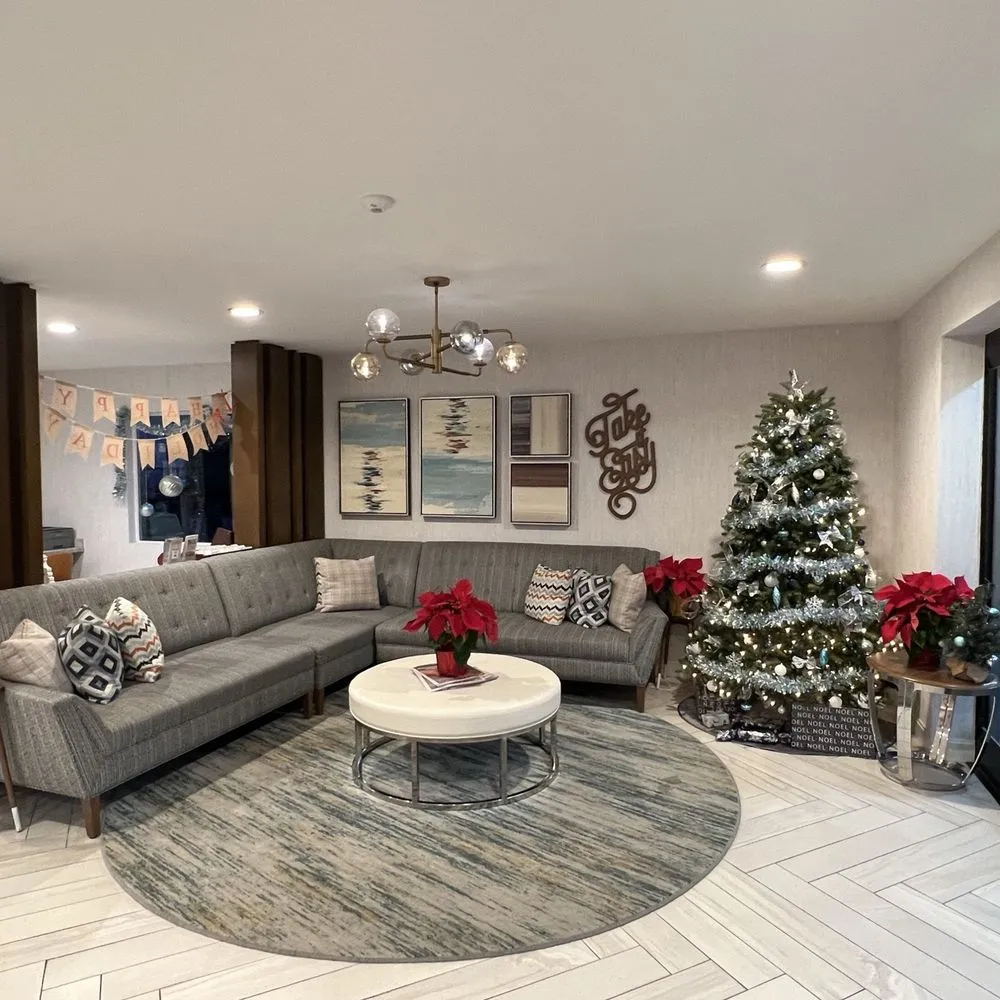
Poinsettias are the cheapest way to add a saturated accent to a neutral room, but they’re fussy about placement: six hours of indirect light, no drafts, never sitting in water. Take the foil off, let them drain, then put it back. Away from heat vents and doorways, a good plant holds its color for six to eight weeks — longer than most Christmas decor lasts.
32. Stone Fireplace, Leather Sofas, Plaid Throws
Material layering, not color layering. Stone, tufted leather, wool plaid, and faux fur all live in the same brown-beige-green family, so the room reads calm even with a hundred feet of string lights in it. The lights are layered too — tree, window garlands, mantel — which means no single bright spot competes for attention. Everything glows at the same low level.
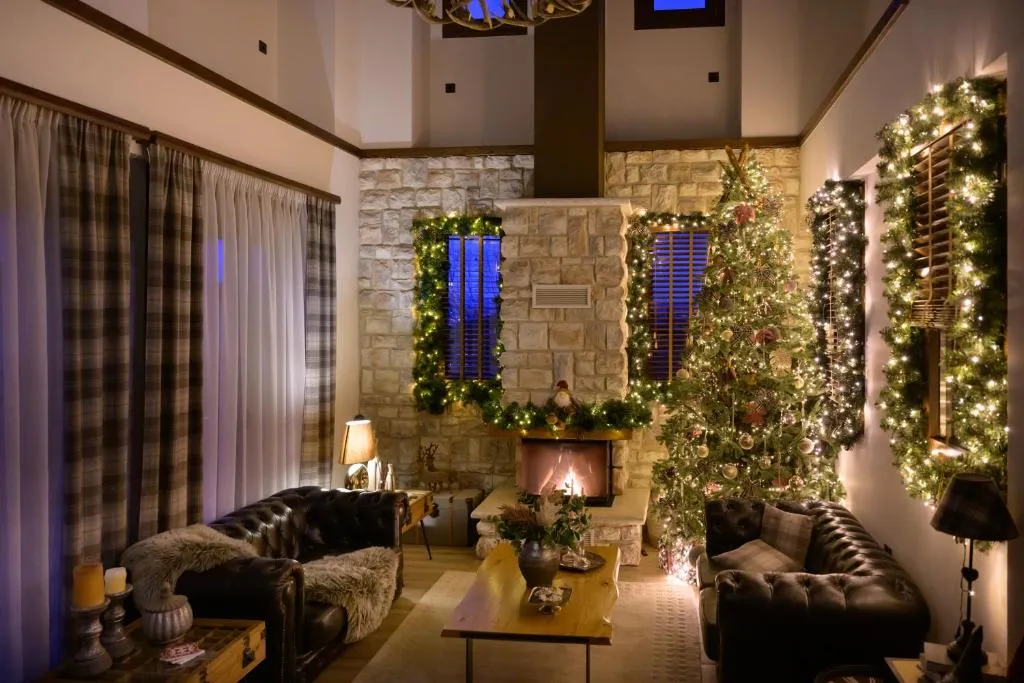
Cord math is the part nobody plans. A tree, two window garlands, and a mantel can easily hit 600 bulbs: run LEDs, and never daisy-chain more than three strands of incandescent lights. More importantly, a live tree next to a working stone fireplace is a genuine fire risk — keep at least 3 feet of clearance, and keep the fire small or off on the days the tree is lit.
33. Red Glitter Baubles With Pearl Garland Swags
The white pearl garland. Red and gold on green is the most reliable combination in Christmas decorating, which is exactly why it can go heavy — the pearls give the eye somewhere to rest between all that saturation. Without them the tree reads rich but slightly airless. It’s a $12 detail that changes the temperature of the whole display.
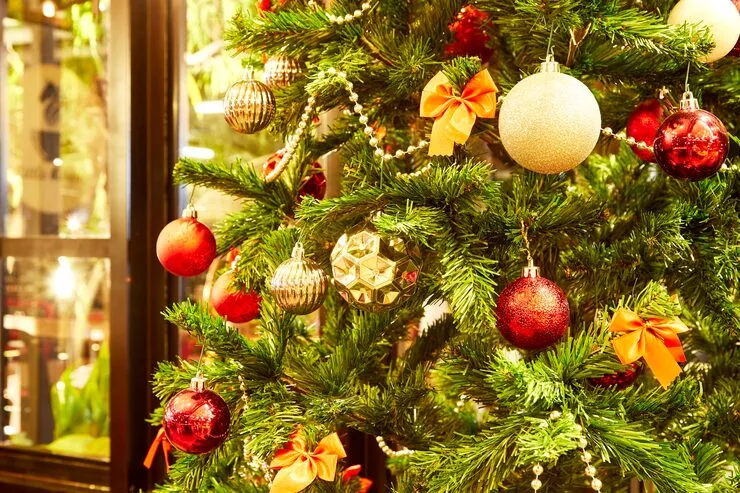
- Start the strand two-thirds up the tree, not at the top
- Drape in a shallow U, roughly 14 inches deep
- Pin the low point with a bent floral wire
- Reverse direction and drape the next swag
- Keep swags slightly uneven — perfect symmetry reads fake
One 15-foot strand covers about four swags. Budget 20 minutes and $12.
Before You Untangle Those Lights Again
Here’s the thing about Christmas trees: the ones people remember aren’t the most expensive or the most color-coordinated — they’re the ones with a point of view, whether that’s a bare flocked silhouette or a hundred jewel-toned birds hiding in the branches. Pick one idea from this list, commit to it fully, and skip the rest. Your tree will look better for the restraint, and you’ll actually enjoy decorating it. 📌 Pin your favorite version now — next December you’ll be glad you saved it.