You know that feeling when you find the perfect repurposed container idea on Pinterest, but have no idea how to actually make it work in your garden? We’ve all been there, endlessly scrolling, saving pins that never see the light of day. But that’s about to change. After filtering through hundreds of options from thrift store finds to garden center gems, we narrowed it down to the ideas that truly work. This isn’t just another list; it’s a curated guide to 32 genuinely clever and beautiful repurposed garden container ideas that you can actually create. We’re covering everything from rustic and natural styles to vibrant and whimsical arrangements, with options for every budget. In 2026, it’s all about sustainable style and infusing our outdoor spaces with personality, moving away from mass-produced perfection. And stay until the end — we break down the most common mistakes that can ruin these looks. 📌 Save this to Pinterest for later — you’ll want to revisit these ideas.
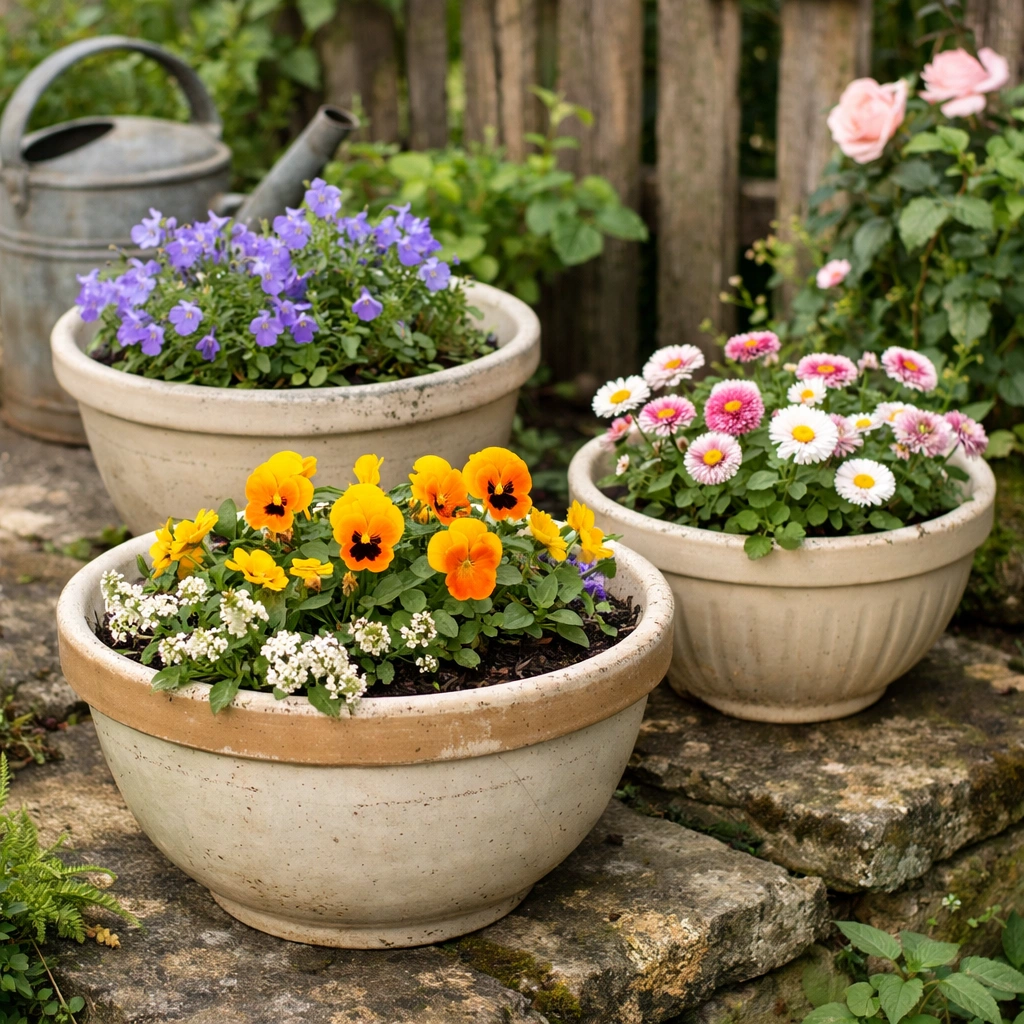
1. Neutral Glazed Pots with a Riot of Colorful Flowers
This look is all about the power of contrast. The serene, neutral-toned glazed pots provide a calm, cohesive base that allows the wild mix of flower colors—vibrant orange and yellow pansies, deep purple bellflowers, and soft pink daisies—to truly sing. It’s a classic design principle: a quiet background makes the foreground pop. The texture play is also key. The smoothness of the glazed ceramic is a beautiful counterpoint to the rough, layered stone steps and the weathered wood fence, creating a scene that feels both curated and completely natural.
💡 Designer Tip
You don’t need to buy expensive pots from a specialty garden store to get this look. Check out local thrift stores or Facebook Marketplace for old ceramic or stoneware pots that just need a good cleaning. You can often find them for $5-$15 each. For the flowers, consider buying seed packets for pansies and daisies for a few dollars instead of starts. With a little patience, you can fill three pots for under $30, a fraction of the cost of buying everything retail. The rustic watering can is another easy flea market find!
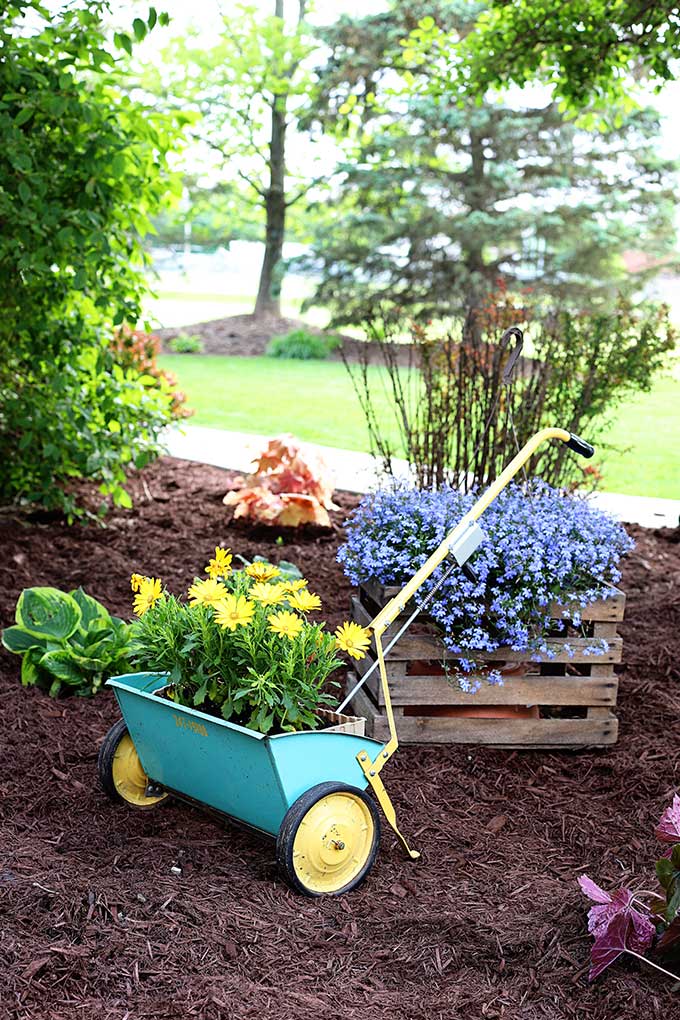
2. A Playful Garden Twist: Teal Spreader and Wooden Crate Planters
The single element that makes this idea unforgettable is the unabashedly cheerful teal spreader. It’s completely unexpected. Without it, you’d have a perfectly nice garden bed with a wooden crate. With it, you have a story and a huge dose of personality. It takes a purely functional farm tool and turns it into garden art that’s also a working planter. The choice of bright yellow daisy-like flowers is perfect, as they pop against the teal and echo the original color of the wheels, tying the whole playful concept together.
📐 Style Math
When repurposing metal items like this spreader, proper drainage is non-negotiable. Most old tools won’t have it built-in. Before you add any soil, drill at least five to seven 1/2-inch holes in the bottom. If the metal is thick, you’ll need a drill bit designed for metal. Then, add a 1- to 2-inch layer of gravel or broken terracotta pot shards before your potting soil. This ensures your plant roots never get waterlogged, which is the fastest way to kill a container garden.
3. The Art of Creating Cohesion with Mismatched Planters
The secret to a beautifully curated collection of repurposed planters lies in a simple formula: 50% unifying color + 30% varied texture + 20% surprise element. For example, half of your pots could be in the general terracotta or neutral family. Then, introduce different textures: one rusted metal bucket, one rough concrete block, one smooth glazed pot. Finally, your surprise element could be a single brightly painted container or an object with an unusual shape. This ratio keeps the collection from looking like a chaotic jumble, creating a sense of intention.
⭐ The One Thing
Let’s be honest: a collection of found objects can quickly look less like a charming garden and more like a messy pile of stuff. The key to avoiding this is editing. Not every cool old thing you find should become a planter. Step back and ask if the new piece complements the others in shape, scale, or color. Sometimes the best design decision is knowing what to leave out. If your collection starts feeling cluttered, it’s time to subtract an item or two. For a great example of well-matched materials, look at the stone and ceramic in Idea #0.
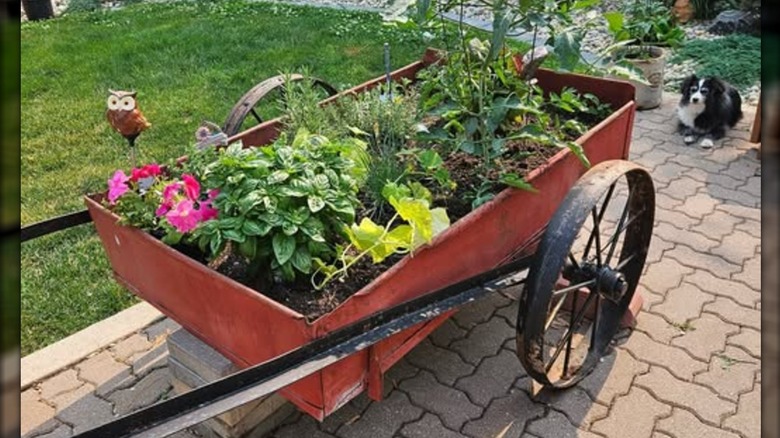
4. A Rustic Red Wagon Planter for a Patio Herb Garden
A classic red wagon brings such a nostalgic, rustic charm to a patio or garden space. Here’s a rough idea of what it would cost to put this look together from scratch.
✅ Before You Start
- Vintage Red Wagon: $50 – $150 (depending on condition and source)
- Assorted Herb Plants (Rosemary, Basil, etc.): $25 – $50
- Flowering Annuals (Petunias): $15 – $30
- Potting Soil & Gravel (for drainage): $20 – $40
- TOTAL: $110 – $270
Budget alternative: Find a wagon on the curb or at a yard sale ($10-$30), grow herbs from seed ($5), and buy annuals at the end of the season on clearance ($10). Total cost: around $50.
This idea is perfect for small to medium-sized outdoor spaces. You don’t need a sprawling lawn; a paved patio or a balcony of at least 6×6 feet would be sufficient to host the wagon without it feeling cramped. The ideal ceiling height is irrelevant since it’s outdoors, but make sure you have at least a 4-foot wide path around it for easy watering and access. This mobile planter works wonderfully in spaces where you might want to rearrange things, unlike the more permanent stacked chimney pot arrangement.
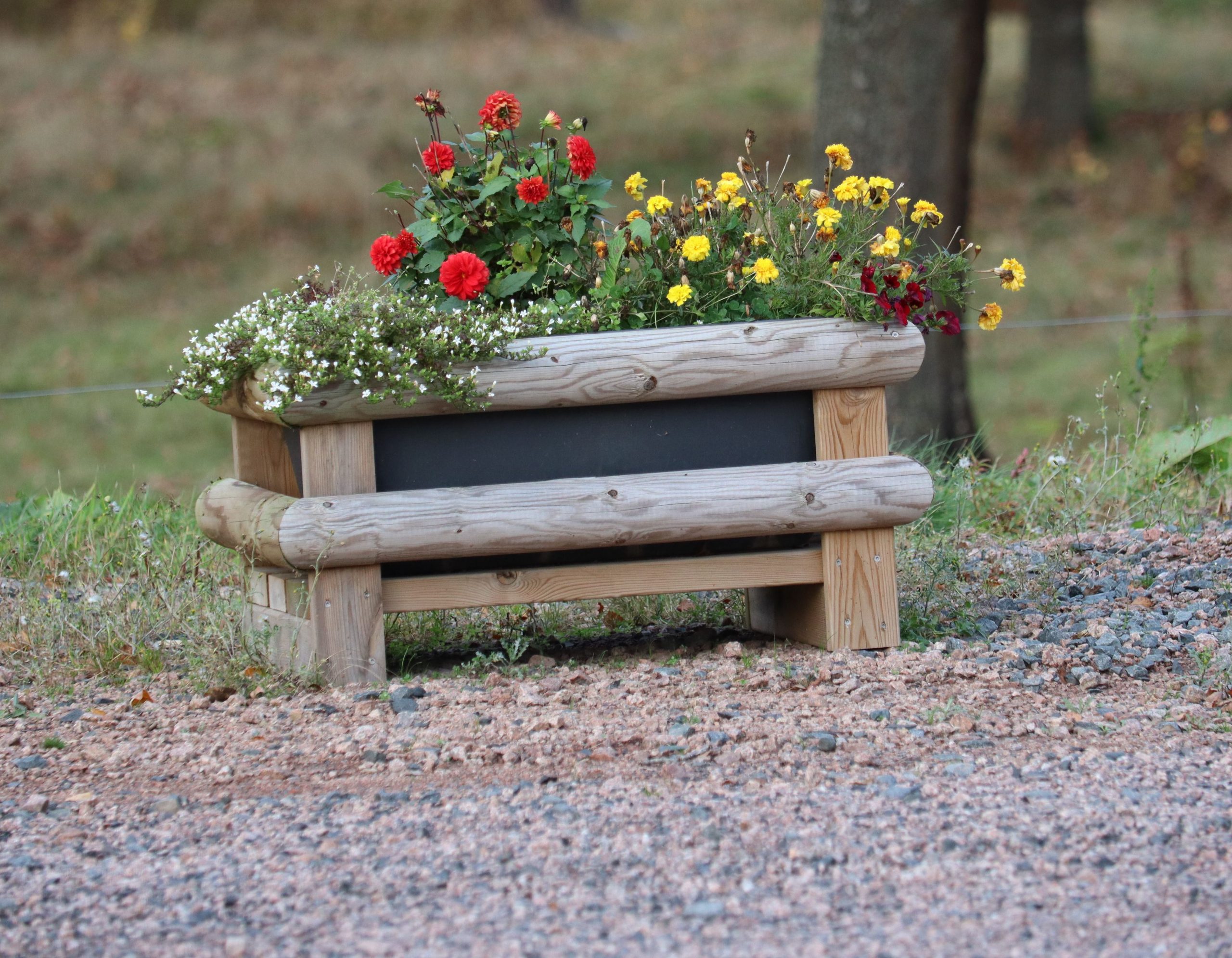
5. Rustic Log Planter Box Brimming with Colorful Mixed Flowers
This planter succeeds because it feels like it grew right out of the ground it sits on. The use of natural, light-colored wooden logs and planks connects it directly to the wooded background, making it feel like an integrated part of the landscape rather than a box placed on top of it. The vibrant mix of red, yellow, and white flowers creates a focal point, drawing the eye in, while the rough gravel ground cover provides a textural base that complements the rustic log construction. It’s a masterclass in using natural materials to create a statement.
🎯 What Makes It Work
A wooden planter like this is gorgeous, but it’s not a set-it-and-forget-it project. Untreated wood in direct contact with damp soil will rot. To get the longest life out of it, you must use a thick plastic liner (the dark liner is just visible here). Even with a liner, moisture will eventually get in. Expect to see signs of wear, fading, and weathering within a few years, which adds to the rustic charm. To preserve the wood, you could apply a clear water-sealant every 2-3 years, but be sure to use one that is rated as garden-safe for edibles if you plan to plant any.
6. Tiered Stone Steps Featuring Terra Cotta and Concrete Planters
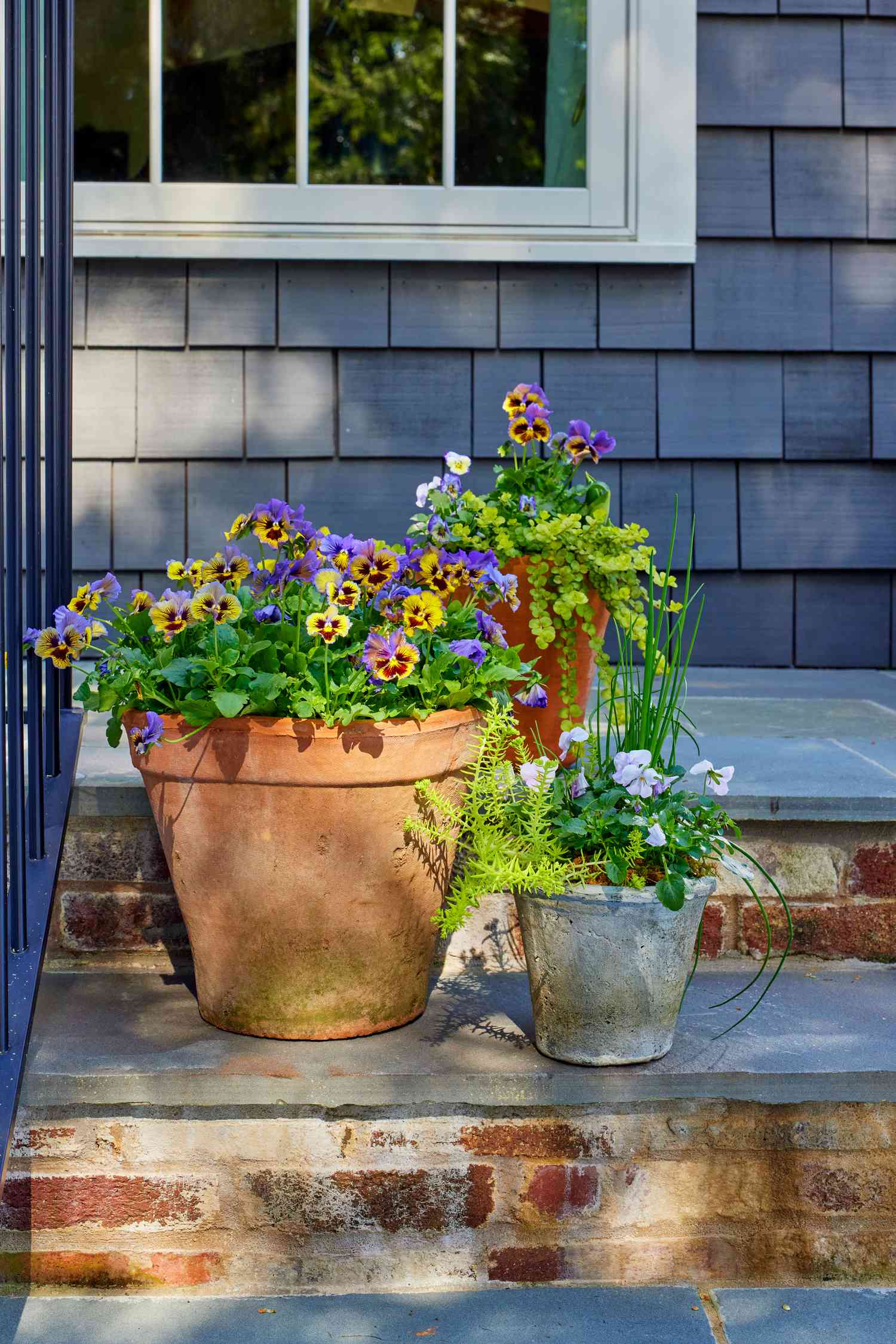
When arranging planters on steps, follow the
7. Arched Metal Greenhouse Frame as a Hanging Plant Gallery
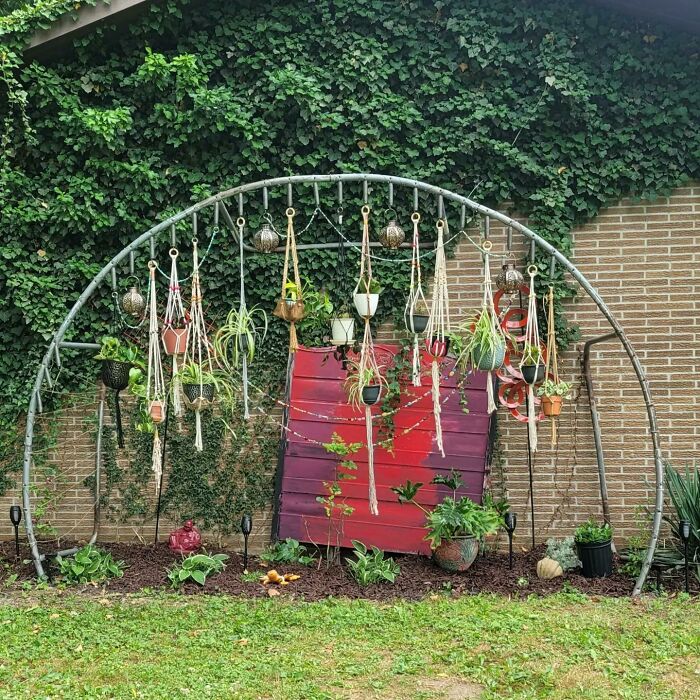
The single most transfixing element here is the arched metal frame itself. It imposes a grand, almost cathedral-like structure on what might otherwise be a simple brick wall. Repurposing a greenhouse frame as a gallery for hanging plants is a stroke of genius. It creates dozens of opportunities for vertical planting, drawing the eye upward and transforming a flat wall into a three-dimensional living art installation. The macrame hangers soften the industrial feel of the metal, while the painted wood panel adds a jolt of rebellious color.
🔧 How-To Brief
This idea is tapping directly into the 2026 trend of “structured wildness.” We’re moving beyond just a few scattered pots and are craving immersive, plant-filled environments. Pinterest is full of searches for vertical gardens and plant walls. This look takes that desire for lushness and gives it an architectural backbone. It reflects a cultural shift towards making our garden spaces as intentionally designed and personalized as our living rooms. This isn’t just gardening; it’s world-building on a small scale.
8. A Weathered Wooden Ledge with Rusty Hanging Bucket Planters
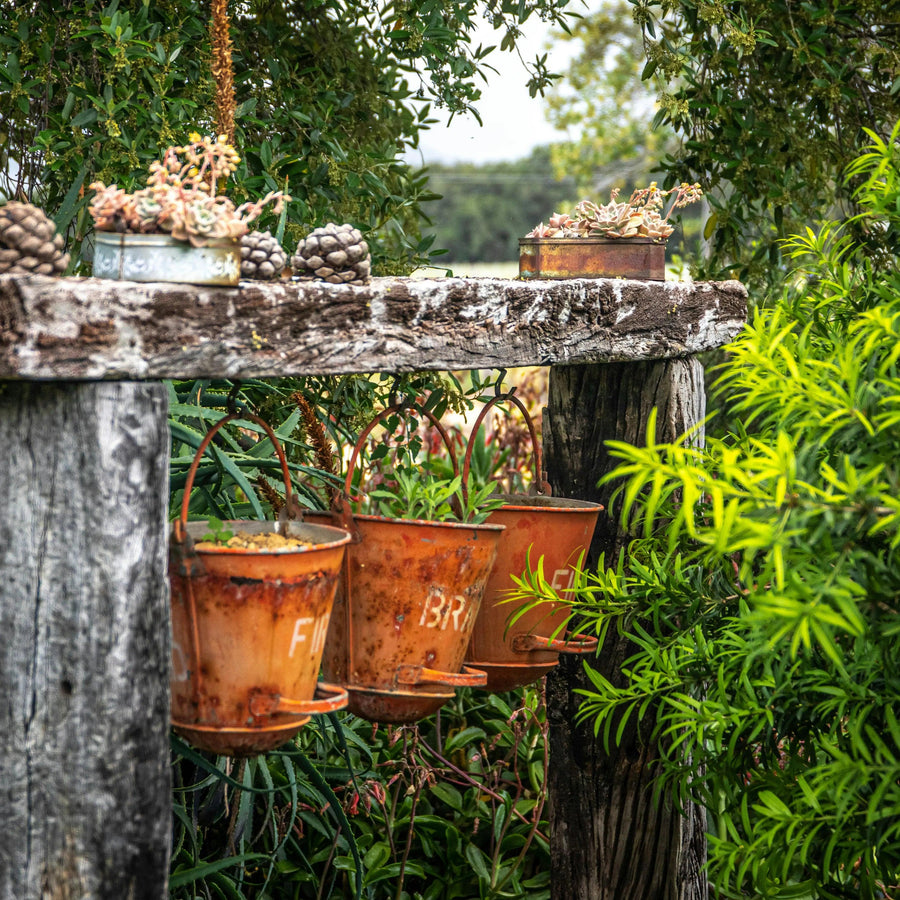
This design works so well because of its commitment to a weathered, rustic aesthetic through repetition and texture. The three rusted orange buckets create a strong visual rhythm, their corroded texture telling a story of time and use. This texture is echoed in the weathered wooden beam they hang from, creating a harmonious palette of decay. The contrast comes from the vibrant green plants, which signal life and renewal against the backdrop of rust and aged wood. The addition of pine cones and succulents adds another layer of natural texture, completing the organic feel.
💸 Get This Look For Less
While rusted metal has a certain charm, it also requires some management. The rust will flake and can stain surfaces below it, so this is best placed over a garden bed or gravel, not a pristine patio. Over time, the rust will eventually eat through the metal, especially at the bottom where moisture sits. To slow this process, ensure excellent drainage by drilling plenty of holes. You can also coat the inside with a clear sealant, but that can detract from the purely upcycled look. Expect to replace the buckets every 5-7 years.
9. Playful Figurine Planters for Colorful Fittonia Plants
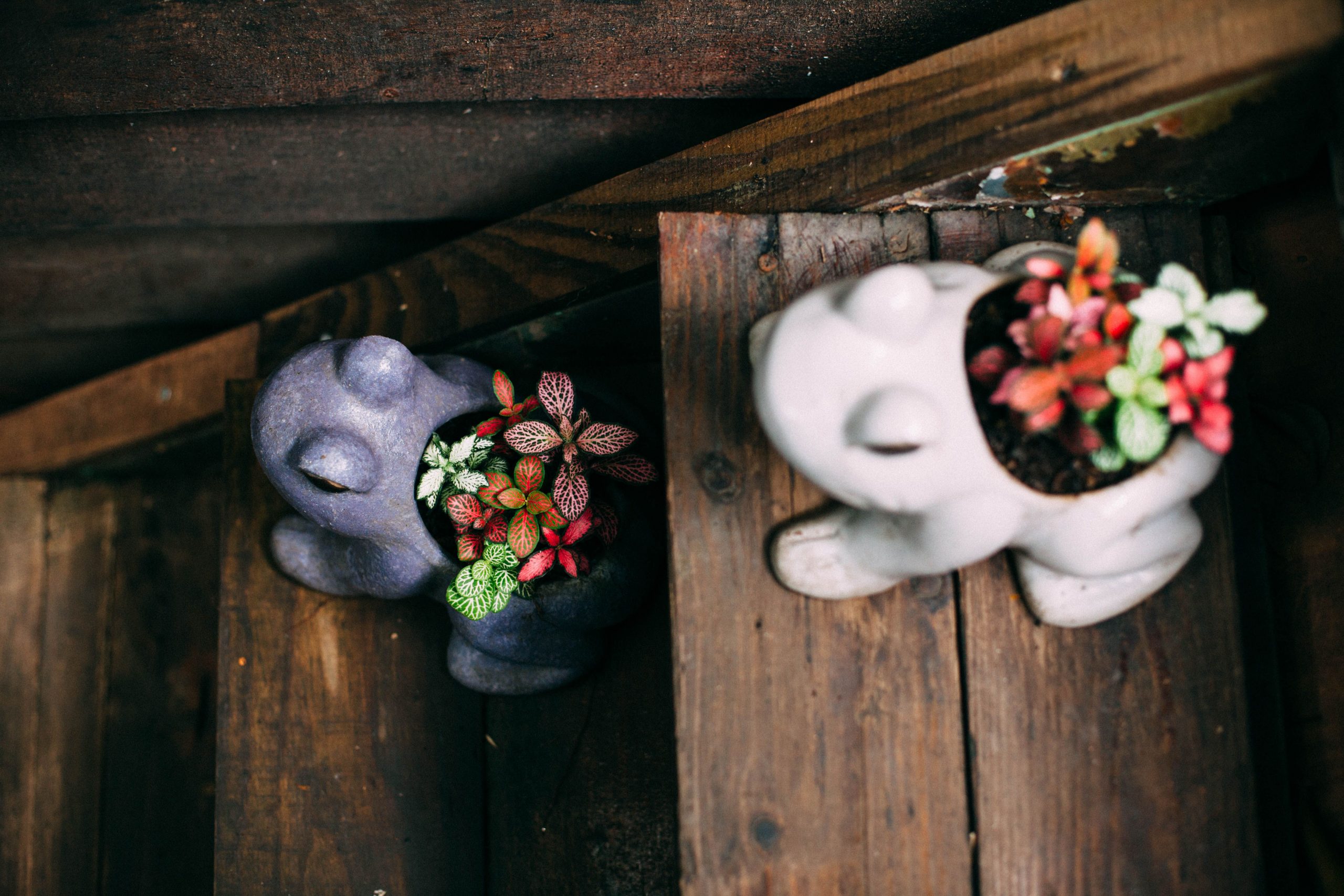
What makes this little vignette so captivating is the sheer playfulness of the figurine planters. They introduce a human-like, whimsical quality that standard pots lack. The squat, rounded shapes feel friendly and approachable, and turning them into homes for the dramatically veined Fittonia plants is a delightful surprise. The pairing is perfect—the simple, unglazed ceramic of the figurines allows the complex, colorful patterns of the leaves to take center stage. It’s a small moment of joy and personality on a simple wooden shelf.
⚠️ Real Talk
A word of warning: novelty planters like these are often terrible for plants. They are typically very small, holding little soil, which means they dry out incredibly fast—sometimes in a matter of hours on a hot day. They also rarely have drainage holes. If you fall in love with a figurine planter, you have two options: either commit to watering it very frequently, or perform some light surgery by carefully drilling a small drainage hole in the bottom with a ceramic drill bit. Without drainage, you’re setting yourself up for root rot.
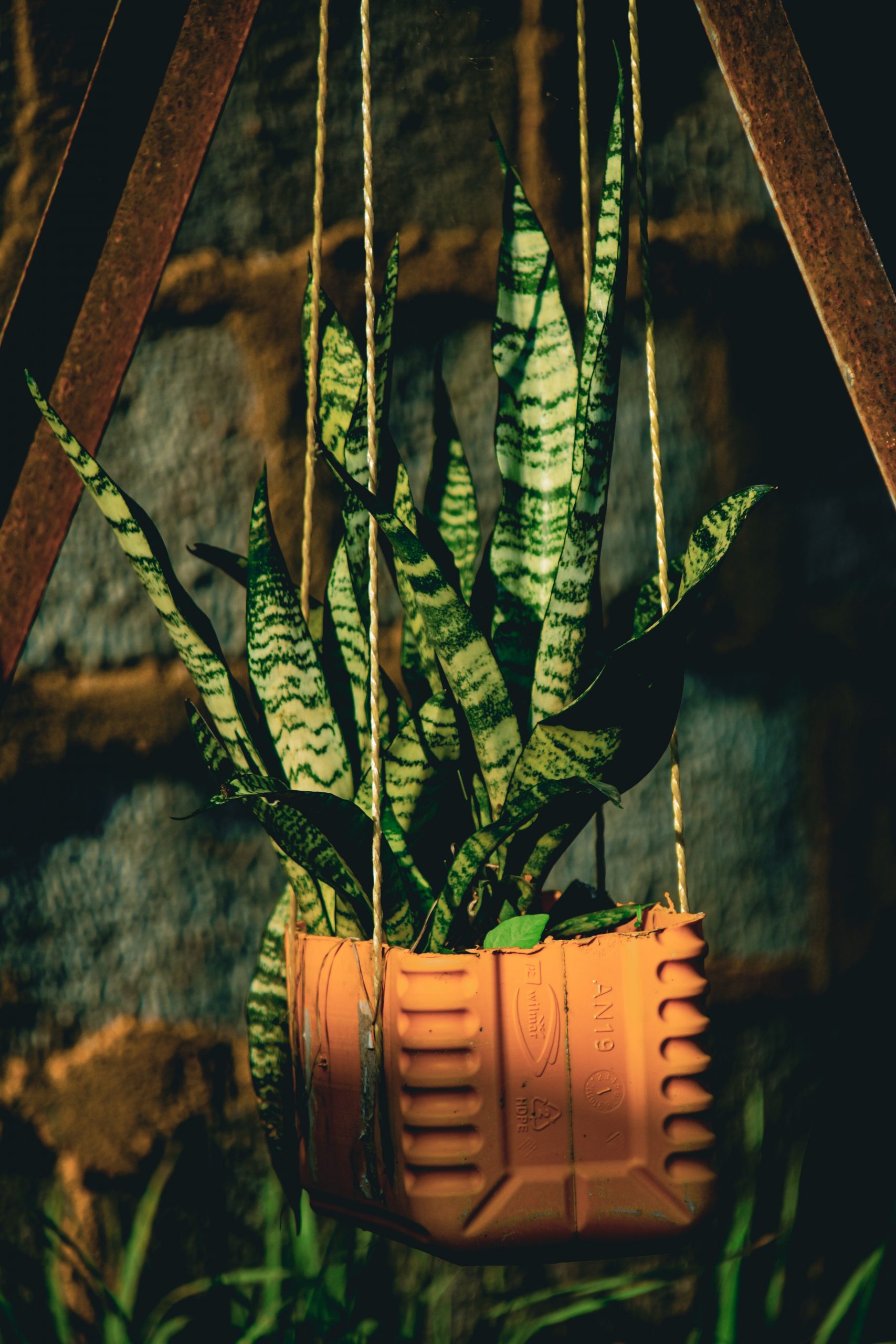
10. An Old Orange Bottle Becomes a Hanging Snake Plant Pot
This is upcycling at its most accessible. An old plastic bottle, something most of us throw away, becomes a stylish hanging planter with just a few minutes of work. The key is choosing a bottle with an interesting color or shape. The vibrant orange here is fantastic. Paired with some simple rope or twine from a hardware store (around $5-$10 for a whole roll) and a plant cutting from a friend (free!), this entire project can cost you next to nothing. It has the same vertical appeal as the expensive hanging systems, but with way more personality and zero guilt.
🔥 Trending Context
Ready to make your own? It’s a quick and satisfying project. Time: 20 minutes. Cost: Under $5 (if you have the plant).
- Clean the Bottle: Find a sturdy plastic bottle (laundry detergent, juice, etc.) and clean it thoroughly. Remove any labels.
- Cut the Opening: Using a sharp utility knife or heavy-duty scissors, carefully cut an opening in the side of the bottle. Make it large enough for your plant. Smooth any sharp edges.
- Add Drainage: Puncture or drill several small holes in the bottom of the bottle (the side opposite your main opening) to allow excess water to escape.
- Create Hangers: Drill or punch two sets of holes on the top side. Thread a sturdy rope or twine through them to create a hanging loop.
- Plant It: Add a small layer of gravel, then soil, then gently place your plant inside. Water lightly and hang!
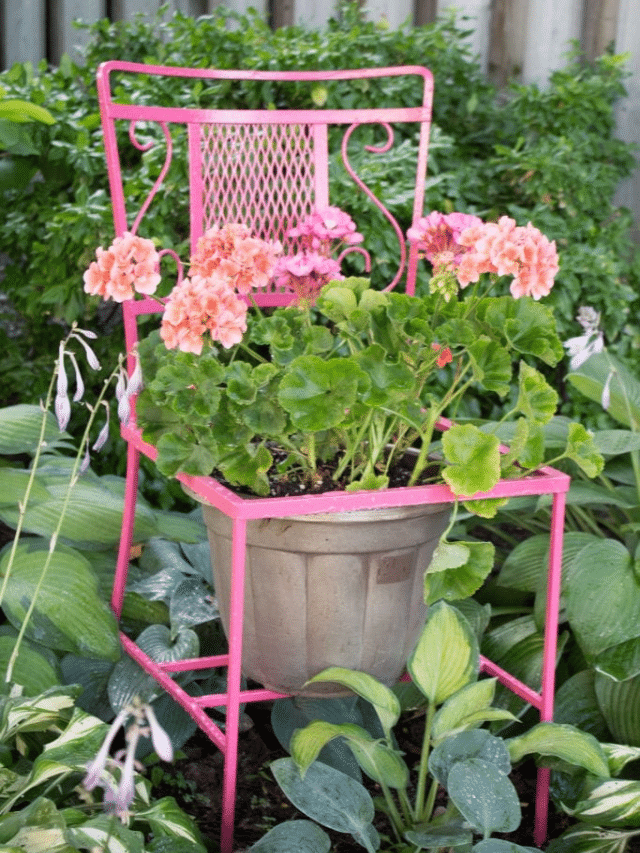
11. A Bright Pink Metal Chair Becomes a Cheerful Geranium Stand
Let’s be real: the hot pink paint is everything here. If this were a rusty, forgotten chair, it would be a completely different, more somber vibe (like the rustic buckets in Idea #7). The audacious pop of pink transforms it from a piece of junk into a joyful, deliberate piece of garden art. It announces that this isn’t an accident; it’s a style choice. It’s a reminder that sometimes the most impactful design move you can make is a can of spray paint in a bold, unexpected color. The choice to pair it with equally vibrant pink and peach geraniums just doubles down on the fun.
💰 Budget Breakdown
The visual formula here is surprisingly simple and easy to replicate. Think of it as: 60% Upcycled Structure + 30% Monochromatic Flowers + 10% Greenery. The chair is the main event. The flowers are chosen to harmonize with the chair’s color, creating a strong, unified statement. The green foliage acts as a neutral backdrop that makes the pinks and peaches feel even more vibrant. You could easily swap the palette: a cobalt blue chair with blue and purple lobelia, or a lemon-yellow chair with yellow trailing petunias, and the formula would still work perfectly.
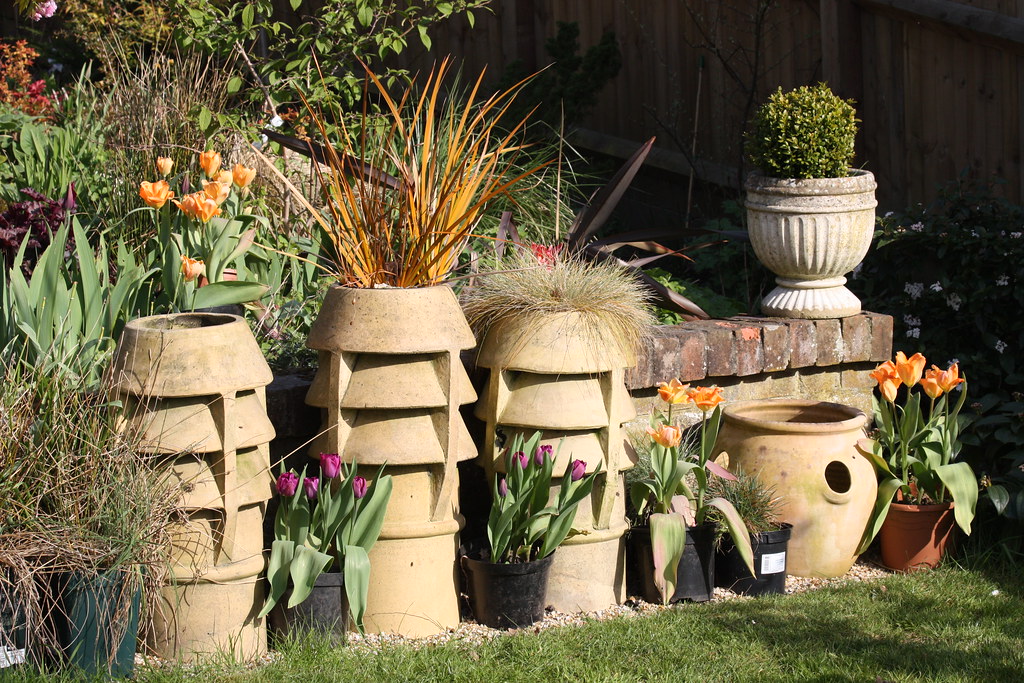
12. Stacked Chimney Pots and Urns Create a Sculptural Garden Corner
This is a high-impact idea best suited for a medium to large garden with some established structure, like the handsome brick wall shown here. The stacked chimney pots are quite tall and need vertical space to look balanced, so a minimum unbothered wall height of 6-8 feet is ideal. To appreciate the arrangement, you need to be able to step back, so this works best in a corner of a yard or along a wider pathway, not crammed into a small patio. It’s a statement about permanence and history, contrasting with more mobile ideas like the red wagon planter.
📏 Scale Guide
What makes this arrangement so successful is its play on history and form. Chimney pots and stone urns evoke a sense of Old World, established gardens. Stacking them creates a modern, sculptural quality, almost like garden totems. The choice of plants reinforces this: the wispy, tall grasses in the chimney pots echo their vertical shape, while the classic topiary in the urn feels timeless. The pop of color from the orange and purple tulips provides a seasonal jolt of energy, reminding us that even historic forms can be home to new life.
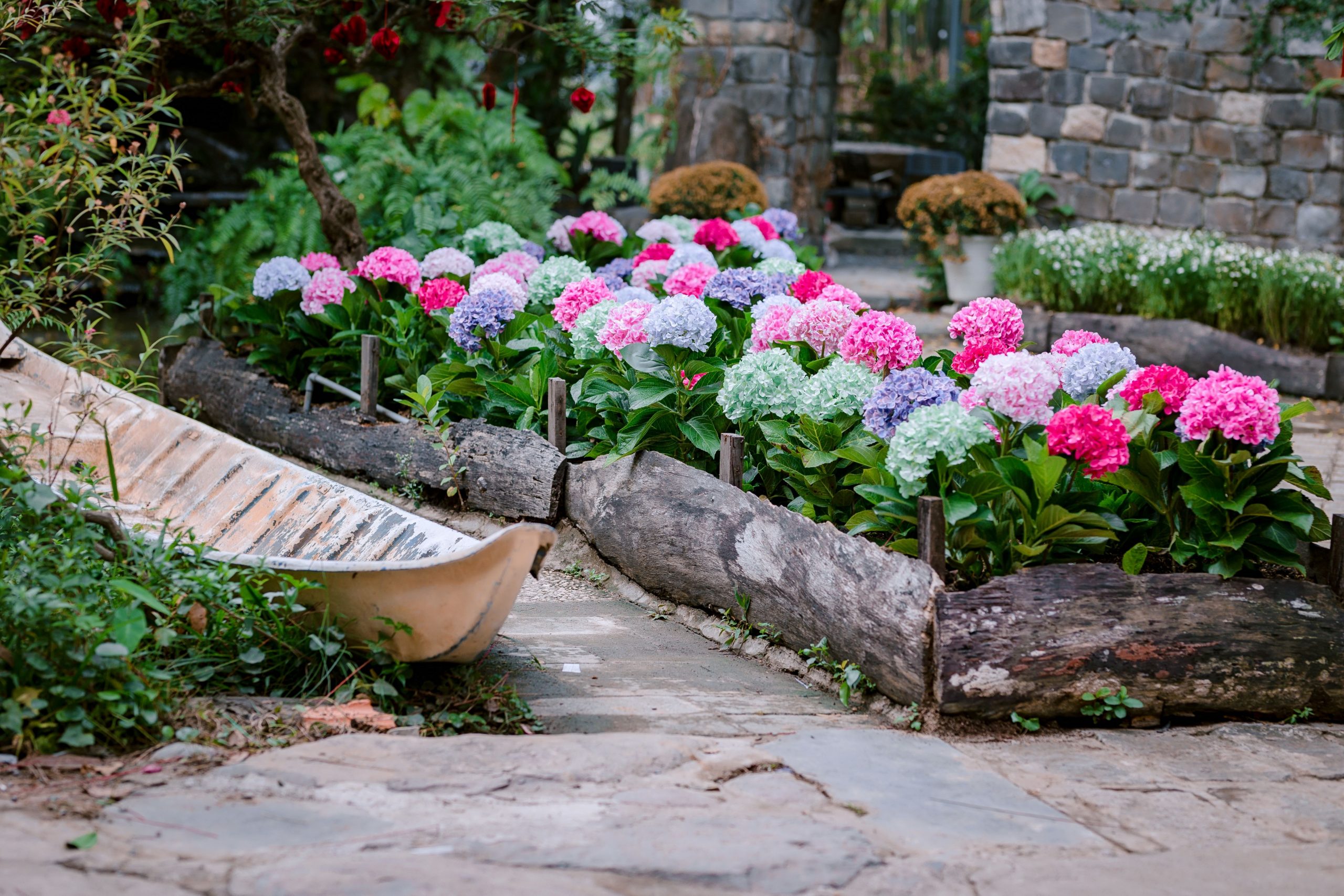
13. Vintage Bathtub Planter with a Border of Colorful Hydrangeas
The
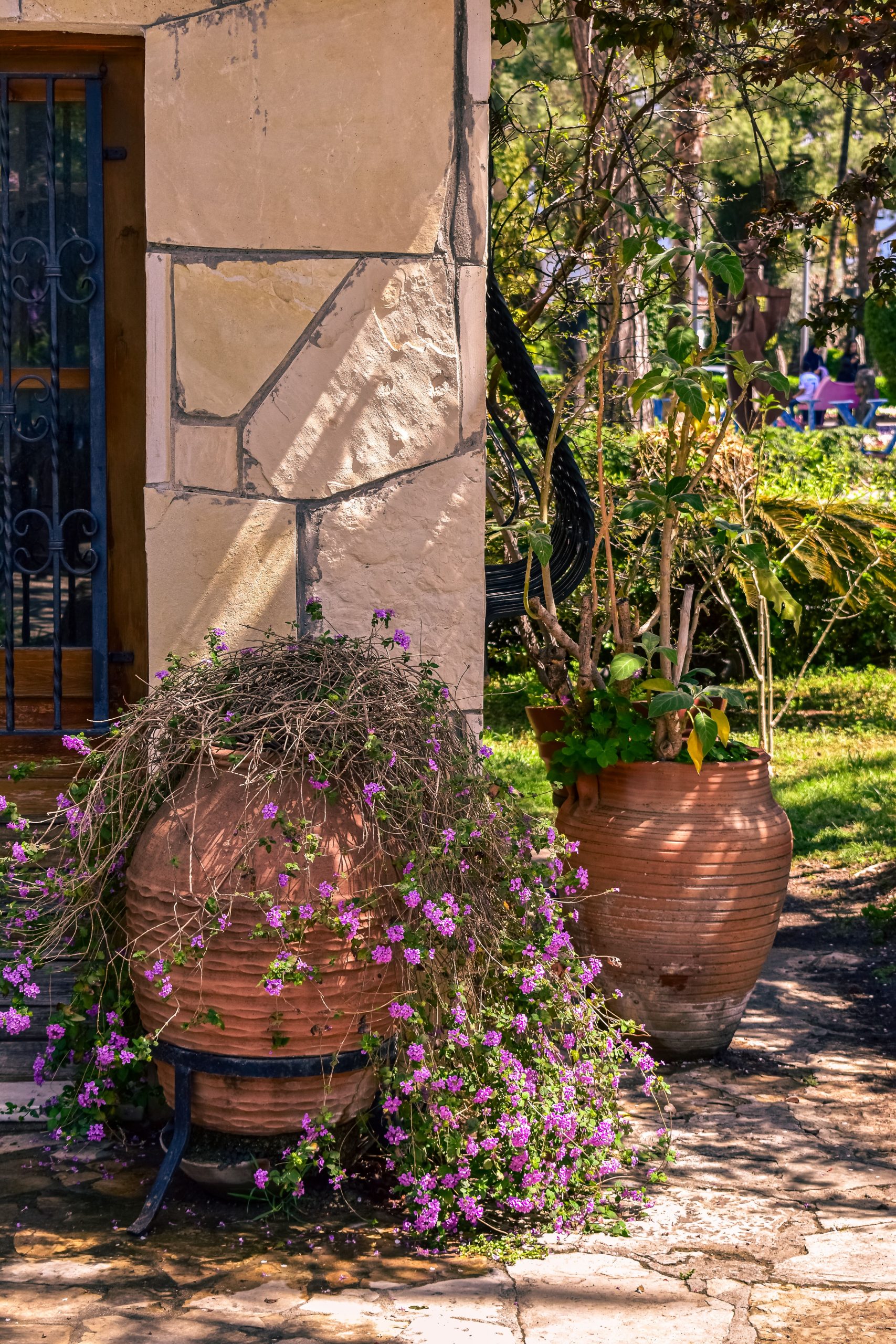
14. Overgrown Terra-Cotta Pots Leaning Against a Stone Wall
To achieve this effortlessly romantic, overgrown look, you need to embrace imperfection. When planting, don’t just place your main plant in the center. Tuck trailing plants and smaller flowers right up against the edge of the pot so they are encouraged to spill over from day one. In this case, the tangle of bare branches adds a wild, sculptural element. You can achieve this by tucking in a few interesting twigs or prunings from elsewhere in your garden. The goal is to make it look like nature took over, even if you gave it a little nudge.
📐 Style Math
There’s a beautiful tension in this scene that makes it work. The solid, permanent-feeling stone wall and patio provide a structured, architectural backdrop. Against this, the rustic terra-cotta pots feel more temporary and humble. The real magic is in the planting style—the purple flowers are literally overflowing their container, defying their boundaries and creeping into the space. This contrast between the straight lines of the hardscaping and the wild, organic forms of the plants creates a dynamic and visually interesting moment.
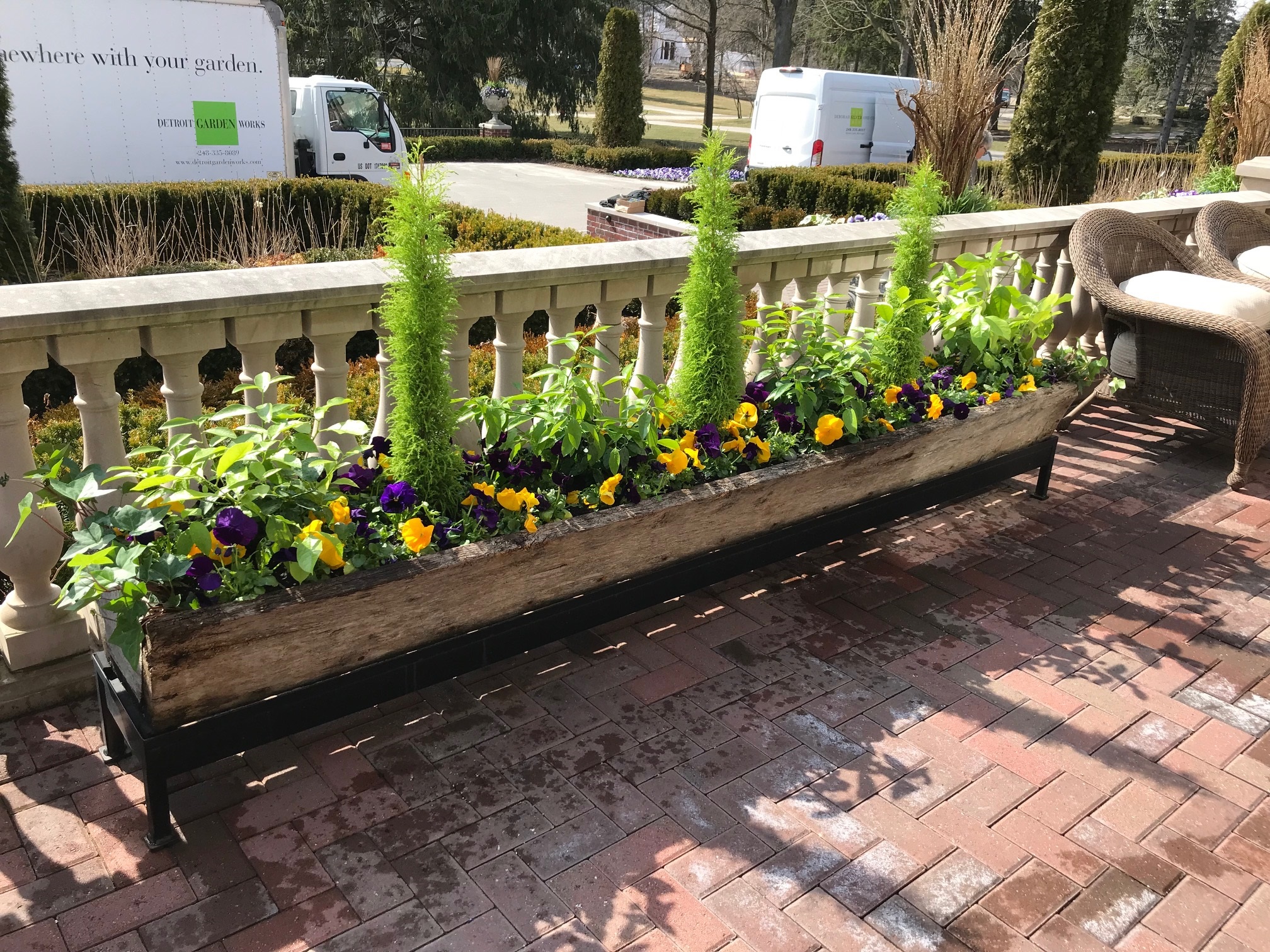
15. A Weathered Wood Trough Planter on a Simple Metal Stand
This trough planter is a fantastic solution for defining an edge or creating a sense of enclosure on a larger patio or deck. Because of its long, narrow shape, it works well running along the side of a seating area or against a balustrade, as shown here. You’ll want a space that’s at least 10-12 feet long to give it room to breathe. Its height makes it a great
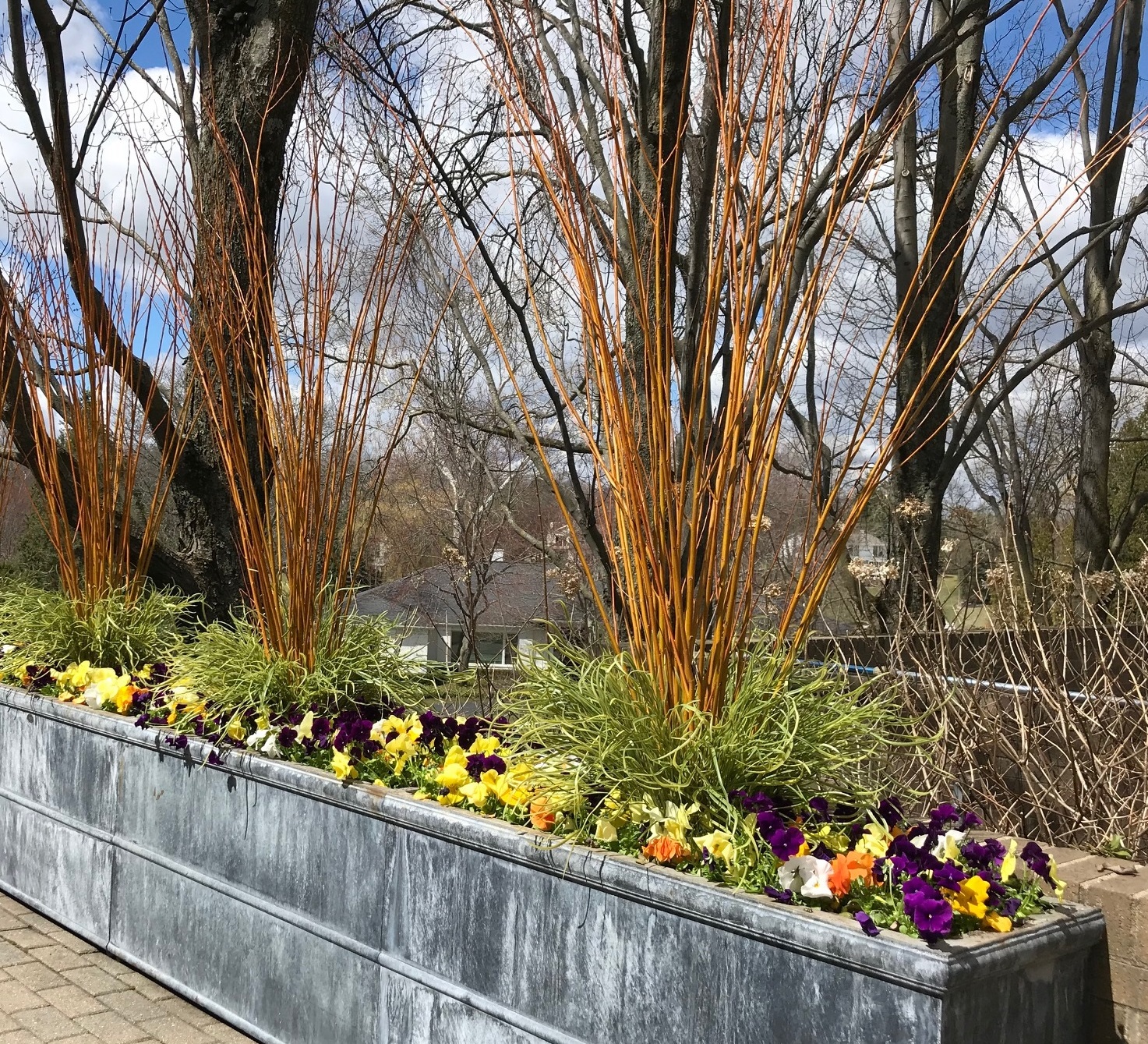
16. Galvanized Trough Planter with Willow Branches and Colorful Annuals
The most striking element here is the vertical drama created by the tall, slender branches, likely from a variety of willow. They shoot upwards from the trough, creating a sense of height and structure that you don’t typically see in a simple container planting. Without them, this would be a lovely but standard trough of flowers. With them, it becomes a multi-layered, sculptural piece. The variegated grass below reinforces this verticality, while the low-growing pansies add a carpet of color at the base.
17. Wooden Planters with Pussy Willow, Grass, and Pansies
This arrangement works because it’s a masterclass in creating a full,
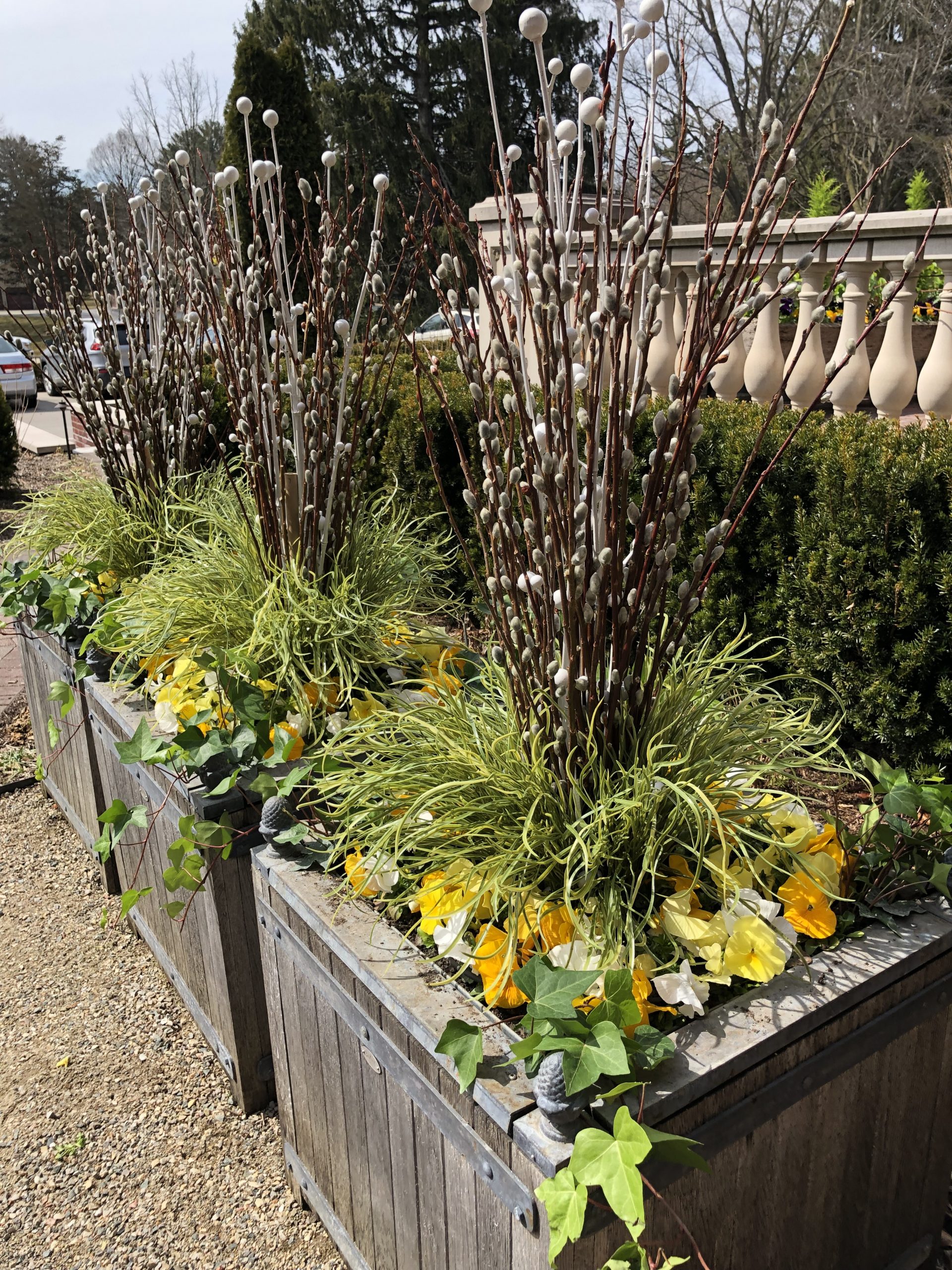
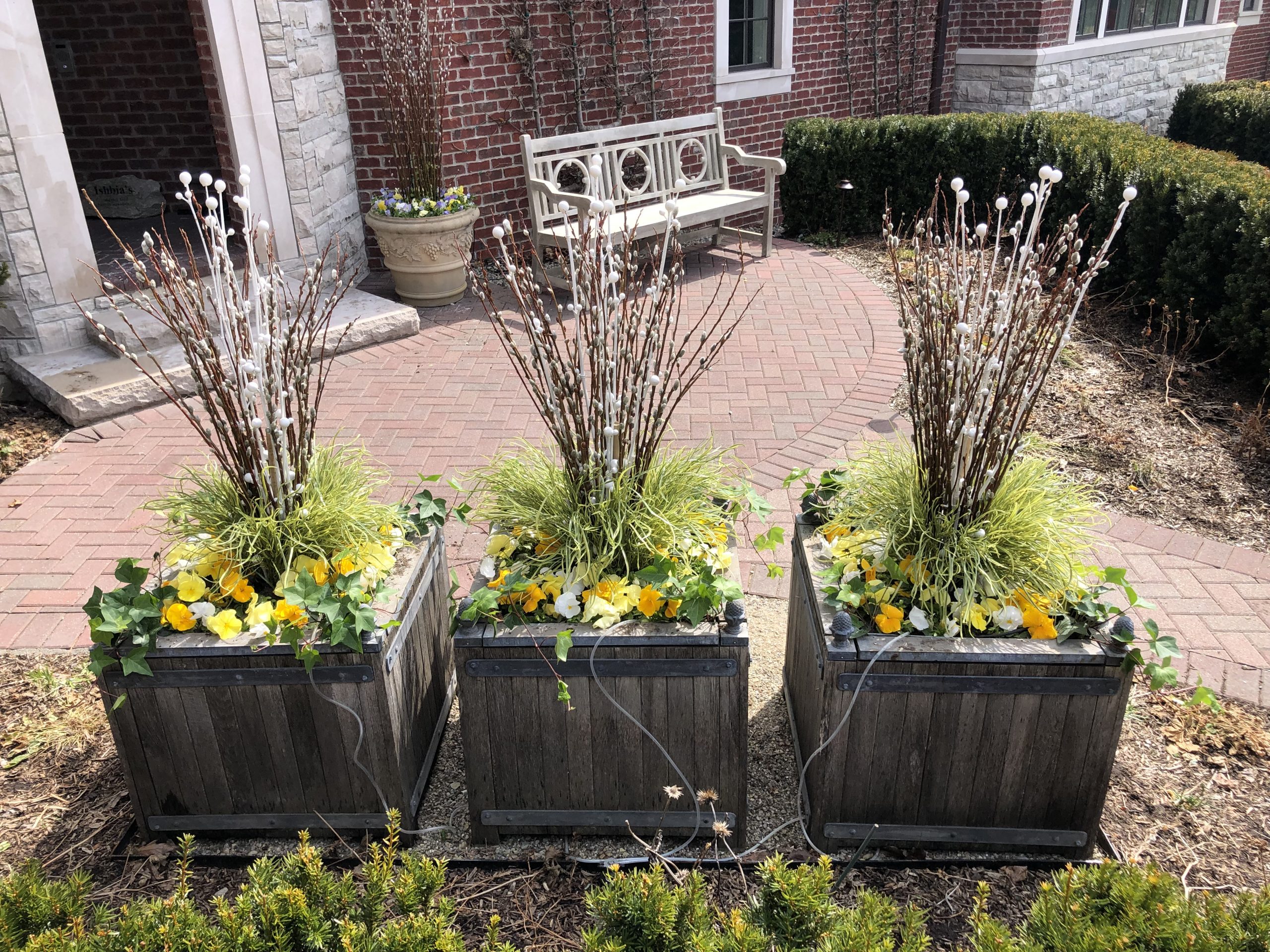
18. A Trio of Wooden Barrel Planters with Spring Arrangements
When creating a repeating arrangement like this, the key to a high-end look is ruthless consistency. Don’t just make three similar planters; make three *identical* planters. Use the same number of pussy willow branches in each, placed at roughly the same angles. Plant the pansies and ivy in the same configuration. This deliberate repetition is what elevates the scene from a simple row of pots to a powerful design statement. It communicates order, rhythm, and intention, which is incredibly pleasing to the eye.
🧹 Maintenance Reality
Let’s be realistic: keeping three identical, complex arrangements looking pristine is a commitment. One planter might get more sun and its pansies will fade faster. The ivy on another might grow more aggressively. To maintain the uniform look that makes this so effective, you’ll need to be an active gardener. This means rotating the planters regularly so they get even light, trimming back any overzealous growers, and being prepared to swap out a plant or two mid-season if one of them starts to lag behind the others.
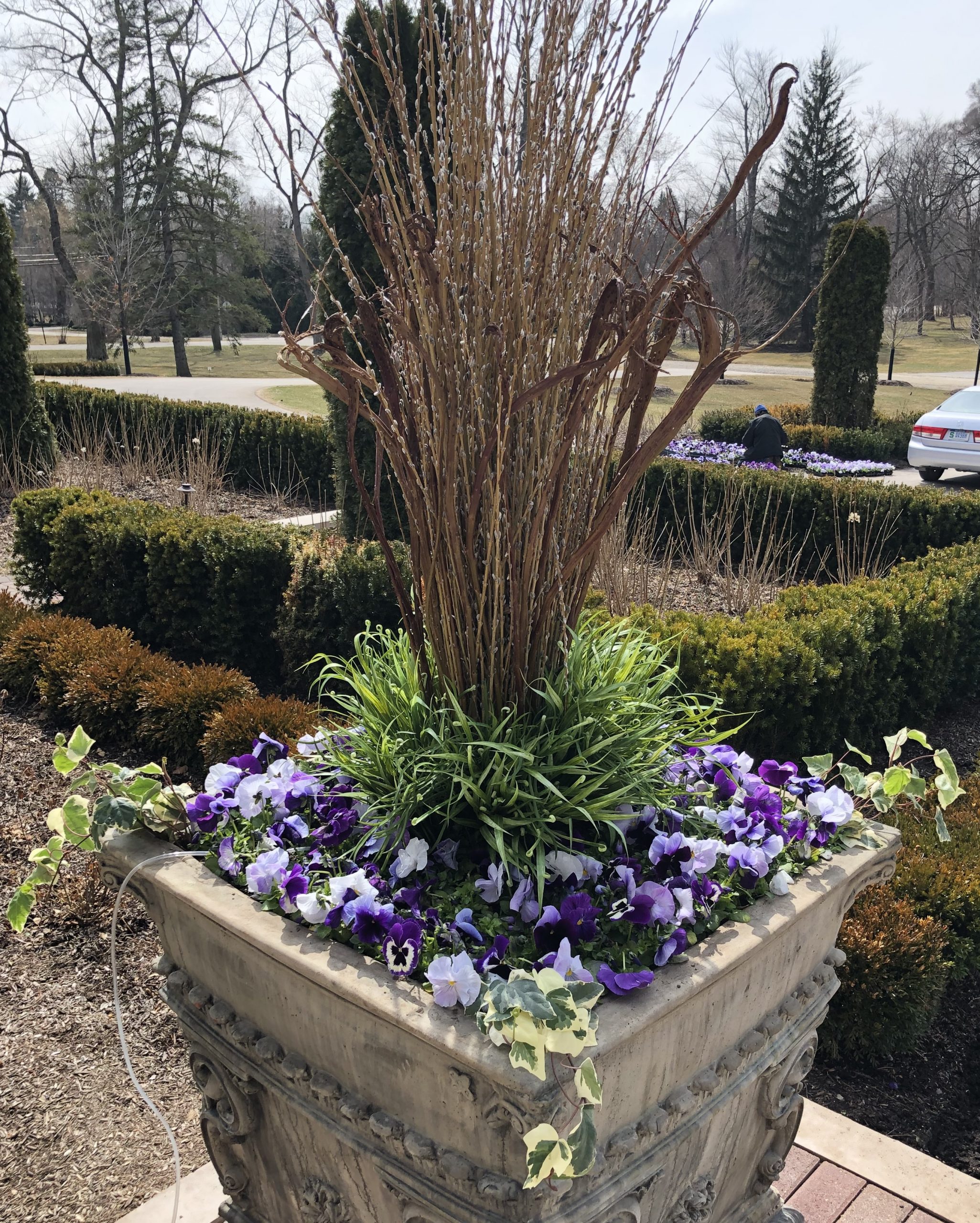
19. Ornate Concrete Planter with a Multi-Tier Plant Recipe
This look is all about layering, like a fancy dessert. Here’s how to build this
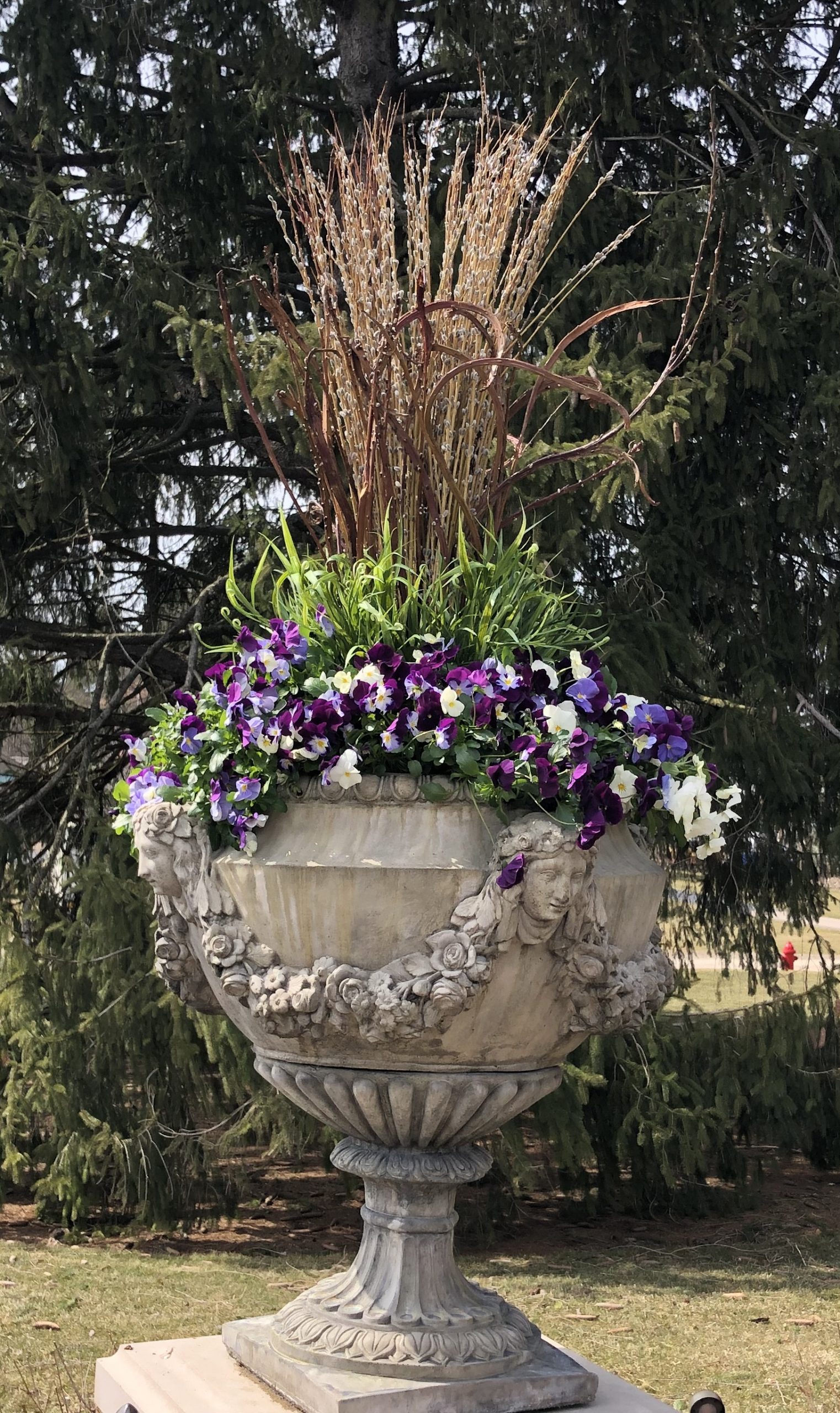
20. Grand Carved Stone Urn with a Lush, Overflowing Arrangement
that sets this apart is undeniably the urn itself. This isn’t just a pot; it’s a piece of sculpture. The ornate, classical carvings of faces and garlands give it a sense of history, grandeur, and permanence. Planting directly into such a significant object feels almost decadent. The lush, overflowing arrangement of pansies, grasses, and wheat doesn’t compete with the urn but rather complements it, making it look like a treasured artifact from a mythical garden. A simple pot could never have this much dramatic presence.
💸 Get This Look For Less
An urn of this scale and level of detail is a statement piece that demands its own space. It’s not suited for a small balcony or a crowded patio. This idea works best as a focal point in a formal garden setting, at the end of a walkway, or in the center of a circular driveway or lawn. It needs at least 5-6 feet of open space around it on all sides to be properly appreciated. Trying to cram it into a tight spot, like against a fence, would diminish its grandeur and make the space feel cluttered. For smaller spaces, consider the window box in Idea #31.
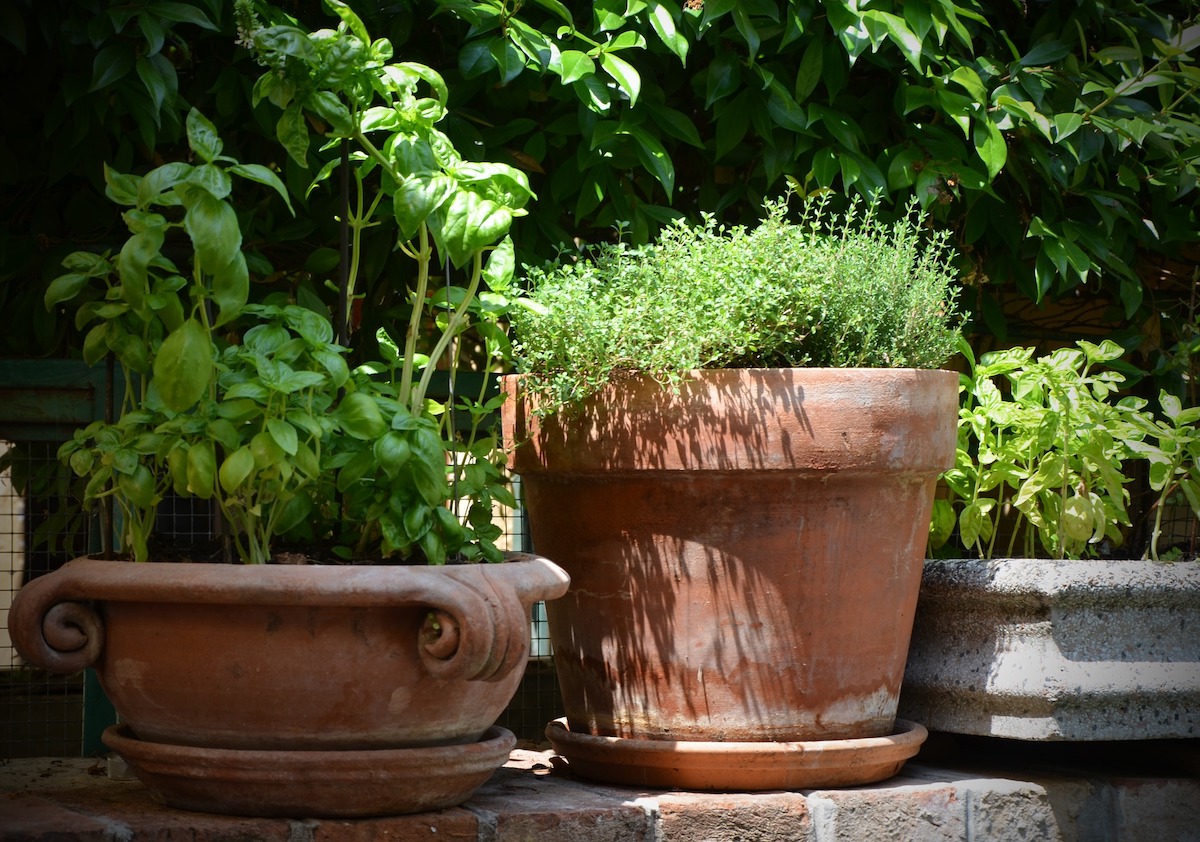
21. A Mixed Herb Garden in Terracotta and Concrete Containers
This vignette feels so authentic and inviting because of its rich layering of textures and its warm, analogous color palette. The rough, earthy terracotta of the various pots naturally complements the rustic red bricks they sit on. The single grey concrete planter adds just enough of a cool note to keep it interesting. The scene is unified by the vibrant greens of the herbs, with different leaf shapes and sizes creating subtle variety. It feels like a well-loved, functional, and productive corner of a real cook’s garden.
⚠️ Real Talk
Before you try to create a dense, layered herb arrangement like this, consider the light.
- Check Your Sun: Most herbs, especially basil, are sun-worshippers. They need at least 6-8 hours of direct sunlight per day to thrive. Does your chosen spot get that much?
- Consider the Heat: Brick and stone absorb and radiate heat. This is great for heat-loving herbs but can quickly dry out the soil. Are you prepared to water daily in the summer?
- Plan for Growth: These plants will get much bigger. Make sure there’s enough room for air to circulate between the pots to prevent mildew and other issues.
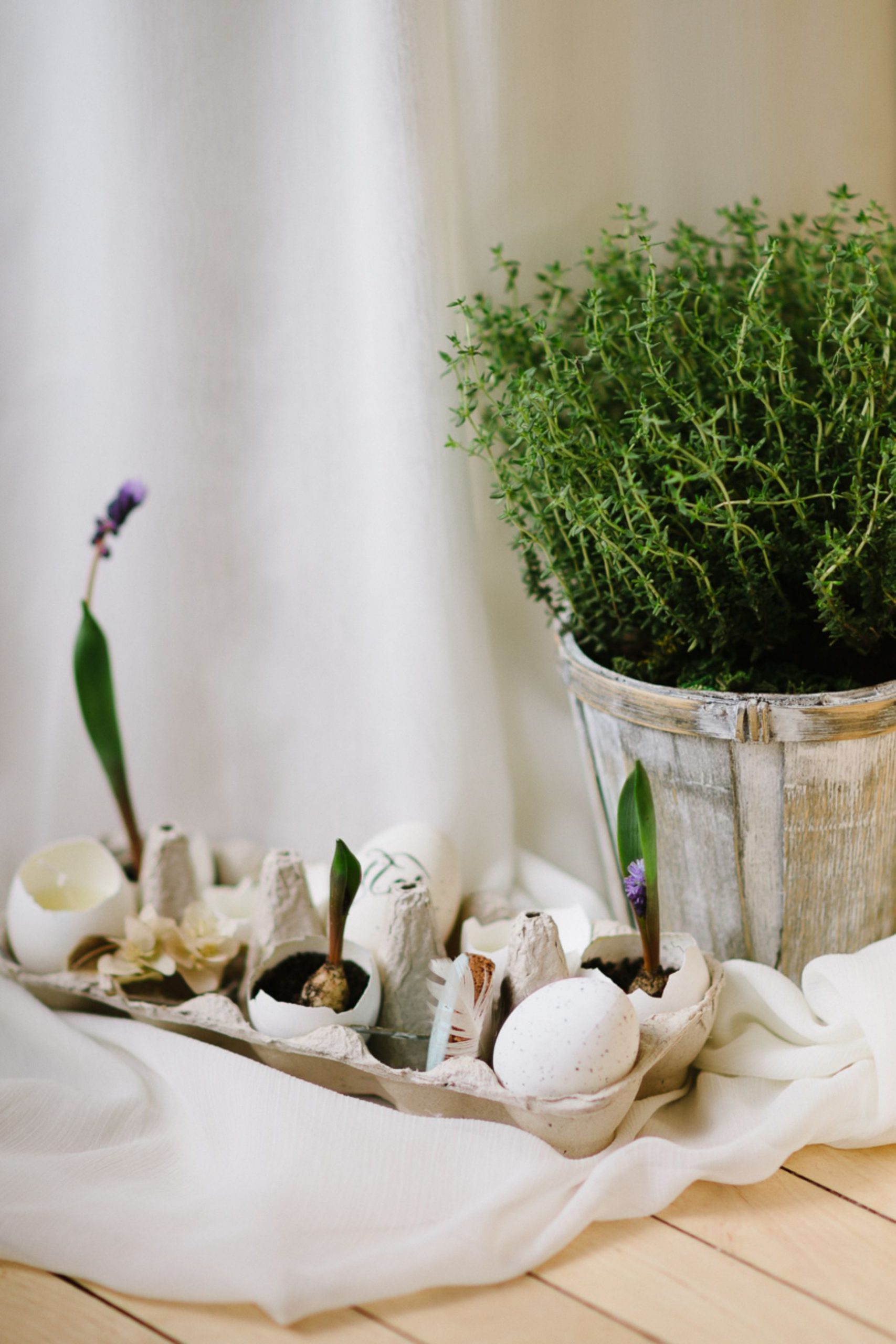
22. Egg Carton and Eggshells as Delicate Seed Starters
The magic here is the use of the eggshells themselves as tiny, individual pots. It’s a brilliant, zero-waste idea that feels incredibly delicate and nurturing. Seeing the green sprouts and tiny purple flowers emerge from the cracked shells creates a powerful symbol of new life. The humble cardboard egg carton becomes the perfect tray to hold them all, reinforcing the breakfast-table-to-garden theme. It’s a project that feels more like a gentle science experiment than heavy-duty gardening, and that’s what makes it so charming.
🔥 Trending Context
This is a fantastic way to *start* seeds, but it is not a long-term home for your plants. The carton will break down when it gets wet, and the eggshells provide very little room for root growth. Think of this as a temporary nursery. Once your seedlings have their first true set of leaves and are an inch or two tall, you’ll need to transplant them. You can gently crush the eggshell in your hand as you plant it in a larger pot or in the ground; the shell will decompose and add calcium to the soil.
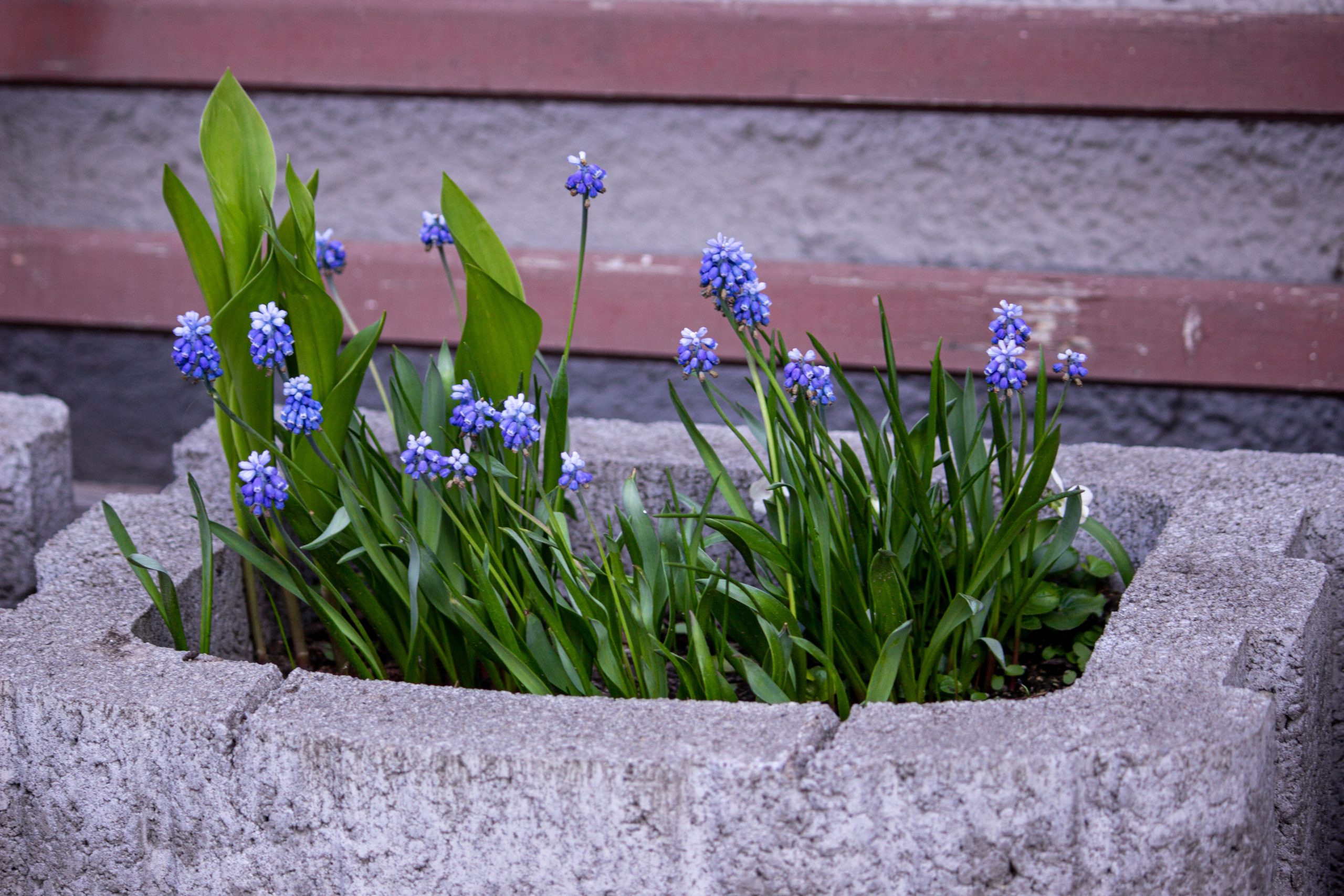
23. Concrete Block Planter with Vibrant Grape Hyacinth
This simple idea is a triumph of textural and color contrast. The rough, utilitarian gray of the concrete block is the perfect foil for the delicate, vibrant blue-purple grape hyacinth flowers. The industrial material makes the natural beauty of the plant pop even more. Furthermore, the clean, geometric lines of the concrete block contain the soft, organic shapes of the leaves and flowers. This tension between hard and soft, industrial and natural, is what gives this minimalist planter its sophisticated edge. The weathered wood in the background adds another layer of rustic texture.
💰 Budget Breakdown
You can’t get much more budget-friendly than this. A single concrete block (also known as a CMU or cinder block) costs just a few dollars at any big-box home improvement store. You can often find them for free on construction sites (ask first!) or on Craigslist. A handful of grape hyacinth bulbs will only set you back a few more dollars in the fall planting season. For less than the price of a fancy coffee, you can create a modern, minimalist planter that will come back year after year.
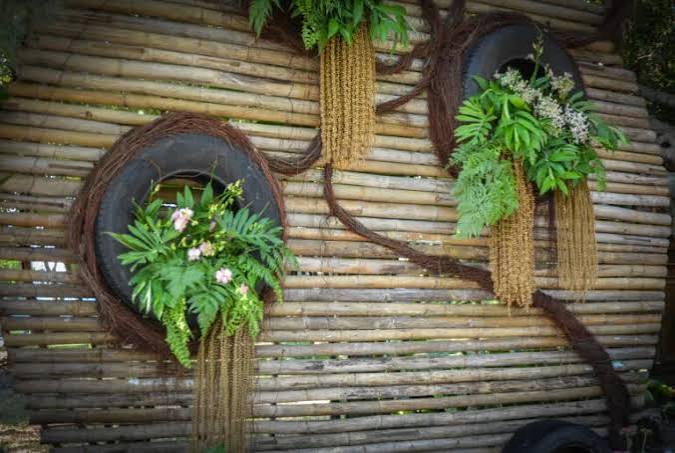
24. From the Tool Shed to Garden Art: Upcycling Old Tools
When repurposing old tools, think beyond just a single object. Create a mini-collection. Mount a series of old shovels or pitchforks on a wall, using the heads as holders for small pots. A grouping of three will almost always look more intentional and artistic than a single one on its own. You can also use old toolboxes as planters; their built-in compartments are perfect for separating different herbs or succulents. The key is to create a visual story that connects the pieces together through their shared history.
📏 Scale Guide
Hold on before you plant in that cool, rusty old metal tool you found. Some older metal items, especially if they are galvanized (coated in zinc), can potentially leach chemicals into the soil. While the risk is generally low for ornamental plants, it’s a definite no-go for anything you plan to eat. If you want to plant herbs or vegetables in a metal container and you’re unsure of its origin, line it with heavy-duty, food-safe plastic first. Also, be mindful of sharp edges on old saws or blades—sand them down or place them where they won’t be a hazard.
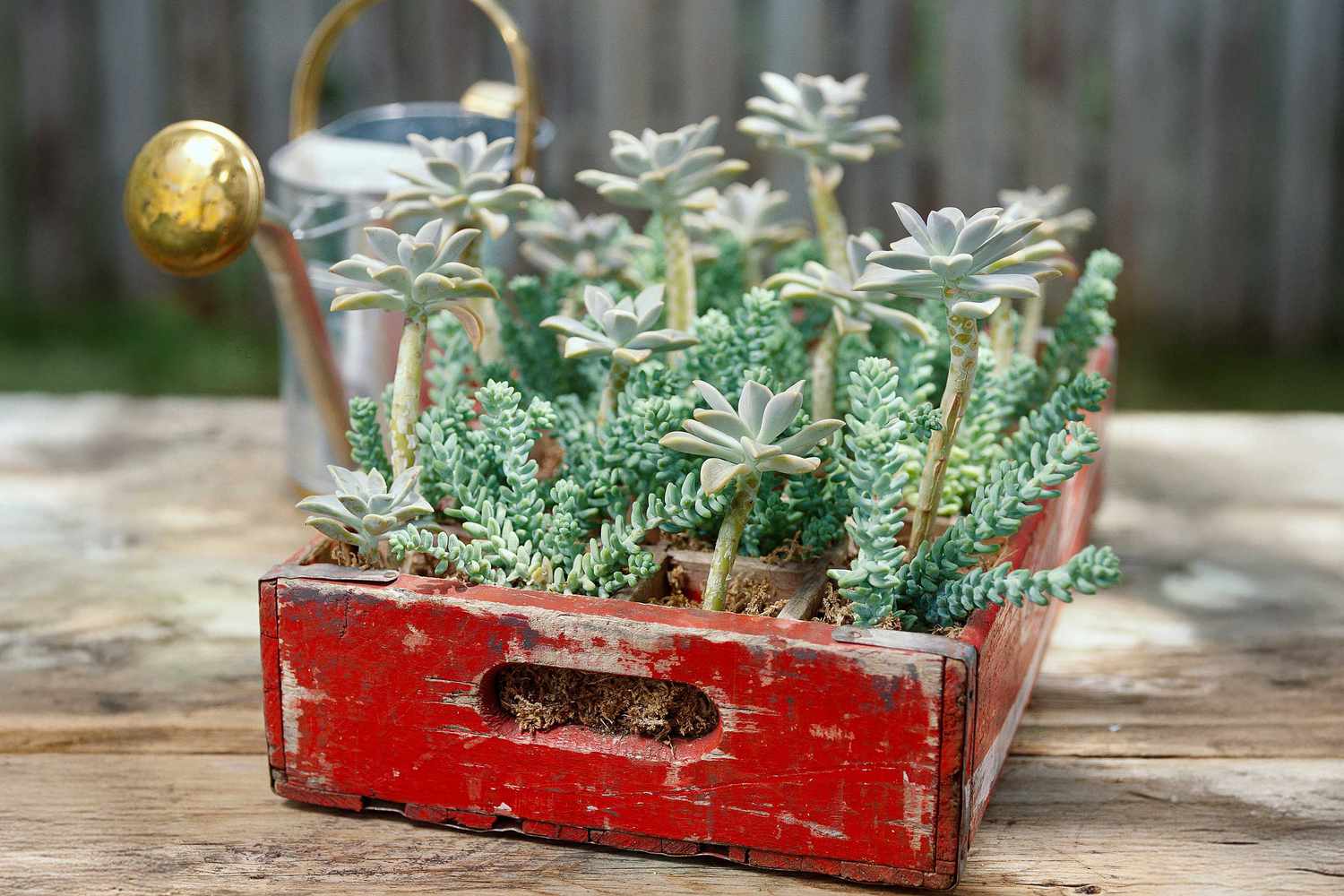
25. Distressed Red Wooden Box for a Charming Succulent Display
The charm of this piece lies in its authentic, weathered appearance. The distressed red paint, visibly worn and chipped, tells a story of a past life. This isn’t a new box made to look old; it feels like a genuine flea market find. This sense of history is the perfect partner for succulents, which are themselves ancient and resilient plants. The soft, pale green tones of the echeveria and sedum create a beautiful, soft-focus contrast against the faded but still-bold red of the box. It’s a simple pairing that feels both rustic and chic.
💡 Designer Tip
Succulents are low-maintenance, but they aren’t no-maintenance, especially in a wooden container. The key is drainage. Wood holds moisture longer than terracotta, and succulents hate wet feet. This box absolutely must have drainage holes drilled in the bottom. Water the soil thoroughly, but only when it is completely dry to the touch. In a humid climate, this might be every few weeks; in a hot, dry climate, it could be weekly. The distressed wood will continue to weather and may eventually rot, so expect this to be a beautiful but potentially temporary home for your plants, lasting maybe 4-6 seasons.
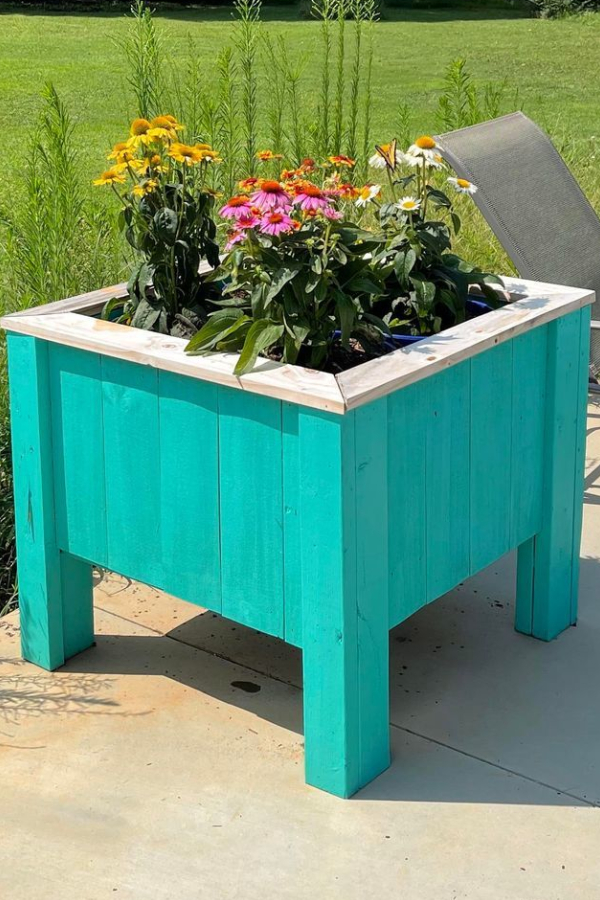
26. Painted Teal Wood Raised Planter with Mixed Flowers
The single element that elevates this planter from ordinary to eye-catching is the natural wood trim along the top edge. Without it, the teal box would be pretty, but could feel a bit flat. That simple, light-toned wood frame adds a crucial touch of warmth and contrast, breaking up the solid block of color. It also visually connects the painted piece to the natural world of the plants within, making the whole design feel more cohesive and thoughtful. It’s a small detail that makes a huge difference, much like the pink chair in Idea #10 uses bold color as its key feature.
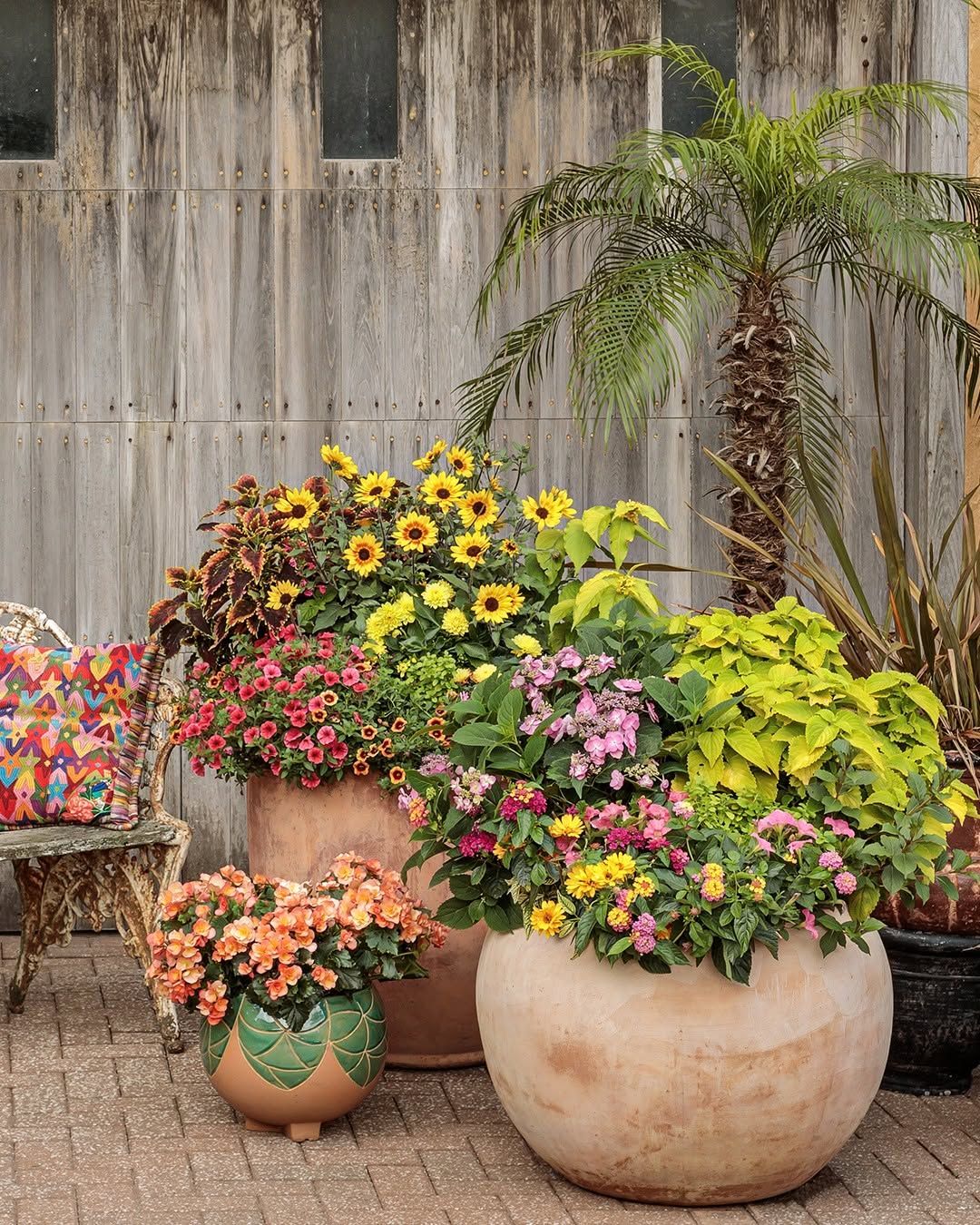
27. An Eclectic Cluster of Textured Terracotta Garden Containers
This vibrant corner works because it fully embraces a
28. A Weathered Wooden Drawer Becomes a Rustic Flower Planter
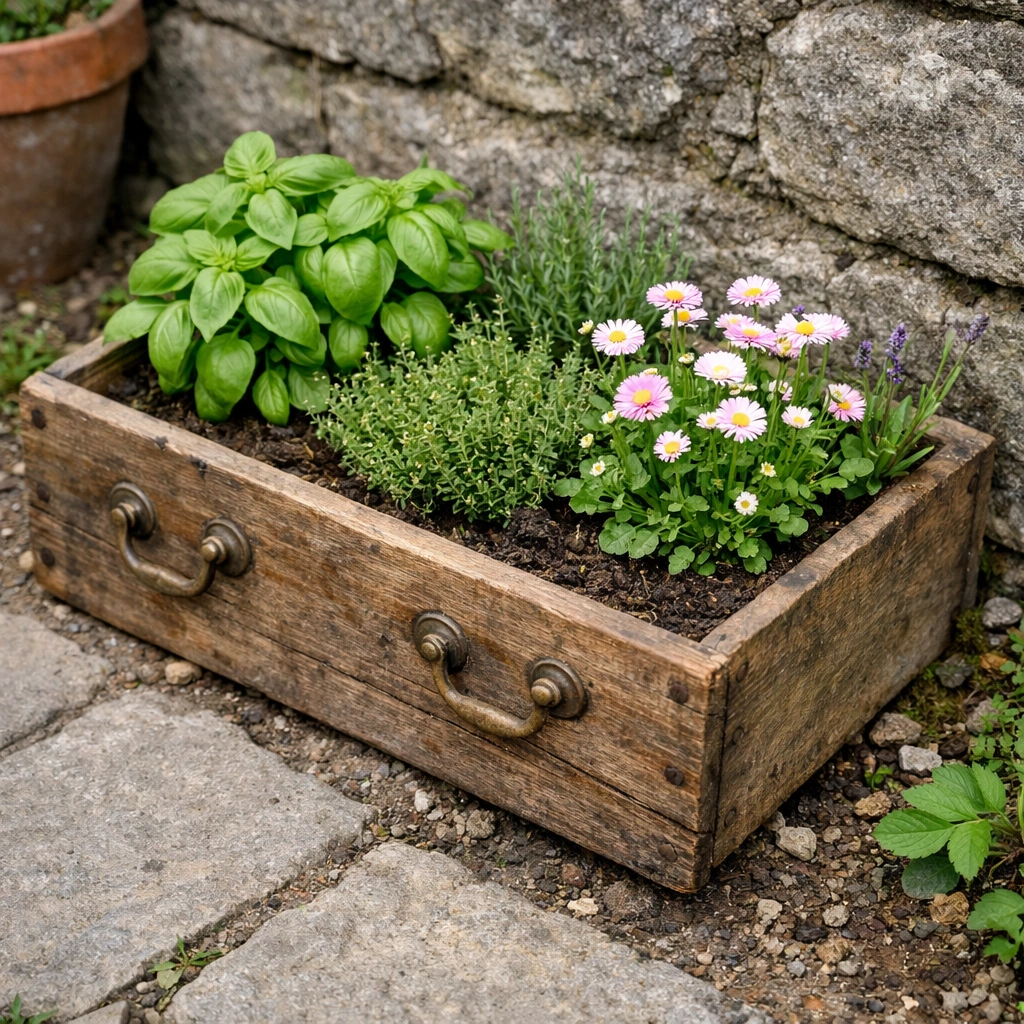
The detail that truly sells this idea is the pair of antique brass-toned pull handles. Without them, it would just be a wooden box. The handles are an undeniable link to the drawer’s past life as part of a piece of furniture. They add a layer of history and narrative that is instantly charming. It makes you wonder what desk or dresser it came from. This small, authentic detail is what transforms a simple recycling project into a piece of rustic, repurposed art for the garden. It feels discovered, not just made.
✅ Before You Start
Turning an old drawer into a planter is a classic upcycling project. Here’s the quick and dirty guide. Time: 30 minutes. Cost: $10-$20 (for sealant and soil).
- Find a Drawer: Look for solid wood drawers at thrift stores or flea markets; they hold up better than particleboard.
- Seal the Interior: To prevent rapid rotting, coat the inside with a garden-safe water sealant or line it with heavy plastic, poking holes through for drainage.
- Drill for Drainage: This is the most crucial step. Drill at least 5-6 half-inch holes in the bottom of the drawer. No drainage is a death sentence for your plants.
- Fill and Plant: Add a layer of gravel, then fill with good quality potting mix. Arrange your plants—herbs like basil and flowers like daisies work beautifully.
- Place and Admire: Position it on your stone pathway or patio and enjoy your handiwork!
29. Repurposed Floral Porcelain Tureen as a Succulent Planter
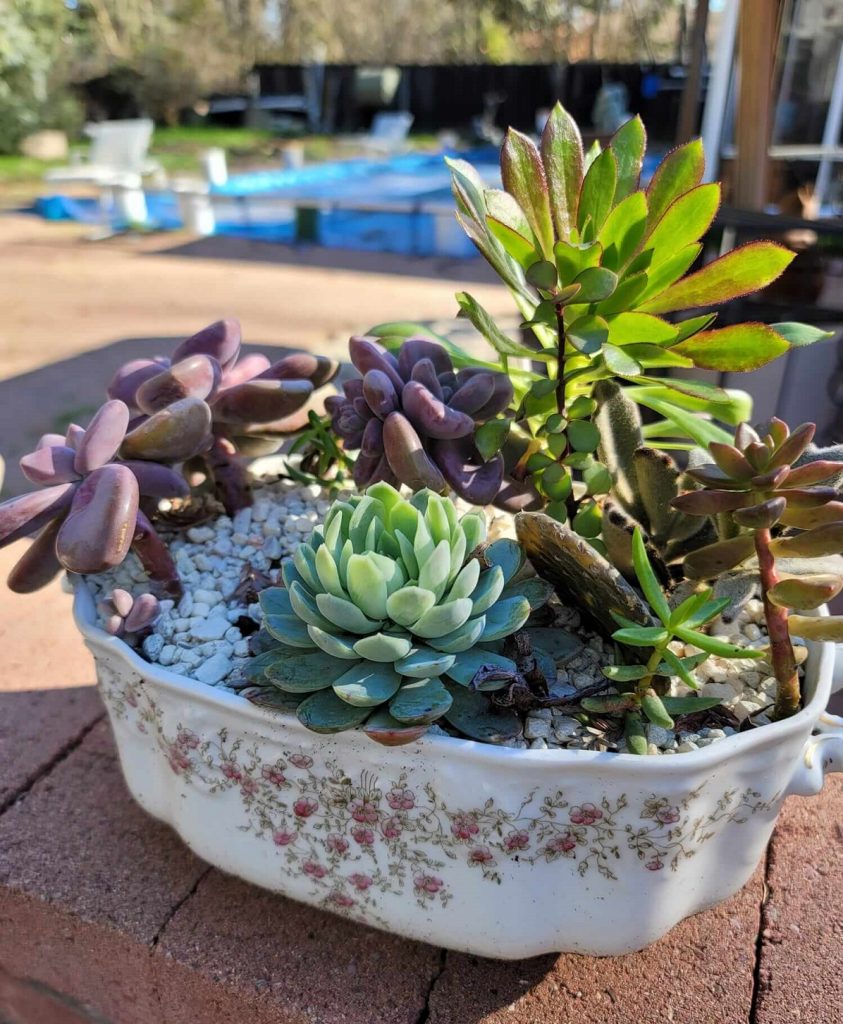
The delight of this idea comes from the wonderful juxtaposition of elegance and earthiness. A porcelain tureen is an object we associate with formal dining rooms, fancy dinners, and delicate soup. To see it filled with soil and spiky, resilient succulents on a bed of rustic red bricks is a charming surprise. The delicate pink and green floral pattern on the tureen is echoed by the pinkish-purple and green hues of the succulents, creating an unexpected but beautiful harmony. It’s a perfect blend of prim and wild.
🎯 What Makes It Work
Before you run to the thrift store for vintage china, know this: these items almost never have drainage holes. Succulents despise sitting in water, and root rot is a real and present danger. To make this work, you must be an extremely careful waterer, giving it just a little bit of water every few weeks. A better but more involved solution is to carefully drill a drainage hole using a diamond-tipped drill bit made for ceramic and glass. Go slowly and use water to keep the bit cool to prevent the tureen from cracking. Without drainage, this beautiful planter is on borrowed time.
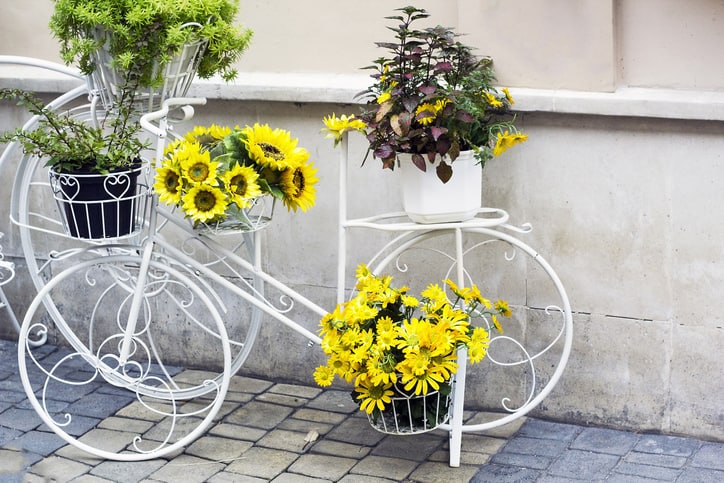
30. A Decorative White Metal Bicycle Holds a cascade of Flowers
that gives this arrangement its undeniable charm is the bicycle shape itself. It’s pure whimsy. The structure isn’t trying to be a subtle or natural part of the garden; it’s a proud, decorative object that brings a feeling of cheerful nostalgia and motion to a static space. It evokes thoughts of flower markets in Paris or a gentle ride in the country. By filling the baskets with bright yellow sunflowers and other greenery, the bicycle is transformed from a simple plant stand into a vibrant, rolling garden sculpture.
🧹 Maintenance Reality
A decorative planter like this is a focal point, but it’s not overwhelming, making it perfect for small- to medium-sized spaces. It would be ideal for a front porch next to the door, on a small patio, or nestled into a flower bed to add some height and interest. You need a flat, stable surface for it, like the pavers shown here. A space roughly 4 feet wide by 3 feet deep would be enough to give it a comfortable home without it looking shoehorned in. It’s a great way to add a lot of personality without taking up a huge footprint.
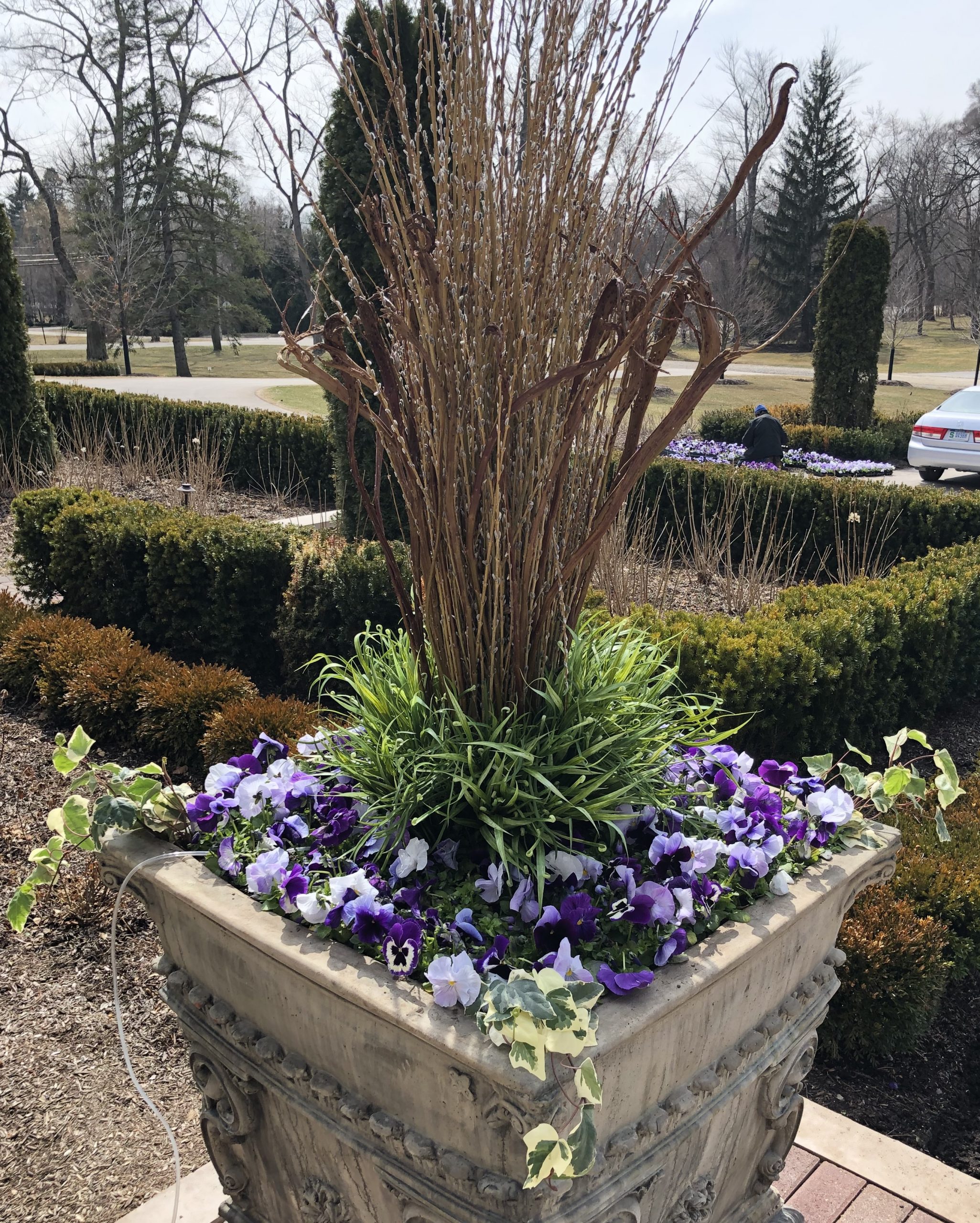
31. Carved Stone Planter with Pussy Willows and Pansies
This stunning arrangement follows the classic
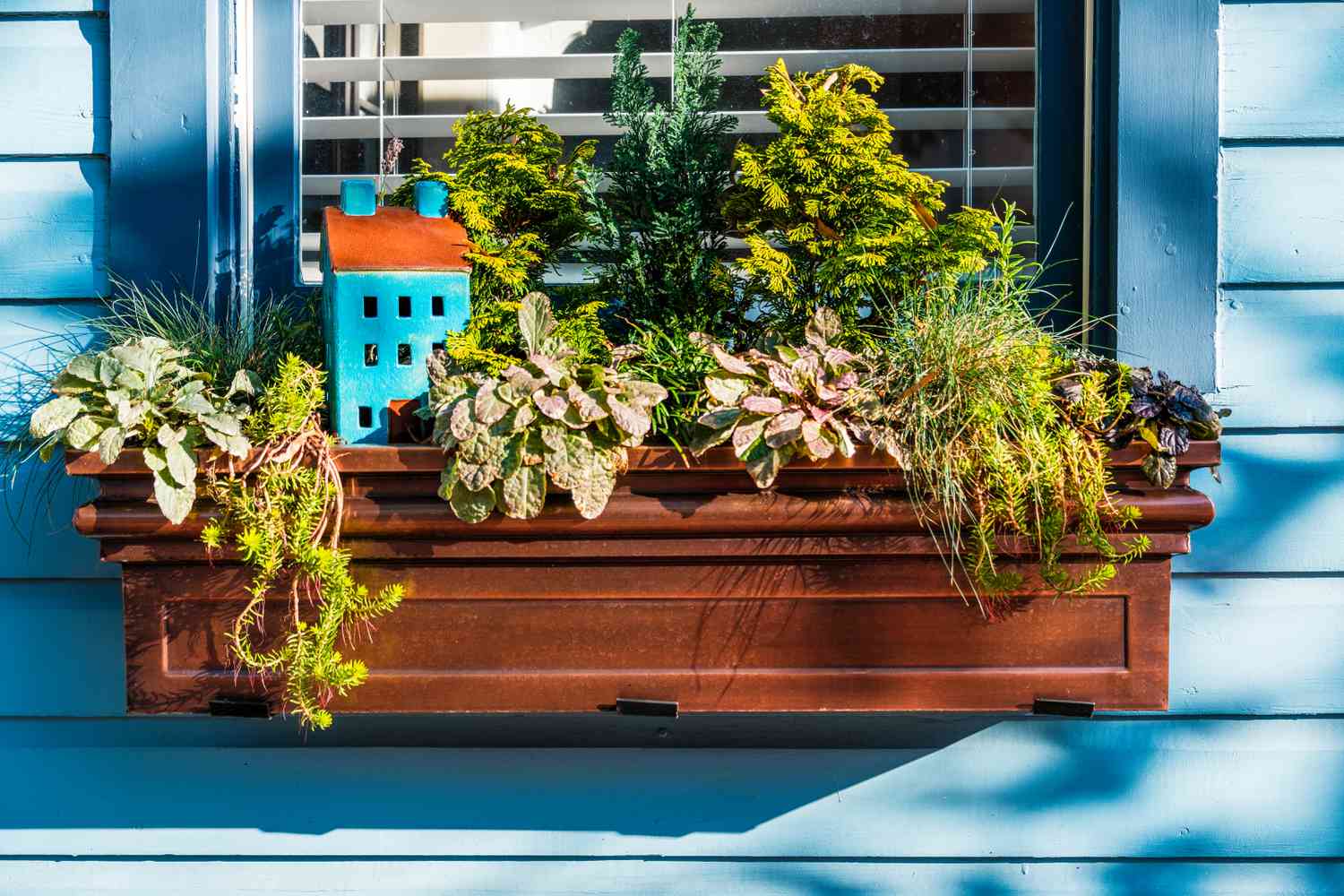
32. A Whimsical Window Box with a Tiny Teal House
The tiny teal house is, without a doubt, the single element that steals the show. The window box full of greenery is lovely on its own, but the addition of the miniature house transforms it from a simple planter into a miniature world. It’s a touch of pure whimsy and storytelling that invites you to look closer. The bold teal color and bright red roof immediately draw the eye, creating a focal point and a moment of playful surprise. It suggests a tiny, magical resident lives among the leaves.
💸 Get This Look For Less
This design is so successful because it understands color theory. The window box is set against a pale, powder blue wall. The tiny decorative house is painted a vibrant teal—a color that lives in the same blue family but is far more saturated and intense. This creates a sophisticated, analogous color scheme that feels harmonious and pleasing. The pop of red on the miniature roof is a complementary color to the greens and blues, adding just the right amount of visual excitement to keep the scene from being too monochromatic. It’s a very clever and effective color story.
Your Upcycled Garden Story Begins Here
You don’t need a huge budget or a sprawling estate to create a garden that’s brimming with personality. Often, the most interesting and beautiful outdoor spaces are the ones that tell a story, built from objects with a history. Hopefully, these ideas have sparked some inspiration for your own garden’s next chapter.
Feeling inspired? Follow us on Pinterest for a daily dose of creative home and garden ideas. Happy planting!