You know that feeling when you scroll past a house and the front door color is so perfectly *right* it makes you do a double-take? That perfect pop of color against a friendly yellow facade can completely define a home’s character. But finding the right one can feel like searching for a needle in a haystack. We get it. So, we did the deep dive, filtering through hundreds of options to find what truly works with every shade of yellow siding and brick.
Inside, you’ll find 27 distinct door color ideas that complement everything from pale buttery hues to rich golden tones. We’re covering styles from classic Victorian to sharp and Modern, ensuring there’s something for every home. In 2026, it’s all about dialing up personality. Homeowners are using their front door as a true expression of style, and a confident color choice is the perfect way to do it. And stay until the end — we break down the most common mistakes that can ruin these looks.
📌 Save this to Pinterest for later — you’ll want to revisit these ideas.
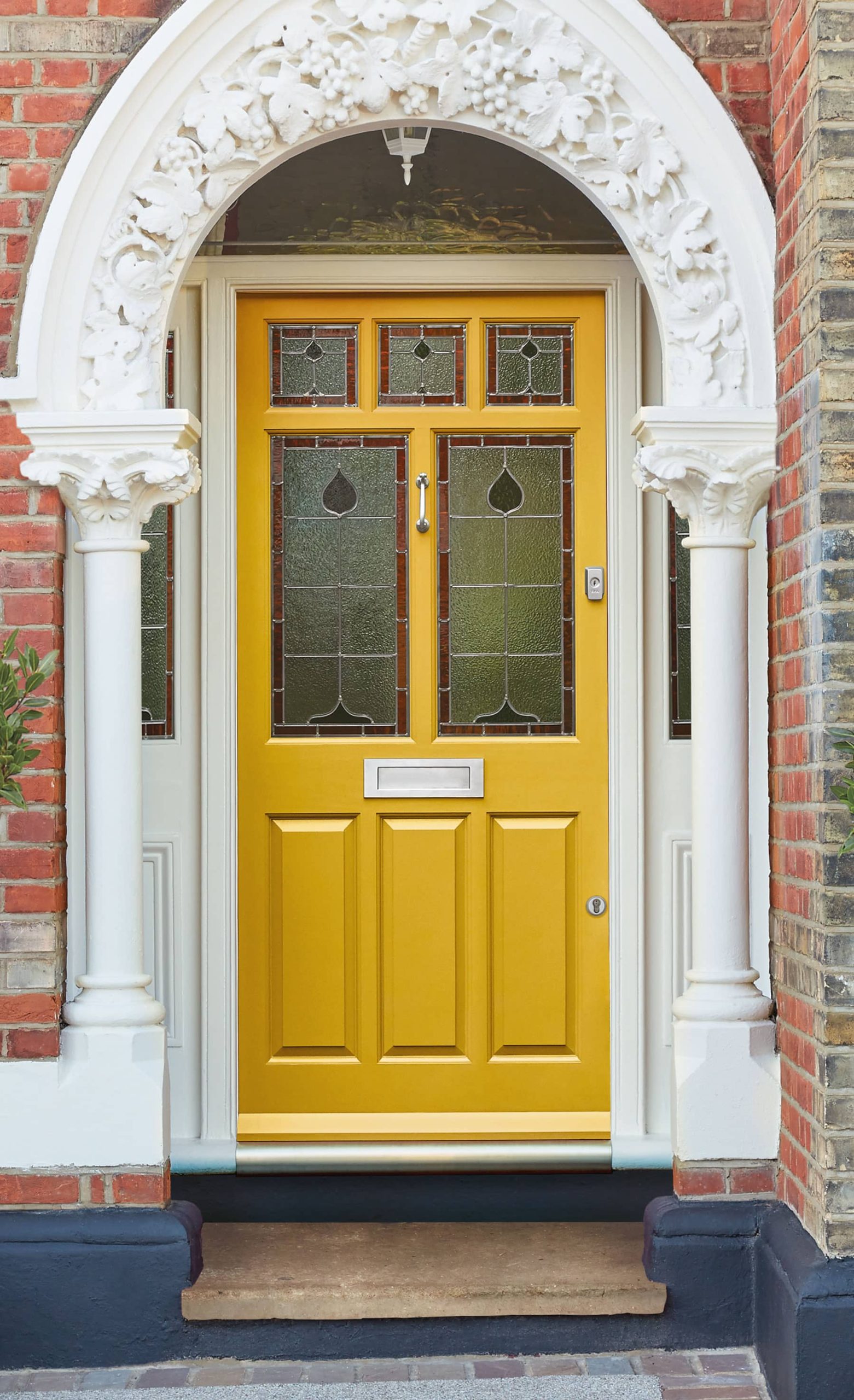
1. A Vibrant Yellow Door in an Ornate Victorian Archway
What makes this work is the confident use of monochromatic color with varying textures and sheens. The bright, glossy yellow of the door feels intentional and modern, while the stained glass panels with their droplet motif add a layer of history and intricacy. The design succeeds by balancing a single, bold color statement with detailed architectural elements. The ornate floral carvings in the white archway and the classic red brick provide a traditional frame that keeps the vibrant door from feeling out of place, proving that you don’t have to be shy with color, even on a historic home.
💰 Budget Breakdown
For a high-impact entrance like this, pay close attention to the finish. Use a high-gloss or semi-gloss paint for the door itself (Benjamin Moore’s “Patriotic White” trim and “Stuart Gold” for the door are great starting points). This not only makes the color pop but also provides durability against the elements. Critically, ensure all surrounding trim, like these white fluted columns and the archway, are painted in a crisp, clean satin or eggshell. This slight difference in sheen makes the central door the undeniable star of the show.
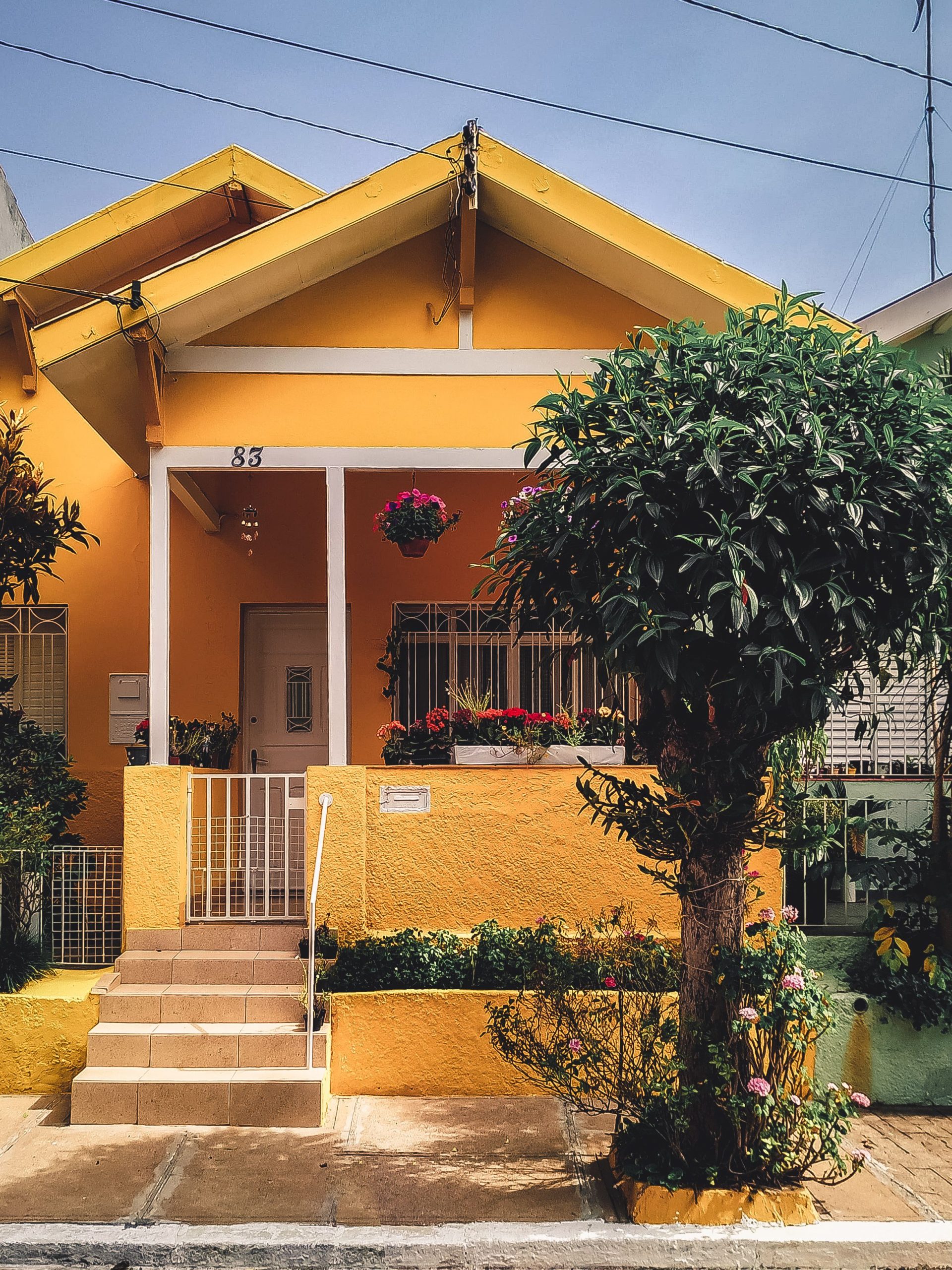
2. White Door and Security Grills on a Textured Yellow-Orange House
Let’s be honest: security bars can sometimes detract from a home’s curb appeal, but this example shows how to integrate them seamlessly. The key is consistency. By painting the front door, window grills, and security gate the exact same shade of crisp white, they become a deliberate architectural element rather than a discordant addition. The vertical lines of the bars even add a sense of height and rhythm. However, be prepared for the upkeep—white metalwork will show dirt and rust more quickly than darker colors, so plan for a yearly wash-down and potential touch-ups.
🔧 How-To Brief
The visual harmony here comes from a simple formula: 70% warm textured color + 25% crisp white + 5% natural accents. The expansive yellow-orange stucco is the dominant base, creating a welcoming and energetic vibe. The white is used for all the functional and structural elements—door, gates, window frames—which unifies them. The final 5% comes from the dark green foliage and pops of pink and red flowers, which add life and prevent the two-tone palette from feeling flat. You could swap the white for a soft gray or even black, as long as you apply it to all the same elements.
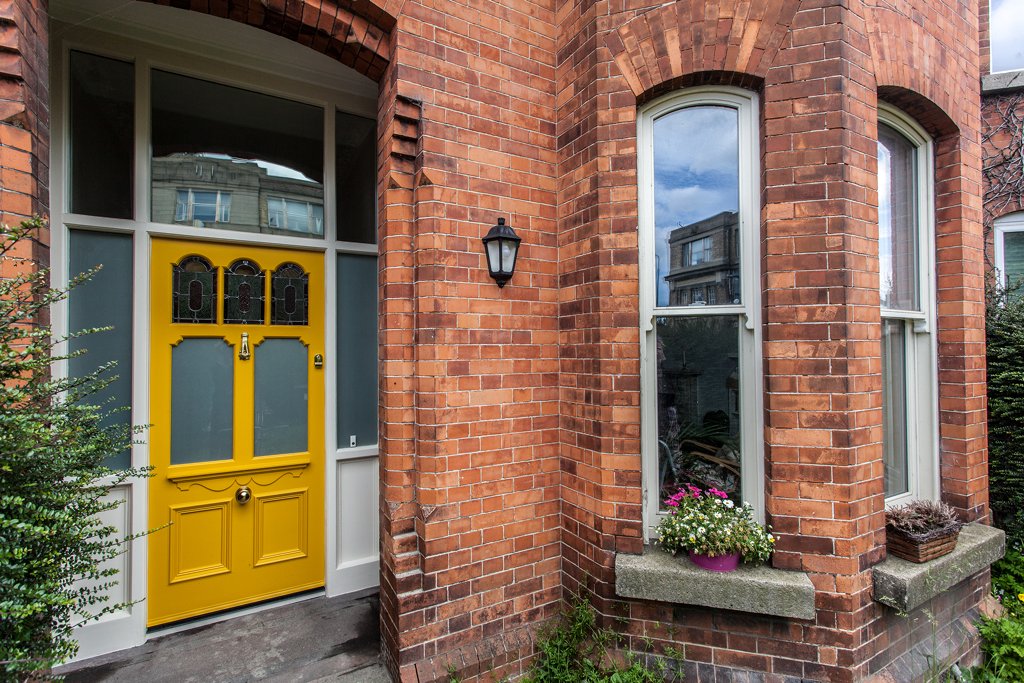
3. Bold Yellow Door with Leaded Glass in a Classic Red Brick Facade
that truly makes this design sing is the leaded glass. Without it, this would just be a handsome yellow door against brick. But the intricate, diamond-patterned glasswork elevates the entire entrance. It catches the light, adds a layer of handcrafted detail, and provides privacy while still feeling open. It’s a feature that speaks to the home’s traditional character and gives the entryway a sense of permanence and quality that a simple pane of glass couldn’t achieve. It proves that details rooted in craftsmanship are always a worthy investment. Compare its traditional feel with the more modern take in Idea #1.
💸 Get This Look For Less
You can achieve this classic, cheerful look without commissioning a custom door. Start by painting your existing door a vibrant yellow (try a sample of Behr’s “Bicycle Yellow”). The magic is in faking the glass detail. You can find high-quality, lead-look adhesive film online for under $50. Apply it to your existing door glass for that vintage, textural effect. Add a traditional black wall lantern from a big-box store for about $70 and a pre-made window box for another $50. The total cost to get 80% of this vibe could be under $200.
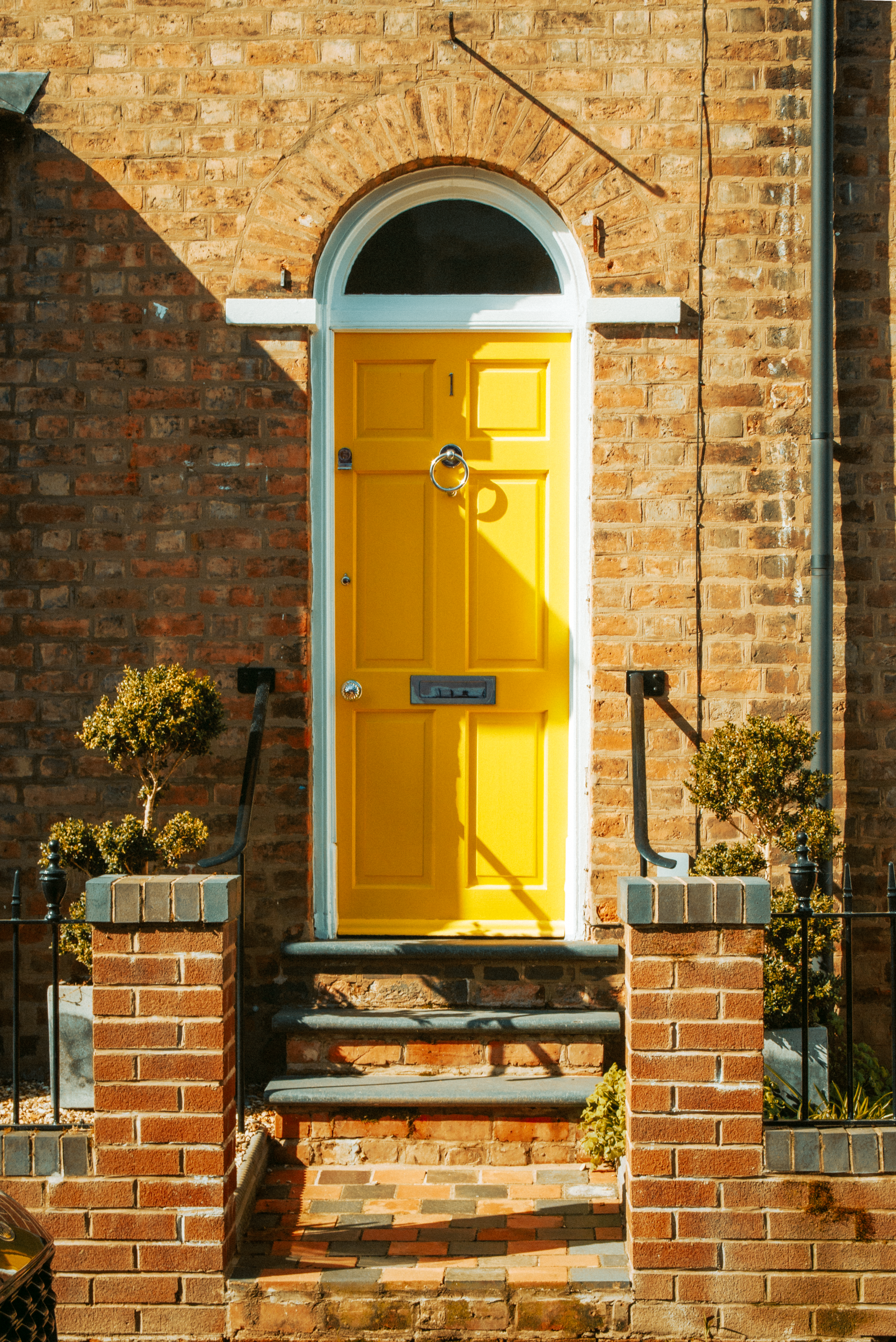
4. Sunny Yellow Paneled Door with an Arched Transom on a Brick House
This look is ideal for a home with a formal, symmetrical entryway and a ceiling height of at least 9 feet at the porch. The arched glass transom above the door is crucial; it requires significant vertical space to look balanced. This design works best on facades that are at least 15-20 feet wide, allowing the vibrant door to be a clear focal point without overwhelming the entire structure. For homes with lower ceilings or smaller porches, consider a rectangular transom or sidelights to achieve a similar light-enhancing effect without requiring the same verticality, like in Idea #20.
🔥 Trending Context
This entryway feels so welcoming because of the principle of repetition and framing. The arch of the glass transom is subtly echoed in the gentle curve of the top door panels. The crisp white of the door frame is repeated in the trim, creating a clean, defined border that makes the yellow pop. Furthermore, the two brick piers topped with stone planters act as a secondary frame for the entire entrance, guiding the eye inward and upward. This layering of frames—brick, then white trim, then the door itself—creates a sense of depth and intention.
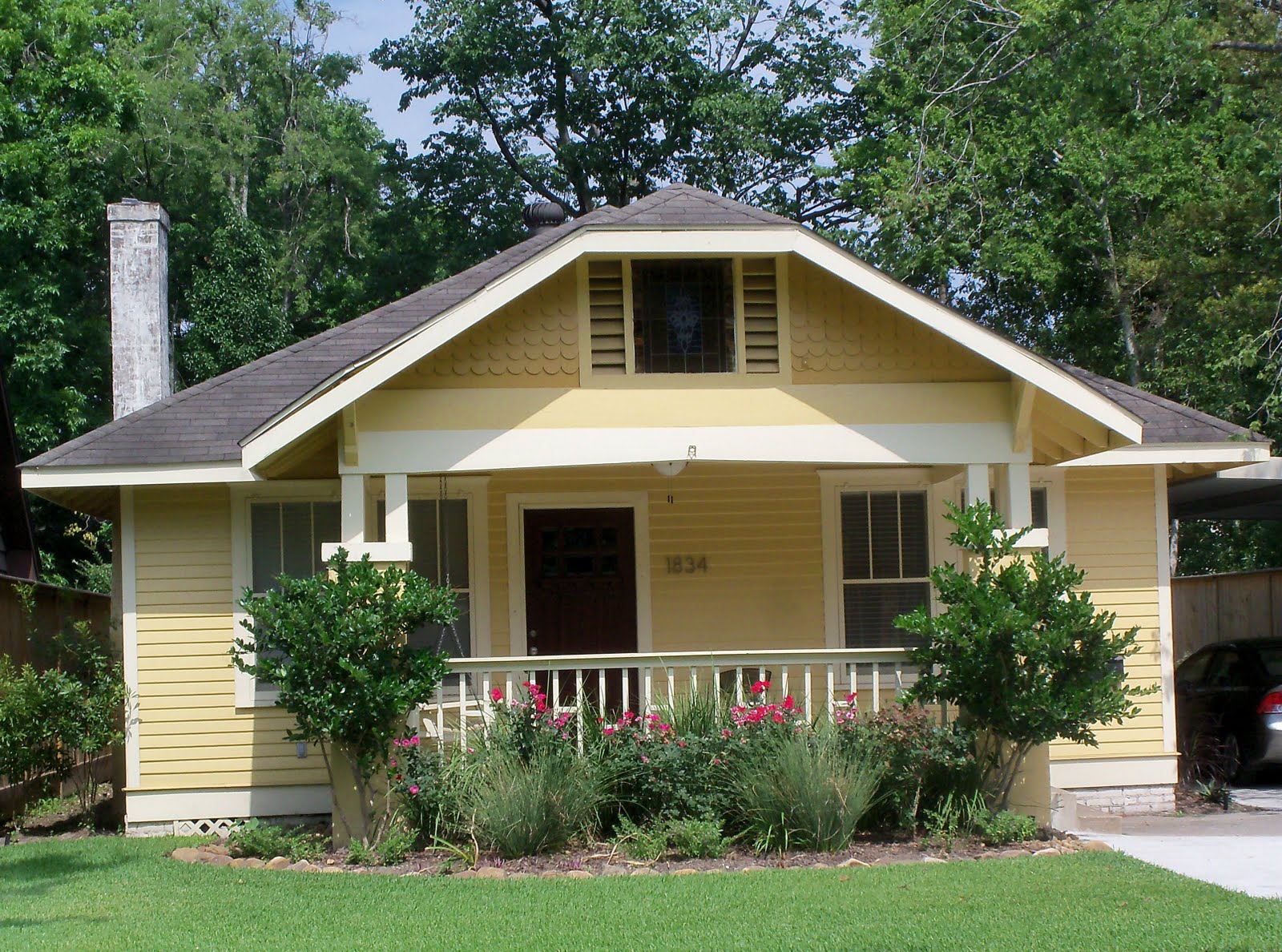
5. Dark Brown Door on a Pale Yellow House with Scalloped Shingles
A dark brown door is a fantastic, classic choice against pale yellow siding. It’s grounding, elegant, and excellent at hiding dirt and scuffs. However, if your door faces the intense afternoon sun, a very dark color can absorb a lot of heat. This can lead to the paint blistering or peeling faster than a lighter color, and in some cases, can even cause wooden doors to warp over time. Using a high-quality, exterior-grade paint with UV inhibitors is non-negotiable here. Expect to re-coat a dark, sun-beaten door every 3-5 years, compared to the 5-7 year lifespan of a lighter color.
🧹 Maintenance Reality
Before committing to this traditional color scheme, check these key points:
- Siding Undertone: Confirm your pale yellow siding doesn’t have a green undertone. This scheme works best when the yellow is a creamy, warm, or buttery shade.
- Trim Color: This look relies on crisp white trim. If your trim is beige, cream, or another color, the brown-and-yellow pairing won’t have the same classic pop.
- Roof Color: A dark brown door pairs best with a dark gray, black, or brown roof. If you have a green, red, or blue roof, you may need to reconsider the door color to avoid clashing.
- Light Exposure: As noted, a west-facing door will take a beating. Be prepared for the maintenance that comes with a dark color in a high-sun location.
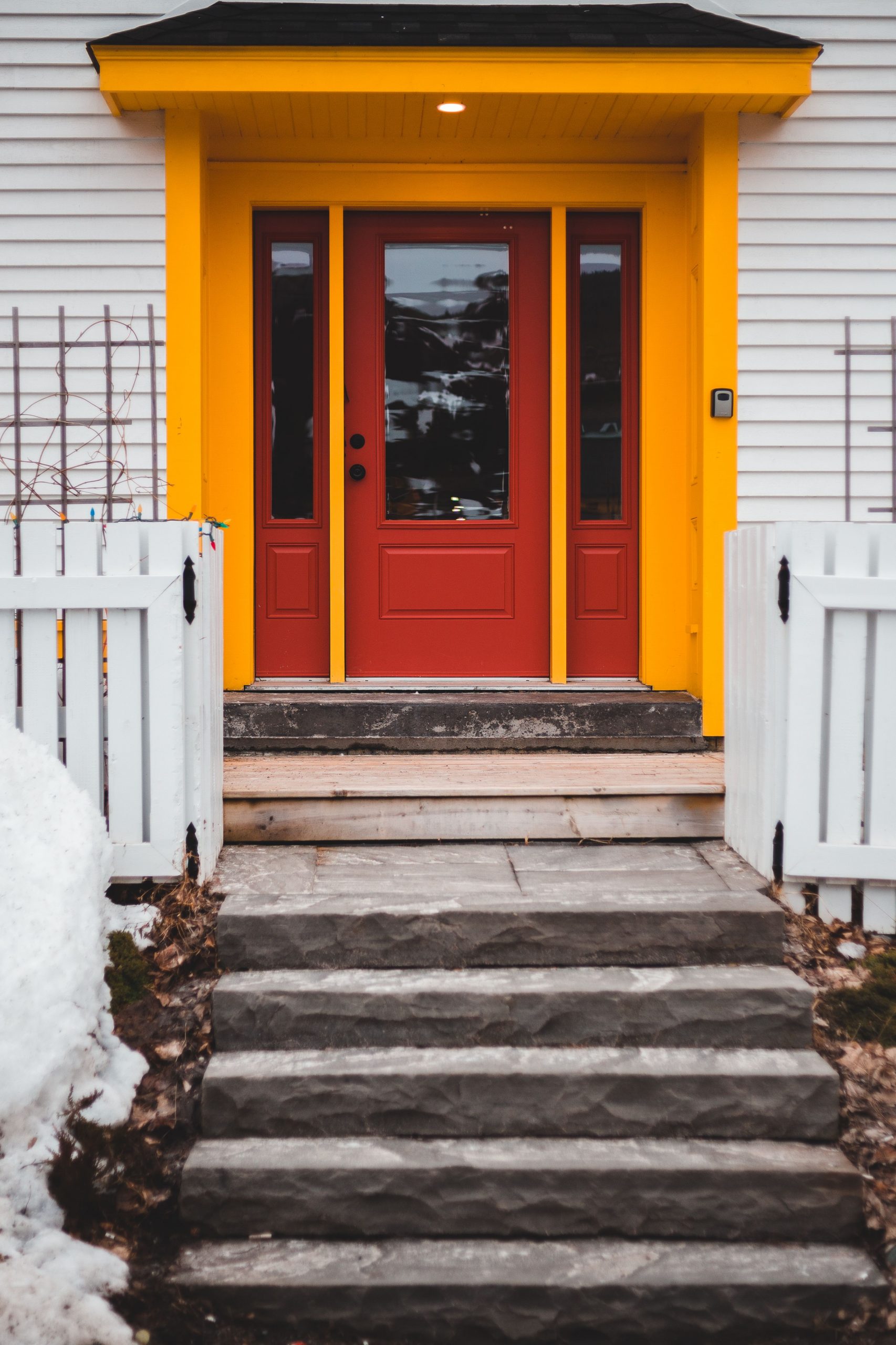
6. Vibrant Red Door with Yellow Trim on a White Siding House
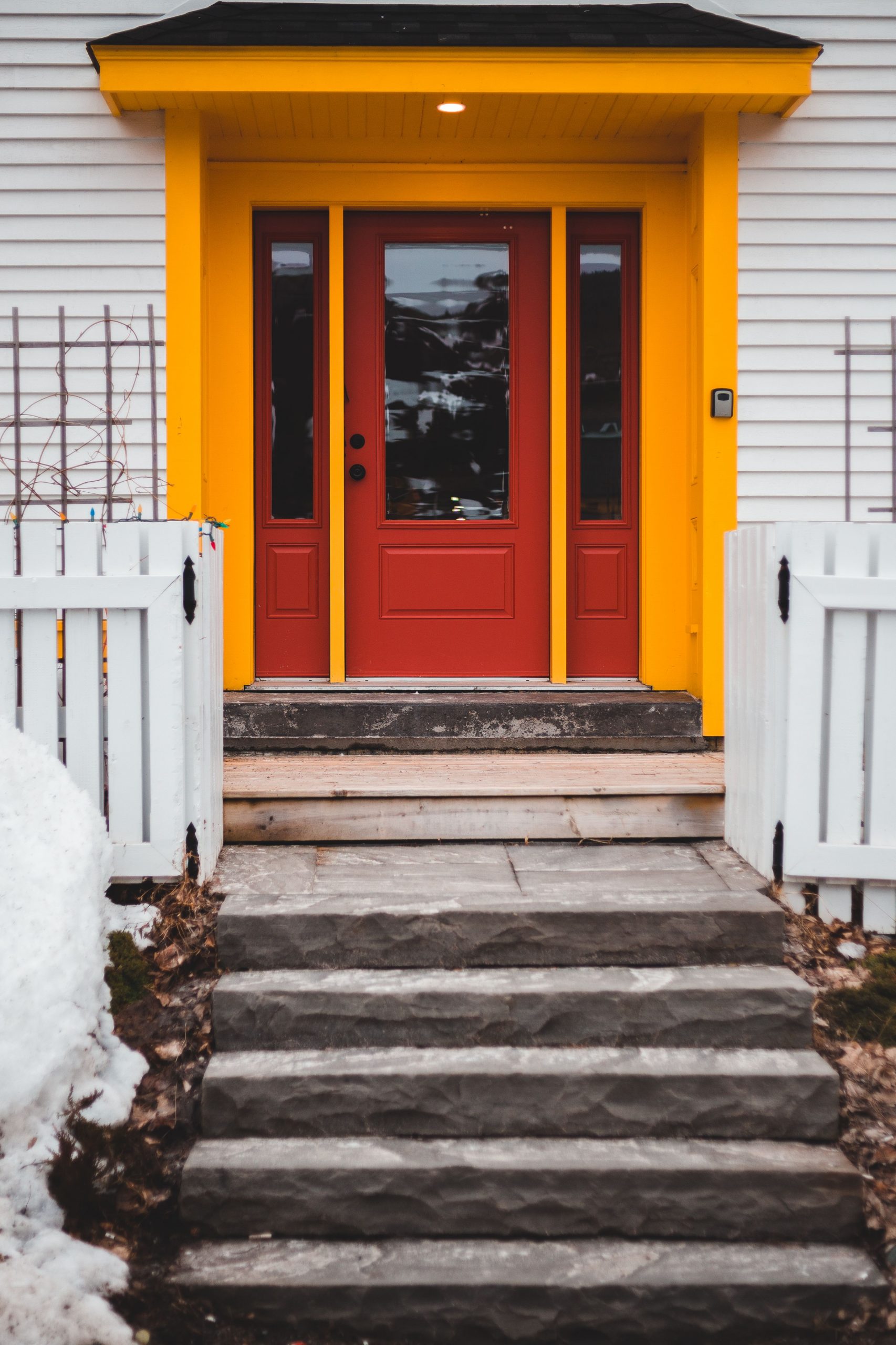
This entrance is a masterclass in using color to create a focal point. The formula is simple but effective: 70% classic neutral + 20% bold trim + 10% accent pop. The white horizontal siding provides a quiet, clean backdrop that covers the majority of the home. The bright yellow trim acts as a loud, confident frame, drawing your attention immediately to the entrance. Finally, the bright red door serves as the powerful accent, the final destination for the eye. This layered approach ensures the entrance feels vibrant and intentional, not chaotic.
⚠️ Real Talk
If you’re going to be this bold with color, you have to commit. The key is to choose truly saturated shades. Don’t opt for a muted mustard yellow or a brick red. You need a canary yellow and a fire-engine red to get this kind of high-contrast energy. When painting, use a high-quality painter’s tape (like FrogTape) to get relentlessly sharp lines between the yellow trim and the red door. With a color combination this dramatic, any fuzzy or bleeding edges will immediately make the whole scheme look cheap and amateurish. Precision is everything.
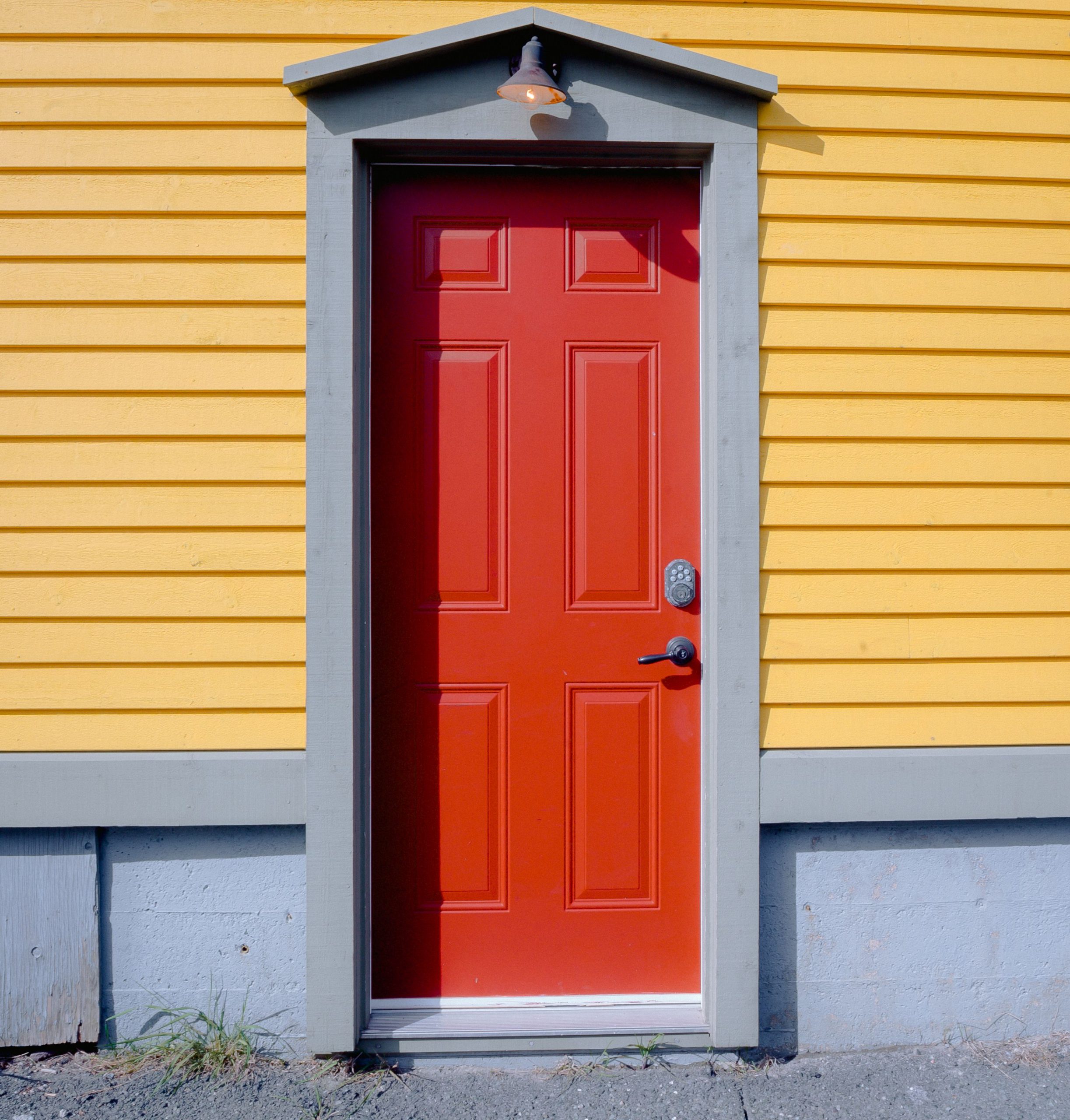
7. Bold Red Paneled Door with Grey Trim on Yellow Siding
The single element that anchors this entire look is the light grey trim. It’s unexpected and modern. Most people would default to white trim, which would still look good, but the grey is a far more sophisticated choice. It acts as a mediator between the warm, bright yellow siding and the equally vibrant red door. The grey cools things down just enough, preventing the yellow and red from becoming visually overwhelming. It proves that the “in-between” colors are often the most important. The saturated energy here is similar to Idea #26, but the grey trim gives it a completely different feel.
📐 Style Math
A color combination this bold is a statement, and you have to be ready for the attention. This isn’t a house that blends in. While it looks fantastic, it might not be the best choice if you live in a neighborhood with a strict HOA or a very traditional, muted color palette. Also, consider the longevity of your color choice. A bright yellow and red scheme is fun and full of personality, but you have to ask yourself if you’ll still love it in five years. Repainting siding is a major expense, so be sure this high-energy look aligns with your long-term vision for the home.
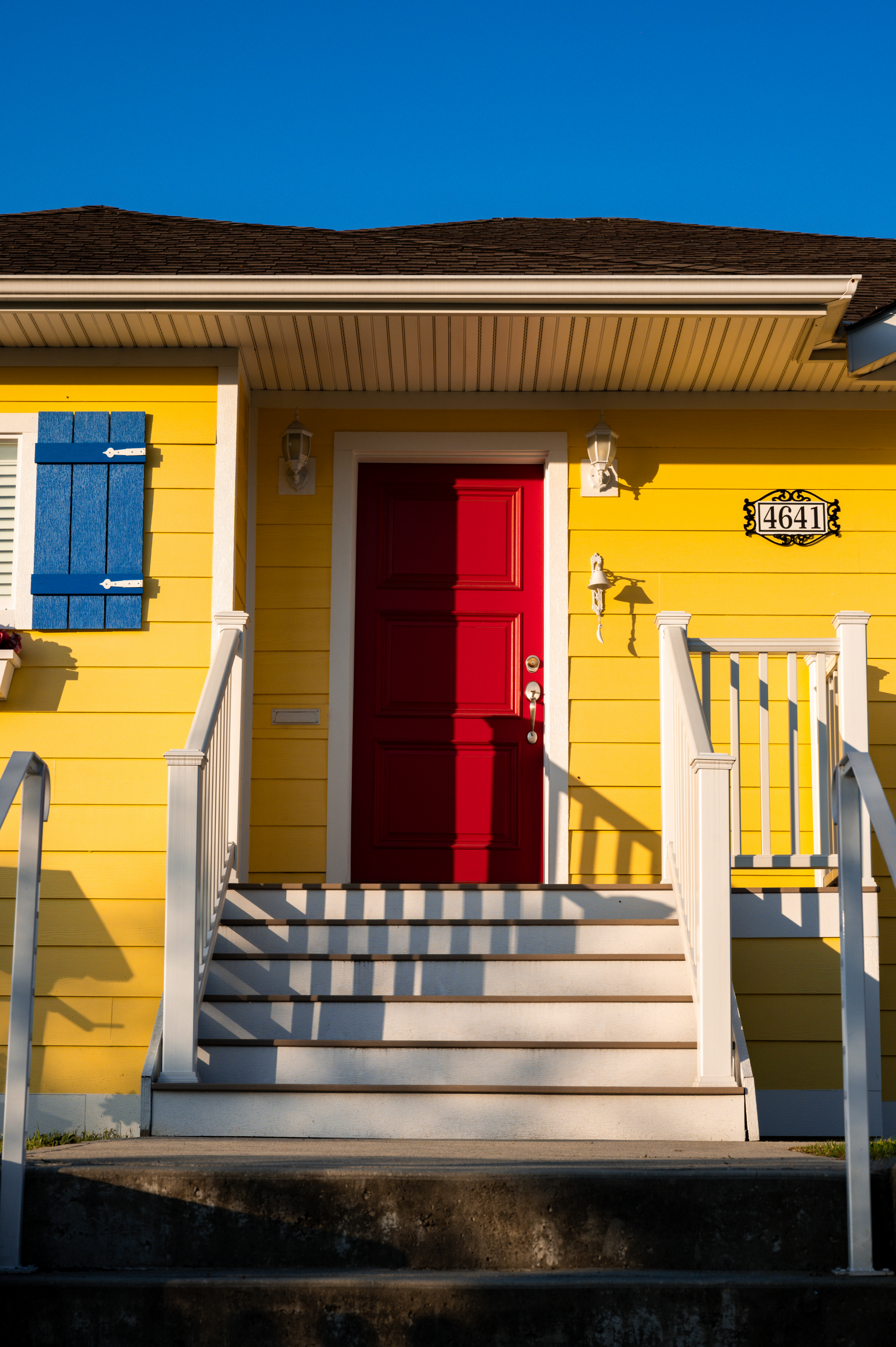
8. Classic Red Door on a Yellow House
The classic red-and-yellow combination is having a renaissance. For a while, design trends leaned into cooler, more muted palettes. But in 2026, there’s a strong movement toward optimistic, primary-adjacent colors that feel joyful and confident. This pairing, reminiscent of classic farmhouses and vibrant suburban homes of the mid-20th century, feels both nostalgic and refreshingly bold. It’s a direct rejection of the all-gray-everything trend, and it signals a return to homes that radiate personality from the curb. This particular look has low-confidence visual data, but the core concept is a timeless one.
💡 Designer Tip
You don’t need to spend a fortune to get this high-impact look. A quart of quality exterior red paint (like Behr’s “Red My Mind”) will only set you back about $25-$35. Assuming your yellow siding is in good shape, the door is your main focus. Spend a weekend prepping the surface properly—cleaning, light sanding, and priming are essential for a professional-looking finish that lasts. Pair it with a new, updated piece of black hardware, which you can find for under $60 at any home improvement store. For less than $100, you can completely change the attitude of your home’s entrance.
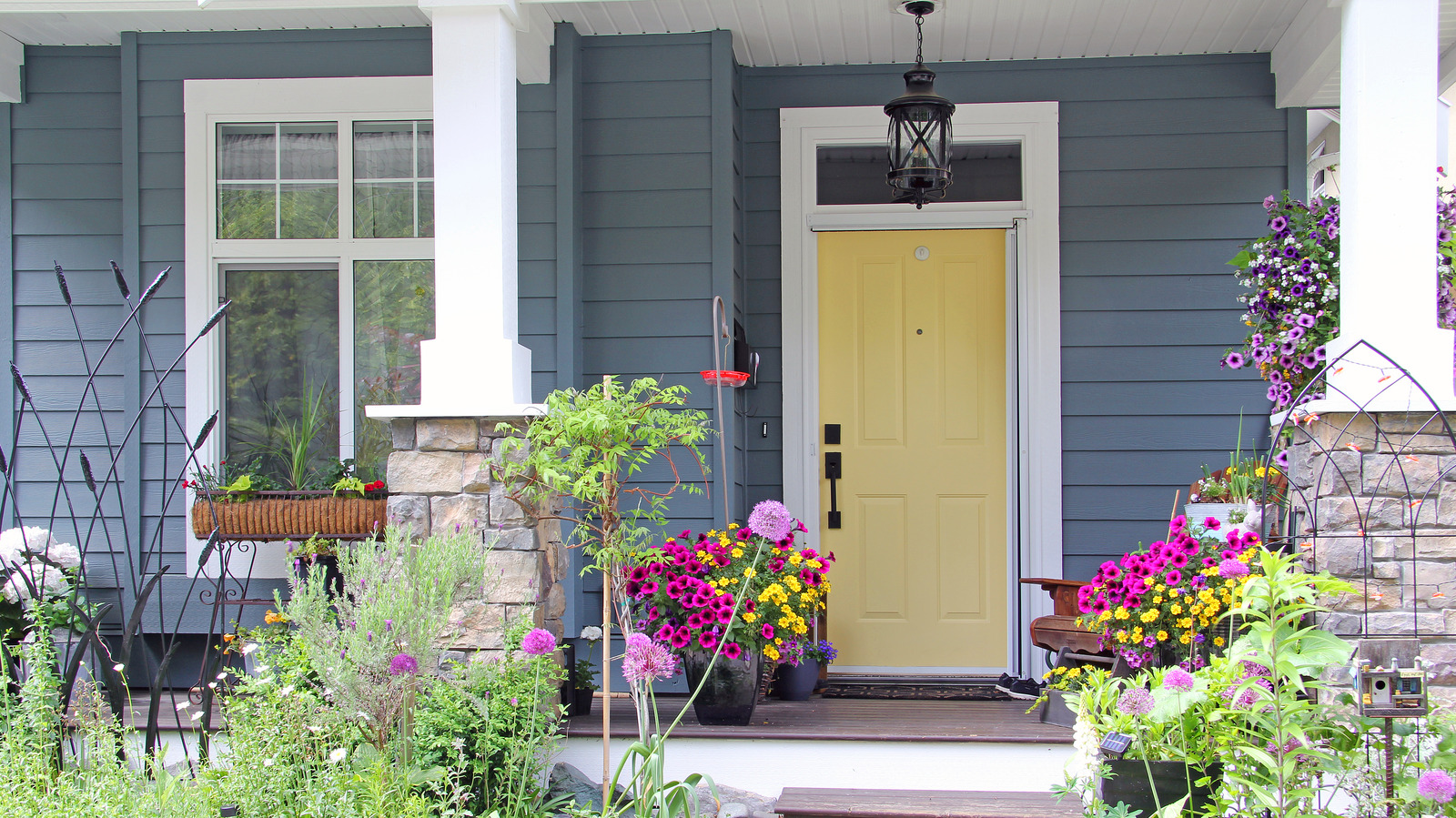
9. Pale Yellow Door on Blue-Gray Siding with Abundant Flowers
This combination works so beautifully because it plays with color temperatures. The blue-gray siding is a cool, calming, and reserved color. The pale yellow door, by contrast, is warm and sunny. Putting them together creates a gentle but compelling tension. The white trim acts as a crisp buffer, keeping the two colors from feeling muddled. The design is then brought to life by the explosion of vibrant pink, purple, and magenta flowers, which connect the cool and warm tones and add a layer of joyful, organic energy. For a similar effect with less maintenance, check out the color pairing in Idea #11.
📏 Scale Guide
When you have this many competing, beautiful elements—the door color, a contrasting siding color, and vibrant flowers—keep your hardware simple. Notice the black overhead porch lantern and door handle. They are classic, understated shapes with a simple, dark finish. If the hardware were ornate, brass, or another competing color, the entire composition would start to feel busy and cluttered. By choosing simple, dark hardware, you allow the colors and the natural beauty of the plants to remain the focal point. Let your hardware be the quiet, supporting actor, not the star.
10. Red Door and Yellow Siding with Flagstone and a Wood Bench
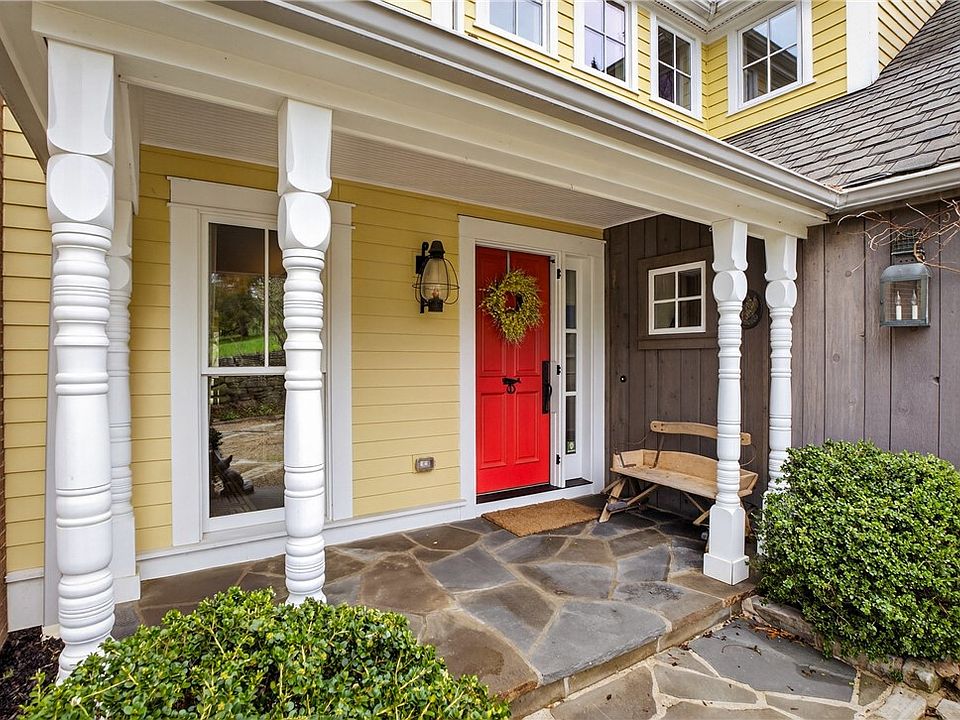
This inviting entrance is a beautiful equation of textures and colors. Think of it as 40% Color + 40% Neutral + 20% Natural Texture. The color comes from the classic pairing of red door and yellow siding. The neutral is the crisp white of the detailed porch columns and trim, which provides a clean structure. The final, and arguably most important, 20% is the natural texture from the gray flagstone floor and the rustic wooden bench. These elements ground the bright colors and add a layer of organic, rustic charm that makes the space feel lived-in and authentic.
✅ Before You Start
A multi-material entryway like this requires a varied maintenance schedule. The painted surfaces (door, siding, columns) will need regular cleaning and touch-ups every few years. The gray flagstone is durable but can be prone to mildew or moss in damp, shady areas; a yearly pressure wash is a good idea. The real variable is the wooden bench and dark-stained siding. To keep that wood from weathering to a dull gray, you’ll need to clean and re-apply a protective sealant every 2-3 years, especially if it gets direct sun or rain. It’s not a huge task, but it’s essential for preserving the warmth of the wood.
11. Bright Yellow Door on a Deep Blue House
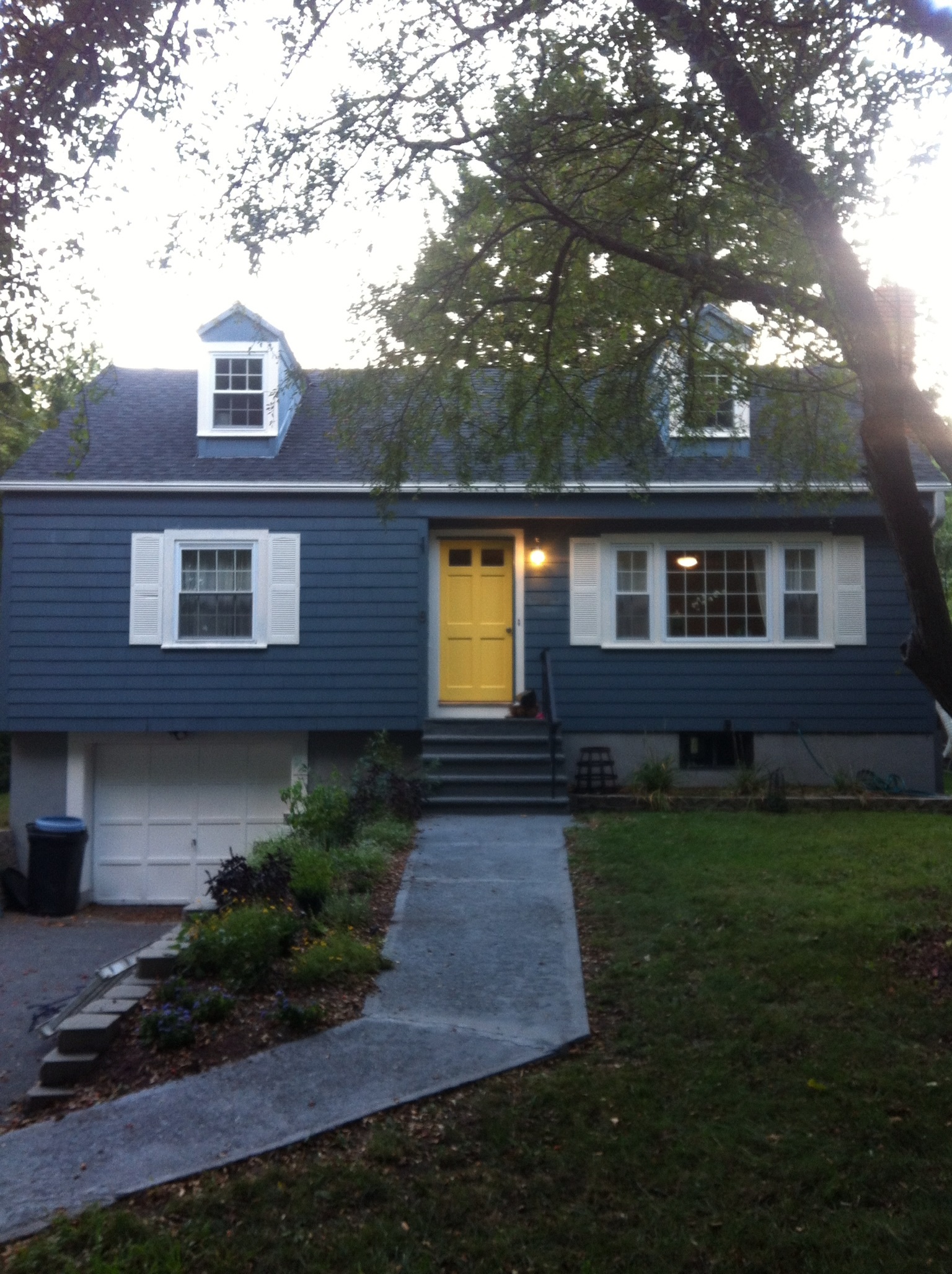
that makes this entire facade unforgettable is the sheer audacity of the color pairing. Deep slate blue and vibrant yellow are complementary colors (opposites on the color wheel), meaning they create the strongest possible contrast. This isn’t a subtle, “oh, that’s nice” combination; it’s a deliberate, high-energy statement. The yellow door doesn’t just stand out; it vibrates against the cool, dark blue. Removing it would leave you with a handsome but much more conventional home. The door is the punctuation mark, the exclamation point on the entire design.
⭐ The One Thing
This is one of the easiest high-impact looks to replicate on a budget. The key is finding the right paint colors. For a deep slate blue siding, look at something like Sherwin-Williams’ “Naval”. For the door, you need a pure, unapologetic yellow like “Cheerful” from the same brand. A quart of door paint is about $30. If you don’t have shutters to paint white, you can achieve a similar crispness by giving your existing window trim a fresh coat of stark white exterior paint. This entire transformation hinges on just two or three carefully chosen paint colors, not expensive structural changes.
12. Red Door with Bright Yellow Trim on White Siding
To recreate this ultra-bold tricolor look, precision painting is your best friend. Time Estimate: 6-8 hours. Material Cost: $75-$100.
🎯 What Makes It Work
- Clean and Prep: Thoroughly wash the door and all trim with a TSP substitute. Lightly sand all surfaces to be painted and wipe away the dust.
- Tape the Siding: Using high-adhesion painter’s tape, carefully tape off the edge where the yellow trim will meet the white siding.
- Paint the Trim: Apply two coats of your bright yellow exterior paint to the door frame and sidelight trim. Remove the tape while the second coat is still slightly wet for the sharpest line.
- Tape the Trim: Once the yellow is fully cured (wait at least 24 hours), tape off the inside edge of the newly painted yellow trim.
- Paint the Door: Apply two coats of your red exterior paint to the door itself.
- Hardware: Once everything is dry, install your black hardware.
This is a LOOK. In a neighborhood of beige and gray houses, this home is shouting with joy, especially with the snow providing a fourth color. It’s festive and fun, almost like the similar approach in Idea #23. However, this is not a color scheme for the faint of heart or for a home with a very traditional, muted aesthetic. It has a high personality quotient and will be a major talking point. If you plan to sell your home in the near future, a more conventional color scheme might have broader appeal. This selection is for someone who loves their home to be an extension of their vibrant personality.
13. Mint Green Door with Colorful Trim on a Yellow House
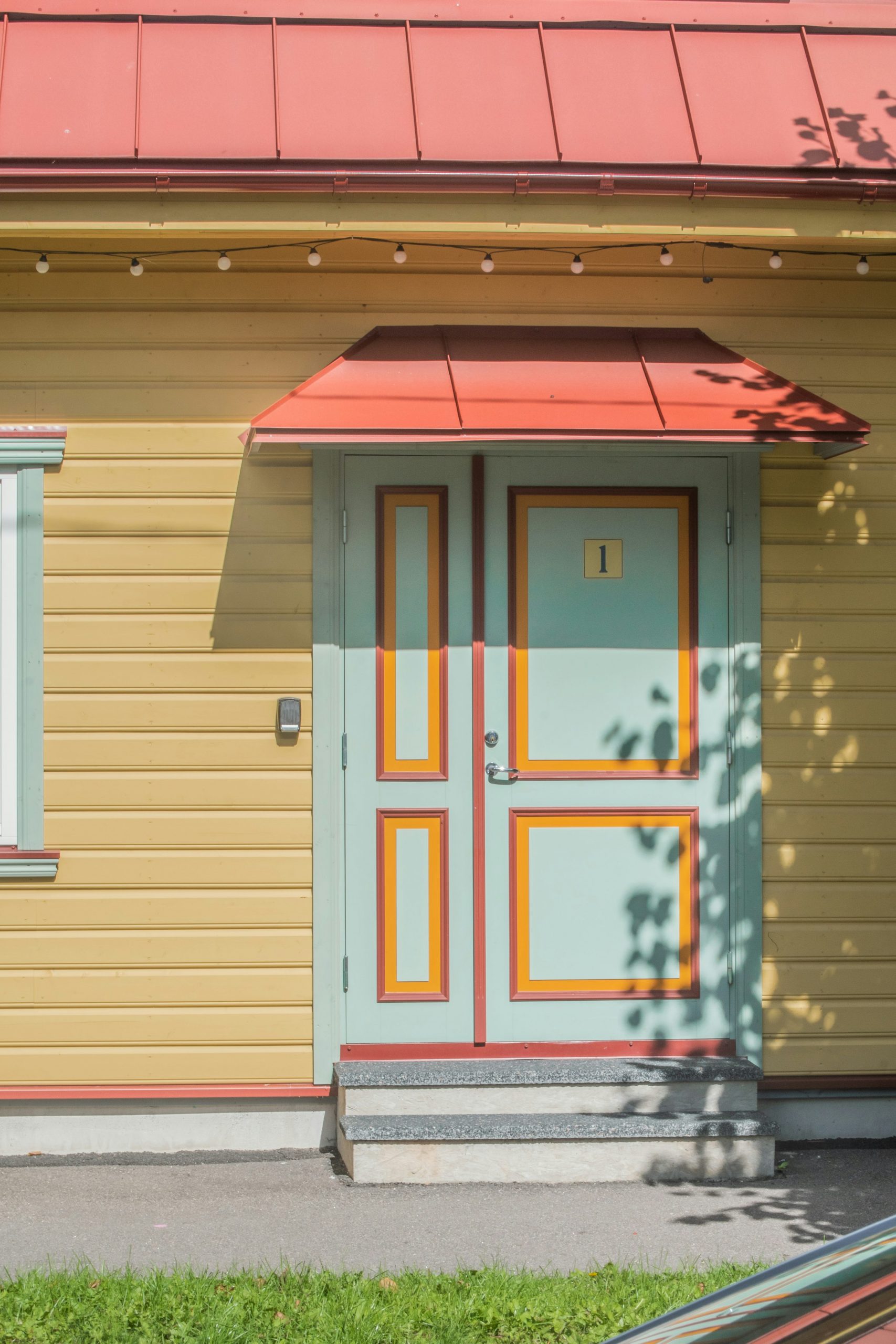
This playful combination works because it fully commits to an analogous color scheme with a twist. The yellow siding, mint green door, and touches of orange and red are all neighbors on the color wheel, creating a palette that is vibrant yet harmonious. The key is that the colors are used in different proportions. Yellow is the dominant field color, green is the secondary color for the main object (the door), and the hot orange and red are used as small, electrifying accents. The gray steps and red metal roof ground the look, preventing it from floating away in a sea of color.
💰 Budget Breakdown
When working with this many bright, adjacent colors, the finish and placement are critical. Notice how the trim isn’t just one color; it’s a layered combination of orange and red. To replicate this, paint the entire trim piece orange first. Let it dry completely. Then, using a high-quality 1-inch angled brush, carefully paint the raised, decorative part of the trim in red. This kind of detailed layering is what makes a playful color scheme look intentional and custom-designed, rather than chaotic and accidental. It’s a small step that makes a huge difference.
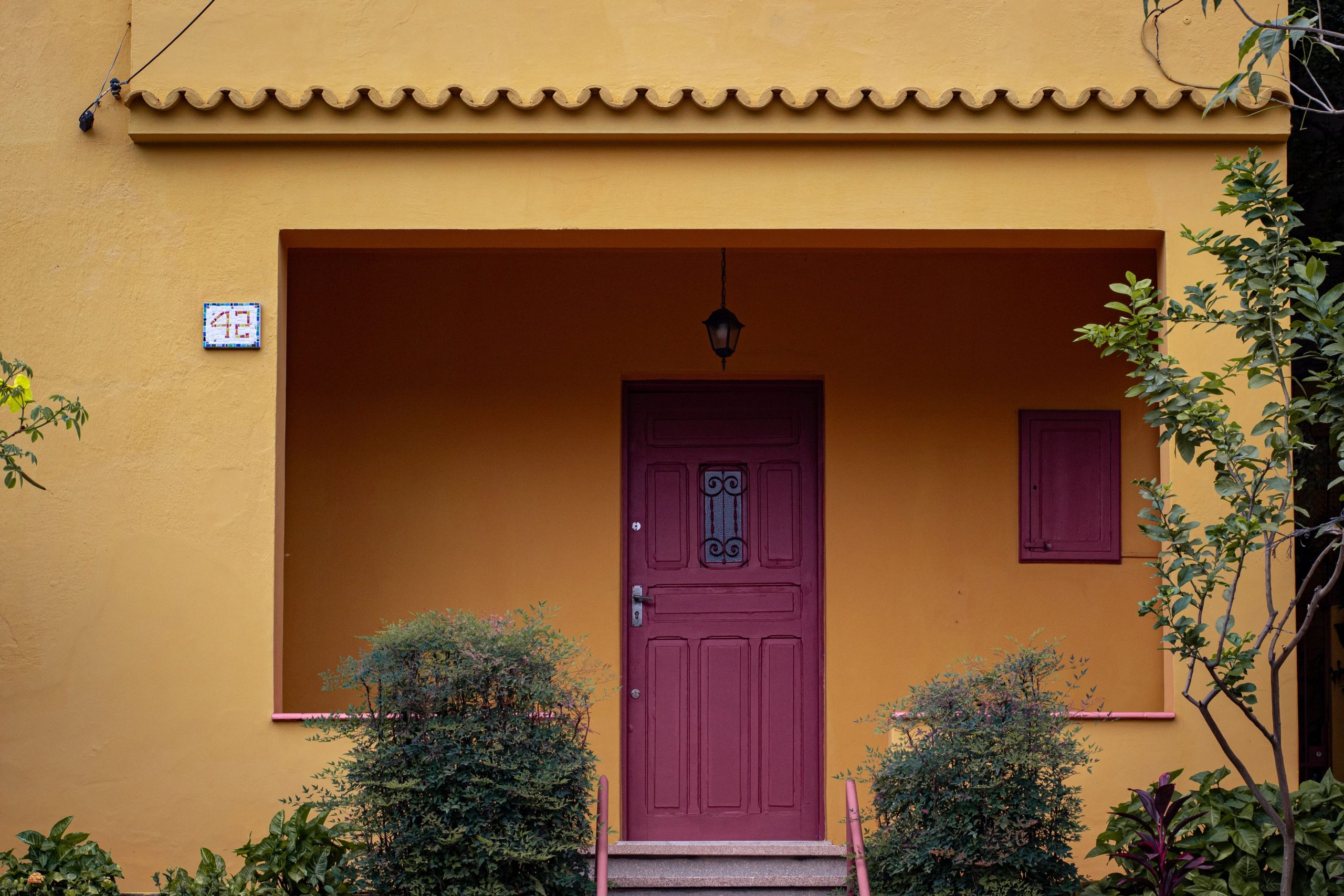
14. Deep Red Door with Wrought-Iron Glass on a Yellow Stucco Facade
This Mediterranean-inspired look is perfectly suited for homes with stucco or adobe exteriors and works especially well in warmer, sunnier climates. The deep, arched porch and the substantial feel of the door suggest a minimum entryway width of about 5-6 feet. The idea thrives on a sense of enclosure; it wouldn’t have the same impact on a flat facade. The charm is in the details—the wrought iron on the glass, the matching shutter, the ornate lantern—so it’s a great fit for homes that already have some traditional or Spanish-style architectural elements.
🔧 How-To Brief
As homeowners increasingly seek authenticity and texture, we’re seeing a move away from flat, uniform surfaces. This look is right on trend for 2026, combining the warmth of yellow stucco with the richness of a deep wine-red door and the classic touch of black wrought iron. It feels substantial, historic, and deeply rooted. In a world of fast furniture and quick fixes, a style that evokes the permanence and craftsmanship of Mediterranean design feels both grounding and incredibly sophisticated. It suggests a home that is built to last.
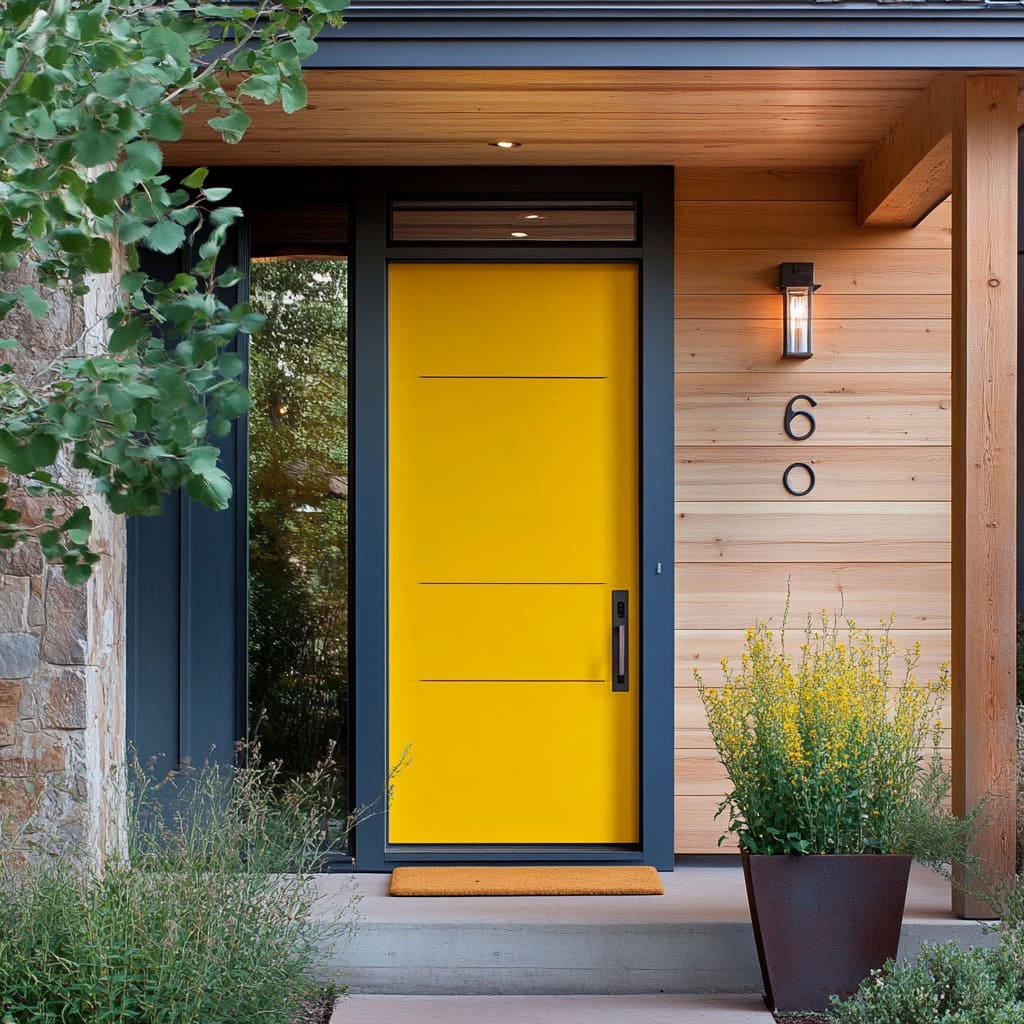
15. Bright Yellow Modern Door with Cedar Siding and Stone
Recreating this specific high-end modern look requires a significant investment in materials, but the results are stunning.
💸 Get This Look For Less
- Main Furniture (Door): A modern, solid-core fiberglass or steel door with a sidelight can range from $2,500 – $6,000.
- Wall Treatment: Natural cedar plank siding and stacked stone veneer are premium materials. Expect to pay $15-$30 per square foot for materials and installation. For a 100 sq. ft. accent area: $1,500 – $3,000.
- Lighting: A high-quality industrial sconce: $150 – $400.
- Decor/Accessories: Large modern planter and plants: $200 – $500.
- Paint: Minimal, but high-quality charcoal trim paint: $50.
- TOTAL: $4,400 – $9,950+
- Budget alternative: Use composite wood-look siding and faux stone panels to get a similar vibe for 40-50% less.
Want to install that industrial sconce yourself? It’s a straightforward DIY project if you have an existing junction box. Time Estimate: 1 Hour. Material Cost: $150-$400.
- Turn Off Power: Safety first! Turn off the breaker that controls the exterior light fixture.
- Remove Old Fixture: Unscrew and disconnect the old light fixture, taking note of the hot (black), neutral (white), and ground (copper) wires.
- Install Mounting Bracket: Attach the new fixture’s mounting bracket to the junction box in the wall.
- Connect Wires: Connect the new sconce’s wires to the house wires—black to black, white to white, ground to ground—using wire nuts.
- Attach New Sconce: Secure the new sconce to the mounting bracket.
- Test: Turn the power back on and test your new light! This is a much sleeker approach than in the more traditional styles, like Idea #25 which uses more classic lantern shapes.
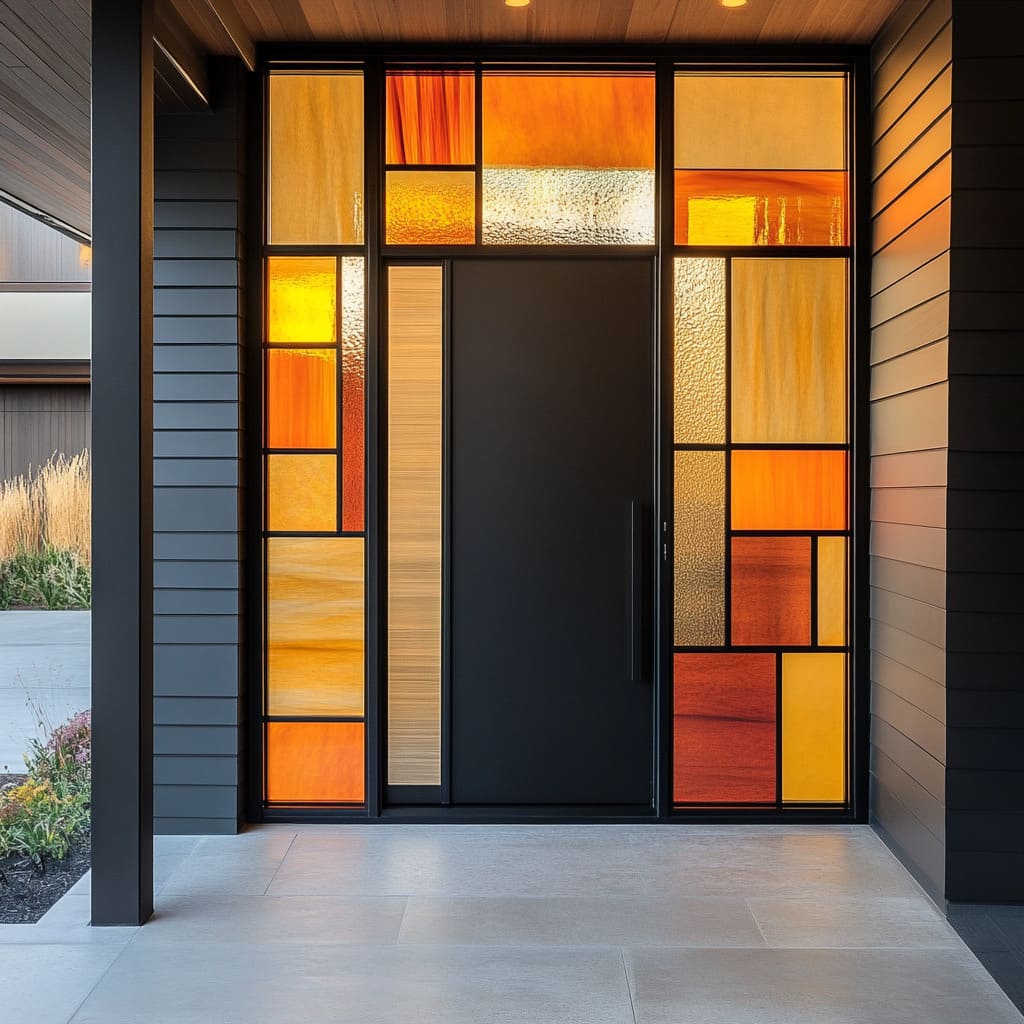
16. Modern Black Door with Vibrant Stained-Glass Sidelights
The entire mood of this entryway is defined by the stained-glass sidelights. Without them, you have a sleek but perhaps sterile modern entrance: a black door, dark siding, gray floor. It would be handsome but cold. The sidelights, with their mosaic of warm yellow, orange, and red tones, are like a blast of fiery, artistic energy. They are jewelry for the house. They catch the light during the day and glow from within at night, transforming what could be a somber facade into a vibrant, welcoming statement of personal style. They are pure, unadulterated joy.
🔥 Trending Context
This design masterfully balances dark, grounding elements with a vibrant, artistic feature. The formula is approximately 70% Dark & Moody + 30% Concentrated Color. The black door and dark gray siding create a sophisticated, recessive canvas. This allows the 30% of the composition—the warm-toned stained glass—to have maximum impact. The light gray floor tiles act as a neutral buffer, preventing the dark walls from feeling too heavy. By concentrating the color in a specific, vertical element, the design feels balanced and intentional, not chaotic.
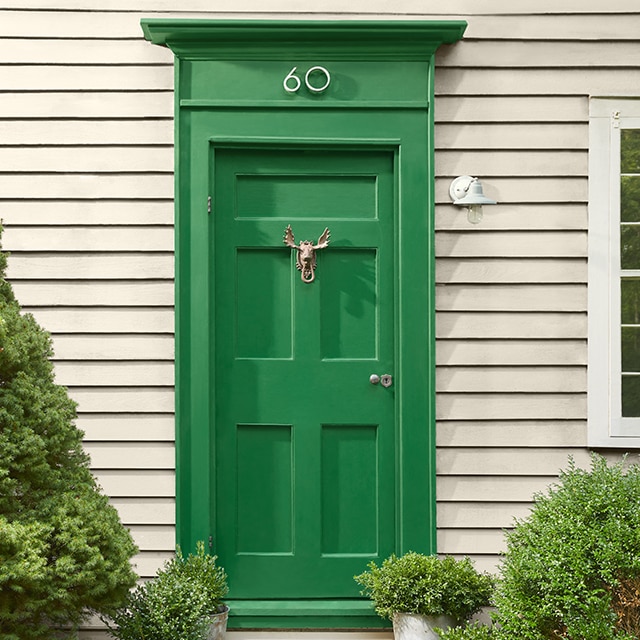
17. Bright Green Paneled Door with Antler Knocker
When pairing a bold door color like this bright green with a light, neutral siding, the secret to a polished look is to paint the door trim to match the door. Notice how the entire door frame, including the slender sidelights, is the same shade of green. This makes the entryway feel like a single, cohesive architectural unit. If the trim were painted white to match the house trim, the door would look smaller and less impactful. Matching the trim makes the entire entrance a larger, more significant block of color, which gives it more presence and a custom-built feel.
🧹 Maintenance Reality
A unique door knocker, like the bronze antler shown here, is a fantastic way to inject personality. However, be aware of the “jewelry” of your door. You have the knocker, the door handle, the lock, and the house numbers. That’s four distinct metal elements. This example works because the antler knocker is the star, and the other pieces (the silver handle and numbers) are more subdued. If you add a unique knocker, consider using a very simple, understated handle set in a matching or neutral finish to avoid a cluttered, messy look. Too much hardware can quickly look chaotic.
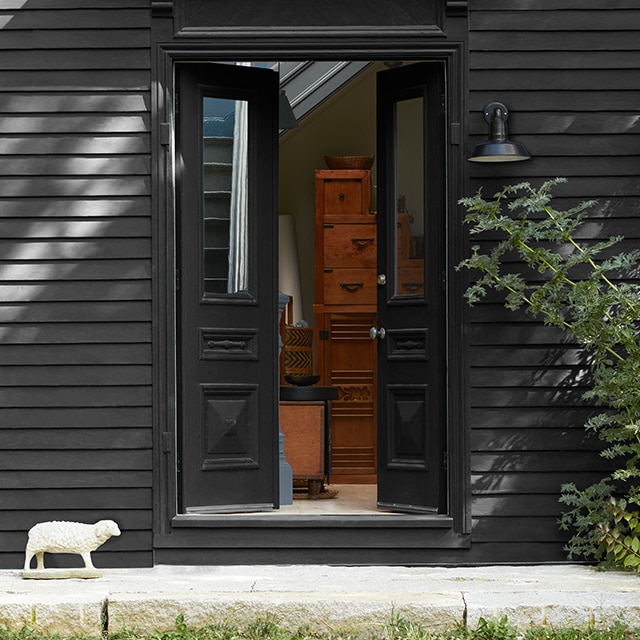
18. Black Double Doors on Dark Siding with Stone Steps
This entryway achieves a powerful, rustic elegance through a high-contrast, low-color approach. The drama comes from the texture play: the smooth, dark horizontal siding, the rough-hewn character of the stone steps, the clear glass in the doors, and the warm wood grain visible just inside. The color palette is almost entirely monochromatic—shades of black and gray. This forces the eye to appreciate the different materials. The single pop of color comes from the small green shrub, and the welcoming warmth is hinted at by the interior view, creating a sense of intrigue and invitation.
⚠️ Real Talk
Double doors demand space. This look is best for a main entrance on a larger home where the facade is wide enough to support the visual weight of two doors. You’ll need a minimum rough opening of at least 6 feet to accommodate a standard set. This style is particularly effective for creating a grand entrance on modern farmhouse, rustic, or mountain-style homes. For smaller homes or entrances, attempting to force double doors can make the facade feel cramped and out of proportion. A single door with two sidelights would be a better choice in that scenario.
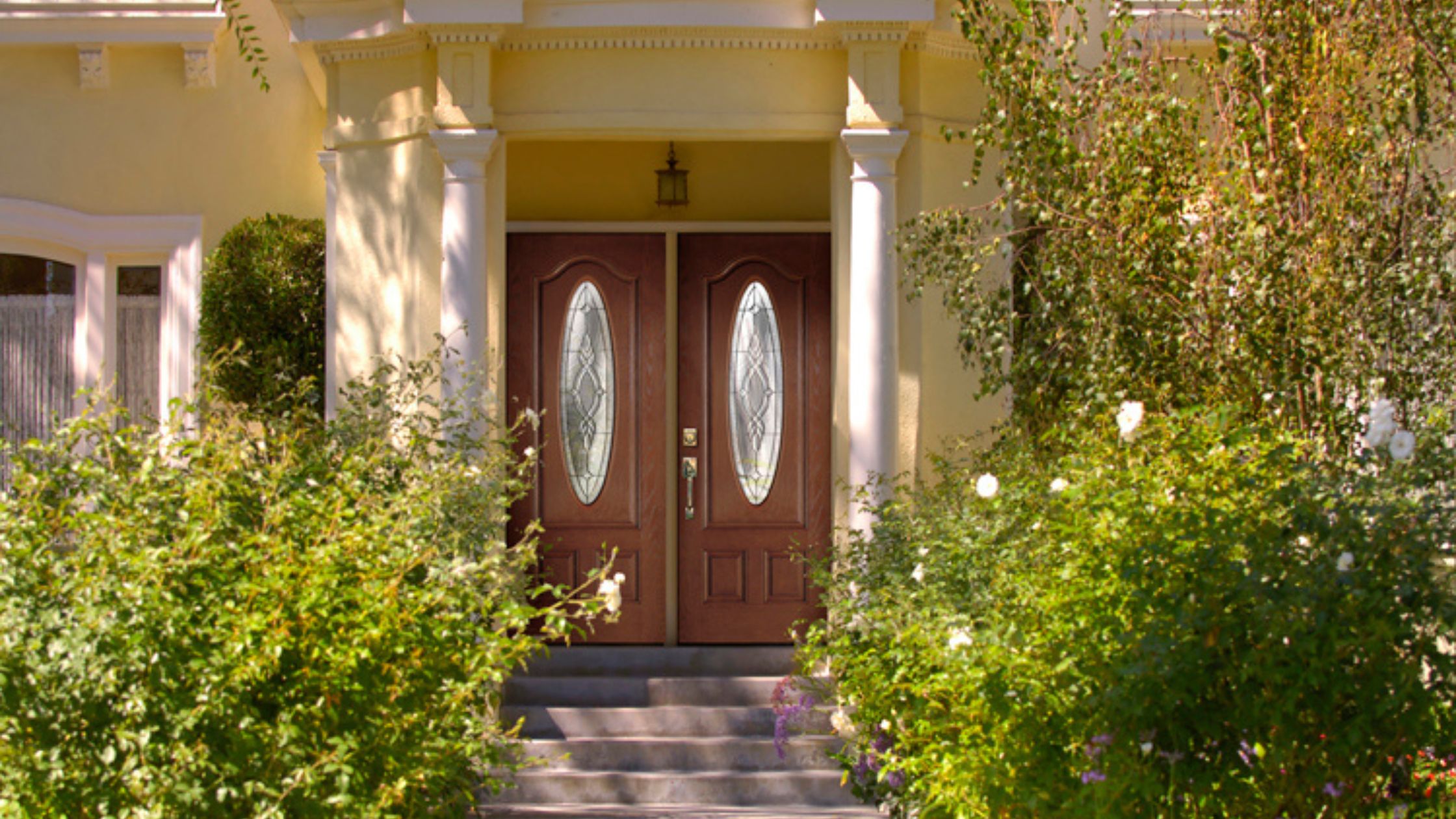
19. Craftsman-Style Double Wood Doors on a Warm Yellow House
that gives this entrance its undeniable character is the pair of Craftsman-style doors. The dark wood finish, the classic vertical stiles and rails, and especially the oval glass inserts with decorative leading are the heart of this look. They speak to a tradition of quality craftsmanship and timeless design. Swapping these for simple, unadorned doors would rob the house of its soul. The doors ground the cheerful yellow stucco, adding a layer of gravitas and suggesting that the home’s interior is just as thoughtfully detailed.
📐 Style Math
A solid wood door is a beautiful investment, but it requires more TLC than its fiberglass or steel counterparts. To keep these dark brown doors from fading, drying out, or cracking, they must be protected from the elements. This covered porch setting is ideal. Even so, they will need to be cleaned and resealed with a UV-protectant marine varnish or exterior-grade polyurethane every 2-4 years, depending on your climate and their exposure to sun and moisture. It’s a weekend job that is absolutely critical to protecting your investment and keeping the wood looking rich and healthy.
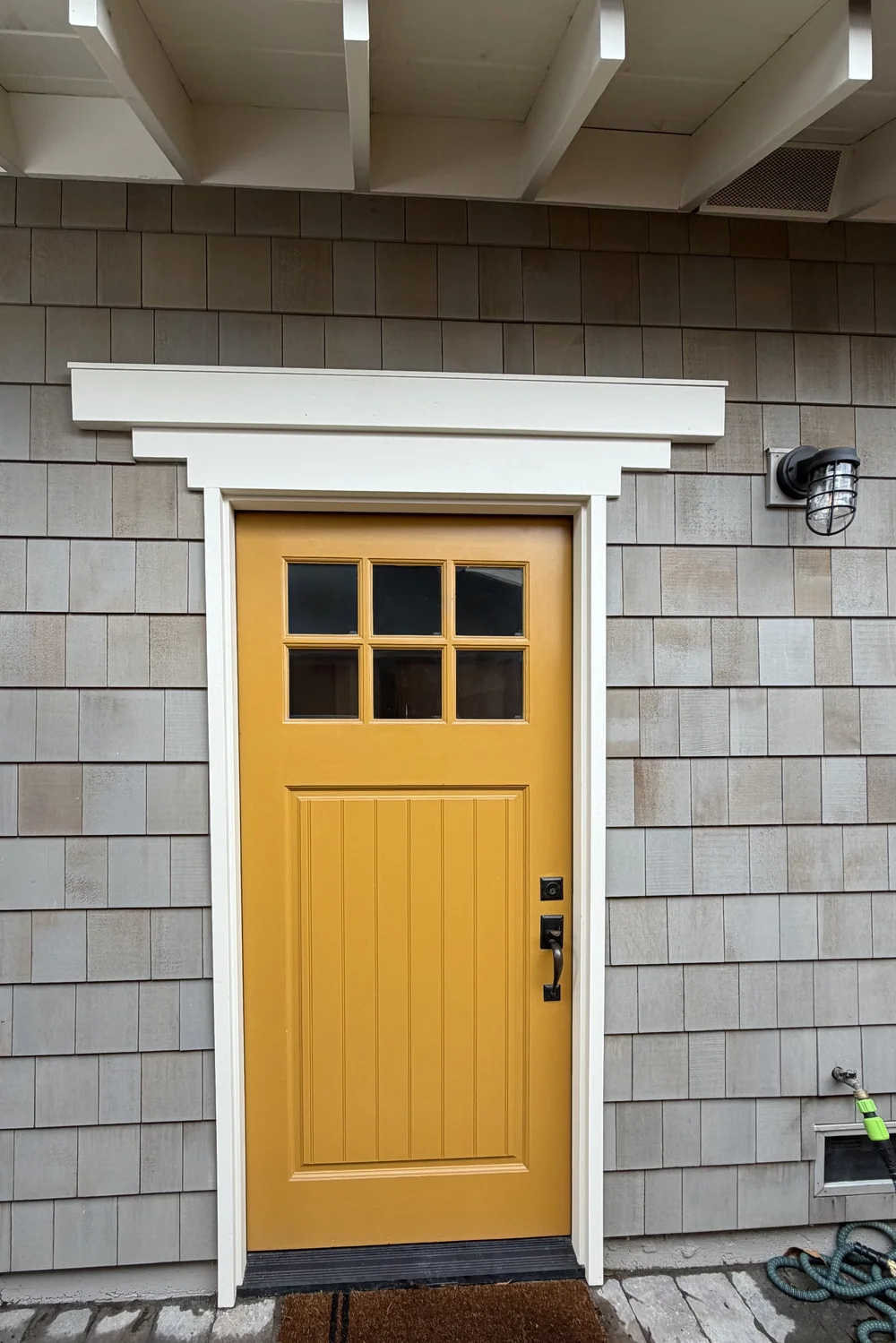
20. Yellow Plank Door with a Gridded Transom and Gray Shingles
Love this cheerful, coastal vibe but don’t have a transom? You can fake it! If you have a solid, windowless door, you can add a “faux transom” to the door itself. Use thin black or white adhesive vinyl strips (available at craft stores) to create a grid pattern on the upper third of your door. From the street, it will give the illusion of a multi-pane glass window. Pair this with a fresh coat of vibrant yellow paint (like Behr’s “Taxi”) and you’ve captured the spirit of this look for under $50. It evokes the same feeling as the arched transom in Idea #4 but is much easier to implement.
💡 Designer Tip
Take note of the hardware finish. In a palette of cool gray shingles, crisp white trim, and bright yellow, black hardware is the perfect choice. It provides a strong, graphic punch that stands up to the bold colors. Brass could look lovely but might feel too traditional, while chrome or nickel would be too cold against the yellow. Black is the grounding element. To take it a step further, ensure your exterior light fixture, house numbers, and even your mailbox all share the same black finish. This repetition of the accent finish is what makes a design feel cohesive and professionally styled.
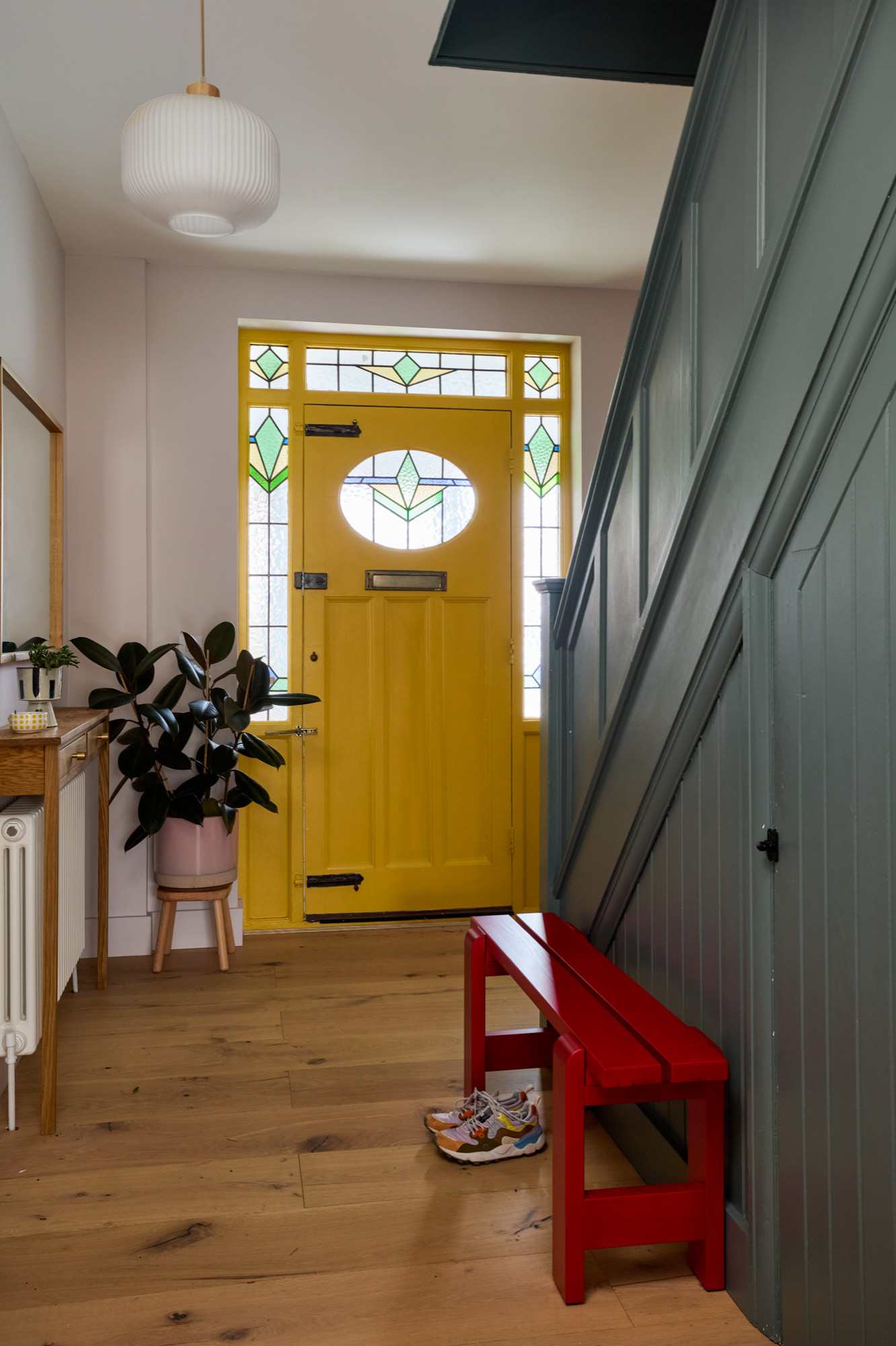
21. Yellow Stained-Glass Door with Gray-Green Paneled Walls
This eclectic entryway is a masterclass in confident color mixing. The formula here is daring: 50% Bold Primary Color (the yellow door) + 40% Muted Earth Tone (the gray-green paneling) + 10% Surprise Accent (the glossy red bench). The reason it works is that the two main colors, yellow and green, are neighbors on the color wheel and are presented in different saturations—the yellow is loud, the green is quiet. The red bench is the “disruptor,” a small dose of an opposing color that adds energy and a playful, unexpected twist. The light wood floor acts as a calm, neutral foundation for it all.
📏 Scale Guide
Let’s focus on recreating that rich, paneled wall effect. Time Estimate: 1-2 days. Material Cost: $100-$300.
- Plan Your Grid: Use painter’s tape to map out your paneling design directly on the wall. A classic board-and-batten style with vertical boards every 16-24 inches is a great place to start.
- Cut Your Materials: Purchase 1×3 or 1×4 primed MDF or pine boards. Cut them to size based on your taped grid.
- Install the Boards: Using construction adhesive and a brad nailer, attach the boards to the wall. Start with the horizontal top piece, then add the verticals.
- Caulk and Fill: Caulk all the seams where the boards meet the wall and each other. Fill all nail holes with wood filler and sand smooth. This step is crucial for a seamless look.
- Prime and Paint: Prime all the new wood and then apply two coats of your chosen gray-green paint in an eggshell or satin finish.
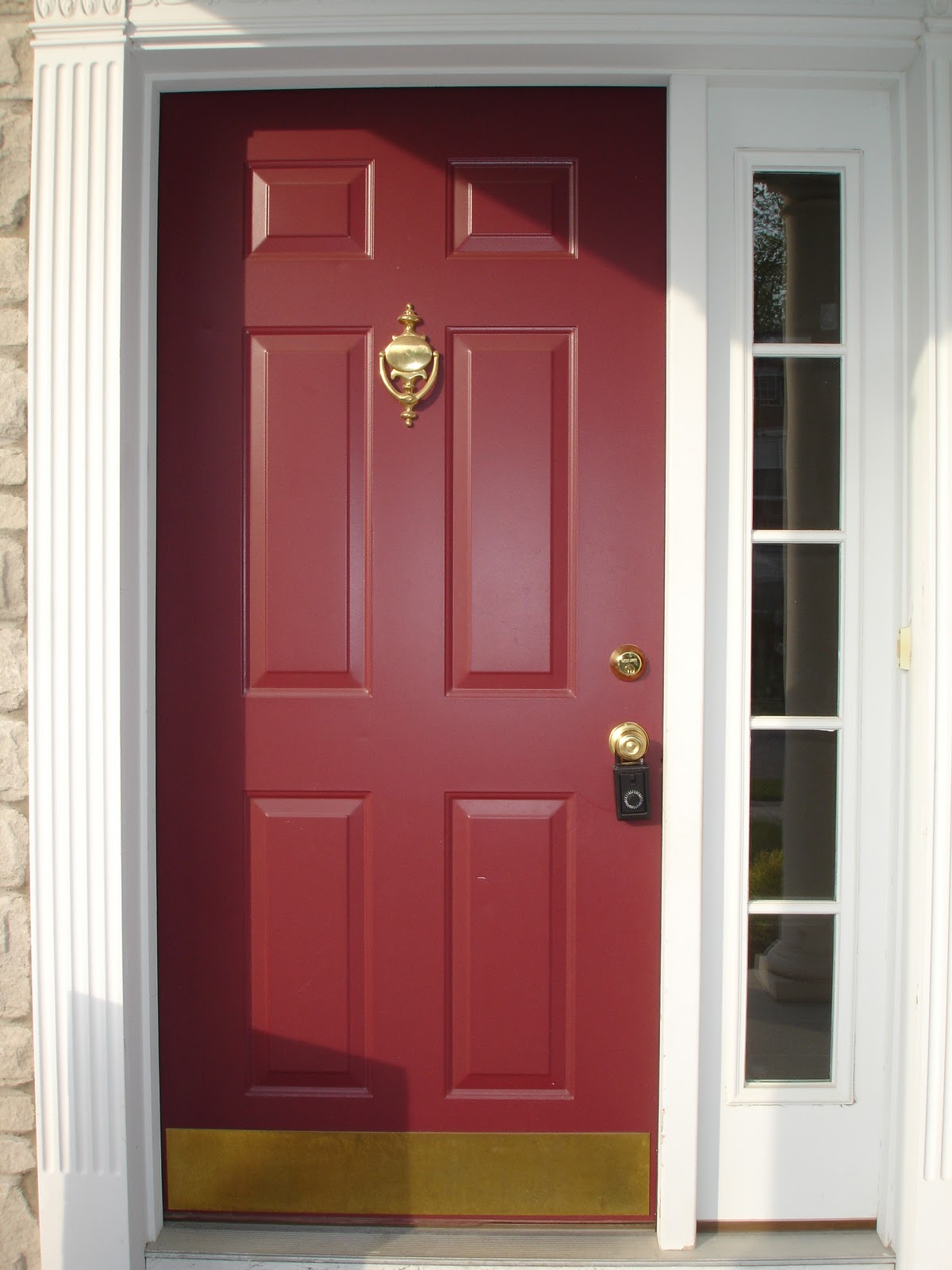
22. Deep Red Panel Door with Brass Hardware and Sidelight
Before committing to this stately and traditional look, run through this quick checklist:
✅ Before You Start
- Check Your Architecture: This combination of a paneled door, fluted pilaster, and sidelight screams “Traditional.” It looks best on colonial, Georgian, or other classic home styles. It might look out of place on a modern ranch or a mid-century home.
- Assess Existing Metals: This door features prominent brass hardware. Look at your existing exterior elements. Are your light fixtures, house numbers, and window frames black, oil-rubbed bronze, or chrome? Introducing a new metal finish can work, but you should have a plan for how it will coordinate.
- Consider the Red Tone: This is a deep, rich, almost burgundy red, not a bright fire-engine red. It is sophisticated and classic. Grab several red paint chips and hold them up to your home’s siding in different lights before you buy a can.
Brass hardware is absolutely beautiful, but it requires a choice. You can opt for modern “lifetime” brass finishes that are coated to prevent tarnishing. They will look brand new for years with minimal cleaning. Or, you can choose unlacquered brass, which will develop a rich, natural patina over time. Many designers love this aged look, but you must too. Unlacquered brass will darken, spot, and show its age—that is its charm. If you are a person who wants things to look pristine and new forever, stick with a lacquered finish.
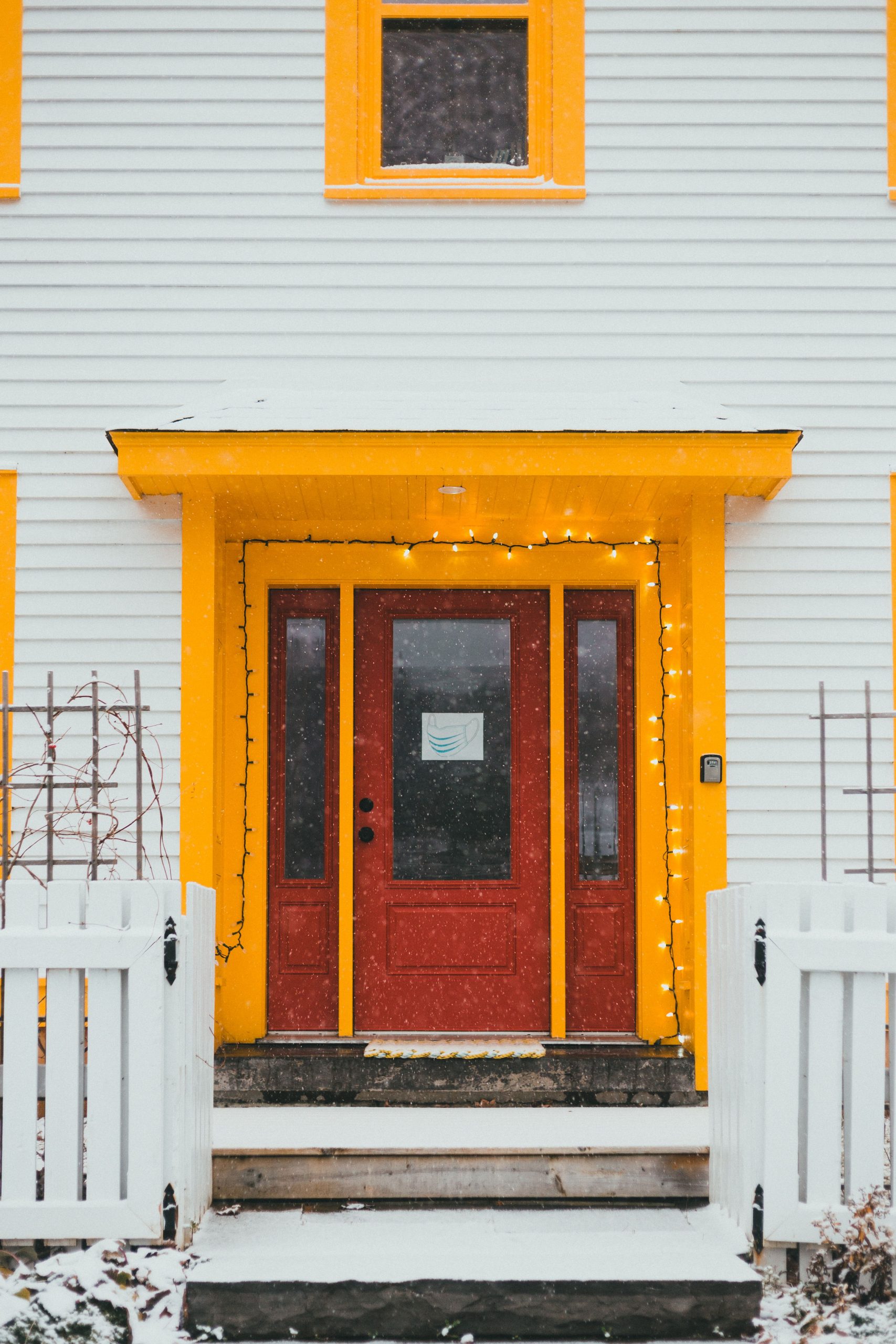
23. Red Door with Yellow Trim on a Snowy White House
This incredibly vibrant entry works so well because of its fearless use of primary colors against a neutral backdrop. The white siding of the house acts like a blank canvas, and in this case, so does the snow. This allows the bright yellow trim and deep red door to pop with maximum intensity. It’s a composition that feels joyful and energetic, especially in the midst of a gray winter day. The string lights add a touch of festive charm, reinforcing the welcoming, happy vibe. The combination is similar to the one in Idea #12, but the snowy setting makes it feel even more dramatic.
⭐ The One Thing
The single element that makes this look so special is the bright yellow trim. The red door on a white house is classic and lovely. But framing that red door with a thick, unapologetic band of yellow is a bold, designer-level move. It turns the entrance from merely “nice” to “unforgettable.” It shows a deep understanding of how colors can interact to create energy and excitement. The trim isn’t just a frame; it’s an equal partner in the design, creating a three-color statement that is pure happiness.
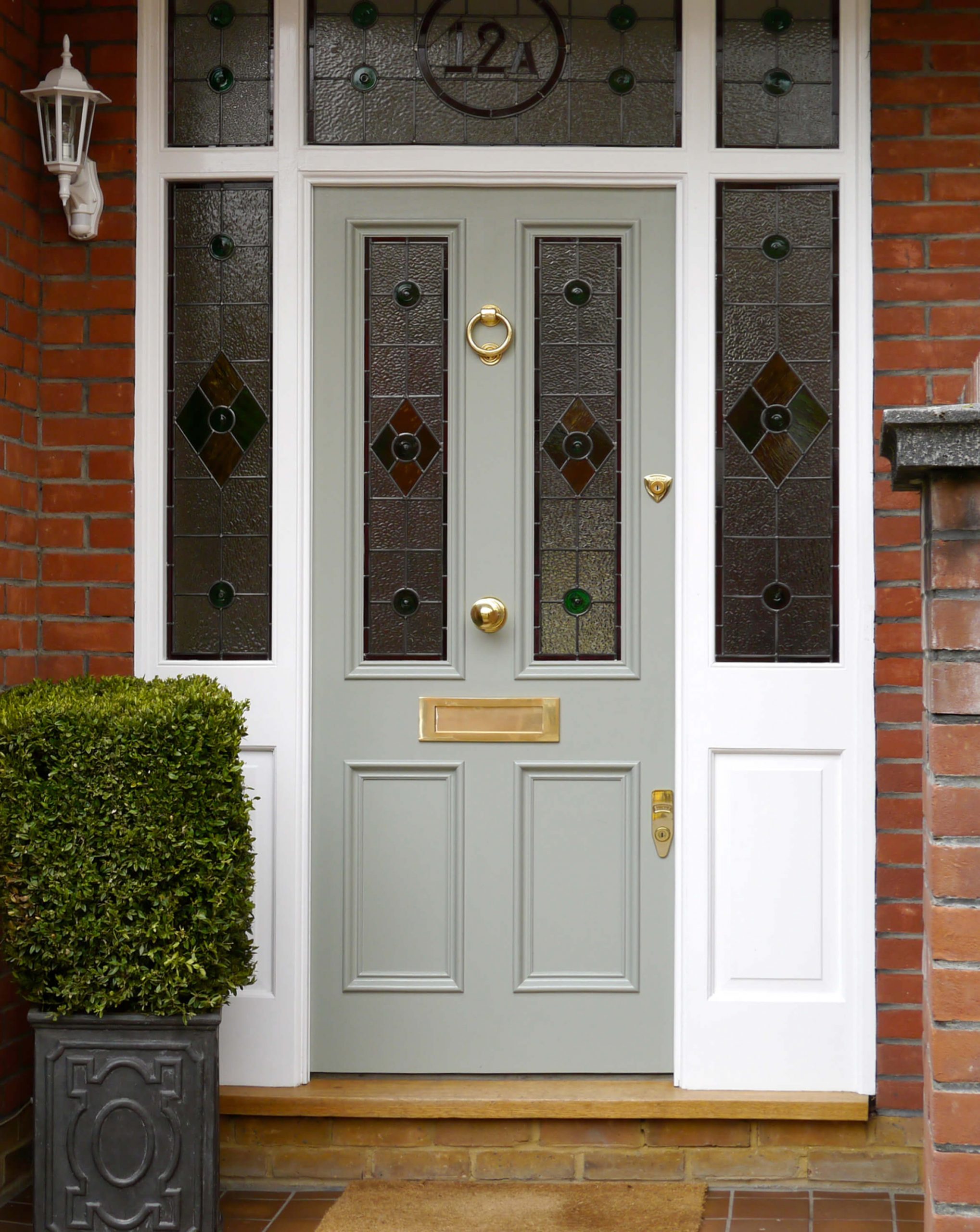
24. Grey-Green Door with a Stained Glass Surround and Brick Facade
Achieving this elegant, custom look involves several high-end elements, particularly the stained glass.
🎯 What Makes It Work
- Main Furniture (Door): A high-quality wood or fiberglass door in this style costs between $1,500 – $3,500.
- Glasswork: Custom stained glass panels for a door surround are a specialty item. Expect to pay a local artisan $1,000 – $4,000+ depending on complexity and size.
- Hardware: A full set of high-quality, solid brass hardware (knocker, letterbox, handle) can run from $400 – $900.
- Decor/Accessories: A large, ornate planter and mature topiary: $250 – $600.
- Paint: A premium muted green-grey paint: $50 – $90.
- TOTAL: $3,200 – $9,090+
- Budget alternative: Use a high-quality stained glass window film on existing clear glass panels and invest in good quality brass-plated hardware.
The key to making a muted, sophisticated color like this grey-green work is to create contrast through texture and finish. Notice how the door color is a soft, elegant eggshell finish. This is placed next to the glossy, reflective stained glass and the matte, rough texture of the red brick. The brass hardware adds another layer of metallic sheen. If everything were the same finish, the muted color could look flat and dull. By surrounding it with a variety of textures, the color gains depth and character.
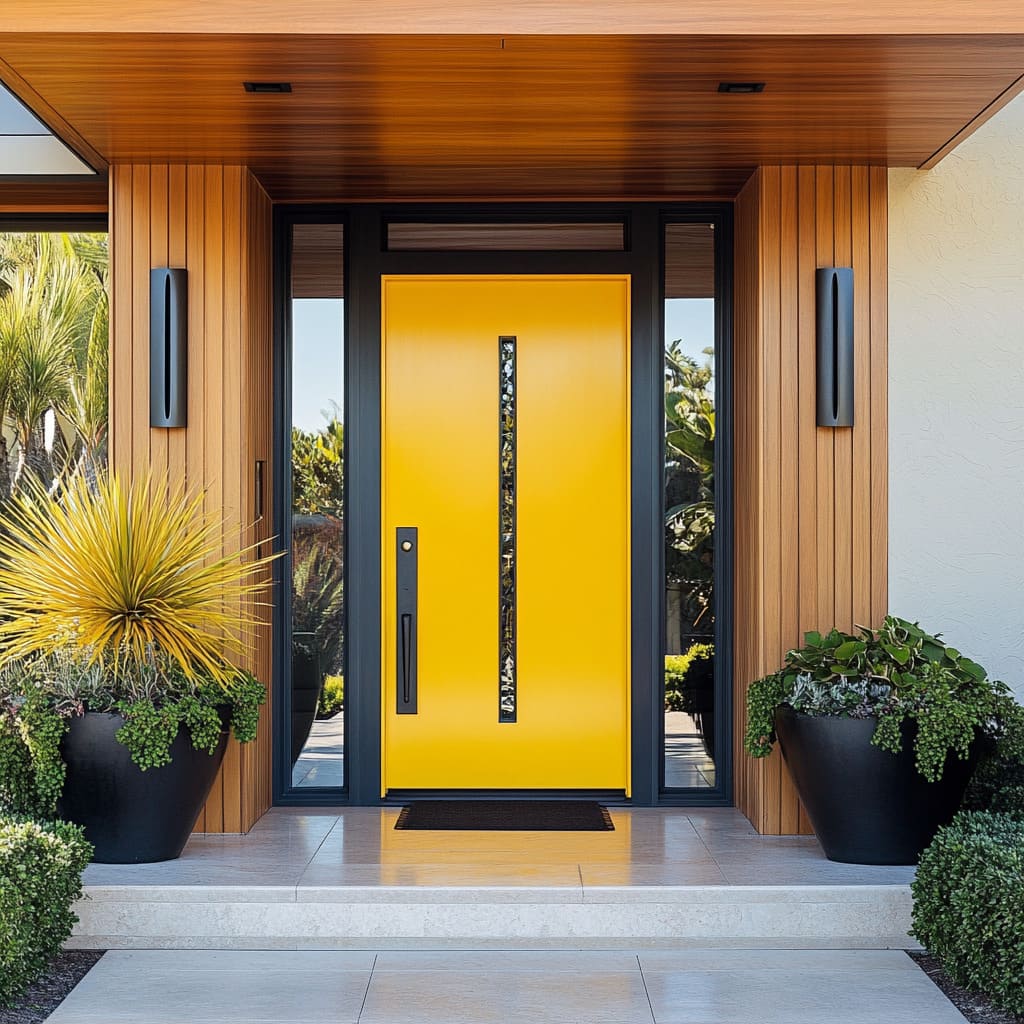
25. Modern Yellow Door with Black Accents and Wood Paneling
This dynamic modern entryway is a sophisticated blend of three key elements. The formula is: 40% Natural Texture + 40% Sleek Neutral + 20% Vibrant Color. The warm, medium-toned wood slat paneling provides the organic, natural element. The light stucco, large windows, and powerful black accents (planters, lights, door frame) make up the clean, neutral structure. Finally, the vibrant yellow door is the concentrated dose of color and personality, making up just enough of the composition to be a focal point without overwhelming the senses. A similar modern approach is seen in Idea #15, but with a different set of textures.
💰 Budget Breakdown
This design is all about strong vertical and horizontal lines, making it ideal for modern homes with 9- to 10-foot ceilings at the entrance. The verticality of the door’s glass insert, the wood paneling, and the tall tapered planters draws the eye upward and emphasizes the height of the space. It requires a fairly generous width as well, at least 8-10 feet, to accommodate the door, flanking windows, and the textured wall panels without looking cramped. This is a grand statement for a contemporary home, not a subtle accent for a small cottage.
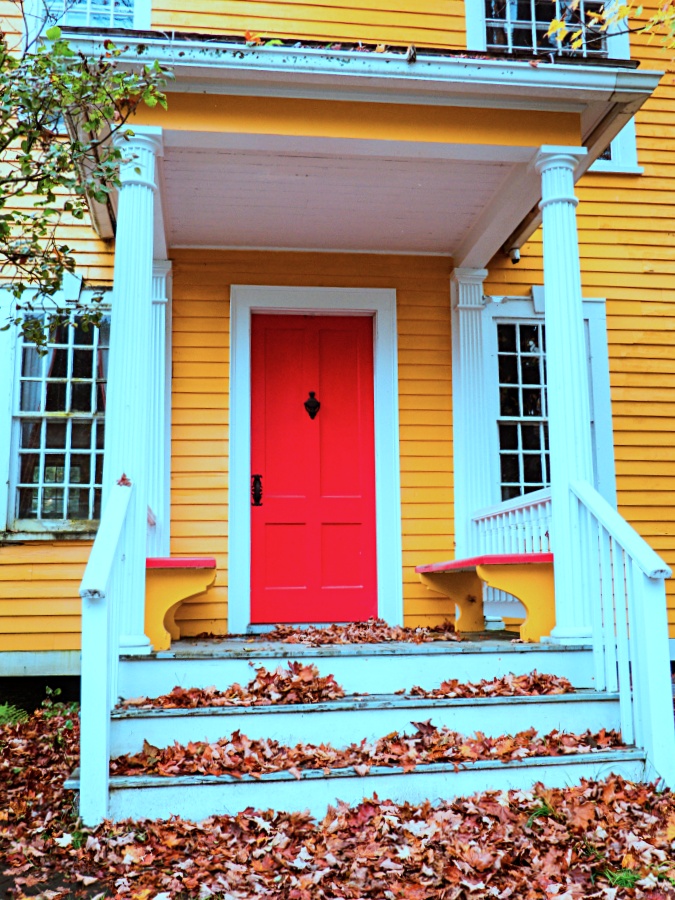
26. Vibrant Red Door on a Bright Yellow House in Autumn
This look is pure, unadulterated joy. It works because it embraces a high-energy, analogous color palette and runs with it. The bright yellow siding, the bold red door, and the scattered orange and brown autumn leaves all sit next to each other on the color wheel. This creates a rich, warm, and cohesive scene. The crisp white of the porch columns and railings acts as a necessary visual “breather,” providing structure and preventing the warm colors from becoming overwhelming. The two small benches cleverly tie the red and yellow together, making the design feel complete.
🔧 How-To Brief
A bright yellow house with a bright red door is a very specific statement. It’s cheerful, bold, and impossible to miss. While it looks absolutely stunning, especially in this autumnal setting, it’s a color scheme with a strong personality. Be prepared for your house to be known as “the yellow and red one.” This is fantastic if it matches your personality, but it may not appeal to all potential buyers if you plan to sell in the near future. Also, both bright yellow and bright red paints can be more prone to fading from UV exposure than more muted tones, so investing in the highest quality paint is a must.
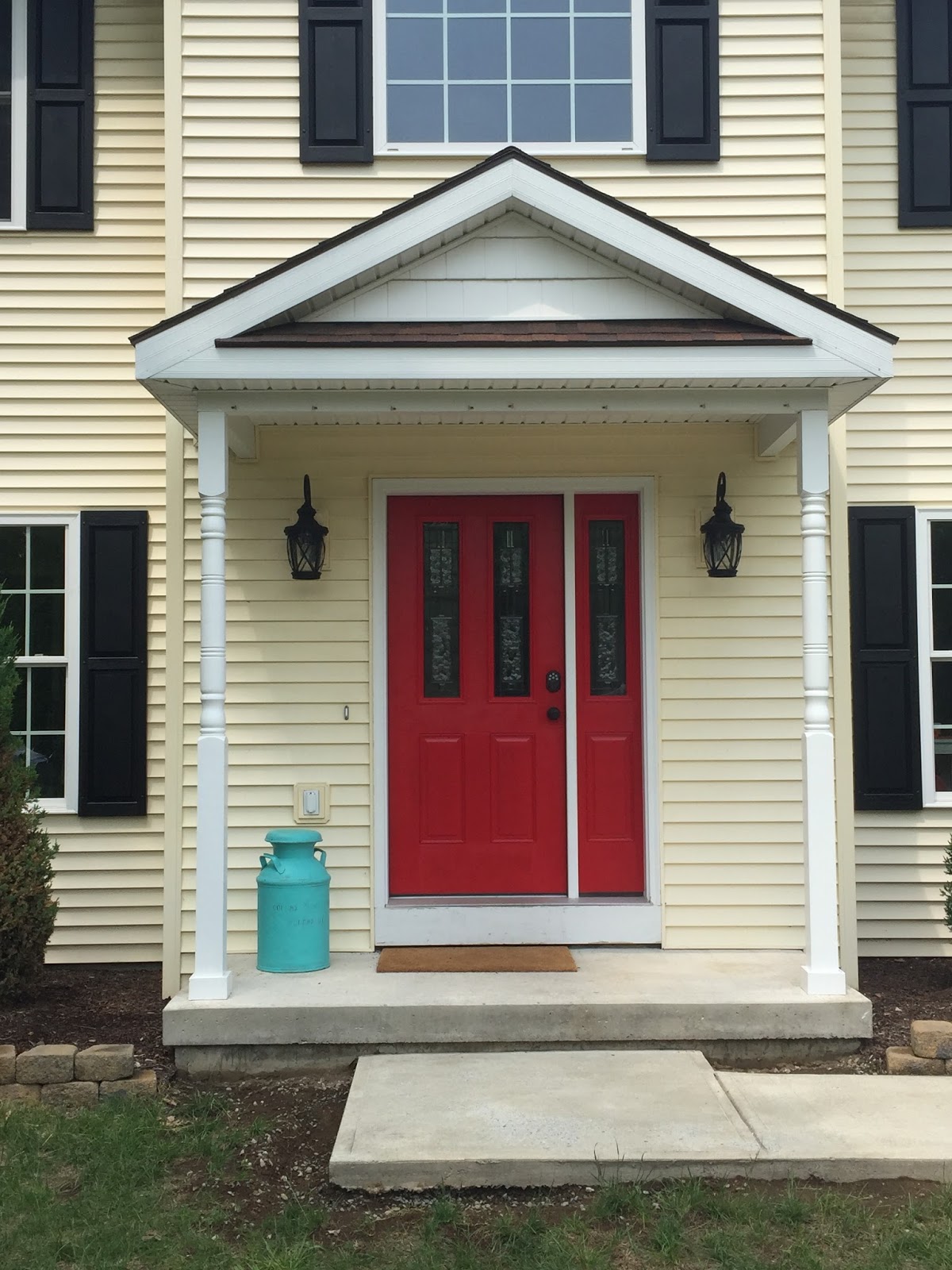
27. Red Door and Sidelight on a Creamy Yellow House with Black Shutters
You can get this classic, welcoming look for less. The key elements are color and symmetry. Start with your door. A quart of rich red paint (like Sherwin-Williams “Show-Stopper”) is about $30. If you don’t have a sidelight, you can paint the trim on one side of the door red to give a similar, asymmetrical block of color. Black shutters can be found for about $50-$80 a pair at home improvement stores. The most expensive part would be a portico, but you can create a sense of entry with two large black planters (around $100 for a pair) and two matching black lanterns from Target or Walmart for under $100 total.
💸 Get This Look For Less
The single thing that pulls this entire design together is the confident use of black as a third color. Without the black shutters and lanterns, you would have a simple red and yellow scheme with white trim—nice, but a bit plain. The black adds a crucial layer of graphic punch and sophistication. It grounds the brighter colors, adds a touch of formal elegance, and ties the windows to the entryway. It’s the element that elevates the design from simply “colorful” to “classic and composed.”
Time to Pick Your Perfect Welcome
A front door is more than just an entrance; it’s the first hello your home gives to the world. A thoughtful color choice against a yellow facade can transform your home’s personality from quiet and subtle to bright and confident. Don’t be afraid to try a bold color—it’s only paint, after all!
Ready for more inspiration? Head over to Pinterest and start creating a board for your favorite looks. Happy painting!