30 Stunning Holiday Buffet Table Decor Ideas to Elevate Your Festive Spread in 2026

Holiday buffet table decor is having a major moment on Pinterest right now — and it takes about four saved photos to see why. The tables people are pinning don’t look like catalogs. They look like somebody’s very stylish aunt got ambitious.
We spent serious time browsing Target, Anthropologie, and Etsy to bring you only what’s worth your attention this year, from twelve-dollar napkin rings to three-hundred-dollar showstoppers. After filtering through hundreds of options, we narrowed it down to 30 ideas that actually deliver across four moods: jewel-toned traditional, rustic woodland, buffalo-check whimsy, and quiet natural greenery. Budget and luxury versions sit side by side throughout, so you can see where the money matters and where it genuinely doesn’t.
The 2026 shift is toward tables that look used rather than staged — layered linens, real fruit, inherited china, and candles placed down at food height instead of up where nobody’s looking. And stay until the end — we break down the most common mistakes that can ruin these looks.
Quick note: some links here are affiliate links, which means we may earn a small commission at no extra cost to you. 📌 Save this to Pinterest for later — you’ll want to revisit these ideas.
1. Navy Tablecloth, Bobble Candlesticks, and Folded Paper Stars
Cluster your ceramic bobble candlesticks in an odd number — three or five — and stagger the candle heights by two to four inches so the group reads as a little forest instead of a row of soldiers. Keep the tallest red taper at least eighteen inches back from the nearest plate; that’s roughly where a seated guest stops noticing the flame and starts enjoying it.
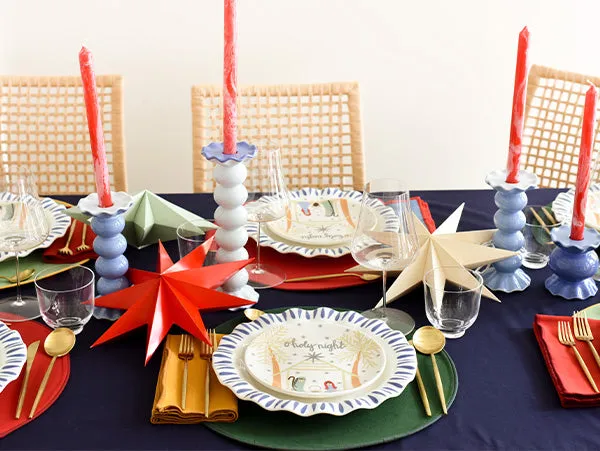
Think of this table as sixty percent navy tablecloth, twenty-five percent red and green placemats, ten percent gold flatware, five percent paper stars. Swap the navy for charcoal and the same math holds. Change the folded stars to dried orange slices and it tilts rustic instead of playful. The percentages are the recipe; the colors are just seasoning.
2. White Runner, Gold Candelabras, and a Berry-Studded Garland
Dark wood is doing quiet heavy lifting here. It swallows the white runner’s brightness and makes the gold candelabras glow instead of compete. Then the garland threads red berries and pinecones through all of it at eye level, so your gaze travels the length of the table instead of stopping at one plate. Three materials, one rhythm — that’s the whole trick.
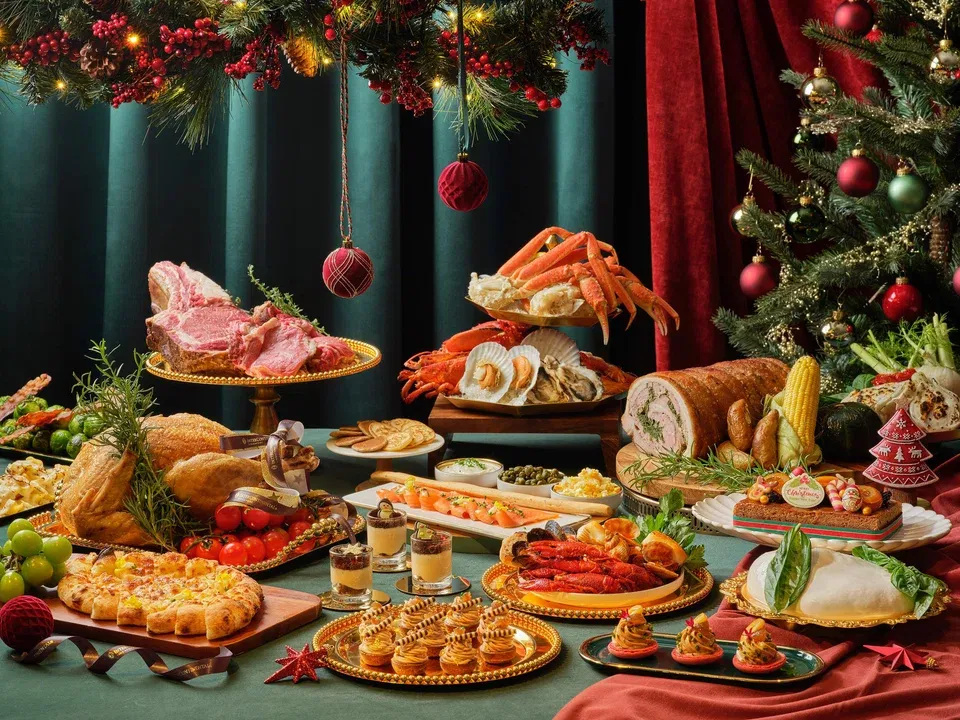
- White table runner and linen: $30–$70
- Faux cedar garland with berries and pinecones: $25–$60
- Two gold candelabras: $45–$140
- Taper candles, box of twelve: $10–$20
- Gold flatware, four settings: $40–$120
Total: $150–$410. Budget alternative: skip the candelabras entirely and pair three brass thrift-store sticks with one grocery-store garland — you’ll land near $55.
3. The Grand Abundance Buffet with a Lit Tree Beside It
Abundance tablescaping — the school of thought where the table looks like it barely survived a very good party — has been climbing on Pinterest for two seasons straight. In 2026 it’s less about precision and more about proof of life: carved roasts, oysters on crushed ice, a cake with cherries actually sitting on it. People are saving photos of tables that look eaten from, not staged.
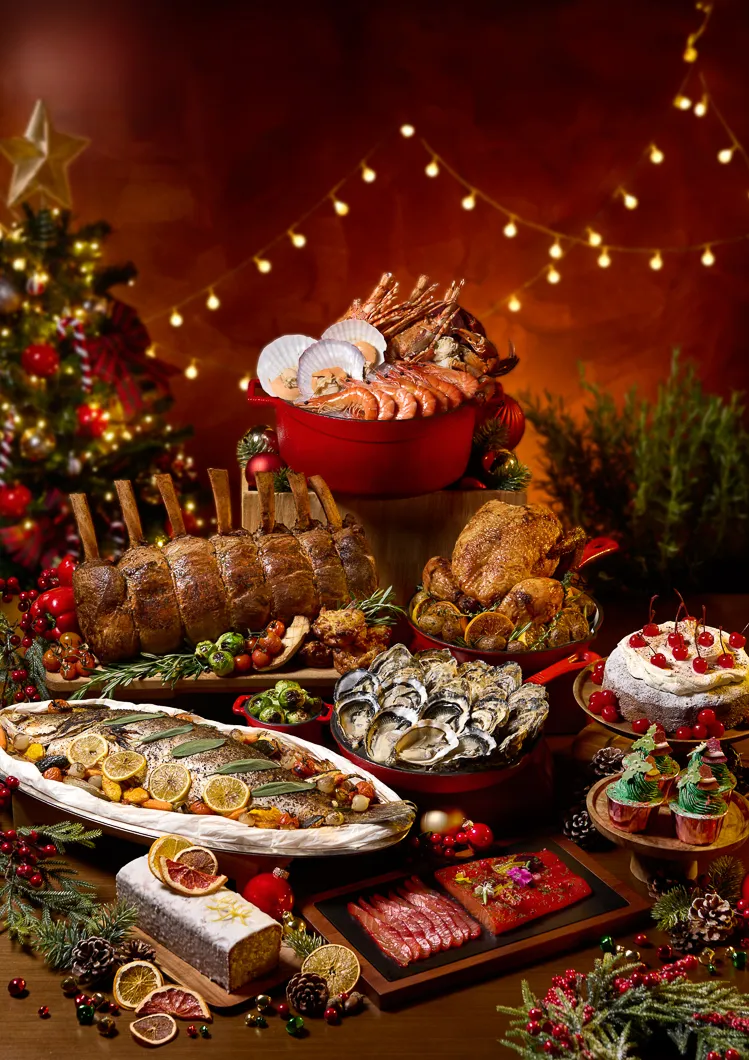
Take away the brightly lit tree and this spread would still be generous, but it would go flat. The tree is the light source. It throws warm glow across the prime rib and the ice, and it gives every guest a reason to turn their head toward the food. Everything else on this table is dinner. The tree is the thing that makes it feel like a night.
4. Red Plaid Napkins and a Ham at the Center of the Table
- Iron the plaid napkin flat, then fold it in half into a triangle.
- Fold the two long points in toward the center crease.
- Flip the napkin over and fold the bottom third up.
- Slide a gold ring over the middle and fluff the top corners into a pocket.
- Tuck the fork and knife into the pocket, tines up.
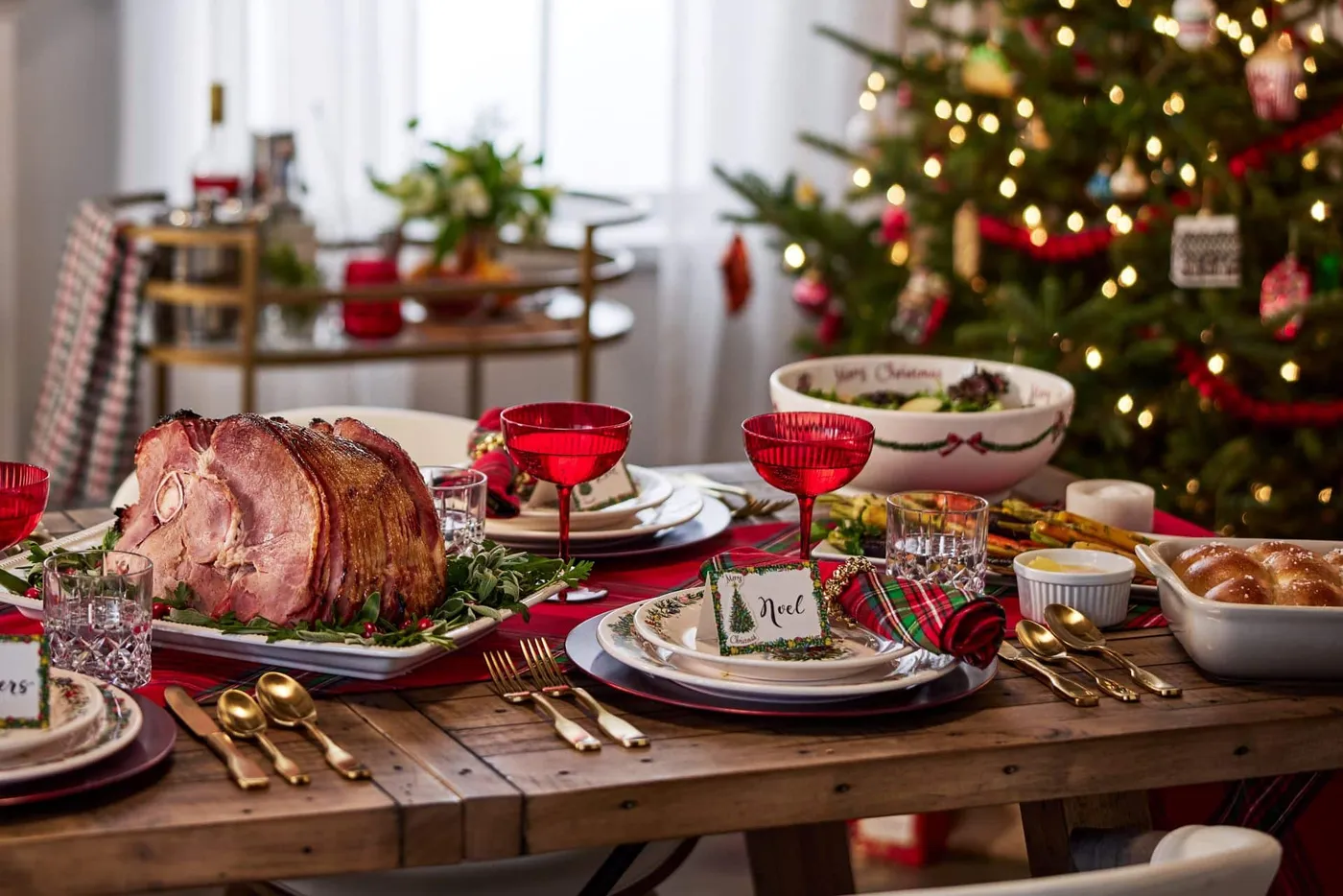
Ten minutes for eight napkins, zero dollars. Skip the ironing if the linen is a relaxed plaid — those creases look intentional here.
Three reds on one table — runner, napkins, stemware — will flatten into a single smear if you let them. The white plates with the festive trim are what save this setting; they give the eye somewhere to rest between all that warmth. Also worth saying plainly: a glazed ham can sit out about two hours, no more. Set a timer and mean it. Gold flatware like this is the budget cousin of Idea #2.
5. Red Draped Buffet with Silver Chafing Dishes and Tinsel
You can chase this look at full price, or you can walk into Walmart and a hardware store and be done in an afternoon. A queen flat sheet from the clearance aisle becomes the red drape. Three slow cookers replace the chafing dishes and honestly stay hotter. Tinsel garland with warm LEDs runs about twelve dollars a strand, and the gold tiered stand is whatever cake stand you already own with ornaments hot-glued to it.
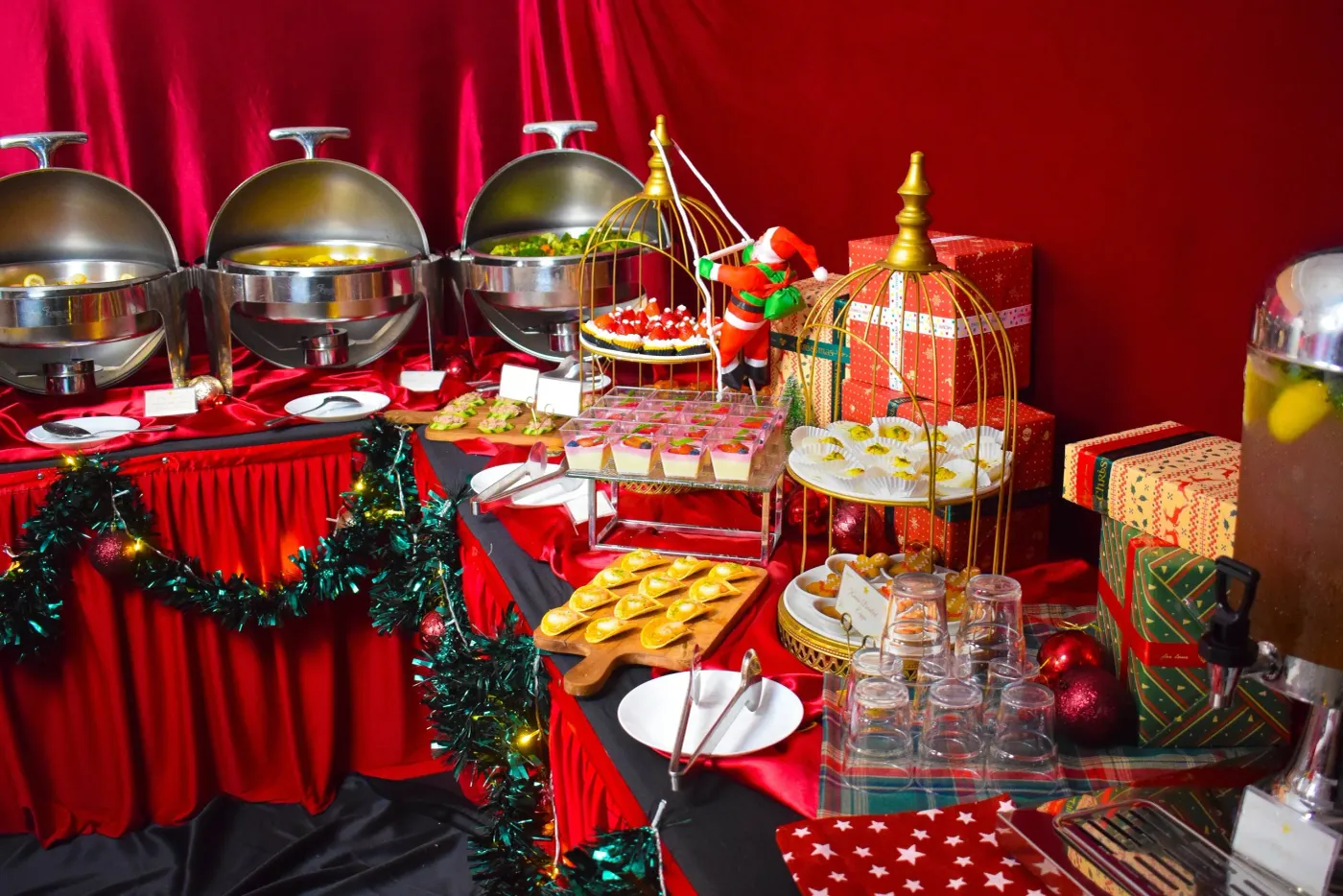
- Measure the table height, then add eight inches for the drape.
- Confirm an outlet within reach of the tinsel lights.
- Clear three feet of floor behind the table for guest traffic.
- Decide your hot-food count before buying a single serving piece.
6. Woven Placemats and a Berry Centerpiece on a Patterned Runner
This setting is built for a six- to seven-foot table. On anything shorter, cut the centerpiece down to one cluster and lose two place settings. On an eight-footer, repeat the florals at each end and leave the middle bare so the runner’s pattern can actually breathe. Round tables under forty-eight inches should skip the runner entirely and use one low bowl instead.
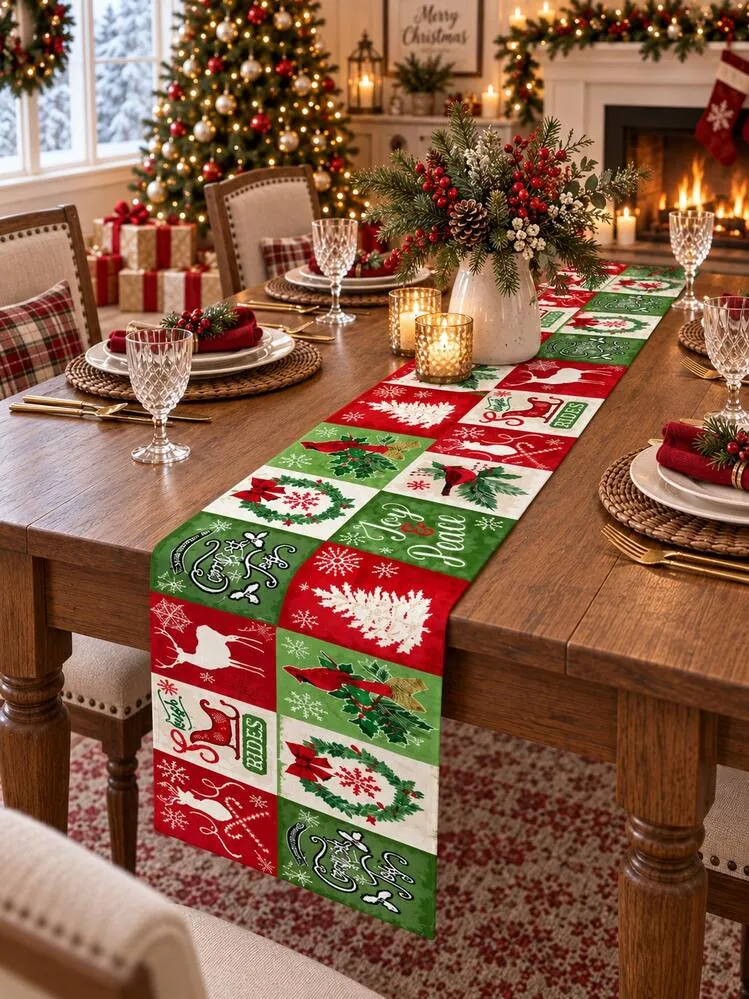
The centerpiece rule nobody tells you: keep it under twelve inches tall or take it over thirty. Everything in between lands exactly at seated eye level, which is how you end up at a table where nobody can see the person across from them. Evergreen, red berry, and pinecone arrangements are easy to keep low. Resist the urge to add height for the photo.
7. White Wooden Trees Behind a Checkered Cloth Buffet
Checkered cotton shows every drop of gravy and every ring from a hot dish. Pre-treat stains with dish soap before washing, and keep a stack of white bar towels under the table for triage. The chocolate yule log is the other maintenance item: it needs to stay cold until roughly twenty minutes before serving, or the frosting slumps and those candy canes slide right off.
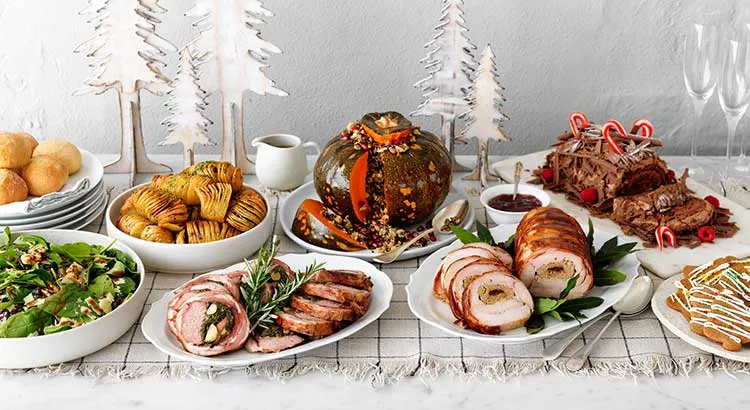
White on white usually reads as boring. Here it reads as expensive, because the distressed wooden trees have grain and shadow while the cloth has a woven grid. Same color, three textures — the marble board adds a fourth. That’s the whole principle: when your palette is narrow, your surfaces have to do the talking.
8. Blue and White Ceramics Around a Roasted Turkey
Seventy percent dark wood sideboard, twenty percent white and cream china, ten percent blue pattern. That’s it. The blue transferware bowls are small enough that they read as punctuation instead of a theme. Swap in green-and-white china and the formula still works; swap in all-white and you’ll need the holly to carry every bit of the color on its own.
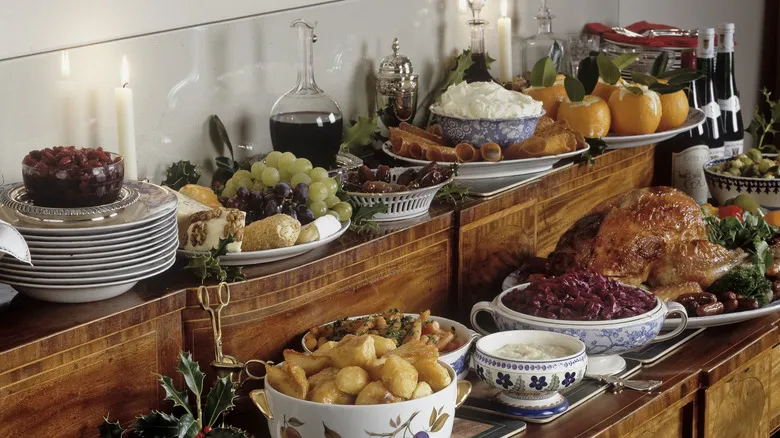
It’s the blue. Everything else here — the turkey, the pillar candles, the holly — you’ve seen a hundred times. Those blue and white patterned bowls are what pull a traditional sideboard out of 1998 and into something you’d actually screenshot. Without them this is a nice family table. With them, it’s a design.
9. Lit Tapers and a Shimmer Runner on a Dark Buffet
- Shimmer runner, eight feet: $20–$45
- Two ornate dark candlesticks: $35–$110
- Dinner tapers, box of twelve: $12–$25
- Eucalyptus stems, three bunches: $15–$30
- Mixed gold and silver serving pieces: $40–$150
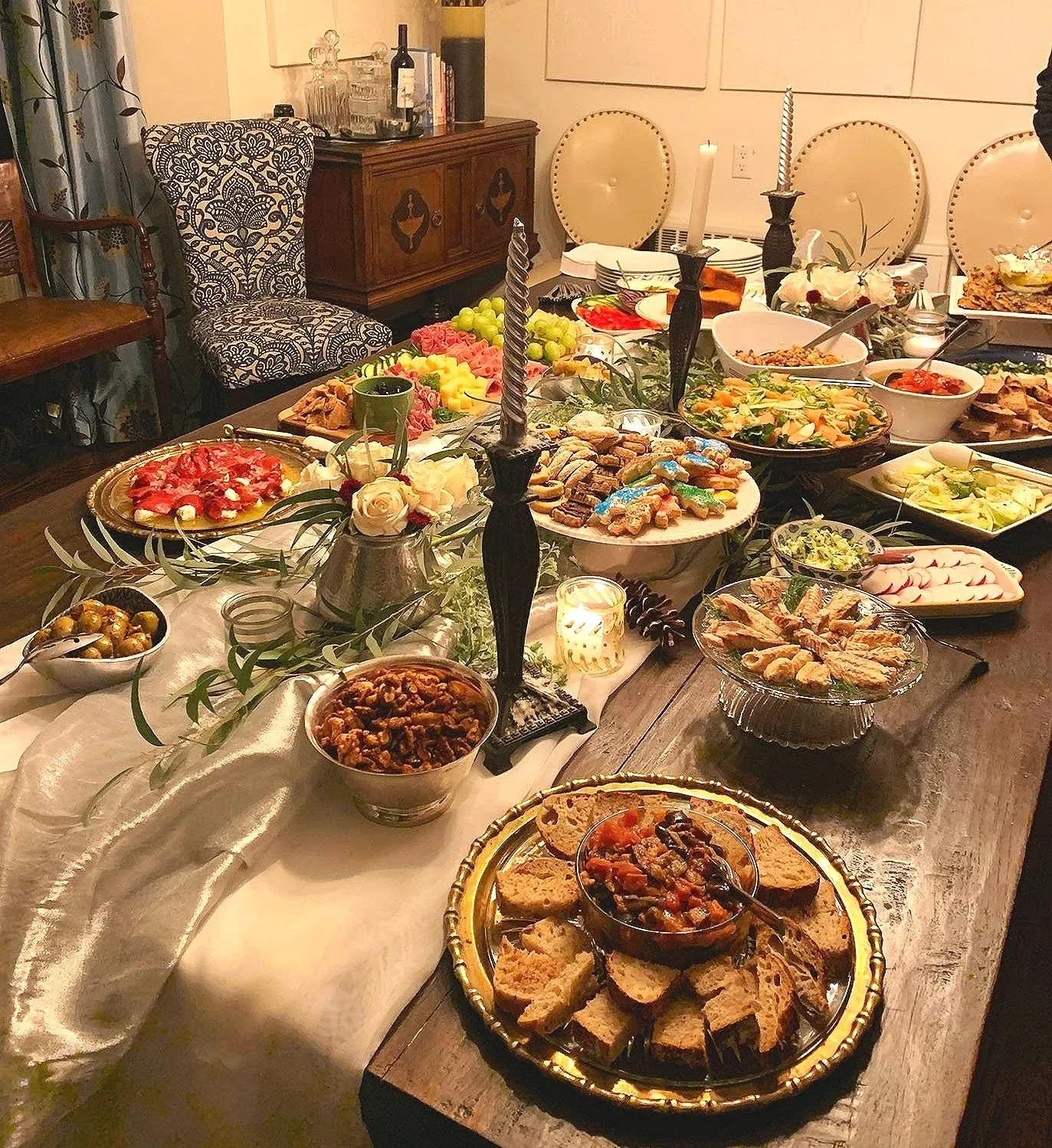
Total: $122–$360. Budget alternative: thrift the candlesticks and pick up grocery-store eucalyptus — you’ll land near $60 and nobody will clock the difference.
Open flame on a buffet is a different risk than open flame on a dinner table, because people reach across it holding full plates. Push tapers to the back third of the table, never between the food and the guest. With kids in the mix, swap to battery tapers in glass hurricanes; the shimmer runner will carry the rest, exactly the way it does in Idea #2.
10. Tiered Risers for Whole Fruit and Individual Salads
- Flip two sturdy boxes upside down, one taller than the other.
- Drape each with a square of cloth, tucking the corners underneath.
- Set the taller riser at the back third of the table, the shorter one beside it.
- Load the top level with whole fruit and the bottom with plated salads.
- Leave six inches of bare cloth between risers so nothing bunches.
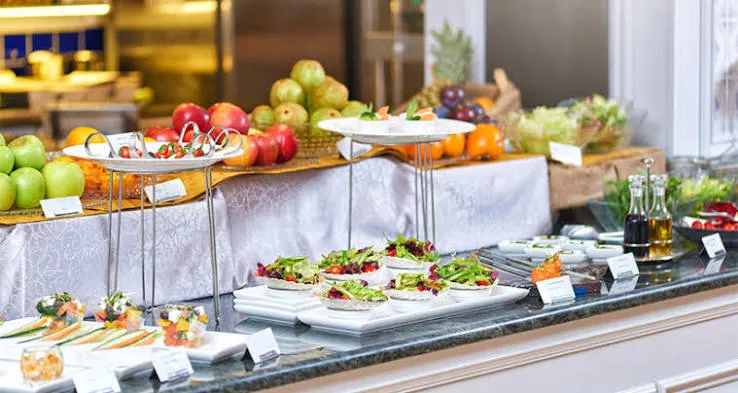
Cost is maybe fifteen dollars if you don’t already own boxes. Time: twenty minutes, tops.
Metal risers are lovely and they are also fifty dollars each. Use upside-down wooden crates from the craft store, cake stands you already own, and stacked books under a cloth — nobody sees the support, they see the height. White porcelain plates from IKEA run under two dollars apiece, and whole fruit costs less than any floral arrangement on this list.
11. Wooden Crates as Risers for a Charcuterie Spread
Raise the back row six to eight inches above the front. That’s the number where a guest standing at the end of the table can see every platter without craning, and it doubles your usable surface. Height matters more than any garland when you’re feeding twenty people in a kitchen that was designed for four.
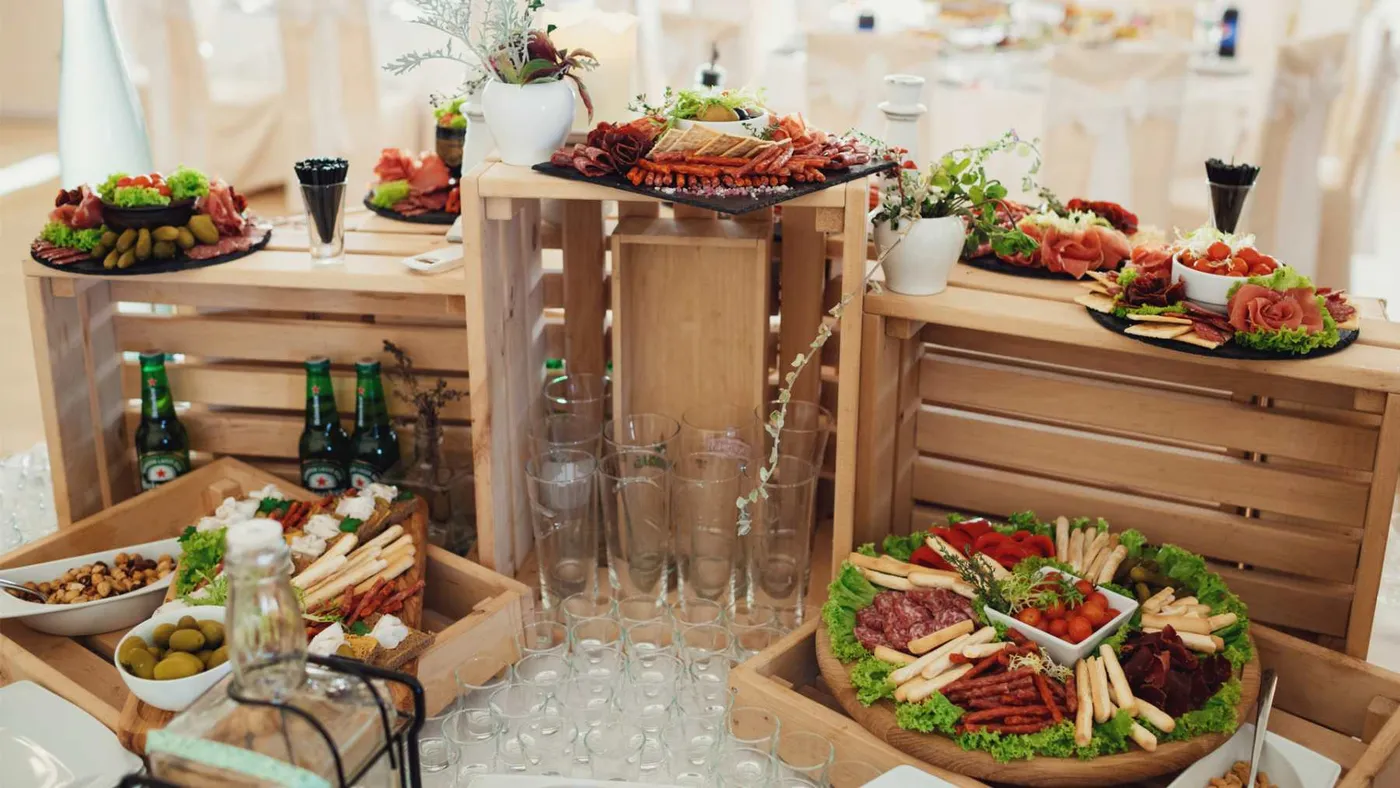
- Check each crate for wobble and splinters near food.
- Count glassware against the guest list, then add four.
- Make sure the vases aren’t blocking the charcuterie from the room’s main entrance.
- Put beverages at the far end so people don’t cluster at the front.
12. A Miniature Christmas Village Above the Candlelit Table
Collection displays have quietly become the biggest holiday decorating story of the last few years — people are pulling out inherited villages, grandmother’s ornaments, and thrifted figurines and giving them a proper shelf instead of a bin. In 2026 the appeal is obvious: it’s decor that means something, it doesn’t ship in a box, and it looks better with age. Tiny villages are the anti-tablescape.
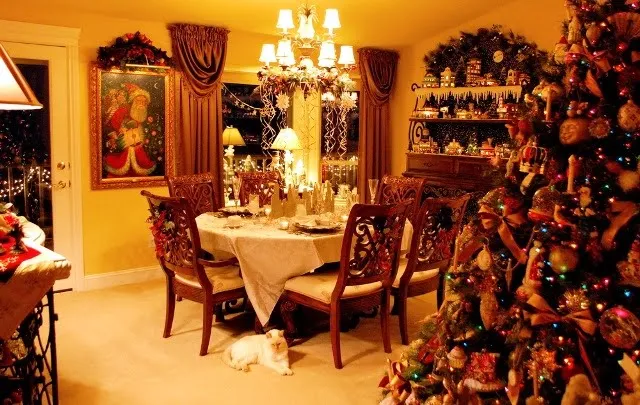
Plan on eighteen to twenty-four inches of clear wall above the table’s back edge for a lit village shelf, and keep the shelf depth to six inches so it doesn’t crowd the heads of seated guests. This dining room is generously proportioned; in a smaller one, mount the village on a narrow ledge and let the chandelier hang a little higher.
13. Mercury Glass Votives Scattered Among the Serving Platters
Most buffet lighting comes from the ceiling, which means the food sits in shadow while the chandelier gets all the attention. Mercury glass votives placed between the platters fix that: they put warm light at food height, they multiply it through the silvered finish, and they make a crowded table look intentional instead of simply full. Small light, big shift.
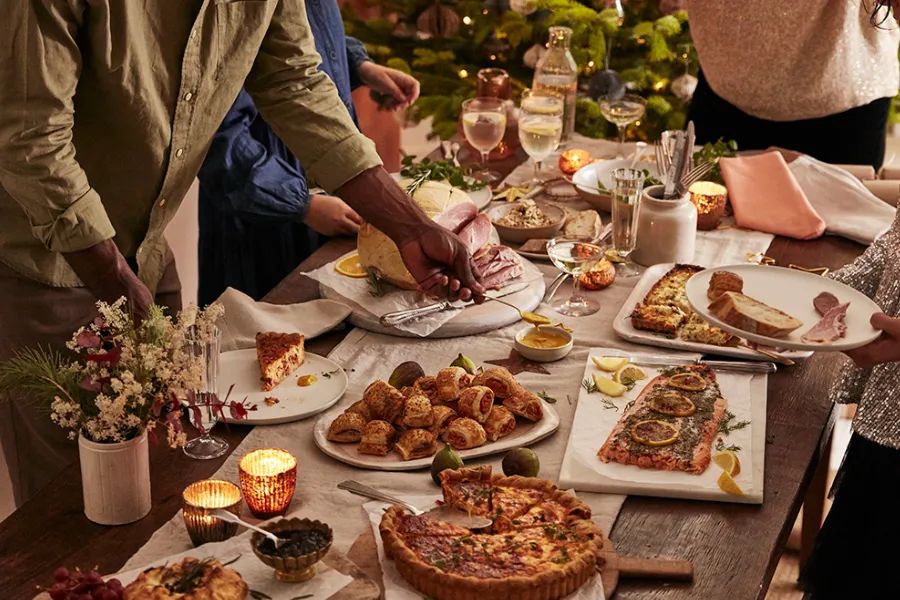
Mercury glass is glass with a silvered lining, and water will ruin it — the coating clouds and flakes. Wipe the interiors with a dry cloth and never soak them. If you use real candles, clean the soot off after every event. Battery votives cost more upfront and less forever, and they don’t leave wax on your linen the way the tapers in Idea #9 can.
14. Evergreen Garland with Red Ribbon Over a Snowy Runner
The garland gets all the attention, but the framed black-and-white train illustrations above the buffet are what make this feel like a room instead of a display. They give the eye somewhere to go when it tires of food. Without them you have a lovely holiday table against a blank wall — and blank walls are what make good decor look temporary.
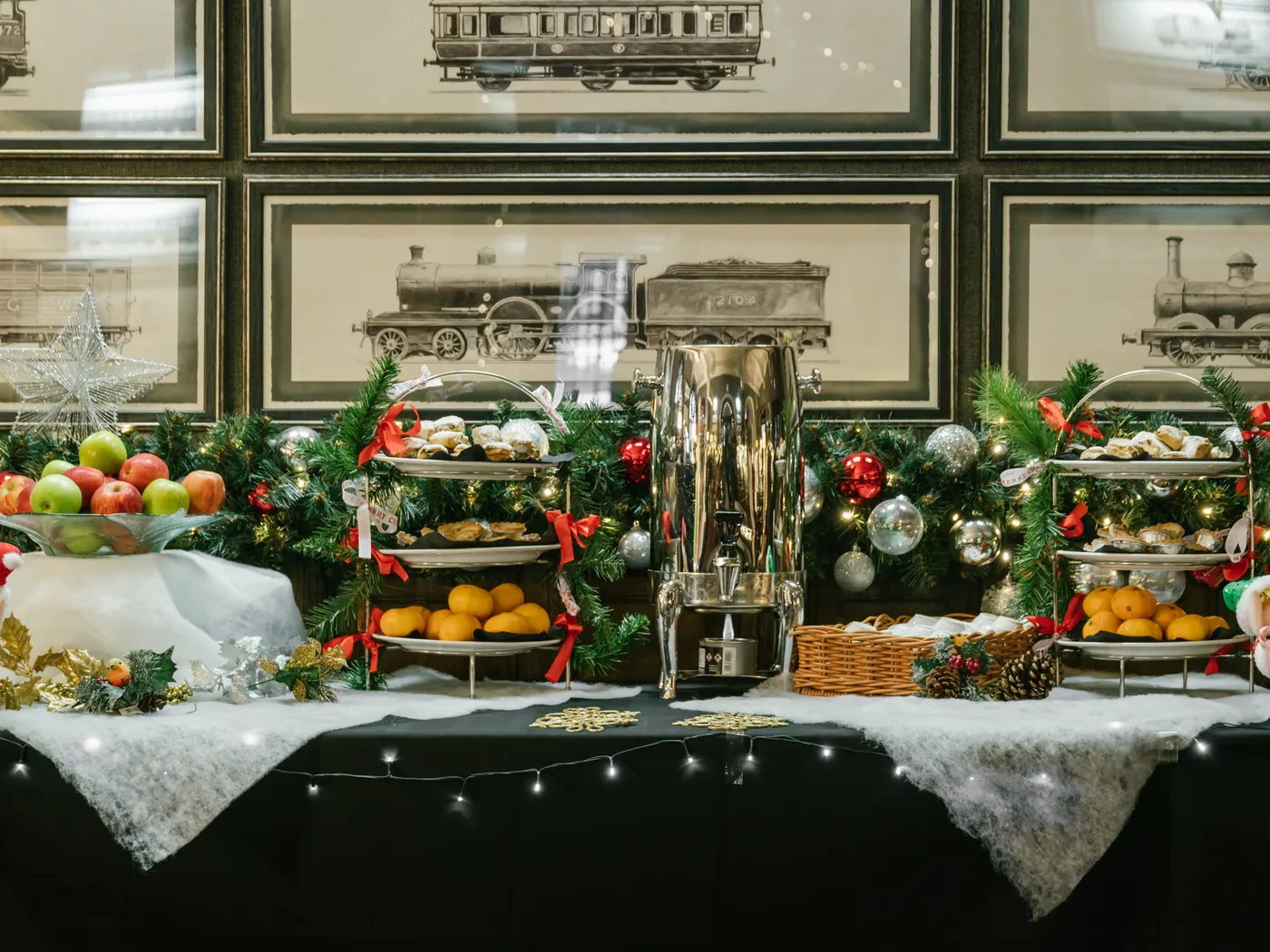
- Start with a faux evergreen garland and fluff every branch outward.
- Tie red ribbon in six-inch loops at uneven intervals — odd numbers only.
- Wire ornaments into the loops rather than hanging them loose.
- Run battery fairy lights underneath, hiding the pack at one end.
- Drape the garland slightly off-center so it spills over the front edge.
About forty minutes and roughly thirty-five dollars for ribbon and lights.
15. Buffalo Check Cloth with Santa Mugs and Red Truck Plates
- Buffalo check tablecloth, six feet: $25–$60
- Four red truck dinner plates: $30–$80
- Santa face mugs, set of four: $20–$45
- Clear glass candelabras, two: $30–$75
- Greenery, berries, and pinecones: $20–$40
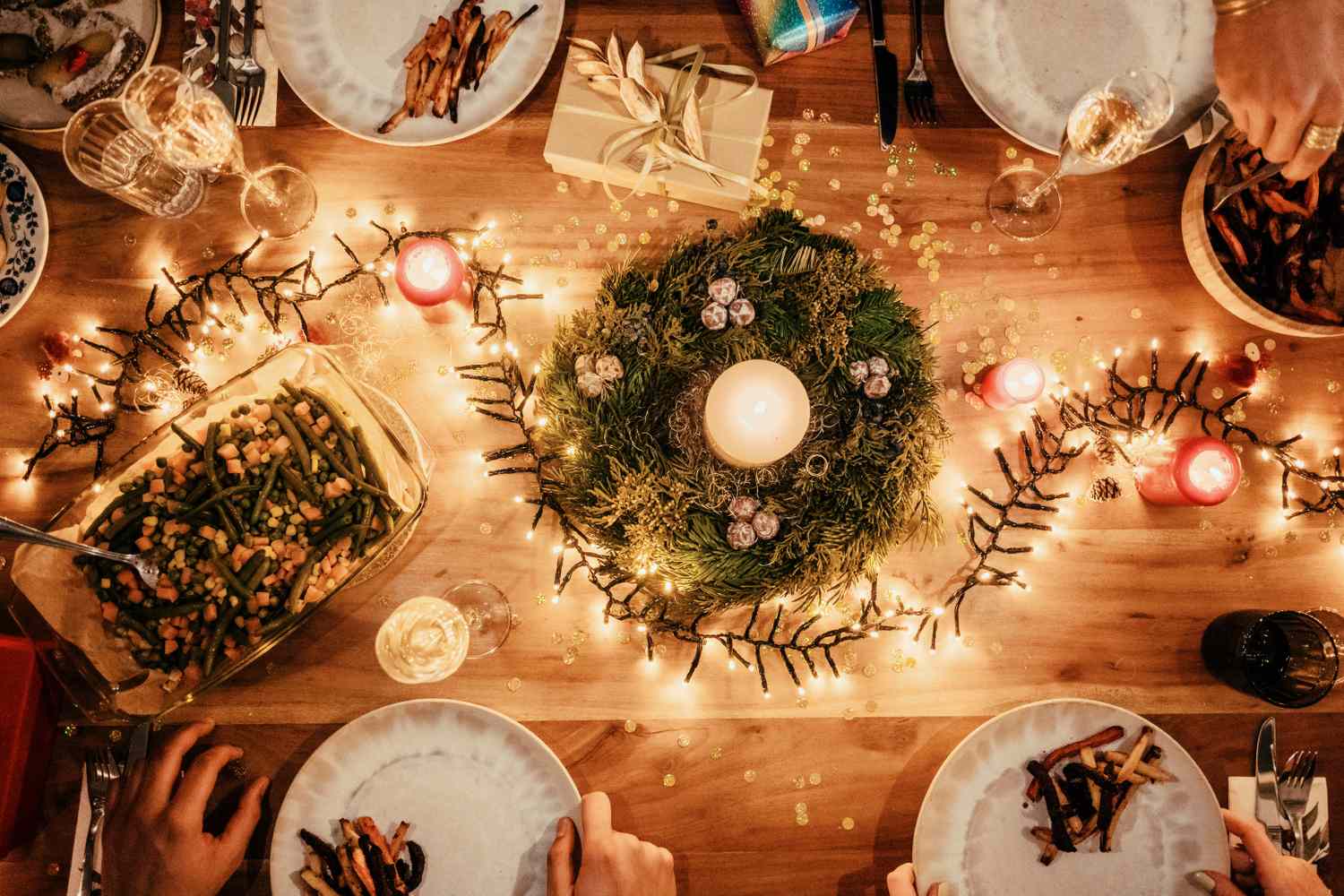
Total: $125–$300. Budget alternative: buy check fabric by the yard and hem it with iron-on tape — roughly $18 and it looks like you had it made.
Buffalo check is a big pattern, so anything paired with it has to be small or solid — which is why the little red trucks work and a plaid napkin absolutely would not. Pick one graphic per place setting, maximum. The moment you add a second motif, the check goes from charming to chaotic and you’ve lost the whole table.
16. A Woven Runner with Eucalyptus, White Flowers, and Pillar Candles
Sixty-five percent bare wood, twenty-five percent green, ten percent white. That’s the formula, and it’s forgiving — swap the white flowers for pale pink ranunculus and nothing breaks. The natural woven runner is what keeps this from feeling like a florist’s cooler; it adds a texture that isn’t leaf or candle, so the eye gets somewhere to rest.
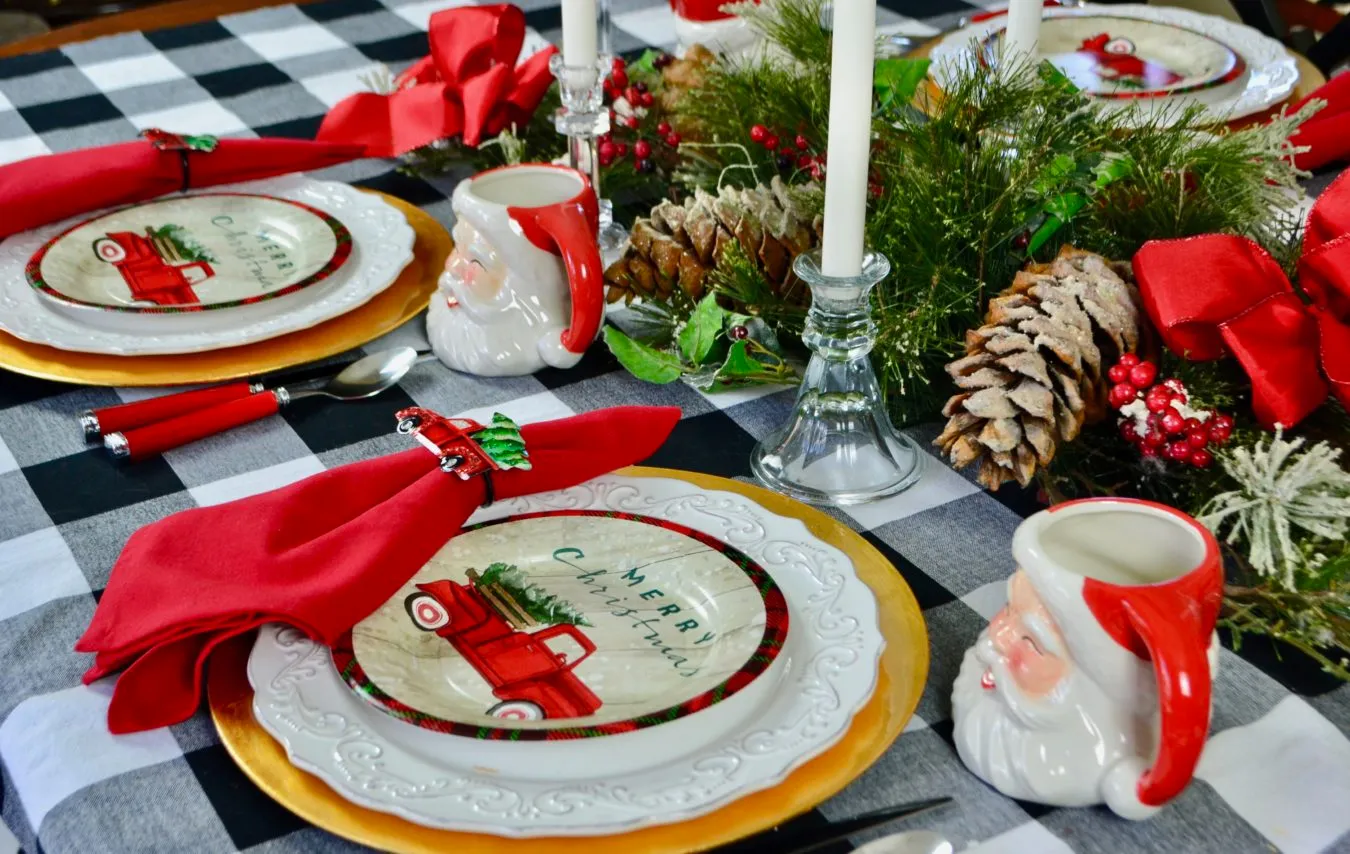
Grocery store eucalyptus runs about four dollars a stem and looks nearly identical to the florist version once it’s wired into a garland. Skip specialty candle holders and use canning jars with a half-inch of sand in the bottom. A length of woven jute rug binding makes a beautiful runner for under twenty dollars, and no one at your party will know.
17. Starburst Lights and Frosted Olive Branches Over Dark Wood
These pendants want a ceiling of at least eight feet and a table directly beneath them. Hang the lowest point thirty to thirty-six inches above the tabletop so nobody’s sightline gets clipped. In a room with a lower ceiling, drop to one pendant and add the small tabletop starbursts instead — the effect survives, and so does your headroom.
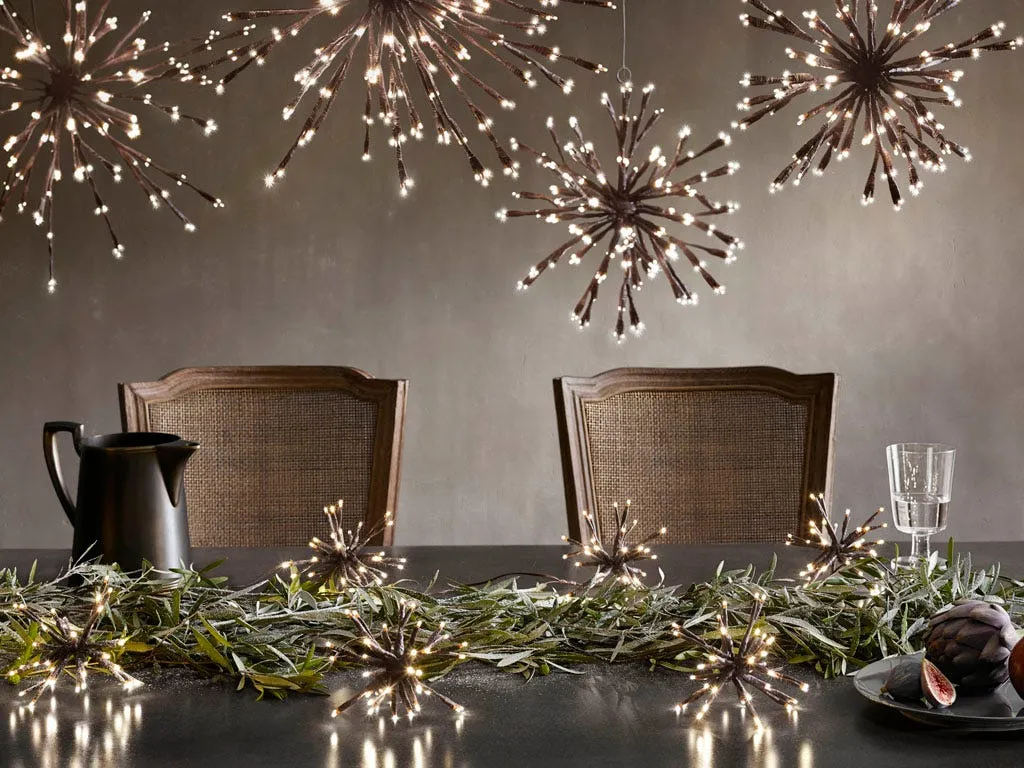
Fairy-light pendants look magical in photos and demand a little maintenance in real life. Battery packs need replacing every few weeks if you leave them on, and the wires tangle into knots that require real patience. Buy lights with built-in timers. And dust the branches — frosted faux greenery collects it like a shelf collects books.
18. A Dull Blue Cloth and Stacked Bowls for a Casual Spread
- Measure the table and add a twelve-inch drop on each side.
- Count platters against dishes — one board per four guests.
- Set out empty bowls early so guests can serve without hunting.
- Confirm nothing on the table needs refrigeration before the two-hour mark.
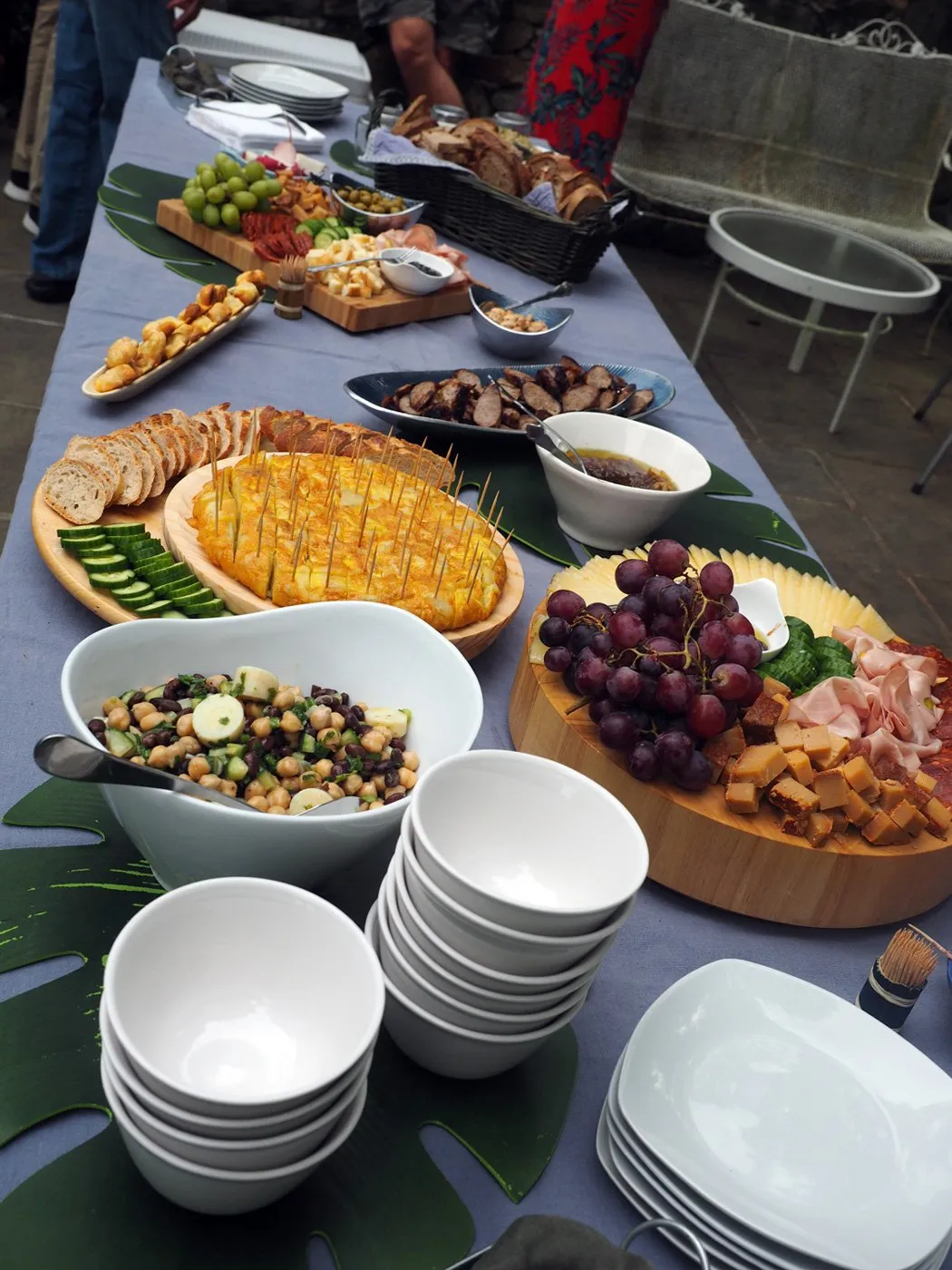
It’s the dull blue cloth. Not the wooden boards, not the leaf-shaped mats. That muted, slightly faded blue does something no white cloth can: it makes cheese look yellower, greens look fresher, cured meat look richer. If you’re building a casual spread, choose a cloth color that flatters food rather than one that flatters the room. For a similar approach with more structure, see Idea #11.
19. Neutral Linen and Greenery Against a Snowy Window
Put the buffet in front of the best view in the house and arrange the food lowest at the window end. Backlit greenery looks dimensional in a way no amount of decorating achieves, and a snowy landscape does more for a holiday table than any centerpiece you can buy. If your view is a driveway, hang a sheer panel and light it from behind instead.
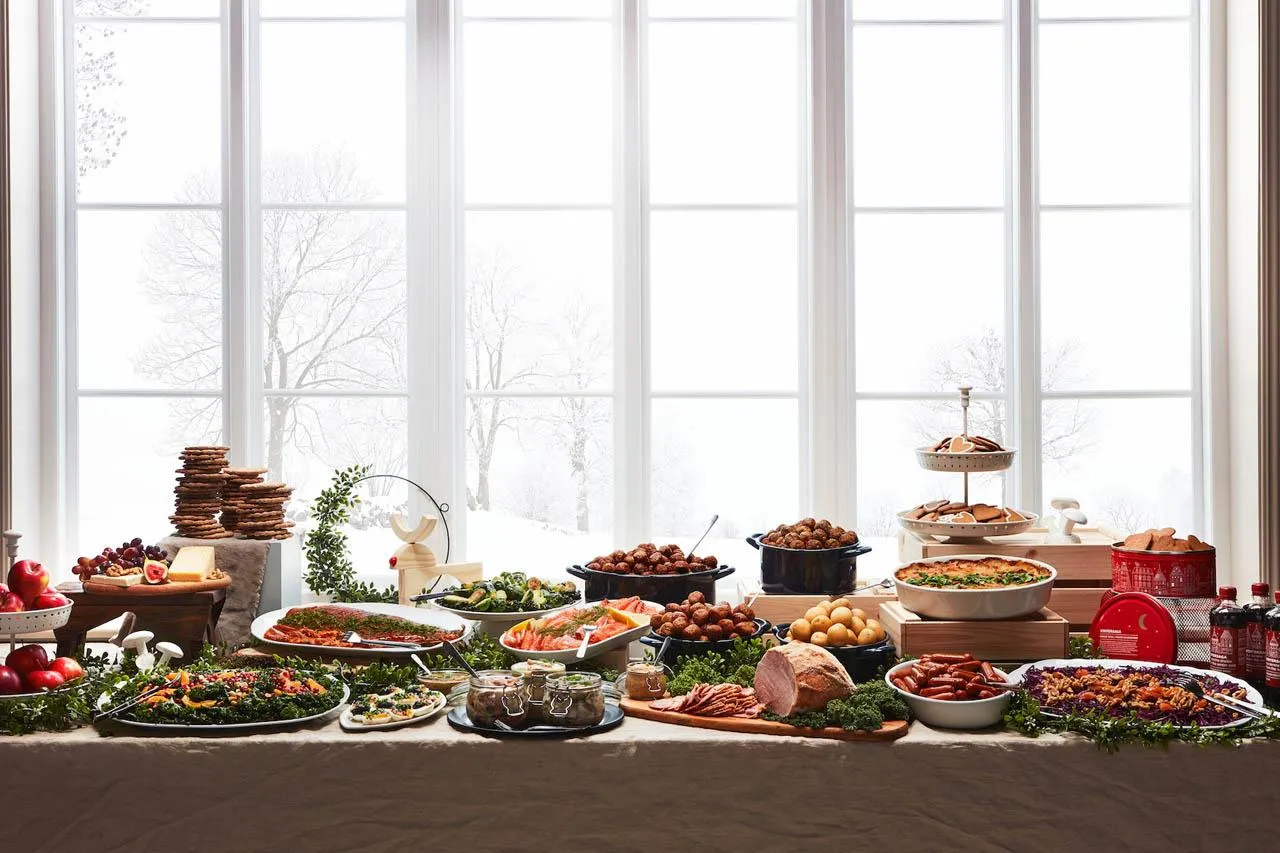
Notice how little is actually on this table — linen, foliage, dishes, food. The window is doing the decorating. When a room has one spectacular element, your job is to not fight it. Neutral linens and simple white serving pieces step back, and the snow gets to be the star.
20. A Baked Tart on a Tiered Stand Above the Charcuterie
- Set the largest dark wood board down first as your base layer.
- Place the tiered stand slightly off-center — never dead middle.
- Load the board with cheese, cured meats, and dried apricots around the stand’s base.
- Put the tart on the top tier so it reads as the crown.
- Fill gaps with pastry twists and nuts, keeping the edges loose.
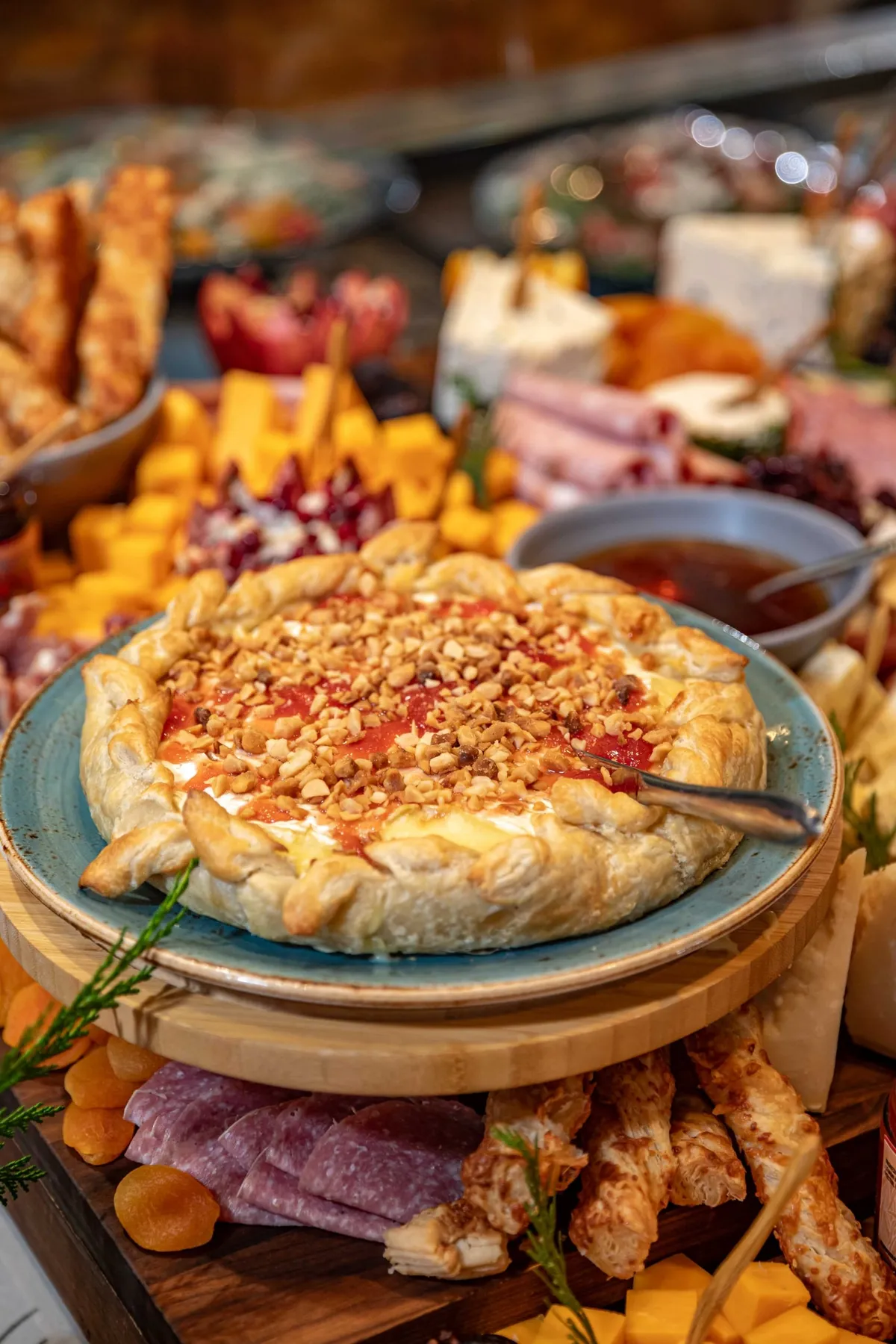
Fifteen minutes to assemble once everything is sliced.
Teal blue plate, two warm woods, yellow cheese, deep red fruit. That’s a warm-cool split of about seventy-thirty, and it works because the cool note is confined to one small object. Swap the blue plate for white and the arrangement goes cozy and loses its snap. One cool accent, carefully placed, is worth ten.
21. Silver Chafing Dishes and Copper Bowls on a White Cloth
Chafing dishes only work if the water pan is actually filled and the fuel isn’t expired. Test each one the week before — nothing kills a buffet faster than cold roast at eight o’clock. Budget the fuel too: a standard can runs about two hours, so plan on one and a half cans per dish if you want the evening to stretch.
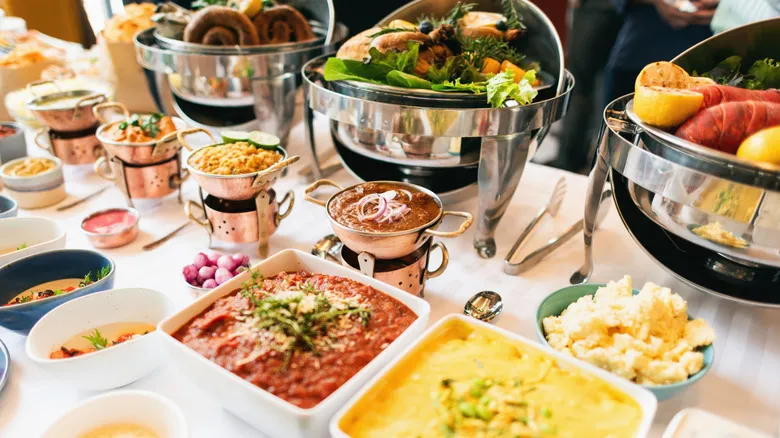
It’s the copper. Silver chafing dishes on a white cloth would look institutional — hotels do exactly this, at scale. Those small copper bowls on stands are what pull the whole setup toward warm and human. Same food, same table, entirely different feeling. If you own nothing copper, one bowl is enough to change the read.
22. A Big Wooden Board with Grapes, Pinecones, and a Sheer Runner
Restaurant-style boards cost a fortune. A hardwood cutting board from a discount store runs fifteen to twenty-five dollars and looks identical under food. Skip the prosciutto roses and use folded slices — same volume, half the fuss. Grocery-store grapes, a block of sharp cheddar, and a bag of nuts will fill a large board for under thirty dollars. Same concept as Idea #20, a quarter of the styling effort.
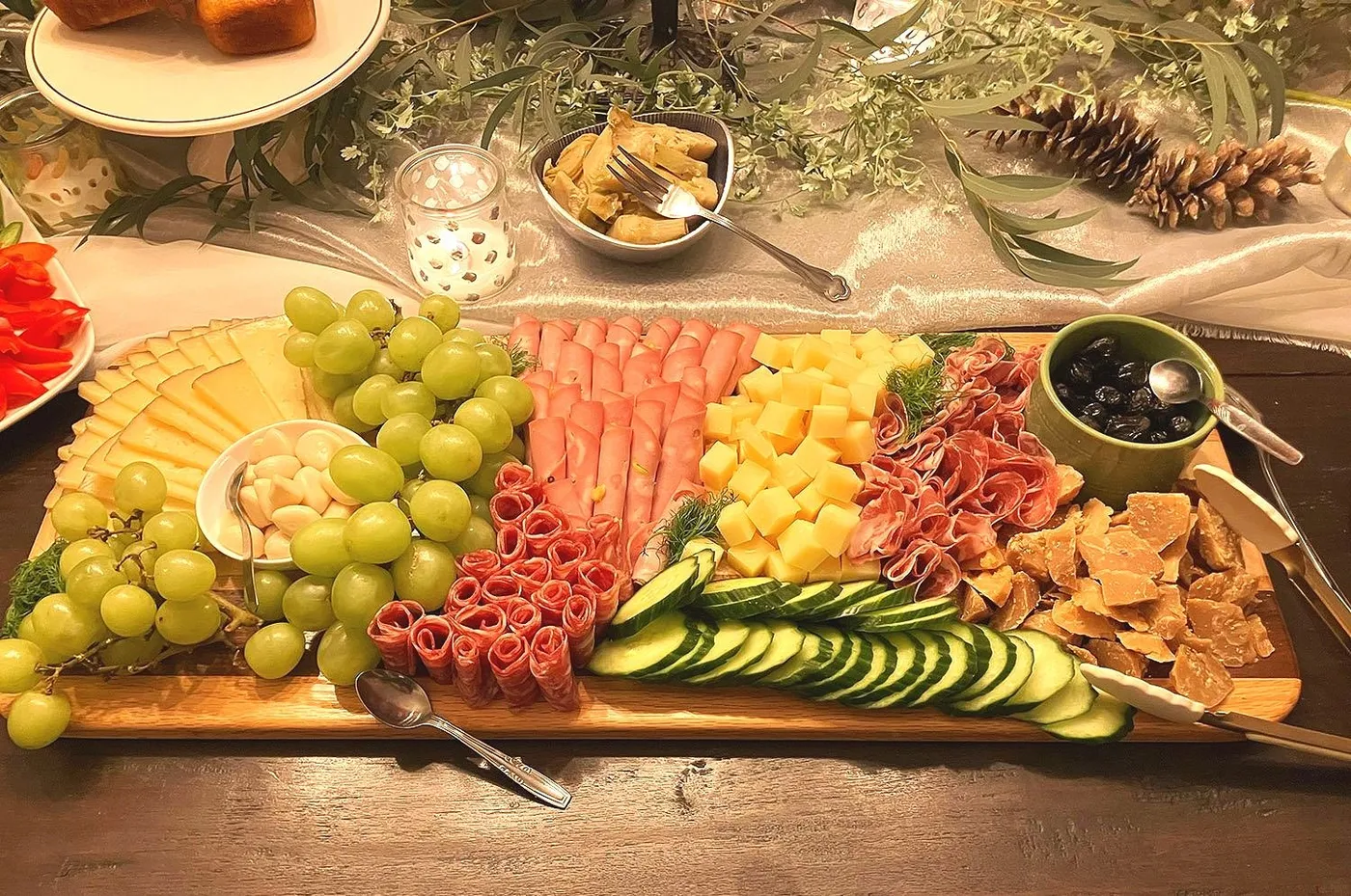
Wooden boards need oiling every few months with food-safe mineral oil, or they dry, crack, and stain. Never soak them. Cheese left out past two hours starts sweating and separating, so build the board closer to serving time than feels comfortable. And brush your pinecones first — they shed.
23. A Grape-and-Cheese Tree Beside a Gingerbread House
Food-as-decor is the quiet winner of the last few holiday seasons. People want centerpieces they can eat, partly because it’s charming and partly because nobody has room for another bin of ornaments. A grape-and-cheese tree or a strawberry tower gets photographed, consumed, and never stored. Expect this one to stick around past 2026.
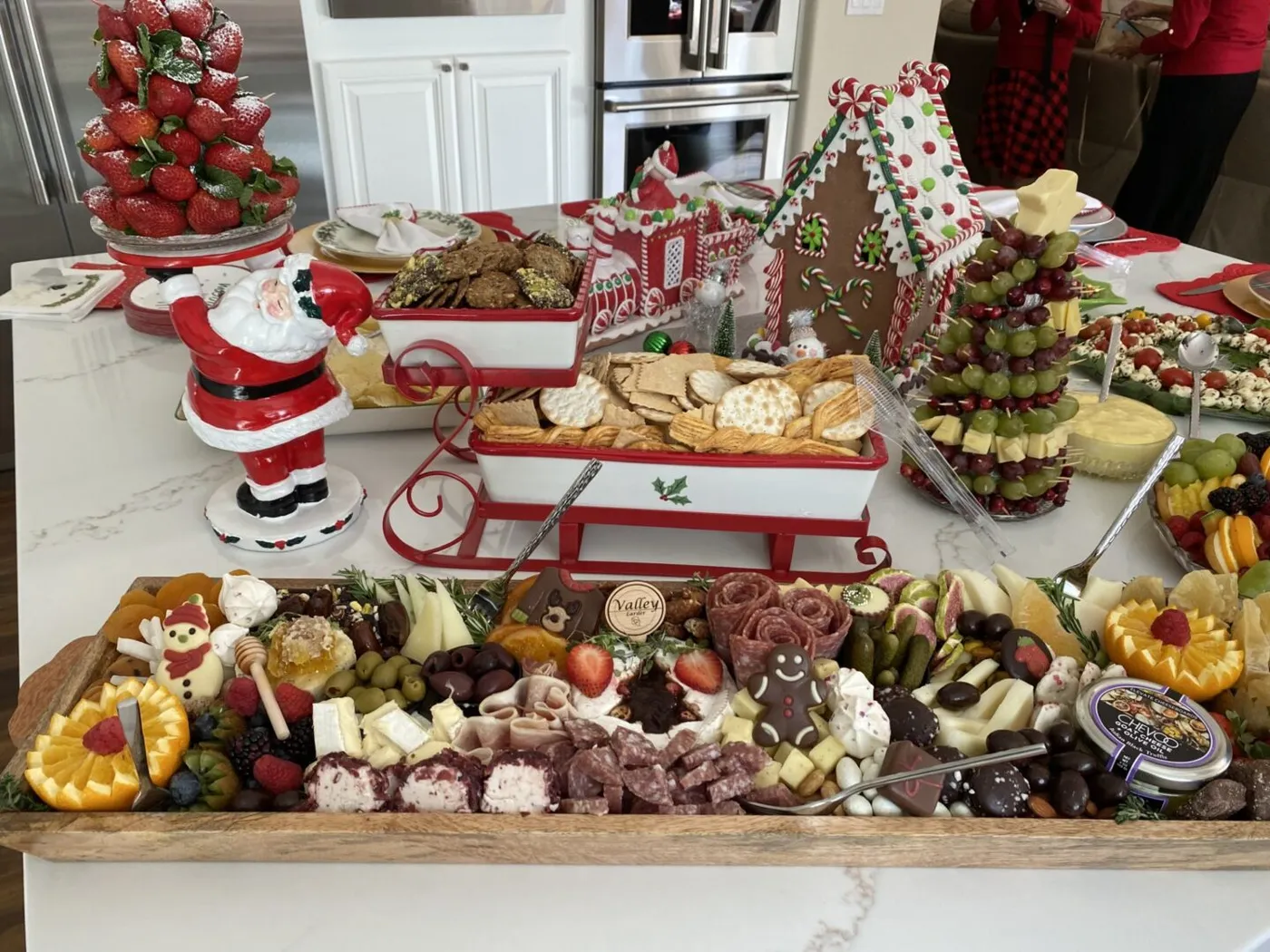
Build the tree on a foam cone wrapped in plastic and start at the bottom — toothpick a full ring of grapes, then overlap each row by half so the row above hides the picks. Work upward and finish with a star. Use firm cheese cubes, never soft, or the whole thing sags by dessert. Assemble no more than an hour before guests arrive.
24. Roasted Meats, Copper Cookware, and a Chocolate Fountain
This is a spread that needs real room: at least eight feet of table, three feet of clearance behind it, and a ceiling tall enough that the chocolate fountain doesn’t feel like it’s looming over the roast. In a smaller dining room, cut to one roast and one dessert station, and move the fountain to a side table where it can be its own moment.
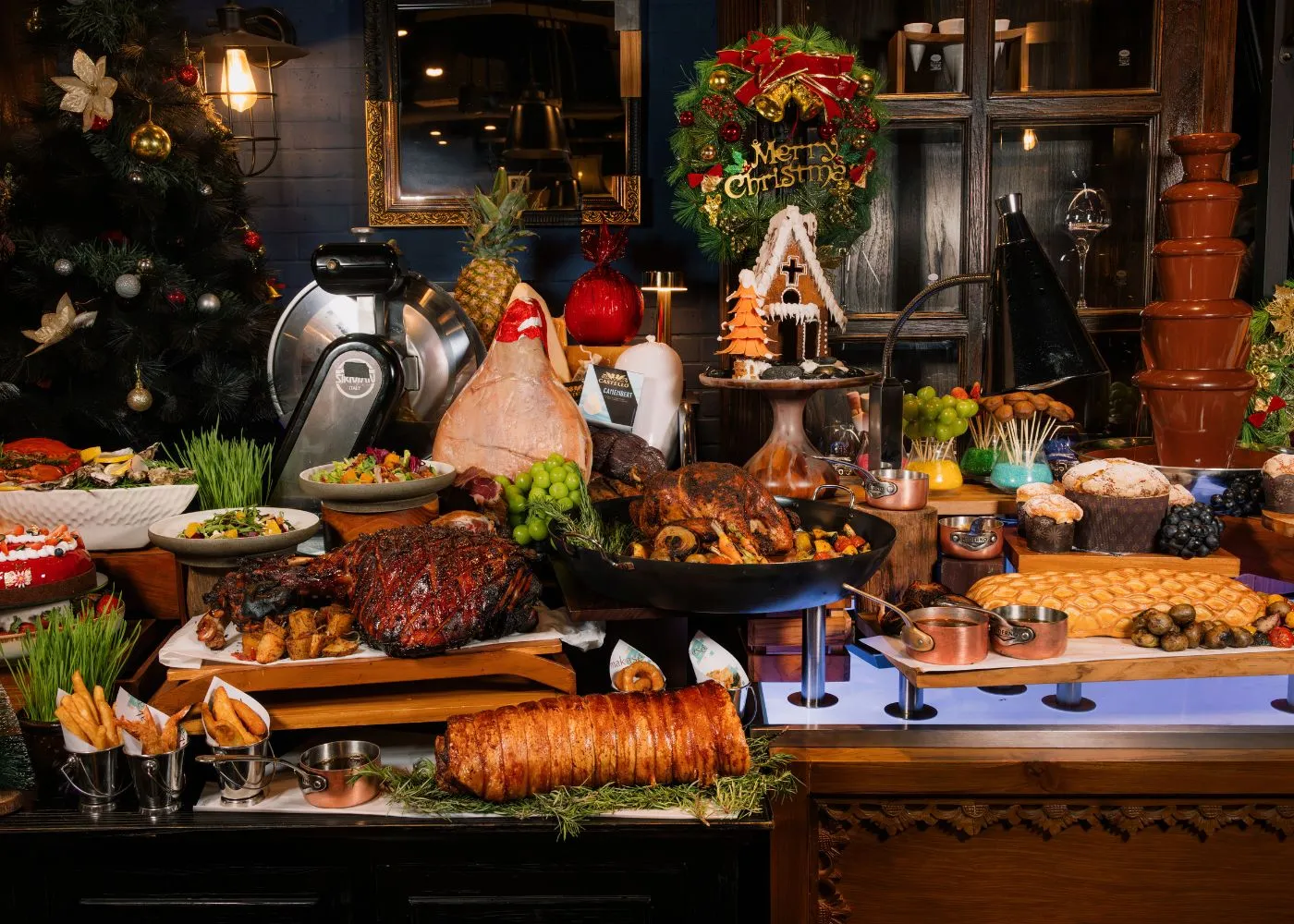
- Copper or copper-look serving pots: $50–$180
- Multi-tiered dessert stand: $35–$90
- Rental chocolate fountain, per day: $60–$120
- Roasting pans and platters: $40–$120
- Greenery, ornaments, and wreath: $30–$80
Total: $215–$590. Budget alternative: skip the fountain and serve fondue in a thrifted copper pot — same drama, roughly $80 all in.
25. Seafood on Ice and a Gingerbread House Centerpiece
High and low, cold and hot, precious and playful. The lobster on crushed ice sits four feet from a gingerbread house with candy on the roof, and somehow it works — because both are clearly celebrating the same night. Luxury tables fail when they take themselves too seriously. This one doesn’t, and that’s precisely why it reads as generous rather than expensive.
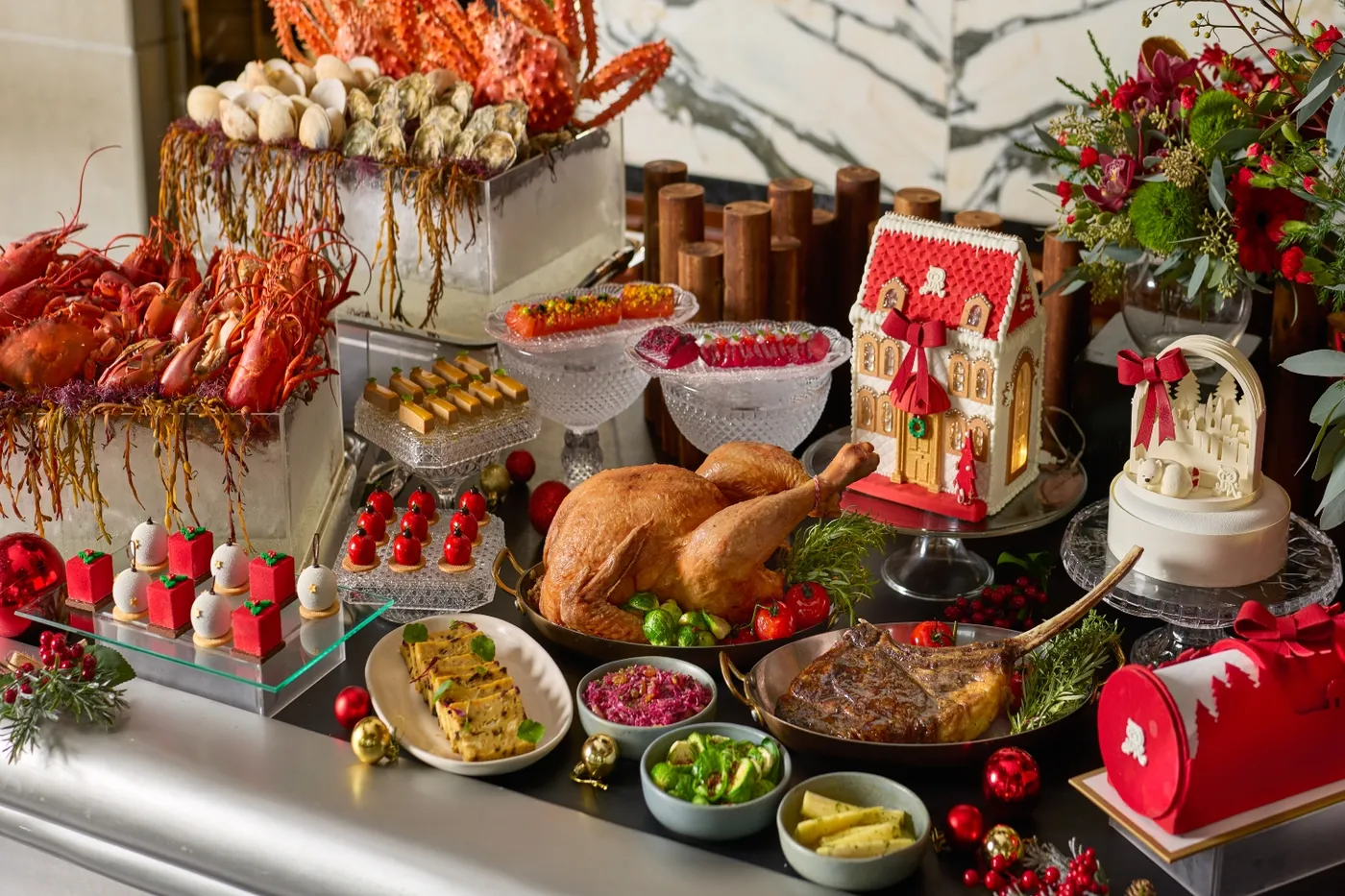
- Fill a wide shallow bowl with crushed ice an inch below the rim.
- Nestle a smaller inverted bowl in the center to support the shellfish.
- Fan the lobster and crab outward, legs out, shells facing up.
- Tuck lemon halves and herb sprigs into the gaps.
- Set it on a towel-lined tray and refresh the ice every forty minutes.
26. Slate Risers, Log Slices, and Poinsettias Between the Platters
Sixty percent dark — slate, cast iron, table surface. Twenty-five percent red and cream from the poinsettias and the food. Fifteen percent gold from the ornaments. The gold is what keeps all that dark from turning gloomy; without it the table would feel like a forest at dusk. Swap gold for silver and the mood cools noticeably.
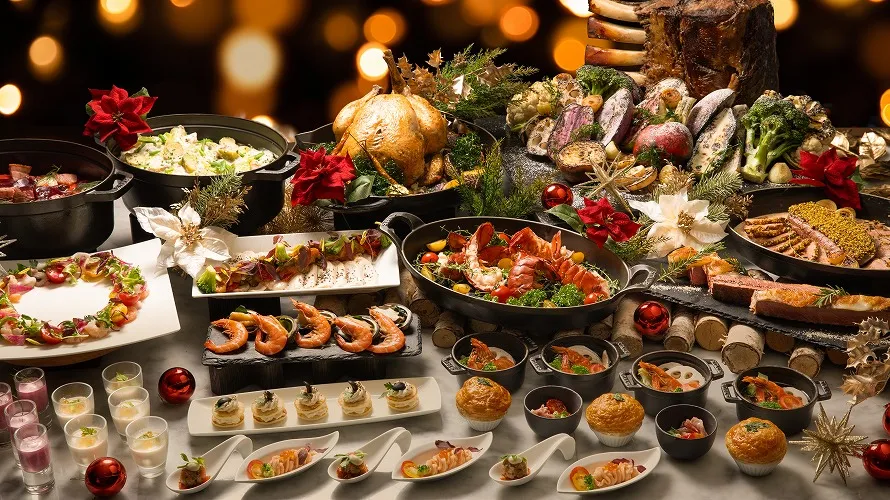
Poinsettias aren’t actually deadly, but they are mildly toxic to cats and dogs, and they drop leaves onto a buffet, which is worse. If pets or toddlers share your house, use faux poinsettias or paper flowers in the same red and white. The look survives. The leaf-drop problem doesn’t.
27. Gold Birdcage Stands and a Red Pleated Table Skirt
The skirt. Underneath it is almost certainly a folding table with metal legs, and that pleated red fabric turns it into something you’d see at a hotel. The birdcage stands are charming and the tinsel is tinsel, but the skirt is what makes the whole arrangement look deliberate instead of improvised — it changes the silhouette, not just the surface.
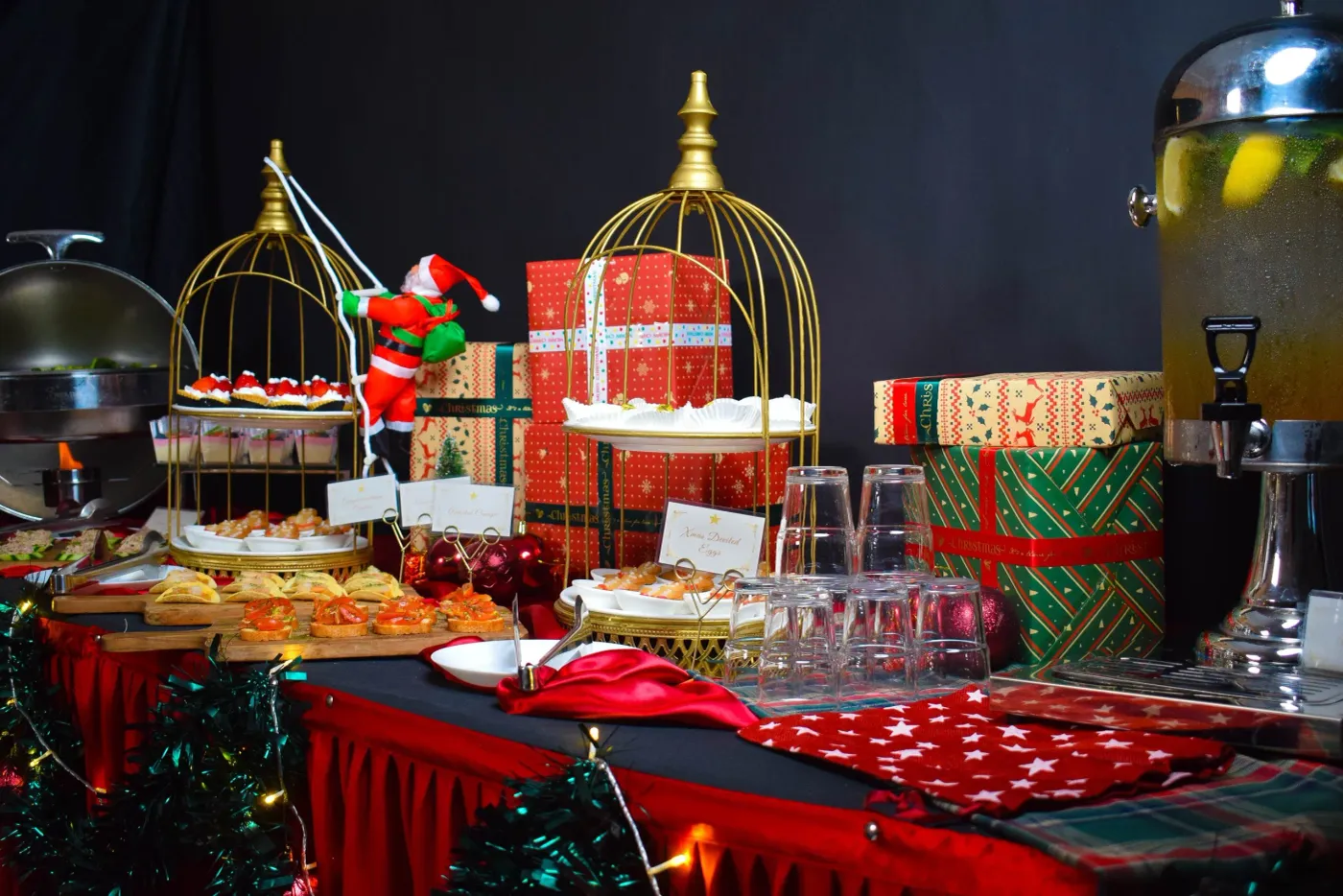
A pleated table skirt is the single easiest thing to fake. Two yards of red fabric, a tension rod, and safety pins will get you ninety percent of the way for under twenty dollars. Birdcage stands can become stacked cake stands and wire baskets from a thrift store. Same silhouette as Idea #5, which runs on the exact same draping trick.
28. Red Velvet Drapes Behind Tall Gold Candle Holders
Layering curtain panels behind a buffet is a two-hour project that changes the entire room. Use a tension rod rated for the panel weight, hang it four to six inches above the table’s back edge, and let the panels puddle about an inch on the floor. Velvet specifically — it eats light and makes candles look twice as bright as they are.
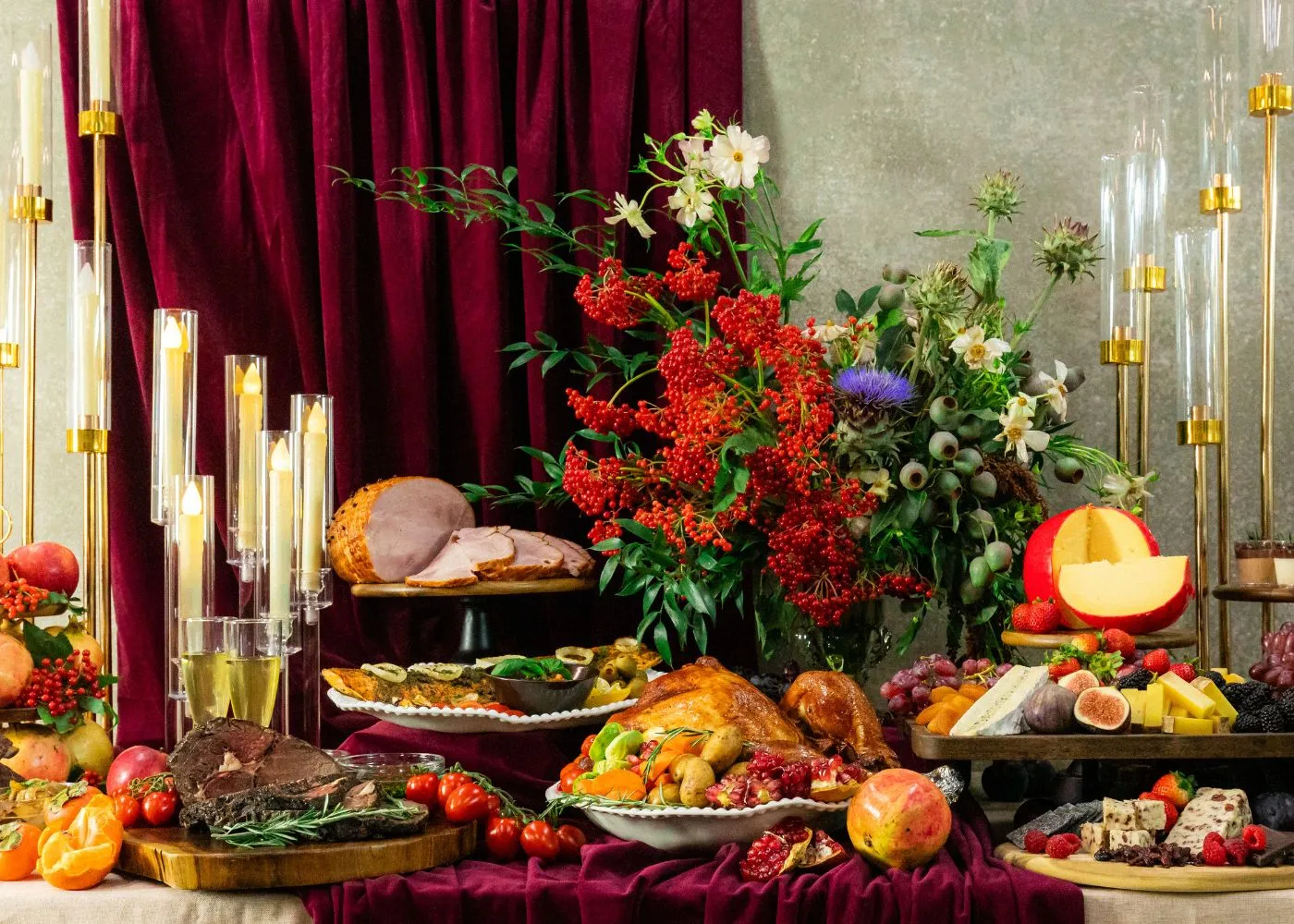
This needs a wall of eight to ten feet to read properly, plus a table at least thirty inches deep so the drapes don’t get crushed by passing plates. In a narrow room, use one panel offset to one side instead of a full backdrop. It’s the same gesture at half the visual weight.
29. Kraft Paper Stars, Fir Branches, and Trifles in Martini Glasses
Fresh fir is beautiful and it drops needles the moment it dries out. Keep the branches on damp paper or in water picks, and expect to sweep daily. The chocolate trifles hold up better than most desserts — assemble them the morning of, keep them cold, and don’t add whipped cream until an hour before serving or it will slump into the glass.
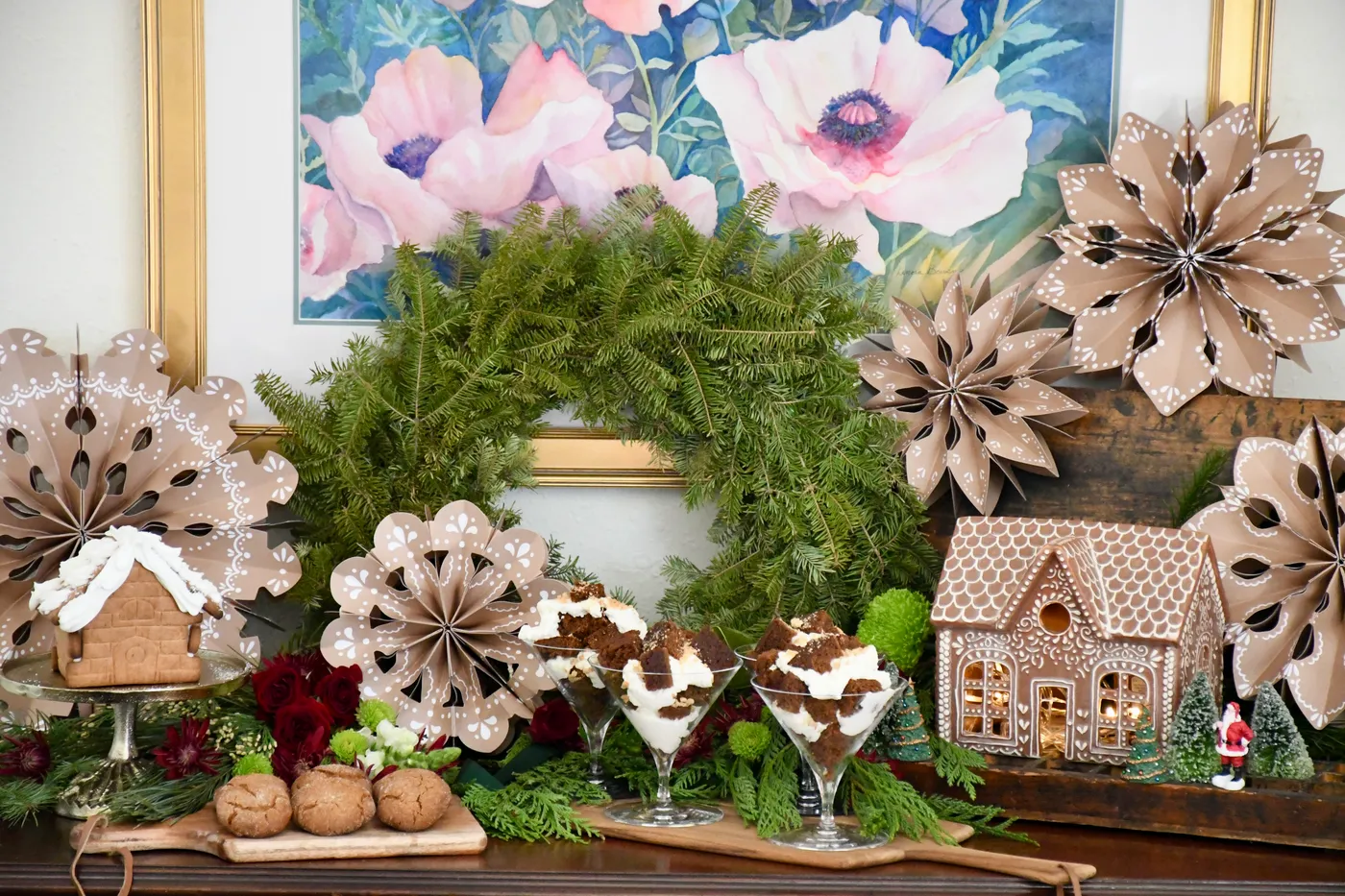
- Check that fresh greenery isn’t sitting directly against food.
- Confirm the trifle glasses fit on a tray in your fridge.
- Water any real branches before the party, not during it.
- Decide where paper stars hang so they don’t block conversation.
30. The Cranberry-Walnut Cheese Log on a Plain White Board
There is almost nothing on this board, and that’s the point. A white rectangle, a cheese log, one cracker, one knife. The negative space lets the crust of cranberries, walnuts, and chopped herbs read as texture instead of clutter. After thirty ideas full of garlands and tiers and tinsel, this is the reminder that restraint photographs beautifully too.
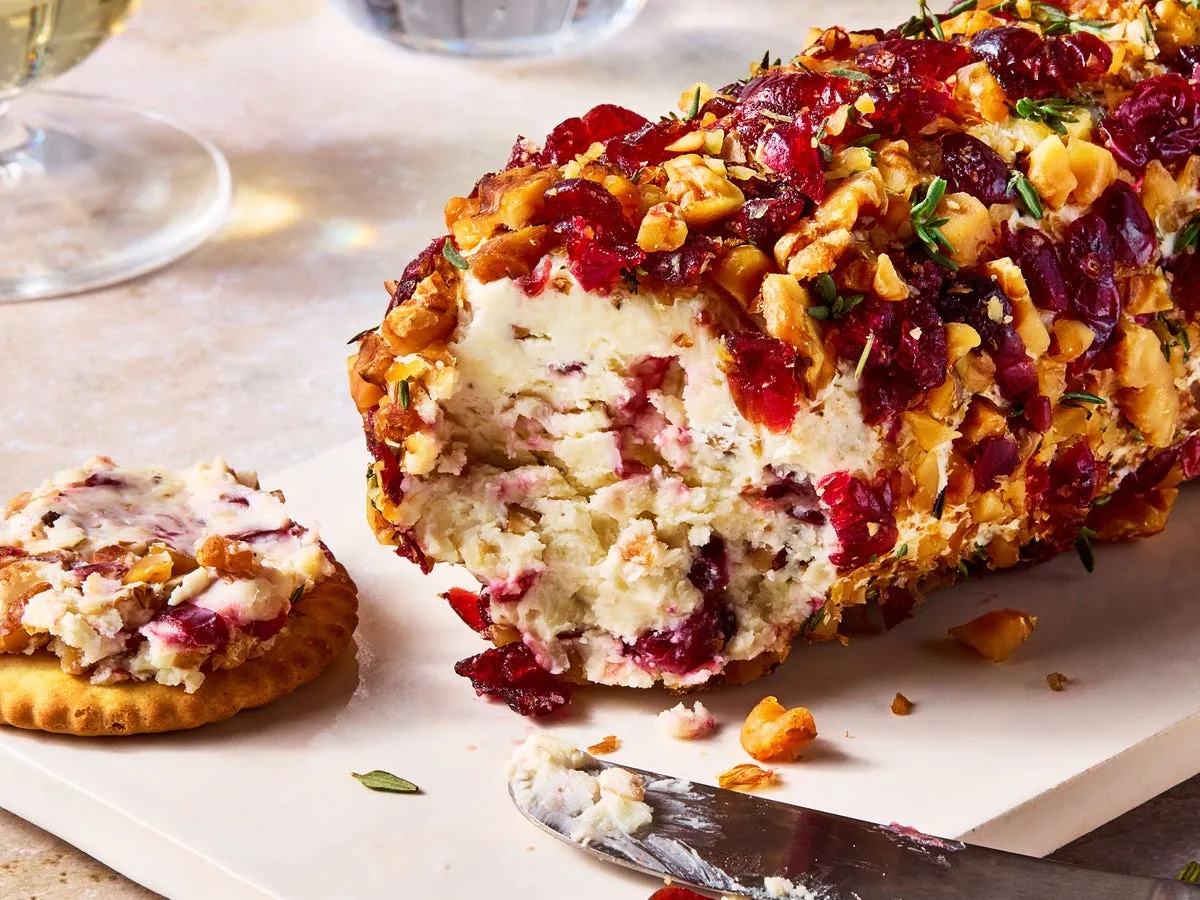
The white board. Put that same cheese log on marble or a patterned platter and it disappears into the background. The plain, slightly warm white is what makes the red and green coating pop. Sometimes the most important thing on the table is the thing that isn’t doing anything.
One Table, Thirty Ways to Say Welcome
None of these tables required a designer, a rental company, or a single thing you can’t return. Pick the one idea that made you stop scrolling, steal its formula, and let the rest of the room be a little quieter than you planned — that’s usually where the magic actually lives. And please, sit down at your own table before the guests arrive. It’s the only test that matters. 📌 Pin your favorites now so you can find them when the boxes come out of the attic.
