You know that feeling when you finally find the perfect DIY plant stand that looks exactly right for your space? That little project that takes a corner from “meh” to “wow”? We’ve all been there, endlessly scrolling Pinterest for inspiration. That’s why we did the hard work for you, diving into the best of 2026 to bring you ideas that are actually doable and beautiful.
We’ve broken down projects using simple materials you can find at places like IKEA, Target, or even your local hardware store, with ideas ranging from quick $20 builds to more intricate weekend projects costing up to $200. We’ve rounded up 28 incredible DIY plant stand ideas that cover every style, from modern and minimal to rustic and bohemian. And stay until the end — we break down the most common mistakes that can ruin these looks.
📌 Save this to Pinterest for later — you’ll want to revisit these ideas.
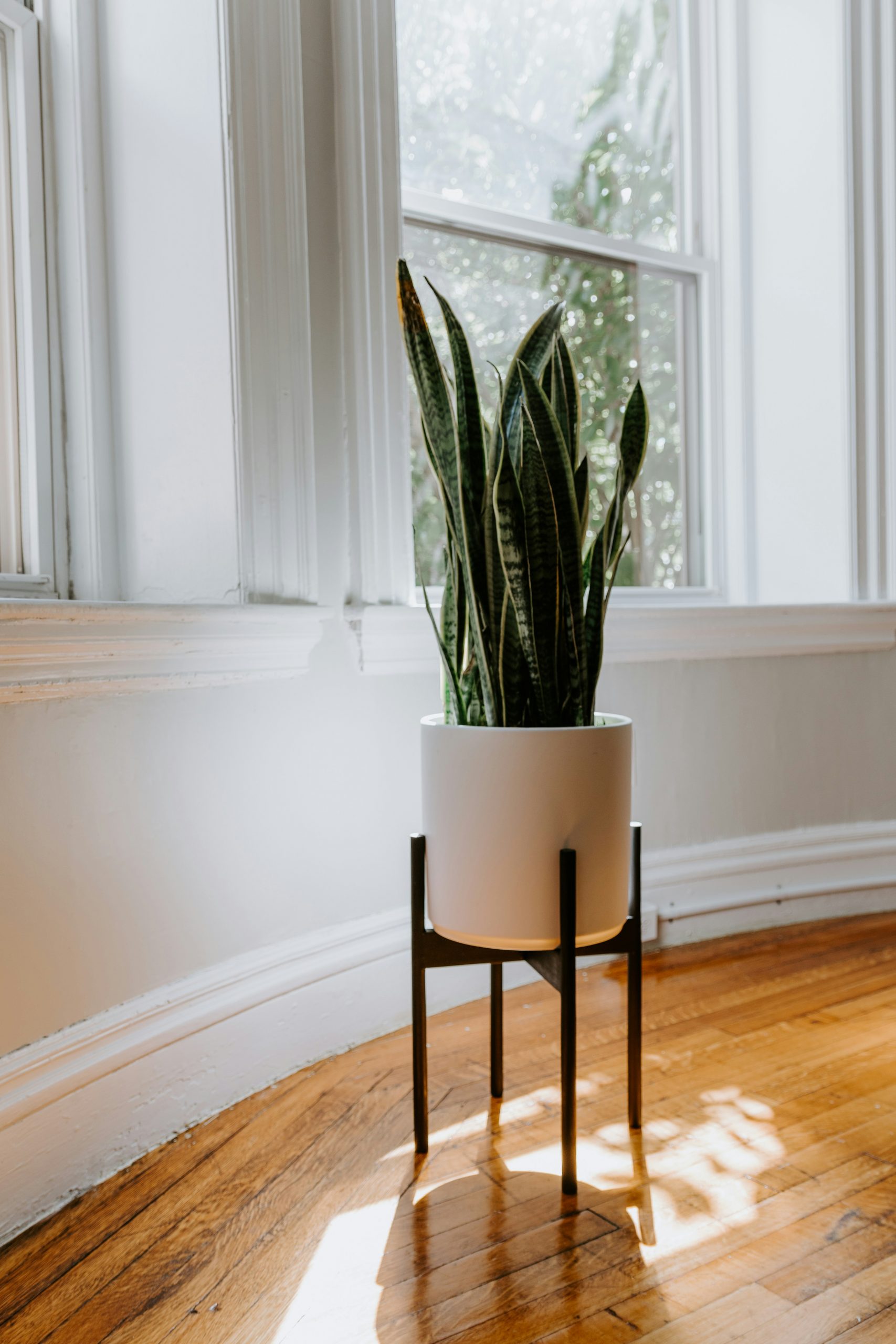
1. Modern Black Metal Stand with a Classic Snake Plant
This is simplicity at its finest. Placing a snake plant in a clean white pot and elevating it on a minimal black metal stand is a timeless look. It works because it adds height and dimension without adding visual clutter. Notice how the stand lifts the plant into the natural light from the window, which is crucial for keeping it healthy. The dark metal creates a lovely contrast against the white pot and the light hardwood floors, making the entire setup feel intentional and polished.
⚠️ Real Talk
Get the balance right with this simple formula: 60% neutral backdrop (the white walls and light floors), 30% natural element (the vibrant green of the snake plant), and 10% sharp accent (the black metal of the stand). You can swap the plant for a fiddle leaf fig or the pot for a soft gray, and the formula still holds. It’s a foolproof recipe for a clean, modern plant display that always looks chic and put-together.
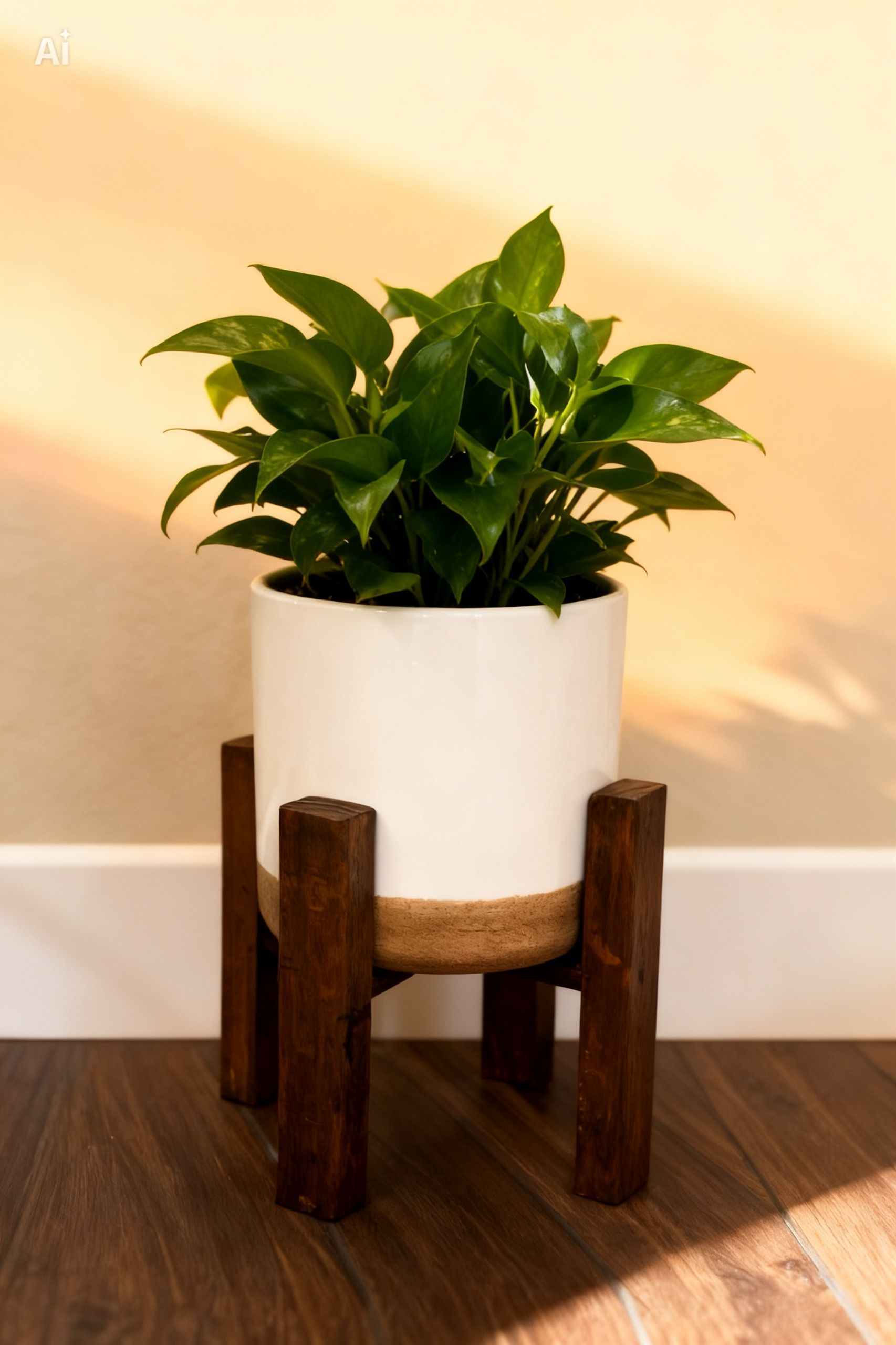
2. Two-Toned Ceramic Pot on a Dark Walnut Stand
What makes this combination so successful is the warm-on-warm color story. The dark stained wood of the stand has a reddish undertone that beautifully picks up the natural terracotta color of the pot’s base. This creates a cohesive look, while the pot’s white glazed top half adds a touch of modern brightness, preventing the composition from feeling too heavy or dated. It’s a masterclass in mixing earthy materials with a contemporary finish for a look that feels both grounded and fresh.
🔥 Trending Context
A quick reality check: placing a wooden plant stand directly on a hardwood floor can lead to scratches over time, especially if you move it for cleaning or to catch more sun. Before you place it, stick small, self-adhesive felt pads on the bottom of each leg. They cost a few dollars at any hardware store and will save your floors from unsightly gouges. It’s a small step that makes a huge difference in preserving your flooring.
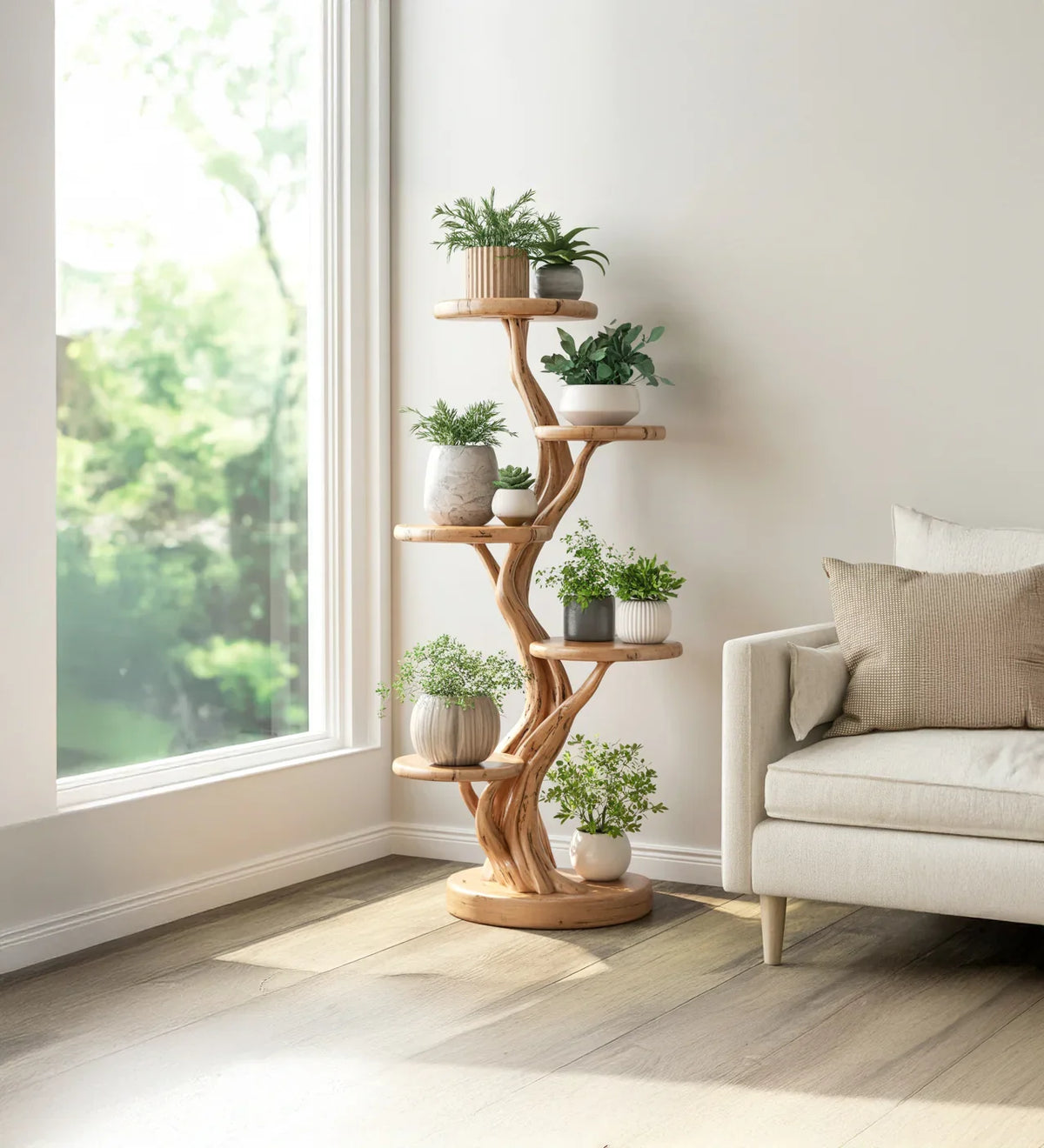
3. Asymmetrical Tree-Branch Stand for a Bright Corner
The single most important element here is the stand’s unconventional, tree-like structure. If you replaced this with a standard tiered shelf, you’d lose all the magic. The organic, branching form turns a simple plant display into a sculptural art piece. It feels dynamic and alive, echoing the shapes of the plants it holds. This stand isn’t just for storage; it’s the main character, making a powerful statement about bringing nature indoors in a whimsical, artful way.
💡 Designer Tip
This idea is perfect for a room with at least 8-foot ceilings and a free corner that needs a vertical element. It requires a footprint of about 3′ x 3′ to feel properly balanced and not cramped. Its height draws the eye upward, making it a great solution for rooms that feel a bit squat. However, it might overpower a very small room or one with low ceilings. For a more compact space, consider a linear tiered stand like the one in Idea #7.
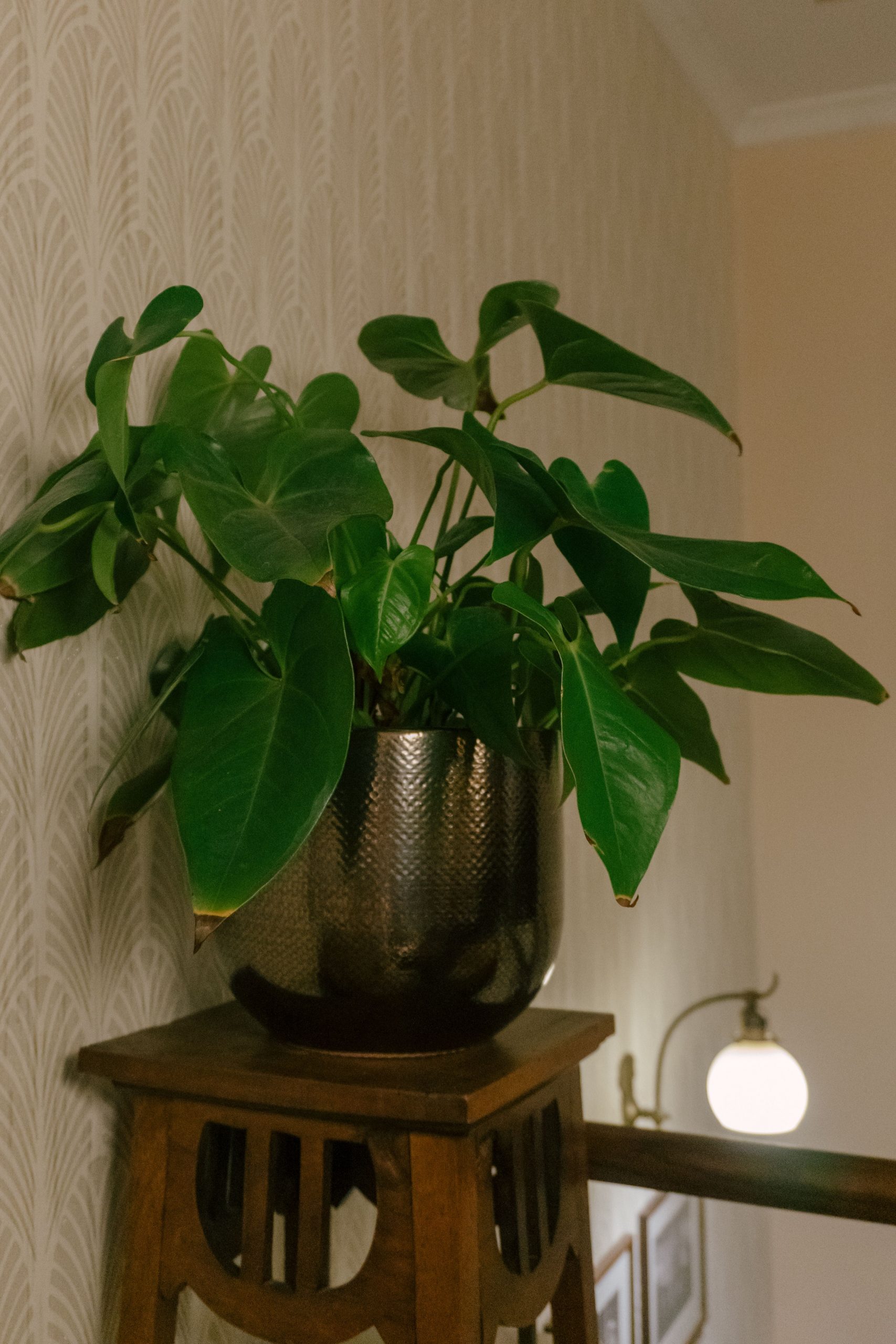
4. Dark Wood Stand with a Hammered Metal Pot
This look is all about texture and moody elegance. Let’s break it down: 50% intricate pattern (the scalloped wallpaper), 30% rich materials (the dark wood stand and hammered metal pot), and 20% organic life (the lush green plant). The key is the balance between the detailed background and the substantial, textured objects in the foreground. They don’t compete; they complement each other, creating a space that feels layered, warm, and sophisticated. The warm light from the nearby sconce just seals the deal.
🎯 What Makes It Work
An honest take on stands with decorative cut-outs like this: they are dust magnets. While the details are beautiful, they create tiny ledges and crevices where dust loves to settle. To keep it looking sharp, you’ll need to do more than a quick swipe. Plan on a weekly dusting with a microfiber cloth or a soft brush attachment on your vacuum. It’s a small price to pay for the character it adds, but it’s a maintenance task you shouldn’t ignore.
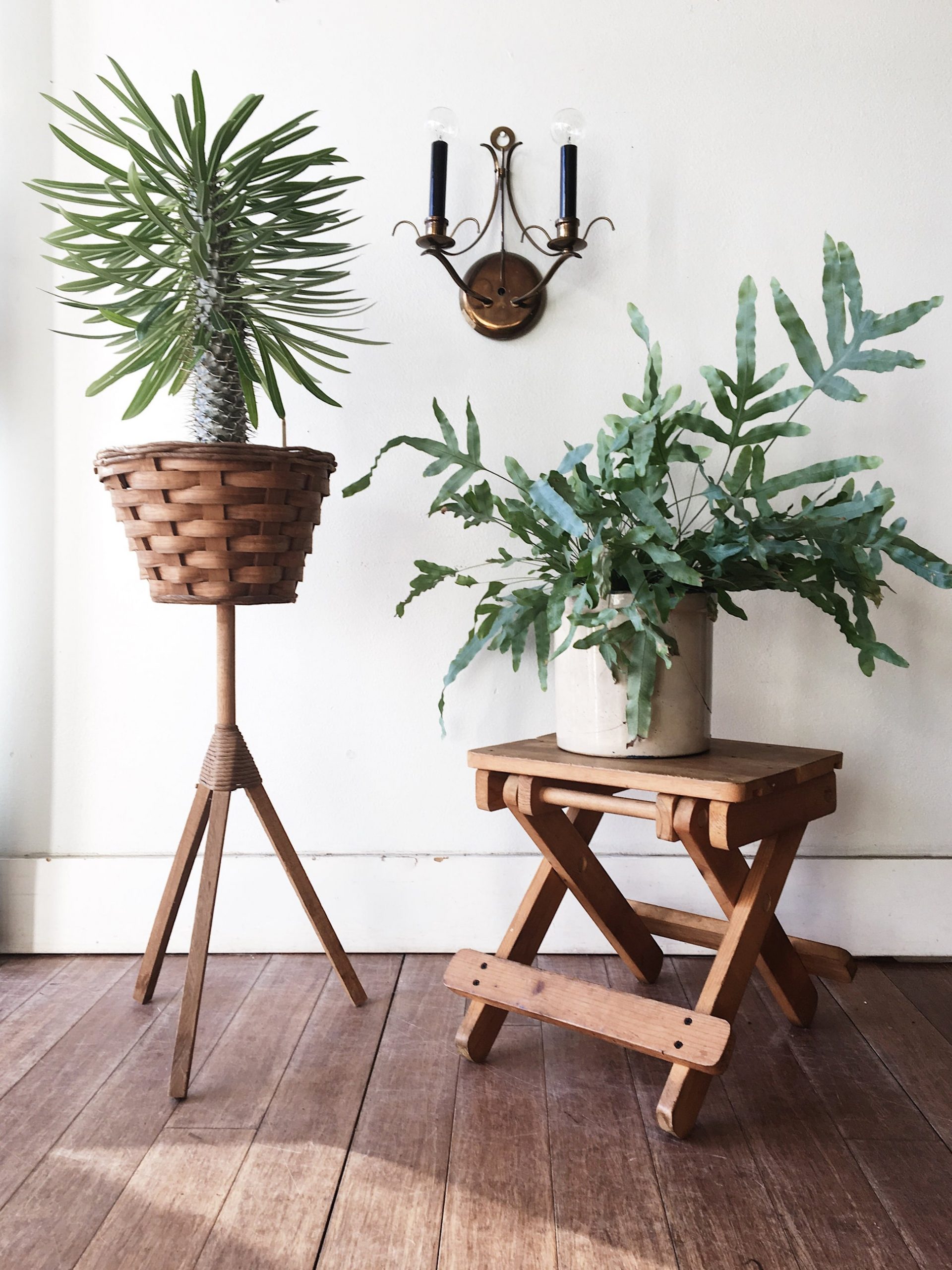
5. Layered Wood Stands with a Vintage Brass Sconce
The charm here comes from the smart use of repetition and variation. We see two wooden stands and two light sources (the sconce bulbs), creating a pleasing rhythm. However, the stands are at different heights and styles—one a tripod, one a folding stool—which adds visual interest and a collected-over-time feel. This pairing prevents the setup from looking too uniform or staged, striking a perfect balance between intentional design and relaxed, rustic character. The distressed wood floor ties it all together beautifully.
💸 Get This Look For Less
You don’t need a big budget to achieve this warm, vintage vibe. A folding wooden stool can often be found at a thrift store or Facebook Marketplace for under $15. The tripod stand look can be DIY-ed with three tapered legs from a hardware store and a round wood plaque from a craft store for about $30. The key is to look for pieces with warm wood tones and a bit of history to them. This look is more about patina than price.
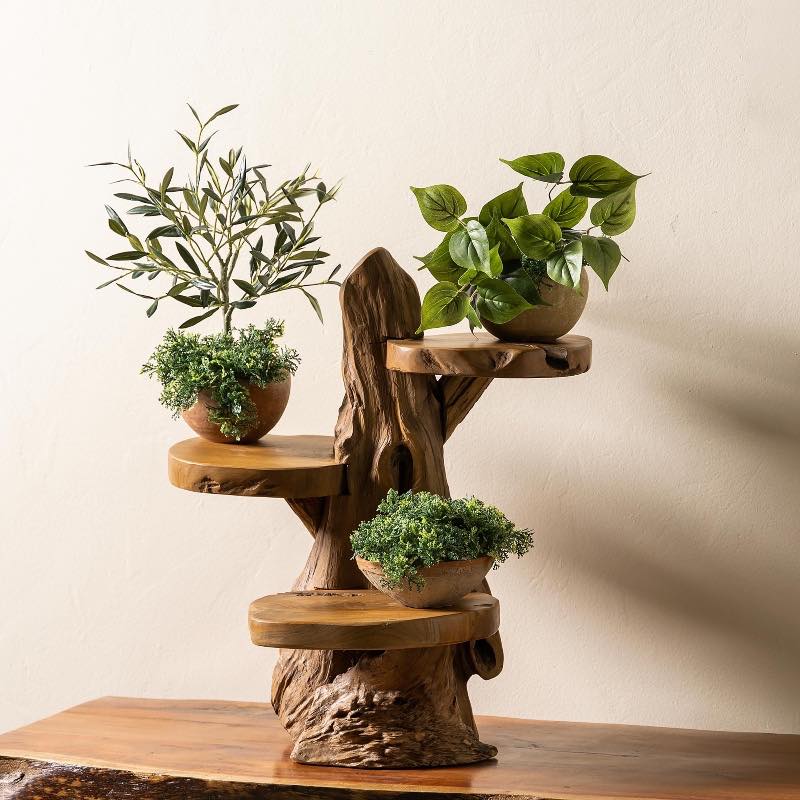
6. Sculpted Teak Tiered Stand with Live Edges
Take away the sculpted, organic form, and this is just another tiered stand. The one thing that makes this piece extraordinary is its celebration of the source material. You can feel the shape of the original tree it came from. The rough-hewn edges and flowing lines turn it from a functional object into a piece of natural sculpture. It’s a rustic concept executed with an artistic eye, making it feel both raw and refined at the same time. This is for someone who appreciates craftsmanship and the beauty of imperfection.
📐 Style Math
Teak wood is naturally durable and resistant to pests, which is great, but it does require some care to maintain its rich color, especially indoors. To prevent it from drying out or fading to a silvery grey, you’ll want to apply a light coat of teak oil once or twice a year. Just wipe it on with a clean cloth, let it soak in, and wipe off any excess. This simple task, which takes less than 30 minutes, will preserve the wood’s warm, beautiful finish for years.
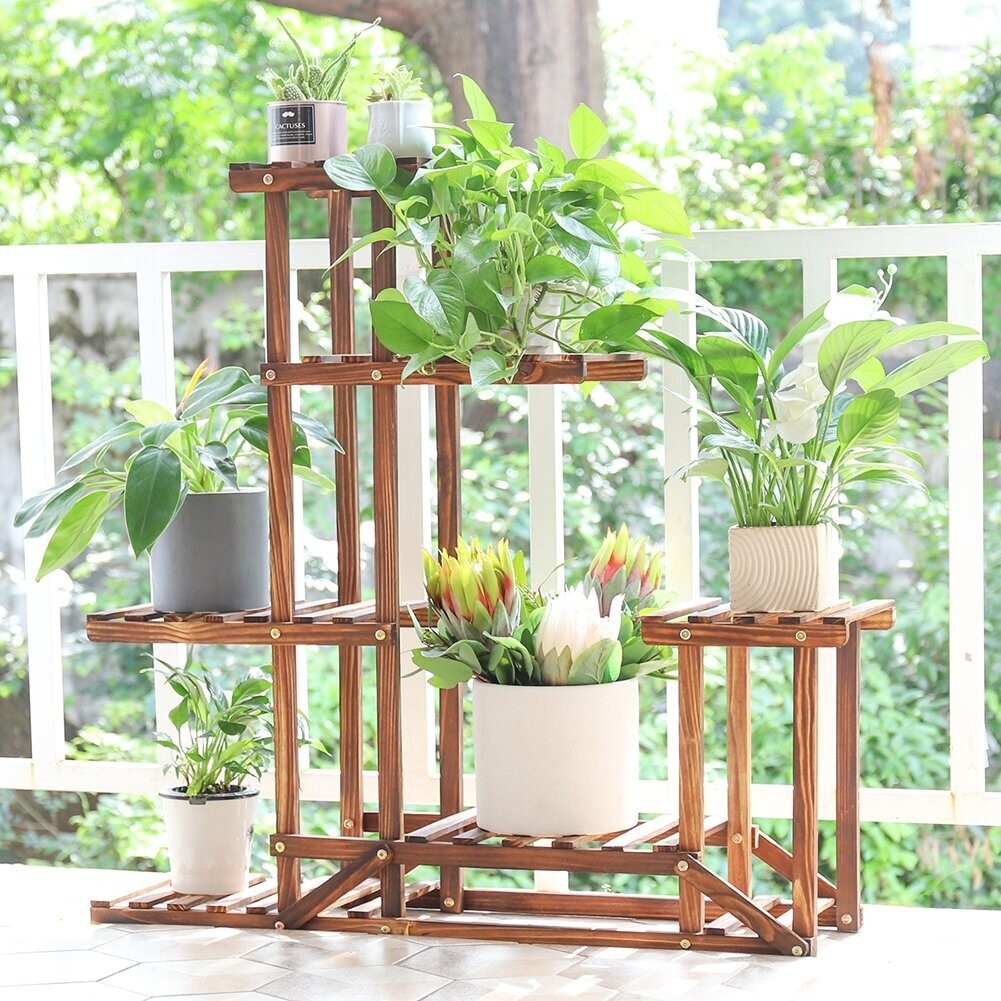
7. Tiered Stand from Dark Stained Slatted Shelves
You can build a similar tiered stand yourself with basic lumber. Here’s a quick guide for a simple version:
⭐ The One Thing
- Time: 2-3 hours
- Cost: $40-$60
- Gather Materials: You’ll need a few 1×3 pine boards, wood screws, wood stain, and a saw.
- Cut Pieces: Cut your boards to create the vertical legs and the horizontal slats for the shelves. An escalating design, like the one shown, requires slats of different lengths.
- Assemble Frame: Build the side supports first, then attach the shelf slats with wood screws. Using visible hardware, like the metallic fasteners here, can be a cool industrial detail.
- Stain & Seal: Apply a dark wood stain to get this rich finish and seal it with a clear polyurethane to protect against water drips.
When styling a multi-tiered stand, create balance by placing your largest, heaviest plant on the lowest and widest shelf. This visually grounds the entire piece. Then, arrange smaller, lighter plants on the upper tiers. Mix trailing plants, like an ivy, with upright ones, like a snake plant, to create variety in shape and direction. This method ensures the stand looks stable and thoughtfully curated, not top-heavy or cluttered. Compare this to the lighter, more airy feel of the stands in Idea #19.
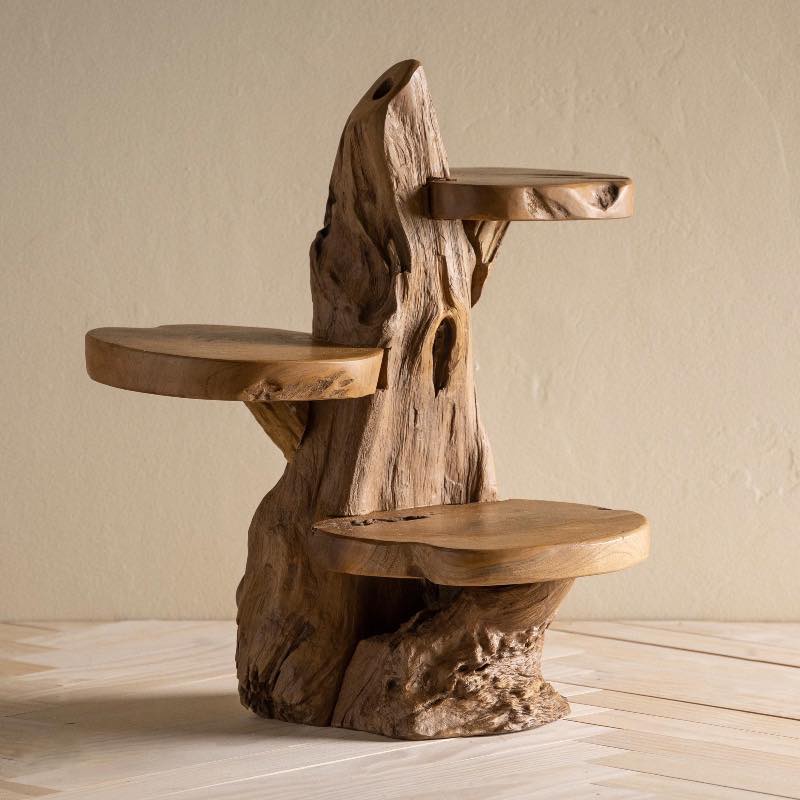
8. Three-Tier Live Edge Wood Display Stand
This piece works because it’s a testament to the beauty of natural materials. The live edge, where the natural edge of the wood is incorporated into the design, tells a story. Each tier has an organic, unpredictable shape, which is a powerful contrast to the straight lines and perfect angles we usually see in furniture. It doesn’t just hold things; it brings a piece of the forest inside. This stand is perfect for anyone who values authenticity and wants their decor to feel grounded and unique.
📏 Scale Guide
Let’s be honest: a solid piece of live edge wood like this can be quite heavy and, depending on the wood species, quite expensive. This isn’t a lightweight, easy-to-move-around decor item. Before you commit to making or buying one, have a specific, long-term spot in mind. Measure carefully and consider how you’ll get it into the room. It’s a statement piece that requires a bit of planning and muscle to place in your home.
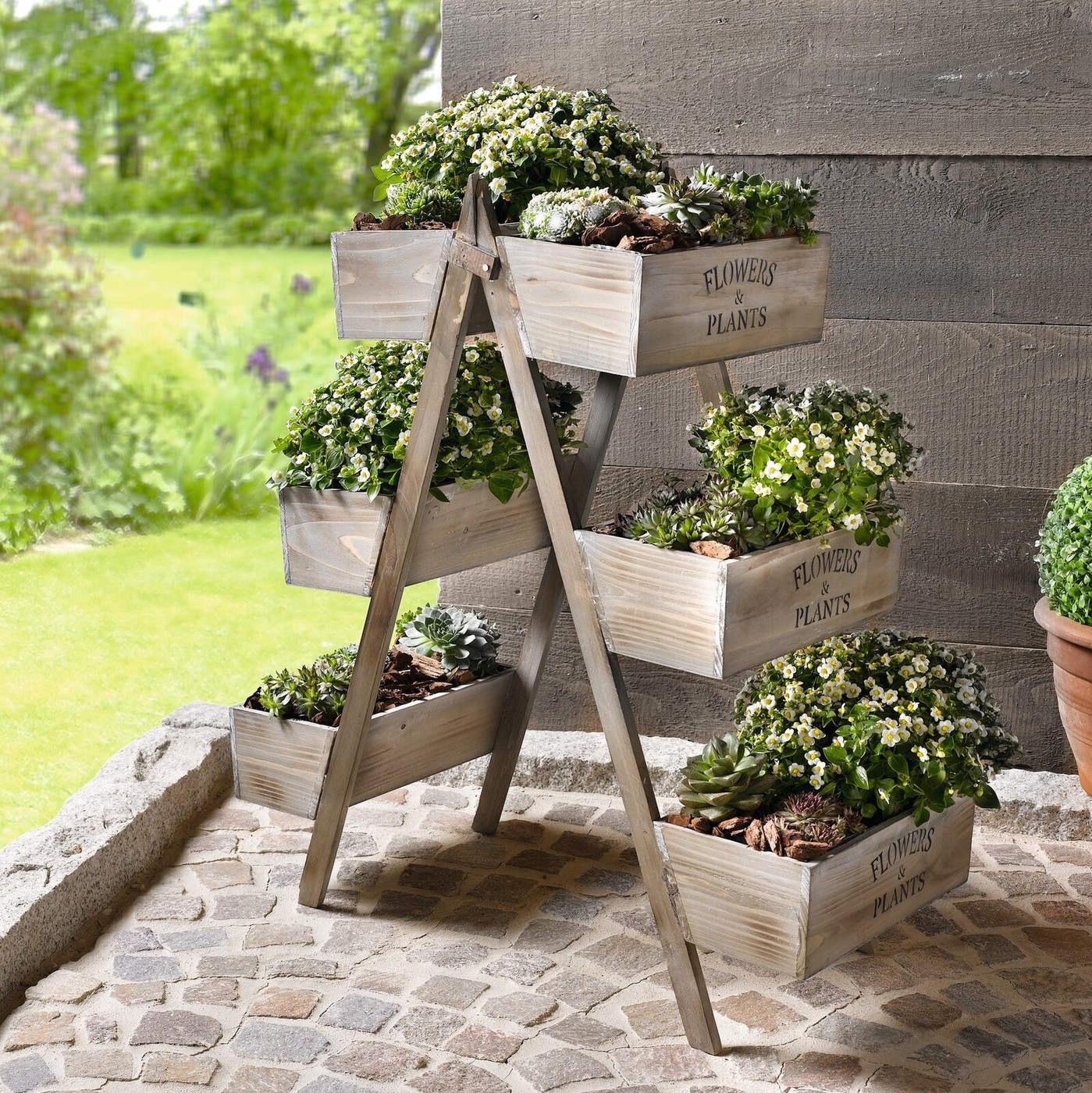
9. A-Frame Stand with Tiered Planter Boxes
Recreating this rustic A-frame stand is an affordable and satisfying weekend project. Here’s a rough cost estimate:
🔧 How-To Brief
- Lumber (pine or cedar): $50 – $80
- Wood Screws & Fasteners: $10 – $15
- Planter Boxes (pre-made or DIY): $40 – $70
- Plants & Soil: $30 – $60
- TOTAL: $130 – $225
- Budget Alternative: Use reclaimed pallet wood for the frame and plastic window boxes instead of custom wood ones to bring the total cost down to around $60 – $90.
Building a simple A-frame is easier than it looks. Here are the basic steps:
- Time Estimate: 3-4 hours
- Material Cost: ~$70
- Build the ‘A’s: Create two identical ‘A’ shapes by cutting four legs and two cross-braces. Join them at the top and secure with the brace.
- Connect the Sides: Stand the two ‘A’ frames up and connect them with horizontal boards that will act as the shelf supports.
- Add Shelves: Place or build your planter boxes to sit securely on the horizontal supports.
- Weatherproof: Especially for outdoor use, apply a clear sealant to protect the weathered wood from moisture and rot.
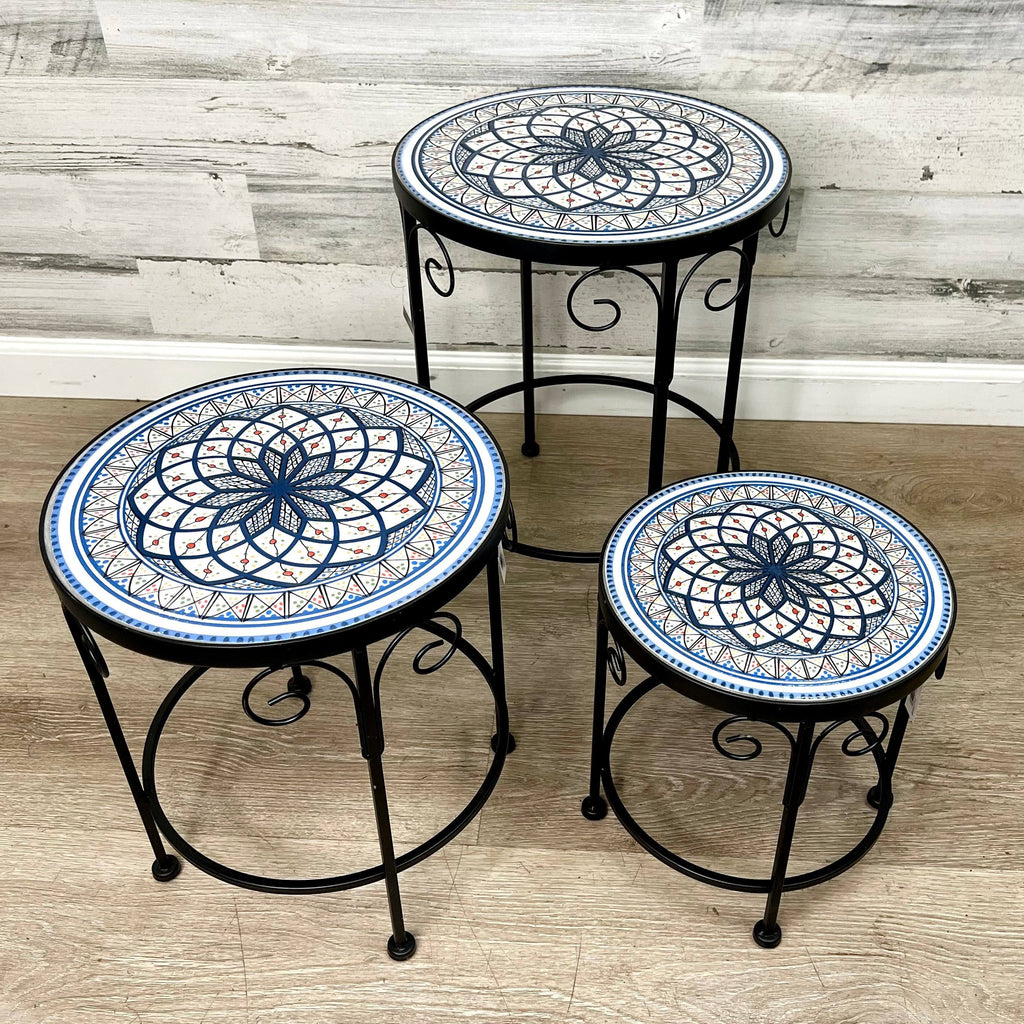
10. Nesting Stands with Blue and White Mosaic Tops
Nesting tables are a designer’s secret weapon for flexible living spaces. When used as plant stands, they allow you to create a multi-level display with a tiny footprint. You can cluster them together for a lush, layered look, or separate them around the room for a more spread-out, cohesive feel. This versatility is perfect for small apartments or for people who love to rearrange their decor frequently. It’s a functional choice that offers maximum styling options.
✅ Before You Start
The formula for this Mediterranean-inspired accent is simple: 80% neutral space + 20% bold pattern. The light wood floors and paneled walls create a calm, neutral canvas. This allows the intricate blue and white mosaic pattern of the stands to truly pop without overwhelming the room. You could apply this same math with different patterns—like a geometric Art Deco design or a vibrant floral chintz—as long as you give the pattern room to breathe against a quiet background.
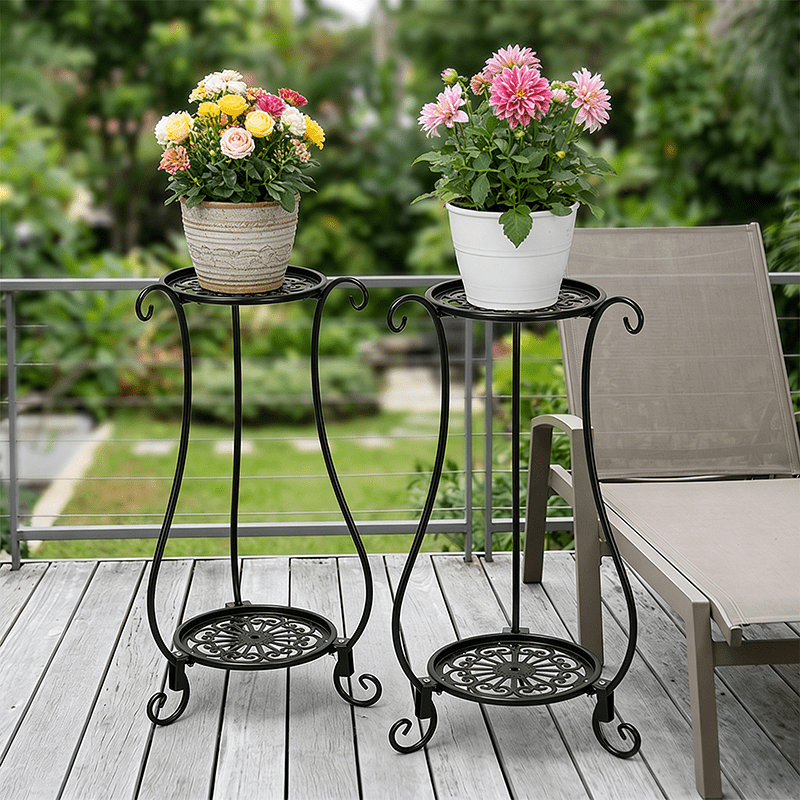
11. Matching Black Metal Stands with Elegant Scrollwork
The power of this design lies in its perfect symmetry. Using two identical stands creates an immediate sense of order, balance, and intentionality. It frames the space, much like a pair of matching lamps would on a console table. This repetition is incredibly pleasing to the eye and gives the outdoor deck a more formal, decorated feel. It elevates the setup from just
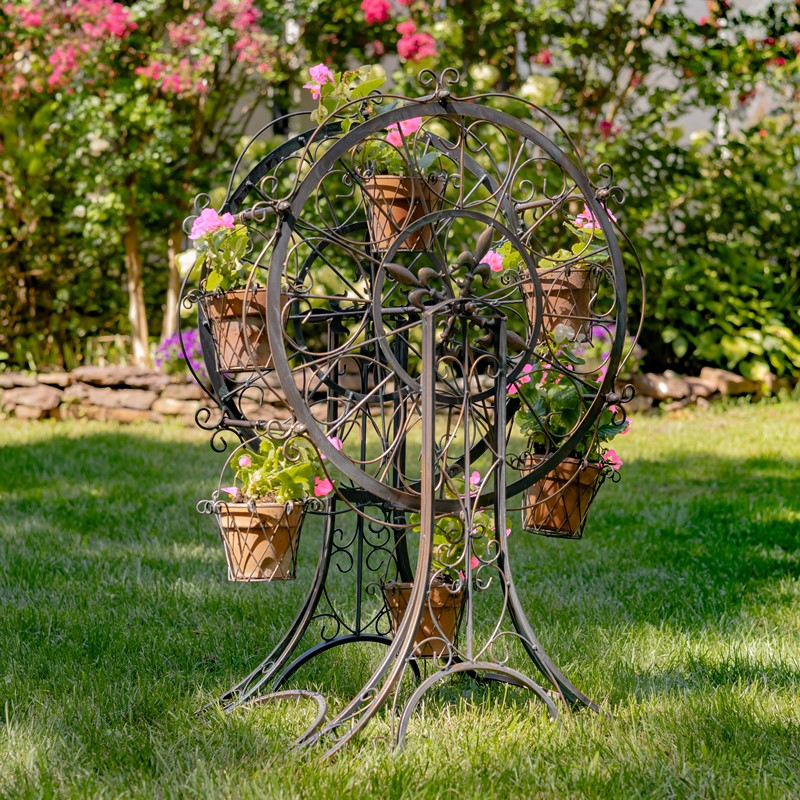
12. Whimsical Ferris Wheel Plant Stand for the Garden
The star of the show here is, without a doubt, the Ferris wheel design. It’s a complete departure from traditional plant stands, injecting a dose of playful novelty and charm into the garden. It transforms potted plants into a delightful spectacle. Removing this element would leave you with just pots on the lawn; the stand itself is the entire story. It’s an instant conversation starter and a testament to the fact that gardens can have a sense of humor.
🧹 Maintenance Reality
Be honest with yourself: is your garden style classic and formal, or does it have room for a bit of whimsy? A piece this distinctive needs the right environment. In a highly manicured, traditional English garden, it might look out of place. But in a more eclectic, cottage-style, or family-friendly backyard, it could be the perfect quirky touch. This isn’t a versatile piece; it’s a bold statement that needs to align with your overall outdoor personality.
13. Three-Tier Black Metal Stand with Ornate Scrolls
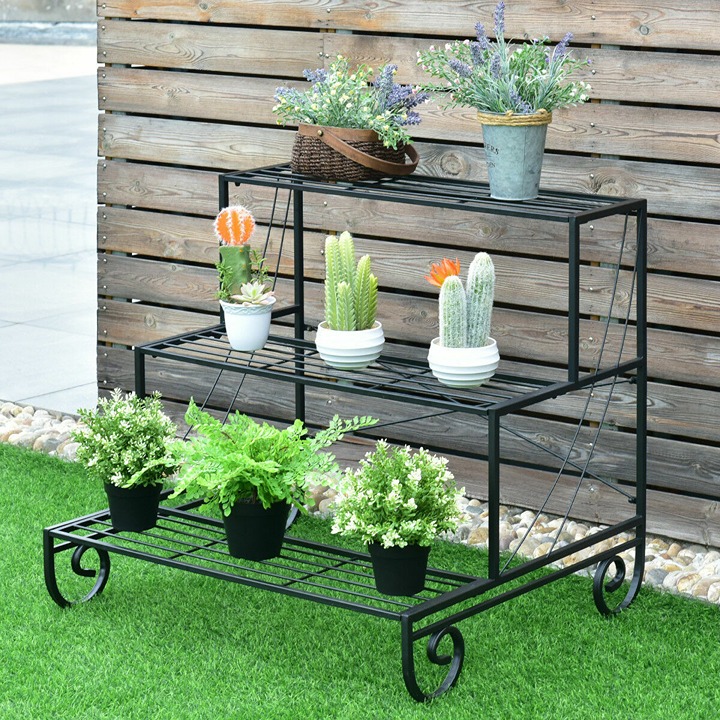
A tiered stand like this is a workhorse for small outdoor spaces. Measuring roughly 2.5 feet wide and 3 feet tall, it’s ideal for a balcony, a small patio, or tucked into the corner of a deck. It maximizes vertical space, allowing you to display a dozen or more small-to-medium plants in a footprint that would otherwise only fit one or two large pots. It provides the lushness of a garden bed without requiring any ground space. For a larger yard, it can also serve as a great focal point against a fence or wall.
⚠️ Real Talk
You can often find stands with this classic, slightly ornate look at big-box home improvement stores or garden centers for $50-$80. For a real bargain, check online marketplaces like Craigslist or Facebook Marketplace at the end of the summer season. People often sell off their patio furniture and accessories at a steep discount as they prepare for winter. You can snag a sturdy metal stand for as little as $20 if you’re patient and willing to do a bit of cleaning up.
14. Modern Two-Tier Plant Stand for a Sunny Window
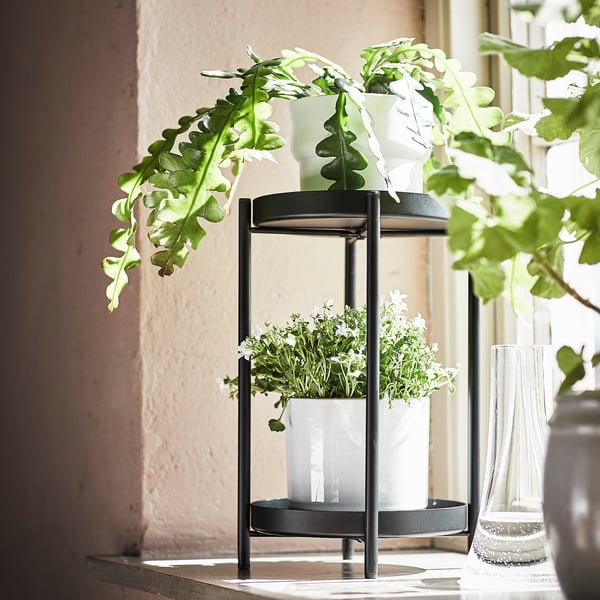
Never underestimate the design potential of a deep window sill. A two-tiered stand is the perfect way to take advantage of this prime, sun-drenched real estate. Instead of lining up pots in a single row, going vertical doubles your capacity and creates a more dynamic, layered look. Keep the stand’s frame thin and open, like the black metal one shown, so you don’t block too much of that precious natural light from reaching the lower plant.
🔥 Trending Context
This simple setup is effective because of its smart use of contrast and transparency. The sharp, black lines of the metal stand create a graphic frame around the soft, organic shapes of the plants. The white ceramic pots pop against the warm, peachy wall color. Finally, the clear, fluted glass vase adds another layer of texture without adding visual weight. It’s a beautiful mix of solid and transparent, hard and soft, that makes the whole arrangement feel light and interesting.
15. White Wire Stand with Cheerful Yellow Pots
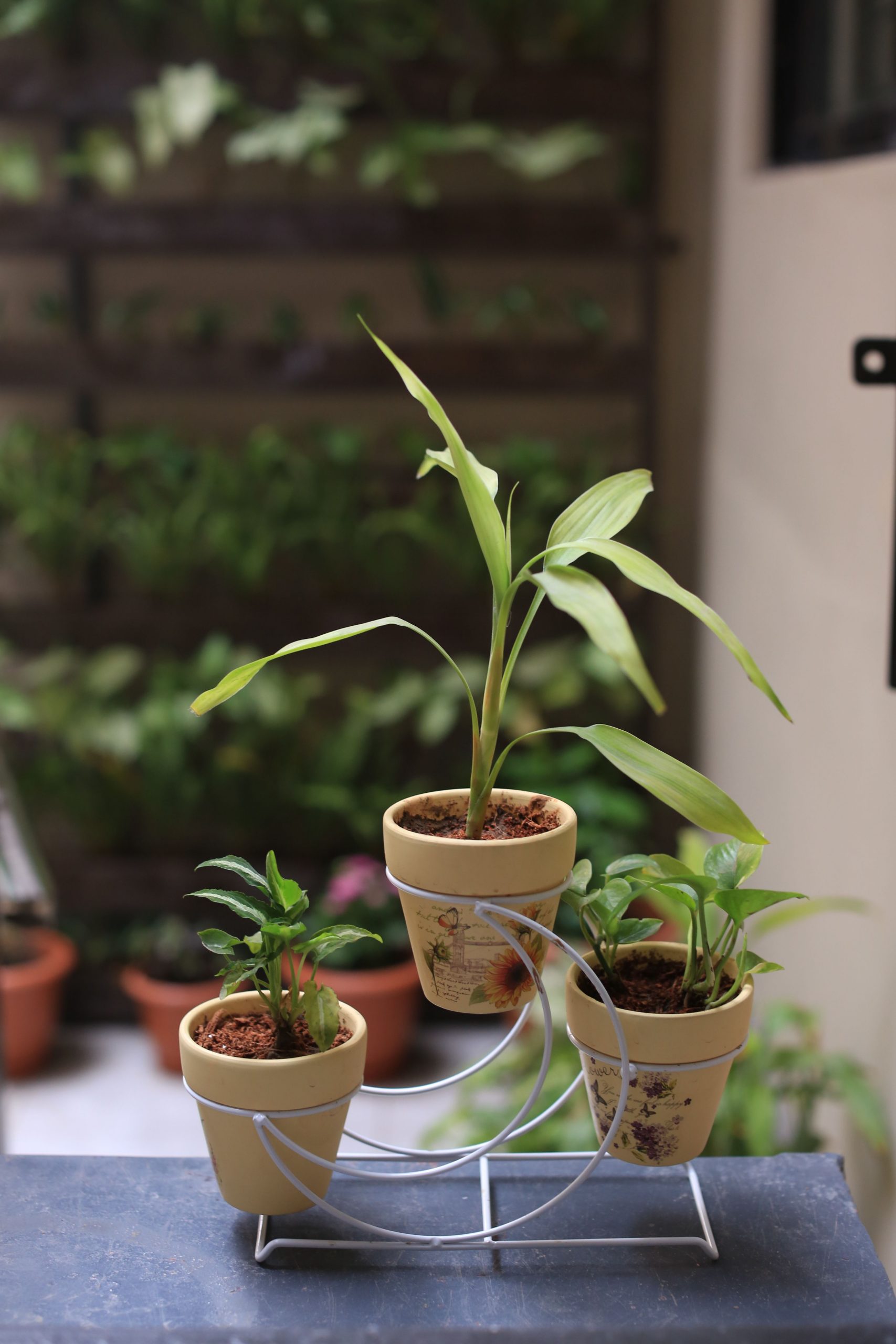
This adorable look is a simple recipe: 70% color pop + 20% delicate structure + 10% simple greenery. The bright yellow pots are the undeniable focal point, instantly bringing a feeling of sunshine and cheer. The white wire stand is intentionally light and barely there, providing support without competing for attention. The small, simple green plants are just enough to add life without overwhelming the composition. It’s a formula that is all about letting a single, happy color shine.
💡 Designer Tip
This is an incredibly budget-friendly idea to replicate. You can find basic three-tiered wire stands at places like IKEA, Target, or even thrift stores for $15-$25. If you can’t find one in white, a can of spray paint is about $8. The small ceramic pots are inexpensive finds at craft stores or dollar stores. For under $40, you can create this entire charming display, decals and all. The key is the bright, unifying color of the pots.
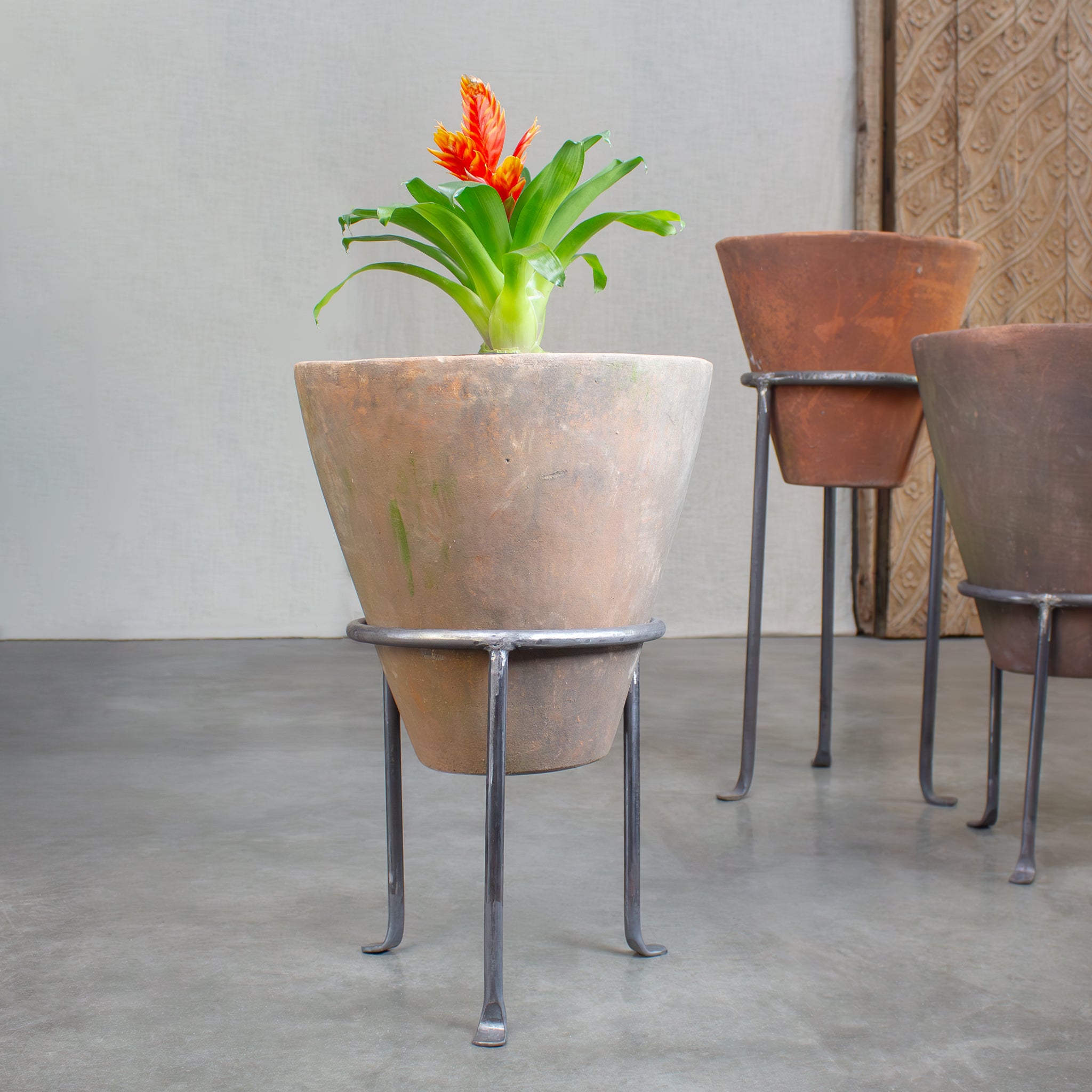
16. Wrought Iron Tripods with Weathered Terracotta Planters
This look taps directly into the
17. Tall, Spiral-Carved Wooden Pedestal Stand
The single element that defines this piece is the spiral-carved column. It transforms the stand from a simple pedestal into a sculptural object with classical appeal. This isn’t just a functional item; it’s a decorative statement. The elegant, twisting line draws the eye upward and adds a touch of sophisticated craftsmanship that you wouldn’t get from a plain, straight column. It’s designed to be noticed and admired, even before you place a plant on top of it. This is a far cry from the rustic wood of Idea #8.
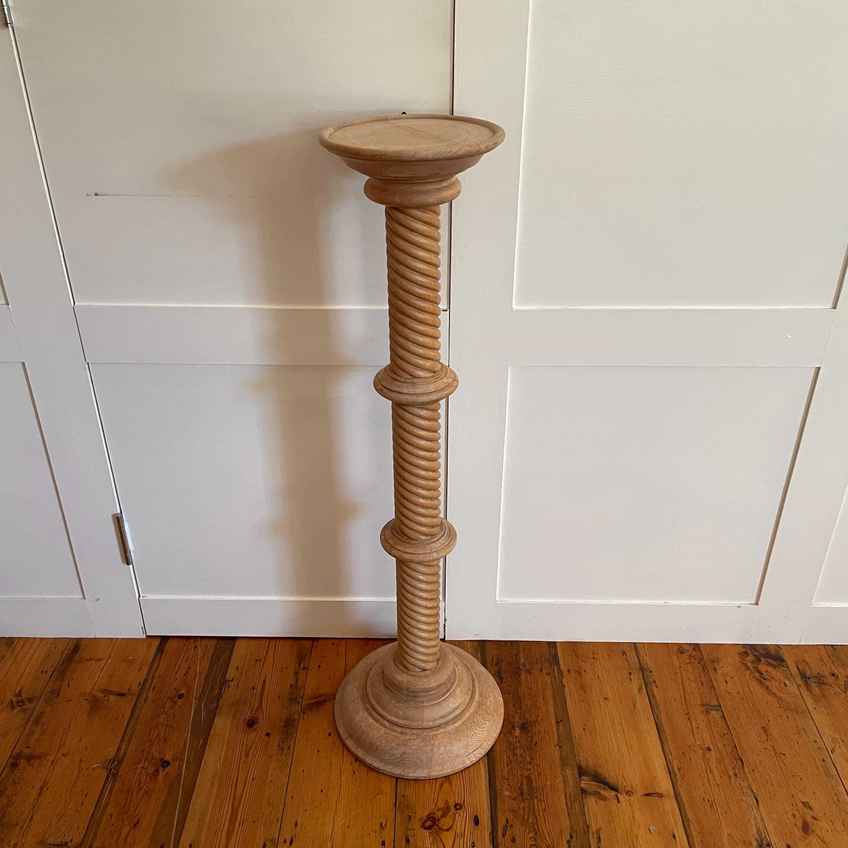
💸 Get This Look For Less
A tall, slender pedestal like this works best in a space with high ceilings (9 feet or more) where it has room to breathe. It’s an ideal piece for flanking a doorway, gracing the end of a hallway, or standing in a formal living room corner. Its verticality can make a room feel taller. However, in a room with standard 8-foot ceilings, it might feel a bit imposing and draw too much attention to the ceiling height. Measure carefully before you commit.
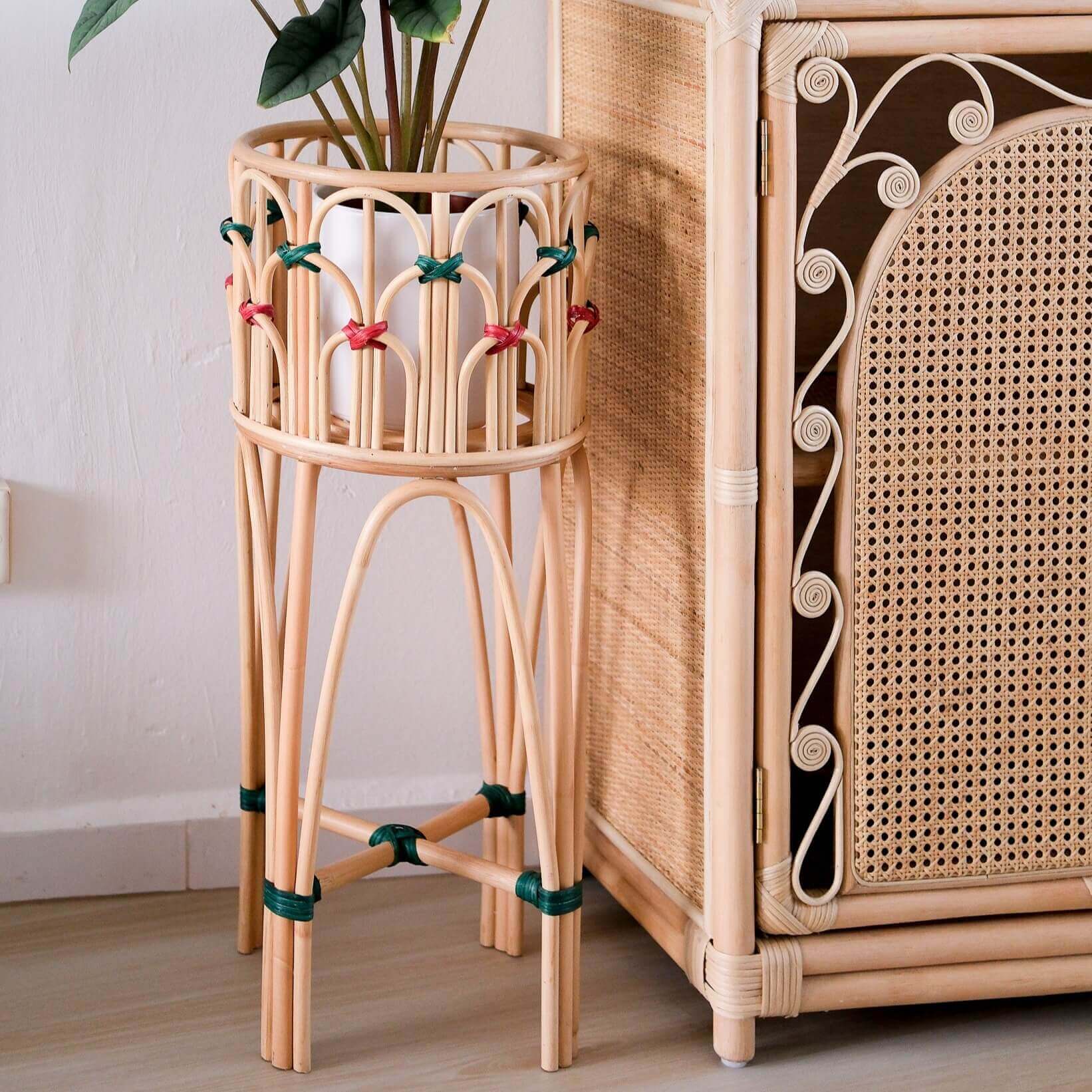
18. Bohemian Rattan Stand with Colorful Wrapped Details
Give any basic rattan or bamboo stand a custom bohemian flair with this simple DIY wrapping technique. It’s a great way to add a pop of color and personality.
📐 Style Math
- Time: 1 hour
- Cost: $10
- Materials: A basic rattan plant stand, and colored embroidery floss or thin yarn (like the red and dark green shown).
- Start Wrapping: Secure the end of your yarn with a small dab of hot glue or a tight knot.
- Wrap Tightly: Begin wrapping the yarn tightly and evenly around the joints or legs of the stand. Make sure there are no gaps.
- Secure the End: Once you’re happy with the look, trim the yarn and secure the end with another small dot of hot glue tucked away neatly.
This setup works so well because it’s a masterclass in texture. You have the smooth, painted surface of the white pot, the open weave of the rattan stand, the tight wrapping of the colored yarn, and the intricate pattern of the cabinet doors nearby. All these different textures are in a similar warm, natural color family, so they create a rich, layered look that feels cozy and inviting rather than busy. It’s a key principle of bohemian style: more is more, as long as the textures play nicely together.
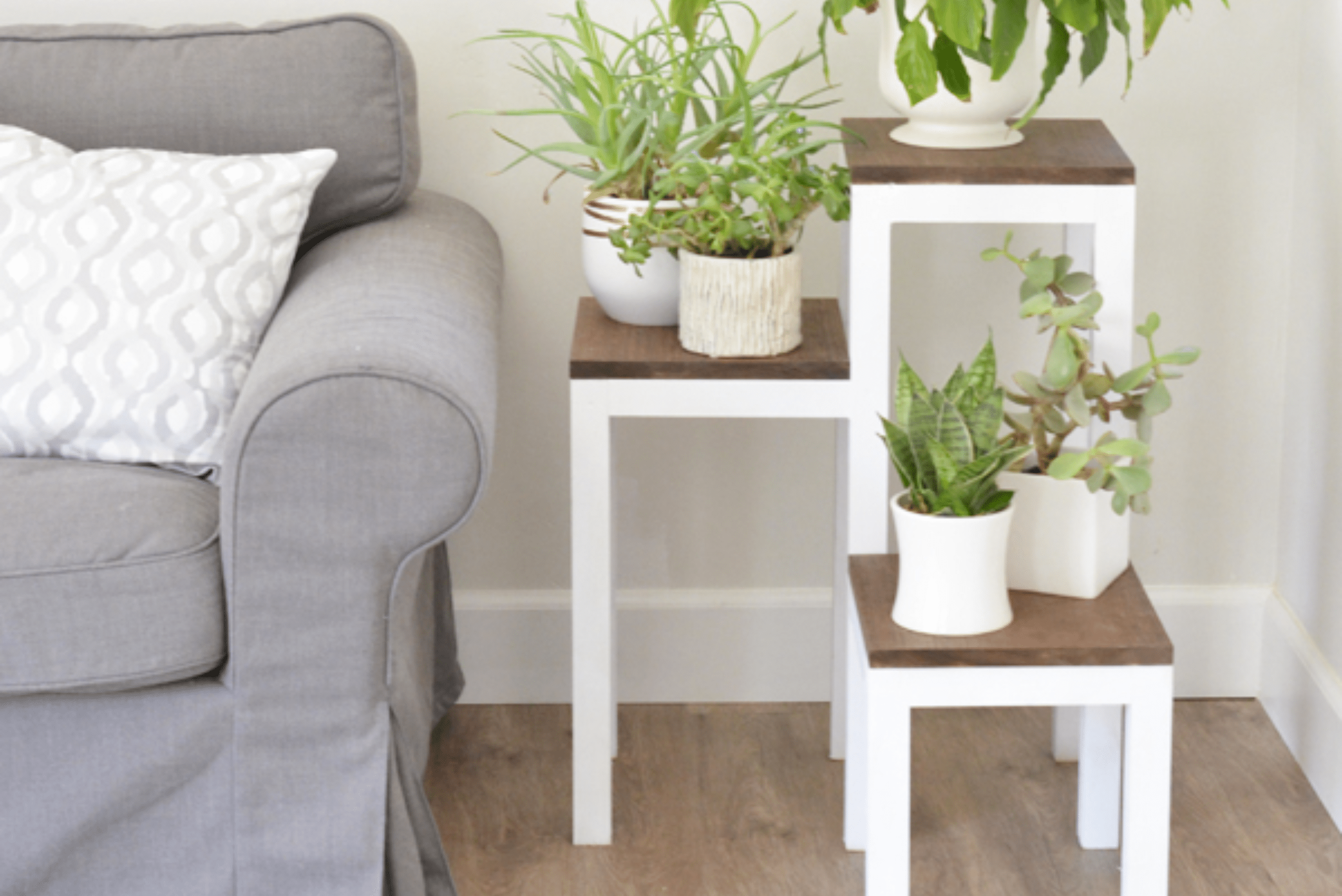
19. Contrasting White and Wood Tiered Corner Stands
Building these simple, modern stands is a perfect beginner’s DIY project. The contrast between the painted frames and stained tops gives them a professional, store-bought look.
⭐ The One Thing
- Lumber (for frames and tops): $60 – $90
- White Paint & Wood Stain: $25 – $40
- Screws & Wood Glue: $10 – $15
- Planters & Plants: $50 – $100
- TOTAL: $145 – $245 for the pair
- Budget Alternative: Use pre-cut pine boards and look for mistinted ‘oops’ paint at the hardware store to get the look for under $80.
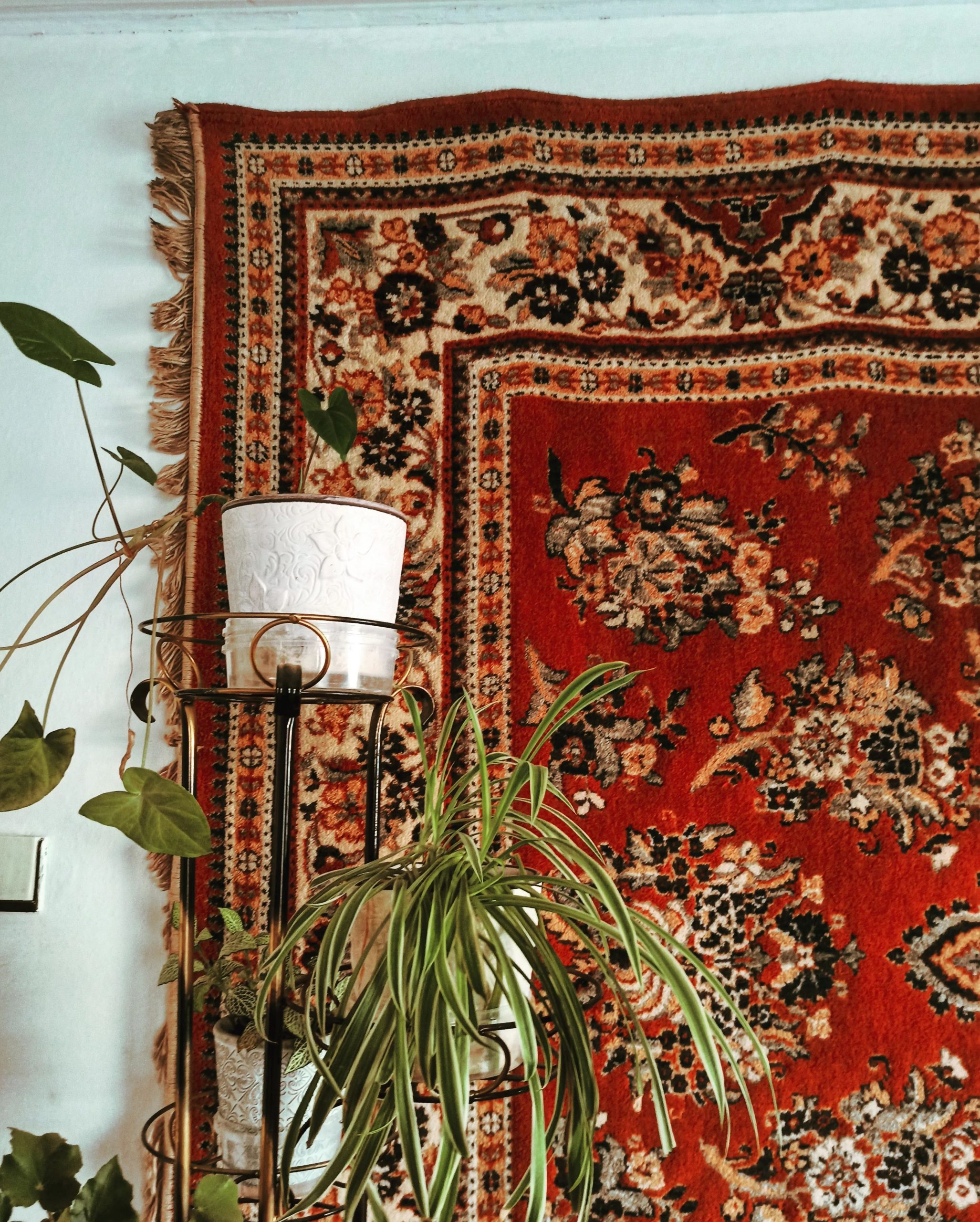
20. Layered Display with a Fringed Floral Tapestry
This cozy, botanical nook follows a clear bohemian formula: 50% bold textile + 40% living plants + 10% simple structure. The tapestry is the anchor, providing a rich backdrop of color and pattern. The plants add layers of organic texture and life in front of it. The simple black metal stand does its job quietly, providing the necessary height and structure without competing for attention. The result is a corner that feels personal, collected, and full of life—a perfect example of maximalist charm.
📏 Scale Guide
A word of caution: a busy background can sometimes visually swallow your plants. To make this work, choose plants with distinct leaf shapes and colors that stand out against the tapestry. Notice how the bright green of the spider plant and the patterned leaves of the calathea are still clearly visible against the red and beige fabric. If you used delicate, wispy ferns, they might get lost in the pattern. Ensure your plants can hold their own against the backdrop.
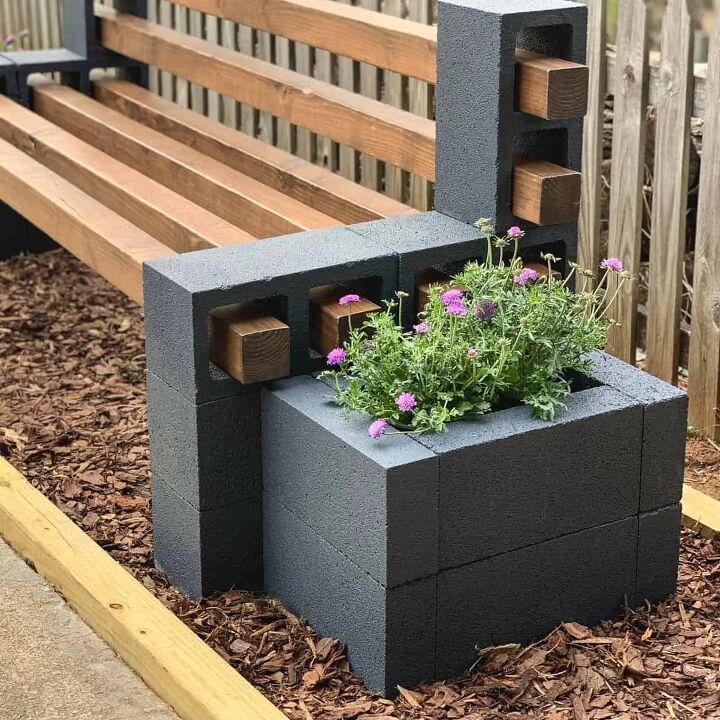
21. Cinder Block Bench with an Integrated Planter
This ultra-functional outdoor bench is a surprisingly simple DIY project that requires no special tools. Here’s how you do it:
🔧 How-To Brief
- Time: 1-2 hours
- Cost: $80-$120
- Plan Layout: Arrange your cinder blocks on level ground to form the two base supports and the integrated planter box.
- Stack the Blocks: Stack the cinder blocks two or three high. For extra stability, apply a bead of construction adhesive between the layers.
- Insert Wood Planks: Slide your 4×4 or 2×6 wood planks through the openings in the blocks to form the seat and the backrest.
- Plant it: Fill the block planter section with gravel for drainage, then add soil and your favorite flowering plant.
This is a sturdy, handsome piece, but it has two maintenance realities. First, untreated wood planks will weather and eventually rot when exposed to the elements. To prolong their life, you should seal them with an outdoor-grade polyurethane every 1-2 years. Second, cinder blocks can shift on uneven ground, especially with freeze-thaw cycles. It’s crucial to build this on a very level surface—like a paver patio or compacted gravel—to ensure it remains stable and safe to sit on.
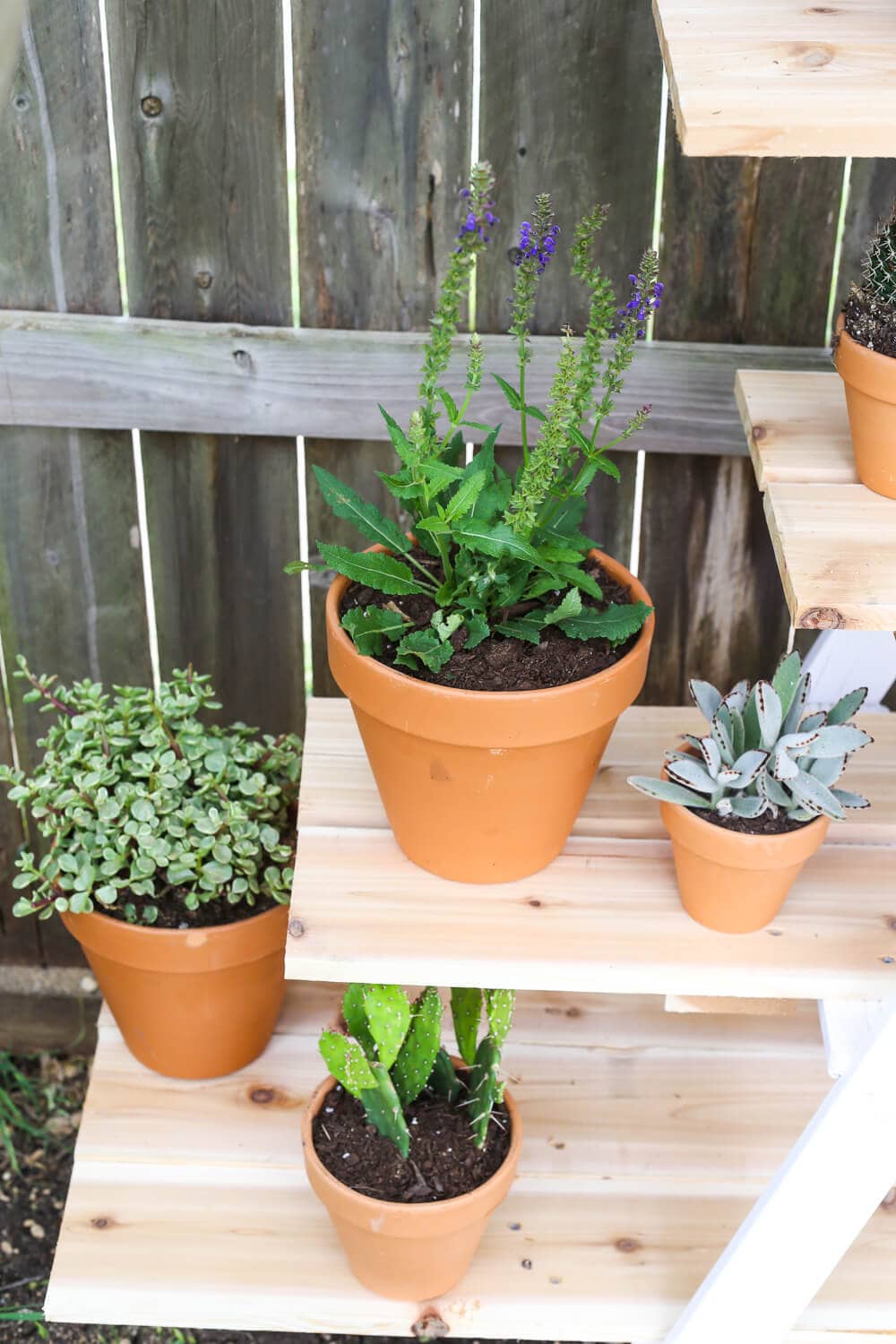
22. Rustic Tiered Stand Made From Raw Wood Planks
This is the ultimate scrap wood project. You can achieve this rustic, multi-tiered look for next to nothing. Check for leftover planks at construction sites (ask first!), use wood from discarded pallets (look for an ‘HT’ stamp, meaning it’s heat-treated, not chemically treated), or buy a few cheap furring strips from a home improvement store for less than $20. The beauty of this design is its imperfection; uneven cuts, knots, and nail holes only add to its charm. Paired with inexpensive terracotta pots, it’s a high-impact look for a very low cost.
✅ Before You Start
This combination feels so right because of the perfect harmony between the materials. The raw, unfinished wood and the earthy, unglazed terracotta pots share the same rustic, natural language. Nothing is polished or perfect. The visible grain of the wood complements the slightly rough texture of the pots. It’s a pairing that feels honest and unpretentious, celebrating the beauty of simple, raw materials. It’s a more rugged cousin to the outdoor DIY project in Idea #21.
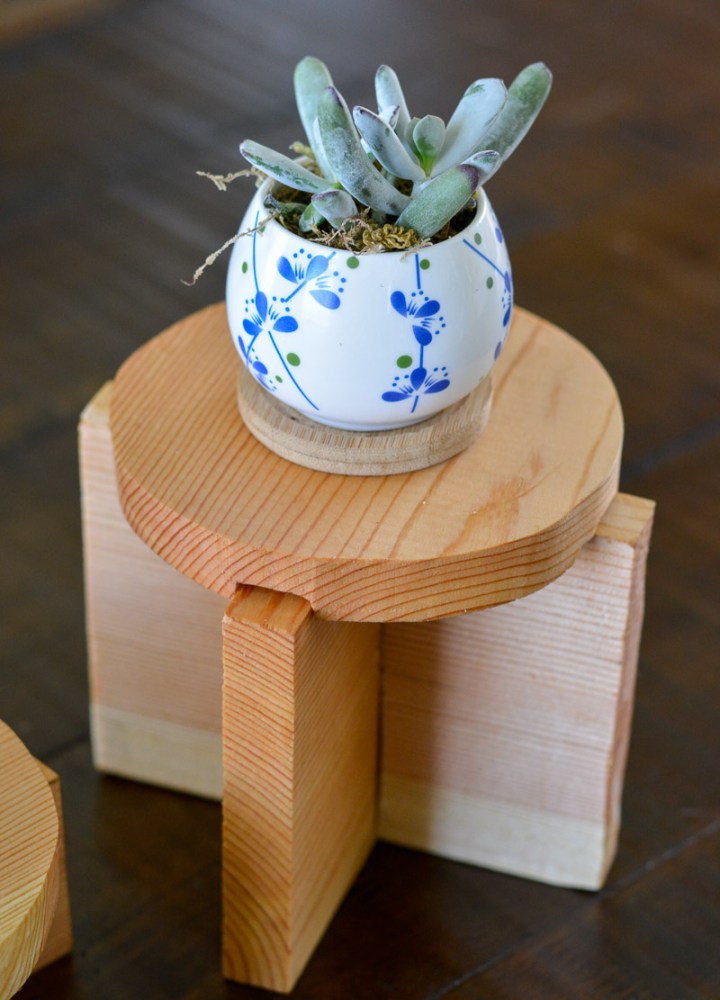
23. Simple Interlocking Pine Stand for a Small Pot
You can make this minimalist stand in under 30 minutes. It’s a perfect project for using up small wood scraps.
💰 Budget Breakdown
- Time: 20 minutes
- Cost: Under $5
- Cut Wood: Cut two identical rectangular pieces of 1×3 pine board. The length should be slightly wider than your pot.
- Mark Center: On each piece, find the exact center and mark a line halfway through the board’s width.
- Cut Notches: Using a saw, cut a slot in the middle of each board, wide enough to fit the other board. Cut from the top on one piece and from the bottom on the other.
- Interlock: Slide the two pieces together at the notches to form a stable ‘X’ shape. Place a small round wood top on it if desired, or just sit the pot directly on the interlocking base.
Don’t just think about the floor! Small, simple stands like this are perfect for elevating plants on other surfaces. Use one on a bookshelf to give a small succulent some prominence among the books. Place one on your desk to bring a bit of green into your workspace without taking up too much room. Or use it on a kitchen counter to lift an herb pot. It’s a simple way to add height and importance to even the smallest plant.
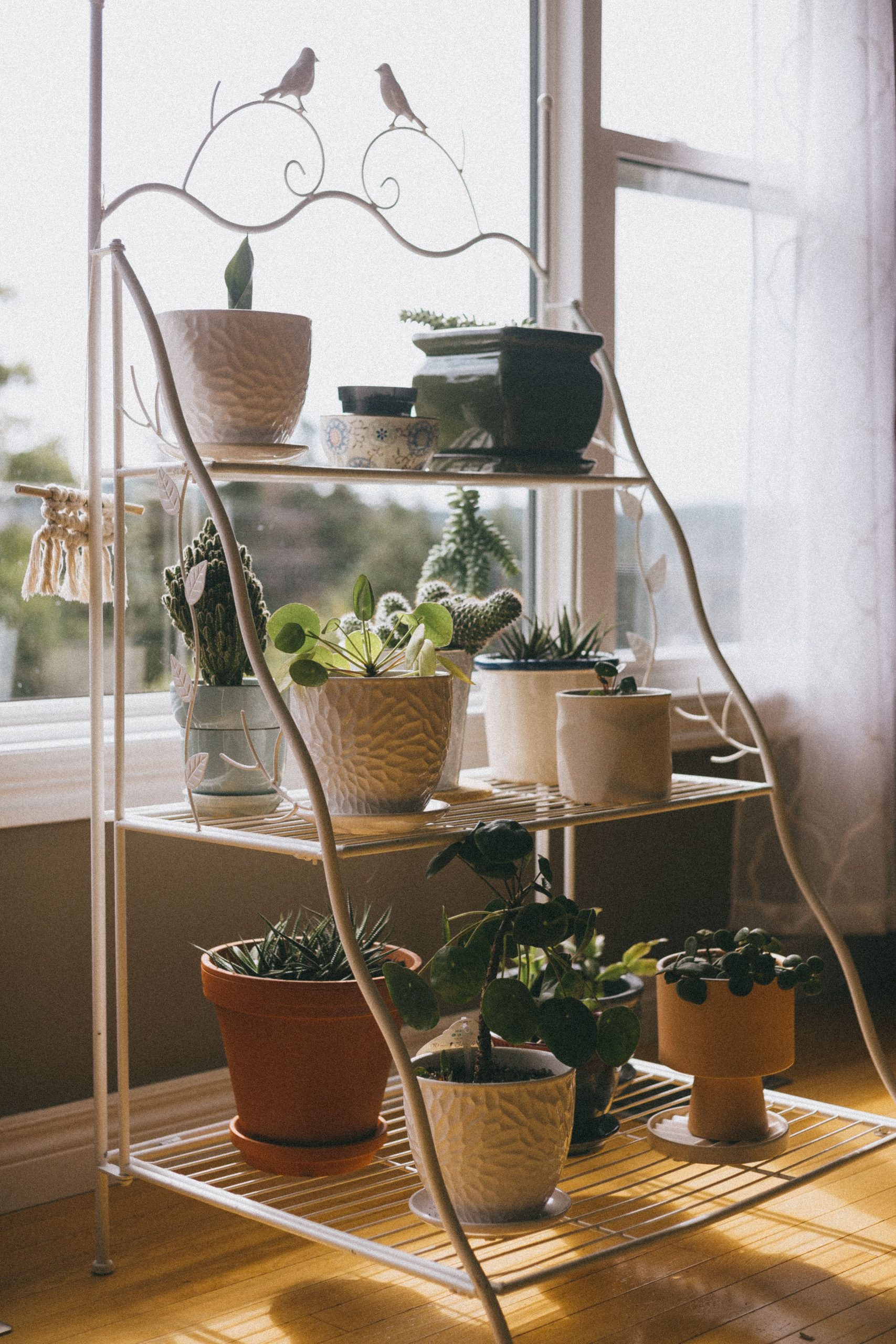
24. Tiered White Metal Stand with Charming Bird Details
The decorative elements—the little bird figures on top and the leaf-shaped accents on the sides—are what elevate this stand from purely functional to truly charming. Without them, it would be just another white metal shelf. These whimsical details give the piece personality and a touch of storybook sweetness. They reinforce the botanical theme and make the entire display feel more special and curated. It’s a small touch that makes a big difference in the overall feel.
🧹 Maintenance Reality
A word of advice: stands with this much built-in personality can easily look over-the-top if you’re not careful. The key is to let the stand itself be the star and keep the pots relatively simple. Notice how the pots here are mostly solid colors (terracotta, dark green, white). If you were to use brightly patterned, ornate pots on this already decorative stand, the whole composition would start to feel chaotic and cluttered. Let one element be the hero.
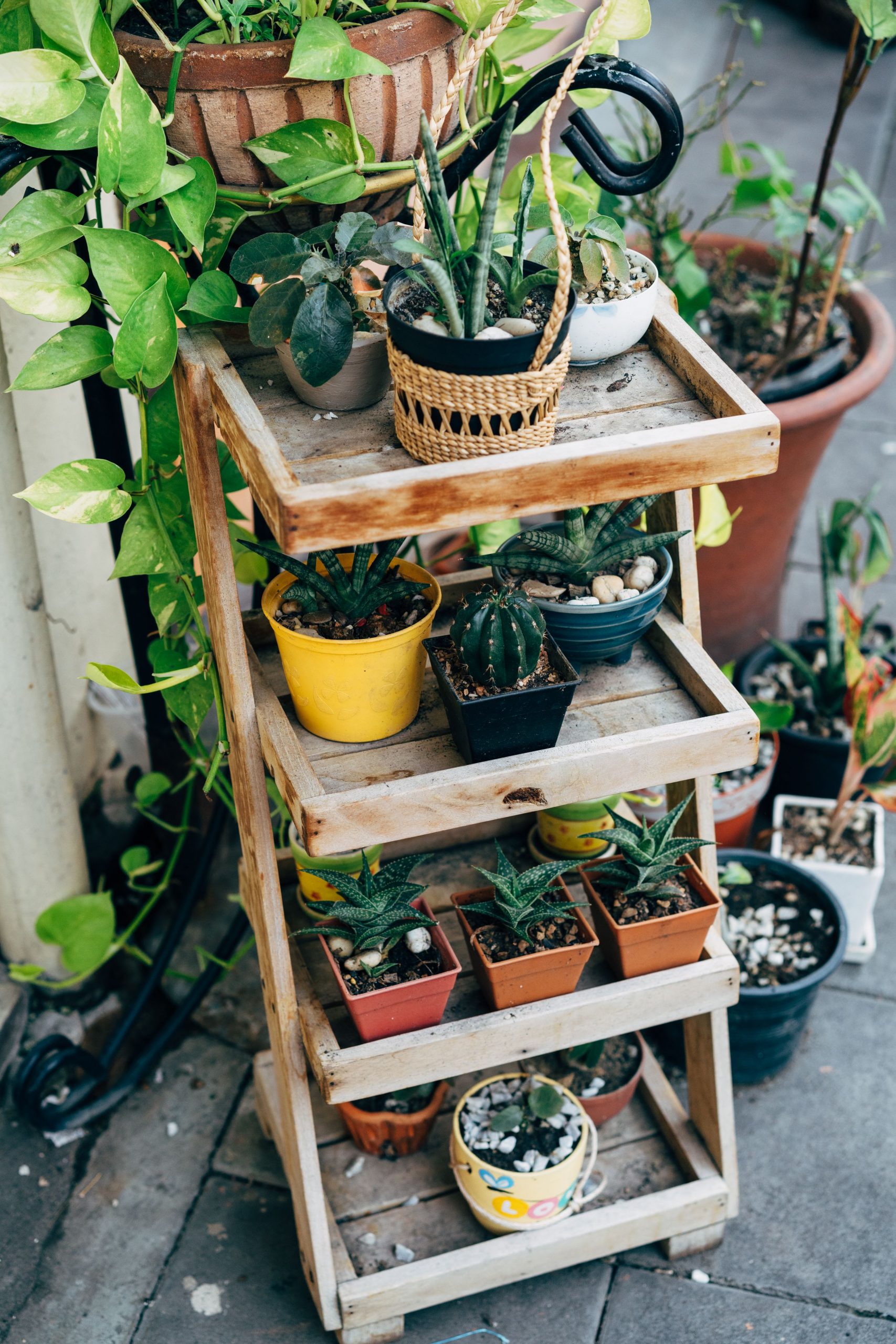
25. Four-Tier Stand from Weathered Wood Slats
Creating a large, rustic plant stand like this is a fantastic way to display a growing collection. The cost is manageable, relying on basic, affordable lumber.
⚠️ Real Talk
- Lumber (pine furring strips or cedar): $60 – $100
- Exterior Screws or Nails: $10 – $15
- Exterior Wood Sealer (optional but recommended): $20
- Assorted Plants and Pots: $70 – $150
- TOTAL: $160 – $285
- Budget Alternative: Use reclaimed pallet wood for the entire structure. This can bring your material cost for the stand itself down to just the cost of screws, maybe $10.
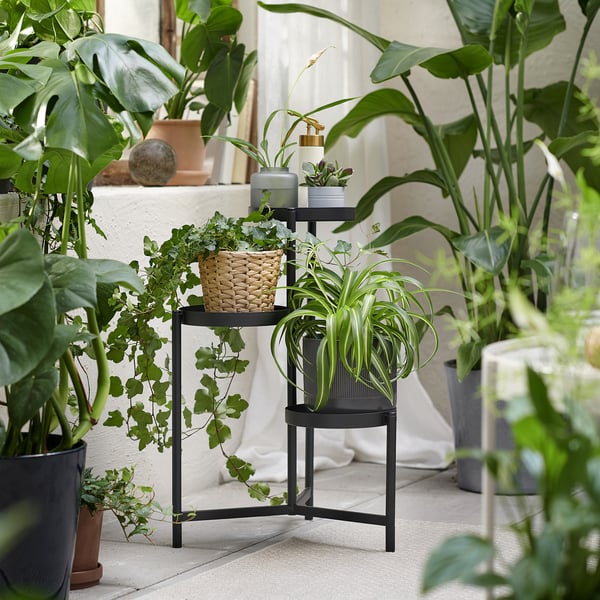
26. Three-Tiered Black Metal Stand in a Lush Plant Corner
To create a lush
27. Classic Black Metal Stand for the Patio
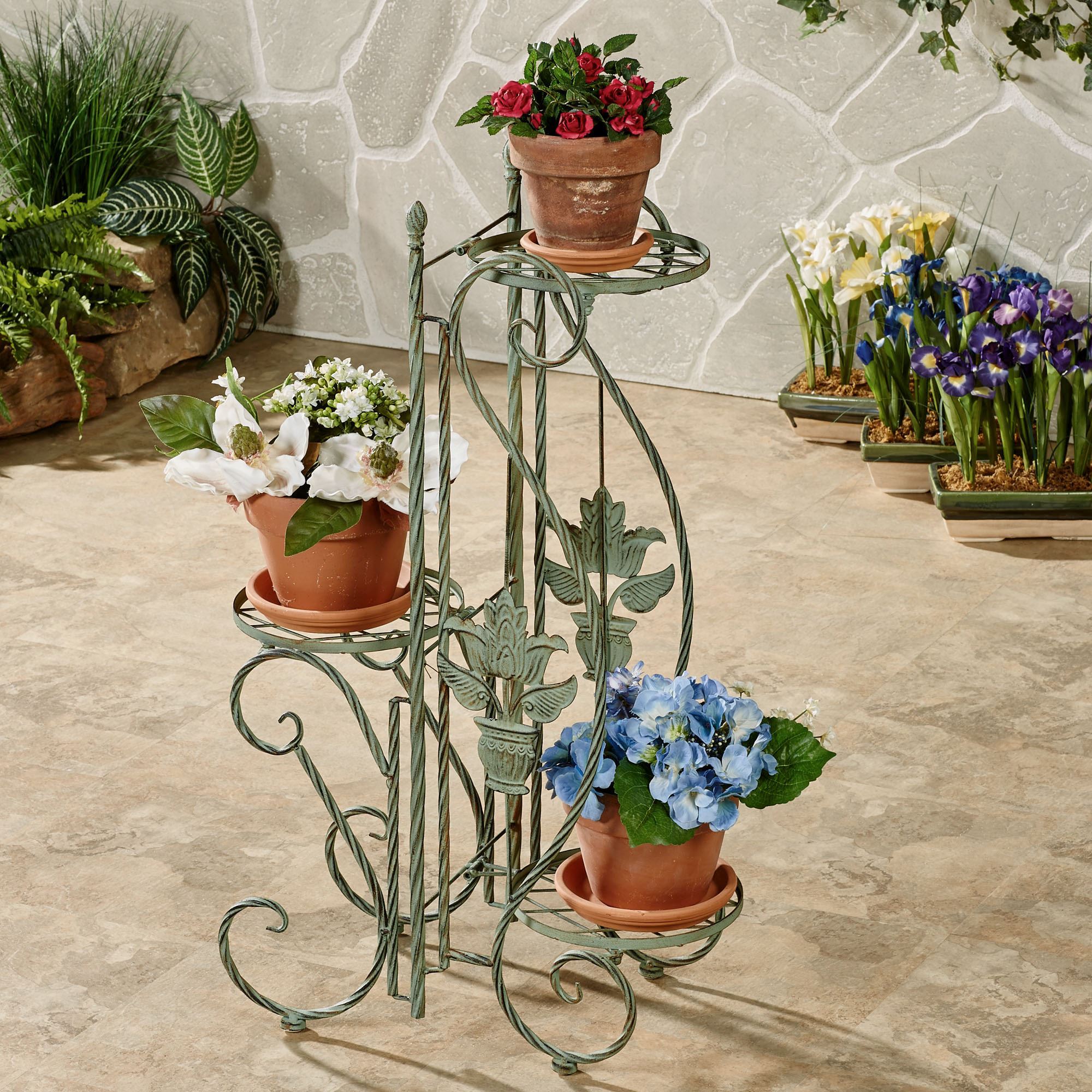
A simple black metal stand is a classic for a reason: it’s durable and versatile. However, ‘weather-resistant’ doesn’t mean ‘weather-proof’. To prevent rust, especially if you live in a rainy climate, give the stand a little TLC. At the beginning of each season, check for any nicks or scratches in the paint. If you find any, lightly sand the spot and apply a coat of rust-preventing spray paint for metal. This five-minute task can add years to the life of your stand.
28. Blush Pink Planter on a Woven Rattan Stand
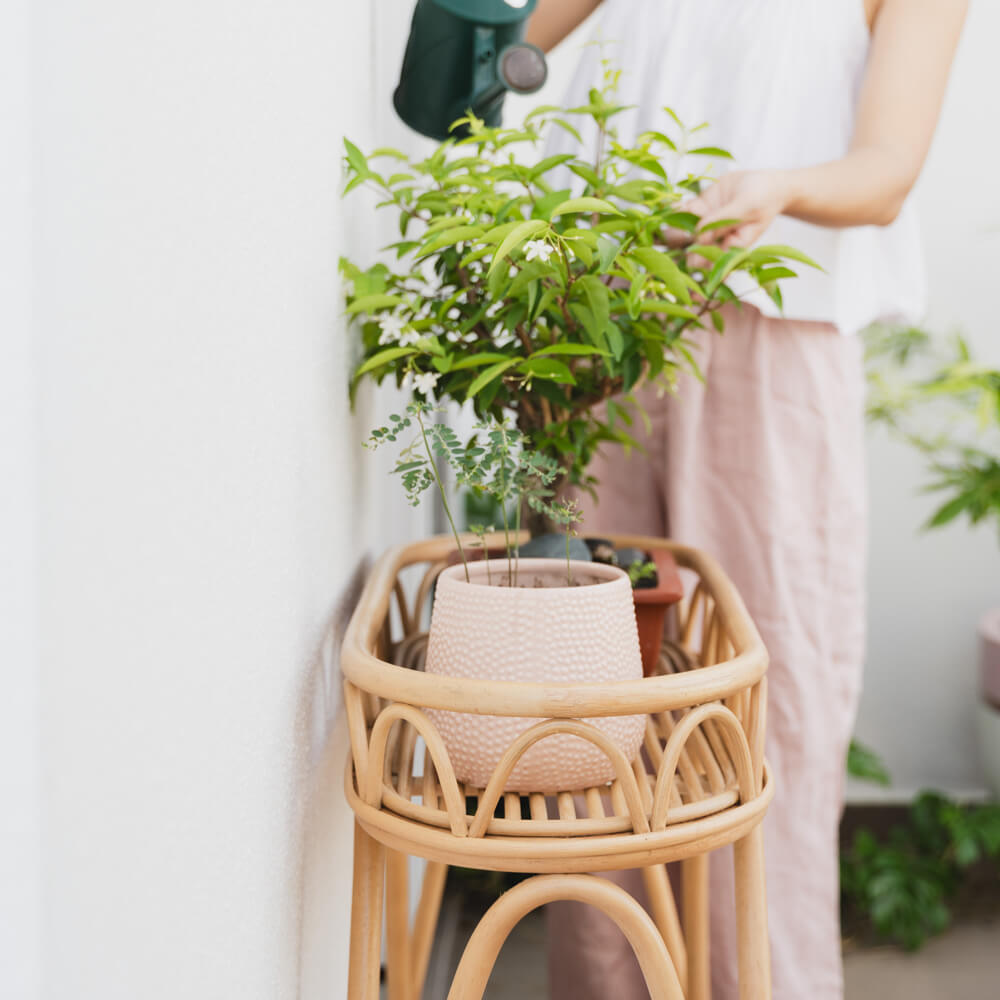
Blush pink has moved beyond being a trendy accent and is now considered a ‘new neutral’ by many designers. It’s soft, warm, and pairs beautifully with natural materials like wood, rattan, and of course, the vibrant green of plants. This look is popular right now because it feels fresh, gentle, and optimistic. The textured dot pattern on the pot adds a tactile element that keeps the color from feeling too sweet, grounding it in modern craftsmanship.
🎯 What Makes It Work
A great designer trick is to use the color of your pot to highlight something in your plant. For a plant with pinkish stems or variegated leaves with hints of red or pink, a blush pot will make those subtle colors pop. Conversely, a soft pink pot provides a beautiful, low-contrast home for delicate, light-green foliage like the plant shown here, creating a serene and cohesive look. Think of the pot not just as a container, but as part of the overall color palette.
It’s Your Turn to Grow
Armed with these ideas, you’re ready to create a plant display that’s uniquely you. Whether you’re building from scratch or just styling a new find, the perfect green corner is within reach. Have fun with it, and don’t be afraid to let your plant collection grow!
Feeling inspired? Pin your favorite ideas to your boards so you can come back to them when you’re ready to start your project. Happy planting!