You know that feeling when you finally find the live edge wood idea that looks exactly right for your space? It feels like the whole room just clicks into place. We spent serious time browsing niche wood suppliers and mainstream spots like Target and IKEA to bring you only what’s worth your attention this year. After filtering through hundreds of options, we narrowed it down to 28 ideas that actually deliver on the natural, organic style you’re looking for. From rustic console tables to sleek modern vanities, these looks are curated for 2026 and beyond. Pin this guide for later — your future self will thank you when it’s time to actually start your project.
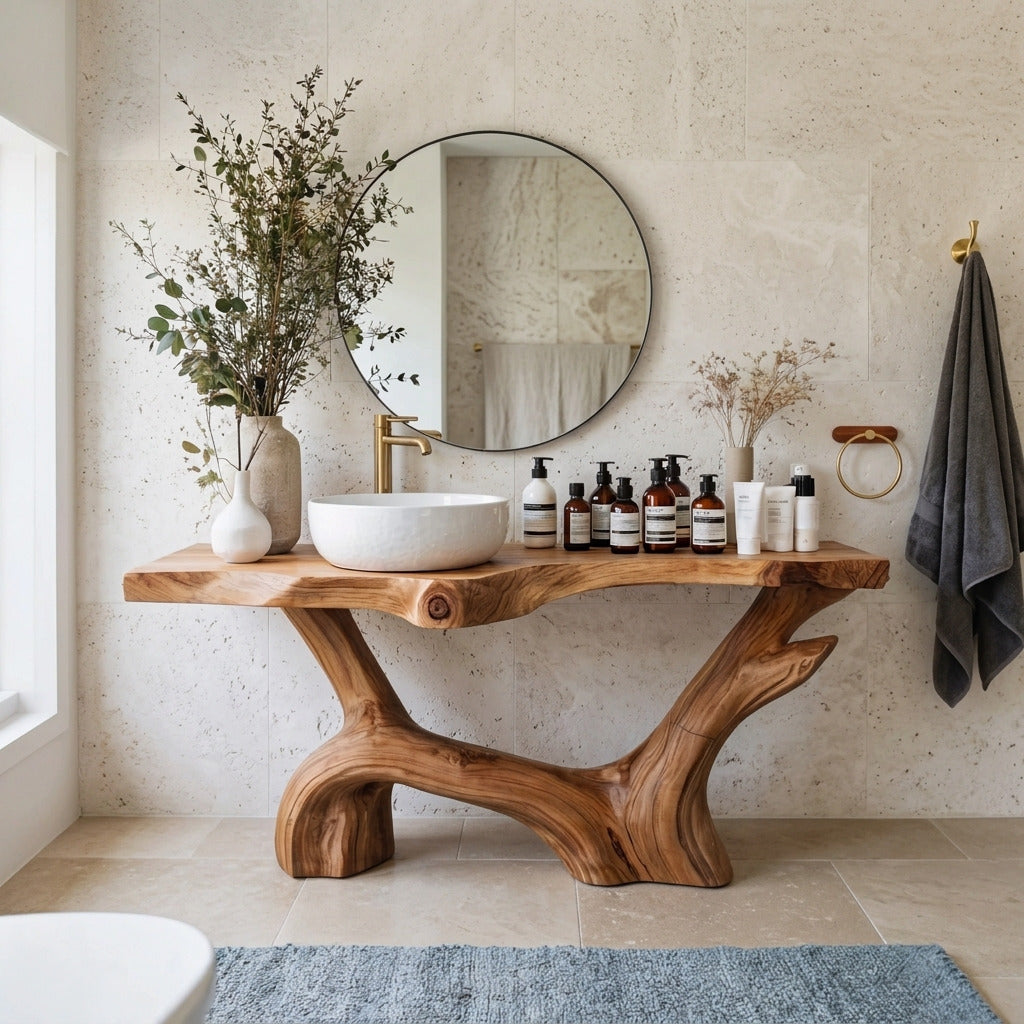
1. Sculptural Live Edge Vanity with Light Stone Tiles
The magic here is the masterful blend of textures. The raw, flowing edge of the wood vanity top provides a stunning organic counterpoint to the clean, geometric grid of the light speckled stone tiles on the wall. This contrast is what creates visual excitement. Furthermore, the design uses repetition of shape to create harmony; the round white sink basin perfectly mirrors the large, black-framed circular mirror above it. This thoughtful pairing of opposites—raw and refined, organic and geometric—is what makes the design feel so balanced and high-end.
🔧 How-To Brief
Recreating this refined, organic look is an investment in statement materials. The cost can vary widely based on the rarity and size of the wood slab you choose.
- Live Edge Wood Slab (Vanity): $400 – $900
- Stone Wall Tiles: $12 – $25 per sq. ft.
- Round Vessel Sink: $150 – $400
- Gold Faucet & Fixtures: $250 – $600
- Large Round Mirror: $150 – $350
- TOTAL: $1,500 – $3,500+
Budget alternative: Source a smaller slab from a local woodworker and choose a more affordable ceramic tile to get a similar vibe for 40% less.
2. A Cohesive Bathroom with a Live Edge Vanity and Wood Accents
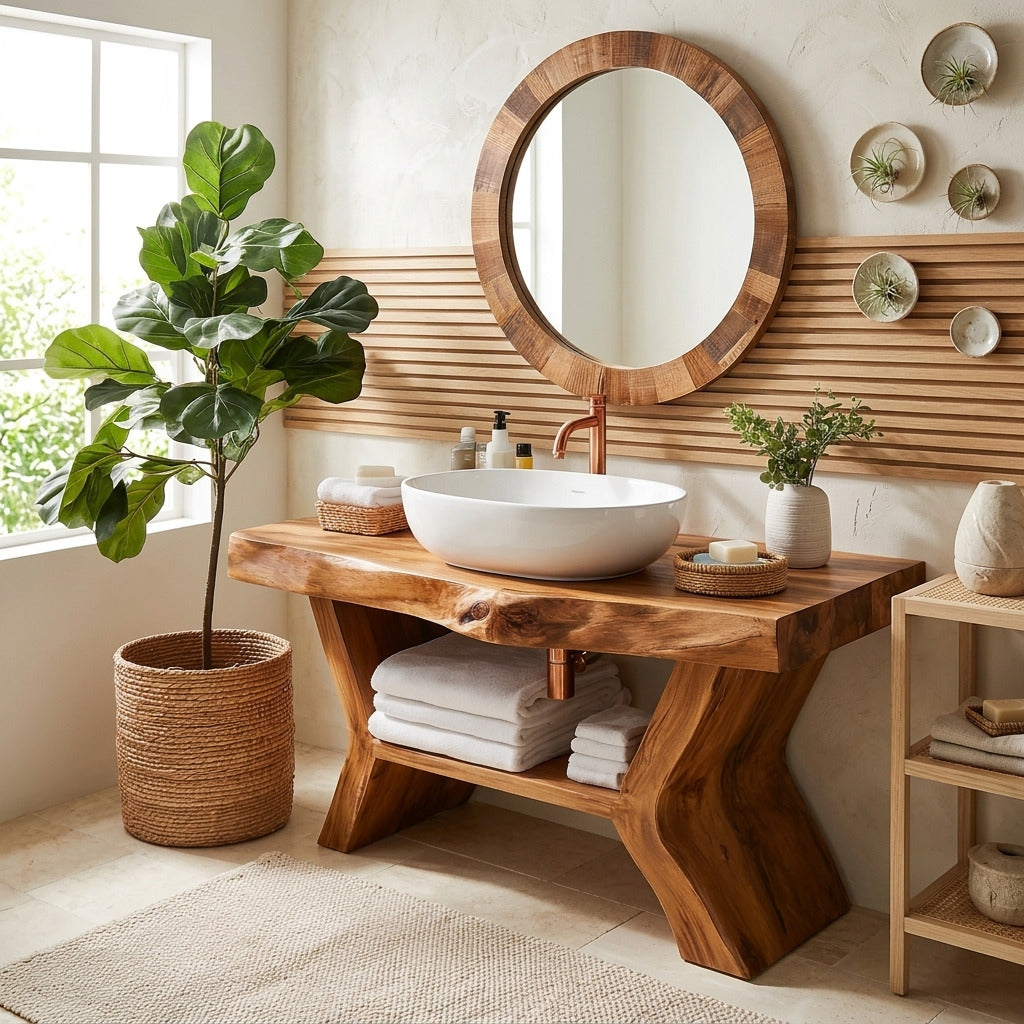
The single element that pulls this entire bathroom together is the circular mirror with its unique segmented wood frame. While the live edge vanity is stunning, it’s the mirror that elevates the design from just “a bathroom with a wood counter” to a fully realized, cohesive concept. It echoes the wood of the vanity and the slatted wall panels, creating a satisfying visual rhythm. Without this specific mirror, the connection between the different wooden elements would be far less intentional and impactful.
📏 Scale Guide
This look follows a simple but effective formula for creating a warm, organic space. Think of it as: 60% Natural Wood + 30% Neutral Base + 10% Metallic Accents. The rich brown wood of the vanity, mirror, and wall slats forms the dominant character. The creamy off-white walls provide a calm backdrop, preventing the wood from feeling heavy. Finally, the copper-toned faucet adds a small but crucial touch of warmth and shine. You could swap the copper for matte black for a more modern feel, and the formula would still hold true.
3. Floating Live Edge Vanity with an Organic Mirror
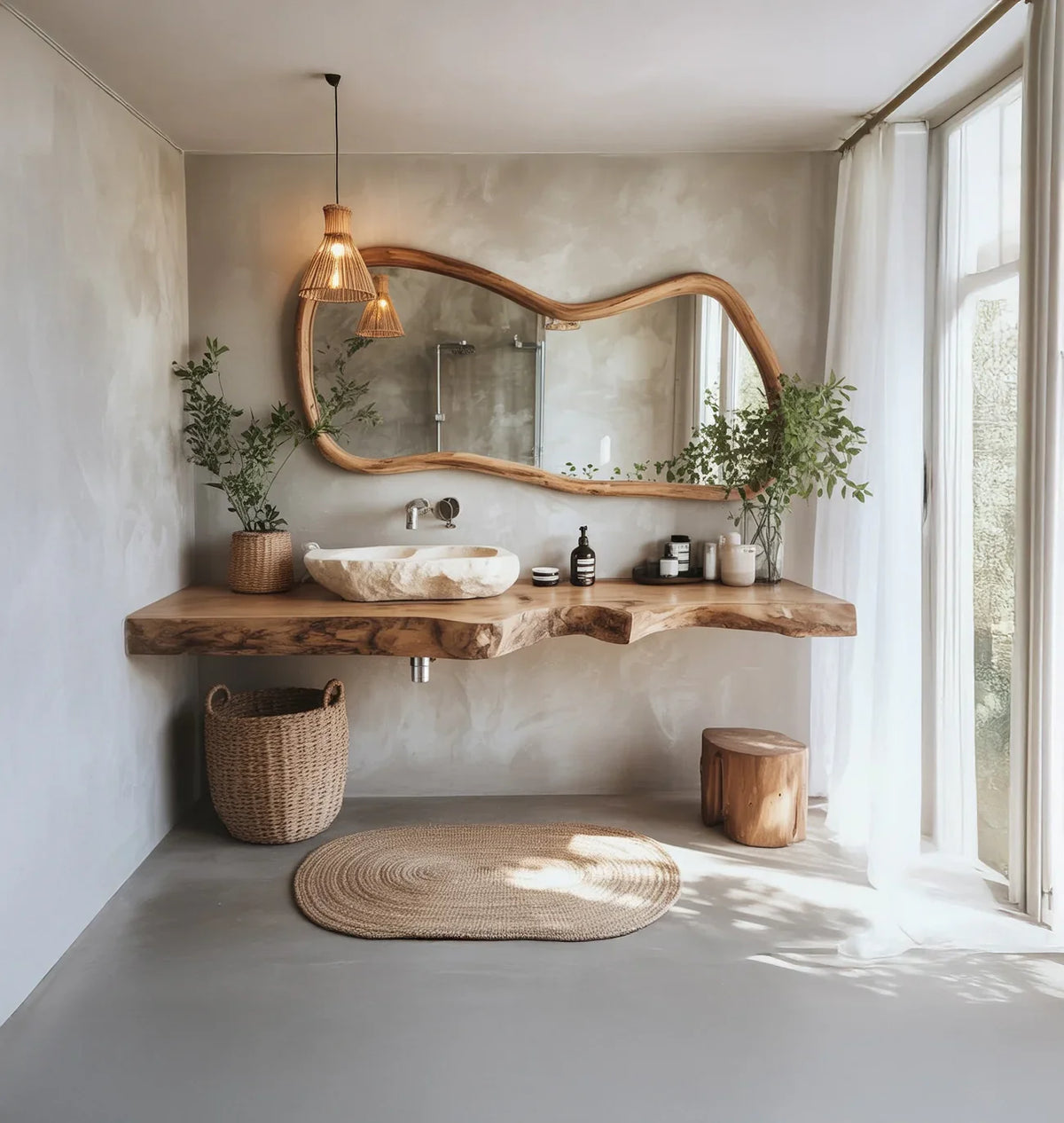
When installing a floating vanity like this, placement is everything. Don’t just center it on the wall. Pay attention to the “negative space” around it. For a truly high-end look, ensure the gap between the edge of the vanity and any adjacent wall or shower glass is at least 6 inches. This breathing room makes the vanity feel like a deliberate sculptural element, not just a cabinet stuck to the wall. Also, mount it at a comfortable height—the top surface should typically be 34 to 36 inches from the finished floor.
🎯 What Makes It Work
A carved stone vessel sink is absolutely gorgeous, but it requires a bit more care than standard porcelain. Stone is porous and can be susceptible to staining from things like makeup, toothpaste, or certain soaps. You’ll need to seal it upon installation and then re-seal it every 6-12 months, depending on use. Also, be mindful of harsh chemical cleaners; stick to pH-neutral stone cleaners to avoid etching the surface. It’s a commitment, but one that pays off in character and timeless beauty.
4. Live Edge Shelving Against a Deep Green Wall
You can create this dramatic accent wall in a weekend. Here’s a quick guide:
- Prep the Wall: Clean the wall thoroughly and tape off your baseboards, ceiling, and any adjoining walls. Fill any holes with spackle and sand smooth.
- Prime Time: For a deep, rich color like this forest green, using a tinted grey primer is a non-negotiable step. It will help you achieve full coverage in fewer coats.
- Cut In: Use a 2-inch angled brush to paint along the edges you taped off.
- Roll It Out: Use a roller to apply your first coat of green paint. Let it dry completely (check the can for times).
- Second Coat: Apply your second and final coat for a saturated, even finish.
Total time: 4-6 hours (plus drying). Cost: $70 – $150 for paint and supplies.
5. Vertical Live-Edge Slabs as a Floating Shelf Backdrop
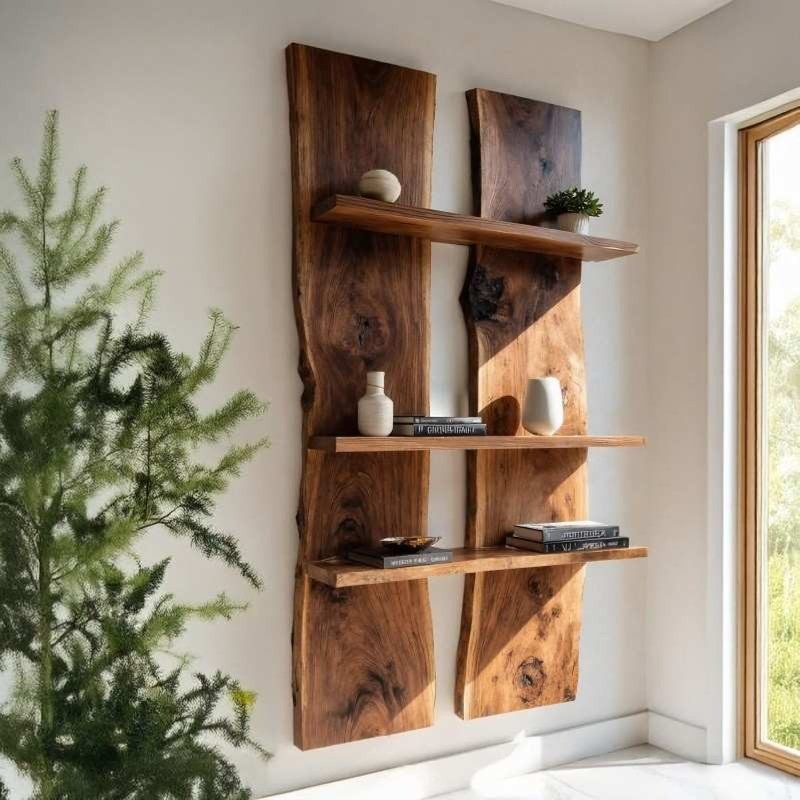
This design works because of its powerful use of vertical lines. Mounting the two tall wood slabs behind the shelves draws the eye upward, creating a sense of height and importance. It turns simple shelving into a deliberate architectural feature. The shelves themselves, made of the same wood, create strong horizontal lines that intersect with the vertical backdrop, forming a pleasing grid. This balance of vertical and horizontal movement, all rendered in the same organic material, feels both dynamic and cohesive. The minimal decor is key—it allows the wood itself to be the star.
⚠️ Real Talk
This is a fantastic solution for a room with high ceilings (9 feet or more), as it takes advantage of the vertical space. It works especially well on a narrow but tall wall, perhaps at the end of a hallway or in a living room with a small footprint but generous height. For standard 8-foot ceilings, you would need to scale down the height of the back panels significantly to avoid making the ceiling feel lower. If your space is more horizontal, consider the single floating shelf in Idea #28 as an alternative.
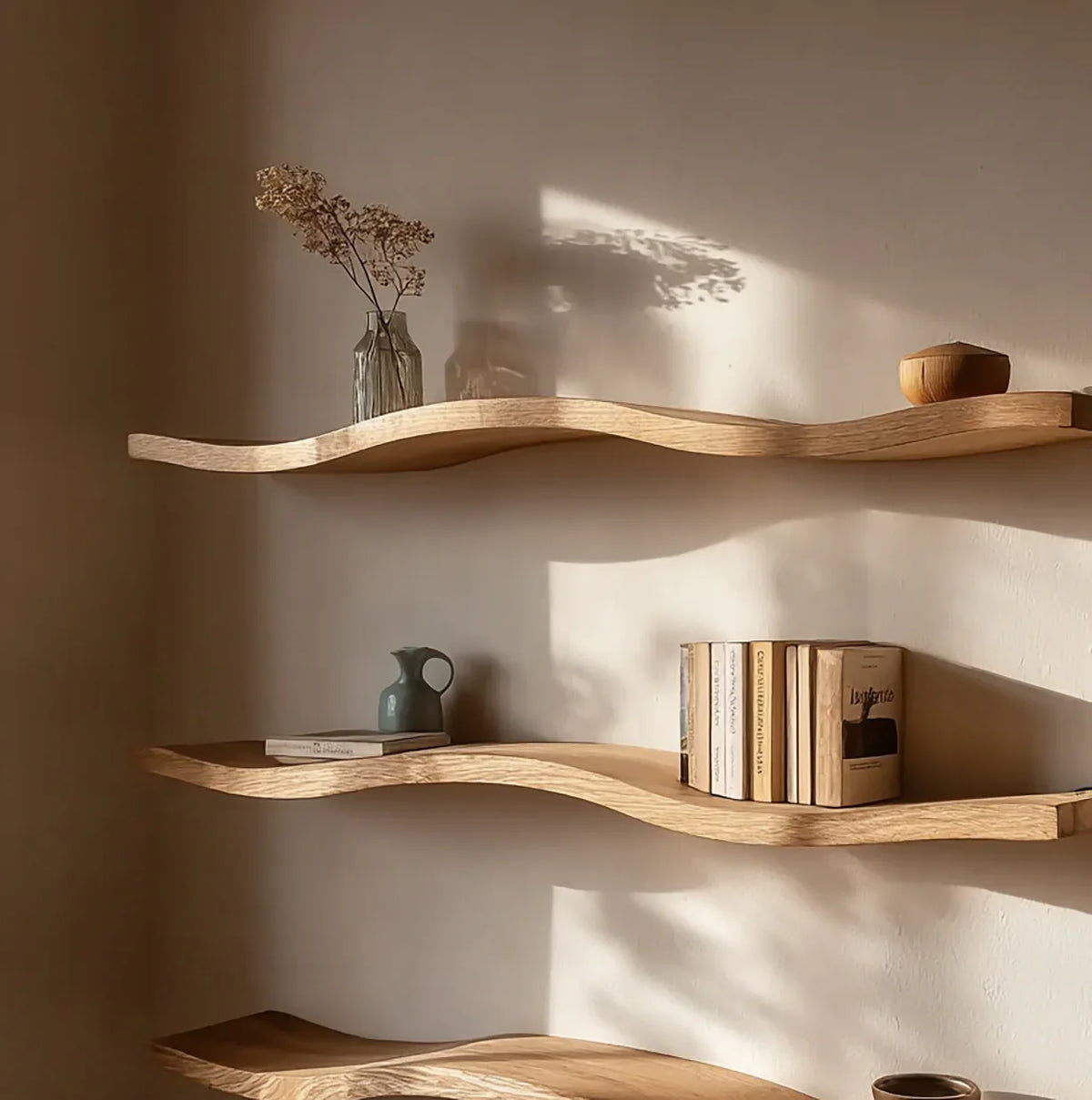
6. Wavy Light Wood Floating Shelves in a Sunlit Corner
The single element that makes this idea feel special is the gentle, wavy curve of the shelves. They aren’t just straight planks of wood; they have a subtle, organic movement that feels soft and sculptural. This small detail completely changes the character of the design, elevating it from a standard set of floating shelves to a piece of functional art. It’s what makes the corner feel so calm and thoughtfully curated, especially when highlighted by the natural sunlight. It’s a quiet statement that values form as much as function.
✅ Before You Start
You don’t need to commission custom millwork to get this feeling. For a similar aesthetic on a budget, look for pre-made ‘live edge’ or ‘natural edge’ shelves at places like IKEA or Target, which often cost between $30-$60 per shelf. While they might not have the exact same wavy profile, they will provide the organic edge. The key is the styling: keep it minimal with a few books, a simple vase from a thrift store ($5), and maybe a small plant. The entire look could be achieved for under $150, proving that serene, natural style is accessible.
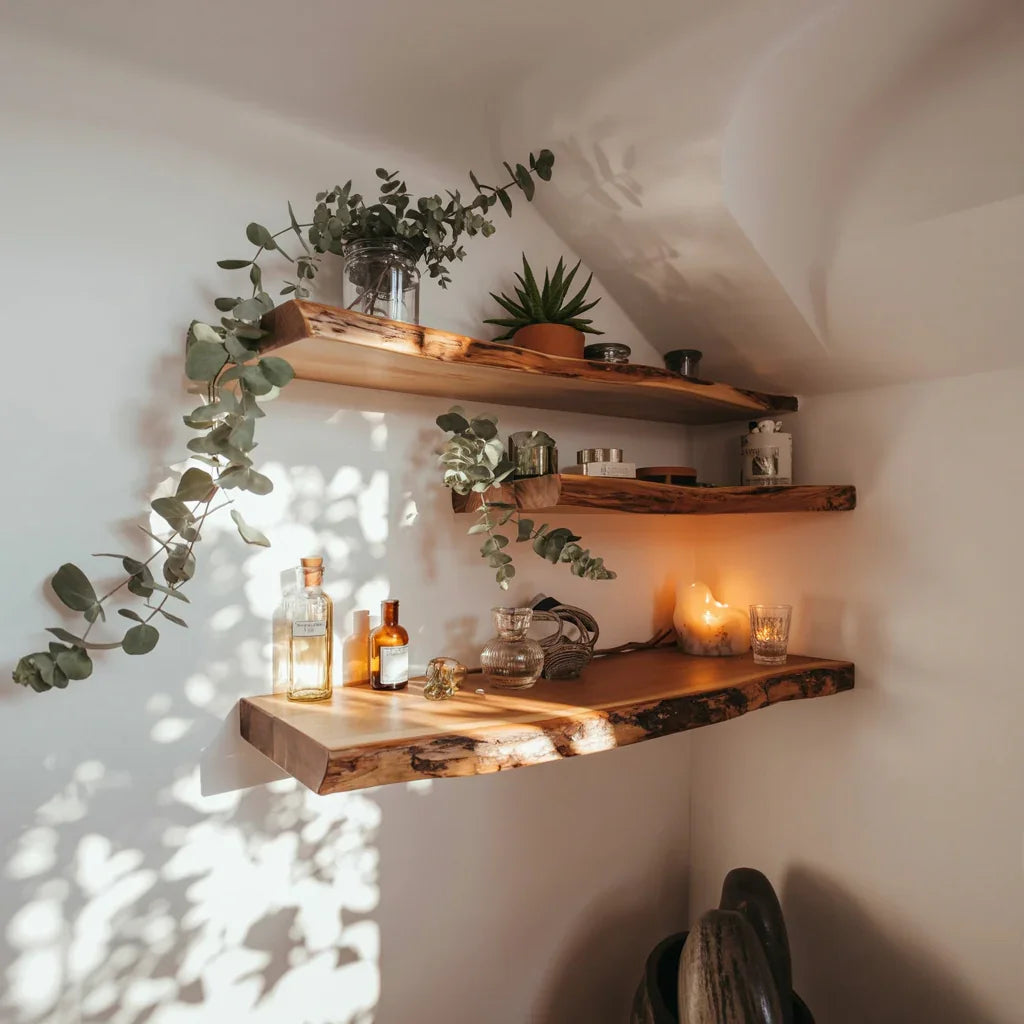
7. Corner Live Edge Shelves with Botanical Styling
The cozy, warm vibe of this corner comes from a well-balanced style equation: 50% Natural Texture + 30% Transparent Glass + 20% Warm Light. The live edge wood shelves provide the foundational natural texture. The an assortment of clear and amber glass bottles and vases add a layer of lightness and reflect the sunlight beautifully. Finally, the soft glow of the lit candles provides the essential warmth that makes the scene feel so inviting and serene. You could swap the eucalyptus for dried grasses or the succulents for small sculptures and the cozy formula would remain.
⭐ The One Thing
Live edge shelves are beautiful, but their irregular surfaces can be dust magnets. Unlike a flat shelf that you can wipe down in a second, you’ll need to use a microfiber cloth or a soft brush attachment on your vacuum to get into all the nooks and crannies of the natural edge. Plan on dusting them weekly to keep them looking fresh. If you live in a dry climate, you may also want to treat the wood with a conditioning oil once a year to prevent it from cracking or warping over time, which costs about $15-$25 for a bottle that will last for years.
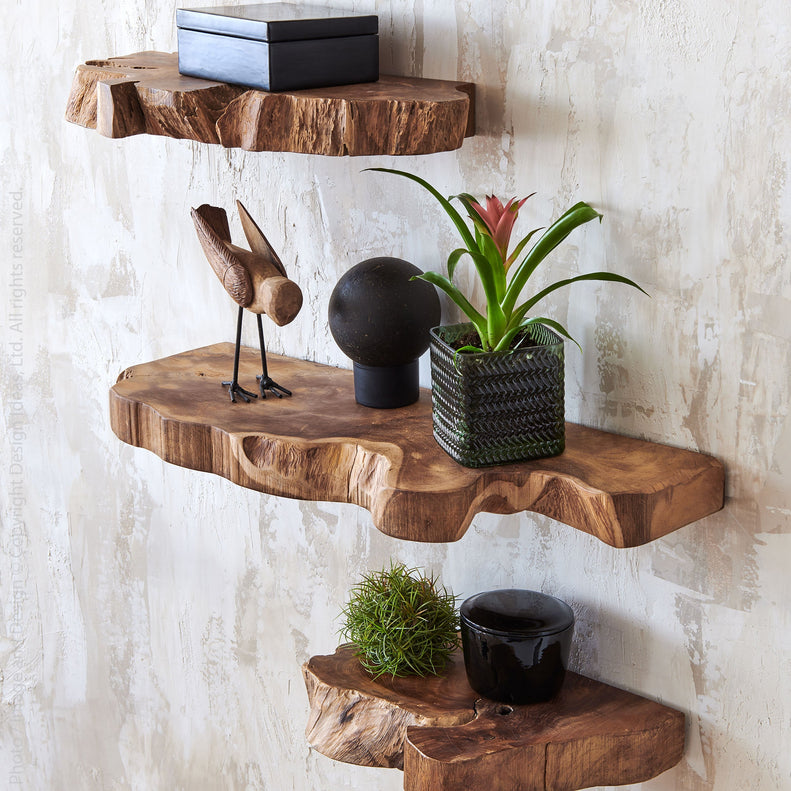
8. Floating Live Edge Slices with Artistic Black Decor
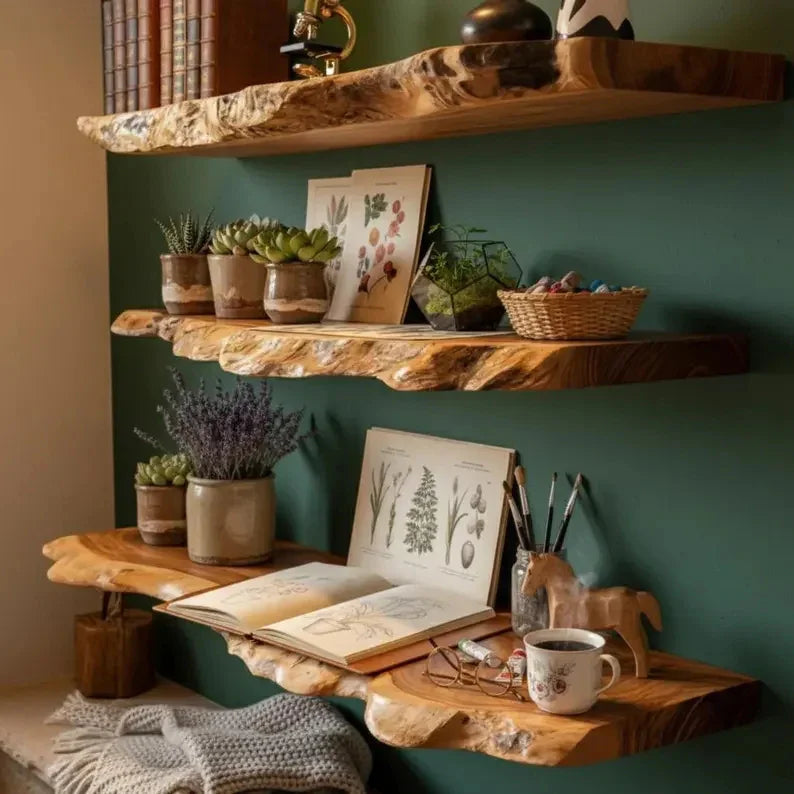
This composition feels so professionally styled because it uses the classic design principle of ‘the rule of three.’ Notice how on each shelf, objects are grouped in odd numbers—three main items on the top shelf, one strong focal point on the middle, and three on the bottom. Furthermore, the use of black across all three shelves creates a strong visual through-line. The black sphere, the black box, and the black elements in the pot create a triangle that guides your eye through the entire arrangement, making it feel cohesive and intentional.
💰 Budget Breakdown
When decorating shelves, think in terms of visual weight and height. The black decorative sphere on the top shelf is visually heavy and dense, drawing your eye. To balance this, the other items are lighter or taller, like the plant. Don’t be afraid to leave empty space; a crowded shelf loses its impact. A good rule of thumb is to occupy only about 60-70% of the shelf’s surface area. This negative space is just as important as the objects themselves for creating a look that feels curated, not cluttered.
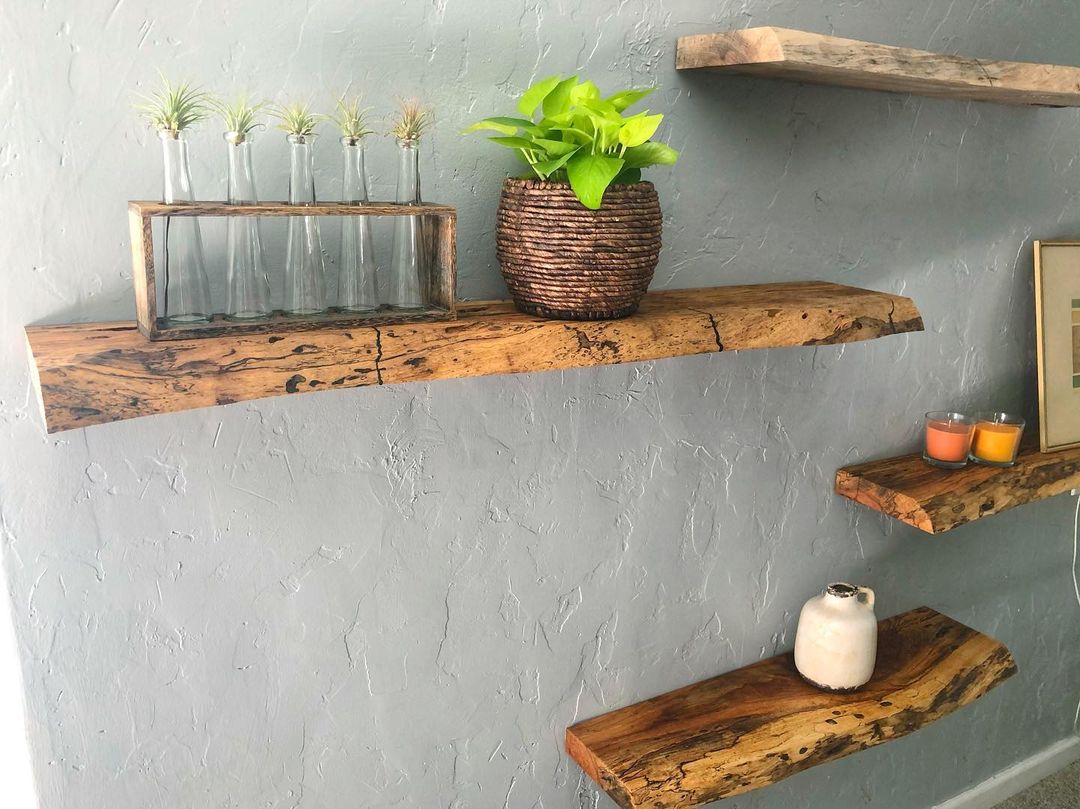
9. A Wall of Rustic Live Edge Floating Shelves
Before you commit to mounting five shelves, run through this quick checklist to ensure they look intentional, not haphazard.
- Measure Your Wall: Calculate the total vertical space and plan your spacing. A good starting point is 12-15 inches between each shelf.
- Check Your Studs: Solid wood shelves are heavy. Locate the wall studs before you buy your materials to ensure you can anchor them securely. Heavy-duty floating shelf brackets are a must.
- Gather Your Decor: Do you have enough items to style five shelves without it looking sparse or repetitive? Plan out your decor in advance.
- Confirm Your Lighting: Is there enough light to illuminate the display? Shelves can create shadows, so consider if you need nearby accent lighting.
💡 Designer Tip
You can get this look for less without sacrificing the rustic charm. Check Facebook Marketplace or a local lumberyard for off-cuts or less ‘perfect’ slabs of wood, which are often sold at a steep discount. A set of five robust floating brackets might cost $100-$150. For the decor, browse thrift stores and places like Target’s Bullseye’s Playground for inexpensive pots, candles, and accent pieces. By sourcing smartly, you could replicate this entire five-shelf display for under $300, a fraction of the cost of custom shelving.
10. A Live Edge Vanity with a Carved-In Wooden Basin
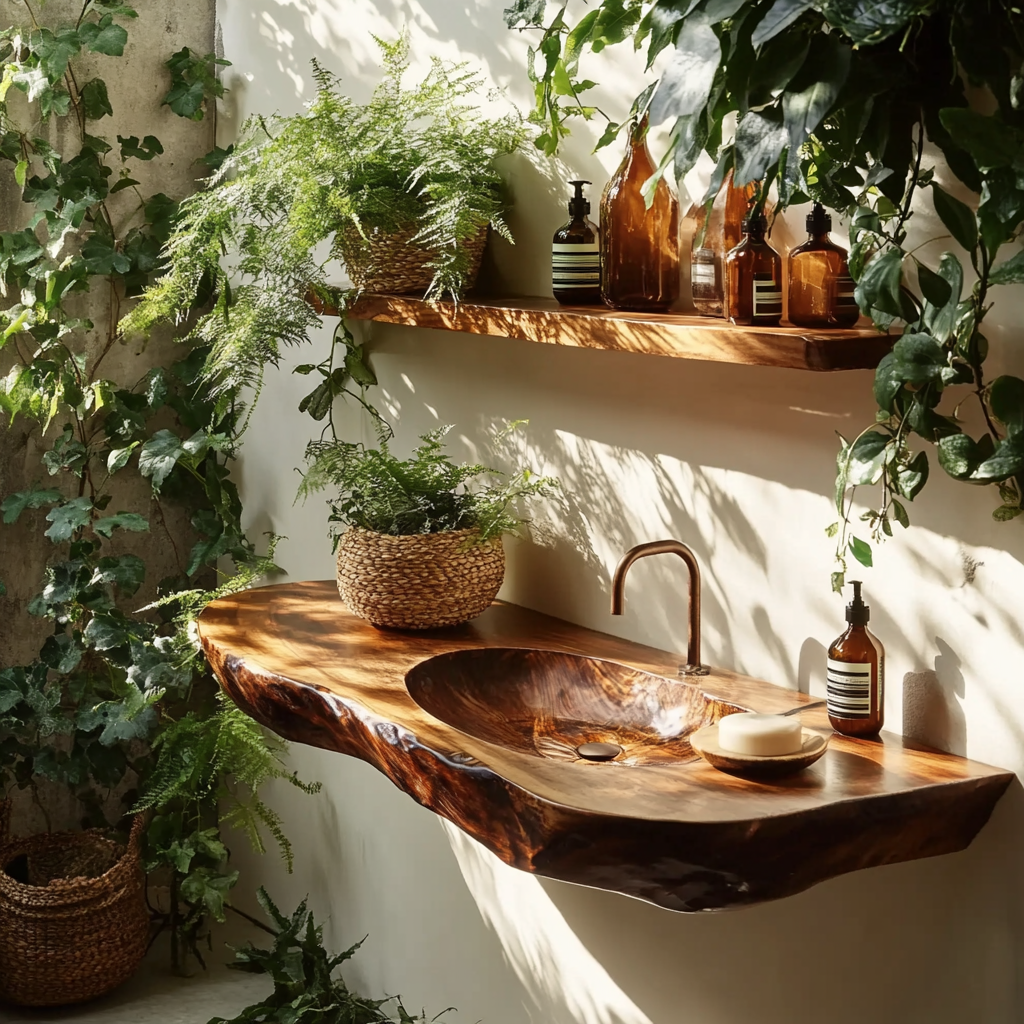
The absolute showstopper here is the integrated wooden basin. It’s not just a sink placed on top of a slab; the sink is carved directly *from* the same piece of wood. This seamless transition from countertop to basin is a masterclass in craftsmanship. It elevates the entire piece from a simple vanity to a functional sculpture. Removing this one feature would fundamentally change the design, turning it back into a more conventional (though still beautiful) setup. This integration is what makes it truly unforgettable. It shares a similar sculptural feel to the vanity in Idea #1, but with an even more integrated approach.
🔥 Trending Context
A wooden sink is a stunning, high-concept choice, but it demands the most rigorous maintenance of any live edge project. The wood must be sealed with a marine-grade varnish or a specialized two-part epoxy finish to make it completely waterproof. This isn’t a maybe; it’s a must. You must avoid abrasive cleaners at all costs and wipe the sink dry after each use to prevent water spots and mineral buildup. Scratches can and will happen, and they may require light sanding and refinishing. This is a choice for someone who loves the look so much they’re willing to commit to its care.
11. A Rustic Vanity Blending a Live Edge Top and Stone Sink
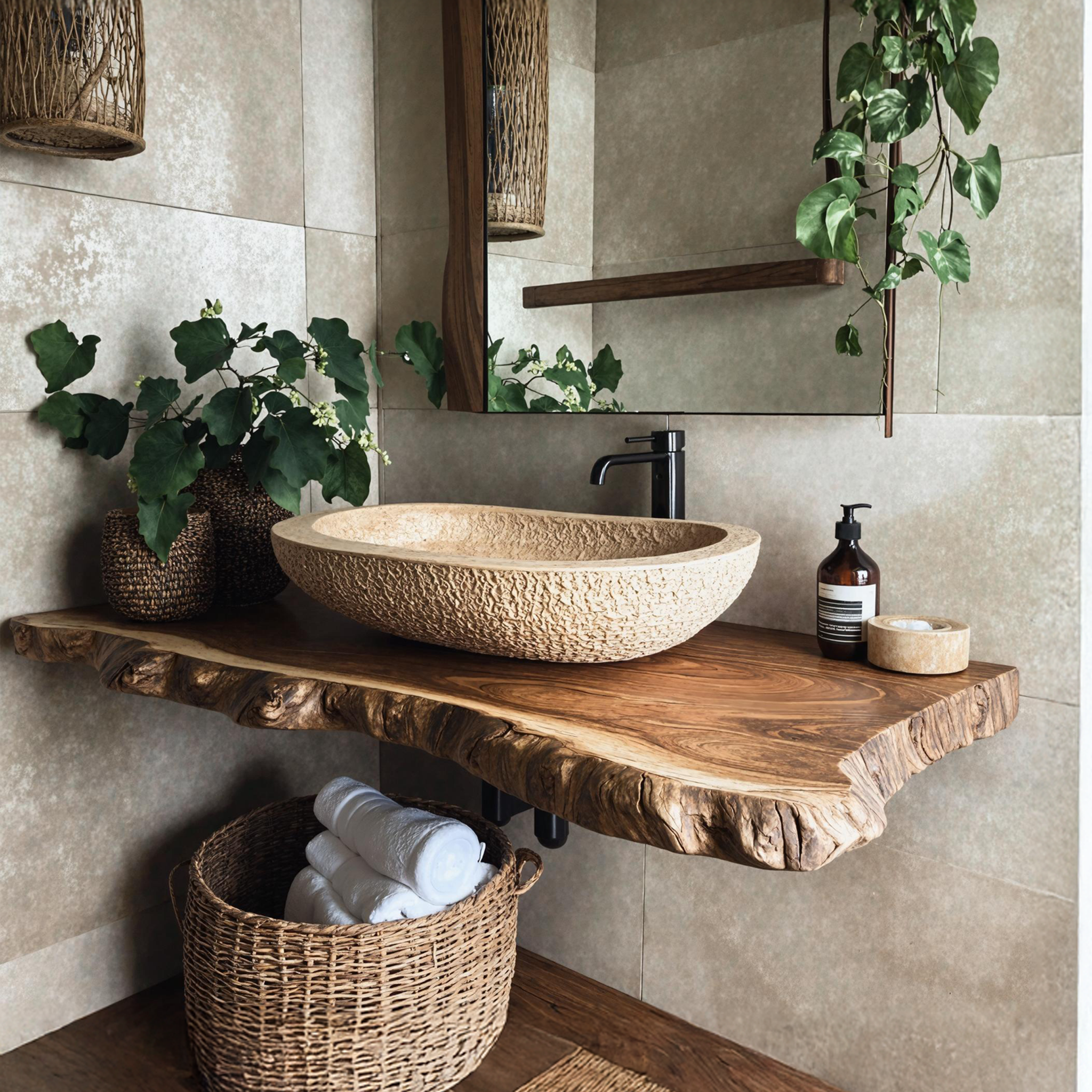
What makes this combination so successful is the harmony of rugged textures. The rough, unfinished front edge of the wood slab speaks the same language as the textured, chiseled exterior of the stone vessel sink. Neither is perfectly smooth or uniform, and that shared imperfection creates a powerful, earthy coherence. The matte black faucet acts as a modern anchor, its clean lines preventing the look from becoming too rustic or theme-y. The woven baskets below continue the textural story, making the whole vignette feel layered and authentic.
📐 Style Math
A textured stone sink looks incredible, but be honest with yourself about your cleaning habits. The nooks and crannies that give it so much character can also trap soap scum, makeup powder, and toothpaste. Unlike a smooth ceramic sink that you can wipe clean in seconds, this will require a little more attention with a soft brush to keep it looking its best. It’s also heavier than a standard sink, so you’ll need to ensure your live edge slab and wall mounting are robust enough to support it safely.
12. A Bold Bathroom with a Live Edge Counter and Floral Wallpaper
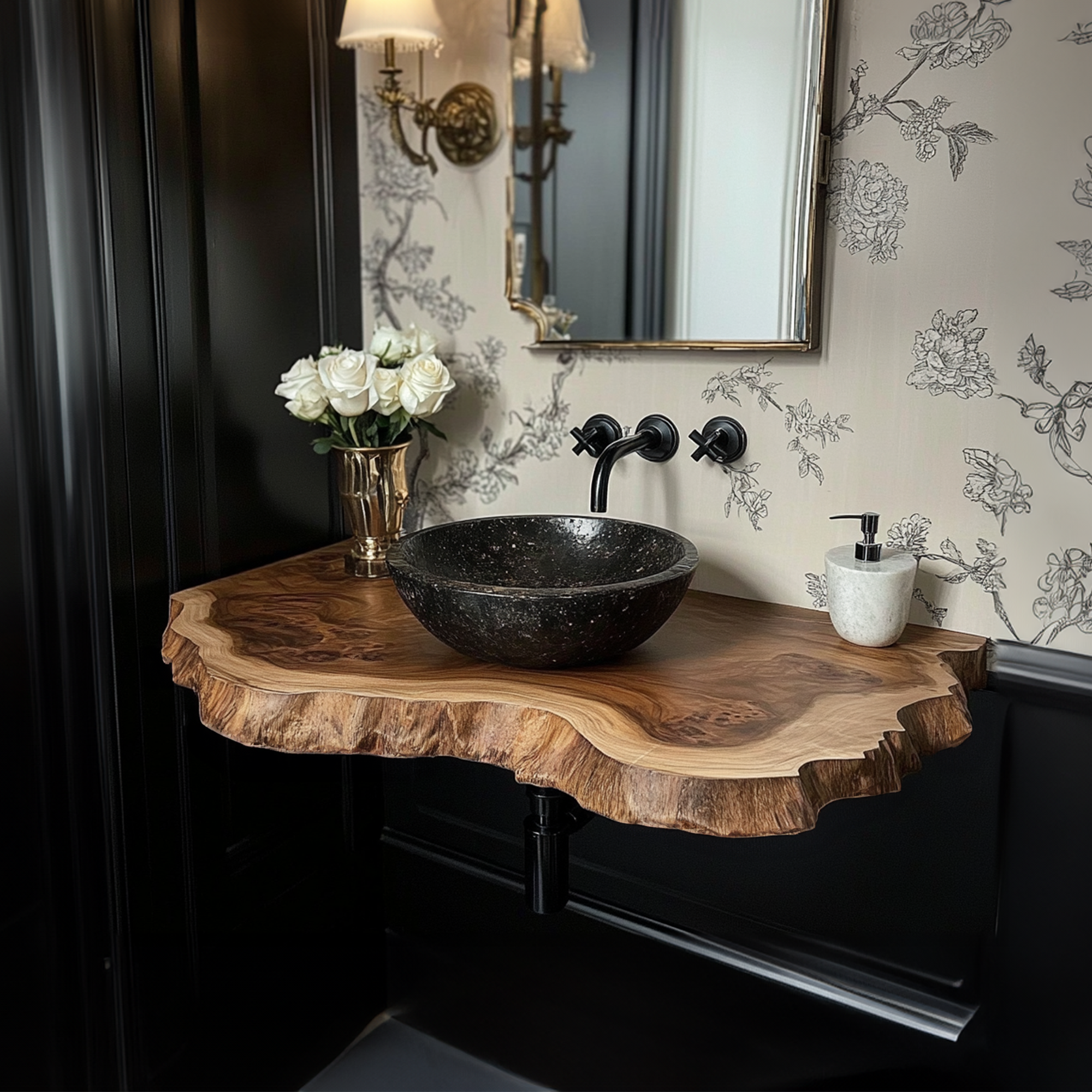
This bathroom’s chic, moody vibe is a balancing act. The formula is: 40% Bold Pattern + 40% Dramatic Black + 20% Natural/Metallic Warmth. The floral wallpaper is the immediate star, but it’s anchored and given sophistication by the solid black paneling below it. Without the black, the wallpaper could feel overwhelming or twee. The live edge counter and the brass/gold accents provide the essential 20% of warmth and organic texture, cutting through the drama of the paper and paint to make the space feel grounded and inviting.
🧹 Maintenance Reality
When using a large-scale, busy wallpaper pattern, you need to give the eye a place to rest. Pairing it with solid black wainscoting, as seen here, is a brilliant professional move. It contains the pattern and adds a dose of drama and sophistication. For a fail-safe combination, pull your solid paint color directly from a color within the wallpaper. Here, the black paneling picks up on the dark background of the floral motif, which is why it works so seamlessly.
13. A Rustic Bedroom Featuring a Soaring Live Edge Headboard
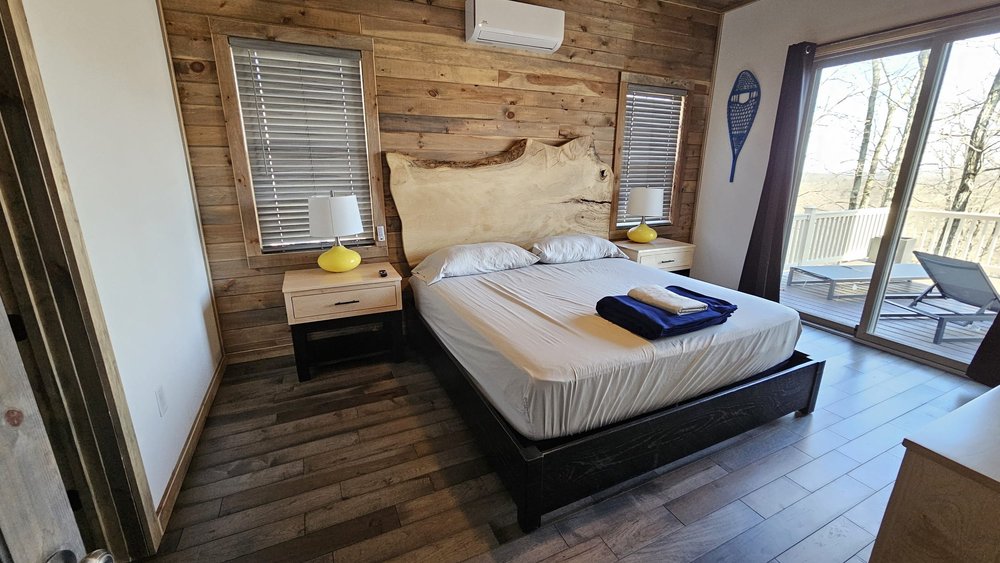
that defines this room is the powerful combination of the live edge headboard and the reclaimed wood plank wall behind it. It’s a full-scale commitment to a rustic, natural aesthetic. The headboard isn’t just an accessory; it’s an architectural element that, combined with the accent wall, creates an immersive, cabin-like atmosphere. Removing either the headboard or the plank wall would significantly dilute the impact, proving that in this case, more is more, and their synergy is everything.
🔧 How-To Brief
This layered wood-on-wood look is a bold statement that works best in a larger bedroom with high ceilings and plenty of natural light, just like the one shown. In a small room, the sheer amount of wood texture could feel overwhelming and dark, making the space feel smaller. A minimum room size of 12×14 feet with at least 9-foot ceilings is ideal. The sliding glass doors are also crucial, as they flood the room with light to balance the visual weight of all that timber. For a smaller room, consider a live edge headboard against a simple painted wall, like in Idea #25.
14. The Simple Power of a Natural Slab Headboard
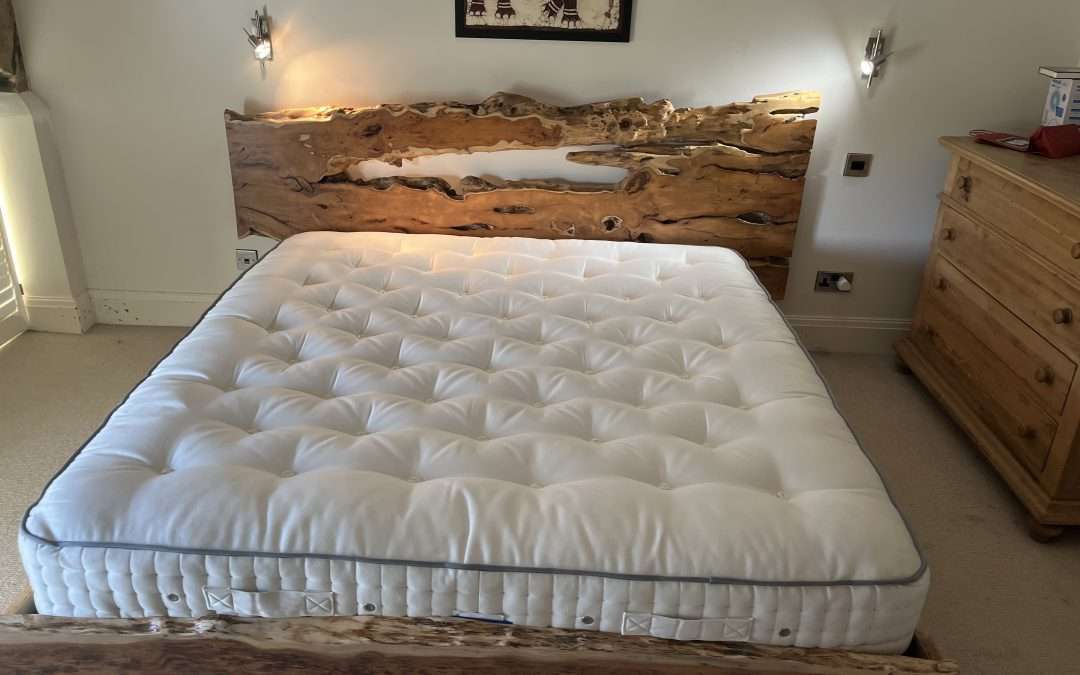
Even without seeing the full room, the power of a single, unadorned slab of wood as a headboard is undeniable. This is the ultimate statement piece for a bedroom, serving as both furniture and art. Its organic shape and unique grain pattern bring a sense of nature and calm directly into the most personal room of the house. It’s the one thing that can instantly define the entire space, setting a tone that is both rustic and deeply modern in its simplicity. Everything else in the room becomes a supporting character to this natural focal point.
📏 Scale Guide
Sourcing the perfect slab is the most critical step. Look for local lumberyards, sawmills, or ‘urban timber’ purveyors who reclaim city trees. Ask to see slabs that have been kiln-dried; this is a crucial process that removes moisture and ensures the wood won’t warp, crack, or twist after you bring it home. For a headboard, a thickness of 1.5 to 2.5 inches is ideal—thick enough to be substantial, but not so heavy that it’s impossible to mount securely to the wall.
15. A Kitchen Island with a Live Edge Waterfall Countertop
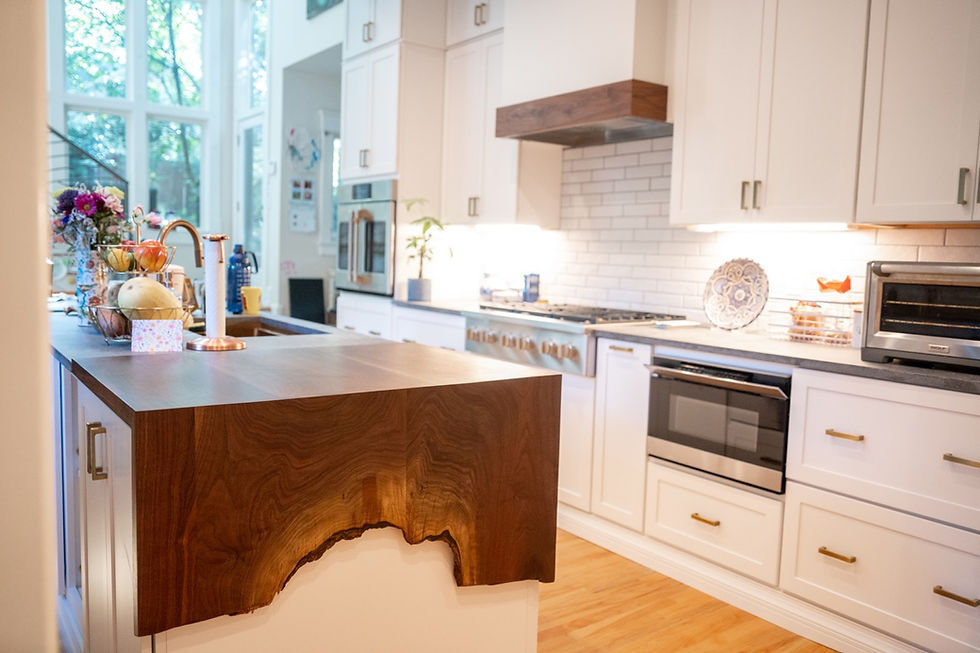
This design is so effective because of the stunning contrast between the sleek, modern kitchen and the raw, natural waterfall countertop. The crisp white shaker cabinets, clean subway tile, and light floors create a bright, minimalist canvas. The dark, richly grained wood of the island drops down one side in a ‘waterfall’ of natural texture, becoming a dramatic focal point. This single, bold gesture of organic material prevents the all-white kitchen from feeling sterile and adds immense warmth and character. The gold hardware beautifully bridges the gap between the cool white and the warm wood.
🎯 What Makes It Work
A live edge waterfall island is a high-impact, high-cost feature. The price is driven by the large, high-quality slab and the skilled labor required to cut and join the mitered edge for the waterfall.
- Live Edge Wood Slab (Large): $1,500 – $4,000+
- Fabrication & Installation: $1,000 – $2,500
- White Shaker Cabinets: $200 – $500 per linear foot
- Gold Cabinet Hardware: $8 – $20 per piece
- ISLAND TOP ALONE: $2,500 – $6,500+
Budget alternative: Instead of a full waterfall, use a simple live edge slab as the island countertop only. This eliminates the costly fabrication of the mitered corner, saving you thousands.
16. A Two-Tiered Live Edge Walnut Countertop
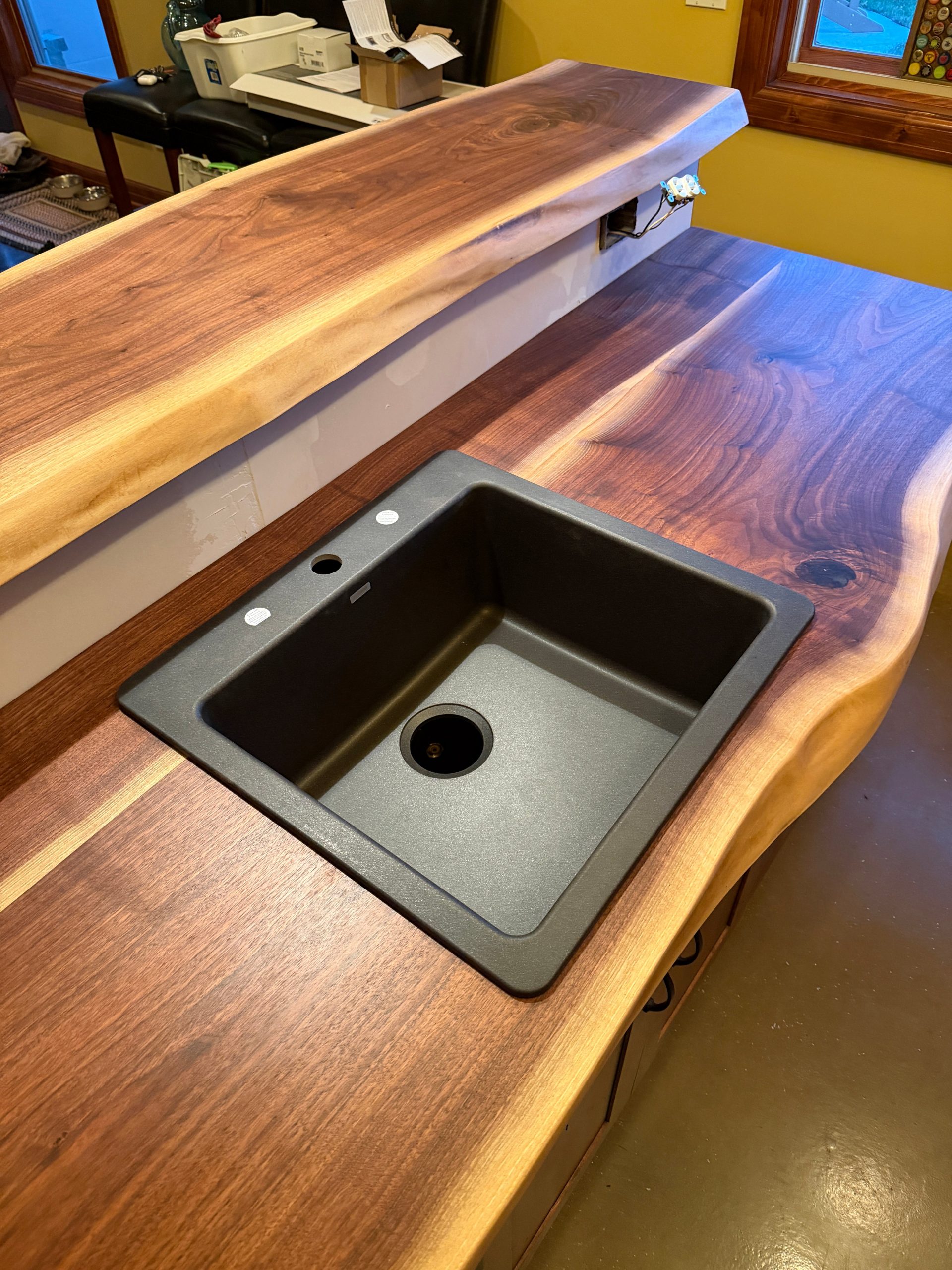
This two-tiered design is fantastic for creating a functional separation between a prep area and a serving area, but be realistic about cleaning. The inner corner where the two slabs meet can become a collection point for crumbs, dust, and spills. You won’t be able to just wipe it clean; you’ll need to use a small brush or the crevice tool of a vacuum to get into that seam. Also, the drop-in sink creates a lip around the edge that can also trap gunk. It’s a super unique look, but it trades a bit of practicality for its high style.
💸 Get This Look For Less
Finishing a wood countertop for a kitchen or bar area requires a food-safe, waterproof seal. Here’s the brief:
- Sanding: Start with a lower grit sandpaper (like 120) and work your way up to a fine grit (like 220) for a perfectly smooth surface.
- Wipe Clean: Use a tack cloth or a rag dampened with mineral spirits to remove all dust.
- First Coat: Apply a liberal first coat of a food-safe wood finish (like Waterlox or a hardwax-oil). Let it penetrate and dry completely.
- Light Sand: Lightly sand with a very fine grit (320 or higher) to knock down any raised grain.
- Subsequent Coats: Wipe clean and apply 2-3 more thin coats, allowing for proper drying time between each.
Material Cost: $50 – $100. Time: 2-3 days (mostly drying time).
17. A Minimalist Live Edge Console Table with Trapezoid Legs
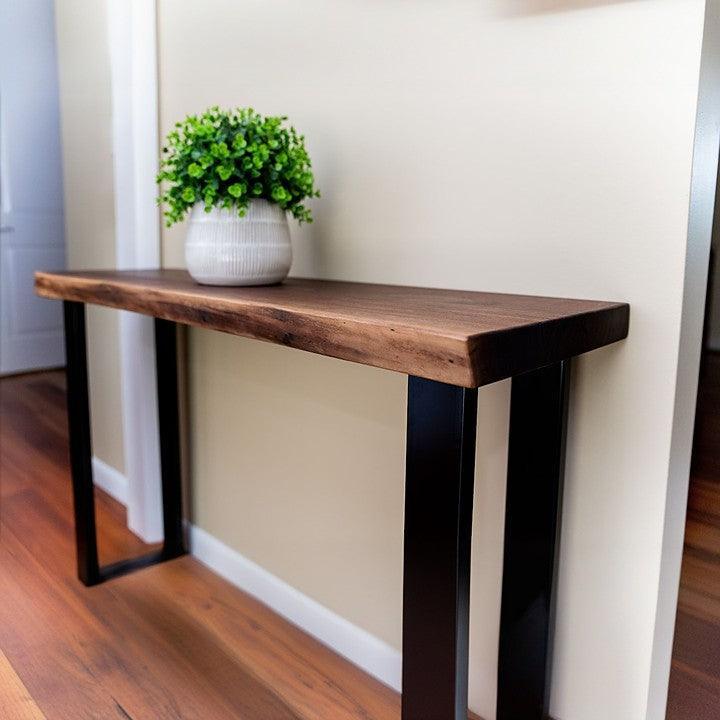
The soul of this piece lies in the black metal trapezoid legs. While the live edge top is beautiful, it’s the legs that give the table its distinctly modern, slightly industrial character. If you were to swap them for simple wooden legs, it would be a perfectly nice rustic table. But the clean, geometric lines and the matte black finish of the trapezoid legs provide a sharp, contemporary contrast to the organic, flowing lines of the wood slab. They are the crucial element that defines the table’s ‘rustic-modern’ identity. Compare this to the hairpin legs on Idea #19 for a different vibe.
⚠️ Real Talk
The minimalist power of this console table comes down to a simple formula: 70% Natural Material + 30% Geometric Structure. The large, dark wood slab is the hero, showcasing its natural grain and edge. The black metal legs provide a strong, grounding structure without adding visual clutter. The decor follows suit, with a simple white planter adding a touch of texture. To change the feel, you could swap the black metal for raw steel or even a brass finish, shifting the 30% from industrial to warm modern.
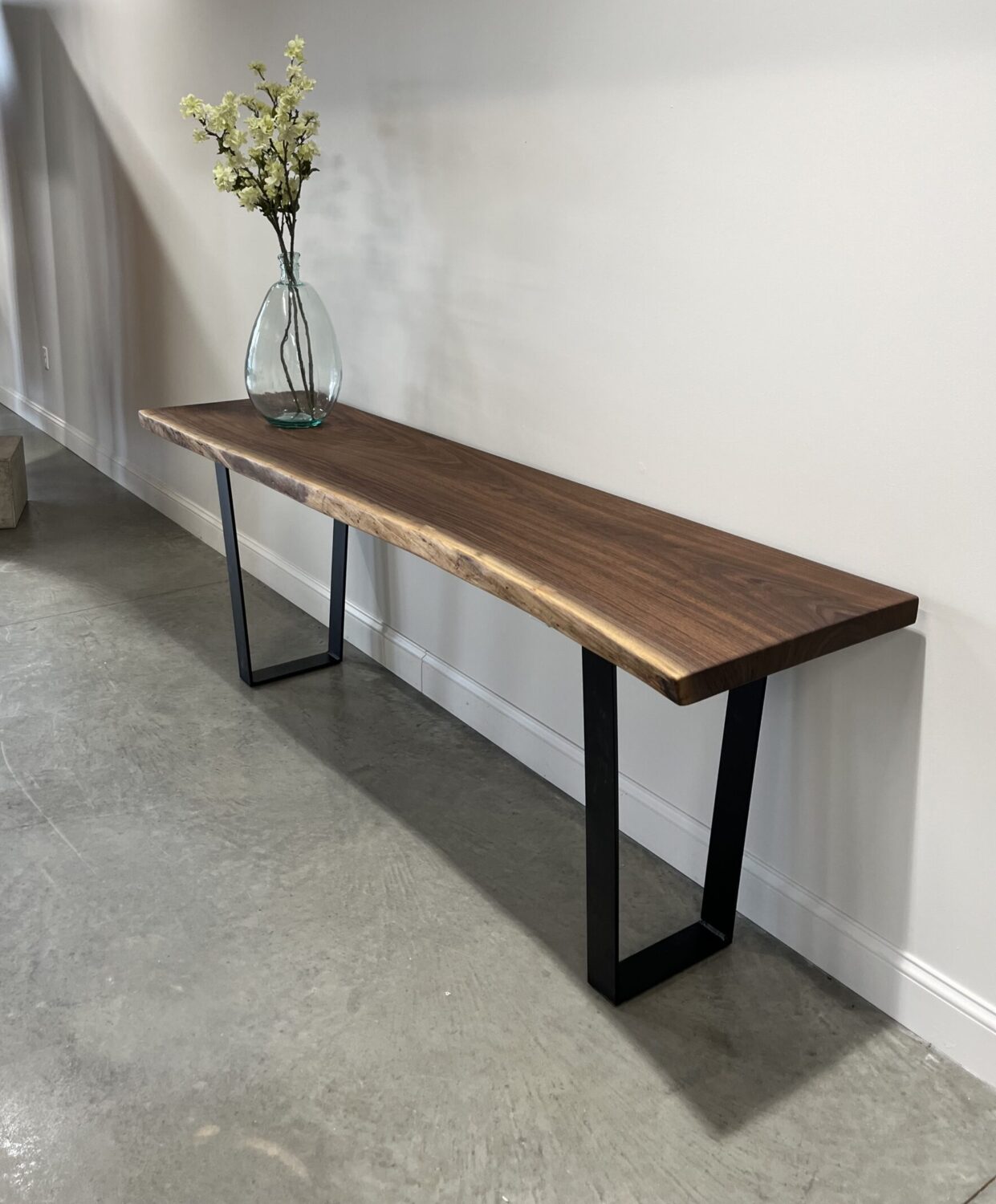
18. A Long Slab Console Table on Black Trapezoid Legs
This design is successful because of its elegant proportions and celebration of material. The wood slab is long and narrow, creating a sleek, horizontal line that feels both expansive and unobtrusive. The trapezoid legs provide a stable, geometric base that contrasts beautifully with the natural, ‘live’ edge of the wood, a theme also seen in Idea #17. The styling is deliberately minimal—just a single clear vase—which communicates confidence in the piece itself. It doesn’t need clutter to be interesting; the wood’s grain and form are the main attraction.
✅ Before You Start
Before you build or buy a long, narrow console table, consider these key points:
- Wall Length: A long table needs a long wall. As a rule of thumb, the table should be about 2/3 the length of the wall it’s on to look properly scaled.
- Walkway Clearance: Is this in a high-traffic area like an entryway? Ensure the table is narrow enough (typically 12-16 inches deep) to not impede movement.
- Slab Stability: A long, thin slab of wood has the potential to warp or bow over time. Ensure it is properly kiln-dried and at least 1.5 inches thick for stability.
- Leg Placement: The legs should be placed about 12-18 inches in from each end to provide support and prevent sagging.
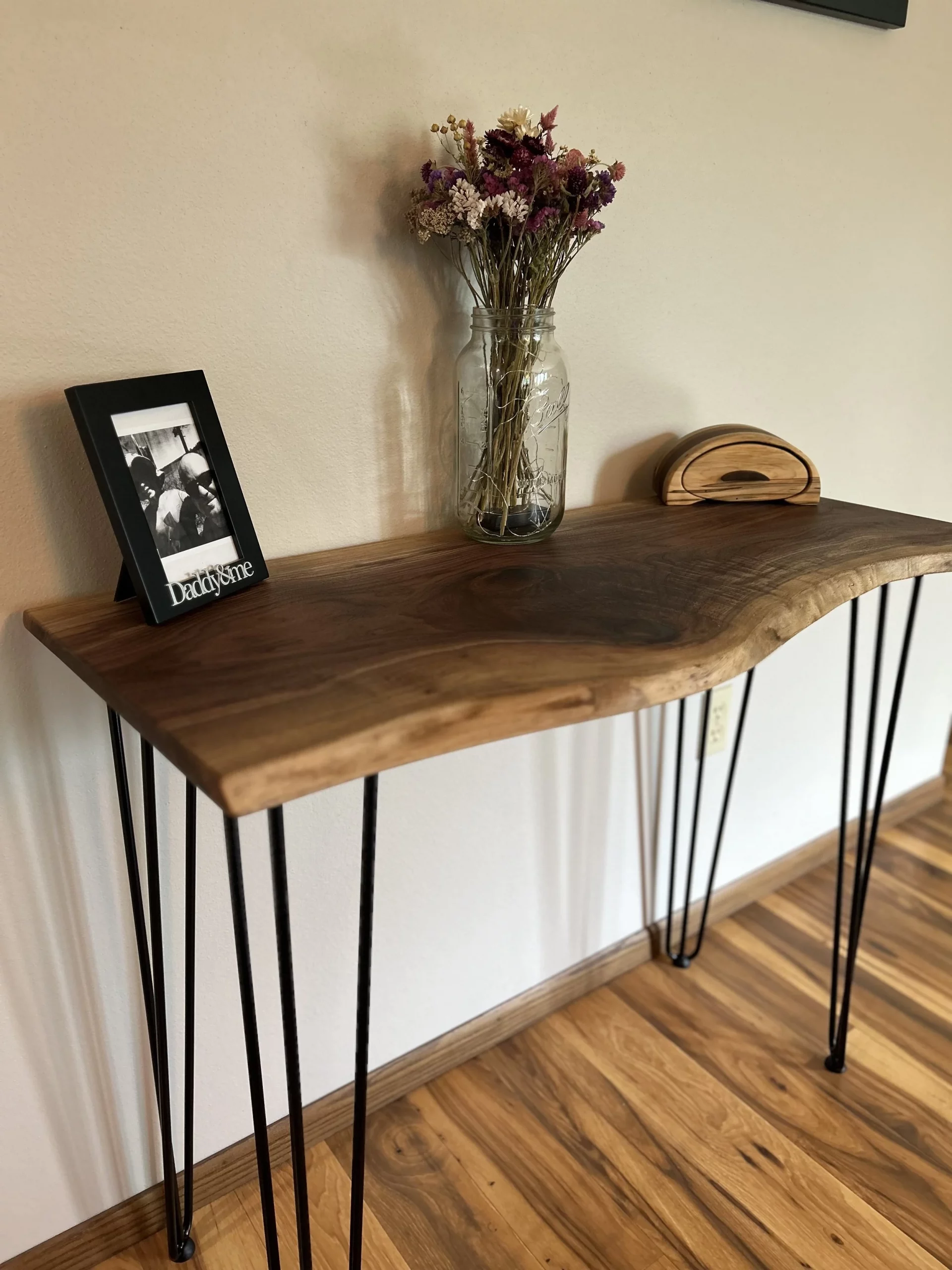
19. A Rustic-Minimalist Console with Black Hairpin Legs
This look is one of the most accessible and budget-friendly ways to get into the live edge trend. A smaller wood slab like this can often be found at a lumberyard for under $100. A set of four steel hairpin legs can be purchased online for $40-$80. With a bit of sanding, a coat of oil-based finish, and a drill to attach the legs, you can create a high-style console table for less than $200. Styling it with items you already own, or with inexpensive thrift store finds like the mason jar and simple frame shown here, completes the authentic, rustic-minimalist vibe.
⭐ The One Thing
The key to making hairpin legs look chic and not flimsy is choosing the right thickness, or ‘rod diameter.’ For a substantial piece of wood like this, opt for 3-rod hairpin legs made from 1/2-inch steel. Standard 2-rod legs or thinner 3/8-inch steel can look disproportionately delicate and may not provide adequate stability for a heavy slab. That extra rod and slightly thicker diameter make a world of difference, giving the finished piece a sturdier, more professional appearance.
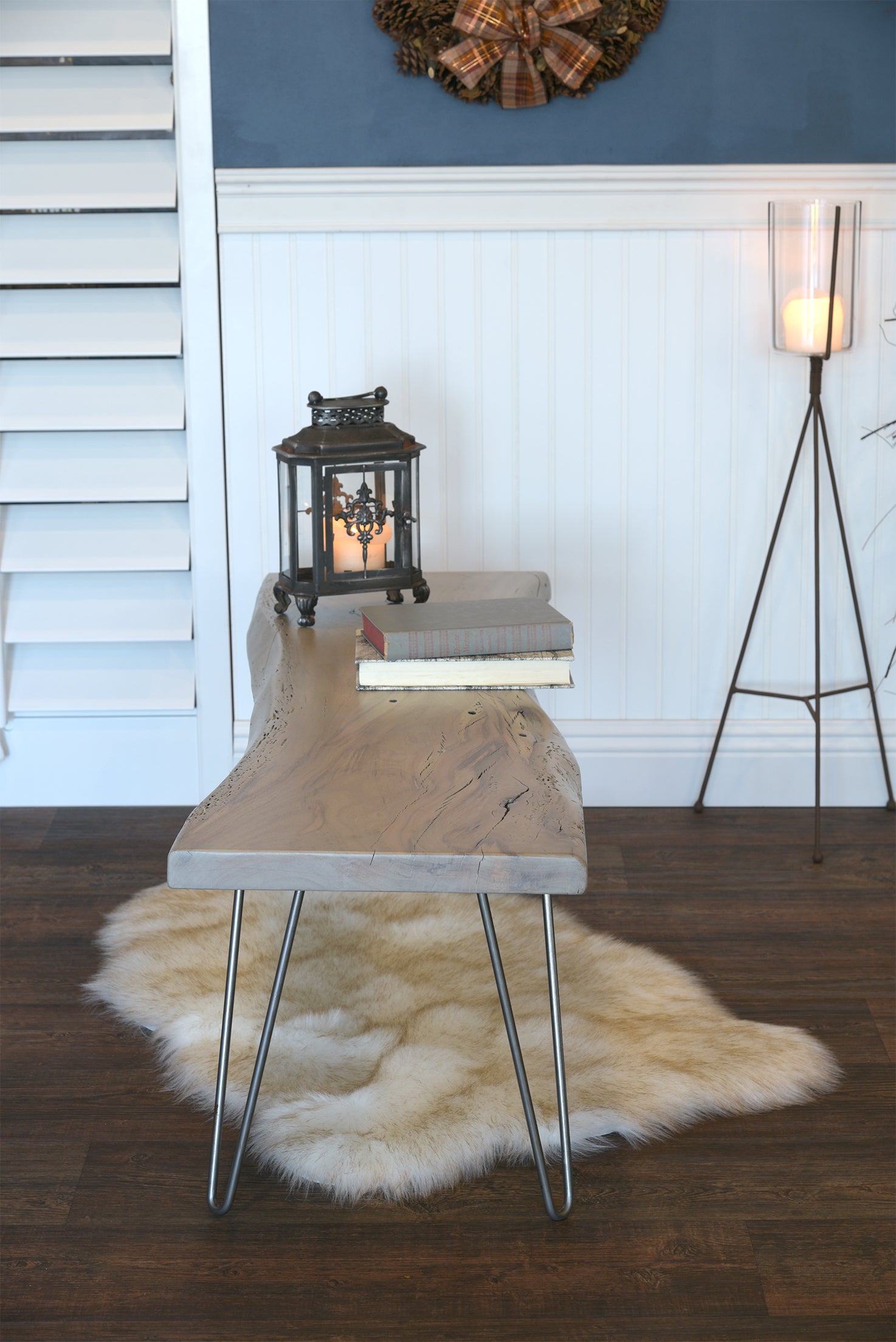
20. A Cozy Nook with a Live-Edge Bench and Faux Fur
This little corner is so inviting because it’s a masterclass in layering textures. It starts with the smooth, dark wood floors, followed by the soft, plush faux fur rug. Then comes the bench itself, with the rugged, natural texture of the live-edge wood. Above that, you have the clean, linear texture of the white paneled wainscoting, and finally, the matte finish of the dark blue upper wall. This deliberate pile-up of different tactile and visual surfaces—smooth, soft, rough, linear, matte—is what creates such a rich, cozy, and visually interesting experience in a small space.
💰 Budget Breakdown
The formula for this rustic-modern look is simple: 40% Rustic Wood + 40% Classic Architecture + 20% Cozy Textiles. The live-edge bench provides the main rustic element. The white paneled wainscoting and dark blue wall bring in a classic, almost preppy, architectural feel. The faux fur rug and any other soft accessories are the 20% that add essential coziness and comfort. You could swap the hairpin legs for a different modern style, as seen on the table in Idea #17, and the core balance would still feel just right.
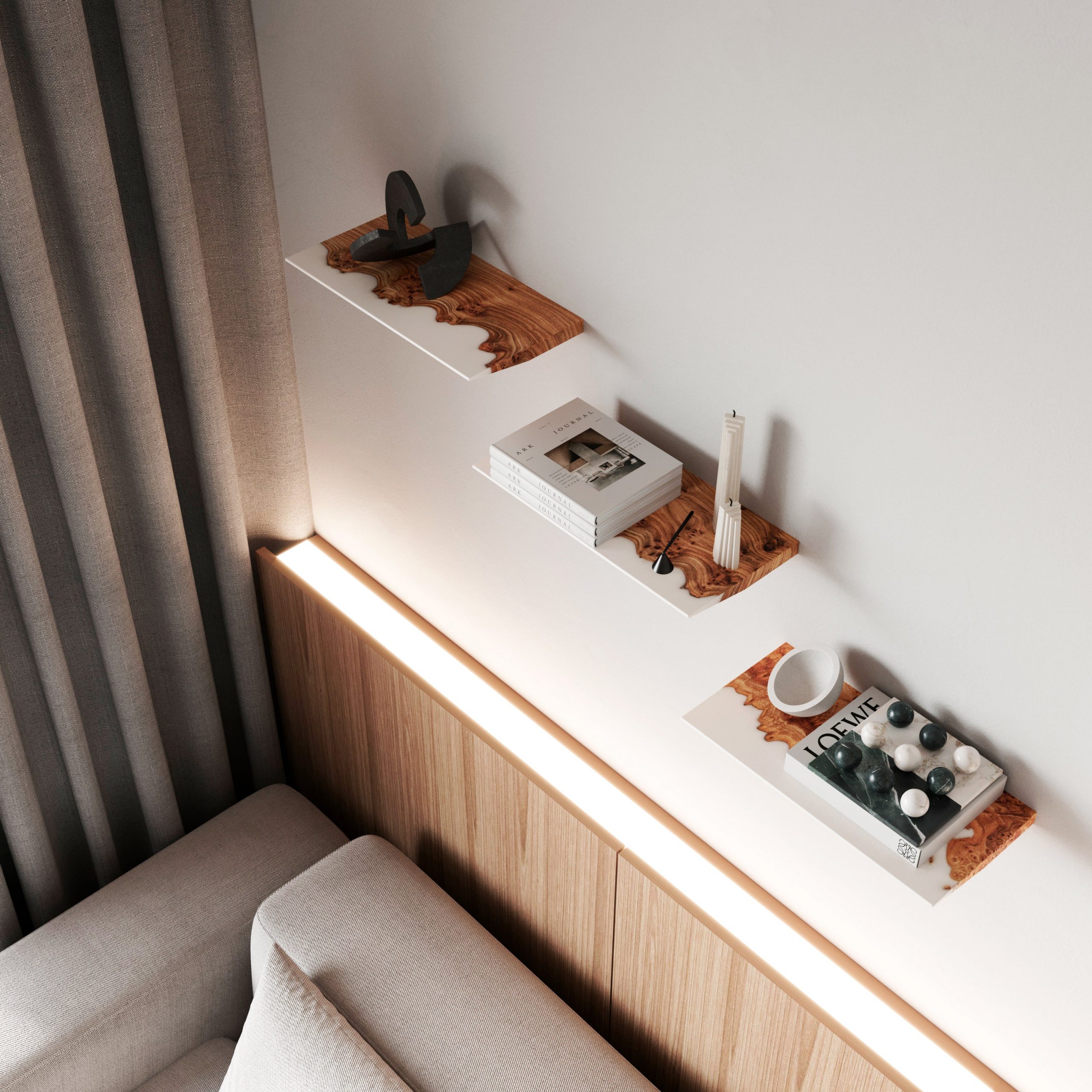
21. Modern Live-Edge & Resin Shelves with Integrated Lighting
The single detail that elevates this entire setup is the integrated LED lighting strip hidden within the wood paneling. It’s a subtle but incredibly effective feature. The shelves themselves are beautiful, but the warm, downward-facing glow transforms them from simple storage into a sophisticated, moody display. It highlights the texture of the wall, casts a gentle light over the sofa below, and makes the entire wall feel like a custom, high-end architectural installation. Without that light, it would be a nice wall; with it, it’s an experience.
💡 Designer Tip
The combination of natural wood and crisp white resin is a look that has been gaining steady traction on Pinterest and in design circles for the past few years, and it shows no signs of slowing down. It represents the perfect marriage of organic nature and clean modernism. People are drawn to it because it feels both handmade and highly polished. The integrated, hidden lighting is a newer evolution of this trend for 2026, moving beyond just the ‘river table’ and into more architectural applications. It speaks to a desire for design that is both beautiful and thoughtfully functional.
22. A Fully Encased Rustic Wood Vanity with a Pebble Floor
This design feels so immersive and cohesive because the live edge wood isn’t just a countertop—it wraps the entire vanity structure. The sides and cabinet fronts are all crafted from the same rustic wood, creating a solid, monolithic block of natural texture. This totality is what gives it such a strong presence. The choice of a pebble floor is brilliant, as it extends the natural, textural feeling from the vertical vanity onto the horizontal floor plane, fully enveloping you in an earthy, organic environment.
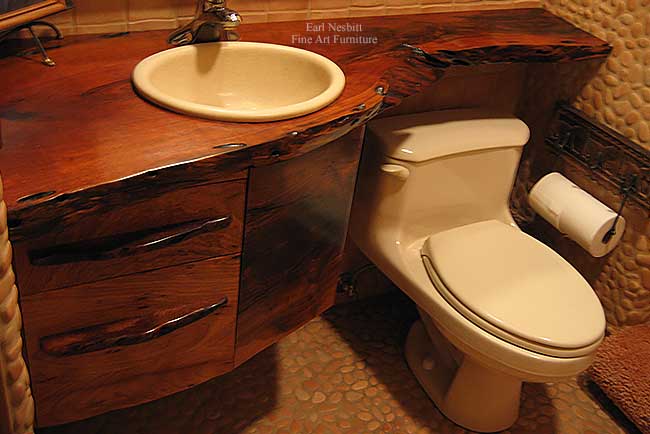
🔥 Trending Context
A pebble floor is a stunning way to bring a natural, spa-like feel to a bathroom, but the upkeep is a serious consideration. The grout lines between all those tiny stones are numerous, and they are prime real estate for soap scum and mildew. This is not a low-maintenance floor. It requires regular scrubbing with a good brush and grout cleaner. You will also need to seal the grout annually to prevent staining and moisture penetration. While beautiful, be prepared for a cleaning routine that is more involved than a simple tile floor.
23. An Eclectic Study with Tiered Live Edge Shelves
When arranging multiple floating shelves, avoid making them all the same length. Notice how the bottom shelf here is longer and more dramatically shaped than the three above it. This creates a strong visual anchor for the composition and adds a dynamic, waterfall-like effect. A good approach is to make your lowest shelf the longest and most interesting, then have the upper shelves be slightly shorter and more uniform. This creates a pleasing visual hierarchy and keeps the arrangement from feeling static or boring.
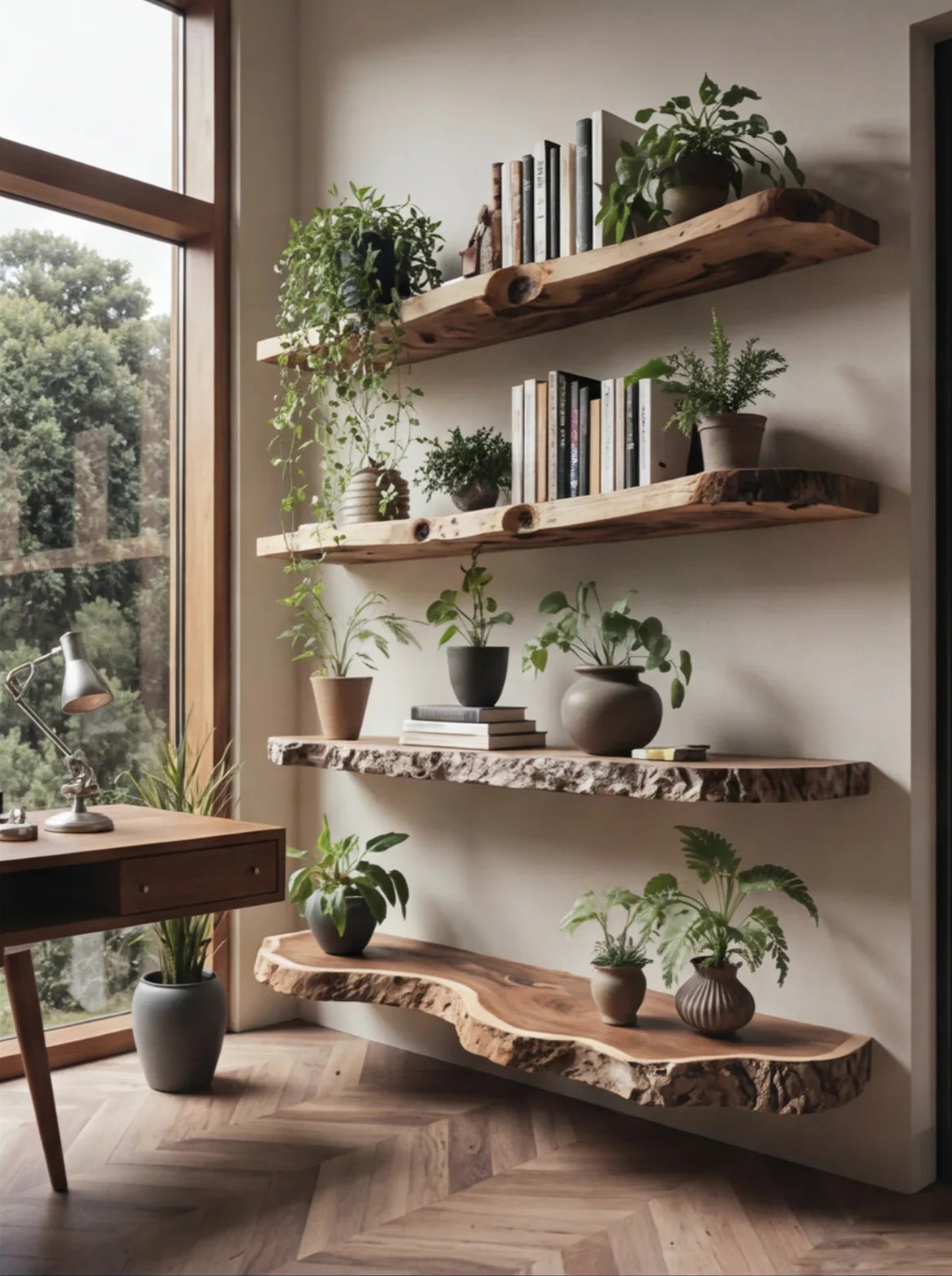
📐 Style Math
This kind of multi-shelf arrangement is perfect for filling a vertical space next to a window or a doorway. It works well on a wall that is at least 4-5 feet wide, which gives the shelves enough room to breathe without feeling cramped. The height can be adapted; you can go for four shelves as shown for 8-foot or 9-foot ceilings, or extend it to five or even six shelves for taller walls. The key is to maintain about 12-16 inches of space between each shelf to allow room for taller books and decorative objects.
24. A Minimalist Living Room with a Live Edge TV Console
A floating console is a fantastic minimalist look, but managing the cords is the reality you can’t ignore. To achieve this ultra-clean aesthetic, you’ll need to have an electrician install an outlet on the wall directly behind where the TV will be, as well as run any HDMI or other cables through the wall. This is often called a ‘recessed media box’. If you can’t modify the walls (for example, if you’re renting), you’ll have to use a paintable cord cover to hide the wires running down to the nearest outlet, which is a good compromise but won’t be quite as seamless.
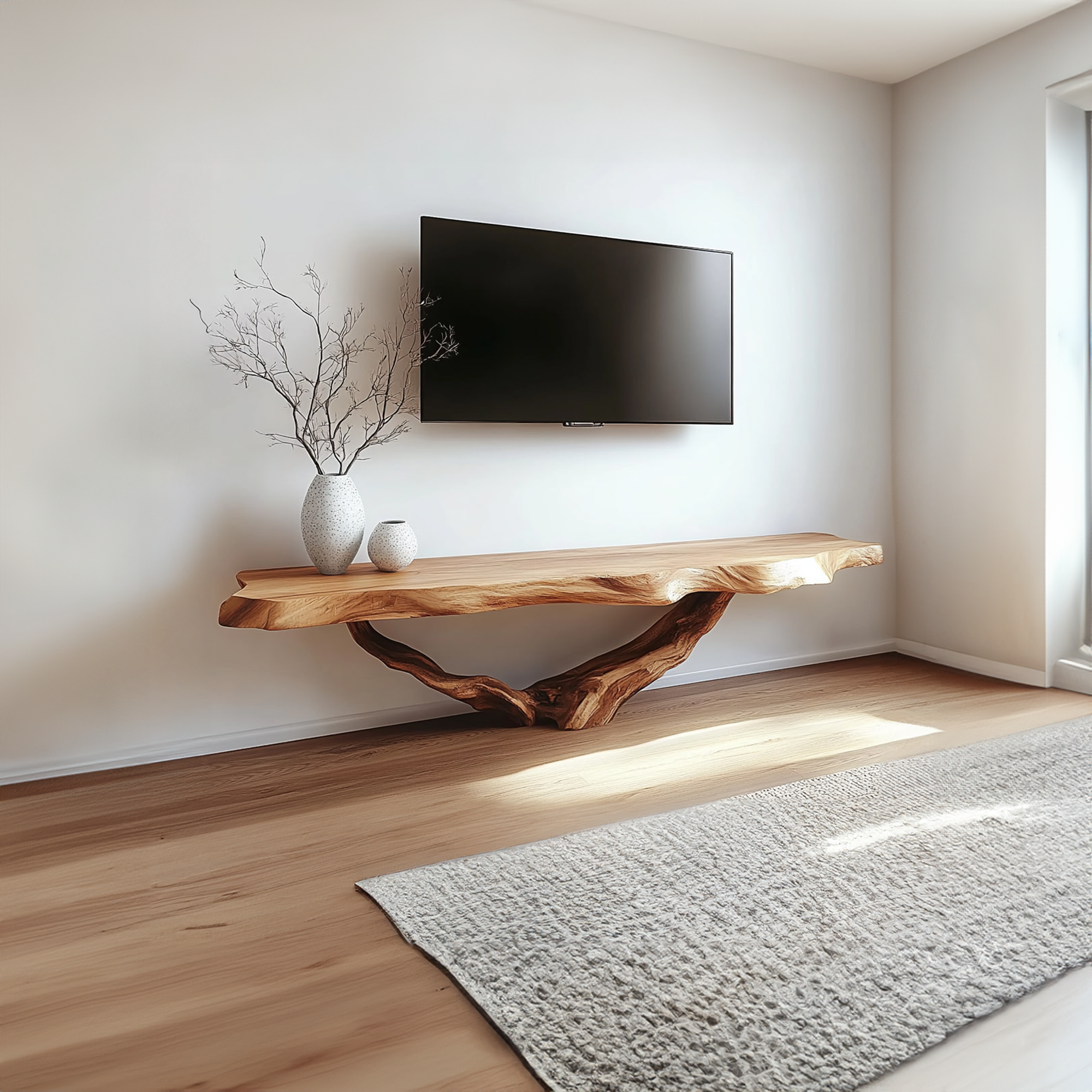
🧹 Maintenance Reality
You can get this serene, minimalist look for a fraction of the cost. Start by looking for a ‘live edge bench’ instead of a ‘console table’—they are often cheaper for the same size and style. Check places like Wayfair, Overstock, or even Facebook Marketplace, where you might find one for $150-$300. Pair it with simple, inexpensive white ceramic vases from IKEA or Target ($10-$20 each). Forage for some interesting dried branches from your own backyard (free!). Mounted under your existing TV, this setup can give you the exact same high-end vibe for under $400.
25. A Natural Wood Slab Headboard with Colorful Details
The single element that makes this bedroom design pop is the small, embroidered decorative pillow. The live edge headboard is beautiful and rustic, and the white bedding is calm and neutral, but it’s the pillow that injects personality and life into the scene. Its vibrant floral embroidery in red, blue, and green provides a concentrated dose of color and pattern that prevents the overall look from being too plain or monochromatic. It’s a small detail that does a lot of heavy lifting, bridging the gap between the rustic wood and the colorful striped blanket.
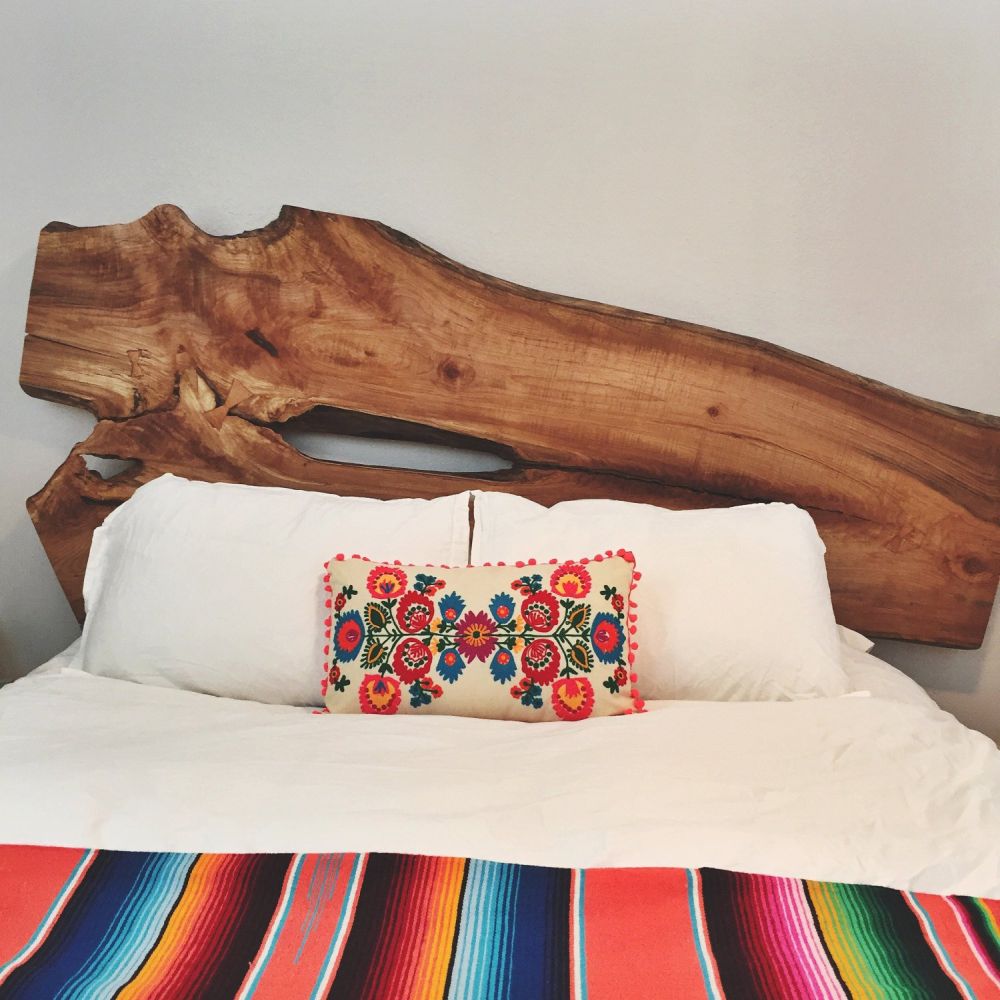
🔧 How-To Brief
Securing a heavy wood slab headboard to the wall is crucial for safety. Here’s how you do it right:
-
- Locate Studs: Use a stud finder to locate at least two (preferably three) vertical studs in the wall behind your bed. Mark them clearly.
- Choose Hardware: A French cleat is the best and safest method. It consists of two interlocking wooden or metal brackets with 45-degree angles.
- Attach Cleat to Wall: Screw one half of the French cleat securely into the wall studs. Use heavy-duty screws long enough to go through the drywall and deep into the studs.
- Attach Cleat to Headboard: Attach the other half of the cleat to the back of your wood slab headboard.
- Hang the Headboard: Simply lift the headboard and lower it so the two cleats lock together.
This method distributes the weight evenly and ensures it can’t be pulled away from the wall. Time: 1-2 hours. Cost: $20-$40 for a heavy-duty cleat.
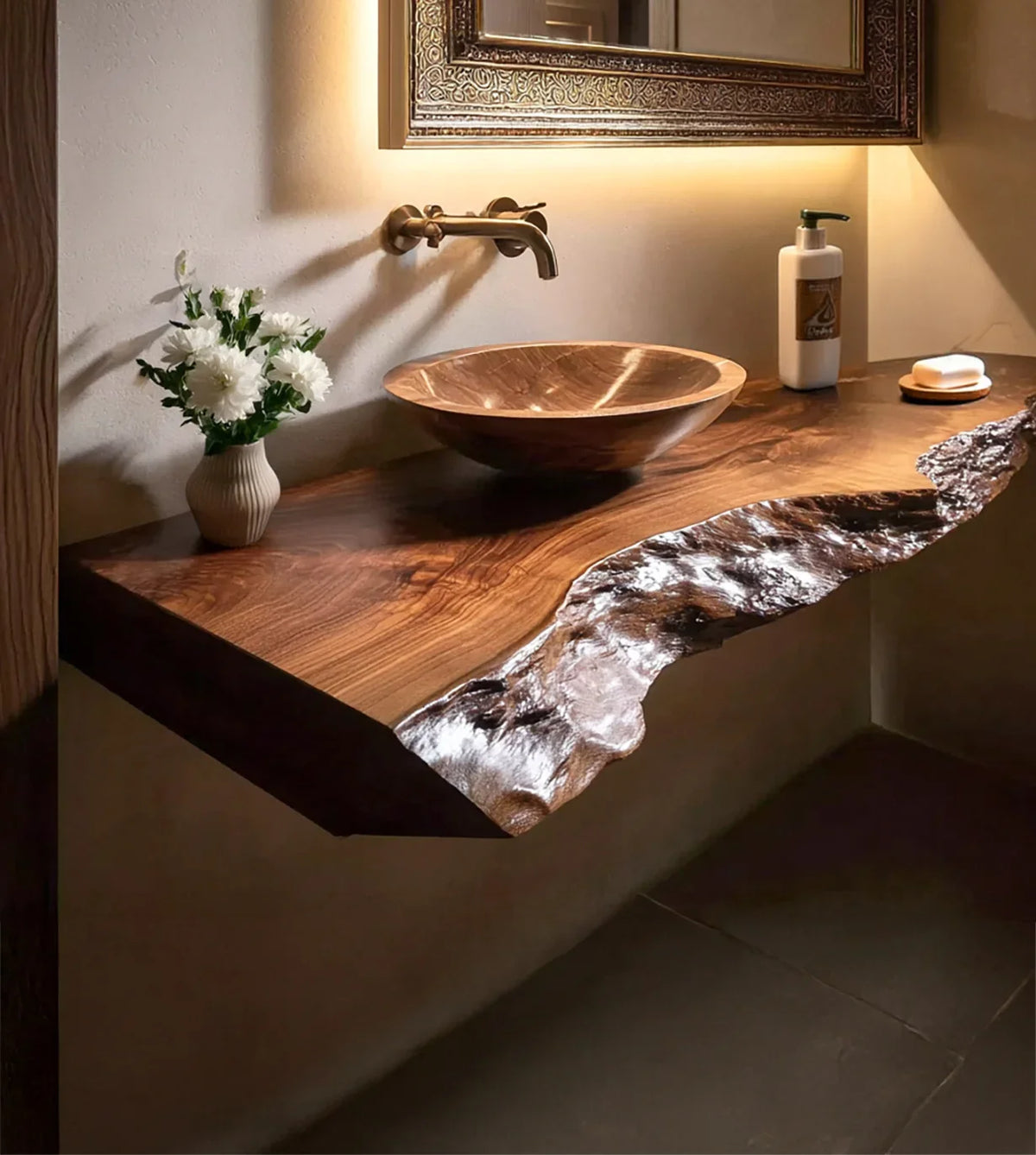
26. A Floating Live Edge Vanity with Backlit Mirror
Backlighting a mirror is a professional designer’s trick for adding instant luxury and ambiance to a bathroom. It creates a soft, halo-like glow around the mirror that provides gentle, flattering illumination without the harsh shadows of overhead lighting. More importantly, it highlights the texture of the wall behind it, turning a plain beige wall into a feature. You can achieve this by either buying a pre-made backlit mirror or by attaching waterproof LED light strips to the back of any standard mirror, about 2-3 inches from the edge.
📏 Scale Guide
This vanity setup feels so luxurious because it plays with different sheens and light sources. The live edge wood has a polished, satin finish that catches the light. The wall-mounted faucet has a rustic, matte brass finish that absorbs light. And the backlit mirror introduces a third layer of soft, diffused light. This sophisticated interplay of reflective, matte, and glowing surfaces creates a visual depth that feels incredibly rich and layered. It’s not just about the materials themselves, but how they interact with light.
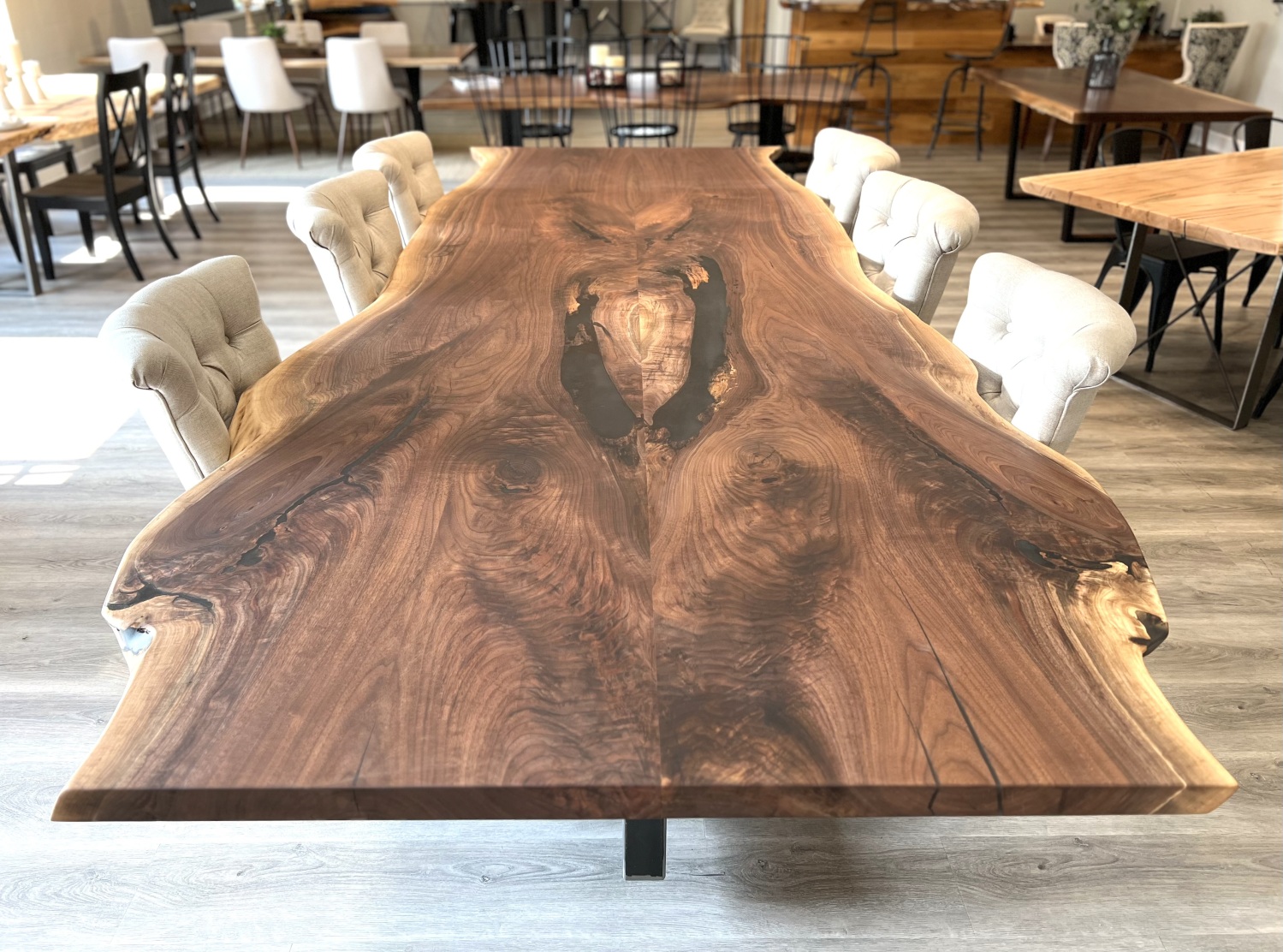
27. A Dark Live Edge Dining Table with an Epoxy River
The ‘epoxy river’ table had its first major peak a few years ago, often with bright blue, opaque resin. The 2026 evolution of this trend is far more sophisticated, as seen here. The epoxy is now darker, often black or a smoky grey, and more translucent. The goal is no longer a bright, contrasting ‘river,’ but a subtle, elegant accent that fills the natural void in the wood and enhances its shape. This version has much more staying power, reading as a custom detail rather than a flashy trend. It’s paired with classic upholstered chairs, which grounds it in timeless style.
🎯 What Makes It Work
A large dining table is a major purchase that defines a room. Before you bring home a statement piece like this, run through this checklist:
- Measure Your Space: You need at least 36 inches of clearance on all sides of the table to allow people to comfortably pull out their chairs and walk around. 42-48 inches is even better.
- Consider Your Chairs: Will your existing chairs fit? The tufted, upholstered chairs shown here are wide. Make sure you can fit the number of chairs you need.
- Check the Base: Is the metal base intrusive? Make sure it doesn’t interfere with legroom for people sitting at the table.
- Plan for Delivery: A solid wood slab table is incredibly heavy. Do you have a clear path for delivery, and will it fit through your doorways?
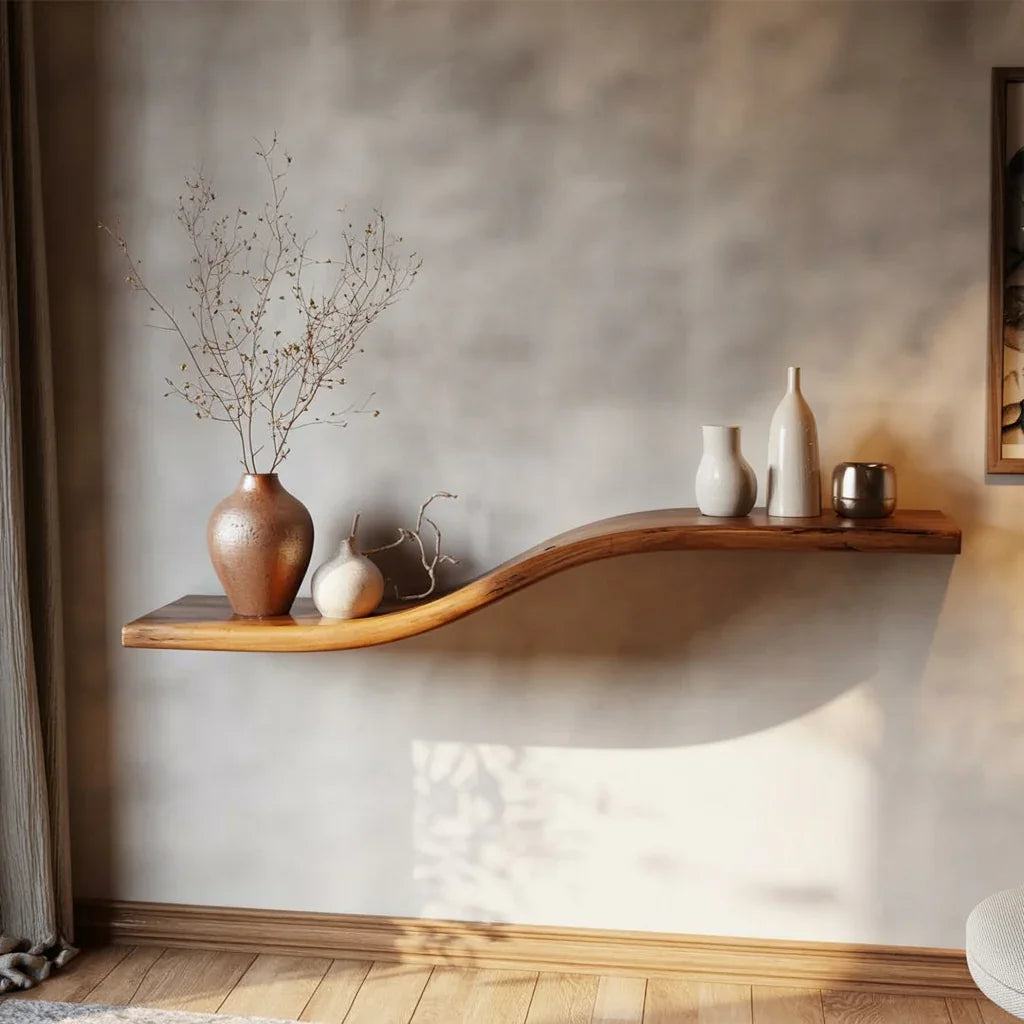
28. A Curved Floating Shelf on a Textured Gray Wall
The most compelling element here is the dramatic, sweeping curve on the left side of the floating shelf. It’s an unexpected and sculptural gesture that immediately captures your attention. A straight shelf in this location would have been perfectly fine, but the curve transforms it from a simple ledge into a piece of wall art. It defies the straight lines of the wall and the floorboards, creating a moment of organic, flowing energy. It proves that even a single shelf can be a powerful design statement if it has a unique form.
💸 Get This Look For Less
A floating shelf with a deep, dramatic curve like this can present a styling challenge. The curved portion isn’t as practical for holding items like books, which sit best on a flat surface. You’ll need to choose your decor carefully. This is the place for sculptural objects, vases, or trailing plants that can follow and accentuate the curve, rather than fight it. Think of it less as utilitarian storage and more as a dedicated display for a few special art objects. Its primary job is to look beautiful. This is a choice for an art-lover who prioritizes form above pure function.
Your Home’s Next Chapter is Written in Wood
Bringing a piece of live edge furniture into your home is about more than just a trend; it’s about connecting with natural materials and making a statement that’s uniquely yours. We hope these 28 ideas have sparked your creativity—now go make something beautiful!
Don’t forget to save your favorites to Pinterest to keep the inspiration flowing for your next project.