Let’s be honest, staring at your boring staircase can feel like a huge design roadblock. You scroll through endless photos, saving pins that feel both impossibly gorgeous and totally out of reach. We get it. That’s why we dove deep into the world of staircases, filtering through hundreds of designs to find what actually works for real homes.
This isn’t just a gallery of pretty pictures. We’re giving you 33 distinct, achievable ideas, from subtle cosmetic upgrades to full-scale architectural statements. You’ll find everything from sleek Modern and warm Farmhouse to timeless Traditional styles. Plus, we break down how to get these looks at different price points.
And stay until the end—we break down the most common mistakes that can ruin these looks. 📌 Save this to Pinterest for later—you’ll want to revisit these ideas.
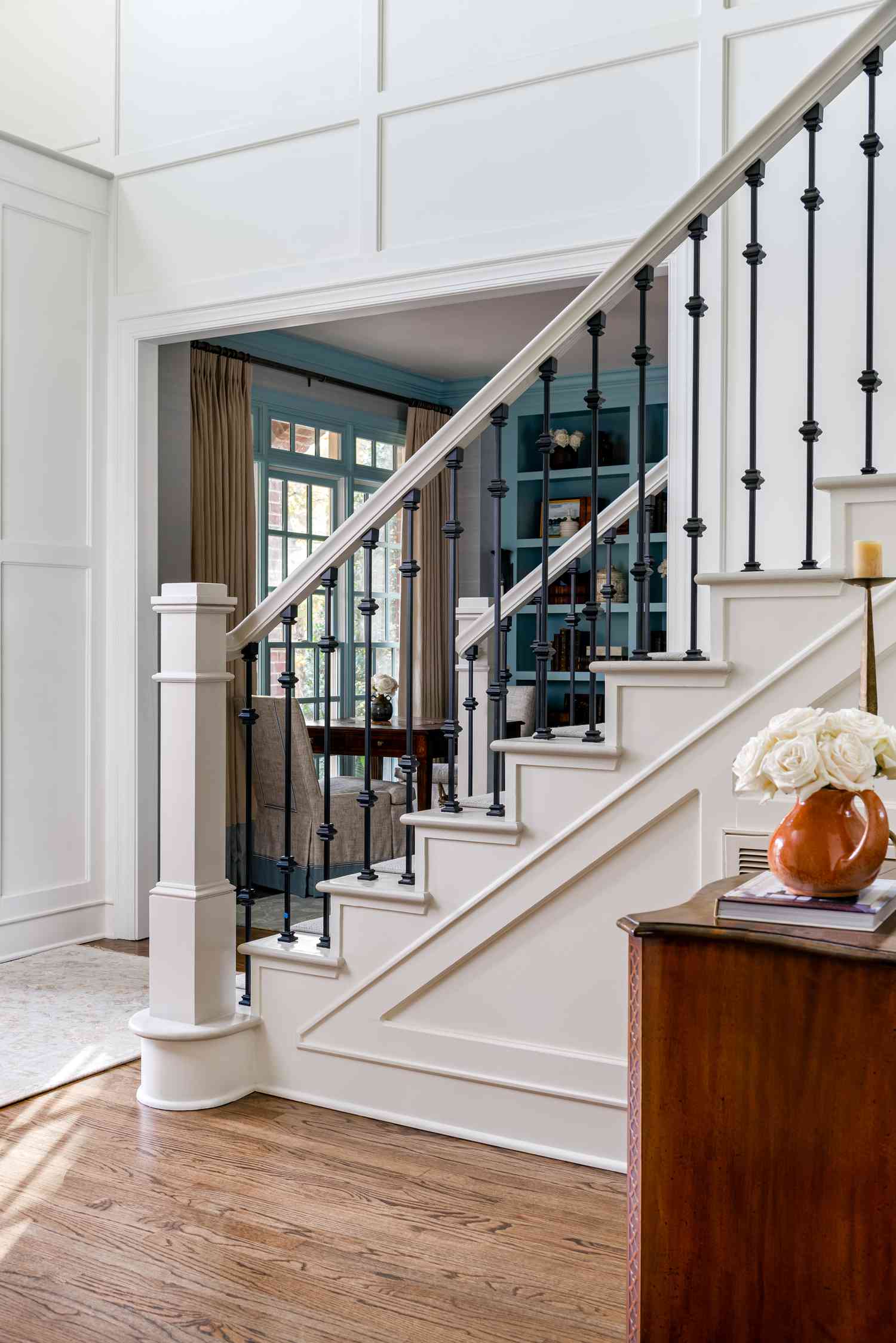
1. Classic White Paneling with Black Iron Balusters
This look is a masterclass in timeless contrast. The crisp white of the paneled staircase wall, newel posts, and handrail makes the intricate black iron balusters pop. It’s a classic pairing that feels both substantial and elegant. The detailed molding adds a layer of custom craftsmanship that works with the rich wood flooring to create a sense of history and permanence. It’s a combination that says ‘welcome home’ with confidence.
💰 Budget Breakdown
To ensure your iron balusters feel perfectly integrated, follow the rule of threes. Most classic designs use a repeating pattern of three balusters: two simple straight or twisted ones, followed by one with a more ornate ‘knuckle’ or basket detail. This creates a pleasing visual rhythm that guides the eye up the stairs without feeling too busy or monotonous. It’s a small detail that makes a huge difference.
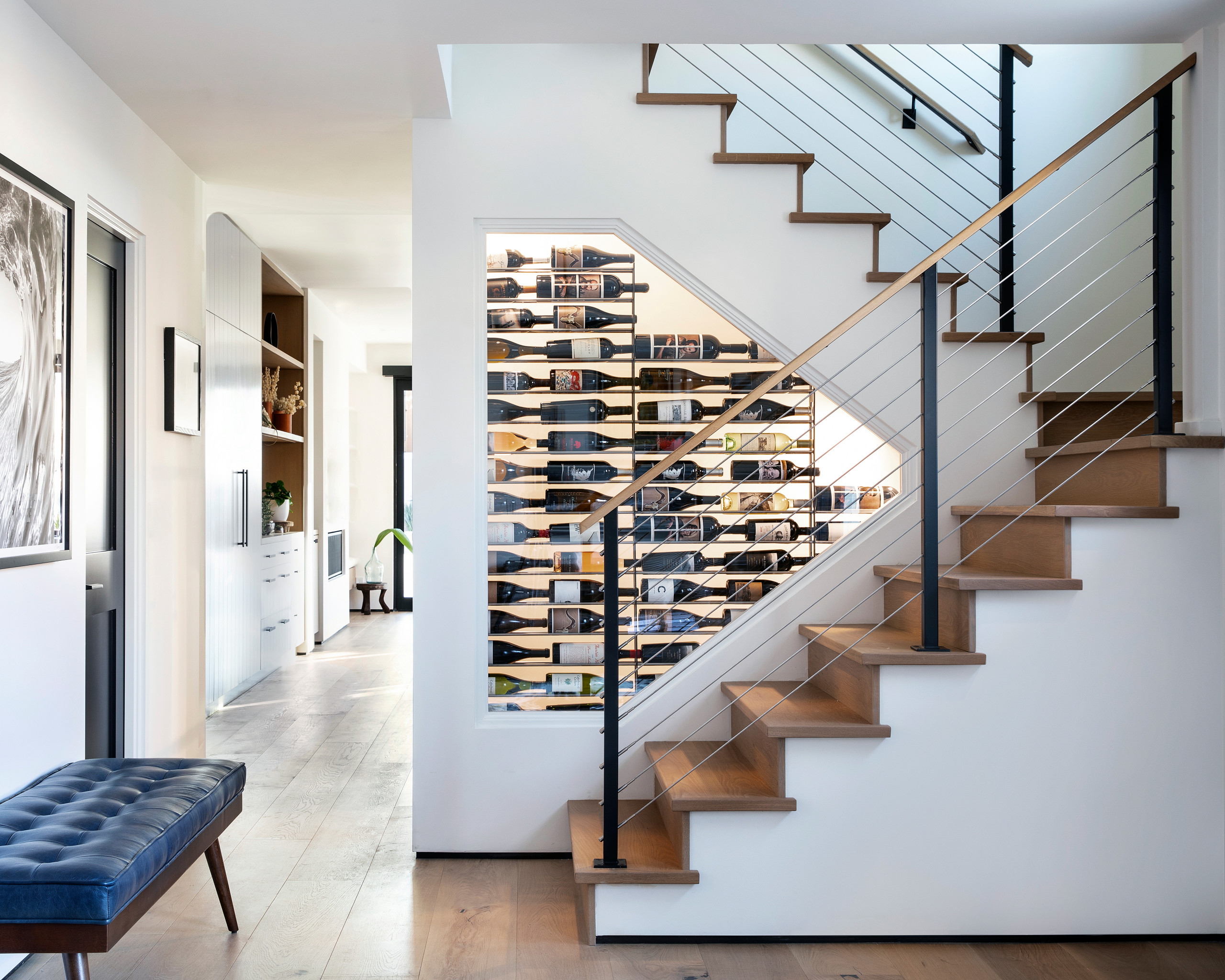
2. Modern Floating Staircase with Integrated Wine Display
The star of this show is unquestionably the built-in, illuminated wine rack. Take it away, and you have a very handsome modern staircase. But with it, the staircase transforms from a simple path into an experience and a destination. It’s a brilliant fusion of form and function, turning everyday circulation space into a stunning display feature. The way the light glows from within highlights the collection and adds a sophisticated ambiance to the entire room.
🔧 How-To Brief
A floating staircase with cable railings is a minimalist’s dream, but it’s not for a home with toddlers. The open risers and taut cables can pose a real safety concern for curious climbers and small children. Also, consider the upkeep of that gorgeous wine display. Dusting individual bottles and the illuminated shelving requires regular, careful attention. This is a stunning choice for an adult-focused household that values high style and is prepared for the maintenance it demands.
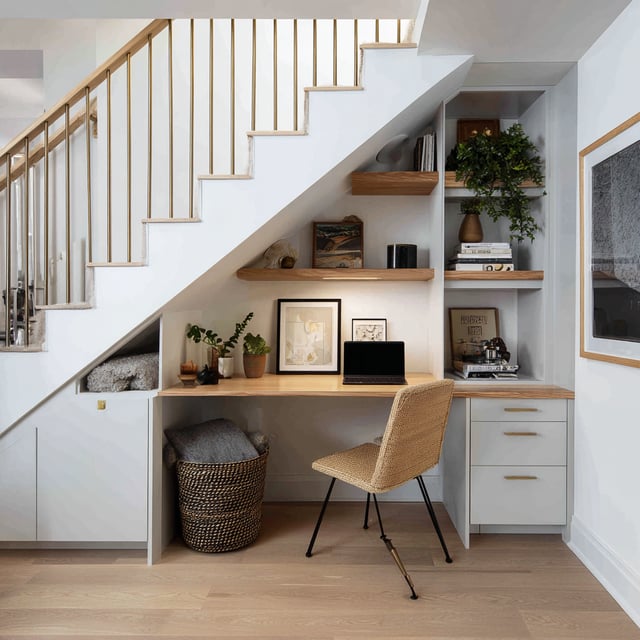
3. Under-Stair Home Office with Brass and Light Wood
This is how you claim that awkward under-stair triangle. It’s a perfect example of turning dead space into a highly functional and stylish nook. The key is integrating the desk and shelving seamlessly, making it feel like an intentional part of the home’s architecture rather than an afterthought. The light wood surfaces, paired with crisp white cabinetry and warmed by brass accents on the balusters and pulls, create a workspace that’s both serene and chic.
📏 Scale Guide
- Main Furniture (Desk, Chair, Cabinetry): $1,200 – $3,500
- Lighting (if needed): $150 – $400
- Decor & Accessories (plants, organizers): $100 – $300
- Staircase Finishes (new balusters/handrail): $800 – $2,500
- TOTAL: $2,250 – $6,700
- Budget Alternative: Use an IKEA desk system and floating shelves with a thrifted chair for under $500.
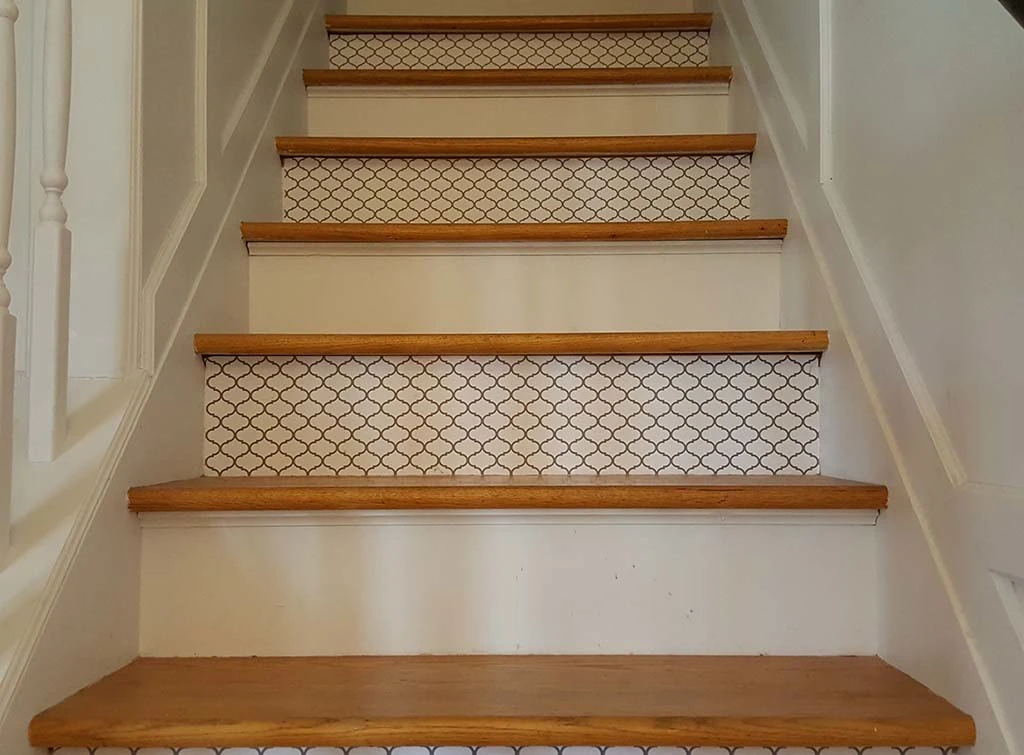
4. Patterned Stair Risers with Carved Wood Details
This design is delightfully simple. It’s about 70% classic structure (the light wood treads and traditional white carved banister) and 30% personality (the patterned wallpaper on the risers). The geometric grey and white quatrefoil pattern is just enough to add visual interest without overwhelming the space. You could easily change the math by swapping the wallpaper for a bolder color or a different pattern to shift the mood from classic to eclectic or modern.
🔥 Trending Context
You don’t need a custom staircase to get this look. You can find high-quality, peel-and-stick wallpaper featuring similar geometric patterns for about $30-$50 per roll. Measure your risers, cut the wallpaper to size, and apply it for a huge impact on a tiny budget. For the treads, a good sanding and a fresh coat of polyurethane on existing wood can make them look brand new, keeping the whole project under $150.
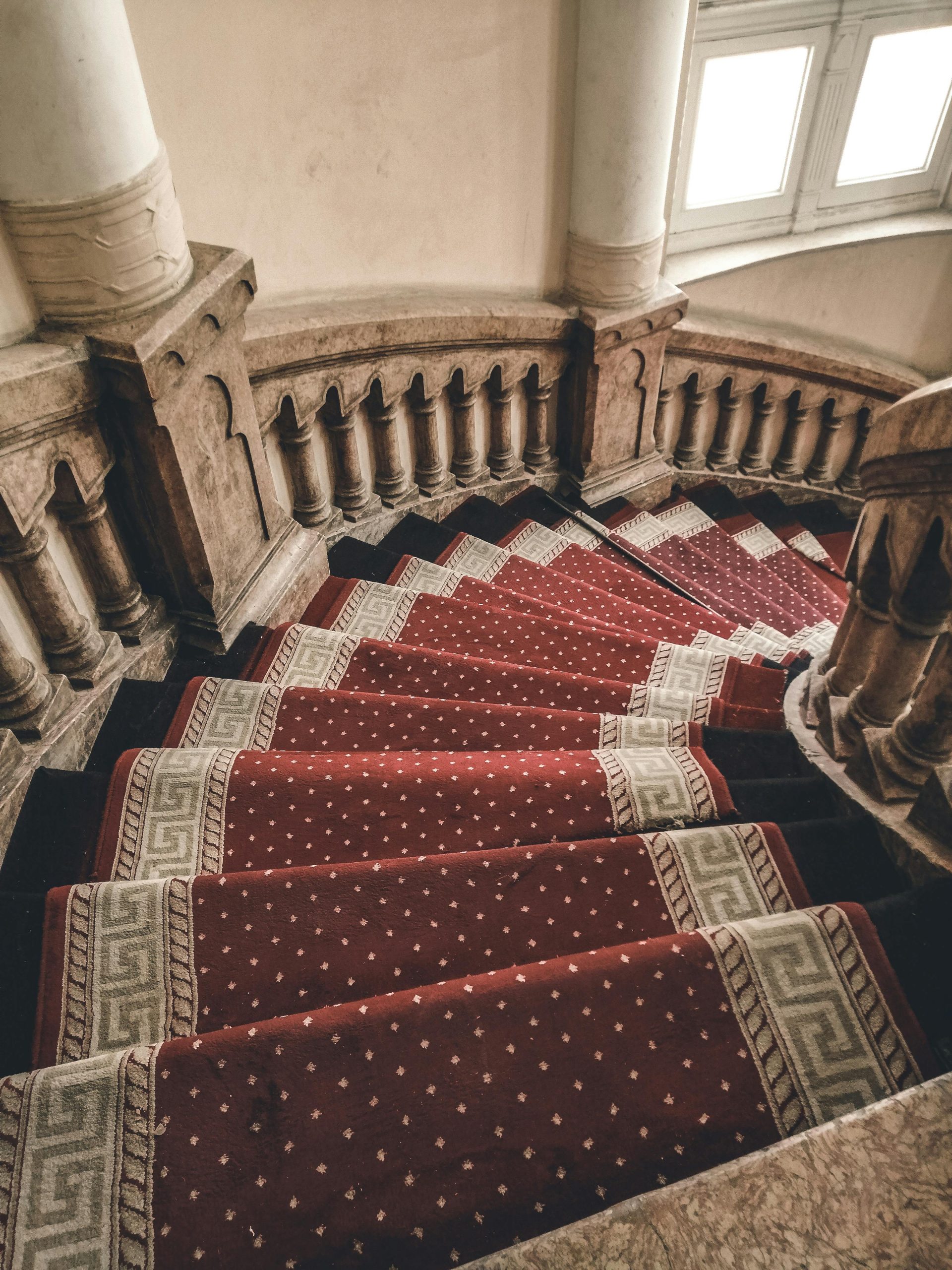
5. Curved Staircase with Ornate Balustrade and Red Runner
What makes this staircase feel so grand is the powerful use of contrast and material. The dark, rich red of the runner creates a bold, luxurious path that draws your eye upward. This color is balanced by the light, almost monumental feel of the ornate stone balustrade. The intricate carvings and classical column shapes of the balustrade provide a textural richness that simple wooden spindles could never achieve. It’s a dialogue between soft textile and hard stone.
📐 Style Math
In a world of minimalist design, there’s a growing appetite for ‘grandmillennial’ style and historic charm, and this staircase is a perfect example. It leans into ornament and tradition, rejecting sterile modernism for something with weight and history. Homeowners on Pinterest are increasingly searching for ways to add character and a sense of permanence to their homes, and an ornate, well-crafted staircase is a direct route to achieving that.
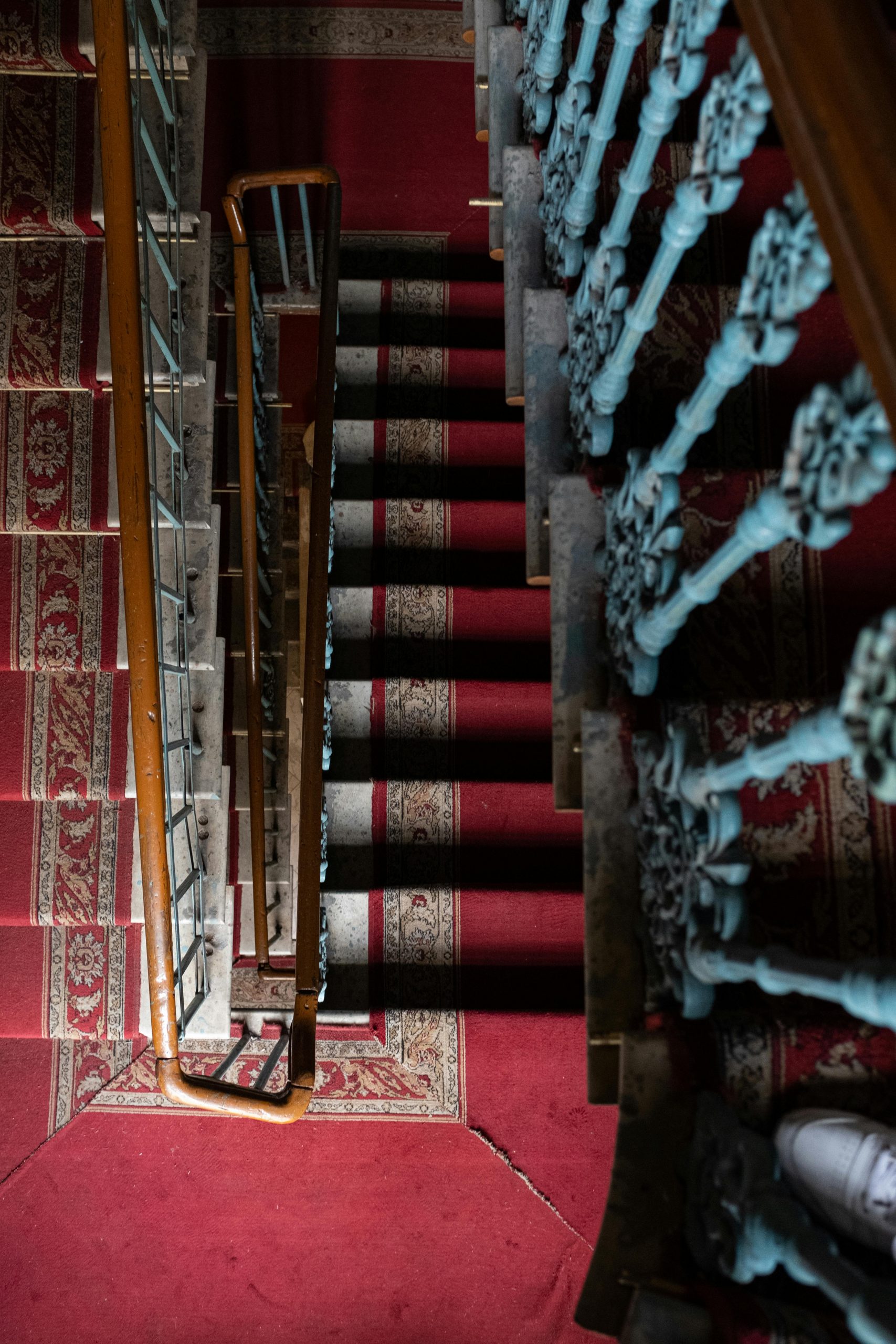
6. Historic Staircase with Dual Railings and Red Carpet
The most fascinating element here is the dual railing system. On one side, you have the ornate, light blue wrought iron balusters that speak to the building’s history and decorative past. On the other, a simple, functional wooden handrail. This pairing tells a story of evolution—of a building being updated over time while still honoring its original bones. It’s a unique feature that gives the staircase an incredible amount of character and a sense of authenticity.
🧹 Maintenance Reality
A vintage staircase like this comes with its own set of responsibilities. That beautiful ornate ironwork is a dust magnet and will need regular, detailed cleaning with a soft brush to keep it looking sharp. The patterned carpet, while great at hiding minor dirt, will require deep cleaning annually, especially in a high-traffic area. Check for any loose balusters or handrail sections, as historic elements can loosen over time and may need professional tightening.
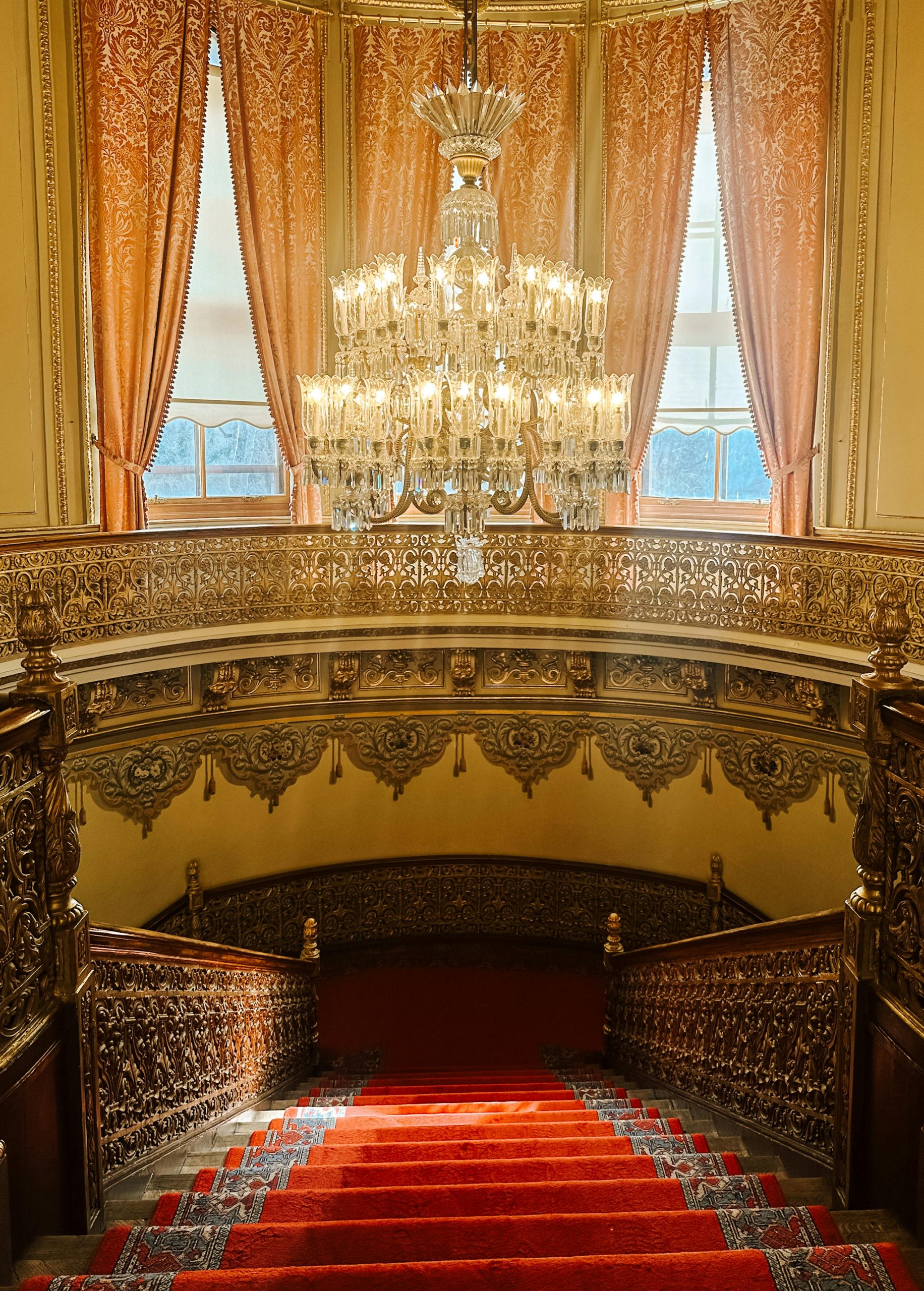
7. Grand Curved Staircase with Crystal Chandelier and Gold Details
A design statement this opulent needs room to breathe. This look is best suited for a grand entryway or a two-story great room with a minimum ceiling height of 18-20 feet. The curved sweep of the stairs requires a significant footprint, easily 150-200 square feet of floor space just for the staircase itself. Anything less, and the grandeur will feel cramped and out of place. It’s a look that’s all about scale and proportion. Compare this to the clever use of space in Idea #3.
⭐ The One Thing
Let’s be real: this level of opulence is a commitment. A multi-tiered crystal chandelier requires professional installation (and professional cleaning). The combination of a vibrant red carpet, ornate gold balustrades, and heavily carved wood means this staircase will dictate the decorating style for the entire space. It’s not a feature you can easily design around; it *is* the design. Be prepared to embrace a maximalist, traditional aesthetic throughout.
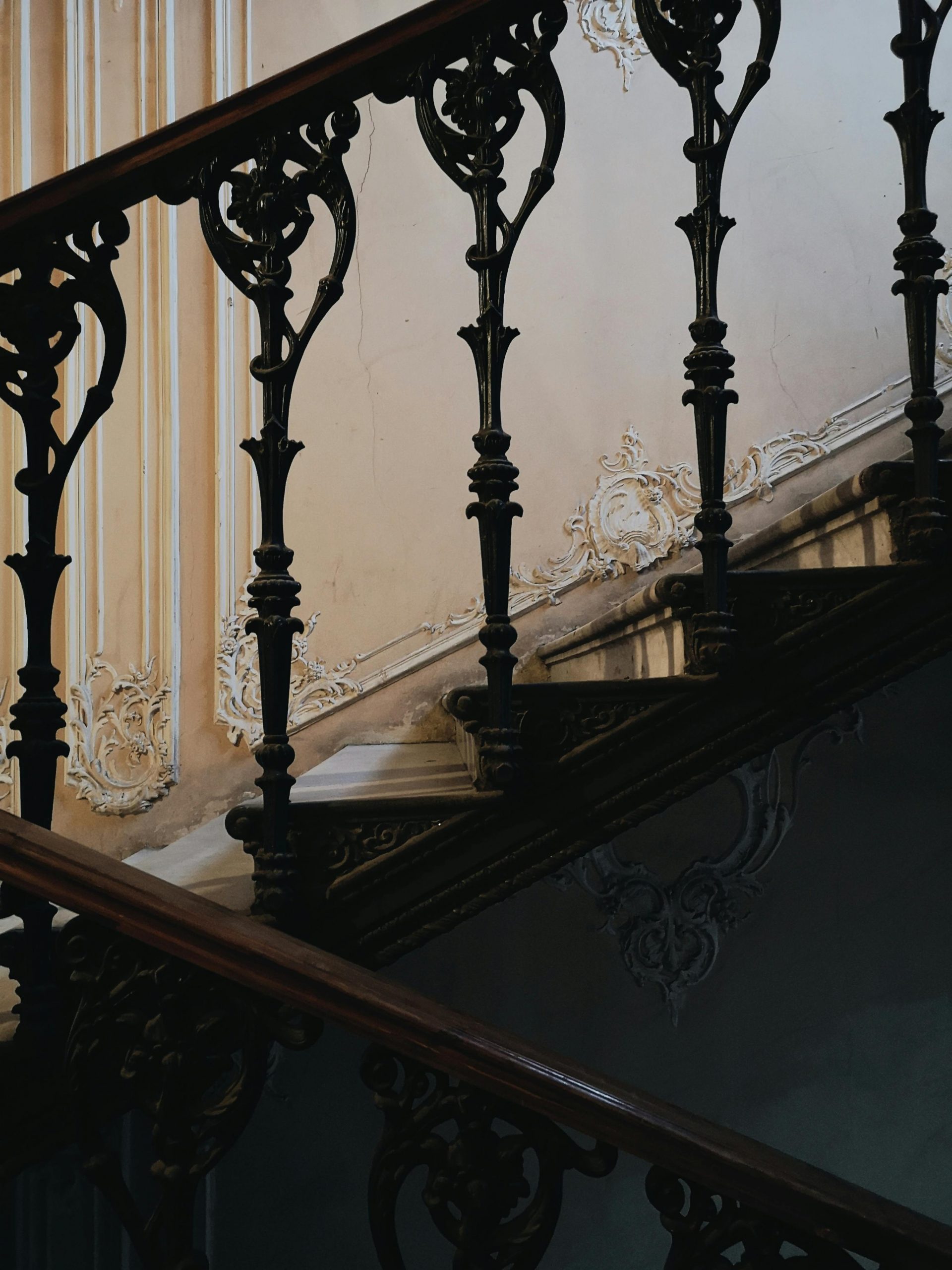
8. Ornate Wrought Iron Balustrade with Neoclassical Wall Details
This is all about texture on texture. The design succeeds by layering intricate details without becoming chaotic. The delicate, cream-colored neoclassical moldings on the wall provide a soft, historical backdrop. Against this, the dark, heavy wrought iron of the balustrade offers a strong, graphic counterpoint. The eye is drawn to the interplay between the wall’s low-relief pattern and the three-dimensional twisting and scrolling of the ironwork. The distressed finish on the wall adds another layer of age and depth.
💡 Designer Tip
When working with ornate elements, lighting is everything. To bring out the beautiful details in both the wall moldings and the ironwork, use multiple light sources. A chandelier or overhead light provides general illumination, but wall sconces placed strategically along the staircase wall will create soft shadows that highlight the relief in the moldings and make the balustrade’s silhouette even more dramatic. Aim for warm-temperature bulbs (2700K) to enhance the historic feel.
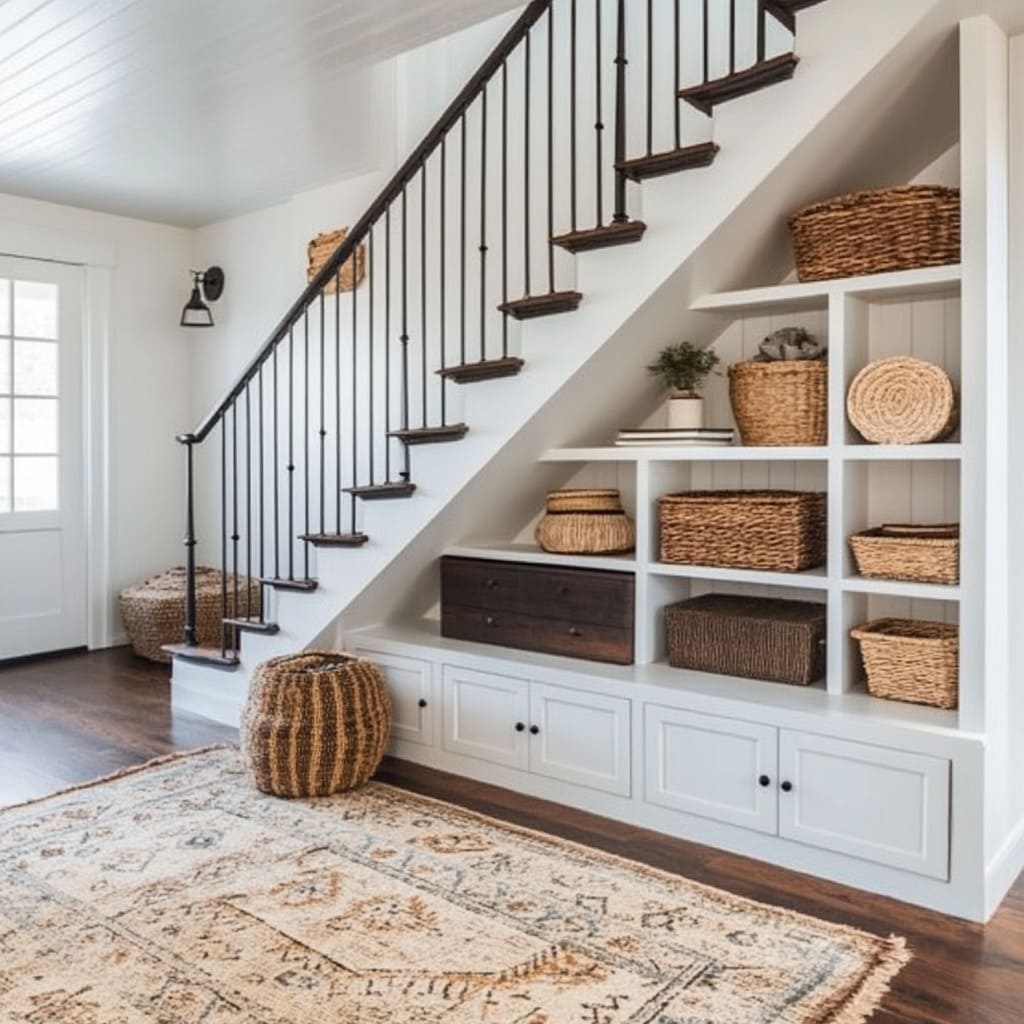
9. Smart Under-Stair Storage with Woven Baskets
This idea is a masterclass in making storage beautiful. The combination of open shelving for decorative items and closed shaker-style cabinets for hiding clutter is incredibly practical. Using woven baskets is a genius move—they add warmth and texture, breaking up the wall of white cabinetry while keeping smaller items neatly corralled. The mix of cabinets, drawers, and open space creates a custom, high-end look. It’s far more interesting than just a bank of identical doors, echoing the smart use of space we saw in Idea #3.
⚠️ Real Talk
- Main Structure (Cabinets, Drawers, Shelves): $2,000 – $6,000 (custom); $800 – $2,500 (semi-custom/IKEA hack)
- Hardware (pulls, knobs): $100 – $400
- Woven Baskets: $150 – $500
- Countertop (if applicable): $300 – $1,000
- TOTAL: $2,550 – $7,900
- Budget Alternative: Use multiple IKEA KALLAX or BILLY bookcase units configured to fit the space, combined with their branded storage boxes, for a similar effect costing around $400-$700.
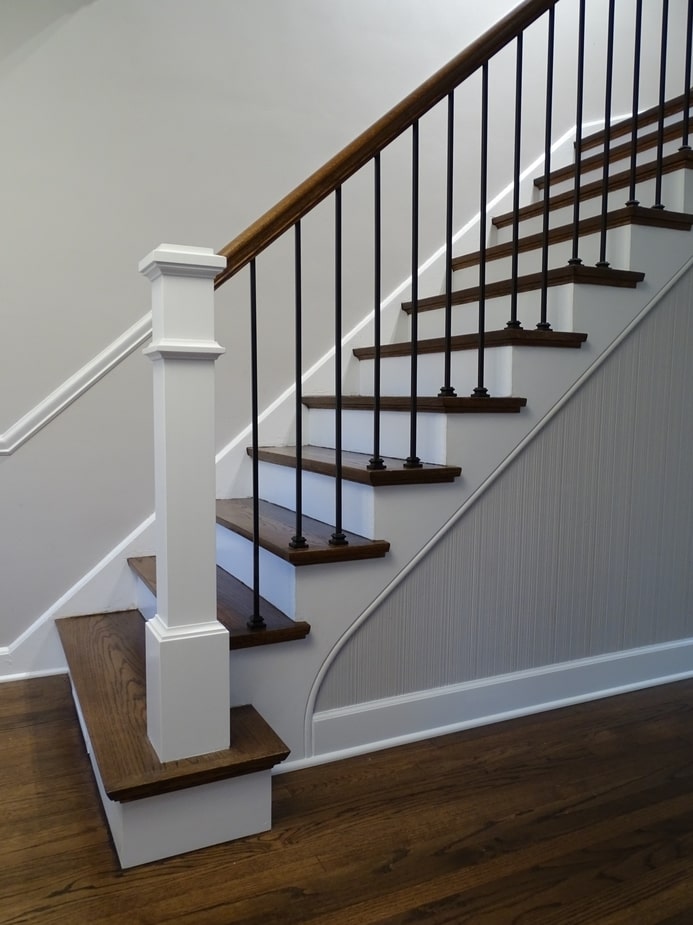
10. Traditional Staircase with Dark Treads and Beadboard Paneling
Here’s the formula for this crisp, traditional look: 40% dark wood, 50% clean white, and 10% black metal. The dark stained treads and handrail provide a rich, grounding element, while the white risers, newel post, and beadboard-style paneling create a bright, clean canvas. The slender black iron balusters add a touch of graphic definition without the heaviness of wood. You could tweak the formula by painting the handrail black to match the balusters for a more modern farmhouse vibe.
✅ Before You Start
Contrasting white risers with dark treads is a beautiful, classic look, but be prepared for scuff marks. The white-painted surface of the riser is the part of the stair you’re most likely to kick with the toe of your shoe as you ascend. This means regular touch-ups with paint will be necessary to keep them looking crisp and clean. Using a high-quality, durable semi-gloss or satin paint will make them easier to wipe down.
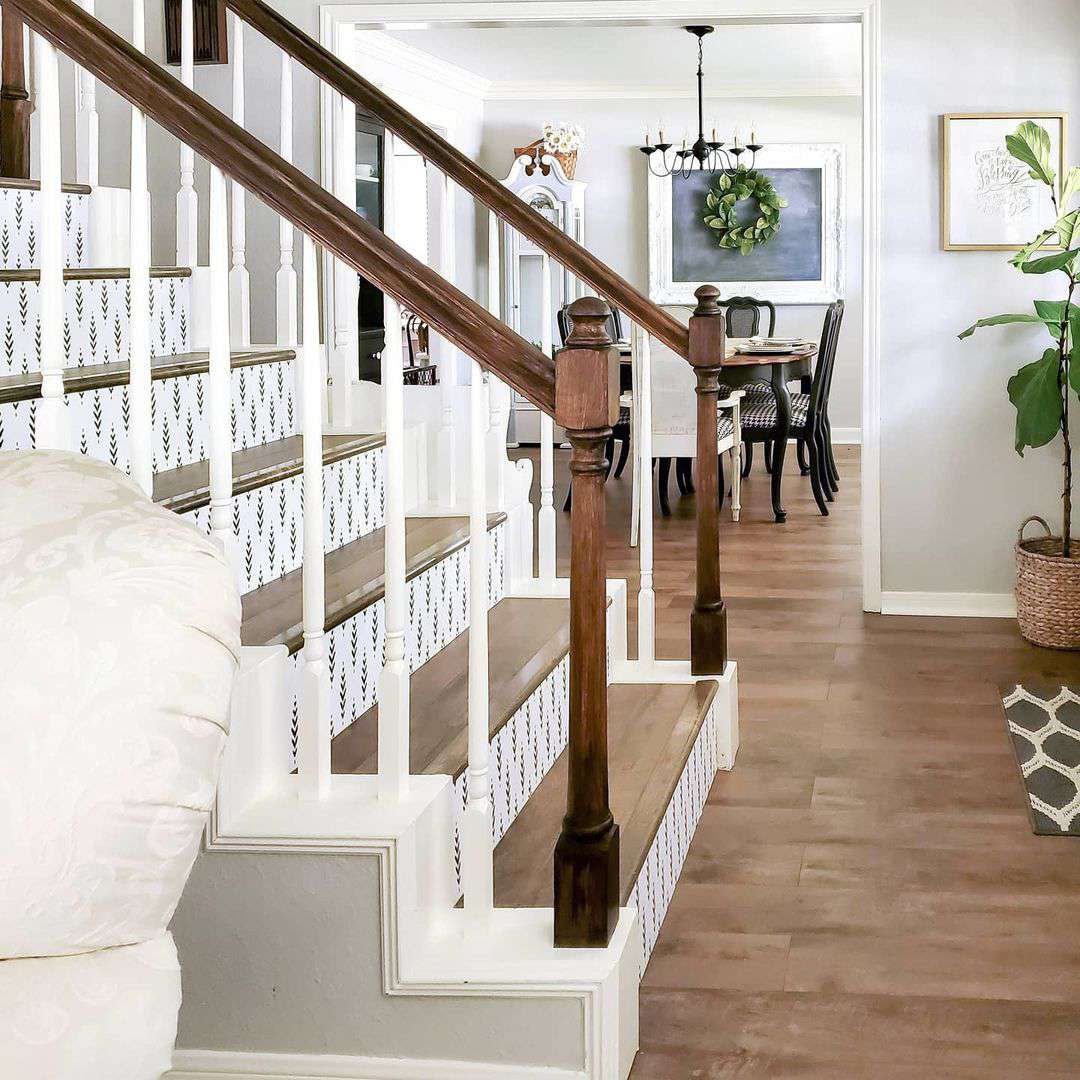
11. Patterned Risers with a Dark Wood Handrail
The decorative arrow-like pattern on the stair risers is what gives this otherwise classic staircase its personality. It’s a small detail that makes a huge impact, turning the functional act of climbing stairs into a moment of design discovery. Without this pattern, the staircase would be perfectly nice, but perhaps a bit generic. With it, the staircase feels unique, custom, and thoughtfully designed, proving that you don’t need a massive architectural gesture to create a memorable space.
💸 Get This Look For Less
This is an incredibly DIY-friendly look. Instead of wallpaper, you can achieve this effect with wall stencils and a small can of paint for less than $50. You can find thousands of stencil patterns online. Simply paint your risers white, let them dry completely, and then use a stencil and a dark sample-pot paint to add the pattern. It’s a weekend project that delivers a high-end, custom look for a fraction of the cost. A similar concept is seen in Idea #4 but with a different pattern.
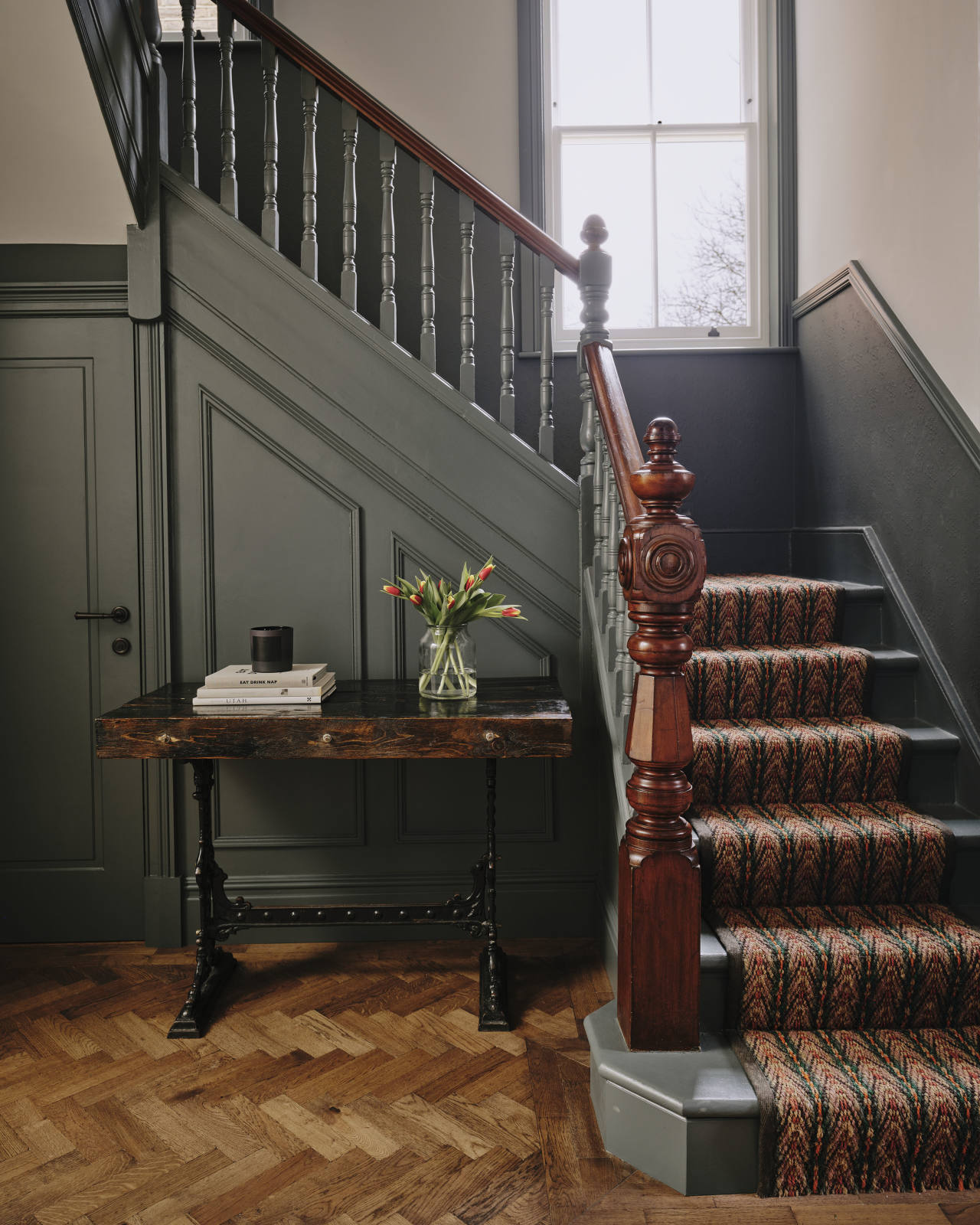
12. Dark Green Paneled Staircase with a Patterned Runner
This design feels so inviting because of its masterful layering of color and texture. The dark green wall paneling creates a deep, moody, and sophisticated backdrop that feels both traditional and very current. This rich color makes the warm tones of the mahogany newel post and the herringbone wood floor pop. The patterned runner then ties everything together, pulling in the green, brown, and black, while adding a dash of orange for warmth. It’s a confident, cohesive, and incredibly cozy look.
🎯 What Makes It Work
A dark, rich paint color like this green is stunning, but it will show dust and scuffs more readily than a lighter color. Regular dusting of the wall paneling, especially the ledges and crevices, will be key. A patterned runner is excellent at hiding daily dirt, but be sure to vacuum it weekly. The biggest commitment is the herringbone wood floor; while durable, it’s best to use furniture pads under the console table to prevent scratches.
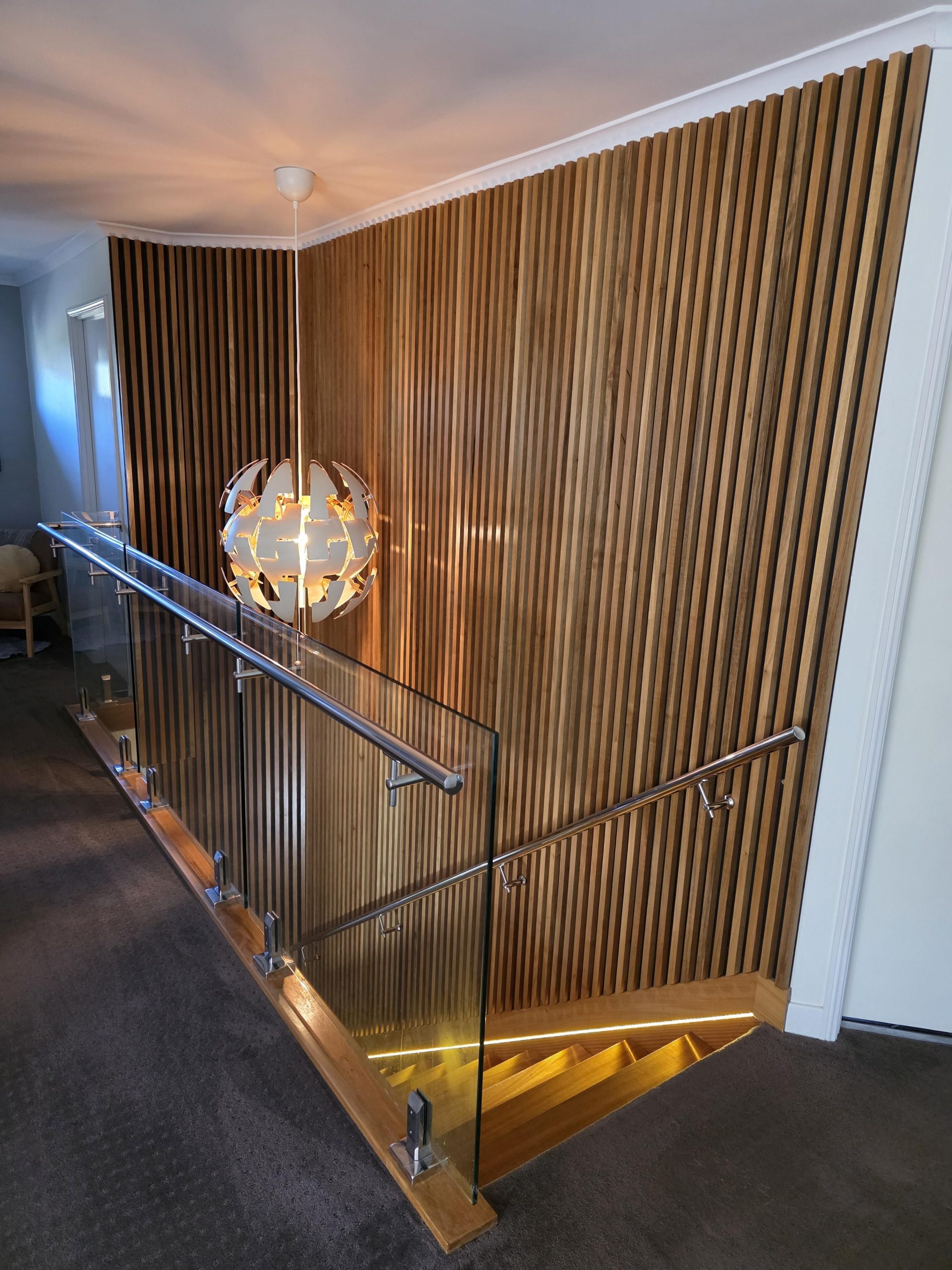
13. Modern Wooden Slat Wall with Glass Railing
To get the most out of a wooden slat wall, lighting is non-negotiable. Don’t just rely on overhead light. The secret to making the texture pop is integrating LED strip lighting, either along the top or bottom of the wall or, as seen here, tucked under the stair treads. This technique, called ‘light washing’ or ‘grazing,’ casts light across the surface at a sharp angle, creating dramatic shadows that highlight the depth and rhythm of the slats. Use a diffuser channel for a smooth, dot-free glow.
💰 Budget Breakdown
Vertical wood slats are everywhere right now, from residential interiors to high-end commercial spaces. This trend, part of the larger ‘Japandi’ and ‘Biophilic Design’ movements, is about bringing natural materials and textures indoors to create a sense of calm and connection to nature. The clean lines of the slats offer a modern look, while the wood itself provides warmth, making it a versatile element that’s likely to have more staying power than other more fleeting trends.
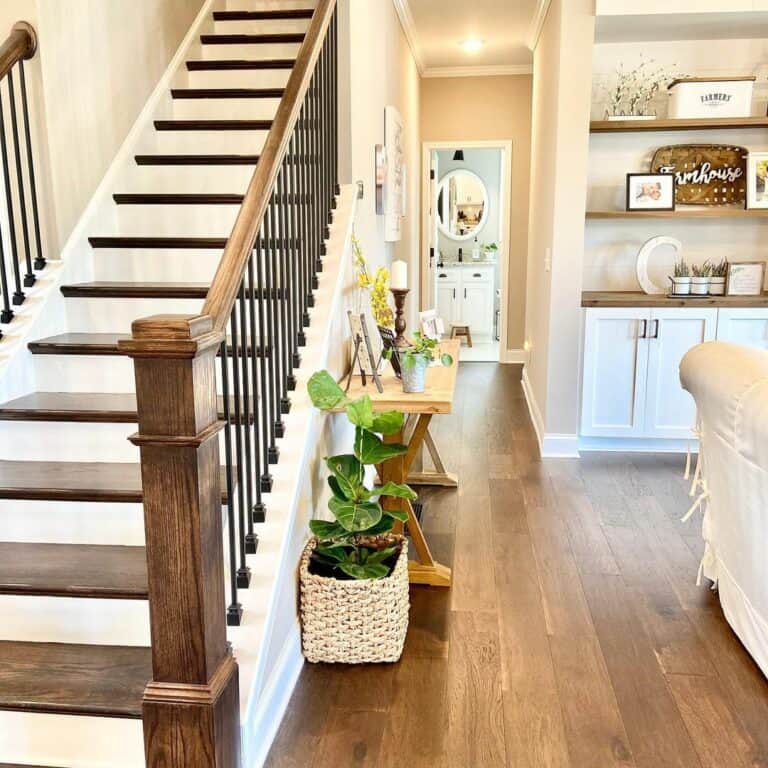
14. Dark Wood Treads and Handrail with Black Iron Balusters
The enduring appeal of this staircase comes from a simple, balanced equation: 60% warm, light surfaces (the beige walls and white risers) + 30% rich, dark structure (the wood treads, handrail, and newel post) + 10% sharp, graphic detail (the black iron balusters). This formula creates a look that feels both airy and grounded. The large percentage of light colors keeps the entryway feeling bright and spacious, while the dark wood adds warmth and a sense of quality craftsmanship.
🔧 How-To Brief
Dark wood treads are beautiful, but they are unforgiving when it comes to showing dust, pet hair, and light-colored debris. If you have a fluffy white dog or live in a dusty area, be prepared to Swiffer or vacuum these stairs almost daily to keep them looking their best. On the plus side, dark-stained hardwood is generally durable and can be refinished down the road, but the daily maintenance is a real consideration for busy households.
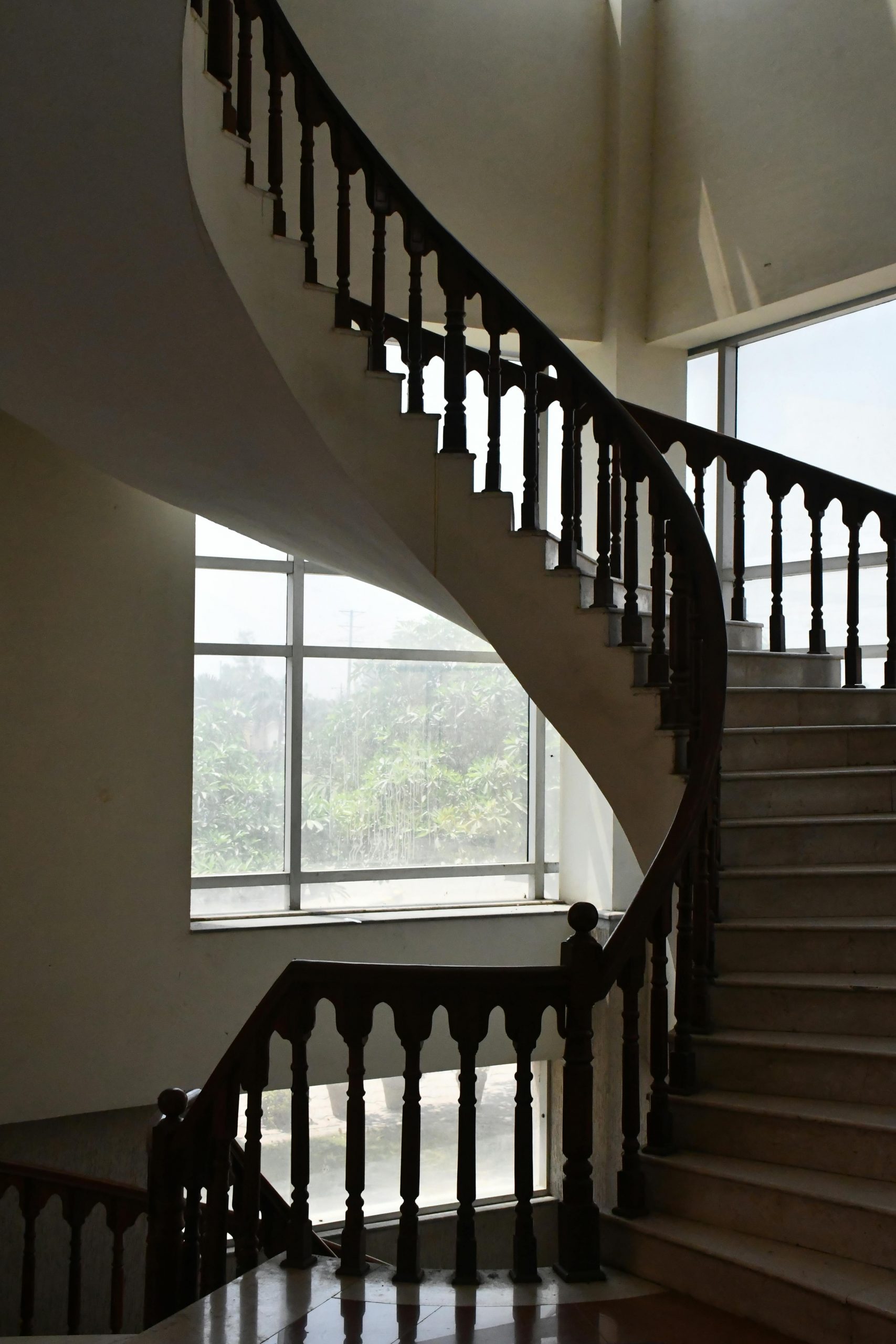
15. Classical Curvilinear Staircase with Natural Light
The single element that elevates this staircase from beautiful to breathtaking is the massive, wall-sized window. It does more than just light the space; it integrates the staircase with the outdoors, making the view of the greenery a central part of the design. The elegant curve of the stairs and the dark wood balustrade are lovely on their own, but when flooded with natural light and framed by the architecture of the window, they become truly spectacular.
📏 Scale Guide
A grand, curvilinear staircase demands a grand space. This isn’t a design for a standard home. You’ll need a two-story entryway with a footprint of at least 15 feet by 15 feet to accommodate the graceful sweep. The ceiling height should be a minimum of 18 feet to prevent the staircase from feeling overwhelming. This design is about creating a sense of drama and arrival, and that requires vertical and horizontal volume to be effective. It shares the need for space with Idea #7, but with a much lighter, airier feel.
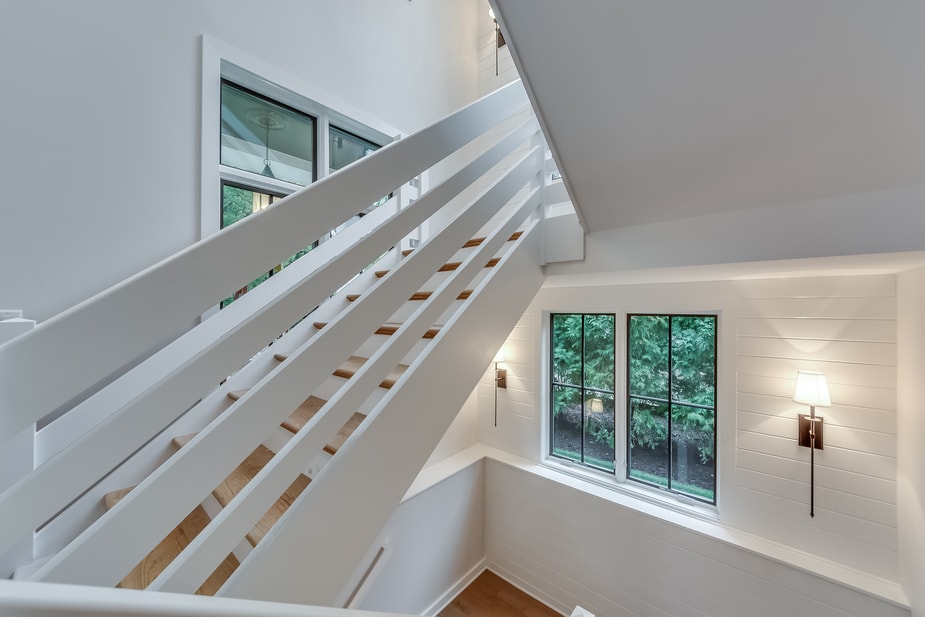
16. Bright White Staircase with Horizontal Balusters
This staircase feels so incredibly bright and open thanks to the repetition of clean, horizontal lines. The numerous white balusters create a strong linear pattern that draws the eye upward and makes the space feel wider. This effect is mirrored in the shiplap wall paneling on the lower level. By keeping the color palette strictly to white and natural wood, the design maximizes the light pouring in from the large black-framed windows, creating a crisp, modern, and airy atmosphere.
🔥 Trending Context
When using horizontal balusters, code compliance is critical. Building codes typically state that a 4-inch sphere should not be able to pass through any opening. With horizontal designs, this can inadvertently create a ‘ladder effect’ that might be a concern for families with young children. To mitigate this and still get the look, consider using plexiglass panels installed behind the balusters. This maintains the open, linear aesthetic while eliminating the climbable gaps.
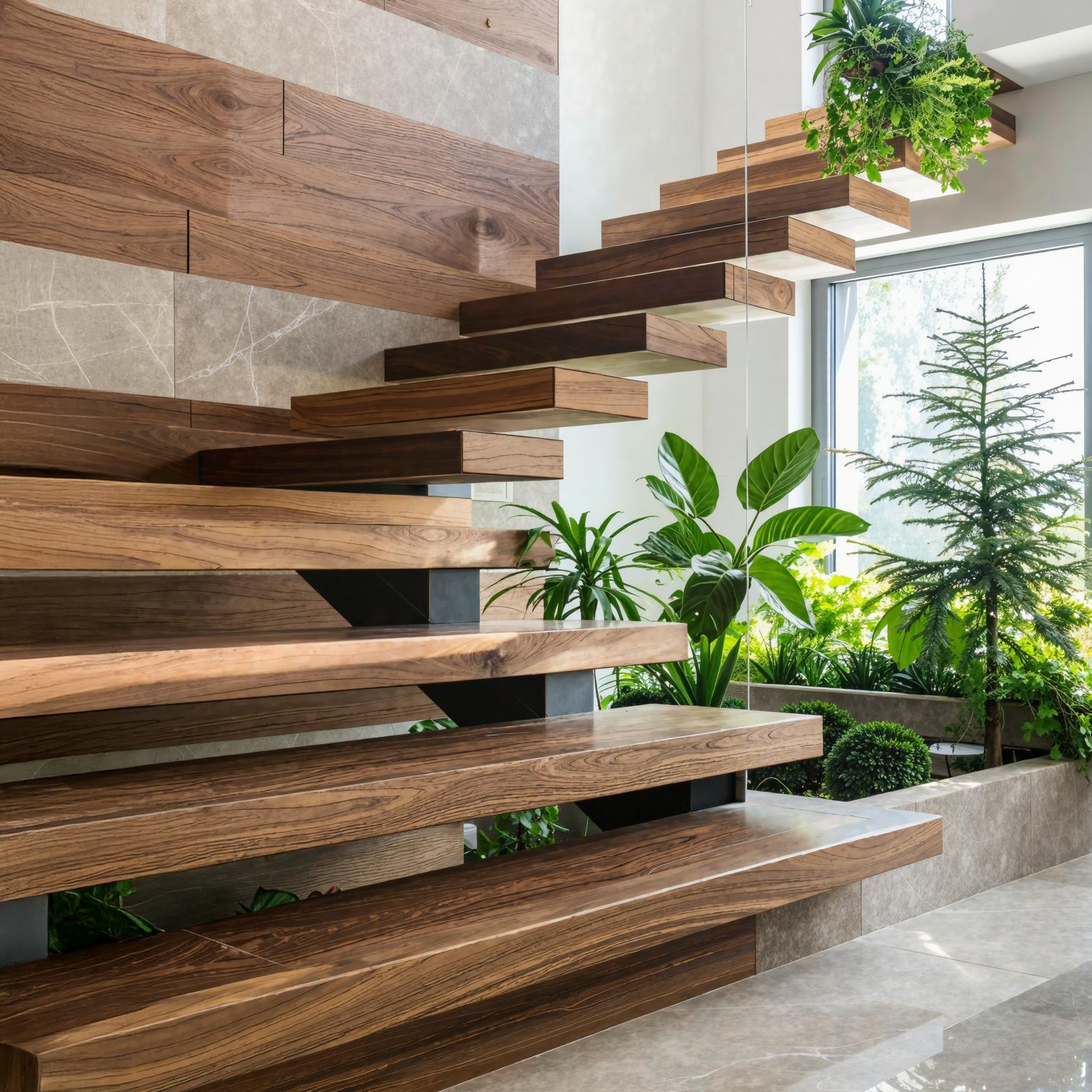
17. Floating Wooden Staircase with Integrated Planter Walls
The integration of living plants is what makes this design truly special. This isn’t just a staircase with a few potted plants nearby; the planters are built directly into the surrounding walls, blurring the line between architecture and nature. This biophilic approach turns the act of climbing the stairs into a journey through a lush, green space. The combination of floating wood treads, cool gray marble, and vibrant green foliage creates a calming, spa-like atmosphere that is utterly unique.
📐 Style Math
Integrated planters are a stunning feature, but they require a thoughtful plan for care. Ensure there’s proper drainage and waterproofing to protect the surrounding wall materials like the wood planks and marble. Access for watering and pruning is also key; you don’t want to be perched precariously on a step to reach a thirsty plant. Consider installing a self-watering irrigation system to make maintenance much more manageable. Also, choose plants that thrive in the specific light conditions of your stairwell.
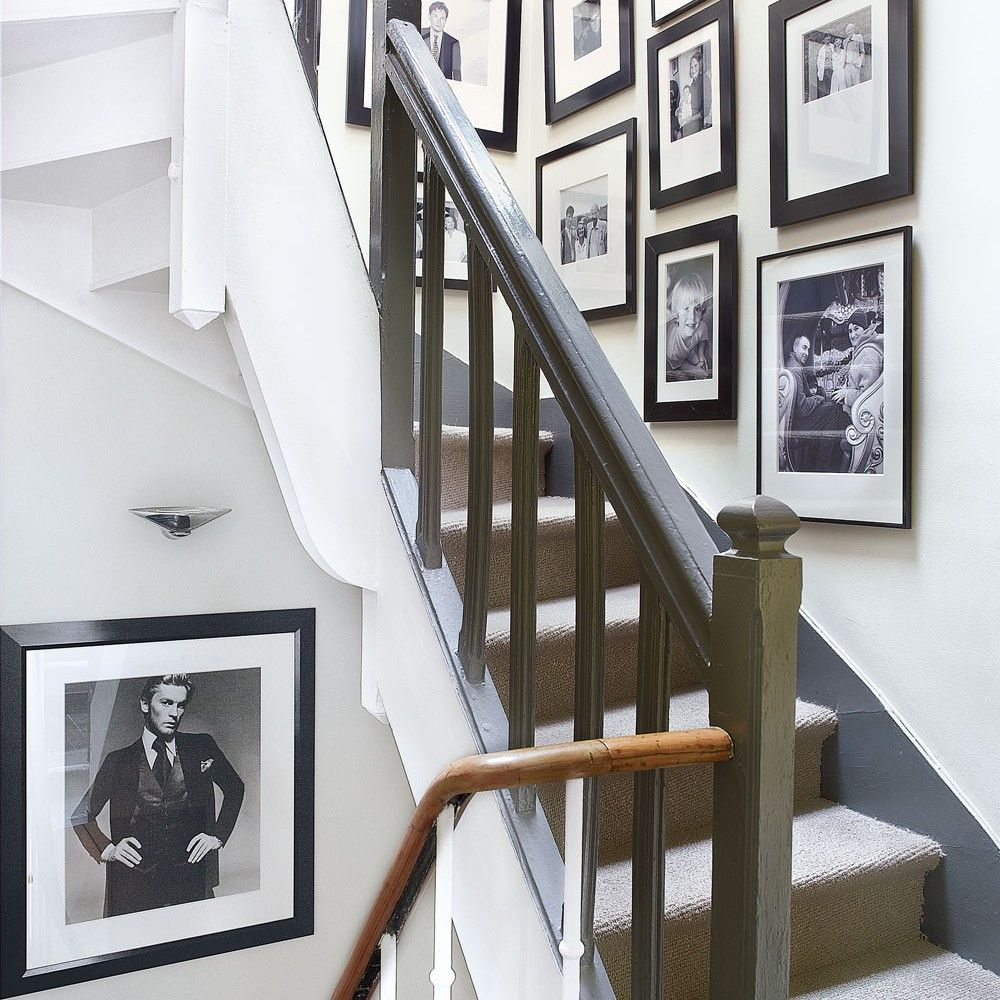
18. Carpeted Staircase with a Dark Gray Banister and Gallery Wall
This design is a perfect equation for personalizing a basic staircase: 50% neutral foundation (the beige carpet and off-white walls) + 30% bold accent (the dark gray painted banister) + 20% personal story (the black-and-white gallery wall). The neutral base keeps it from feeling overwhelming, the dark gray adds a touch of modern sophistication, and the gallery wall makes the space uniquely yours. This formula is easily adaptable with different accent colors or frame styles.
🧹 Maintenance Reality
The gallery wall is the heart of this design. It works because it transforms a transitional space—a simple stairway—into a destination. The dense arrangement of black frames creates a strong graphic statement against the off-white wall, while the personal nature of black and white photography adds soul and character. This intentional, curated collection gives the entire area a sense of purpose and reflects the personality of the homeowners. It’s a much more engaging solution than a single, large piece of art.
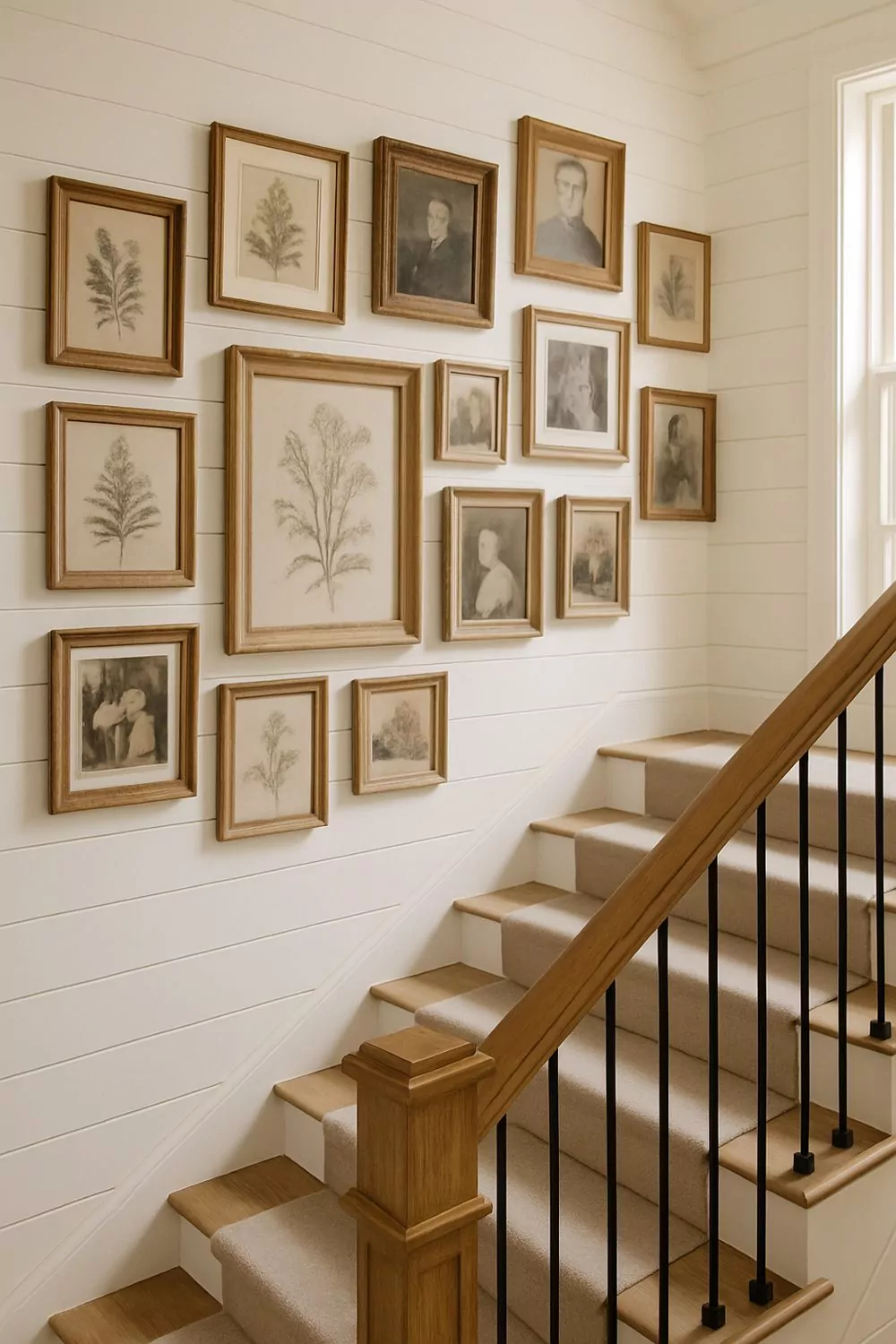
19. Shiplap Staircase Wall with a Curated Gallery
To create a gallery wall that feels curated and not cluttered, start with a ‘hero’ piece. Choose your largest or favorite piece of art and hang it slightly off-center at eye level (about 57-60 inches from the floor). Then, build your arrangement out from there, keeping the spacing between frames relatively consistent—aim for 2-3 inches. Mix horizontal and vertical orientations, but unify the collection with a consistent element, like the black frames and natural wood handrail do here.
⭐ The One Thing
You don’t need expensive custom framing to create a beautiful gallery wall. Stores like IKEA (with their FISKBO or RIBBA series) and Target offer stylish, affordable frames in a variety of sizes. For the art itself, search for printable public domain artwork on sites like the National Gallery of Art or mix in personal photos. The white shiplap effect can be convincingly faked with MDF boards from a hardware store, cut to size and painted, for a fraction of the cost of real tongue-and-groove planks.
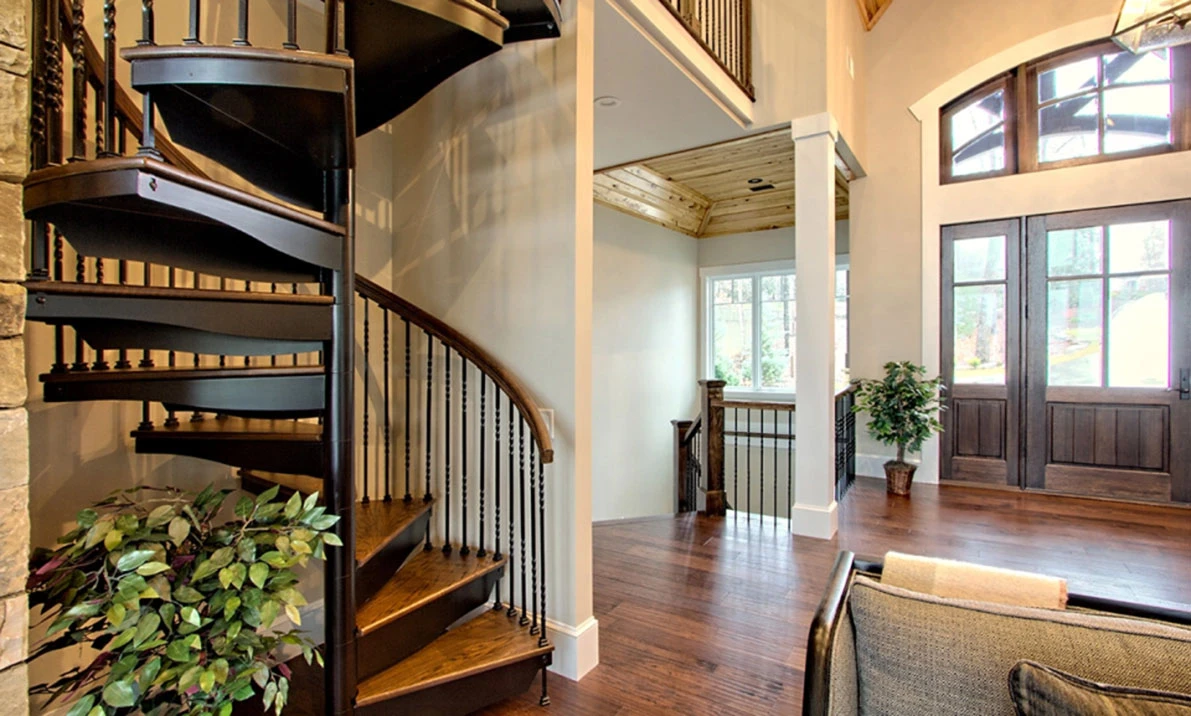
20. Dark Wood and Iron Spiral Staircase in a Grand Entryway
A spiral staircase, especially a substantial one made of dark wood and iron, is a space-saver vertically but still demands visual presence. This style works best in a voluminous room, typically a two-story entryway or great room with ceilings of at least 12-15 feet. While the footprint might be smaller than a traditional staircase (around a 5 to 6-foot diameter), its sculptural form commands attention. It’s best used as a dramatic secondary staircase rather than the primary one for moving furniture.
💡 Designer Tip
While spiral staircases are undeniably elegant, they are not always the most practical choice. The wedge-shaped treads are narrower toward the center, which can be tricky to navigate, especially when carrying laundry baskets or other large items. Moving furniture up or down a spiral staircase is often nearly impossible. Think of it as a beautiful piece of functional sculpture, best for connecting less-frequented spaces like a loft or a guest suite.
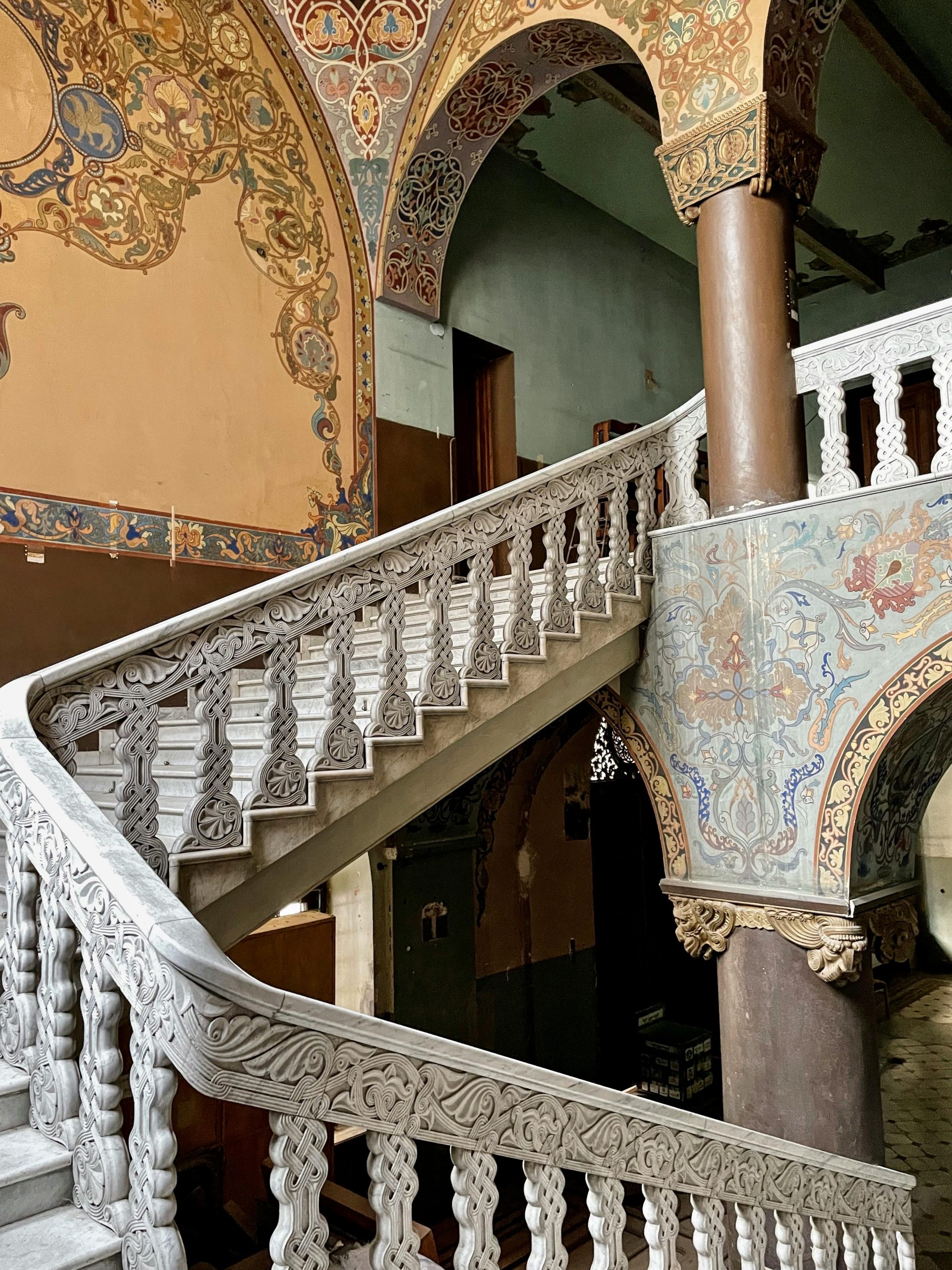
21. Intricately Carved Marble Staircase in an Ornate Setting
Without a doubt, the single element that defines this space is the elaborately carved marble banister. It’s not just a railing; it’s a masterpiece of decorative art. The way the marble is carved into fluid, intricate shapes is a testament to incredible craftsmanship. This feature single-handedly elevates the staircase from a functional element to the centerpiece of a palatial interior, its solid, sculptural quality commanding absolute attention.
⚠️ Real Talk
This design is an exercise in maximalism, and it works through a commitment to its own ornate logic. The staircase doesn’t just sit in the room; it is integrated with it. The decorative arches and richly patterned wall murals echo the curves and complexity of the marble carvings. The color palette of light grey marble, peach, and light blue is consistent throughout the space, ensuring that despite the incredible amount of detail, the overall impression is one of cohesive, albeit grand, design.
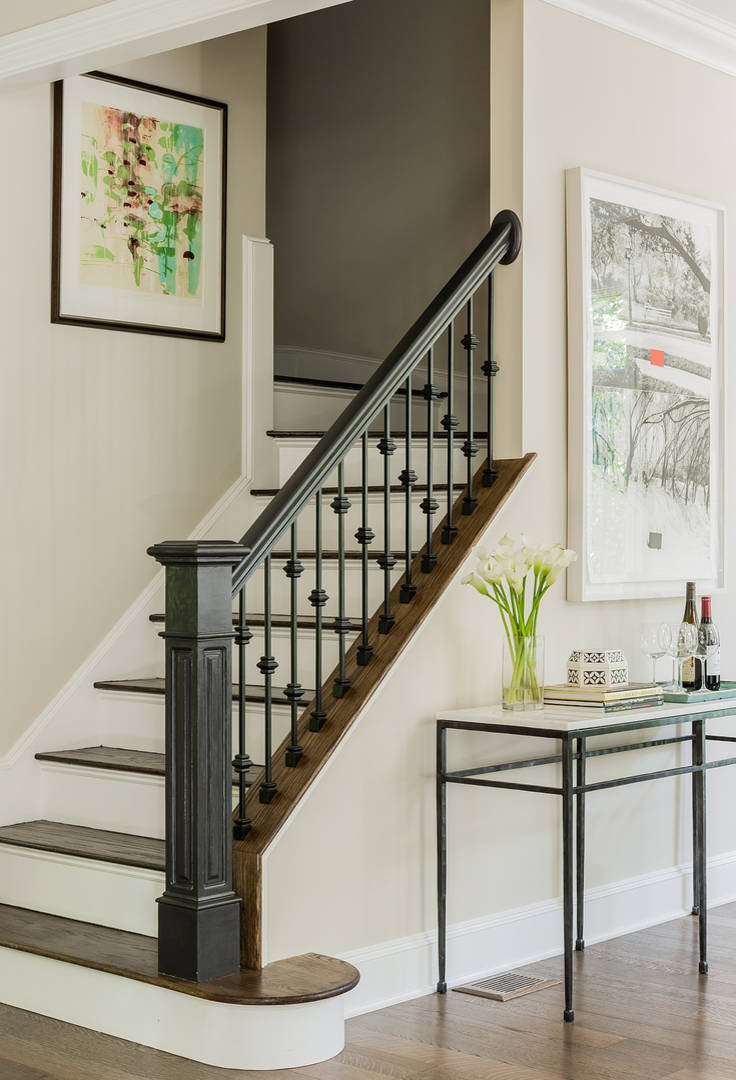
22. Classic Dark Wood and Wrought Iron Staircase
To get this refined, classic look, pay attention to the details of the wrought iron balusters. The pattern shown here—a mix of simple straight spindles with a few more ornate, twisted ones—adds custom detail without being overly fussy. When selecting your balusters, choose a finish that complements your other fixtures. A matte black finish, as seen here, is timeless and hides dust better than a glossy one. Pair it with a substantial handrail and newel post for a grounded, high-quality feel.
✅ Before You Start
This is a classic, high-value look that can be achieved at different price points. The cost will vary widely based on whether you’re replacing the whole staircase or just updating the balusters.
- Labor (professional installation): $1,500 – $4,000
- Materials (Treads, Handrail, Balusters): $1,000 – $5,000
- Refinishing existing wood: $500 – $1,500
- Decor (Console table, art): $300 – $1,200
- TOTAL FOR FULL REFRESH: $3,300 – $11,700
- Budget Alternative: Keep your existing treads and handrail, and simply swap out dated wooden balusters for new iron ones. Materials cost: $400 – $1,000.
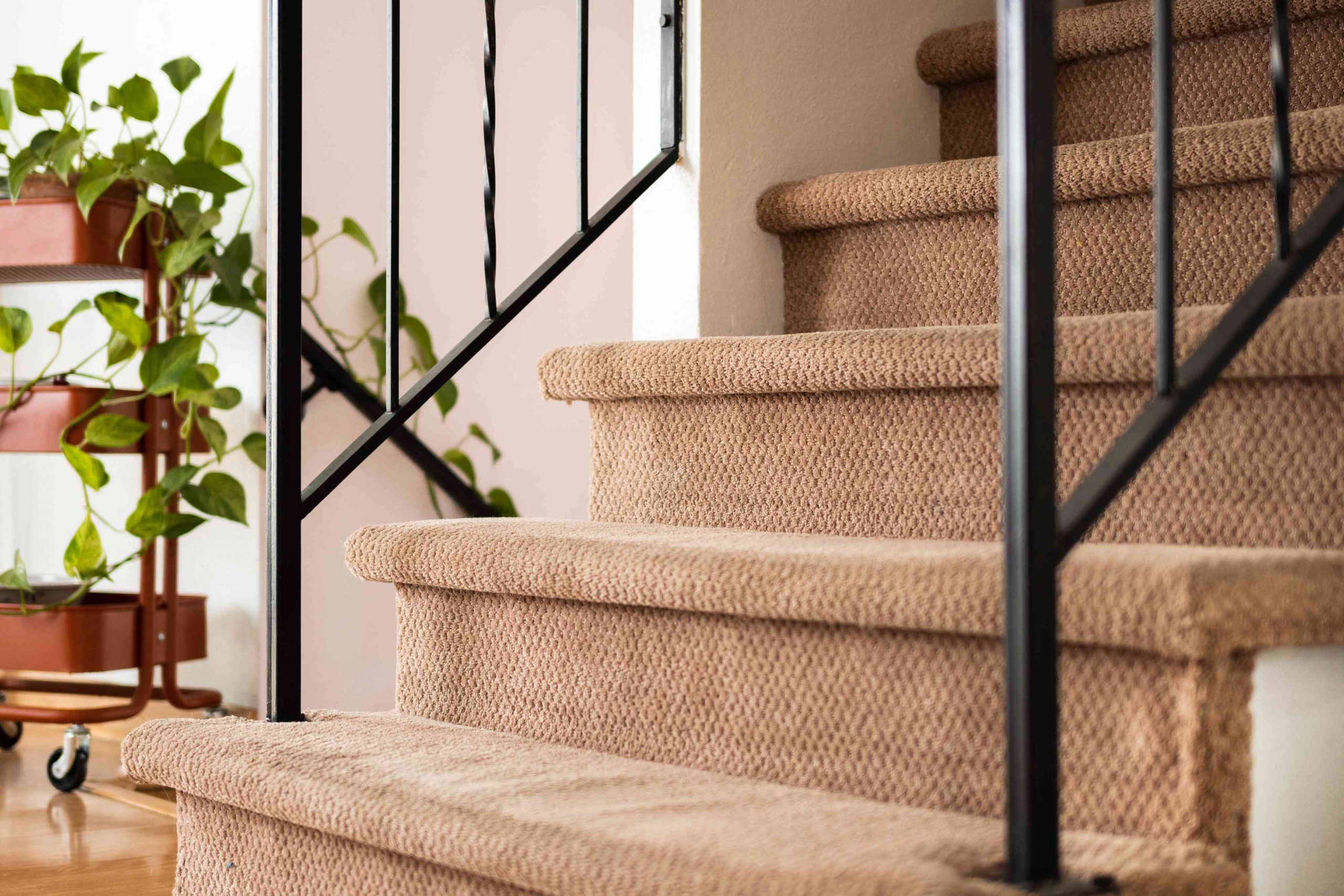
23. Simple Carpeted Stairs with a Modern Metal Banister
This is a perfect example of a durable, budget-friendly design that still looks put-together. A simple, low-pile loop carpet in a neutral brown is one of the most cost-effective ways to cover stairs, costing as little as $500-$1500 installed for a standard flight. The black metal banister is clean, modern, and far less expensive than ornate wood or iron options. To elevate this simple setup, add a stylish touch like the potted plant on a rolling stand—a small investment for a big personality boost.
💸 Get This Look For Less
A fully carpeted staircase is warm, quiet, and provides good traction, making it a great choice for families with kids or pets. However, be aware that light-colored carpet, even in a textured brown, will show dirt and wear patterns over time, especially in the middle of the treads. It also holds onto dust and allergens more than hard surfaces. Regular, thorough vacuuming with a crevice tool is essential to keep it looking and feeling fresh.
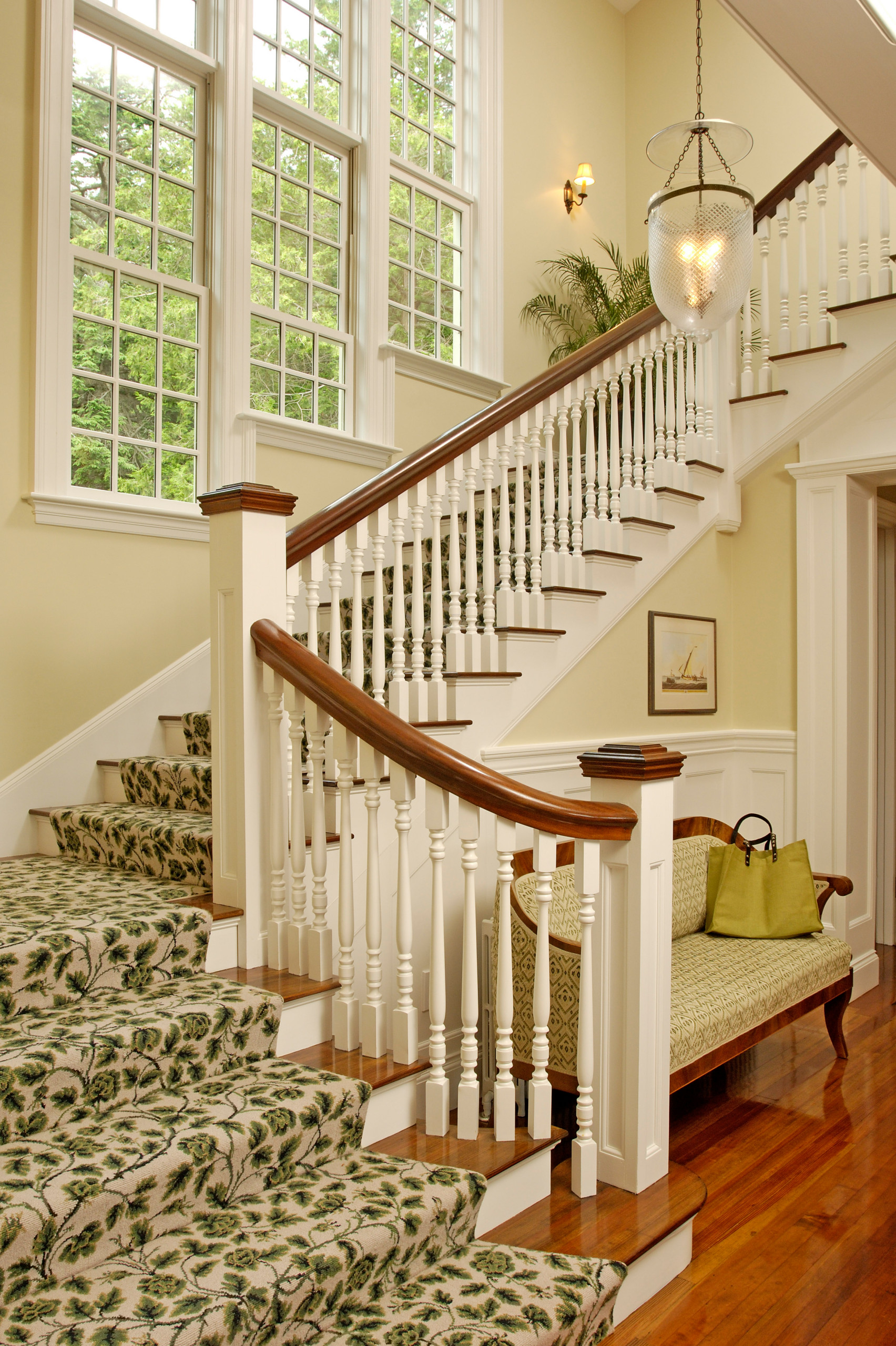
24. Traditional Staircase with a Green and Beige Floral Runner
This entryway feels so warm and established because it expertly mixes patterns and textures within a tight color palette. The floral stair runner, the patterned settee, and the grain of the dark wood handrail all add layers of visual interest. It works because everything is tied together by the warm beige-yellow wall color. The large multi-pane windows are also key, flooding the space with natural light and preventing the traditional elements and patterns from feeling heavy or dated.
🎯 What Makes It Work
There’s a reason ‘Cottagecore’ and ‘Grandmillennial’ aesthetics continue to dominate Pinterest boards: they evoke a sense of comfort, nostalgia, and timelessness. A floral runner on a classic wooden staircase is the epitome of this trend. It suggests a connection to nature and a love for pieces with history and character. In 2026, homeowners are craving spaces that feel personal and collected, not sterile and new, and this look delivers that in spades.
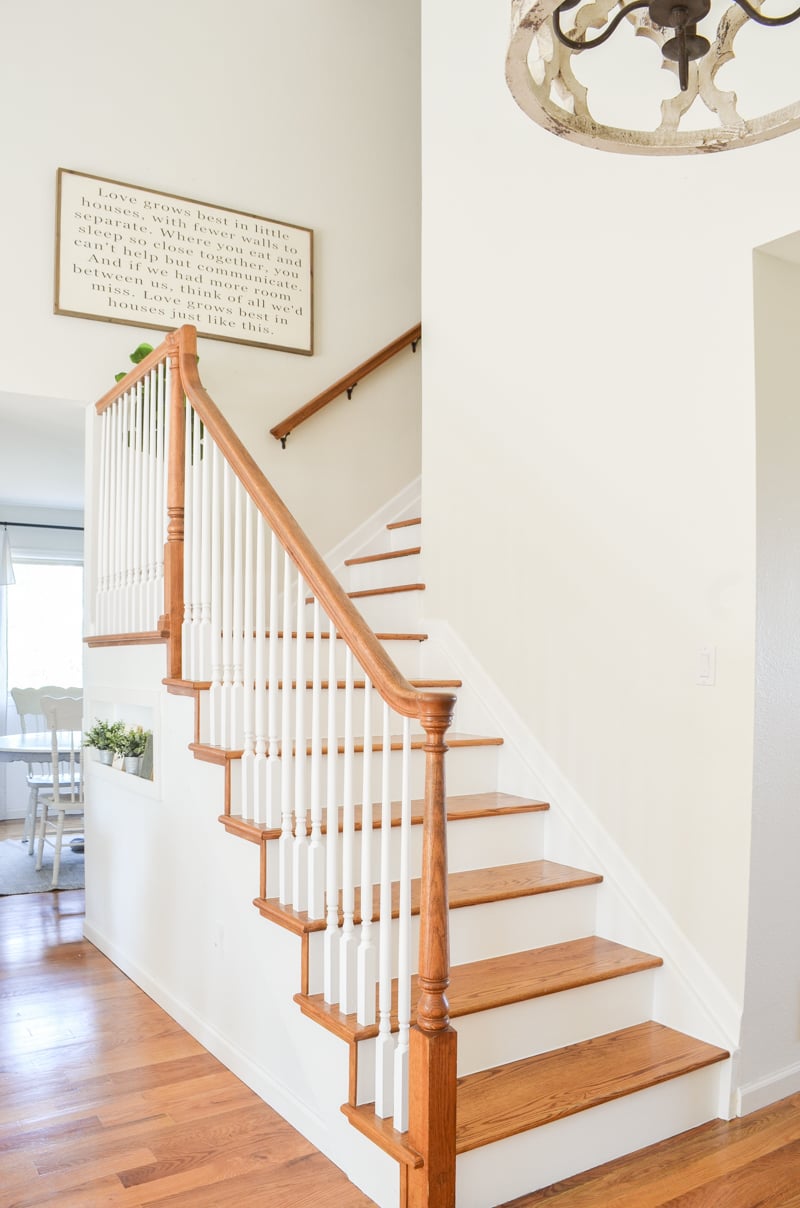
25. Bright and Homely White and Natural Wood Staircase
The formula here is pure and simple: 60% crisp white + 40% natural light wood. This high-contrast, low-complexity palette is the secret to its bright and airy feel. The white is used on the structural and vertical elements (risers, balusters, walls), which makes the space feel taller and more open. The natural wood is reserved for the surfaces you touch and walk on (treads, handrails), adding necessary warmth and a connection to natural materials. It’s a foolproof recipe for a clean, traditional look.
💰 Budget Breakdown
While the combination of white and wood is classic, the single element that tips this staircase from ‘nice’ to ‘homey’ is the framed quote on the wall. It’s a small, deeply personal touch that infuses the space with personality. It communicates that this is a family home, lived-in and loved. Removing it would leave a technically perfect but slightly soulless staircase. It proves that sometimes the smallest details make the biggest emotional impact.
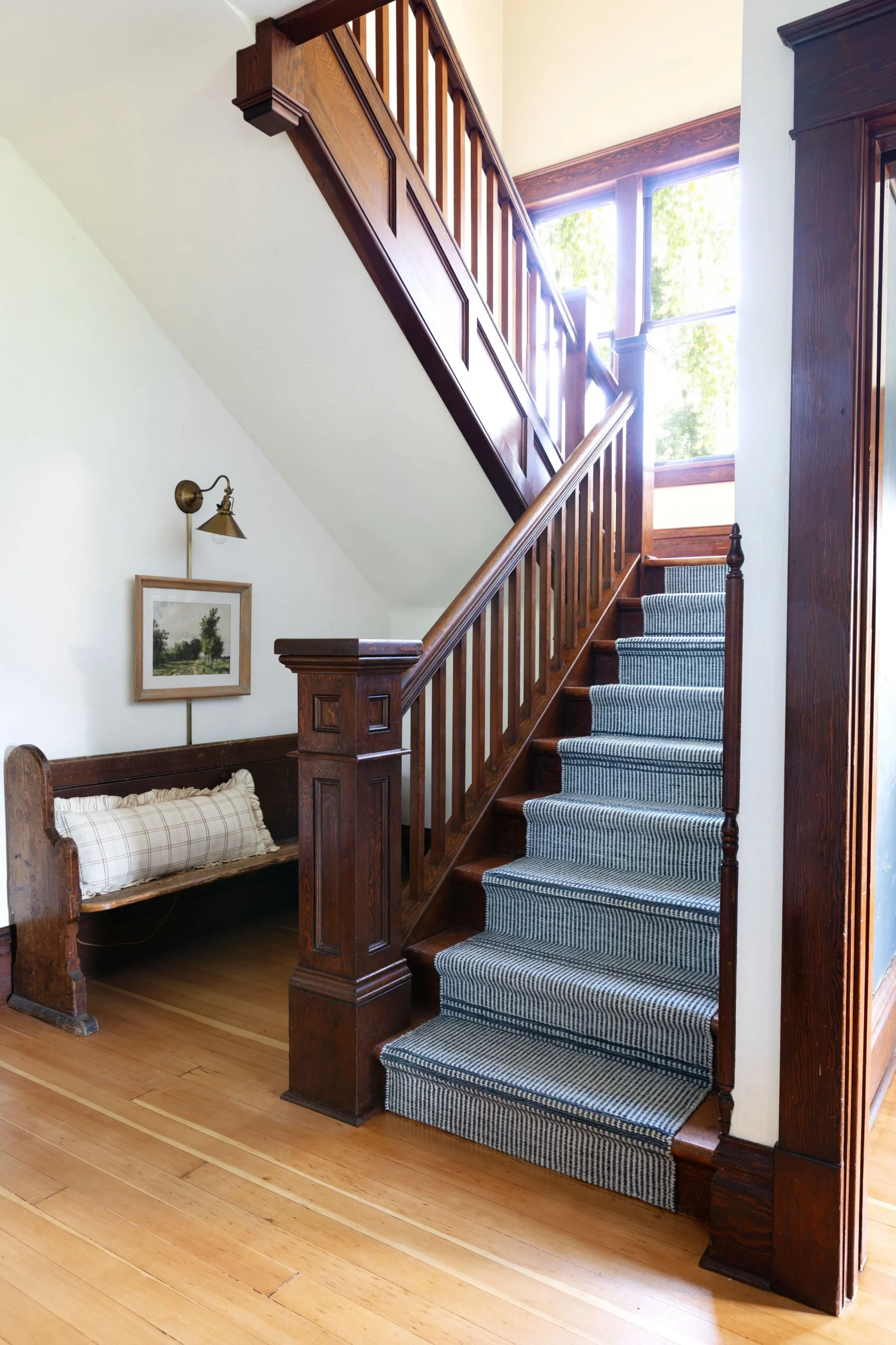
26. Traditional Wooden Staircase with a Blue Striped Runner
This design succeeds by confidently mixing classic elements. The dark wood of the staircase provides a rich, traditional foundation. The striped carpet runner introduces color and a slightly more casual, almost nautical, vibe. The light hardwood floors keep the entryway feeling open and bright, preventing the dark wood stairs from overwhelming the space. Finally, the brass wall sconce adds a touch of metallic warmth, completing the layered, established look. Each element is classic, but together they feel fresh.
🔧 How-To Brief
Recreating this classic and inviting entryway is more accessible than you might think, focusing on the runner and accents.
- Stair Runner (Wool or durable synthetic): $500 – $1,800 installed
- Lighting (Wall Sconce): $150 – $500
- Furniture (Entry Bench): $200 – $800
- Decor (Pillow, accessories): $50 – $200
- TOTAL: $900 – $3,300
- Budget Alternative: Find a similar striped runner from a big-box store and install it yourself. Source a bench from Facebook Marketplace or a thrift store. Total cost: under $400.
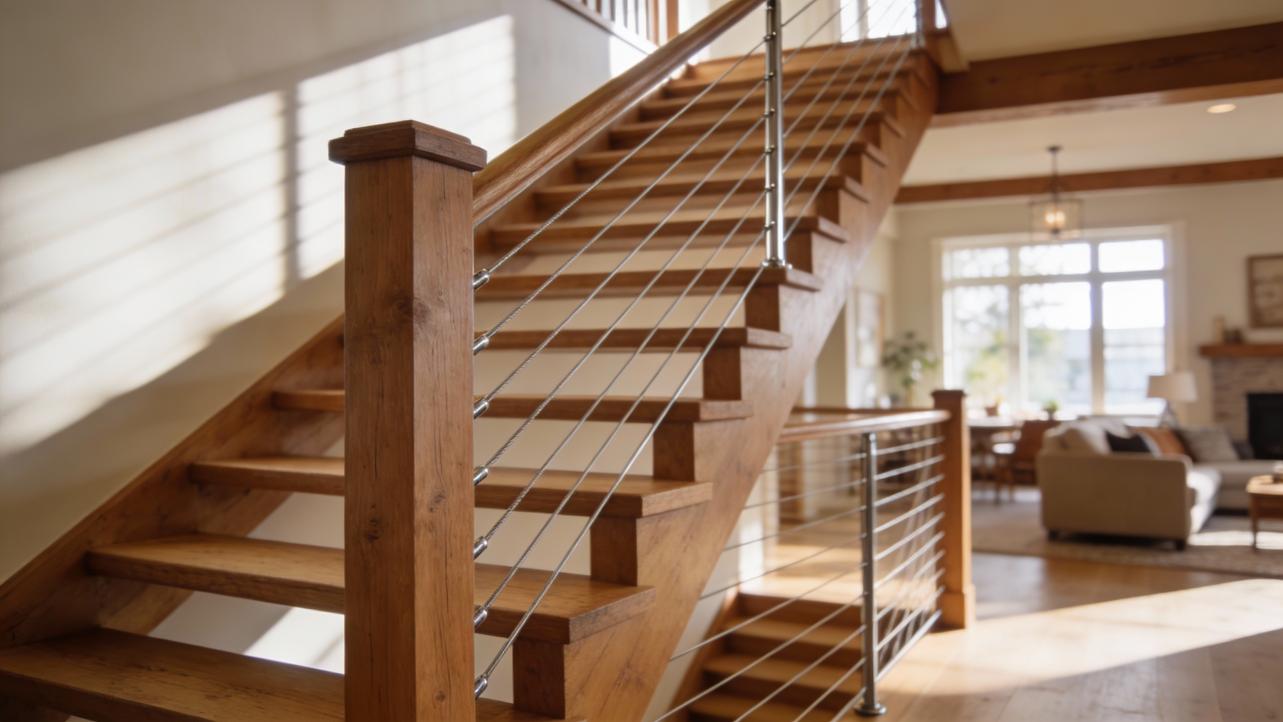
27. Modern Craftsman Staircase with Cable Railings
When installing a cable railing system, the tension of the cables is paramount. They should be taut enough to eliminate any sagging, which looks sloppy and is a safety issue, but not so tight that they put excessive strain on your newel posts. Use a tension gauge to ensure each cable is tightened to the manufacturer’s specifications. Also, for a clean look, always run the cables in one continuous line from a top anchor to a bottom anchor, rather than terminating at each post.
📏 Scale Guide
Open risers and cable railings look incredibly sleek and airy, but they come with practical considerations. The open design means dust, pet hair, and anything else on the stairs will fall directly to the floor below, requiring more frequent cleaning of that area. As mentioned in Idea #2, cable railings can also present a climbing hazard for small children, and local building codes may have specific requirements about their use in residential settings. Always check with your local building authority before installing.
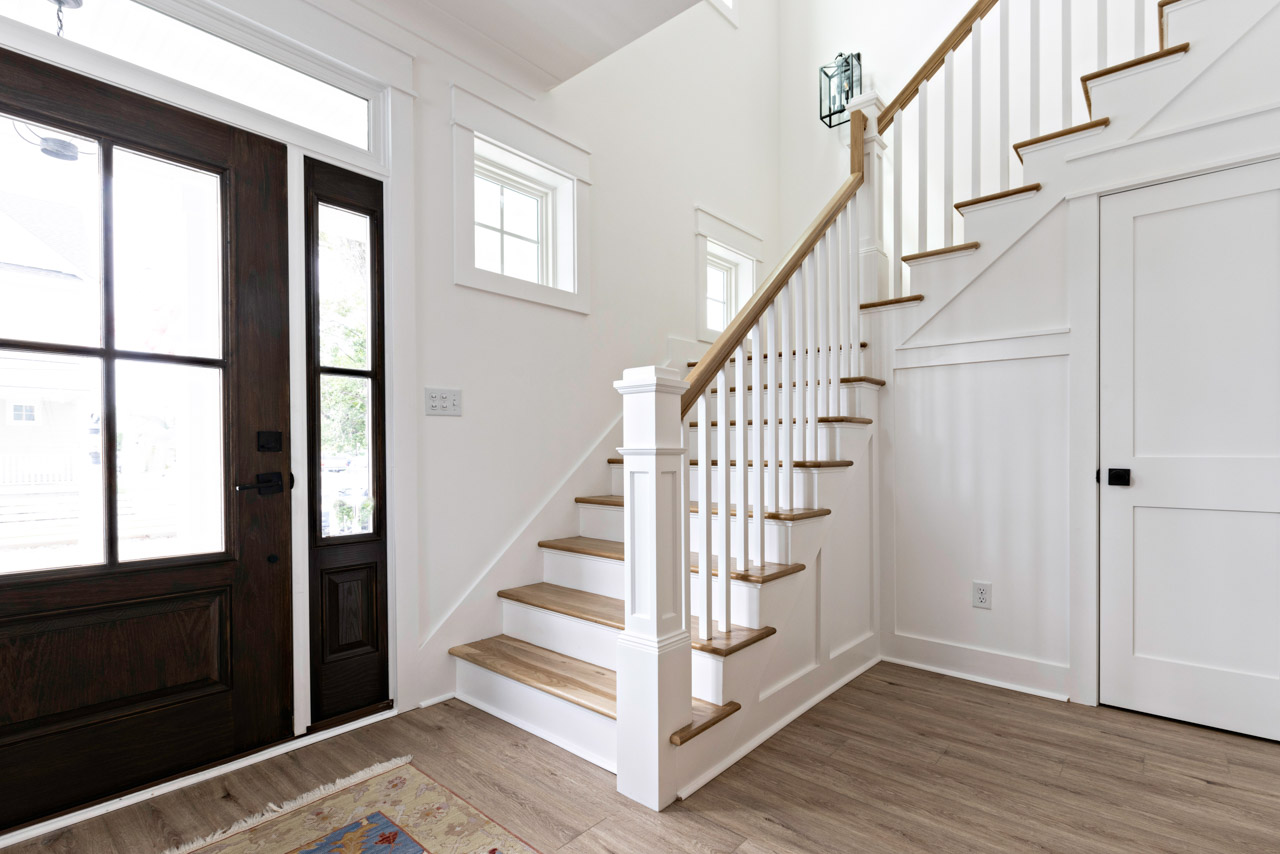
28. Transitional White and Wood Staircase with Board and Batten
This look is all about architectural detail, and it works because it feels completely integrated. The board and batten isn’t just on one wall; it wraps under the staircase and continues along the entryway, creating a cohesive and high-end custom look. This repetition of the white vertical lines makes the space feel taller, while the natural wood of the treads and handrail adds essential warmth and prevents the all-white palette from feeling sterile.
🔥 Trending Context
- Measure Your Light: Does your entryway get a lot of natural light? This bright, high-contrast look depends on it. A darker space might make the white feel flat.
- Check Your Wood Tones: The natural wood of the stairs should complement your flooring. Here, the light wood-look floor and the slightly warmer treads work because they are in the same family. A clash could be jarring.
- Plan Your Board and Batten: Map out the spacing for your board and batten pattern on the wall with painter’s tape first to ensure the proportions look right before you make a single cut.
29. Modern Wooden Staircase with Glass and Steel Rod Risers
The stainless steel rods acting as risers are the absolute key to this design. They are an unexpected, industrial-chic detail that elevates the entire staircase. While a fully open-riser design could have worked, these rods provide a sense of structure and rhythm. They create a semi-transparent effect, allowing light to pass through while still defining the shape of each step. It’s a brilliant compromise between a floating staircase and a traditional one.
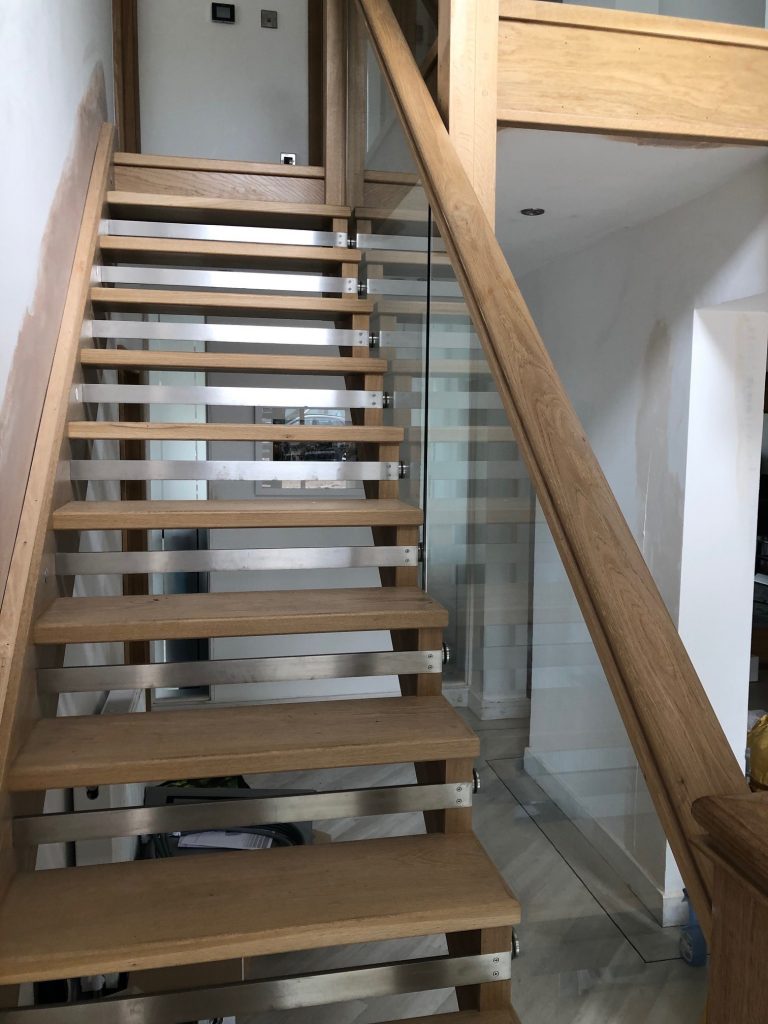
📐 Style Math
This light and airy design is perfect for narrower spaces where a traditional, fully enclosed staircase would feel heavy and block light. A straight-run staircase like this typically requires a long, clear wall—plan for about 12-14 feet of linear space. The design works well with standard 8 or 9-foot ceilings, as the transparency of the glass and steel rods helps to maximize the sense of vertical space. It’s a great solution for linking floors in a modern townhouse or a contemporary open-plan home.
30. Curved Iron Staircase with Ornamental Details
To make a curved staircase feel truly integrated, use architectural features to echo its shape. Notice the arched hallway visible under the stairs in Idea #33? Here, a simple recessed wall niche with a curved top accomplishes a similar goal on a smaller scale. This repetition of curves creates a sense of design harmony and intention. The niche also provides a perfect, protected spot for a decorative object, like the vibrant blue vase shown, adding a pop of color that draws the eye.
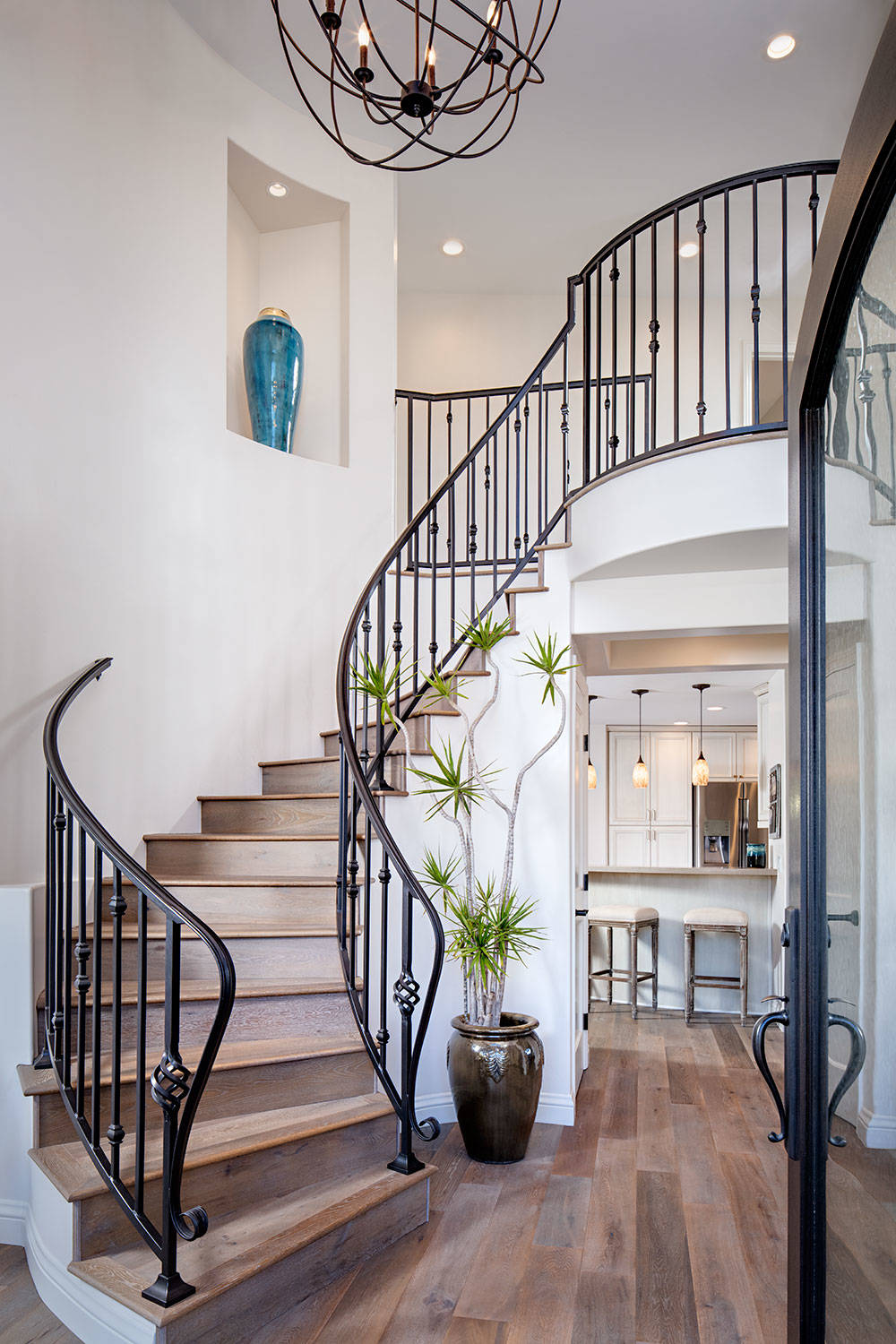
🧹 Maintenance Reality
This design creates a welcoming feel by balancing ornate details with simple forms. The wrought iron balustrade is complex and decorative, with its twists and scrolls. However, this complexity is balanced by the simple, clean lines of the light wood treads and the smooth, white walls. The dark color of the iron and the flooring grounds the space, while the light walls and stairs keep it from feeling too heavy. It’s a study in balanced contrast.
31. Symmetrical Dark Wood Staircase with Patterned Overhead Light
The gridded ceiling light fixture is the defining feature of this space. Its large scale and geometric pattern transform it from a simple light source into a major architectural element. It mirrors the symmetry of the branching staircase and casts a diffuse, atmospheric glow. Without this dramatic overhead element, the grand but dark staircase could feel imposing. The light fixture acts as a modern, glowing canopy, providing both illumination and a strong visual focal point.
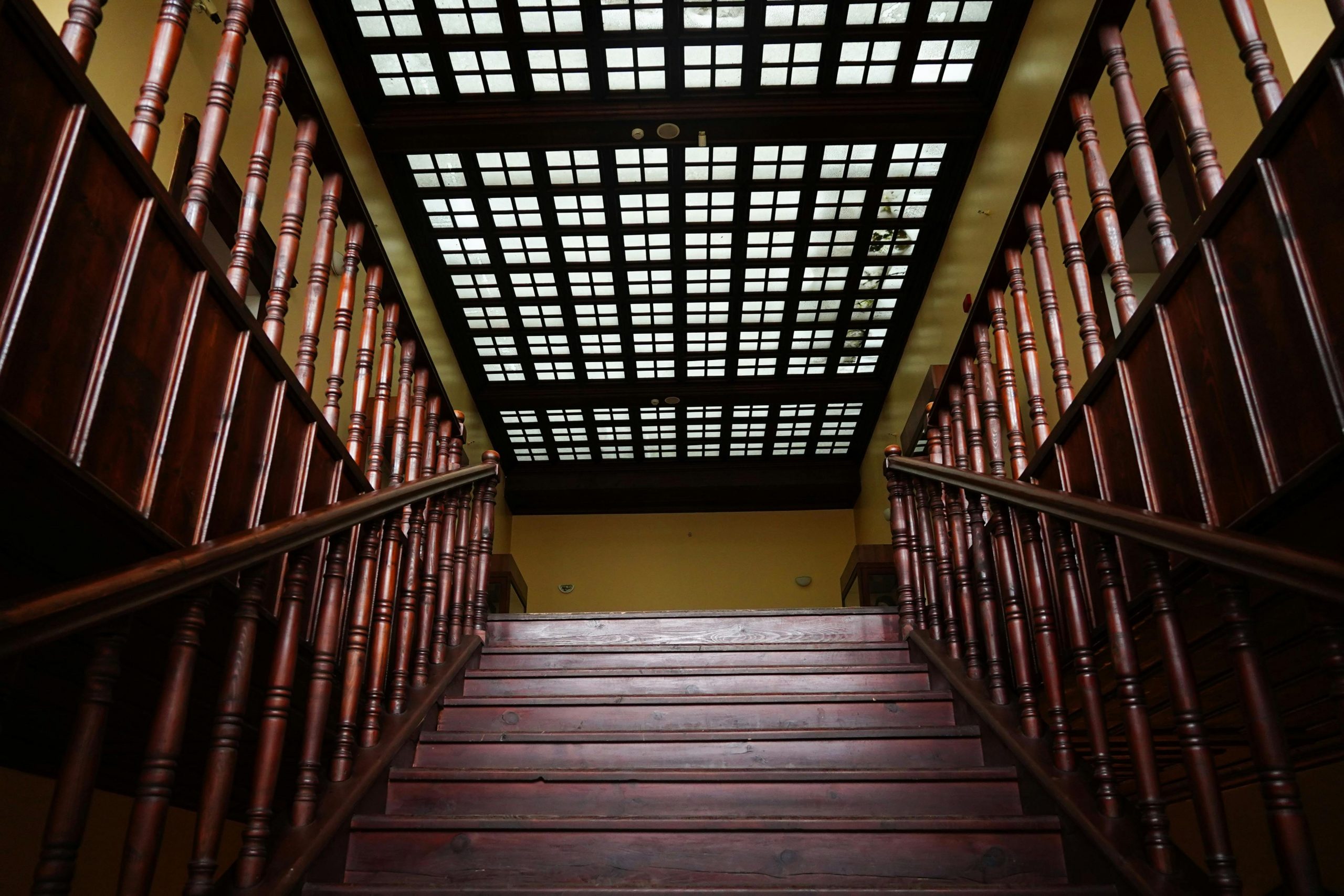
⭐ The One Thing
A grand, dark wood staircase like this is undeniably dramatic, but it can absorb a lot of light. The design seen here only works because of the massive, custom ceiling light and the light-colored landing wall. In a home without such a statement lighting solution, a staircase this dark could feel gloomy and cavernous. Be honest about how much natural and artificial light your space receives before committing to such a large expanse of dark wood.
32. Modern Black and White Staircase with Gold Accents
Here’s the recipe for modern glamour: 50% classic high-contrast (the black stairs and white paneled walls) + 30% bold graphic pattern (the striking black and white runner) + 20% metallic shine (the gold starburst chandelier and sconces). This formula is all about confident choices. The black and white provides a timeless canvas, the runner adds energy and movement, and the gold accents bring in the essential touch of warmth and luxury. This is a great reference for how to go bold, like in Idea #5, but in a contemporary way.
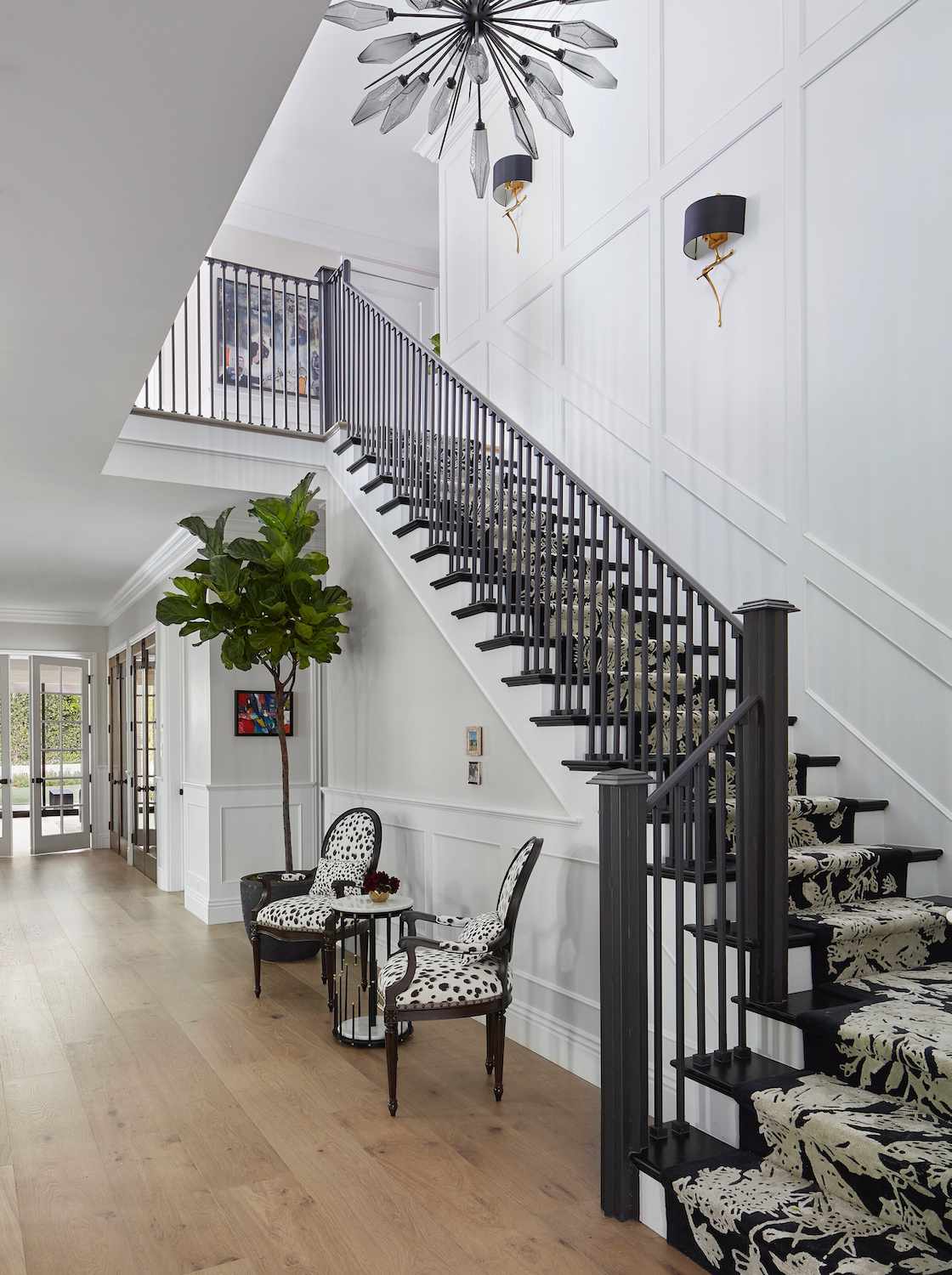
💡 Designer Tip
This look is a perfect reflection of the ‘Modern Regency’ or ‘Hollywood Glam’ trend that’s having a huge moment. After years of minimalist and farmhouse aesthetics, people are craving drama, sophistication, and a touch of luxury. The combination of strong geometric patterns, high-contrast palettes, and warm metallic finishes is a direct path to achieving that vibe. The starburst chandelier, in particular, has become a go-to piece for adding instant drama and a nod to mid-century glamour.
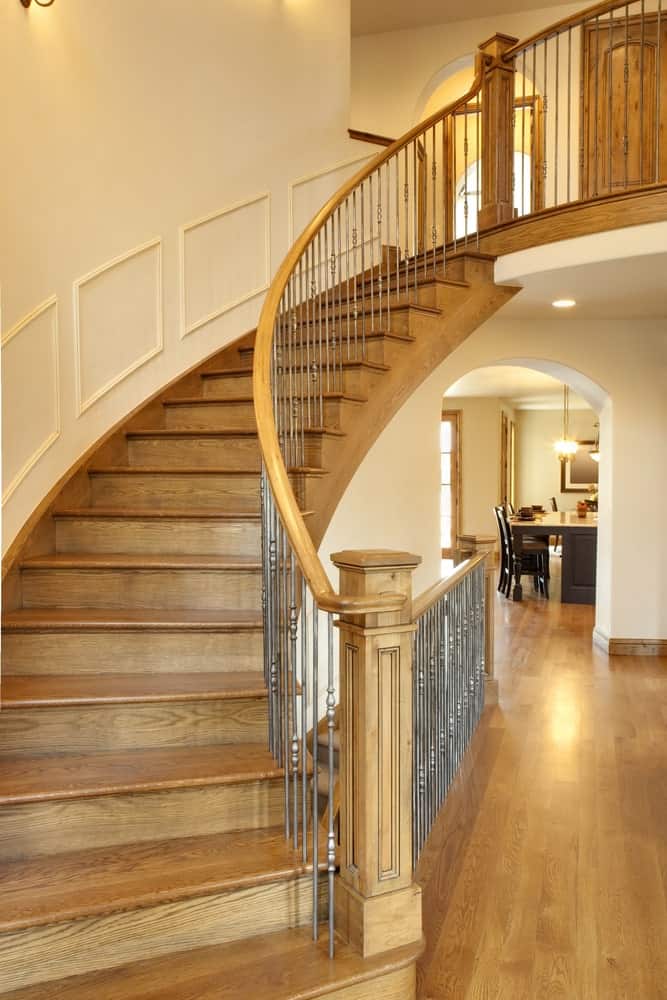
33. Carved Wood Staircase with Wrought Iron and Natural Light
This staircase feels so spacious and elegant due to its open, curved design and a clever use of tone-on-tone color. The light natural wood of the treads, railings, and flooring creates a seamless flow from the ground floor up to the landing. The walls, painted a slightly lighter cream, are adorned with white panel molding. This subtle shift in color adds architectural detail without breaking up the space visually. The dark wrought iron spindles provide a delicate, graphic contrast without adding any visual weight.
⚠️ Real Talk
- Assess Your Architecture: This look hinges on graceful curves. Does your space allow for a curved staircase? Look for the arched hallway detail; repeating architectural shapes is key.
- Commit to a Wood Tone: The beauty of this design is the harmony between the stair treads and the flooring. Ensure you can match your wood tones closely for a cohesive look.
- Plan for Wall Molding: The rectangular panel molding is essential for adding elegance. Factor in the cost and labor for this finish carpentry, as it’s not just a paint job.
Step Up Your Home’s Story
Your staircase is so much more than a way to get from one floor to another; it’s the spine of your home’s design story. We hope these 33 ideas have inspired you to make it a great one. Don’t forget to follow us on Pinterest for daily design inspiration that feels like you.
Photo credits: Houzz, Checkatrade, The Spruce, Senmit, VB Homes, Sarah Joy -, Spryinterior, Designed Stairs, Omni Home ideas, Fancy House Design, Parry Joinery, WSJ, Ideal Home, Reddit, Home Stratosphere, Paragon Stairs, Block Renovation, Soul & Lane, The Grit and Polish / Web, Murat Bilgin, htcgezerr, Mr. Zubair Ahmed, Lobna Mahmoud, cottonbro studio, Ekaterina Astakhova, Betül Kara / Pexels