Still scrolling through Elementary Classroom Decor 2026 photos without knowing where to start? You know that feeling when you finally find the perfect vibe for your classroom space?
We spent serious time browsing IKEA, Target, and Wayfair to bring you only what’s worth your attention this year. After filtering through hundreds of options, we narrowed it down to 29 ideas that actually deliver, from a low of $50 to a high of $1500. You’ll find everything from playful and organized layouts to modern minimalist designs that are making waves.
We’ve curated 29 inspiring ideas, covering main styles like functional, playful, and organized aesthetics. Every idea is shoppable with direct product links, and we even compare budget versus luxury versions side-by-side where it makes sense.
Elementary classroom decor in 2026 is all about creating inspiring, flexible spaces that foster both learning and creativity. The emphasis on neuro-inclusive design and adaptable environments is a huge driving force on platforms like Pinterest right now.
Go ahead and save this — you’re going to want to reference it.
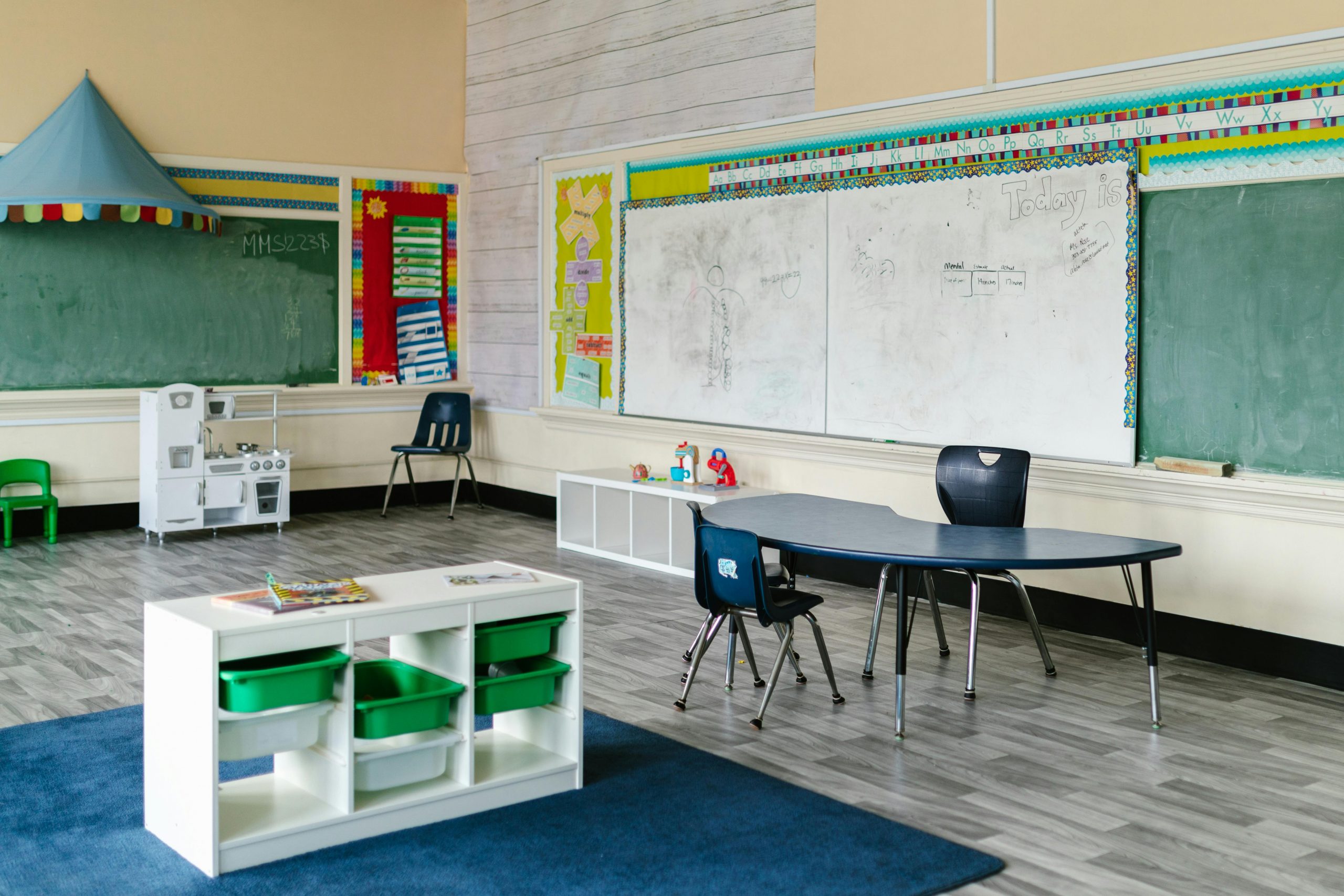
1. Playful and Organized Learning Zones
This classroom is a masterclass in creating distinct zones without sacrificing flow. The large whiteboard is perfect for daily lessons, while the green chalkboards with their fun circus-tent canopy invite creative expression and imaginative play. Pairing open cubby storage with bright green bins keeps things tidy but also makes materials easily accessible for little hands. That navy kidney-shaped table is a fantastic point of focus for small group work, grounding the playful elements with a touch of sophisticated color.
⚠️ Real Talk
When you’re designing for multiple age groups or different learning styles, breaking up the room is key. Install your main instruction zone, like that large whiteboard, on a wall that’s visible from all primary seating areas. For smaller, activity-based zones like the play kitchen or art station, aim for corners or wall sections that offer a bit of visual separation without feeling isolated. Use rugs, different types of seating, or even low shelving units to define these mini-areas. The goal is flow, not walls!
2. Cozy Learning Nooks with Bold Rug and Bright Accents
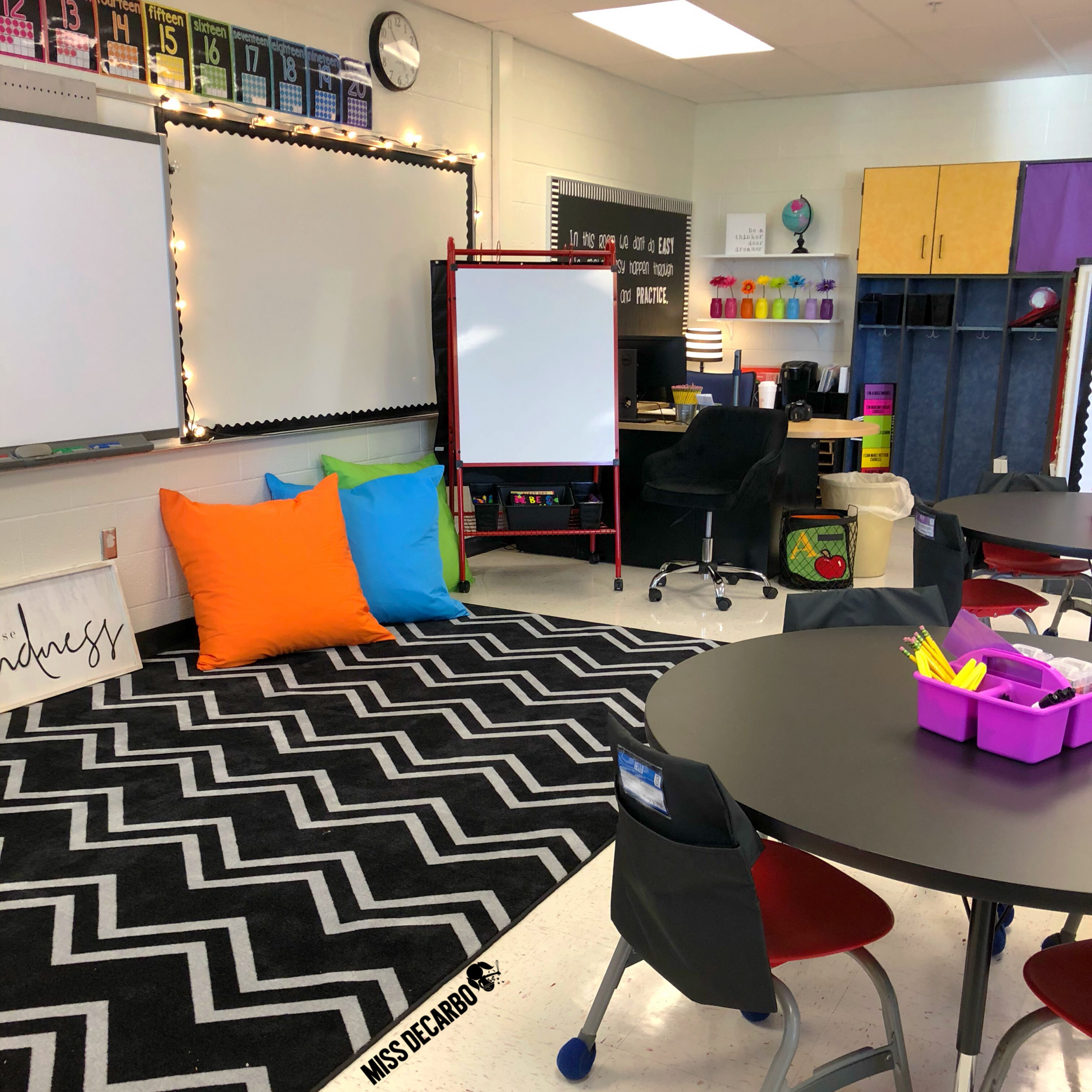
That black and white chevron rug? It’s the undisputed star of this particular show. It grounds the entire cozy corner and creates a dynamic contrast with the bright orange, blue, and lime green floor pillows. Without that bold pattern, this nook would simply be a collection of colorful cushions on the floor, failing to create the inviting, defined zone it achieves so effortlessly. It’s what makes this a deliberate design choice, not just a pile of pillows. So, if you’re looking to make a statement in a specific corner, don’t shy away from a strong, graphic rug like this.
📐 Style Math
While those vibrant solid-color pillows look fantastic, keeping them pristine in a bustling elementary classroom can be a challenge. Expect regular spot cleaning, especially if snacks are allowed in this area. Choose pillow covers that are easily removable and machine washable, or opt for outdoor-grade fabrics that are inherently more resistant to spills and stains. Darker colors, like the true blue, will also disguise minor smudges better than lighter options. Also, a word of caution on floor pillows: while cozy, ensure they are supportive enough for extended sitting to avoid back discomfort for students.
3. Bright, Simple Classroom with Natural Wood and Color Accents
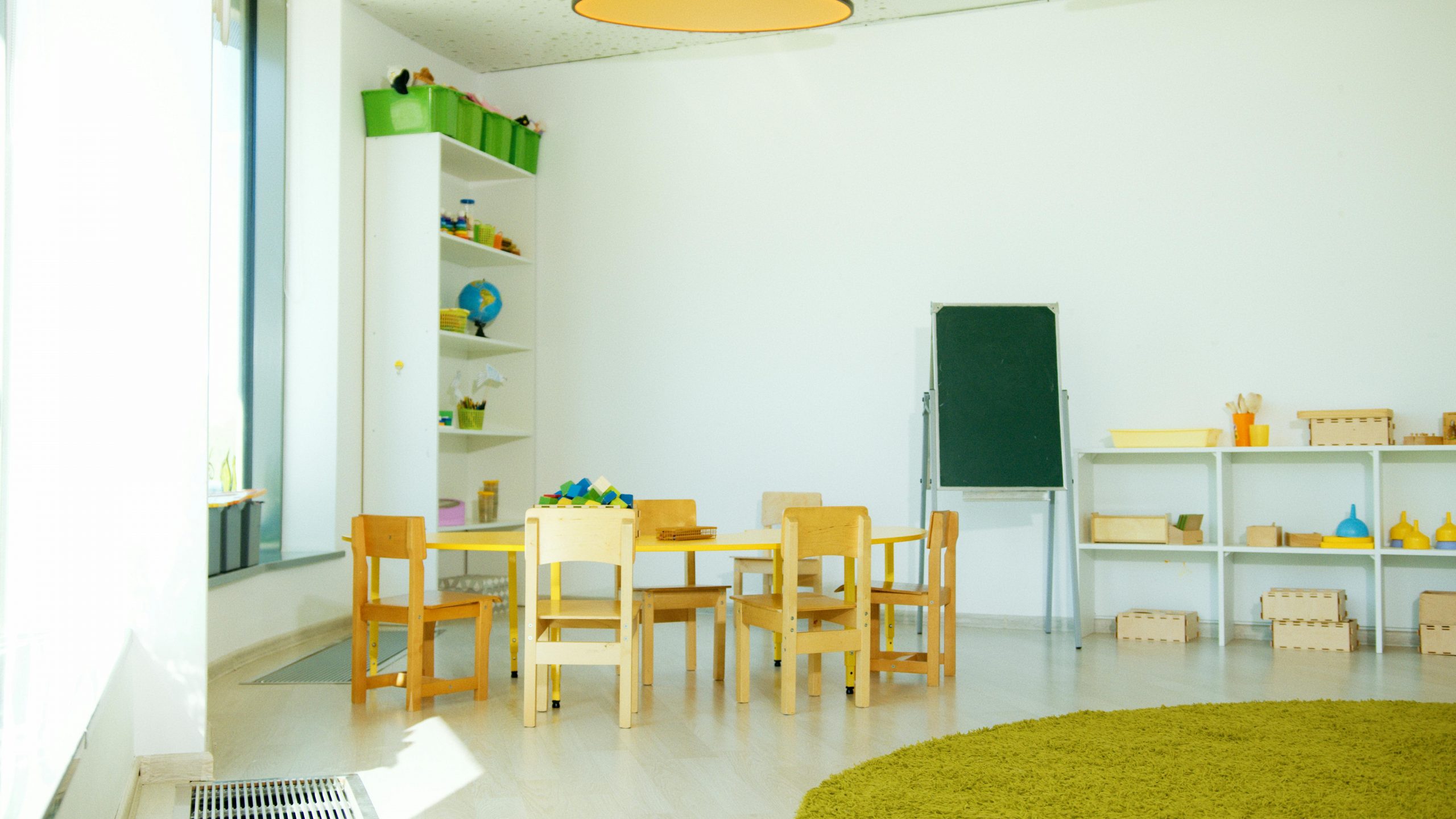
This room has a refreshing, clean vibe that’s super easy to replicate with a simple formula: 70% crisp white + 20% light wood + 10% bright accent colors. The white walls and open shelving provide the perfect minimalist canvas, letting the light wood flooring and natural wood chairs bring in warmth. The yellow tables and that vibrant green shaggy rug are the perfect intentional pops of primary and secondary color, keeping things playful without being overwhelming. You could easily swap the yellow for a sky blue or the green for a sunny orange and maintain the same airy, inviting feel. It’s a very adaptable formula for various palettes!
🎯 What Makes It Work
- Main Furniture (tables, chairs, shelving): $800 – $1500
- Textiles (green shaggy rug): $150 – $300
- Decor & Accessories (educational toys, bins): $100 – $250
- Paint (white walls): $50 – $100
TOTAL: $1100 – $2150
Budget alternative: Look for pre-loved children’s tables and chairs on local buy/sell groups or even at school surplus sales. Paint them yellow yourself! For the rug, search online outlets like Rugs.com or Wayfair for similar shaggy styles in a bright green. This could bring the total down to $450 – $800.
4. Neutral Classroom with Wooden Furniture and Festive Decorations
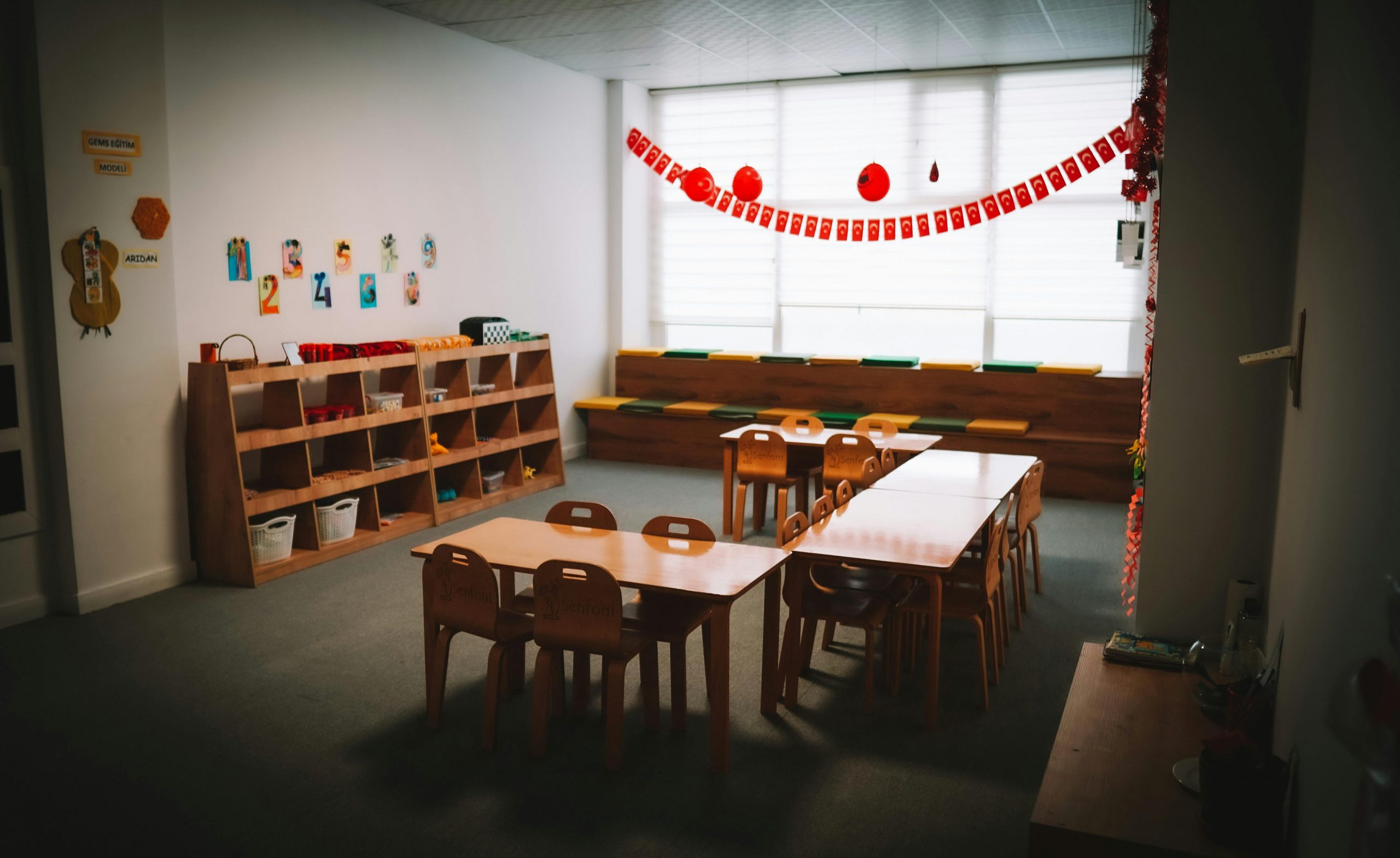
The blend of natural wood tones with playful, festive elements here is a big part of why this style is resonating right now. There’s a strong push for biophilic design even in classrooms—bringing in natural materials to create a calming, focused environment. At the same time, we’re seeing a return to hands-on, tangible decor. Those colorful garlands and lanterns aren’t just pretty; they signal a classroom that celebrates and engages. It’s about creating a holistic space that feels both grounded and joyful, a welcoming
5. Flexible Seating Elementary Classroom with Colorful Accents
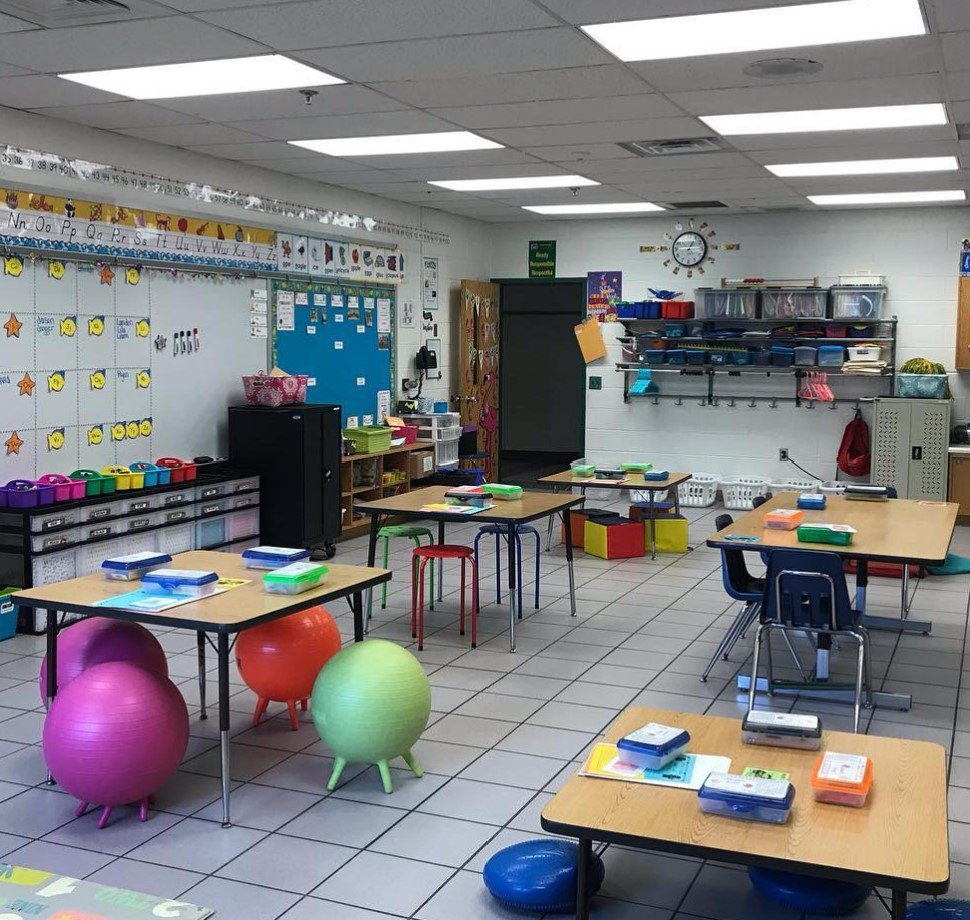
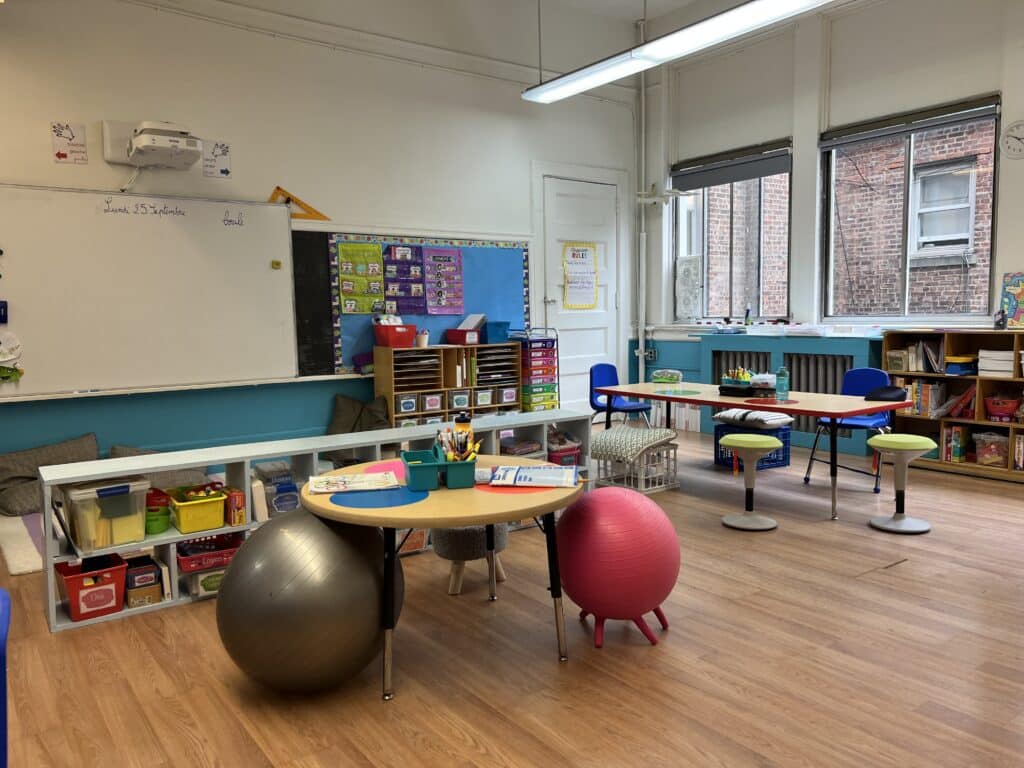
With so many different seating options, regular cleaning becomes even more critical. Yoga ball chairs, in particular, can accumulate dust and smudges easily and will benefit from a quick wipe-down with a damp cloth and mild disinfectant daily. Plastic stools and standard chairs are easier to clean, but those floor cushions will be magnets for crumbs and dirt. Plan on vacuuming or shaking them out at the end of each day and consider covers that can be machine washed weekly. The light gray floor tiles are relatively low maintenance but will show spills, so have a quick-dry mop handy.
📏 Scale Guide
When incorporating flexible seating, it’s easy for a space to feel cluttered if not intentional. A great rule of thumb is to vary the heights and textures but maintain a consistent color story for the larger pieces. For example, here, the wooden tables provide a warm, neutral base, allowing the colorful seating like the bright pink yoga balls or lime green stools to pop without overwhelming the eye. Limit your main accent colors to three to four, maximum, to keep the dynamic feel from descending into visual chaos. Think about how this complements Idea #28, which uses similar flexible seating but with a slightly different color scheme.
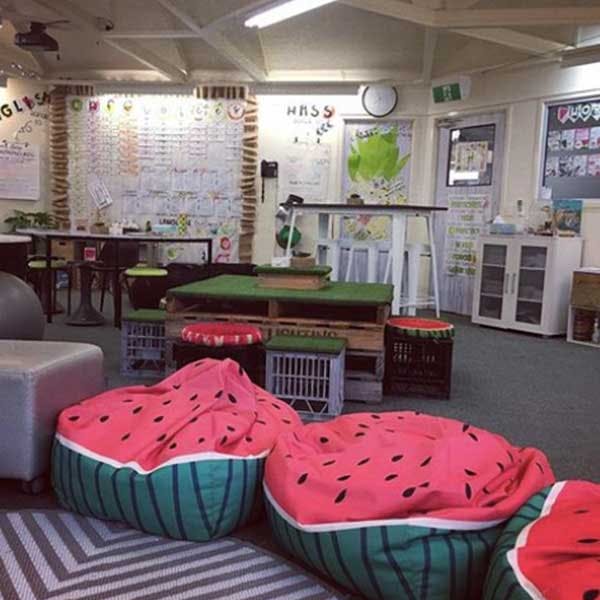
6. Playful Classroom with Pallet Furniture and Watermelon Beanbags
This is a prime example of getting a lot of style for not a lot of cash! Those wooden pallet tables and benches are a fantastic budget alternative to pricey modular furniture. You can often find pallets for free or very cheap from local businesses. Clean them thoroughly, sand them down to prevent splinters, and paint or stain them to match your desired aesthetic. For seating, look for inexpensive foam cushions at craft stores and cover them with vibrant, patterned fabric you find on sale. The watermelon beanbags are a fun, specific touch, but any playful, affordable beanbags from stores like Walmart or Target would work. This DIY approach can cut costs significantly, making a $500-$1000 project look achievable for around $100-$300.
✅ Before You Start
While the pallet furniture offers a wonderfully rustic and budget-friendly charm, there are a few practical considerations. Pallets can be tricky to clean thoroughly if spills seep into the wood, so consider sealing them with a clear, durable topcoat, especially if used for food or art activities. Also, ensure they are stable and sanded smooth to prevent splinters or injuries. The watermelon beanbags, while incredibly fun, might not offer the best ergonomic support for long periods of focus, so ensure there are other seating options available for tasks requiring more concentration. This space definitely excels for relaxed reading or group discussion, but maybe not for intense writing assignments!
7. Traditional Classroom with Navy Desks and Red Flooring
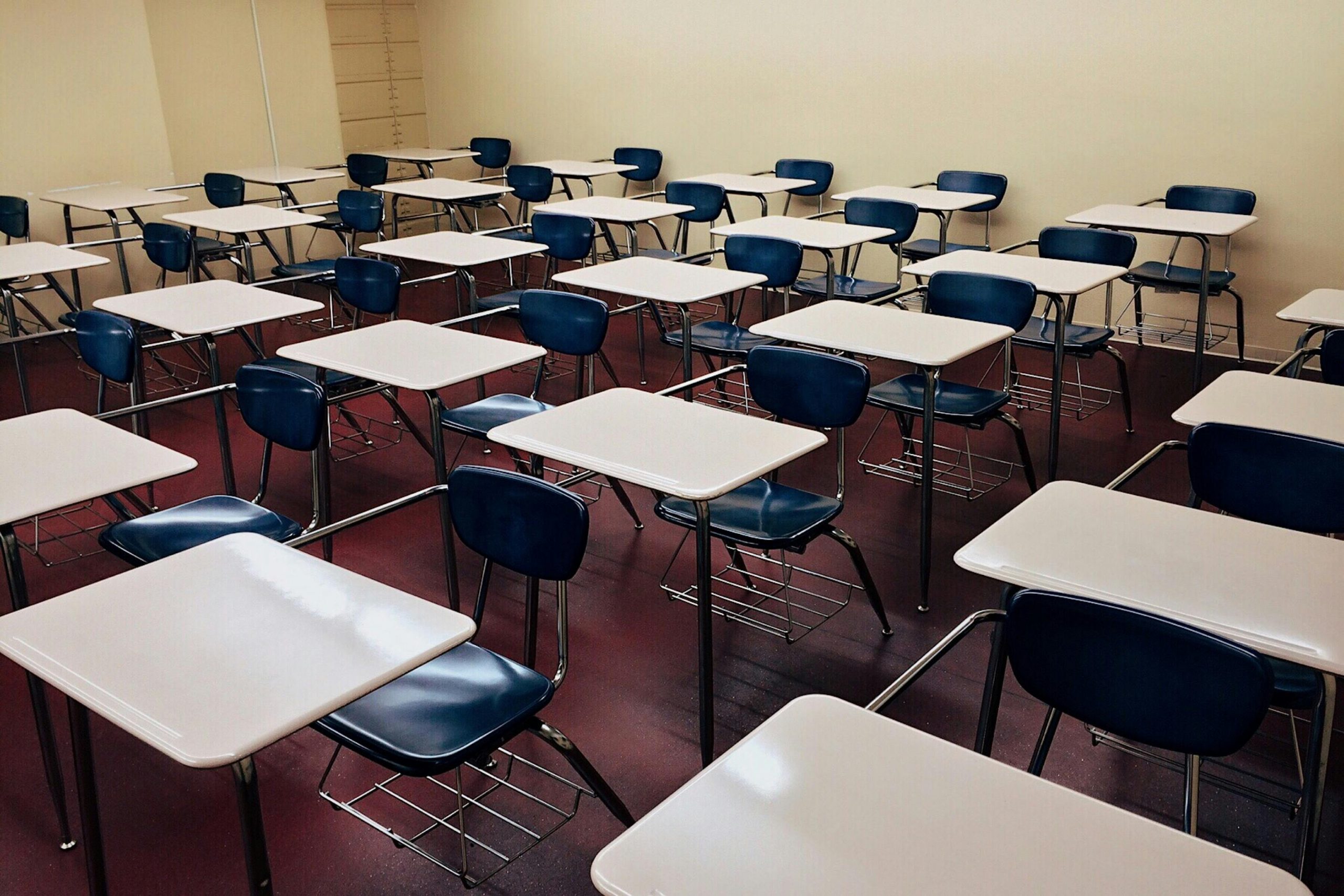
This layout of individual desks and chairs is a workhorse, designed for maximum capacity and single-focus activities. It’s best suited for classrooms with moderate to large square footage — think 800 sq ft or more — and standard ceiling heights (8-10 feet). If your classroom is on the smaller side, say under 600 sq ft, this dense arrangement can feel really cramped. For smaller spaces, consider the more flexible, multi-zone approach seen in Idea #5. This traditional setup thrives when there’s enough room for clear aisles, allowing easy student and teacher movement.
🧹 Maintenance Reality
The visual formula here is a classic for a reason: 60% light neutral (walls) + 30% primary desk/chair color (navy) + 10% bold accent (red flooring). The light neutral walls create a spacious feel, allowing the navy desks to provide structure and focus. The dark red flooring, while bold, acts as a unified base. To adapt this, you could swap the navy for a deep forest green or burgundy, and the red flooring for a rich royal blue, while keeping the light neutral walls. The proportion of colors is what truly makes this combination effective, not just the specific shades themselves.
8. Modern Minimal Classroom with Hexagonal Desks and Teal Chairs
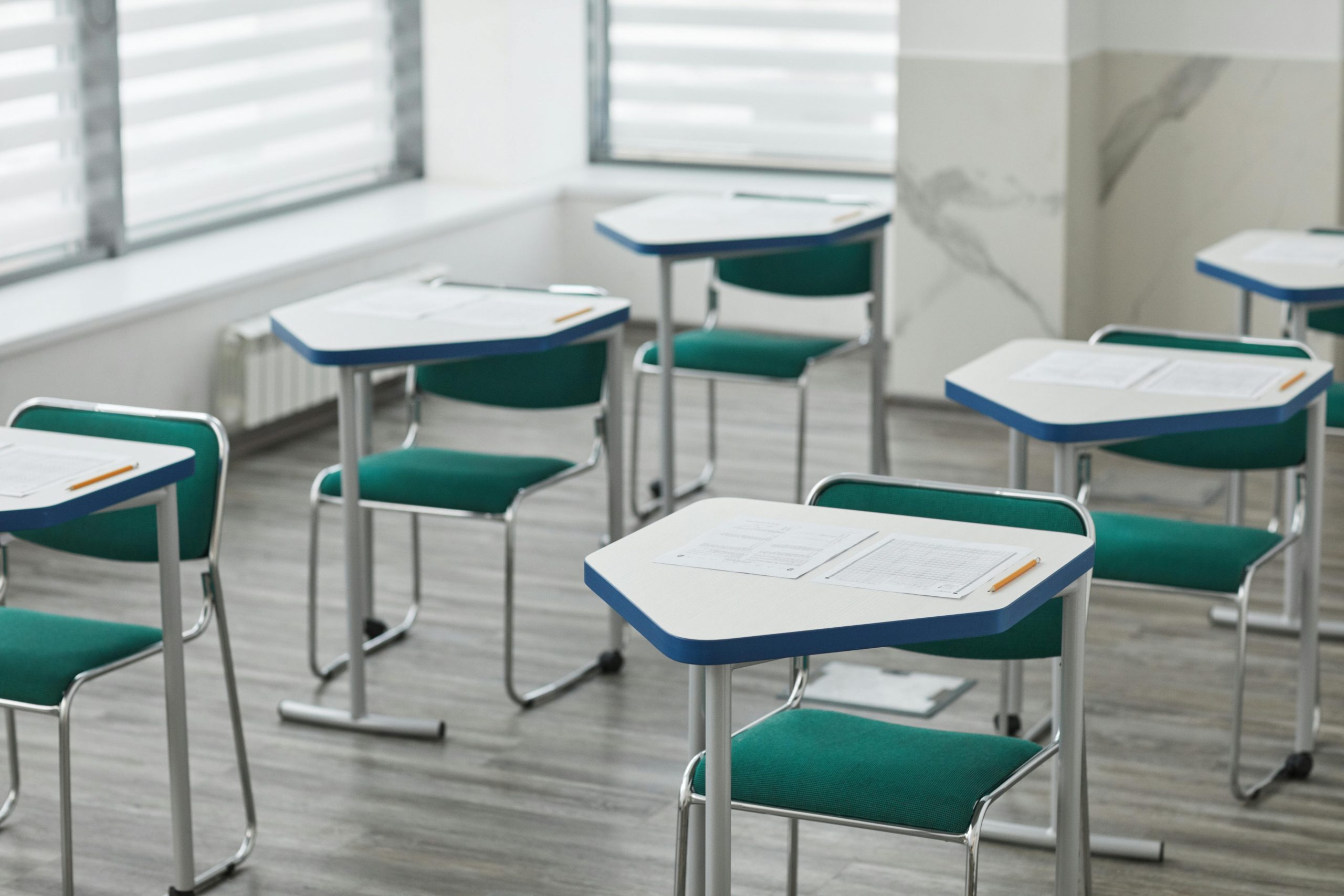
When designing with modular furniture like these hexagonal desks, think beyond the grid. Instead of always lining them up, experiment with grouping two or three to form larger collaborative workstations, or even arranging them in a honeycomb pattern. This offers students different perspectives and encourages varied group dynamics throughout the day. The key is to have a lightweight, easily movable desk and chair system like this, allowing for quick transitions between activities without disrupting lesson flow. Always test out a few configurations before settling on one to see what truly maximizes your space and teaching style. Don’t forget that clean lines and minimal clutter, as seen on the white marble-like wall, contribute to a sense of calm focus.
💡 Designer Tip
The single element that really elevates this classroom’s modern feel? Those hexagonal desks with their subtle blue trim. They break free from the traditional rectangular or round shapes, instantly signaling a forward-thinking, flexible learning environment. If these were standard rectangular desks, even with the teal chairs, the room would lose much of its contemporary edge and unique personality. The geometry of the desks is what makes this space feel modern, dynamic, and anything but cookie-cutter. They encourage a different type of interaction and visual rhythm in the room.
9. Traditional Classroom with Navy Desks and Light Yellow Walls
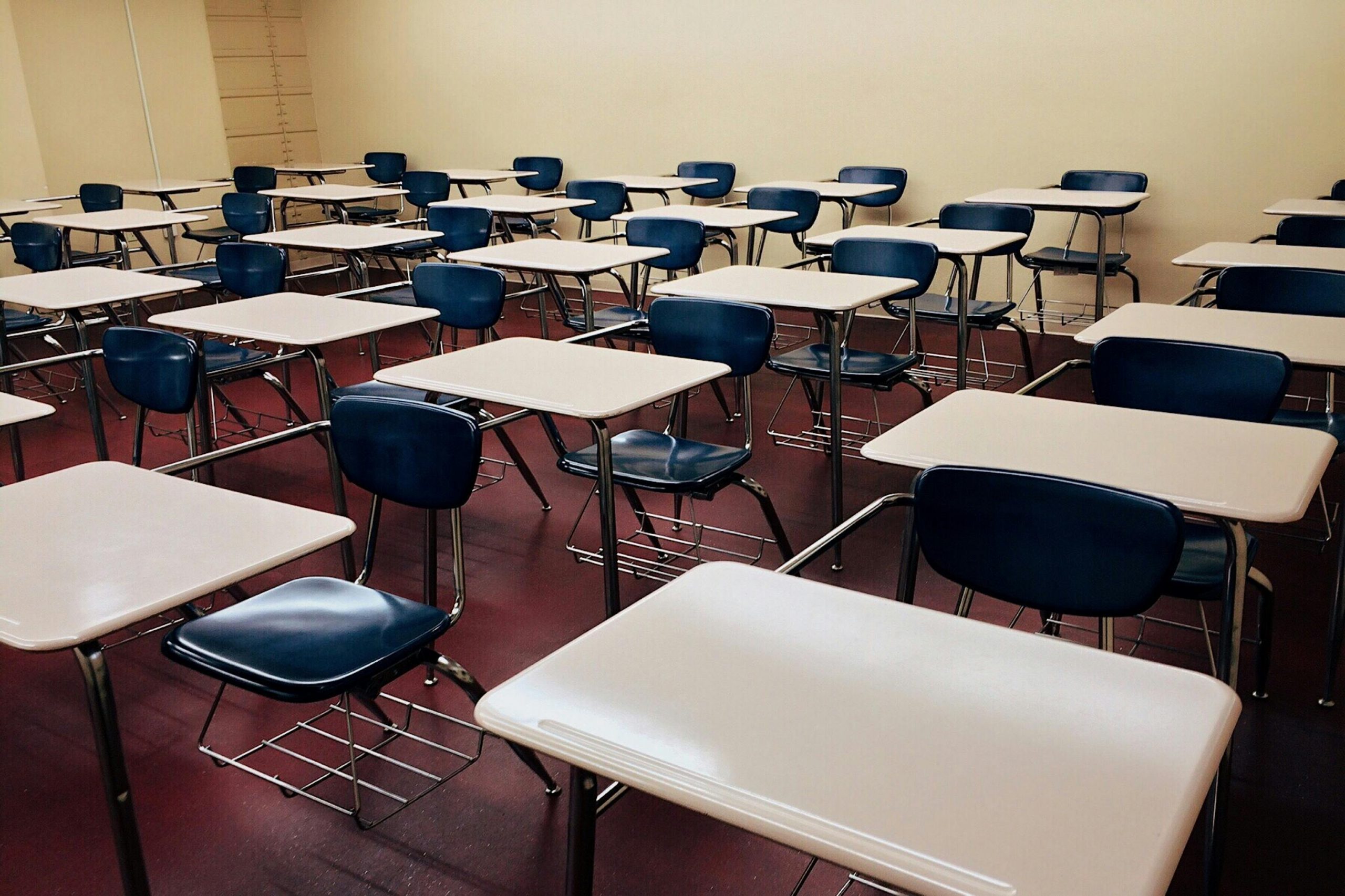
This traditional classroom works because it leverages classic principles: clear organization, warm color temperature, and functionality. The rows of navy desks provide a straightforward structure, signaling a direct learning environment. The combination of light yellow walls and a dark red floor creates a warm, inviting backdrop that’s still stimulating without being overwhelming. It’s a palette that feels both grounded and subtly cheerful. The wall-mounted ruler chart reinforces the educational purpose without adding clutter, prioritizing utility in a familiar setting.
💰 Budget Breakdown
- Have you measured your classroom’s square footage? This layout needs ample space.
- What is your existing flooring? Dark red works here, but a lighter floor might need a different wall color.
- Are your existing desks and chairs a dark primary color, or will you need to source new ones?
- Consider the light direction in your room; light yellow walls can feel extra sunny with natural light.
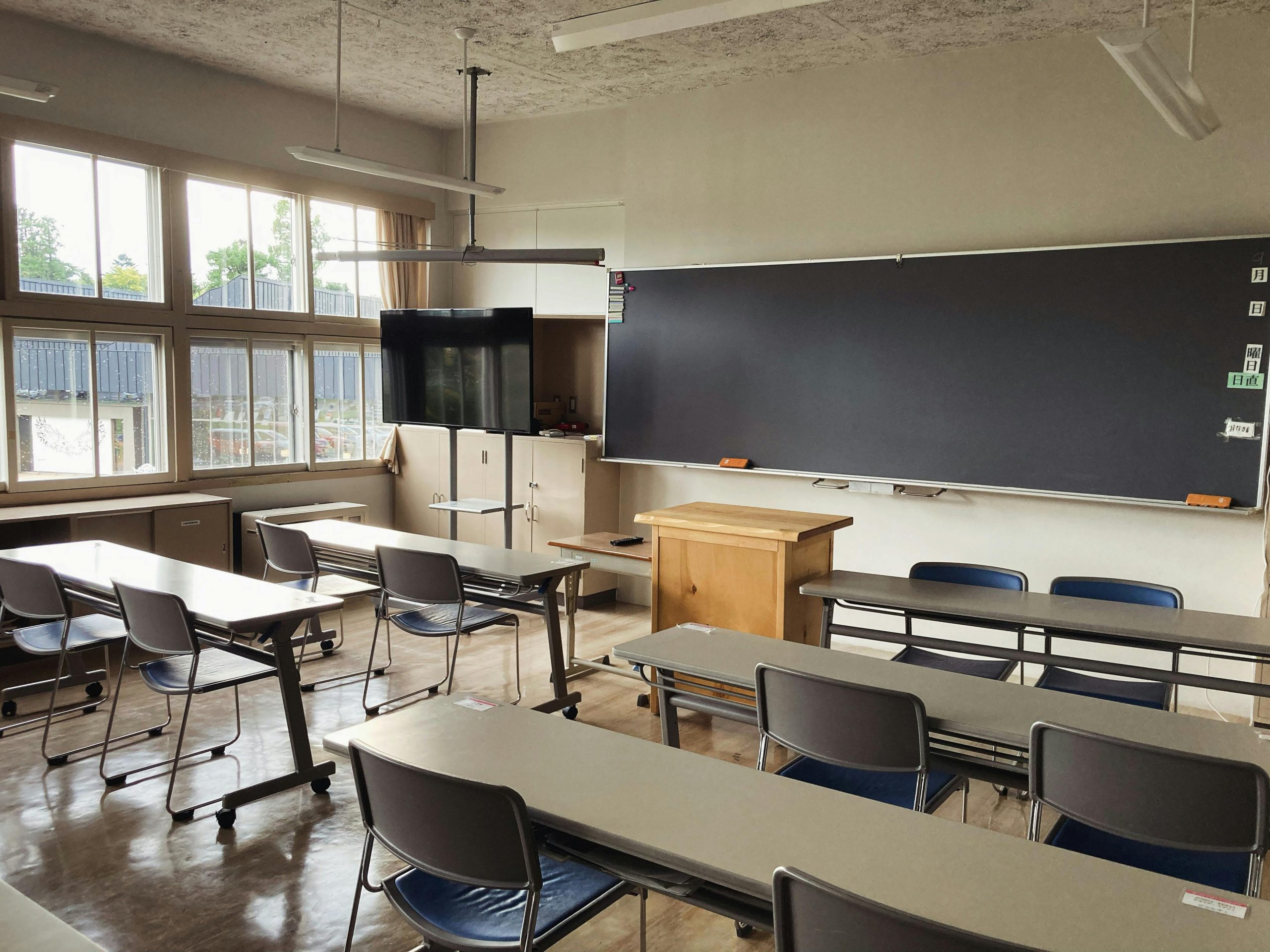
10. Functional Classroom with Industrial Windows and Mobile Furniture
When you have significant natural light from large multi-pane windows, use it as a design feature! Position your main instruction areas, like the blackboard here, where students won’t be squinting into a glare but still benefit from the ambient light. For mobile student desks with integrated features like speakers, think about battery life and charging solutions. Establishing a dedicated charging station at the end of the day can save a lot of headaches. Also, consider how the natural light interacts with screen displays—sometimes too much direct sun can wash out a TV screen, so strategic placement is key with mounted AV equipment.
💸 Get This Look For Less
This classroom is a great example of a growing trend: the blend of industrial aesthetics with adaptive learning environments. Large multi-pane windows, often found in older school buildings or newly renovated spaces, offer a distinct architectural character that designers are embracing instead of covering up. Paired with mobile, tech-integrated furniture, it speaks to a future-forward approach where classrooms are expected to be both beautiful and highly functional, adapting to various teaching methods and digital tools. It’s a nod to historical architecture with a modern, practical twist.
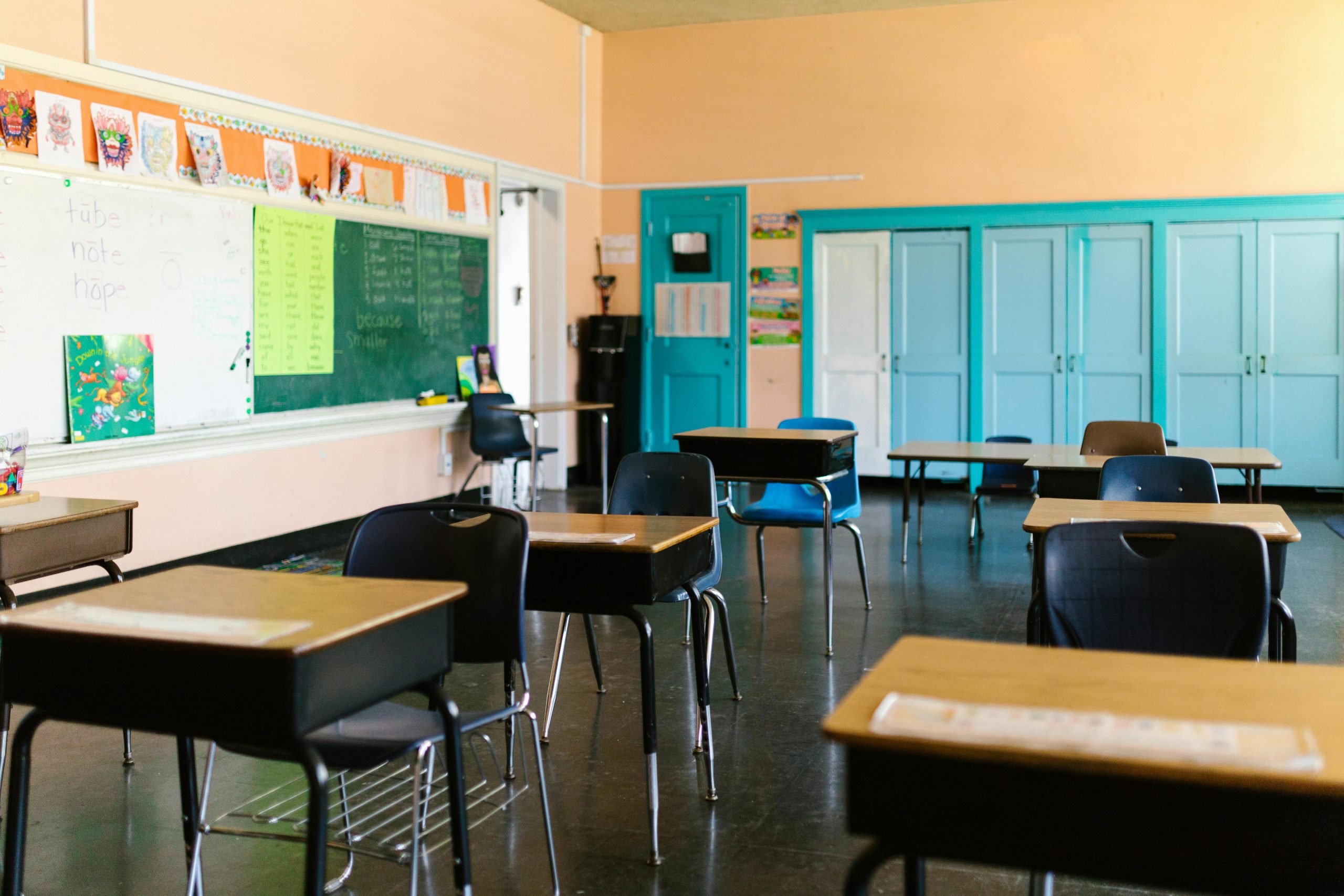
11. Traditional Classroom with Teal Accents and Student Artwork
This classroom successfully balances tradition with a vibrant, personal touch. The mix of dark blue, light blue, and brown student chairs adds subtle variation to the classic desk setup, keeping it from feeling too rigid. The real magic, though, is how the student artwork displayed above the whiteboard introduces a burst of personalized color. It transforms a functional space into an engaging gallery. The clever use of teal on the doors and trim creates a cohesive, energetic accent that ties the room together and enhances the overall playful yet organized atmosphere.
🔧 How-To Brief
A classroom with individual desks and chairs, like this one, generally thrives in a space that’s at least 600-800 square feet to allow for comfortable spacing and clear pathways (~25-30 square feet per student). The large green chalkboard and whiteboard also command a significant wall, so ensure you have a wall long enough; ideally, 15-20 feet for optimal teacher visibility. For smaller rooms, or classrooms needing more flexible movement, consider integrated storage and modular furniture like those in Idea #23 to maximize floor space.
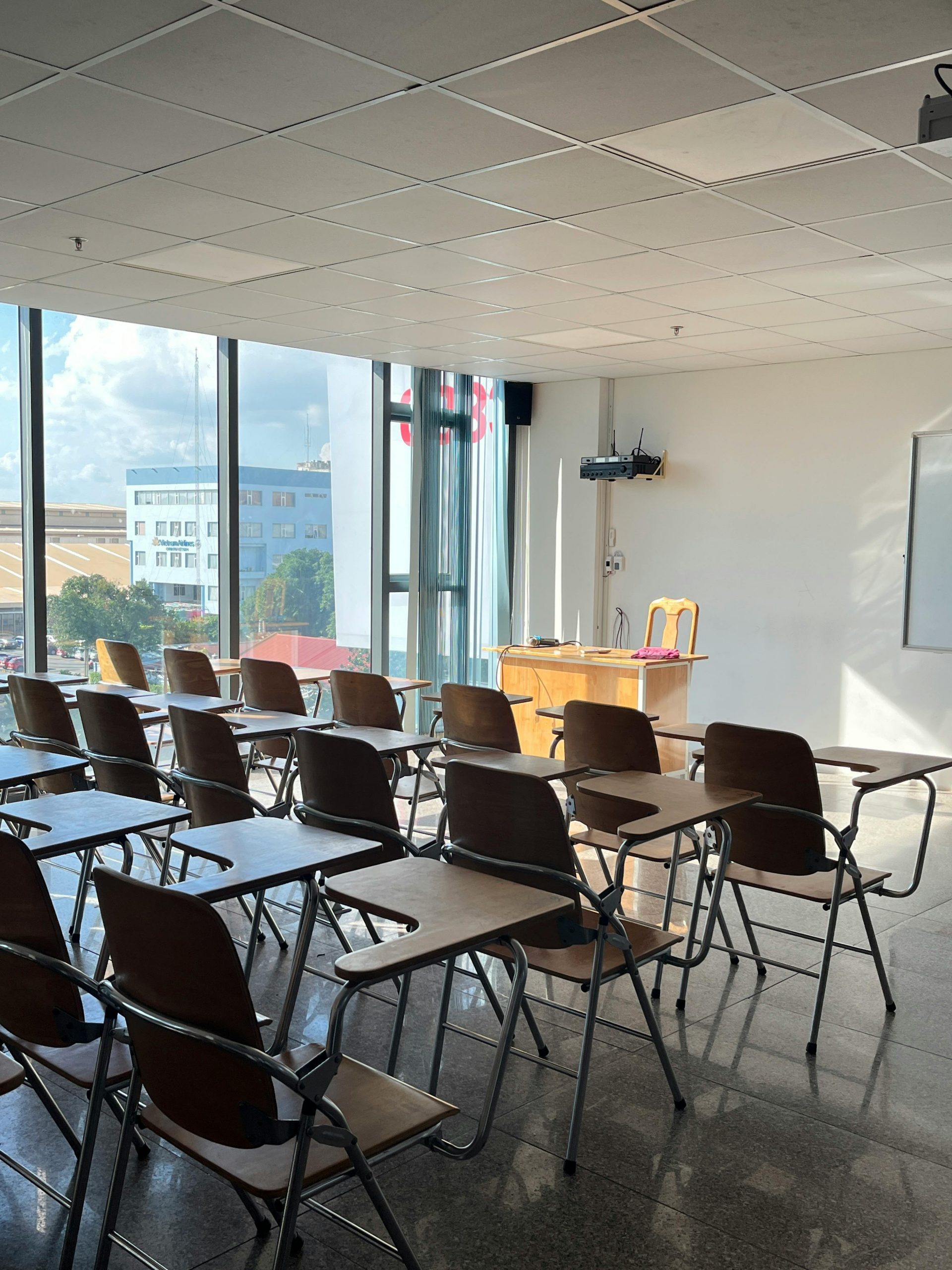
12. Modern Classroom with Individual Desks and Large Windows
- Main Furniture (desks with attached chairs, teacher’s desk): $1500 – $3000
- Lighting (drop tile ceiling/fluorescents): Included with build
- Decor & Accessories (whiteboard, AV equipment): $300 – $800
- Flooring (grey tiles): Included with build
⭐ The One Thing
TOTAL: $1800 – $3800
Budget alternative: Source used classroom desks and chairs from school auctions or surplus sales, which can often be found for under $50 per unit. A simple whiteboard can be crafted from a large sheet of melamine-coated plywood. For AV, consider a projector and screen instead of a large mounted TV to save costs. This strategic sourcing could bring the total down significantly, potentially to $600 – $1200.
While those large floor-to-ceiling windows are fantastic for natural light, they can also be a significant source of glare on screens or distractions for students. Consider investing in room-darkening shades or vertical blinds that can be easily adjusted throughout the day. Also, a drop-tile ceiling, while functional for acoustics and access to utilities, can sometimes feel a bit institutional. To soften this, consider adding acoustic panels or decorative ceiling tiles in certain areas if your budget allows. And make sure those individual desks are sturdy enough for daily use; wobbly desks are a common classroom complaint!
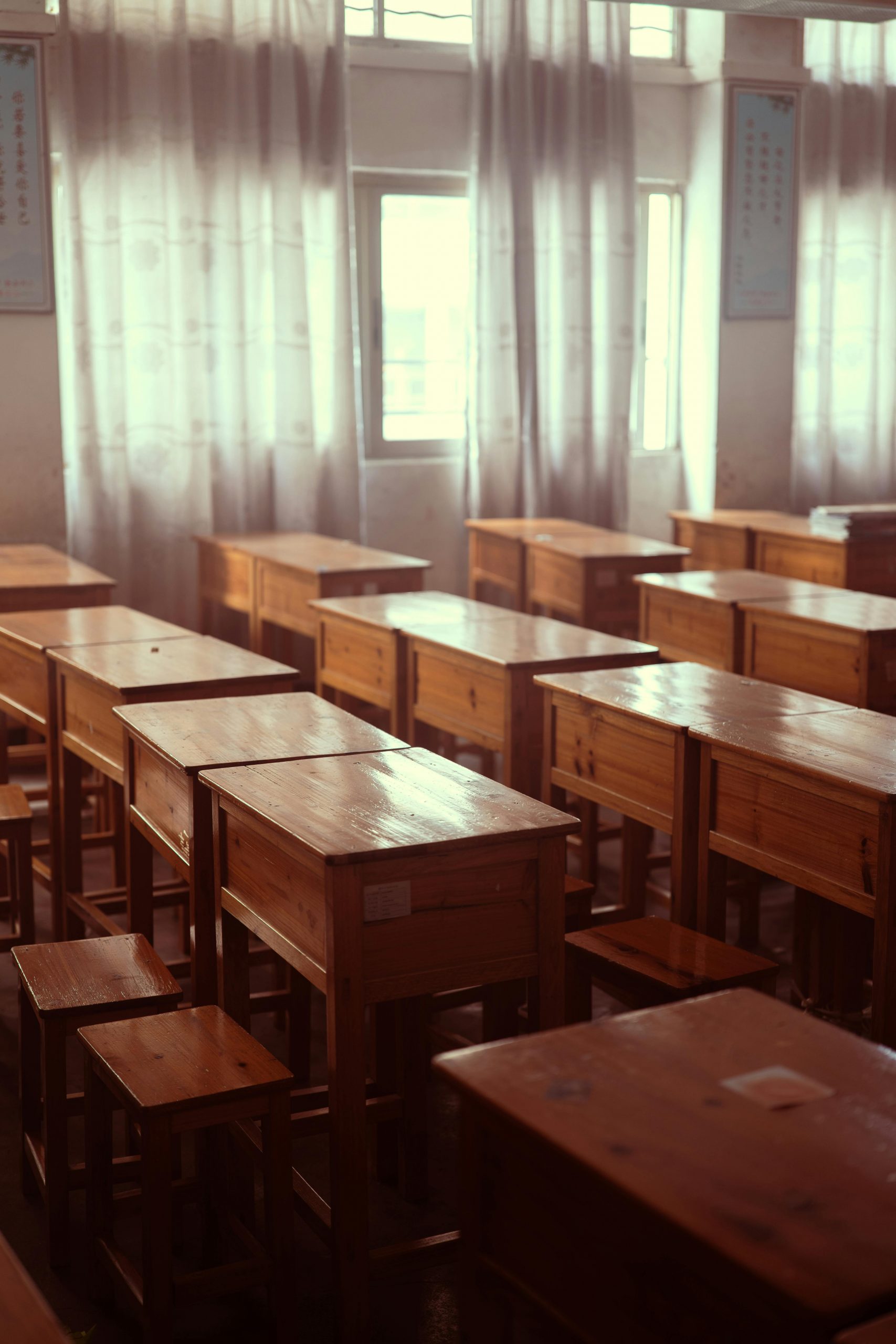
13. Traditional Wooden Desks and Stools in Sunlit Classroom
The single most impactful element here is the sheer patterned curtain. They don’t just cover the windows; they filter the abundant sunlight, bathing the entire room in a soft, diffused glow that wouldn’t be possible with bare windows or opaque blinds. This gentle illumination is crucial for creating the studious yet serene mood. Without them, the room would be harsh and overbright, losing its inviting warmth and making it harder for students to focus due to glare. They are the subtle hero, taming the light and adding a layer of sophisticated texture.
⚠️ Real Talk
Those traditional wooden desks and stools are wonderfully durable, but wood surfaces in a high-traffic classroom environment will inevitably show wear and tear. Expect scuffs, scratches, and potentially even some graffiti (let’s be real!). Plan on a thorough cleaning and re-oiling/sealing of the wood surfaces every 1-2 years to maintain their appearance and protect them. The sheer patterned curtains, while beautiful, are also dust and allergen collectors. They’ll need regular vacuuming or shaking out and a full machine wash (if the fabric permits) every few months. For a similar look with less upkeep, consider faux wood desks with a laminate top and swap the fabric curtains for easy-wipe roller blinds in a light color.
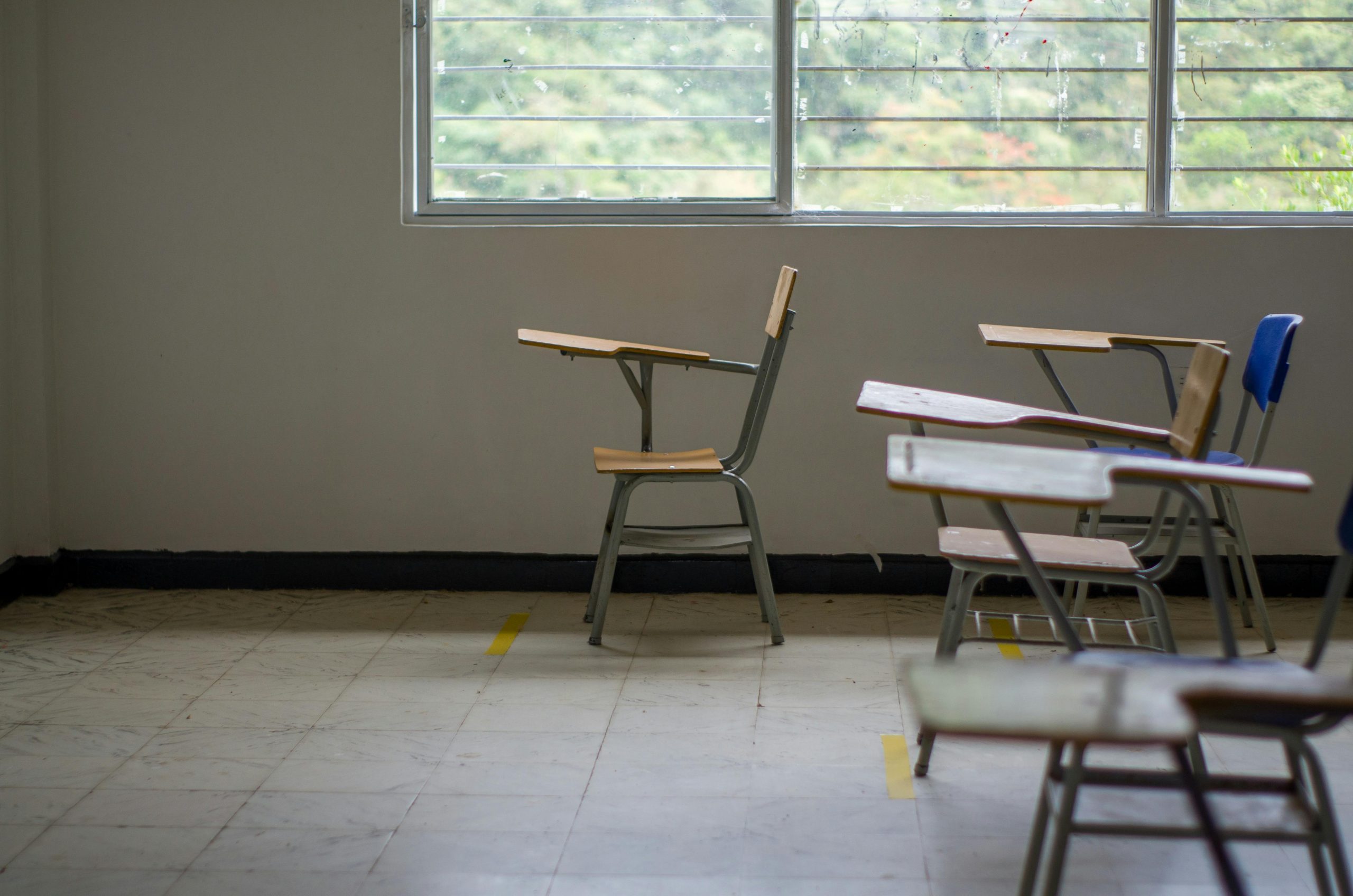
14. Empty Classroom with Natural Light and Basic Furniture
This type of minimalist setup is highly adaptable but best for classrooms that are at least 500-700 square feet. The beauty of this arrangement is its flexibility; without fixed elements, it can work for various student counts and activities. Consider the number of students you’ll have. For individual desks, allow at least 20-25 square feet per student for comfortable movement and clear sightlines. This style works for classrooms of all ceiling heights, but the emphasis on natural light means rooms with larger windows will truly shine. This provides a great baseline, similar to Idea #14, but focused on the empty canvas.
📐 Style Math
- Clean & Prep Floors: Thoroughly clean the existing floor tiles. (Time: 30 min, Cost: $10 for cleaner)
- Measure & Mark: Using a measuring tape, determine where you want your desk rows. Measure and mark the floor with a pencil for even spacing. (Time: 15 min, Cost: $0)
- Apply Tape: Lay down yellow vinyl tape along your pencil marks. Ensure it’s straight and firmly adhered. (Time: 30 min, Cost: $15-$25 for tape)
- Position Furniture: Place desks over the tape marks, aligning them for uniformity. (Time: 15 min, Cost: $0)
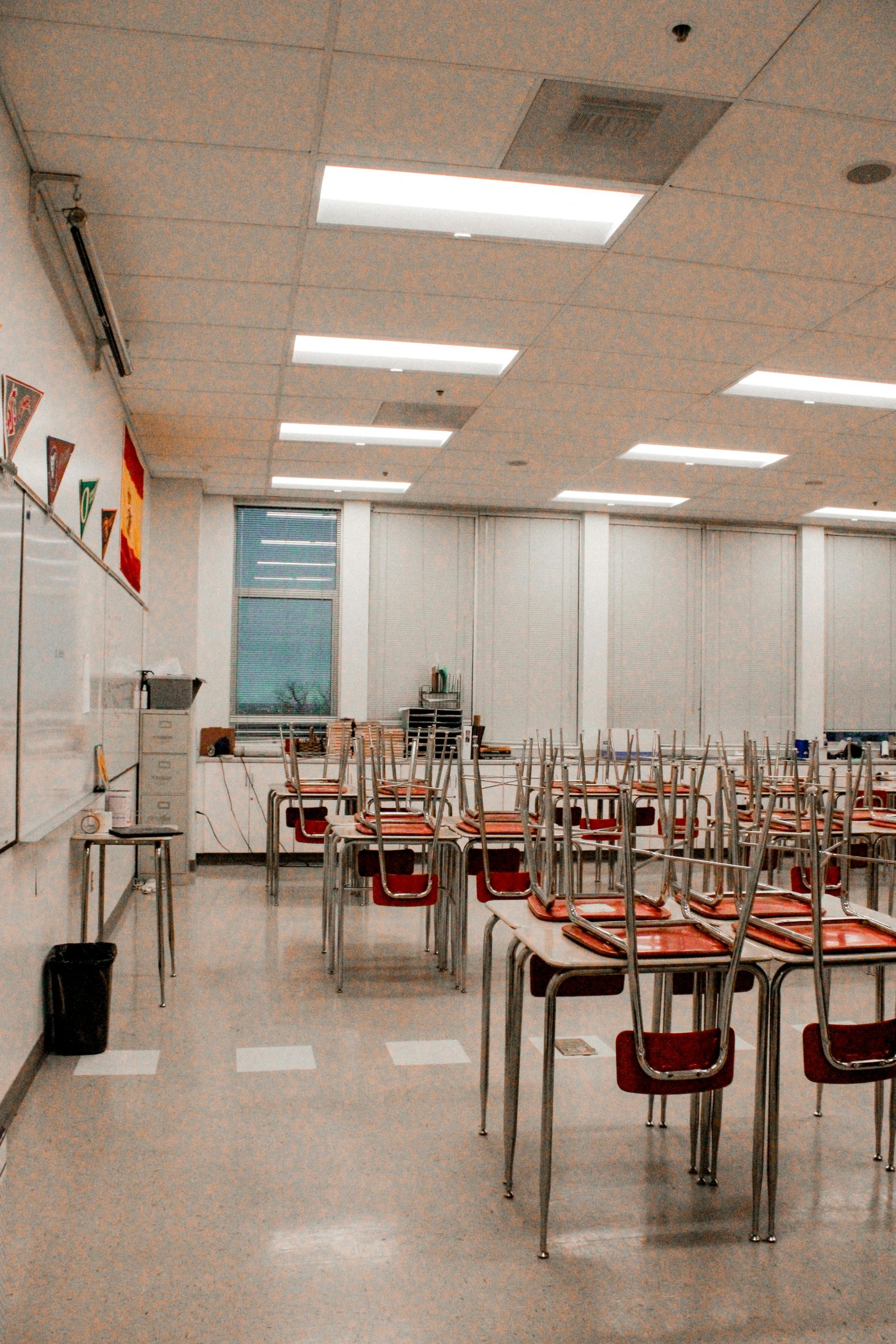
15. Elementary Classroom with Red Chairs and Fluorescent Lighting
Recreating this functional and cost-effective classroom look is simpler than you might think. The key elements are durable, stackable furniture and classic educational displays. To get this look for less than the typical $1000-$2000 per room, focus on institutional furniture sales or even direct-from-manufacturer bulk purchases if you’re outfitting multiple classrooms. For the red chairs, stores like Wayfair and Amazon Basics often have budget-friendly alternatives at around $30-$50 each. The desks can be found at office supply stores or even refurbished from school surplus. A basic whiteboard is incredibly affordable, and classroom flags or banners can be printed online or made by hand. You could easily fit this whole setup for under $700, especially if you buy chairs in sets.
🎯 What Makes It Work
The aesthetic here follows a pretty clear formula: 70% light neutrals (walls, floor, desktop) + 20% bold primary accent (red chairs) + 10% functional elements (whiteboard, blinds, silver frames). This balance ensures the room feels bright and expansive, while the red chairs provide energy and focal points. To adapt this, you could swap the red for a vibrant blue or a sunny yellow. The light beige tiled floor and white walls create a blank canvas, allowing the chairs to be the dominant color player. This approach is highly effective for large, functional spaces where a consistent, clean base is desired.
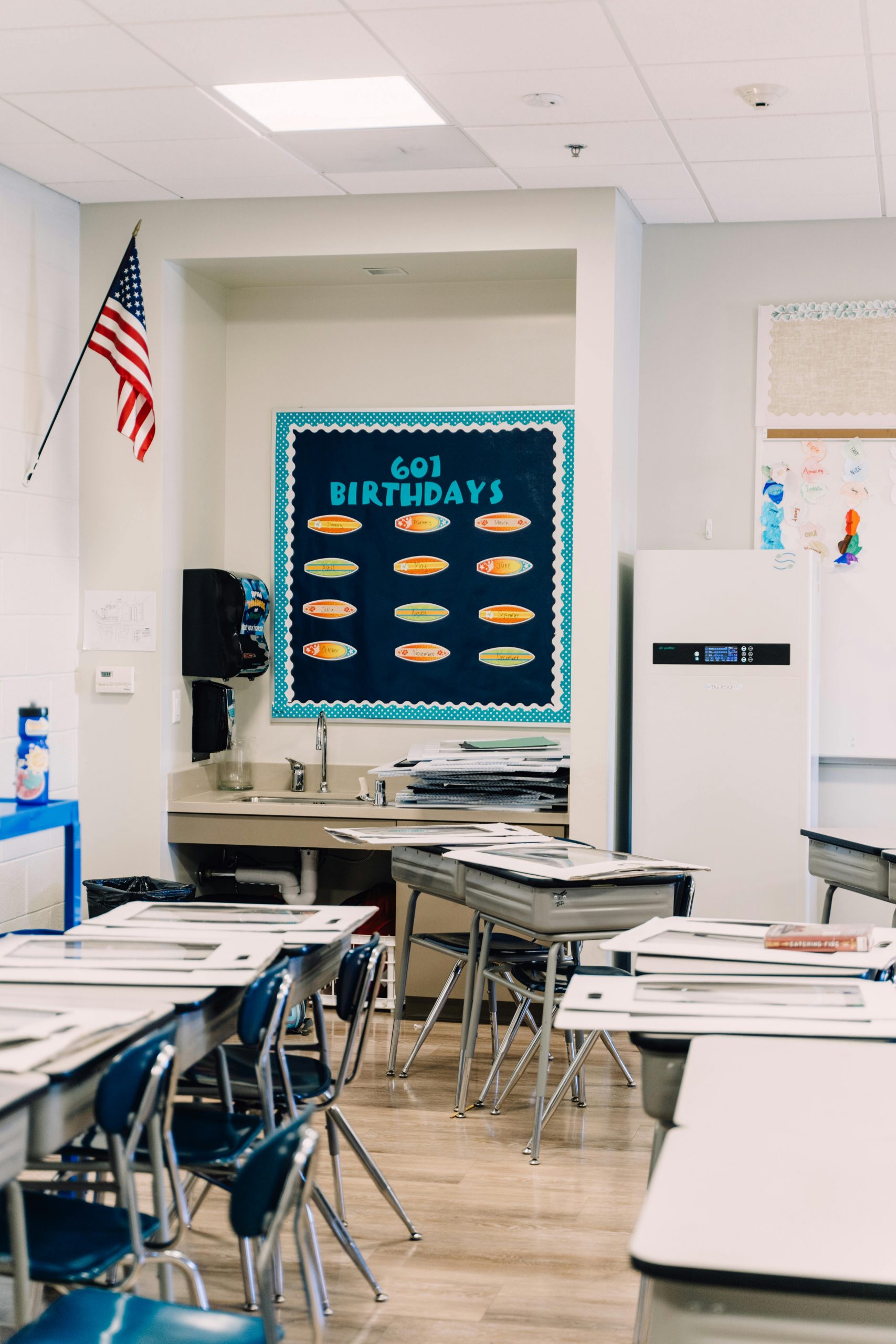
16. Modern Elementary Classroom with Integrated Sink and Birthdays Board
When designing a classroom, especially one with an integrated sink, placement is everything. The sink area should ideally be near a water source, obviously, but also easily accessible for students but not disrupt the main flow of the classroom. Consider motion-activated faucets to promote hygiene and reduce water waste. For bulletin boards like the ‘BIRTHDAYS’ one, use a dedicated wall section that’s visible but not competing with the main whiteboard or digital displays. Mounting an air purifier vertically, as seen here, maximizes floor space, which is always a premium in learning environments.
🔥 Trending Context
The single element that makes this classroom truly special is that integrated sink area. It’s not just a utility; it’s a commitment to practicality, hygiene, and hands-on learning within the classroom itself. Without it, the teacher would constantly be sending students to the hall or a separate room for water, art clean-up, or basic hygiene. It streamlines so many daily activities, allowing for more continuous instruction and less logistical interruption. It’s the unsung hero that enables a more self-sufficient and efficient learning environment, proving that thoughtful utility can be a key design feature.
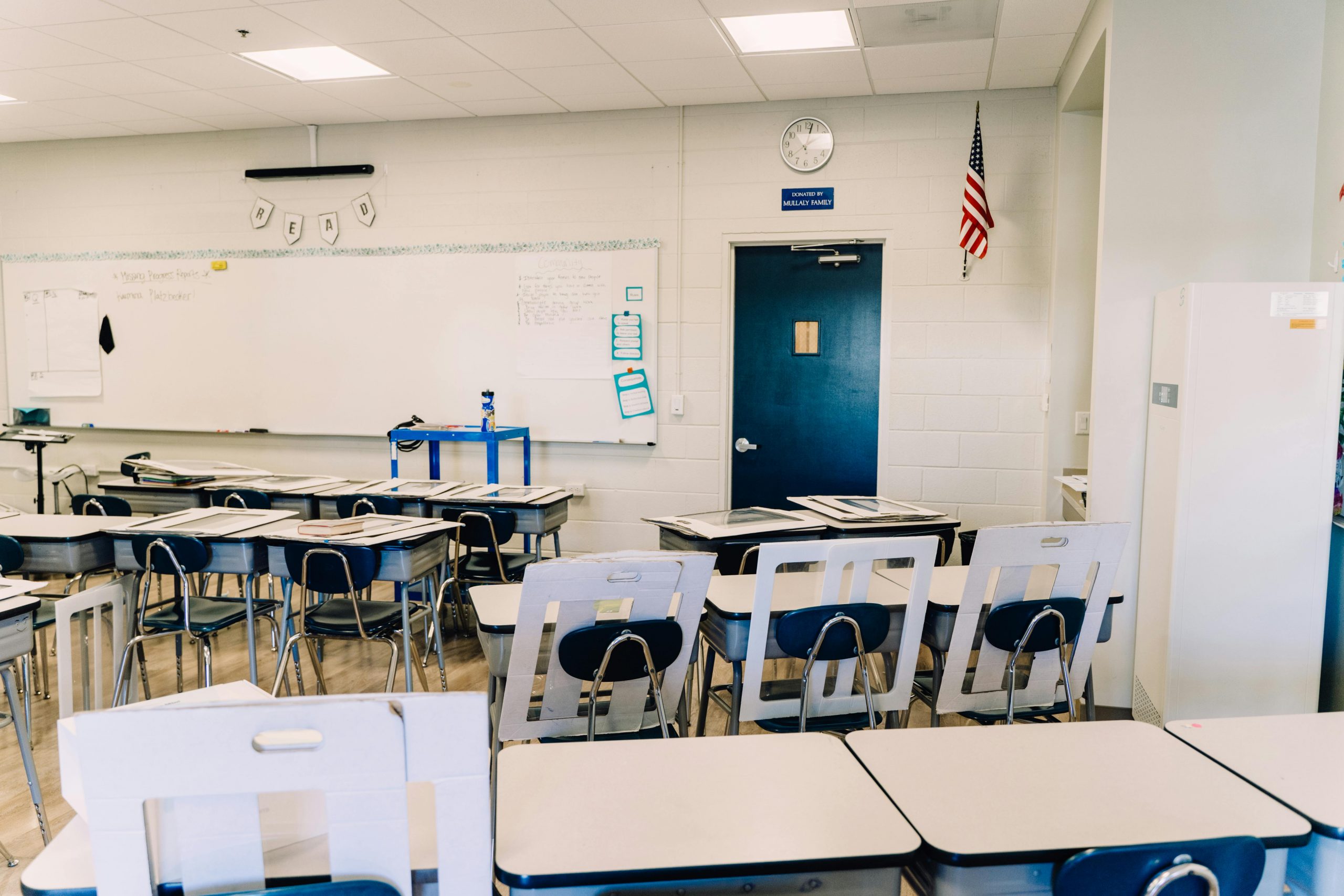
17. Neutral Classroom with Blue Accents and Whiteboards
This layout, with its individual desks facing a long whiteboard wall, is a classic for a reason and works best in a classroom of at least 700-900 square feet to maintain clear sightlines and movement paths. The expansive whiteboard wall requires a length of at least 20 feet for optimal use and visibility. Ceiling heights of 8-10 feet are ideal to prevent the room from feeling too cramped. For smaller spaces, particularly those under 600 square feet, consider a more flexible configuration that minimizes fixed furniture, like the modular setup in Idea #23.
📏 Scale Guide
- Main Furniture (desks, chairs, small table): $1000 – $2000
- Wall Treatments (large whiteboards): $300 – $700
- Decor & Accessories (clock, flag, banner): $50 – $150
- Paint (white walls, blue door): $100 – $200
TOTAL: $1450 – $3050
Budget alternative: Source used student desks and chairs from local school auctions or online marketplaces. A large sheet of melamine can serve as an affordable whiteboard substitute. For the ‘READ’ banner, DIY it with construction paper and string. This approach could reduce the total cost to approximately $500 – $1000.
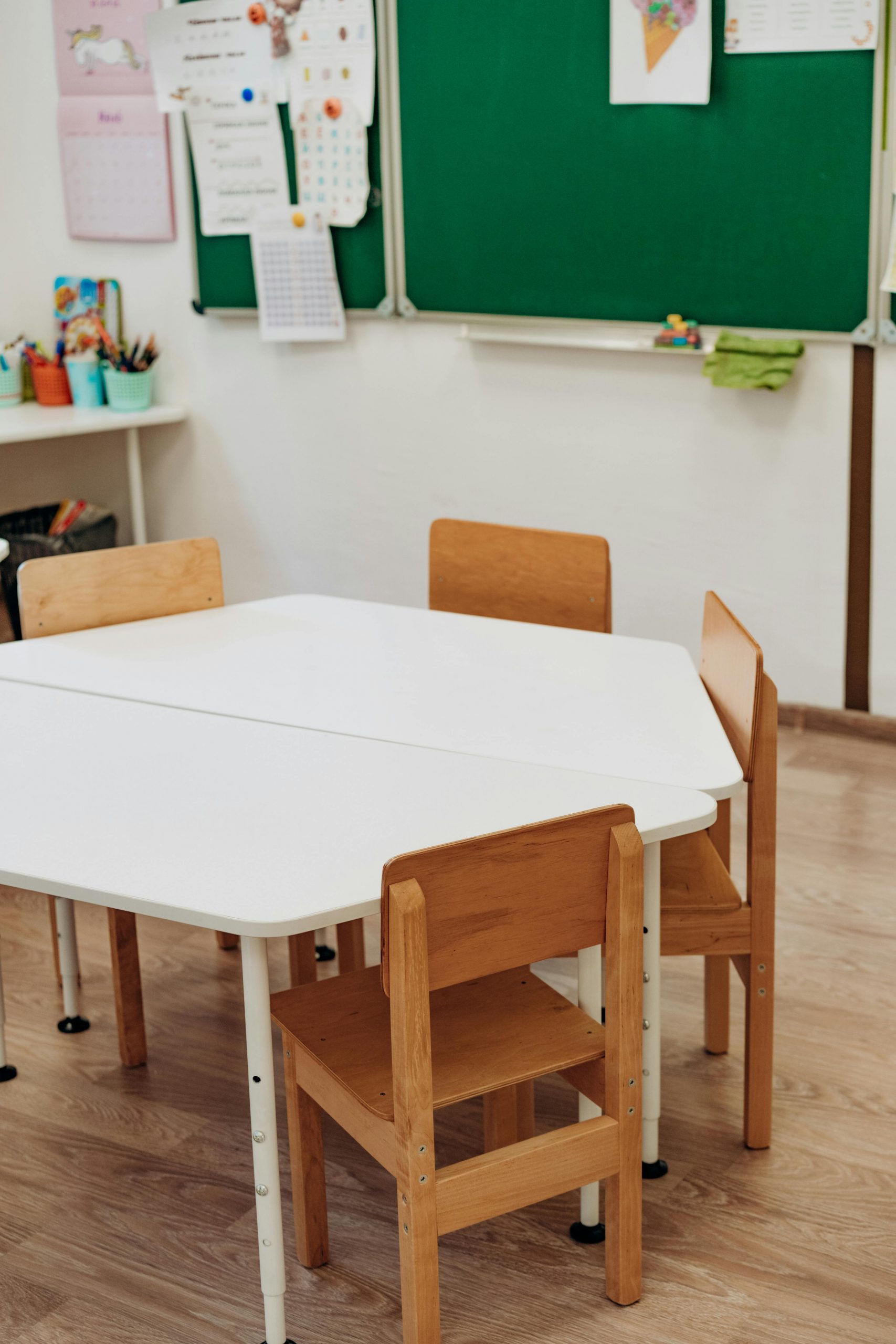
18. Adjustable White Tables with Wooden Chairs and Green Board
Investing in adjustable-height tables like these trapezoidal white ones is a game-changer for classroom flexibility. They can grow with your students, adapt to different activities (standing work, collaborative projects, individual focus), and even reconfigure for various learning groups. When choosing wooden chairs, opt for a light, natural finish—it’s incredibly versatile and introduces warmth without overpowering the space. Remember to complement the green chalkboard with a light, bright wall to really make those colorful displays pop. Don’t underestimate the power of colorful pencil holders to add personality and organization to a white shelving unit!
✅ Before You Start
This classroom setup works because of its thoughtful combination of adaptability and visual serenity. The adjustable white tables offer undeniable utility, allowing the space to be constantly reconfigured for different learning needs. Paired with the light natural wood chairs, there’s a calming, almost Montessori-like aesthetic at play. The pops of color from the displayed papers and pencil holders against the clean white wall and green chalkboard provide stimulating accents without overwhelming the eye. It’s a blend of practical flexibility and a visually uncluttered environment, fostering focus and creativity simultaneously.
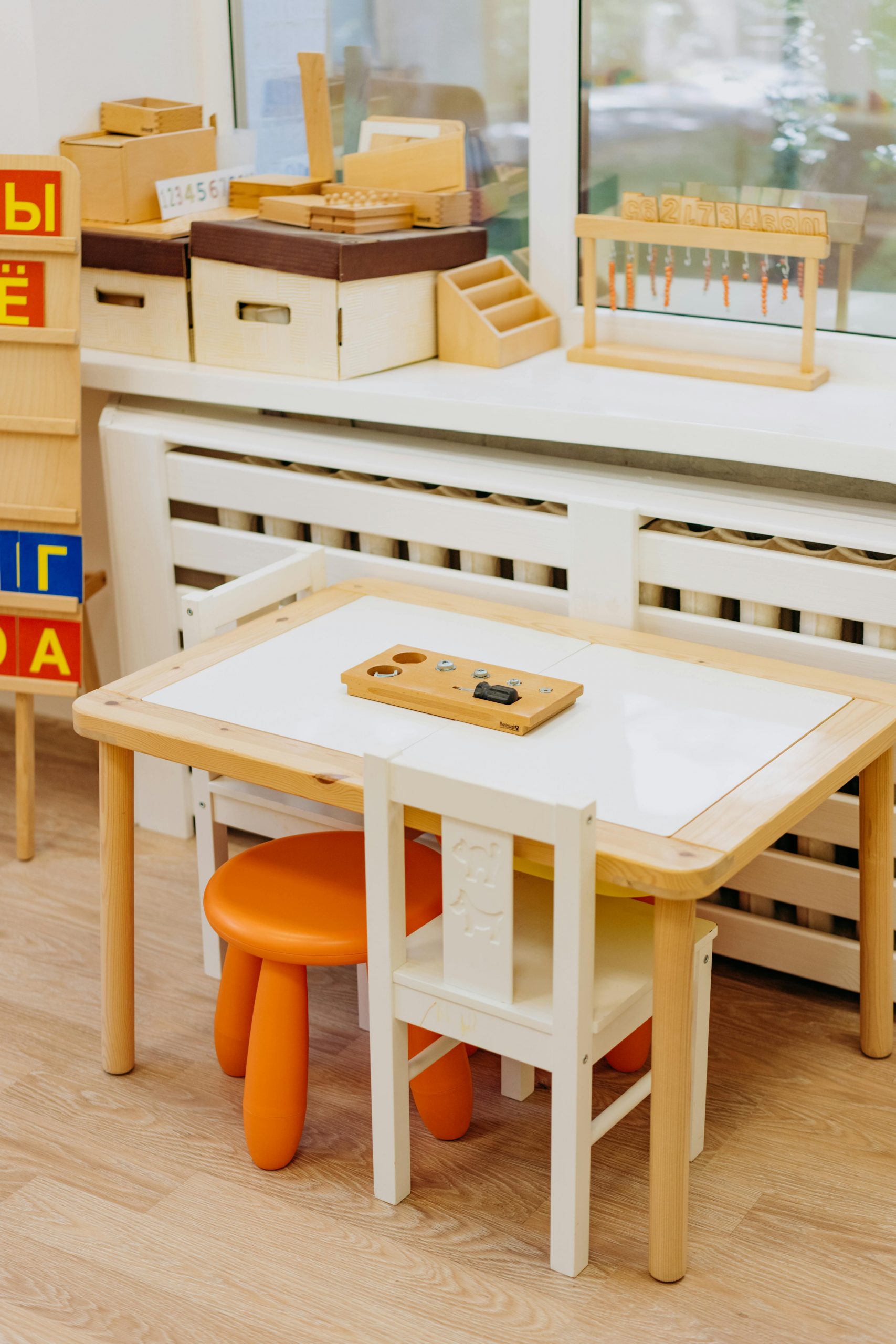
19. Bright Classroom Window Niche with Playful Seating
The absolute star here is that white chair with the charming animal cut-outs. It’s not just a chair; it’s a piece of playful design that signals this is a space for young learners. Without that unique detail, the setup would be functional but lose its specific child-centric appeal and warmth. It transforms a basic seating area into an inviting spot for imagination and learning, perfectly complementing the natural wood learning tools. It proves that one whimsical piece can set the entire tone for a nook.
🧹 Maintenance Reality
While this window niche is incredibly bright and inviting, direct sunlight can be both a blessing and a curse. Keep in mind that intense afternoon sun might cause glares on tablets or books, potentially leading to eye strain. It could also fade delicate learning materials or wall displays over time. Consider a sheer roller blind or a UV-filtering window film to mitigate these issues while still enjoying the natural light. Also, ensure the window ledge is securely mounted and cleanable, as it will inevitably become a surface for display and interaction.
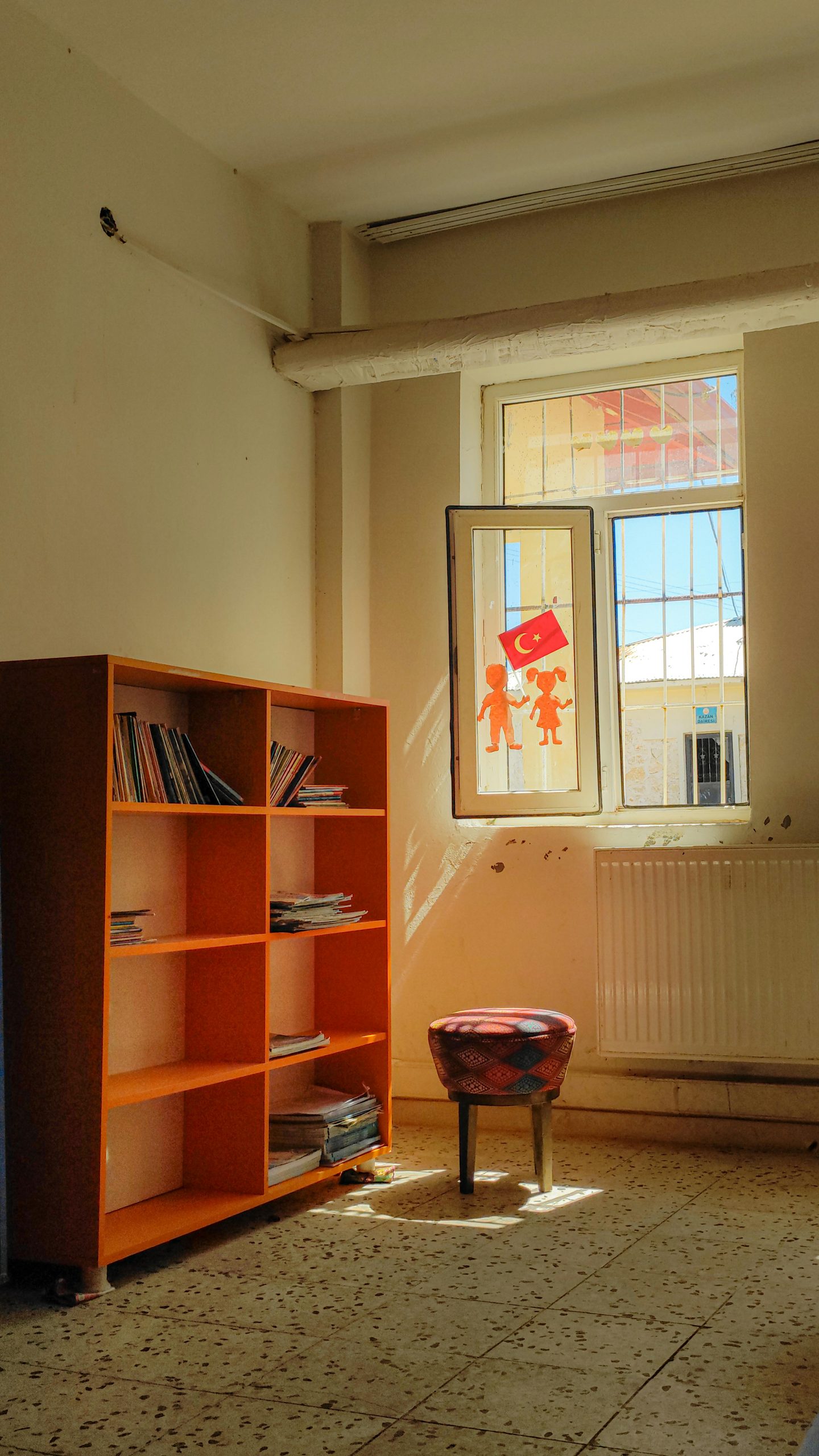
20. Sunlit Corner with Orange Bookshelf and Patterned Stool
This sunlit corner embodies a rising trend in classroom design: creating cozy, inviting
21. Elementary Classroom with Blue Doors and Light Wood Floors
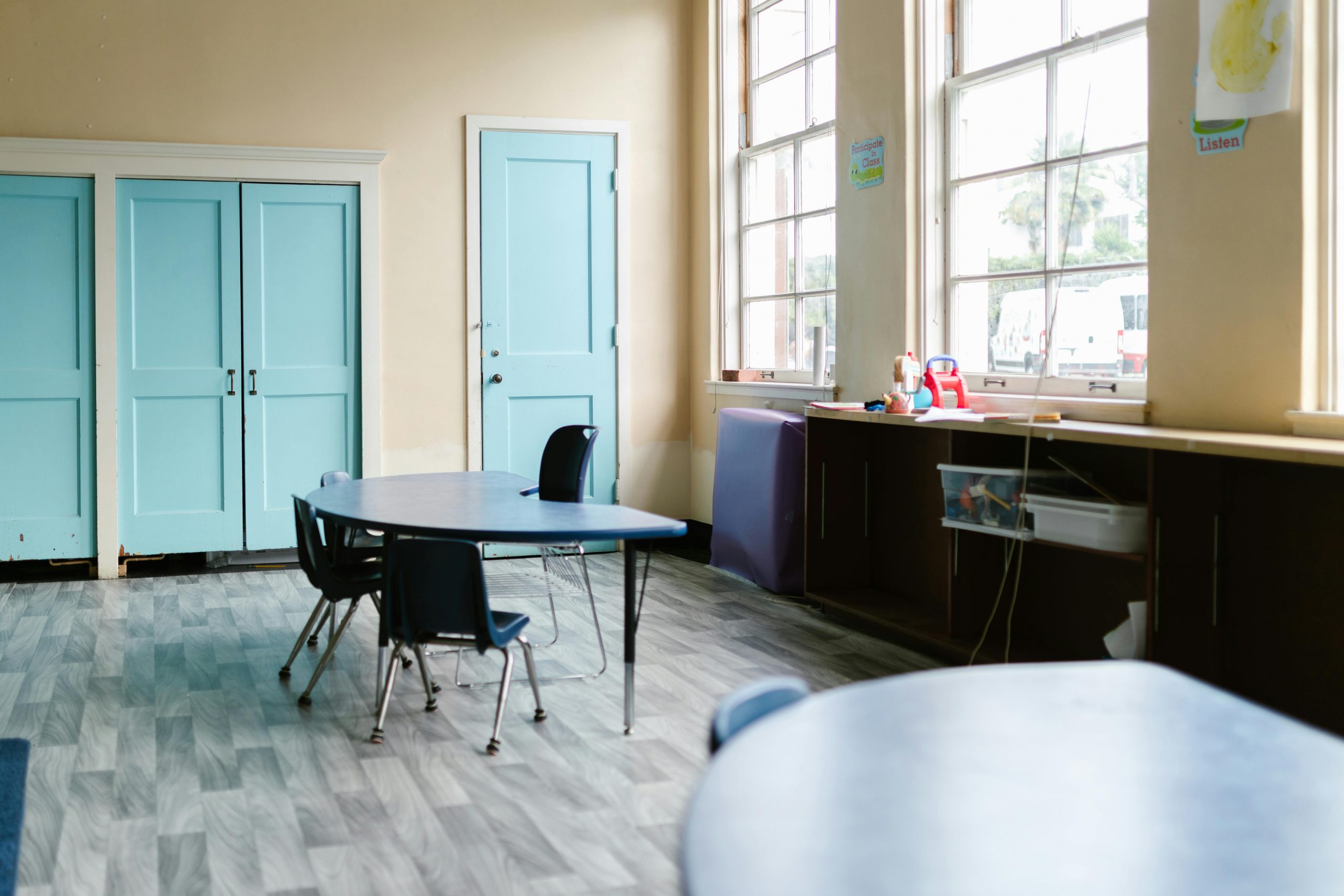
This classroom really nails it with its cohesive color story and emphasis on natural light. The light beige walls and grey and white patterned wood-look flooring create a clean, contemporary canvas. The light blue paneled doors and dark blue half-moon tables provide perfectly matched, serene accents, preventing the room from feeling too stark. The large multi-pane windows are crucial here, filling the space with an inviting brightness that makes the blues feel even more refreshing. It’s a beautifully balanced and understated aesthetic that promotes focus without being dull.
💰 Budget Breakdown
- Have you assessed the amount of natural light in your classroom? This look thrives on it.
- Are your existing doors paintable to a light blue, or will you need to replace them?
- What’s your current flooring situation? Patterned wood-look laminate is key here.
- Consider the color temperature of your existing artificial lighting; it should complement the cool blue and beige tones.
22. Bright Multi-Color Classroom Rug with Reading Nook
That vibrant blue and green geometric rug is the undisputed hero of this space. It’s what defines the entire play and reading area, creating a burst of color and pattern that instantly makes the room feel playful and inviting. Without it, the low wooden bookshelves and bins would simply be functional storage against the wall, lacking the energetic focal point that grounds the whole setup. It proves that one well-chosen textile can completely transform a corner, making it special and memorable. It commands attention without being overwhelming.
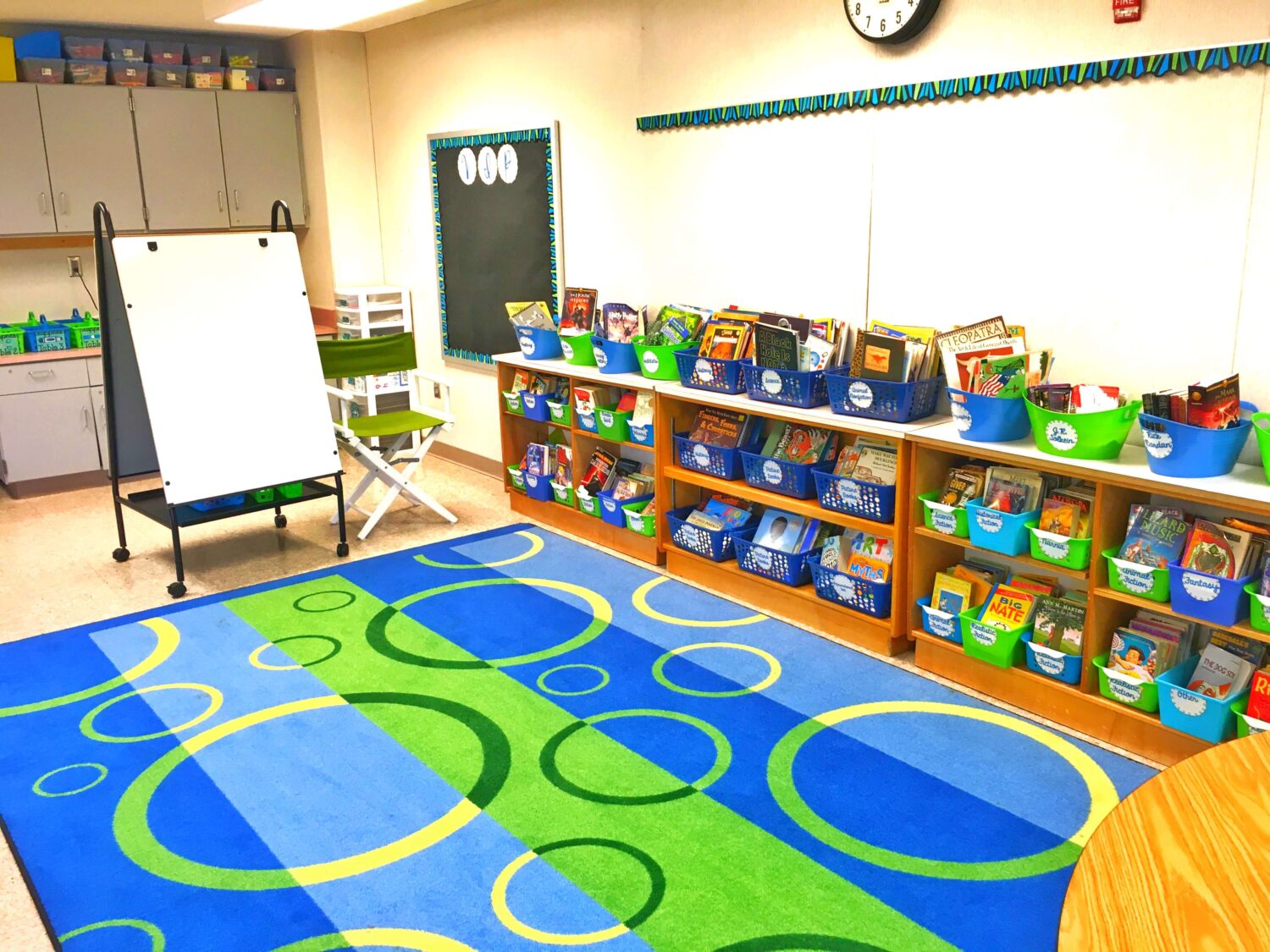
💸 Get This Look For Less
You can create a similarly inviting reading nook without spending a fortune. Instead of investing in a large designer rug, look for clearance rugs at big box stores like HomeGoods or Target in bright, primary, or secondary colors. Simple, unfinished wooden bookshelves from IKEA (like the BILLY series) can be purchased affordably and stained or painted to match your decor. Instead of specific plastic bins, use colorful fabric storage cubes, which are often cheaper and can be found almost everywhere. A simple easel whiteboard is easy to find second-hand or on a budget at office supply stores. This can bring a $1000+ look down to a very approachable $300-$500.
23. Warm Wood and White Classroom with Modular Furniture
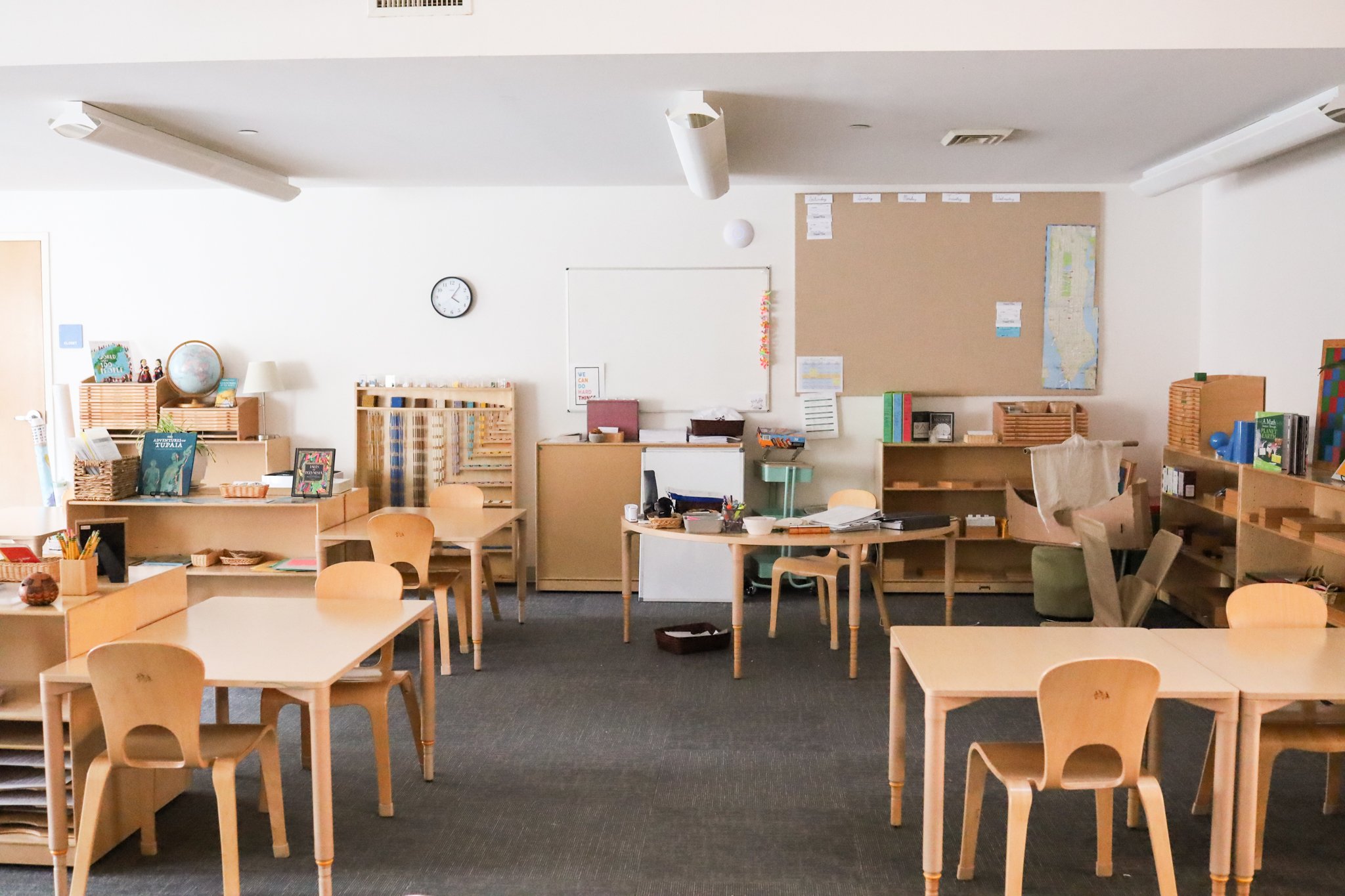
This classroom effectively uses a calming
24. Modern Elementary Classroom with Colorful Accents
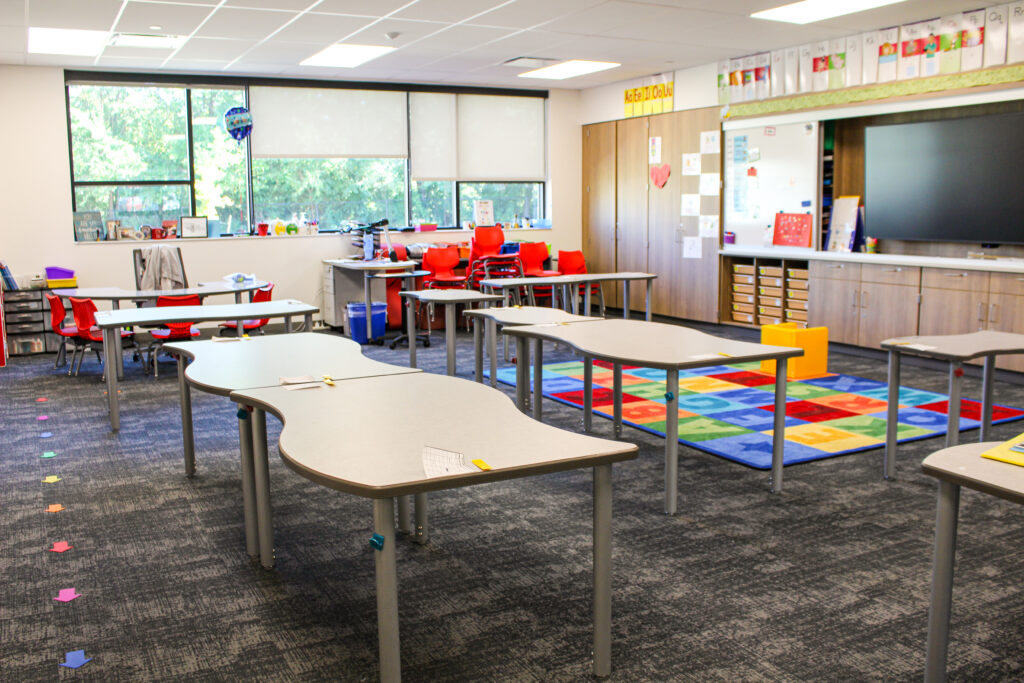
When using an alphabet rug or other highly patterned rugs, be mindful of its placement in relation to other busy elements. Here, it’s wisely anchored in the center on a neutral carpet, allowing it to be a key focal point without clashing. If you have a large digital display, consider its height and angle for optimal viewing from all seating areas, whether students are at desks or on the rug. And remember that wavy-edged desks can add a touch of whimsy and break up the rigidity of traditional straight lines, encouraging a more fluid classroom dynamic without sacrificing functionality. This is a nice counterbalance to the more traditional setup in Idea #7.
⭐ The One Thing
That textured dark gray carpet and colorful alphabet rug, while visually appealing, will be the true heroes (or villains!) of your cleaning routine. Darker carpets tend to hide minor spills and footprints better, but they also show lint and brighter debris more. Plan on daily vacuuming for both and a professional deep clean for the carpet tiles at least twice a year. The red plastic chairs are generally low-maintenance; a quick wipe-down usually suffices. However, the wavy-edged light gray desks, with their lighter surface, will likely show pen marks and smudges more readily, so quick, targeted cleaning is a must throughout the day.
25. Bright Confetti Accented Classroom
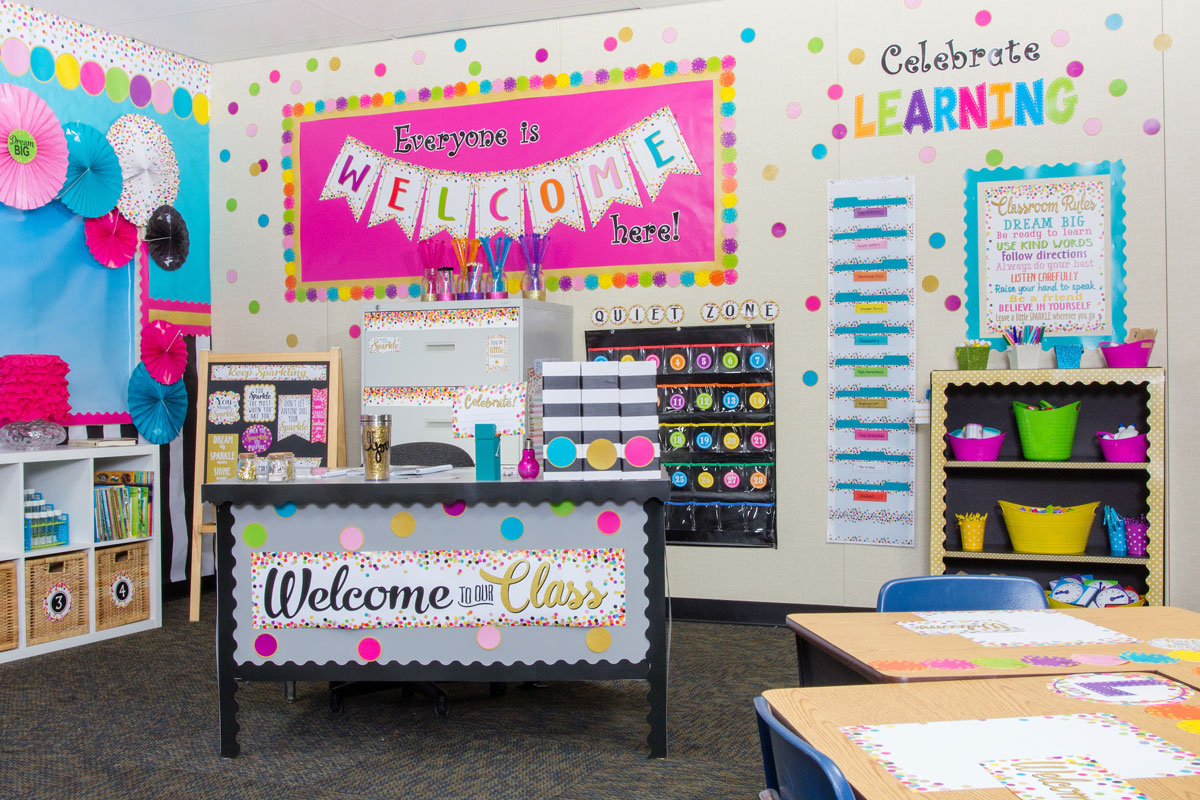
To achieve this cheerful confetti-themed look on a tighter budget, get crafty with your accents! Instead of buying pre-made confetti wall decals, purchase colorful cardstock and a circle punch, then adhere the dots to the wall yourself with removable adhesive. For bulletin boards, use inexpensive fabric or even colorful butcher paper as the background, and create scalloped borders with construction paper. Paper fan decor can be relatively cheap at party supply stores, or you can find tutorials online to make your own. Look for plain storage bins at dollar stores or discount retailers and accessorize them with colorful labels. This DIY approach can cut the cost of this vibrant look by 60-70%.
⚠️ Real Talk
This classroom works because it fully commits to its joyful theme, creating an immersive and stimulating environment. The confetti dots on the white walls provide a consistent, playful backdrop, instantly setting an energetic tone. The layering of bulletin boards, banners, and paper fans with matching patterns reinforces the theme without feeling repetitive. Even practical elements like the storage bins echo the bright color palette. It’s a masterclass in using repetition and a clear, fun motif to create a highly engaging and cohesive design that feels celebratory and welcoming for young students. It’s impossible to be in this room and not feel a little more cheerful!
26. Three-tiered Colorful Cubby and Bin Storage System
When designing a cubby system, especially for individual student use, always aim for consistency in labeling. Using apple-shaped name tags for each cubby, as seen here, adds a charming touch that’s also highly functional. The individual cubbies with smaller, colorful organizer bins are genius for personal items, cutting down on desk clutter. For the top shelves, clear plastic bins are excellent for monthly themes or supplies you want to keep visible but out of reach. Remember, organization systems only work if they’re easy to maintain—clear labels and dedicated spots for everything are paramount.
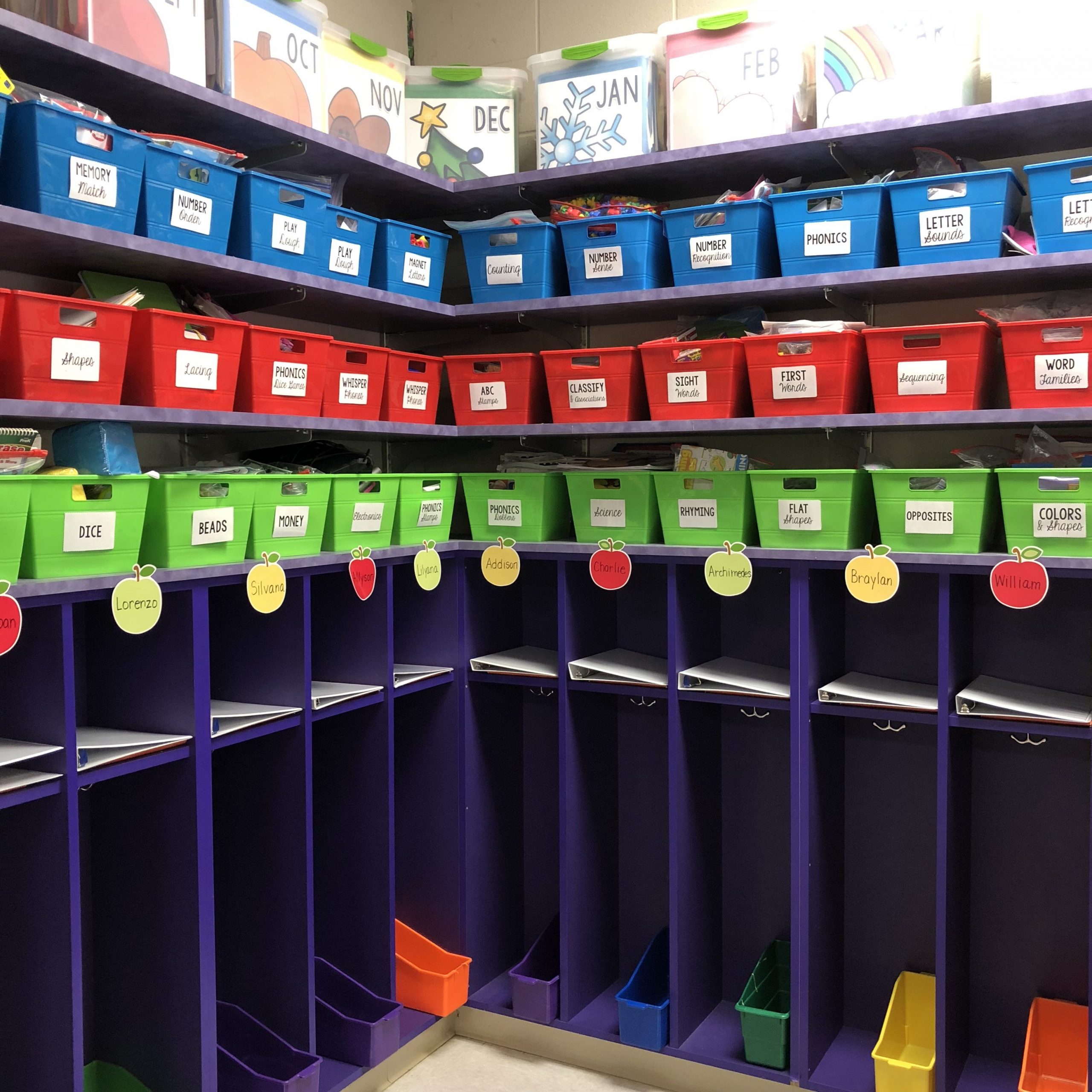
📐 Style Math
The unquestionable star of this idea is the purple, multi-tiered cubby unit with its vibrant, labeled bins. It’s not just storage; it’s a beautifully organized, color-coded command center for student belongings and classroom supplies. Without this robust and thoughtfully designed system, the classroom would quickly devolve into chaos, with books, papers, and personal items scattered everywhere. The individual cubbies, bright bins, and apple-shaped name tags make it not only practical but also deeply inviting and easy for students to manage their own space. It truly is the lynchpin of functional, playful organization in this room.
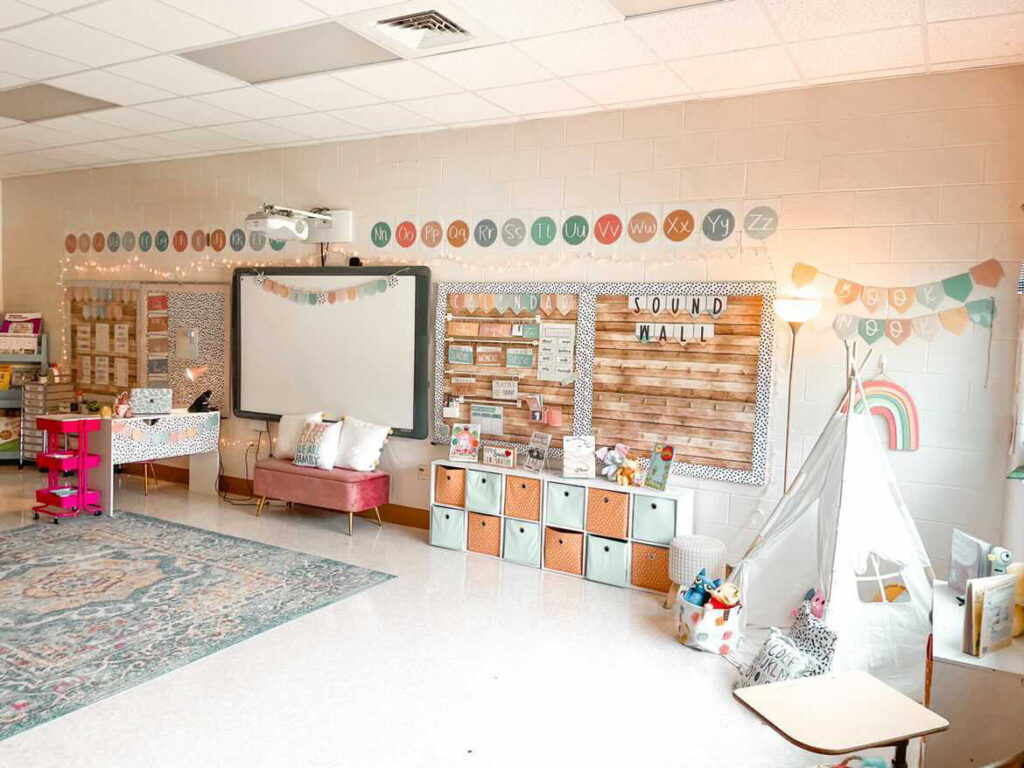
27. Cozy and Colourful Elementary Classroom with Reading Nook
This classroom perfectly encapsulates the growing trend of creating
28. Flexible Seating Elementary Classroom with Varied Workstations
- Main Furniture (tables, chairs, stools, exercise balls): $1000 – $2500
- Storage (units, bins): $300 – $700
- Flooring (wood-look laminate): $400 – $800 (for materials if DIY)
- Paint (white walls, teal wainscoting): $150 – $300
🔥 Trending Context
TOTAL: $1850 – $4300
Budget alternative: Source sturdy used tables and chairs from school liquidation sales or Facebook Marketplace. For the light green adjustable stools, look at office supply discount stores. Exercise balls can often be found for under $20-$30 each at sporting goods stores. DIY the wainscoting with inexpensive MDF panels and a fresh coat of teal paint. This could bring the total down to $700 – $1500, especially if you’re willing to do some painting and assembly yourself.
This classroom truly shines because of its thoughtful integration of flexible seating and clear visual organization. The wood-look laminate flooring provides a warm, consistent base, while the crisp white walls with teal wainscoting add a sophisticated yet playful touch. The variety of workstations – from the traditional rectangular table with chairs to the round table with exercise balls – caters to diverse learning styles and energy levels. It’s all tied together by the pops of blue and light green in the furniture and supplies, creating a space that feels dynamic, engaging, and highly functional for young learners.
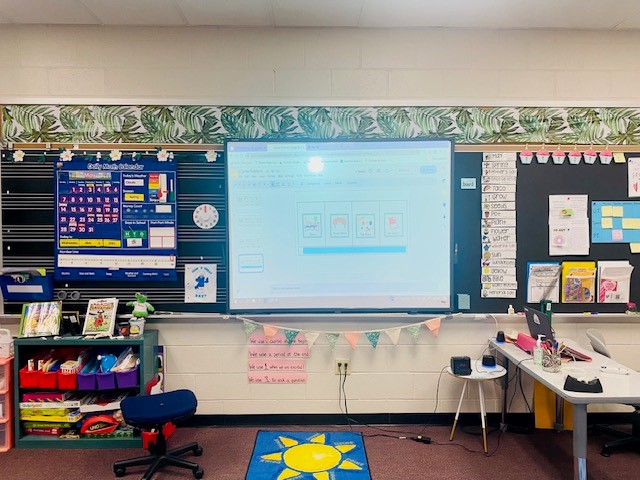
29. Elementary Classroom with Tropical Border and Interactive Whiteboard
- Clean Wall: Ensure your wall is clean and dry. (Time: 5 min, Cost: $0)
- Measure & Mark: Decide on the height for your border. Use a level and pencil to draw a faint, straight line. (Time: 10 min, Cost: $0)
- Apply Adhesive: Apply a small amount of strong, clear adhesive (like a clear construction adhesive) to the back of the border in sections. (Time: 5 min, Cost: $5-$10)
- Attach Border: Carefully press the tropical border onto the wall, aligning it with your pencil line. Smooth out any bubbles. (Time: 15-20 min per section; Cost: $20-$40 for border roll)
- Reinforce (Optional): For extra security, use a few discreet brad nails or tacks where the natural pattern hides them. (Time: 5 min, Cost: $2)
📏 Scale Guide
While an interactive whiteboard is a fantastic tool for engagement, ensure your classroom has adequate lighting control. Too much ambient light, especially from windows, can cause glare and wash out the projection, making it difficult for students to see. Consider blackout blinds or adjustable shades if your room is very bright. Also, keep in mind that the tropical leaf-patterned border, while charming, might feel dated quickly depending on trends. If you’re looking for longevity, consider a more neutral border that allows for seasonal or thematic decor changes without permanently altering the wall. And remember to keep the chalkboards clean – dust can be surprisingly distracting!
Your Classroom Story Starts Here
Designing an elementary classroom is about so much more than just furniture; it’s about crafting an environment where young minds can flourish. We hope these 29 ideas sparked some serious inspiration for your 2026 classroom refresh. Remember, the best spaces are those that reflect thoughtfulness, practicality, and a genuine joy for learning.
Ready to bring these visions to life? Start small, experiment, and most importantly, make it a space that feels right for you and your students. 📌 Don’t forget to save your favorite ideas to Pinterest – happy pinning!
Photo credits: Glitter in Third, Winston-Salem Montessori, Freedom Interiors, National School Products · In stock: Pencils to Pigtails, Shayna Vohs, The French American Academy, Simply Special Ed, Prodigy Math, Miss DeCarbo, Bored Teachers / Web, Mikhail Nilov, Deane Bayas, RDNE Stock project, Artem Podrez, Batuhan Kocabaş, Andy Barbour, Pixabay, ON VIXION, Fatih Demirci, 晓鸟 蓝, Luana Scorsoni, Thúy Quỳnh Ngô, Jeisson Ortiz / Pexels