Tropical Bath Decor is having a major moment on Pinterest right now—and we know exactly why. It’s more than just a look; it’s a feeling. A promise of a personal escape. After filtering through hundreds of options across places like Wayfair, Target, and even Facebook Marketplace, we narrowed it down to the best of the best. Inside, you’ll find 32 curated ideas covering everything from outdoor-inspired Bali retreats to modern, plant-filled sanctuaries. In 2026, it’s all about biophilic design and creating true personal wellness spaces. And stay until the end—we break down the most common mistakes that can ruin these looks. 📌 Save this to Pinterest for later—you’ll want to revisit these ideas.
1. Garden-View Bath with a Freestanding Tub
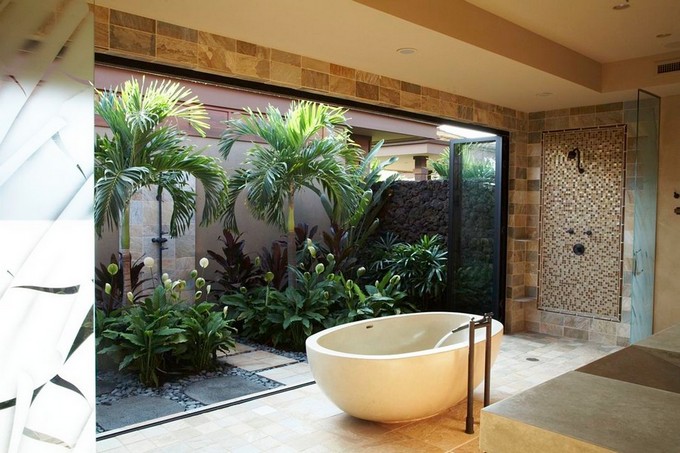
This bathroom’s magic comes from the seamless blend of indoors and out. The massive sliding door erases the boundary, making the tropical garden feel like an extension of the room itself. The clean, simple lines of the white freestanding tub and the minimal tilework are intentional; they quiet the interior so the lush, vibrant greens of the palms and foliage outside can be the star. The dark bronze faucet adds just enough contrast to anchor the tub in the space.
⭐ The One Thing
To recreate this open-air feeling, ensure your bathtub’s centerline is aligned with the center of the largest window or door. This creates a powerful visual axis that draws the eye directly to the view. For a standard 60-inch tub, this means the focal point of your window should be 30 inches from the tub’s edge. This intentional alignment makes the connection to the outdoors feel deliberate and composed, not accidental.
2. Courtyard Bath with River Stones and a Bright Blue Wall
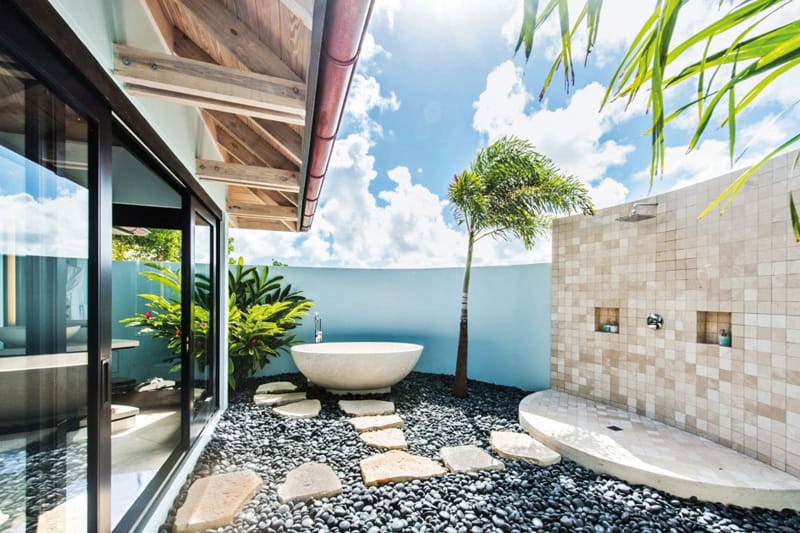
This idea is perfect for a small, enclosed outdoor space, like a private courtyard or a walled-off patio. You need a minimum of 60 square feet (e.g., 6’ x 10’) to comfortably fit the tub, allow for clearance, and create a planting area. The key is verticality—using the walls for features like the tiled shower and privacy screen. The blue wall here is brilliant; it mimics the sky and adds a pop of color that feels both natural and unexpected.
🔧 How-To Brief
While dreamy, an outdoor tub requires serious thought about plumbing and drainage. Ensure the area has a slight grade to direct water away from your home’s foundation. You’ll also need to consider how you’ll get hot water to the tub, which might involve a dedicated outdoor water heater or significant plumbing work. And of course, there are bugs. Citronella plants and regular upkeep are your best friends here.
3. Modern Spa with a Dark Stone Tub and Adjoining Sauna
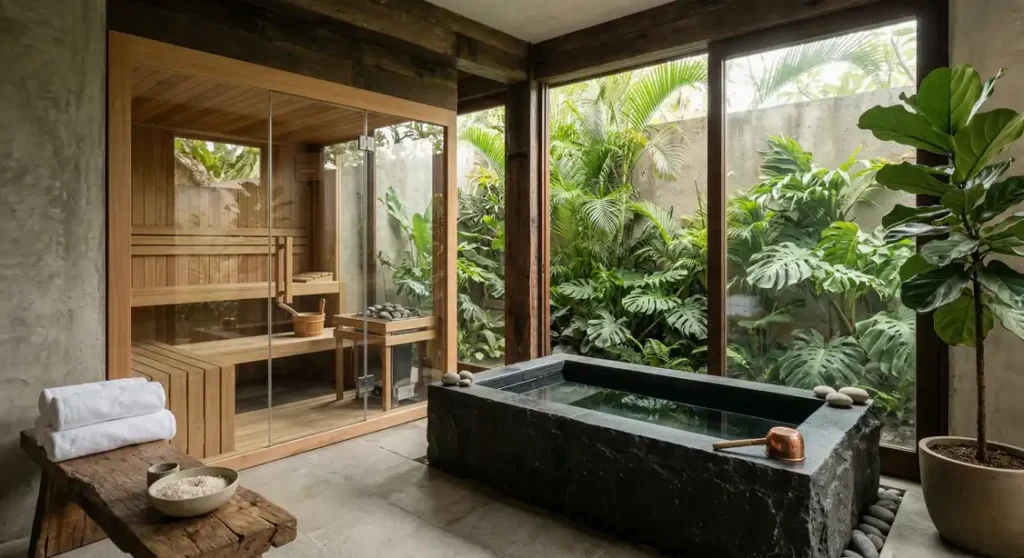
The single element that defines this entire space is the dark stone soaking tub. Without it, you’d have a beautiful, modern bathroom with a sauna. But with it, you have a sanctuary. Its rough, organic texture and deep, grounding color provide a stark, beautiful contrast to the smooth glass of the sauna and the light wood. It’s not just a place to bathe; it’s a sculptural object that commands a sense of ritual and calm.
🧹 Maintenance Reality
That gorgeous, raw stone tub needs love. Natural stone is porous and can be susceptible to staining from oils, soaps, and bath bombs. You’ll need to seal it at least once a year with a high-quality stone sealer. For cleaning, avoid all acidic or abrasive cleaners (no vinegar, no scrubs). Use a pH-neutral cleaner specifically designed for natural stone to maintain its finish and prevent etching over time.
4. A Lush Living Wall Behind an Oval Bathtub
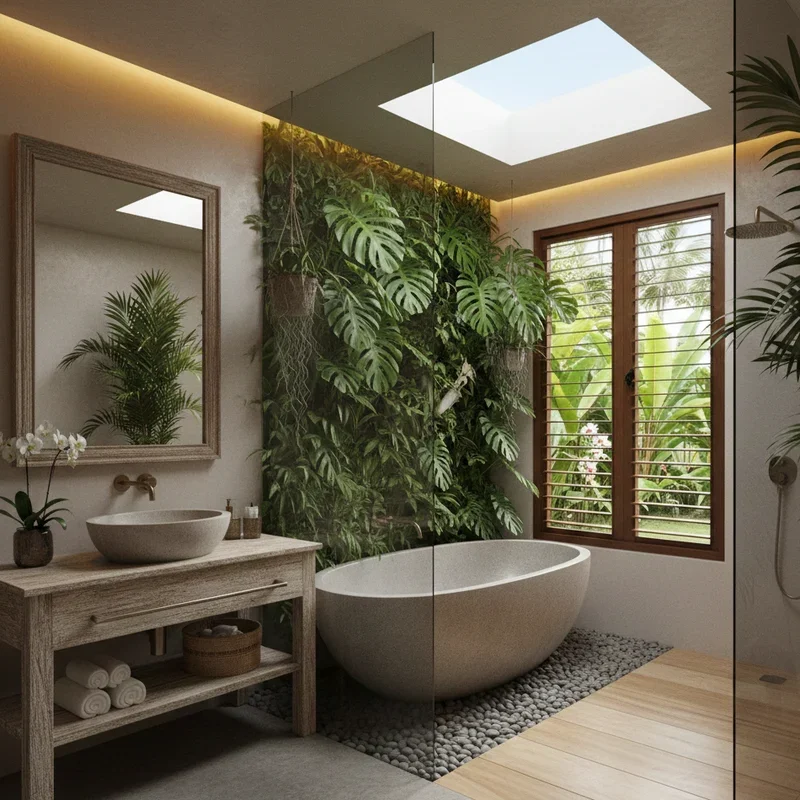
Creating this look is an investment in both money and maintenance, but the impact is undeniable.
💸 Get This Look For Less
- Living Wall System: $1,500 – $4,000 (including irrigation)
- Freestanding Bathtub: $1,200 – $3,500
- Rustic Wood Vanity & Stone Sink: $900 – $2,500
- River Stone & Wood Flooring: $15 – $30 per sq. ft.
- Decor (Blinds, etc.): $300 – $600
- TOTAL: $4,000 – $10,600+
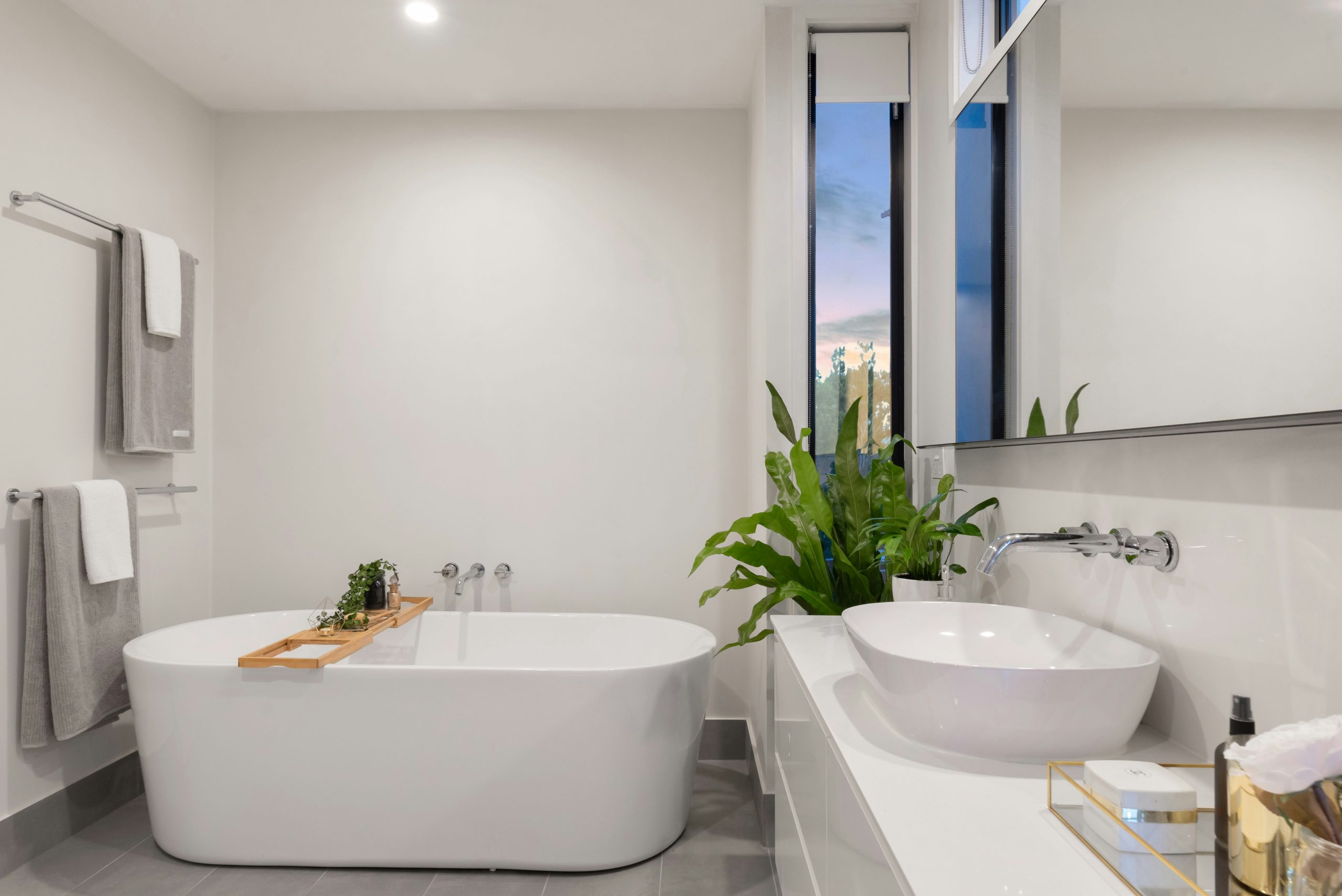
- Budget Alternative: Use high-quality faux plant panels ($400-$800) and a standard vanity to achieve a similar vibe for about 50% less.
This room’s formula is a beautiful balance of textures. Think of it as 50% living element (the plant wall, outdoor views), 30% rustic hardscape (the wood vanity, river stones), and 20% smooth modern surfaces (the white tub, stone basin). You could swap the materials—a concrete tub instead of white acrylic, or dark wood instead of light—but as long as you keep that 50/30/20 ratio of living, rustic, and smooth, you’ll maintain the same balanced, earthy feel.
5. Minimalist Marble Bath with a Cowhide Chaise
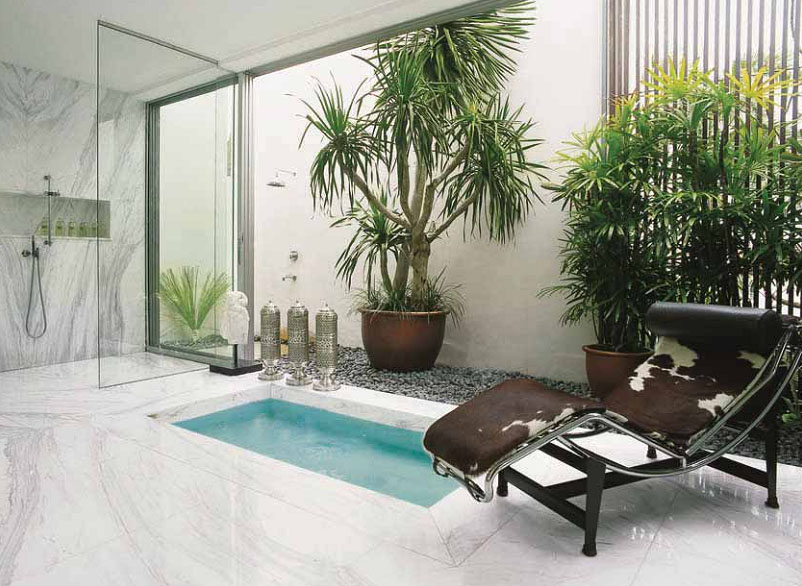
This design works because of its powerful use of contrast. The sleek, cool white marble of the embedded tub and walls is juxtaposed with the organic, warm texture of the cowhide cushion on the chaise lounge. It’s an unexpected pairing that feels both luxurious and a little wild. The choice to use a bed of dark grey pebbles for the planters adds another layer of texture that keeps the minimalist space from feeling sterile. It’s a masterclass in making a few bold choices go a long way. Compare this with the bold tile in Idea #18 for another take on high-contrast design.
💡 Designer Tip
We’re seeing a big move away from all-white, sterile bathrooms and towards spaces with more personality. The “unexpected texture” trend is huge on Pinterest right now. People are tired of cookie-cutter designs and are looking for ways to inject their own unique style. A cowhide print, once reserved for rustic cabins, feels fresh and daring in a modern, marble-clad spa bathroom. It shows you’re not afraid to break the rules a little.
6. An Outdoor Shower with Emerald Green Stone Walls
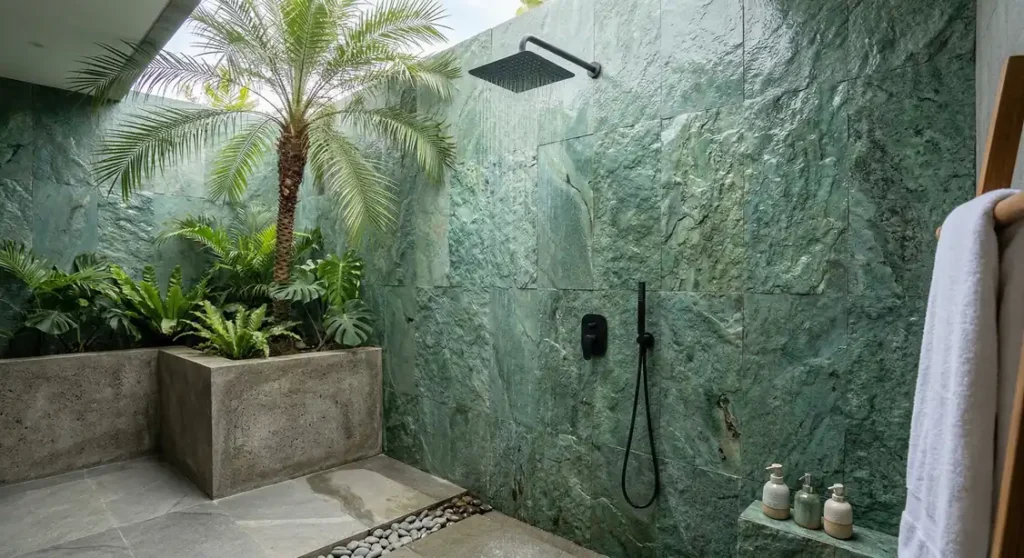
The star of this show is undoubtedly the textured green stone wall. It’s everything. If you replaced it with standard tile or concrete, the entire mood would shift from a lush, secret grotto to a simple outdoor shower. The stone’s rough-hewn texture and deep, varied emerald tones evoke a natural waterfall. It’s a single material choice that provides color, texture, and a powerful sense of place all at once.
🎯 What Makes It Work
When designing an outdoor shower, lighting is as important as plumbing. Instead of a single overhead light, use multiple smaller, low-voltage landscape lights. Aim one or two uplights at the stone wall to graze the surface and highlight its texture at night. Add another focused on the palm tree or other key plants. This creates a dramatic, layered effect and avoids the harsh, flat light of a single, powerful fixture.
7. A Minimalist Outdoor Shower with Bamboo and Mosaic Tile
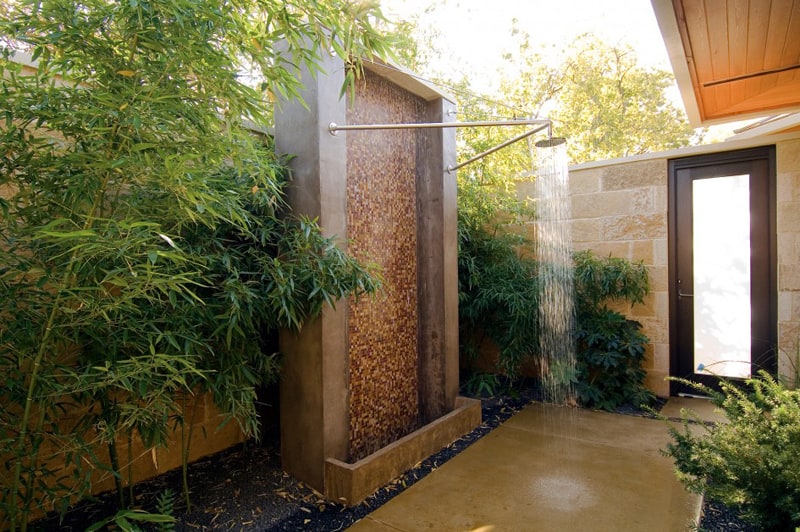
The integrated mosaic panel is a high-impact feature you can replicate. Here’s a simplified plan for adding one to a concrete or plaster wall.
✅ Before You Start
- Frame the Area: Mark out your desired rectangle and affix a temporary wooden frame to the wall to define the edges.
- Apply Mortar: Trowel a thin layer of tile mortar or construction adhesive onto the wall within your frame.
- Set the Tile: Press your mosaic tile sheet firmly into the mortar. Use a rubber float to ensure it’s level and fully adhered.
- Grout the Gaps: After the mortar cures (24-48 hours), remove the frame and apply grout, pushing it into all the gaps.
- Clean and Seal: Wipe away excess grout with a damp sponge. After it cures, apply a grout sealer to protect it from moisture.
You don’t need custom concrete work to get this look. You can find surprisingly stylish and affordable outdoor shower fixtures at big box stores like Home Depot or Lowe’s, often for under $200. For the backdrop, instead of a custom mosaic, use a single large, patterned porcelain tile or a pre-made tile medallion. Pair it with a simple privacy screen made from bamboo fencing (around $50 a roll) and you have the entire vibe for a fraction of the cost.
8. A Secluded Bathtub Nestled in a Jungle of Ferns
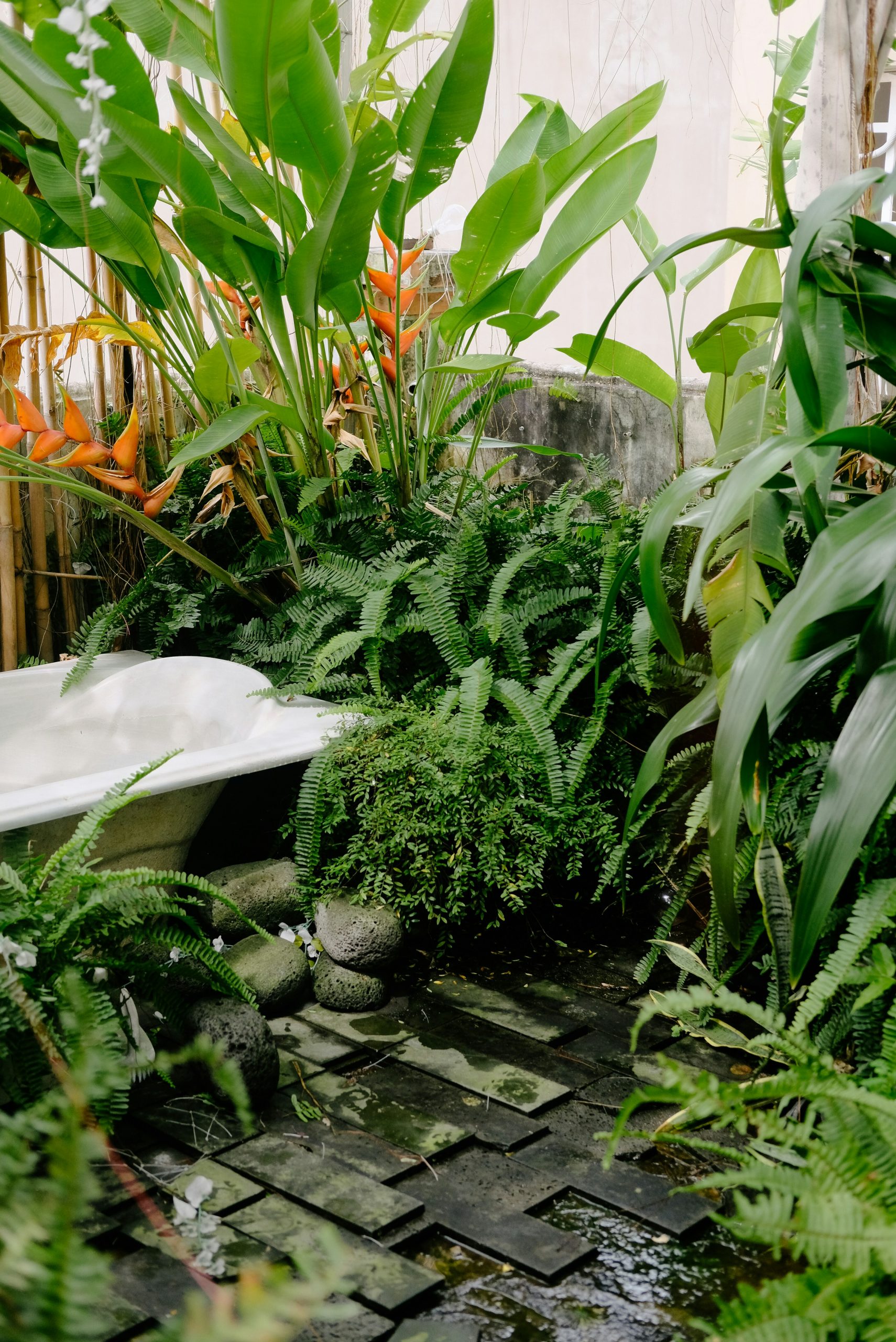
This concept is all about immersion. The design intentionally places the bathtub deep within the foliage, blurring the lines between a curated bathroom and the wild jungle. The use of large, textured boulders and dark, wet-looking paving stones at the base of the tub grounds it in the landscape. It feels less like an object placed *in* a garden and more like a pool of water that naturally formed there. The sheer density of the plants creates an intense feeling of privacy and escape.
📐 Style Math
This is a high-maintenance fantasy. A setup this dense with foliage is a paradise for mosquitos, spiders, and other critters. You will be cleaning leaves, petals, and bugs out of that tub daily. The dark, damp paving stones can also become slippery with algae or moss. To make this more practical, ensure good drainage and consider using a high-quality tub cover. A bug zapper or citronella torches nearby would also be a non-negotiable.
9. Modern Bath with Grey Tiles and an Arched Window View
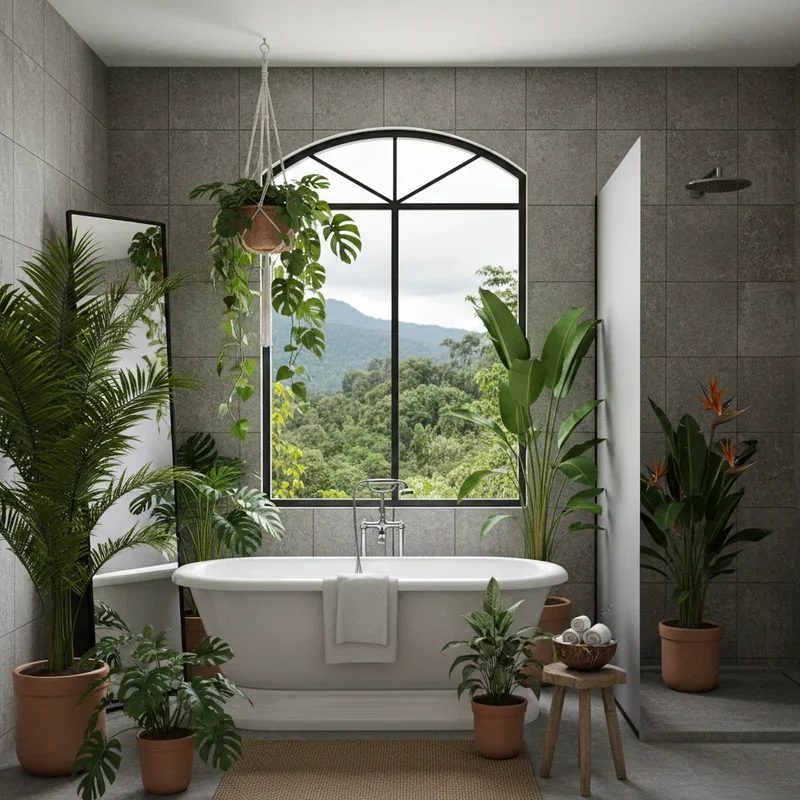
The visual recipe here is about balancing hard and soft. It’s roughly 60% hard, modern surfaces (the grey square tiles, the black window frame, the simple white tub) + 40% soft, organic elements (the lush green plants, the terracotta pots, the woven basket, and the view itself). This formula prevents the modernism from feeling cold. You could change the tiles to concrete and the window to a rectangle, and as long as you keep that 60/40 split, the warm, inviting feel would remain. It also shares a calm, airy feeling with Idea #31.
💰 Budget Breakdown
When mixing multiple potted plants, think in triangles. Notice how the large plant, the macrame hanger, and the plant by the tub form a visual triangle. This is a classic styling trick that makes arrangements feel balanced and intentional rather than random. Create a primary triangle with your three largest plants, then fill in with smaller ones. Always vary the height of your pots and stands to create more interest.
10. A Wooden Bathtub Surrounded by Tropical Greenery
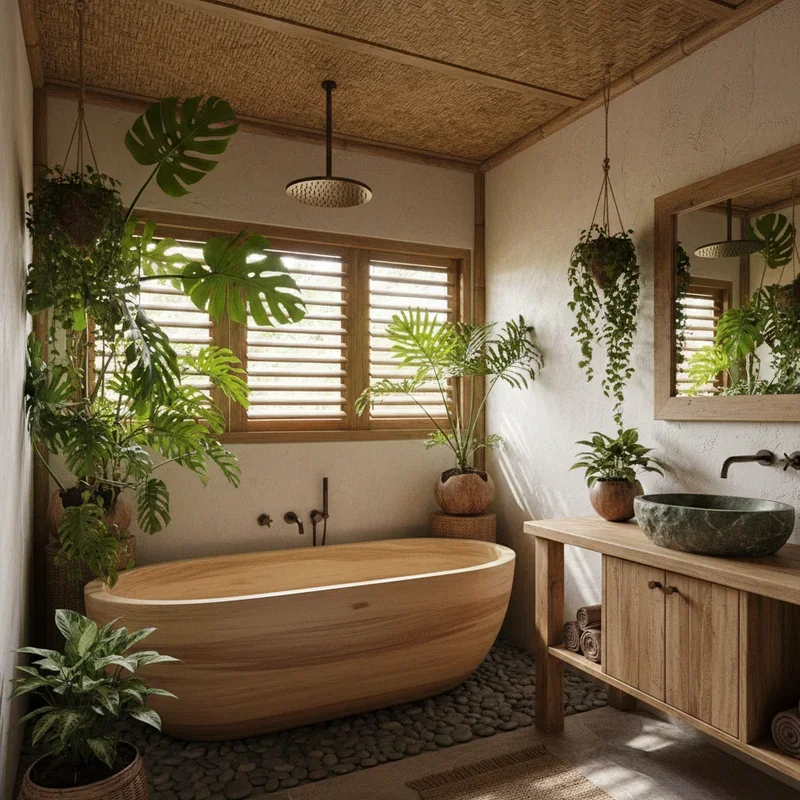
The wooden bathtub is the heart of this design. It’s an incredibly bold and unconventional choice that immediately signals luxury and a deep connection to natural materials. Its warm tones and smooth, carved shape stand in beautiful contrast to the rough texture of the river stones on the floor and the vibrant greens of the monstera and other plants. It elevates the entire room from a ‘tropical-themed bathroom’ to a truly immersive, spa-like experience.
📏 Scale Guide
A wooden tub is a commitment. Most are made from resilient woods like cedar, teak, or hinoki and are finished with a specialized marine-grade epoxy. However, they can still be vulnerable to scratches and harsh chemicals. You must clean it only with soft cloths and gentle, non-abrasive soap. It’s also crucial to avoid letting water stand in it for days on end. Some woods require occasional re-oiling to maintain their luster and water resistance, so be sure to follow the manufacturer’s specific care instructions.
11. Rustic Twin Vanities with Reclaimed Wood Mirrors
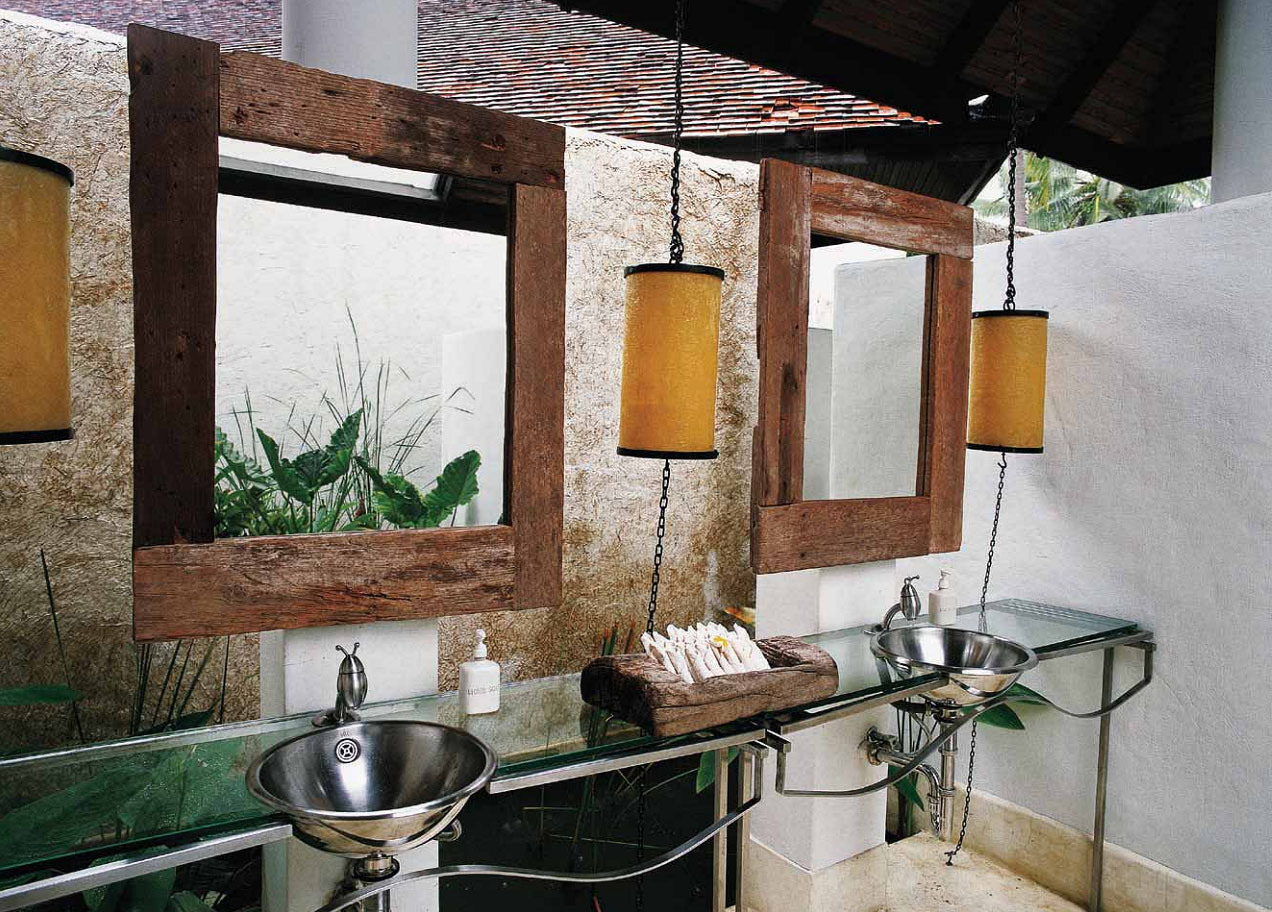
This vanity area works because of its expert layering of materials. You have the raw, rustic texture of the reclaimed wood mirror frames, the sleek, industrial feel of the stainless steel basins, and the modern clarity of the glass countertop. The plants visible beneath the glass are a genius touch, adding a layer of life and color that prevents the design from feeling too heavy. The cylindrical yellow lights add a surprising pop of color, proving that even a rustic look can be playful.
⚠️ Real Talk
You can get this look for so much less. Search Facebook Marketplace or a local salvage yard for old wooden window frames or barn wood to create your own mirror frames. For the countertop, instead of custom glass, use a standard butcher block from a hardware store and cut out holes for simple vessel sinks from IKEA or Overstock. You’ll get the same mix of rustic wood and modern fixtures for a few hundred dollars instead of a few thousand.
12. An Open-Air Vanity with a Live-Edge Wooden Sink
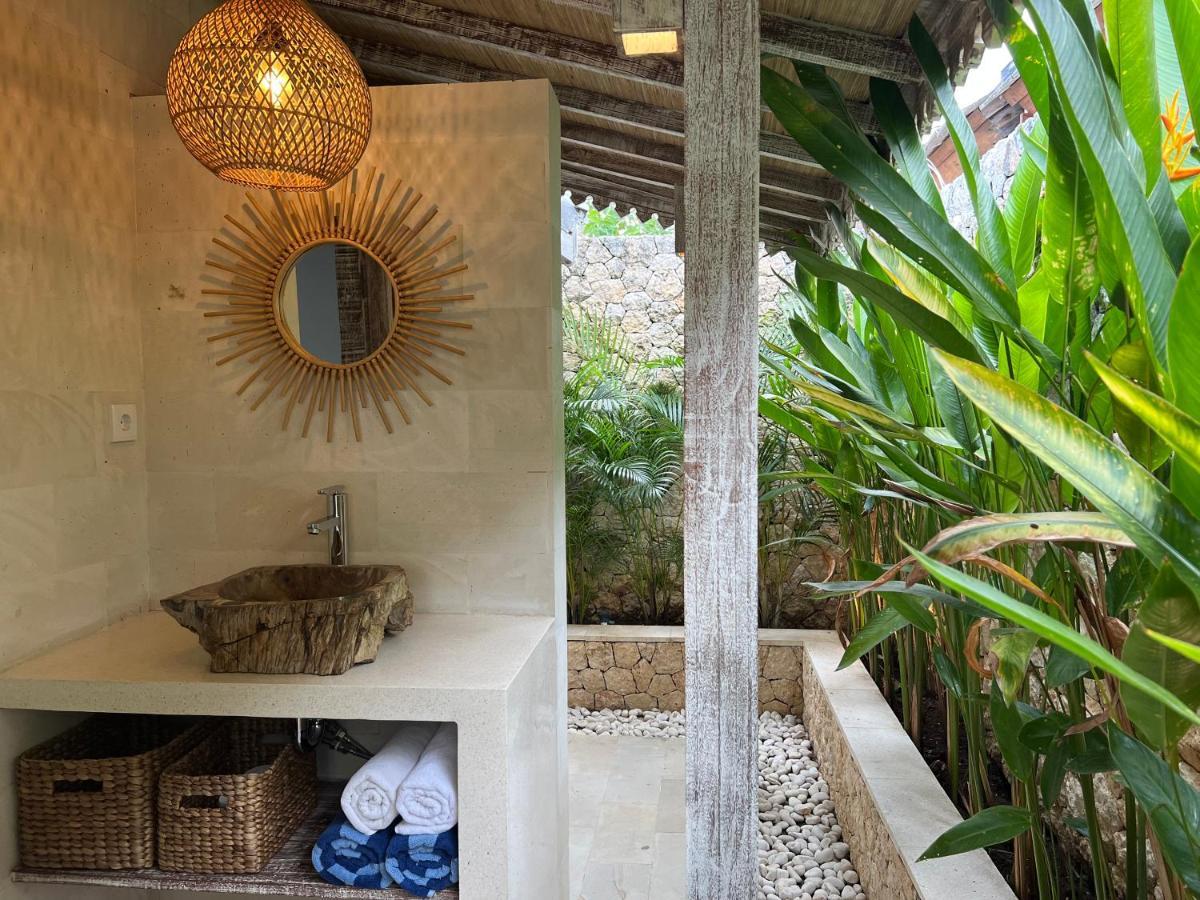
The showstopper here is undeniably the live-edge wooden vessel sink. It’s a piece of functional sculpture. While the rattan light, sunburst mirror, and stone walls are all beautiful, the sink is the element that feels truly special and unique. It brings a raw, untamed piece of nature right to the countertop, embodying the entire tropical, earthy aesthetic in a single object. It’s a testament to how one incredibly unique piece can define an entire space.
🔥 Trending Context
When using a vessel sink, especially a tall one like this, the height of your vanity is critical to avoid awkward leaning. The standard bathroom vanity height is 30-34 inches. For a vessel sink, the top rim of the sink—not the countertop—should be at about 36 inches from the floor for comfortable use. This means your vanity surface might need to be as low as 28-30 inches, depending on the height of your sink bowl.
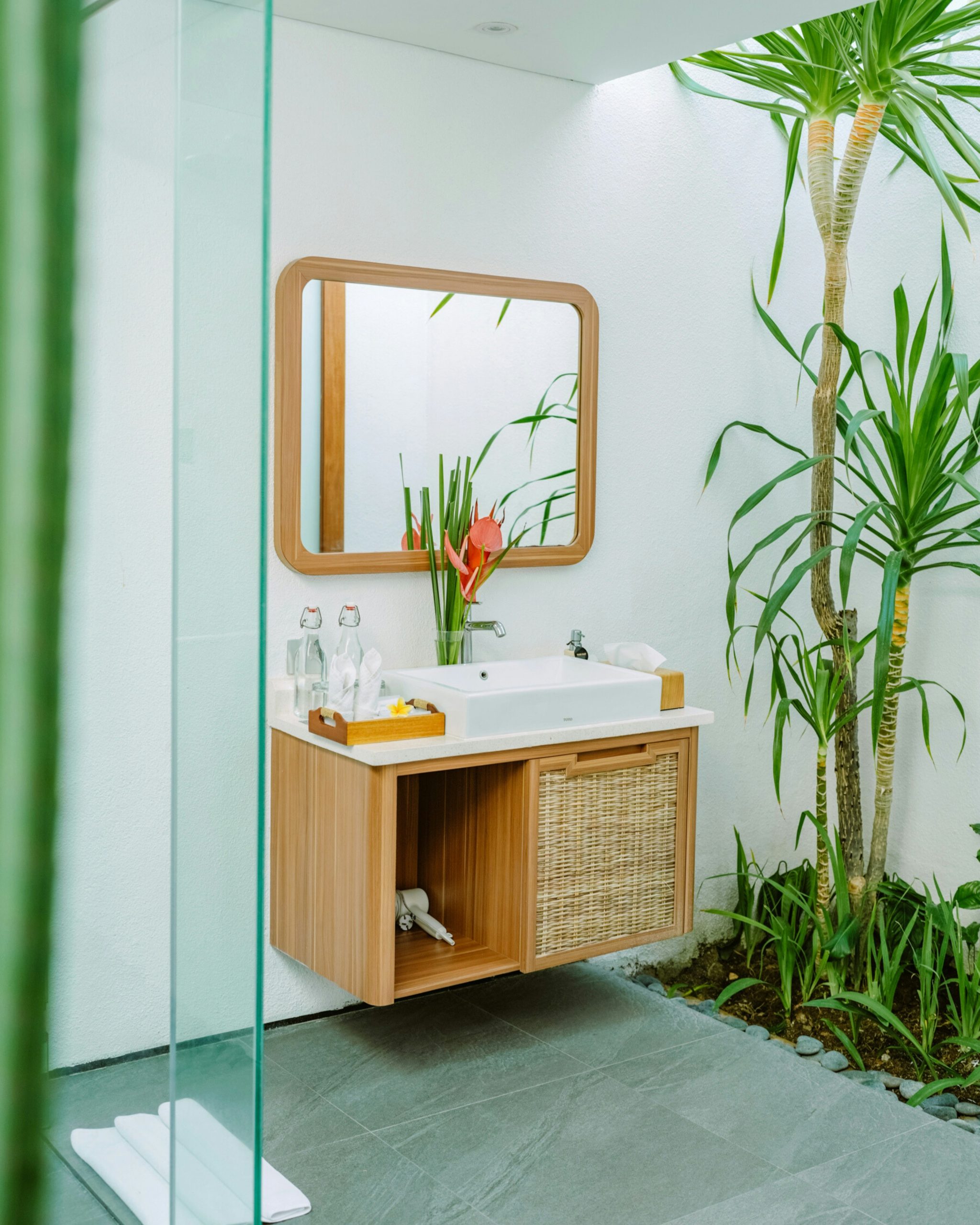
13. Modern Wood and Wicker Vanity with Integrated Planter
This look follows a clean, contemporary formula: 50% natural textures (light wood, wicker panel, plants) + 40% crisp white (walls, countertop, sink) + 10% dark grounding elements (grey floor tiles, dark accents). This ratio keeps the room feeling bright and airy while the wood and wicker add warmth and the grey floor adds depth. Swapping the wicker for reeded glass or the grey tile for dark wood would still work if you maintain these proportions.
⭐ The One Thing
An integrated planter is a fantastic feature, but it requires careful planning. This idea works best in a larger bathroom, with at least 36-42 inches of clear walking space in front of the vanity. The planter box itself should be at least 18 inches deep and wide to accommodate the root balls of substantial plants like these. For a smaller bathroom, you could achieve a similar effect by placing a single large floor plant next to a more traditional vanity.
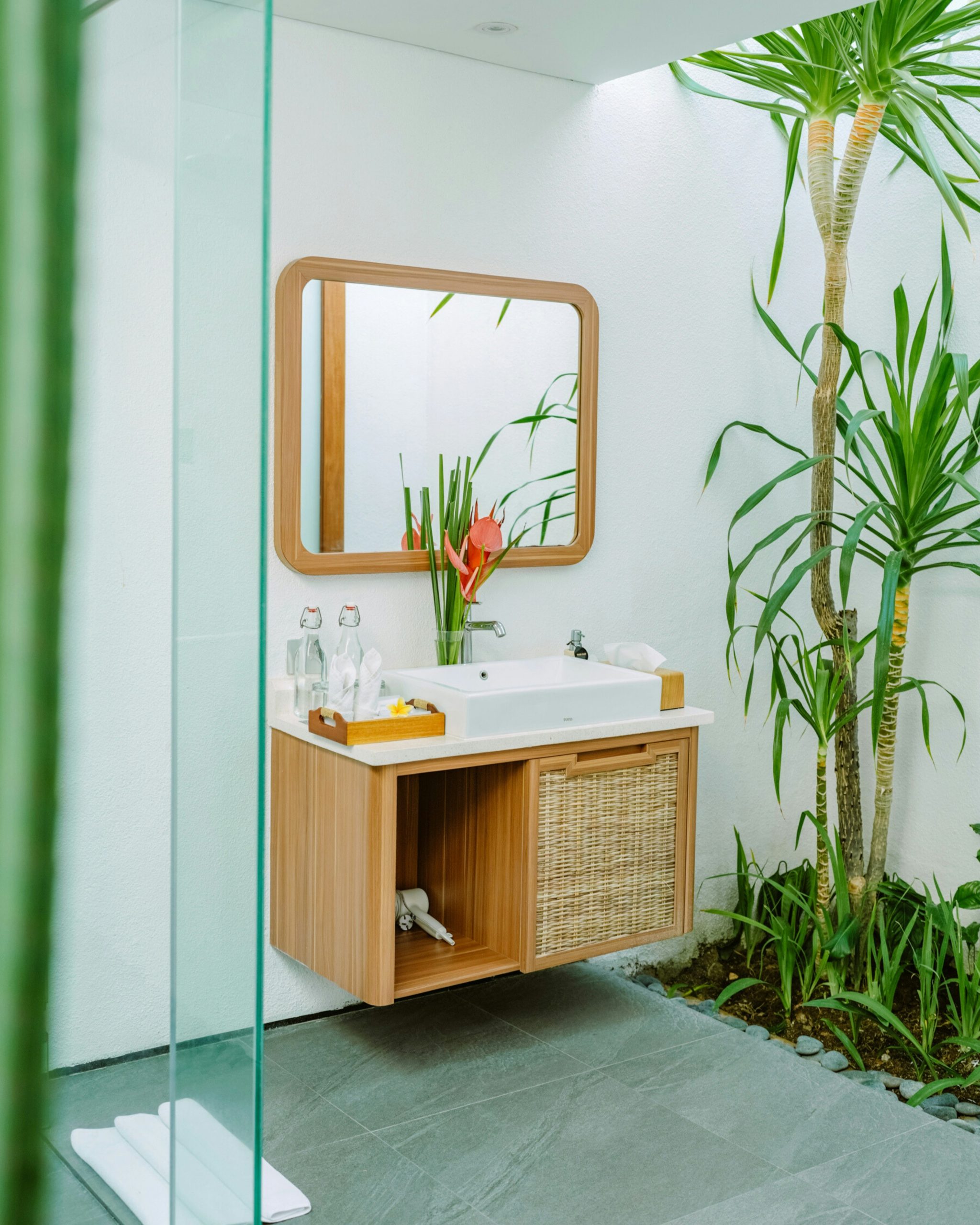
14. Clean and Serene Spa Bath with Floor-to-Ceiling Plants
The success of this design lies in its restraint. The material palette is incredibly simple: light wood, white surfaces, grey tile, and green plants. By repeating these few elements—the wood of the vanity and mirror frame, the white of the sink and walls—the room feels cohesive and calming. The decision to grow the plants directly from a floor-level planter bed makes them feel like a truly integrated architectural element, not just decoration. This is a great example of the ‘less is more’ philosophy, and has a similar calming effect to Idea #4.
🔧 How-To Brief
An integrated, open-soil planter bed inside your bathroom is a bold move. You absolutely must have a professionally installed waterproof membrane and a proper drainage system within the planter to prevent water from seeping into your subfloor and causing catastrophic damage. It also creates a very humid microclimate against the wall and vanity, so using marine-grade finishes and mold-resistant drywall is essential. This is not a DIY weekend project.
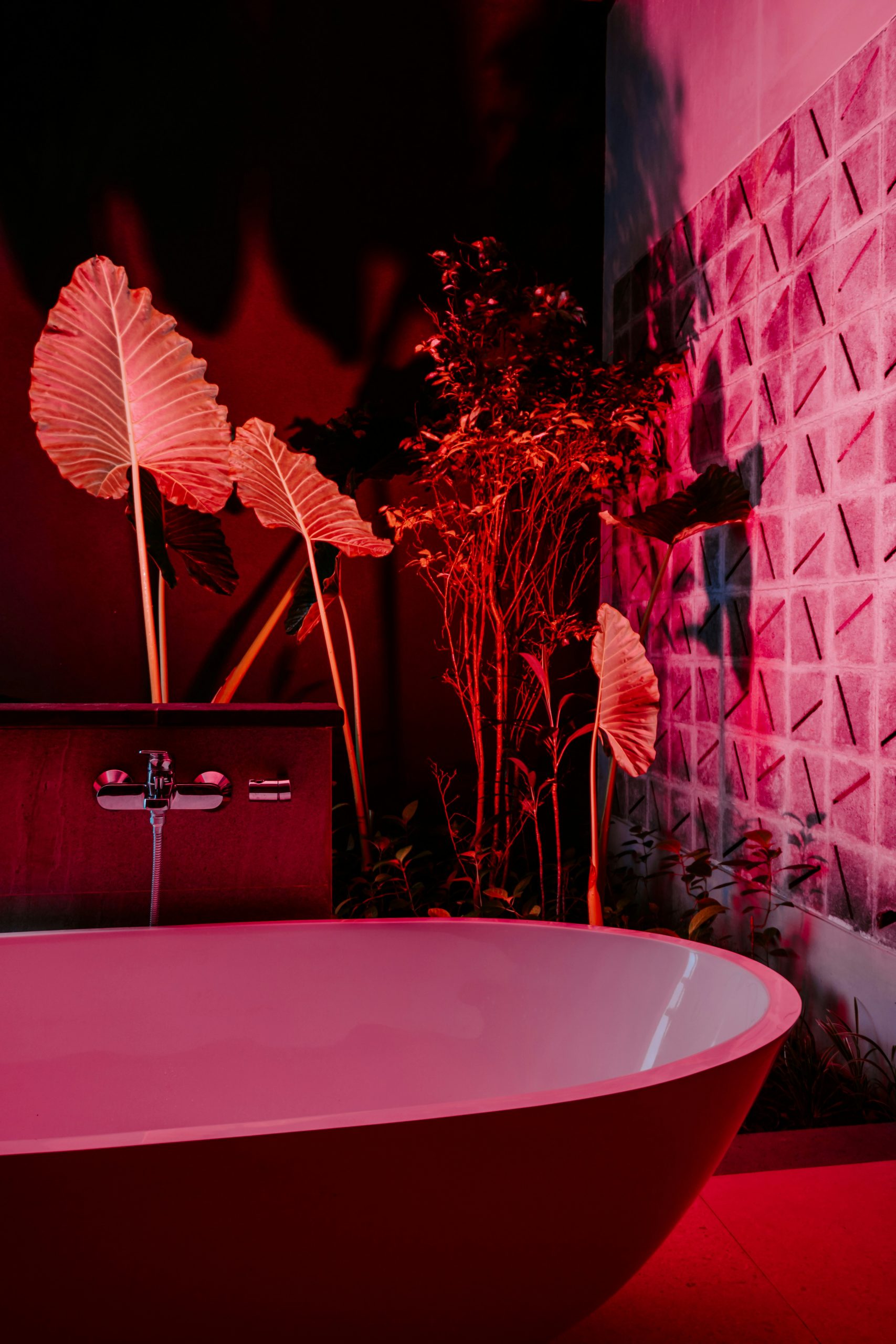
15. Modern Bath with a Dramatic Neon Red Glow
This look taps directly into the “dopamine decor” and “moody maximalism” trends that are all over TikTok and Pinterest. After years of minimalist, all-white-and-grey-everything bathrooms, people are craving color, drama, and personality. Using colored LED lighting is a relatively inexpensive way to make a huge impact and completely change the vibe of a space. The neon red against the dark walls and lush plants feels futuristic, a little edgy, and totally unique.
🧹 Maintenance Reality
Thinking of trying this? A little checklist before you commit:
- What’s the mood? Colored light is dramatic. Is this for a primary bath where you need bright, clean light for daily tasks, or a secondary/guest bath where mood is more important?
- Do you have the right backdrop? This works best against dark, textured walls that absorb and reflect the light in interesting ways. It might get washed out on plain white walls.
- Is the lighting adjustable? Install a dimmer or, even better, a smart LED system that can change colors. You may love the red at night, but you’ll want a clean white light in the morning.
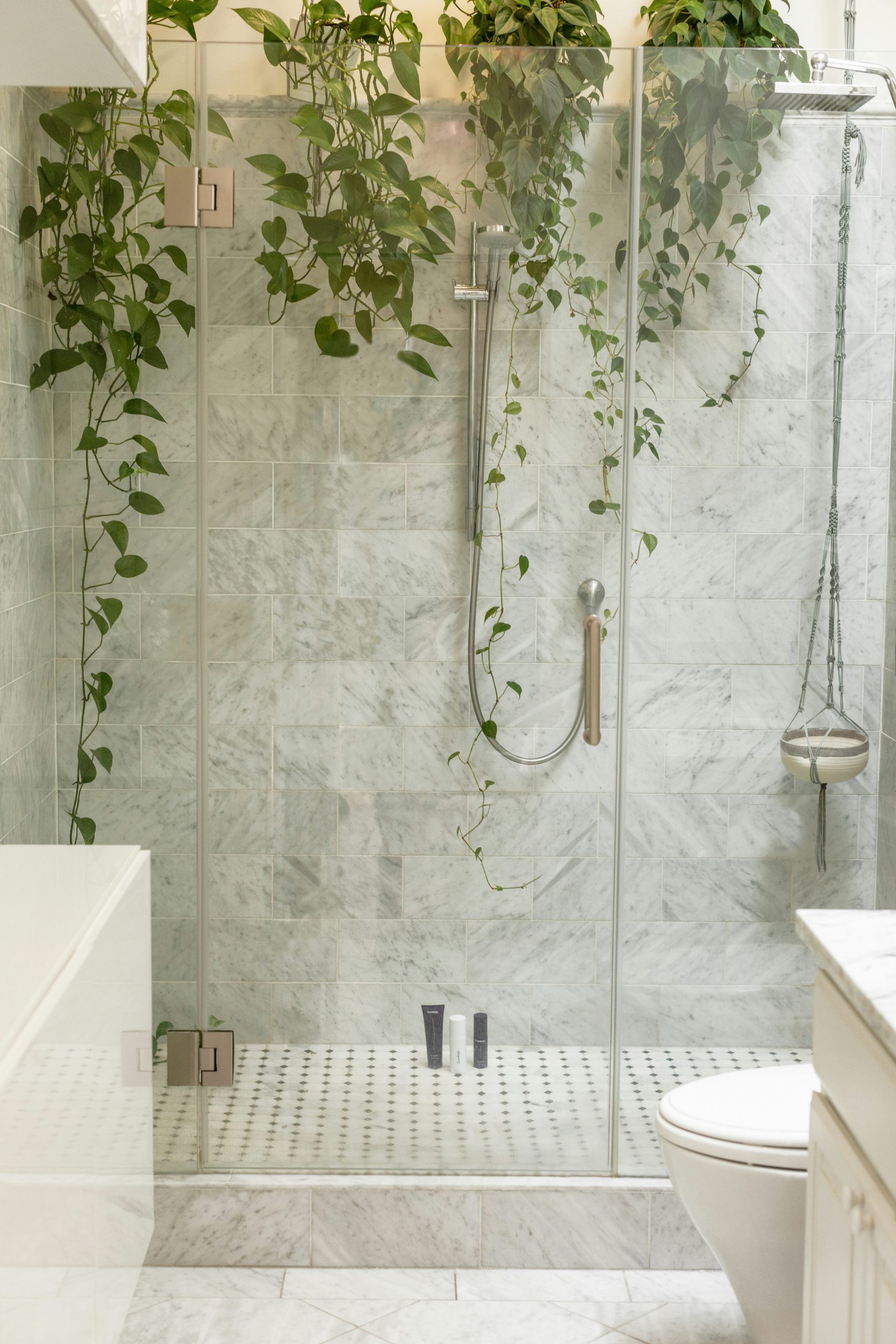
16. A Marble Shower Filled with Cascading Plants
The single element that makes this shower breathtaking is the cascading greenery. The marble subway tile is classic, the mosaic floor is lovely, but the sheer abundance of plants trailing down from above transforms the space from a nice shower into a jungle waterfall. It’s a living, breathing curtain of green that provides texture, color, and a powerful connection to nature that you can’t get from tile alone.
💸 Get This Look For Less
You can create a hanging plant feature like this, even without a built-in ledge. Here’s how:
- Install a Sturdy Bar: Mount a high-quality, rust-proof tension rod or a permanently installed shower curtain rod near the ceiling, about 12-18 inches away from the wall.
- Choose the Right Plants: Select plants that love humidity and lower light, like pothos, philodendron, or spider plants.
- Use Lightweight Pots: Use plastic pots with good drainage to keep the total weight down.
- Hang with S-Hooks: Use rust-proof S-hooks to hang the pots from the rod at varying heights. Make sure they can’t be easily knocked down.
- Water Carefully: Take the plants down to water them in a sink, let them drain completely, and then re-hang them to avoid dripping.
17. Bright Bathroom with Abstract Tropical Leaf Wallpaper
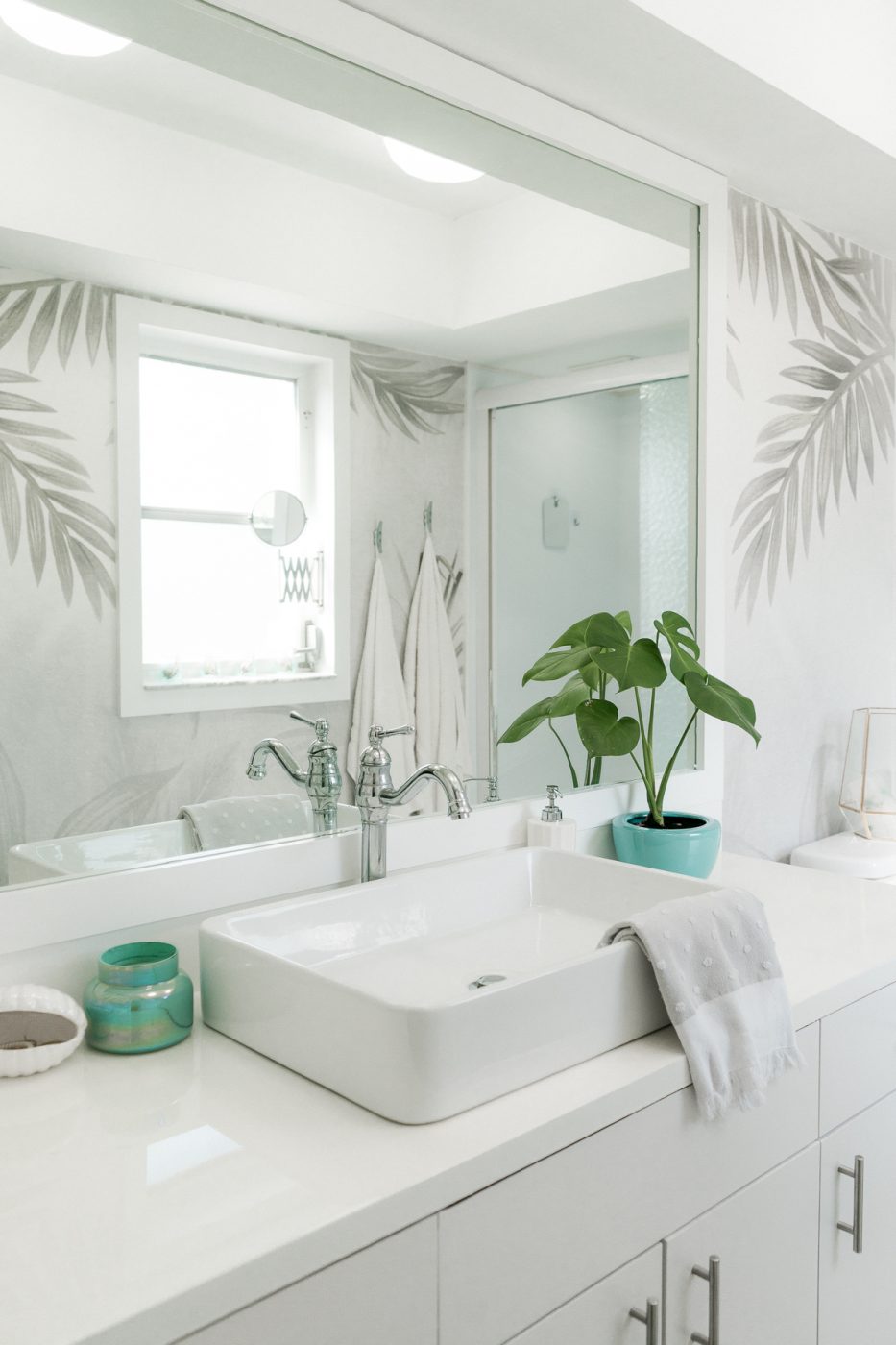
This room is a study in fresh, modern tropical style. The formula is straightforward: 70% bright white (cabinetry, counter, sink), 20% pattern (the grey leaf wallpaper), and 10% color pops (the green plant, the blue pot, the teal glass). This high-white ratio keeps the space feeling open and clean, while the wallpaper adds sophisticated visual interest without overwhelming. The small, carefully chosen color accents are what bring it to life.
💡 Designer Tip
When using a large-scale wallpaper pattern, don’t be afraid to hang a large, frameless mirror directly on top of it. A common mistake is to use a small mirror, which ‘chops up’ the pattern and looks timid. A large mirror not only is more functional but it reflects the pattern from the opposite wall, making the room feel larger and doubling the impact of your wallpaper investment. The bigger, the better.
18. A High-Contrast Bath with Patterned Tile and a Window to Nature
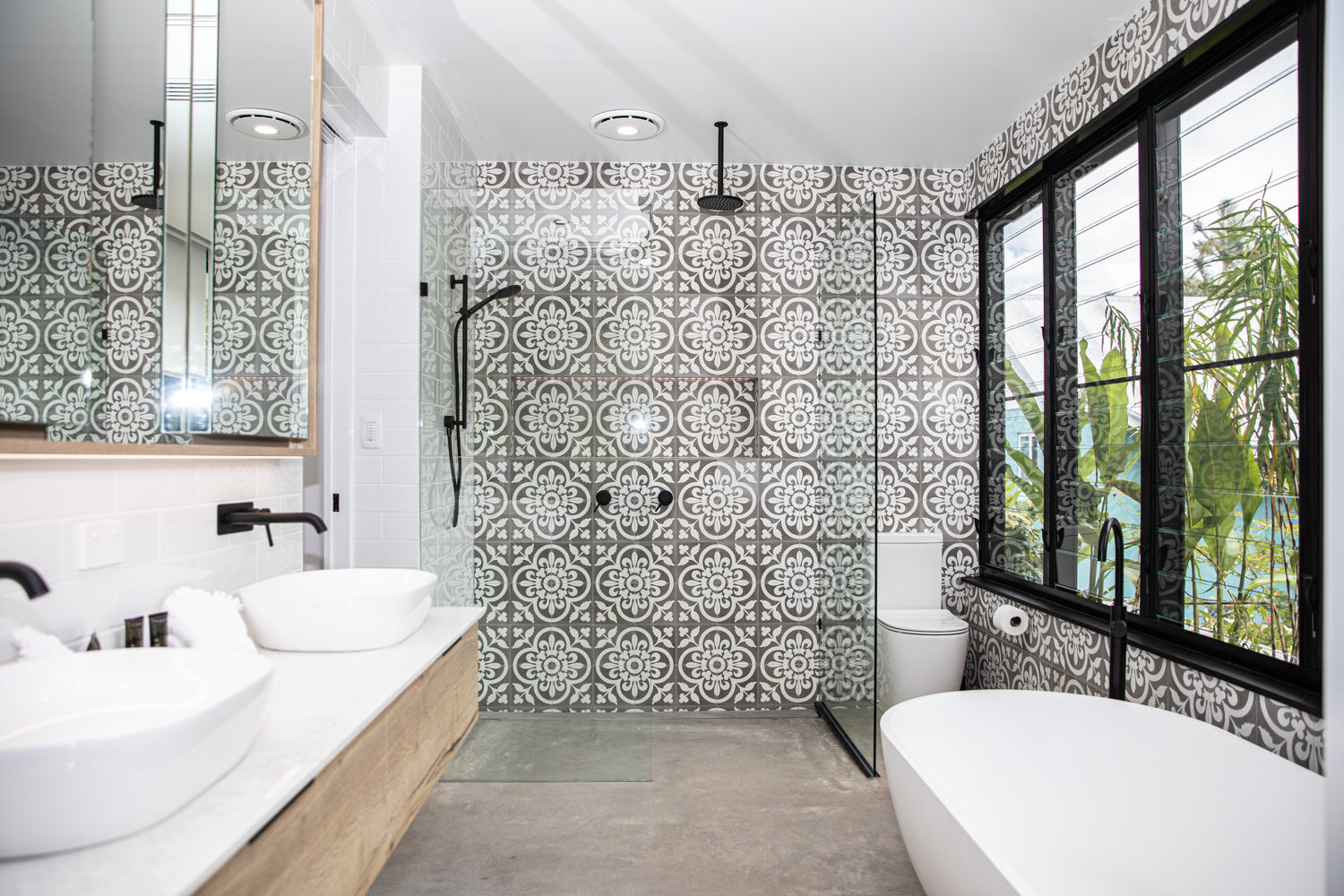
The magic here is the masterful balance of pattern, solid, and void. The bold grey-and-white patterned tile creates a stunning feature wall. The design is smart enough to contain it, using clean white subway tile on the adjacent wall to give the eye a place to rest. But the real genius is the large, black-framed window. It acts as a ‘living artwork,’ the vibrant green from outside providing a natural, colorful contrast to the graphic monochrome tile. The matte black fixtures tie it all together perfectly.
🎯 What Makes It Work
A large window right next to the tub is a dream, but privacy is a real concern. Even if you have a secluded yard, consider window film. You can get beautiful translucent films that obscure the view while still letting in tons of light. A high-quality frosted or rice-paper-effect film can look incredibly chic and intentional, adding another layer of texture to your design while giving you peace of mind.
19. Warm Wood Double Vanity with Cream Vessel Sinks
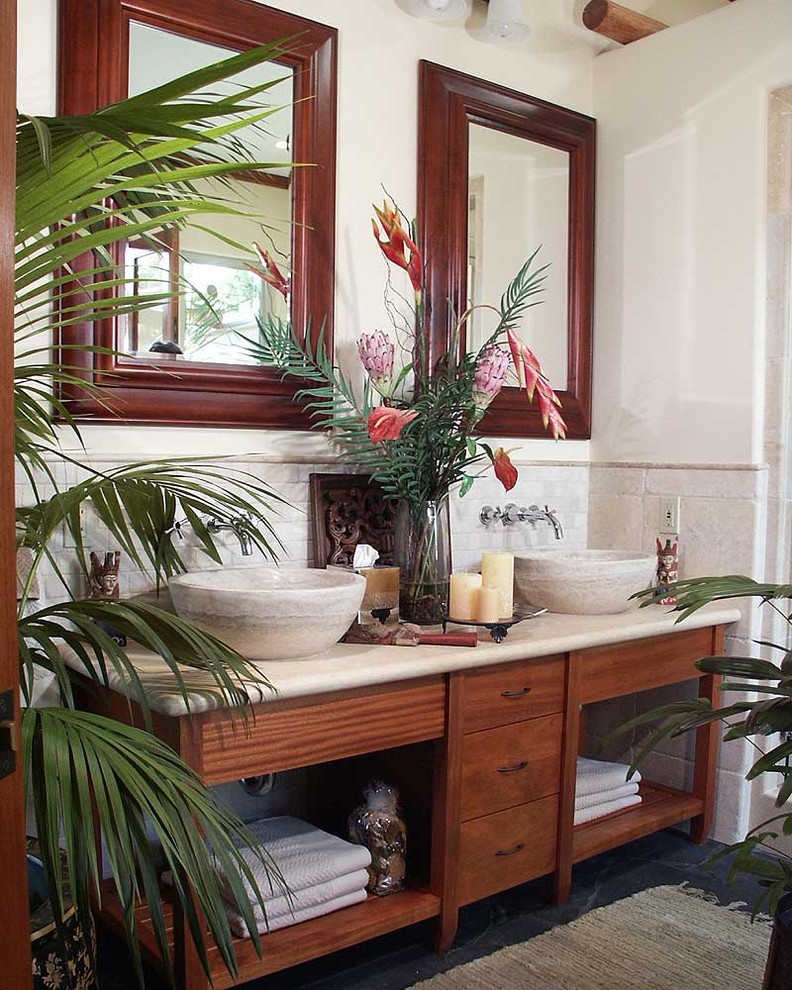
Here’s a look at what it might cost to get this warm, earthy double vanity setup.
✅ Before You Start
- Wood Double Vanity Cabinet: $1,500 – $4,000 (can vary widely based on custom vs. stock)
- Stone Countertop: $800 – $2,000
- Vessel Sinks (x2): $300 – $800
- Faucets & Fixtures (x2): $400 – $1,200
- Wood Framed Mirrors (x2): $300 – $700
- TOTAL: $3,300 – $8,700
- Budget Alternative: Buy a basic vanity cabinet and add a wood-look laminate countertop. Find mirrors at a thrift store and paint the frames. This can bring the total cost down to the $1,500 – $2,500 range.
A full double vanity like this requires a good amount of wall space. To feel comfortable and not cramped, you need a minimum wall length of 60 inches. However, a 72-inch or even 84-inch vanity is ideal, as it allows for ample counter space between the sinks and on either side. Also, ensure you have at least 36 inches of clearance in front of the vanity for comfortable movement.
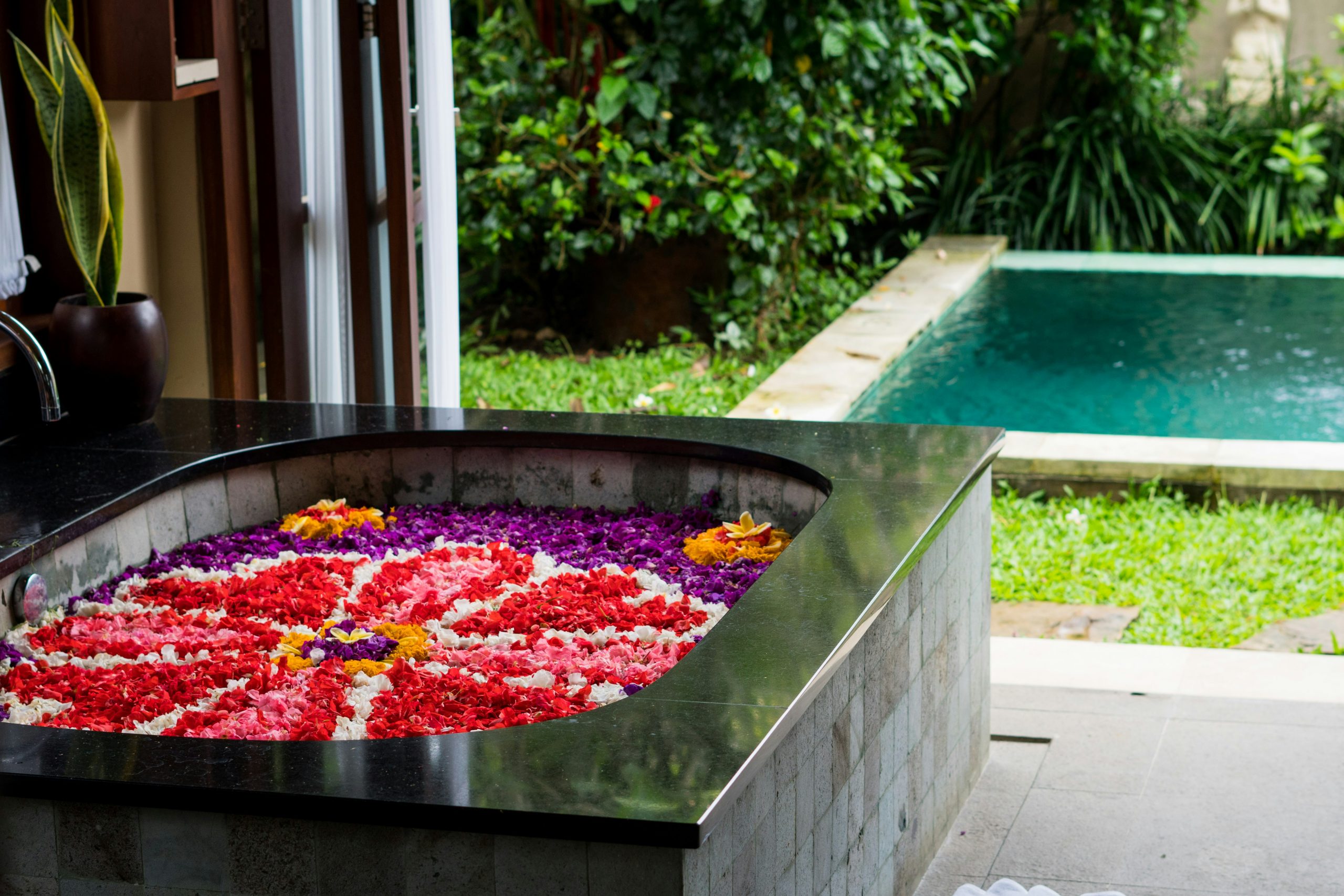
20. An Opulent Flower Petal Bath Next to a Turquoise Plunge Pool
that elevates this from a beautiful outdoor bathroom to an unforgettable experience is the flower bath. It’s pure indulgence. The intricate, colorful patterns of petals floating on the water’s surface transform the simple act of bathing into a celebratory ritual. It’s not a permanent design feature, but it represents the pinnacle of the tropical spa aesthetic—a moment of ultimate luxury and connection to nature’s beauty.
📐 Style Math
This is the literal definition of the “main character moment” that is so prevalent in social media culture. Creating a flower bath is something you do for a special occasion, for a guest, or just for yourself, and it’s meant to be photographed and shared. It speaks to a growing desire for experiences over things, and for creating moments of personal luxury and wellness that feel intentional and deeply restorative. It’s less about daily function and all about creating a memory.
21. A Bathroom Wrapped in Tropical Leaf Wallpaper
This room succeeds by going all-in. Instead of a single accent wall, the lush tropical leaf wallpaper covers every wall, creating a fully immersive jungle-like cocoon. The white tub and ceiling act as a necessary visual break, preventing the pattern from becoming overwhelming. The genius move is the floor: the grey pebbles around the tub introduce a rustic, outdoor texture that makes the whole concept feel more grounded and believable. Compare it to the single feature wall in Idea #32 to see the difference between a statement and full immersion.
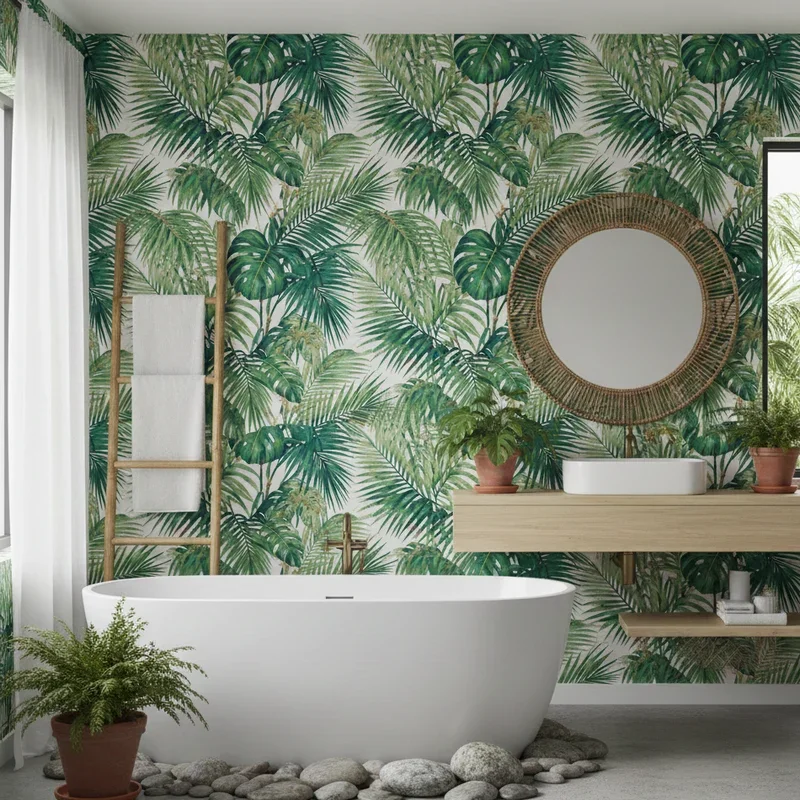
💰 Budget Breakdown
Wallpaper, especially high-quality designer prints, can be pricey. To get this immersive feeling on a budget, look for a peel-and-stick version from a store like Target or on Amazon. For the floor, instead of filling a large area with expensive river rock, you can buy interlocking pebble tile mats. They give you the same textured look for less money and are much easier to install and keep clean than loose stones.
22. Minimalist Bath with a Pop of Monstera Greenery
This serene space is a lesson in minimalist math. The formula is simple: 80% pure white (tub, towels, walls), 15% lush green (the plants), and 5% warm natural texture (the wood side table, the woven basket). This high-contrast ratio is what makes the design feel so crisp, fresh, and clean. The overwhelming white canvas makes the green of the monstera leaves and the warmth of the wood feel incredibly vibrant and intentional.
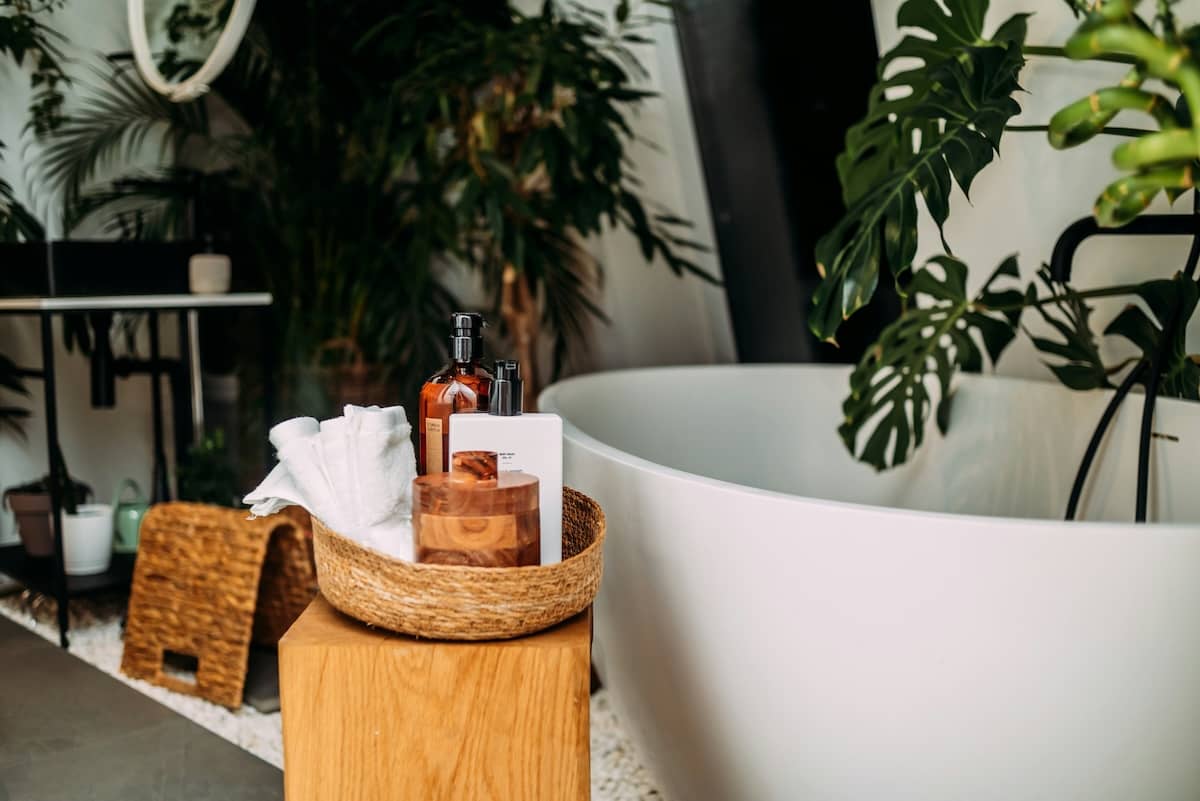
📏 Scale Guide
The key to making a minimalist space feel styled and not just empty is to group your accessories. Notice how the side table, basket, and plant are all clustered together to create a single, cohesive vignette next to the tub. If the table was on one side, the plant on the other, and the basket somewhere else, the room would feel cluttered and disjointed. Grouping them creates a focal point and tells a clear story.
23. A Natural Oasis with a Carved Stone Tub and Bamboo Walls
The soul of this bathroom is the combination of the carved stone tub and the bamboo wall covering. These two elements together create an immediate sense of being in a luxurious, faraway eco-resort. The tub feels ancient and grounding, while the bamboo provides a light, organic texture that is quintessentially tropical. You could replace the vanity or the mirror, but without that tub-and-bamboo pairing, the entire story would be lost.
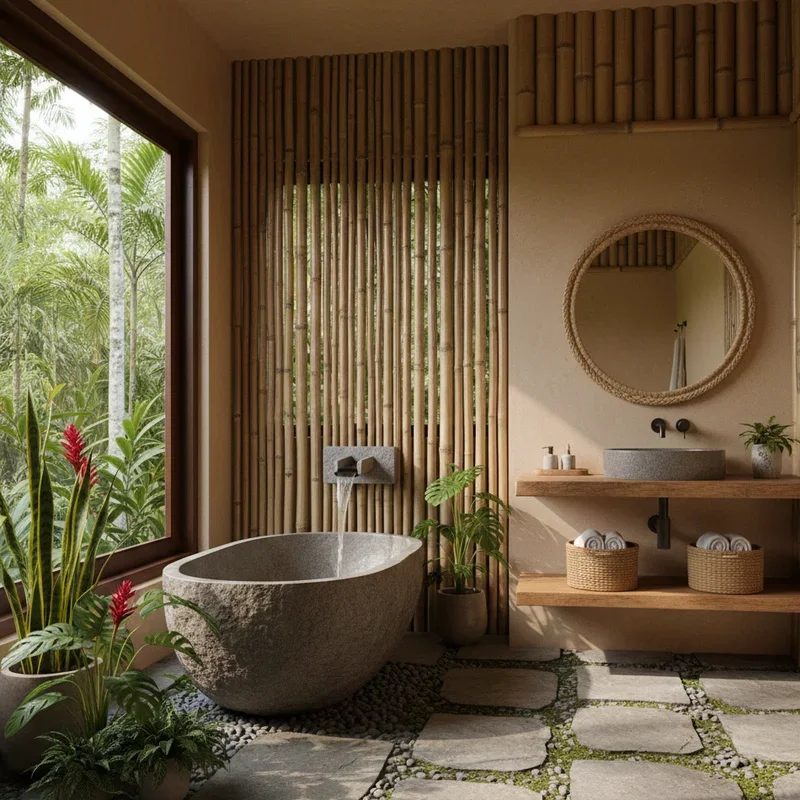
⚠️ Real Talk
Natural bamboo is beautiful, but in a damp, humid bathroom environment, it’s highly susceptible to mold and mildew if not properly ventilated. This look works best in a bathroom with excellent airflow, a powerful exhaust fan, or, as shown here, a large window that can be opened. You must also ensure the bamboo is properly sealed. An alternative for a more enclosed, damp space is a bamboo-look porcelain tile, which gives you the style without the maintenance worries.
24. Open-Air Vanity with Textured Concrete and Lush Plants
This design is a masterclass in texture. The rough, sandy texture of the light beige concrete walls provides a perfect earthy backdrop. This is layered with the smooth, cool surface of the white vessel sink, the dark, sleek metal of the faucet and mirror frame, and the living texture of the tree trunks and plant leaves. The composition works because no two adjacent surfaces have the same texture, creating a rich, tactile experience that feels deeply connected to the natural world.
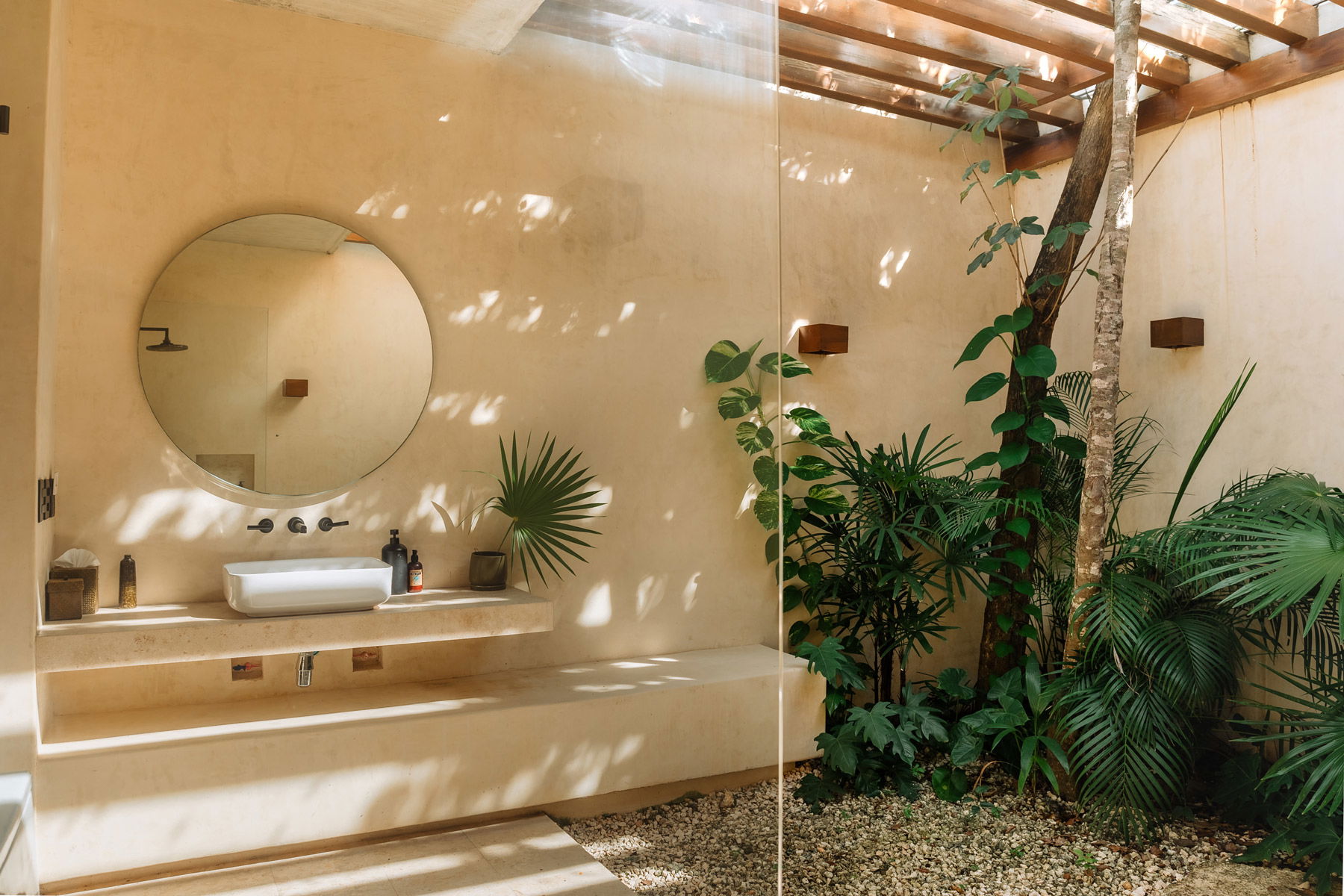
🔥 Trending Context
An open-air concept like this needs space to breathe. It’s less about a specific square footage and more about the feeling of openness. This is ideally suited for a transitional space, where the bathroom flows onto a covered patio or into a private garden. The glass partition is key; it protects the vanity area from rain while maintaining the visual connection to the plants. You need a ceiling height of at least 9 feet to accommodate the pergola structure and allow the tall plants to thrive.
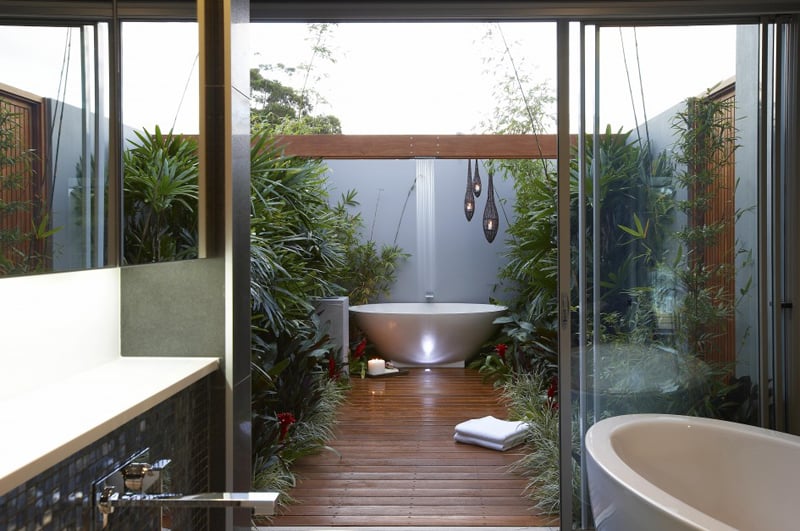
25. A Private Deck Bath with Woven Pendant Lights
When hanging pendant lights in a bathroom, especially over a tub, think in threes and hang them at varying heights. A single pendant can look lonely, and two can feel too symmetrical. A trio, hung in a staggered formation, creates a more dynamic and visually interesting composition. In this outdoor setting, the woven pendants cast beautiful, dappled light that mimics sunlight filtering through leaves, enhancing the tropical vibe. The same principle applies indoors, as seen with the similar pendant in Idea #32.
⭐ The One Thing
A freestanding tub and custom wooden deck are a big investment. For a similar feel with a smaller budget, focus on the key elements. Start with a simple, affordable stock tank from a farm supply store as your tub (around $150-$300). Build a small, low-to-the-ground deck platform around it using standard pressure-treated lumber. Then, spend your money on what really sells the look: lush potted plants and stylish woven pendant lights (you can find great options at IKEA or World Market).
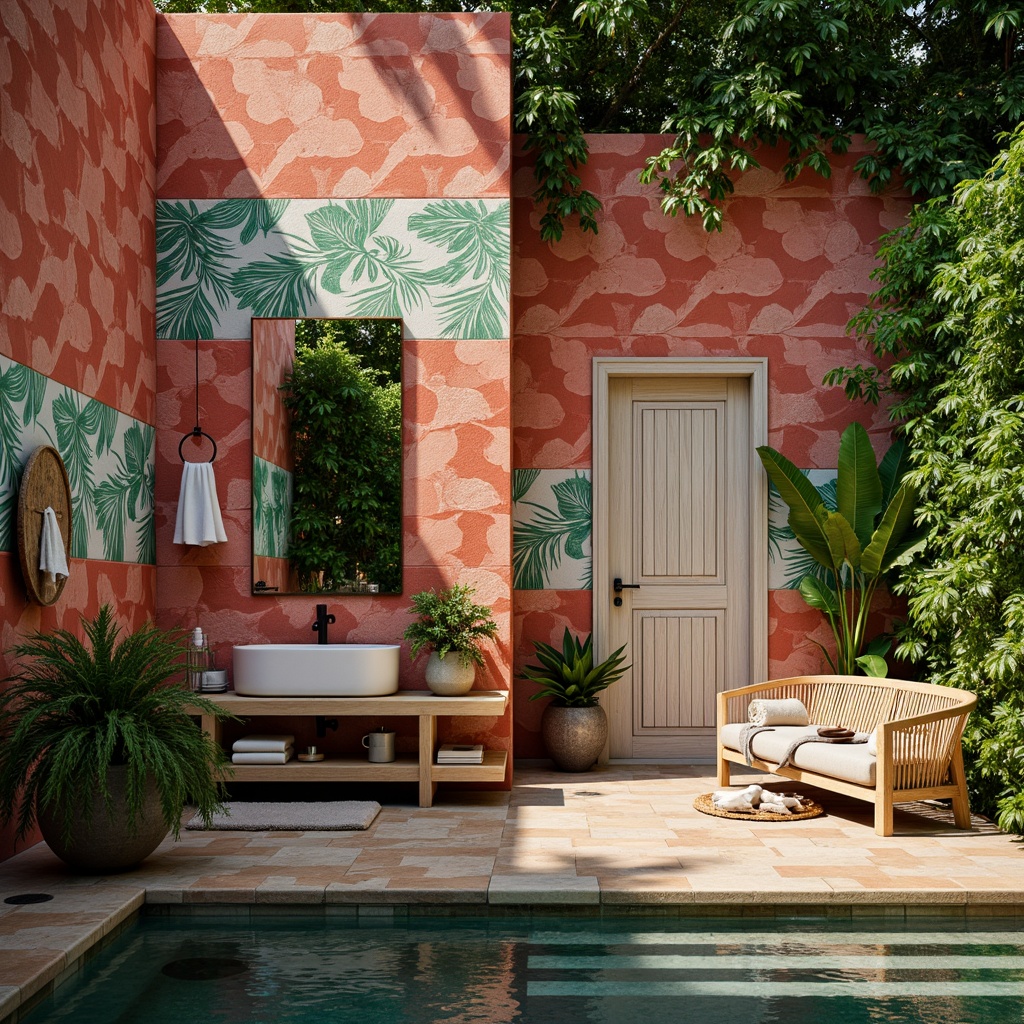
26. Vibrant Outdoor Bath with Coral and Leaf Print Tiles
The formula here is a bold play of color and pattern. Let’s call it 60% dominant pattern (the red-coral tile), 20% accent pattern (the green leaf tile bands), and 20% natural wood tones (the vanity, door, and bench). The key is that the dominant pattern has a small, busy scale, while the accent pattern has a larger, more graphic scale. The natural wood provides a neutral, calming element that keeps the two patterns from fighting with each other.
🔧 How-To Brief
Creating those horizontal tile accent bands is a simple way to add custom flair. Here’s the process:
- Plan Your Layout: Decide on the height and thickness of your accent bands. Use a level and painter’s tape to mark the top and bottom lines on the wall.
- Tile the Main Field: Install your main (coral) tile, stopping just before your taped-off accent band area.
- Install the Accent Tile: Apply mortar within your taped lines and set your accent (leaf) tiles. Use tile spacers to ensure even grout lines.
- Complete the Tiling: Once the accent band is in place, continue tiling the main field above it.
- Grout Everything: After the mortar has cured for 24-48 hours, remove the tape and grout the entire wall at once for a consistent finish.
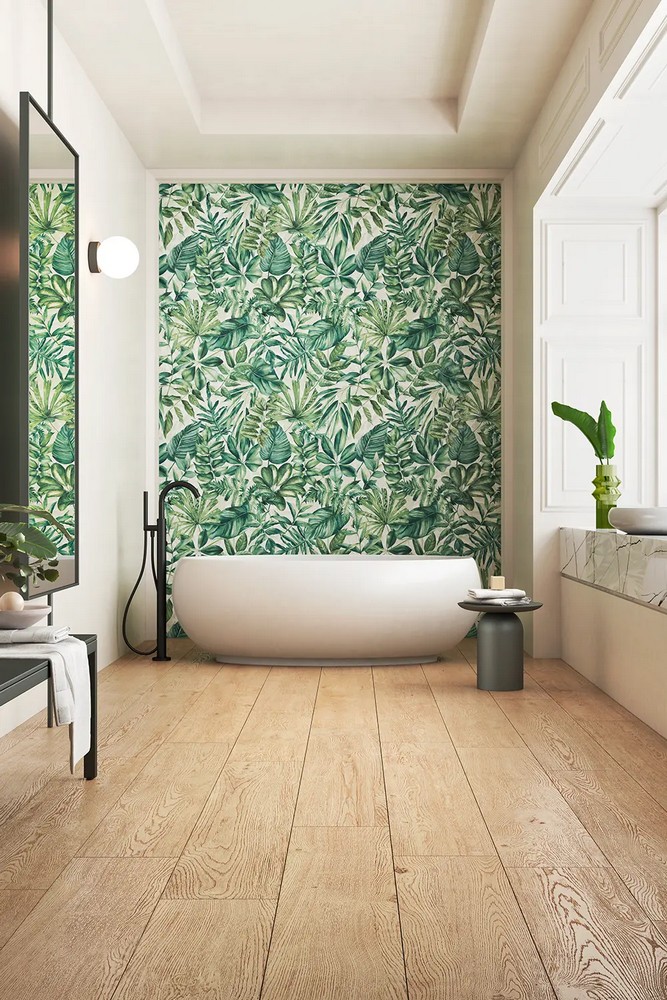
27. A Freestanding Tub Against a Bold Tropical Leaf Wall
This design works because it combines a single, high-impact statement with otherwise minimal choices. The vibrant tropical leaf wallpaper is the undeniable star. By pairing it with simple, clean elements—a classic white tub, light wood floors, stark white walls—the wallpaper gets the attention it deserves without competition. The matte black fixtures and dark grey side table are the perfect finishing touch, providing a graphic punch that grounds the space and connects back to the dark stems in the leaf pattern.
🧹 Maintenance Reality
Wallpaper in a bathroom? Yes, but you have to be smart about it. Use it on a feature wall that doesn’t get direct water splashes, like the wall behind the tub shown here. Ensure your bathroom has a powerful, high-quality exhaust fan to control humidity. Choose a vinyl-coated or ‘washable’ wallpaper, which is designed to handle moisture and can be gently wiped down. If you’re nervous, you can even have your installer apply a clear, matte-finish protective coat over it for extra durability.
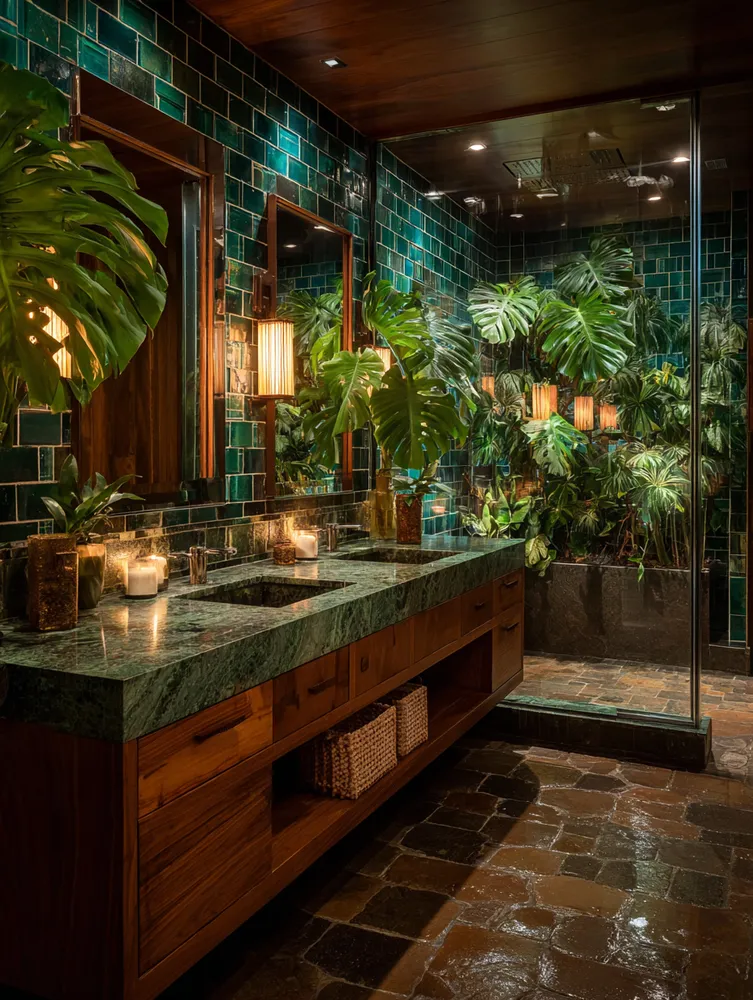
28. A Moody Jungle Bath with Emerald Subway Tiles
The emerald green subway tiles are the soul of this bathroom. They are everything. The rich, moody color and glossy finish create an immediate sense of being in a deep, lush jungle. Paired with the dark wood vanity and the abundance of live plants, the tiles create powerful atmosphere that is both luxurious and slightly mysterious. Without this specific color and finish, the room just wouldn’t have the same dramatic, transportive quality. If you’re going to make a mistake, don’t let it be choosing the wrong greenery, as we discuss in our mistakes section.
💸 Get This Look For Less
When using a dark, saturated color like this emerald green, lighting is paramount to prevent the room from feeling like a cave. Notice the use of multiple light sources here: the soft glow from the paper lamp sconces and likely overhead ambient lighting that isn’t visible. When you go dark on the walls, you need to double down on your lighting plan. Use a mix of ambient, task (over the vanity), and accent lighting to create depth and highlight different areas of the room.
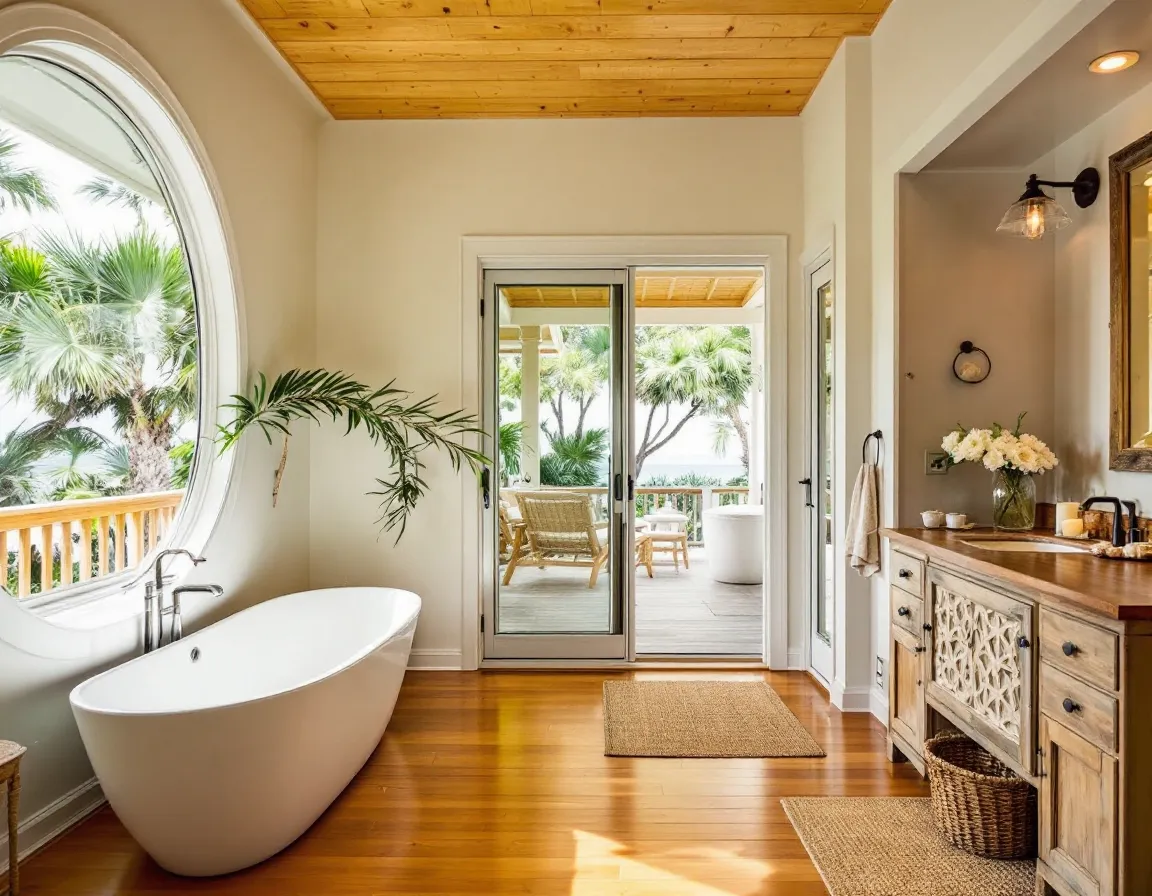
29. A Serene Bath with a Large Oval Window and Ocean View
The success of this space lies in
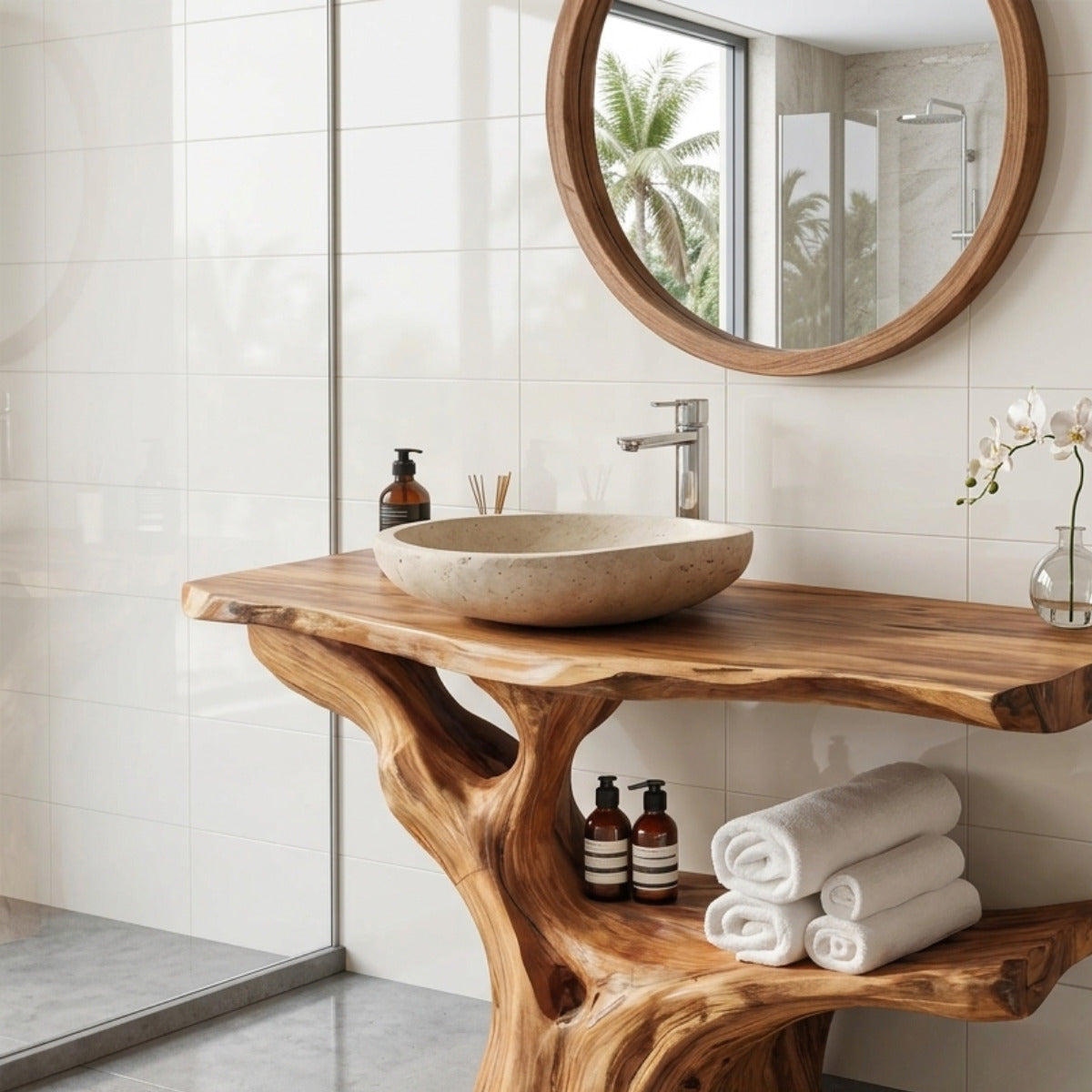
30. A Live-Edge Teak Vanity with a Round Stone Sink
that makes this vanity special is the gnarled, sculptural teak base. The live-edge countertop is beautiful, but it’s the raw, powerful form of the wood supporting it that elevates the piece from simple furniture to functional art. It feels like a piece of salvaged driftwood, bringing a completely authentic and untamed piece of nature indoors. It’s a celebration of wood in its most organic form.
🎯 What Makes It Work
A custom teak vanity like this can cost thousands. To get a similar organic feel on a budget, look for a live-edge wood slab on Etsy or at a local lumber yard—you can often find smaller pieces for a few hundred dollars. Instead of a custom base, mount the slab to the wall as a floating vanity. Pair it with an affordable stone vessel sink from an online retailer like Wayfair or Overstock. You get the same core elements—natural wood and stone—for a fraction of the price.
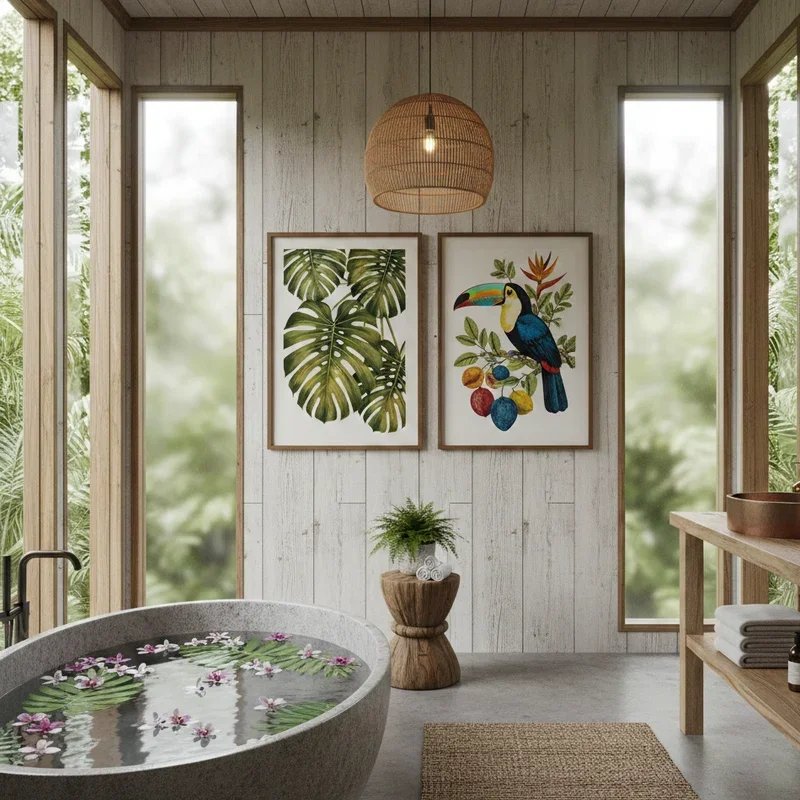
31. Airy Bath with Whitewashed Wood and Botanical Art
This room’s formula is about soft, natural layers. It’s about 40% textured white (the whitewashed vertical paneling), 30% natural fibers and woods (the stool, the rattan pendant light), 20% grounding stone (the grey tub), and 10% curated color (the green plants and framed art). The result is a look that feels layered and collected, not decorated. The whitewashed walls provide a bright canvas, while the different natural textures add warmth and depth. The artwork provides a crucial dose of personality and storytelling.
✅ Before You Start
Hanging art above a tub or stool can be tricky. A common mistake is to hang it too high. The center of the artwork (or the center of the gallery group) should be about 57-60 inches from the floor. Here, the two pieces are hung low, relating to the stool and plant, not the ceiling height. This creates a more intimate and human-scaled vignette. Always relate your art to the furniture or architecture near it, not to the empty space on the wall.
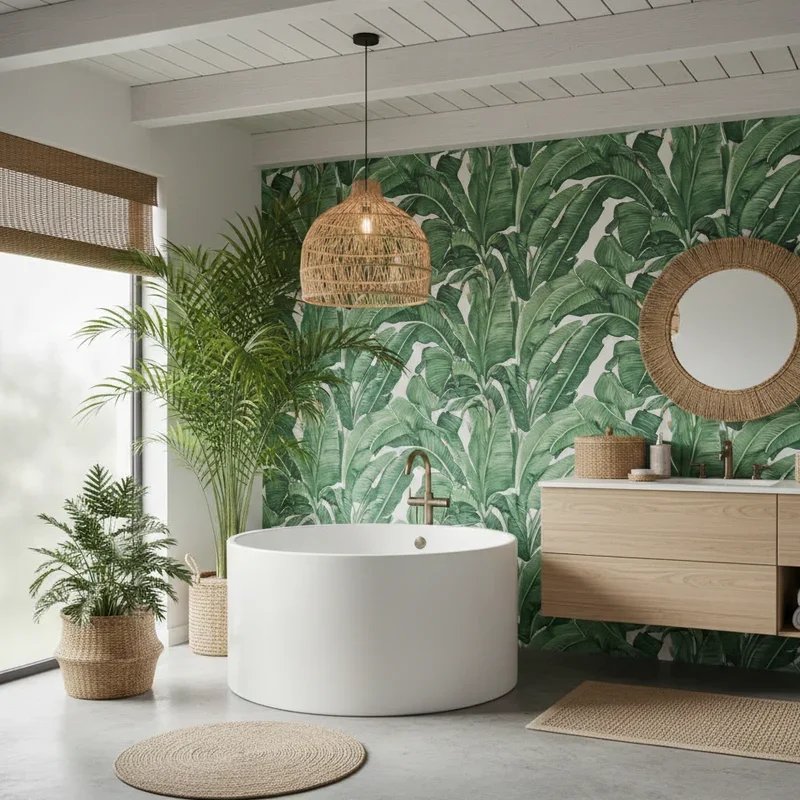
32. Vibrant Bathroom with Banana Leaf Wallpaper and Woven Accents
This design is successful because it commits to the theme while balancing it with modern and rustic textures. The banana leaf wallpaper is unapologetically bold and tropical. The woven elements—the pendant light, the mirror frame, the rugs—reinforce this theme with natural texture. However, the concrete-look floor and the clean, round shape of the freestanding tub provide a modern, grounding counterpoint. This contrast is what keeps the room from feeling like a theme park. It’s tropical, yes, but it’s also chic and current. A fuller, more immersive version of this wallpaper idea can be seen in Idea #21.
📐 Style Math
Ready to embrace the banana leaf? A quick checklist first:
- Room Size: A large-scale pattern like this works best in a medium to large bathroom. In a very small powder room, it can feel overwhelming.
- Light: Does the room get good natural light? A bold, dark green pattern can make a dark room feel even darker.
- Existing Finishes: This wallpaper pairs best with neutral finishes like white, wood, and concrete. If you have existing colored or patterned tiles, it might clash.
Your Personal Oasis Awaits
Creating a tropical bathroom is about much more than just decorating; it’s about crafting a space that feels like a daily escape. Whether you’re drawn to a minimalist spa or a lush jungle, the key is to bring in natural textures, abundant greenery, and elements that make you feel truly relaxed. Don’t be afraid to make a bold choice—it’s your sanctuary, after all. Ready for more inspiration? Head over to Pinterest and start creating your dream tropical bathroom board.