You know that feeling when you finally find the one? That single backyard lazy river photo on Pinterest that makes you stop scrolling and start dreaming. Well, what if we told you we found 30 of them? After diving deep into hundreds of custom projects from top landscape architects and pool designers, we narrowed it down to the absolute best. These aren’t just pictures; they’re blueprints for paradise, covering everything from tropical resort-style oases to rustic natural lagoons, with projects ranging from ambitious concepts to full-blown private water parks.
We’re seeing a huge shift in 2026 towards creating personal sanctuaries, and nothing says ‘permanent vacation’ quite like a lazy river a few steps from your back door. We’ve got 30 incredible, real-world examples to prove it. And stay until the end — we break down the most common mistakes that can ruin these looks.
📌 Save this to Pinterest for later — you’ll want to revisit these ideas.
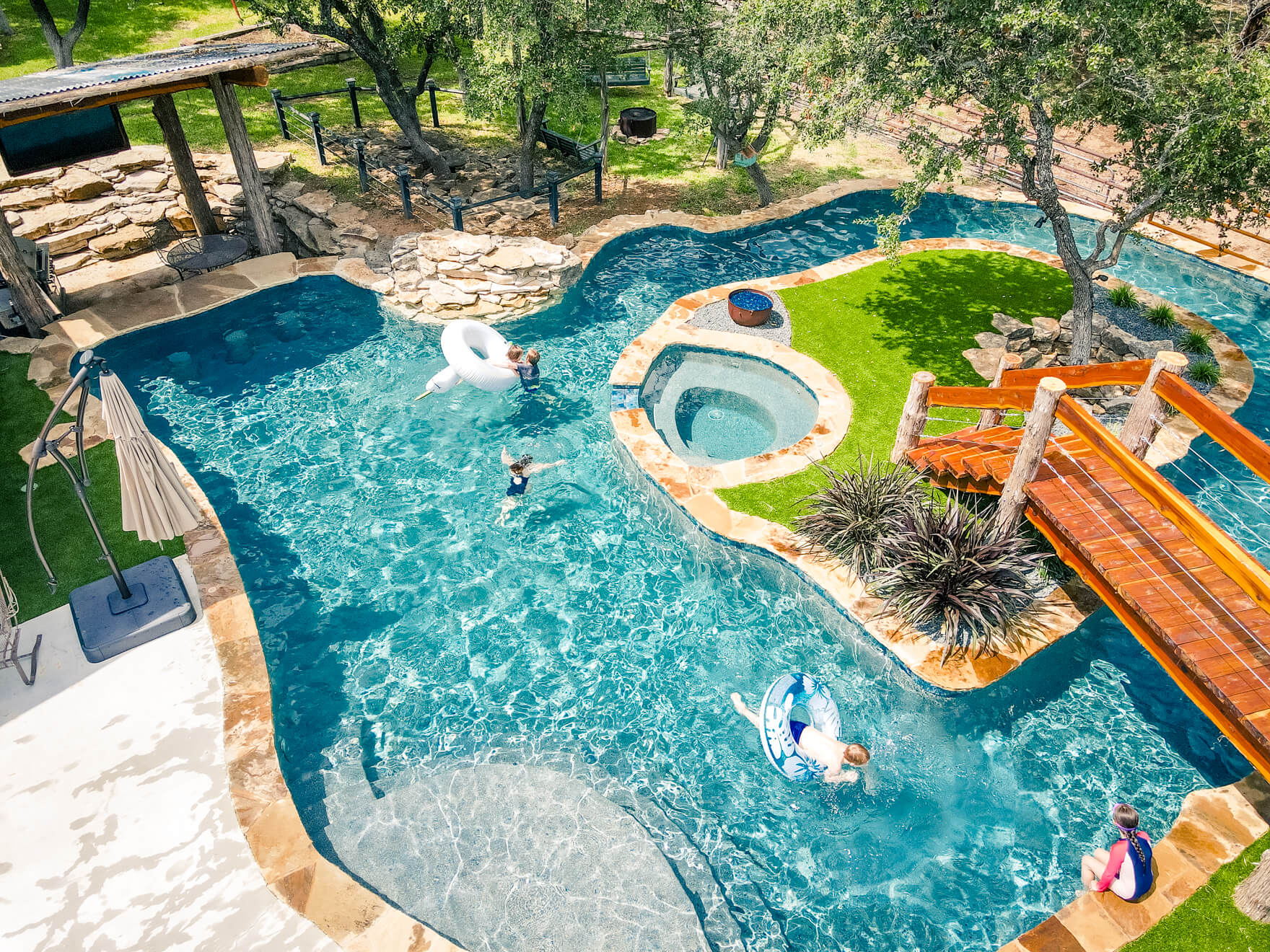
1. Curving Lazy River with a Central Grassy Island and Bridge
The magic here is all about creating a journey. The gentle curves of the river guide the eye (and the float) around the landscape, preventing you from seeing the whole feature at once. This creates a sense of discovery. The central grassy island acts as a destination—a visual anchor that breaks up the expanse of water and adds a lush, organic element. The small wooden bridge doesn’t just connect spaces; it adds a touch of rustic charm and creates a playful transition point, making the entire setup feel more like a miniature, explorable world than just a pool.
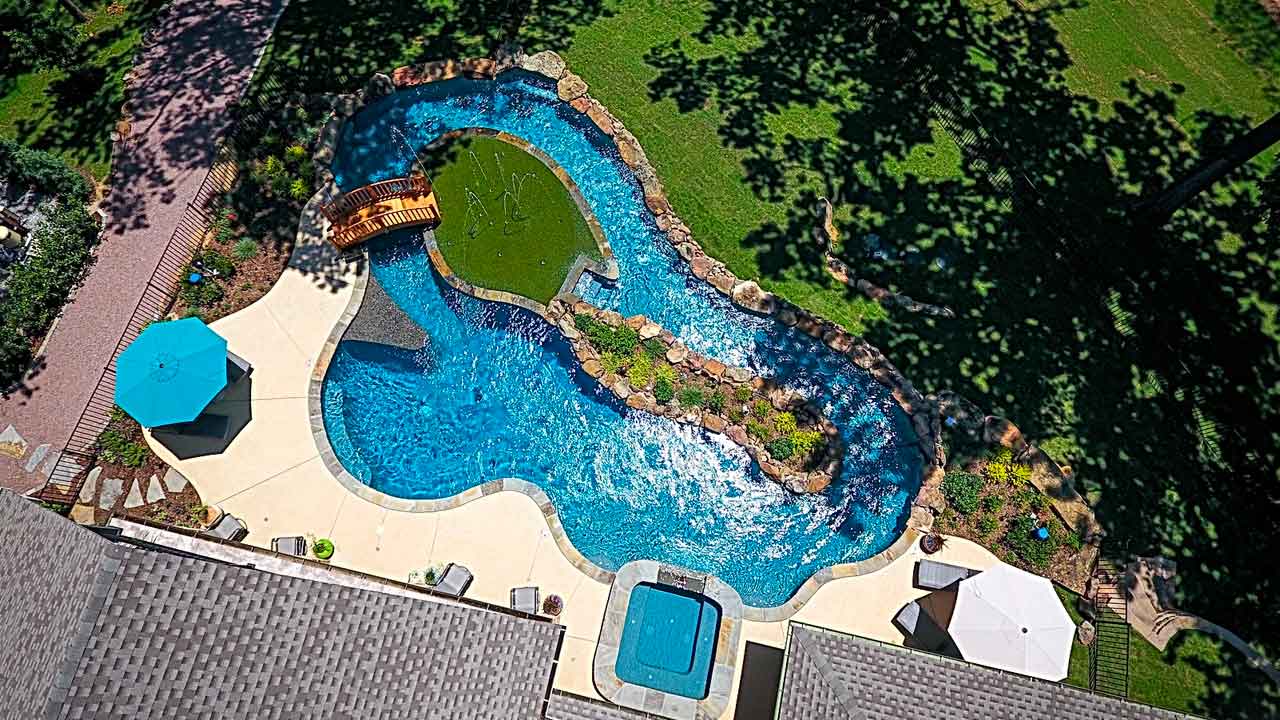
This design is a masterclass in blending man-made structures with nature. The natural rock coping is crucial; it blurs the line between the concrete pool shell and the surrounding landscape. By eschewing a hard, uniform edge, the pool feels like it was carved out of the environment rather than dropped into it. The mix of textures—smooth water, rough stone, soft grass, and warm wood—creates a rich, sensory experience that is deeply relaxing and visually compelling.
2. Sprawling Backyard Pool With an Integrated Rock Slide
The absolute game-changer here is the integrated faux rock water slide. Without it, this is a beautiful, luxurious, and very large swimming pool. With it, it’s a private water park. This single element injects a massive dose of fun and energy into the entire backyard, instantly defining its purpose as a space for both relaxation and recreation. It promises adventure and becomes the focal point that all the surrounding patios and lounge areas are oriented towards. Removing the slide would completely change the backyard’s personality from ‘playful resort’ to ‘serene estate’.
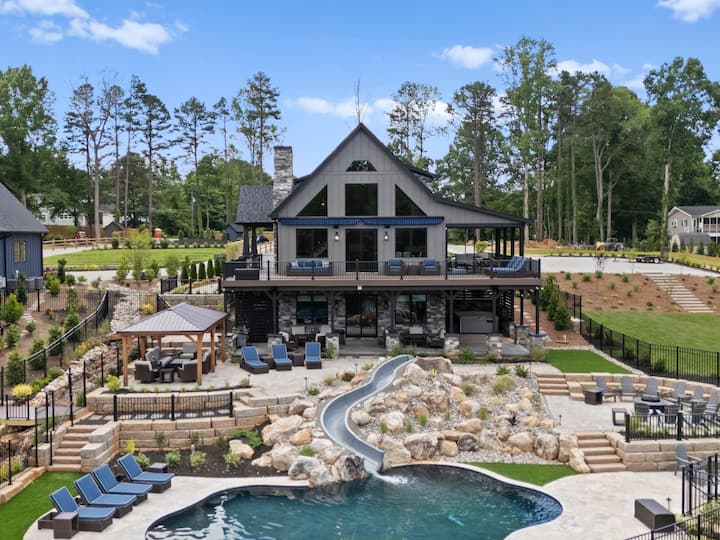
When commissioning a large-scale faux rock feature like a slide or grotto, the realism lives or dies with the artisan’s skill. Insist on seeing physical samples of the concrete shaping and, more importantly, the staining. Ask to see their portfolio of completed, weathered projects—how does the color look after three years of sun and chlorine? A great artisan will use multiple layers of color and sealant to mimic natural geological formations, avoiding the flat, painted look that screams ‘fake’. Also, specify an adjustable, high-volume pump for the slide’s water flow; you want a slick, fast ride, not a disappointing trickle.
3. Winding Lazy River with Dual Wooden Footbridges and Waterfalls
A design this expansive demands a significant amount of space. To achieve this look without it feeling cramped, you’re looking at a minimum of a half-acre of relatively flat, usable backyard. The river channel itself, at about 8-10 feet wide, plus decking and landscaping on both sides, requires a 25- to 30-foot wide corridor. The total length of a river like this could easily be 150-200 feet. This isn’t a design for a standard suburban lot; it’s an estate-level feature. Trying to scale this down too much will lose the grand, meandering feel that makes it so special.
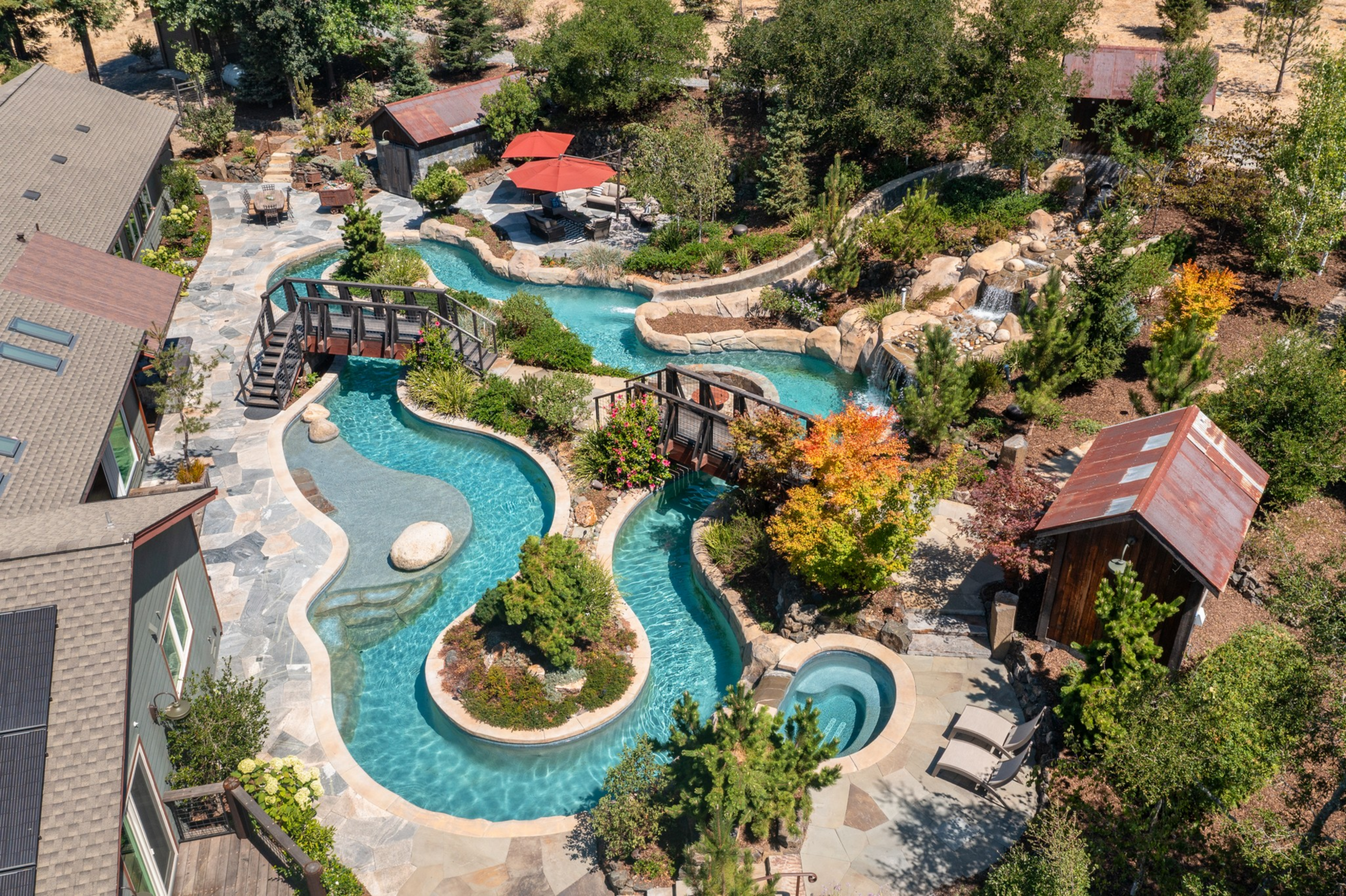
The visual harmony of this design can be broken down into a simple formula: 50% Water Feature + 30% Natural Hardscape + 20% Mature Landscaping. The water is the star, with its bright aqua color drawing the eye. The extensive flagstone patios and rock waterfalls provide a necessary earthy, textural counterpoint. Finally, the mature conifers and dense foliage provide verticality and a lush backdrop that encloses the space, making it feel private and secluded. You could swap the flagstone for travertine or the conifers for palms, but keeping this ratio of water-to-stone-to-greenery is key to its success.
4. Tropical Lagoon Lazy River with a Stone Arch Bridge
This design works because it fully commits to the tropical lagoon theme. The success is in the layering: the foundation is the curving pool shape, but it’s the stacked elements that create the magic. The gray stacked stone used for the bridge, waterfalls, and raised spa creates a cohesive visual language. This repetition of material makes the man-made elements feel like they belong together. Then, the lush, dense plantings are not just an afterthought; they are allowed to crowd the edges of the pool, blurring the lines and creating an immersive jungle-like atmosphere.
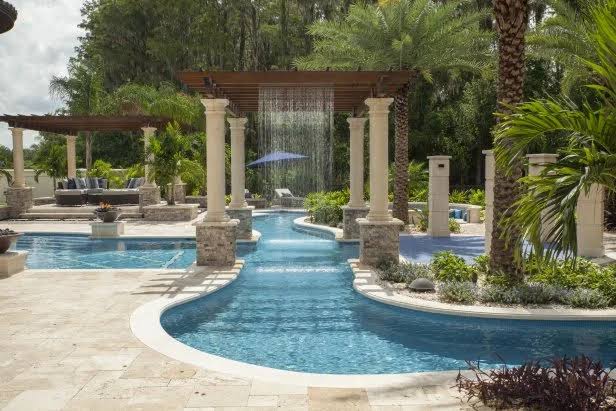
A tropical paradise like this comes with a tropical level of maintenance. The lush foliage that makes this look so amazing is also its biggest challenge. You’ll be skimming leaves, flowers, and palm fronds from the water daily, especially after windy days. Automated skimmers and a robust filtration system are non-negotiable. The beautiful stacked stone waterfalls are also prime real estate for algae growth and calcium deposits from hard water. Expect to professionally pressure wash and seal the stone every 2-3 years to keep it looking fresh and not grimy.
5. Dusk-Lit Tropical River with Rock Grottoes and Tiki Torches
It’s the fire. Specifically, the open flames from the tiki torches. In a design already rich with texture and lushness, the flickering firelight adds a dynamic, primal element that transforms the entire scene. During the day, this is a beautiful tropical pool. At dusk, with the torches lit, it becomes a magical, exotic escape. The warm, amber glow contrasts beautifully with the cool blue of the water, creating a captivating ambiance that landscape lighting alone could never achieve. The fire introduces movement and a touch of wildness that elevates the entire experience.
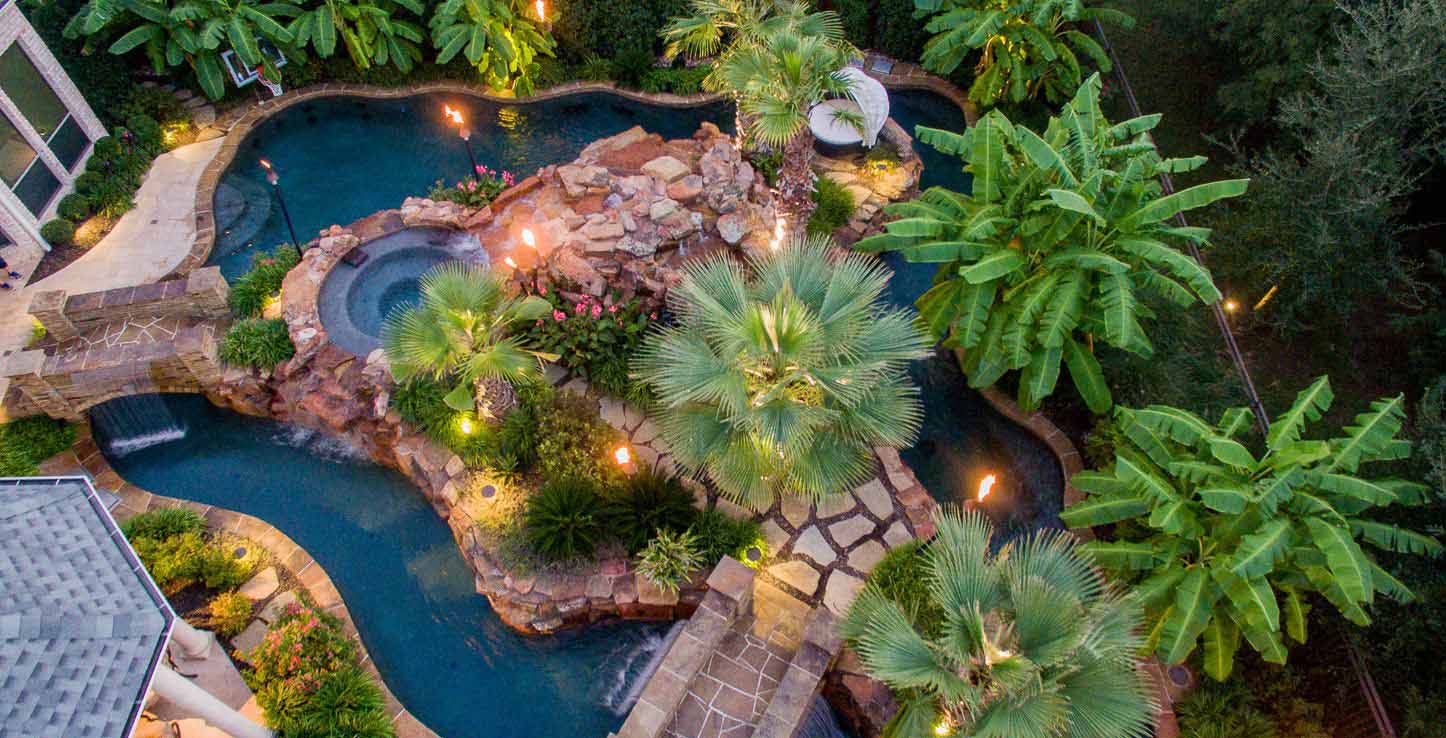
Let’s have a real conversation about open-flame tiki torches around a pool. They look incredible, but they are a significant safety and maintenance consideration. You’ll be dealing with fuel (citronella or paraffin oil), which can be messy and needs constant refilling. There’s also the obvious fire hazard, especially on windy nights or with overhanging palm fronds. For a lower-maintenance, safer alternative, consider high-end gas-powered tiki torches installed by a professional, or even the newer generation of hyper-realistic LED flame torches. You get a similar flickering effect without the risk or hassle.
6. Natural Rock Lazy River with Grotto and Stone Bridge
When creating a naturalistic rock grotto or waterfall, the sound is just as important as the look. Work with your pool builder to design a ‘sound-focused’ water feature. Use a mix of surfaces for the water to fall on—a flat, smooth rock creates a gentle sheet of water with a low-pitched sound, while a series of smaller, uneven rocks creates a more energetic, bubbling sound. By controlling the water flow with variable-speed pumps, you can change the backyard’s ‘soundtrack’ from a tranquil trickle to a roaring cascade. This level of sensory control is peak luxury.
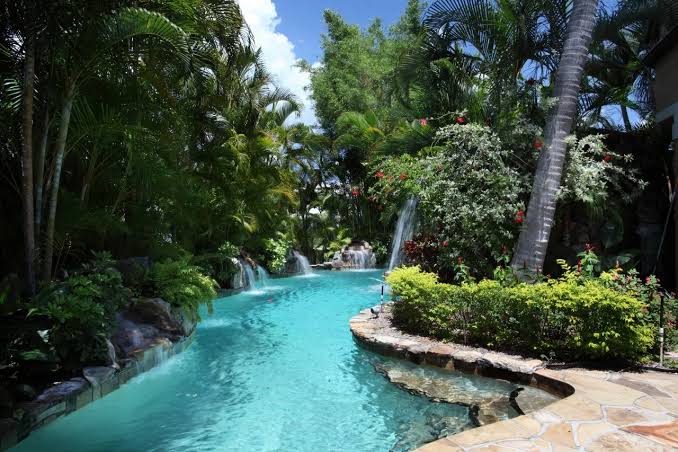
This serene oasis follows a classic landscape design formula: 60% Lush Greenery + 30% Natural Stone + 10% Open Water. The dominant element is the vibrant green foliage, from the manicured turf to the towering palms and ferns. This creates the ‘jungle’ feeling. The natural gray and brown stone of the waterfalls, grotto, and bridge provides the solid, earthy structure. The ribbon of blue water then acts as a brilliant, reflective accent that weaves through the scene. Keeping the water surface area smaller relative to the surrounding landscape is key to this natural, lagoon-like vibe.
7. Winding Turquoise River with Mosaic Tile Waterline
The single detail that elevates this design is the small, iridescent mosaic tile at the waterline. It’s a subtle touch, but it’s doing so much work. From a distance, it creates a crisp, shimmering line that separates the turquoise water from the light stone coping. Up close, it adds a layer of intricate detail and color, catching the sunlight and sparkling. It’s a classic resort pool trick that instantly makes the entire project feel more custom, more luxurious, and more thoughtfully designed. Without it, the transition from water to stone would be far less interesting.
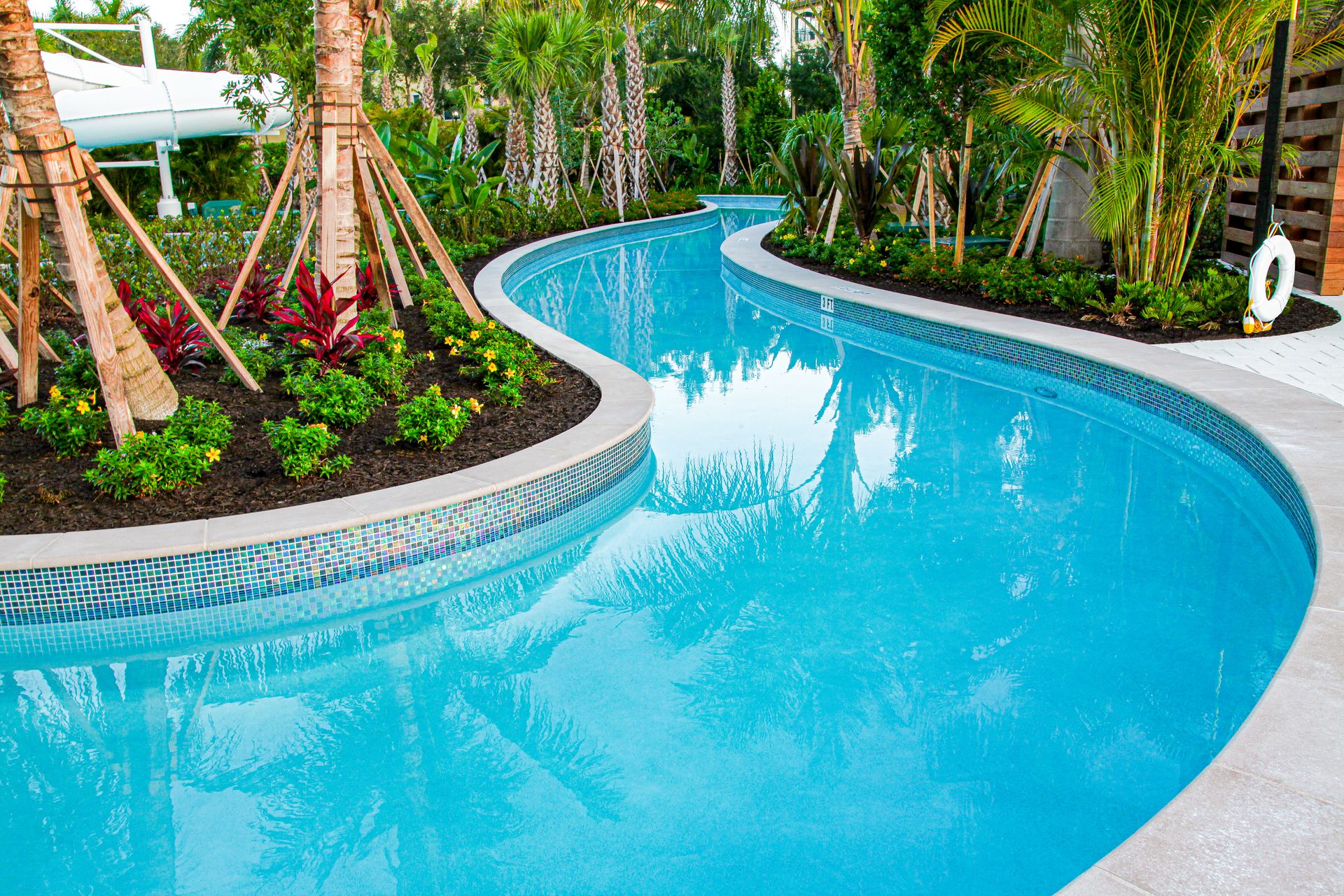
That beautiful mosaic waterline tile can be pricey, often adding thousands to the pool’s cost. To get a similar effect on a smaller budget, look for ‘peel and stick’ pool tile borders from companies like In The Swim or Doheny’s. For around $150-$300, you can get a roll of waterproof, UV-resistant vinyl tile that mimics the look of glass mosaic. It won’t have the same longevity or three-dimensional texture as real tile, but it’s a fantastic way to add that pop of color and detail for a fraction of the price, and you can even install it yourself in an afternoon.
8. Lush Tropical Lazy River with Light Stone Coping
The success of this design lies in its high contrast. The vibrant, almost electric turquoise of the water is made even more brilliant by the frame of light beige stone coping and pavers. This crisp, clean border acts like a picture frame, making the water the undeniable star of the show. This is then softened by the deep, chaotic green of the dense tropical plantings that surround the patio. The combination of the sharp, man-made lines of the coping and the organic, untamed forms of the plants creates a beautiful and dynamic tension.
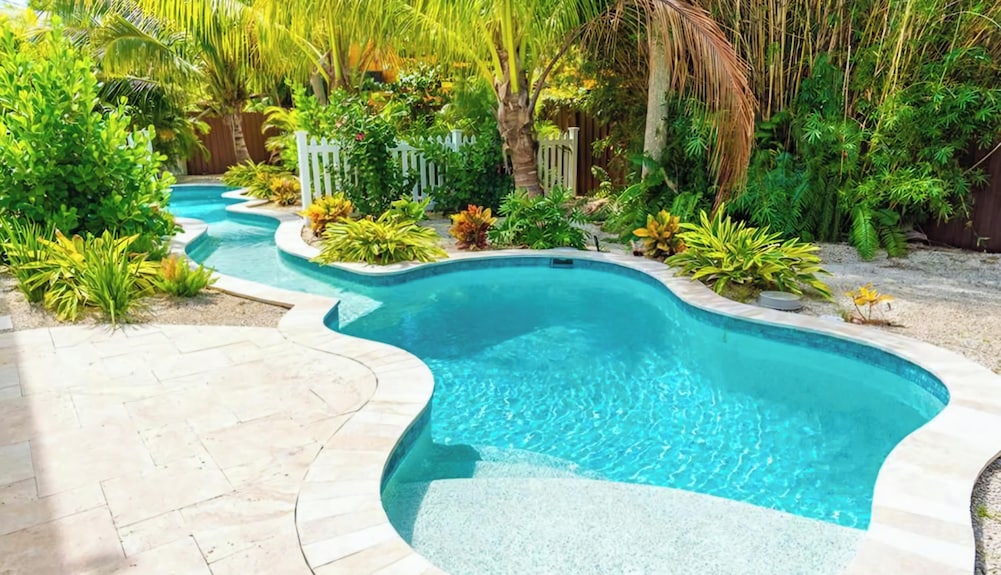
That light-colored stone coping and those large travertine-style pavers look stunning, but they are porous and prone to staining. Spills from drinks, sunscreen lotion, and especially leaf tannins from the lush landscaping can leave permanent marks if not cleaned up immediately. You’ll need to pressure wash the entire patio area at least once a year and, more importantly, have it professionally sealed every 2-3 years. The sealant creates a barrier that repels water and oil, giving you more time to clean up spills before they soak in. This is not an optional step if you want to keep it looking new.
9. Lagoon Pool with Bright Wooden Bridge and Central Island
If you want to add a bold pop of color in a way that feels intentional and high-design, paint your bridge. The mistake most people make is choosing a color that’s already present in the landscape. Instead, follow color theory and choose a complementary color. Here, the bright orange-brown of the wood is the perfect complement to the blue/turquoise of the water, which is why it pops so dramatically. A high-quality marine-grade paint or stain is essential for longevity against sun and water exposure. Test your chosen color on a spare piece of wood and view it in the full sun before committing.
An island with mature trees in the middle of your pool looks incredible, but it’s an engineering and maintenance puzzle. The pool shell has to be specially engineered with a massive planter box that has robust waterproofing and drainage. If the drainage fails, you’ll drown the tree’s roots. Speaking of roots, you must choose a tree species with a non-aggressive root system to prevent it from cracking the pool shell over time. And, of course, any tree will drop leaves, seeds, or flowers directly into your water, meaning constant skimming and filter cleaning.
10. Rustic Wooden Bridge Over a Stone-Lined River Channel
This design nails the rustic, natural vibe by fearlessly mixing textures. The key is the intentional contrast between the raw, chunky wood of the bridge and the smooth, cool surface of the water. The stacked stone coping adds another layer of ruggedness, while the dark gravel and artificial turf create distinct zones of texture on the ground. Nothing matches perfectly, and that’s the point. It feels assembled from materials you’d find in the wild, creating an authentic, tranquil, and distinctly outdoorsy atmosphere that a more uniform design could never achieve.
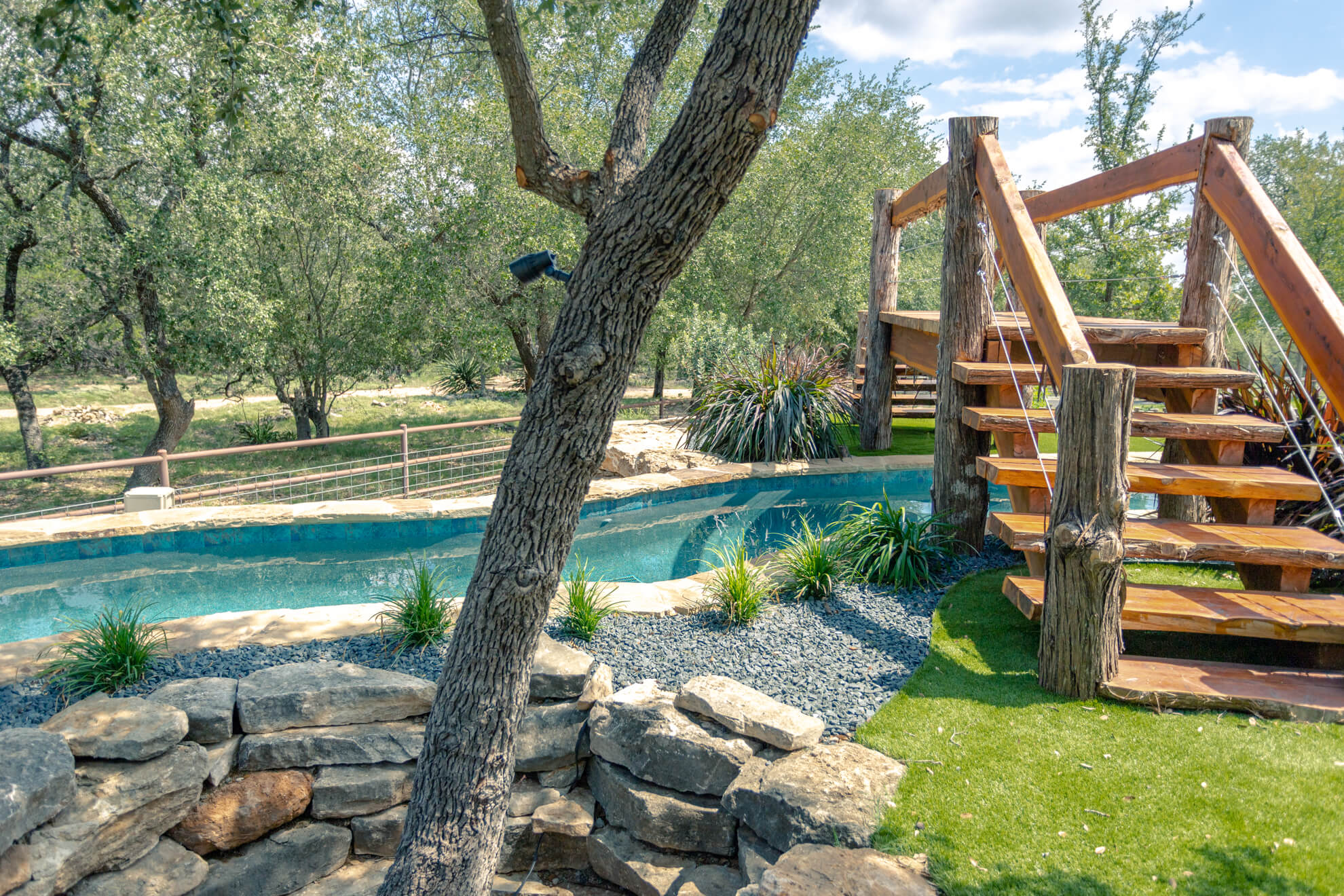
You don’t need a custom-milled log bridge to capture this rustic feeling. For a similar vibe at a much lower cost, you can build a simple bridge using standard pressure-treated 6×6 posts for the supports and 2×8 planks for the decking, available at any Home Depot or Lowe’s. The secret is to make it look rustic with a dark, opaque deck stain. For the railings, instead of expensive custom cables, use affordable black wire ‘cattle panel’ fencing secured between the posts. This gives you the same transparent look for a tiny fraction of the cost. Compare this to the more elaborate setup in Idea #8 to see the difference in complexity.
11. Aerial View of an Expansive Luxury Backyard Water Park
To even consider a project of this magnitude, you need a backyard measured in acres, not square feet. A multi-feature pool system with a lazy river, slides, spa, and pavilion requires a minimum of 1-2 acres of buildable land. The sheer logistics are staggering: massive excavation, complex plumbing running hundreds of feet, and a dedicated, almost commercial-grade ‘pump room’ to power everything. This isn’t a backyard feature; it’s a private resort. The elevation changes required for the slides and waterfalls also mean it’s best suited for a property with some natural slope to begin with.
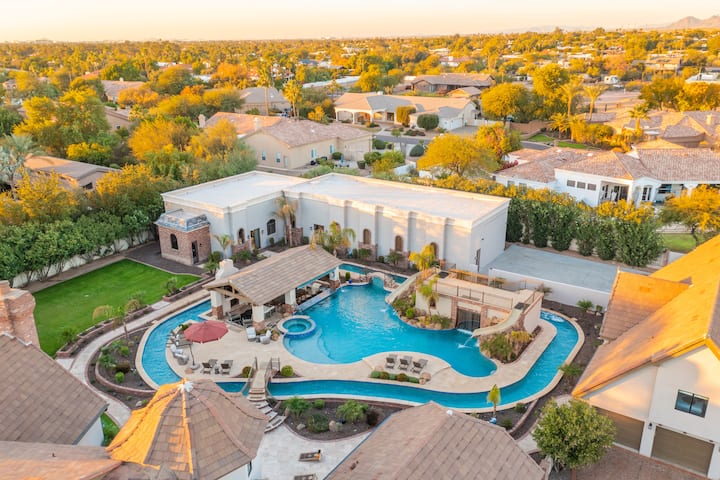
The single element that makes this all work is the covered patio pavilion. In a landscape so dominated by water and open space, the pavilion provides a crucial sense of human scale and shelter. It’s the anchor, the central hub from which all the water-based activities radiate. It offers shade, a place for seating and dining, and a psychological ‘home base’. Without this solid architectural element to ground the entire design, the sprawling pools and river could feel disconnected and overwhelming, like a commercial water park that happens to be in a backyard.
12. Resort-Style Lazy River with Blue Underwater Lighting
When planning underwater lighting, think in zones. Don’t just place lights evenly around the perimeter. For a lazy river, use a higher concentration of lights on curves and near features like waterfalls or bridges to create drama and highlight the path. Use a different color or intensity in the main pool and the hot tub. Modern LED systems from brands like Pentair or Jandy allow you to program ‘light shows’ and control color and brightness from your phone. A well-designed lighting plan transforms the pool from a dark void at night into a stunning, dynamic landscape feature.
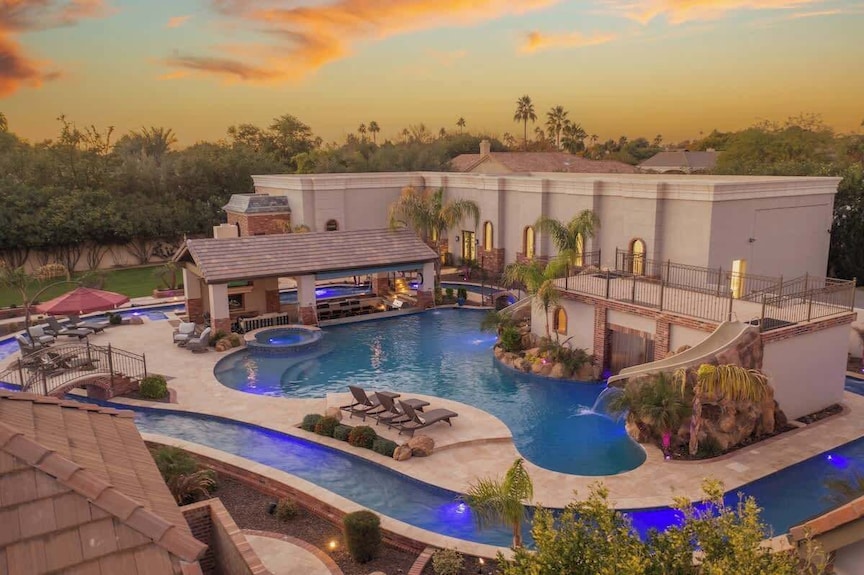
The move towards high-tech, colorful LED pool lighting has been a game-changer in backyard design over the past few years. What was once a feature reserved for Las Vegas resorts is now accessible for residential projects. This trend is driven by our desire to extend the use of our outdoor spaces past sunset. A beautifully lit pool becomes the main focal point of the evening landscape, providing ambiance and a ‘wow’ factor even when no one is swimming. It’s about creating a 24/7 resort experience at home, and lighting is the key to the nighttime half of that equation.
13. Illuminated Evening Oasis with Palm Trees and Thatched Umbrellas
This design’s success at creating a luxurious evening atmosphere comes from its sophisticated use of layered lighting. There isn’t just one type of light; there are at least three distinct layers working together. First, the vibrant turquoise underwater lights provide the main ambient glow and make the water the star. Second, the warm uplighting on the palm trees adds verticality and drama, highlighting their architectural shapes against the night sky. Finally, the small, low-level path lights provide safe navigation without overpowering the scene. This combination creates depth, contrast, and a truly magical, resort-like mood.
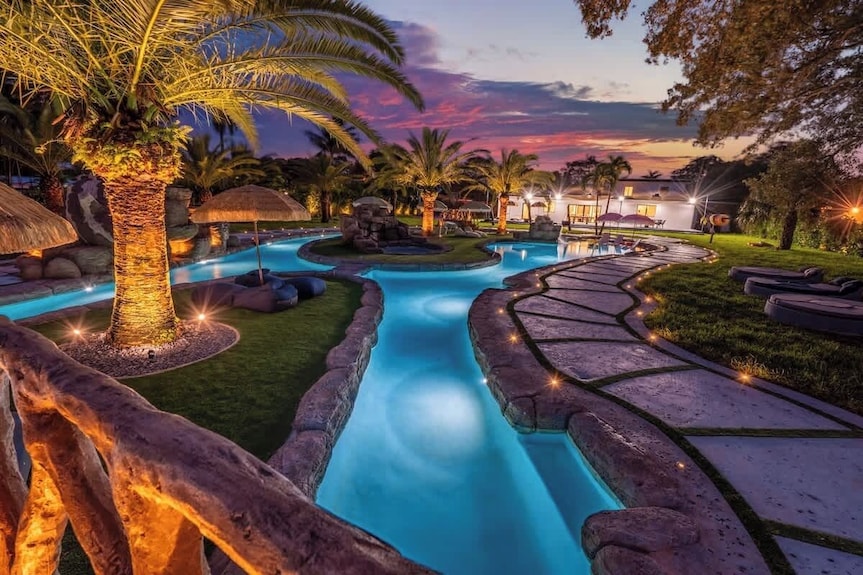
Want to recreate that dramatic palm tree uplighting? It’s easier than you think. This mini-project will take about 1-2 hours per tree.
- Purchase 2-3 weatherproof outdoor LED spotlights per tree (around $30-$50 each). Opt for a warm white (2700K-3000K) to avoid a sterile, bluish look.
- Place the first spotlight about 2-3 feet from the base of the trunk, aimed almost straight up. This will highlight the texture of the trunk.
- Place the other one or two lights a bit further back, 4-6 feet from the base, and aim them up into the fronds. This creates the broad canopy of light.
- Use a low-voltage transformer and bury the wires just under the grass or mulch.
- Wait for nightfall and adjust the angles until you get that perfect, dramatic effect.
14. Tropical Lagoon Pool with Stacked Stone Waterfalls and Wood Bridge
The formula for this convincing tropical look is all about balancing ruggedness with softness. Let’s call it 40% Hard Rock + 40% Lush Greenery + 20% Cool Water. The ‘Hard Rock’ element comes from the extensive use of stacked stone for the waterfalls and the rustic wooden bridge—these are the strong, structural bones. The ‘Lush Greenery’ from the dense palms and foliage provides the immersive, jungle-like softness that envelops the space. The ‘Cool Water’ then acts as the refreshing, reflective centerpiece that ties it all together. You need all three in roughly these proportions to sell the illusion.
Creating those beautiful, naturalistic stacked stone waterfalls is an art form, and it’s not a place to cut corners. A poorly constructed rock feature can be a disaster. If the stones aren’t properly mortared and sealed from behind, you can have significant water loss as water seeps through the cracks instead of flowing over the top. This not only wastes water and chemicals but can also erode the ground behind the feature, potentially destabilizing the whole structure over time. This is a job for an experienced pool builder or a mason who specializes in water features, not a general landscaper.
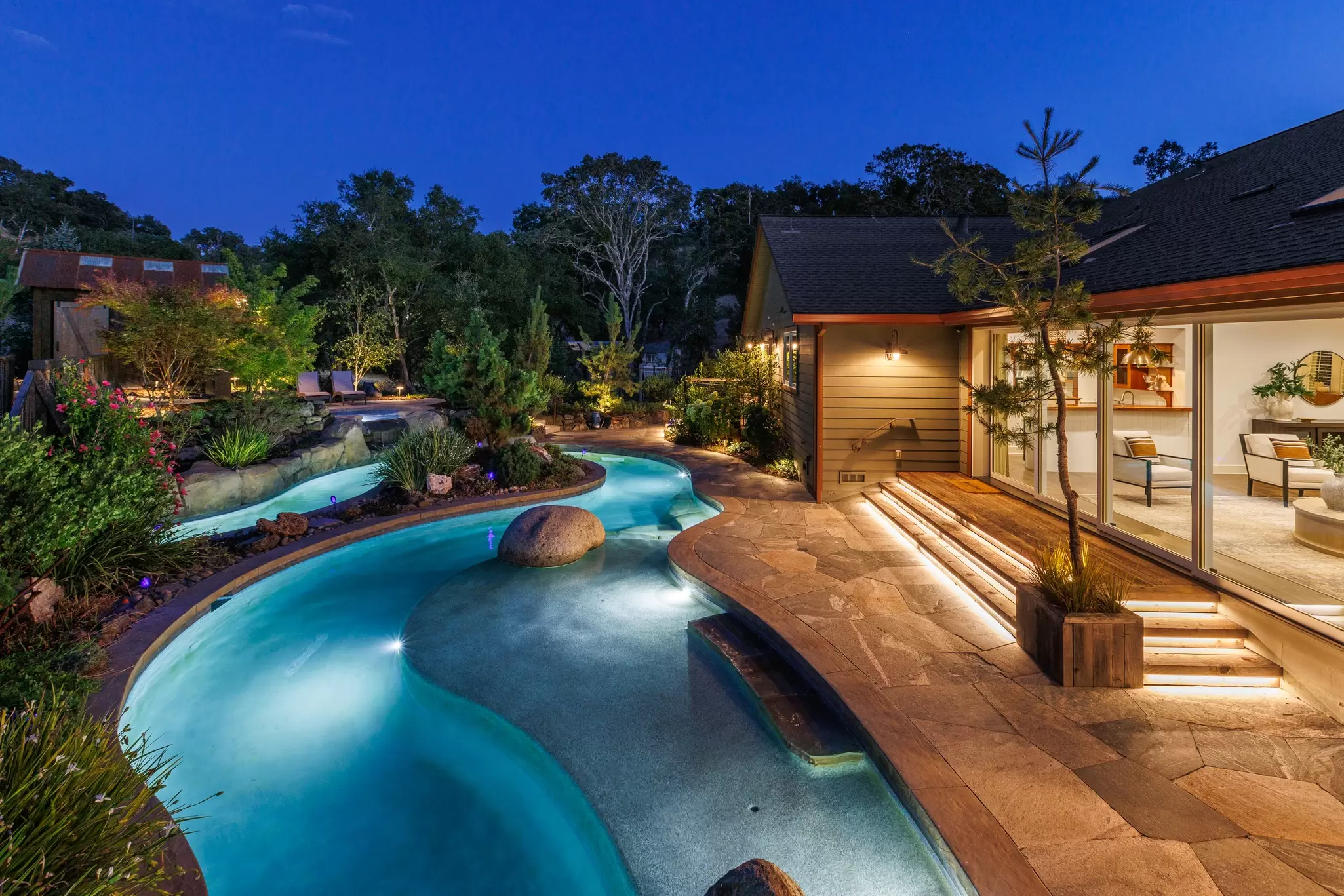
15. Serene Evening Lazy River with Flagstone Patio and Boulder Accents
The underwater lighting is, without a doubt, the single element that makes this scene breathtaking. In daylight, this is a lovely, high-end pool. At night, the lighting transforms it into a magical, glowing ribbon of turquoise. It does more than just illuminate the water for safety; it turns the pool itself into the primary light source for the entire patio. The way the light reflects off the accent boulders and shimmers on the underside of the house’s eaves creates a dynamic, atmospheric quality that no amount of landscape lighting could replicate. It is the heart of the design’s tranquil, luxurious mood.
Before you commit to a major hardscape and pool project like this, run through this final checklist:
- Measure Your Light: How does the sun move across your yard? A flagstone patio in full sun will be scorching hot on bare feet in the summer. Consider if you need to incorporate shade structures.
- Confirm Drainage: An expansive, non-porous flagstone patio needs a robust drainage plan. Where will rainwater go? Your contractor should have a clear plan for grading, channel drains, or French drains.
- Budget for the Unexpected: Large-scale excavation can uncover surprises like massive boulders or unstable soil. Your initial budget should always include a 15-20% contingency fund for unforeseen site conditions.
- Test Stone Samples: Get physical samples of the proposed flagstone. See how they look wet, dry, in the sun, and in the shade. The color can change dramatically.
16. Modern Lazy River Wrapped Around a Raised Wooden Deck
This is a masterful example of blurring the lines between indoors and outdoors. The massive overhanging roof with its recessed lighting and circular cutouts doesn’t just cover the patio; it extends the home’s architecture out into the landscape. The lazy river wrapping tightly around the wooden deck erases the traditional boundary of a pool edge. Instead of looking at the pool from the patio, you are literally on a deck island within the pool. This creates a powerful feeling of immersion and makes the entire space feel like one cohesive, indoor-outdoor living room.
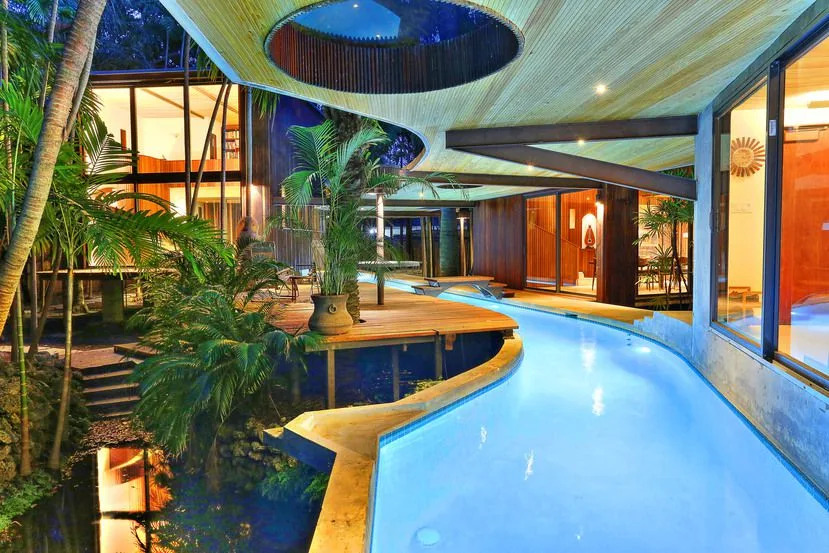
This architectural approach works best when the scale is grand. The overhanging roof needs significant height (at least 10-12 feet) to feel airy and not oppressive. The river channel can be narrower than a traditional lazy river (perhaps 6-8 feet) because its purpose is more aesthetic, like a moat. However, the wooden deck ‘island’ needs to be large enough for functional zones—a dining area, a lounge space—so at least 20×20 feet. This concept is less about the overall yard size and more about the scale of the architecture it’s attached to. It’s a great way to integrate a water feature into a smaller yard if you have a large house footprint.
17. Organic Lagoon Pool with Wooden Docks and Natural Planting
We’re seeing a huge movement away from sterile, chlorine-blue pools and towards more naturalistic swimming ponds, and this is a perfect example of that trend. This design, popular in Europe for years, is finally catching on in the US. It’s driven by a desire for a more eco-friendly and aesthetically integrated backyard. Homeowners are tired of the chemical smell and want a water feature that looks like it belongs in the landscape year-round, not just in summer. The use of aquatic plants, gravel borders, and wooden docks speaks to a yearning for a more rustic, wild-swimming experience.
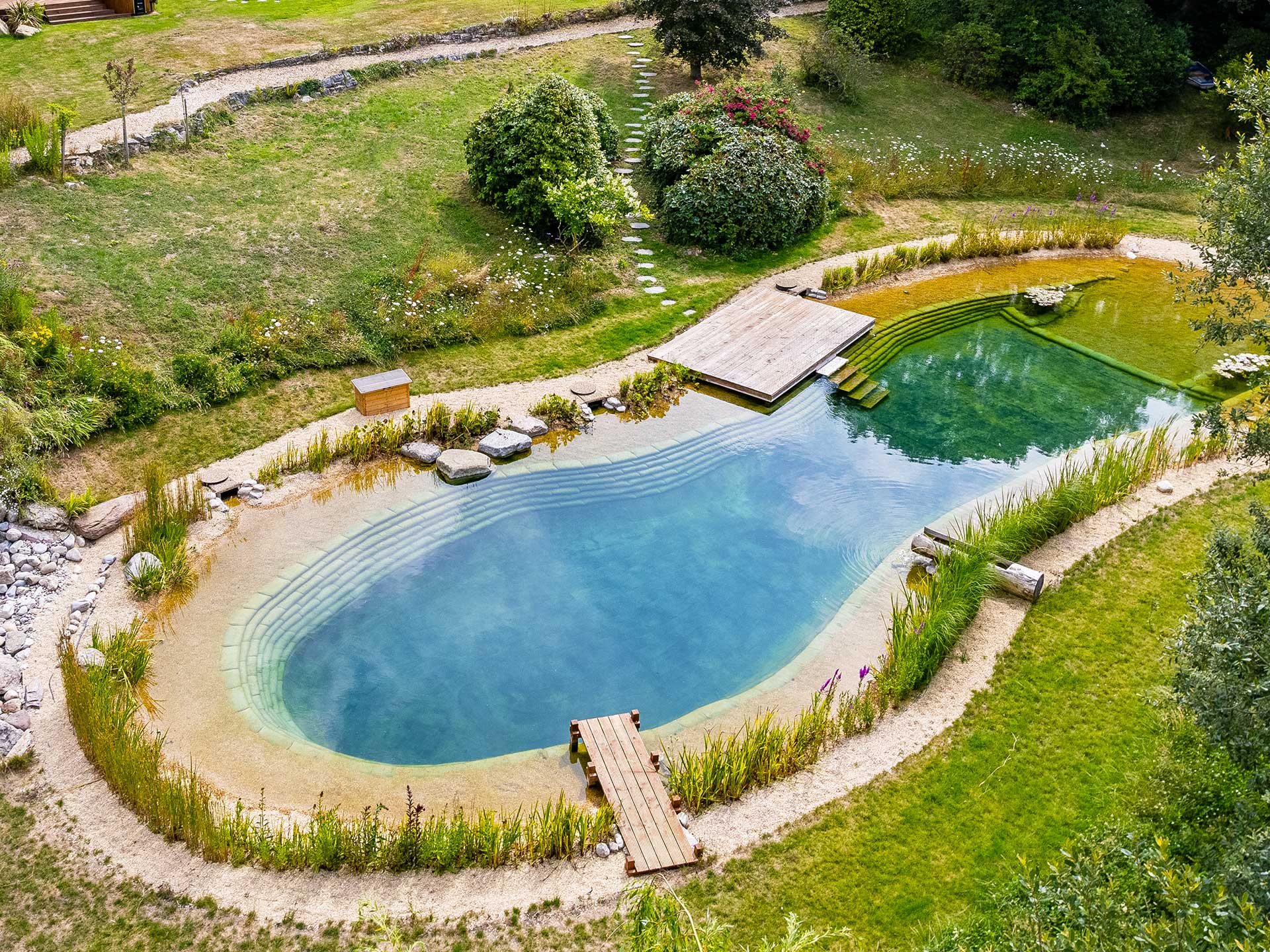
A true ‘natural pool’ or ‘swimming pond’ is a complex ecosystem, not just a pool that looks natural. Many use a separate ‘regeneration zone’ filled with specific aquatic plants and gravels to naturally filter the water, eliminating the need for chlorine. While this is amazing, it requires specialized knowledge to set up and balance. The underwater shelves are for these plants. An alternative, seen here, is a hybrid system: a pool that looks like a pond but is cleaned with a traditional (or saltwater) filter system hidden away. It’s less eco-friendly but far easier for most homeowners to maintain. Be honest about which path you’re willing to take.
18. Lazy River Encircling a Private Putting Green Island
Let’s be honest: a putting green in the middle of a pool is a maintenance puzzle. Errant golf balls in the pump filter? Check. Managing drainage for the turf so it doesn’t get swampy? A major engineering challenge. This is a ‘spare no expense’ feature that requires a dedicated maintenance plan. It’s less for daily golf practice and more for the sheer ‘wow’ factor and the novelty of being able to chip onto your own private island. Before you fall in love with the idea, get a quote for the specialized drainage and access plan, which can be as complex as the pool itself.
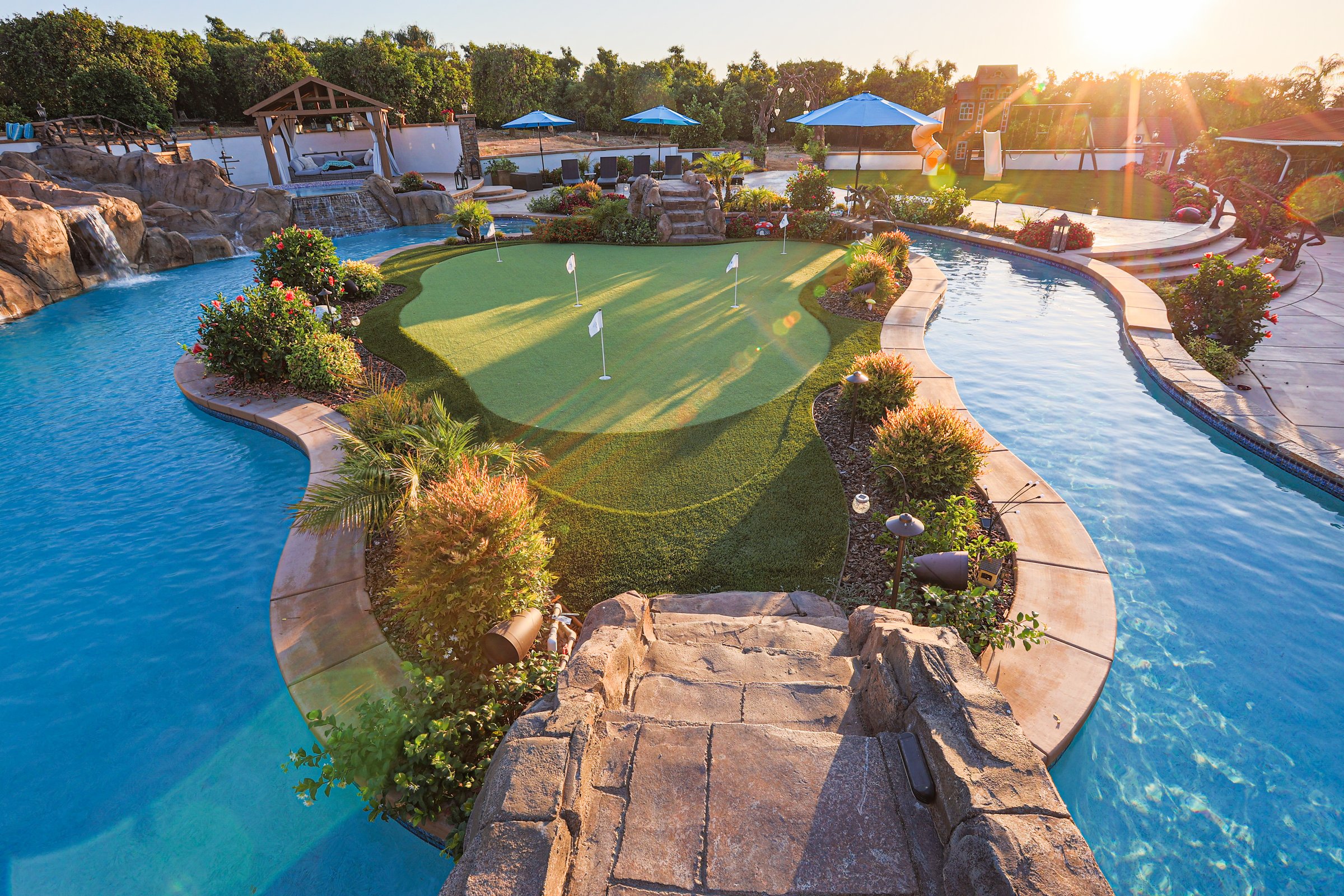
You don’t need a custom-built, sand-filled putting green to get this playful feel. For a fraction of the cost, create a central island with high-quality artificial turf from a brand like ProPutt or SynLawn, which you can find at specialty turf stores or online. Instead of a regulation hole, place a fun weatherproof sculpture, a single dramatic planter, or even a patio fire pit. You get the awesome visual of a lush green island and a fun destination, all without the risk of clogging your pool’s filtration system with a Titleist. The vibe is the same, but the headache is gone.
19. Twilight Tropical River with Artificial Rockwork and Palm Trees
The key to making massive artificial rockwork look convincing is variety and imperfection. Ask your installer to vary the texture significantly—some smooth, water-worn sections, some rough and craggy areas, and some with deliberate cracks and fissures. The color should also be varied, with a base color and then multiple layers of darker and lighter stains applied to mimic mineral deposits and shadows. A monolithic, single-color, single-texture rock wall will always look fake. The goal is to replicate the beautiful chaos of nature, not to create a uniform wall.
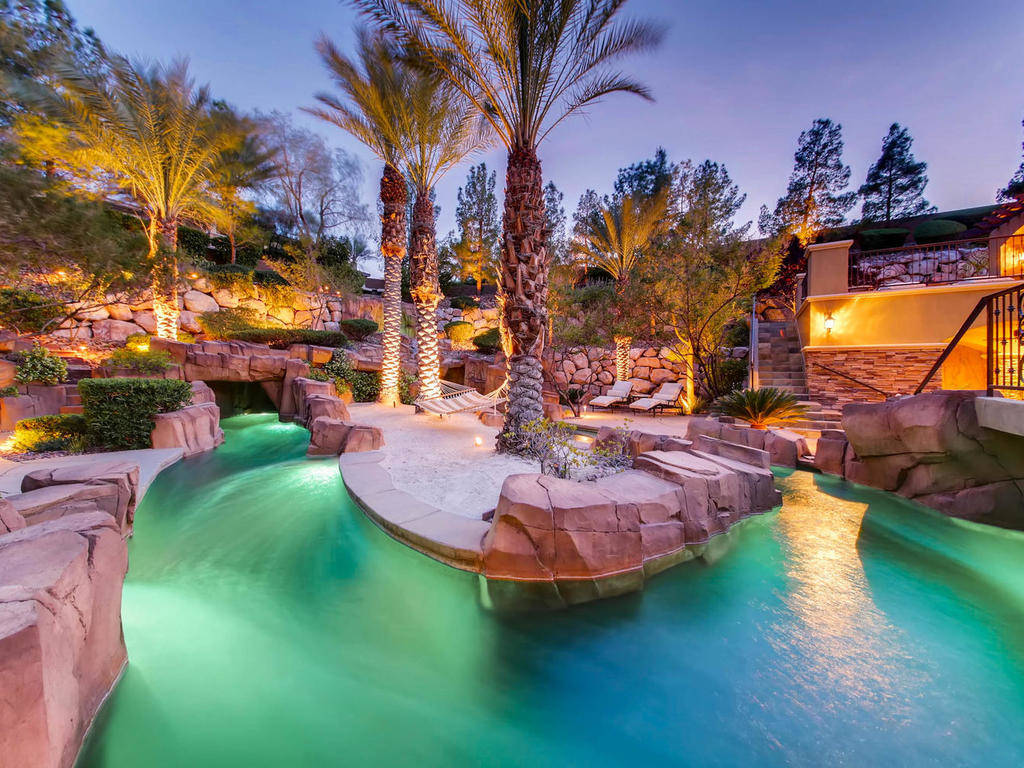
This design masterfully creates an immersive experience through a technique called ‘forced perspective.’ The tallest elements—the mature palm trees—are placed at the back. The mid-height elements, like the artificial rock grottos, are in the middle ground. The lowest elements, like the lounge chairs and the pool itself, are in the foreground. This layering, combined with the winding path of the river that hides and reveals different views, makes the space feel much larger and more mysterious than it actually is. You can’t see everything at once, which invites exploration.
20. The Art of the Perfect Lazy River Flow
The secret to a truly ‘lazy’ river isn’t its size or shape, but the quality of its current. When talking to a pool builder, ask about their strategy for creating laminar flow. This is a smooth, non-turbulent current that gently pushes you along. The best way to achieve this is with multiple, smaller, variable-speed jets distributed along the river’s floor and walls, all aimed in the same direction. This is far superior to using a few powerful, noisy jets that create a choppy, unpleasant ride. Aim for a water speed of 2-4 feet per second (1.5-2.5 mph) for that perfect, relaxing drift.
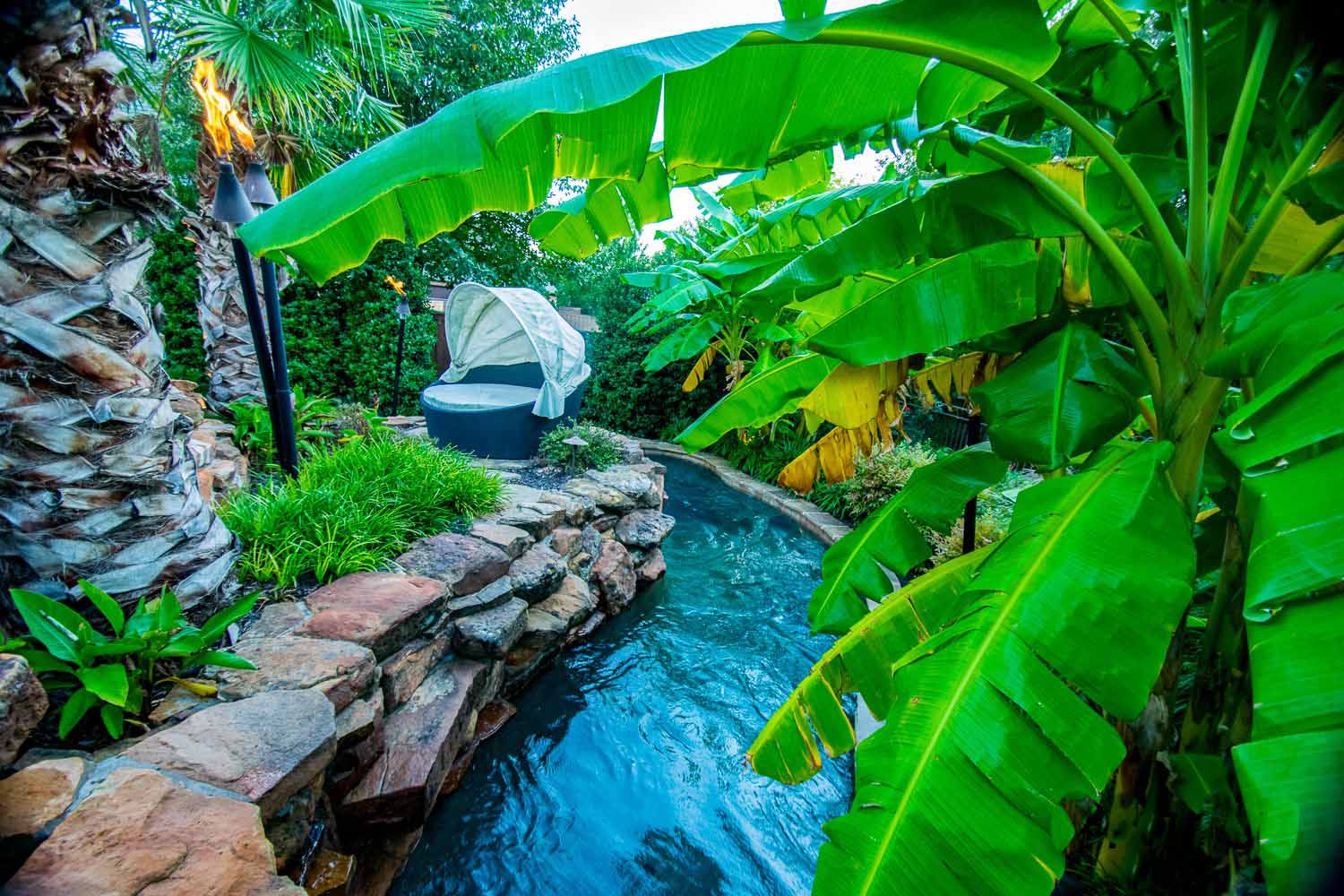
This concept focuses entirely on the invisible—the physics of the water current. By prioritizing the experiential aspect over the purely visual, you create a fundamentally more relaxing and enjoyable feature. The visual design can be anything from rustic to modern, but if the ‘ride’ is weak, turbulent, or noisy, the entire concept fails. This is a design principle that centers on engineering sensory pleasure. It ensures the ‘lazy’ part of the ‘lazy river’ is perfectly dialed in, which, in the end, is the entire point of the exercise.
21. Expansive Lazy River Complex with Faux Stone Slide and Bridge
A project of this complexity is a true private resort and requires an immense amount of space. You’re not just accommodating a river channel, but also multiple connected pool areas, a slide with a splashdown zone, wide patio decks, and extensive landscaping. A minimum of a full acre of relatively level land is essential. The plumbing and electrical systems are as complex as those for a small commercial water park, requiring a dedicated, walk-in equipment vault and multiple, powerful pumps. This is a multi-million dollar installation that requires a team of specialized engineers, architects, and builders.
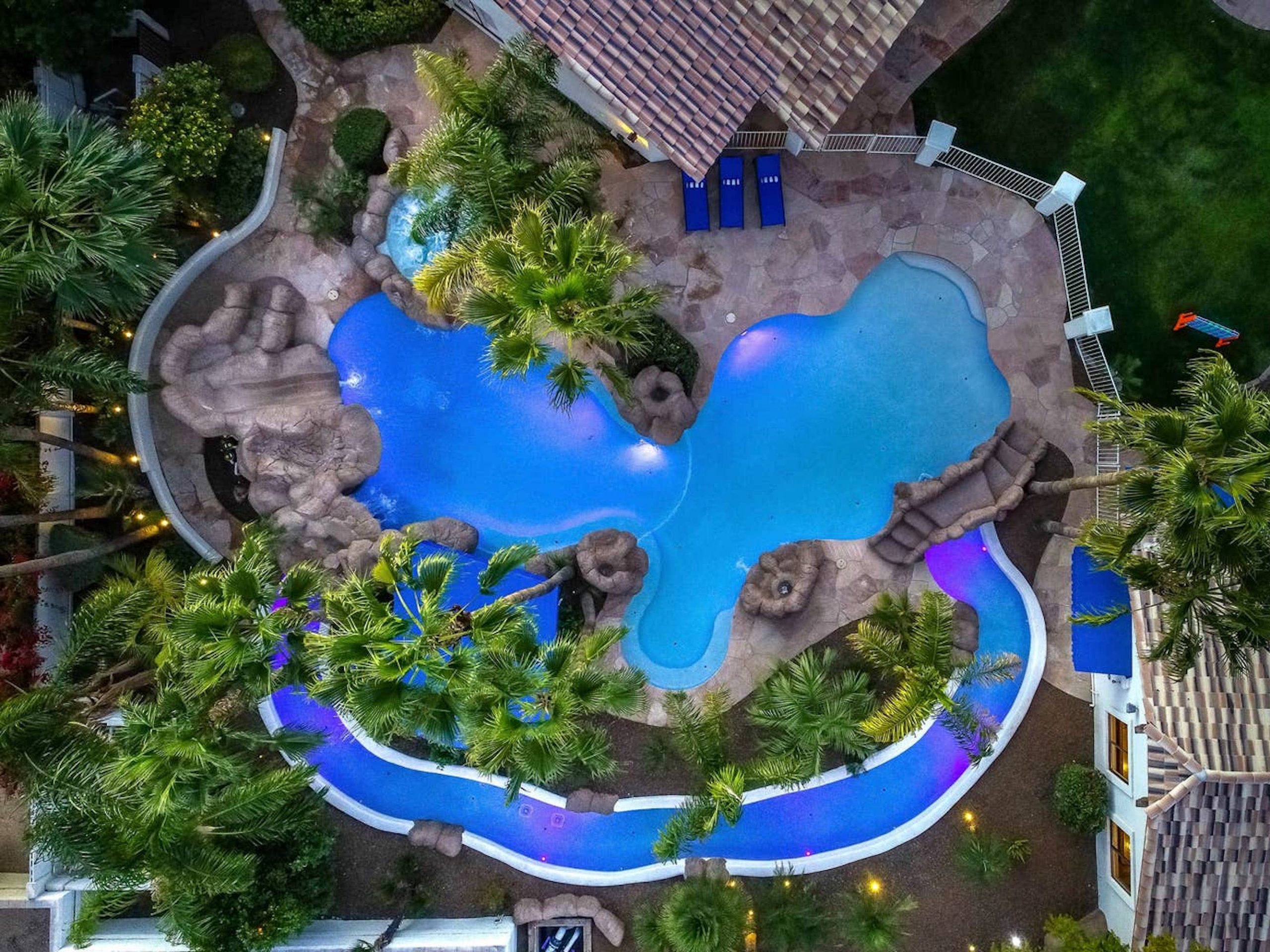
Recreating this look is a serious investment. This is not a weekend DIY project; it’s a major construction undertaking.
- Pool/River Construction (Excavation, Concrete, Rebar, Plumbing): $250,000 – $500,000+
- Faux Rock Formations & Slide: $100,000 – $250,000
- Stone Patio Decking & Bridge: $75,000 – $150,000
- Landscaping & Lighting: $50,000 – $100,000
- Pool Equipment (Pumps, Filters, Heaters): $40,000 – $80,000
- TOTAL: $515,000 – $1,080,000+
A ‘budget’ version isn’t really possible at this scale, but focusing on just a simple lazy river without the extra pools and slides could potentially bring the cost down to the $200k-$300k range.
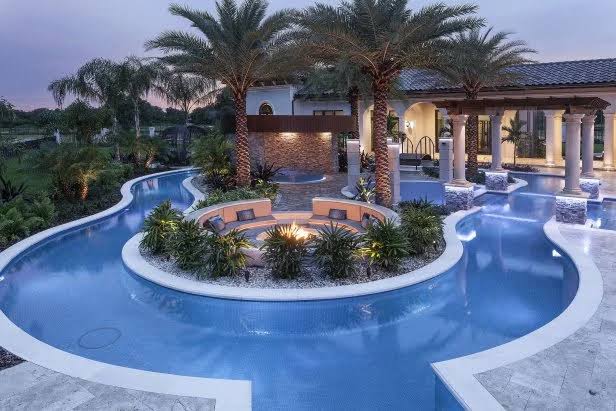
22. Modern Pool with Circular Spa and Curved Fire Pit
The curved linear fire pit is the undeniable star of this modern design. It’s a brilliant move. Instead of a typical circular fire pit, which would compete with the circular spa, this long, sinuous line of fire perfectly mirrors the curve of the pool edge. It’s a custom touch that feels deeply integrated with the architecture of the space. It provides warmth, ambiance, and a captivating visual that balances the cool blue of the water with the warm orange of the flames. This fire feature elevates the entire patio from a poolside area to a high-design outdoor lounge.
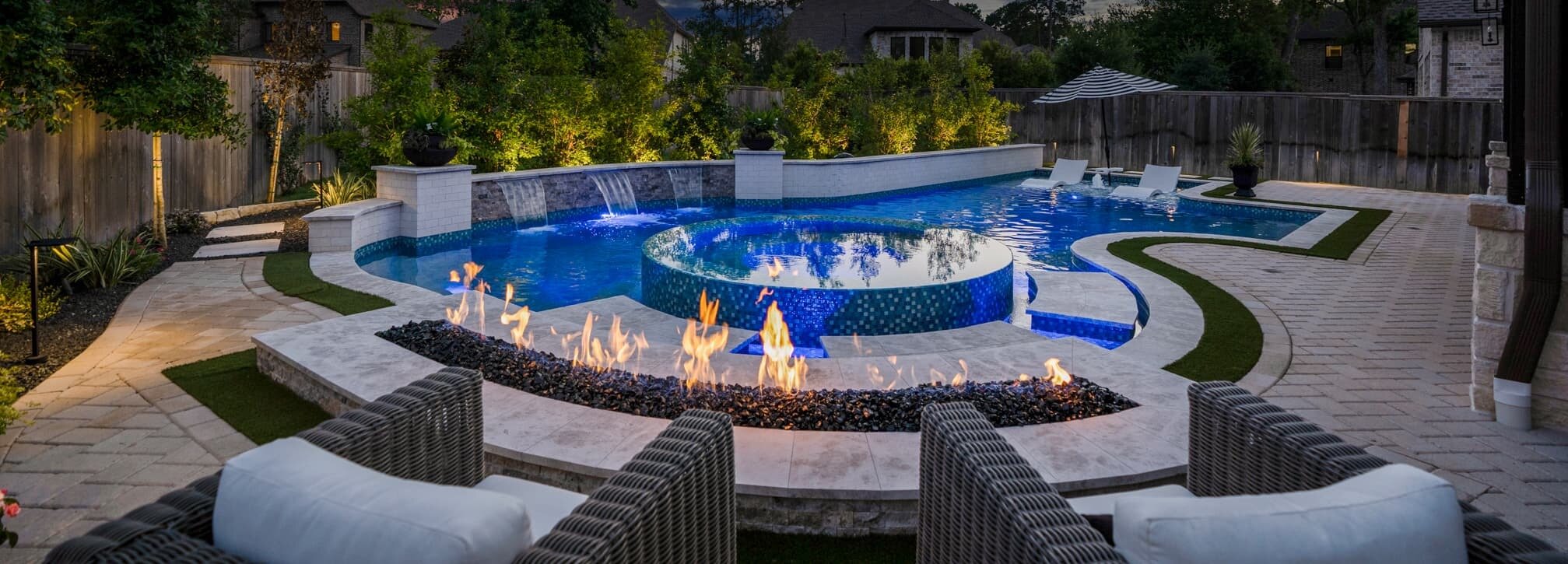
The design equation for this chic, modern look is about clean lines and curated materials: 50% Calm Water + 30% Sleek Hardscape + 15% Dynamic Fire + 5% Soft Greenery. The water and the light-colored stone pavers create a serene, neutral canvas. The fire pit and the blue mosaic tile on the spa are the high-impact accent elements. Notice how the landscaping is minimal—just a few precise patches of artificial turf. This keeps the focus on the clean, architectural forms of the pool and fire feature. For a similar vibe to the fire feature, see the sunken lounge in Idea #23.
23. Resort-Style Lazy River with Slide and Sunken Fire Pit Lounge
This design succeeds by offering ‘zones’ for every mood. It’s a masterclass in backyard multitasking. You have the energetic, playful zone with the winding lazy river and the water slide. You have the classic relaxation zone with the light stone pool deck and lounge chairs. And you have the intimate, social zone with the sunken fire pit lounge. By creating distinct areas with different functions, the space can comfortably accommodate a large group of people with varying interests. The lazy river acts as the connective tissue that links all these different experiences together into one cohesive resort.
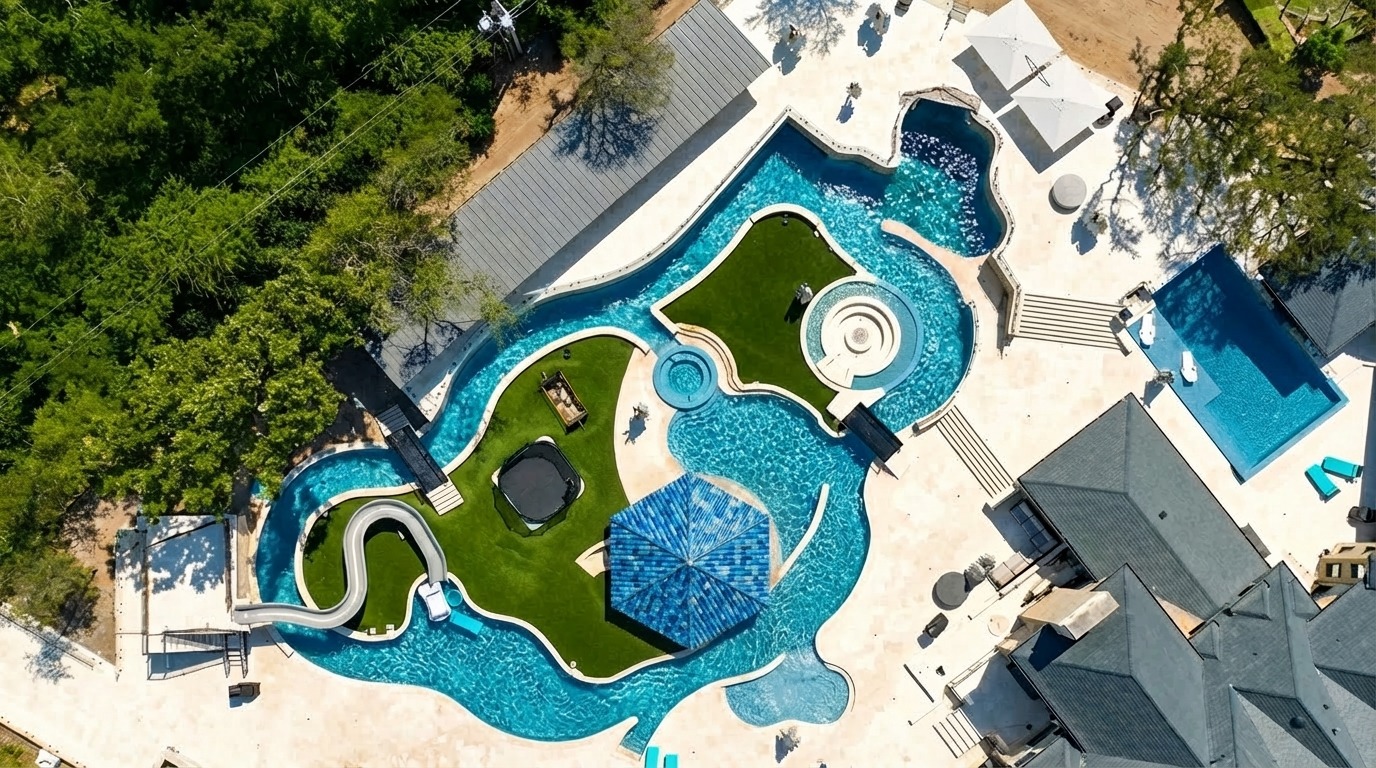
A sunken lounge in the middle of a pool is the peak of ‘wow-factor’ design, but it is an engineering marvel with a price tag to match. The structure is essentially a concrete boat floating in your pool, requiring intense waterproofing and a sump pump system to handle any water that gets in (and it will). Building codes are often very strict about access, railings, and drainage. It’s an incredible feature, but the cost can be astronomical, and finding a contractor with the experience to build one correctly is a major challenge. Be prepared for a long and expensive journey if you fall in love with this specific feature.
24. Illuminated Lazy River at a Sprawling Mediterranean Villa
The single most important element in this breathtaking scene is the sheer, unapologetic scale of it all. This isn’t a pool in a backyard; it’s a water-based landscape that the house is merely adjacent to. The lazy river isn’t a feature; it’s a transportation system connecting different parts of the property. The design’s power comes from its audacity and its refusal to be constrained by normal residential proportions. It’s the combination of the massive, glowing river, the towering palms, the multi-story villa, and the sunken lounge that creates the overwhelming feeling of being in a five-star private resort, not a home.
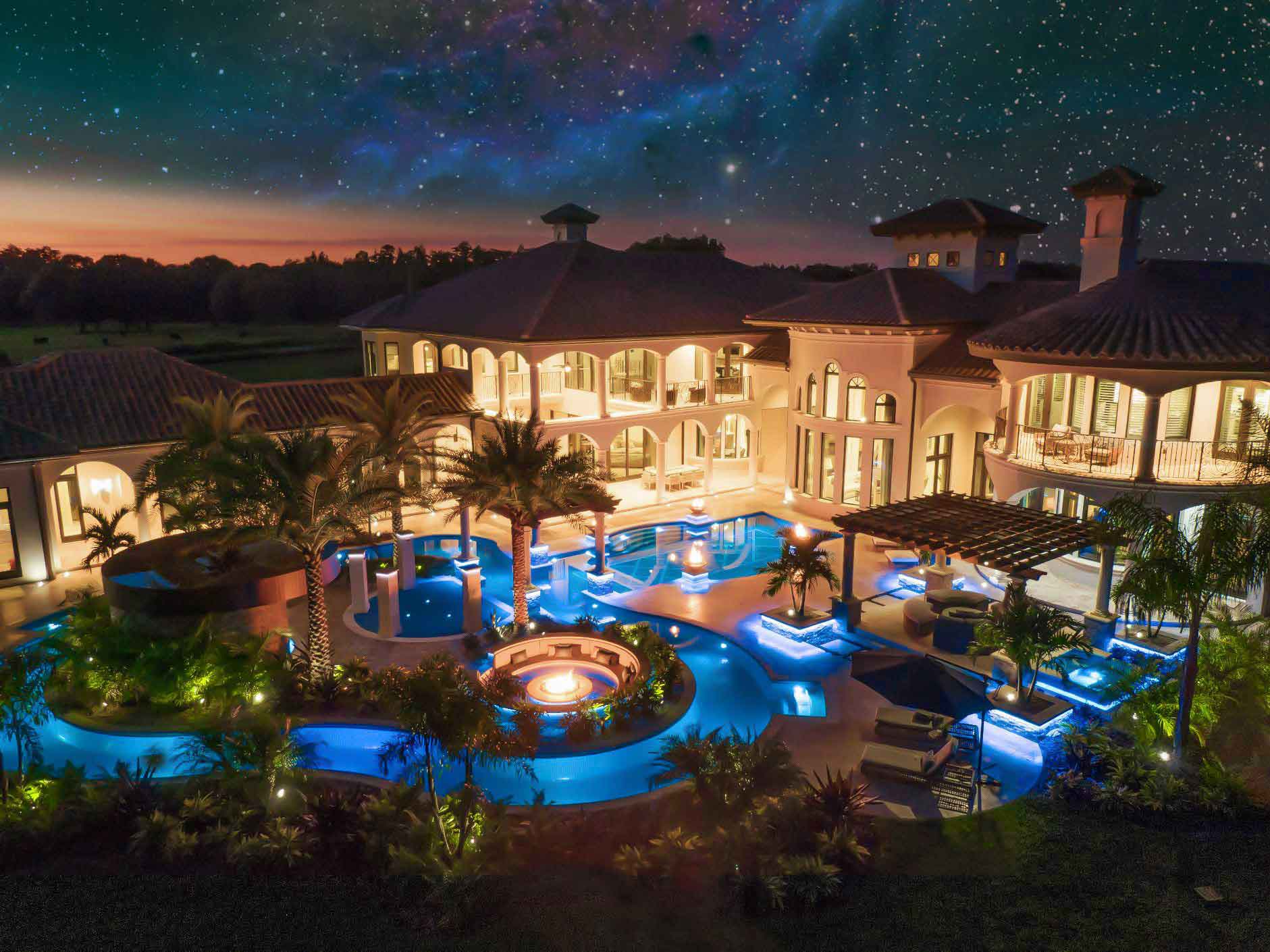
This is not a design concept; it’s a life goal. A feature on this scale is only possible on a multi-acre estate. The pool and lazy river system itself likely covers over an acre of land. The multi-story Mediterranean villa provides the necessary architectural backdrop and vertical scale to prevent the massive pool from looking like a commercial water park plopped in a field. This is the definition of ‘if you have to ask, you can’t afford it.’ Minimum budget? Start at several million dollars and go up from there. The sunken lounge alone could be a half-million-dollar feature. See the more ‘modest’ version in Idea #22 for comparison.
25. Naturalistic Pool with Rock Waterfall and Flagstone Patios
Creating a natural look with this much hardscape is a significant investment. The irregular flagstone and rock work require skilled masons. Here’s a rough estimate for a project of this size and complexity.
- Pool Construction (Gunite/Shotcrete): $80,000 – $150,000
- Natural Rock Waterfall & Slide Integration: $30,000 – $70,000
- Irregular Flagstone Patio (per sq ft): $25 – $50 (a 1,000 sq ft patio could be $25k-$50k)
- Landscaping & Mature Plants: $10,000 – $30,000
- Patio Furniture & Umbrellas: $5,000 – $15,000
- TOTAL: $150,000 – $315,000+
Budget Alternative: Use stamped concrete for the patio ($15-$25/sq ft) and opt for a high-quality pre-fabricated faux rock waterfall kit ($5k-$10k) to get a similar vibe for about 40% less.
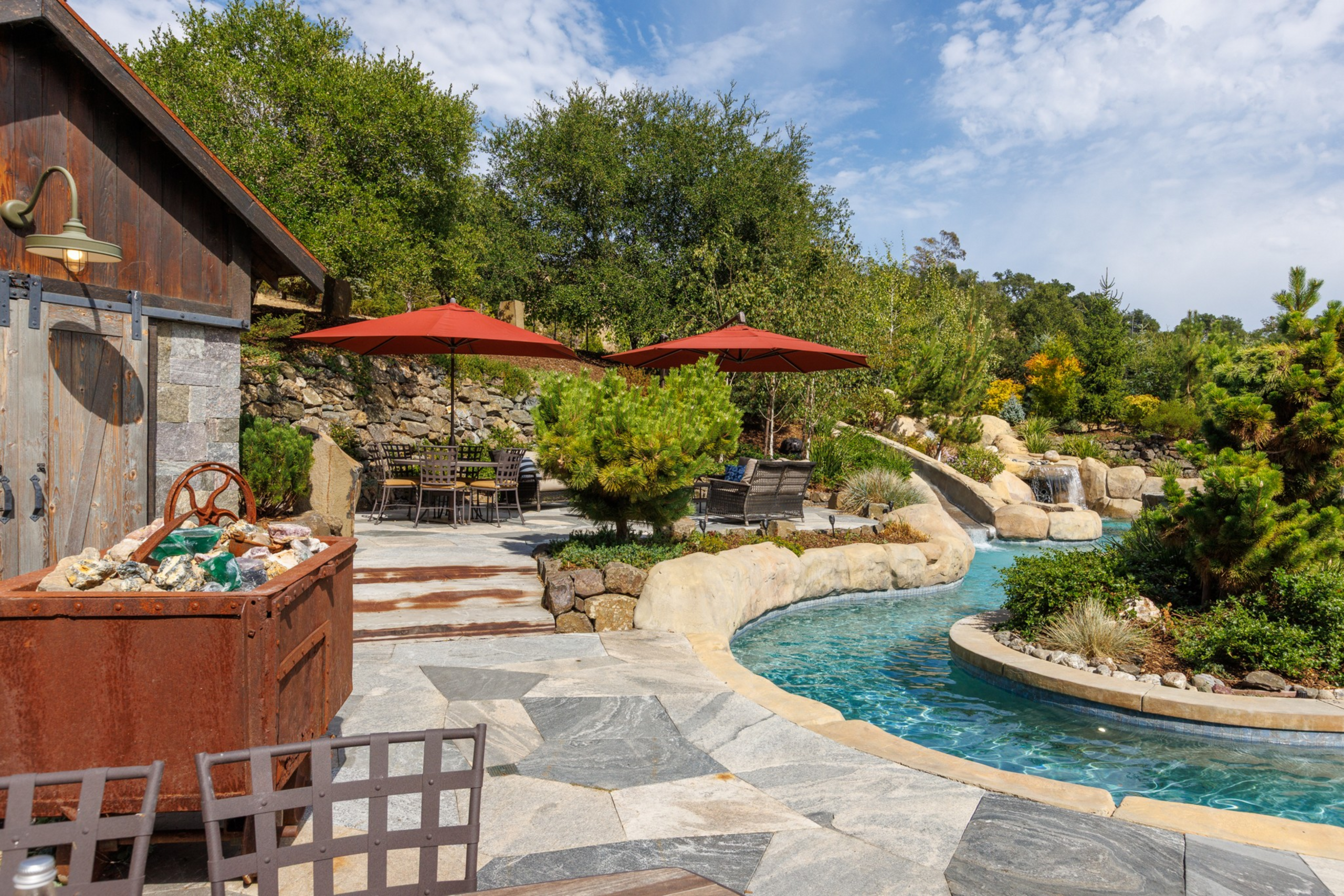
To make a large flagstone patio feel more natural and less like a monolithic slab, incorporate ‘planting pockets.’ These are small areas within the patio where you remove a few stones and plant tough, low-growing perennials like creeping thyme, sedum, or mondo grass. This breaks up the expanse of stone, softens the edges, and allows greenery to ‘invade’ the hardscape in a controlled way. It’s a professional landscape architect’s trick to make patios feel like they’ve been there for years and have settled into the environment.
26. Winding River with Elevated Metal Bridge and Rustic Shed
This design has a playful, almost theme-park-like quality because of the mix of industrial and rustic elements. The elevated metal bridge with its utilitarian stairs feels like something you’d find at a summer camp or adventure park. This contrasts with the rustic brown shed and the naturalistic landscaping. The lazy river itself, with its simple white concrete edging, acts as the fun, recreational element that ties it all together. It doesn’t take itself too seriously, prioritizing a sense of adventure and discovery over a sleek, polished aesthetic.
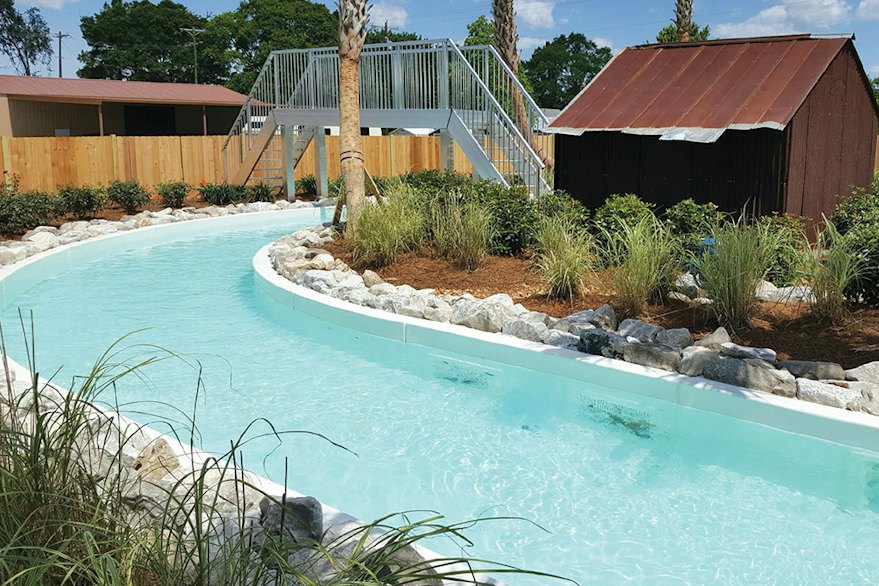
Want to create those natural-looking river banks with mulch and rock? It’s a simple but effective technique. Time: 1 weekend. Cost: $200-$500.
- After the pool coping is set, define the edge of your planting bed with a garden hose to get a nice curving shape.
- Use a spade to cut a clean edge along your defined line, about 4-6 inches deep.
- Lay down a commercial-grade landscape fabric within the bed to suppress weeds. Do not use cheap plastic sheeting.
- Place your larger gray rocks along the border, half in and half out of the bed, to create a natural-looking retaining edge.
- Plant your grasses and shrubs through holes cut in the fabric.
- Cover the entire bed with a 3-4 inch layer of dark brown mulch.
27. Lazy River with Reddish-Brown Rock Formations and Thatched Cabana
The thatched-roof cabana is the single element that elevates this from a very nice pool into a full-blown tropical destination. It acts as a powerful visual anchor, a destination you can swim or walk to via the wooden bridge. The natural, organic texture of the thatch is the perfect complement to the rugged rock formations and provides a welcome softness. It promises shade, relaxation, and maybe a frosty beverage. Without the cabana, the pool might feel a bit too exposed; with it, the entire backyard has a clear and inviting focal point.
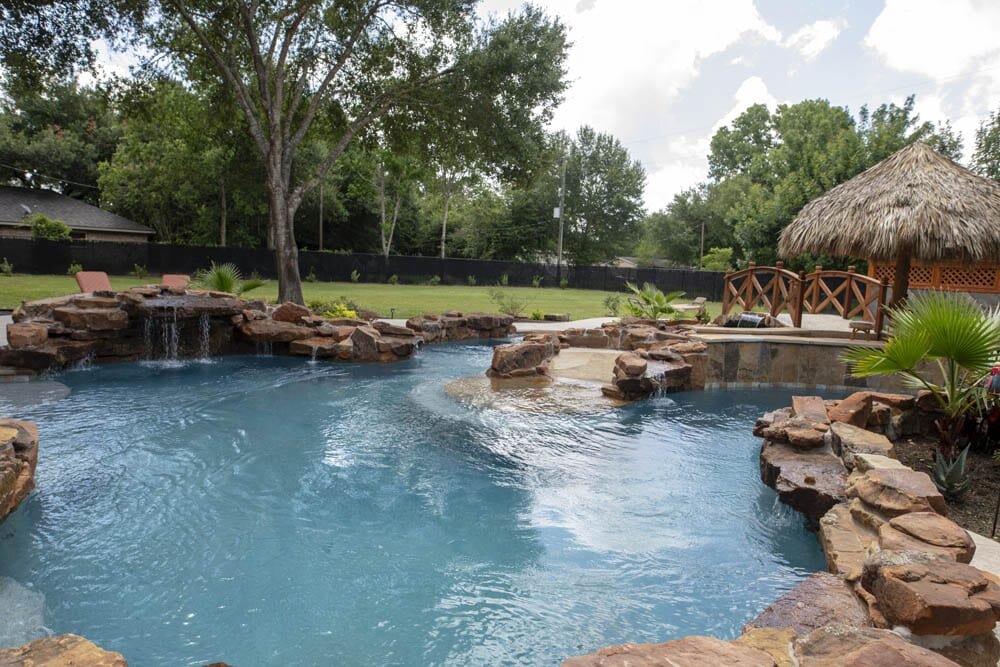
A natural thatch roof looks incredible, but it’s a high-maintenance choice. Depending on your climate, a natural palm or reed thatch will need to be professionally inspected and repaired annually, and likely fully replaced every 5-10 years. It can be susceptible to pests, mold, and damage from high winds. For a more practical, long-term solution, consider synthetic thatch products from companies like Endureed or Palmex. They offer the same look with a 20-year warranty, Class A fire rating, and almost zero maintenance. It’s a higher upfront cost but much lower over the life of the feature.
28. Evening Pool with Stacked Stone Walls and an Arched Bridge
This design masterfully uses verticality to create drama. The tall, stacked natural stone walls aren’t just for retaining earth; they’re a canvas for the multiple cascading waterfalls. This vertical water movement adds sound and visual energy. The arched stone bridge then mirrors this vertical element, drawing the eye up and over the water. This is a much more dynamic and engaging design than a flat pool on a flat plane. The underwater blue lighting further accentuates the depth and form of the stone walls after dark, turning them into a major architectural feature.
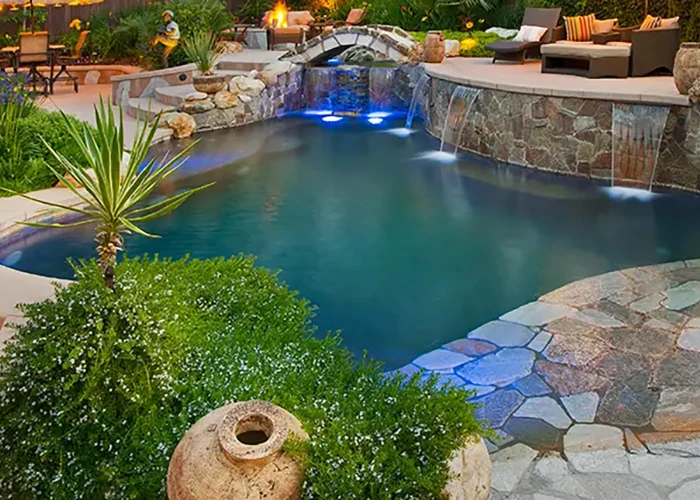
A complex, multi-level design like this requires careful planning. Don’t start digging until you’ve checked these boxes:
- Get a Geotechnical Report: Before building heavy stone walls, you must know what your soil can support. A soil engineer’s report will tell your builder how deep the footings need to be.
- Engineer the Walls: Any retaining wall over 3-4 feet high typically requires a permit and a structural engineer’s stamp of approval. These walls are holding back tons of earth; they must be built correctly.
- Plan for Lighting & Plumbing: All the conduits for the underwater lights and the plumbing for the waterfalls must be planned and installed before a single stone is laid. Retrofitting is nearly impossible.
29. Lush Backyard Pool with Rock Waterfall and Tiled Hot Tub
This luxurious, inviting scene is a study in texture mixing. The visual recipe is: 40% Rustic Stone + 30% Smooth Water + 20% Lush Greenery + 10% Shimmering Tile. The dominant texture is the rough, natural-looking rock of the waterfall and the large stone fireplace. This is balanced by the calm, smooth surface of the light blue pool water. The dense greenery and palm trees add a layer of organic softness. Finally, the iridescent blue mosaic tiles on the hot tub provide a concentrated pop of color, shimmer, and intricate detail, acting as the ‘jewelry’ of the design. This mix of rough, smooth, soft, and shiny is what makes it so visually rich.
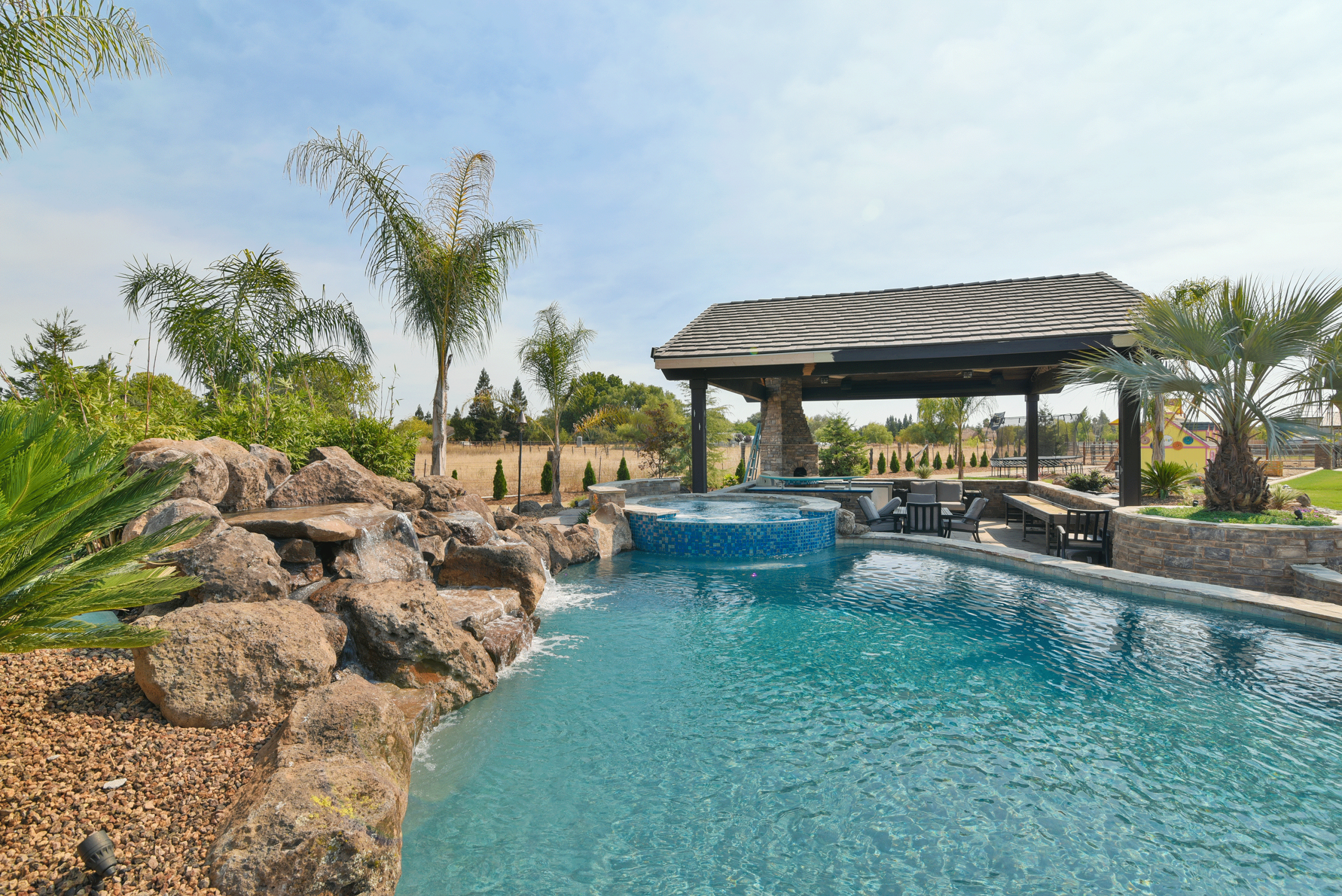
A custom-built rock waterfall and a fully tiled spa can get very expensive. To get this look for less, consider a high-quality pre-fabricated faux rock waterfall from a company like RicoRock. They can look surprisingly realistic and install in a fraction of the time for under $10,000. For the spa, instead of tiling the entire interior, just add a 6-inch decorative band of the expensive mosaic tile at the waterline. This gives you that pop of color and shimmer right where you see it most, while keeping the main surface a more affordable standard plaster. It’s a smart way to get 90% of the look for 50% of the cost. Compare with the natural stone in Idea #27.
30. Winding Lazy River with Curved Stone Bridge and Waterfall
This design feels so serene and expansive due to the clever use of long, sweeping curves. There are almost no straight lines or sharp corners. The lazy river itself meanders gently. The pool coping and paving follow these curves. Even the stone bridge has a gentle arch. This repetition of curved forms is inherently calming to the human eye and makes the entire landscape feel like it’s flowing. The planted island within the river’s flow is a brilliant touch, forcing the water to curve around it and enhancing this organic, natural feeling.
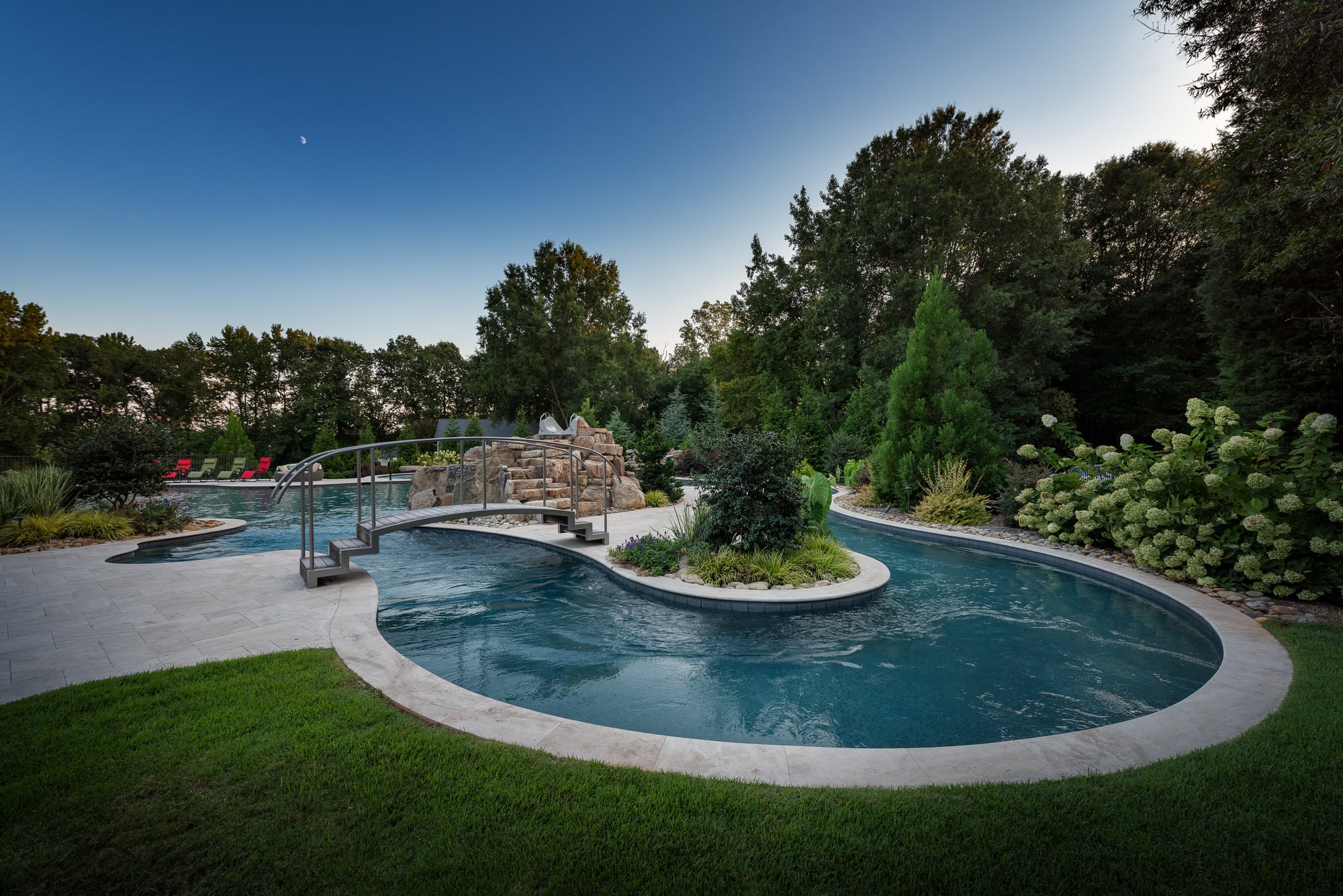
When choosing paving for a large pool deck, light beige is one of the smartest choices you can make. Not only does it provide a beautiful, neutral backdrop that makes the blue of the water pop, but it’s also a practical decision. Unlike dark gray or brown pavers which can become dangerously hot in the summer sun, a light-colored stone reflects more sunlight and stays significantly cooler on bare feet. Always get a sample of the paver and leave it out in the sun for a day before committing to your entire patio.
Ready to Go With the Flow?
Feeling inspired yet? A backyard lazy river is more than just a pool—it’s a lifestyle upgrade that brings the resort vacation right to your doorstep. Whether you were drawn to a rustic stone-lined stream or a sprawling tropical oasis, the key is to design a space that invites you to slow down, relax, and just float for a while.
Don’t forget to save your favorite ideas to your ‘Dream Backyard’ board on Pinterest. It’s the best way to keep the inspiration flowing as you start planning your own personal paradise.