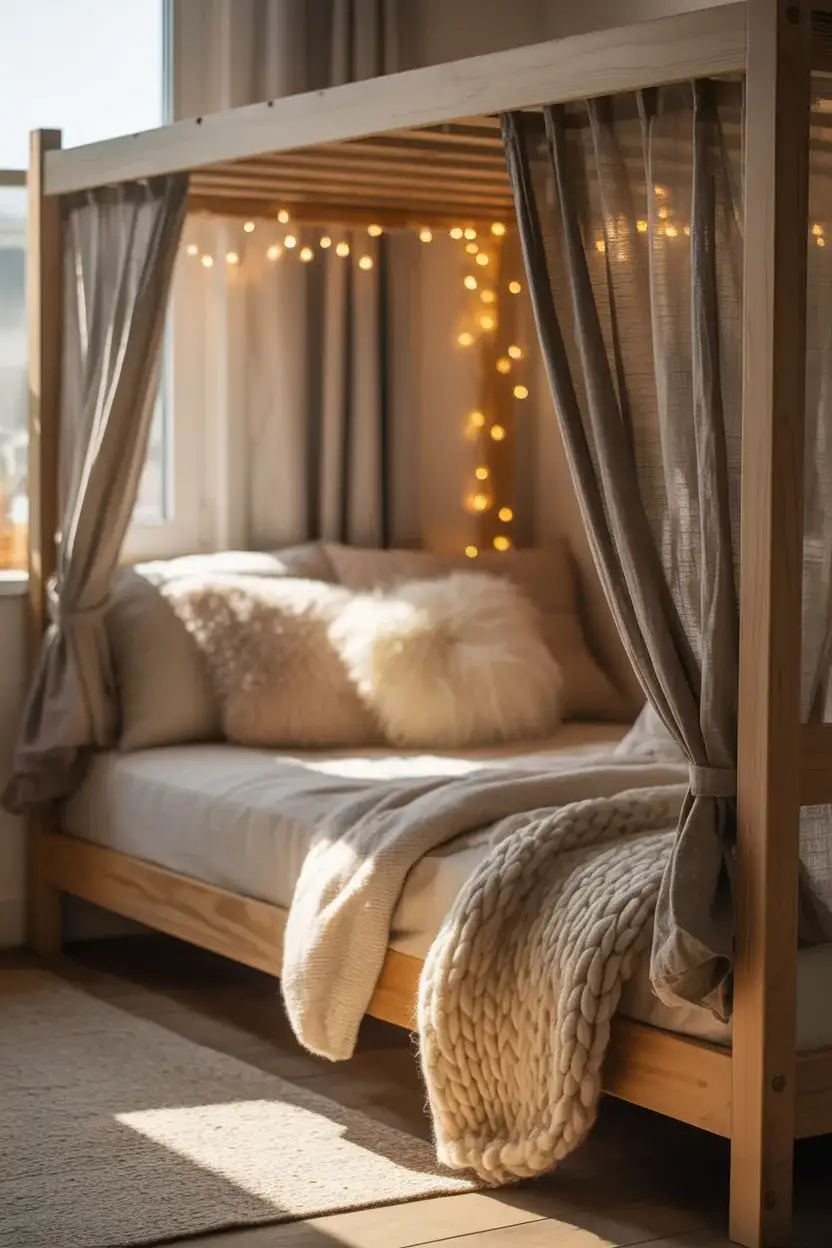
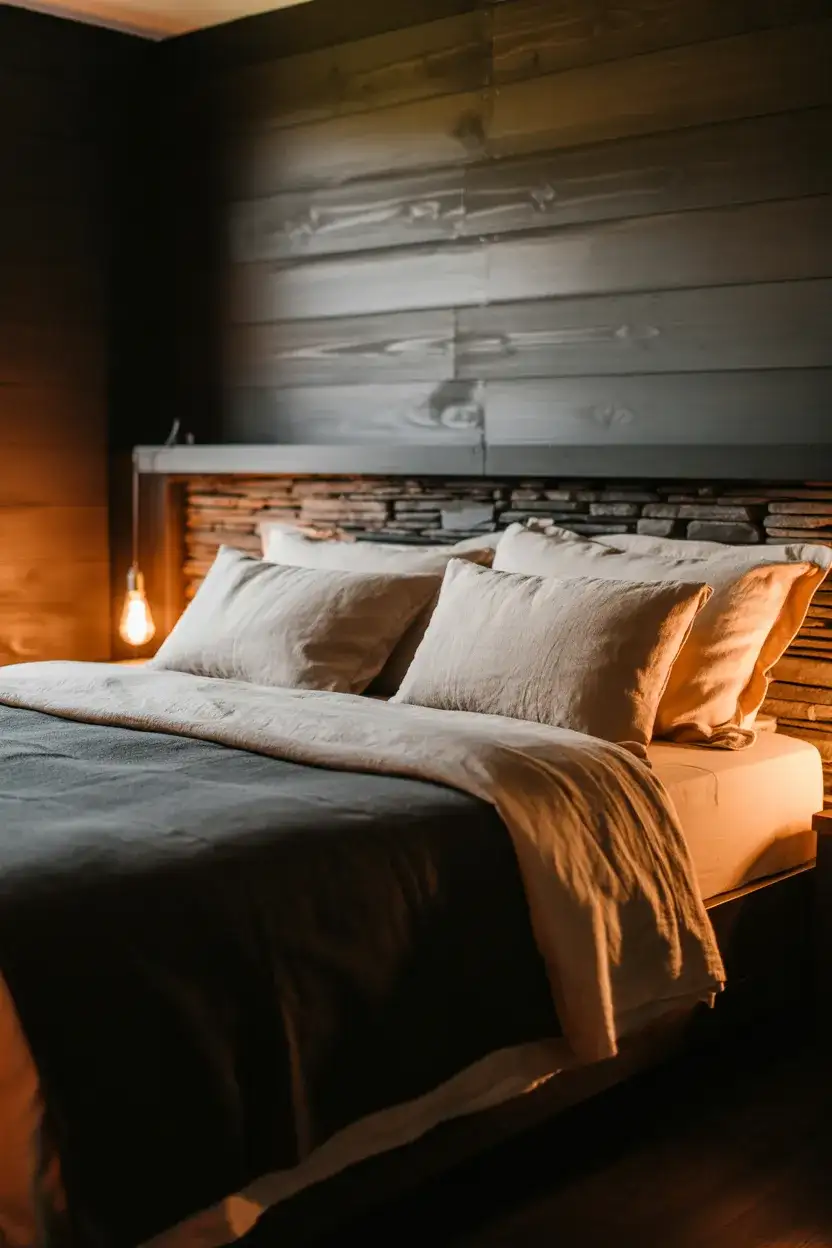
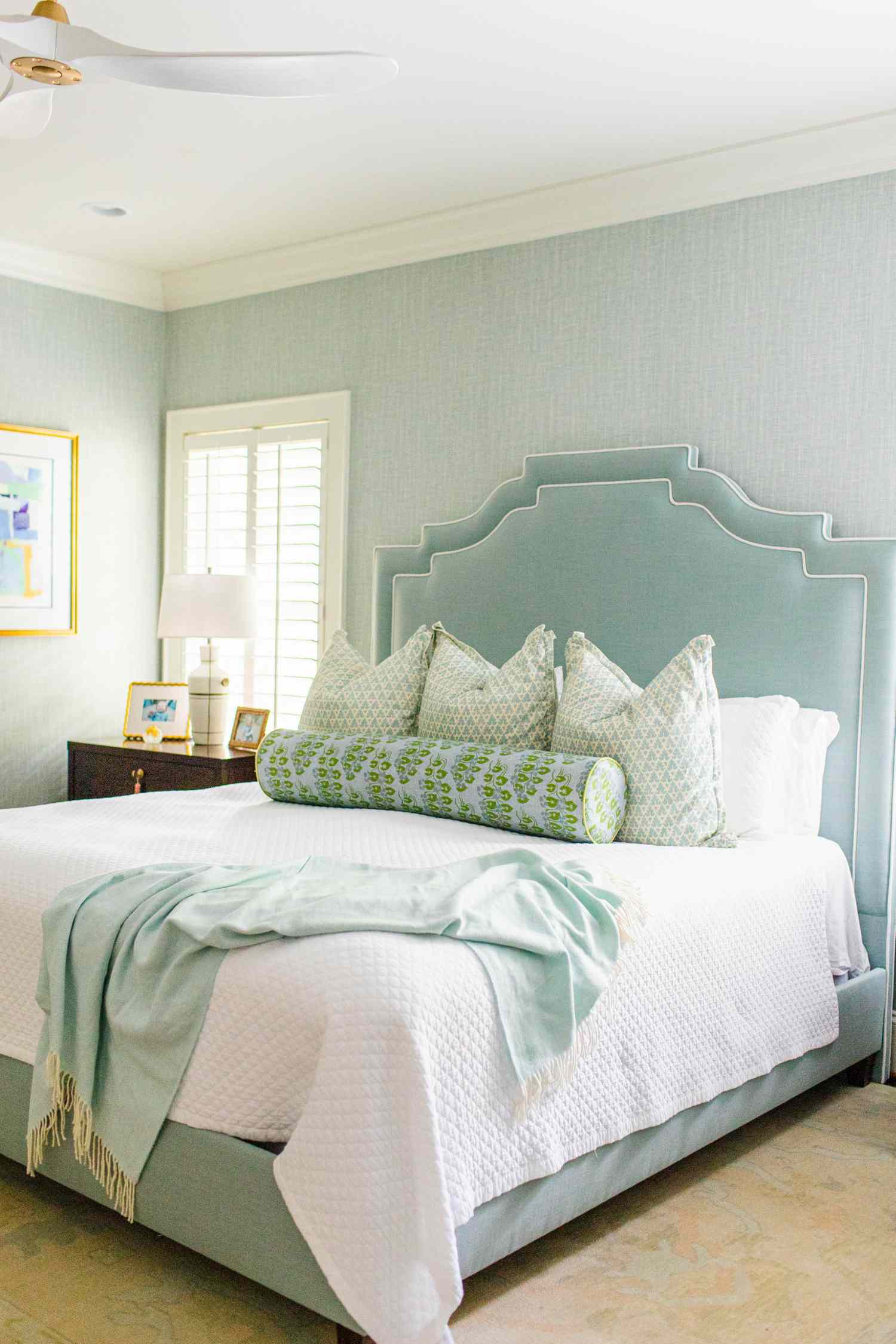
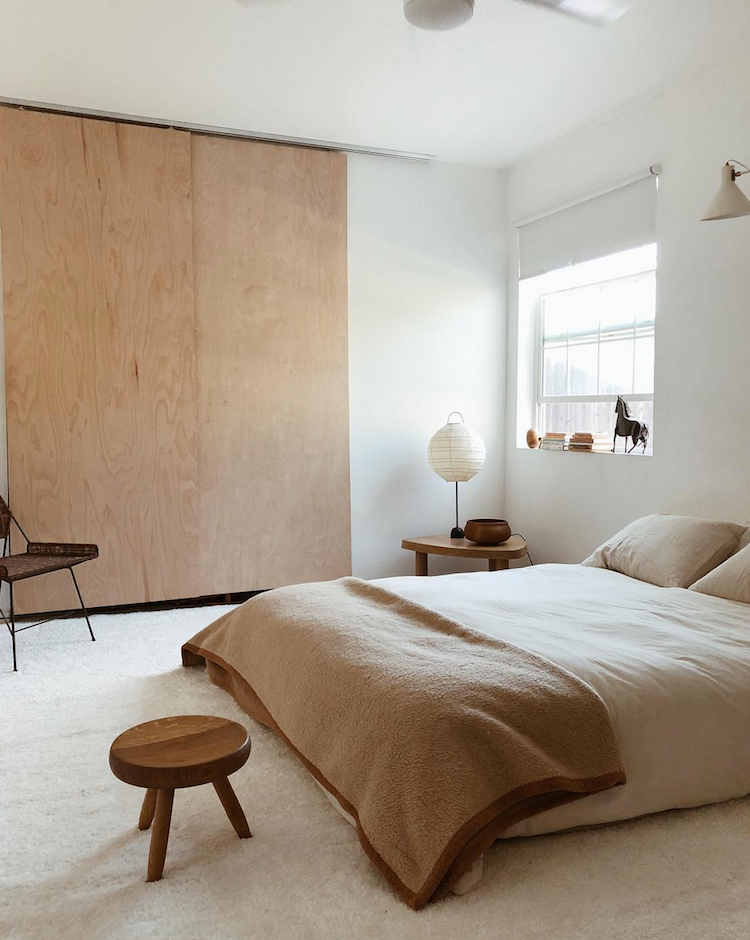
You know that feeling when you finally find the cozy bedroom idea that looks exactly right for your space, only to realize you have no idea how to pull it off? We’ve all been there, endlessly scrolling Pinterest for inspiration. That’s why we did the heavy lifting for you, sorting through hundreds of looks to find what truly works for 2026. We scoured the latest from Target, IKEA, and West Elm to bring you only the best.
Inside this guide, you’ll find 30 distinct, achievable ideas covering everything from earthy and rustic to modern and bohemian styles, with options ranging from just $299 all the way to $8,000. These looks are trending for a reason; as we continue to value our homes as personal sanctuaries, creating a genuinely cozy and restorative bedroom has become more important than ever. And stay until the end — we break down the most common mistakes that can ruin these looks.
📌 Save this to Pinterest for later — you’ll want to revisit these ideas.
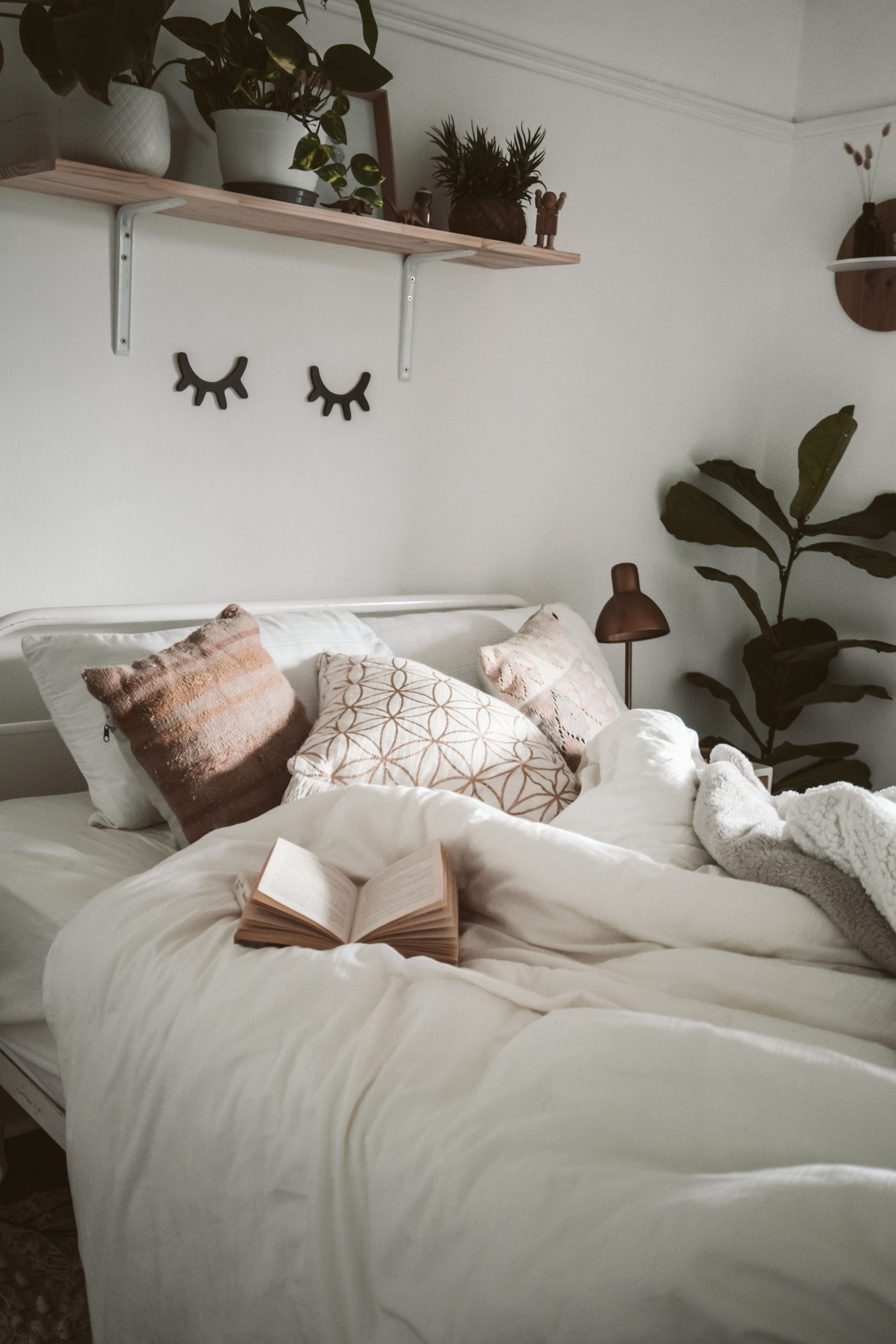
1. Frame a Bed with Greenery on a Floating Shelf
There’s a reason this combination feels so right. It’s all about a smart mix of hard and soft elements. The crisp white of the metal bed frame and bedding creates a clean, bright canvas. Then, the warm oak of the floating shelf and the organic shapes of the potted plants introduce natural texture and life. Those whimsical wooden eyelash decals? They break up the straight lines and add a touch of personality without overwhelming the calm atmosphere. It’s a lesson in balancing simplicity with personal touches.
💰 Budget Breakdown
When mounting a shelf above your bed, safety is everything. Position the shelf so the bottom is at least 24-30 inches above the top of your headboard. This provides ample clearance to sit up in bed without worrying about bumping your head. For weight, always screw the brackets directly into wall studs. If studs aren’t available, use high-quality drywall anchors rated for at least 50 pounds to securely support your plants and decor. Never just trust the drywall itself.
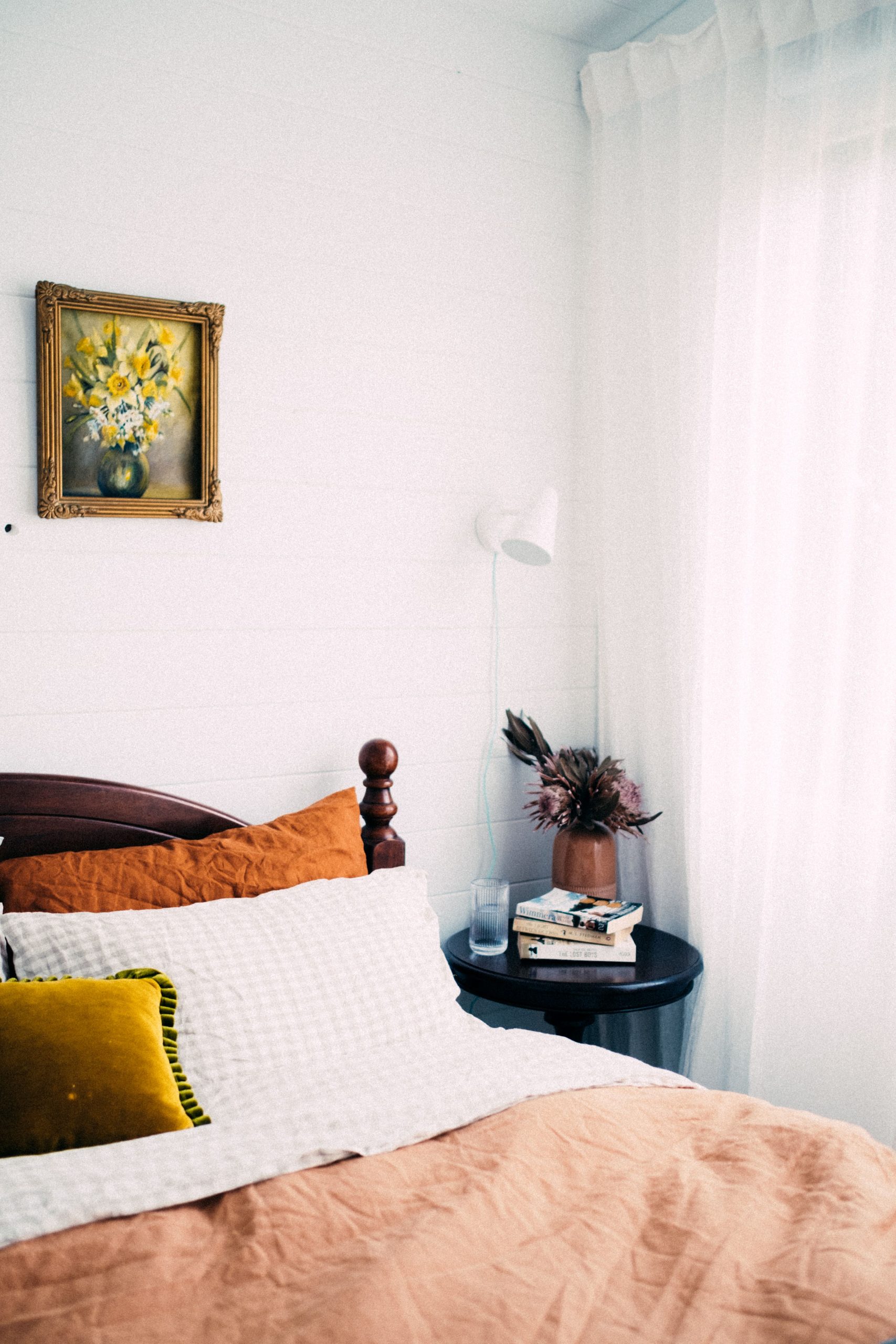
2. Mix Warm Tones Against a Crisp Shiplap Wall
This look follows a simple but effective formula for warmth. Think of it as 60% neutral base + 30% natural wood + 10% color. The white shiplap wall and basic bedding make up the 60% canvas, keeping the room bright. The dark wood of the bed frame and nightstand provides that essential 30% of grounding, rustic warmth. Finally, the last 10% comes from those pops of rust, mustard, and peach in the pillows and art, which bring the whole scene to life. You could easily swap the rust for olive green or the mustard for a deep blue and the formula would still work perfectly.
⭐ The One Thing
You don’t need a carpenter to get this rustic-modern vibe. Recreate the shiplap wall for under $100 using peel-and-stick shiplap wallpaper from stores like Target or Wayfair—it gives you the texture without the commitment. Hunt for a dark wood headboard or small nightstand on Facebook Marketplace; you can often find solid wood pieces for less than $75. A framed art print from a thrift store and a simple wall-mounted plug-in sconce from IKEA complete the look on a serious budget.
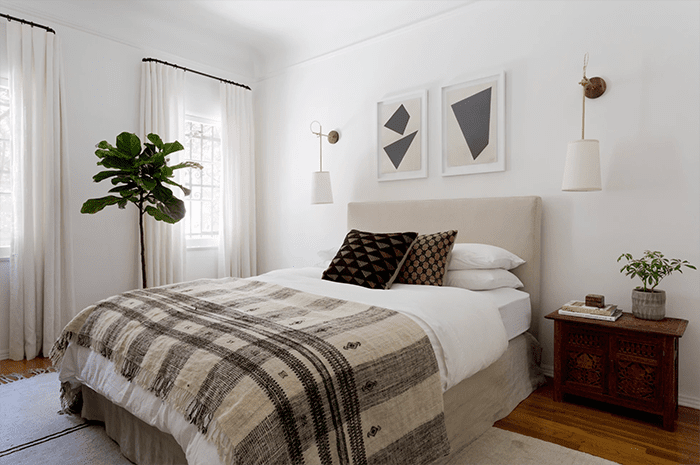
3. Layer Earthy Patterns with a Light Upholstered Headboard
The single element holding this entire room together is the patterned throw blanket. Without it, you’d have a perfectly nice but fairly standard neutral bedroom. That one piece of textile introduces color, pattern, and an earthy, bohemian spirit that connects everything else. It ties the beige headboard to the dark wood of the nightstand and even echoes the green of the fiddle leaf fig. It’s the piece that gives the room its specific personality and keeps the neutral palette from feeling flat.
📐 Style Math
This aesthetic is incredibly versatile, but it shines in rooms with at least 9-foot ceilings. The height is necessary to accommodate a large plant like the fiddle leaf fig without it feeling cramped. For a standard 8-foot ceiling, you might want to opt for smaller plants or choose a different statement piece, as seen in the more horizontal layout of Idea #8. The space works well in a master bedroom that’s at least 12×14 feet, allowing for proper circulation around the bed and furniture.
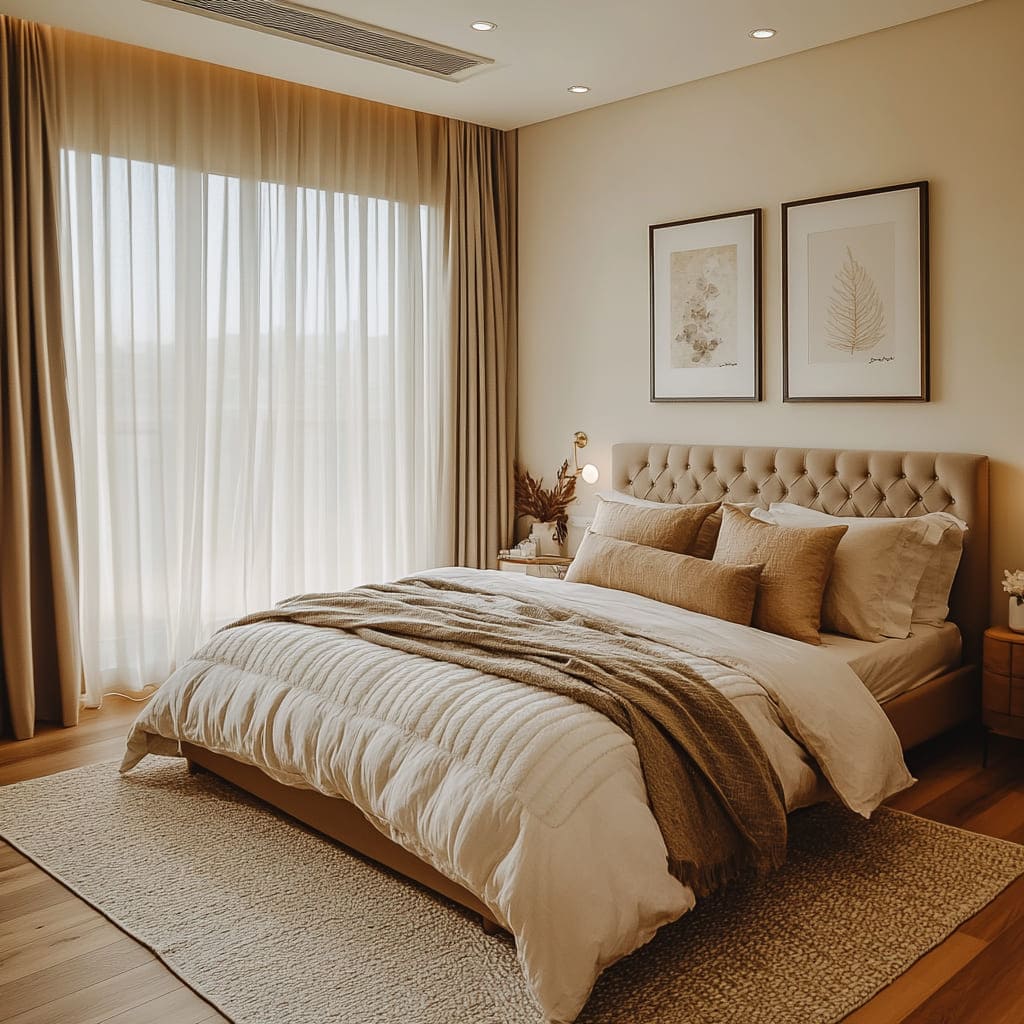
4. Create Serenity with a Tufted Headboard and Botanical Art
Here is an estimated cost to bring this serene look home. Prices are for quality, mid-range furnishings.
📏 Scale Guide
- Main Furniture (Tufted Bed, Nightstands): $1,500 – $3,000
- Lighting (Sconce, Recessed Lights): $400 – $900
- Textiles (Duvet, Pillows, Rug, Curtains): $800 – $1,500
- Decor/Accessories (Art Prints): $200 – $400
- TOTAL: $2,900 – $5,800
- Budget alternative: Look for a tufted headboard on Wayfair, use IKEA curtains, and find botanical prints on Etsy for a similar vibe at around $1,200 – $2,000.
A beautifully layered bed with a plush area rug is the heart of coziness, but let’s be honest about the upkeep. That lovely textured rug under the bed can be a magnet for dust and allergens, and it’s not the easiest to vacuum thoroughly, especially around the bed legs. If you have pets or suffer from allergies, you might find yourself needing to deep clean it more often than you’d like. Opting for a darker color or pattern, like in Idea #9, can help hide minor stains and daily dust.
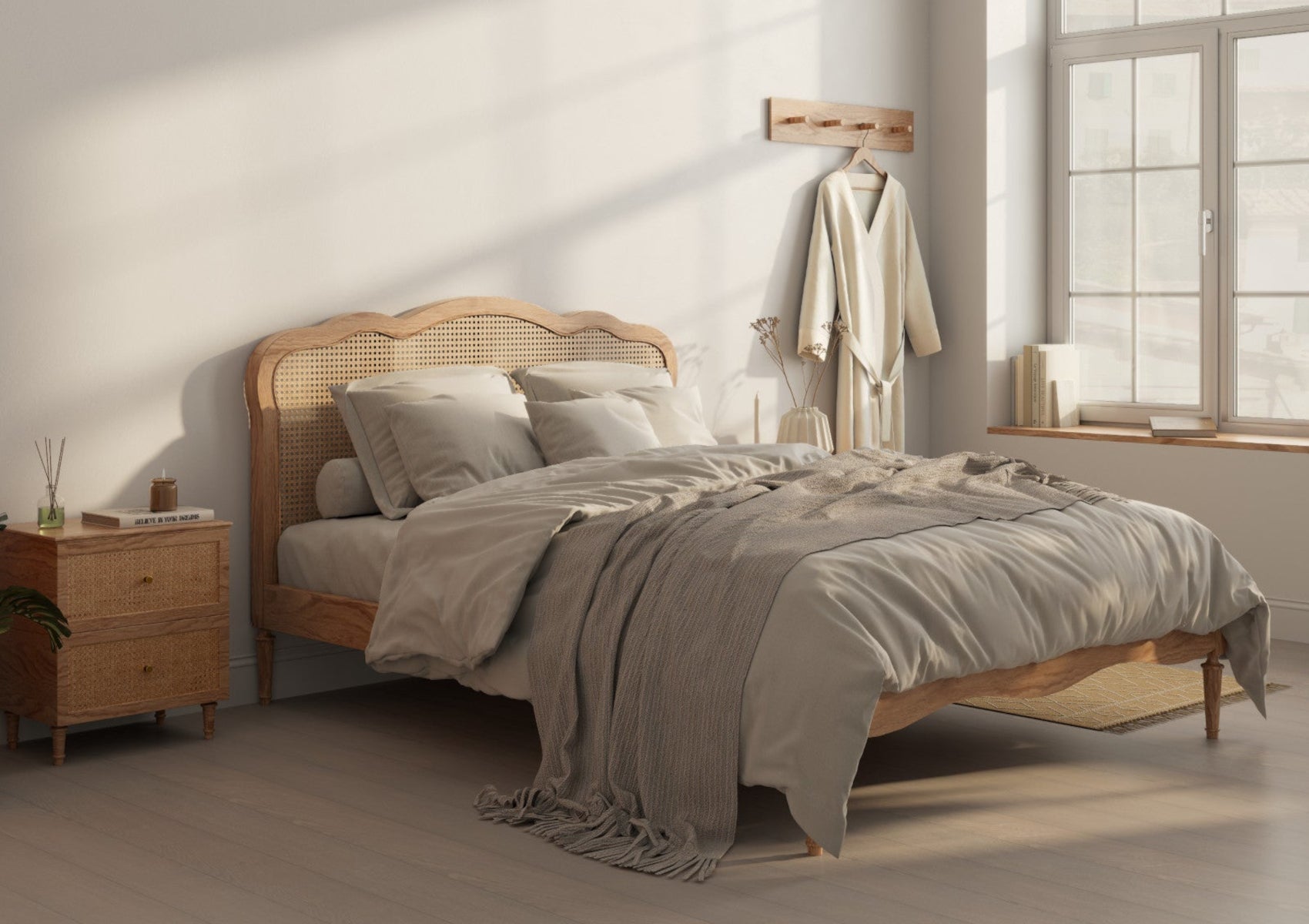
5. Achieve Calm with a Woven Rattan Arched Headboard
There’s a reason woven and rattan furniture is having such a huge moment. It’s a key player in the “Japandi” trend—a hybrid of Japanese minimalism and Scandinavian function. This arched headboard is a perfect example. It has the clean lines and natural materials of Scandi design, but the woven texture adds an organic, handmade quality that feels very calming and mindful. It’s a move away from cold, stark minimalism and toward a warmer, more soulful version of modern design.
🧹 Maintenance Reality
Rattan is beautiful and lightweight, but it requires a bit of specific care. The woven texture can collect dust easily, so a weekly once-over with the brush attachment of your vacuum is a good idea. To prevent it from drying out and cracking over time, especially in dry climates, you can occasionally wipe it down with a damp cloth and a small amount of furniture polish mixed with water. Avoid placing it in direct, harsh sunlight, which can cause the natural fibers to become brittle and faded.
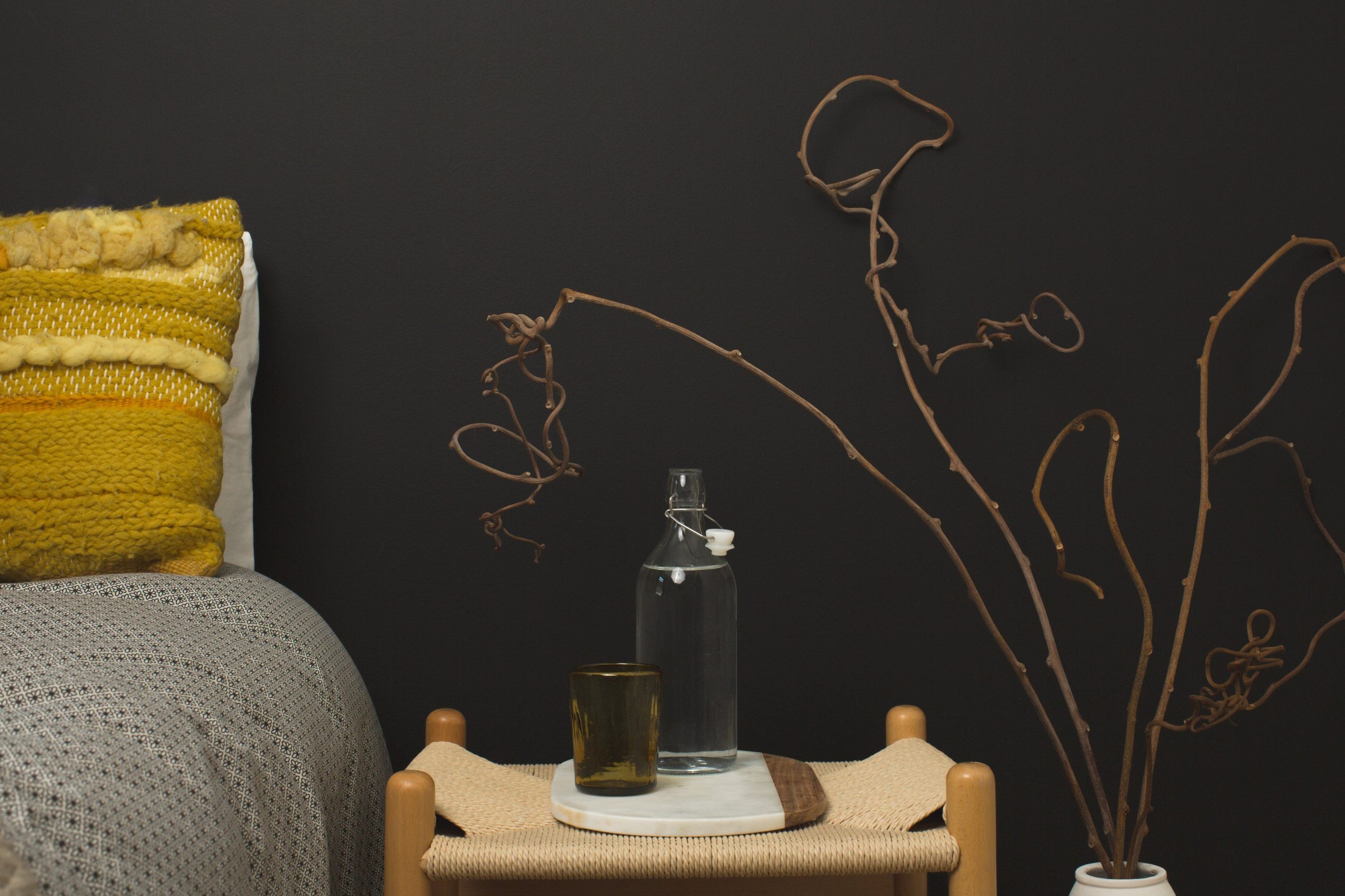
6. Set a Mood with a Dark Wall and a Pop of Yellow
This bedside vignette is a masterclass in using contrast. The dark, heavily textured charcoal wall creates a dramatic, moody backdrop that absorbs light and adds depth. Against this, the bright mustard yellow of the woven pillow absolutely sings. It’s a classic high-contrast color pairing that creates immediate visual energy. But it’s balanced by the natural, muted tones of the grey blanket and the wooden side table, which keep the overall feeling grounded and cozy, not chaotic.
✅ Before You Start
You can create a similar high-texture wall finish yourself. Time: 4-6 hours. Cost: $70-$120.
- Start with a clean, primed wall.
- Purchase a texturizing paint additive (like from Homax) or a pre-mixed textured paint.
- Mix the additive into a gallon of your chosen dark paint color, following the package instructions.
- Use a specialty texture roller or a standard roller with a thick nap to apply the paint, working in small sections.
- For a more organic look, experiment with trowel or sponge techniques over the wet paint.
- Let it dry completely; the texture will become more pronounced as it cures.
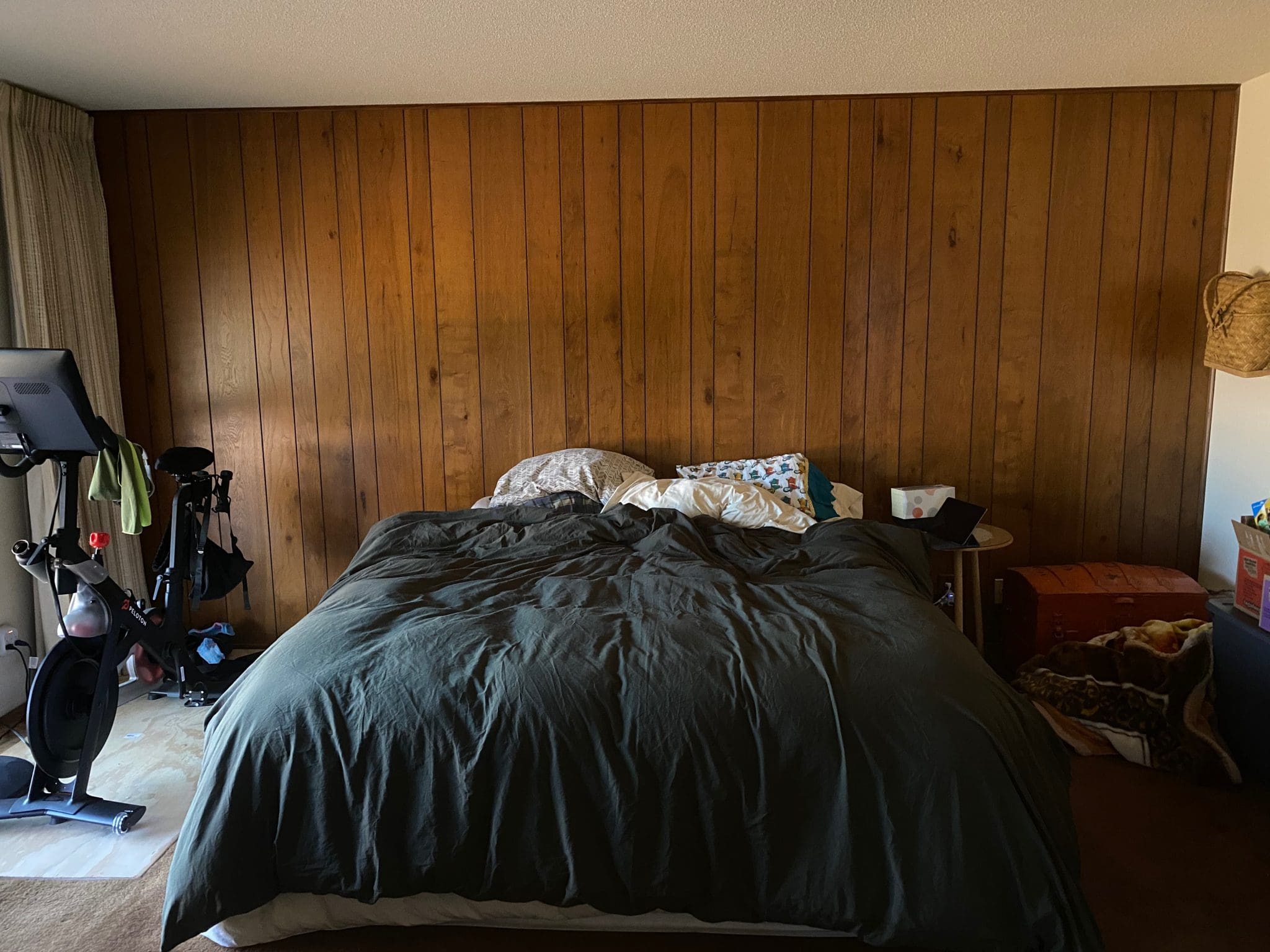
7. Integrate a Workout Space with Dark Wood Paneling
Let’s be real: having a Peloton or other large piece of exercise equipment in your bedroom is incredibly convenient, but it can easily disrupt a cozy, restful atmosphere. The key is to integrate, not just place. Here, the dark wood paneling and olive green duvet create a subdued, dark-toned environment. The black frame of the bike blends into this moody backdrop, making it feel less like a machine and more like a piece of minimalist sculpture. It works because the room’s color scheme embraces the machine’s color, rather than fighting it.
🔥 Trending Context
When working with dark walls and furniture, lighting is your best friend. To avoid a cave-like feeling, you need to layer your light sources. Instead of a single harsh overhead light, use a combination of task lighting (like a reading lamp by the bed), ambient lighting (perhaps from a floor lamp in the corner), and accent lighting. Make sure your curtains can be pulled back fully, like the light brown ones here, to maximize natural light during the day. This keeps the room moody and cozy, not just dark and depressing.
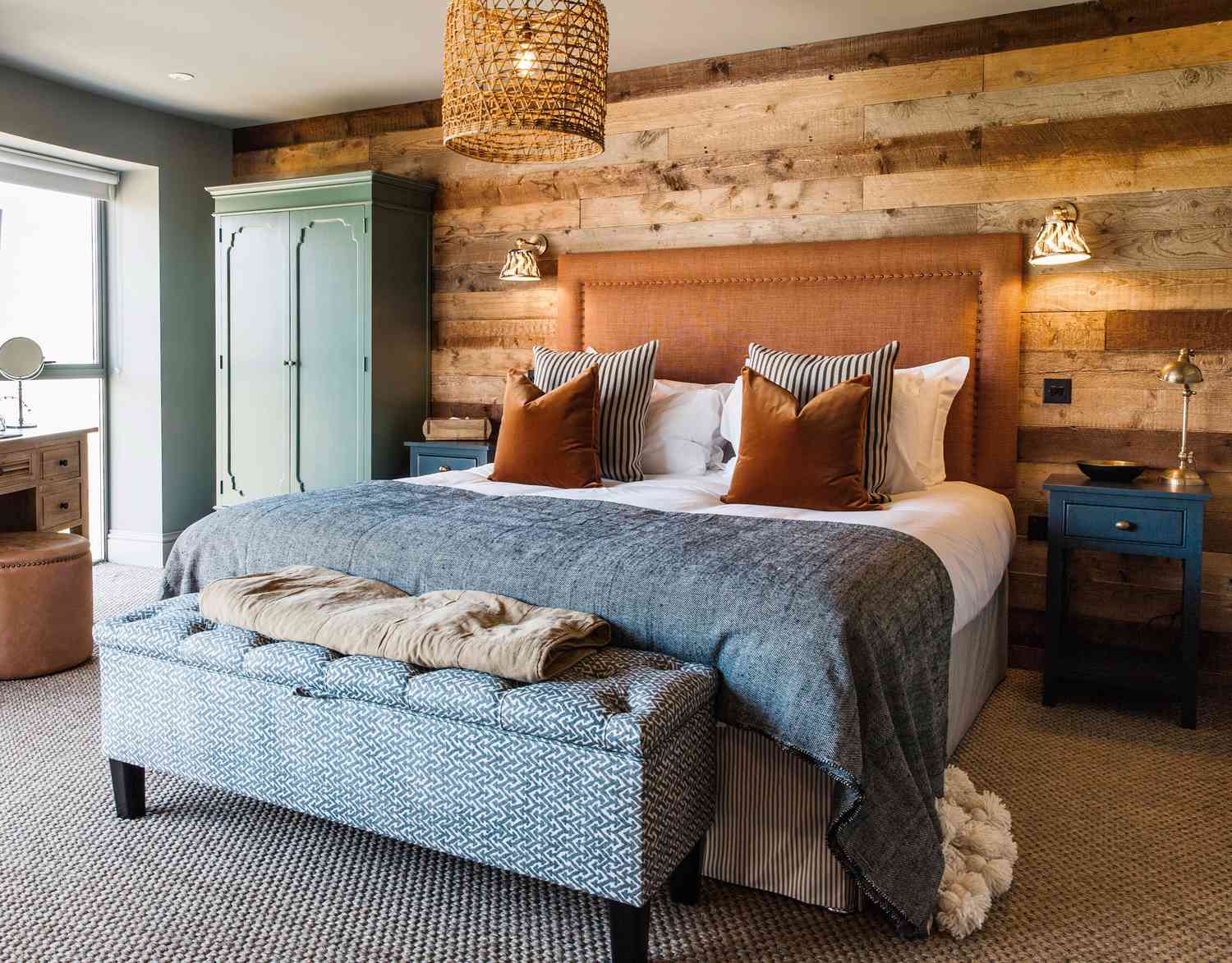
8. Pair a Reclaimed Wood Wall with Rust and Blue Tones
The visual recipe here is bold but balanced. It’s approximately 50% rustic texture, 30% warm color, and 20% cool accents. The reclaimed wood accent wall provides the dominant rustic texture. The rust-colored upholstered headboard and matching pillows bring in that big dose of earthy warmth. Finally, the blue nightstands, throw blanket, and patterned ottoman serve as the cool-toned accents. This complementary color scheme (pairing orange/rust with blue) is what creates such a vibrant, professionally designed feel.
💸 Get This Look For Less
Take away the reclaimed wood accent wall, and the entire room loses its soul. While the furniture and colors are lovely, the wood wall is the element that provides the foundational story. It tells a tale of rustic charm, of texture, of history. It’s the visual anchor that makes the eclectic mix of a tufted headboard, rattan pendant, and emerald wardrobe feel cohesive instead of random. It’s the single design choice that elevates the room from “nicely decorated” to “memorable.”
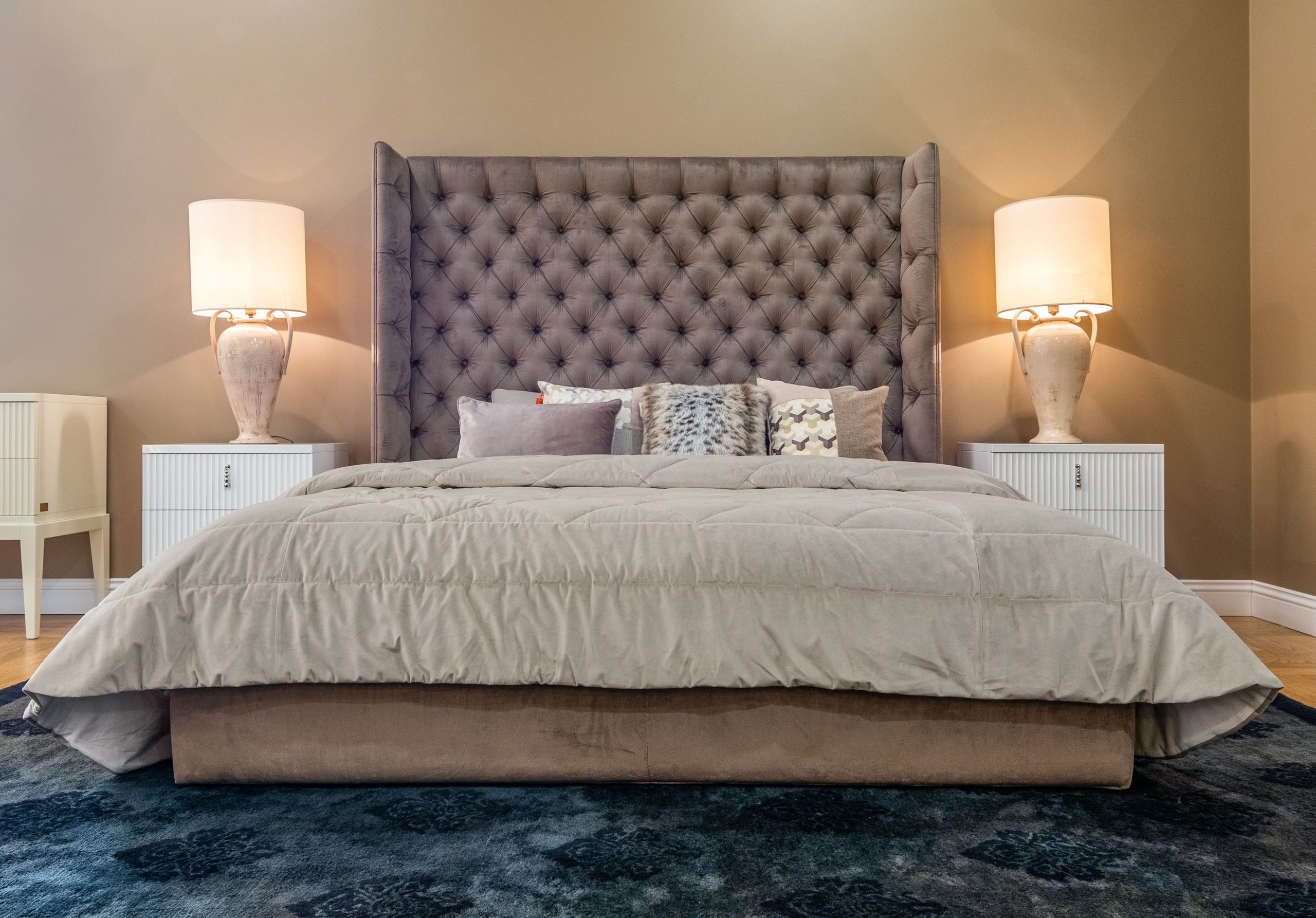
9. Anchor a Neutral Room with Grand Ceramic Lamps
A large, statement headboard like this brownish-grey tufted one requires furniture that can match its scale. This idea works best in a primary bedroom that is at least 13×15 feet. This size allows the bed to be the focal point without overwhelming the space. The key is flanking it with substantial nightstands and, most importantly, oversized table lamps. The large ceramic urn lamps here are perfectly proportioned to the headboard’s height and width, creating a sense of balance and grandeur.
🎯 What Makes It Work
You don’t need to spend a fortune to get this elegant, layered look. The tufted headboard, which is the centerpiece, can be found at budget-friendly prices from stores like Wayfair or Amazon. For the large ceramic lamps, a fantastic source is a local thrift store or Goodwill; people often donate older, oversized lamps that can be updated with a simple coat of spray paint and a new shade from Target. The variety of pillows can be built over time, mixing textures from H&M Home and IKEA. This is a much more affordable approach than the tailored look of Idea #4.
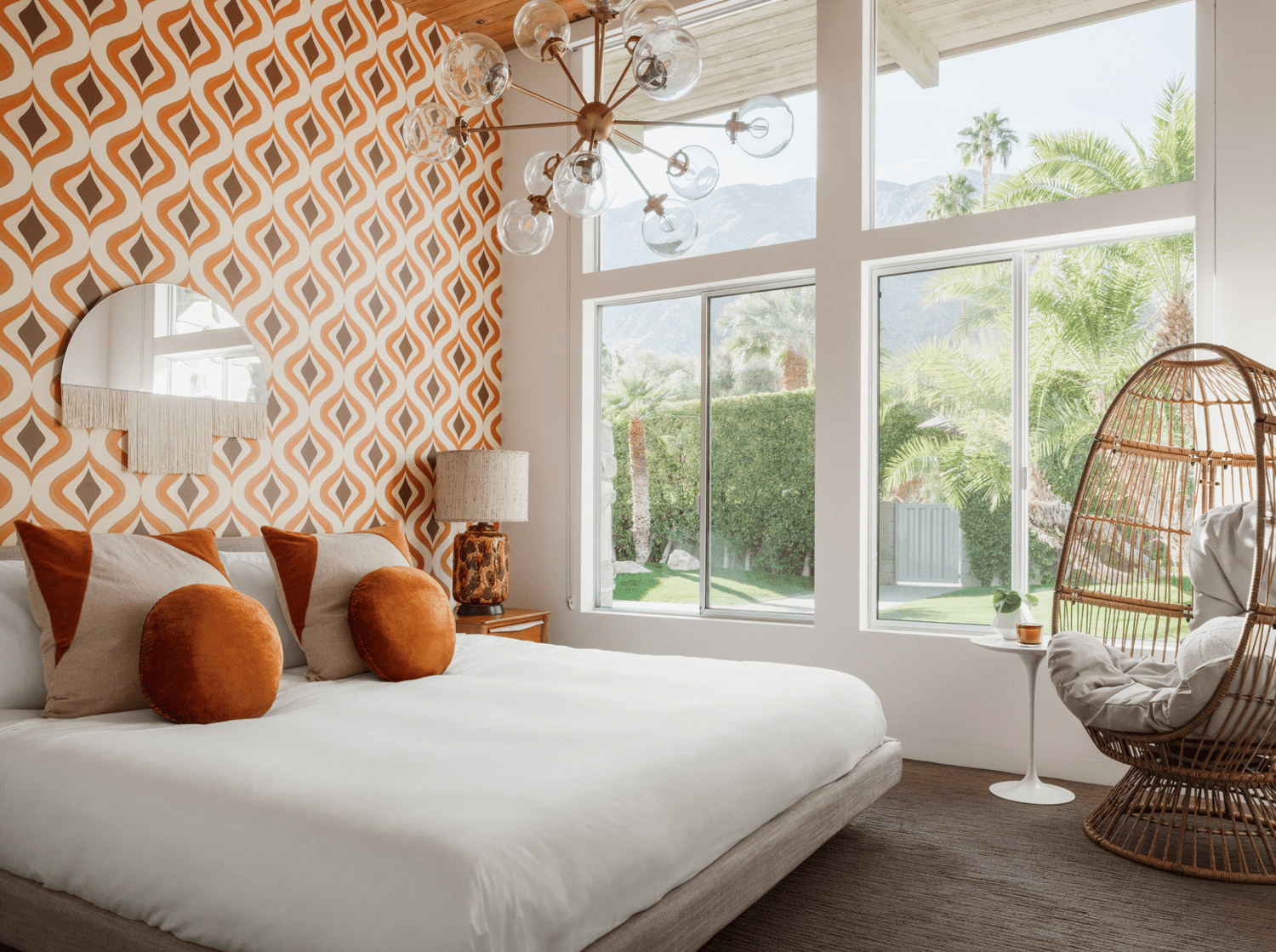
10. Embrace 70s Chic with Bold Wallpaper and a Rattan Egg Chair
This room is a masterclass in balancing a statement pattern. The orange and brown wallpaper is unapologetically bold, but it works because everything else in the room is designed to support it, not compete with it. The bedding is simple white linen. The rattan egg chair adds texture but is neutral in color. The large windows let in a flood of natural light, preventing the strong pattern from making the room feel dark or small. The Sputnik chandelier is intricate, but its clear glass globes give it a lightweight, airy quality.
💡 Designer Tip
Committing to a bold wallpaper can feel daunting. Before you take the plunge, go through this checklist:
- Order a Large Sample: Tape a 2×3 foot sample to the wall. Live with it for a few days to see how it looks in different light.
- Check for Clashes: Does the pattern fight with your existing flooring, curtains, or a view outside the window?
- Measure Twice, Order Once: Calculate your square footage and add 15% extra for waste and matching the pattern repeat.
- Consider Removable Options: If you’re renting or commitment-shy, brands like Chasing Paper and Tempaper offer high-style, removable versions of bold prints.
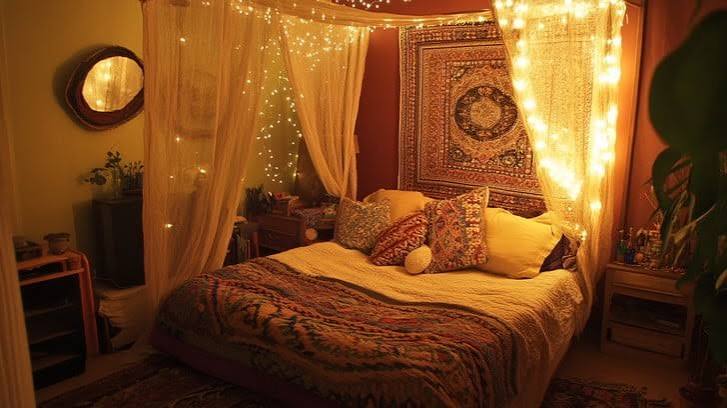
11. Create a Dreamy Escape with a Tapestry and Fairy Light Canopy
The single most transportive element in this room is the fairy light canopy. While the tapestry and warm colors are cozy, it’s the combination of the sheer fabric and the twinkling lights that truly creates a sense of magic and escape. Removing it would leave you with a standard bohemian-style bedroom. With it, the bed transforms into its own little world—a glowing, dreamy sanctuary that feels separate from the rest of the house. It’s what takes the room from being just decorated to being an experience.
🔧 How-To Brief
You can create a beautiful fairy light canopy without any complicated wiring. Time: 1 hour. Cost: $40-$80.
- Install two to four small screw-in hooks into the ceiling above the corners of your bed.
- Drape 1-2 long panels of sheer curtain fabric (like IKEA’s LILL curtains) between the hooks, letting it swag slightly in the middle.
- Get one or two strands of plug-in or battery-operated fairy lights with a warm white glow.
- Weave the light strands loosely through the draped fabric.
- Secure the ends and let the cord run down the wall behind your headboard to an outlet. Use clear clips for a tidy look.
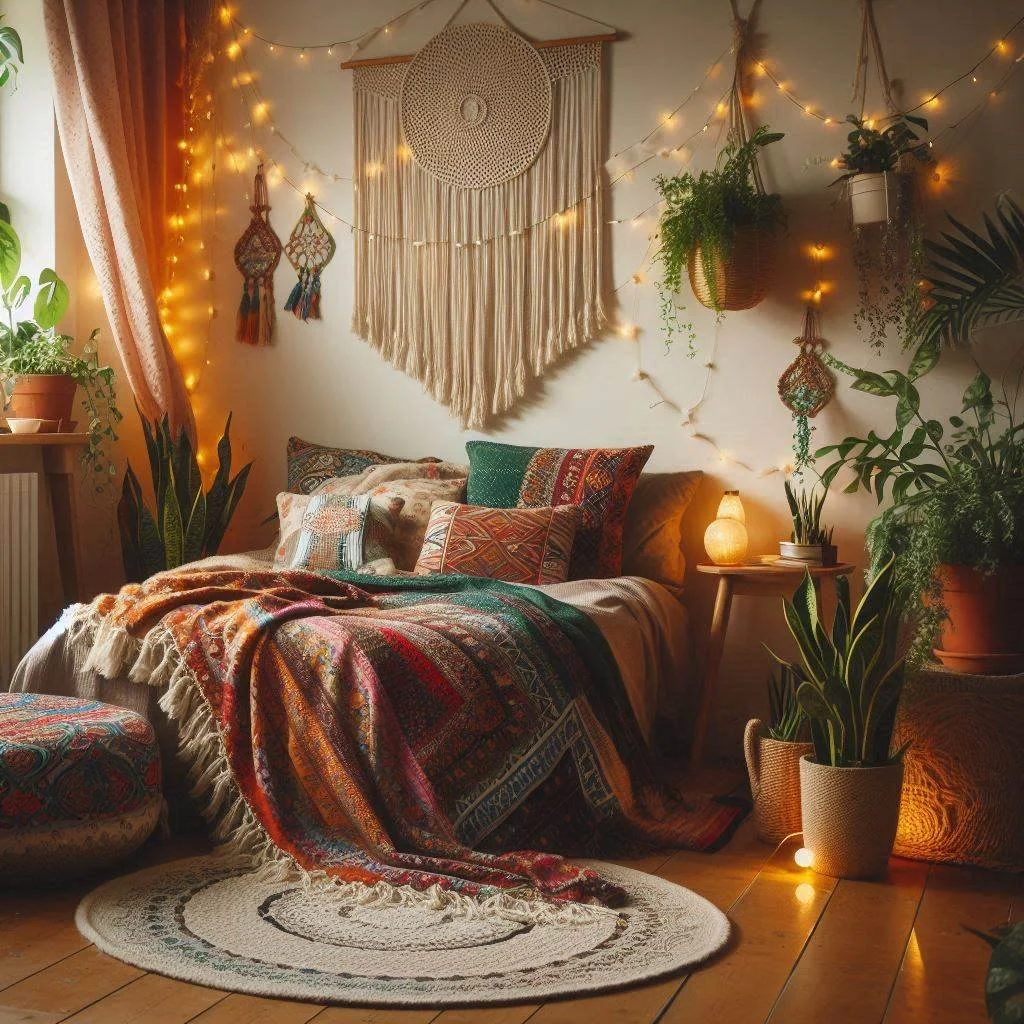
12. Layer a Bohemian Room with Macrame, Plants, and String Lights
The secret to a successful bohemian look is mastering the art of the “curated clutter.” To avoid your room looking messy instead of chic, stick to a tight color palette for about 70% of the items. Here, the walls, macrame, rug, and main bedding are all in the beige/cream family. This creates a calm foundation that allows the more colorful textiles and green plants to pop without creating chaos. Also, group your items: keep plants clustered together, layer your pillows intentionally, and give your macrame piece its own space to breathe.
⚠️ Real Talk
This lush, plant-filled look is gorgeous, but it’s a commitment. Be honest with yourself about your ‘plant parent’ potential. Many of these, like the hanging plants, will require getting on a stool to water. The room will also need ample natural light to keep them all thriving. A weekly watering and check-up session is a must. If you love the look but not the work, invest in a few high-quality faux plants for the hard-to-reach spots and keep just one or two real, easy-care plants (like a snake plant) on a side table. This is a higher-maintenance vibe than the single-plant look in Idea #3.
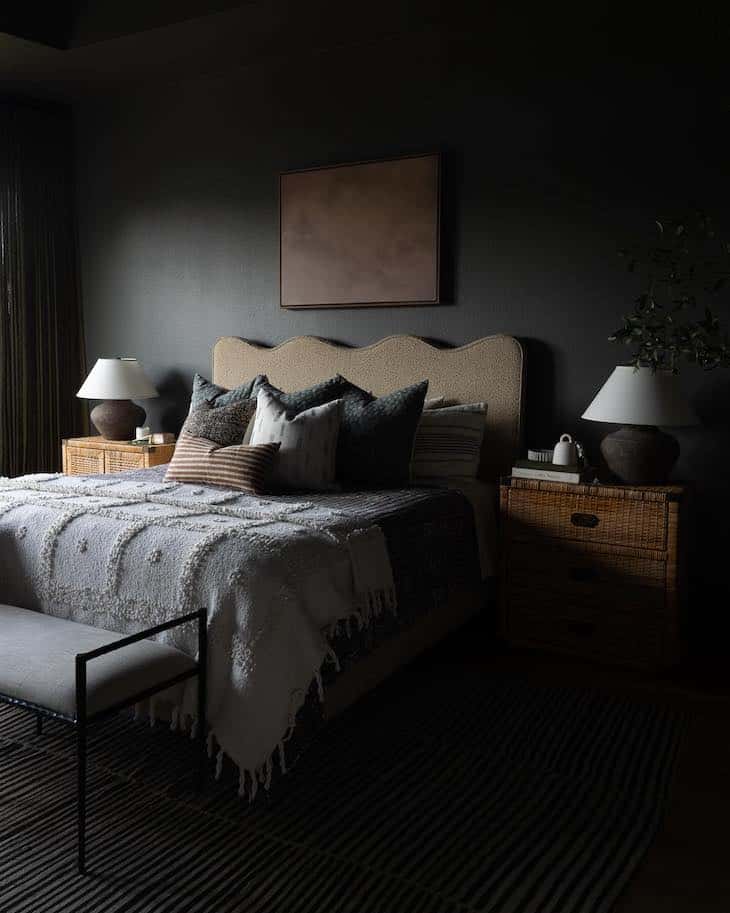
13. Embrace a Moody Vibe with Charcoal Walls and Rattan
This room’s success lies in its tonal formula: 70% dark moody color + 20% natural texture + 10% creamy white. The charcoal gray on the walls and headboard establishes the dominant moody tone. The woven rattan nightstands and fringed throw blanket make up the essential 20% of natural, organic texture, which keeps the dark color from feeling cold or sterile. The final 10% of lightness from the lamp bases and pillows provides just enough contrast to keep the scene from becoming a black hole, ensuring it feels cozy and inviting.
💰 Budget Breakdown
A dark, tonal bedroom can be stunningly sophisticated, but it’s not for every space. This look heavily relies on either large windows that let in tons of natural light during the day, or a very smart, layered artificial lighting plan for the evening. In a small, north-facing room with limited light, this could feel less like a cozy cocoon and more like a gloomy cave. Be sure you have plans for multiple light sources—ambient, task, and accent—before you commit to a dark wall color.
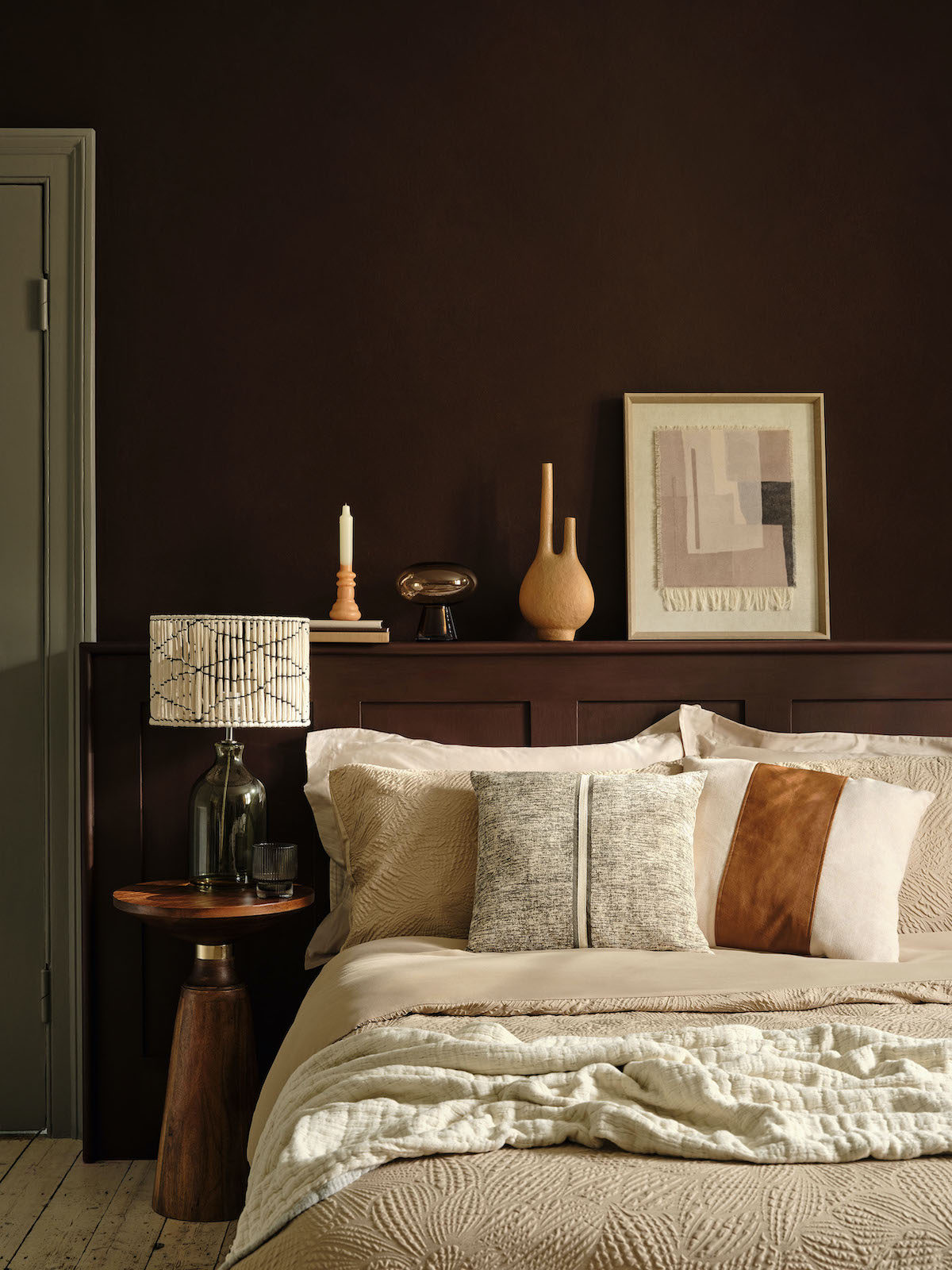
14. Go Monochromatic with a Dark Wood Panel and Shelf
Styling the shelf above your bed is key to personalizing a space. Time: 30 minutes. Cost: Varies.
⭐ The One Thing
- Start with Art: Lean one or two pieces of framed abstract art off-center. This creates a casual anchor.
- Add Height: Place a taller object, like the ceramic vase here, on the opposite side of the art. Varying heights is crucial.
- Incorporate Shape and Texture: Bring in items with different forms, like the smoky glass object and the textured vase, to add interest.
- Bring in Something Personal: A stack of books, a candle in a favorite scent, or a small trinket makes it feel like your own.
- Step Back and Edit: Remove one item. Often, the most stylish shelves are the ones that aren’t overcrowded.
This design leans heavily on a monochromatic color scheme, using various shades and tints of brown. The wall, the wood paneling, the bedding, and the decor all live in the same color family. This creates an incredibly sophisticated and cohesive look. The depth comes not from different colors, but from different textures: the smooth painted wall, the grain of the wood, the weave of the pillows, and the rough surface of the pottery. It’s a quiet, confident design that feels totally put-together. For a similar dark-toned look but with more color contrast, check out Idea #13.
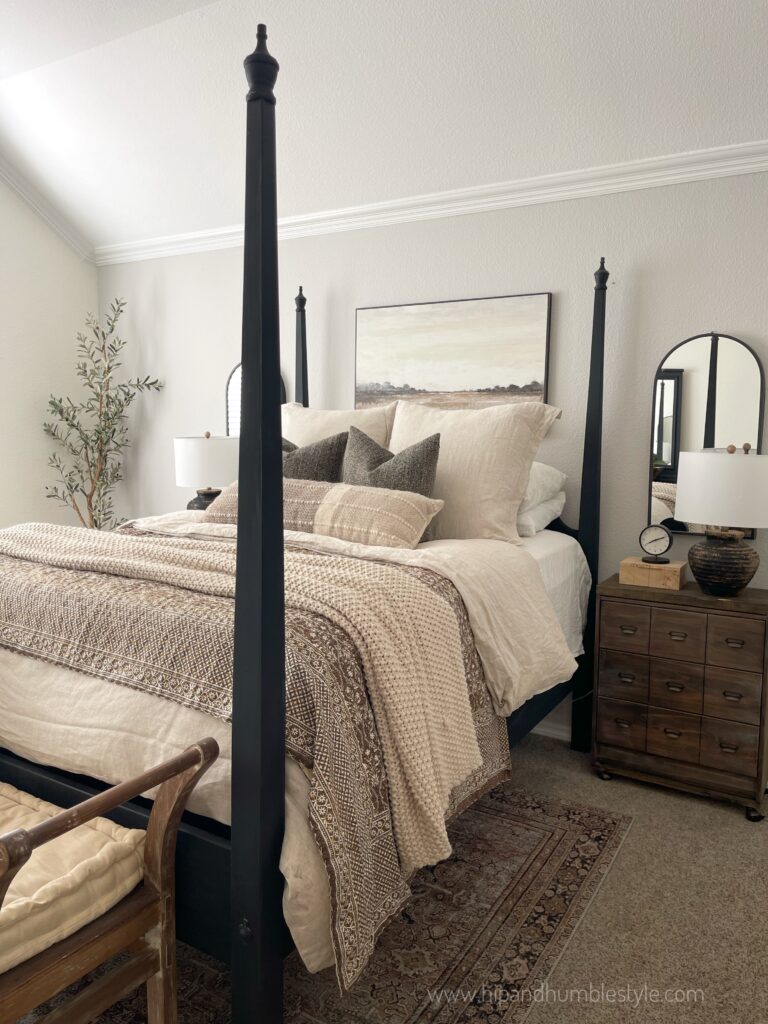
15. Create a Cozy Retreat with a Dark Wood Four-Poster Bed
The undeniable centerpiece of this room is the four-poster bed. You could swap out the textiles, the rug, and the nightstand, and the room’s core identity would remain. The dark wood frame creates a strong architectural presence and a sense of enclosure that immediately reads as “cozy.” It establishes a rustic, almost historic mood that informs every other choice. The layered neutral textiles soften it, but the bed frame is what gives the room its commanding, sanctuary-like quality.
📐 Style Math
A substantial four-poster bed needs room to breathe. This idea is best suited for a primary bedroom with ceilings that are at least 9 feet high. In a room with standard 8-foot ceilings, a tall frame can make the entire space feel shorter and more cramped. The ideal room size would be no smaller than 14×14 feet, which allows for comfortable walking space around the bed and prevents the frame from visually dominating the room to the point of claustrophobia. For smaller rooms, a simple platform bed like the one in Idea #27 is a better fit.
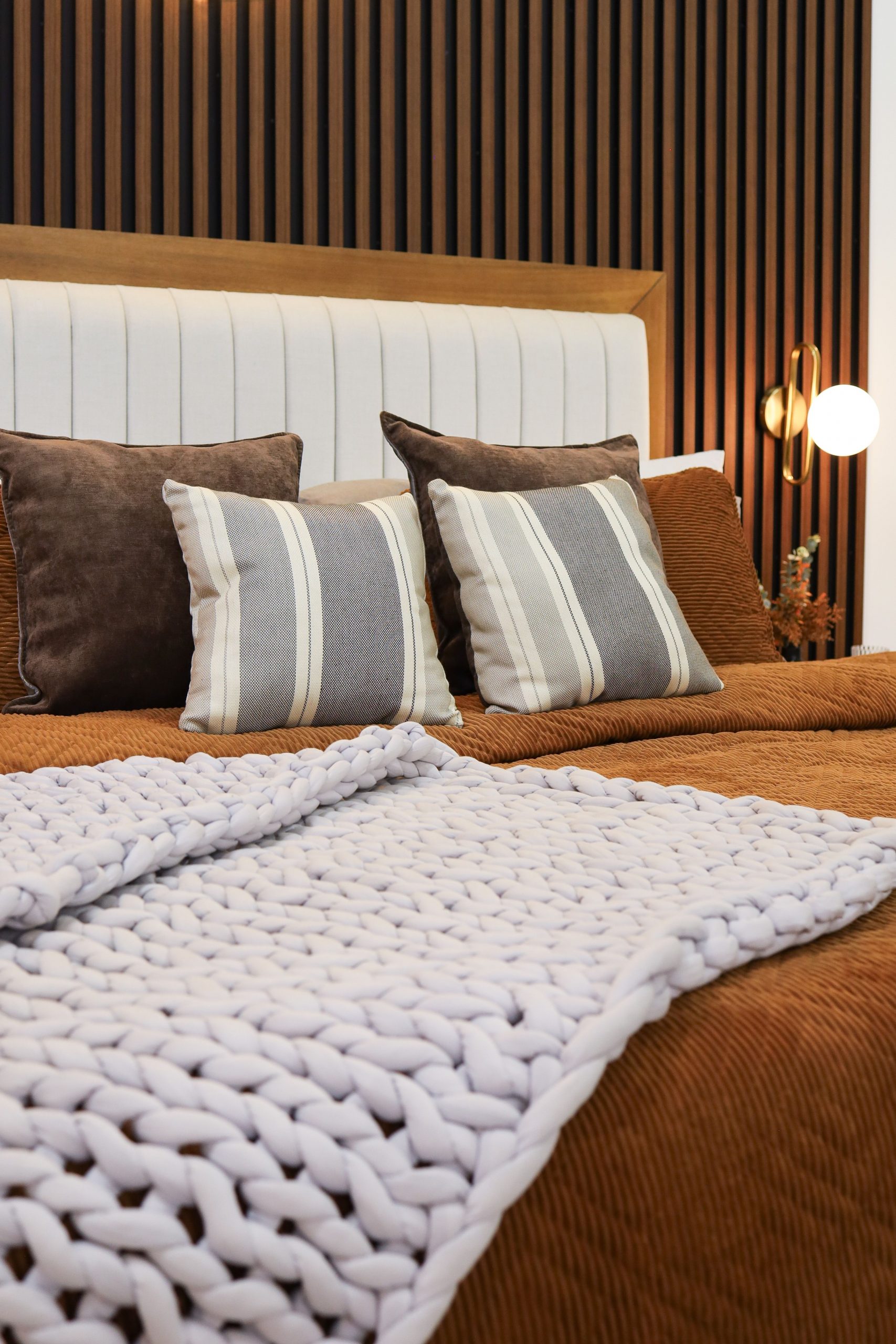
16. Pair a Plush White Headboard with a Wooden Batten Wall
To create a DIY batten wall like this, precision is key. Use 1×2 inch primed pine or poplar boards. For a dramatic, modern look, space them narrowly—about 1.5 to 2 inches apart. Paint the wall your desired dark color *before* you attach the battens. Then, paint the battens themselves before installation. Attach them using a brad nailer and a level, ensuring each one is perfectly vertical. Fill the nail holes with wood filler, sand lightly, and do one final touch-up coat of paint for a seamless, professional finish.
📏 Scale Guide
This look is a perfect example of the move toward “textural modernism.” For years, modern design was about flat, smooth surfaces. Now, designers and homeowners are craving warmth and character. The vertical wooden battens provide clean, modern lines, but their texture and natural material add depth and a tactile quality. Pairing this with other highly textured elements like a corduroy comforter, chunky knit blanket, and plush headboard creates a multi-sensory experience that is both contemporary and deeply comforting.
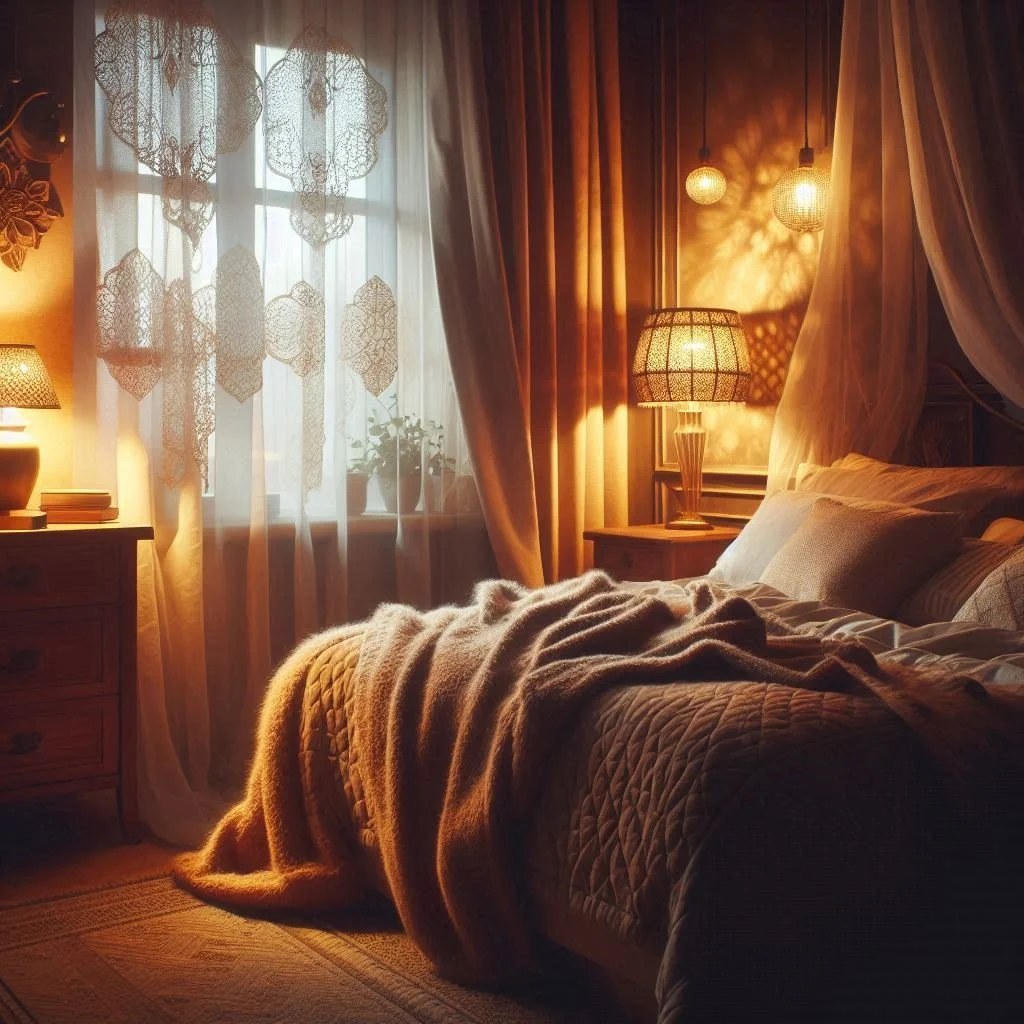
17. Filter Light Through Ornate Lace Window Appliqués
The magic in this room comes from the manipulation of light. The ornate lace appliqués on the window don’t just block a bit of light; they transform it. As sunlight passes through the intricate patterns, it becomes softer, more diffused, and dappled. This creates a warm, golden glow that fills the room and eliminates any harsh glare. The hanging pendants and woven rattan lampshades do the same for the artificial light, casting beautiful, patterned shadows on the walls and ceiling. It’s a design that is as much about how light feels as how the room looks.
🧹 Maintenance Reality
You can achieve this incredibly custom and luxurious window treatment on a tiny budget. Instead of commissioning custom glass or curtains, buy large lace doilies or tablecloths from a craft store or even a thrift shop. Using a clear-drying adhesive like Mod Podge or a simple cornstarch-and-water mixture, you can apply these directly to your window panes. The effect is nearly identical, casting beautiful shadows, providing privacy, and giving the appearance of expensive, old-world detailing for less than $30.
18. Get That ‘Hygge’ Feeling with Chunky Knits and String Lights
In this composition of coziness, the chunky knit blanket is the undisputed star. While the string lights and candles provide the ambient glow, the blanket offers a powerful visual and tactile cue. You can almost feel how heavy, soft, and warm it is just by looking at it. It’s an object that screams comfort and invites you to curl up. Remove it, and you still have a pleasant scene, but you lose that central, irresistible focal point of pure, unadulterated comfort.

✅ Before You Start
This vibe is the definition of cozy, but you need to be smart about safety. Never leave burning candles unattended, especially near flammable items like curtains and bedding. Opt for high-quality LED flameless candles for the same warm glow without the fire risk. When using string lights, ensure they are UL-certified and aren’t pinched by furniture or have frayed cords. Don’t leave them on overnight, and use low-wattage LED bulbs that don’t generate significant heat. Coziness should never come at the expense of safety.
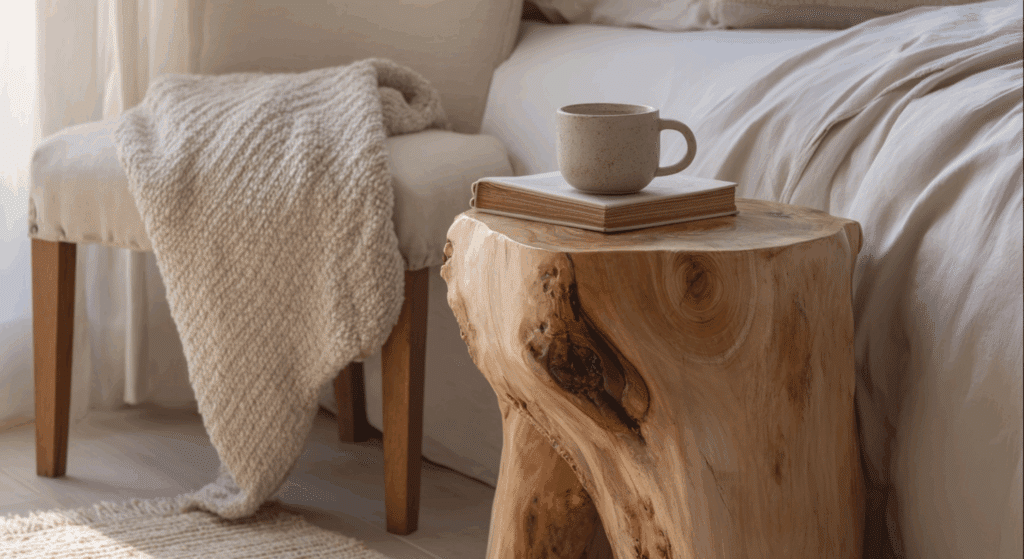
19. Use a Rustic Tree Stump as a Natural Side Table
Bringing a piece of raw nature like a tree stump indoors requires a bit of prep to make it home-ready. First, ensure the wood is completely dry to prevent cracking or pests. You can buy pre-dried stumps online or let one cure in a dry garage for several months. Sand the top surface until it’s perfectly smooth, starting with a coarse 80-grit paper and moving up to a fine 220-grit. Then, seal the entire piece—top, bottom, and sides—with at least three coats of a clear, matte-finish polyurethane. This protects the wood and prevents it from shedding bark or dust.
🔥 Trending Context
This look is the epitome of minimalist naturalism. The formula is simple: 80% soft, neutral texture + 20% raw, natural element. The vast majority of the aesthetic is built from soft, light-colored materials—the linen bedding, the upholstered stool, the textured throw. This creates a serene, cloud-like base. The single, rustic wooden stump provides a crucial point of contrast. Its rough, organic form and rich wood grain keep the sea of neutrals from becoming bland and one-note. It’s the grounding force in a room of softness.
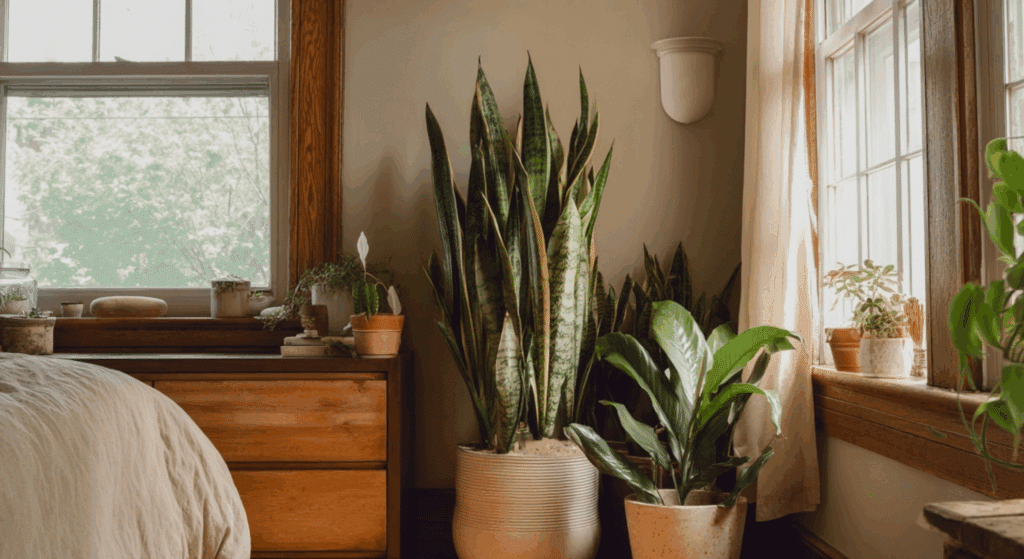
20. Create an Indoor Jungle Corner with Warm Wood Tones
A room this rich with houseplants is a beautiful, living piece of art, but it demands a routine. Most of these plants will need watering every 7-14 days. To simplify, try to choose plants with similar light and water needs. A snake plant, for example, is much more forgiving than a fiddle leaf fig. You’ll need to commit to a weekly check-in for water, plus monthly dusting of the leaves (they can’t photosynthesize properly when covered in dust) and occasional rotating so they grow evenly toward the light. It’s a true hobby, not just decor.
💸 Get This Look For Less
This space is a perfect example of biophilic design—the practice of connecting people and nature within our built environments. It works because it engages our innate attraction to the natural world. The combination of abundant green foliage, the visible grain of the wooden dresser, and the flood of natural light from the window creates an environment that has been shown to reduce stress and improve well-being. It’s not just a collection of nice things; it’s a holistically calming atmosphere.
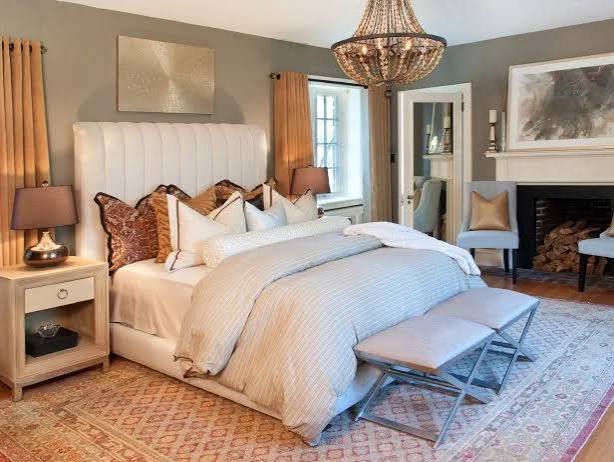
21. Embrace Grounded Style with an Earthy Palette
Want to capture that elusive ‘earthy’ vibe? It’s more than just a color. Before you start buying decor, confirm you have the right foundational elements. An earthy room almost always includes:
🎯 What Makes It Work
- A Warm, Muted Color Palette: Think terracotta, olive green, dusty rose, and warm beige instead of bright primary colors.
- Natural Materials: Incorporate elements like wood, rattan, clay, linen, and wool. Avoid shiny plastics and synthetic-feeling fabrics.
- Textural Variety: Layer different textures. A smooth wood dresser, a nubby linen duvet, a rough ceramic vase—these contrasts are key.
- Imperfect, Handmade Objects: Look for decor that doesn’t feel mass-produced. A slightly uneven pot or a hand-woven blanket adds soul.
The rise of earthy, grounded interiors is a direct response to our increasingly digital and hectic lives. In 2026, there’s a collective craving for spaces that feel calming, authentic, and connected to the natural world. This isn’t just a fleeting trend; it’s a reflection of a larger cultural shift toward mindfulness and well-being. Creating a bedroom that feels like a retreat from the outside world is no longer a luxury—it’s a necessity. This style has staying power because it’s based on a fundamental human need for tranquility.
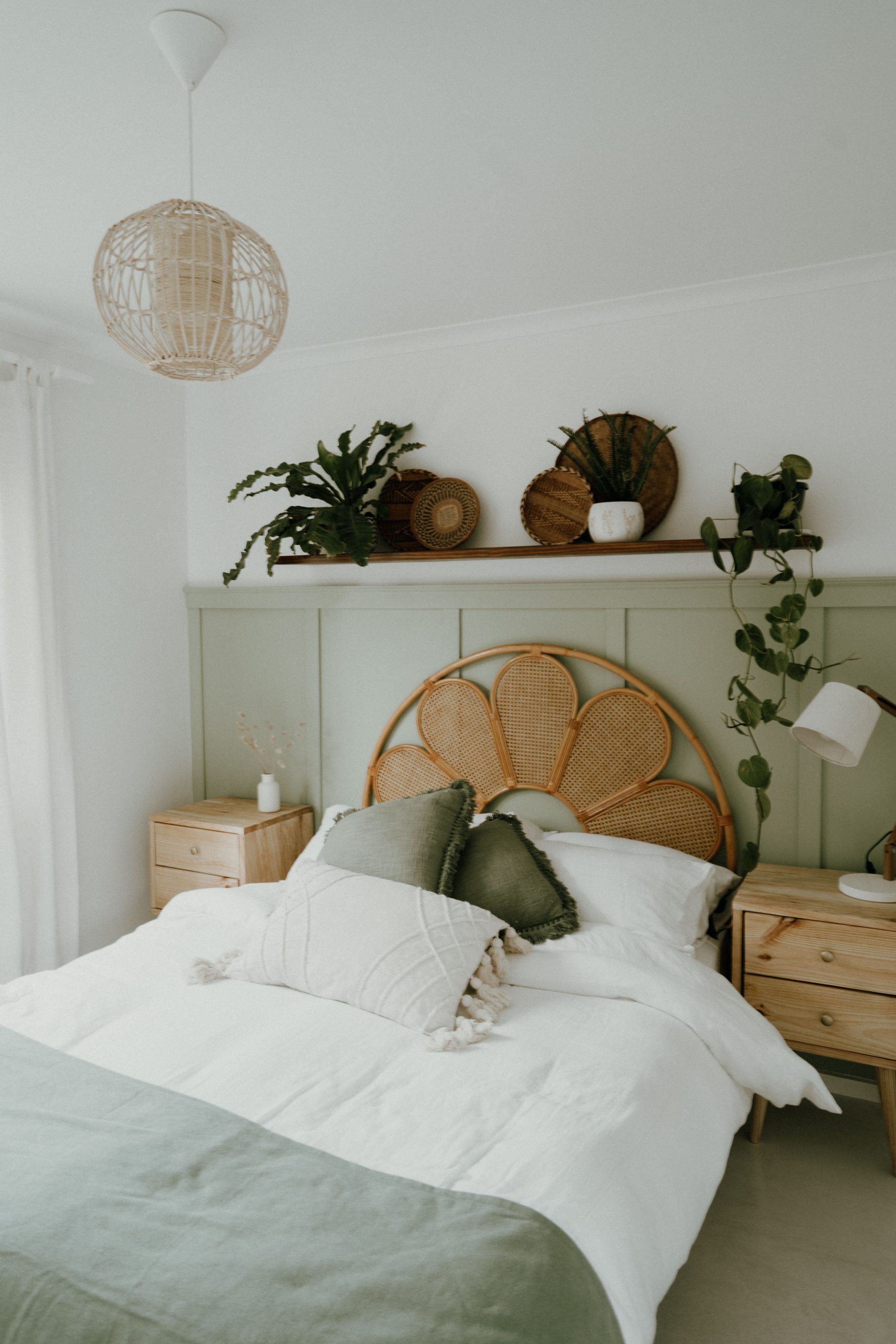
22. Use Sage Green Paneling with a Flower-Shaped Rattan Headboard
Choosing the right shade of sage green is crucial. Look for a green with warm, greyish or yellowish undertones, like Farrow & Ball’s ‘Pigeon’ or Behr’s ‘Jojoba’. These muted, complex sages feel sophisticated and calming. Avoid sages with too much blue or minty undertones, which can feel dated or overly bright. Always, always get a sample pot and paint a large swatch on your wall. The color will look dramatically different depending on your room’s natural light.
💡 Designer Tip
Here’s a look at the estimated cost for this fresh, organic bedroom design.
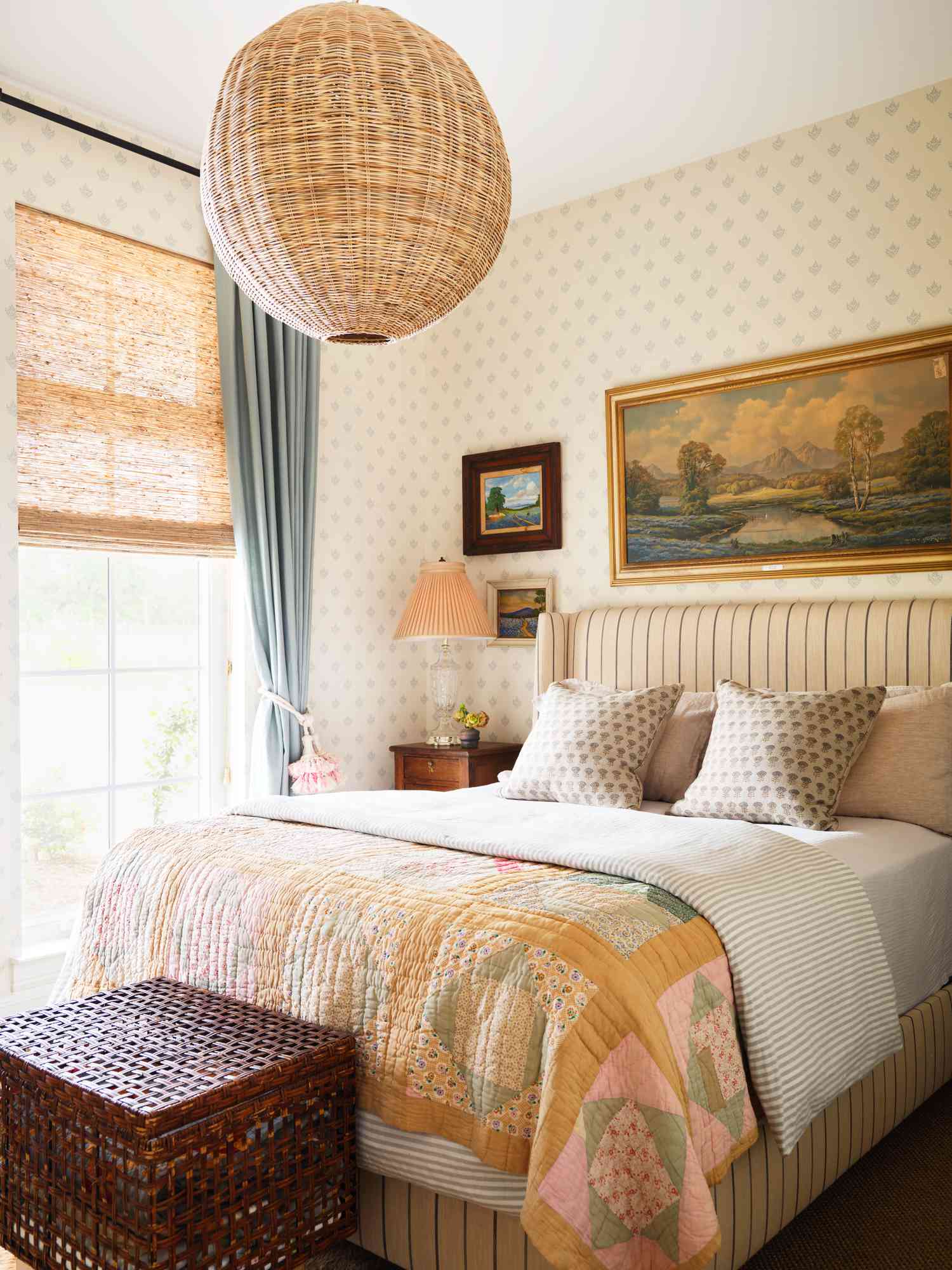
23. Mix Patterns with a Patchwork Quilt and Woven Pendant
This room proves that you can mix multiple patterns without it feeling chaotic. The formula for this “Cottagecore” or “Grandmillennial” look is about varying the scale of your patterns. Here we have: 50% small-scale pattern (the subtle wallpaper), 30% large-scale pattern (the patchwork quilt), and 20% linear pattern (the striped headboard). Because each pattern is a different size and style, they complement each other instead of competing. The neutral bamboo blinds and woven pendant act as a calm resting place for the eyes, balancing the pattern play.
🔧 How-To Brief
The single element that gives this room its heart and soul is the patchwork quilt. It’s a piece that evokes nostalgia, craftsmanship, and comfort. Without it, the room would still be lovely, with its landscape art and woven textures, but it would lose its central story of handmade heritage. The quilt introduces a beautiful medley of colors—pink, yellow, blue—that are picked up elsewhere, and its blocky pattern provides a comforting counterpoint to the more delicate wallpaper.
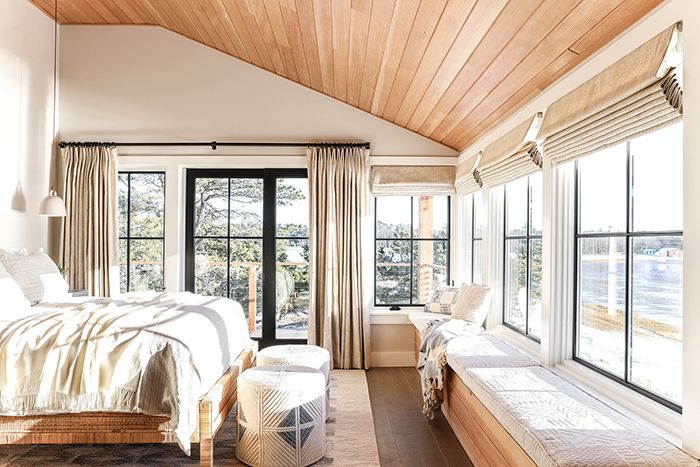
24. Highlight a Vaulted Cedar Ceiling with Neutral Furnishings
An architectural feature as stunning as a vaulted cedar ceiling is its own statement piece. This look is obviously dependent on having such a feature and is best for spacious rooms—we’re talking at least 15×18 feet with ceilings that vault up to 12 feet or more. The grand scale is essential to prevent the wood from feeling heavy or oppressive. The key to success is to furnish it minimally, allowing the architecture to be the undisputed star of the show. Over-decorating would be a critical mistake here.
⚠️ Real Talk
This room feels so serene and luxurious because of the thoughtful repetition of natural materials. The light wood tone of the cedar ceiling is echoed in the bed frame and the window bench. The creamy white of the ottomans is repeated in the bedding and cushions. Even the dark stain of the floor speaks to the black of the window frames. This limited, cohesive palette of wood, white, and black allows the stunning view and the architectural details to take center stage, creating a feeling of effortless, organic luxury.
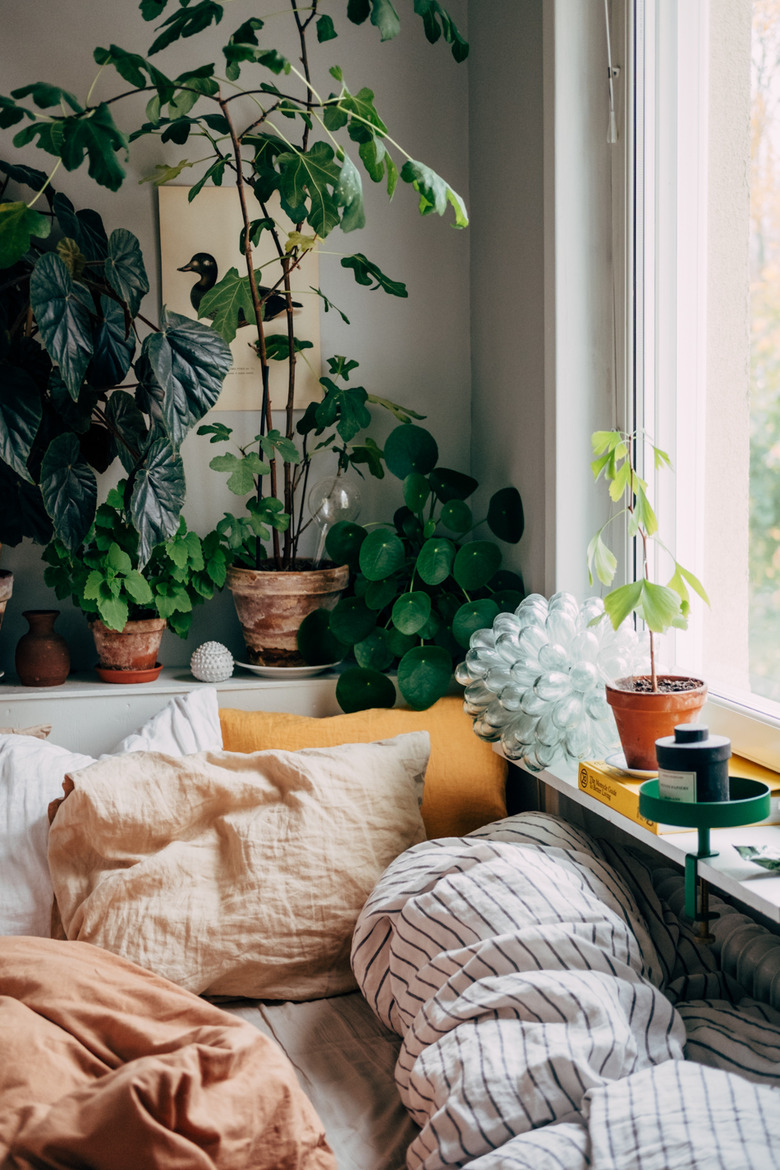
25. Cultivate a Lush Window Nook with Earthy Linens
Transform a sunny window into a mini-greenhouse. Time: 2 hours. Cost: $100-$300 (depending on plants).
26. Embrace Minimalism with Layered Neutral Textures
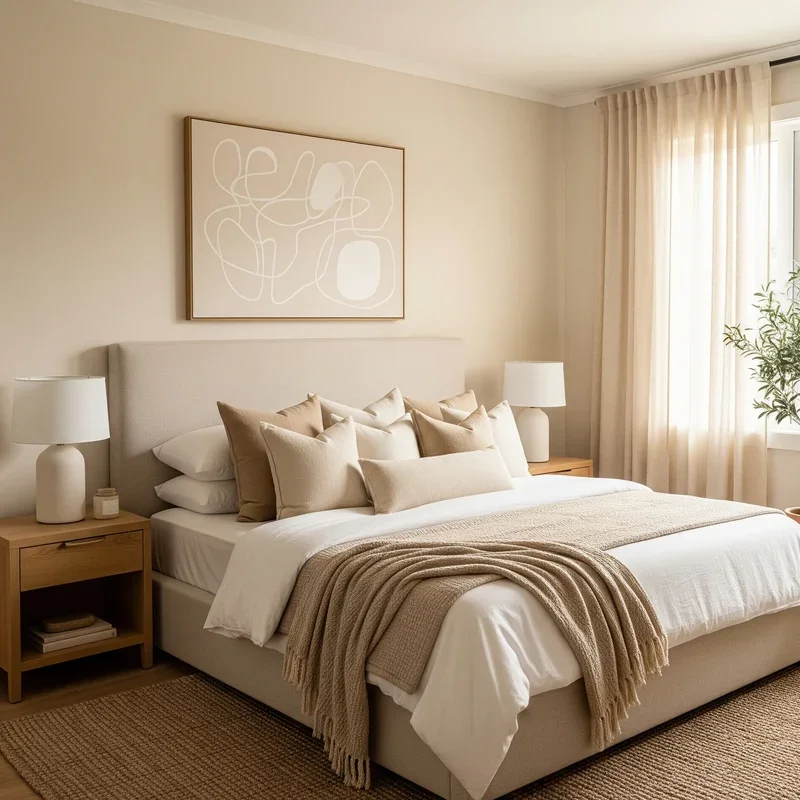
The key to a minimalist room that feels warm, not sterile, is obsessive layering of similar neutral tones. Don’t just use one shade of beige. This room succeeds by combining cream, off-white, sandy beige, tan, and the light natural wood tone. The textures do the heavy lifting: the slight sheen of the upholstered headboard, the matte finish of the ceramic lamps, the nubby texture of the throw, and the smooth grain of the wood. When sticking to one color family, you have to create interest through texture instead of color.
⭐ The One Thing
An all-neutral, light-colored bedroom is a dream for serenity but can be a nightmare for maintenance. Upholstered headboards, especially in light fabrics, can absorb oils from your hair and hands over time, leading to discoloration. White and cream bedding shows every speck of dirt or pet hair. To keep it looking fresh, you’ll need to commit to regular vacuuming of the headboard with an upholstery attachment and weekly washing of all bedding. Having a backup duvet cover is a lifesaver.
27. Contrast a Rich Brown Wall with Light Wood Wardrobes
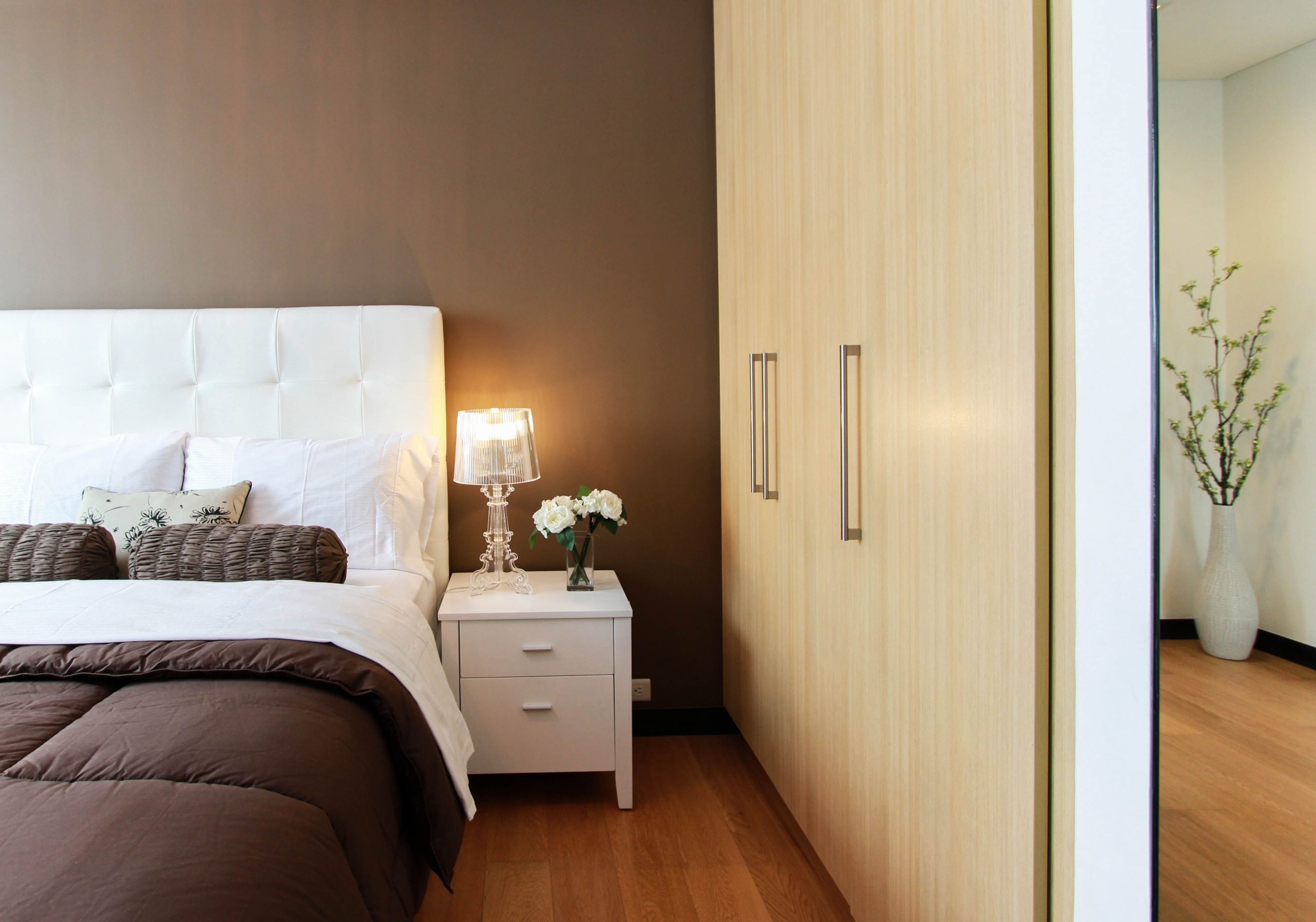
This bedroom demonstrates a powerful design principle: cohesion through contrast. The dark brown accent wall creates a recessed, cozy nook for the bed, making the white tufted headboard pop. Flanking this dark area with floor-to-ceiling, light-wood wardrobes does two things: it prevents the dark wall from overpowering the room, and it makes the wardrobes feel like a deliberate, integrated part of the architecture. The strong vertical lines of the silver handles also draw the eye upward, enhancing the feeling of height.
📐 Style Math
You can get this high-end, custom built-in look for far less. Start with two of IKEA’s PAX wardrobe systems in a light wood effect finish. Instead of using the standard IKEA hardware, purchase long, sleek silver bar handles from a hardware store or online for a more custom look. Paint the wall between them a deep, rich brown (like Behr’s ‘Roasted Walnut’). The result is a sophisticated, integrated storage system that mimics the appearance of expensive custom cabinetry for a fraction of the price. Compare this to the high-end custom look in Idea #24.
28. Layer a Moody Room with Dark Panels and a Cowhide Rug
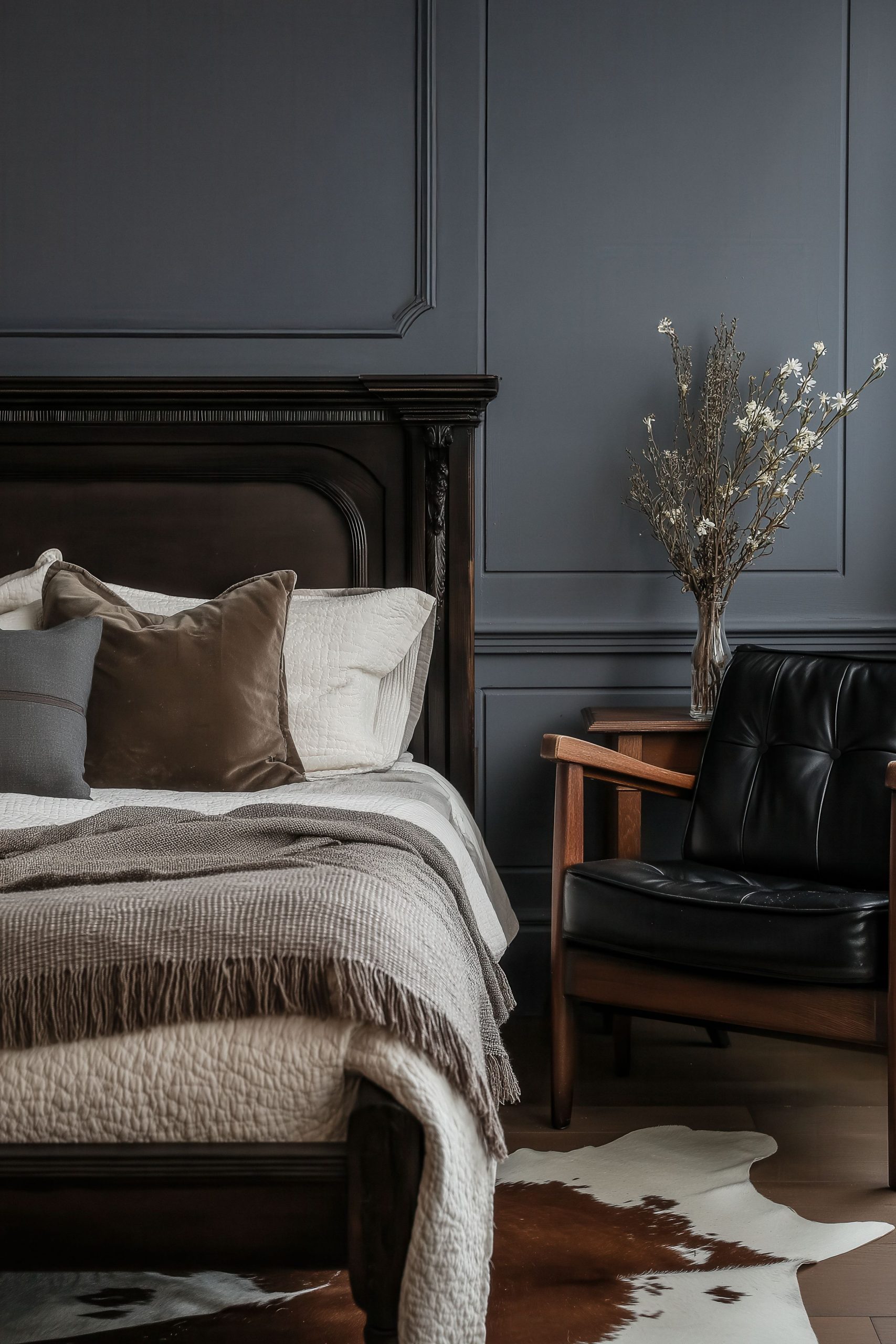
Achieving a dark room that feels rich instead of just dark is a balancing act. The formula is roughly: 60% dark, dramatic surfaces + 30% warm, natural materials + 10% crisp white. The paneled walls and dark flooring provide the moody 60% base. The dark wooden bed, leather chair, and brown tones in the cowhide rug bring in the essential 30% of warmth and organic texture. Finally, the crisp white bedding and the white patches on the rug offer that 10% of bright contrast needed to keep the room from feeling flat.
📏 Scale Guide
The single element that adds the most character and bridges the gap between sophisticated and rustic here is the cowhide rug. The paneled walls and leather chair are elegant, while the carved wood bed is traditional. The rug, with its organic shape and bold pattern, injects a dose of unexpected, earthy texture. It softens the hard lines of the furniture and paneling and provides a necessary point of visual interest on the dark floor. Without it, the room would be much more formal and far less cozy.
29. Combine a Dark Wood Wall with Light Blue and Rust Bedding
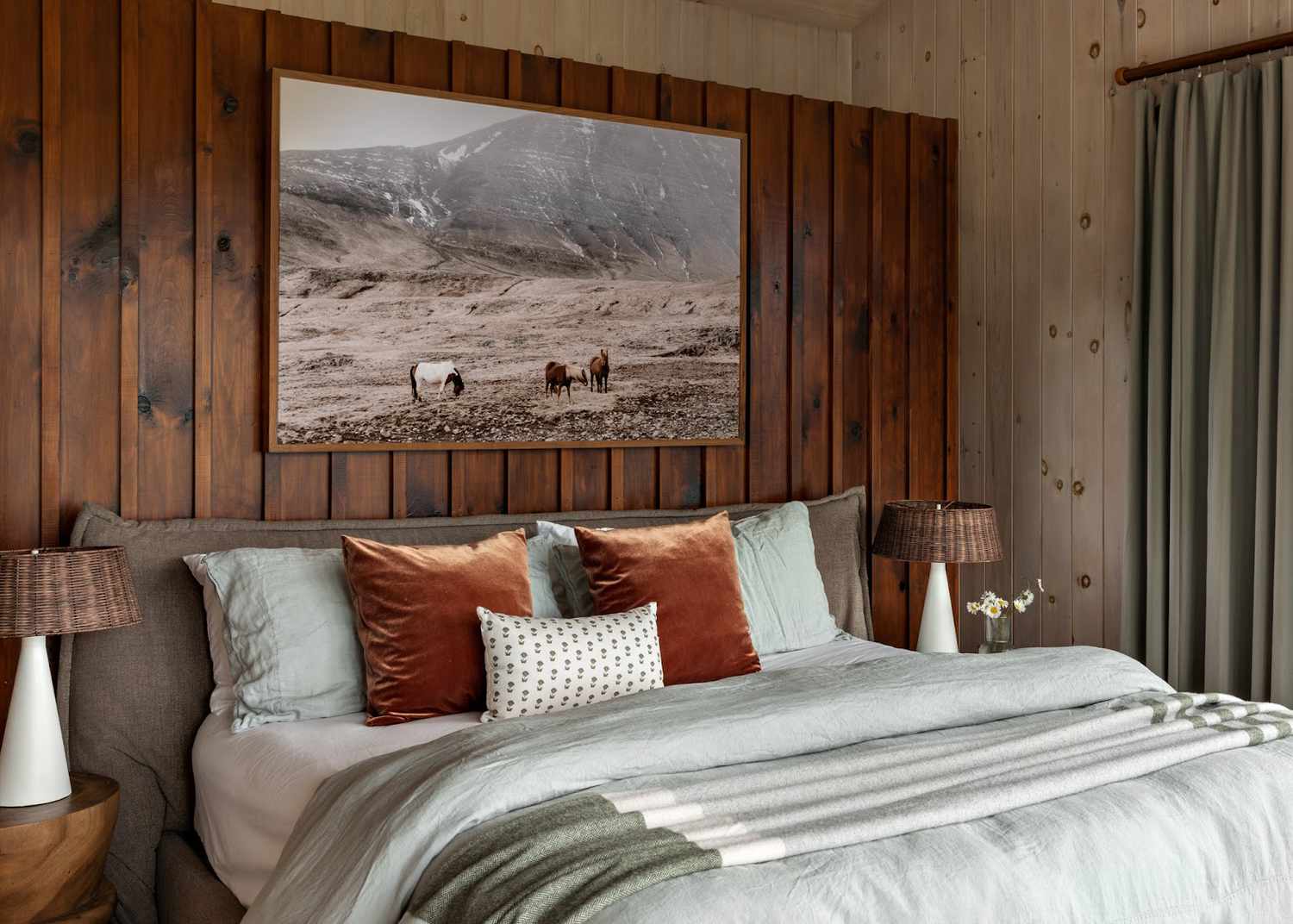
When choosing art to go above a bed, especially against a dark or textured accent wall, don’t just pick something you like—pick something that connects to the room. The large framed art here works beautifully because the muted, earthy tones of the landscape echo the colors in the bedding and the wood wall. For a cohesive look, measure the width of your bed and choose a piece of art that is roughly two-thirds of that measurement. This ensures the scale is just right—not too big, not too small.
🧹 Maintenance Reality
This color combination is so pleasing because it uses a classic split-complementary color scheme. The dominant color is the orange/rust of the pillows. On the color wheel, the complement to orange is blue. Instead of just using a standard blue, this palette uses shades on either side of it: a light, dusty blue and a hint of olive green in the striped throw. This creates a more sophisticated and mellow version of the vibrant rust-and-blue pairing we saw in Idea #8, resulting in a serene yet colorful look.
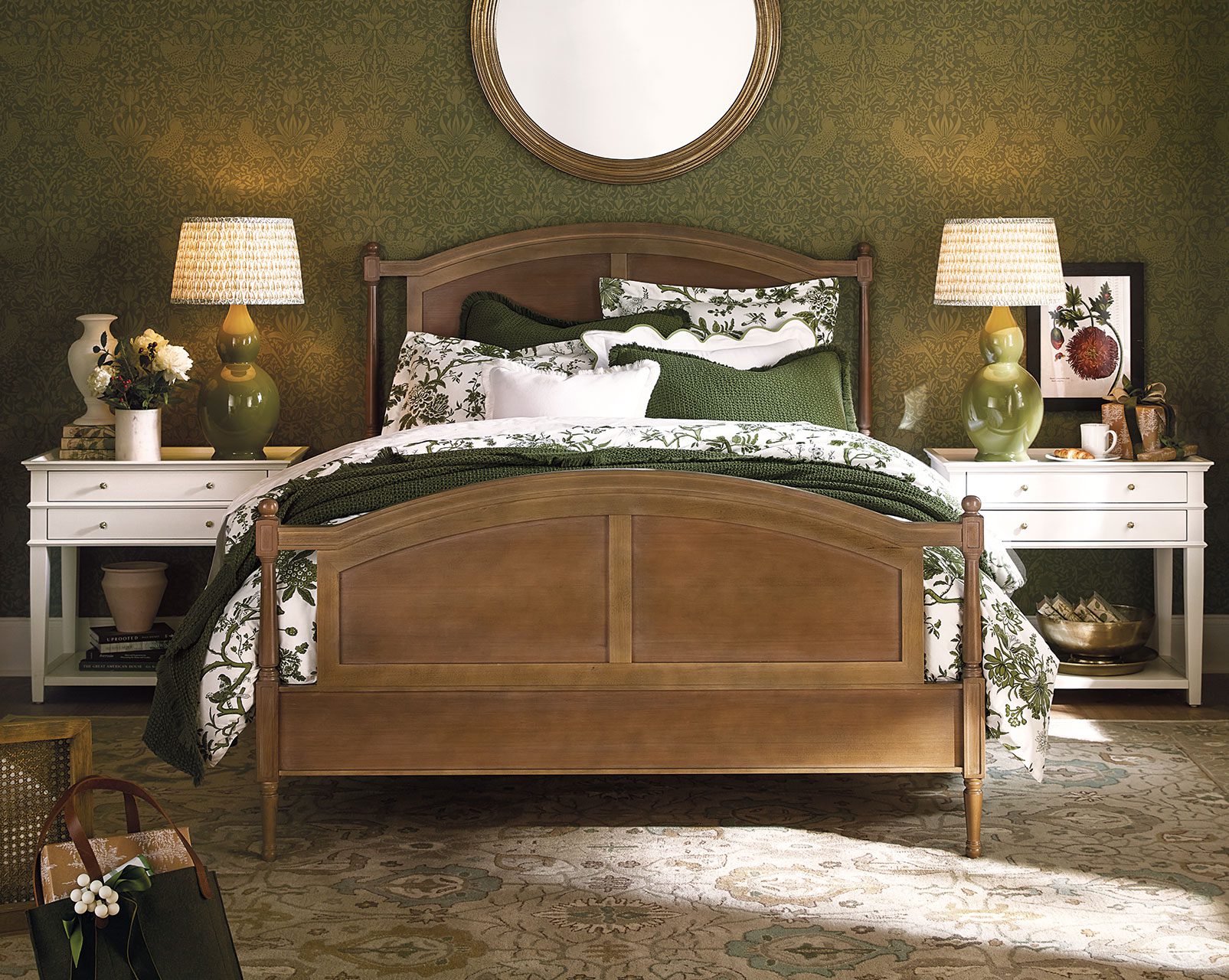
30. The Ultimate Comfy-Cozy Layering Formula
Creating a bed that looks and feels incredibly comfy is a step-by-step process. Time: 20 minutes. Cost: Varies.
✅ Before You Start
- Start with Great Sheets: Use a quality fitted and flat sheet.
- Add a Duvet or Comforter: This is your main warmth layer. For extra loft, get an insert one size larger than your duvet cover. Fold the top quarter back.
- Add a Second Layer: Drape a quilt, coverlet, or a second duvet across the bottom half of the bed. This adds visual weight and texture.
- Bring in a Throw Blanket: Casually drape a textured throw—like a knit, faux fur, or waffle weave—across a corner or at the foot of the bed.
- Pillow Assembly: Start with two sleeping pillows against the headboard, then two Euro shams, then two standard shams, and finish with one or two smaller decorative pillows in front.
Here’s a general budget for achieving a generically comfy, layered bed look without specific high-end furniture.
Your Coziest Chapter Awaits
Creating a bedroom that feels like a true sanctuary is one of the best gifts you can give yourself. Don’t feel pressured to recreate an idea perfectly; instead, take the elements that resonate with you—a color palette, a texture, a lighting idea—and weave them into your own space. Your perfect cozy bedroom is waiting for you.
Feeling inspired? Pin your favorite ideas to your “Cozy Bedroom” board on Pinterest and start planning your perfect retreat!