You know that feeling when you finally find the kitchen lighting idea that looks exactly right for your space? It can feel like wading through a sea of pendants and sconces on Pinterest, hoping for a sign. But great lighting isn’t just about finding a pretty fixture; it’s about creating layers, setting a mood, and making your kitchen truly work for you.
After filtering through hundreds of options across high-end showrooms and accessible stores like Target and IKEA, we narrowed it down to 29 distinct ideas that actually deliver. We’ve analyzed layouts from cozy galley kitchens to expansive open-plan spaces, covering modern, rustic, and minimalist styles. You’ll see how to layer task, ambient, and accent lighting like a pro. This isn’t just another trend report; it’s a collection of real, functional, and beautiful solutions that are defining kitchens in 2026. Pin this guide for later — your future self will thank you when it’s time to get started.
And stay until the end — we break down the most common mistakes that can ruin these looks. 📌 Save this to Pinterest for later — you’ll want to revisit these ideas.
1. Mixed Brass Lighting in a Modern Grey Kitchen
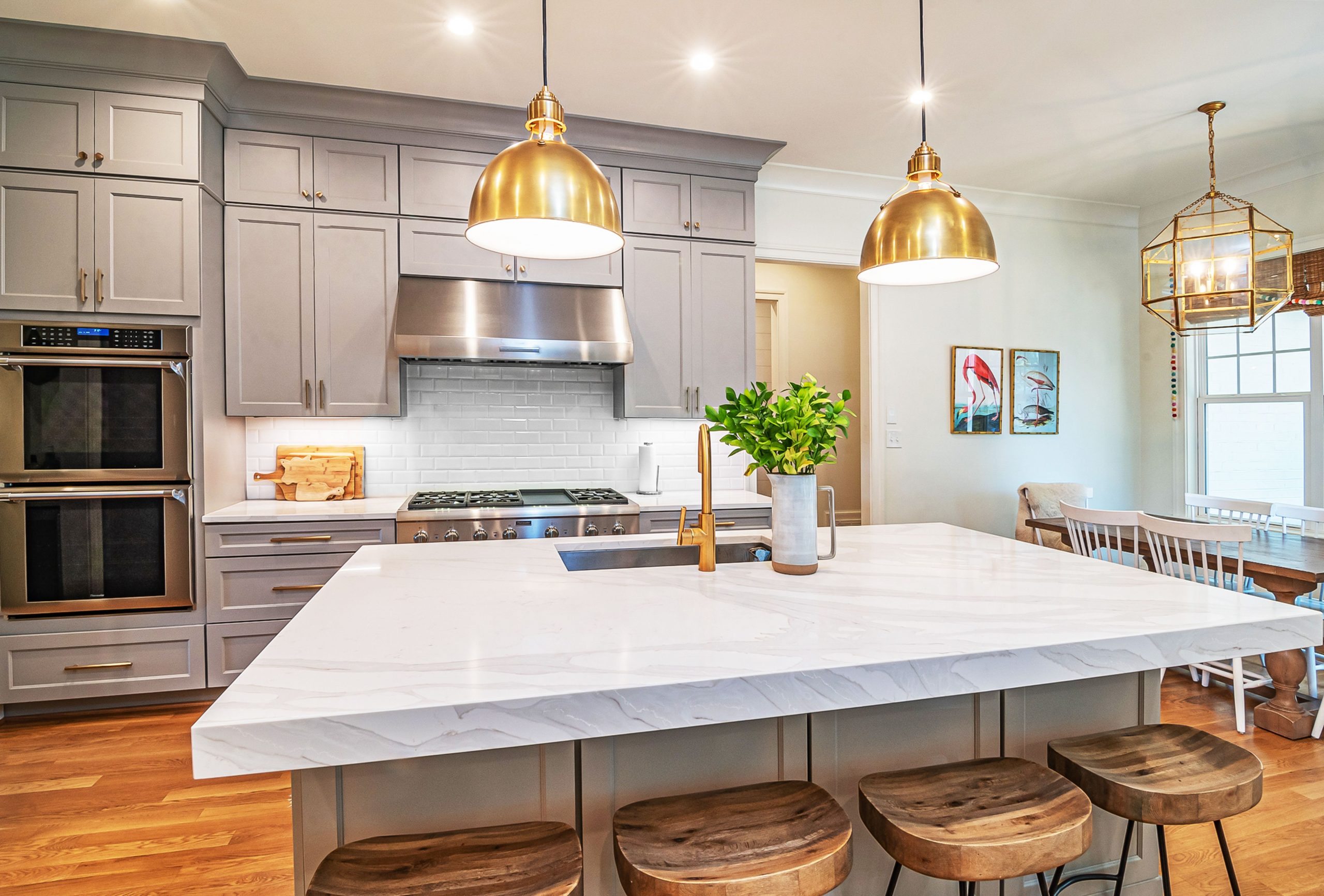
This kitchen design gets its warmth and character from the smart decision to mix, not match, the lighting fixtures. The large brass dome pendants over the island provide fantastic focused light, while the more traditional, intricate lantern in the nearby dining space adds a layer of elegance and visual interest. This works because both fixtures share the same warm brass finish, creating a cohesive look without being repetitive. The brass also beautifully contrasts with the cool light grey cabinetry and stainless steel appliances.
📐 Style Math
When mixing light fixtures in an open-concept space, stick to a single metal finish to tie everything together. However, feel free to vary the style and scale. For instance, pair simple, modern pendants over the island with a more ornate, traditional chandelier over the dining table, like you see here. This creates distinct ‘zones’ and adds a curated, designer feel to the space. Aim for the bottom of the island pendants to be 30-36 inches above the countertop.
2. Tiered Pendants and a Chandelier Over a Long Island
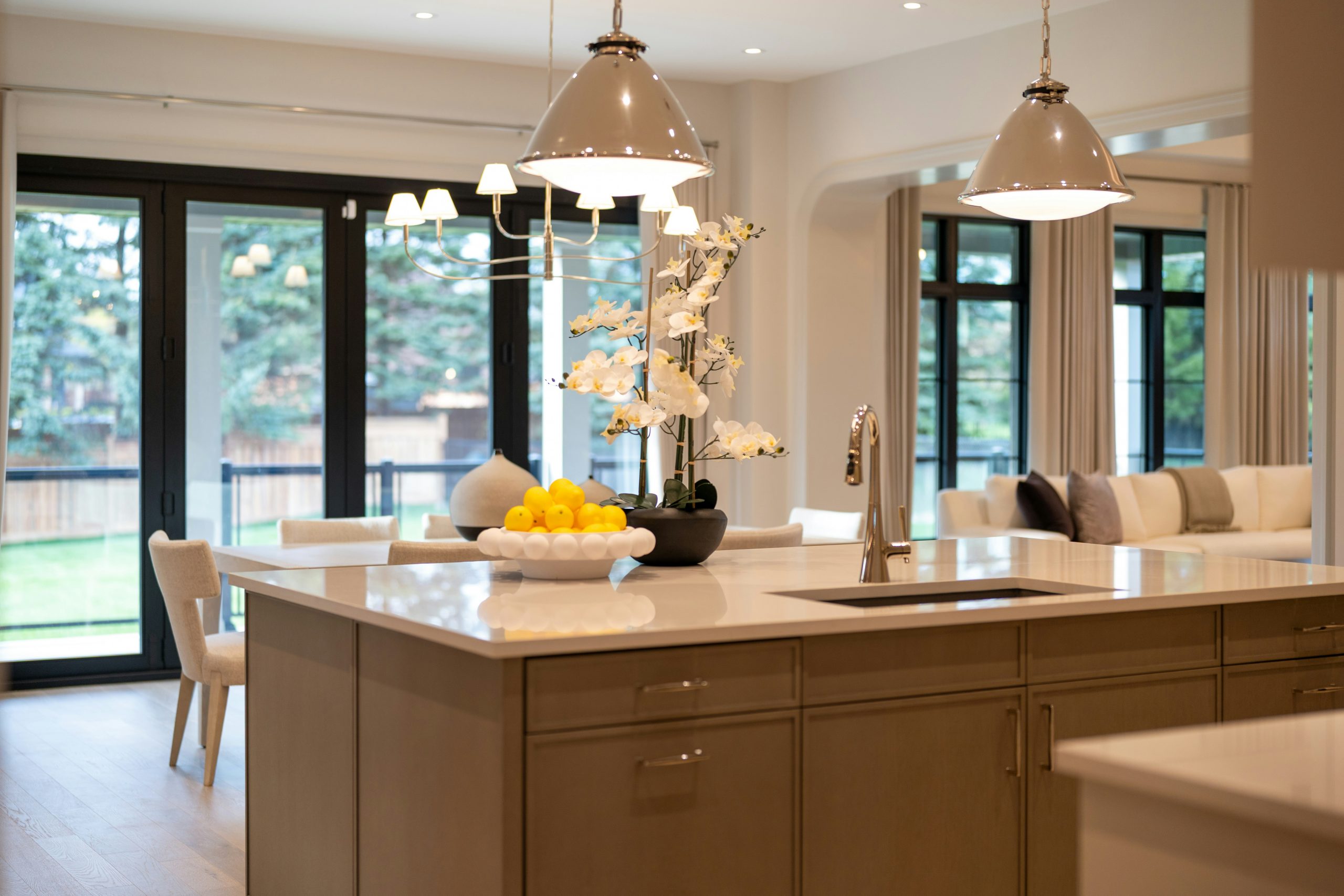
This grand lighting setup is best suited for kitchens with generous proportions and high ceilings (at least 10 feet). The elongated island requires multiple points of light to feel evenly illuminated, and the combination of two large pendants flanking a central chandelier achieves this beautifully. This idea works best in a room with a minimum width of 15 feet to allow for comfortable traffic flow around the island. For a smaller space, consider a scaled-down version of this with two pendants or a single linear fixture.
💡 Designer Tip
Let’s be honest: a multi-fixture setup like this requires planning and a bigger budget, not just for the lights themselves but for the electrical work. You’ll need a licensed electrician to run wiring to three separate junction boxes in the ceiling. Also, consider the cleaning—a polished silver chandelier with many arms and bulbs will collect dust and require more frequent, careful maintenance than the simpler dome pendants. It’s a stunning look, but it’s not low-maintenance.
3. Warm Copper Domes in a Cool Grey Kitchen
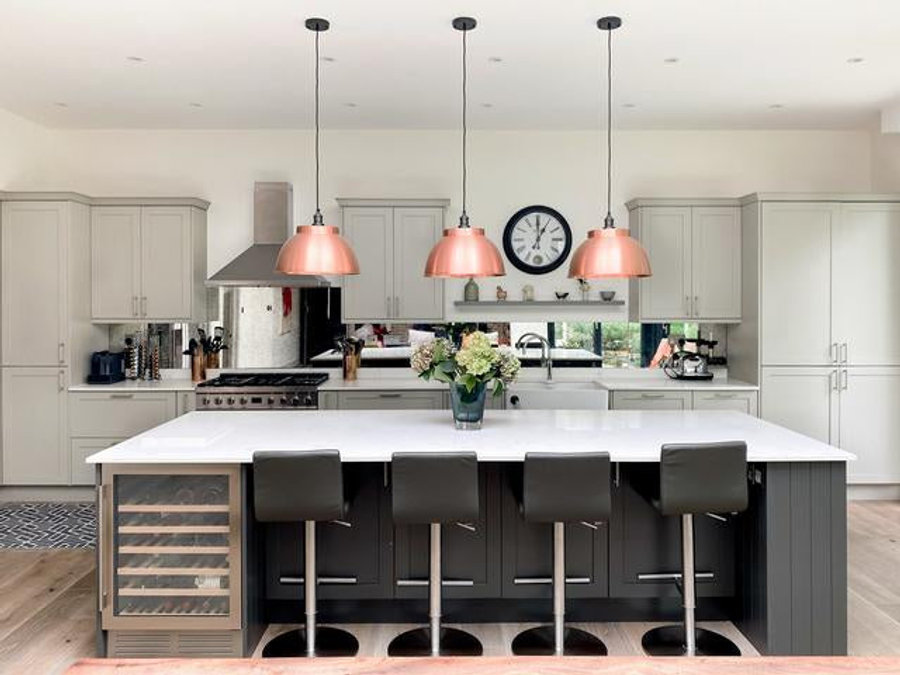
The single element that makes this kitchen unforgettable is the quartet of copper dome pendants. Without them, the kitchen would be a perfectly nice, modern space with its cool grey cabinetry. But the copper lights introduce a jolt of warmth, color, and personality. They are the undeniable focal point, proving that your lighting choice can be the primary design statement. The metallic sheen contrasts with the matte cabinet finishes, and the warm tone prevents the grey palette from feeling too cold or clinical.
💰 Budget Breakdown
Think of this design as a simple formula: 70% cool neutrals + 20% warm metallic + 10% reflective surfaces. The cool neutrals are the light grey cabinets and dark grey island. The warm metallic is the bold choice of copper. The reflective surfaces are the mirrored backsplash and stainless steel appliances, which bounce light around. You could swap the copper for brass for a similar effect or trade the grey cabinets for navy blue to create a moodier, more dramatic version of the same balanced style.
4. Green Industrial Pendants as a Bold Accent
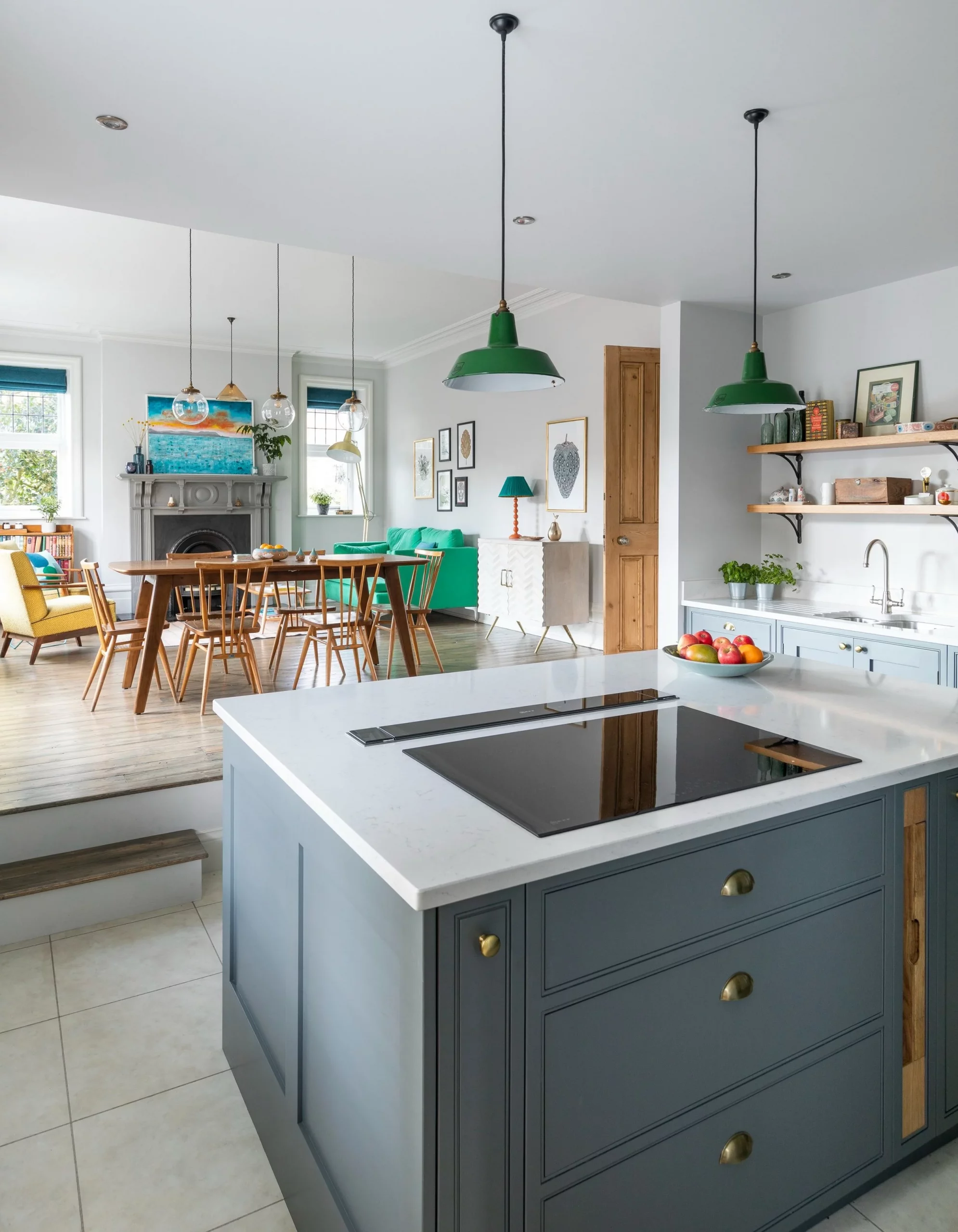
You don’t need a custom kitchen budget to make a statement with lighting. The key to this look is the confidence of the accent color. You can find similar large, industrial-style metal pendants at places like IKEA (check their RANARP series) or online retailers like Wayfair and Barn Light Electric for $100-$300 each. Pair them with affordable recessed ‘can’ lights to ensure the rest of the kitchen is practical and well-lit. The real savings come from making the pendants the star, allowing you to use more standard cabinetry and countertop finishes elsewhere.
📏 Scale Guide
Kitchens are becoming more personalized spaces, moving away from all-white-everything. Homeowners are treating their islands like a piece of furniture, and that includes giving it statement jewelry in the form of lighting. A pop of saturated color, like this vibrant green, is a 2026 trend that lets you inject personality without committing to a full wall of intense color. It’s a confident, joyful choice that signals the kitchen is the heart of the home, not just a utility space. This look has staying power because the color is contained to the fixtures, which are relatively easy to swap out in the future.
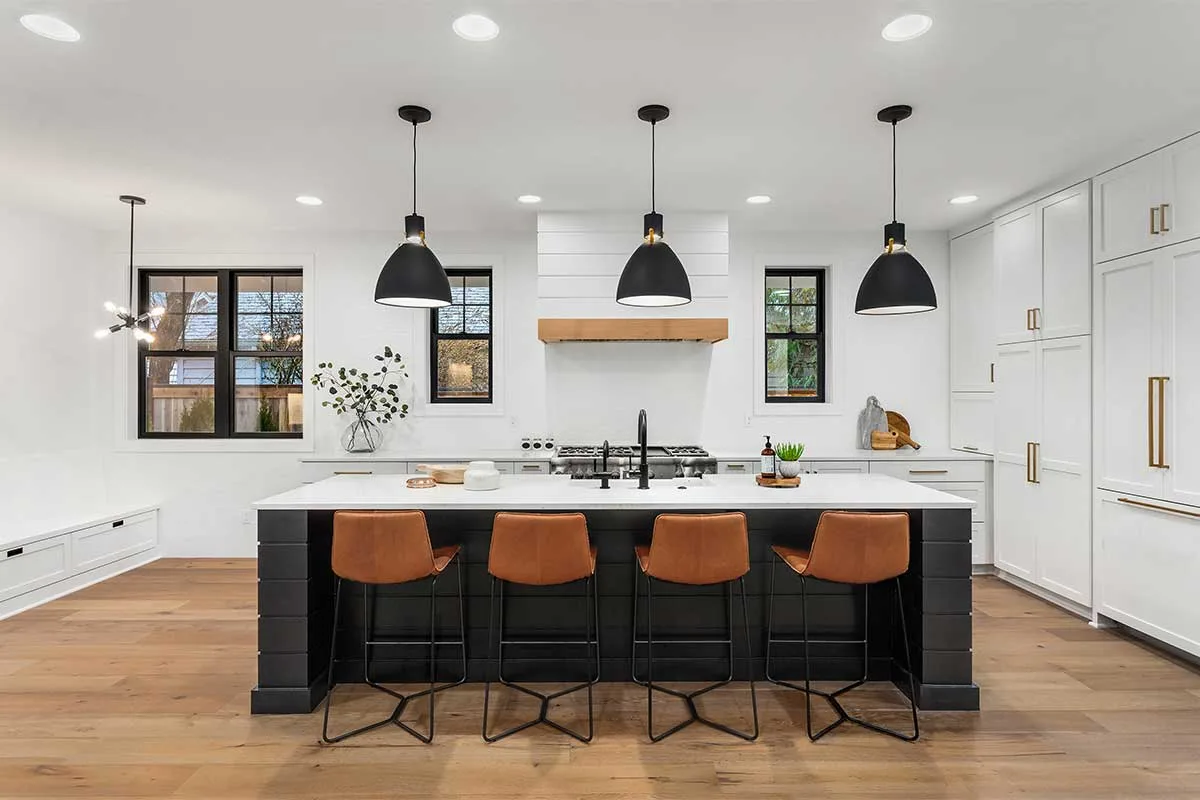
5. Black Pendants in a High-Contrast Black and White Kitchen
The success of this kitchen lies in its masterful use of contrast and repetition. The bold black of the three pendant lights is echoed in the window frames, the range hood detail, and the island base, creating a strong visual rhythm that guides your eye through the space. Meanwhile, the white walls, ceiling, and countertop keep the room feeling bright and open, preventing the black accents from becoming overwhelming. The warm wood tones and gold details on the lights provide just enough warmth to make the space feel inviting rather than stark.
🎯 What Makes It Work
A black-and-white palette is timeless, but it’s also unforgiving. Black surfaces, especially matte or semi-gloss ones on an island, will show every fingerprint, smudge, and speck of dust. Similarly, glossy white countertops can be prone to showing coffee rings and spills more readily than a patterned or darker material. Be prepared for more frequent wipe-downs to keep this high-contrast look crisp and clean. The pay-off is a chic, graphic space, but it requires diligence.
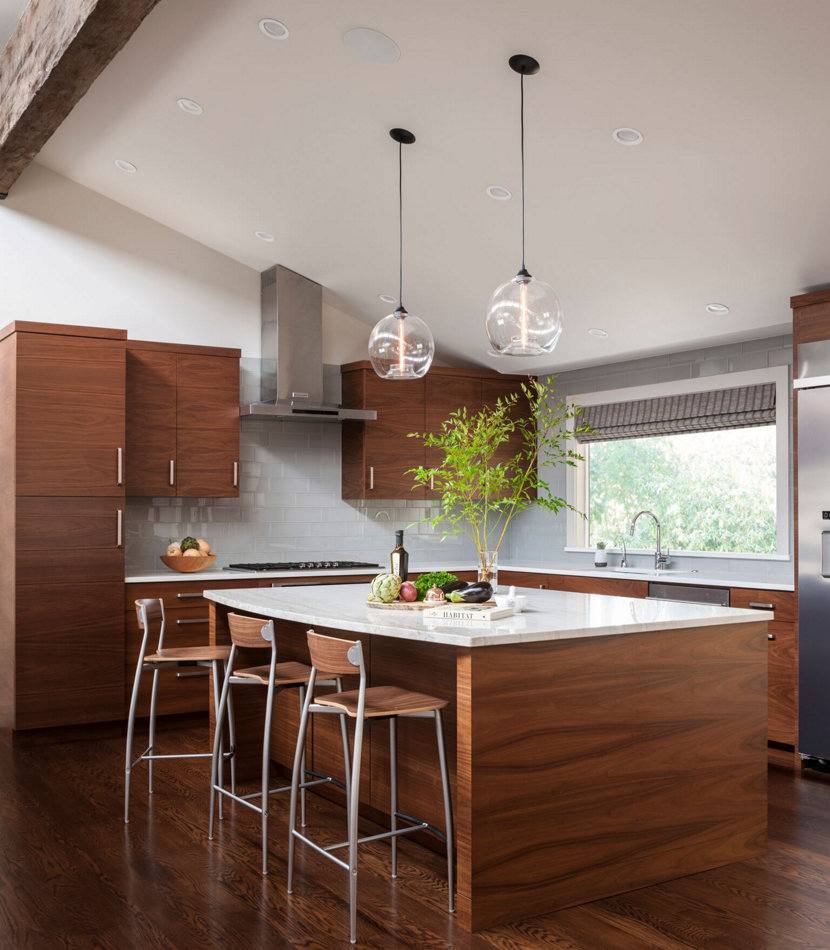
6. Clear Glass Globes Over a Wood and Marble Island
Clear glass pendants are beautiful and airy, but they come with two practical challenges. First, they hide nothing. The bulb itself becomes a major part of the design, so you need to choose an attractive one (like an Edison bulb or a modern LED filament bulb). Second, they need to be spotlessly clean, both inside and out. Any dust, grease, or fingerprints will be immediately obvious. If you’re a meticulous cleaner, go for it! If not, a frosted or milk glass pendant might give you a similar look with less upkeep. See the frosted glass in Idea #25 for comparison.
⭐ The One Thing
When using clear glass pendants, the bulb is as important as the fixture. Pay close attention to the bulb’s color temperature, measured in Kelvins (K). For a kitchen, you want a balance between warm and bright. Look for bulbs in the 2700K to 3000K range. This will give you a welcoming, slightly warm light that’s still clear enough for cooking tasks, and it will beautifully complement the warmth of the wood cabinetry shown here.
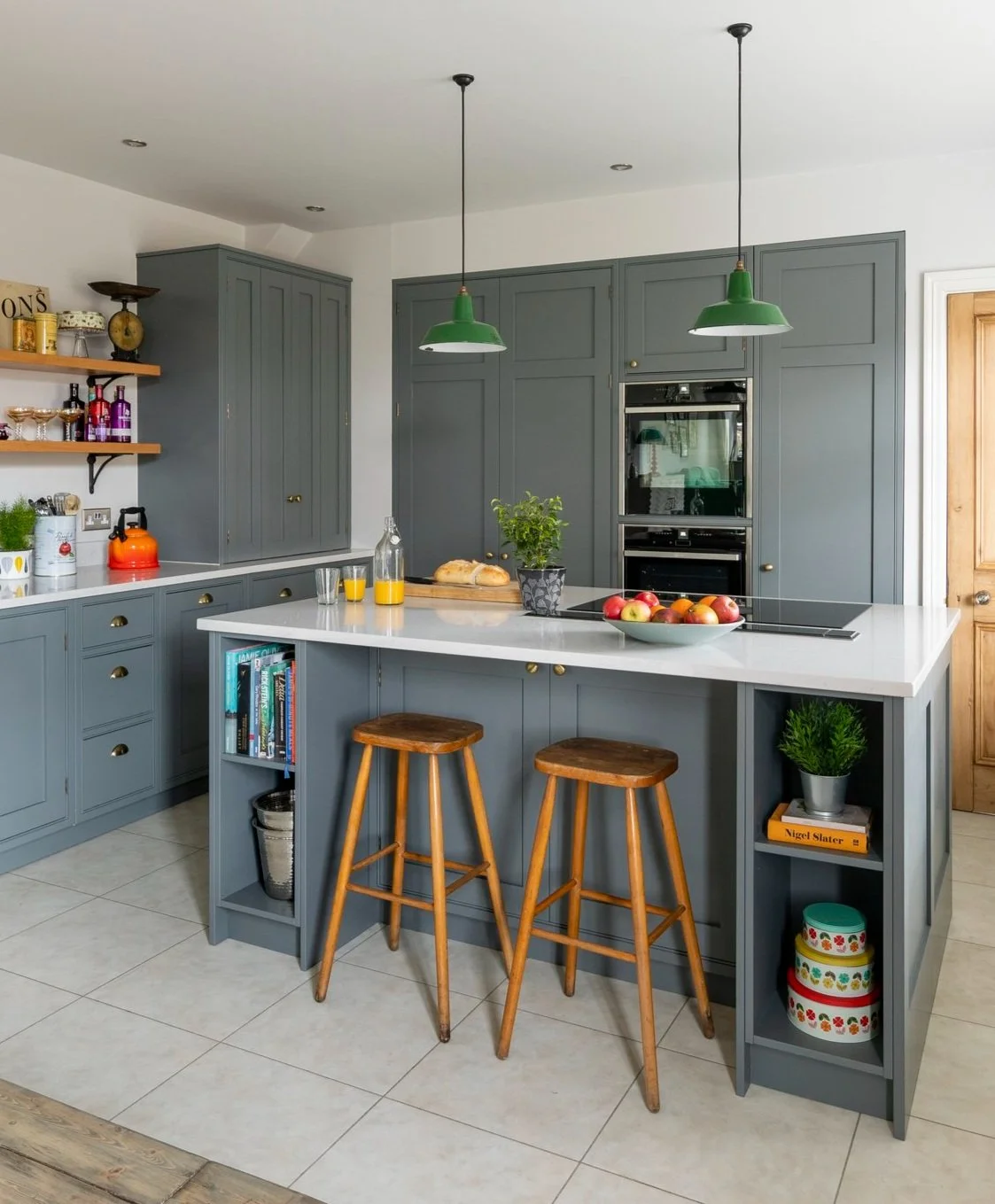
7. Bright Green Task Pendants for a Pop of Color
that absolutely makes this design work is the unapologetic use of color in the pendant lights. The bright green is a surprising, joyful choice against the neutral backdrop of grey shaker cabinets and a simple white quartz countertop. It elevates the entire room from a ‘nice, standard kitchen’ to a ‘kitchen with personality.’ Removing the green lights would make the space feel generic, proving that a single, bold decision can define the entire aesthetic. This is a great lesson in being brave with accent pieces.
🧹 Maintenance Reality
Recreating this specific and colorful look is surprisingly approachable. The focus is on the statement lights, allowing for savings elsewhere.
- Main Furniture (Island + Stools): $2,000 – $4,500
- Lighting (Pendants): $300 – $800
- Textiles (N/A): $0
- Decor/Accessories: $50 – $200
- Paint/Wall Treatment: $500 – $1,500
- TOTAL: $2,850 – $7,000
Budget alternative: Use IKEA cabinet bases with custom shaker-style fronts, a laminate countertop, and find similar industrial pendants from online retailers for a total look under $4,000.
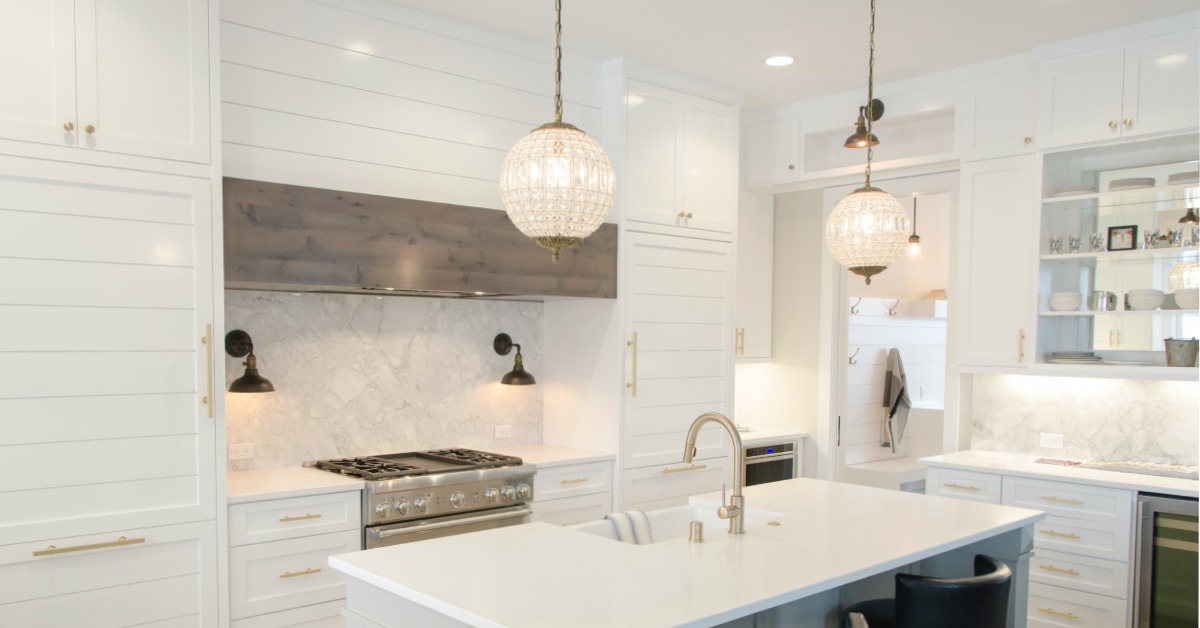
8. Crystal Orb Pendants on a White Shiplap Backdrop
This kitchen’s elegant formula is 50% Modern Farmhouse + 30% Glam + 20% Industrial. The white shiplap on the cabinets and the simple structure are pure modern farmhouse. The crystal orb pendants and marble-patterned backsplash bring in a dose of glamour and sophistication. Finally, the dark metal sconces over the range add a touch of industrial edge. You could change the formula by swapping the crystal pendants for black metal domes to lean more industrial, or by using simple glass globes for a more minimalist farmhouse feel.
🔧 How-To Brief
Installing wall sconces over your range, like the ones here, adds a beautiful layer of task lighting. Here’s a quick guide:
- Time Estimate: 2-4 hours (plus electrician’s time). Cost: $150-$400 for an electrician.
- First, turn off the power at the breaker! This is non-negotiable.
- Plan your placement. Sconces above a range should typically be placed 30-36 inches above the countertop, outside the main cooking splatter zone.
- Have a licensed electrician run the necessary wiring from a power source to the desired locations for your sconces.
- Once the electrical boxes are in place, you can mount the sconce backplates according to the manufacturer’s instructions.
- Connect the wires (usually black to black, white to white, and copper to the green ground screw), attach the fixture, install the bulbs, and then you can safely turn the power back on.
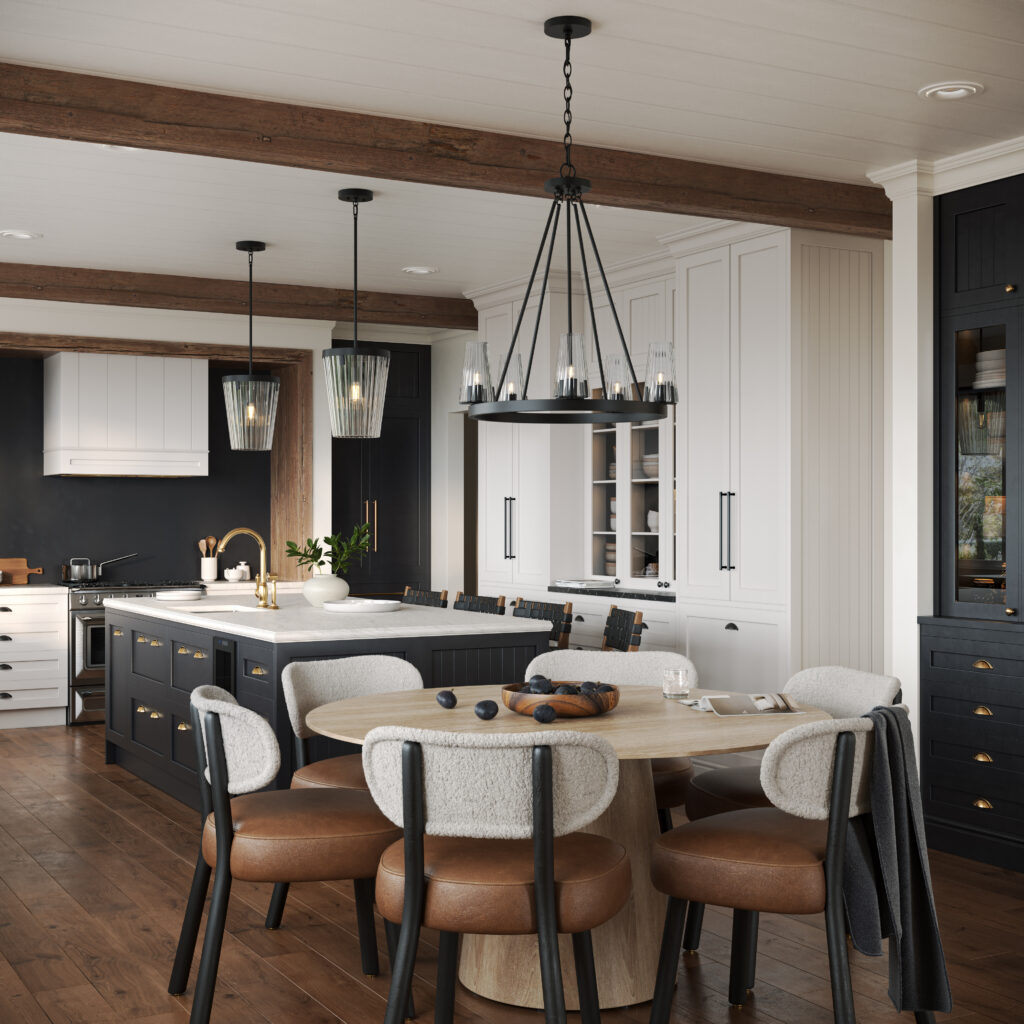
9. Modern Farmhouse Contrast with Black Fixtures and Wood Beams
This look is all about the powerful interplay of texture and contrast. The rough, warm texture of the wooden ceiling beams and floorboards creates a beautiful tension with the smooth, cool surfaces of the white cabinets and black island. The lighting choices amplify this: the industrial-style black chandelier is bold and graphic, while the fluted glass pendants offer a softer, more delicate light. This layering of textures and light sources makes the space feel rich, curated, and anything but one-note.
🔥 Trending Context
This style, particularly with the addition of substantial wooden beams, thrives in a room with generous ceiling height—9 feet is the minimum, but 10-12 feet is ideal. The high contrast of black and white also works best in a space that receives ample natural light. In a smaller or darker kitchen, such a strong contrast could feel overwhelming. For a galley kitchen, consider a scaled-down version of this palette: white cabinets, a wood countertop, and smaller black pendant lights to maintain the vibe without visually shrinking the space.
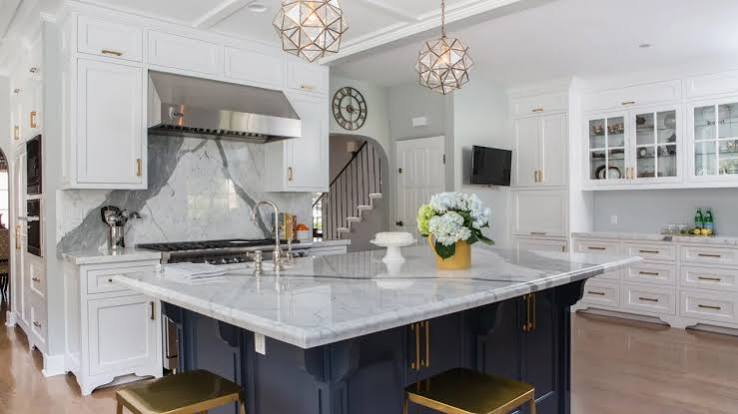
10. Contemporary Gold Pendants Above a Blue Island
When pairing a bold color like this deep blue island with a metallic fixture, the finish is key. A brushed or satin gold finish, rather than a highly polished one, adds warmth and sophistication without looking too flashy. To ensure the pendants feel balanced over the island, follow the rule of odds. Use one, three, or five fixtures, depending on the island’s length. For a typical 6-8 foot island, three pendants is usually the sweet spot, spaced about 24-30 inches apart center-to-center.
⚠️ Real Talk
You can capture this chic color combination without the designer price tag. Many brands offer navy blue or deep grey kitchen cabinets (IKEA’s AXSTAD series is a great example). Pair them with Surprisingly affordable brushed gold or brass-toned pendant lights from retailers like Target (check their Project 62™ line) or Amazon. A high-quality laminate countertop with a subtle marble effect can give you the look of stone for a fraction of the cost, bringing the entire aesthetic into a more manageable budget.
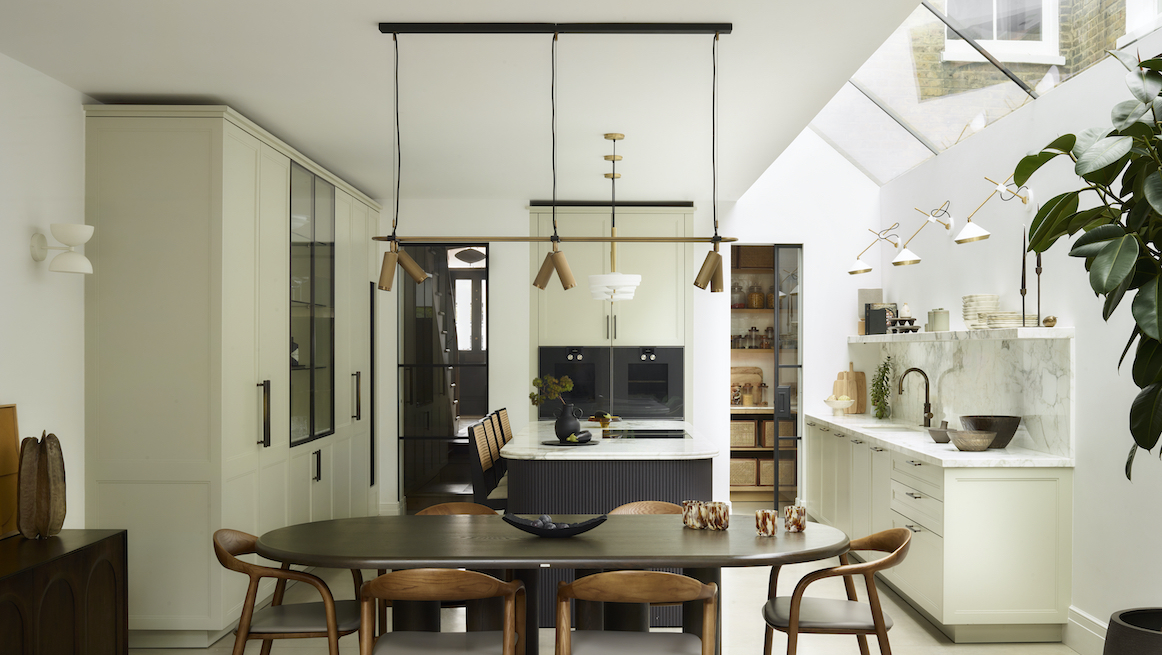
11. Linear Pendants and Articulated Sconces in a Light Green Kitchen
This kitchen demonstrates the power of ‘zoning’ with light. Instead of relying on one central fixture, the design uses different types of lighting for different tasks. The long linear pendant perfectly illuminates the dining table for meals. The articulated wall sconces provide focused, adjustable task lighting over the prep areas along the marble backsplash. Finally, the large skylight provides overall ambient light. This layered approach is both highly functional and visually dynamic, creating pockets of light that make the large space feel more intimate.
💸 Get This Look For Less
The ‘unkitchen’ is a major trend for 2026—designing a kitchen that feels more like a living room. This lighting scheme is central to that idea. The use of decorative sconces and a stylish linear pendant—fixtures you might typically see in a dining or living room—helps the space feel less utilitarian. This approach has staying power because it’s rooted in function; as we spend more time in our kitchens, we demand that they be as comfortable and thoughtfully lit as the rest of our home.
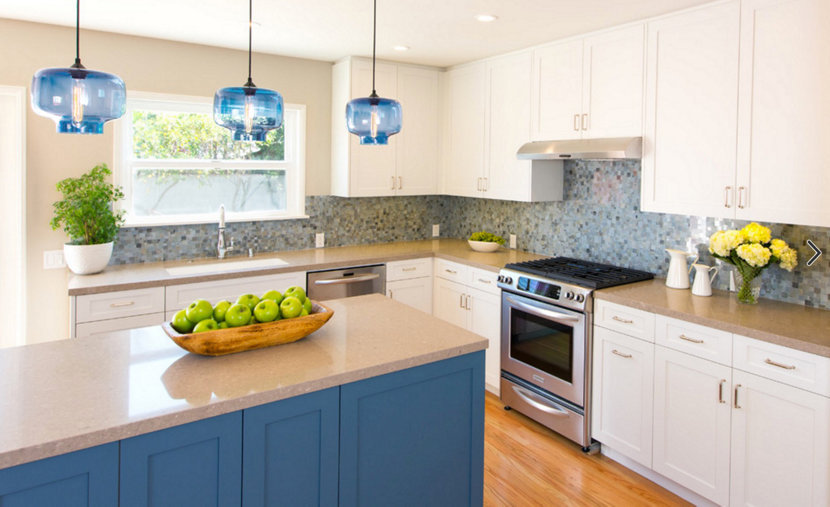
12. Blue Glass Pendants Echoing a Deep Blue Island
The matching blue of the glass pendants and the kitchen island is the simple, brilliant choice that ties this entire room together. It turns the lighting from a functional necessity into a core part of the color palette. This deliberate color echo is what gives the design its cohesive, professionally-styled feel. If the pendants were clear glass or a metallic finish, the kitchen would still be nice, but it would lose this powerful and intentional design story. Compare this to the pop of *contrasting* color in Idea #7.
✅ Before You Start
Committing to a specific color for your pendant lights, especially one that matches your cabinetry, can feel like a big decision. While it looks fantastic here, be aware that you’re tying yourself to that color scheme more tightly. If you decide to repaint your island in a few years, your blue pendants might suddenly look out of place. A neutral metallic or glass fixture offers more long-term flexibility. This look is perfect if you love the color and are ready to commit, but it’s something to consider if you’re a serial redecorator.
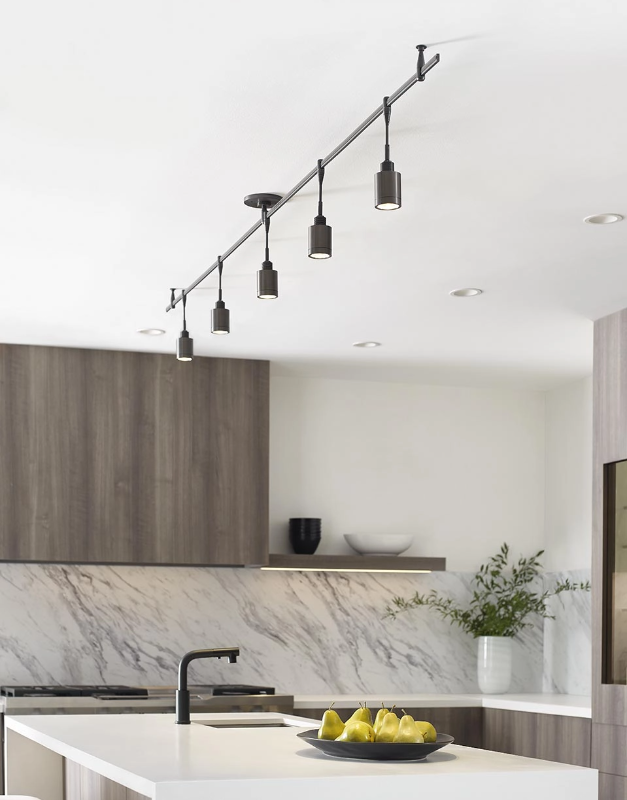
13. A Modern Track System for Focused Kitchen Lighting
Installing a track lighting system is a versatile way to get light exactly where you need it. It’s a great solution for long, narrow spaces like galley kitchens.
- Time: 1-3 hours. Cost: $100 – $500 for the kit.
- Turn off power at the circuit breaker.
- Mount the track to the ceiling, screwing it into ceiling joists for secure support. If you can’t hit joists, use heavy-duty drywall anchors.
- Connect the track’s power end to the existing electrical box in your ceiling, following the kit’s wiring instructions.
- Click the individual light fixtures into the track. You can usually slide them along the track to position them perfectly over your work areas.
- Aim the lights. Point some straight down for task lighting on countertops and others at cabinetry or walls for ambient light.
📐 Style Math
Track lighting is an excellent problem-solver for kitchens with tricky layouts or low ceilings where hanging pendants isn’t feasible. This idea works particularly well in spaces with ceilings between 8 and 9 feet high. The long, linear nature of the track can also create an illusion of length, making it a smart choice for galley kitchens or long, narrow kitchen/dining areas. In a very large, open-plan kitchen, a single track might not provide enough overall ambient light, so it should be paired with recessed lighting as seen here.
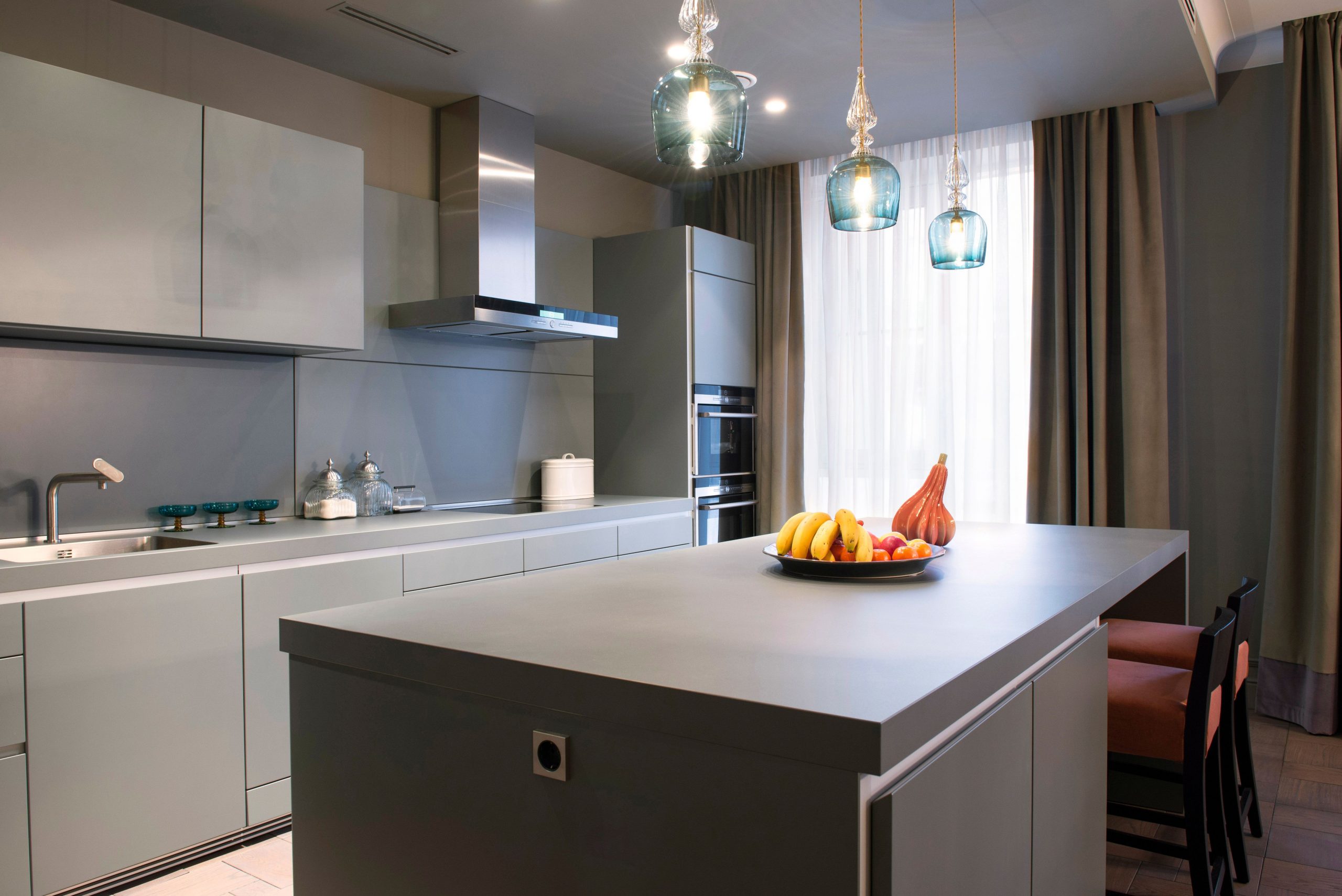
14. Teal Glass Bell Pendants in a Sleek Gray Kitchen
This kitchen’s design formula is about quiet sophistication: 80% monochrome modernism + 20% subtle color and detail. The sleek, handle-less gray cabinetry and matching island create a clean, minimalist base. The ‘20%’ is where the magic happens: the teal glass of the pendants adds a soft, translucent pop of color, while their ornate clear tops add a touch of unexpected detail. The warm brown of the bar stools also contributes to this accent percentage, preventing the gray from feeling flat.
💡 Designer Tip
To keep a sleek, minimalist kitchen from feeling sterile, choose lighting with a bit of personality or unique material. The teal glass here does that perfectly. When hanging multiple pendants, the spacing is critical. A good rule of thumb is to leave about 30 inches between each fixture (from center to center) and at least 6 inches from the edge of the island on each end. This ensures the light is evenly distributed and the fixtures have room to breathe visually.
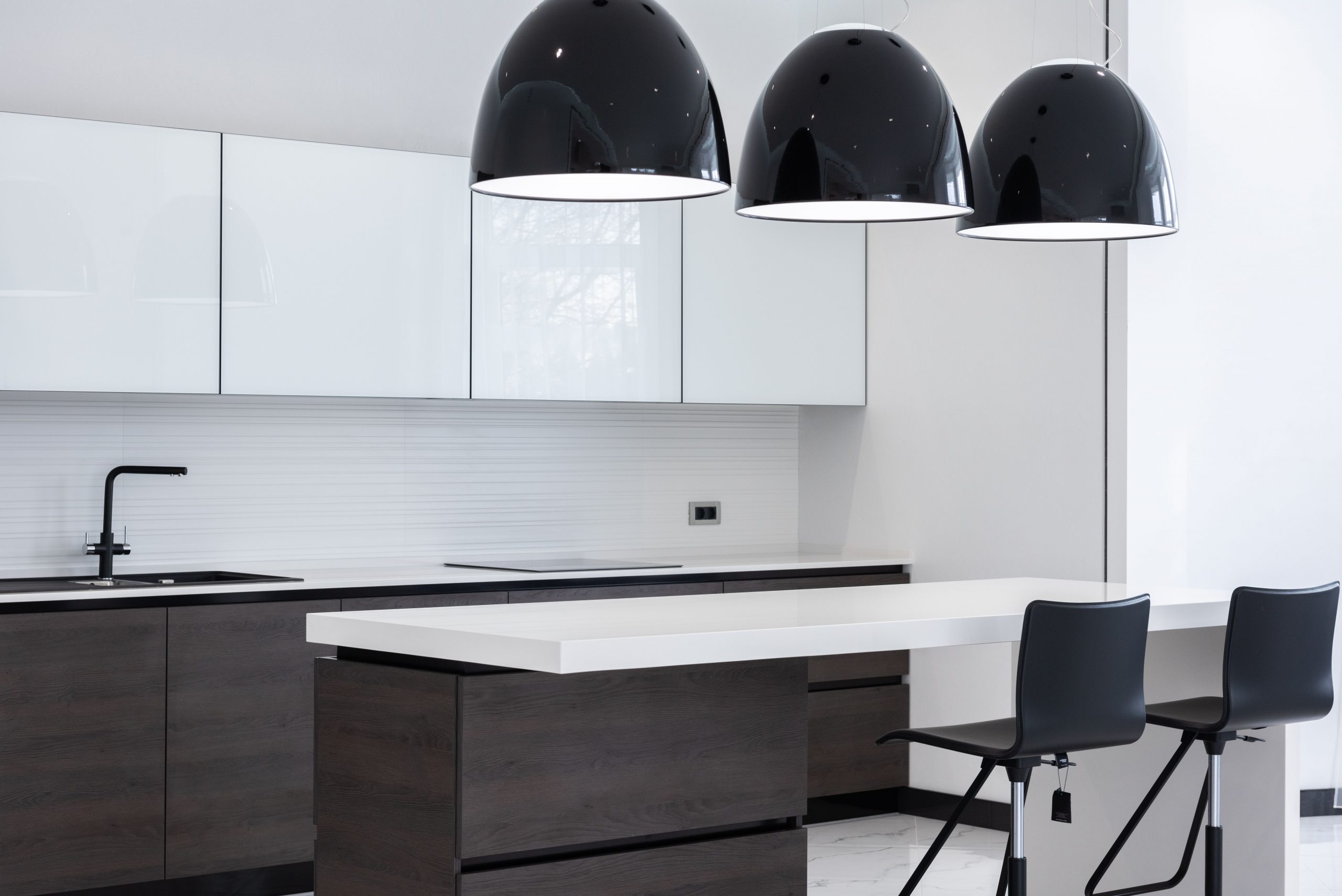
15. Glossy Black Pendants in a Minimalist Kitchen
This kitchen’s minimalist power comes from its strict, limited palette and clean lines. The three large, glossy black pendant lights are the main sculptural element in the room. They work because their bold, simple shape is a scaled-up version of the room’s ethos. The dark wood grain on the lower cabinets adds just enough texture to keep the space from feeling sterile, while the reflective quality of the glossy pendants and white countertops helps bounce light around the room, creating a sense of brightness despite the dark elements.
💰 Budget Breakdown
A word of warning about glossy black finishes. While undeniably chic, they are a magnet for dust and fingerprints and can be prone to showing micro-scratches over time. Keeping these pendants looking their best will require regular dusting with a soft microfiber cloth. Avoid harsh chemical cleaners, which can dull the finish. The same goes for the dark wood cabinets; a damp cloth is your best friend for wiping away smudges and keeping them looking sharp.
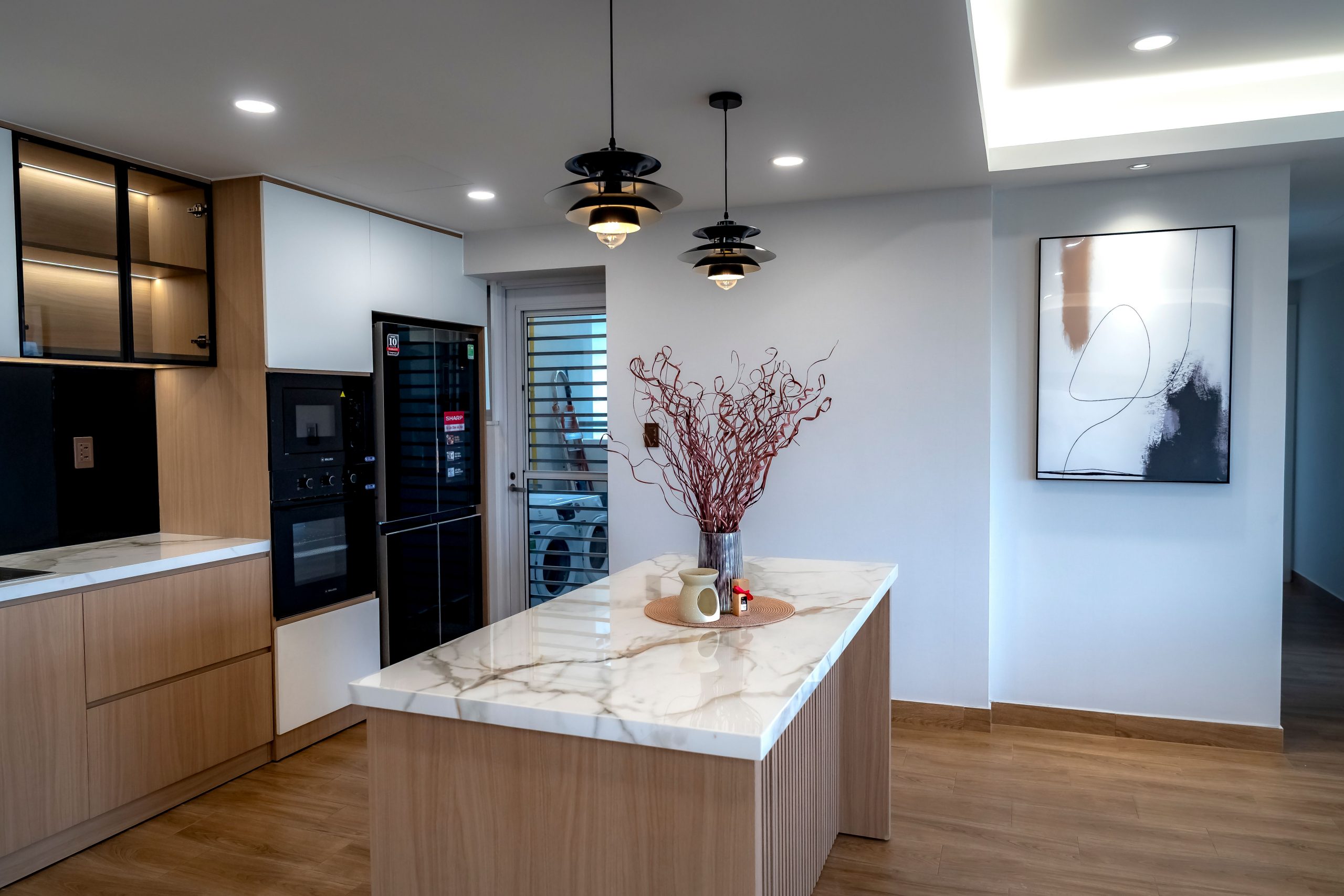
16. Layering Pendants, Recessed, and Under-Cabinet Lights
This kitchen is a masterclass in layered lighting. It doesn’t rely on a single source but combines three types for ultimate flexibility. Recessed ceiling lights provide overall ambient (general) illumination. The pendant lights over the island offer more focused, decorative task lighting for meal prep or dining. Finally, the under-cabinet strip lighting is pure task lighting, eliminating shadows on the countertops. This trio ensures the kitchen is perfectly lit for any activity, from a brightly lit cooking session to a softly dimmed late-night snack.
📏 Scale Guide
Before you commit to a multi-layered lighting plan, run through this quick checklist:
- Have you identified your key work zones? (e.g., sink, cooktop, main prep area on the island) Each needs dedicated task lighting.
- Do you have a plan for controlling each layer of light separately? Use dimmer switches for each type (pendants, recessed, under-cabinet) to give you full control over the mood.
- Is your ceiling height sufficient for your chosen pendants? Ensure at least 30-36 inches of clearance between the countertop and the bottom of the fixture.
- Have you budgeted for an electrician? A complex lighting plan is not a DIY job and requires professional installation.
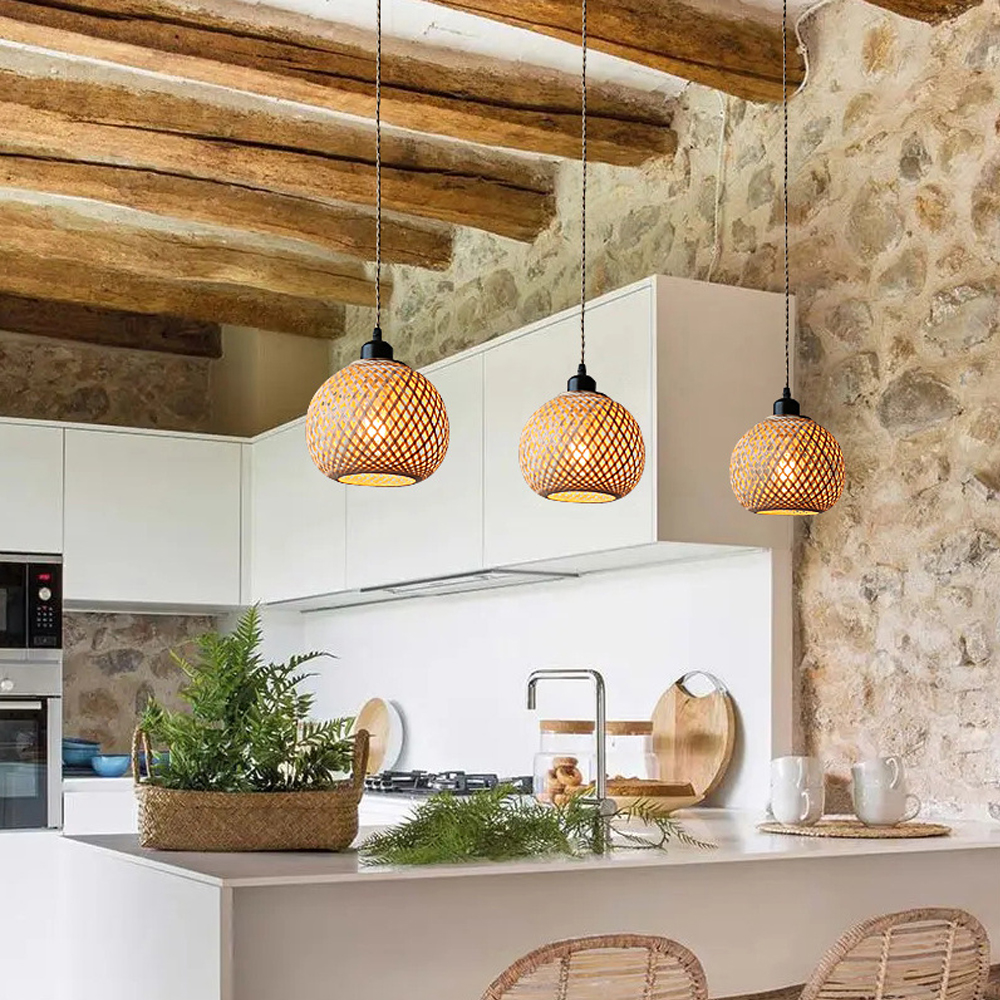
17. Spherical Woven Bamboo Pendants in a Natural Kitchen
The woven bamboo pendants are the heart and soul of this kitchen. They introduce a natural, organic texture that softens the hard surfaces of the stone wall and white cabinetry. Paired with the exposed wooden ceiling beams and green plants, they create a cohesive, calming atmosphere that feels connected to nature. If you replaced these with metal or glass pendants, the room would instantly feel more modern and less rustic. These lights are proof that texture can be as important as color or shape. For more woven inspiration, check out the bell-shaped pendants in Idea #21.
🎯 What Makes It Work
Natural fiber shades like bamboo, rattan, or jute are beautiful, but they do require specific care. They are more susceptible to collecting dust and airborne grease in a kitchen than a smooth-surfaced fixture. To clean them, avoid water or chemical cleaners, which can cause them to warp or stain. Instead, use the soft brush attachment of your vacuum cleaner weekly or bi-weekly to gently remove dust. For spot cleaning, a slightly damp cloth can be used with extreme care, but always test in an inconspicuous area first.
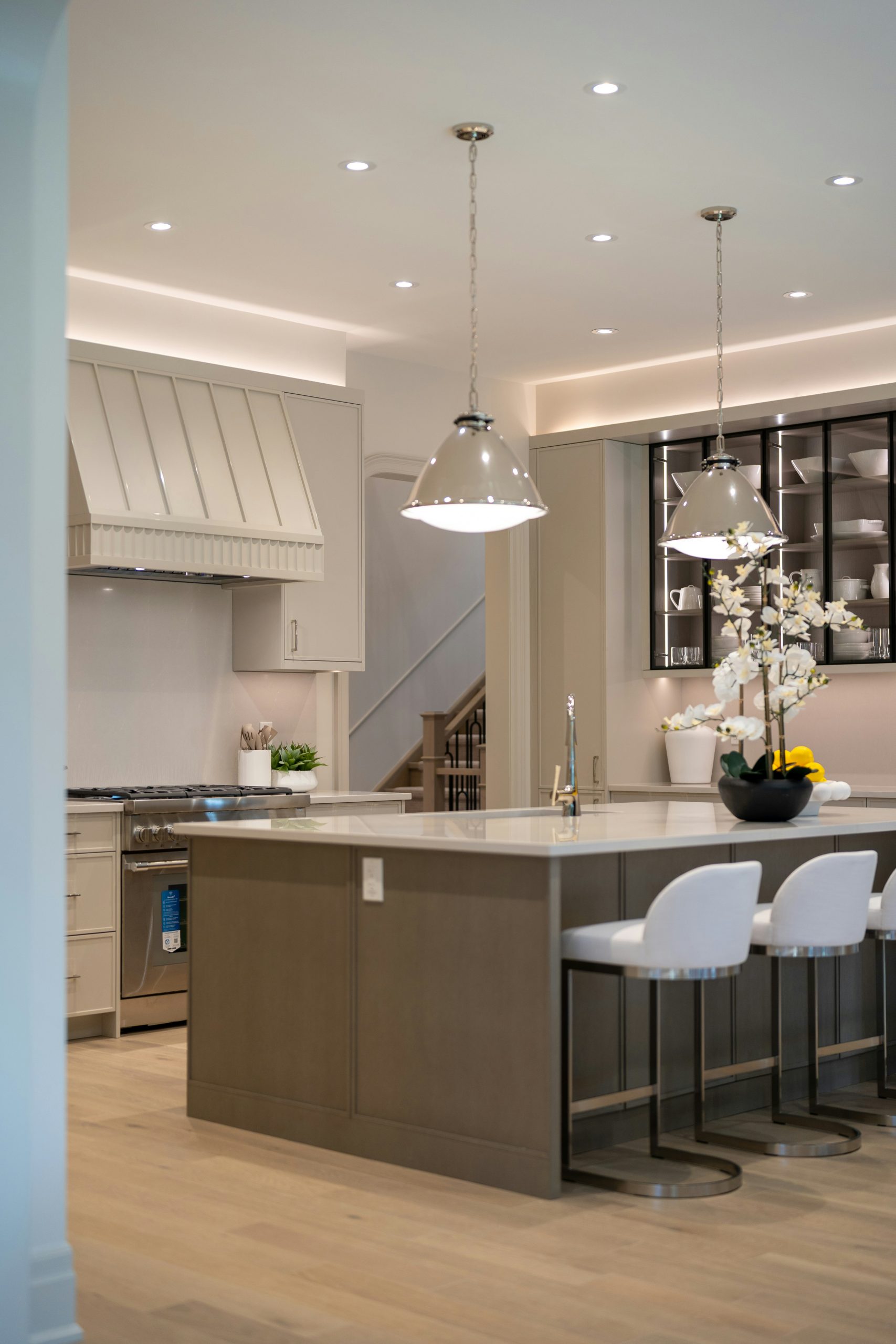
18. Integrated Lighting in a Streamlined Grey Kitchen
For a truly seamless and modern look, consider integrating lighting directly into your cabinetry as shown here. Strip lighting placed inside glass-fronted cabinets turns your display-worthy glassware into a beautiful feature and adds a soft, ambient glow. Similarly, under-cabinet lighting is a non-negotiable for good task lighting. When planning your kitchen, have your electrician install low-profile LED strips and hide the wiring behind light rails or within the cabinet structure for a clean, wire-free finish. Always opt for dimmable strips to control the mood.
⭐ The One Thing
A fully integrated lighting scheme can be costly. To get a similar layered effect on a budget, you don’t need custom cabinetry. You can buy affordable, plug-in or battery-operated LED strip lighting kits online or from stores like Home Depot. These can be easily installed under your existing upper cabinets and even inside them. While it might not be as seamless as a hardwired system, it provides the same functional and atmospheric benefits for a fraction of the price and effort.
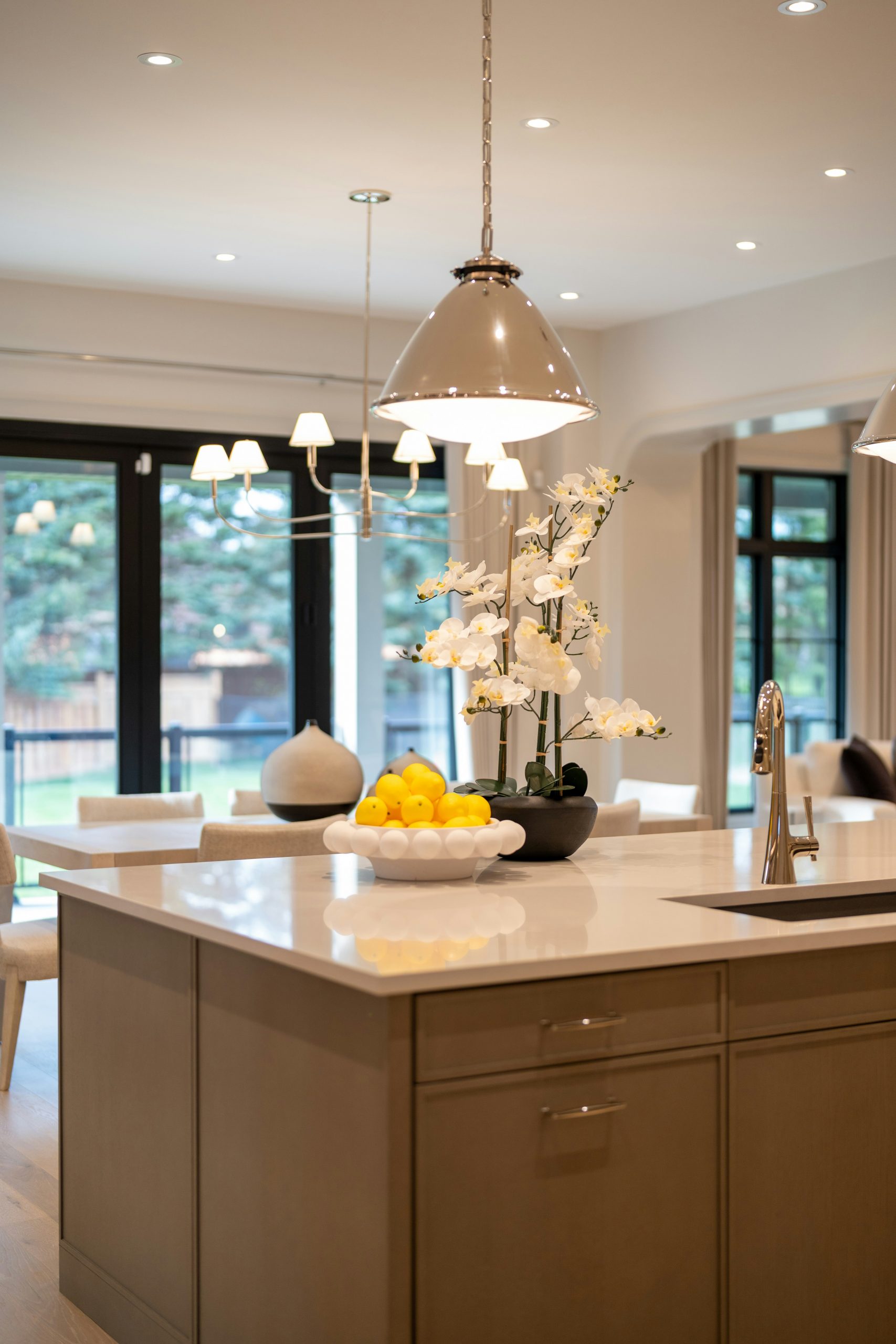
19. Polished Dome Pendants and a Dining Chandelier
This dual-fixture approach works best in a long, open-concept kitchen and dining area where you want to create two distinct zones. The room should be at least 20 feet long to allow each lighting feature to have its own space without feeling crowded. The polished dome pendants are great for a ceiling height of 8-10 feet over the island, while the multi-light chandelier benefits from a slightly taller ceiling (9+ feet) in the dining area, especially if it’s over a table where people will be standing up and sitting down.
🧹 Maintenance Reality
Mixing different styles of light fixtures can be tricky; it’s a fine line between ‘eclectic’ and ‘chaotic.’ The key, as seen here, is a shared attribute. Both the pendants and the chandelier share a polished silver/chrome finish. This common material makes them feel like cousins, not strangers. If you were to mix a chrome pendant with a brass chandelier and a black track light, the space would likely feel disjointed. When in doubt, stick to one metal finish as your common thread.
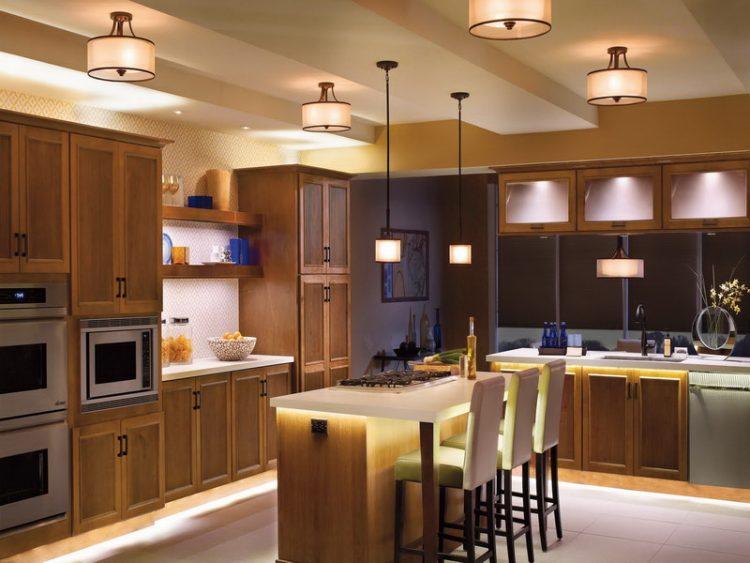
20. The Glow-Up: Under-Cabinet and Toe-Kick Lighting
Adding toe-kick lighting is a custom touch that makes a kitchen feel high-end. It provides a soft, ambient glow and can act as a nightlight. Here’s how to do it:
- Time: 2-4 hours. Cost: $100-$300 for LED strips and driver.
- Choose a flexible, dimmable LED tape light kit in a warm white (2700K is nice for this).
- Plan your layout. The strip needs to run along the recessed toe-kick area under your base cabinets. You’ll need to drill small holes between cabinet sections to pass the tape through.
- Install a low-voltage transformer (driver), usually hidden inside the sink base cabinet, and have an electrician connect it to a switched power source.
- Clean the toe-kick surface, then peel and stick the LED tape in place.
- Connect the tape to the driver and test it out. It’s an instant upgrade!
🔧 How-To Brief
Focusing on these integrated lighting layers can be a surprisingly effective use of your budget to achieve a luxe look.
- Under-Cabinet Lighting: $200 – $600 (hardwired)
- Toe-Kick Lighting: $300 – $800 (hardwired)
- Pendant Lights: $400 – $1,200 for a set of two
- Ceiling Drum Lights: $150 – $400 each
- TOTAL: $1,050 – $3,000
Budget alternative: Use plug-in or battery-powered LED strips for under-cabinet and toe-kick areas. You can get a great effect for under $200, though it’s less seamless than the hardwired option shown here.
21. Large Woven Bell Pendants Under a Vaulted Ceiling
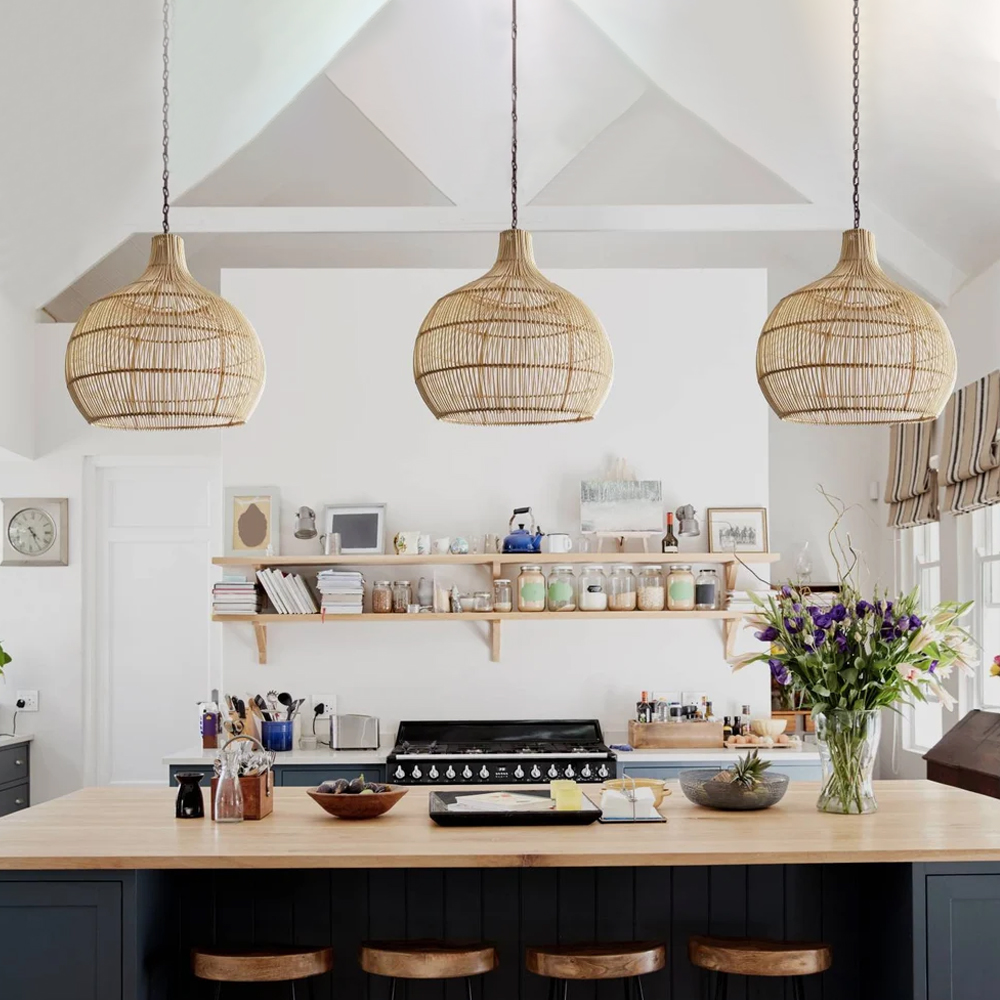
Statement pendants of this size are made for rooms with dramatic, high, or vaulted ceilings. In a standard 8-foot ceiling room, these fixtures would overwhelm the space and hang too low. They are perfect here because they fill the vertical volume, drawing the eye upward and accentuating the airy height of the room. This look is ideal for ceilings 10 feet or higher. The large kitchen island also provides the necessary horizontal anchor, balancing the visual weight of the pendants.
🔥 Trending Context
This design is a masterclass in balancing scale and texture. The large, bell-shaped woven pendants are proportional to the generous size of the island and the room’s high ceilings. Their natural, light-brown texture provides a crucial warm and organic contrast to the crisp white walls and the dark blue island base. The open shelving, styled with everyday objects, further contributes to this relaxed, functional, and inviting aesthetic. It’s a perfect blend of grand scale and approachable materials, a look similar to the bamboo globes in Idea #17 but with a different silhouette.
22. Cylindrical Rattan Pendants for a Coastal Vibe
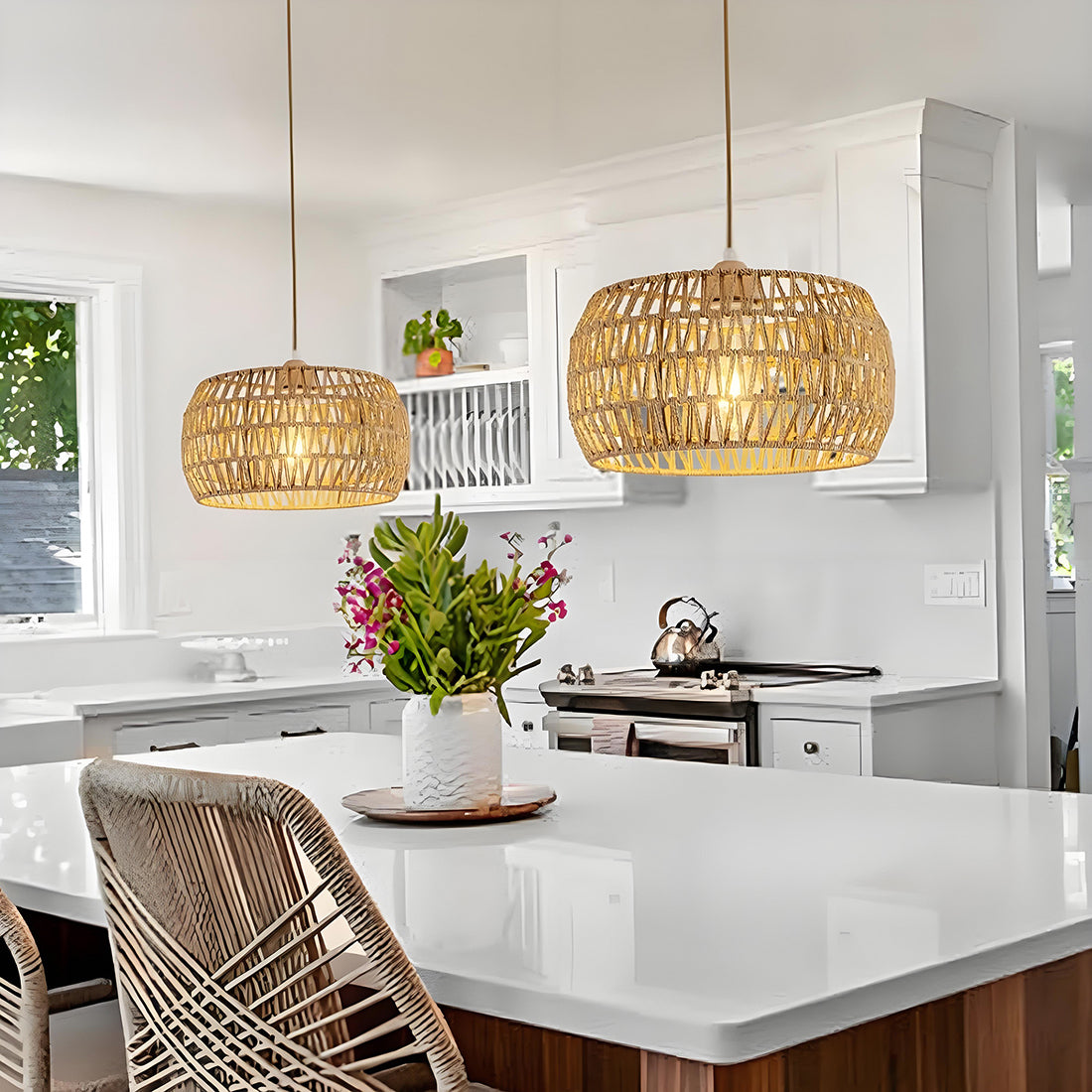
The single element that defines this kitchen’s breezy, coastal feel is the pair of woven rattan pendant lights. Their natural texture and light, airy construction are a hallmark of beach-inspired design. If you were to swap these out for metal or glass fixtures, the ‘coastal’ vibe would largely disappear, even with the white and wood palette. It proves that the right lighting material can instantly transport you and define an entire style genre. The cylindrical shape is a modern take on the more common globe or bell-shaped rattan light.
⚠️ Real Talk
This light and airy coastal look is very achievable on a budget. Rattan and wicker pendant lights are widely available at affordable prices from stores like IKEA (the SINNERLIG pendant is a classic), Target, and World Market, often for under $100 each. Pair them with simple, affordable white cabinets and a butcher block or laminate countertop to complete the look. The key is to keep the palette simple—white, wood, and natural fibers—which are all budget-friendly choices.
23. Black Cone Pendants in a Modern Grey Shaker Kitchen
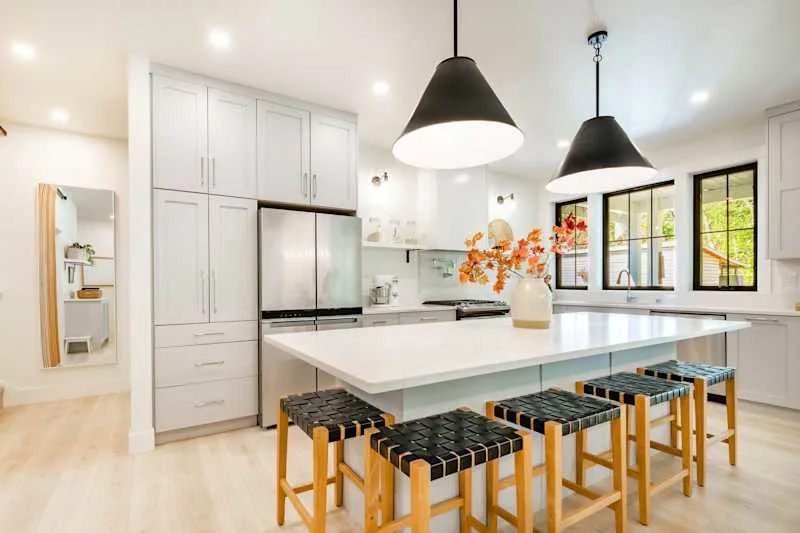
This kitchen’s successful formula is all about balance: 60% Classic (shaker cabinets, white countertop) + 30% Modern (black cone pendants, gridded windows) + 10% Warmth (wood and leather stools). The shaker cabinets are a timeless choice that won’t go out of style. The clean lines of the black pendants and window frames add a crisp, contemporary edge. Finally, the light wood and woven leather of the stools prevent the grey and black scheme from feeling too cold. It’s a perfectly calibrated mix of classic and current.
💸 Get This Look For Less
When using down-lighting pendants like these cones, be mindful of where the light will fall. They create a focused pool of light on the island, which is excellent for tasks, but they don’t provide much ambient light for the rest of the room. That’s why pairing them with other light sources, like the recessed lights and wall sconces seen here, is crucial. Always put your pendants on a dimmer switch. This allows you to have bright light when you’re chopping vegetables and a soft, moody glow when you’re just enjoying a glass of wine at the island.
24. Distressed Green and Gold Pendants for a Rustic Touch
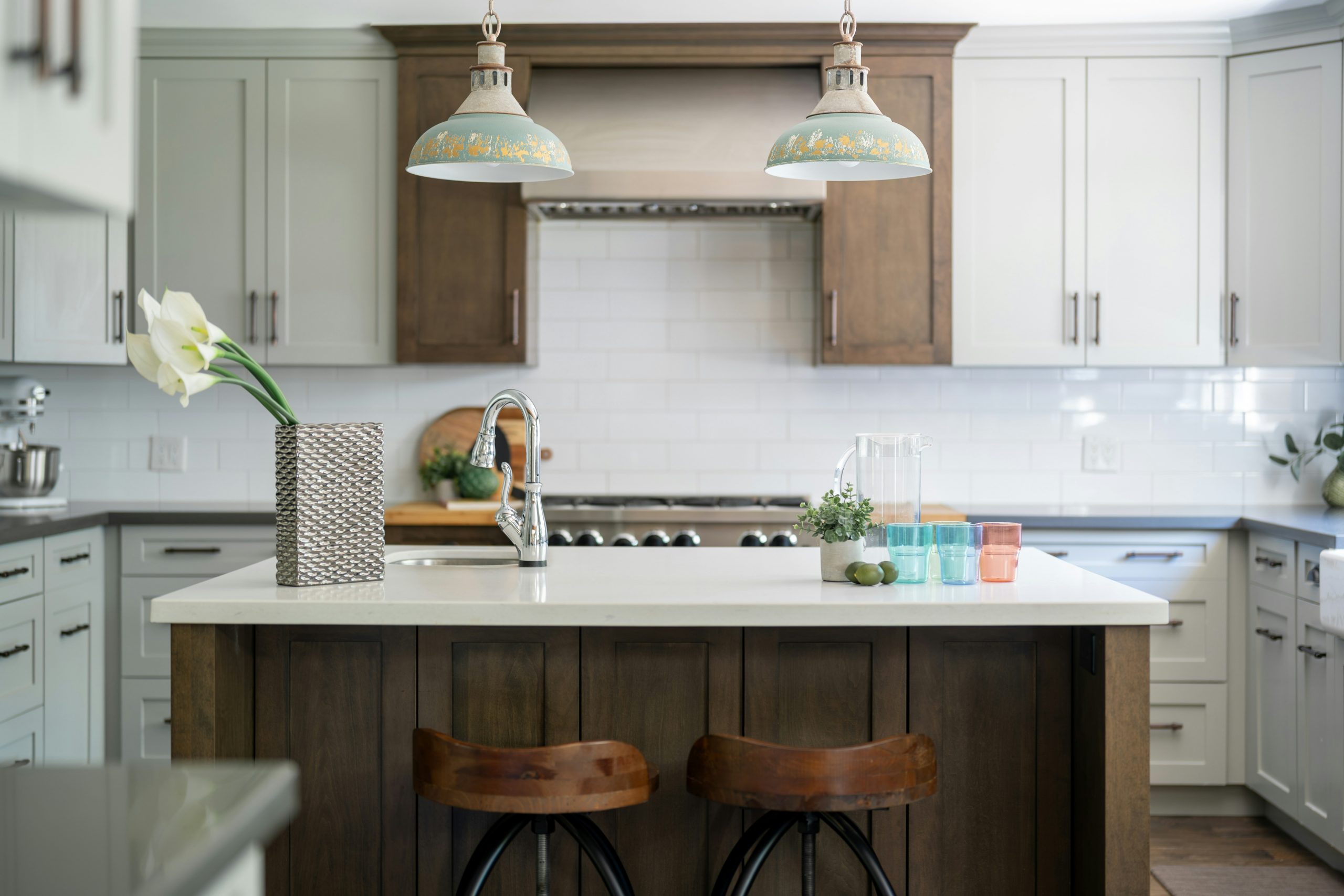
The ‘modern rustic’ trend is all about mixing clean lines with aged, character-filled pieces. These distressed green and gold dome pendants are a perfect example. They have the simple, functional shape of an industrial light, but the distressed finish gives them a sense of history and charm, as if they were salvaged from an old farmhouse or factory. This look is popular because it feels both fresh and grounded, combining the best of old and new. It’s a departure from the overly polished looks of the past, embracing a bit of imperfection.
✅ Before You Start
A distressed finish can be a bit of a wild card. The level of distressing can vary greatly from one fixture to another, even from the same manufacturer. If you’re ordering online, be sure to look at customer photos to get a real sense of what the finish looks like in a home, not just in a perfectly lit product shot. What looks like a charming ‘patina’ online could end up looking like ‘damaged’ in person if it’s not what you were expecting. When you can, it’s best to see these types of fixtures in person before buying.
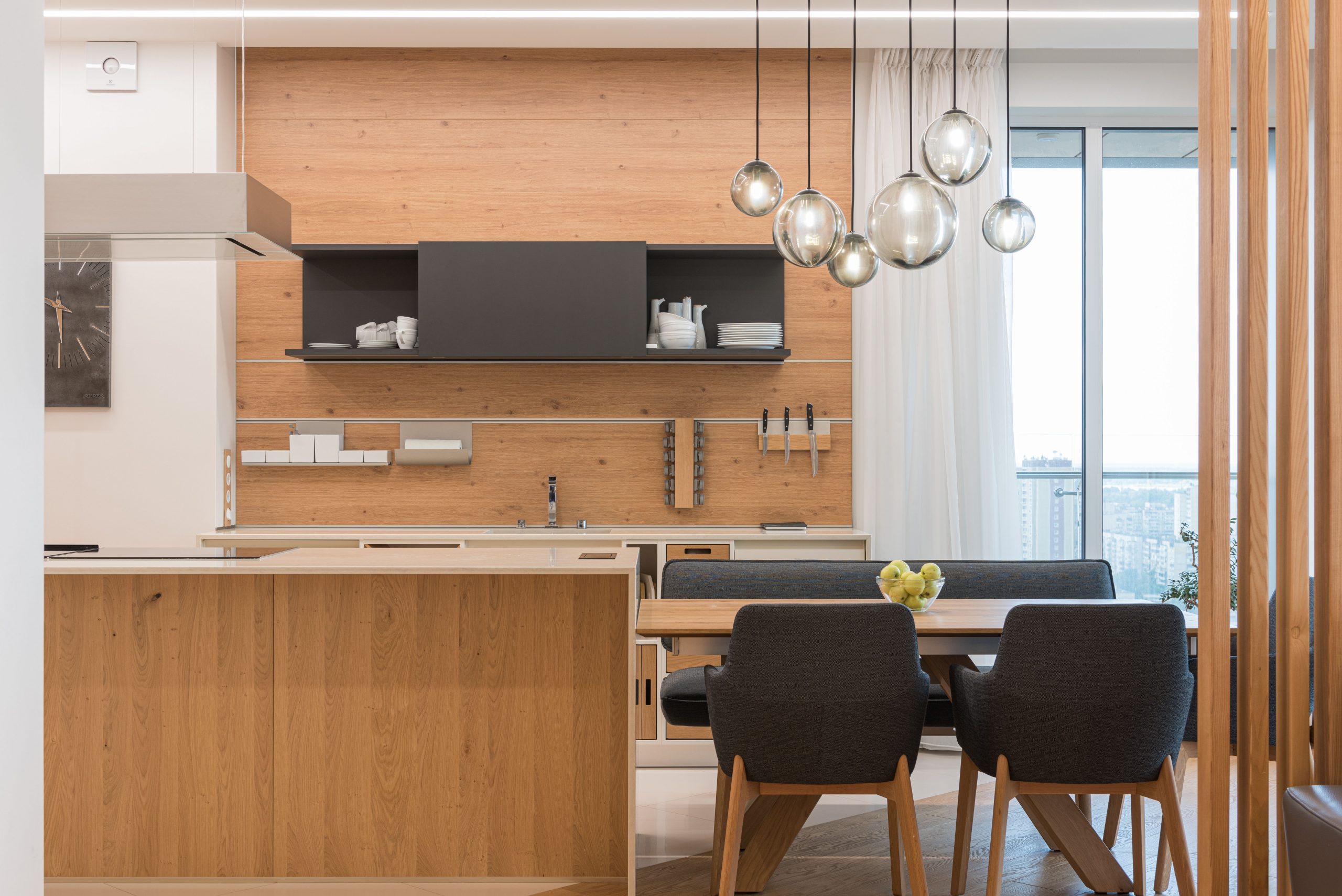
25. Clustered Bubble Glass Pendants Over a Dining Area
The bubble glass pendants work here because they feel like a piece of jewelry for the room. They are sculptural and decorative, creating a clear focal point above the dining area. The use of multiple glass shapes (bubbles, smoked glass, clear glass) within a single fixture adds complexity and interest. In a room with very clean lines and a restrained palette of wood and grey, this kind of decorative, slightly whimsical lighting choice adds personality and a touch of organic softness, preventing the modern design from feeling too rigid.
📐 Style Math
A cluster of glass pendants like this is undeniably stunning, but let’s talk about cleaning. Each one of those individual glass bubbles is a surface that will collect dust and kitchen grease. Cleaning them won’t be a quick wipe-down; it will involve carefully cleaning each globe, potentially having to remove them to do so properly. This is a high-maintenance fixture. If you love the look but hate cleaning, consider a single large pendant or a fixture with fewer, more accessible parts.
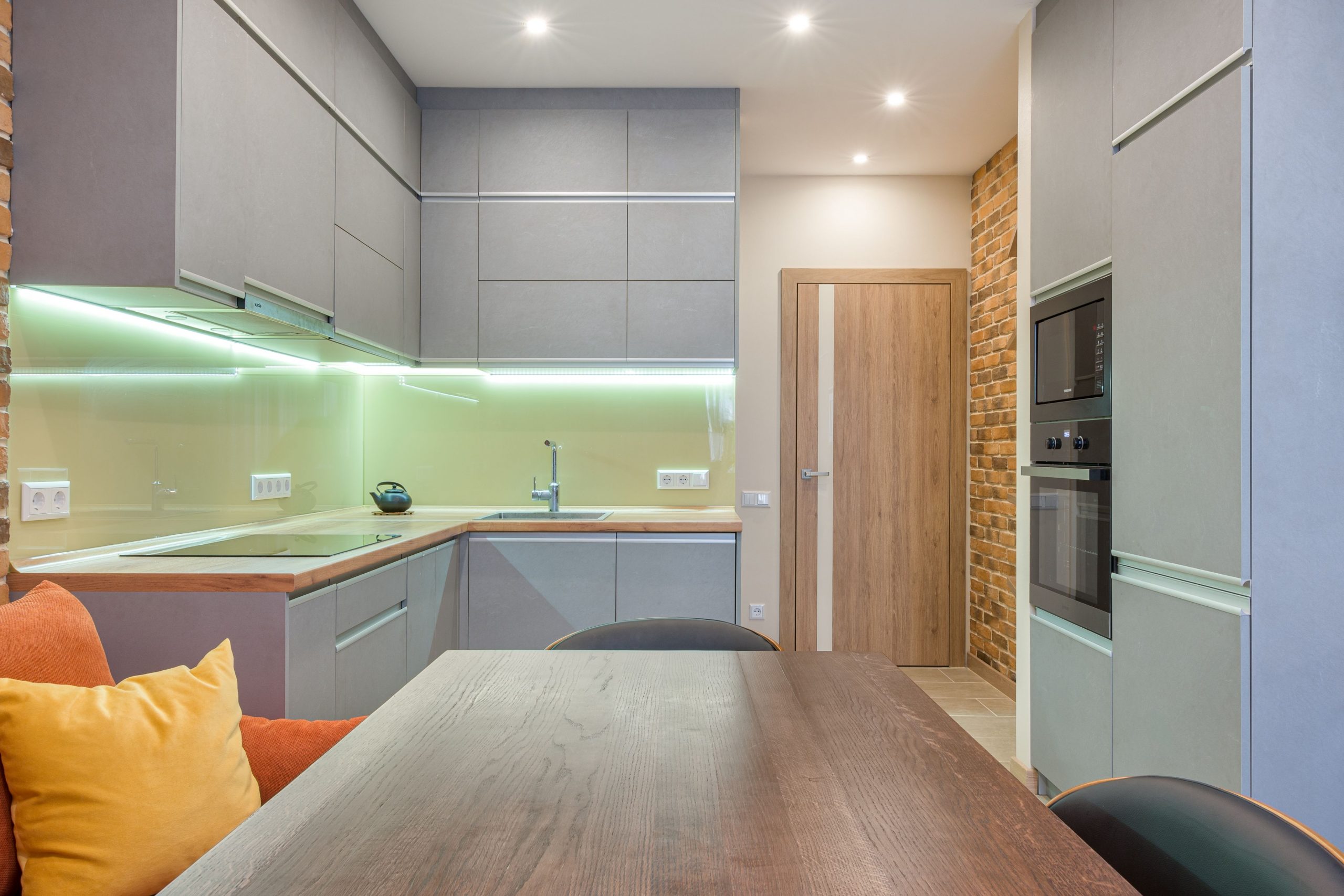
26. Cool-Toned LEDs in a Grey Kitchen with a Brick Accent
When selecting under-cabinet LED lighting, the color temperature is the most critical decision you’ll make. The lighting here is a ‘cool white’ (around 4000K), which casts a bright, slightly blue-ish light. This works well with the contemporary grey flat-panel cabinets and the light green glass backsplash, creating a crisp and modern look. For a warmer, cozier feel, you would opt for ‘warm white’ (2700K-3000K), which has a more yellowish glow. Neither is right or wrong, but the temperature dramatically changes the mood of the kitchen.
💡 Designer Tip
While the cool-toned under-cabinet lighting creates a very modern and clean task-lighting environment, be aware that it can sometimes feel a bit clinical or stark, especially in the evening. It might also make food colors look slightly ‘off.’ A dimmer switch is essential here. You can have it at full brightness for cooking prep, but you’ll want the ability to dim it down significantly to create a more relaxed and flattering atmosphere for dining or entertaining.
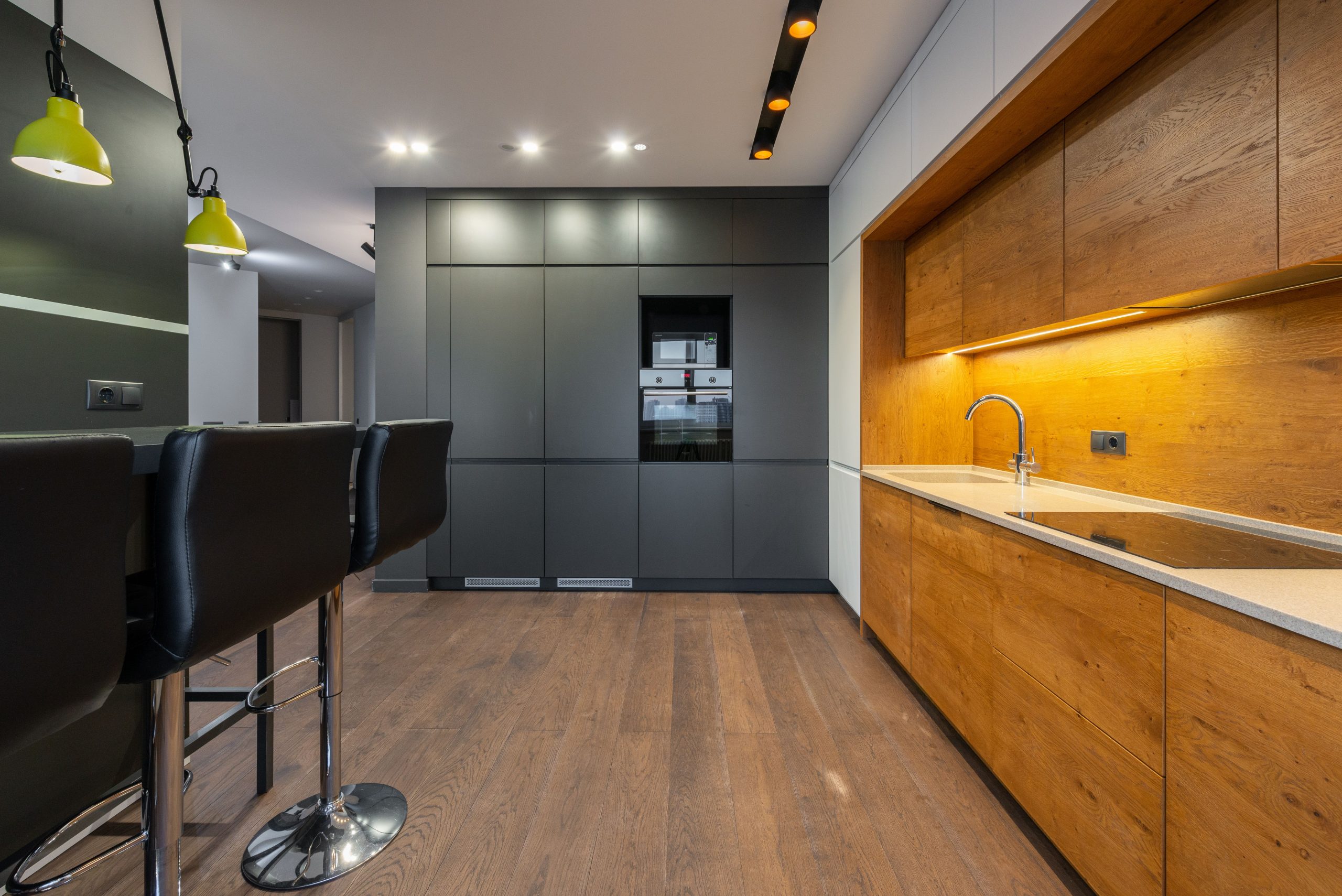
27. A Trio of Lighting Styles: Pendants, Track, and Strip LEDs
This kitchen’s lighting recipe is complex and highly functional: 40% Ambient + 40% Task + 20% Accent. The recessed ceiling lights provide the base layer of ambient light. The lime green pendants and the black track light offer focused task lighting over the island and main counters. The under-cabinet LED strips provide additional, shadow-free task lighting. Finally, the orange-glowing spots on the track light serve as an ‘accent,’ adding a warm, decorative touch. This is a lighting plan for someone who loves to cook and wants ultimate control.
💰 Budget Breakdown
A complex, multi-layered lighting plan like this requires careful planning before your renovation even begins. Make sure you’ve covered these points:
- Create a detailed electrical plan that shows the location and type of every single fixture.
- Plan for separate switches (and dimmers!) for each lighting type. You’ll want to control the pendants, track, and under-cabinet lights independently.
- Finalize your cabinet and island layout *before* placing junction boxes. You can’t move them easily once the drywall is up.
- Consider the total electrical load. Ensure your circuit can handle having all lights on at once.
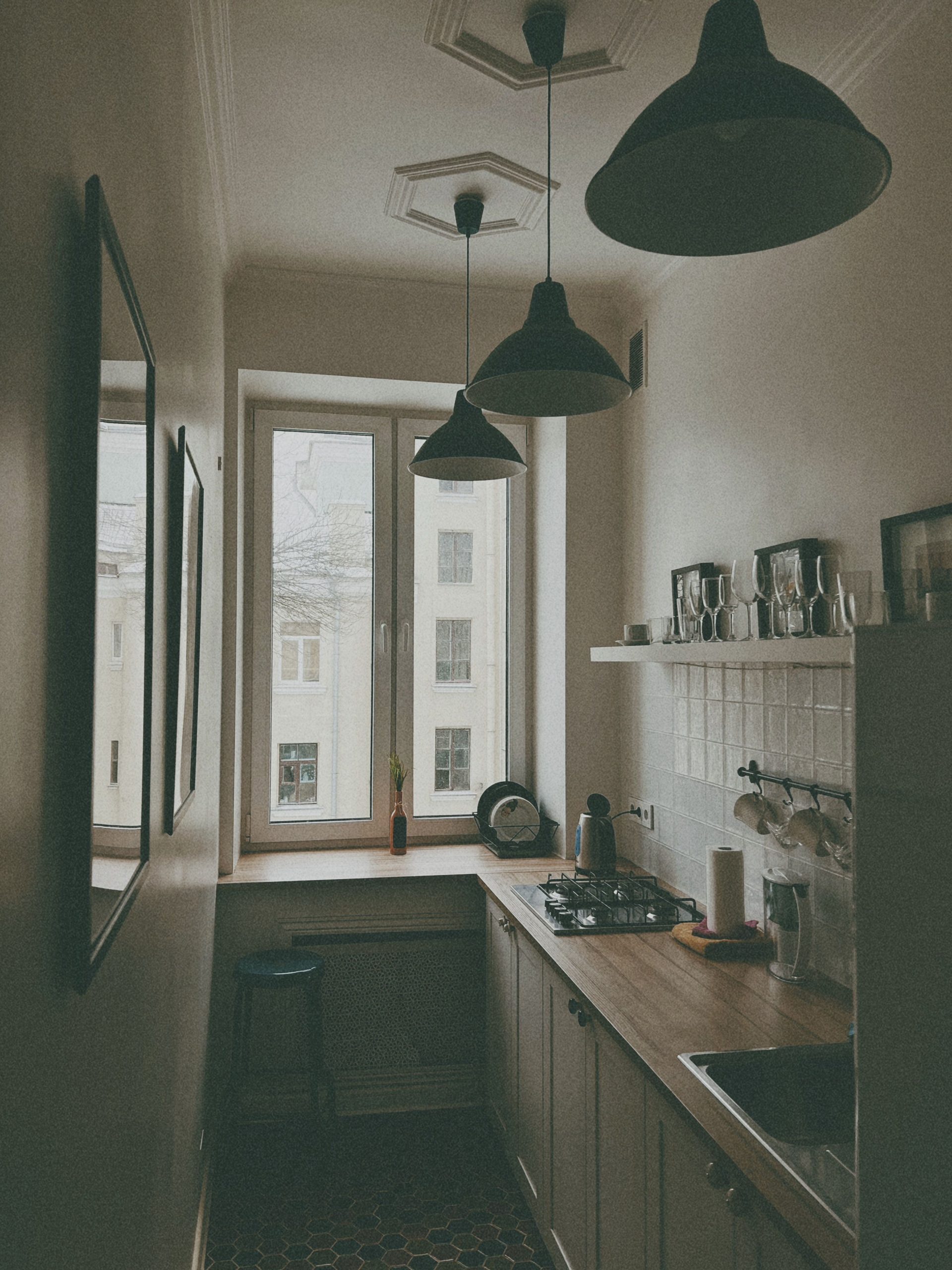
28. Dark Bell Pendants Over a Warm Wood Countertop
This look is a beautiful study in subtle contrast. The dark, matte finish of the bell-shaped pendants provides a modern counterpoint to the warm, natural grain of the light wood countertops. The subway tile backsplash and light-colored cabinets create a bright backdrop that keeps the dark pendants from feeling too heavy. The balance is just right—the lighting adds a touch of drama and definition without compromising the kitchen’s warm, inviting atmosphere. The repetition of the dark color in the hexagonal floor tiles ties the whole scheme together.
📏 Scale Guide
This warm, functional aesthetic is very attainable. The key elements are classic and widely available. Look for simple, dark metal pendant lights on Amazon or at home improvement stores—they don’t need to be designer brand. Pair them with a butcher block countertop from a retailer like IKEA or Floor & Decor, which offers incredible warmth and character for a much lower price than stone. Standard subway tile is one of the most affordable backsplash options available, making this entire look stylish and budget-conscious.
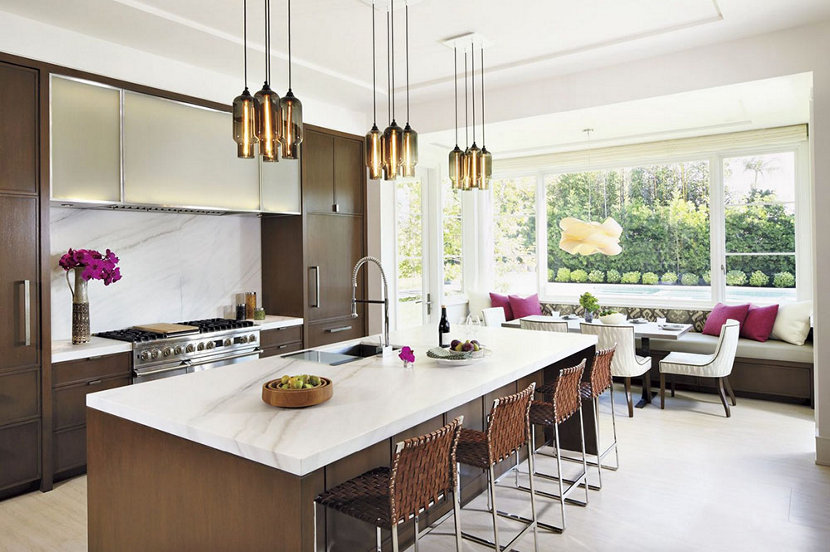
29. Golden Glass Cluster Pendants for a Touch of Glam
The absolute star of this show is the pair of clustered glass pendant lights. Hung at different heights, the golden-hued glass globes drip with elegance and turn the kitchen island and breakfast nook into statement destinations. They do more than just illuminate the space; they function as large-scale art installations. The warm, amber glow they cast adds a layer of luxurious warmth that contrasts beautifully with the sleek white marble and dark wood cabinetry. Removing them would rob the kitchen of its primary source of glamour and personality.
🎯 What Makes It Work
A large, multi-light cluster pendant like this demands visual space. This idea is best for kitchens with an open-plan layout and a ceiling height of at least 9 feet. The fixture itself has significant visual weight, so it needs a generously sized island (at least 6-8 feet long) to feel anchored and proportional. In a kitchen with lower ceilings or a smaller island, a similar fixture would feel overwhelming and make the space seem cramped. For smaller spaces, consider a single, smaller cluster or a linear version of the same light.
Let There Be (the Right) Light
Whew, that was a lot of light! But hopefully, you’re leaving with a much clearer picture of how to illuminate your own kitchen. Remember that lighting is both a science and an art—it needs to be practical for chopping and cleaning, but it also needs to feel like home. Pick an idea that resonates with you, trust your gut, and get ready to see your kitchen in a whole new light.
Don’t forget to save your favorite looks to your Pinterest board. When you’re ready to start your project, you’ll have a curated gallery of inspiration waiting for you!