You know that feeling when you finally find the slanted ceiling bedroom idea that looks *exactly* right for your space? That little thrill when you see a photo that solves the puzzle of your awkward attic angles? We’ve chased that feeling for you. After filtering through hundreds of options across IKEA, Target, and Facebook Marketplace, we narrowed it down to the 28 ideas that actually deliver. Inside, you’ll find a curated collection of looks, from minimalist and modern rustic to cozy and eclectic, covering every price point from a few hundred dollars to a full-scale $15,000 renovation. And stay until the end — we break down the most common mistakes that can ruin these looks. Pin this guide for later — your future self will thank you when it’s time to actually do this.
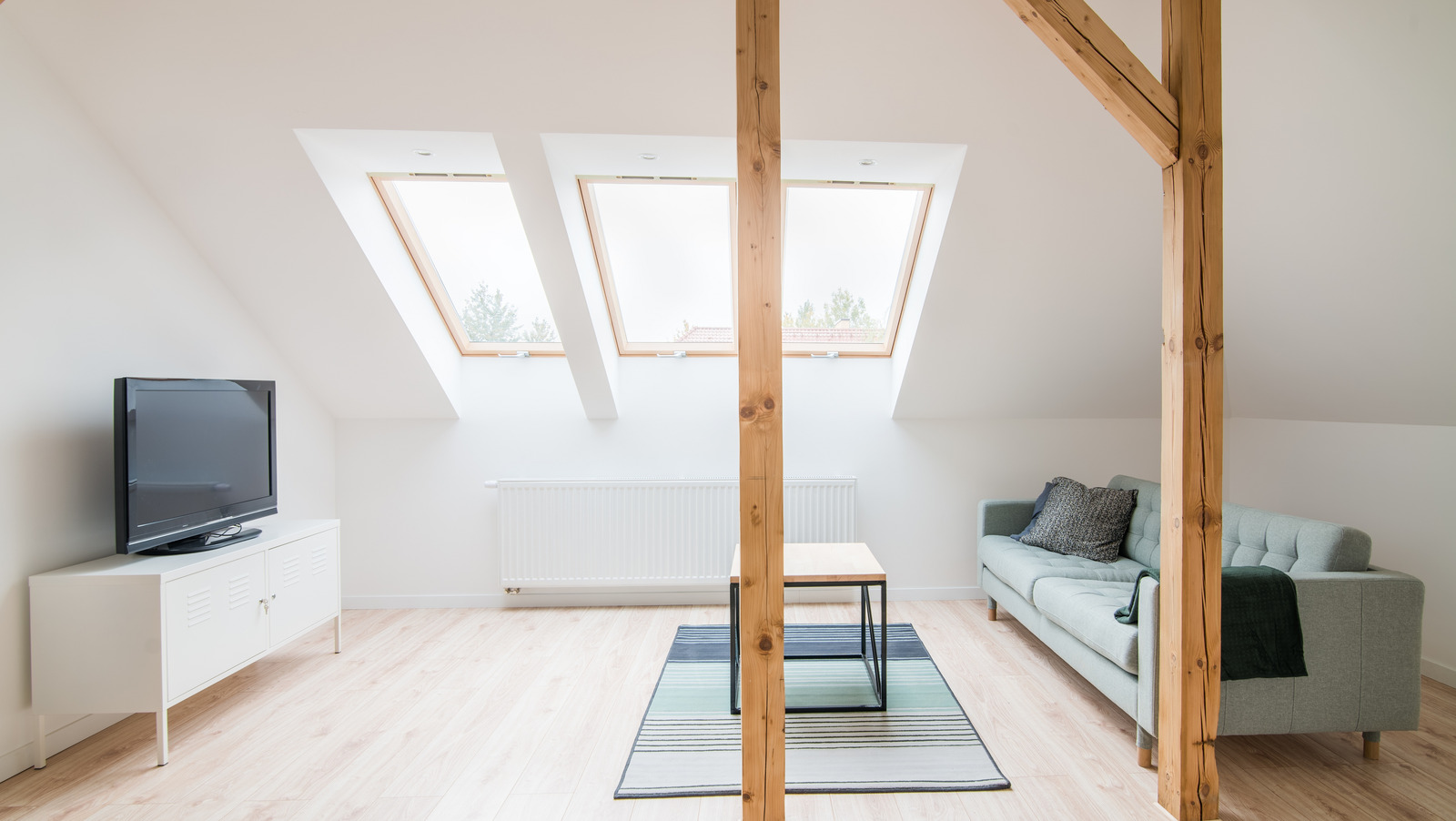
1. Bright Attic Living Space with Exposed Beams and a Pop of Blue
There’s a beautiful tension here that makes this room sing. The rustic, heavy wooden beams provide a sense of history and grounding, while the crisp white ceilings and light wood floors keep everything feeling bright, modern, and expansive. The choice of a single accent color—that lovely light blue on the button-tufted sofa—keeps the minimalist aesthetic intact. It proves you don’t need a riot of color to make a statement; one well-chosen piece is enough to anchor the entire space and give it personality.
✅ Before You Start
When you have skylights, the goal is to diffuse the light, not block it. Instead of traditional shades, consider installing translucent cellular shades. For a standard 30″x45″ skylight, these will run you about $150-$250 per window. They cut the harsh midday glare and provide insulation, keeping the room cooler in the summer and warmer in the winter, all while maintaining that beautiful, soft glow. Look for top-down/bottom-up models for the most versatile light control throughout the day.
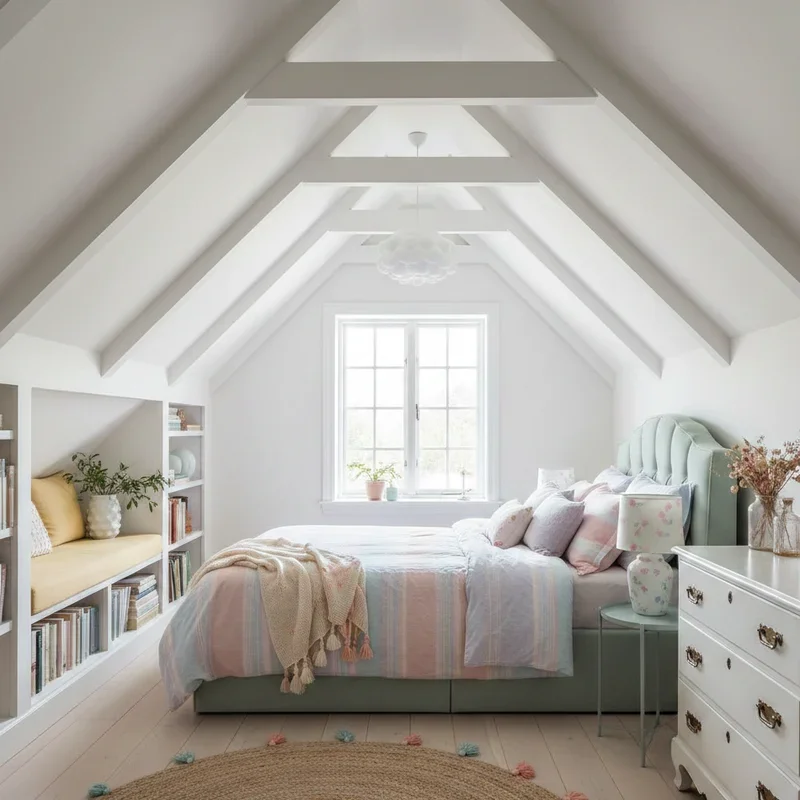
2. Pastel Attic Retreat with a Built-in Window Seat
This room’s charm is pure math. Think of it as 70% soft white + 20% pastel accents + 10% natural texture. The white on the sloped ceilings, beams, and furniture creates a bright, expansive base. The pastels—that light green headboard and the subtle stripes in the bedding—add gentle color without overwhelming the serene feeling. The final 10% comes from the jute rug and wood flooring, grounding the space with organic warmth. You could easily swap the pastels for soft blues or pale yellows and the formula would still work perfectly.
🔥 Trending Context
A custom built-in window seat can be pricey, but you can get this look for so much less. Start with two low, white dressers from IKEA—the KOPPANG 3-drawer chest is a great option at around $129 each. Place them on either side of your window. Then, have a piece of 1.5” thick MDF cut at your local hardware store to span the space between them, creating the bench. Paint it to match, add a custom cushion from Etsy for about $100-200, and you’ve got a high-end look for under $500.
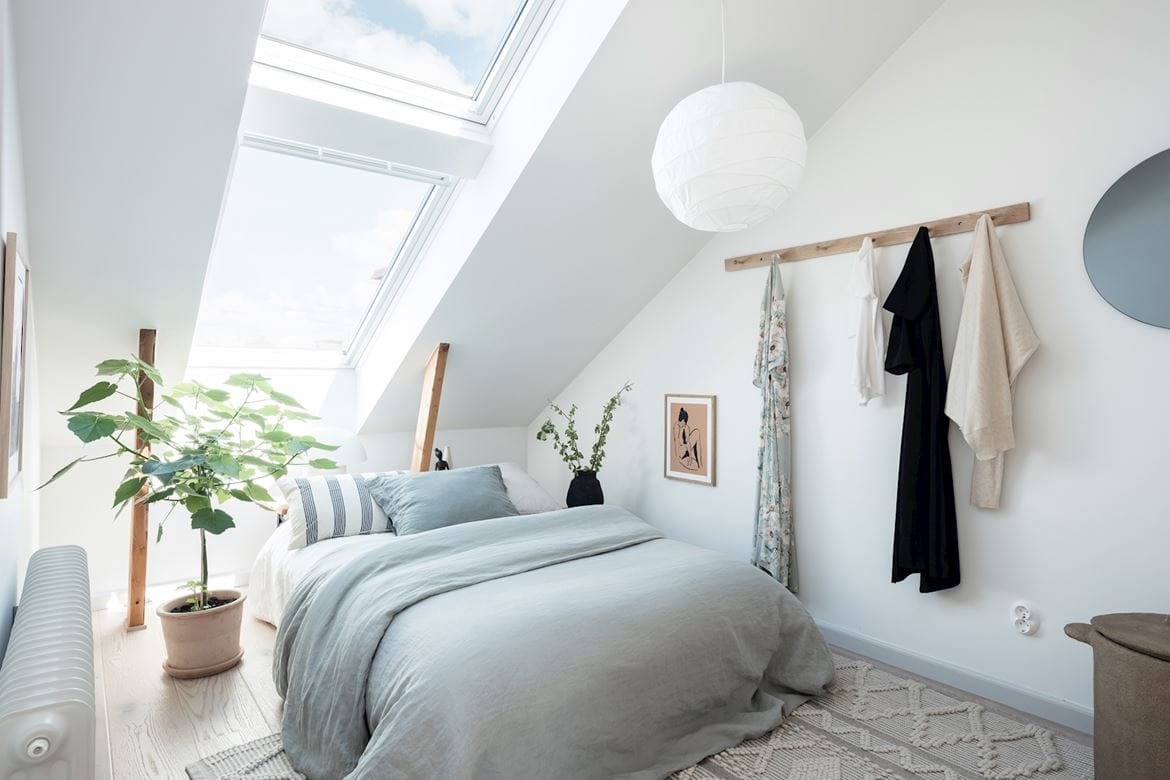
3. Minimalist Attic Bedroom Lit by Multiple Skylights
The single most important element here is the unapologetic embrace of natural light. By keeping the decor incredibly simple—a bed, a plant, a clothing rack—the focus remains entirely on the volume and brightness created by the multiple skylights. Removing the light would turn this from an airy sanctuary into just a small attic room. It’s a masterclass in how prioritising light over ‘stuff’ can be the most powerful design choice you make, making the room itself the main feature.
🧹 Maintenance Reality
This minimalist approach is a lifesaver for smaller attics, working beautifully in rooms as small as 120 square feet with a ceiling peak of at least 8 feet. The key is to keep furniture low-profile to avoid interrupting the sightlines to the windows. If you have a much larger, more dramatic space, check out the grander scale of Idea #4. This look, however, is all about making a compact attic feel limitless and serene through intentional simplicity.
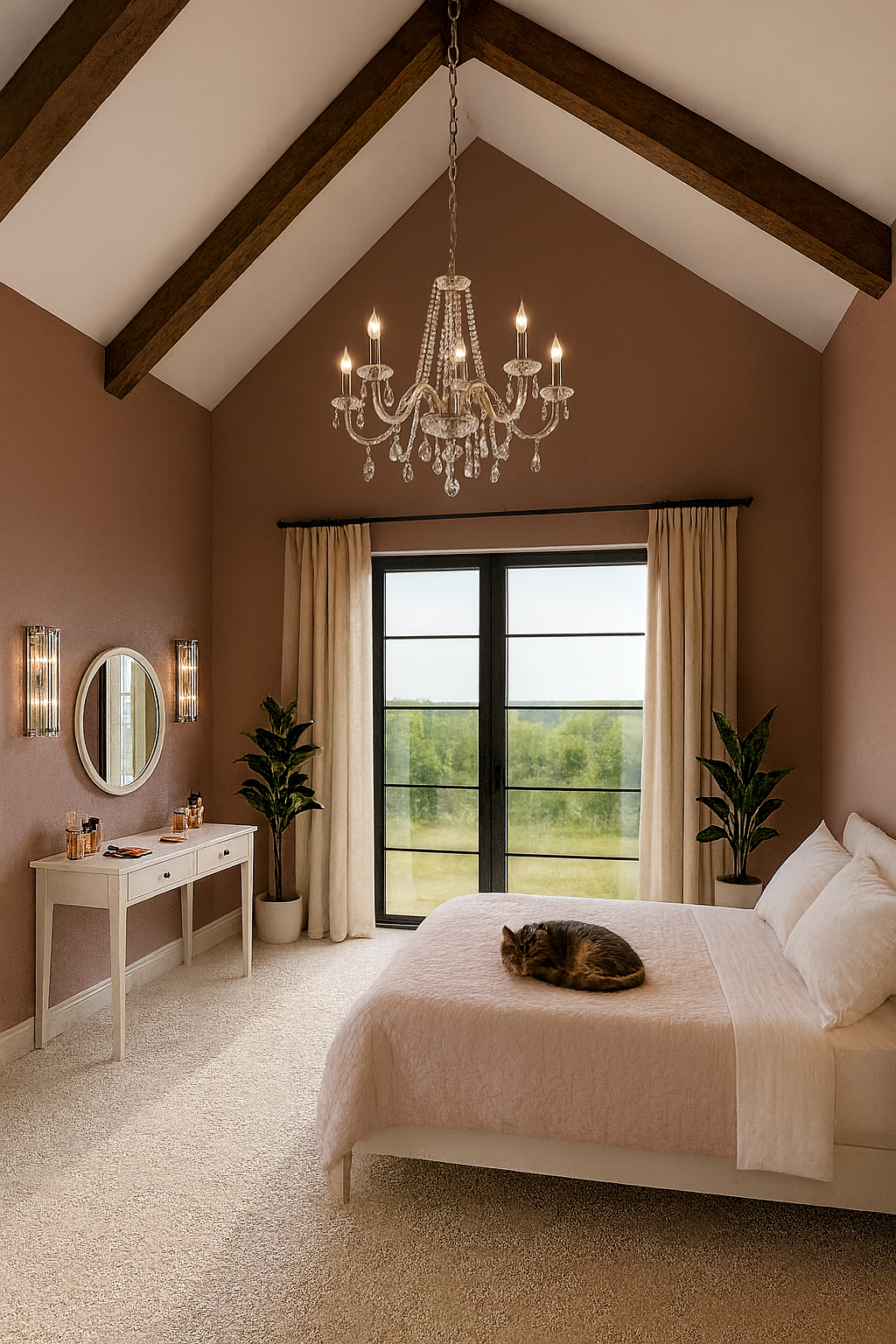
4. Dramatic Vaulted Ceiling with Dark Beams and a Crystal Chandelier
This is a high-impact, high-investment look. The elements that make it so dramatic—the chandelier, the custom wall color, and the sheer volume of the space—come with a price tag. Expect to invest significantly to achieve this level of polish and scale.
- Main Furniture (Bed, Dressing Table): $2,500 – $6,000
- Lighting (Chandelier, Sconces): $1,500 – $5,000
- Textiles (Carpet, Bedding, Curtains): $2,000 – $4,500
- Paint/Wall Treatment: $1,000 – $2,500 ( vaulted ceilings require pro painters)
- TOTAL: $7,000 – $17,500
💡 Designer Tip
Let’s be honest: a room like this is a commitment. That stunning crystal chandelier will be a dust magnet, and cleaning it on a vaulted ceiling is a job that requires a very tall ladder and a lot of patience. Similarly, those gorgeous copper-toned walls show every scuff and fingerprint. If you have kids or pets, or if you simply dread high-maintenance cleaning, you might want to admire this look from afar. Opting for a matte-finish paint and a simpler light fixture can save you a world of future hassle.
5. Serene Plant-Filled Nook Under a Wood-Framed Skylight
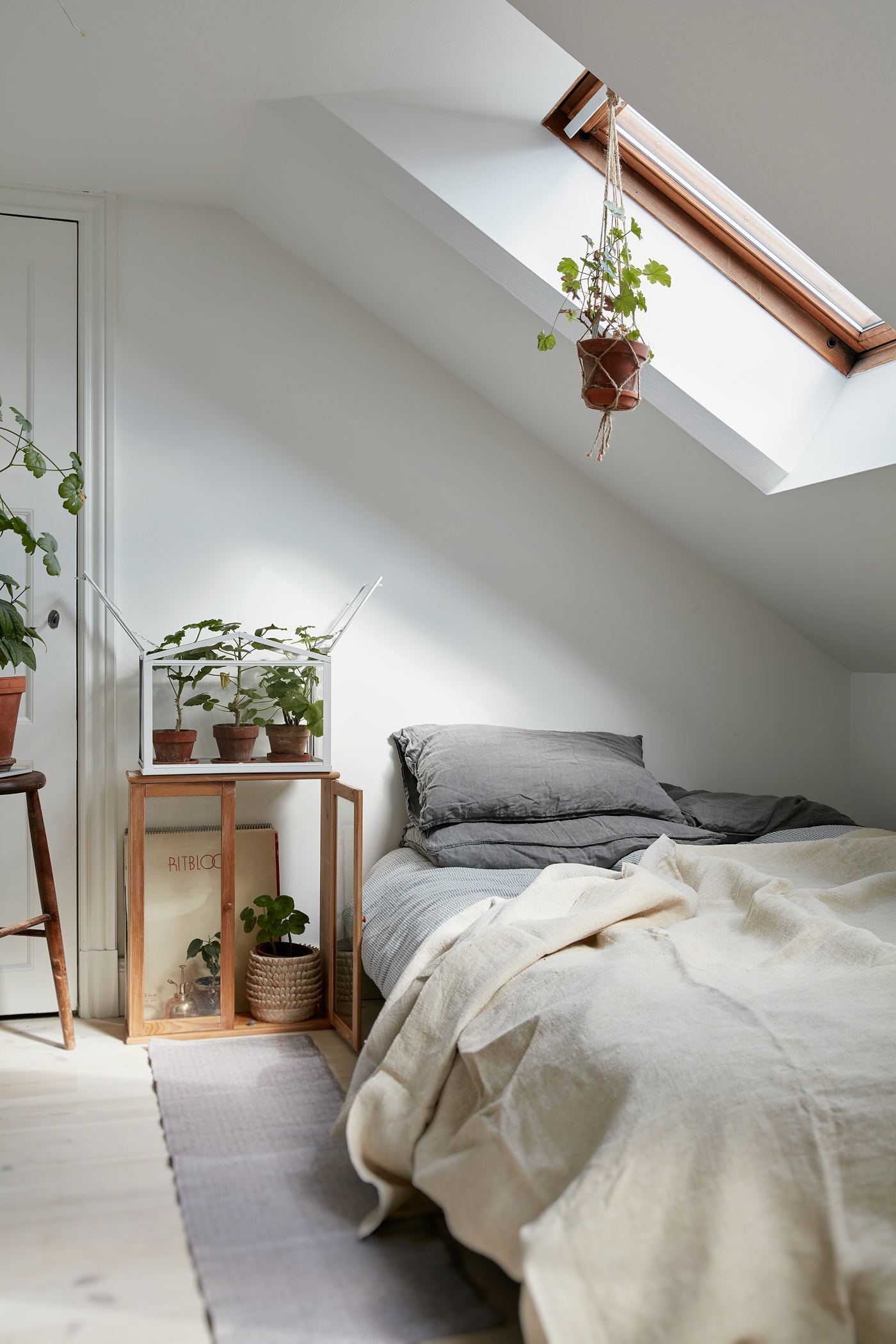
That hanging macrame plant holder is a key detail. You can make one yourself in under an hour for less than $15.
- Cut 8 pieces of macrame cord, each about 6-8 feet long.
- Gather all 8 cords and tie them in a single large knot at one end, leaving a 6-inch tassel.
- Divide the cords into four groups of two. About 2 inches up from the main knot, tie a simple square knot in each group.
- Split the pairs and join one cord with a cord from the adjacent pair. About 2-3 inches higher, tie another round of square knots.
- Repeat this process one more time.
- Gather all 8 cords at the top, place your pot inside to check the height, and tie one final large knot to create a loop for hanging.
📐 Style Math
An attic room full of plants is a beautiful dream, but it requires some specific care. Attic spaces experience more extreme temperature fluctuations than the rest of the house—they get hotter in summer and colder in winter. The direct, intense light from a skylight can also scorch sensitive plants. You’ll need to choose your greenery carefully (succulents and snake plants are great choices) and be prepared to water more frequently in the summer. That mini-greenhouse isn’t just for looks; it helps maintain humidity for more delicate species.
6. Scandinavian-Inspired Attic with a Warm Oak Headboard Wall
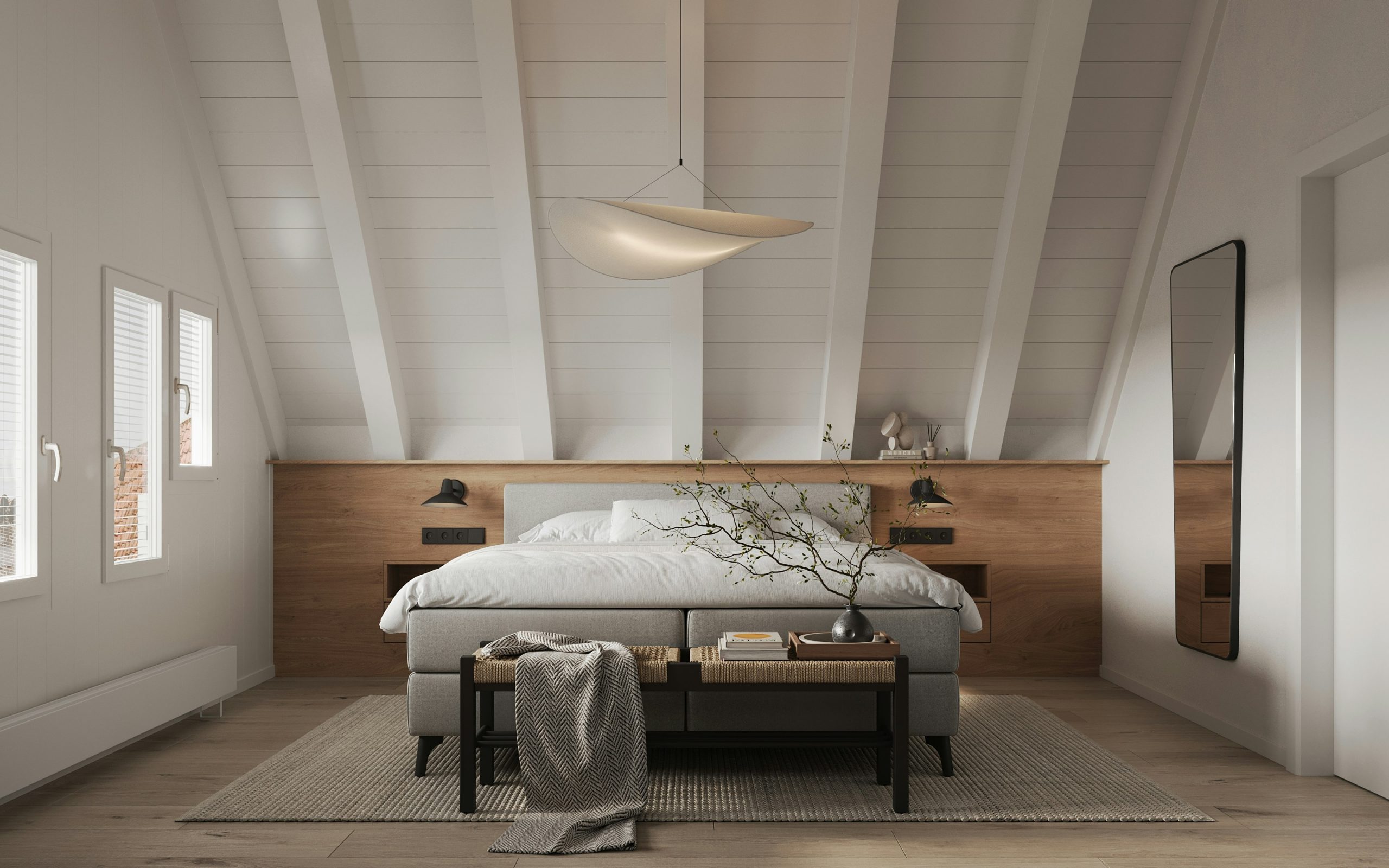
This room is a study in texture and temperature. It works because it perfectly balances warm and cool elements. The light oak headboard and flooring bring in natural warmth and organic texture, which feels inviting and cozy. This is contrasted by the cool grey of the upholstered bed and the sharp, matte black lines of the lighting fixtures and mirror frame. The white slanted walls act as a neutral canvas, allowing the wood and black accents to stand out without competing. The result is clean and modern, but not sterile.
🔧 How-To Brief
Integrated headboard lighting is a slick, hotel-worthy feature. To get this look, you don’t need to be a master electrician. Use peel-and-stick, remote-controlled LED light strips. A good quality set costs about $30-50. Mount the strip on the back of your headboard, about 2-3 inches from the top edge, facing the wall. This placement creates a soft, diffused halo effect rather than a harsh, direct glare. It’s the perfect solution for ambient light or a moody reading glow without cluttering up your nightstand.
7. Smart Storage Solutions in a Neutral Attic Bedroom
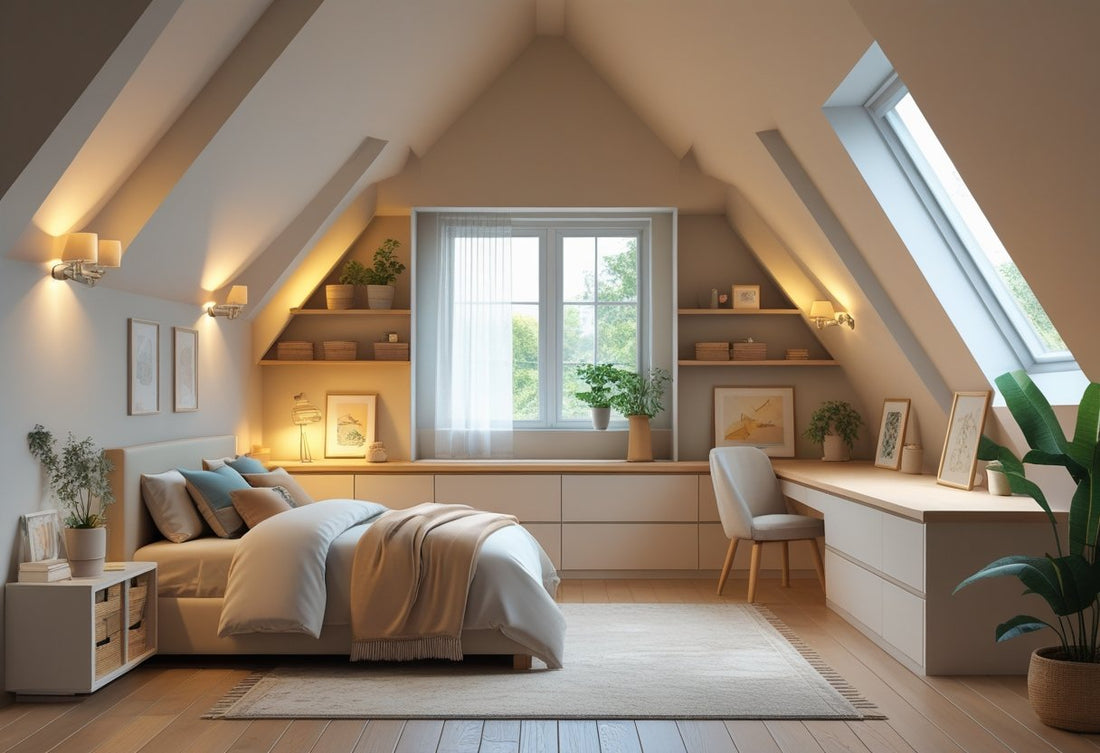
The smartest thing about this room is how storage isn’t an afterthought—it’s the main event. By creating a wall of built-in cabinets and a desk under the slope, the design transforms an awkward architectural feature into a highly functional asset. Without this integrated storage, you’d be left with unusable low-wall space and floating furniture. This solution makes the room feel intentional, bespoke, and incredibly organized. It’s a testament to the idea that good design solves problems, it doesn’t just decorate.
⚠️ Real Talk
Thinking about built-ins? Don’t even call a carpenter until you’ve checked these boxes:
- Measure everything. Twice. Know the exact height of the wall at its lowest and highest points, and the total length you have to work with.
- What’s your primary need? Deep drawers for sweaters, shelving for books, or a desktop for work? Your answer dictates the design.
- Check your outlets. Ensure the design doesn’t cover existing electrical outlets, or budget to have them moved. This can add $200-$400 to your cost.
- Confirm your budget. Custom built-ins of this scale can range from $3,000 to $10,000+. Know your number before you start getting quotes.
8. Cozy Study Nook Tucked Into a Slanted Ceiling Corner
The formula for this room’s cozy, academic vibe is surprisingly simple: 70% light neutral walls + 20% bold floor color + 10% warm wood tones. The off-white slanted walls provide a bright canvas that makes the small space feel larger. The unexpected deep green carpet grounds the room and adds a layer of plush, comfortable texture. Finally, the touches of wood in the desk and nightstand prevent the look from feeling too stark. This recipe feels classic and studious, but also fresh. Compare this use of color with the storage-focused approach in Idea #7.
⭐ The One Thing
A solid wood desk can be a real budget-buster, but you can channel this look for much less. Spend a few weekends browsing Facebook Marketplace, thrift stores, and vintage shops. Look for a simple, sturdy student desk from the 70s or 80s. Even if the finish is scratched, a good sanding and a fresh coat of wood stain (around $20 for a can) can bring it back to life. You can often score a solid wood piece with great character for under $75, a fraction of the cost of a new one.
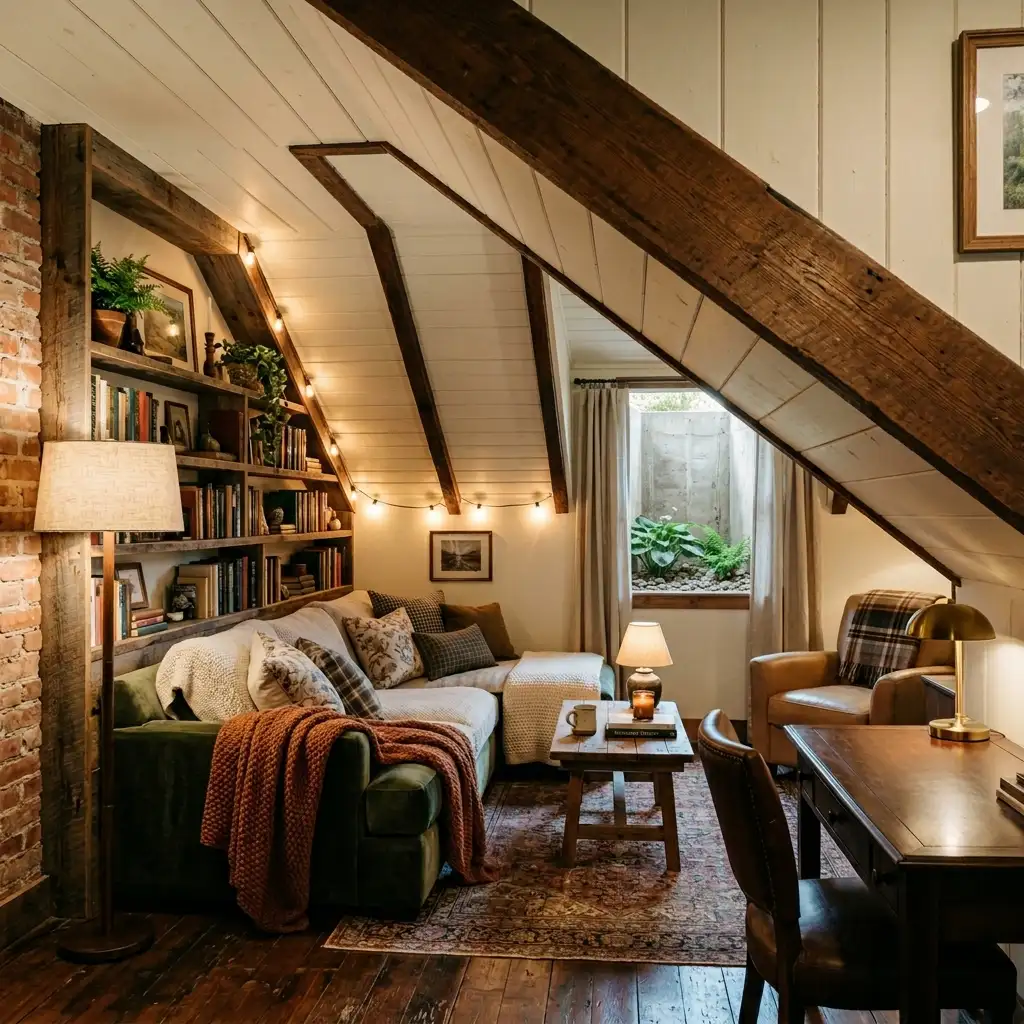
9. Rustic Attic Lounge with a Forest Green Sectional and Exposed Beams
There’s a reason ‘cabin core’ is exploding on Pinterest. In a world that feels increasingly digital and fast-paced, we’re craving spaces that feel grounded, cozy, and connected to nature. This room is the perfect example. The dark wood beams, green sofa, and abundance of textures evoke a sense of a secluded retreat. The string lights add a touch of whimsy and warmth that feels very personal and un-designed. It’s a trend that’s less about a specific look and more about a feeling—of safety, comfort, and escape—which gives it real staying power.
📏 Scale Guide
A room with this much dark wood and a deep-colored sofa can quickly feel like a cave, especially if it’s a basement or has limited natural light. Notice the multiple light sources here: the window (even if it’s in a well), the overhead light, and crucially, the string lights draped across the beams. Without that layered lighting, this room’s cozy vibe would curdle into ‘gloomy.’ If you replicate this look, make sure you have at least three points of light to keep the shadows at bay and the mood inviting.
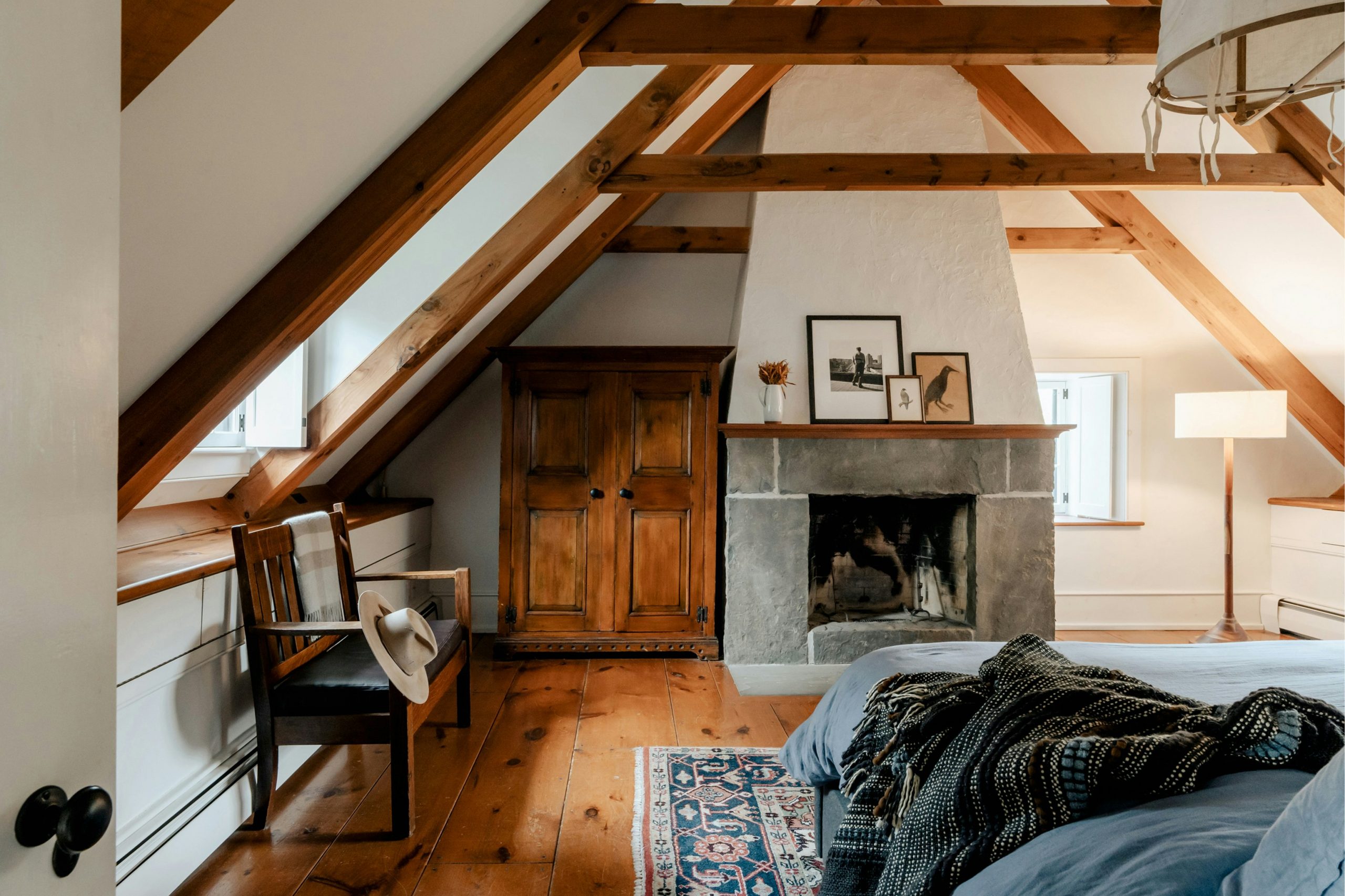
10. Loft Bedroom Getaway with a Rustic Stone Fireplace
The power of this room lies in its masterful use of texture. You have the rough, cool surface of the grey stone fireplace, the heavy, warm grain of the exposed wooden beams and wardrobe, and the soft, plush feel of the bed linens and throws. This textural conversation is what makes the space feel so rich and inviting. By keeping the color palette relatively simple (white, wood, grey, blue), the different materials are allowed to become the stars of the show. It feels less decorated and more built, giving it a sense of permanence and authenticity.
💸 Get This Look For Less
A real stone fireplace is a major construction project. Get a similar rustic focal point for about 60% less with high-quality stone veneer panels. Companies like GenStone or Evolve Stone offer DIY-friendly systems that are lightweight and can be installed directly over drywall with screws and adhesive. For a typical 8-foot accent wall, you can expect to pay between $800 and $1,500 in materials, achieving a look that would cost upwards of $5,000 with a traditional mason. It’s a weekend project with massive impact.
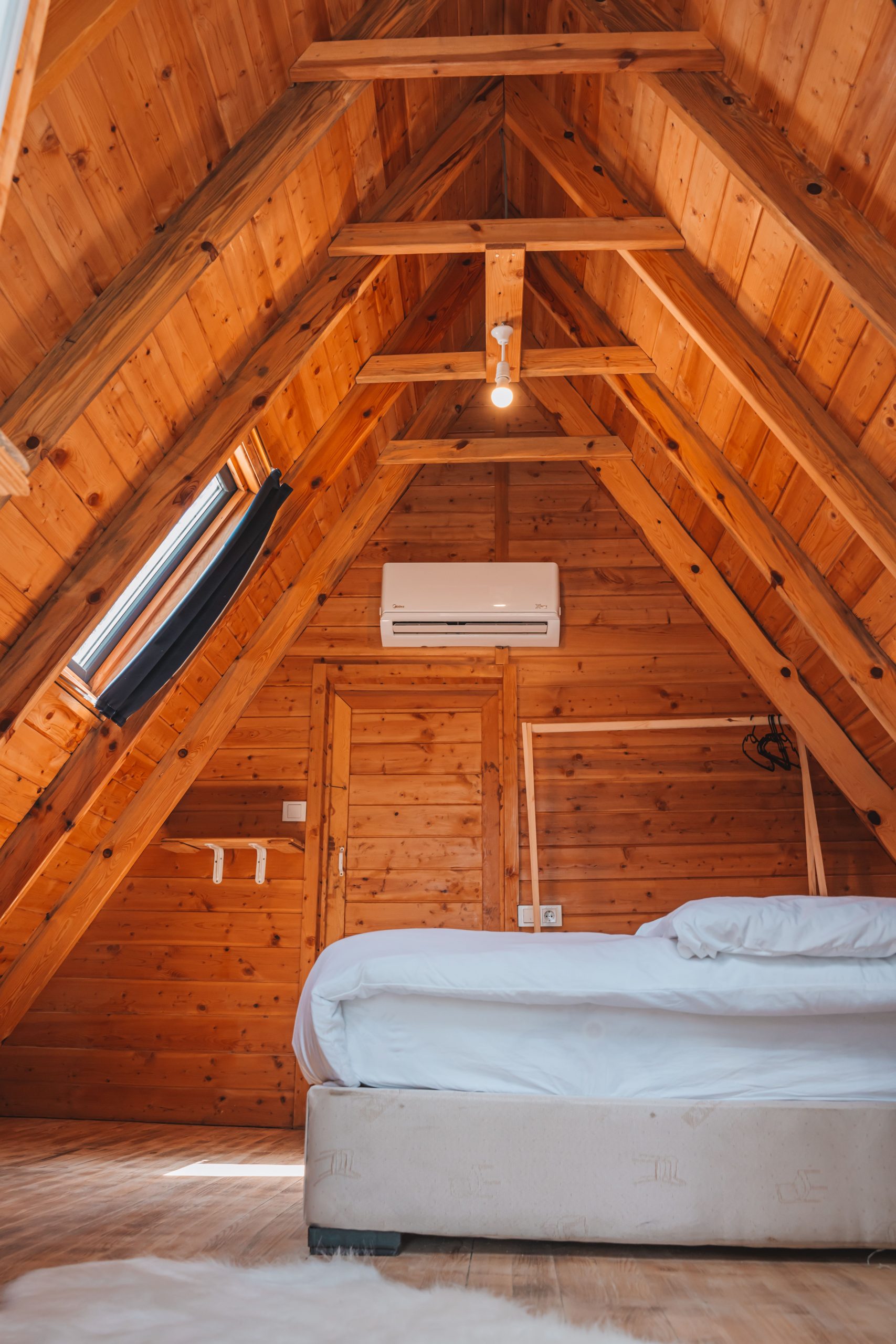
11. Rustic Slanted Ceiling Bedroom with Light Wood Paneling
The absolute defining feature of this room is the commitment to a single material: the light wood paneling. By wrapping the entire space—walls and slanted ceiling—in the same warm wood, the room becomes a cozy, cohesive envelope. It’s a bold choice that erases the awkward angles and instead celebrates them. If you were to replace the wood with plain white drywall, the rustic, cabin-like magic would instantly vanish, leaving you with just a room with a slanted ceiling. The wood *is* the design.
💰 Budget Breakdown
A full wood-paneled room can feel incredibly immersive, but it’s not without its challenges. All that wood can make a room feel darker and smaller if you don’t have enough natural light from a skylight or large window. Also, be mindful of your climate. In very humid areas, wood can be prone to warping over time if the room isn’t well-ventilated. The presence of the air conditioner in this room is a clue—managing temperature and humidity is key to keeping this look pristine.
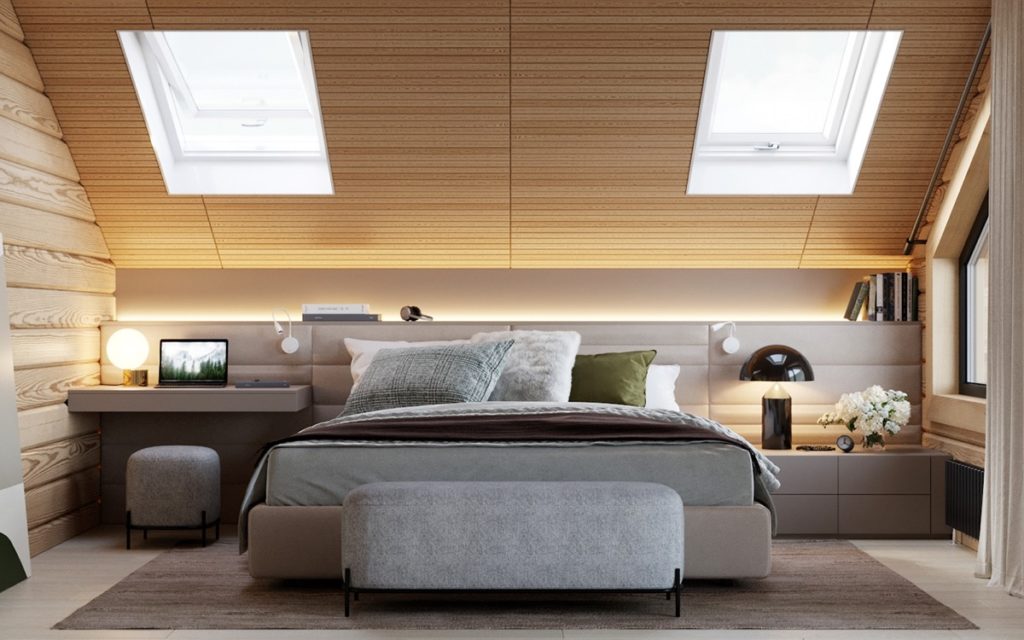
12. Modern Attic Bedroom with Wood Slats and Integrated Lighting
That integrated LED light strip along the headboard and wall is a high-end detail that defines the room’s modern feel. But the real pro move is the choice of a ‘warm white’ color temperature (around 2700K-3000K). In a room with so much wood and cozy texture, a cool, blue-toned LED light would feel jarring and clinical. The warm glow complements the wood tones, enhances the olive and beige accents, and creates a serene, relaxing atmosphere. When shopping for LEDs, always check the Kelvin rating—it matters more than you think.
🎯 What Makes It Work
The visual recipe here is about sophisticated layering: 40% architectural wood + 30% soft neutral upholstery + 20% accent color + 10% dark details. The wood slats and desk area provide the main structure. The grey upholstered bed and beige headboard soften the look. A rich accent color, like the olive green bedding, adds personality and depth. Finally, the dark table lamps and subtle dark tones provide a hint of contrast that makes everything else pop. It’s a balanced, mature, and calming formula.
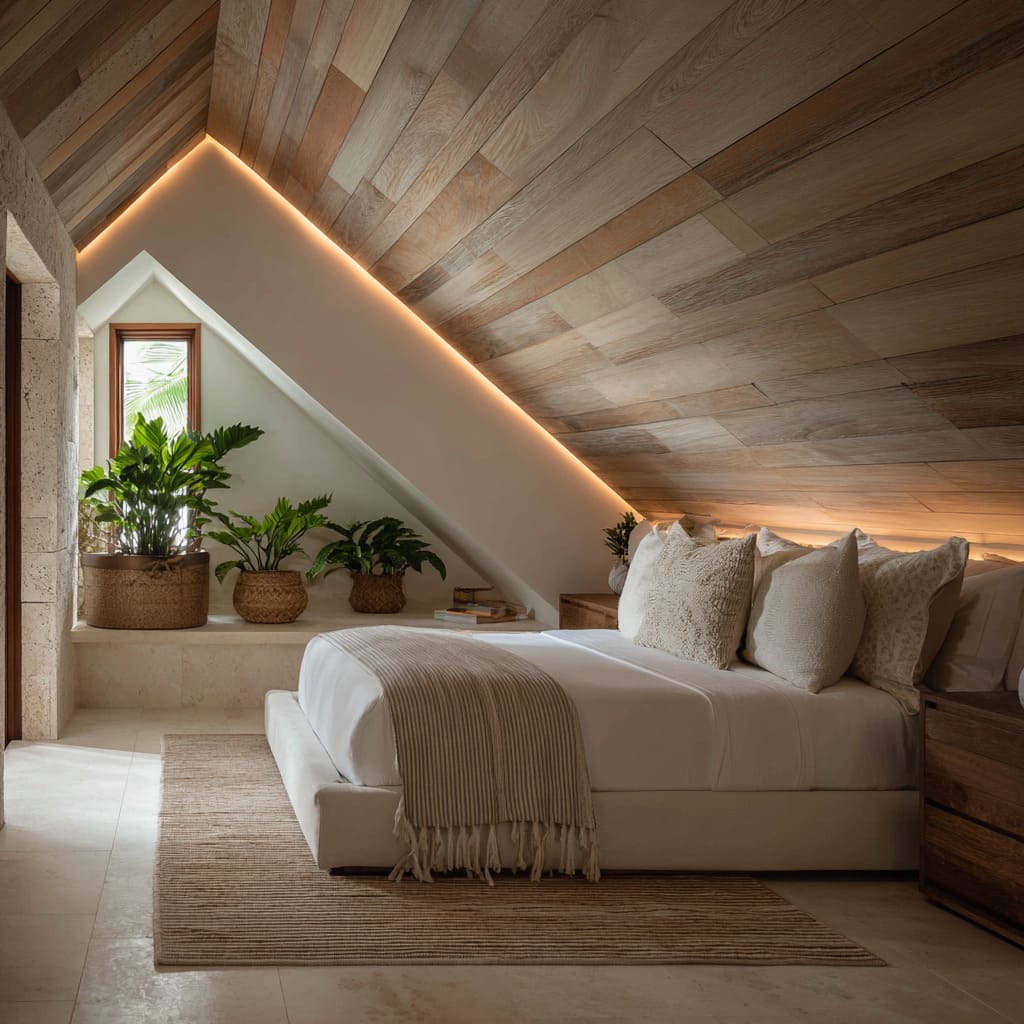
13. Slanted Wooden Ceiling with Cove Lighting and Tropical Plants
This room feels like a high-end tropical resort for one simple reason: hidden light sources. The warm cove lighting washes up the slanted wood ceiling, highlighting its texture and creating a soft, indirect glow that feels luxurious and relaxing. There are no visible bulbs or harsh fixtures, just a seamless radiance. This technique, paired with the natural textures of the jute rug, woven baskets, and lush green plants, is what elevates the space from a simple bedroom to a serene escape. It’s all about creating a mood, not just illuminating a room.
✅ Before You Start
Creating that cove lighting effect is an achievable DIY. Here’s a simplified plan:
- Purchase an LED strip light kit (warm white, dimmable) and a piece of decorative wood trim (like a simple 1×2 board).
- Install the trim board along the wall, about 4-6 inches below the point where the wall meets the slanted ceiling. This creates the ‘cove’.
- Paint the trim to match your wall color so it blends in seamlessly.
- Run the self-adhesive LED strip along the top of the trim board, facing upwards towards the ceiling.
- Plug it in and use the remote to control the mood. This project takes an afternoon and costs under $100.
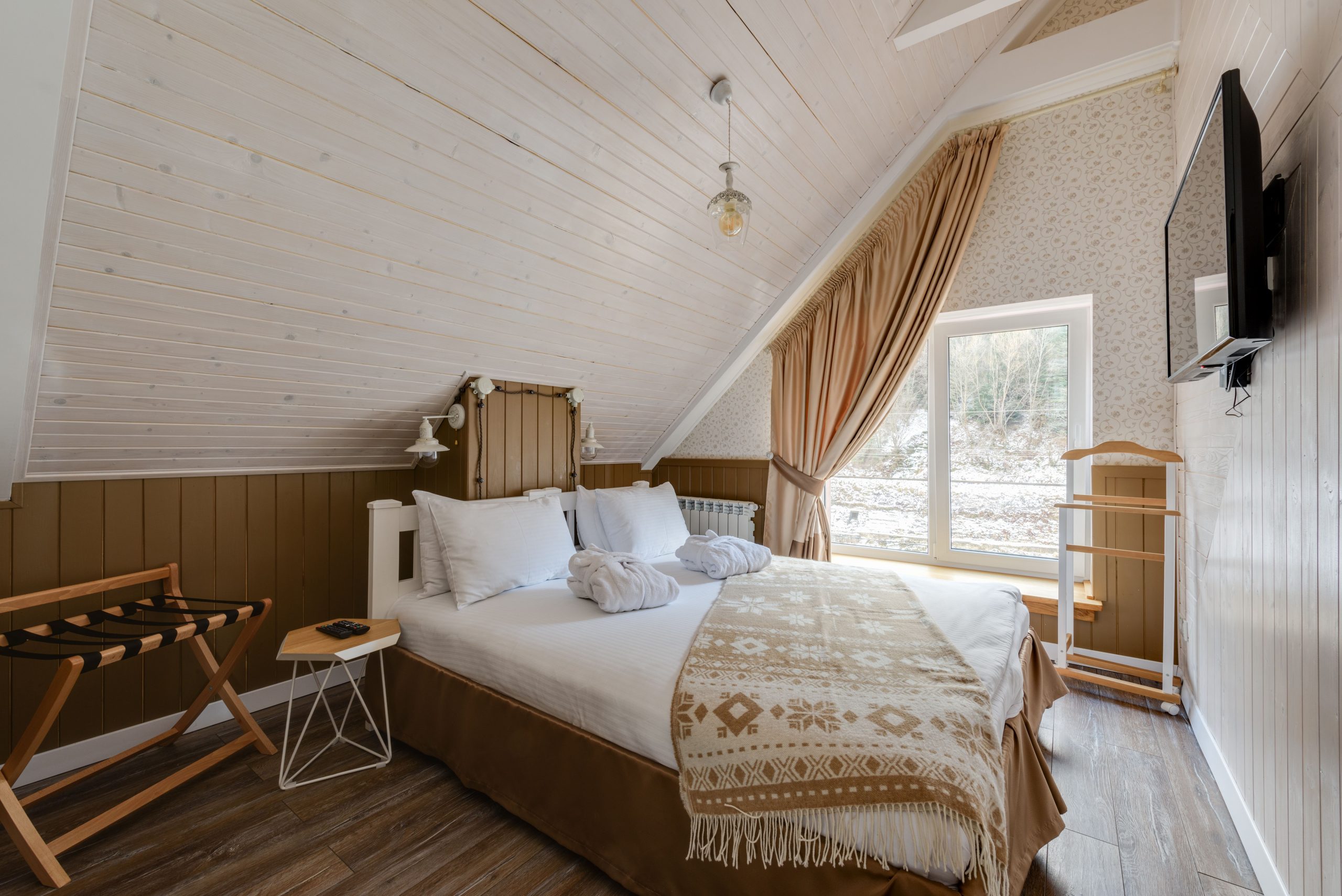
14. Cozy Attic Bedroom with White-Washed Walls and Beige Accents
The design trick that makes this room work is the visual separation created by the deep brown horizontal wood paneling. It acts as a wainscoting, grounding the space and preventing the white-washed slanted walls from feeling like they’re closing in. This dark band adds a sense of structure and depth, breaking up the verticality. If you removed it, the room would feel much more uniform and less sophisticated. It’s a clever way to add architectural interest while also making the room feel more expansive and intentionally designed.
🔥 Trending Context
This wainscoting trick works best in rooms with a ceiling peak of at least 8.5 feet and low walls that are no shorter than 3 feet. You need enough height to avoid making the room feel squat. The dark band should be installed on the bottom third of the vertical wall height for the most pleasing proportion. This technique is especially effective in long, narrow attic rooms, as it can help to visually widen the space. It offers a more traditional feel than the clean minimalism seen in Idea #3.
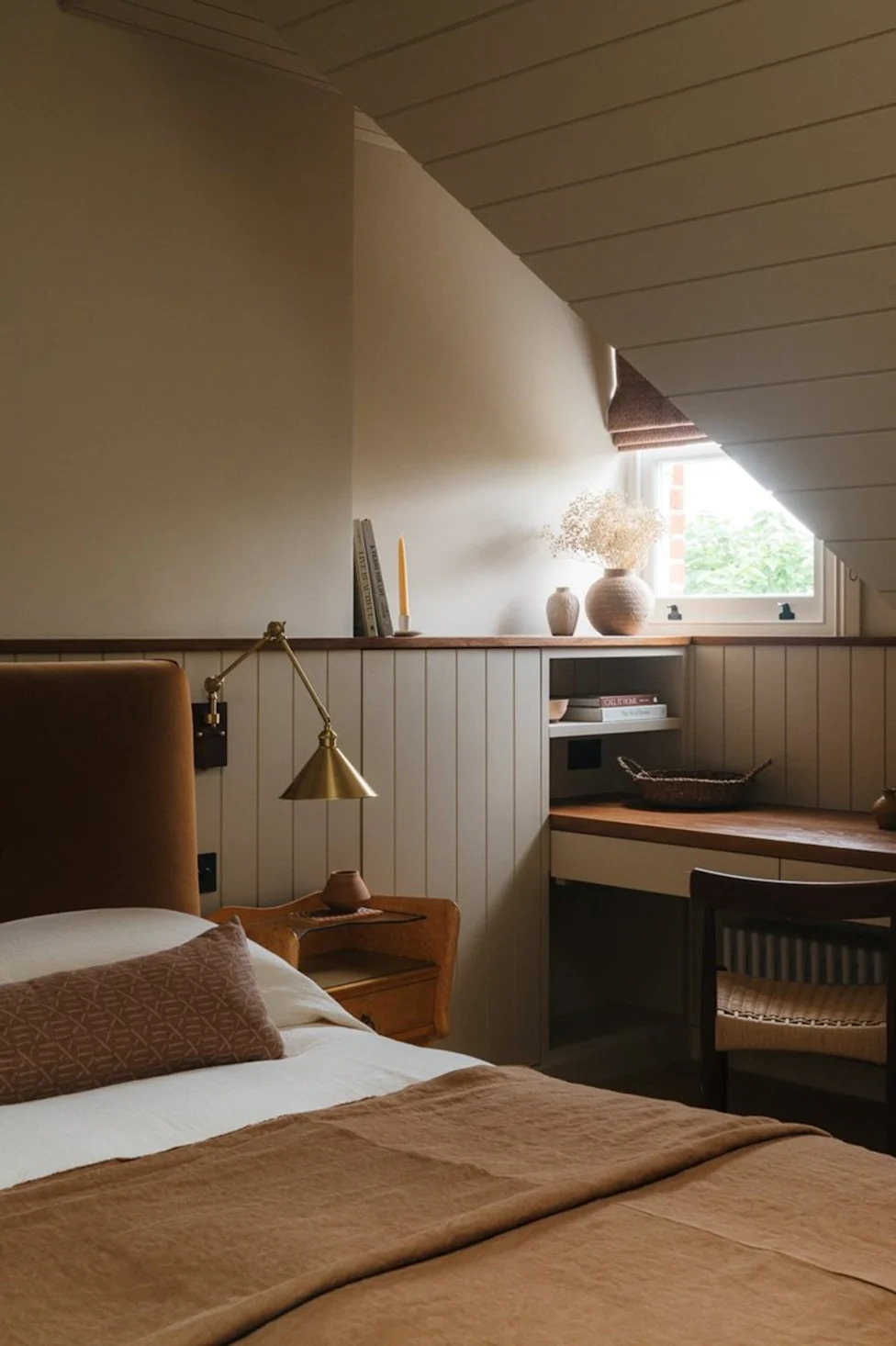
15. Cozy Neutral Slanted Ceiling Bedroom with Warm Wood Accents
In a room with complex angles, floating furniture pieces are your secret weapon. Notice the floating nightstand here. By lifting it off the floor, it creates an uninterrupted sightline to the wall and floor, which makes the space feel larger and less cluttered. A traditional, leggy nightstand would have created a choppy, busy look against the wainscoting and slanted ceiling. For a small attic space, wall-mounting anything you can—shelves, nightstands, even sconces instead of lamps—is a non-negotiable professional trick.
🧹 Maintenance Reality
This room feels incredibly warm and inviting due to the smart mixing of warm tones. The design layers multiple shades within the same family: the soft beige walls, the slightly deeper light grey on the ceiling, the rich caramel of the headboard, and the natural light wood of the desk and wainscoting. This is called a monochromatic-adjacent color scheme. It works because it creates depth and interest without introducing competing colors, resulting in a space that feels cohesive, serene, and expertly curated.
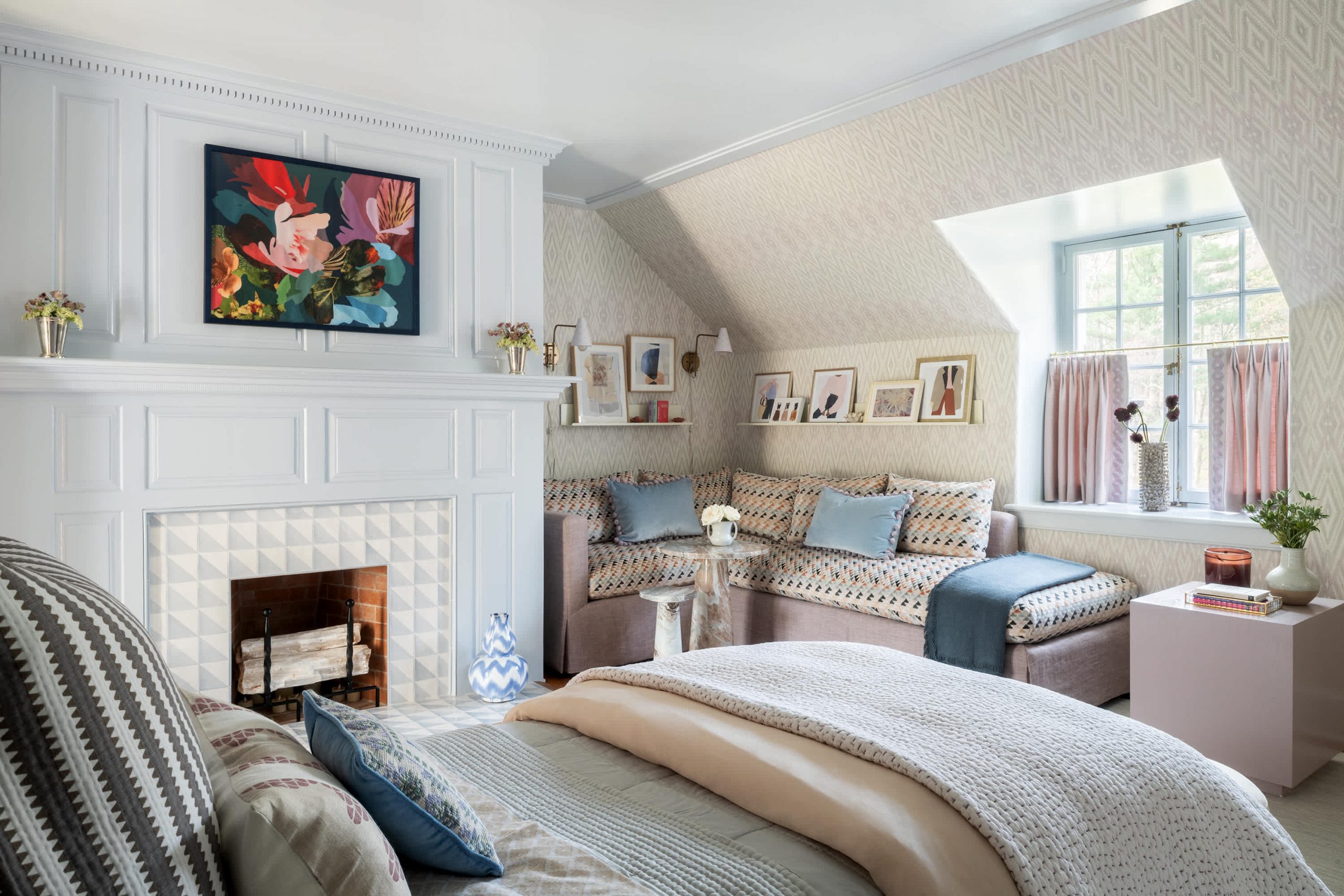
16. Modern Traditional Attic Room with Patterned Walls
This eclectic look is a masterclass in controlled chaos. The formula is: 40% traditional architecture (paneled fireplace, wall shapes) + 30% bold pattern (wallpaper, sofa cushions) + 20% solid color blocks (blue pillows, pink curtains) + 10% modern art. By grounding the playful patterns and colors with classic, neutral architectural features, the room feels curated, not cluttered. The key is that every patterned element shares a similar color story, tying the wallpaper, sofa, and bedding together seamlessly.
💡 Designer Tip
A custom-built sofa or sectional is a fantastic way to maximize a quirky corner, but be aware of the commitment. This isn’t a piece you can easily move to another house or even another room. Before you invest in a custom piece (which can cost $4,000-$10,000+), be absolutely certain you’ll be in your home for the long haul. Also, consider the fabric carefully. With that much investment, you want a high-performance textile that can withstand sun from the nearby window and daily use.
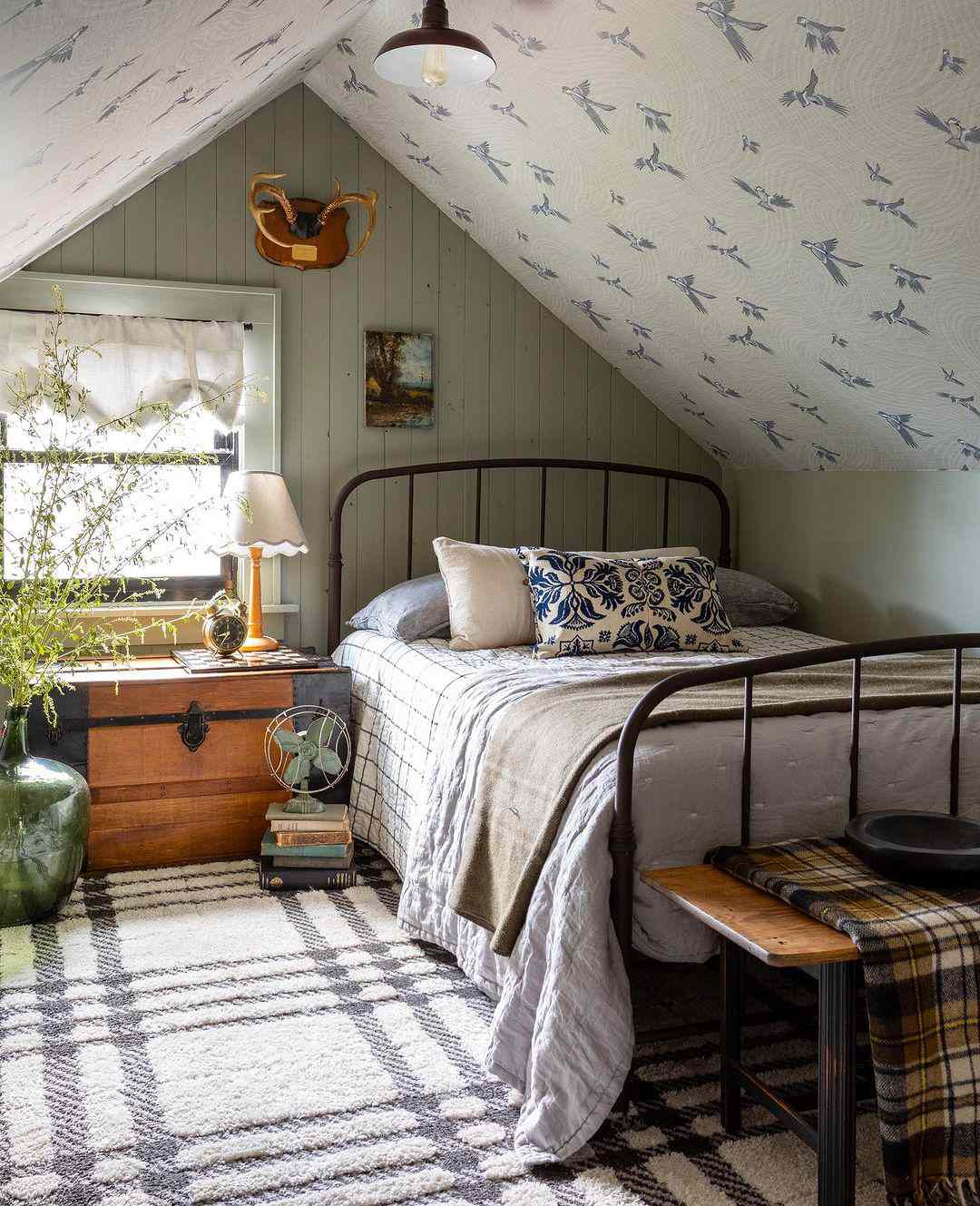
17. Rustic Bedroom with Slanted Ceiling and Bird-Patterned Wallpaper
The single element that gives this room its unique personality is the whimsical, bird-patterned wallpaper. Without it, you’d have a perfectly nice, but generic, rustic bedroom with green walls and dark furniture. The wallpaper introduces a layer of storytelling and charm. It softens the rustic elements and keeps the look from feeling too heavy or serious. It’s a reminder that sometimes, the most ‘impractical’ choice is the one that brings a room to life. It feels less like a hotel and more like a home with a history.
📐 Style Math
This look is part of the ‘Grandmillennial’ trend, which blends traditional or ‘granny-chic’ elements (like patterned wallpaper and classic furniture) with a fresh, modern sensibility. It’s a reaction against years of stark minimalism. Young designers and homeowners are raiding their grandparents’ attics (literally and figuratively) for pieces with character and history. This style has staying power because it’s deeply personal and sustainable—it encourages the use of vintage pieces and timeless patterns over fast-fashion decor.
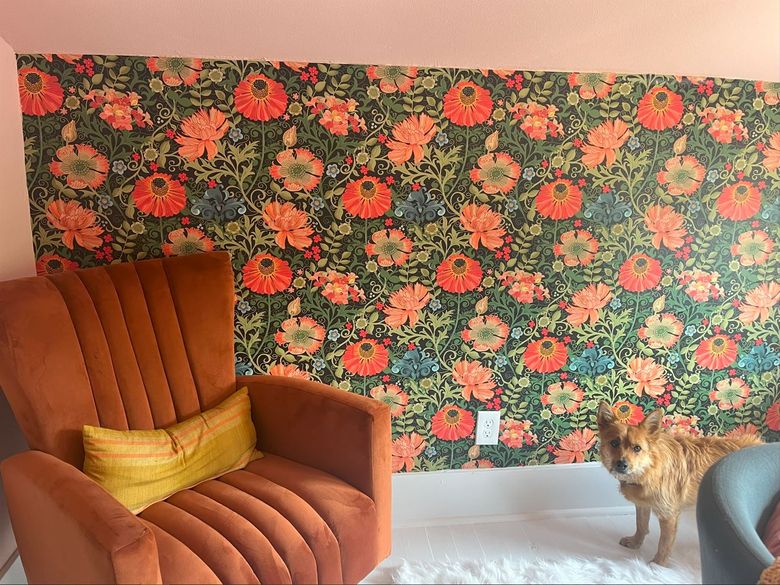
18. Slanted Wall with Vibrant Floral Wallpaper and Velvet Armchair
This small corner punches way above its weight because of a brilliant use of contrast. First, you have the texture contrast between the plush, ribbed velvet of the armchair and the flat, smooth surface of the wallpaper. Then, there’s the color contrast: the warm, vibrant orange of the chair sings against the cool, dark green background of the floral pattern. This dynamic opposition of color and texture is what creates visual excitement and makes the composition feel so bold and confident. The simple white rug and baseboard provide a neutral stage for this drama to unfold.
🔧 How-To Brief
A designer velvet armchair can easily set you back $1,000 or more. To get this luxe look for less, hunt for a chair with a great shape at a thrift store or on Facebook Marketplace for under $100. The fabric might be dated, but if the bones are good, it’s a perfect candidate for reupholstery. You can buy 5-6 yards of a similar ribbed velvet fabric online for about $150-$250. A local upholsterer might charge $300-$500 for the labor, bringing your grand total to around $600 for a completely custom, high-end-looking piece.
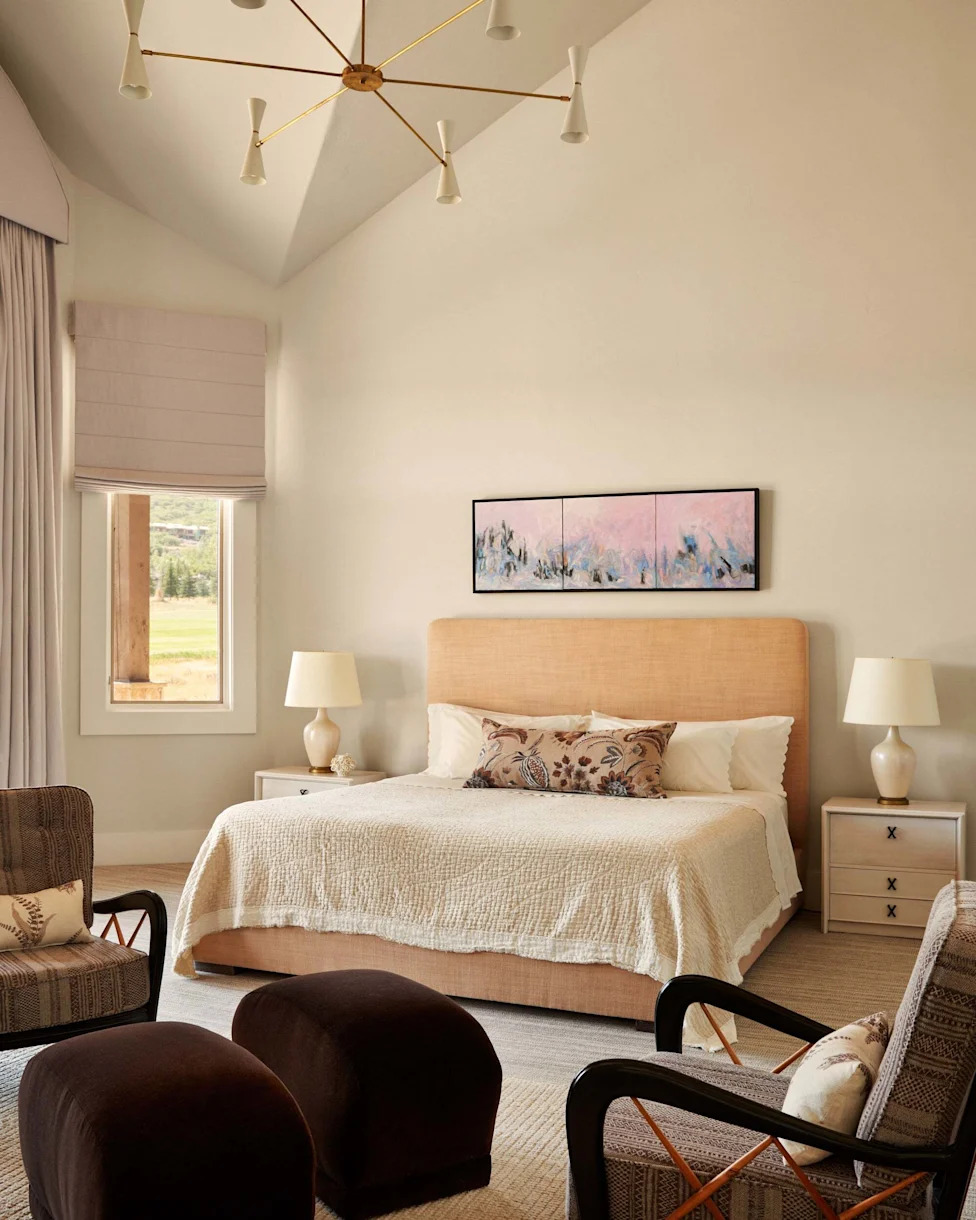
19. Neutral Slanted Ceiling Bedroom with Textured Textiles
Achieving this level of layered neutrality has a cost, primarily in the quality of the textiles and statement lighting. The focus is on tactile, high-quality materials rather than lots of small decor items.
- Main Furniture (Upholstered Bed, Nightstands): $2,000 – $5,000
- Lighting (Chandelier, Table Lamps): $800 – $2,500
- Textiles (Quilted Coverlet, Rug, Woven Chairs): $1,500 – $4,000
- Artwork (Triptych): $500 – $2,000+
- TOTAL: $4,800 – $13,500
⚠️ Real Talk
A room dominated by cream and peach tones requires a certain level of commitment to cleanliness. That beautiful cream quilted bedspread will show every smudge and spill. The upholstered headboard can be a magnet for dust and oils from your hair. To keep this look fresh, you’ll need to be diligent about professional cleaning for the upholstery (at least once a year, around $100-$150) and frequent laundering of the bedding. It’s a gorgeous, serene look, but it’s not the most practical choice for homes with pets or small children.
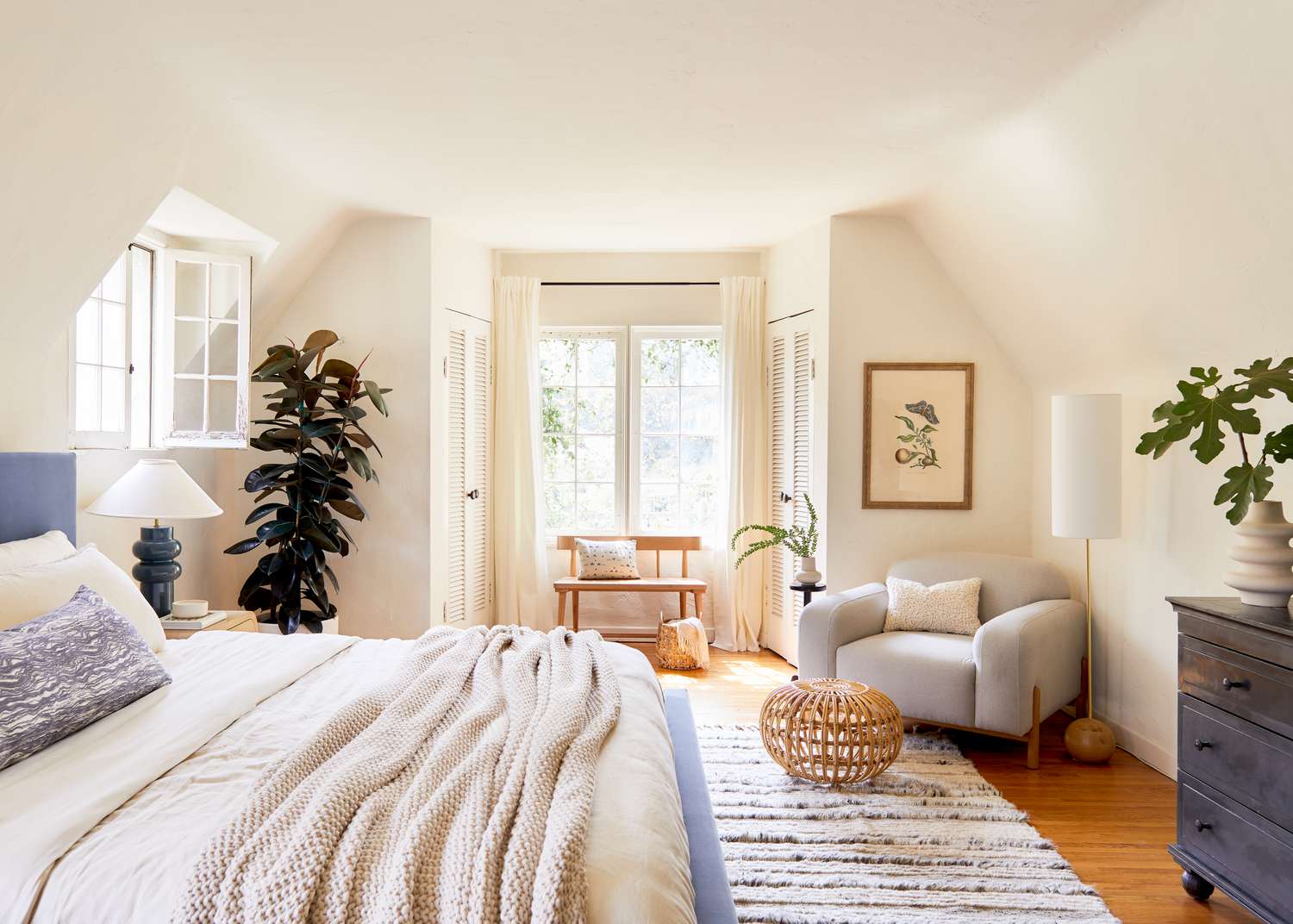
20. Airy Bedroom with Slanted Ceilings and Natural Elements
The calming effect of this room comes from a simple but effective formula: 60% creamy white + 20% natural wood and woven textures + 10% deep green + 10% dark accents. The white walls and curtains create an airy backdrop. The wood floors and woven rug add warmth and an organic feel. The pops of deep green from the numerous plants bring life and a connection to the outdoors. Finally, the touches of charcoal gray and black in the pillows and furniture provide just enough contrast to keep the room from feeling washed out. This is a recipe for instant serenity.
⭐ The One Thing
When dealing with slanted ceilings, curtains can be tricky. The secret here is to mount the curtain rod high and wide. Notice how the rod extends far beyond the actual window frame on both sides. This makes the window appear much larger and more grand than it actually is. By hanging the curtains so they just kiss the floor and frame the window rather than covering it, you maximize the natural light while adding softness and height to the room. Use simple, lightweight white curtains to keep the look airy.
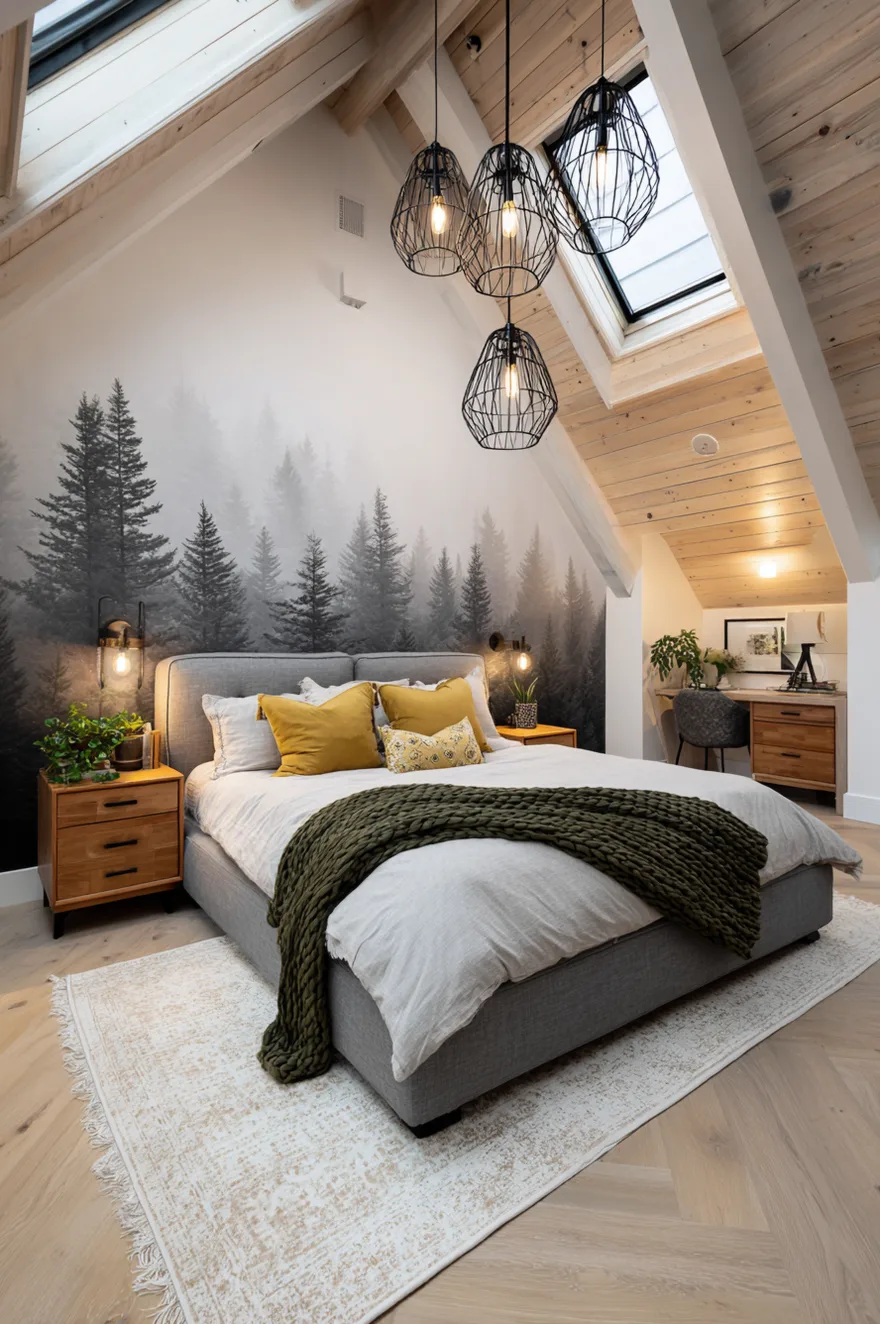
21. Modern Rustic Slanted Ceiling Bedroom with Forest Mural
The forest mural is, without a doubt, the element that transforms this room from a nice attic bedroom into a captivating escape. It does more than just add pattern; it adds depth, mood, and a powerful sense of place. The misty, large-scale trees create a focal point that is both dramatic and serene. By pairing it with natural wood on the ceiling and simple, modern furniture, the mural feels like an extension of the room’s architecture—like a window into a private woodland. Take it away, and the room loses its soul.
📏 Scale Guide
Installing a wallpaper mural seems intimidating, but it’s a manageable weekend project. Many companies now offer peel-and-stick versions that are much more forgiving than traditional pasted papers.
- Time estimate: 4-6 hours. Cost: $300-$700 for a standard wall.
- Prep your wall. It must be clean, dry, and smooth. Fill any holes and sand them down.
- Start from the left. Peel about a foot of backing from the first panel and align it with the top corner of your wall, letting it overlap the ceiling slightly.
- Use a wallpaper smoothing tool to press the panel onto the wall, working from the center out to remove air bubbles.
- Align the pattern of the second panel with the first, overlapping if the instructions require it. Repeat until the wall is covered.
- Use a sharp utility knife to trim the excess from the ceiling and baseboards.
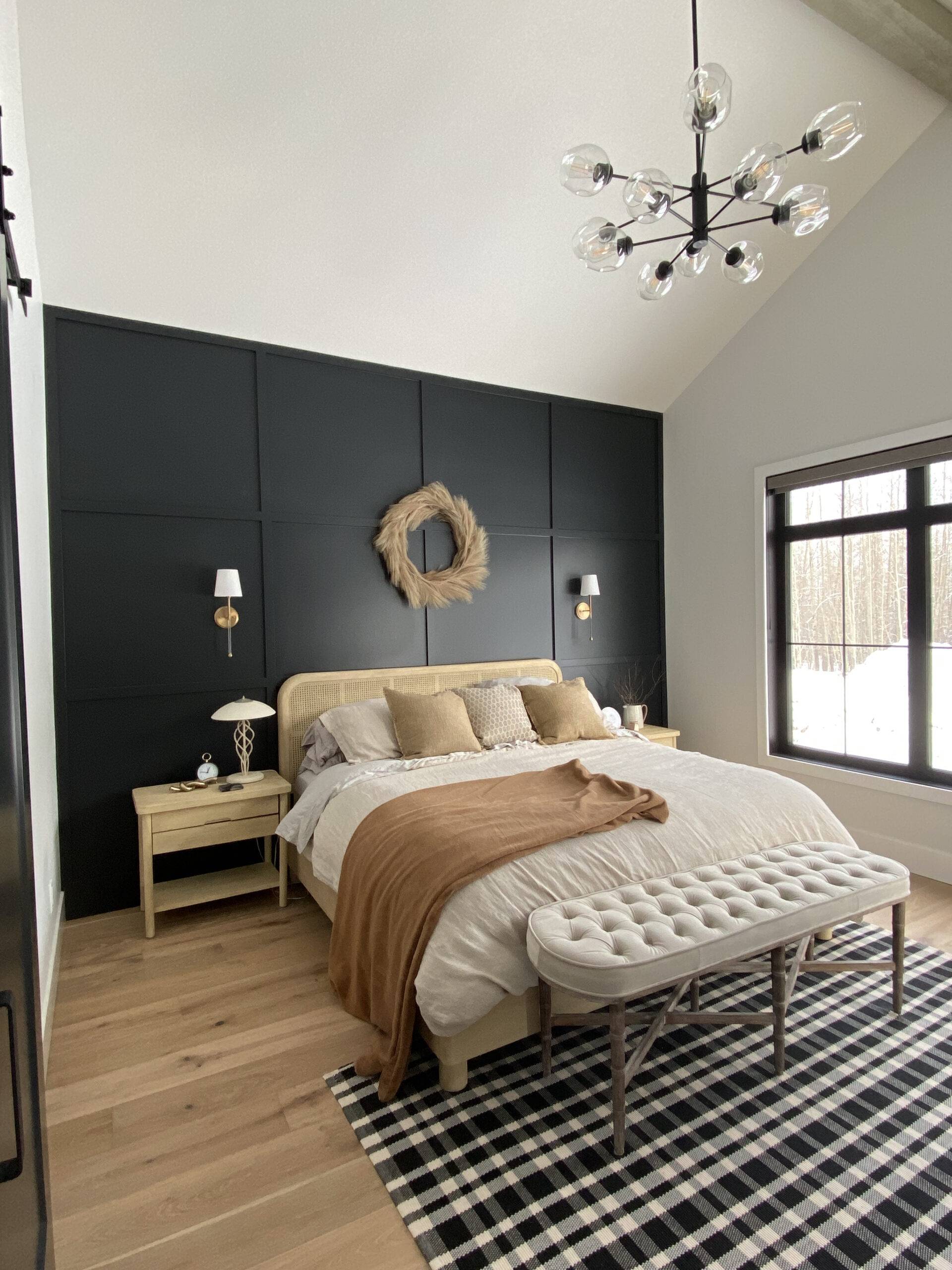
22. Modern Farmhouse Bedroom with Black Paneled Feature Wall
This design succeeds by subverting expectations. Typically, a slanted ceiling attic room might use all-white to feel bigger, but this room bravely goes dark. The black paneled accent wall adds incredible depth and sophistication. It works because it’s balanced by the bright white of the slanted ceiling and the natural light from the large window. The warmth of the rattan headboard and the light wood floors prevents the black from feeling cold or gloomy. It’s a perfect example of using high contrast to create a cozy, modern, and memorable space.
💸 Get This Look For Less
A black accent wall is a stunning choice, but it’s a bit of a diva. Dust and scuffs are much more visible on a dark, matte surface than on a light one. You’ll need to be prepared for more frequent dusting. Also, touch-ups can be tricky. If you get a scratch, dabbing on some extra paint can sometimes flash or look more obvious than the original mark. Our advice: use a high-quality, washable matte paint and always keep a small sample jar for touch-ups from the exact same can.
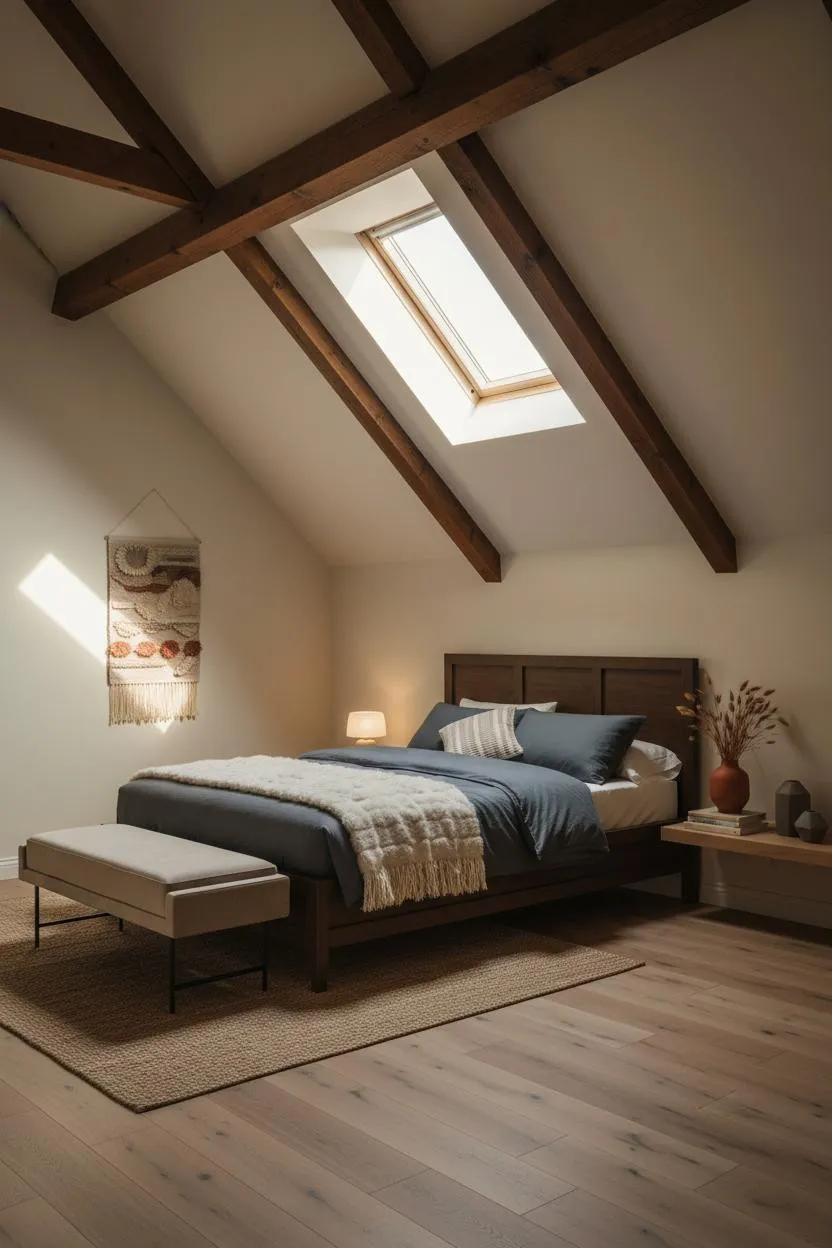
23. Skylight with Exposed Beams in Neutral Attic Bedroom
The key to making a bed under a skylight feel intentional is to treat the skylight as a headboard. Center the bed directly beneath it. This creates a powerful vertical axis that draws the eye upward, making the ceiling feel higher and the room more grand. It also turns the simple act of lying in bed into an event where you can watch the stars or clouds. For a polished look, ensure the width of your bed and nightstands is roughly equal to or slightly wider than the skylight above.
💰 Budget Breakdown
Exposed beams are a dream, but adding real structural beams is a costly renovation. You can get 90% of the look for 20% of the cost with faux wood beams. They are lightweight, hollow, and made from high-density polyurethane that is molded to look like real wood. You can order them online from places like Home Depot or FauxWoodBeams.com. A typical 16-foot beam costs between $200 and $400, and they can be installed with construction adhesive and screws. It’s a high-impact DIY that adds instant rustic character.
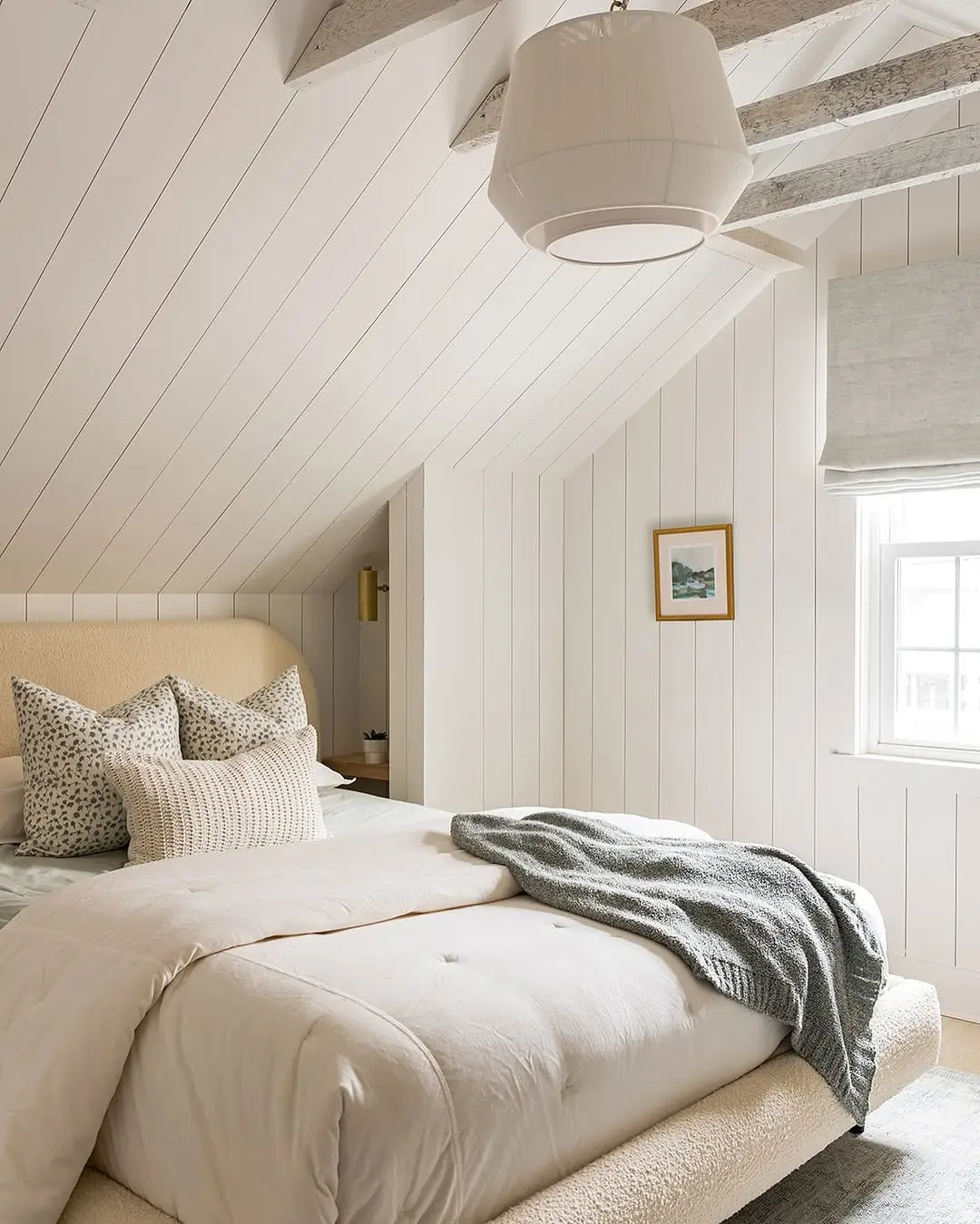
24. Cozy White Slanted Ceiling Bedroom with Sherpa Bed
In a room this monochromatic, texture is everything. The single element that elevates this space from simple to sophisticated is the sherpa-textured bed frame. It’s a tactile detail that begs to be touched, adding a layer of softness and warmth that a simple wood or metal frame couldn’t. It turns the bed into a cozy, cloud-like centerpiece. Paired with the vertical wall paneling and a large, soft pendant light, the room becomes a masterclass in using texture, not color, to create interest. The look is more inviting than the minimalist feel of Idea #6, but just as clean.
🎯 What Makes It Work
This light-and-airy, all-white approach is perfect for attics with lower ceiling heights. If your low wall dips below 4 feet, this is a great strategy. The vertical paneling helps to draw the eye up, creating an illusion of height, while the white color scheme maximizes the feeling of space and light. The low-profile bed also helps to increase the perceived distance to the slanted ceiling. This idea works well in a space from 150 to 250 square feet, where creating a sense of openness is the top priority.
25. Oak Closet with Shiplap Walls in a Slanted Attic Space
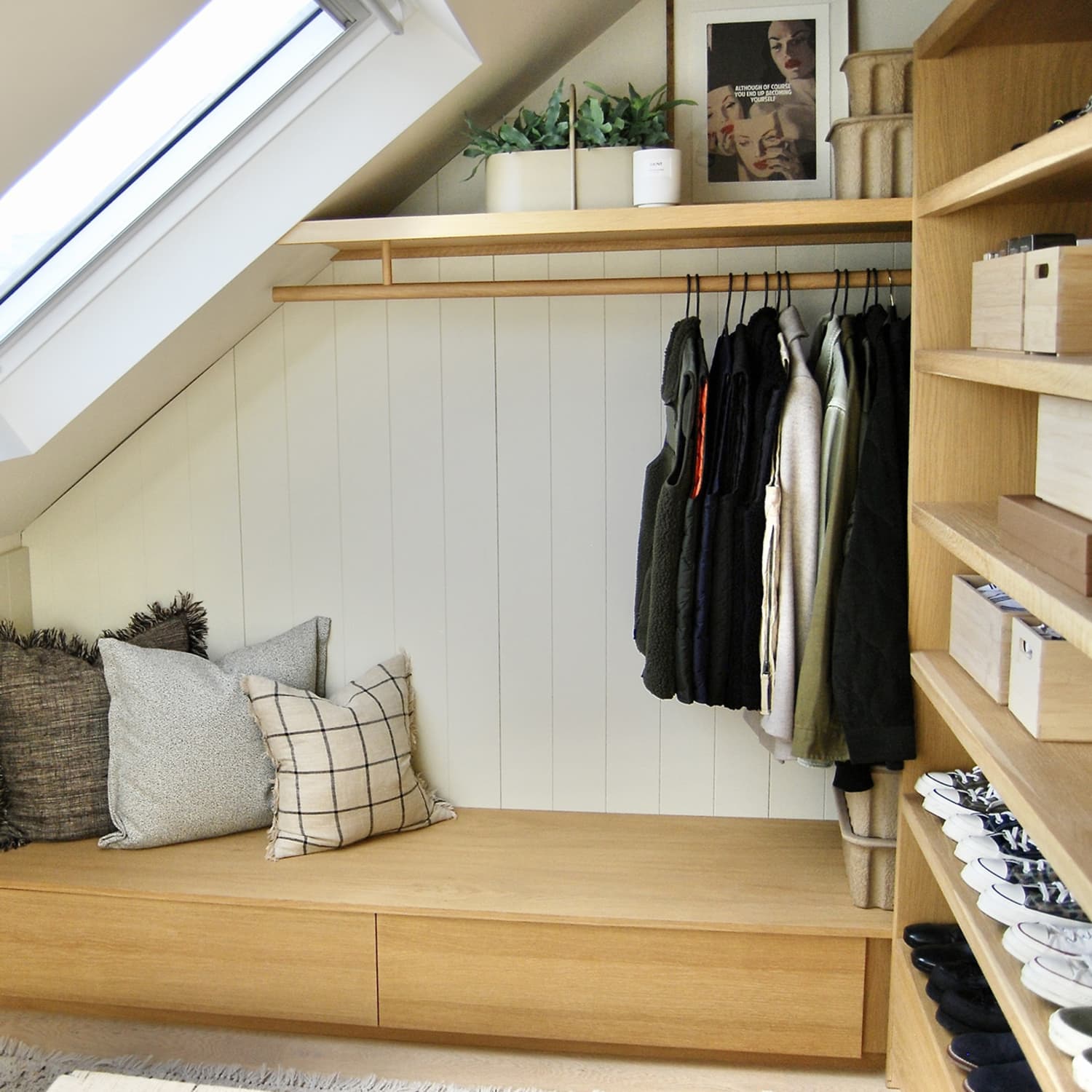
This closet nook is a triumph of ‘zoning’ in a small space. The design intelligently uses materials to define a specific area. The vertical white shiplap signals a break from the rest of the room, while the consistent use of light oak for all the built-ins (shelves, bench, drawers) makes the entire zone feel like one cohesive, custom piece of furniture. This clear visual language turns an awkward corner under a slant into a highly functional and aesthetically pleasing ‘dressing zone’ that feels distinct and intentional.
✅ Before You Start
Vertical shiplap is a fantastic way to add character and visual height to an attic room. Here’s a quick guide to installing it in a nook.
- Time: One weekend. Cost: $200-$500 in materials.
- Measure your wall space and purchase shiplap boards (MDF is a cost-effective choice). Calculate about 10% extra for cuts.
- Find and mark the studs in your walls using a stud finder.
- Starting in one corner, use a level to ensure your first board is perfectly plumb (straight up and down).
- Apply construction adhesive to the back of the board and nail it into the studs.
- Continue across the wall, locking each new board into the previous one. Use a nail gun for speed. Finish nails work too.
- Fill nail holes, caulk seams, and paint.
26. Simple Attic Bedroom with Desk Nook and Green Carpet
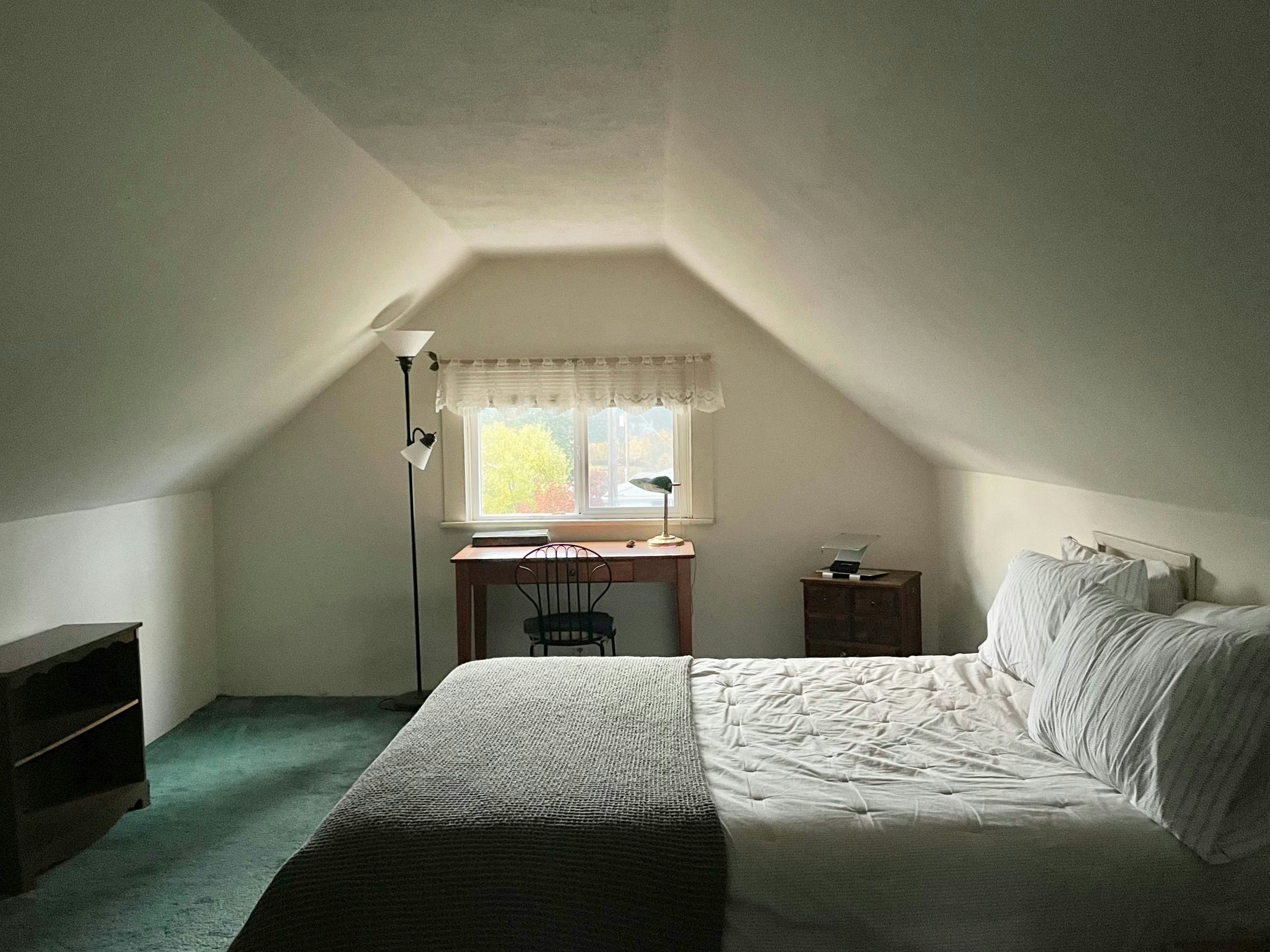
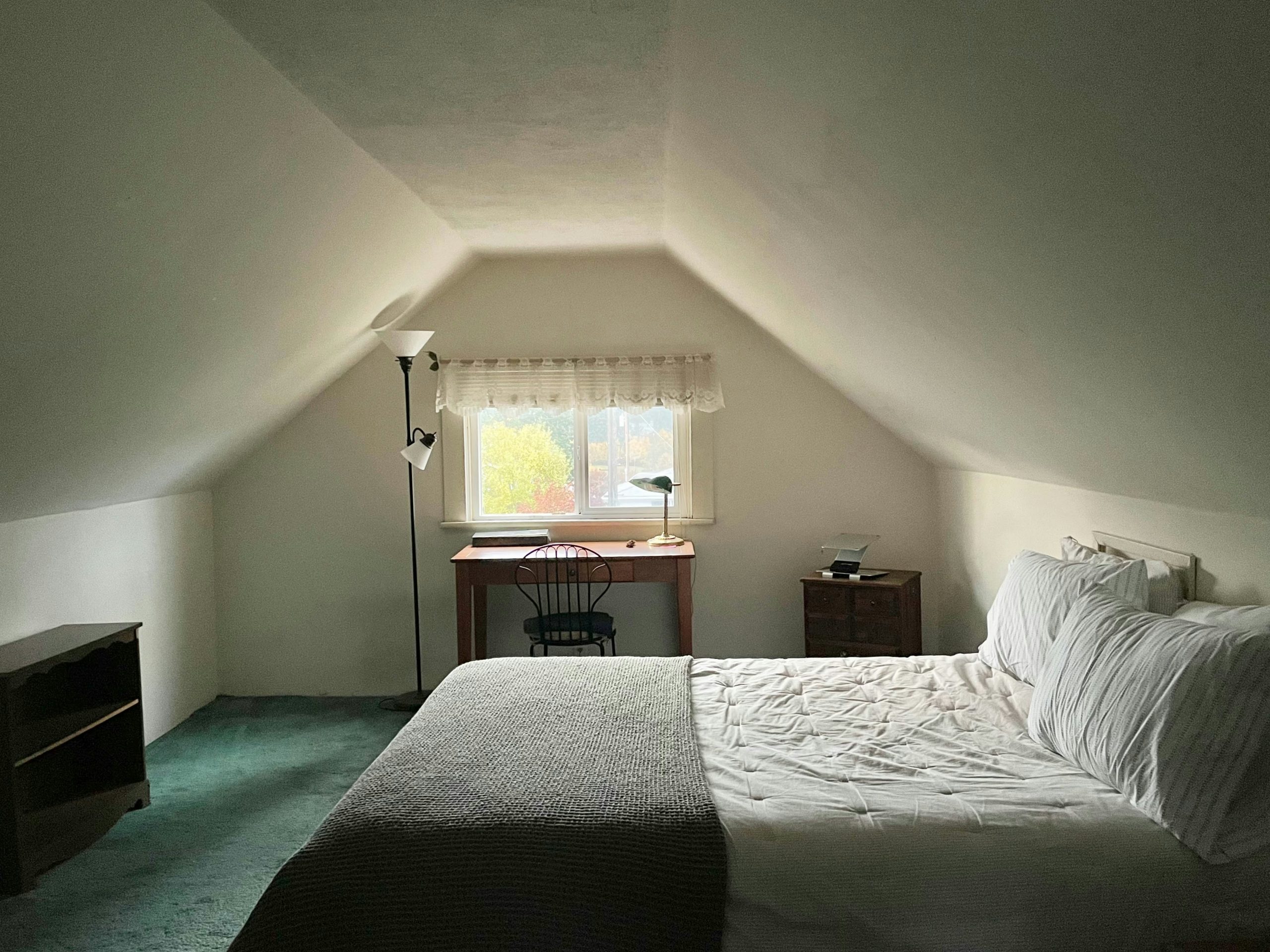
This room is a perfect example of achieving a functional and cozy space on a tight budget. The focus isn’t on expensive finishes, but on smart, affordable choices. Wall-to-wall carpet is often cheaper to install than hardwood. Simple, undressed windows are free. The furniture looks like it could be a collection of hand-me-downs or thrift store finds. The key is the clean white paint and the single, bold color choice for the carpet, which ties everything together. It proves that you don’t need a huge budget to create a pleasant and practical attic room. This is the budget version of Idea #8‘s more curated look.
🔥 Trending Context
That light green carpet is a bold, fun choice, but let’s be realistic about its lifespan. Light-colored carpets, especially in a bedroom, will show dirt, spills, and wear patterns much more quickly than a darker or multi-toned option. If you’re set on a light color, invest in a quality carpet with stain resistance and be prepared for regular professional cleanings (at least $100 per year) to keep it looking fresh. A no-shoes-in-the-bedroom rule is practically mandatory here.
27. Cozy Attic Bedroom with Twin Skylights and Natural Accents
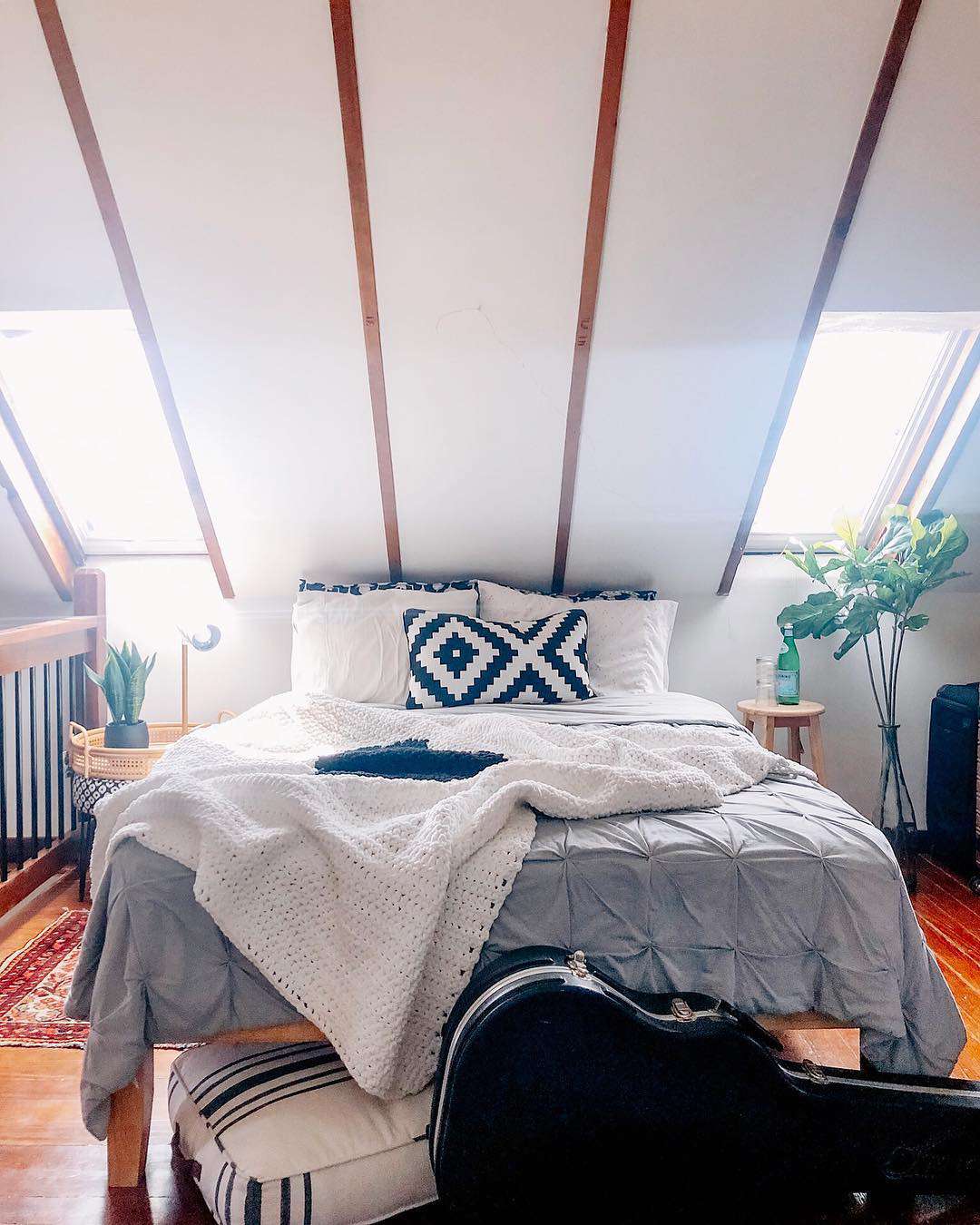
The placement of the bed is the single most important decision in this room. By tucking it directly under the slope and between the two dormer windows, the design creates a perfectly symmetrical and incredibly cozy sleeping nook. This arrangement transforms the architectural constraints into a feature. Any other placement would have felt less intentional. This makes the bed feel like a sheltered, special destination within the room, rather than just a piece of furniture against a wall. It is the heart of the design.
🧹 Maintenance Reality
This room feels so relaxing because it repeats geometric shapes to create a subtle sense of rhythm and order. Notice the rectangles: the two dormer windows, the panes within them, the pillows on the bed, and even the shape of the bed itself. This repetition is calming to the eye. The geometric pattern on the throw pillow is a playful echo of this theme. This underlying structure allows the more organic elements, like the plants and the soft textiles, to feel balanced rather than messy.
28. Vaulted Shiplap Bedroom with a Rustic Stone Accent Wall
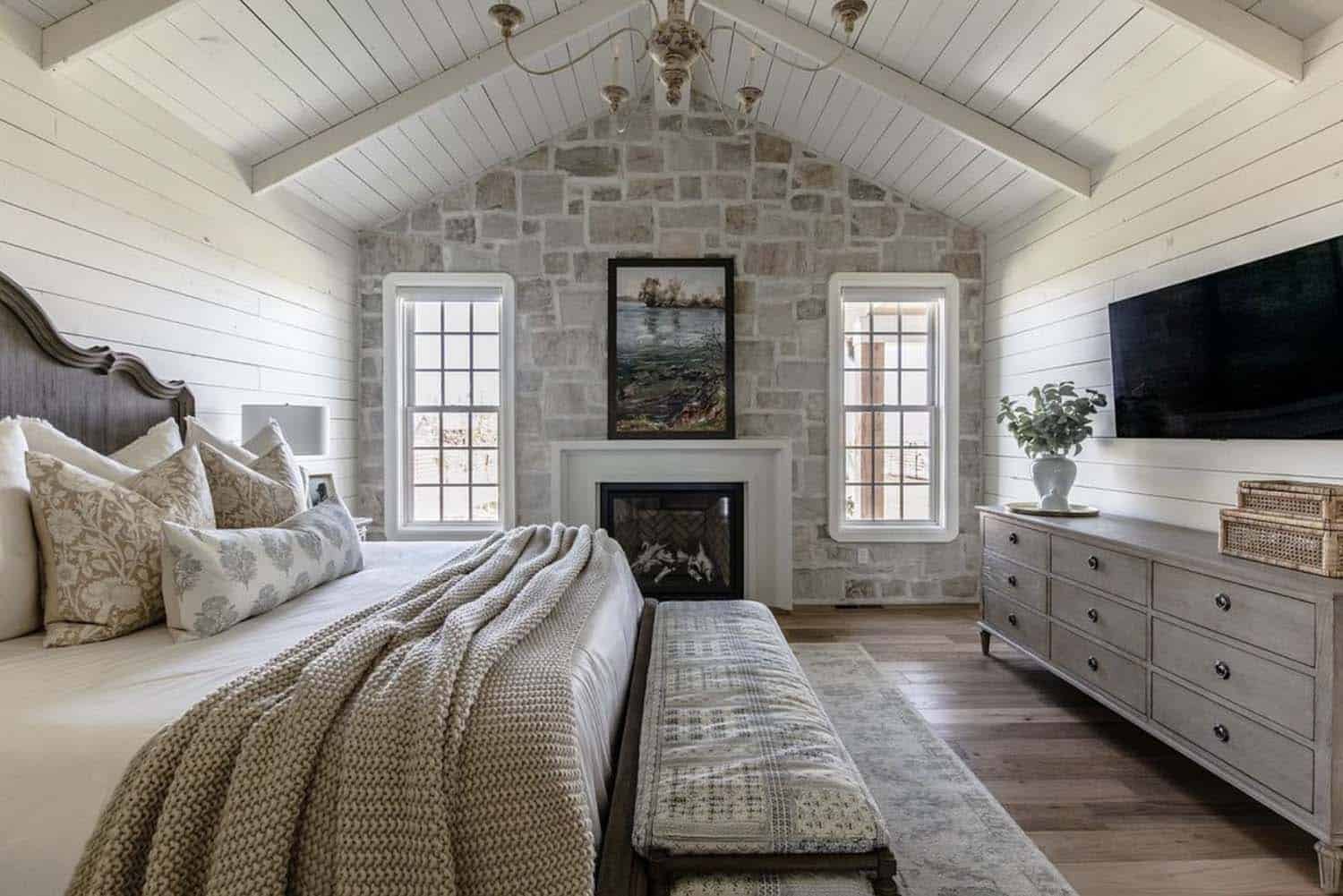
This room’s sophisticated rustic formula is all about balancing clean lines with rugged texture. It’s roughly 50% clean white shiplap + 30% rustic grey stone + 20% dark wood and black accents. The white shiplap on the vaulted ceiling keeps the room feeling vast and bright. The stone accent wall provides a powerful, earthy texture that anchors the entire space. Finally, the dark wood of the bed and the black of the fireplace and window frames add the necessary contrast and definition. This is a high-end take on modern farmhouse. Compare it to the darker approach in Idea #22.
💡 Designer Tip
A stone accent wall is a stunning, timeless feature, but it’s also a dust collector. The irregular surfaces and deep grout lines can trap dust, cobwebs, and allergens. To keep it looking clean, you’ll need to go over it with the brush attachment of your vacuum cleaner at least once a month. For a deeper clean (annually), use a soft-bristled brush and a gentle stone cleaner. Avoid harsh chemicals, which can damage the stone’s natural patina. It’s not a deal-breaker, but it’s more work than a painted wall.
Ready to Love Your Angles?
Those tricky slanted ceilings aren’t a curse; they’re an opportunity to create a room with more character and personality than any boring box could ever have. Whether you go bright and airy or dark and cozy, the key is to work with your angles, not against them. Now, go open up that Pinterest board and start planning. Your attic’s next chapter is waiting.