Kitchen windows have always been more than just a source of light—they’re the heart of your home’s connection to the outdoors, a backdrop for your daily rituals, and a canvas for personal style. In 2026, American homeowners are rethinking these essential spaces with fresh creativity, blending function with personality in ways that feel both modern and timeless. Whether you’re drawn to the simplicity of natural materials, the drama of bold color, or the charm of vintage-inspired accents, there’s never been a better time to reimagine your kitchen window. From Pinterest boards to real-life renovations, these ideas reflect what’s resonating right now—practical, beautiful, and deeply personal.
1. Layered Linen Curtains Over the Sink
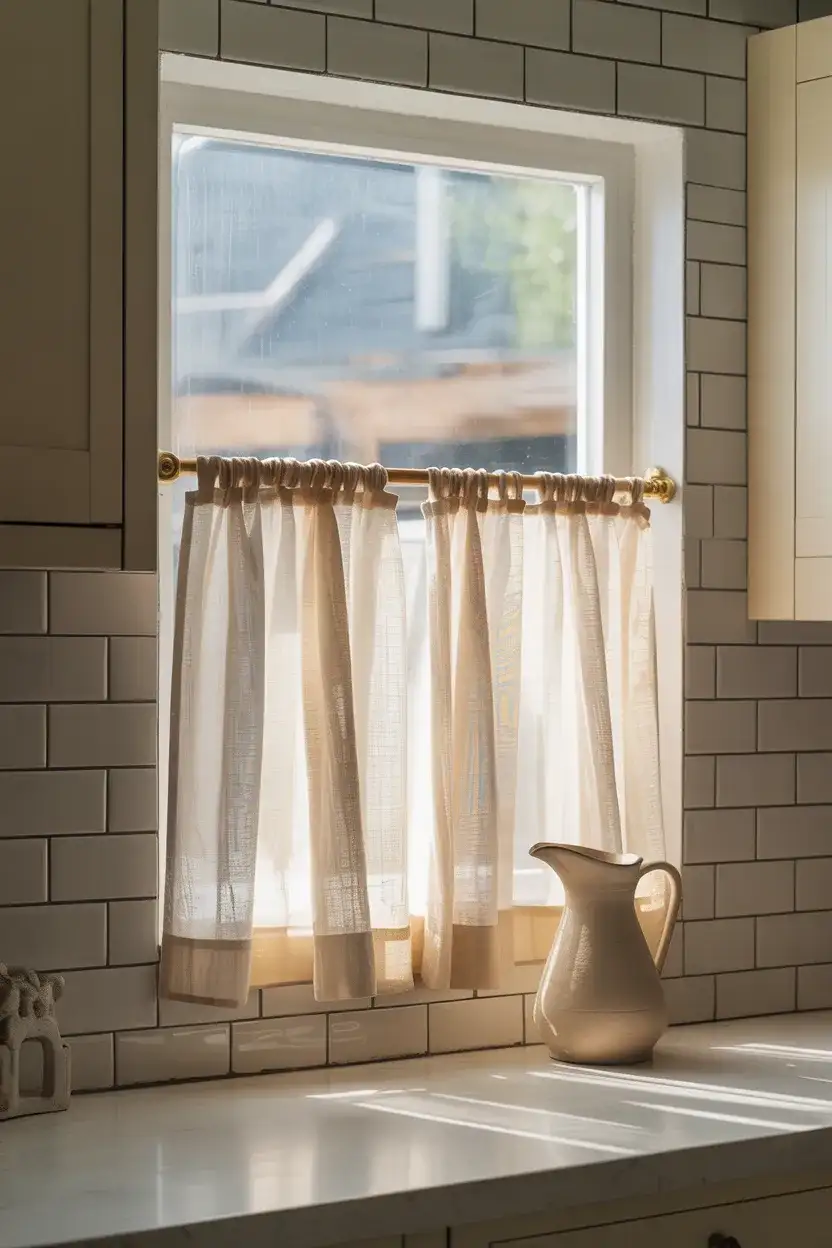
Soft, breathable linen curtains over sink windows bring an effortless elegance that works in both modern farmhouse and coastal kitchens. The key is layering—combine a sheer panel with a heavier linen drape to control light throughout the day. This approach offers flexibility, letting you pull back the outer layer for full sun or close everything for privacy during evening cooking sessions. Linen’s natural texture adds warmth without feeling fussy, and it pairs beautifully with brass or matte black hardware.
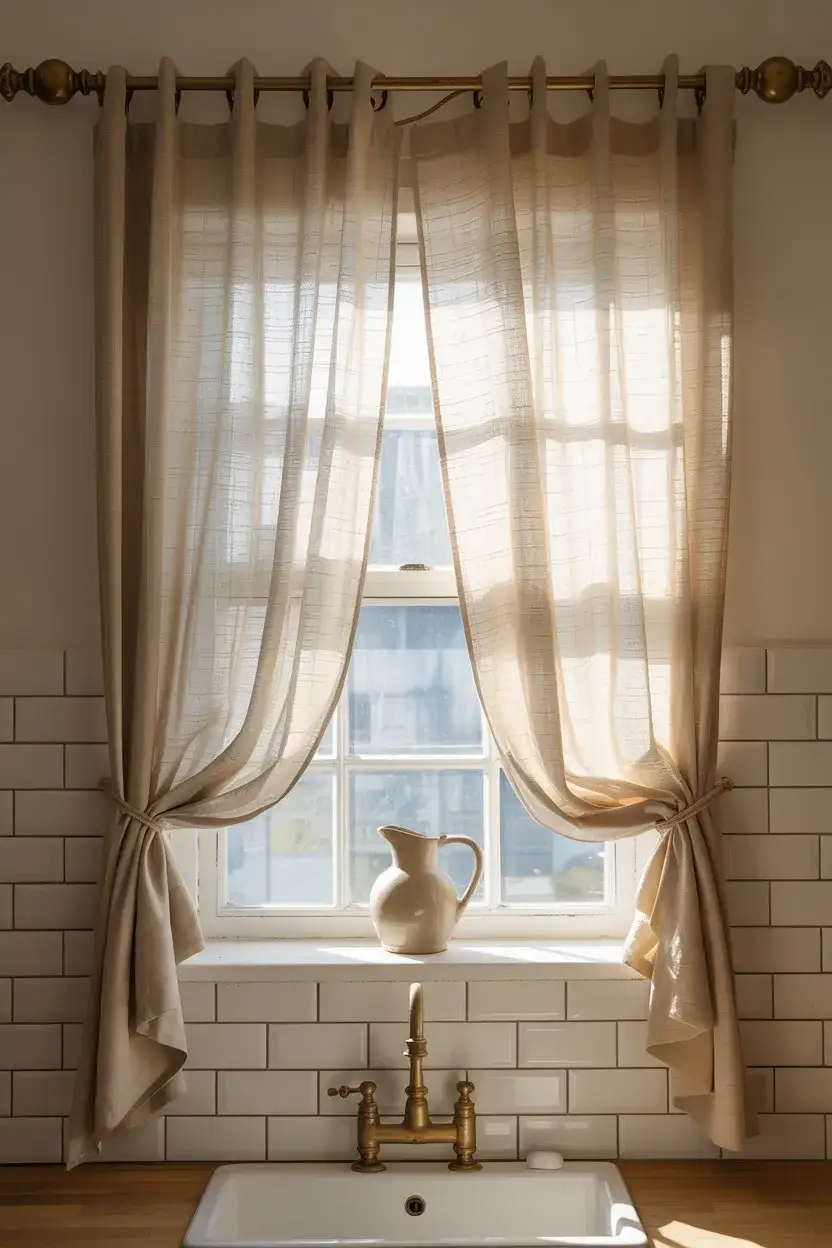
Where this works best: Kitchens with southern or western exposure, where you need to manage intense afternoon light without sacrificing brightness. Linen softens harsh sun while maintaining that airy, lived-in feel that makes a kitchen feel like home. It’s especially popular in open-concept spaces where the kitchen flows into dining or living areas, creating visual continuity. The fabric ages beautifully, developing character over time rather than looking worn.
2. Floating Plant Shelf Across the Window
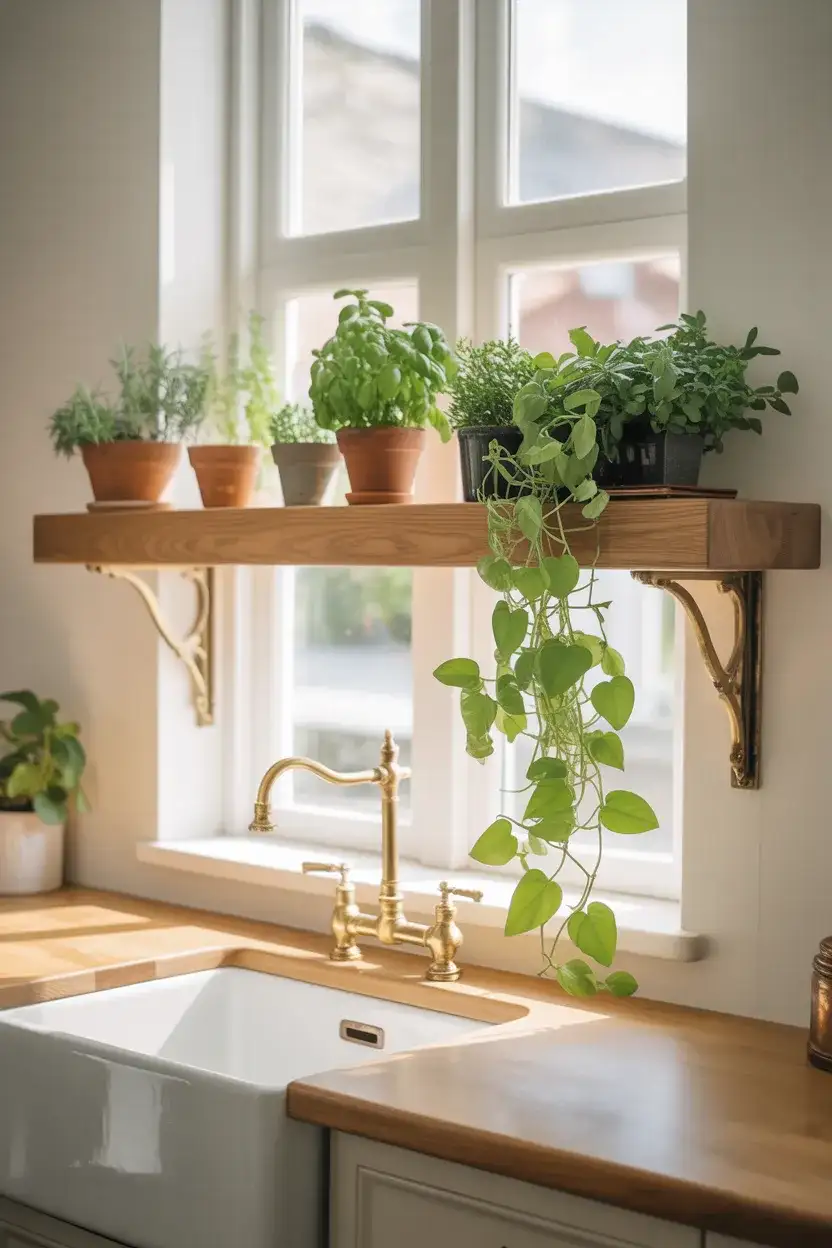
A slim plant shelf installed midway across your kitchen window transforms dead space into a thriving display of greenery. This shelf-over-sink approach maximizes natural light for herbs and houseplants while maintaining your view and ventilation. The trick is keeping the shelf shallow—three to five inches deep—so it doesn’t block too much light or feel visually heavy. Opt for light wood tones or powder-coated metal brackets that complement your existing hardware.
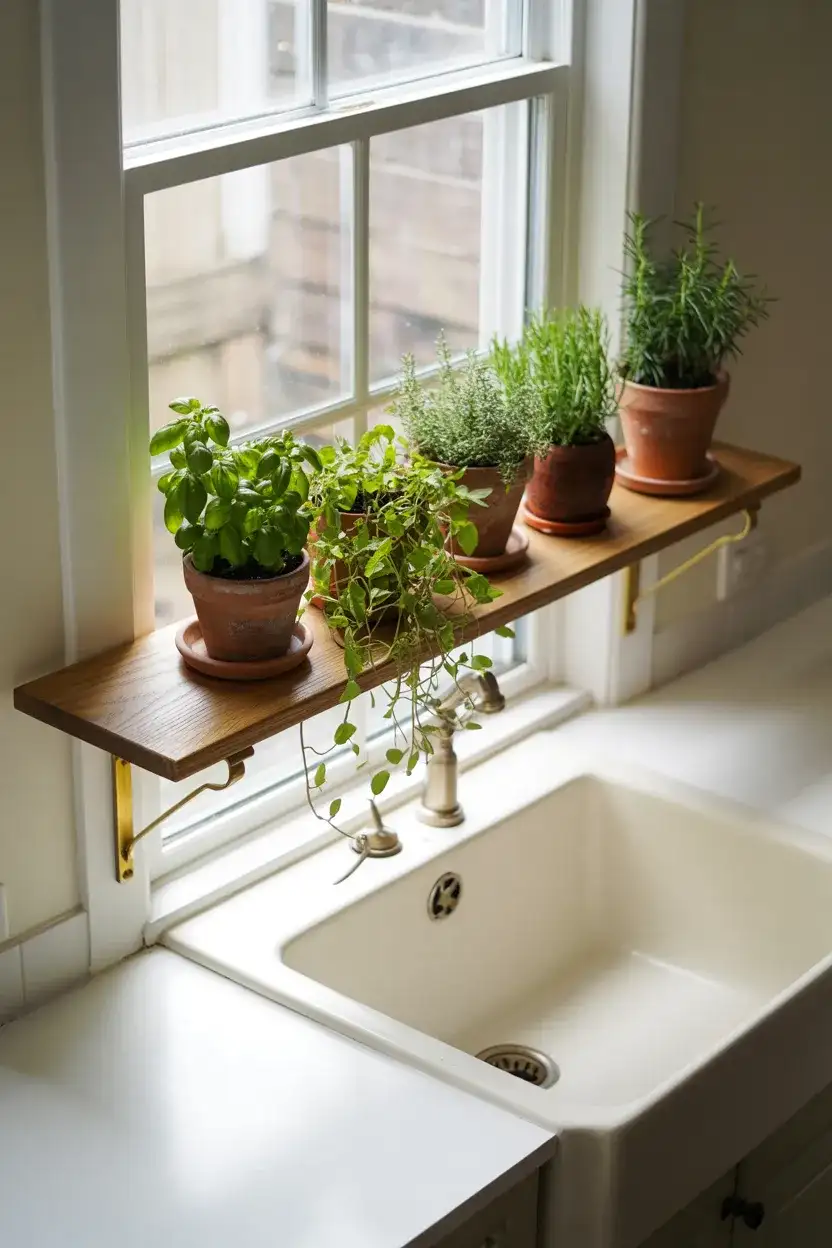
Many homeowners underestimate how much this setup simplifies their routine. You’ll actually remember to water your herbs when they’re right in front of you during dish duty, and the plants thrive in consistent natural light. It’s become a favorite hack for small urban kitchens where counter space is precious—you’re using vertical real estate that would otherwise go to waste while adding life to the room.
3. Reclaimed Wood Window Sill Extension
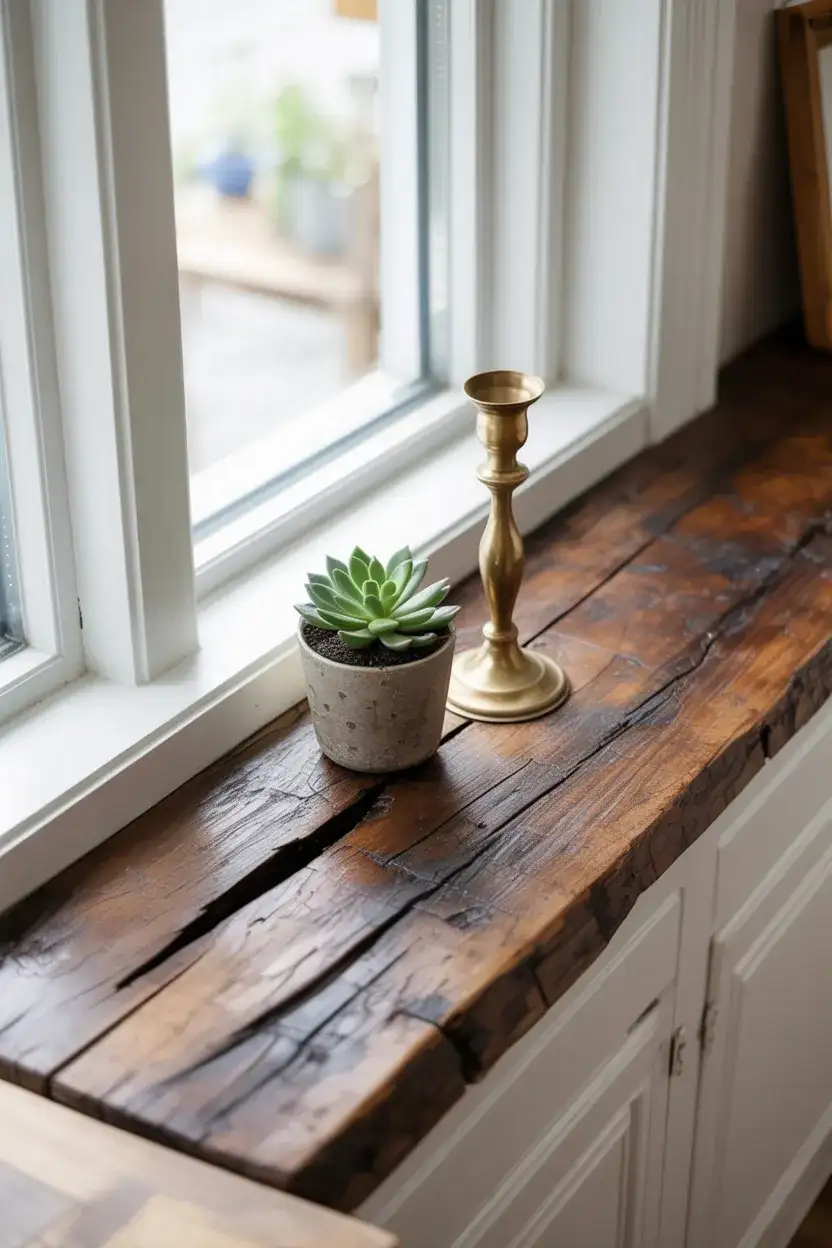
Extending your existing sill with a thick plank of reclaimed wood creates instant character and functional surface area. This works particularly well in older homes where original sills are narrow or damaged. A deeper sill decor space lets you stage small vignettes—a vintage cutting board propped up, a ceramic bowl of lemons, or a single stem in a glass bottle. The weathered texture of reclaimed wood brings warmth that contrasts beautifully with painted cabinetry or modern tile.
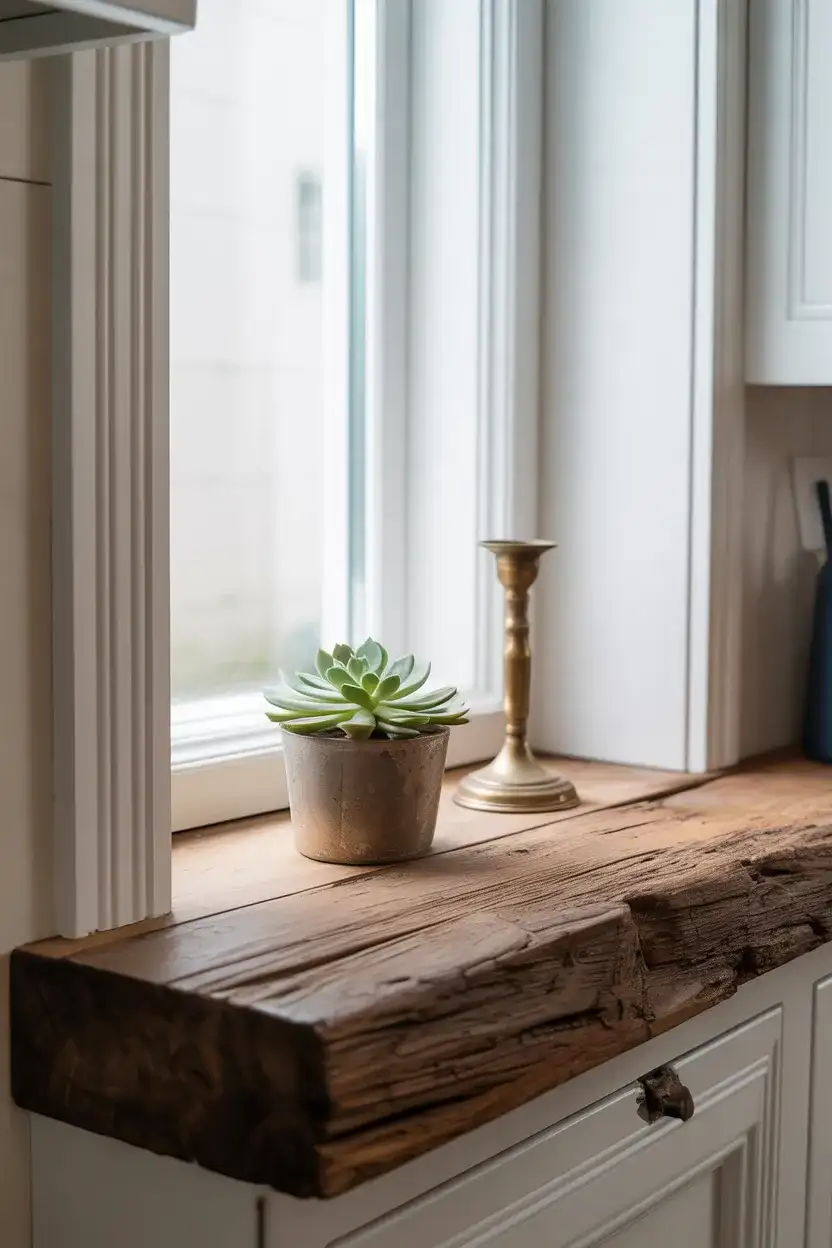
Budget-wise, this is one of the most affordable upgrades you can make. A local salvage yard or Habitat ReStore often has suitable wood for under fifty dollars, and installation is straightforward enough for a confident DIYer. The key is sealing it properly to protect against moisture and cleaning splashes, especially if your sink sits directly below. Use a food-safe mineral oil or water-based polyurethane for durability without harsh fumes.
4. Cafe-Style Roman Shades
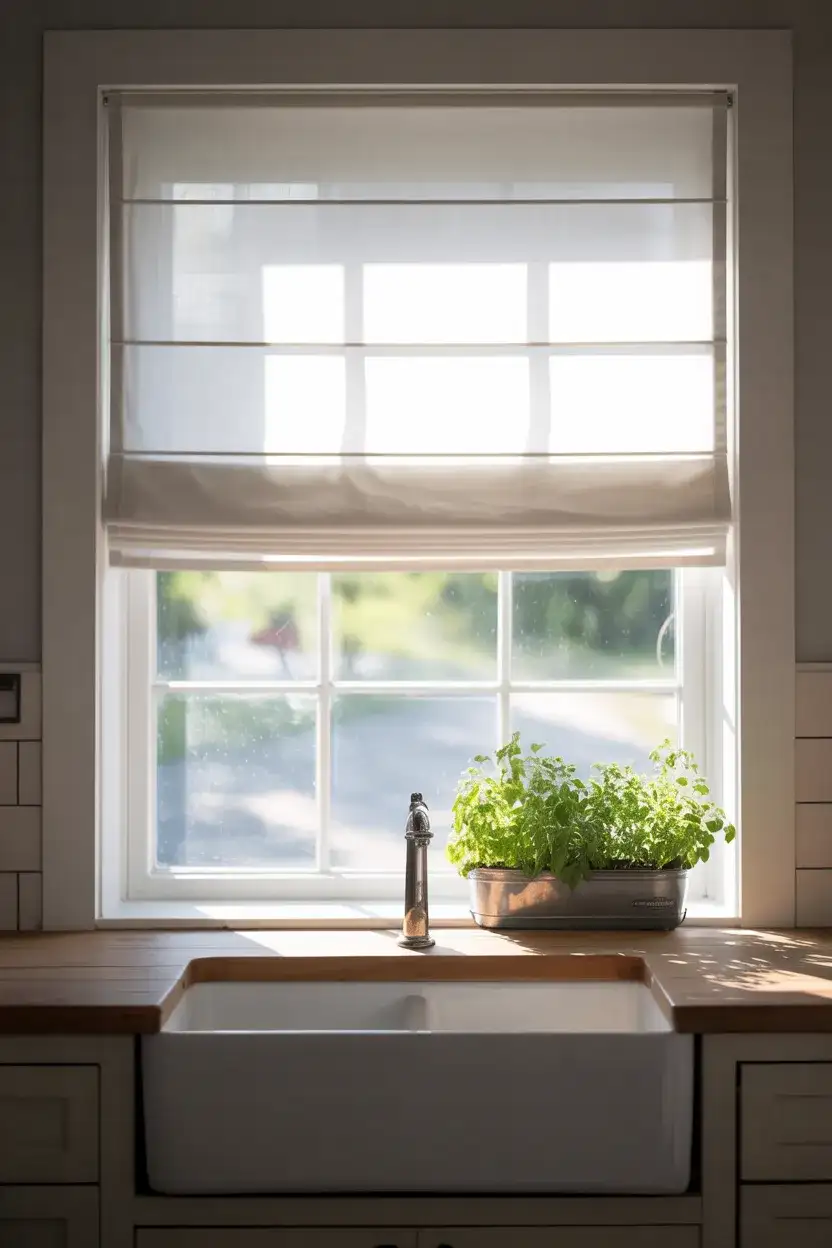
Tailored Roman shades mounted at the halfway point of your window offer privacy without sacrificing upper light—a clever solution for treatments over sink areas that face neighboring homes. This cafe-style approach, borrowed from European design, maintains an open feeling while giving you control over sightlines. Choose natural fabrics like cotton or linen in neutral tones to keep things timeless, or go bold with a graphic stripe or subtle pattern that adds personality without overwhelming the space.
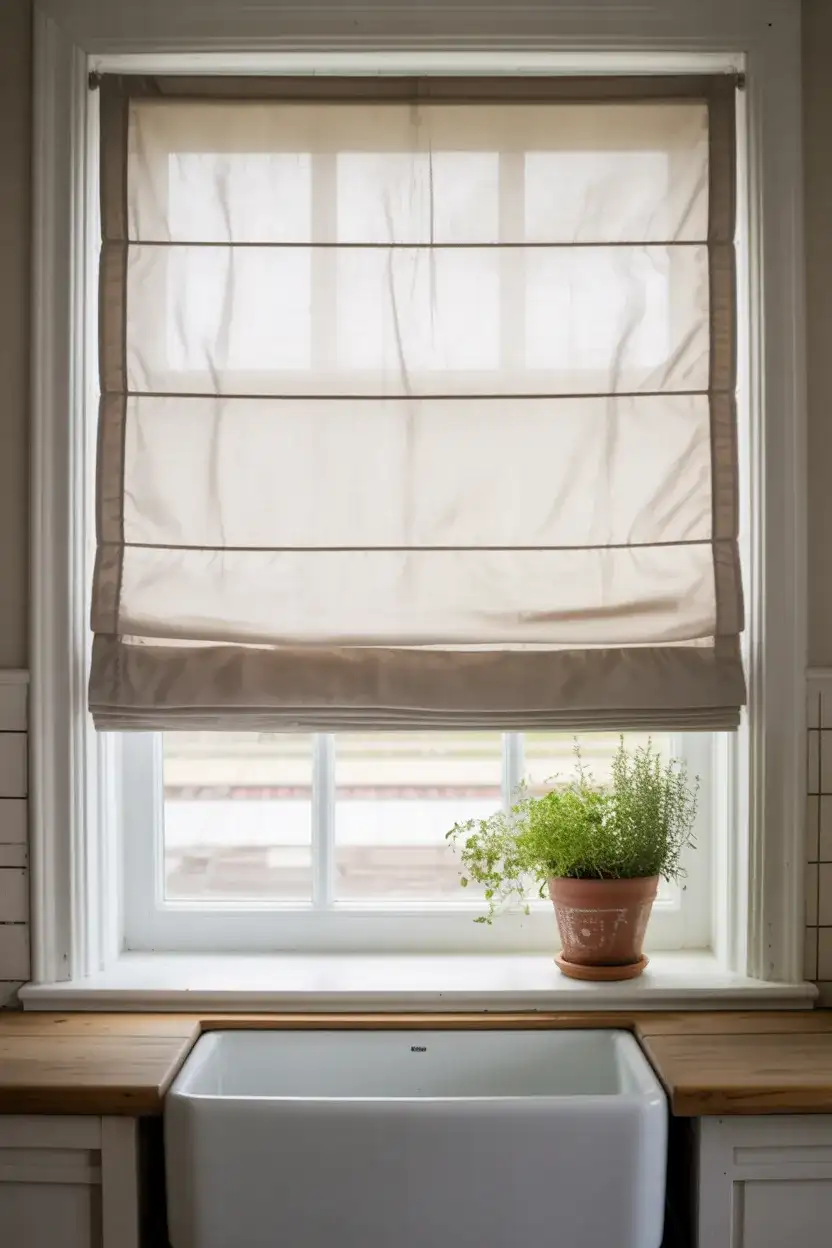
This treatment works particularly well in suburban kitchens where homes are close together but you still want that connection to the sky and treetops. It’s a practical middle ground that respects both your need for privacy and your desire for natural light. One thing to consider: make sure the shade mechanism is moisture-resistant if it’s directly over the sink, or position it slightly higher to avoid constant splashing during dishwashing.
5. Vintage Stained Glass Panel Insert
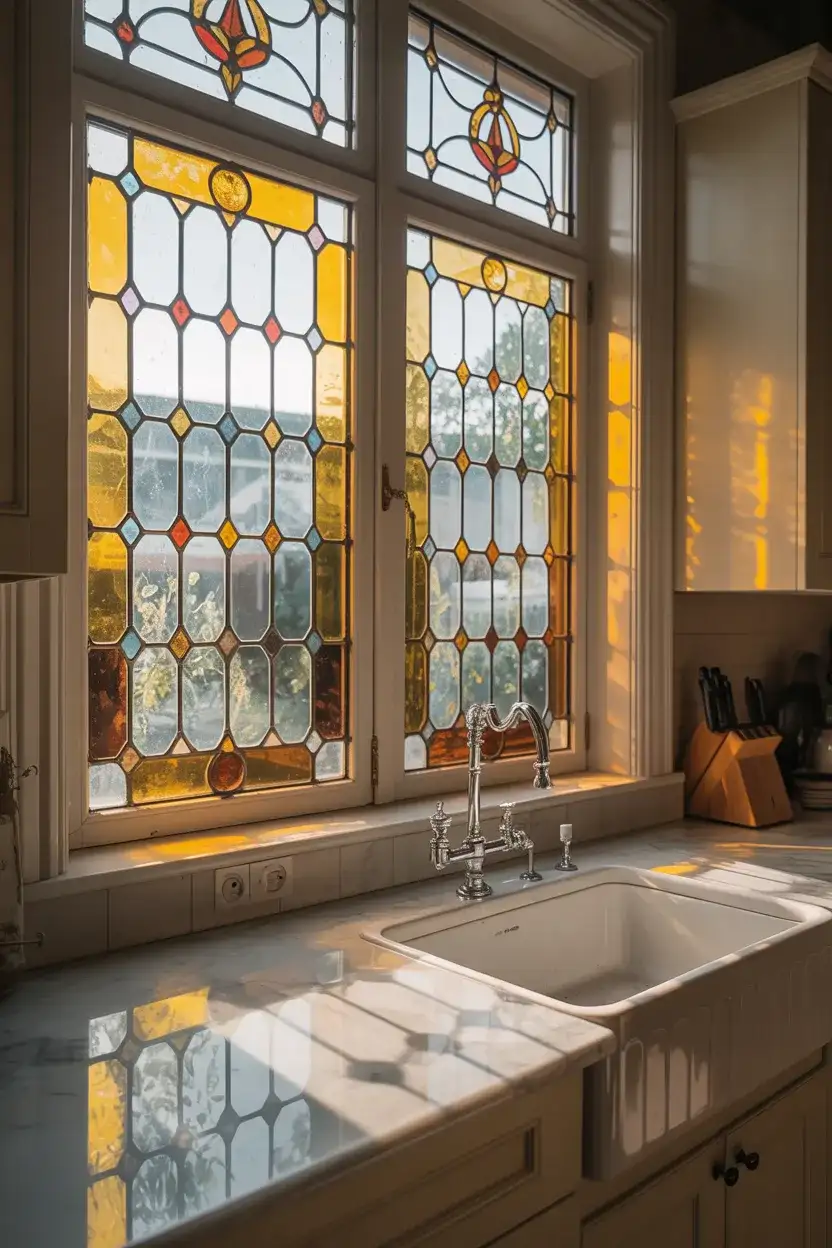
Installing a vintage stained glass panel—either as a full window replacement or hung as an overlay—adds artistry and color that shifts throughout the day. This works beautifully in older homes with character or in modern spaces where you want to inject unexpected personality. Look for geometric Art Deco patterns or simpler prairie-style designs that feel more universal than overtly religious or ornate Victorian pieces. The colored light it casts into your kitchen creates a living artwork that changes with the sun’s angle.
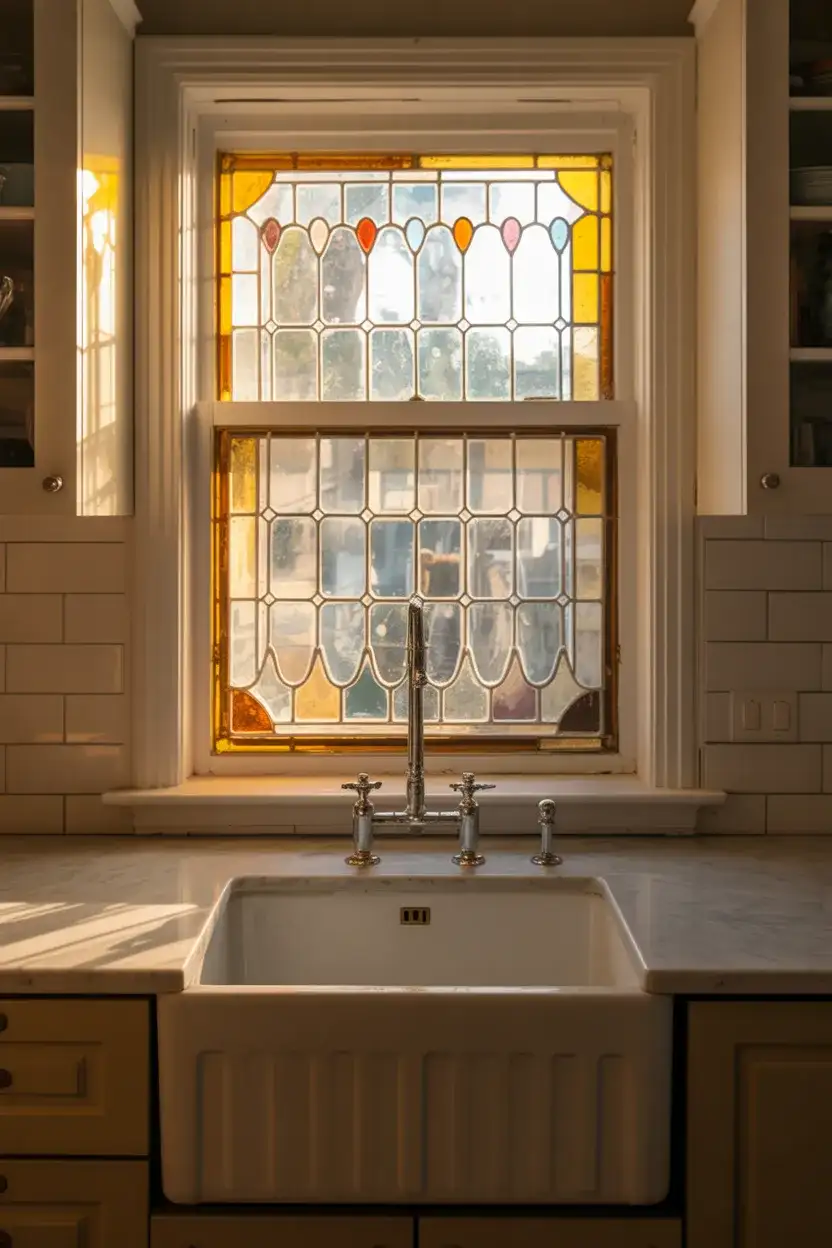
A colleague recently found a stunning piece at an architectural salvage sale for less than two hundred dollars, and the installation cost was minimal since it hung on the existing window frame with hooks. The light it brings into her kitchen feels magical, especially during golden hour when warm tones flood the countertops. It’s become the focal point of the room without any additional effort—just one thoughtful vintage element that tells a story.
6. Built-In Window Seat with Storage
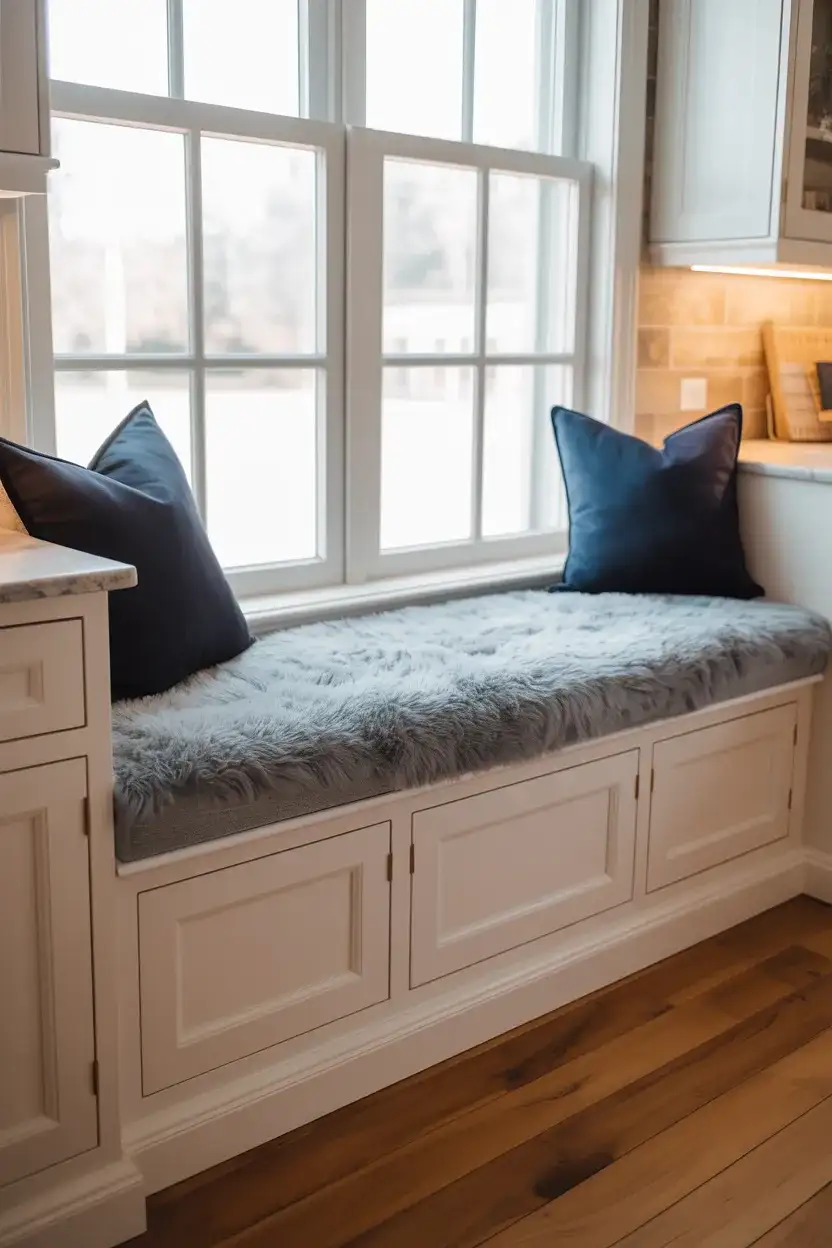
If your kitchen layout allows, a seat built into a larger window bay transforms the space into a cozy gathering spot. This seat ideas approach works best with windows that are at least four feet wide and positioned away from the primary work triangle. The base typically includes drawers or lift-top storage for linens, small appliances, or seasonal items. Top it with a custom cushion in durable, washable fabric—indoor-outdoor upholstery holds up well to spills and high traffic while remaining comfortable.
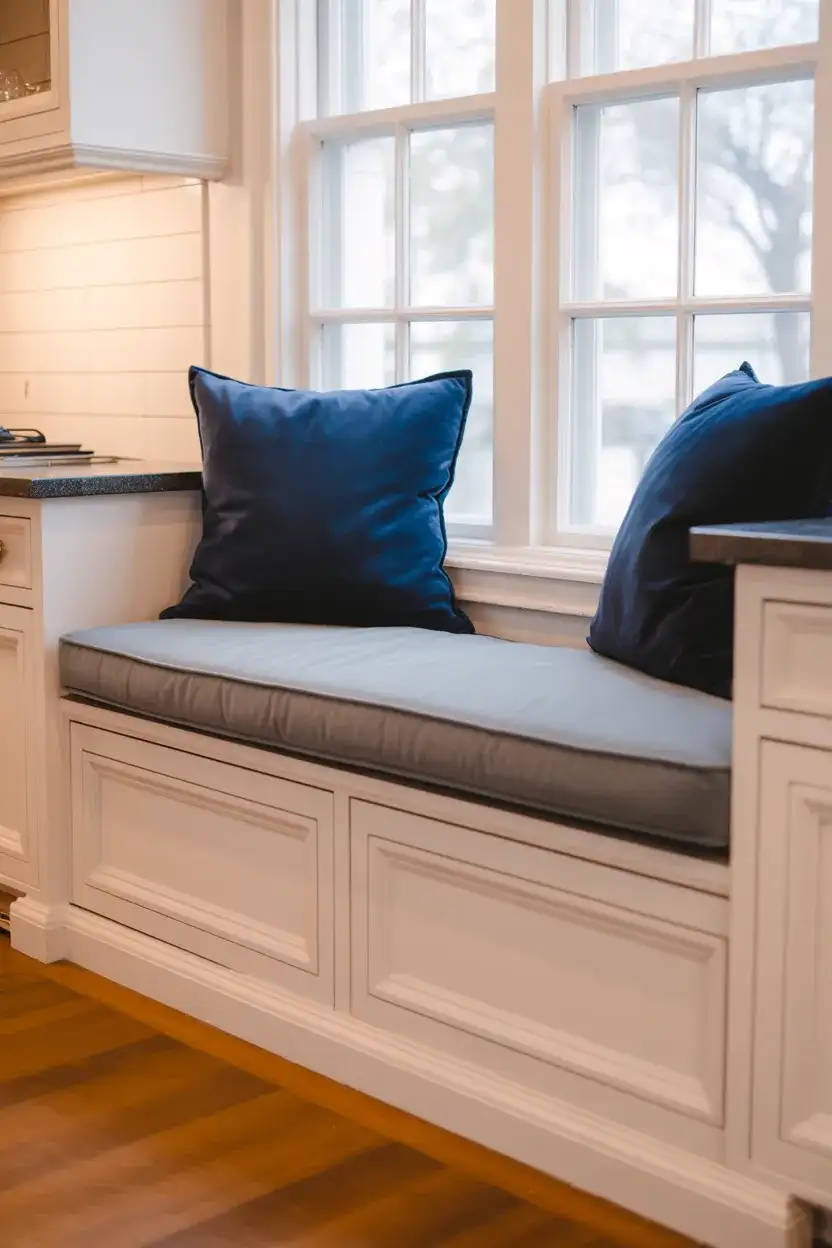
Where this works best: Kitchens in family homes where informal meals and homework sessions happen in the kitchen, or in urban apartments where every square foot needs to pull double duty. The window seat becomes the spot for morning coffee, kids doing art projects, or guests perching with a glass of wine while you cook. It softens the utilitarian nature of a kitchen by introducing a furniture-like element that feels intentional and homey.
7. Minimalist Black Frame Grid Windows
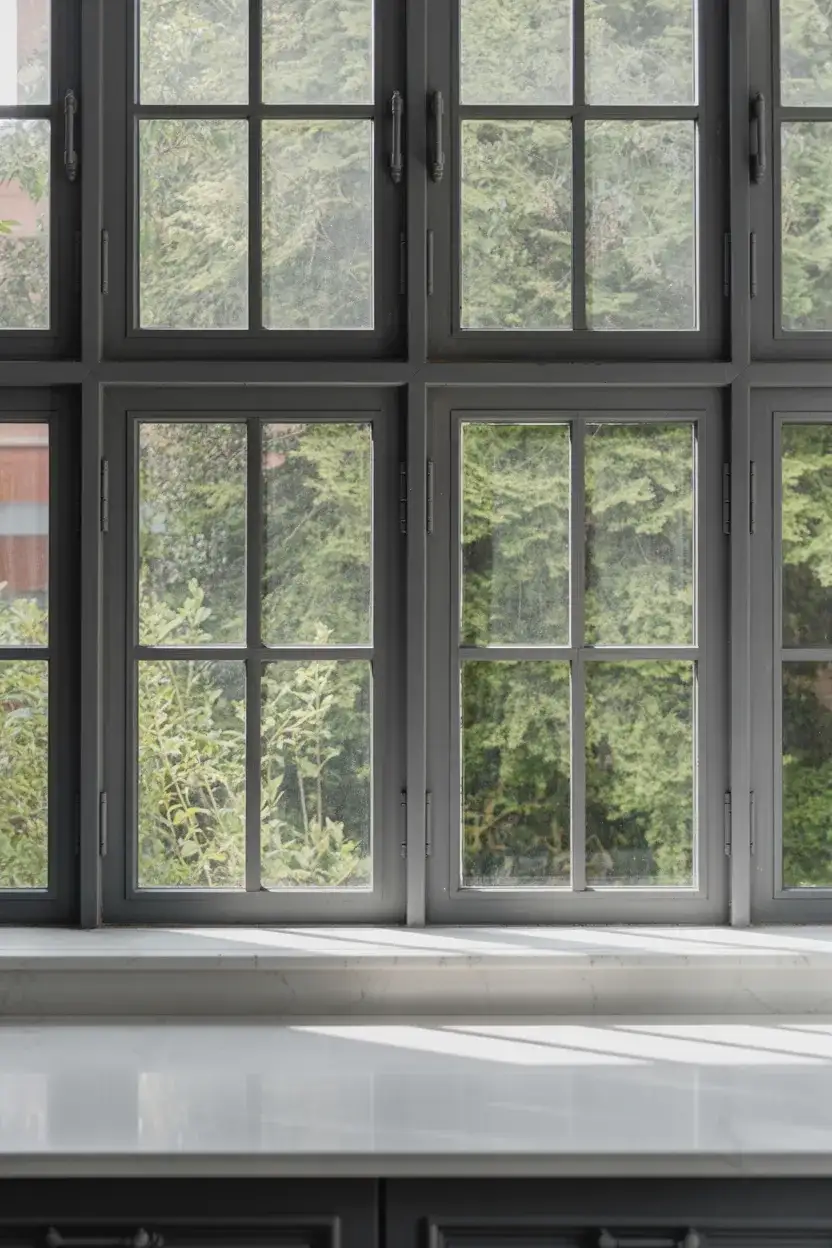
Replacing standard windows with slim black-framed versions in a grid pattern creates instant architectural drama. This modern treatment alternative requires no fabric or hardware—the window itself becomes the design statement. The narrow black muntins create a gallery-like quality that makes whatever view you have feel more intentional, whether it’s a lush backyard or a simple side yard. The clean lines work especially well in contemporary or transitional kitchens where you want graphic punch without busy patterns.
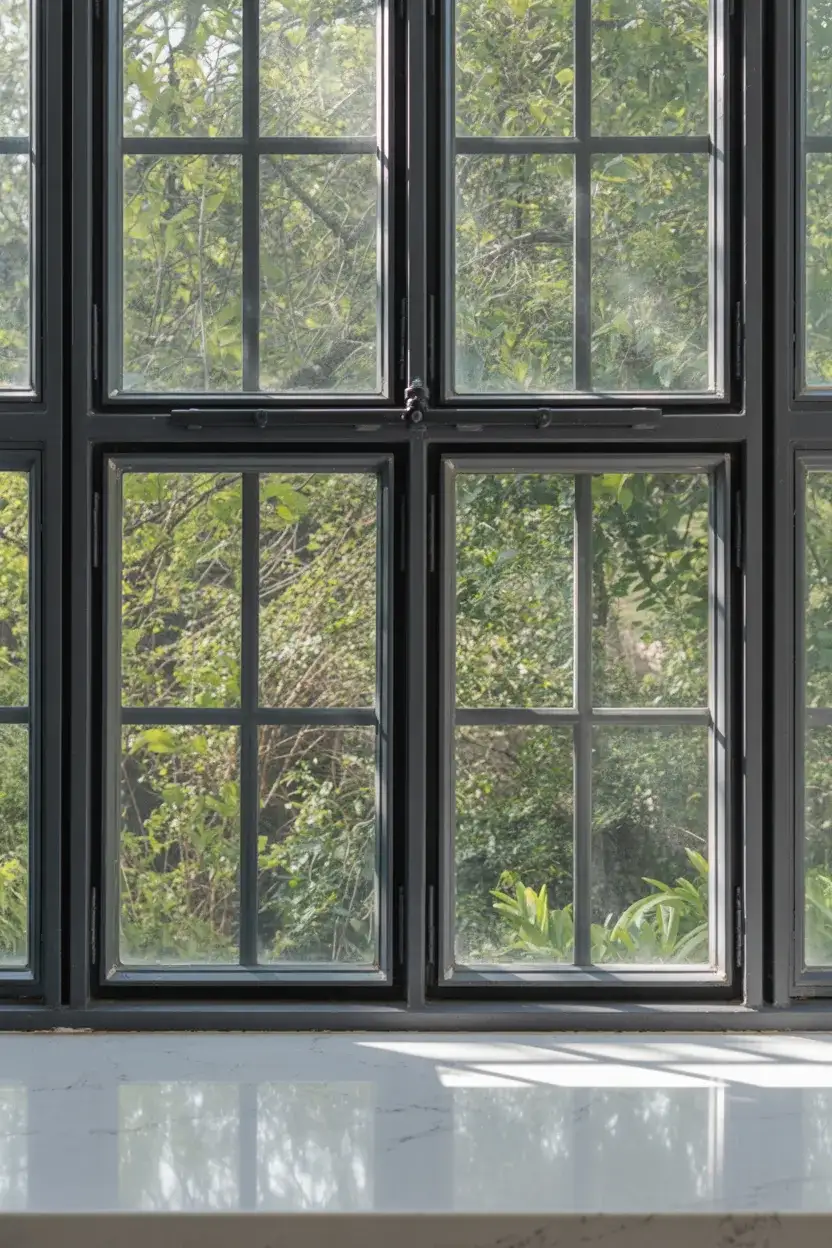
This is more of an investment—custom black-framed windows typically run higher than standard white vinyl—but the impact is transformative. You’re essentially adding architecture where there wasn’t any before, and it elevates the entire kitchen without touching cabinetry or countertops. The frames also hide dirt and wear better than white, a practical consideration for a high-use area where cooking grease and splashes are inevitable over time.
8. Hanging Herb Garden in Glass Jars
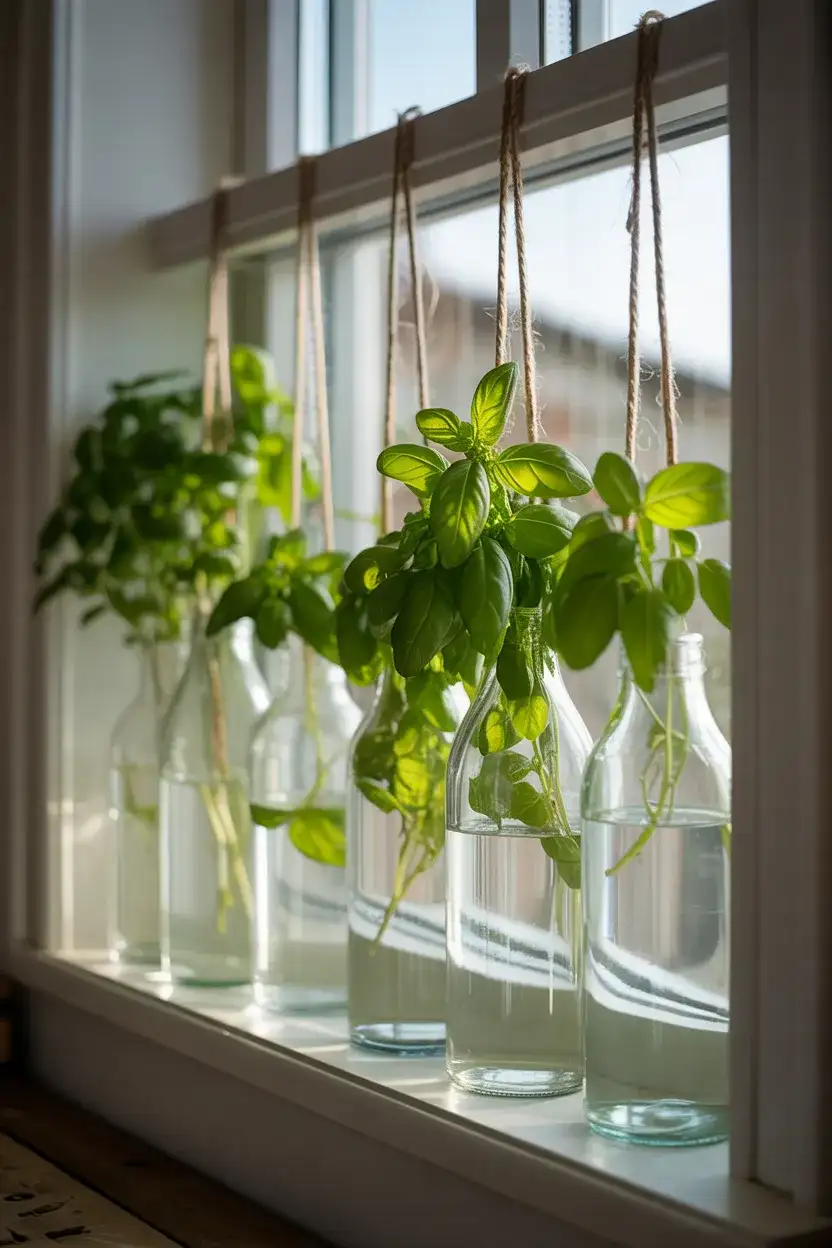
Suspending small glass jars or bottles at varying heights across your window creates a living installation of fresh herbs. This herb garden approach uses suction hooks or a tension rod system, keeping the window trim damage-free. Fill each jar with water and root cuttings of basil, mint, or green onions—plants that thrive in water culture. The effect is light and airy, with sunlight catching the glass and creating gentle reflections. It’s functional art that you harvest from regularly.
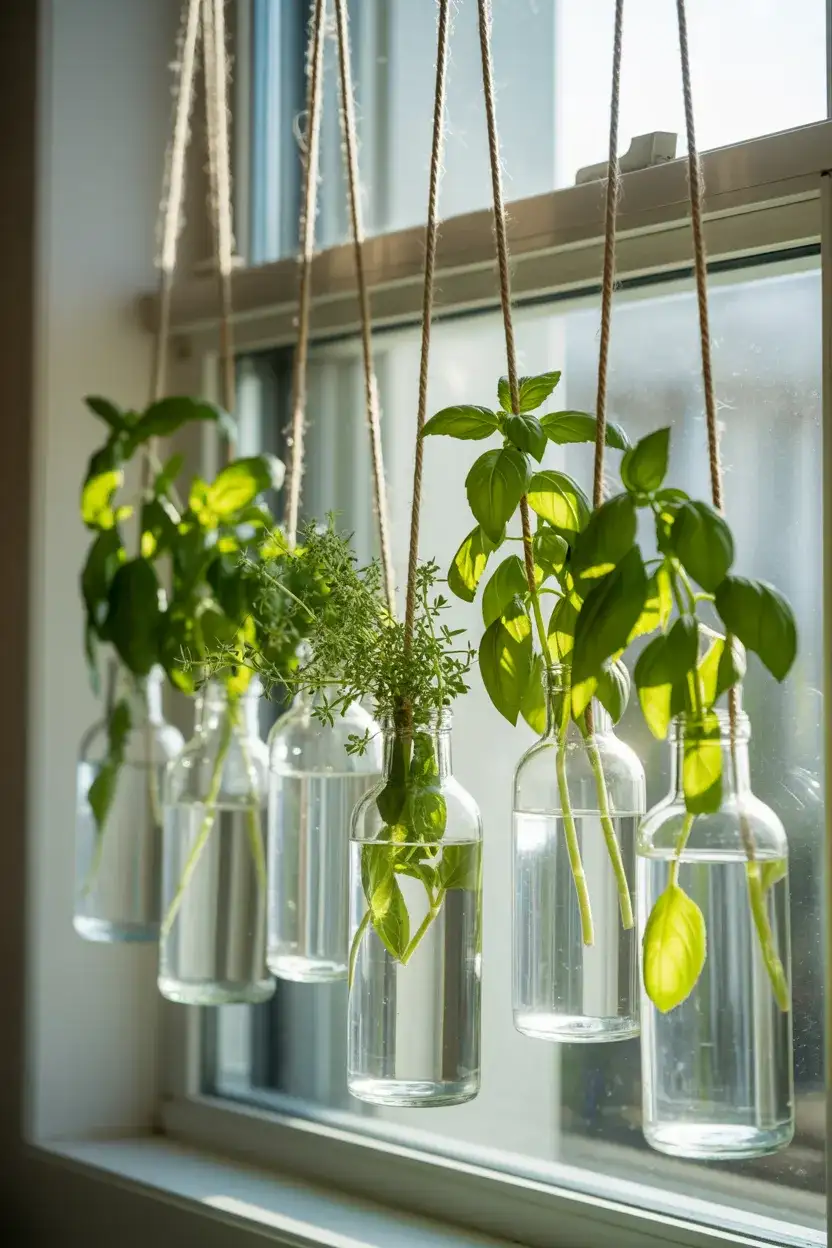
Real homeowner behavior: People who try this often expand it beyond herbs to include propagating houseplants—pothos, philodendron, and even succulent cuttings that root in water. It becomes a rotating display as cuttings move in and out, and there’s something satisfying about watching roots develop in clear glass. The setup requires minimal maintenance, just water changes every week or two, and it never blocks as much light as you’d expect because the glass is transparent.
9. Vintage Fabric Roller Shade
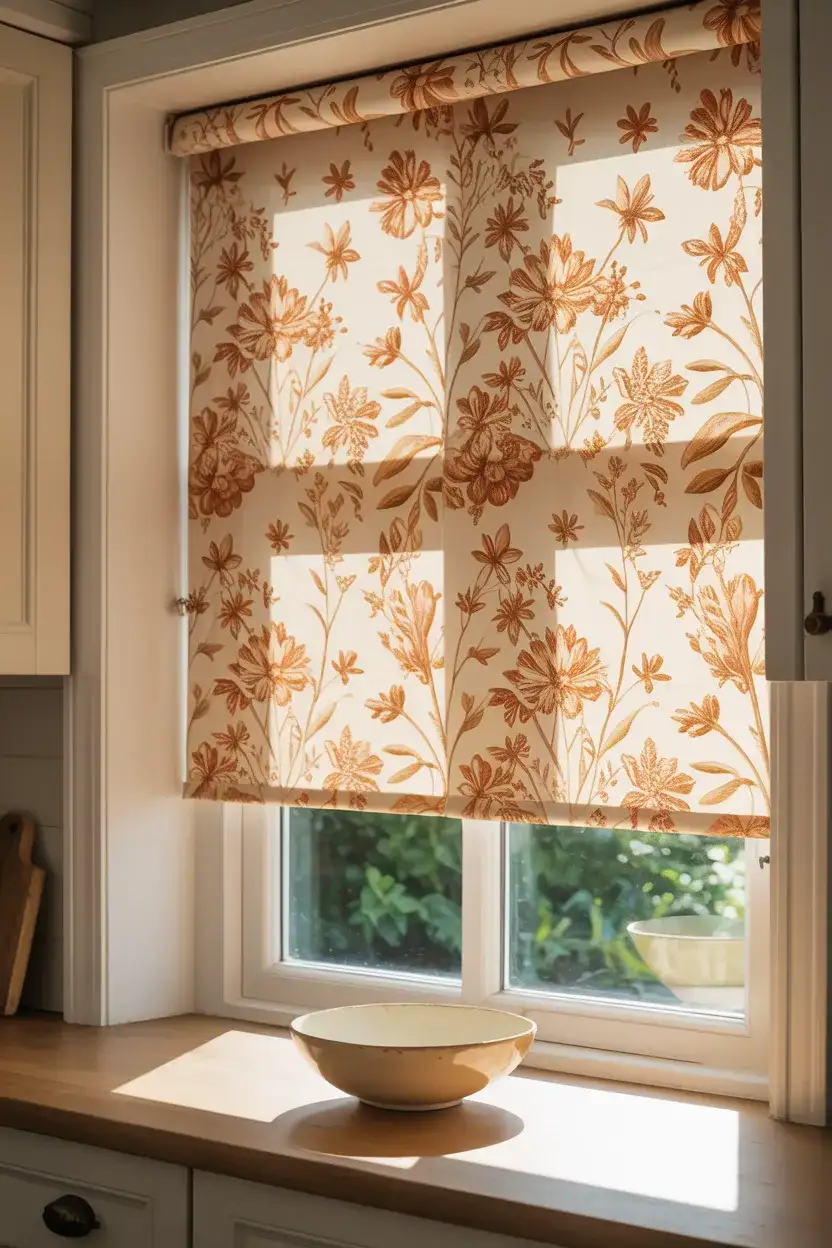
A custom roller shade made from vintage fabric—perhaps a floral linen from the seventies or a graphic print from midcentury textiles—brings one-of-a-kind character to standard treatments. Have the fabric mounted on a roller mechanism by a workroom, or use an at-home kit if you’re handy. The key is choosing fabric with enough body to roll smoothly without being too thick or stiff. When raised, it disappears completely; when lowered, it becomes a focal point that reflects your personal style in a way mass-produced shades never could.
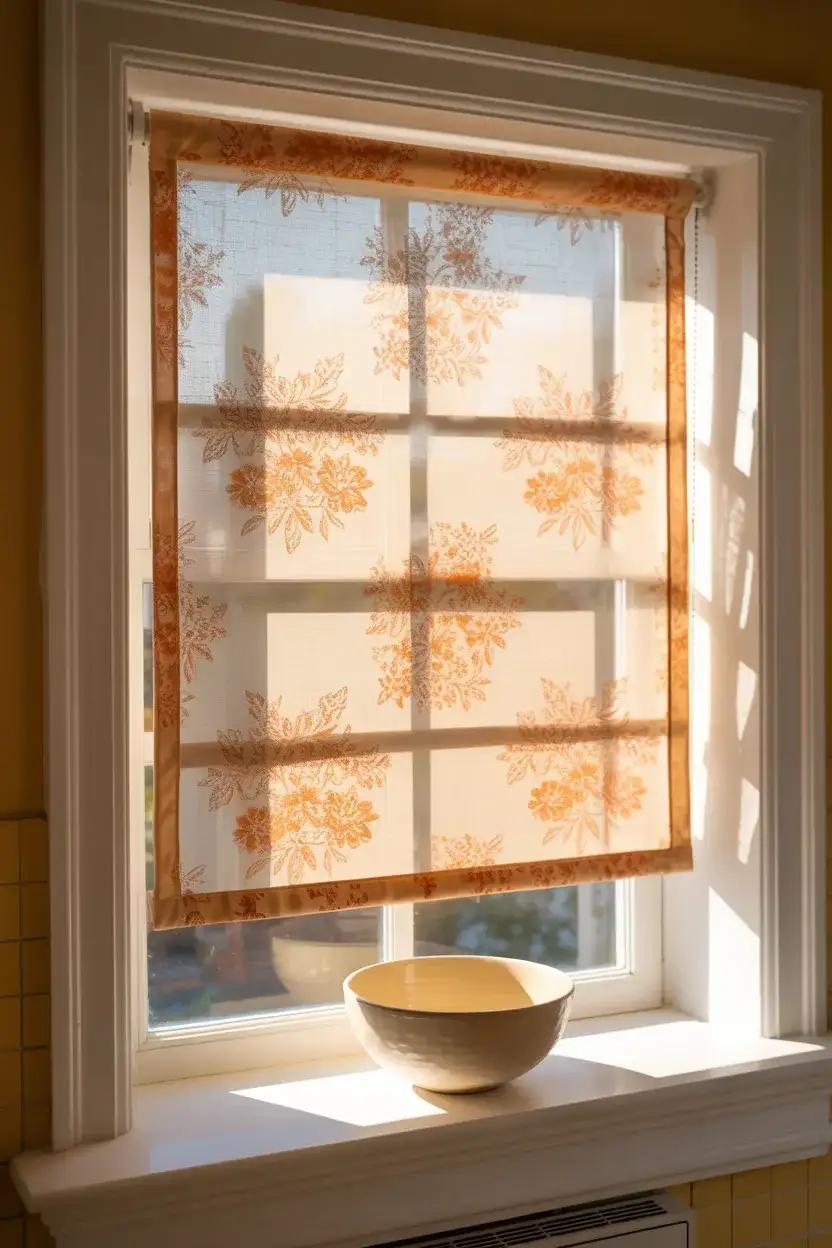
Common mistake: using fabric that’s too delicate or prone to fading in direct sun. Test your vintage find by holding it up to a bright window before committing—if light completely bleaches out the pattern, it won’t hold up long-term. Look for heavier cottons or linen blends that have already survived decades, proof they can handle wear. And consider lining the shade with blackout material if privacy is a concern, which also protects the vintage fabric from UV damage.
10. Open Shelving Flanking the Window
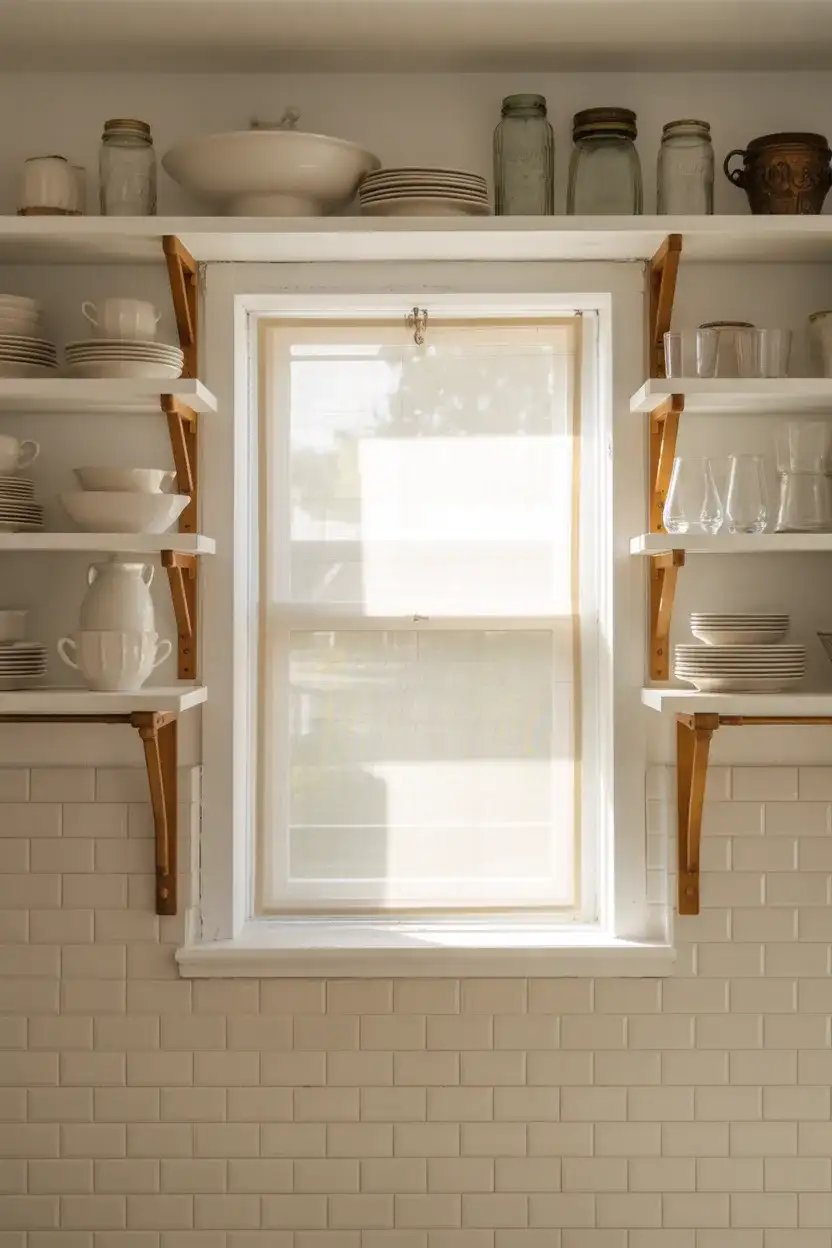
Installing two or three shelves on each side of your kitchen window creates symmetry and functional display space. This framing technique makes even a modest window feel more significant while providing storage for everyday dishes, glassware, or decorative objects. Keep the depth to eight or ten inches so the shelves don’t intrude into your work area. The vertical storage draws the eye upward and makes the ceiling feel higher, an optical trick that’s particularly effective in kitchens with standard eight-foot ceilings.
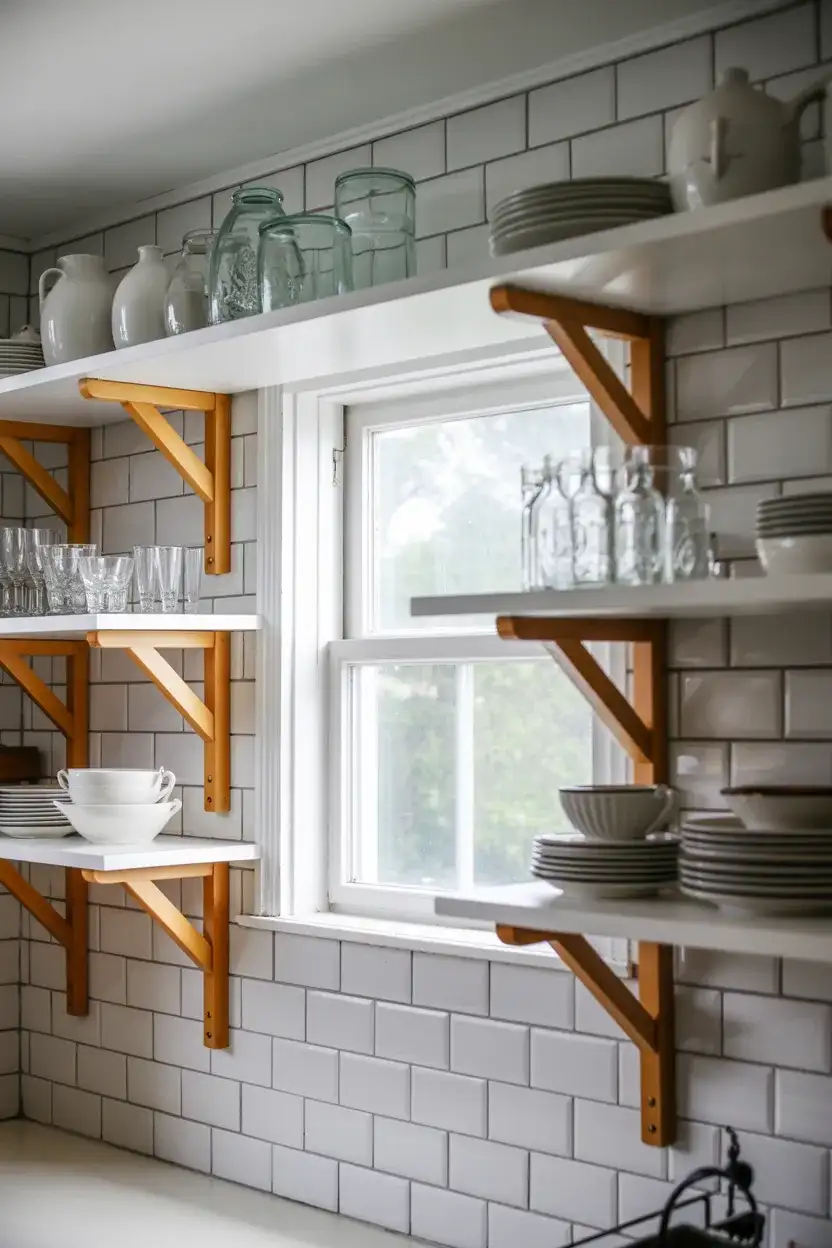
Expert tip: treat these shelves as curated displays rather than catch-all storage. Group similar items—all white ceramics, all glassware, or a mix of plants and vintage finds—to create visual calm. The repetition of form and color makes the arrangement feel intentional rather than cluttered. And be realistic about your tolerance for dust and upkeep; open shelving in the kitchen requires more frequent cleaning than closed cabinets, especially near the stove.
11. Woven Wood Shades for Texture
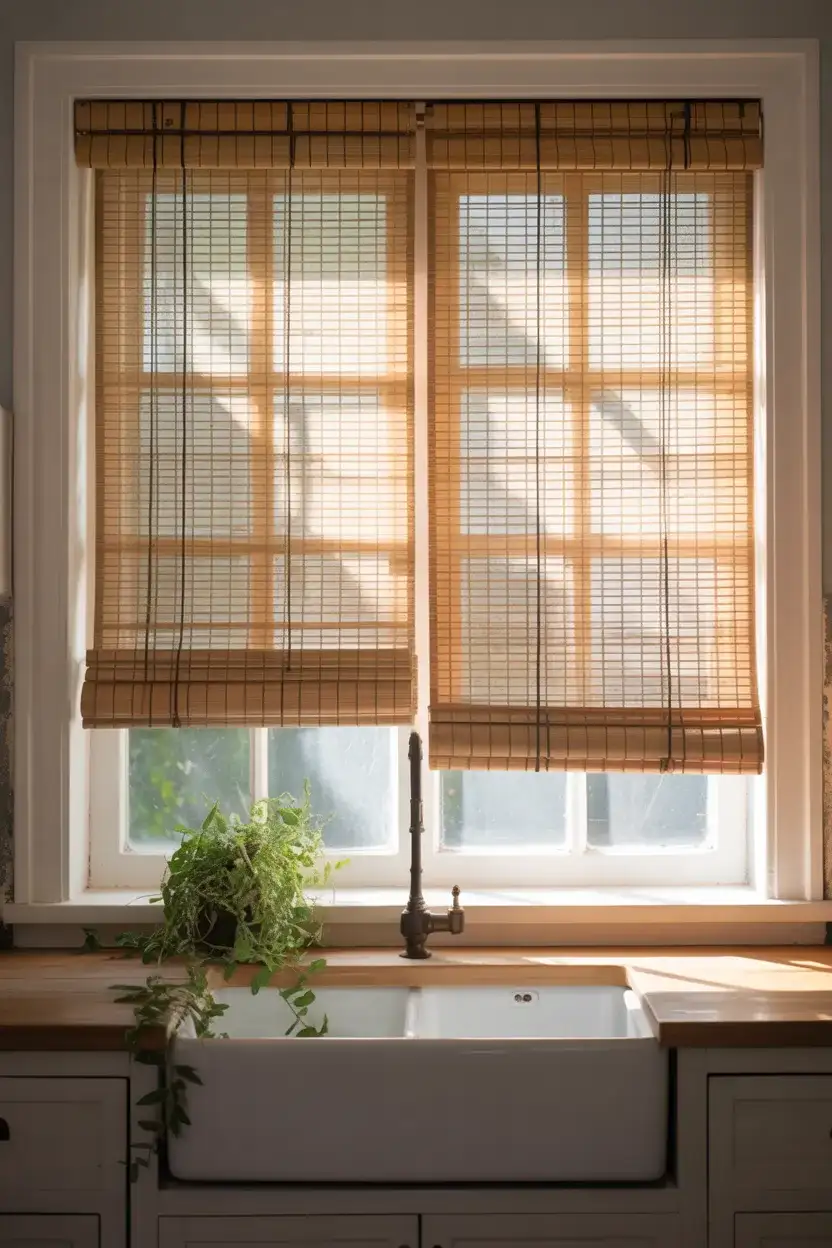
Natural woven wood shades bring organic texture and subtle pattern to kitchen windows while filtering light beautifully. These treatments work in nearly any style kitchen, from coastal to modern farmhouse to Scandinavian-inspired spaces. The horizontal weave creates visual interest without competing with other design elements, and the natural material brings warmth that balances cool countertops or sleek appliances. Choose a light bamboo or jute for airy spaces, or a darker walnut-toned reed for richer, moodier kitchens.
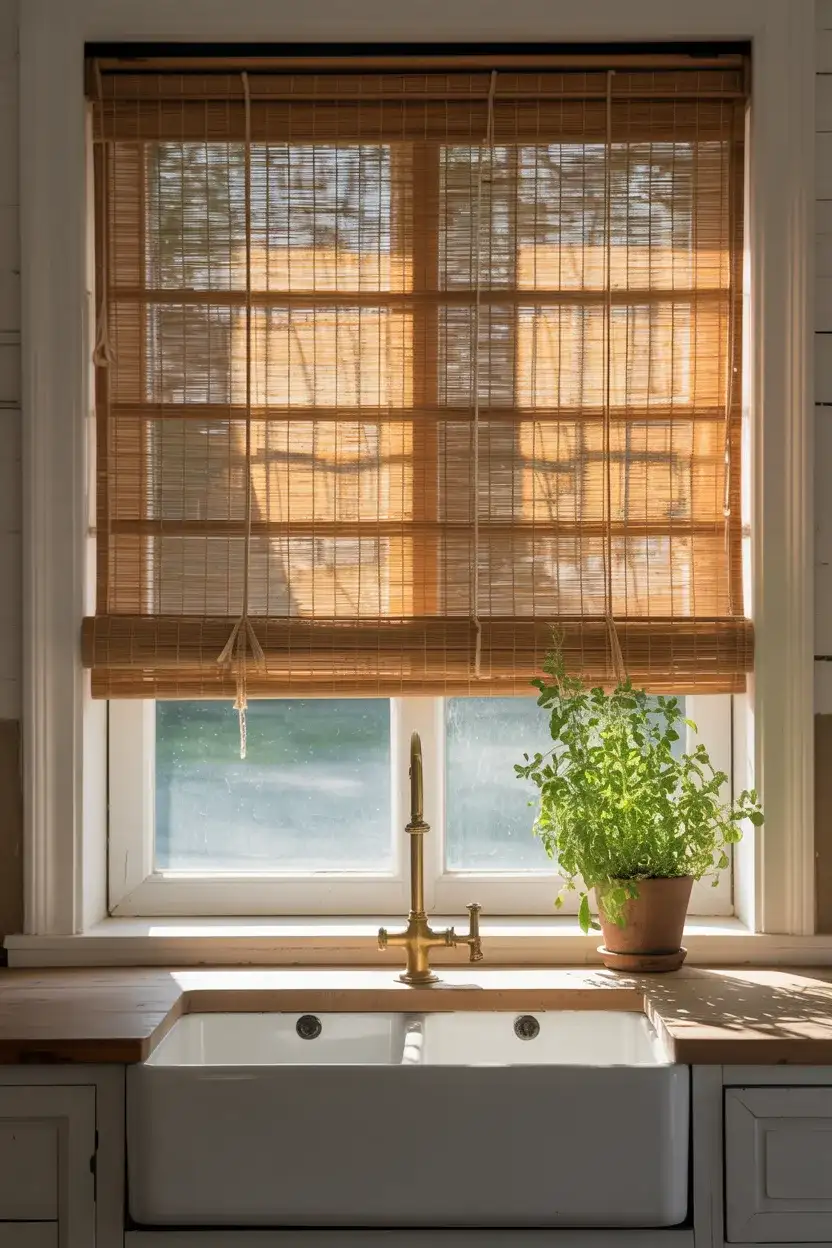
In American homes, particularly in the Southwest and coastal regions where natural materials resonate with the landscape, these shades have become a go-to choice. They soften bright sun without blocking it entirely, creating a gentle, dappled quality that feels comfortable throughout the day. The shades age gracefully too, developing a patina over time rather than looking worn or dated like some synthetic materials tend to after a few years of sun exposure.
12. Ledge-Style Sill for Rotating Displays
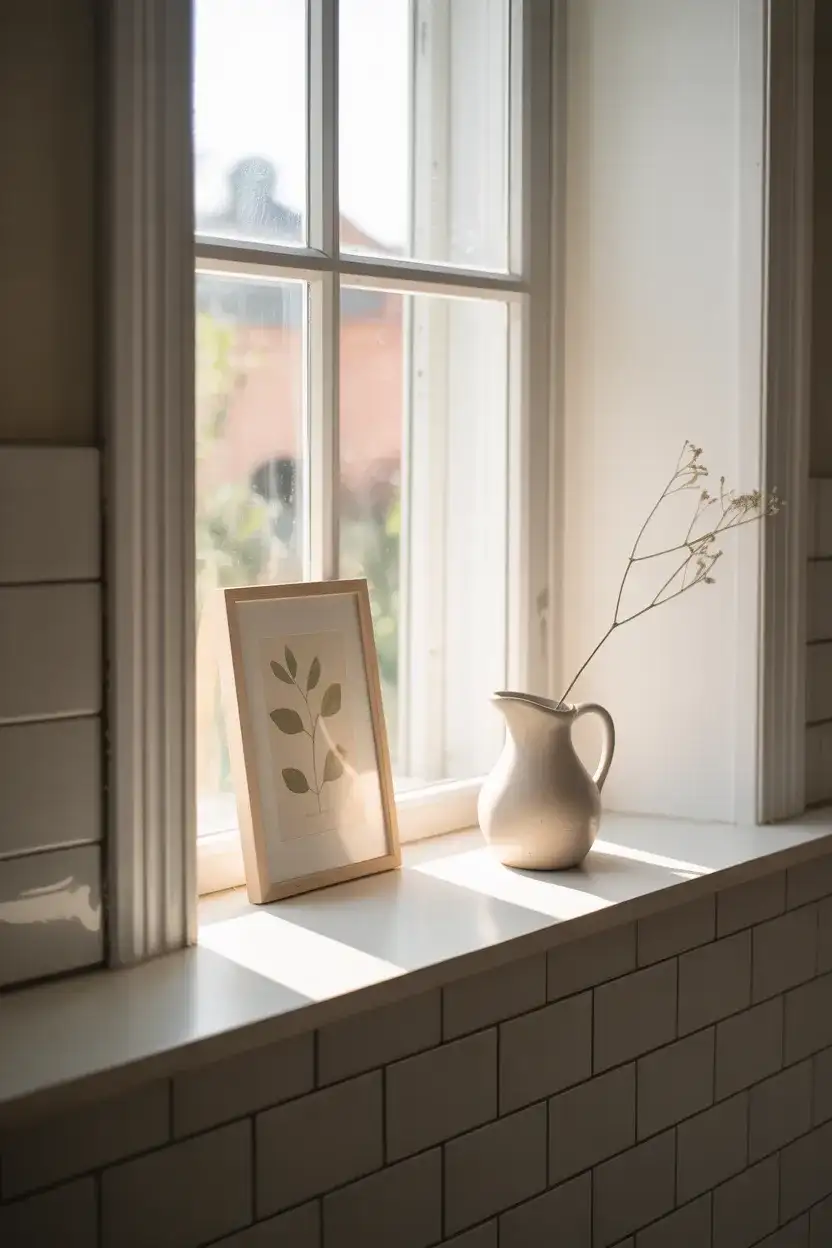
Building out your windowsill to create a shallow ledge—deep enough to lean artwork, photos, or small objects—turns the window into a gallery wall of sorts. This sill decor concept allows you to rotate seasonal items or personal collections without committing to permanent displays. In spring, lean botanical prints; in winter, layer holiday cards or vintage ornaments. The ledge depth should be two to three inches to prevent items from tipping forward, and a small lip or rail keeps everything secure.
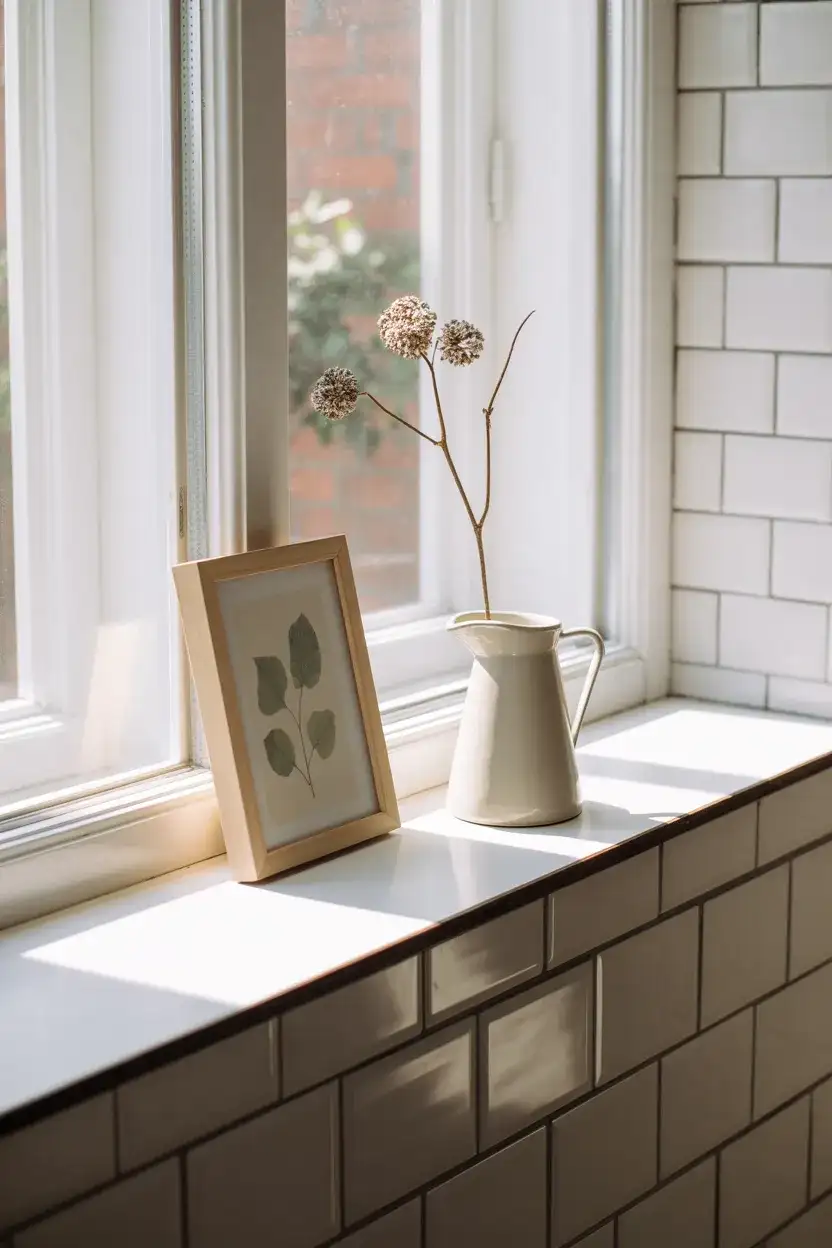
This approach is particularly popular among renters or anyone who loves changing their decor frequently but doesn’t want to commit to nail holes or permanent installations. The ledge gives you permission to be playful and seasonal without the pressure of getting it “right” forever. It’s low-commitment decorating that keeps your kitchen feeling fresh and personal, and it only takes a minute to swap things out when the mood strikes.
13. Sheer White Cafe Curtains
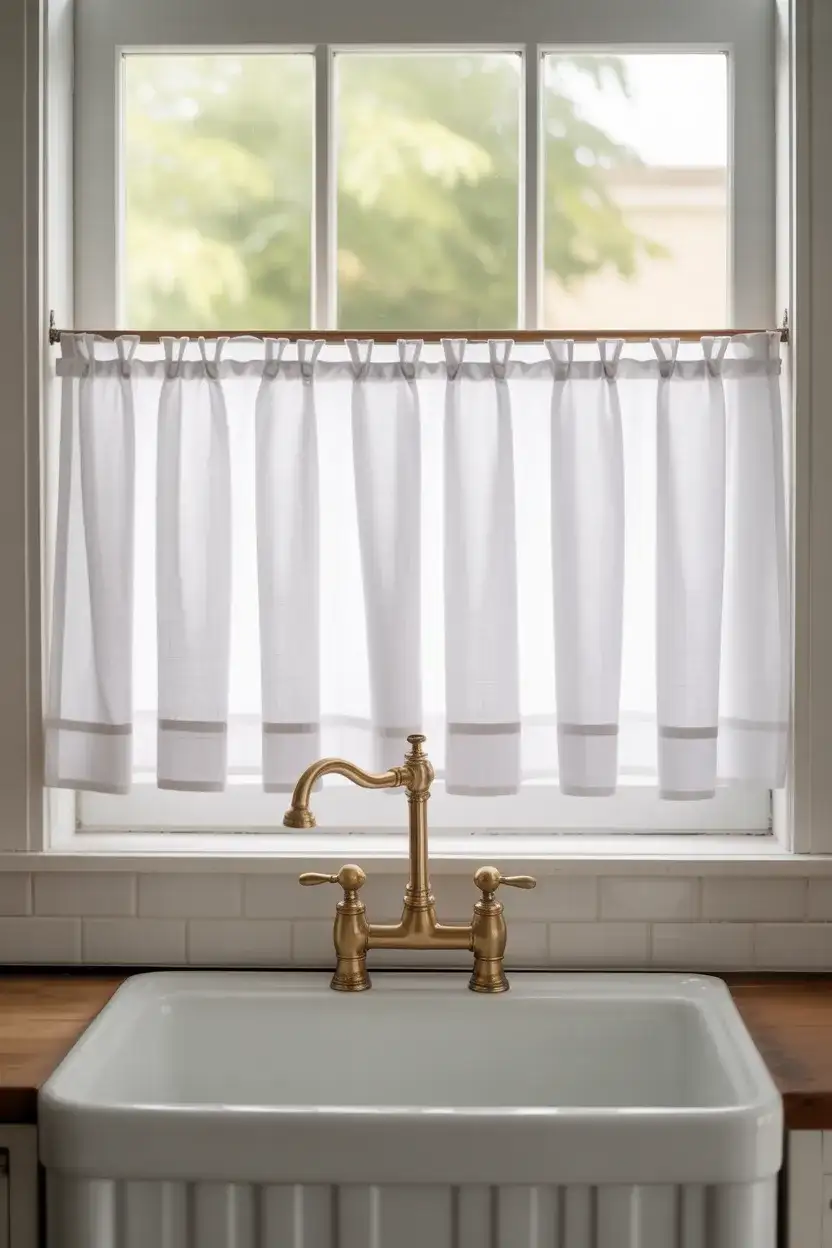
Classic sheer white curtains over sink windows, mounted cafe-style at mid-height, offer privacy while preserving brightness and airflow. This timeless approach works in everything from traditional country kitchens to modern spaces that need softening. The key is choosing a sheer with enough body to hang nicely—look for cotton voile or linen blends rather than synthetic polyester, which can look cheap. Mount them on a simple tension rod or slim brass rod that disappears visually, keeping all focus on the clean white fabric.
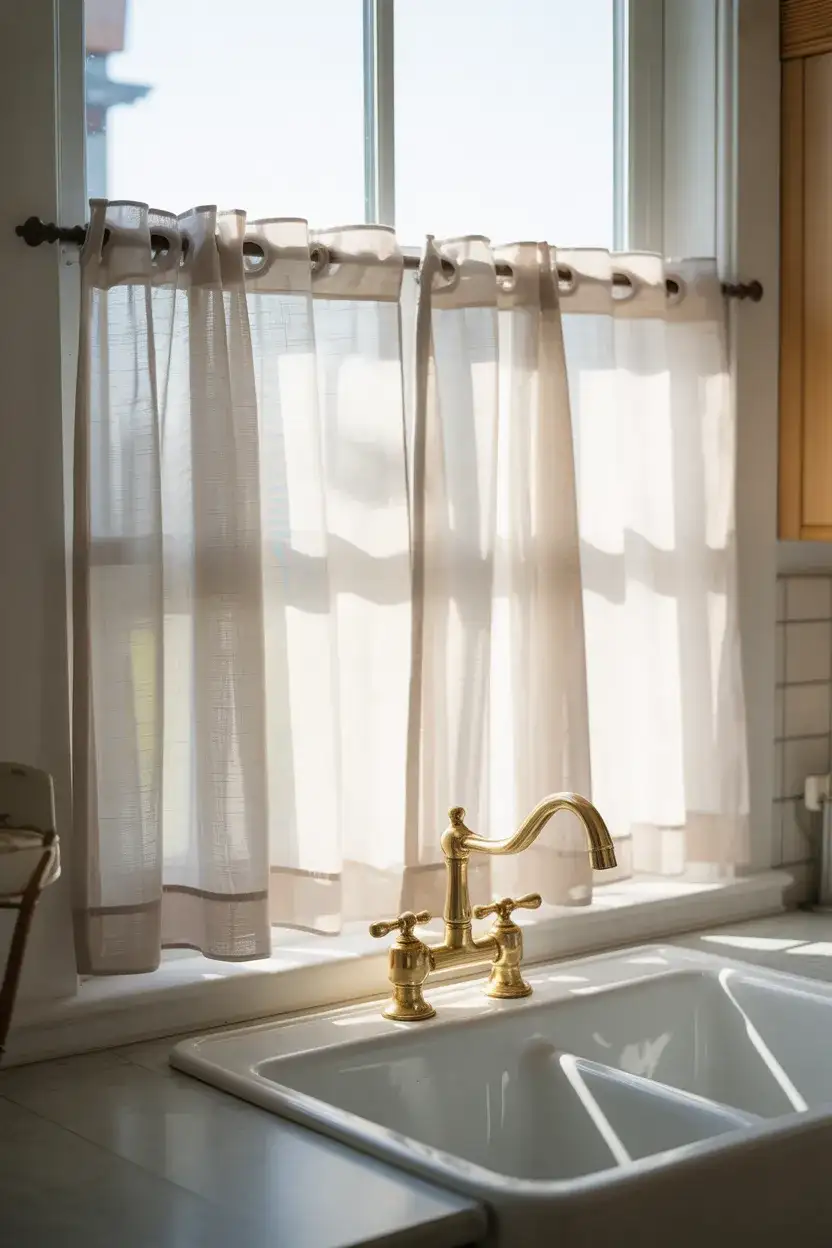
Where this works best: Small galley kitchens where you can’t afford to block any light, or in period homes where historically accurate details matter. The sheers soften the hard surfaces typical in kitchens—tile, stone, metal—without adding weight or visual clutter. They’re also incredibly budget-friendly; you can make your own from basic fabric store muslin or buy inexpensive ready-made panels, and they’re machine washable, which matters in a space prone to cooking splatters.
14. Oversized Potted Fig Tree in Front of Window
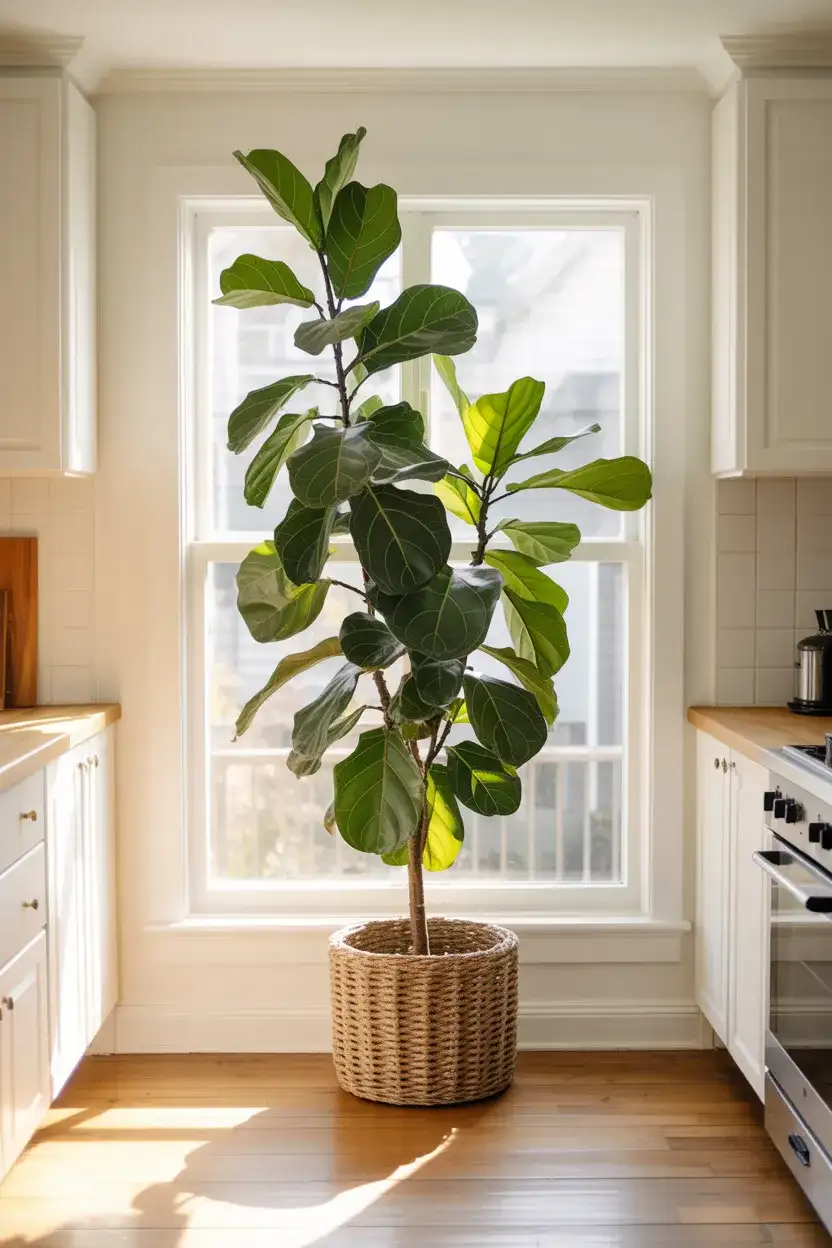
A dramatic fiddle leaf fig or similar statement plant positioned in front of a kitchen window creates an indoor-outdoor connection that feels lush and alive. This plant’s ideas approach requires a window with strong light—ideally southern or western exposure—and enough floor space for a large planter. The tree becomes a living screen that filters light naturally while adding vertical drama. Choose a planter with a saucer to protect floors from water damage, and consider a wheeled base if you need flexibility to move it for cleaning.
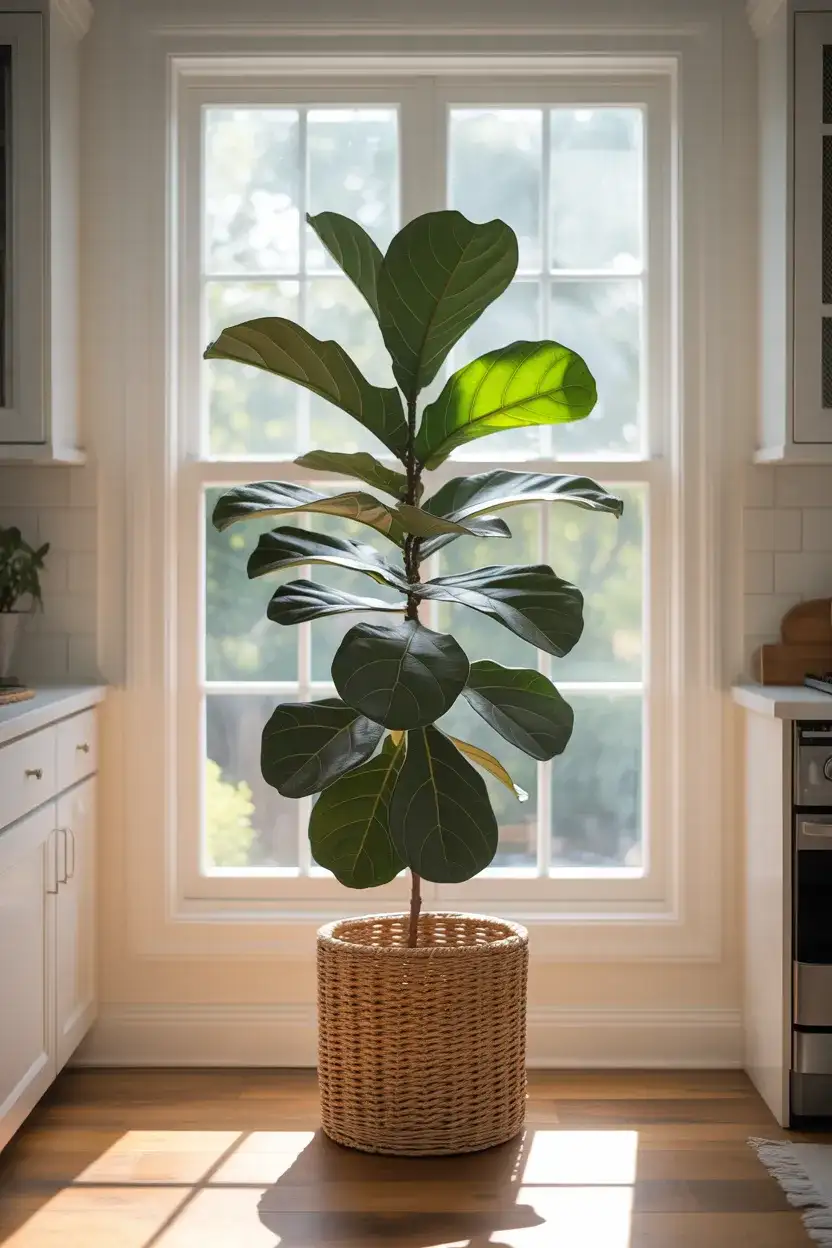
One thing my neighbor learned the hard way: make sure your ceiling is tall enough to accommodate growth. She positioned a six-foot fig in front of her window, and within a year it was brushing the ceiling and needed pruning. These plants grow faster than you’d expect in ideal conditions. Also consider the daily routine—if you’re constantly moving around that area, a floor plan might create more obstacles than ambiance. But when it works, it’s stunning.
15. Colorful Tile Backsplash Framing the Window
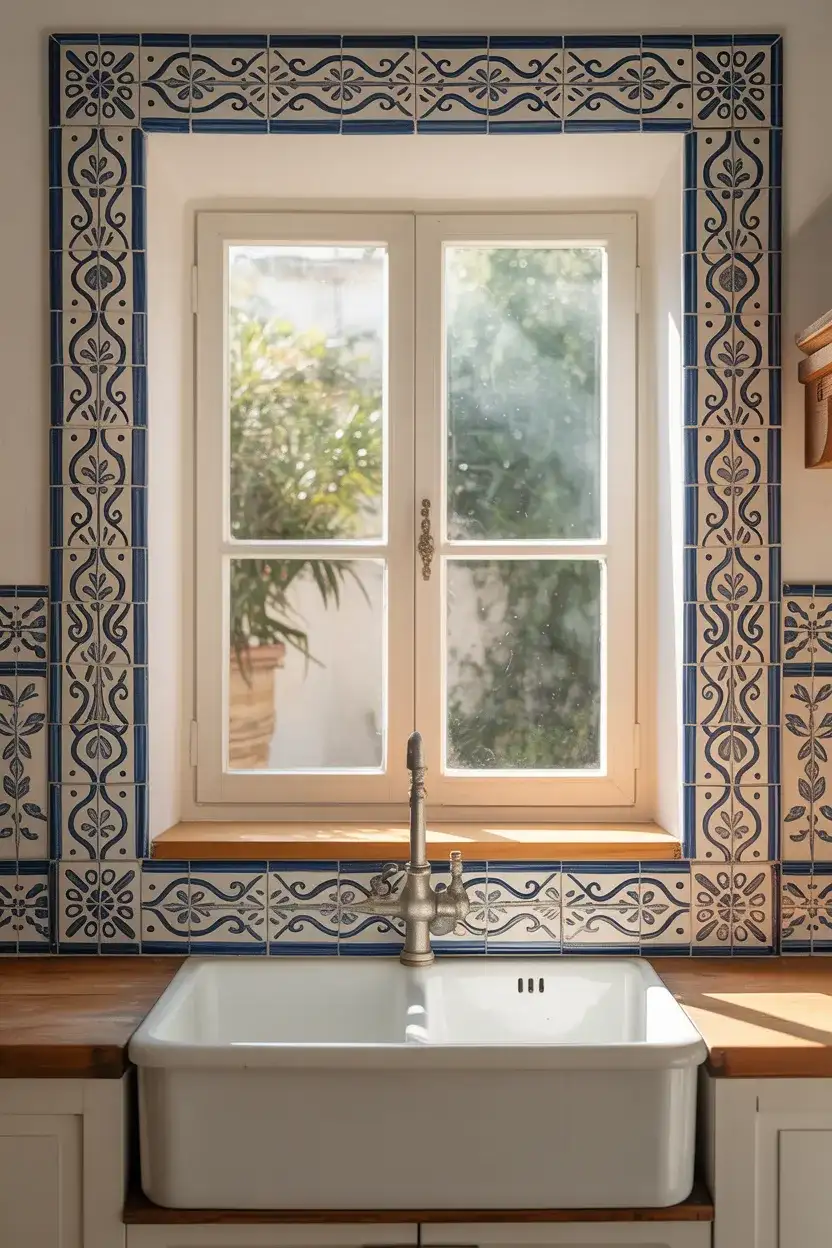
Extending a vibrant tile around your kitchen window—perhaps hand-painted ceramic or bold geometric patterns—creates an architectural frame that makes the window feel intentional rather than an afterthought. This works especially well when your window sits within the backsplash area above the sink or counter. The tile draws attention to natural light as a design feature rather than just a function. Choose colors that complement your cabinetry and countertops but aren’t afraid to go bolder than you might elsewhere since the window itself provides visual relief.
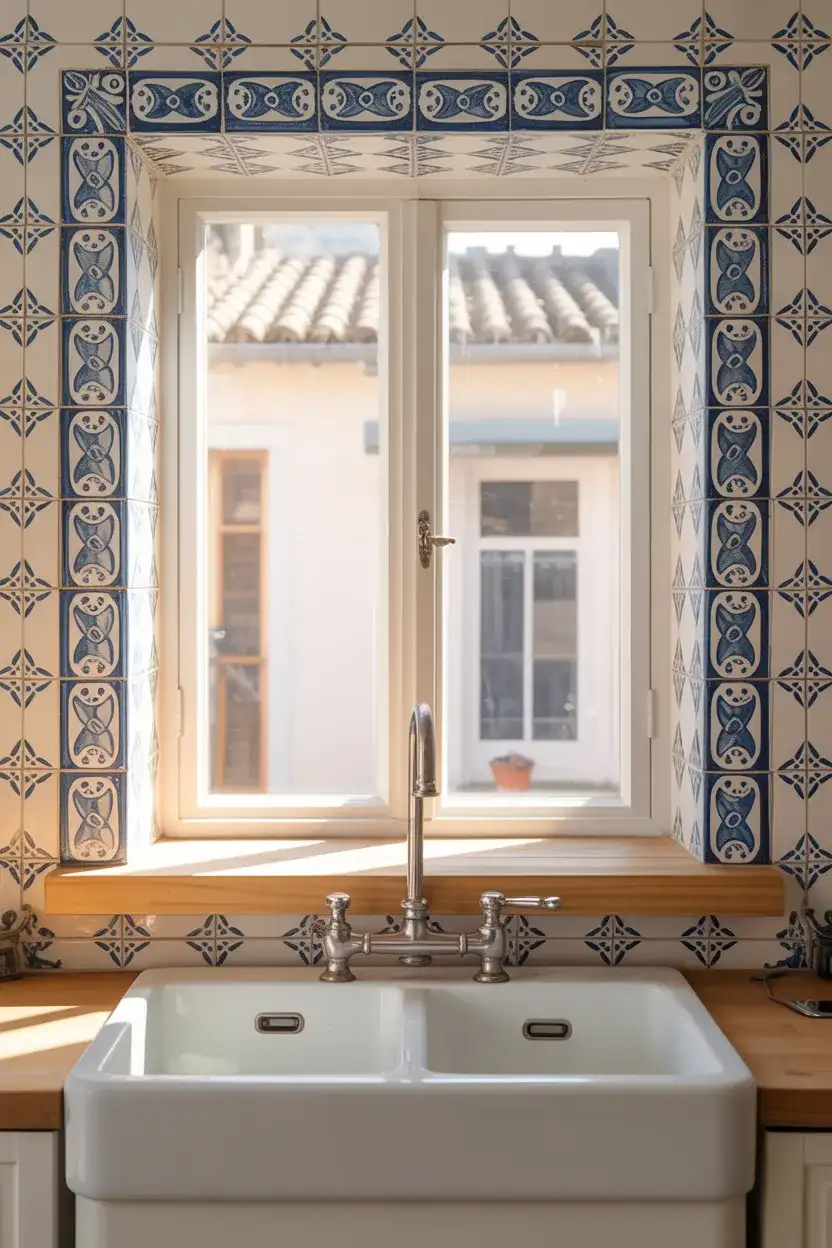
This is most popular in regions with strong design traditions—think Southwest homes with Talavera tile, or coastal kitchens with Portuguese azulejos. But you’re increasingly seeing it in urban renovations where homeowners want to inject personality into cookie-cutter layouts. The tile makes the window feel like a portal, something special, rather than just a hole in the wall. And because tile is permanent, it’s worth taking time to choose something you genuinely love rather than what’s trending right now.
16. Pendant Light Hung at Window Height
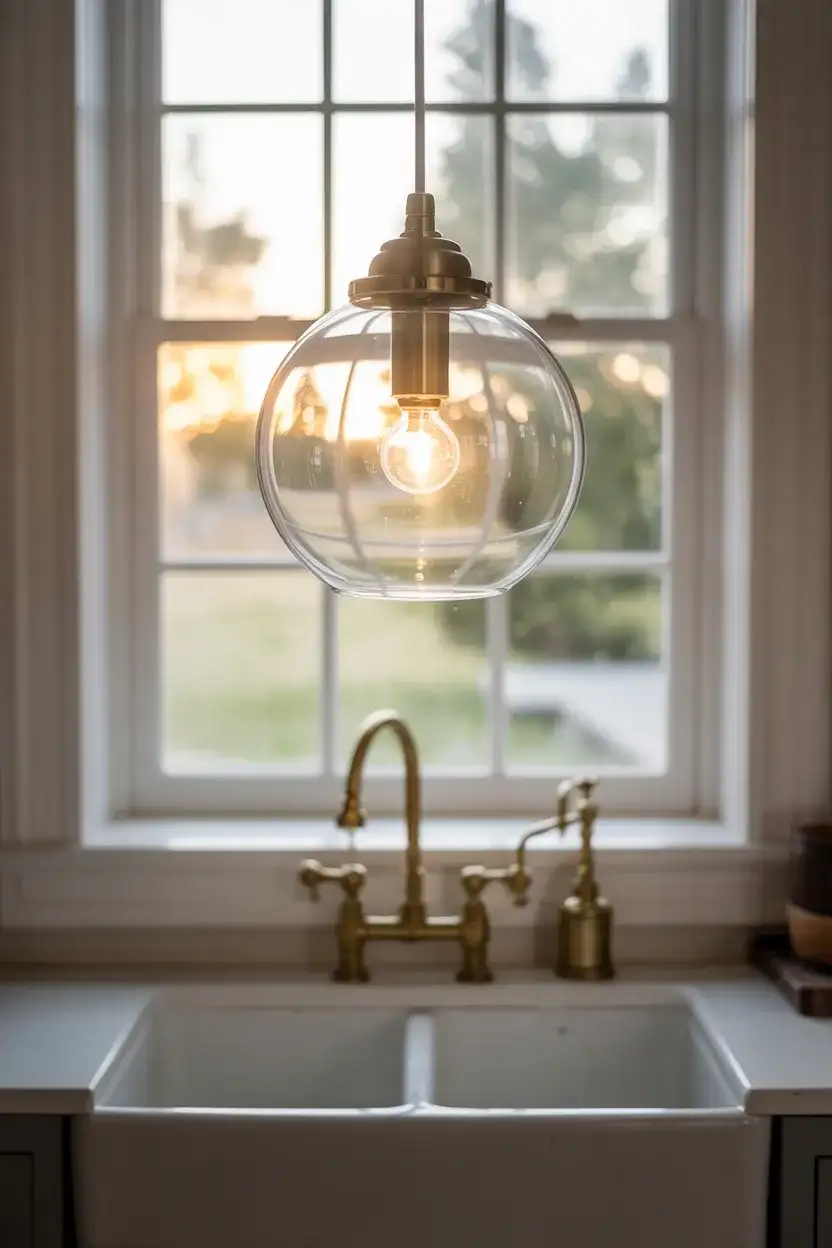
Suspending a single statement pendant light at the center of your kitchen window creates an unexpected focal point while providing functional lighting over sink areas. This works best with windows that have good clearance and aren’t opened frequently, and with pendants that have some transparency—glass, perforated metal, or open cage designs—so they don’t completely block light. The pendant becomes jewelry for your window, catching natural light during the day and glowing beautifully at night. Choose a size proportional to your window—generally twelve to eighteen inches in diameter for standard windows.
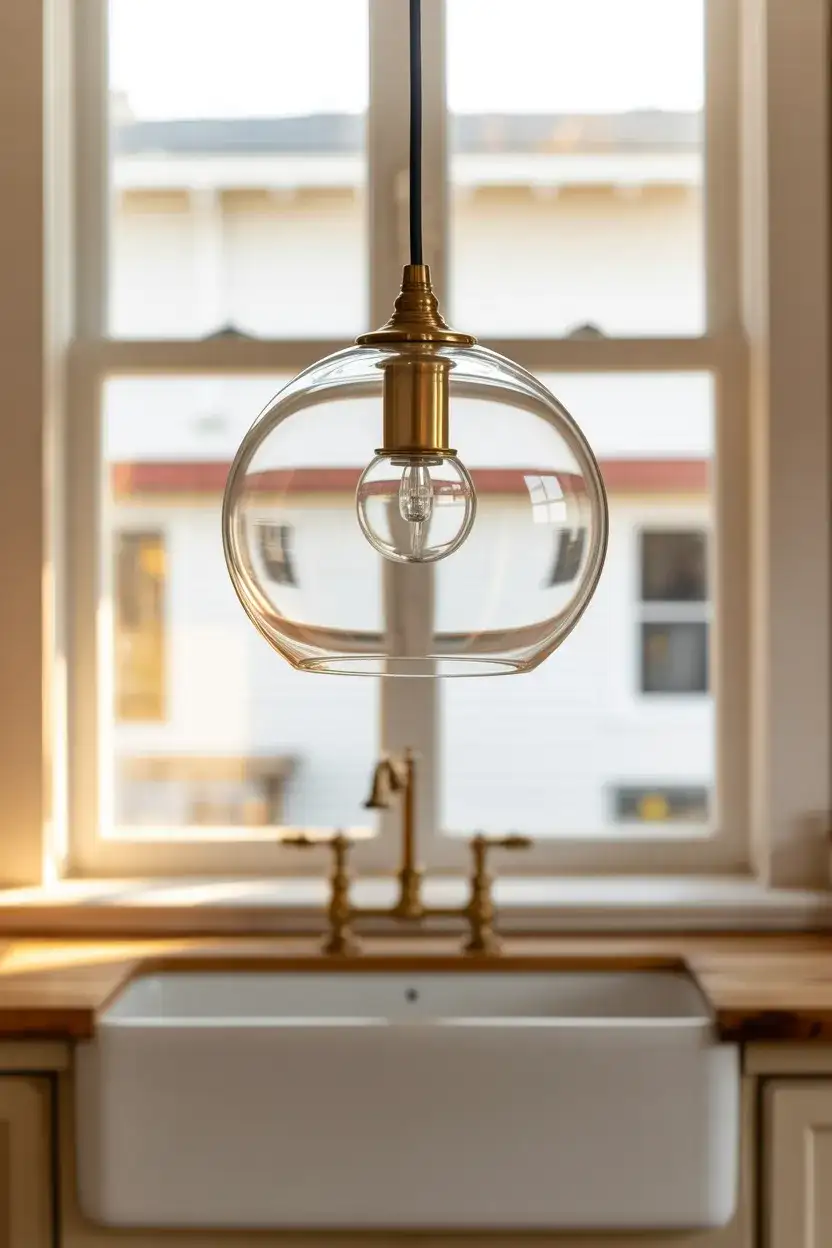
Practical insight: This setup requires thoughtful electrical planning since you’re running a fixture in an unconventional location. Work with an electrician to ensure the box is properly placed and that the cord length allows for any future adjustments. Some homeowners use this trick to solve the problem of under-lit sinks in kitchens without overhead lighting, creating ambiance while addressing function. The light doesn’t need to be bright—a soft,tile orbright—a soft, warm glow is often enough when combined with natural daylight.
17. Wide Horizontal Window with No Trim
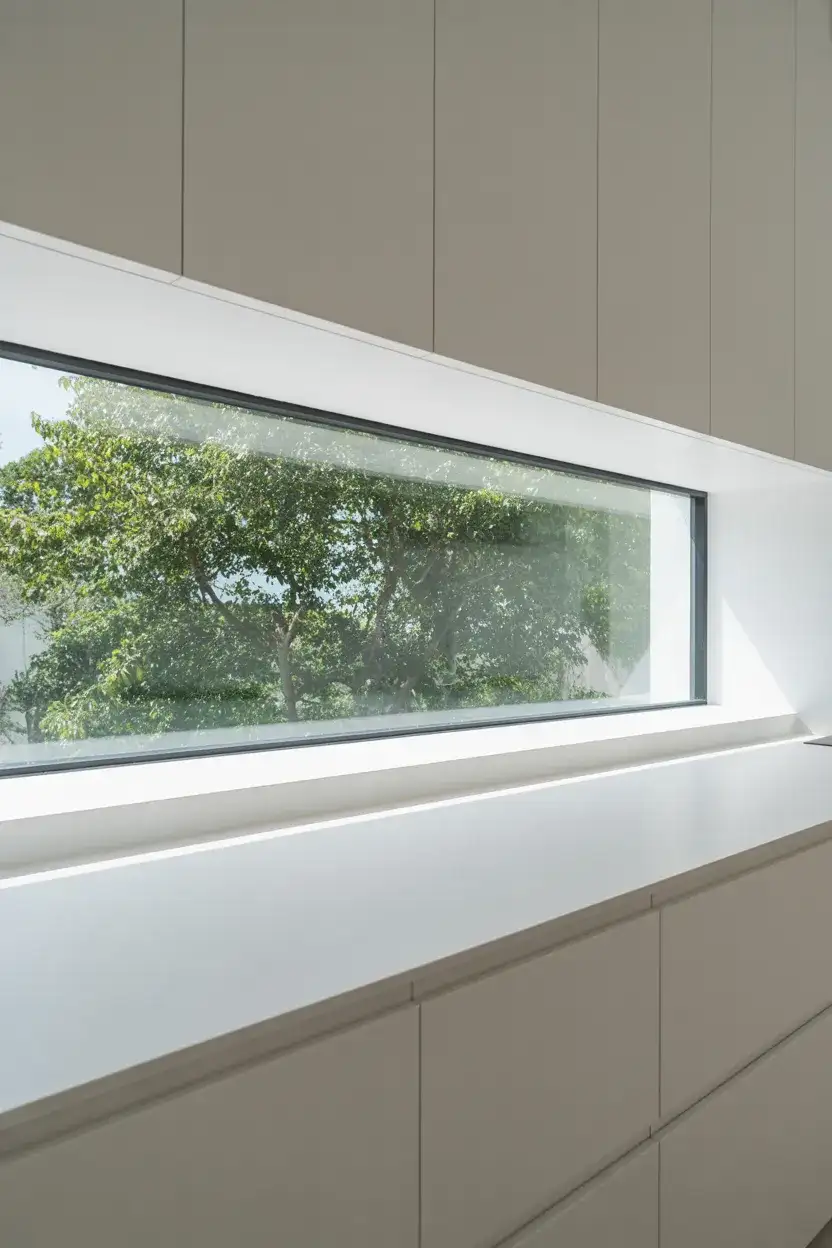
Installing a long horizontal window that runs nearly wall-to-wall, finished flush with the drywall and without traditional trim, creates a sleek modern moment. This architectural move works particularly well in contemporary or minimalist kitchens where clean lines are paramount. The lack of trim makes the window feel like a cut-out or portal rather than a traditional element, and the expanded width floods the space with light. Pair it with simple roller shades or leave it bare if privacy isn’t a concern.
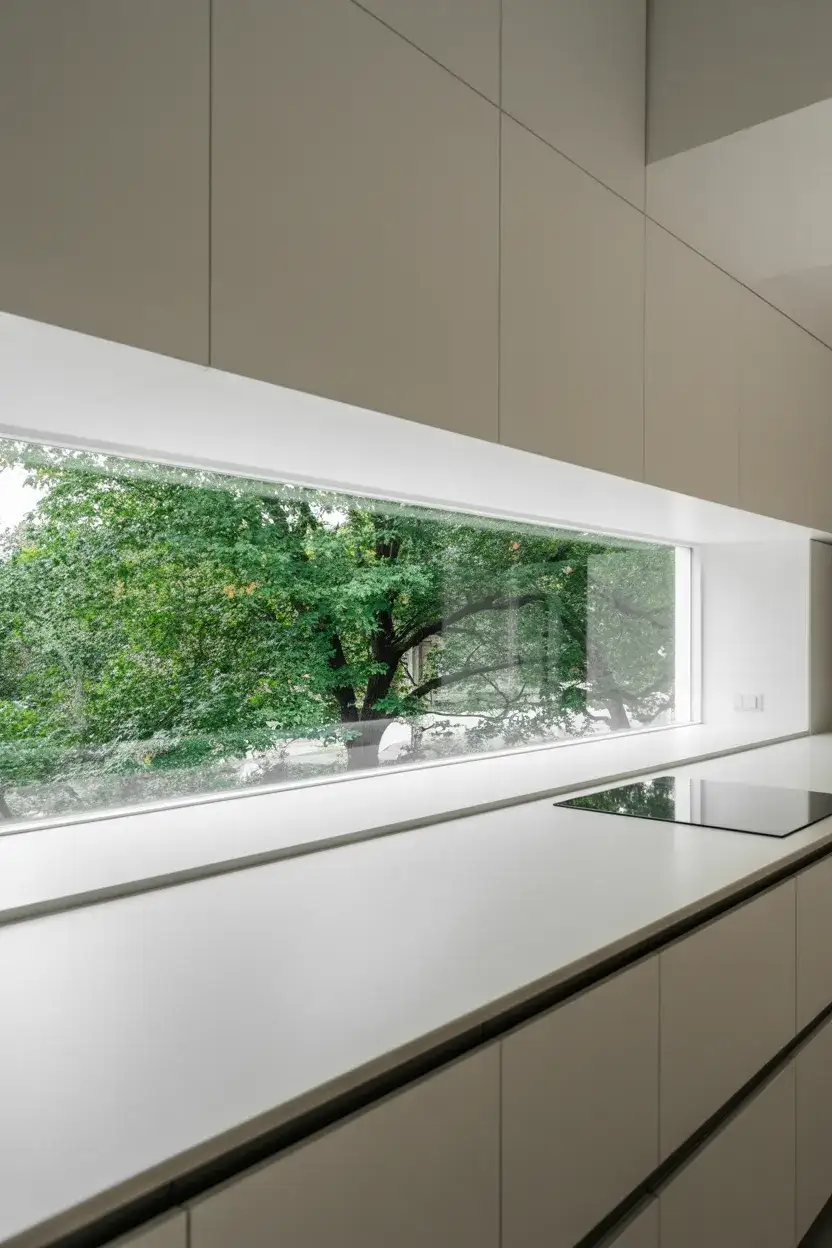
This treatment is most common in new construction or gut renovations where you’re working with a blank slate. It’s harder to retrofit into older homes with existing window openings and trim details, though not impossible if you’re willing to invest. The payoff is significant—the room feels larger and more connected to the outdoors, and the uninterrupted expanse of glass becomes the star of the space without needing any additional decoration or styling.
18. Cluster of Vintage Bottles on Sill
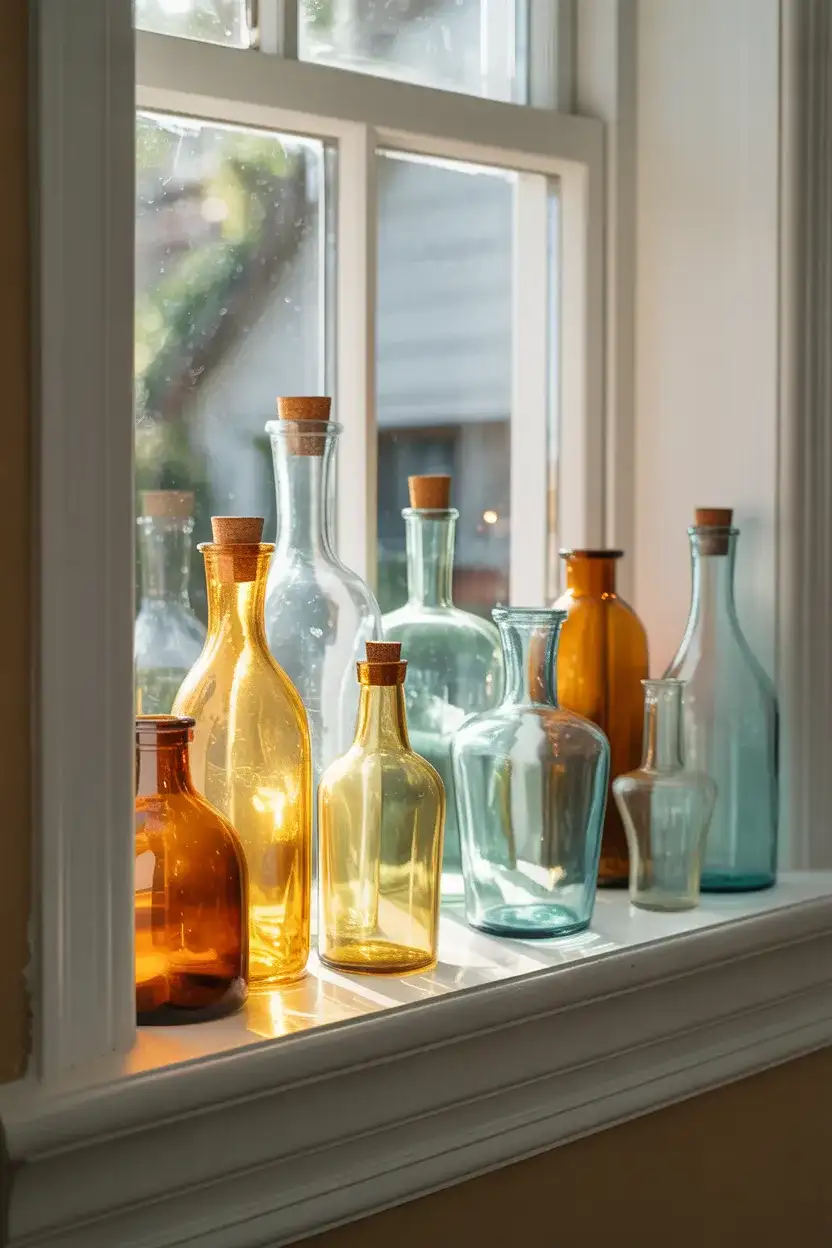
Arranging a collection of old glass bottles—amber apothecary jars, blue milk glass, and clear medicine bottles—along your sill creates an instant vintage vignette that catches and filters light beautifully. This simple sill-ideas approach requires no installation or commitment, just thoughtful curation. Hunt flea markets, estate sales, or antique shops for interesting shapes and colors. When sunlight passes through colored glass, it casts subtle tints into the room that shift throughout the day, adding dimension without any additional effort.
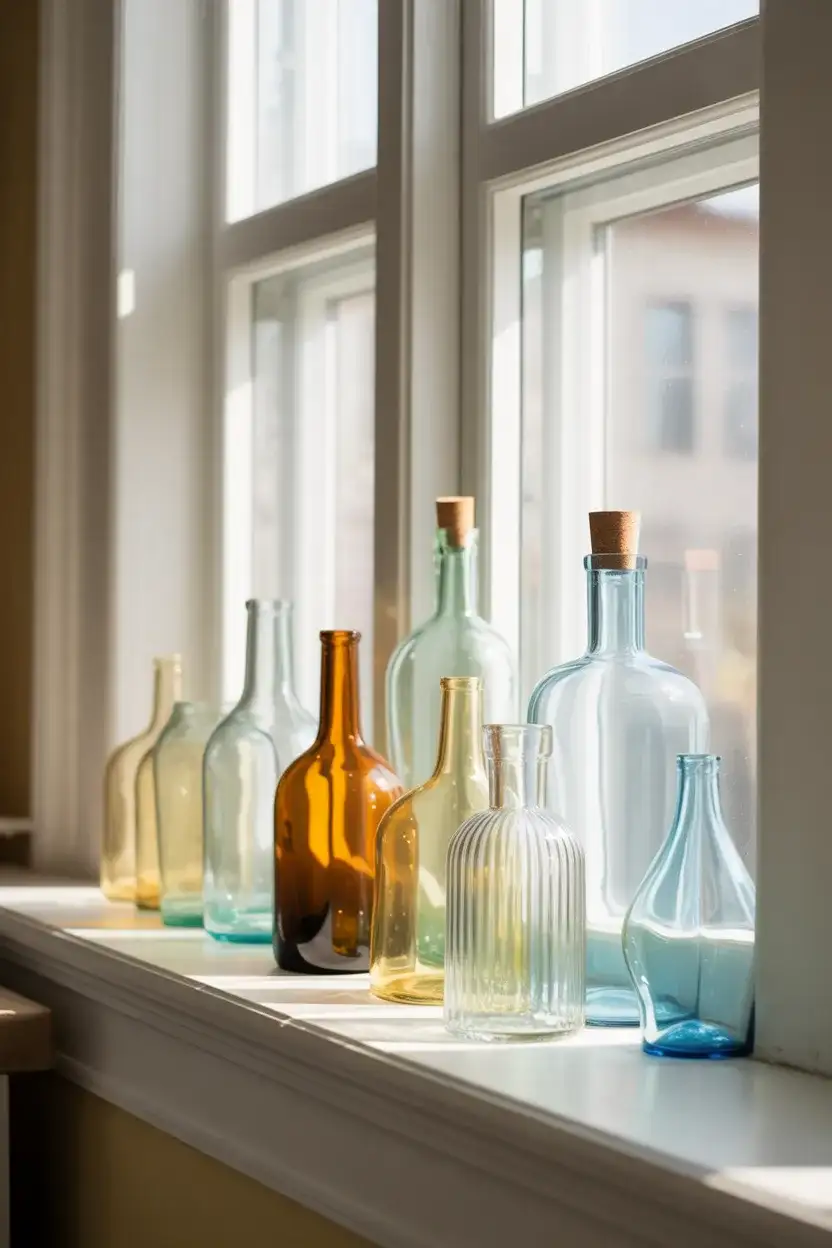
Common mistake: overcrowding the sill to the point where it feels cluttered or blocks light. Aim for an odd number of bottles—three, five, or seven—with varying heights and some breathing room between each piece. You want negative space to be part of the composition. And be mindful of cleaning; these bottles catch dust and require regular attention to maintain their sparkle. But the effort is minimal compared to the character they bring to an otherwise plain window.
19. Frosted Film for Privacy Without Darkness
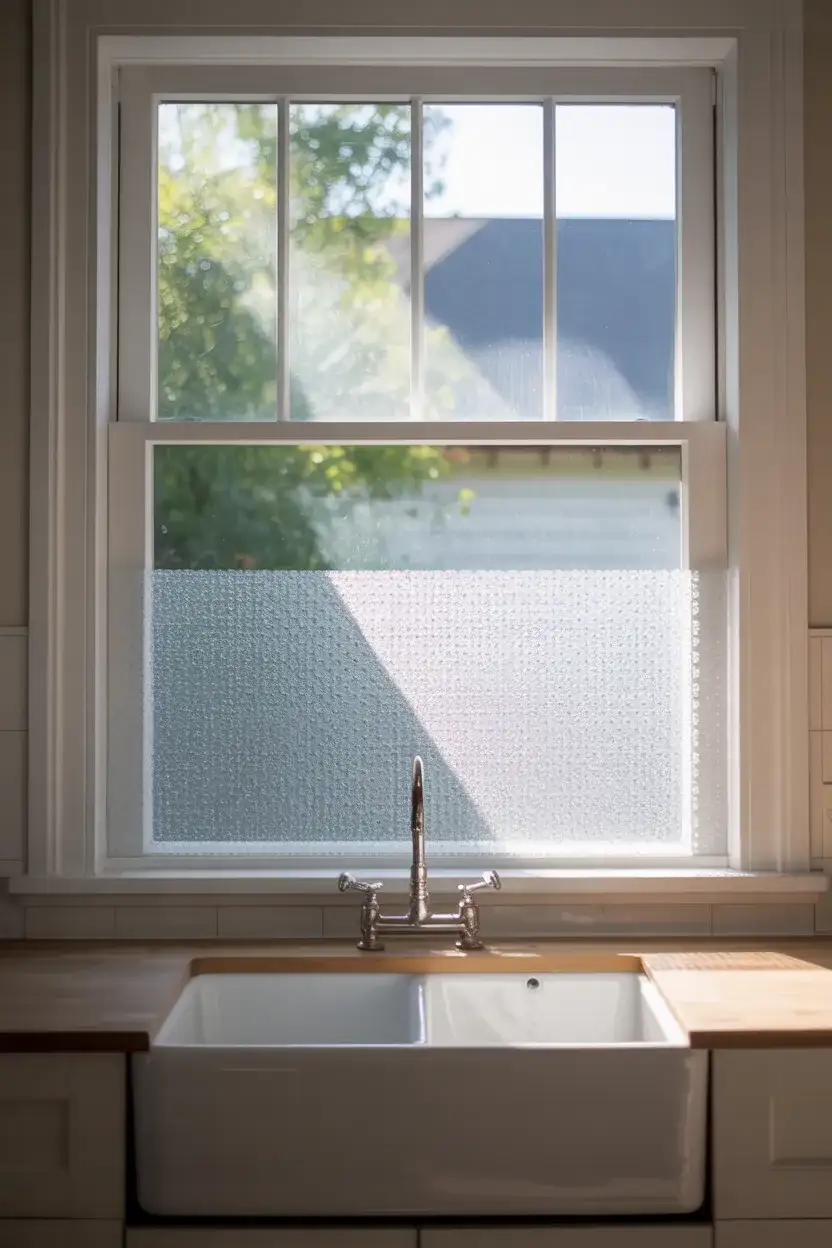
Applying frosted window film—either across the entire pane or in a partial band—solves privacy issues without sacrificing natural light. This treatment solution works perfectly for sink ideas where neighbors are close but you want to maintain brightness. Modern films come in various patterns beyond basic frost: reeded glass effect, geometric patterns, or gradient fades. Installation is DIY-friendly, and the film is removable, making it ideal for renters or anyone who might change their mind later.
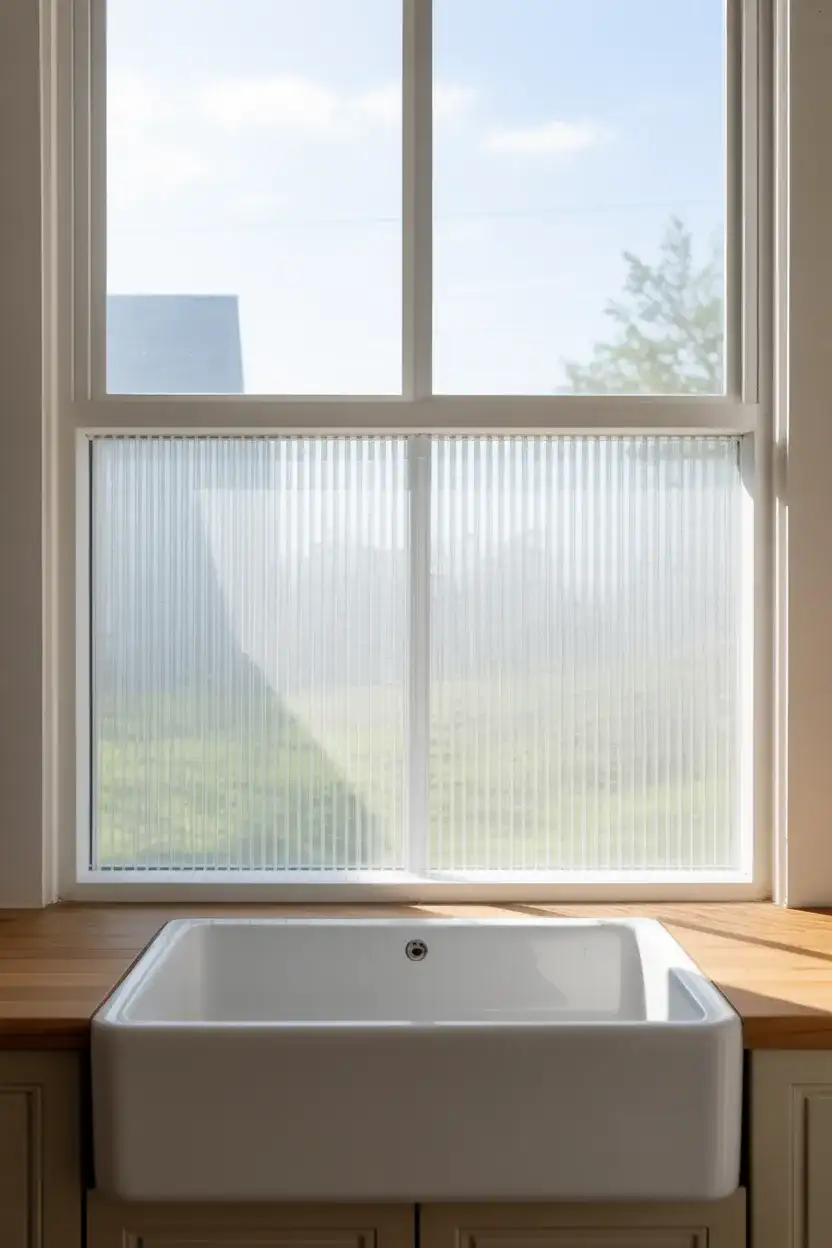
In suburban American neighborhoods where homes are close together, this has become a go-to fix that doesn’t require calling contractors or installing hardware. You maintain the clean look of an unadorned window while getting the privacy you need. The film diffuses direct sun too, which helps with glare if you’re facing harsh afternoon exposure. One practical note: avoid heavily textured films if you’re applying near the sink—smooth patterns are easier to keep clean and won’t trap moisture or grease.
20. Simple Pine Branch in a Jar
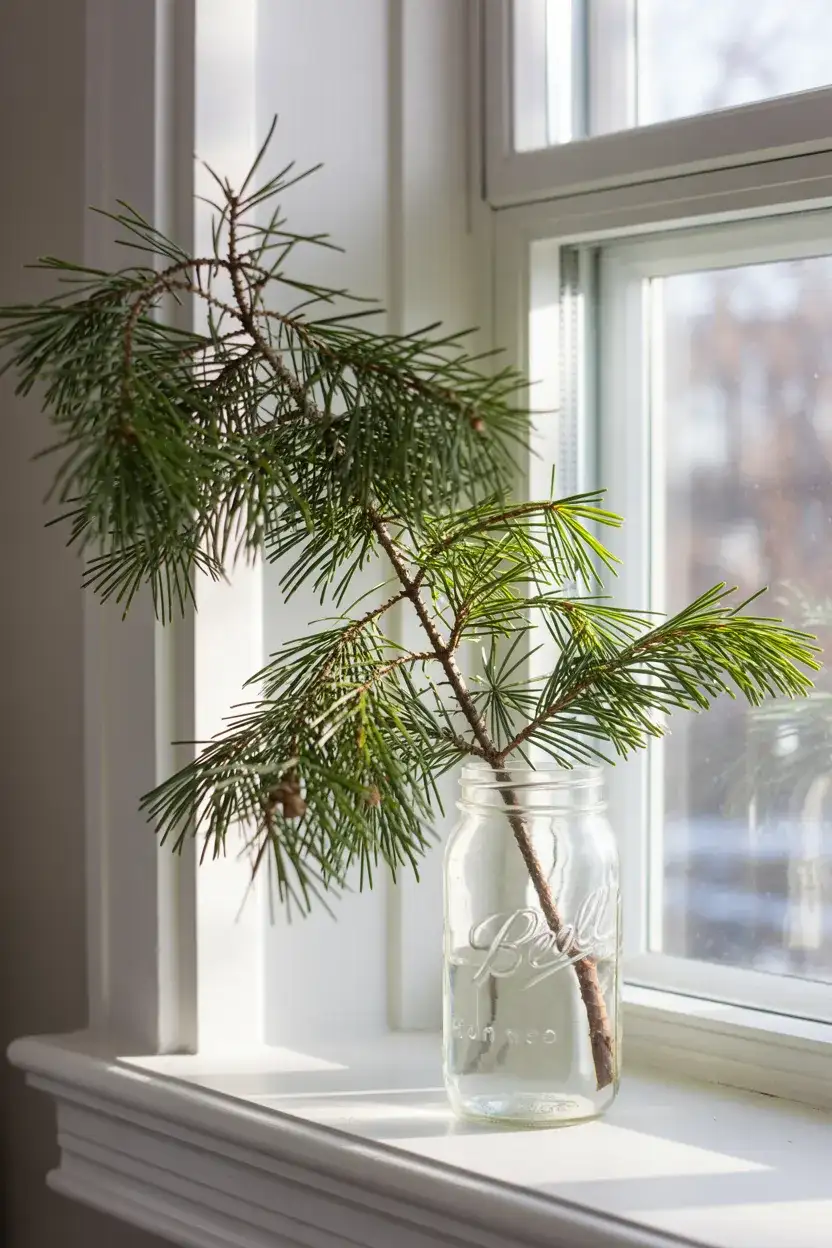
During winter months, a Christmas touch as subtle as a single pine branch in a clear glass jar brings seasonal fragrance and texture to your kitchen window without overwhelming the space. This Christmas decor approach feels organic and modern rather than cutesy or traditional. The green of fresh evergreen pops against winter’s neutral landscape outside, and the scent is a constant gentle reminder of the season. Change it out every week or so as the needles dry, keeping it fresh throughout December.
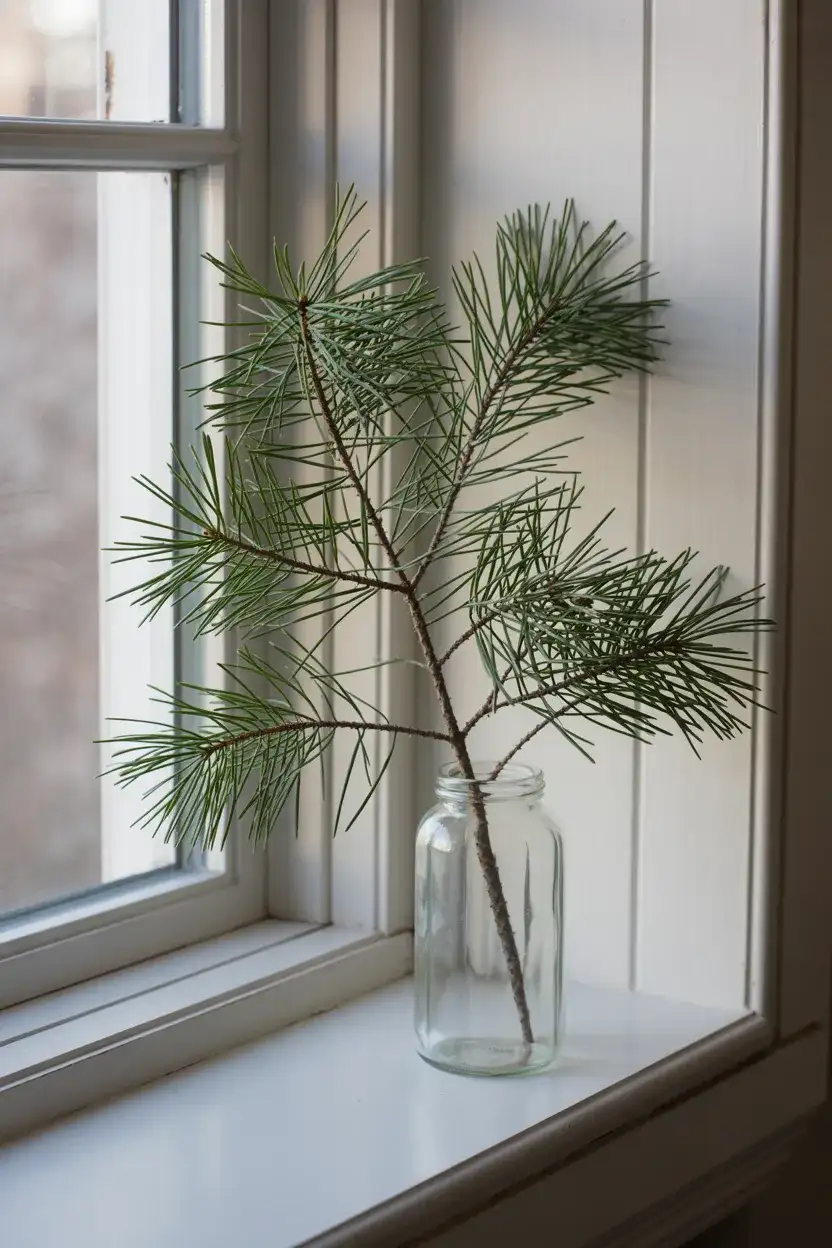
Expert-style commentary: The best branches come from your own yard if you have evergreens, or ask at a Christmas tree lot for trimmings—they’re often free. Cedar, pine, and fir all work beautifully, each with its own scent profile. This styling trick keeps your holiday decor from feeling forced or overly thematic, instead bringing a quiet nod to the season that doesn’t compete with your kitchen’s established aesthetic. It’s sophisticated restraint that still acknowledges the time of year.
21. Deep Window Box for Succulents
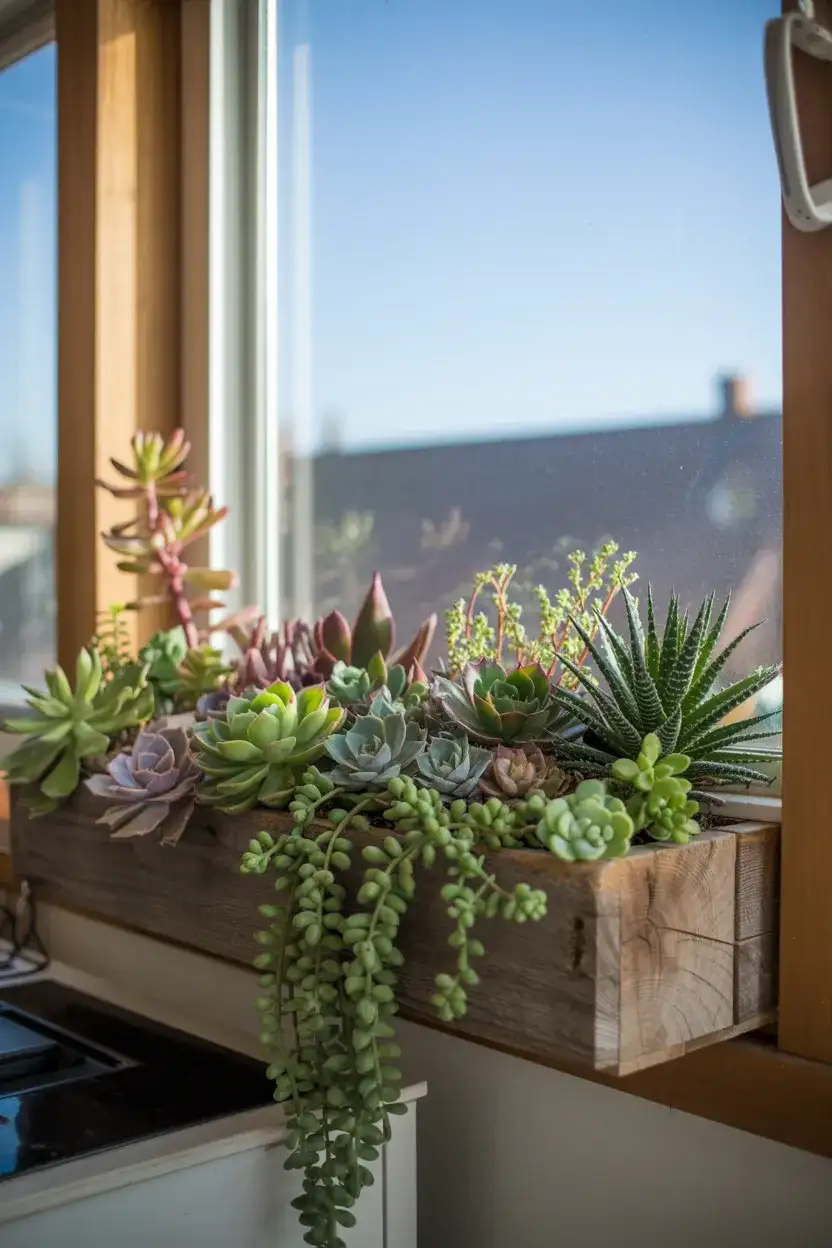
Mounting a substantial window box—four to six inches deep—on the exterior of your kitchen window creates space for a thriving succulent garden that’s visible from inside. This plant’s solution works particularly well in dry climates or for low-maintenance households. The succulents require minimal water and create textural interest with their varied forms and colors. Choose a box material that complements your home’s exterior—weathered wood for farmhouse styles, clean metal for modern homes, or painted wood for traditional looks.
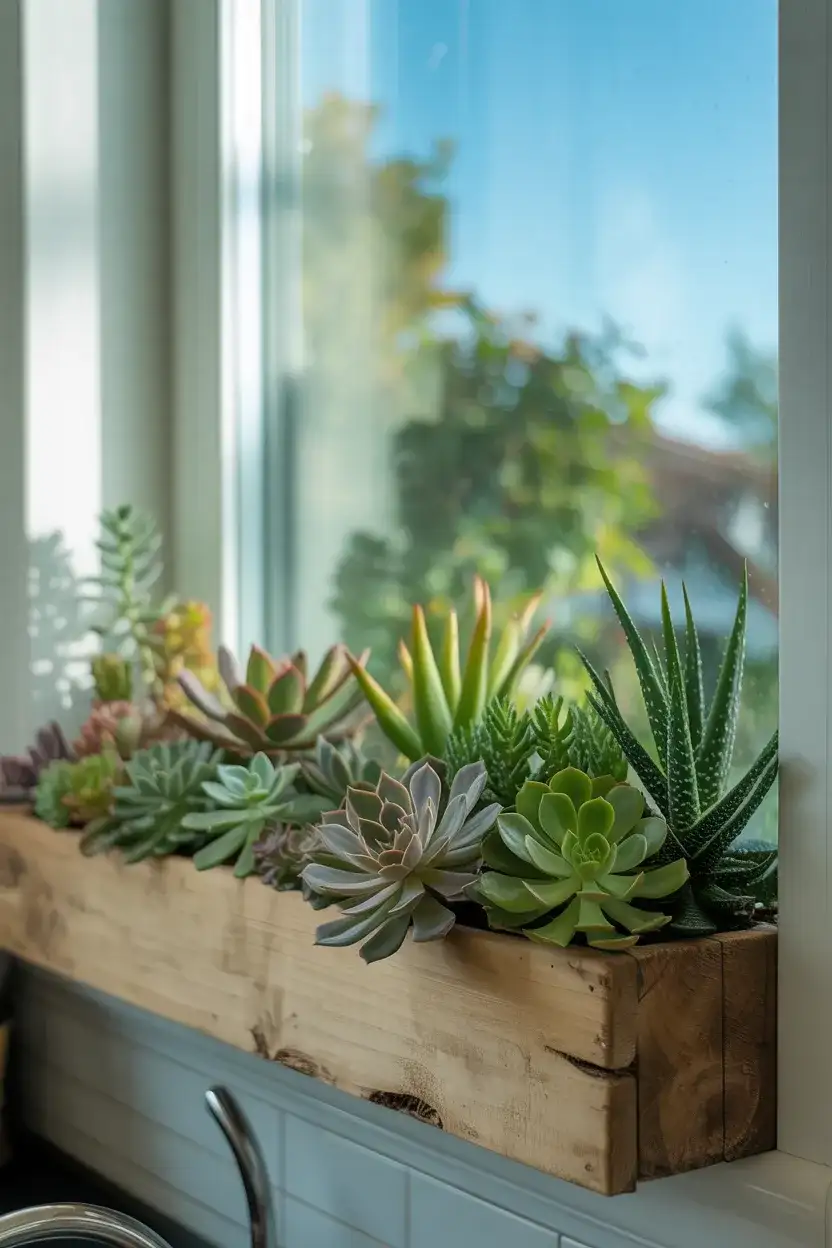
Where this works best: Kitchens in arid regions like the Southwest or Southern California, where succulents thrive outdoors year-round and water conservation matters. It’s also perfect for anyone who loves plants but forgets to water—succulents are forgiving. The view from inside changes subtly as plants grow and bloom, giving you a living artwork that requires attention only every few weeks. Make sure the box has proper drainage holes to prevent root rot during occasional rain.
22. Arched Window Left Completely Bare
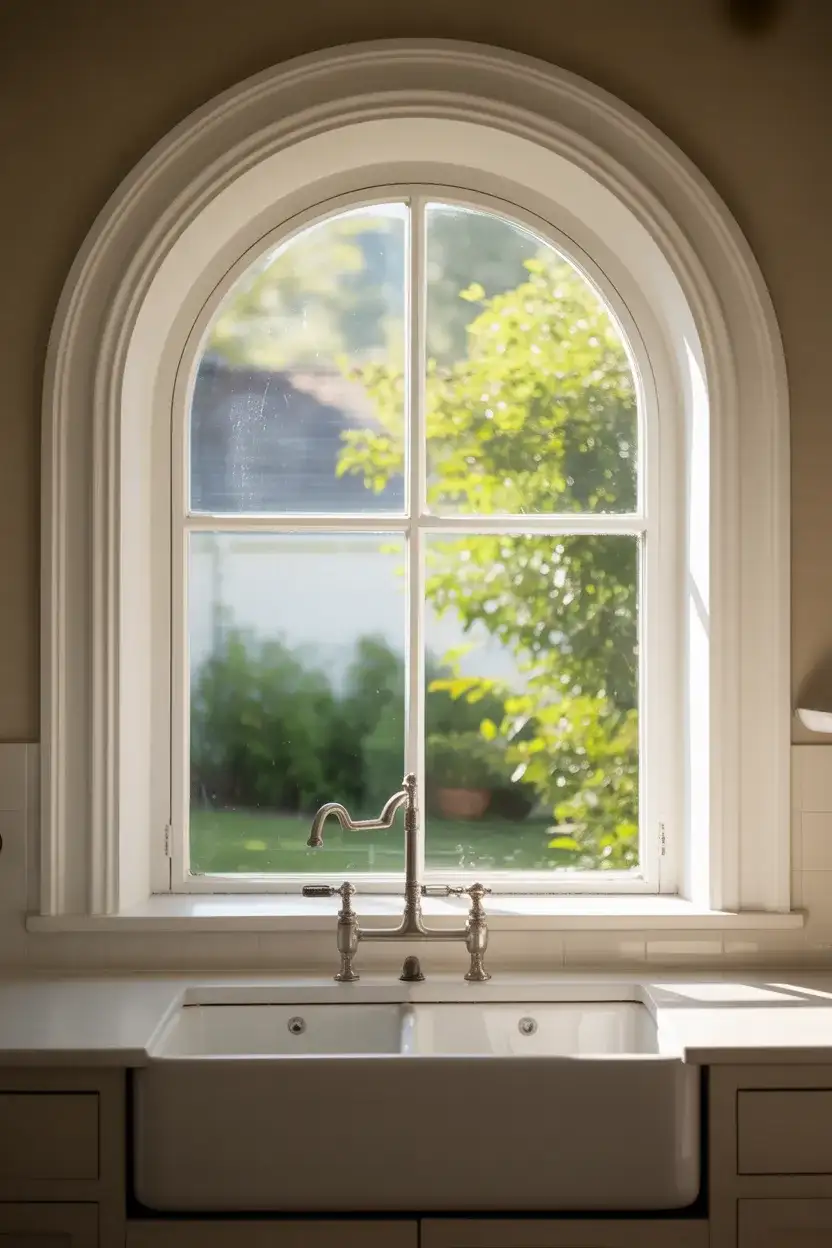
If you’re fortunate enough to have an arched kitchen window, the best treatment is often no treatment at all. The architectural shape is the design statement, and adding treatments or decor over sink areas can actually diminish its impact. Let the window be the hero—its curves soften the hard angles typical in kitchens, and the unobstructed glass maximizes light and view. This works regardless of style, from Mediterranean to Gothic Revival to modern interpretations of classic forms.
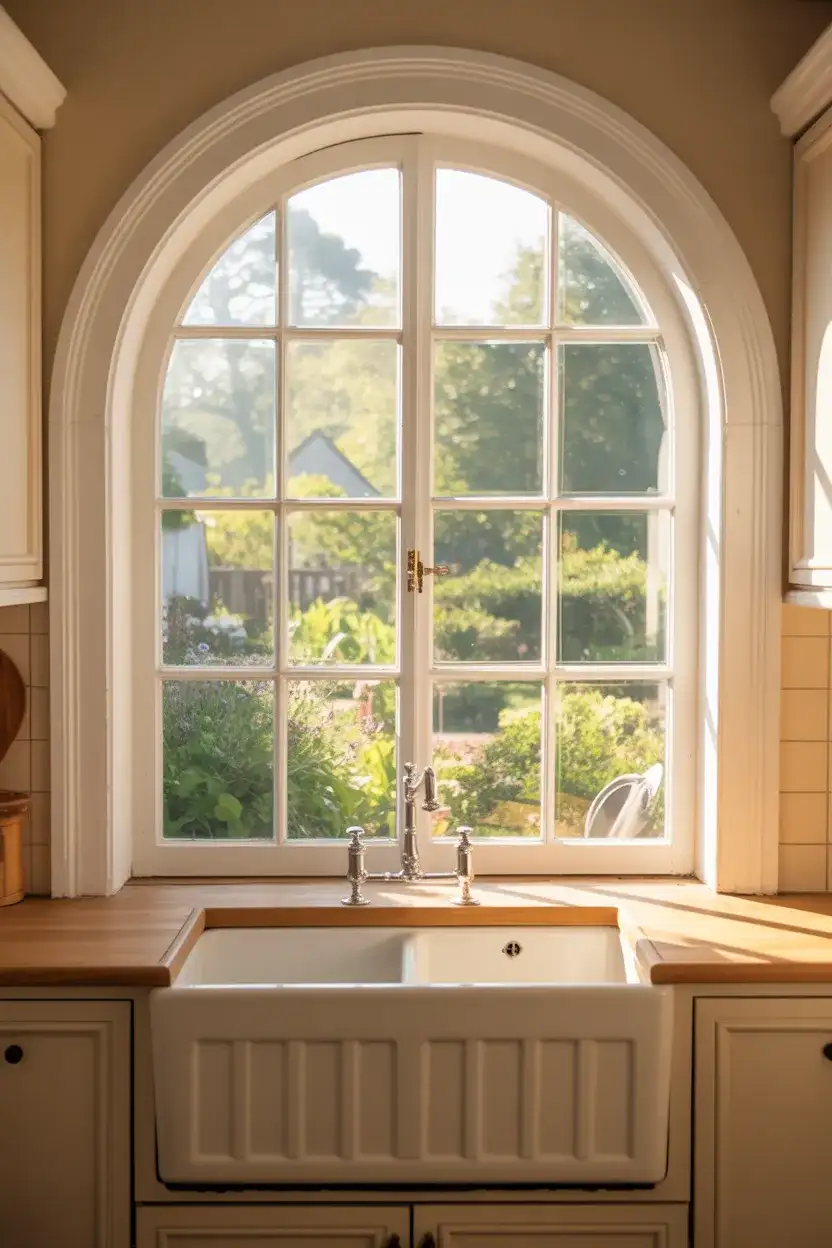
Real homeowner behavior: People with arched windows initially worry about privacy or light control, but most eventually embrace the bare approach once they realize how much character the window brings on its own. If privacy is truly necessary, consider interior shutters that fold back during the day, preserving the arch while giving you control when needed. But often, the kitchen’s natural activity and the window’s height make privacy less of an issue than you’d expect.
23. Reclaimed Transom Window Above Main Window
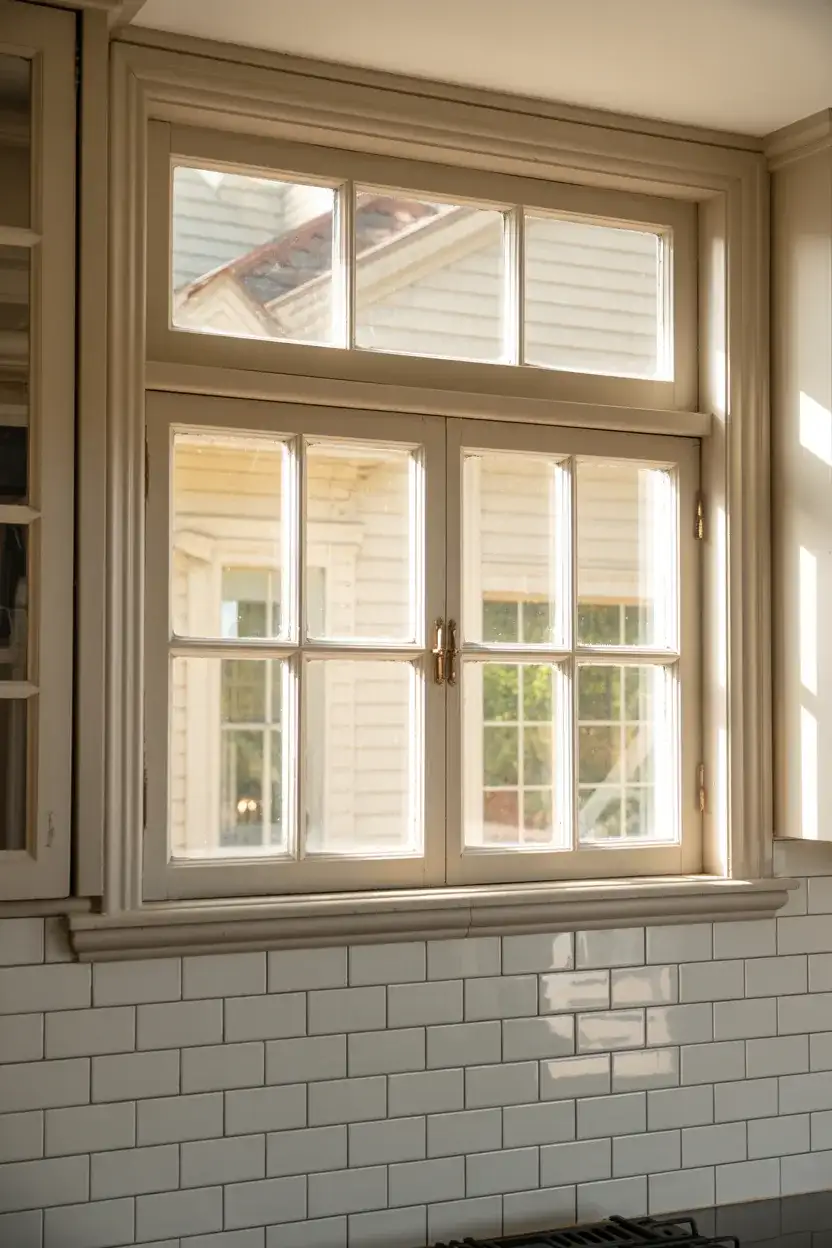
Adding a vintage transom window above your existing kitchen window brings architectural interest and additional light while nodding to historical design. This works especially well in homes with nine-foot or higher ceilings where there’s vertical space to play with. Hunt architectural salvage yards for old transoms—many have beautiful divided lights or wavy antique glass that adds character. The transom can be functional (opening for ventilation) or fixed, but either way, it creates a more substantial window presence and draws the eye upward.
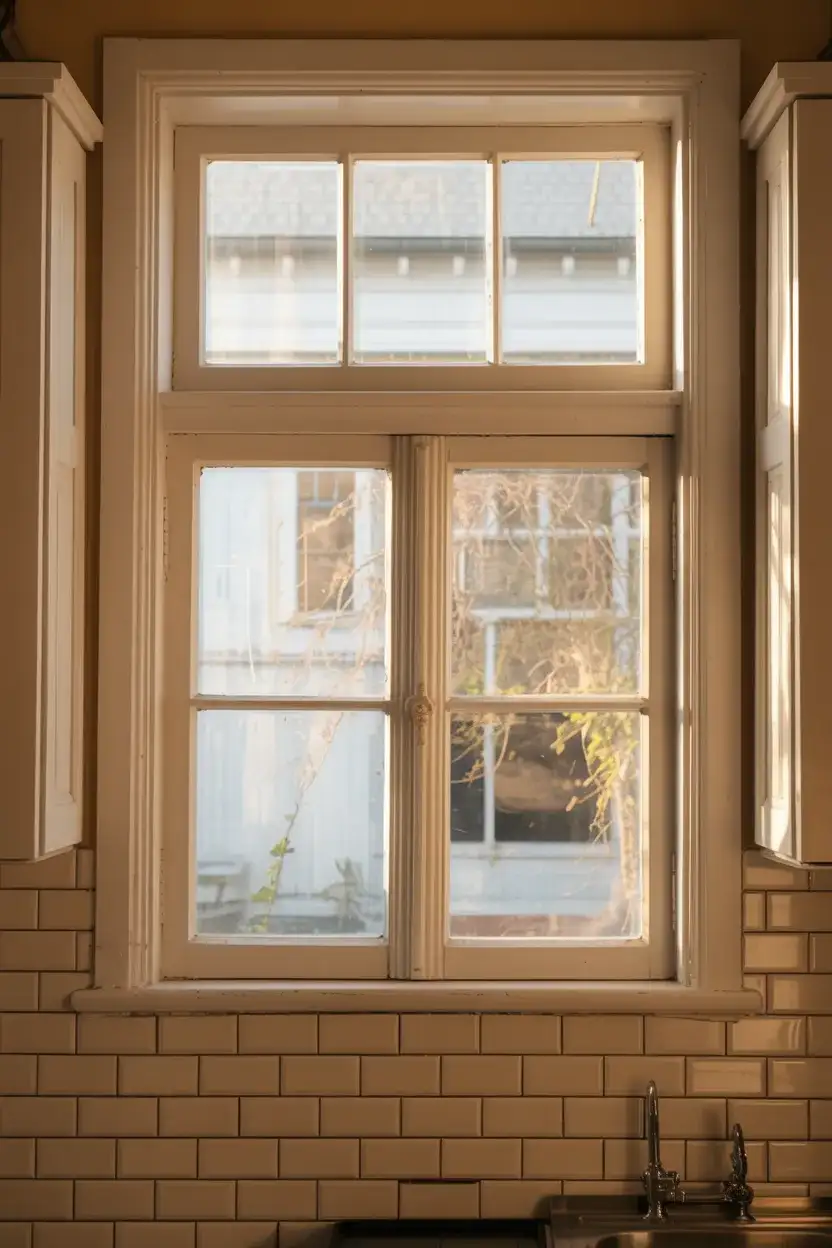
Budget angle: A salvaged transom can cost anywhere from fifty to several hundred dollars depending on size and condition, and installation typically requires a carpenter since you’re modifying the wall structure. But the impact is dramatic for the investment, especially in kitchens that feel one-dimensional or lack architectural detail. It’s one of those upgrades that makes people assume your home is older or more custom than it might actually be, adding perceived value along with real charm.
Conclusion
Whether you’re drawn to the simplicity of natural linen, the drama of vintage glass, or the functionality of clever storage solutions, your kitchen window deserves thoughtful attention. These ideas prove that even the smallest changes—a branch in a jar, a row of old bottles, a well-chosen shade—can transform how a space feels and functions. Take what resonates, adapt it to your home’s personality and your daily needs, and don’t be afraid to mix approaches. We’d love to hear which ideas you’re planning to try or what’s already working in your own kitchen—share your thoughts in the comments below.