You know that feeling when you finally find the kitchen organization photo that looks exactly right for your space? That little thrill of “I can do that!” is what this guide is all about. We’ve moved beyond generic advice to bring you real, workable solutions. After filtering through hundreds of options across The Container Store, IKEA, and Target, we narrowed it down to 32 ideas that actually deliver. Inside, you’ll find brilliant ideas covering everything from modern farmhouse pantries to sleek minimalist drawers. In 2026, our kitchens are doing double-duty as workspaces and sanctuaries, which is why making them both beautiful and efficient is all over your Pinterest feed. And stay until the end — we break down the most common mistakes that can ruin these looks. 📌 Save this to Pinterest for later — you’ll want to revisit these ideas.
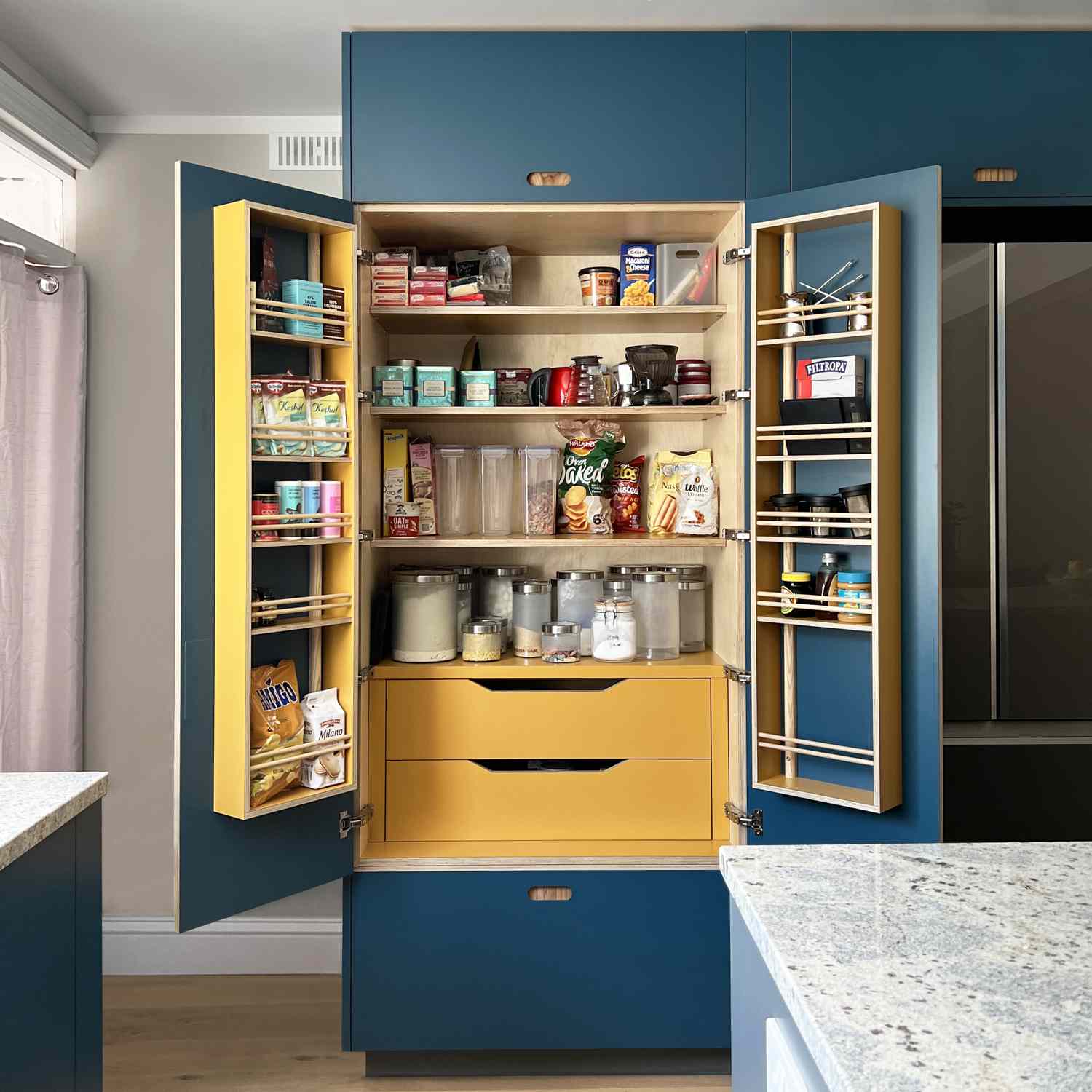
1. A Bold Pantry Reveal: Teal Cabinetry with a Surprise Yellow Interior
The magic here is the high-contrast color combination. The deep, serious teal of the exterior makes the vibrant, sunny yellow interior feel like a joyful discovery every time you open the doors. It’s a masterful use of color to turn a functional space into an experience. The natural wood elements provide warmth, bridging the gap between the cool teal and the hot yellow, showing that even a pantry can have a big personality.
💰 Budget Breakdown
When designing pantry door storage, limit the depth to 3-4 inches. This is perfect for single rows of spices, oils, or small jars. Anything deeper and items get lost, fall out, or prevent the door from closing properly. Use the main shelves for bulkier items and dedicate the doors to those small, frequently-used things you need to grab quickly. It’s about maximizing usable space, not just adding bulk.
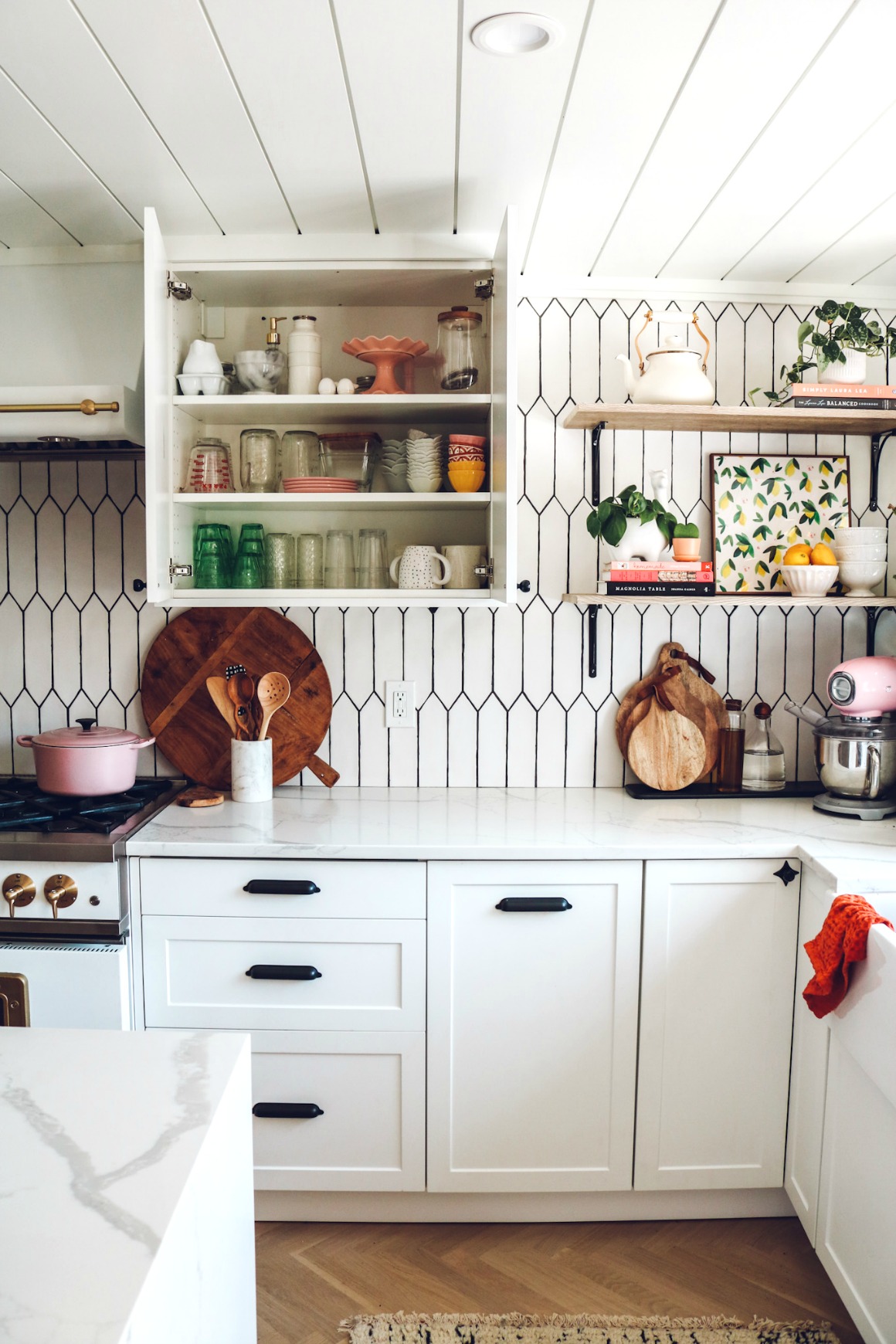
2. Playful Contrast: White Shaker Cabinets Meet a Geometric Backsplash
Think of this look as a simple equation: 70% classic foundation (the white shaker cabinets) + 20% bold pattern (the black and white geometric tile) + 10% warm texture (the open wood shelves and herringbone floor). You could swap the geometric tile for a vibrant color or a different pattern and still get the same balanced effect, as long as that 70% classic base remains to ground the look and keep it feeling timeless.
⚠️ Real Talk
An open upper cabinet with perfectly organized glassware looks stunning, but it demands commitment. If you have mismatched, chipped mugs or your collection isn’t quite ‘display-ready,’ this can quickly look cluttered instead of curated. Be honest with yourself about your tidying habits before you take the cabinet doors off for good. A simple frosted glass film can give a similar open feel without requiring constant perfection.
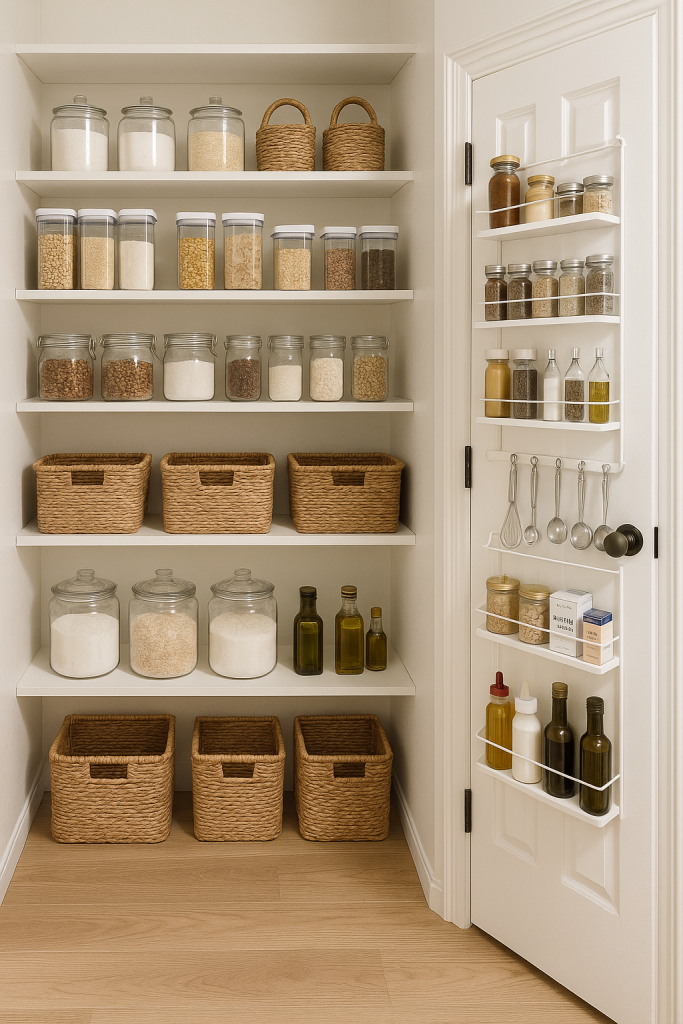
3. The Entry-Level Pantry: An Over-the-Door Wire Organizer
This is organization at its most accessible. You don’t need a full renovation to get a tidy pantry. A simple over-the-door wire rack, like this white one, can be found at Target or Walmart for $25-$40. It instantly creates a home for spices, oils, and small packages that would otherwise clutter your shelves. Paired with some clear containers from IKEA for your main shelves, you can achieve this entire look for under $100. This is the perfect starting point if you’re feeling overwhelmed.
🔧 How-To Brief
Before you invest in a full set of containers, figure out what you actually need to store.
- First, empty your pantry completely and group items by category (baking, pasta, snacks).
- Next, measure your shelf depth and height to ensure the baskets and containers you buy will actually fit.
- Finally, decide what needs to be airtight (flour, nuts, coffee) and what can live in open baskets (packaged snacks, potatoes).
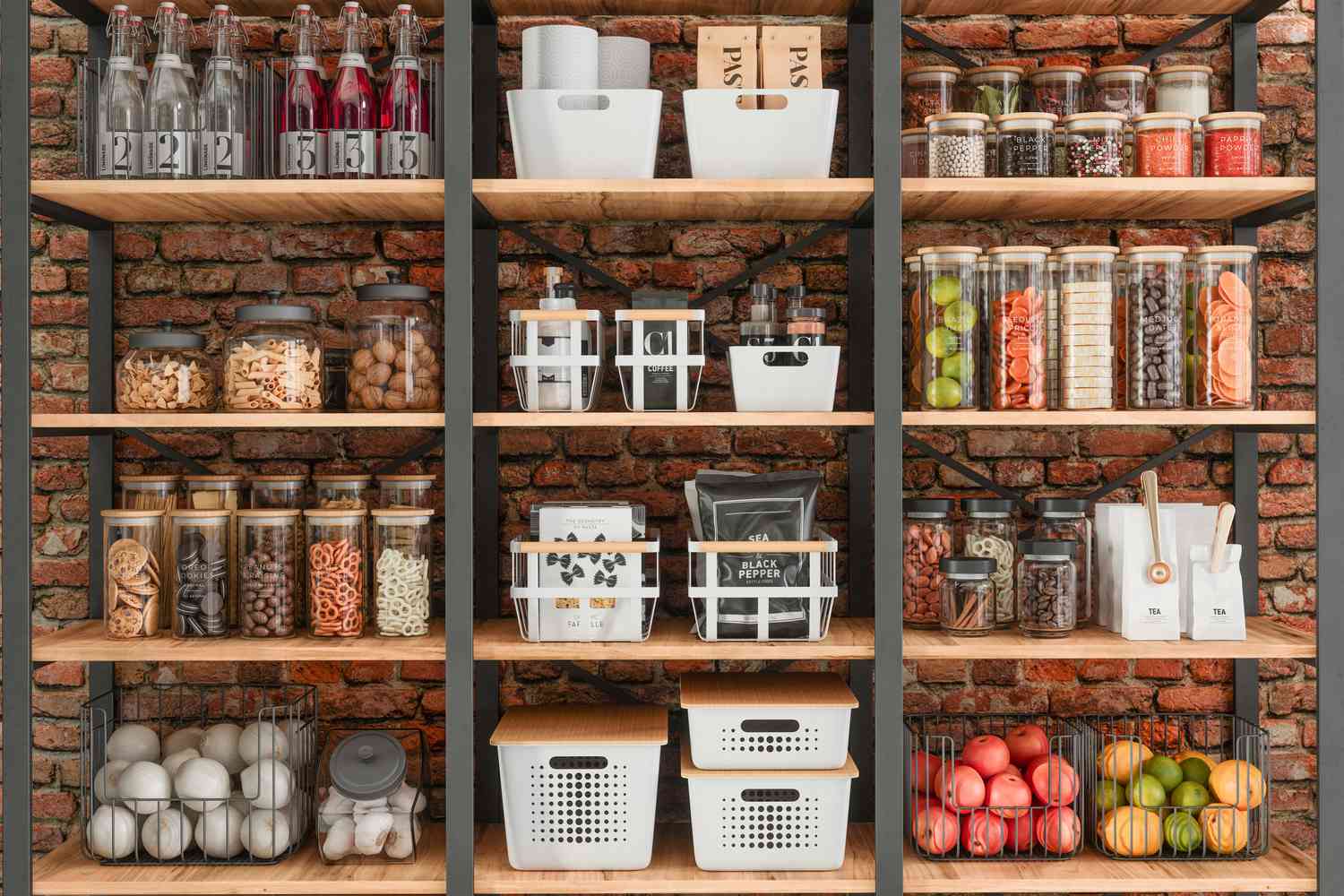
4. Industrial Open Shelving with Exposed Brick
The single element that makes this pantry work is the disciplined use of matching containers. With open shelving, your food items *are* the decor. By decanting everything into clear glass jars, white bins, and black wire baskets, the potential chaos of colorful packaging is replaced by a calm, cohesive system. Without this step, an open pantry can easily look like a messy grocery aisle. The consistency is everything.
🔥 Trending Context
Open shelving is beautiful, but it’s a dust magnet, especially in a kitchen where grease particles can circulate. Plan on wiping down these shelves and the tops of your containers at least once every two weeks. If you have an exposed brick wall, it will also need occasional dusting with a soft brush attachment on your vacuum. This style is gorgeous, but it is not a low-maintenance relationship.
5. The L-Shaped Walk-In Pantry: A Maximalist Approach
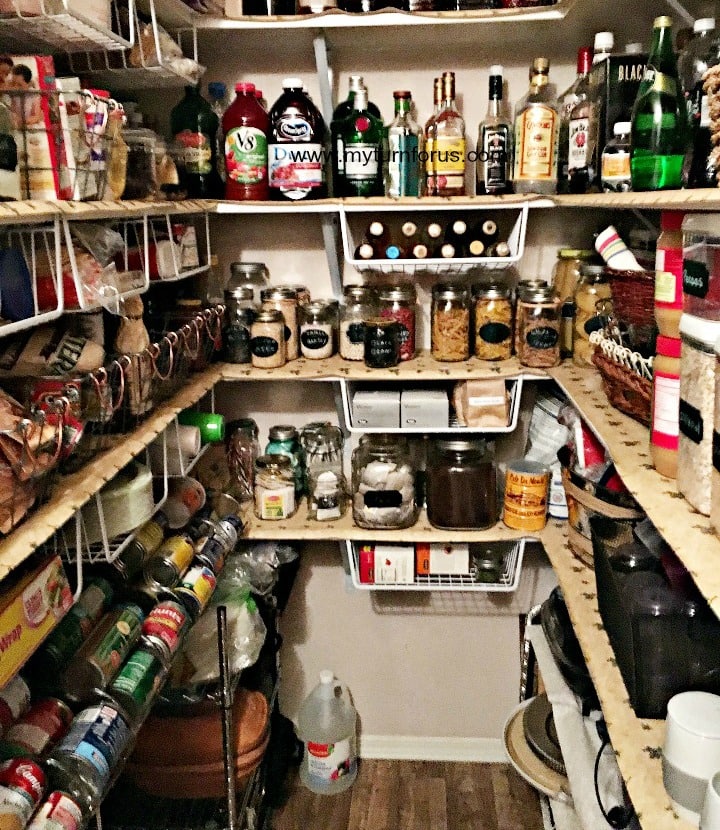
This kind of densely-packed, L-shaped walk-in pantry is a dream for bulk shoppers and large families. To make this work without feeling claustrophobic, you need a minimum footprint of 5×5 feet, but 6×6 feet is more comfortable. This allows for 24-inch deep shelves on two walls and a 3-foot walkway. For a more streamlined look in a smaller space, check out the single-wall pantry in Idea #6.
📏 Scale Guide
To recreate this well-stocked pantry yourself, here’s a rough estimate:
- Shelving (Wood & Wire): $300 – $700
- Storage Containers (Jars, Bins): $250 – $500
- Organizers (Tiered Racks, Baskets): $100 – $200
- Labels & Liners: $30 – $60
- TOTAL: $680 – $1,460
- Budget alternative: Use only wire shelving and source glass jars from thrift stores to bring the total cost down to around $300-$500.
6. Classic and Clean: A White Beadboard Pantry with Labeled Baskets
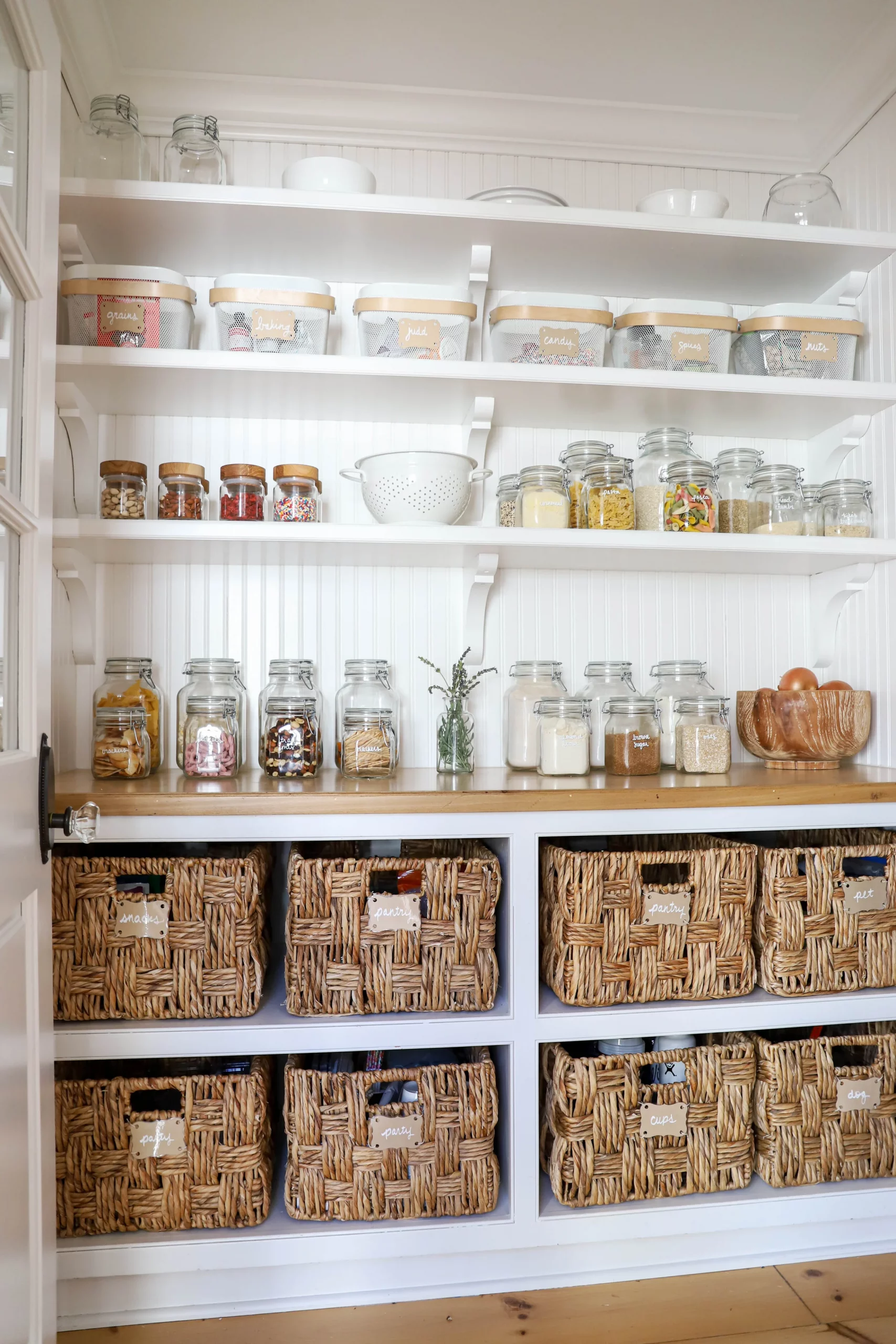
This pantry feels so serene because of repetition and texture. The vertical lines of the beadboard paneling are echoed in the shape of the mesh baskets, creating a subtle, calming rhythm. The mix of textures—smooth glass, woven baskets, and painted wood—adds depth and interest, preventing the all-white scheme from feeling sterile. It’s a masterclass in using texture to build a soothing atmosphere.
🎯 What Makes It Work
Labels are your best friend for any system involving non-transparent bins. But don’t just label the bin; label the *shelf* where the bin lives. This way, when you take a basket out, you and everyone else in your household knows exactly where it goes back. A simple label maker or a chalk pen on a small tag is all you need. This little step is the secret to long-term organization.
7. A Polished Pantry with Scalloped Floor Tiles
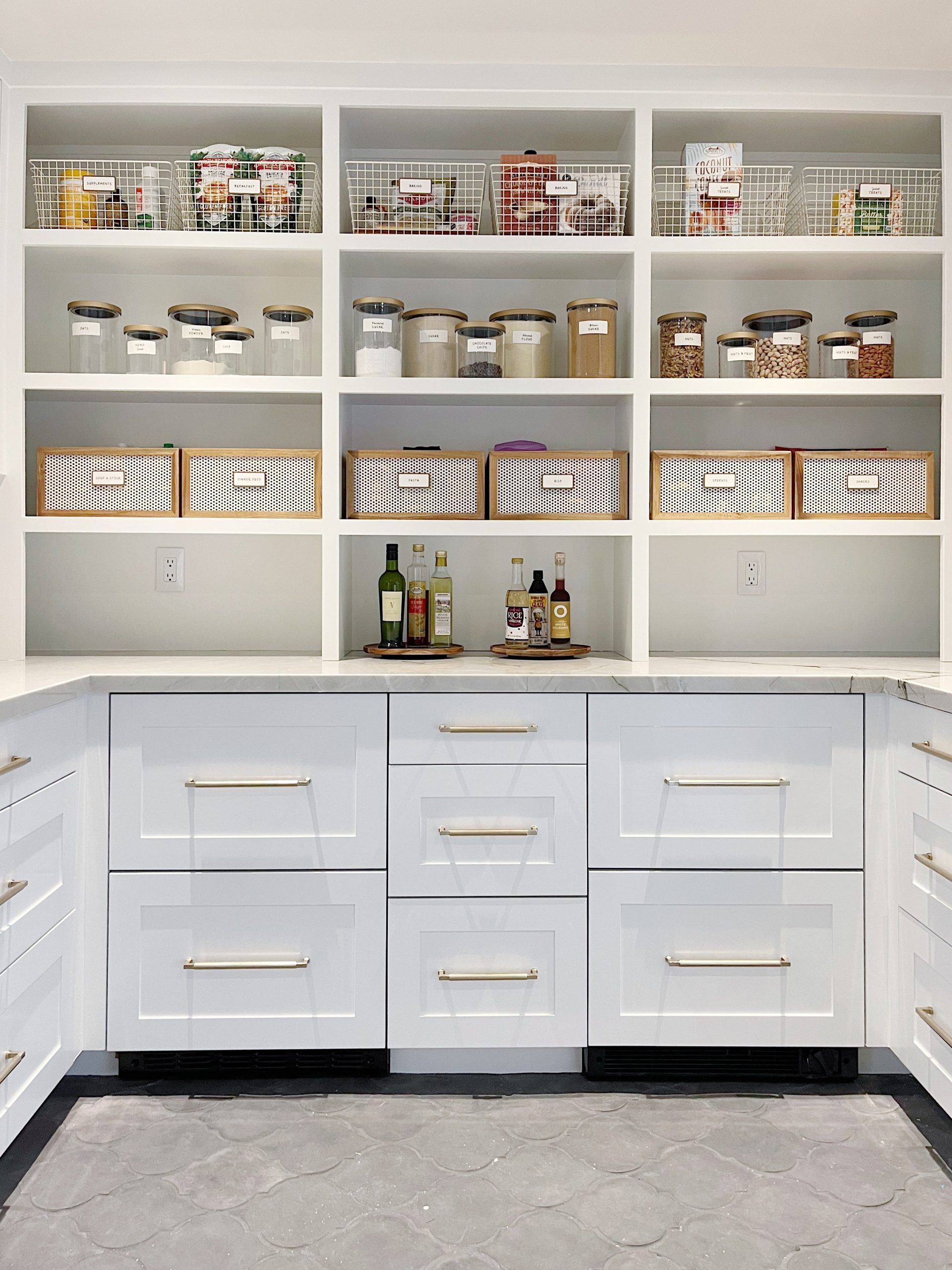
This look is all about balancing practicality with personality. Let’s call the formula: 60% built-in functionality (the white shelves and drawers) + 30% coordinated containment (the matching clear canisters and wire baskets) + 10% playful polish (the gold hardware and whimsical floor tile). The system is serious and efficient, but the details make it feel special and custom. You could swap the scalloped tile for another fun pattern to make it your own.
📐 Style Math
A pantry this beautiful requires upkeep. White drawers, shelves, and especially light grey floor tiles will show every crumb and spill. The gold hardware will need regular polishing to avoid looking dull. If you have kids or pets, or if you’re simply not someone who enjoys daily wipe-downs, you might consider a darker grout for the tile and a more forgiving cabinet color. Compare this to the industrial look in Idea #4, which is much better at hiding daily grime.
8. Streamlined Simplicity: Coordinated Clear Containers on Open Shelves
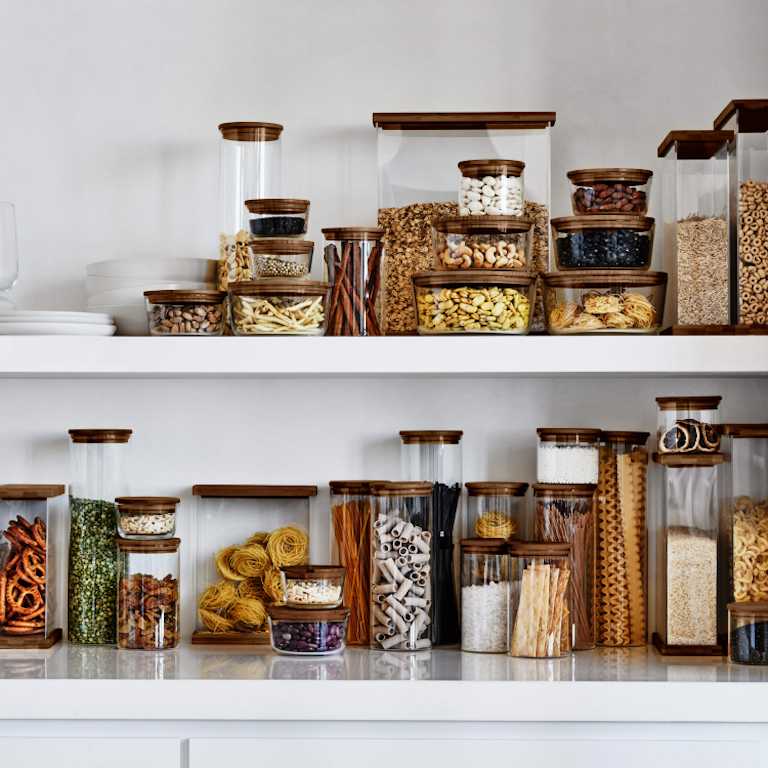
The power of this image lies in its uniformity. It’s the sheer commitment to using one single type of storage container—clear bodies with dark wood lids—that transforms these shelves from simple food storage into a design statement. If you were to mix in different styles of jars or bags of food, the entire aesthetic would collapse. This is proof that discipline in your choices can be the most impactful design tool of all.
⭐ The One Thing
This “decant everything” trend has exploded on Pinterest and TikTok, and for good reason. In 2026, we’re craving a sense of order and control in a chaotic world, and our pantries are a place we can actually achieve it. It’s also visually satisfying and removes the “visual noise” of branded packaging, creating a calmer kitchen environment. This trend has staying power because it’s both beautiful and genuinely practical for tracking inventory.
9. The Working Pantry: Labeled Glass Jars in Open Cabinets
This setup works because it prioritizes function above all else, and that clarity becomes its own aesthetic. Taking the cabinet doors off (or designing them to be open) makes everything visible at a glance. The bold, clear labels mean you’re not guessing what’s in each jar. This is a system designed for someone who cooks a lot and needs to find ingredients without friction. The stand mixers on the counter below reinforce that this is a true workhorse kitchen.
![Best Kitchen Cabinet Organization Ideas [May 2026]](https://nestmood.com/wp-content/uploads/2026/05/best-kitchen-cabinet-organization-ideas-9.webp)
✅ Before You Start
You can get this highly functional look for much less. Instead of custom open cabinets, simply remove the doors from your existing upper cabinets and paint the interior for a fresh look (like the light wood tone here). A set of simple glass jars with chalkboard labels can be purchased from Amazon or craft stores for a fraction of the cost of some designer versions. Functionality doesn’t have to be expensive.
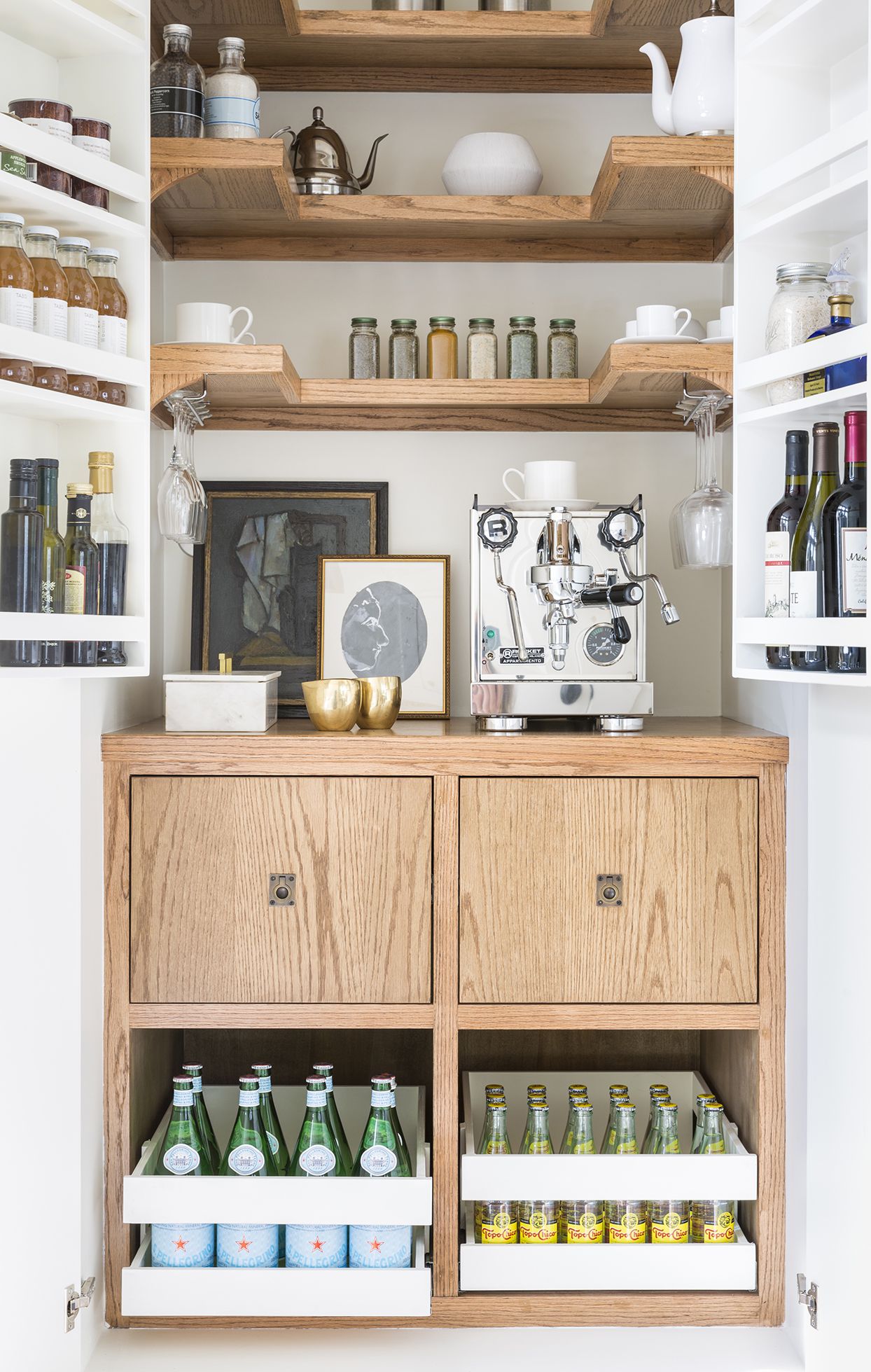
10. The Ultimate Butler’s Pantry: Oak Shelving with an Integrated Coffee Station
Creating a high-end, integrated pantry and coffee bar like this is a significant investment.
- Custom Oak Cabinetry & Shelving: $3,000 – $8,000
- Countertop (Wood or Stone): $500 – $1,500
- Espresso Machine: $700 – $3,000+
- Lighting & Accessories (Art, Racks): $300 – $800
- TOTAL: $4,500 – $13,300+
- Budget alternative: Use pre-made oak shelves from a hardware store and a smaller, high-quality coffee machine to get a similar vibe for around $1,500.
💸 Get This Look For Less
This is not a small-space solution. To accommodate a full coffee station with counter space, plus adequate shelving and drawer storage, you need a dedicated nook or walk-in pantry of at least 6 feet wide by 4 feet deep. The key is having enough counter depth (at least 24 inches) for the espresso machine and workspace without cramping the storage above or below. For a more compact approach, see the beverage cabinet in Idea #12.
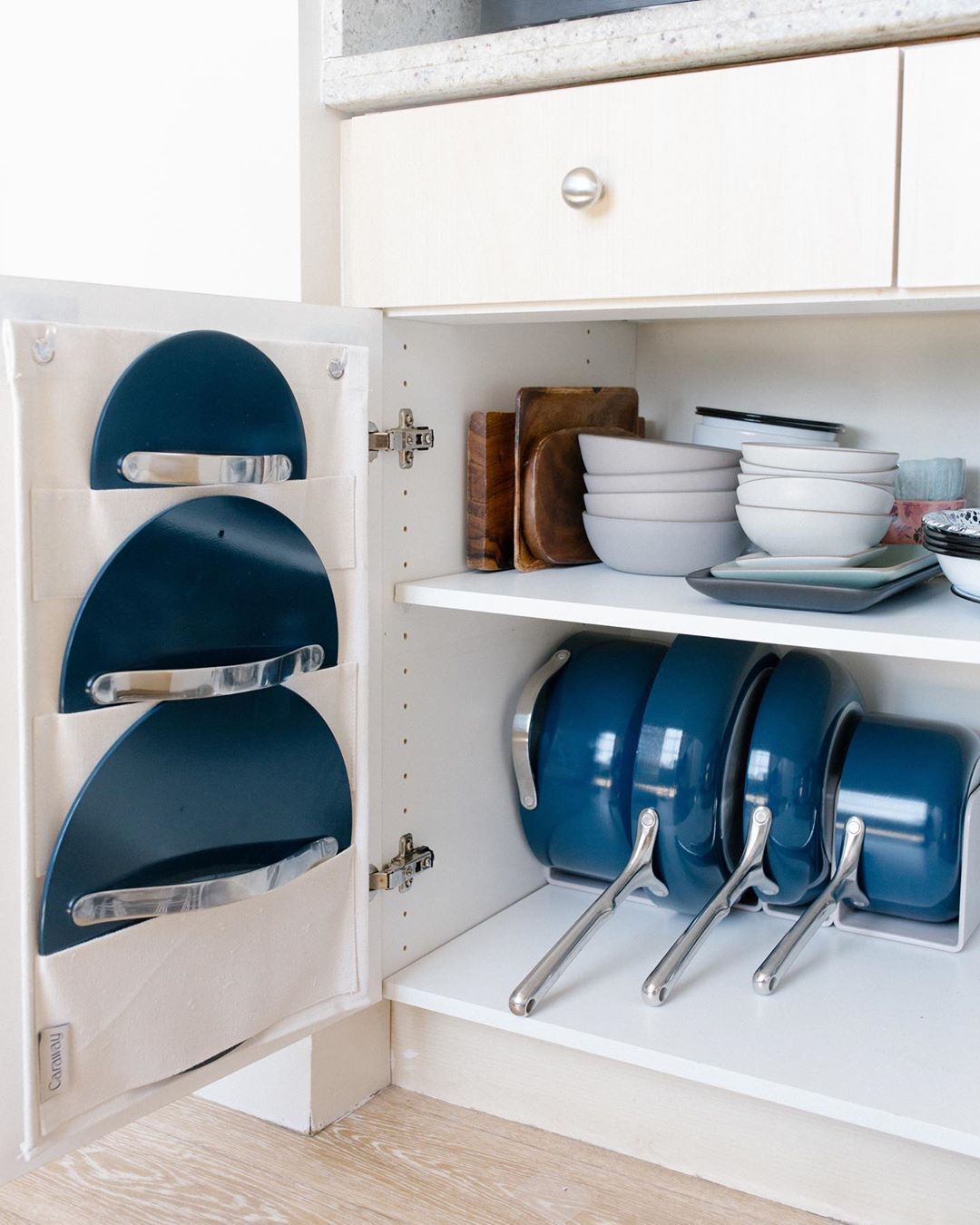
11. A Place for Every Pot: Coordinated Cookware in a Base Cabinet
Let’s tackle that messy pile of pot lids. Time: 15 minutes. Cost: $20-$35.
- Purchase a cabinet door lid organizer. The canvas one here is great, but metal wire versions also work well.
- Measure the width and height of your cabinet door’s interior panel to ensure a good fit.
- Most organizers hang over the door, but for a permanent fix, use short screws to mount it directly to the door.
- Arrange your lids from largest to smallest for easy access.
- Enjoy never hearing a lid cascade onto the floor again!
🧹 Maintenance Reality
The smartest detail here is the pot organizer rack. Nesting pots directly on top of each other leads to scratched surfaces and a frustrating game of Jenga every time you need the bottom one. A simple, tiered metal rack allows you to store them “vertically” even while nested, so you can slide each pot out individually without disturbing the others. It’s a cheap and transformative tool for any cookware cabinet and the true hero of this setup.
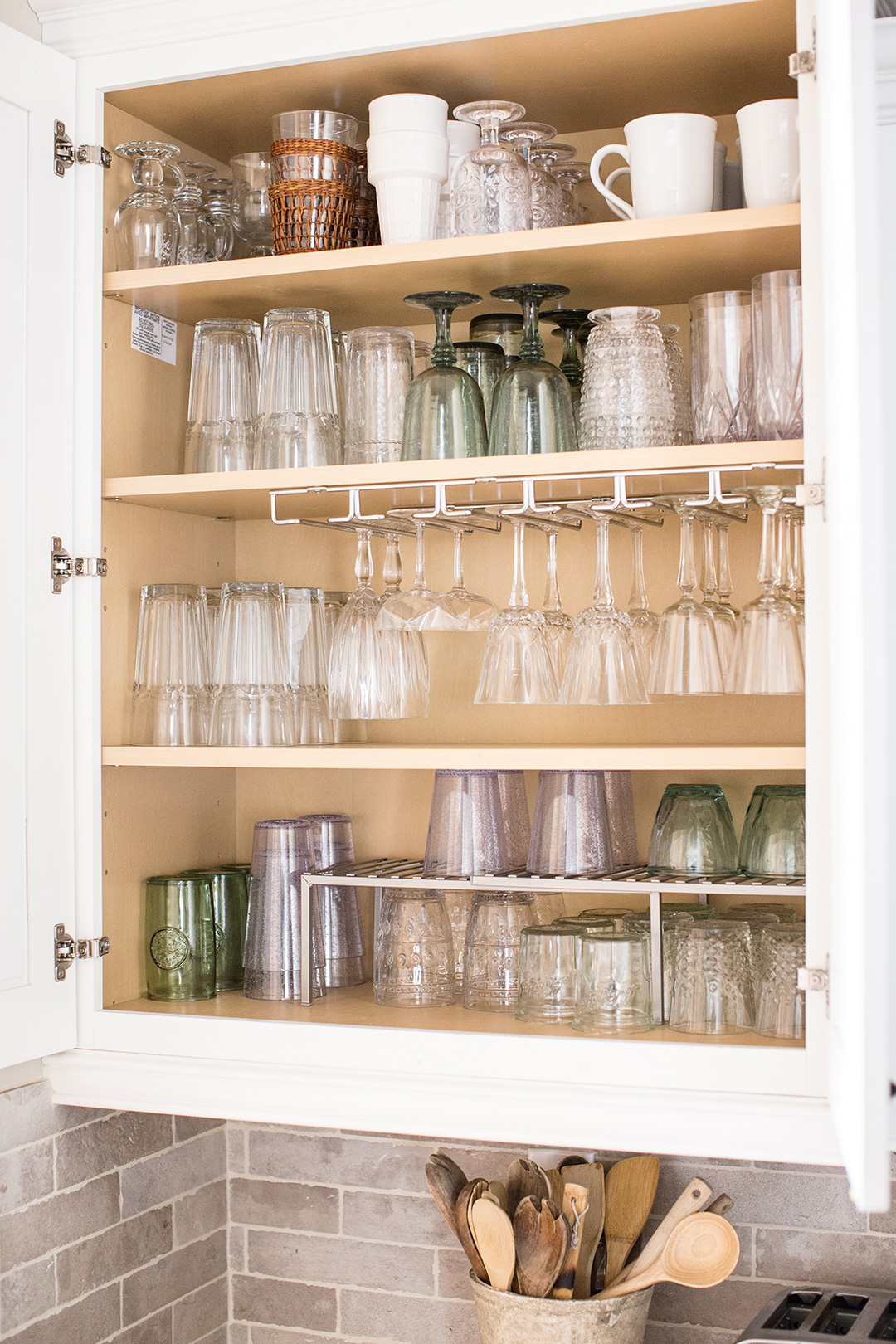
12. Making the Most of a Glassware Cabinet
The most underutilized space in any cabinet is the upper half of each shelf. An under-shelf wine glass rack instantly doubles your capacity for stemware, hanging them securely and freeing up the shelf below for tumblers or mugs. Similarly, a simple metal shelf riser (or expander) can create a second level for smaller glasses or bowls. These two tools alone can radically transform a crowded cabinet.
💡 Designer Tip
This cabinet feels so satisfyingly full, yet organized, due to a principle called “like with like.” All the stemware is grouped together, all the mugs have their zone, and all the clear glasses are clustered. Even though there are many different styles of drinkware, the visual chaos is minimized by grouping them by function and type. Your eye reads “mugs” or “wine glasses” as a single unit, rather than ten individual, clashing items.
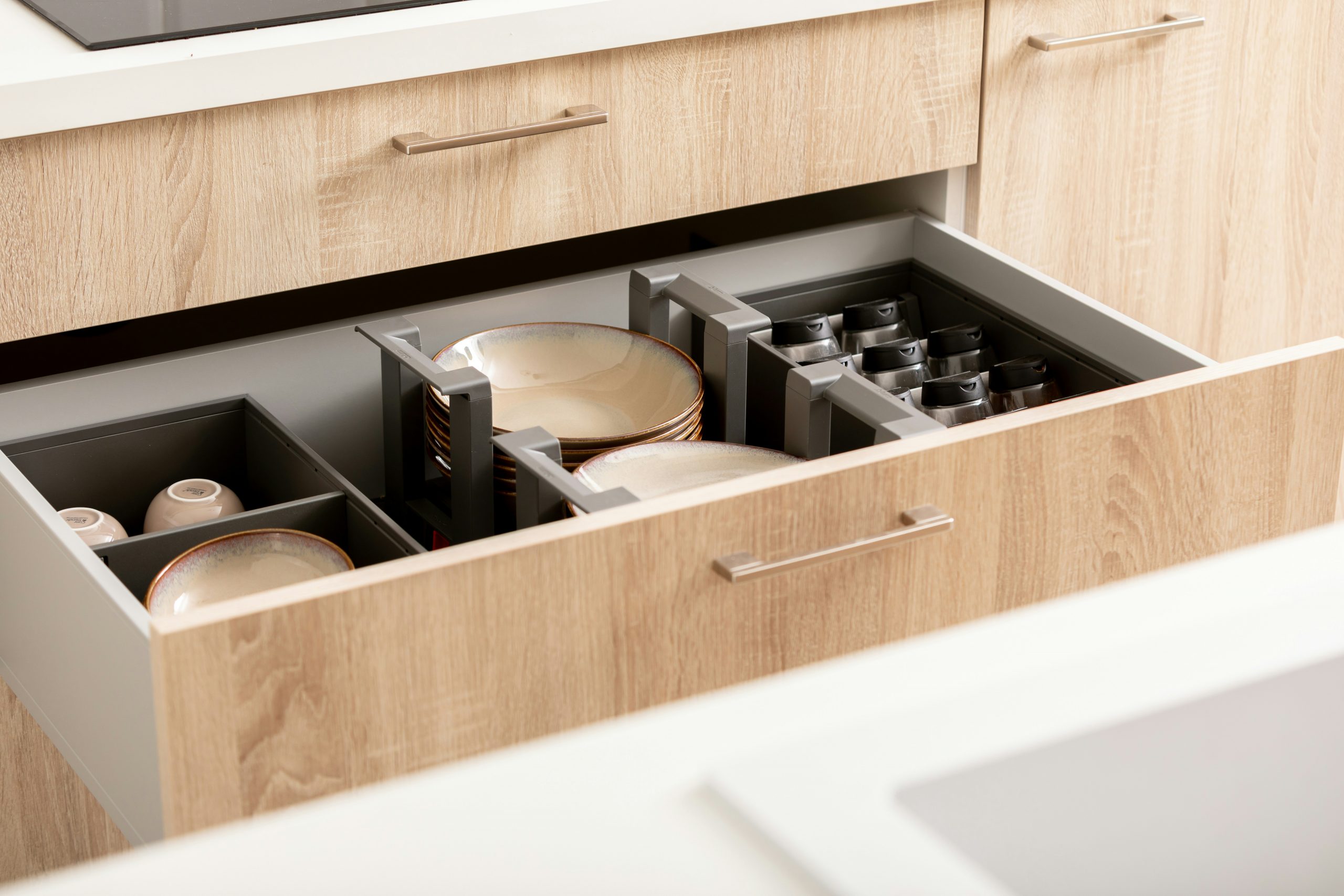
13. A Zen Approach to Drawer Organization with Grey Inserts
The calming effect of this drawer comes from a strict visual diet. The formula is approximately: 80% warm neutral (the light wood drawer front) + 20% cool neutral (the grey inserts) + a tiny dash of organic texture (the ceramic bowls). By keeping the palette extremely limited and monochrome, the focus shifts entirely to form and function. This is organization as a meditative practice.
💰 Budget Breakdown
Drawer organizers, especially those with many small compartments for spices, can be a pain to clean. Dust, crumbs, and spice residue will inevitably gather in the corners. Look for inserts that are either a single molded piece (easy to lift out and wash) or have removable dividers. A monthly quick-pass with a handheld vacuum is the best way to keep them looking pristine without having to empty the entire drawer each time.
14. The Deep Drawer Dish System: Storing Plates and Glasses
Storing dishes in a deep drawer is a fantastic ergonomic choice—no more reaching over your head for a heavy stack of plates. However, you MUST invest in high-quality, heavy-duty drawer slides. A drawer full of ceramic dishes can easily weigh 50-75 pounds. Standard-grade hardware will sag or fail over time, creating a huge safety hazard. Don’t cut corners here; specify soft-close, full-extension slides rated for at least 100 pounds.
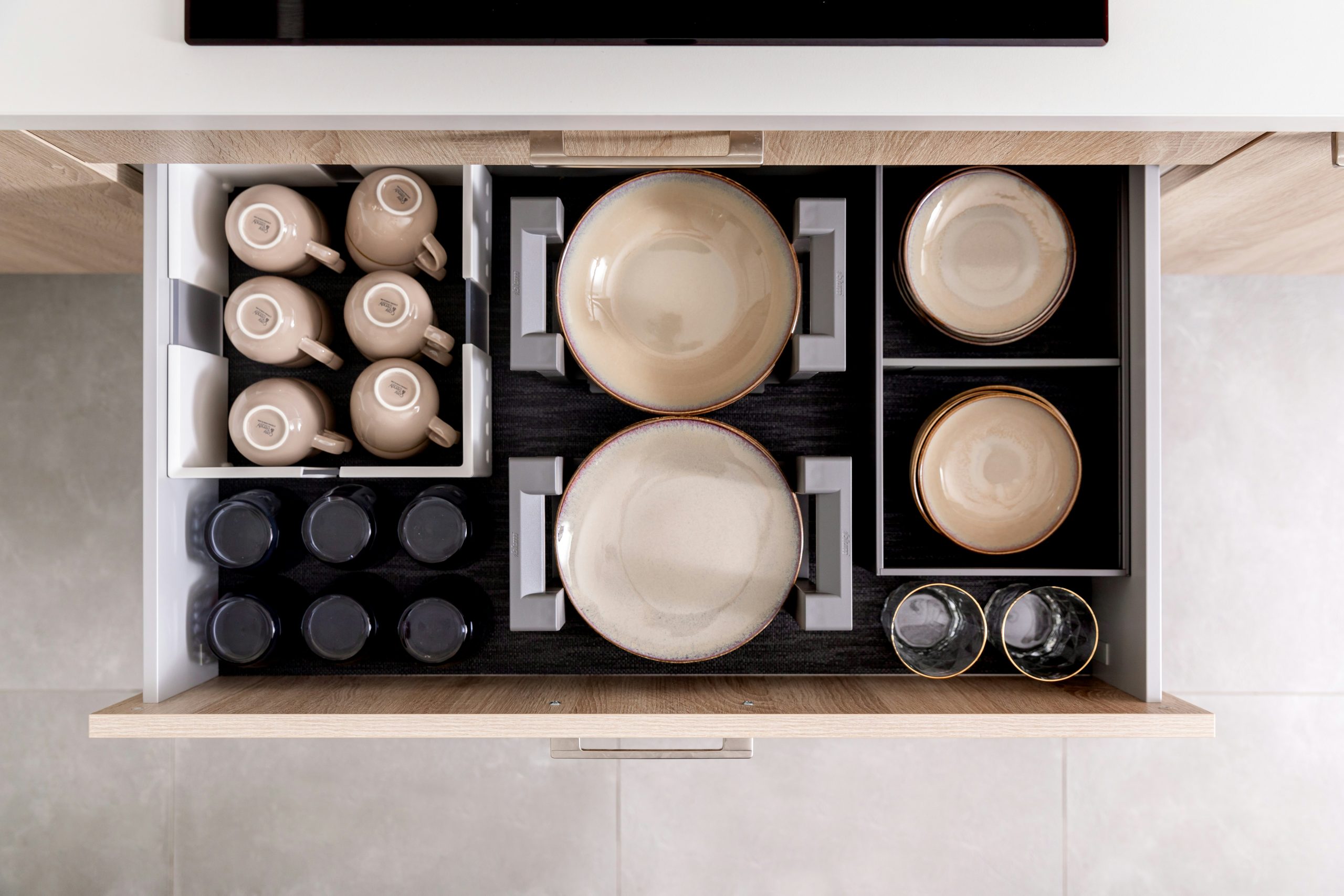
⚠️ Real Talk
This idea is best suited for drawers that are 24 to 36 inches wide. This width provides enough space for plate stacks, cups, and bowls side-by-side. A drawer narrower than 24 inches won’t be very efficient. The depth should be at least 10-12 inches to accommodate the height of the dividers and the dishes themselves. The organized drawers in Idea #15 show a similar system in a slightly different configuration.
15. Modular Inserts for a Custom-Fit Dish Drawer
The key to a successful dish drawer is adjustability. Your dish collection will change over time, so opt for a modular organizer system with adjustable dividers, like the grey ones shown here. This allows you to create custom-sized compartments for your specific plates, bowls, and even spice jars. A rigid, pre-molded organizer might look nice, but it lacks the flexibility needed for long-term, real-world use. Customization is king.
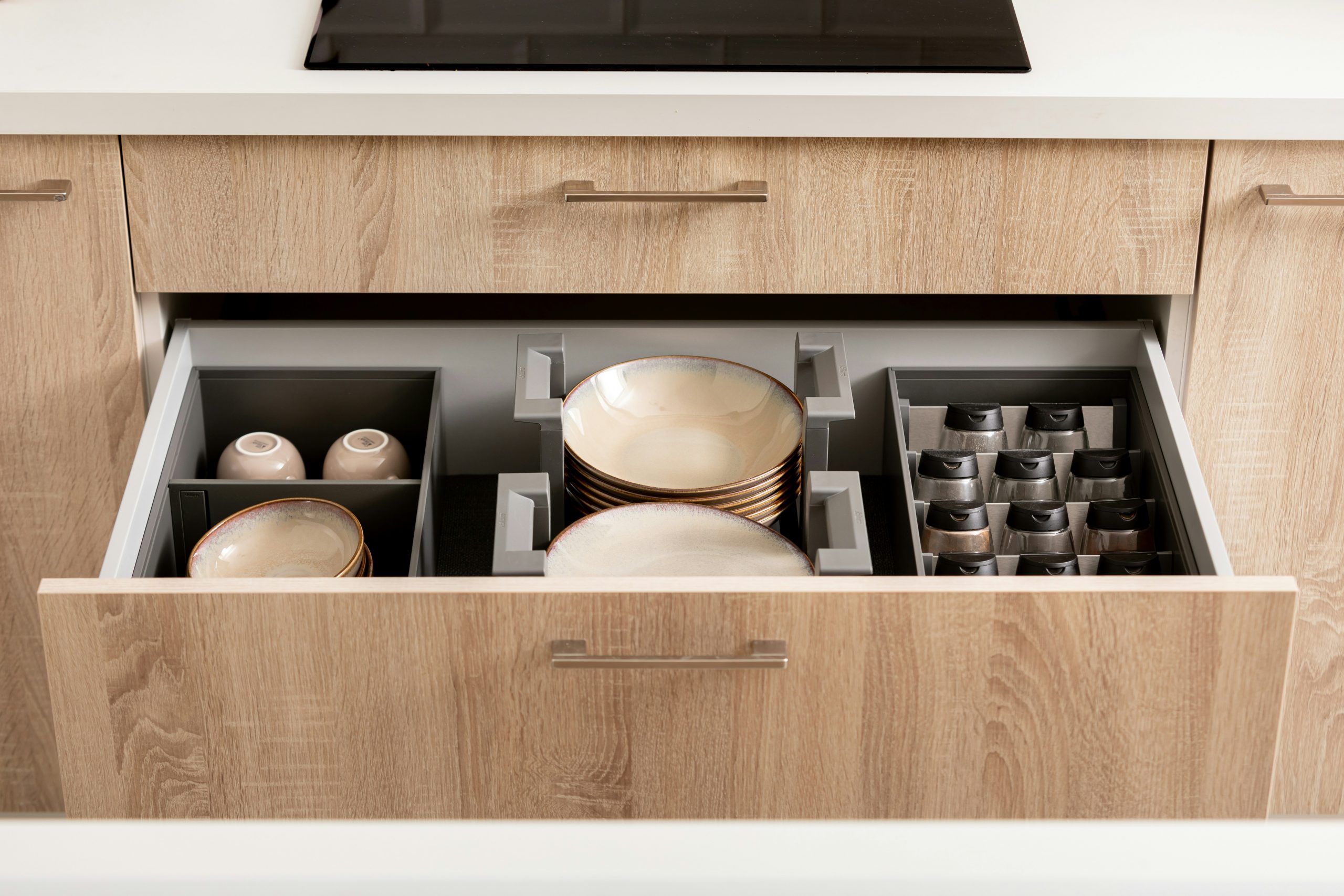
🔧 How-To Brief
What makes this so effective is the combination of peg-style dividers for plates and open bins for everything else. The pegs hold the plates securely, preventing them from sliding around when the drawer is opened and closed. The other items, like bowls and spices, don’t need such specific corralling, so simple rectangular compartments work perfectly. It’s about choosing the right type of organization for each specific item.
16. The Aesthete’s Cutlery Drawer: Mixed Metals and Linens
The element that elevates this from a simple cutlery drawer to a true design moment is the inclusion of the rolled linen napkins. It’s an unexpected touch of softness and texture amidst the hard wood and metal. It suggests a lifestyle—one of thoughtful dinner parties and an appreciation for detail. Removing them would leave you with a perfectly nice, organized drawer. But with them, you have a little story.
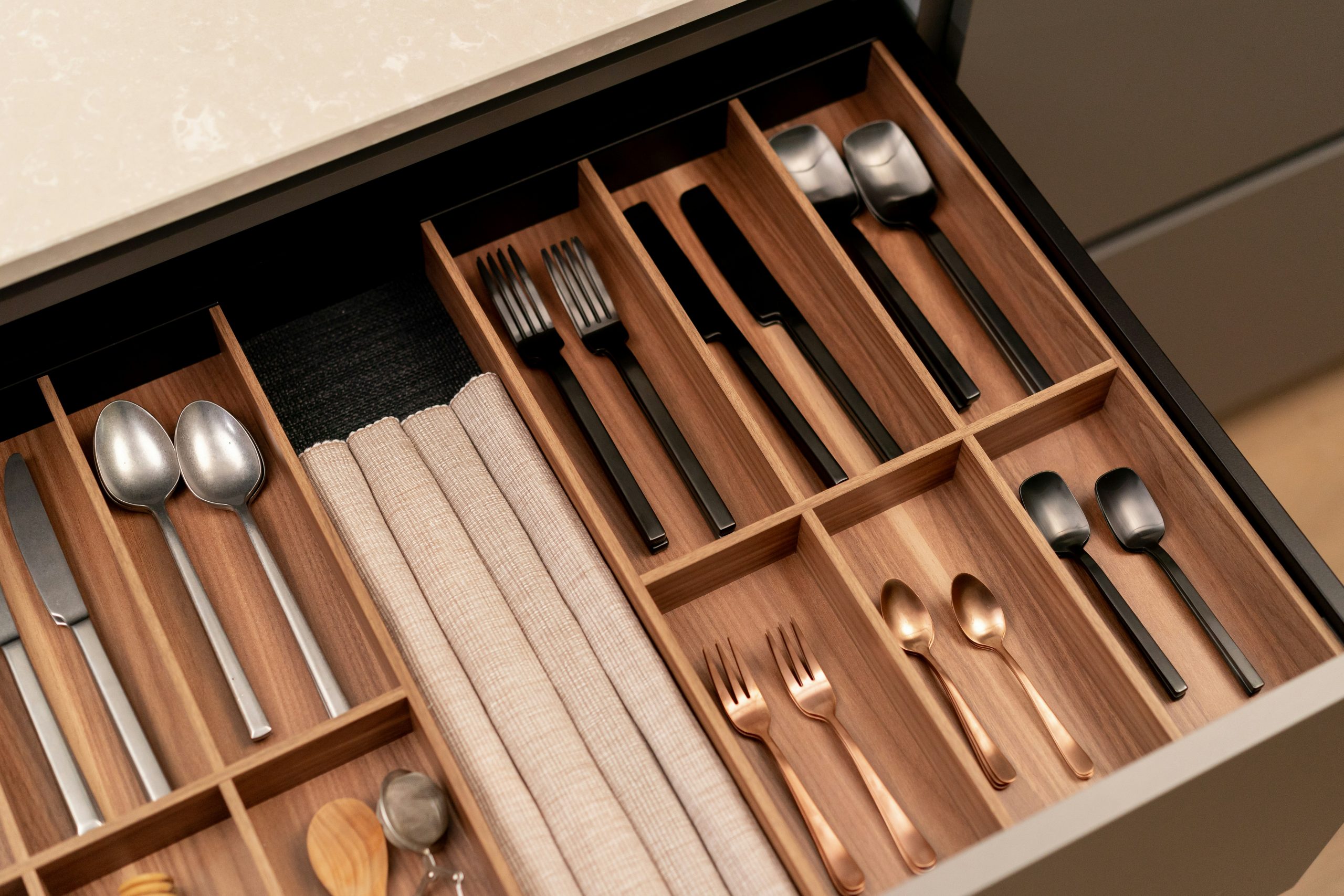
🔥 Trending Context
Mixing metals is no longer a design faux pas; it’s a sophisticated trend that signals confidence. We saw it explode in jewelry, and now it’s a staple in interior design. This drawer, with its confident mix of silver, matte black, and rose gold cutlery, is a perfect microcosm of this 2026 trend. It feels curated and personal, not sterile and “matchy-matchy.” It reflects a move away from rigid rules and toward more expressive, collected interiors.
17. A Pop of Color in a Gadget Drawer
Let’s be honest: gadget drawers are where organization goes to die. This image is beautiful, but a drawer with only a few colorful tools and a single whisk is not reality for most of us. We have potato mashers, mismatched tongs, and that weird avocado slicer we used once. Using dividers is a great start, but don’t feel pressured to achieve this level of minimalism. The goal is function, not a photo shoot.
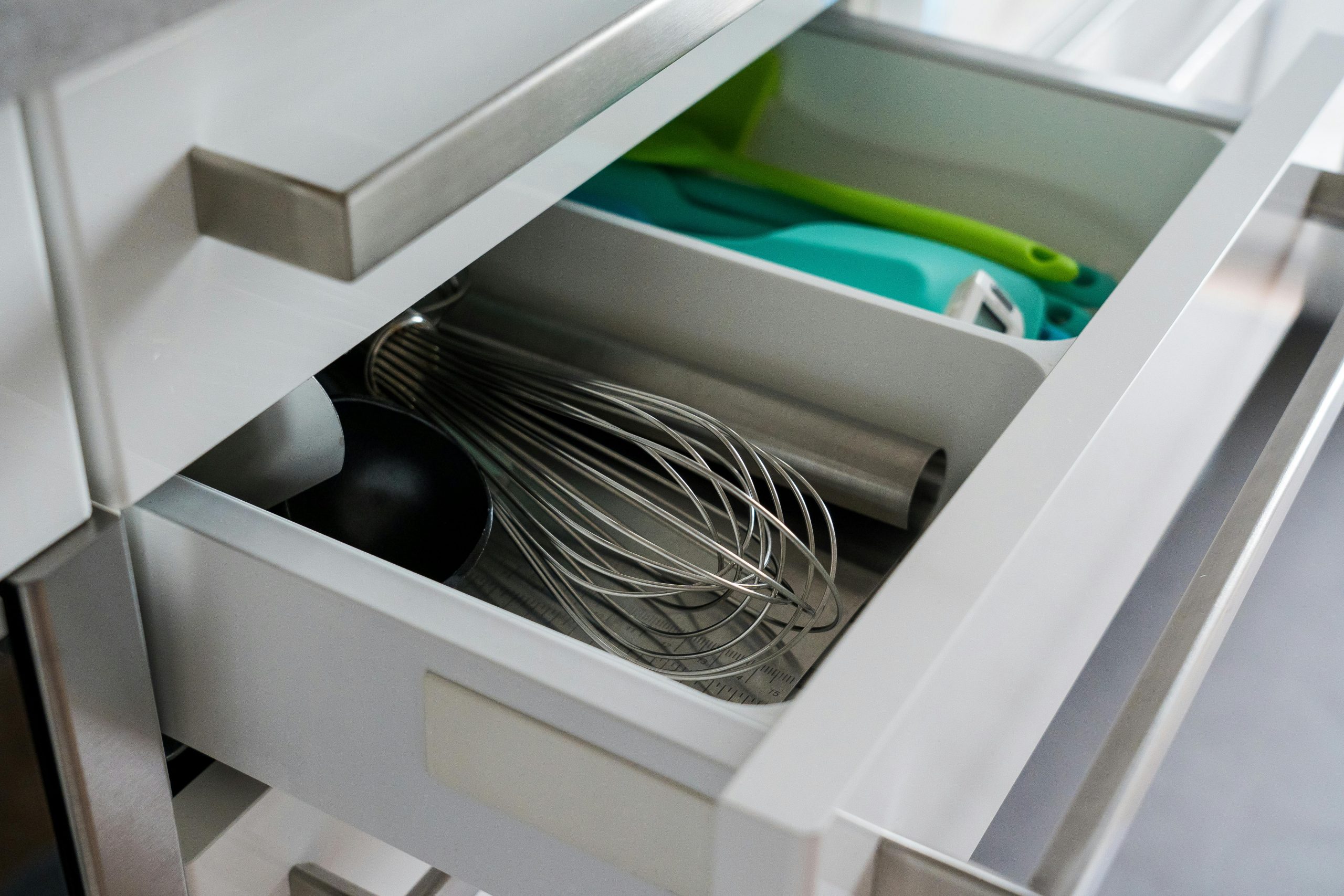
📏 Scale Guide
When organizing a gadget drawer, store items by frequency of use. Your everyday tools—spatula, whisk, can opener—should be in the most accessible front compartments. The less-used items, like a turkey baster or holiday-specific tools, can go in the back or in a separate “deep storage” drawer. Don’t let the corn-on-the-cob holders take up prime real estate if you only use them twice a year.
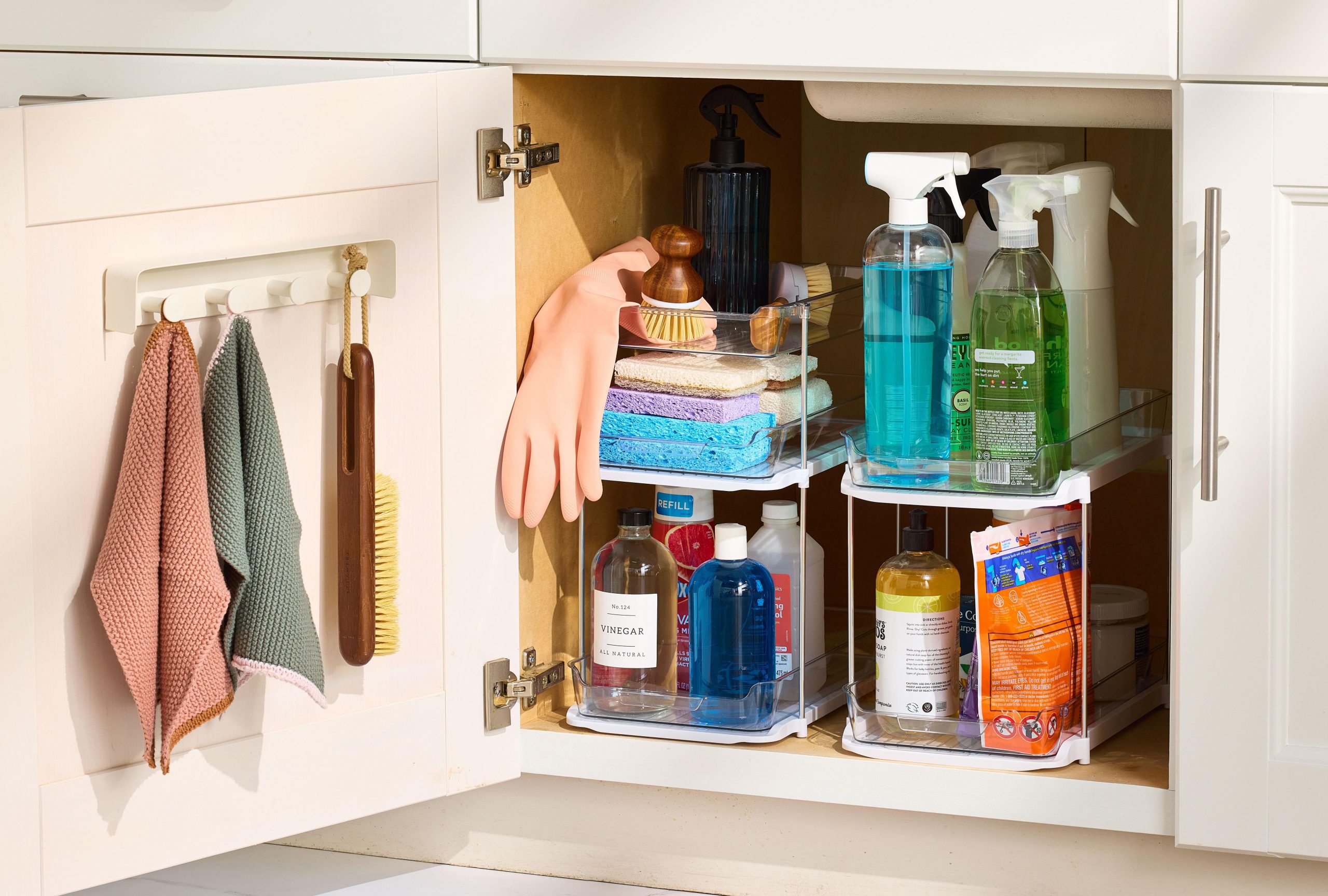
18. The Ultimate Under-Sink Setup with Pull-Out Organizers
Ready to conquer the cabinet under your sink? Time: 30 minutes. Cost: $40-$80.
- Empty everything and give the cabinet a thorough cleaning.
- Measure the interior width, depth, and height, paying close attention to the plumbing pipes.
- Buy a two-tier sliding organizer that will fit in the remaining space. Clear ones are great for visibility.
- Assemble and place the organizer. Put heavier, less-used items on the bottom tier.
- Use the top tier for daily items like sponges and dish soap.
- Add a hanging rack to the door for cloths and brushes.
🎯 What Makes It Work
This system is so effective because it tackles the two biggest challenges of an under-sink cabinet: depth and plumbing. The sliding drawers eliminate the problem of reaching into the dark recesses of the cabinet; everything comes out to you. The two-tier design creates vertical storage around the pipes, using space that would otherwise be wasted. It’s a brilliant spatial solution to a universal problem.
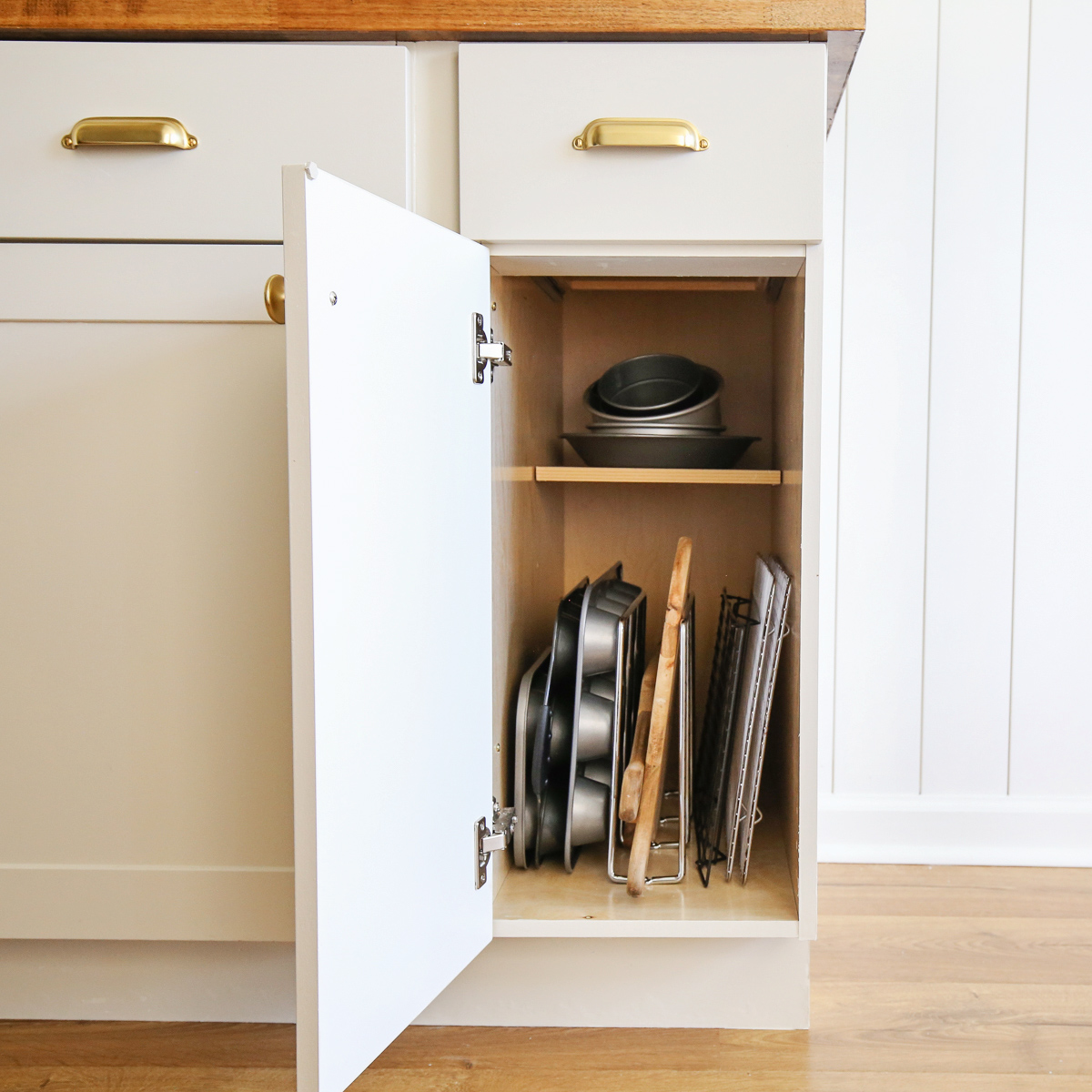
19. The Baker’s Friend: Vertical Storage for Pans and Trays
The crucial element here is the simple metal pan organizer. It’s the hero of the entire cabinet. Stacking baking sheets and pans horizontally creates a noisy, scratchy, and frustrating mess. By turning them vertical, each item becomes individually accessible. You can slide out the one you need without unstacking three others first. This one small, inexpensive tool completely changes the functionality of the cabinet.
📐 Style Math
You don’t need a custom cabinet to make this happen. Any base cabinet will do. The vertical pan organizer itself is an inexpensive item, available for $15-$30 at stores like Target or Amazon. To get the look of those brass cup pulls for less, check out hardware selections at Hobby Lobby or use a bit of Rub ‘n Buff metallic wax finish on your existing pulls for a quick, affordable DIY update.
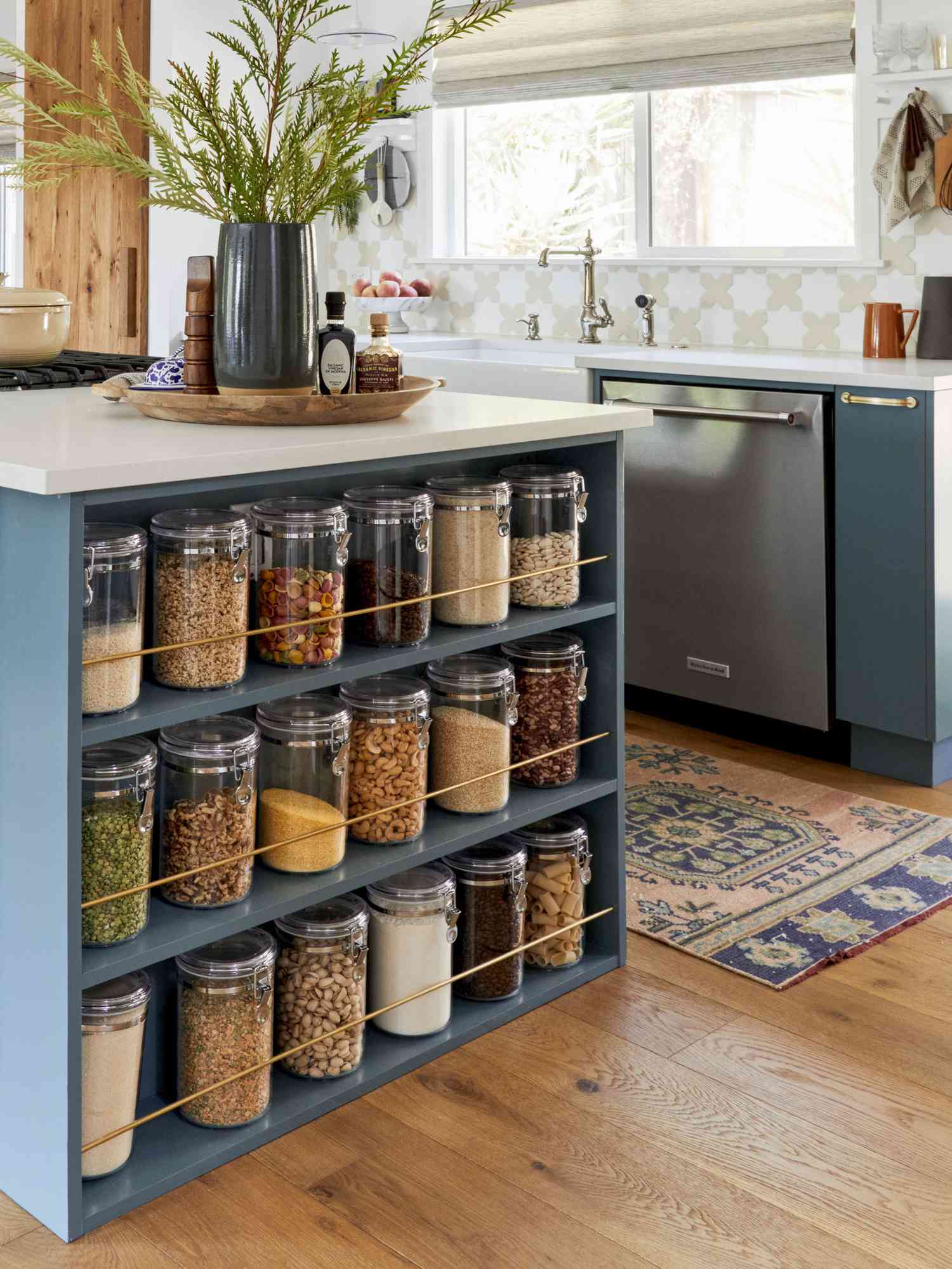
20. Showcase Storage: Glass Jars on an Island End-Cap
If you’re going to use open shelving for food storage, decanting is non-negotiable. Invest in a matching set of clear jars—the clamp-top style shown here is great for an airtight seal. The key is consistency. Using all the same style of jar, like these, turns pantry staples into a beautiful, cohesive display. The gold retaining rods are a chic and practical touch to prevent anything from toppling off.
⭐ The One Thing
This looks fantastic, but it might not be the best solution for a home with small children. The low, open shelves can be a major temptation for little hands. Also, direct sunlight can cause some food items—like spices, flours, and oils—to degrade faster. This setup is best for an island that doesn’t get hit with strong afternoon sun, and in a household where curious toddlers aren’t a concern.
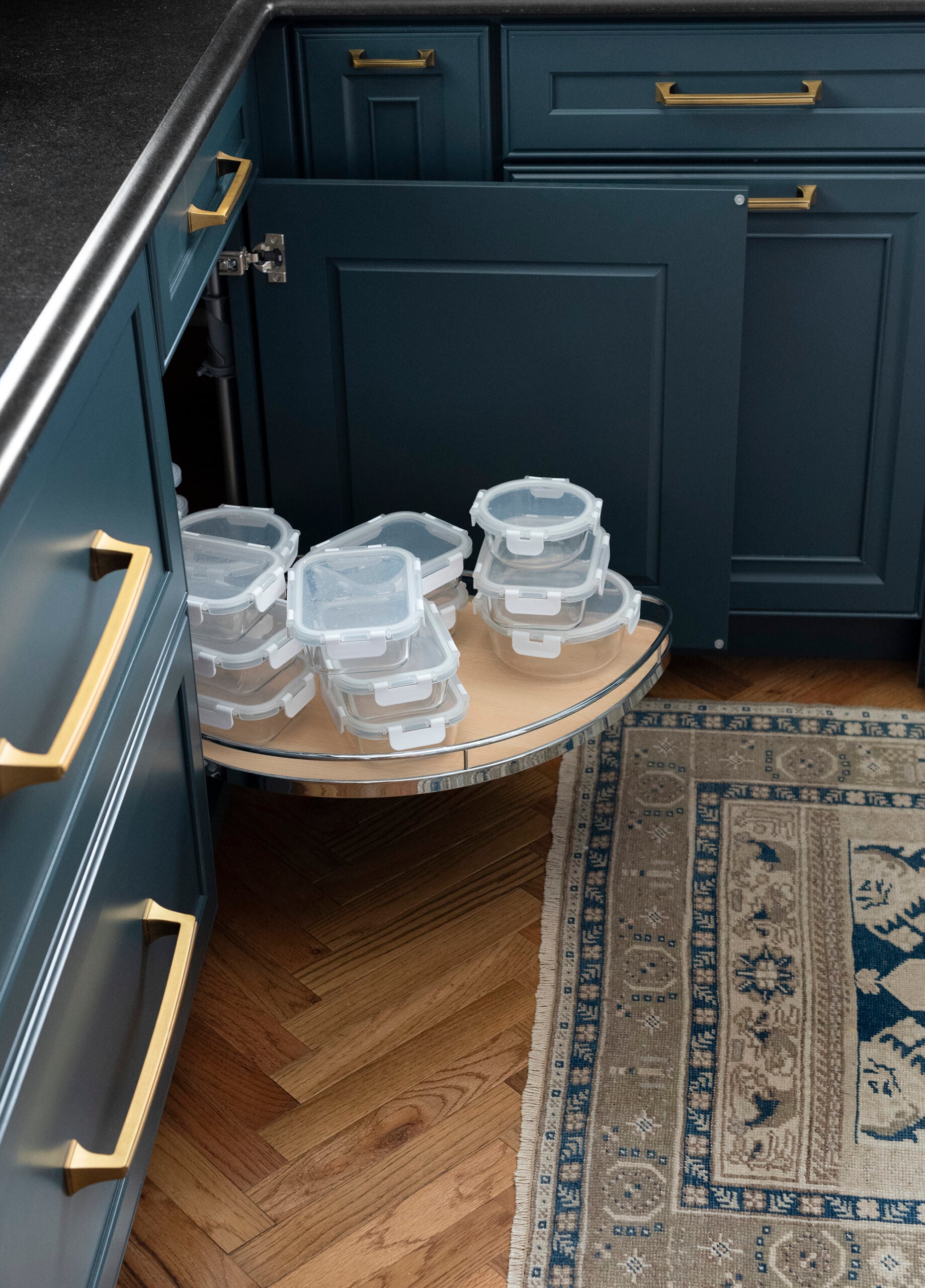
21. Accessing a Corner Cabinet with a Lazy Susan
Let’s break down this stylish combination. The formula is: 60% bold, saturated color (the deep teal cabinets) + 30% warm, traditional elements (the herringbone wood floor and patterned rug) + 10% glamorous accent (the brass hardware). This mix of modern color, classic flooring, and a touch of shine is what gives the kitchen its sophisticated yet inviting character. It feels layered and collected over time.
✅ Before You Start
Corner cabinets are notoriously difficult. The space is deep but the opening is narrow, making half of it a black hole where old appliances disappear forever. A lazy Susan is the classic solution for a reason: it brings the contents of the cabinet to you. By rotating the shelves, you can easily see and reach everything, effectively tripling the usable storage space. It’s a simple mechanical solution to a frustrating architectural problem.
22. An Organized Baking Station with Copper Accents
The single element that warms up this otherwise very cool and neutral space is the copper. The gleaming copper canisters and matching colander catch the light and provide a necessary touch of warmth and color against the white tile, clear glass, and grey labels. Remove the copper, and the space is still organized, but it loses its soul. It’s the perfect example of how one accent material can define a space.
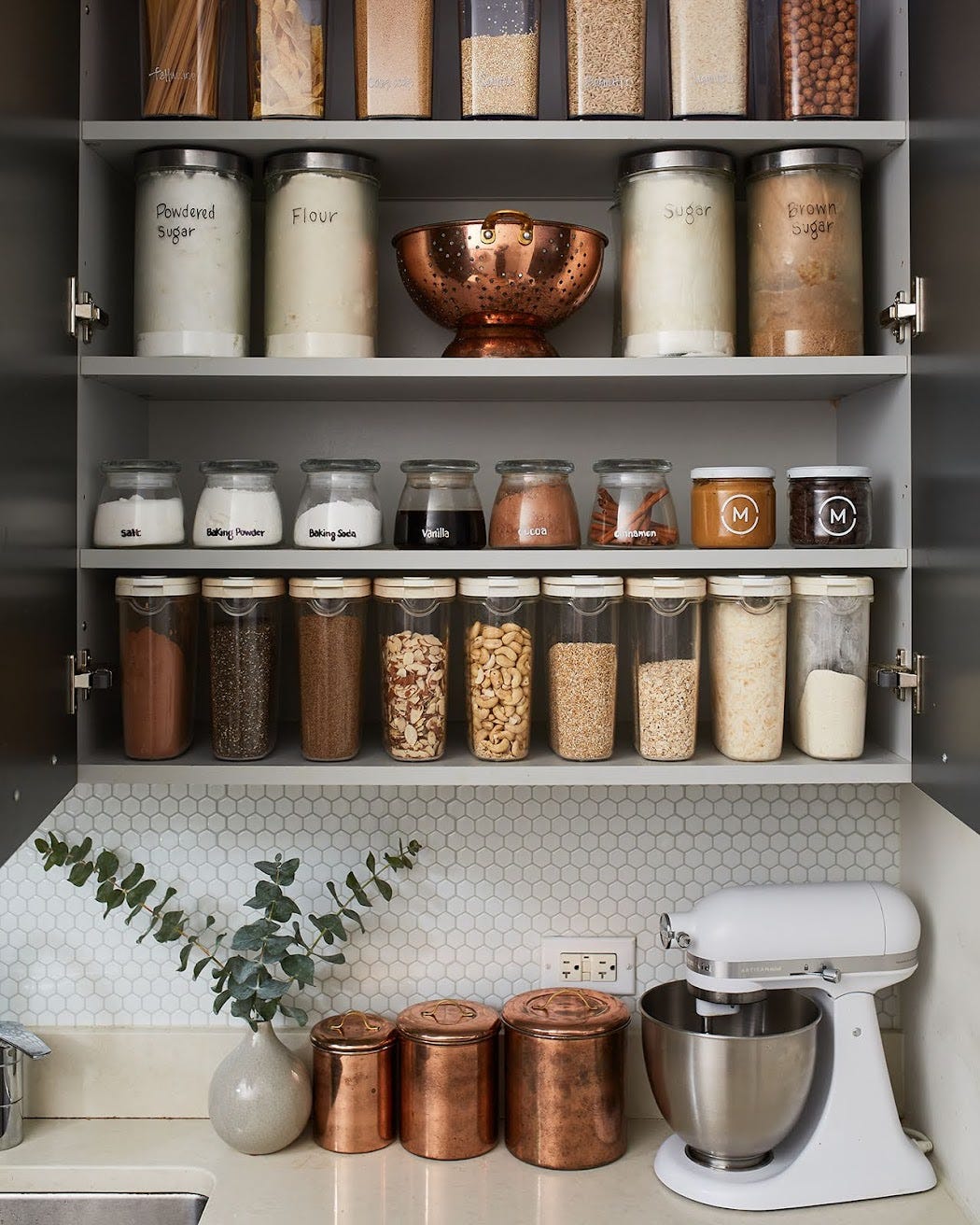
💸 Get This Look For Less
While stainless steel and matte black are still popular, warm metals like copper and brass are having a major resurgence in 2026. After years of cool-toned minimalism, people are craving warmth, personality, and a touch of vintage charm in their kitchens. Copper, in particular, patinas beautifully over time, adding a sense of history and character that feels authentic and lived-in. It feels less like a sterile lab and more like a home.
23. A Drawer-Within-a-Drawer for Knives and Utensils
A custom knife block drawer insert is a game-changer for both safety and knife longevity. Keeping sharp knives loose in a drawer is a recipe for cut fingers and dulled blades. A wooden insert like this holds each knife securely in its own slot. For best results, ensure the insert is made of a soft wood, like pine or maple, which won’t harm the blades, and that there’s enough clearance for the handles.
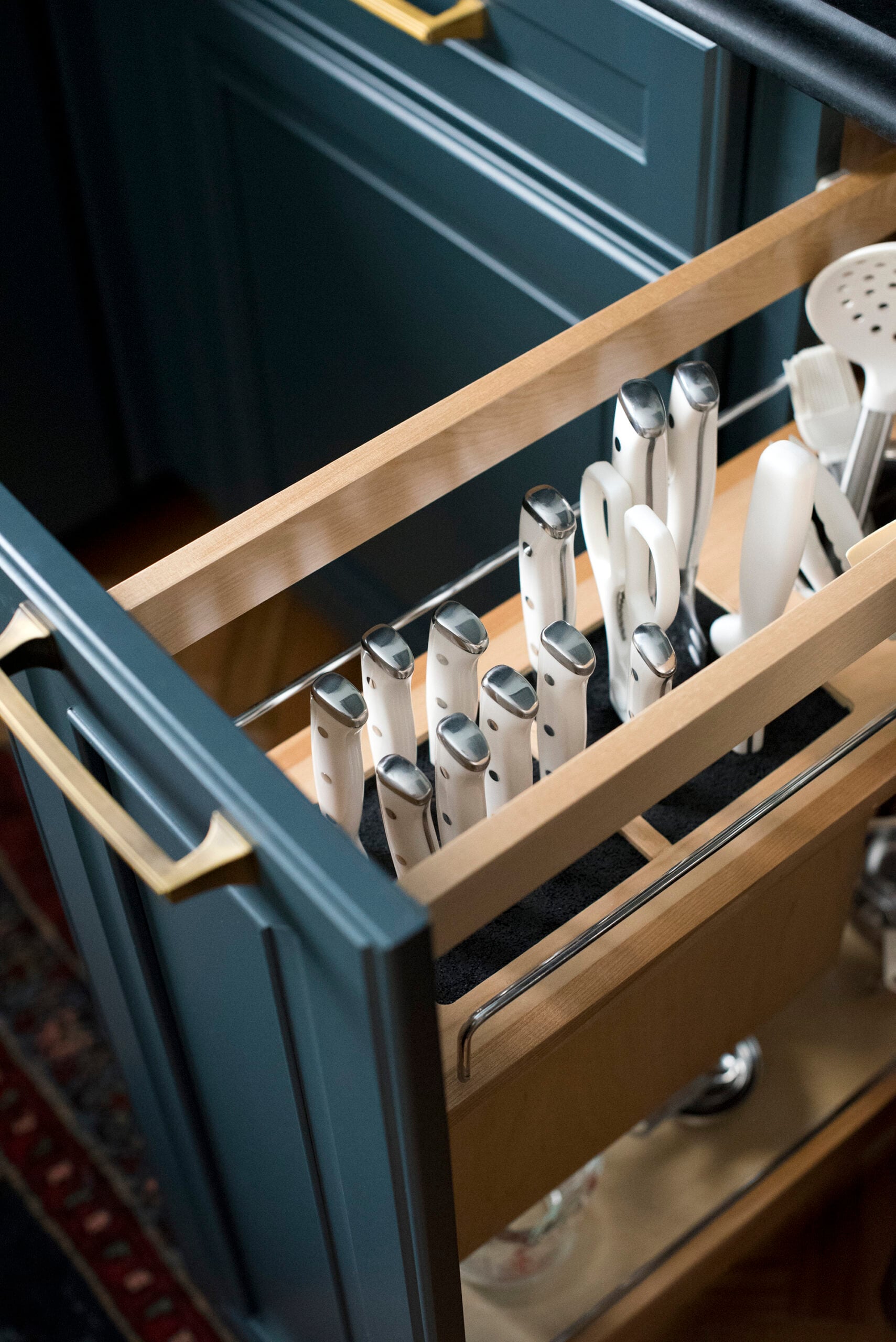
🧹 Maintenance Reality
Look for a knife block insert that is removable. Crumbs and dust will inevitably find their way into the knife slots. Being able to easily lift the entire block out of the drawer for a quick shake or wipe-down is essential for proper hygiene. An insert that is permanently glued into the drawer will be nearly impossible to clean thoroughly, which isn’t ideal for tools that handle your food.
24. Deep Pantry Drawers with Spice and Can Dividers
Before you commit to a drawer system for your pantry, do a quick inventory.
- First, take stock of what you buy most often. Are you a big can user? Do you have dozens of spices? This will determine the type of dividers you need.
- Next, measure the height of your tallest common item (like a box of cereal or a bottle of olive oil) to ensure your drawers are deep enough.
- Finally, consider ergonomics. Drawers are great for heavy items, but shelves might be better for light, grab-and-go snacks.
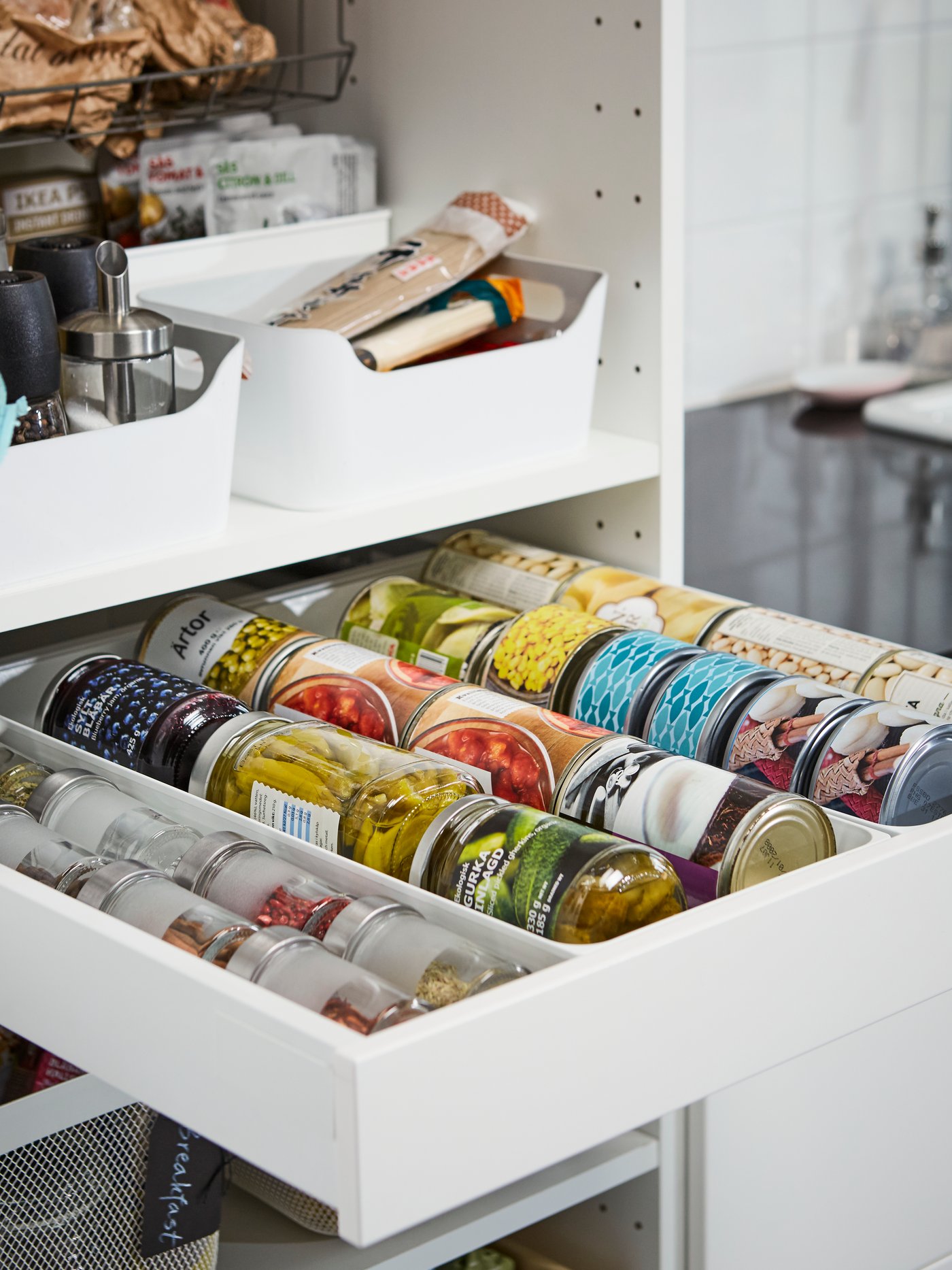
💡 Designer Tip
This system works perfectly because it combines two types of vision. The spice jars are stored flat, with labels facing up, so you can scan them like a file system. The canned goods are stored upright, with their tops visible. This “top-down” view is incredibly efficient. You can instantly see what you have without having to dig through layers of items, which is the problem with deep shelves. Drawers turn horizontal space into vertical visibility.
25. A Cozy Corner Pantry with Turquoise Window Trim
Undoubtedly, the turquoise window trim is the star of this kitchen. In a space dominated by the warm, natural tones of the wood and the creamy white walls, this jolt of vibrant color is completely unexpected and delightful. It frames the view outside and turns a simple window into a piece of art. It’s a brave and brilliant choice that gives the entire room its unique, homey personality. It feels personal and joyful.
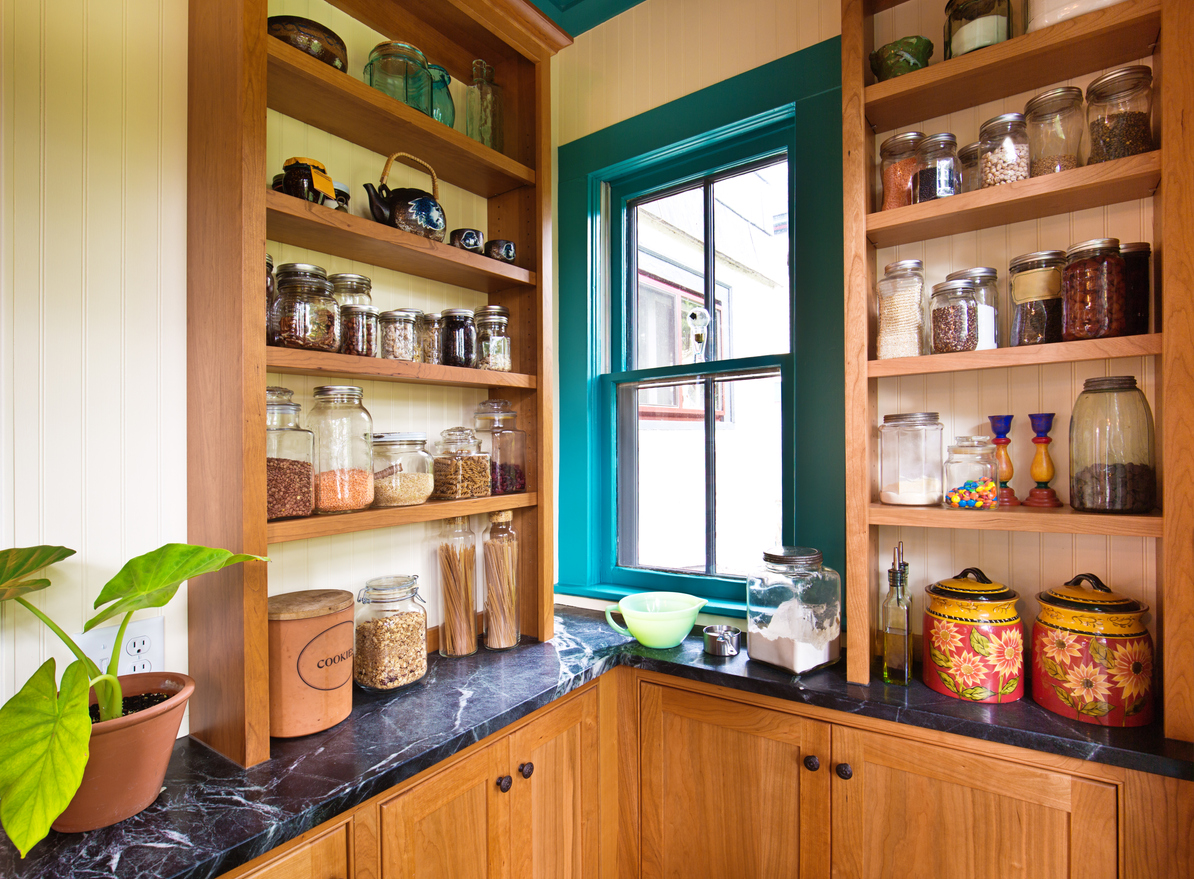
💰 Budget Breakdown
Shelves this full and open are beautiful, but they present a challenge: dust and grease. Everything is exposed. This look is best suited for a cook who uses these ingredients regularly, ensuring they are rotated and the jars are wiped down often. If you’re more of an occasional cook, your decanted items could sit for a long time, and the open shelves will require constant dusting to look their best. Compare with the closed storage of Idea #1 for a lower-maintenance approach.
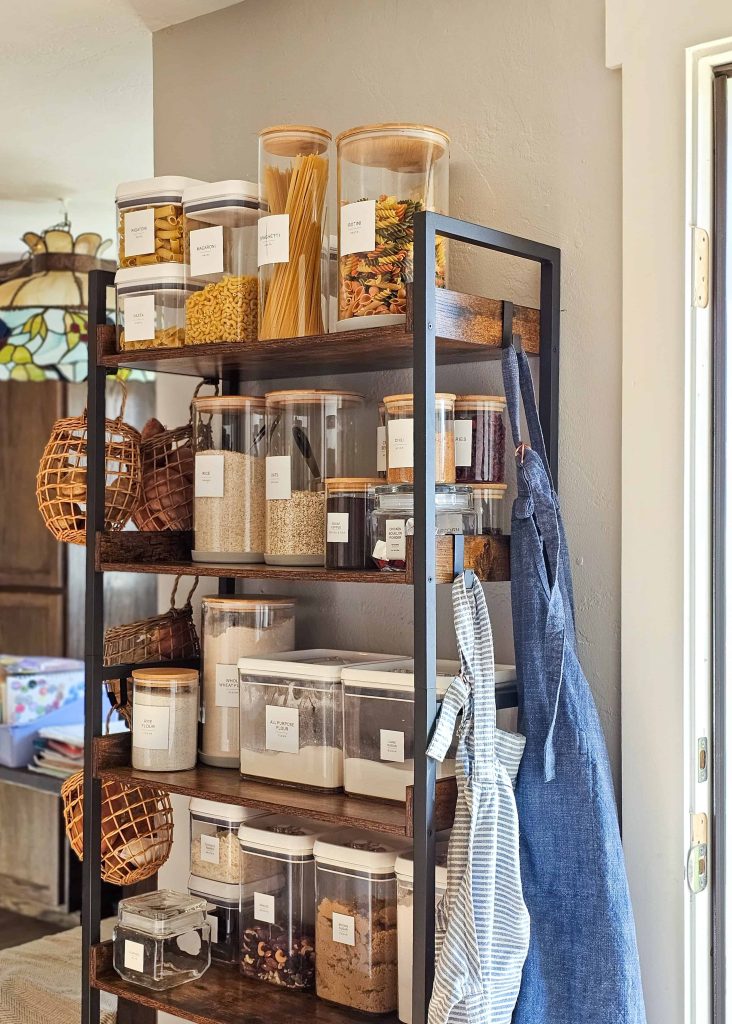
26. Minimalist Labels on Rustic Industrial Shelves
This look is a beautiful blend of two popular styles. Let’s call it: 50% rustic warmth (the wood-look shelves) + 30% industrial edge (the dark metal frame) + 20% minimalist calm (the clean, uniform labels and containers). The combination works because the minimalism of the containers acts as a clean counterpoint to the more rugged texture of the shelving. It feels both functional and thoughtfully designed.
⚠️ Real Talk
When creating labels for your pantry, less is more. Choose a simple, clean, and highly readable font. The goal is to identify contents at a glance, not to be decorative. A uniform style, like the simple white rectangles shown here, creates a sense of order. Avoid overly scripty or complicated fonts, which can be hard to read and make the space feel cluttered, defeating the purpose of being organized.
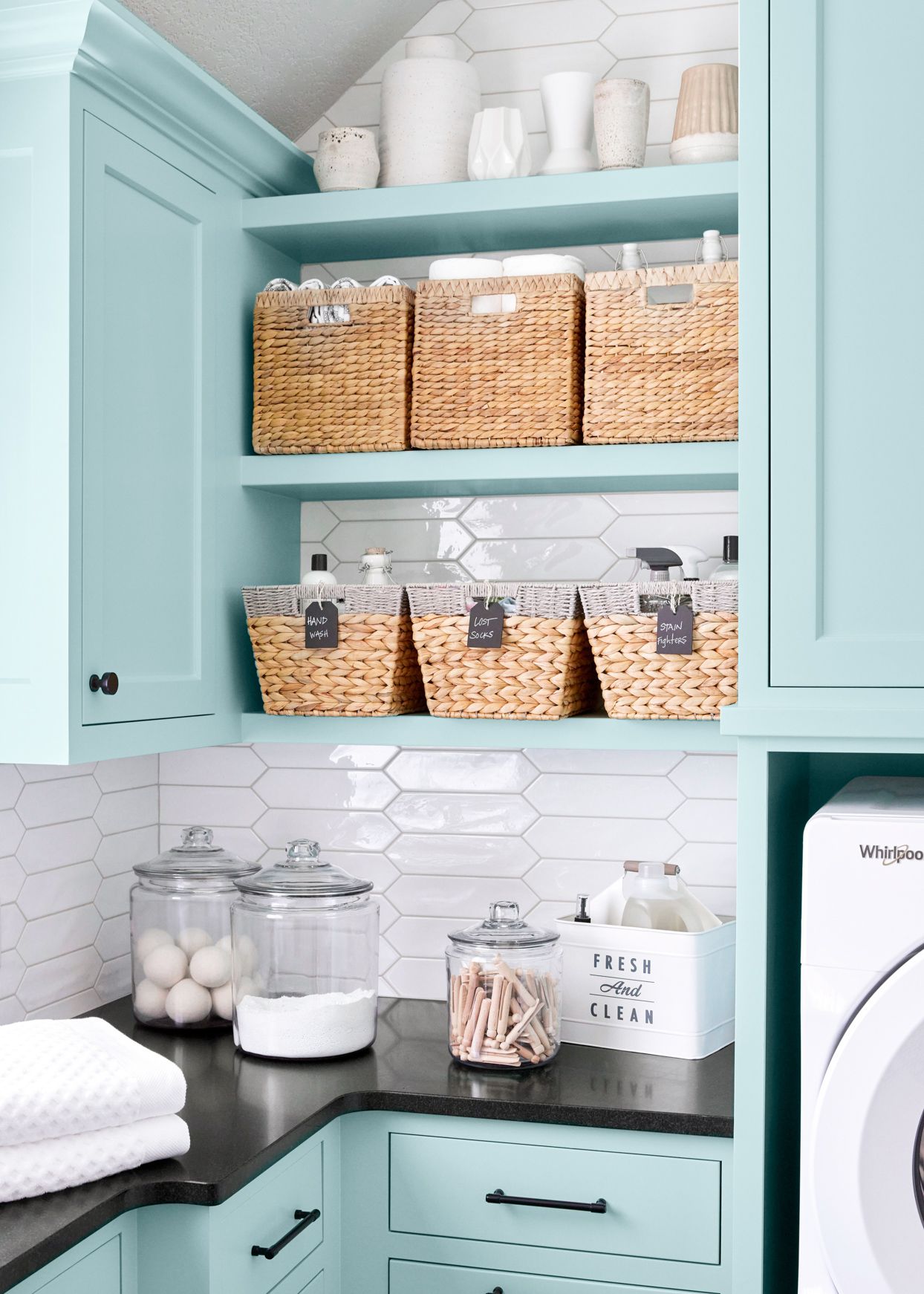
27. A Fresh Laundry Nook with Aqua Cabinets and Woven Baskets
The success of this design lies in its smart use of texture and color to elevate a functional space. The smooth, cool aqua of the cabinets provides a cheerful base, while the natural texture of the woven baskets adds warmth and prevents the room from feeling too clinical. The sharp geometric lines of the hexagonal tile backsplash add a modern touch that keeps the look fresh and current. It’s a perfect balance of playful, natural, and modern elements.
🔧 How-To Brief
Love this look but don’t have the budget for new cabinets? You can get a very similar feel by simply painting your existing cabinets with a high-quality semi-gloss paint in a similar aqua shade. Woven baskets are readily available and affordable at stores like IKEA, Target, or HomeGoods. The key is the color and texture combination, which you can achieve at a fraction of the cost of a full renovation.
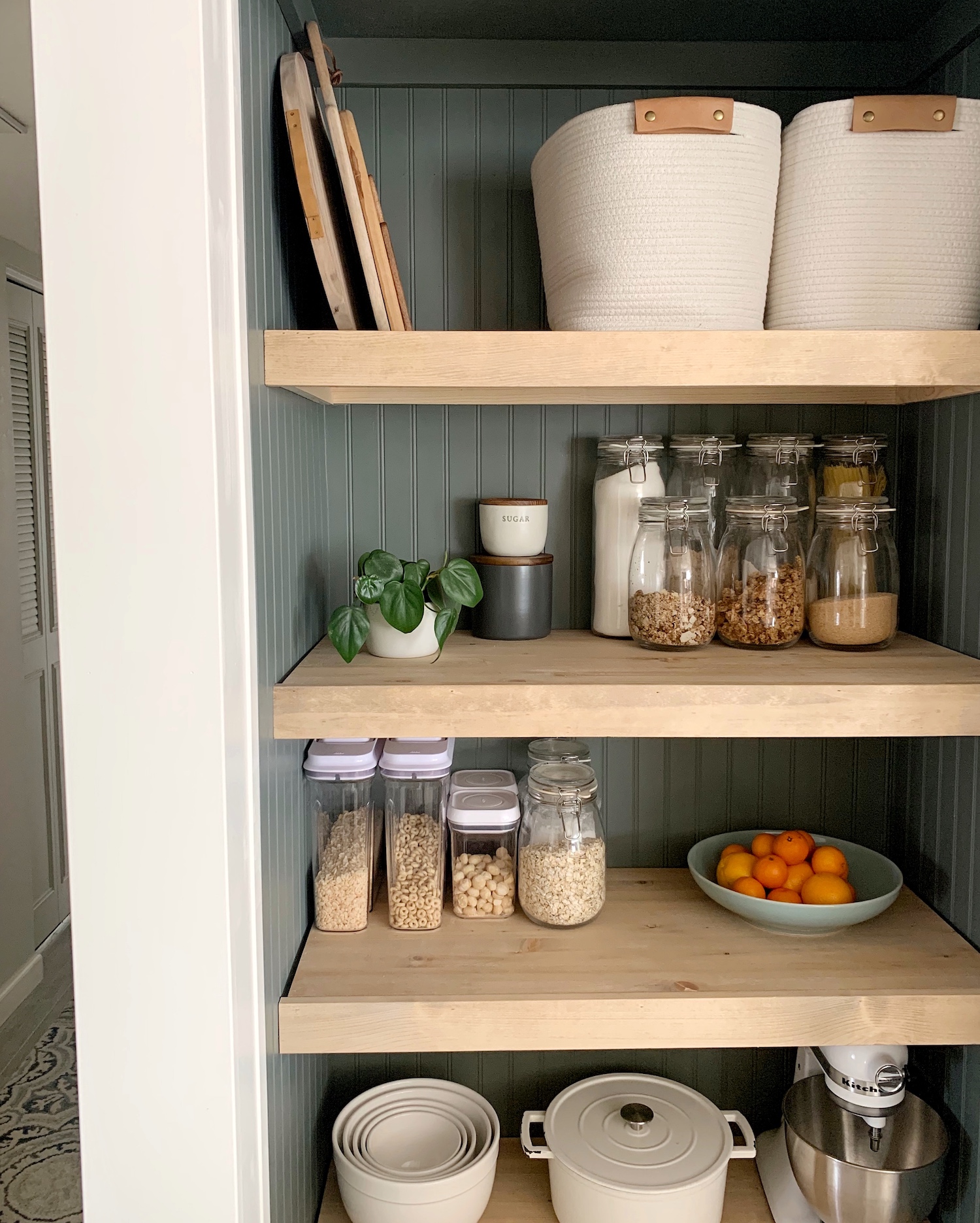
28. Modern Farmhouse Pantry with Teal Beadboard and Wood Shelves
Here’s the recipe for this fresh pantry look: 50% natural texture (the light wood shelves and tan handles on the baskets) + 40% deep, saturated color (the dark teal beadboard back panel) + 10% crisp white accents (the rope baskets and bowls). The dark background makes the wood shelves and the items on them pop, creating a look that’s both moody and incredibly organized. It’s a modern take on classic farmhouse elements.
🔥 Trending Context
The single element holding this all together is the dark teal beadboard background. Without it, this would just be simple wooden shelves against a plain wall. The color adds depth, drama, and a custom-designed feel. It’s what makes the light wood and white accessories stand out and feel intentionally styled, rather than just stored. It proves that what’s *behind* your shelves is just as important as what’s on them.
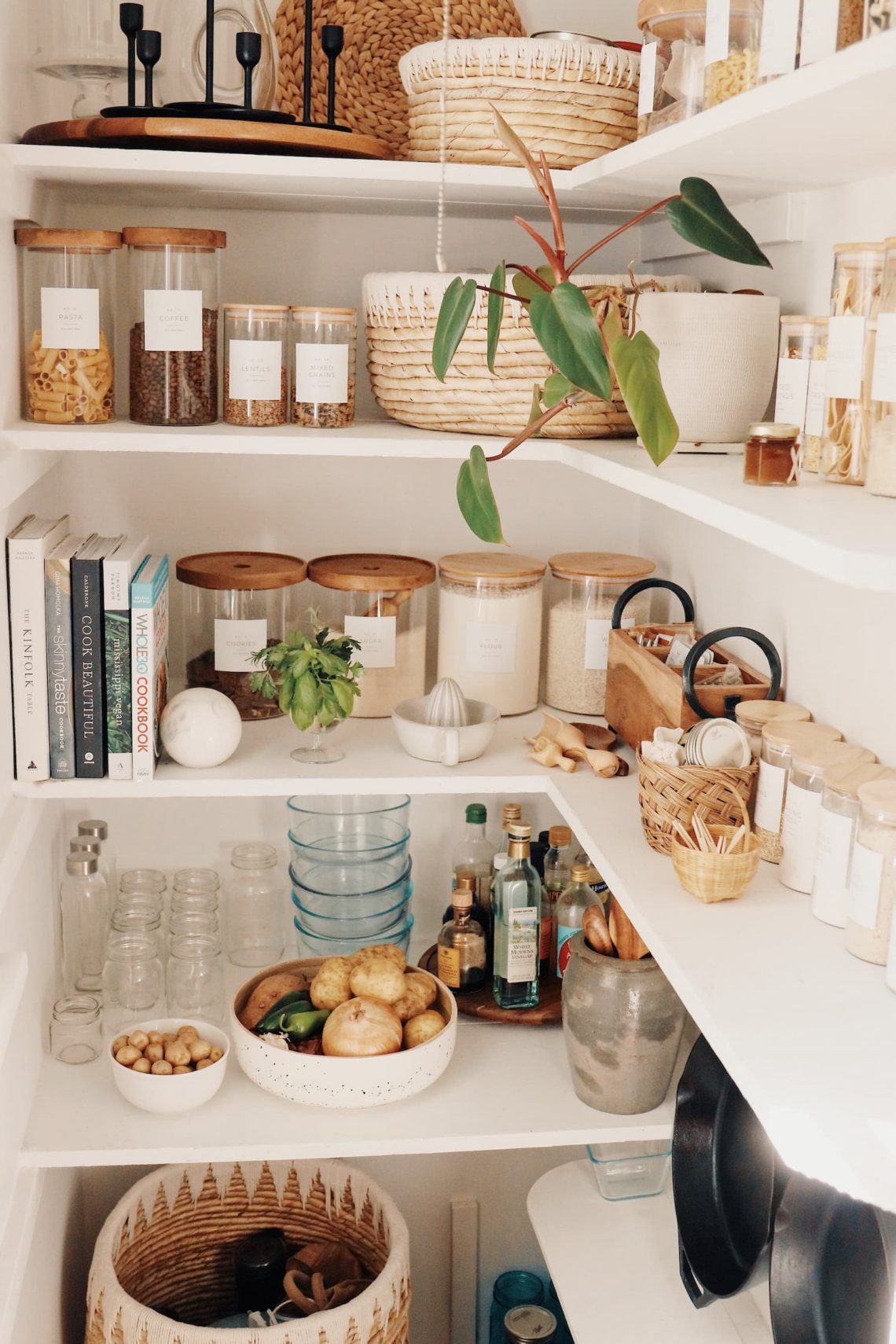
29. A Bright, Textural Pantry with Coordinated Jars and Baskets
This pantry is so pleasing to the eye because of its masterful mix of textures within a very tight color palette. You have smooth glass, warm wood, and multiple styles of woven baskets. By keeping the colors restrained to white, cream, and beige, the different textures can stand out without competing. The small green plant is the perfect final touch, adding a single drop of color and life to the neutral scene. It feels calm and layered.
📏 Scale Guide
While beautiful, woven baskets can be trickier to clean than solid plastic or metal bins. They tend to collect dust in their crevices and can be difficult to wipe down. A vacuum with a brush attachment is your best bet for regular cleaning. Be mindful of storing anything that could leak or spill in them; an oil stain on a woven basket is often permanent. For messier items, stick to the non-porous glass jars.
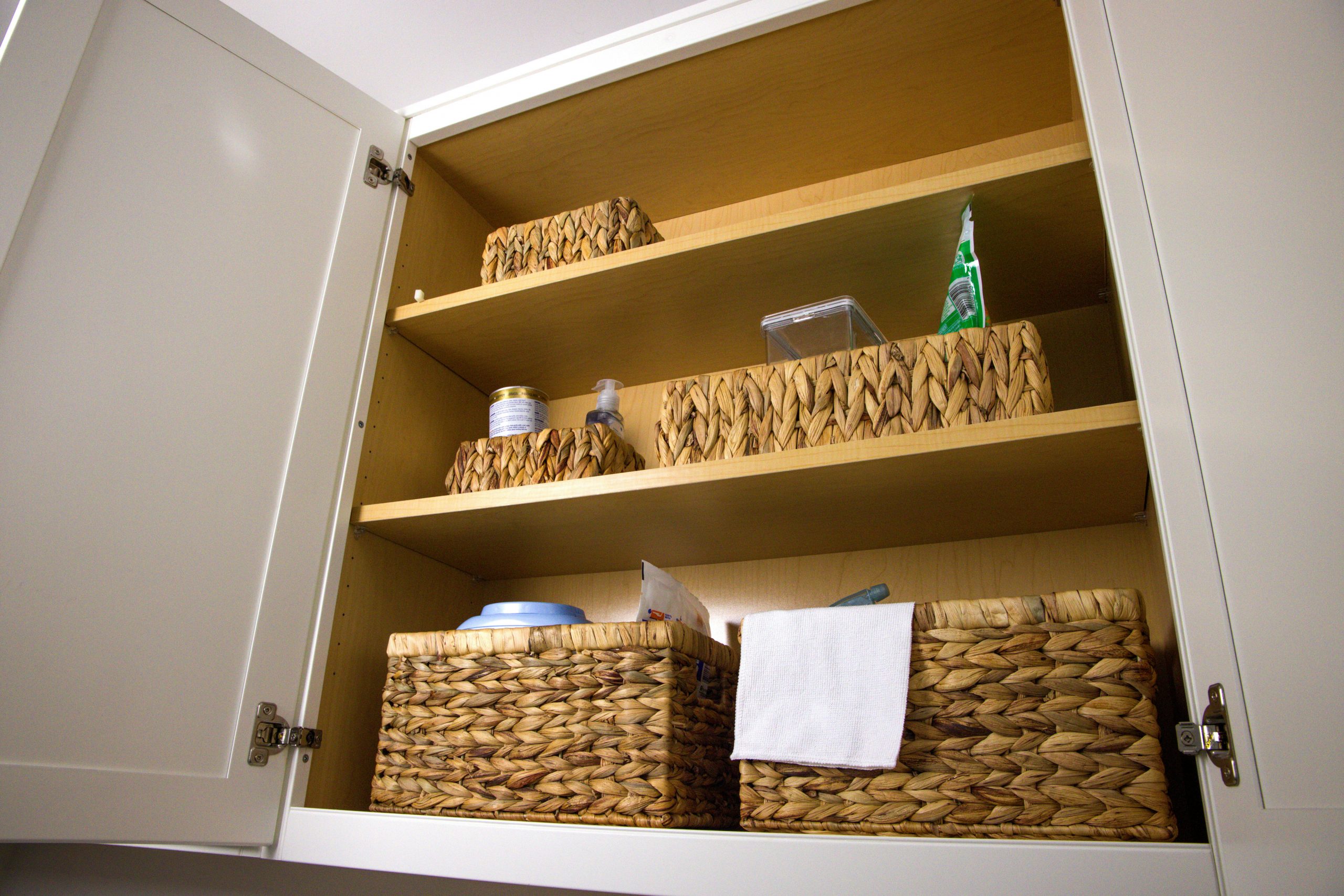
30. Hidden Order: Woven Hyacinth Baskets in a Shaker Cabinet
The best way to use baskets for cabinet organization is to assign each one a specific category: “baking supplies,” “snack bars,” “linens,” “extra spices.” This turns a deep, potentially messy cabinet into a set of removable “drawers.” When you need something, you just pull out the relevant basket instead of digging blindly in the back. It’s a simple system that makes it easy to find things and even easier to put them away.
🎯 What Makes It Work
This is a wonderfully affordable and flexible organization system. You can find woven water hyacinth or seagrass baskets at almost any home goods store, like IKEA, Target, or Walmart, often for $10-$20 each. Since they are hidden inside the cabinet, they don’t even need to match perfectly. This creates an incredibly tidy and functional system behind closed doors, proving that you don’t need a massive budget to have a perfectly organized kitchen.
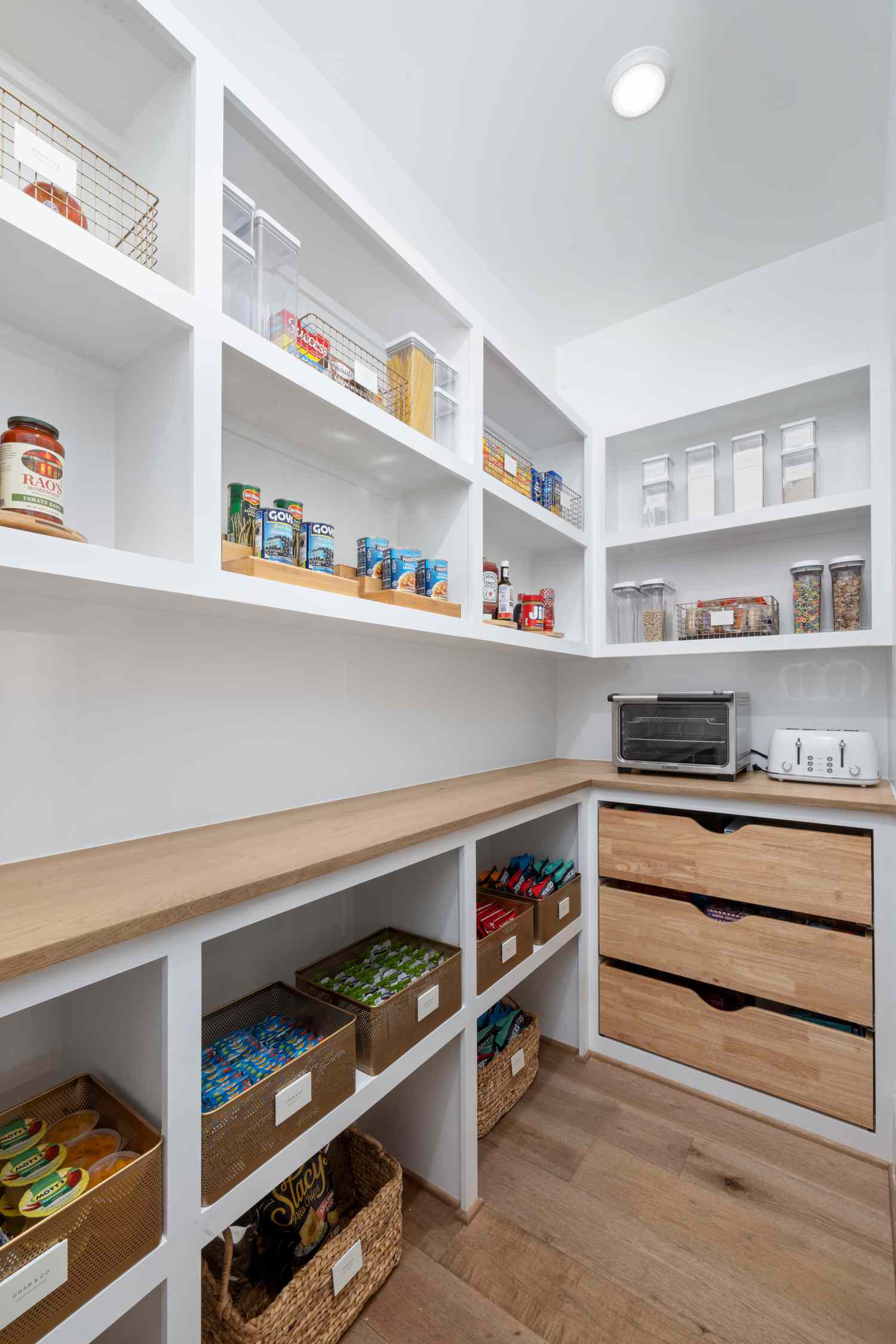
31. A Functional Pantry Nook with a Wood Countertop
This design brilliantly combines three types of storage to create a hyper-functional space. Open shelving up top is for frequently used, lightweight items. The valuable countertop space is reserved for small appliances. Down below, the pull-out drawers and wire baskets are perfect for heavier items like potatoes or bulk bags. This zoned approach—open, counter, and deep storage—ensures that every item has a logical and ergonomically-sound home.
📐 Style Math
A pantry nook like this is an incredibly efficient use of space. This setup can work in a space as narrow as 4-5 feet wide. The key is the countertop depth; a 15-18 inch deep counter is sufficient for a toaster and other small appliances, leaving you with shallower 12-inch shelves above. This is less deep than a standard kitchen counter, preventing the pantry from feeling too bulky or encroaching on floor space. A great alternative to the larger walk-in pantry seen in Idea #5.
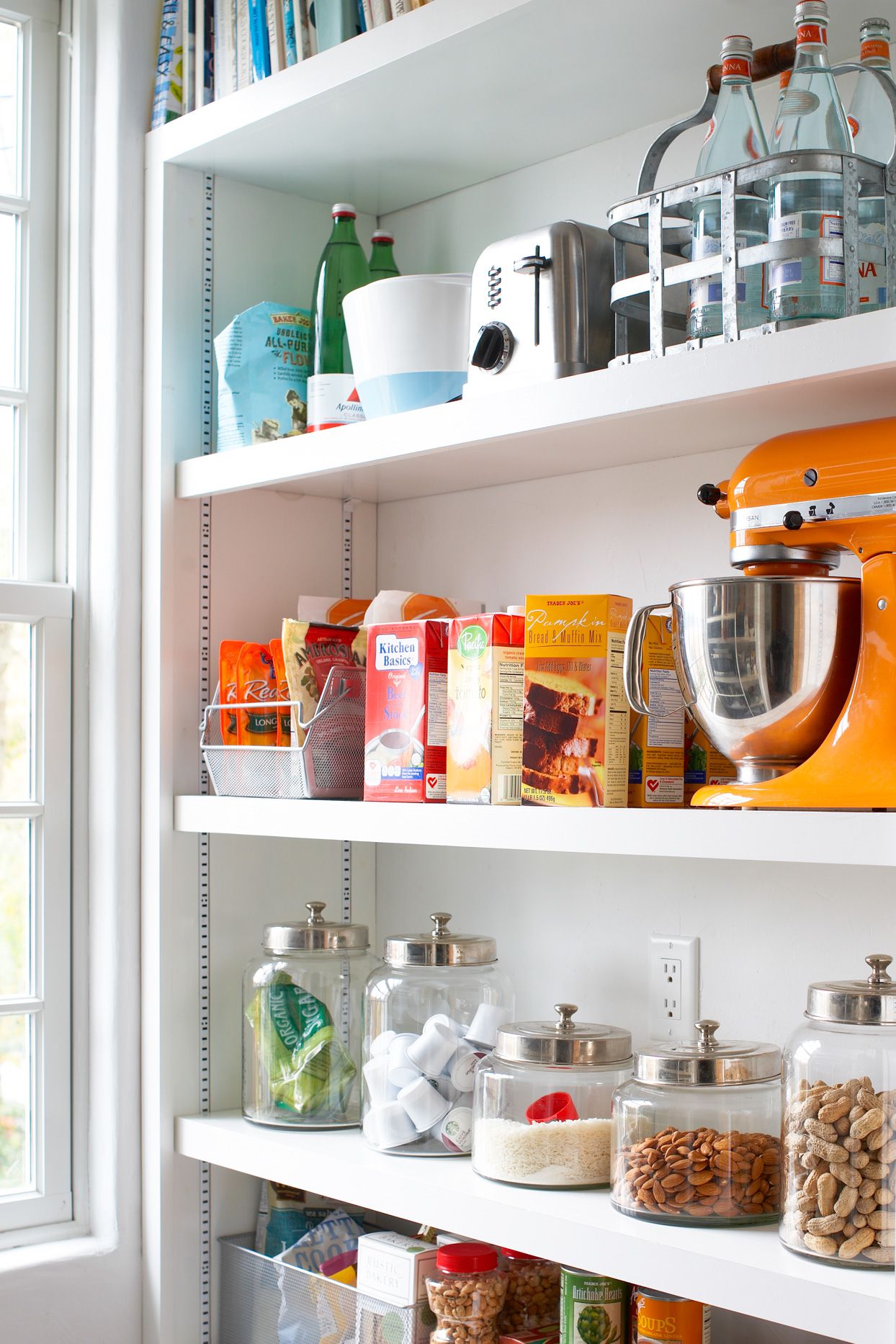
32. An Appliance Garage with Adjustable White Shelving
The real hero of this setup is the adjustability of the shelving system. The simple metal tracks and brackets allow the shelf heights to be changed in minutes without any tools. This is crucial in a pantry, where your storage needs can change overnight (hello, giant bag of chips from Costco). An adjustable system, rather than fixed shelves, guarantees that your pantry will be able to adapt with you for years to come. It’s the ultimate in practical, future-proof design.
⭐ The One Thing
The “appliance garage” concept continues to be a major trend for 2026 as we seek to declutter our kitchen countertops. With more of us working from home, our counters have become prime real estate for laptops and paperwork. Moving the toaster, stand mixer, and other bulky appliances onto a dedicated pantry shelf—especially one that’s at a convenient height—keeps the main kitchen zone clear and ready for anything. It’s about creating a calmer, multi-functional home.
Ready to Open Your Cabinets with Joy?
Organizing your kitchen cabinets isn’t just about finding a spot for the paprika; it’s about making your daily routine smoother and more enjoyable. These ideas are a starting point—find the one that speaks to you and make it your own. It’s about creating a system that works for *your* life. The best organized kitchen is one that feels easy to use every single day.
Don’t forget to pin your favorites to your “dream kitchen” board on Pinterest for when inspiration strikes!
Photo credits: Nelson Cabinetry, Crate & Barrel, Better Homes & Gardens, Martha Stewart, Angela Marie Made, Feed Me Phoebe, My Turn for Us, Southern Living, Space Camp Organizing, NEAT Method, BK Ciandre, Nesting With Grace, www.domino.com, Room For Tuesday, The Spruce, ELLE Decor, IKEA, Bob Vila, Lemon and Bloom, Making Manzanita, Organized Inspiration / Web, Orgalux / Unsplash, American Cleaning Institute, Castorly Stock / Pexels