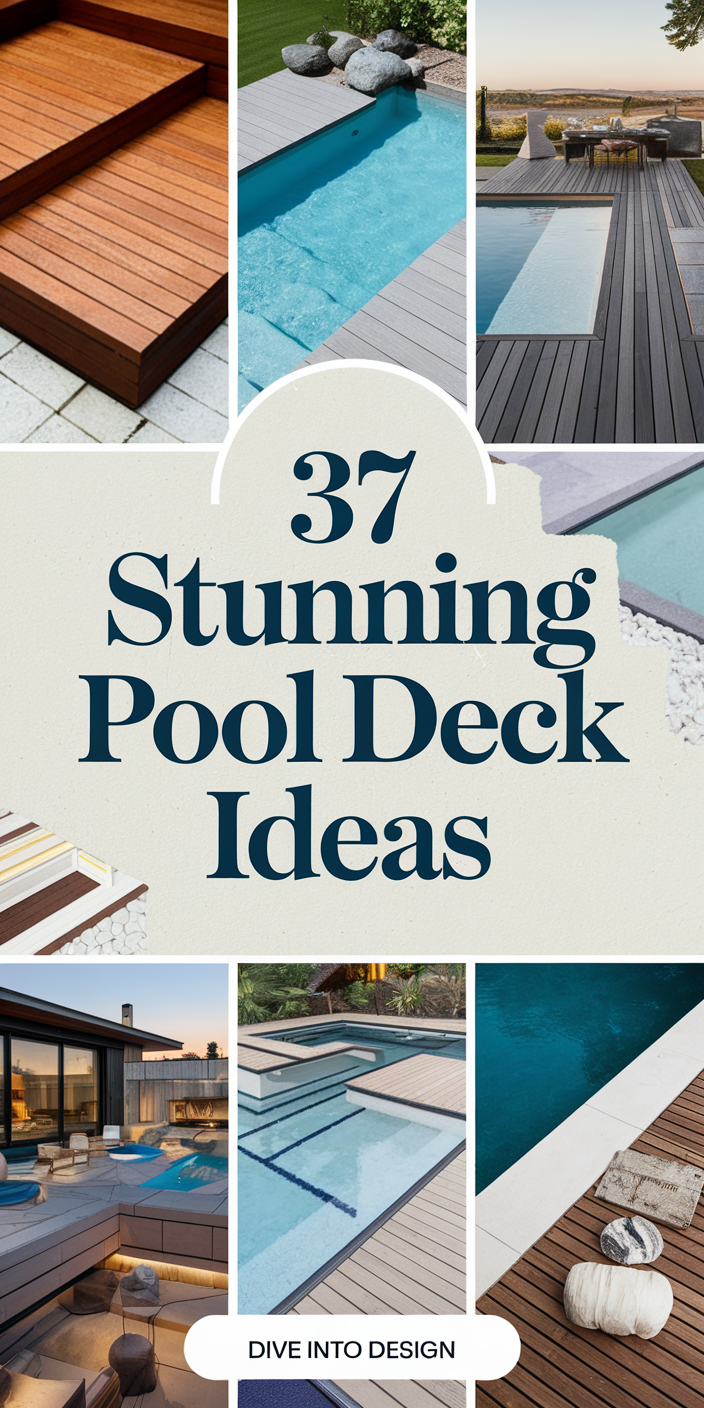
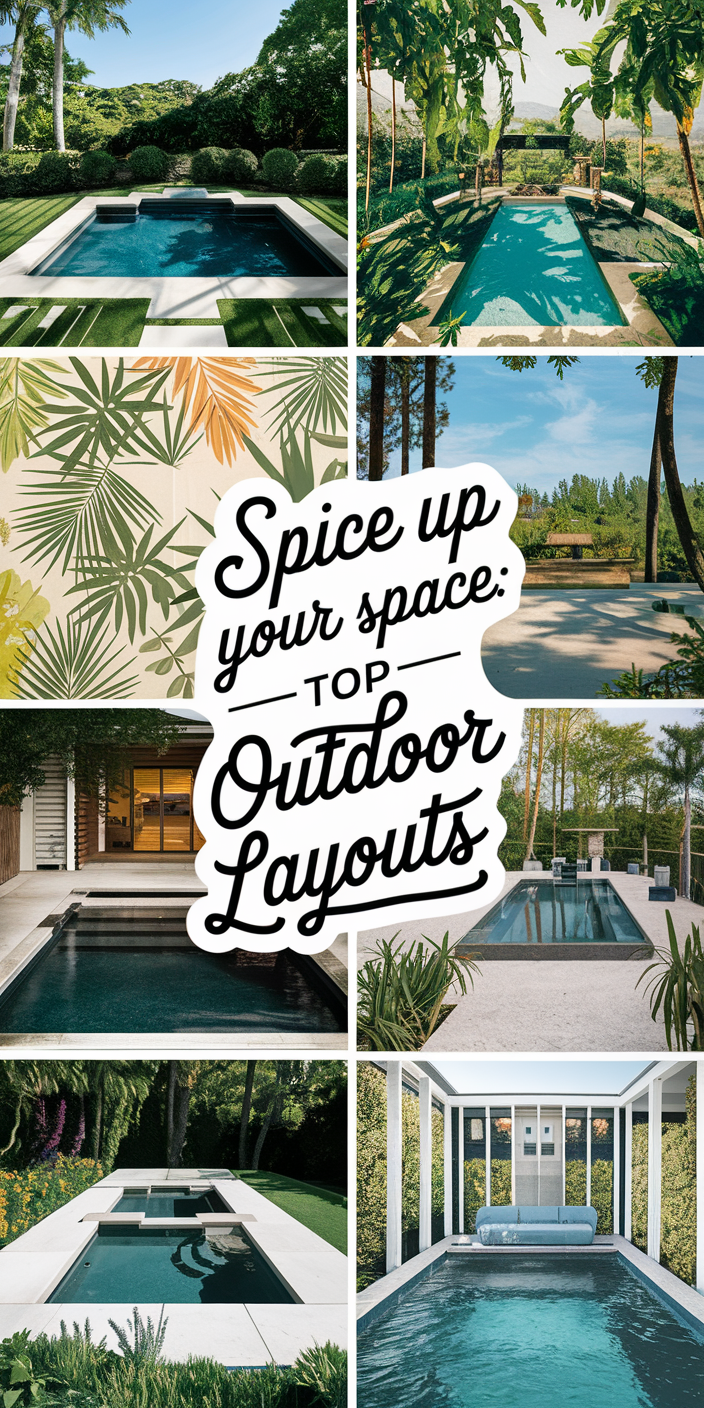
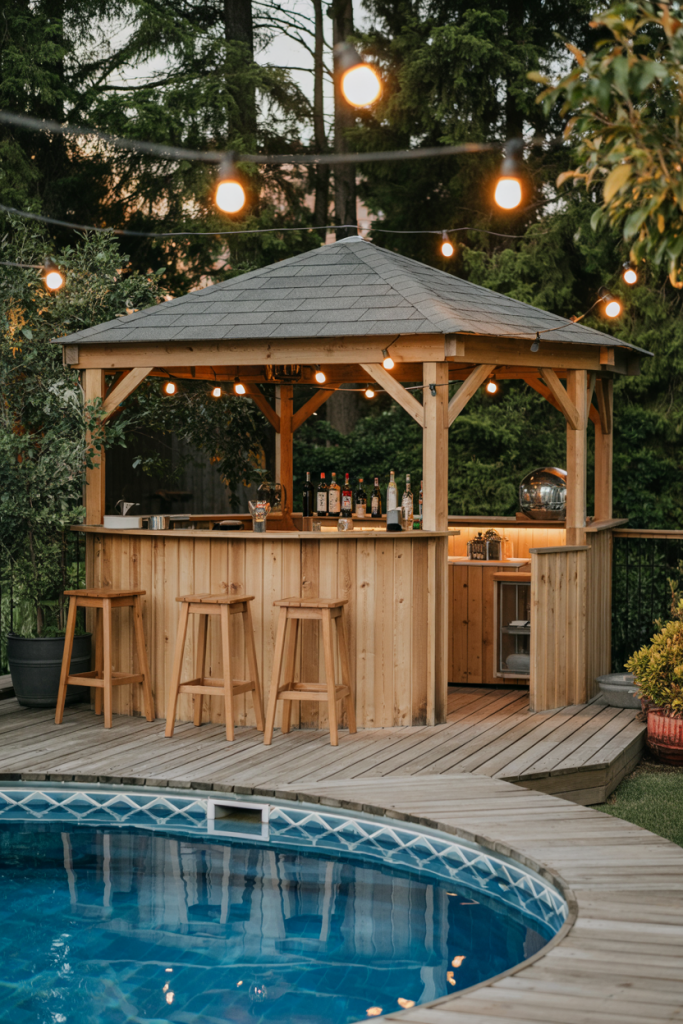
You know that feeling when you finally find the pool fence idea that looks *exactly* right for your space? That perfect blend of safety, style, and “wow” that makes your backyard feel complete. After filtering through hundreds of options, we narrowed it down to 30 ideas that actually deliver. In this guide, you’ll find curated inspiration for every aesthetic, from sleek glass and modern slatted wood to timeless metal designs. We’re seeing a huge shift in 2026 toward fences that blur the line between the pool and garden, making unobstructed views the ultimate luxury. And stay until the end — we break down the most common mistakes that can ruin these looks. 📌 Save this to Pinterest for later — you’ll want to revisit these ideas.
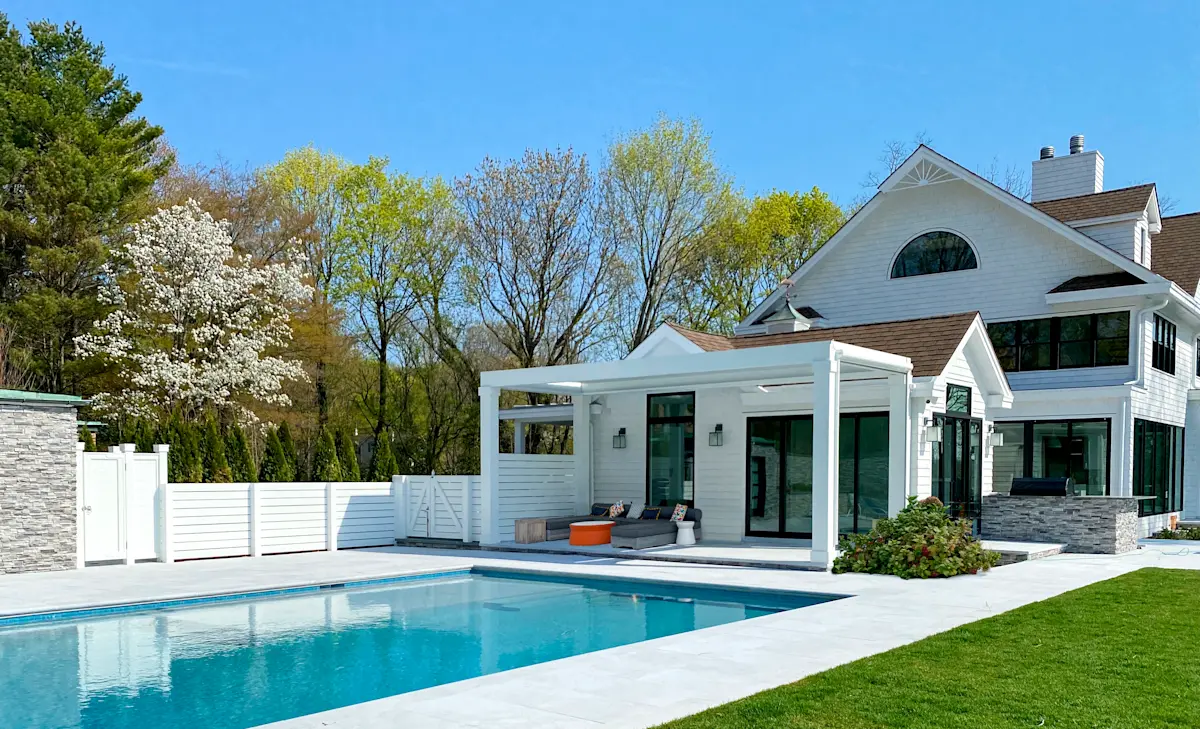
1. White Horizontal Slats with Integrated Greenery
This design feels so clean and serene because it masters the principle of repetition. The strong horizontal lines of the white fence are echoed in the crisp edges of the light gray pool deck and the manicured shape of the green shrubs. This creates a sense of order and calm. The vertical contrast from the square posts and tall trees behind prevents the look from feeling flat. It’s a smart composition that uses simple geometry to create a peaceful, private retreat that feels both modern and welcoming.
✅ Before You Start
This style is ideal for medium to large rectangular pools where you can create long, uninterrupted fence lines. You need at least 15-20 feet of straight run for the horizontal slat pattern to really make an impact. The solid nature of the fence makes it great for privacy on lots that are 1/4 acre or larger, but it could feel a bit imposing in a very small yard. For smaller spaces, consider the more open feel of the glass fence in Idea #2, which achieves a similar modern vibe without visually shrinking the area.
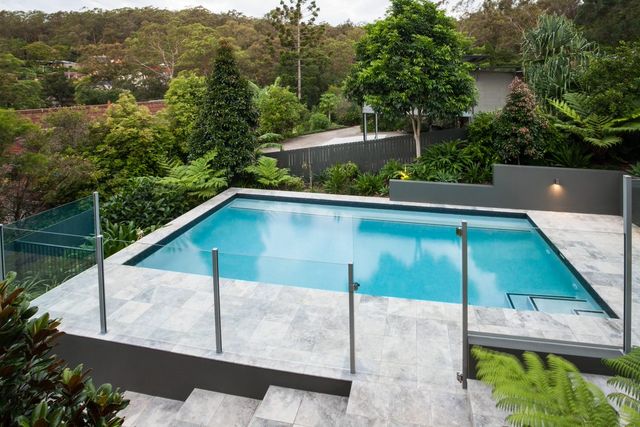
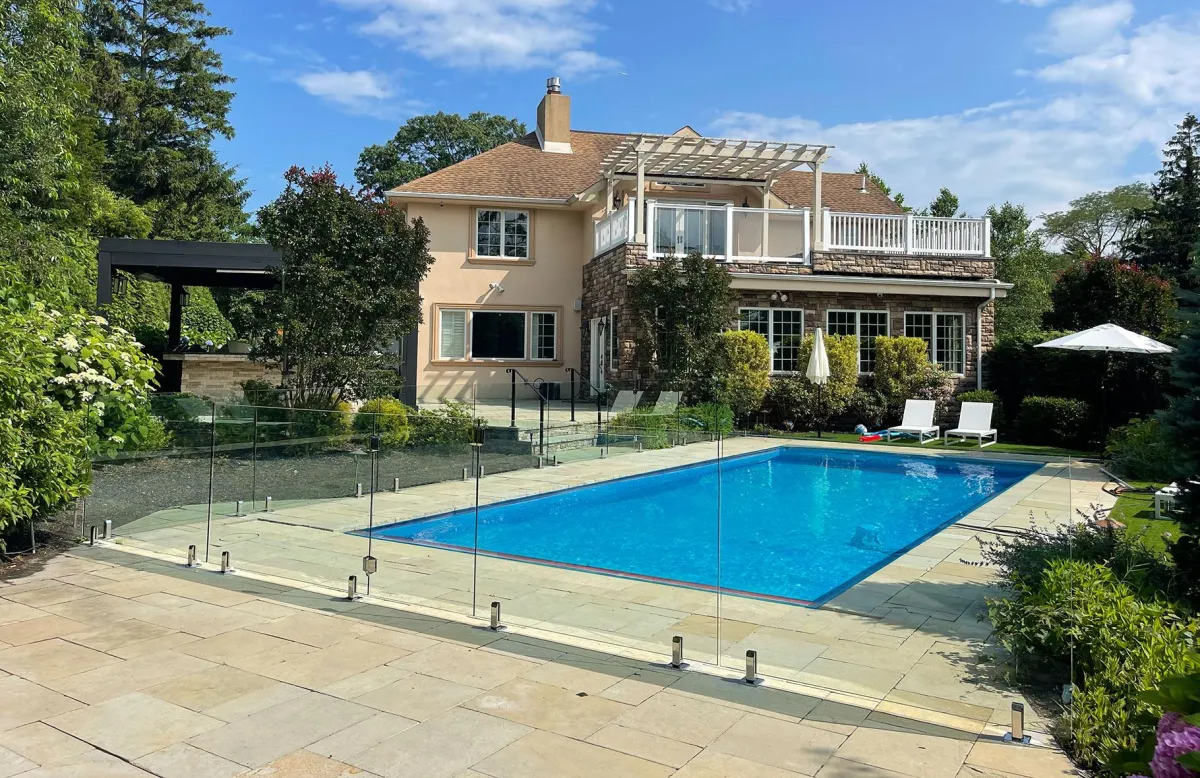
2. Frameless Glass Fence with Polished Spigot Mounts
that makes this entire look work is the near-invisibility of the fence itself. By using frameless glass panels with minimal polished spigots drilled directly into the patio, the fence meets safety requirements without interrupting the view. If you were to swap this for any other material—wood, metal, even mesh—you would immediately lose that seamless connection between the patio, the pool, and the beautiful landscaping beyond. It’s a powerful statement about prioritizing the view above all else.
💰 Budget Breakdown
While stunning, a frameless glass fence is a commitment to cleanliness. Water spots, fingerprints, and dust are much more visible than on any other fence type. To keep it looking pristine, expect to squeegee the panels at least once a week, especially after rain or a lot of splashing. A full cleaning with a glass-specific solution is needed every 2-4 weeks. Hard water is the enemy here; if your sprinklers hit the fence, you’ll be battling mineral deposits constantly. For a lower-upkeep option with a similar open feel, look at the cable railing in Idea #9.
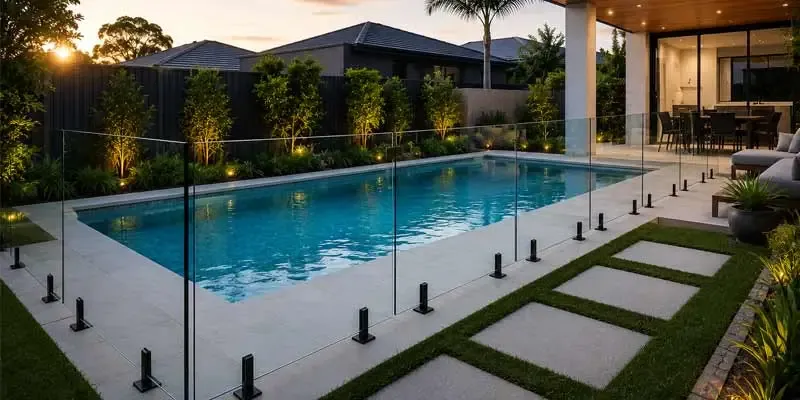
3. Sleek Glass Pool Fence with Black Spigots and Night Lighting
The visual formula here is a study in modern contrasts. Think of it as 70% transparent minimalism (the glass panels), 20% natural texture (the green foliage and grass), and 10% sharp, graphic accent (the black spigots). The warm ground lights add another layer, turning the trees into glowing features against the dark night sky. You could swap the black spigots for silver for a softer look, or change the light-colored concrete to a darker charcoal paver, but the core formula of transparent planes + pops of green + dark hardware remains the key to this sleek, illuminated style.
🔧 How-To Brief
When using ground lighting near a glass fence, always aim the lights away from the glass or shield them to prevent startling reflections. The goal is to illuminate the landscape *behind* the fence, creating a beautiful backdrop that you see *through* the glass. Pointing lights directly at or up the glass panels will just create blinding glare, highlight every smudge, and ruin the transparent effect you paid for. Use baffled or hooded fixtures to control the light spread.
4. Glass Panel Fence Featuring a Stone-Clad Spa Wall
What makes this design so successful is the smart mixing of materials and textures. The sleek, smooth glass panels are the perfect counterpoint to the rough, earthy texture of the stacked stone cladding on the integrated spa. One material is man-made and transparent, the other is natural and opaque. This contrast creates visual interest and makes both elements stand out more. The consistent light beige and cream color palette across the paving and stone ties it all together, ensuring the different textures feel harmonious rather than chaotic.
![15 Pool Privacy Fence Ideas for 2026 [with photos]](https://nestmood.com/wp-content/uploads/2026/06/15-pool-privacy-fence-ideas-for-2026-wit-4.jpg)
⭐ The One Thing
A water feature that flows from a spa into the main pool is a fantastic focal point, but be realistic about the chemistry challenges. The spa is typically kept at a much higher temperature, which causes chlorine and other chemicals to dissipate faster. This, combined with the aeration from the waterfall, means you’ll be adjusting spa chemicals far more often than the pool’s. It also introduces more debris and potential algae from the spa directly into the pool, requiring diligent monitoring of both bodies of water to keep them balanced and clear.
5. Modern Pool with Mixed-Media Fencing and Tiled Walls
The horizontally tiled walls are the single element that elevates this design from a simple poolside to a true architectural feature. While the glass and slatted fences are functional, the tiled walls introduce a level of custom detail and texture that feels incredibly high-end. The wall that doubles as a water feature, in particular, becomes a piece of kinetic art. Without these tiled surfaces, the area would still be nice, but it would lack the sophisticated, integrated character that makes it so memorable.
📏 Scale Guide
You don’t need a custom-built, tiled water feature to get this sophisticated, multi-textured vibe. Create a similar look by installing a stock water feature against a wall clad in large-format porcelain tile from a big-box store. For the slatted fence portion, consider ready-made composite fencing panels from Home Depot or Lowe’s. You can achieve this layered, modern look for around $3,000-$5,000 instead of the $15,000+ this custom installation likely cost, by combining off-the-shelf parts with one standout finish.
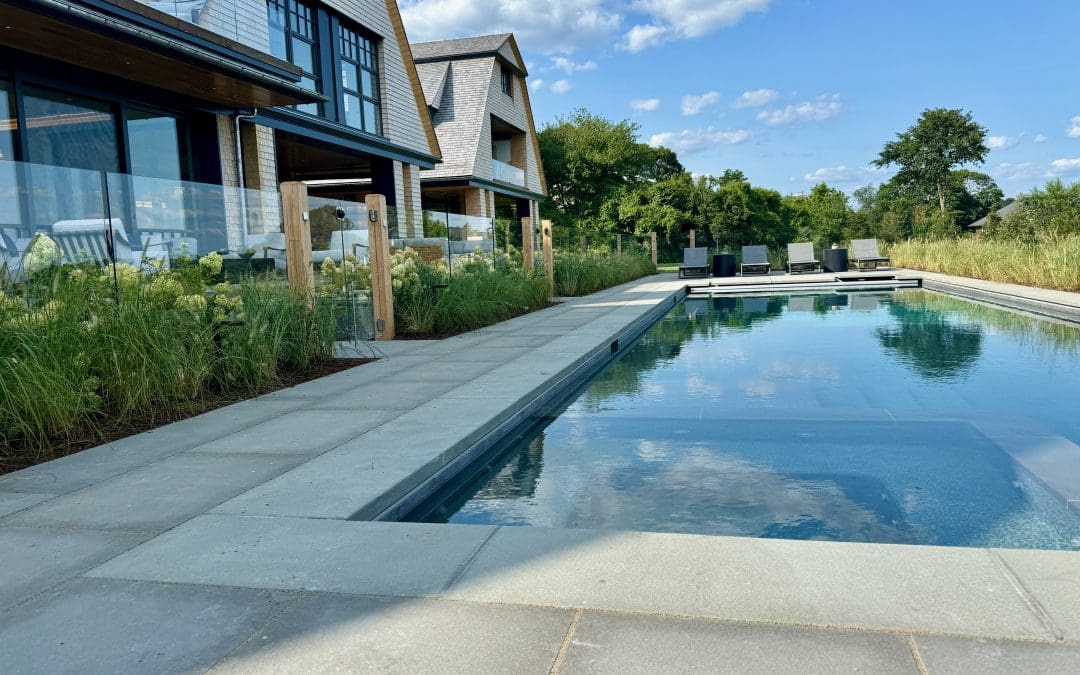
6. Architectural Glass Fence for Seamless Home Integration
For a glass fence to feel truly integrated with your home’s architecture, the sightlines from inside the house are paramount. Before finalizing the fence position, stand in the main rooms that look out onto the pool—the living room, the kitchen—and map out your key views. Adjust the fence line to ensure major posts or gates don’t land in the middle of a beautiful vista. The goal is to make the fence disappear when viewed from indoors, preserving the connection between your interior and exterior spaces.
🎯 What Makes It Work
This approach works best when the house itself has a modern design with large windows or sliding glass doors. It’s perfect for properties where the pool deck is an extension of the indoor living area, typically on lots under half an acre where space is at a premium. A glass fence can make a small or medium-sized backyard (2,000-5,000 sq ft) feel significantly larger. For a more traditional home, a glass fence can sometimes feel too stark; the classic look of Idea #22 might be a better fit.
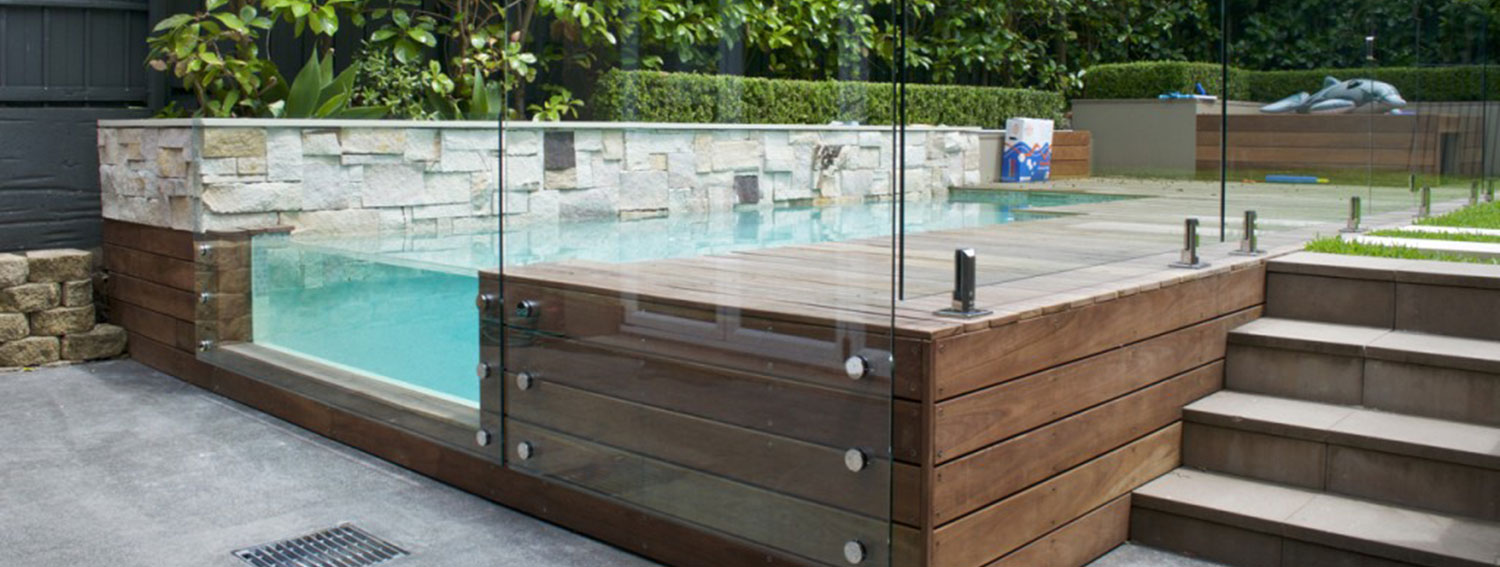
7. Integrated Glass and Wood Surround with Stone Accents
This look is a masterclass in material harmony. The formula is roughly 40% hardscape (the grey-brown slab stairs and light stacked stone), 30% warm naturals (the horizontal dark brown wood planks), and 30% modern transparency (the glass panels). The stainless steel spigots act as small, reflective punctuation marks. By keeping the materials in balanced proportions, the design feels layered and rich, not chaotic. You could switch the wood to a grey composite and the stone to a darker slate, and the formula would still hold because the balance of textures remains.
💡 Designer Tip
Before committing to an integrated, multi-level design like this, you need to check a few key things. Does your yard have a natural slope you can work with, or will you need expensive excavation and retaining walls? Have you confirmed with your local building department about regulations for fencing on top of raised structures? And most importantly, have you gotten quotes for all the different materials—wood, stone, glass, and steel—to ensure the total project is within your budget?
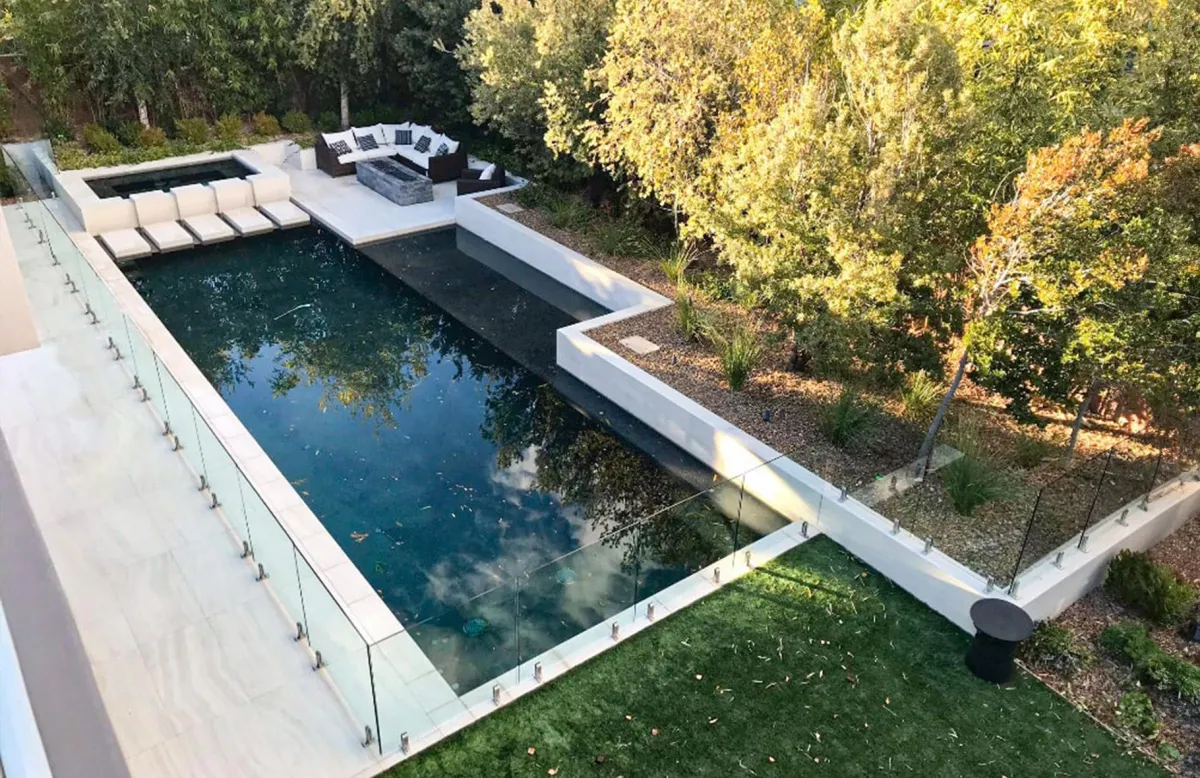
8. Minimalist Dark-Bottom Pool with Frameless Glass Fence
Dark-bottom pools are having a major moment, and this design shows why. They create a moody, lagoon-like effect with a beautiful, reflective surface that mirrors the sky and surrounding landscape. Paired with a frameless glass fence, the trend is all about creating an uninterrupted, resort-like vista. It’s part of a larger movement in design towards quiet luxury, where the focus is on high-quality materials and a seamless flow between different zones—pool, lounge, landscape—creating a cohesive and immersive outdoor environment.
🔥 Trending Context
A dark-bottom pool is undeniably chic, but it comes with a practical warning: it gets hot. The dark surface absorbs significantly more solar energy than a traditional light blue plaster pool. This can be great for extending the swimming season in cooler climates, but in hot regions like Texas or Florida, the water temperature can become uncomfortably warm, like sitting in a bathtub. It also makes spotting debris or a swimmer in distress on the bottom more difficult, a crucial safety consideration.
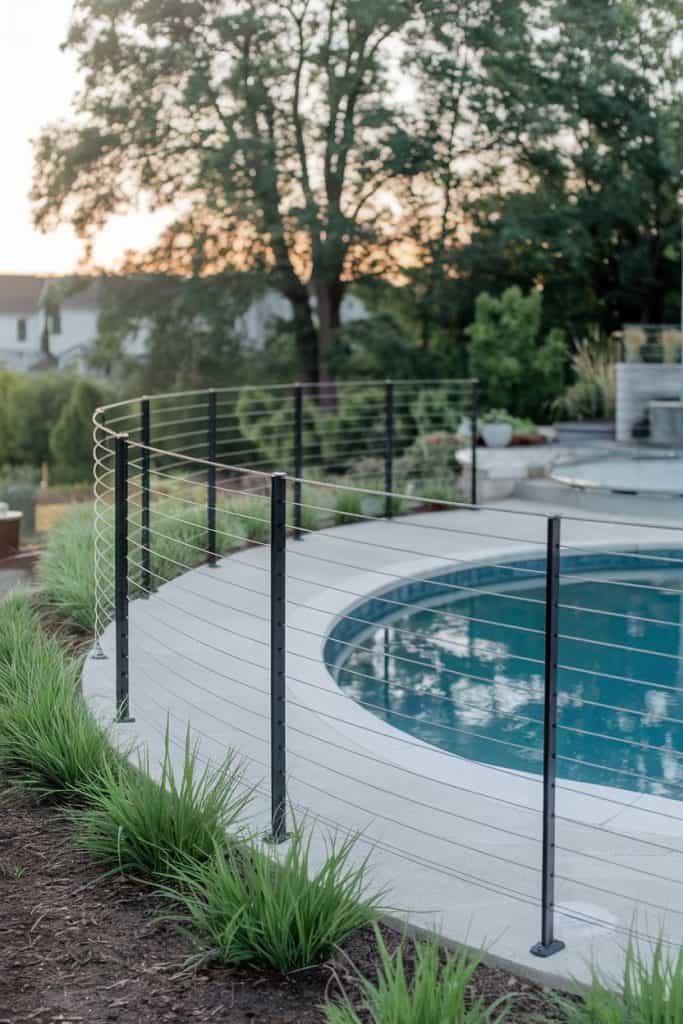
9. Curved Cable Railing Fence with Ornamental Grass
The beauty of this design lies in the elegant opposition of forms. The rigid, linear geometry of the cable railing—a series of straight lines and posts—is set against the gentle, organic curve of the concrete decking. This interplay between straight and curved creates a dynamic visual tension. The soft, feathery ornamental grasses planted along the fence line further soften the look, bridging the gap between the man-made structure and the natural landscape beyond. It’s a sophisticated way to have a secure barrier that still feels light and airy.
🧹 Maintenance Reality
Cable railings are sleek, but those thin metal cables require regular tension adjustments. They can sag over time due to temperature changes and general settling, which is not only an aesthetic issue but also a safety hazard. Expect to check and tighten the cables at least twice a year, once in the spring and once in the fall. In coastal areas with salt spray, you’ll also need to wipe down the cables with a corrosion-inhibiting product to prevent rust, especially at the connection points.
10. Glass Fence with a White Breeze Block Privacy Wall
The star of this show is unquestionably the white breeze block wall. While the glass fence is purely functional, the breeze block wall is all about pattern, texture, and personality. It provides privacy without being a monolithic barrier, allowing light and air to pass through while creating a captivating geometric pattern. The black and white motif turns a simple privacy screen into a major design statement that defines the entire pool area’s graphic, tropical-modern character. It’s pure retro fun, updated for a contemporary setting.
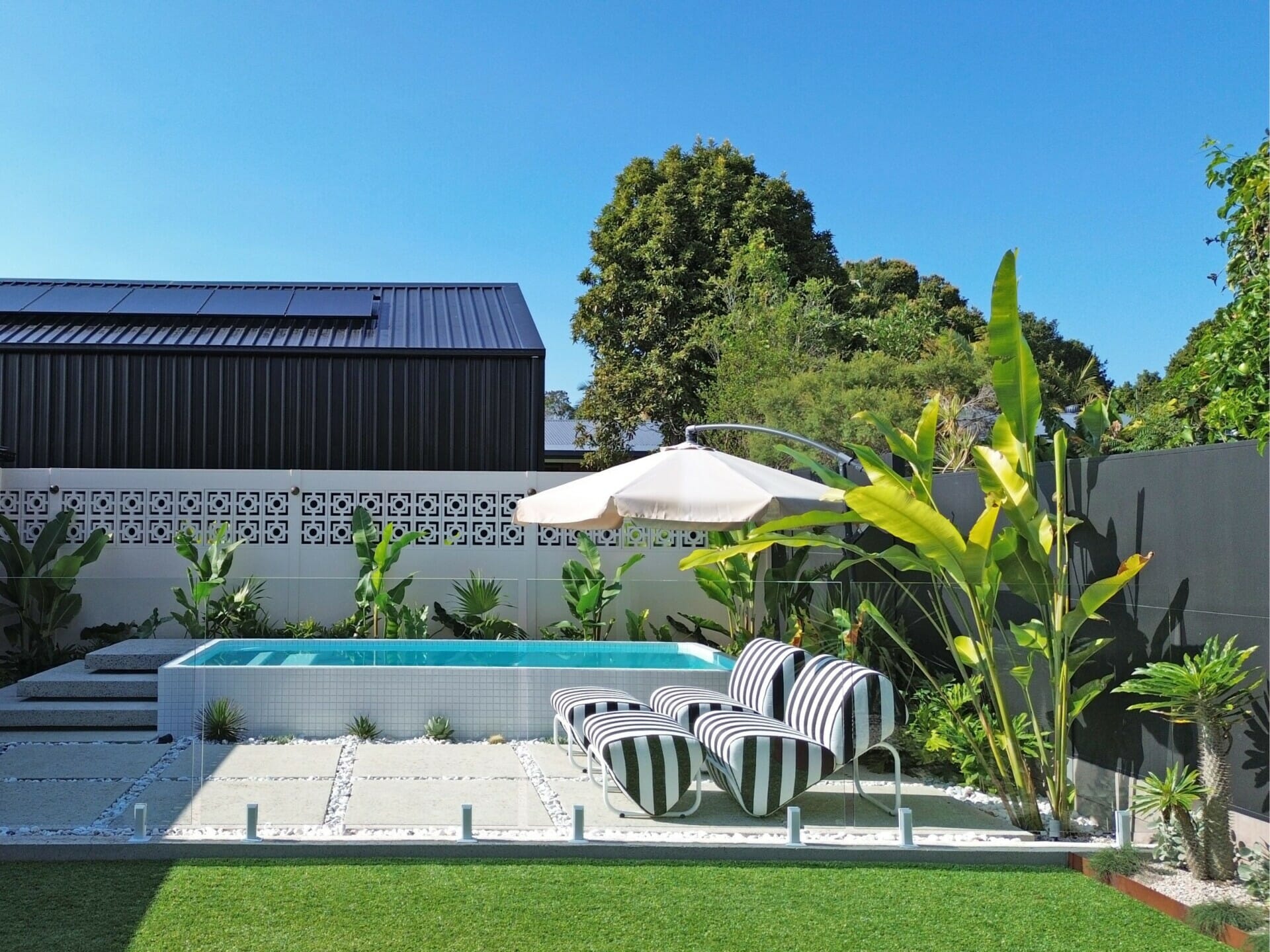
💸 Get This Look For Less
This look blends high-end and accessible elements. The custom breeze block wall is the biggest investment, but you can achieve a similar vibe with careful budgeting.
- Glass Fence Panels & Hardware: $4,500 – $7,000
- Breeze Block Wall (Installed): $5,000 – $9,000
- Tile for Raised Pool: $1,500 – $3,000
- Patio Furniture & Decor: $1,000 – $2,500
- TOTAL: $12,000 – $21,500
Budget alternative: Use standard concrete screen blocks from a home improvement store and paint them, and opt for more affordable lounge chairs. This could bring the total cost down by 40-50%.
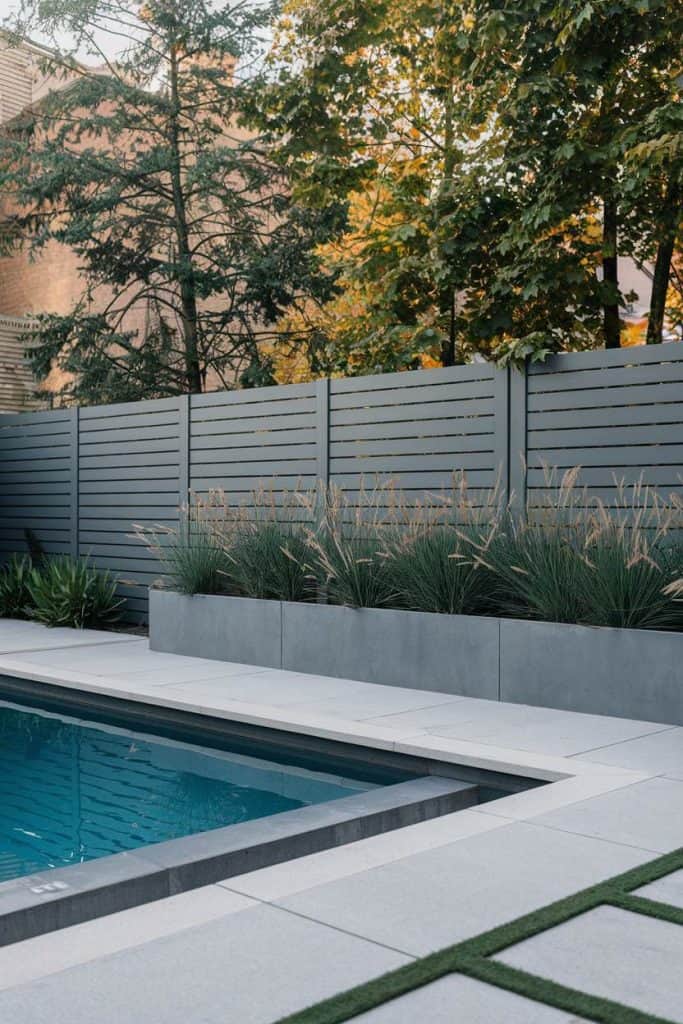
11. Dark Gray Slat Fence with Integrated Planter Boxes
When integrating a planter box at the base of a fence, always include a root barrier on the fence-facing side of the planter. This is a crucial step that many people miss. An impermeable membrane installed inside the planter, against the fence, will prevent plant roots and moisture from damaging the fence material over time, whether it’s wood, composite, or metal. This small preventative measure can save you from costly rot or corrosion repairs down the line.
⚠️ Real Talk
Recreating those cool artificial grass strips between pavers is a manageable weekend project.
- Time: 4-6 hours. Material Cost: $200-$500.
- Measure the gap between your pavers. Purchase a roll of high-quality artificial turf that is slightly wider.
- Ensure the base in the gap is compacted gravel, about 2-3 inches below the paver surface.
- Use a sharp utility knife to cut the turf into strips matching the width of your gaps.
- Lay the turf strips into the gaps, tucking the edges down tightly.
- Use landscape staples every 12 inches to secure the turf to the gravel base, and brush the fibers to hide the staples.
This adds a pop of low-maintenance green that softens the hardscape.
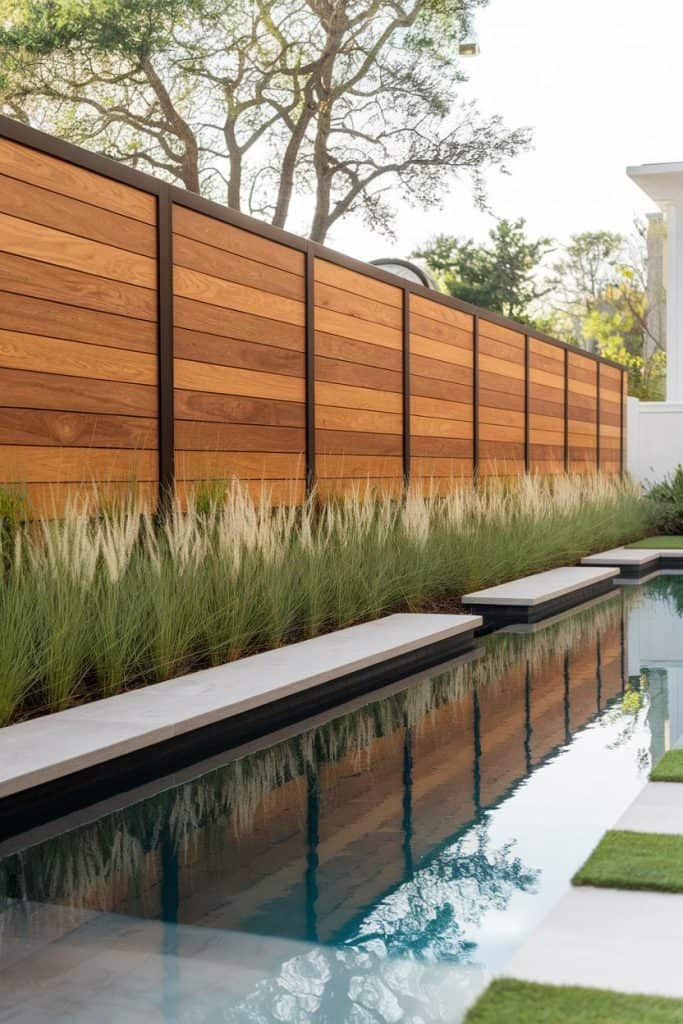
12. Horizontal Wood Slat Fence with Tall Ornamental Grass
This design is a perfect example of balancing textures. The warm, smooth, and repetitive lines of the horizontal wood slat fence create a clean, modern backdrop. In front of this, the wild, feathery plumes of the ornamental grass provide a soft, organic contrast. The dark metal posts add a sharp, graphic element that ground the design. This layering of smooth wood, soft grass, and hard metal creates a composition that feels both structured and natural, which is why it’s so visually appealing.
📐 Style Math
A horizontal slat fence needs room to breathe. This style is most effective on long, straight sections of 20 feet or more. It’s ideal for defining the perimeter of larger rectangular pools on lots of 1/3 acre or more. The height of the fence (typically 5-6 feet) offers excellent privacy. For a smaller, more curved pool area like the one in Idea #9, a cable railing or glass fence would be a better choice to avoid making the space feel boxed in by the strong horizontal lines.
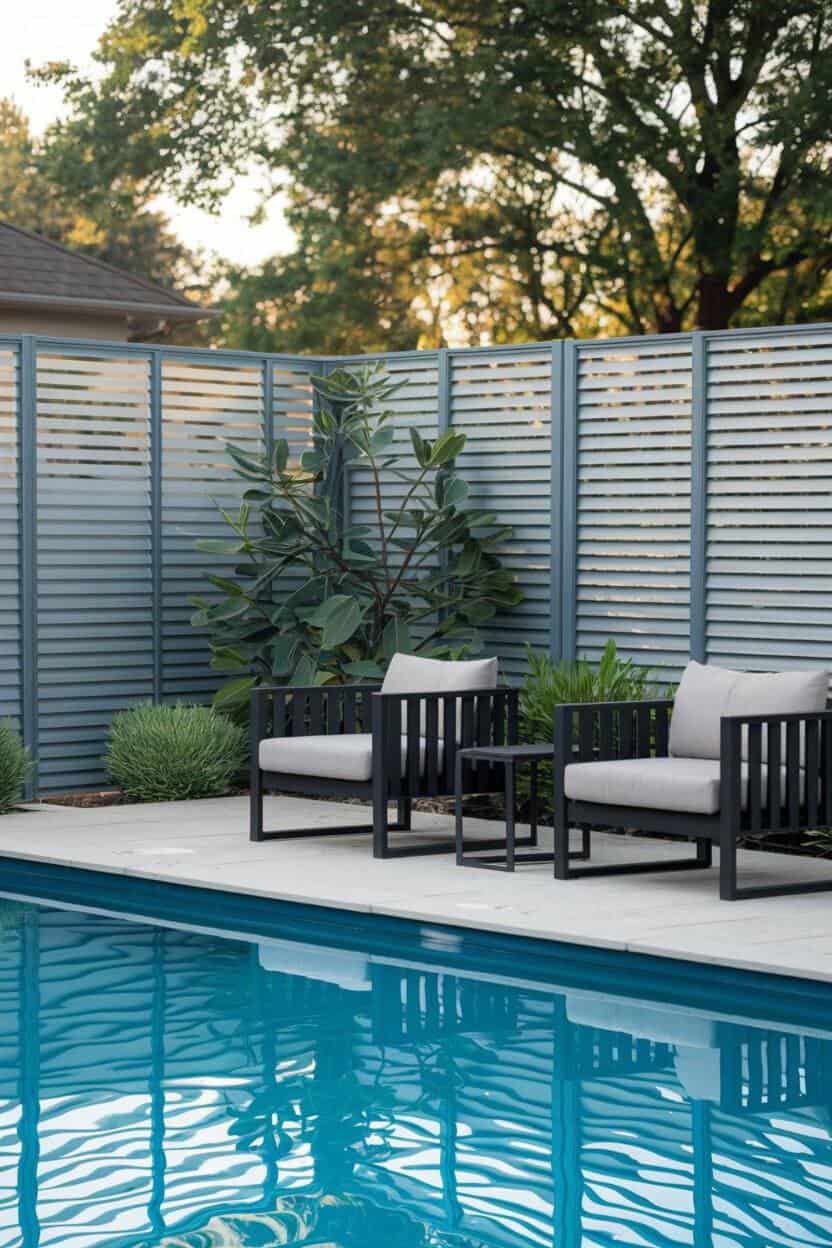
13. Modern Grey Slatted Fence for Patio Privacy
A key detail to notice here is the light-colored paving stones. While a dark slatted fence provides great privacy, it can also absorb a lot of heat, creating a micro-climate that makes the immediate area feel much hotter. The light-colored patio floor is essential for balancing this effect, as it reflects sunlight and helps keep the ground temperature cooler underfoot. If you pair a dark fence with dark pavers, you’re creating a heat island that might be too uncomfortable to use on a sunny afternoon.
✅ Before You Start
You can get this chic, private lounge vibe for way less. The key elements are the slatted screen and the monochrome furniture. Build a similar privacy screen using pre-made lattice panels from Lowe’s, painted a dark charcoal gray, for under $300. Then, watch for end-of-season sales at Target or Walmart for black-framed lounge chairs. You can often find a set of two with a small table for $250-$400. This brings the core look from a potential $3,000+ down to around $600.
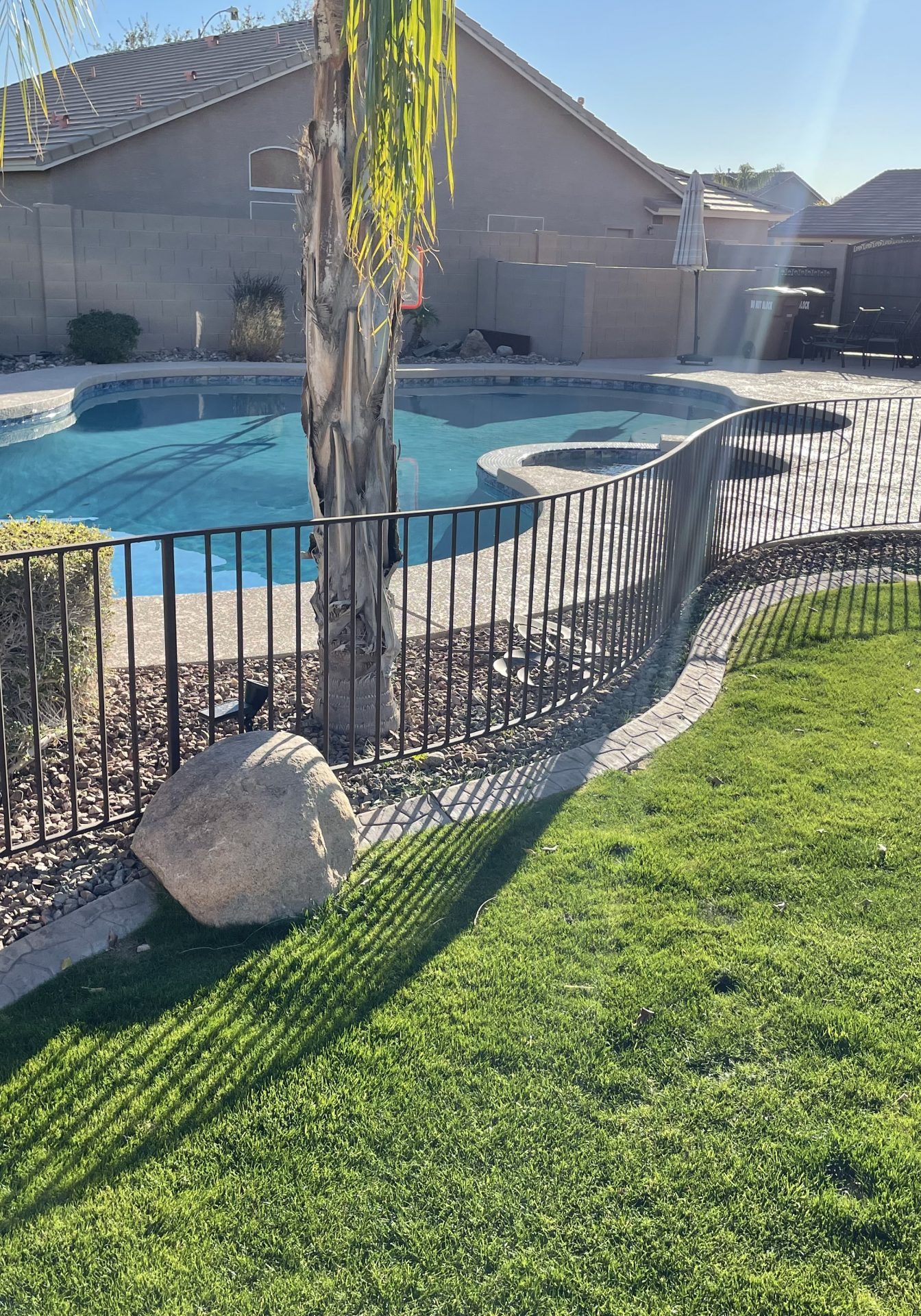
14. Curved Black Metal Fence with a Gravel Garden Border
The gentle curve of this black metal fence is what makes it feel so integrated into the landscape. Instead of fighting the organic shapes of the pool and lawn with harsh right angles, the fence flows with them. This creates a more natural, less imposing boundary. The stone-edged gravel garden bed at its base is a clever buffer zone, separating the fence from the lawn, which makes mowing and trimming much easier while adding another layer of texture. It’s a practical and aesthetically pleasing solution.
💰 Budget Breakdown
Before you install a classic metal fence, consider these points:
- Check Local Codes: Most areas have strict rules on the minimum height (usually 48-60 inches) and the maximum gap between vertical bars (usually 4 inches) for pool fences to prevent climbing.
- Confirm Your Material: Is it aluminum or wrought iron? Aluminum is lightweight and won’t rust, making it great for humid or coastal climates. Wrought iron is heavier and stronger but requires periodic painting to prevent rust.
- Plan Your Gates: Ensure gates are self-closing, self-latching, and open outwards, away from the pool. The latch should be high enough to be out of reach of small children.
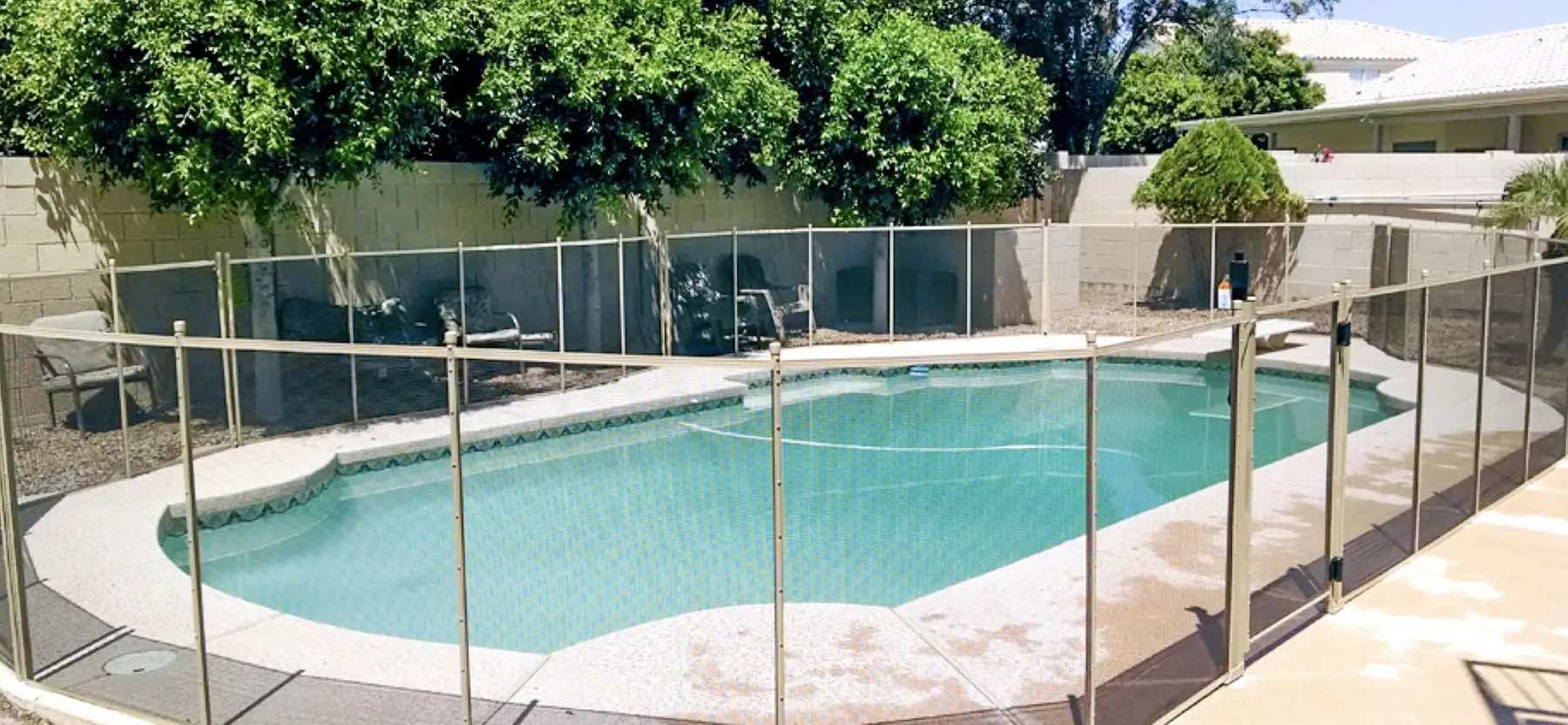
15. Beige and Black Mesh Safety Fence on a Concrete Deck
The single most important feature of this fence is its removability. Mesh safety fences are designed for families who need top-tier safety for children but also want the flexibility to have an open, unobstructed pool deck for adult gatherings. The lightweight posts slide into sleeves drilled into the concrete, allowing the entire fence to be taken down and stored in minutes. This adaptability—maximum safety when you need it, open space when you don’t—is its defining characteristic and primary selling point.
🔧 How-To Brief
Mesh fencing is one of the most affordable professionally installed options, making it a popular choice for safety-conscious homeowners on a budget.
- Mesh Panels & Poles (per linear foot): $18 – $30
- Professional Installation & Drilling: $500 – $1,500 (depending on length and deck material)
- Self-Closing Gate: $400 – $700
- TOTAL (for a 100-foot fence): $2,700 – $5,200
Budget alternative: DIY kits are available for around $12-$15 per linear foot, but precise core drilling into concrete is required, which can be challenging without the right tools.
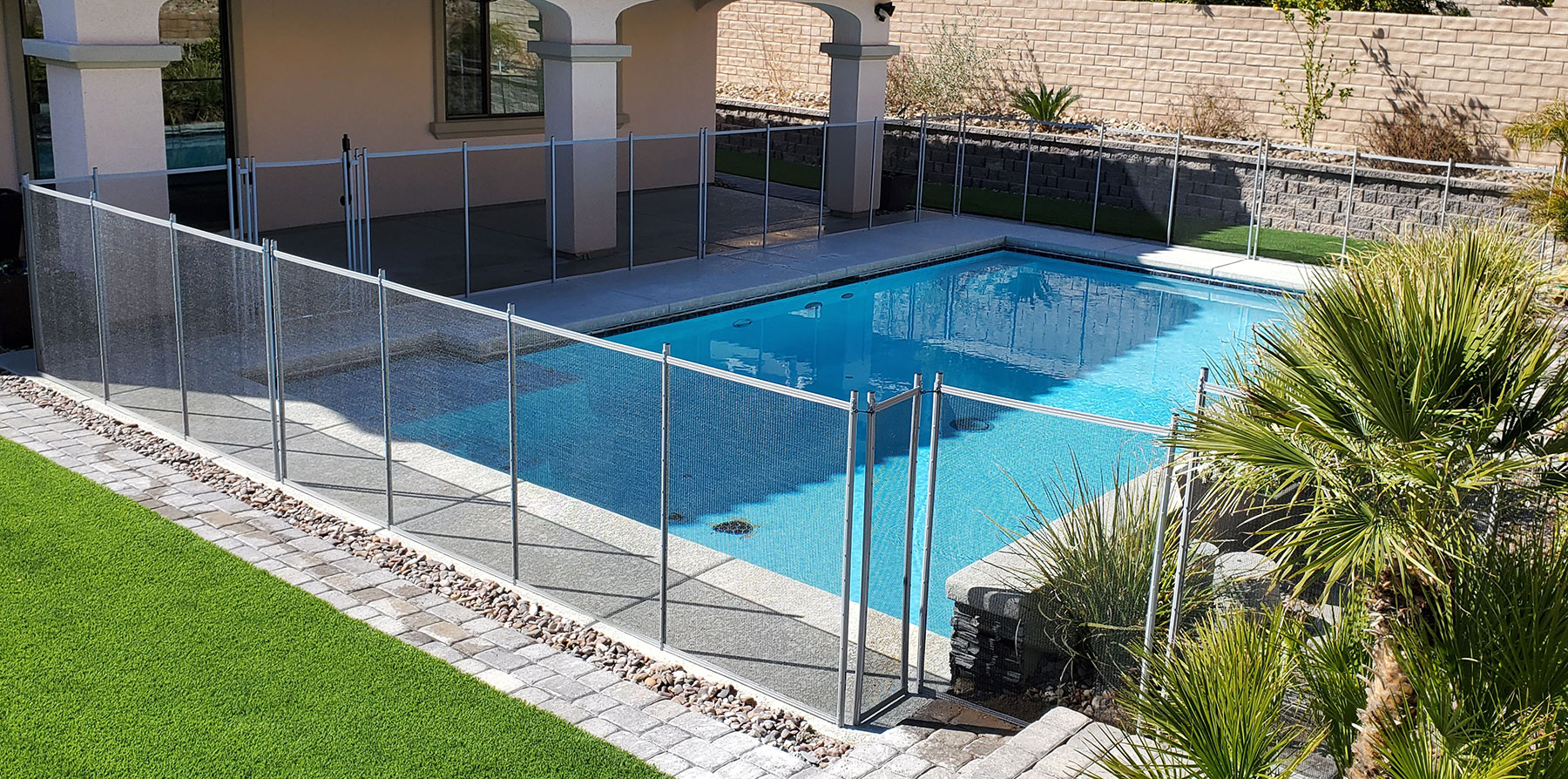
16. Removable Black Mesh Fence for Flexible Safety
Installing the deck sleeves for a removable mesh fence is the most critical step. Here’s a simplified guide for concrete decks:
- Time: 3-4 hours. Material Cost: Included with fence kit, but you’ll need to rent a core drill.
- Lay out the fence path with a chalk line, ensuring it’s at least 24 inches from the pool’s edge.
- Mark the post locations on the chalk line, typically every 30-36 inches.
- Rent a wet core drill with a diamond bit matching the sleeve diameter (usually 1 1/8 inch).
- Carefully drill the holes to the specified depth (usually 4 inches). This is a slow, steady process.
- Clean the debris from the holes and insert the plastic sleeves until they are flush with the deck.
Taking your time with the drilling ensures the posts will be vertical and the fence will be taut.
⭐ The One Thing
While mesh fences are excellent for safety, their primary selling point—removability—can also be their biggest hassle. If you entertain frequently, the process of removing, rolling up, and storing dozens of feet of fencing, and then re-installing it later, can become tedious. The storage itself is also a consideration; you need a clean, dry place to keep the rolled-up sections. For some, the reality of this chore means the fence ends up staying up permanently, negating its flexibility benefit.
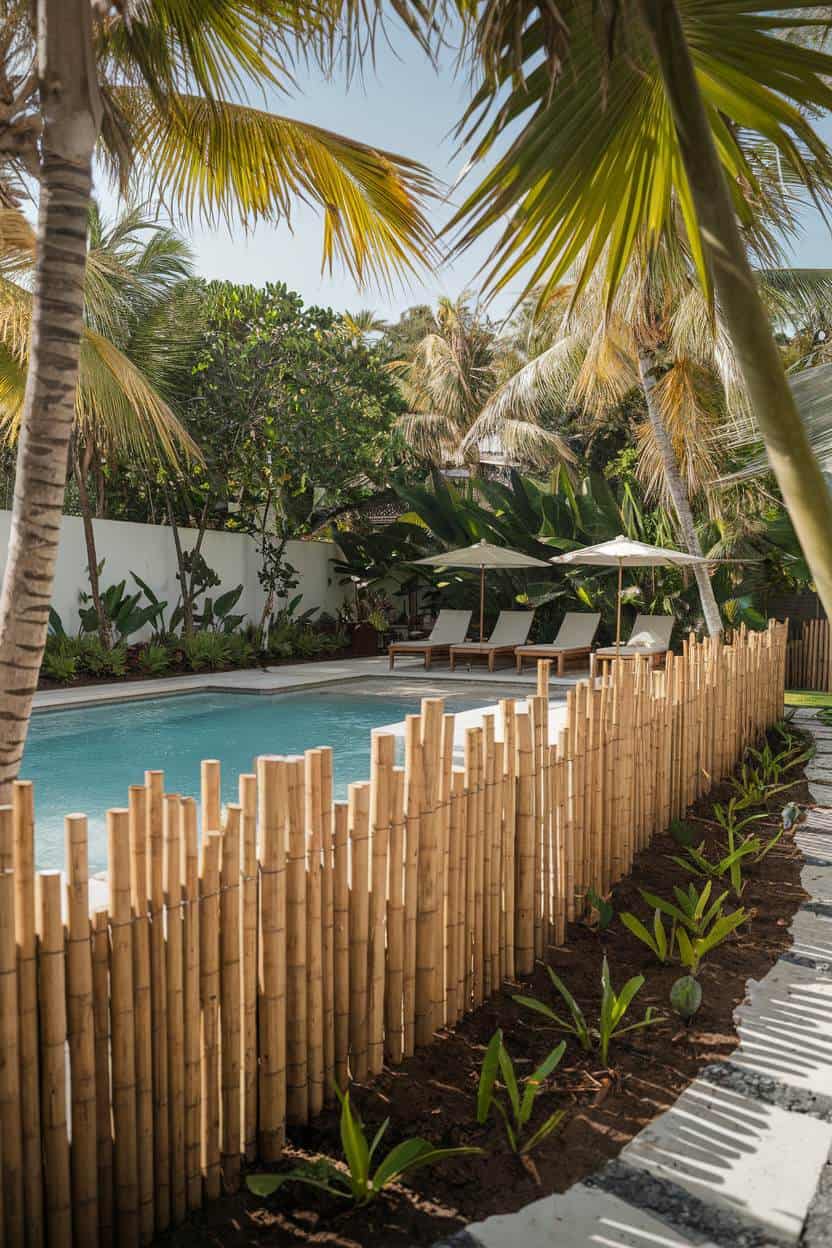
17. Tropical Oasis with a Natural Bamboo Pole Fence
Creating this tropical paradise vibe follows a simple formula: 60% lush, layered greenery (palms, tropical plants), 30% natural materials (the bamboo fence, wooden lounge chairs), and 10% calm blue and cream (the pool water and umbrellas). The key is the density of the planting and the commitment to the natural material palette. The bamboo fence is the essential backdrop that screens out the real world and establishes the secluded, exotic mood. Even the dark soil in the planting beds contributes to the rich, organic feel.
📏 Scale Guide
A natural bamboo fence is stunning but has a limited lifespan, especially in a wet pool environment. Untreated bamboo will typically last 3-5 years before it starts to split, fade, and rot. To maximize its life, you must seal it annually with a good quality outdoor UV-protecting sealant, paying special attention to the tops and bottoms of the poles where moisture collects. Even with diligent care, expect to replace sections or the entire fence within a decade. For a similar look with less upkeep, consider composite fencing designed to look like bamboo.
18. Wooden Privacy Fence with a Decorative Lattice Top
This classic design works because it cleverly balances privacy and openness. The solid vertical panels in the lower section provide a complete visual barrier at ground level, giving the pool area a cozy, secluded feeling. However, the decorative lattice top prevents the fence from feeling like a solid, oppressive wall. It allows light and air to filter through and offers a tantalizing glimpse of the green foliage behind it. This two-part design is a time-tested solution that feels secure without being claustrophobic.
![15 Pool Privacy Fence Ideas for 2026 [with photos]](https://nestmood.com/wp-content/uploads/2026/06/15-pool-privacy-fence-ideas-for-2026-wit-2.jpg)
🎯 What Makes It Work
A standard privacy fence is one of the most budget-friendly DIY options. You can recreate this exact look using pre-made panels from any home improvement store. A standard 6-foot tall, 8-foot wide pressure-treated pine panel with a lattice top costs between $80 and $150. With posts and concrete, you could fence a substantial 100-foot perimeter for $1,500 – $2,500 in materials. Staining it yourself saves even more. Compare this to the thousands more you’d spend on glass or custom-built options.
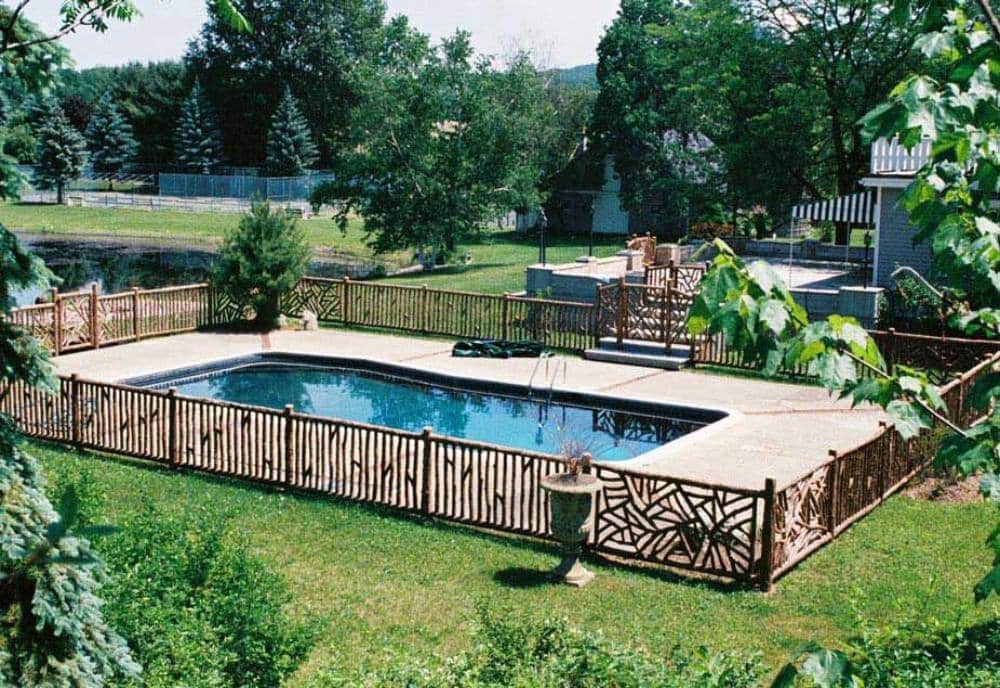
19. Rustic Pool Fence with Geometric Branch Panels
The geometric branch-patterned panels are what makes this fence a work of art. The standard vertical log fence is rustic and functional, but these intricate, decorative sections elevate the entire enclosure into something truly special and whimsical. They are unexpected and creative, transforming a simple safety barrier into the garden’s most prominent design feature. It proves that a pool fence doesn’t have to be merely utilitarian; it can be a beautiful and imaginative expression of personal style.
💡 Designer Tip
This type of intricate, custom woodwork is a paradise for pests and rot. The countless joints and crevices where the branches meet are perfect places for water to collect and for spiders, wasps, and carpenter bees to build their homes. Maintaining this fence would require a painstaking annual process of cleaning out every nook, checking for rot or insect damage, and meticulously applying a wood sealant with a brush and sprayer. It’s a beautiful, high-character choice, but it’s also a very high-maintenance one.
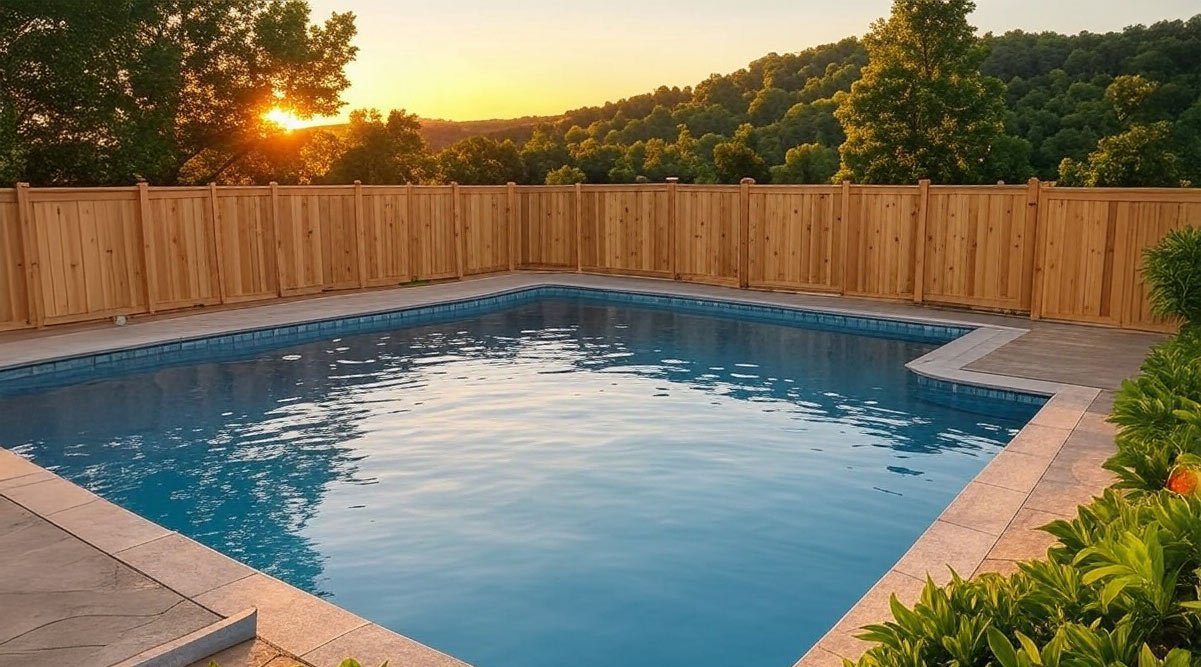
20. Light Wood Vertical Plank Fence with Dark Decking Accents
The success of this design lies in its restrained and cohesive color and material palette. The light brown of the vertical wood fence provides a warm, natural perimeter. This is beautifully contrasted by the dark gray tiled border of the pool and the rich, dark brown wooden decking section. The light gray coping acts as a clean dividing line. By repeating these three core colors—light wood, dark gray, and dark wood—across different elements, the design feels intentional, unified, and deeply relaxing.
🔥 Trending Context
When using wood decking right next to a pool, especially a saltwater pool, your choice of wood is critical. Don’t just pick any pretty lumber. You need a species with natural resistance to rot and insects. Ipe, Cumaru, and Teak are top-of-the-line choices that are dense and long-lasting but expensive. A more budget-conscious but still durable option is Garapa or a high-quality modified wood like Accoya. Never use standard pine or cedar decking in a splash zone; it will warp and rot in just a few seasons.
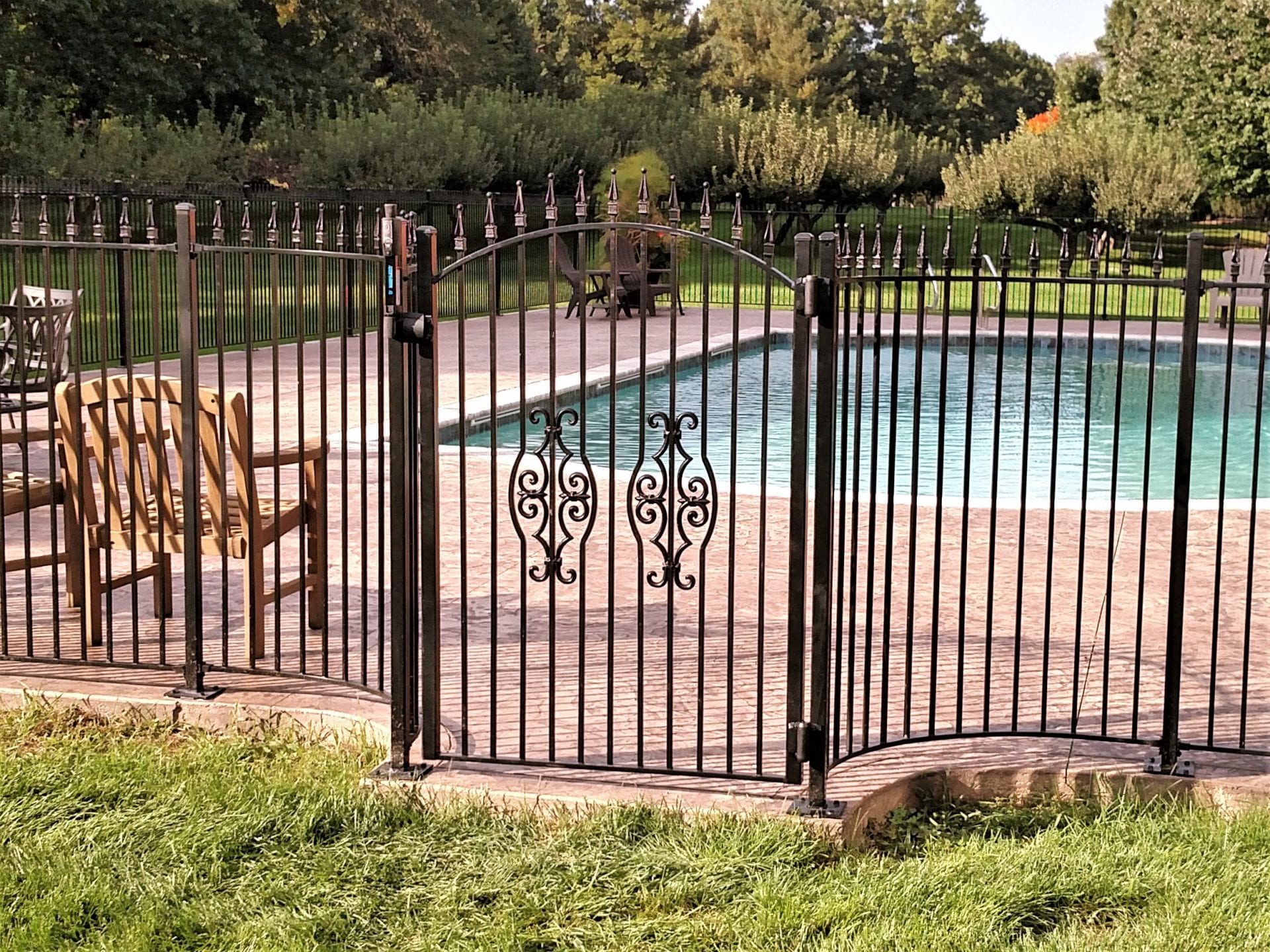
21. Black Wrought Iron Fence with Ornate Arched Gate
In a world of minimalist modern design, a classic black wrought iron fence represents a return to timeless elegance and permanence. This style has been popular for centuries for a reason: it’s strong, secure, and its open design allows for clear views of the landscape. While glass fences like in Idea #2 are trendy for their invisibility, wrought iron is trending for its visible, handsome structure. It’s a choice that leans into tradition and craftsmanship, suggesting a garden that is stately, established, and secure.
🧹 Maintenance Reality
Thinking of installing a traditional wrought iron or aluminum fence? Tick these boxes first:
- Grade Check: Does your yard have steep slopes? Standard panels can often be ‘racked’ or angled to follow the grade, but severe slopes may require custom-made panels at a higher cost.
- Underground Utilities: You absolutely must call 811 to have all utility lines (gas, water, electric) marked before you dig any post holes. Hitting a line is dangerous and expensive.
- Style Consistency: Look at your home’s architecture. Wrought iron looks best with traditional, colonial, or European-style homes. It can clash with very modern or rustic architecture.
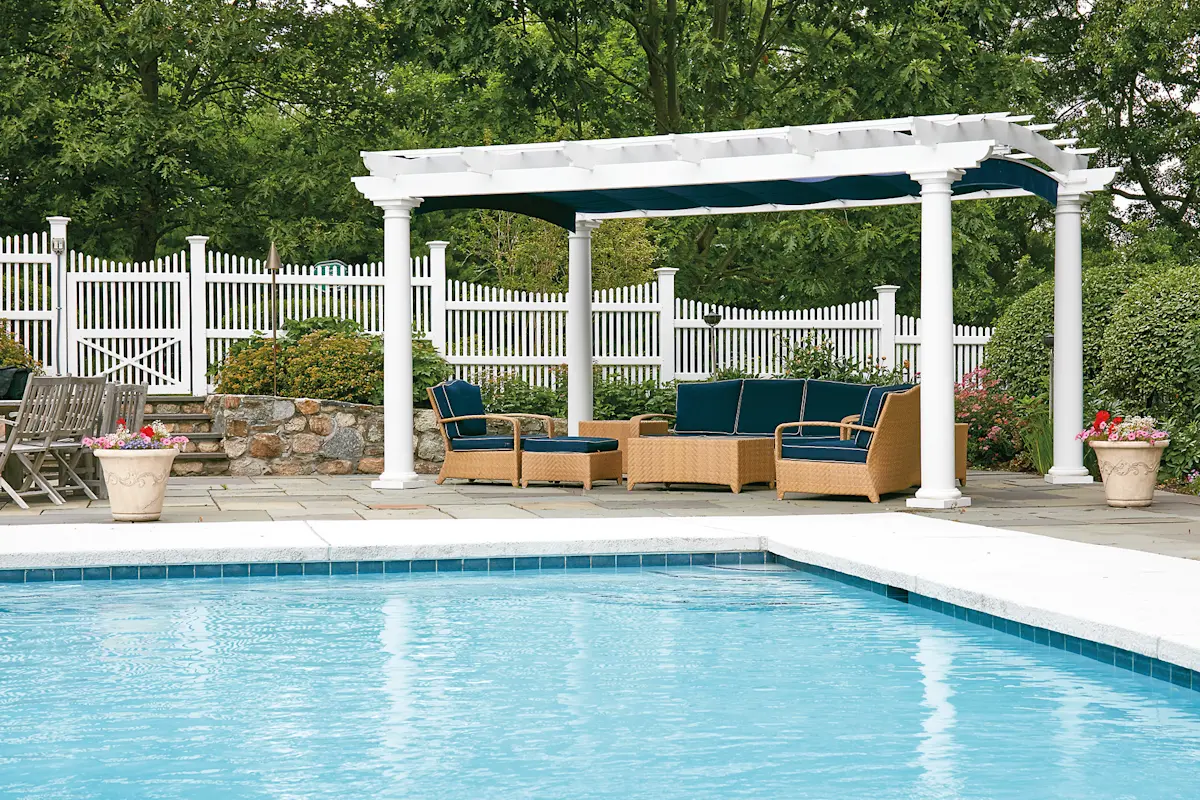
22. White Picket Fence Bordering a Pergola Seating Area
The single element that gives this space its soul is the classic white picket fence. It does more than just meet safety code; it sets a tone of charming, relaxed, traditional life. It’s the visual cue for
23. Sleek Glass Panels and Artificial Turf Combination
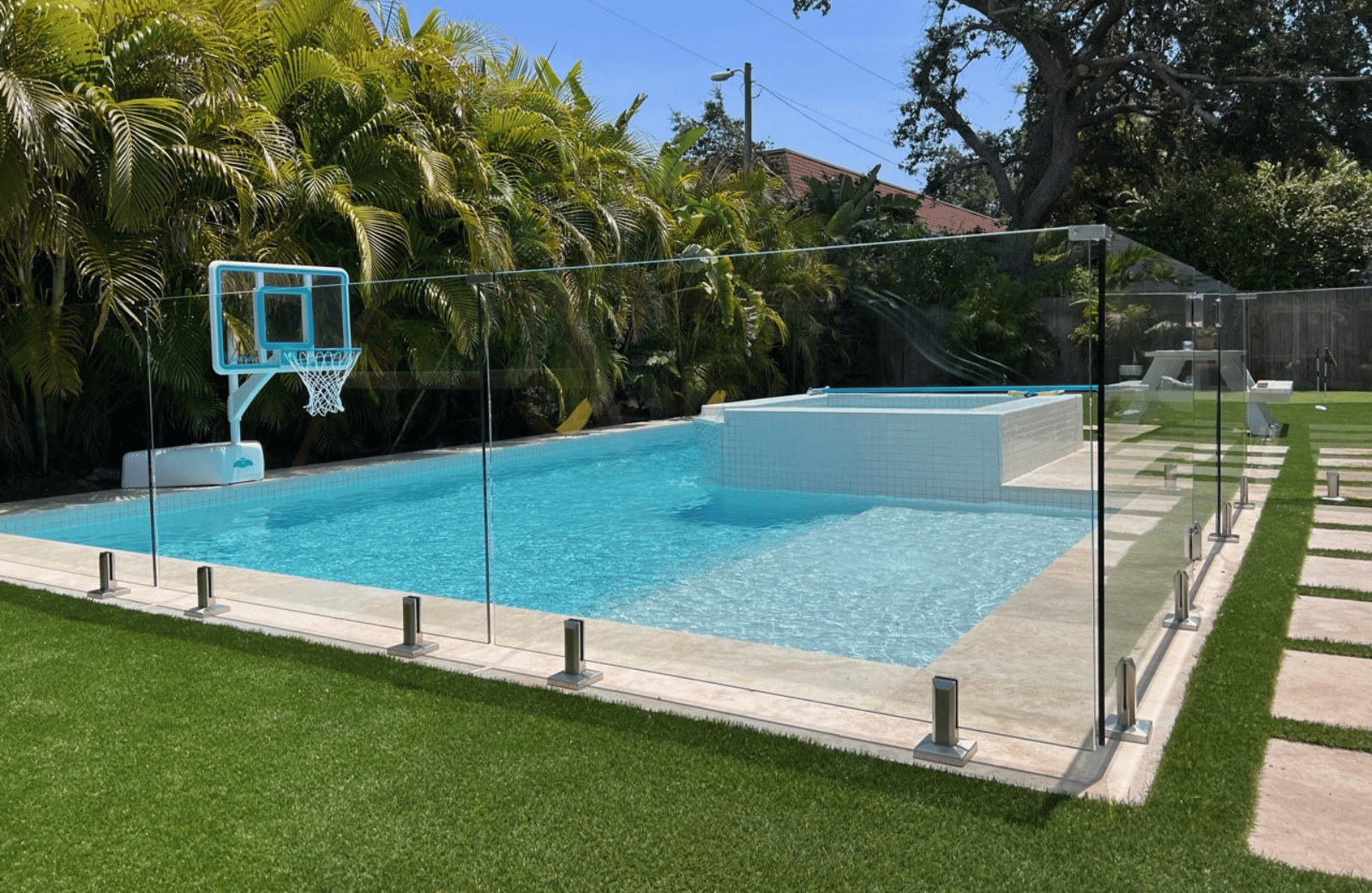
Artificial turf looks incredibly lush and green next to a pool, but be warned: it gets extremely hot in direct sun. On a 90-degree day, the surface temperature of artificial grass can soar to 150-180 degrees Fahrenheit, hot enough to be very uncomfortable or even burn bare feet. The light-colored stone paving is not just a design choice here; it’s a necessary ‘cool zone’ for walking. If your pool area is in full, relentless sun, you may want to limit turf to accent areas rather than using it for the main deck.
⚠️ Real Talk
This combination works so well because of the extreme contrast in textures. The glass panels are perfectly smooth, reflective, and cool-toned. The artificial turf is dense, vibrant, and mimics a soft, organic texture. The light stone paving provides a neutral, matte surface that bridges the two. This textural trio—smooth, soft, and matte—creates a super clean, almost hyper-real aesthetic that feels modern, tidy, and visually stimulating. Each material makes the others look more interesting.
24. Glass Panel Fence with an Illuminated Brick Feature Wall
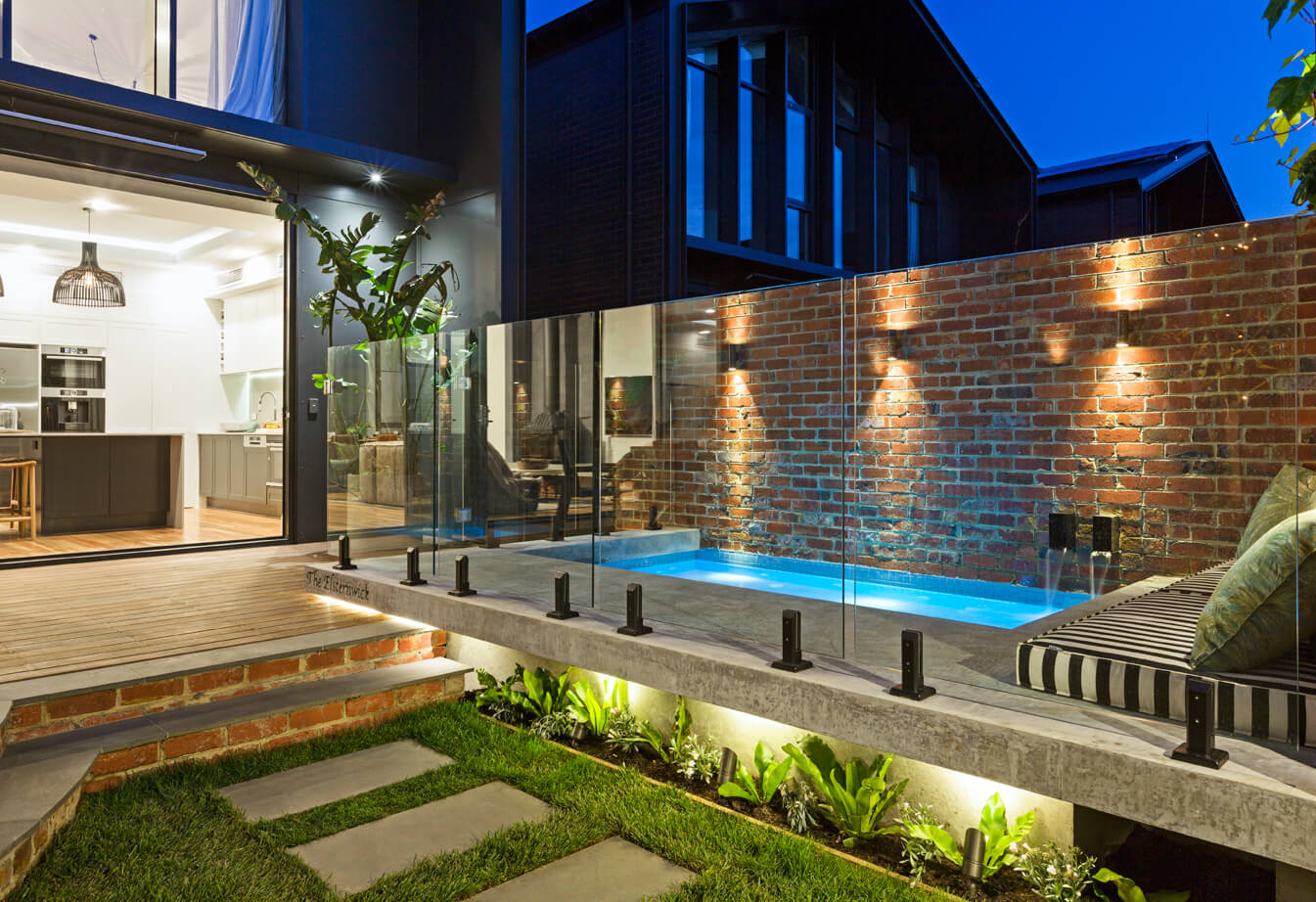
When using uplighting on a textured surface like this exposed brick wall, the angle and distance of the light fixtures are everything. Place the lights about 6-12 inches away from the base of the wall and aim them almost straight up. This creates a ‘grazing’ effect where the light skims across the surface, catching the edges of the bricks and mortar. This technique dramatically enhances the wall’s texture and creates beautiful deep shadows, turning a flat wall into a dynamic, three-dimensional feature at night.
📐 Style Math
Want to turn a plain wall into a feature? Here’s how to install brick veneer for a similar look:
- Time: 1-2 days. Material Cost: $10-$25 per square foot.
- Ensure your existing wall is clean, dry, and structurally sound. A concrete or block wall is ideal.
- Apply a layer of mortar to the back of each thin brick veneer piece, just like you’re buttering toast.
- Press each brick firmly onto the wall, starting from the bottom corner and working your way up. Use tile spacers to maintain even grout lines.
- Let the mortar cure for 24 hours.
- Fill the joints with mortar using a grout bag, then smooth the joints with a striking tool.
It’s a labor-intensive but high-impact DIY project.
25. Frameless Glass Fence on a Deck with a Wood Slat Privacy Wall
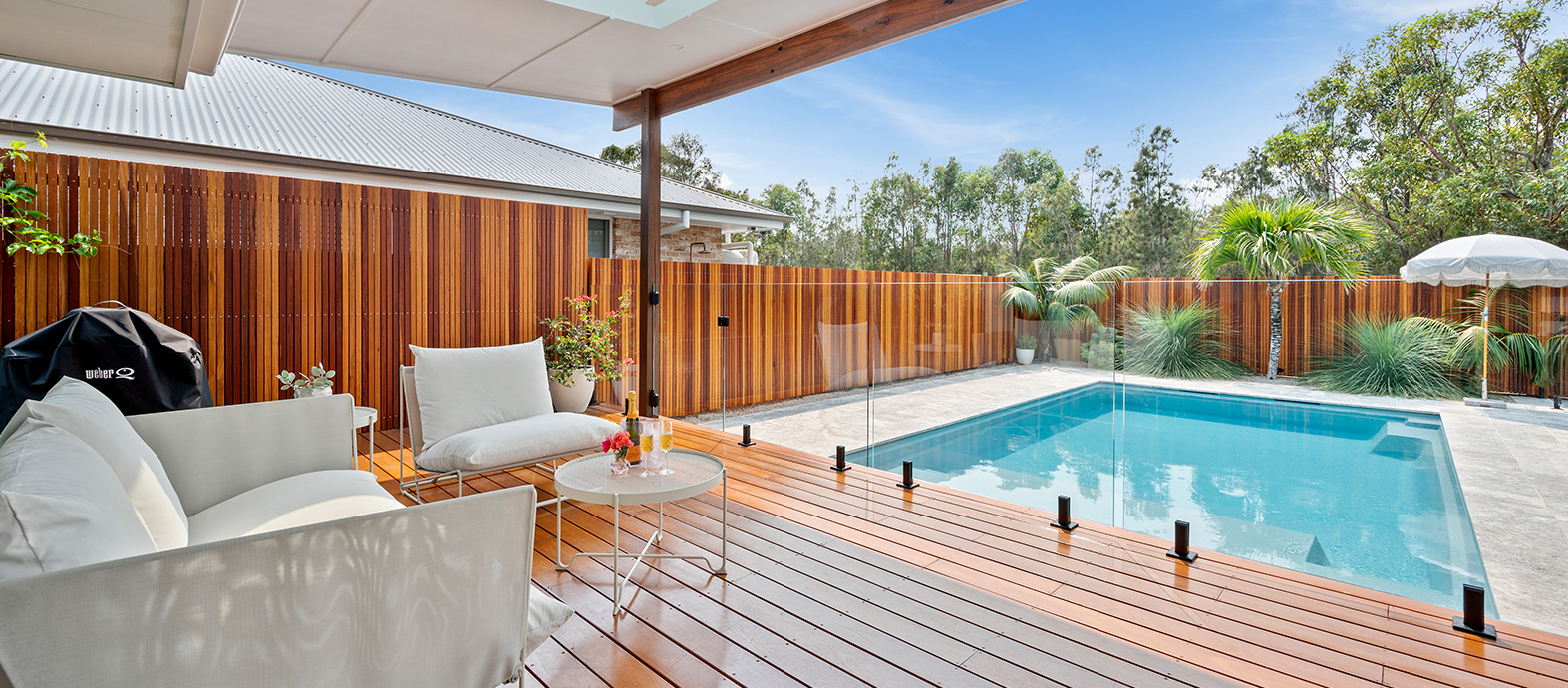
The formula for this luxurious, modern look is about balancing privacy and openness. It’s roughly 50% open view (the frameless glass facing the main yard), and 50% private enclosure (the tall wooden slat fence on the property line). The materials are split between 60% warm wood tones (deck and privacy fence) and 40% cool, man-made surfaces (the glass, pavers, and pool water). This balance ensures the space feels both secure and connected to the outdoors, private but not claustrophobic. The white furniture adds a crisp, clean accent.
✅ Before You Start
This layered fence approach is perfect for long, narrow city or suburban lots where you have close neighbors on one or two sides. The solid wood privacy fence can run along the property line, blocking unwanted views, while the glass fence can face back towards the house and the rest of your own yard. This creates an ‘outdoor room’ feel. This strategy is ideal for yards that are 50-75 feet wide but may have more depth. In a wide-open yard, a full privacy fence would feel unnecessary, but here it’s a key part of the design.
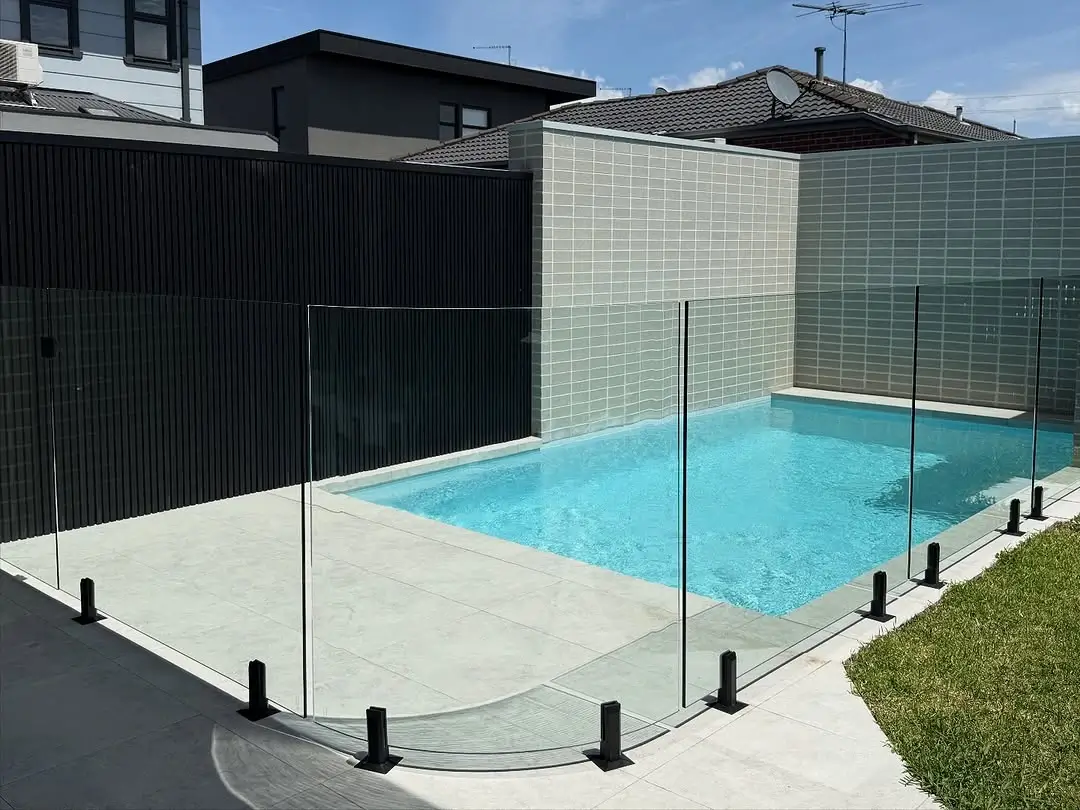
26. Frameless Glass Enclosure for a Compact Plunge Pool
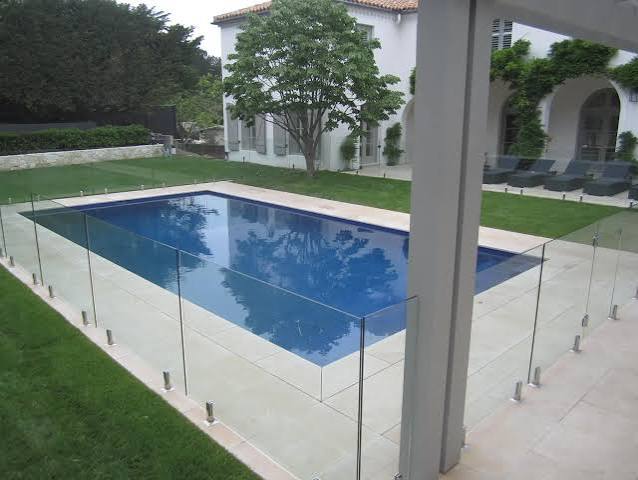
In a small space, every square inch counts, and that’s why a glass fence is the perfect choice here. By providing an almost invisible barrier, it allows the eye to travel all the way to the back wall, making the patio area feel as large as possible. Any other fence material, whether wood, metal, or vinyl, would have visually chopped up the space, making the pool feel cramped and disconnected from the seating area. The transparency is key to maintaining a sense of spaciousness in a compact backyard.
💰 Budget Breakdown
When installing a glass fence this close to a seating area or walkway, always opt for thicker, 1/2-inch (12mm) tempered glass. The industry standard is often 3/8-inch, but the extra thickness of 1/2-inch glass provides a noticeable increase in rigidity and stability. This minimizes any wobble or flex in the panels if someone accidentally bumps into them, which is more likely in a tight space. It’s a small up-charge for a significant improvement in perceived quality and safety.
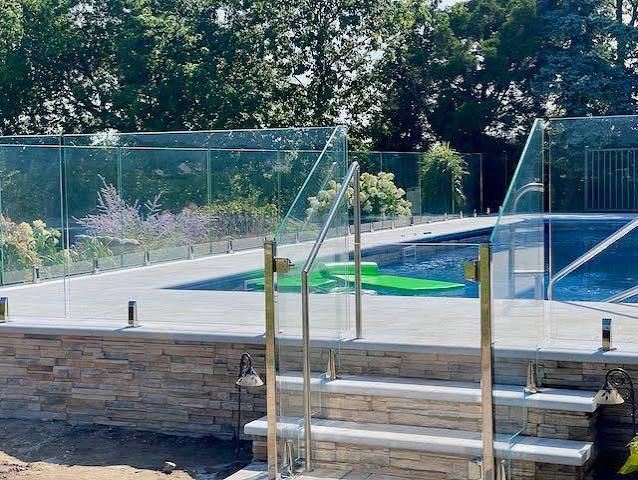
27. Minimalist Glass Fence with Statement Hardware
In an ultra-minimalist design, the few details that do exist become incredibly important. Here, the fence hardware—the spigots or clamps holding the glass—is the ‘one thing’ that provides the design’s character. Whether they are polished chrome, matte black, or brushed brass, these small metal pieces are the jewellery of the design. They are a deliberate choice that can coordinate with window frames, outdoor furniture, or lighting fixtures, turning a functional component into a subtle but powerful design statement that ties the whole outdoor space together.
🔧 How-To Brief
Be aware that not all stainless steel hardware is created equal. There are two common grades used for glass fence spigots: 304 and 316. While 304 is fine for many inland applications, if you live anywhere near the coast or have a saltwater pool, you absolutely must insist on 316 marine-grade stainless steel. It contains molybdenum, which makes it significantly more resistant to corrosion from salt and chlorine. Using the cheaper 304 grade in a salty environment will inevitably lead to unsightly rust spots and pitting.
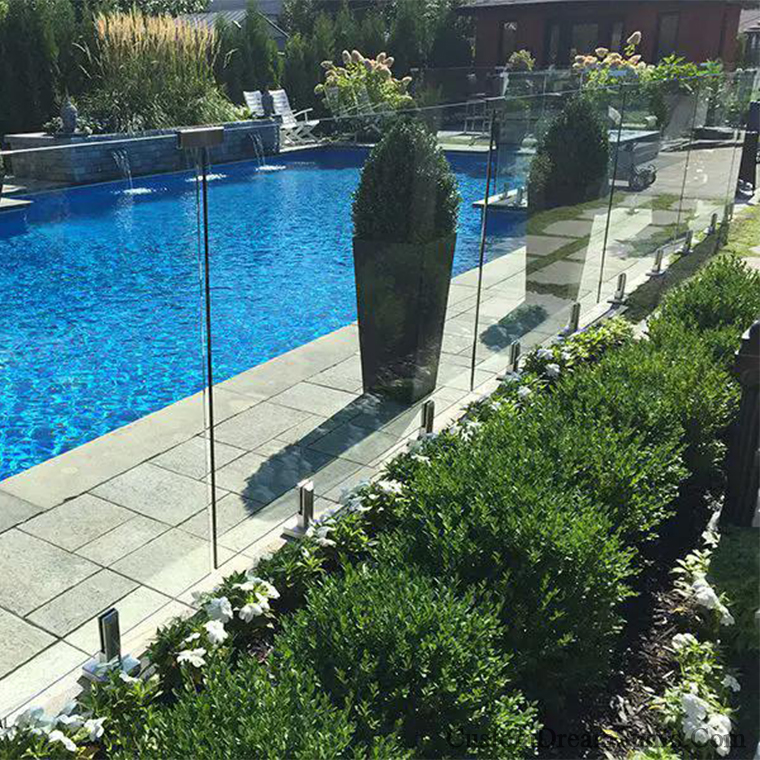
28. Glass Panel Fence with a Flowering Hedge Border
This design is so successful because it layers man-made perfection with natural beauty. The glass fence is a feat of engineering—perfectly clear, perfectly aligned, with polished chrome spigots. It represents clean, modern order. Right next to it, the low green hedge with its delicate white flowers is soft, organic, and slightly untamed. This contrast between the sterile perfection of the glass and the living, breathing beauty of the hedge is what creates the serene, sophisticated mood. Each element enhances the other.
⭐ The One Thing
Glass and landscaping create a high-end look that can be surprisingly straightforward in its costs. The key is the linear footage of the fence and the maturity of the plants.
- Frameless Glass Fence (Installed): $150 – $250 per linear foot
- Light Grey Paver Patio (Installed): $20 – $35 per square foot
- Low Hedge (e.g., boxwood, dwarf gardenia): $30 – $60 per plant
- Large Black Planters & Plants: $500 – $1,200
- TOTAL (for 60ft fence & 200sqft patio): $14,500 – $26,000
Budget alternative: Use semi-frameless glass panels and smaller, younger plants for the hedge to save 30-40%.
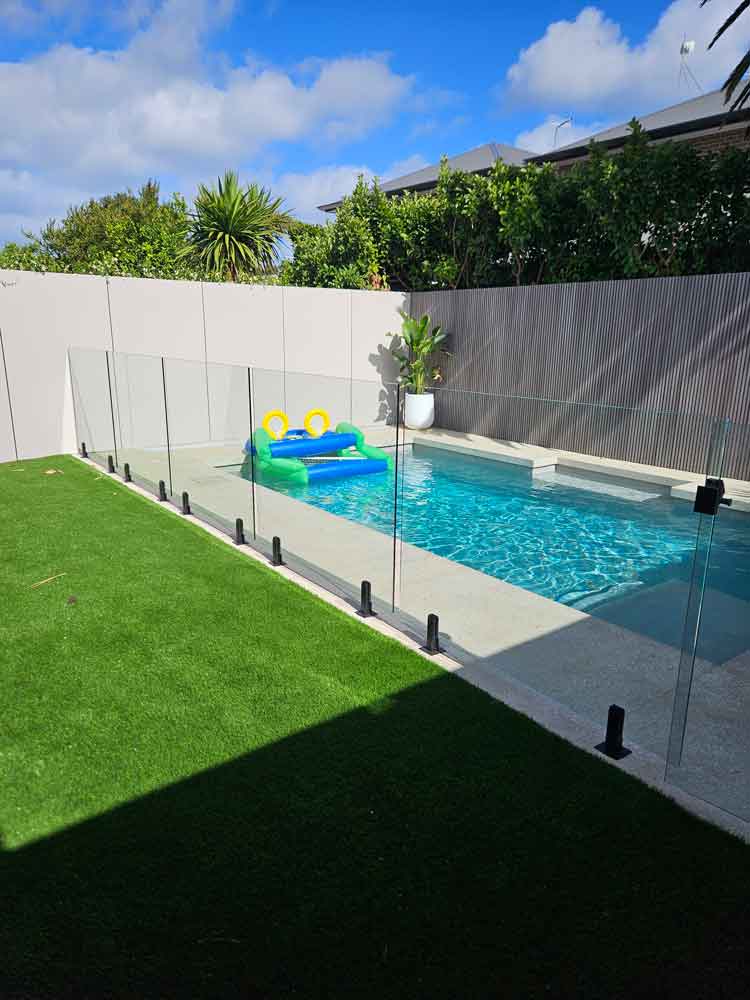
29. Modern Glass Fence with Black Posts and Artificial Turf
A semi-frameless glass fence with posts, like the one shown here, is a fantastic way to get the high-end look of glass on a tighter budget. A fully frameless system requires thicker, more expensive glass and specialized spigots. This system uses slightly thinner panels supported by sturdy aluminum posts. You can get a very similar open, modern feel for 20-30% less than a frameless installation. Look for kits online or at home improvement stores from brands like Fortress or VEVOR to save even more if you’re comfortable with a serious DIY project.
📏 Scale Guide
While artificial turf is low-maintenance, it isn’t *no*-maintenance. To keep it looking fresh, you need to rinse it down weekly or bi-weekly to wash away dust and pollen. You’ll also need to periodically use a stiff-bristled broom or a power broom to fluff up the fibers in high-traffic areas to prevent them from matting down. Finally, if you have pets, you’ll need to use an enzymatic cleaner to treat spots to prevent odors from developing, especially in the heat.
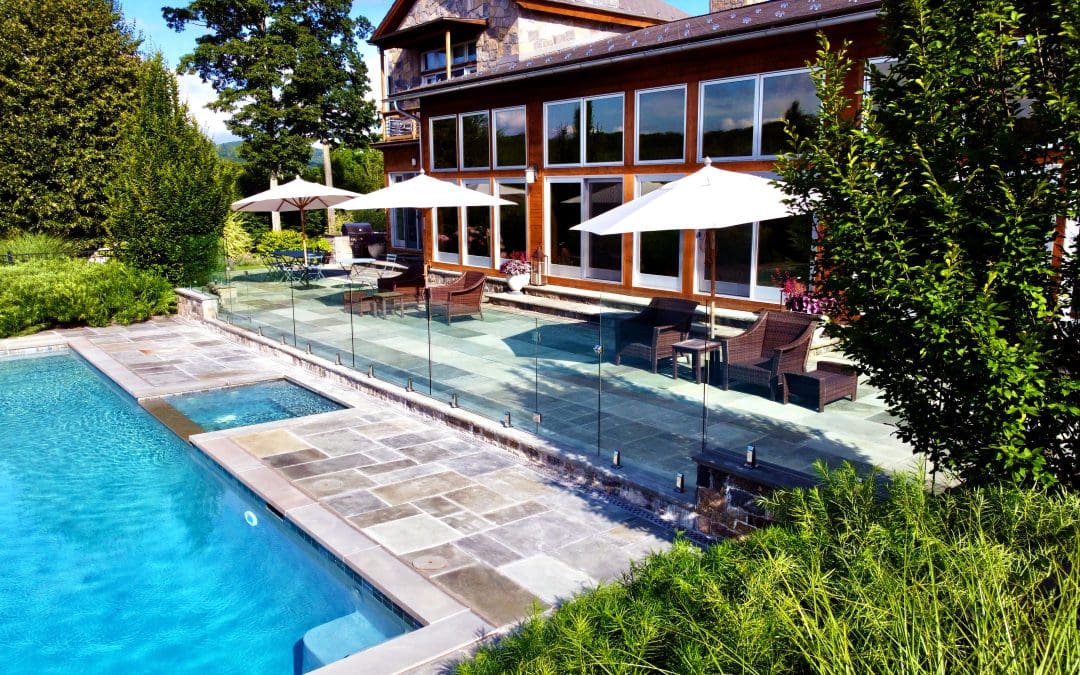
30. The ‘Smart’ Investment: Frameless Glass for Lasting Value
There’s a reason real estate listings often call out a ‘frameless glass pool fence’ as a luxury feature. This type of fence has become synonymous with high-end design and a modern, seamless aesthetic. In 2026, as homeowners continue to invest in creating resort-like backyards, a glass fence is seen as a smart upgrade that not only enhances the daily enjoyment of the home but also adds tangible curb appeal and property value. It signals to potential buyers that the home is updated, well-maintained, and designed for sophisticated outdoor living.
🎯 What Makes It Work
that makes this a smart investment is its timelessness. While other fence styles can look dated (think of 90s green chain link or 2000s ornate aluminum), the minimalist nature of glass transcends trends. Because it’s transparent, it doesn’t clash with changing architectural styles or landscape designs. It simply disappears, allowing the beauty of the pool and garden to take center stage. Its ability to remain stylish and relevant for decades is what protects its value long-term, unlike more trend-driven choices.
Ready to Define Your Summer Escape?
With a little planning, the right fence can do more than just secure your pool—it can completely define your backyard’s personality. It’s the final frame on your perfect summer picture. Now that you’re armed with all this inspiration, head back to your Pinterest board and start creating the ultimate vision for your own private oasis.