Yellow kitchens are making a bold comeback in 2026, evolving far beyond the dated tones of decades past. Today’s homeowners are embracing everything from soft buttery hues to vibrant mustard accents, driven by a desire for warmth, optimism, and personality in the heart of the home. Pinterest searches for yellow kitchen inspiration have surged as Americans seek spaces that feel both inviting and distinctly original. Whether you’re considering a full renovation or simple updates, yellow offers endless possibilities to transform your cooking space into something truly special. In this guide, you’ll discover inspired ideas that blend color psychology, practical design, and the latest trends shaping kitchens across the country.
1. Soft Butter Cabinets with Marble Countertops
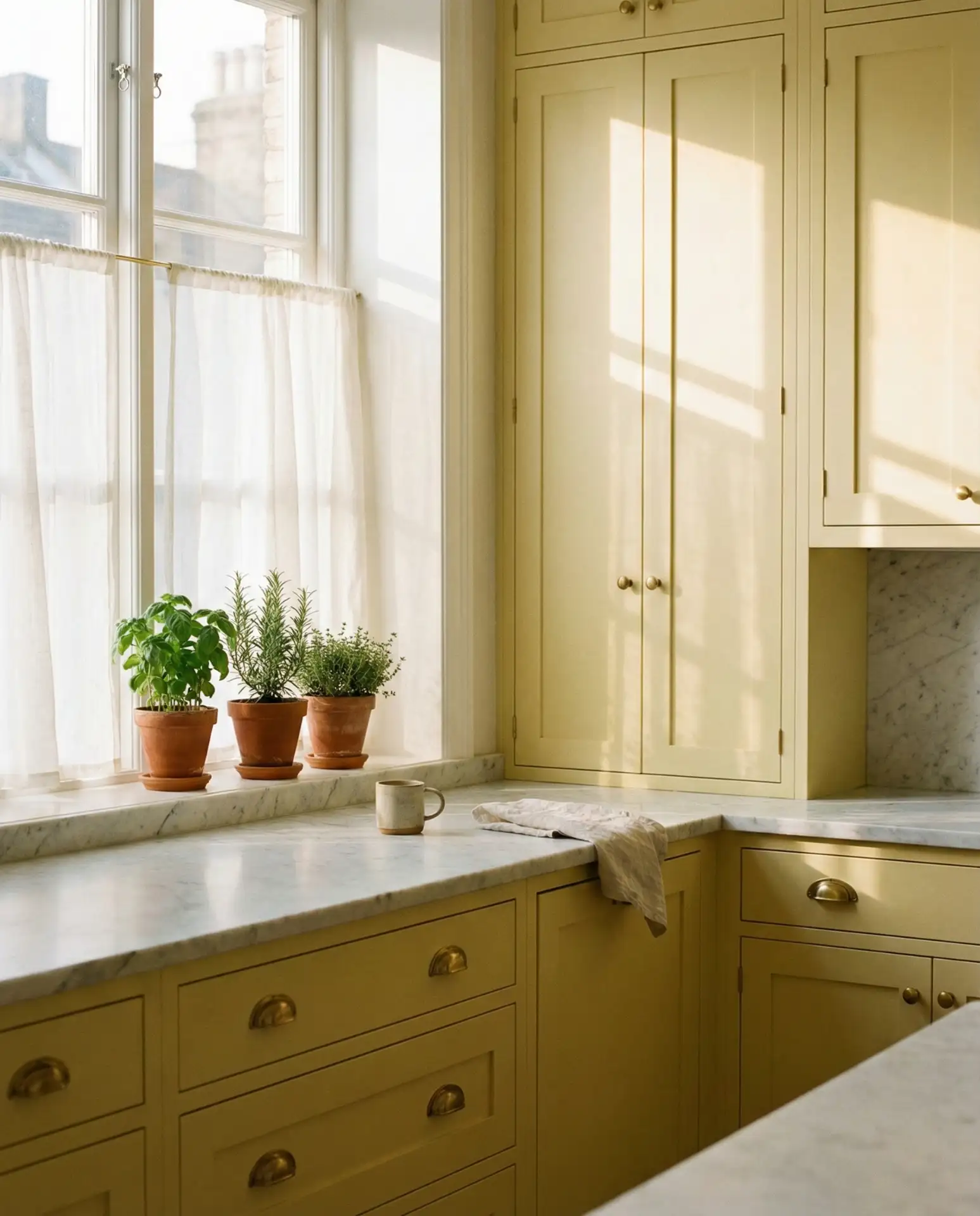
Imagine walking into a kitchen where butter-toned cabinets glow softly under morning light, paired with cool white marble that balances the warmth without overwhelming it. This approach works beautifully in open-plan homes where the kitchen flows into living areas, creating a cohesive and calming atmosphere. The gentle yellow reads as neutral enough for long-term appeal, yet distinct enough to feel intentional and curated.
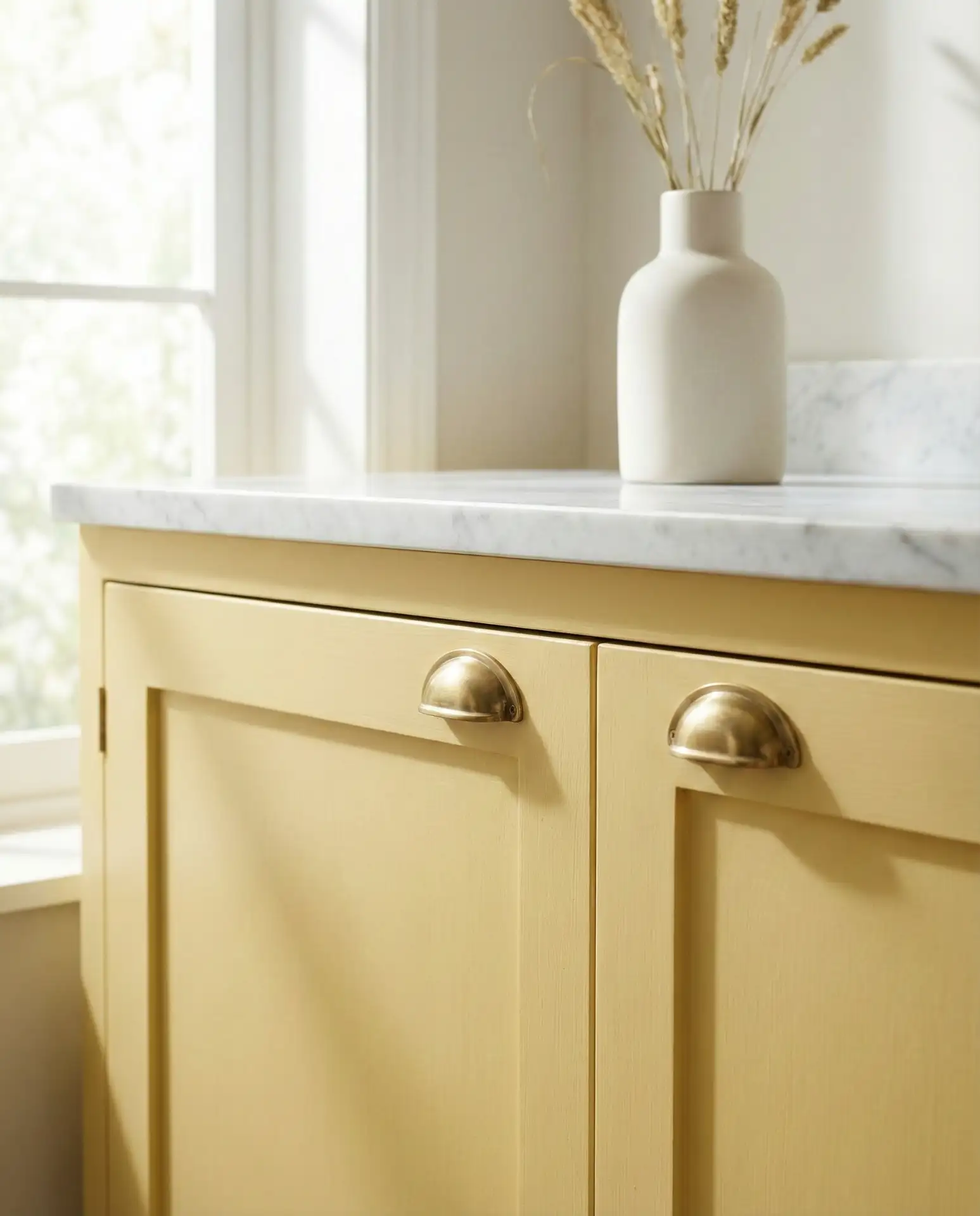
One mistake homeowners make is pairing butter cabinets with overly warm countertops, which can flatten the palette. Instead, choose cool-toned stone or quartz to let the yellow breathe and maintain contrast. This balance keeps the space feeling fresh rather than monochromatic, ensuring the cabinetry remains the focal point without competing with surrounding finishes.
2. Vintage Yellow Appliances in Modern Settings
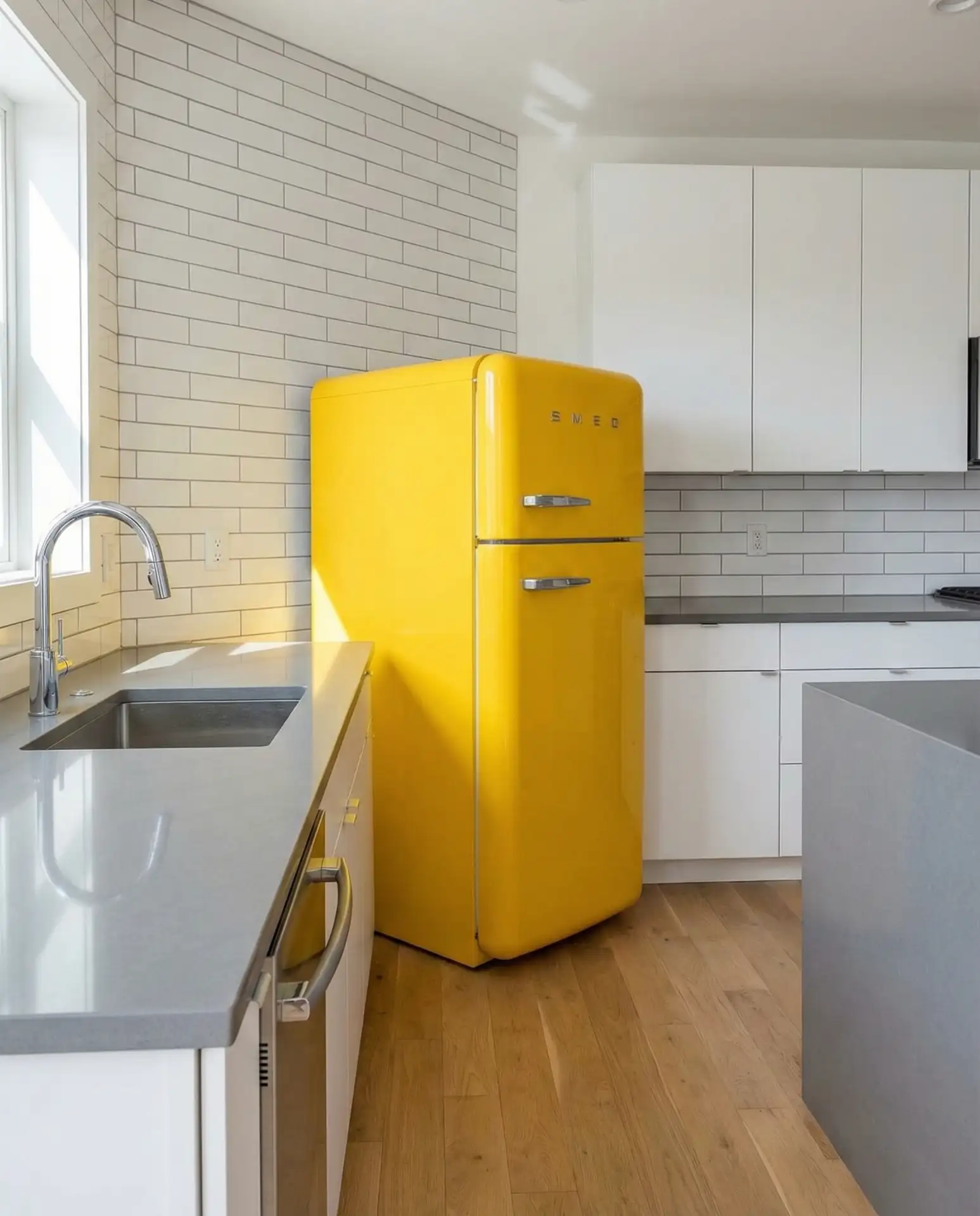
Retro-inspired appliances in cheerful yellow shades bring instant character to contemporary kitchens, blending nostalgia with current aesthetic sensibilities. Think vintage refrigerators or ranges that reference mid-century design but feature today’s energy-efficient technology. This trend resonates especially with millennials and Gen X homeowners who remember these tones from childhood but want them executed with modern sophistication.
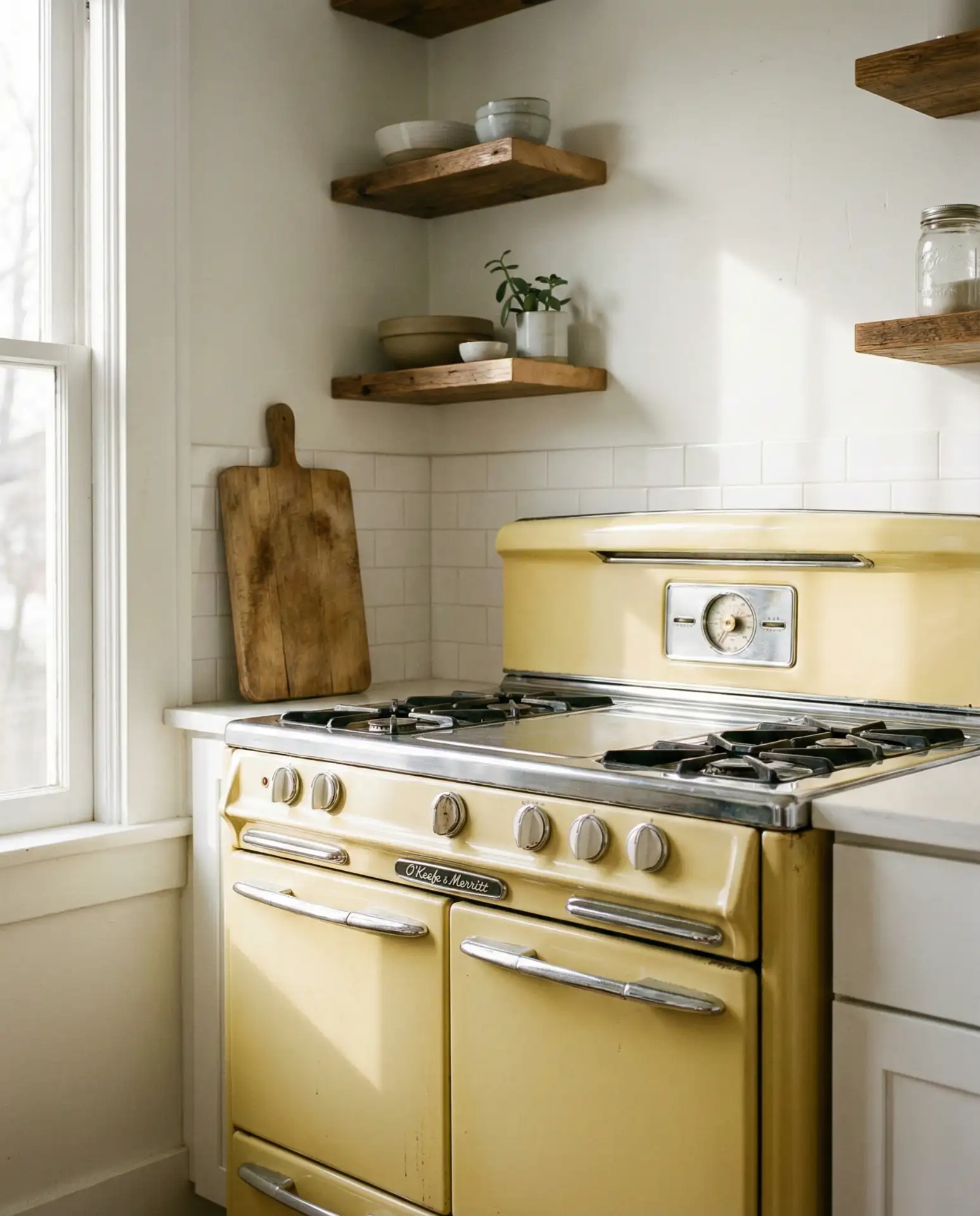
Where this works best is in kitchens that already lean minimal or Scandinavian, where a single statement appliance can anchor the room without requiring a full color commitment. The appliance becomes a conversation piece that elevates the entire space, proving that vintage yellow doesn’t have to mean vintage everything.
3. Mustard Accent Walls Behind Open Shelving
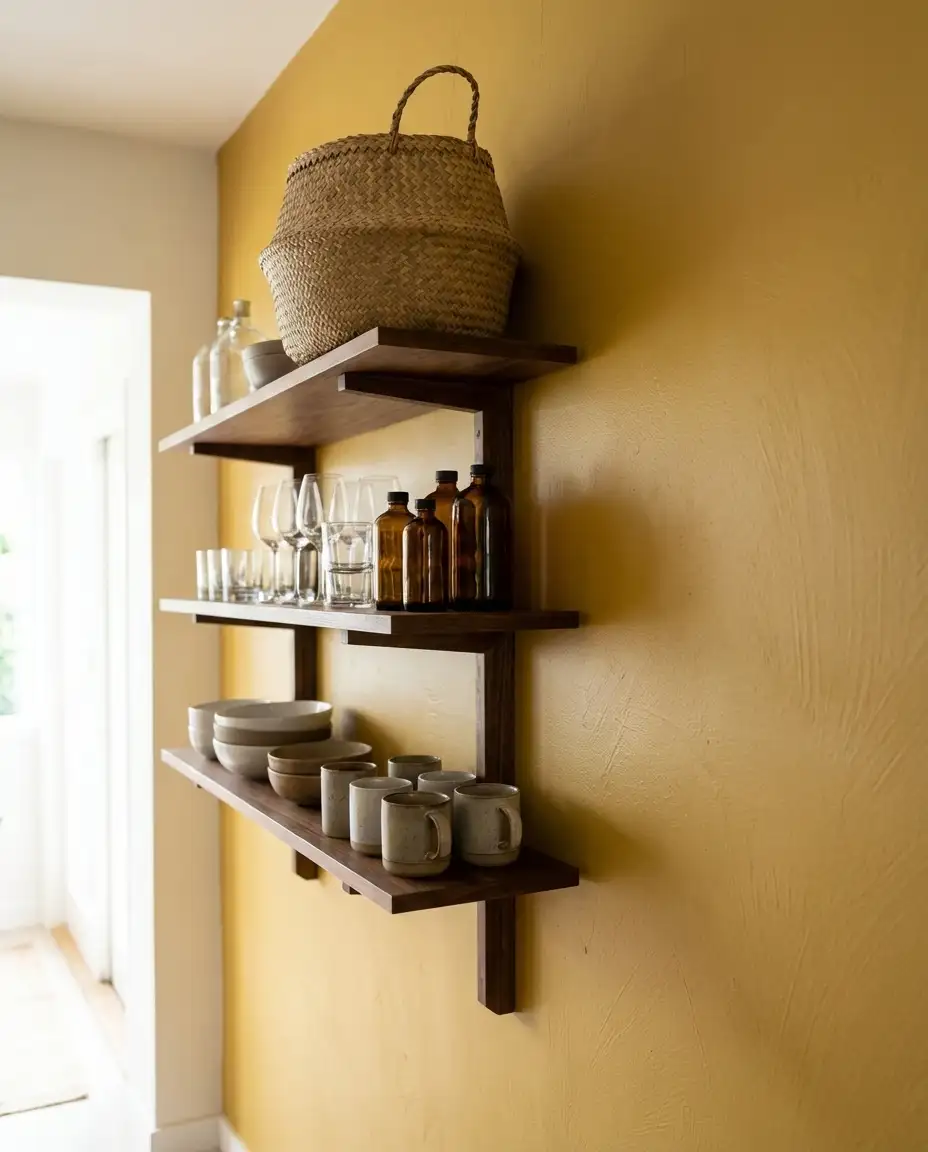
A deep mustard accent wall creates dramatic impact when positioned behind floating shelves, allowing dishware and glassware to pop against the rich backdrop. This design choice works particularly well in galley kitchens or smaller spaces where a single bold wall can define the room without shrinking it visually. The earthy tone pairs beautifully with natural wood shelves and ceramic pieces.
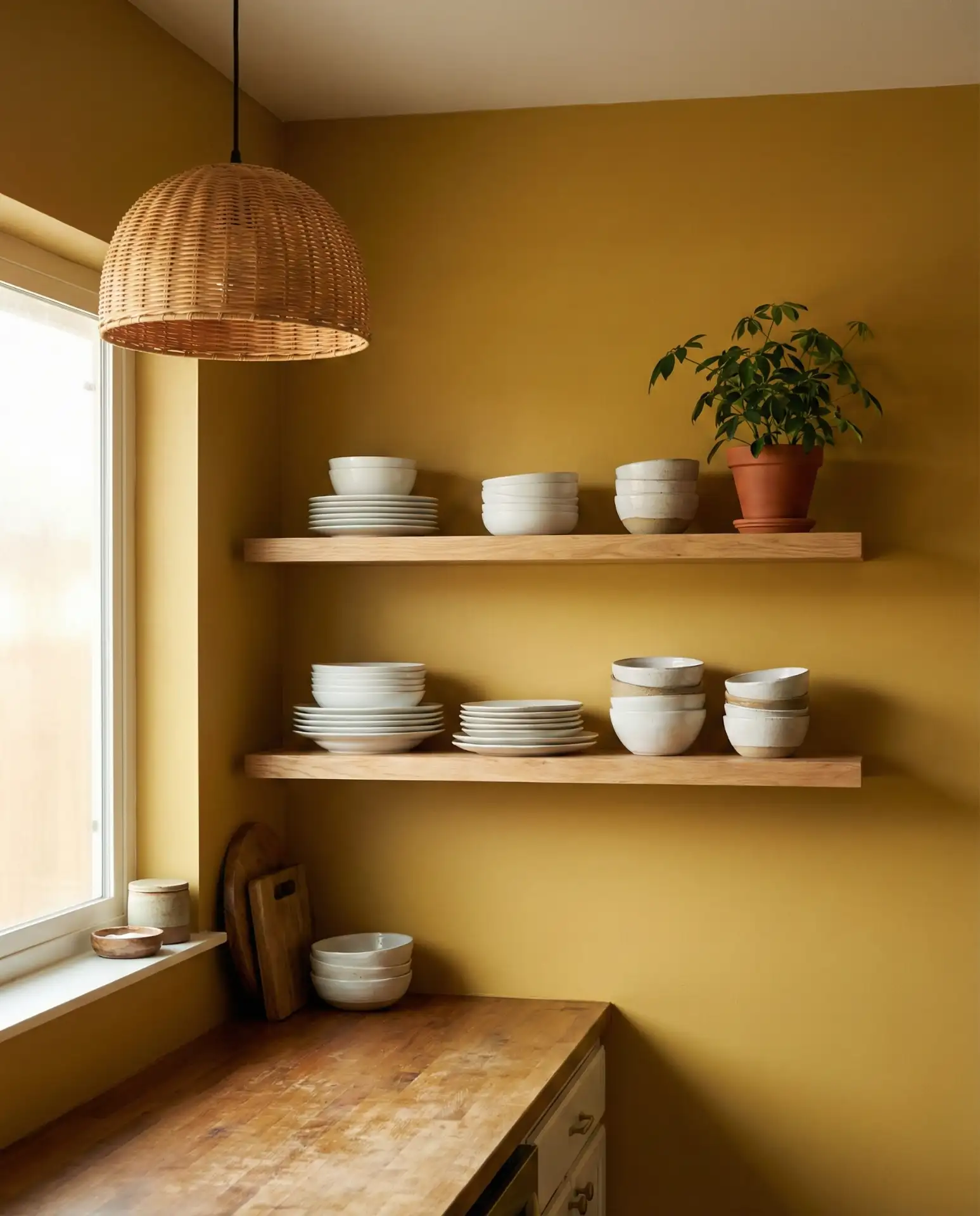
In the Pacific Northwest, where natural light can be softer and grayer, mustard walls bring warmth that compensates for overcast days. Homeowners in Seattle and Portland have increasingly adopted this trick, using color to inject energy into spaces that might otherwise feel too cool or subdued year-round.
4. Pale Yellow Subway Tiles with White Grout
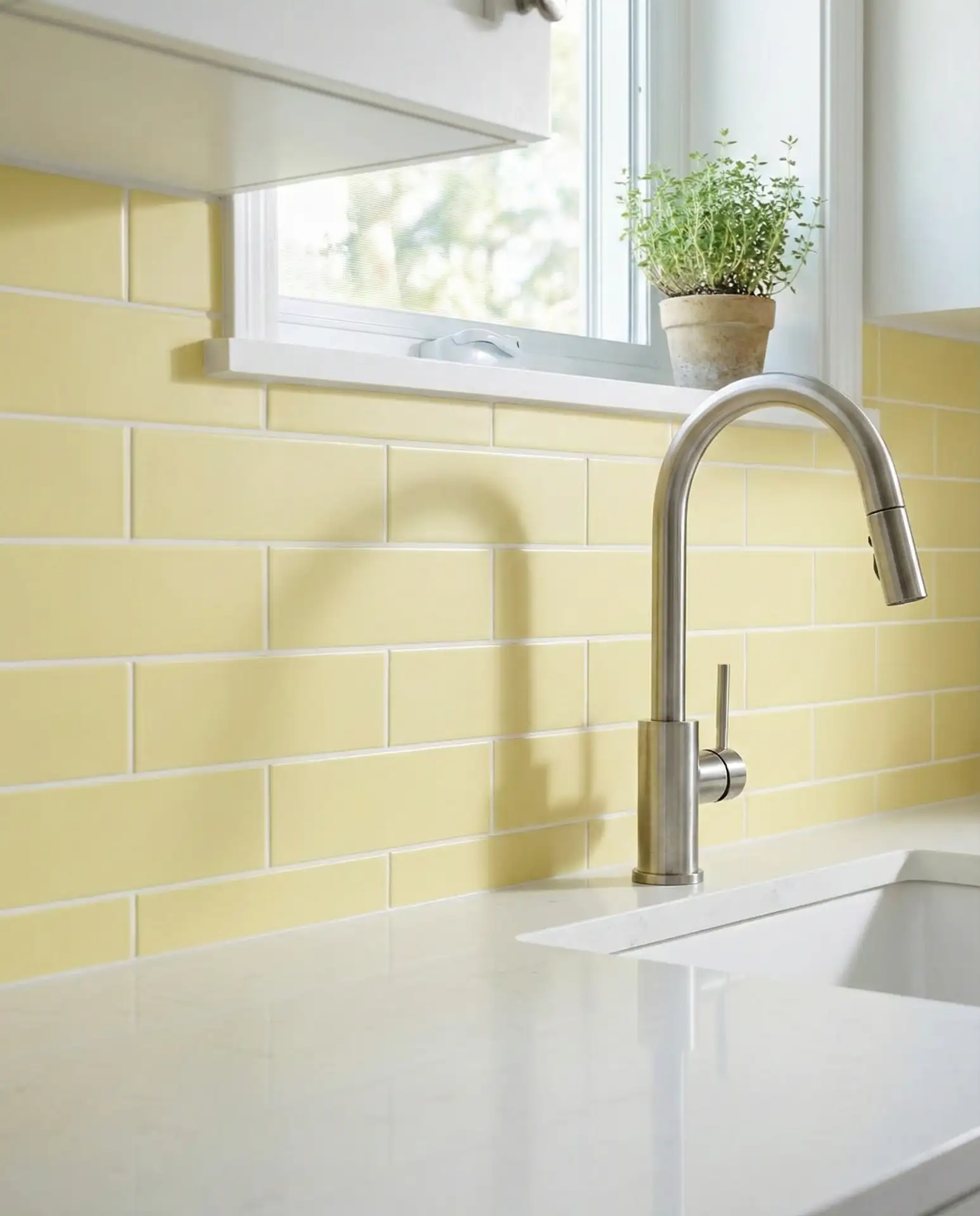
Subway tiles in pale yellow offer a subtle way to introduce color without overwhelming the senses, especially when paired with crisp white grout that emphasizes the classic grid pattern. This approach appeals to homeowners who want the familiarity of subway tile but crave something beyond stark white or gray. The result feels fresh, timeless, and quietly sophisticated.
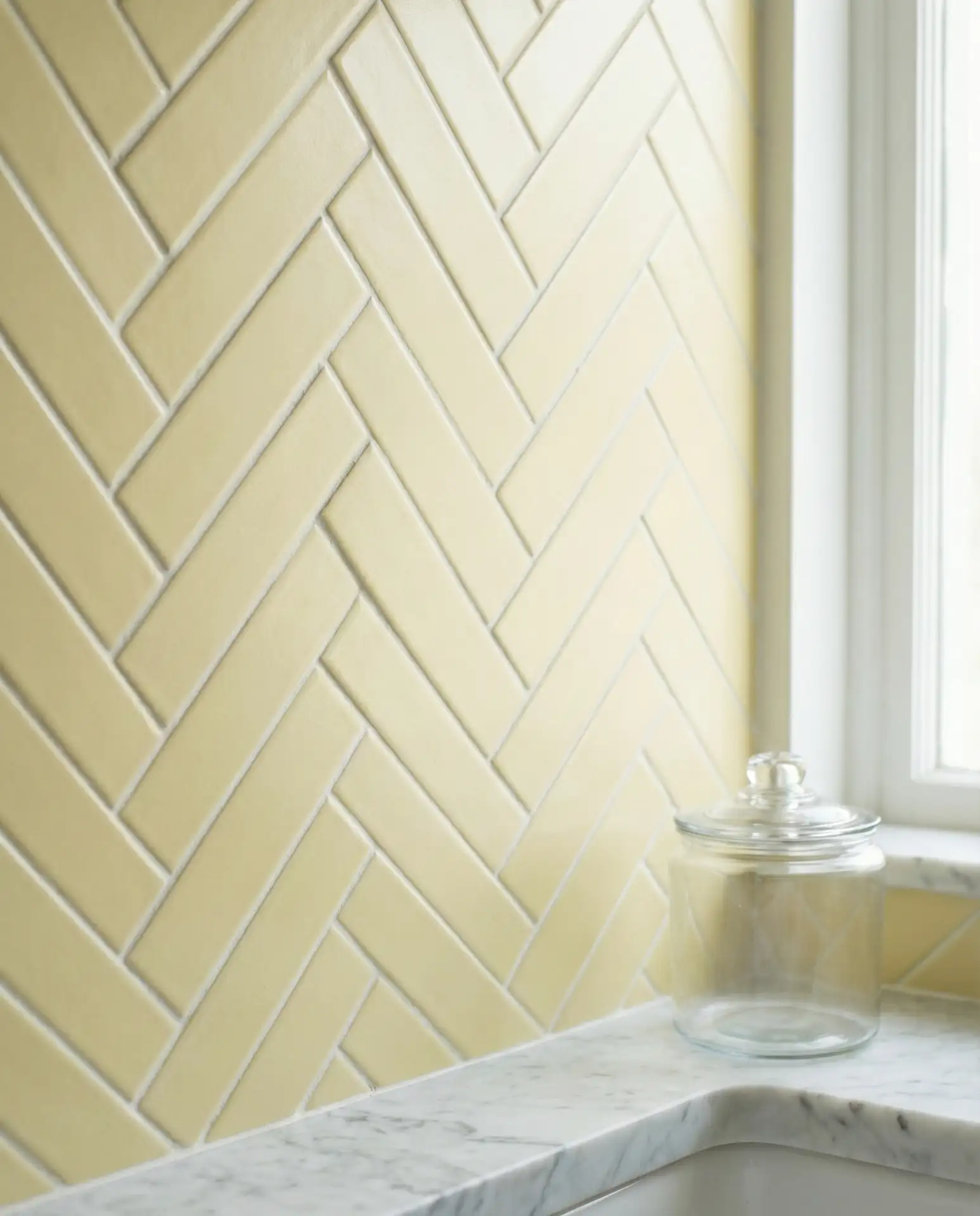
Budget-conscious renovators appreciate that subway tile remains one of the most affordable backsplash options, typically ranging from three to eight dollars per square foot before installation. Choosing pale yellow instead of white costs roughly the same but delivers significantly more personality, making it a smart investment for those looking to maximize impact without breaking the bank.
5. Light Yellow Kitchen Island with Seating
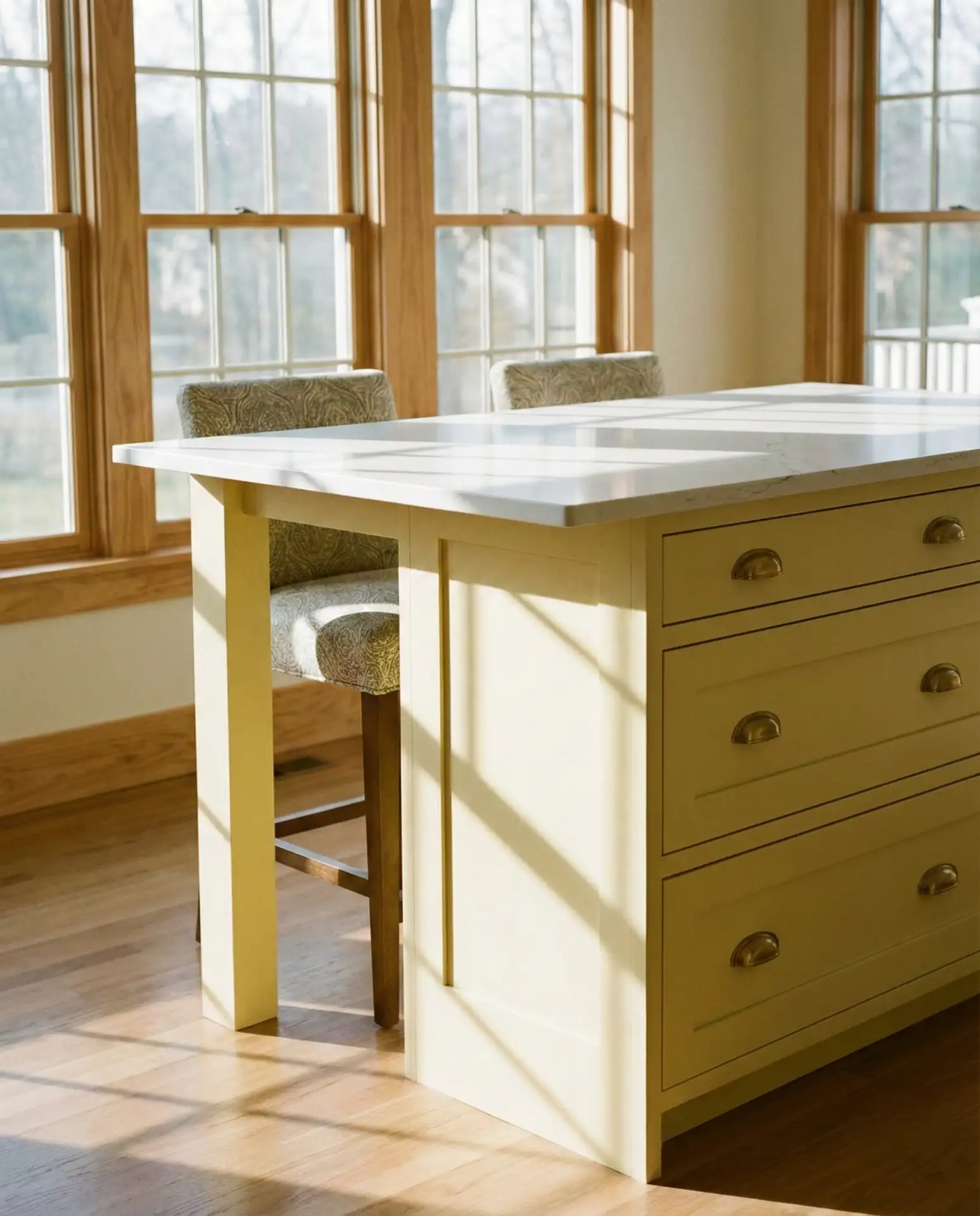
A light yellow island serves as the heart of a kitchen, especially in open-concept layouts where it functions as both workspace and gathering spot. When the perimeter cabinets remain neutral, the island becomes an opportunity for playful color that doesn’t commit the entire room. This strategy allows homeowners to experiment with yellow while maintaining resale flexibility.
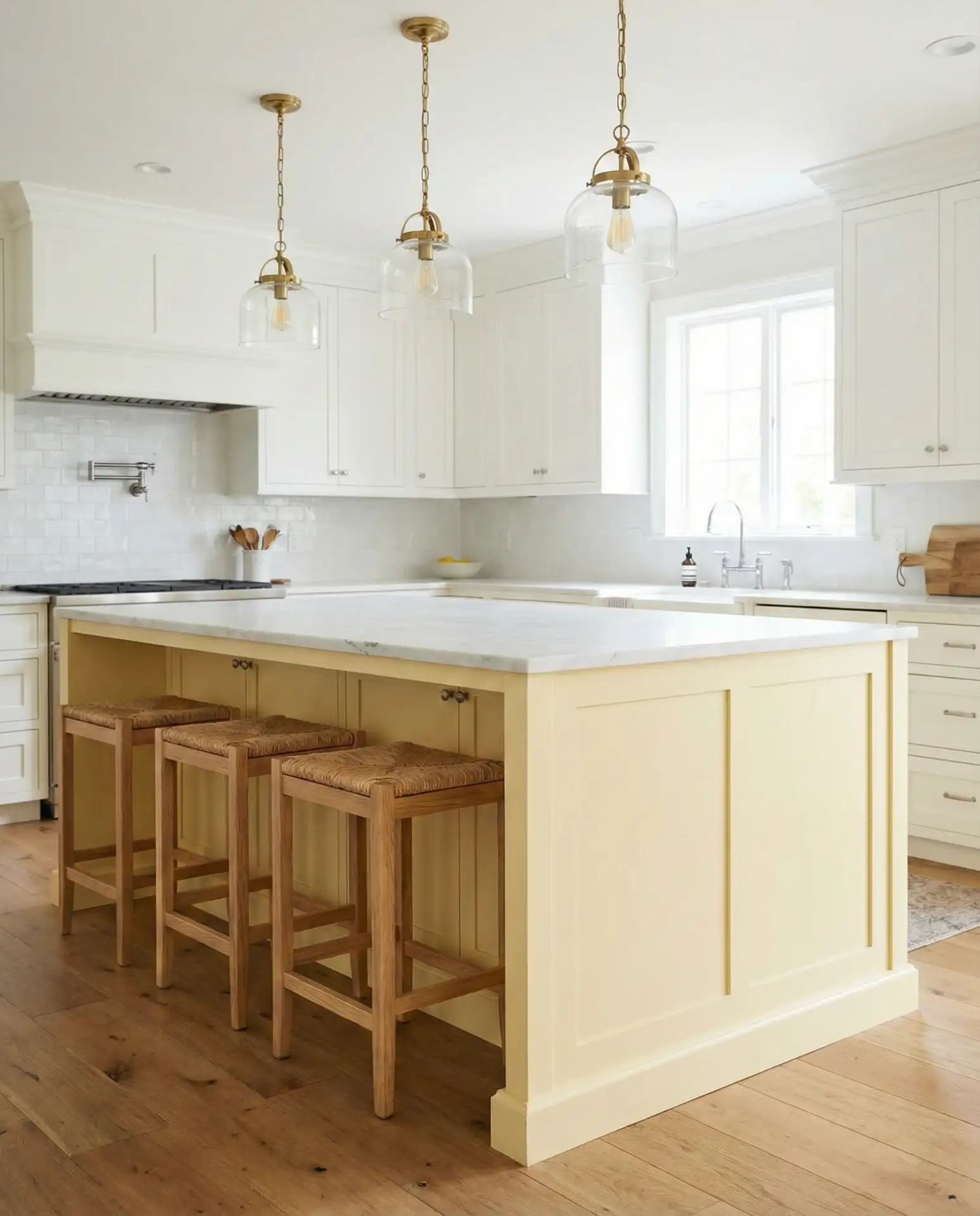
A design editor I spoke with recently noted that homeowners often regret painting their entire kitchen a bold color but rarely regret a colorful island. The piece functions almost like furniture, making it psychologically easier to embrace and physically easier to change if tastes shift, which offers the best of both worlds for risk-averse decorators.
6. Yellow and Blue Coastal Kitchen Combination
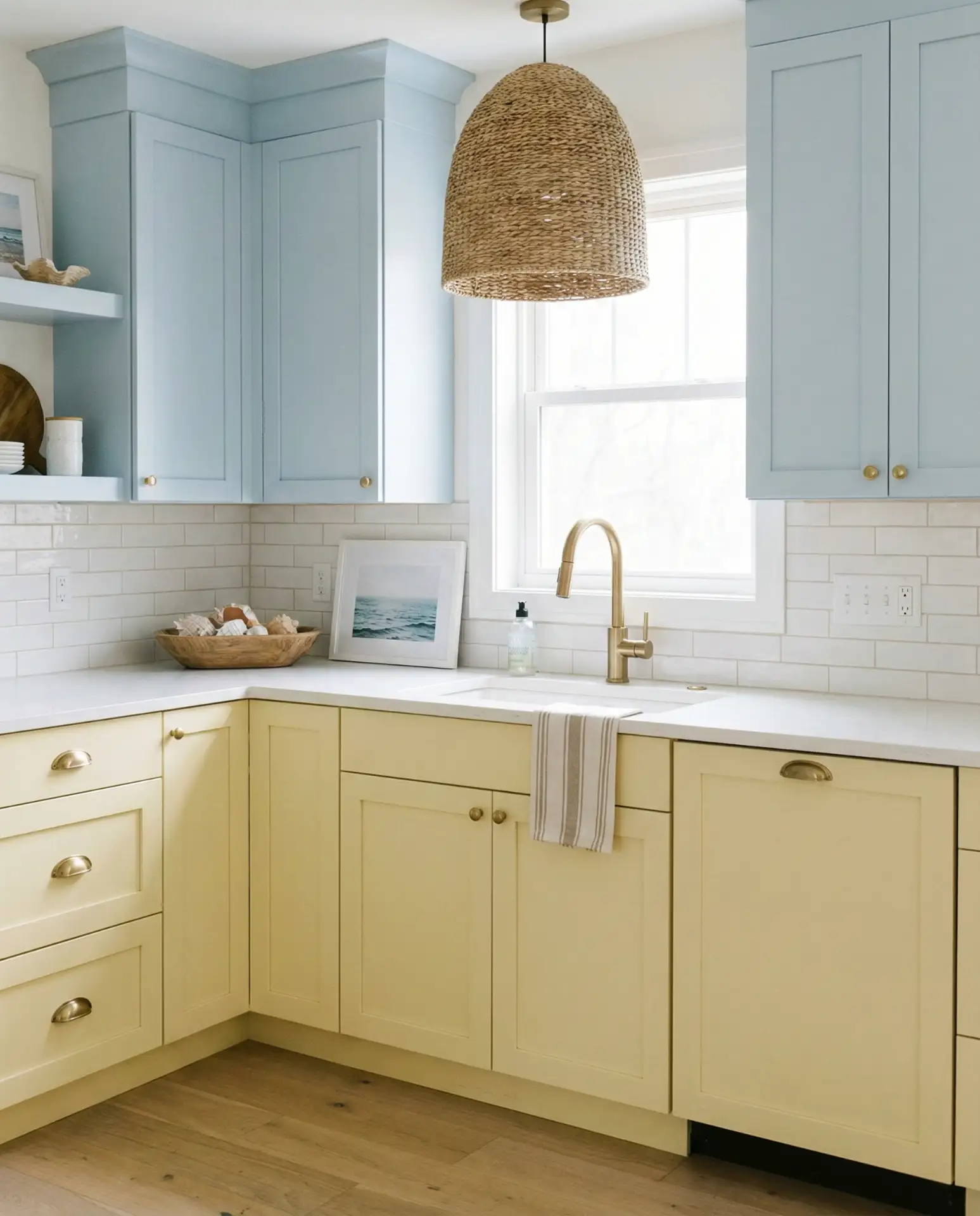
The pairing of sunny yellow with blue creates an unmistakably coastal vibe that feels appropriate from New England shorelines to California beaches. This combination taps into classic nautical themes while remaining vibrant and modern, especially when executed with soft tones rather than primary brights. Think butter yellow lower cabinets with powder blue uppers, or the reverse.
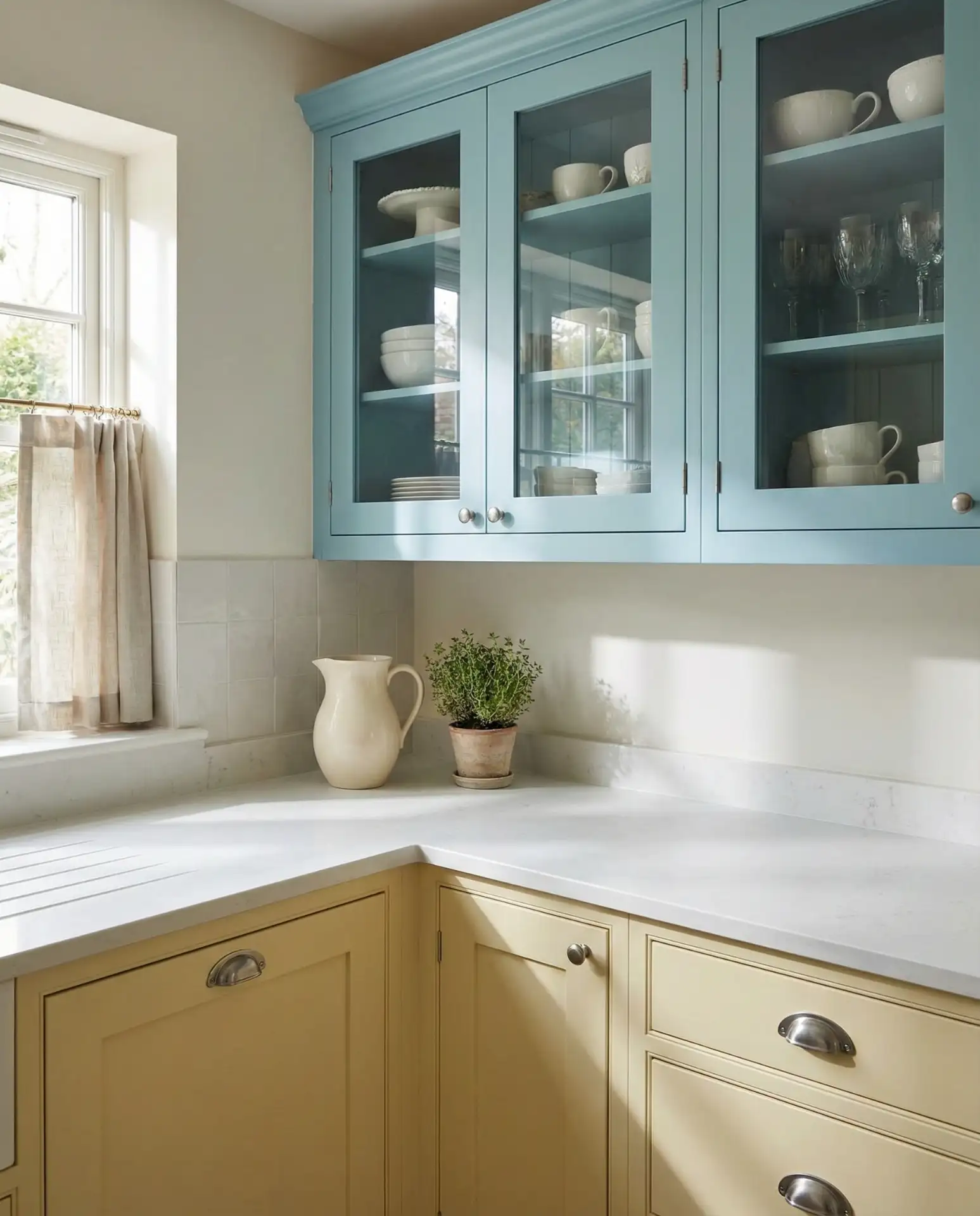
This color scheme works best in homes within ten miles of water, where the palette reinforces a sense of place and connects interior spaces to the natural environment outside. Homeowners in beach communities from the Outer Banks to the Pacific Northwest have long understood how yellow and blue can anchor a kitchen in its geographic context.
7. Pastel Yellow Walls with White Cabinets
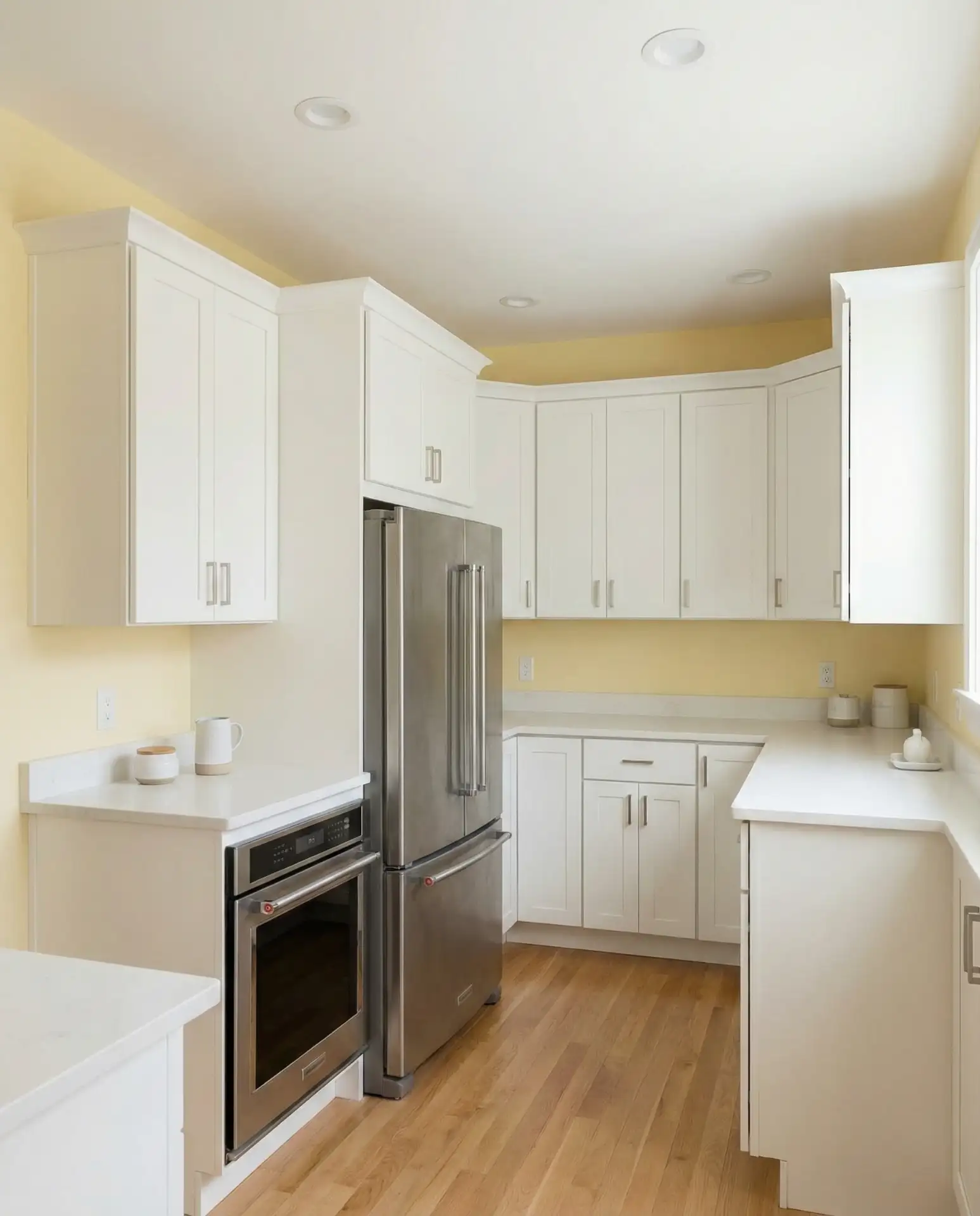
Painting walls with white cabinets in a pastel yellow creates an envelope of warmth that makes kitchens feel instantly more inviting. This approach is particularly effective in homes with north-facing kitchens that receive cooler, indirect light throughout the day. The soft yellow compensates for the lack of warm sunlight while keeping the space feeling bright and open.
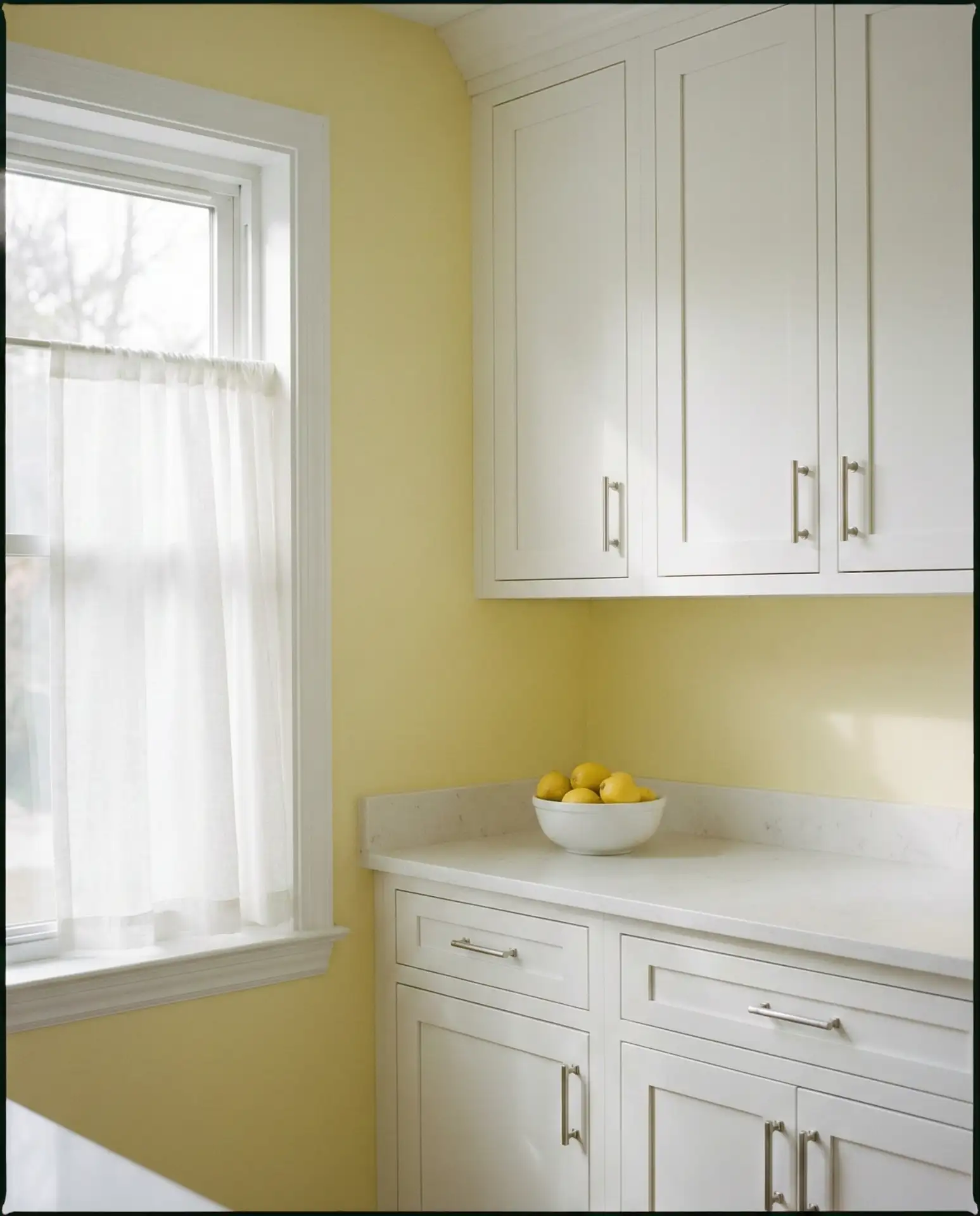
Real homeowners often report that pastel yellow walls make their kitchens the room where family naturally congregates, even when they’re not cooking. The color seems to trigger a psychological response that encourages lingering and conversation, transforming a purely functional space into the true social center of the home.
8. Yellow and Green Maximalist Kitchen Design
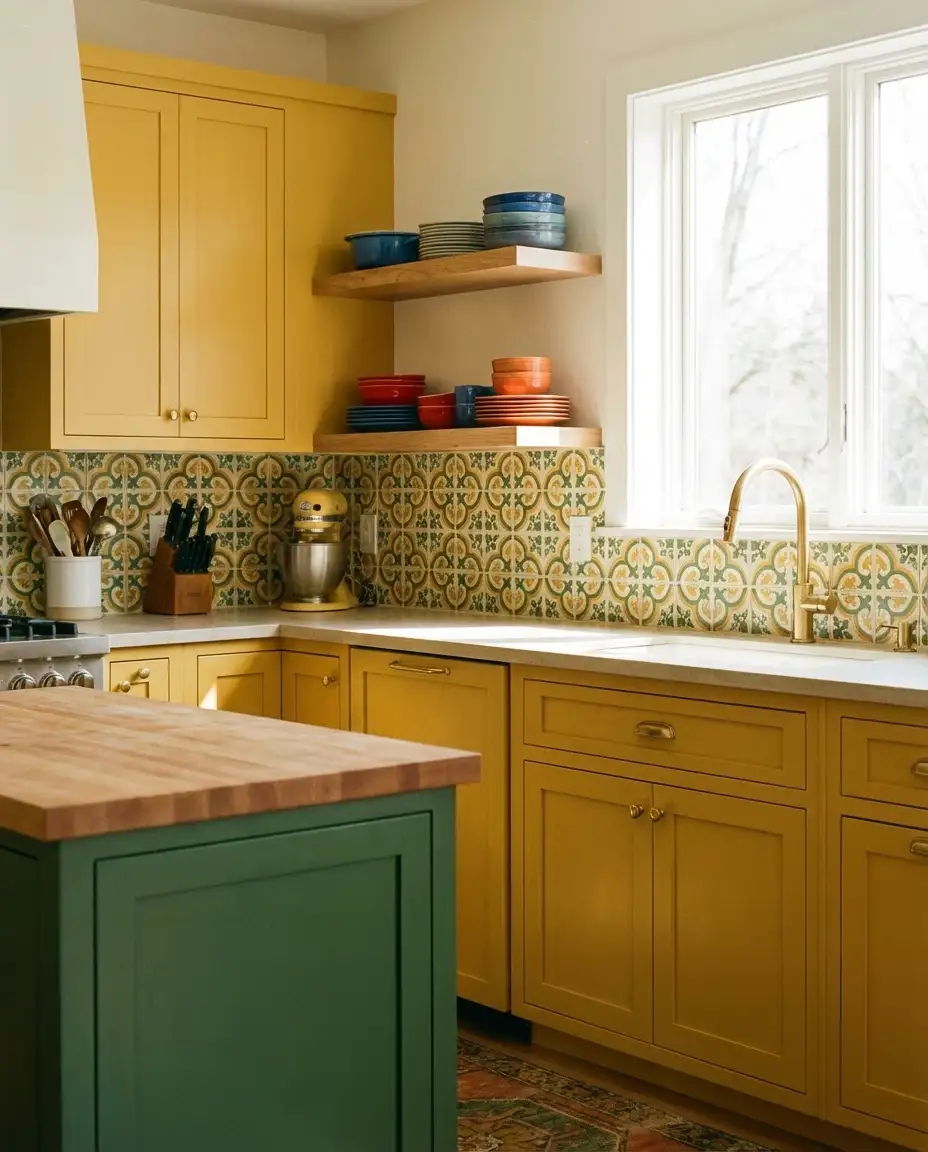
For those who embrace pattern and saturation, combining yellow with green creates a bold, nature-inspired kitchen that feels anything but boring. This palette channels garden energy indoors, whether through painted cabinets, patterned tile, or colorful dishware on display. The look appeals to creative homeowners who view their kitchen as an expression of personality rather than simply resale value.
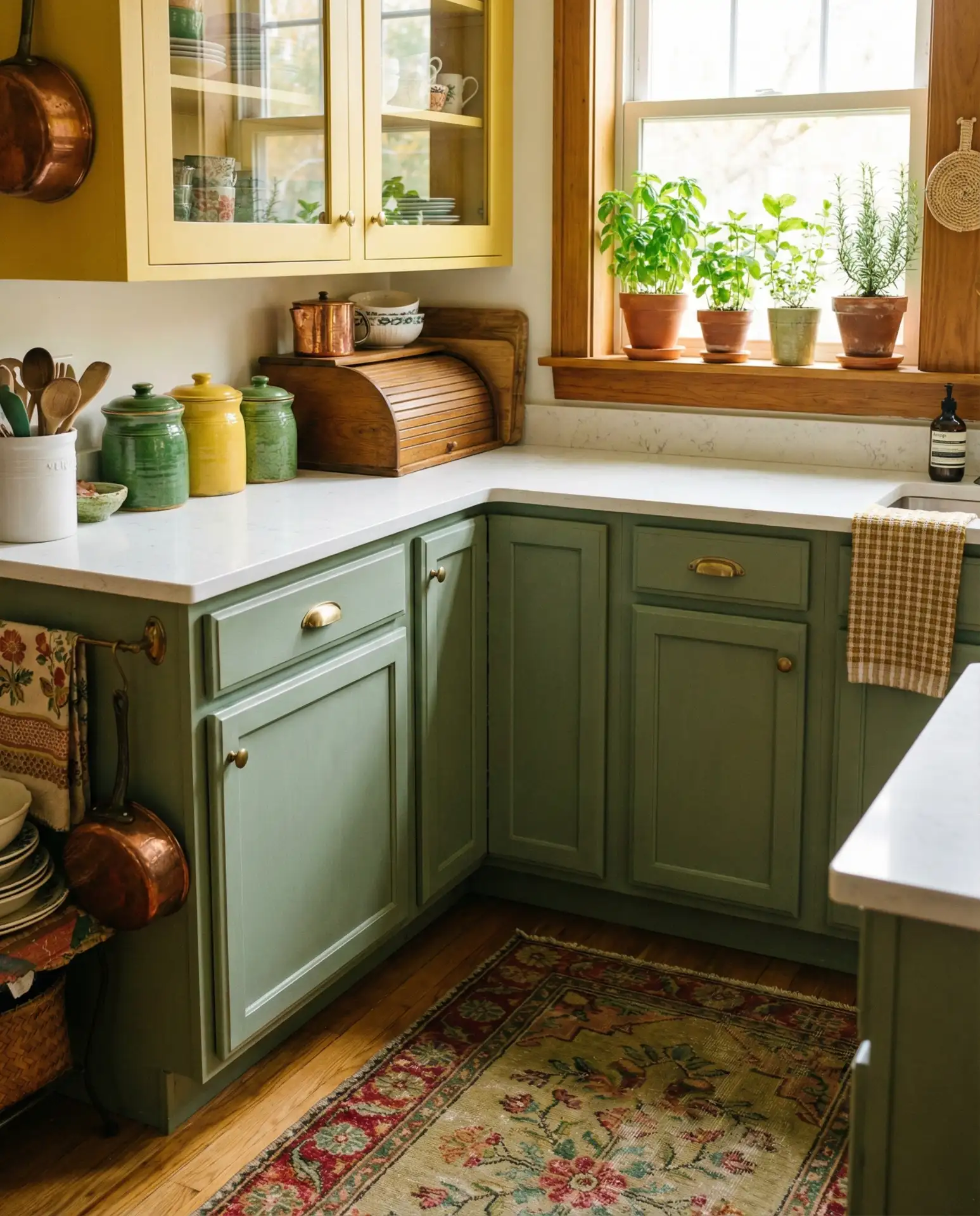
Expert designers often suggest that yellow and green kitchens benefit from ample natural light and high ceilings, which prevent the color saturation from feeling claustrophobic. In smaller or darker kitchens, this palette can overwhelm, so it’s worth considering whether your space has the architectural bones to support such an energetic scheme.
9. Yellow Painted Kitchen Island with Butcher Block
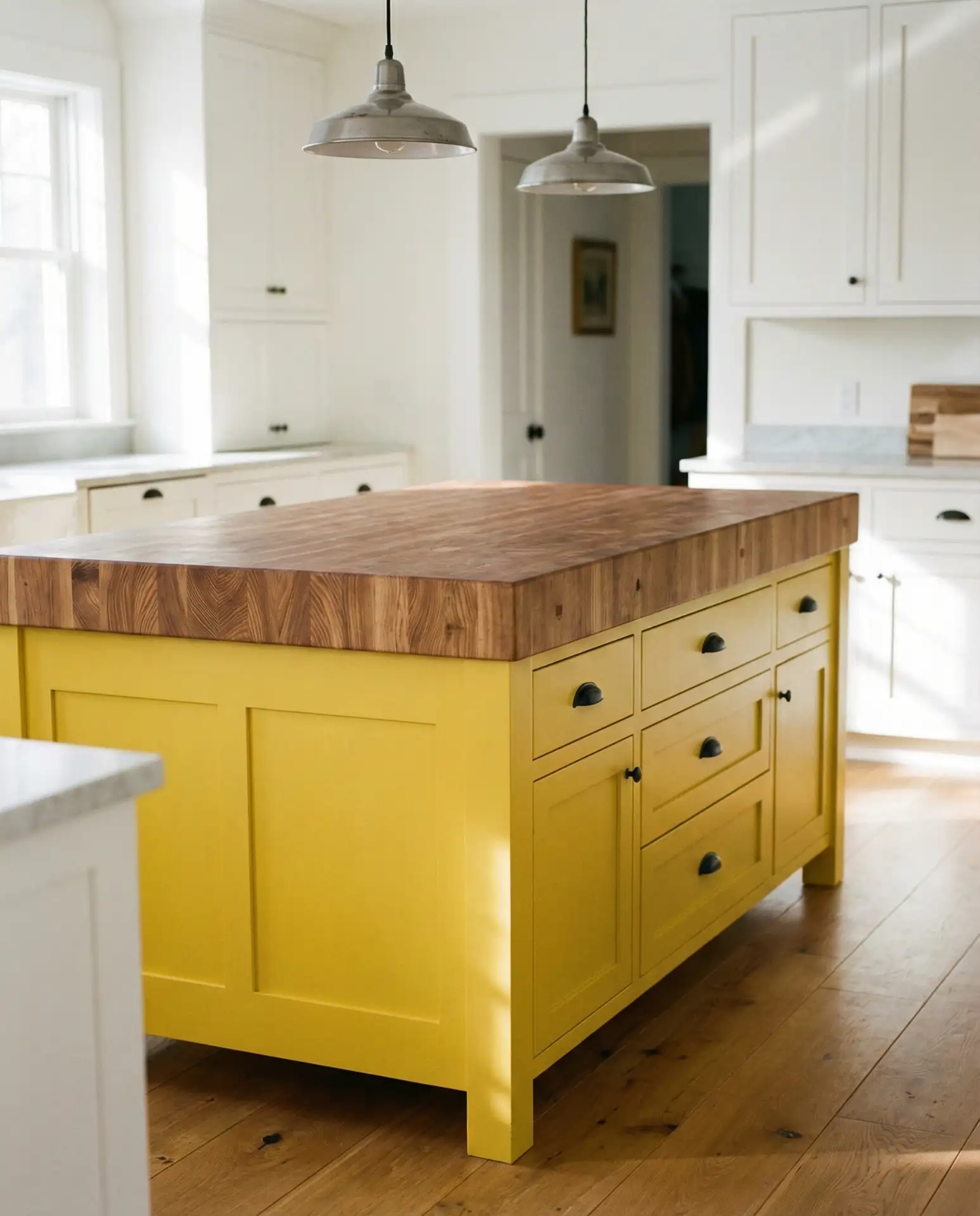
A cheerful yellow island topped with warm butcher block creates a farmhouse-meets-contemporary look that feels grounded and approachable. The natural wood countertop introduces texture and practical function for meal prep, while the painted base injects personality. This combination works especially well in kitchens that blend rustic and modern elements throughout the home.
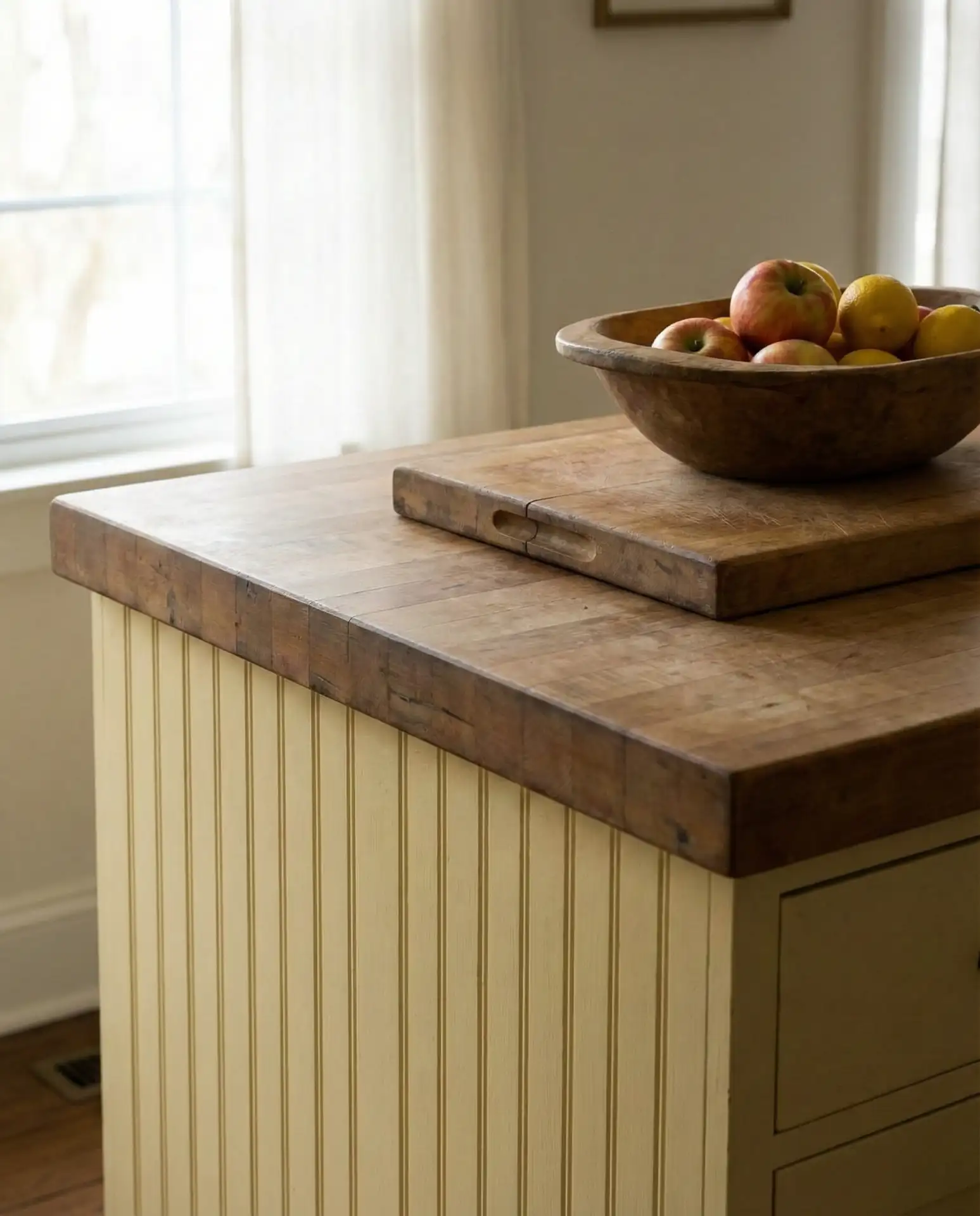
In the Midwest and South, where farmhouse style remains deeply popular, this approach offers a way to honor regional design traditions while incorporating current color trends. The yellow feels fresh and optimistic, updating the familiar butcher block island without abandoning the warmth and practicality that make it a regional favorite.
10. Soft Yellow and Pink Retro Kitchen
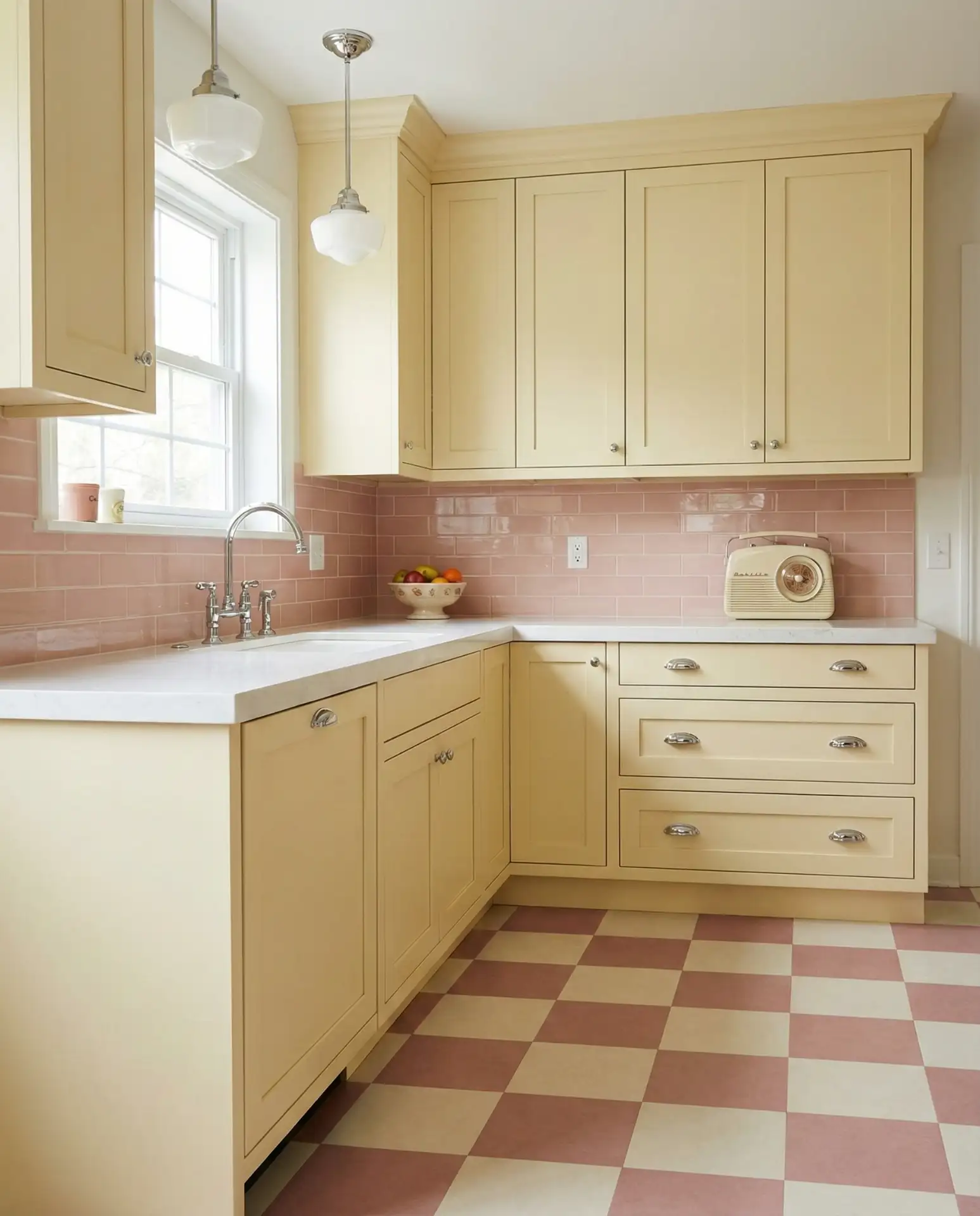
Pairing soft yellow with pink creates a dreamy, retro-inspired kitchen that references mid-century ice cream parlors and vintage diners. This unexpected combination has gained traction on Pinterest as homeowners seek cheerful, dopamine-inducing spaces that break from neutral-heavy trends. When executed with restraint, the palette feels sophisticated rather than juvenile.
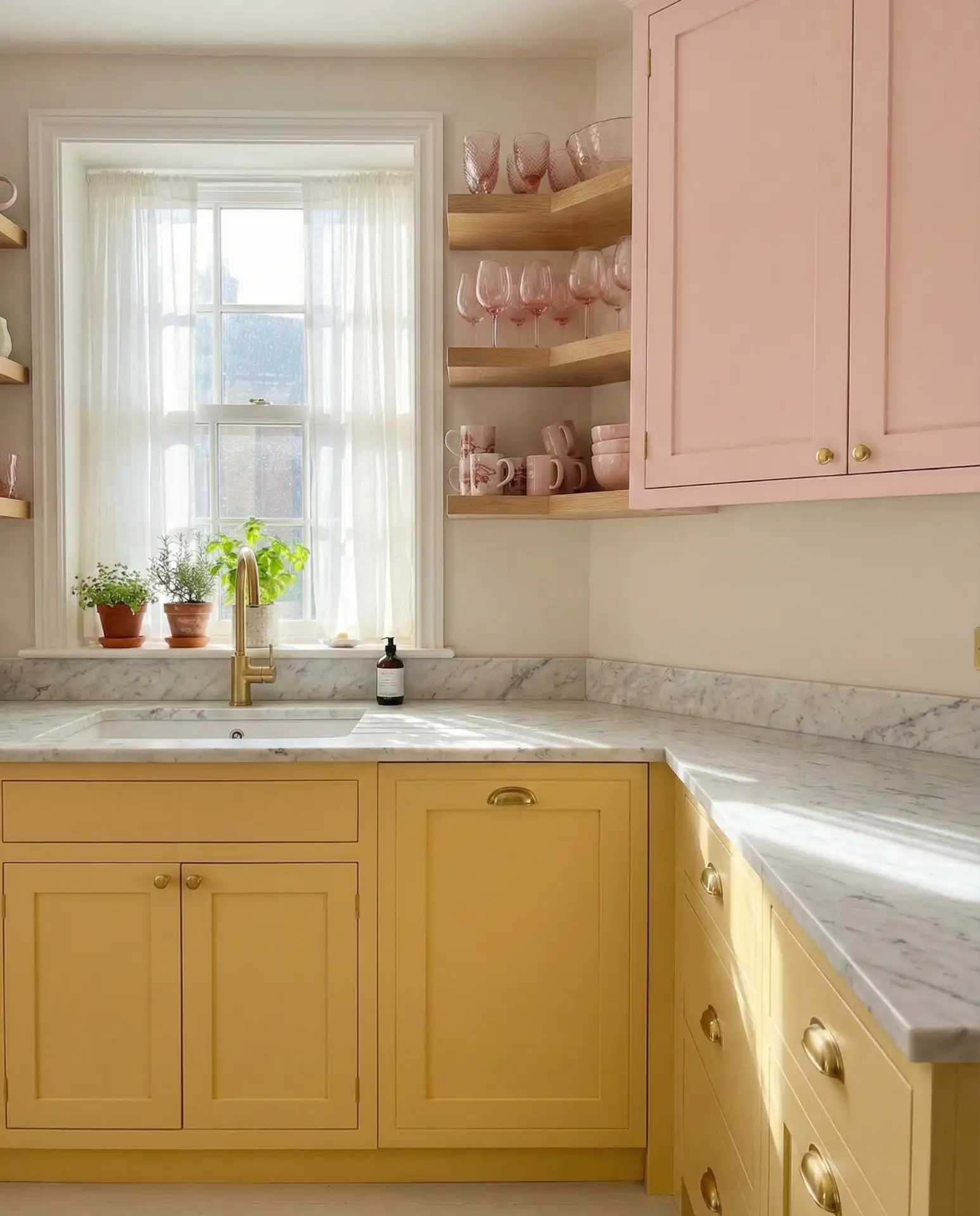
A common mistake is choosing overly saturated versions of both colors, which can read as childish or overwhelming. Instead, opt for one muted tone paired with one brighter accent, allowing the palette to feel balanced and intentional rather than chaotic or saccharine.
11. Yellow Tile Backsplash with Dark Cabinets
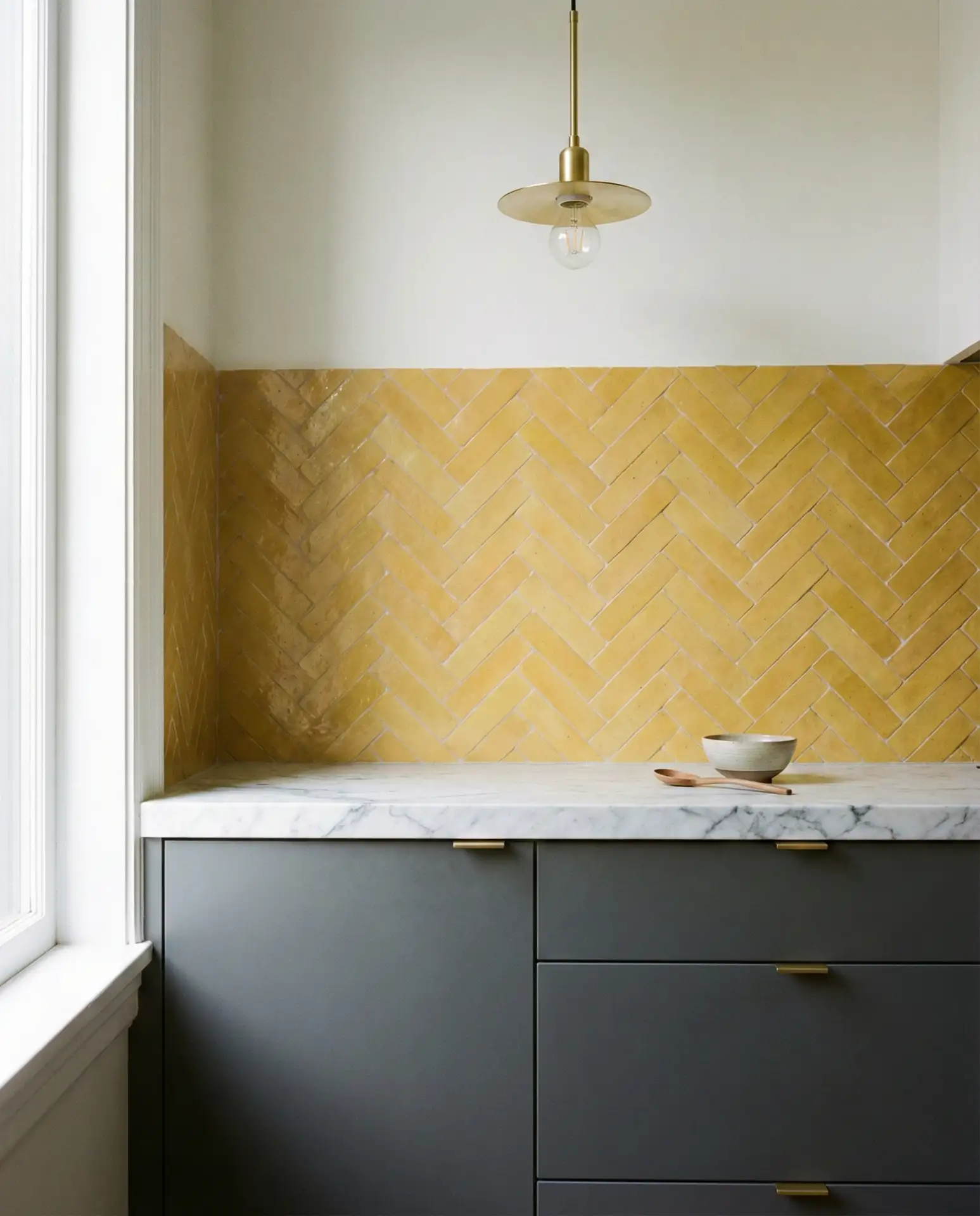
Golden yellow tiles provide stunning contrast against deep navy, charcoal, or black cabinets, creating a dramatic yet warm kitchen aesthetic. This high-contrast approach works particularly well in kitchens with strong architectural features or abundant natural light that prevents the dark cabinetry from feeling heavy. The yellow backsplash becomes a glowing focal point that draws the eye and energizes the space.
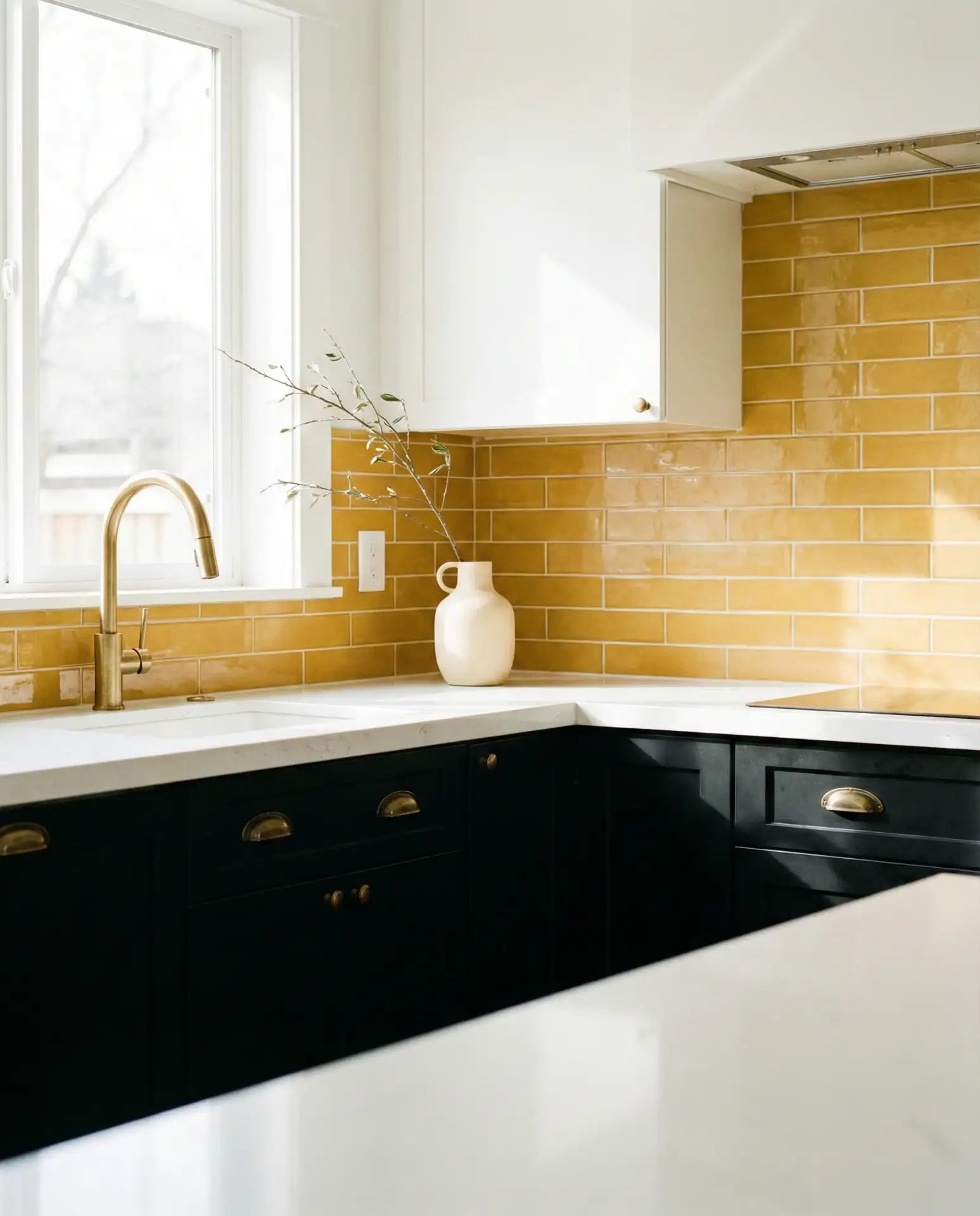
One homeowner in Brooklyn told me she initially worried the yellow tile would clash with her black cabinets, but the combination ended up being the design choice she receives the most compliments on. The contrast creates visual interest without requiring a pattern or multiple colors, proving that sometimes the boldest choices yield the most satisfying results.
12. Yellow Painted Ceiling with Neutral Kitchen
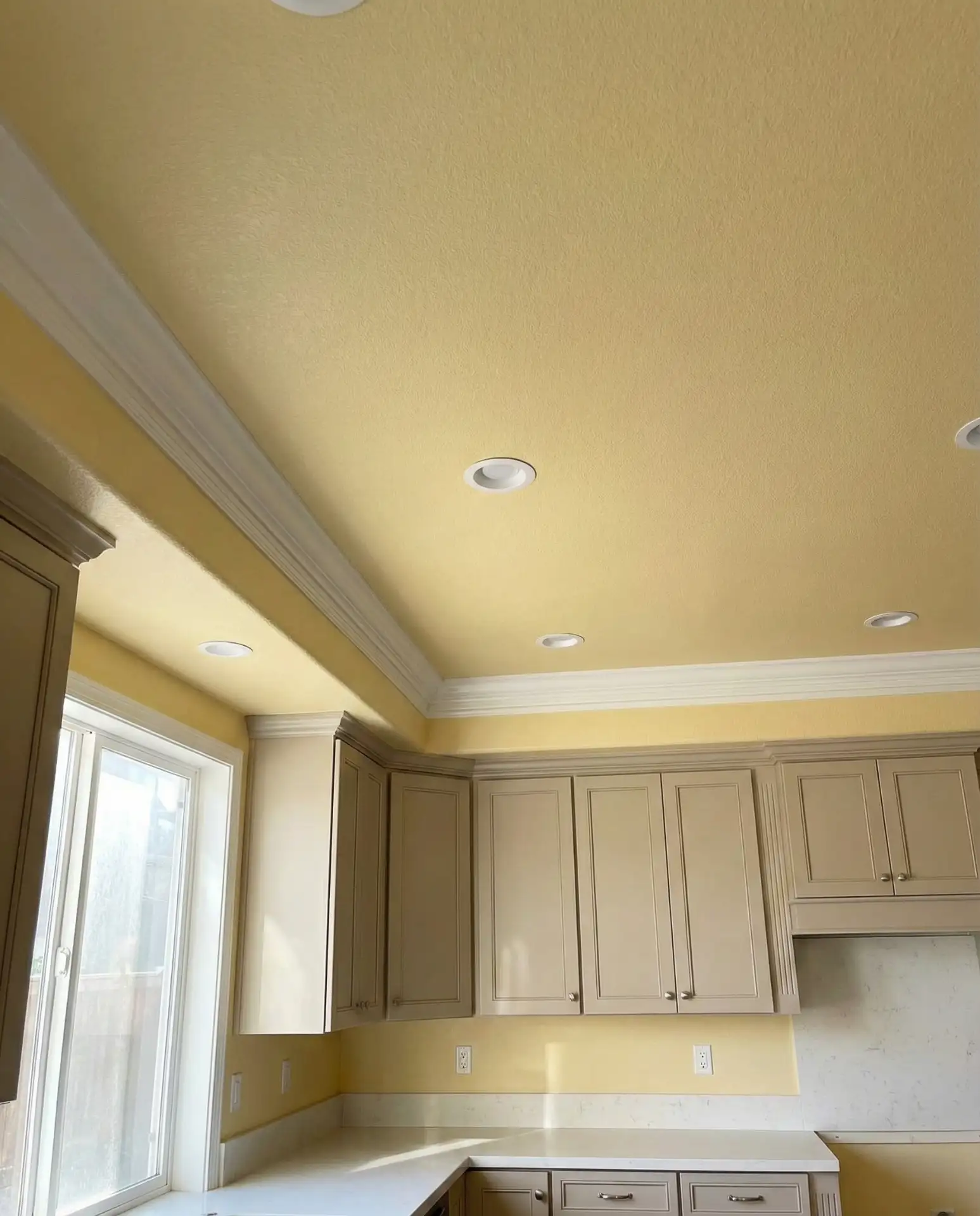
An unexpected paint choice for kitchens involves bringing yellow overhead, where it casts a warm glow throughout the room without dominating sight lines. This technique works brilliantly in kitchens with white or cream cabinets, where the ceiling becomes a surprise element that adds personality without requiring commitment at eye level. The effect feels both subtle and transformative.
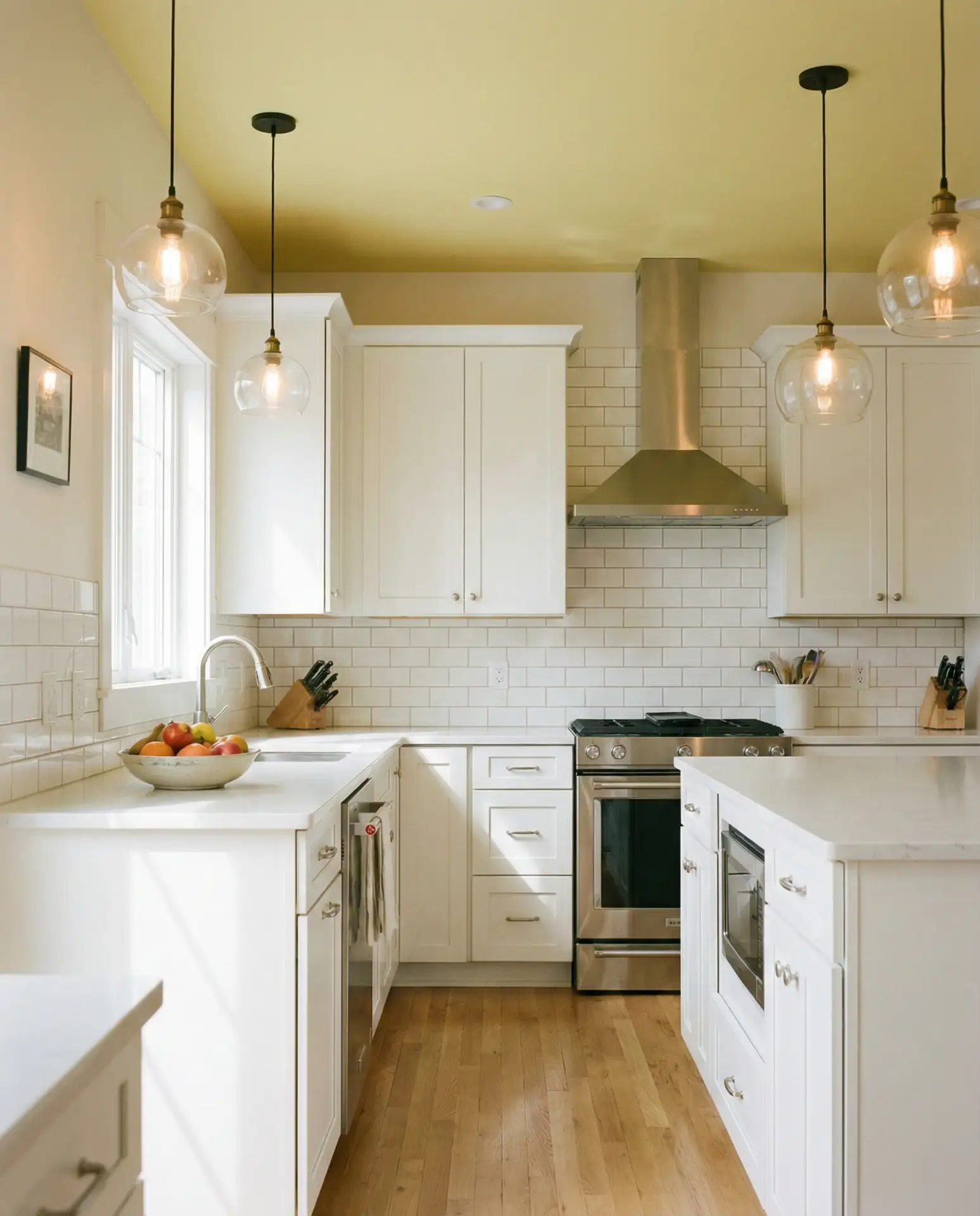
This approach works best in kitchens with ceilings nine feet or higher, where the overhead space feels expansive enough to handle color without closing in. In standard eight-foot ceiling kitchens, a very pale yellow might work, but deeper tones risk making the room feel shorter and more confined.
13. Mustard and Grey Modern Minimalist Kitchen
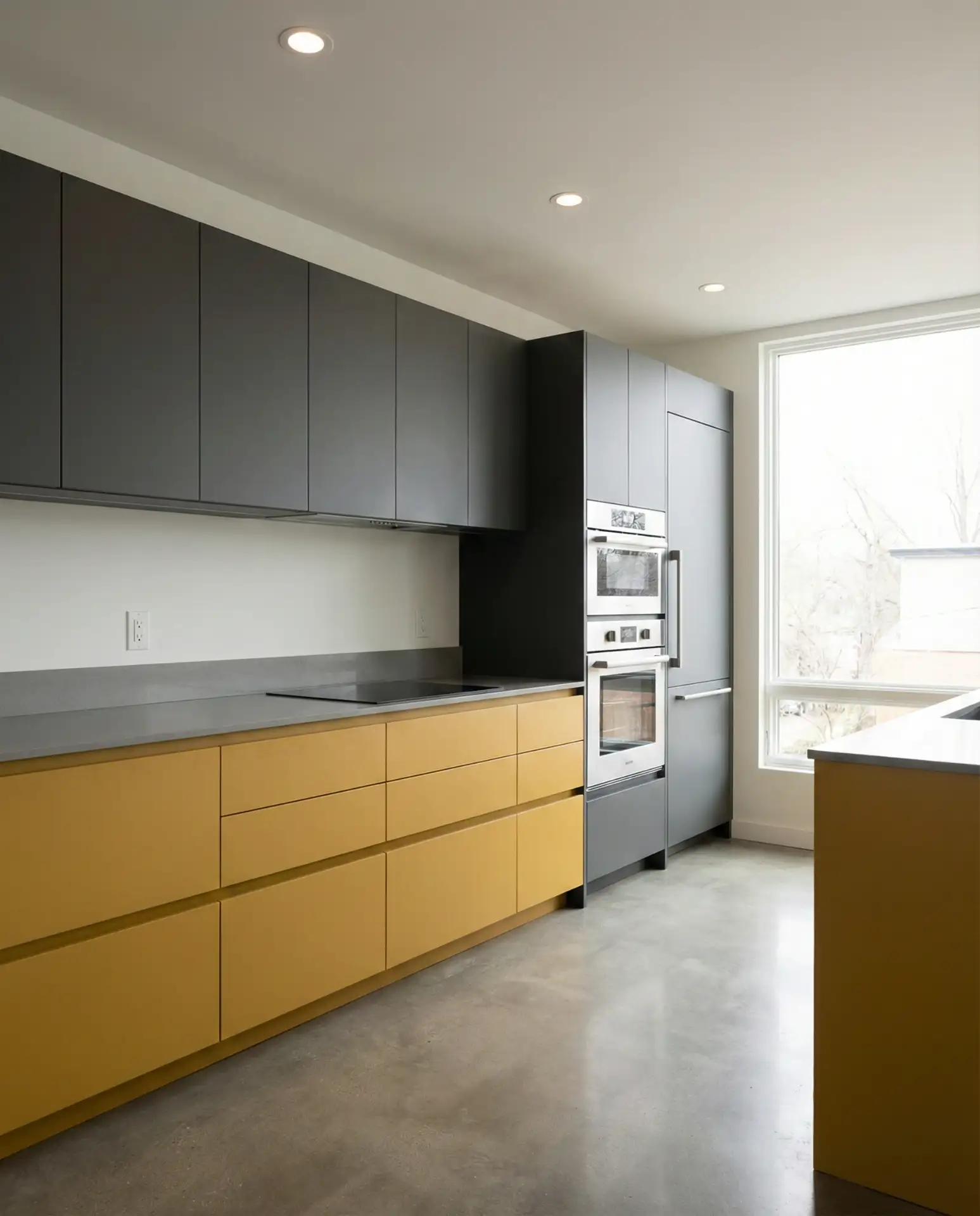
The combination of mustard accents with grey creates a sophisticated, contemporary palette that feels mature and design-forward. This pairing works especially well in urban lofts or modern builds where clean lines and minimal ornamentation dominate. The mustard provides warmth that keeps grey from reading as cold or institutional, while the grey grounds the yellow and prevents it from feeling too playful.
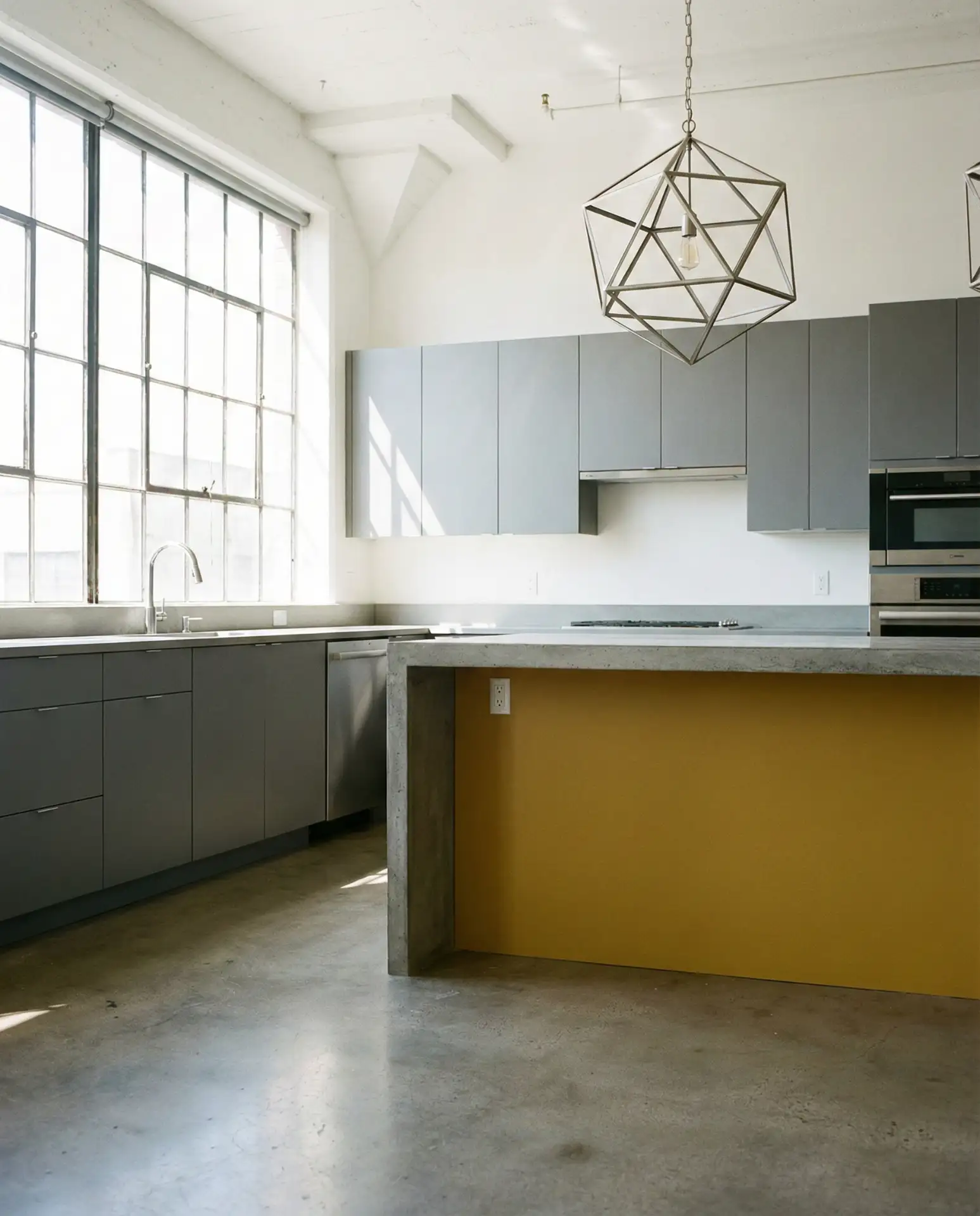
Budget-wise, this look can be achieved at various price points. High-end versions might feature custom cabinetry and luxury stone, while more accessible approaches use IKEA cabinets with upgraded fronts and affordable quartz, typically landing between twelve and twenty thousand dollars for a medium-sized kitchen renovation.
14. Yellow and White Scandinavian Kitchen
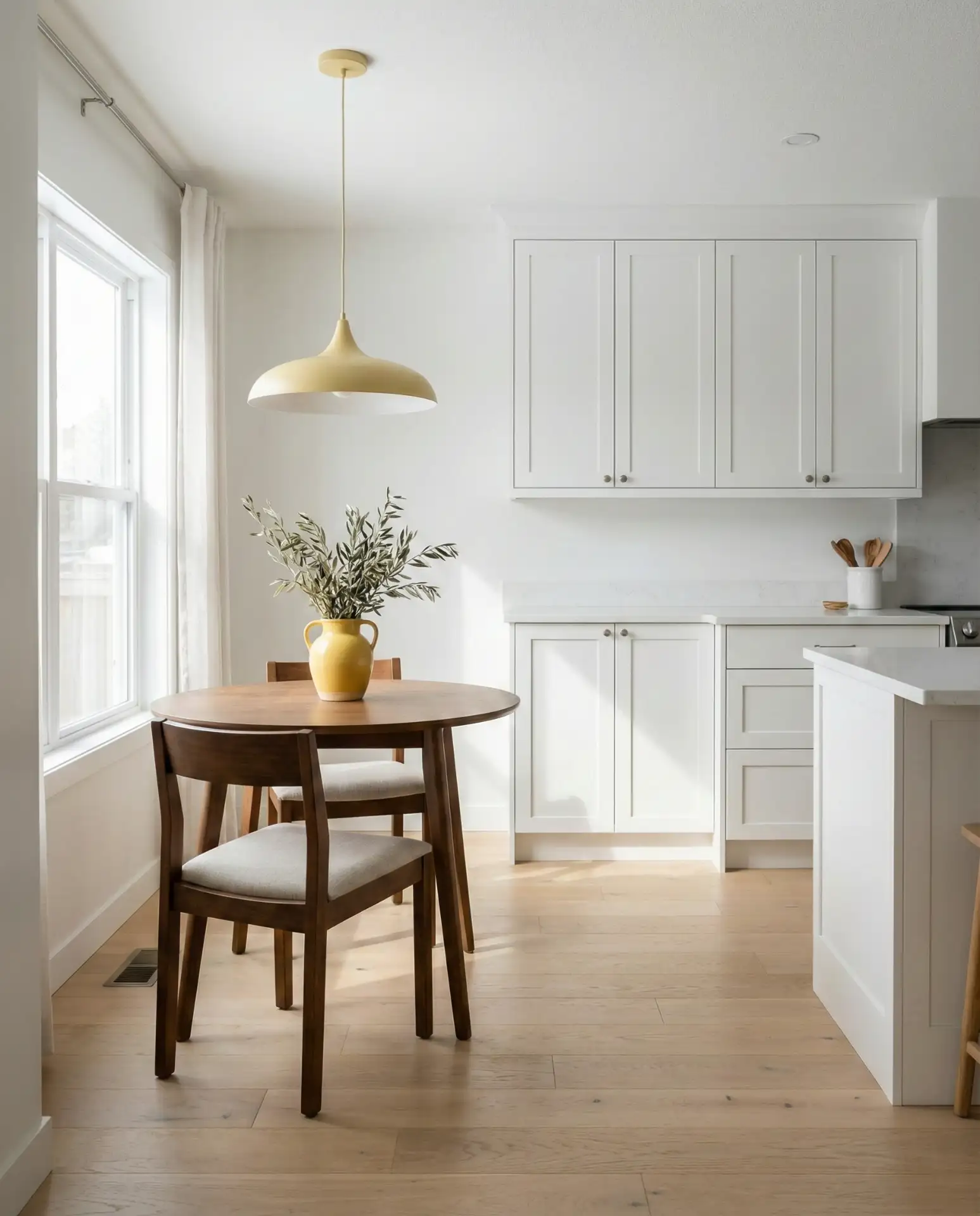
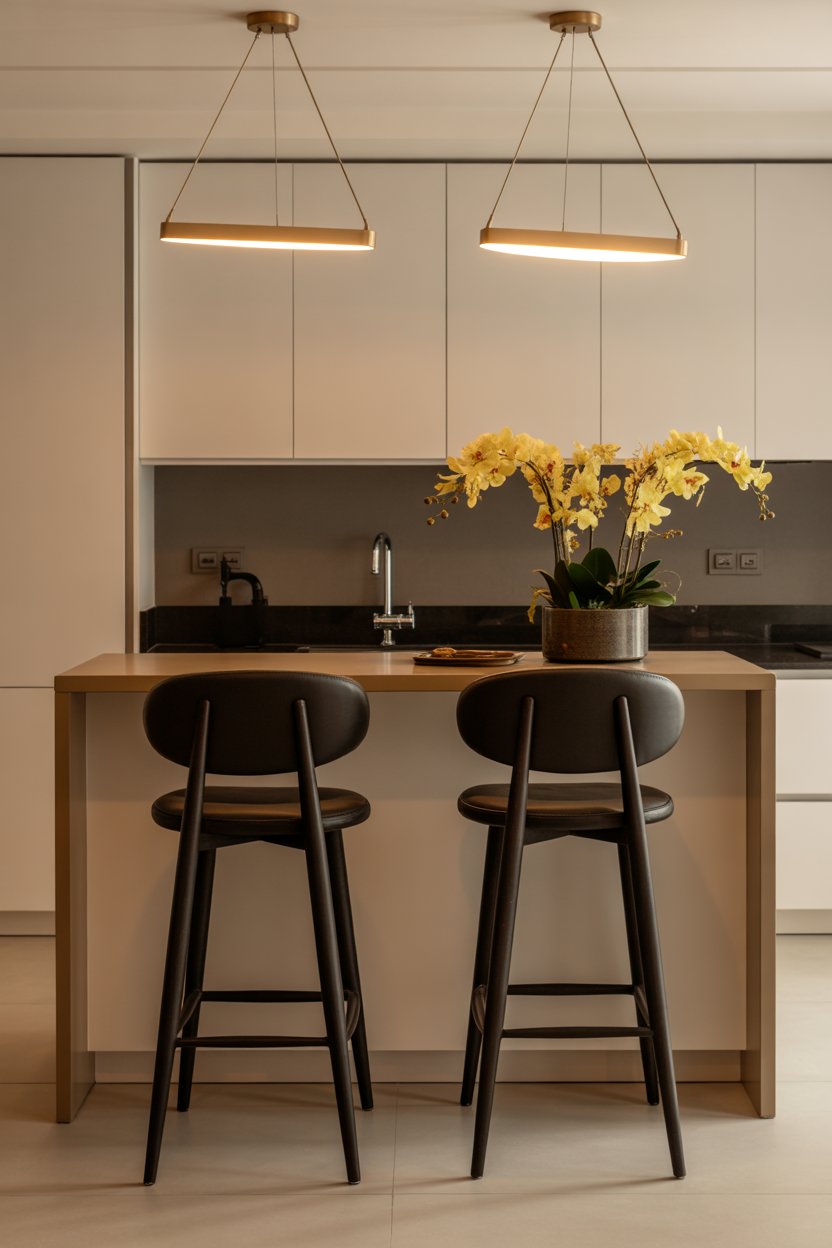
A predominantly white and Scandinavian kitchen benefits enormously from strategic yellow accents, whether through textiles, small appliances, or a single painted element. This approach honors Nordic minimalism while injecting warmth and personality that prevents the space from feeling sterile. Think pale yellow dish towels, a vintage yellow kettle, or yellow bar stools at a white island.
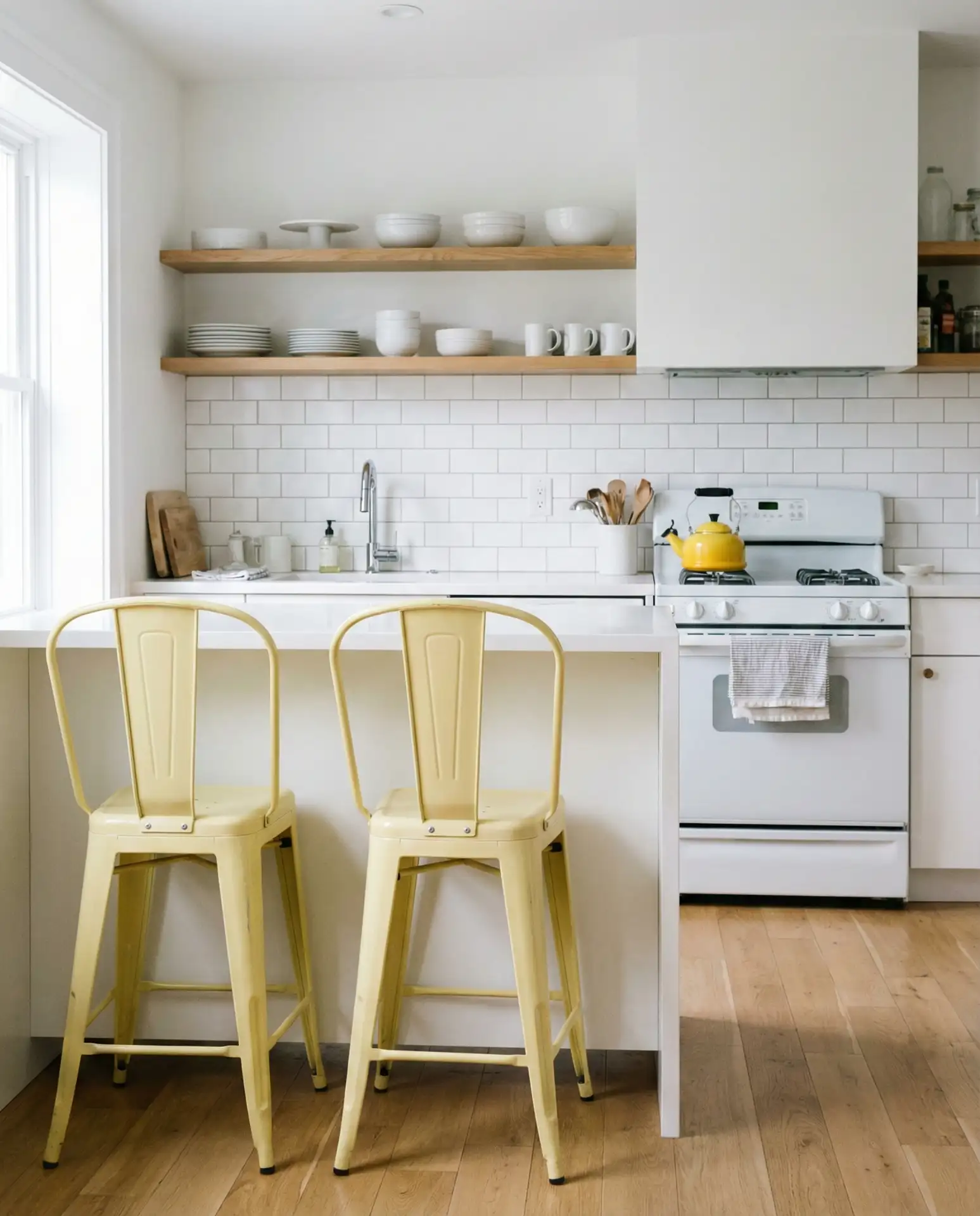
In regions with long, dark winters like Minnesota or upstate New York, homeowners have found that these small yellow touches significantly impact mood during the darkest months. The color provides psychological warmth that complements physical warmth from heating systems, creating spaces that feel genuinely comforting when outdoor conditions are harsh.
15. Bold Yellow Decor in Neutral Kitchens
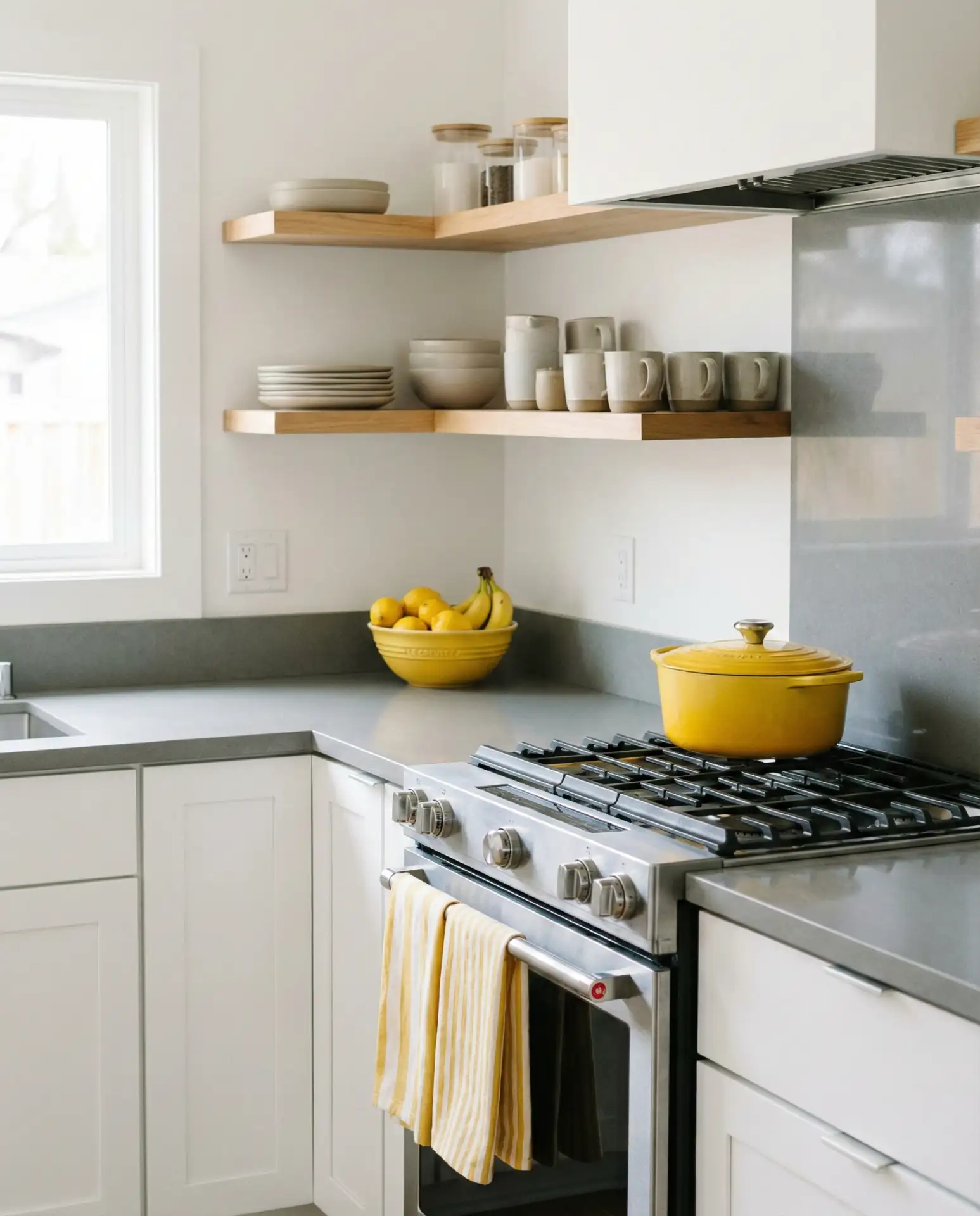
For commitment-averse homeowners, yellow decor offers a low-risk way to test the color before making permanent changes. Items like yellow cookware, utensil crocks, fruit bowls, or artwork can transform a neutral kitchen’s energy without paint or renovation. This strategy allows for seasonal rotation and easy updates as tastes evolve, making it ideal for renters or those who enjoy frequent change.
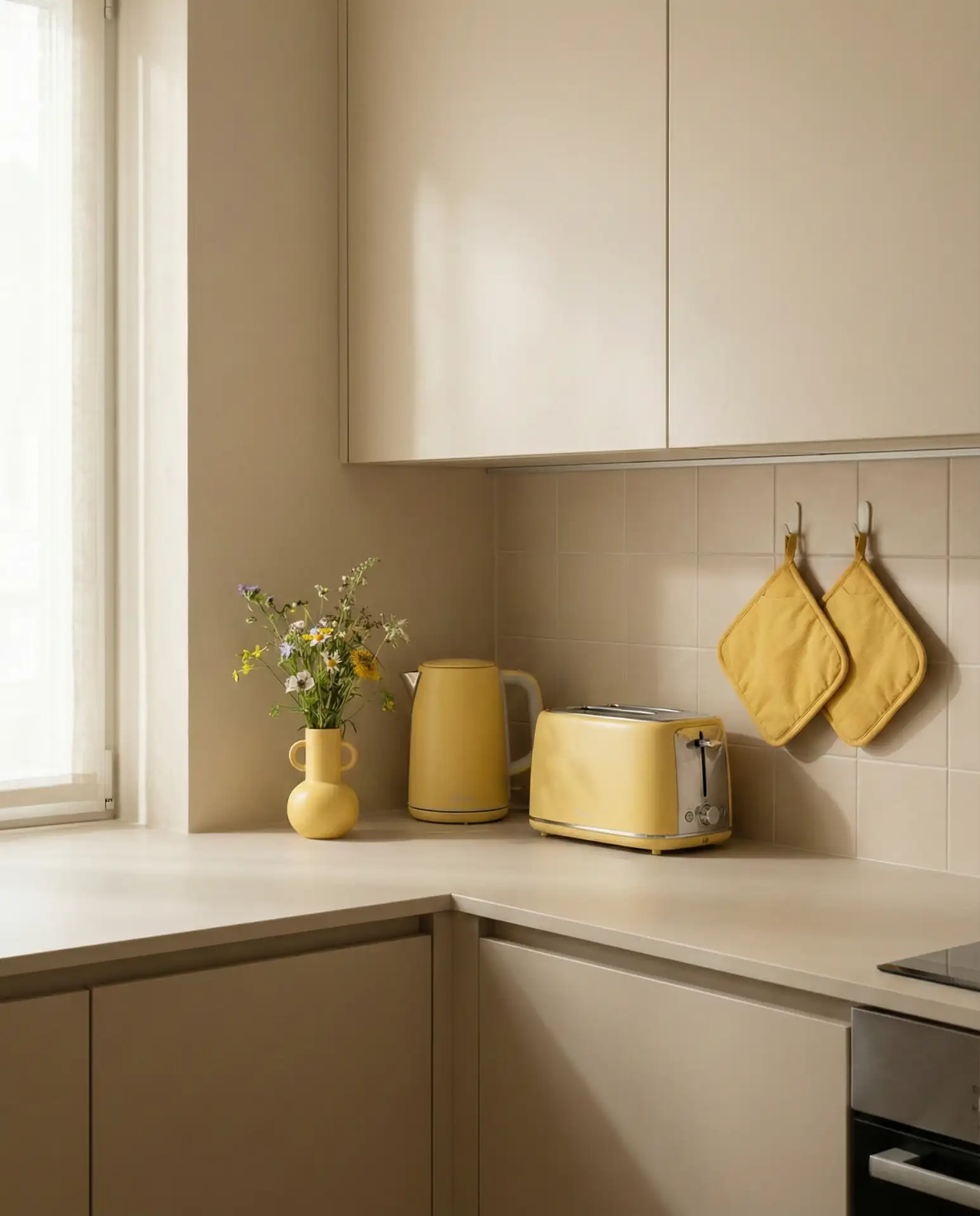
Real homeowners frequently start with yellow accessories and eventually grow confident enough to paint an island or add yellow tile, using decor as a testing ground for larger commitments. This gradual approach prevents costly mistakes and allows people to live with a color before making it permanent, which design psychologists suggest leads to more satisfying long-term results.
16. Yellow Kitchen with Red Vintage Accents
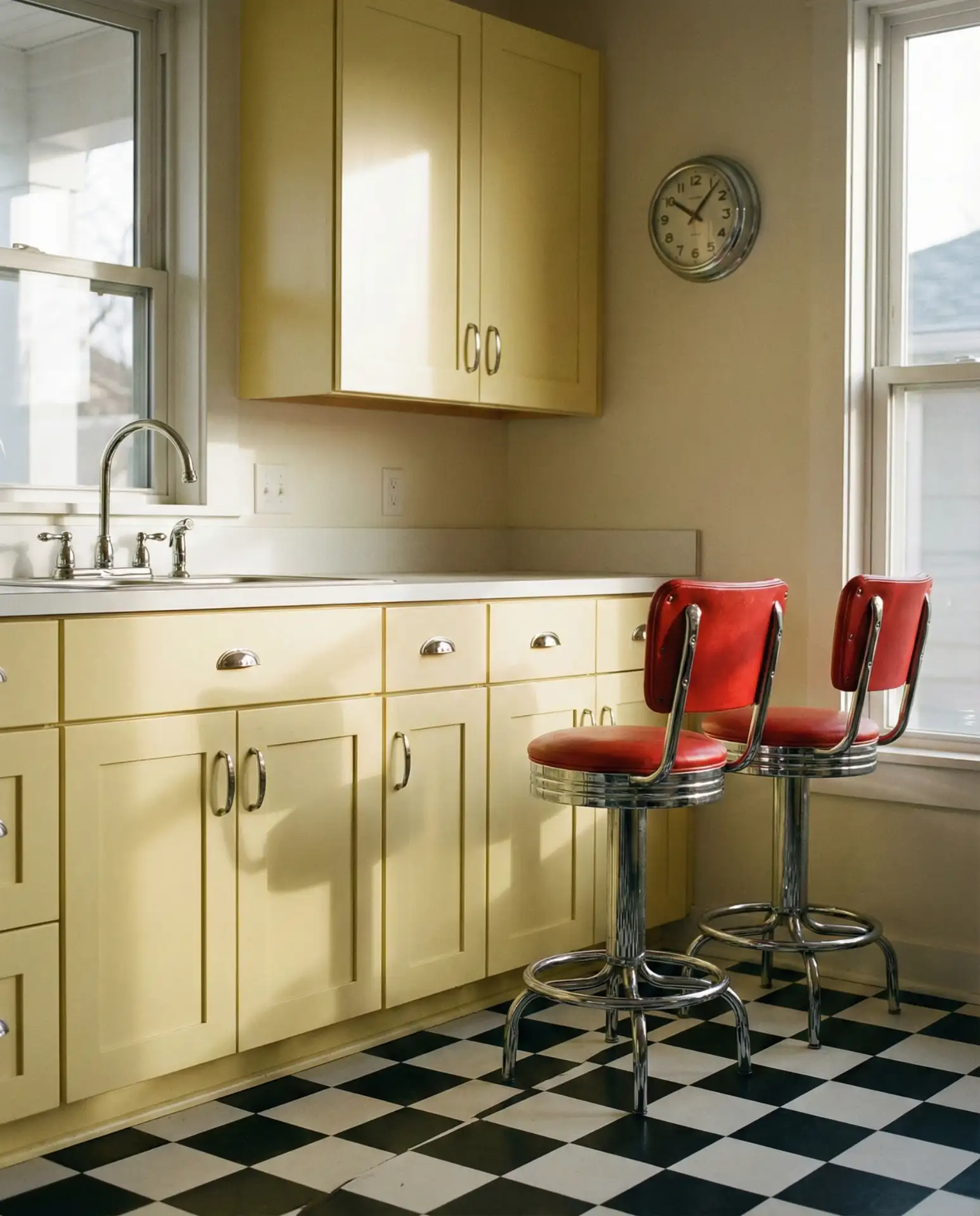
Combining yellow with red and vintage elements creates a retro kitchen that channels 1950s diners and mid-century optimism. This high-energy palette works best when one color dominates and the other accents, preventing the space from feeling too loud or chaotic. Yellow cabinets with red bar stools and vintage signage, for instance, strike a balance between playful and cohesive.
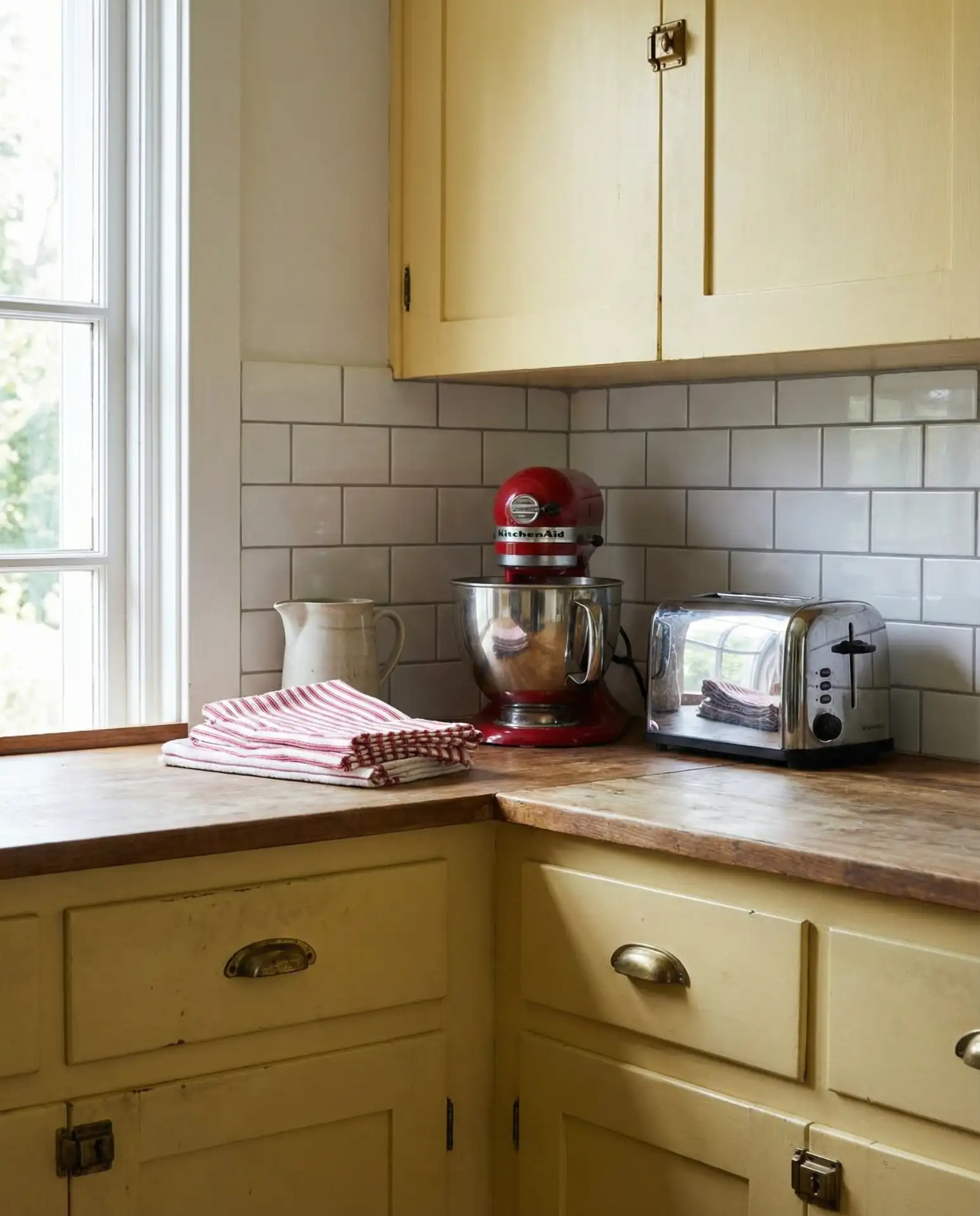
This style finds particular traction in the Southwest and parts of Texas, where mid-century design remains culturally embedded and homeowners embrace bold color without hesitation. The vintage yellow-and-red kitchen feels right at home in ranch-style houses and bungalows that already carry retro architectural DNA.
17. Pale Yellow Shaker Cabinets with Brass Hardware
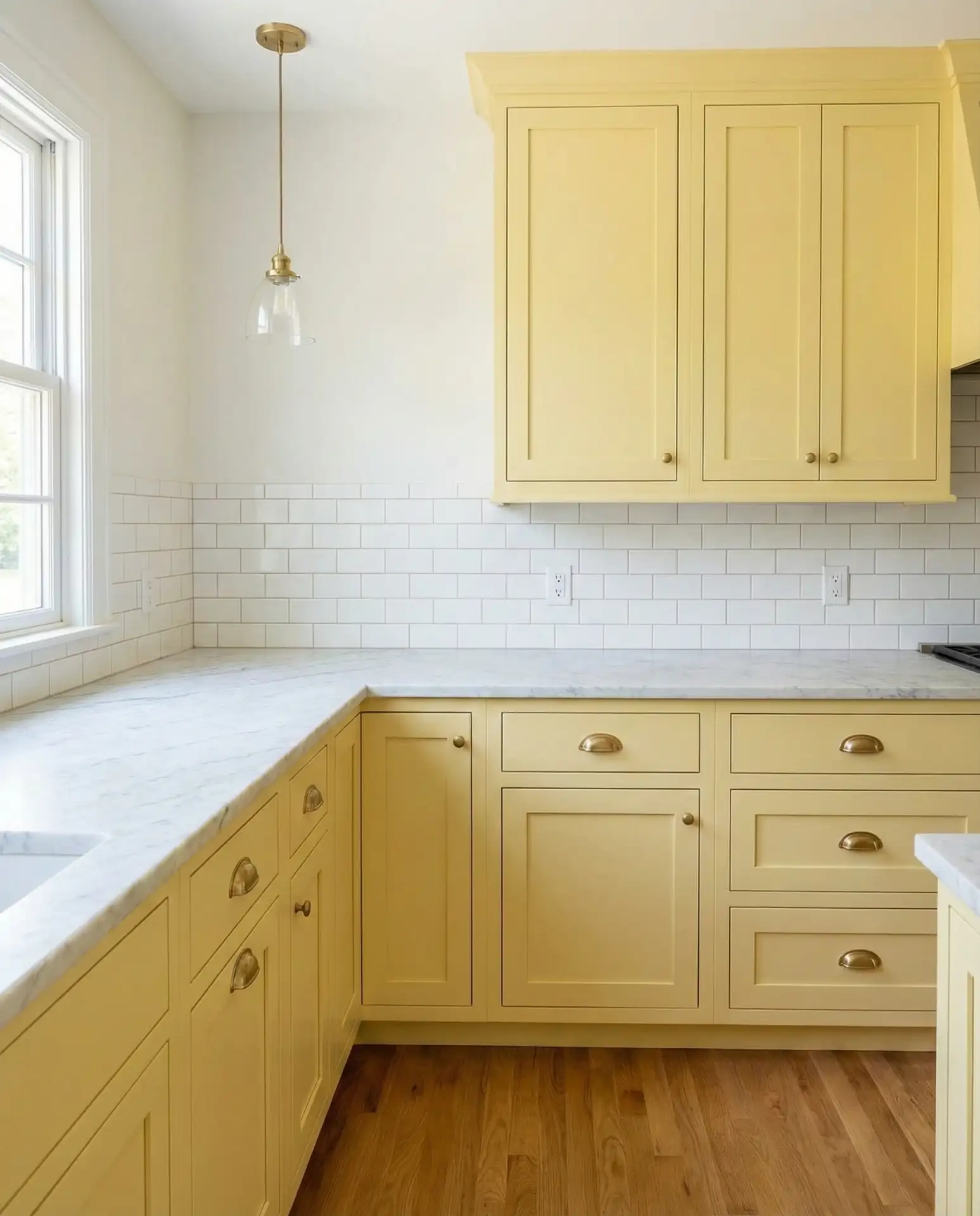
Pale yellow shaker-style cabinets paired with warm brass hardware create a transitional look that bridges traditional and contemporary design. The shaker profile brings timeless simplicity, while the yellow updates the style for current tastes. Brass pulls and knobs add a layer of sophistication that elevates the entire composition, preventing it from reading as overly casual or cottage-like.
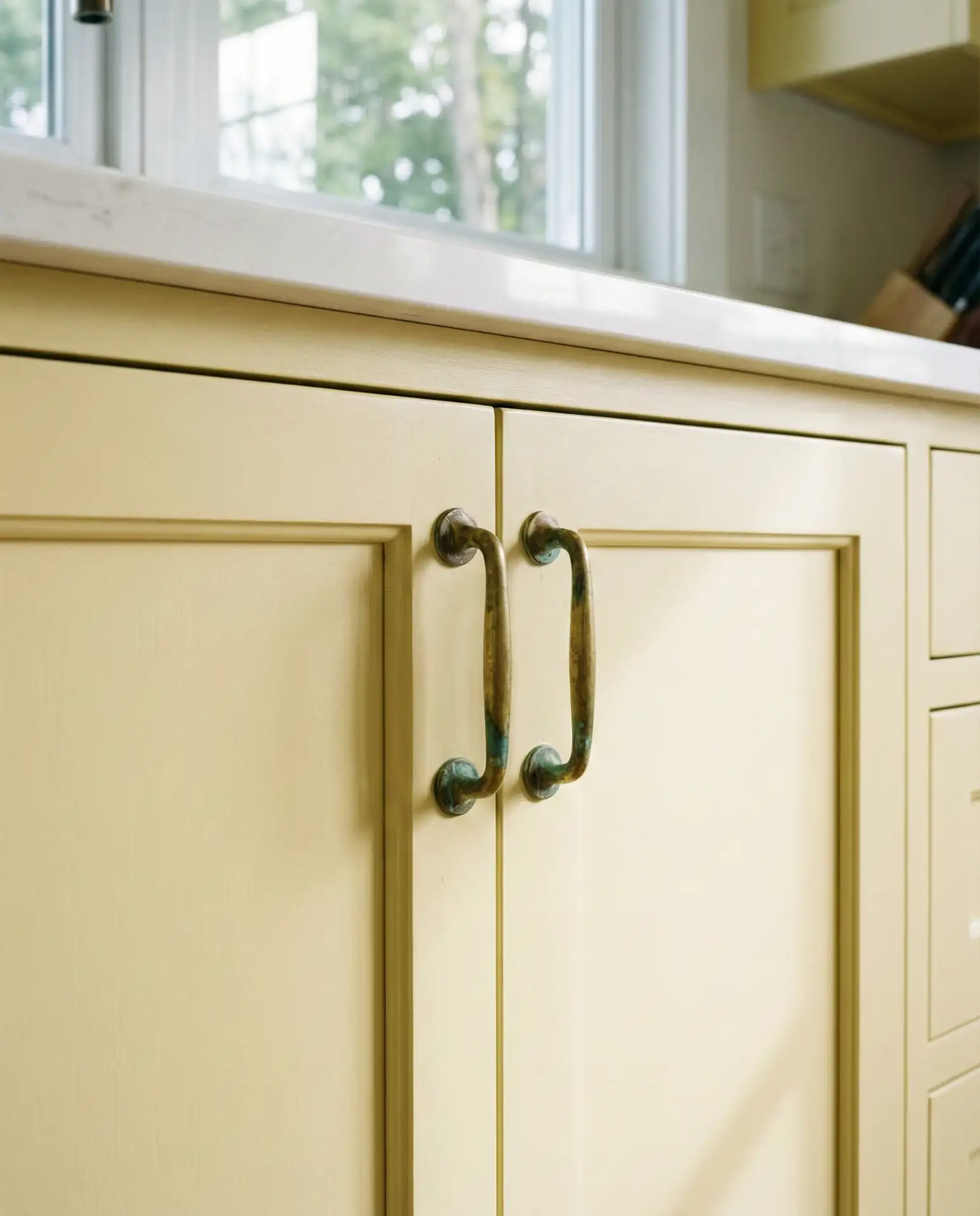
Common mistakes include choosing hardware that’s too small or too large for the cabinet doors, which throws off proportions. As a general rule, drawer pulls should be roughly one-third the width of the drawer front, while cabinet knobs should align with the top rail of the door frame for a balanced, professional appearance.
18. Sunny Yellow Kitchen with Indoor Plants
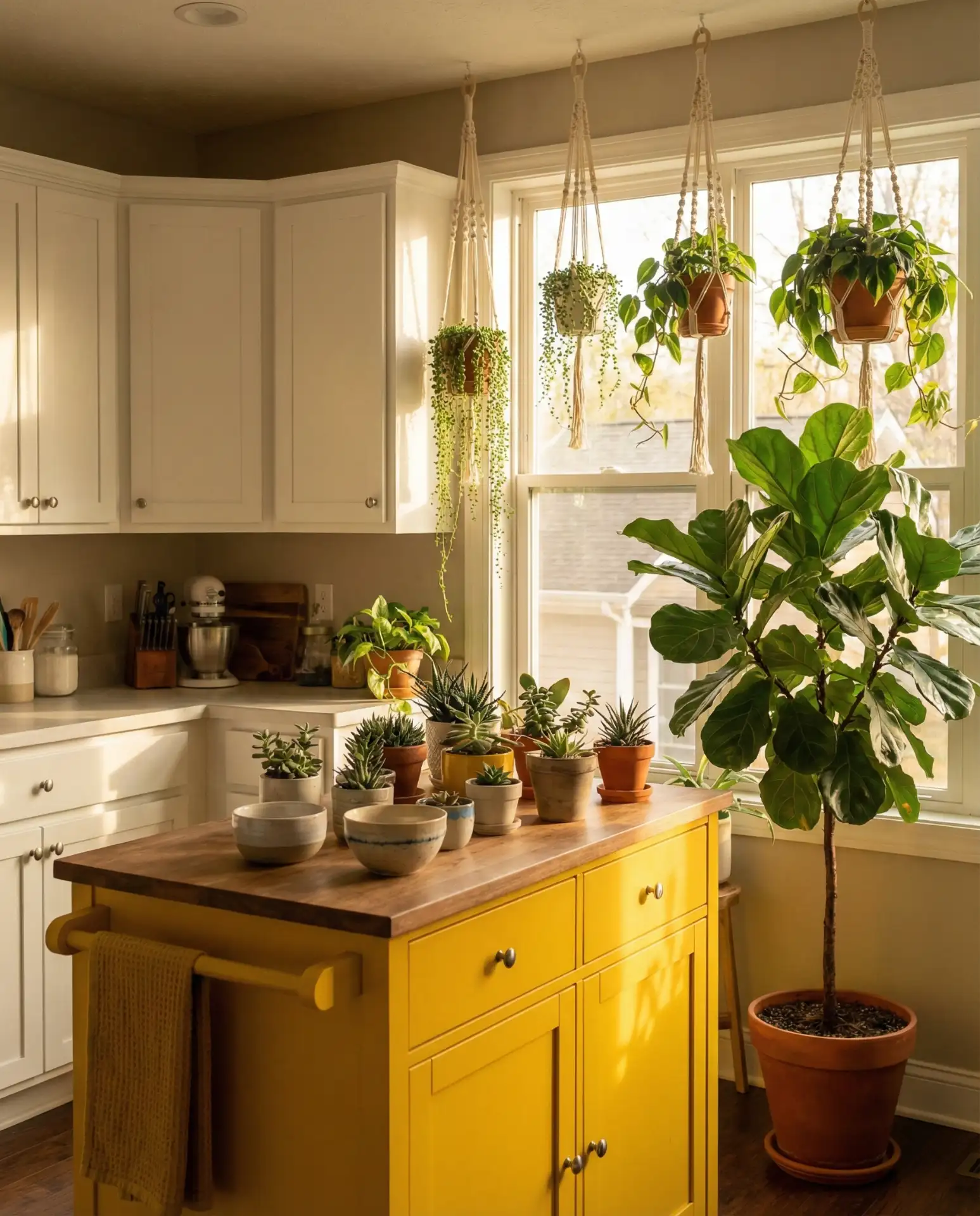
Yellow kitchens create an ideal backdrop for abundant greenery, as the color naturally complements plants and creates a garden-inspired atmosphere indoors. Whether through hanging pothos, countertop herbs, or a fiddle leaf fig in the corner, the combination of yellow and green feels fresh and life-affirming. This approach particularly appeals to urban dwellers seeking connection to nature within city apartments.
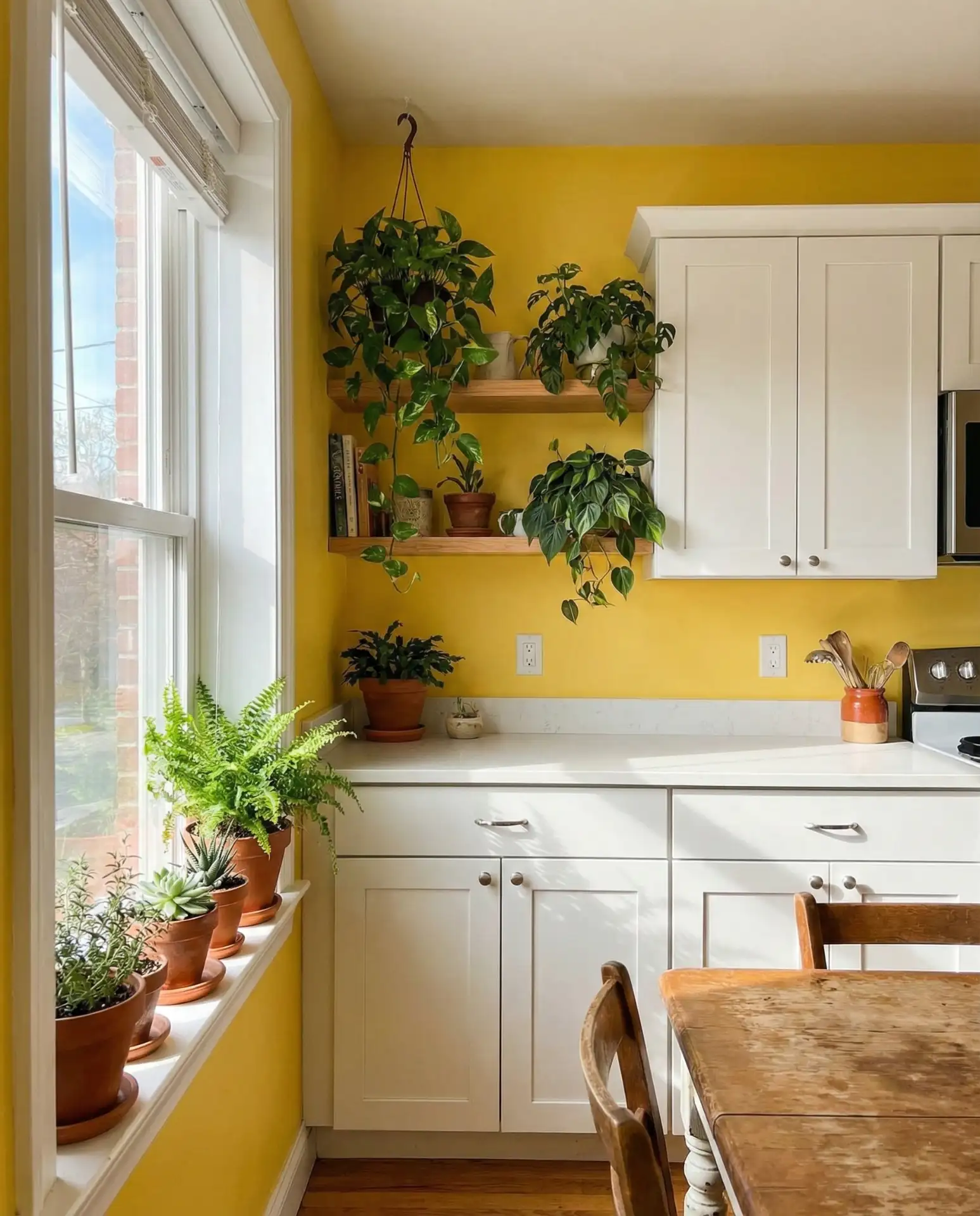
Plant experts often note that kitchens provide ideal growing conditions due to higher humidity from cooking and washing, making them perfect spots for tropical varieties. The yellow backdrop seems to enhance plant health by reflecting more light, creating conditions that benefit both the aesthetic appeal and the actual growth of indoor greenery.
19. Yellow Backsplash with Patterned Tile
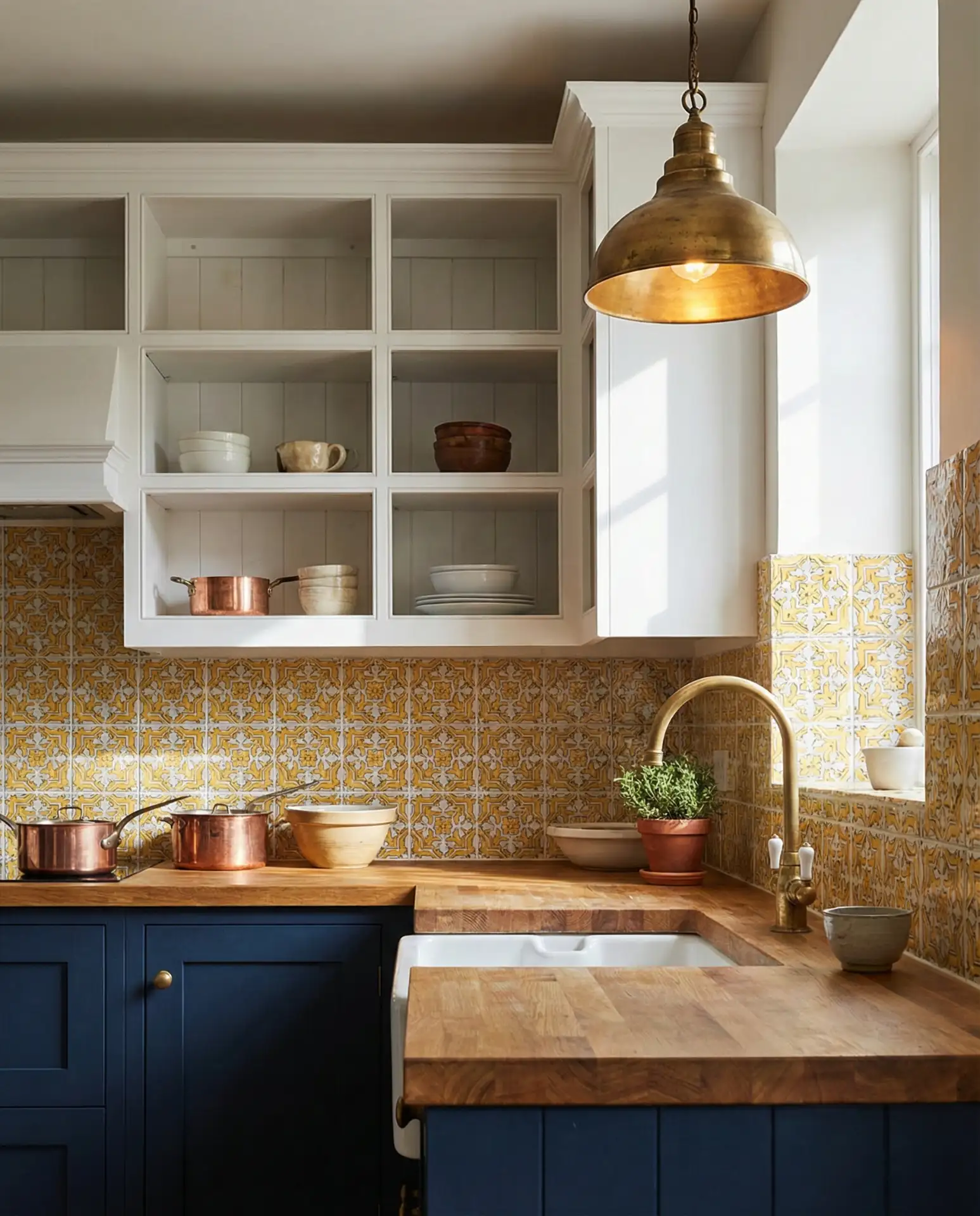
A patterned backsplash incorporating yellow brings instant visual interest and serves as kitchen artwork that’s both beautiful and functional. Moroccan-inspired zellige, Spanish encaustic patterns, or hand-painted ceramics in yellow tones create focal points that anchor neutral kitchens. This approach allows homeowners to embrace yellow in a defined area that feels intentional rather than overwhelming.
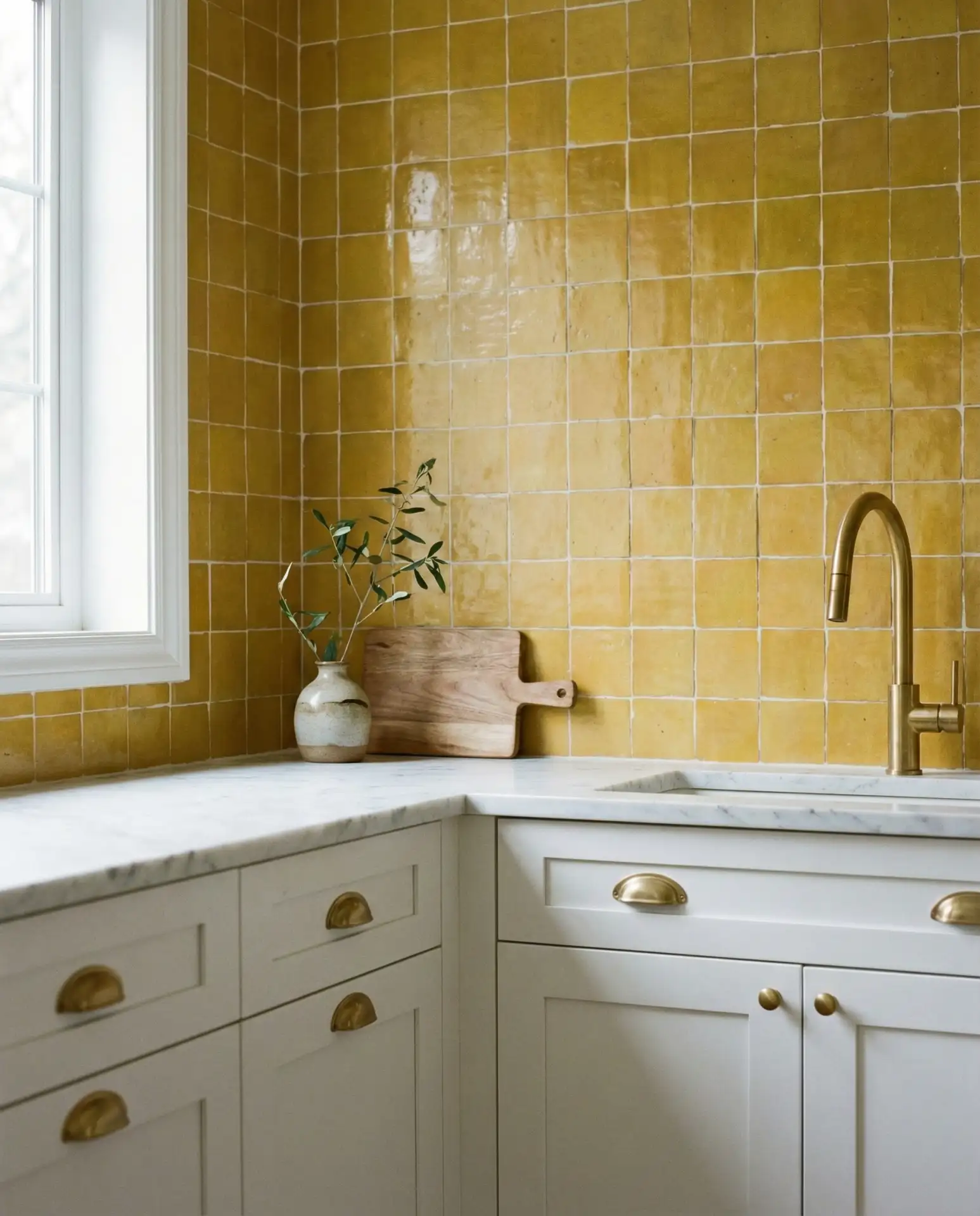
Where this works best is in kitchens with otherwise simple finishes, allowing the patterned tile to be the star without competing with other bold elements. When cabinets, counters, and floors remain relatively quiet, a vibrant patterned backsplash can carry the entire design without creating visual chaos.
20. Yellow Lower Cabinets with Open Upper Shelving
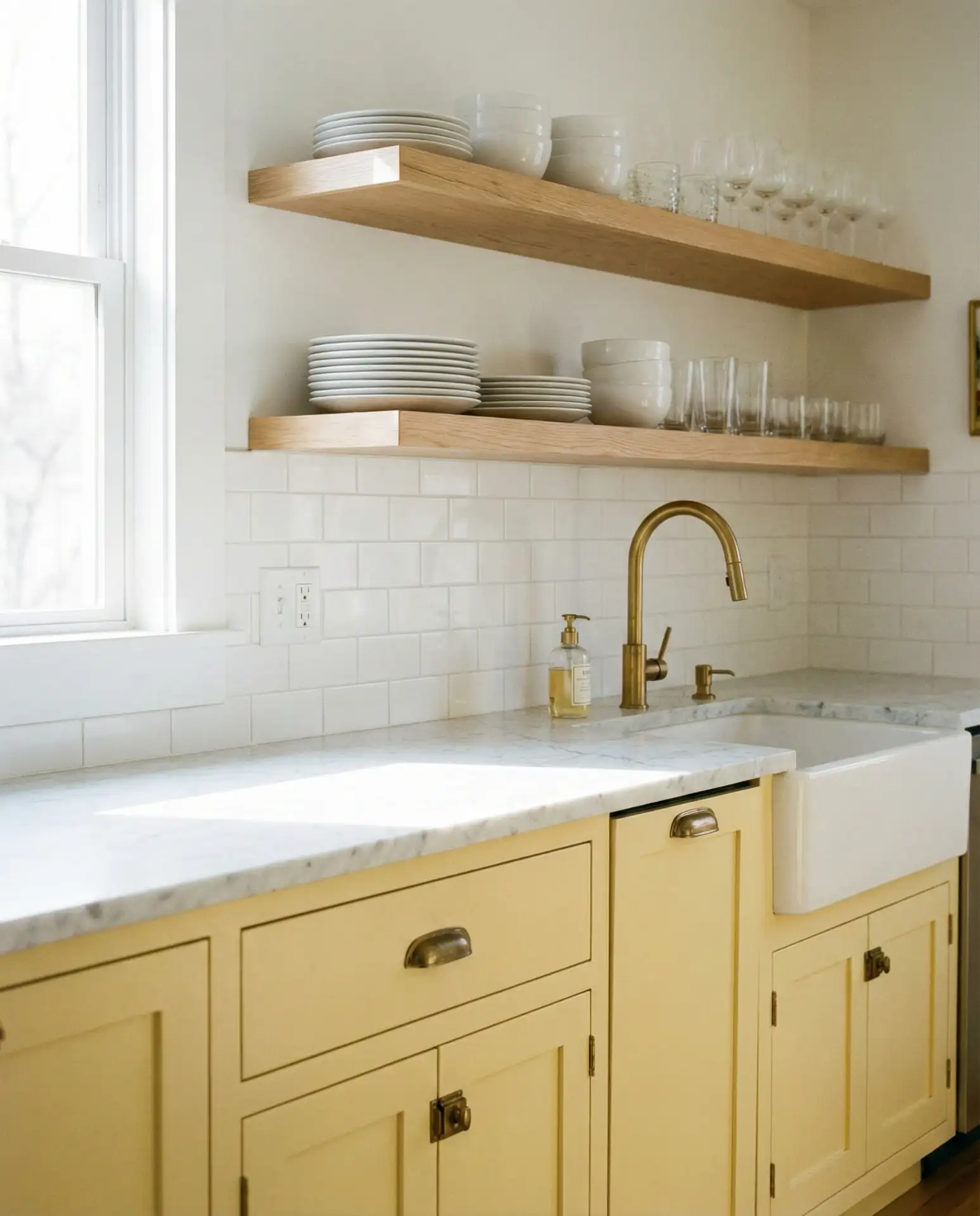
Pairing yellow lower cabinets with open shelving above creates visual lightness while anchoring the kitchen with warm color at the base. This configuration appeals to homeowners who want yellow without committing the entire wall and who enjoy the accessibility and display opportunity that open shelving provides. The look feels both grounded and airy, practical and stylish.
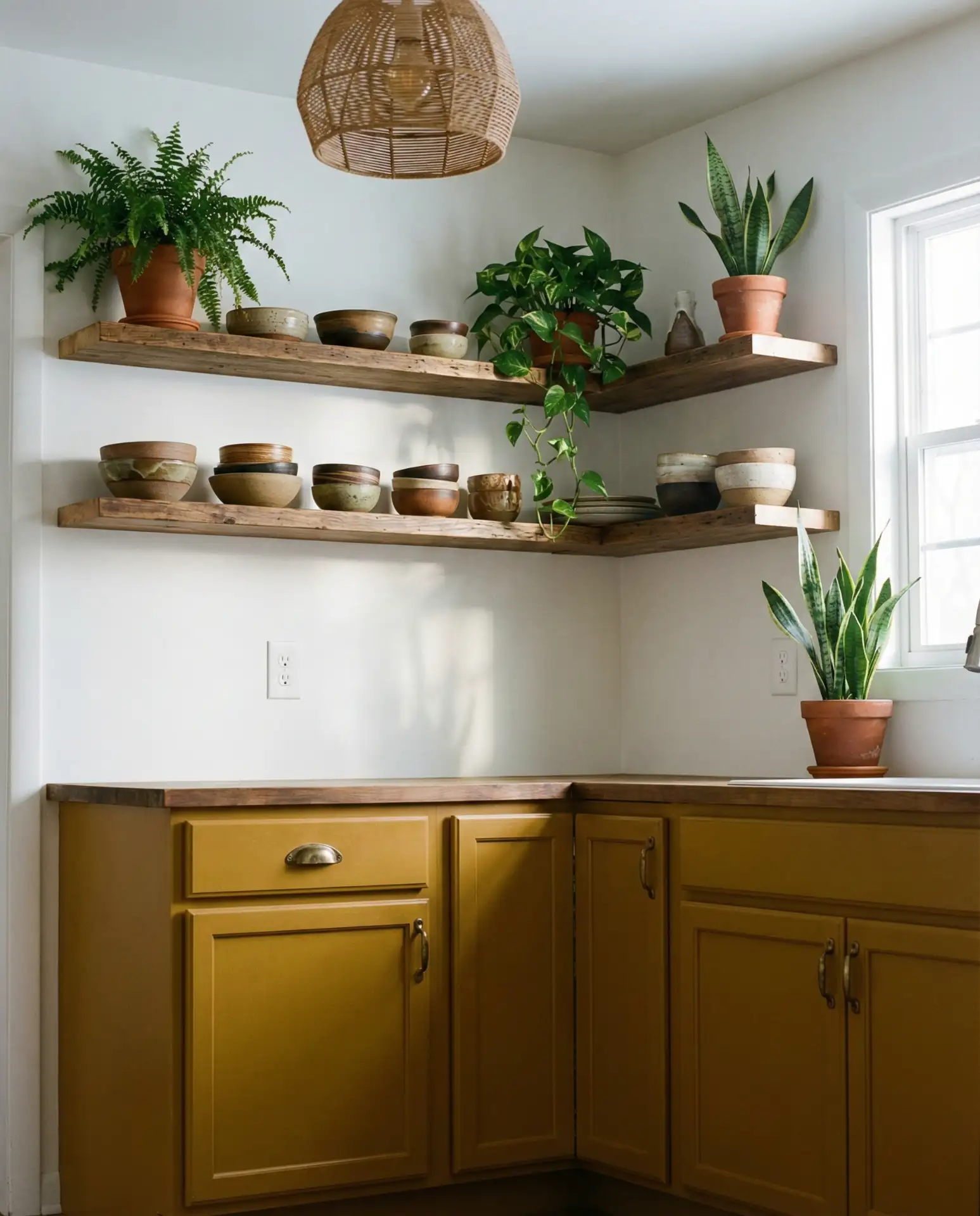
One practical insight: open shelving requires more maintenance than closed cabinets, as dishes accumulate dust and grease from cooking. Homeowners who cook frequently with high heat should consider this before removing upper cabinets entirely, perhaps keeping closed storage near the range while using open shelves elsewhere in the kitchen.
21. Yellow and Black High-Contrast Modern Kitchen
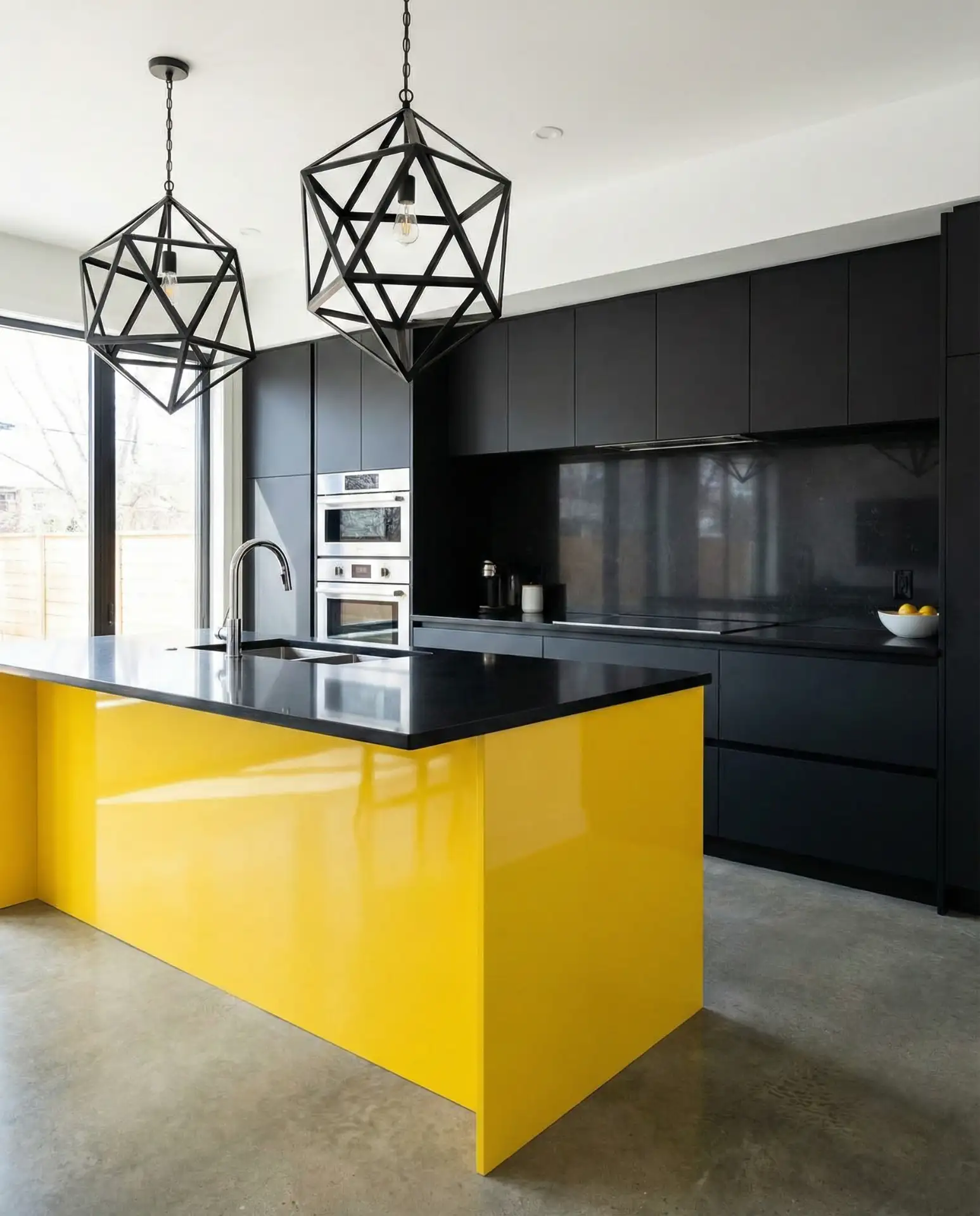
The combination of vibrant yellow with black creates maximum visual impact, producing a graphic, modern kitchen that makes a statement. This bold pairing works particularly well in loft spaces or contemporary homes where drama and edge are desired over traditional warmth. Think of a yellow island with black perimeter cabinets or a yellow backsplash against black countertops and cabinetry.
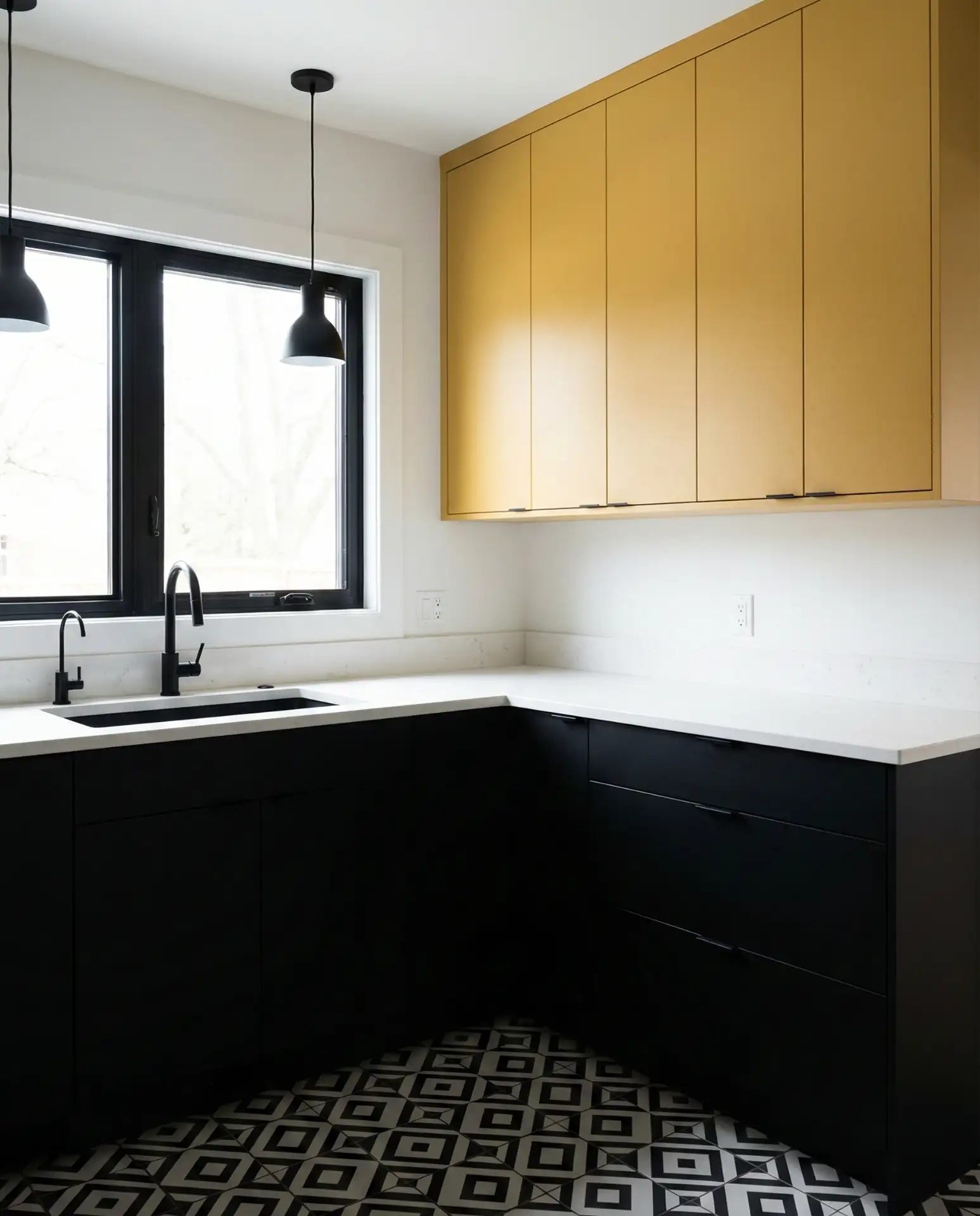
This palette finds enthusiastic adoption in cities like New York, Chicago, and Los Angeles, where design-forward homeowners embrace risk and view their kitchens as expressions of personal style rather than simply functional spaces. The high-contrast approach signals confidence and design literacy, appealing to those who want their homes to feel curated and intentional.
22. Buttery Yellow Walls with Natural Wood Elements
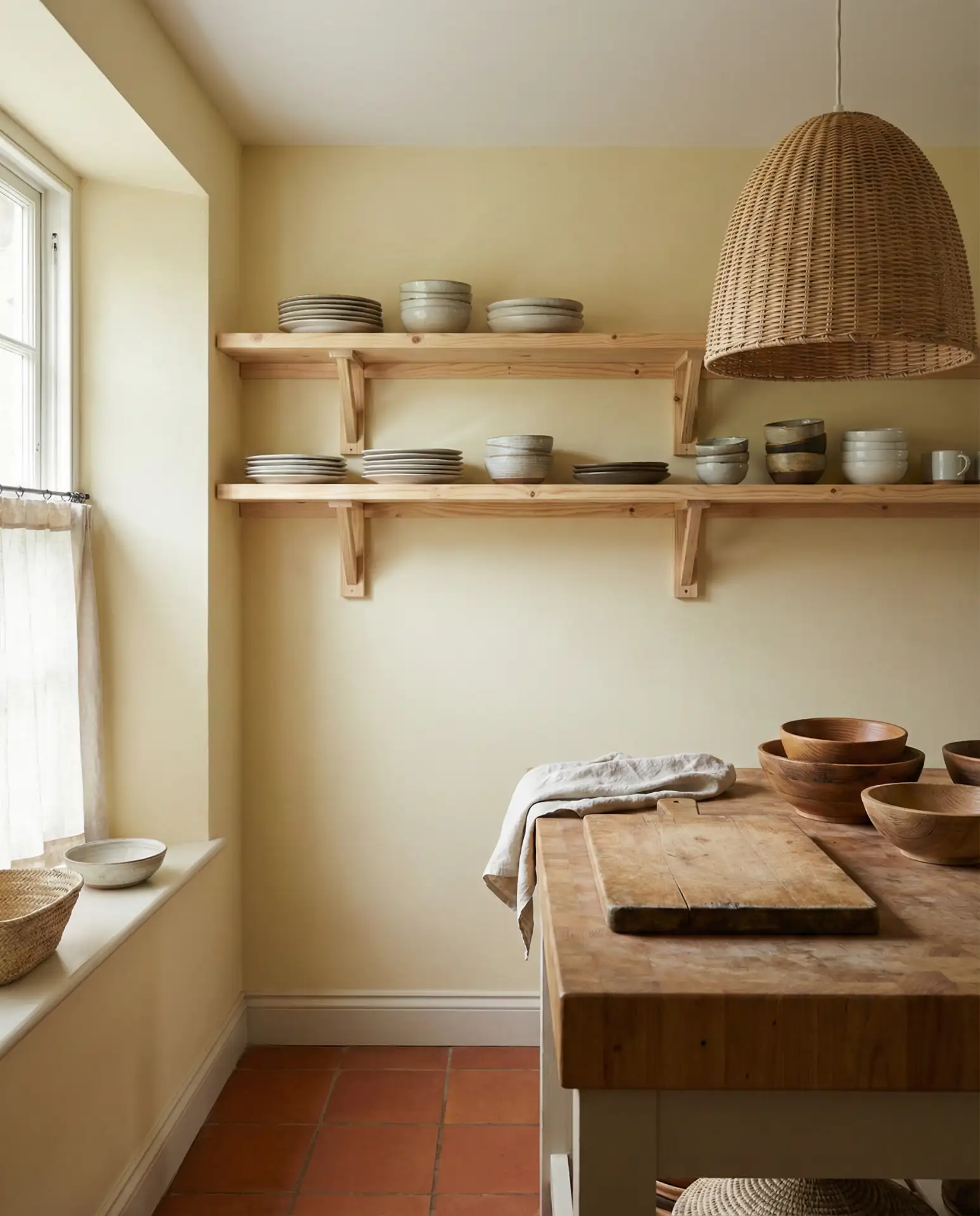
Butter-toned walls create a warm envelope that beautifully complements natural wood floors, countertops, or cabinetry. This combination feels organic and inviting, particularly effective in farmhouse or transitional kitchens where warmth and approachability take precedence over sleek minimalism. The yellow enhances wood tones rather than competing with them, creating a cohesive and naturally beautiful space.
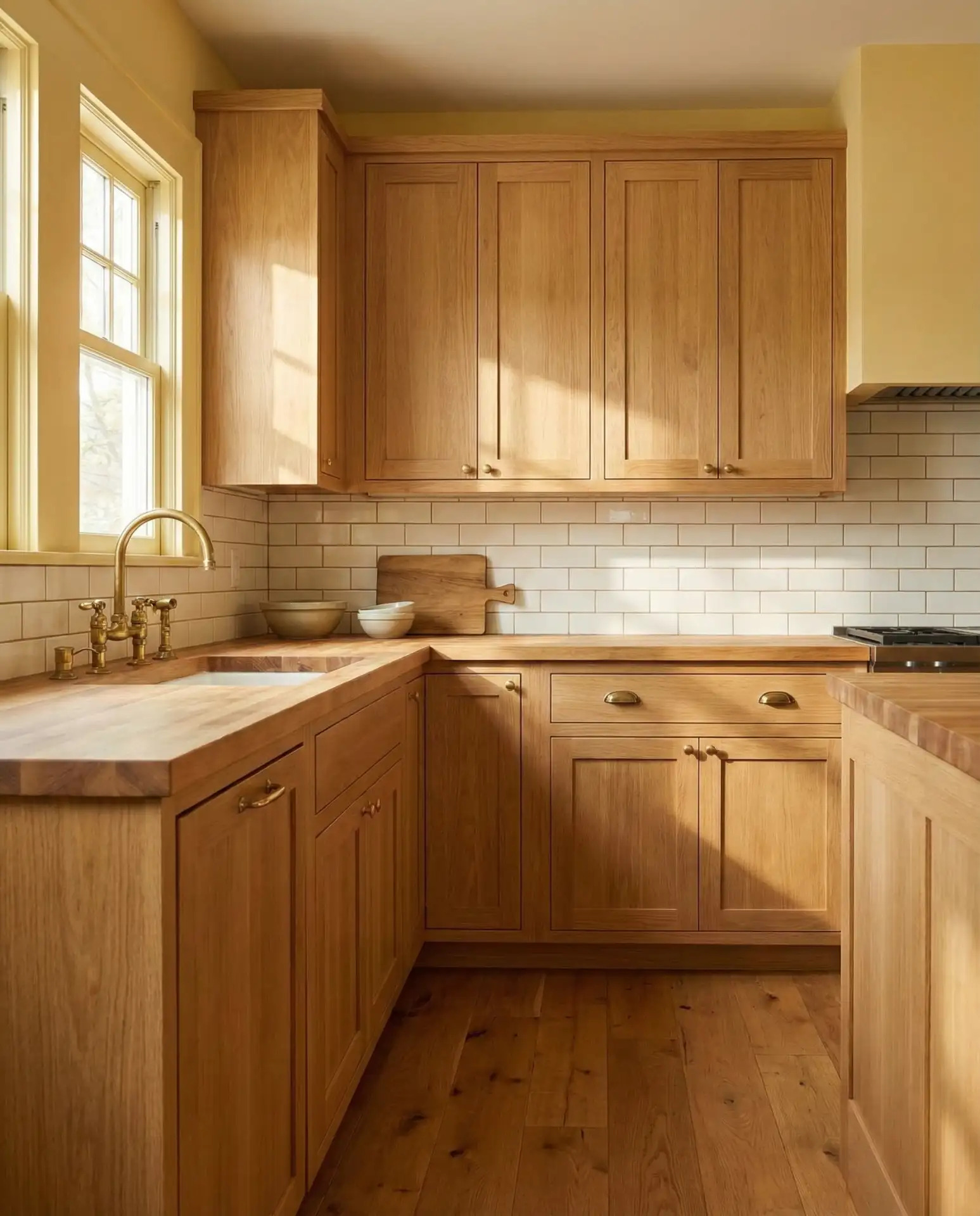
A designer I recently interviewed shared that buttery yellow walls can make even builder-grade oak cabinets from the 1990s look intentional and charming, demonstrating how strategic paint choices can transform elements homeowners might otherwise want to replace. This approach saves thousands compared to cabinet replacement while dramatically improving the kitchen’s overall appeal.
23. Yellow Kitchen Designs with Mixed Metallics
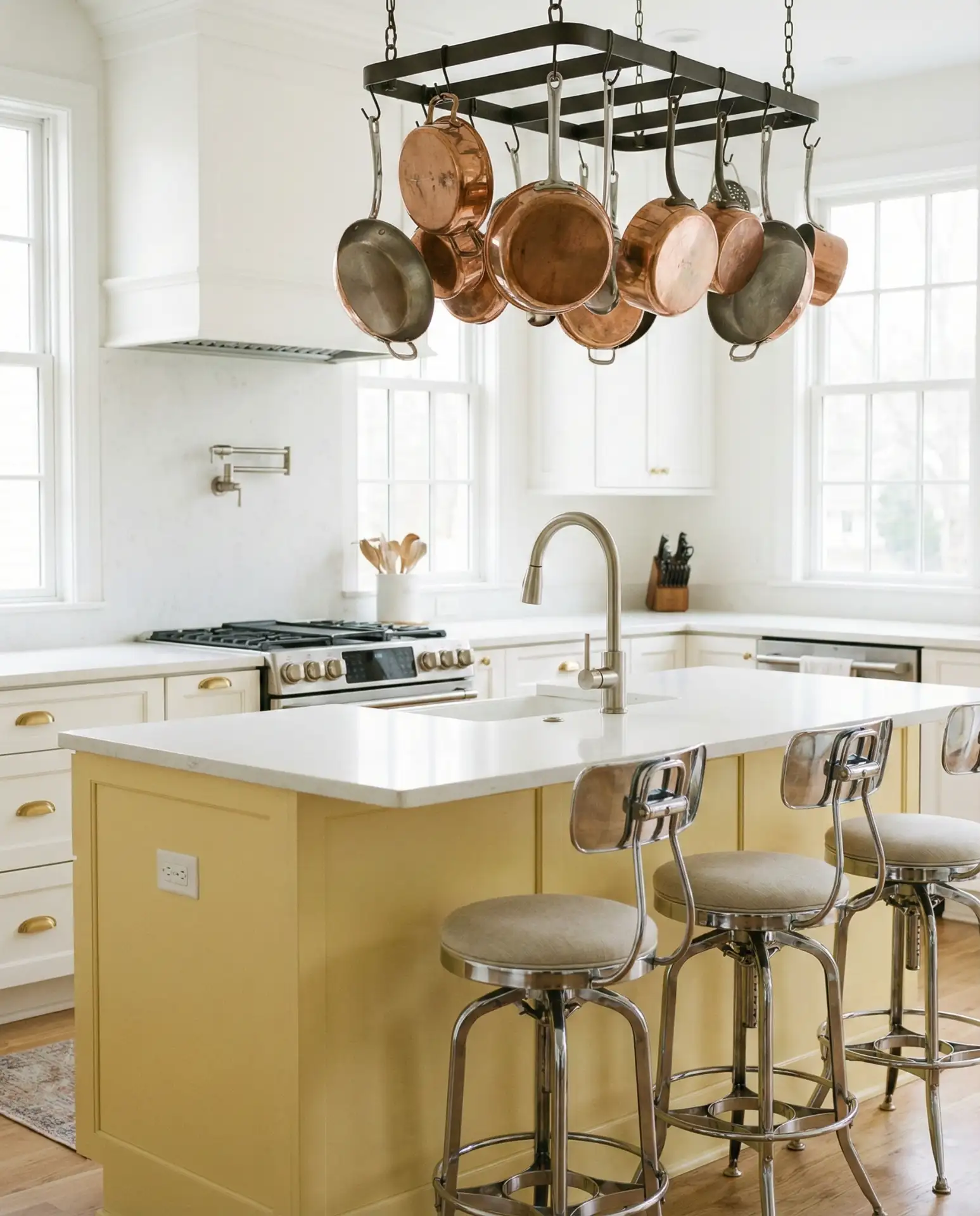
Modern yellow kitchen designs increasingly incorporate mixed metallics, combining brass, copper, stainless steel, and even black iron for a layered, collected-over-time aesthetic. This approach breaks the old rule about matching all hardware and fixtures, creating instead a more eclectic and personalized look. Yellow provides a warm backdrop that unifies various metal tones without clashing.
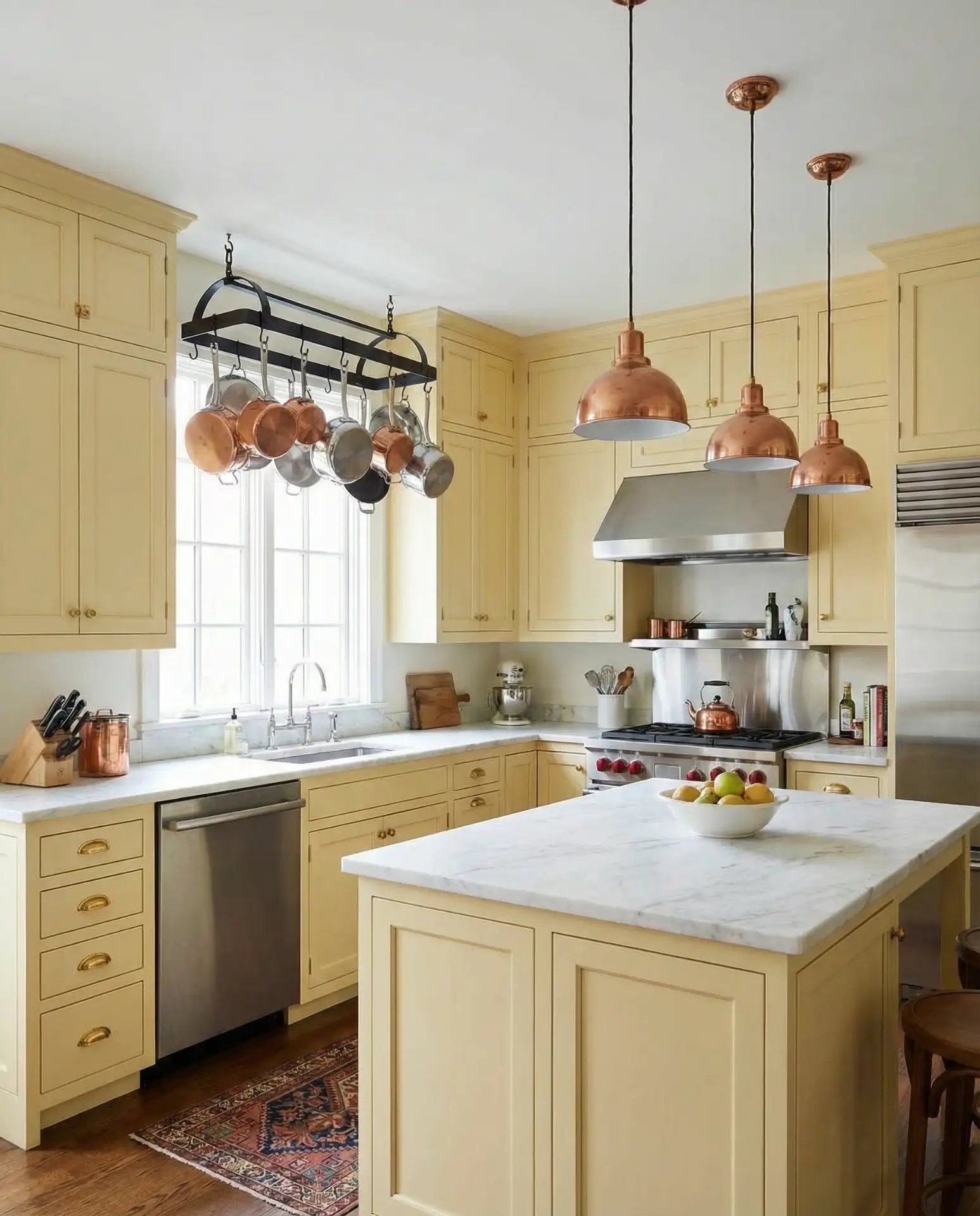
The key to successfully mixing metals is ensuring they serve different functions, preventing direct visual comparison that might highlight mismatches. Brass hardware, copper lighting, and stainless appliances, for instance, each occupy distinct roles in the kitchen, allowing the eye to appreciate them individually rather than scrutinizing whether they coordinate perfectly.
Conclusion
Yellow kitchens in 2026 represent far more than a passing trend; they embody a broader cultural shift toward spaces that prioritize mood, personality, and authentic self-expression over neutral safety. Whether you’re drawn to soft butter tones or bold mustard accents, there’s a yellow kitchen approach that fits your style, budget, and home. We’d love to hear which ideas resonated most with you or how you’re planning to incorporate yellow into your own kitchen. Share your thoughts and questions in the comments below.