White kitchens remain one of the most searched design topics on Pinterest in 2026, and for good reason. They offer a timeless foundation that adapts to nearly every style—from farmhouse charm to sleek modernism. American homeowners continue gravitating toward white for its ability to make spaces feel larger, brighter, and more inviting. Whether you’re planning a full renovation or a simple refresh, the ideas below will help you discover fresh approaches to this enduring trend. From unexpected material pairings to bold accent choices, here are 22 ways to make a white kitchen feel completely your own this year.
1. White Kitchen Cabinets with Black Hardware
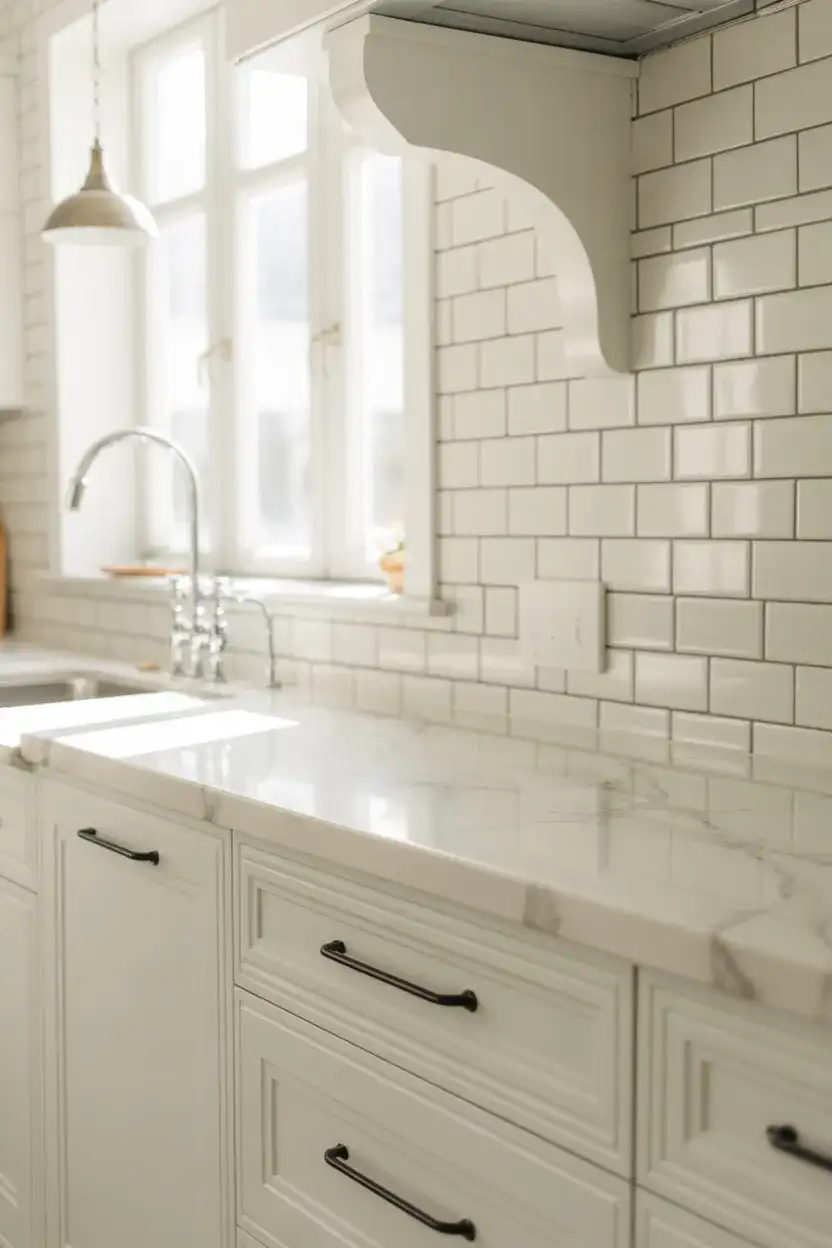
Swapping out standard silver pulls for black hardware transforms plain white cabinets into a statement. This pairing works especially well in transitional and contemporary homes, where contrast adds visual weight without overwhelming the space. The dark metal brings definition to drawer fronts and cabinet doors, making each element easier to read from across the room. It’s a small change that delivers outsized impact, especially when you choose oversized handles or uniquely shaped knobs.
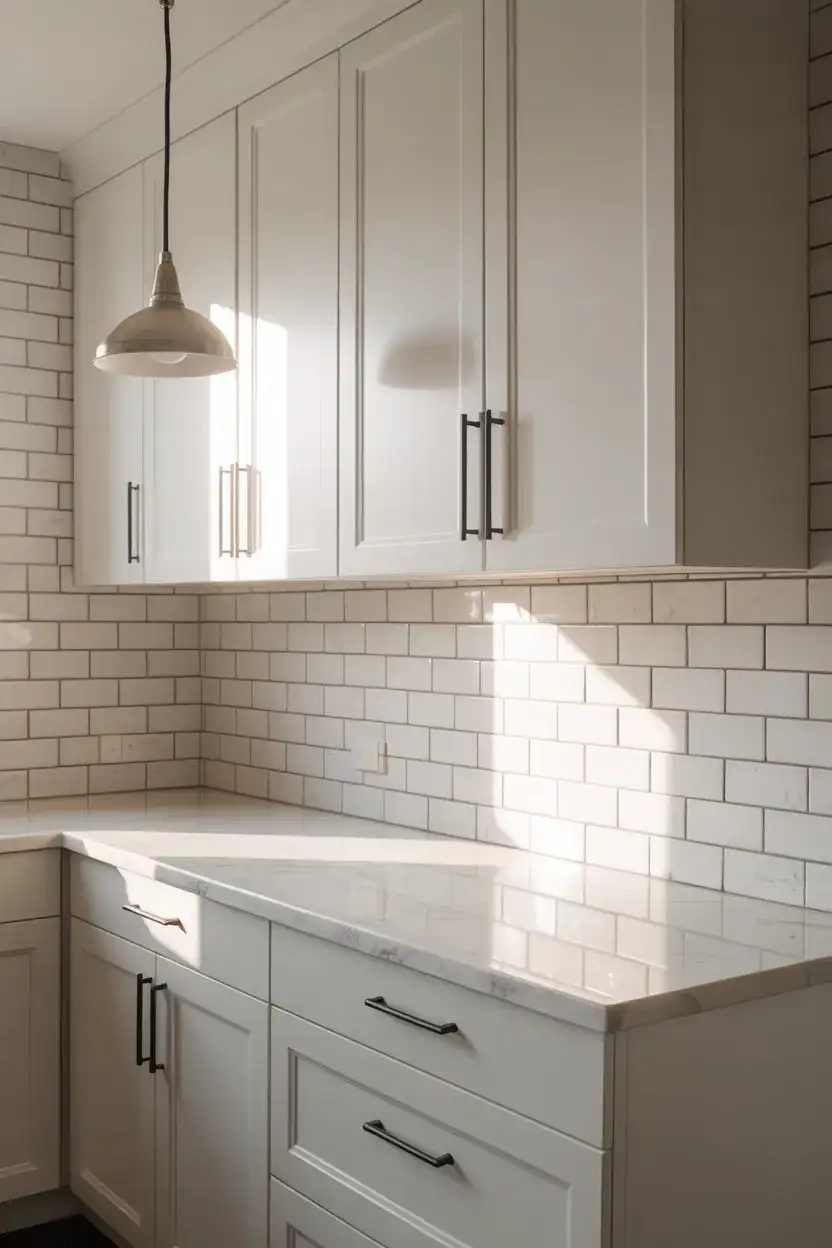
One common mistake is choosing hardware that’s too small or too ornate. Homeowners often underestimate how much a bold, simple pull can ground a white kitchen. Stick with clean lines and avoid overly decorative designs unless your space has traditional molding or architectural detail. Black matte finishes tend to hide fingerprints better than polished options, which matters in a busy family kitchen. This pairing also ages well—you won’t tire of it as quickly as trendier metallics.
2. White and Blue Kitchen Harmony
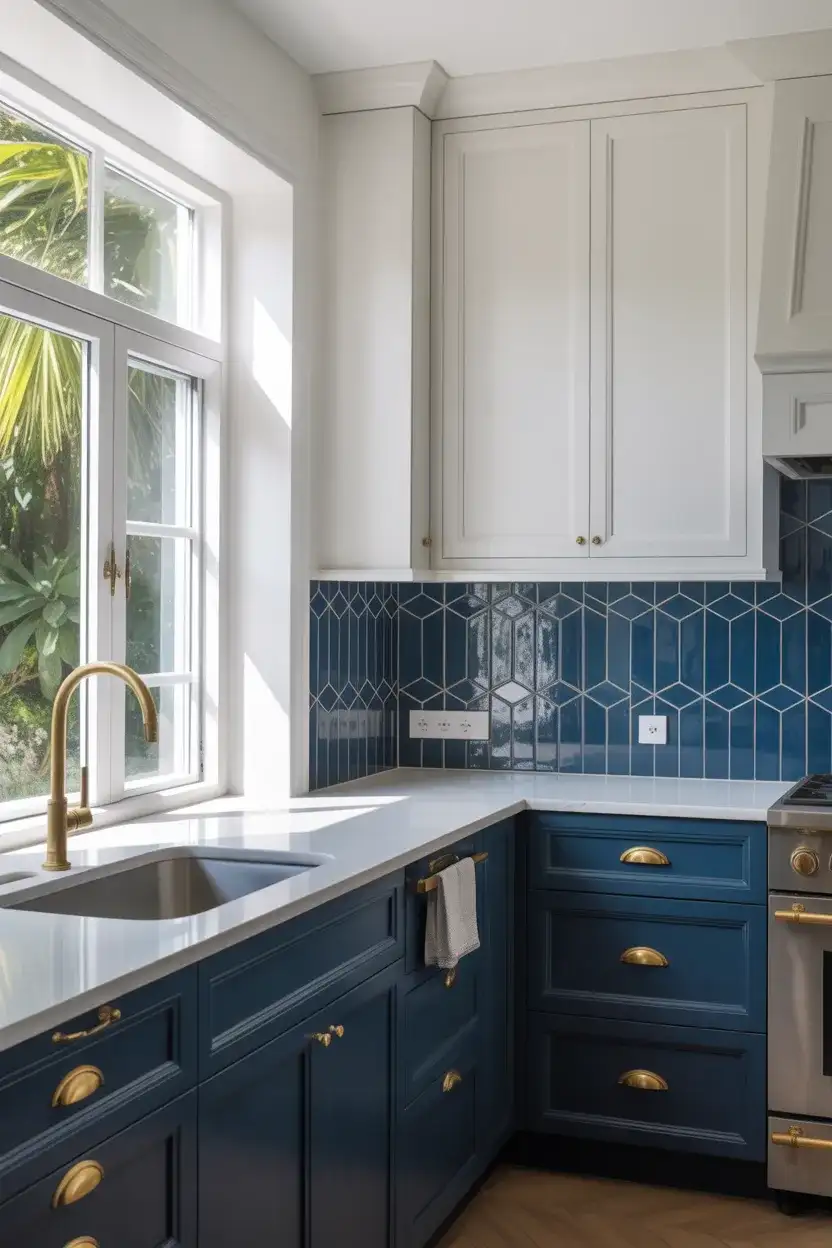
Introducing blue into a white kitchen softens the starkness and adds a layer of personality. Whether it’s a navy island, powder-blue lower cabinets, or a patterned backsplash, this combination feels both classic and coastal. It works particularly well in homes near water or in regions with strong summer light, where cooler tones help balance warmth. The key is choosing a blue that complements your undertones—grays, greens, or purples—so the palette feels cohesive rather than jarring.
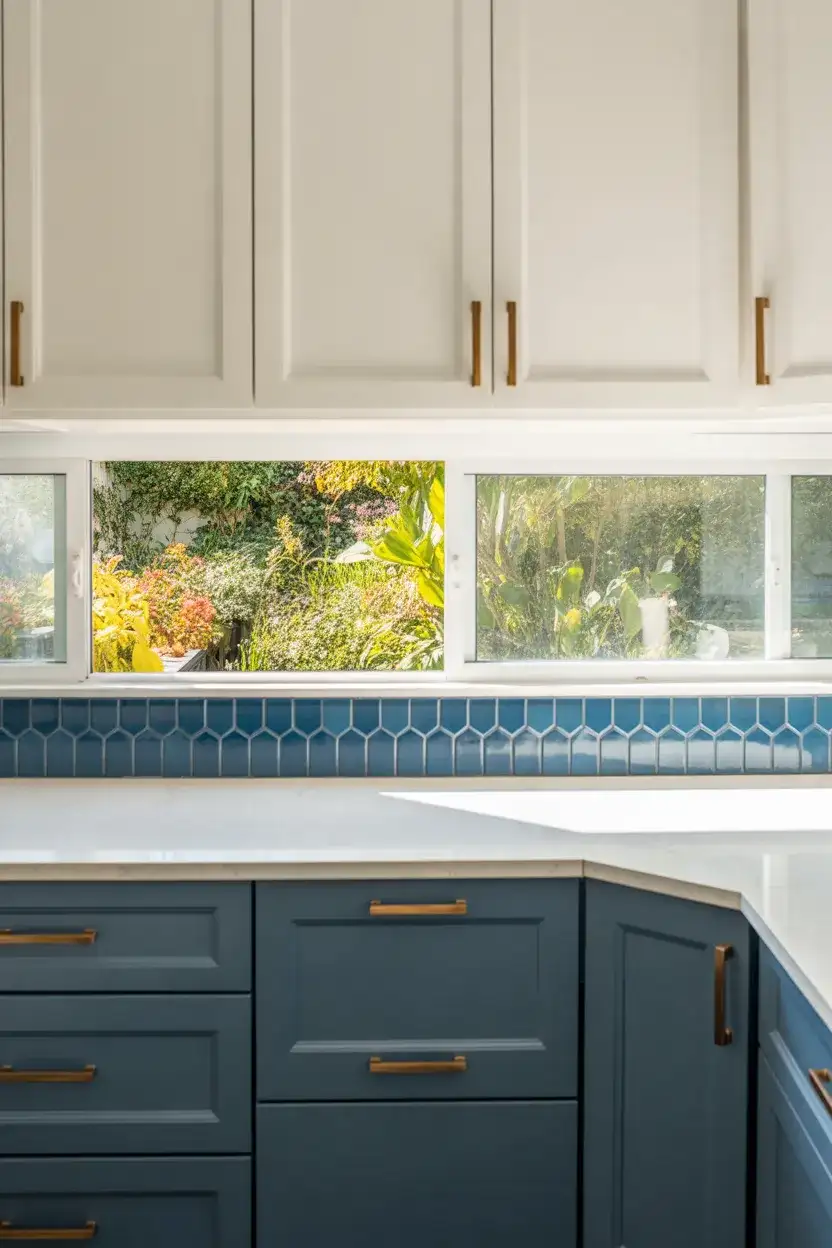
In the Pacific Northwest, where gray skies dominate much of the year, homeowners often choose warmer blues with yellow undertones to keep the space from feeling cold. In the South, cooler navy and cobalt hues offer a refreshing contrast to humid climates. This color pairing also tends to photograph beautifully, which explains why it’s a Pinterest favorite. If you’re cautious about commitment, start with blue bar stools or a painted island before tackling full cabinetry.
3. White Kitchen with All-White Appliances
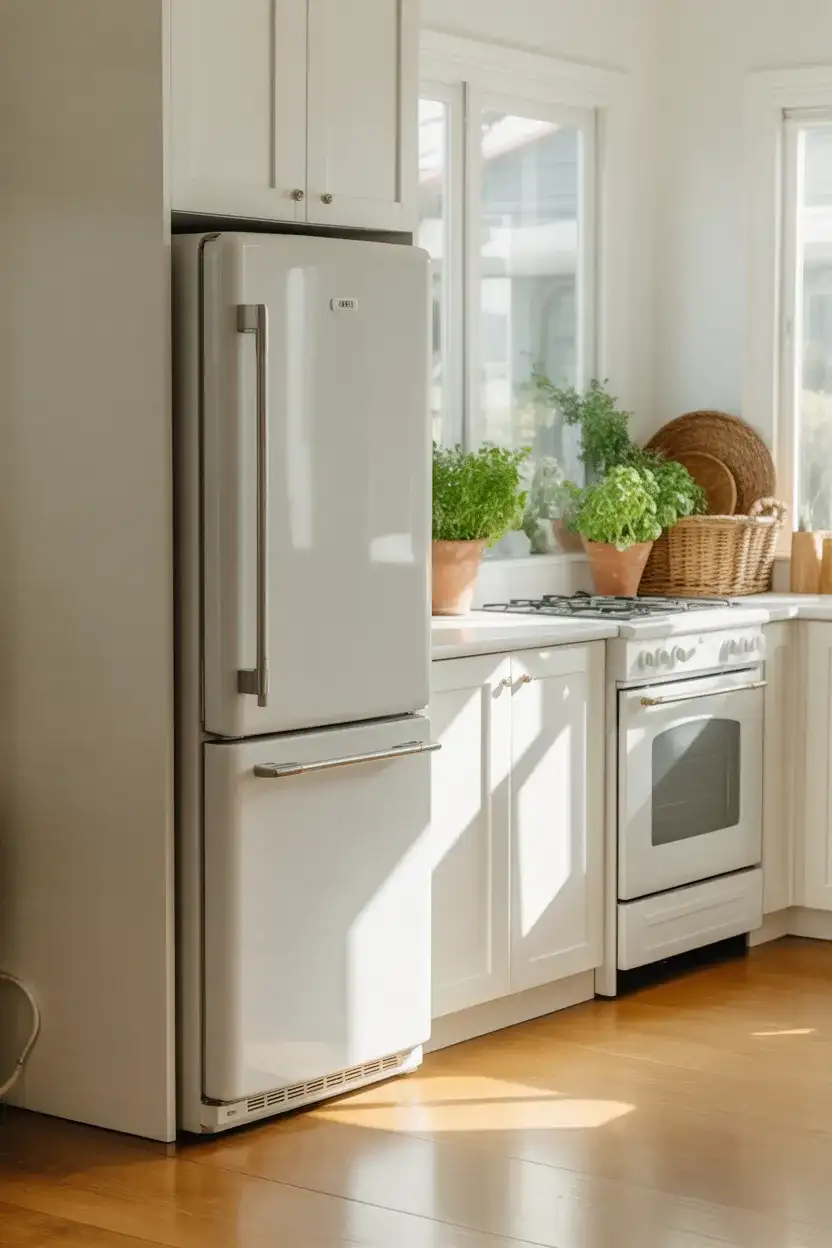
Matching your appliances to your cabinetry creates a seamless, uninterrupted look that feels intentional rather than default. All-white kitchens can lean sterile if not carefully styled, so layering in texture becomes essential. Think woven pendant shades, linen dish towels, raw wood cutting boards, and matte ceramic canisters. The goal is to let the architecture and natural light do the talking while the appliances recede into the background.
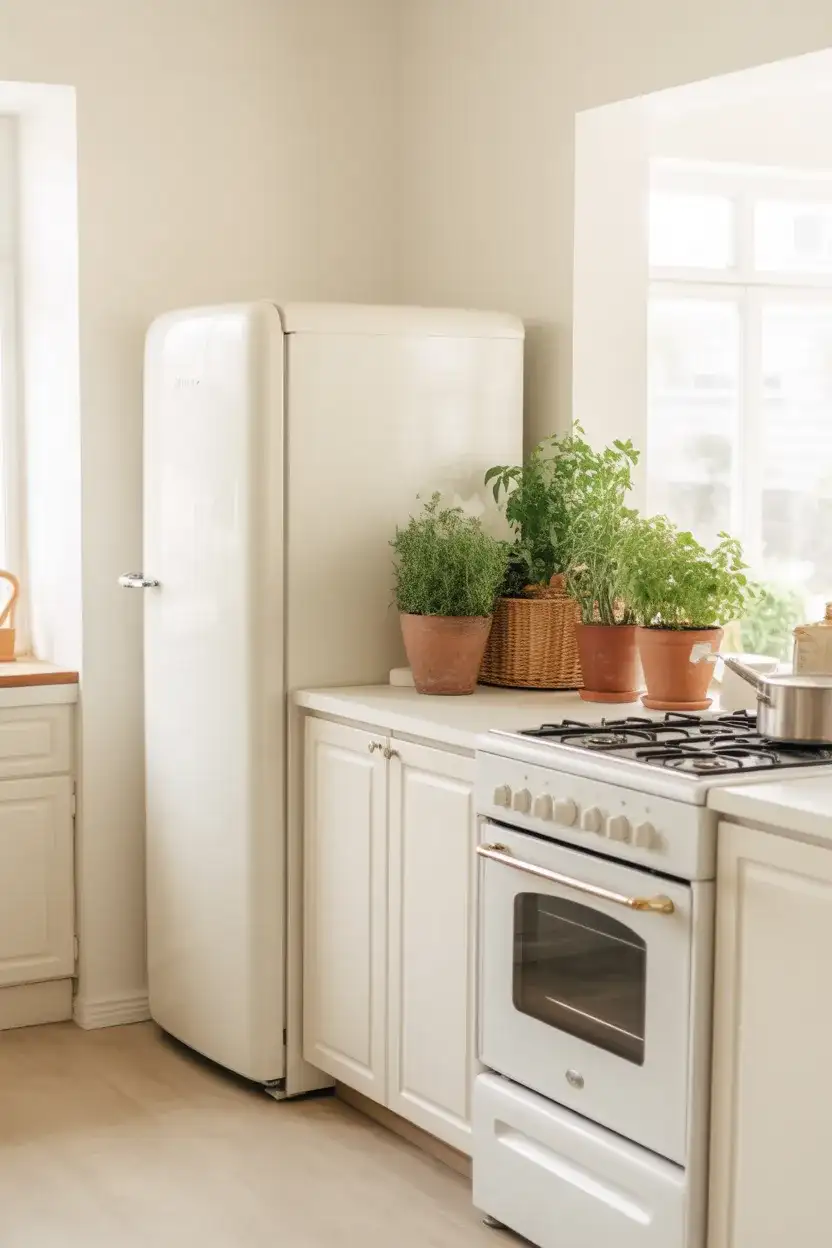
A neighbor recently told me she regretted choosing stainless steel appliances in her all-white kitchen because they constantly pulled her eye away from the architecture. After switching to white panel-ready models, she said the room finally felt calm. It’s a small shift that makes a big difference in how you experience the space daily, especially in open-plan homes where the kitchen is always visible.
4. White Kitchen Backsplash Ideas with Texture
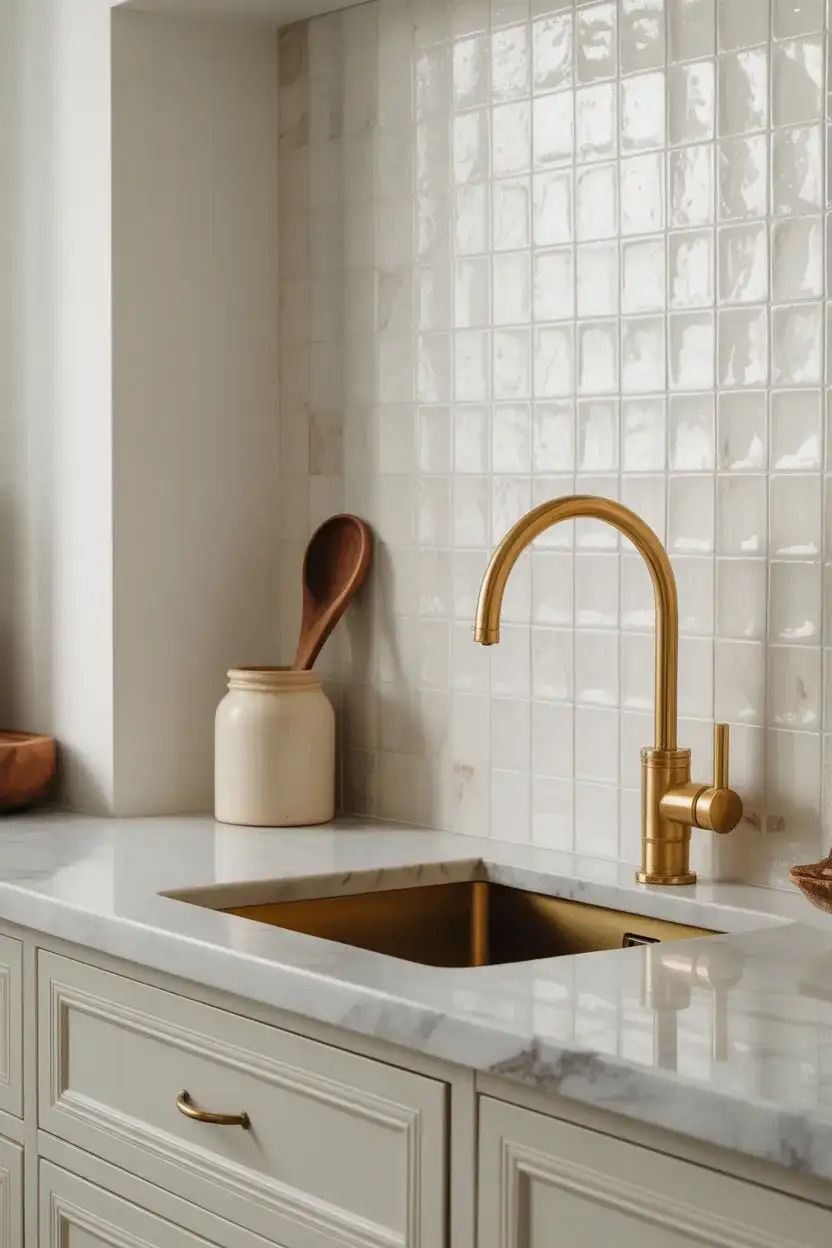
A white backsplash doesn’t have to be boring. In fact, backsplash ideas for white kitchens have exploded in recent years, embracing dimensional tile, handmade ceramics, and unexpected materials like pressed tin or beadboard. Texture catches light differently throughout the day, which keeps the wall from feeling flat. Zellige tile, with its irregular glaze and slightly uneven surface, has become especially popular for homeowners seeking a less-perfect, more lived-in aesthetic.
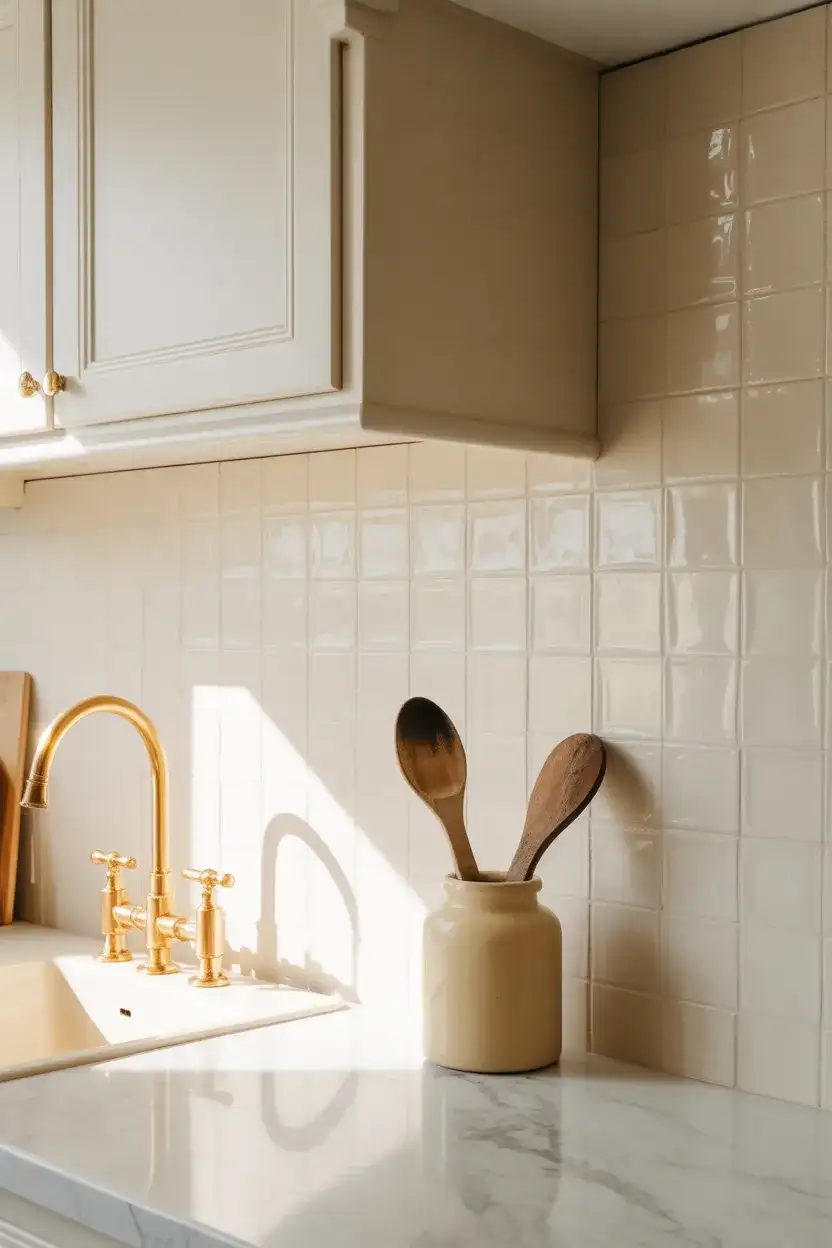
Budget-conscious renovators often skip the backsplash or choose the cheapest option, but this is one area where spending a bit more pays off. A beautiful backsplash elevates the entire kitchen and can make builder-grade cabinets look custom. It’s also easier to replace than cabinetry, so it’s a safer place to take a design risk. If you’re working with a tight budget, consider tiling just the area behind the stove and using paint or beadboard elsewhere.
5. White and Green Kitchen with Organic Warmth
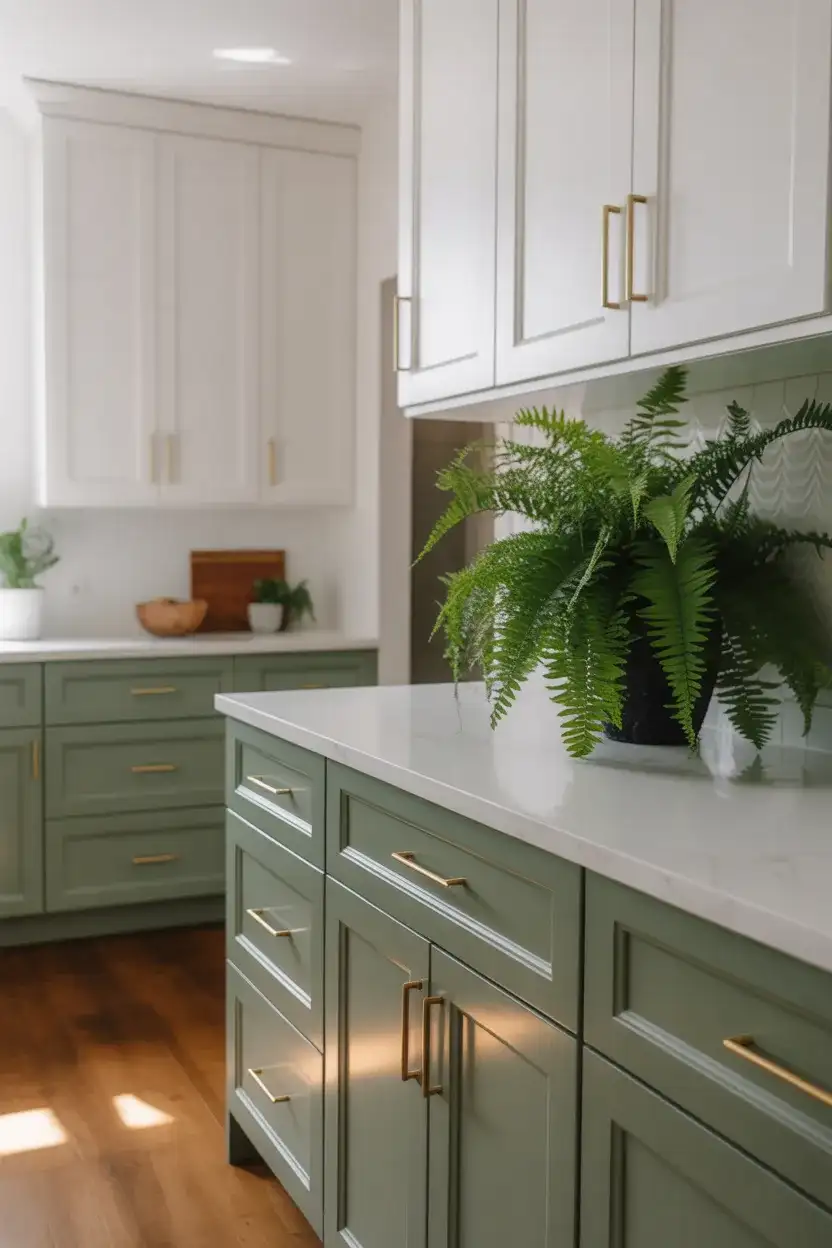
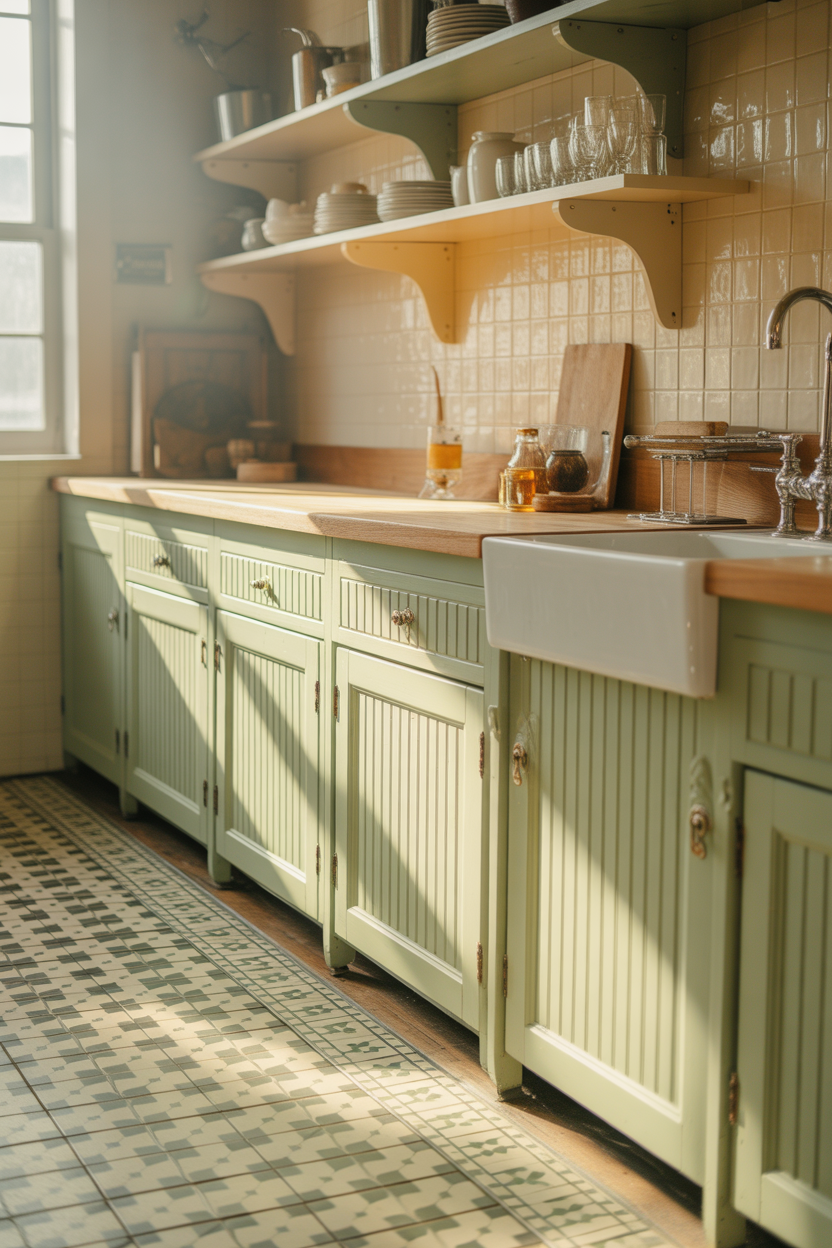
Pairing white with green brings an earthy, garden-inspired feel indoors. Whether through painted lower cabinets, a green backsplash, or even just potted herbs on open shelving, this combination feels fresh without being overly trendy. Olive, sage, and moss tones work especially well because they’re muted enough to live with long-term. The result is a kitchen that feels grounded and connected to nature, which resonates with the growing interest in biophilic design across the U.S.
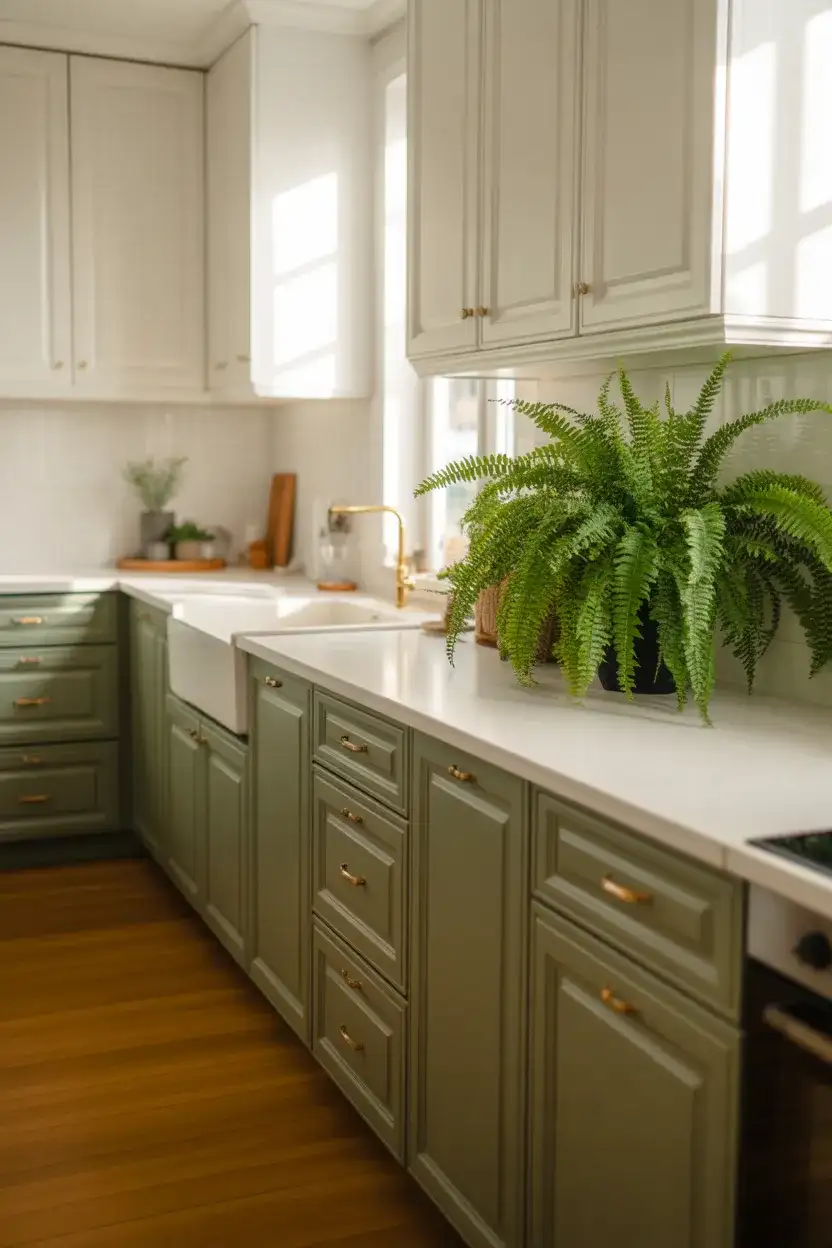
This palette works best in kitchens with abundant natural light, where the green reads as vibrant rather than muddy. In darker spaces, consider using green as an accent—perhaps on a single wall, the island, or through accessories—rather than across all lower cabinetry. Homes in the Southwest, where indoor-outdoor living is central, particularly benefit from this nature-inspired combination. It also pairs beautifully with terracotta, rattan, and raw wood finishes.
6. White Kitchen with Wood Island Contrast
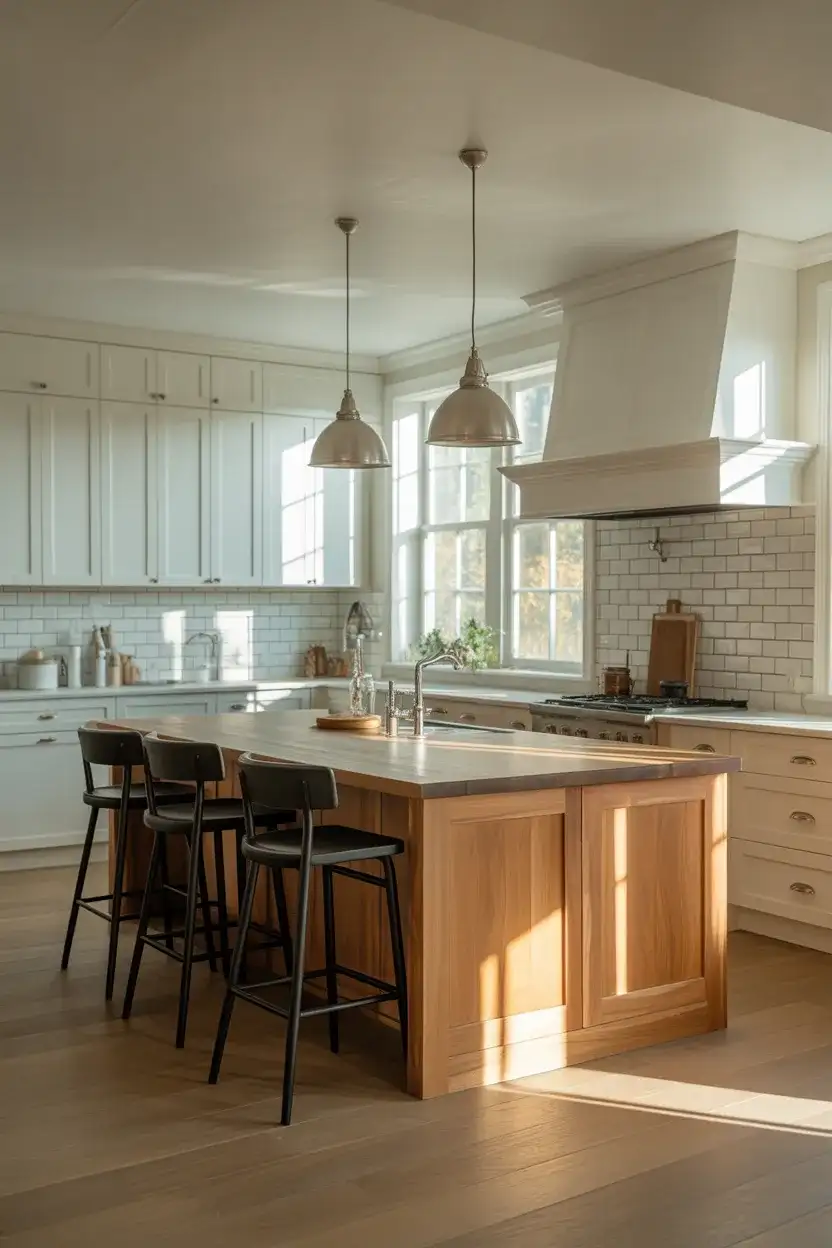
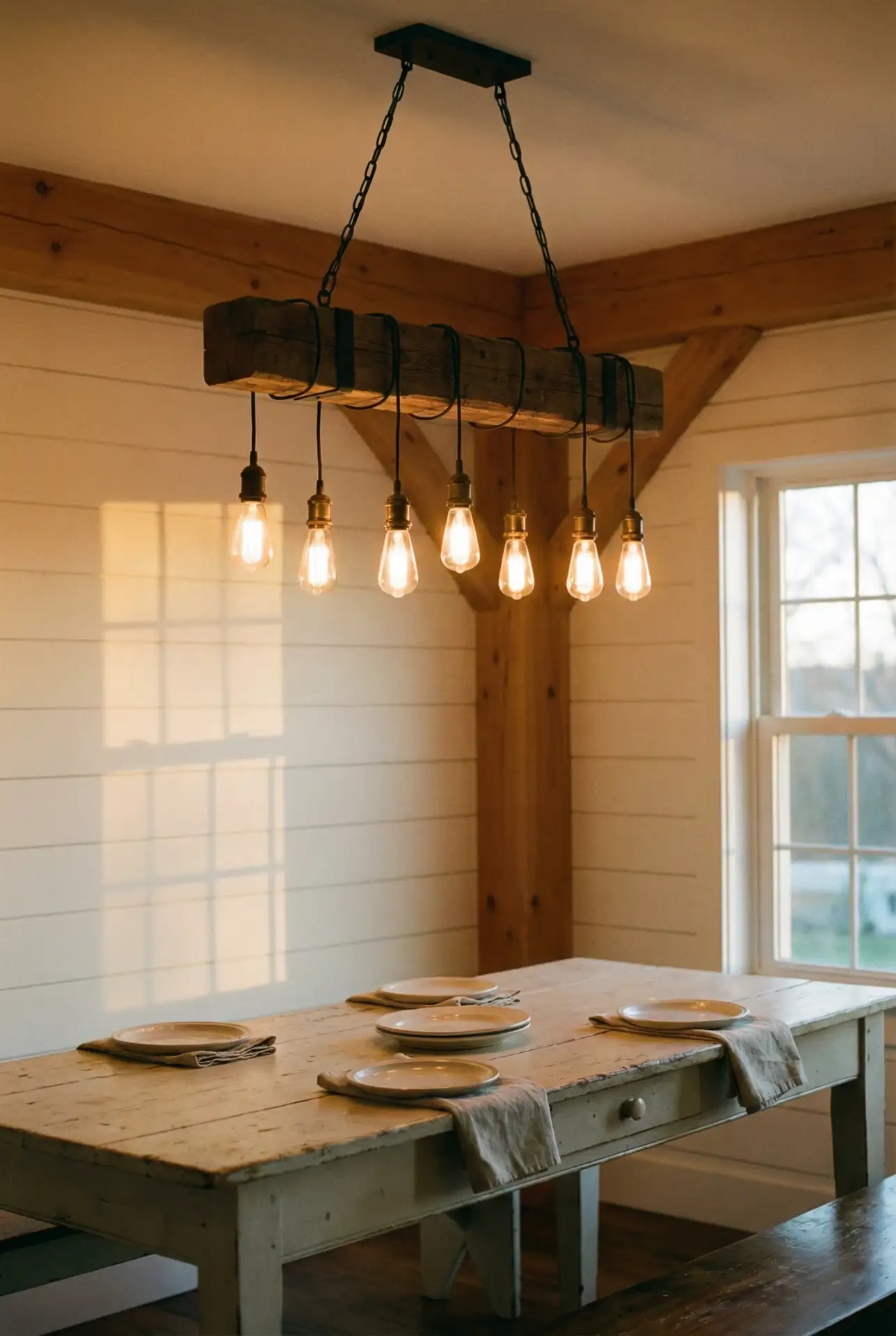
A wood island in a white kitchen provides warmth and textural contrast without overwhelming the space. Whether you choose reclaimed barn wood, butcher block, or a sleek walnut waterfall edge, the natural grain breaks up the monochrome palette in a way that feels intentional. This approach also introduces a functional work surface that ages beautifully—scratches and patina become part of the story. It’s particularly effective in farmhouse, transitional, and Scandinavian-inspired kitchens.
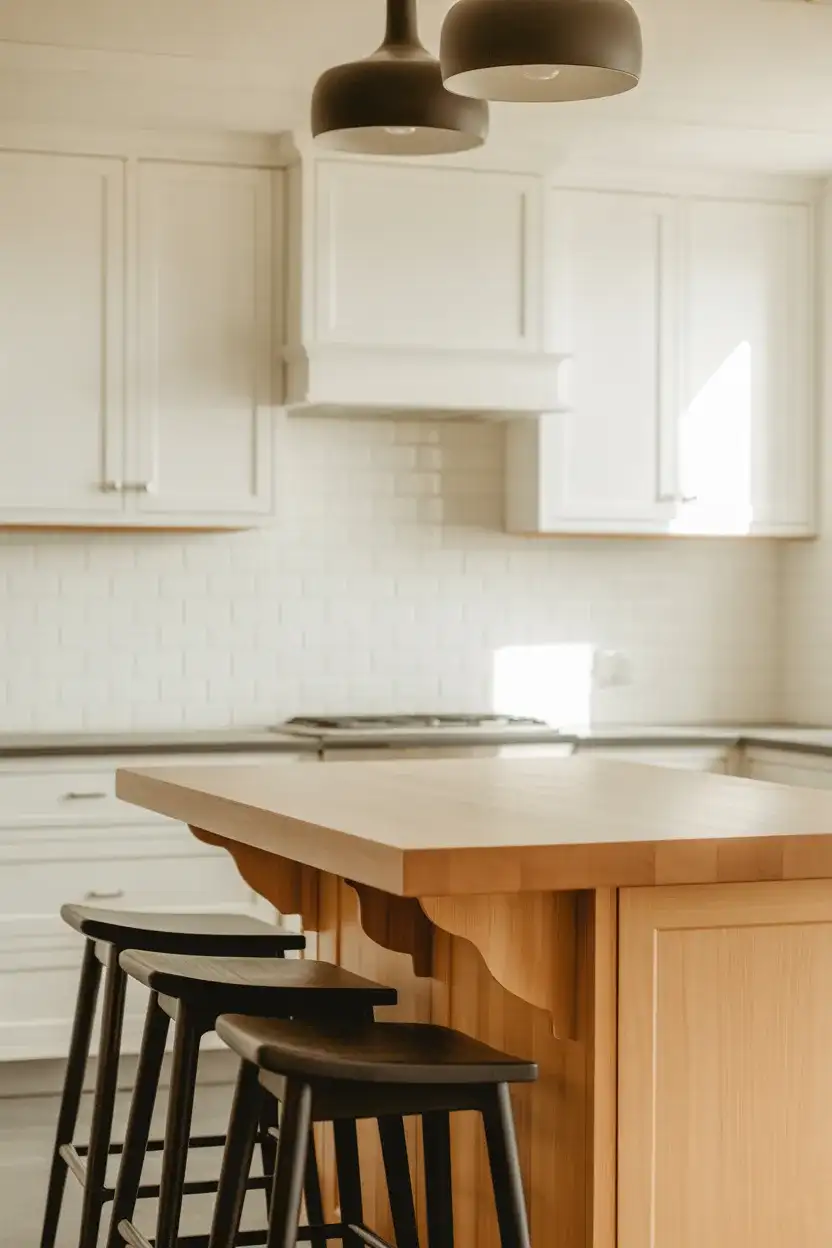
Expert designers often recommend matching the wood tone of your island to other elements in the room—flooring, open shelving, or even ceiling beams—to create visual continuity. If your floors are light oak, a similar-toned island feels cohesive. If you have darker walnut trim, echo that richness in the island. This prevents the wood from feeling like an afterthought and instead makes it a deliberate part of the design story.
7. White and Grey Kitchen Balance
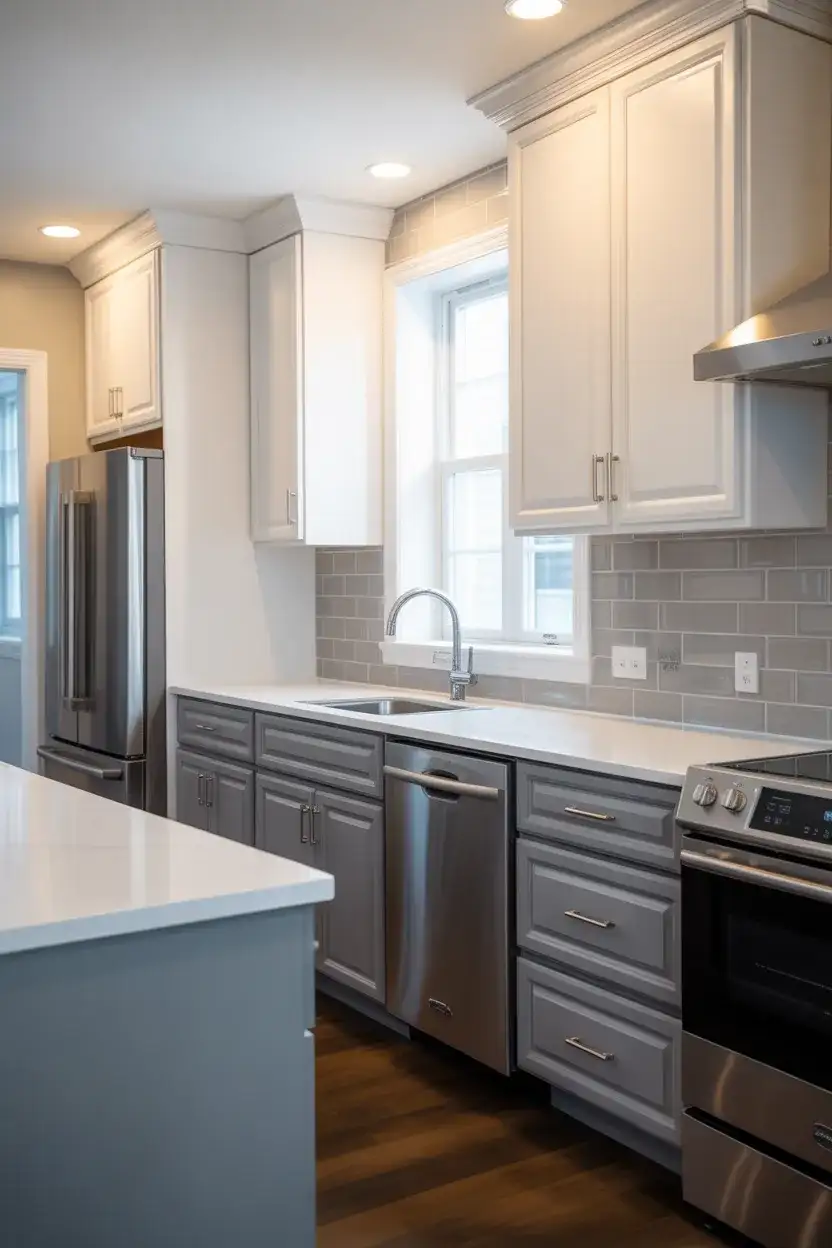
Combining white with grey or gray creates a sophisticated, neutral palette that’s easier to accessorize than pure white. Whether through painted lower cabinets, a gray island, or a soft gray quartz countertop, this pairing adds depth without introducing bold color. It’s especially popular in urban homes and modern suburban builds where a sleek, understated look is the goal. The trick is choosing the right gray—too cool and it can feel cold; too warm and it risks looking beige.
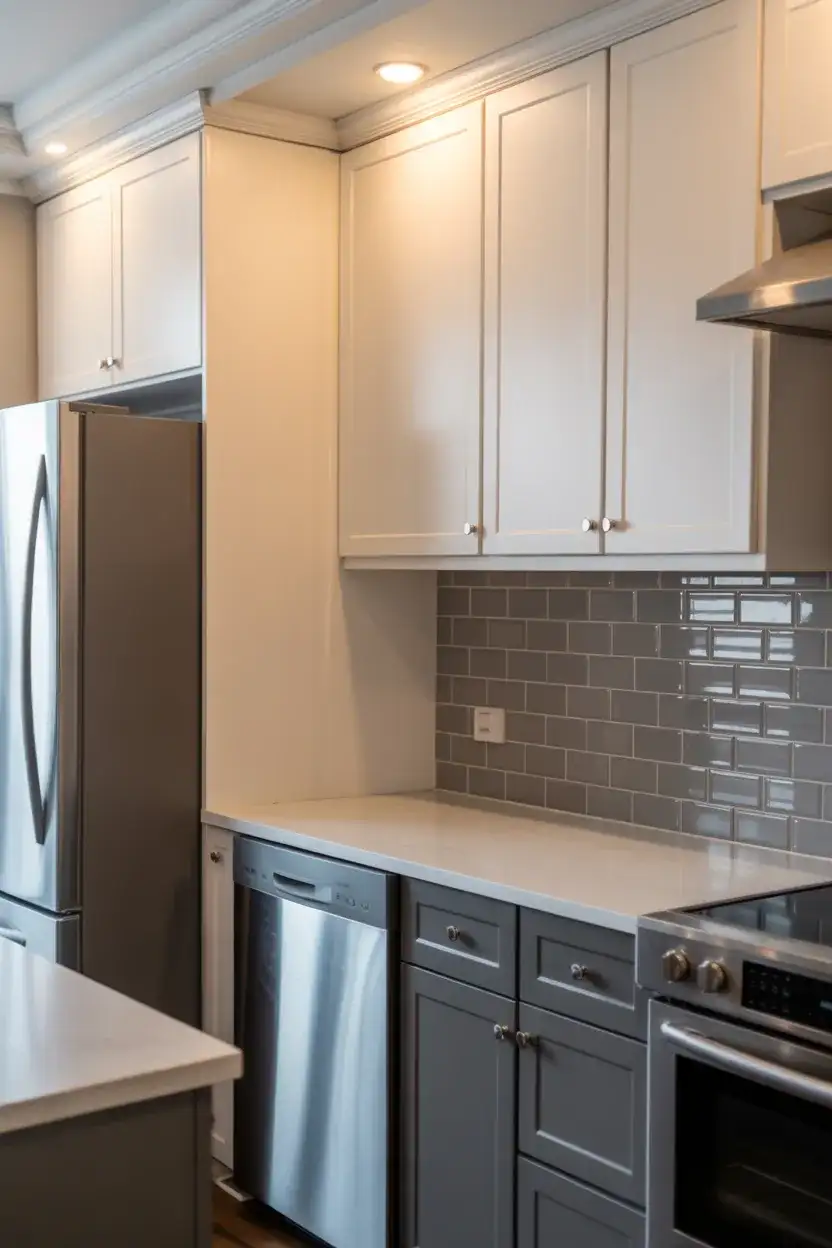
In the Midwest, where winters are long and light is often diffused, warmer grays with beige undertones help keep kitchens feeling cozy rather than stark. On the coasts, cooler grays with blue undertones complement ocean views and coastal color schemes. This palette also hides wear better than pure white, which is a practical consideration for families with young children or pets. Many homeowners appreciate that gray doesn’t show every fingerprint or smudge the way bright white can.
8. White Kitchen with Walnut Warmth
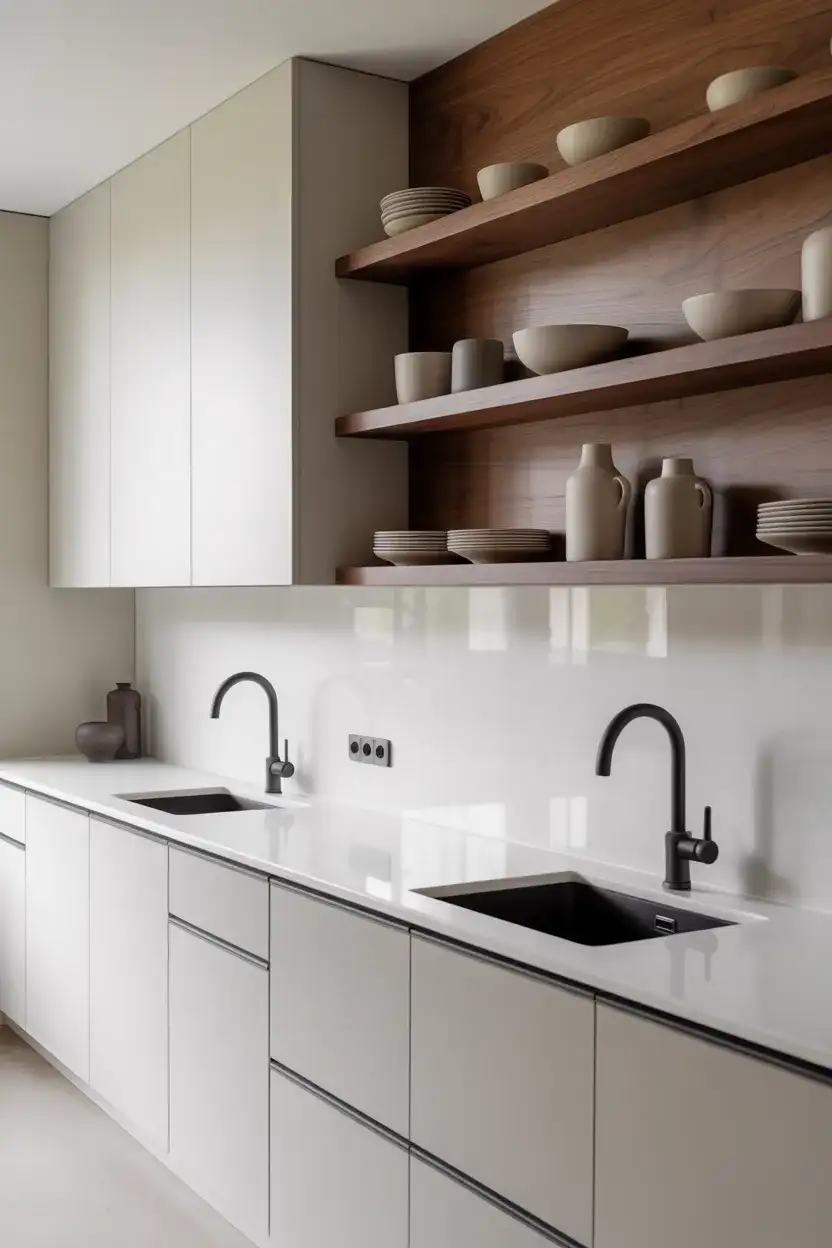
Pairing white cabinetry with walnut accents brings richness and a mid-century modern feel to the space. Whether through a walnut-topped island, floating shelves, or a built-in breakfast nook, the deep brown grain contrasts beautifully with white and prevents the kitchen from feeling too clinical. Walnut’s natural variation—from pale streaks to dark chocolate tones—adds visual interest without requiring additional color. It’s a timeless choice that works in both traditional and contemporary settings.
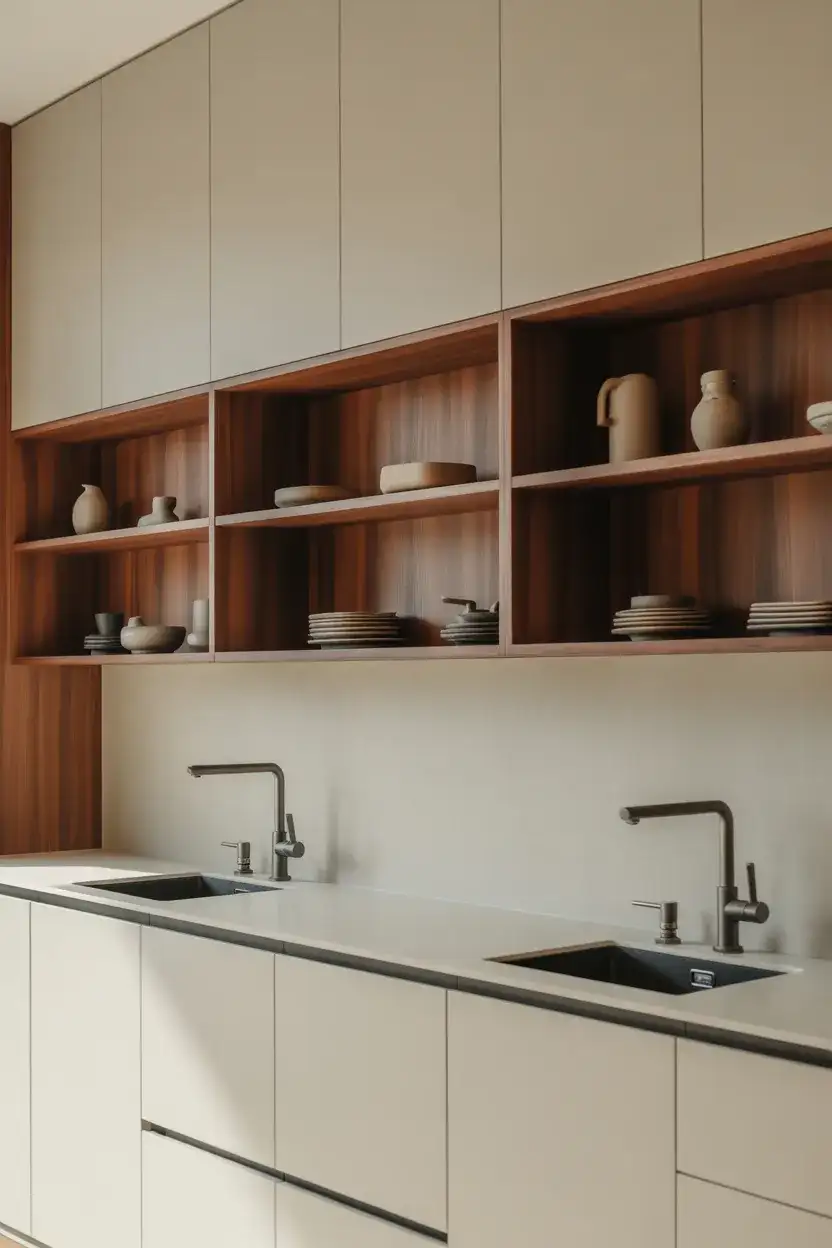
A colleague once mentioned that after living with walnut shelving for three years, it was the only element in her kitchen she wouldn’t change. The wood had developed a warm patina, and the open shelves forced her to keep only the dishes she truly loved on display. It’s a reminder that thoughtful material choices can shape not just how a space looks, but how you interact with it daily.
9. White and Navy Kitchen Sophistication
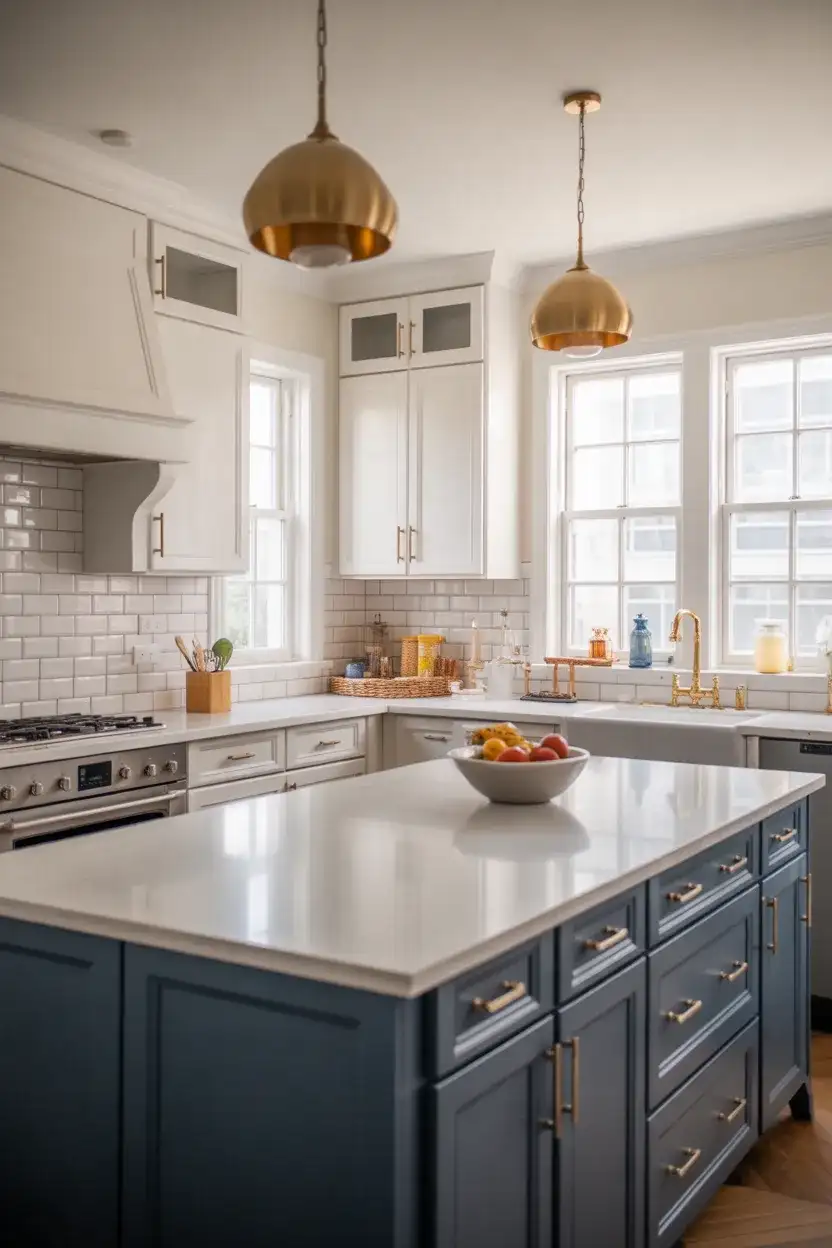
A navy island or lower cabinets against white uppers delivers drama and elegance without veering into overly bold territory. Navy reads as a neutral in most lighting conditions, which makes it surprisingly versatile. It pairs well with brass, chrome, and even black hardware, and it doesn’t compete with colorful dishware or accessories. This combination is especially effective in homes with traditional or nautical-inspired design, but it translates beautifully to modern spaces as well.
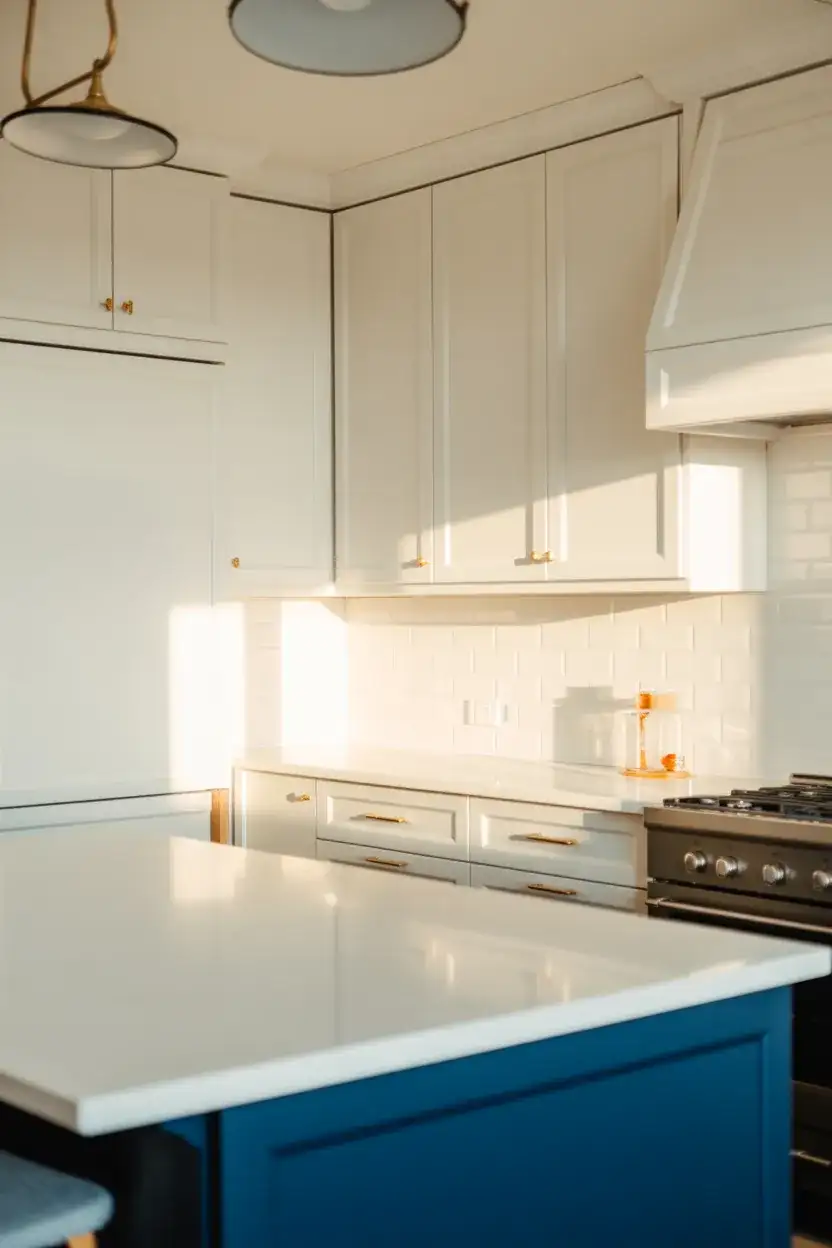
In New England, where colonial architecture dominates, navy and white kitchens feel right at home. They echo historic color palettes without feeling dated. In the South, this combination offers a cooler alternative to warm wood tones and works well in homes with high ceilings and abundant natural light. Navy also hides dirt and wear better than lighter colors, which makes it a smart choice for high-traffic family kitchens.
10. White Kitchen Countertops in Quartz and Marble
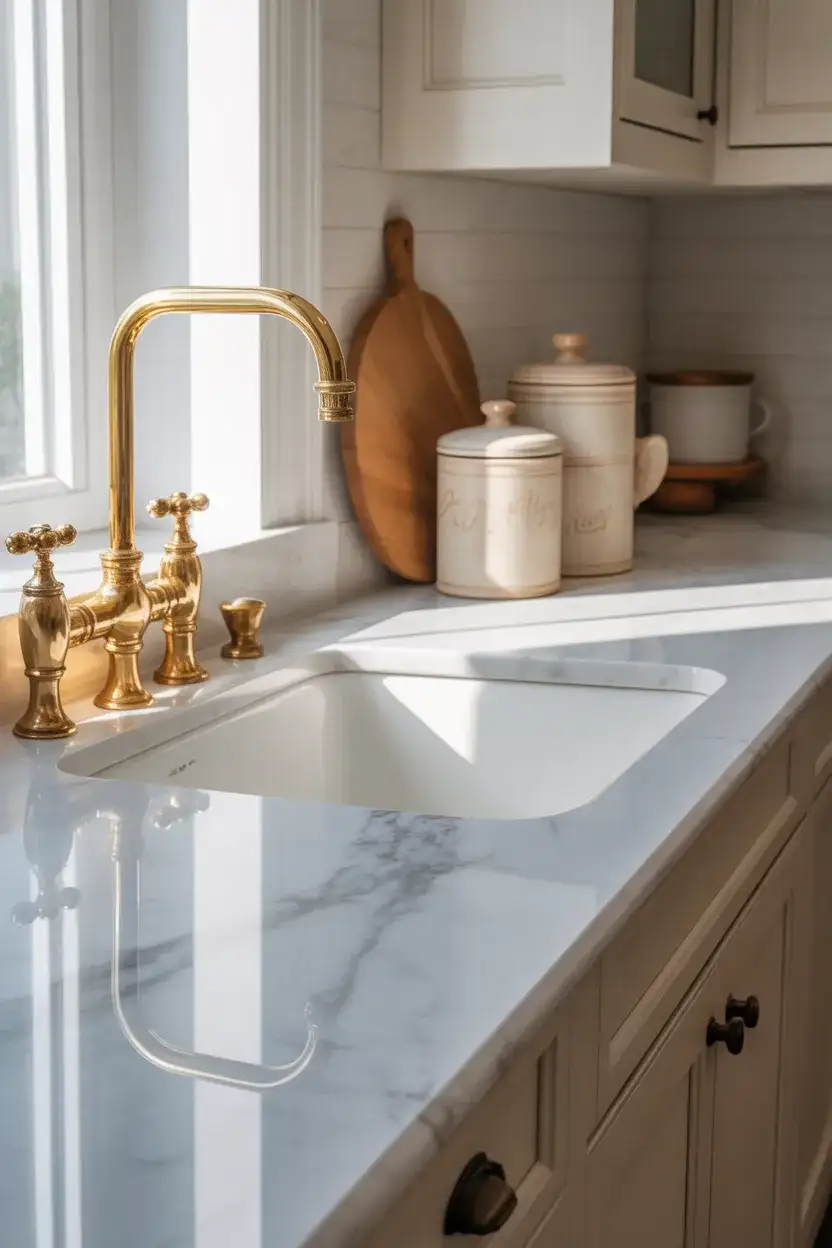
Choosing the right countertops for a white kitchen can make or break the design. White quartz offers durability and consistency, while marble introduces natural veining and a sense of luxury. Both materials reflect light beautifully, which enhances the airy feel of an all-white space. The key is balancing practicality with aesthetics—marble requires more maintenance, but many homeowners find the character worth the effort. If you cook frequently and need a low-maintenance surface, quartz is the smarter pick.
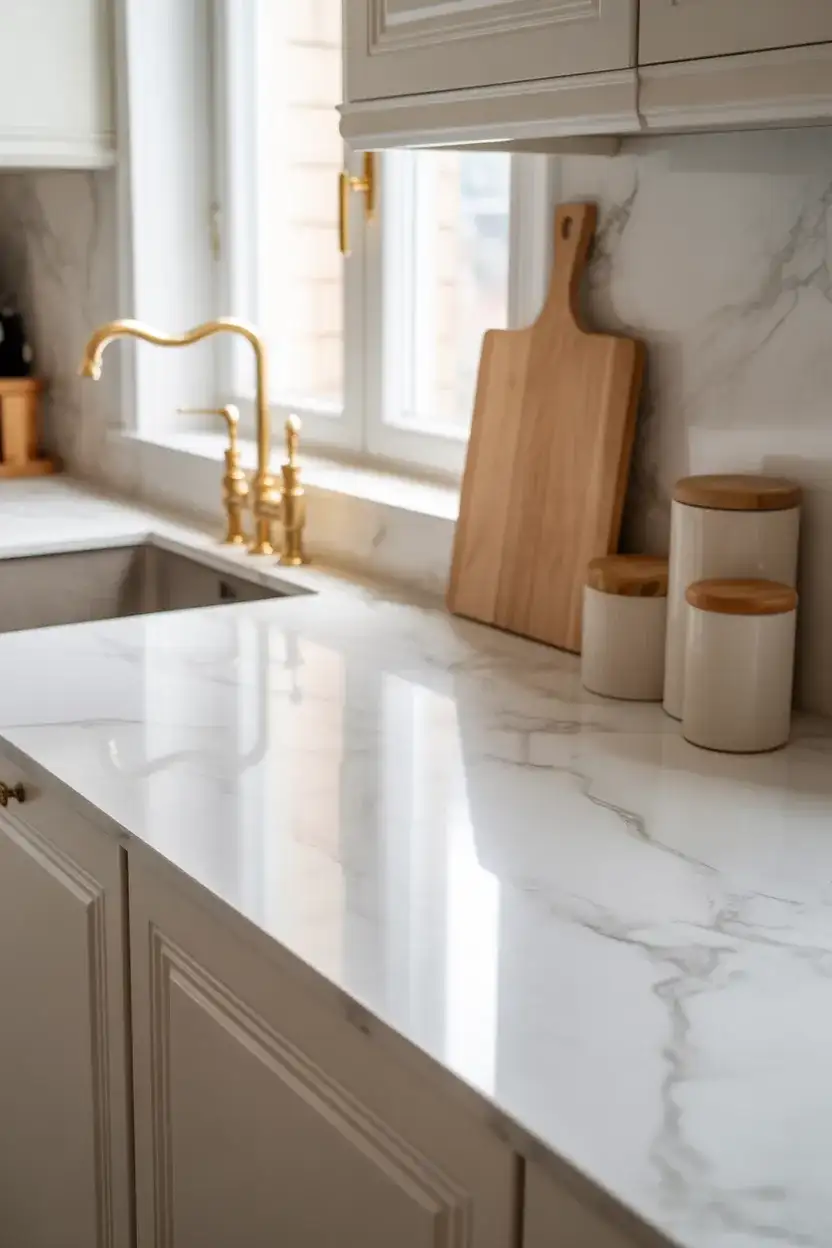
One common mistake is choosing a white countertop with too much pattern or veining, which can compete with other design elements. In a heavily detailed kitchen with decorative tile and ornate cabinetry, a quieter countertop often works better. Conversely, in a minimalist kitchen with flat-panel cabinets and simple hardware, a dramatic marble slab can become the focal point. Always consider the bigger picture before committing to a surface material.
11. White and Brown Kitchen Layering
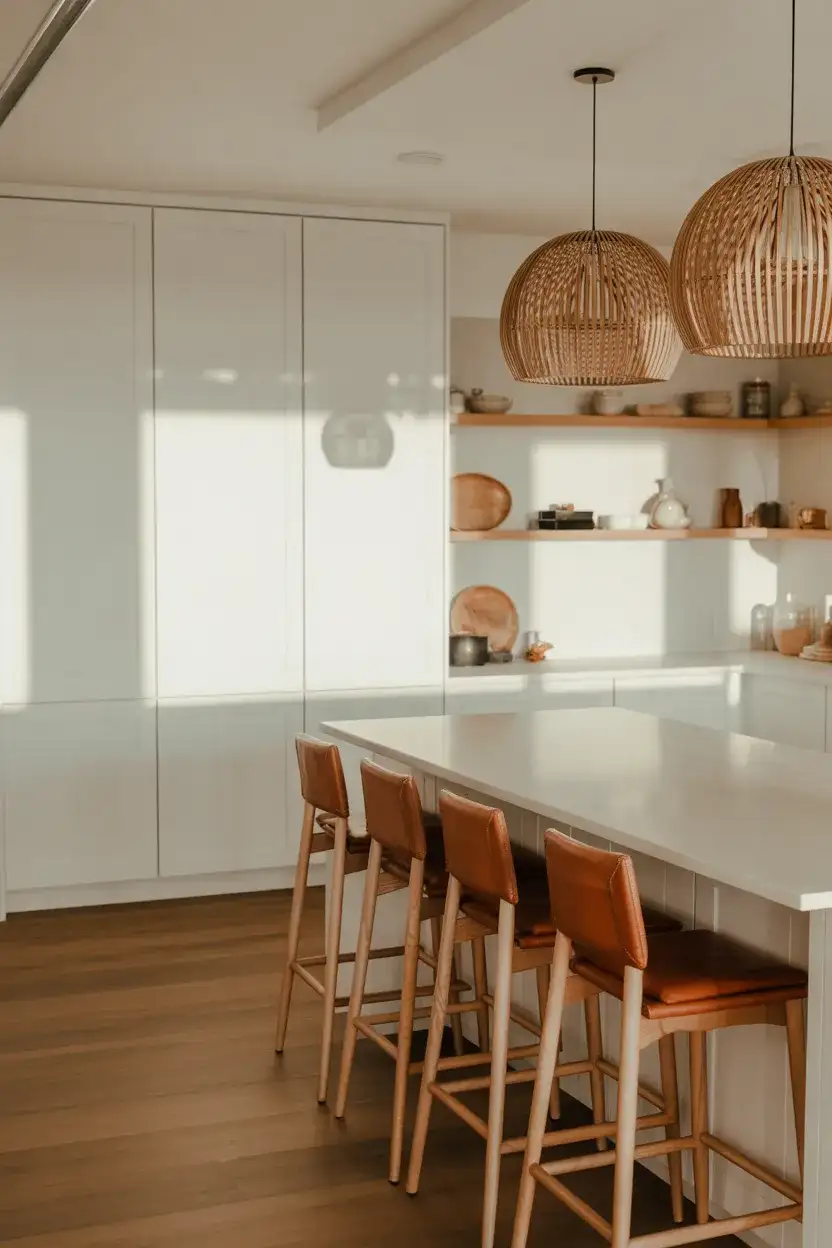
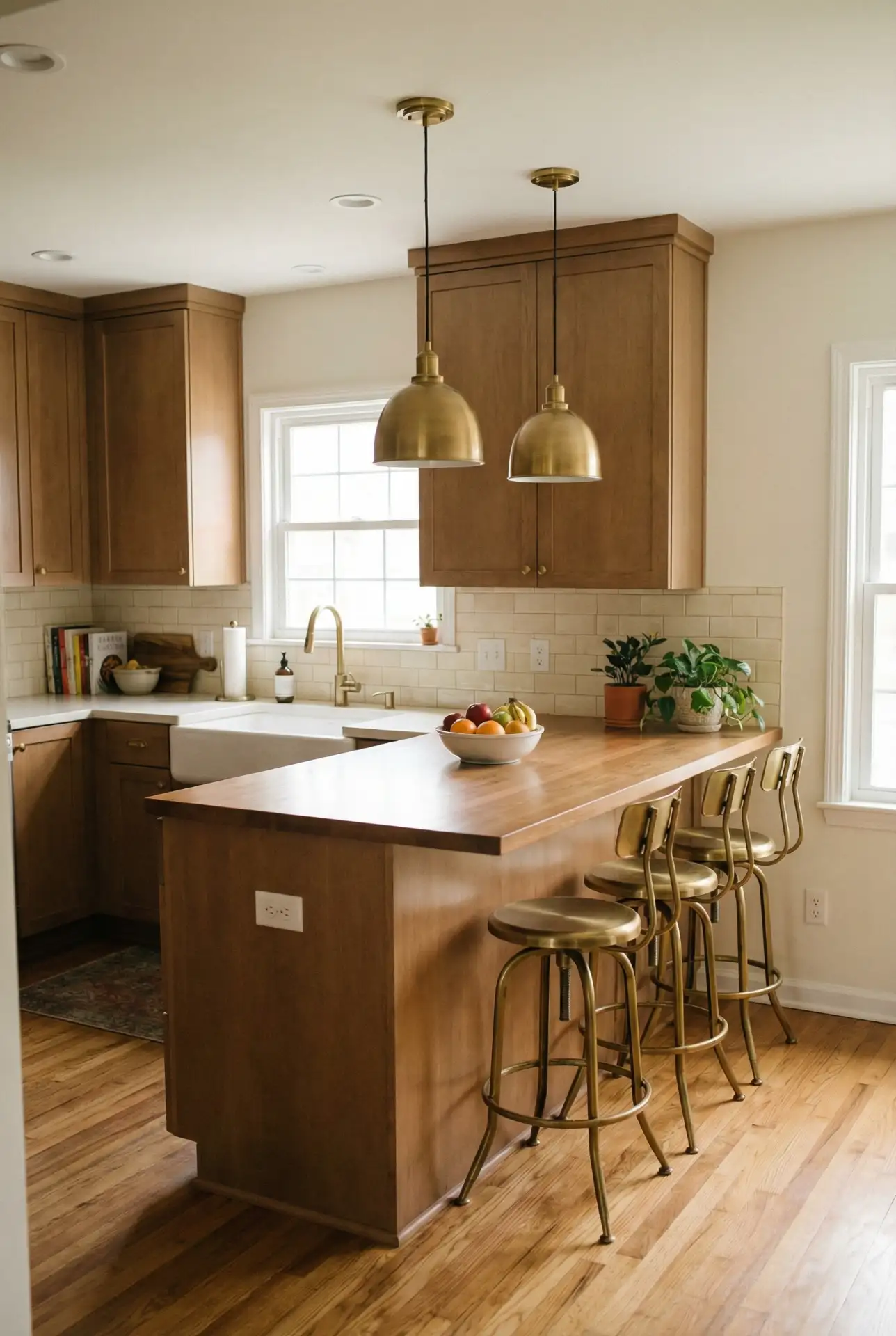
Introducing brown tones into a white kitchen through wood floors, open shelving, or woven accents creates warmth and prevents the space from feeling too sterile. Think leather bar stools, rattan pendant shades, or a reclaimed wood range hood. These organic materials soften the crispness of white and add layers of texture that make the room feel lived-in and welcoming. It’s a strategy that works across nearly every design style, from rustic farmhouse to modern minimalist.
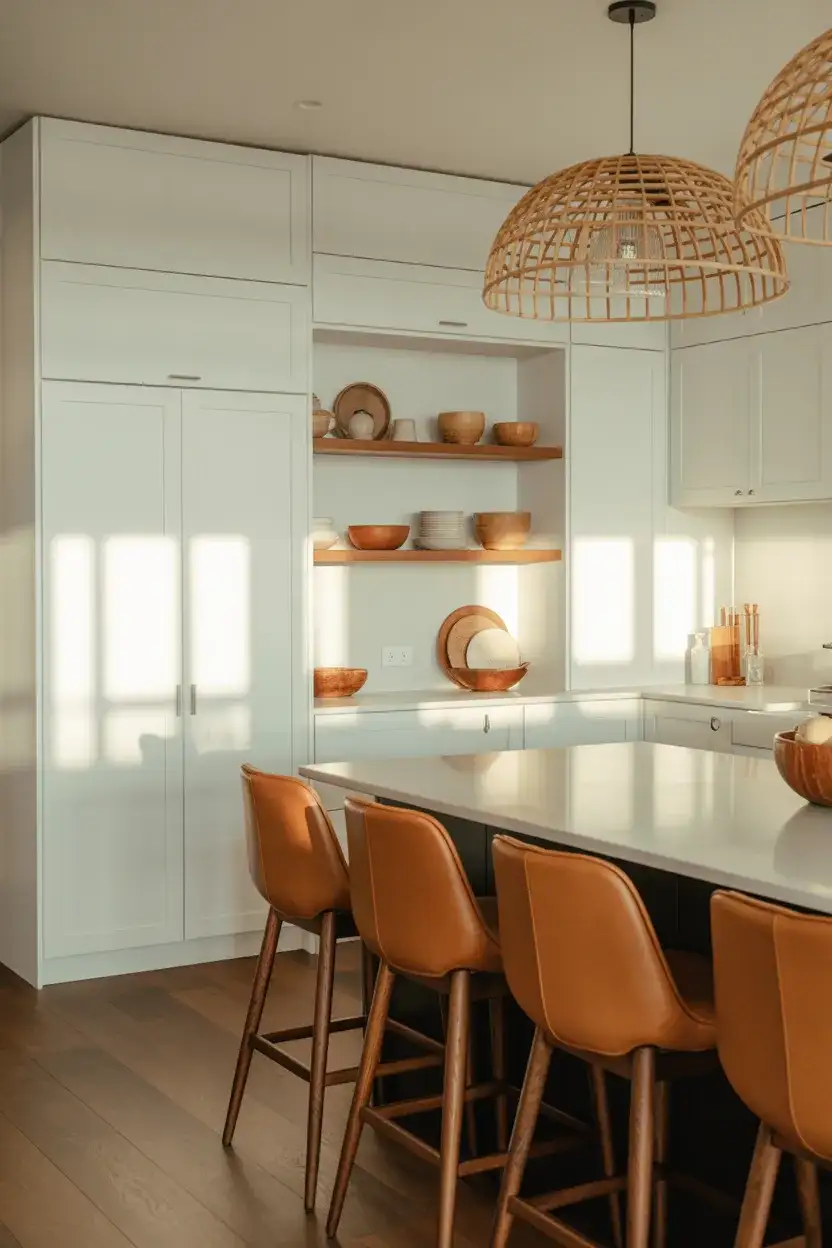
This palette works best in kitchens with good natural light, where the brown tones can be appreciated without making the space feel dark. In basements or kitchens with limited windows, stick to lighter browns like oak or pine rather than deep walnut or espresso. Regional preferences also play a role—Southwestern homes often lean toward terracotta and warm wood, while Pacific Northwest kitchens favor cooler, grayer browns that complement the climate.
12. White Kitchen with Black Counter Drama
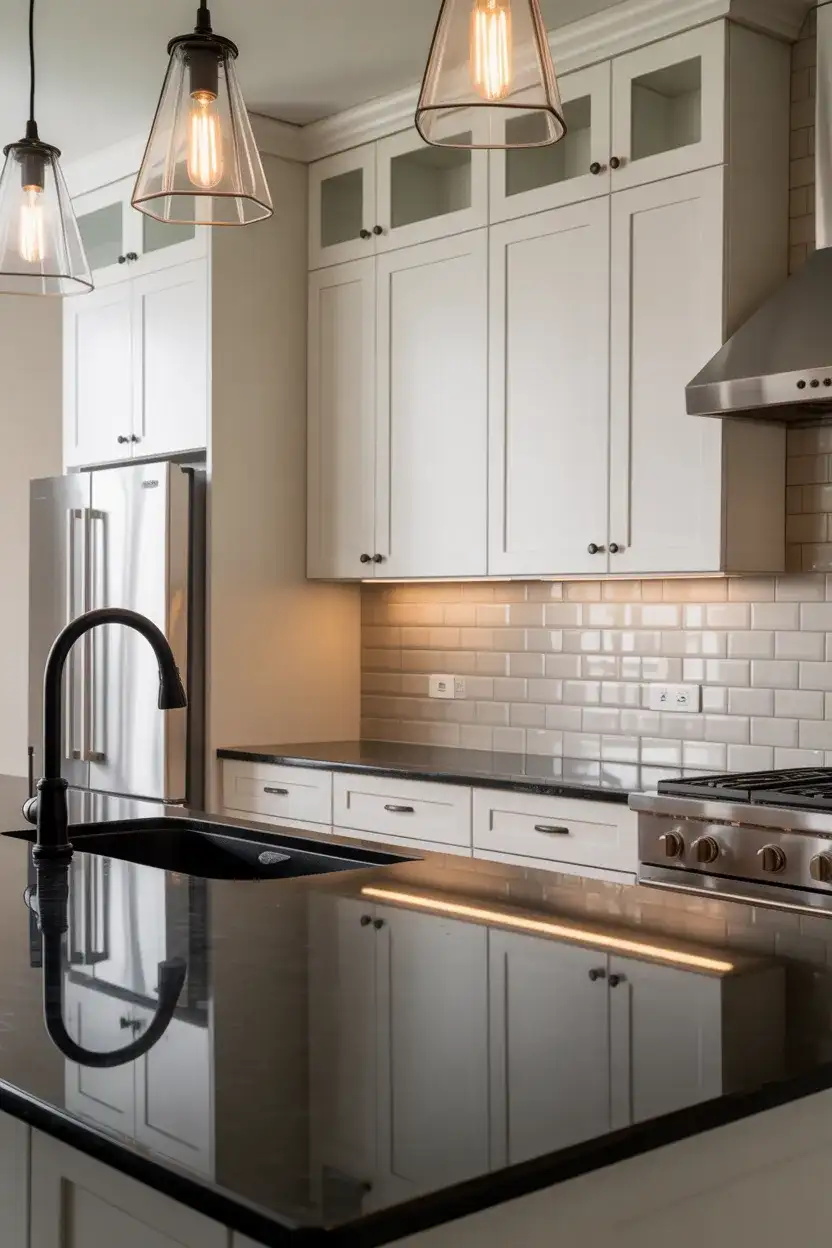
A black counter against white cabinetry delivers high contrast and a graphic, modern look. Whether you choose honed granite, soapstone, or black quartz, the dark surface grounds the space and makes a strong visual statement. This combination works particularly well in contemporary and industrial-style kitchens, where bold contrasts are embraced. It also hides spills and crumbs better than white surfaces, which is a practical benefit for busy households.
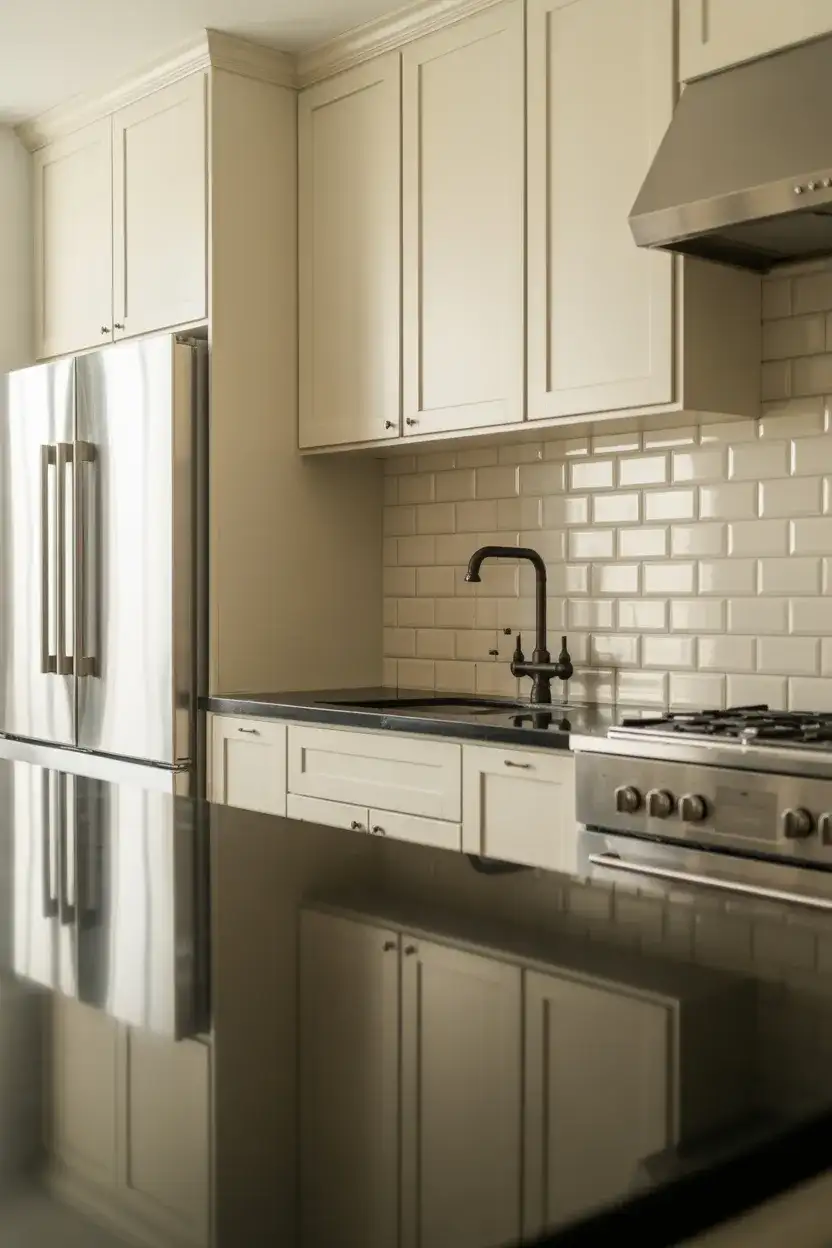
In the Northeast, where historic homes often feature dark wood trim and painted cabinetry, black countertops feel right at home. They echo traditional color palettes while providing a durable, modern work surface. In open-concept homes, a black counter can help define the kitchen zone visually without requiring a physical barrier. Just be mindful of lighting—black surfaces absorb rather than reflect light, so ensure you have adequate task and ambient lighting to keep the space functional.
13. Classic White Kitchen Timelessness
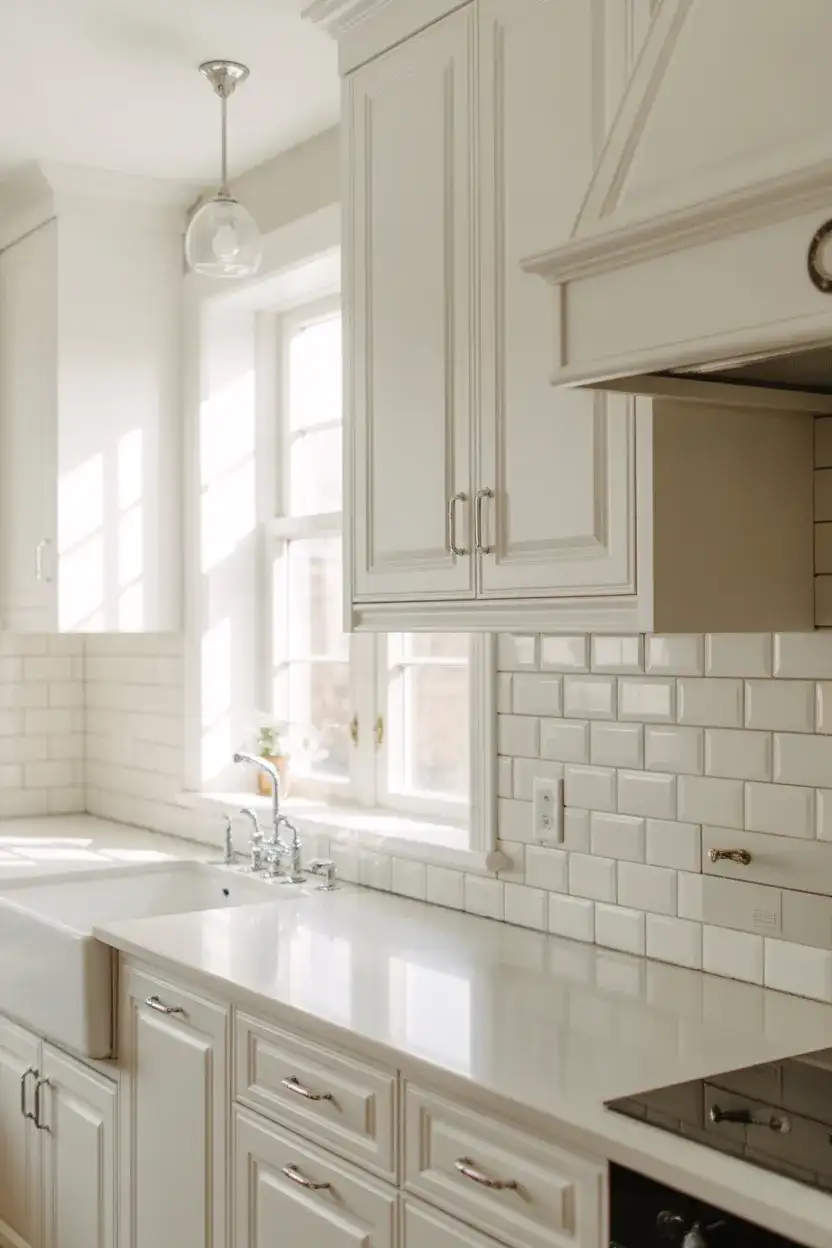
A classic white kitchen never goes out of style because it serves as a blank canvas for evolving tastes. Shaker cabinets, simple subway tile, and understated hardware create a foundation that works with nearly any decor. This approach is particularly appealing to homeowners who plan to sell eventually, as white kitchens have broad market appeal. But it’s also a smart choice for anyone who likes to refresh their space seasonally through textiles, dishware, and small decor changes.
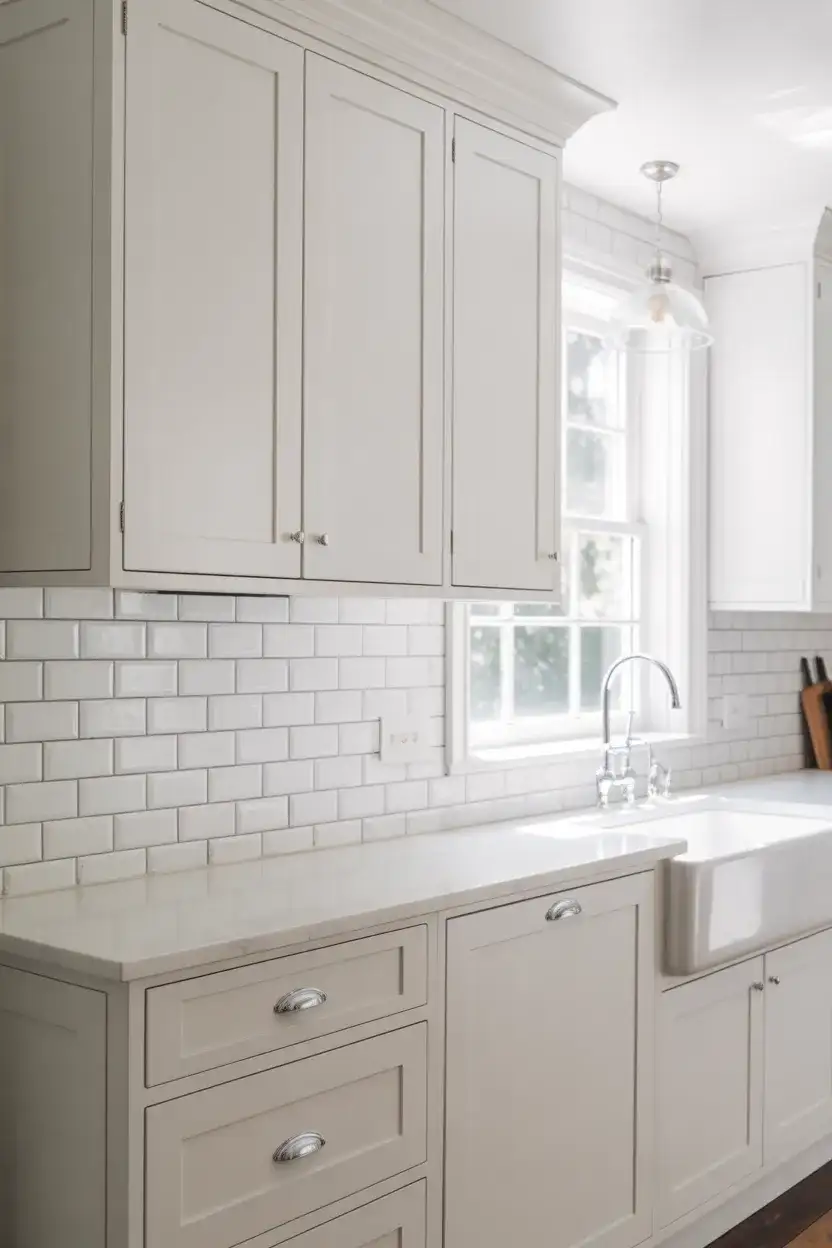
Designers often point out that classic doesn’t mean boring. The quality of materials, the precision of installation, and the thoughtfulness of layout all contribute to whether a white kitchen feels special or generic. Investing in solid wood cabinets, stone countertops, and well-made fixtures ensures the space ages gracefully. A classic white kitchen done right can compete with any trendy design and will still look beautiful decades from now.
14. White Kitchen with Green Backsplash Freshness
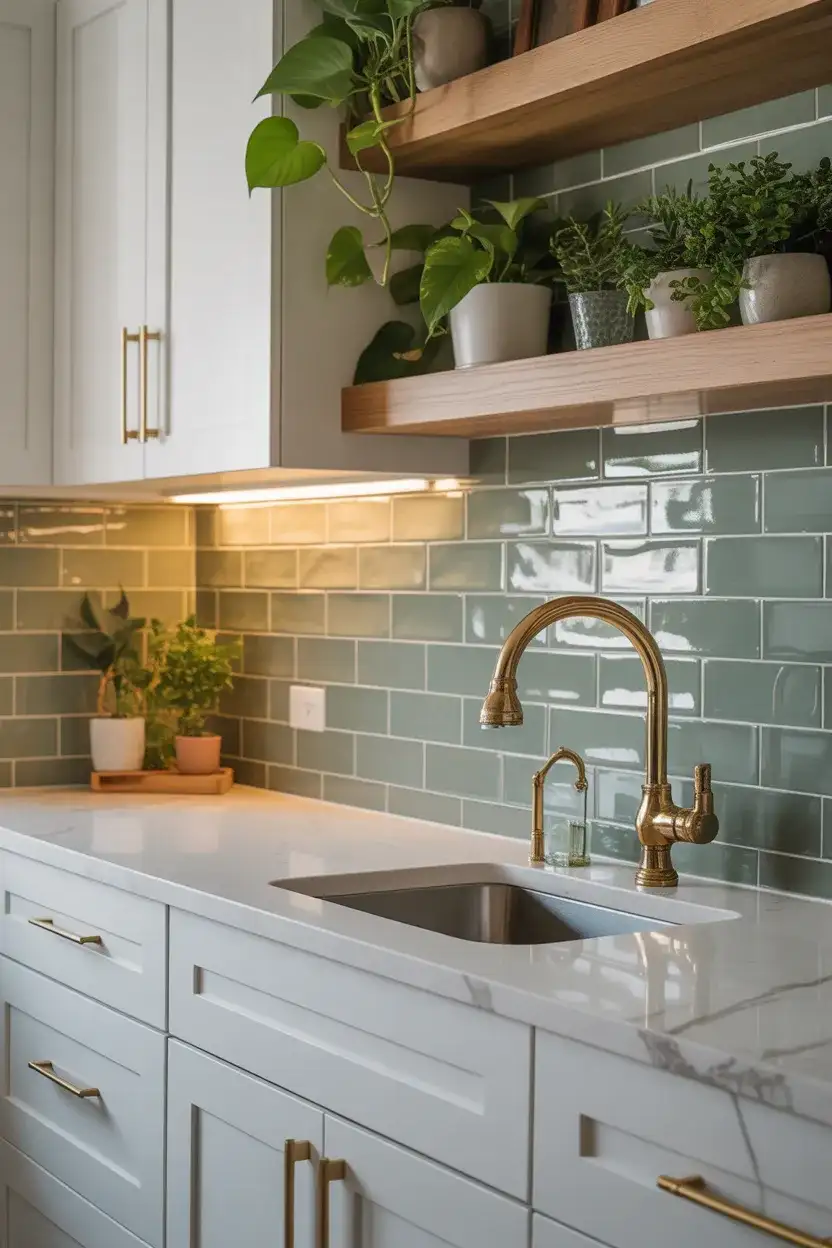
A green backsplash in a white kitchen introduces color in a contained, manageable way. Whether you choose glossy ceramic tile in sage, matte subway tile in olive, or handmade zellige in a soft mint, green reads as fresh and optimistic. It’s a color that references nature without feeling overly rustic, and it pairs beautifully with brass, wood, and marble. This combination has surged in popularity on Pinterest as homeowners seek alternatives to the all-white or blue-and-white kitchens that dominated recent years.
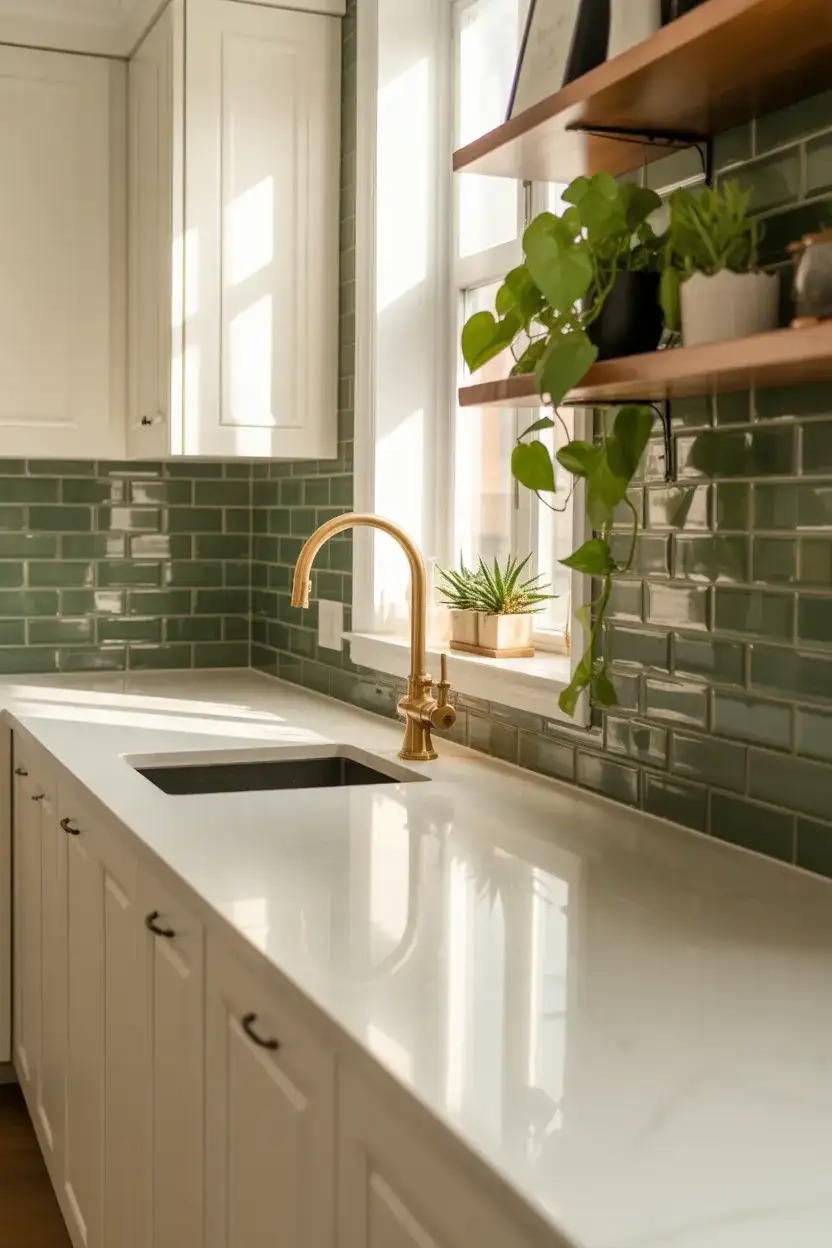
This palette works especially well in kitchens with east- or south-facing windows, where morning light makes the green glow. In darker kitchens, opt for a lighter, more saturated green rather than a deep forest tone, which can read as muddy in low light. Homeowners in warmer climates often embrace this combination because it feels cooling and refreshing, while those in colder regions appreciate the hint of spring it brings indoors year-round.
15. White and Sage Green Kitchen Serenity
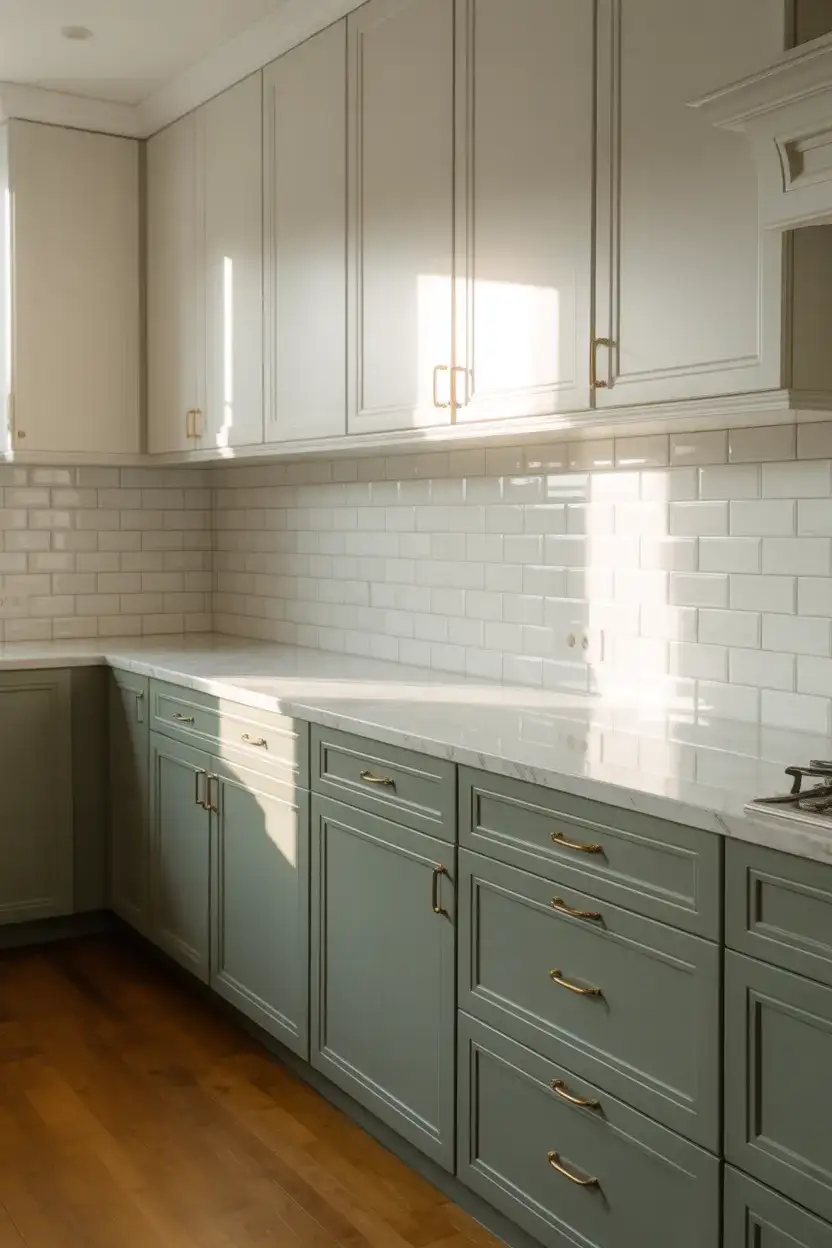
Sage green has become one of the most requested paint colors for kitchen islands and lower cabinets, and it pairs effortlessly with white uppers. This soft, grayish green feels calming and sophisticated, and it complements a wide range of materials—from brass and marble to wood and black iron. It’s a color that works in both modern farmhouse and contemporary settings, which explains its widespread appeal. The muted tone also means it won’t feel dated as quickly as brighter greens.
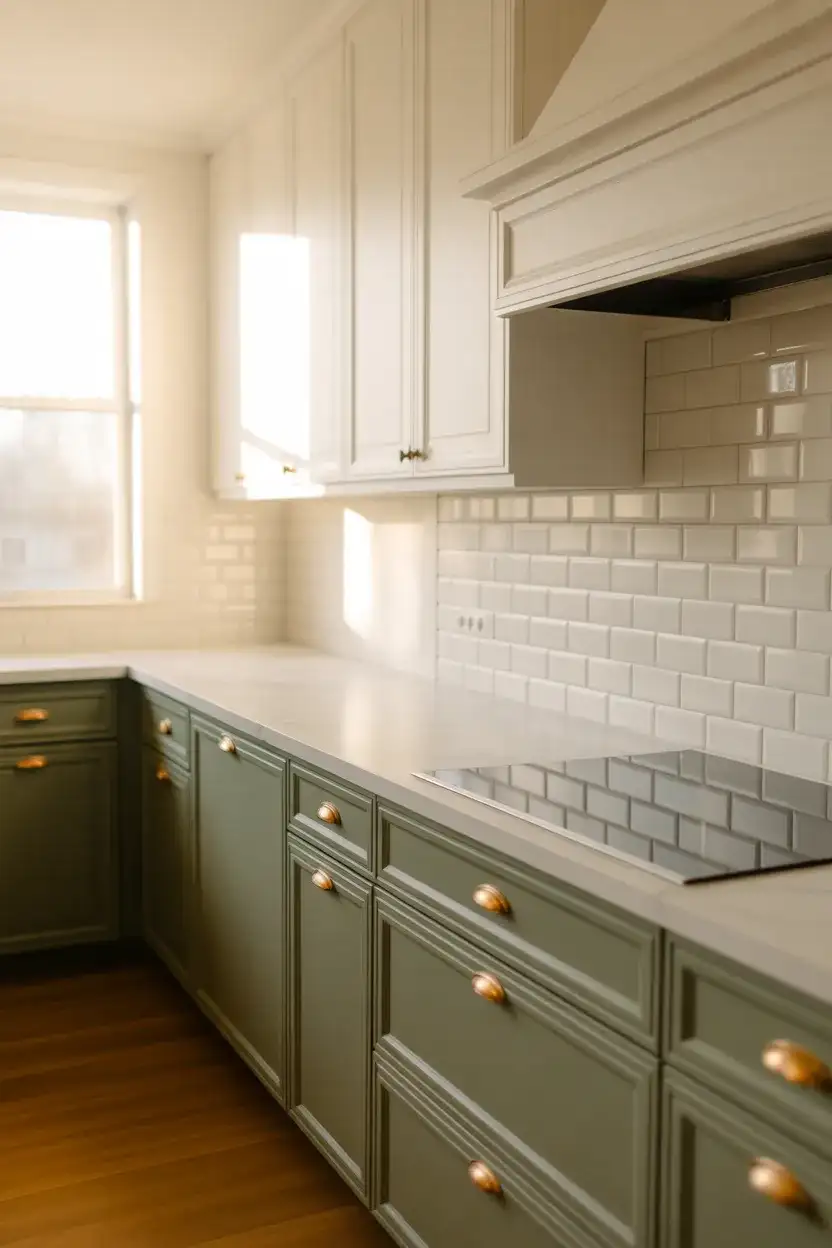
Avoid the mistake of pairing sage green with cool-toned grays or blues, which can make the green look washed out or sickly. Instead, lean into warm neutrals—creams, beiges, and natural wood tones—to let the green shine. This palette also benefits from plenty of natural light and greenery, whether through large windows, potted plants, or herbs on the counter. It’s a kitchen that feels like it’s inviting the outdoors in.
16. White Kitchen with Wood Island Functionality
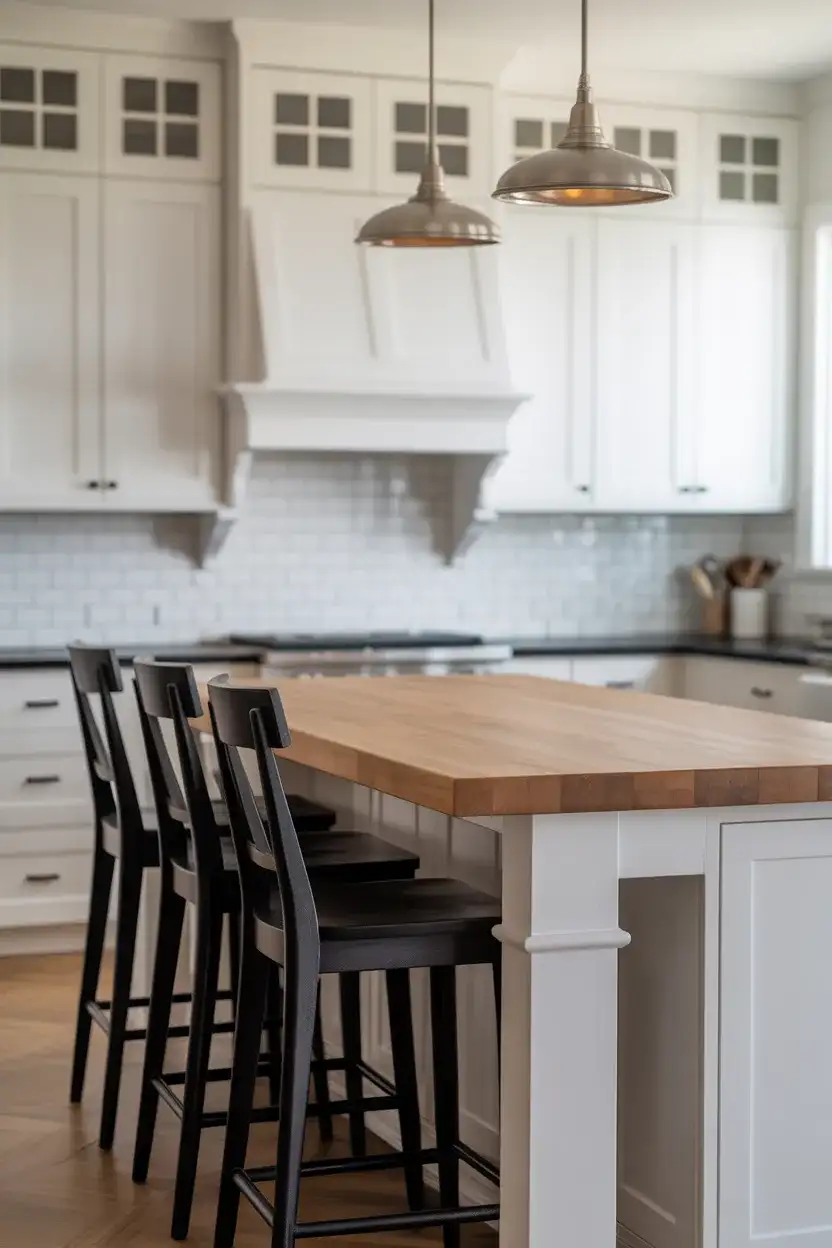
A wood island isn’t just about aesthetics—it’s also a practical choice for meal prep and casual dining. Wood surfaces are naturally antibacterial and can be sanded and refinished if they get damaged, which makes them a long-term investment. In a white kitchen, a wood island becomes the heart of the space, where family and guests naturally gather. It softens the room and introduces a tactile element that contrasts beautifully with smooth cabinetry and stone countertops.
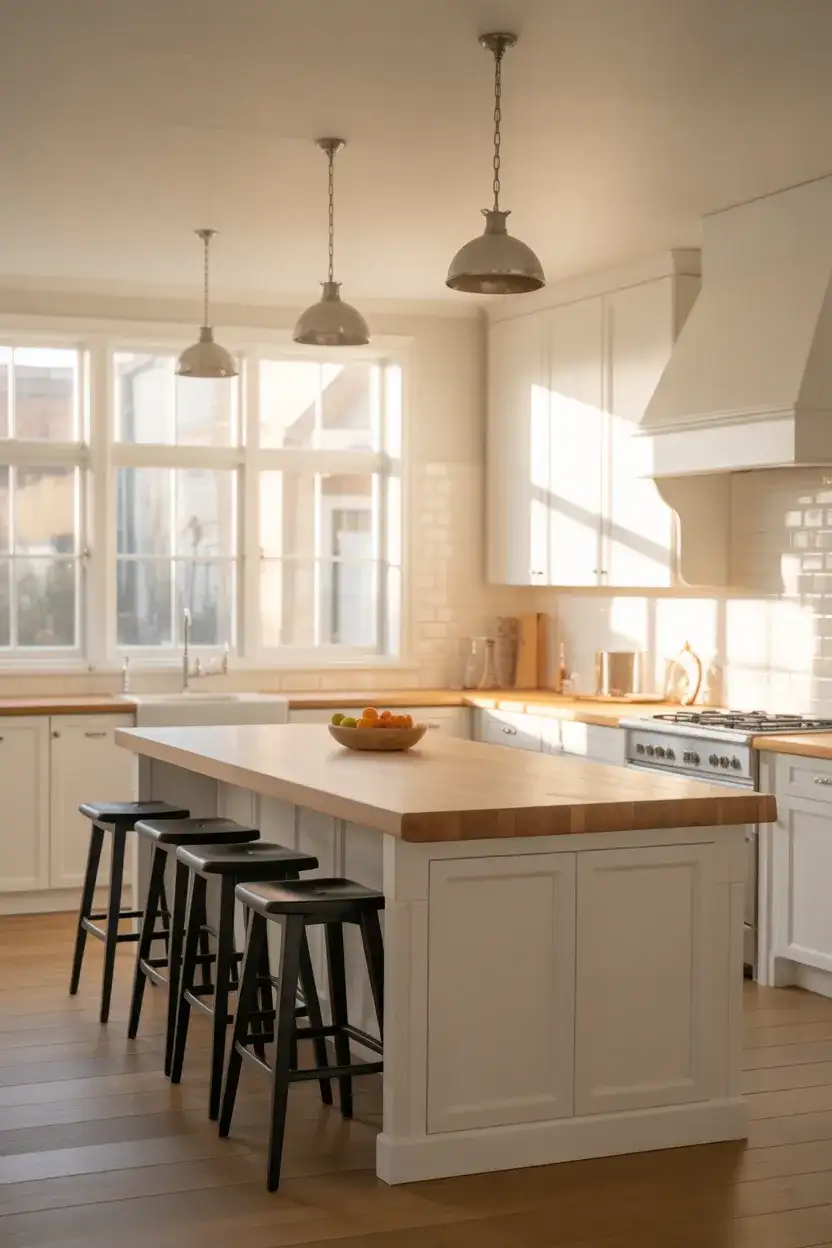
Many real homeowners report that their wood islands develop character over time—knife marks, water rings, and patina—that they grow to love. It’s a surface that tells the story of meals shared and time spent together, which is exactly what a kitchen should do. If you’re worried about maintenance, choose a hardwood like maple or oak and commit to oiling it a few times a year. The effort is minimal, and the payoff in warmth and functionality is significant.
17. White and Oak Kitchen Natural Pairing
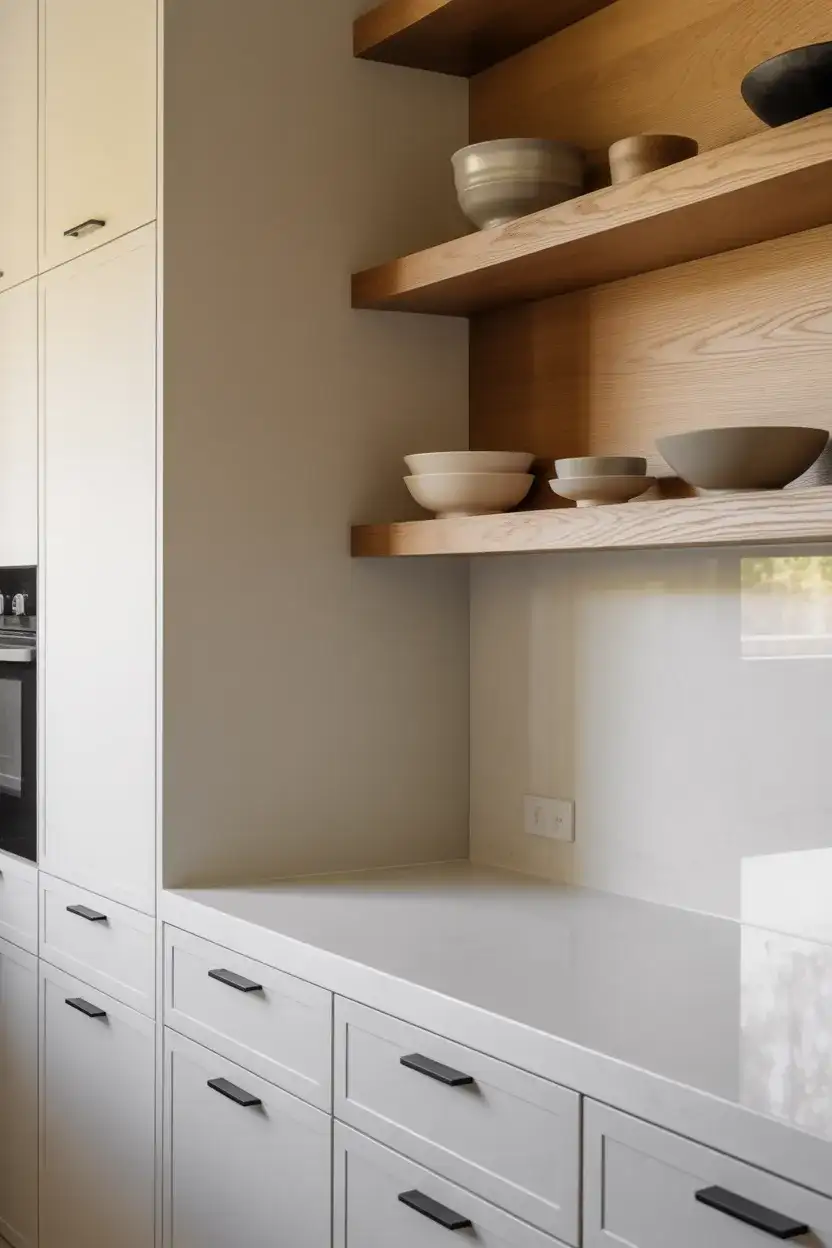
Pairing white cabinets with oak elements—whether through flooring, an island, or open shelving—creates a Scandinavian-inspired aesthetic that feels light and airy. Oak’s pale grain and subtle warmth complement white beautifully without competing for attention. This combination is particularly effective in smaller kitchens, where the light tones help the space feel larger. It also photographs well, which explains why it’s a favorite among design bloggers and Pinterest users.
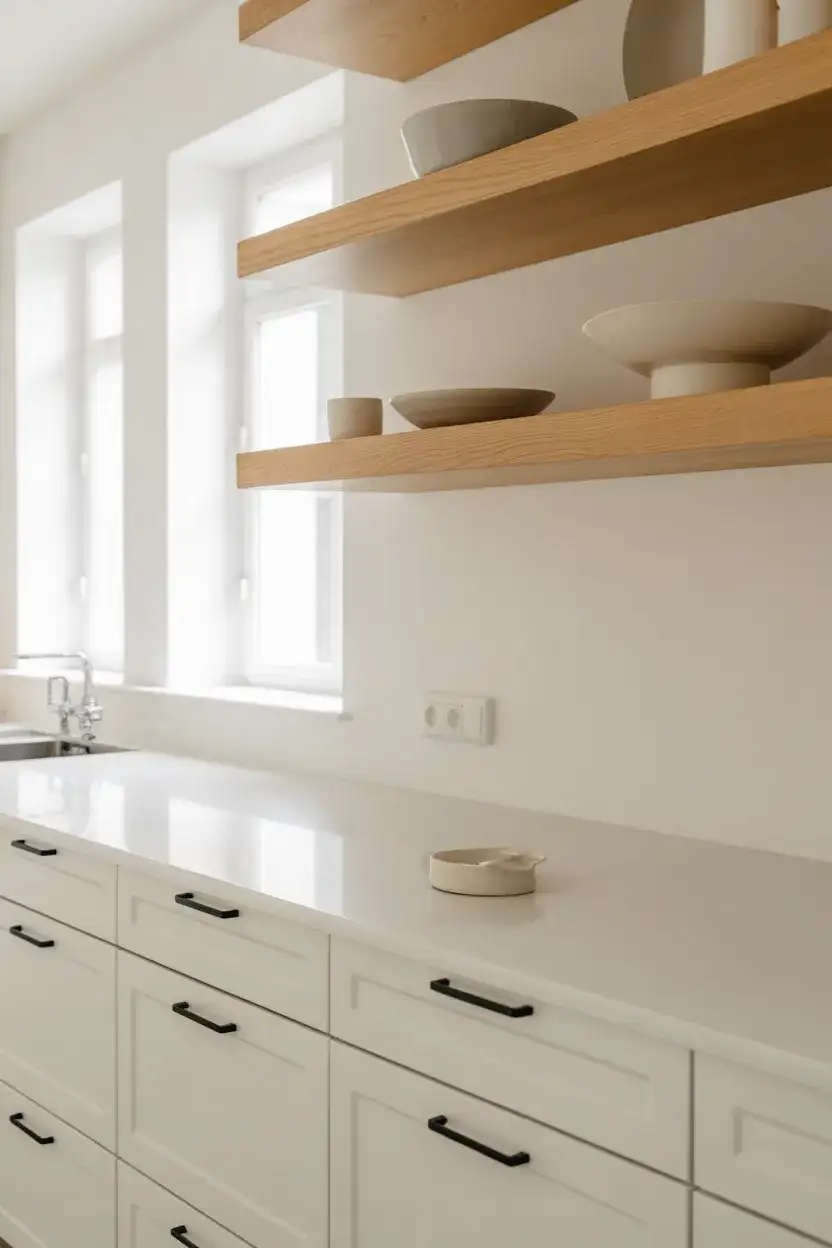
This palette is especially popular in the Pacific Northwest and upper Midwest, where Scandinavian design principles resonate culturally. It’s a look that values simplicity, functionality, and natural materials—all hallmarks of Nordic design. If you’re working with existing oak floors, painting your cabinets white is an easy way to modernize the space without replacing the flooring. The key is keeping the oak finish light and natural rather than stained or yellowed.
18. White Kitchen Island as a Focal Point
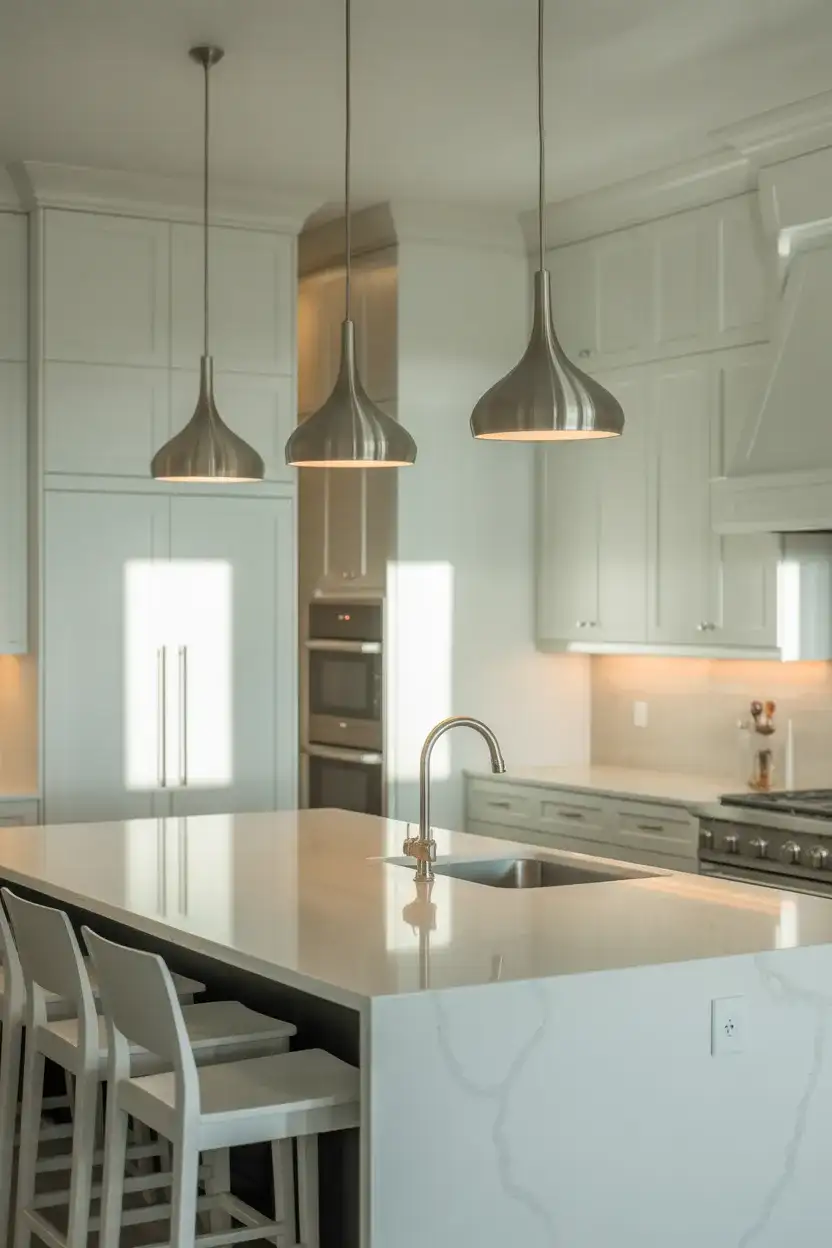
An island in an all-white kitchen can serve as a functional workhorse and a design anchor. Whether it’s oversized with seating for six or compact with hidden storage, the island often becomes the most-used feature in the room. In an all-white kitchen, consider differentiating the island through material—perhaps a marble top, decorative corbels, or a contrasting wood base. This ensures the island reads as intentional rather than just more cabinetry.
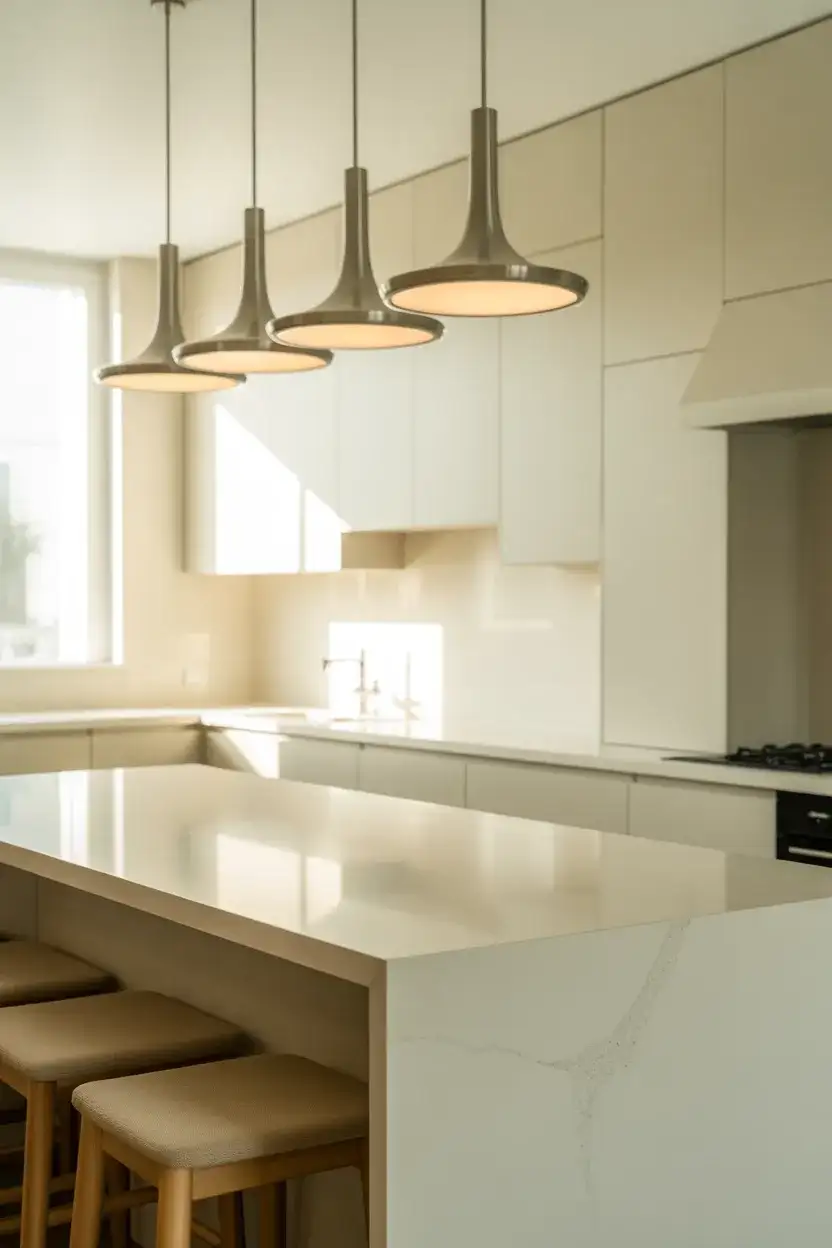
In open-plan homes, the island often defines the boundary between kitchen and living space. It’s where kids do homework, where guests gather during parties, and where meals are plated and served. Because of its central role, it’s worth investing in quality materials and thoughtful design. A well-designed island can elevate an otherwise basic kitchen and become the feature that makes the space feel custom and considered.
19. White and Pink Kitchen Unexpected Charm
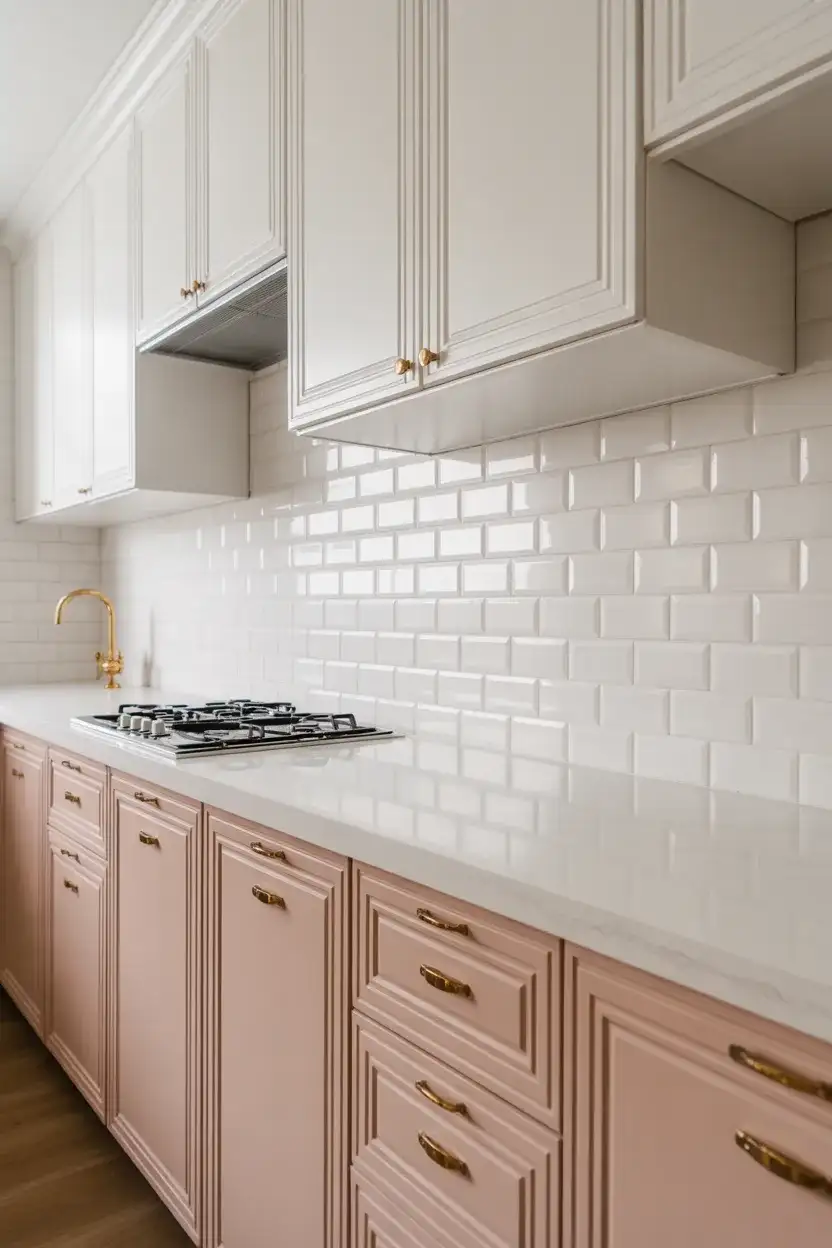
Introducing pink into a white kitchen might sound bold, but when done thoughtfully, it feels fresh and modern. Think blush lower cabinets, a dusty rose island, or even just pink-toned hardware and accessories. This combination works particularly well in smaller kitchens or breakfast nooks, where a softer color palette feels inviting rather than overwhelming. It’s a trend that appeals to homeowners looking for something different without veering into overly trendy territory.
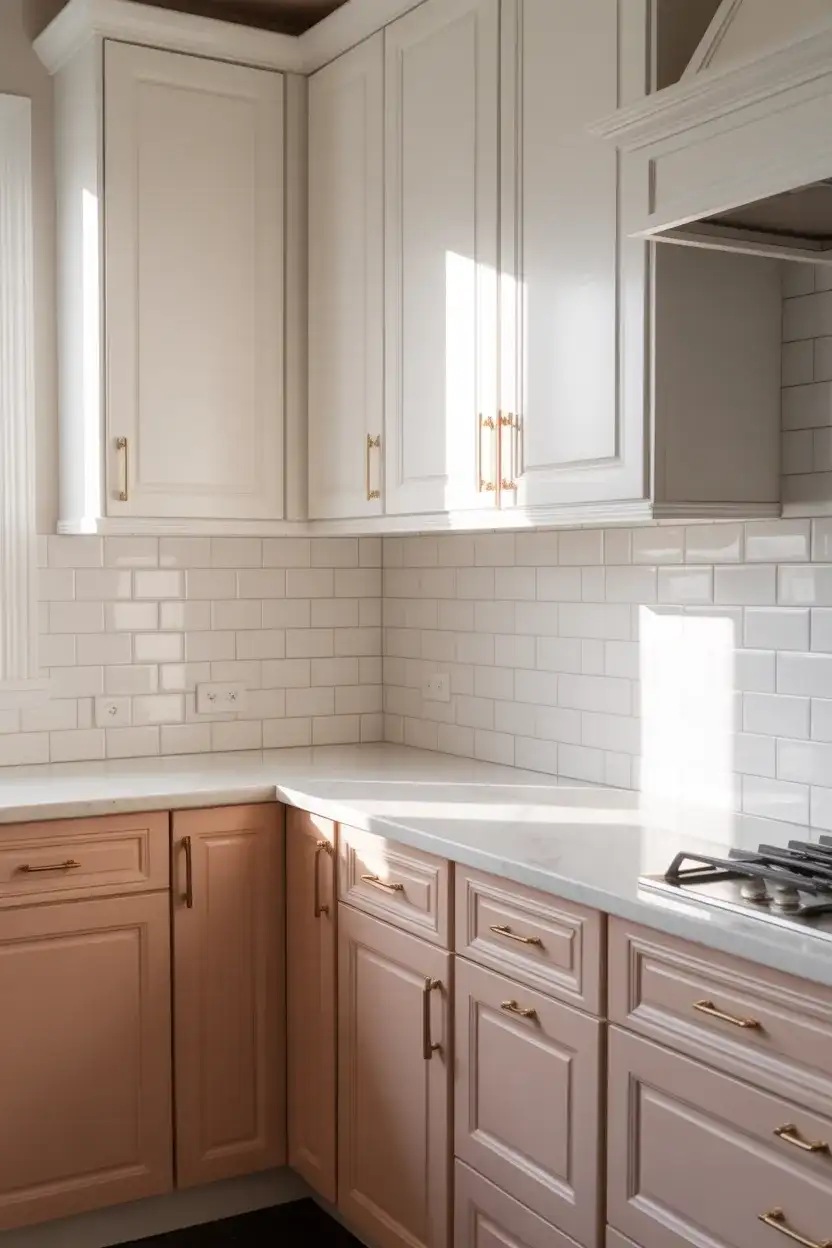
This palette works best with natural materials—marble, brass, and wood—that ground the softness and prevent it from feeling overly sweet. It’s also a color that benefits from good lighting, as pink can shift drastically depending on the time of day and the quality of light. In homes with warm, golden light, blush pink glows. In cooler, northern light, it can read more mauve. Test paint samples in your space before committing.
20. White Kitchen with Black Hardware Definition
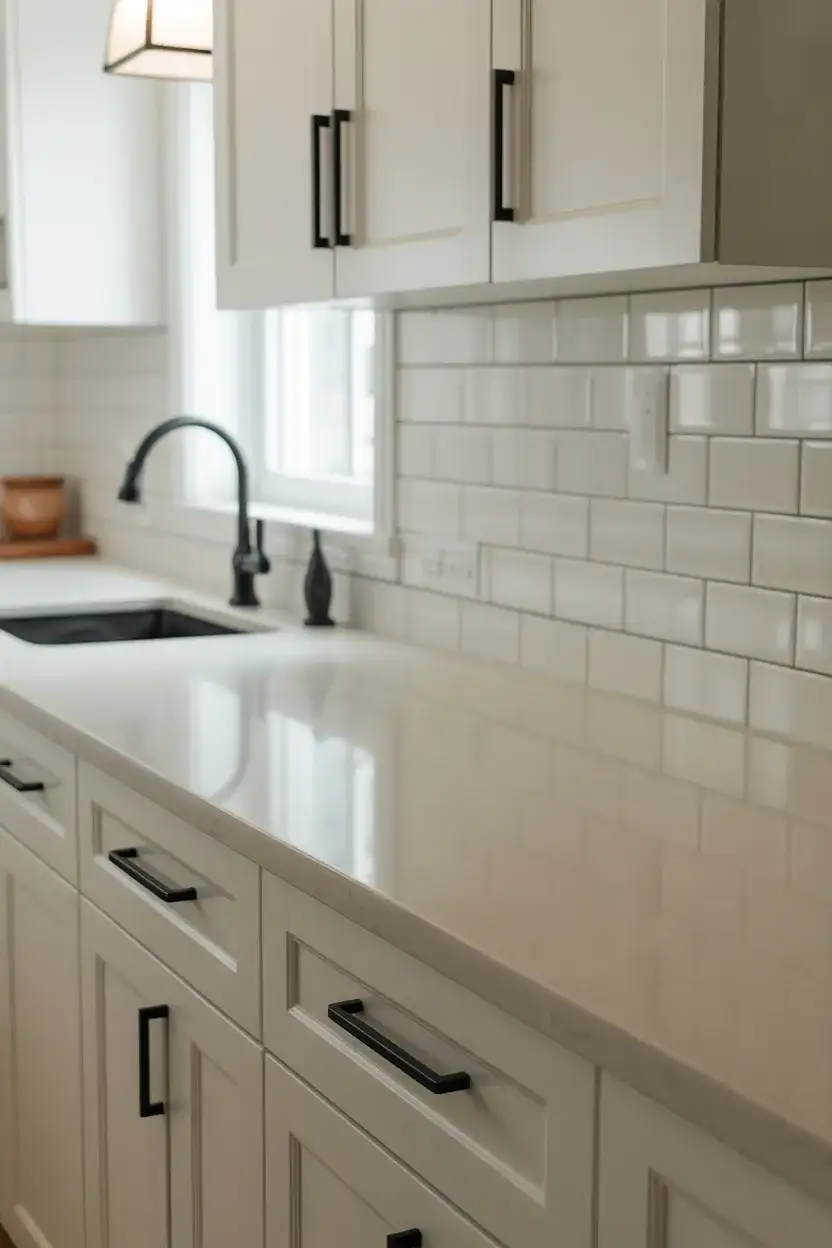
Black hardware on white cabinets provides instant definition and elevates even the most basic cabinetry. It’s a detail that makes a big difference in how polished and intentional a kitchen feels. Whether you choose matte black pulls, knobs, or a mix of both, the dark metal creates visual anchors that guide the eye and add structure. This is especially important in kitchens with minimal architectural detail, where hardware becomes one of the few opportunities to introduce character.
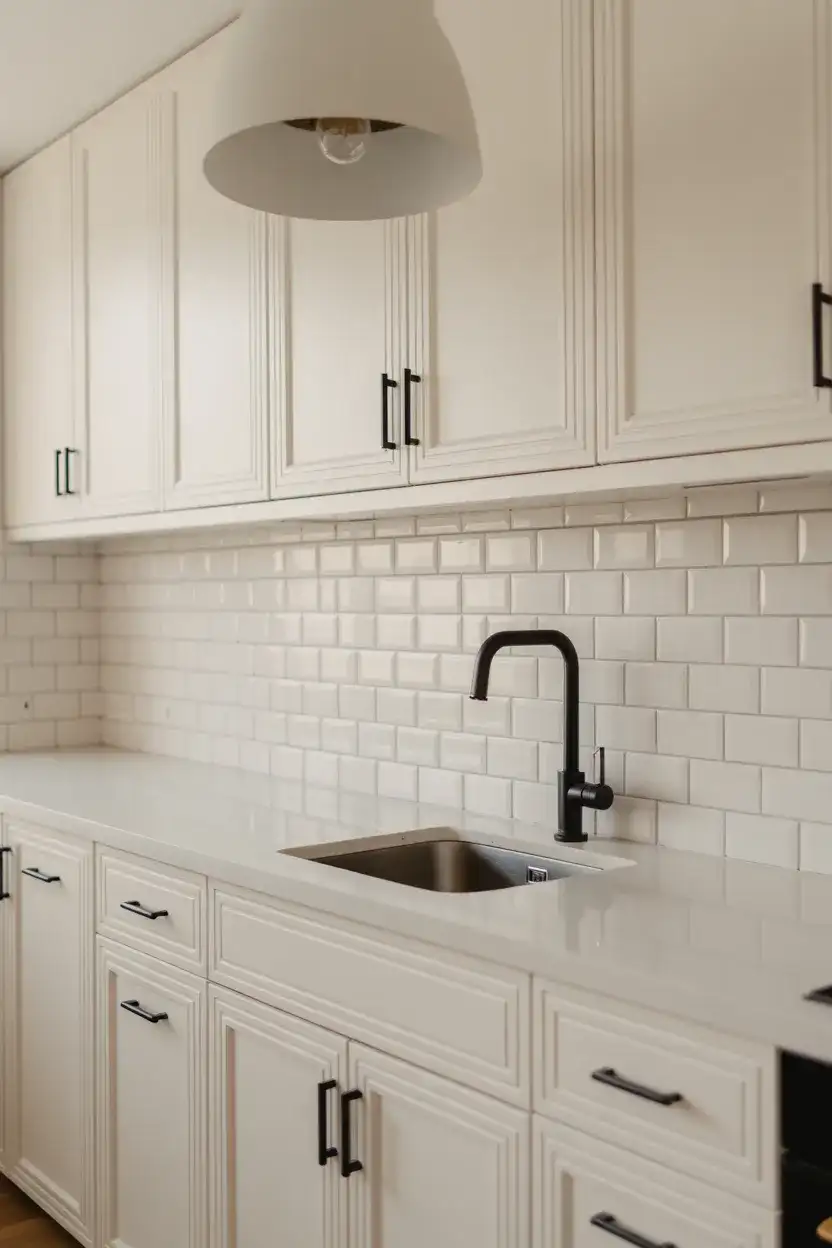
A common mistake is mixing too many hardware styles or sizes, which creates visual noise. Stick with one style for upper cabinets and one for lower, or use the same style throughout if the cabinetry varies in scale. Also, don’t skimp on quality—cheap hardware feels flimsy and wears poorly. Investing in solid brass or stainless steel with a durable finish ensures your hardware will look good for years and withstand daily use.
21. White Kitchen Appliances for Seamless Design
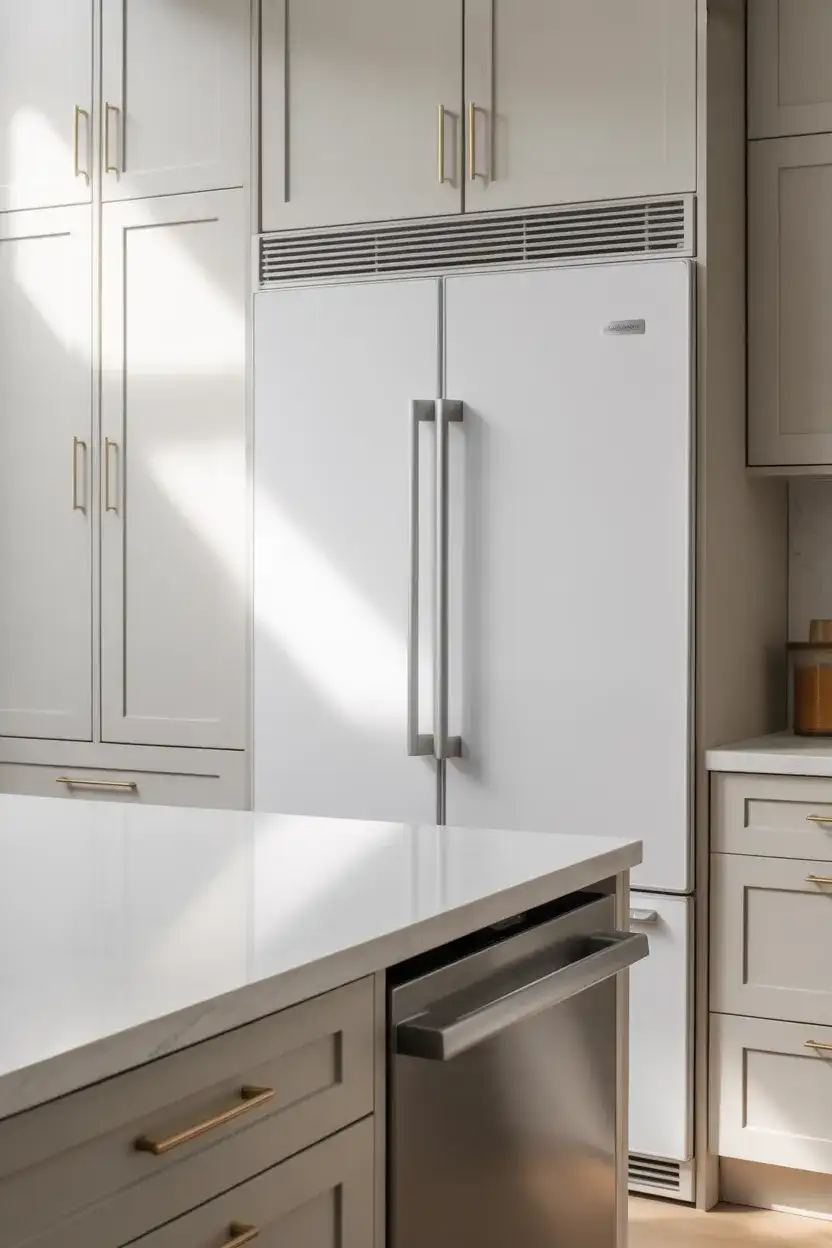
Choosing appliances that match your white cabinetry creates a built-in, custom look that’s hard to achieve any other way. Panel-ready refrigerators, dishwashers, and even ranges allow you to clad the appliance fronts in the same material as your cabinets, which makes them virtually disappear. This approach is particularly effective in small kitchens, where visual clutter can make the space feel cramped. It’s also a favorite among minimalists who prefer clean lines and uninterrupted surfaces.
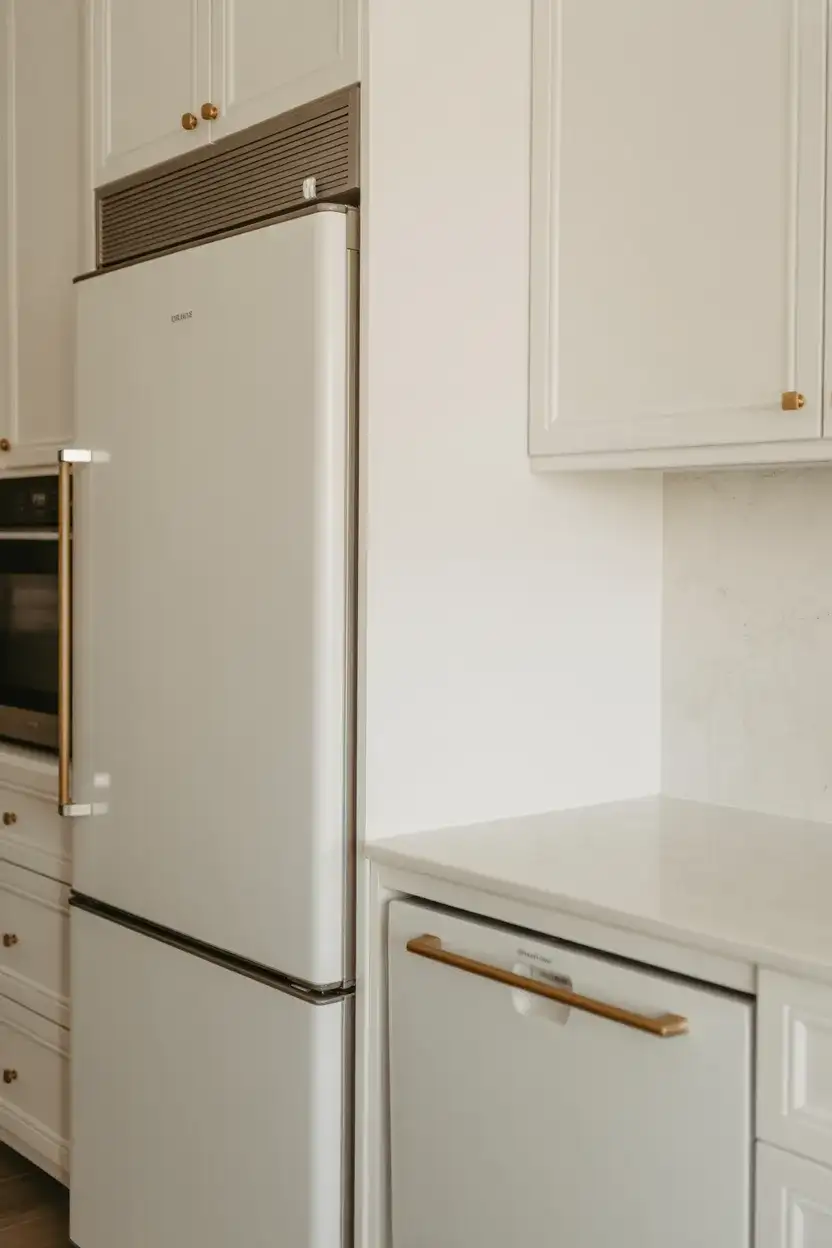
While panel-ready appliances cost more upfront, many homeowners feel the investment is worth it for the streamlined look. If budget is a concern, start with the refrigerator and dishwasher, which are the most visible appliances. You can always upgrade the range or microwave later. Just make sure your cabinetry is designed to accommodate panel-ready appliances, as they require specific clearances and hinge configurations.
22. White and Beige Kitchen Softness
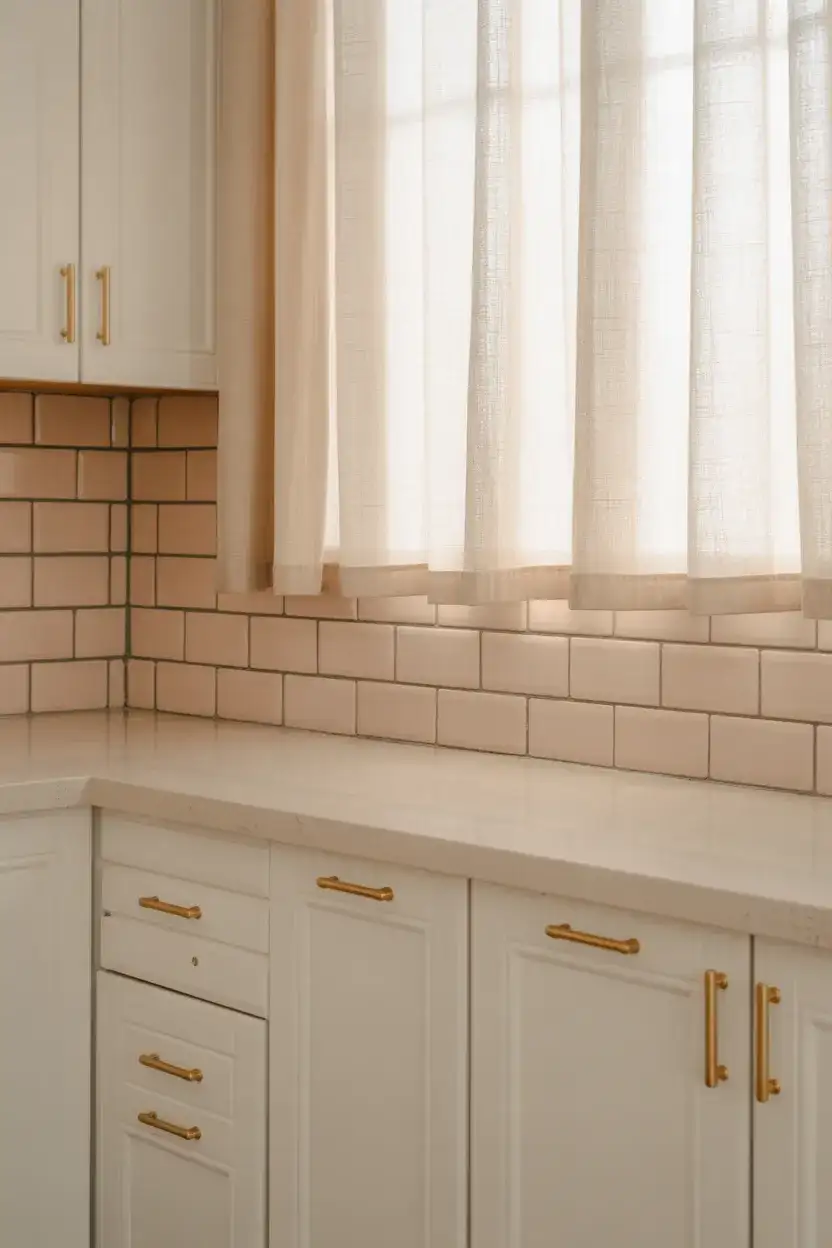
Layering white with beige creates a softer, more forgiving palette than pure white. Whether through beige-toned quartz countertops, linen Roman shades, or a warm beige backsplash, this combination feels cozy and lived-in. It’s particularly appealing to homeowners who find stark white too clinical or hard to maintain. Beige adds warmth without introducing strong color, which makes it easy to accessorize and change over time.
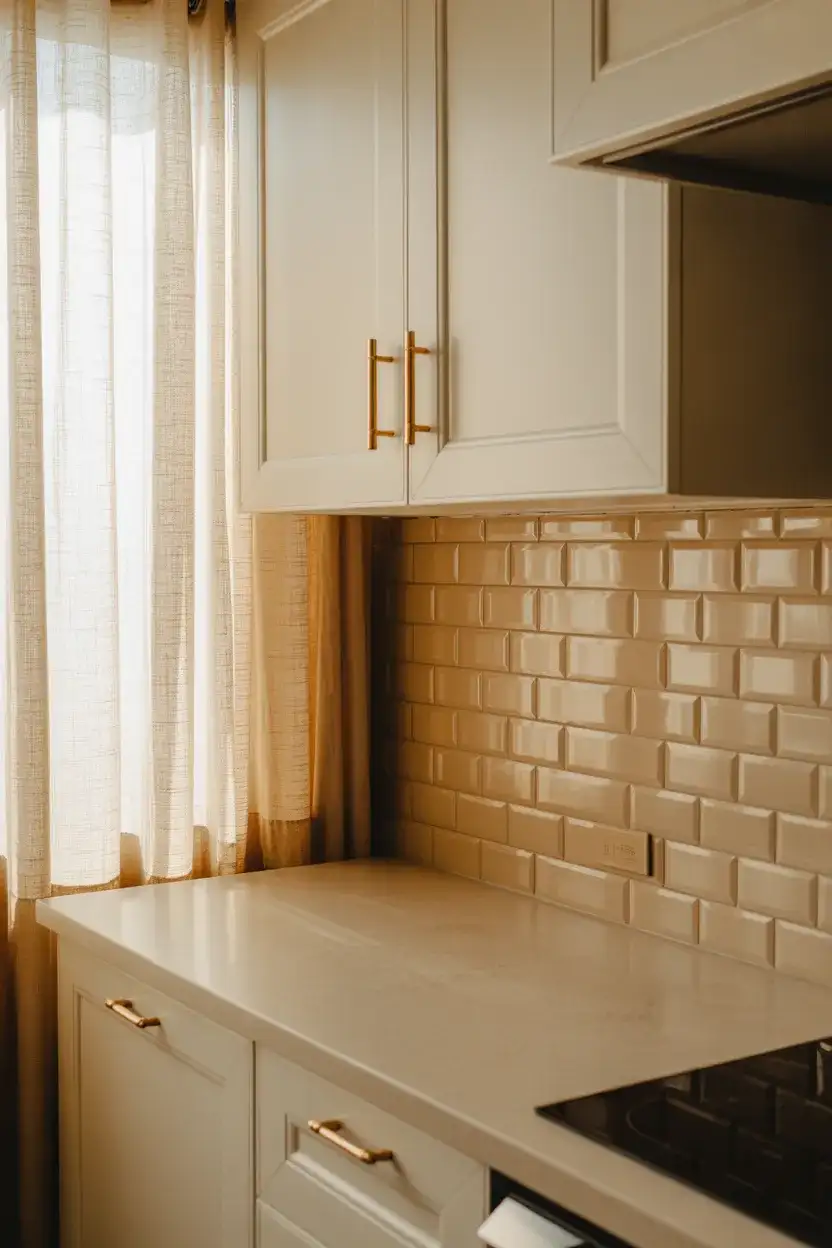
This palette works across the country but is especially popular in the South and Southwest, where warmer color schemes feel appropriate for the climate. It’s also a smart choice for homes with existing beige or cream elements—flooring, tile, or trim—that you’re not ready to replace. Rather than fighting the existing finishes, embrace them and build a cohesive palette. The result is a kitchen that feels harmonious and intentional rather than disjointed.
Conclusion
White kitchens continue to dominate for good reason—they’re adaptable, timeless, and offer endless opportunities for personalization. Whether you’re drawn to bold contrasts, natural wood warmth, or soft color accents, there’s a white kitchen approach that fits your style and lifestyle. The key is choosing details that reflect how you actually use the space and what makes you feel at home. We’d love to hear which ideas resonate with you—drop a comment below and share your favorite combinations or the changes you’re planning for your own kitchen.