Small bedrooms shared by couples don’t have to feel cramped or chaotic—they can be intimate sanctuaries that blend style, function, and romance. In 2026, American couples are searching for smarter ways to make limited square footage work harder, especially as urban apartments remain tight and home prices keep rising. From layout tricks that maximize floor space to storage hacks that tame clutter, the right design moves can transform even the tiniest bedroom into a cozy, couple-friendly retreat. Whether you’re furnishing your first apartment together or reimagining a longtime space, these ideas offer real-world inspiration pulled straight from the Pinterest boards and real homes of couples who’ve cracked the code on small bedroom living.
1. Floating Nightstands to Free Up Floor Space
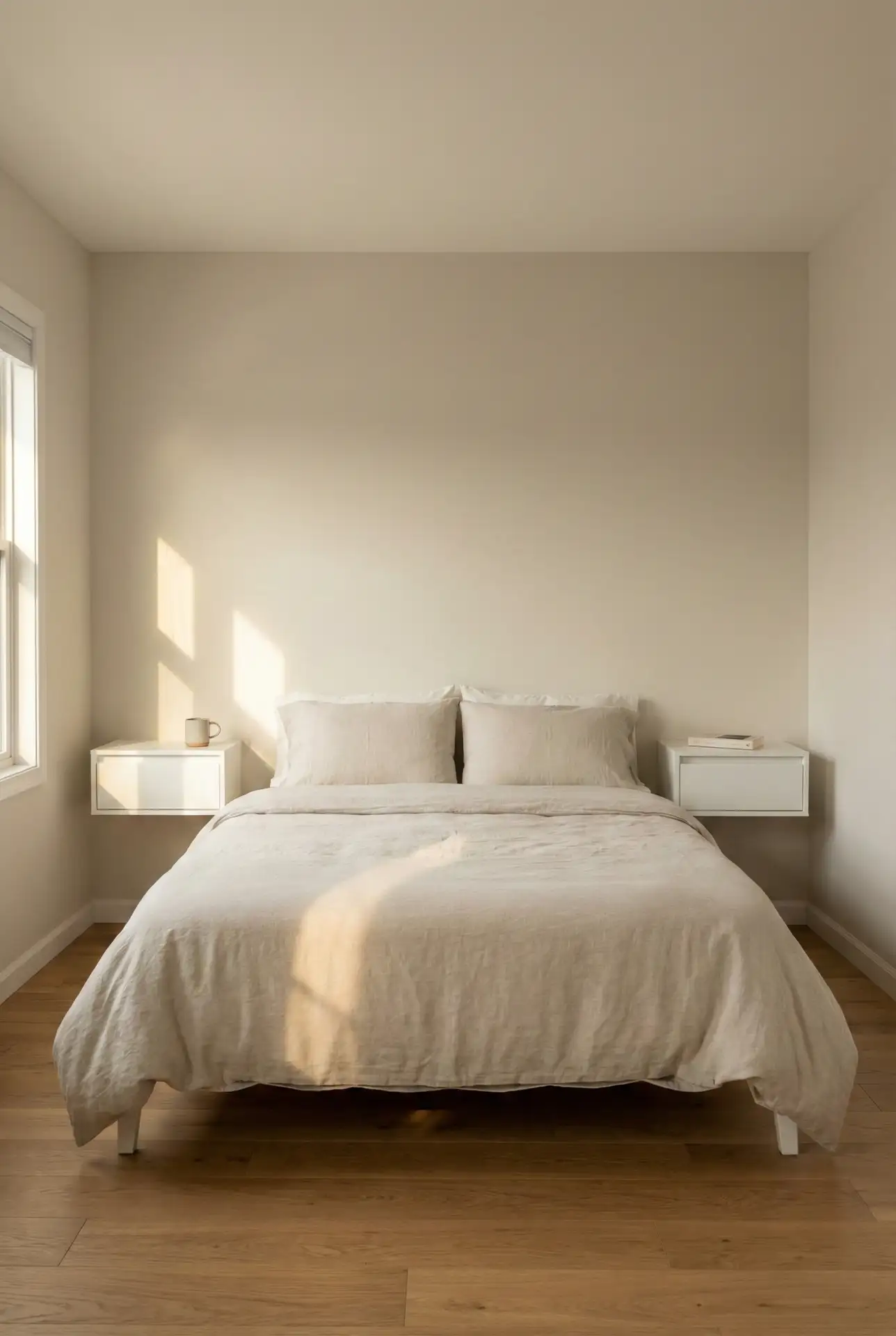
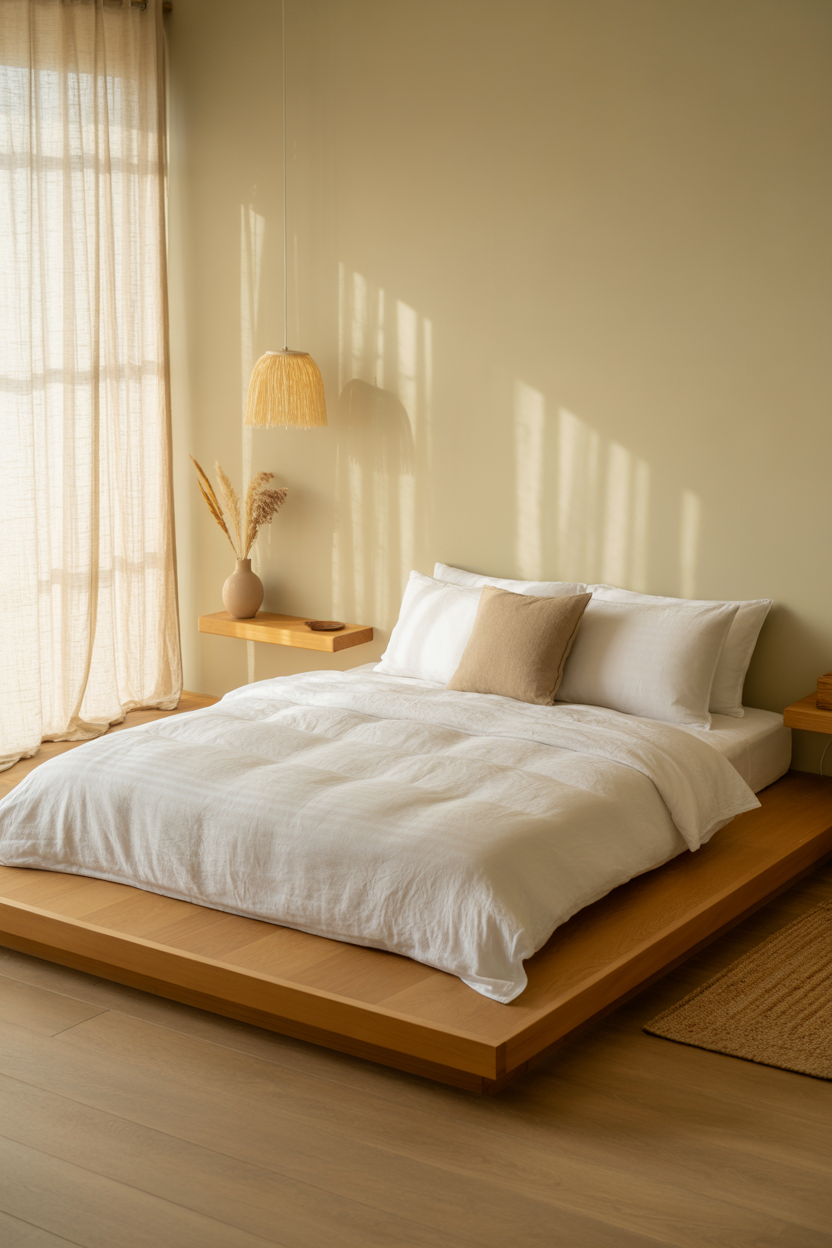
When floor space is tight, wall-mounted nightstands open up breathing room while keeping essentials within arm’s reach. This layout trick works especially well in apartment bedrooms where every square foot counts, letting you skip bulky furniture legs and create a cleaner, more spacious look. Choose slim floating shelves or small wall-mounted drawers in matching finishes to maintain visual harmony. The minimal footprint also makes vacuuming easier and gives the room an airy, uncluttered feel that couples appreciate when sharing close quarters.
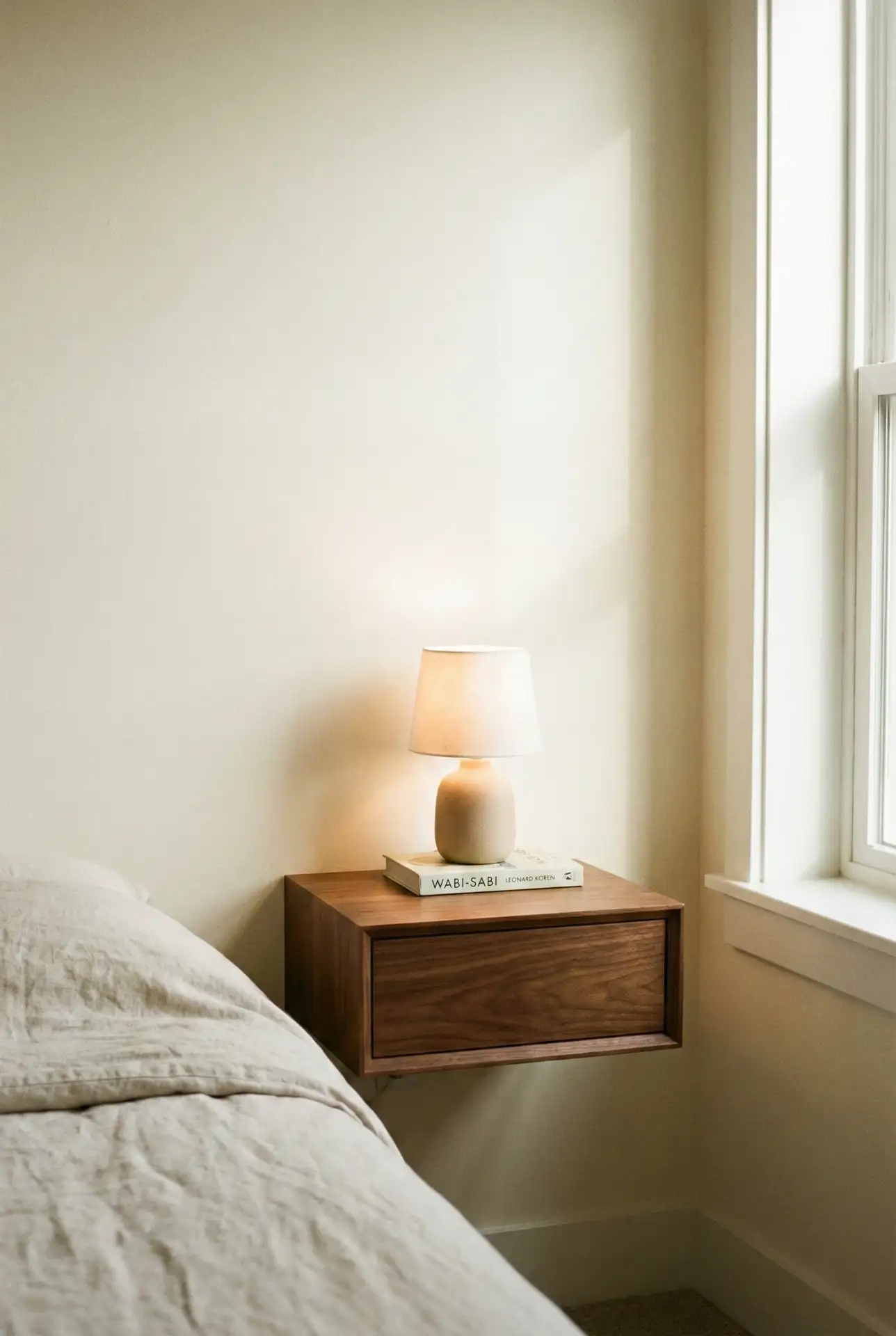
A common mistake is mounting nightstands too high or too low—aim for the height of your mattress top for easy reach. In American homes, this setup pairs beautifully with platform beds and works best in rentals where you want impact without permanent built-ins. Install with heavy-duty anchors rated for the weight of books, phones, and a reading lamp. You’ll gain storage without sacrificing the open, breathable feel that makes small bedrooms livable for two.
2. Under-Bed Drawers for Hidden Storage
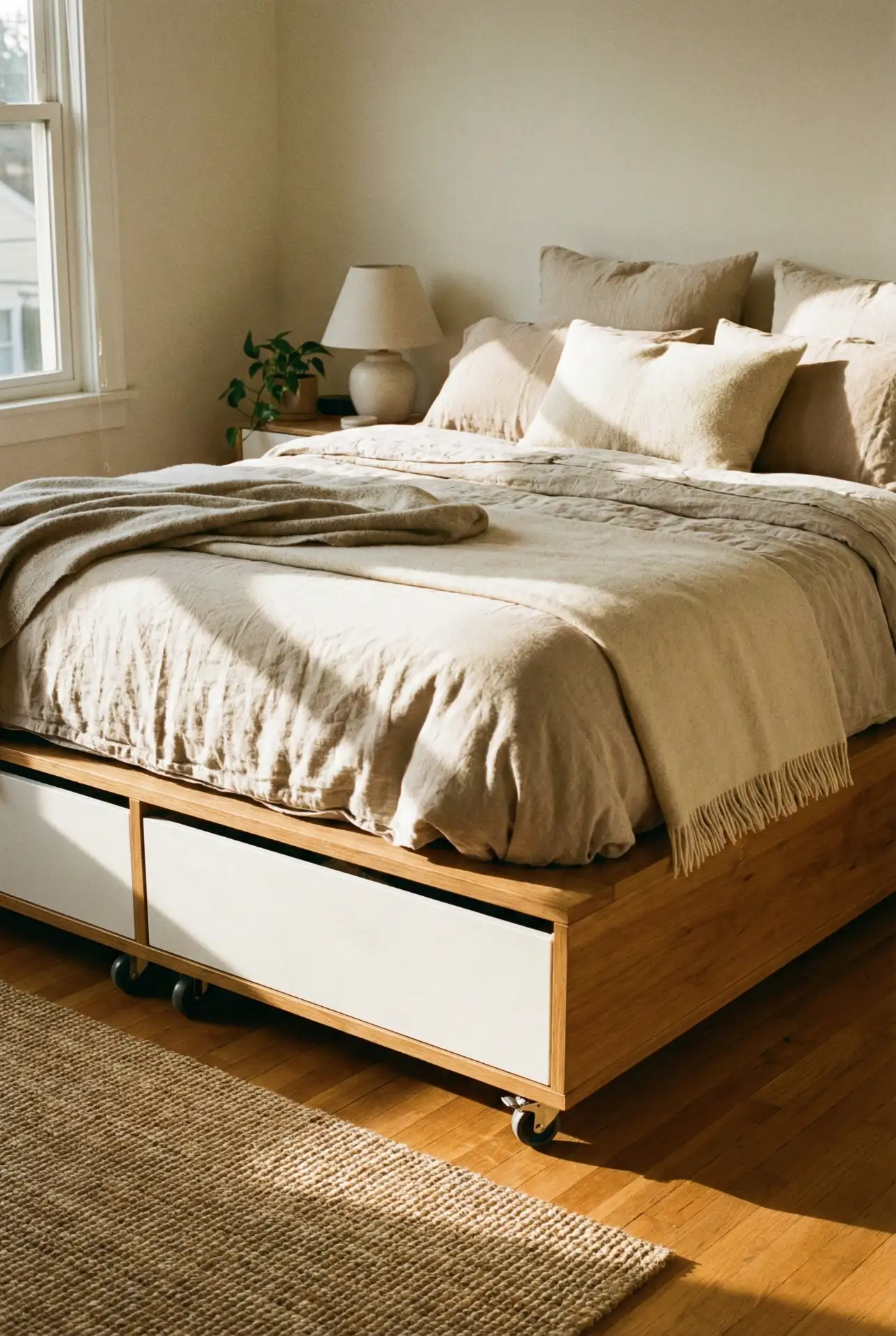
The space beneath your bed is prime real estate in a small bedroom, and rolling drawers or lift-up platforms let you stash off-season clothes, extra linens, or shoes without adding visible clutter. This storage solution is a game-changer for couples who lack a walk-in closet or need to share limited closet space. Opt for matching drawer fronts that blend with your bed frame, or go for woven baskets if you prefer a softer, more casual look. Either way, you’re reclaiming square footage that would otherwise go to waste.
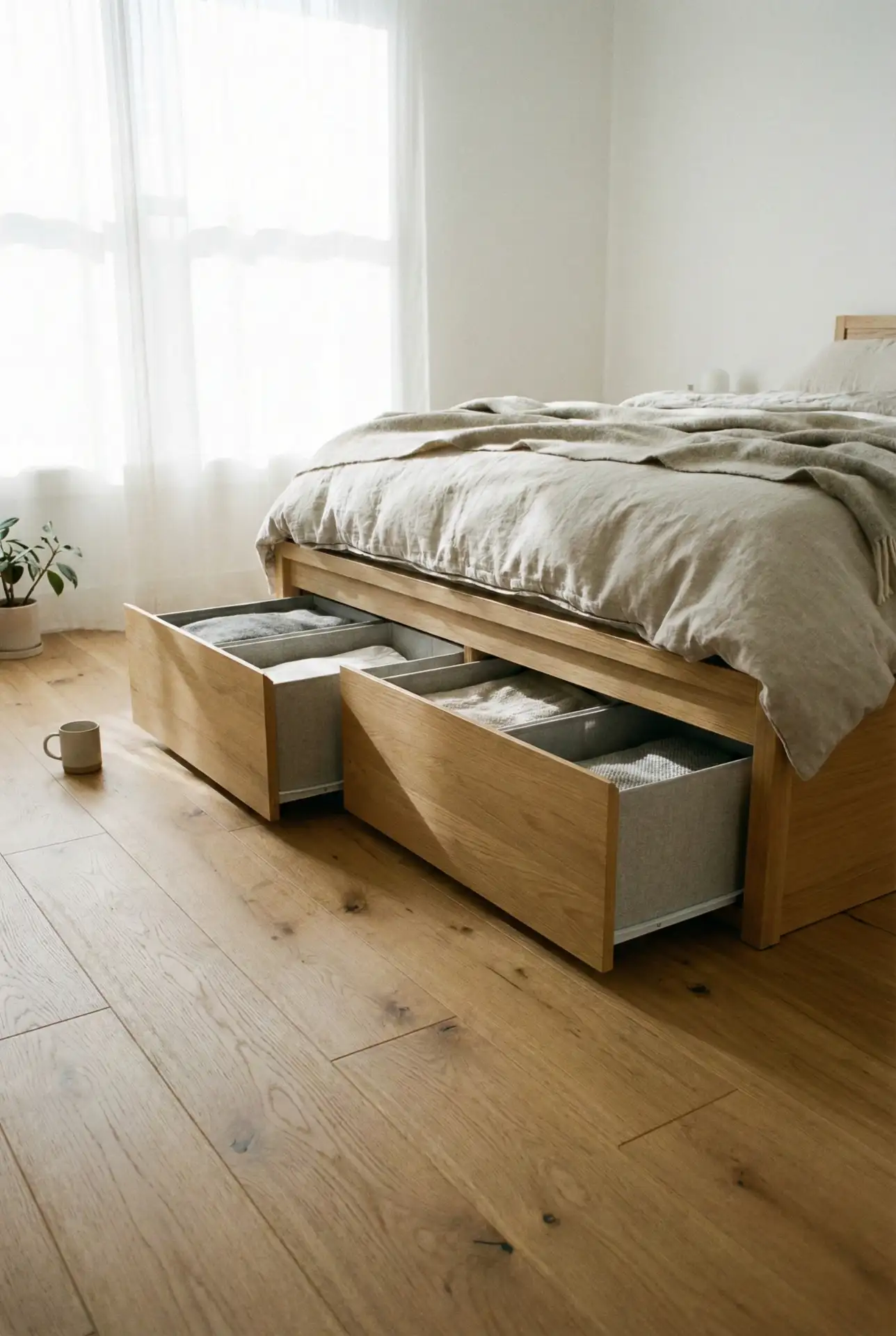
This works best in apartments and condos where closets are shallow or nonexistent—common in older East Coast buildings and budget-friendly complexes across the Midwest. Measure your bed height before buying; you’ll need at least six inches of clearance for standard rolling drawers. Label each drawer so both partners know where things live, cutting down on the morning scramble and keeping peace in tight quarters.
3. Wall-Mounted Reading Lamps for Nighttime Independence
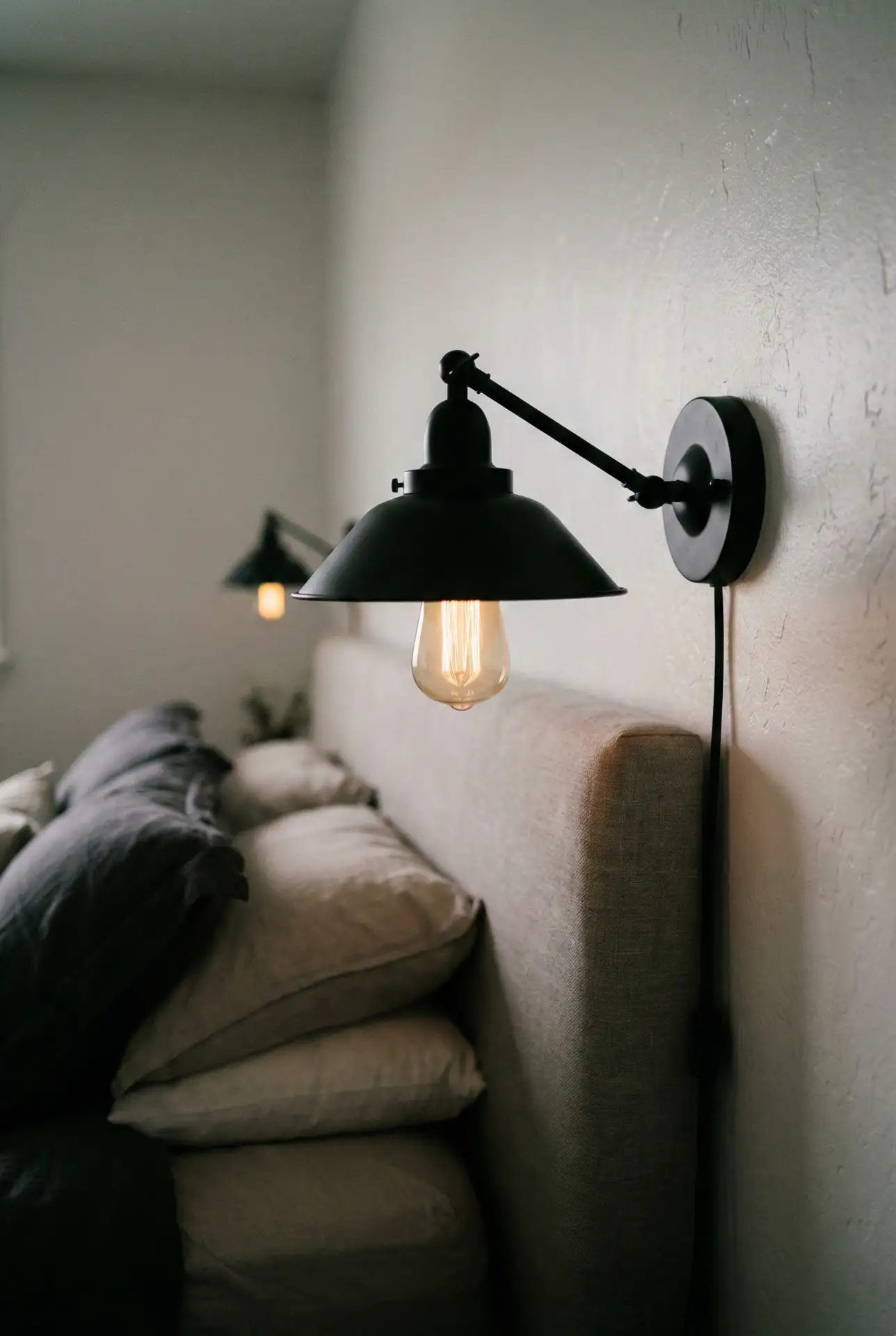
Couples with different bedtimes need lighting that doesn’t disturb the sleeping partner, and adjustable wall sconces deliver focused light without hogging nightstand space. This modern approach keeps surfaces clear and gives each side of the bed its own dedicated task light. Choose swivel-arm or gooseneck styles in matte black or brushed brass to match your decor, and install dimmer switches if you want even more control. The result is a cozy reading nook that respects personal routines while maintaining a unified look.
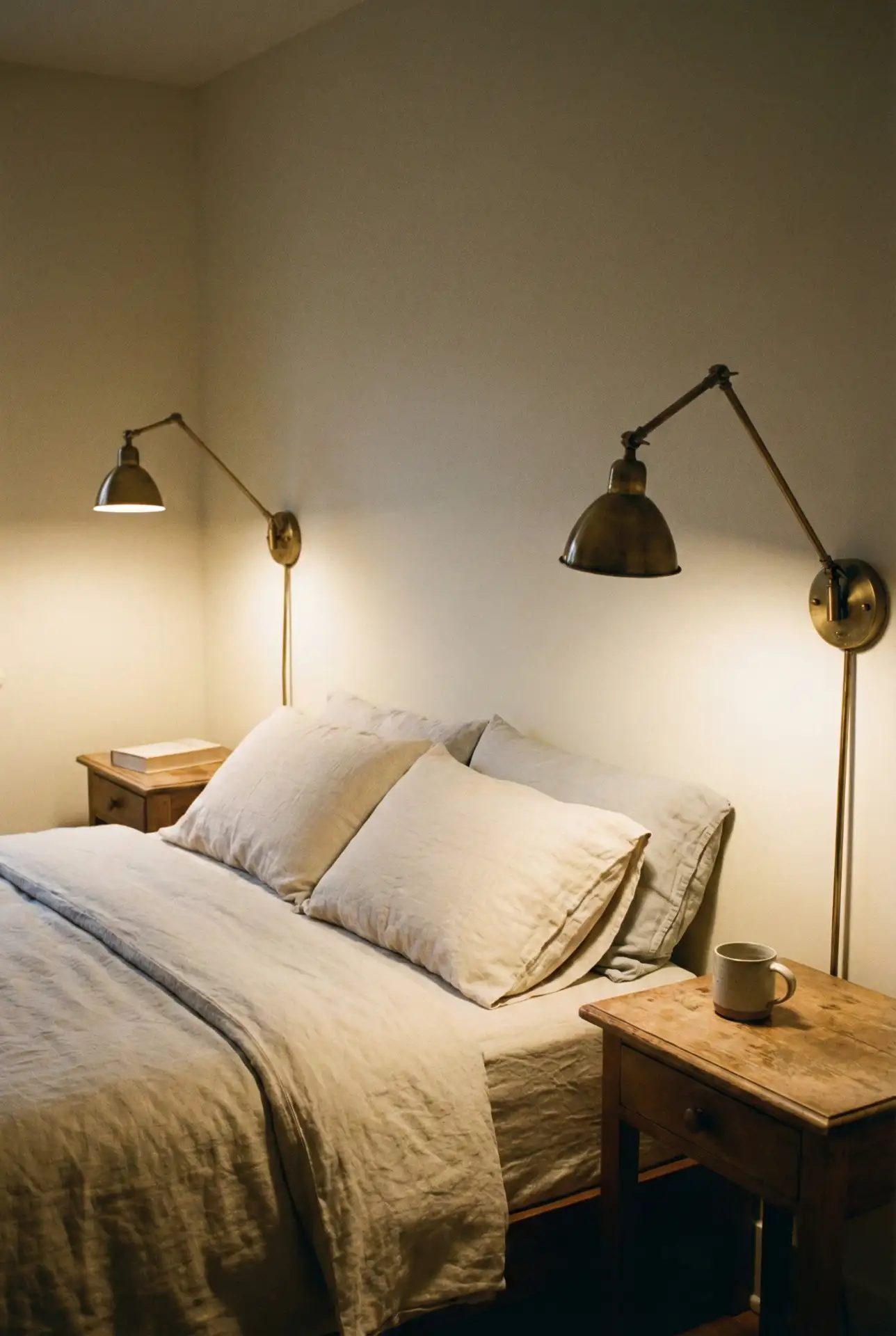
A friend in Brooklyn swears by this setup—she reads late while her partner sleeps undisturbed, and they’ve never argued about lamp placement since. For renters, look for plug-in sconces with fabric-friendly cord covers; homeowners can hardwire for a cleaner finish. This small upgrade dramatically improves quality of life in shared spaces, proving that thoughtful lighting design is just as important as furniture layout.
4. Mirrored Closet Doors to Expand Visual Space
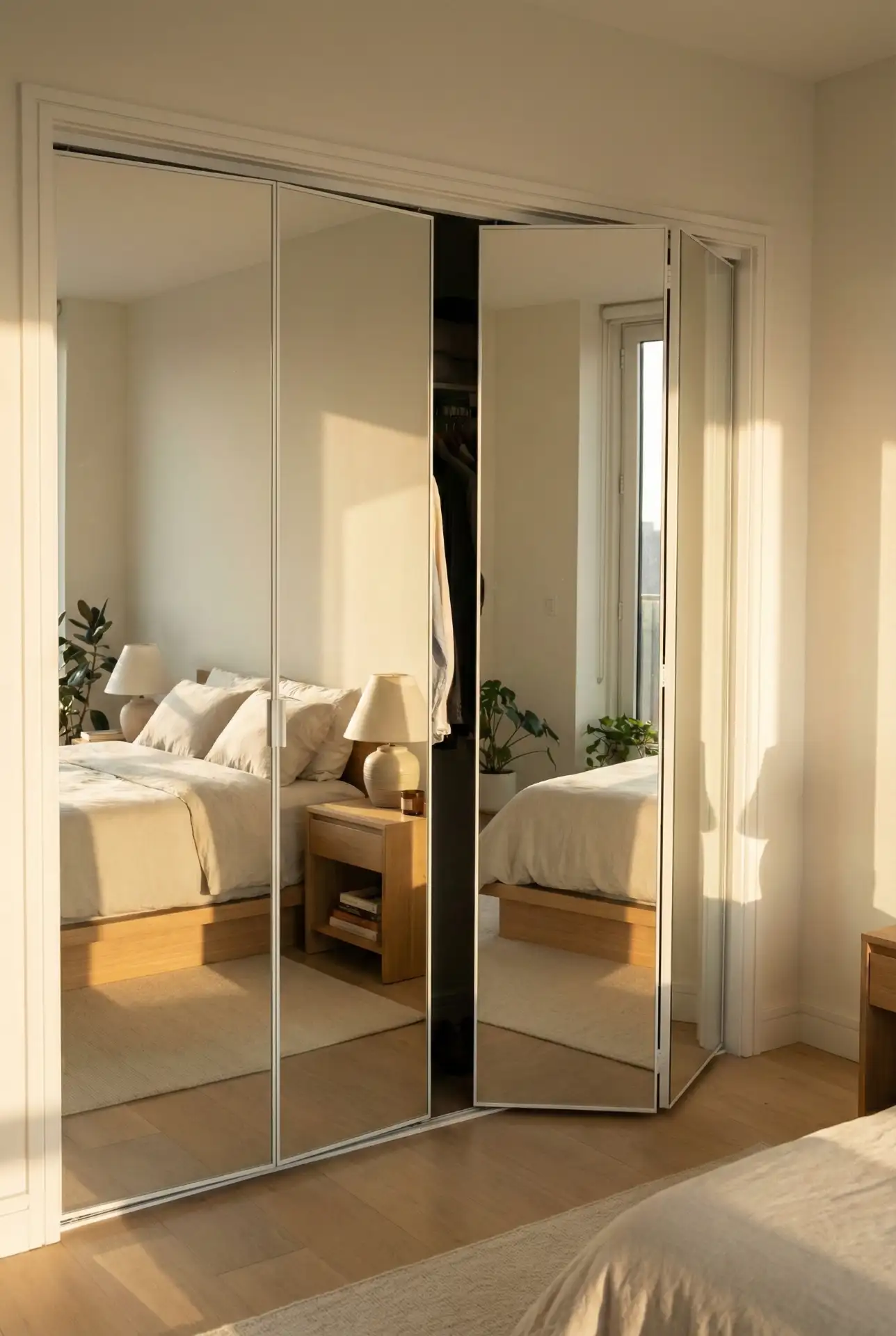
Mirrored sliding or bifold doors bounce light around the room and make a small bedroom feel instantly larger, a classic trick that never goes out of style. This layout move works double duty by giving both partners a full-length mirror for getting dressed while amplifying natural light during the day. Frameless mirrors offer a sleek, minimalist aesthetic, while framed versions in black or white add a touch of architectural detail. Either way, you’re visually doubling the room’s depth without breaking through walls.
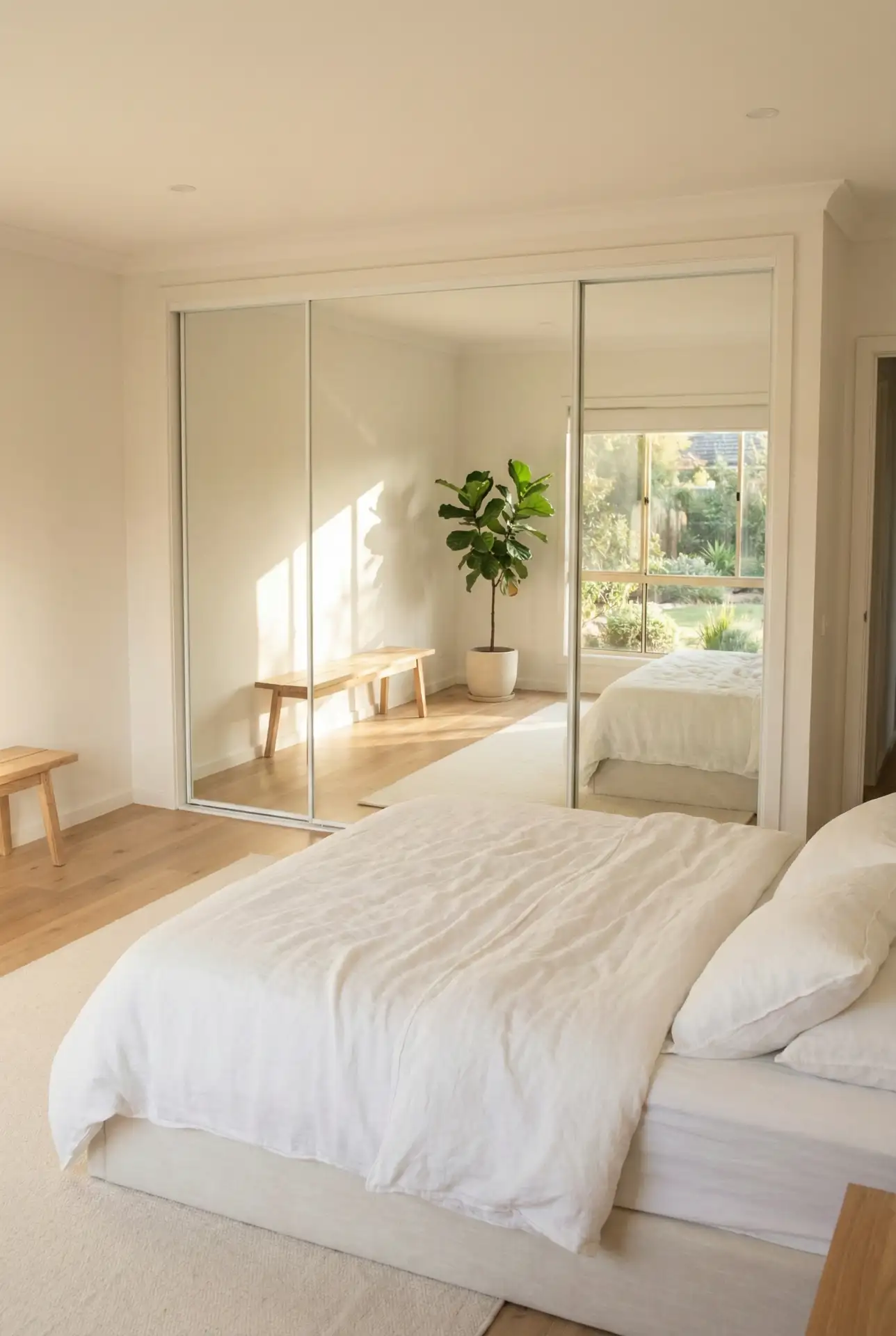
Where it works best: apartments and condos with limited square footage, especially in sun-starved units where you need every photon you can get. Clean the mirrors weekly to keep the illusion sharp—smudges and fingerprints kill the effect. If you’re installing from scratch, measure carefully and opt for tempered glass for safety. This simple swap can make a cramped bedroom feel like it gained an extra fifty square feet overnight.
5. Platform Bed with Built-In Storage Cubbies
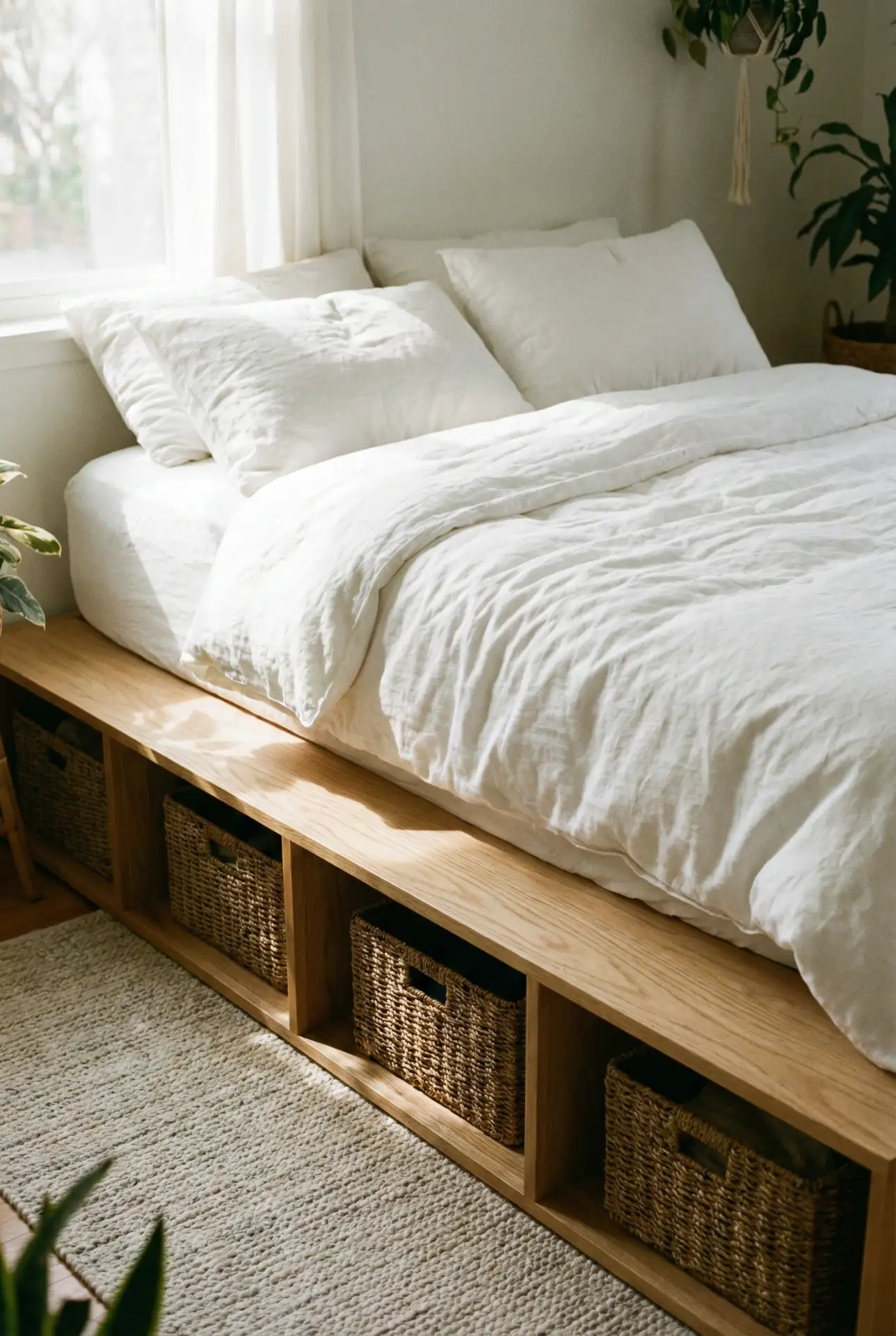
A platform bed with open shelving or cubbies in the base gives couples extra storage for books, baskets, or folded throws without requiring a separate dresser. This modern design approach is ideal for apartment dwellers who need furniture to multitask, and it keeps the room’s footprint as simple as possible. Choose a low-profile frame to maintain an open sightline, and use matching bins or baskets in the cubbies to hide less photogenic items. The result is a bed that works as hard as you do, quietly organizing your life while you sleep.
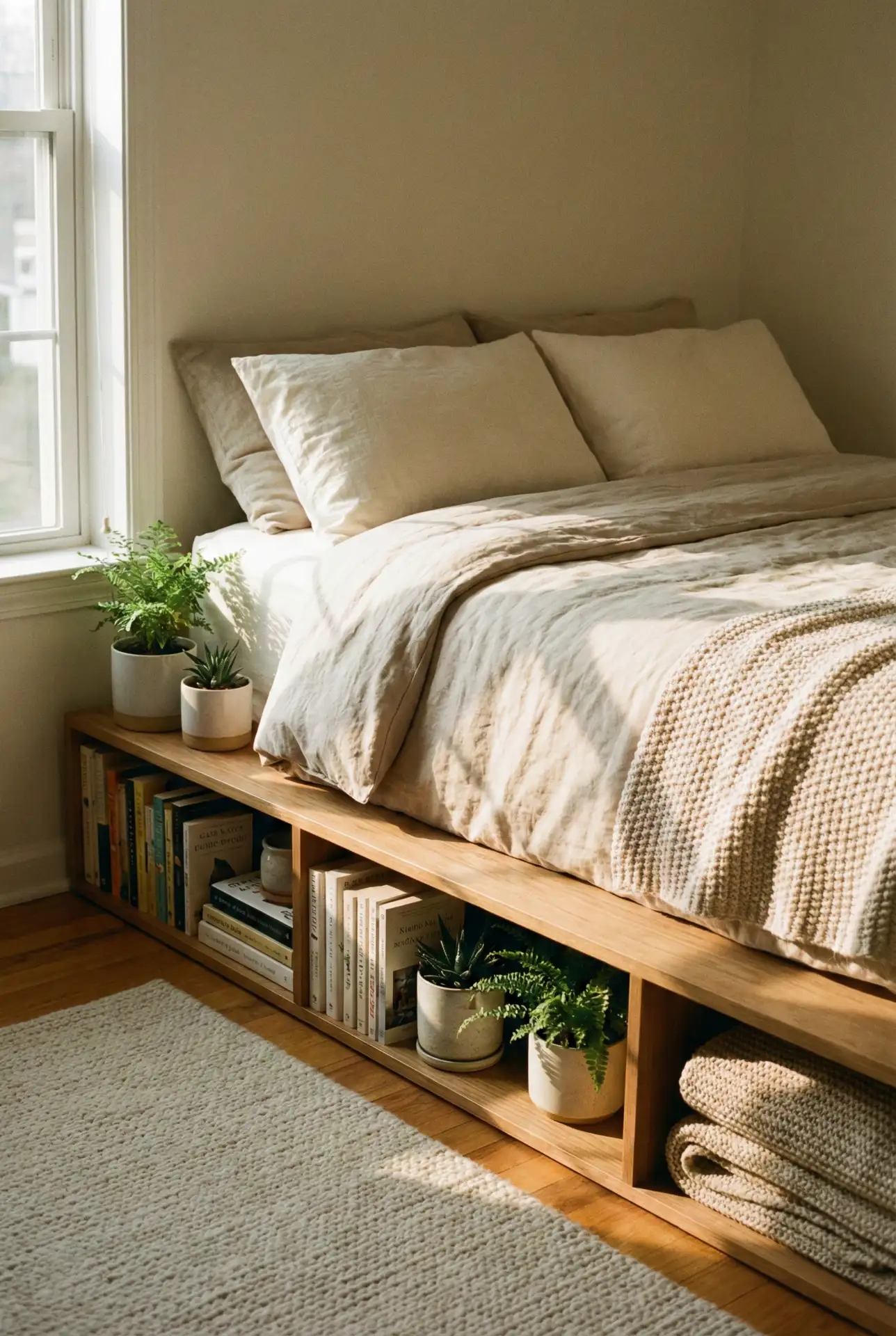
Budget tip: IKEA and Wayfair both offer affordable versions under $500, making this an accessible upgrade even for young couples furnishing their first place. Assembly can be a weekend project—set aside three hours and enlist both partners to speed things up. Once built, this piece anchors the room and solves the eternal question of where to put all your stuff when square footage is at a premium.
6. Dual-Purpose Bench at the Foot of the Bed
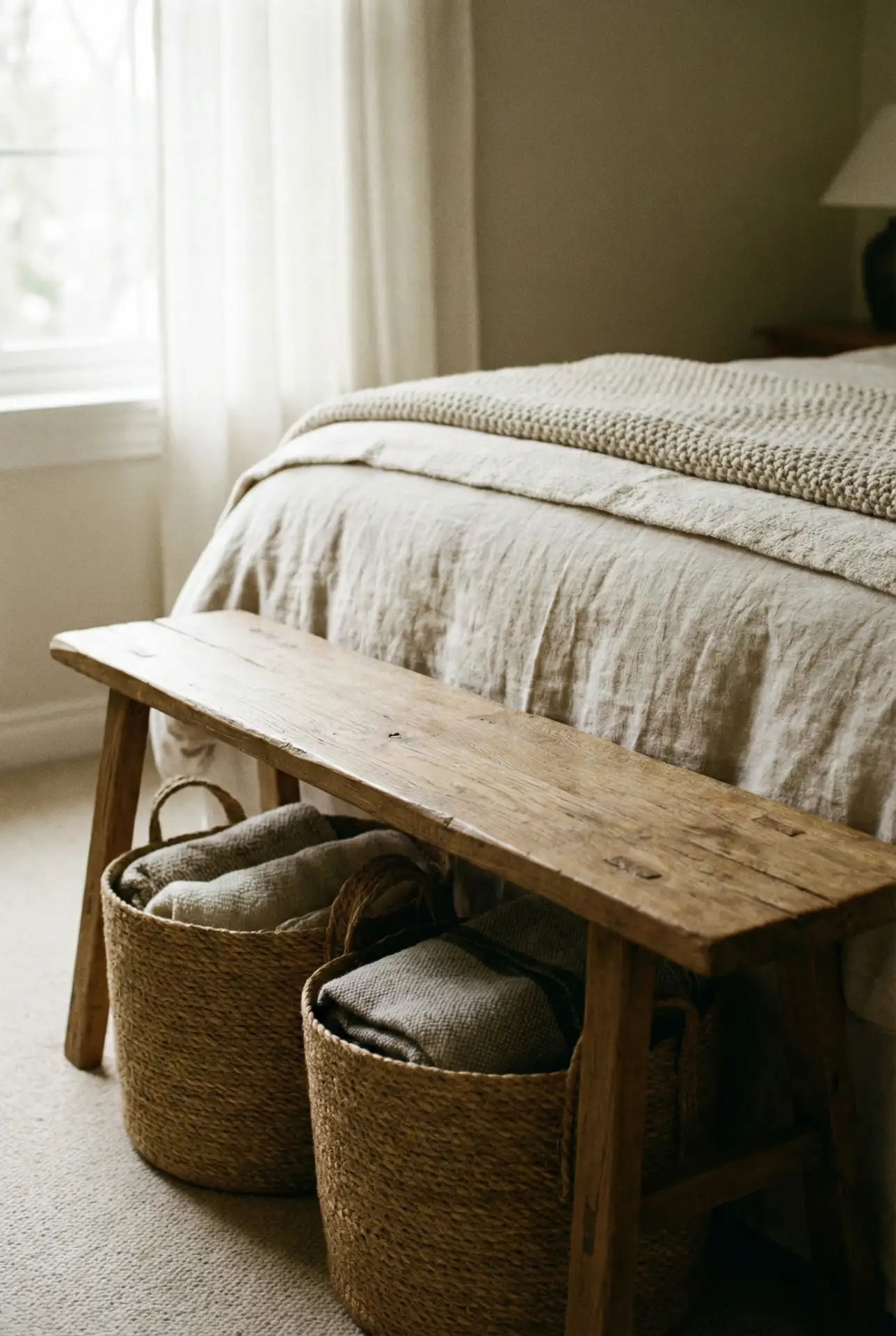
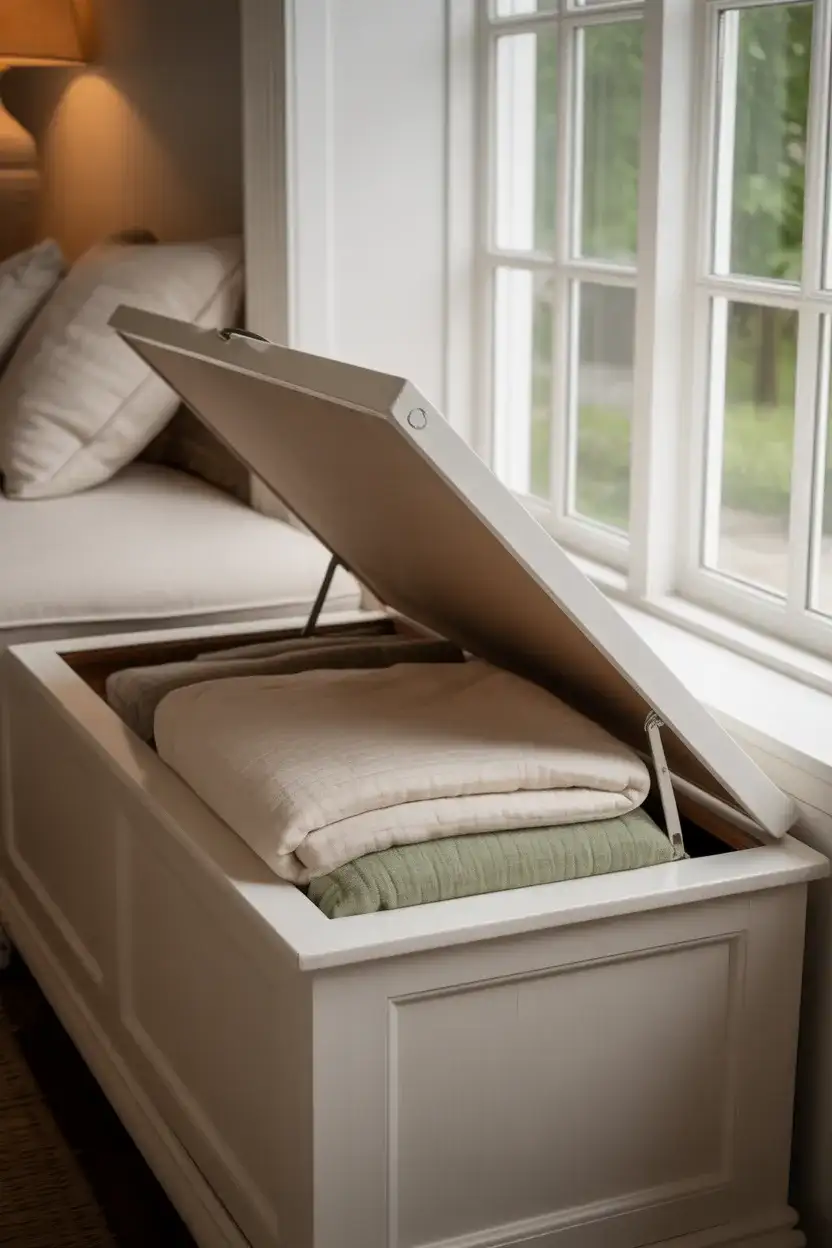
A slim bench or ottoman at the foot of the bed offers seating for putting on shoes and hidden storage for throw blankets or off-season gear. This piece is a lifesaver in small bedroom plans where you can’t fit a separate chair or dresser, and it adds a polished, hotel-like touch to the space. Upholstered benches in velvet or linen soften the room’s overall feel, while wooden styles with lift-up tops lean minimalist aesthetic. Either way, you’re packing function into a slender profile that doesn’t crowd the walking path.
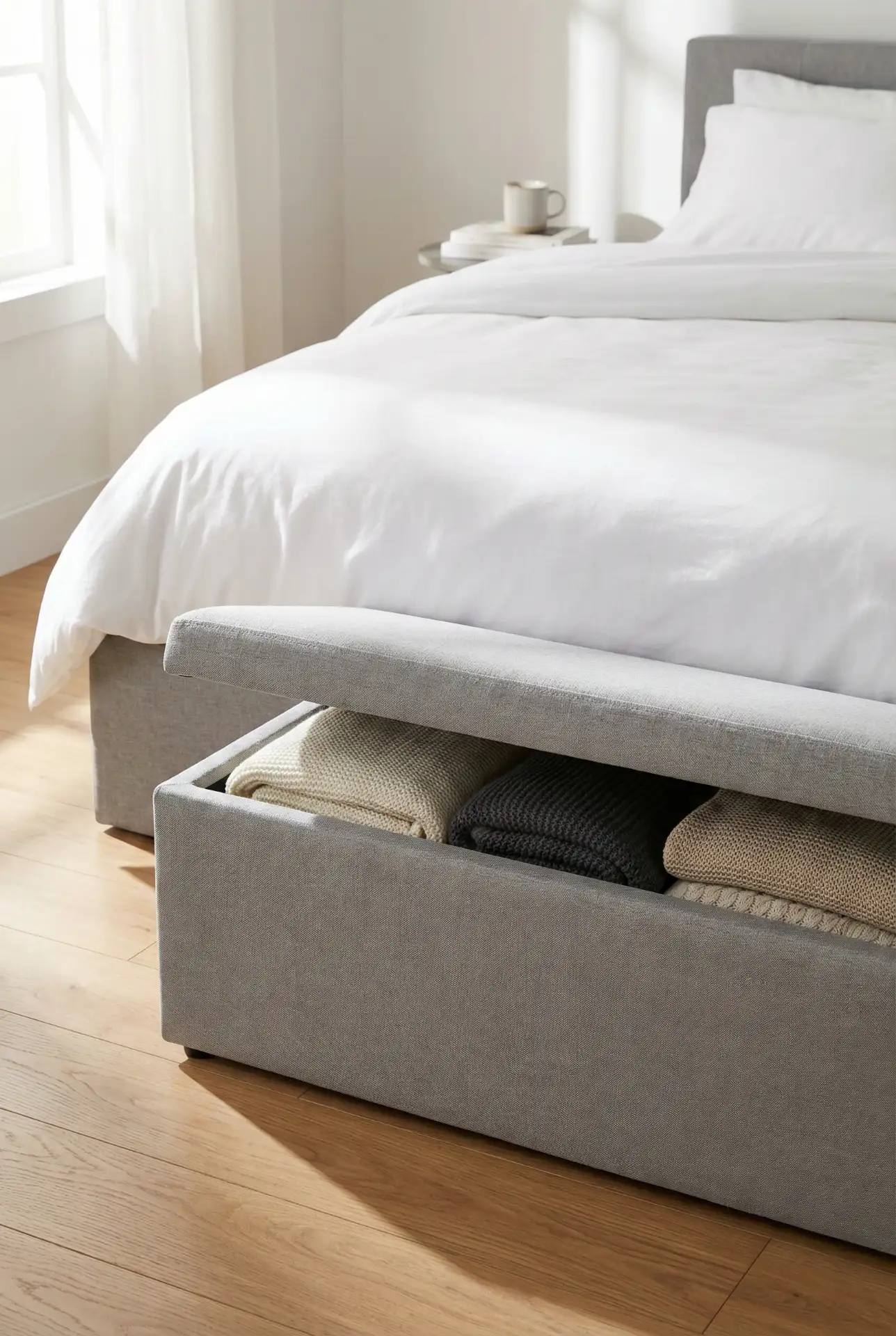
Real homeowner behavior: most couples toss their clothes here at night rather than hanging them up immediately, so pick a bench that can handle a little daily chaos. Measure your clearance—you want at least two feet between the bench and the bed frame to avoid stubbed toes in the dark. This small addition makes mornings smoother and gives the room a finished, intentional look that elevates the whole space.
7. Vertical Shelving to Maximize Wall Height
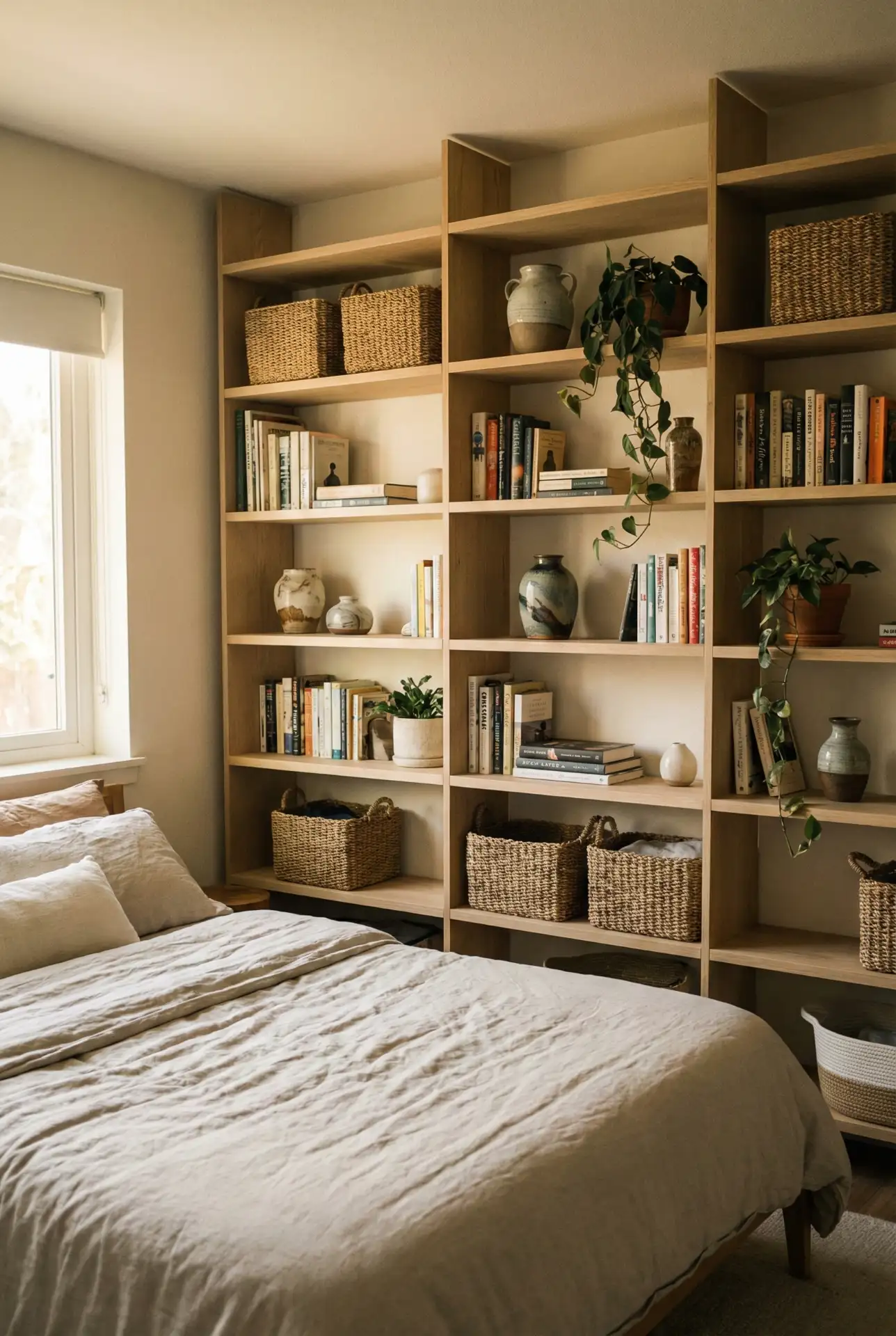
When floor space is scarce, going vertical with tall shelving units or ladder-style bookcases pulls the eye upward and creates storage without eating into your walking room. This layout strategy works beautifully in apartment bedrooms with high ceilings, letting couples display books, plants, and personal items while keeping surfaces clear. Choose open shelving for an airy feel, or add closed cabinets at the bottom for less attractive necessities. Either way, you’re using dead wall space to solve your clutter problem.
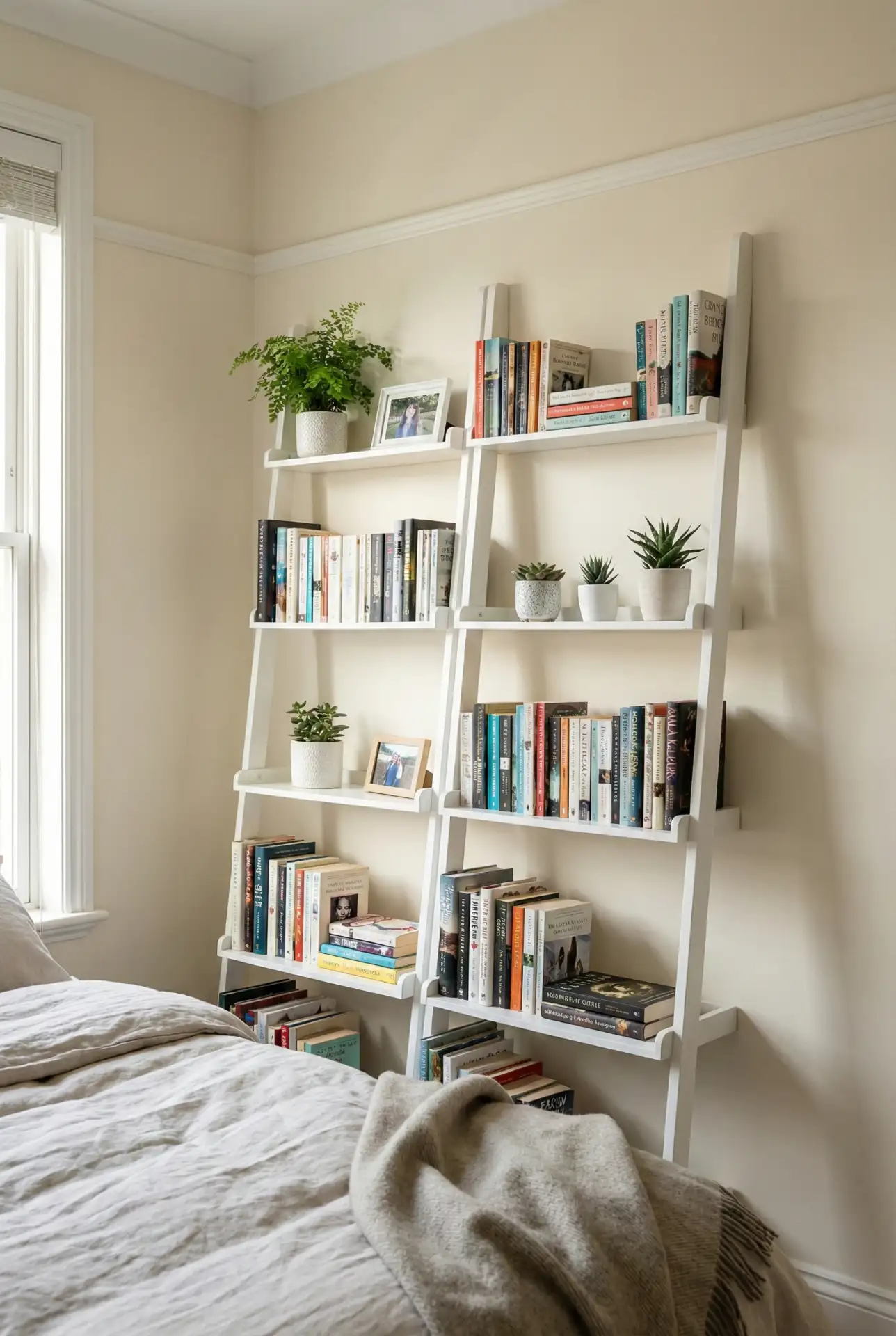
Expert tip: anchor tall units to the wall studs to prevent tipping, especially if you have pets or plan to stack heavier items on upper shelves. In older American homes with lower ceilings, stop your shelving about a foot from the ceiling to avoid a cramped, cave-like feeling. This approach is especially popular in studio apartments where the bedroom zone doubles as a reading nook or home office corner.
8. Sliding Barn Door to Save Swing Space
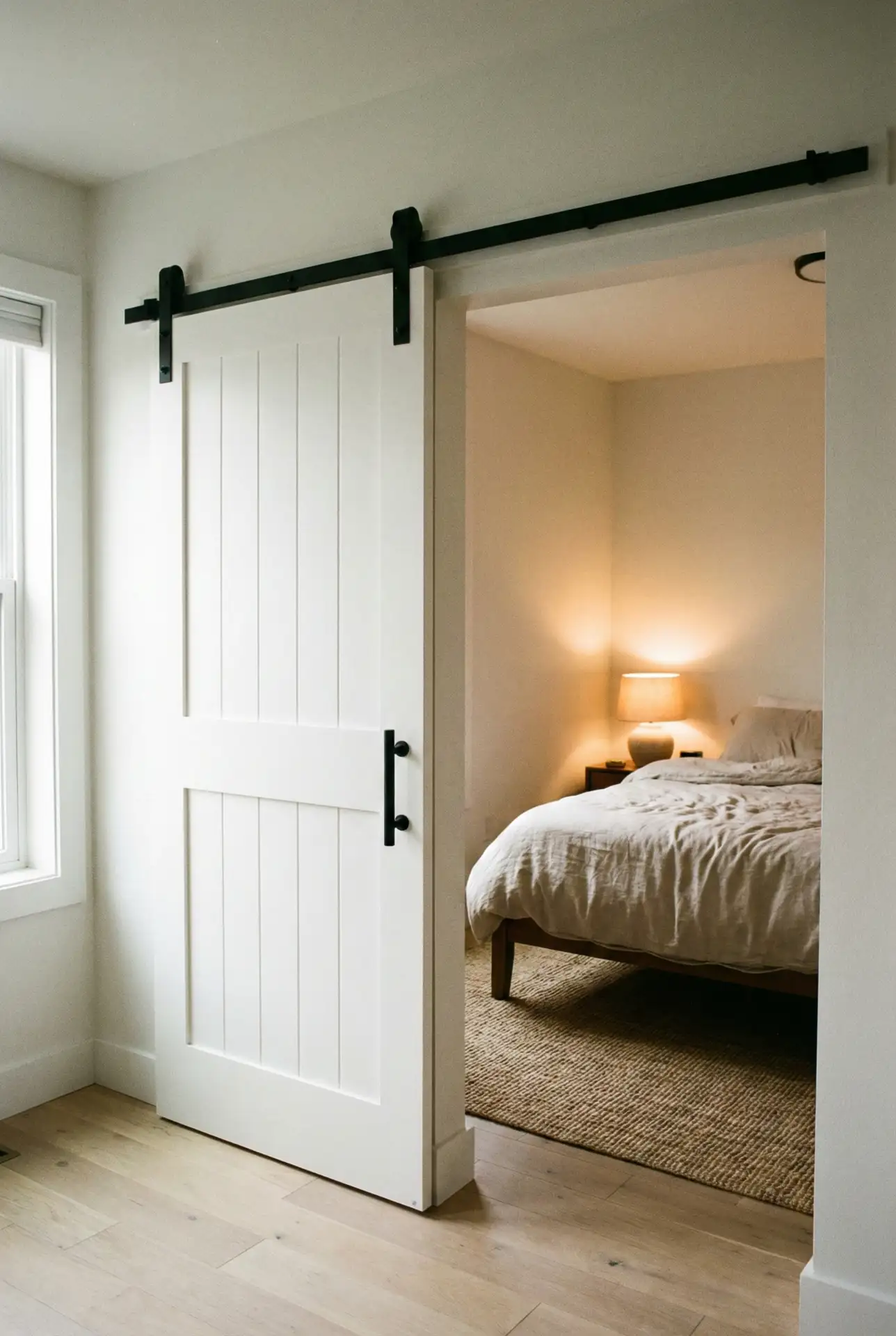
Replacing a traditional hinged door with a wall-mounted sliding barn door frees up several square feet that would otherwise be lost to door clearance. This simple swap is a favorite in small bedroom renovations and apartment makeovers, especially in tight urban layouts where every inch matters. Modern hardware kits come in matte black, brushed nickel, or even brass, letting you match the track to your existing fixtures. The door itself can be rustic reclaimed wood, sleek painted panels, or frosted glass for a contemporary edge.
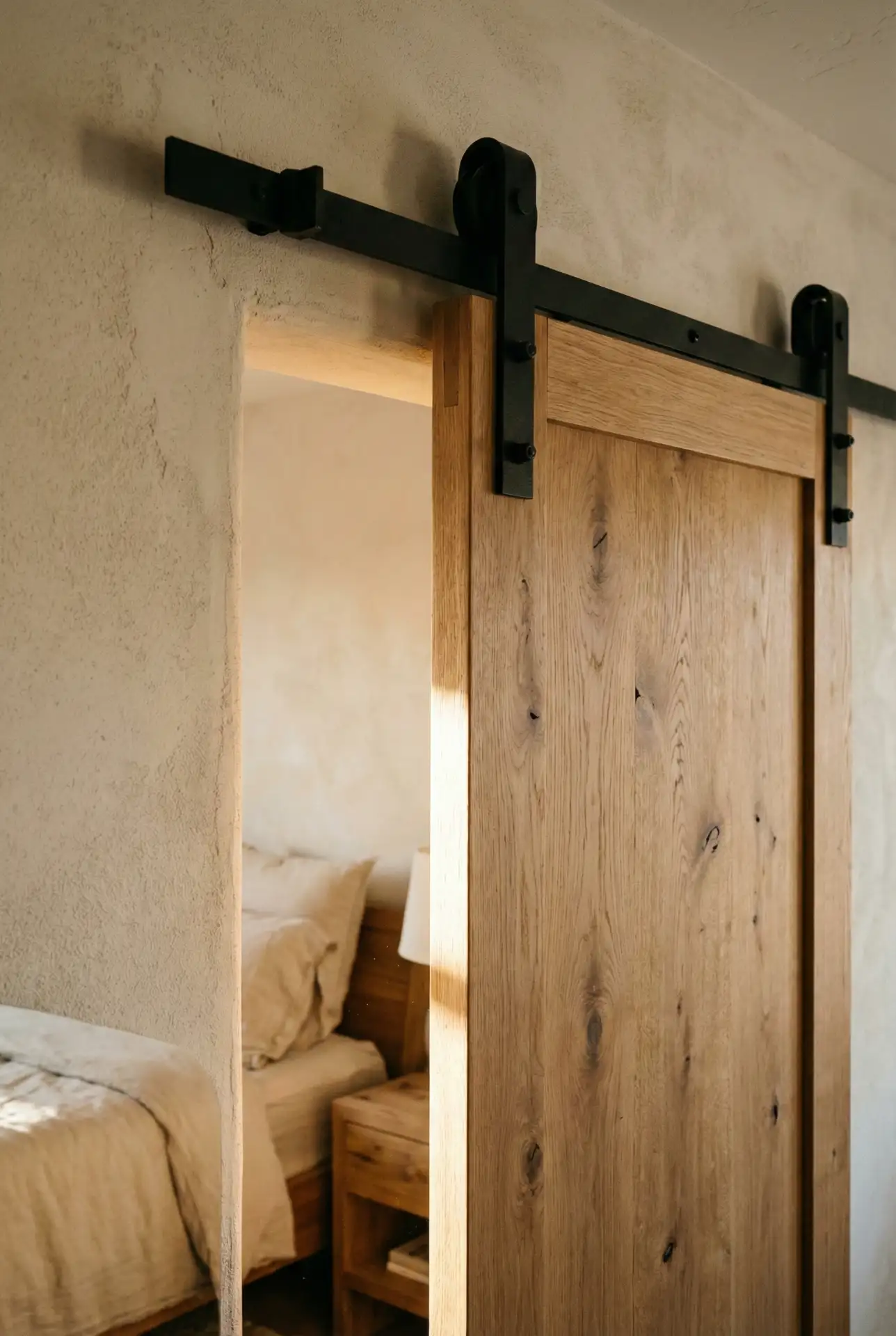
Common mistake: forgetting to account for wall space on either side of the door opening, since the door needs room to slide completely open. Measure twice, install once, and make sure the track is level, or you’ll hear an annoying rattle every time you move the door. This upgrade is especially practical in bedrooms that open directly into living areas, giving couples privacy without sacrificing precious floor space.
9. Neutral Color Palette to Create Visual Calm
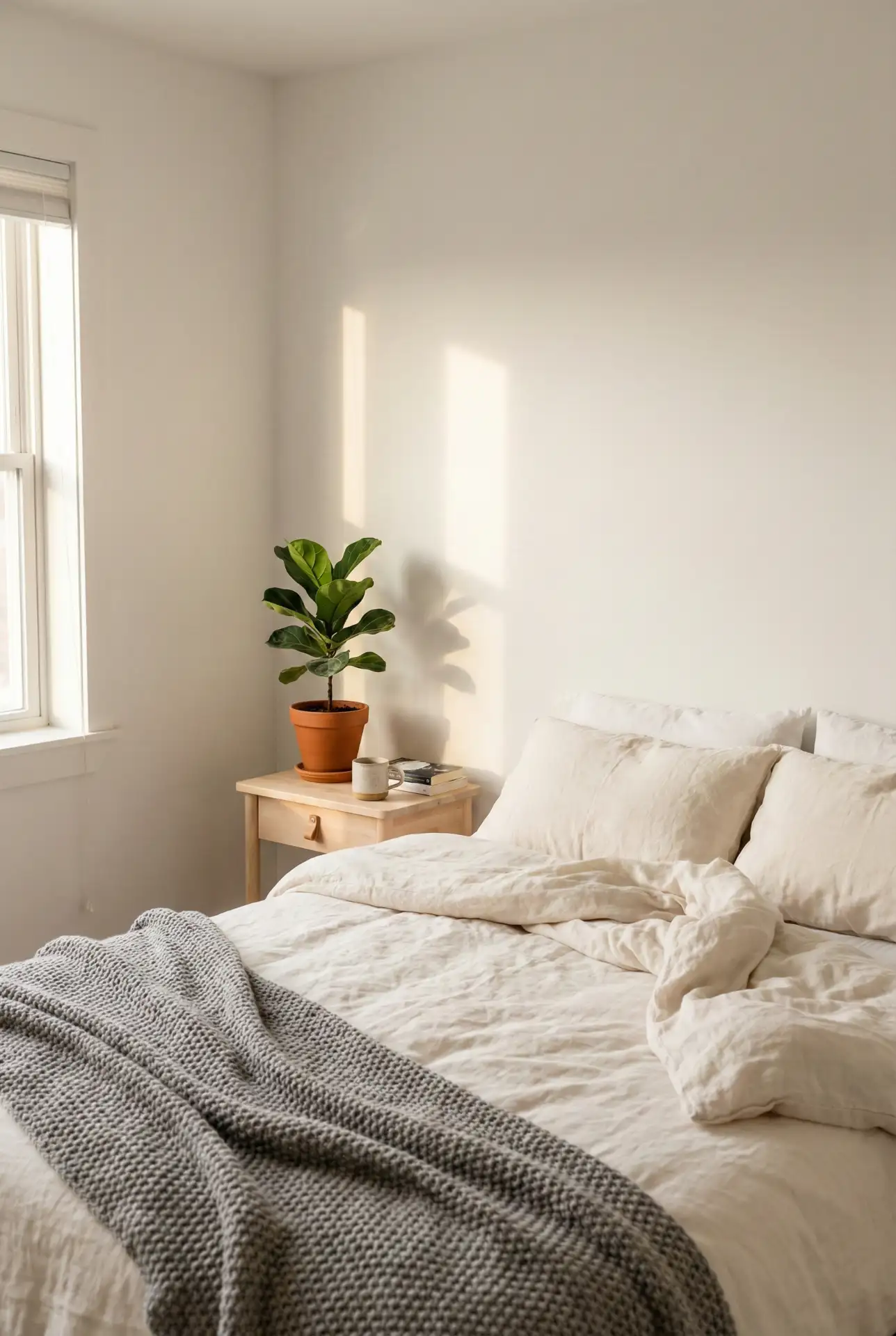
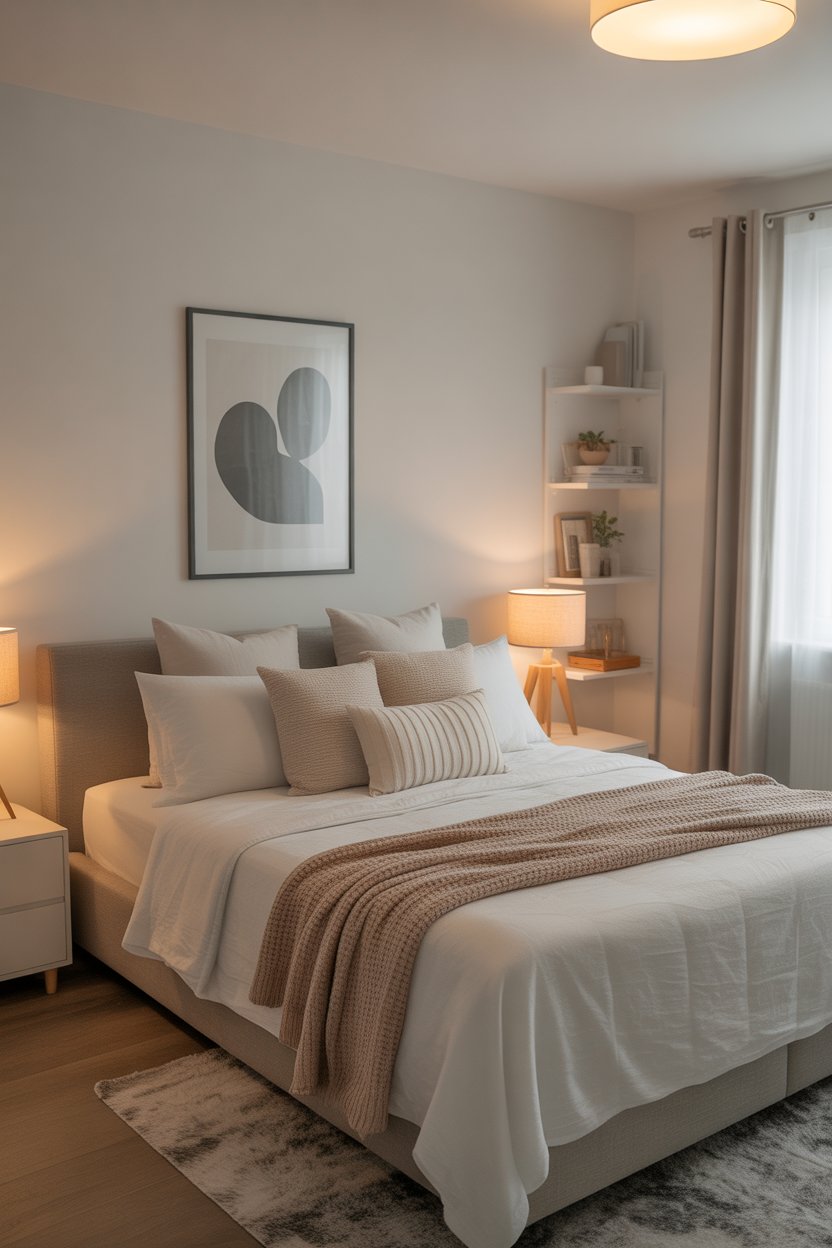
Sticking to whites, creams, grays, and soft beiges makes a small bedroom feel larger and more serene, a minimalist aesthetic that never overwhelms the senses. This approach is especially popular with couples who want a cozy retreat that doesn’t feel cluttered or chaotic, and it gives you flexibility to swap in colorful accents through pillows or art without repainting. Layer different textures—linen bedding, a chunky knit throw, a woven rug—to keep the room from feeling flat or sterile. The result is a calming backdrop that lets both partners relax at the end of a long day.
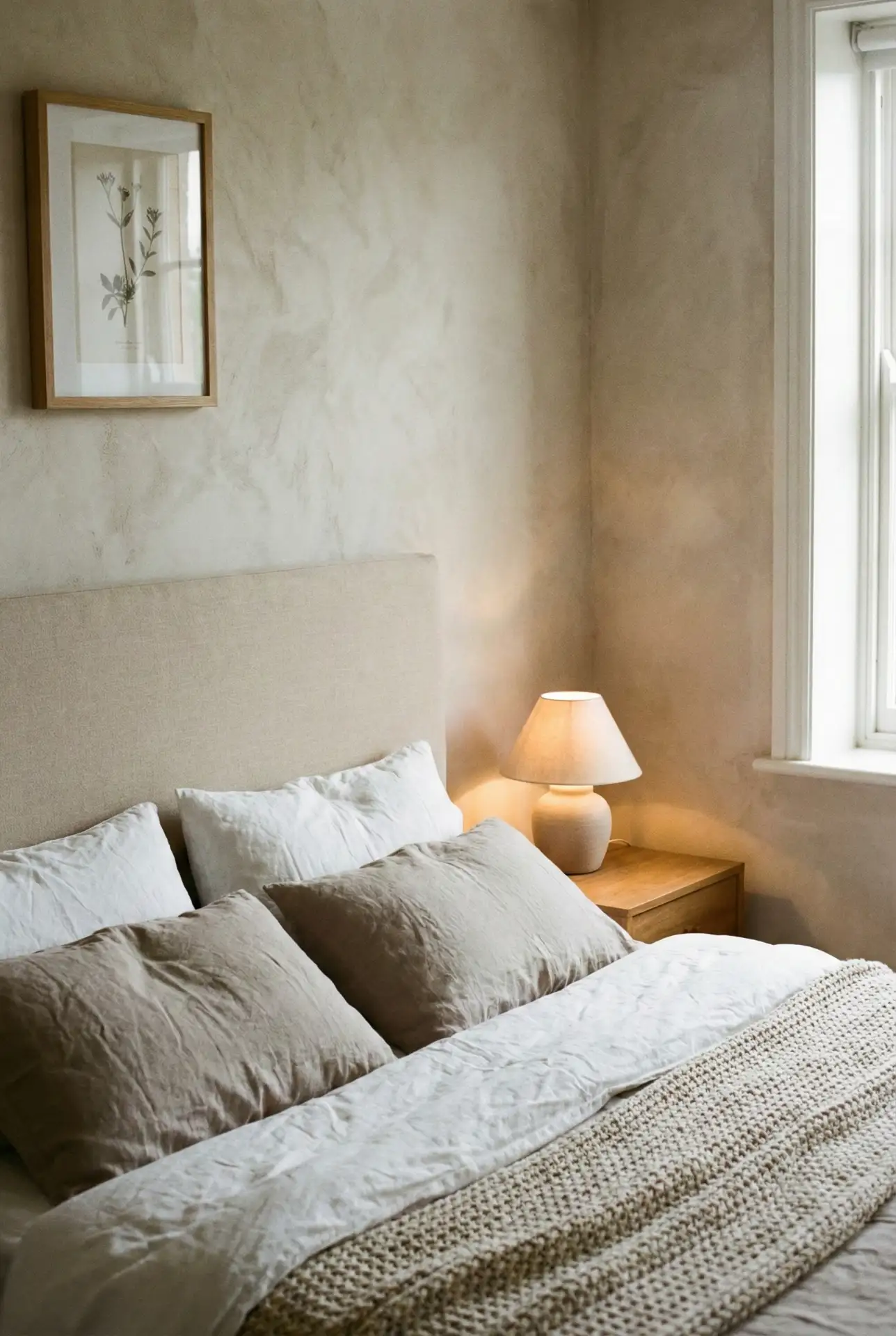
Where it works best: apartments in busy cities where the bedroom needs to be a sanctuary from urban noise and visual overload. Avoid stark white if your space gets limited natural light—opt for warmer off-whites or soft grays to prevent a cold, institutional feel. This palette also photographs beautifully, which is why it dominates Pinterest boards and home design magazines year after year.
10. Murphy Bed for Ultimate Space Flexibility
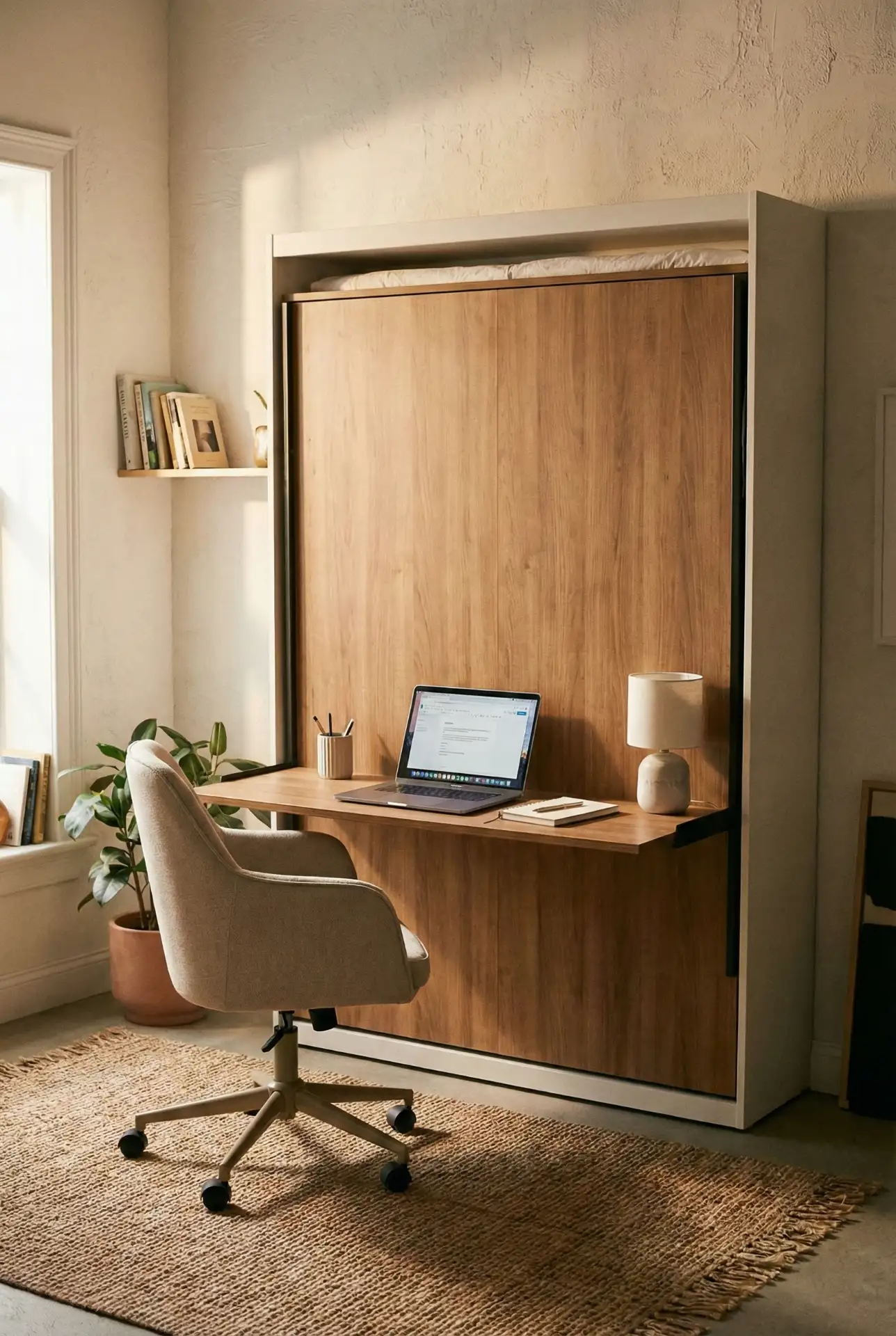
A wall-mounted Murphy bed folds up during the day to give couples a true multipurpose room, turning a small bedroom into a home office, yoga studio, or guest space. This modern solution is a game-changer for apartment living, where square footage is tight and rooms need to earn their keep. Today’s models come with built-in shelving, desks, or even sofas on the front panel, blending seamlessly into the wall when closed. Choose a quality mechanism with gas pistons for easy lifting, and opt for a king-size or queen-size bed depending on your needs and available wall space.
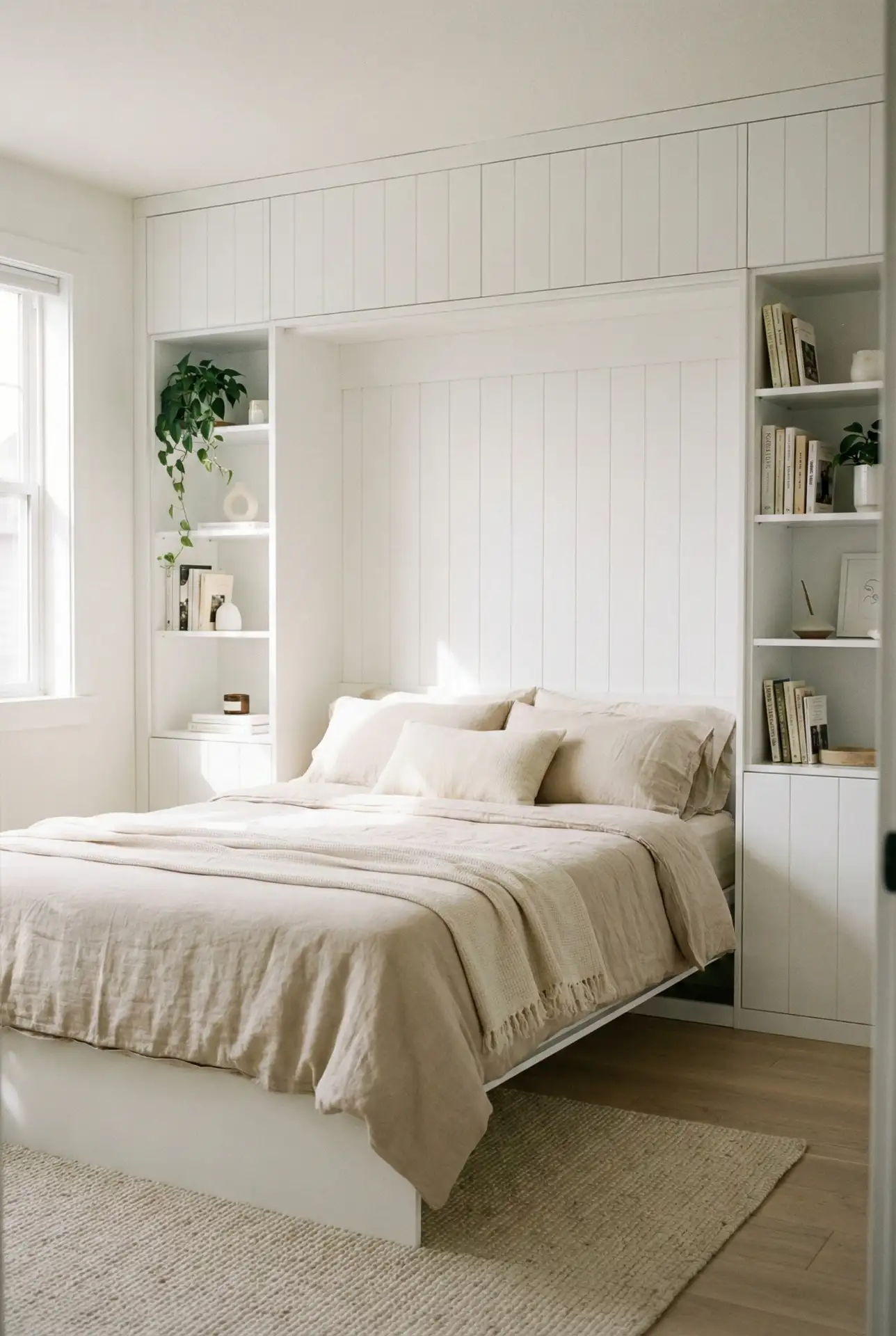
Price-wise, expect to invest $1,500 to $4,000 depending on size and features—a significant upfront cost, but one that pays dividends if you’re committed to maximizing every square foot. Professional installation is recommended unless you’re handy; improper mounting can be dangerous. This setup is especially popular in West Coast studios and converted lofts, where zoning every inch is essential to comfortable living.
11. Pegboard Wall for Customizable Storage
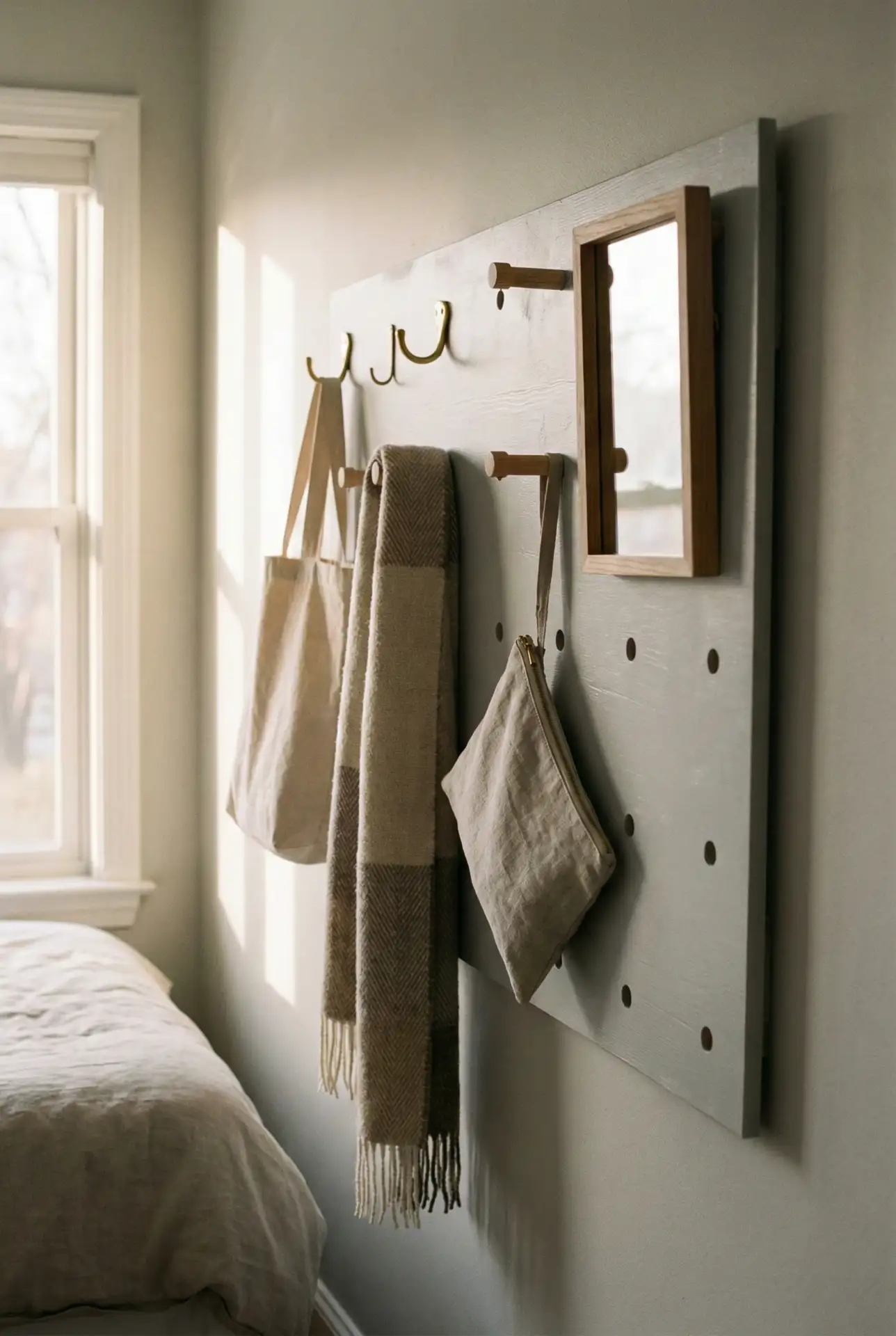
A painted pegboard mounted above a dresser or desk gives couples flexible storage for jewelry, hats, bags, or small plants, and you can rearrange hooks and shelves as your needs evolve. This simple DIY project is a favorite in apartment makeovers because it’s renter-friendly and costs under $50 in materials. Paint the pegboard to match your walls for a seamless look, or go bold with a contrasting accent color to turn it into a design feature. Either way, you’re adding functional wall space that keeps daily essentials organized and within reach.
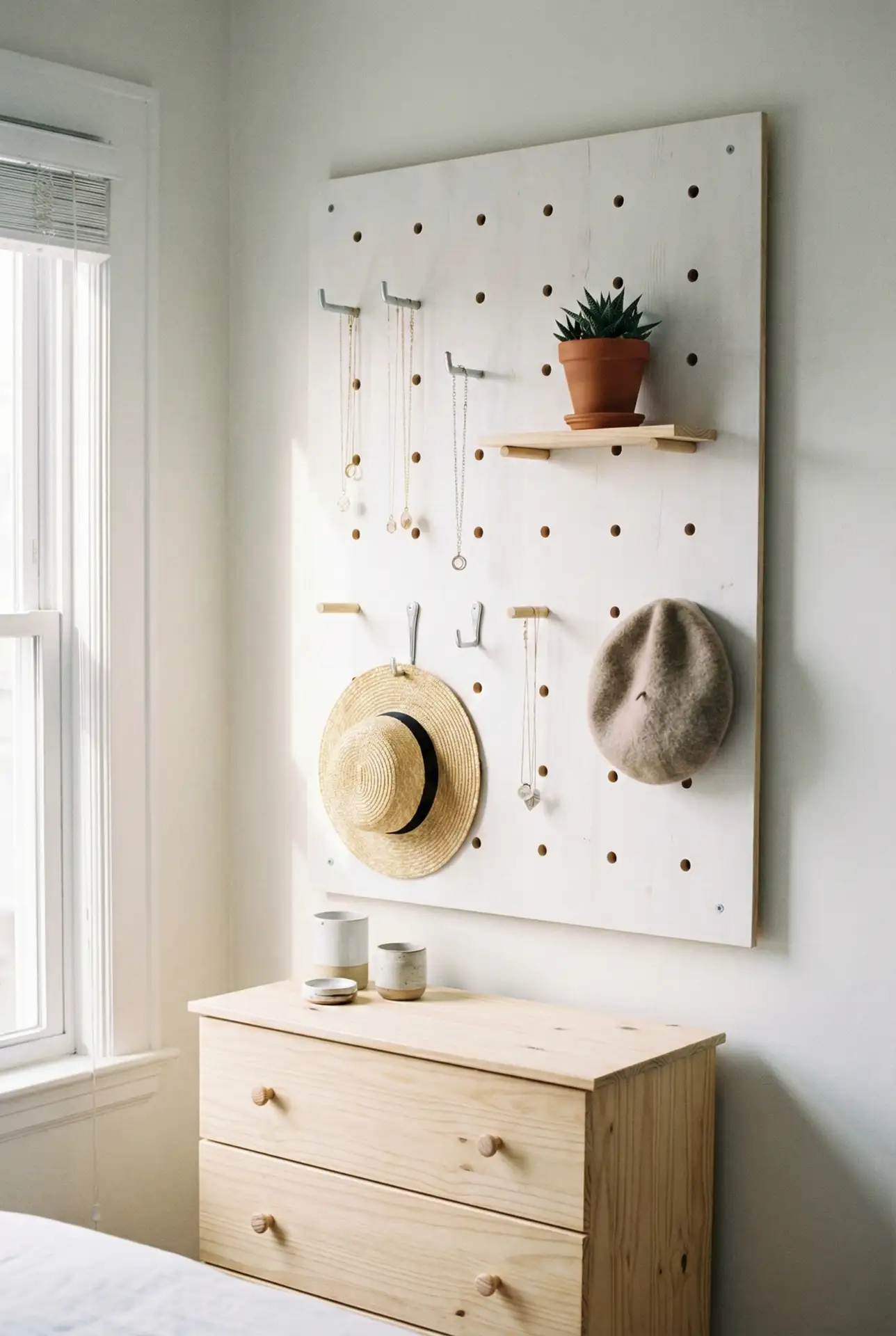
One couple in Portland installed twin pegboards over their nightstands and now use them for charging cables, reading glasses, and small plants—no more digging through drawers in the dark. Use a stud finder and anchors rated for your pegboard’s weight to prevent sagging. This project takes about two hours from start to finish and instantly makes your bedroom feel more intentional and curated.
12. Low-Profile Dresser to Maintain Sightlines
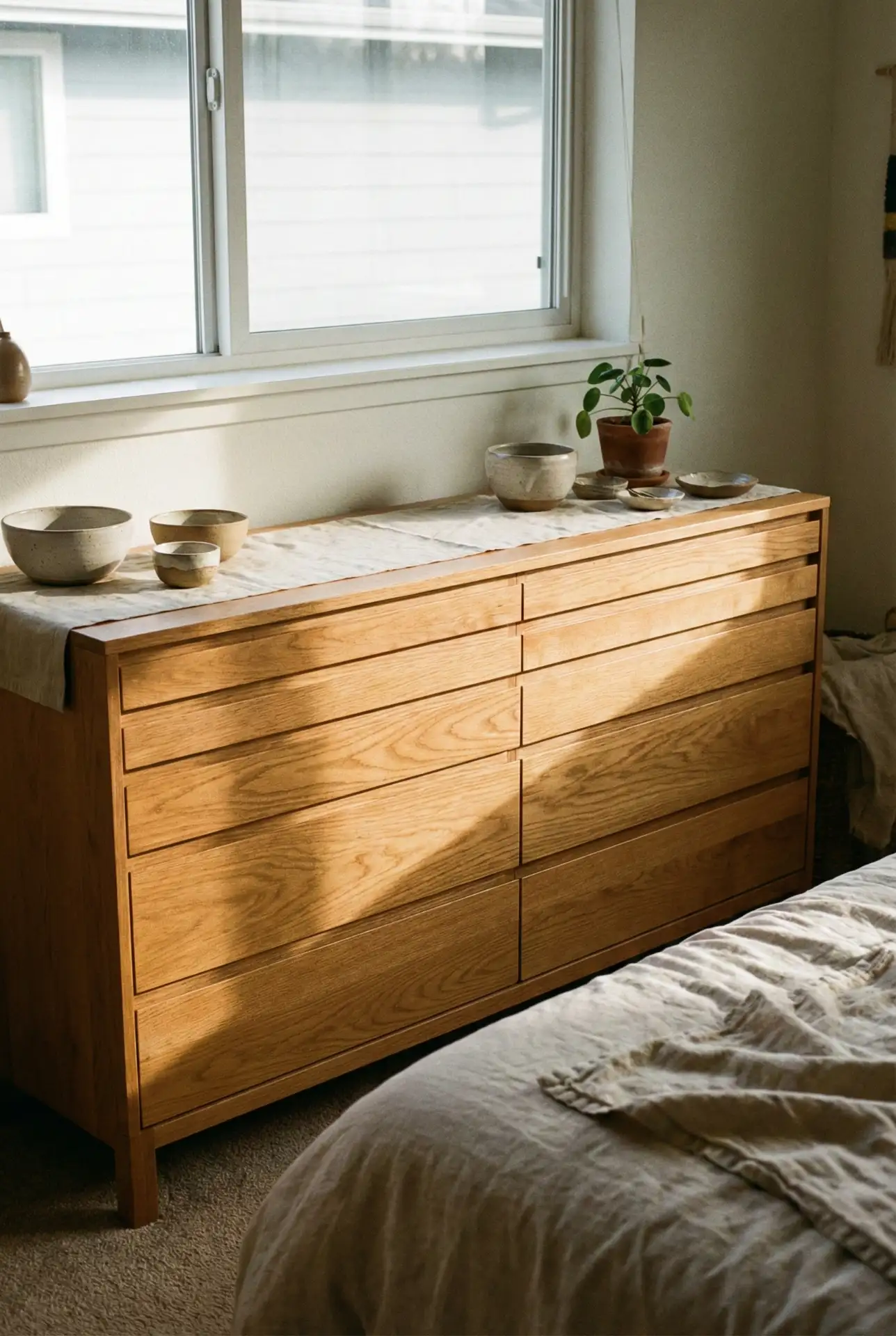
Choosing a dresser that’s wide rather than tall keeps the room’s sightlines open and prevents the space from feeling boxed in, a key principle in small bedroom design. This layout strategy works especially well in rooms with windows, where a low dresser won’t block natural light or views. Look for pieces with six to eight drawers spread across a long profile, and top it with a mirror or a few framed photos to create a vanity zone. The horizontal emphasis makes the room feel wider and more grounded, a visual trick that counteracts the cramped feeling of tight quarters.
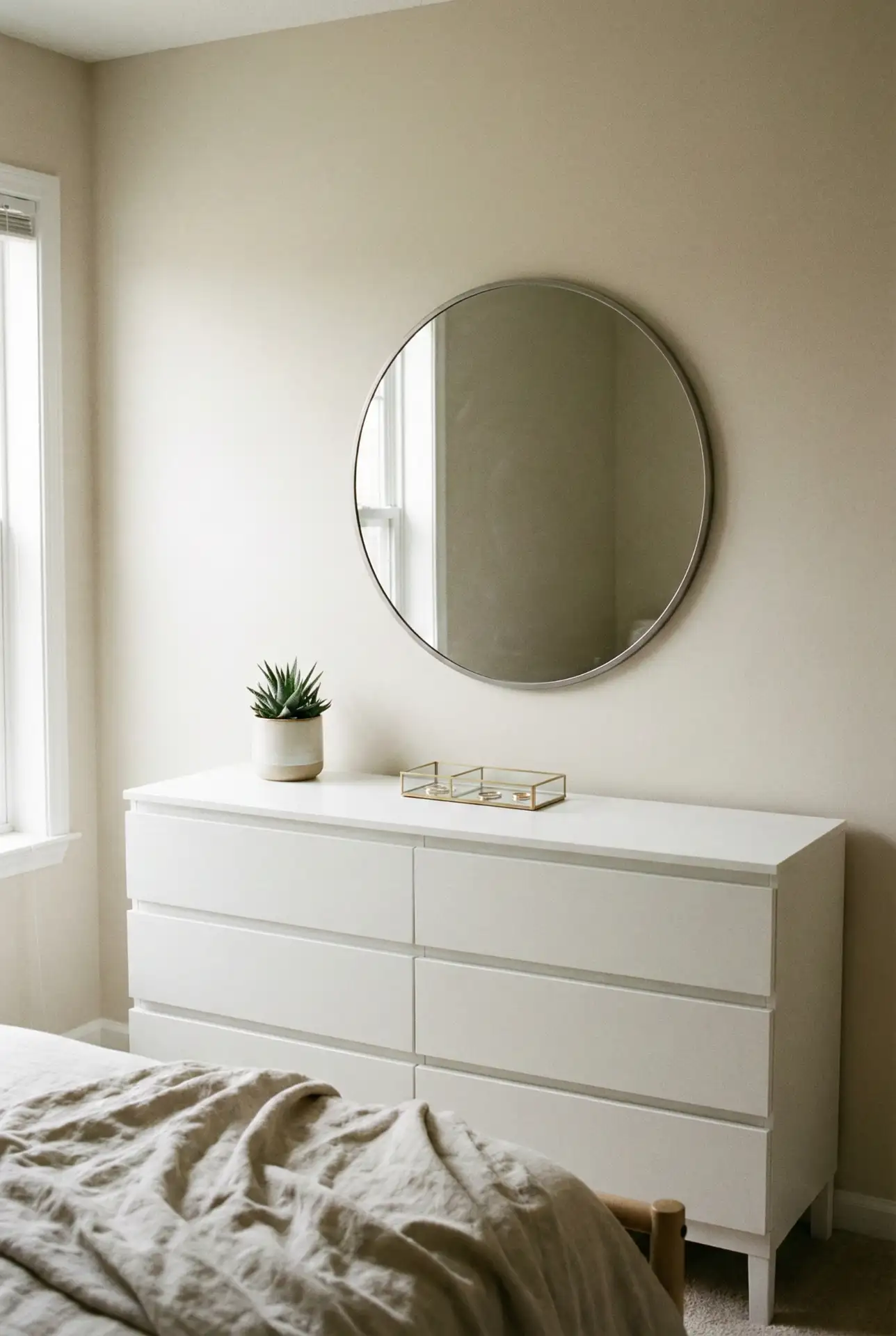
Avoid the common mistake of cramming a tall dresser into a corner where it looms over the bed—this makes the room feel smaller and darker. Instead, place your low dresser opposite the bed or along a side wall, and use the surface for lamps, trays, or a small jewelry box. This approach is especially effective in bedrooms with low ceilings, where vertical furniture can make the space feel oppressive.
13. Sheer Curtains to Maximize Natural Light
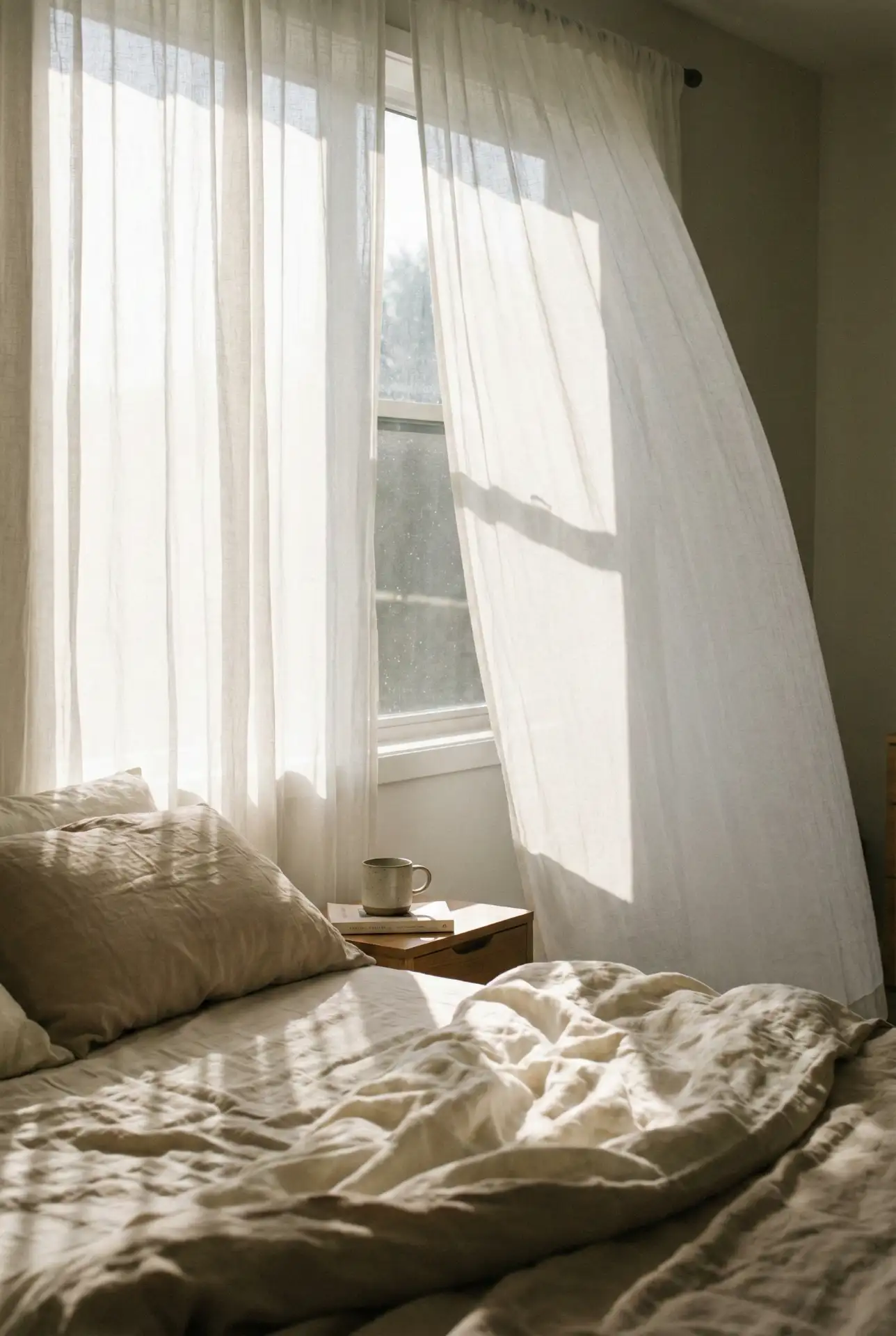
Swapping heavy drapes for sheer linen or cotton curtains floods a small bedroom with daylight while still offering privacy, making the space feel larger and more open. This simple change is a go-to move for couples who want a cozy yet airy feel, and it’s especially useful in urban apartment settings where windows face other buildings. Layer sheers with blackout roller shades behind them if you need complete darkness for sleep, giving you flexibility without sacrificing the soft, filtered light during the day. White or off-white sheers are timeless, but soft gray or blush tones add a subtle warmth.
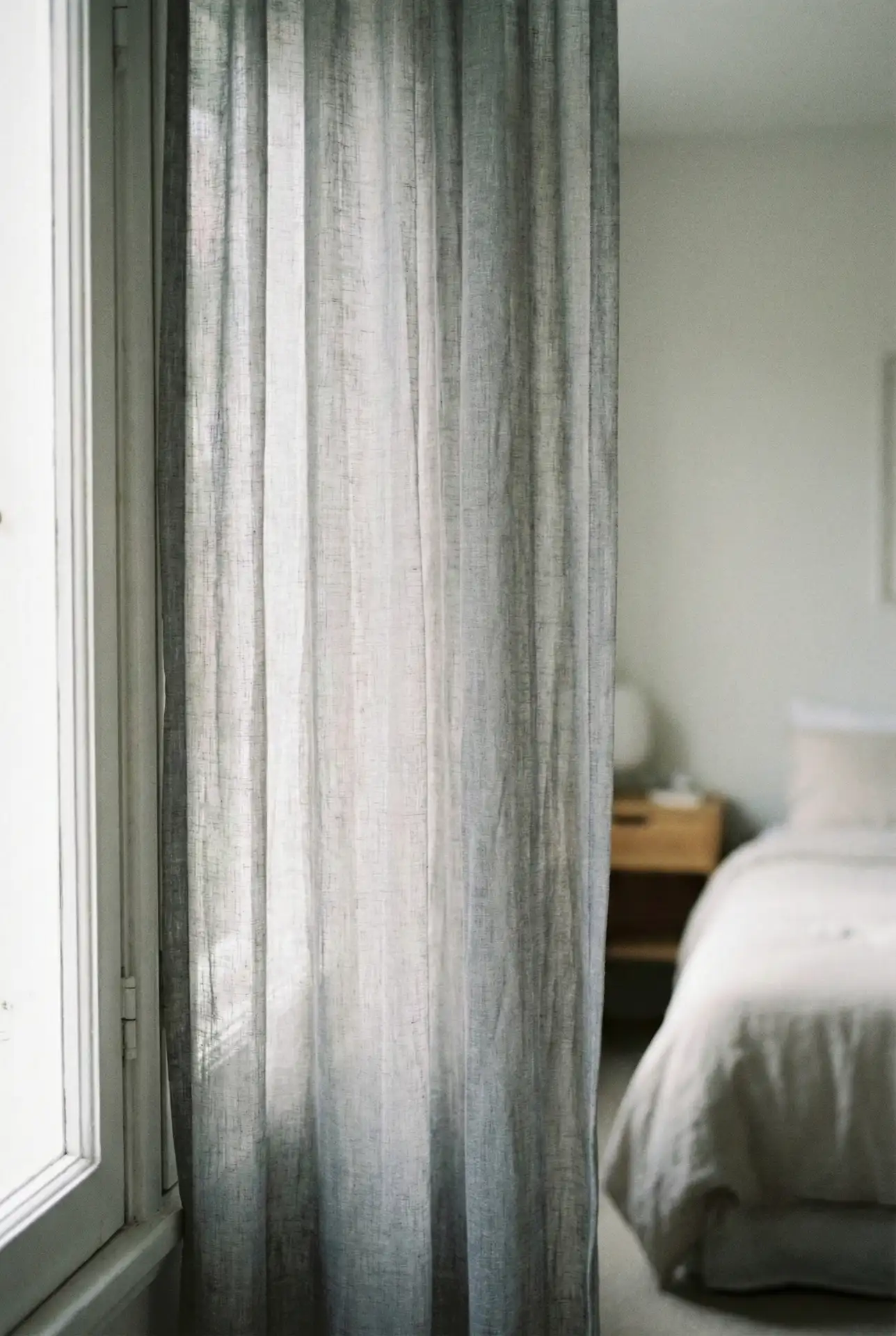
Where it works best: bedrooms that get morning sun or face quiet streets, where privacy isn’t a major concern during the day. Hang curtains as close to the ceiling as possible and let them graze the floor to create the illusion of taller windows and higher ceilings. This tiny tweak makes a massive difference in how spacious and inviting your bedroom feels, especially when paired with a neutral color palette.
14. Corner Desk for a Compact Workspace
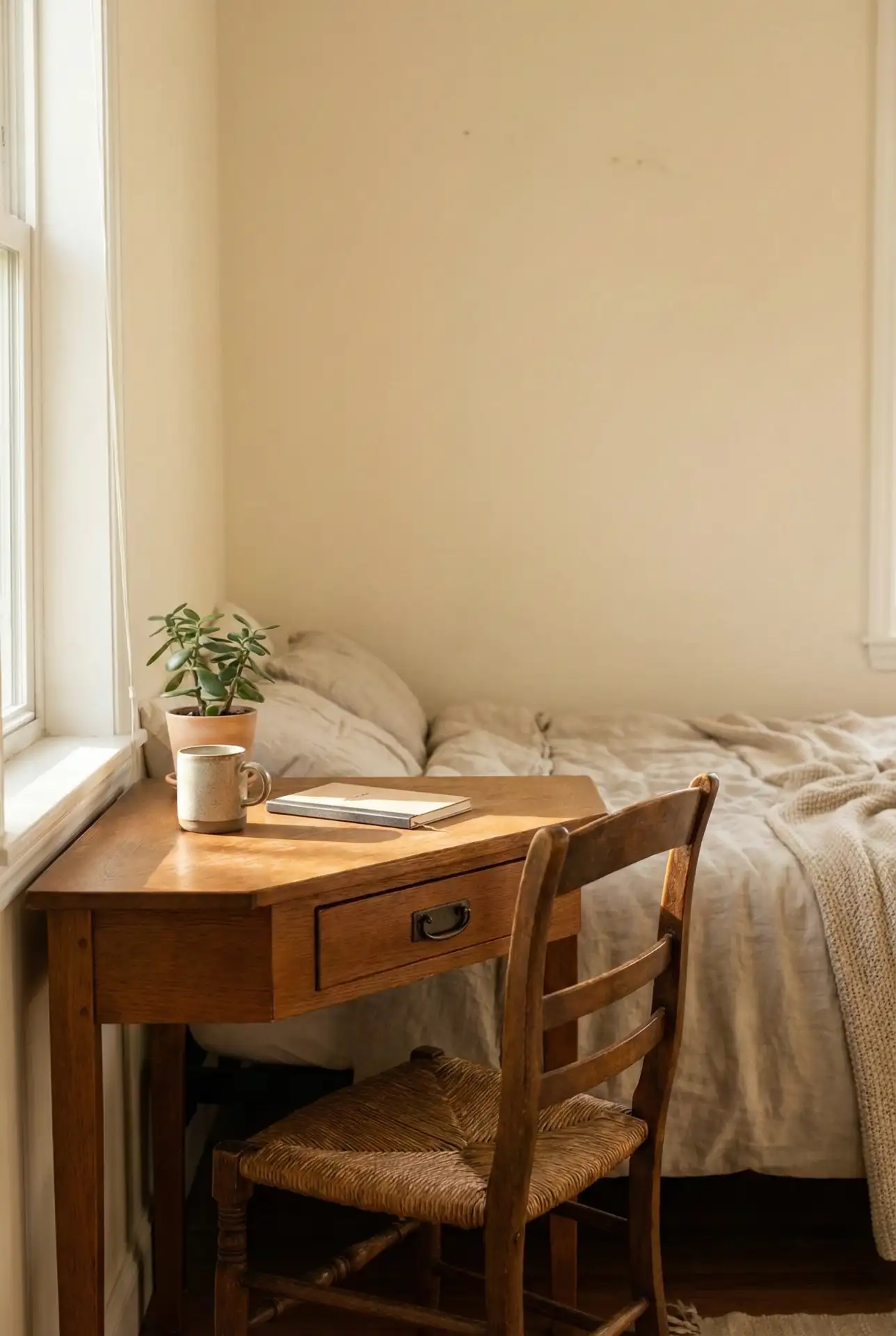
Tucking a small desk into a corner lets couples carve out a work-from-home zone without sacrificing layout flow, a must-have in apartment bedrooms that double as home offices. This modern solution uses dead space that would otherwise sit empty, and a floating corner desk keeps the floor clear for a lighter visual footprint. Choose a model with a built-in drawer or shelf underneath for office supplies, or mount a pegboard above for extra organization. Add a comfortable chair and a small task lamp, and you’ve got a functional workspace that doesn’t overwhelm the room.
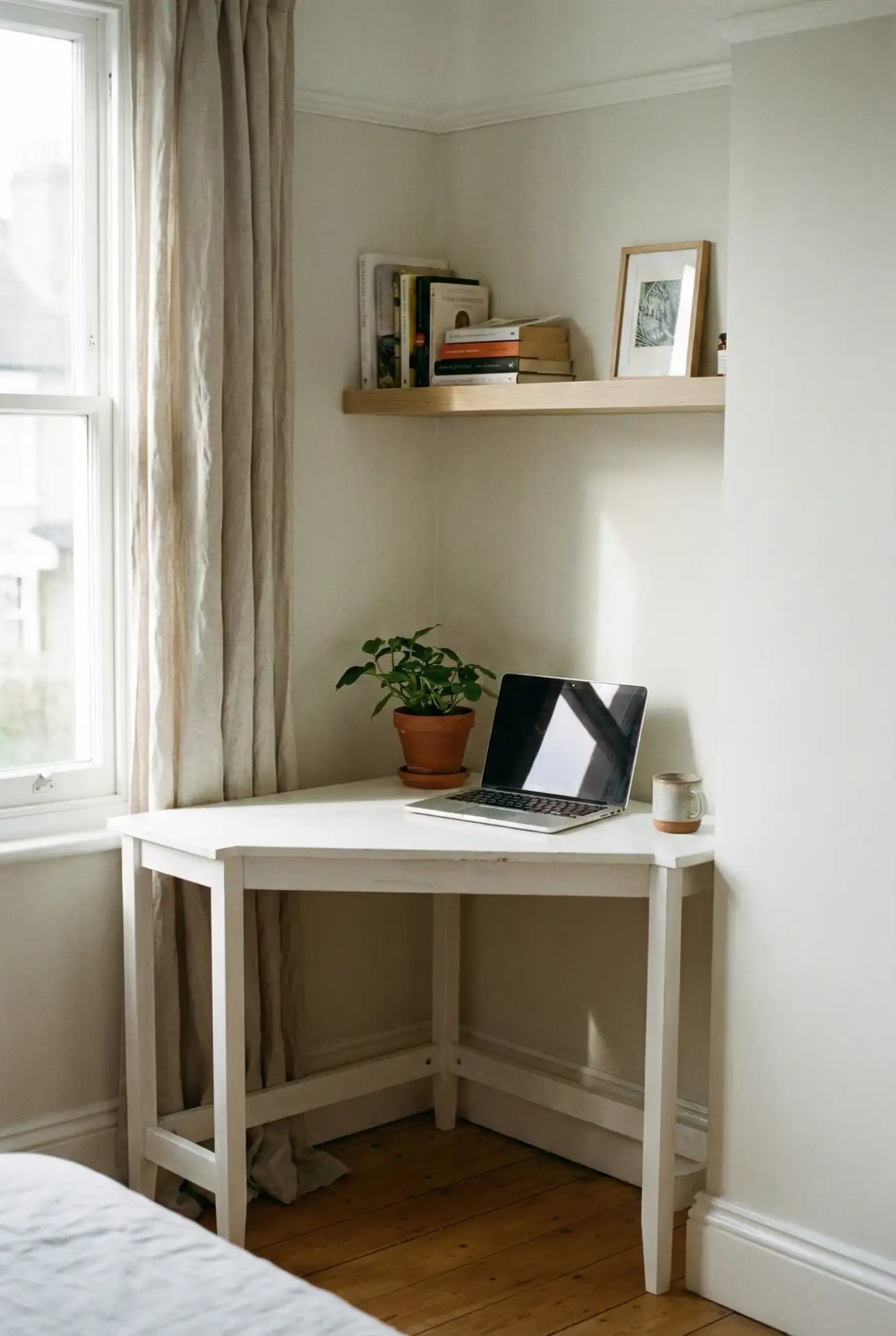
Real homeowner insight: one partner works late nights while the other sleeps, so they positioned the desk as far from the bed as possible and use a small lamp with a warm bulb to minimize disruption. Keep the desk surface clutter-free by storing papers in a wall-mounted file holder or a slim rolling cart. This setup is essential for remote workers in cities like Seattle, Austin, or Boston, where studio and one-bedroom apartments are the norm.
15. Romantic String Lights for Soft Ambiance

Draping warm-toned string lights along the headboard or around a window creates a romantic glow that transforms a small bedroom into a cozy retreat for couples. This budget-friendly upgrade costs under $20 and takes minutes to install, making it a favorite for renters and DIY beginners. Choose LED bulbs to keep energy costs down and avoid overheating, and opt for dimmable or remote-controlled versions if you want adjustable brightness. The soft, diffused light is perfect for winding down at night without relying on harsh overhead fixtures.
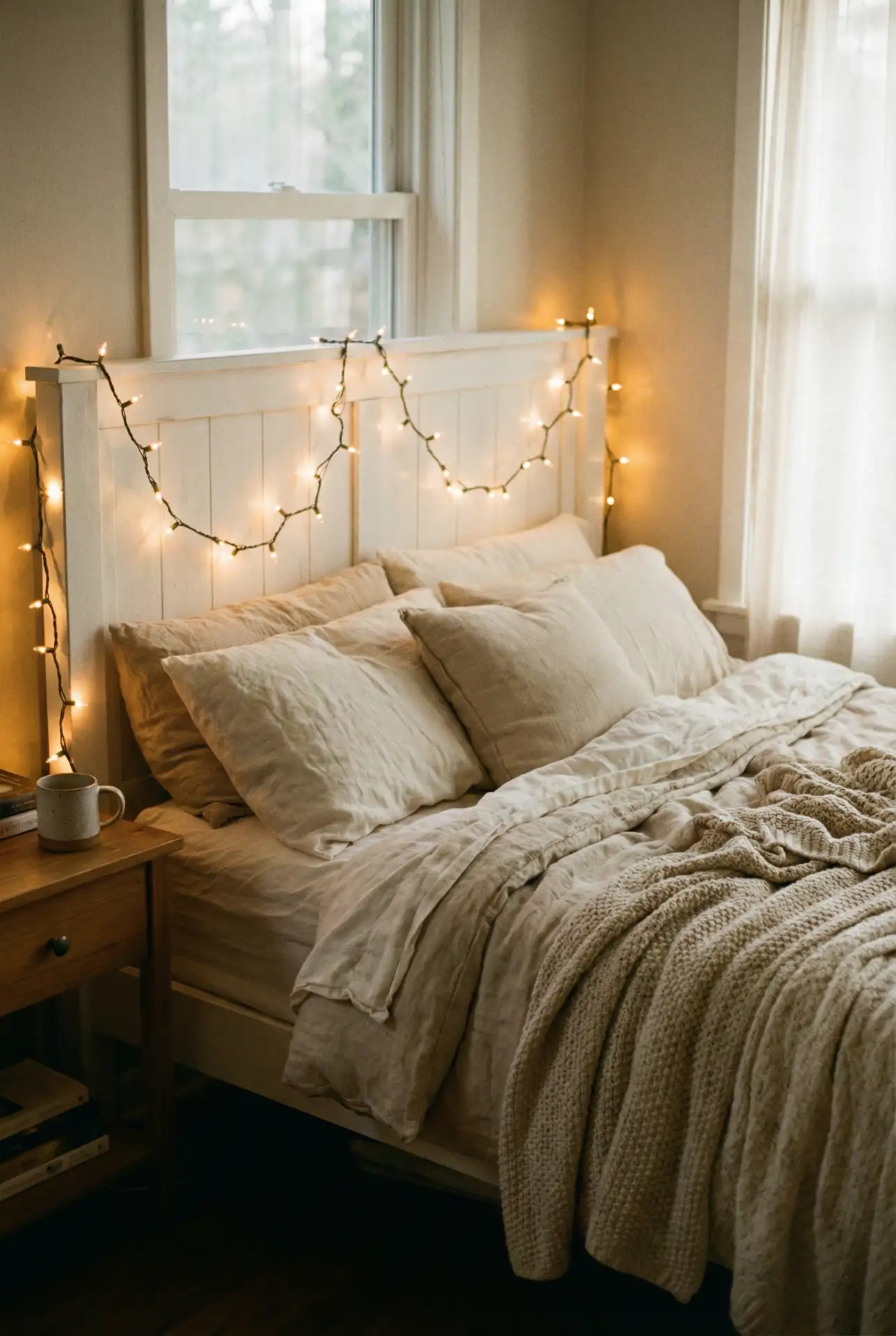
Practical tip: use adhesive hooks or small nails to secure the cord along walls or bed frames, keeping it tidy and intentional rather than haphazardly looped. This lighting trick is especially popular with younger couples furnishing their first shared space, and it pairs beautifully with sheer curtains and neutral bedding for a Pinterest-worthy, effortlessly romantic vibe.
16. Dark Accent Wall for Cozy Depth
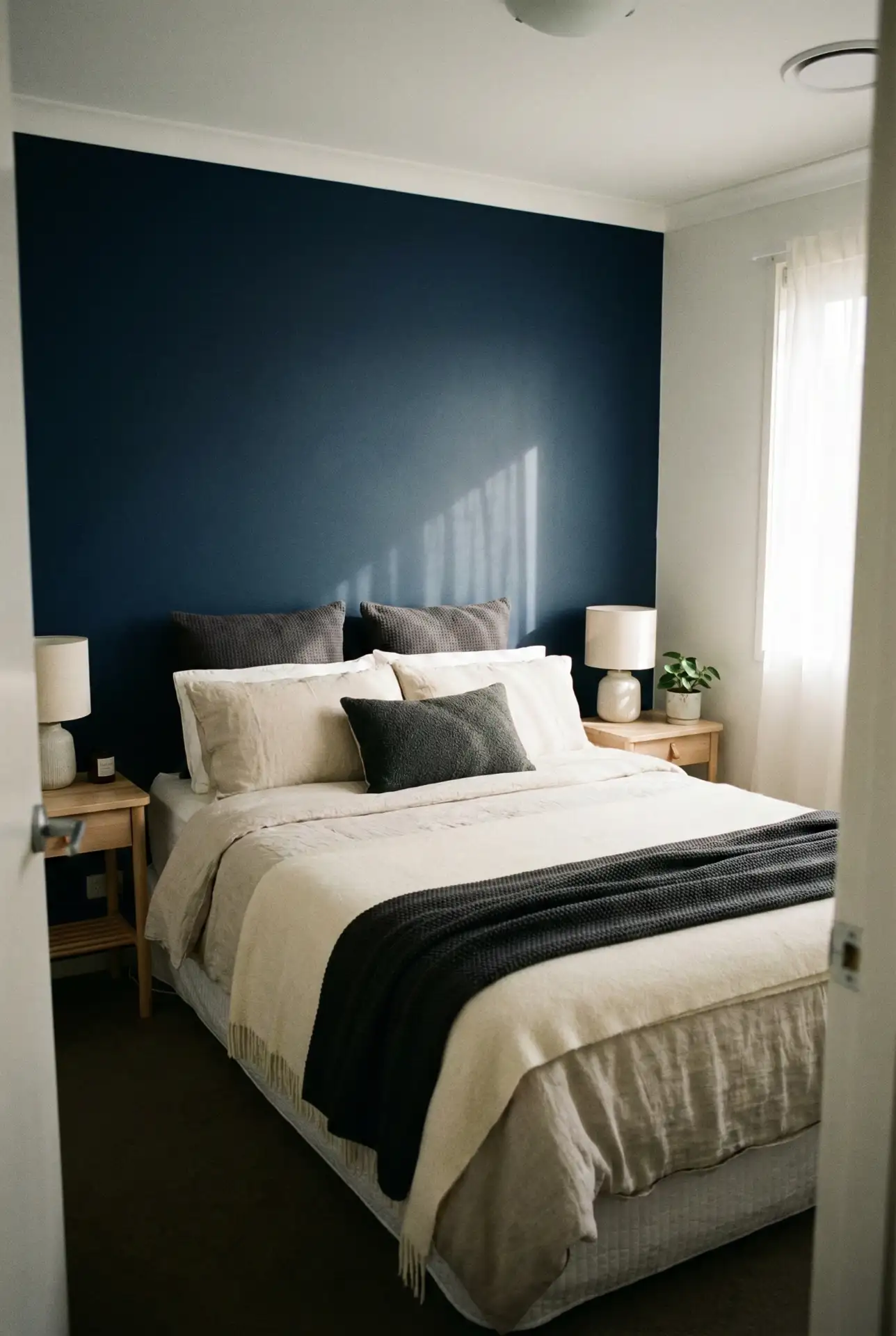
Painting one wall in a deep charcoal, navy, or forest green adds romantic dark drama to a small bedroom without making it feel cramped, especially when paired with lighter furnishings and ample lighting. This cozy design move creates a focal point behind the bed and gives the room a sophisticated, enveloping feel that couples often describe as hotel-like. Balance the darkness with white or cream bedding, light wood accents, and plenty of warm task lighting to keep the space from feeling like a cave. The result is a retreat that feels intimate and luxurious, even in a modest-sized room.
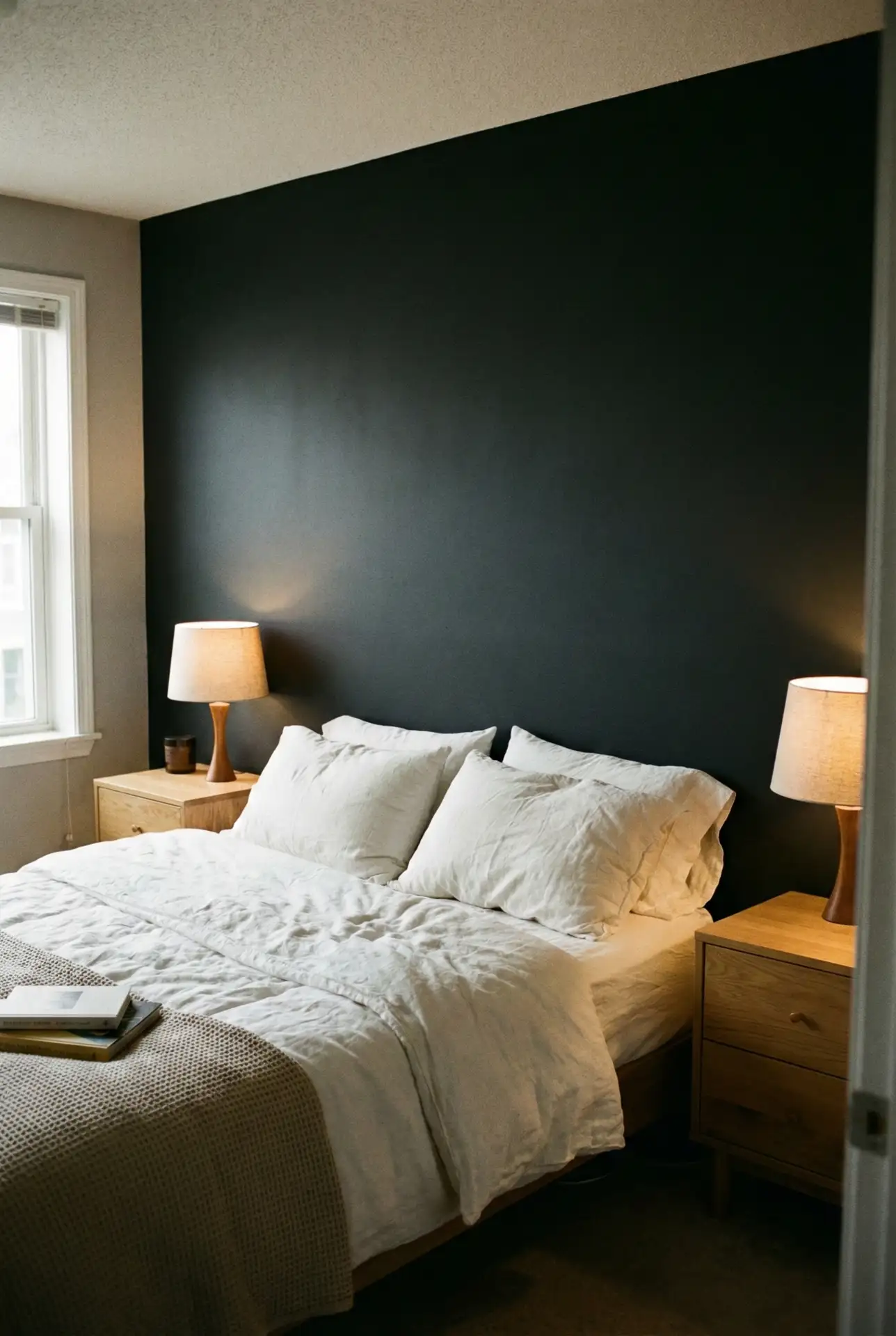
Common mistake: choosing a color that’s too close to black in a room with limited natural light, which can make the space feel oppressive. Test paint samples in different lighting conditions before committing, and consider a satin or eggshell finish to reflect a bit of light. This approach is especially effective in apartments with good window exposure, where the contrast between dark and light creates a dynamic, layered look.
17. Wall-Mounted TV to Free Up Surface Space
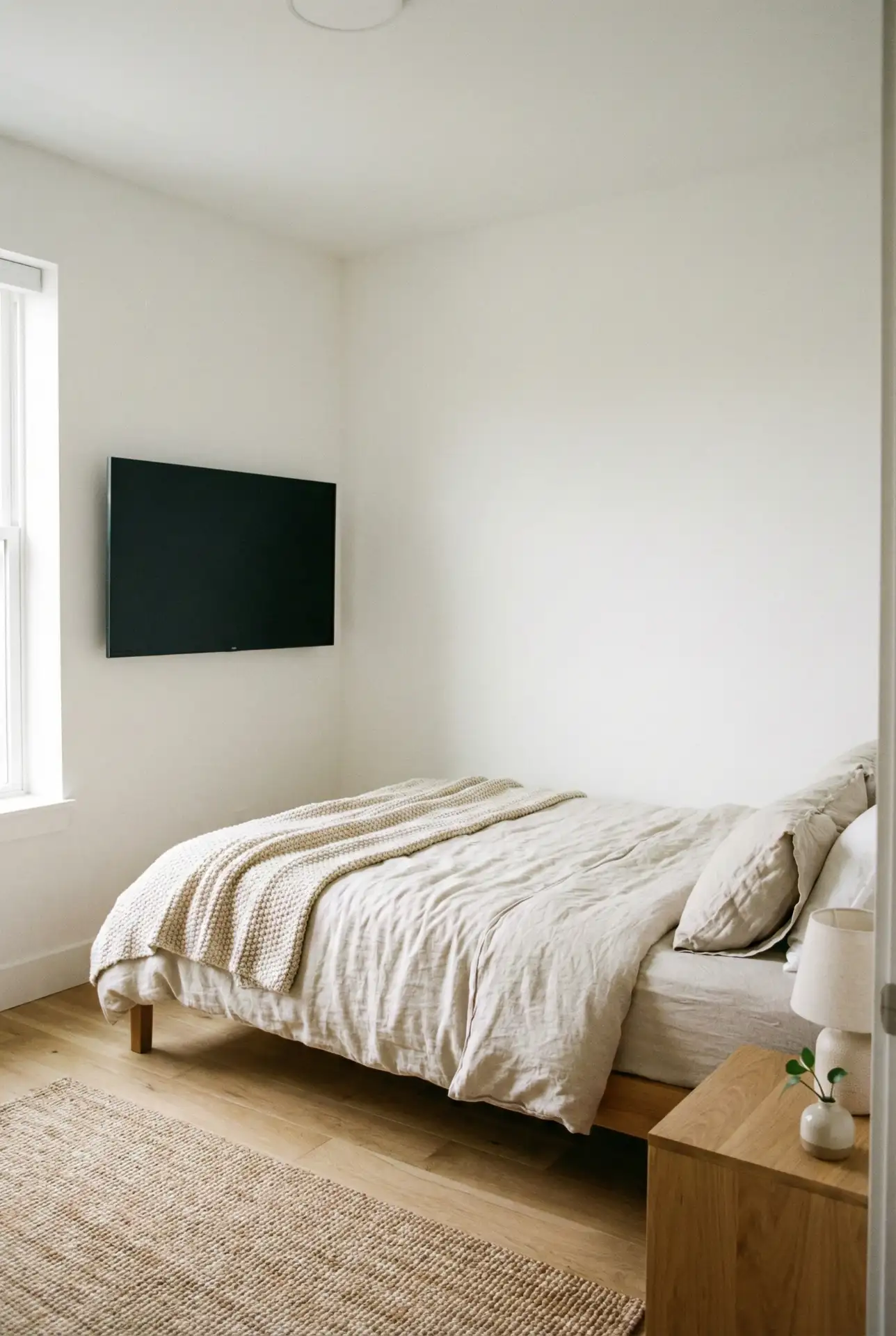
Mounting your TV on the wall eliminates the need for a bulky media console, freeing up floor space and creating a cleaner, more streamlined look in a small bedroom. This modern setup is ideal for couples who want to binge their favorite shows without sacrificing precious square footage, and it keeps cords hidden behind the wall or in cable management sleeves. Position the TV at eye level from the bed for comfortable viewing, and use an articulating mount if you need to angle it for different seating positions. The result is a functional entertainment zone that doesn’t dominate the room.
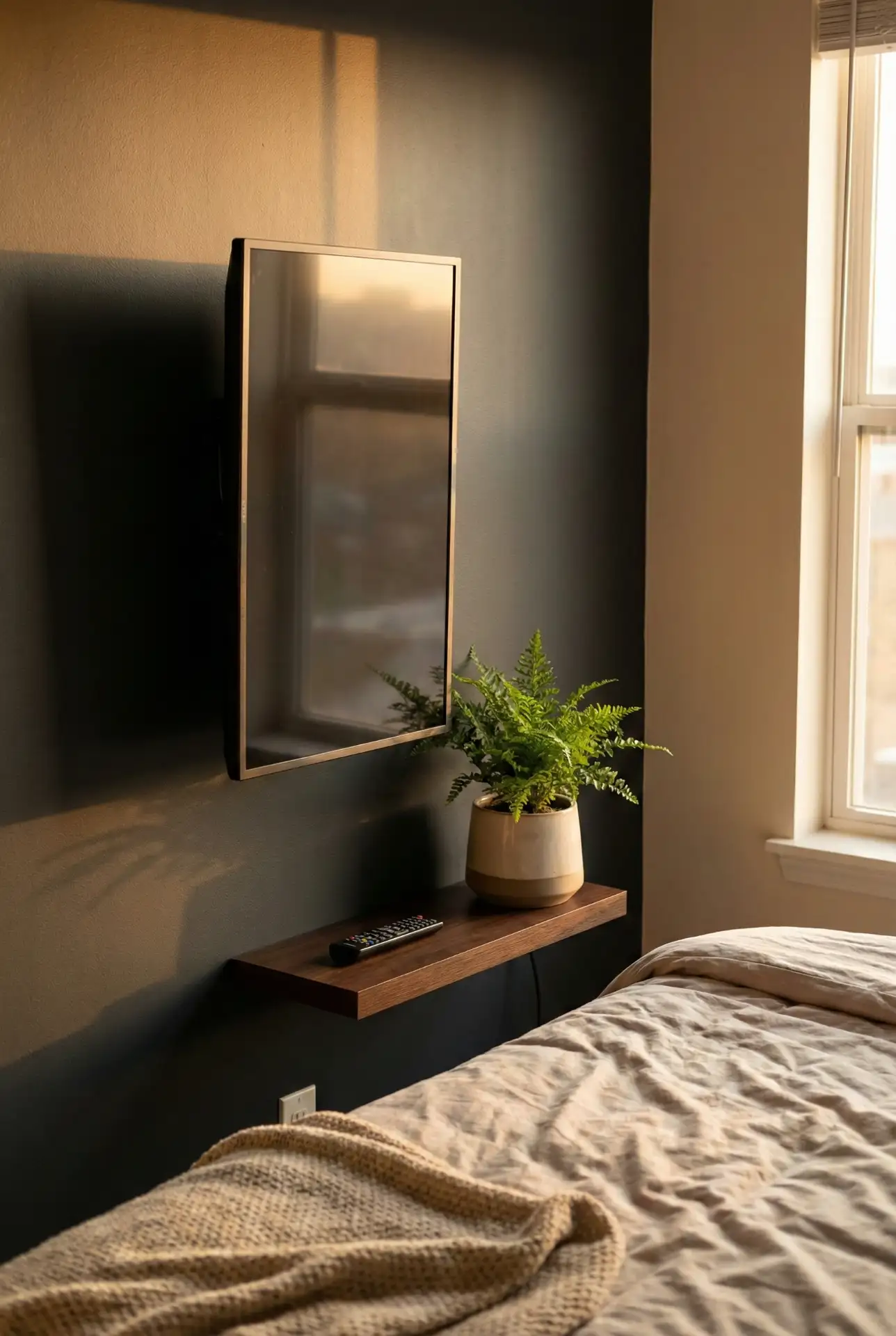
Where it works best: apartments where every piece of furniture needs to justify its footprint, especially in cities where rent is calculated per square foot. Hire a professional if you’re not confident drilling into walls—improper mounting can damage drywall or create a safety hazard. Add a small soundbar on a floating shelf below if you want better audio without adding more floor clutter.
18. Foldable Wardrobe for Extra Closet Space
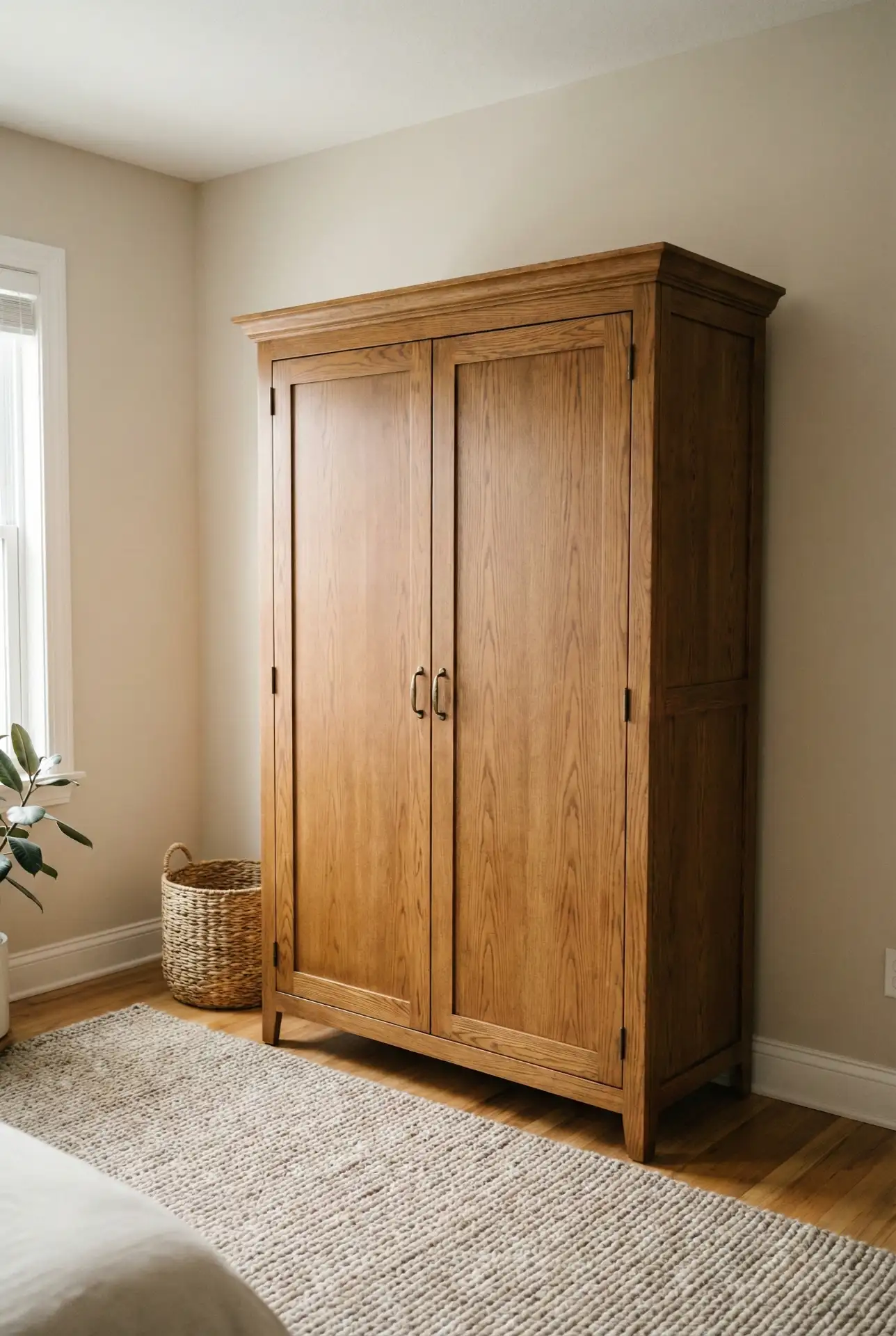
A freestanding wardrobe or armoire gives couples much-needed closet space when the built-in closet is too small, and modern designs fold flat for easy moving. This apartment essential is a lifesaver for older buildings with shallow closets or no closets at all, a common problem in pre-war East Coast units and converted industrial lofts. Choose a style with hanging rods, shelves, and drawers to maximize vertical storage, and pick a finish that complements your existing furniture. The added space lets both partners keep their clothes organized and accessible, reducing morning friction and closet chaos.
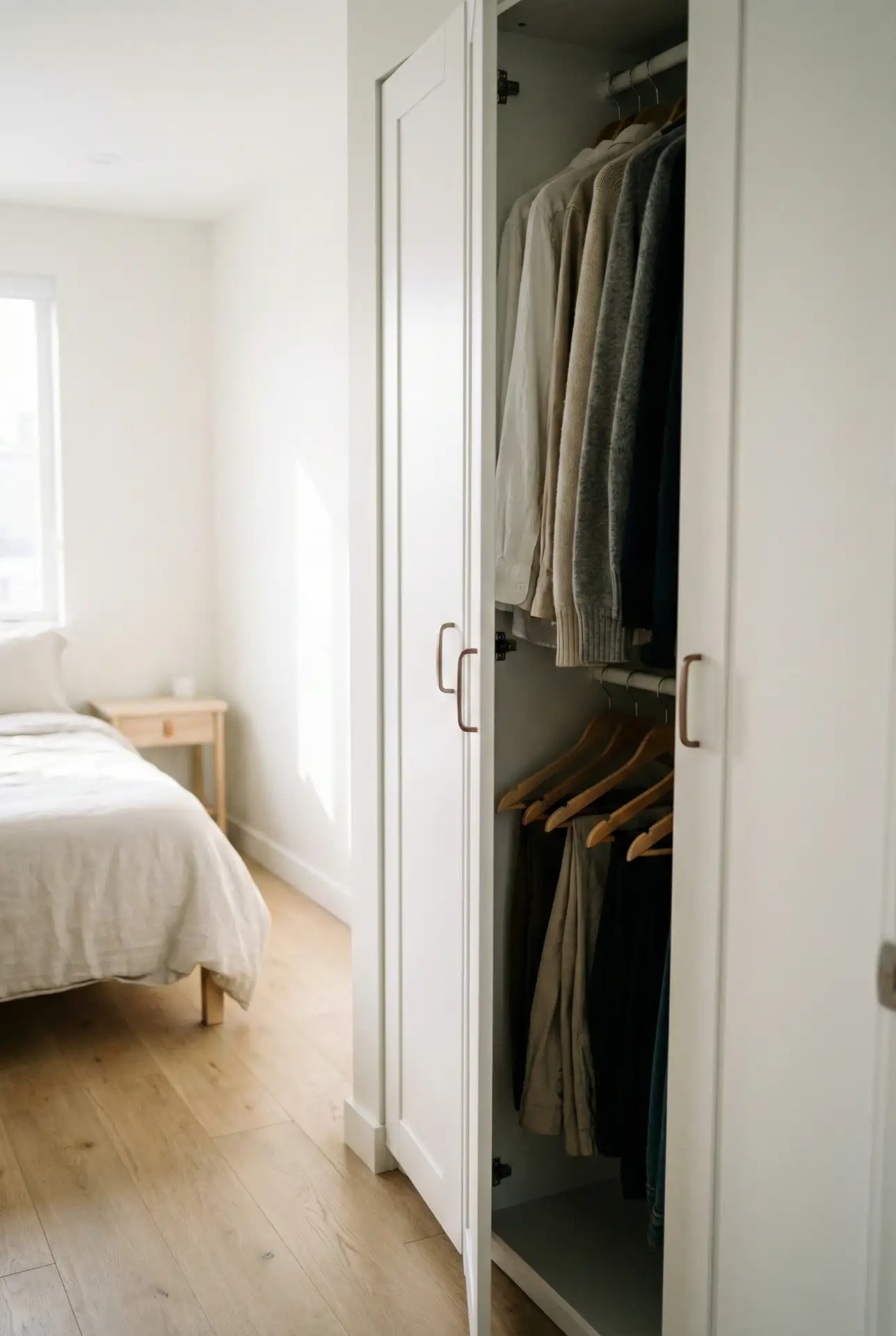
Budget angle: IKEA’s PAX system offers modular wardrobes starting around $300, with add-ons for interior organizers and soft-close doors. Assembly takes a few hours, but the payoff is worth it—you’ll finally have room for both partners’ seasonal wardrobes without resorting to under-bed bins for everything. This piece works especially well in studios and one-bedrooms where closet space is at a premium and flexibility is key.
19. Layered Textiles for Cozy Warmth
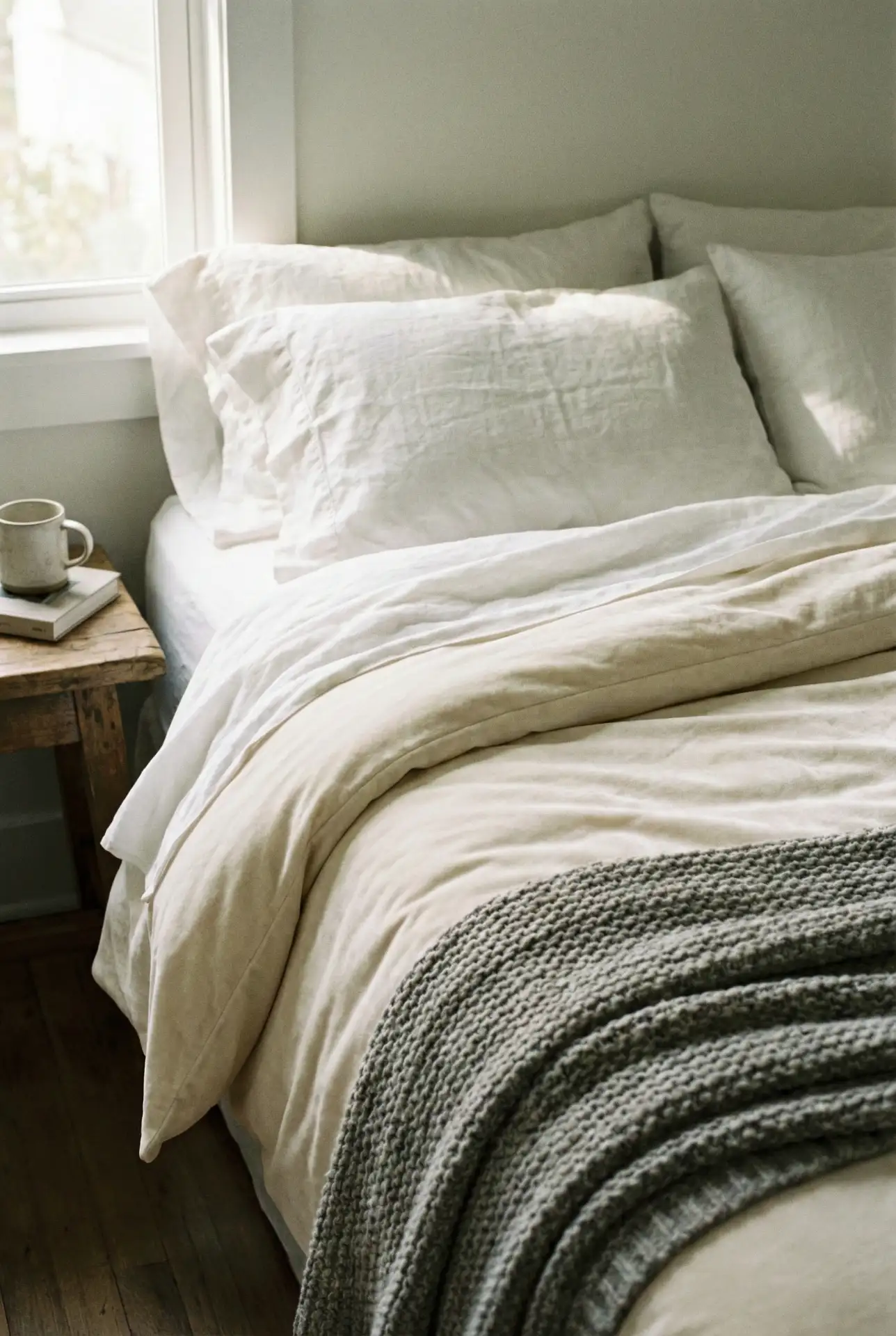
Mixing different textures—linen sheets, a velvet duvet, a chunky knit throw—creates visual interest and a cozy romantic feel that makes a small bedroom feel like a luxury retreat. This simple styling trick costs little but delivers a big impact, and it’s endlessly adaptable as seasons change or tastes evolve. Stick to a consistent color family to keep the layers cohesive, and add a faux fur or woven throw pillow for extra tactile appeal. The result is a bed that invites you in and feels thoughtfully curated, even if you sourced everything on a budget.
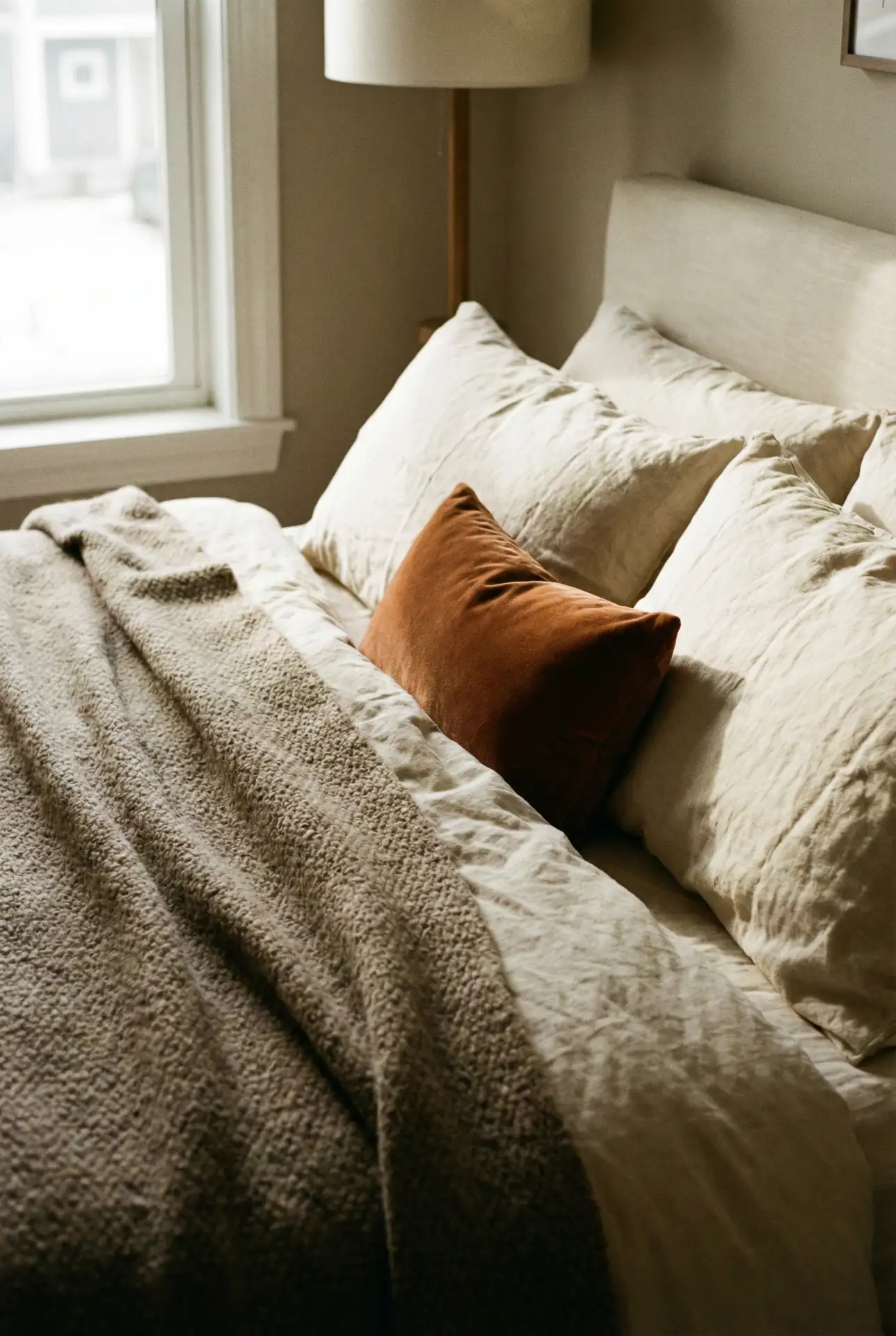
Practical insight: wash your layers regularly to keep them fresh and inviting, and rotate throws seasonally—lighter linens in summer, heavier knits in winter. This approach is especially popular with couples who want a Pinterest-perfect bedroom without spending thousands on furniture. It’s proof that smart styling can transform even the most basic space into something that feels special and personal.
20. Minimalist Headboard to Save Visual Space
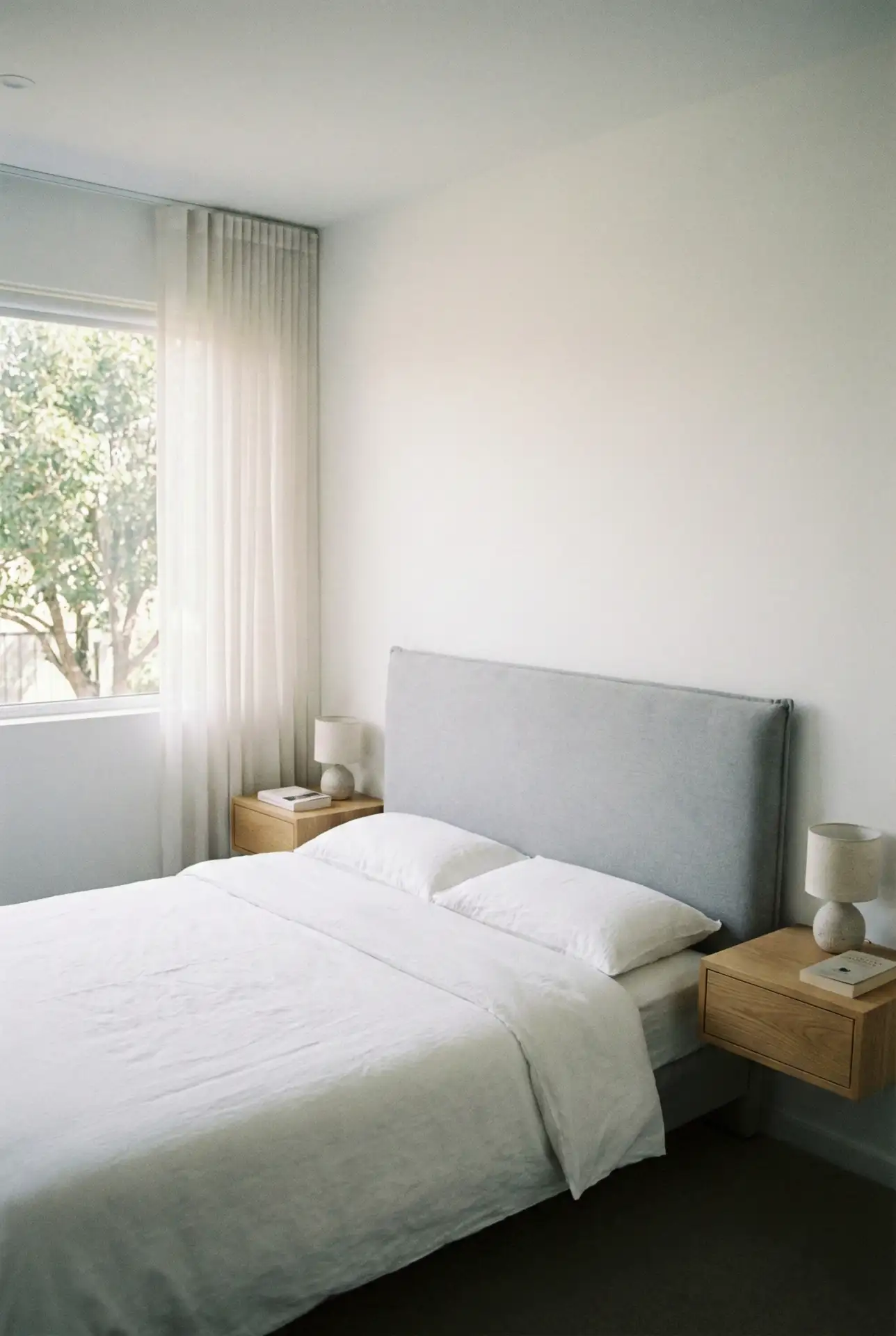
Choosing a low-profile or wall-mounted headboard keeps the bed from overwhelming a small bedroom, maintaining the minimalist aesthetic while still defining the sleeping area. This simple design choice prevents the room from feeling top-heavy, and it works especially well in spaces with king-size bed frames where a tall, ornate headboard would crowd the walls. Opt for a slim upholstered panel, a floating wood plank, or even a painted accent stripe if you want to skip the headboard entirely. The goal is to keep the focus on the bed itself, not on bulky furniture that eats up visual breathing room.
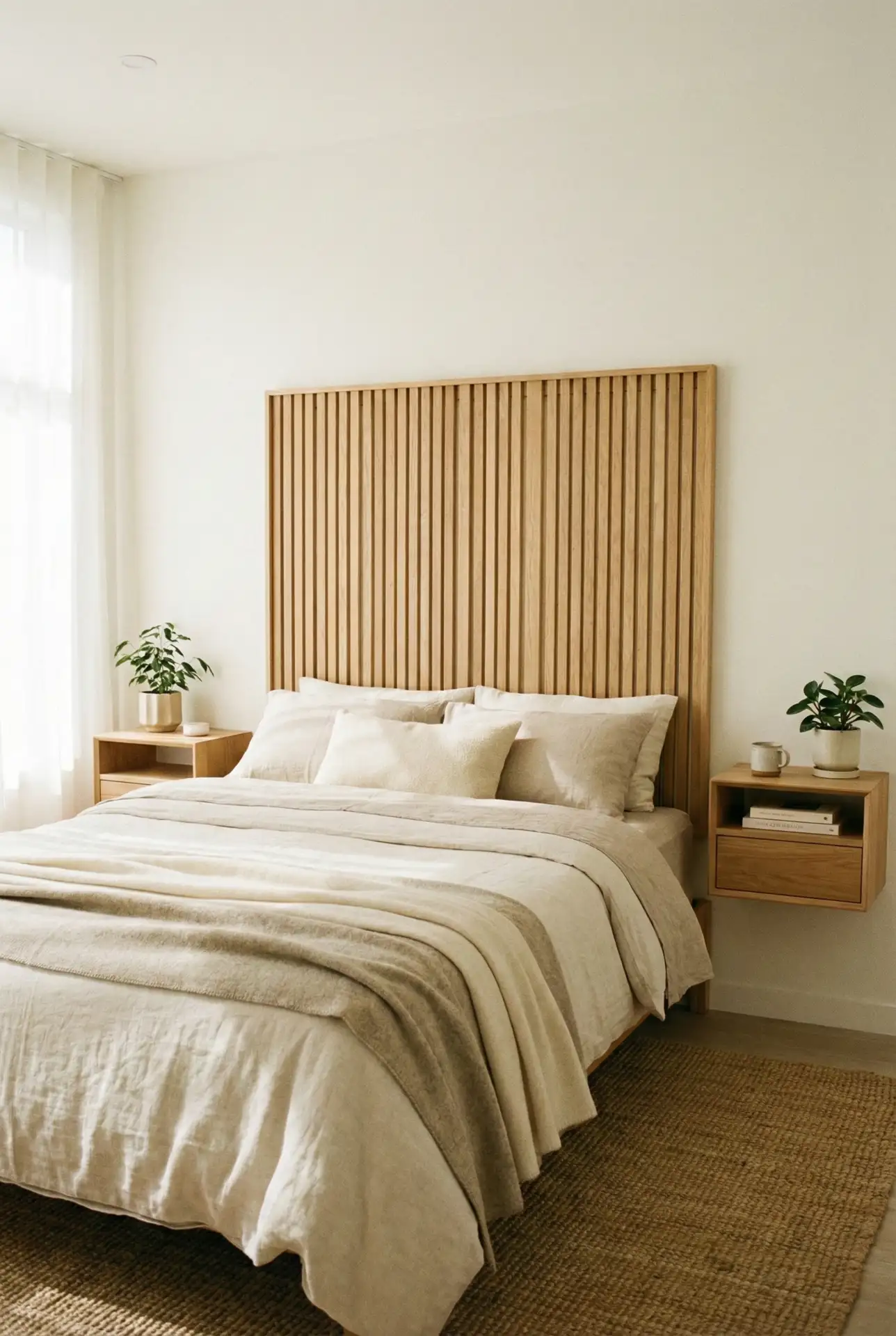
Expert commentary: Interior designers often recommend keeping headboard height at or below 48 inches in rooms with standard eight-foot ceilings to maintain proper proportions. If you’re DIYing a headboard, use lightweight materials and mount securely to prevent accidents. This subtle detail makes a measurable difference in how spacious and balanced your bedroom feels, proving that less is often more when square footage is limited.
21. Nursery Nook for Baby-Friendly Couples
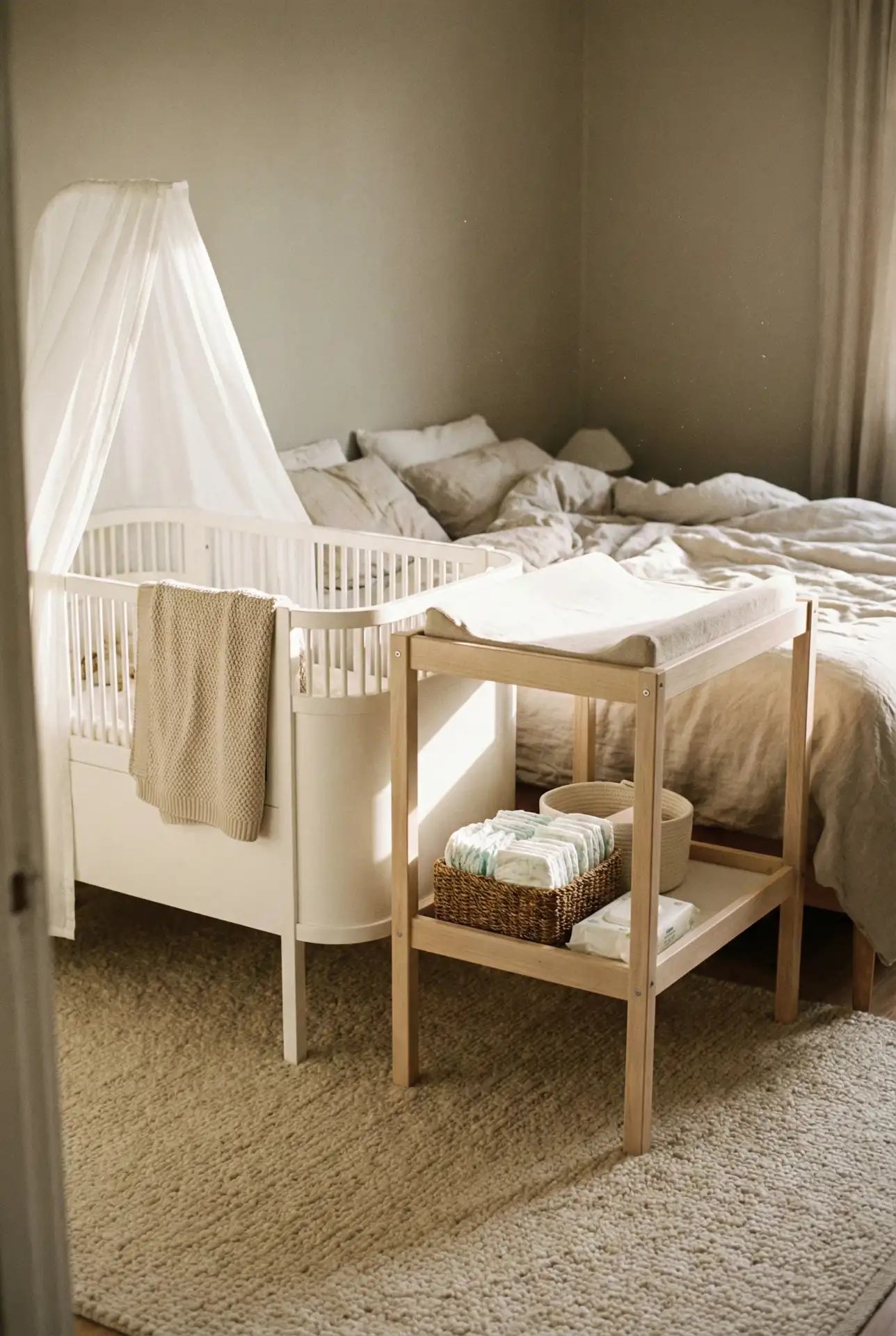
Carving out a small corner for a bassinet, changing caddy, and a few baby essentials lets couples share a small bedroom with a newborn without overhauling the entire space. This layout is common in urban apartment settings where a dedicated nursery isn’t an option, and it keeps nighttime feedings and diaper changes within arm’s reach. Use a room divider, curtain, or open shelving unit to visually separate the baby zone from the sleeping area, and stick to neutral, calming colors that work for both adults and infants. Add soft lighting and a small basket for diapers and wipes, and you’ve created a functional nursery nook that doesn’t sacrifice the room’s adult identity.
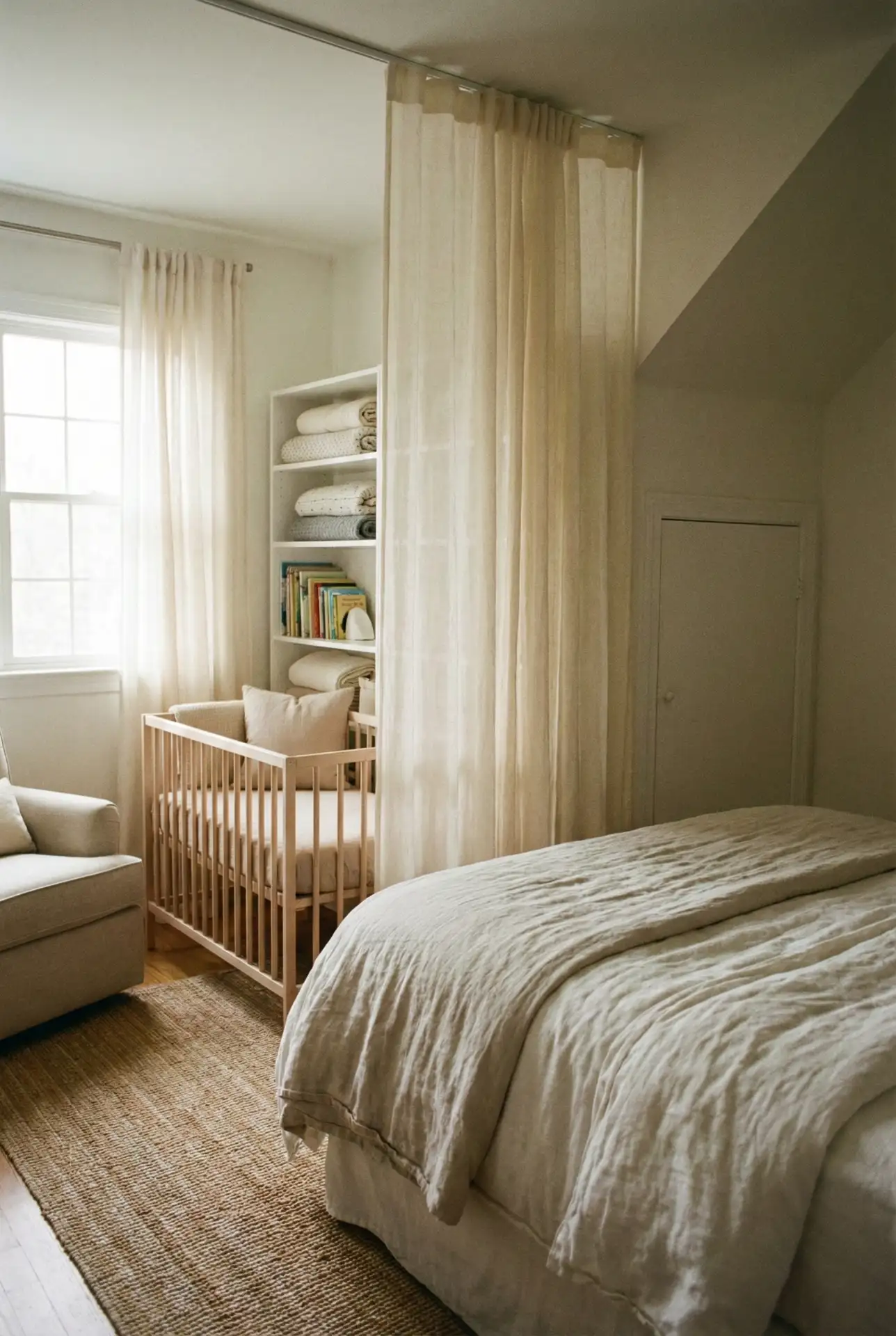
Real homeowner behavior: most couples find that room-sharing works best for the first few months, then transition the baby to a separate space once sleep schedules stabilize. Keep the nook minimal and avoid overbuying baby furniture—a bassinet, changing pad, and small dresser are often enough. This approach is especially practical for couples in cities like New York, San Francisco, or Chicago, where nursery-sized bedrooms are rare and expensive.
22. Affordable IKEA Furniture for Budget-Conscious Couples
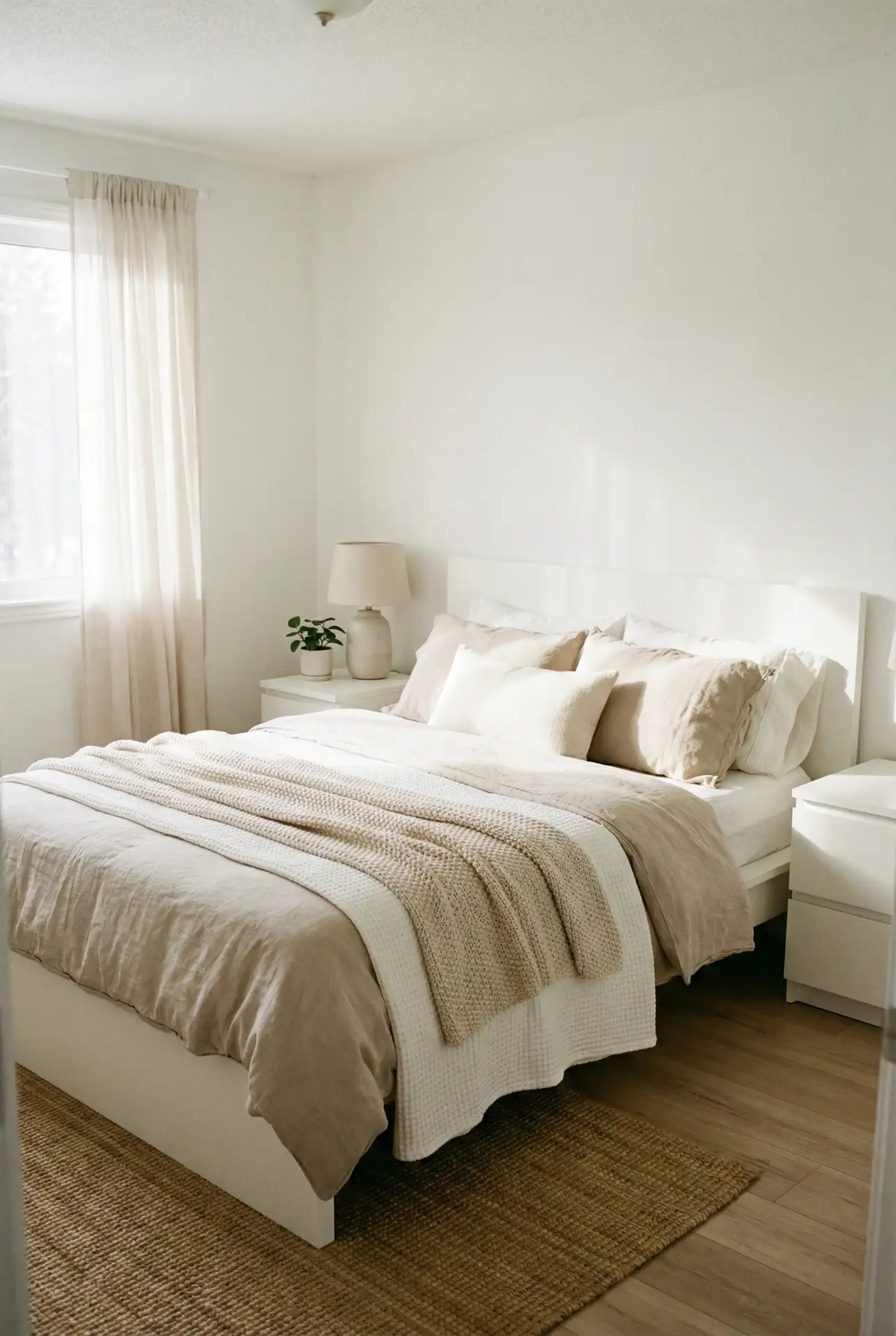
Outfitting a small bedroom with IKEA staples like the MALM bed frame, HEMNES dresser, or KALLAX shelving keeps costs low while delivering solid quality and smart storage solutions. This budget strategy is a rite of passage for couples furnishing their first shared space, and IKEA’s modular systems let you customize as your needs grow. Mix and match pieces in white, black-brown, or natural wood finishes to create a cohesive look, and add personal touches through bedding, art, and plants to avoid the flat-pack showroom vibe. The result is a functional, stylish bedroom that doesn’t drain your savings account.
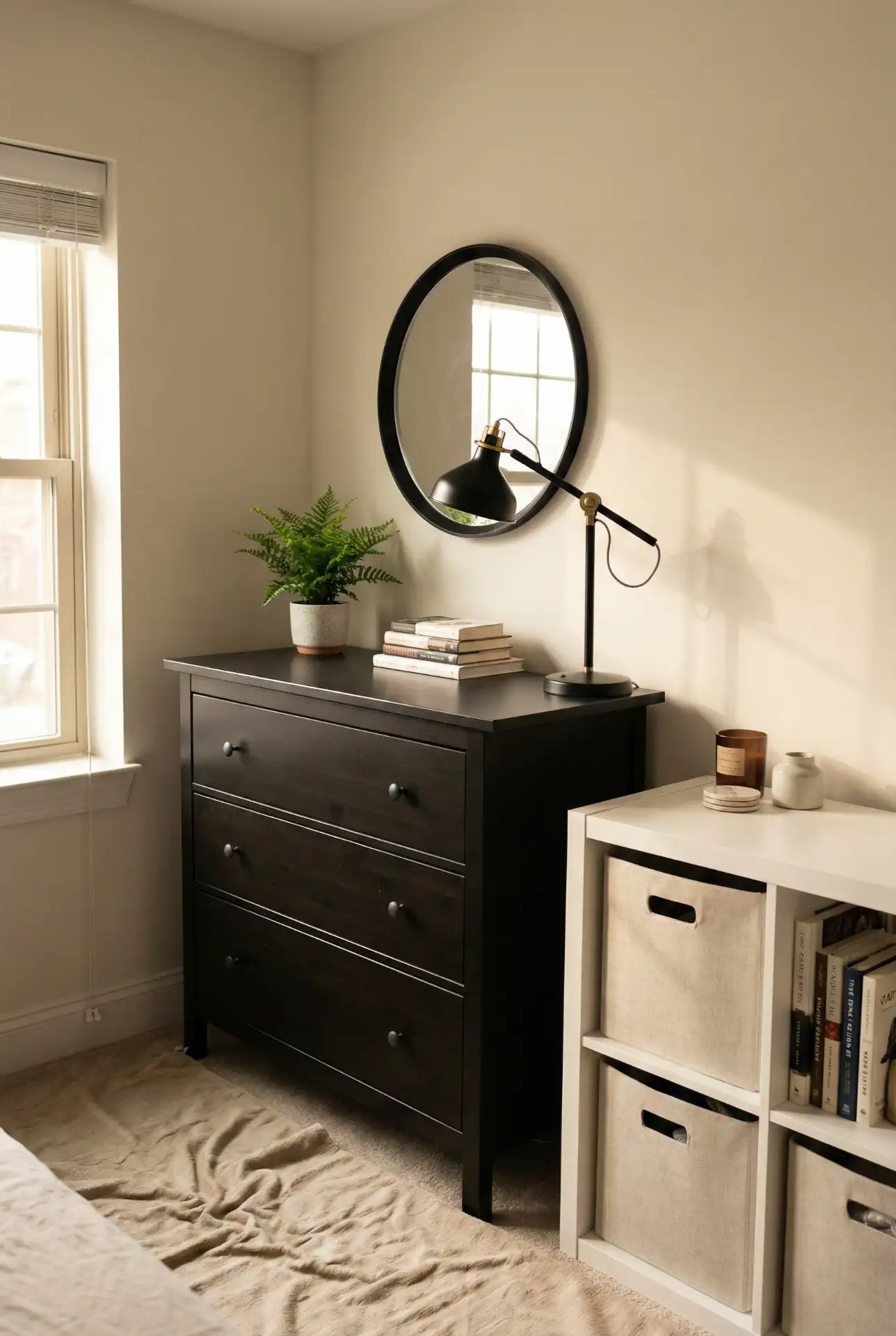
Price angle: furnishing a complete small bedroom with IKEA essentials can cost under $1,000 if you shop strategically and assemble yourself. Set aside a weekend for assembly, follow the instructions carefully, and don’t skimp on the wall anchors for taller pieces. This approach is especially popular with young couples, grad students, and anyone moving to a new city who needs to outfit a space quickly and affordably without sacrificing style or function.
Conclusion
Small bedrooms for couples are all about smart choices—using vertical space, embracing multipurpose furniture, and curating a look that feels calm and cohesive. Whether you’re drawn to dark, moody walls or light, minimalist vibes, these ideas prove that limited square footage doesn’t mean limited style. What tricks have worked in your own small bedroom? Drop your best tips and favorite finds in the comments below—we’d love to hear what’s making your space work.