Pool landscaping is evolving rapidly as American homeowners reimagine their backyards as year-round retreats. Whether you’re drawn to the sleek minimalism of modern design or the lush escape of tropical plantings, 2026 brings fresh ideas that blend beauty with function. From compact plunge pools in urban yards to sprawling desert oases in the Southwest, Pinterest users are searching for inspiration that fits their climate, budget, and lifestyle. This collection showcases distinctive approaches to pool landscaping—each designed to transform your outdoor space into a personal paradise. You’ll discover smart plant choices, innovative hardscaping, and design strategies that work for inground, above ground, and stock tank pools alike.
1. Desert Minimalist Inground Oasis
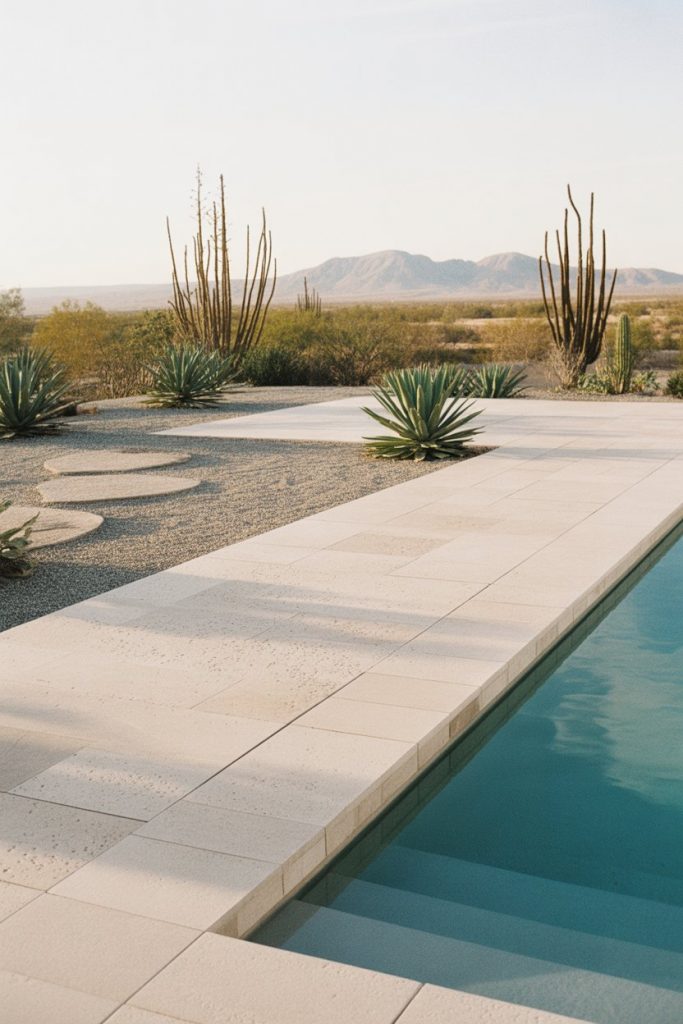
A desert pool landscape strips away excess to celebrate the raw beauty of arid climates. Imagine clean lines, pale travertine coping, and a handful of carefully placed agave and ocotillo creating dramatic silhouettes against cloudless skies. This inground approach works brilliantly across Arizona, Nevada, and Southern California, where water-wise design isn’t just aesthetic—it’s essential. The palette stays neutral with sandy beiges, charcoal grays, and rust-colored accents from decomposed granite pathways. Surrounding plants require minimal irrigation once established, letting you enjoy a stunning poolside without guilt or constant maintenance. 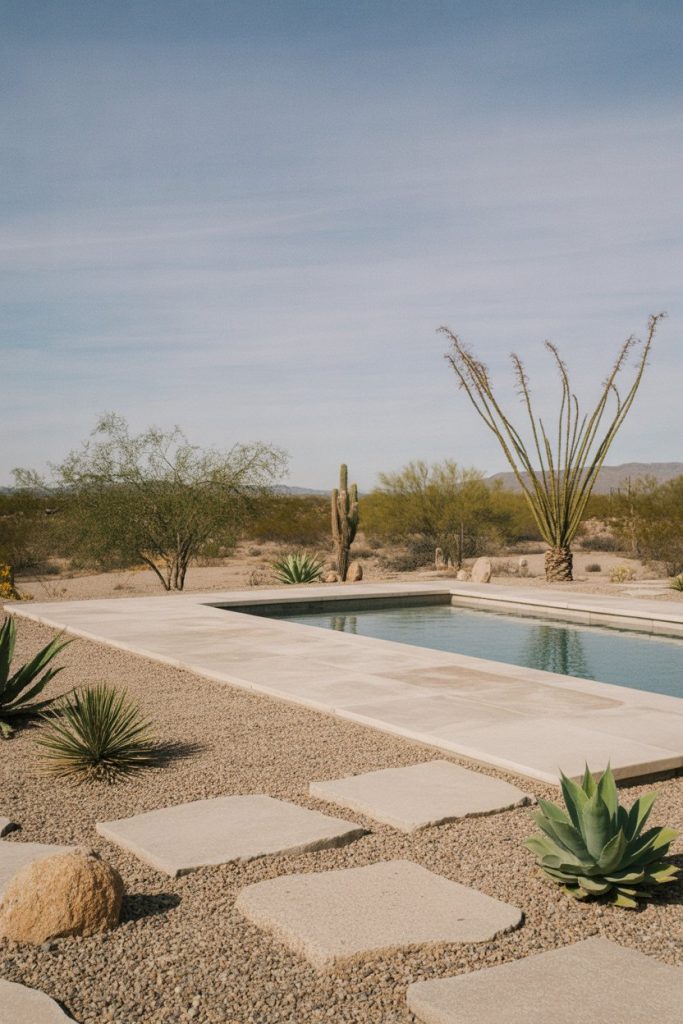
Desert pool landscapes work best when you resist the urge to over-plant. Many homeowners make the mistake of adding too much greenery, which fights against the natural environment and drives up water bills. Instead, choose three to five statement plants—perhaps a towering saguaro, a cluster of barrel cacti, and some low-growing desert marigolds for seasonal color. The negative space between plants becomes part of the design, emphasizing the pool as the cool, blue centerpiece of an otherwise sun-baked environment. This restraint creates visual drama that feels both modern and timeless.
2. Tropical Backyard Jungle Pool
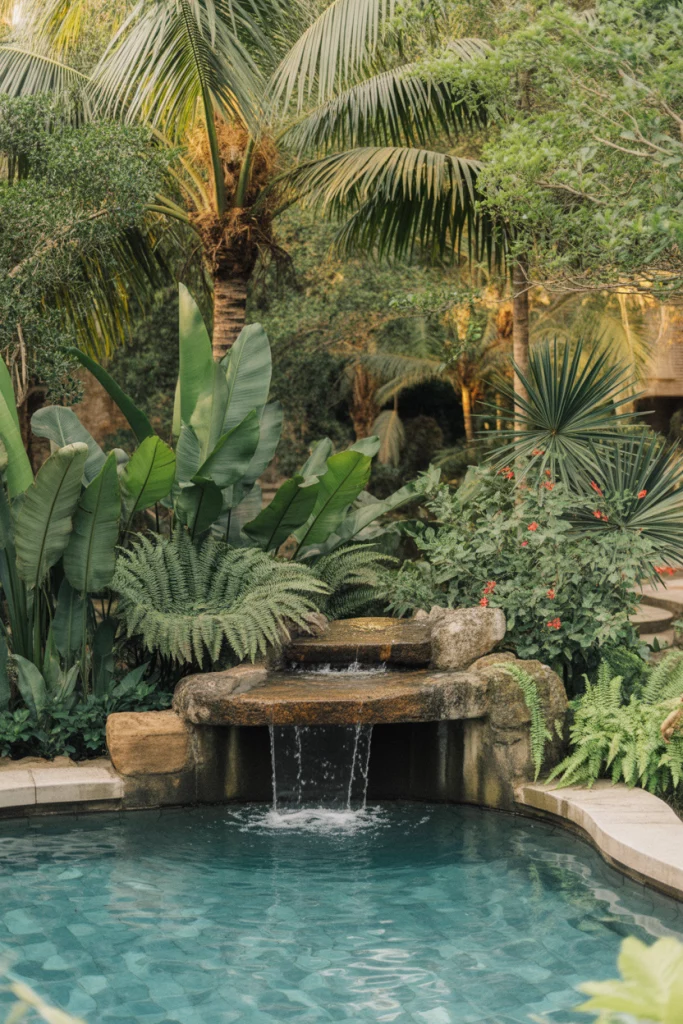
Transform your backyard into a verdant escape with a tropical pool landscape that layers palms, ferns, and flowering gingers around the water’s edge. This style thrives in humid climates like Florida, coastal Georgia, and southern Texas, where plants grow enthusiastically with little coaxing. The design philosophy centers on abundance—think dense canopies overhead, bold leaf textures at eye level, and cascading groundcovers softening hardscape edges. Water features like naturalistic rock waterfalls or bamboo spouts amplify the jungle atmosphere, while string lights woven through tree branches create magical evening ambiance. 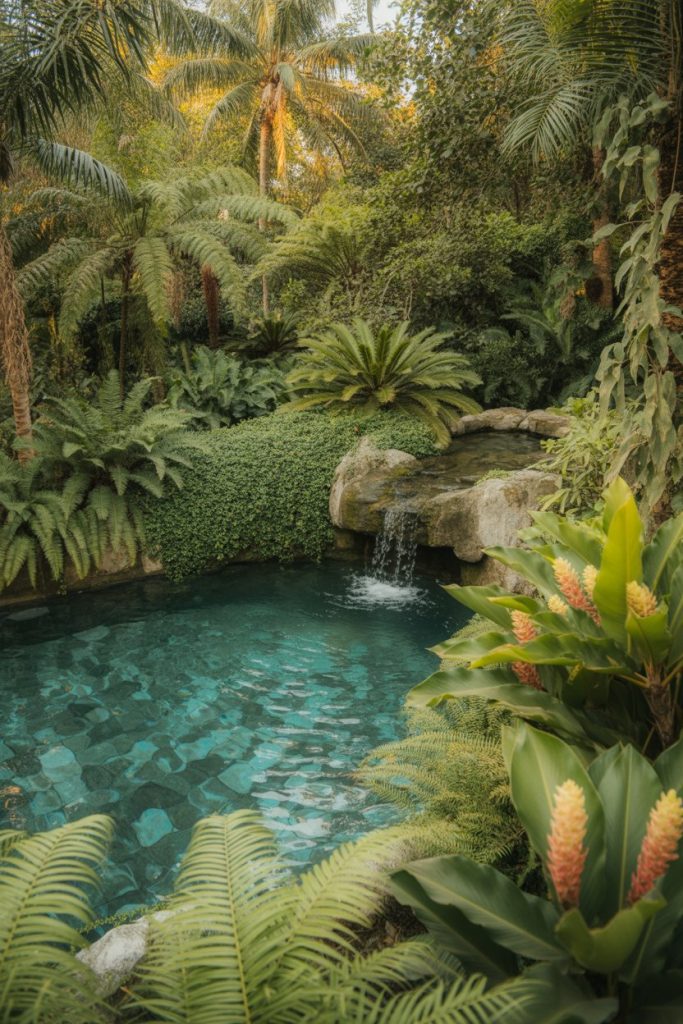
Budget-conscious homeowners can achieve this look gradually by starting with fast-growing species like elephant ears, cannas, and ornamental bananas—often available for under twenty dollars per plant at local nurseries. These fill in gaps quickly while slower-growing palms and tree ferns establish their root systems. A common mistake is planting too close to the pool deck, which leads to constant leaf debris in the water. Leave at least three feet between large-leafed plants and the pool edge, using lower ferns and bromeliads in that buffer zone to maintain the lush aesthetic without creating maintenance headaches.
3. Australian Coastal Pool Retreat
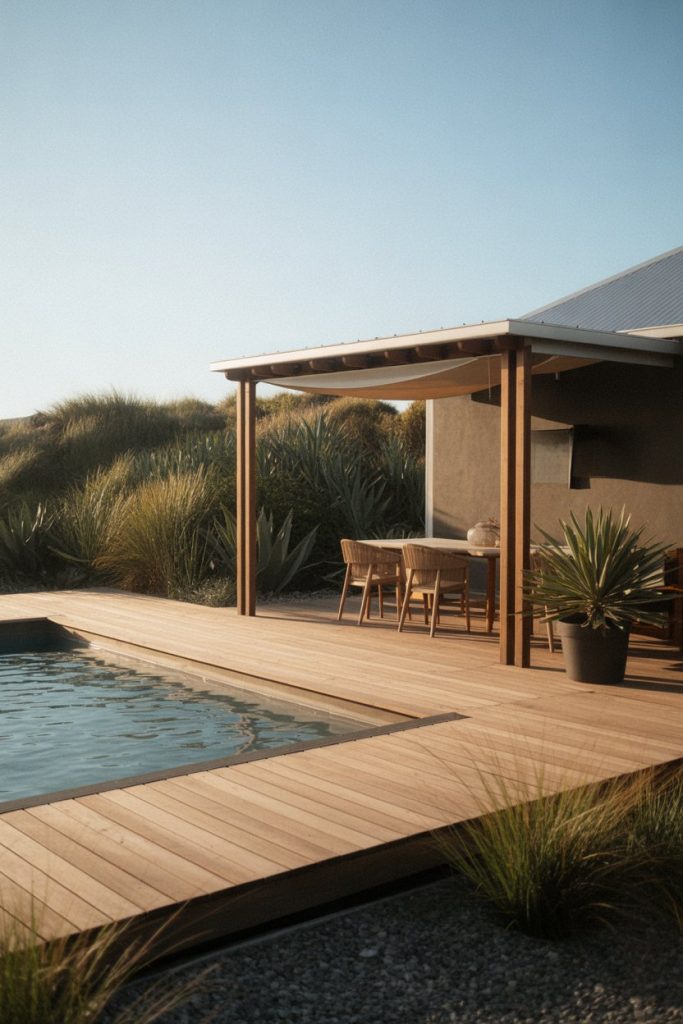
An Australian-inspired pool landscape brings the relaxed sophistication of coastal living to American backyards, particularly those near beaches or in temperate climates. This approach favors native grasses, coastal banksias, and silver-leafed plants that tolerate salt spray and sandy soil. The ground treatment often features natural timber decking in warm honey tones, contrasting beautifully with the pool’s blue water. Simple furniture in weather-resistant teak or powder-coated aluminum keeps the vibe effortless, while a pergola with retractable shade cloth offers flexibility for sun or shelter. The overall effect feels perpetually vacation-ready without appearing overly designed. 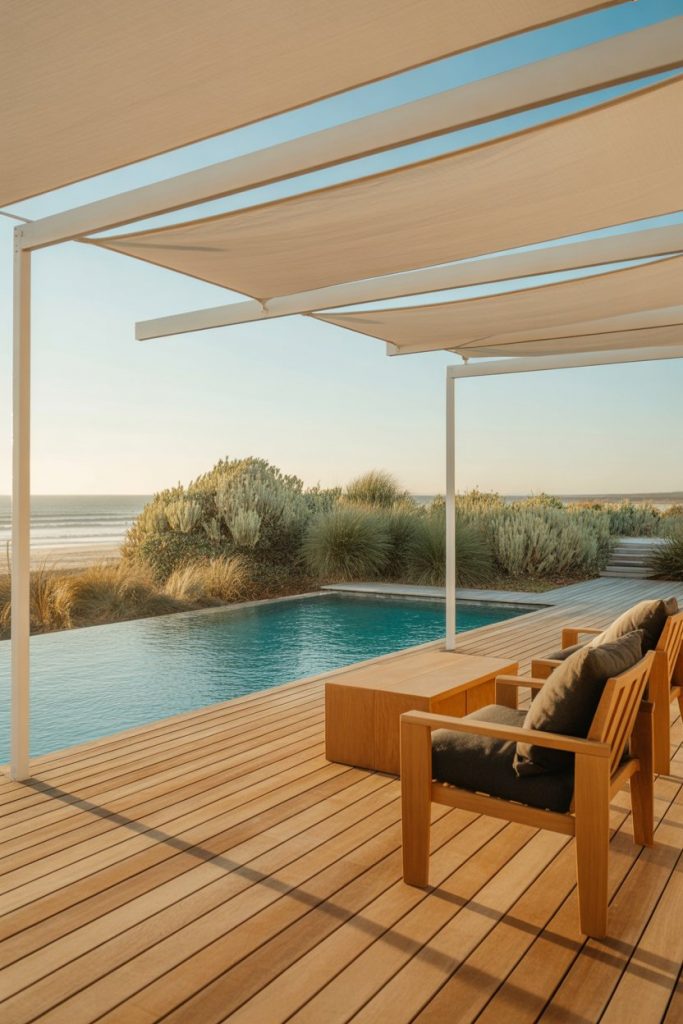
This style works exceptionally well in California, the Carolinas, and the Gulf Coast, where the climate supports Mediterranean and Australian natives. Homeowners often underestimate how quickly coastal grasses like lomandra and dianella spread, creating a naturalized look within a single growing season. Position these grasses in sweeping drifts rather than rigid rows—it mimics how they grow in nature and softens the pool’s geometric edges. The timber decking requires annual oiling to maintain its color, but many find this ritual meditative, and the resulting patina only improves with age.
4. Modern Rectangle Pool with Linear Planting
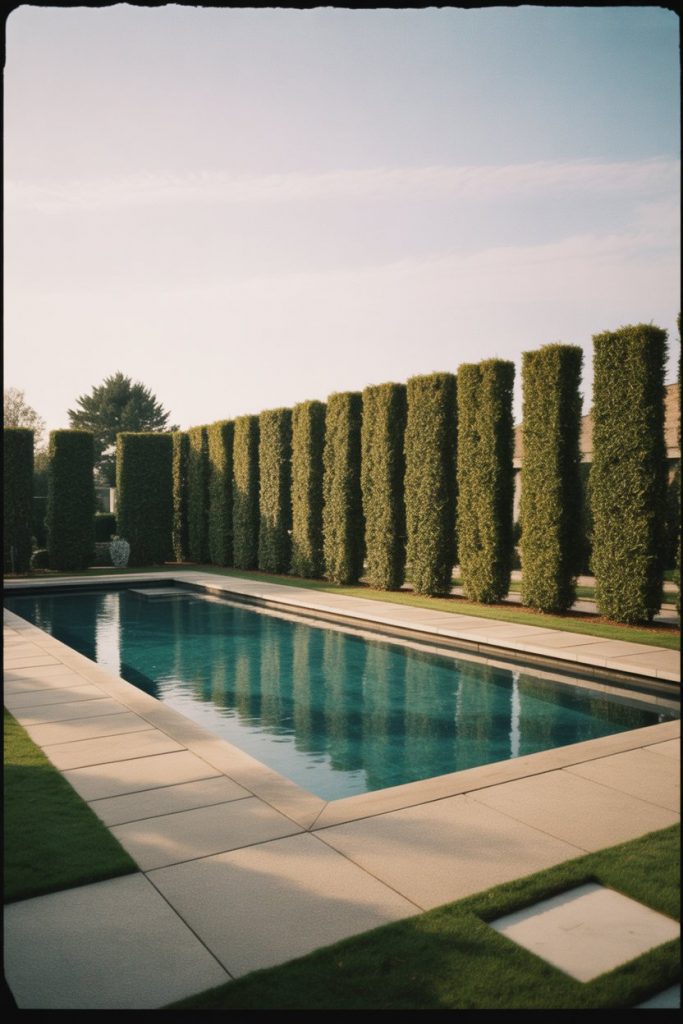
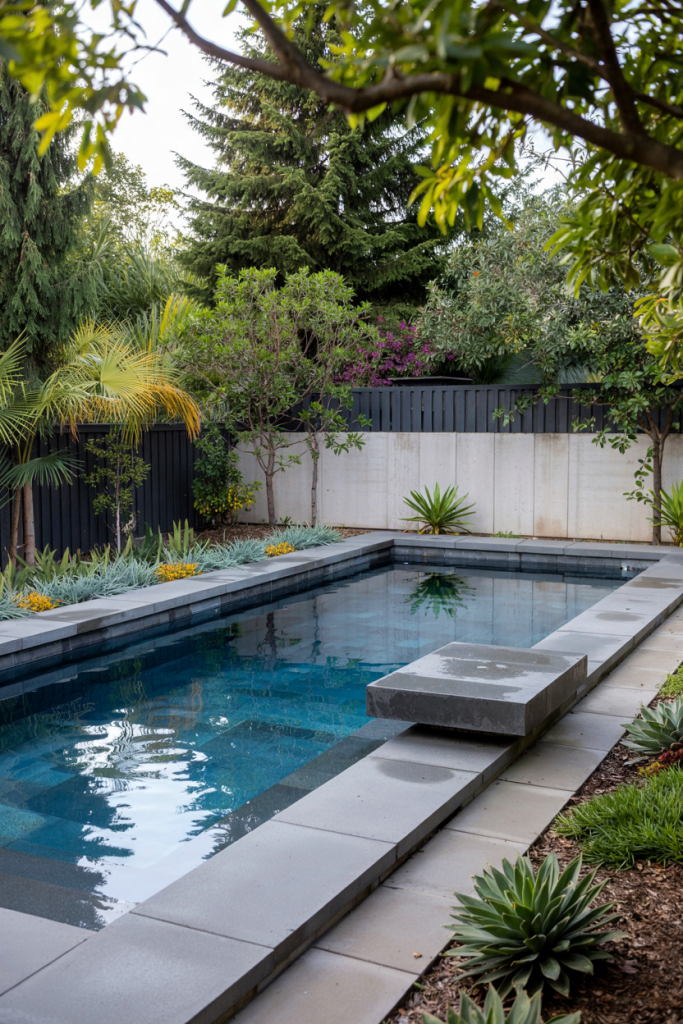
The classic rectangle pool gets a contemporary update through disciplined planting and architectural precision. This design typically features a long, narrow pool flanked by symmetrical hedges or repeating ornamental grasses, creating a strong visual axis. Inground installation with a vanishing edge or flush deck enhances the modern aesthetic, making the pool appear to float within the landscape. Materials stay minimal—perhaps concrete pavers in large format, steel planters holding specimen olive trees, and LED strip lighting that outlines the pool’s geometry after dark. The result feels gallery-like, where water becomes a reflective art piece. 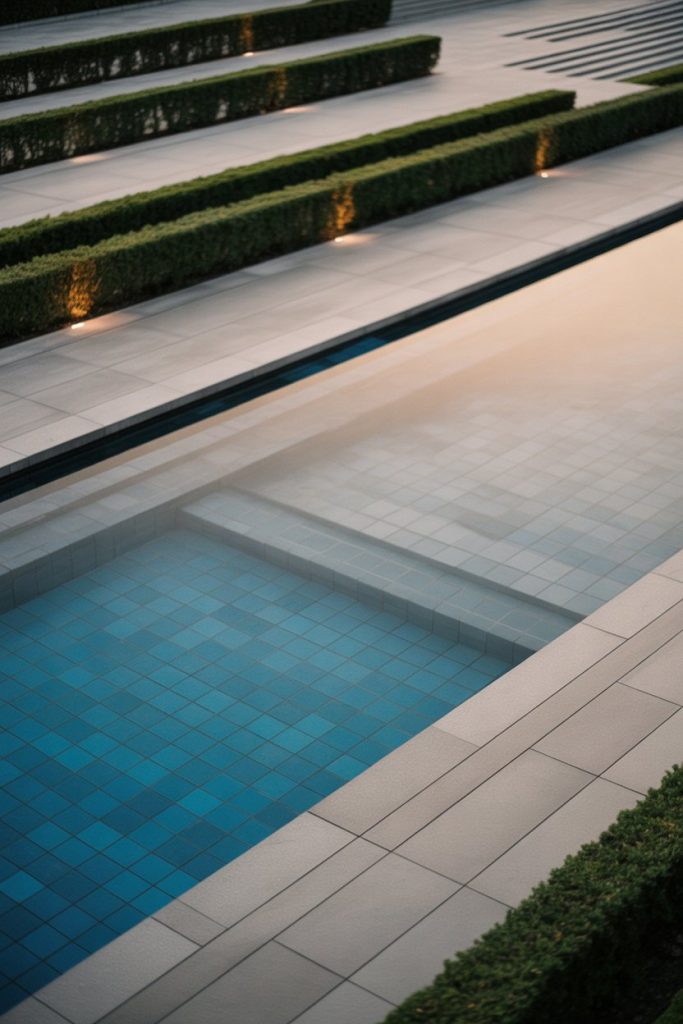
A designer friend once shared that clients initially worry this style feels too stark, but the symmetry actually brings calm to busy lives. The limited plant palette—maybe just boxwood hedges and a single grass variety—means less decision fatigue and easier maintenance. Where it works best is in narrow urban lots where the linear design maximizes swim length within tight property lines. The key is committing fully to the geometry; a single off-center element or curved planting bed will undermine the entire effect. Embrace the discipline, and you’ll create a pool landscape that photographs like a design magazine cover.
5. Country Farmhouse Stock Tank Pool
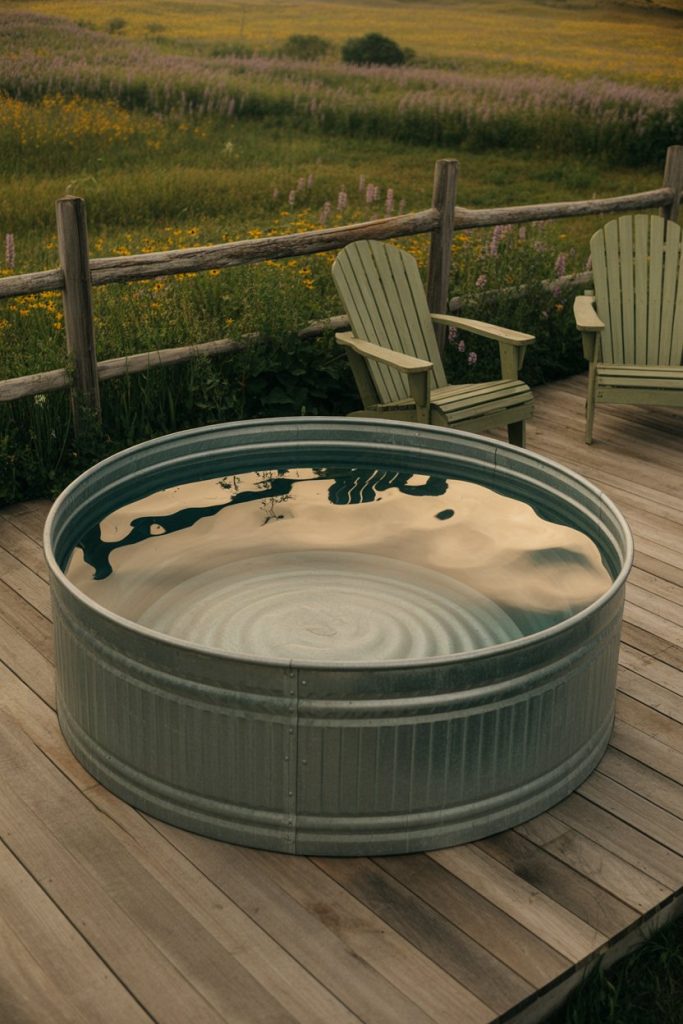
The humble stock tank pool has become a beloved feature in country landscapes, offering an affordable and charmingly rustic alternative to traditional pools. These galvanized metal tubs, originally designed for livestock watering, now anchor backyard gathering spaces surrounded by wildflower meadows and weathered wooden fencing. The simple setup typically includes a basic filtration system, some deck boards for easy entry, and Adirondack chairs positioned for sunset viewing. Plants stay naturalistic—native grasses, black-eyed Susans, and maybe a sprawling rosemary bush that releases fragrance when brushed against. The whole scene feels like a secret swimming hole discovered on a long country drive. 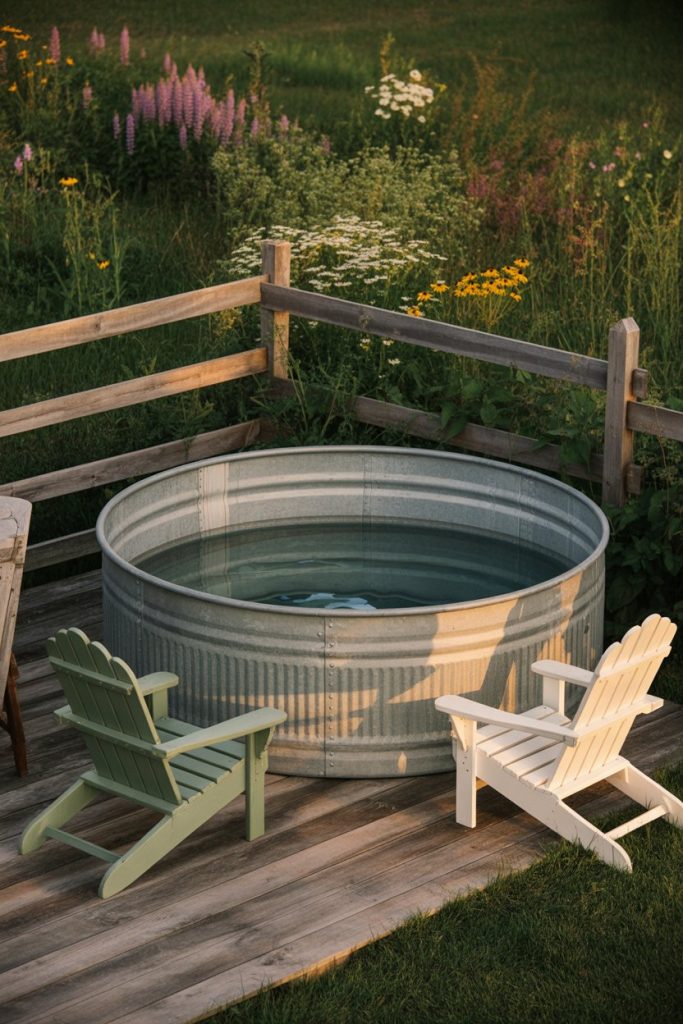
Real homeowners in Texas, Tennessee, and rural California have embraced stock tank pools because they cost between $700 and $2,000 total—a fraction of traditional pool installation. The tanks arrive ready to use once you add a simple pump and filter system, which DIY enthusiasts can set up in a weekend. The most common mistake is skipping proper leveling; even a slight tilt means water won’t sit evenly and can strain the tank’s structure. Use a laser level and a layer of decomposed granite or sand to create a perfectly flat base, and your stock tank pool will provide years of summer relief with minimal investment.
6. Mediterranean Kidney Pool with Terracotta Accents
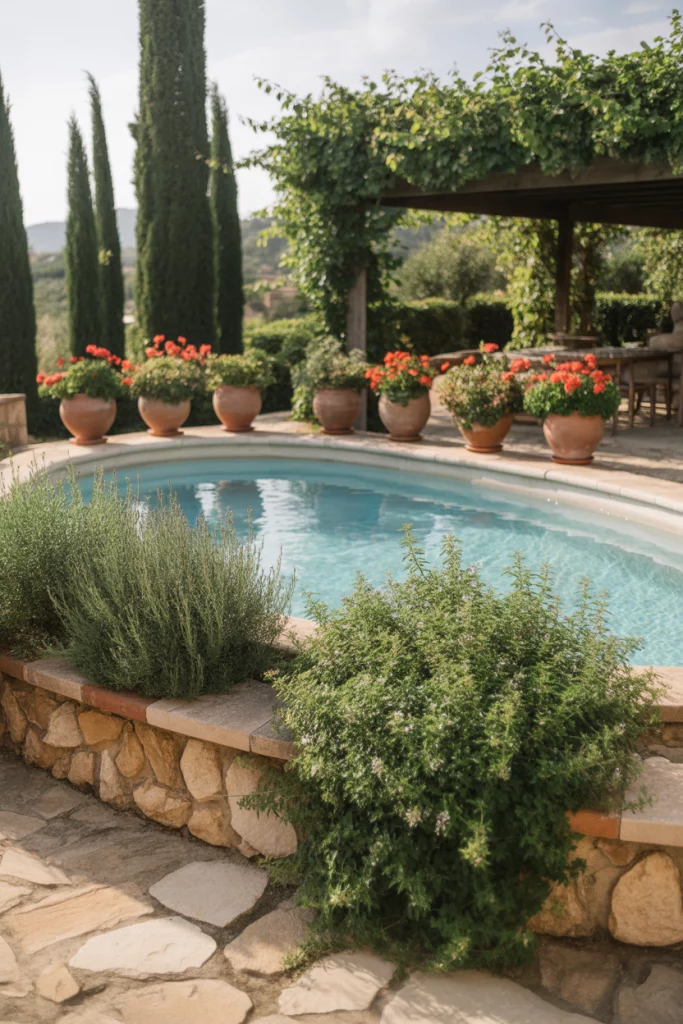
A kidney-shaped pool surrounded by Mediterranean plantings brings old-world romance to American backyards, particularly in regions with hot, dry summers. Imagine curved pool edges softened by trailing rosemary and lavender, terracotta pots overflowing with geraniums, and a pergola draped in grapevines providing dappled shade. The ground treatment often includes tumbled travertine pavers with wide joints planted with creeping thyme, releasing a herbal scent underfoot. Cypress trees punctuate the corners, adding vertical drama and providing year-round structure. This approach channels the relaxed elegance of Italian villa gardens without requiring a passport. 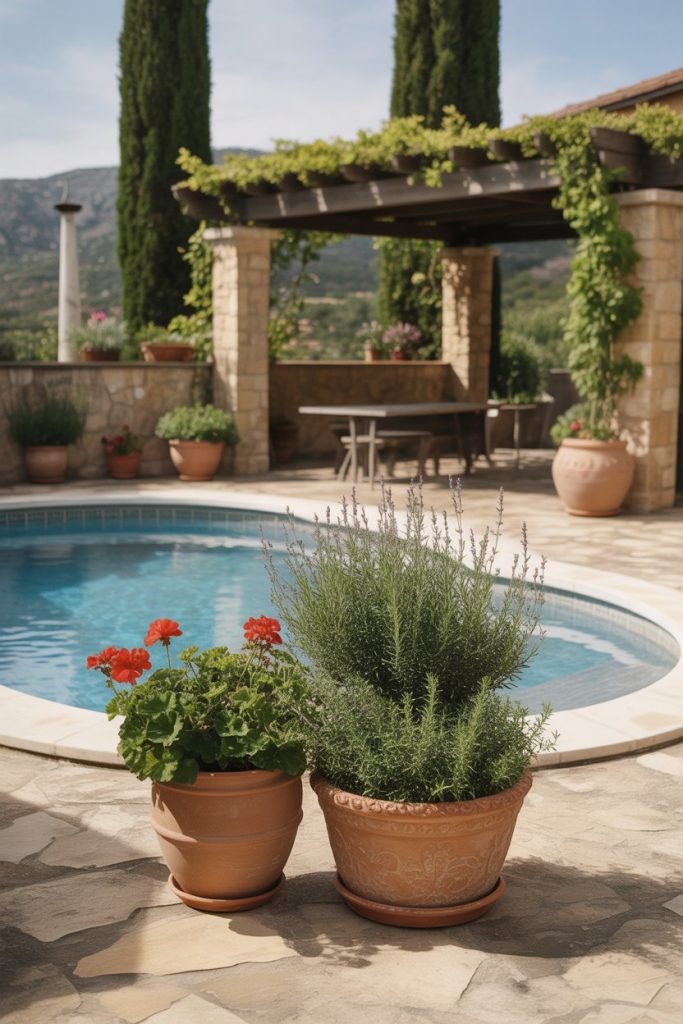
This style thrives in California, parts of Texas, and the Southwest, where the climate naturally supports drought-tolerant Mediterranean plants. The kidney shape, popular in mid-century design, offers more interesting sight lines than a rectangle while still providing ample swimming space. Expert landscapers recommend grouping terracotta pots in odd numbers—three, five, or seven—and varying their sizes to create visual rhythm. The herbs not only look beautiful but also serve practical purposes; snip fresh rosemary for grilling or lavender for indoor arrangements. It’s landscaping that engages all the senses while staying relatively low-maintenance once established.
7. Small Backyard Plunge Pool Sanctuary
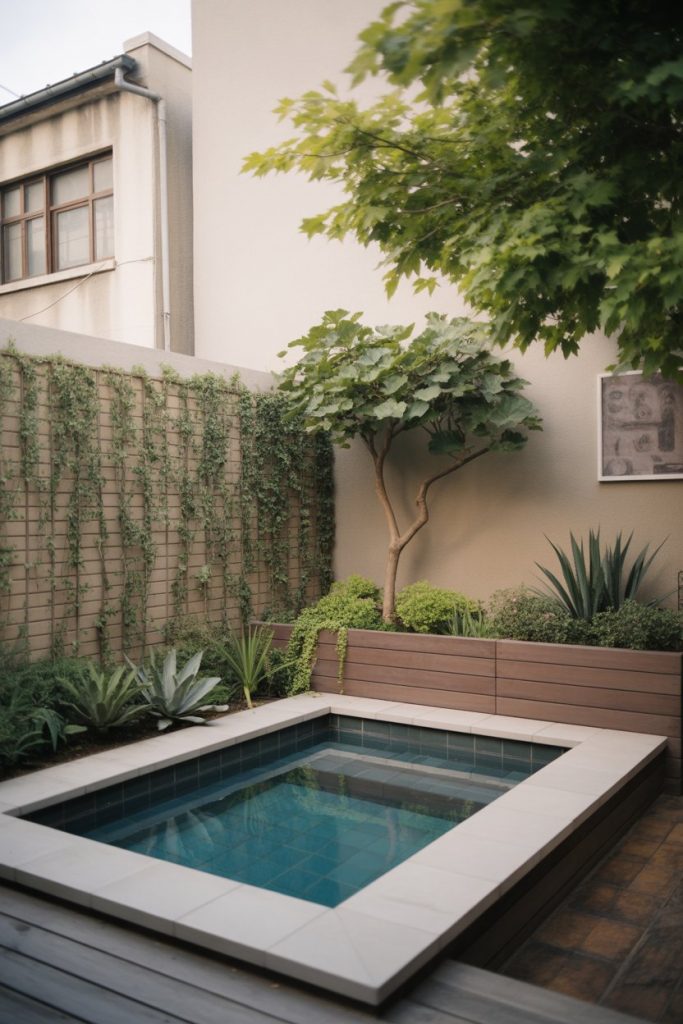
When space is limited, a plunge pool offers a refreshing solution that doesn’t sacrifice style or function. These compact pools, typically eight to twelve feet long, fit beautifully in small backyard settings where a full-size pool would overwhelm the space. The design strategy focuses on creating an intimate retreat through vertical gardening—think espaliered fig trees against fences, stacked planters with cascading ferns, and a single statement tree like a Japanese maple providing overhead interest. Built-in bench seating within the pool maximizes the limited footprint while offering a spot to lounge in waist-deep water. The surrounding deck stays minimal, perhaps just three feet wide, making every square foot count. 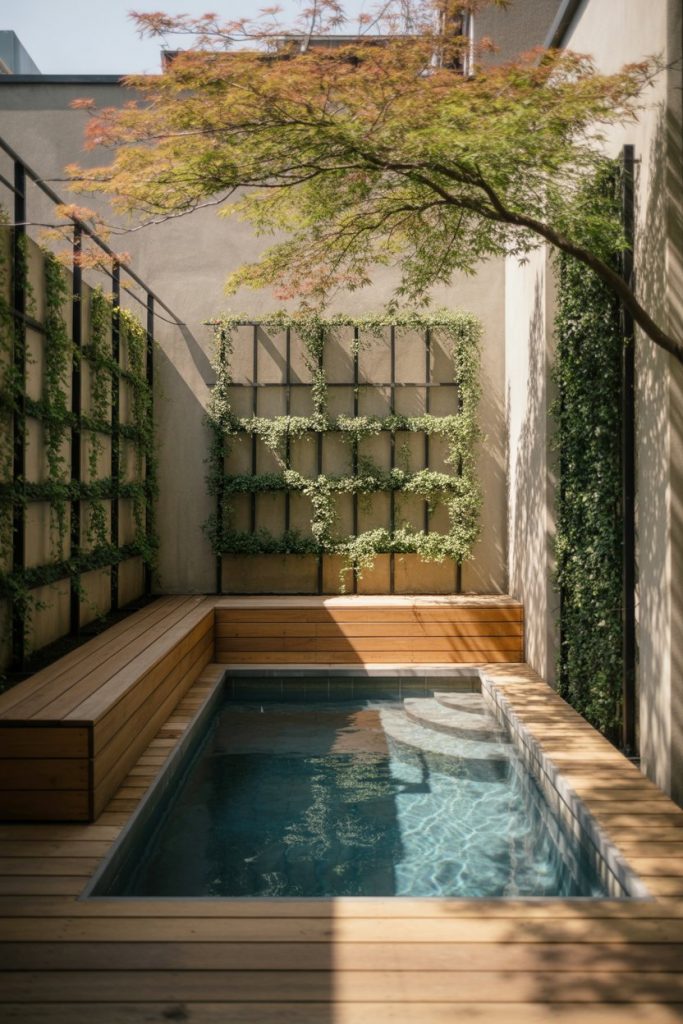
Plunge pools work brilliantly in urban neighborhoods from Brooklyn to San Francisco, where lot sizes hover around 1,200 square feet total. The key practical insight is that these pools require less chemical maintenance and heating costs than traditional pools, making them surprisingly economical over time. Water volume stays low—around 2,000 gallons compared to 20,000 for a standard pool—which means faster heating and fewer chemicals. Many owners add a spa jet system for hydrotherapy, transforming the plunge pool into a year-round wellness feature rather than just a summer amenity.
8. Above Ground Pool with Deck Surround
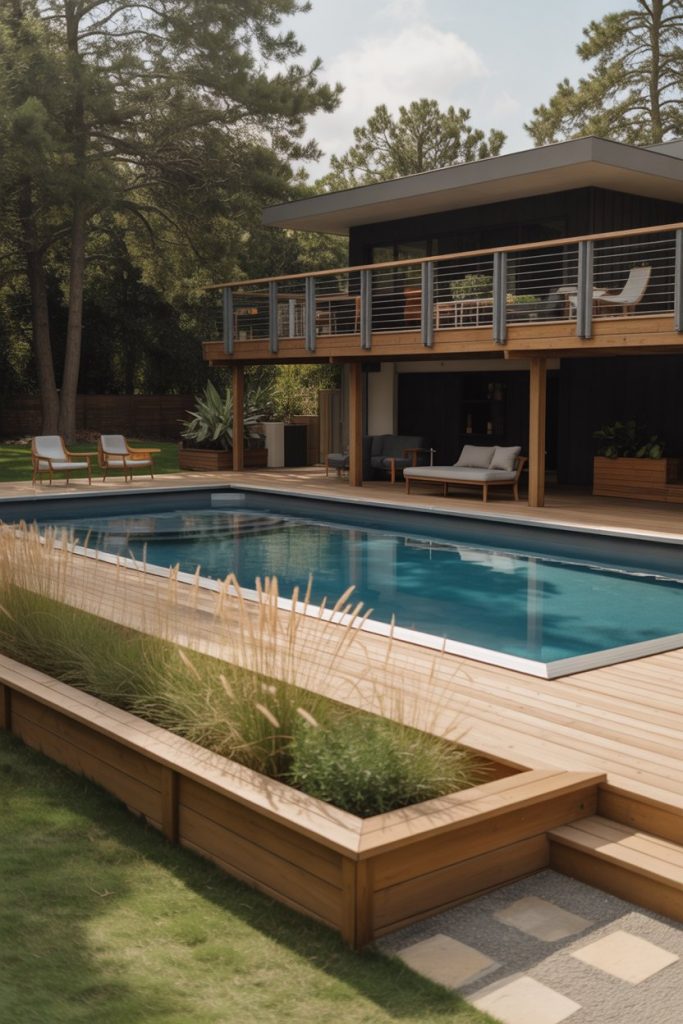
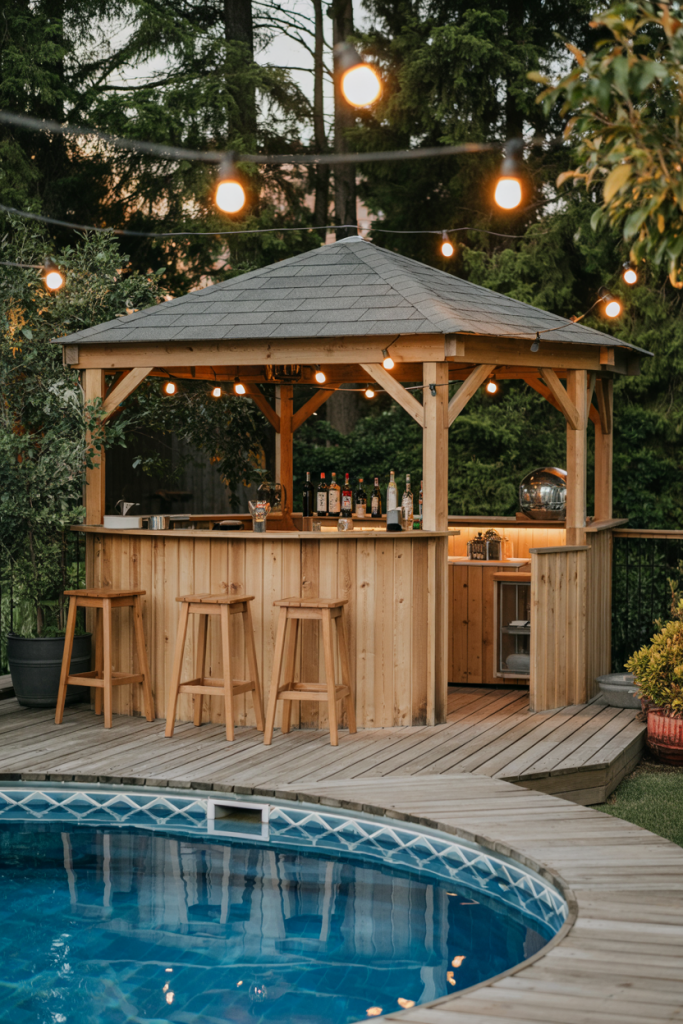
Modern above ground pools shed their budget-option stigma when wrapped in a thoughtfully designed deck and plantings. The strategy involves building a multi-level deck that partially or fully conceals the pool’s exterior walls, creating the illusion of an inground installation at a fraction of the cost. Backyard above ground transformations often incorporate built-in planters filled with ornamental grasses and flowering perennials that soften hard edges. Adding deck space for lounge chairs and a dining table turns the pool area into a true outdoor living room. The right railing design—perhaps horizontal cable rails or simple wood pickets—maintains sight lines while providing necessary safety. 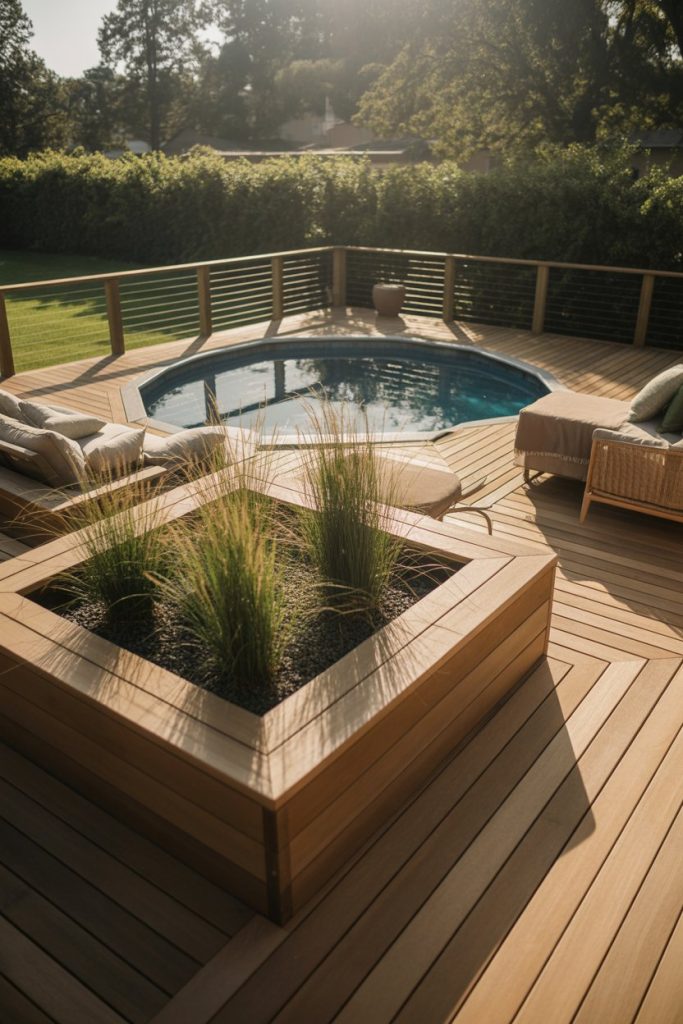
A neighbor recently completed this transformation for about $8,000 total—$3,500 for the pool and equipment, $4,500 for the deck—versus $35,000 for a comparable inground installation. The project took three weekends with help from friends, proving that DIY ambition can yield professional-looking results. The most common mistake is undersizing the deck; aim for at least six feet of deck space on the entry side to accommodate furniture and traffic flow. Stain or paint the pool’s exterior walls to match the deck for a cohesive look, and suddenly your above ground pool stops reading as temporary and starts feeling like a permanent landscape feature.
9. Round Pool with Radial Planting Design
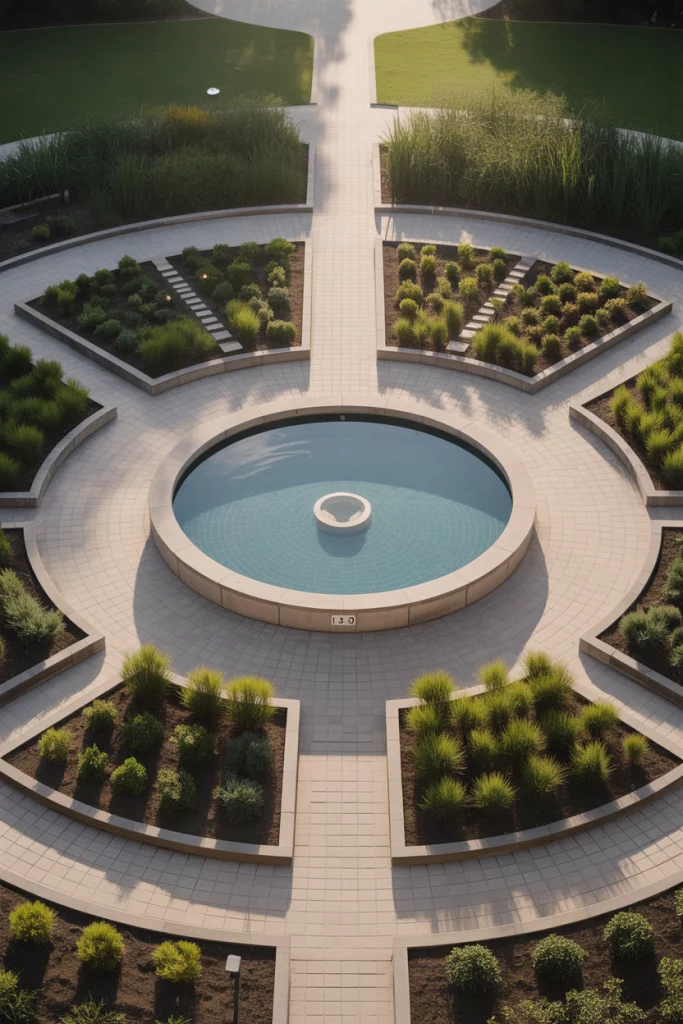
A round pool becomes the centerpiece of a garden mandala when surrounded by planting beds that echo its circular geometry. This design approach works with both above ground and inground installations, using radiating lines of plantings to draw the eye toward the water. Imagine four symmetrical beds positioned at compass points, each filled with repeating patterns of grasses, sedums, and seasonal flowers. Curved pathways of decomposed granite or stepping stones follow the circular theme, making the journey around the pool as visually interesting as the destination. At night, uplighting placed at the base of key plants creates dramatic shadows that enhance the geometric precision. 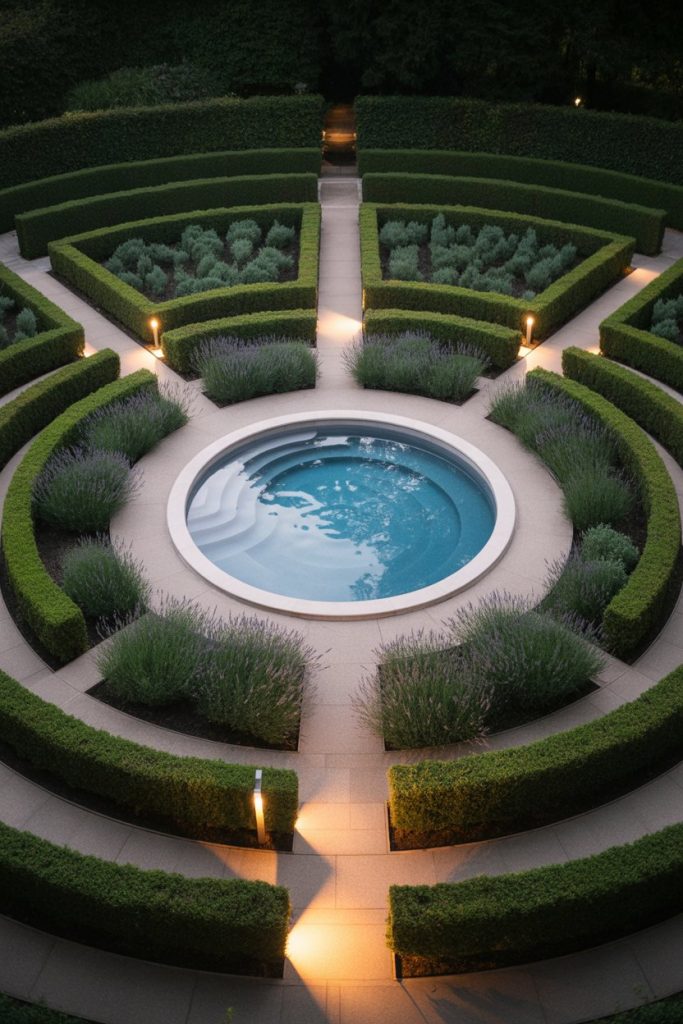
This style works best in flat, open yards where the full circular pattern can be appreciated from upper-story windows or surrounding seating areas. The radial design naturally creates distinct zones—perhaps one quadrant for sun lounging, another for outdoor dining, a third for a fire pit gathering spot. The repetition of plants in each quadrant provides visual unity while the radiating lines create movement and energy. From a practical standpoint, the curved beds require edging to maintain their shape; steel or aluminum strips bend easily and create crisp lines that won’t shift over time like plastic edging often does.
10. Natural Swimming Pond with Planted Filter Zone
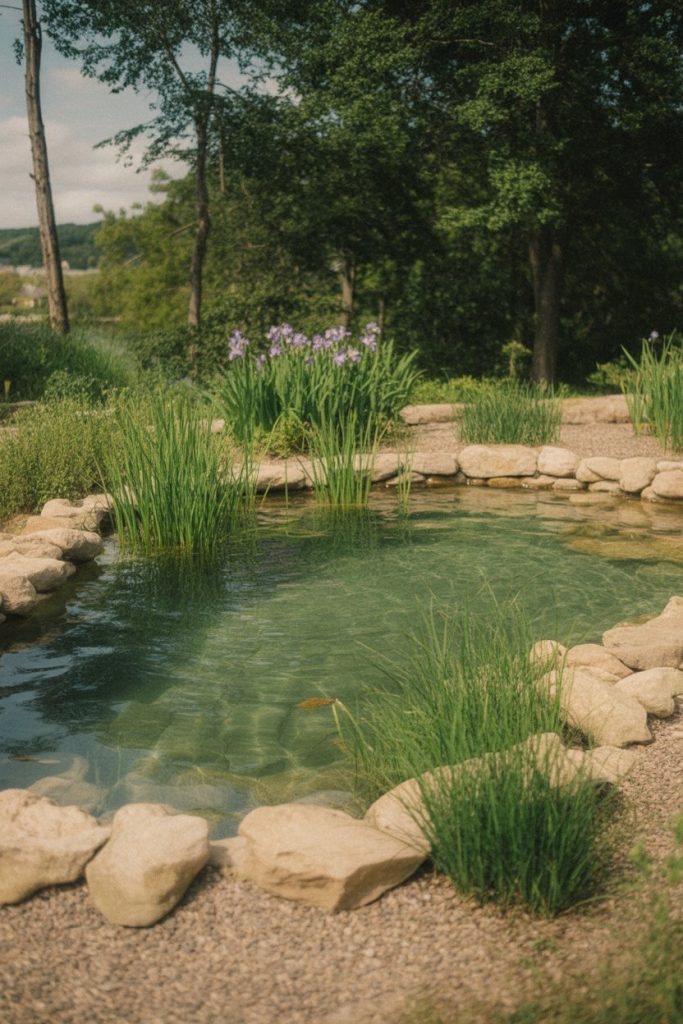
Natural swimming ponds blend pool function with ecosystem beauty, using plants rather than harsh chemicals to filter water. The design typically dedicates half the water surface to a shallow planted zone where water irises, rushes, and submerged oxygenators clean the water before it circulates into the swimming area. This inground approach creates a naturalistic aesthetic that attracts dragonflies, frogs, and beneficial insects while providing a chemical-free swimming experience. Rock edges blur the line between pond and landscape, and the water takes on a subtle green-brown tint that signals its living ecosystem status. The result feels less like a pool and more like discovering a pristine mountain lake in your own backyard. 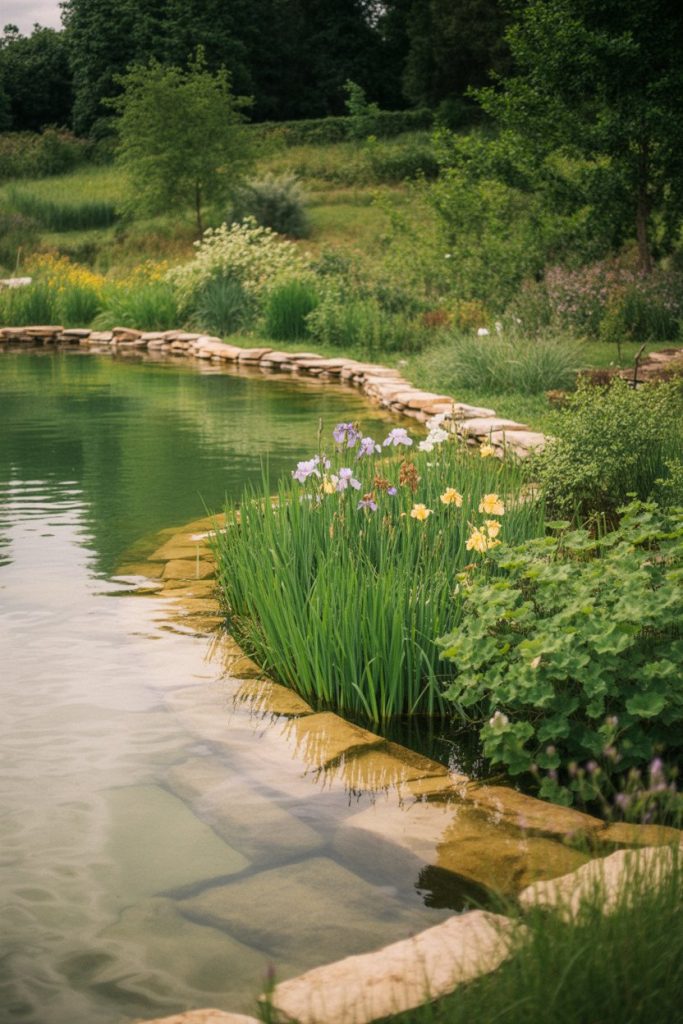
Natural pools require different maintenance than traditional pools—you’re managing a balanced ecosystem rather than fighting nature with chemicals. The initial investment runs higher, typically $50,000 to $100,000 for professional installation, because of the dual-zone construction and specialized filtration plants. However, ongoing costs drop significantly since you’re not buying chlorine, shock treatments, or other pool chemicals year after year. The common mistake is expecting crystal-clear water like a conventional pool; natural pools have clarity, but the water carries a slight tint from beneficial tannins. Embrace this as part of the natural aesthetic, and you’ll love swimming in water that feels silky and gentle on skin and eyes.
11. Sleek Black-Bottom Pool with Minimalist Landscaping
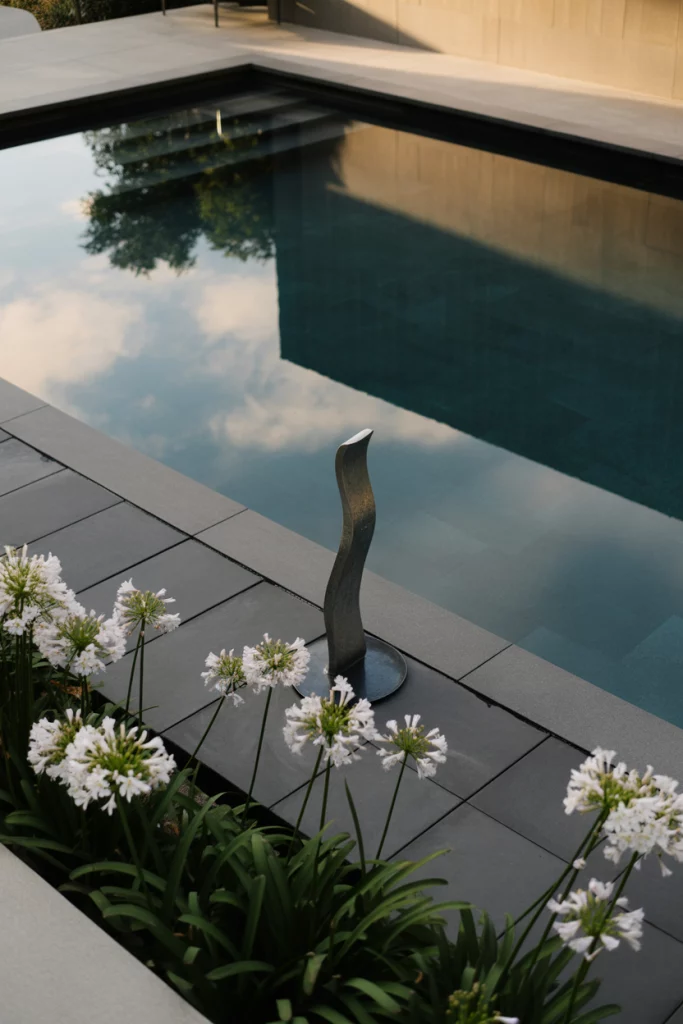
Black-bottom pools create dramatic visual impact through their dark plaster or liner, making water appear almost obsidian in shade and jewel-toned teal in sunlight. This contemporary design pairs beautifully with minimalist landscaping—think monochromatic plantings of white agapanthus, silver dusty miller, and deep green mondo grass. The ground treatment stays equally restrained, often featuring large-format concrete pavers with tight joints and no pattern variation. A single sculptural element like a cast concrete fire bowl or a steel water feature provides a focal point without cluttering the zen-like composition. The overall effect channels luxury resort design while maintaining a sense of calm restraint. 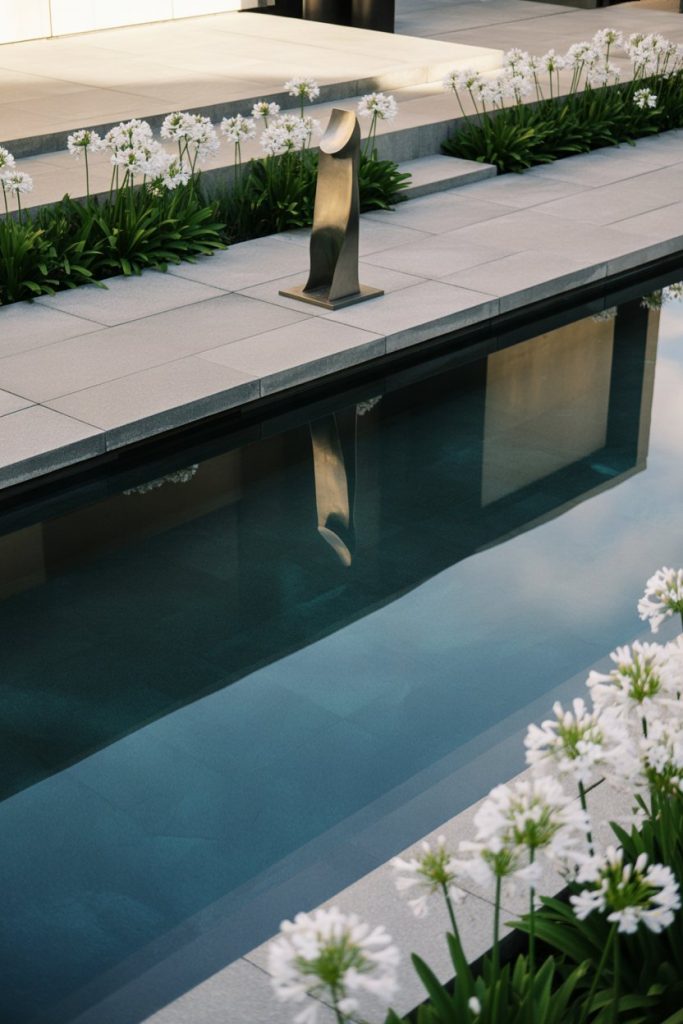
Black-bottom pools absorb more heat than traditional light-colored pools, which benefits homeowners in cooler climates or those who prefer warmer water temperatures without running a heater constantly. The darker surface also hides minor staining better than white plaster, reducing the frequency of acid washing maintenance. Expert pool builders note that the black bottom creates a mirror-like quality that reflects surrounding landscape and sky, essentially doubling your visual investment in trees and architectural elements. This style particularly suits modern architecture in regions like Southern California, Arizona, and contemporary developments in Colorado and Washington where clean-lined design dominates.
12. Family-Friendly Safety Pool with Clear Zones
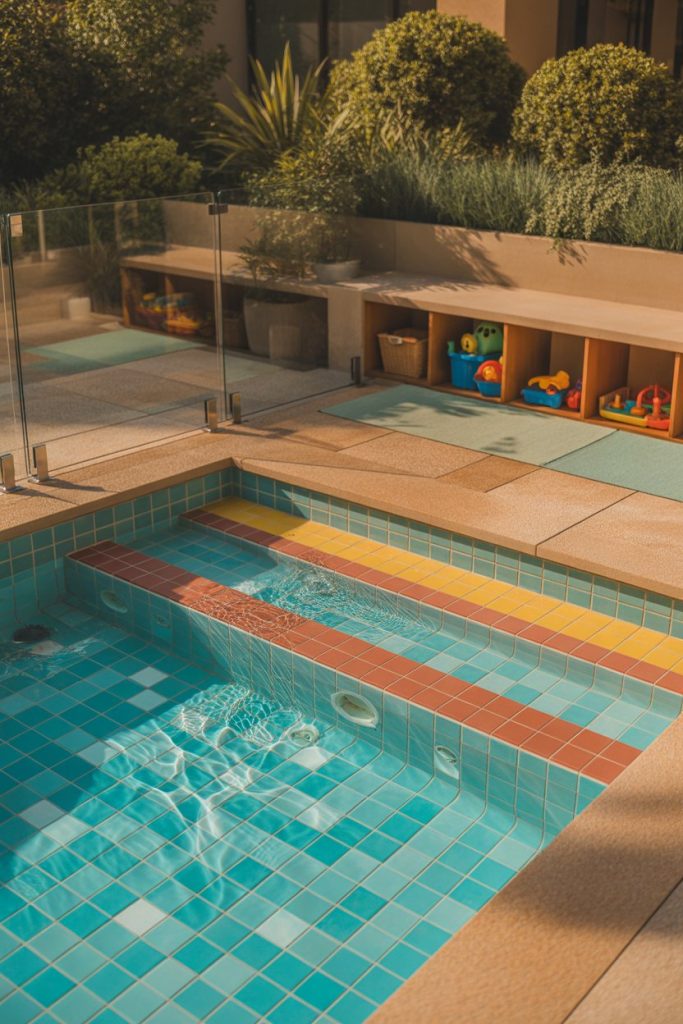
Designing a pool landscape for families with young children requires thoughtful zone creation that balances fun with safety. The ideas center on visual and physical boundaries—perhaps a shallow play area with colorful mosaic tiles clearly delineated from deeper water, surrounded by soft plantings that won’t scratch skin or attract stinging insects. Fencing becomes a design opportunity rather than an eyesore through choices like transparent glass panels or decorative aluminum that matches the home’s architecture. The backyard layout includes a separate ground-level play zone visible from the pool deck, allowing parents to supervise multiple activities simultaneously. Non-slip surfaces around the pool deck prevent running-related accidents, while built-in storage keeps pool toys organized and trip hazards minimized.
Real homeowner behavior shows that families use their pools more consistently when the surrounding space accommodates different age groups comfortably. A covered patio within sight of the pool lets parents prepare snacks while maintaining visual supervision, and an outdoor shower near the entry point reduces indoor mess. The most common mistake is creating a pool deck that feels like a sterile safety zone rather than an inviting gathering space. Balance required safety features with comfort elements like built-in seating, shade structures, and plantings at the perimeter. This approach creates a space where safety protocols become invisible while families make lasting summer memories.
13. Infinity Edge Pool with Vista Orientation
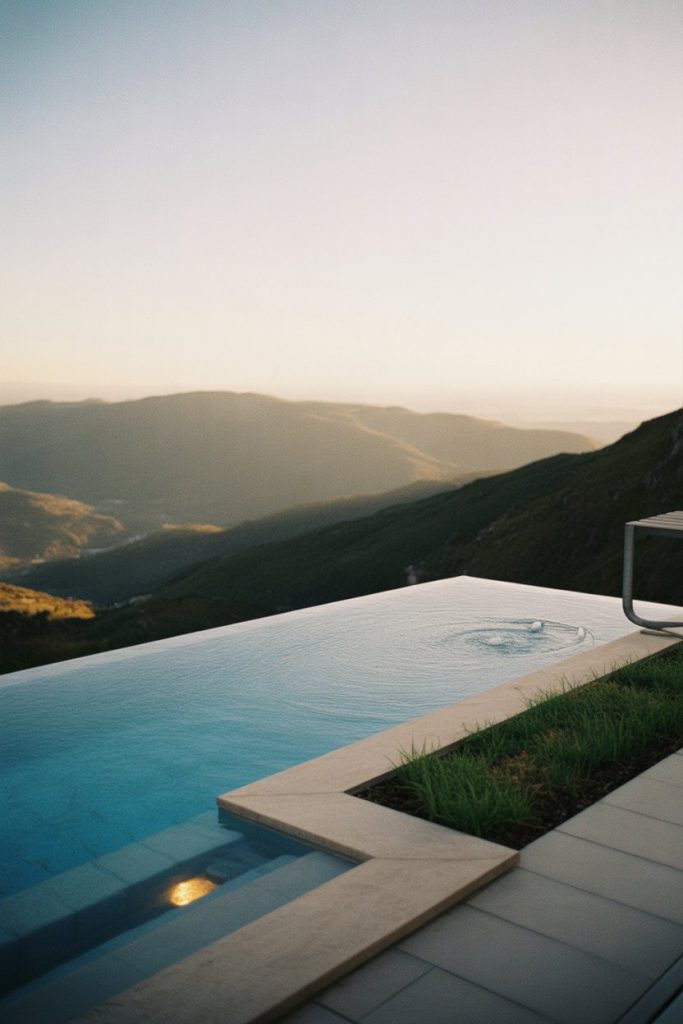
An infinity edge pool creates the illusion that water extends endlessly into the horizon, making it ideal for properties with dramatic views. The design requires careful site grading to position the vanishing edge toward the best vista—whether that’s an ocean view, mountain range, or city skyline. Ideas for the surrounding landscape stay deliberately minimal to avoid competing with the view; perhaps a simple lawn or low-growing groundcovers that won’t block sight lines. The deck material often continues to the pool’s edge without coping, enhancing the seamless effect. Strategic lighting placed within the catch basin creates a glowing waterfall effect at night, transforming the view once again after sunset. 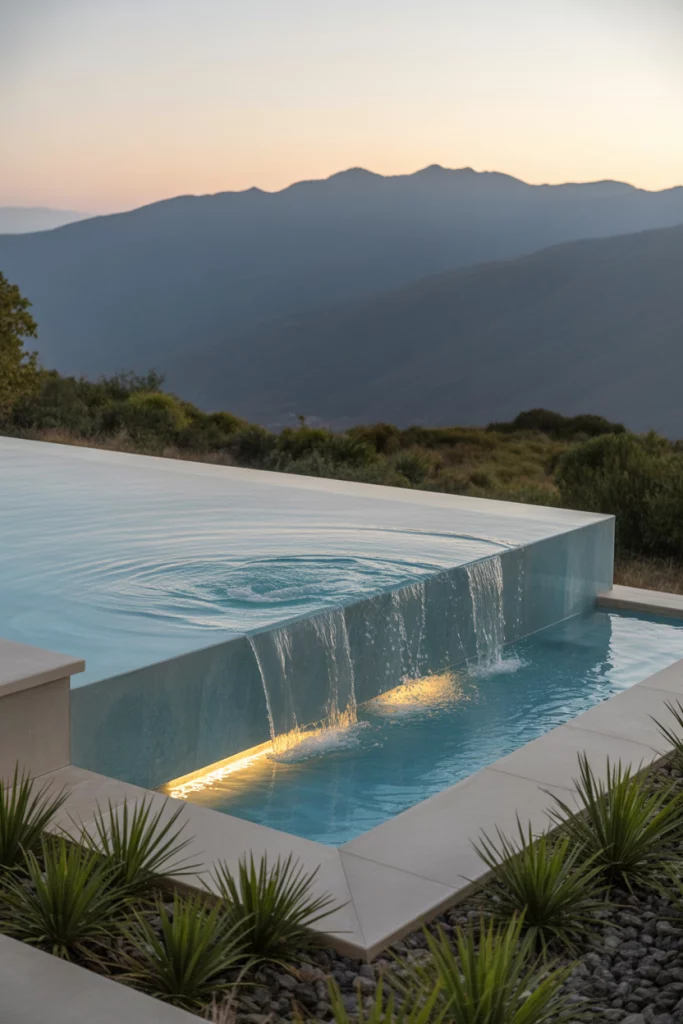
Where this works best is on hillside lots where the natural grade provides the necessary elevation change for the catch basin. Flat-lot infinity pools require significant excavation and grading, which can double construction costs. The catch basin sits below the main pool level and houses additional pumps that recirculate water back to the pool, creating that continuous overflow effect. Maintenance requires monitoring the catch basin’s water level separately from the pool, and leaves or debris must be regularly cleared from the basin to prevent pump damage. Despite these considerations, homeowners consistently report that the visual impact and daily enjoyment far outweigh the modest additional upkeep.
14. Cottage Garden Pool Romance
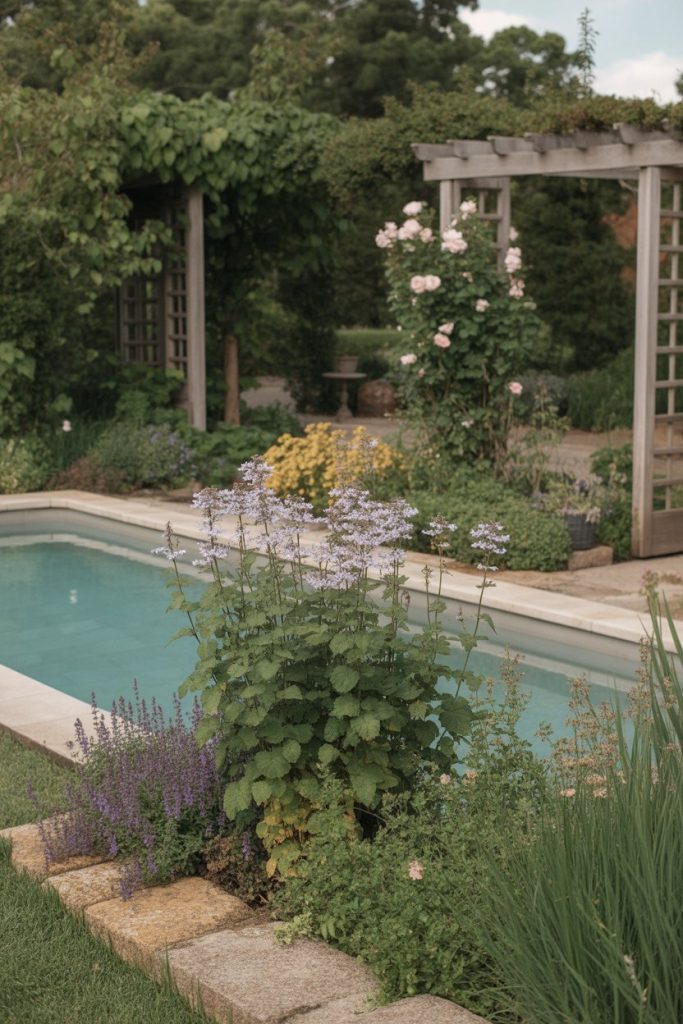
Cottage garden style brings exuberant color and informal charm to pool landscaping through billowing perennials, climbing roses, and self-seeding annuals. This approach softens the pool’s hard edges with overflow plantings that seem to tumble spontaneously into the water’s edge—think catmint, salvia, and ornamental oregano spilling over stone coping. The plants create a color progression throughout the season, with spring bulbs giving way to summer bloomers and fall asters. A picket fence or weathered arbor draped in clematis provides structure without formality. The overall effect feels like an English country estate where swimming just happens to fit into the garden tapestry rather than dominating it. 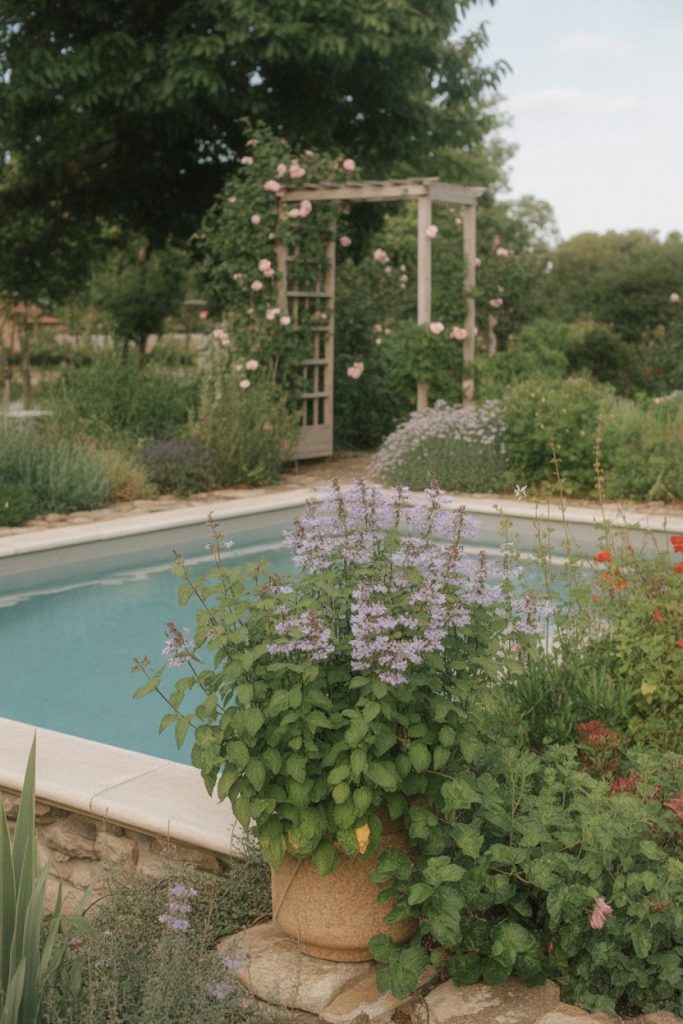
This style particularly suits regions with sufficient rainfall to support lush growth without constant irrigation—think the Pacific Northwest, New England, and the Mid-Atlantic states. The cottage garden approach requires an acceptance of controlled chaos; deadheading spent blooms and occasional editing keeps things from becoming truly wild while maintaining that romantic, overgrown aesthetic. A homeowner in Connecticut mentioned that her cottage pool garden actually requires less work than her previous formal landscape because the dense plantings suppress weeds and the informal style forgives the occasional gardening lapse. The key is choosing plants that naturalize in your region, creating a self-sustaining ecosystem that looks abundant without demanding perfection.
15. Desert Modern with Fire Features
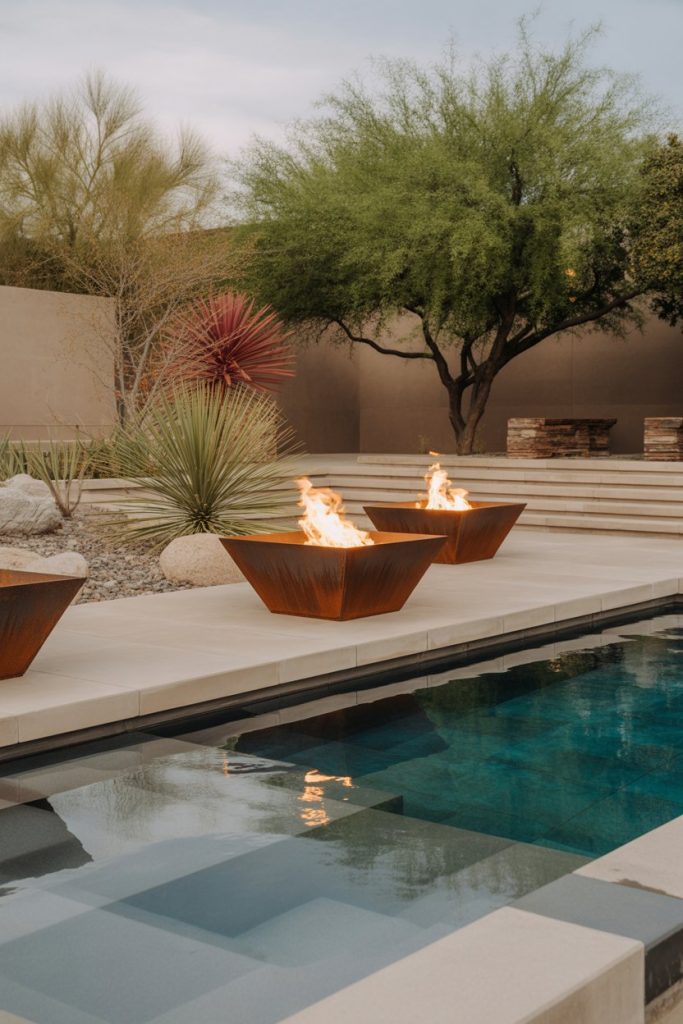
Combining a pool with fire elements creates year-round interest in desert climates where evening temperatures drop significantly after sunset. This design pairs a sleek inground pool with geometric fire bowls or a linear fire pit positioned for optimal viewing from both the pool and adjacent seating areas. The material palette stays earthy—perhaps Corten steel for fire features, buff-colored concrete for decking, and native stone accents that echo the surrounding landscape. Plants include heat-tolerant specimens like Texas sage, red yucca, and desert willow that provide color without competing with the fire and water focal points. The contrast between cool blue water and warm orange flames creates a primal, mesmerizing effect. 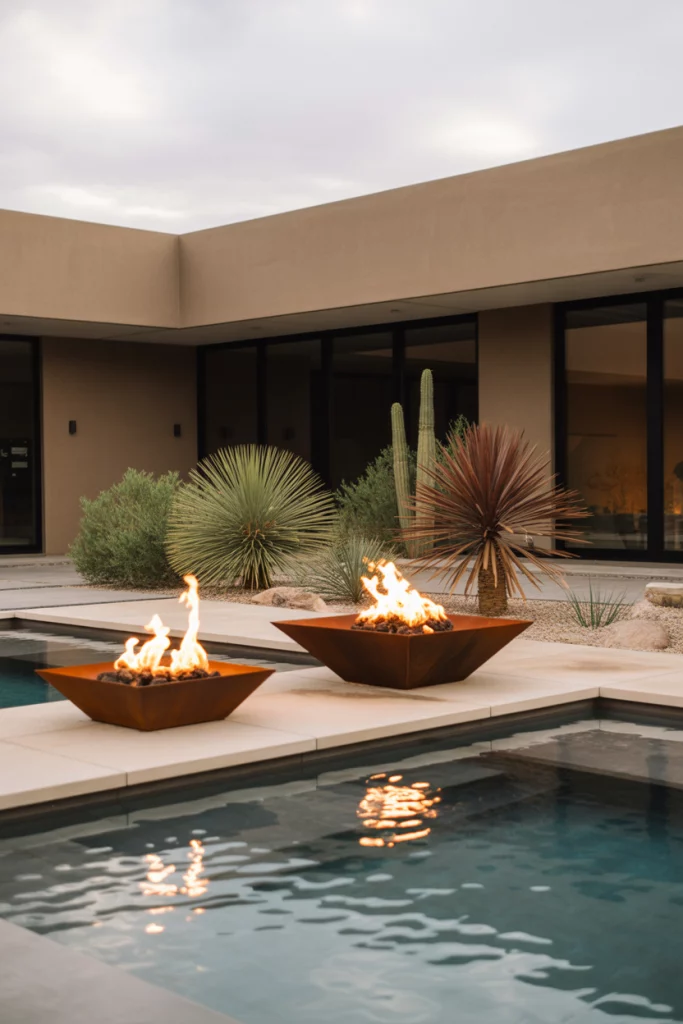
Budget considerations for this style: quality fire features start around $1,500 for pre-fabricated bowls and can exceed $8,000 for custom installations with automated gas controls. The investment pays off in extended outdoor season; even on cooler desert nights, the fire features draw people outside to enjoy the pool area long after swimming season ends. Common mistakes include positioning fire features too close to the pool edge where they create uncomfortable heat for swimmers, or choosing fire glass colors that clash with the landscape palette. Place fire features at least eight feet from the pool and select glass or lava rock in neutral tones that complement rather than compete with the natural desert colors.
16. Tropical Bamboo Privacy Screen Pool
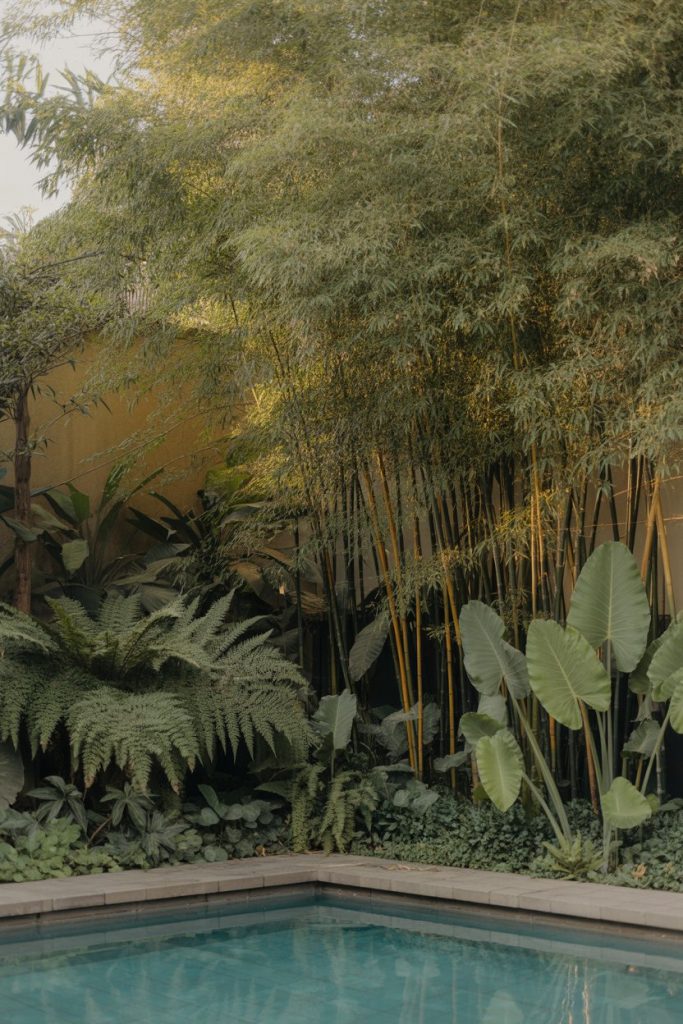
Tall bamboo creates living walls that provide instant privacy for tropical pool settings while adding dramatic vertical interest. Clumping varieties like ‘Bambusa multiplex’ or ‘Fargesia’ won’t invade neighboring properties but grow dense enough to screen out sightlines within a single growing season. The design typically positions bamboo along property lines or around pool equipment areas that need disguising. Underplanting with shade-tolerant ferns and elephant ears fills the lower layers, creating a completely enclosed jungle effect. The rustling sound of bamboo culms in the breeze adds an auditory dimension to the backyard experience. For maintenance access, leave gaps planted with removable container specimens that can shift as needed. 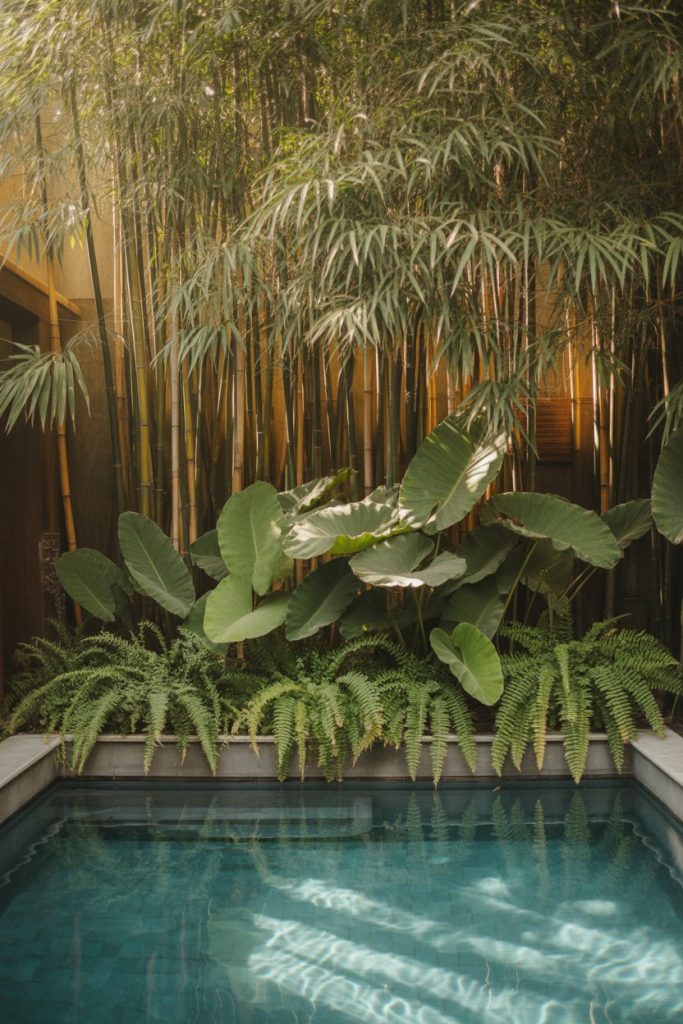
In regions like South Florida, coastal Louisiana, and Hawaii, bamboo thrives with minimal care once established. The clumping varieties cost more initially—around $60 to $150 per plant—but eliminate the nightmare scenarios associated with running bamboo that can invade foundations and neighboring yards. Plant bamboo in a trench filled with rich compost and water deeply the first year to encourage robust root development. By year two, the bamboo should reach eight to twelve feet tall, providing the privacy you’re seeking. One practical insight: bamboo drops leaves year-round, so position it where prevailing winds won’t constantly blow debris into the pool, or commit to more frequent skimming as the trade-off for privacy.
17. Lap Pool with Minimalist Border
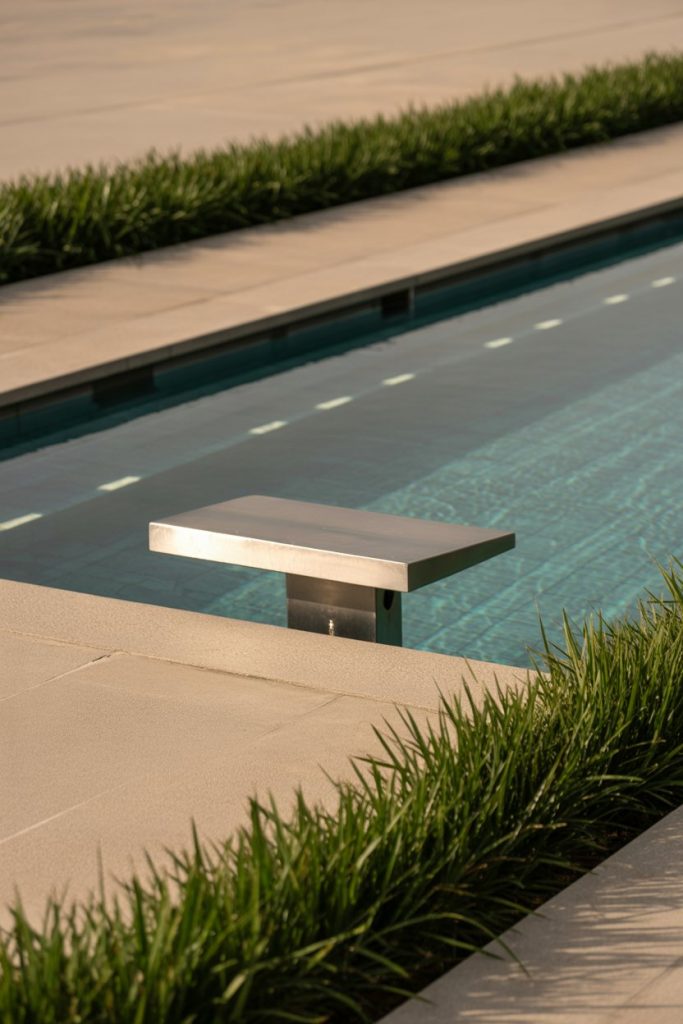
Lap pools prioritize function over leisure, offering serious swimmers a streamlined workout space in residential settings. The rectangle shape typically runs forty to sixty feet long but only eight to twelve feet wide, fitting efficiently into narrow side yards or awkward lot configurations. The design around a lap pool stays deliberately spare—often just a narrow deck on each long side with a simple border of mondo grass or low boxwood hedges. This minimalism serves the pool’s purpose; swimmers want an uncluttered environment that supports focused training rather than socializing. Underwater LED strips running the pool’s length help maintain straight swim lines, while a bench at the shallow end provides a rest spot between sets. 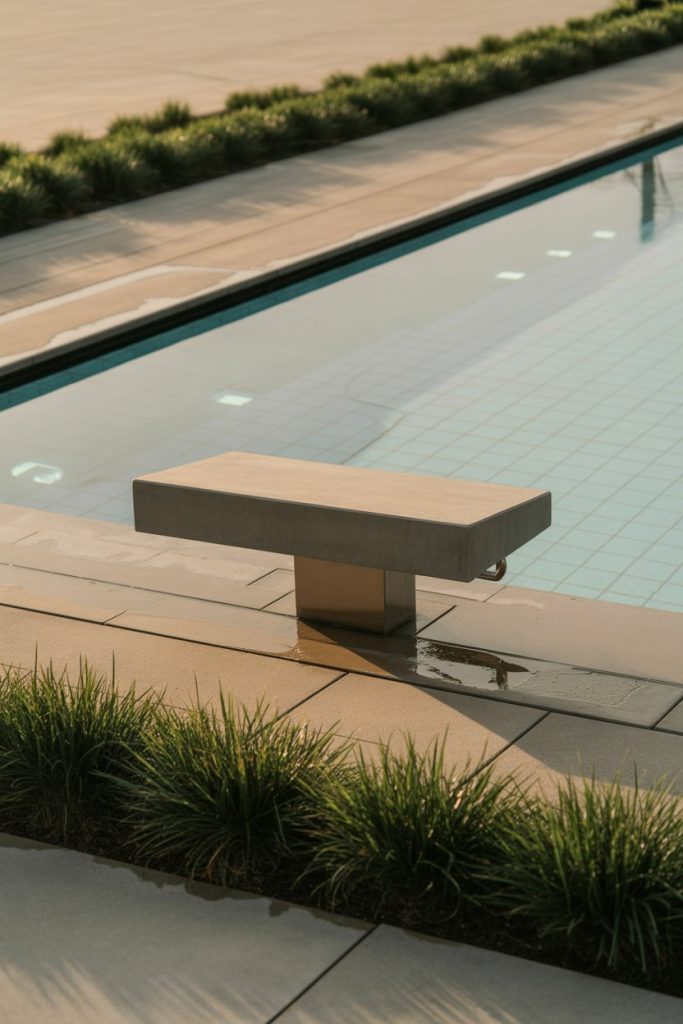
Expert commentary from competitive swimmers emphasizes that lap pools need consistent depth of at least four feet to allow for proper flip turns and stroke technique. The narrow width forces swimmers to stay centered, preventing the lazy diagonal swimming that can develop in wider pools. Where this works best is in urban settings where lot width restricts pool size but length is available—think row house backyards in cities like Philadelphia, Baltimore, or San Francisco. The trade-off is clear: you sacrifice space for floating and playing in exchange for a serious training facility. For dedicated swimmers, that’s not a compromise but exactly what they’re seeking.
18. Raised Spa with Spillover into Pool
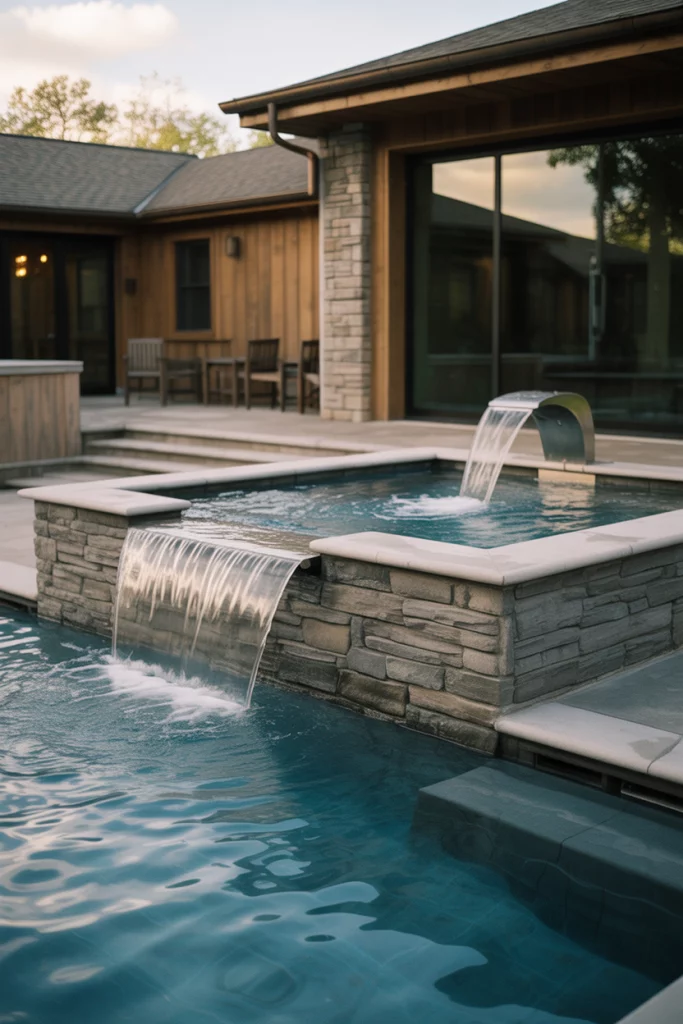
A raised spa positioned at one end of the pool creates a dynamic water feature while providing therapeutic benefits year-round. The design typically elevates the spa eighteen to twenty-four inches above the pool surface, allowing heated water to spill over a shared wall into the cooler pool below. This arrangement offers the best of both worlds—soothing jets for hydrotherapy and a refreshing swim just steps away. The raised position also improves sight lines; bathers in the spa enjoy better views of the backyard or surrounding landscape. Tile or stone veneer on the spa’s exterior walls creates a focal point that draws the eye even when the water features aren’t running. 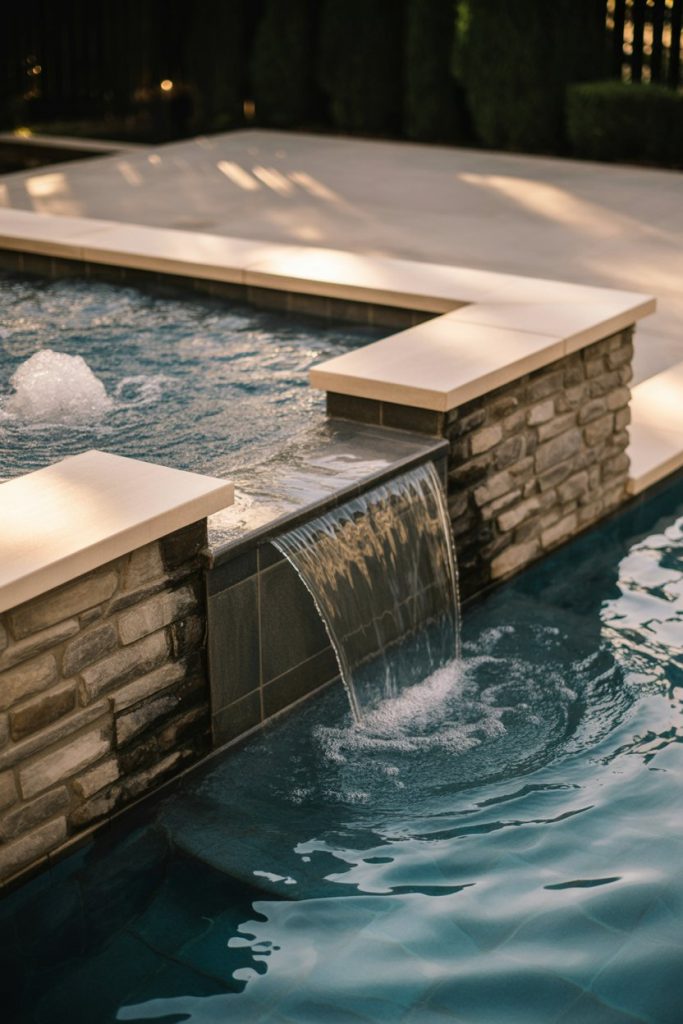
The cost for adding a raised spa during pool construction typically runs $8,000 to $15,000 beyond the base pool price—a significant investment that many homeowners justify through year-round use. Unlike standalone hot tubs that sit visually separate from the landscape, integrated spa-pool combinations feel intentionally designed as a unified water feature. The common mistake is undersizing the spa; a minimum of six feet in diameter allows four to six adults to soak comfortably. Also consider that running the spa heater independently from the pool extends the swimming season at both ends, making those crisp spring and fall evenings enjoyable long after neighbors have covered their pools for the season.
19. Native Grassland Pool Border
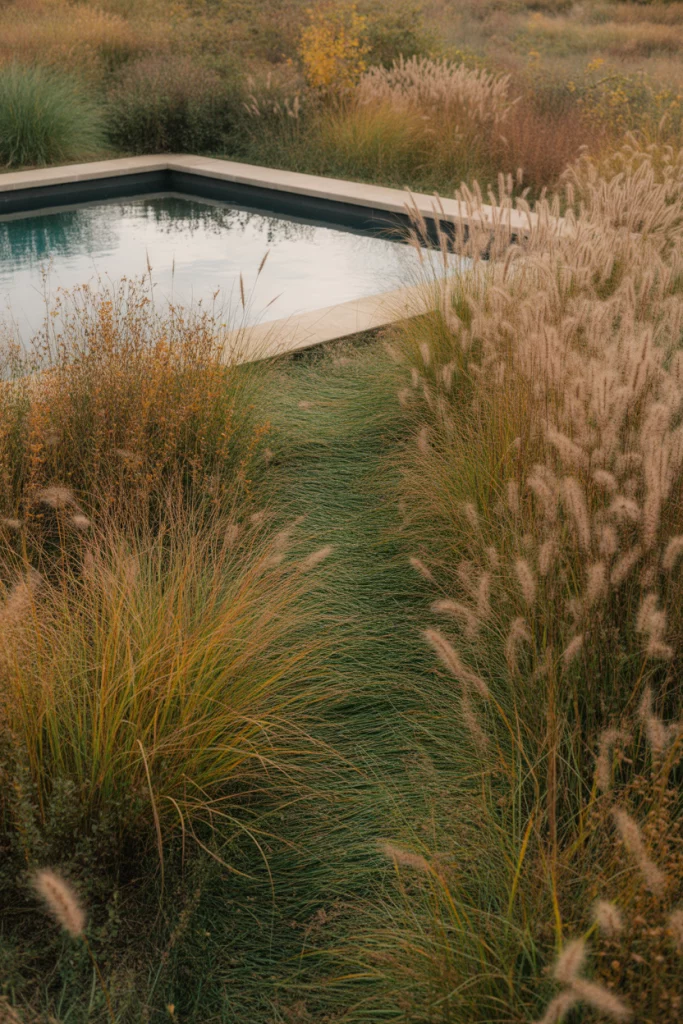
Replacing traditional lawn with native grasses around your pool creates an ecologically sound landscape that requires minimal water and zero mowing. Species like little bluestem, sideoats grama, or purple muhly grass provide movement and seasonal color while supporting local pollinators and birds. This design approach works particularly well in prairie states and regions embracing naturalistic landscaping—think Kansas, Nebraska, parts of Texas, and the upper Midwest. The grasses stay relatively low, typically eighteen to thirty-six inches tall, so they don’t block pool views or create excessive debris. A simple mowed path or stepping stone trail through the grasses provides access while maintaining the meadow aesthetic. The effect feels surprisingly sophisticated, like swimming in a nature preserve. 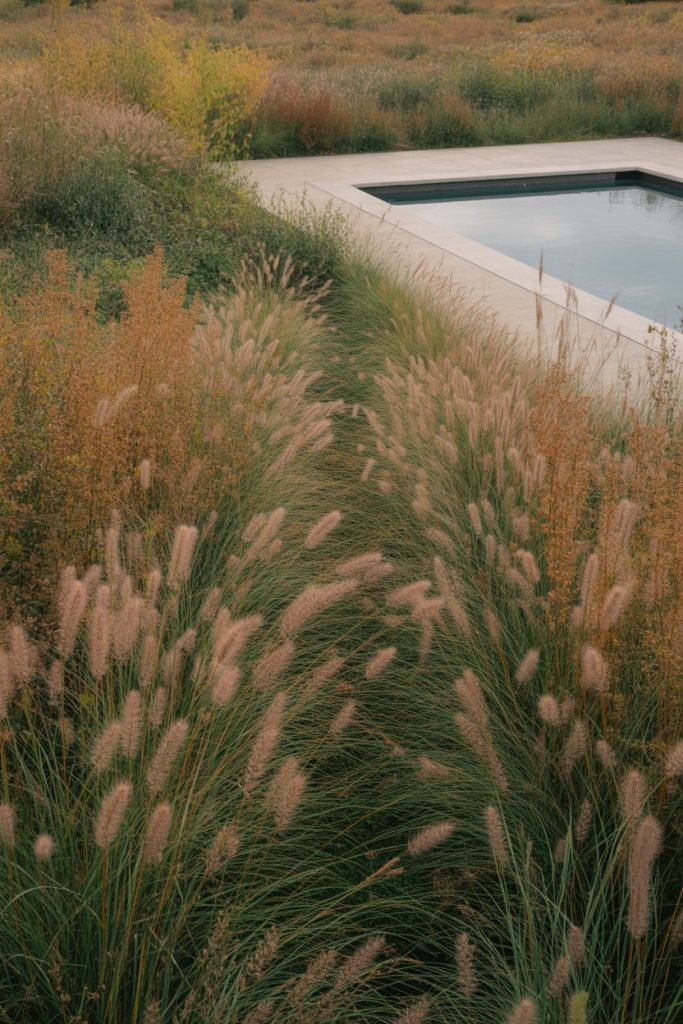
American lifestyle in many regions increasingly embraces sustainable landscaping as water restrictions tighten and environmental awareness grows. Native grass borders require an initial investment in plants—about $3 to $8 per plug depending on species—but once established, they thrive on natural rainfall and need only an annual late-winter cutting to remove dead growth. A neighbor who made this transition reported cutting her outdoor water use by sixty percent while attracting goldfinches and monarch butterflies that were never present in her previous turf landscape. The grasses also provide a naturalistic backdrop that makes the pool’s blue water appear even more striking by contrast.
20. Modern Courtyard Pool with Walls
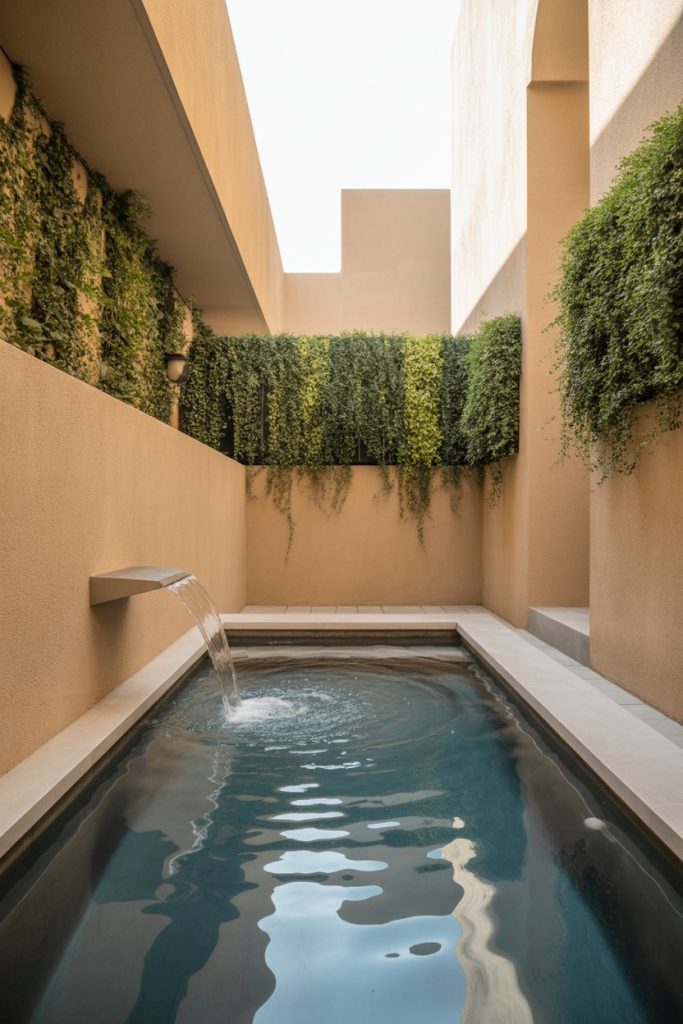
Urban lots benefit from courtyard-style pool designs where walls create an enclosed outdoor room focused entirely on the water feature. This design uses the home’s architecture and purpose-built walls to define a private sanctuary sheltered from neighboring properties and street noise. The pool itself might be relatively small backyard scale but feels generous within the intimate courtyard proportions. Wall treatments range from smooth stucco painted in warm neutrals to textured stone or vertical gardens that bring greenery without consuming precious ground space. Water features like wall-mounted scuppers or a simple sheer descent waterfall add movement and sound, enhancing the courtyard’s serene atmosphere. 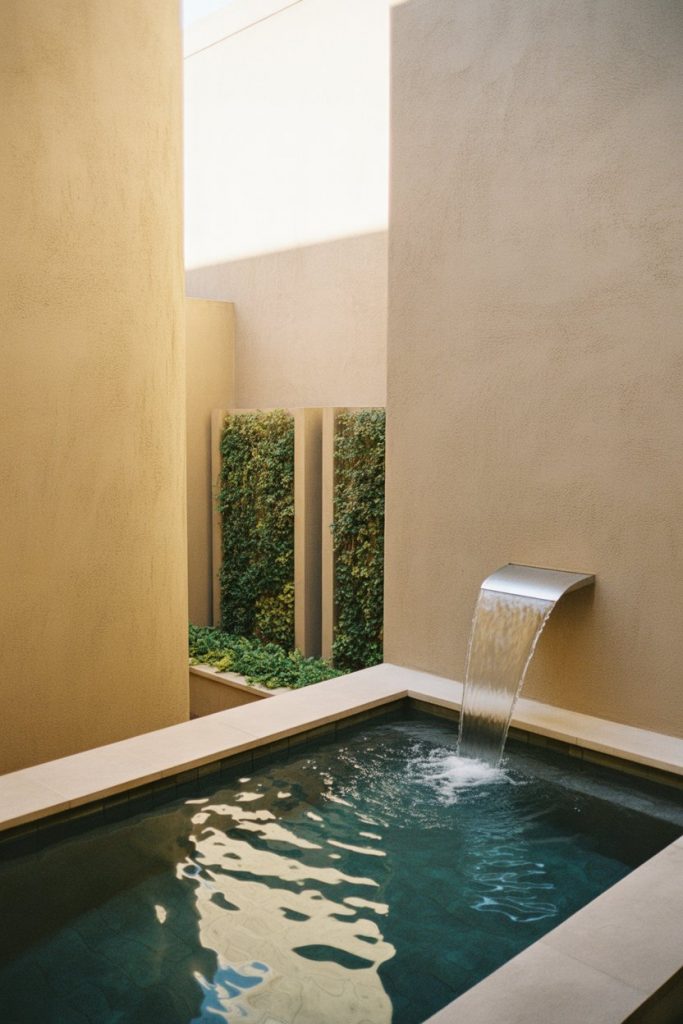
Where this works best is in dense urban neighborhoods where lot sizes are constrained but homeowners crave outdoor living space. Cities like Charleston, New Orleans, Savannah, and older neighborhoods in Los Angeles have historic courtyard precedents that make this design feel contextually appropriate. The walls don’t just provide privacy; they also create a microclimate that can be several degrees warmer than the surrounding area, extending the comfortable swimming season. From a practical standpoint, fully enclosed courtyards require mechanical ventilation if they’re covered or partially roofed, and building codes often have specific requirements for such enclosures, so consult with a local architect early in the planning process.
21. Multi-Level Terraced Pool Landscape
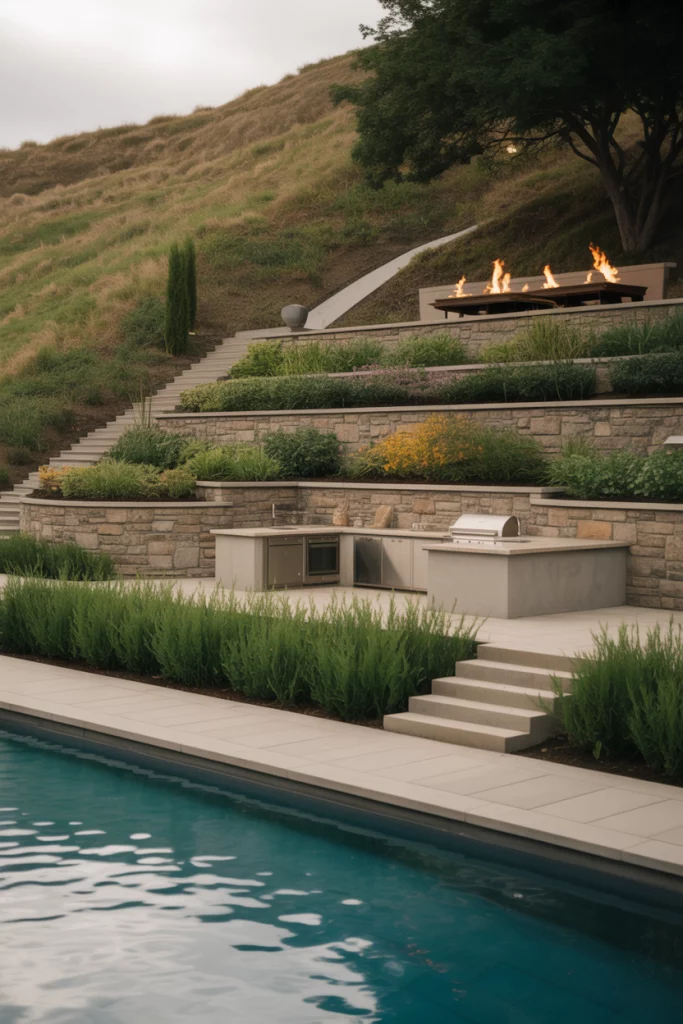
Sloping lots transform into stunning multi-level pool landscapes through thoughtful terracing that works with rather than against the natural topography. The design might position the pool at the lowest level with stone retaining walls creating planted terraces that step up the hillside. Each level serves a purpose—perhaps the first terrace holds lounge chairs, the second features an outdoor kitchen, and the third offers a fire pit with views over the entire property. Plants cascade down the walls, softening the hardscape and providing seasonal interest at every level. Stone or timber stairs connect the terraces, turning the vertical journey into part of the landscape experience rather than an obstacle to overcome. 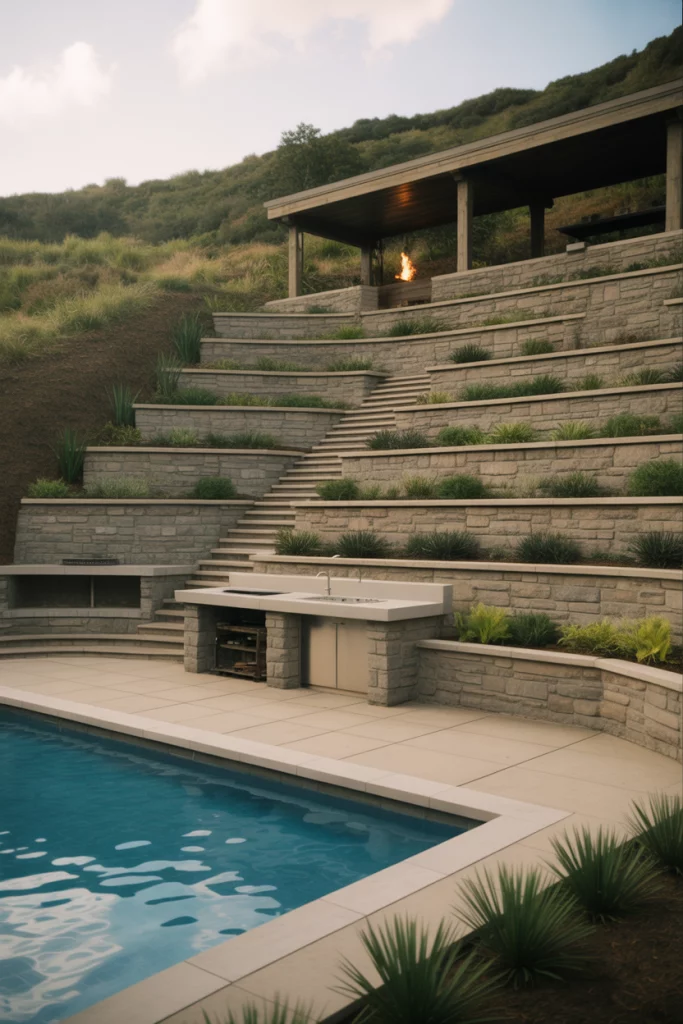
Terraced pool landscapes turn what might seem like a difficult lot into a premium feature. The vertical arrangement creates distinct zones that feel larger than their square footage because each level has a different character and purpose. Initial construction costs run higher due to extensive grading, retaining wall construction, and stairs, but the result often increases property value beyond the investment. The most common mistake is underestimating drainage requirements; each terrace needs proper grading and potentially French drains to prevent water from pooling against retaining walls. Work with a landscape architect experienced in hillside construction to ensure structural integrity and longevity. The effort yields a pool landscape with resort-level drama and functionality that makes neighbors wonder how you fit so much into your yard.
Conclusion
Your pool landscape should reflect your region, climate, and how you actually use outdoor space—not just how you imagine you might. Share which of these ideas resonates with your property’s unique challenges and opportunities in the comments below. Whether you’re planning a complete backyard transformation or simply refining an existing pool area, thoughtful design choices create spaces that serve you well for decades. What elements will you incorporate to make your pool landscape truly your own?