In 2026, paver patios continue to dominate American backyards as the perfect blend of beauty, durability, and versatility. Homeowners scrolling through Pinterest are searching for fresh ways to transform their outdoor spaces into stylish, functional retreats—whether that means a cozy fire pit corner, a sleek modern entertaining area, or a budget-friendly DIY project. Pavers offer endless design possibilities, from classic herringbone patterns to contemporary checkerboard layouts, and they work beautifully with materials like pea gravel, artificial turf, and natural stone. This guide brings you inspiring paver patio ideas that reflect the latest trends, practical solutions, and creative approaches to outdoor living.
1. Budget-Friendly Checkerboard Paver Design
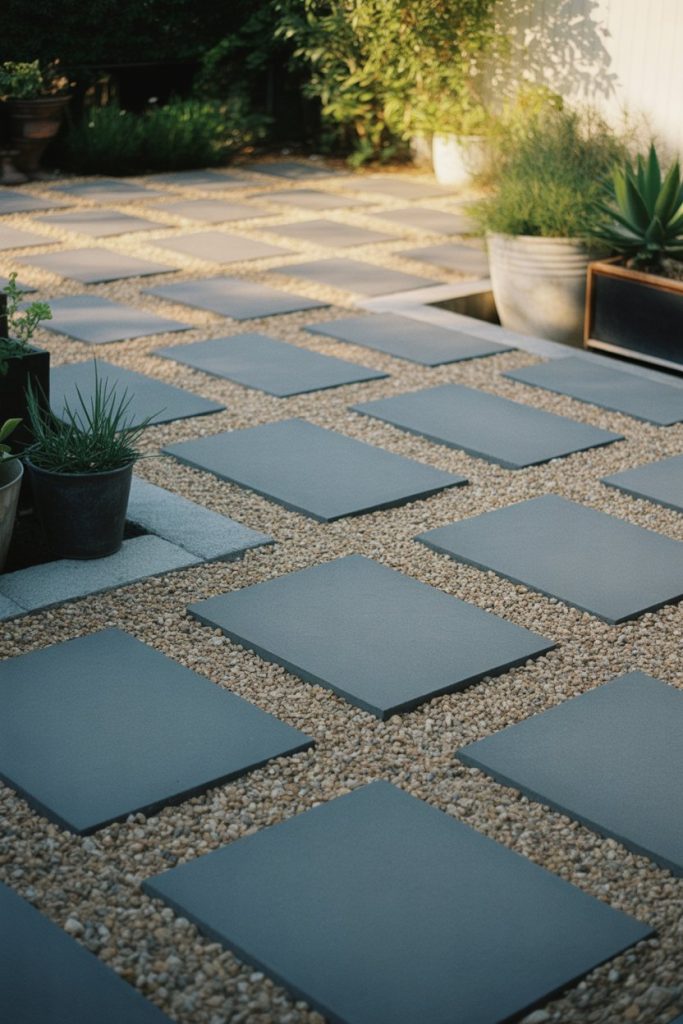
Creating a stunning paver patio on a budget doesn’t mean sacrificing style. A checkerboard pattern using alternating pavers and pea gravel squares delivers maximum visual impact with minimal material costs. This approach works especially well for smaller yards where you want texture and pattern without overwhelming the space. The contrast between solid pavers and soft gravel creates a casual, approachable feel that’s perfect for weekend gatherings. 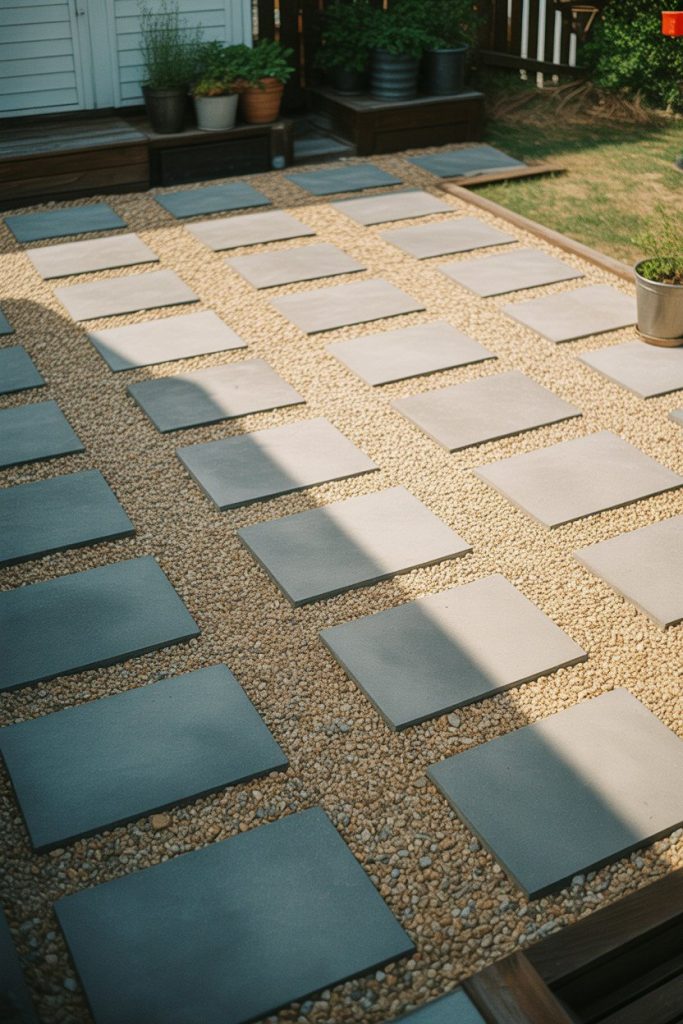
In the Midwest and South, where summers are long and homeowners want outdoor spaces that feel intentional yet relaxed, this pattern has become a go-to solution. The gravel sections allow for better drainage during heavy rains, while the pavers provide stable footing for furniture. You can complete a 10×12 foot patio for under $800 if you’re willing to do the excavation and leveling yourself, making it one of the most cost-effective ways to upgrade your yard.
2. Herringbone Brick Patio with Classic Appeal
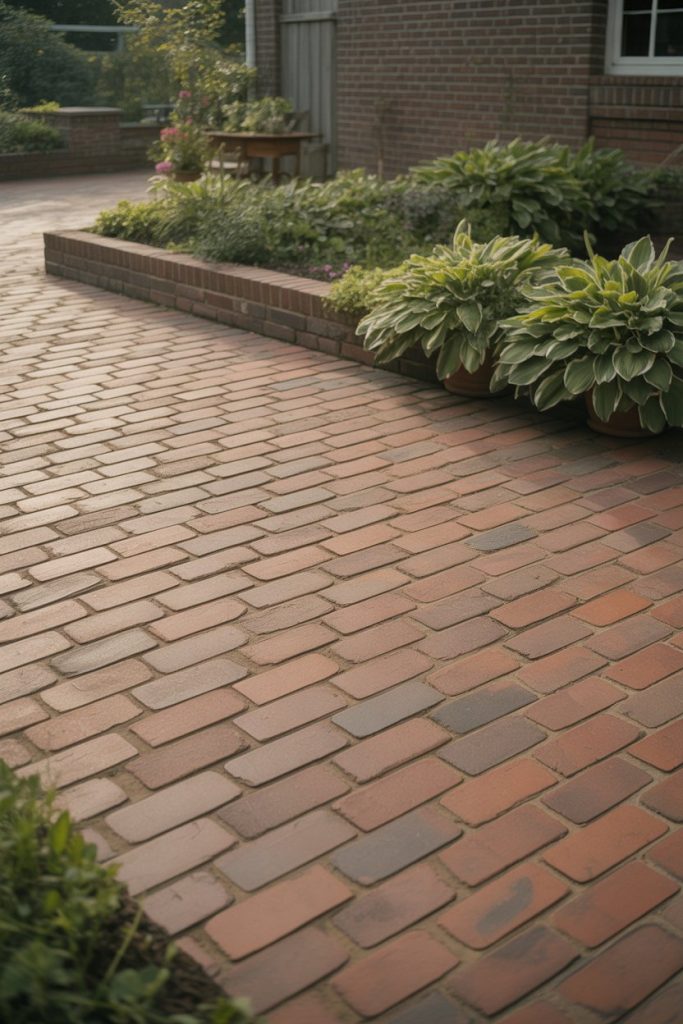
A herringbone brick patio brings timeless elegance to any home, especially in neighborhoods with traditional architecture. This pattern, where pavers are laid at 45-degree angles in a distinctive V-shape, creates movement and sophistication that flat-laid designs can’t match. It’s particularly popular in the Northeast and Mid-Atlantic states, where brick homes and historical charm are part of the regional character. 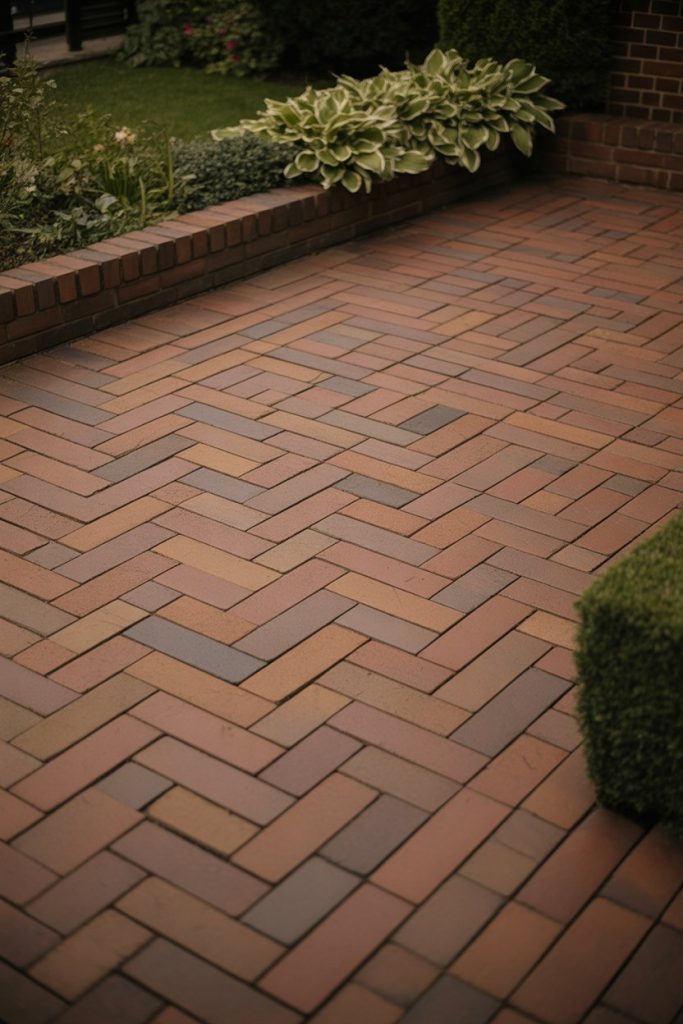
One of the biggest mistakes homeowners make with herringbone patterns is underestimating the skill required for proper installation. The angled cuts at borders need precision, and the pattern can easily look sloppy if pavers aren’t perfectly aligned. If you’re tackling this as a DIY project, invest in a quality wet saw and take your time with the layout—rushing through the cutting and placement will show in the finished product.
3. Modern Concrete Paver Patio with Clean Lines
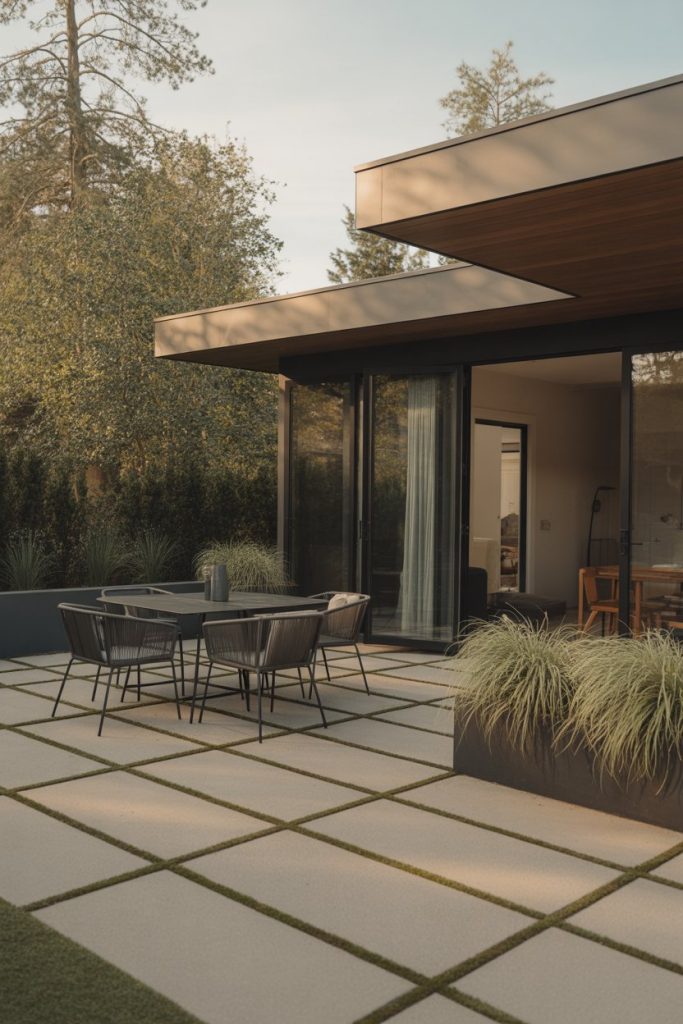
For homeowners drawn to modern aesthetics, large-format concrete pavers in neutral grays and whites create a sophisticated foundation for outdoor living. These oversized pavers—often 24×24 inches or larger—minimize grout lines and deliver a sleek, uncluttered look that pairs beautifully with contemporary furniture and minimalist landscaping. The simplicity of the material lets architectural features and greenery take center stage. 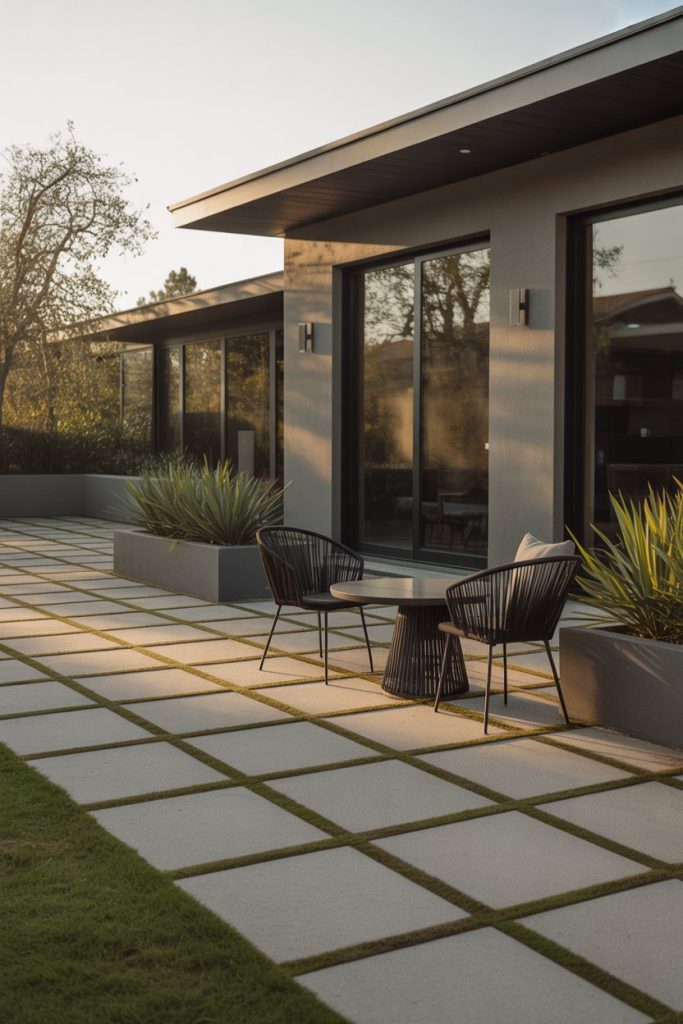
This design works best in urban and suburban settings where homeowners want their outdoor space to feel like an extension of their interior design. In California and the Pacific Northwest, where indoor-outdoor living is a lifestyle, these patios often connect directly to kitchens or living rooms through sliding glass doors. The concrete surface stays relatively cool even in hot weather, and the neutral palette won’t compete with colorful cushions or flowering plants you might add seasonally.
4. Gravel and Paver Combo for Textural Interest
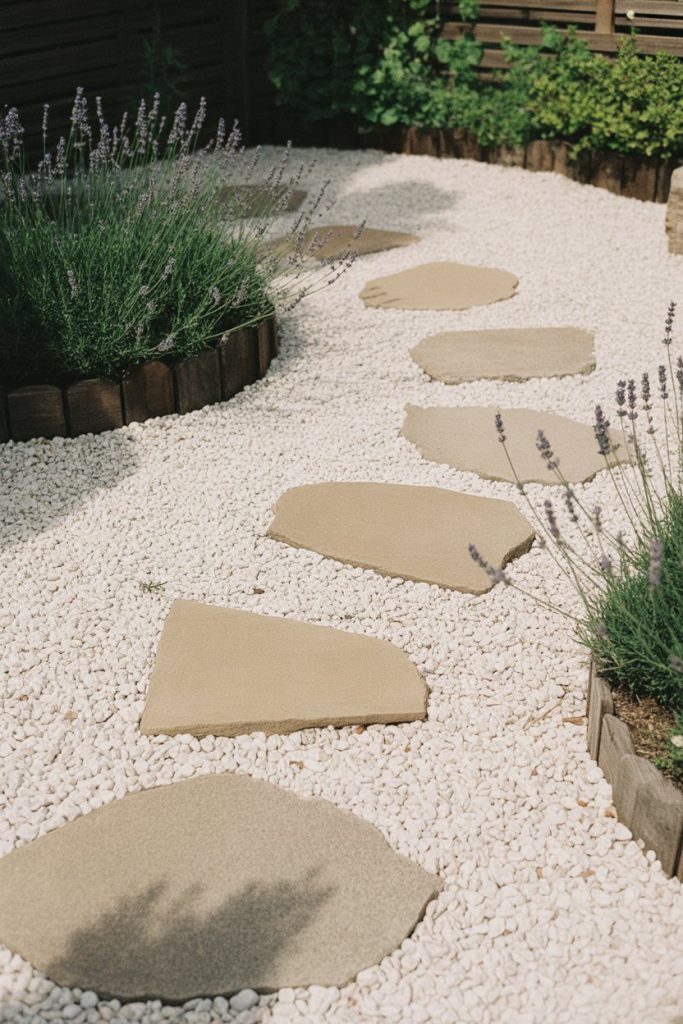
Combining gravel with pavers creates a layered, organic look that feels both intentional and effortless. This paving stones pea gravel approach typically involves setting pavers in a grid or stepping-stone pattern with gravel filling the negative space between them. It’s an excellent solution for sloped yards or areas where full paver coverage would be overkill, and it costs significantly less than solid paver installations. 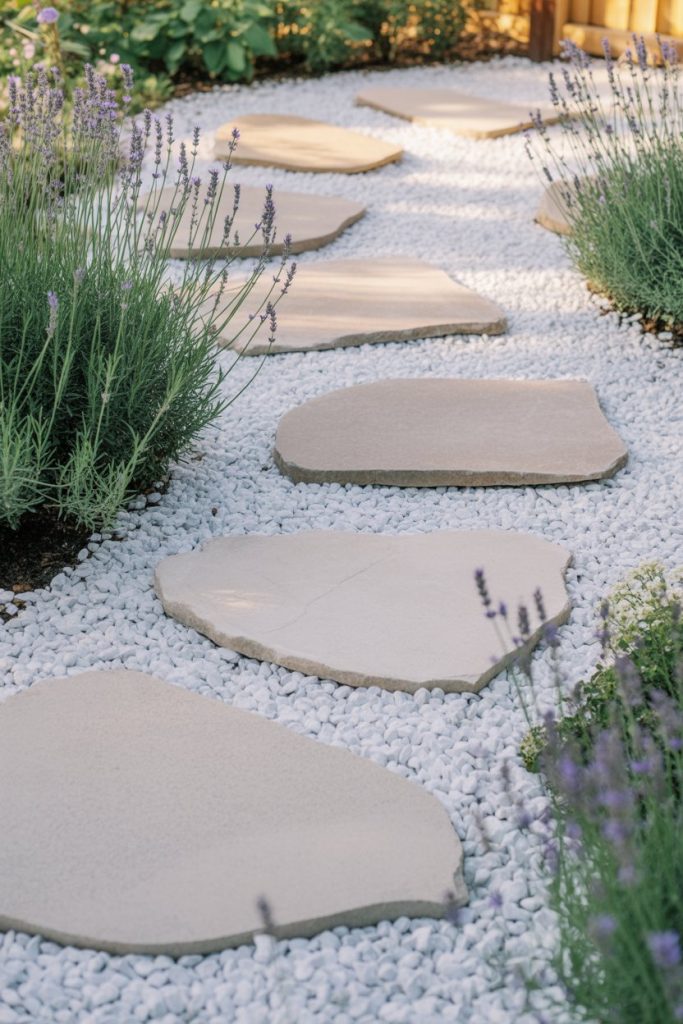
A landscape designer in Austin once told me this combination is her most-requested design for clients who want low-maintenance yards without the sterile look of artificial turf. The gravel allows rainwater to percolate naturally, reducing runoff and supporting healthier soil. Maintenance is straightforward—rake the gravel occasionally to keep it looking fresh, and the pavers will handle foot traffic without shifting or settling into the ground.
5. DIY Stone Patio with Irregular Flagstone
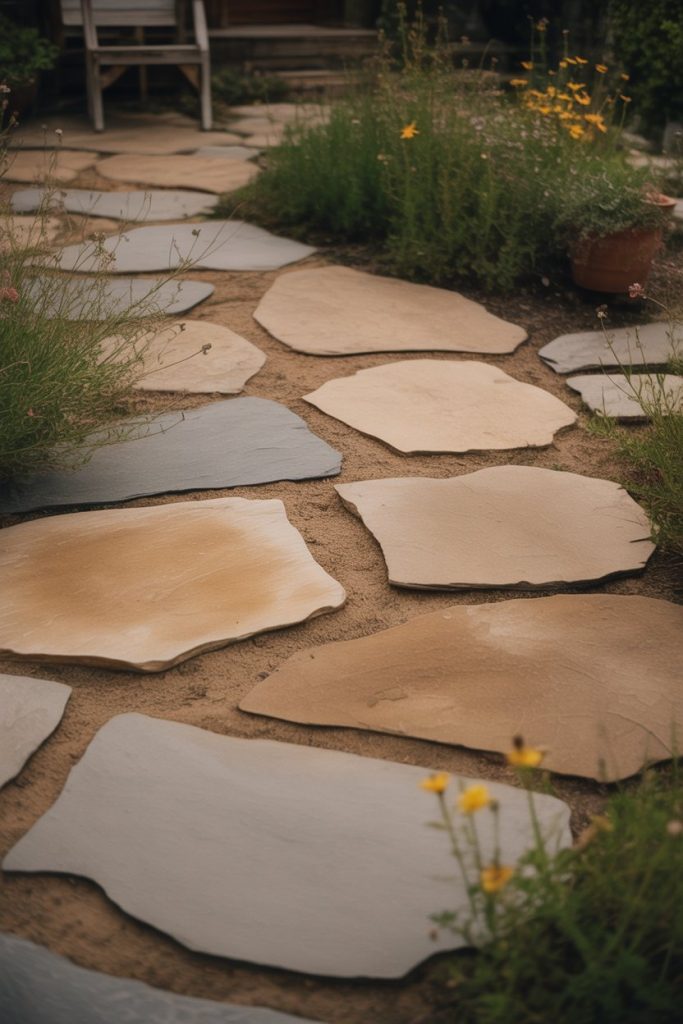
Tackling a DIY stone patio project with irregular flagstone gives you a one-of-a-kind outdoor space with character that manufactured pavers can’t replicate. Natural stone in varying shapes and sizes creates a puzzle-like surface that feels organic and established, even when newly installed. This approach works beautifully in rustic, cottage, or mountain home settings where the goal is to blend the patio into the surrounding landscape. 
Expect to pay between $8 and $20 per square foot for flagstone materials, depending on the type—bluestone runs higher, while sandstone and limestone are more budget-friendly. The installation is labor-intensive but manageable for determined DIYers: you’ll need to excavate 6-8 inches, add a gravel base, and carefully fit each stone like a jigsaw puzzle. The reward is a patio that looks like it’s been there for decades, not days.
6. Backyard Fire Pit Paver Circle
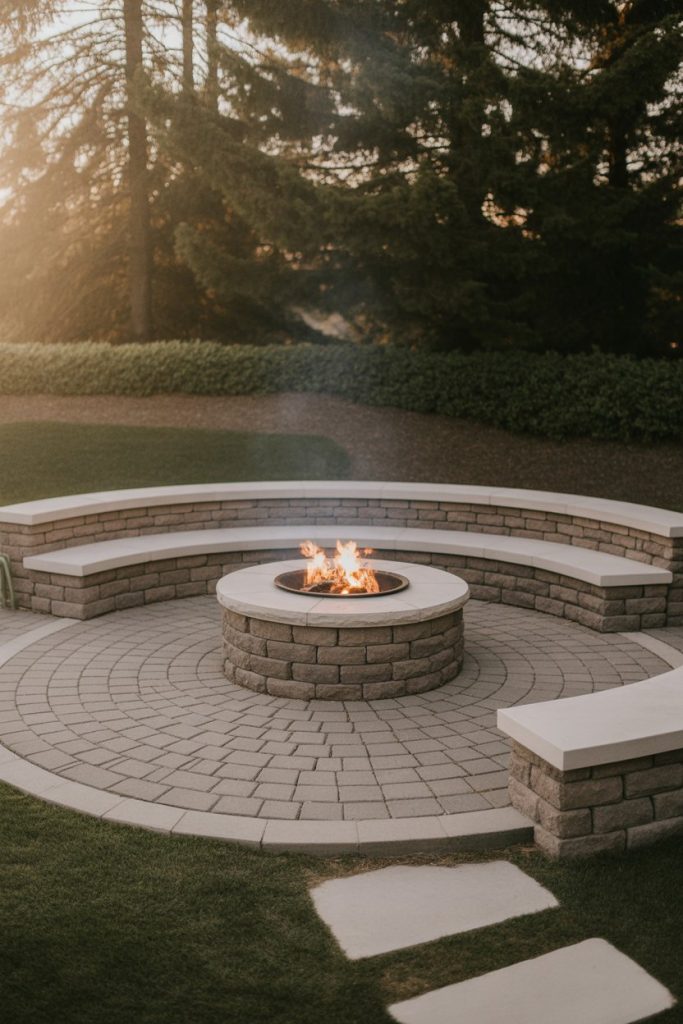
A fire pit surrounded by pavers in a circular or square configuration creates an instant gathering spot that extends your outdoor season into cooler months. This backyard feature has become standard in American homes from Colorado to Connecticut, where families want a cozy focal point for evening conversations and marshmallow roasting. The paver base provides a safe, stable surface that won’t shift or become a tripping hazard in low light. 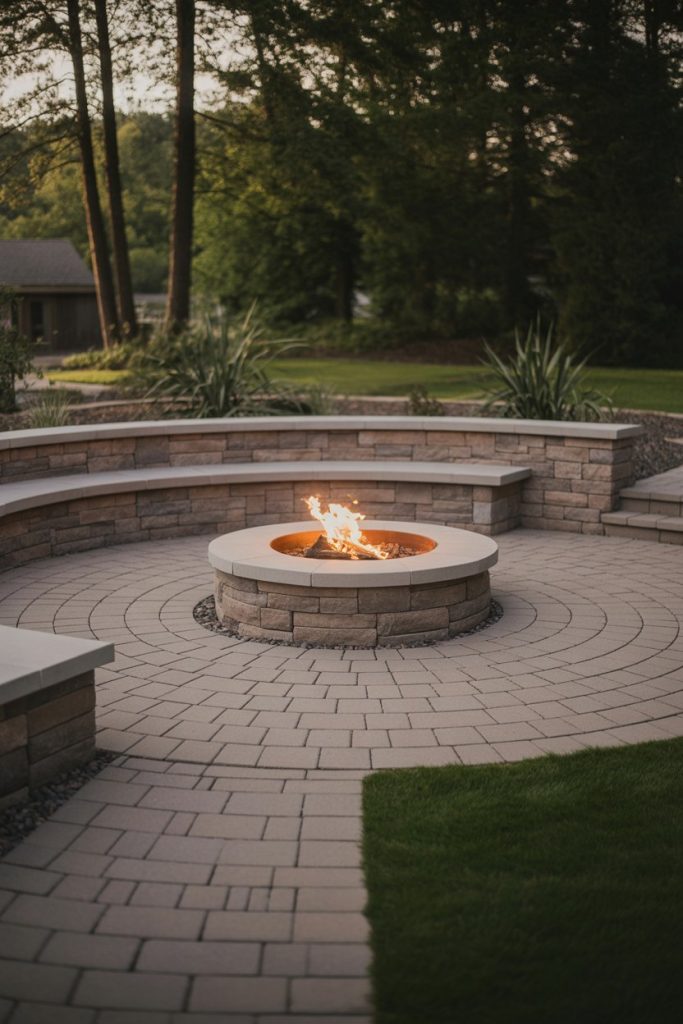
Fire codes vary significantly by municipality, so check local regulations before you start—some areas require fire pits to be at least 10 feet from structures, while others mandate specific materials or depths for the base. Common mistakes include placing the fire pit too close to overhanging trees or using pavers that aren’t rated for high heat, which can crack and deteriorate quickly. Invest in fire-rated pavers for the immediate ring around the pit, even if you use standard pavers for the surrounding area.
7. Large Format Paver Patio for Entertaining

When you’re designing a large patio for serious entertaining, oversized pavers create a sophisticated canvas that can accommodate multiple seating areas, dining spaces, and pathways. These expansive surfaces work best when you define different zones—a dining area near the house, a lounge section with sofas farther out, and perhaps a separate grilling station. The size allows you to think about your outdoor space the same way you’d approach interior room design. 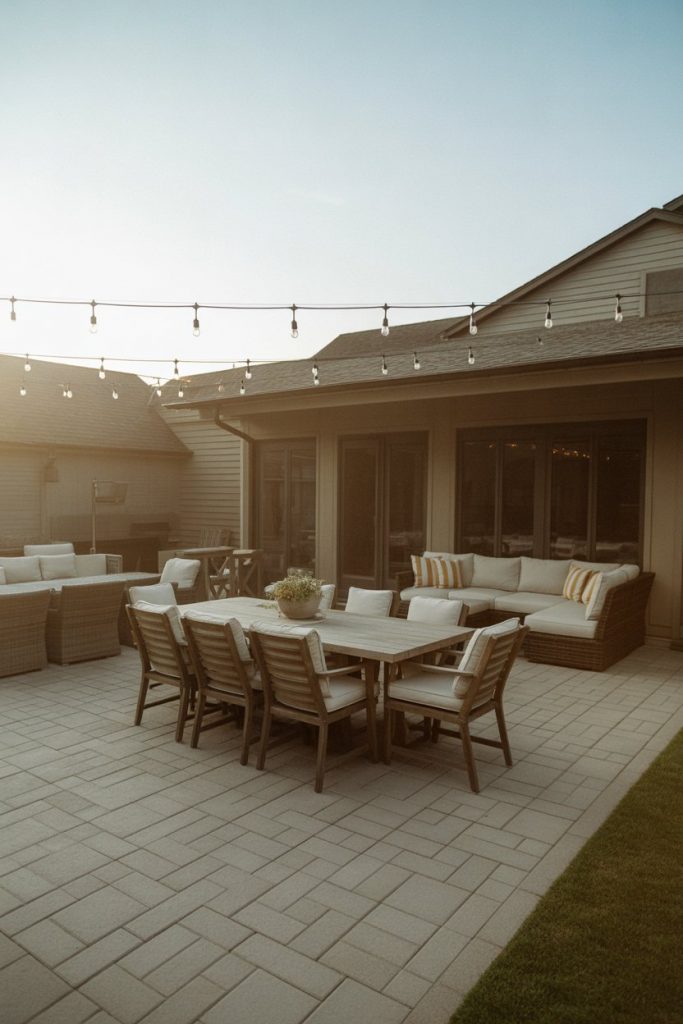
In suburban Texas and Florida, where outdoor entertaining is practically year-round, homeowners often invest $15,000 to $30,000 in these large-scale patio projects. The key to making a big patio feel cohesive rather than empty is layering in elements like outdoor rugs, potted plants, and lighting at different heights. Without these details, even a beautifully paved surface can feel more like a parking lot than a living space.
8. Raised Paver Patio with Built-In Planters
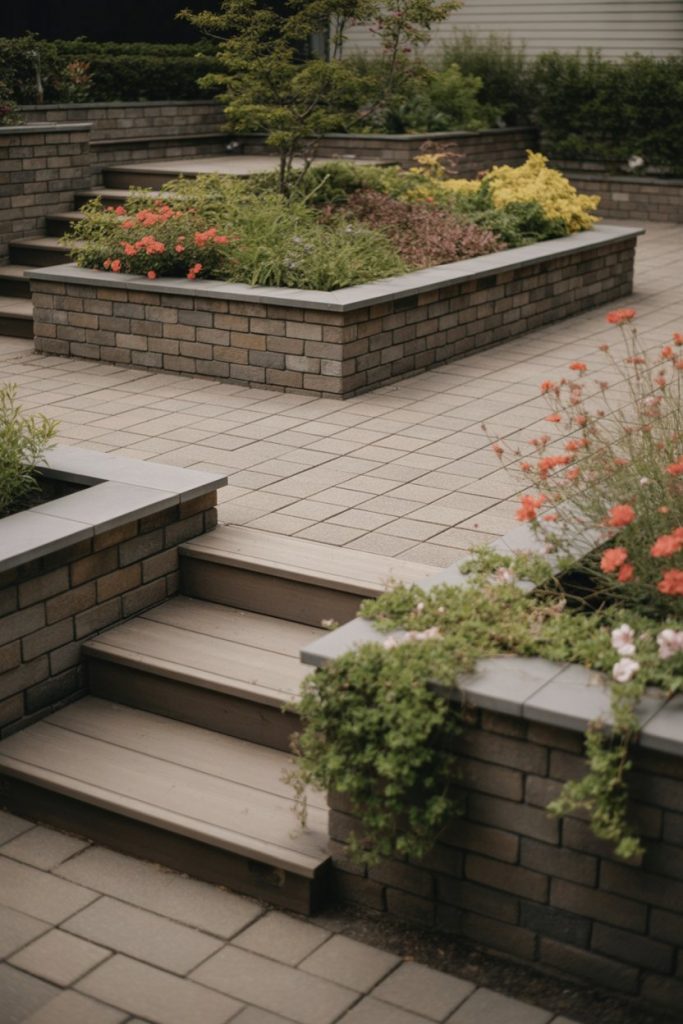
A raised paver platform creates drama and definition in your yard, especially when it includes built-in planters that soften the edges and add vertical interest. This design works particularly well on sloped lots where a level entertaining surface requires some elevation, or in flat yards where you want to create distinct zones. The raised structure also provides excellent drainage and keeps your patio dry even after heavy rain. 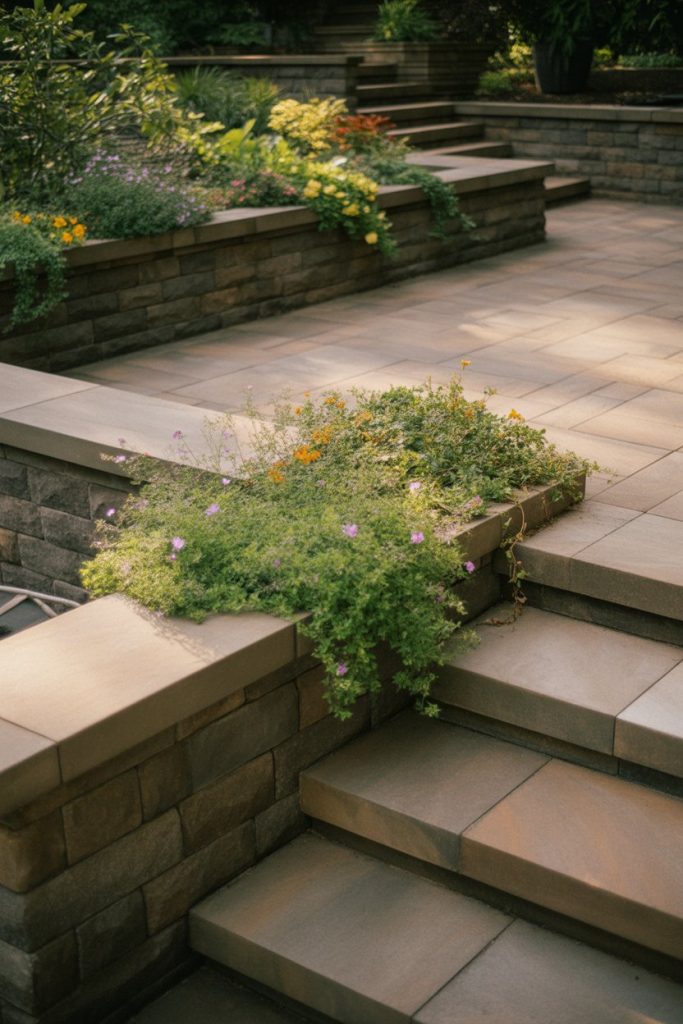
Where this works best: hillside properties in the Pacific Northwest, mountain homes in Colorado, or any yard with a significant grade change. The construction requires retaining wall expertise—you’ll need proper footings, drainage behind the walls, and possibly geogrid reinforcement depending on the height. Many homeowners underestimate the structural complexity and end up with walls that lean or crack within a few years, so this is often worth hiring out to professionals.
9. Paver Patio Extension from Existing Deck
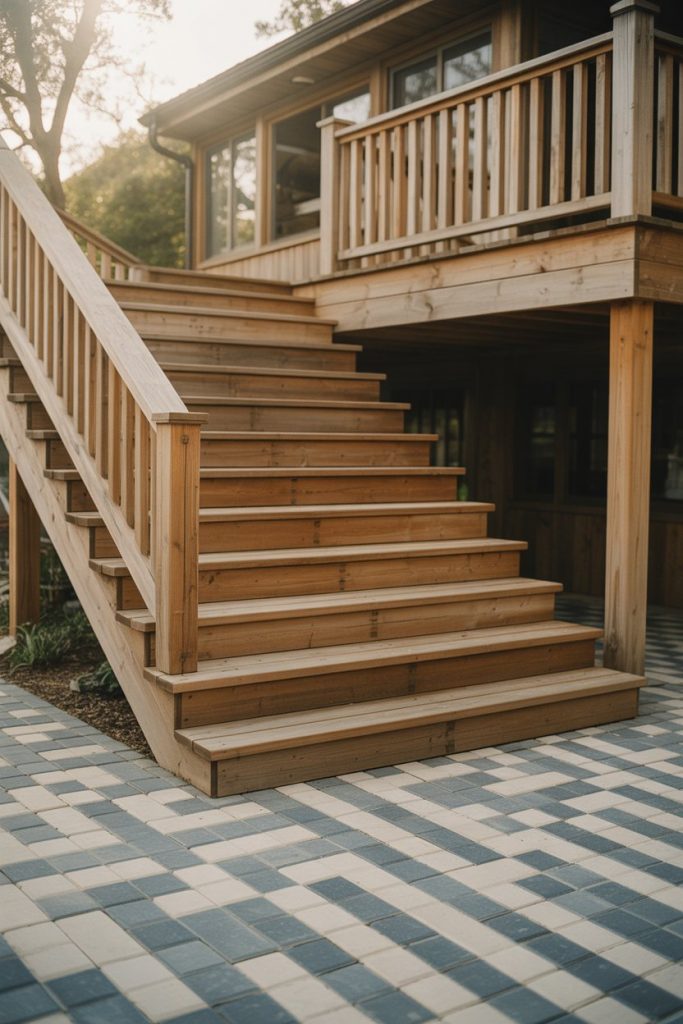
Adding a paver extension to an existing deck creates a seamless transition between levels and dramatically increases your usable outdoor space. This approach is popular among homeowners who find their deck too small for gatherings but don’t want to tear it down and start over. The ground-level paver section can host lawn games, additional seating, or a fire pit area that wouldn’t be safe on the elevated wooden deck. 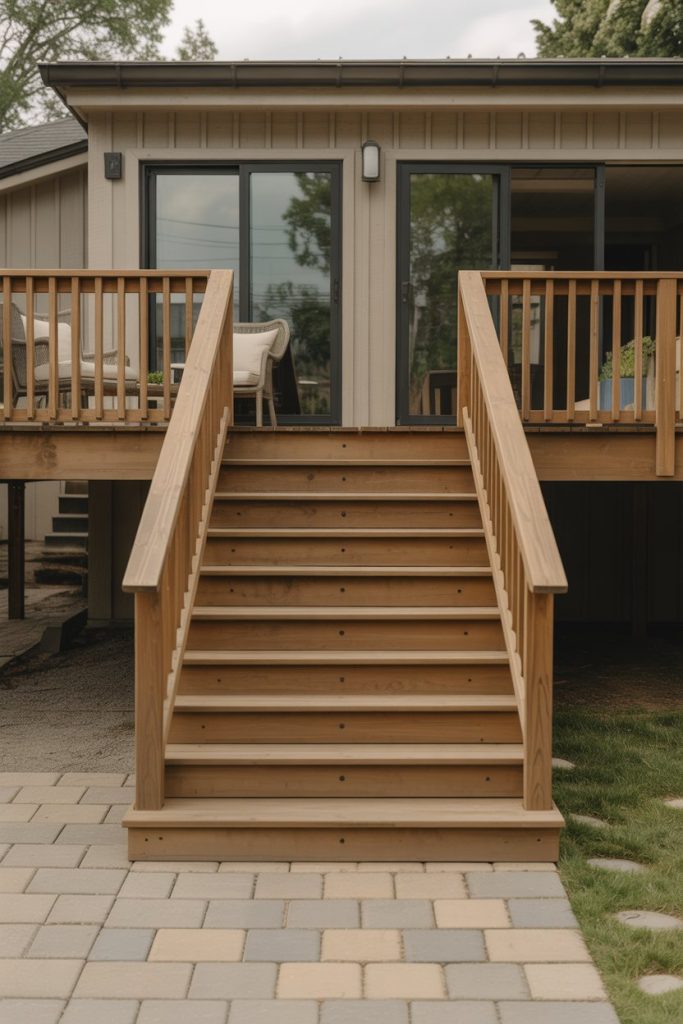
The practical advantage here is budget flexibility—you can phase the project over time, completing the deck refinishing one year and adding the paver extension the next. For color coordination, choose pavers that echo the deck’s stain color or complement your home’s exterior; cool gray pavers pair beautifully with warm wood tones, while tan or beige pavers create a more monochromatic, cohesive look.
10. Pergola-Covered Paver Dining Area
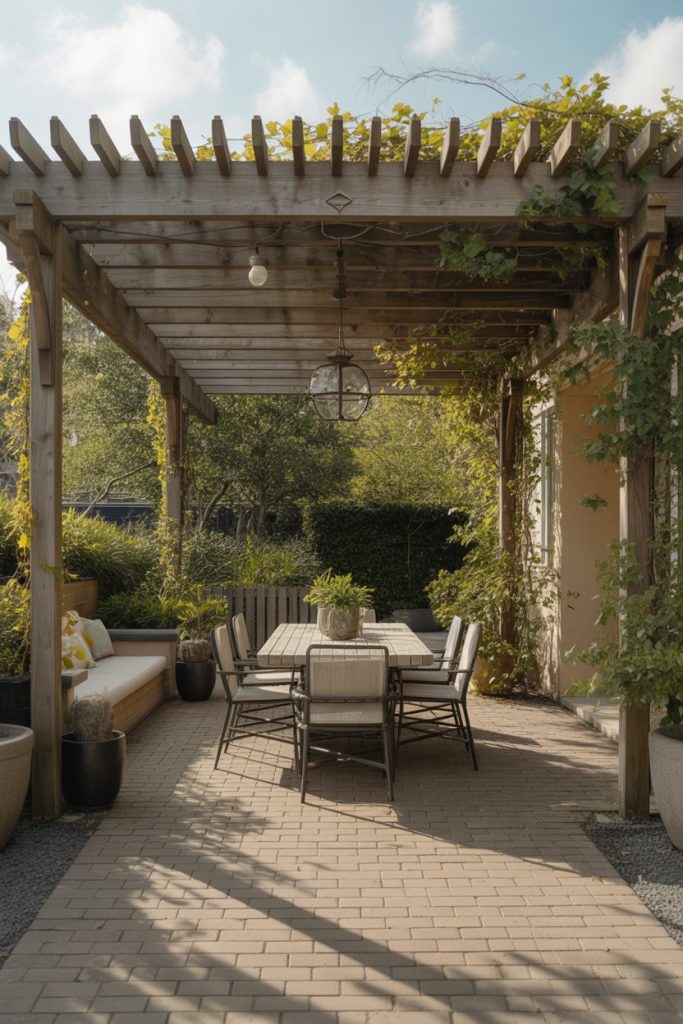
Installing a pergola over a portion of your paver patio transforms it from a sunny lounging spot into an all-day retreat. The overhead structure provides just enough shade for comfortable dining while maintaining an open, airy feel that solid roofs can’t match. Homeowners across the Sun Belt—from Arizona to the Carolinas—are adding pergolas to their paver patios to extend usability during peak heat hours. 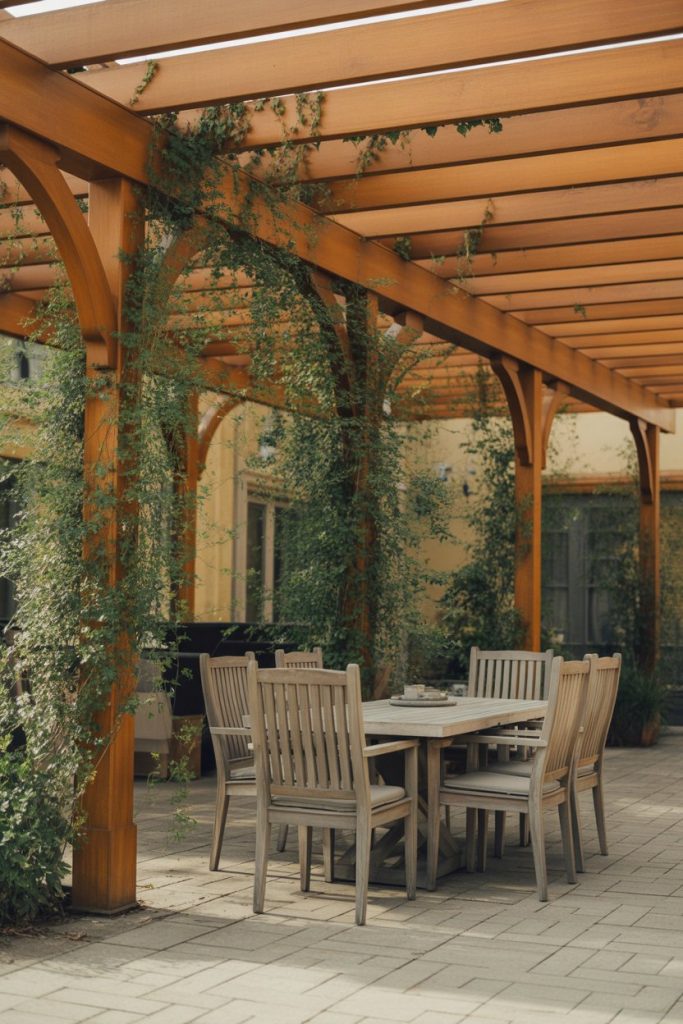
A neighbor in Phoenix installed a pergola over her paver patio and immediately noticed she could use the space during summer mornings, something that was impossible before. The structure also gave her anchor points for string lights and hanging plants, turning a flat patio into a dimensional, room-like space. If you’re considering this upgrade, make sure your paver base can support the pergola posts—you may need to pour concrete footings at post locations for stability.
11. Artificial Turf and Paver Border Design
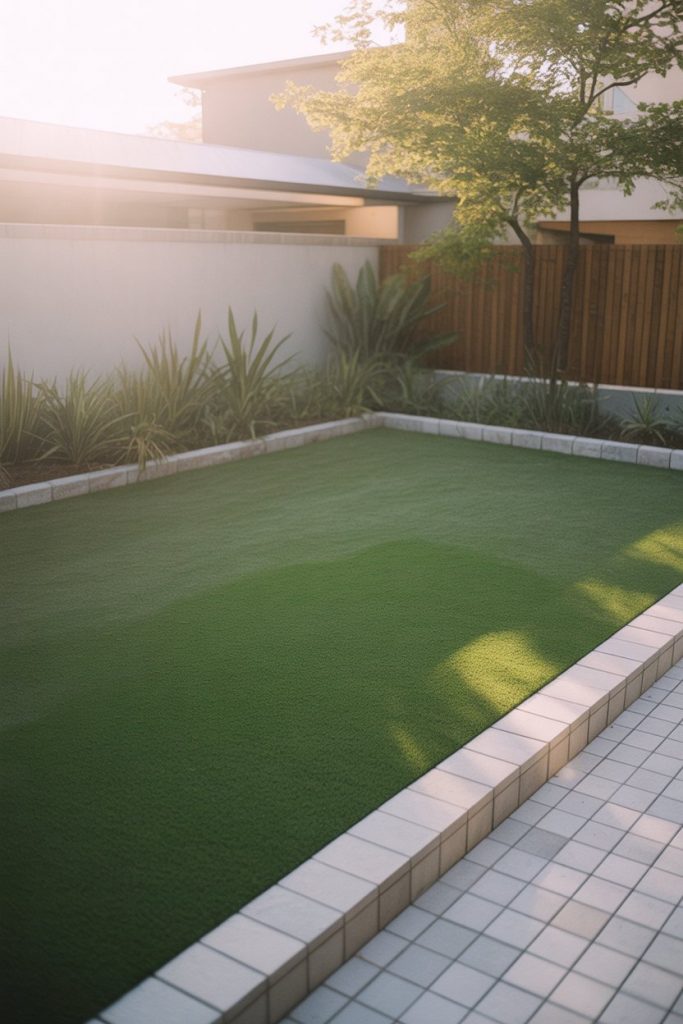
Framing a section of artificial turf with a paver border creates a kid-friendly, pet-friendly yard that stays green year-round with zero watering. This combination has surged in popularity in drought-prone states like California and Nevada, where water restrictions make natural lawns impractical. The pavers provide a clean edge that prevents the turf from shifting and creates defined pathways or seating areas. 
Expert landscapers warn against cheap artificial turf—the initial savings vanish when it flattens after one season or fades to an unnatural blue-green. Quality turf with good drainage and realistic color variation costs $6 to $12 per square foot installed, but it’ll last 15 years or more. Pair it with permeable pavers for the border rather than solid concrete to maintain proper drainage across your entire yard.
12. Cement Paver Patio with Integrated Lighting
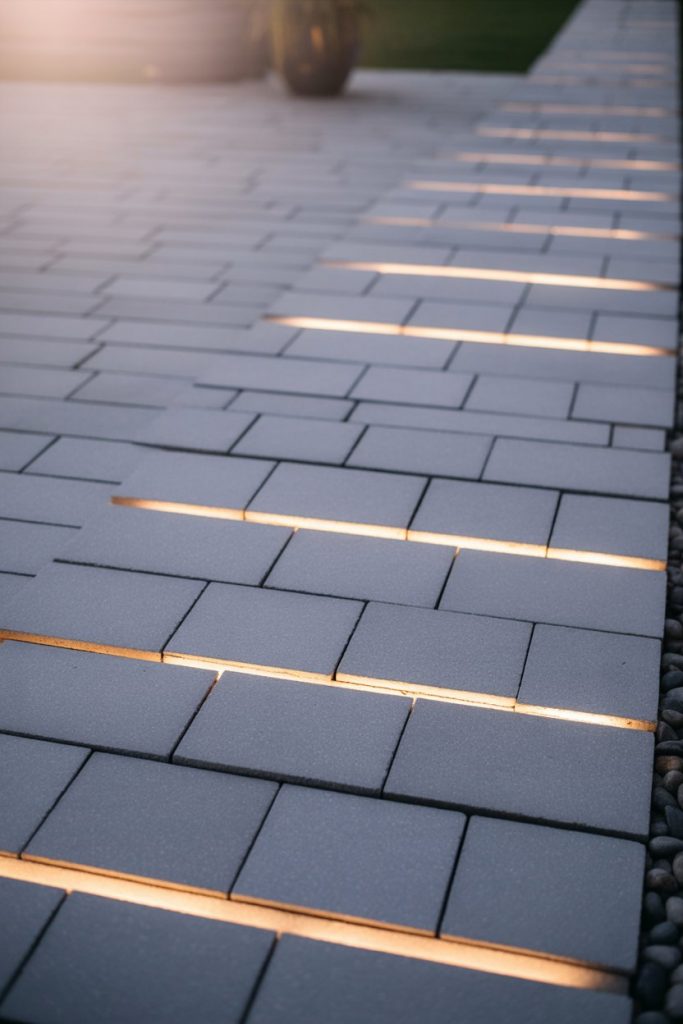
Cement pavers with built-in LED lighting transformyour patio from a daytime space into an evening destination. These illuminated pavers contain small solar or low-voltage lights that glow softly after dark, creating ambiance while also improving safety along pathways and steps. The technology has become much more reliable in recent years, making it a practical addition rather than just a decorative flourish. 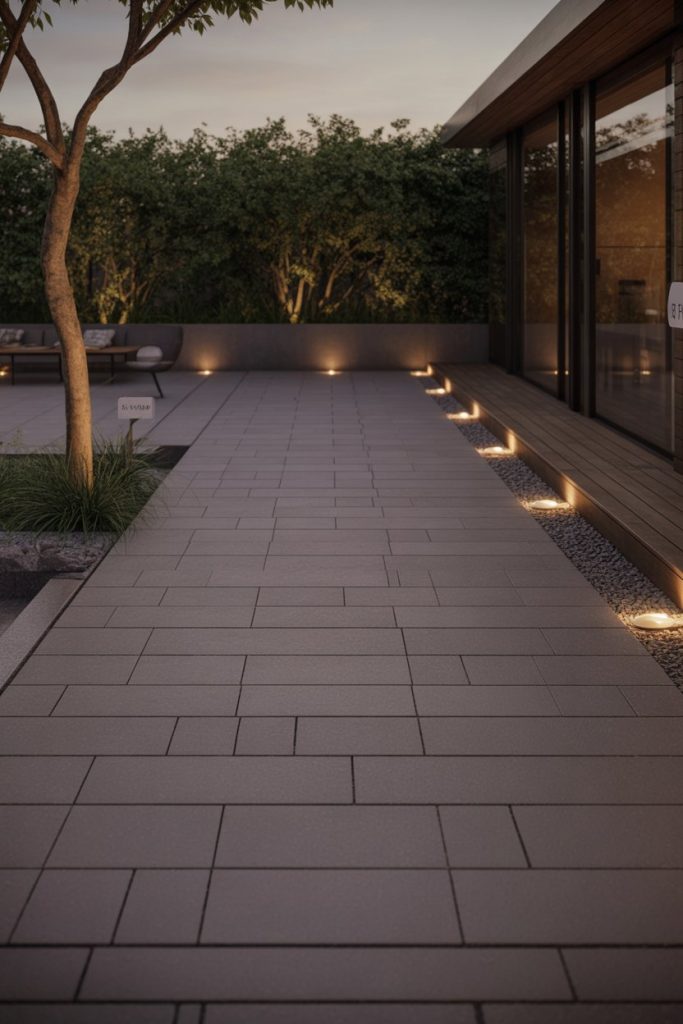
Where this works best: patios with multiple levels or stairs, winding pathways through gardens, or entertaining areas where you want lighting that doesn’t require overhead fixtures. The installation requires planning electrical runs before you lay pavers (for low-voltage systems) or positioning solar units where they’ll get adequate sunlight. Battery-powered options exist but require more maintenance and regular replacement, making them less ideal for permanent installations.
13. Round Paver Patio with Central Garden Bed
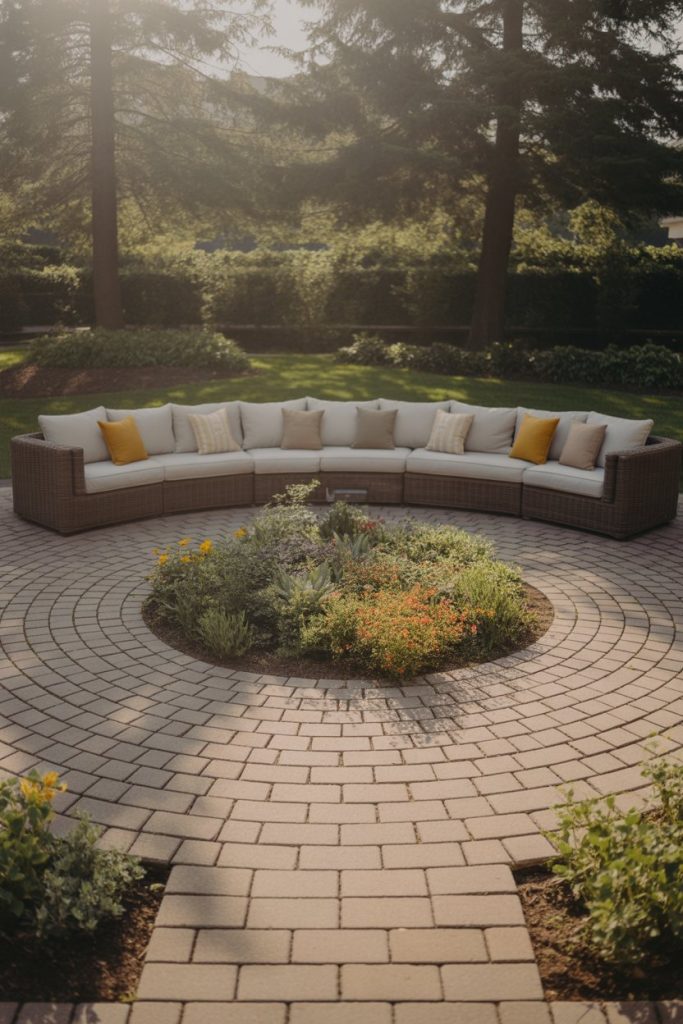
A round paver patio with a circular garden bed in the center creates a distinctive focal point that breaks up the typical rectangular outdoor space. This design works especially well in smaller yards where you want maximum impact without overwhelming the area. The central planting can house a small tree, ornamental grasses, or seasonal flowers that change the patio’s character throughout the year. 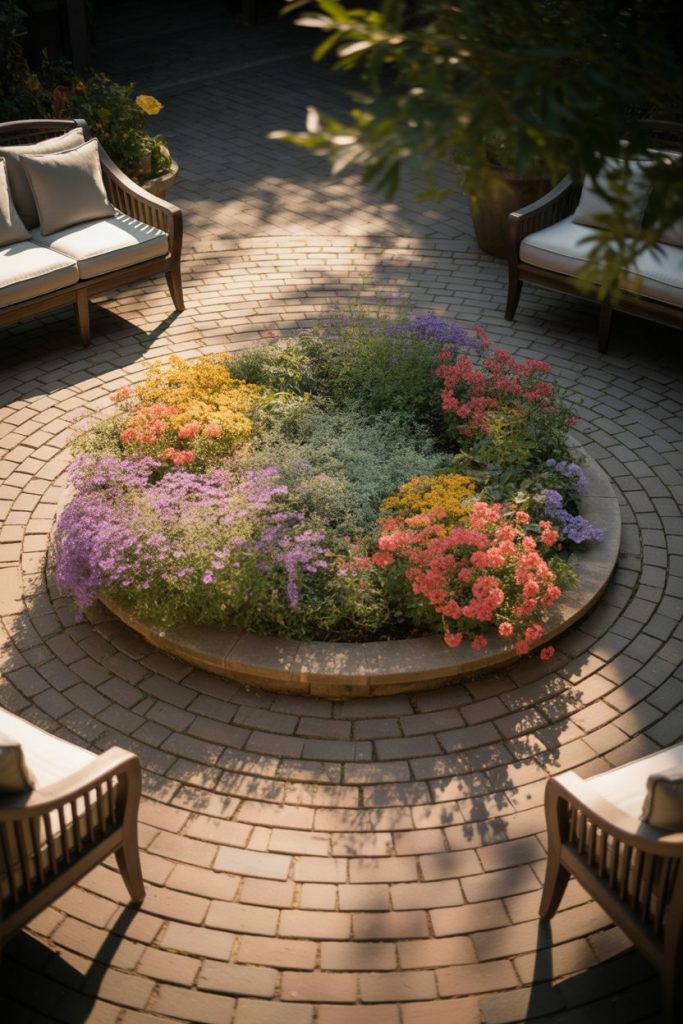
The curved layout does require more cutting and fitting than straight-edge designs, which increases labor time whether you’re DIYing or hiring out. Many homeowners find the unique result worth the extra effort—it’s a conversation starter that neighbors and guests always notice. For the smoothest curves, mark your circle with spray paint or string and stake, and cut pavers with a wet saw rather than trying to snap them, which creates rough edges on curved cuts.
14. Paver Patio with Integrated Outdoor Kitchen
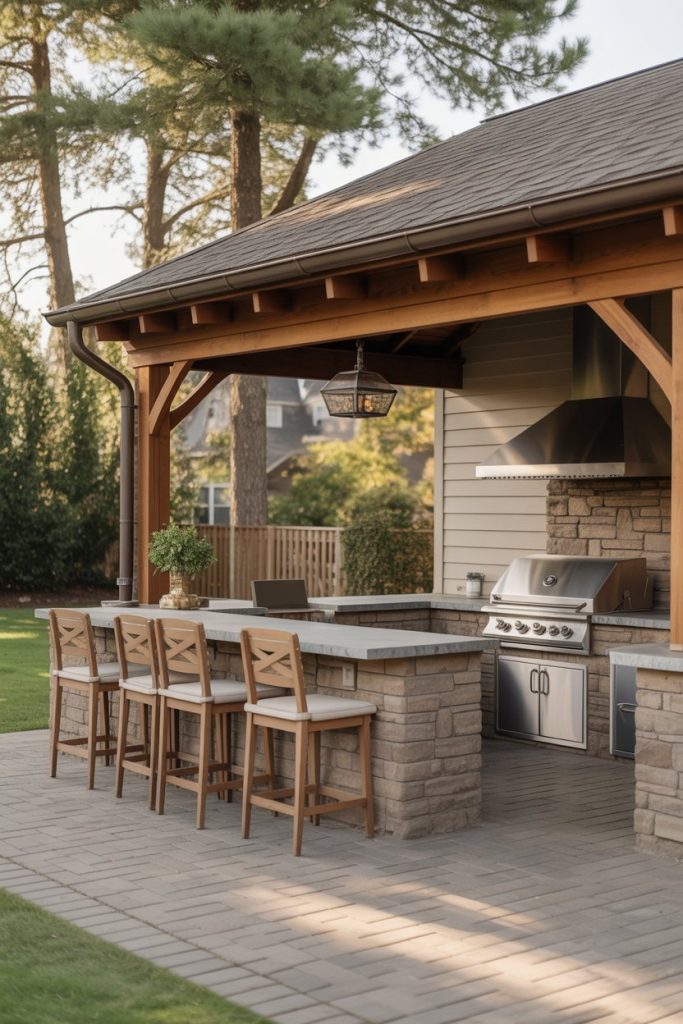
Designing your paver patio to include a built-in outdoor kitchen elevates the space from simple seating area to full-function cooking and entertaining zone. This typically means creating a larger paved surface that can support the weight of masonry structures like pizza ovens, grills, countertops, and storage cabinets. The layout needs to accommodate both the work triangle (like indoor kitchens) and gathering spaces where guests can hang out while you cook. 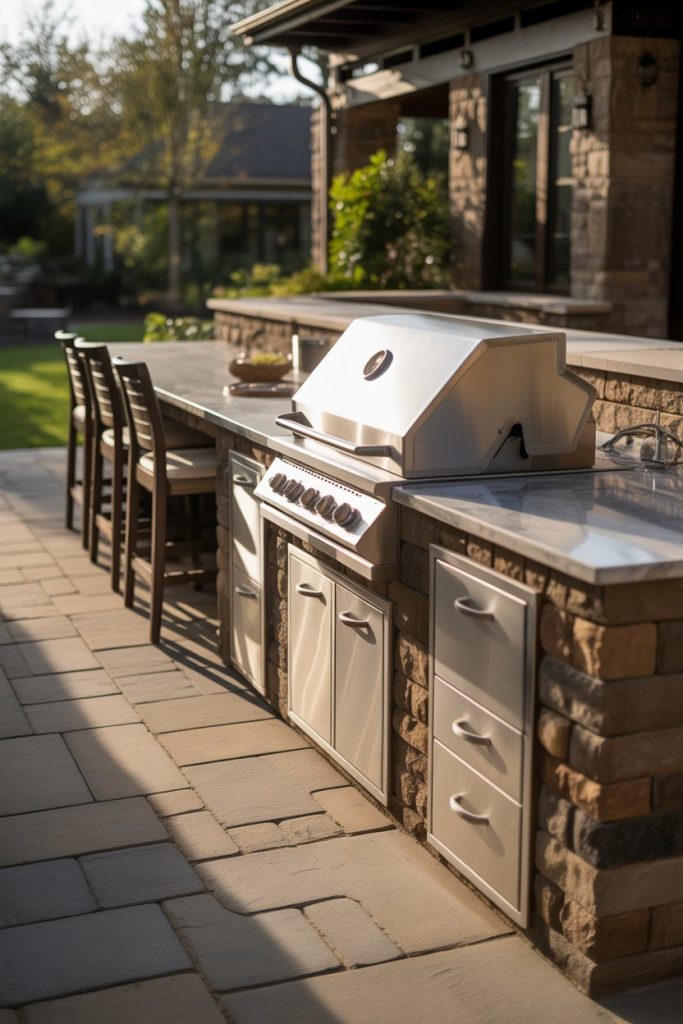
Real homeowner behavior: most people who install elaborate outdoor kitchens use them far more than they expected, especially in states with mild winters like Arizona, Southern California, and Florida. The paver base needs to be at least 6 inches of compacted gravel to handle the concentrated weight of masonry structures—skimping on this foundation leads to settling and cracking. Budget $20,000 to $50,000 for a full outdoor kitchen with quality appliances and masonry work.
15. Narrow Side Yard Paver Walkway
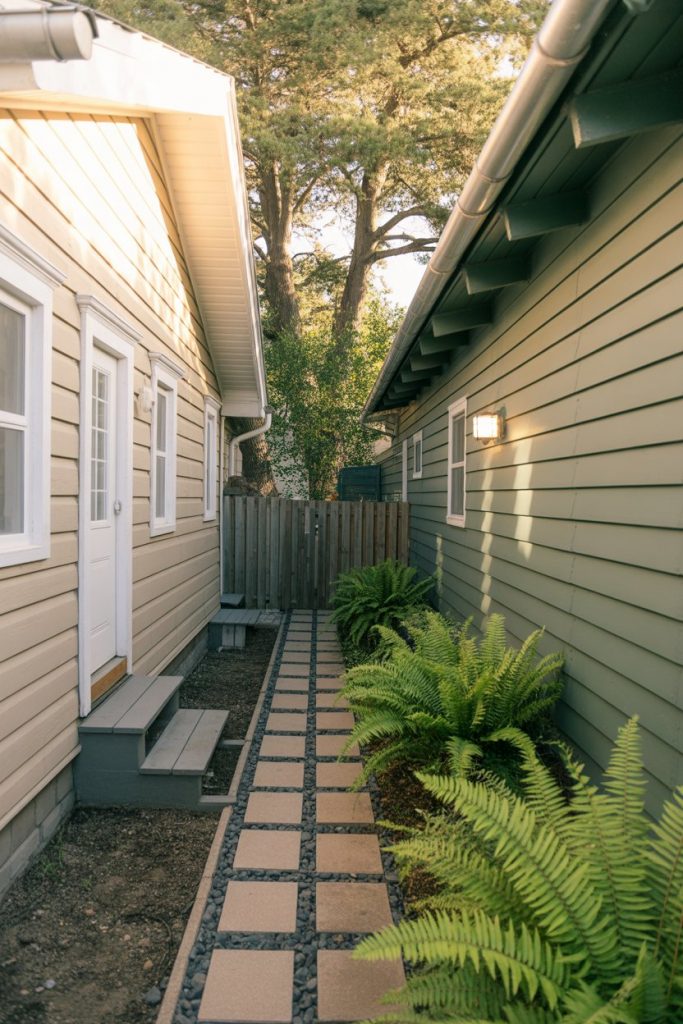
Transforming a neglected side yard into a functional paver pathway solves drainage issues while creating a charming connection between front and backyard spaces. These narrow areas are often muddy, weed-filled afterthoughts, but a well-designed paver installation turns them into purposeful circulation routes. Add low-profile lighting and shade-loving plants along the edges to make the walkway feel intentional rather than utilitarian. 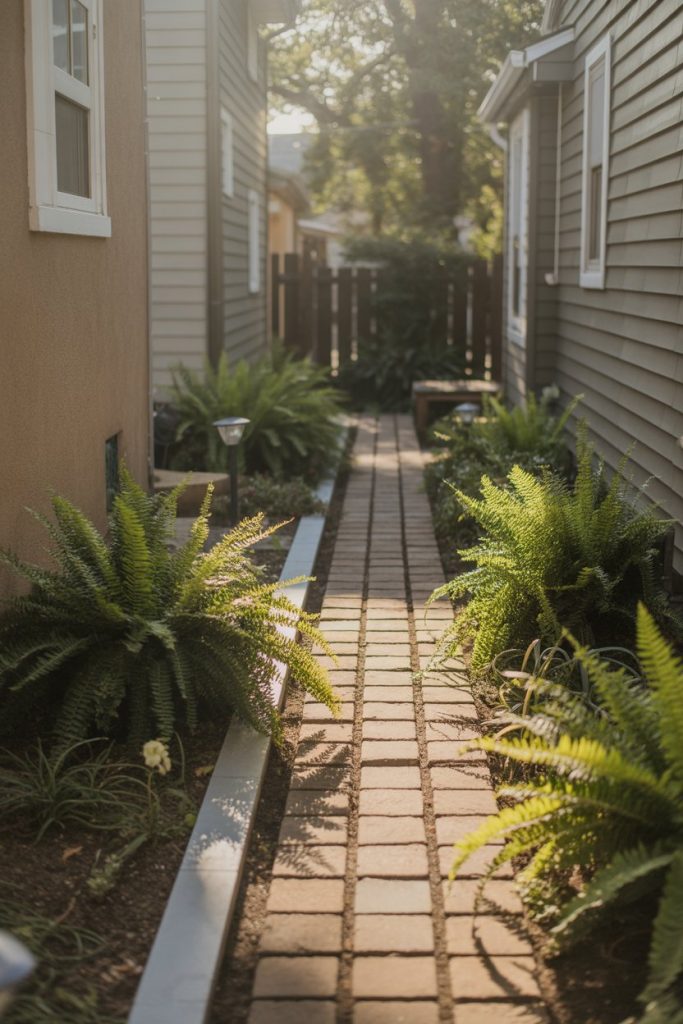
The biggest mistake homeowners make with side yard pavers is not addressing drainage first. If water naturally flows through this area during rain, you need to slope the pavers properly or install a French drain underneath, or you’ll end up with standing water and shifted pavers. In the Pacific Northwest and other rainy regions, this drainage planning is non-negotiable—skip it and you’ll be redoing the project within two years.
16. Mediterranean-Style Paver Courtyard
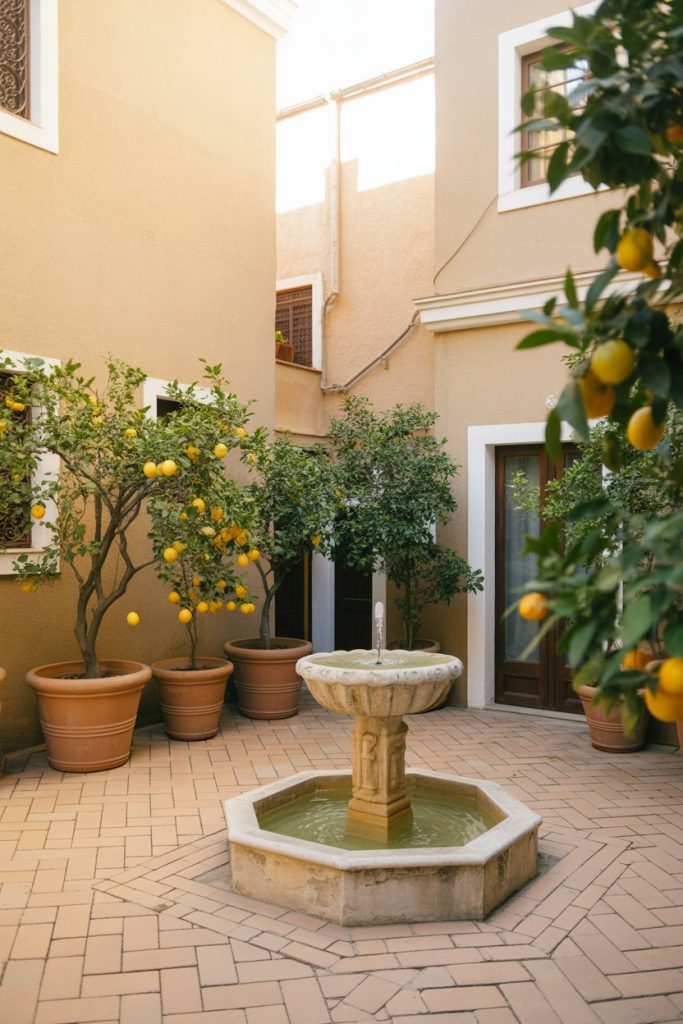
Creating a Mediterranean-inspired courtyard with warm-toned pavers, a central fountain or planter, and surrounding walls gives your outdoor space a resort-like atmosphere. This design draws from Spanish and Italian influences, using terracotta or golden-tan pavers that evoke old-world charm. It works particularly well in Southwestern and California homes where the architecture already leans toward stucco, tile, and wrought iron. 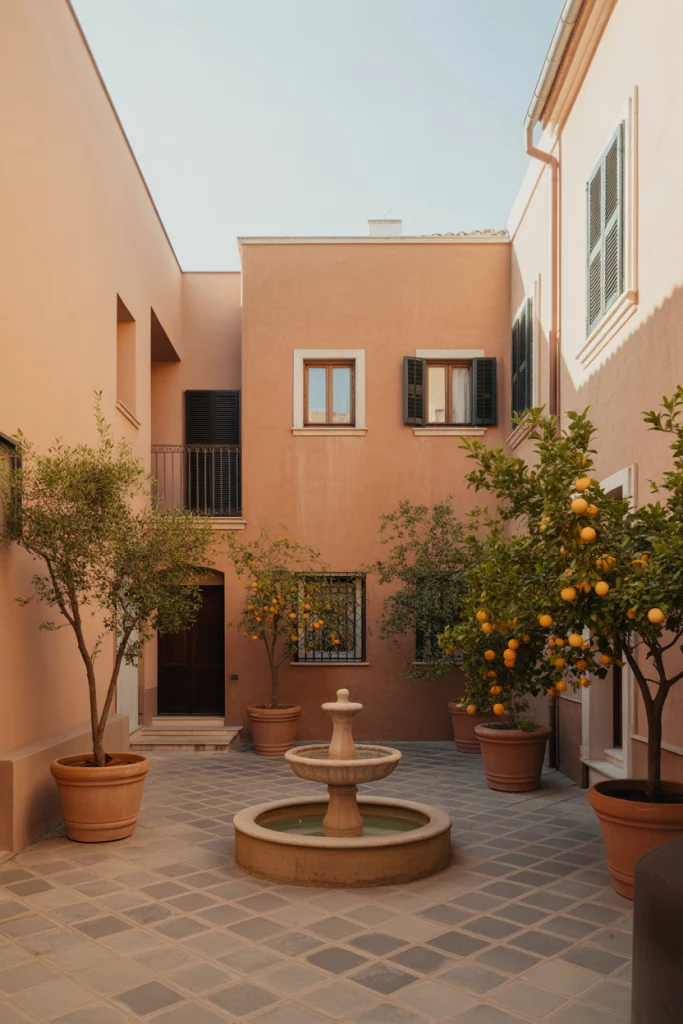
A designer in Santa Barbara mentioned that her clients often request this style after traveling to Spain or Italy—they want to recreate that vacation feeling in their own backyard. The enclosed nature of a courtyard creates a microclimate that’s often several degrees cooler than exposed areas, making it ideal for regions with hot summers. Privacy is another major benefit; the walls or hedging create a secluded retreat that feels miles away from neighbors even in dense suburban settings.
17. Paver and Wood Deck Combination
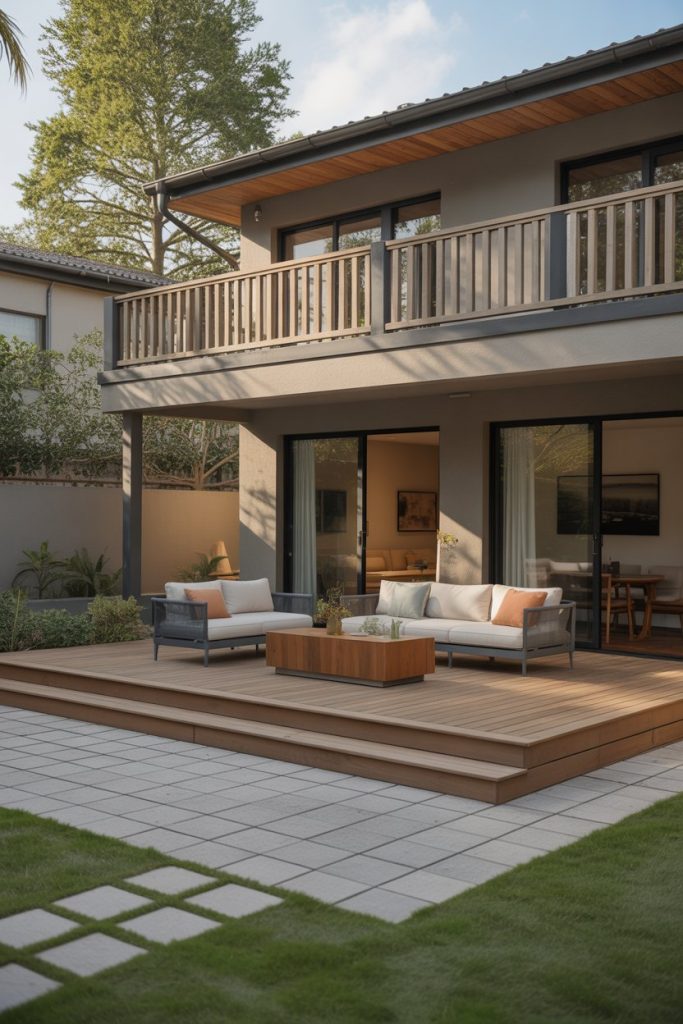
Mixing pavers with wood decking creates visual interest and helps define different zones within your outdoor space. This approach often involves a raised wood deck for dining or lounging, with a ground-level paver section extending outward for lawn games, fire pits, or additional seating. The material contrast adds depth and makes each area feel purposeful rather than just a continuous surface. 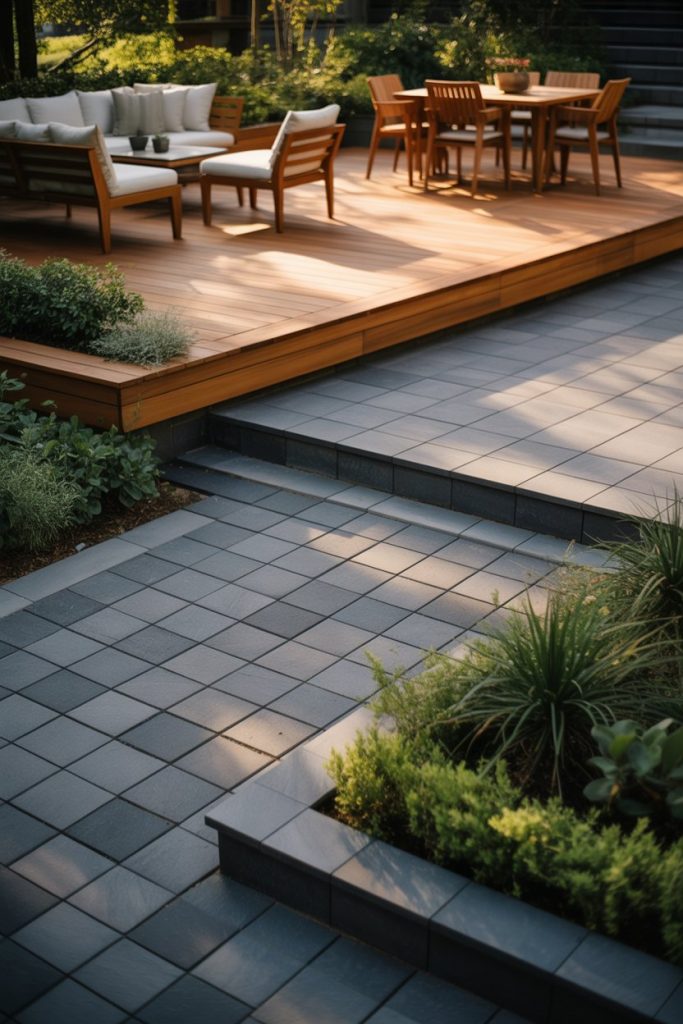
Budget-wise, this combination often makes sense when you already have a deck but want to expand without the expense of building more elevated structure. The paver section typically costs 40-60% less per square foot than extending a deck, especially if the deck is more than three feet off the ground and requires extensive framing and railing. For the smoothest visual transition, choose paver colors that complement your deck stain—warm wood pairs beautifully with charcoal or tan pavers.
18. Minimalist Japanese-Inspired Paver Design
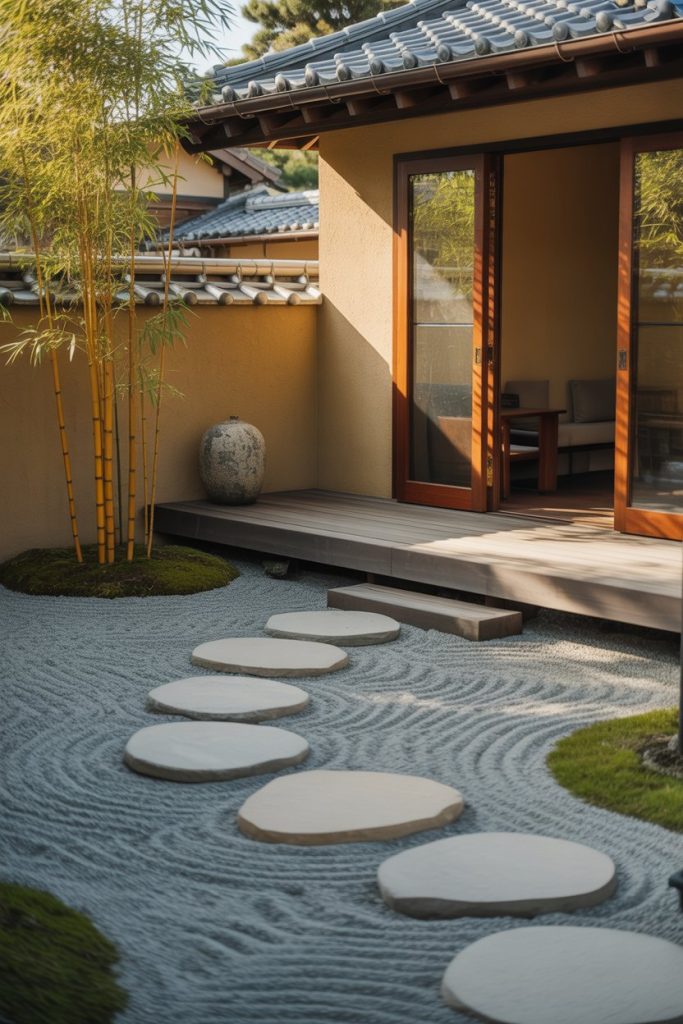
A Japanese-inspired paver patio emphasizes simplicity, negative space, and natural materials to create a meditative outdoor environment. This typically involves large stone or concrete pavers set with generous spacing, moss or low ground cover between them, and minimal ornamentation. The restraint creates a calming space that encourages relaxation rather than constant activity, perfect for morning coffee or evening unwinding. 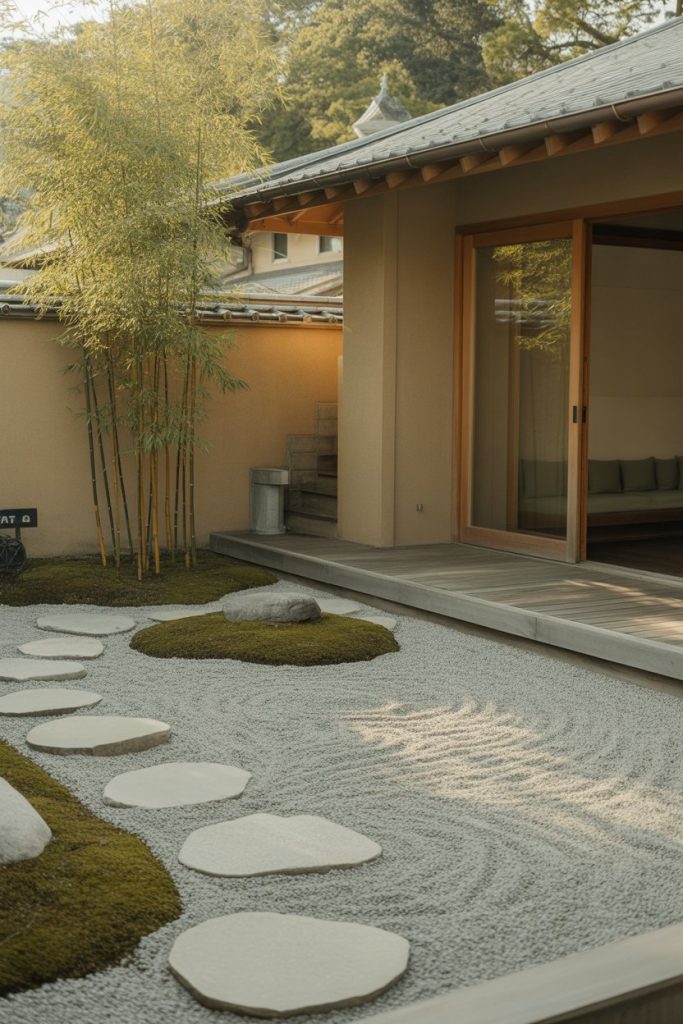
This design works best in urban settings where outdoor space is limited but you want it to feel intentional and restorative. In cities like Seattle, Portland, and San Francisco, where homeowners appreciate Asian design influences, these minimalist patios have become popular alternatives to traditional lawn-and-furniture setups. The key is restraint—every element should serve a purpose, and blank space is just as important as the pavers themselves.
19. Rustic Paver Patio with Reclaimed Materials
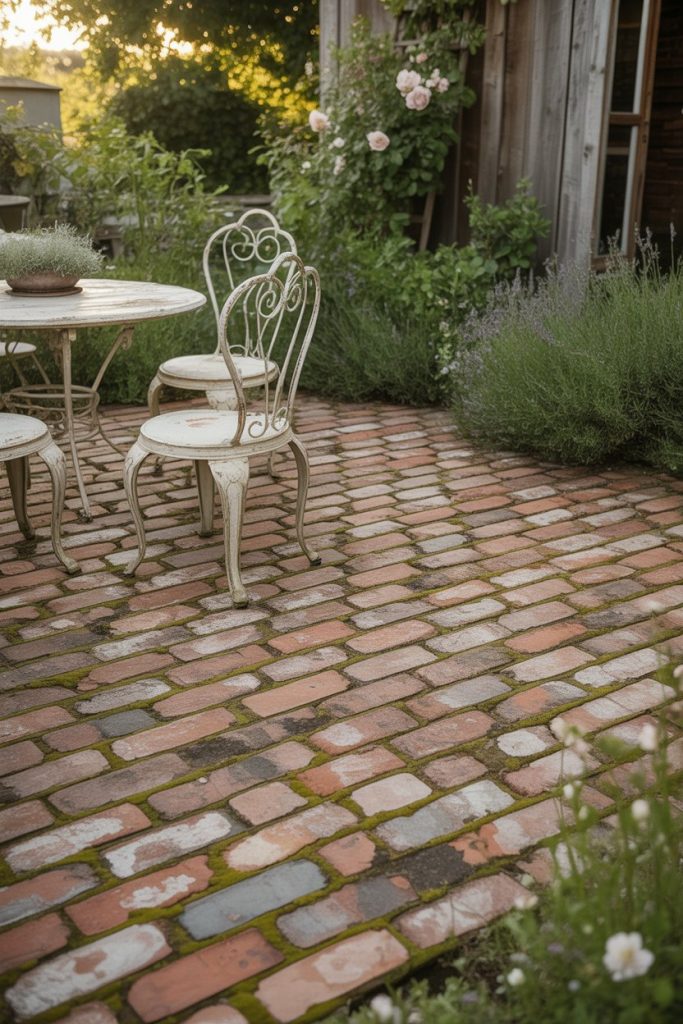
Using reclaimed brick or salvaged pavers adds instant character and sustainability to your outdoor project. These weathered materials come with patina, color variation, and historical texture that new pavers can’t replicate, creating a patio that looks like it’s been part of your property for generations. Architectural salvage yards and demolition companies often sell reclaimed pavers for less than new premium materials, making this an eco-friendly and budget-conscious choice. 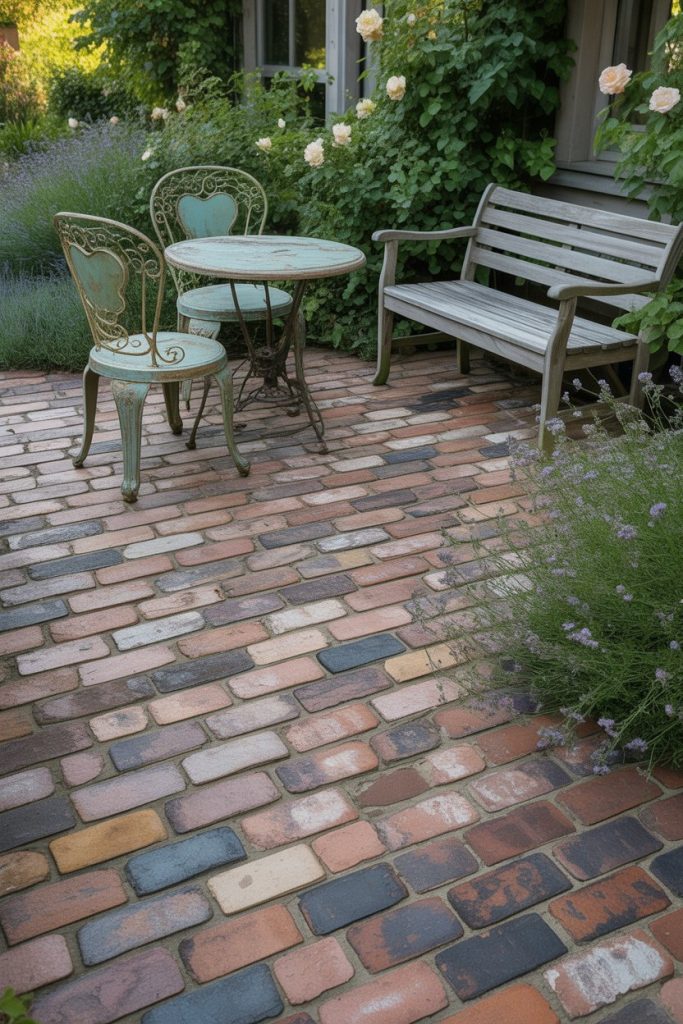
The practical challenge with reclaimed materials is consistency—you may not have enough identical pavers for a uniform pattern, which actually becomes part of the charm if you embrace it. The irregular colors and wear patterns create visual interest that monochromatic new pavers lack. Just inspect reclaimed pavers carefully for cracks or deterioration that could cause them to break during installation or shortly after. In New England and the Mid-Atlantic, where old brick buildings are common, reclaimed materials fit naturally with regional architecture.
20. Paver Patio with Built-In Seating Walls
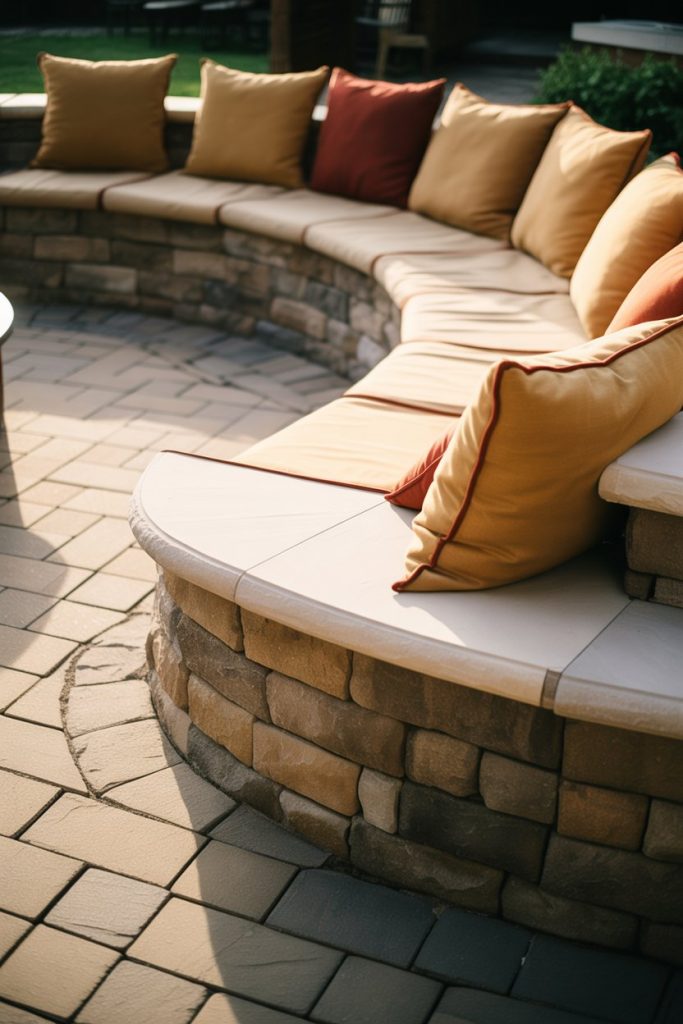
Integrating low seating walls into your paver patio design creates permanent guest seating while defining the edges of your outdoor room. These walls typically stand 18-20 inches high—perfect for perching with a drink during parties or providing extra seating when you’ve run out of chairs. The walls can be constructed from matching pavers, natural stone, or concrete blocks faced with stone veneer, depending on your budget and aesthetic preferences. 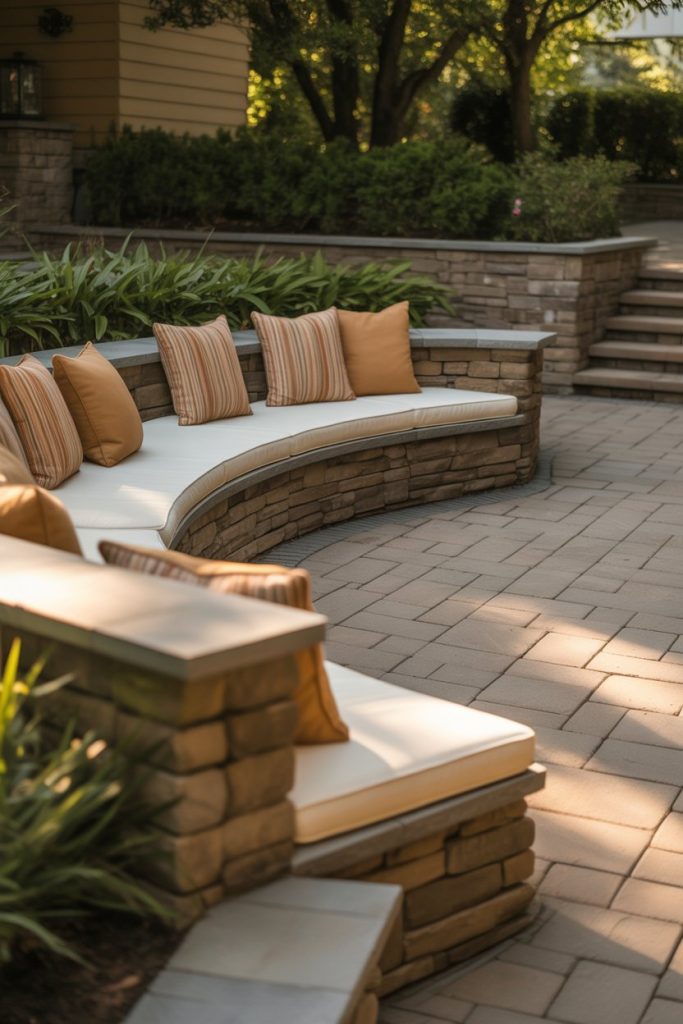
Where this works best: properties where you frequently host large gatherings and need flexible seating, or smaller patios where you want built-in elements to maximize space efficiency. The walls also serve as planter beds on the back side, allowing you to create vertical interest with flowers and shrubs. Make sure to include proper drainage behind the walls and use cap stones on top to create a smooth, comfortable seating surface—exposed wall blocks aren’t pleasant to sit on.
21. Contemporary Paver Grid with Ground Cover
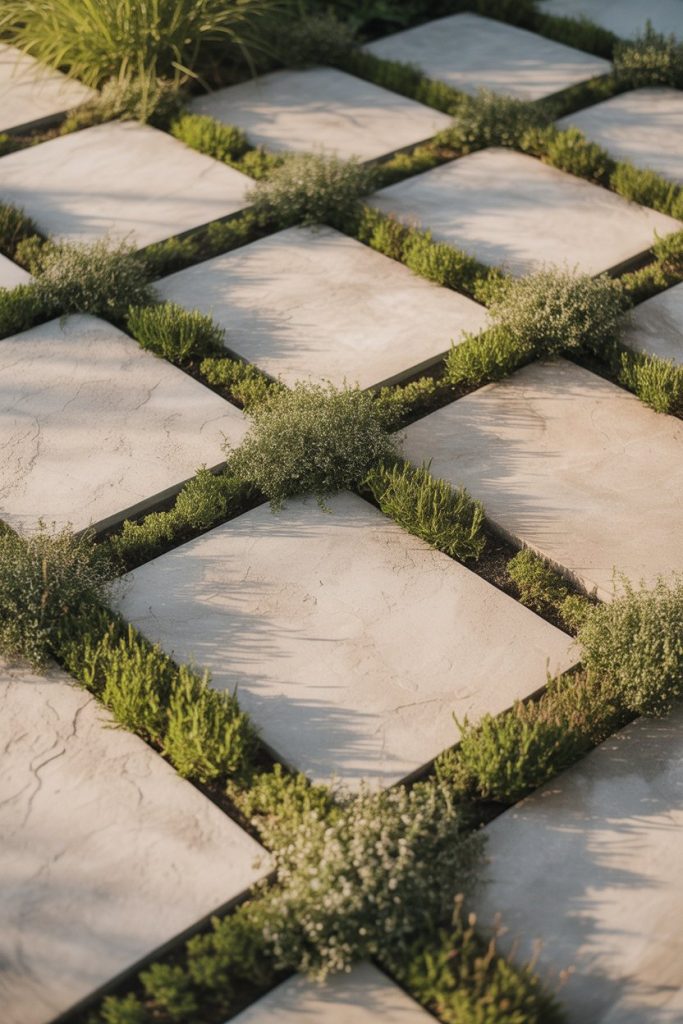
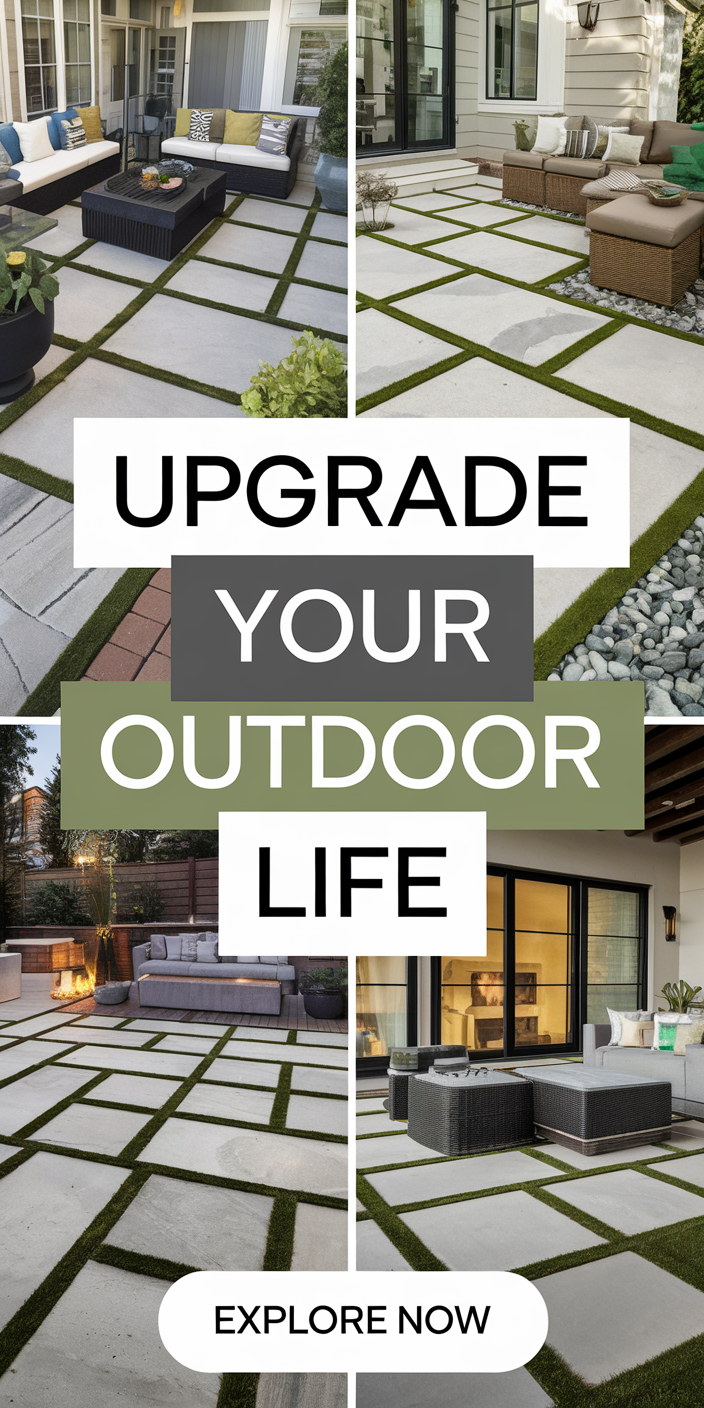
A modern grid pattern using large square pavers with ground cover plants growing between them creates a living, breathing patio surface that feels contemporary and sustainable. This ideas approach typically involves spacing pavers 2-4 inches apart and filling gaps with drought-tolerant plants like creeping thyme, Irish moss, or dymondia. The result is a semi-permeable surface that manages stormwater naturally while providing the stability of pavers for furniture and foot traffic. 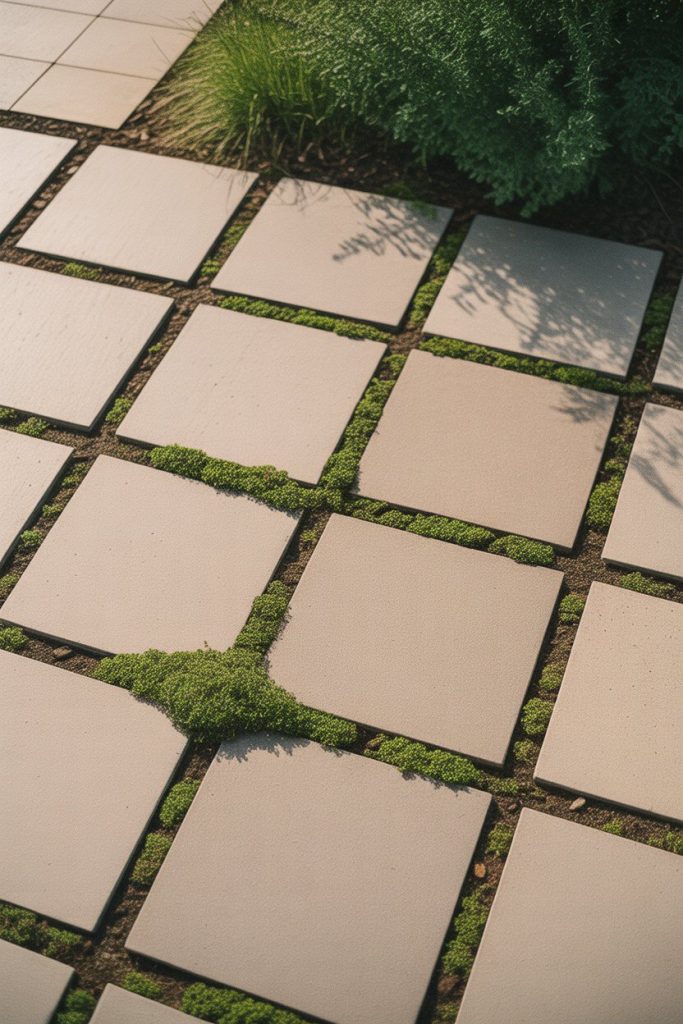
Homeowners in California and the Southwest particularly appreciate this water-wise approach to patio design. The plants soften the hardscape without requiring irrigation once established, and they release pleasant fragrance when stepped on (especially thyme). Common mistakes include choosing plants that can’t handle foot traffic or need too much water—stick with genuinely drought-tolerant, low-growing varieties that are rated for your climate zone, or you’ll spend your weekends replacing dead plants instead of enjoying your patio.
Conclusion
These 21 paver patio ideas offer something for every style, budget, and backyard challenge. Whether you’re drawn to classic brick patterns, modern concrete designs, or creative combinations with gravel and greenery, the key is choosing an approach that fits your lifestyle and regional climate. Share your favorite ideas in the comments below, or tell us about your own paver patio project—we’d love to hear what’s inspiring your outdoor transformation this year.