Pantry design has become one of the most searched home improvement topics on Pinterest in 2026, and for good reason. American homeowners are rethinking how they store, organize, and display their food and kitchen essentials, moving beyond basic shelving to create spaces that are both beautiful and highly functional. Whether you’re working with a sprawling walk-in or a narrow hallway nook, the right pantry can transform your daily routine. This guide brings together fresh ideas that blend smart storage with style, inspired by real homes across the country.
1. Butler’s Pantry with Vintage Charm
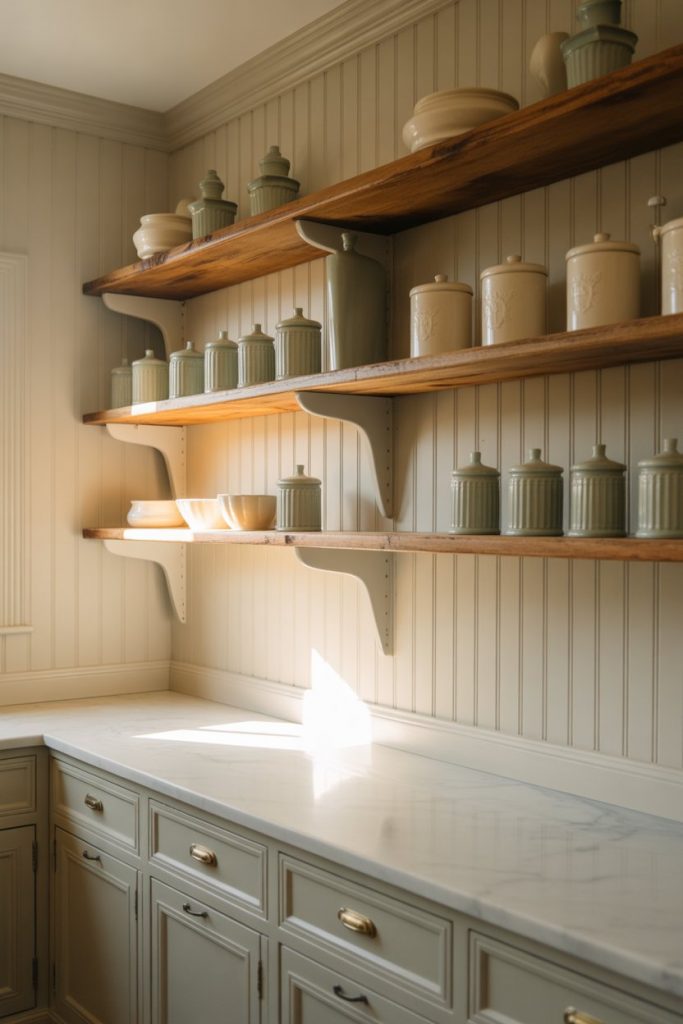
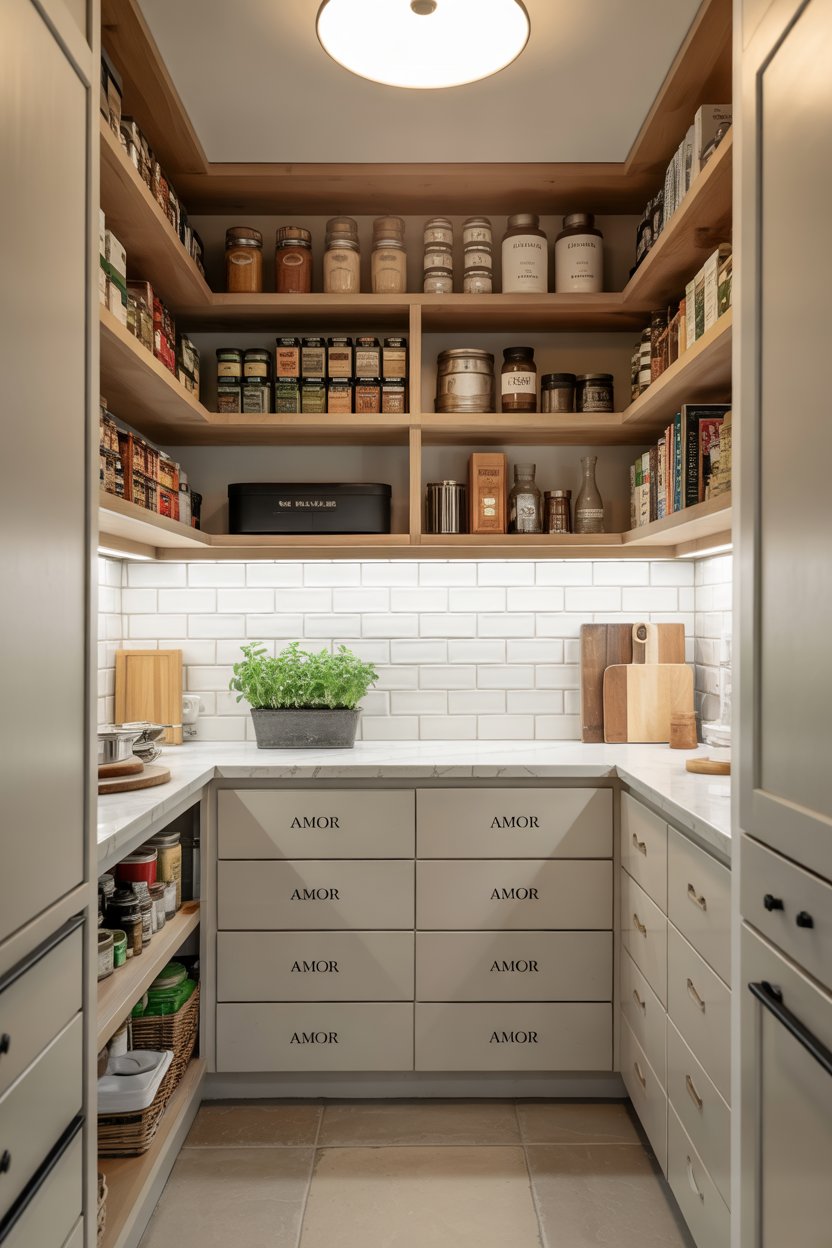
A butler’s pantry serves as a transitional zone between your kitchen and dining area, offering extra counter space and concealed storage for serving pieces and small appliances. This classic feature has seen a major resurgence, especially in homes with cottage or rustic aesthetics. The key is balancing open shelving for display with closed cabinetry to hide clutter. Think reclaimed wood shelves, apron-front sinks, and vintage hardware that adds character without overwhelming the space.
This works beautifully in suburban homes with separate dining rooms, where the butler’s pantry becomes a prep station during gatherings. One homeowner in Charleston shared that her butler’s pantry cut her party setup time in half by keeping everything from cocktail shakers to dessert plates within arm’s reach. Consider installing a small beverage fridge and wine storage to make the space even more functional for entertaining.
2. Compact Corner Pantry Solution
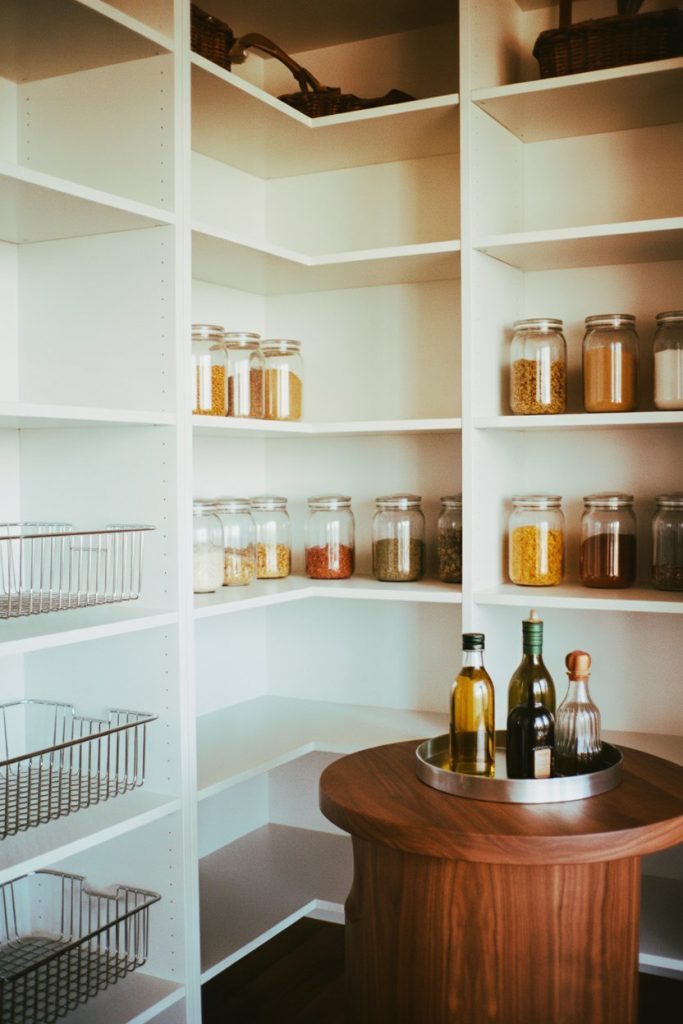
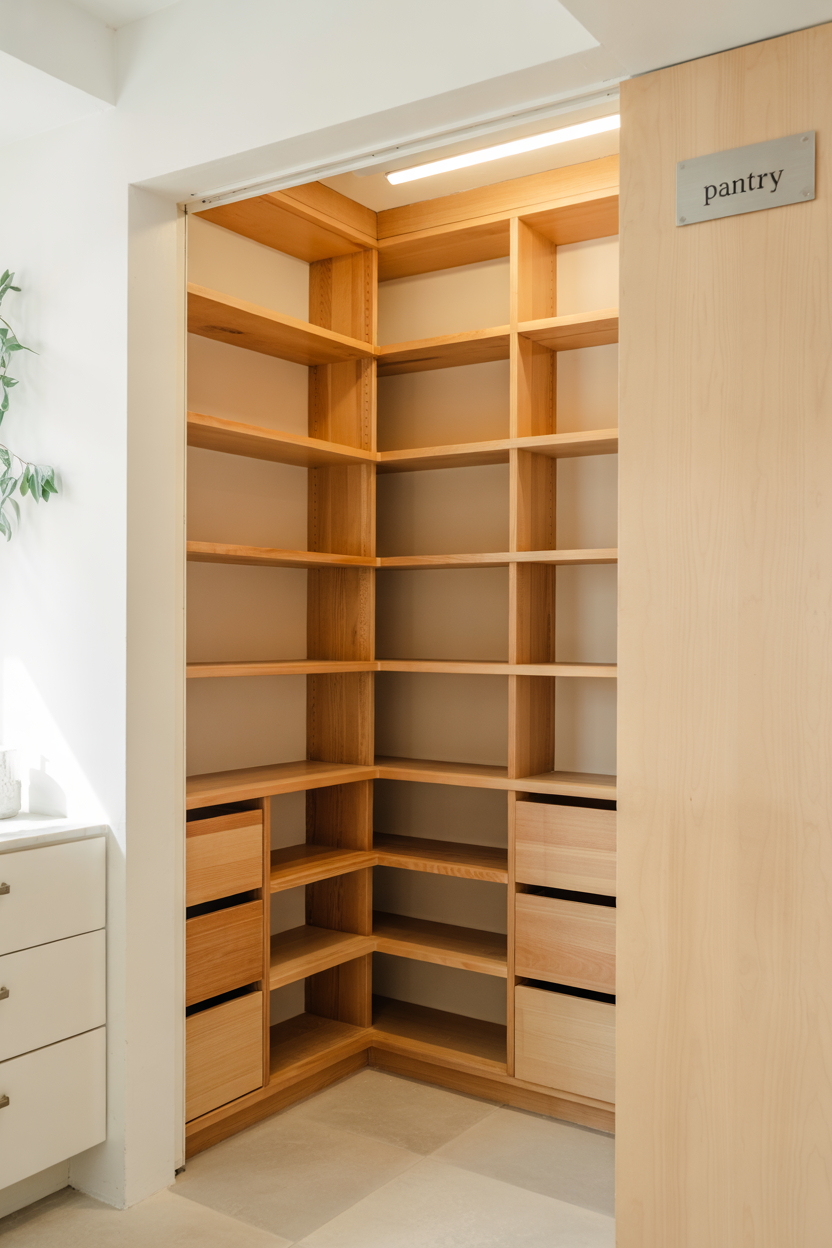
When square footage is limited, a corner pantry maximizes awkward angles that might otherwise go unused. These tiny powerhouses work particularly well in galley kitchens or older homes where full walk-ins weren’t part of the original design. Floor-to-ceiling shelving with pull-out drawers makes every inch accessible, and lazy Susans in the deepest corners prevent items from disappearing into the void.
Budget-conscious renovators love this approach because it doesn’t require moving walls or major construction. A well-designed corner pantry can cost anywhere from $800 to $2,500 depending on materials and hardware, making it one of the most affordable ways to add serious storage. The trick is measuring carefully before installation so doors and drawers clear each other when opened simultaneously.
3. Bloxburg-Inspired Gaming Aesthetic
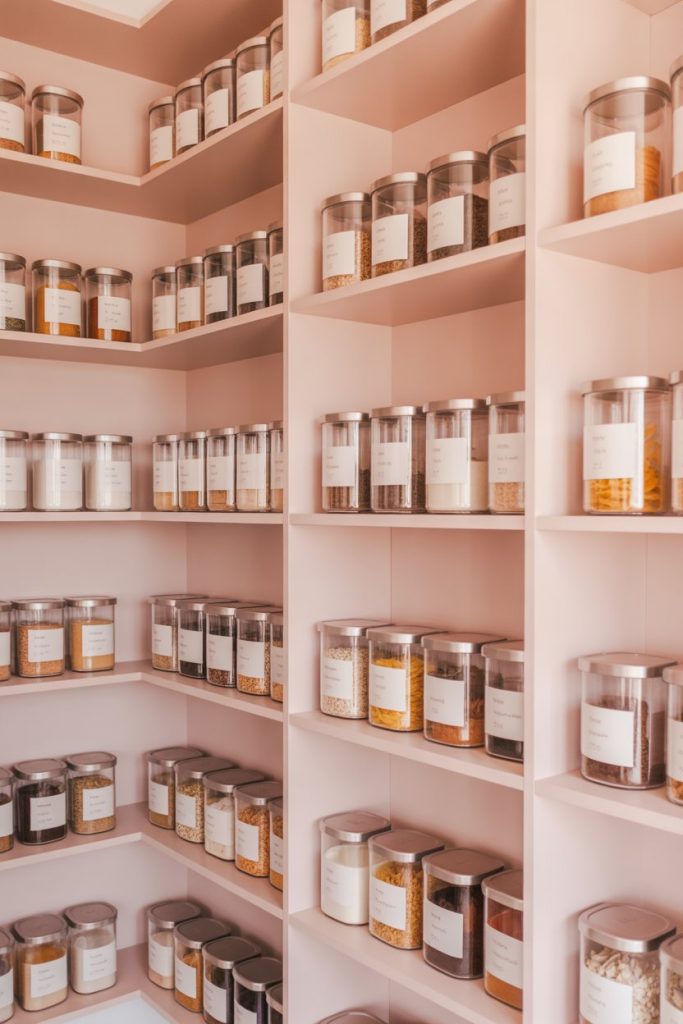
The popular life simulation game has inspired real-world pantry designs, particularly among younger homeowners who grew up playing Bloxburg. This trend features clean lines, pastel color blocking, and labeled containers that look like they belong in a virtual world. While it might sound whimsical, the organizing principles translate beautifully to actual spaces, especially when combined with Ikea modular systems that allow for endless customization.
This style works best in homes where the pantry is visible from living areas, as it treats storage as décor. Younger homeowners in urban apartments have embraced this look because it photographs well for social media while remaining genuinely functional. The common mistake here is over-purchasing matching containers before assessing actual storage needs, which leads to wasted money and ill-fitting systems.
4. Tiny Pantry with Maximum Impact
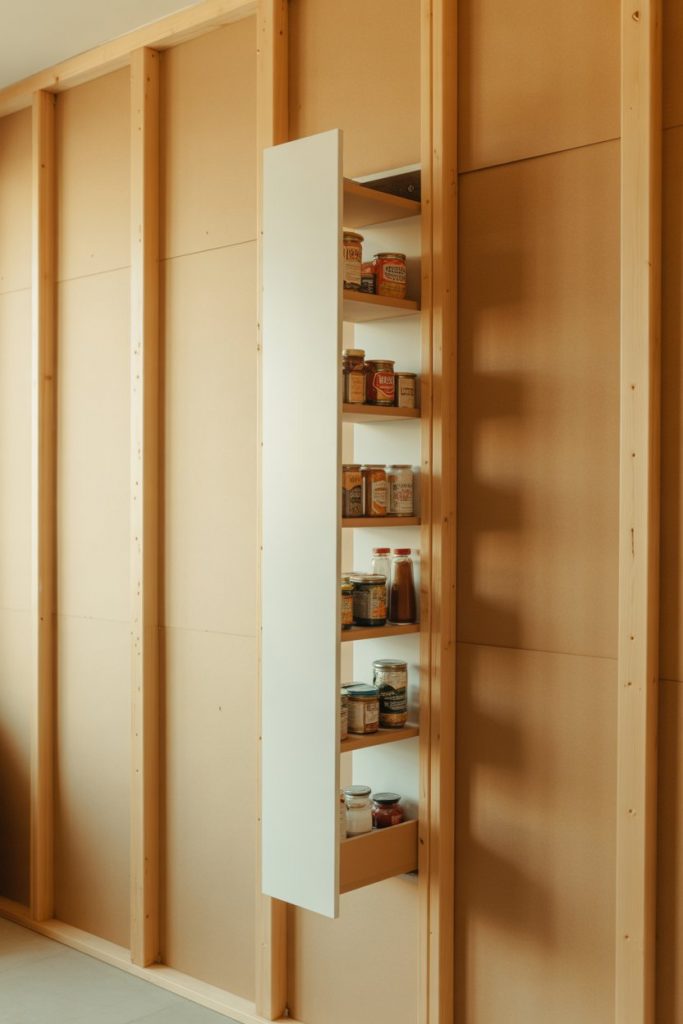
A tiny pantry doesn’t mean sacrificing organization or style. Shallow shelving units only six to eight inches deep can fit between studs or in narrow hallway spaces, creating storage where none existed before. The secret is vertical thinking: stack shelves from floor to ceiling and use the back of the door for spice racks or cleaning supplies. Every surface becomes valuable real estate.
In the Pacific Northwest, where older bungalows often lack dedicated pantry space, contractors report installing three to four of these slim pantries monthly. They’re particularly popular in homes undergoing kitchen refreshes without full gut renovations. The installation typically takes a skilled carpenter four to six hours and provides storage equivalent to a small closet while occupying just twelve inches of wall space.
5. Living Wall Pantry Display
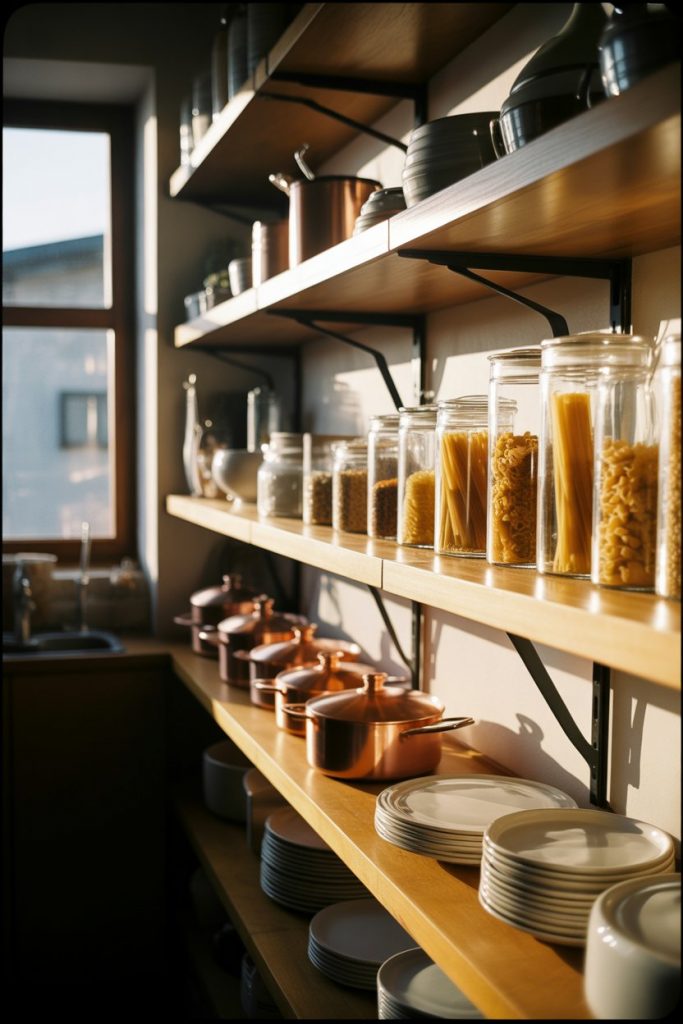
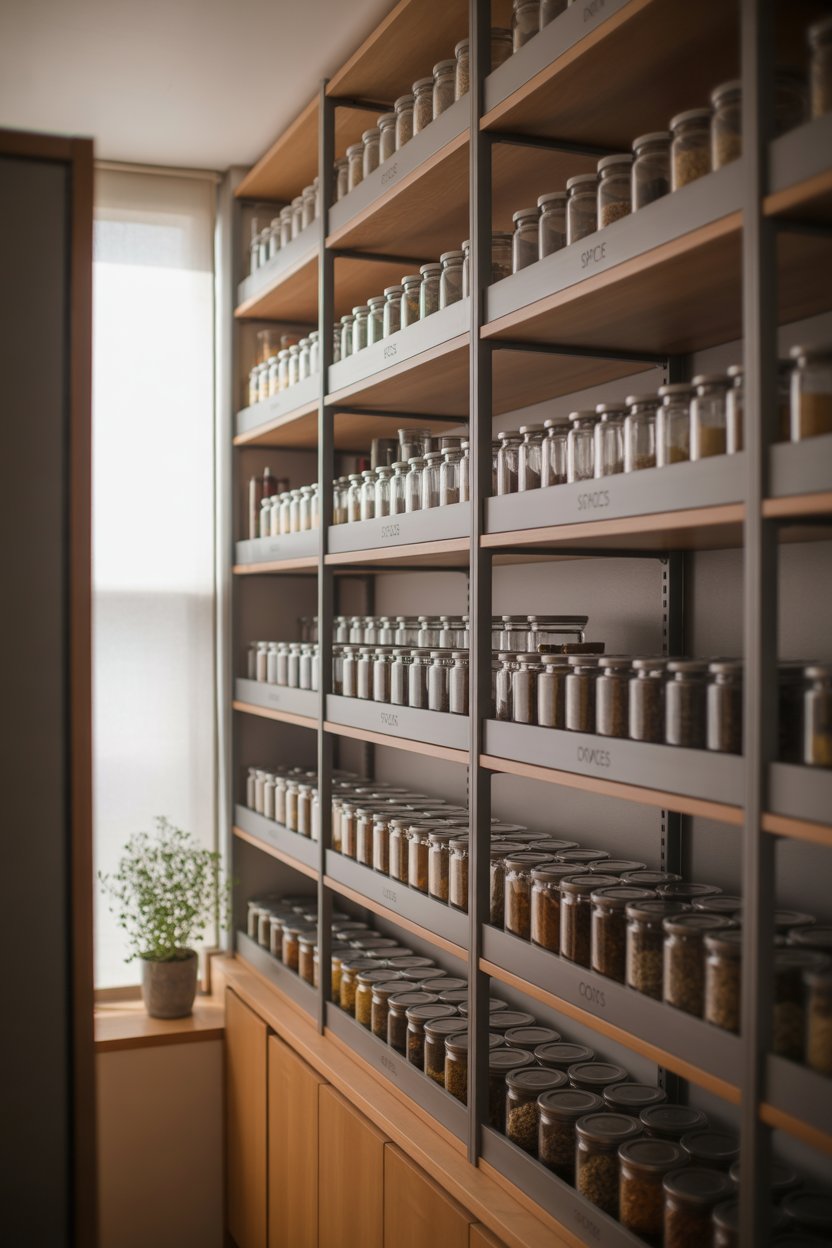
Open wall shelving transforms your pantry goods into kitchen art, especially when you curate what’s visible. This approach works for those who keep food staples in attractive packaging or transfer items into uniform glass containers. The visual appeal comes from repetition and restraint—think rows of matching jars, neatly stacked linens, and carefully edited cookware that earns its spot on display.
The biggest challenge with open shelving is maintaining the curated look daily. Real homeowners admit they keep a “chaos cabinet” elsewhere for mismatched items and half-used packages. This two-tier system lets you enjoy the beauty of open storage without the pressure of perfection. It works best in households where cooking is frequent enough that items rotate regularly, preventing dust accumulation.
6. IKEA IVAR System Customization
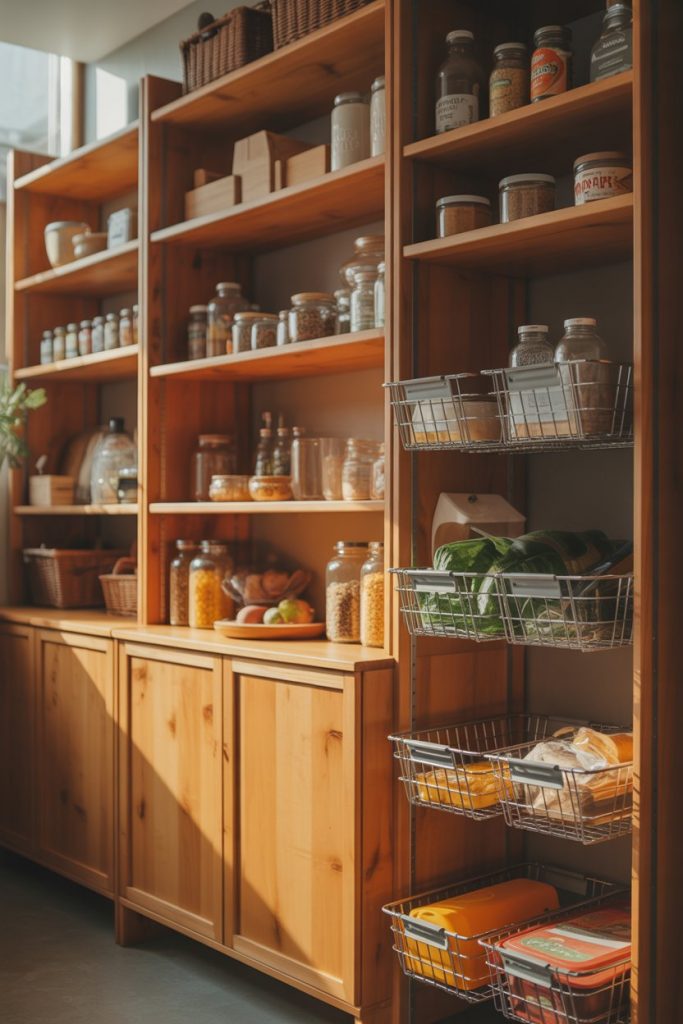
The Ikea Ivar shelving system has become the foundation for countless DIY pantries thanks to its solid pine construction and modular design. What starts as basic untreated wood can be painted, stained, or left natural to match any aesthetic. Add wine racks, pull-out baskets, or cabinet doors to create a truly personalized storage solution that evolves as your needs change.
Across American suburbs, handy homeowners love that Ivar units can be assembled, reconfigured, and expanded without special tools or expertise. A basic four-section setup runs around $300 to $400 before customization, making it accessible for first-time homeowners. The untreated wood accepts paint and stain beautifully, so you can match existing cabinetry or create contrast with bold colors that would be prohibitively expensive in custom built-ins.
7. Rustic Farmhouse Pantry
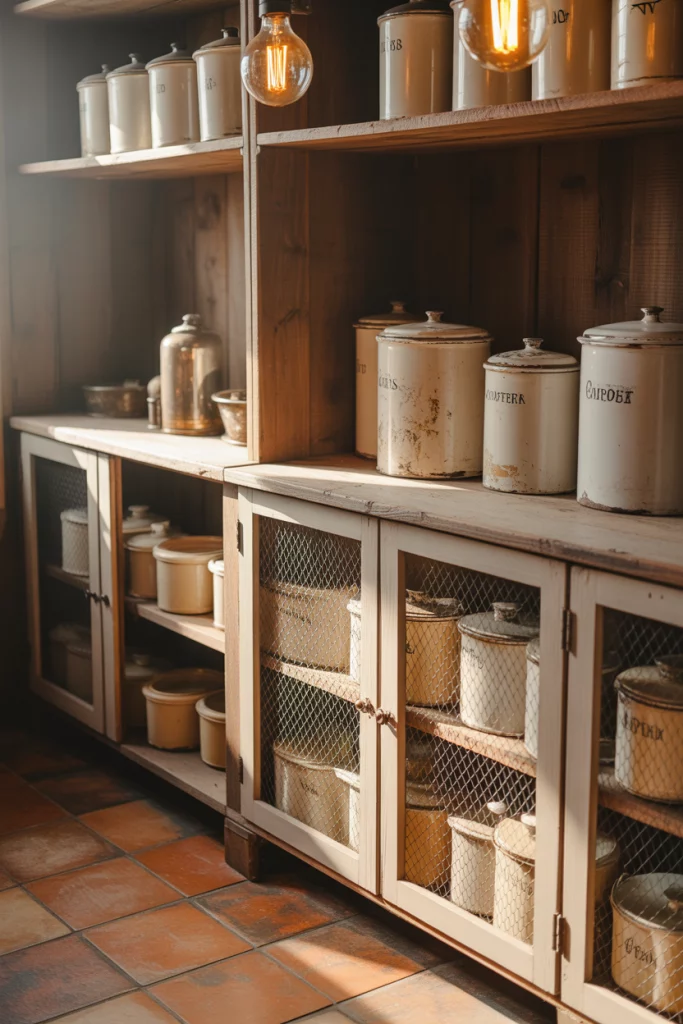
The rustic farmhouse pantry celebrates natural materials and vintage finds, often incorporating reclaimed barn wood, chicken wire cabinet fronts, and Edison bulb lighting. This style thrives in rural areas and suburban homes seeking that countryside feel. Unique touches like antique breadboxes, enamelware canisters, and hand-lettered labels add personality while remaining functional for everyday use.
Where this works best is in homes with existing farmhouse elements like shiplap walls or apron sinks, where the pantry becomes an extension of the overall design language. The common mistake is going too heavy on distressing and vintage items, which can make the space feel more like a flea market than a functional kitchen. Balance newer organizational products with a few well-chosen antiques for a look that feels collected rather than contrived.
8. Under-Stairs Storage Transformation
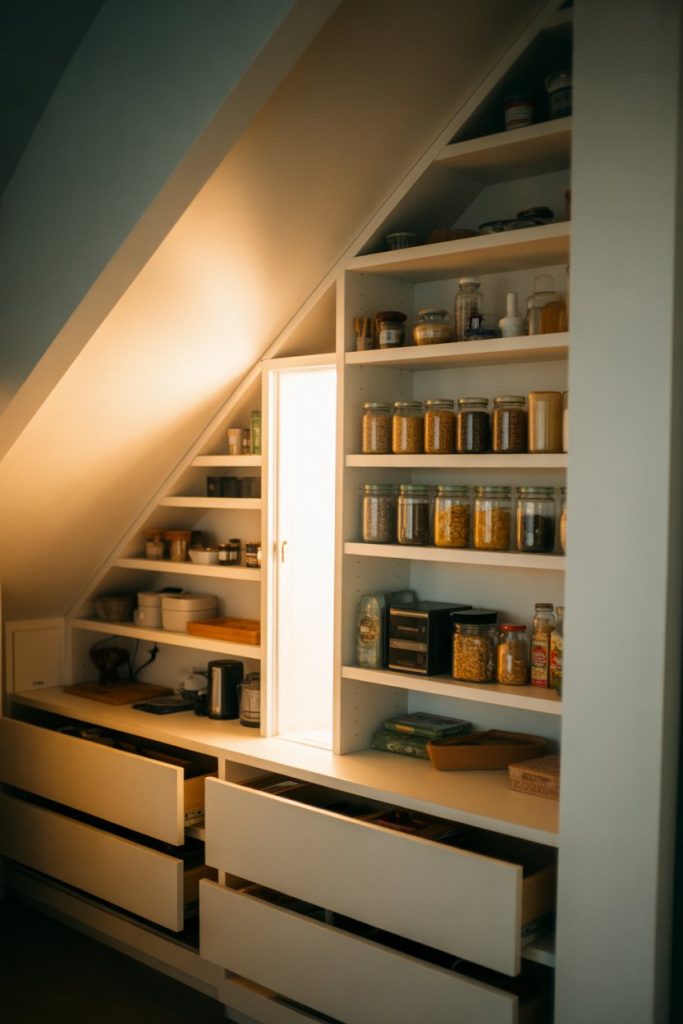
The space beneath stairs offers surprising pantry potential when designed with purpose. Custom shelving that follows the staircase angle makes use of every inch, from tall storage near the entry point tapering to lower shelves as the ceiling drops. This solution works particularly well in split-level homes or townhouses where every square foot counts and traditional pantry locations aren’t available.
A family in Denver converted their under-stairs closet into a pantry and gained storage for small appliances, bulk purchases, and seasonal items without losing living space. The project took their contractor two weekends and cost roughly $1,800, including materials and labor. Lighting is crucial here since these spaces are naturally dark; LED strips or puck lights make items visible without overheating in the enclosed area.
9. Home Office Pantry Hybrid
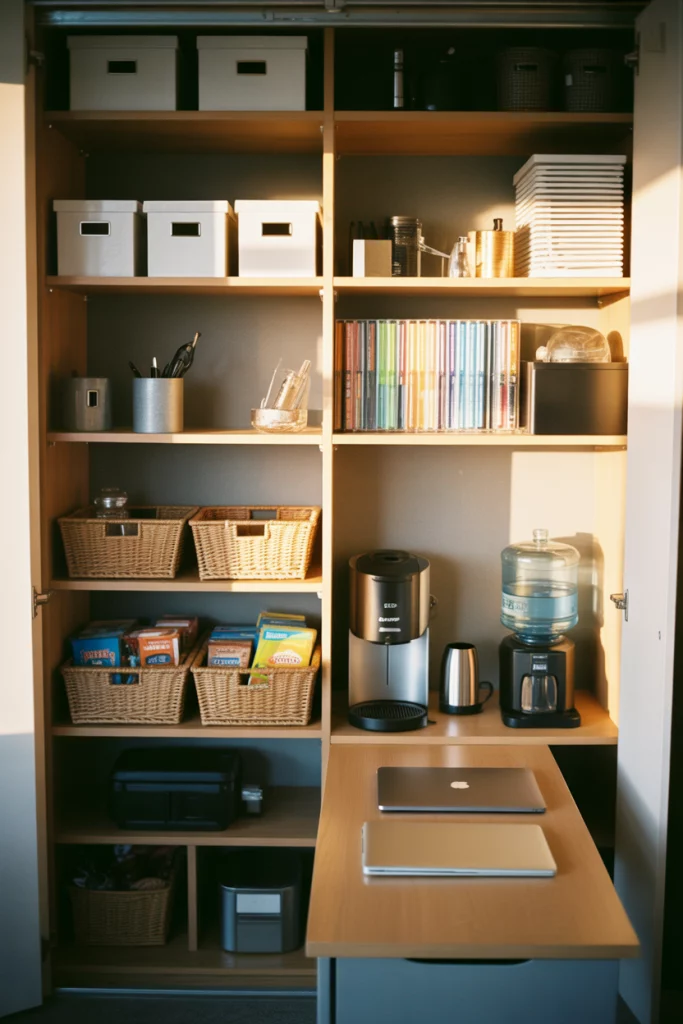
Remote work has blurred the lines between kitchen and office, leading some homeowners to create hybrid spaces that store both food and work supplies. A well-planned closet or converted basement room can house snacks and beverages alongside printers, paper, and office equipment. The key is separating zones with dedicated shelving so crumbs don’t end up in file folders.
This setup is increasingly common in suburban homes where the dedicated office shares a wall with the kitchen, allowing for easy access during work hours. Some remote workers report that having coffee, tea, and healthy snacks within arm’s reach of their desk actually increases productivity by reducing kitchen trips. Just ensure proper ventilation if storing perishables, and consider a mini-fridge to keep dairy and fresh items at safe temperatures.
10. Double Door Walk-In Drama
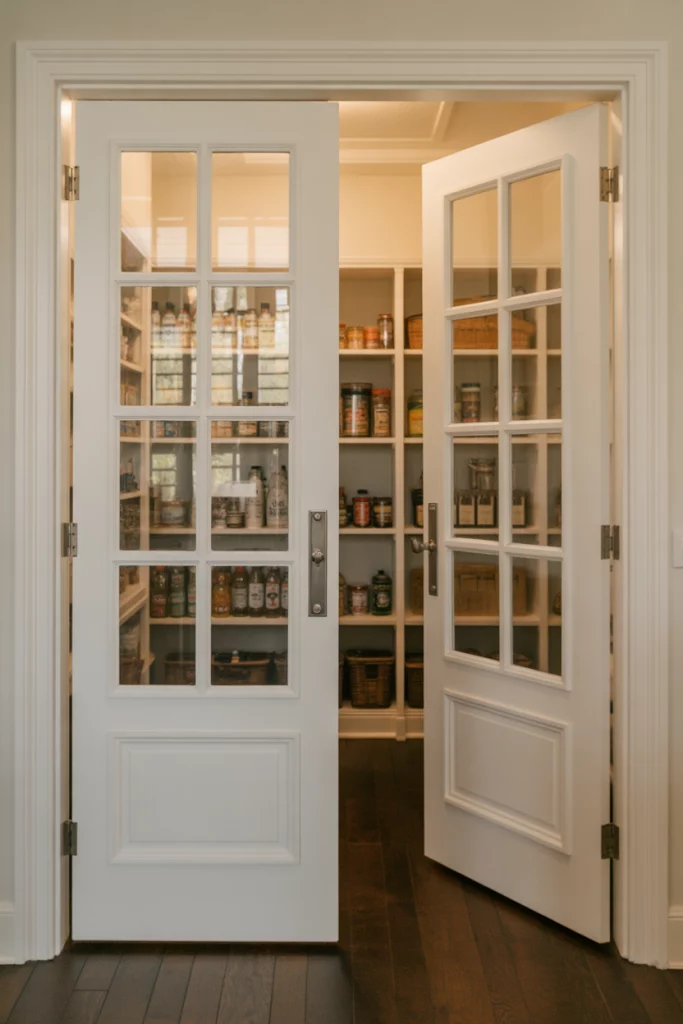
A double-door walk-in pantry makes a statement while offering exceptional functionality. These spacious rooms allow for center islands, appliance storage, and enough circulation space to comfortably move while gathering ingredients. The double-door entry creates a sense of occasion and works beautifully in open-concept homes where the pantry is visible from main living areas.
Real estate agents consistently note that walk-in pantries with attractive entries add measurable value to home listings, particularly in the $400,000 to $800,000 price range. Buyers view them as premium features that justify higher asking prices. If you’re renovating with resale in mind, investing in quality doors and hardware for your pantry entrance can return dividends, even if the interior shelving is relatively simple and functional.
11. Large-Scale Organization Systems
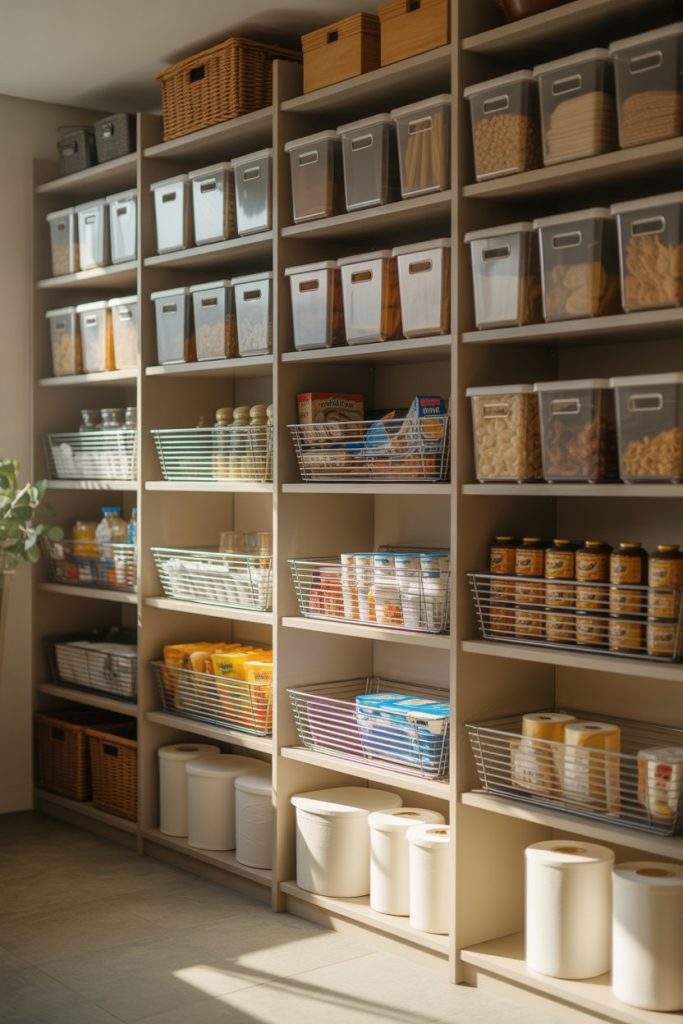
A large pantry demands thoughtful organizing to prevent it from becoming a cluttered catch-all. Zone your space by category: baking supplies together, canned goods together, and snacks together. Use a combination of baskets, bins, and clear containers to group like items while maintaining visibility. The bigger the space, the more critical labeling becomes so family members can maintain the system.
Where this works best is in households with multiple people who use the pantry independently. Clear organizational systems mean everyone knows where items belong, reducing the mental load on whoever typically manages the kitchen. The most common mistake is creating a system so complex that only one person understands it, which inevitably leads to breakdown when that person isn’t available to put groceries away.
12. Toca Boca Playful Aesthetic
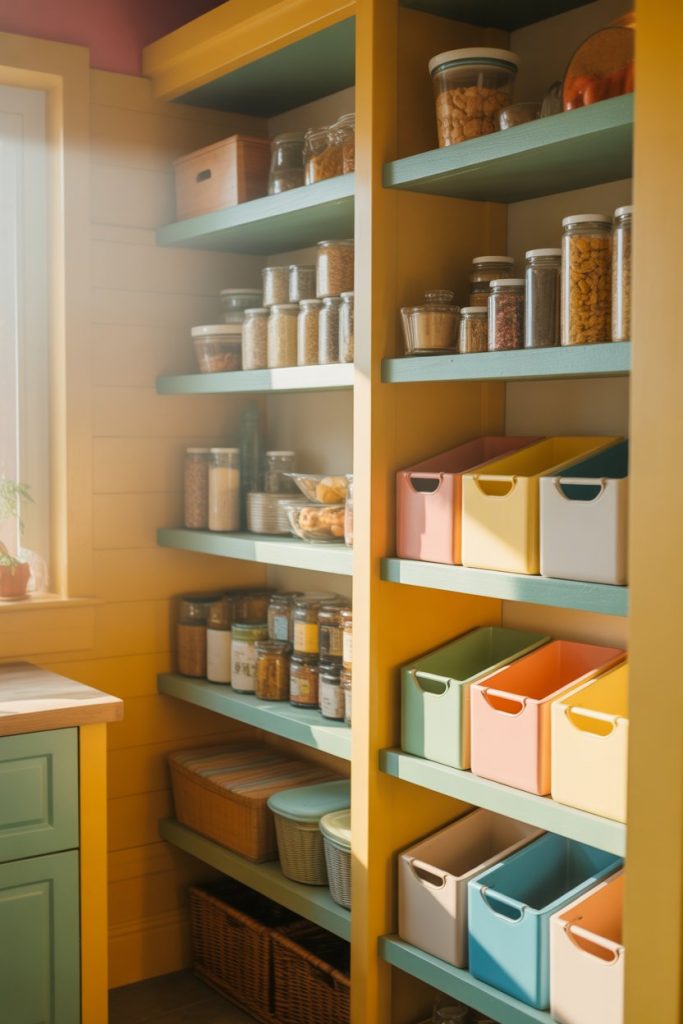
Similar to Bloxburg, the mobile game Toca Boca has influenced pantry design among younger demographics who appreciate its cheerful, simplified aesthetic. This translates to bold color choices, rounded edges, and a sense of whimsy that makes the pantry feel welcoming rather than purely utilitarian. It’s particularly appealing in family homes where children participate in meal prep and snack selection.
Midwestern families with young children have embraced this approach because it encourages kids to be more independent in the kitchen. When healthy snacks are stored at child height in appealing containers, kids make better choices and parents field fewer requests. The key is balancing fun aesthetics with durability—choose materials that can withstand daily use from small hands and the occasional spill.
13. Integrated Kitchen Cabinet Pantry
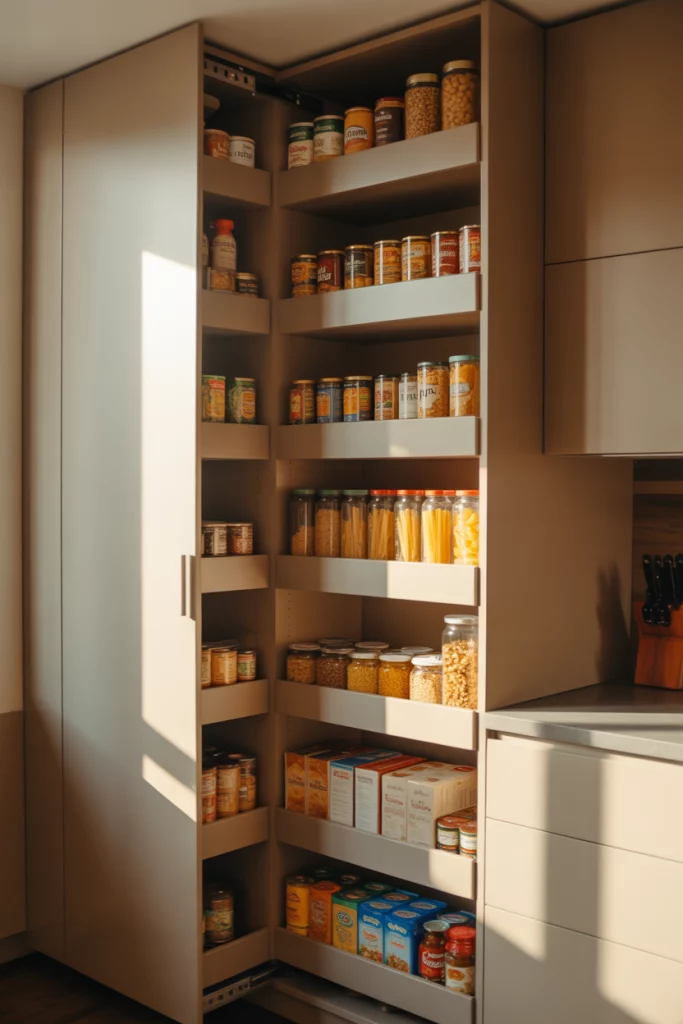
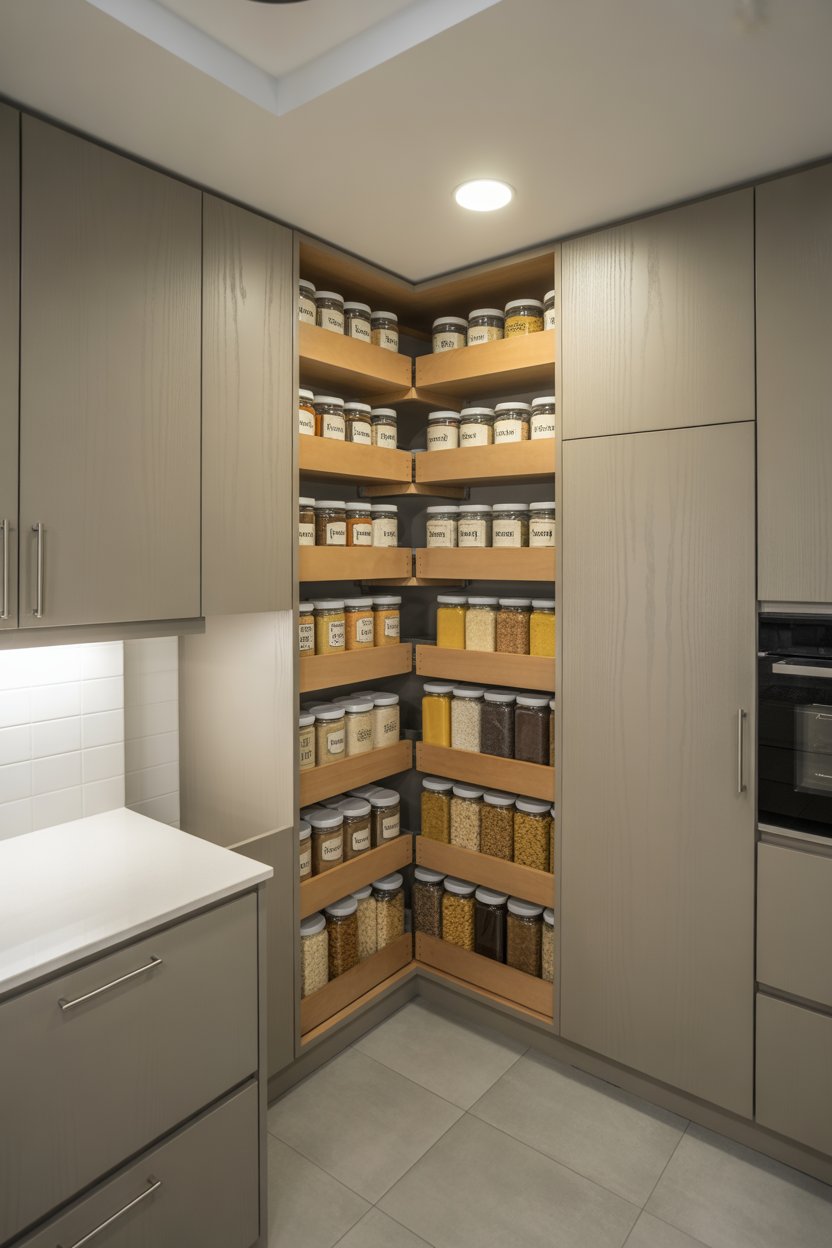
Not every home has space for a dedicated room, which makes kitchen cabinet pantries an essential solution. Pull-out pantry cabinets, tall single-column units, and corner lazy Susan systems integrate seamlessly with existing cabinetry while providing substantial storage. Choose soft-close mechanisms and full-extension slides to make accessing items effortless, even those pushed to the back.
Professional organizers note that pull-out pantries work exceptionally well for people with mobility challenges, as they eliminate the need to reach deep into cabinets or bend down to floor level. A client in Phoenix shared that her pull-out pantry system, installed during a kitchen refresh, completely eliminated the back pain she used to experience from rummaging through lower cabinets for heavy items like flour and sugar.
14. Moody Dark Pantry Design
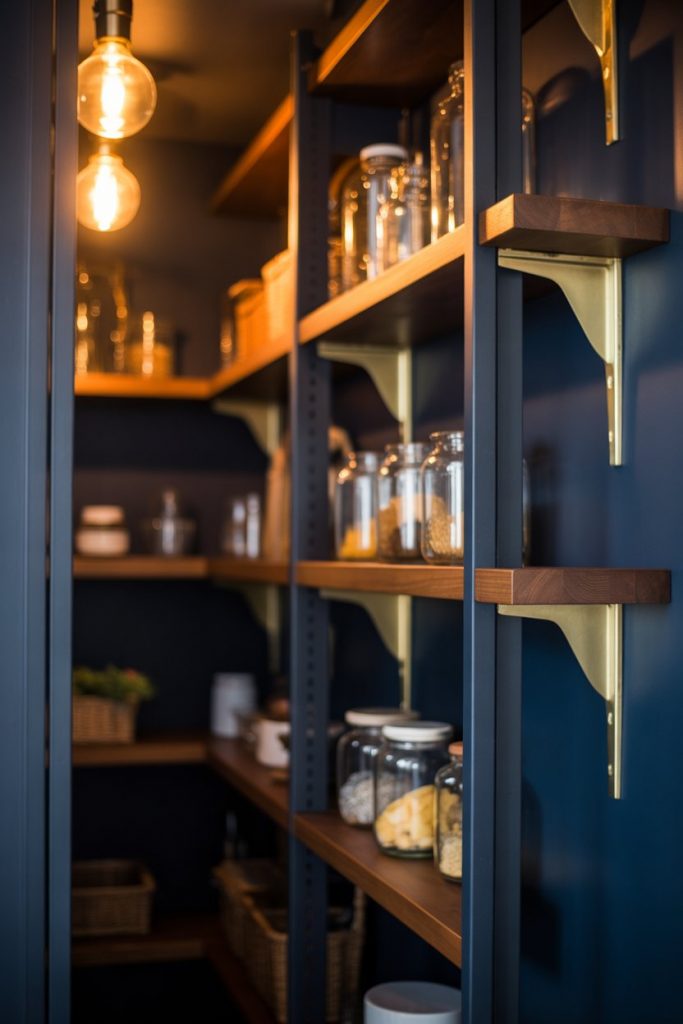
While white pantries dominate Pinterest, dark pantries offer sophisticated drama and unexpected elegance. Deep navy, charcoal, or forest green walls create an enveloping cocoon effect that makes the space feel intentional and designed. This works especially well in basement or garage pantries where natural light is limited anyway, and the dark palette helps conceal imperfections in older walls.
The expert approach here involves layered lighting—ambient overhead, task lighting on work surfaces, and accent lighting on display shelves. Without adequate illumination, dark pantries become caves rather than jewel boxes. Interior designers recommend at least three light sources in dark-painted pantries to maintain functionality while preserving the atmospheric quality that makes these spaces so striking.
15. Basement Bulk Storage Pantry
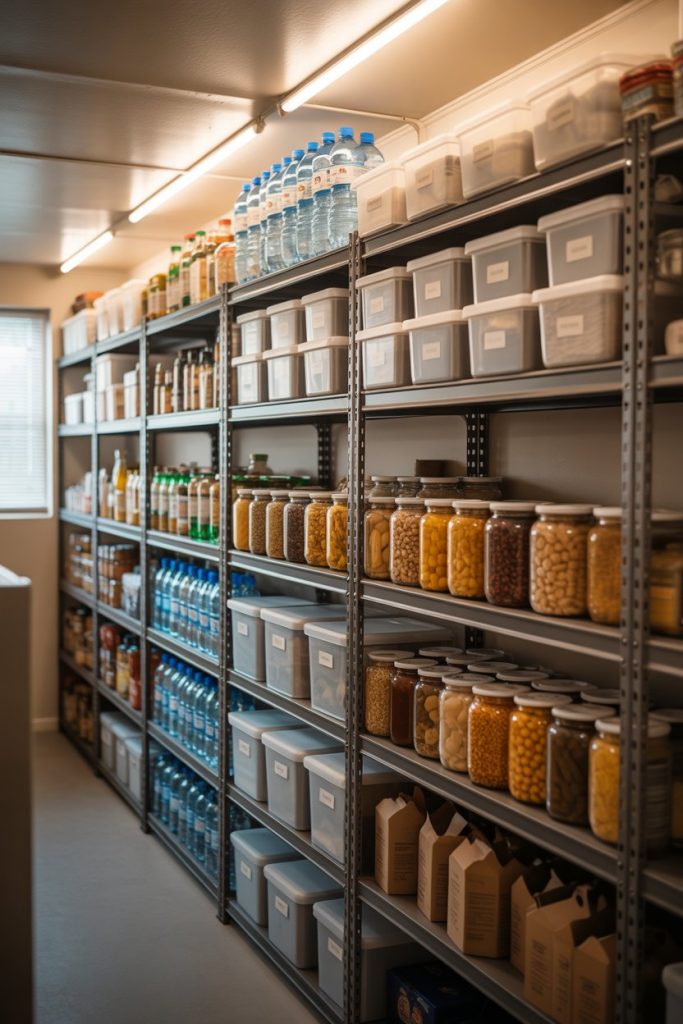
Finishing a section of your basement as a secondary pantry creates valuable overflow storage for bulk purchases, seasonal items, and backup supplies. This is particularly popular in regions with severe weather where emergency preparedness matters. Include moisture control measures like dehumidifiers, and avoid storing items directly on concrete floors, which can transfer cold and dampness.
Homeowners in tornado-prone areas of Oklahoma and Kansas often design basement pantries to double as safe rooms, with reinforced shelving that won’t topple during severe weather. This practical consideration doesn’t sacrifice organization—clear bins labeled with contents and dates ensure nothing expires forgotten in the corner. The investment in good shelving units (around $200 to $400 for quality metal systems) pays off in decades of reliable use.
16. Converted Garage Storage
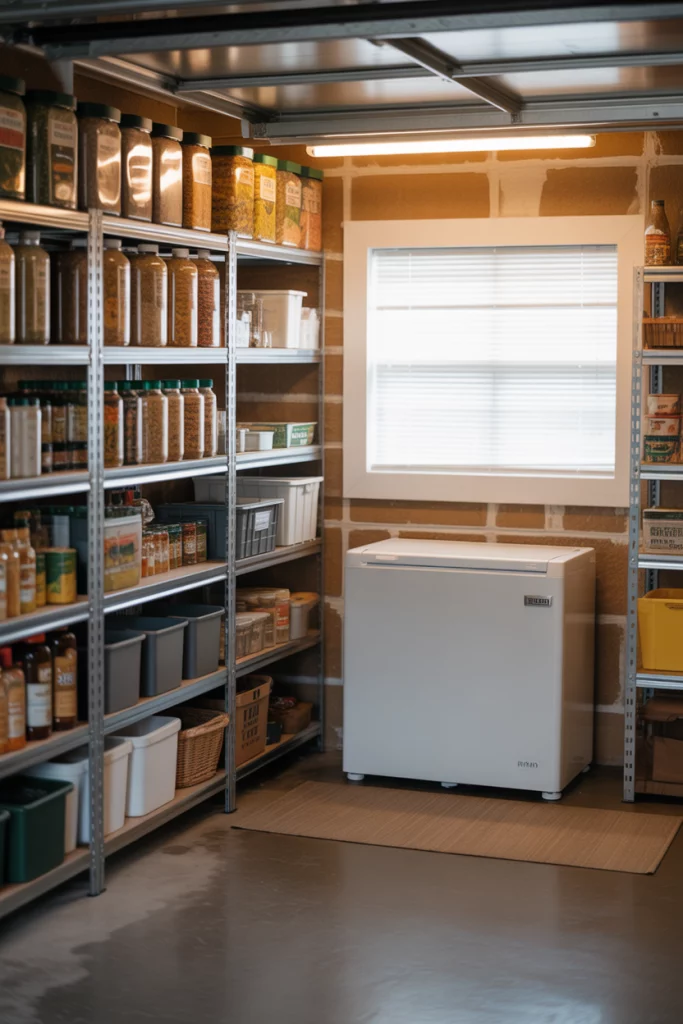
A temperature-controlled section of your garage can become an overflow pantry, especially valuable for large families or those who shop in bulk at warehouse stores. Insulated walls and climate control are essential; without them, temperature fluctuations will ruin food quality. Heavy-duty metal shelving handles weight better than wood in garage environments where humidity and temperature vary.
In California’s Central Valley, where garages routinely hit 100+ degrees in summer, savvy homeowners install mini-split AC units in garage pantry sections to protect their investments in bulk groceries. This setup costs $2,000 to $3,500 installed but saves money long-term by preventing spoilage and allowing for bulk purchasing. Consider adding a chest freezer too, maximizing the climate-controlled space for frozen goods that won’t fit in your kitchen freezer.
17. Long Narrow Galley Pantry
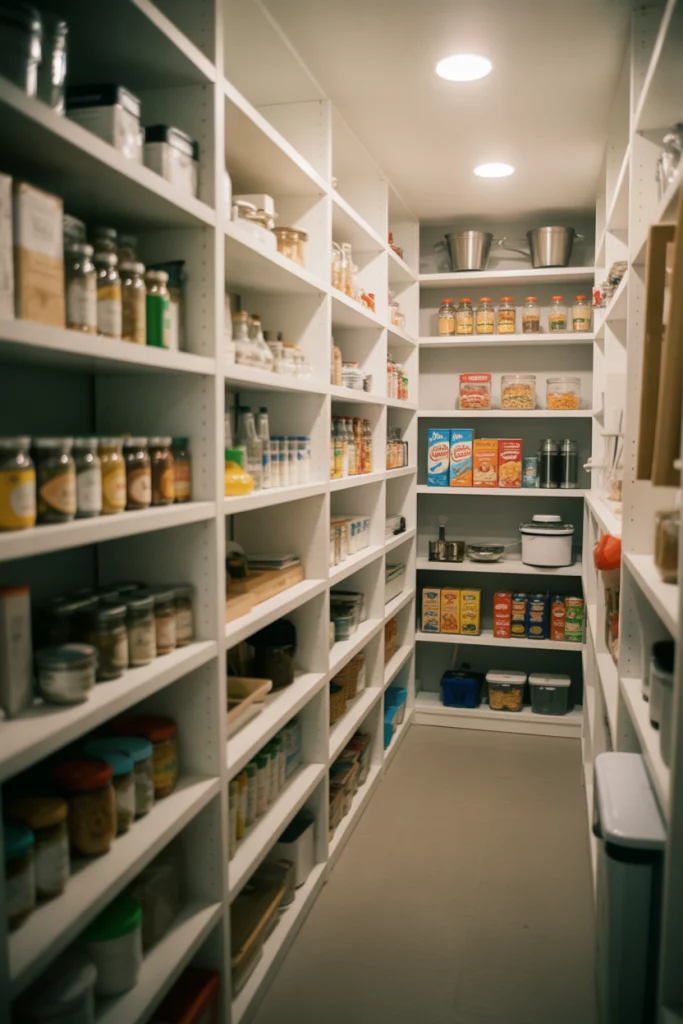
A long narrow pantry requires shelving on both sides with enough clearance to move comfortably between them. Aim for at least 36 inches of walkway width, though 42 to 48 inches is more comfortable. Adjustable shelving at varying depths prevents the space from feeling like a tunnel—deeper shelves on one side for appliances and shallower shelves opposite for canned goods and spices.
This configuration works beautifully in row houses and older homes where narrow closets were original to the floor plan. A homeowner in Baltimore converted a coat closet into a galley pantry by removing the single rod and installing custom shelving floor to ceiling on both long walls. The forty-eight-inch depth was just enough to prevent the claustrophobic feeling while tripling her kitchen storage capacity for about $900 in materials and weekend labor.
18. Hallway Slide-Out Pantry
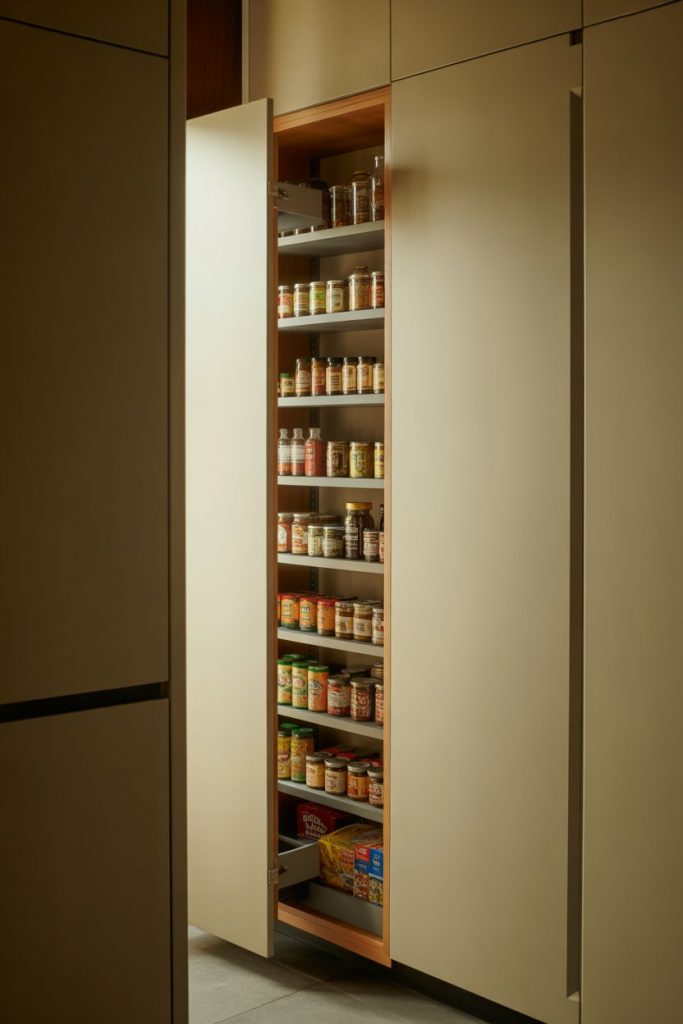
A hallway between the kitchen and garage or laundry room offers prime real estate for slim slide-out pantries that maximize otherwise wasted space. These units, typically six to twelve inches deep, pull out on heavy-duty slides to reveal multiple shelves for canned goods, spices, or cleaning supplies. They’re practically invisible when closed, maintaining clean hallway sight lines.
Budget-wise, quality slide-out systems represent good value because they require minimal space alteration—no need to move plumbing or electrical. Professional installation runs $400 to $800 depending on height and hardware quality, with DIY-friendly kits available for handy homeowners at half that cost. The common mistake is choosing slides rated for too little weight, which leads to sagging or failure within months under the load of canned goods.
19. Cottage-Style Freestanding Pantry
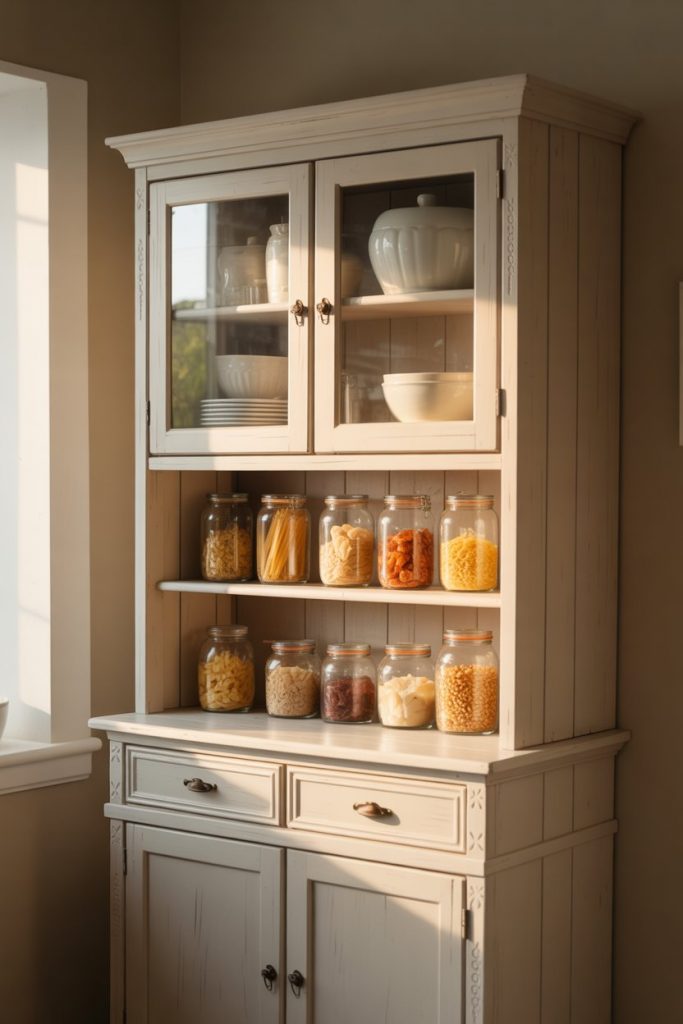
Freestanding cottage-style pantries, often called pie safes or cupboards, bring portable storage and vintage charm to kitchens lacking built-ins. These unique pieces work in rentals or homes where permanent installation isn’t possible. Look for units with a mix of open shelving, closed cabinets, and drawer storage to accommodate different item types while maintaining the relaxed cottage aesthetic.
Where this works best is in period homes, where a freestanding piece respects the architecture better than modern built-ins would. A cottage in coastal Maine might pair a vintage hutch with new organization inserts, blending old and new seamlessly. These pieces also offer flexibility—when you move, your pantry moves with you. Quality vintage units run $800 to $2,000, while new cottage-style reproductions start around $500 for decent construction.
20. Dedicated Coffee and Beverage Station
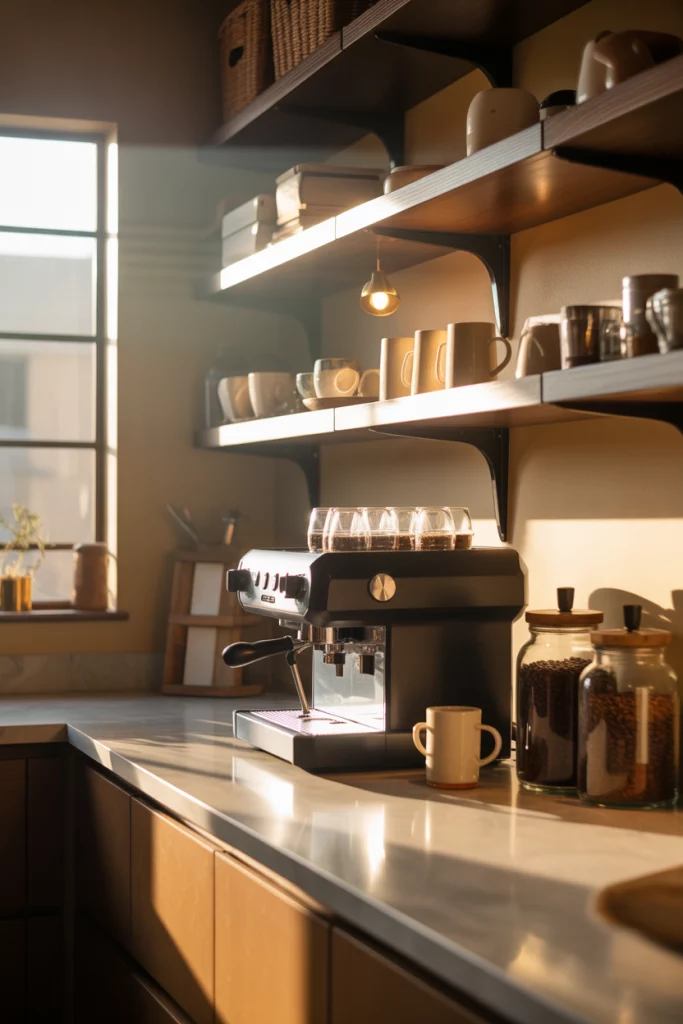
Coffee lovers are carving out dedicated coffee stations within their pantries, complete with espresso machines, grinders, mugs, and syrups. This keeps morning routines streamlined and coffee clutter off kitchen counters. Include a small counter space or pull-out shelf at the right height for your machine, plus storage for filters, beans, and accessories within easy reach.
Real homeowner behavior shows that dedicated coffee stations actually get used more than counter-based setups because everything needed is contained in one spot. A Seattle couple reported that moving their coffee equipment into their walk-in pantry freed up thirty inches of valuable counter space while making their morning routine faster. They added a small sink for easy cleanup, turning the pantry corner into a genuine coffee bar that rivals their favorite café.
21. Flexible Modular Organizing Systems
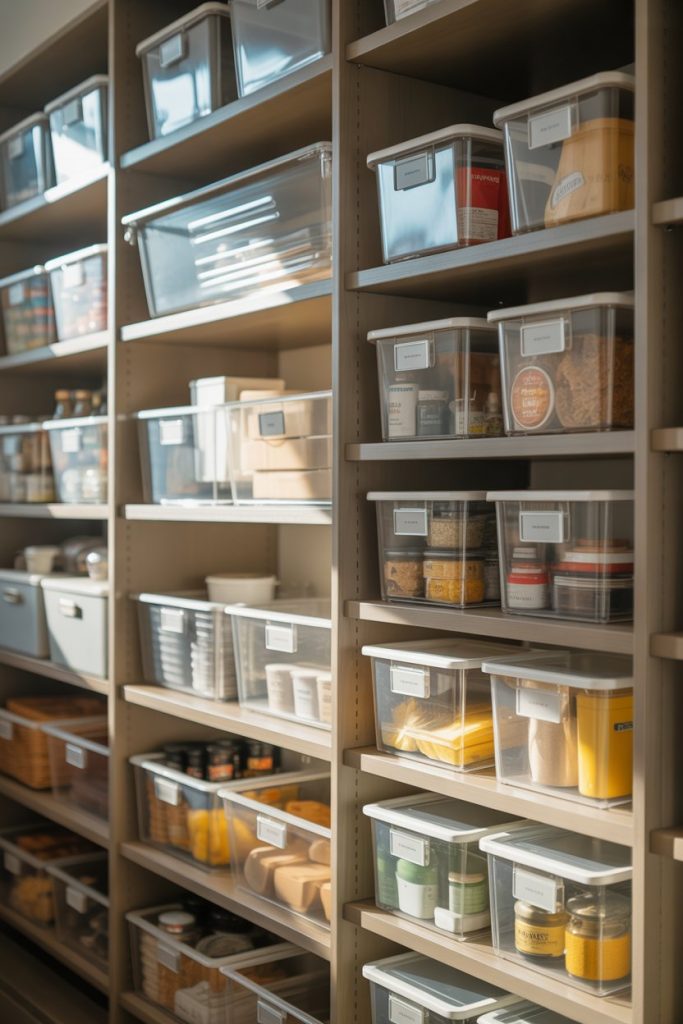
The final trend worth noting is the shift toward modular organizing systems that adapt as household needs change. Rather than custom built-ins, these use adjustable components from brands that offer expansion options. Mix wire baskets, acrylic bins, lazy Susans, and shelf risers in configurations that make sense for your current lifestyle, knowing you can reconfigure next year without starting from scratch.
Professional organizers increasingly recommend this approach over permanent solutions because American households change frequently—kids grow up, dietary needs shift, and cooking habits evolve. A modular system costing $300 to $600 can be reconfigured dozens of times over years, while custom built-ins lock you into a single configuration. The flexibility means your pantry genuinely serves your life rather than dictating how you must organize to fit someone else’s vision of perfect storage.
Conclusion
These twenty-one ideas prove that pantry design has evolved far beyond basic shelving. Whether you’re working with a spacious walk-in or figuring out how to maximize a tiny closet, there’s a solution that fits your space, budget, and style. We’d love to hear which ideas resonated with you—drop a comment below sharing your favorite pantry feature or the challenge you’re trying to solve in your own home.