Outdoor kitchens have evolved from simple grilling stations into sophisticated entertaining hubs that extend your living space into the fresh air. Americans are flocking to Pinterest in search of design inspiration that balances functionality with aesthetic appeal, seeking layouts that accommodate everything from casual weeknight dinners to weekend gatherings with friends. Whether you’re working with a sprawling backyard or a compact patio, 2026’s outdoor kitchen trends emphasize thoughtful planning, versatile cooking zones, and materials that withstand the elements while maintaining style. This guide presents carefully curated ideas that blend practical layouts with inspiring design elements, helping you create an outdoor cooking space that fits your lifestyle, climate, and budget.
1. Covered Pavilion Kitchen with Stone Accents
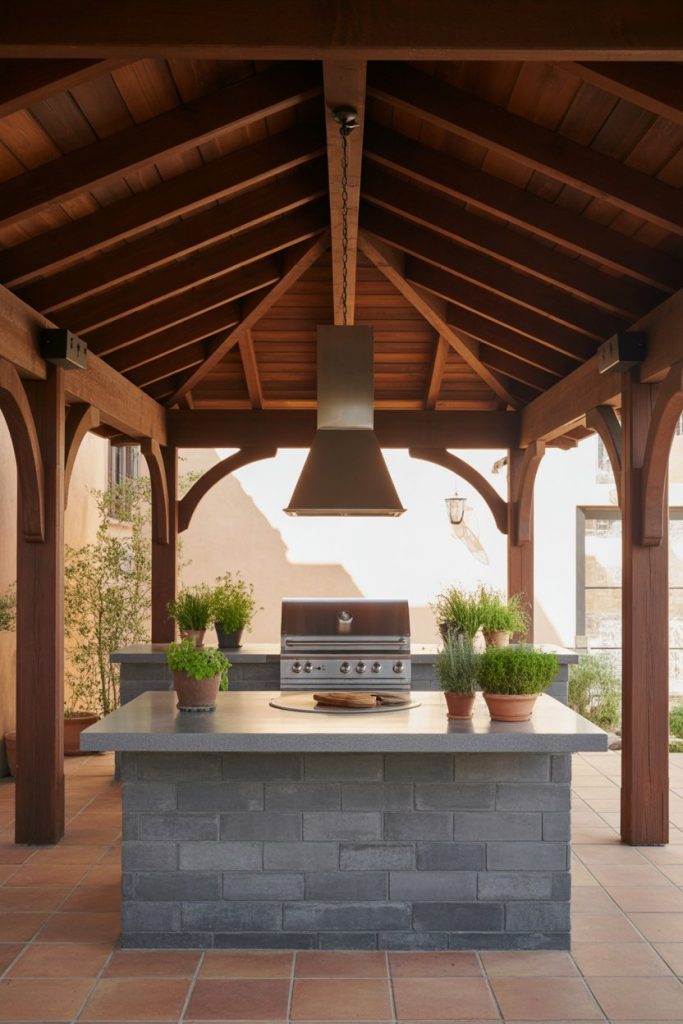
A covered outdoor kitchen provides year-round functionality, protecting your cooking area from rain and harsh sun while creating an inviting room-like atmosphere. This layout typically features a pergola or solid roof structure with ceiling fans for air circulation, complemented by natural stone countertops and a built-in grill area that becomes the focal point. The covered design works exceptionally well in regions with unpredictable weather, allowing you to cook comfortably even during light drizzle or intense afternoon heat. 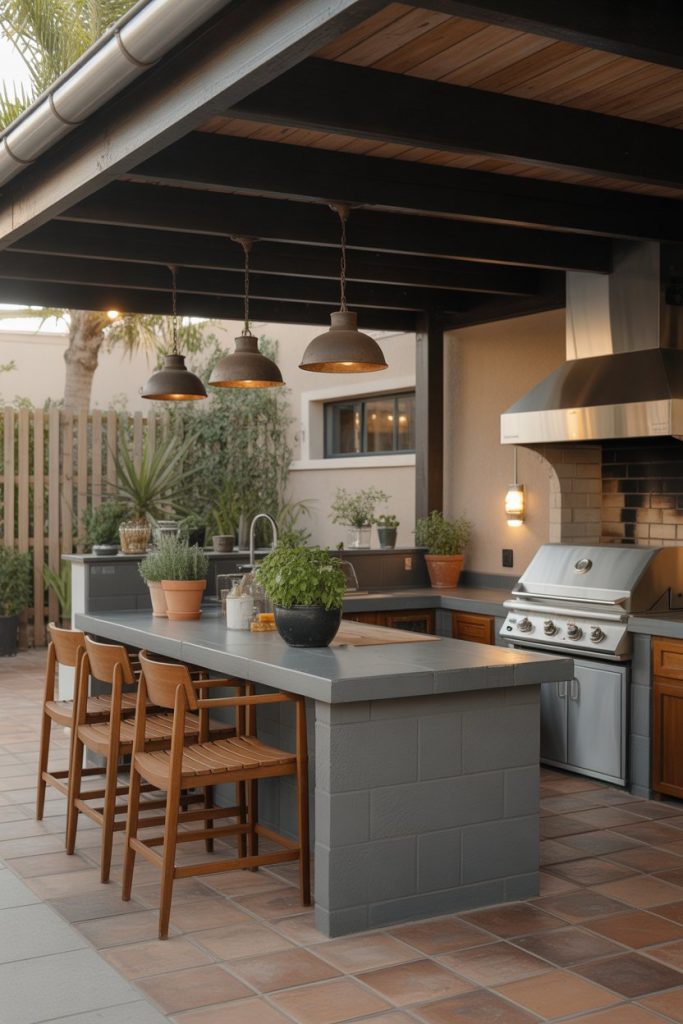
Consider installing retractable screens on the open sides of your pavilion to keep insects at bay during summer evenings while maintaining airflow. The covered structure also allows you to incorporate overhead lighting fixtures and even outdoor-rated ceiling fans, creating a comfortable microclimate that extends your entertaining season well into fall. Budget around $15,000–$35,000 for a fully covered structure with professional installation, though costs vary significantly based on materials and regional labor rates.
2. Rustic Ranch-Style Cooking Station
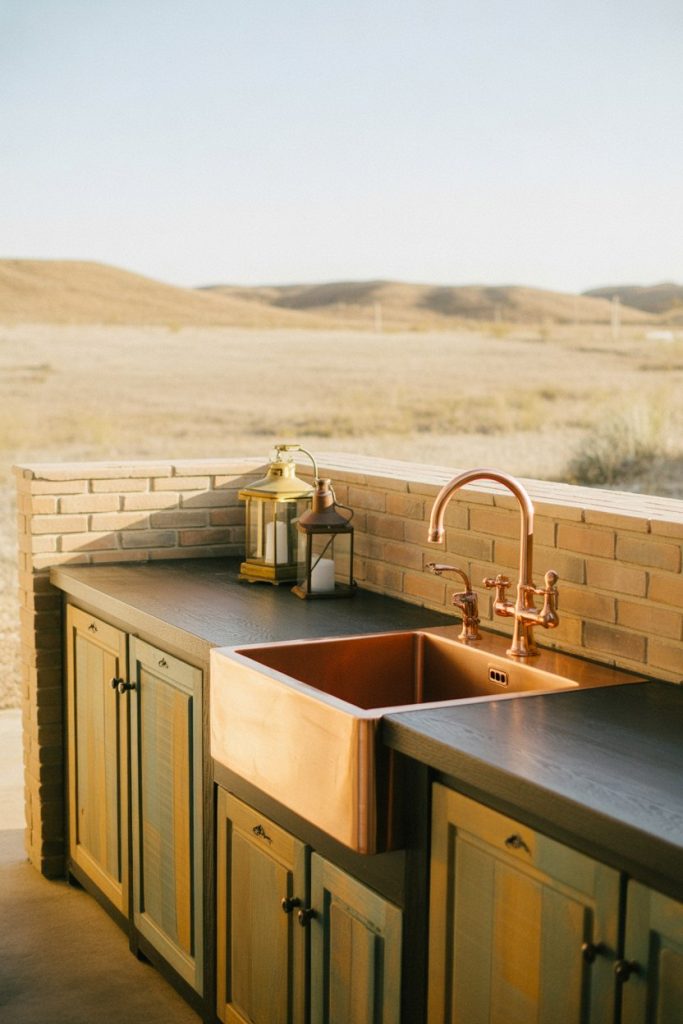
Embrace the warmth of rustic design with a ranch-inspired outdoor kitchen that celebrates natural materials and handcrafted details. This approach incorporates reclaimed wood cabinetry, wrought iron hardware, and weathered brick or stone surfaces that develop character over time. A rustic outdoor kitchen design feels particularly at home in Texas, Montana, and the Southwest, where wide-open spaces and traditional ranch architecture create the perfect backdrop for casual outdoor cooking and entertaining. 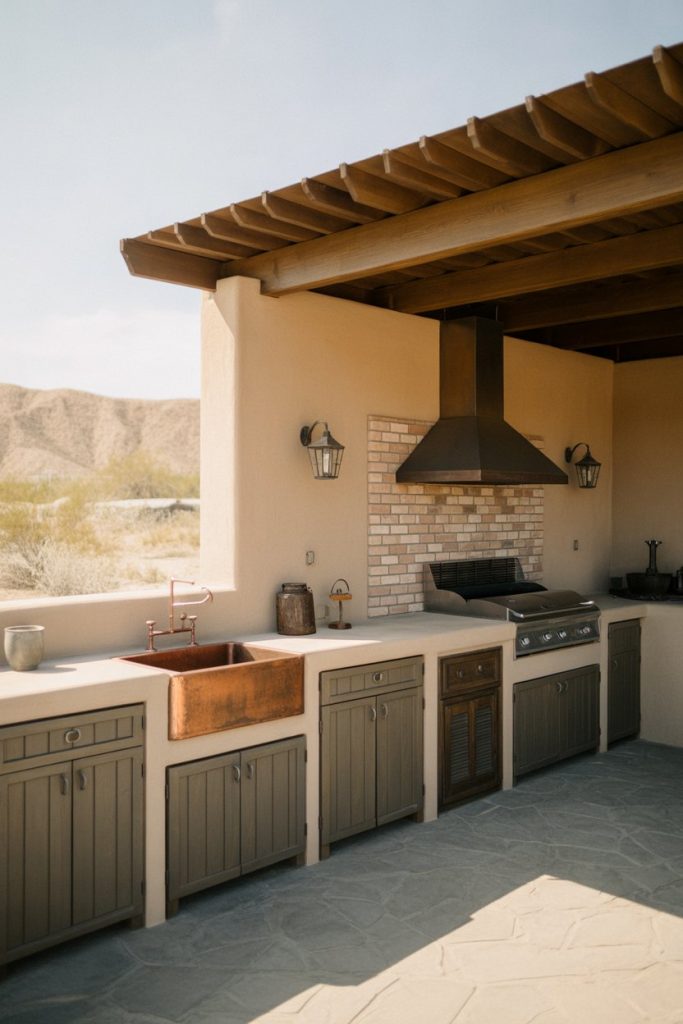
In the Southwest, many homeowners incorporate terra-cotta tiles and adobe-inspired finishes that reflect regional architectural heritage while providing excellent heat resistance. The rustic aesthetic doesn’t mean sacrificing modern conveniences—you can seamlessly integrate stainless steel appliances within distressed wood frames, maintaining authentic character while enjoying contemporary cooking performance. This style typically costs 20–30% less than ultra-modern designs since it embraces imperfection and often utilizes salvaged or locally sourced materials.
3. Compact DIY Assembly for Budget-Conscious Builders

A DIY outdoor kitchen project empowers homeowners to create a personalized cooking space while controlling costs and learning valuable construction skills. Start with a simple L-shaped layout using concrete blocks for the base structure, adding a poured concrete countertop or tile surface that you can customize with embedded stones or colored concrete. This hands-on approach works particularly well for those willing to invest weekends over several months, gradually building out the kitchen in phases as budget allows. 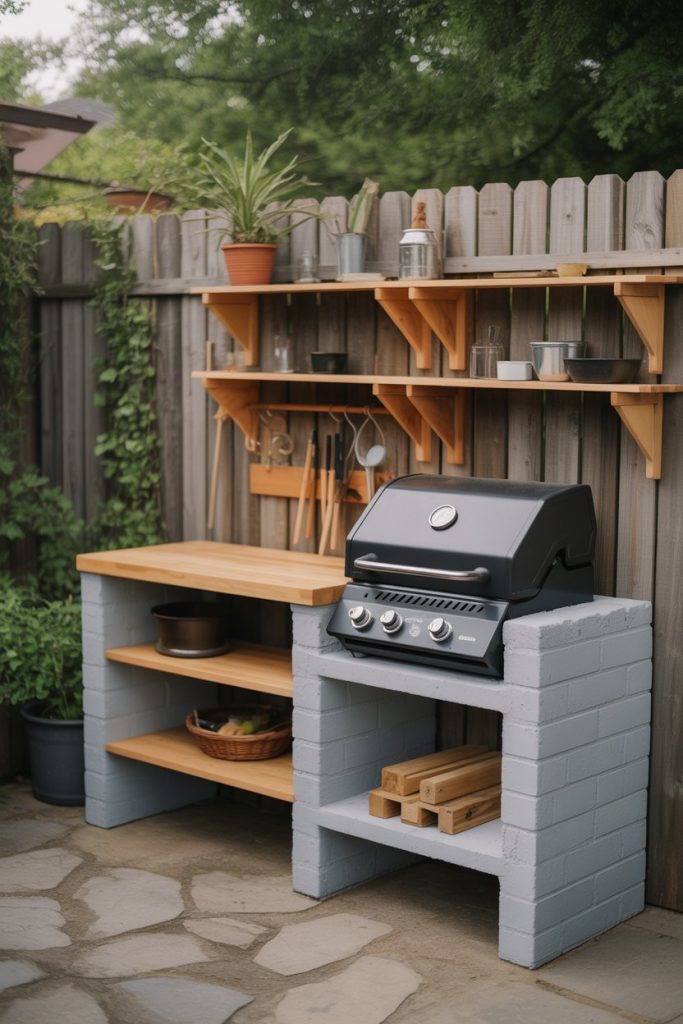
One common mistake DIY builders make is underestimating the importance of proper drainage and weatherproofing—always ensure your base structure has weep holes and that any wood components are sealed with marine-grade finishes. Online communities and YouTube channels offer step-by-step tutorials for everything from building concrete countertops to installing gas lines safely. A basic DIY outdoor kitchen can be completed for $1,500–$4,000 in materials, compared to $8,000–$15,000 for a professionally installed equivalent.
4. Mediterranean-Inspired Fireplace Kitchen
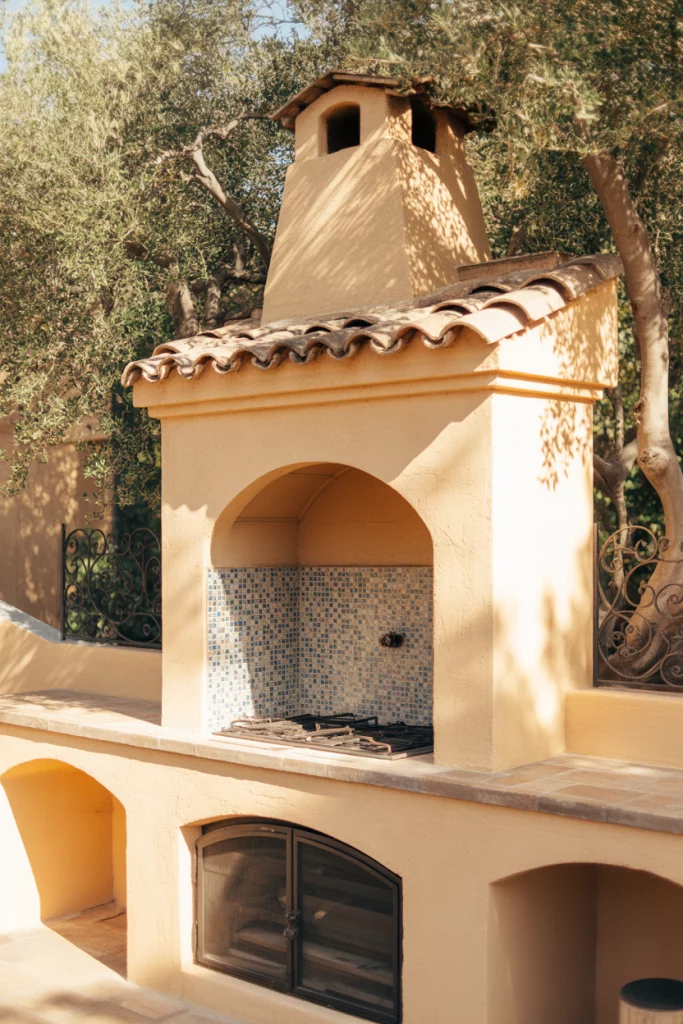
Combining a fireplace with your outdoor kitchen creates a dual-purpose gathering space that extends usability into cooler months while adding dramatic visual appeal. This design typically features a stucco or stone fireplace integrated into the kitchen structure, with the cooking area on one side and comfortable seating oriented toward the flames on the other. The fireplace element transforms your outdoor space from purely functional to truly experiential, encouraging guests to linger long after the meal ends. 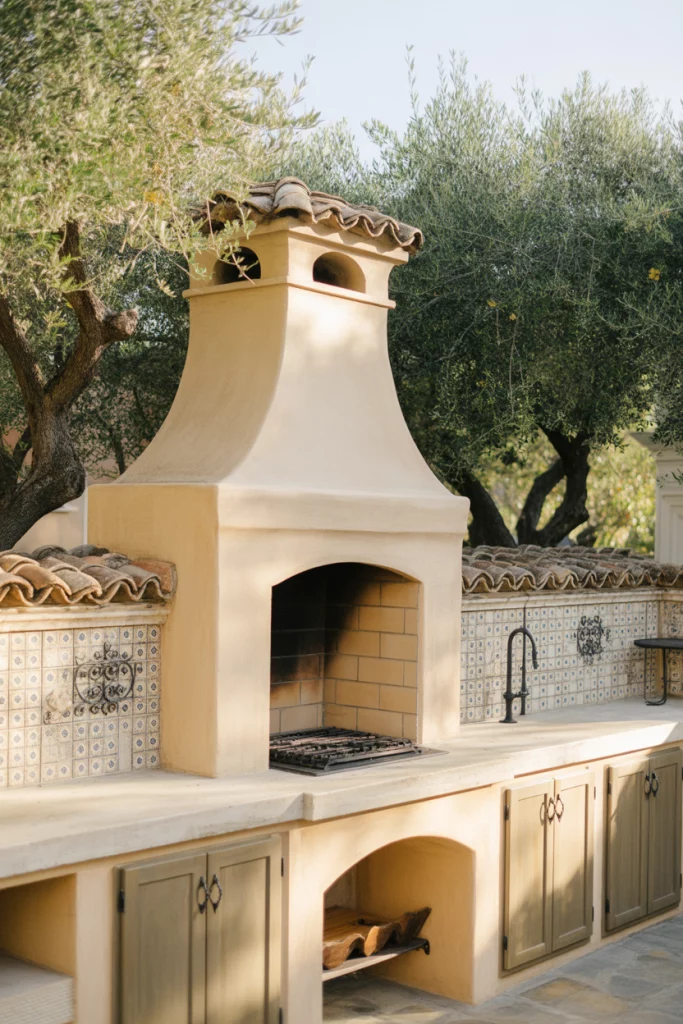
Where it works best: regions with mild winters like California, Arizona, and the Southeast, where outdoor living can extend nearly year-round with the addition of radiant heat. Position seating in a semi-circle around the fireplace, approximately 6–8 feet away for comfortable warmth without excessive heat. Many homeowners report that their fireplace-equipped outdoor kitchens become the preferred gathering spot even when indoor spaces are available, particularly during spring and fall evenings when temperatures hover in the 50s and 60s.
5. Indoor-Outdoor Flow with Transitional Zones

Blurring the boundaries between indoor and outdoor spaces creates a seamless entertaining experience that feels expansive and luxurious. This design approach uses large sliding or folding glass doors that open completely, consistent flooring materials that transition from inside to outside, and complementary color palettes that unify both zones. The result is a cooking and dining environment that adapts to weather conditions while maintaining visual continuity and encouraging natural movement between spaces. 
Real homeowners who’ve embraced this design report that it fundamentally changes how they use their homes, with cooking preparation often starting indoors and finishing on the outdoor grill without the awkward back-and-forth through narrow doorways. Install the same or similar cabinetry finishes in both the indoor and outdoor kitchens to create visual harmony—many manufacturers now offer weatherproof versions of popular interior cabinet styles. This approach works exceptionally well in temperate coastal regions where mild weather permits frequent door-opening throughout most of the year.
6. Backyard BBQ Entertainment Zone
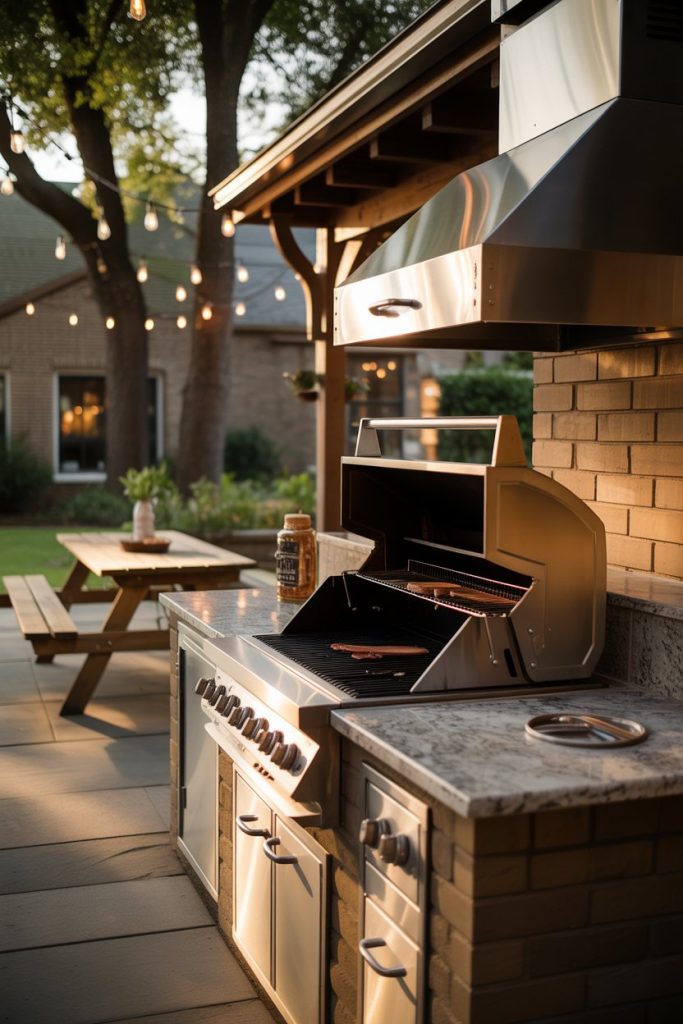
A dedicated backyard BBQ area with a well-planned layout elevates casual cookouts into memorable social events. This setup goes beyond a standalone grill, incorporating prep counters on either side, a beverage refrigerator, and strategic lighting that allows cooking to continue after sunset. The BBQ becomes the anchor of a larger entertainment zone that might include a dining table, lounge seating, and lawn games, creating multiple activity areas within your outdoor space. 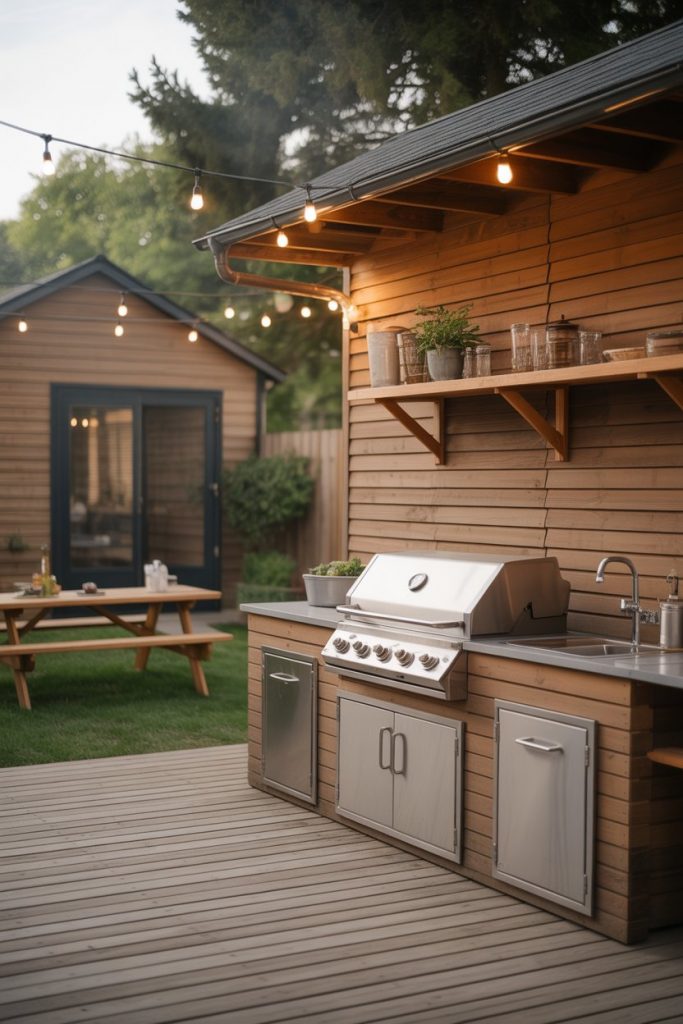
From a practical standpoint, position your BBQ station at least 10 feet from the house to prevent smoke and heat from affecting siding or windows, yet close enough that carrying food and supplies remains convenient. Installing a dedicated 20-amp electrical circuit allows you to power rotisserie attachments, warming drawers, and task lighting without running extension cords across your yard. The most successful BBQ layouts create distinct zones for cooking, serving, and socializing, preventing congestion around the grill during peak cooking times.
7. Island Configuration for Chef-Centered Design
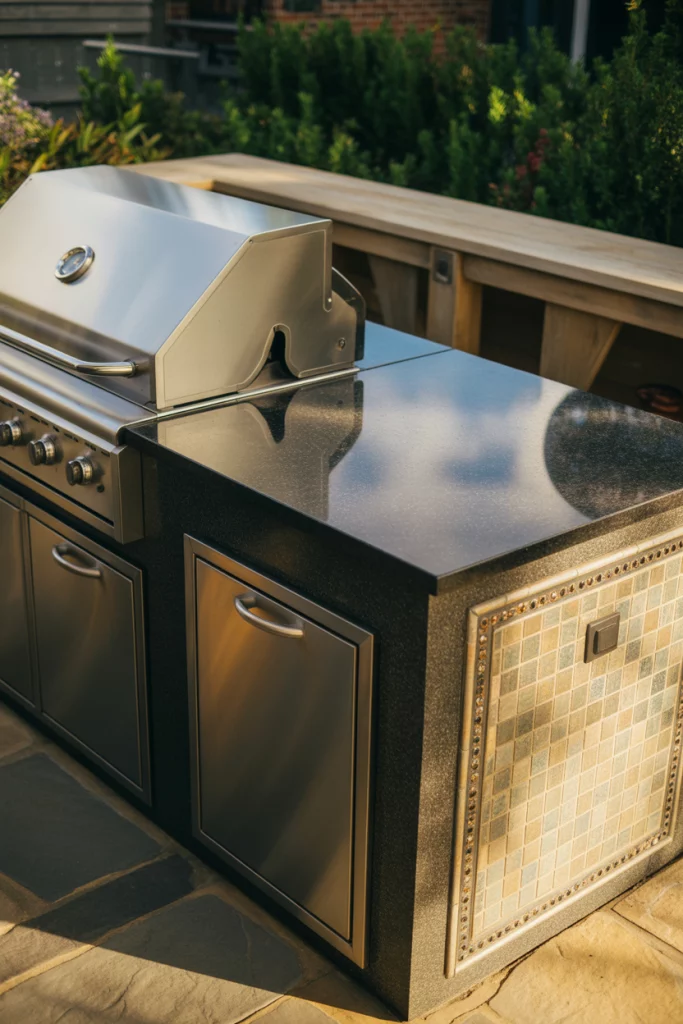
An island outdoor kitchen positions the cook at the center of the action, allowing for 360-degree access and natural conversation with guests gathered around the perimeter. This layout typically measures 6–10 feet long and 3–4 feet deep, incorporating the grill, side burners, and storage drawers within a unified counter that creates a commanding presence in your outdoor space. The island design promotes social cooking, where meal preparation becomes part of the entertainment rather than isolating the chef from guests. 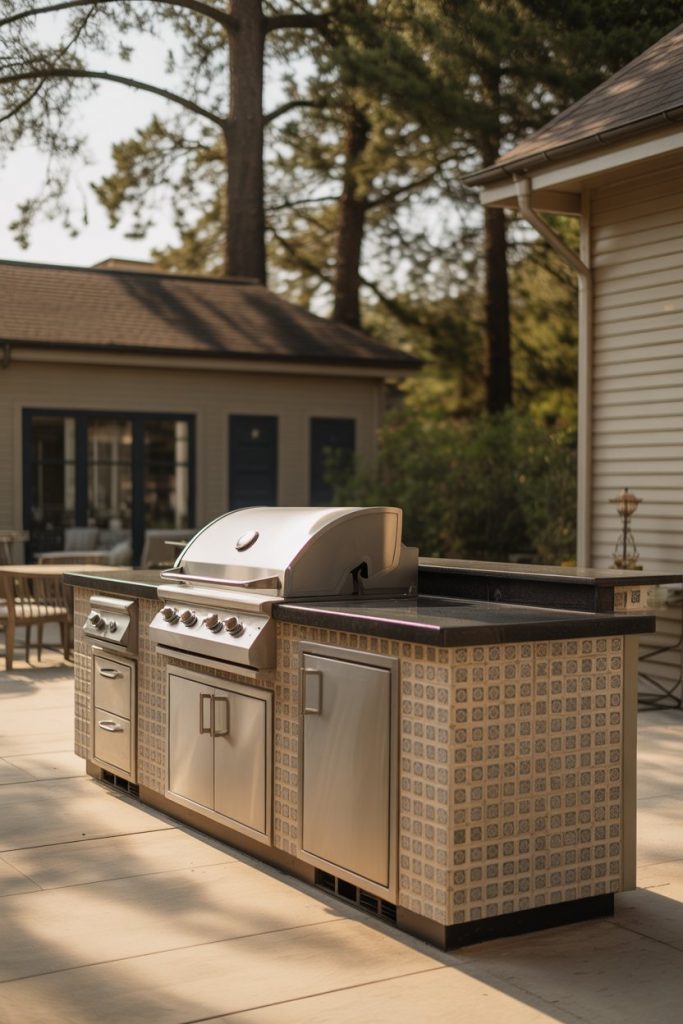
A neighbor of mine installed an island kitchen last summer and mentioned that the design completely changed their entertaining dynamic—instead of disappearing to cook while guests sat elsewhere, they now remain at the center of conversation while grilling. Ensure adequate walkway space of at least 36–42 inches on all sides of the island to prevent bottlenecks when multiple people are moving around. Consider incorporating a raised bar-height section on one side for casual seating, creating a natural gathering spot where guests can chat with the cook while sipping drinks.
8. Semi-Enclosed Courtyard Kitchen
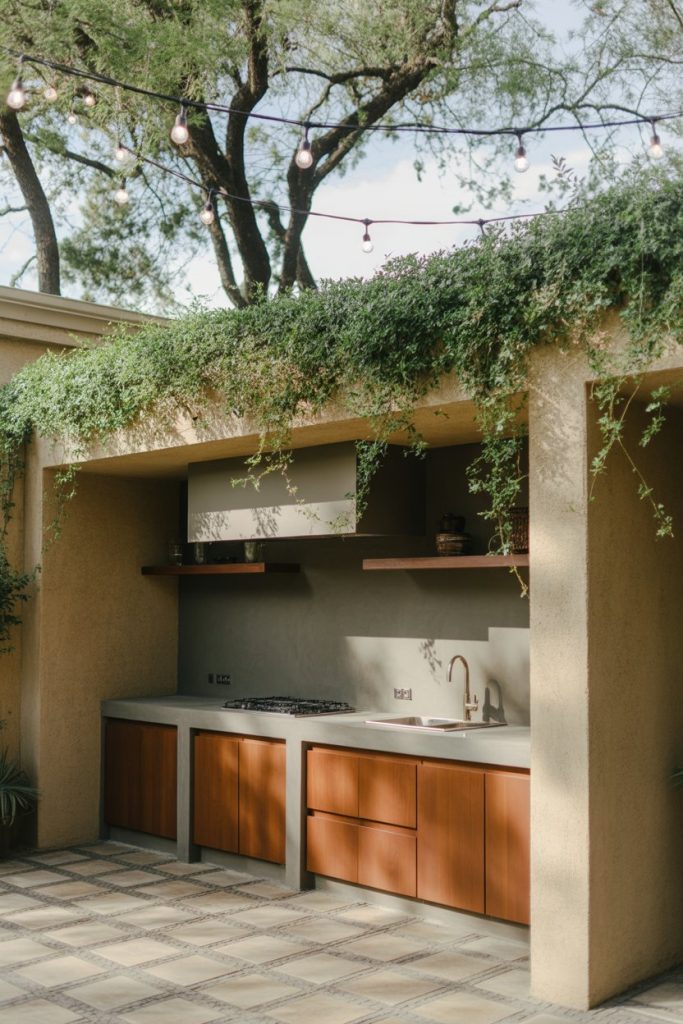
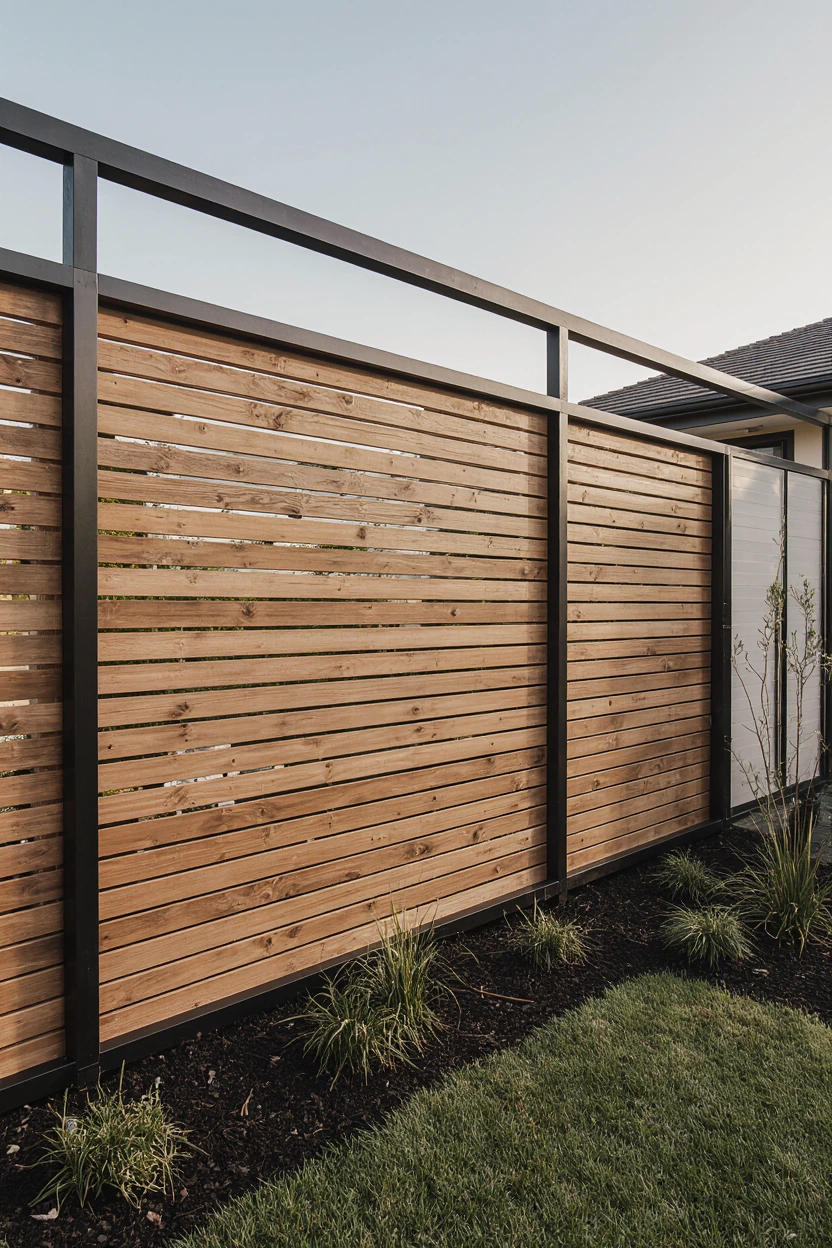
A semi-enclosed outdoor kitchen uses partial walls, tall plantings, or privacy screens to create intimate atmosphere while maintaining airflow and connection to the surrounding landscape. This design provides shelter from wind, defines the cooking zone as a distinct room, and offers privacy from neighboring properties—particularly valuable in urban and suburban settings where lots are smaller. The semi-enclosed approach delivers many benefits of an indoor kitchen while preserving the al fresco experience. 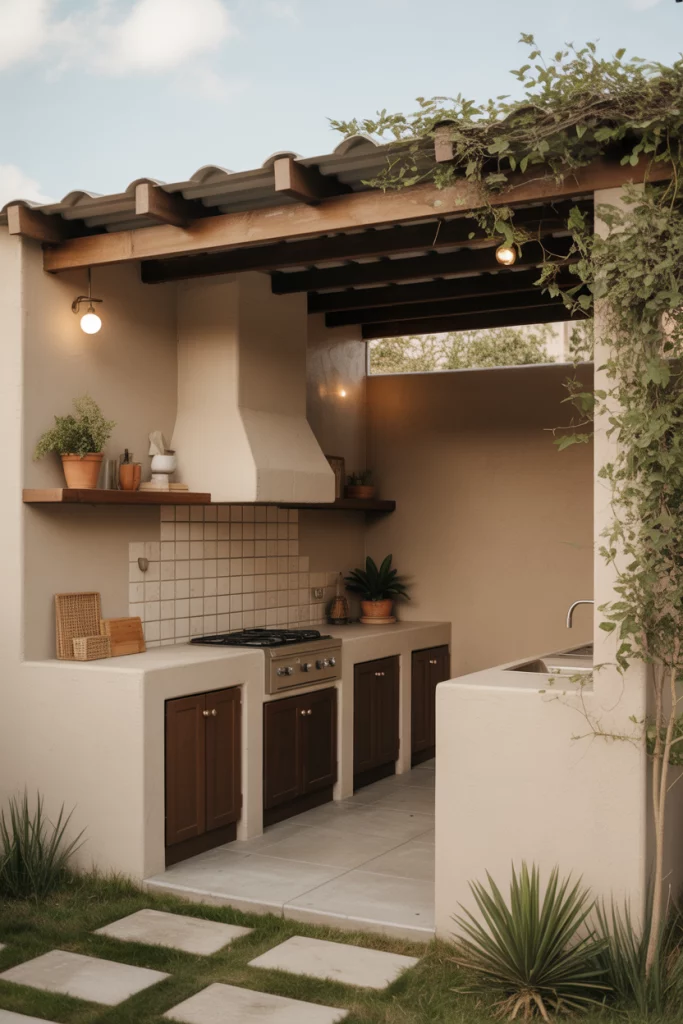
This configuration works particularly well in windy regions where open kitchens suffer from blown-out grill flames and uncomfortable drafts while cooking. Install walls on two or three sides, leaving one side fully open to maintain the outdoor feel and provide primary access. Many municipalities classify semi-enclosed structures differently from fully enclosed ones for permitting purposes, potentially simplifying approval processes and reducing construction costs by $3,000–$8,000 compared to fully enclosed outdoor rooms.
9. Classic Brick Construction with Timeless Appeal
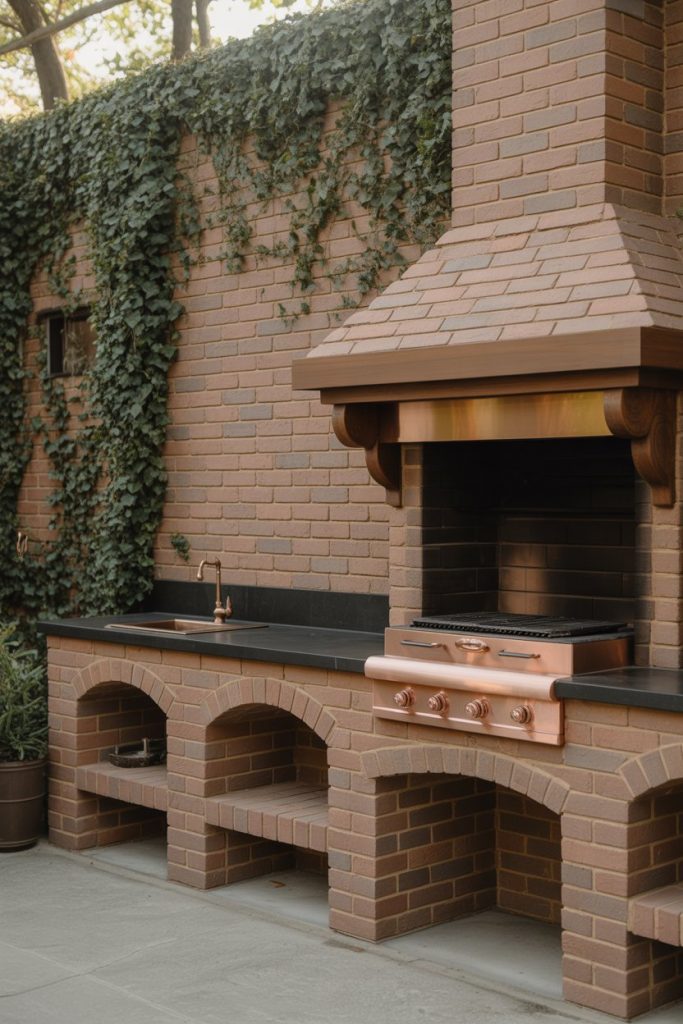
A brick outdoor kitchen delivers unmatched durability and classic aesthetics that complement traditional and colonial home architecture beautifully. This construction method uses either full brick walls or brick veneer over a concrete block base, creating surfaces that withstand decades of weather exposure while developing attractive patina over time. Brick provides excellent heat retention around cooking areas and requires minimal maintenance beyond occasional repointing of mortar joints every 20–30 years.
Expert masons recommend using harder-fired paving bricks or specialized outdoor bricks rather than standard construction bricks, as these resist moisture absorption that can lead to cracking during freeze-thaw cycles. Brick construction typically costs $45–$85 per square foot installed, making it competitive with high-end stucco or stone while offering superior longevity. The material particularly suits homes in the Northeast, Mid-Atlantic, and Midwest, where brick residential architecture predominates and the outdoor kitchen becomes a cohesive extension of the home’s existing character.
10. Small Space Solutions for Urban Patios
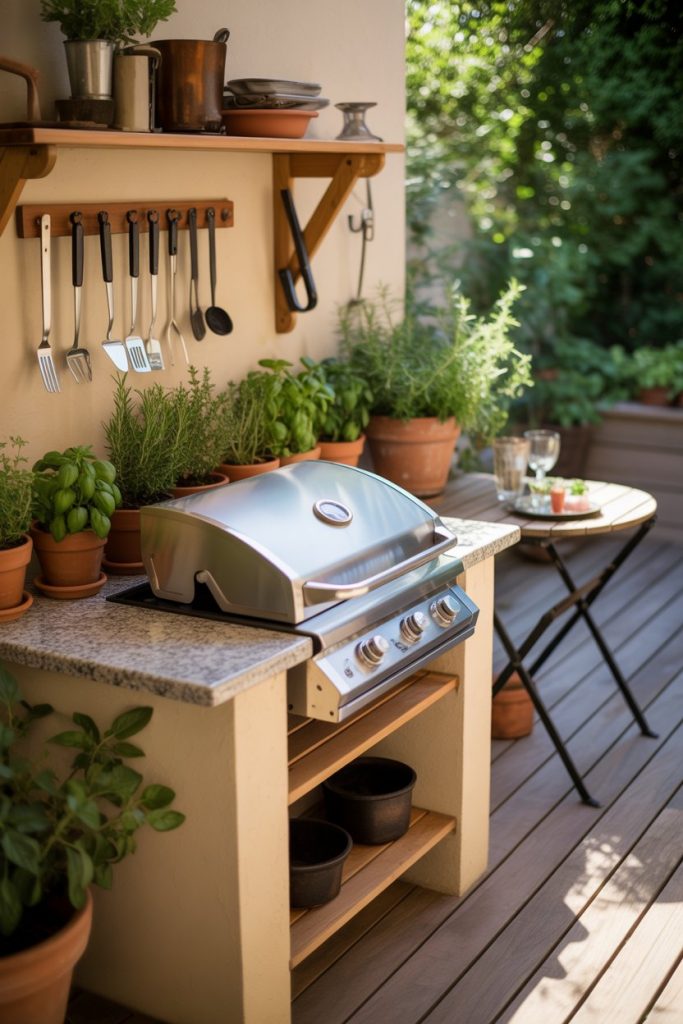
Creating a functional outdoor kitchen in a small space requires strategic planning that maximizes every square foot without sacrificing essential features. A small patio kitchen might measure just 6–8 feet long, incorporating a compact grill, mini refrigerator, and limited counter space within a footprint that preserves room for a small dining table or lounge chairs. Focus on vertical storage solutions, fold-down surfaces, and multi-functional elements that serve multiple purposes without consuming precious square footage. 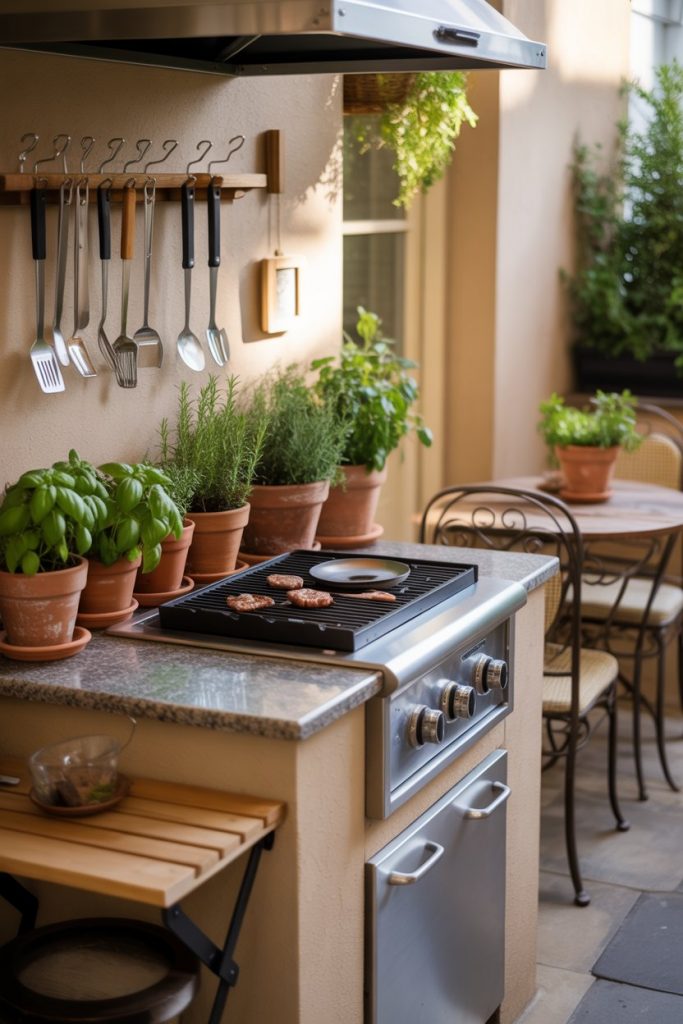
Where it works best: urban townhouses, condominiums with small terraces, and suburban homes with limited yard space but strong desire for outdoor cooking capability. Choose a 24-inch or 30-inch grill instead of the standard 36-inch models to free up counter space for prep work. Wall-mounted magnetic knife strips, hanging pot racks, and pegboard organizers keep tools accessible without occupying counter real estate. Budget $3,500–$8,000 for a well-equipped small outdoor kitchen, proving that size limitations don’t necessarily constrain functionality or style.
11. UK-Inspired Garden Kitchen with Cottage Charm
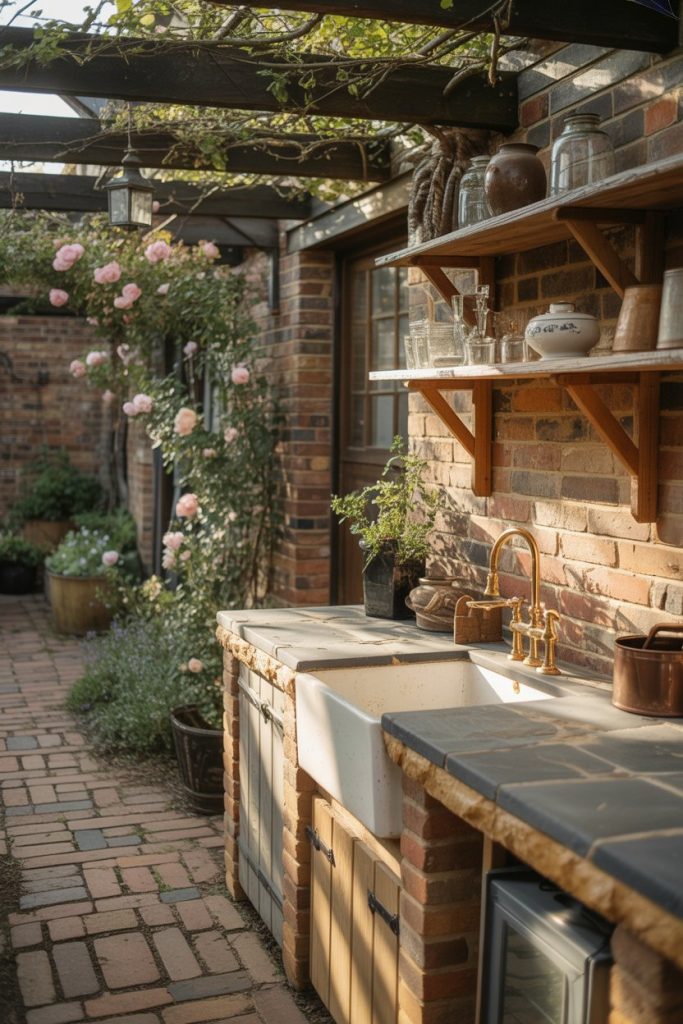
Drawing inspiration from UK garden design traditions creates an outdoor kitchen that emphasizes lush plantings, weathered materials, and cozy intimacy over sprawling scale. This aesthetic incorporates elements like reclaimed slate counters, aged copper fixtures, climbing roses on trellises, and vintage-style pendant lights that evoke English countryside charm. The design celebrates imperfection and patina, with materials that improve visually as they weather rather than requiring constant maintenance to look pristine. 
This approach resonates particularly with homeowners in the Pacific Northwest, New England, and other regions where gardens play a central role in outdoor living and frequent rain creates natural weathering effects. Incorporate generous plantings of herbs like rosemary, thyme, and lavender directly into the kitchen design, using them both decoratively and functionally. The cottage-style outdoor kitchen typically costs less than ultra-modern designs since it embraces aged and salvaged materials, with many elements sourced from architectural salvage yards or repurposed from other projects.
12. Natural Wood Elements and Organic Warmth
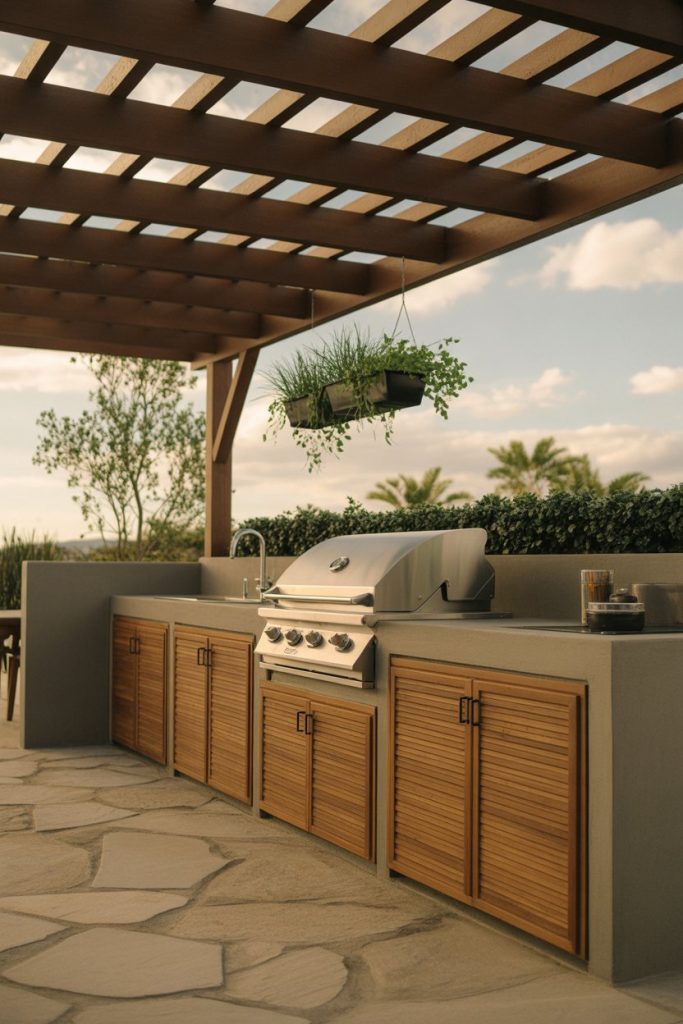
Integrating wood components into your outdoor kitchen introduces organic warmth and textural contrast against stone and metal surfaces, creating a more inviting and less industrial atmosphere. Choose naturally rot-resistant species like teak, ipe, or cedar for cabinetry doors, countertop supports, and decorative accents that will age gracefully with proper sealing and maintenance. Wood elements soften the hardscape-heavy environment typical of outdoor kitchens, bridging the gap between built structures and natural landscape surroundings. 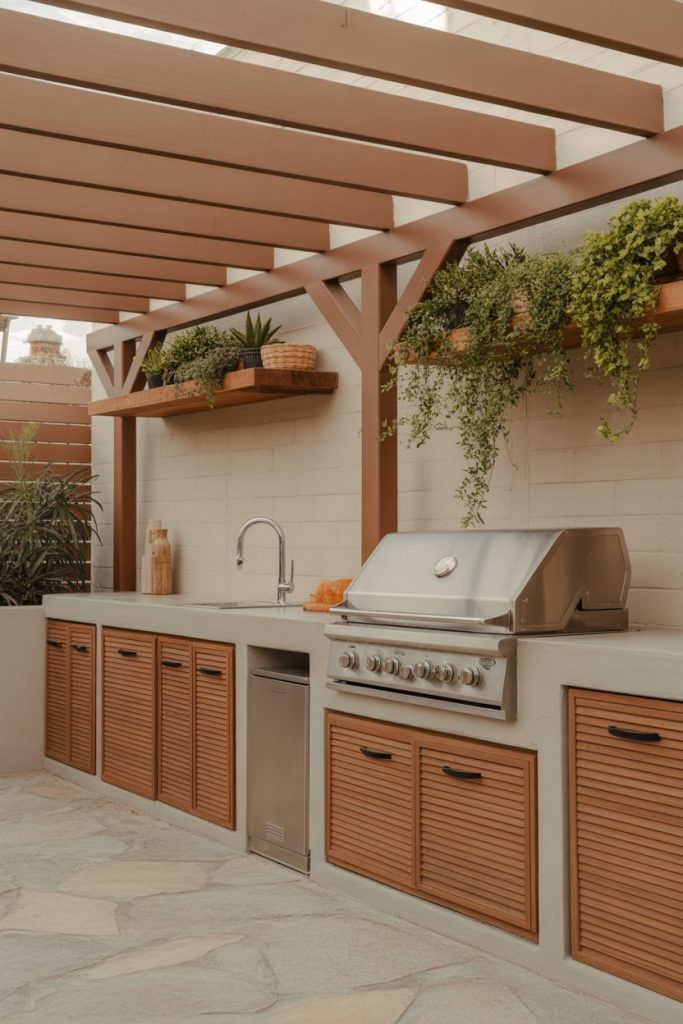
Real homeowner behavior shows that those who incorporate wood elements tend to engage more actively with seasonal maintenance, treating the annual sealing and cleaning as a ritual that marks the beginning of outdoor cooking season. Apply marine-grade sealers every 12–18 months to protect against moisture and UV damage, accepting that some weathering to a silvery-gray patina is natural and attractive. Avoid using pressure-treated lumber in areas near food preparation, opting instead for naturally durable species that don’t require chemical treatment.
13. Detailed Grill Area Plan with Work Triangle
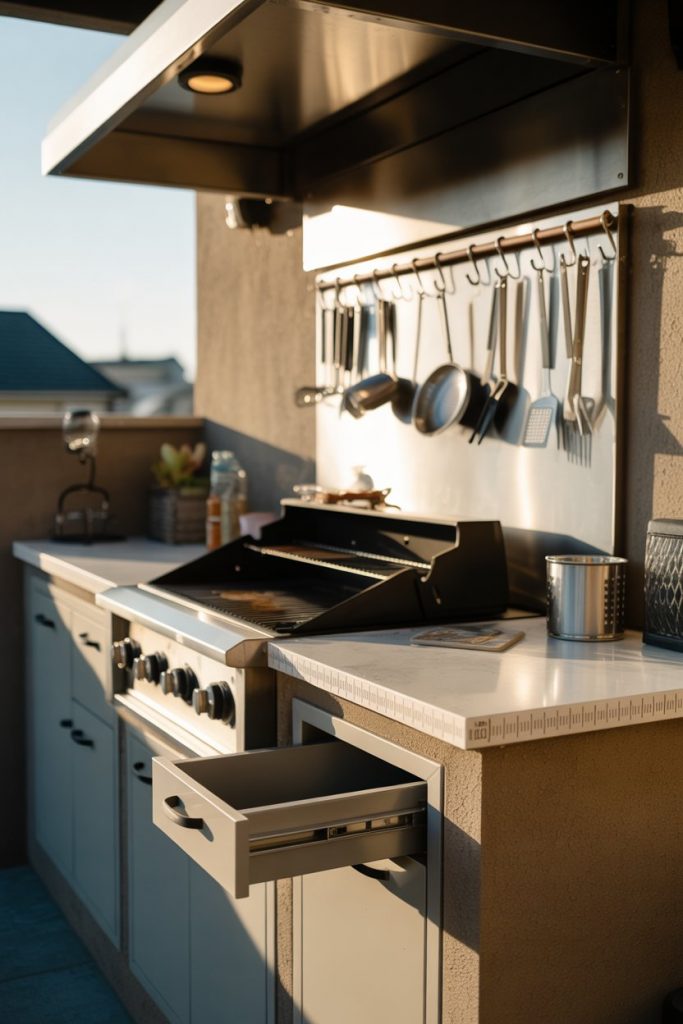
A thoughtfully designed grill area plan applies the classic kitchen work triangle concept to outdoor spaces, positioning the grill, prep surface, and storage in an efficient relationship that minimizes unnecessary movement. This layout typically places 24–36 inches of counter space on either side of the grill for staging raw ingredients on one side and resting cooked food on the other. Incorporating the work triangle principle reduces the total steps required during meal preparation by 40–60%, making cooking less physically demanding and more enjoyable. 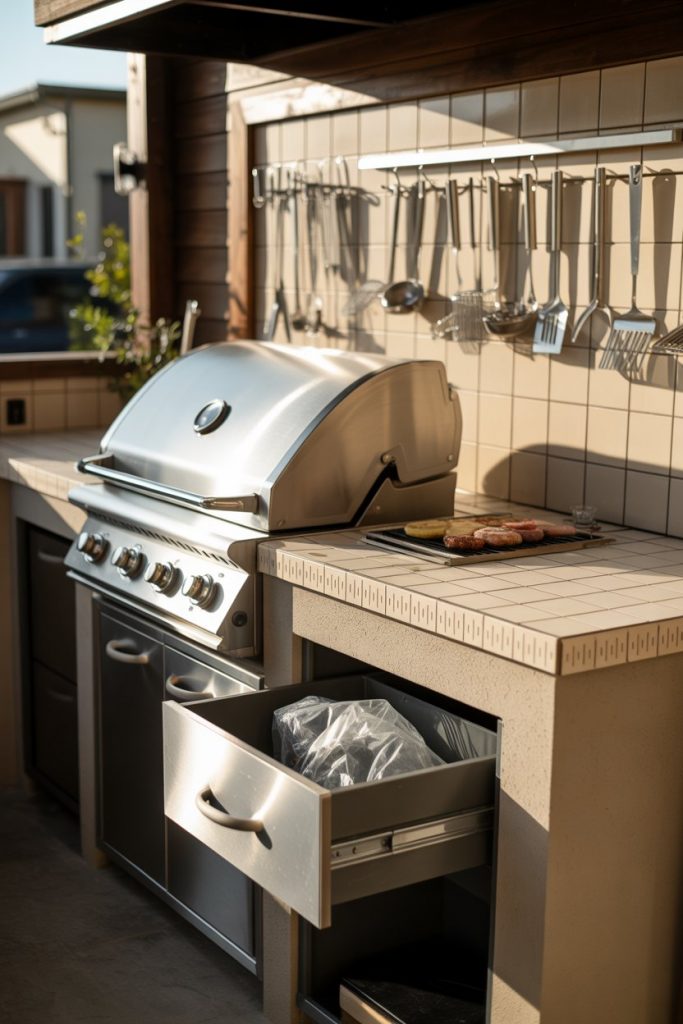
Common mistakes include placing the refrigerator too far from the grill (requiring multiple trips) or failing to include adequate landing space adjacent to the grill (forcing dangerous juggling of hot items). Position the beverage refrigerator within arm’s reach of the grill so you can grab drinks without leaving your cooking station. Include a small prep sink within 4–5 feet of the grill for quick hand-washing and vegetable rinsing. Professional outdoor kitchen designers recommend mapping your actual cooking process before finalizing the layout, literally walking through each step to identify inefficiencies.
14. Open-Air Kitchen without Upper Cabinets
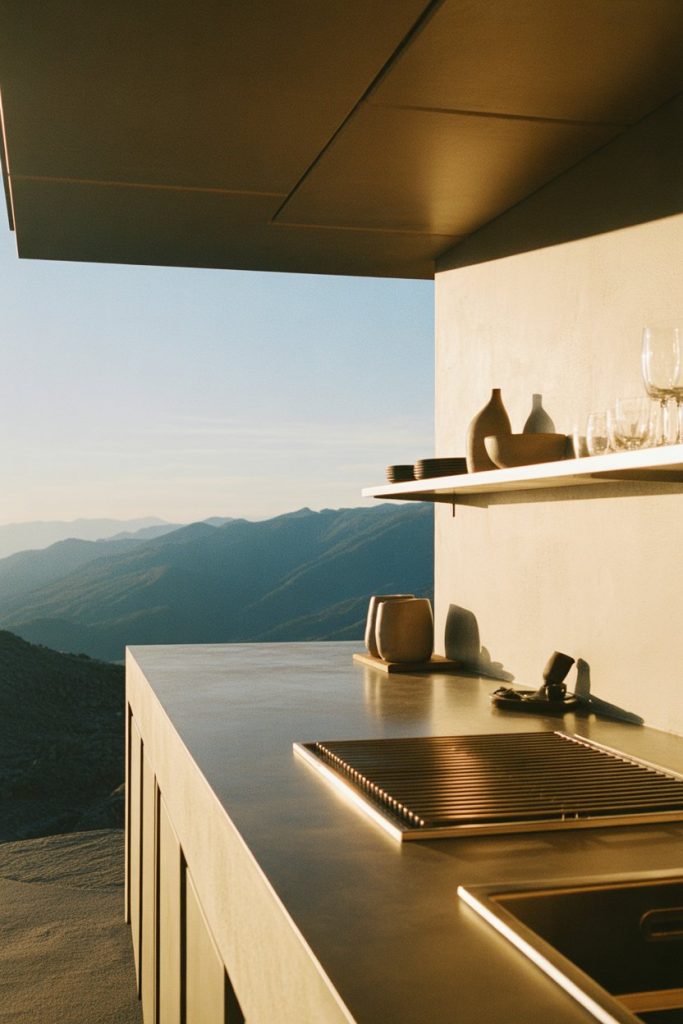
An open-air kitchen design eliminates overhead structures and upper cabinetry, creating an unobstructed view of the sky and surrounding landscape while maintaining full cooking functionality. This minimalist approach relies on base cabinets, drawers, and open shelving for storage, keeping sight lines clear and emphasizing the connection to nature. The open-air configuration particularly suits properties with dramatic views, starry night skies, or established tree canopies that provide natural overhead interest. 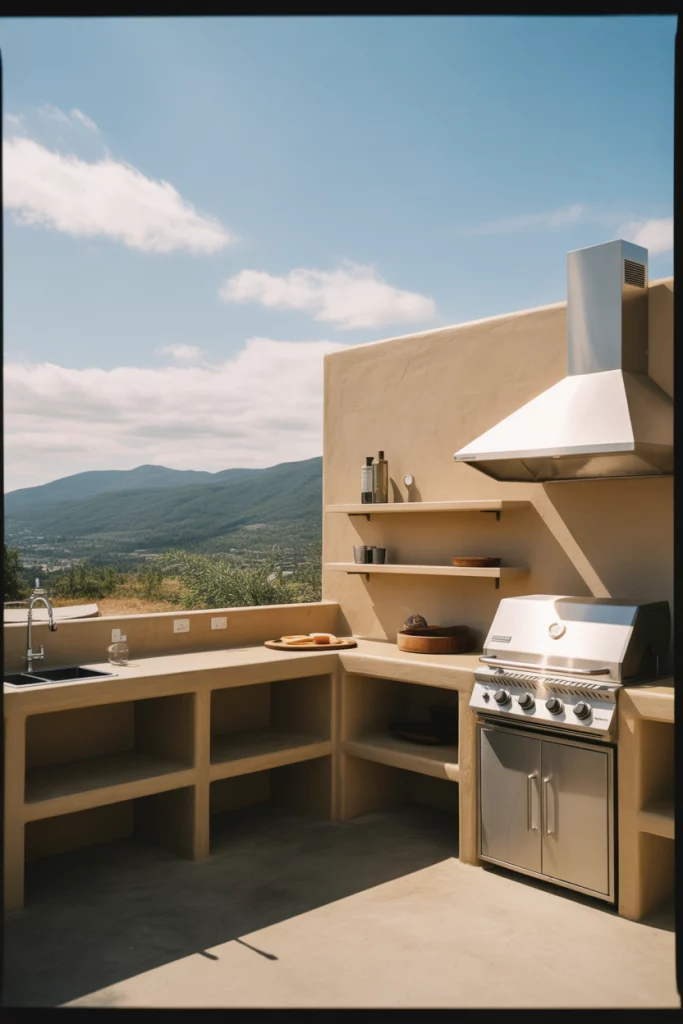
This design philosophy reflects American outdoor lifestyle preferences in regions like Colorado, Montana, and the Southwest, where expansive skies and natural beauty justify keeping architectural elements minimal. Without overhead coverage, select materials and appliances rated for full weather exposure, and plan for snow and rain accumulation on horizontal surfaces. Store frequently used utensils and seasonings in weatherproof containers within drawers rather than leaving them exposed on counters. The absence of a roof structure can reduce overall project costs by $5,000–$15,000 while creating a more integrated landscape experience.
15. Dedicated BBQ Area Adjacent to Pool

Positioning a patio BBQ area near your pool creates a resort-style entertainment environment where cooking, swimming, and lounging flow naturally together. This layout should maintain at least 10–15 feet of clearance between the grill and pool edge to prevent grease splatter in the water and keep intense heat away from swimmers. Consider prevailing wind direction to ensure smoke drifts away from the pool area, and install splash-resistant surfaces around the kitchen perimeter where wet swimmers might walk. 
From a practical insight perspective, include a dedicated handwashing sink and paper towel dispenser within the BBQ area so swimmers can grab food without dripping pool water throughout the house. The poolside kitchen sees peak use during summer months, making quality shade coverage essential—whether through a permanent roof structure, large umbrella, or sail shade that can be adjusted throughout the day. Install ground fault circuit interrupter (GFCI) outlets for all electrical connections in this moisture-rich environment, prioritizing safety around the combination of water, electricity, and cooking equipment.
16. Built-In Blackstone Griddle Integration
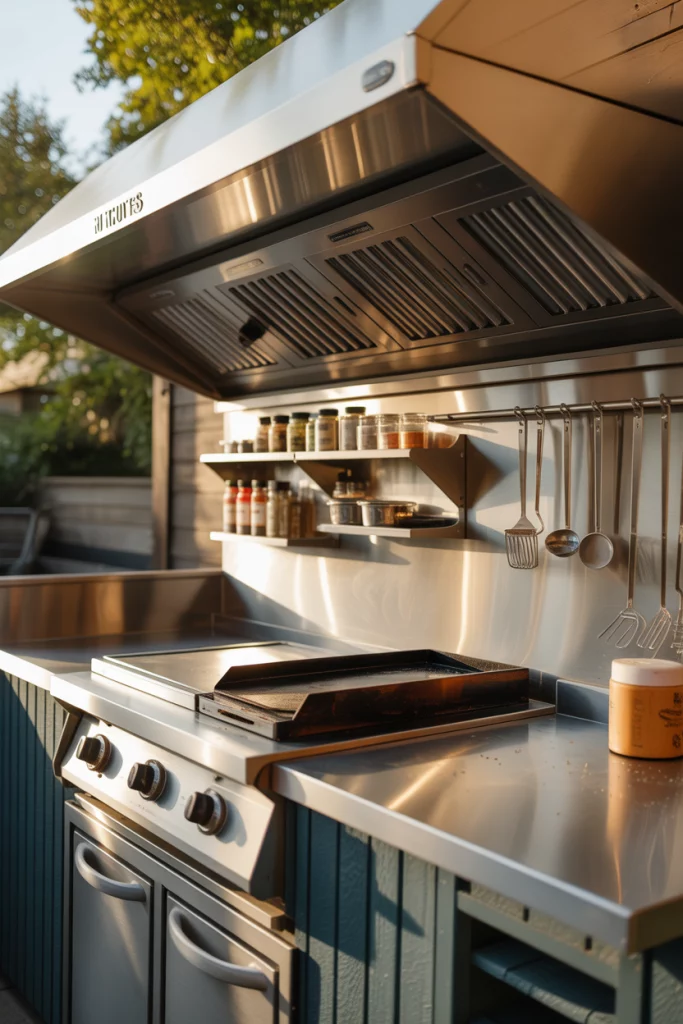
Incorporating ideas with built-in Blackstone griddle functionality expands your outdoor cooking repertoire beyond traditional grilling to include breakfast items, stir-fries, and delicate foods that would fall through grill grates. A built-in griddle typically features a 36-inch flat-top cooking surface with multiple heat zones, allowing you to cook pancakes, bacon, smash burgers, and sautéed vegetables simultaneously at different temperatures. This versatile cooking platform has gained tremendous popularity among American outdoor cooks who want restaurant-style cooking capability in their backyard. 
One homeowner I spoke with mentioned that their built-in griddle transformed their outdoor kitchen from a weekend luxury into a daily-use cooking space, with weekend breakfast becoming a cherished family ritual. The griddle requires a dedicated propane or natural gas connection with appropriate BTU output (typically 50,000–60,000 BTUs for a 36-inch surface). Install the griddle at standard 36-inch counter height with heat-resistant surfaces on either side, and plan for regular seasoning maintenance using thin coats of cooking oil to maintain the non-stick surface. Budget $1,200–$3,000 for a quality built-in griddle unit, plus installation costs.
17. Wood-Fired Pizza Oven as Focal Point
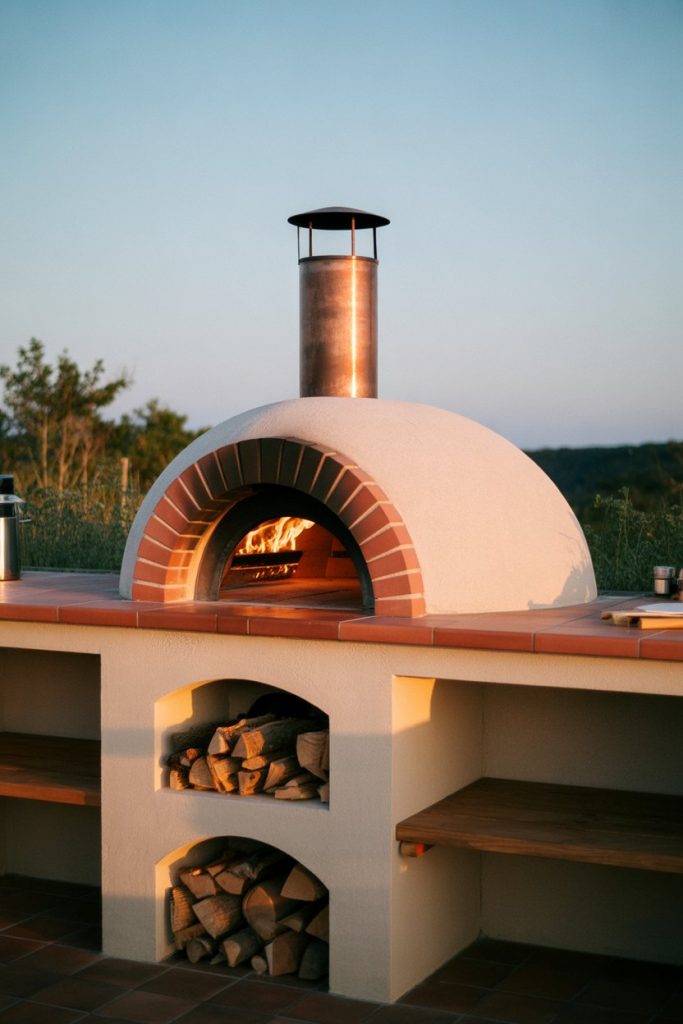
A dedicated pizza oven transforms your outdoor kitchen into a destination entertaining space, offering authentic wood-fired cooking that produces restaurant-quality pizzas, roasted vegetables, and artisan bread. These dome-shaped ovens reach temperatures of 700–900°F, cooking a 12-inch pizza in just 90 seconds while imparting distinctive smoky flavor impossible to replicate in conventional ovens. The pizza oven becomes both a functional cooking tool and an architectural statement piece that commands attention and conversation. 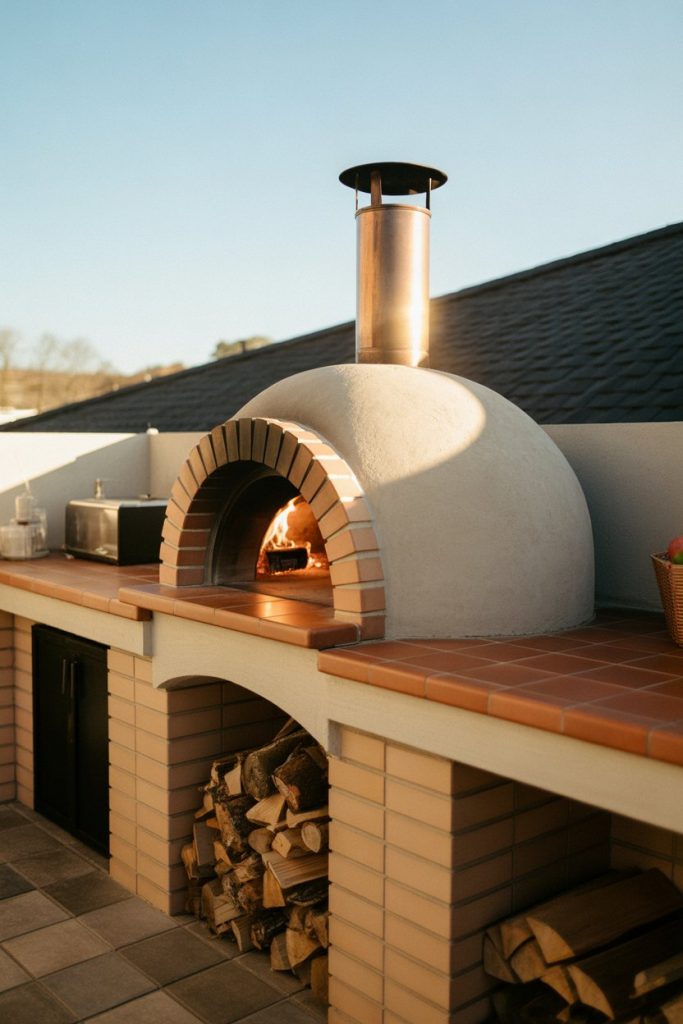
Where it works best: properties with sufficient space to dedicate 4–6 feet of counter length to the oven and associated wood storage, particularly in regions with strong Italian-American culinary traditions like the Northeast and California. Choose between pre-fabricated modular units ($2,000–$6,000) or custom-built masonry ovens ($8,000–$15,000), with the latter offering superior heat retention and longevity. Position the oven so prevailing winds carry smoke away from primary gathering areas, and ensure the mouth of the oven faces toward your prep and serving areas for efficient workflow.
18. Luxury Materials and High-End Finishes
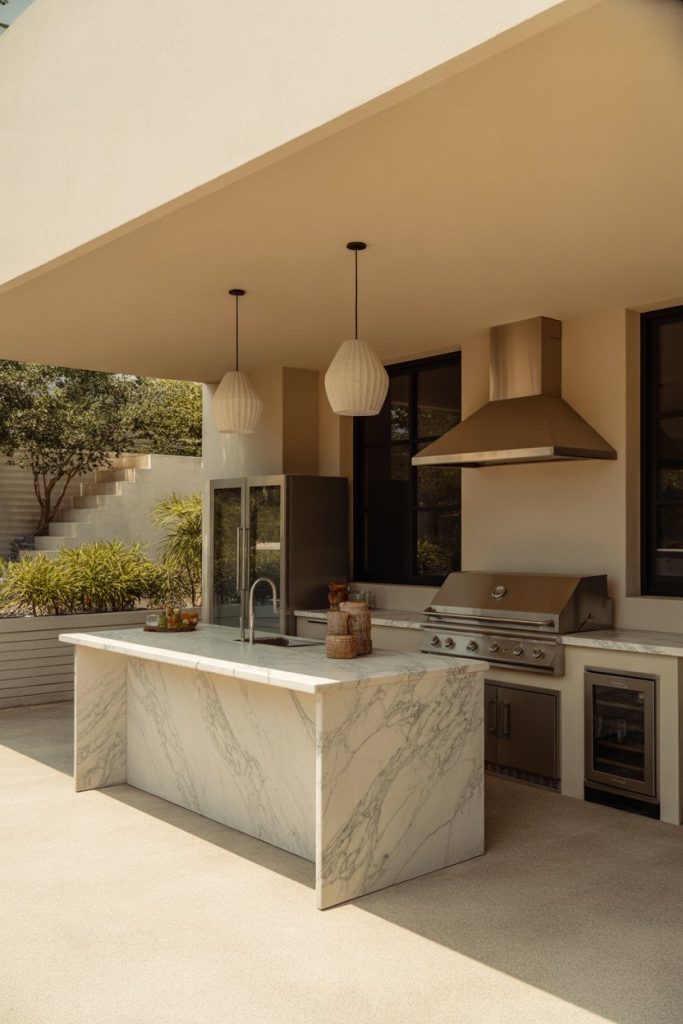
A luxury outdoor kitchen incorporates premium materials like quartzite or granite countertops, custom stainless steel cabinetry, professional-grade appliances, and sophisticated lighting design that rivals indoor kitchen investments. This elevated approach might include a 48-inch built-in grill with infrared burners, a commercial-grade range hood, beverage and wine refrigeration, and ambient lighting systems with multiple zones and dimming capability. The luxury outdoor kitchen design represents a significant financial commitment but creates an entertainment environment that adds substantial value to your property. 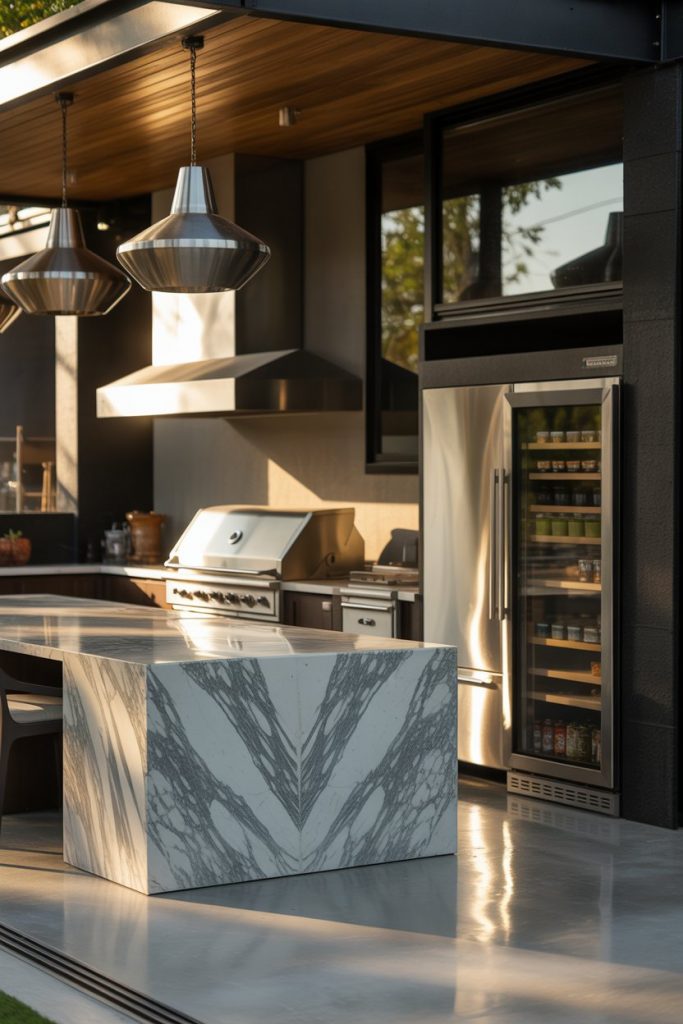
Budget angle: A fully appointed luxury outdoor kitchen typically ranges from $35,000 to $85,000, with ultra-premium installations exceeding $100,000 when incorporating features like automated retractable screens, outdoor televisions, and custom water features. These spaces often include heating and cooling systems that extend usability across seasons, transforming the outdoor kitchen from a seasonal amenity into a year-round living space. Luxury buyers prioritize brands like Lynx, Alfresco, and Kalamazoo for appliances, seeking the same level of performance and aesthetics they expect from high-end indoor kitchens.
19. Modern Minimalist with Clean Lines
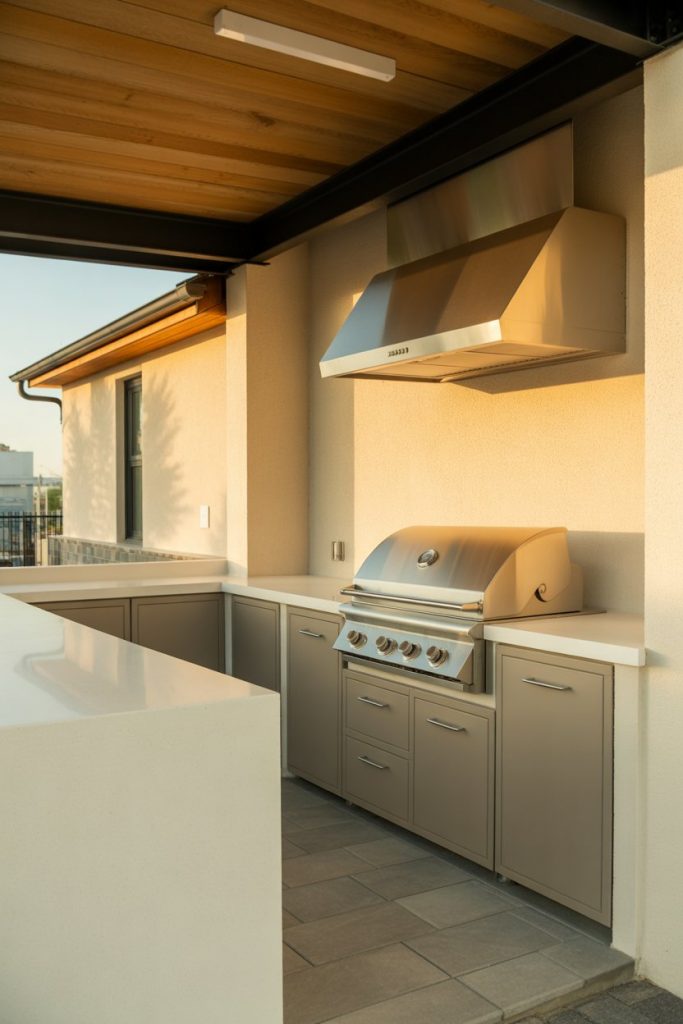
A modern outdoor kitchen embraces clean geometry, handleless cabinetry, monochromatic color schemes, and integrated appliances that create seamless surfaces with minimal visual clutter. This aesthetic typically features materials like polished concrete, large-format porcelain tiles, and powder-coated steel in neutral grays, whites, and blacks. The modern covered design might incorporate a flat-roof structure with hidden gutters and integrated LED lighting that emphasizes horizontal lines and architectural precision. 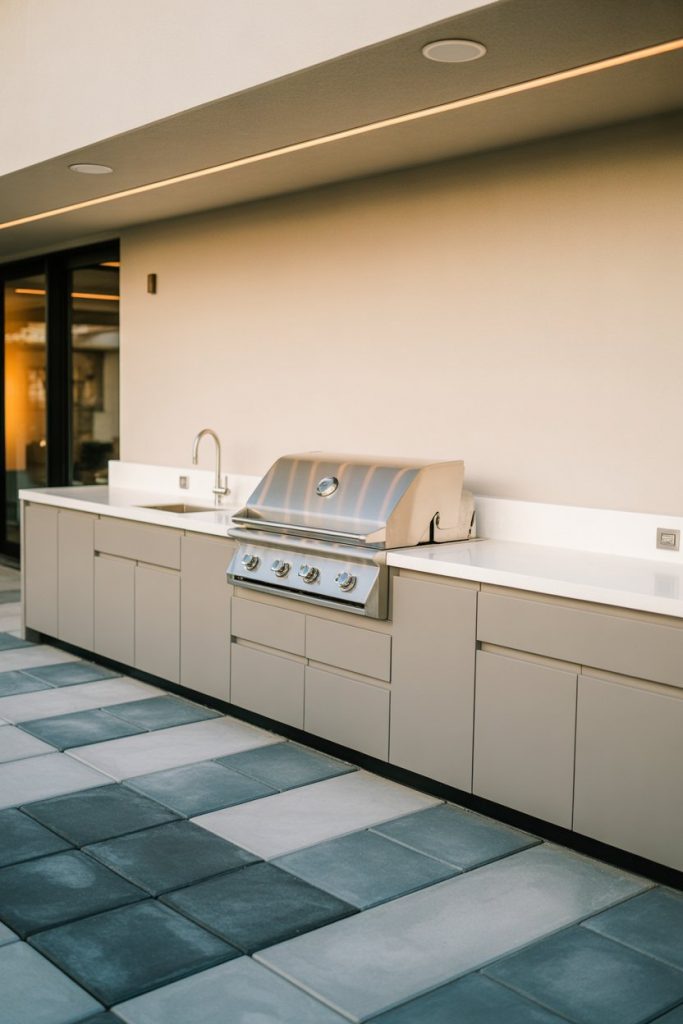
This design philosophy complements contemporary and mid-century modern home architecture, creating visual continuity between indoor and outdoor spaces through consistent material palettes and design language. The minimalist approach actually demands higher precision in installation since there are fewer decorative elements to disguise imperfect measurements or alignments. Expert designers note that modern outdoor kitchens often cost 10–20% more than traditional designs due to specialized hardware, precise fabrication requirements, and premium materials needed to achieve the refined aesthetic, though the resulting space feels intentionally sophisticated rather than accidentally rustic.
20. Regional Adaptation for Philippines Climate

Designing an outdoor kitchen for Philippines-style tropical conditions requires attention to ventilation, weather resistance, and materials that withstand high humidity, intense sun, and monsoon rains. While this design approach originated in Southeast Asia, American homeowners in Hawaii, South Florida, and Gulf Coast regions can adapt these principles for similar climates. Key elements include elevated counter bases to prevent water pooling, stainless steel components that resist corrosion, and generous roof overhangs that provide sun and rain protection while maintaining airflow. 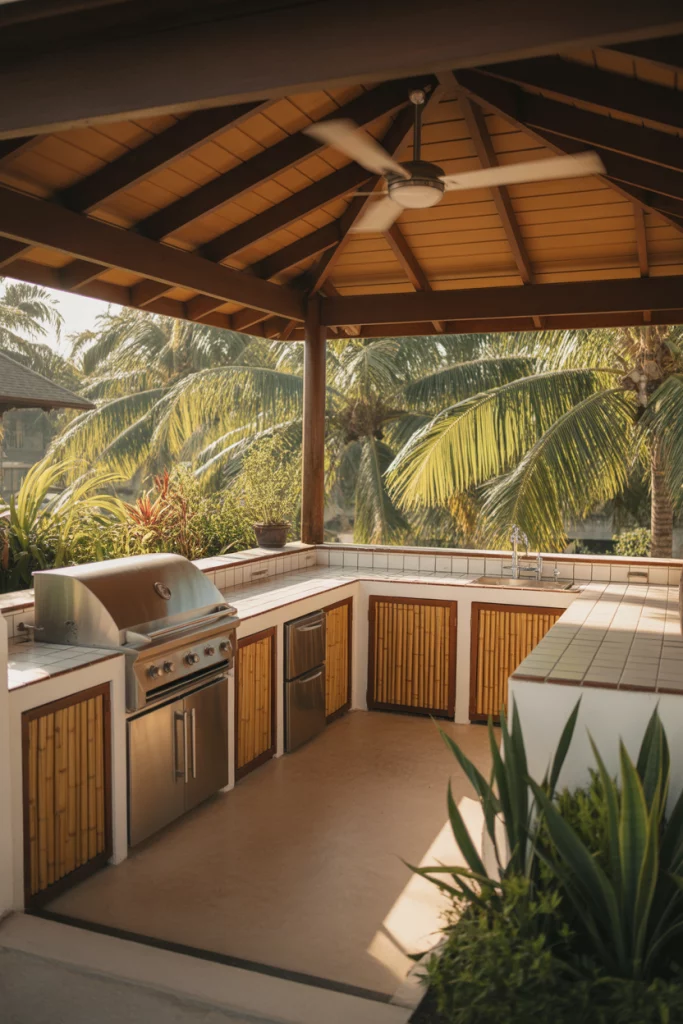
Common mistakes include using materials that promote mold growth in humid conditions or installing electronics without proper weatherproof enclosures. Choose marine-grade stainless steel (316 grade) rather than standard outdoor stainless (304 grade) for superior corrosion resistance in high-salt, high-humidity environments. Install multiple ceiling fans to maintain air circulation and reduce moisture accumulation that can lead to mildew on fabric elements and stored dishware. The tropical outdoor kitchen prioritizes shade and ventilation over enclosed protection, reflecting climates where temperatures remain warm year-round and the goal is catching breezes rather than blocking wind.
21. Multi-Level Layout for Sloped Properties
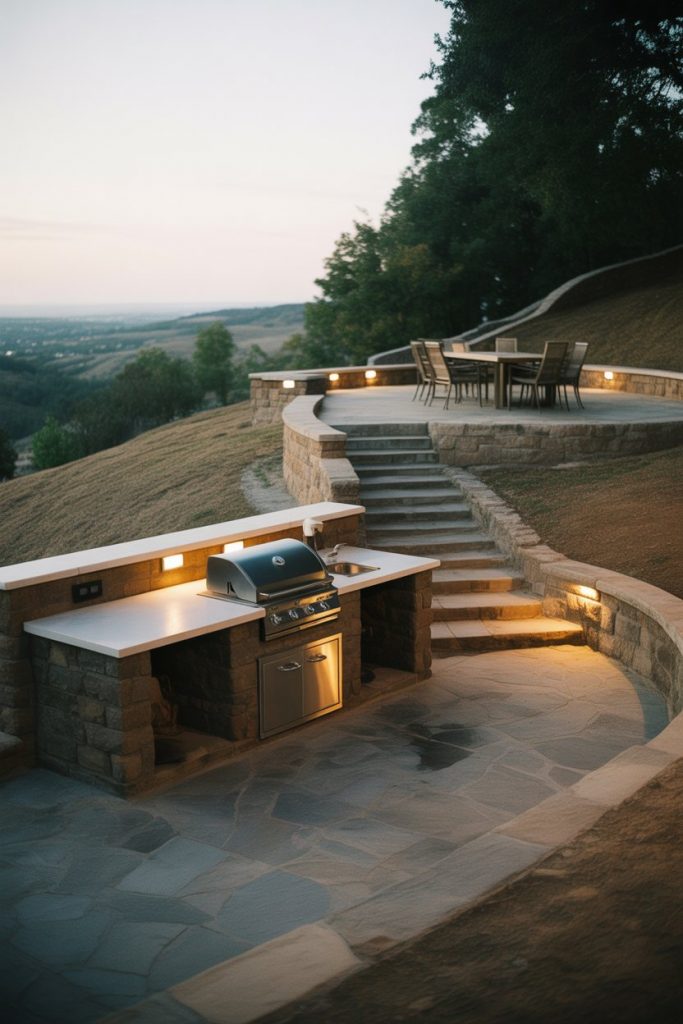
Creating an outdoor kitchen on sloped terrain presents unique challenges but also opportunities for dramatic multi-level layout designs that take advantage of natural topography. This approach might position the grill area on one terrace level with dining space a few steps above or below, connected by wide stone stairs that double as casual seating during large gatherings. The multi-level design creates distinct functional zones while working with rather than against your property’s natural contours, potentially saving thousands in grading and retaining wall costs. 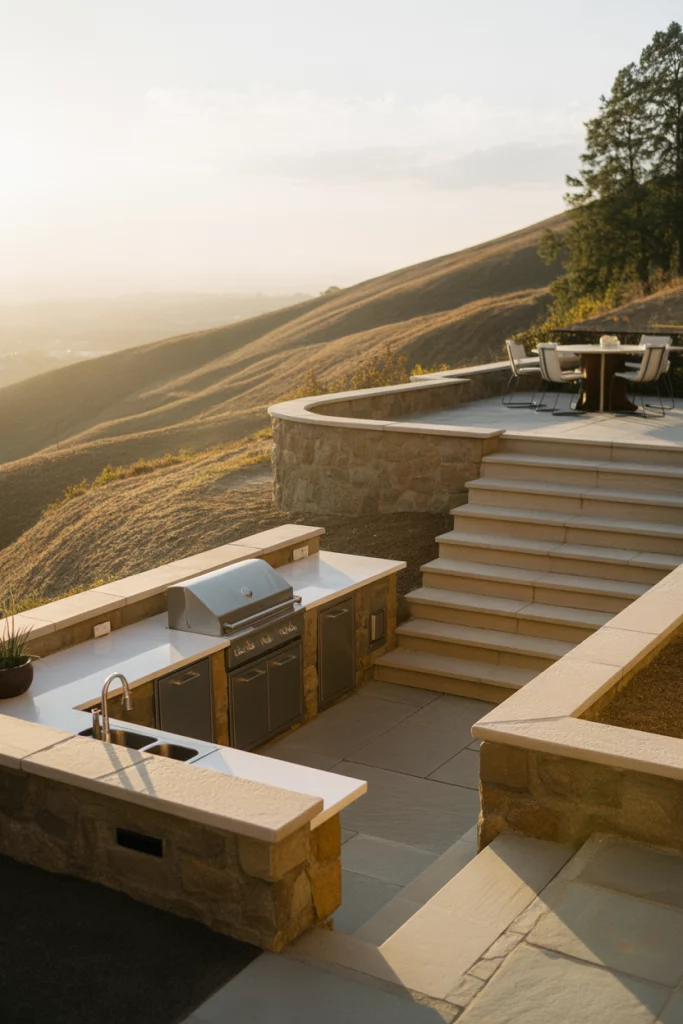
Where it works best: properties in hilly regions of California, the Appalachian states, and the Pacific Northwest, where level ground is scarce but dramatic views reward those willing to work with challenging topography. Ensure each cooking and prep surface remains perfectly level even as the surrounding ground slopes—this may require custom-height cabinetry and creative structural solutions. Build adequate drainage into each terrace to prevent water from flowing through your cooking area during storms, and consider the path servers will take when carrying food between levels to ensure safe footing even when hands are full. The multi-level outdoor kitchen creates inherent visual interest that single-plane designs must work harder to achieve through material choices and architectural details.
Conclusion
Your outdoor kitchen should reflect your personal cooking style, entertaining preferences, and the unique characteristics of your property and climate. Whether you’re drawn to rustic charm or modern minimalism, compact efficiency or luxury amenities, the key is creating a space that you’ll actually use and enjoy rather than one that simply looks impressive. Start with the essentials—a quality grill, adequate prep surfaces, and comfortable access to your indoor kitchen—then expand with additional features as your budget and needs evolve. Share your outdoor kitchen plans or existing setup in the comments below, and let’s discuss which design elements resonate most with your vision for outdoor living.