Open floor plan living rooms and kitchens continue to dominate American home design in 2026, blending functionality with a sense of spaciousness that appeals to families, entertainers, and minimalists alike. Whether you’re renovating a small apartment or reimagining a farmhouse layout, the seamless flow between cooking and lounging areas offers both visual appeal and practical advantages. Pinterest users are drawn to these designs for their versatility, natural light, and the way they encourage connection during everyday life. In this article, you’ll discover inspiring ideas that showcase how to make the most of your open floor plan, from clever furniture arrangements to stunning paint color choices and innovative layouts that work for any home size or style.
1. Compact Layout for Small Apartments
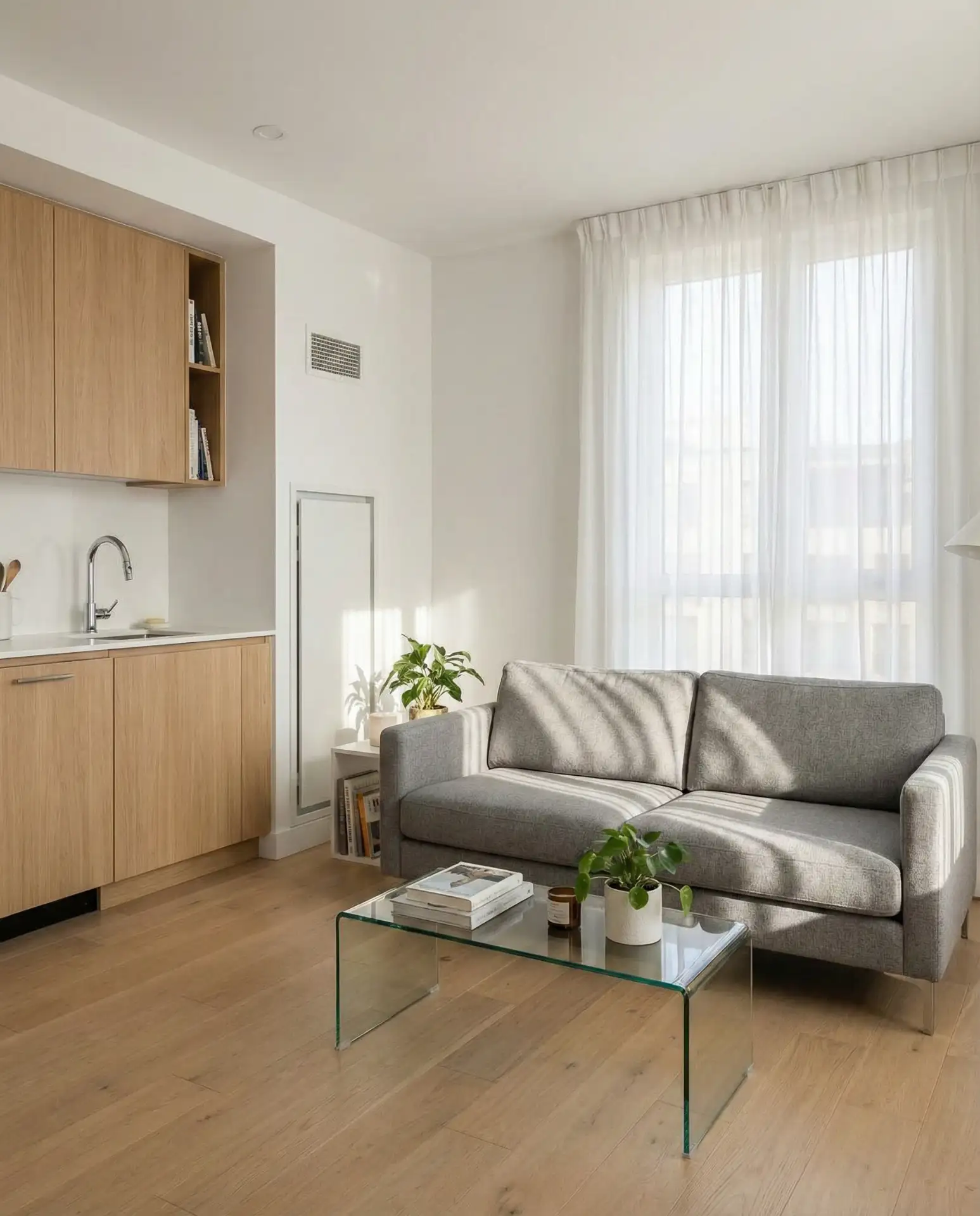
When working with a small apartment, an open floor plan can transform a cramped space into an airy, multifunctional hub. The key is to define zones without building walls—use area rugs, low-profile furniture, and strategic lighting to separate the kitchen from the living area. A small, modern interior design approach emphasizes clean lines and neutral tones, allowing natural light to bounce freely and visually expand the square footage. This layout works especially well in urban lofts and studio conversions where every inch counts.
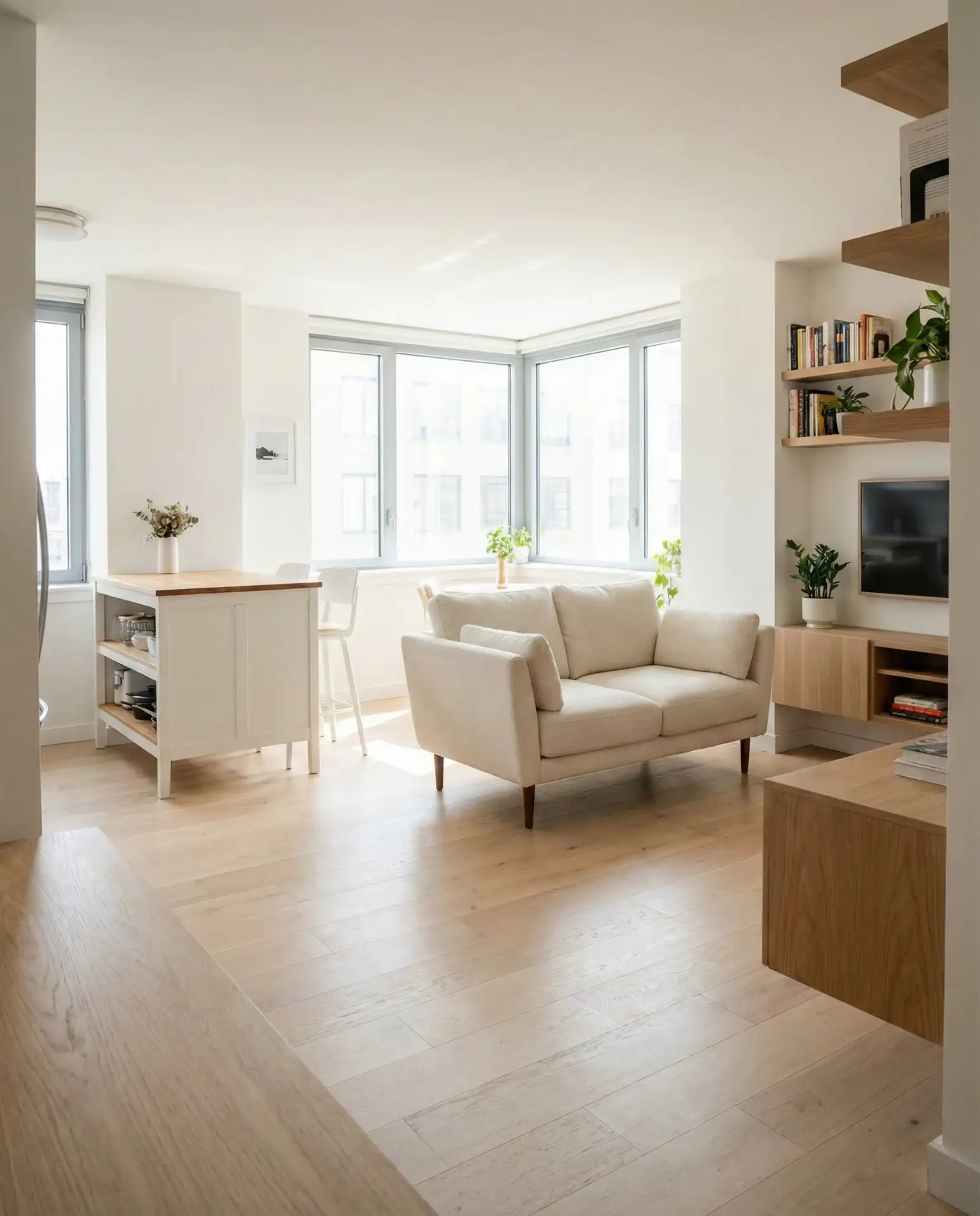
A common mistake is overcrowding the space with oversized furniture. Instead, choose pieces that serve double duty—think storage ottomans, nesting tables, and wall-mounted shelves. Keep pathways clear and avoid blocking natural light sources. In American cities like New York and San Francisco, where studio living is the norm, this streamlined approach maximizes both comfort and style without sacrificing functionality.
2. Farmhouse Charm with Open Flow
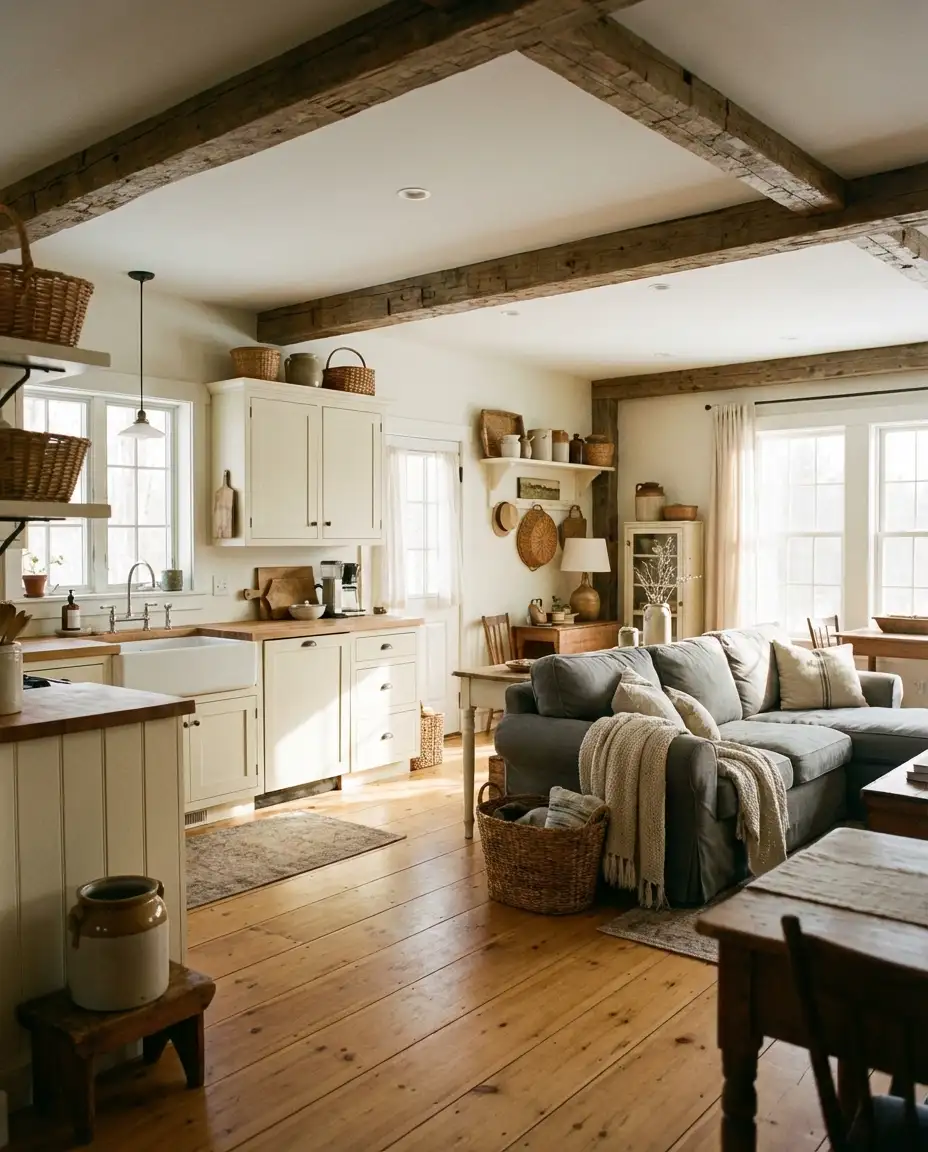
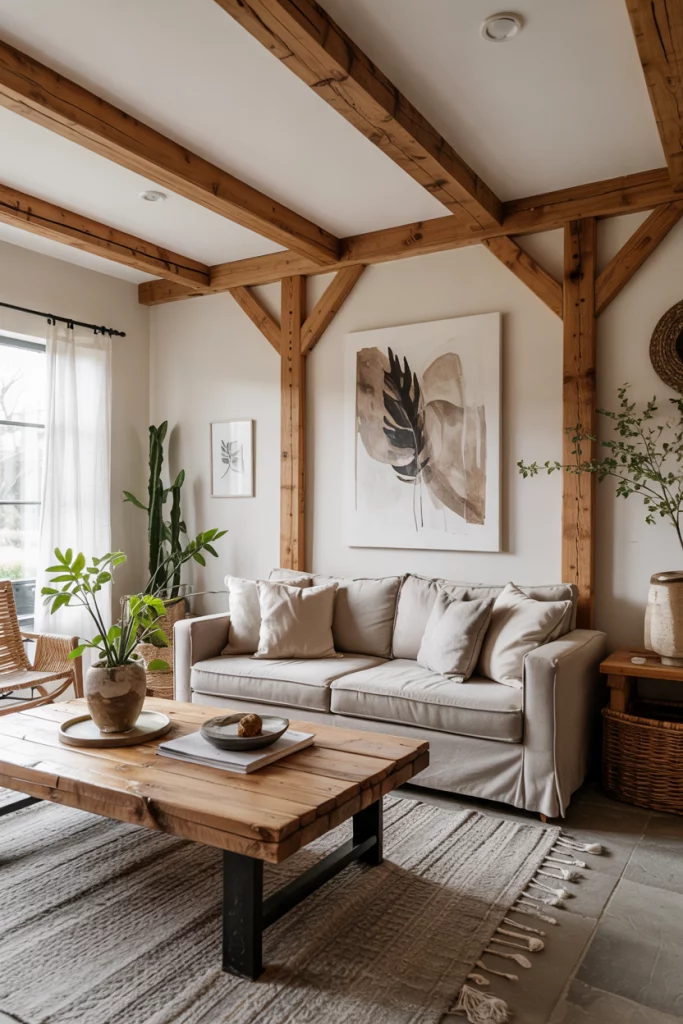
The farmhouse aesthetic thrives in open floor plans, where rustic elements meet modern convenience. Picture reclaimed wood beams overhead, a shiplap accent wall, and vintage-inspired pendant lights hanging above a large kitchen island. This design invites family gatherings and casual entertaining, with the kitchen seamlessly flowing into a cozy living area anchored by comfortable seating and warm textiles. Paint wall colors for farmhouses often include soft whites, muted grays, and gentle sage greens that enhance the relaxed, countryside vibe.
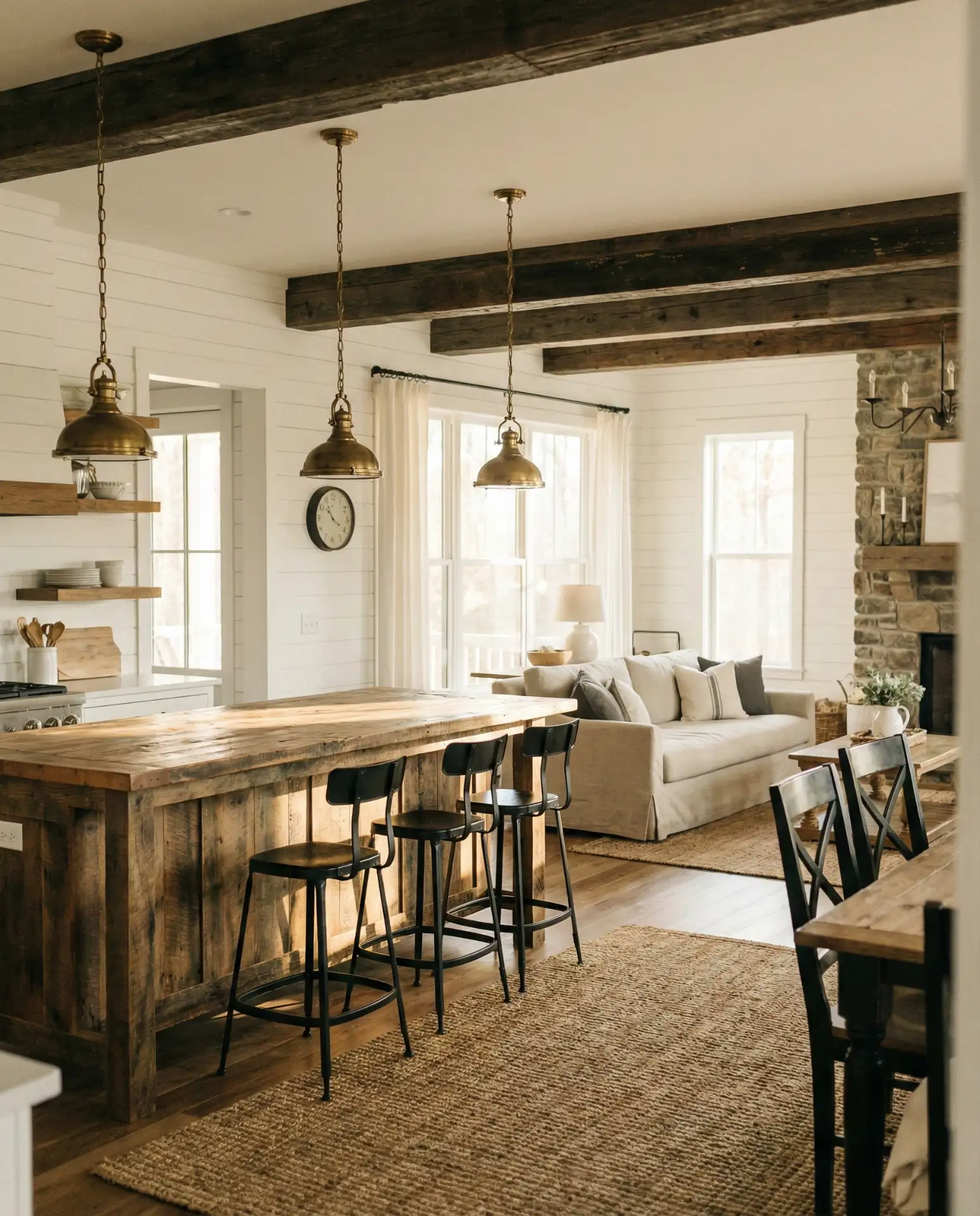
This style works best in suburban homes and rural properties where there’s room to incorporate statement pieces like a farmhouse table or a large stone fireplace. Real homeowners often balance the rustic charm with modern appliances and sleek countertops, ensuring the space remains functional for everyday cooking and entertaining while maintaining that timeless, lived-in appeal.
3. Minimalist Simplicity with Clean Lines
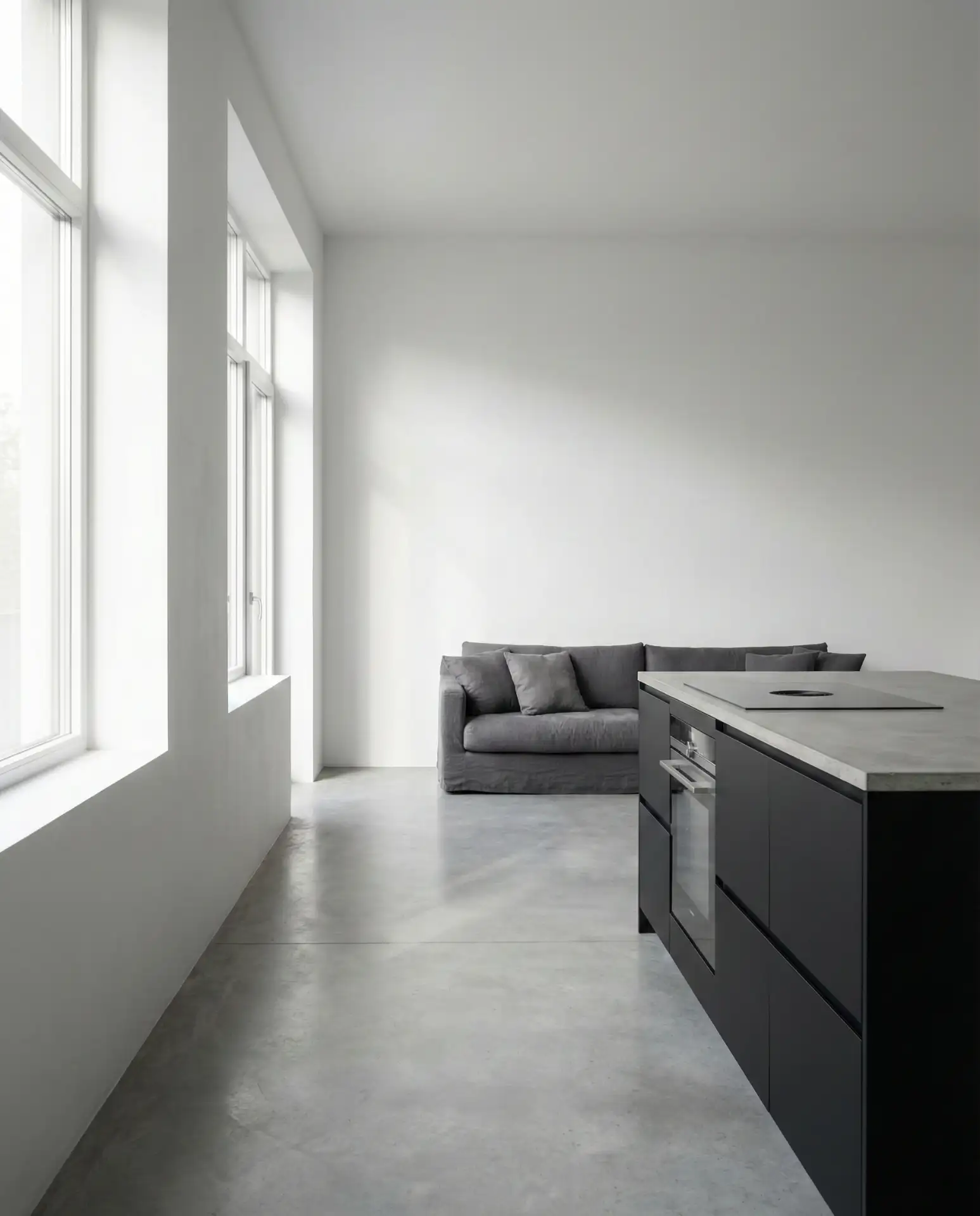
A minimalist open floor plan strips away the excess, focusing on quality over quantity. The furniture layout arrangement is intentional, with each piece serving a clear purpose and contributing to a sense of calm. Think handleless cabinetry, concealed storage, and a monochromatic palette punctuated by subtle textures like concrete, matte black fixtures, and natural wood. This approach suits those who crave a serene, uncluttered environment where visual noise is kept to an absolute minimum.
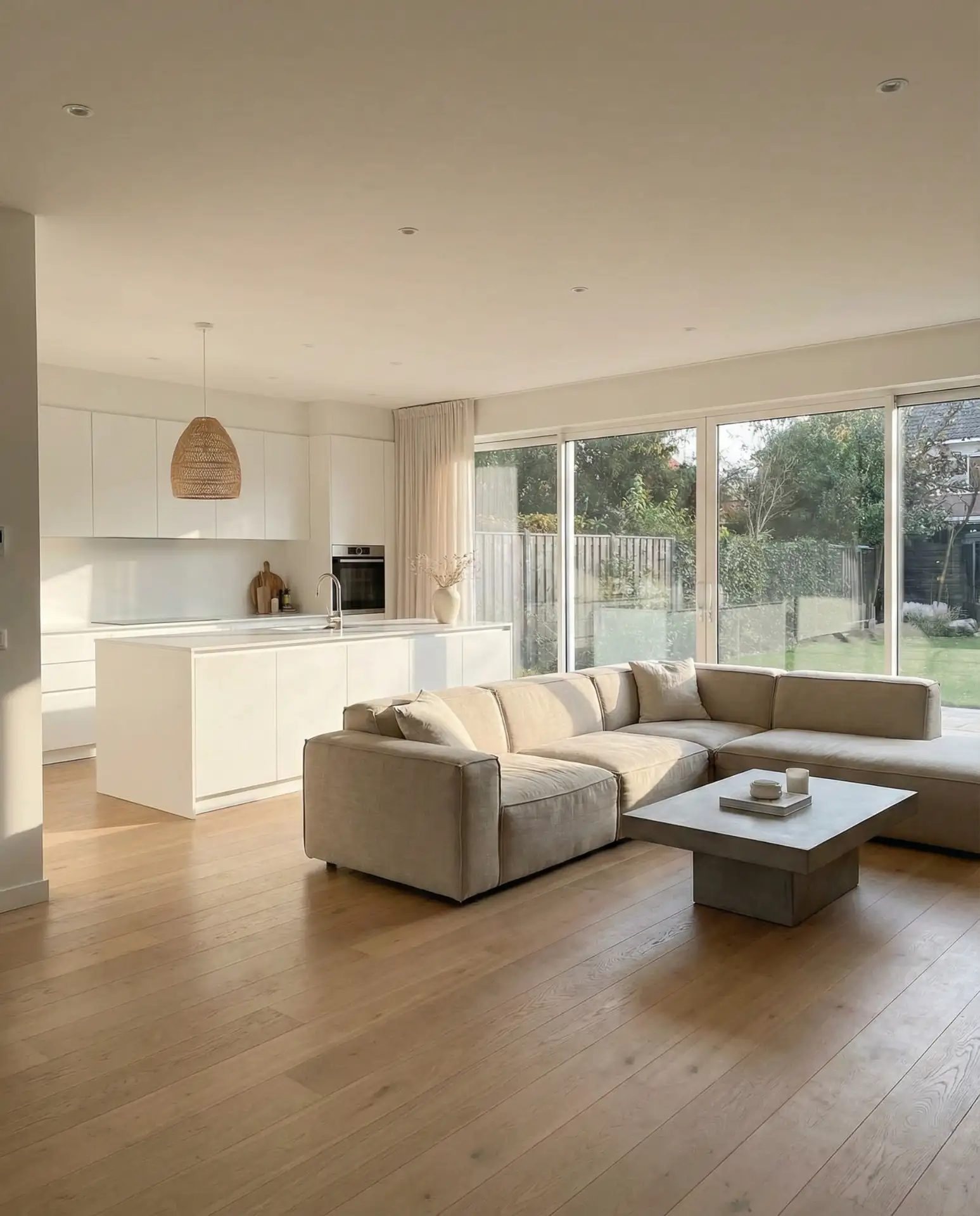
Practical insight: In a minimalist space, every element must earn its place. Invest in built-in storage to keep countertops clear, and choose furniture with hidden compartments. This design philosophy is especially popular among younger homeowners in cities like Los Angeles and Portland, where clean aesthetics and sustainable living go hand in hand.
4. Mid-Century Modern Revival
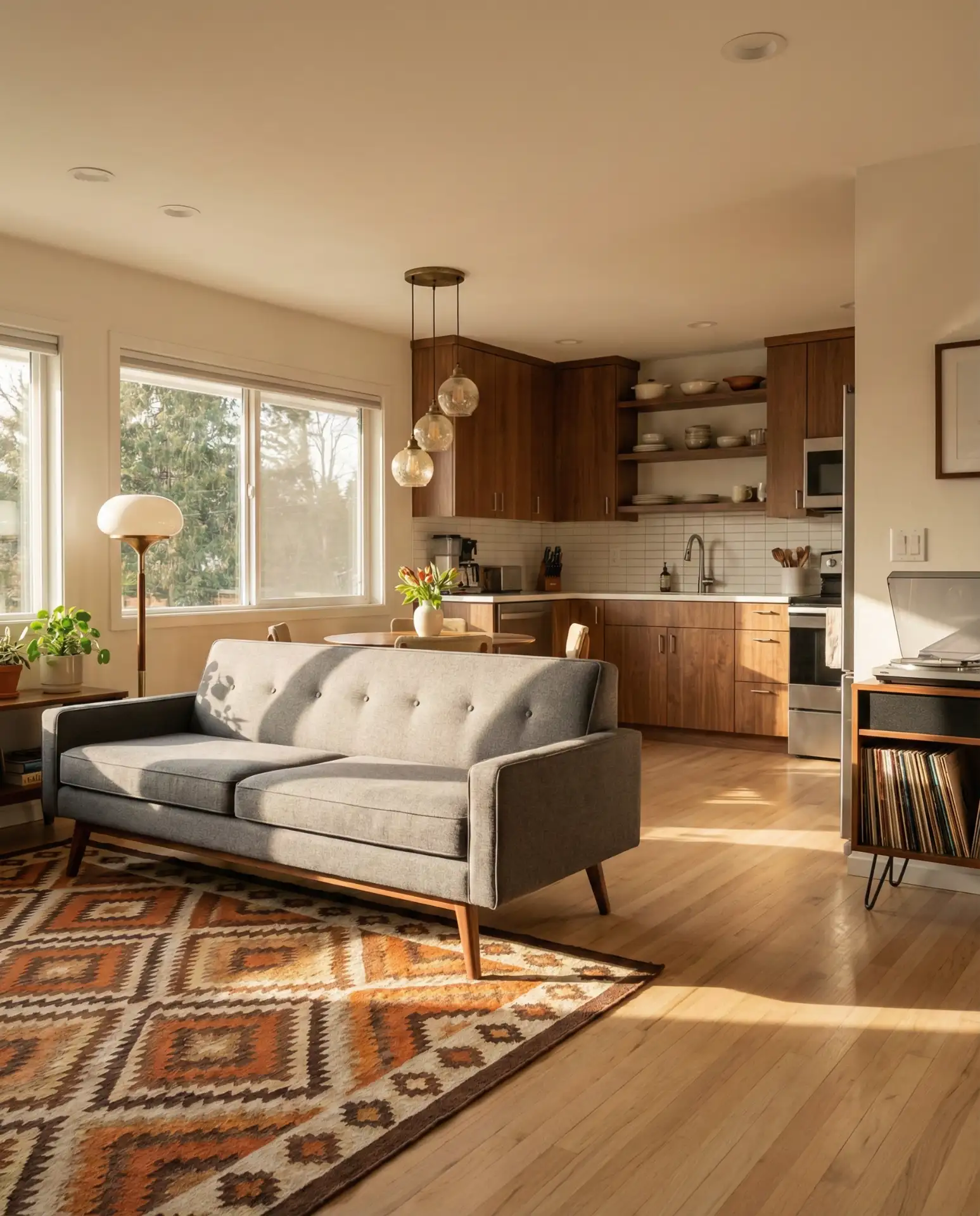
The mid-century modern style brings a retro-inspired warmth to open floor plans, characterized by tapered wooden legs, geometric patterns, and a palette of mustard yellows, burnt oranges, and teal accents. The layout furniture arrangement ideas often center around a low-slung sofa facing a sleek credenza or open shelving unit, while the kitchen features flat-panel cabinets and integrated appliances. This design celebrates the marriage of form and function, with each element thoughtfully chosen for both beauty and practicality.
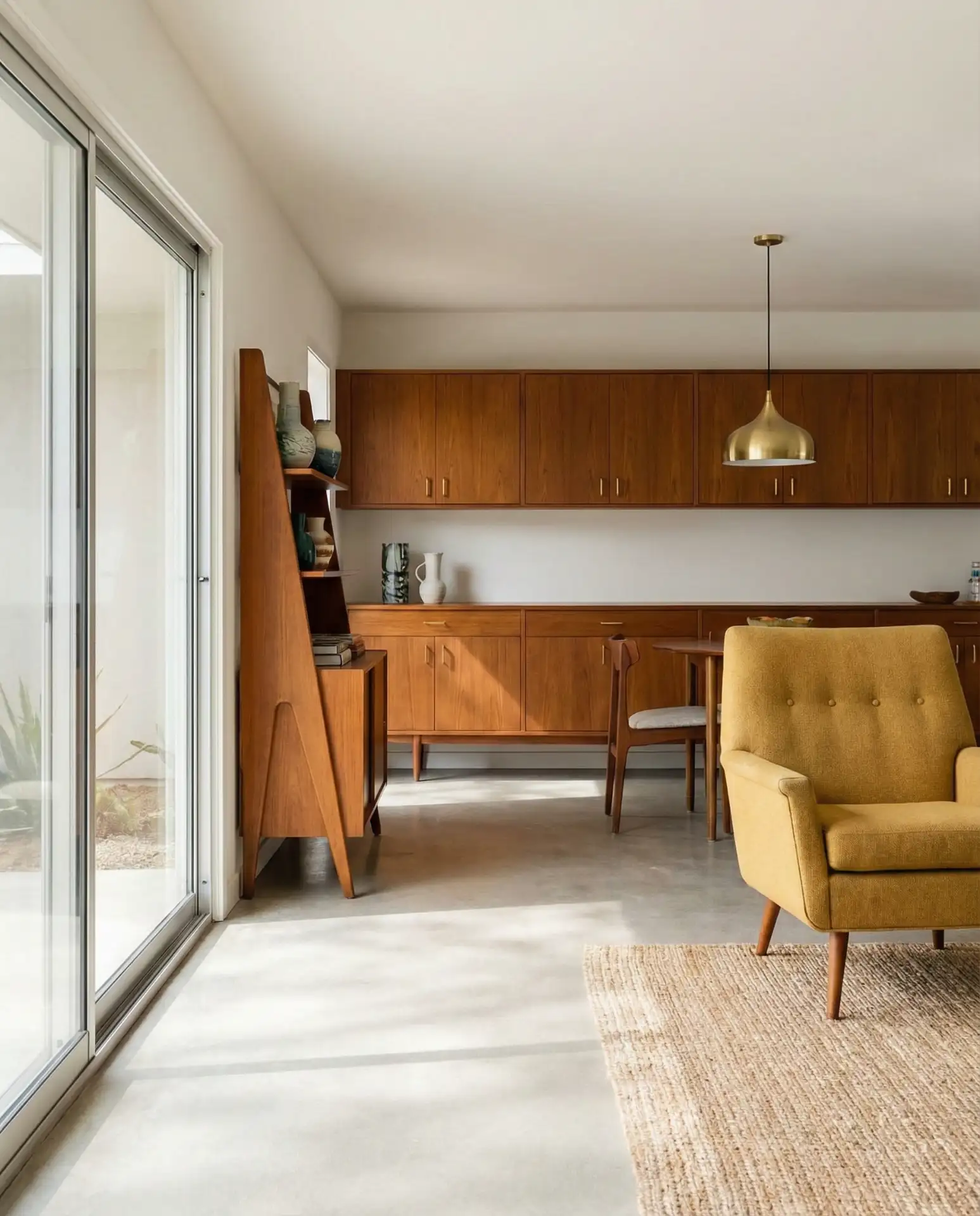
Where it works best: Mid-century modern thrives in post-war ranch homes and bungalows, particularly in California and the Pacific Northwest. The horizontal emphasis of the furniture complements the low-slung rooflines typical of these properties, creating a cohesive aesthetic that feels both nostalgic and refreshingly current.
5. Small Cottage Coziness
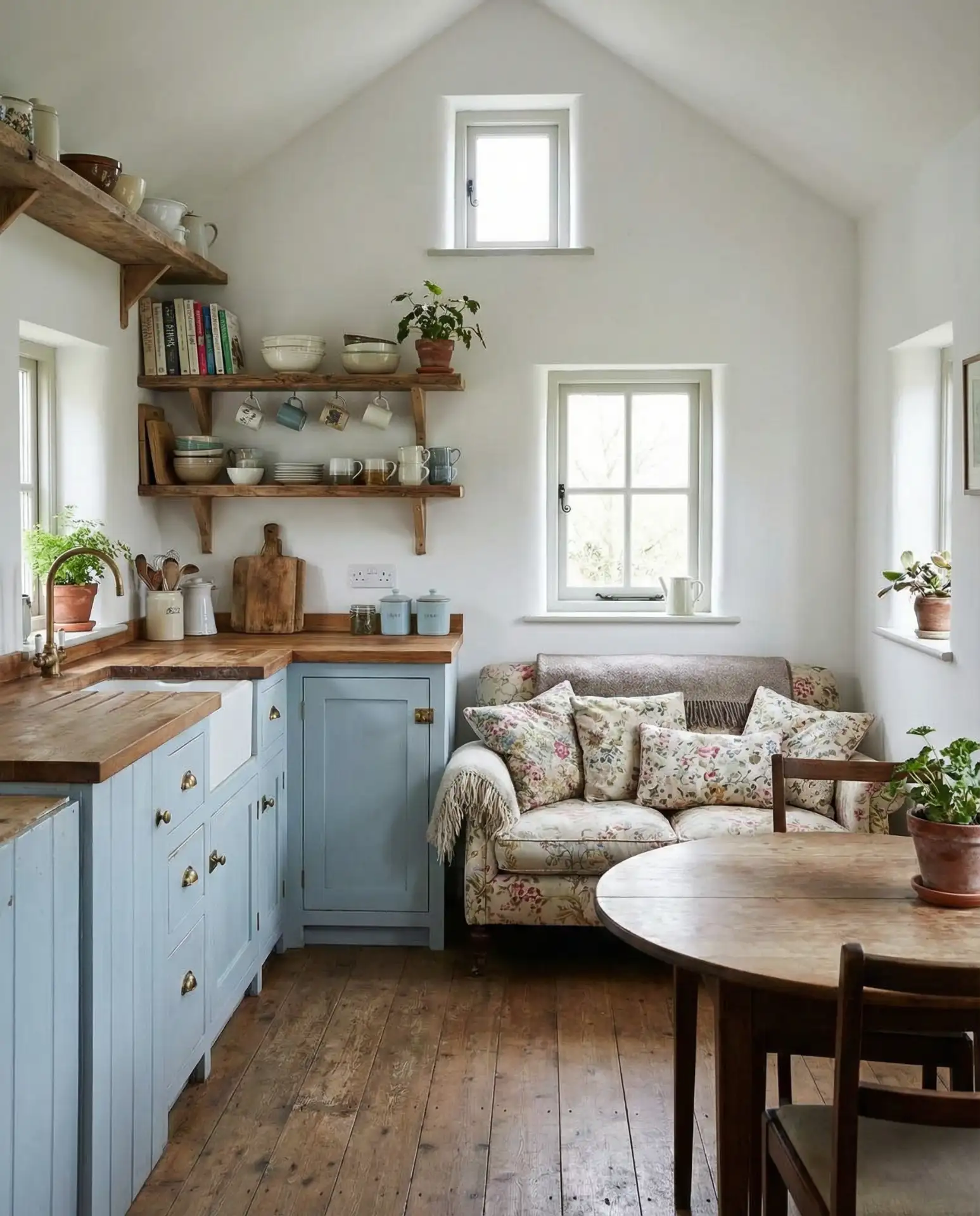
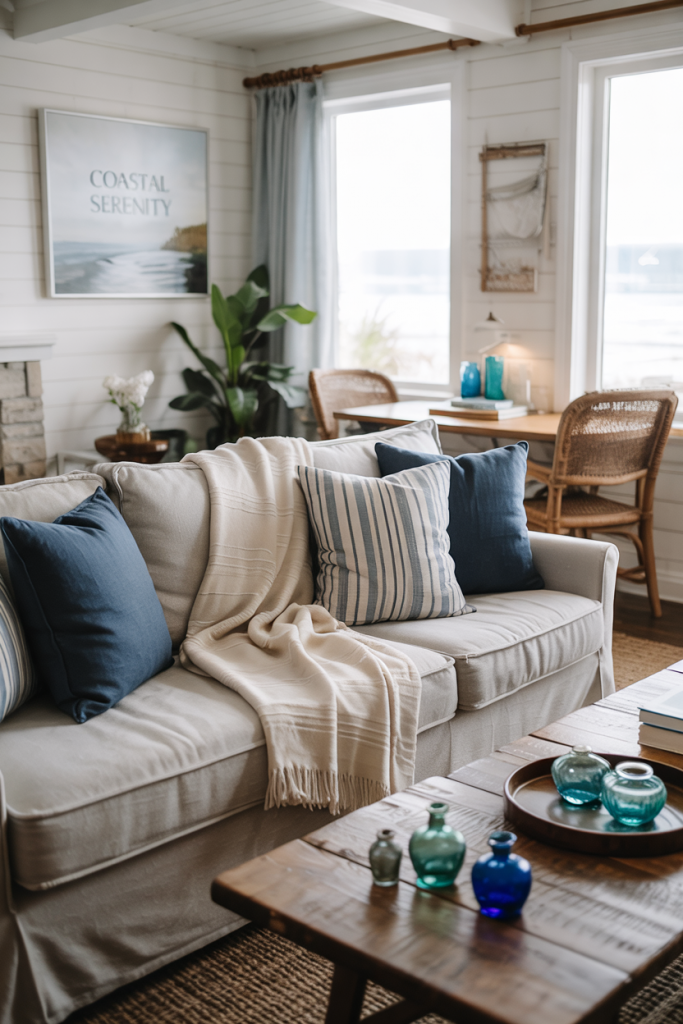
A small cottage with an open floor plan exudes charm and intimacy, with soft textures, vintage finds, and a relaxed color palette. The small interior design ideas here prioritize comfort—think overstuffed armchairs, floral cushions, and open shelving displaying mismatched dishware. The kitchen may feature painted cabinets in soft pastels, butcher block countertops, and a farmhouse sink, while the living area is anchored by a cozy loveseat and layered rugs. This style is perfect for weekend retreats and countryside homes.
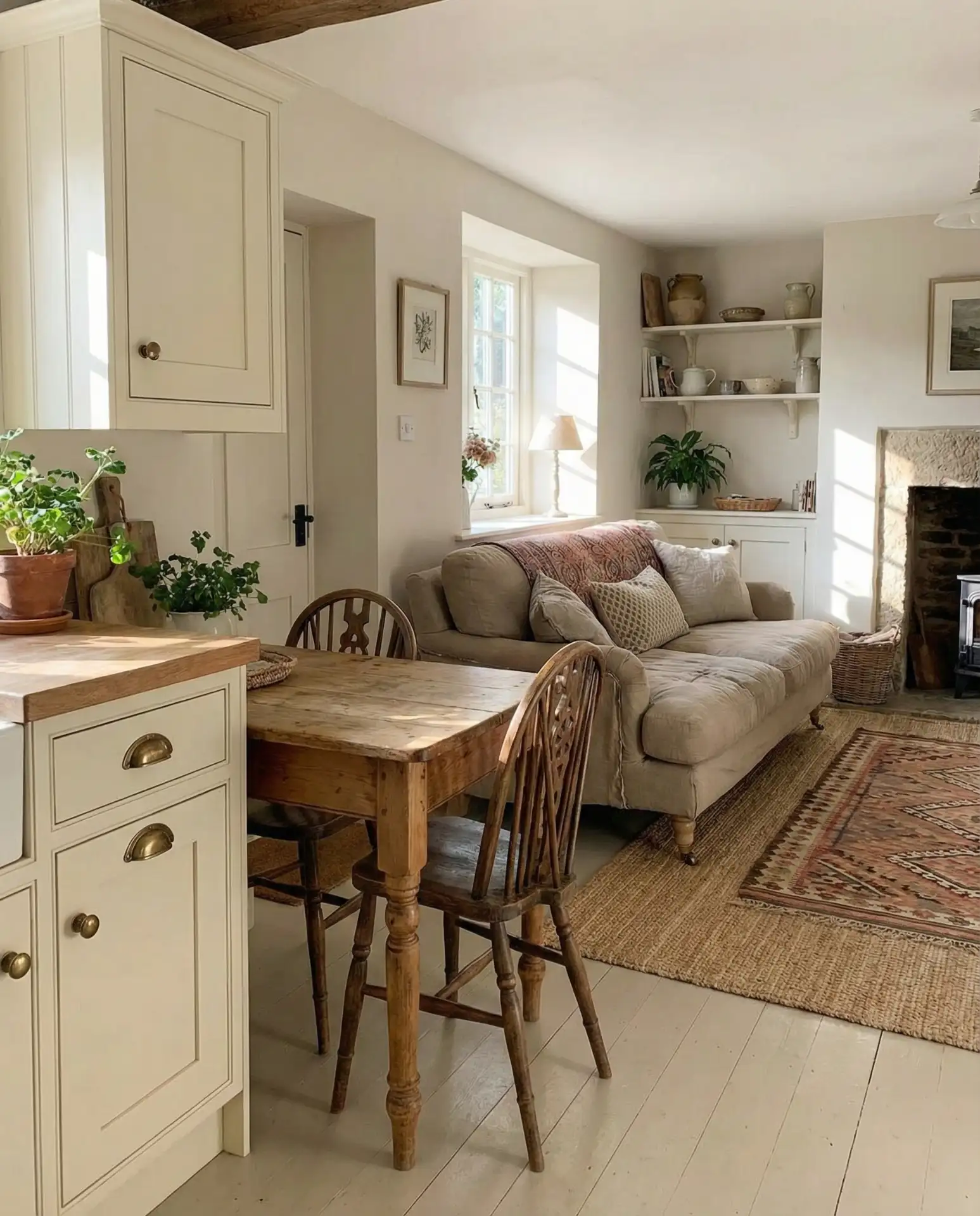
Expert-style commentary: In a cottage setting, don’t be afraid to mix patterns and textures. Pair a striped linen throw with a floral cushion, or layer a vintage kilim rug over natural sisal. The key is to keep the palette cohesive and let each piece tell a story, creating a space that feels collected over time rather than designed in a single shopping trip.
6. Dramatic Cathedral Ceilings
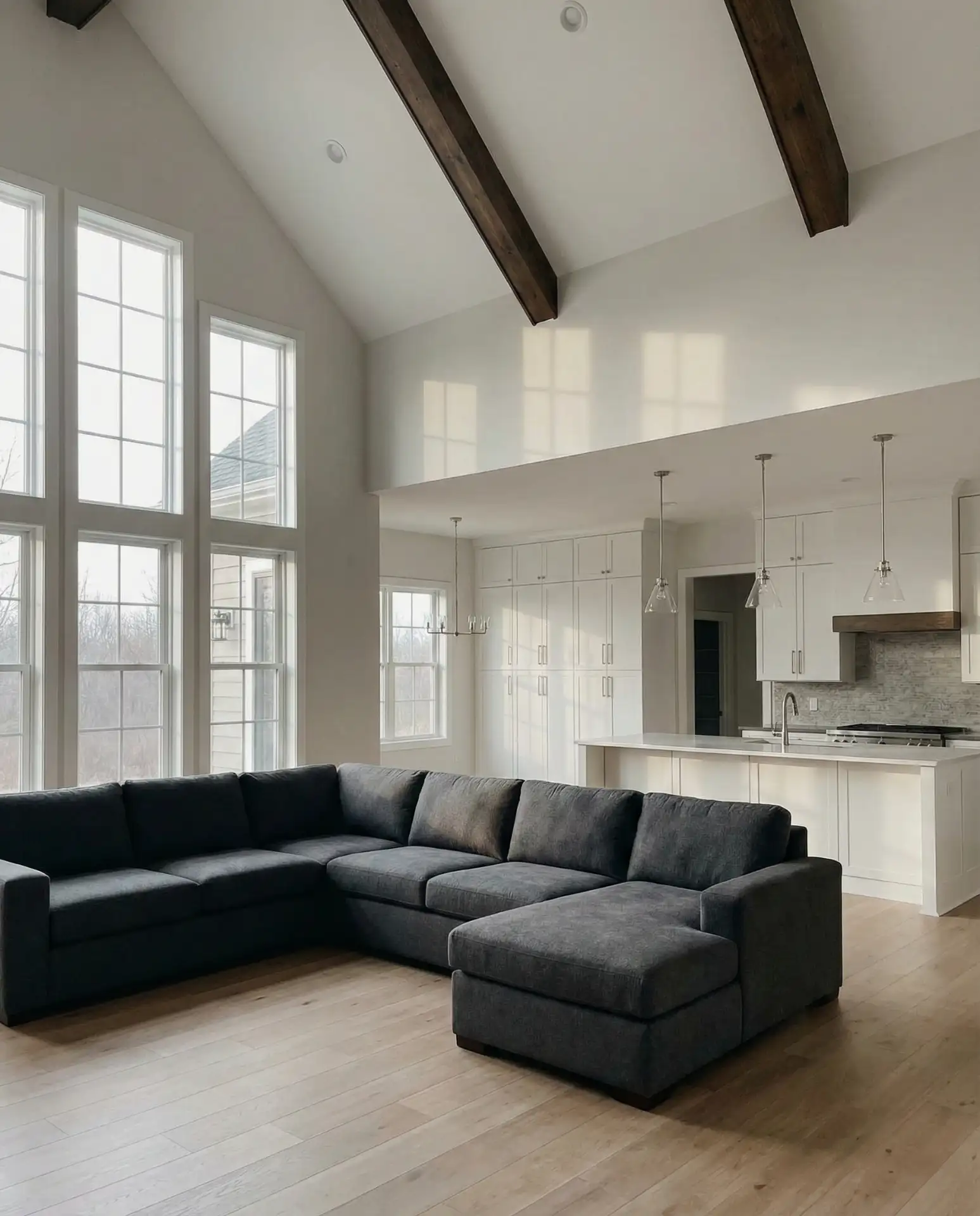
An open floor plan crowned with a cathedral ceiling creates a sense of grandeur and airiness that’s hard to match. The soaring vertical space draws the eye upward, making even modest square footage feel expansive. To balance the height, incorporate tall cabinetry, statement lighting like oversized chandeliers or pendant clusters, and vertical art installations. The layout should guide the eye through the space while maintaining intimacy in the seating and dining zones below.
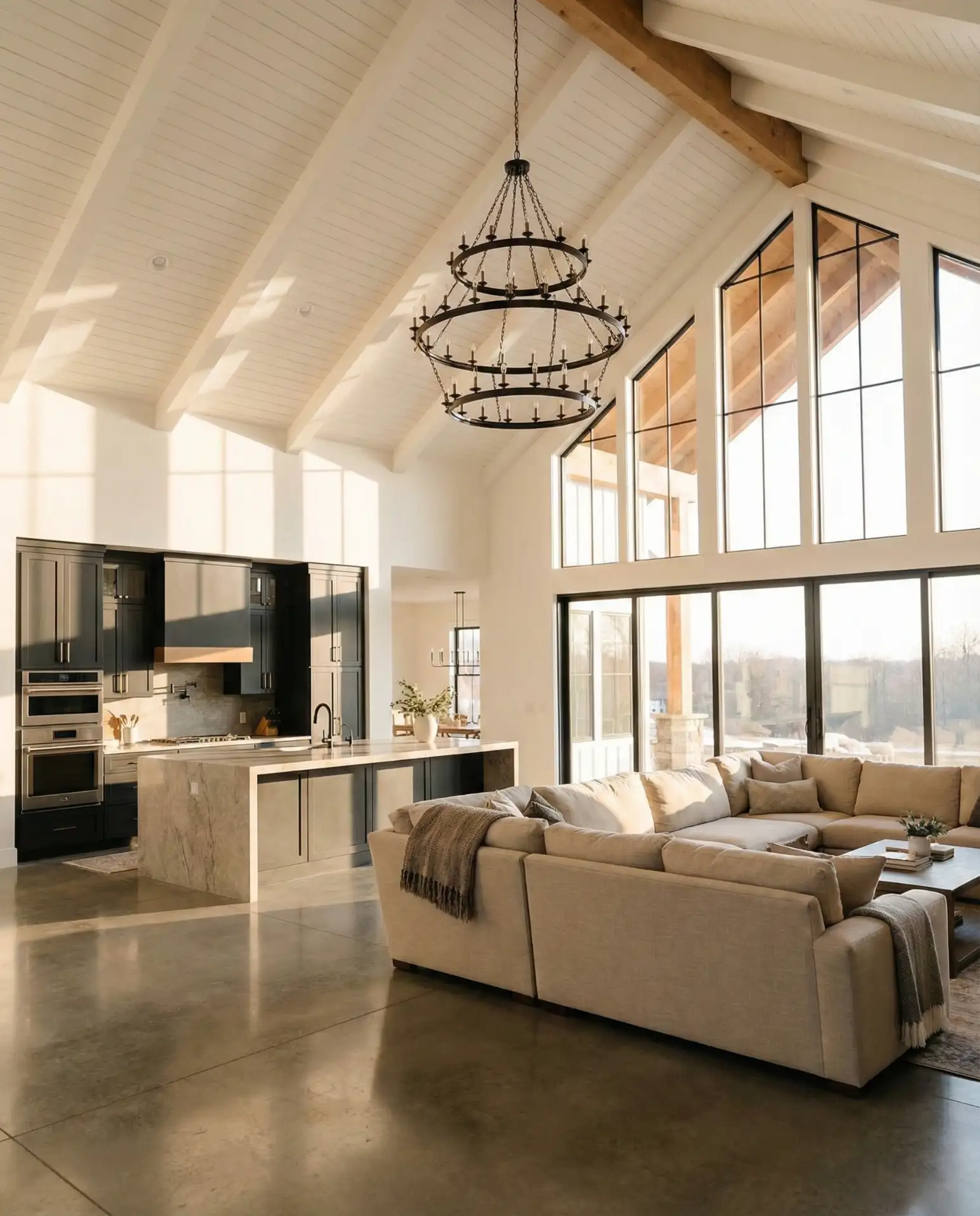
Budget angle: Cathedral ceilings can increase heating and cooling costs, so invest in energy-efficient windows and consider ceiling fans to circulate air. Many homeowners in the South and Mountain West regions embrace this design for its dramatic appeal, offsetting energy expenses with smart HVAC choices and strategic insulation.
7. Dark Brown Cabinets for Richness
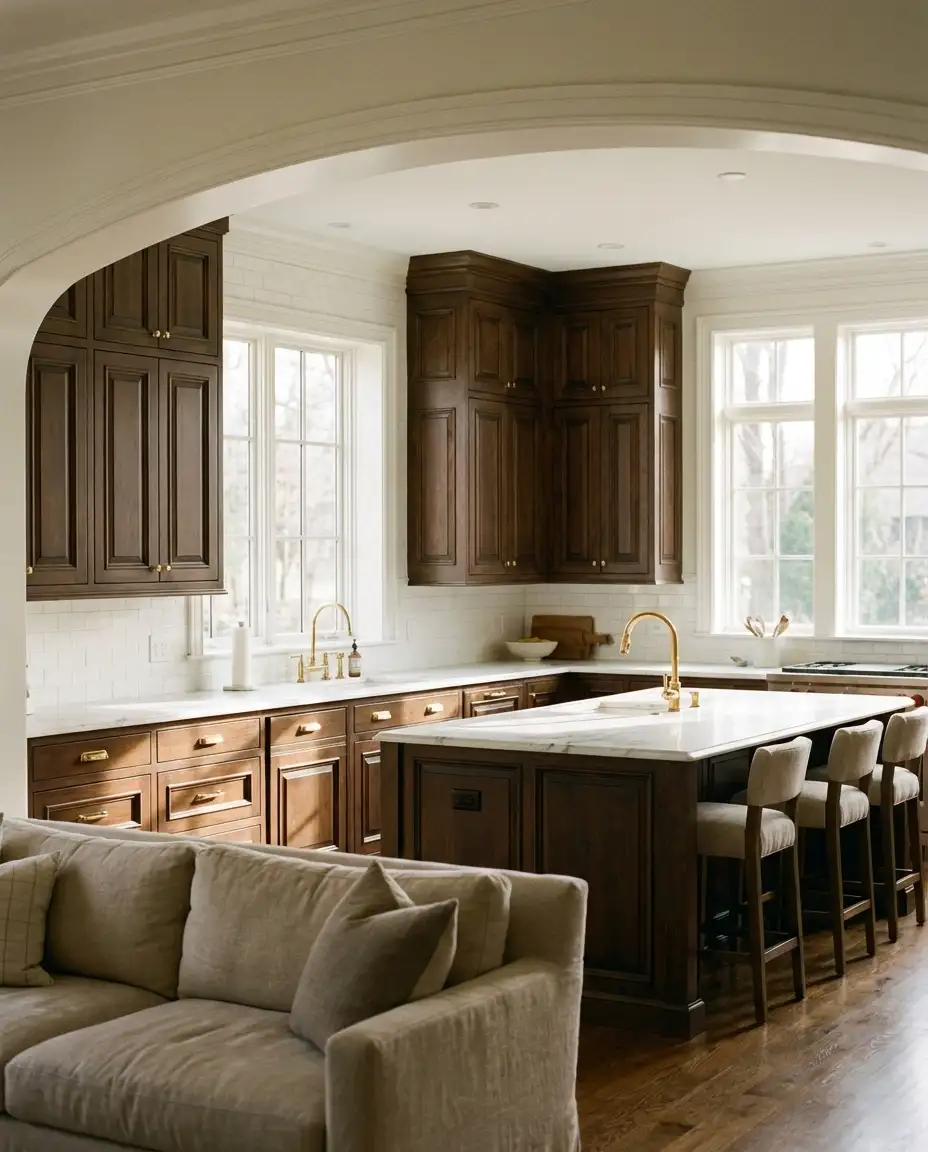
Dark brown cabinets bring depth and sophistication to an open floor plan, especially when paired with lighter walls and flooring to prevent the space from feeling too heavy. This design choice works beautifully in traditional and transitional homes, where the rich wood tones add warmth and a sense of timeless elegance. Complement the cabinetry with brushed gold or brass hardware, marble countertops, and soft ambient lighting to create a balanced, inviting atmosphere.
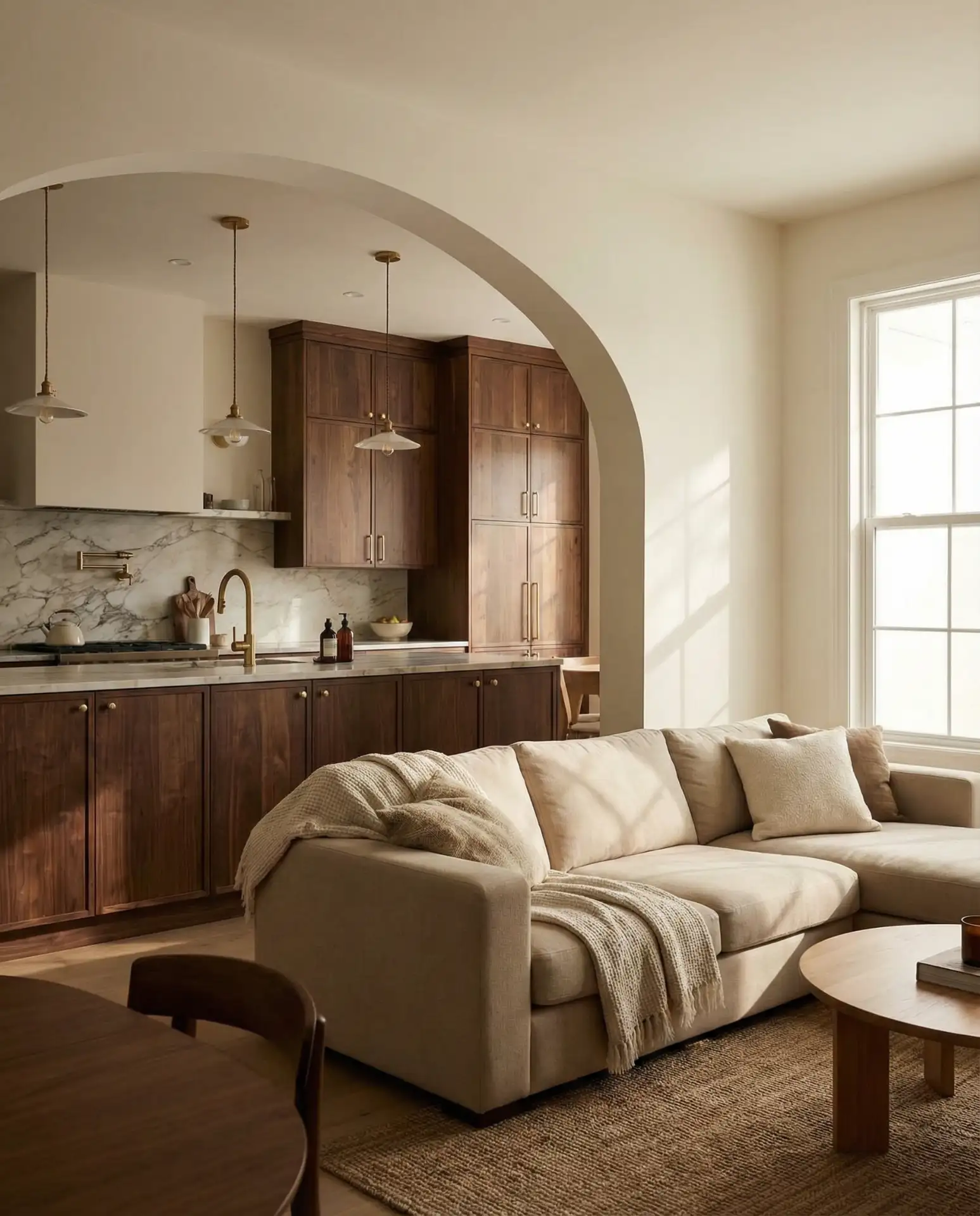
Real homeowner behavior: Many families opt for dark cabinets because they hide wear and fingerprints better than lighter finishes, making them ideal for busy households with kids and pets. To keep the space from feeling too enclosed, pair dark cabinetry with reflective surfaces like glass tile backsplashes and polished countertops that bounce light around the room.
8. Tile and Hardwood Combination
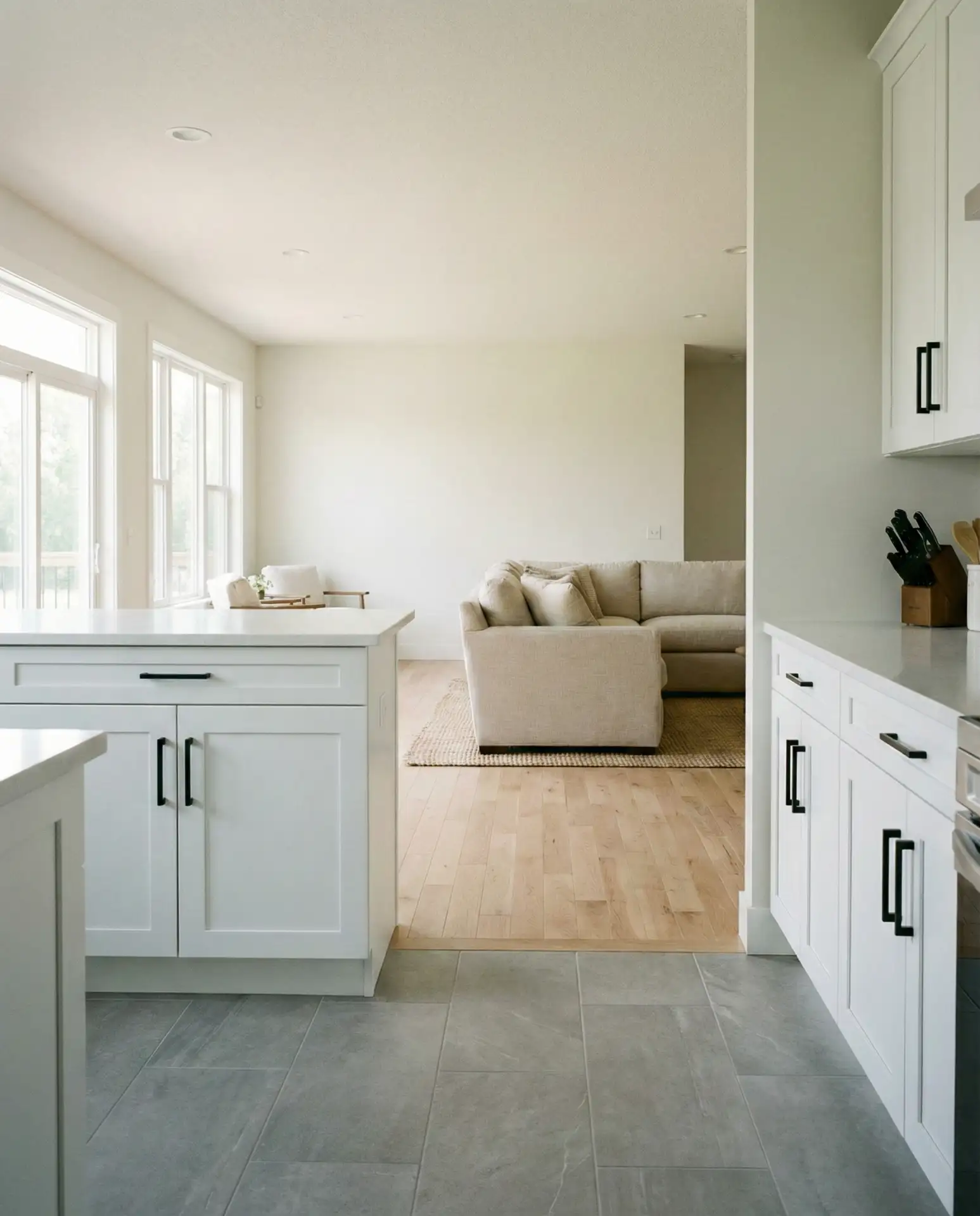
Combining tile and hardwood flooring in an open floor plan offers both practical and aesthetic benefits. Use durable tile in the kitchen zone for easy cleanup, then transition to warm hardwood in the living area to define the space and add comfort underfoot. The visual contrast creates a natural boundary without the need for walls or dividers. This layout is especially popular in regions like the Southwest and Florida, where tile helps manage heat and humidity.
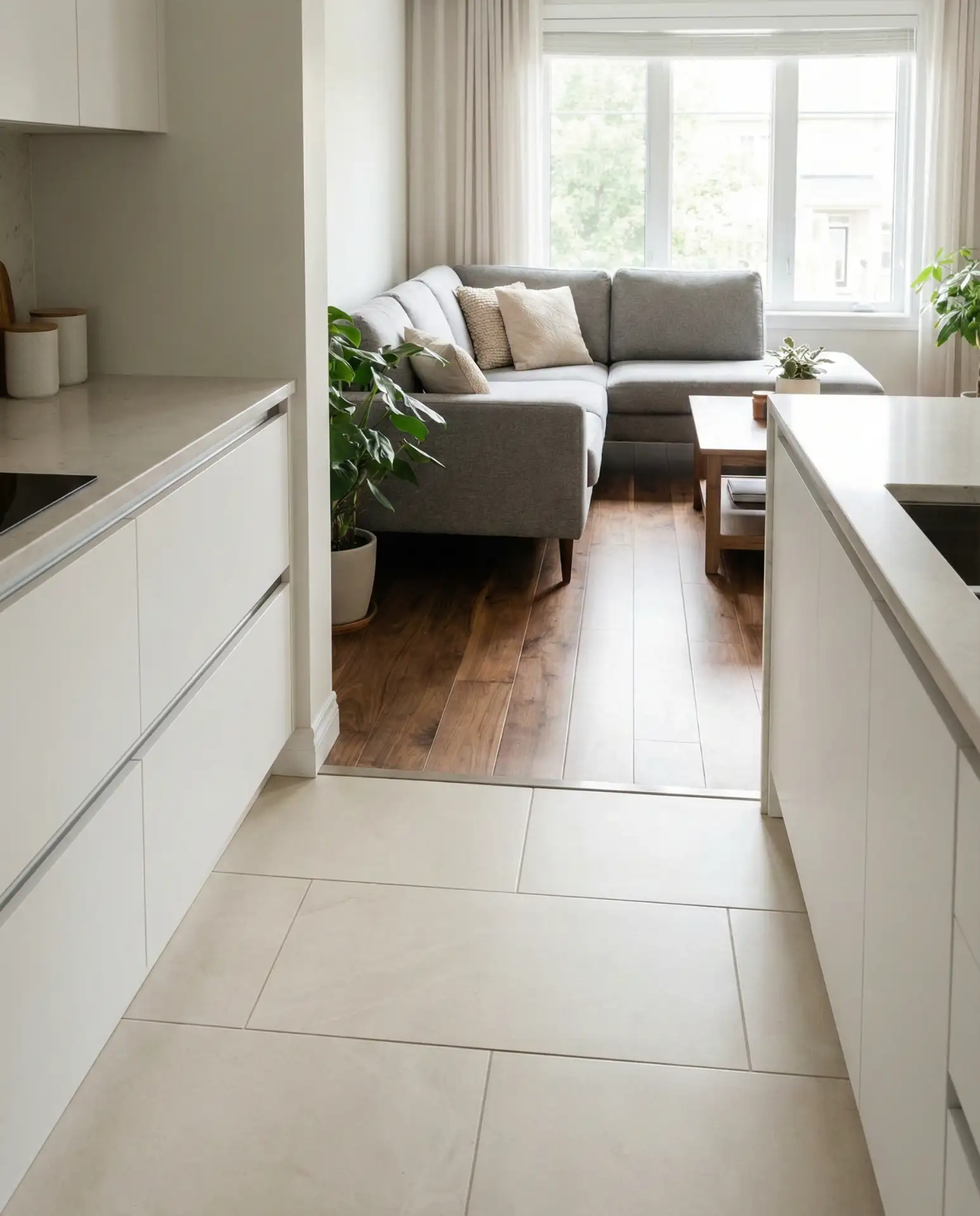
American lifestyle context: In warmer climates, homeowners appreciate the cooling effect of tile in high-traffic kitchen areas, while hardwood provides warmth and comfort in lounging spaces. The key is choosing materials in complementary tones—cool gray tiles pair well with light oak, while terracotta tiles harmonize with darker walnut.
9. Aesthetic Neutrals with Texture
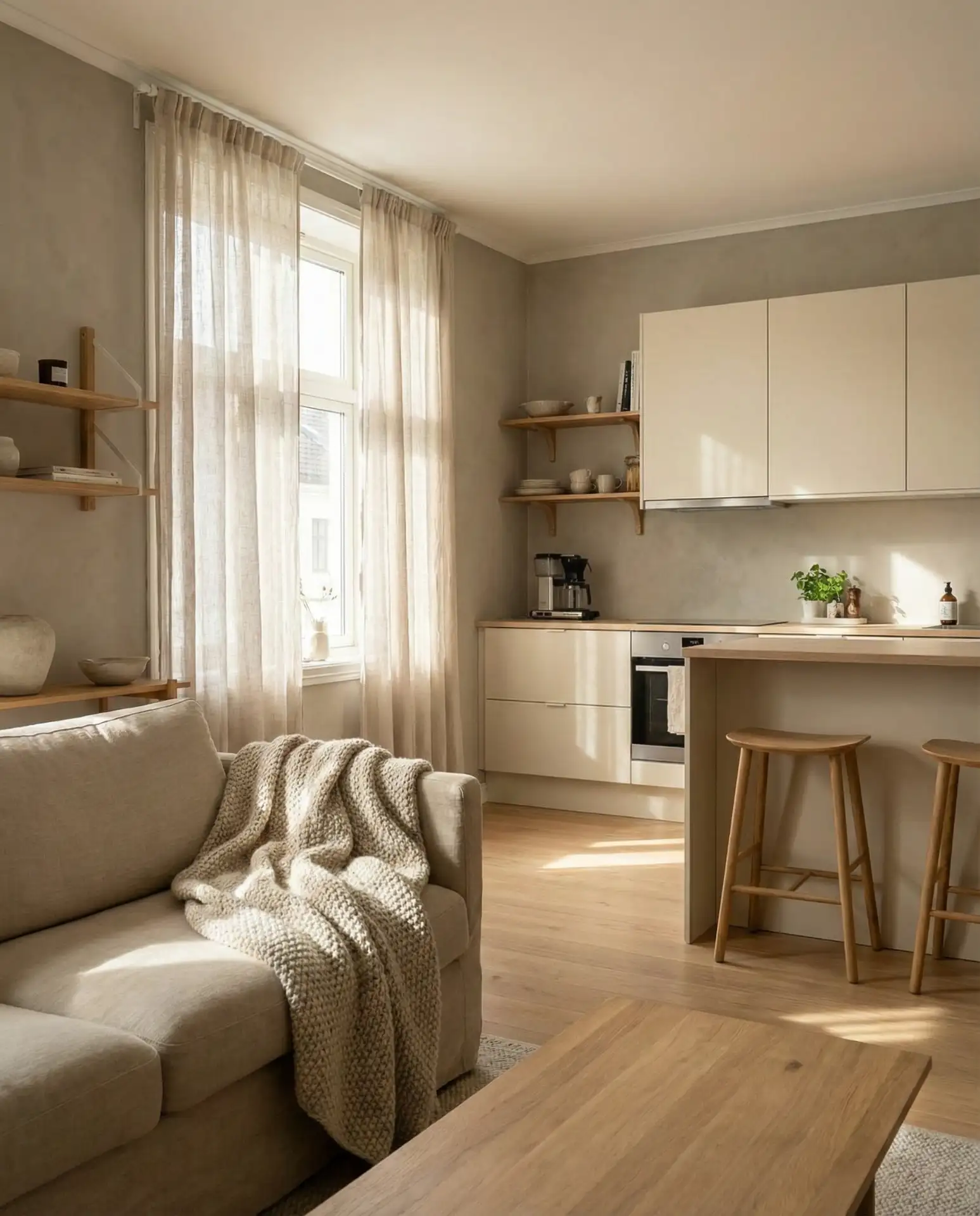
An aesthetic open floor plan built on neutral tones doesn’t have to feel bland. Layer textures—linen curtains, wool throws, jute rugs, and matte ceramic accents—to create visual interest without introducing bold color. The paint wall colors might include soft greige, warm white, or gentle taupe, allowing natural materials and varied textures to take center stage. This approach is soothing, sophisticated, and endlessly adaptable to seasonal styling.
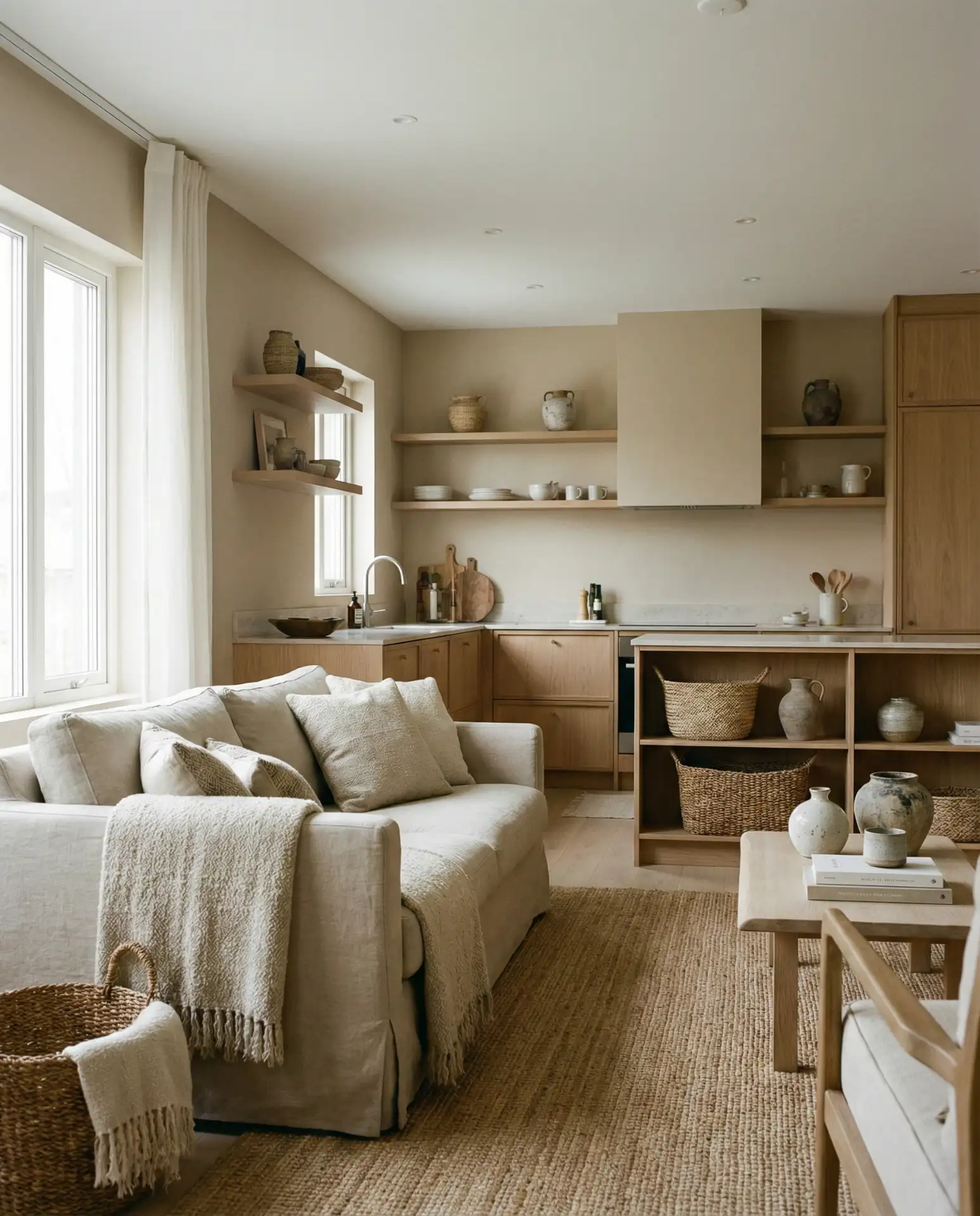
Practical insight: To prevent a neutral space from feeling flat, vary the sheen levels of your finishes. Pair matte cabinetry with a subtle gloss backsplash, or combine flat-weave rugs with glossy ceramic planters. This creates depth and dimension while maintaining the cohesive, calming palette that makes neutral interiors so appealing.
10. Dining Room Integration
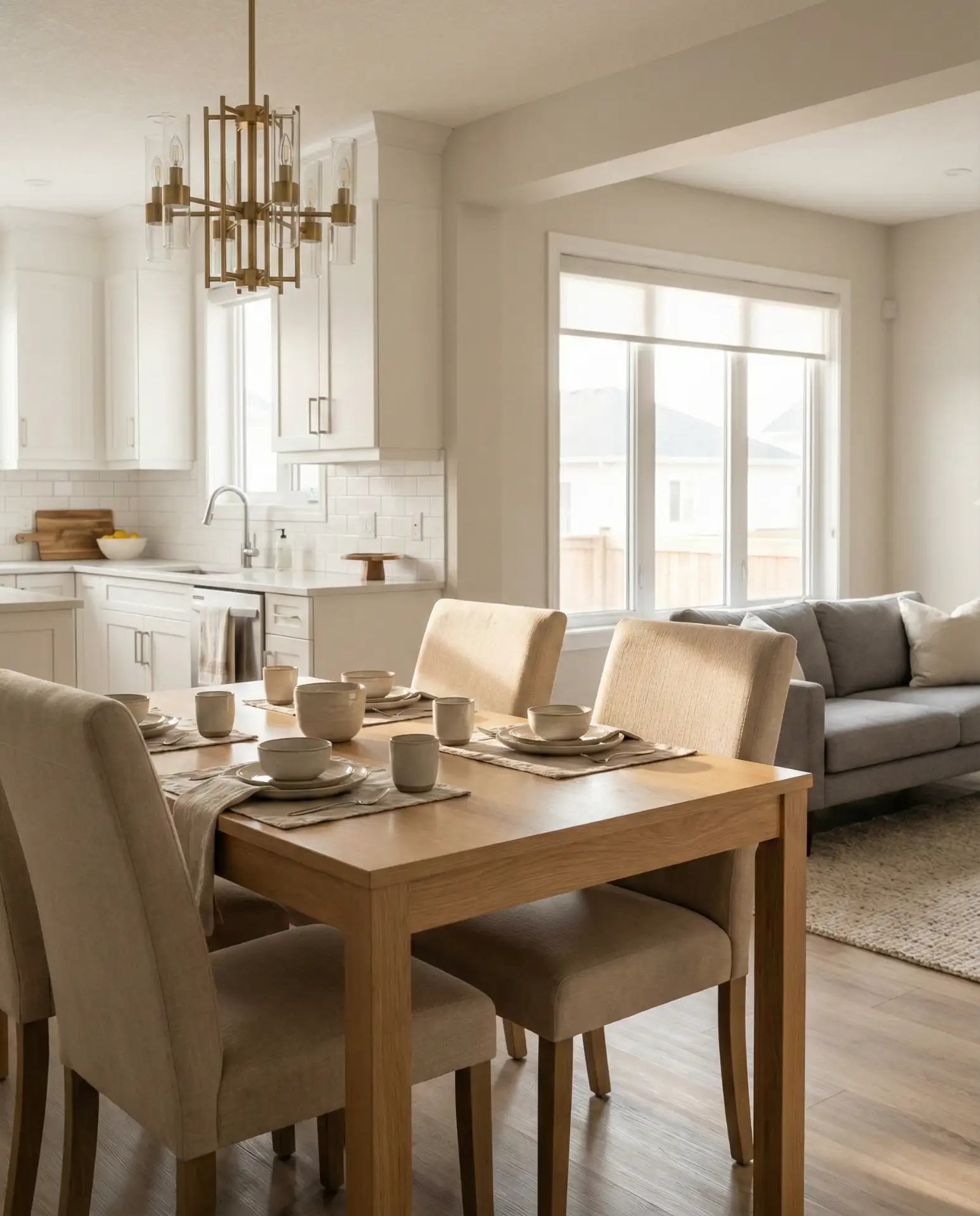
Integrating a dining room into an open floor plan requires thoughtful placement to ensure it feels like a distinct zone without disrupting flow. Position the dining table between the kitchen and living areas, using a statement light fixture—like a chandelier or series of pendants—to anchor the space. The dining room plans should accommodate traffic patterns, ensuring easy access to the kitchen while leaving ample room for chairs to pull out comfortably.
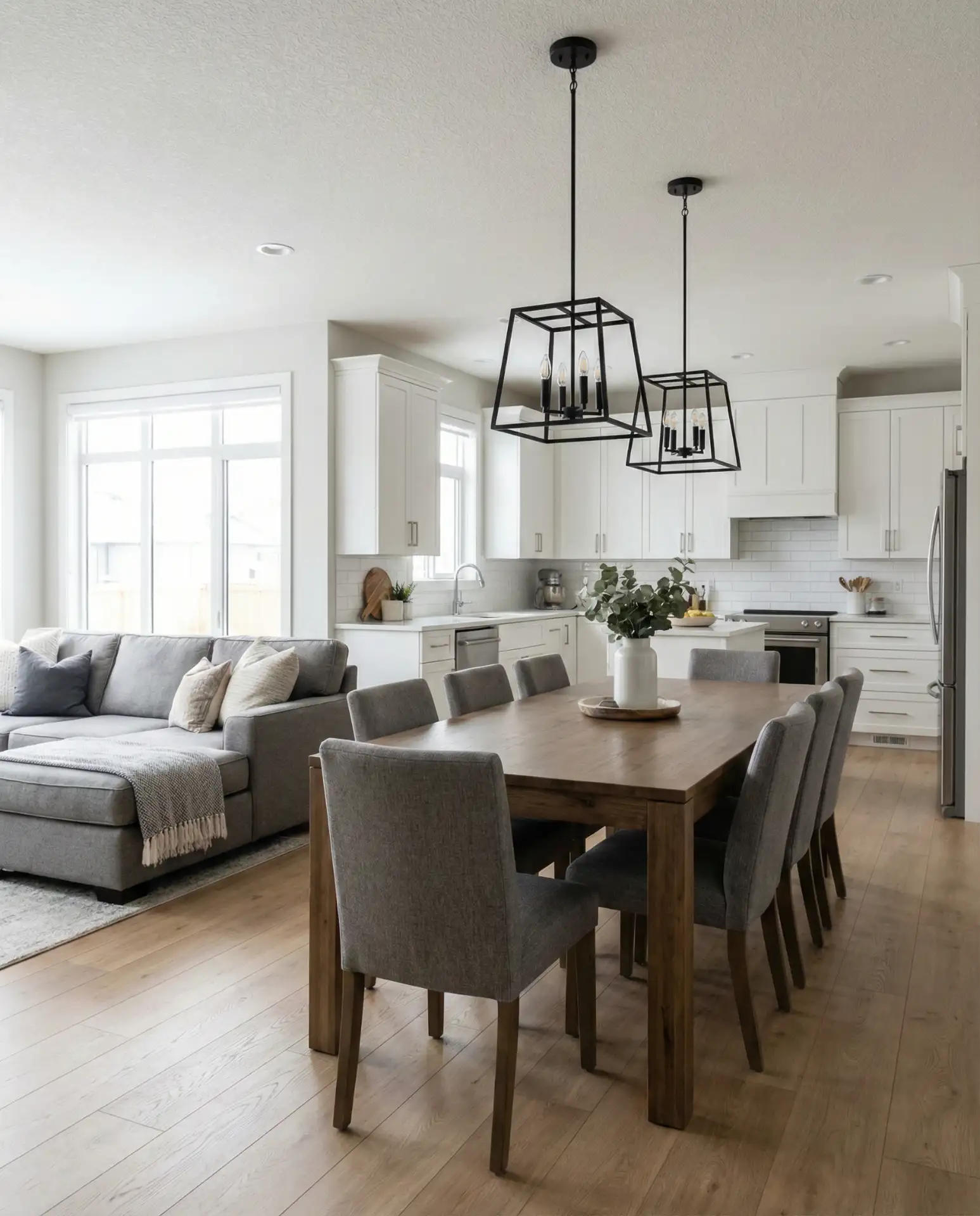
Where it works best: This setup shines in homes where family meals and entertaining are priorities. In suburban developments across the Midwest and South, open dining areas facilitate conversation and connection, allowing the cook to stay engaged with guests rather than being isolated in a closed-off kitchen.
11. Stairs in the Middle as a Feature
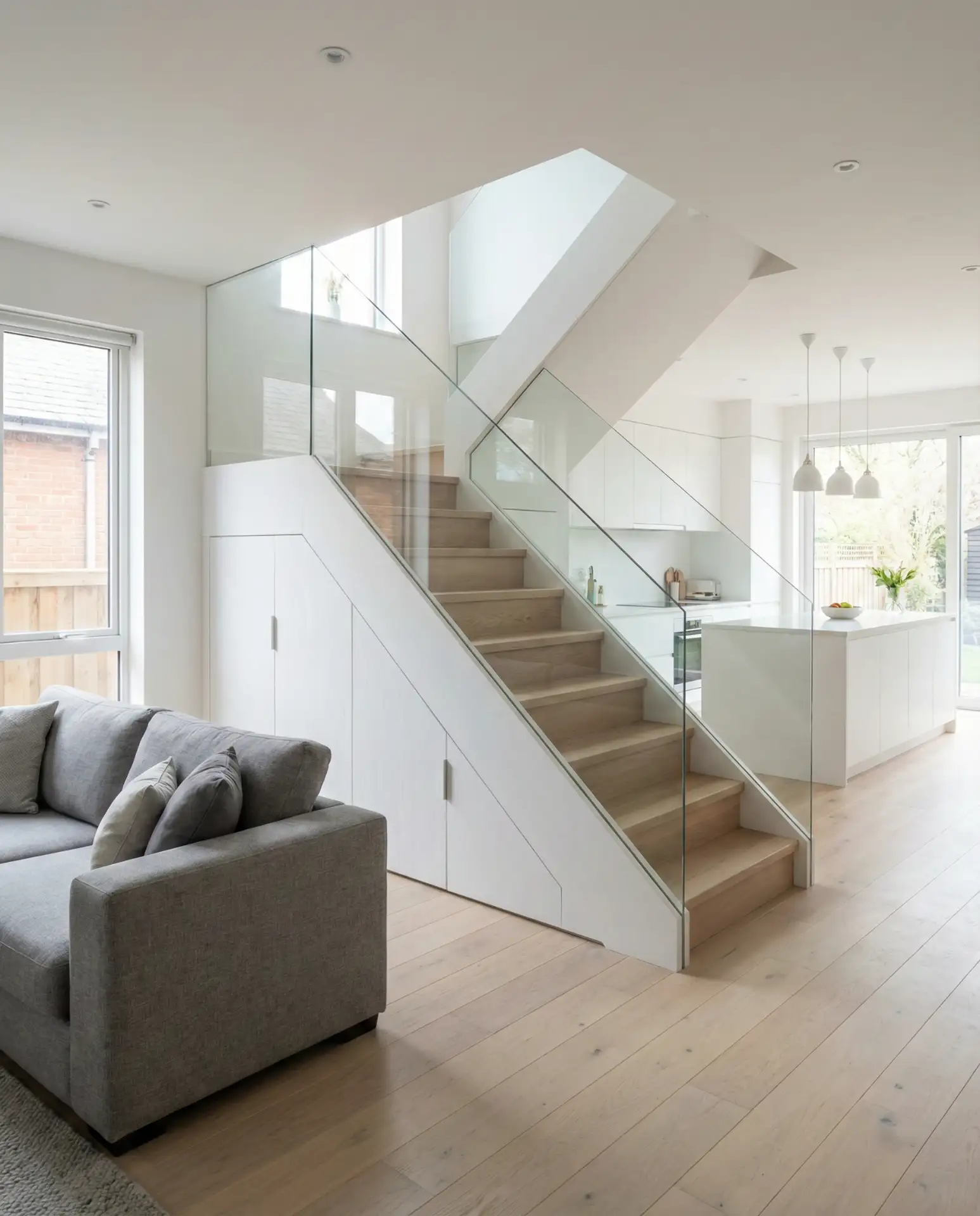
When stairs in the middle of an open floor plan are unavoidable, treat them as a sculptural element rather than an obstacle. Choose open risers or glass railings to maintain sightlines, and use the area beneath for built-in storage or a cozy reading nook. The furniture layout arrangement should flow around the staircase, creating distinct zones on either side while celebrating the staircase as a central architectural feature.
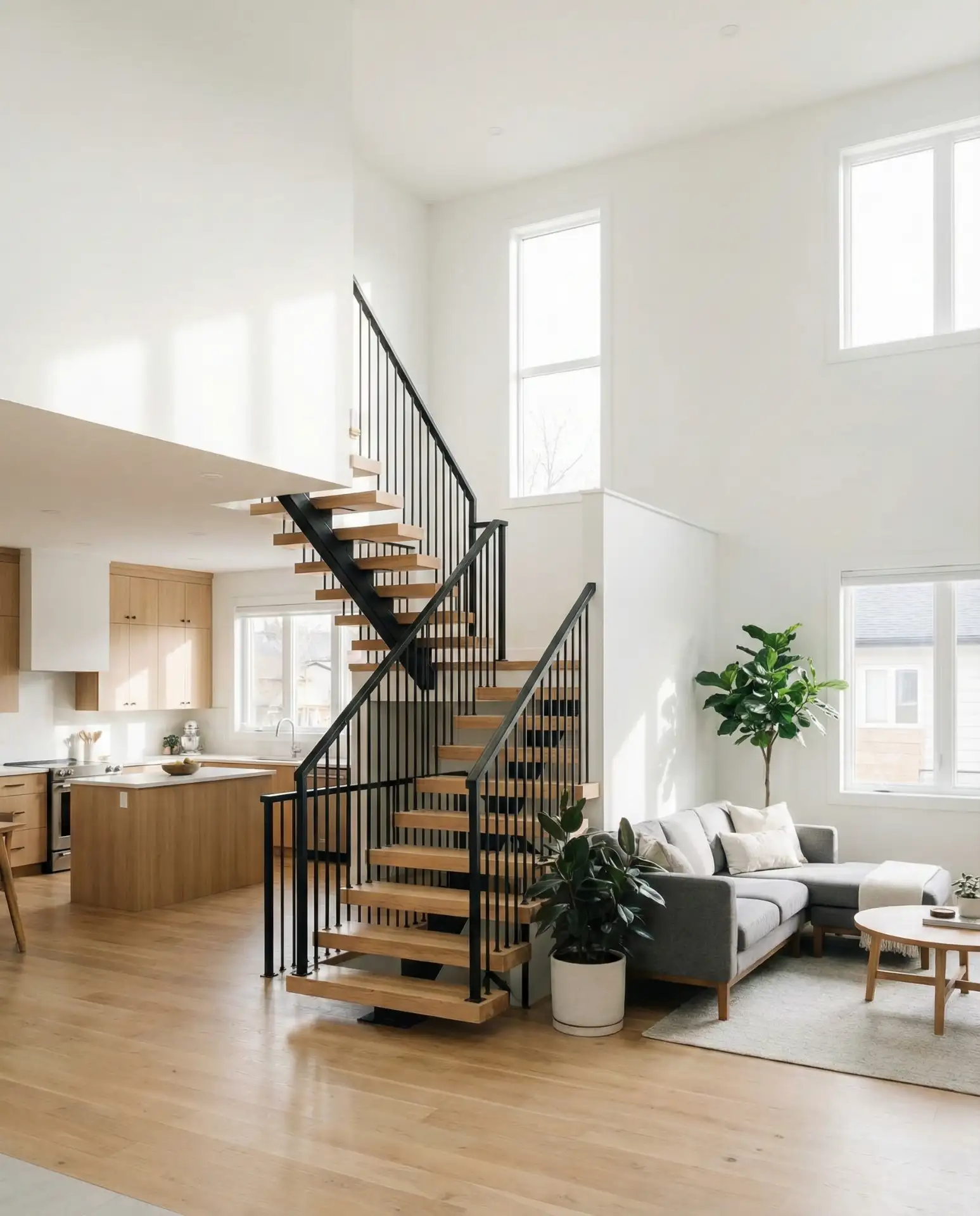
Common mistake: Blocking the staircase with furniture creates awkward traffic patterns. Instead, embrace the staircase as a design opportunity—paint the risers in a contrasting color, add floating shelves along the wall, or install accent lighting to highlight its presence. This transforms a potential challenge into a striking focal point.
12. Small Interior Design Modern India-Inspired
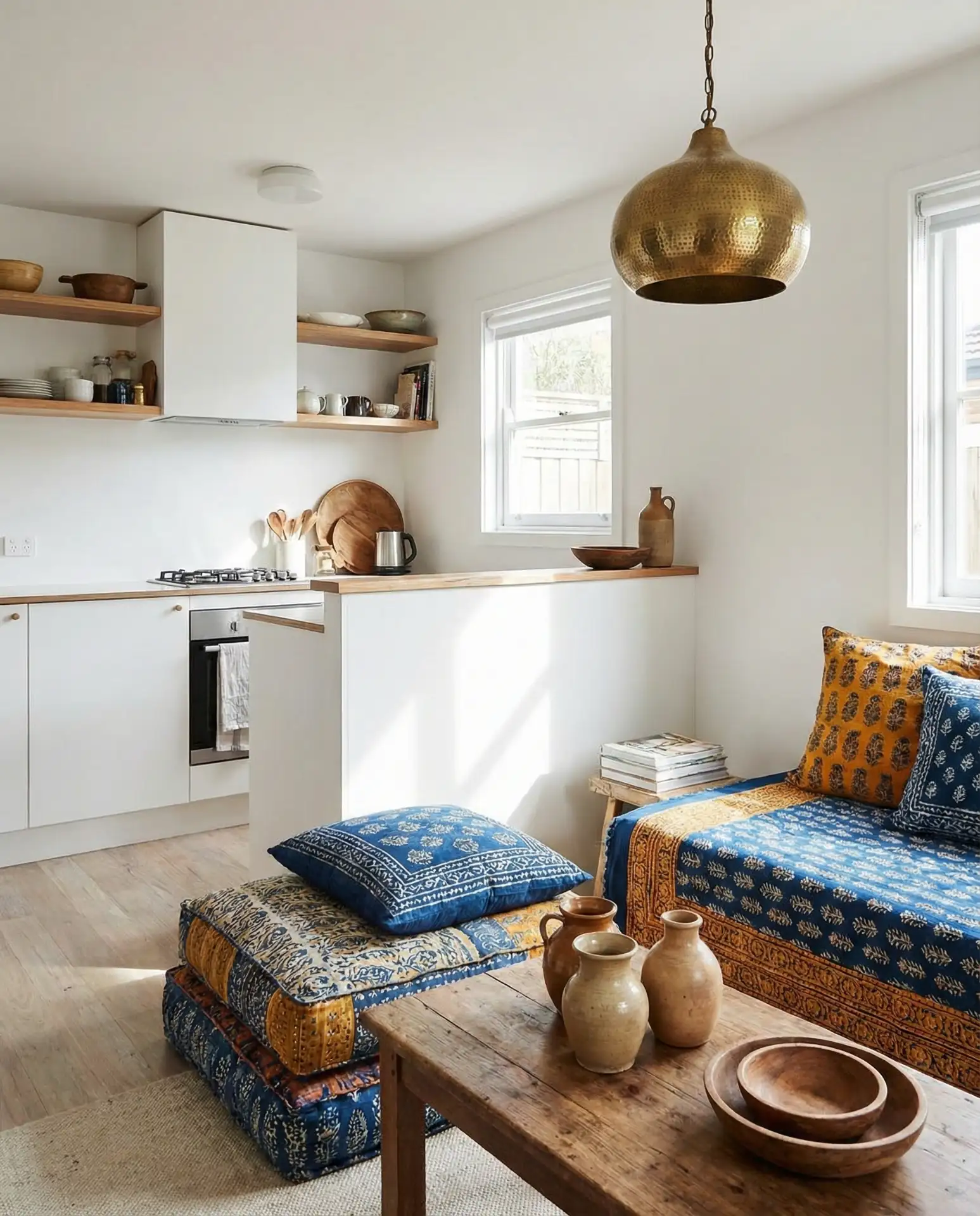
Drawing inspiration from small interior design in India, an open floor plan can incorporate vibrant textiles, carved wooden details, and brass accents while maintaining a modern silhouette. The layout favors low seating, colorful floor cushions, and open shelving displaying ceramics and woven baskets. This fusion style brings warmth and global charm to compact spaces, celebrating pattern and color in a way that feels both eclectic and cohesive.
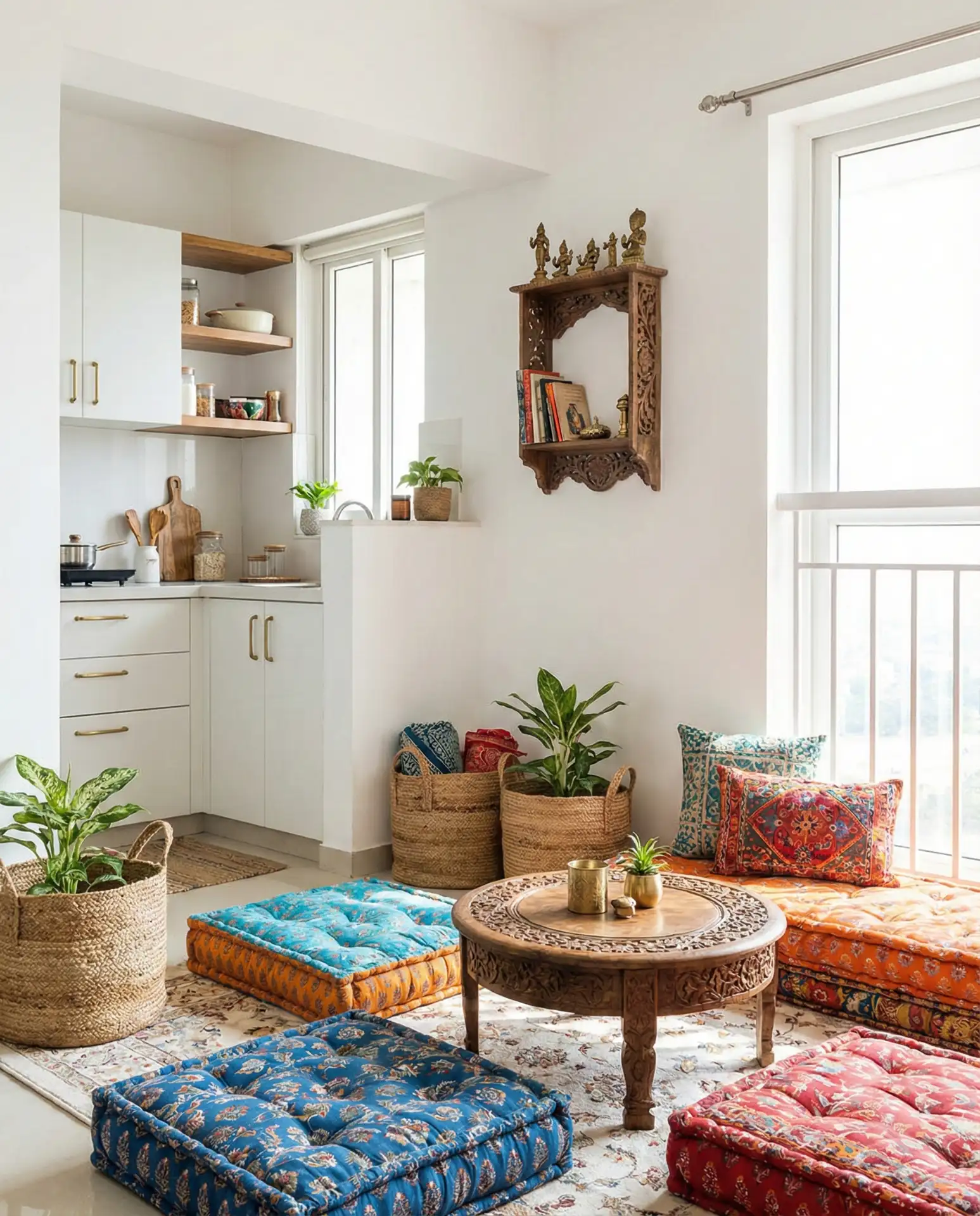
Regional context: This style resonates with multicultural American households, particularly in cities with diverse populations like New York, Houston, and San Jose. It’s a beautiful way to honor heritage while embracing contemporary living, and it works especially well in smaller apartments where bold accents can make a big impact without overwhelming the space.
13. Open Plan with TV Integration
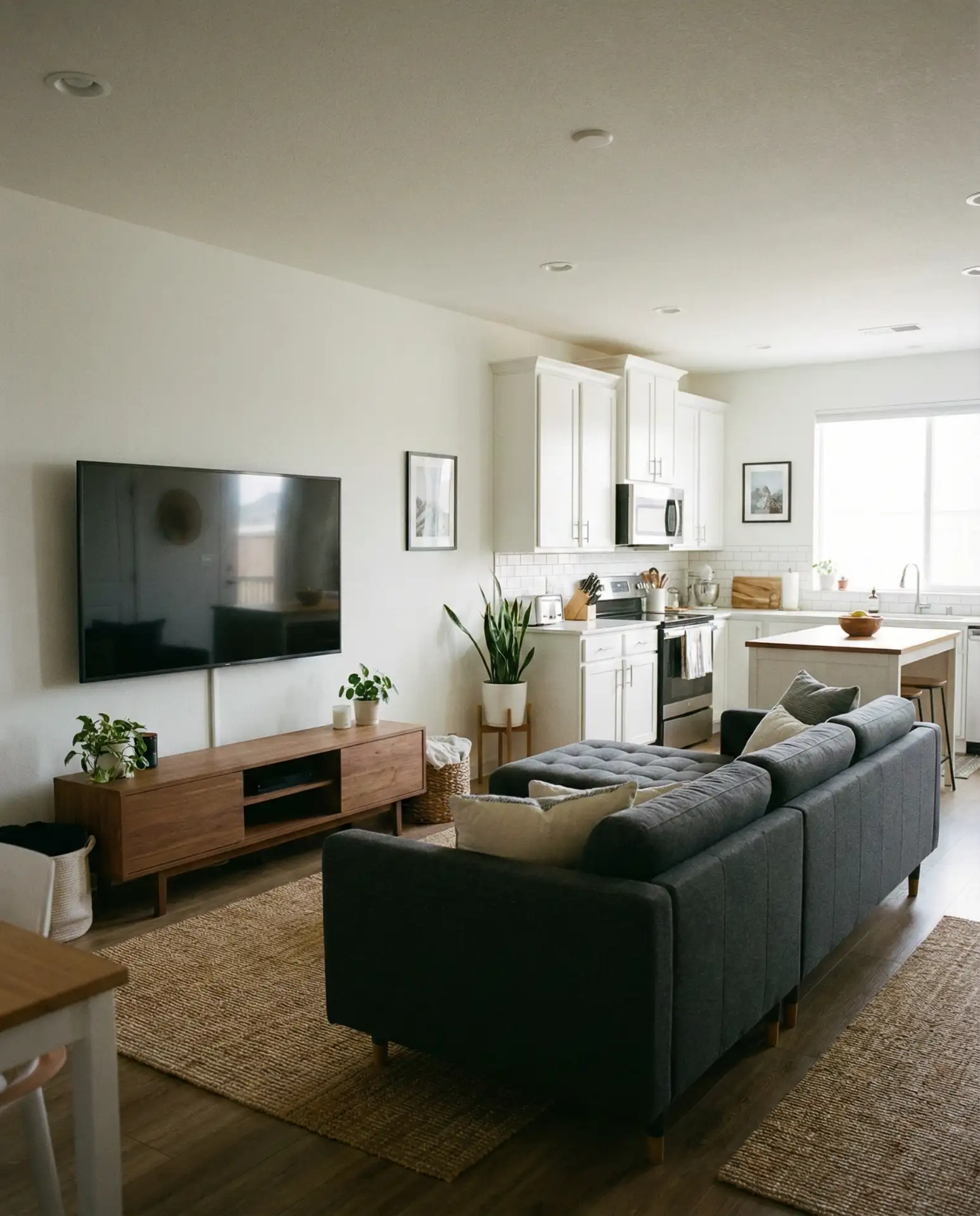
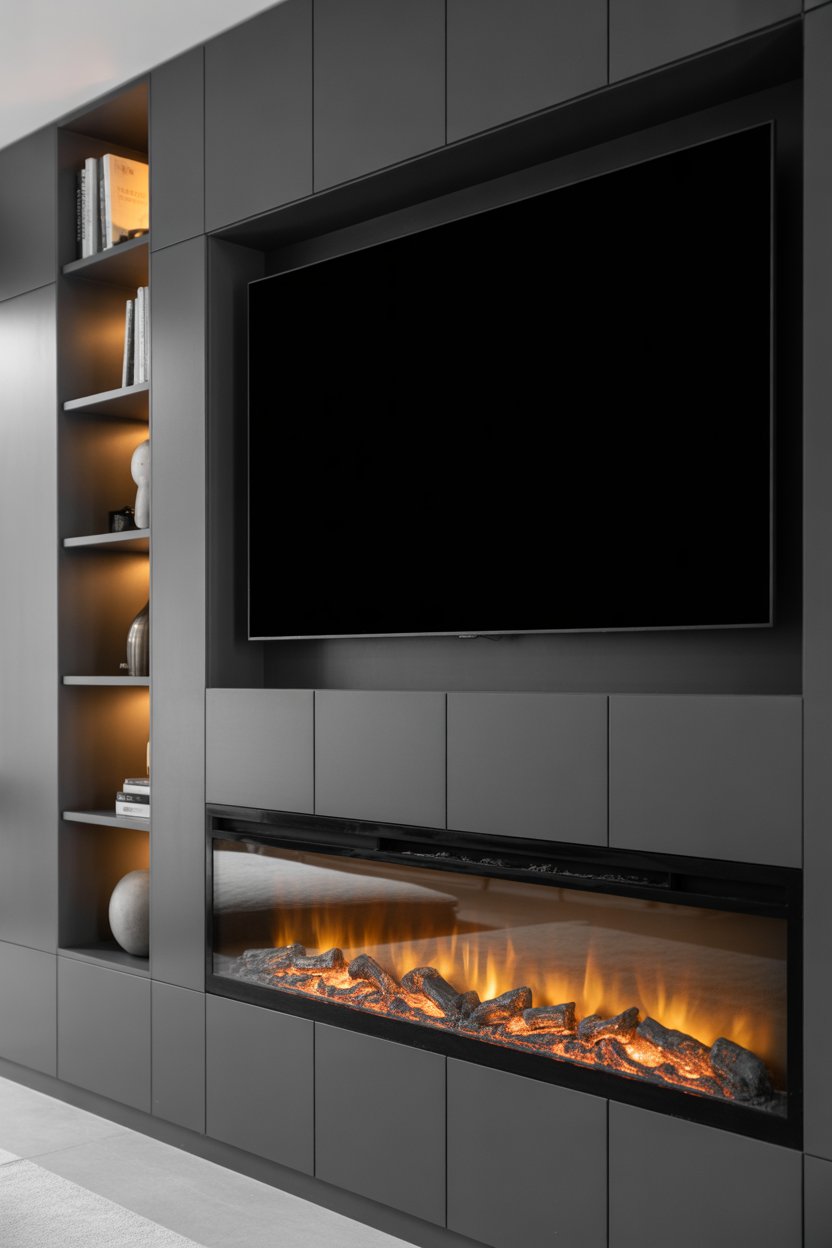
Incorporating a TV into an open floor plan requires balancing entertainment needs with aesthetic considerations. Mount the TV on a feature wall or integrate it into a built-in shelving unit to avoid it dominating the space. The layout furniture arrangement ideas should ensure comfortable viewing angles from both the sofa and dining area while allowing the TV to be discreetly hidden or turned off when not in use. Swivel mounts and media consoles with closed storage help maintain a clean look.
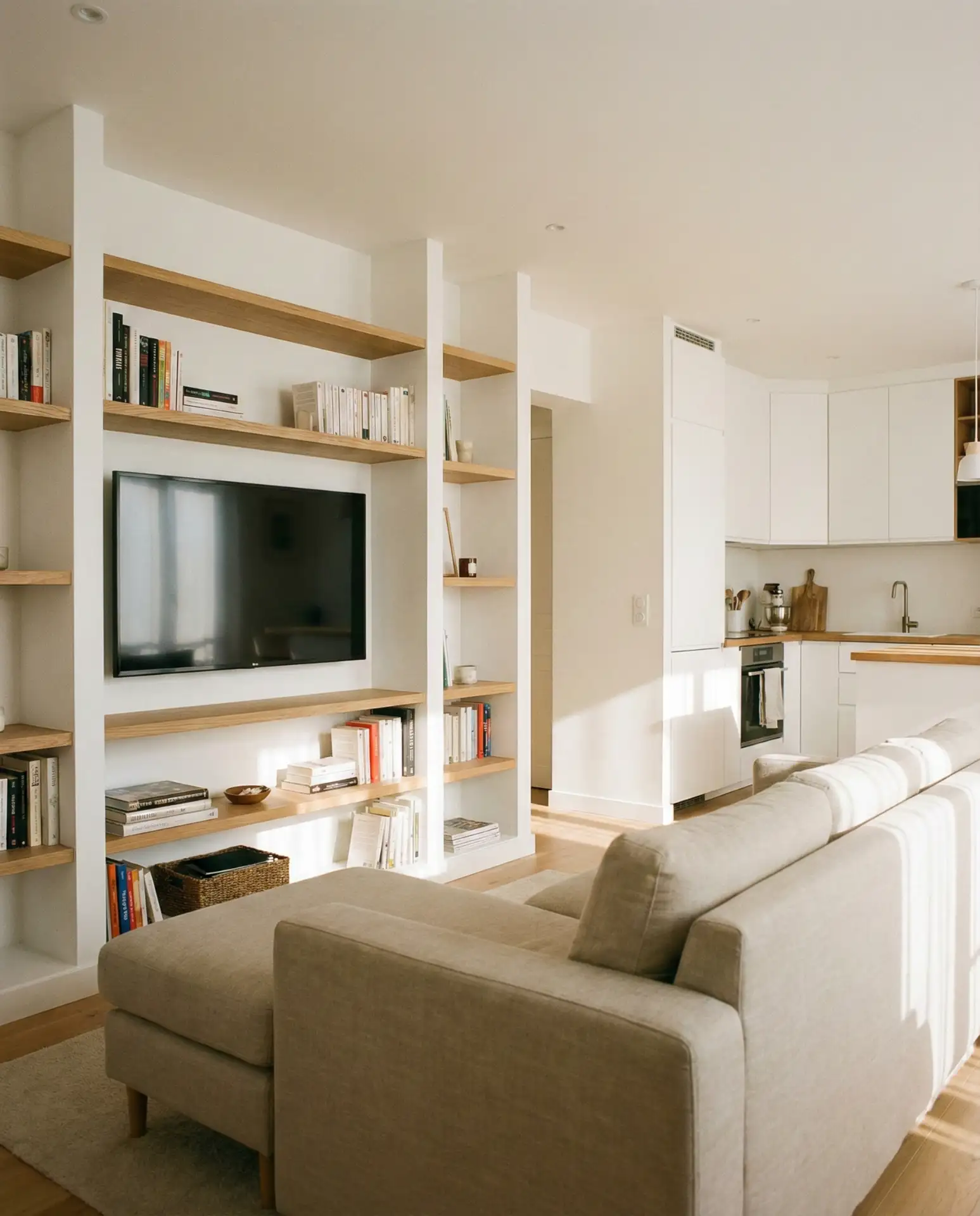
Micro anecdote: One homeowner in Austin discovered that angling the TV slightly toward the kitchen allowed her to catch up on shows while prepping dinner, a simple adjustment that significantly improved her daily routine. This small tweak illustrates how thoughtful furniture and TV placement can enhance both form and function.
14. Paint Wall Colors Ideas for Cohesion
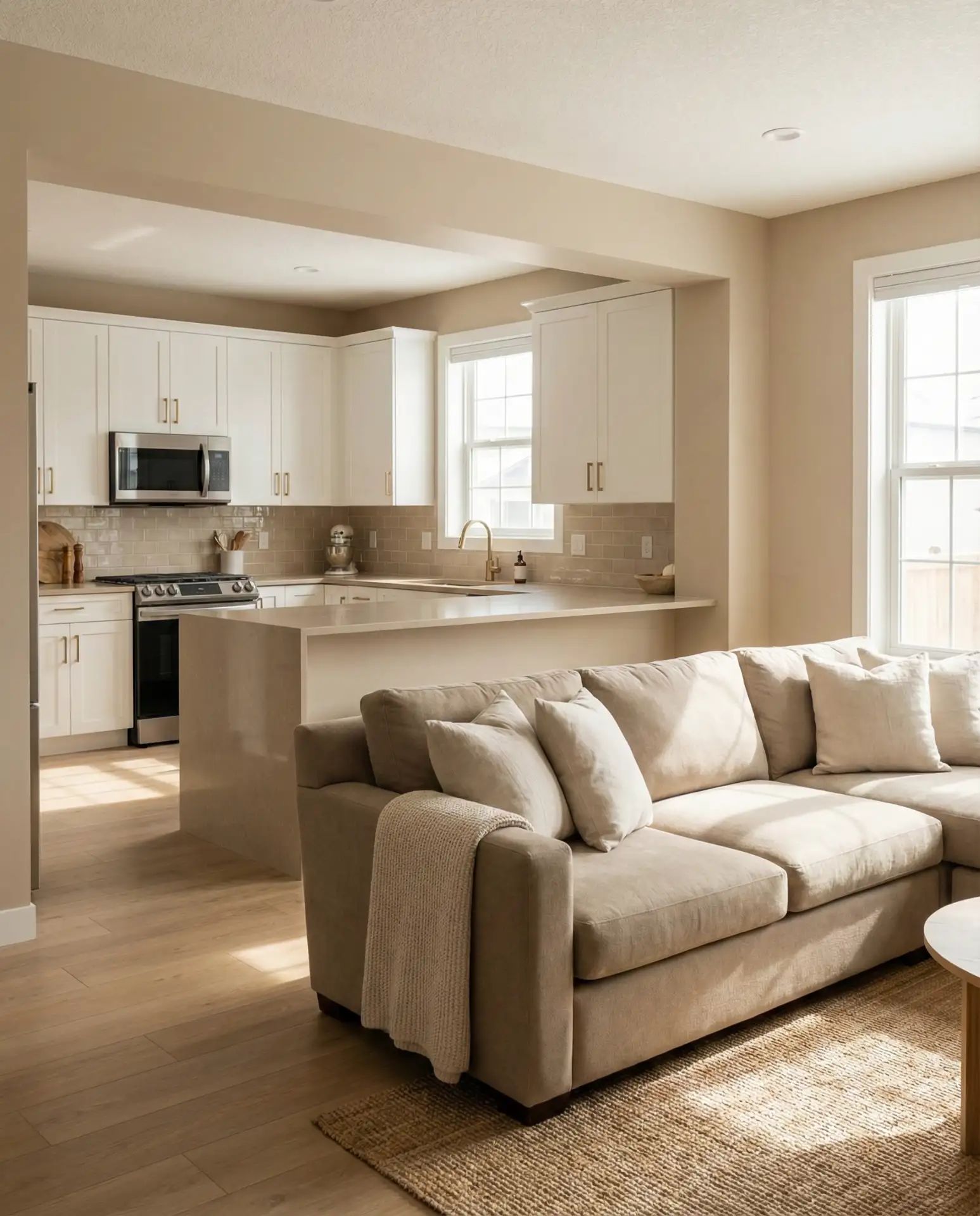
Choosing paint wall color ideas for an open floor plan means selecting hues that flow seamlessly from one zone to the next. Opt for a single color palette throughout, using varying tones of the same shade—lighter in the kitchen for brightness, slightly deeper in the living area for warmth. Soft grays, warm beiges, and muted greens are popular choices that enhance natural light and complement a range of furnishings without overwhelming the senses.
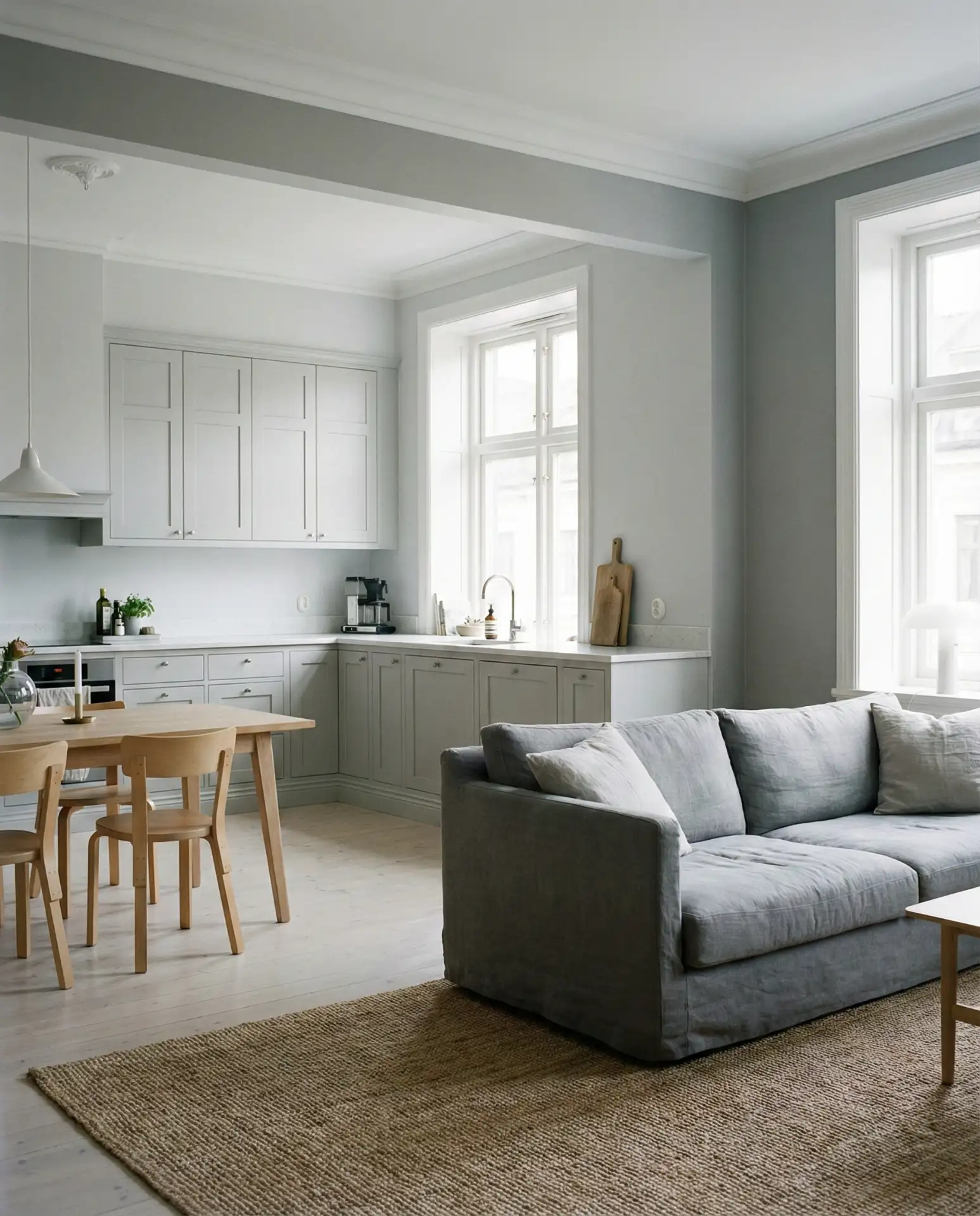
Expert-style commentary: When selecting paint, always test samples in multiple areas of the open plan and observe them at different times of day. Natural light shifts dramatically from morning to evening, and a color that looks perfect in afternoon sun might feel too cool or warm under artificial lighting. This extra step prevents costly repainting and ensures a cohesive, intentional result.
15. Small Area Maximization
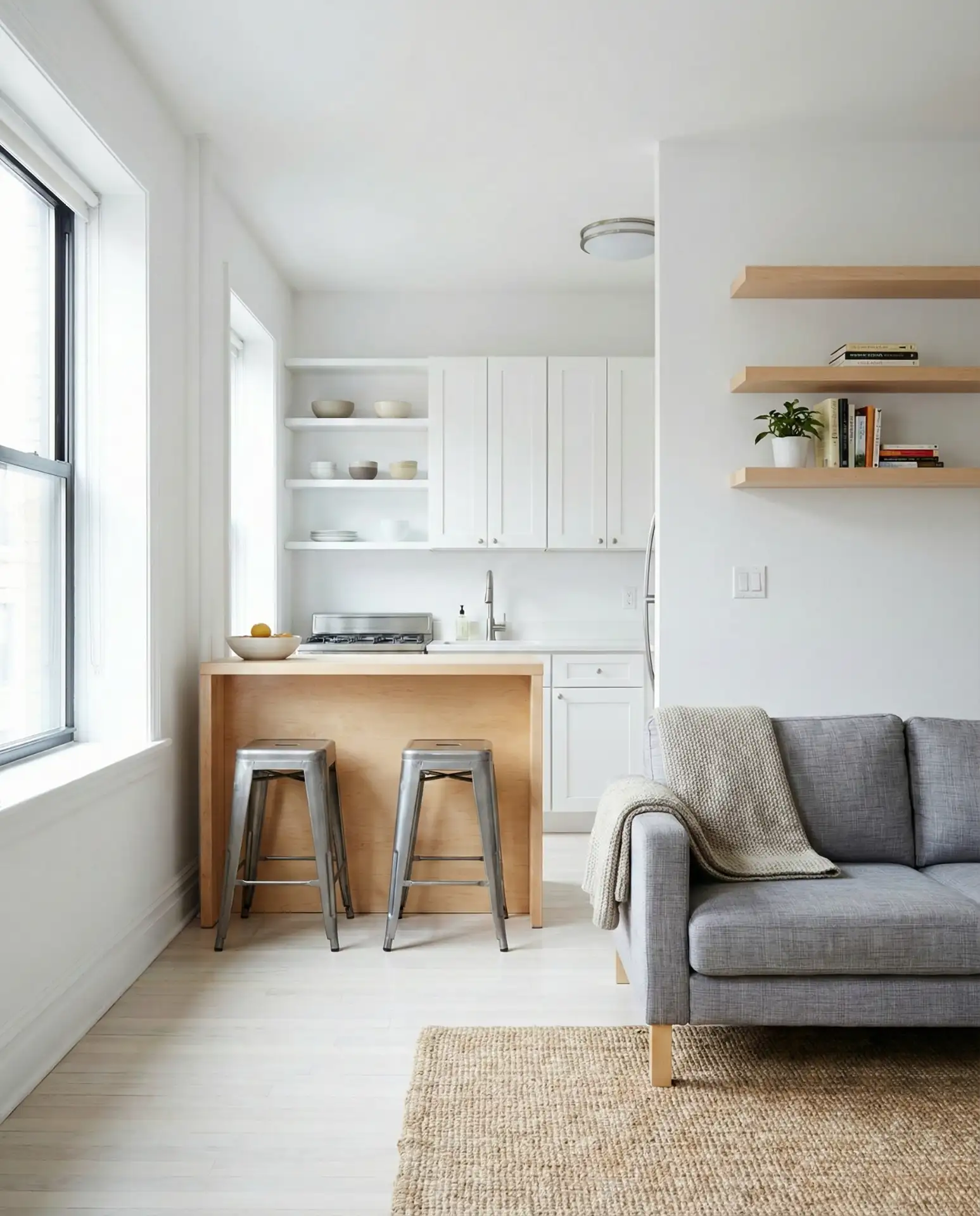
Maximizing a small area in an open floor plan is all about smart furniture choices and vertical storage solutions. Use wall-mounted cabinets, floating shelves, and multipurpose pieces like a kitchen island that doubles as a dining table. Keep the paint wall colors light to reflect natural light, and choose furniture with exposed legs to create a sense of openness. Every element should serve multiple functions, ensuring the space remains uncluttered and livable.
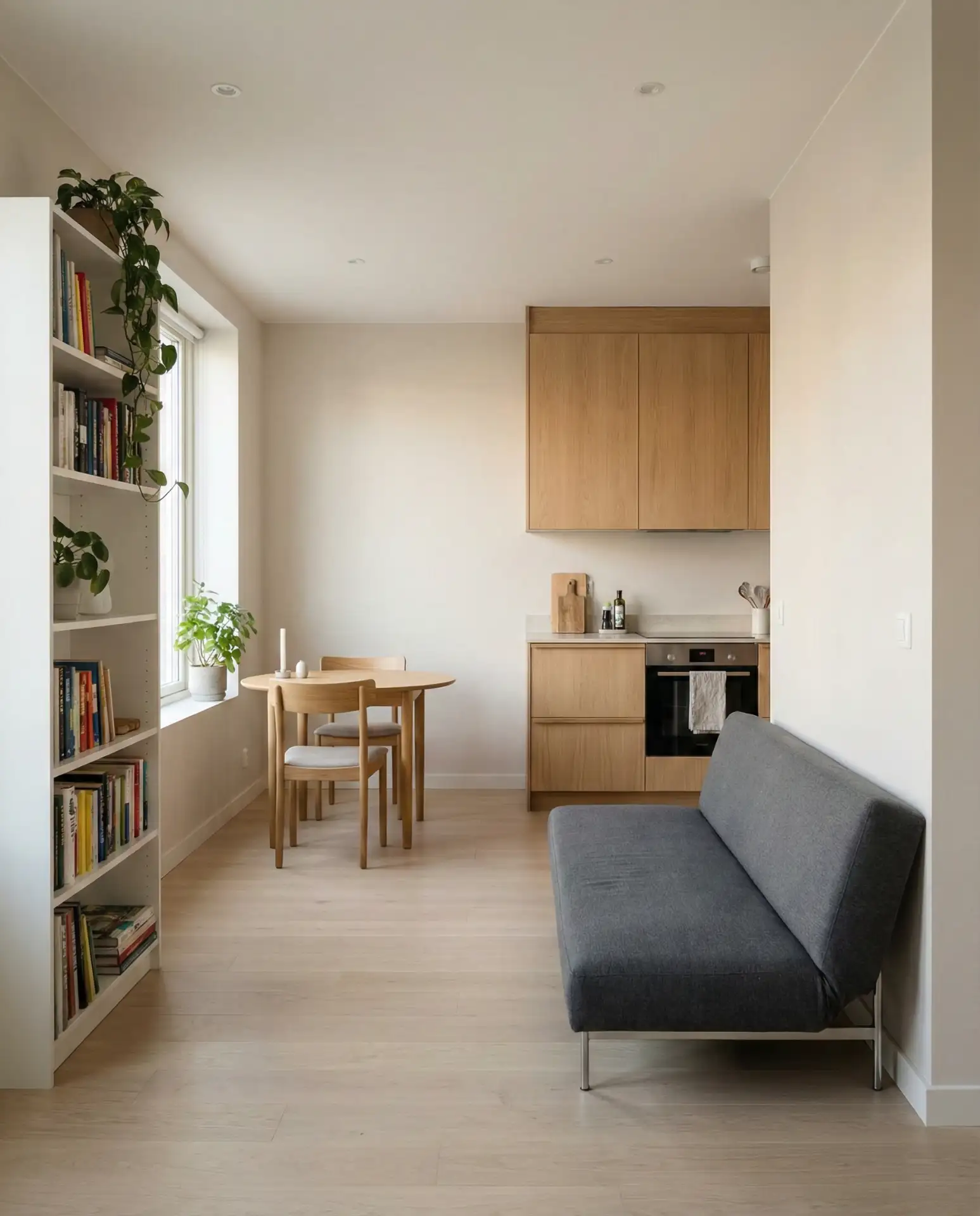
Practical insight: In small open plans, resist the urge to push all furniture against the walls. Floating a sofa a few feet into the room can actually define the living zone more clearly and create better traffic flow around the space, making it feel more intentional and less cramped.
16. Apartment Living Made Seamless
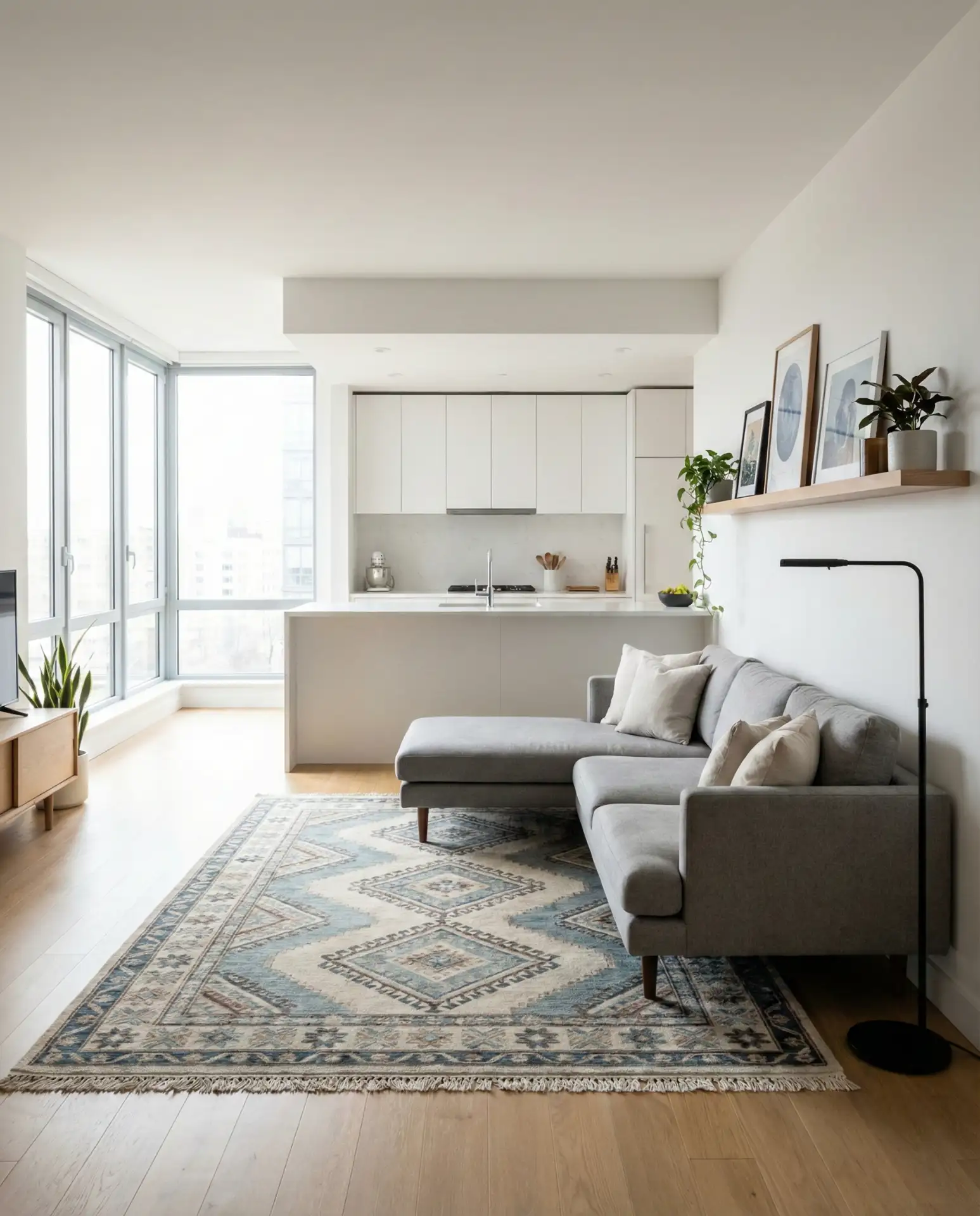
In an apartment setting, an open floor plan eliminates the boxed-in feeling that often plagues urban living. The small interior design’s modern approach emphasizes light, flexibility, and clever zoning through area rugs and furniture placement. With limited square footage, every decision counts—from the scale of the sofa to the height of bar stools. The goal is to create a space that feels both spacious and intimate, adaptable to solo living or entertaining friends.
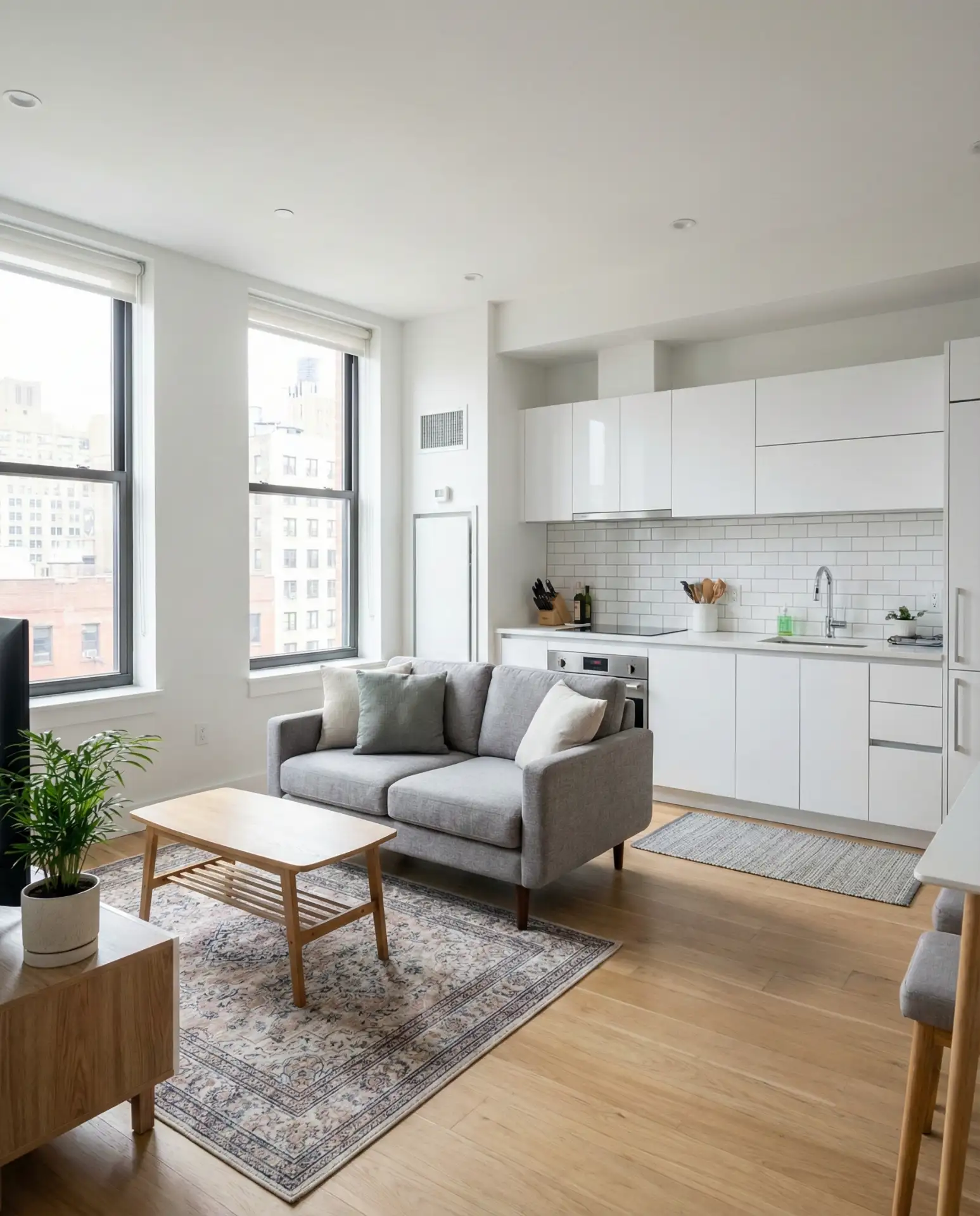
Real homeowner behavior: Apartment dwellers often opt for furniture on casters or lightweight pieces that can be easily rearranged for different activities—pushing the sofa back for yoga, moving chairs together for game night. This flexibility is key to making a small open plan work hard for daily life.
17. Layout Furniture Arrangement for Flow
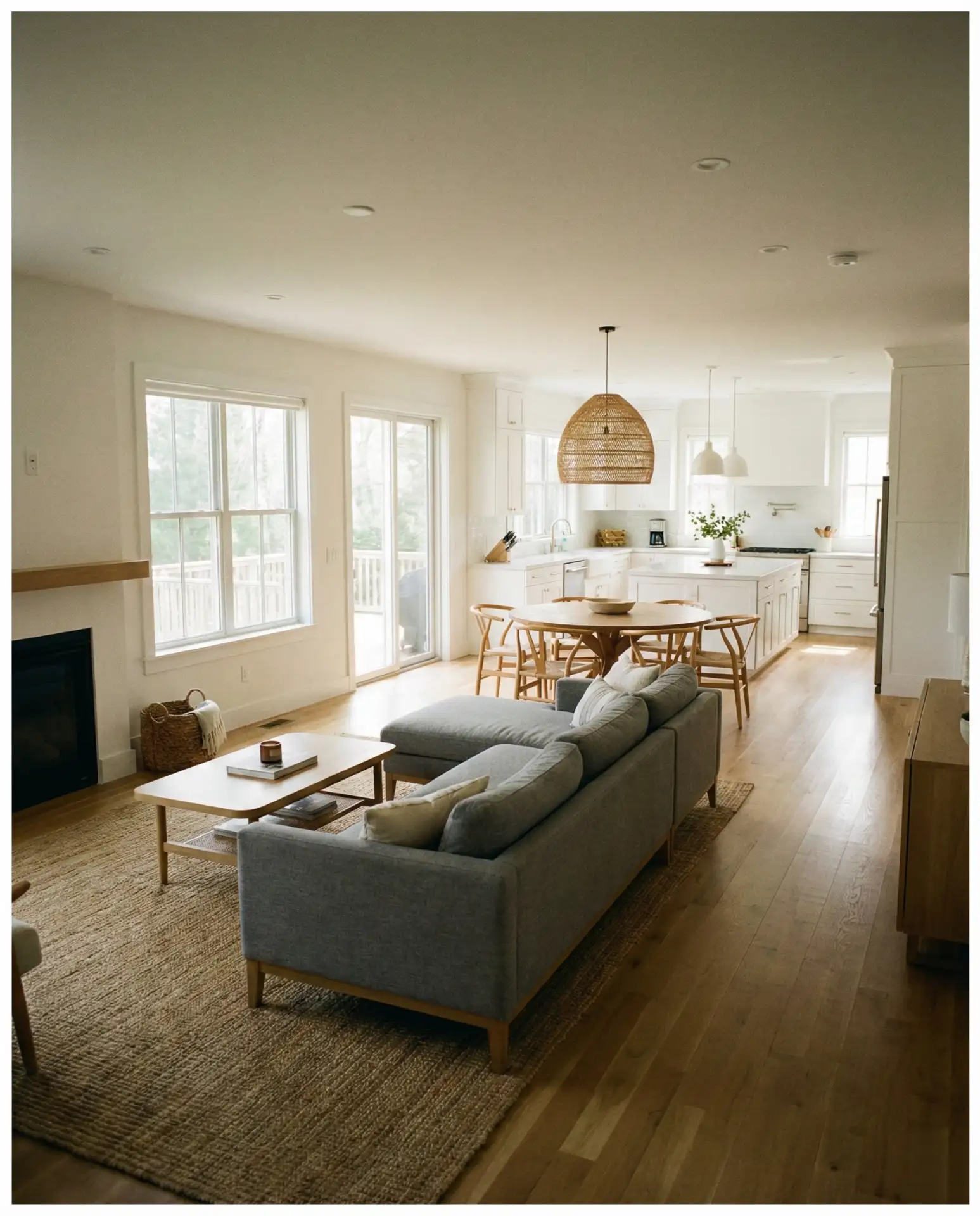
The layout furniture arrangement in an open floor plan directly impacts how the space feels and functions. Create clear pathways between zones, ensuring at least 36 inches of clearance for comfortable movement. Anchor each area with a focal point—a sofa facing a fireplace, a dining table under a chandelier, or a kitchen island with seating. Avoid pushing all furniture against the walls; instead, float pieces to define zones and encourage natural circulation through the space.
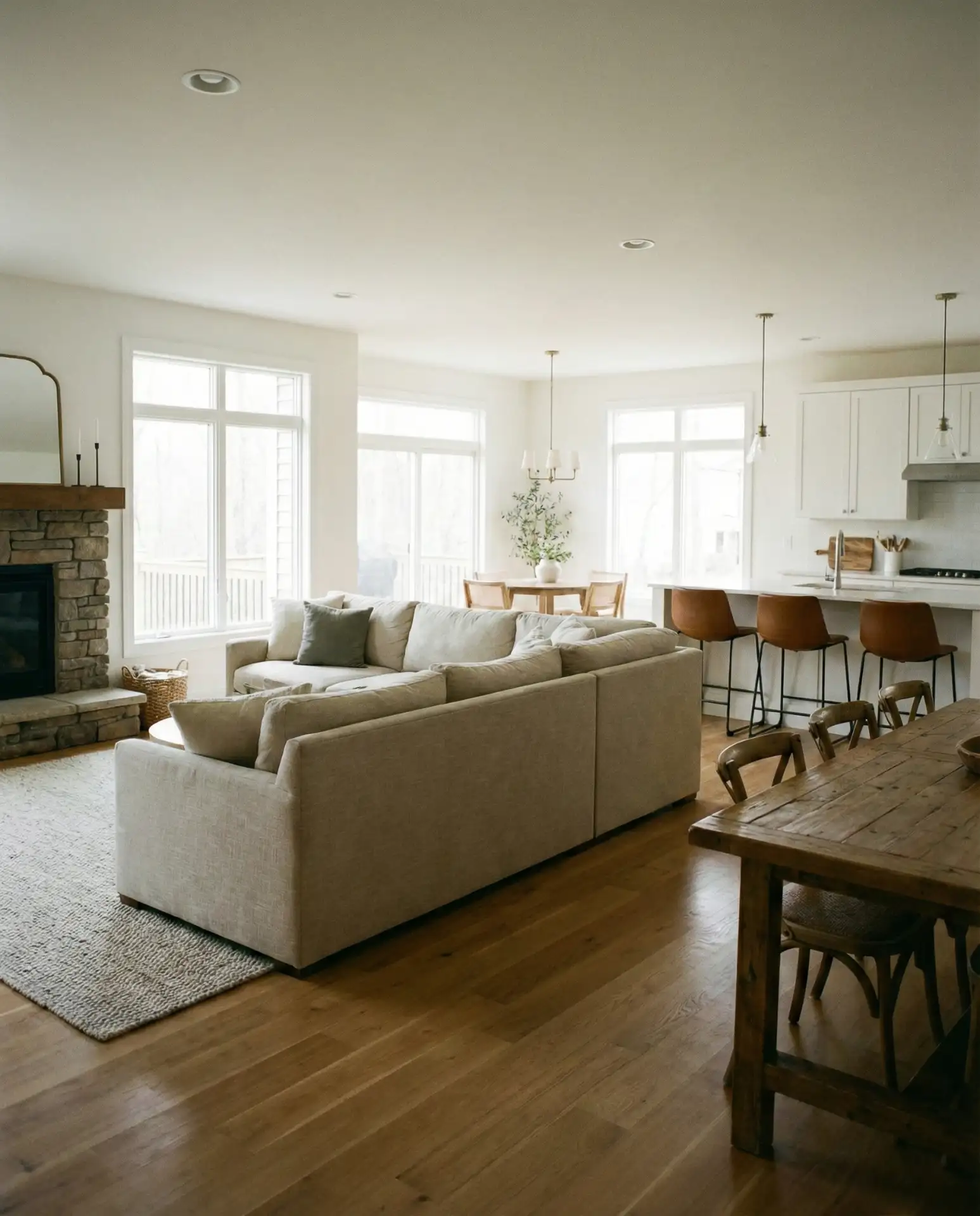
Common mistakes and how to avoid them: Overcrowding the space with too much furniture is a frequent error. Instead, select fewer, larger pieces that command attention and leave breathing room. A single sectional beats three small sofas, and one substantial dining table is better than a cramped setup with mismatched chairs. This approach creates a sense of calm and makes the space feel intentionally designed.
18. Small Interior Design Ideas for Open Plans
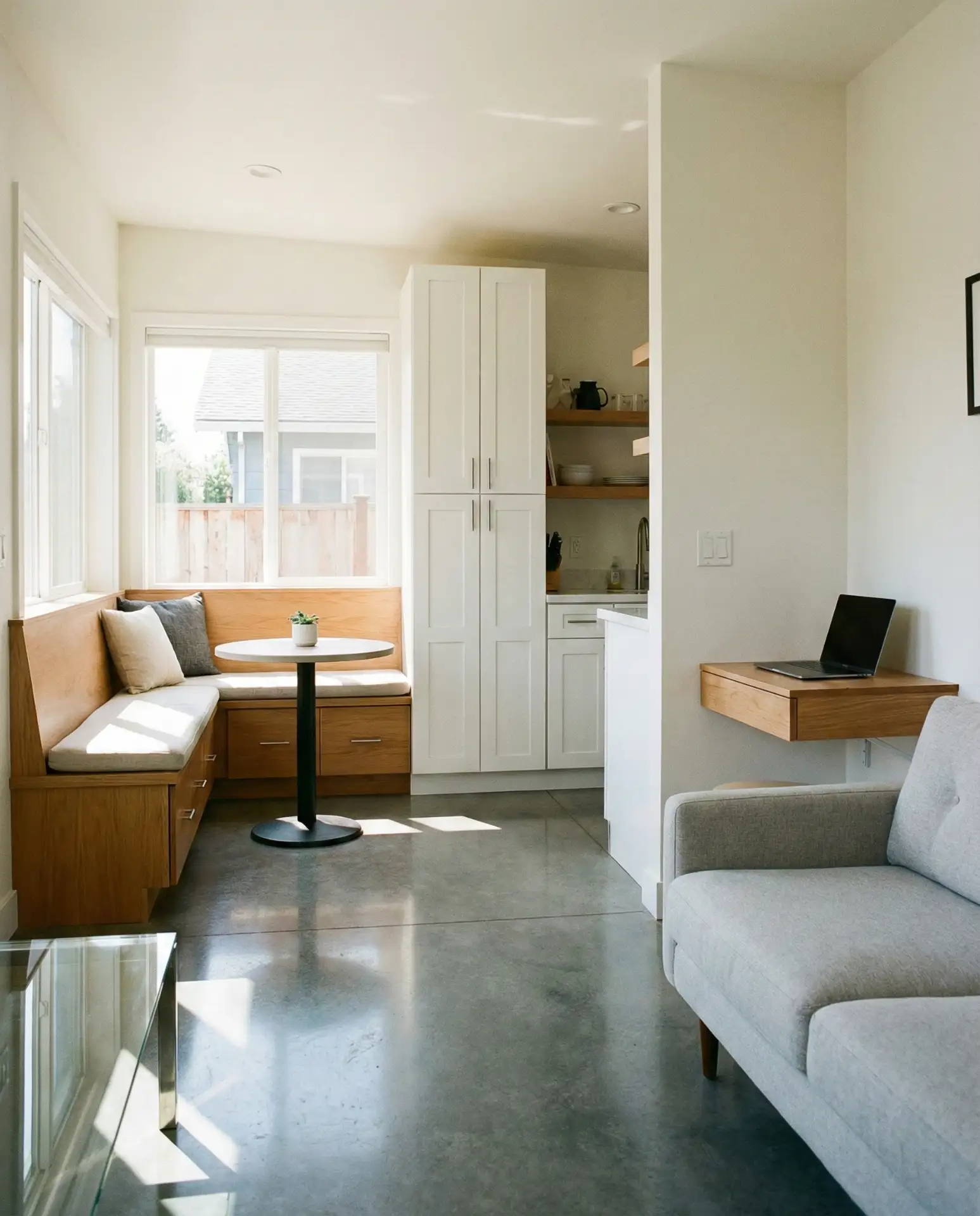
Small interior design ideas for open plans focus on maximizing every inch without sacrificing style. Incorporate built-in banquettes for dining, wall-mounted desks that fold away, and tall cabinets that draw the eye upward. The layout should feel open yet purposeful, with each element carefully chosen for its dual role in aesthetics and function. Light colors, reflective surfaces, and strategic lighting amplify the sense of space.
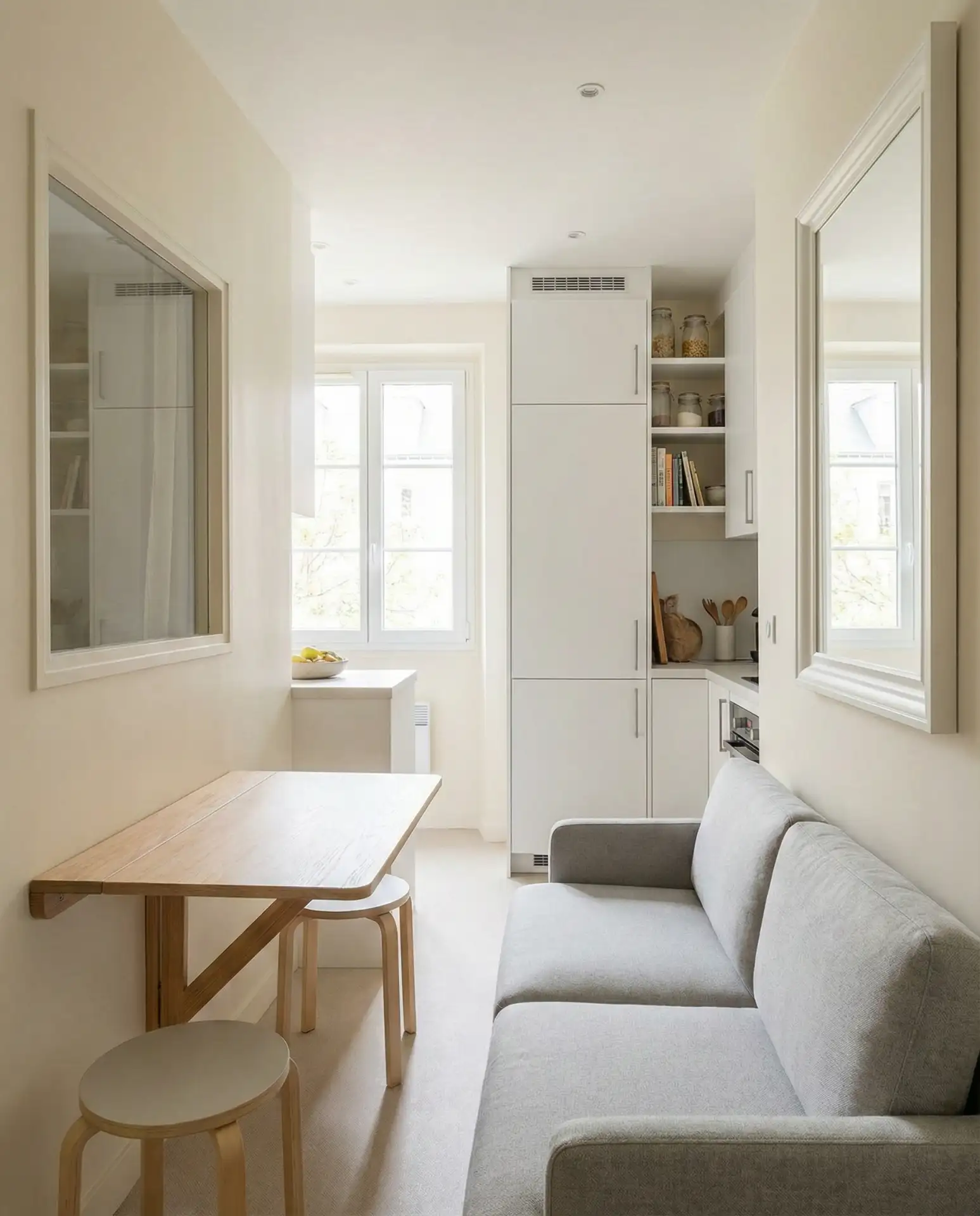
Budget angle: Small open plans are often more affordable to furnish than segmented homes, as you need less large furniture and can invest in statement items—a quality sofa, a stunning light fixture—that serve as focal points. Prioritize quality over quantity, and watch for sales on versatile pieces that offer storage or convert to multiple uses.
19. Farmhouse Paint Wall Colors Ideas
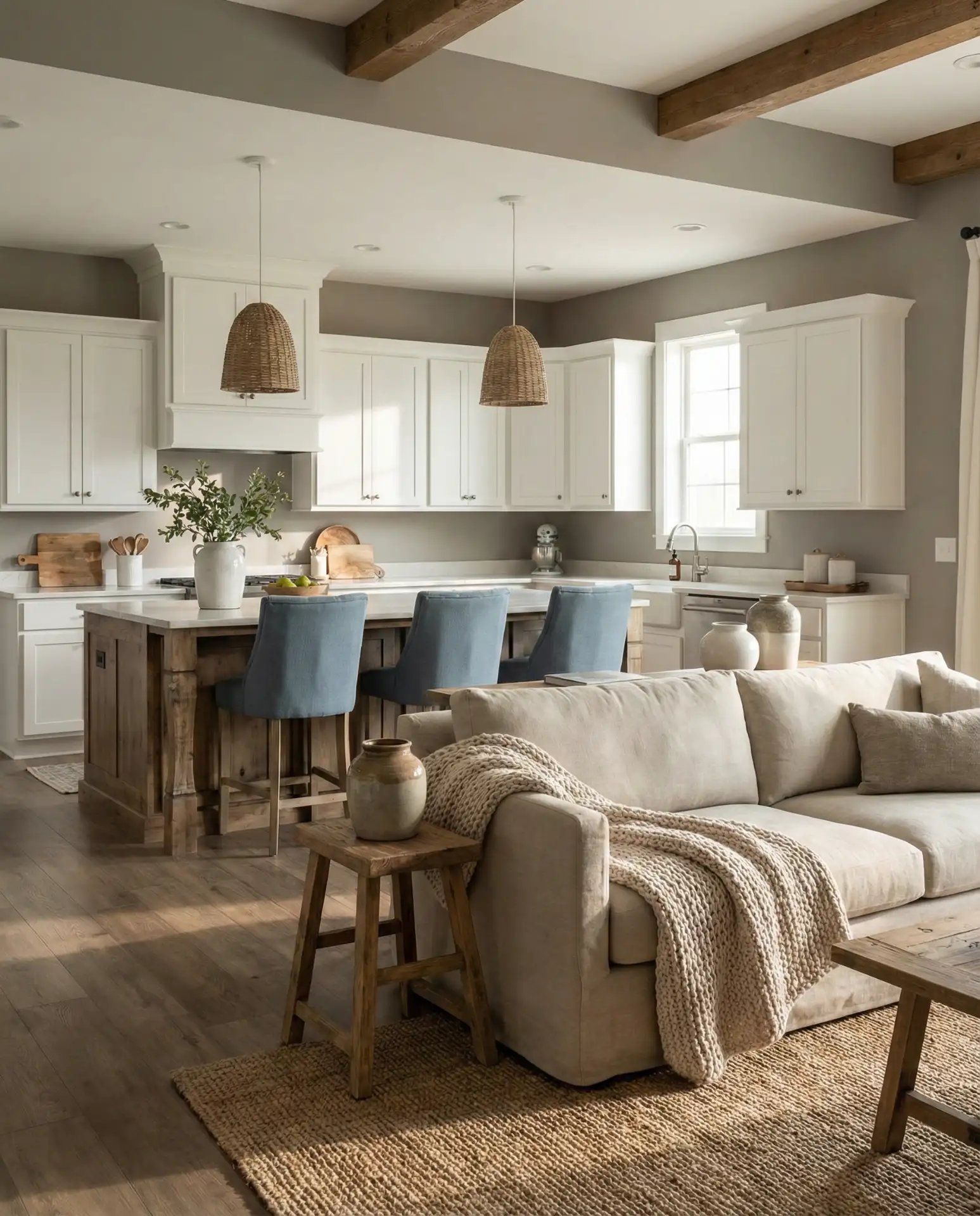
Paint wall colors in farmhouse styles that lean toward soft, organic hues that evoke the countryside—think creamy whites, warm grays, and muted sage or dusty blue accents. These colors create a calming backdrop for rustic wood elements, shiplap walls, and vintage-inspired decor. In an open floor plan, use a single paint wall color scheme throughout to maintain the relaxed, cohesive feel that defines farmhouse style, then introduce pops of color through textiles and accessories.
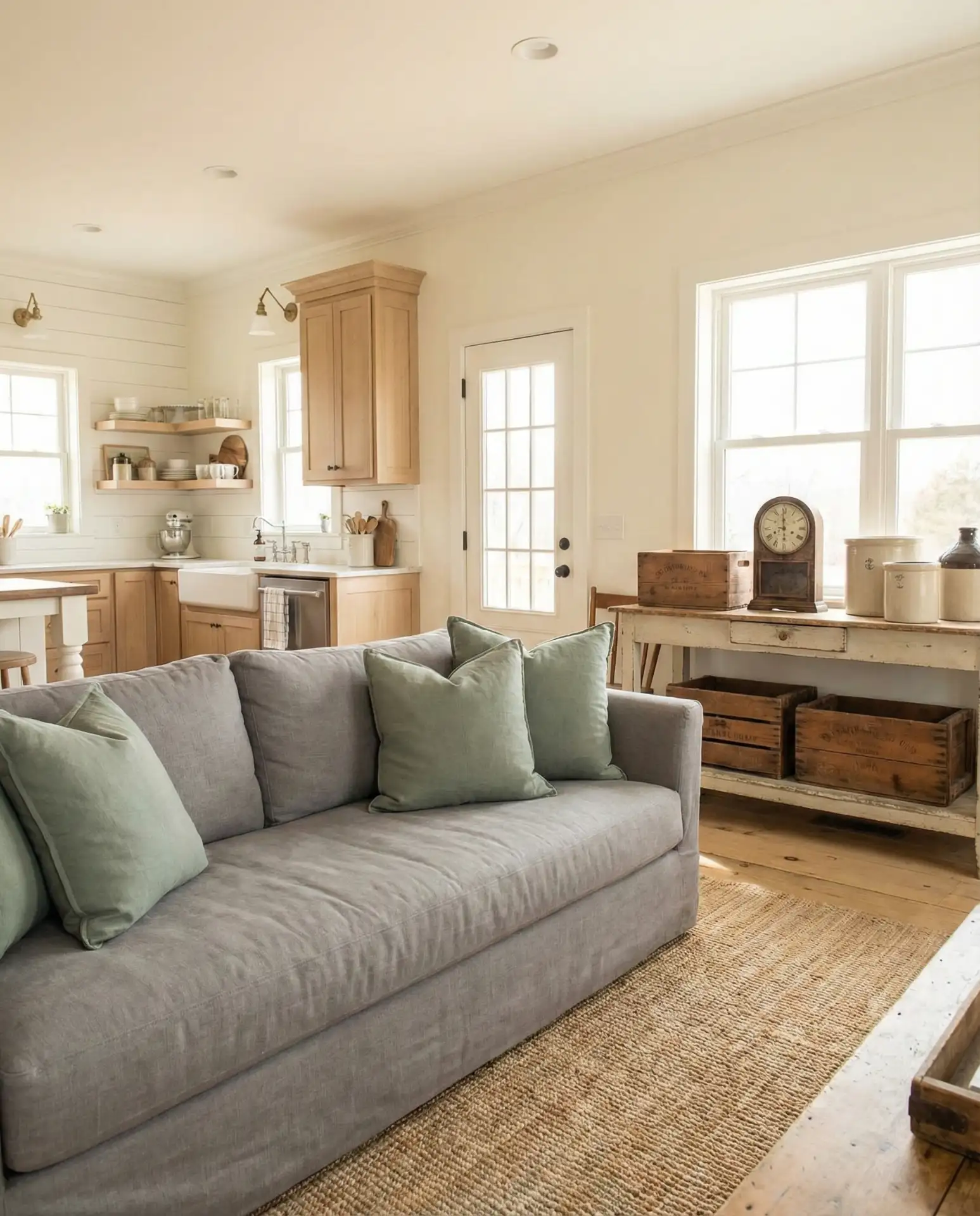
Where it works best: Farmhouse paint palettes thrive in suburban and rural settings where there’s a connection to nature and outdoor living. Homes in the Midwest, South, and Pacific Northwest frequently embrace these tones, pairing them with natural light and views of gardens or fields that reinforce the organic, grounded aesthetic.
20. Design for Multi-Generational Living
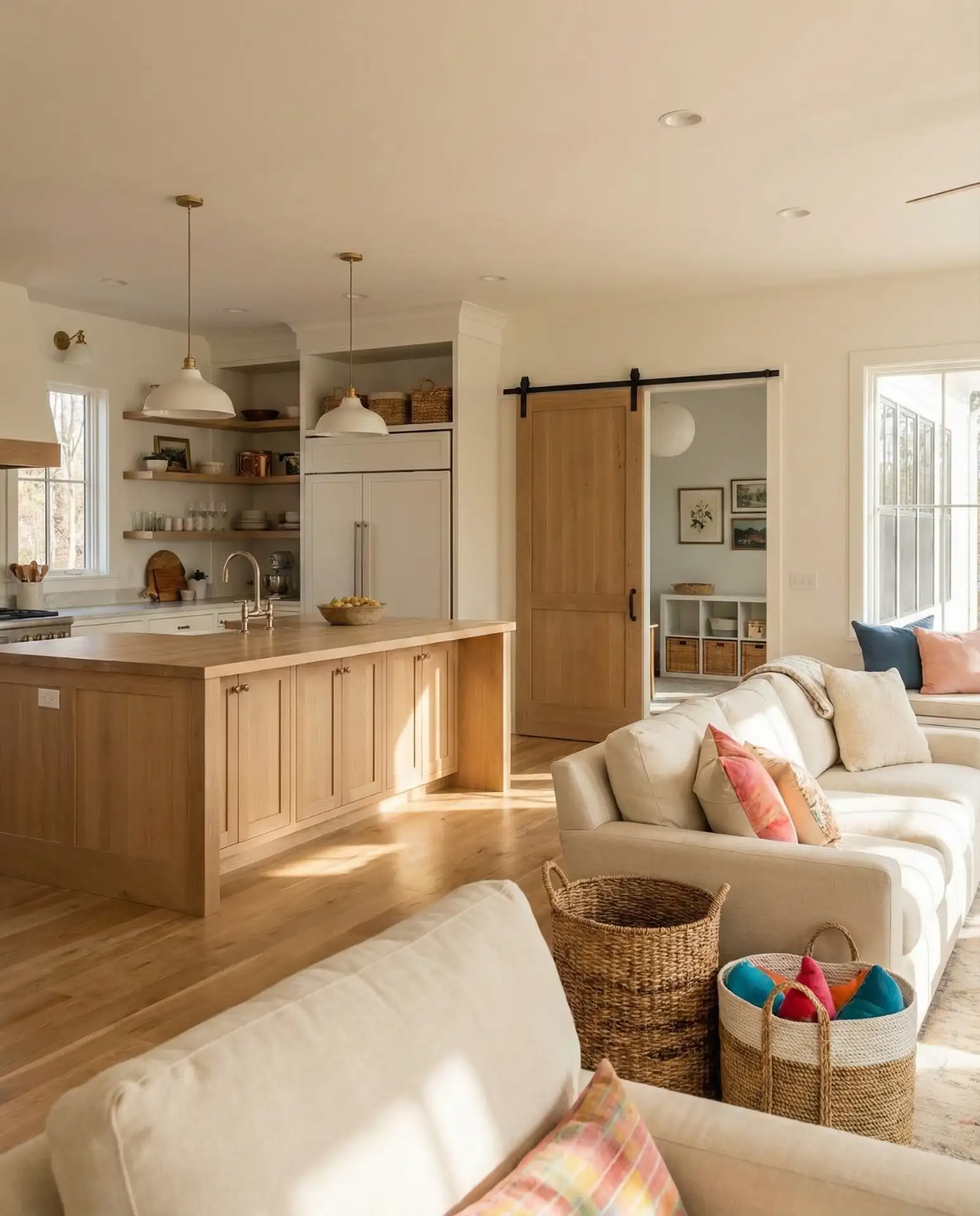
An open floor plan design adapted for multi-generational living balances openness with privacy. Consider flexible zones that can be closed off when needed—think sliding barn doors or folding partitions. The layout furniture arrangement ideas should accommodate varied needs: a firm sofa for older family members, durable finishes for kids, and accessible pathways for mobility devices. This approach fosters togetherness while respecting individual space.
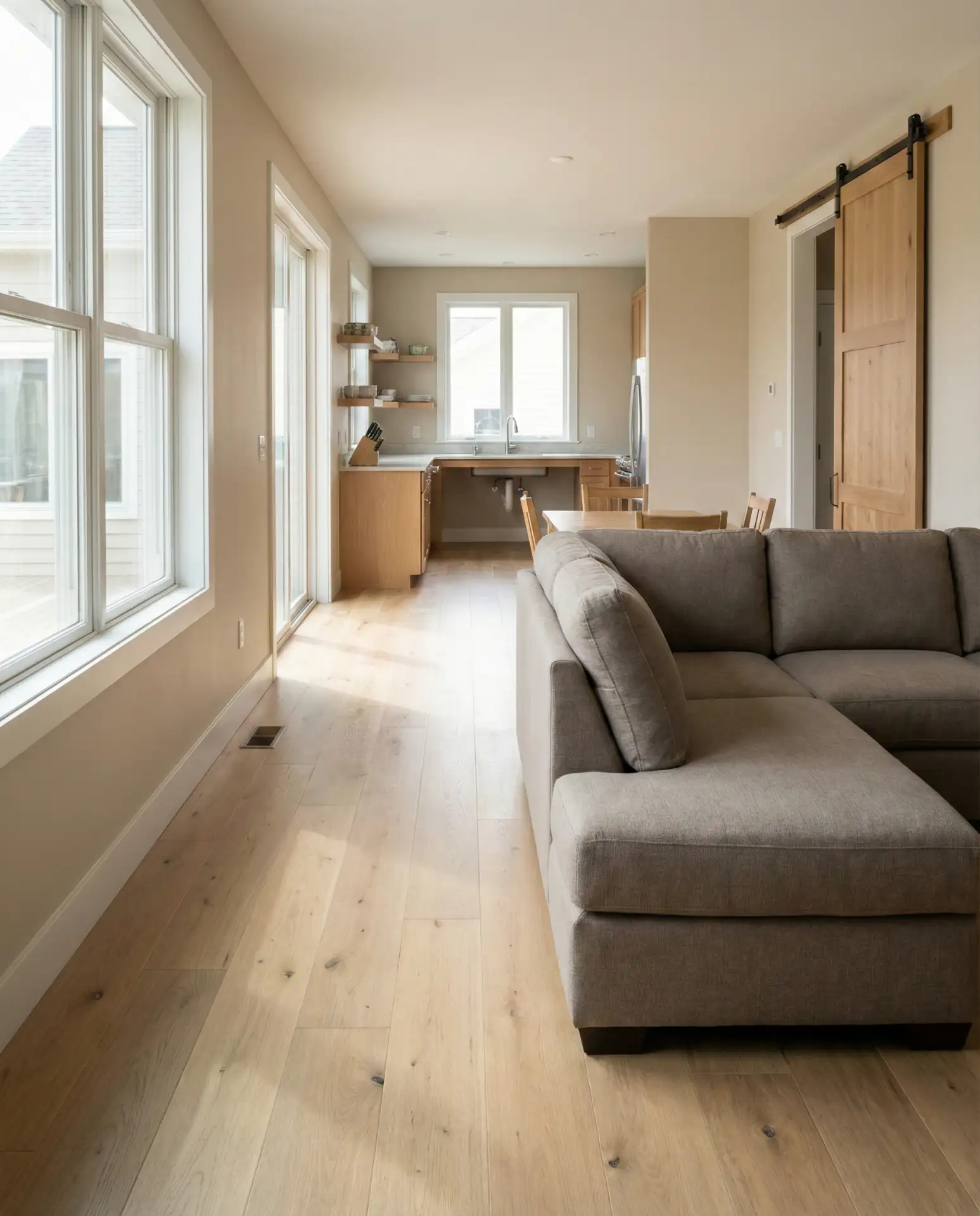
American lifestyle context: With multigenerational households on the rise—particularly in cities with high housing costs like Los Angeles, Miami, and Seattle—open floor plans must evolve to serve diverse age groups. Features like non-slip flooring, lever-style door handles, and ample seating options make the space functional for everyone from toddlers to grandparents.
21. Aesthetic Lighting Layers
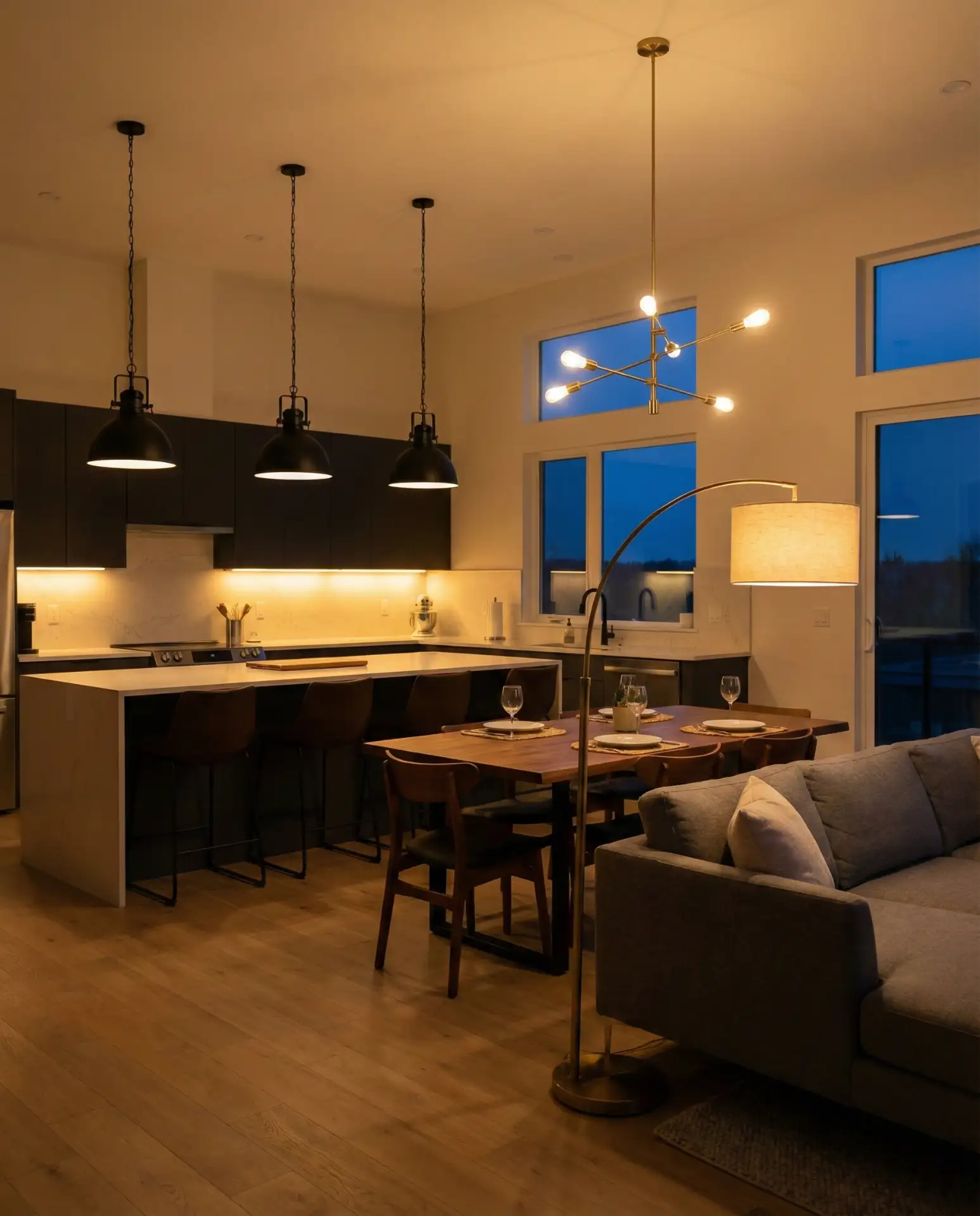
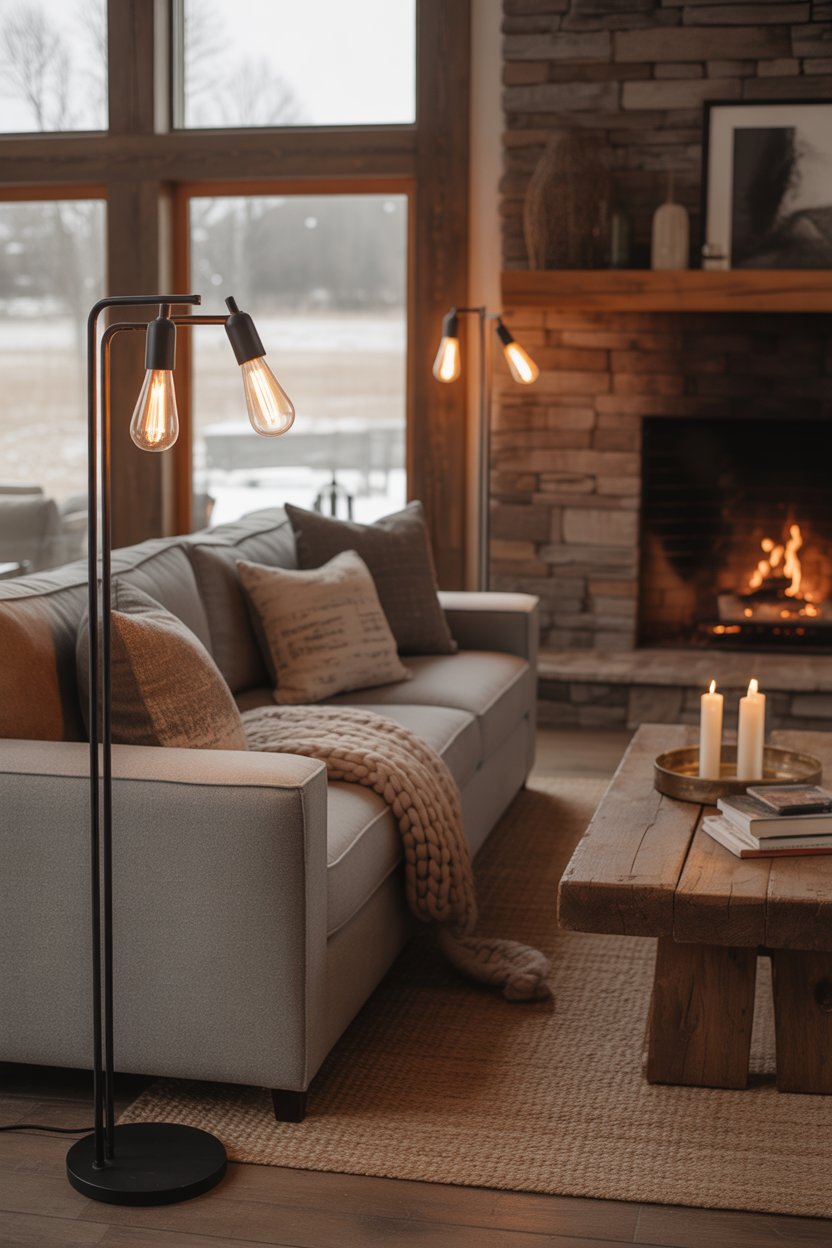
An aesthetic open floor plan relies on layered lighting to define zones and create ambiance. Combine overhead fixtures—like pendant lights over the kitchen island and a statement chandelier above the dining table—with task lighting under cabinets and ambient floor or table lamps in the living area. The interplay of light sources adds depth and warmth, transforming the space from functional to inviting as daylight fades.
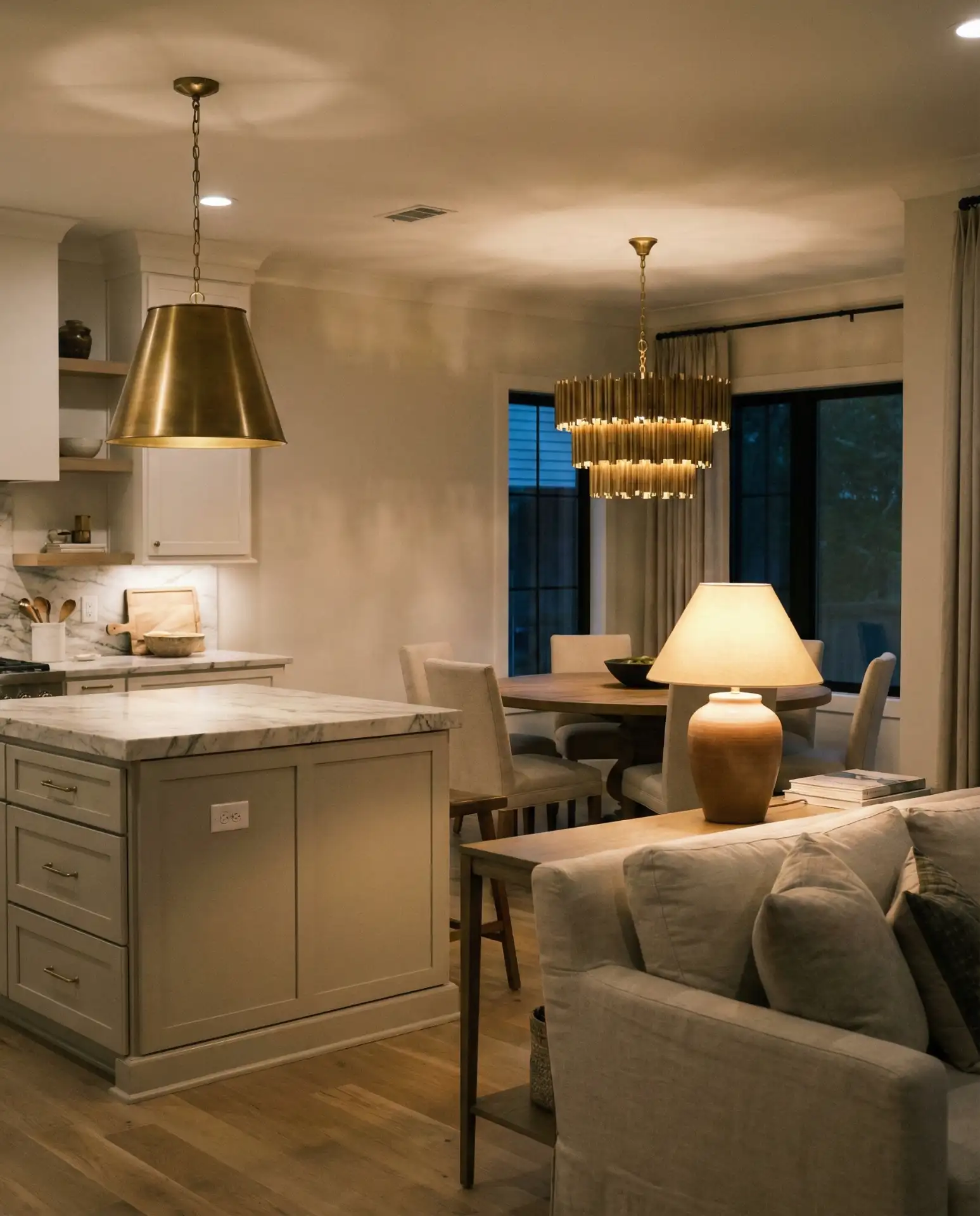
Expert-style commentary: Dimmer switches are essential in an open plan, allowing you to adjust the mood for different activities—bright task lighting for meal prep, softer ambient light for movie nights. Invest in quality fixtures that complement your overall design aesthetic, and don’t overlook the power of accent lighting to highlight architectural features or artwork.
22. Cathedral Ceiling with Statement Lighting
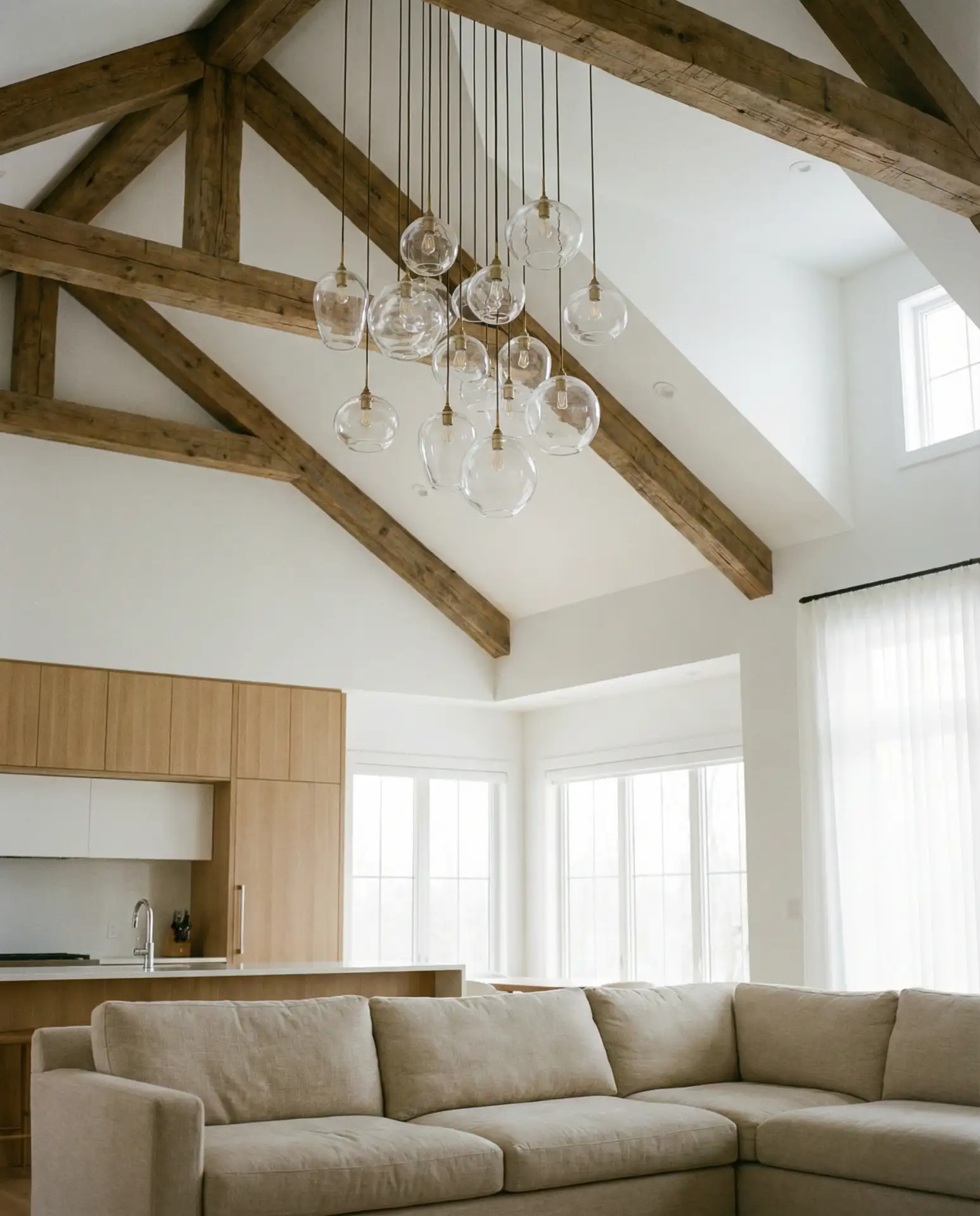
A cathedral ceiling demands statement lighting that matches its scale and drama. Think oversized chandeliers, cascading pendant clusters, or modern geometric fixtures that draw the eye upward and fill the vertical space. The design should balance the grandeur of the ceiling with grounded, comfortable furnishings below, ensuring the living area feels cozy rather than cavernous.
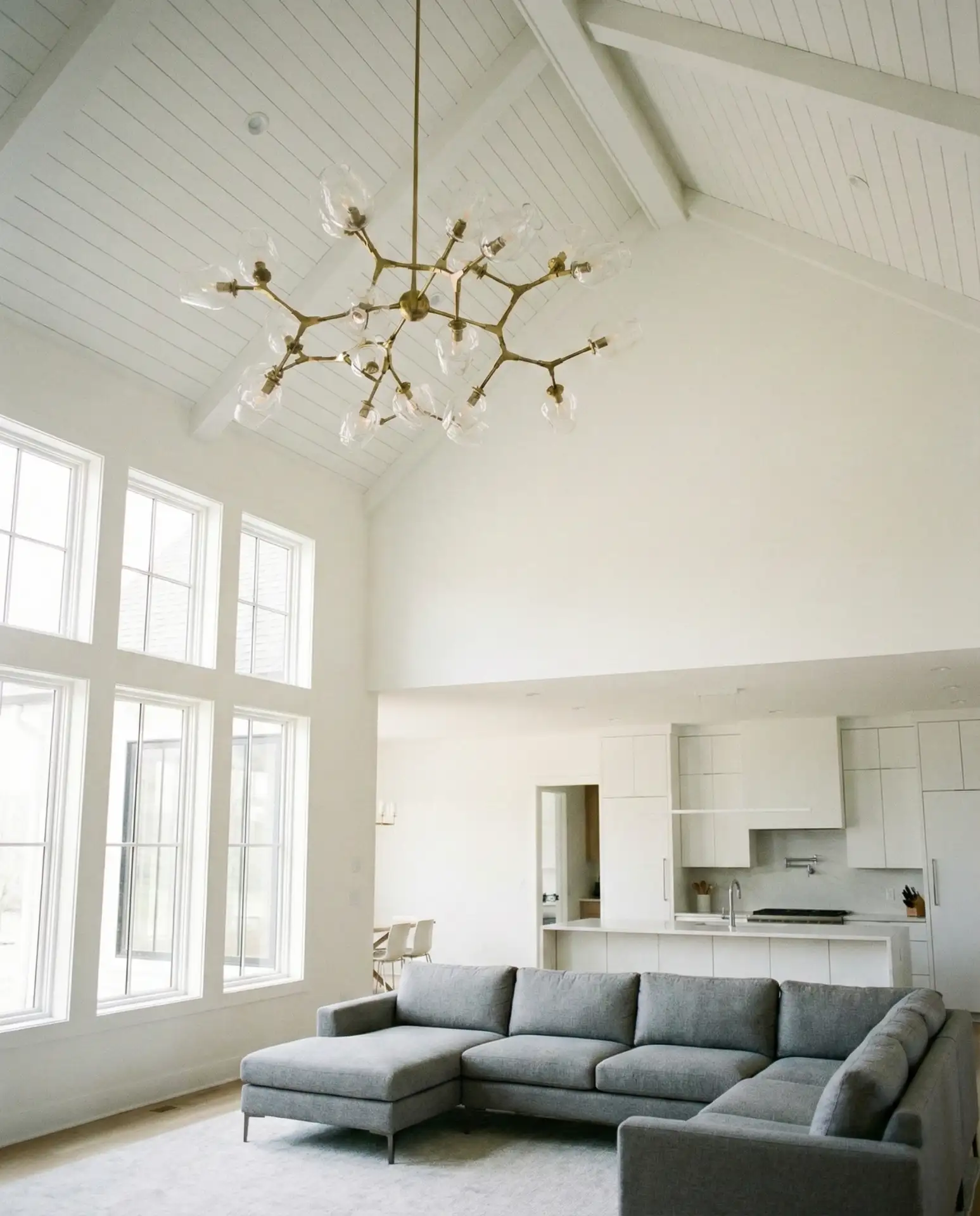
Practical insight: When selecting lighting for a cathedral ceiling, consider the ease of changing bulbs and maintaining fixtures at that height. LED bulbs with long lifespans and fixtures designed for high ceilings reduce maintenance hassles while ensuring the space remains well-lit and visually stunning.
23. Modern Dark Brown Cabinets with Contrast
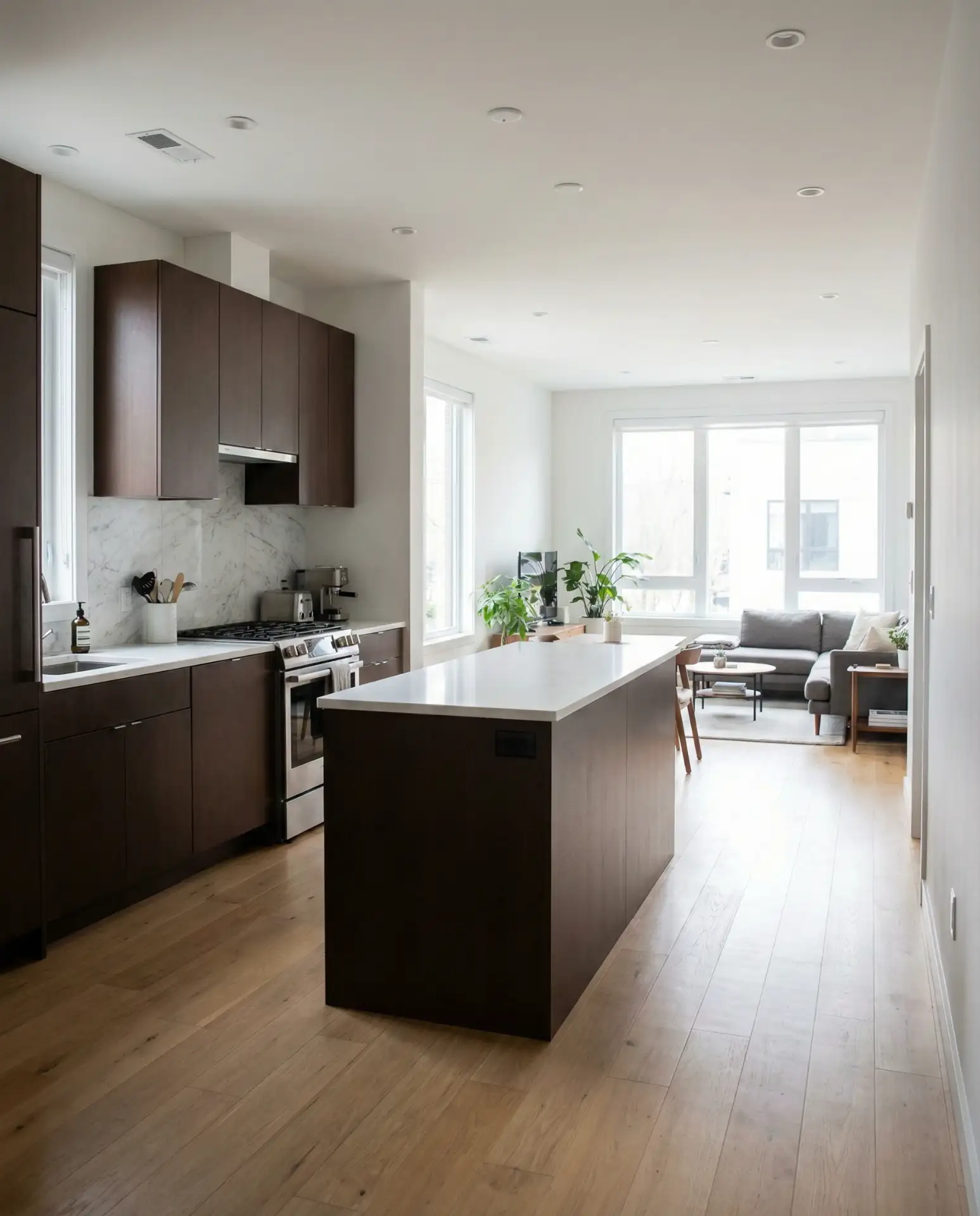
Dark brown cabinets in a modern open floor plan create a bold, sophisticated anchor when contrasted with lighter elements. Pair them with crisp white countertops, pale walls, and light-toned flooring to prevent the space from feeling too enclosed. The design benefits from sleek hardware, integrated appliances, and minimalist styling that lets the rich wood tones take center stage without overwhelming the senses.
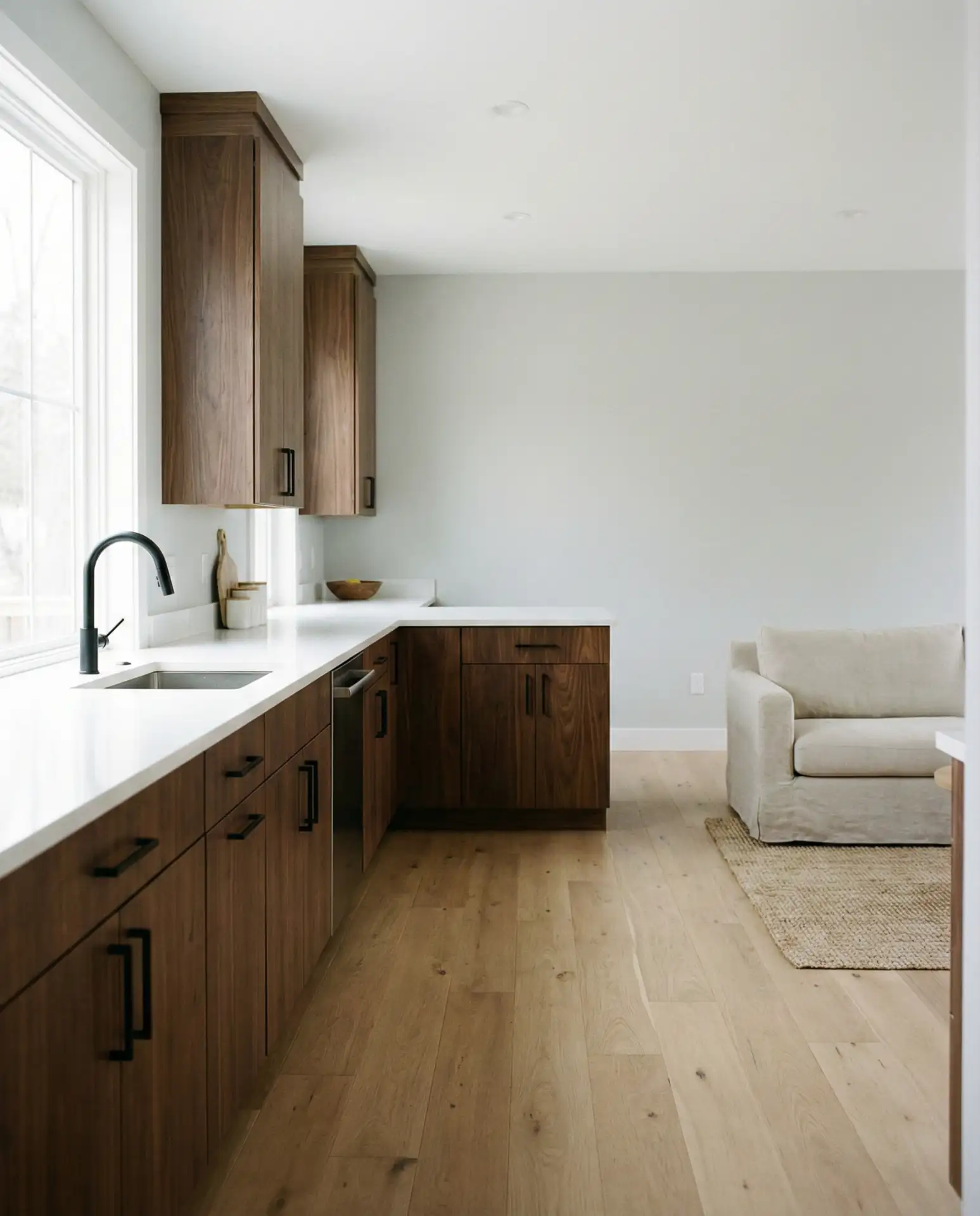
Micro anecdote: A designer in Portland recommended pairing dark cabinets with open upper shelving to break up the heaviness and introduce visual breathing room. The client added white ceramic dishes and glassware on the shelves, which reflected light and created a beautiful interplay between dark and light, traditional and contemporary.
Conclusion
Whether you’re drawn to the rustic warmth of farmhouse style, the clean lines of minimalist design, or the eclectic charm of global influences, an open floor plan living room and kitchen offers endless possibilities for personalization and creativity. The key is to balance openness with thoughtful zoning, choose materials and colors that flow seamlessly, and prioritize both function and beauty in every decision. We’d love to hear which of these ideas resonates with you—share your thoughts, questions, or your own open-plan successes in the comments below!