Oak kitchen cabinets are staging a major comeback in 2026, and American homeowners are trading the all-white trend for warmth, texture, and character. Pinterest boards are overflowing with searches for oak cabinetry that balances timeless appeal with modern styling—from sleek honey-toned minimalism to dramatic dark-stained statements. Whether you’re renovating a 90s kitchen or starting fresh, oak offers unmatched versatility, durability, and that organic richness that painted cabinets simply can’t replicate. In this guide, you’ll discover 23 inspiring ways to incorporate oak into your kitchen, along with expert tips on finishes, colors, and styling that make this classic wood feel completely current.
1. White Oak with Warm Brass Hardware
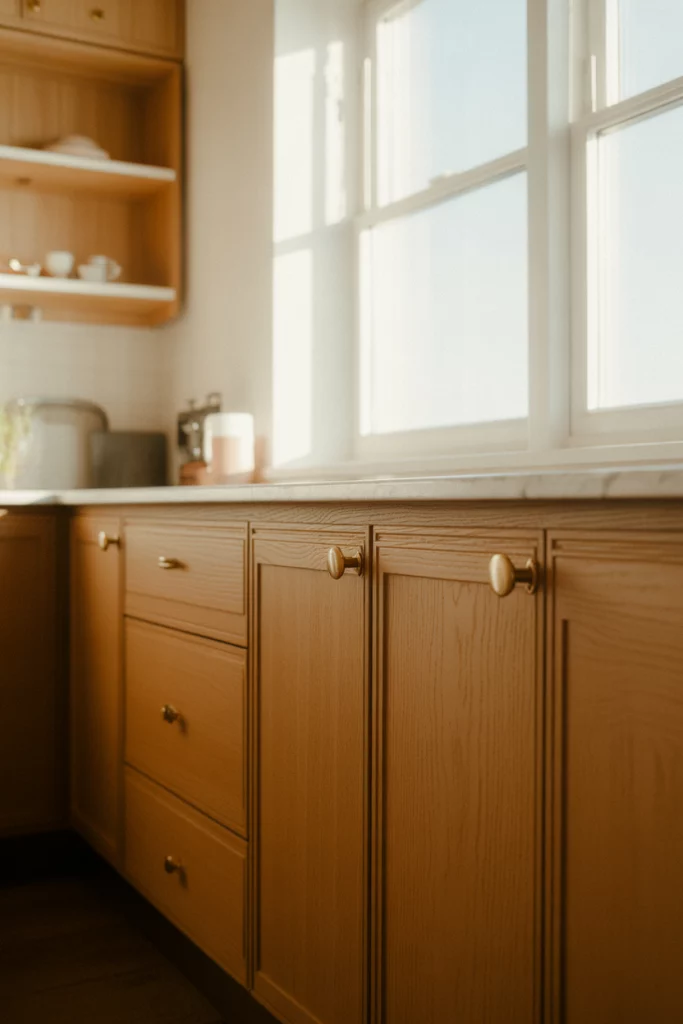
White oak cabinets paired with brushed brass pulls create an effortlessly elegant foundation that works in both traditional and contemporary kitchens. The pale grain of white oak offers subtle texture without overwhelming the space, while the warm metal accents add just enough contrast. This combination has become a Pinterest favorite for homeowners seeking a sophisticated, light-filled kitchen that doesn’t feel sterile or cold. 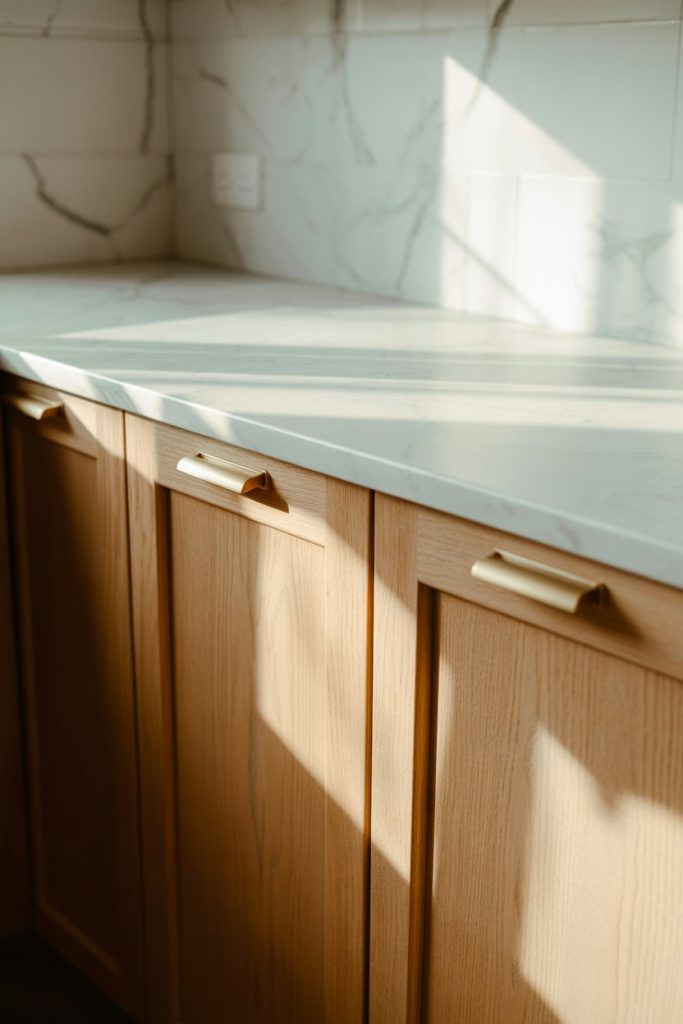
This approach works particularly well in open-concept homes where the kitchen flows into living areas—the neutral palette creates visual continuity while the brass adds warmth that prevents the space from feeling too clinical. Many designers recommend leaving white oak unsealed or using a matte finish to preserve its organic, tactile quality, which invites touch and feels genuinely lived-in rather than showroom-perfect.
2. Honey-Toned Oak in Modern Farmhouse Settings
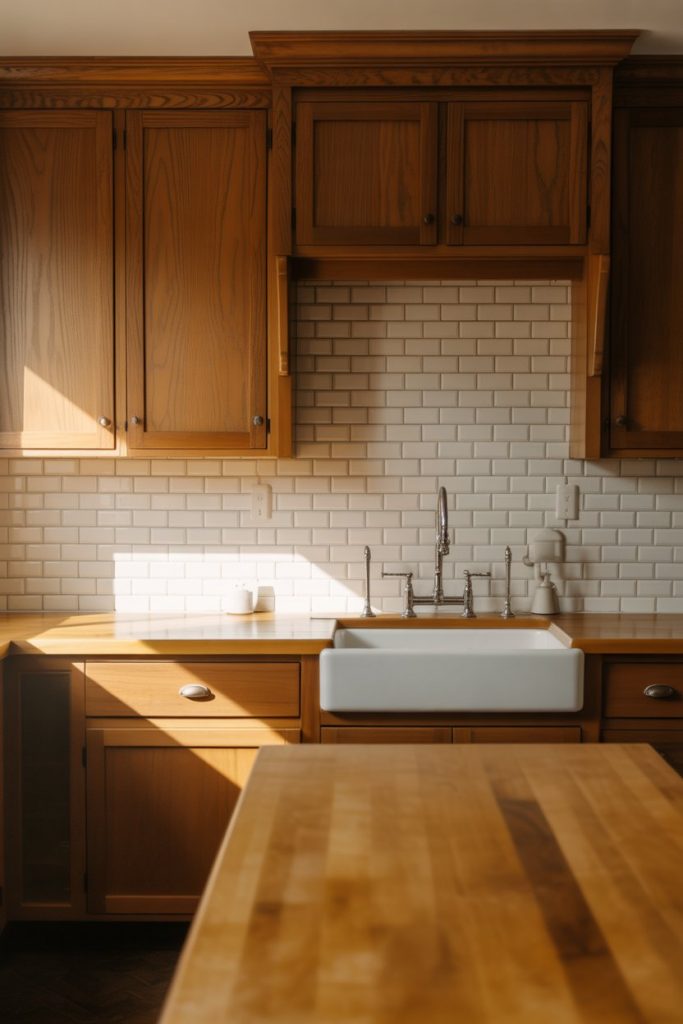
The honey warmth of mid-tone oak brings instant coziness to modern farmhouse kitchens, especially when combined with shiplap, open shelving, and apron-front sinks. This finish highlights oak’s natural grain patterns while maintaining a cheerful, approachable vibe that feels quintessentially American. The golden undertones catch afternoon light beautifully, making even modest-sized kitchens feel more expansive and welcoming. 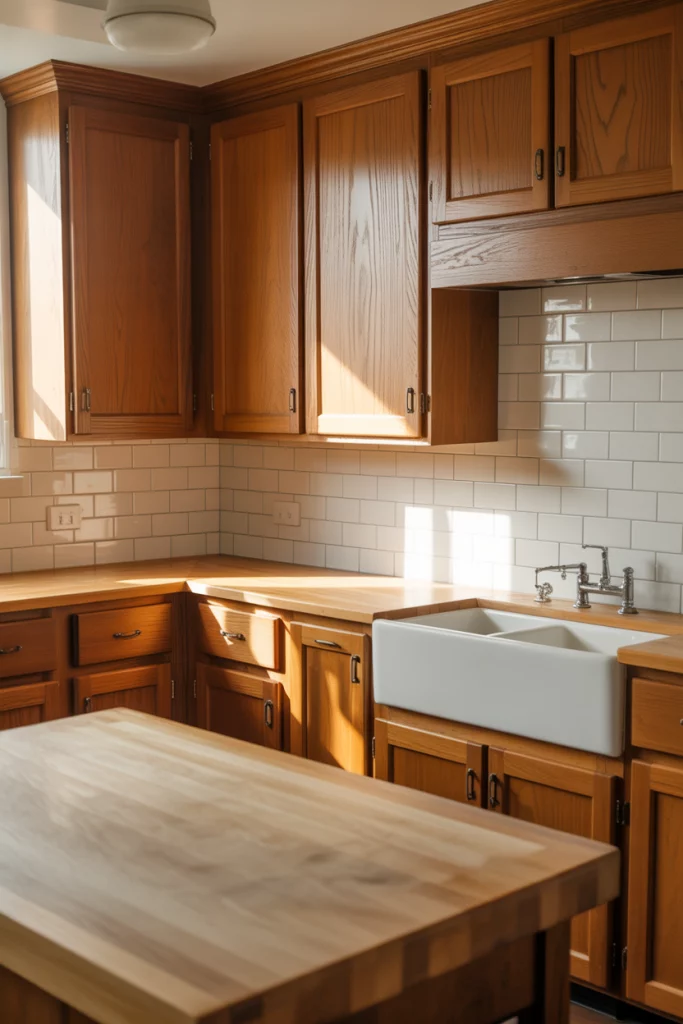
A designer friend recently transformed a client’s builder-grade kitchen by simply refinishing existing oak cabinets to this honey tone—no replacement needed. The homeowners saved nearly $15,000 while achieving the exact aesthetic they’d pinned dozens of times, proving that working with what you have can yield magazine-worthy results when executed thoughtfully.
3. Light Oak Cabinets with Charcoal Accents
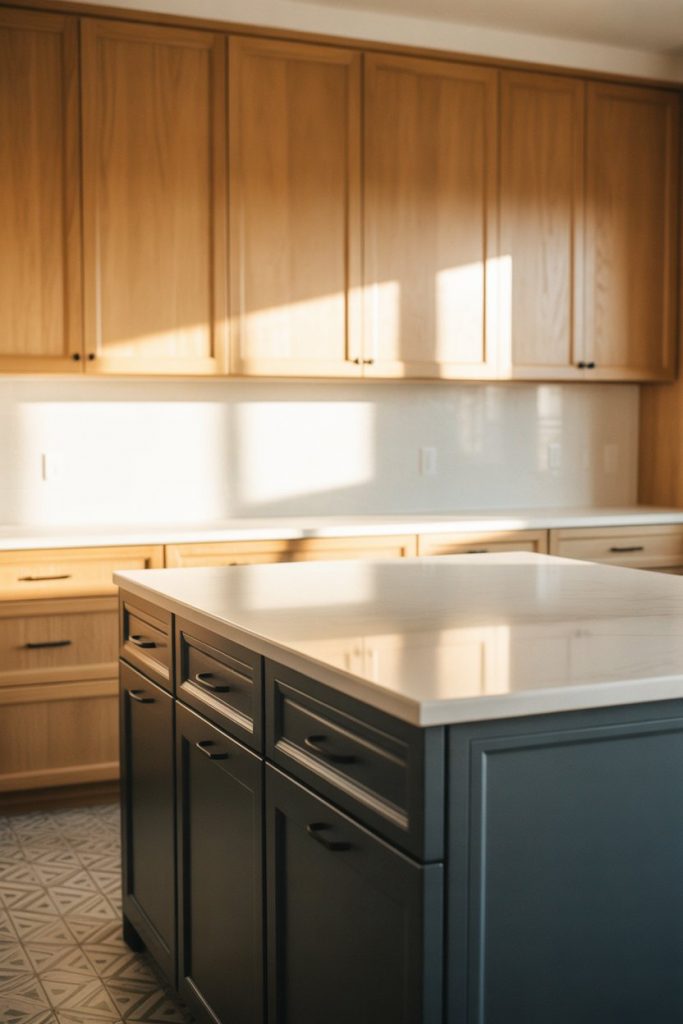
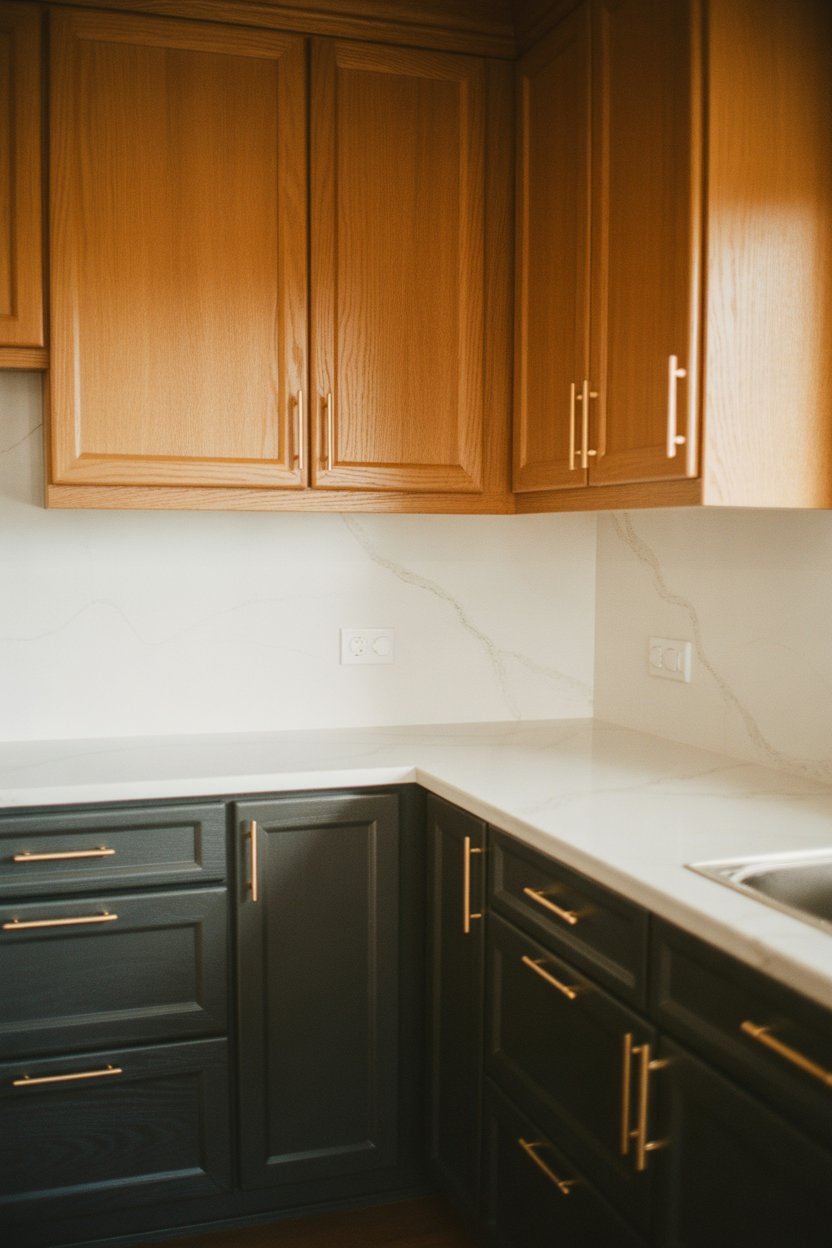
Light oak cabinetry gains dramatic edge when paired with charcoal-painted islands, black and white tile floors, or matte black fixtures. This high-contrast approach prevents lighter woods from feeling too safe or predictable, creating visual interest that photographs exceptionally well for Pinterest. The key is balancing the proportions—typically keeping 60-70% of the cabinetry in oak while using darker elements as strategic punctuation. 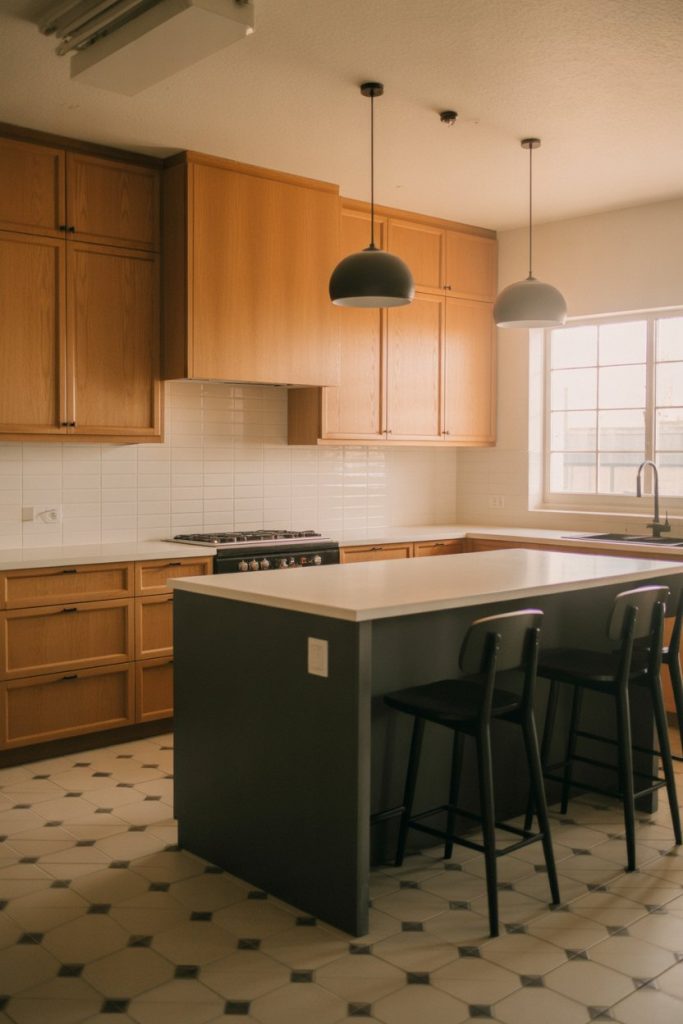
This works best in kitchens with ample natural light—Southern California bungalows, Texas ranch homes with large windows, or Northeastern colonials with good sun exposure. Without sufficient daylight, the dark accents can make spaces feel heavy, so consider your home’s orientation before committing to this level of contrast.
4. Dark Stained Oak for Moody Elegance
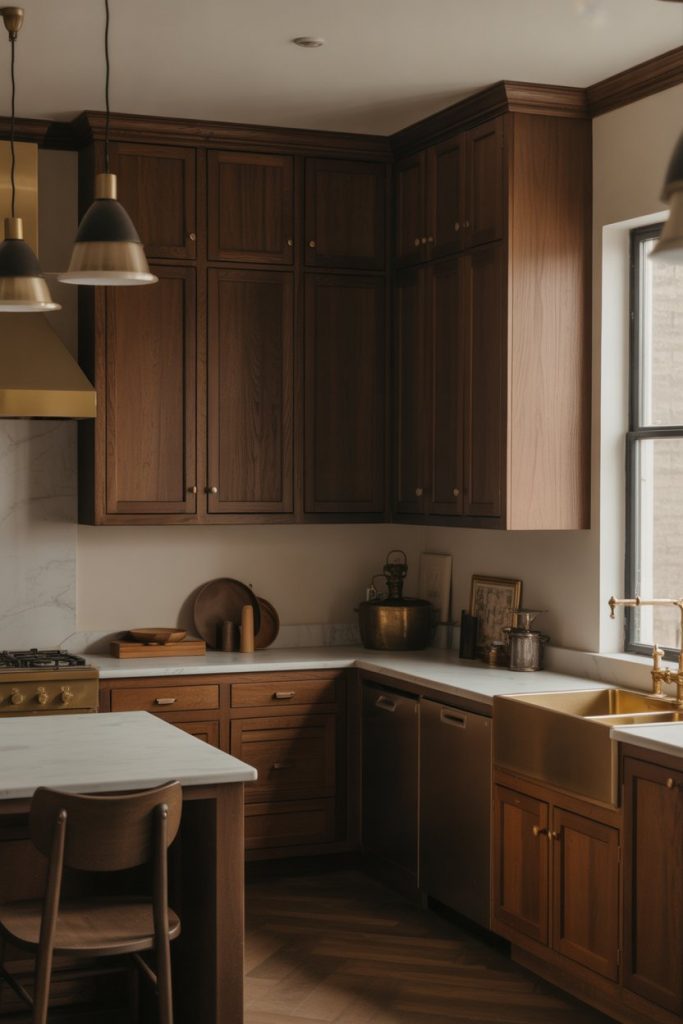
Dark stained oak delivers rich, moody sophistication that’s gaining serious traction among homeowners tired of bright, airy kitchens. The deep finish emphasizes oak’s pronounced grain, creating movement and depth that solid-colored cabinets can’t match. Paired with warm metals like aged bronze or unlacquered brass, this look channels English country house charm with an American twist—think Vermont farmhouse meets Manhattan townhouse. 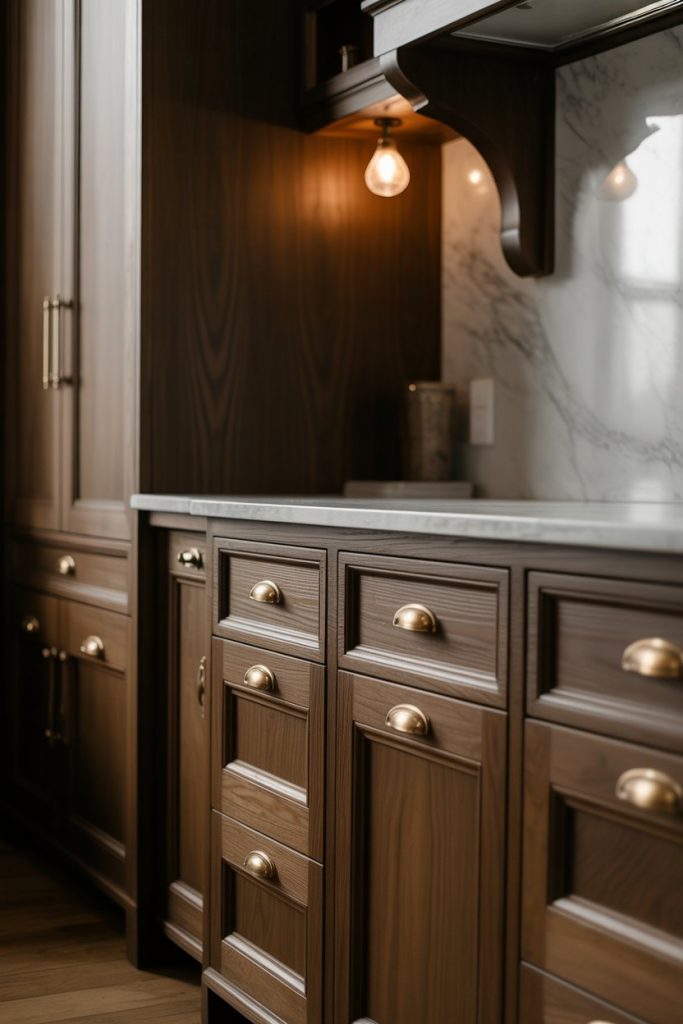
Budget-conscious renovators often choose this route because staining is significantly cheaper than replacement—professional refinishing typically runs $3,000-$7,000 compared to $20,000+ for new cabinetry. The transformation is substantial enough that most guests assume everything is brand new, making it an exceptionally smart investment for homes with structurally sound existing oak.
5. Natural Oak with Minimalist Scandinavian Style
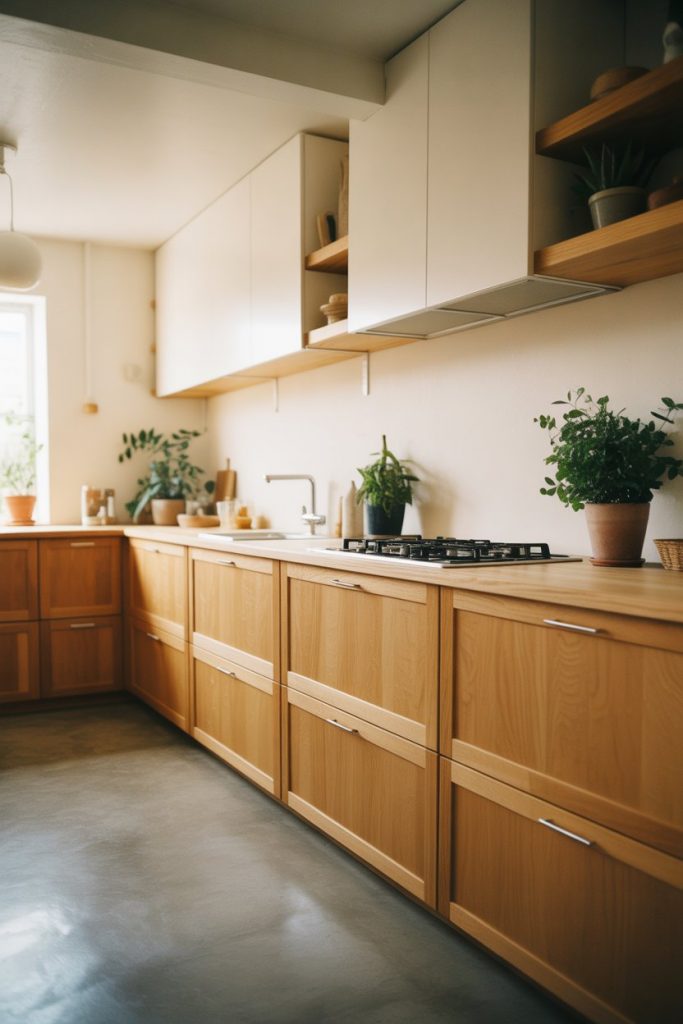
Natural oak left in its most authentic state embodies the Scandinavian principle of honoring materials as they are. This approach uses clear matte sealers that protect without altering color, allowing the wood’s inherent variations to shine. The result feels grounded, organic, and refreshingly unpretentious—qualities that resonate deeply with American homeowners seeking refuge from overly designed spaces. 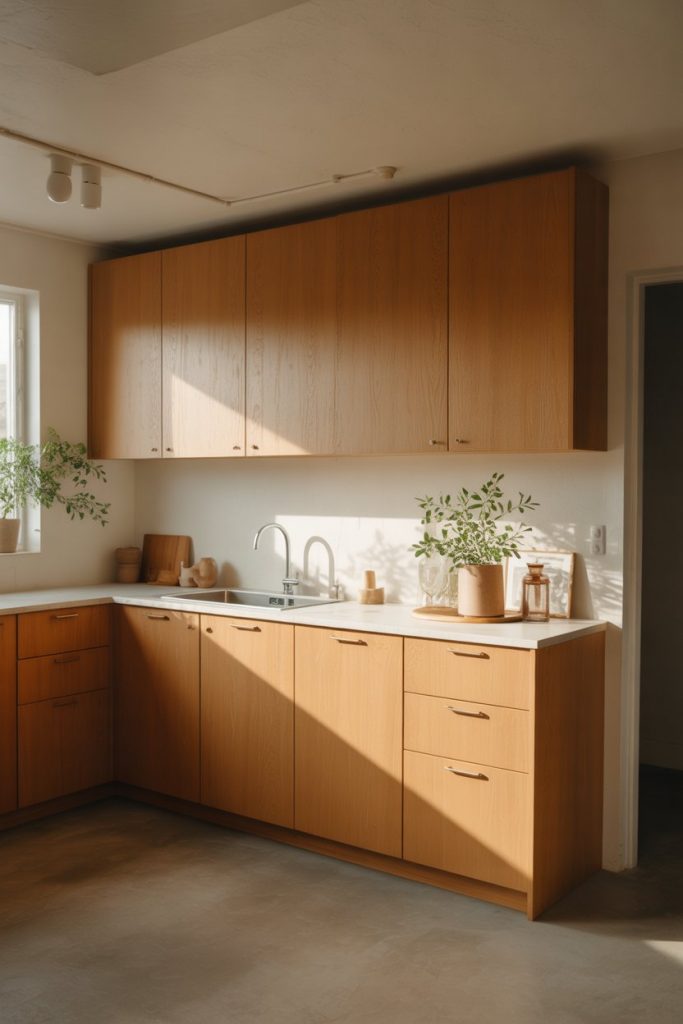
Common mistakes include over-sealing natural oak with glossy finishes that look plasticky and dated. Instead, opt for products specifically designed for Nordic-style wood treatments—brands like Rubio Monocoat or Osmo offer penetrating oils that enhance without coating. The wood should look like wood, not like it’s wearing makeup.
6. Oak Cabinet Update with Modern Hardware
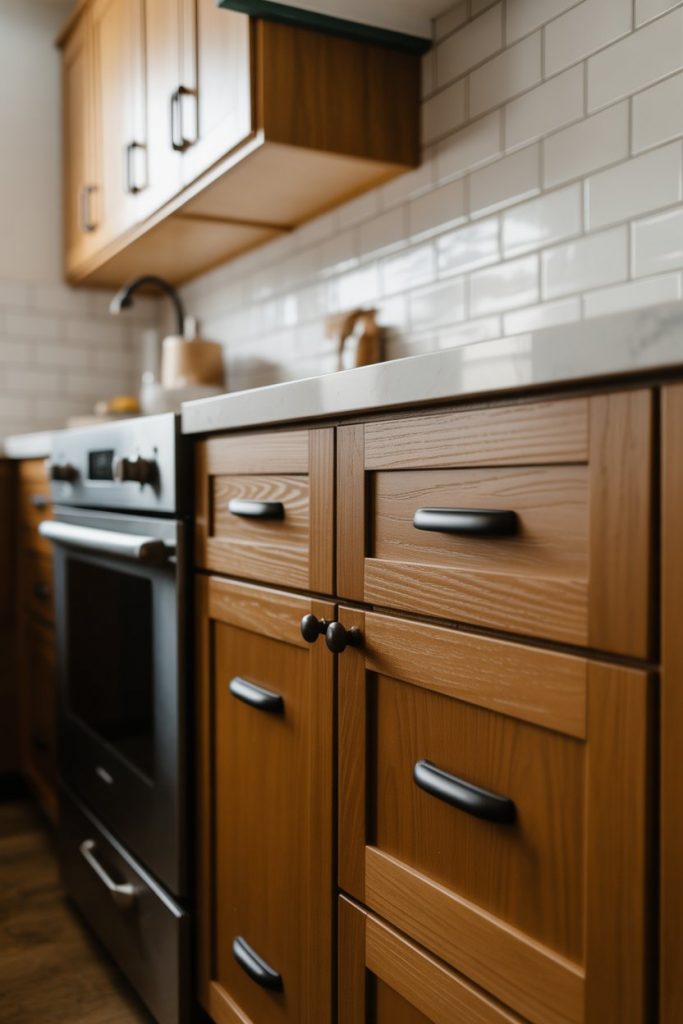
Sometimes the fastest oak kitchen update requires nothing more than swapping dated brass pulls for contemporary options—think leather straps, matte black bars, or even handleless push-to-open systems. This simple intervention can shift the entire room’s era from 1995 to 2026 without touching paint or stain. Hardware acts as jewelry for cabinetry, and choosing pieces with clean lines immediately modernizes even builder-grade oak. 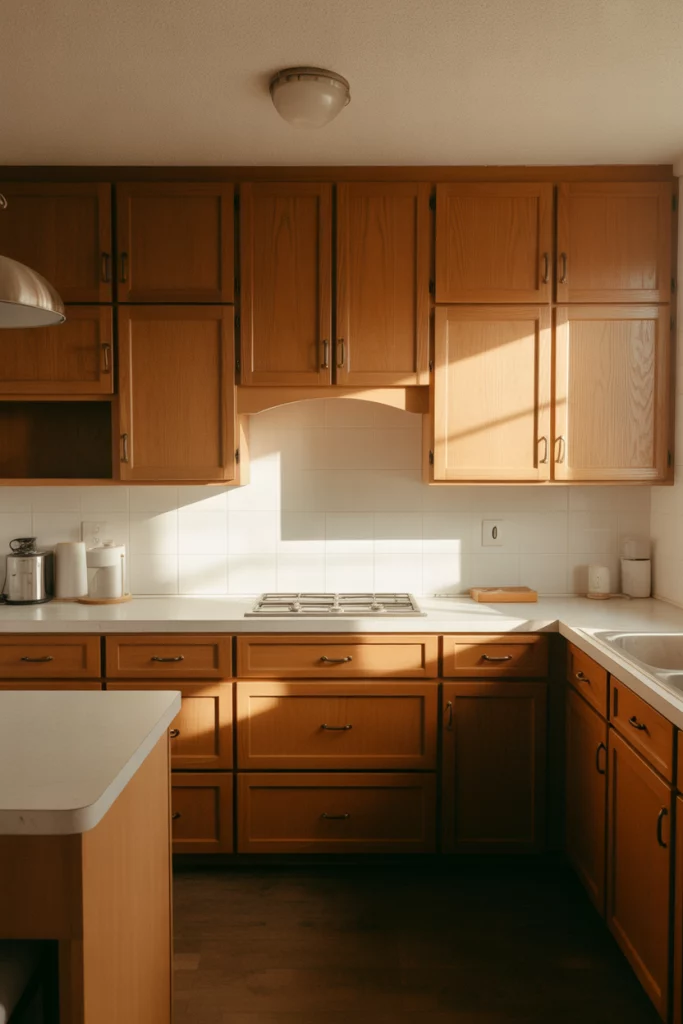
Real homeowner behavior shows that most people underestimate hardware’s visual impact until they actually make the swap. A Colorado couple recently shared that changing out 32 cabinet pulls took two hours and $200 but made their kitchen feel like a completely different room—proving that not all effective updates require contractor-level intervention or investment.
7. Quarter Sawn White Oak for Texture Lovers
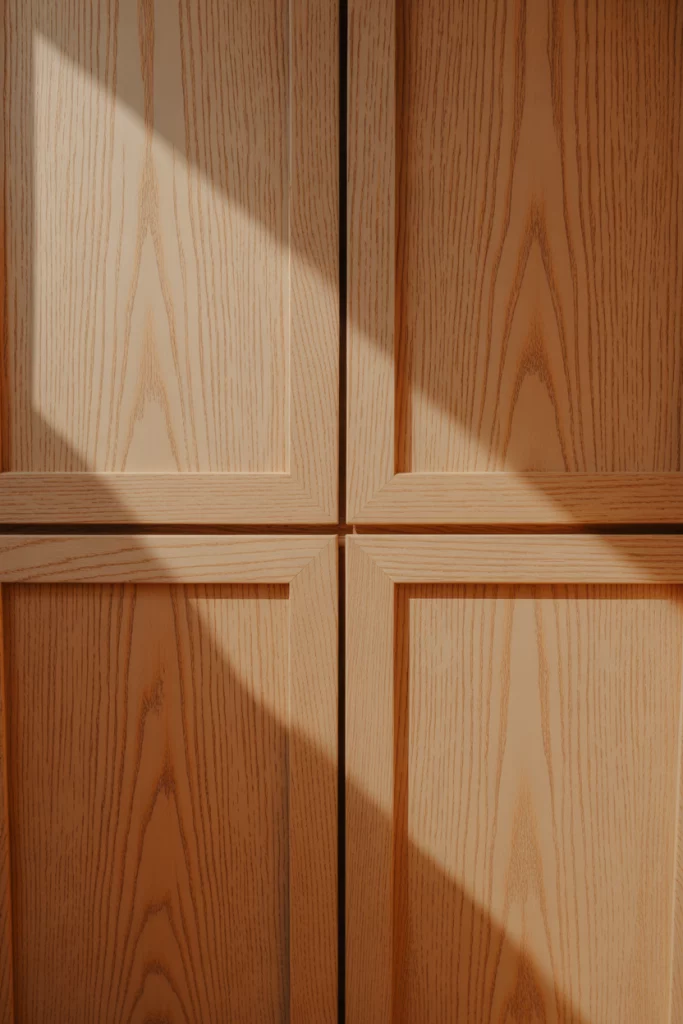
Quarter sawn white oak showcases the wood’s distinctive ray fleck pattern—those shimmering ribbons that catch light and add dimension impossible to achieve with plain-sawn lumber. This premium cut costs 20-40% more but delivers a level of visual interest that makes cabinets feel custom and considered. The technique also produces more stable wood that’s less prone to warping, making it both beautiful and practical. 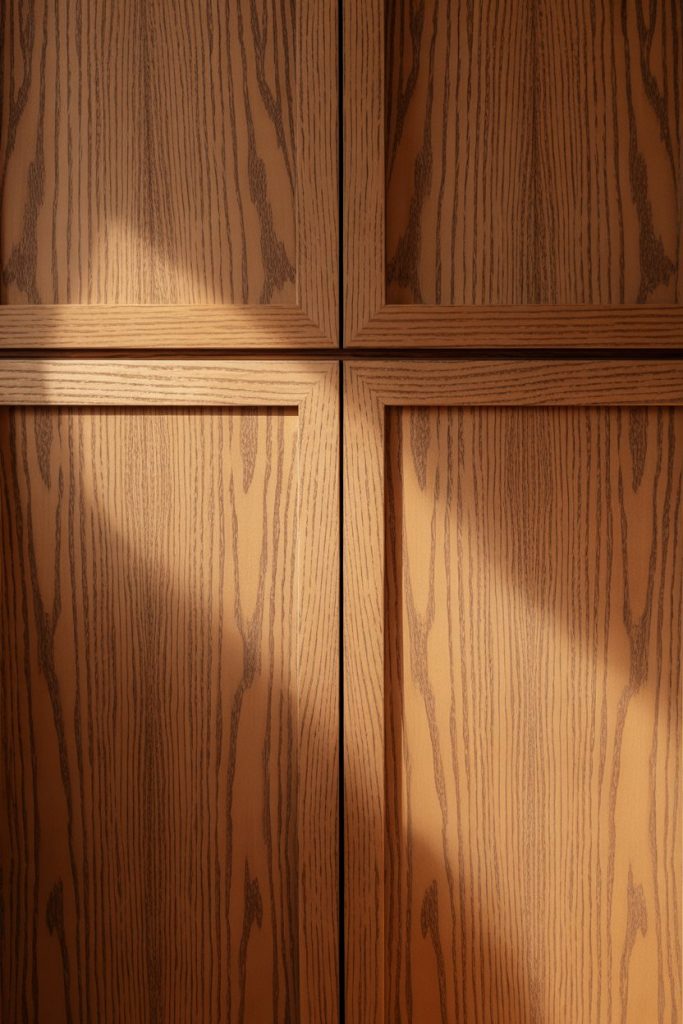
This works best in kitchens where cabinetry is the star—think gallery-style spaces with minimal upper cabinets or designs where long runs of lower cabinets create uninterrupted canvases for the wood’s natural artistry. Midwest craftsman homes and Pacific Northwest contemporary builds particularly suit this approach, where appreciation for materials runs deep.
8. Medium Oak with Sage Green Walls

Medium oak cabinets find their perfect complement in soft sage or olive wall color, creating a nature-inspired palette that feels both current and timeless. This combination has exploded on Pinterest as homeowners seek alternatives to stark white walls—the muted green enhances oak’s warmth while adding personality without overwhelming. The key is choosing greens with gray or brown undertones rather than bright, saturated hues. 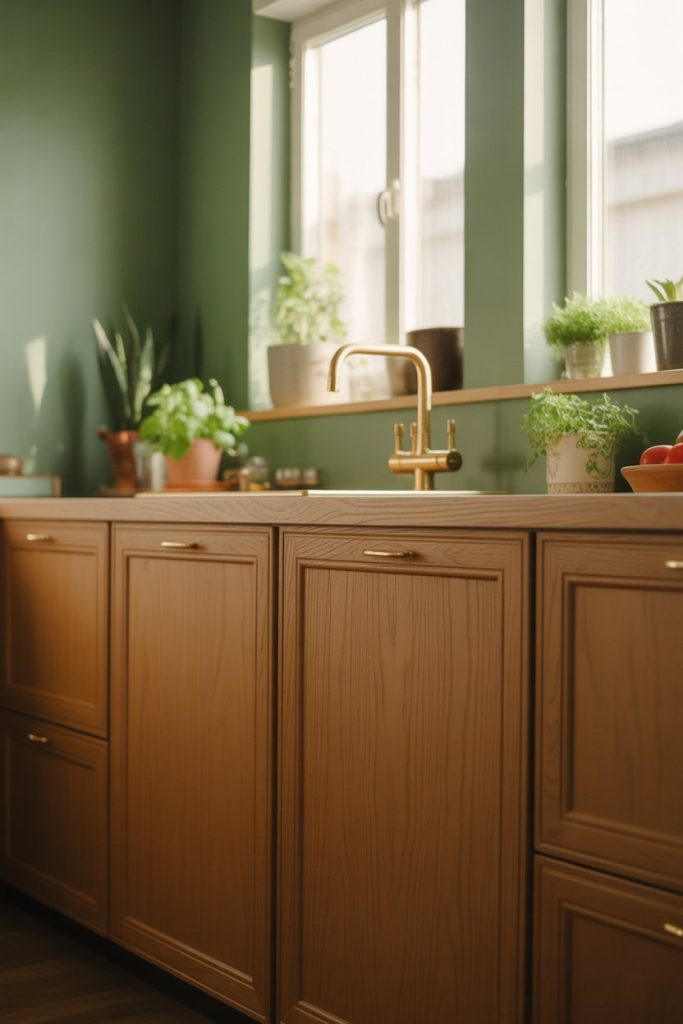
Expert colorists recommend testing paint samples directly adjacent to your oak cabinets at different times of day—morning light reads cooler while evening light emphasizes warmth, and you want a green that works in both conditions. Sherwin-Williams’ “Clary Sage” and Benjamin Moore’s “October Mist” consistently perform well with medium oak tones.
9. Cherry and Oak Mixed Cabinet Design
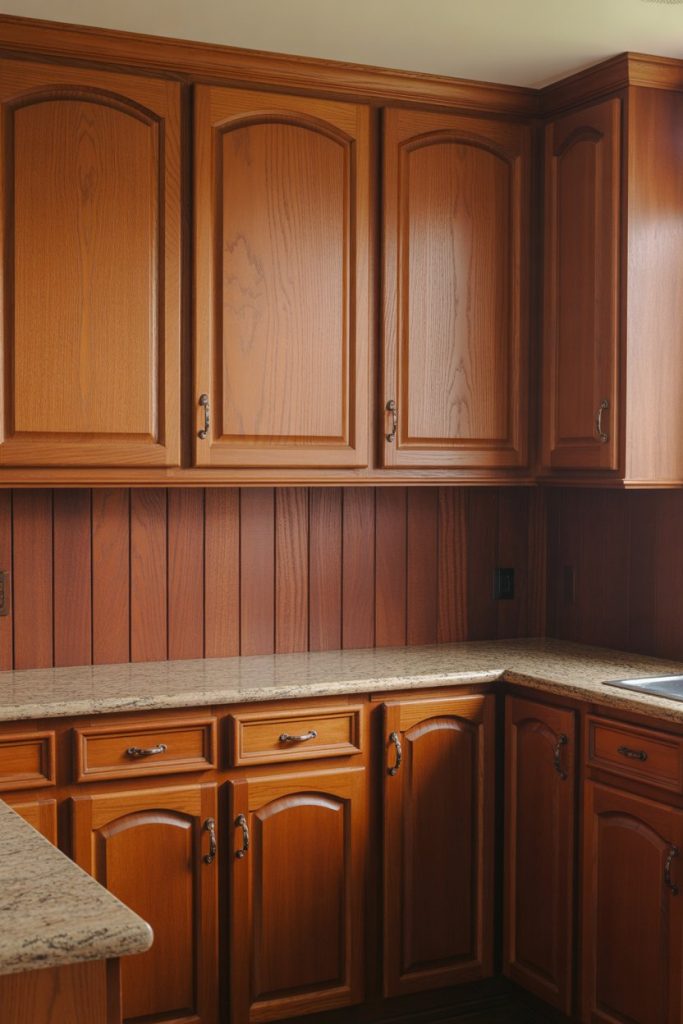
Mixing cherry and oak might sound risky, but when executed with intention—cherry lowers, oak uppers, or vice versa—the combination creates sophisticated depth that single-wood kitchens lack. Both woods share warm undertones but offer different grain personalities, preventing monotony while maintaining cohesion. This approach works particularly well in larger kitchens where visual variety prevents the space from feeling one-note. 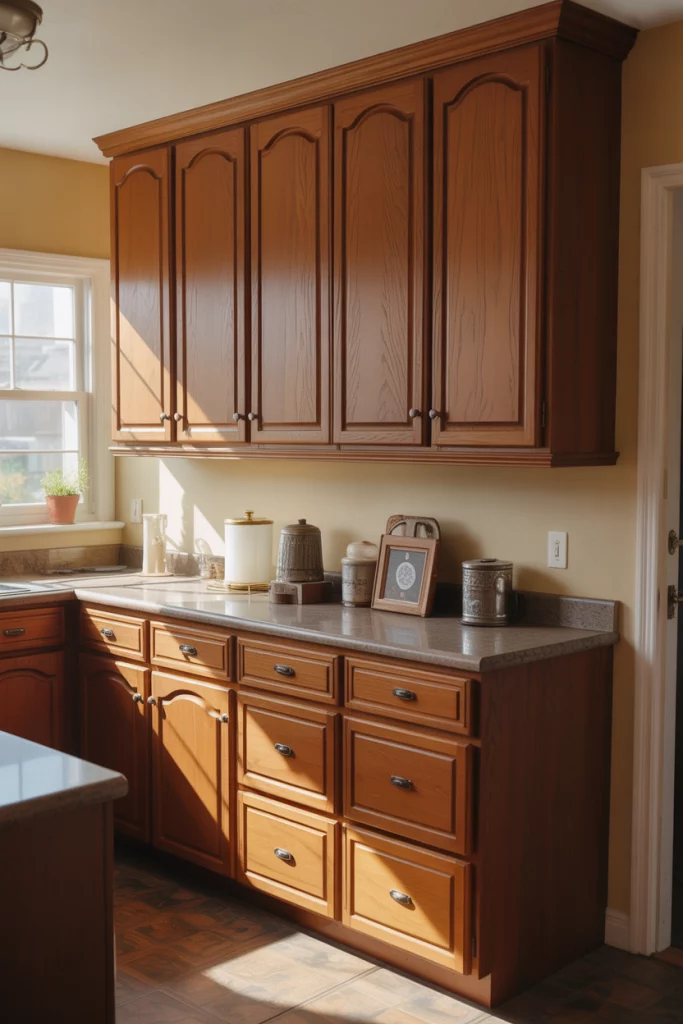
A common mistake is choosing cherry and oak with too much contrast—if your cherry runs deep burgundy and your oak is pale blonde, they’ll fight rather than complement. Instead, select finishes within two shades of each other on a wood tone scale, ensuring both read as “warm” or both as “cool” to maintain visual harmony.
10. Painted White Over Oak Grain
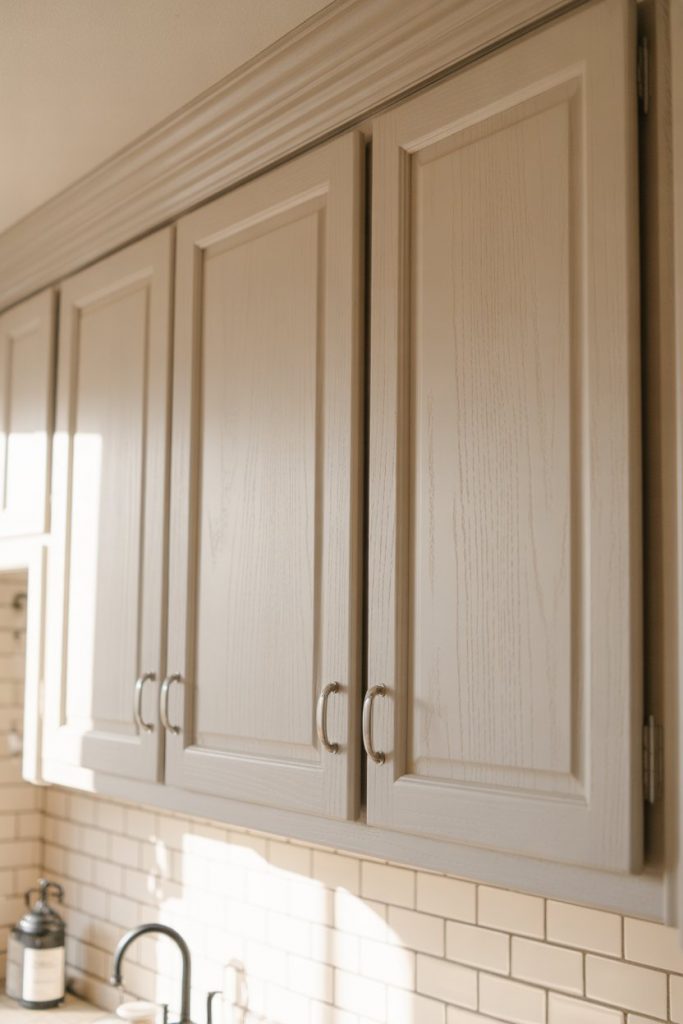
Painting oak cabinets white remains popular, but 2026’s approach embraces visible grain texture rather than obliterating it with heavy coats. Techniques like cerusing (rubbing white stain into grain lines) or thin paint applications let oak’s character show through, creating depth that solid-painted doors can’t achieve. This middle ground appeals to homeowners who want brightness without sacrificing the craftsmanship of real wood. 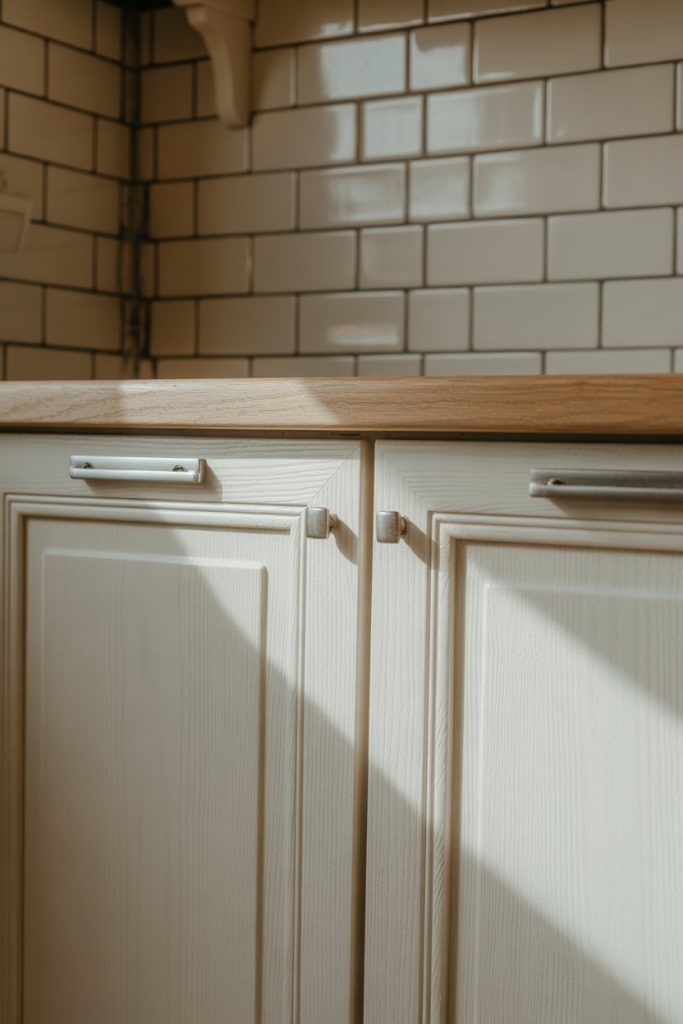
Professional painters warn against using flat white on oak—the grain needs slight cream or warm gray undertones to prevent a stark, builder-grade appearance. Benjamin Moore’s “White Dove” or Sherwin-Williams’ “Alabaster” provide enough warmth to harmonize with oak’s natural tones while still reading as fresh and bright.
11. Rift White Oak for Contemporary Minimalism
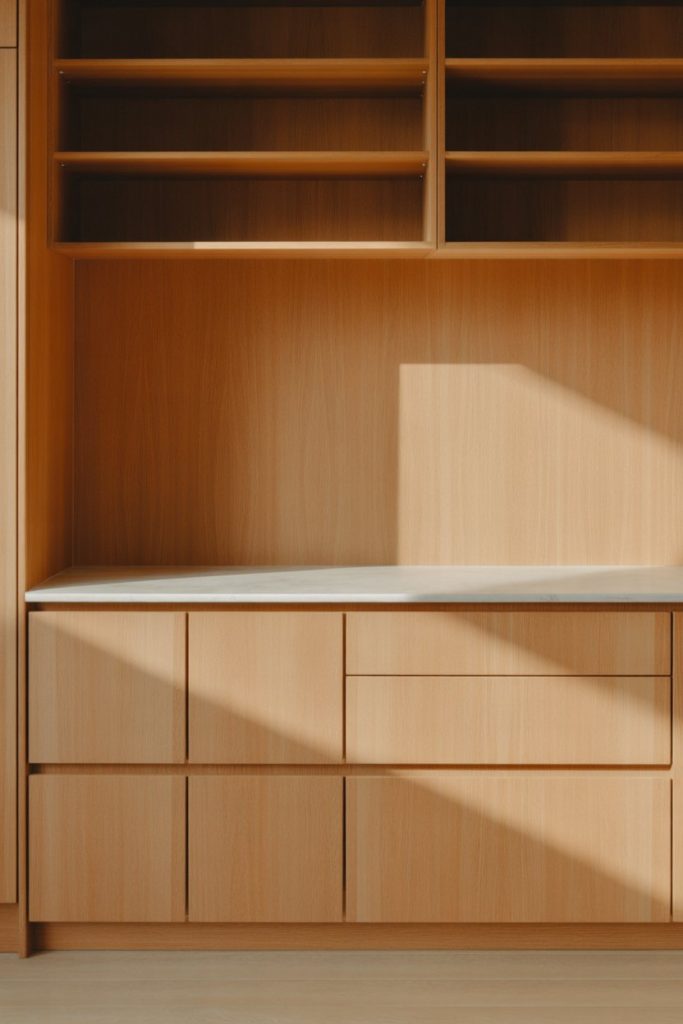
Rift white oak, cut to show straight, consistent grain with minimal cathedral patterns, delivers the clean aesthetic that contemporary design demands. This specialized cut costs premium prices but rewards with cabinetry that looks almost tailored—every door and drawer front displays uniform vertical grain that creates visual calm. It’s the choice for homeowners who appreciate Japanese-influenced design or Scandinavian restraint. 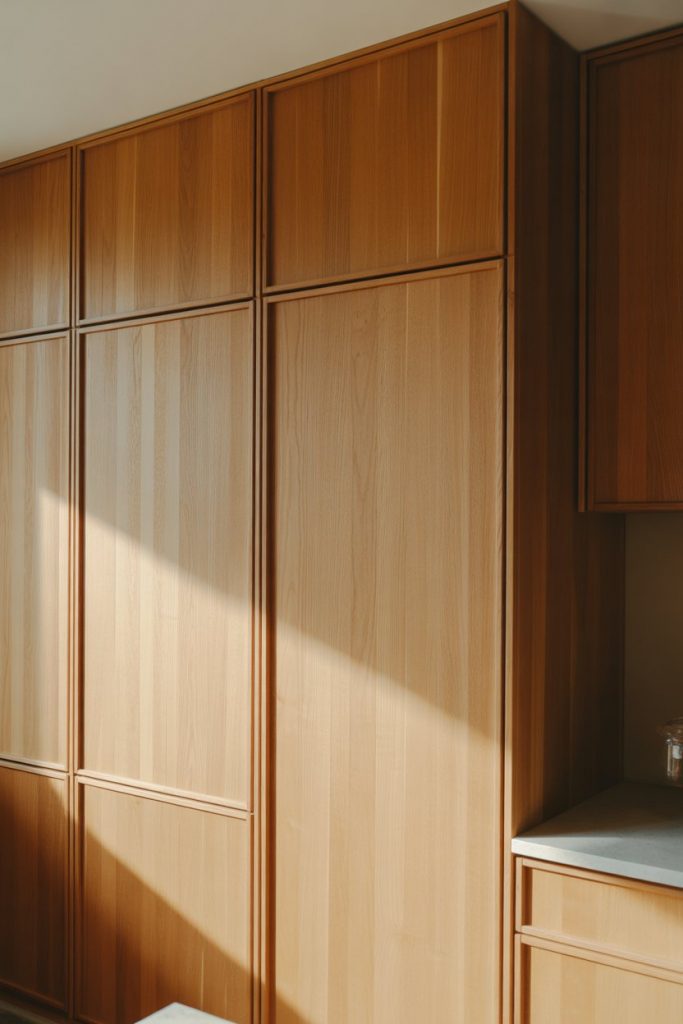
This approach shines in urban lofts, mid-century modern renovations, and new-build contemporary homes across cities like Seattle, Austin, and Denver where clean-lined design dominates. The straight grain also photographs exceptionally well, making it a favorite among design-conscious homeowners who share their spaces on social media.
12. Yellow Undertone Oak with Blue Accents
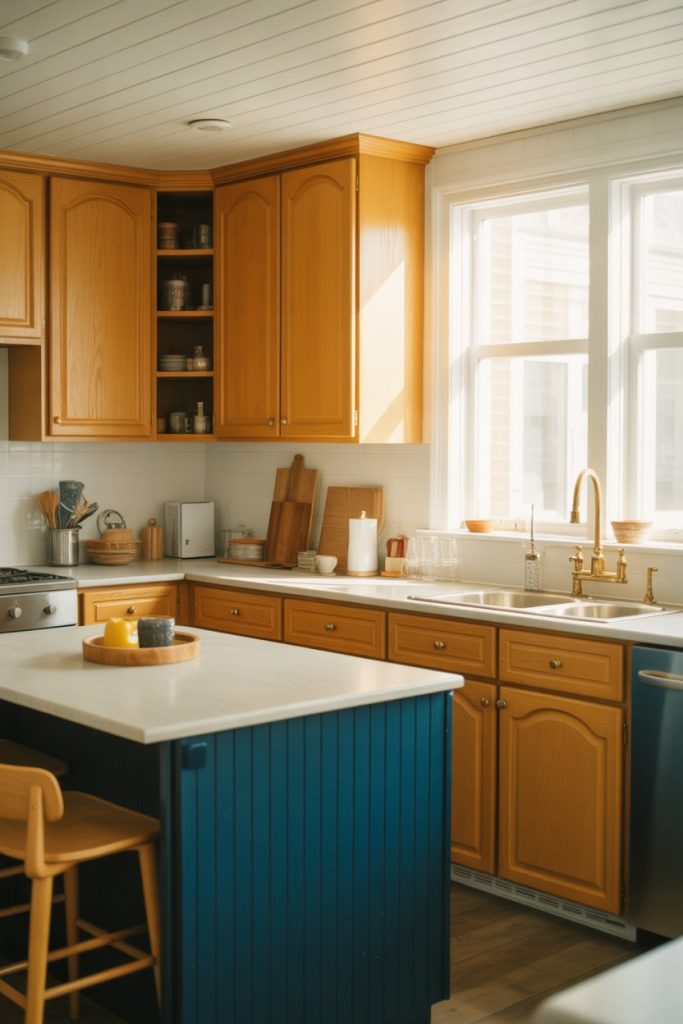
Oak with pronounced yellow undertones finds balance through carefully chosen blue elements—think navy tile backsplashes, slate blue kitchen islands, or even just blue-toned countertops. This complementary color strategy neutralizes any brassy qualities while creating a fresh, coastal-adjacent feel that works from Connecticut to California. The contrast feels intentional rather than accidental, elevating what might otherwise read as dated golden oak. 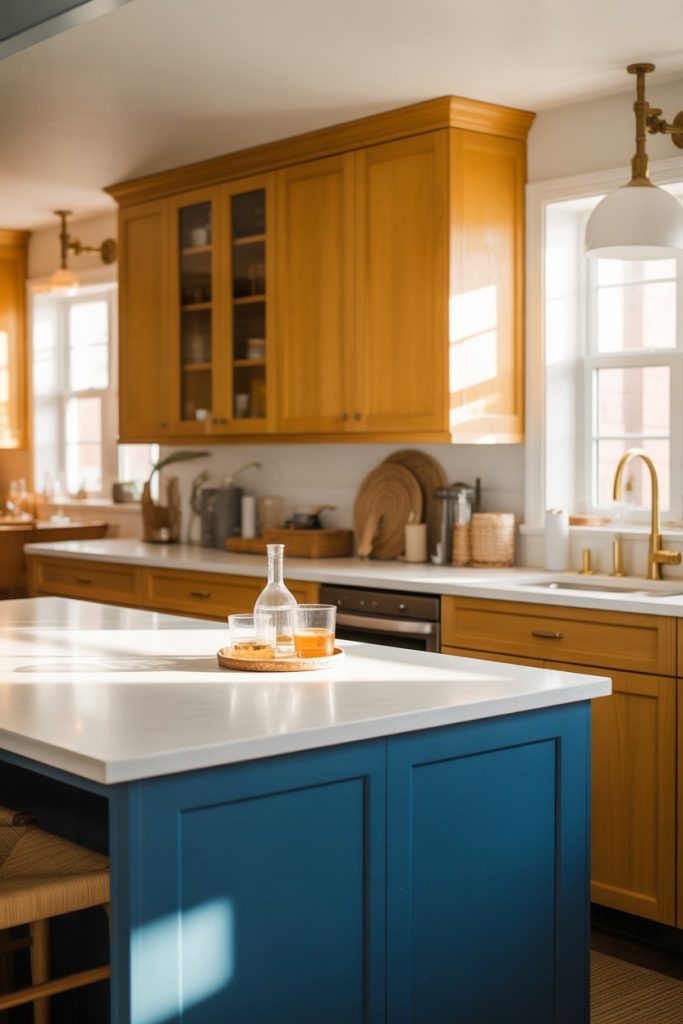
Where it works best: coastal regions obviously, but also surprisingly well in landlocked states where homeowners crave visual relief from earth-tone dominance. A New Mexico homeowner recently paired her existing honey oak with a dusty blue island and reported that guests consistently compliment what they assume is a full remodel—when actually only the island is new.
13. Natural White Oak in Open Shelving Designs
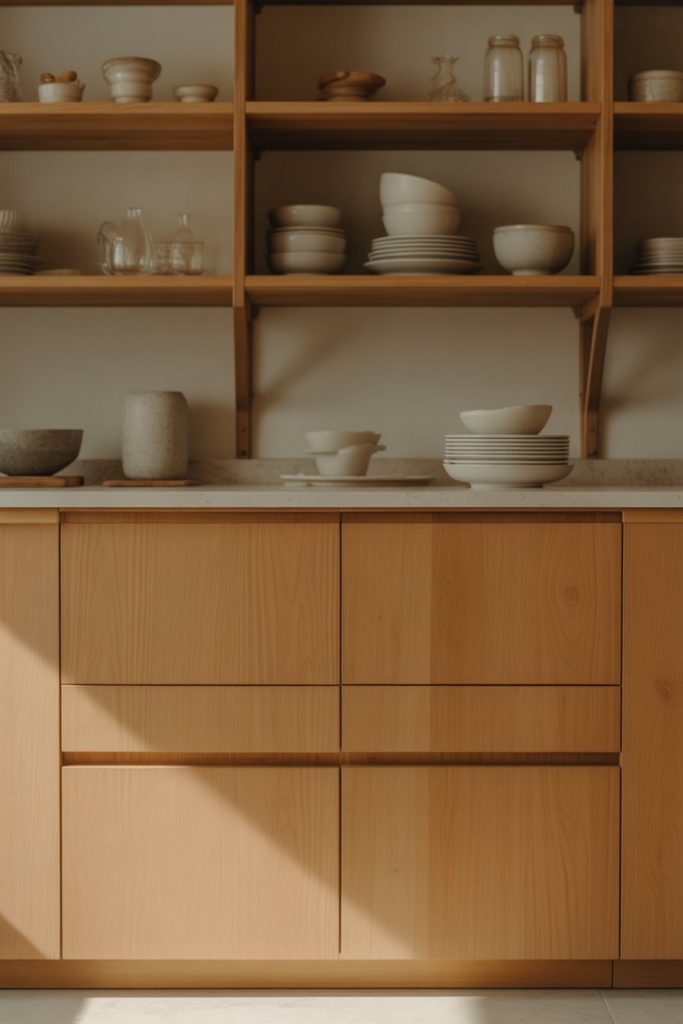
Combining natural white oak closed cabinetry with open shelving in the same wood creates rhythm and breathing room that all-closed kitchens lack. The shelving displays everyday dishes and glassware, adding both function and personality while preventing visual heaviness. This arrangement particularly suits smaller kitchens where upper cabinets can feel oppressive—the open sections provide necessary storage without the visual weight. 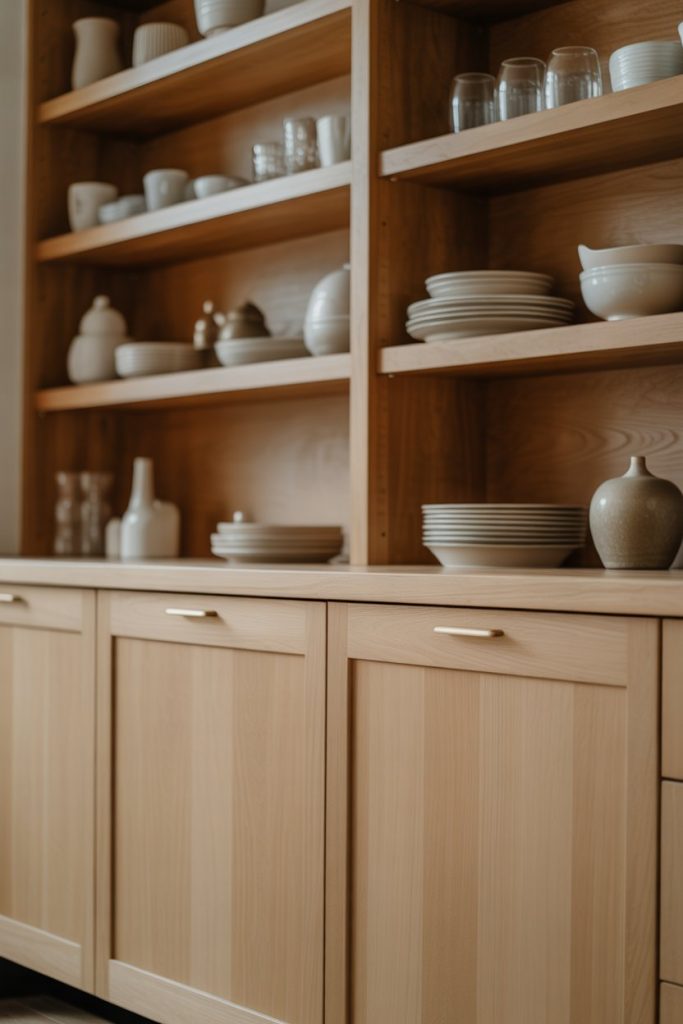
Real homeowner behavior reveals that most people initially worry open shelving requires constant organization, but those who commit find it actually encourages better habits—you naturally keep only attractive, useful items when everything’s on display. The key is limiting open shelving to 20-30% of total storage to maintain the display-worthy standard.
14. 90s Oak Kitchen Transformation Strategies
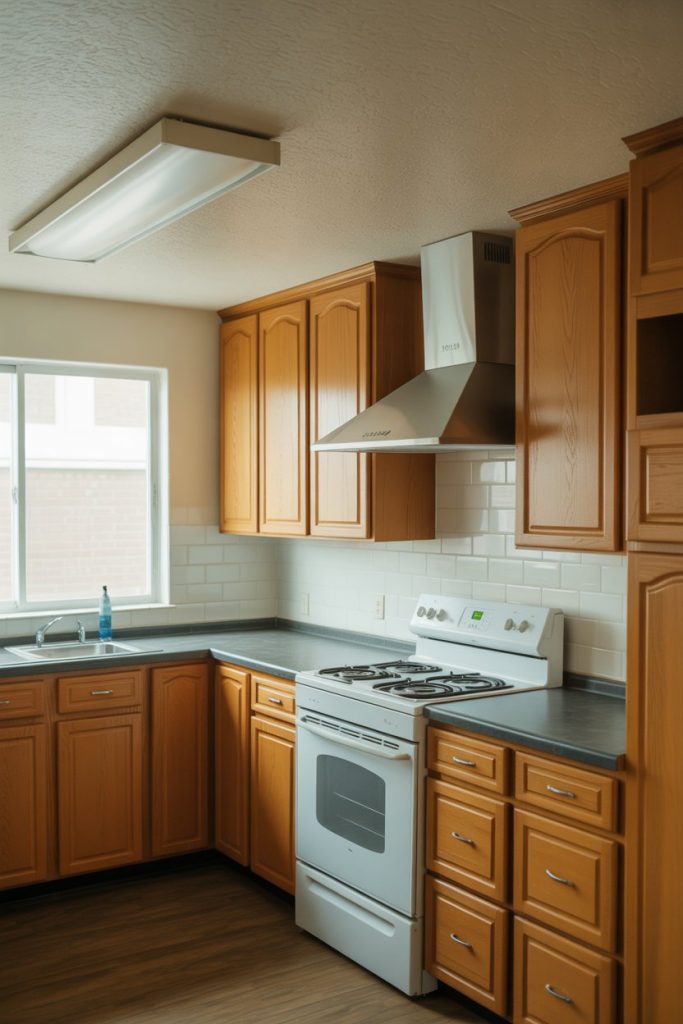
Updating 90s oak kitchens doesn’t always require full replacement—strategic makeover approaches can yield dramatic results at fraction of the cost. Popular tactics include removing upper cabinets to create open space, adding a contrasting island, updating countertops and backsplash, and yes, sometimes painting just the uppers while leaving lowers in refinished oak. The goal is disrupting the dated all-oak-everything monotony while preserving quality construction. 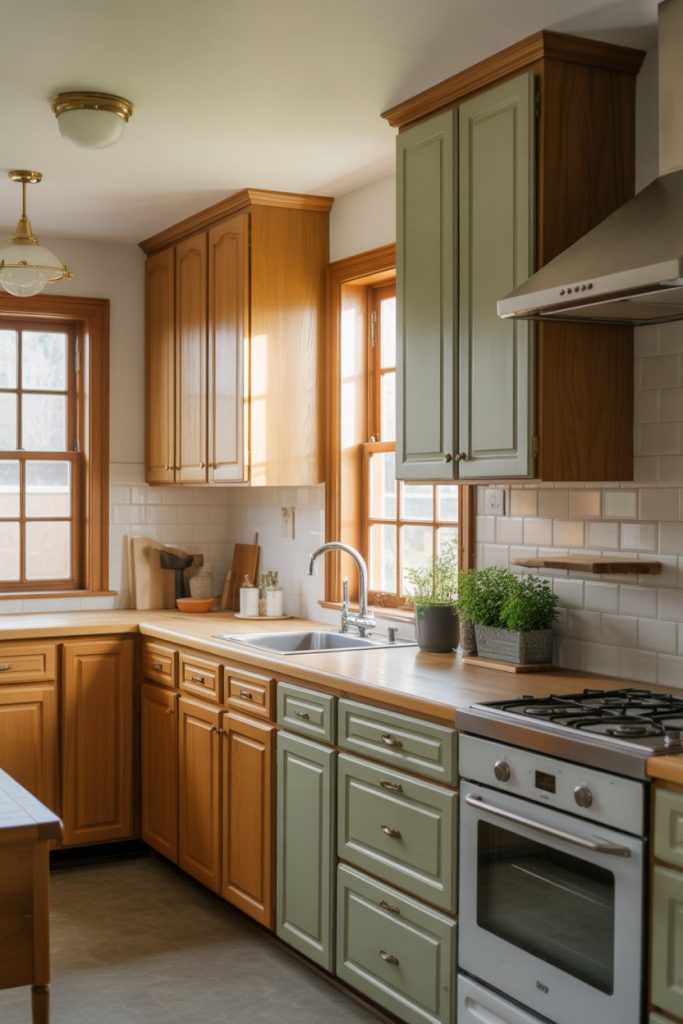
Budget considerations: Full cabinet replacement averages $15,000-$40,000, while strategic updates run $5,000-$12,000 including professional refinishing, new countertops, and hardware. For structurally sound cabinets with good storage layout, the update route makes financial sense and often achieves aesthetically superior results by mixing materials rather than monotone replacement.
15. Black and White Photography Above Oak Cabinets

Decorating black and white walls above oak cabinetry with framed photography or graphic art creates sophisticated contrast that modernizes the entire space. The achromatic imagery prevents color clashes while adding personality and visual interest at eye level. This approach works particularly well in kitchens with standard 8-foot ceilings where the wall space above cabinets can feel like dead zone—thoughtful art activates it purposefully. 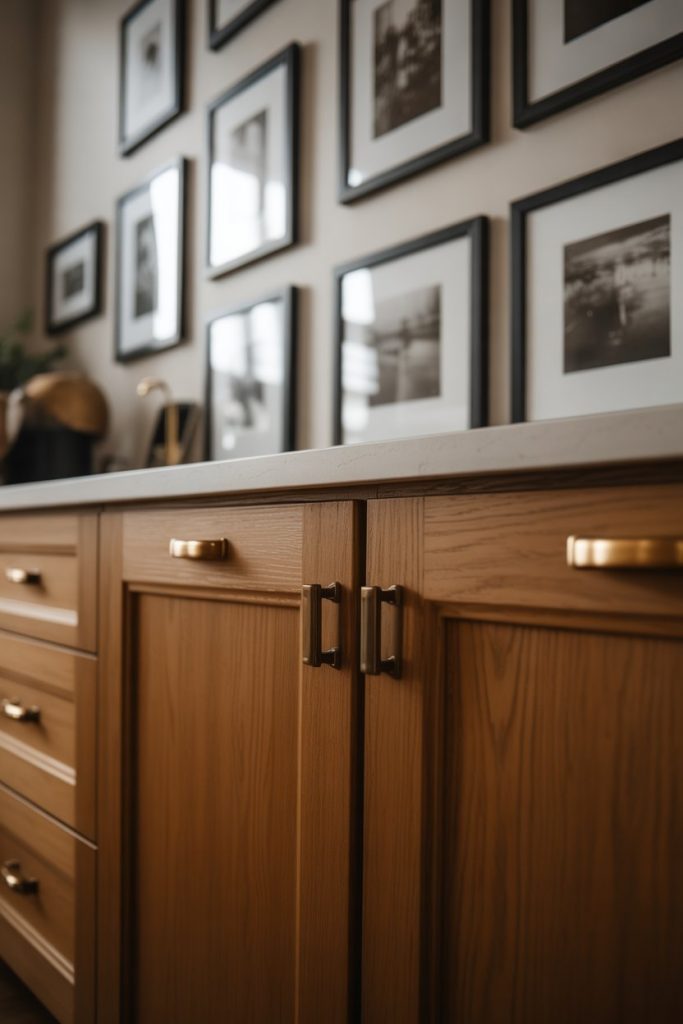
Designer insight suggests sizing artwork at roughly 60-75% of the cabinet width below it—too small reads tentative, while oversized pieces can overwhelm. Many homeowners successfully use affordable large-format prints from sites like Minted or Framebridge, creating custom gallery walls for under $500 that look far more expensive.
16. Rustic White Oak with Industrial Elements
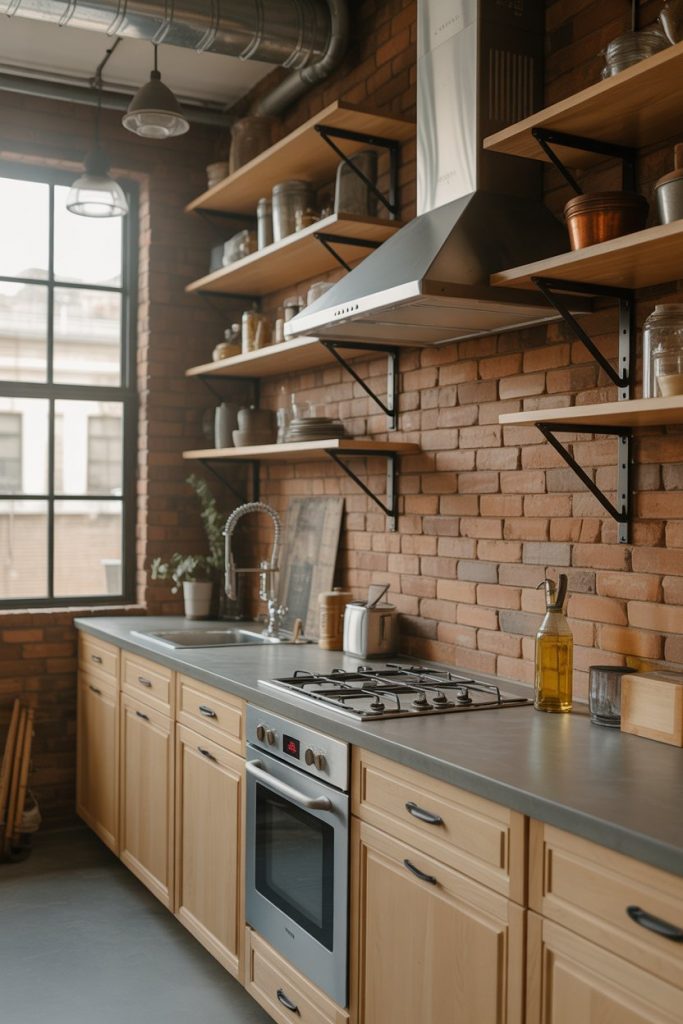
Rustic white oak cabinetry pairs unexpectedly well with industrial components—think concrete countertops, exposed steel shelving brackets, or metal mesh cabinet inserts. This urban-meets-organic combination has gained Pinterest traction in converted loft spaces and new builds seeking character. The oak’s natural imperfections complement rather than compete with industrial materials’ rough authenticity. 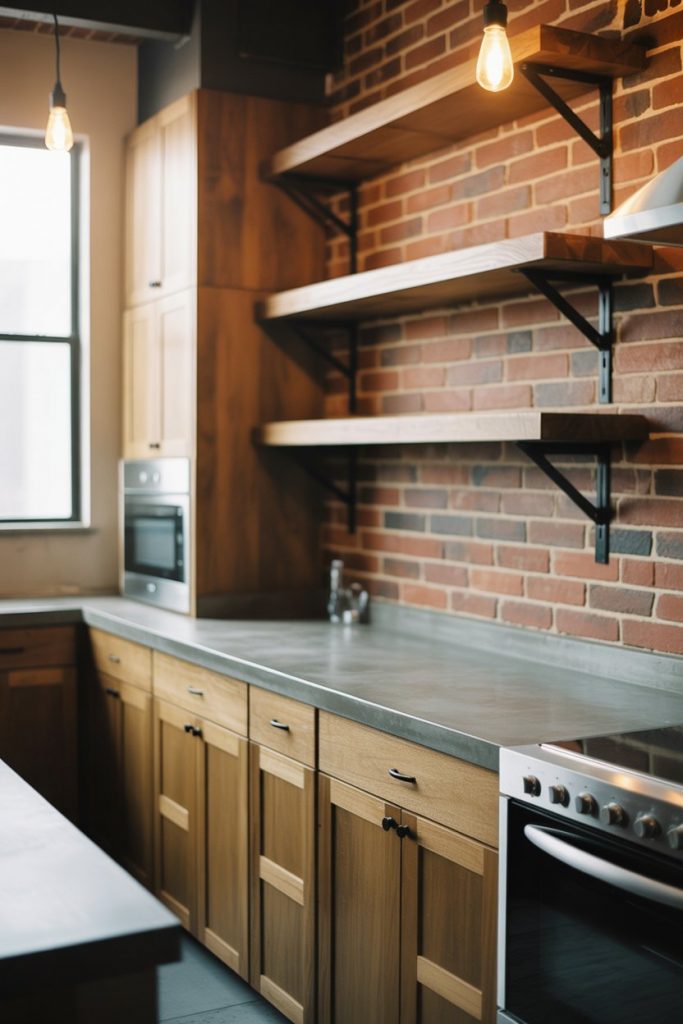
This style thrives in cities with warehouse conversion culture—Brooklyn, Portland, Denver, Chicago—where blending materials tells a narrative about space history. A Philadelphia couple recently renovated their converted textile mill condo using reclaimed oak for cabinets and salvaged factory lighting, creating a kitchen that honors the building’s industrial past while functioning perfectly for modern life.
17. Orange-Toned Oak Balanced with Cool Grays
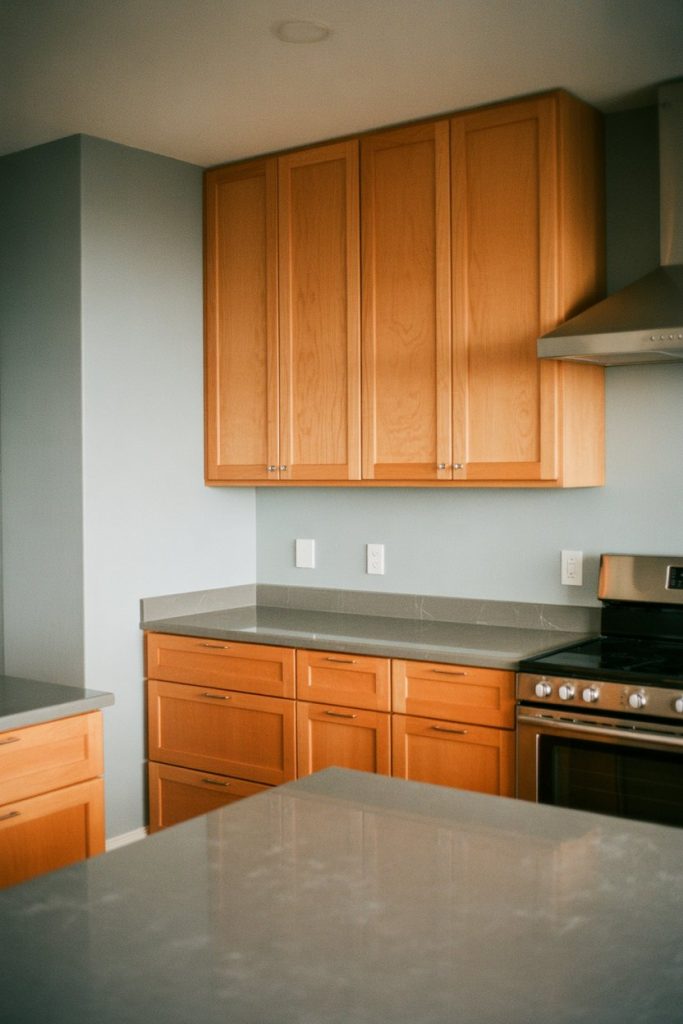
When oak skews distinctly orange, the solution isn’t fighting the tone but balancing it with cool gray walls, countertops, or backsplash tiles. This complementary strategy neutralizes warmth without requiring staining or painting the cabinets themselves. The gray provides visual relief while allowing the oak to remain authentically itself—a more honest approach than trying to force wood into being something it’s not. 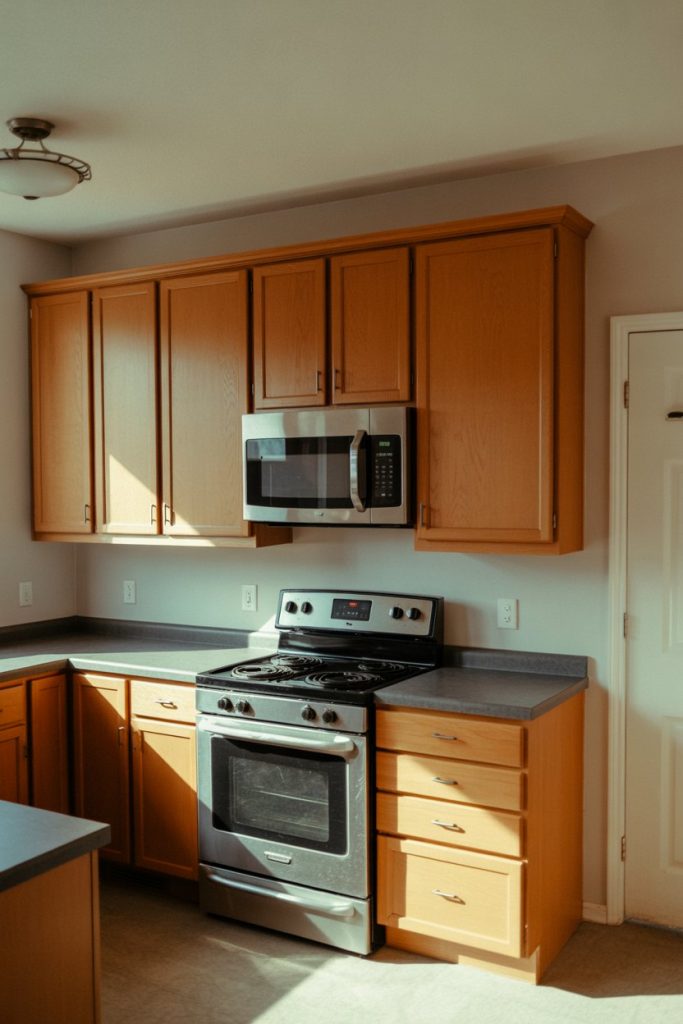
Common mistakes include choosing grays with blue undertones, which can make orange oak look even more aggressively warm by contrast. Instead, select grays with slight green or brown undertones—these “greige” tones create harmony rather than tension. Sherwin-Williams’ “Agreeable Gray” and Benjamin Moore’s “Revere Pewter” consistently perform well.
18. Two-Tone Oak and White Cabinet Configuration
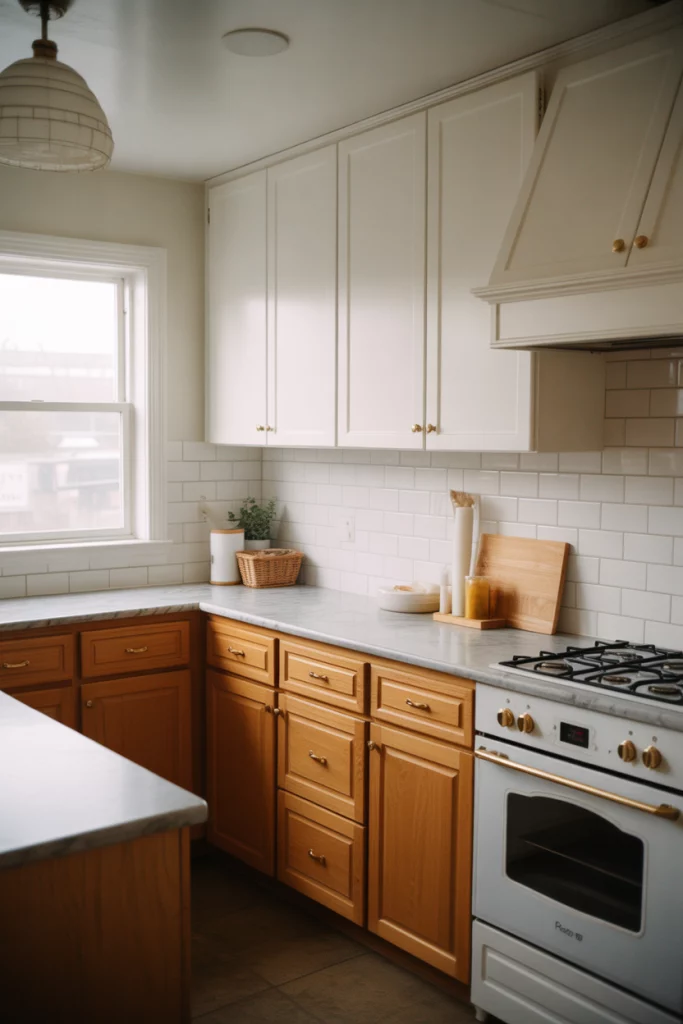
The two-tone kitchen trend adapts beautifully to oak, with white uppers and natural oak lowers creating an airy yet grounded feel. This configuration makes kitchens feel taller by drawing eyes upward while maintaining warmth at the working level. It also solves the common dilemma of loving oak but fearing it might darken spaces—white uppers ensure brightness while oak lowers provide character.
Where it works best: kitchens with ample window light can handle darker lower cabinets, while rooms with limited natural light benefit from keeping the darkest elements low where shadows naturally fall anyway. North-facing kitchens particularly benefit from this approach, as the white uppers reflect whatever light is available.
19. Golden Oak Refreshed with New Countertops
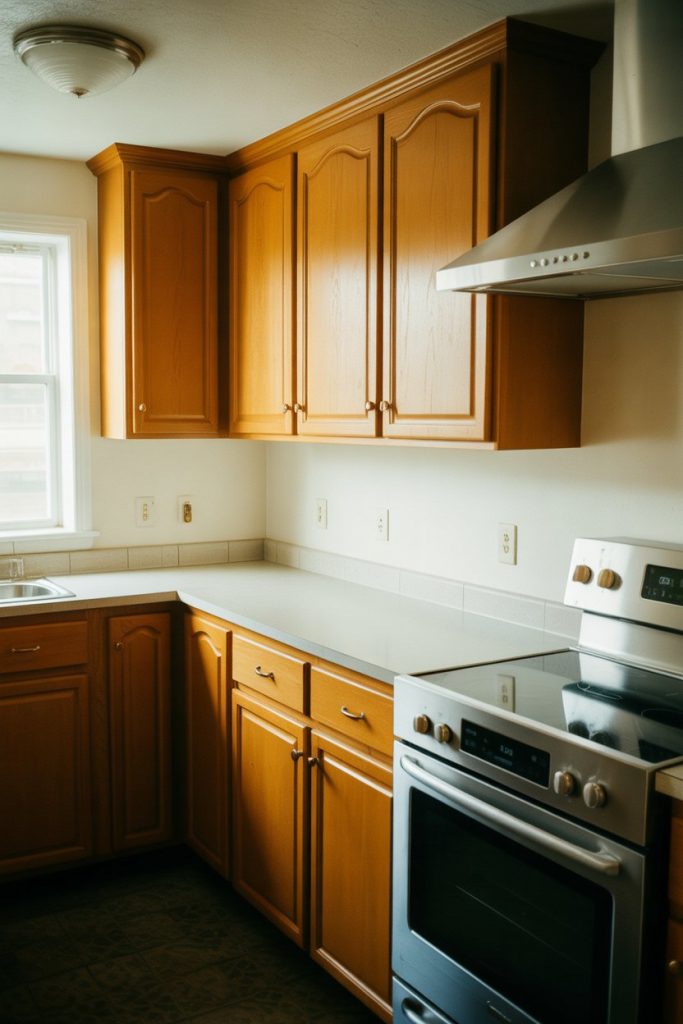
Sometimes golden oak cabinets just need better partners—replacing laminate countertops with quartz, granite, or butcher block can completely transform the room’s sophistication level. The countertop material becomes the bridge between cabinets and other elements, either embracing oak’s warmth with similar tones or providing contrast through cooler materials. This single change often has greater visual impact than painting cabinets would. 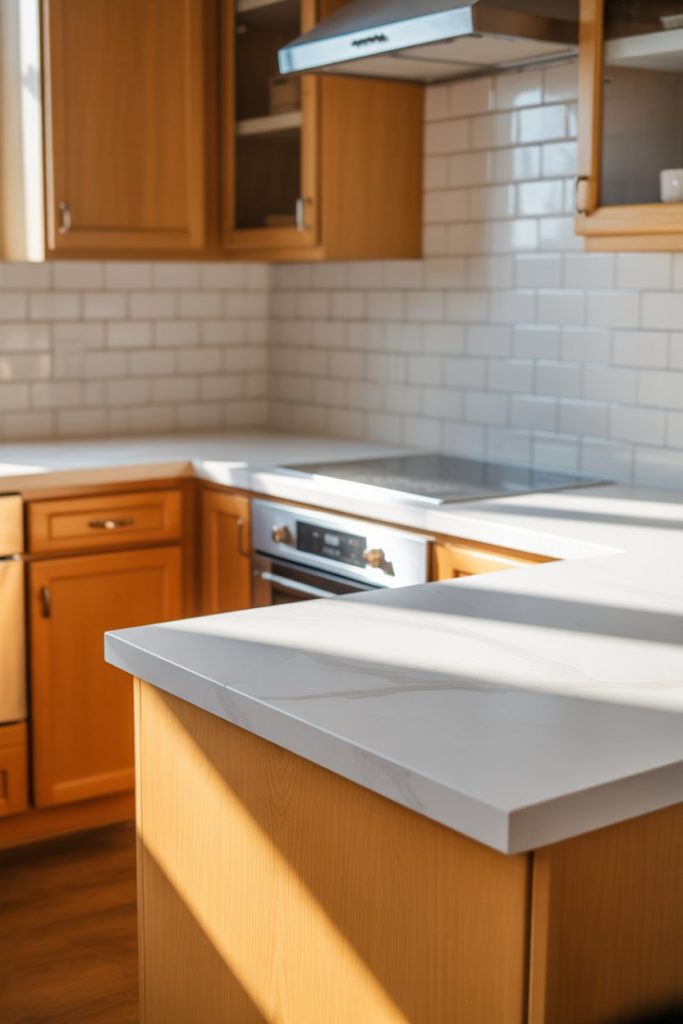
Practical insight: Quartz in warm whites or creams costs $60-$100 per square foot installed and requires zero maintenance compared to granite’s periodic sealing. For a typical 50-square-foot kitchen, expect $3,000-$5,000 for quality quartz—a meaningful investment that immediately elevates the entire space and typically returns 80-90% value at resale.
20. Red Oak Cabinets with Warm Neutral Palette
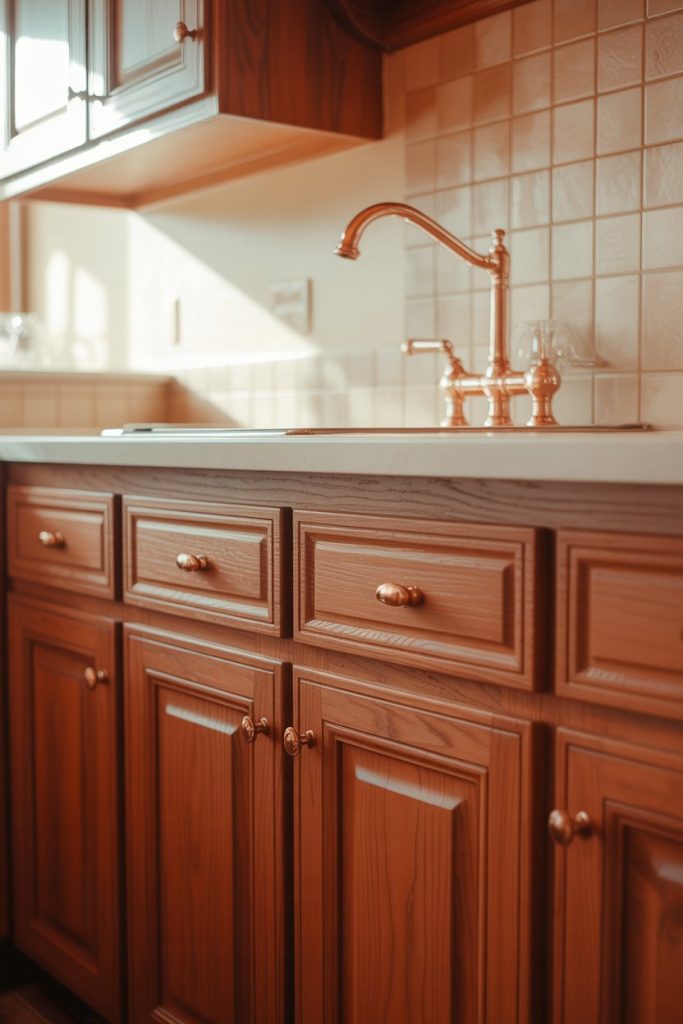
Red oak’s distinctive grain and rosy undertones work best within a warm neutral envelope—think cream walls, beige tile, and warm brass or copper fixtures. Fighting the red tones with cool colors creates discord, while embracing them with complementary warmth creates cohesion. This approach honors the wood’s inherent character rather than attempting to mask or apologize for it. 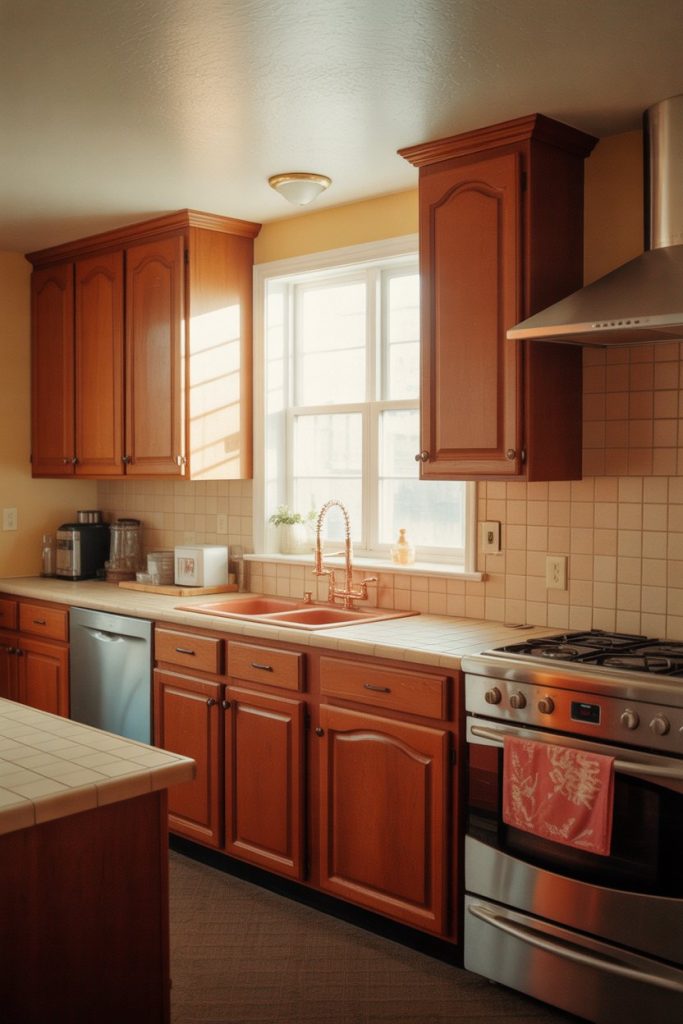
Regional context matters here—red oak thrives in Midwestern and Southern homes where traditional aesthetics dominate and homeowners appreciate wood’s natural variation. A Tennessee homeowner recently shared that after years of considering painting her red oak cabinets white, she instead refreshed the stain and updated surrounding elements, discovering she actually loved the wood once it wasn’t competing with dated finishes.
21. Pale Oak in Scandinavian-Inspired Kitchens
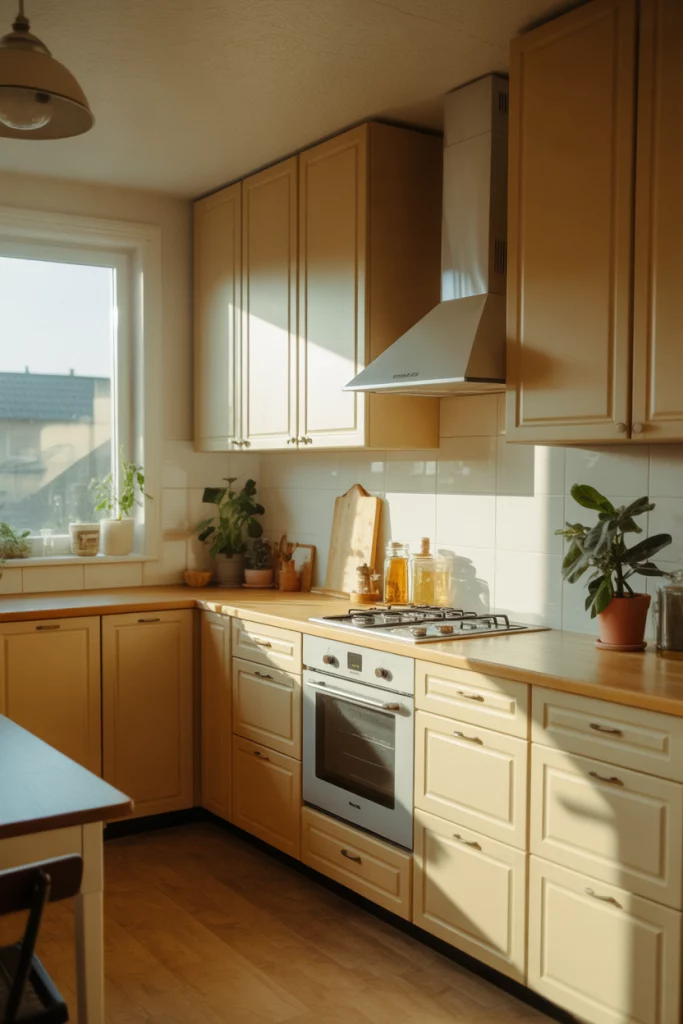
Pale oak delivers the light, airy quality that Scandinavian design prizes while maintaining warmth that purely white kitchens lack. This finish—achieved through light staining or selecting naturally pale oak—creates a serene backdrop for everyday living without feeling precious or untouchable. Combined with simple hardware, open shelving, and abundant natural light, pale oak embodies the Nordic concept of “lagom”—just enough, perfectly balanced.
Expert commentary from Scandinavian design specialists emphasizes that this aesthetic succeeds through restraint—every element should be necessary and beautiful, nothing merely decorative. The pale oak cabinets become the warmth anchor in otherwise minimal spaces, proving that simplicity doesn’t require coldness when materials themselves carry inherent beauty.
22. Oak Makeover with Upgraded Lighting Design
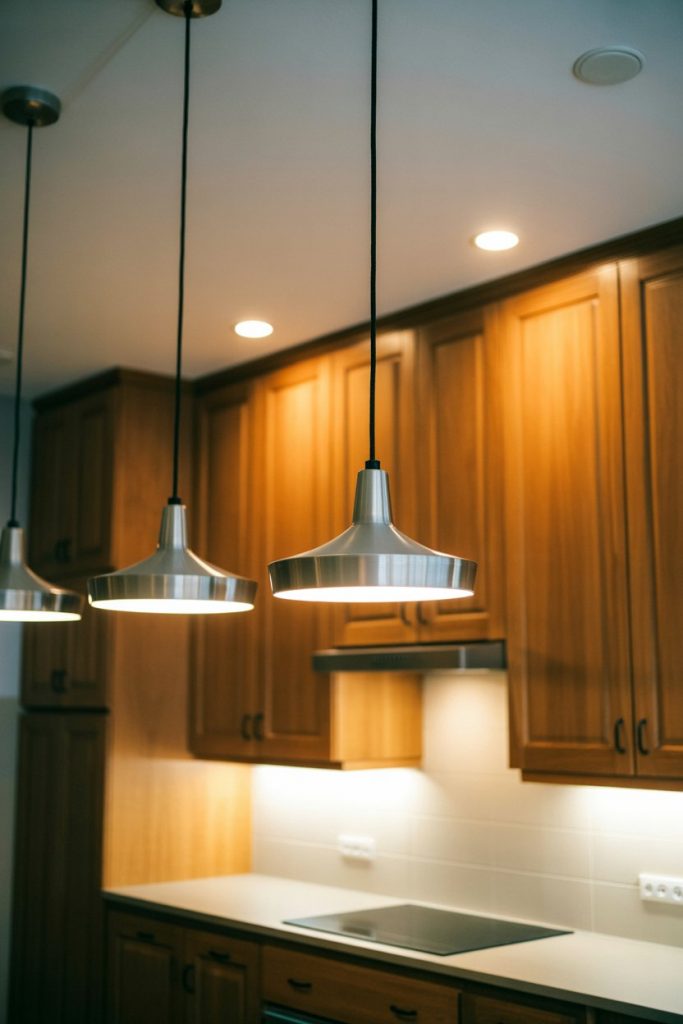
A comprehensive lighting makeover—layering recessed cans, pendant fixtures, and under-cabinet strips—can transform how oak cabinets appear without touching the wood itself. Proper illumination emphasizes grain beauty while eliminating the cave-like quality that dated overhead-only lighting creates. Warm LED bulbs (2700-3000K) specifically enhance oak’s natural tones rather than washing them out with harsh cool light. 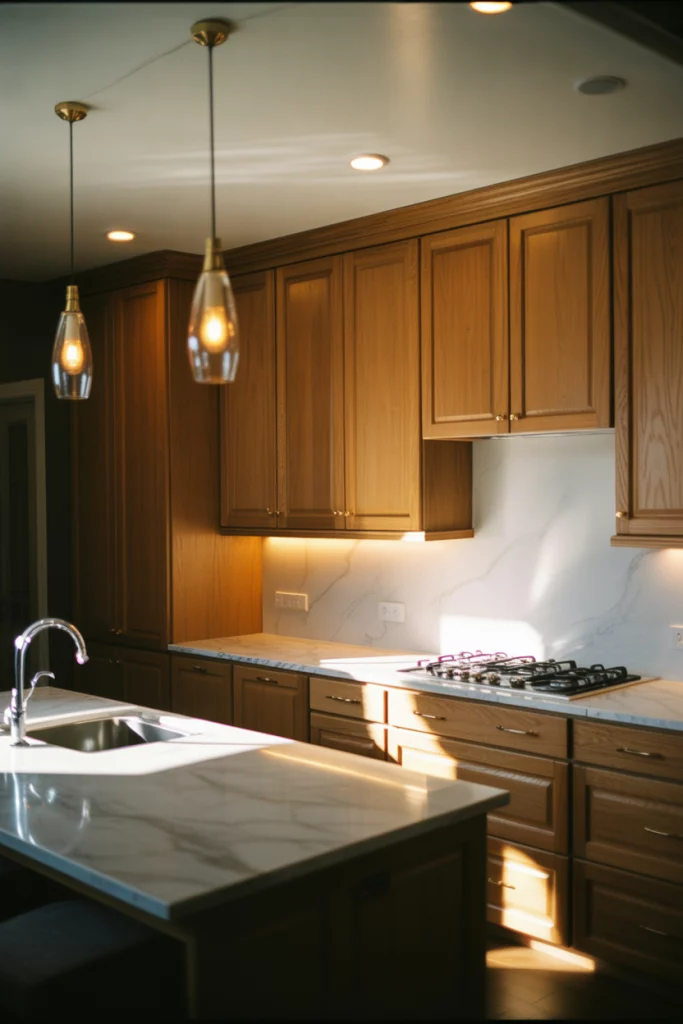
Real homeowner behavior shows that lighting upgrades rank among the highest satisfaction improvements—a Colorado homeowner spent $2,500 on comprehensive kitchen lighting and reported it felt like getting a new kitchen for a fraction of replacement cost. The oak grain that previously disappeared in shadows now displays full dimensional beauty, proving that how we illuminate materials matters as much as the materials themselves.
23. Modern Oak with Handleless Cabinet Doors
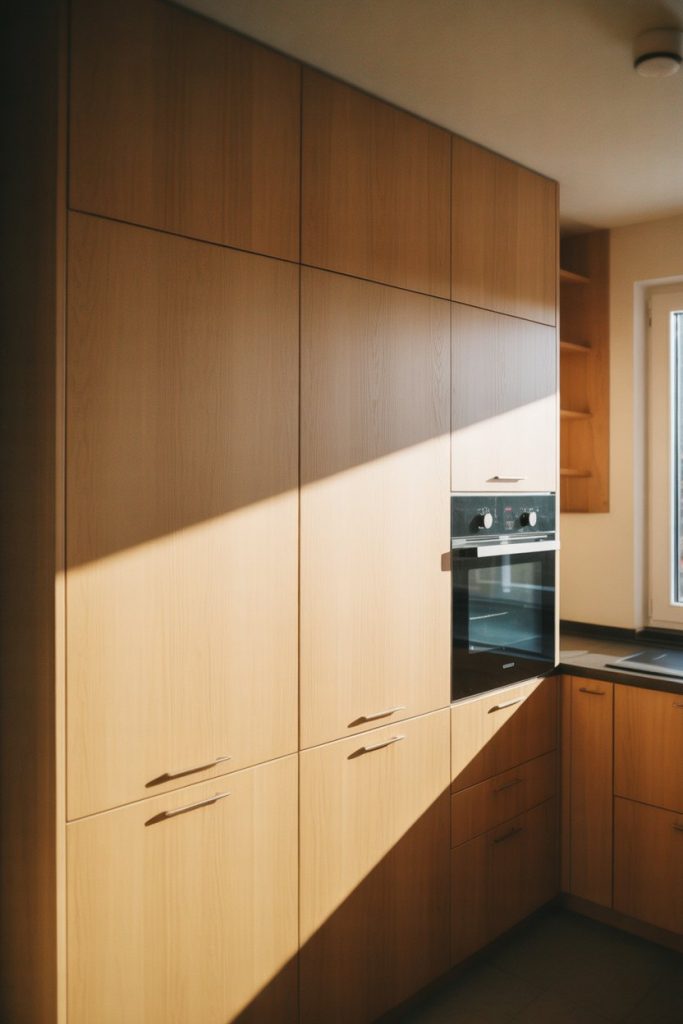
Modern oak cabinetry embraces handleless design through push-to-open mechanisms or integrated finger pulls, creating seamless facades that emphasize wood grain over hardware. This approach suits contemporary aesthetics where clean lines and uninterrupted surfaces reign supreme. The wood becomes pure expression—no jewelry needed when the material itself commands attention through natural beauty and expert craftsmanship.
Common mistakes include retrofitting push-to-open hardware onto cabinets not designed for it, resulting in doors that stick or don’t align properly. If you’re committed to handleless design, invest in quality mechanisms from reputable manufacturers—Blum’s Servo-Drive or Hettich’s Push-to-Open systems ensure reliable function for years. The upfront cost is higher but the payoff in daily use and longevity justifies the investment.
Conclusion
Oak kitchen cabinets in 2026 offer endless possibilities for creating spaces that feel both current and enduring—whether you’re embracing natural finishes, experimenting with strategic paint, or simply updating what you already have. The key is understanding oak’s inherent strengths and working with them rather than against them. Share your own oak kitchen transformations or questions in the comments below—we’d love to see how you’re making this classic material your own.