Modern farmhouse exteriors remain one of the most sought-after home styles in 2026, blending rustic charm with clean, contemporary lines that resonate deeply with American homeowners. Whether you’re scrolling Pinterest for your dream home or planning a renovation, this style offers endless flexibility—from bold black and white contrasts to softer color palettes featuring sage, charcoal, and cream. The appeal lies in its ability to feel both timeless and fresh, rooted in tradition yet unafraid of modern simplicity. In this guide, you’ll discover inspiring ideas that showcase how architectural designs, paint colors, and thoughtful lighting come together to create exteriors that feel welcoming, stylish, and unmistakably American.
1. Black Board and Batten with White Trim
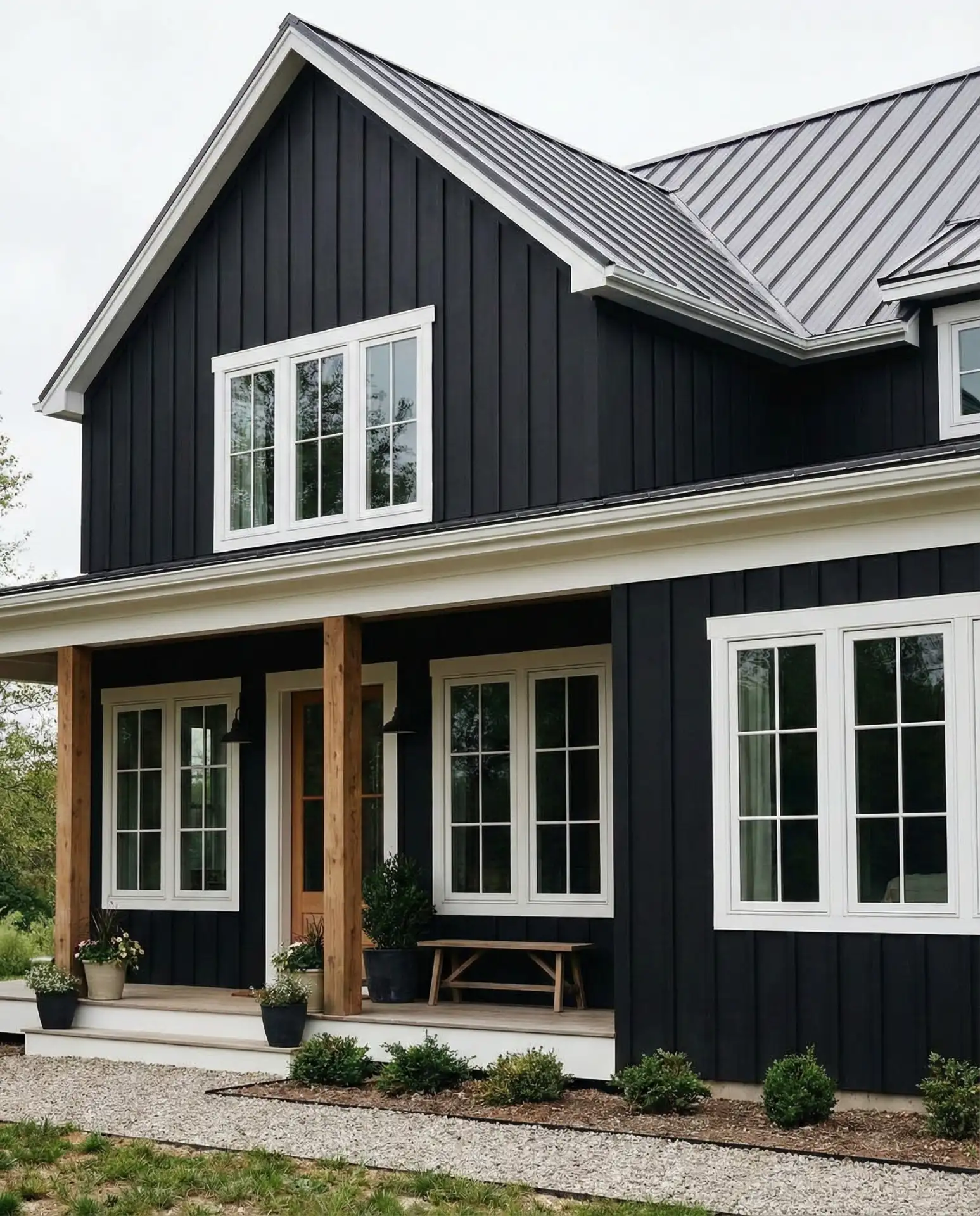
This classic combination brings drama and sophistication to any farmhouse exterior. Black vertical siding paired with crisp white window frames and trim creates a striking contrast that never goes out of style. The board and batten texture adds architectural depth, making the facade feel layered and intentional. It works beautifully on single-story homes or two-story builds, especially when you want a bold, gallery-like presence from the curb.
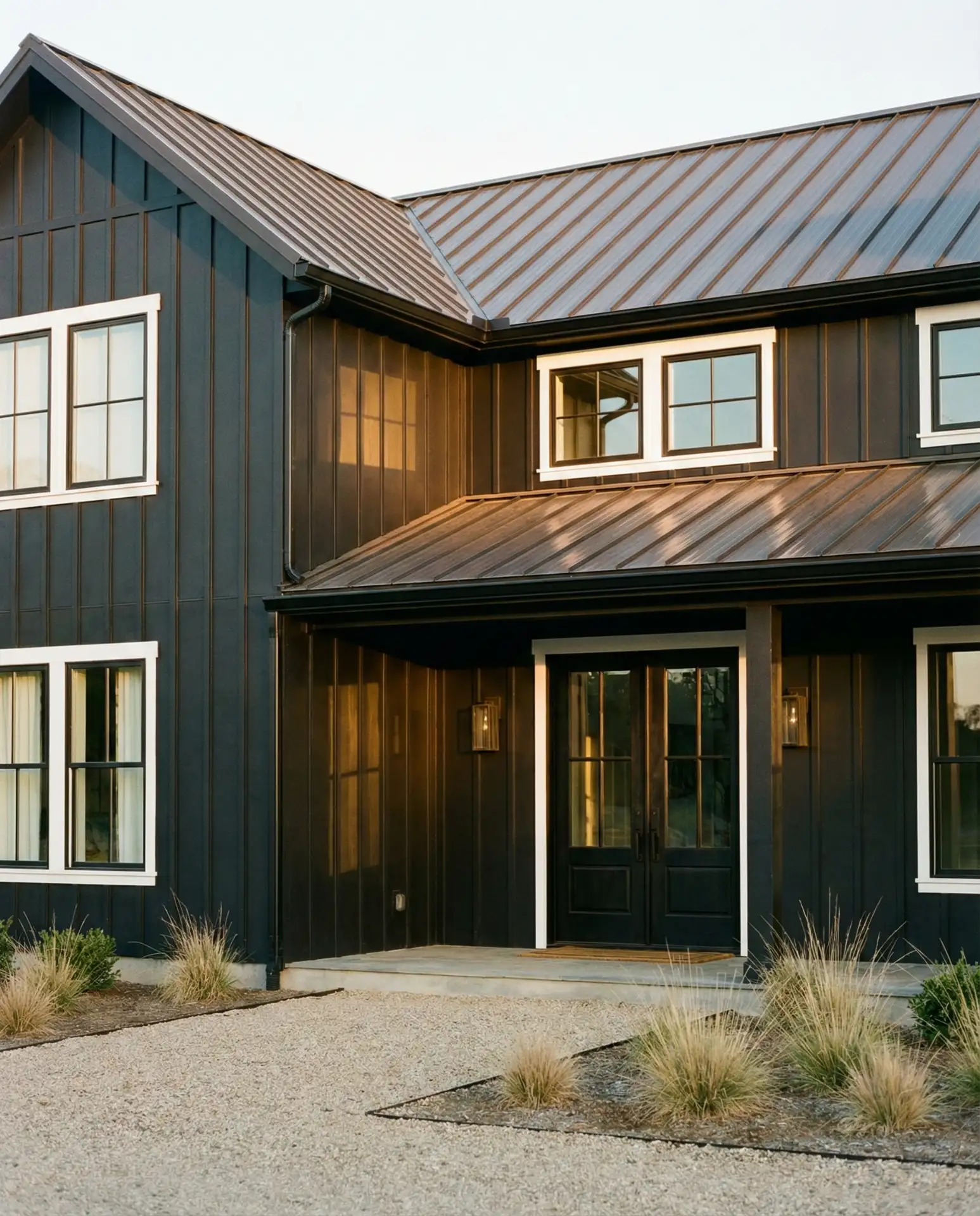
One common mistake is choosing a black that’s too glossy—it can look plastic or commercial. Opt for a matte or satin finish to maintain that authentic, grounded farmhouse feel. Pair it with warm metal accents like bronze or aged brass for door hardware and light fixtures. This combination works especially well in wooded settings or suburban lots where the dark exterior creates a stunning contrast against greenery and sky.
2. Rustic Stone and Timber Accents
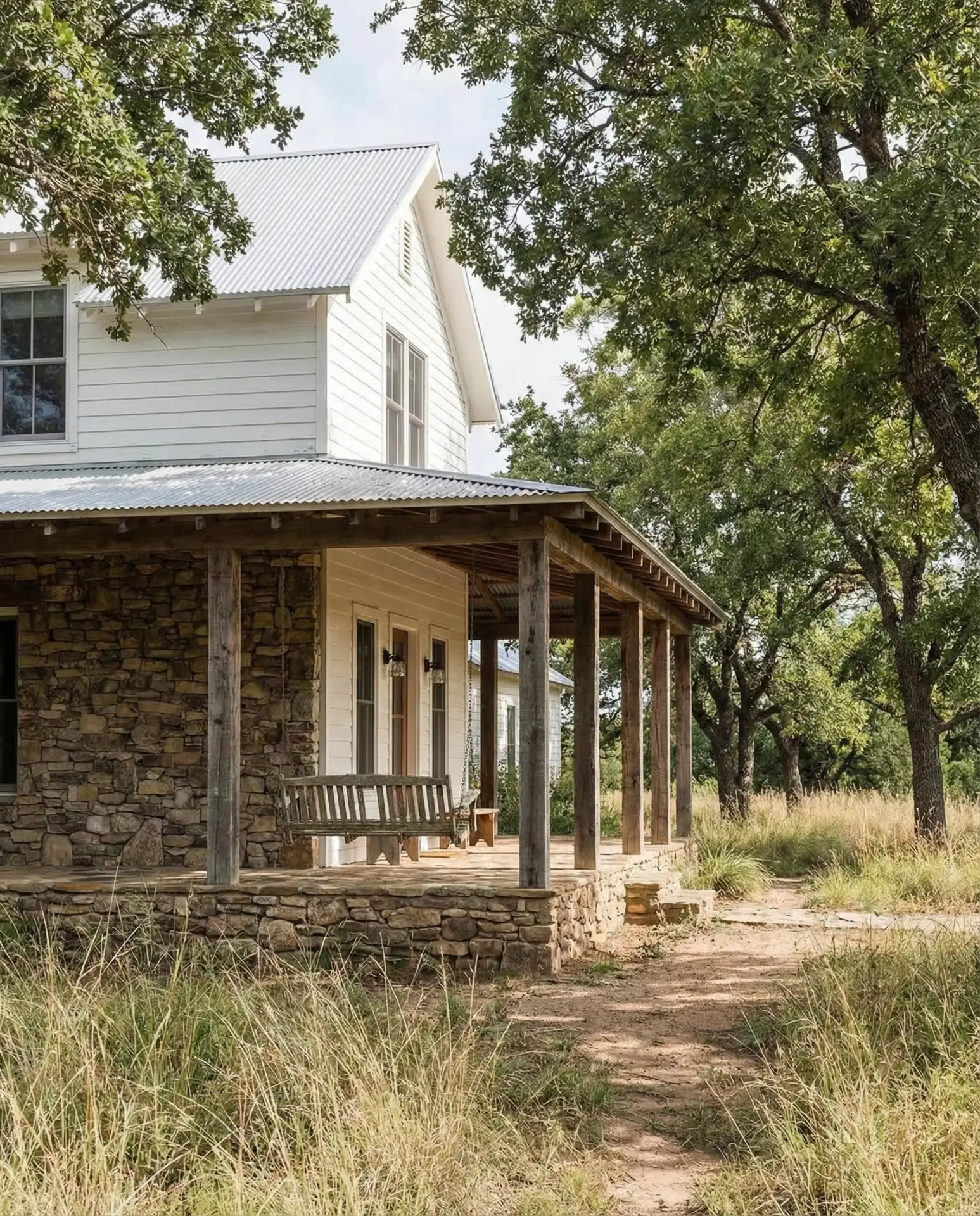
Natural stone foundations or chimney surrounds paired with exposed rustic timber beams bring an earthy, handcrafted quality to modern farmhouse exteriors. These materials ground the home in tradition while allowing for sleek, contemporary rooflines and window placement. The texture of stone adds visual weight and permanence, while timber introduces warmth and organic variation. This approach is especially popular in rural areas and mountain communities where the landscape calls for materials that feel native and unforced.
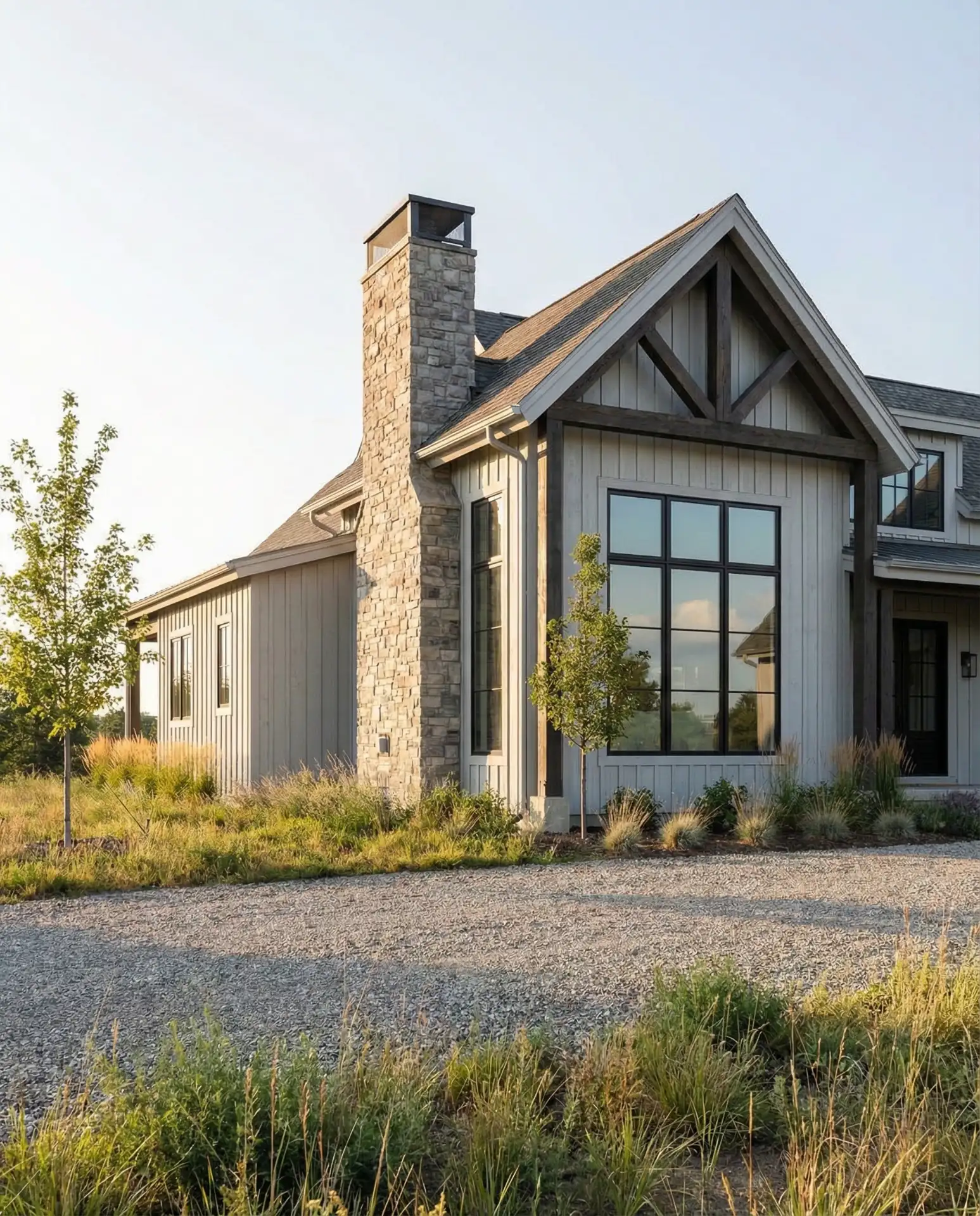
Where it works best: properties with sloped lots or hillside settings, where stone can serve both aesthetic and structural purposes. It’s also ideal for homes in the Pacific Northwest, Appalachia, or the Rockies, where natural materials blend seamlessly with the environment. Avoid pairing stone with overly polished finishes—it loses its rustic integrity when combined with high-gloss surfaces or ultra-modern glass paneling.
3. White Farmhouse with Dark Window Frames
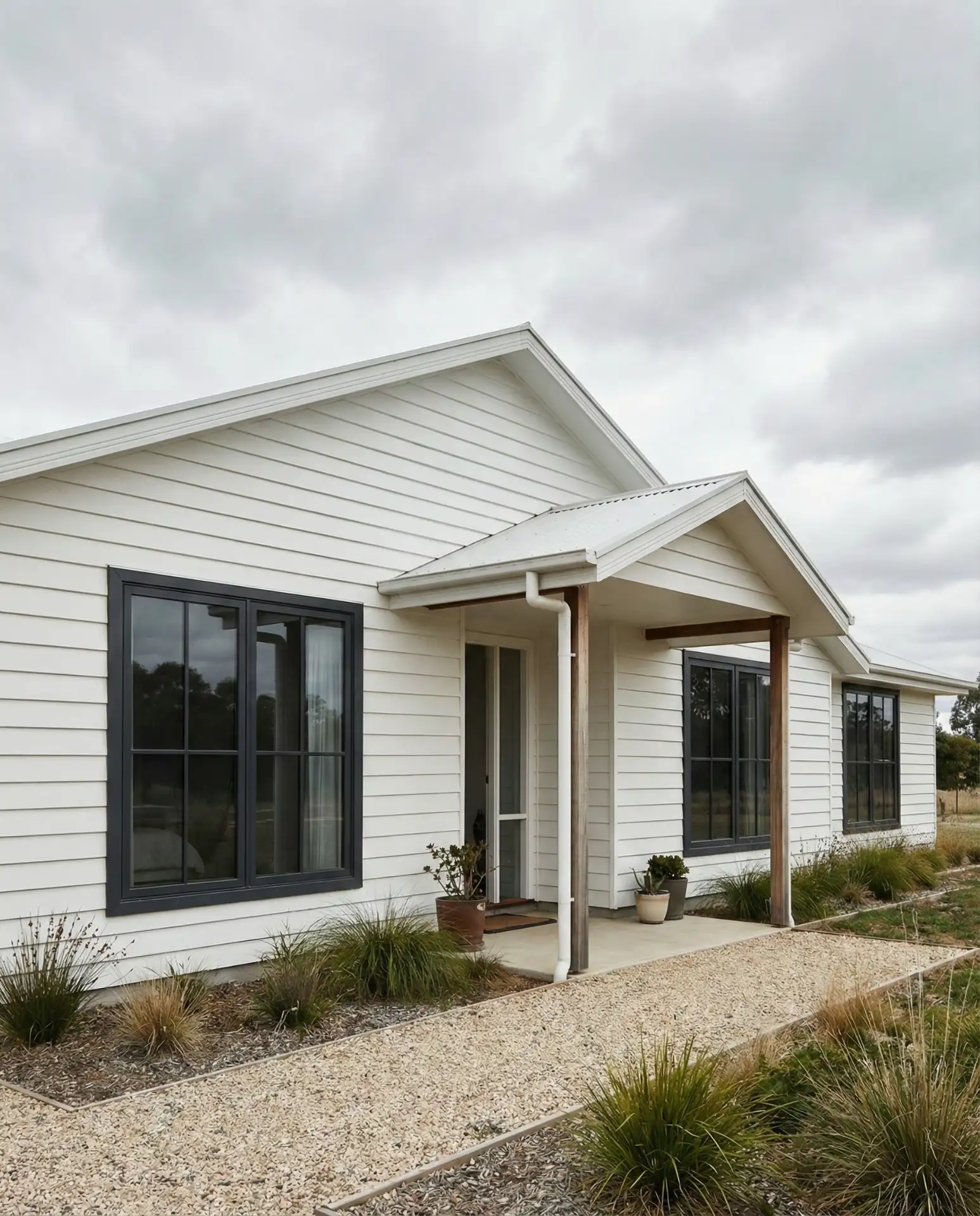
A fresh white exterior with charcoal or black window frames is the epitome of understated elegance. This pairing offers a clean canvas that highlights architectural designs and makes the windows themselves become striking focal points. The contrast is subtle yet powerful, lending a gallery-like quality that feels both modern and timeless. It’s a go-to choice for homeowners who want a bright, airy look without sacrificing visual interest or depth.
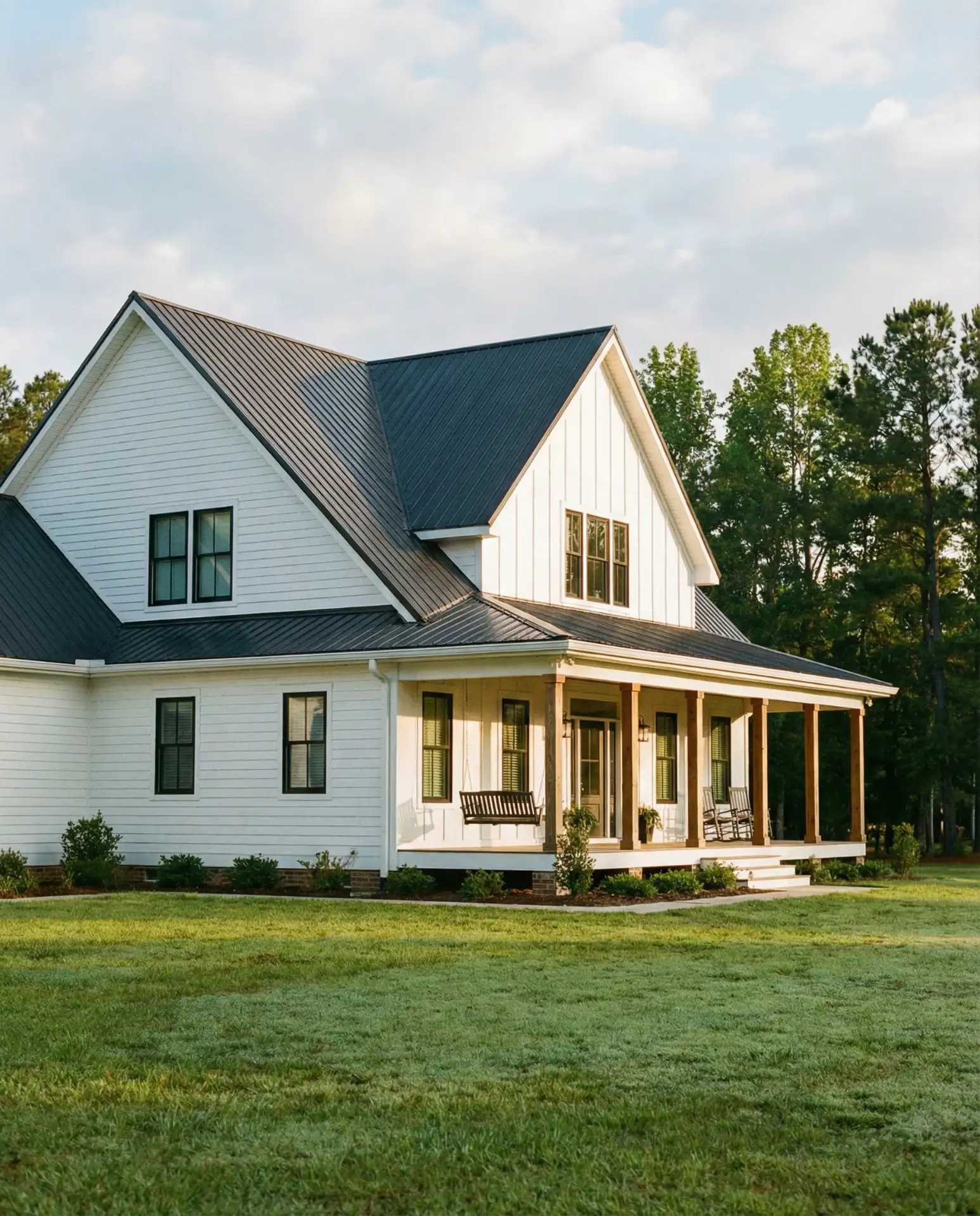
In the Midwest and South, this style is especially popular for its ability to reflect heat while maintaining curb appeal. Real homeowners often report that the dark frames require less frequent touch-ups than lighter colors, as small dings and dirt are less visible. Pair this look with matte black or oil-rubbed bronze hardware, and consider adding a single accent color—like a soft sage or navy—on the front door for a personalized touch.
4. Gray Horizontal Siding with Natural Wood Door
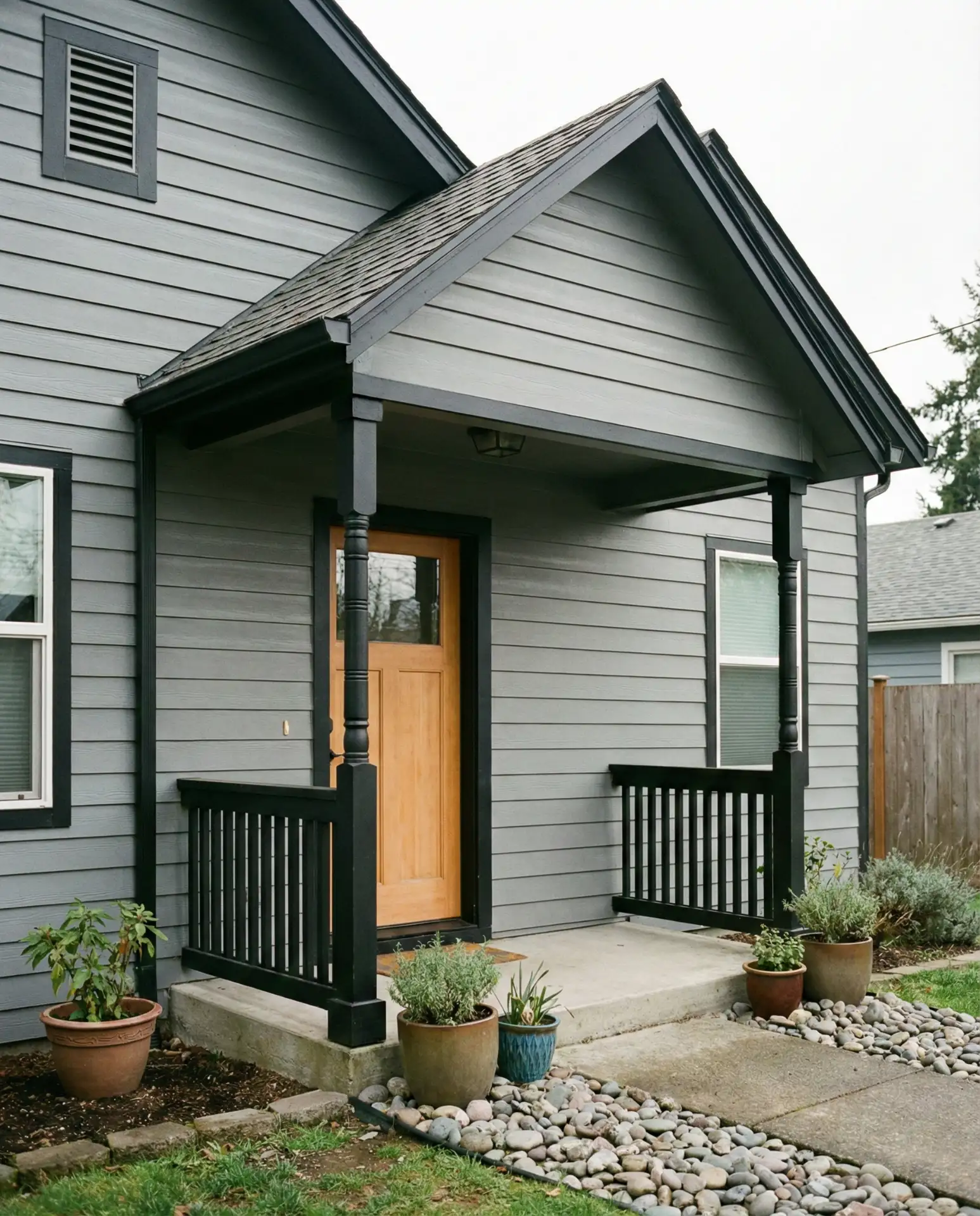
Soft gray siding in a smooth horizontal profile brings a calm, contemporary vibe to the farmhouse aesthetic. When paired with a natural wood door—whether stained cedar, walnut, or reclaimed barn wood—the exterior gains warmth and texture without feeling overly rustic. This combination works beautifully in suburban neighborhoods where a more refined, neutral palette is preferred. The gray acts as a sophisticated backdrop that allows landscaping, lighting, and entryway details to shine.
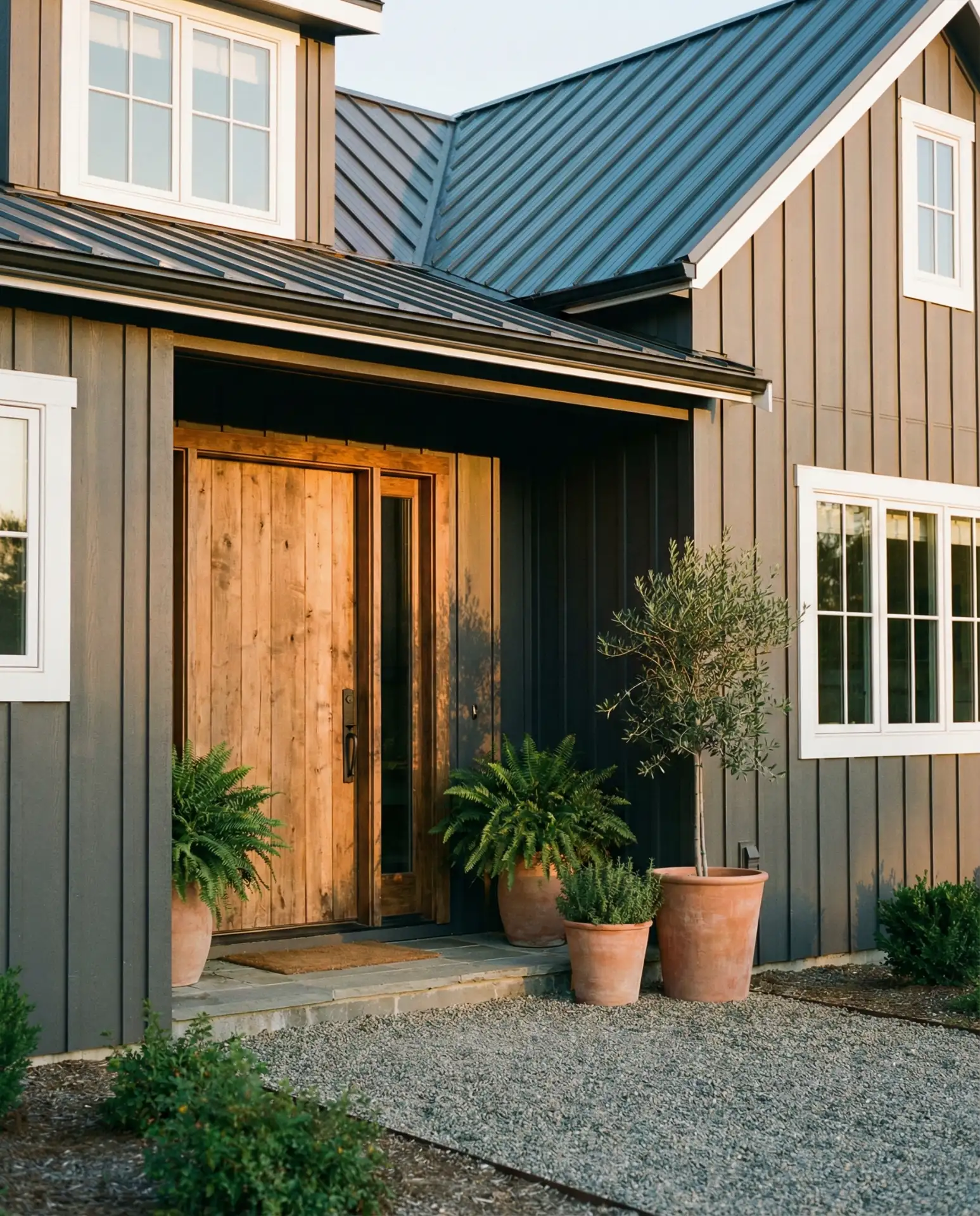
A practical insight: gray exteriors tend to hide dirt and weathering better than pure white, making them ideal for areas with heavy pollen, dust, or coastal salt spray. Homeowners in the Pacific Northwest and New England especially appreciate this low-maintenance quality. To keep the look cohesive, choose a door stain that has subtle gray or taupe undertones rather than orange or red-based wood tones.
5. Brick Farmhouse with White Painted Accents
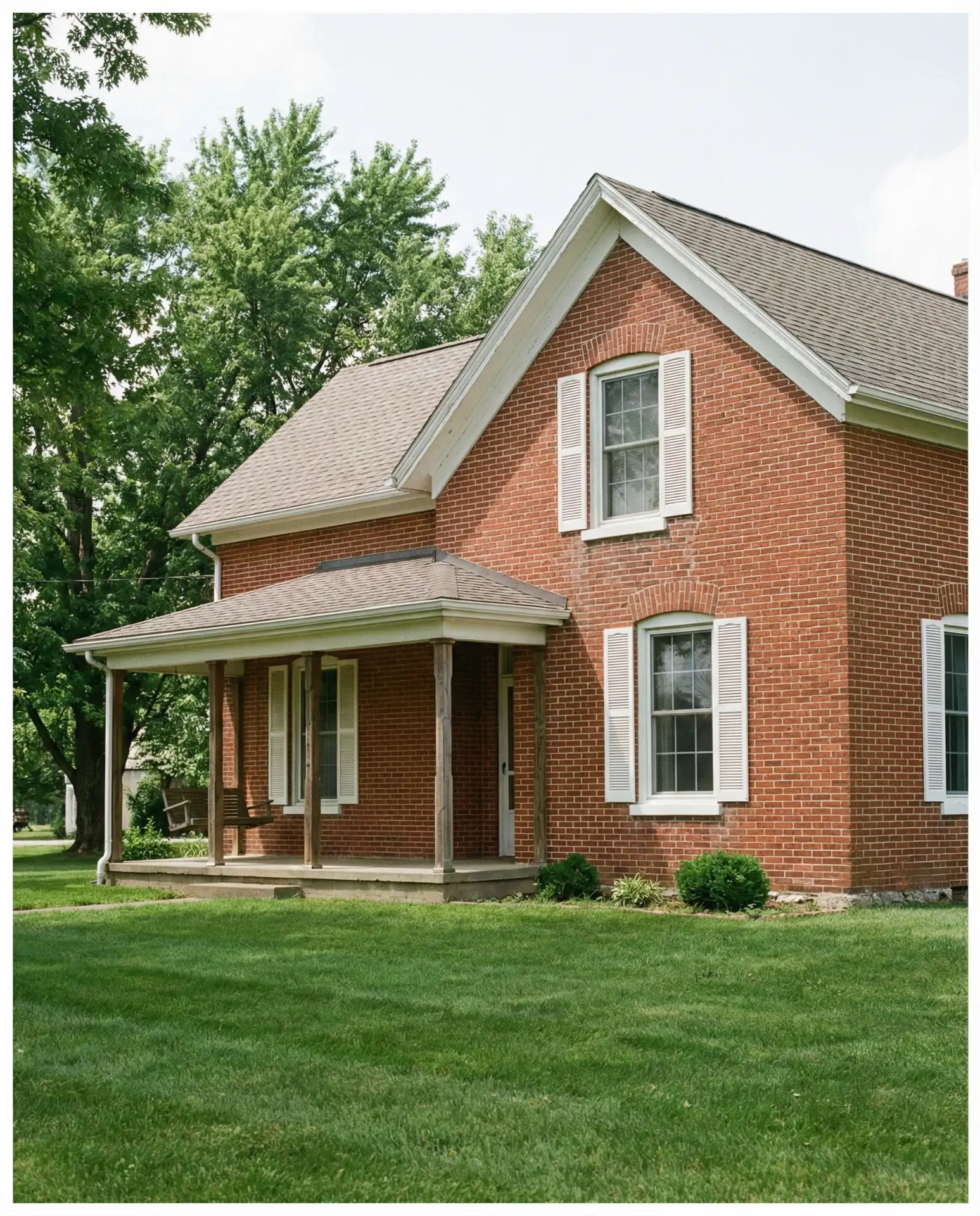
Classic brick exteriors are being reimagined in 2026 with selective white-painted accents—think trim, shutters, or even painted brick sections. This technique softens the traditional heaviness of all-brick facades and introduces a fresh, modern farmhouse sensibility. The natural color schemes in brick—ranging from warm red to soft gray—pair beautifully with crisp white, creating a balanced and inviting curb presence. It’s a style that honors the past while embracing contemporary design.
In the South and parts of the UK-inspired American suburbs, brick farmhouses are a staple. The key to modernizing them is restraint—avoid painting the entire brick surface, which can look flat and lifeless. Instead, highlight architectural features like lintels, columns, or gable ends. This approach respects the material’s history while updating its visual impact. Budget-conscious homeowners love this option because it requires minimal material changes but delivers maximum aesthetic transformation.
6. Single-Story Ranch with Metal Roof
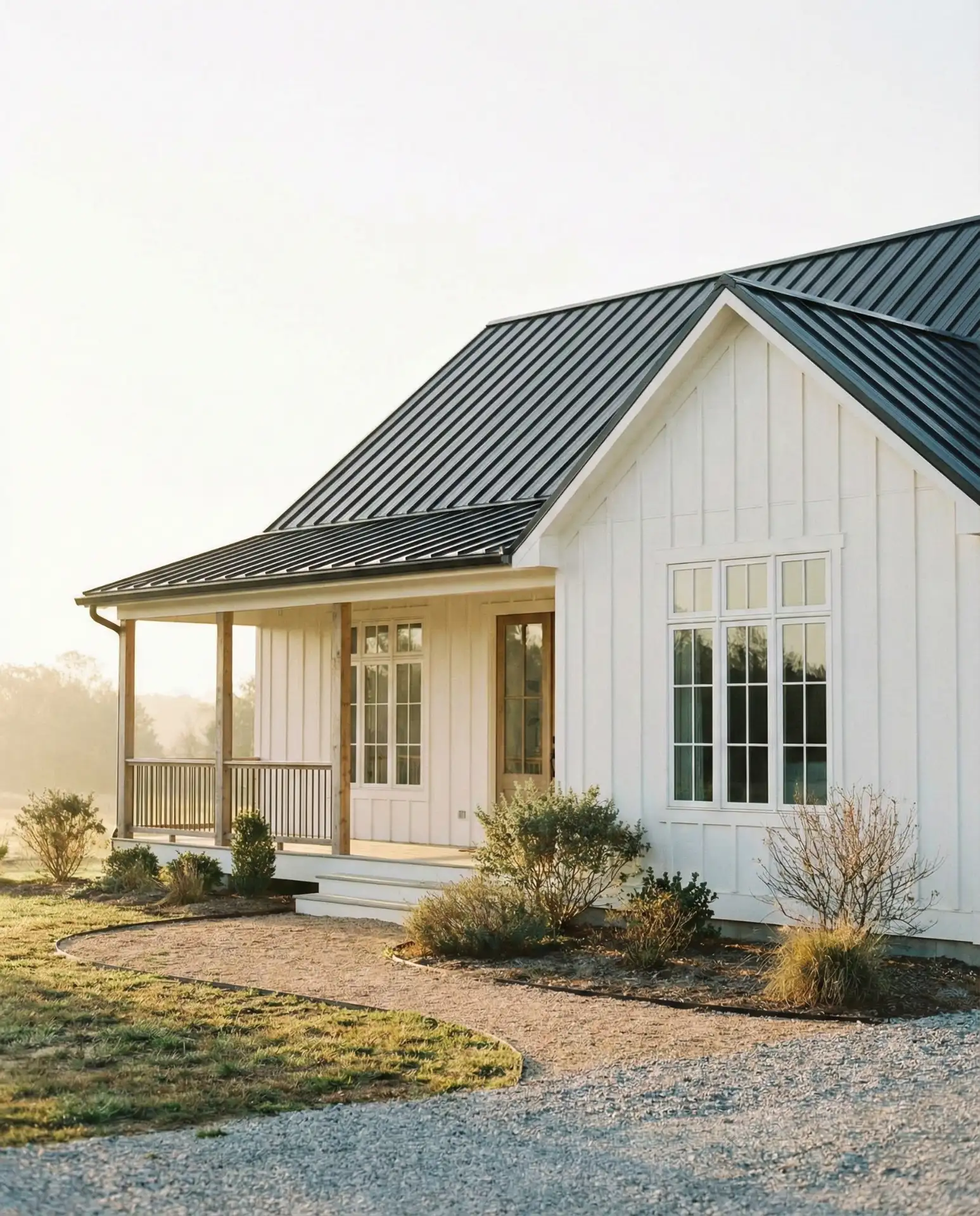
The single-story ranch-style farmhouse is experiencing a major resurgence, especially when topped with a standing seam metal roof in matte black or charcoal. This combination offers a low-slung, grounded silhouette that feels both practical and elegant. Metal roofs are prized for their durability, energy efficiency, and clean lines, making them a smart choice for modern farmhouse ideas. The horizontal emphasis of a ranch pairs beautifully with vertical elements like board and batten siding or tall windows.
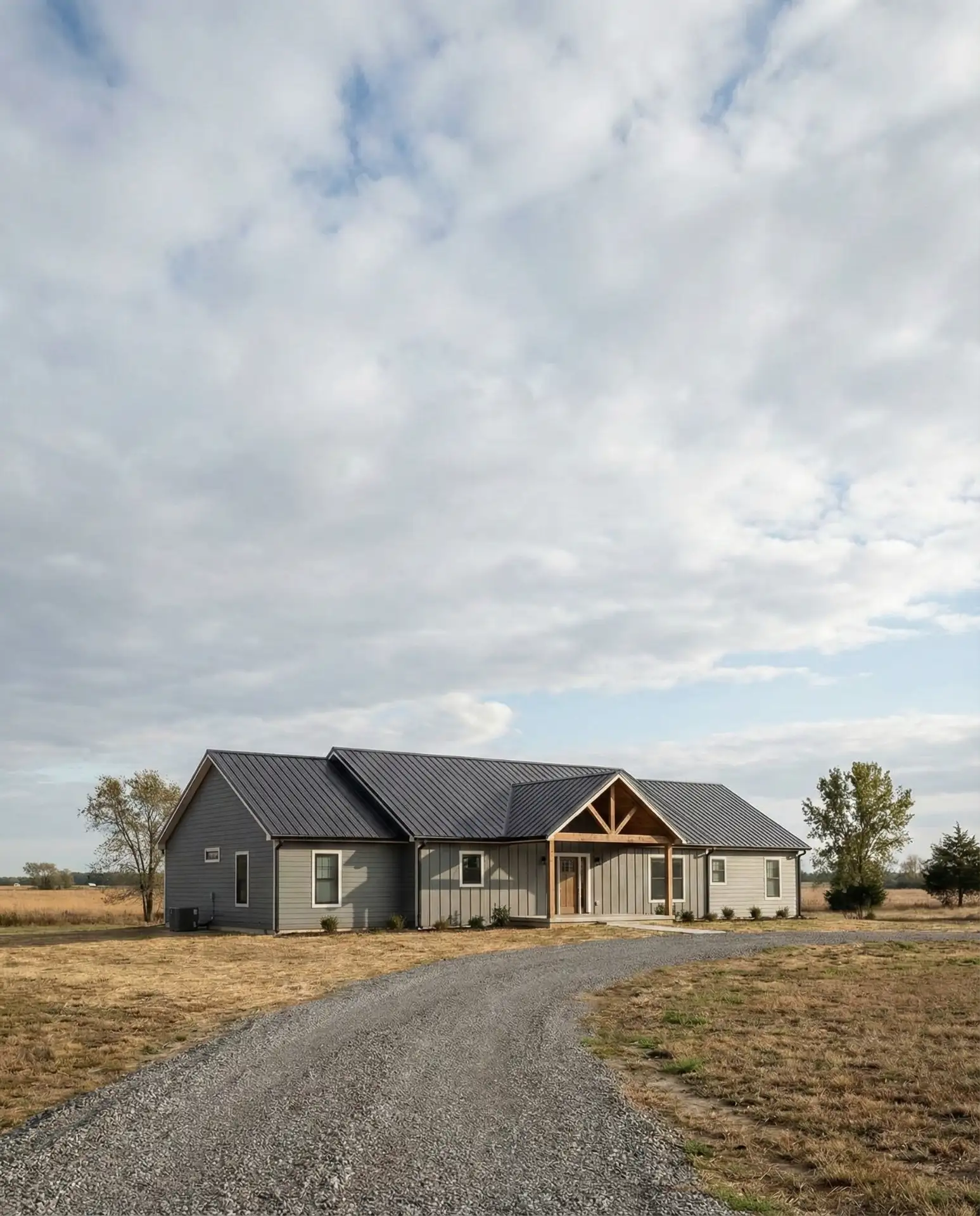
Where it works best: expansive rural lots, Texas hill country, and Western ranch properties where the horizon is a dominant feature. The single-story profile also appeals to aging-in-place homeowners who value accessibility and ease of maintenance. Metal roofs can last 50+ years, and their reflective properties help reduce cooling costs in hot climates—a huge practical advantage in states like Arizona, Georgia, and Florida.
7. Dark Charcoal Siding with Warm Wood Shutters
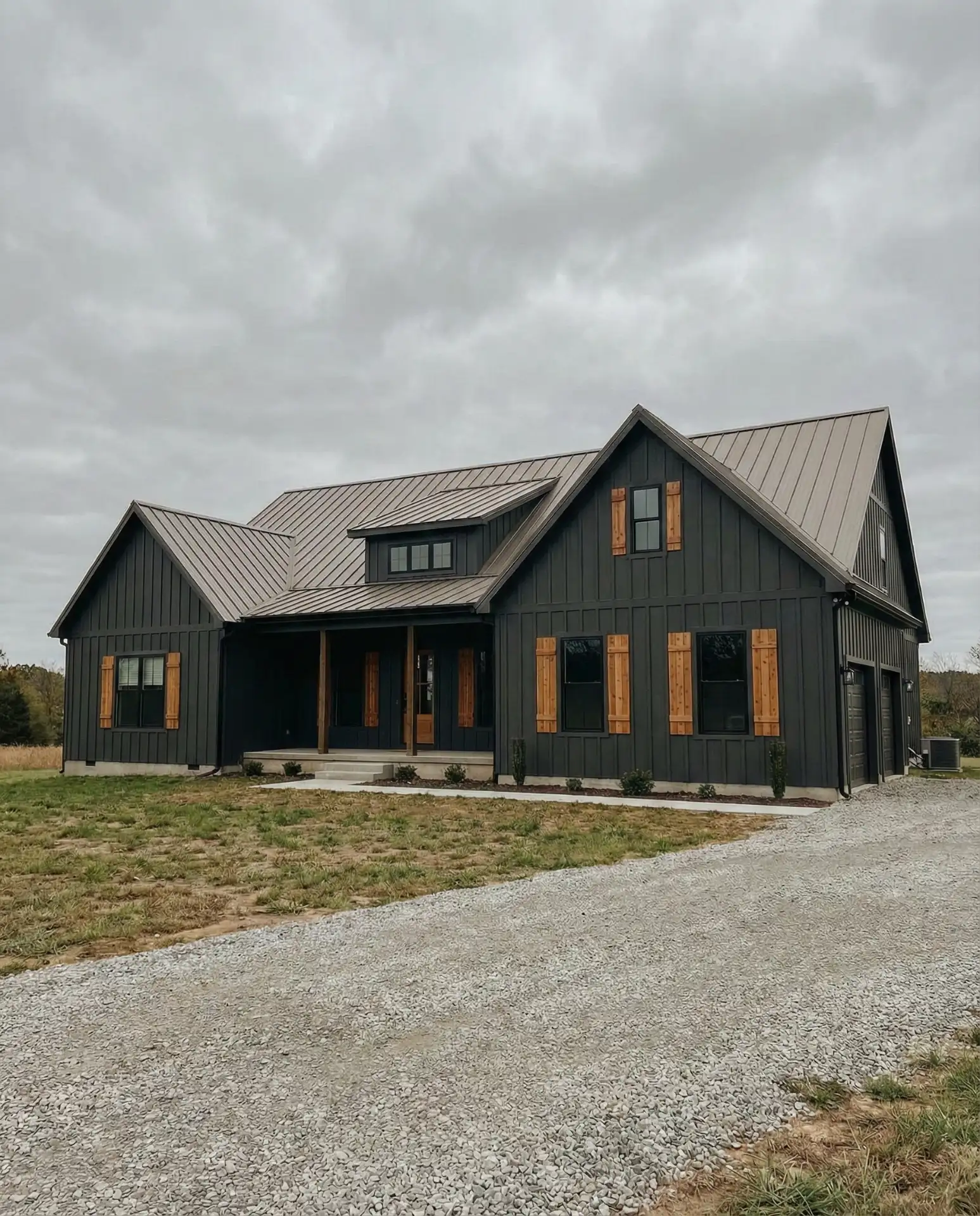
For homeowners seeking a moody, dramatic exterior, dark charcoal siding paired with natural cedar or walnut shutters offers a stunning balance of boldness and warmth. The dark base creates a striking backdrop, while the wood elements introduce texture and organic variation. This palette feels especially cohesive in wooded settings or on homes with strong horizontal lines. It’s a sophisticated take on the modern farmhouse that avoids the stark contrast of pure black and white in favor of tonal richness.
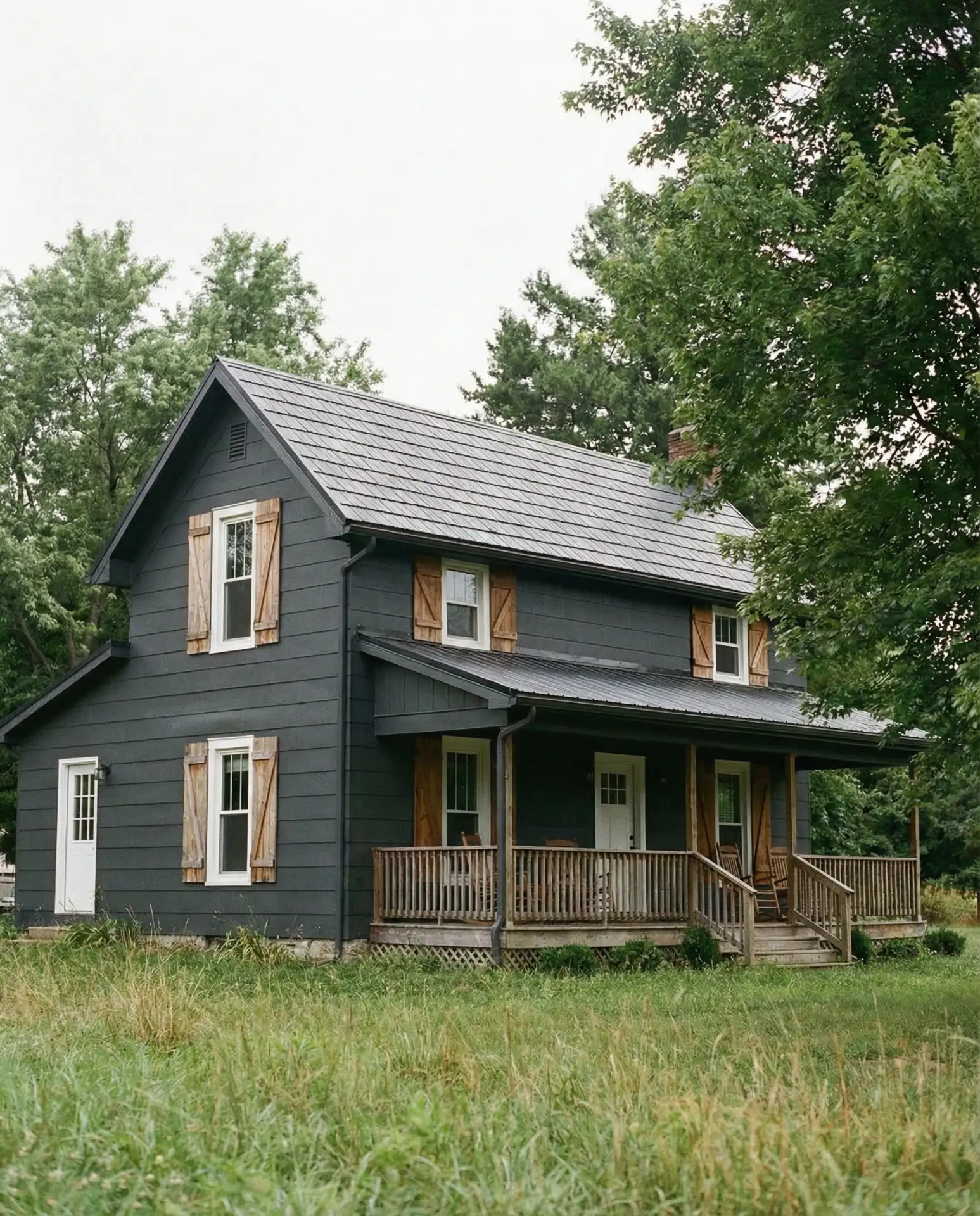
A neighbor in Vermont recently made this switch and found that the dark siding held up beautifully through harsh winters, showing far less fading than lighter colors. The wood shutters, treated with a clear sealant, developed a beautiful silver patina over time. This style is ideal for homes surrounded by evergreens or set against mountain backdrops, where the dark facade creates a dramatic yet harmonious contrast with nature.
8. White Vertical Siding with Black Metal Details
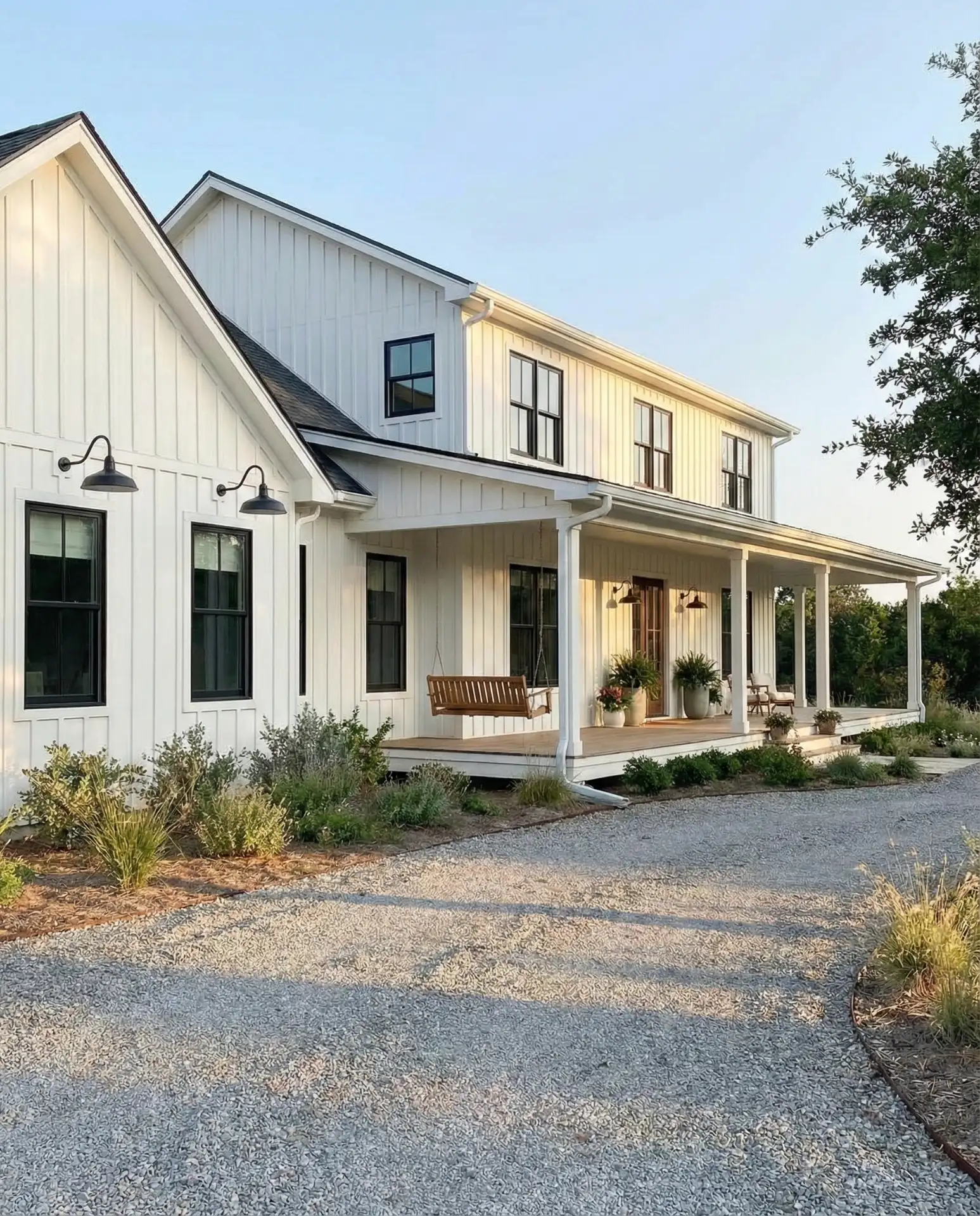
Vertical white siding—whether board and batten or simple planks—adds height and elegance to any farmhouse exterior. When combined with black metal elements like railings, light fixtures, and roof trim, the result is crisp, modern, and effortlessly stylish. This pairing is particularly effective on two-story homes or gable ends, where the vertical lines draw the eye upward and enhance the structure’s sense of scale. The black metal adds a touch of industrial edge without overwhelming the farmhouse’s softness.
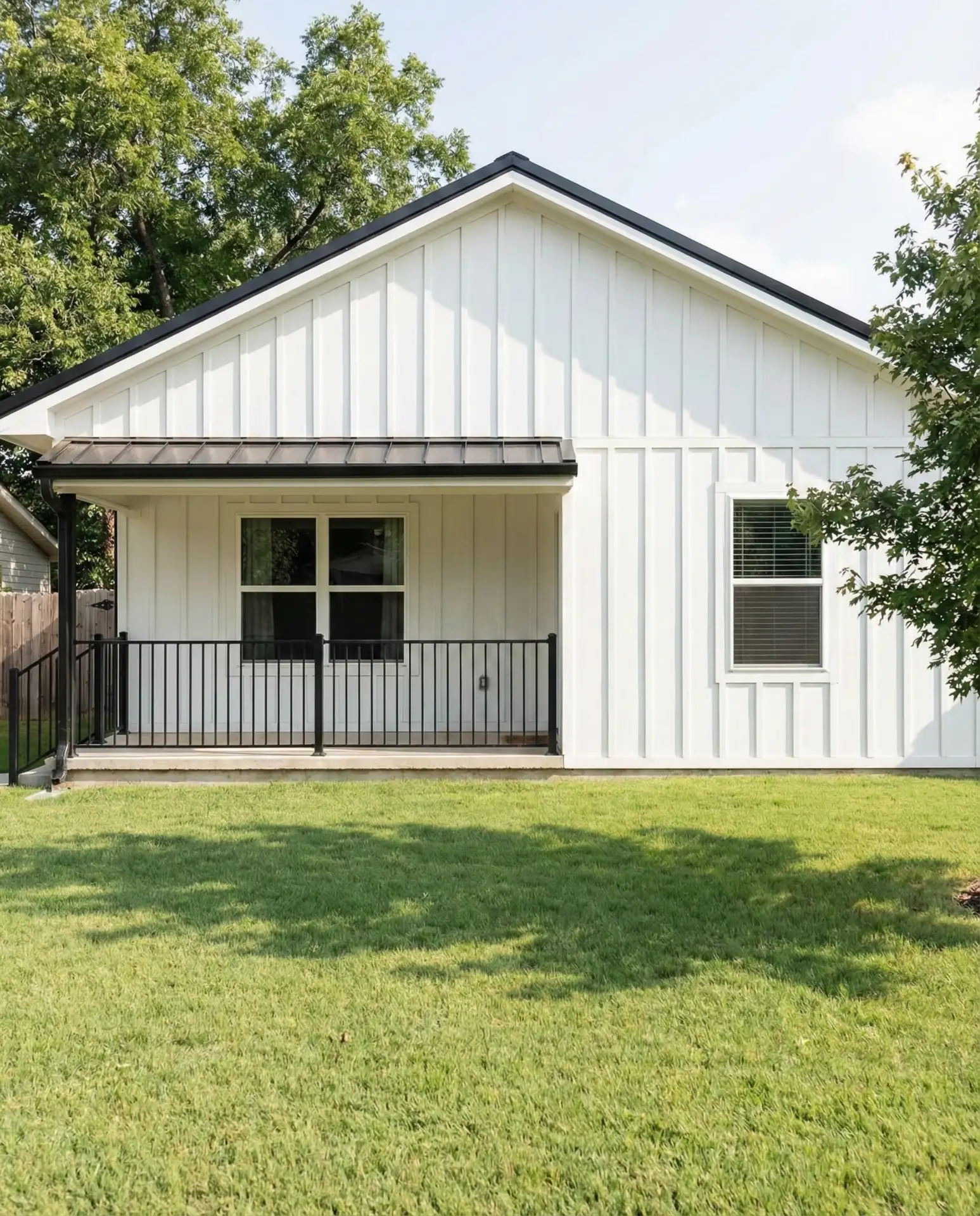
Expert tip: vertical siding can make a home appear taller and more stately, which is especially useful for smaller footprints or narrow lot homes. It also tends to shed water more effectively than horizontal siding, reducing moisture-related wear over time. Pair this look with minimalist landscaping—think boxwood hedges and gravel paths—to maintain the clean, architectural focus and let the design itself take center stage.
9. Sage Green Siding with Cream Trim
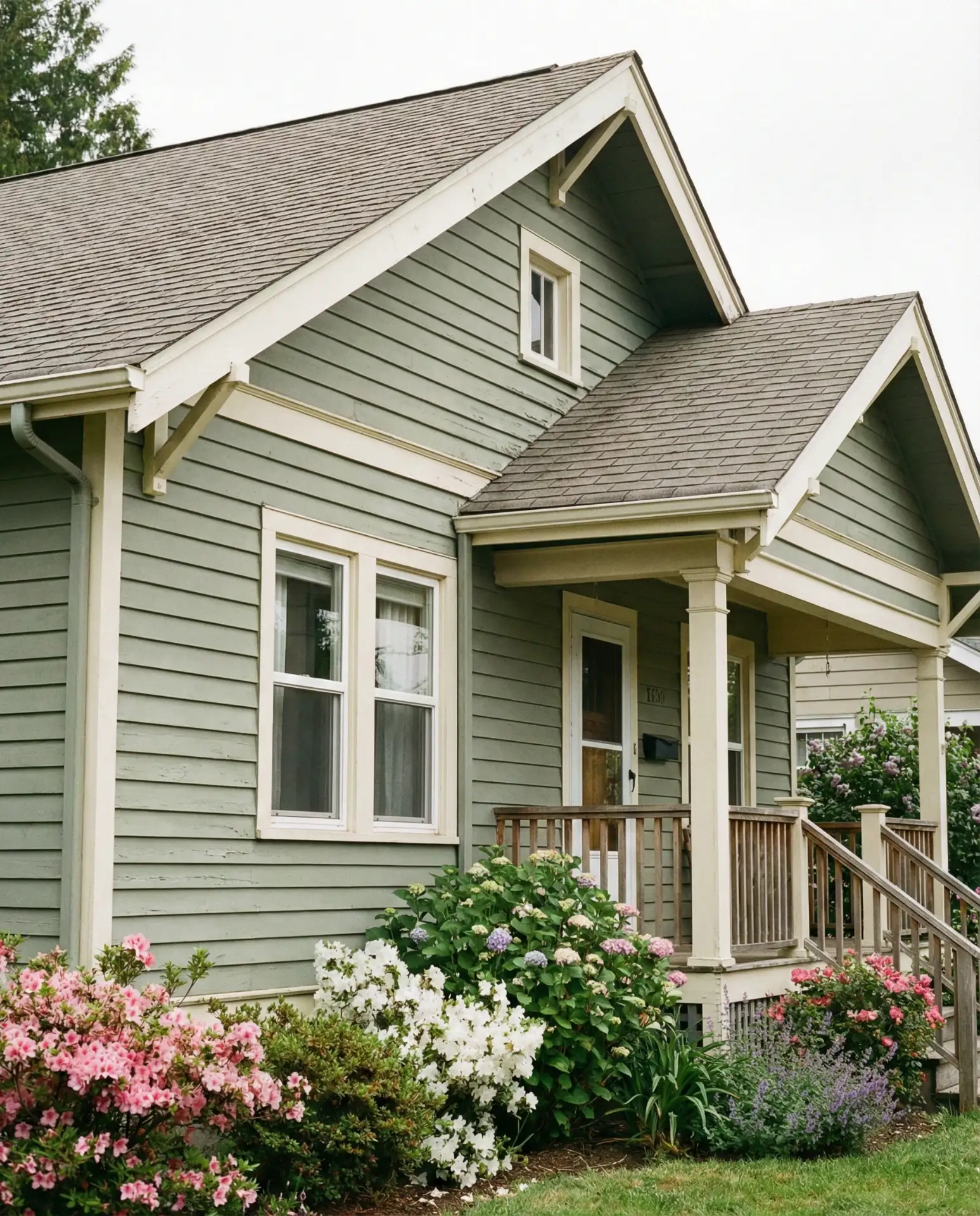
Soft sage green has become one of the most beloved paint colors in the modern farmhouse palette, offering a serene, nature-inspired alternative to white and gray. When paired with warm cream or off-white trim, the effect is gentle, inviting, and timeless. This combination works beautifully in garden settings, coastal areas, or anywhere you want the home to feel like a natural extension of the landscape. The green reads as both traditional and contemporary, depending on the architectural context and surrounding colors.
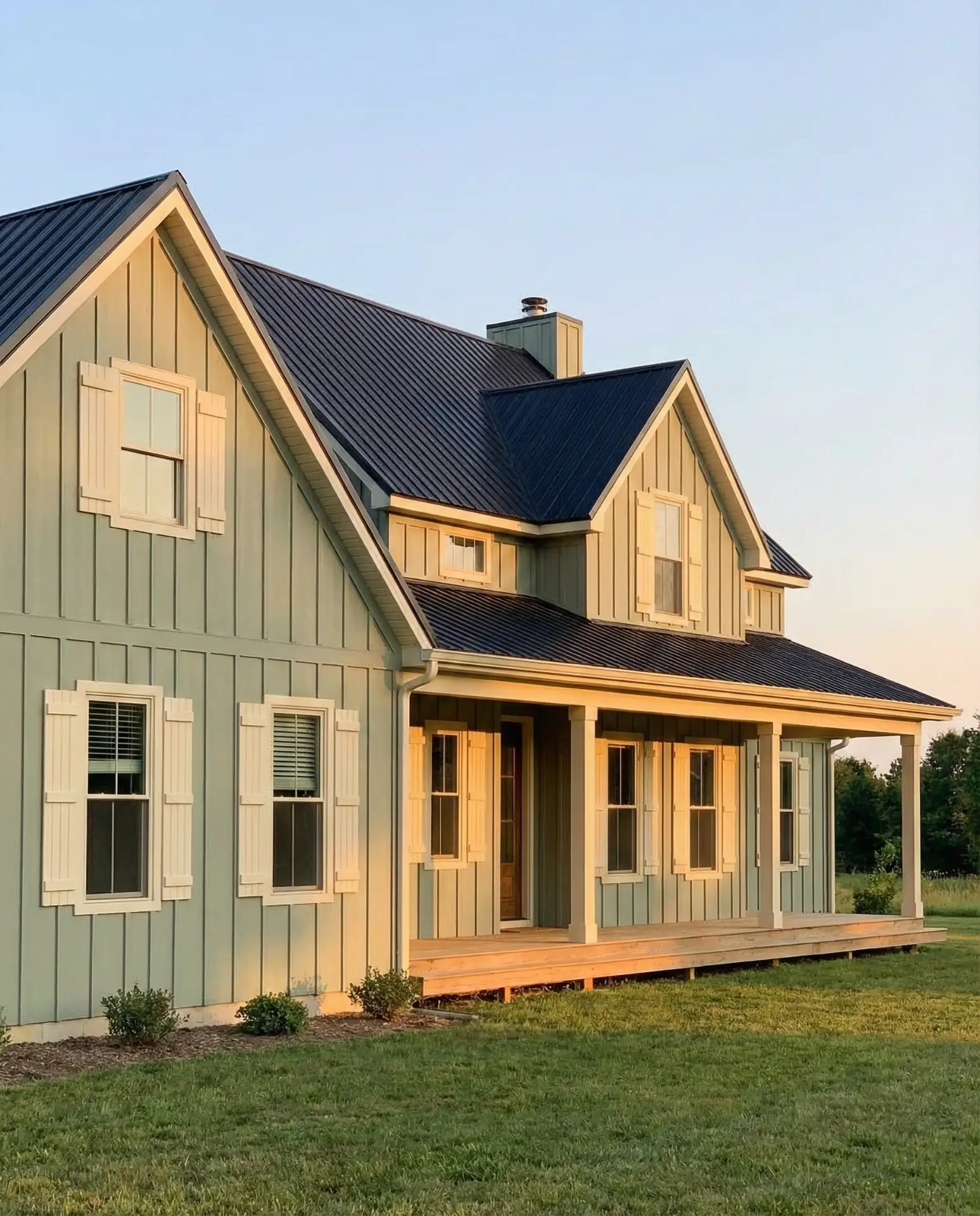
In the American South and coastal New England, sage green exteriors are especially popular for their ability to blend with lush, humid climates. The color also pairs beautifully with natural wood accents, stone pathways, and copper or brass fixtures. Budget-wise, this is a smart choice for homeowners looking to repaint—it’s forgiving, ages gracefully, and doesn’t require as many touch-ups as stark white. It’s also a color that photographs beautifully, which matters if resale is on the horizon.
10. Bloxburg-Inspired Symmetrical Farmhouse
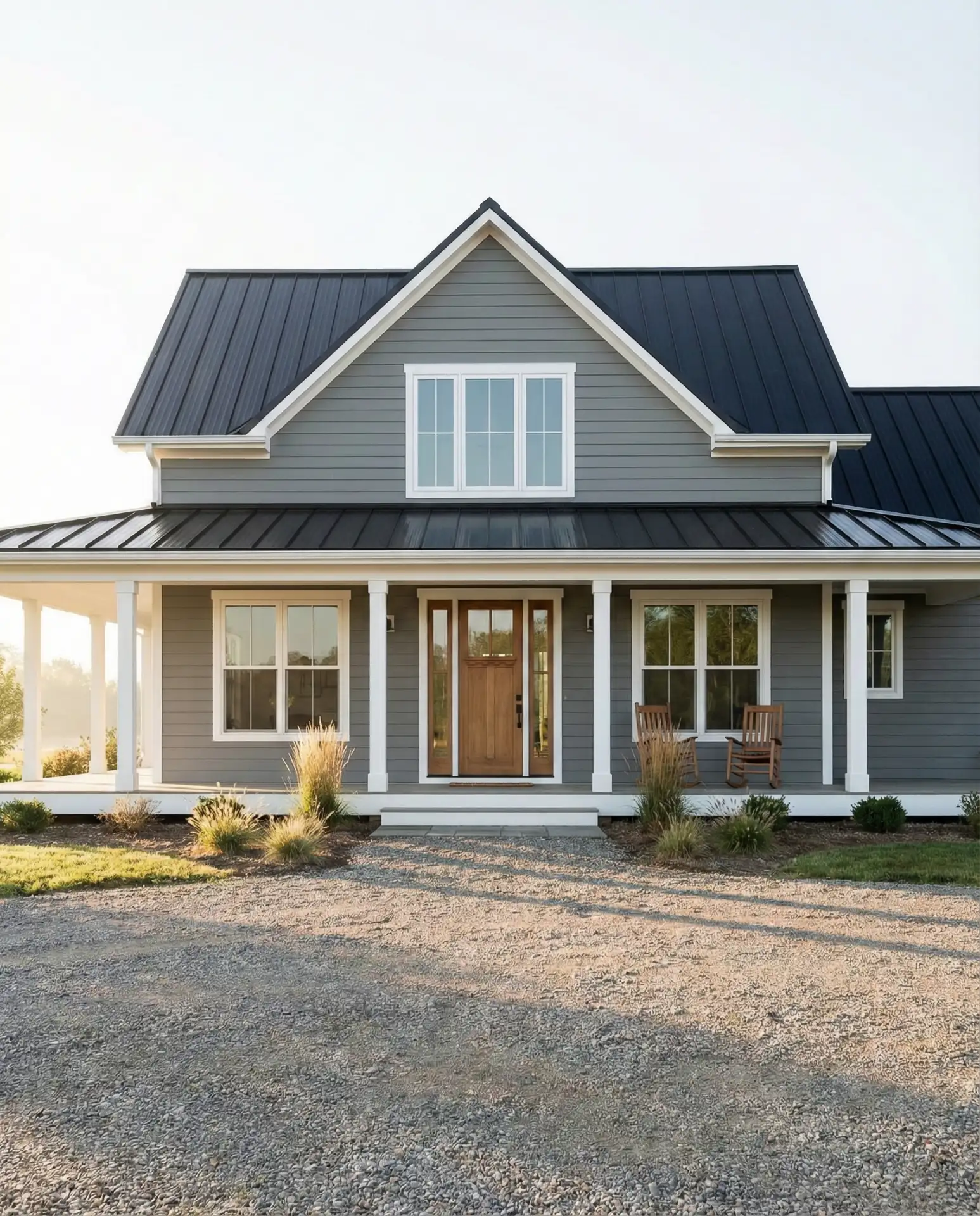
The influence of Bloxburg—a popular building game—has surprisingly seeped into real-world farmhouse design, with homeowners embracing ultra-symmetrical layouts, clean gable rooflines, and balanced window placement. These homes often feature a central front door flanked by evenly spaced windows, a classic porch, and minimal ornamentation. The style is approachable, easy to execute, and universally appealing. It’s especially popular among younger homeowners and DIY builders who want a straightforward, scalable architectural design.
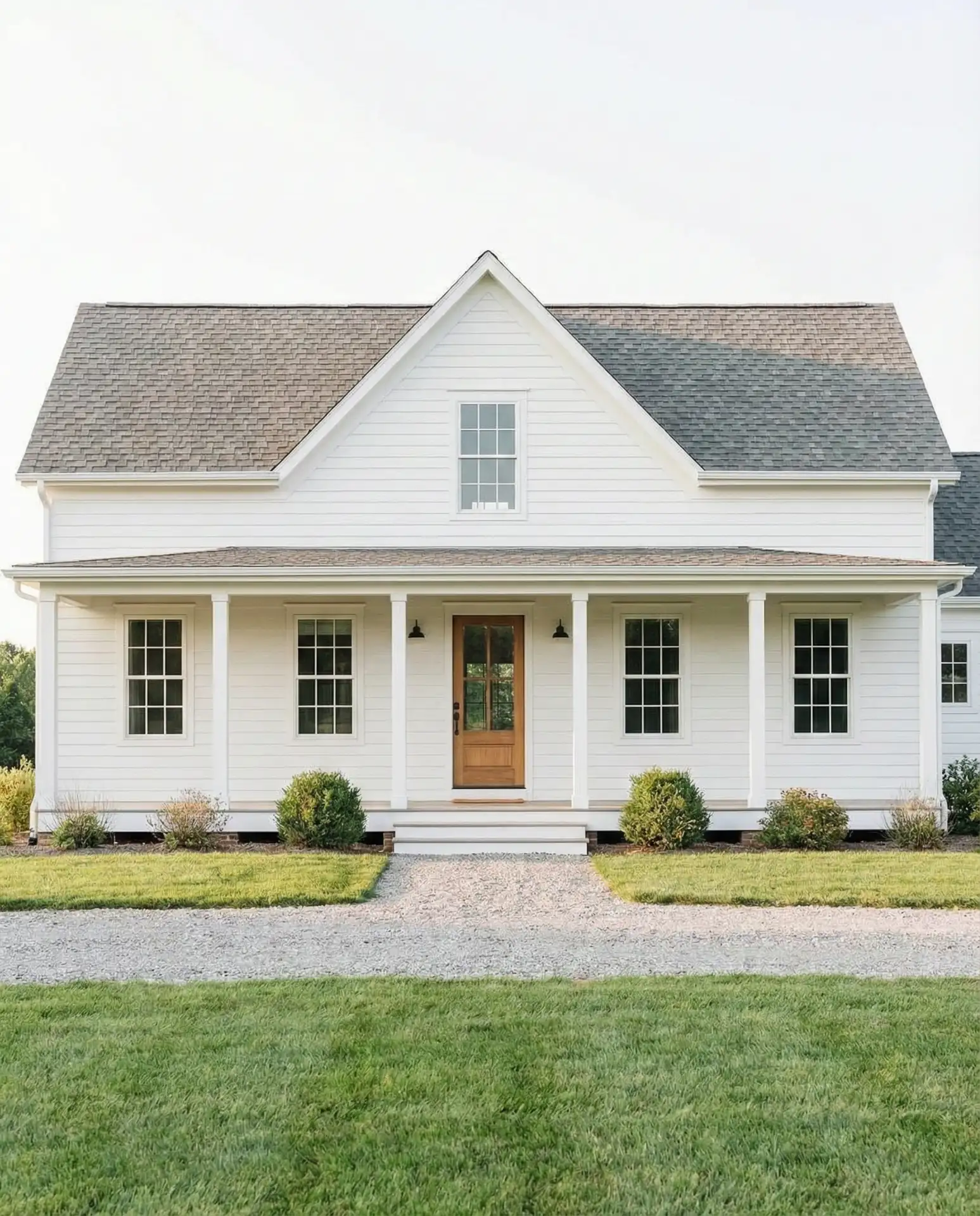
Real homeowner behavior shows that symmetrical designs are easier to furnish and landscape, as the visual balance naturally guides placement of plants, pathways, and outdoor furniture. This style also tends to photograph well from the street, which is a bonus for those who love sharing their home on social media. One thing to avoid: oversimplifying to the point of blandness. Add interest with varied rooflines, a mix of siding textures, or a statement front door to keep the design from feeling too flat.
11. Blue-Gray Farmhouse with White Windows
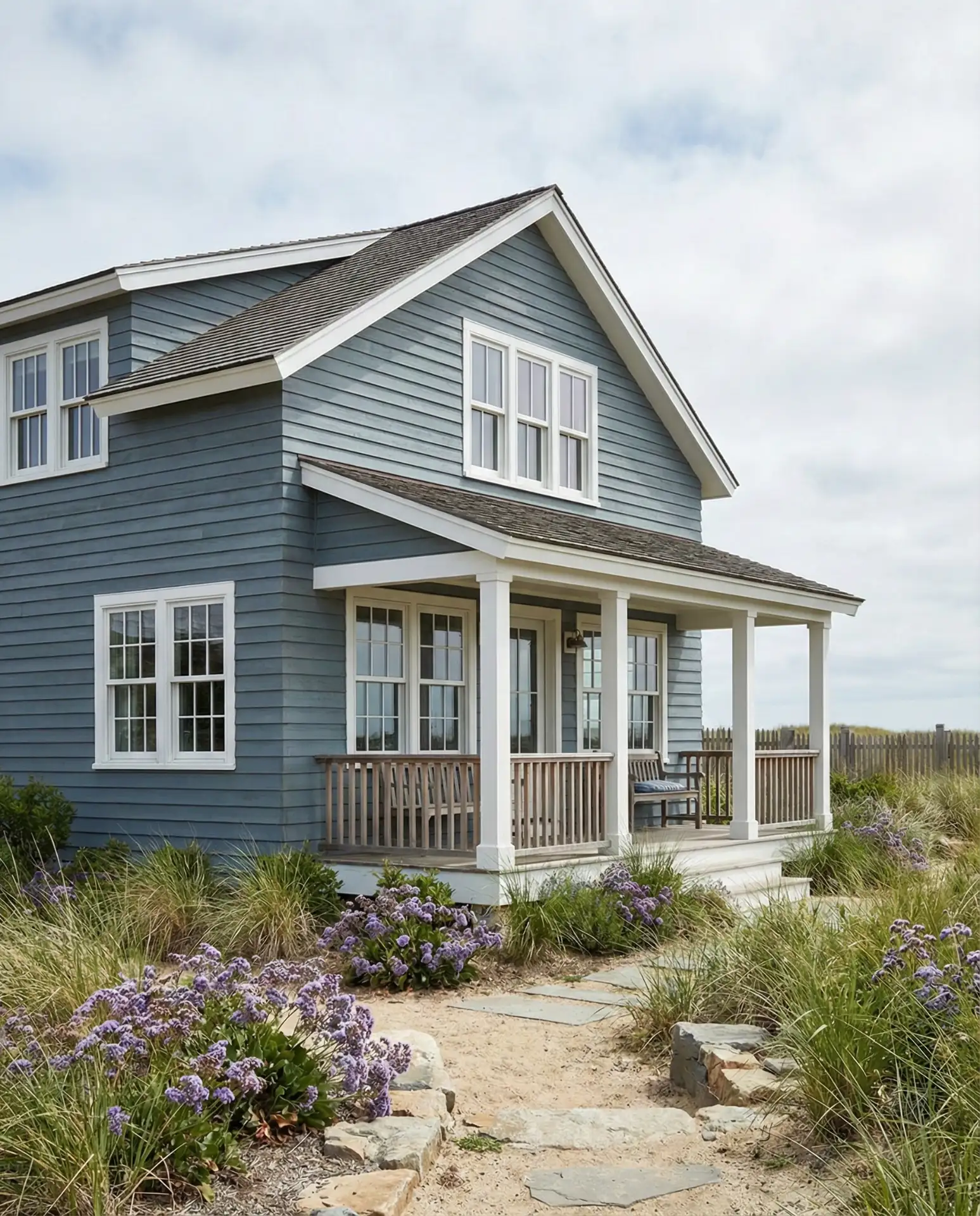
A muted blue-gray exterior offers a fresh, coastal-inspired twist on the traditional farmhouse. When paired with white windows and trim, the result is airy, sophisticated, and full of understated charm. This palette works beautifully in settings with water views, open skies, or abundant natural light. The blue undertones shift subtly throughout the day, appearing cooler in morning light and warmer at dusk. It’s a versatile choice that bridges the gap between classic and contemporary farmhouse aesthetics.
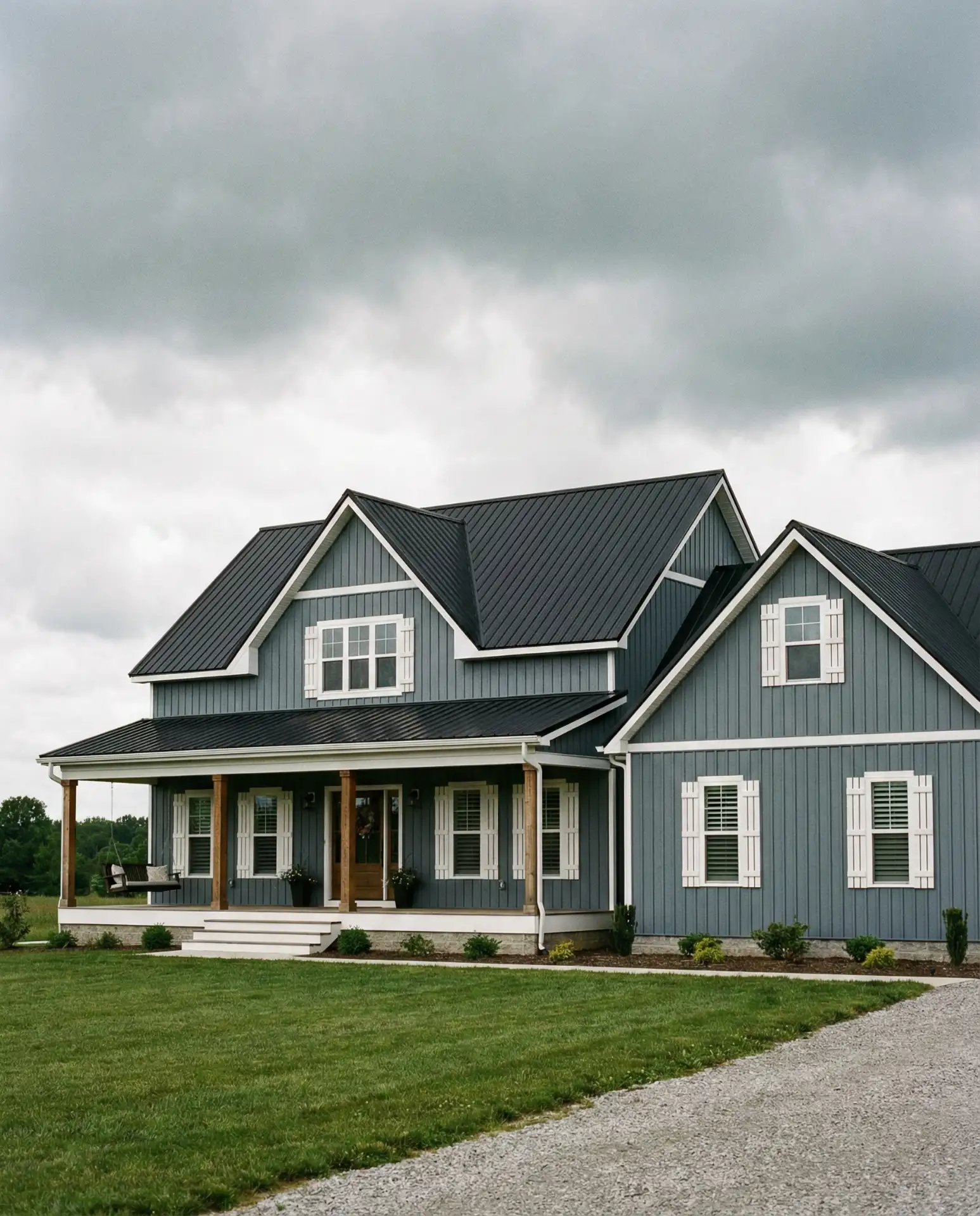
This color scheme is especially popular in the Mid-Atlantic, Pacific Northwest, and coastal California, where homeowners want something softer than stark white but more distinctive than neutral gray. One common mistake is choosing a blue that’s too vibrant—it can read as beach house rather than farmhouse. Stick with muted, grayed-down tones that lean toward slate or pewter. Pair with natural wood accents and soft metallics like brushed nickel or aged brass for a cohesive, elevated look.
12. Rustic Reclaimed Wood Gable Accent
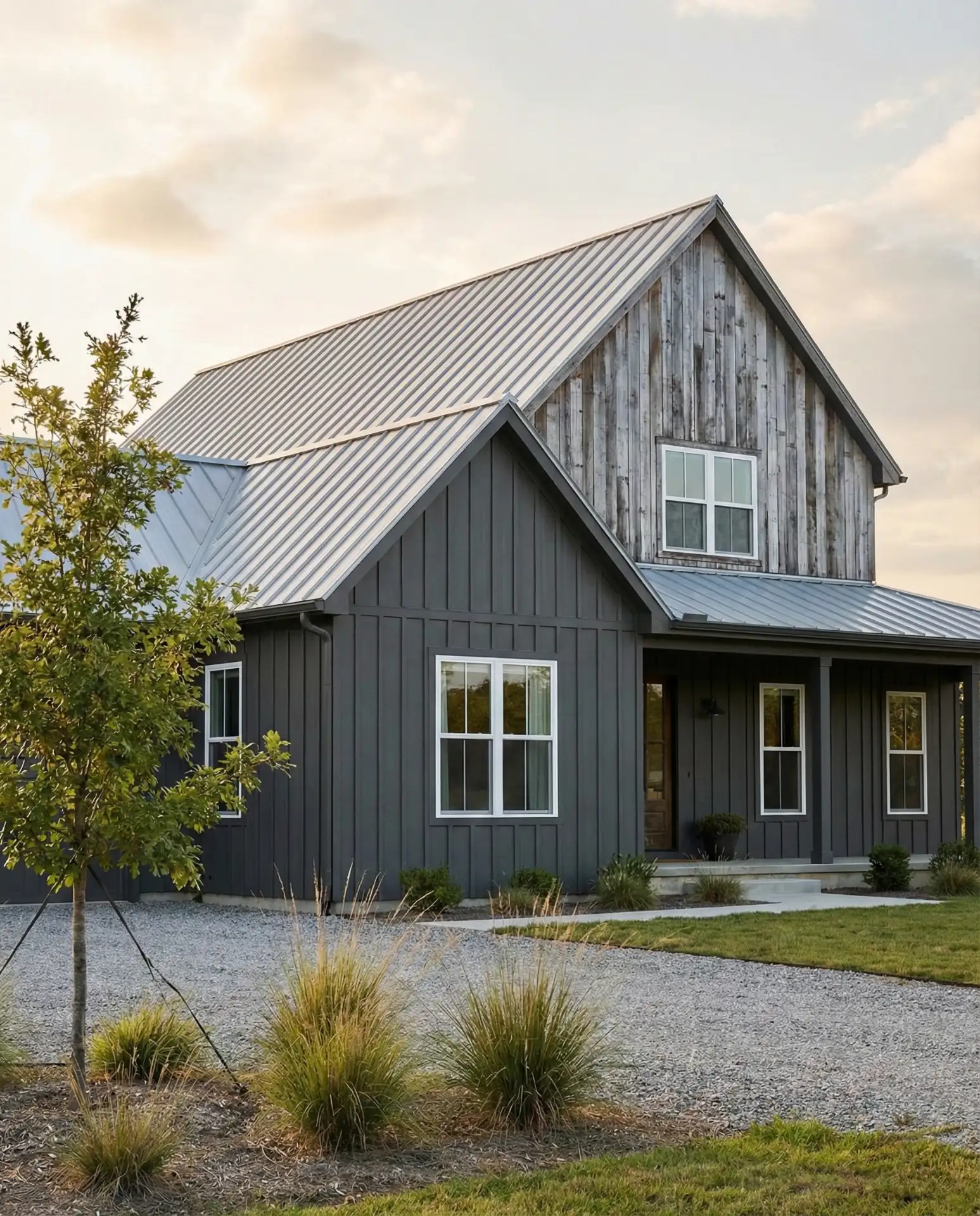
Adding a reclaimed wood accent to a gable end or porch ceiling introduces instant rustic character and warmth. This detail works especially well on otherwise simple exteriors, providing a focal point that tells a story and adds handcrafted charm. The weathered texture and varied tones of reclaimed wood contrast beautifully with smooth painted siding, creating visual interest without overwhelming the overall design. It’s a detail that feels both intentional and organic, as though the home has been loved and lived in for generations.
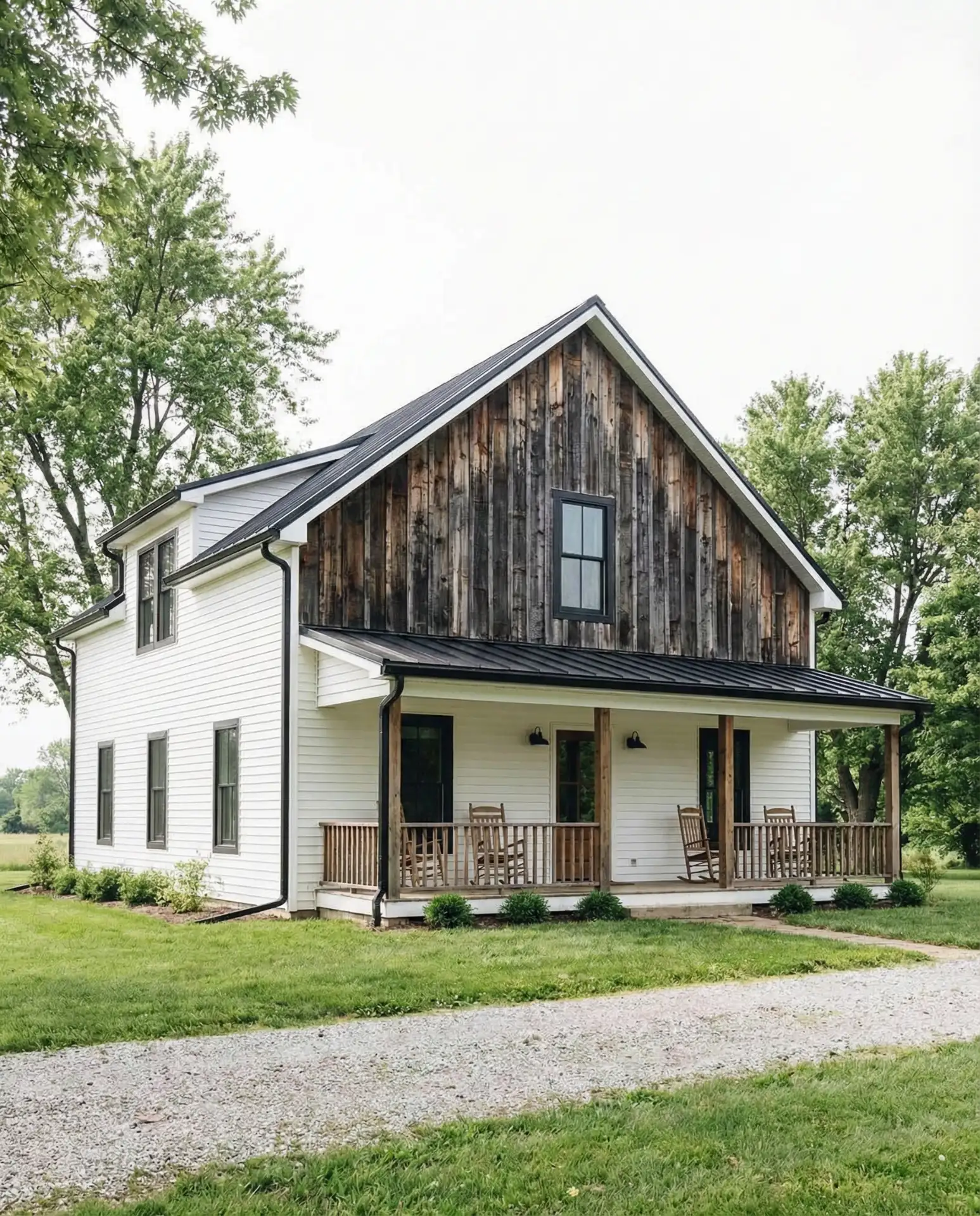
Where it works best: homes with strong architectural lines and minimal ornamentation, where the wood accent can truly shine. It’s also ideal for properties that want to honor agricultural history or reference barn structures. A small tip from experienced builders: seal reclaimed wood properly to protect against moisture and insect damage, especially in humid climates. This detail often becomes a conversation starter and a defining feature that sets the home apart from cookie-cutter builds.
13. Mid-Century Modern Farmhouse Hybrid
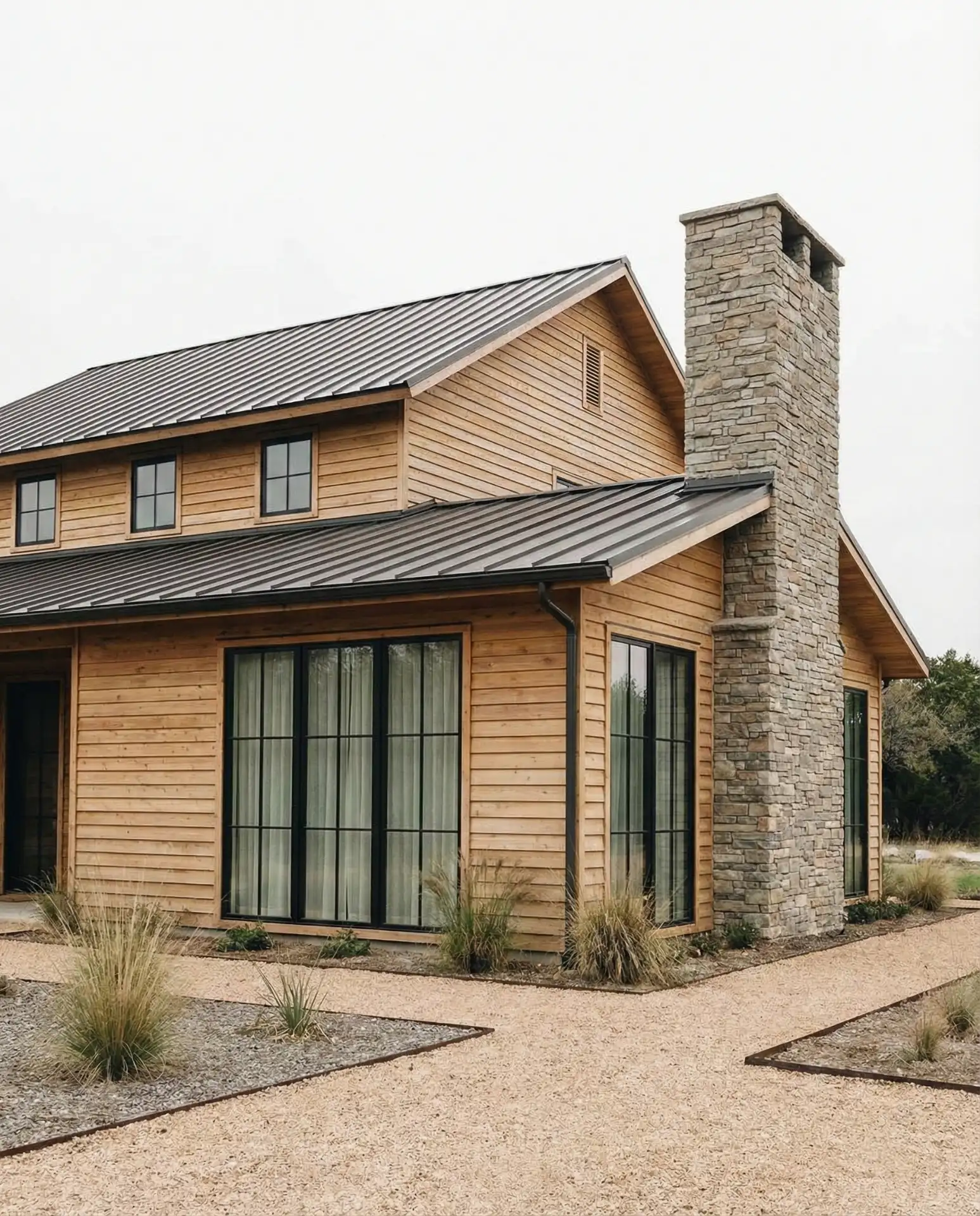
The mid-century modern influence is quietly reshaping farmhouse exteriors, blending flat or low-pitched rooflines, horizontal siding, and expansive windows with traditional farmhouse warmth. This hybrid style embraces clean geometry and natural materials while maintaining the approachable, grounded quality of classic farmhouse architectural designs. Think warm wood siding, stone accents, and large picture windows that blur the line between indoors and out. It’s a fresh take that appeals to homeowners who want something distinctive and rooted in mid-20th-century design principles.
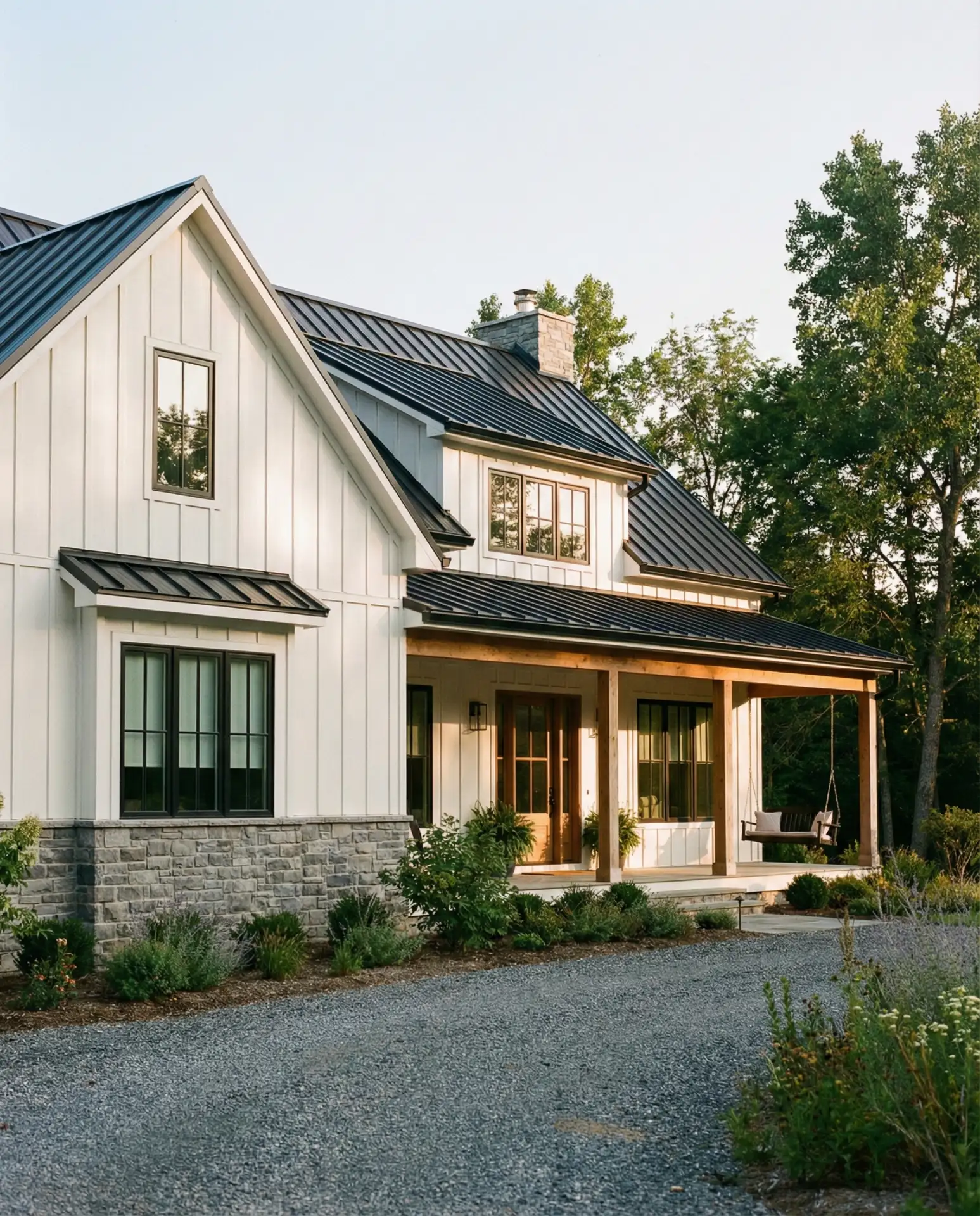
This style thrives in the Southwest, Southern California, and parts of the Pacific Northwest, where mid-century architecture has deep roots. Homeowners in these regions often blend vintage and contemporary elements—think Eichler-inspired rooflines with farmhouse porches or clerestory windows with board and batten siding. The key is restraint: avoid overcrowding the facade with too many styles. Let the clean lines and natural materials do the talking, and keep color palettes earthy and subdued.
14. Soft White with Natural Stone Foundation
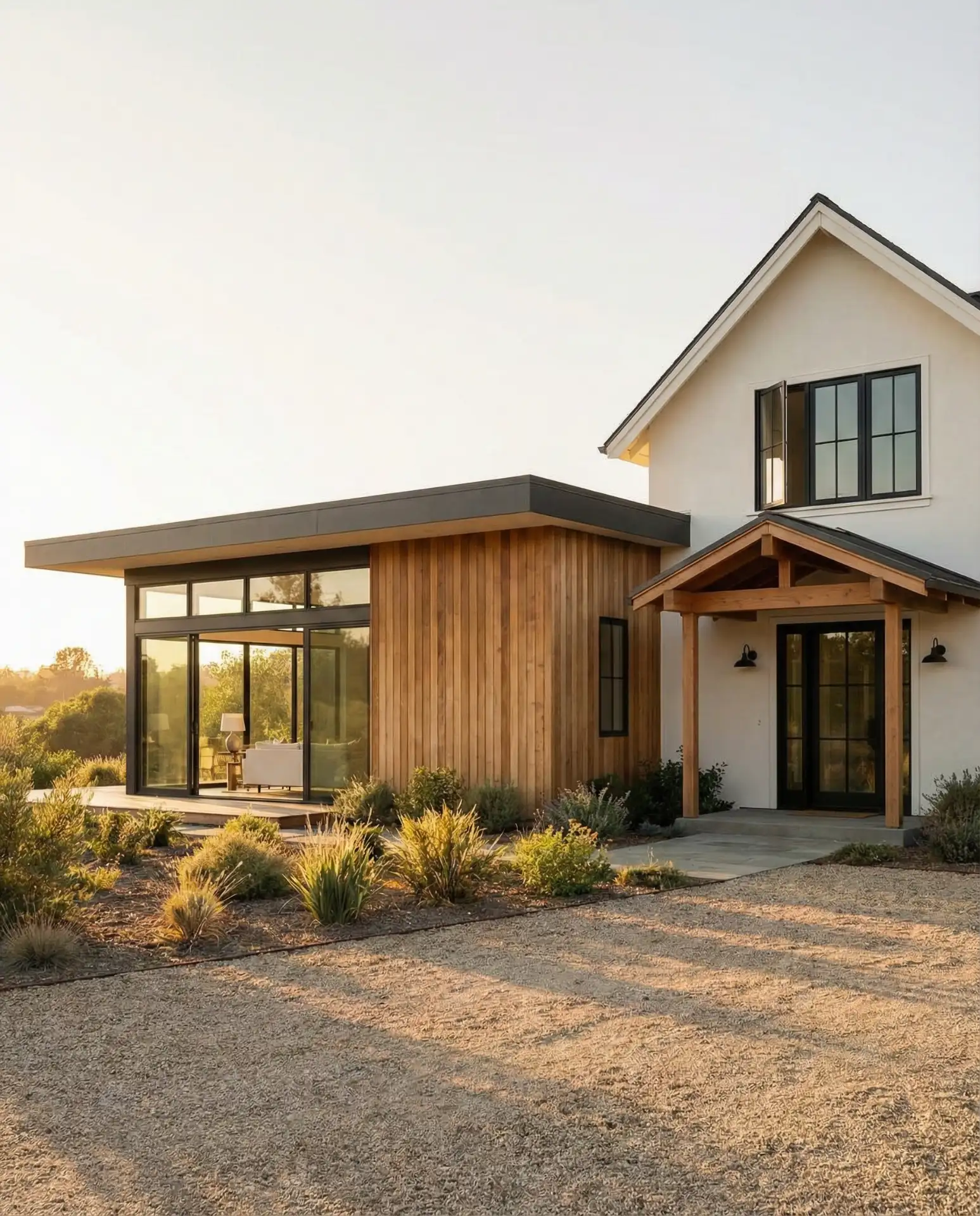
A soft white upper exterior paired with a natural stone foundation creates a look that’s both elegant and grounded. The stone base adds texture, visual weight, and a sense of permanence, while the white siding keeps the overall feel light and fresh. This combination is especially effective on sloped lots or homes with walkout basements, where the stone serves both aesthetic and structural purposes. It’s a classic pairing that feels equally at home in New England, the Midwest, or the South.
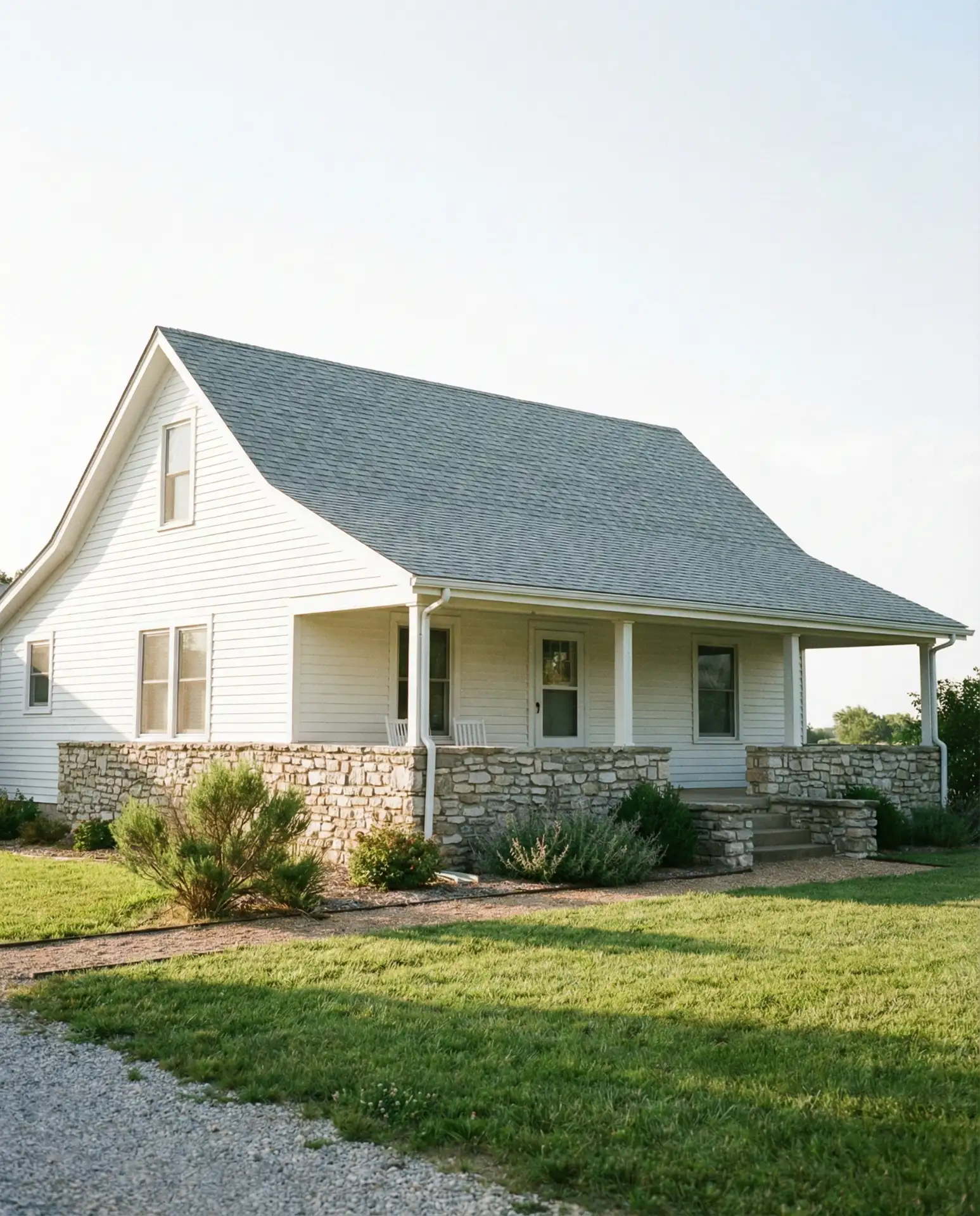
Real homeowners appreciate this design for its durability and low-maintenance qualities—the stone foundation is virtually indestructible and requires no painting or sealing. It also helps anchor the home visually, especially on larger properties where the structure might otherwise feel disconnected from the land. Pair with warm metal accents, simple landscaping, and understated lighting to let the materials take center stage. Avoid overly ornate stone patterns—simple, stacked, or ledgestone profiles work best for a modern farmhouse aesthetic.
15. Black Metal Roof with Light Gray Siding
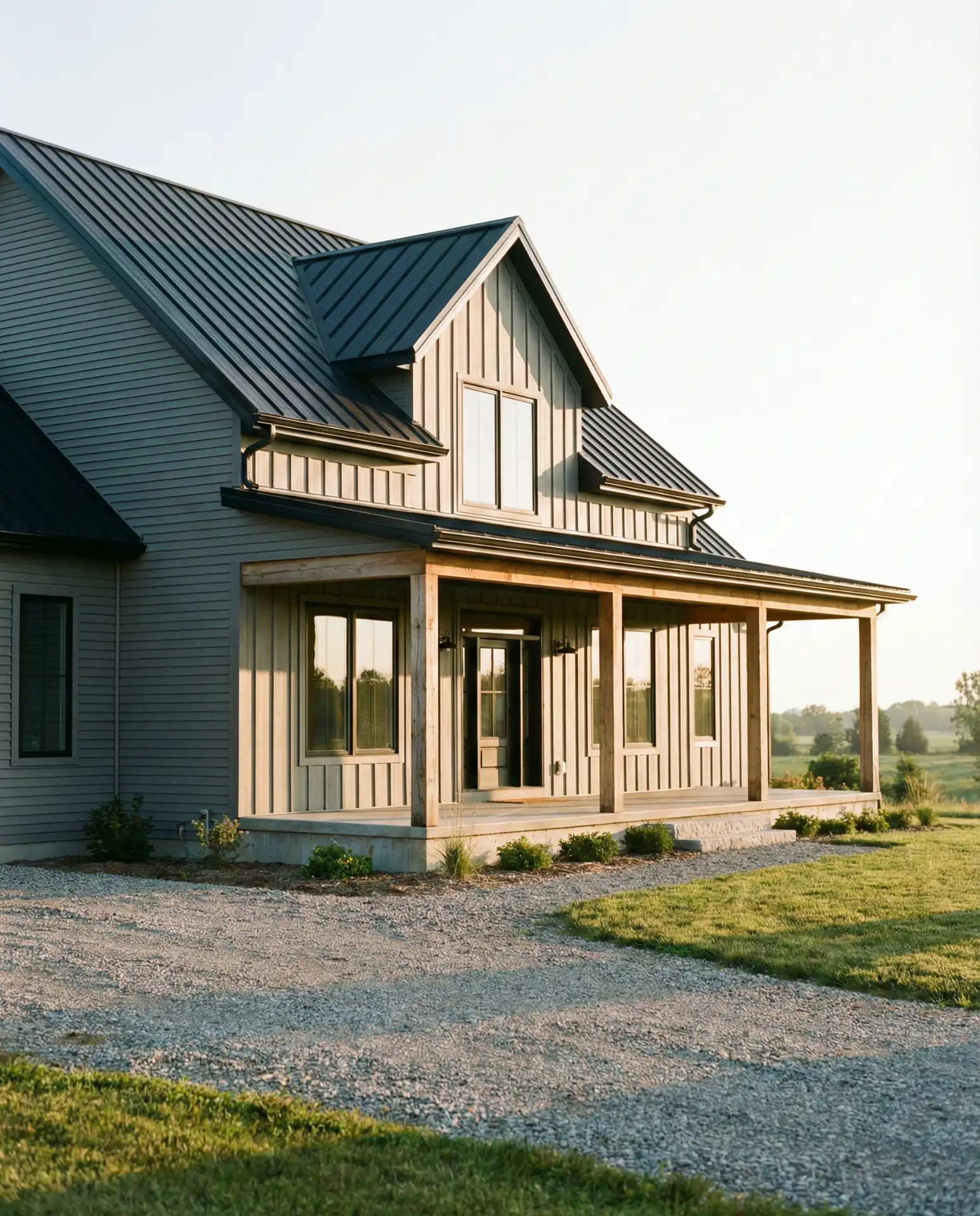
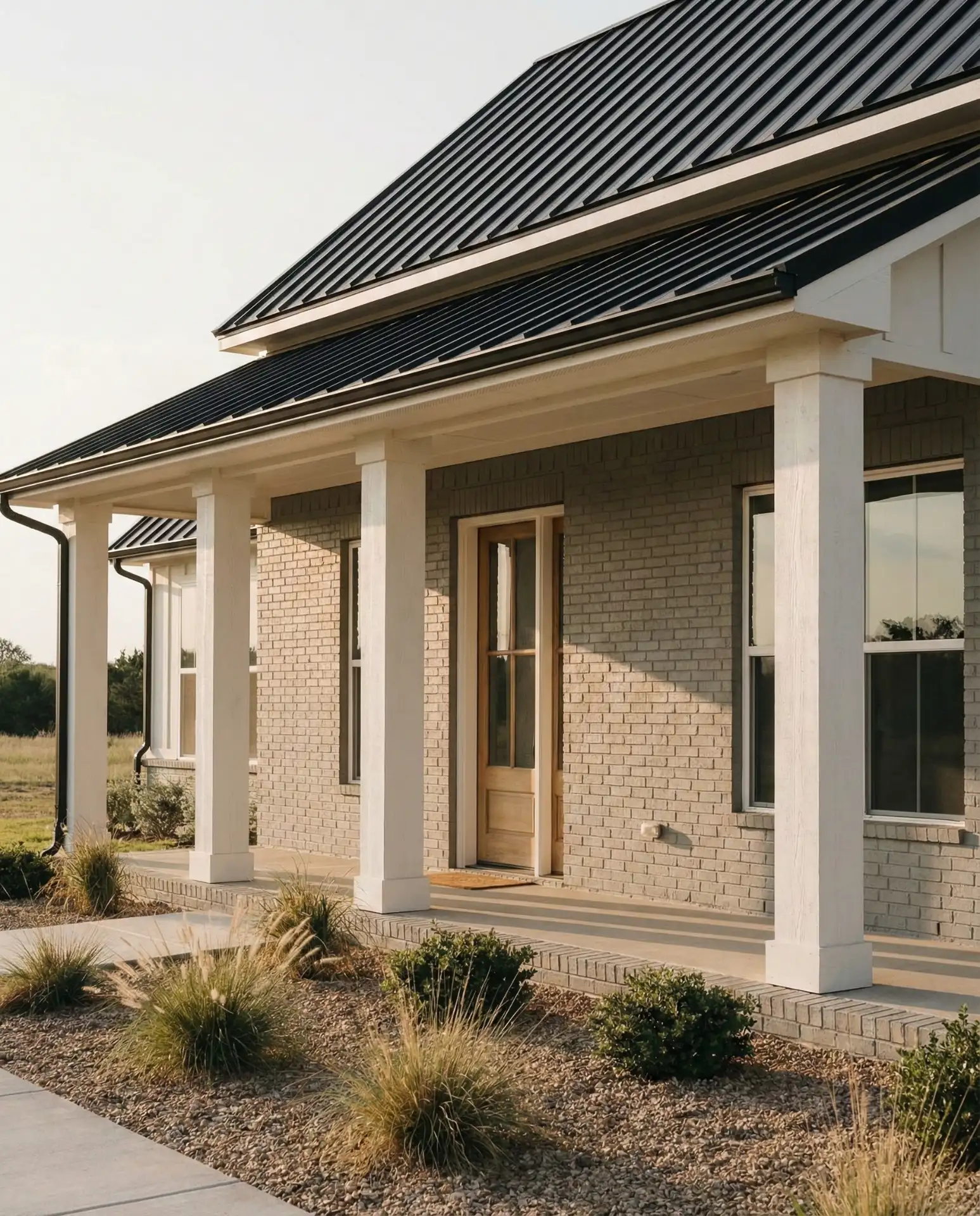
A black metal roof paired with light gray siding is a winning combination that balances drama with neutrality. The roof adds a bold, graphic quality, while the soft gray walls keep the overall palette grounded and versatile. This pairing is incredibly popular in 2026 for its modern edge and long-term durability. Metal roofs reflect heat, resist weather damage, and last decades with minimal maintenance. The black color also creates a striking contrast against open skies, making the home feel intentional and well-designed.
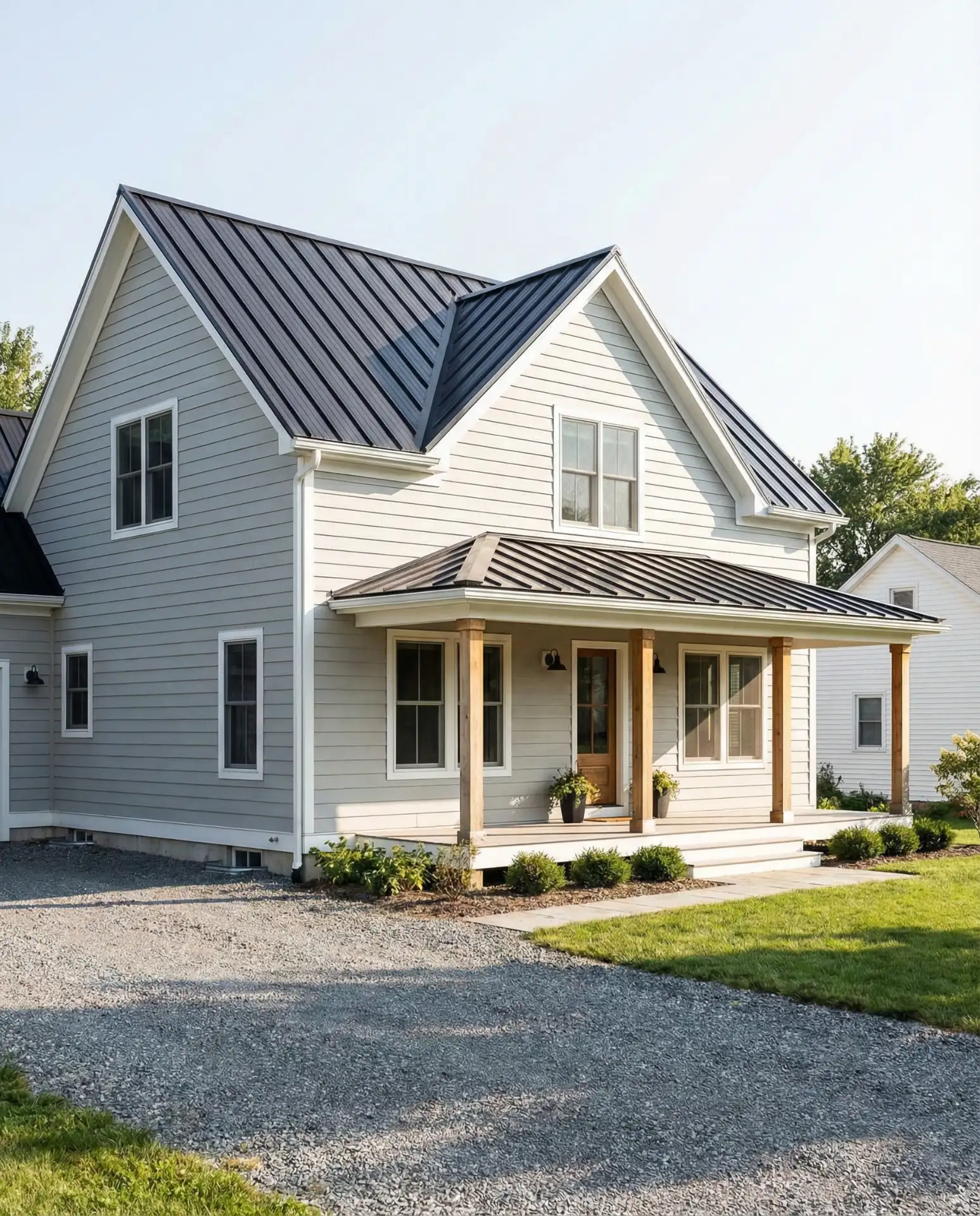
A practical insight: black metal roofs do absorb more heat than lighter colors, so they’re best suited for climates with moderate summers or homes with excellent attic insulation and ventilation. In states like Colorado, Montana, or the Carolinas, this combination is widely used because the roof sheds snow easily and looks sharp year-round. Pair with simple lighting fixtures—wall sconces, barn lights, or understated pendant lamps—to keep the focus on the architecture rather than the accessories.
16. Charcoal Siding with White Stone Chimney
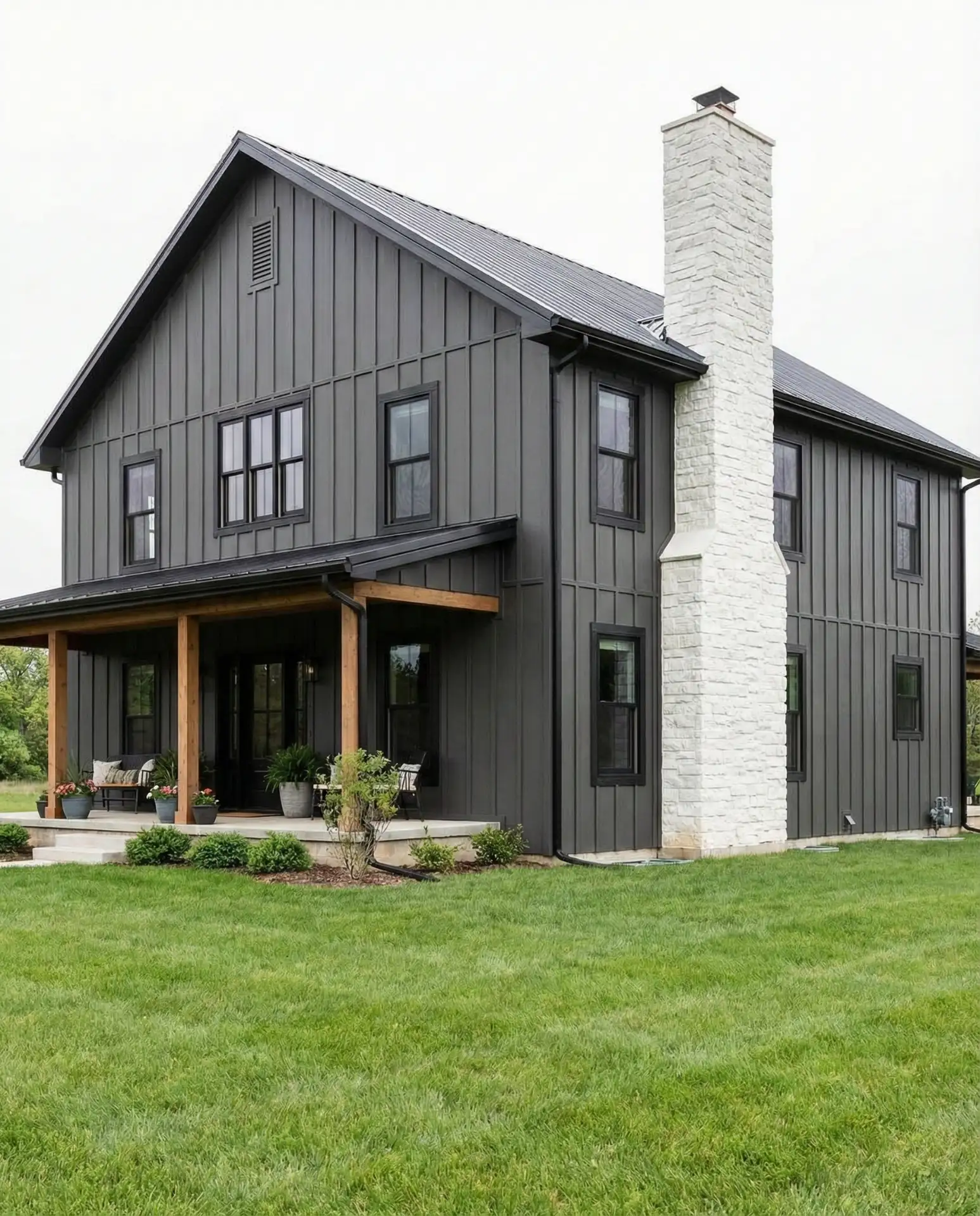
A dark charcoal exterior punctuated by a white-painted or natural light-toned stone chimney creates a bold, memorable focal point. This contrast draws the eye upward and adds vertical interest to the facade. The dark siding provides a dramatic backdrop, while the lighter chimney introduces texture and warmth. It’s a design strategy that works beautifully on two-story homes or structures with prominent rooflines, and it’s especially striking in settings with evergreen trees or open landscapes.
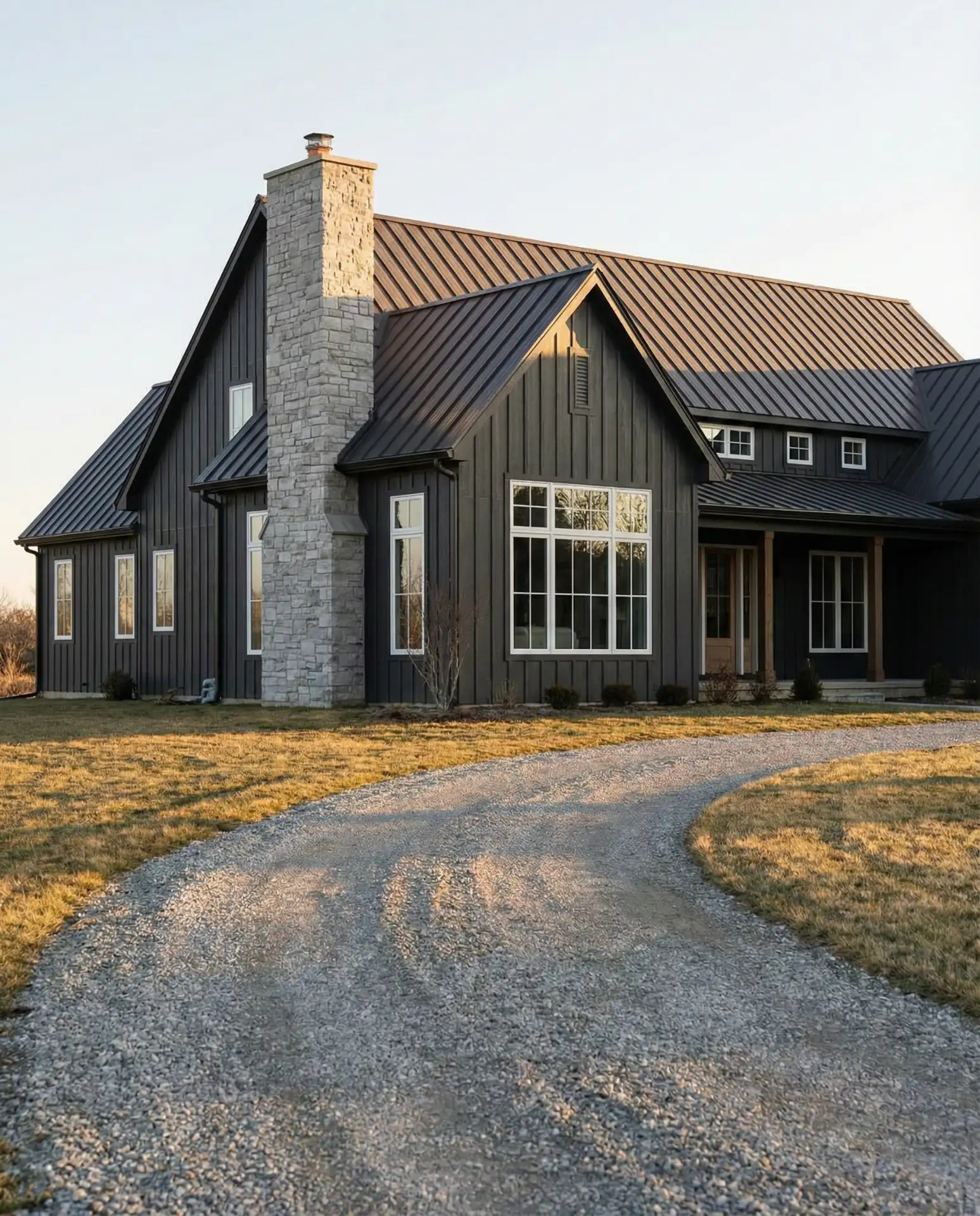
This design choice works best in rural or semi-rural settings where the home has room to breathe and the chimney can serve as a true landmark. In suburban neighborhoods, it can feel overly dramatic unless balanced with softer landscaping and warm outdoor lighting. One common mistake is choosing a stone that’s too bright or too glossy—opt for matte finishes and natural tones to maintain the farmhouse’s grounded, authentic character. This combination also photographs beautifully in all seasons.
17. Cream Siding with Soft Green Door
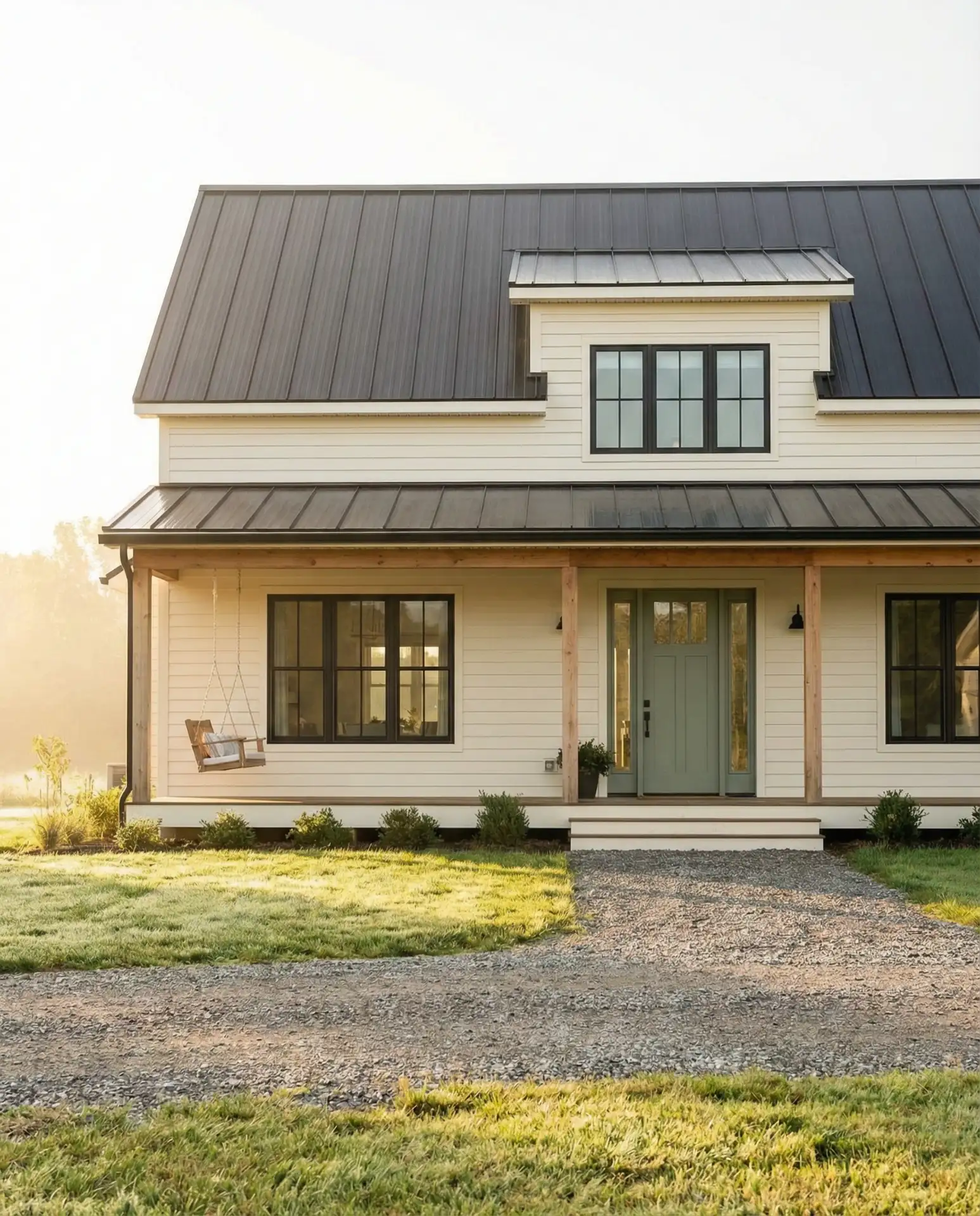
A warm cream exterior with a soft green door creates a welcoming, garden-inspired aesthetic that feels both timeless and on-trend. The cream serves as a neutral, versatile base, while the green door adds personality and a touch of nature-inspired color. This pairing works beautifully in cottage-style farmhouses, suburban settings, or anywhere you want a home that feels approachable and cheerful. The green can range from sage to olive to muted eucalyptus, depending on your color palettes and surrounding landscape.
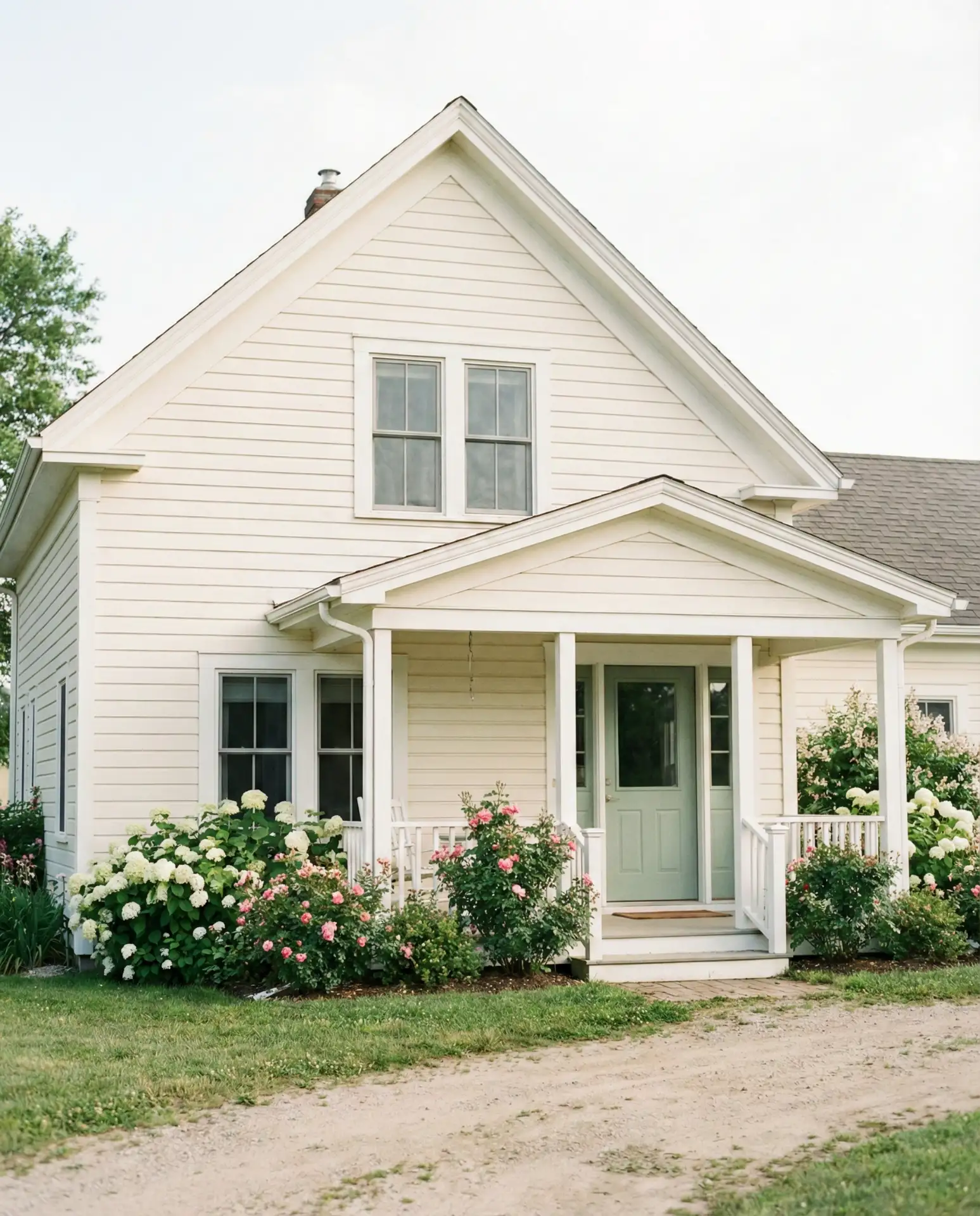
Where it works best: neighborhoods with lush landscaping, tree-lined streets, or coastal communities where soft, earthy tones blend seamlessly with the environment. Real homeowners often choose this palette because it’s forgiving—it hides dirt better than pure white and doesn’t show wear as quickly as darker colors. To complete the look, add simple planters, a natural fiber doormat, and warm brass or bronze hardware. This is a classic American farmhouse look that never goes out of style.
18. White Windows with Dark Trim and Siding
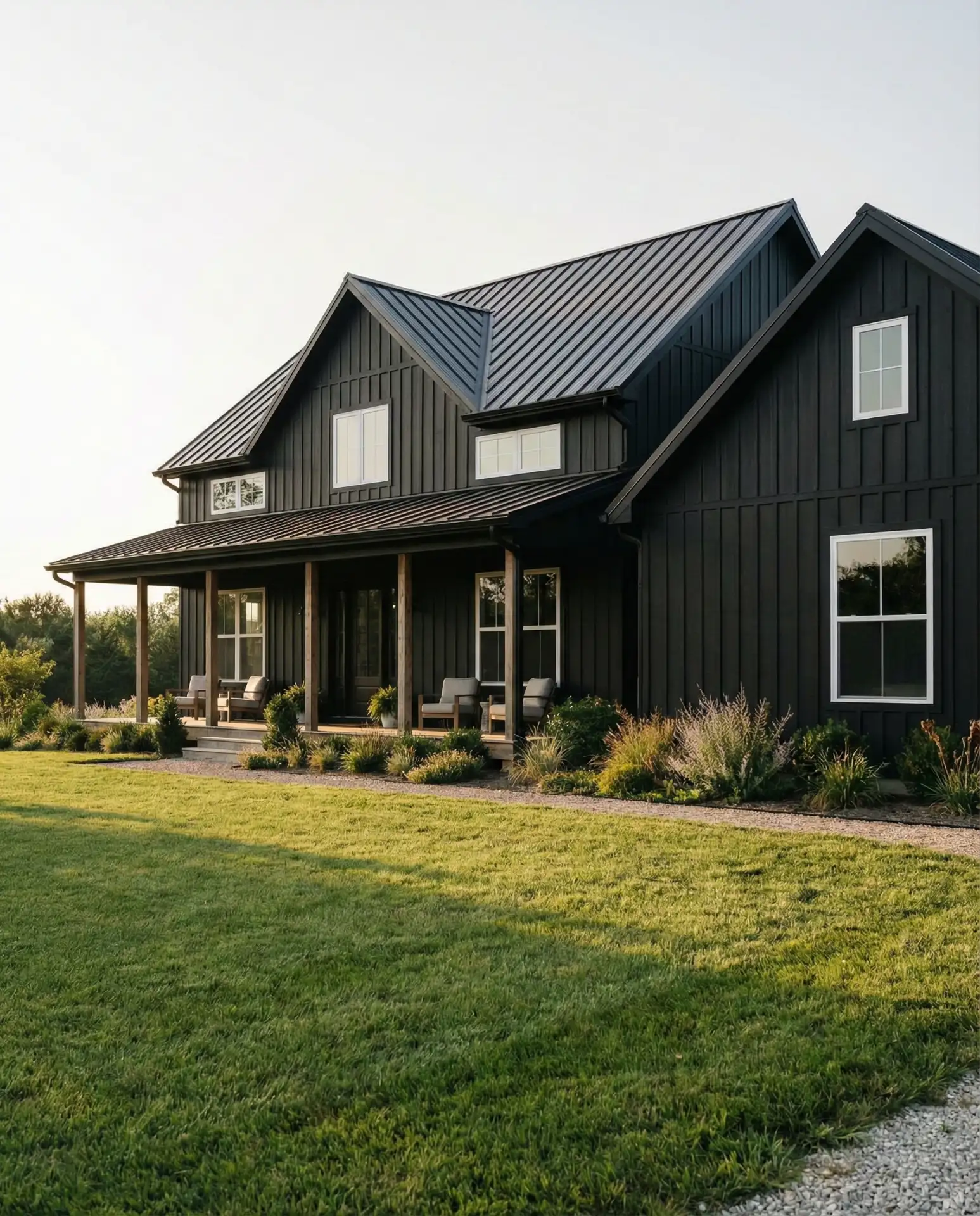
Reversing the typical contrast—white windows set against dark siding and trim—creates a fresh, unexpected look that feels modern and architectural. The white frames act as bright, graphic elements that punctuate the facade, drawing attention to the home’s fenestration and proportions. This approach works especially well on contemporary farmhouses with clean lines and minimal ornamentation. It’s a bold move that challenges convention while maintaining the warmth and approachability of farmhouse design.
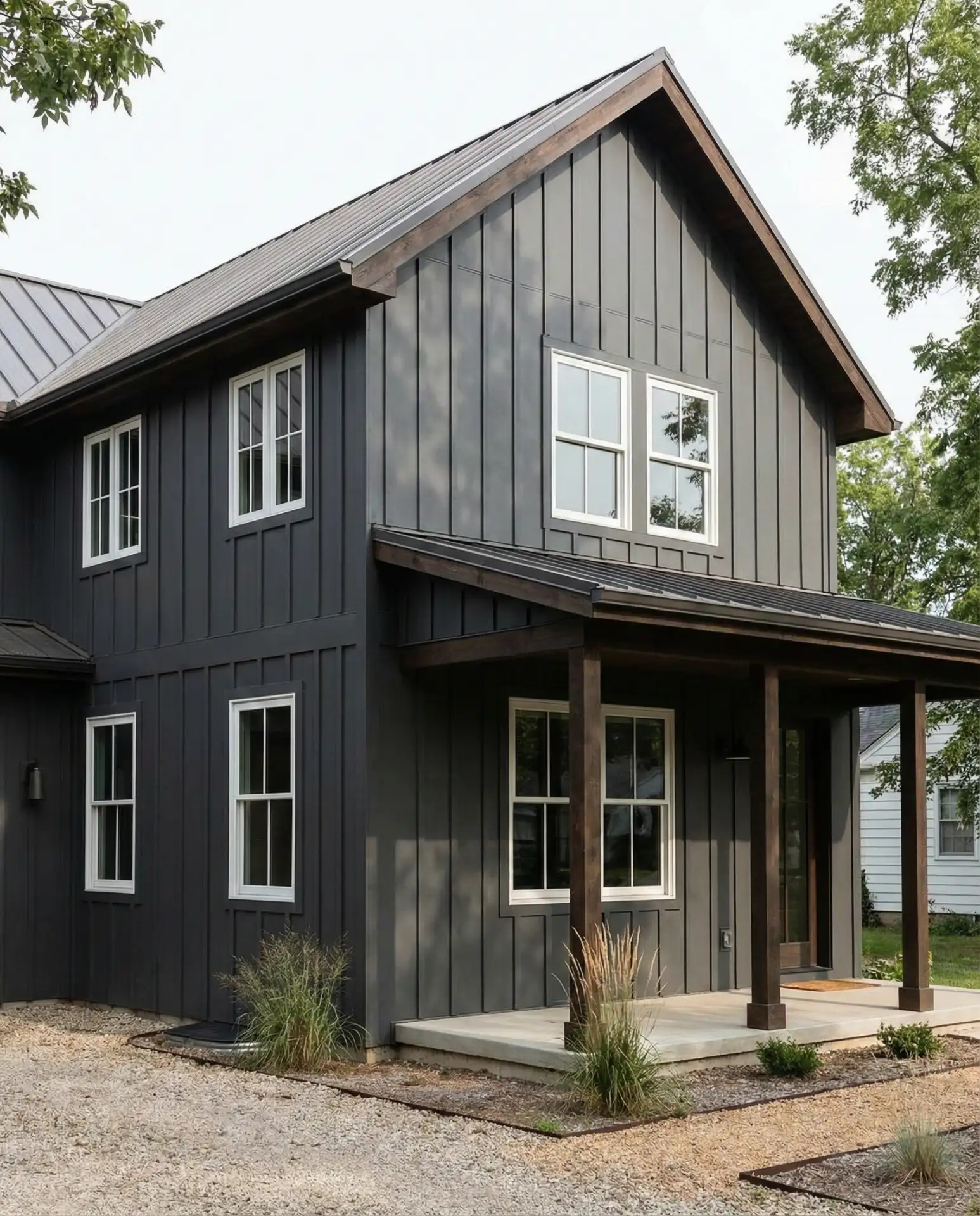
Expert commentary: this look is gaining traction in urban and suburban areas where homeowners want something distinctive but not overly trendy. The white windows stand out beautifully against charcoal, navy, or deep brown siding, and they photograph exceptionally well. One thing to note—white frames require regular cleaning in dusty or pollen-heavy areas to maintain their crisp appearance. Pair this palette with simple, modern landscaping and understated lighting to keep the focus on the striking window contrast.
19. Warm Taupe with Black Accents
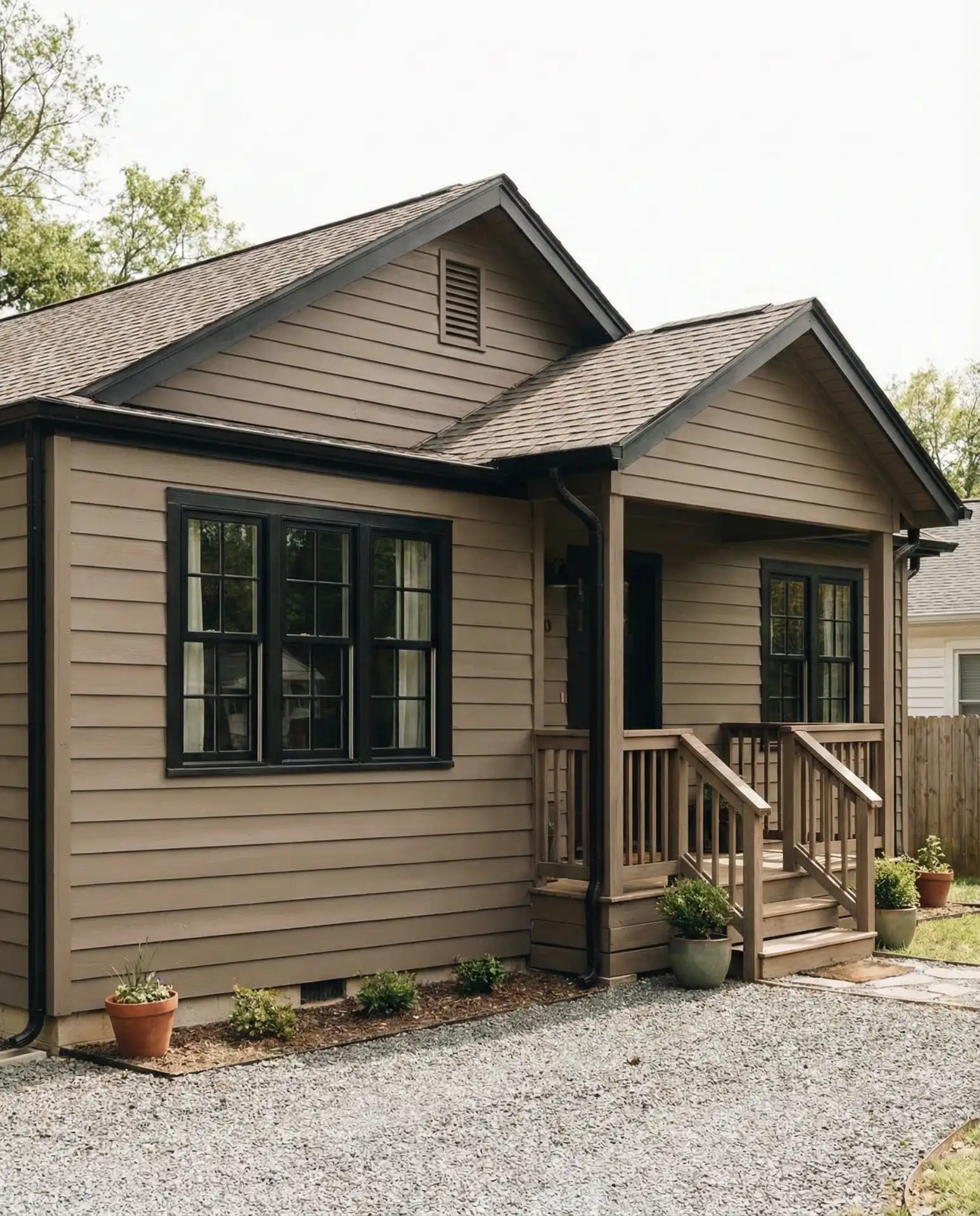
Warm taupe—a sophisticated blend of gray, beige, and soft brown—is emerging as a favorite neutral for farmhouse exteriors in 2026. When paired with black accents like window frames, light fixtures, and gutters, it creates a refined, understated elegance. This palette is incredibly versatile, working in both rural and suburban settings, and it complements a wide range of roofing materials and landscaping styles. The warmth in the taupe keeps the home from feeling cold or sterile, while the black adds a contemporary edge.
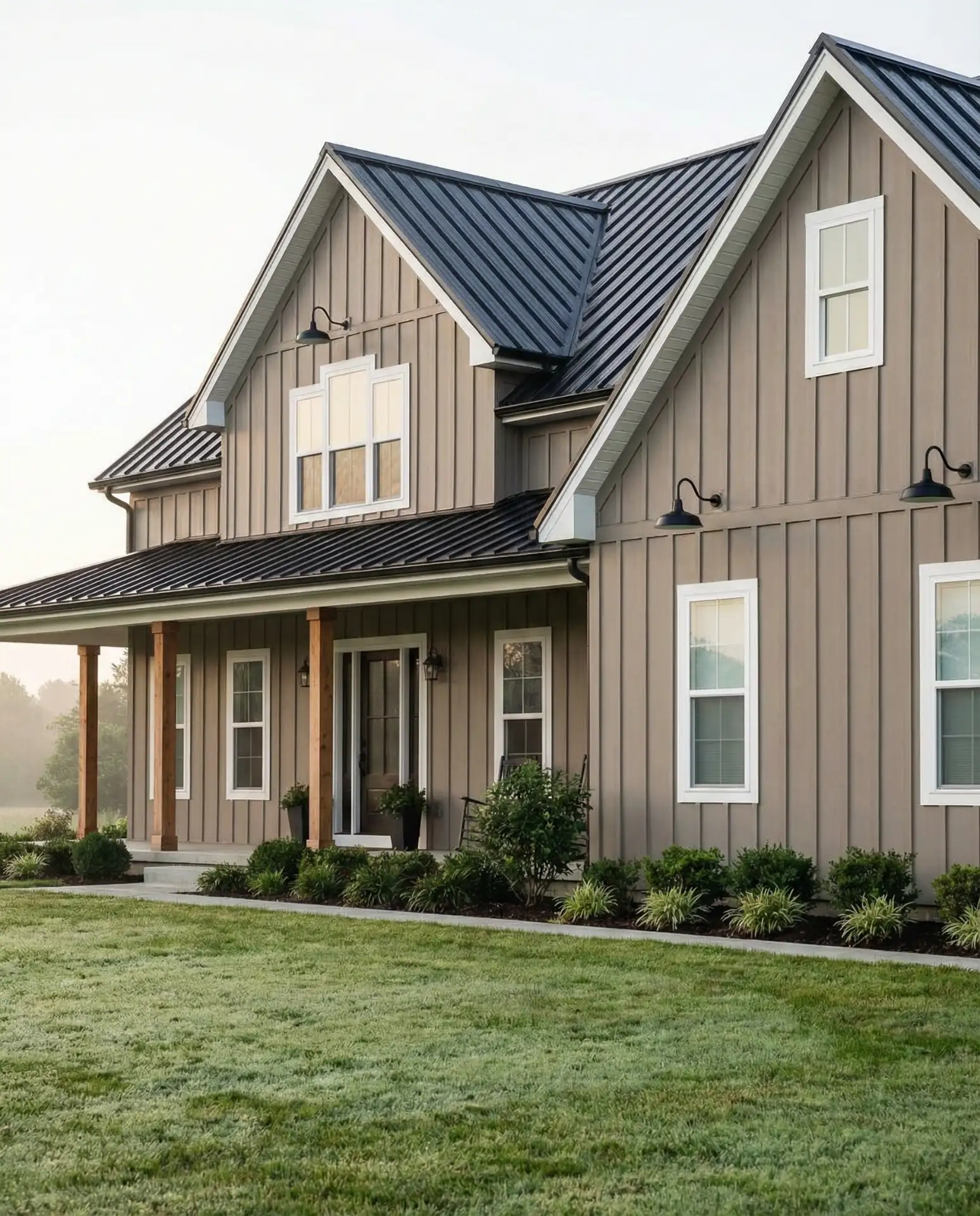
A micro anecdote: a friend in Austin recently repainted her farmhouse in warm taupe and was amazed at how well it hid Texas dust and pollen. The color also helped the home blend beautifully with the surrounding limestone and live oak trees. Budget-wise, taupe is a smart choice because it’s timeless—it won’t feel dated in five years, and it appeals to a broad range of tastes. Pair with natural wood accents, soft metals like brass or copper, and lush greenery to maximize the warmth and livability of this palette.
20. Navy Blue with White Trim and Copper Details
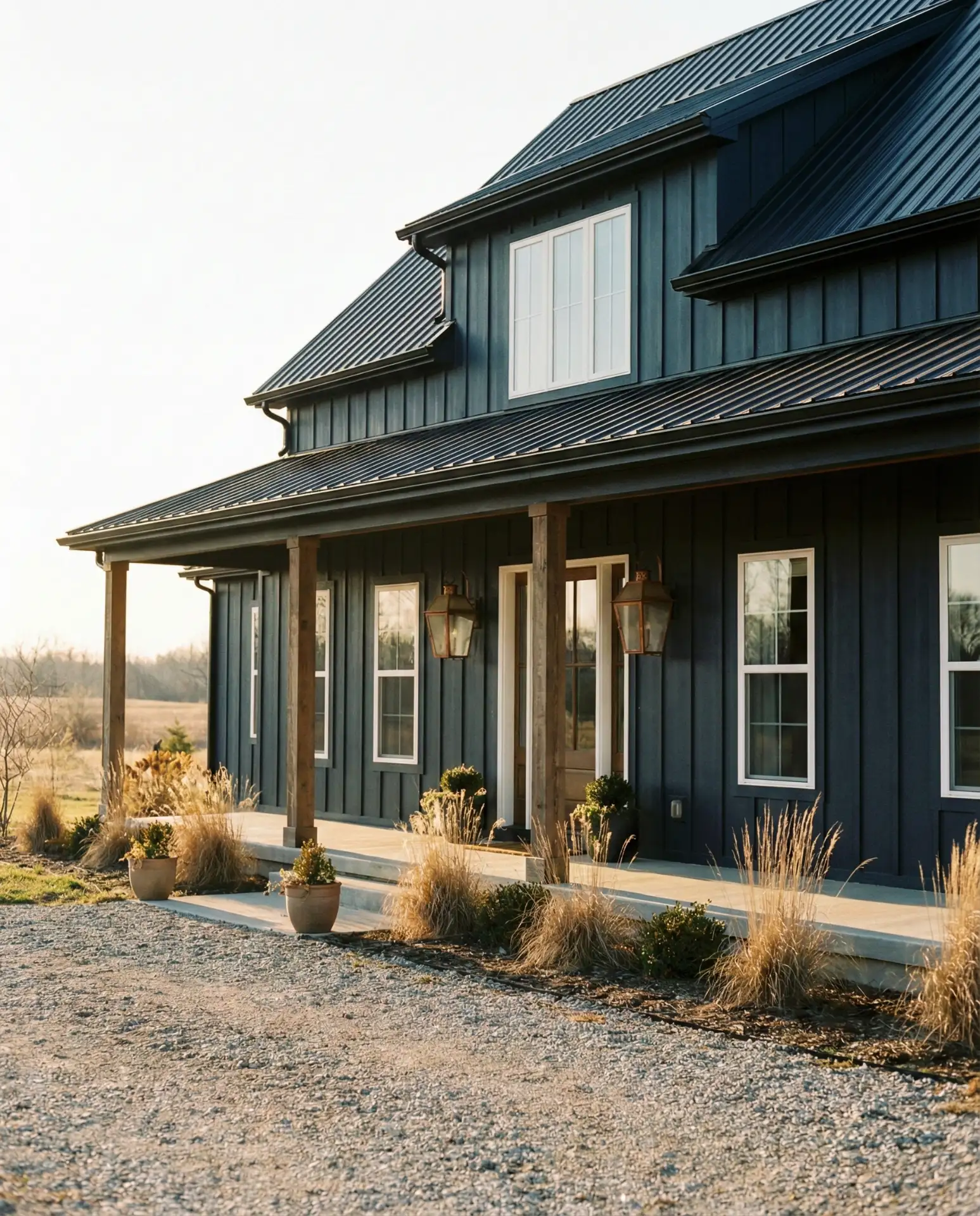
Deep navy blue is a dramatic yet classic choice for farmhouse exteriors, offering richness and depth that goes beyond traditional black and white schemes. When paired with crisp white trim and warm copper accents—think gutters, light fixtures, or downspouts—the result is sophisticated, distinctive, and full of personality. Navy reads as both bold and grounded, and it shifts beautifully in different lighting conditions, appearing almost black at dusk and rich blue in full sun. This is a palette for homeowners who want to make a statement while staying rooted in farmhouse tradition.
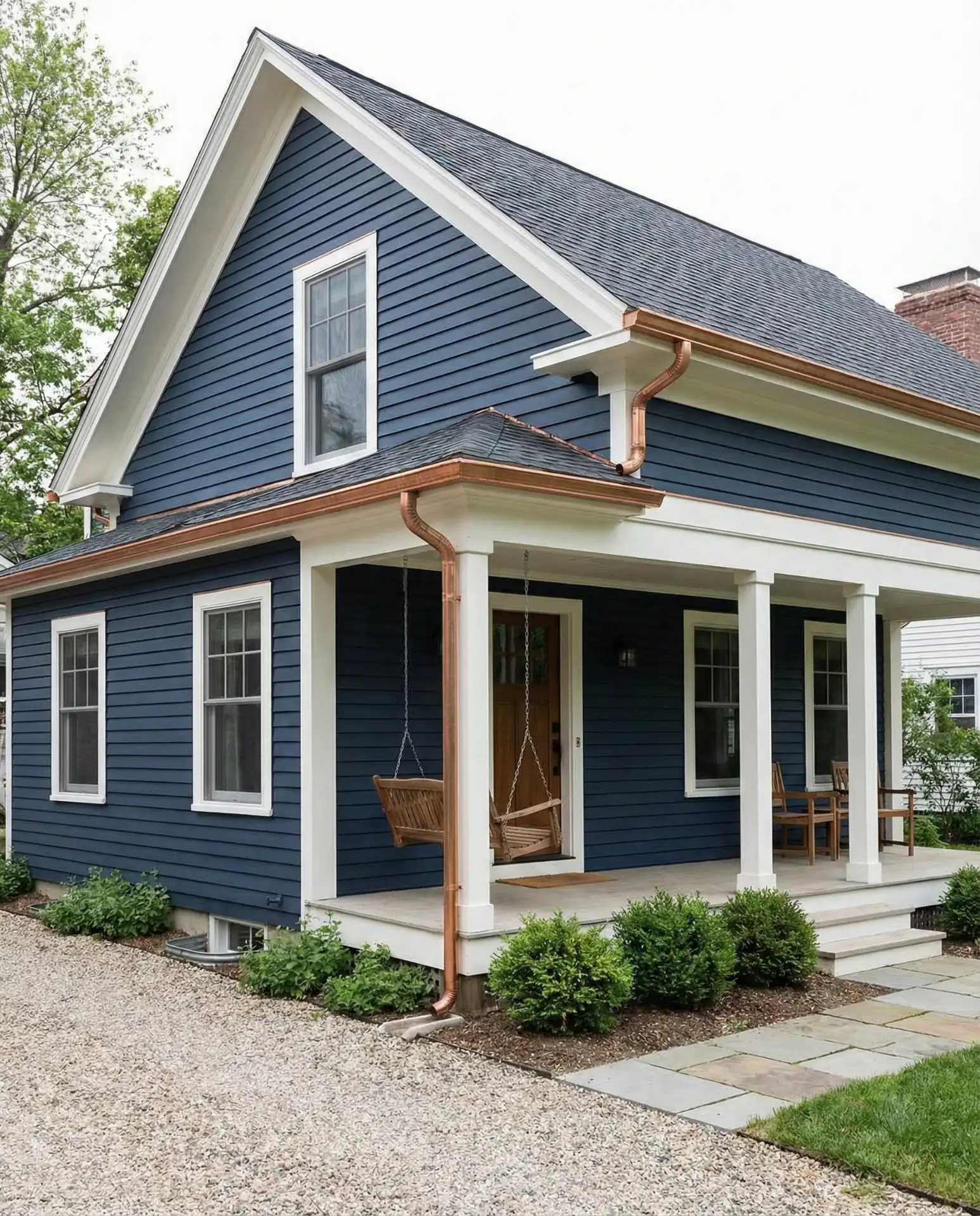
In coastal areas and New England, navy blue exteriors are especially popular for their maritime heritage and timeless appeal. The copper accents develop a beautiful patina over time, adding to the home’s character and story. One common mistake is pairing navy with cool-toned metals like chrome or stainless steel—it can feel disjointed. Instead, stick with warm metals like copper, brass, or oil-rubbed bronze. This color scheme also pairs beautifully with natural wood tones and classic white shutters for a truly cohesive look.
21. Gray and White Gable Combinations
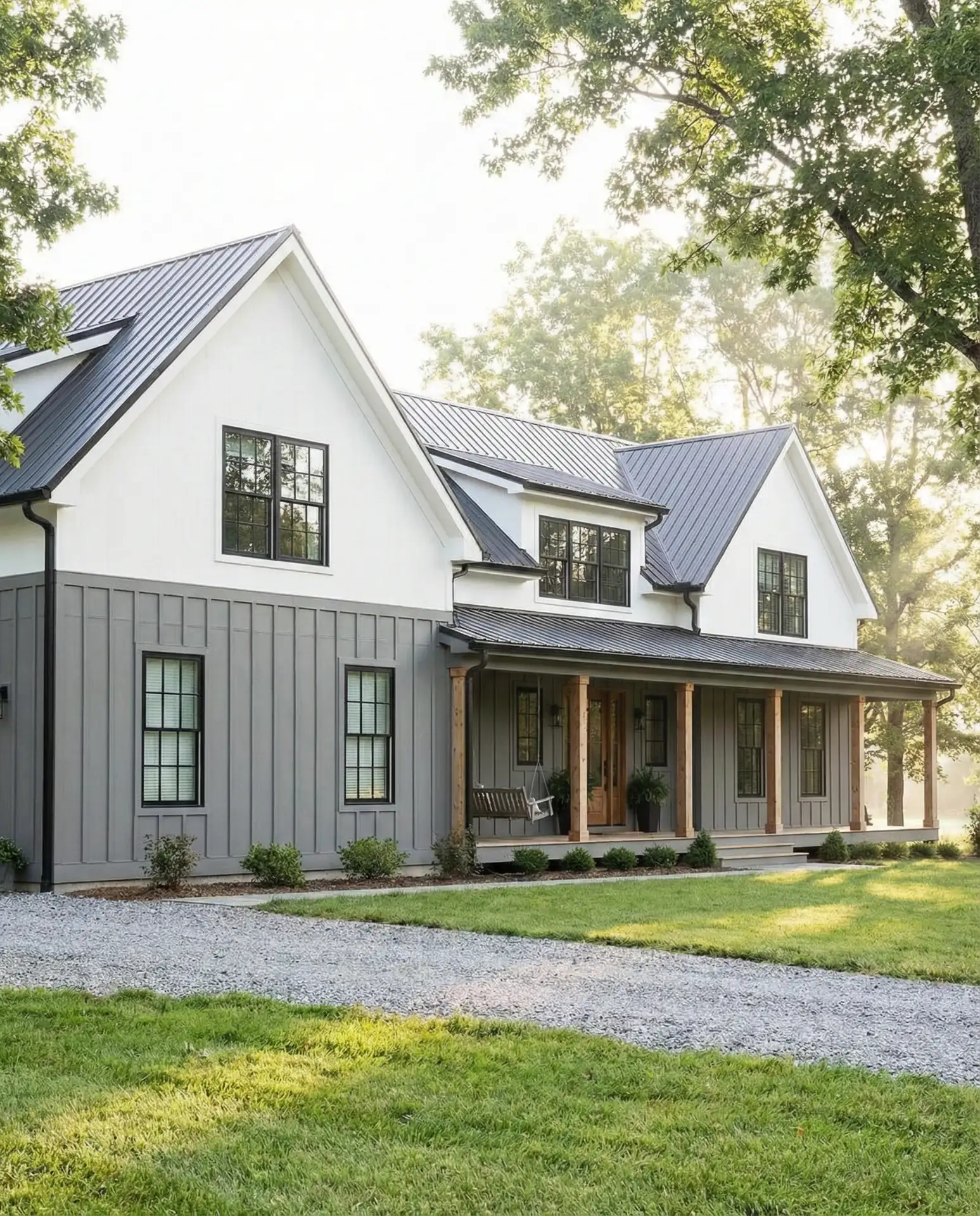
Using contrasting gray and white tones on different gable sections creates visual interest and architectural depth. For example, a white main level with gray upper gables, or vice versa, breaks up large facades and highlights the home’s roofline and structure. This technique is especially effective on homes with multiple gable peaks or complex rooflines, where the two-tone treatment emphasizes the architectural designs and adds dimension. It’s a subtle yet impactful way to add personality without resorting to bold color.
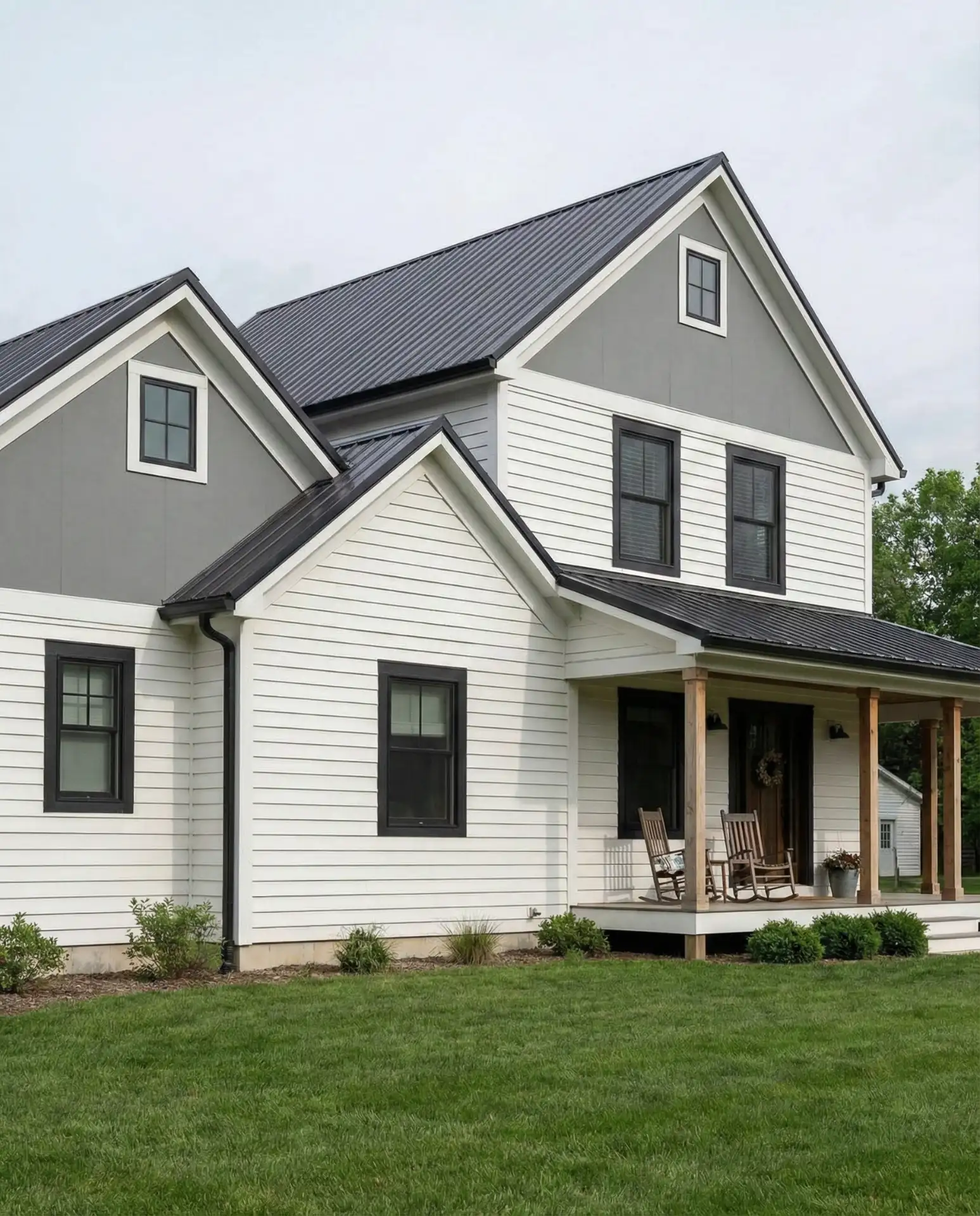
Where it works best: homes with prominent gable features, steep rooflines, or farmhouse plans that emphasize verticality. This approach is also ideal for homeowners who want a two-tone look but don’t want the stark contrast of black and white. The key is choosing grays and whites that have similar undertones—either both cool or both warm—to maintain a cohesive palette. Avoid pairing a stark white with a brown-toned gray, as it can look disjointed. This is a timeless strategy that adds visual interest without overwhelming the overall design.
22. Natural Wood Siding with Metal and Glass
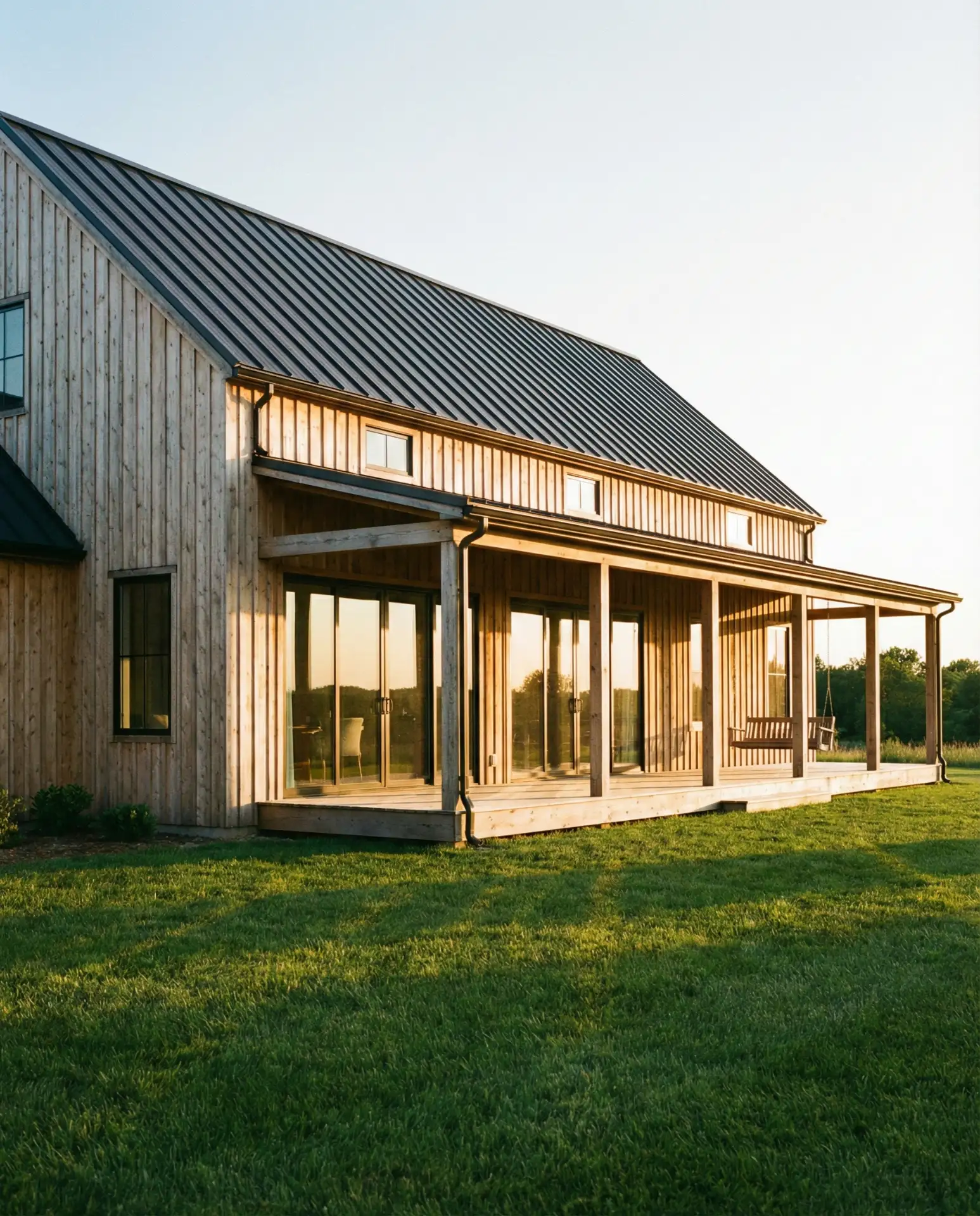
Natural wood siding—whether cedar, pine, or cypress—paired with sleek metal roofing and expansive glass windows creates a stunning blend of rustic warmth and modern transparency. This combination is perfect for homeowners who want a farmhouse that feels organic, connected to nature, and filled with light. The wood ages beautifully, developing a silver or honey-toned patina over time, while the metal and glass elements keep the design feeling fresh and contemporary. It’s an approach that honors traditional craftsmanship while embracing modern materials and open architectural designs.
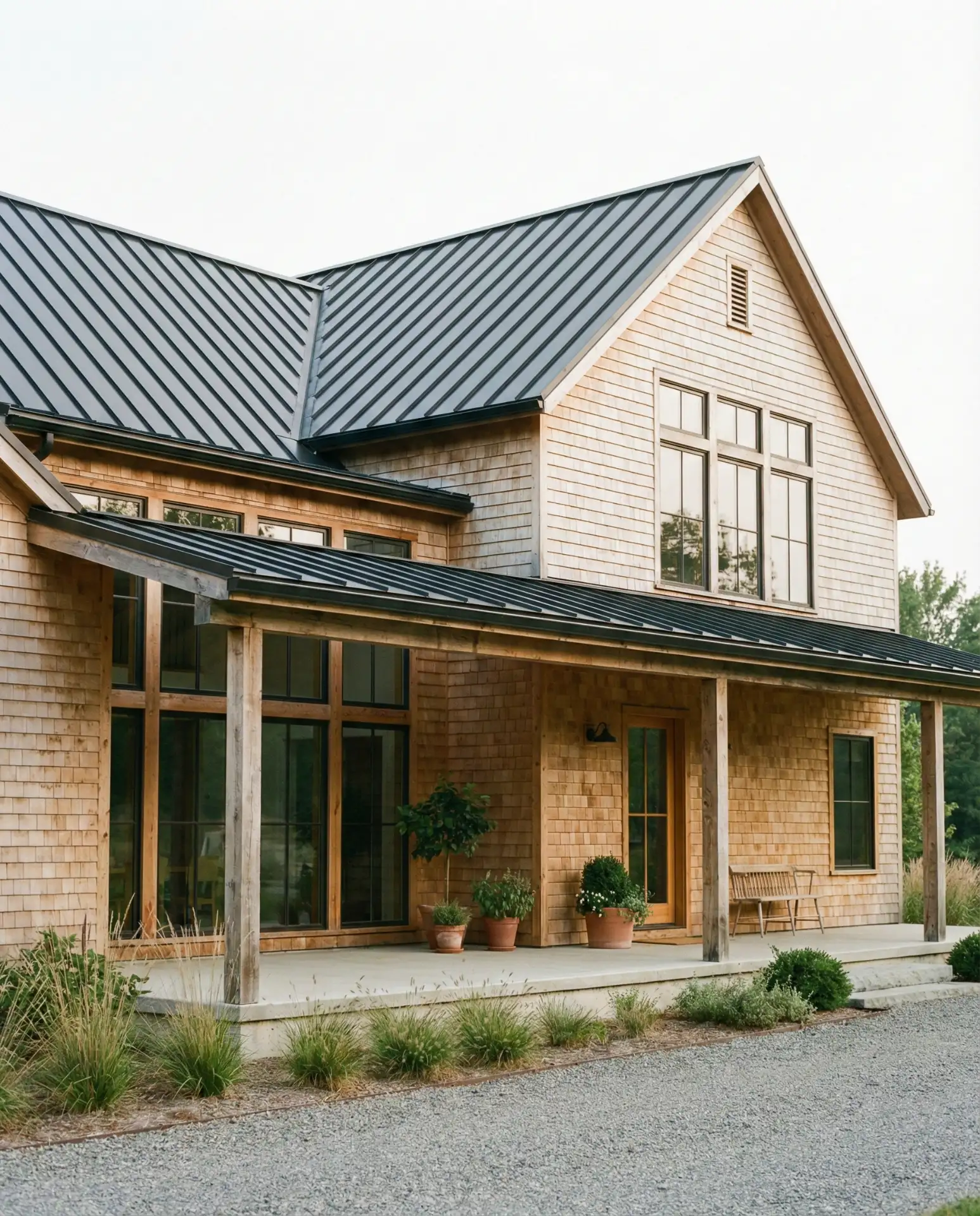
This style thrives in the Pacific Northwest, Colorado, and parts of New England, where natural materials are prized and the landscape is lush. Real homeowner behavior shows that those who choose this path often prioritize sustainability and low-impact living, as natural wood is renewable and ages gracefully without harsh chemicals. One thing to note: untreated wood will weather to gray, so if you prefer a golden or brown tone, plan for regular sealing or staining. Pair with simple, modern lighting and native plantings to let the materials and story of the home take center stage.
Conclusion
From bold contrasts to soft, nature-inspired palettes, the modern farmhouse exterior in 2026 offers something for every style and setting. Whether you’re drawn to the timeless elegance of black and white, the warmth of natural wood and stone, or the sophisticated edge of navy and gray, the key is choosing a design that feels authentic to you and your home’s story. We’d love to hear which of these ideas resonates most—drop a comment below and share your favorite farmhouse exterior inspiration or tell us about your own design journey.