Kitchen design in 2026 is all about blending visual impact with real-world comfort—exactly what brings millions of Americans to Pinterest every day searching for their next remodel or refresh. Whether you’re drawn to modern luxury finishes, the warmth of a farmhouse aesthetic, or the clean lines of Scandinavian simplicity, this year’s trends reflect how we actually live: cooking more at home, hosting casually, and craving spaces that feel both curated and livable. From tiny apartment solutions to sprawling outdoor setups, the ideas below cover every style, budget, and square footage. You’ll find inspiration that works for real homes—not just magazine shoots.
1. Modern Luxury Marble and Brass Kitchen
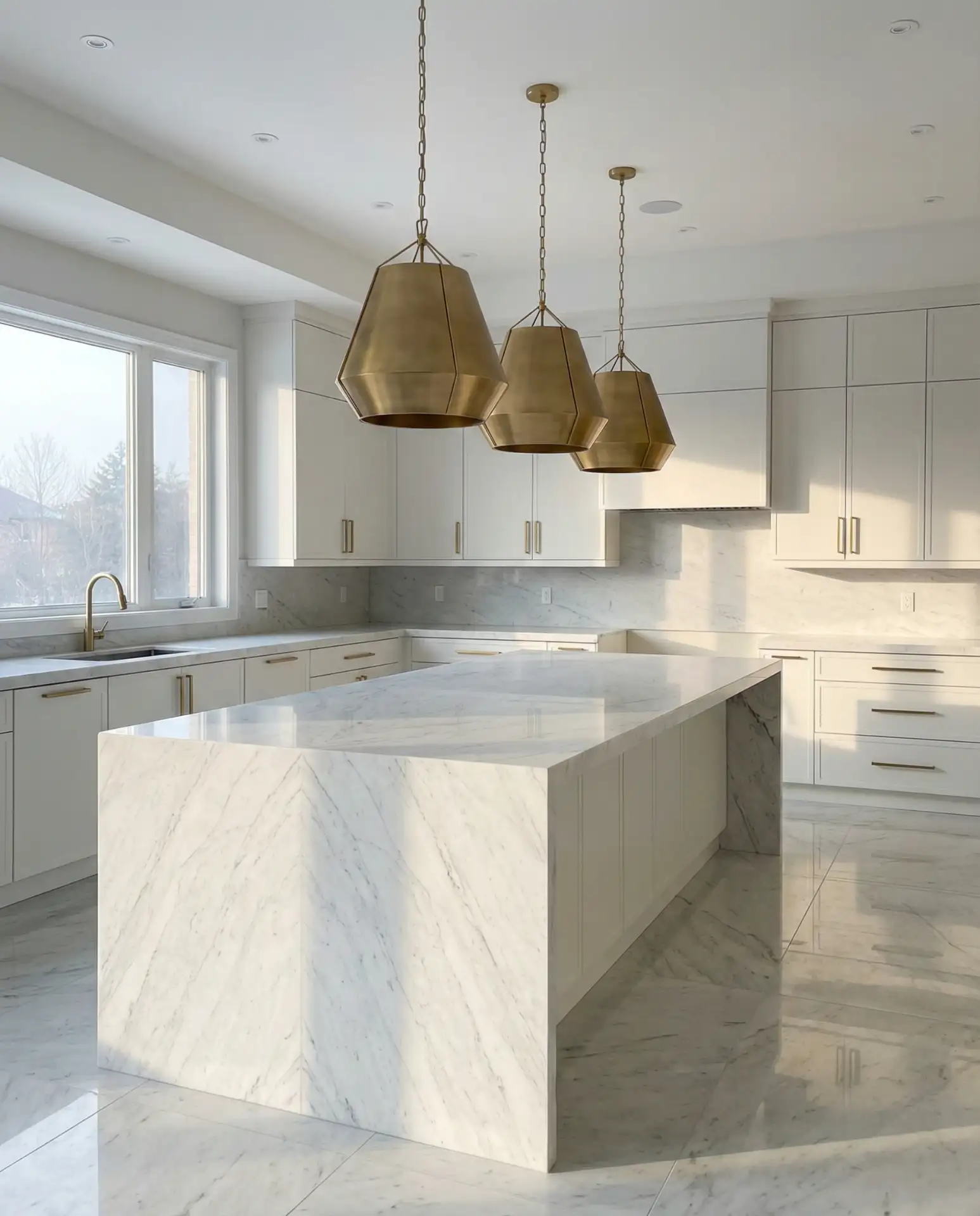
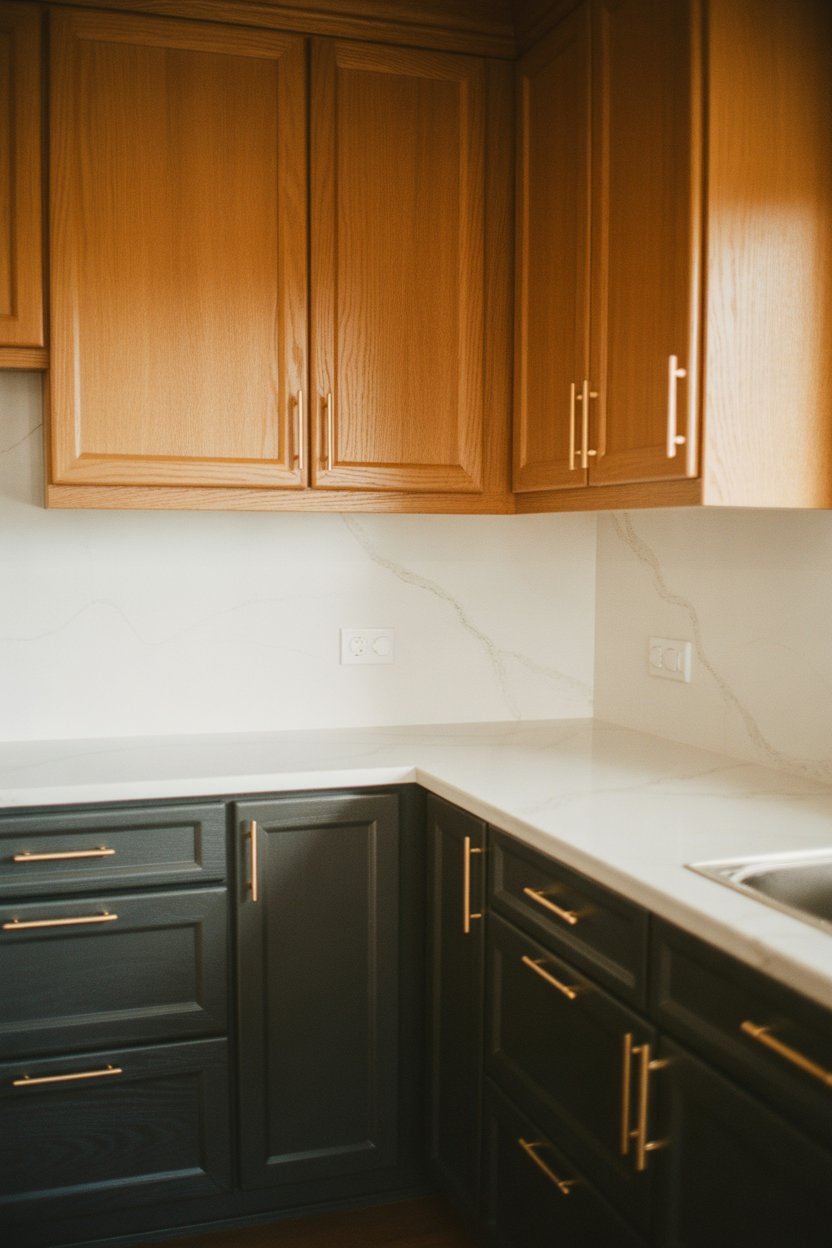
This idea centers on modern luxury through the pairing of book-matched marble countertops and brushed brass hardware. It’s a look that elevates any home kitchen into something hotel-worthy, especially popular in urban condos and renovated brownstones. The veining in the stone becomes the focal point, so cabinetry stays minimal—often in matte white or deep charcoal. Lighting is key: think pendant fixtures with warm bulbs that make the brass glow without feeling too yellow.
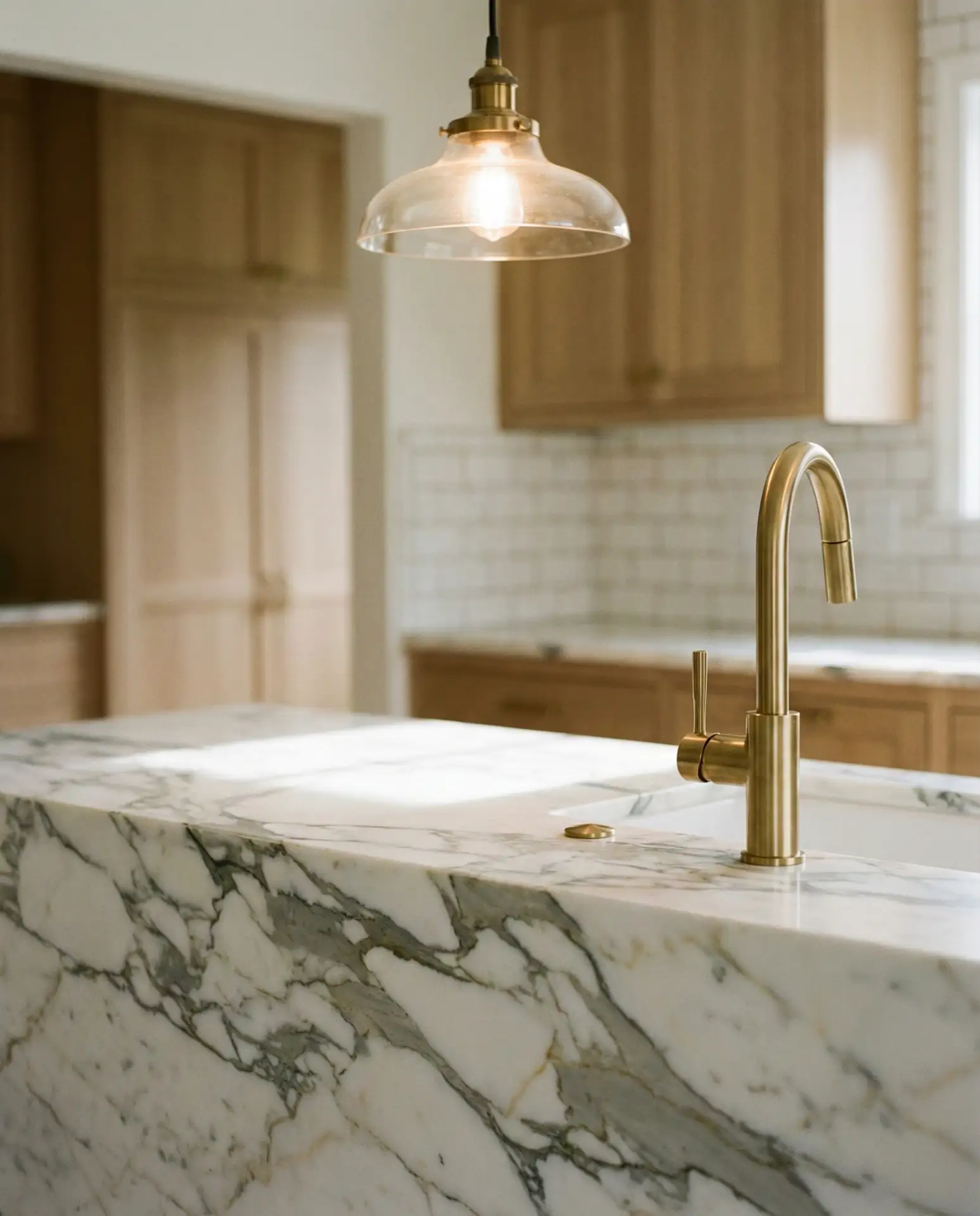
One common mistake is choosing brass finishes that are too shiny—lacquered brass can look dated fast. Instead, opt for unlacquered or brushed varieties that develop a subtle patina over time, adding character rather than looking like they need constant polishing. This approach keeps the space feeling collected and lived-in, not sterile. It’s a detail that separates a showroom from a real kitchen where people actually cook.
2. Indian-Inspired Spice Storage and Color
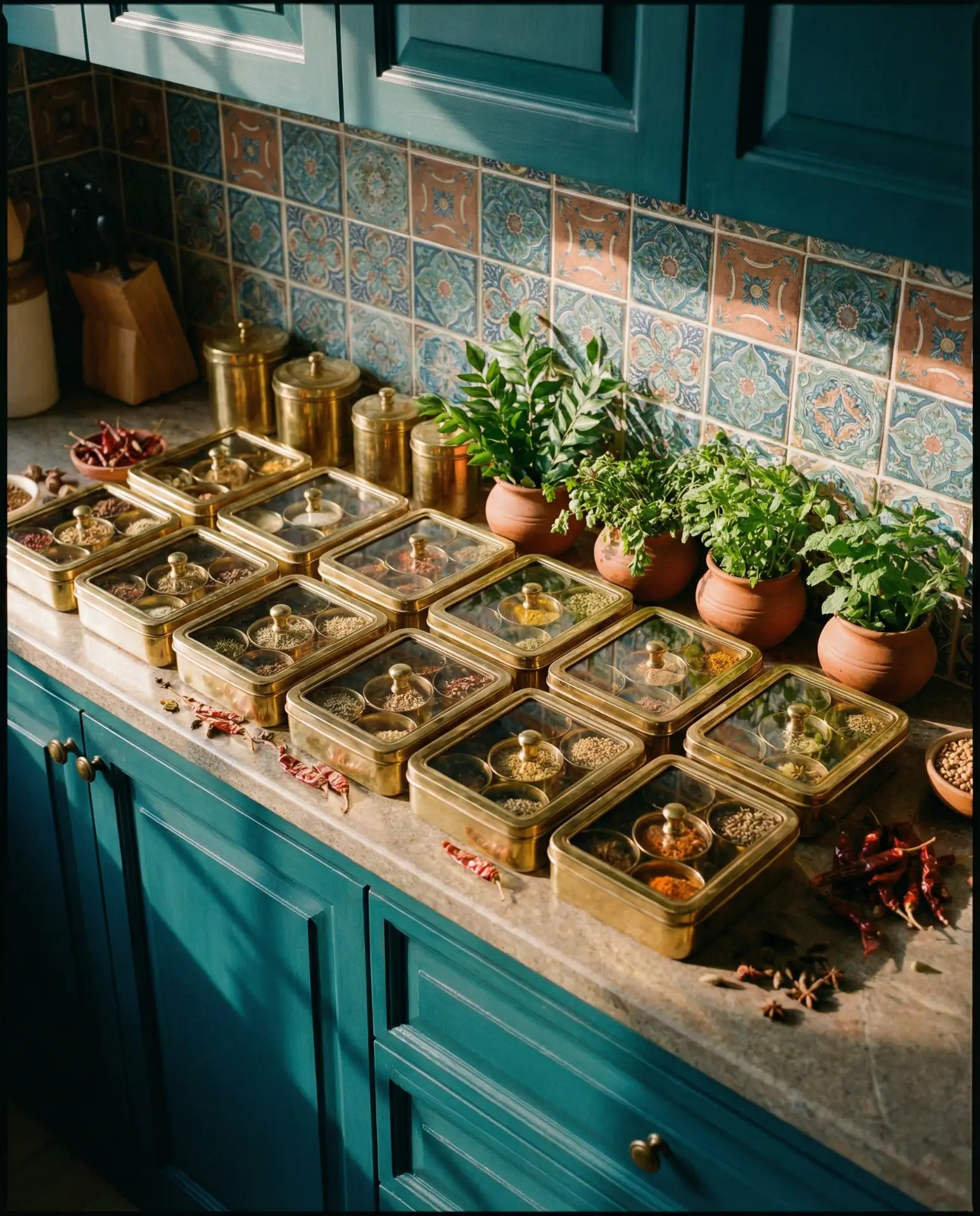
An Indian-inspired kitchen brings warmth through deep jewel tones—saffron yellows, terracotta reds, and rich teals—that reflect the vibrant culinary traditions of South Asia. Open shelving displays brass containers filled with turmeric, cumin, and cardamom, turning everyday ingredients into decor. This style works beautifully in American homes where families cook from scratch and want their tools and spices within arm’s reach. Tilework often features hand-painted patterns or encaustic cement designs that add texture without overwhelming the space.
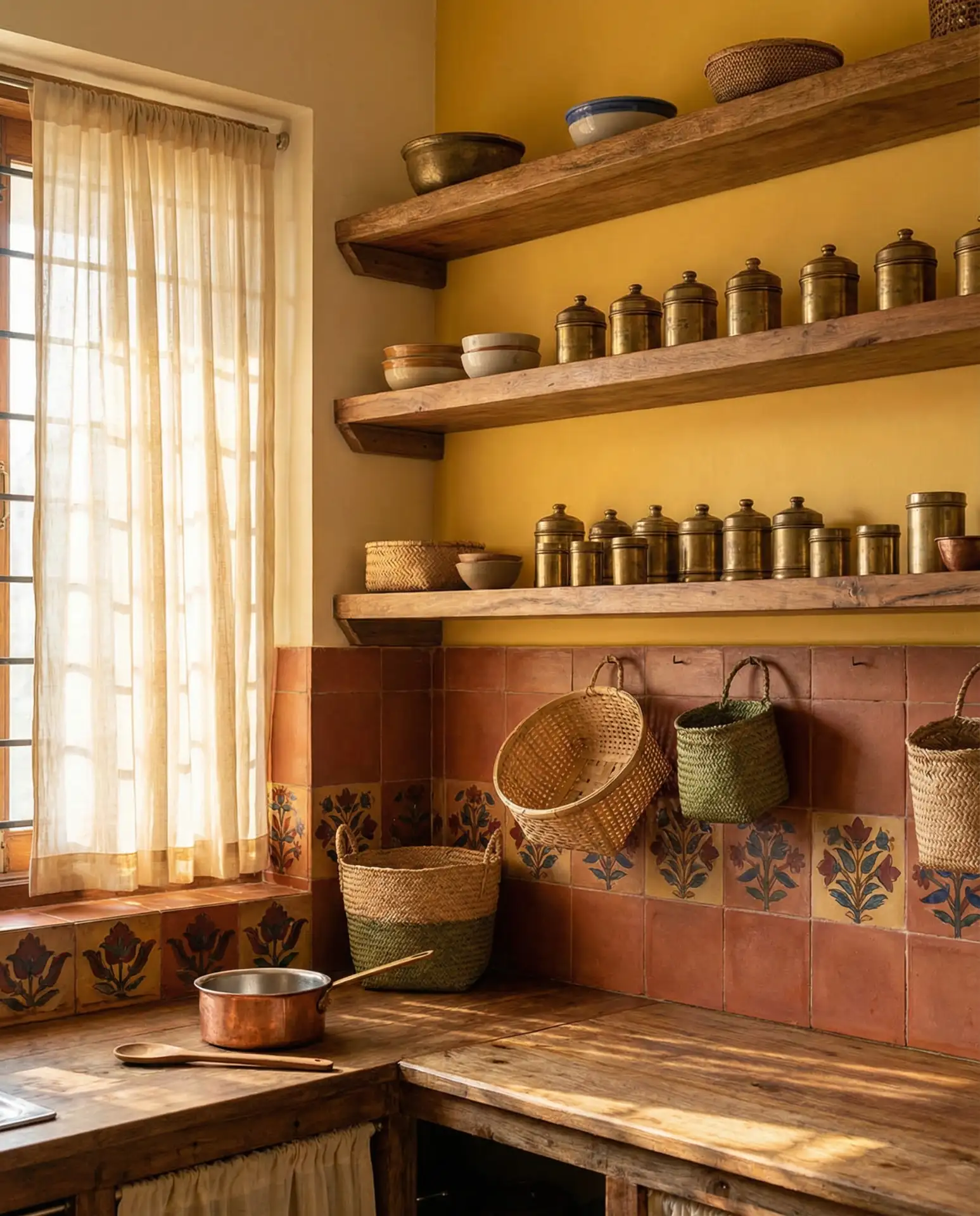
In the Midwest and South, where Indian-American communities are growing fast, this aesthetic is becoming more mainstream in suburban homes. It’s practical: families who cook complex, aromatic meals need serious storage and ventilation. A good range hood is non-negotiable, and many homeowners add a small prep sink just for washing vegetables and herbs. The result is a kitchen that honors heritage while fitting seamlessly into American floor plans.
3. Outdoor Grilling Station with Pergola Shade
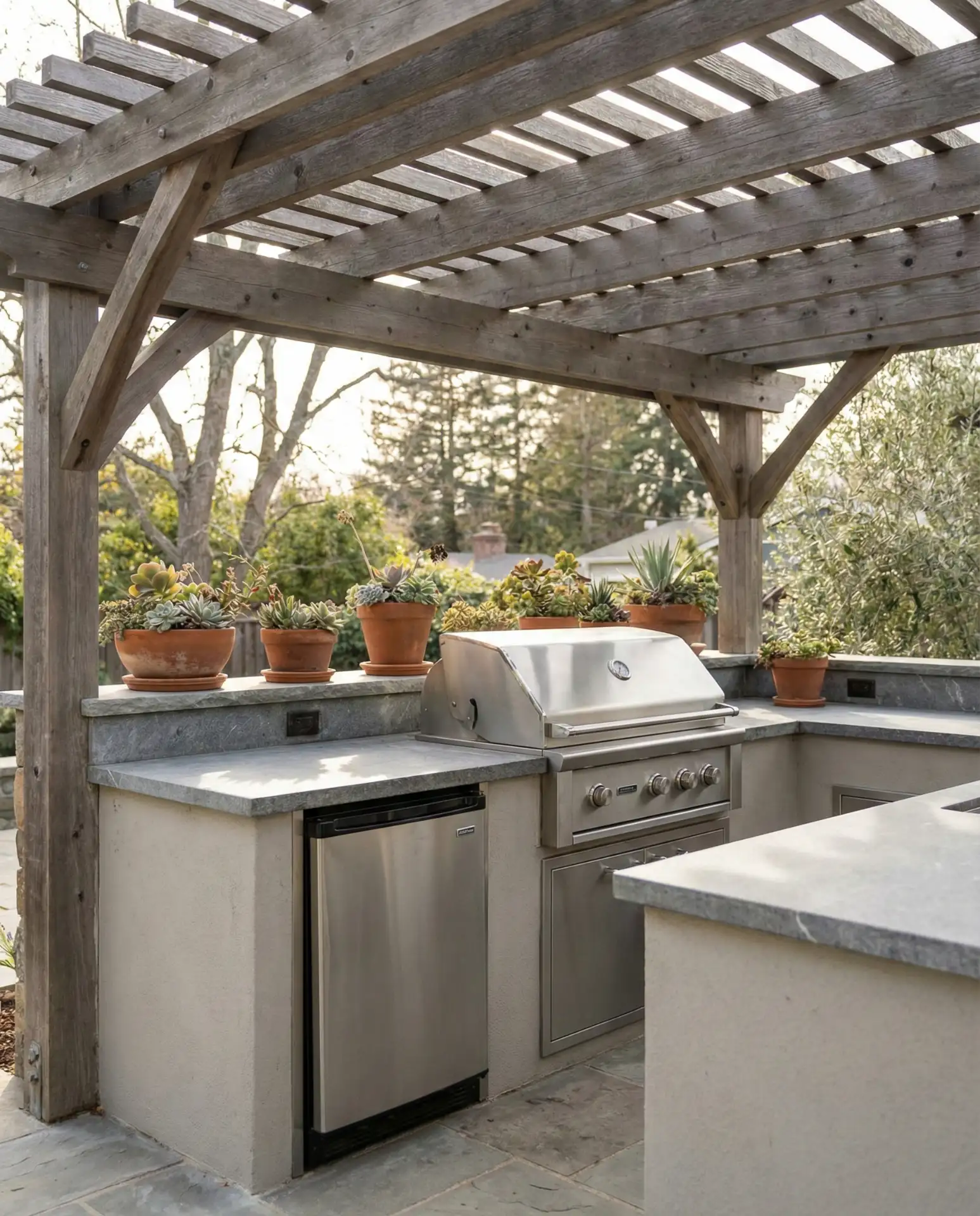
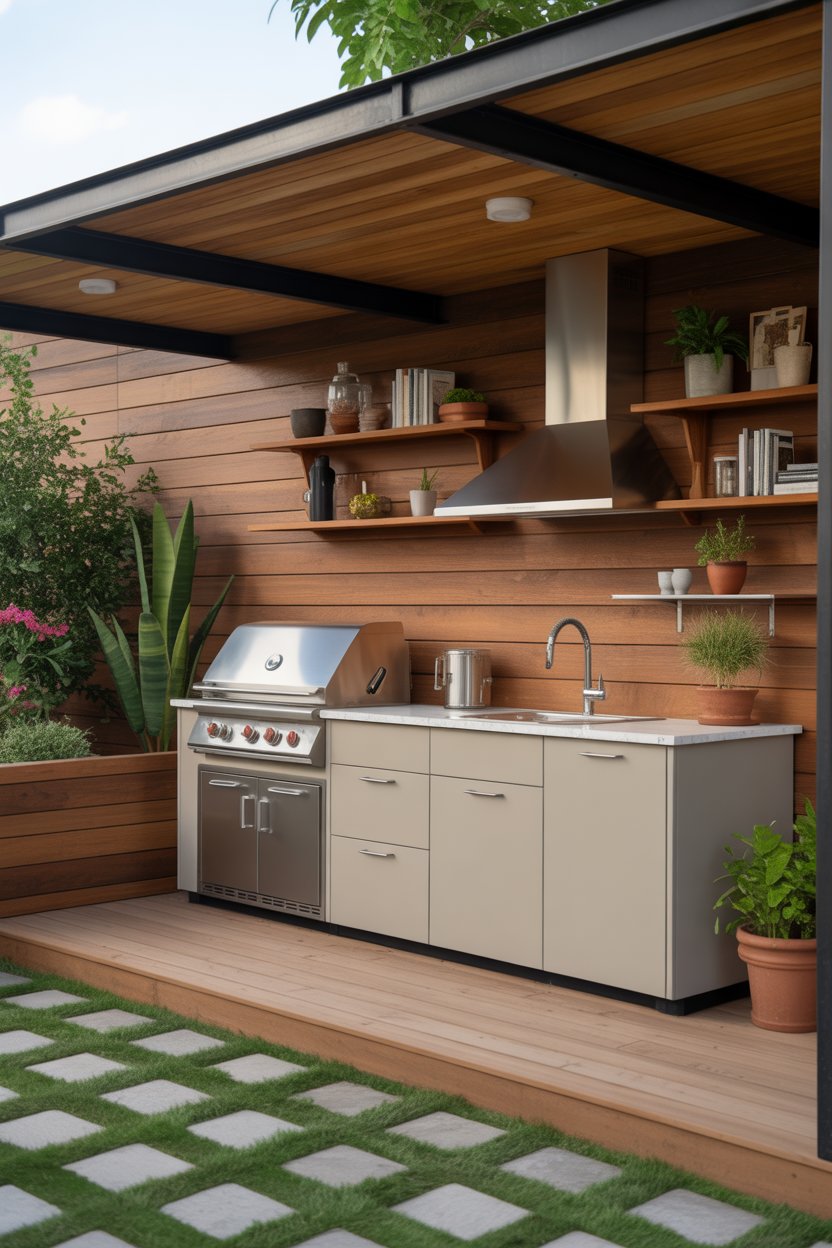
An outdoor kitchen anchored by a built-in grill and shaded by a wooden pergola has become a backyard essential across Sun Belt states. The setup typically includes a stone or concrete countertop, a mini fridge, and storage for propane and utensils. It’s designed for weekend entertaining—think burgers, kebabs, and corn on the cob—without running back inside every five minutes. The pergola provides just enough shade to keep the cook comfortable during peak summer heat, and string lights or lanterns make it usable after dark.
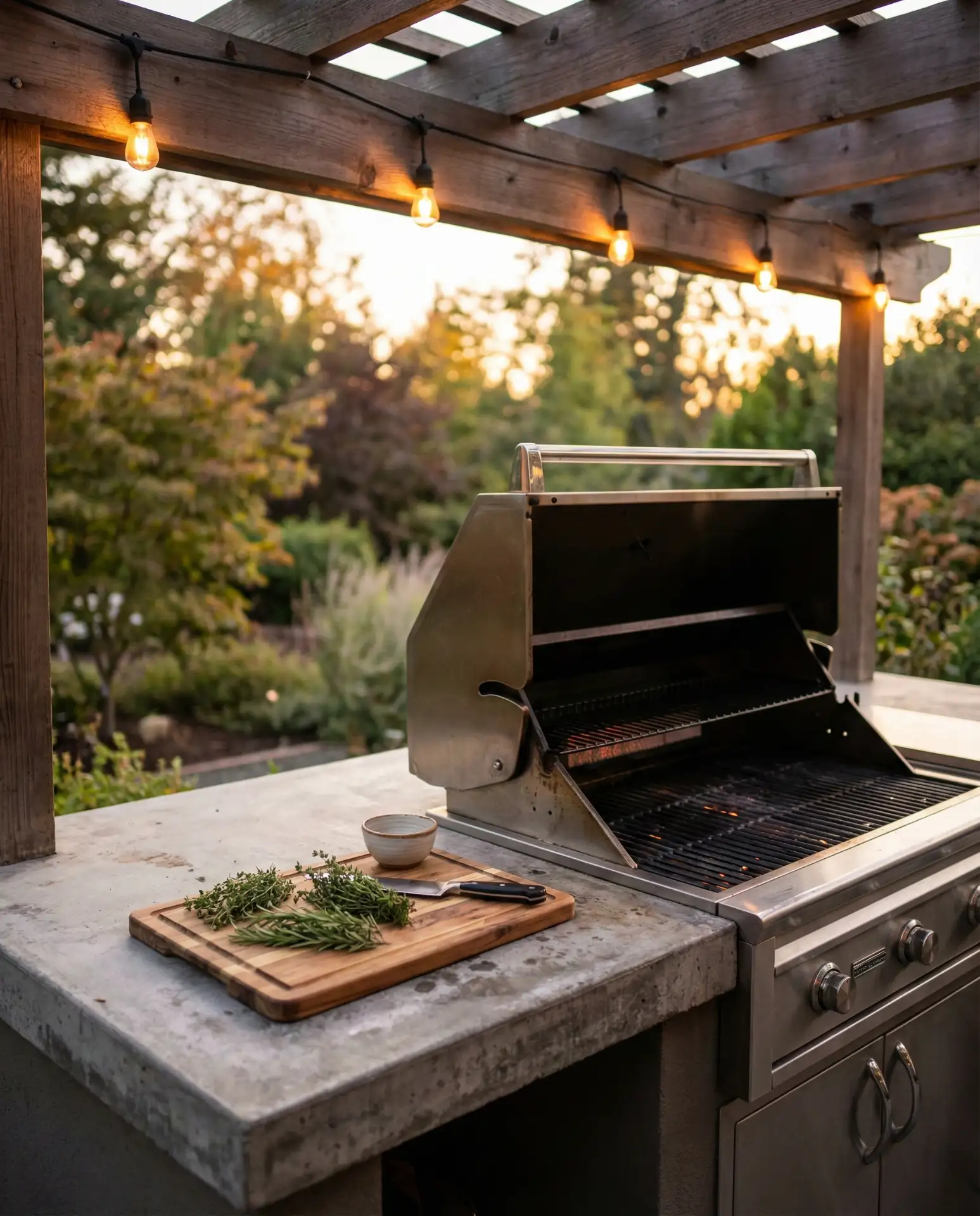
Budget-wise, expect to spend around $3,000 to $8,000 for a basic setup with a quality grill and weather-resistant cabinetry. Going custom with stone cladding or adding a pizza oven can push that closer to $15,000. The investment pays off in how often you’ll actually use it—homeowners report cooking outdoors two to three times a week during warm months, which in states like Arizona or Florida is most of the year.
4. Open Concept Kitchen with Living Room Flow
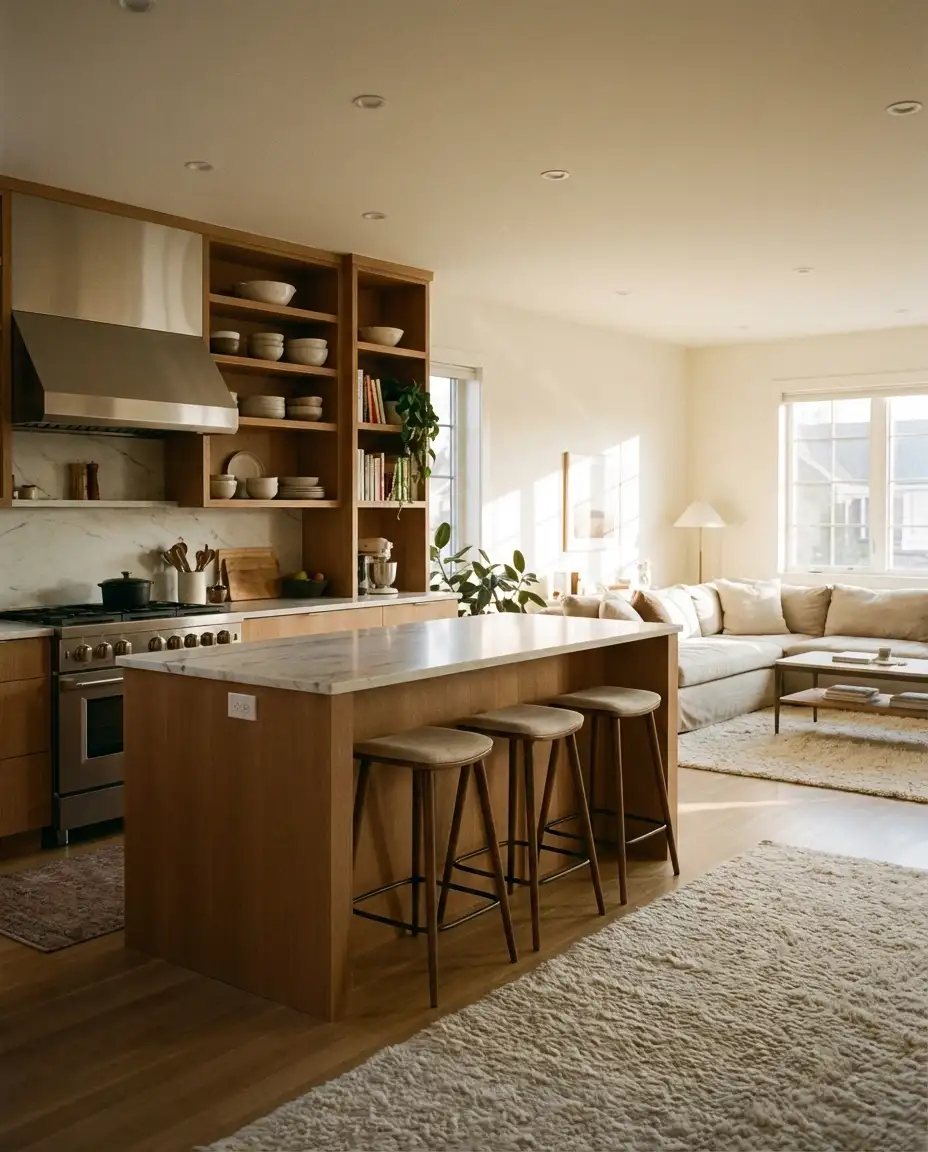
The open floor plan remains the American standard, especially in new construction and whole-home renovations. By removing walls between the kitchen and living room, you create sightlines that make smaller homes feel larger and allow parents to keep an eye on kids while prepping dinner. The challenge is visual cohesion: your kitchen finishes need to complement the sofa, rug, and coffee table just a few feet away. Many designers use a large island as the natural divider, with bar stools on one side and the cooking zone on the other.
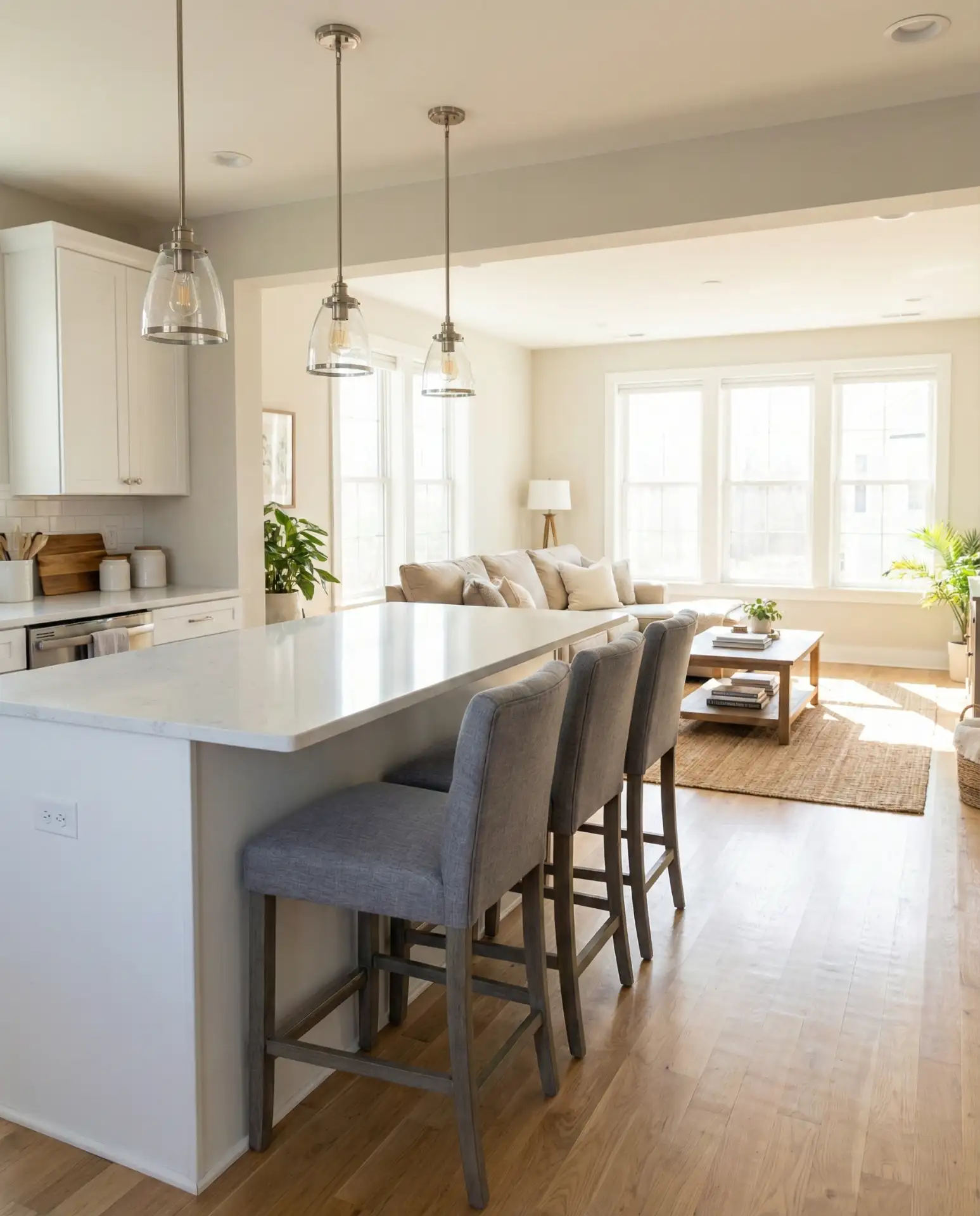
One homeowner in suburban Atlanta told me she originally worried an open layout would mean constant mess on display, but she’s found the opposite: having everything visible motivates her to tidy as she goes. The key is smart storage—deep drawers for pots, a pull-out pantry for dry goods, and a charging drawer for devices so counters stay clear. It’s about designing for how you actually live, not how you wish you lived.
5. Modern Minimalist with Handleless Cabinets
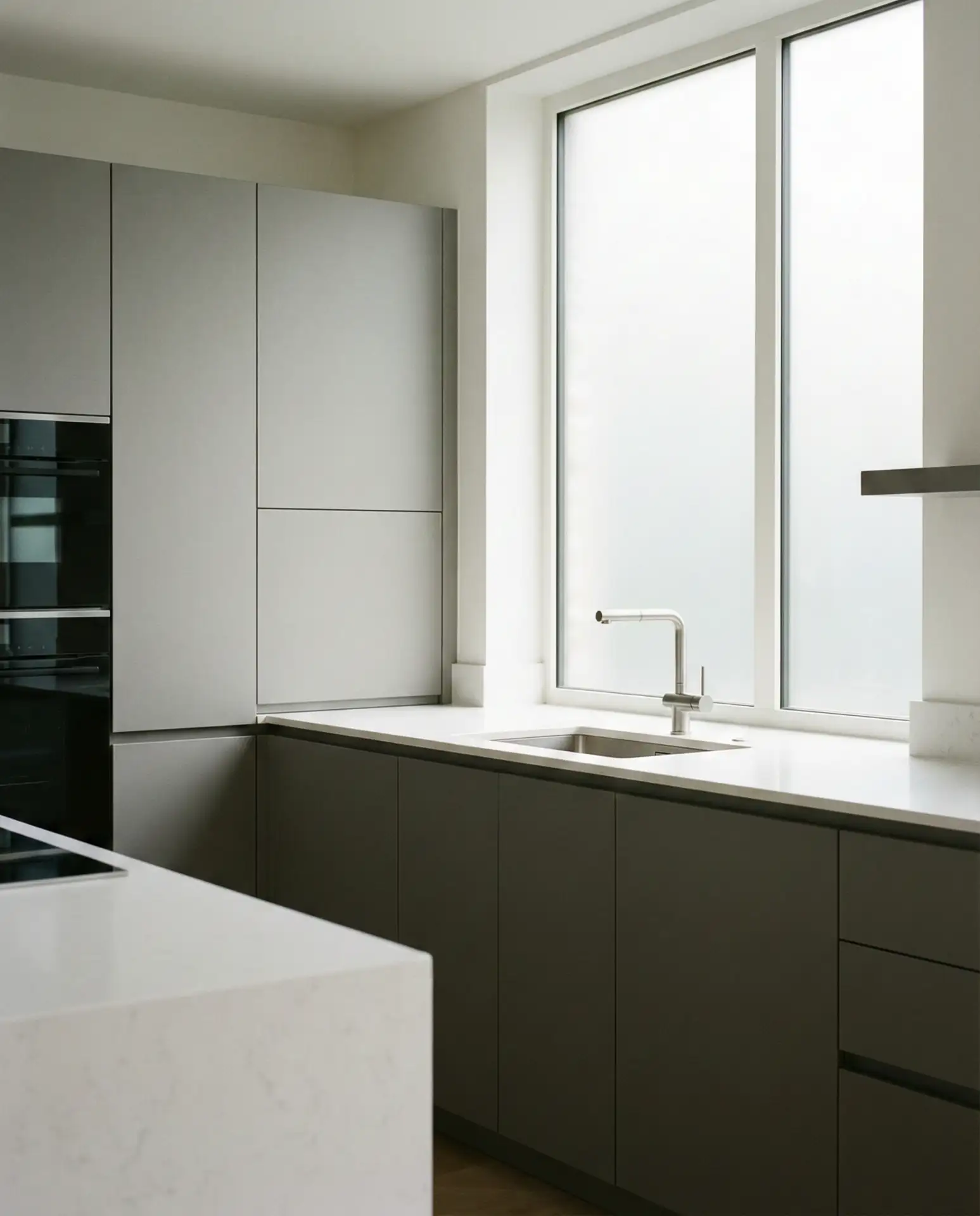
The modern minimalist kitchen strips away everything unnecessary: no visible hardware, no decorative molding, and no open shelving clutter. Cabinets feature push-to-open mechanisms or recessed finger pulls, creating seamless surfaces that emphasize clean lines. This aesthetic is popular in urban lofts and newly built townhomes where square footage is tight and every inch counts. Countertops are often quartz or solid surface in neutral tones—white, gray, or black—so nothing competes for attention.
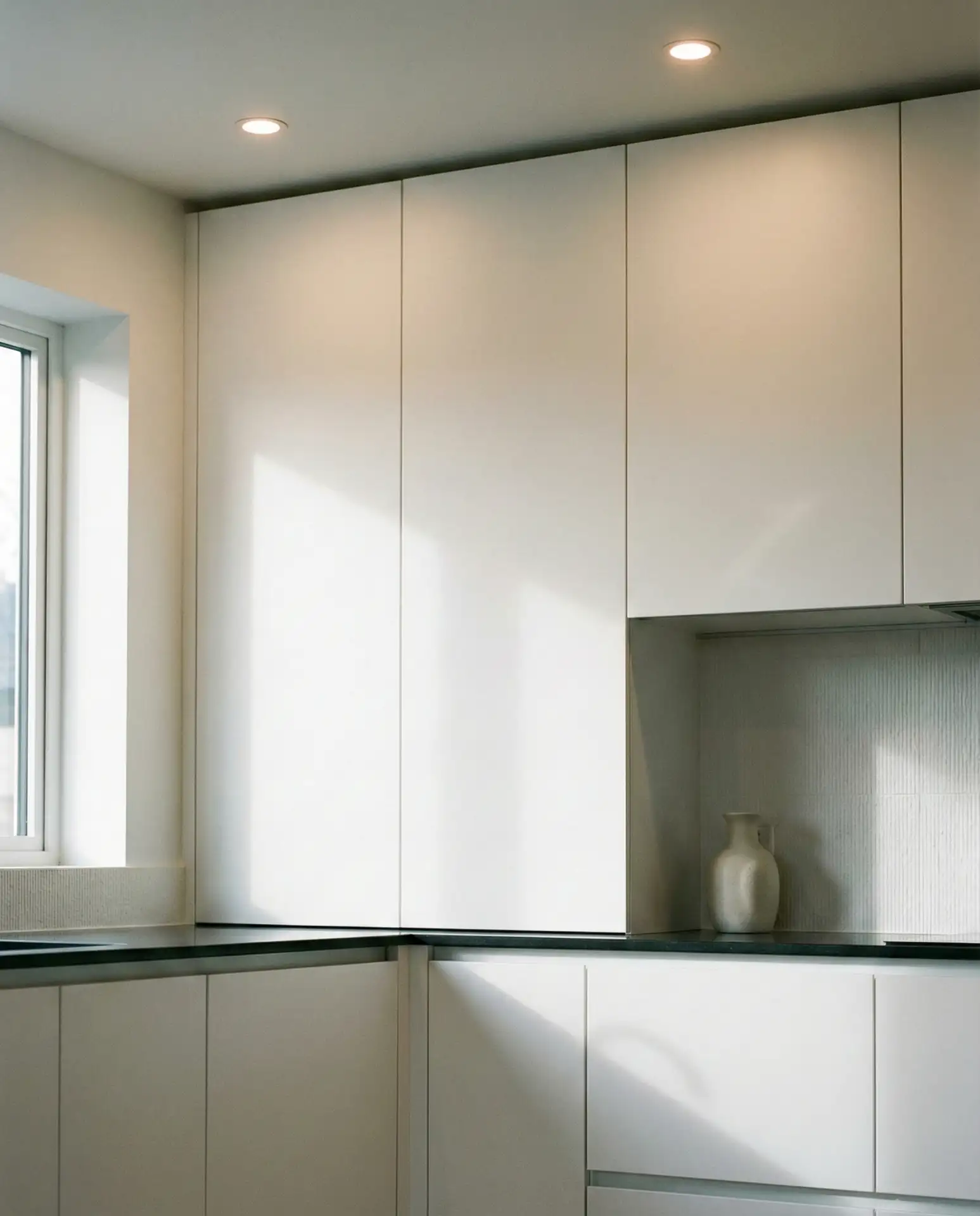
This style works best in homes where the owners are genuinely tidy and don’t accumulate a lot of small appliances or gadgets. If you love having your stand mixer, espresso machine, and toaster all within reach, this might not be your lane. But for those who prefer everything tucked away—and who have the discipline to maintain it—the result is a kitchen that feels more like a high-end gallery than a workspace.
6. Rustic Reclaimed Wood and Iron Accents
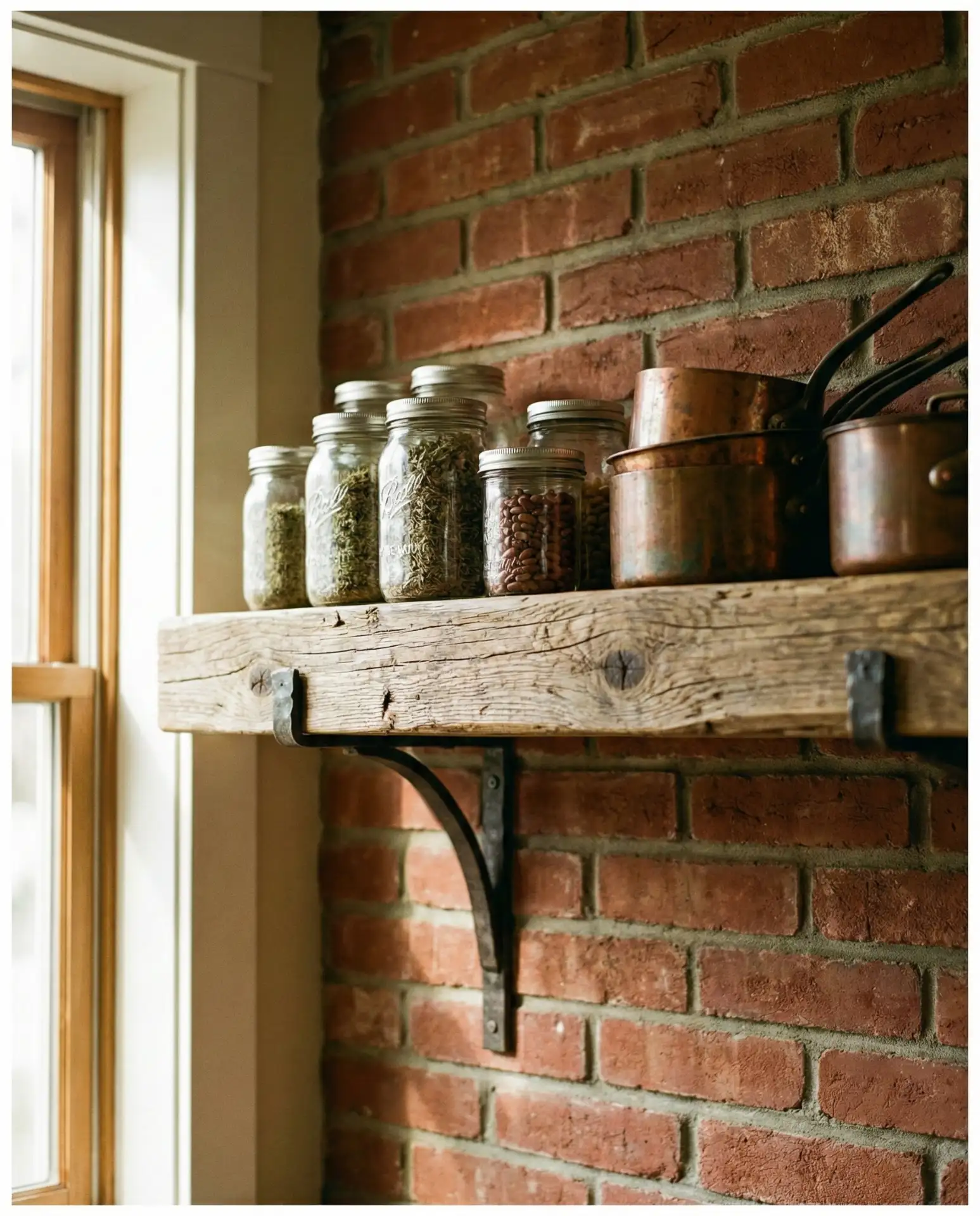
A rustic kitchen leans into the charm of aged materials: reclaimed barn wood for open shelving, a butcher-block island top, and iron or blackened steel for hardware and light fixtures. This look is especially at home in the Mountain West and rural areas where people want their interiors to reflect the landscape outside. The wood brings warmth and texture, while the iron adds weight and a handcrafted feel. It’s the opposite of polished and perfect, and that’s the whole point.
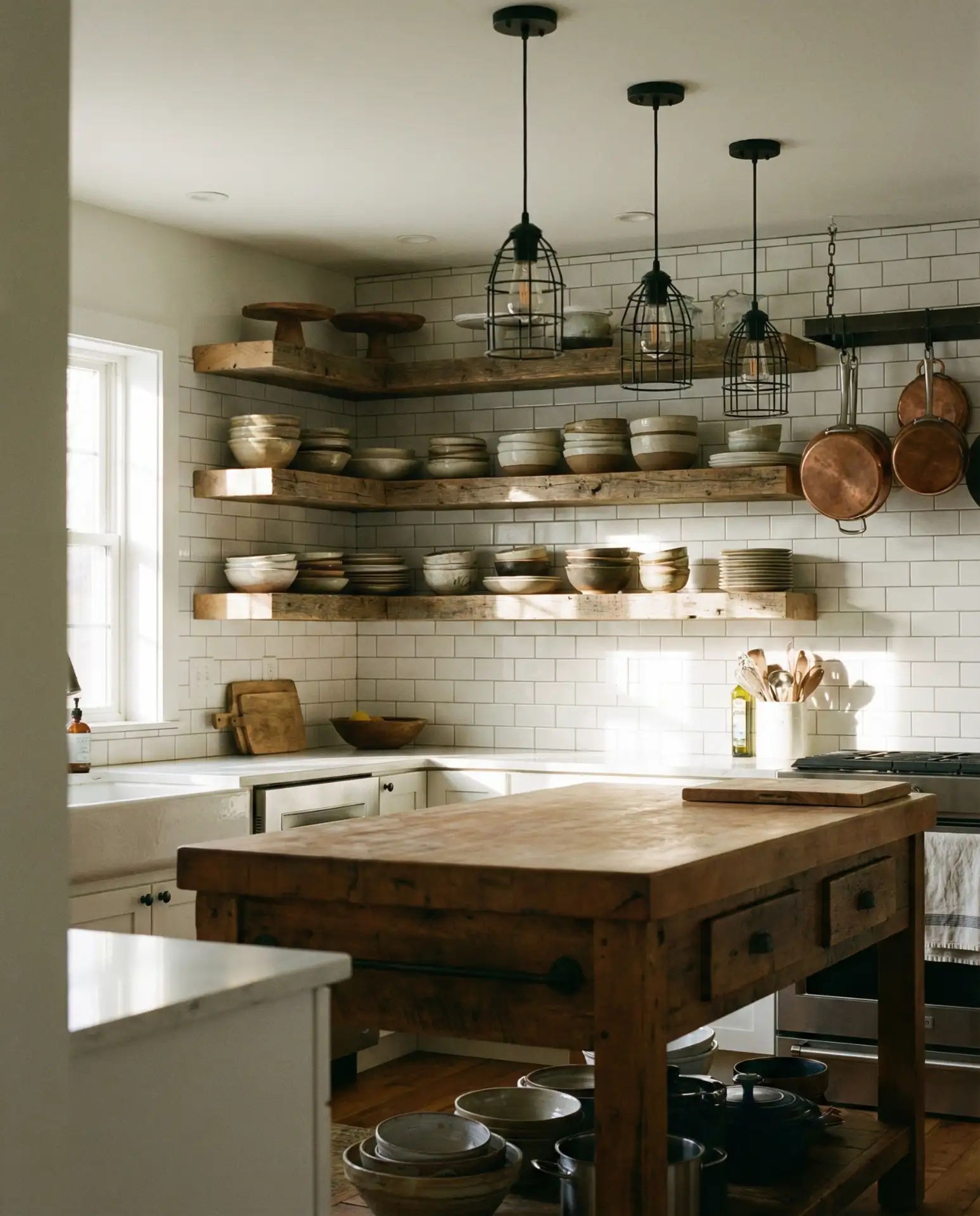
Common mistake: overdoing the “distressed” look to the point where it feels staged. Real rustic style comes from actual wear—a cutting board with knife marks, a shelf that’s held jars for years, and hardware that’s been touched a thousand times. If everything looks artificially aged, it loses authenticity. Start with one or two genuine vintage pieces and build around them, rather than buying a whole catalog of faux-antique finishes.
7. Kitchen Island with Built-In Seating
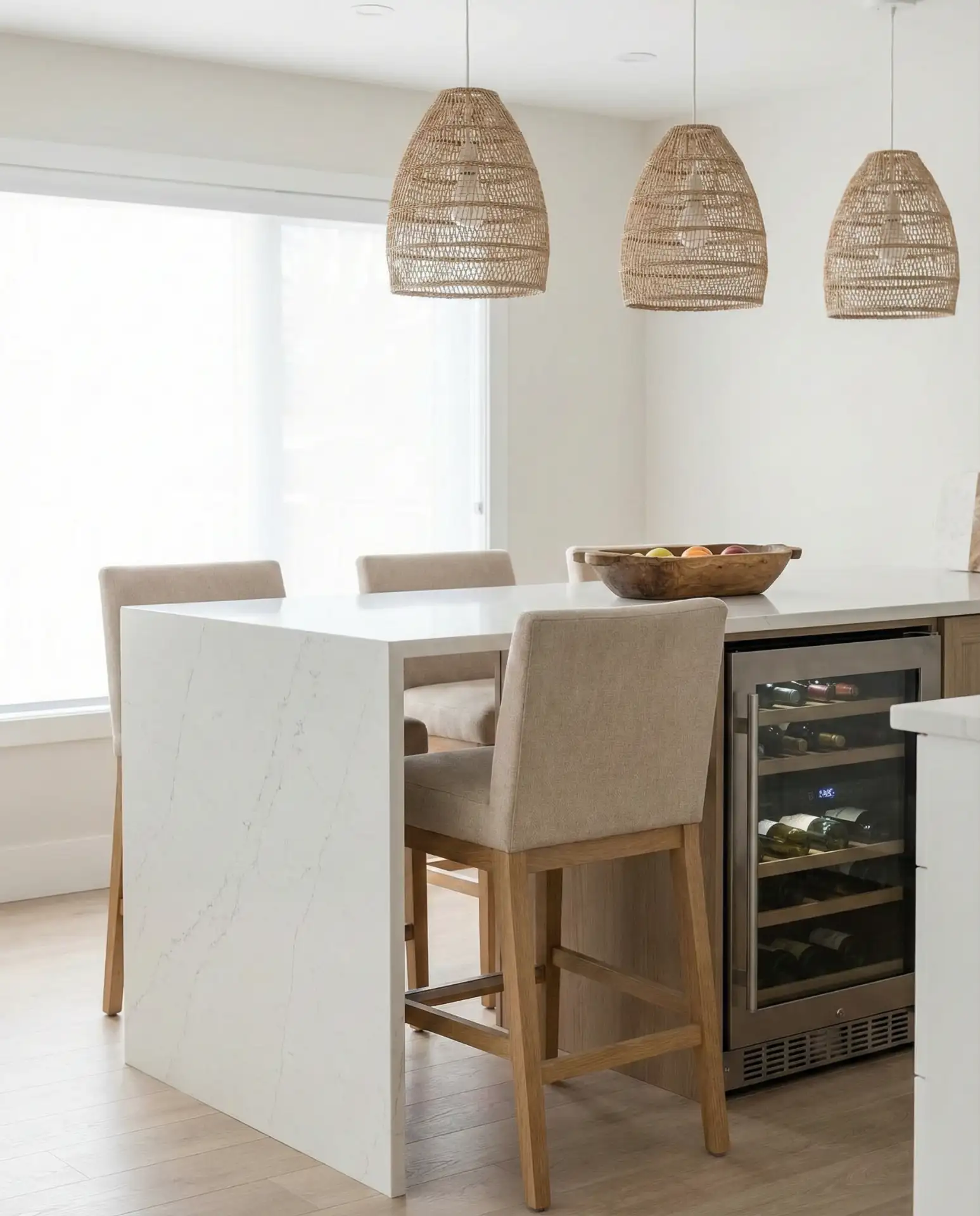
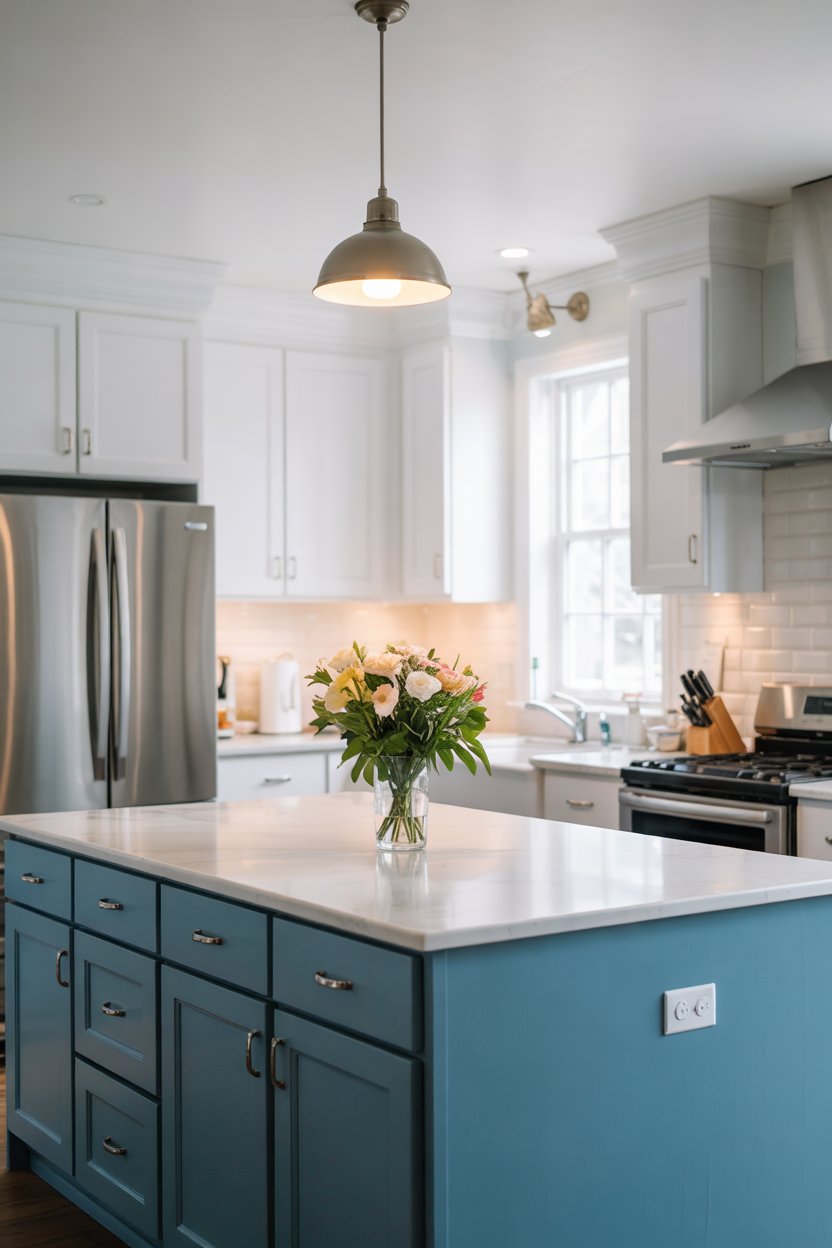
The island has evolved from a simple prep surface to the true heart of the kitchen, often doubling as a breakfast bar, homework station, and casual dining spot. Built-in seating—whether bar stools tucked underneath or a banquette on one end—makes it a magnet for family and guests. In open-plan homes, the island is where people naturally gather while the cook works, so it needs to be both functional and comfortable. Countertop overhang is critical: you need at least 12 inches for knees, ideally 15 if you want people to linger.
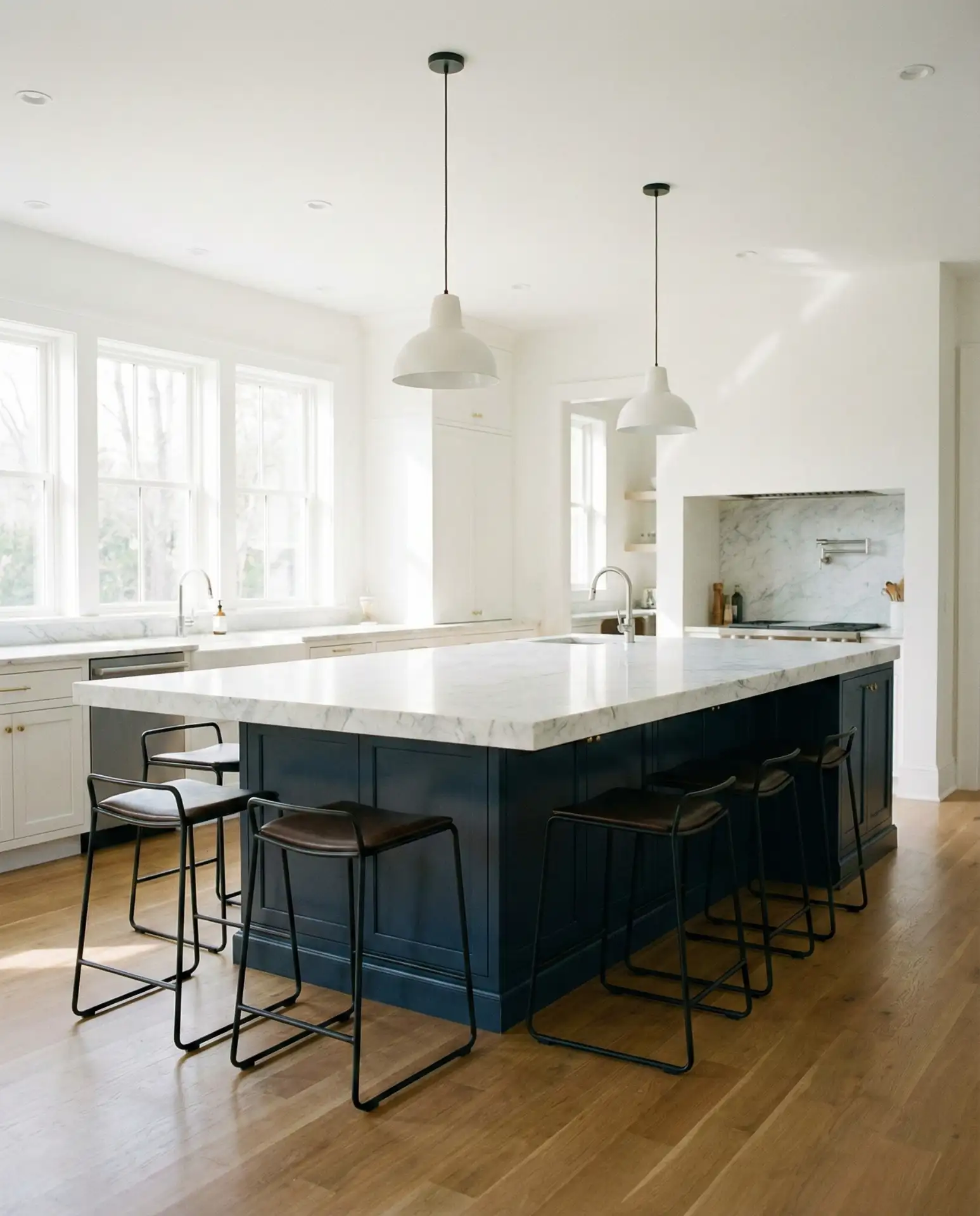
In the Pacific Northwest, where homes skew smaller and dining rooms are rare, islands with seating replace the traditional table altogether. Families eat breakfast there, kids do art projects, and friends perch with wine while dinner’s being made. It’s the most-used piece of furniture in the house, so invest in quality: solid wood or plywood construction, not particleboard, and a countertop that can handle spills, heat, and daily wear without showing every mark.
8. Farmhouse Apron Sink and Shiplap Walls
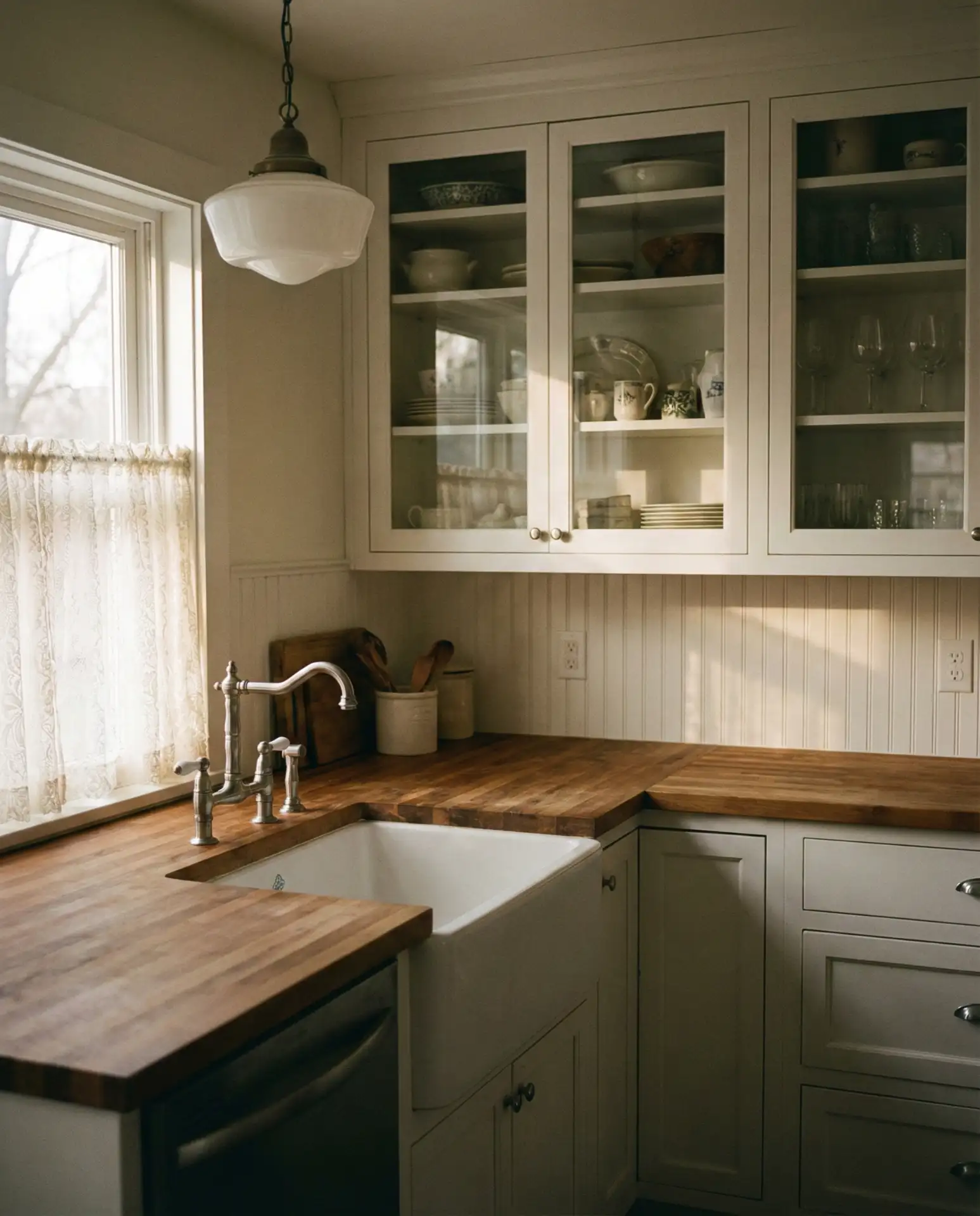
The farmhouse aesthetic remains a Pinterest favorite, defined by the classic apron-front sink, shiplap or beadboard wall treatments, and a mix of vintage and new elements. It’s a style rooted in American farmstead kitchens from a century ago but updated with modern conveniences. The sink is the star—deep, wide, and usually white fireclay or porcelain. Shiplap adds horizontal lines that make walls feel wider and bring in subtle texture without pattern overload. It’s a look that feels both nostalgic and current, which is exactly why it endures.
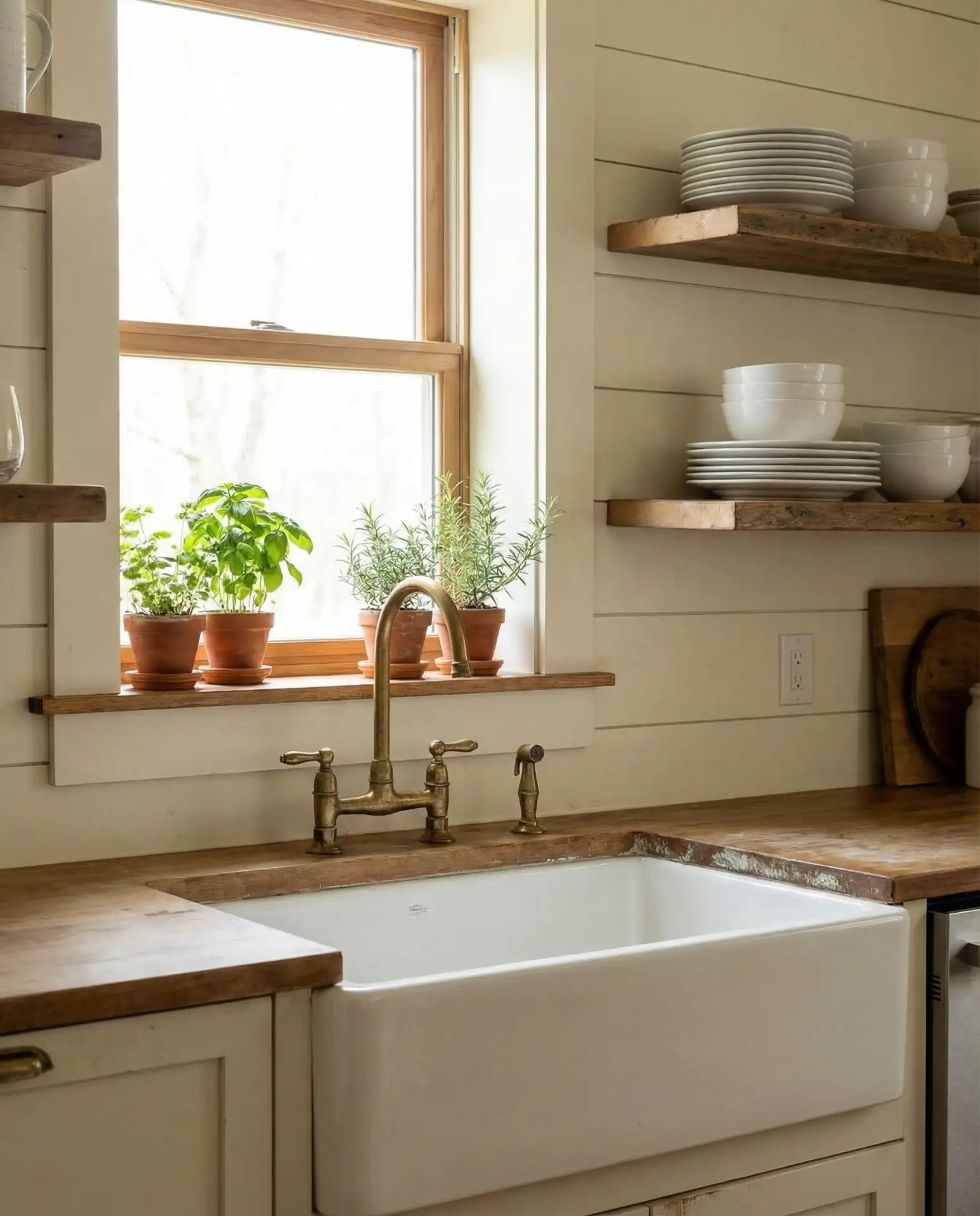
Expert tip: not all apron sinks are created equal. Cheaper models can chip easily and show every scratch. Stick with reputable brands like Kohler or Rohl, and consider a matte finish instead of high-gloss if you want to hide water spots. Also, because these sinks are front-heavy, you need proper support underneath—either a custom base cabinet or additional bracing. Skipping this step is a rookie mistake that leads to sagging and eventual cracks.
9. Organic Modern with Natural Stone and Wood
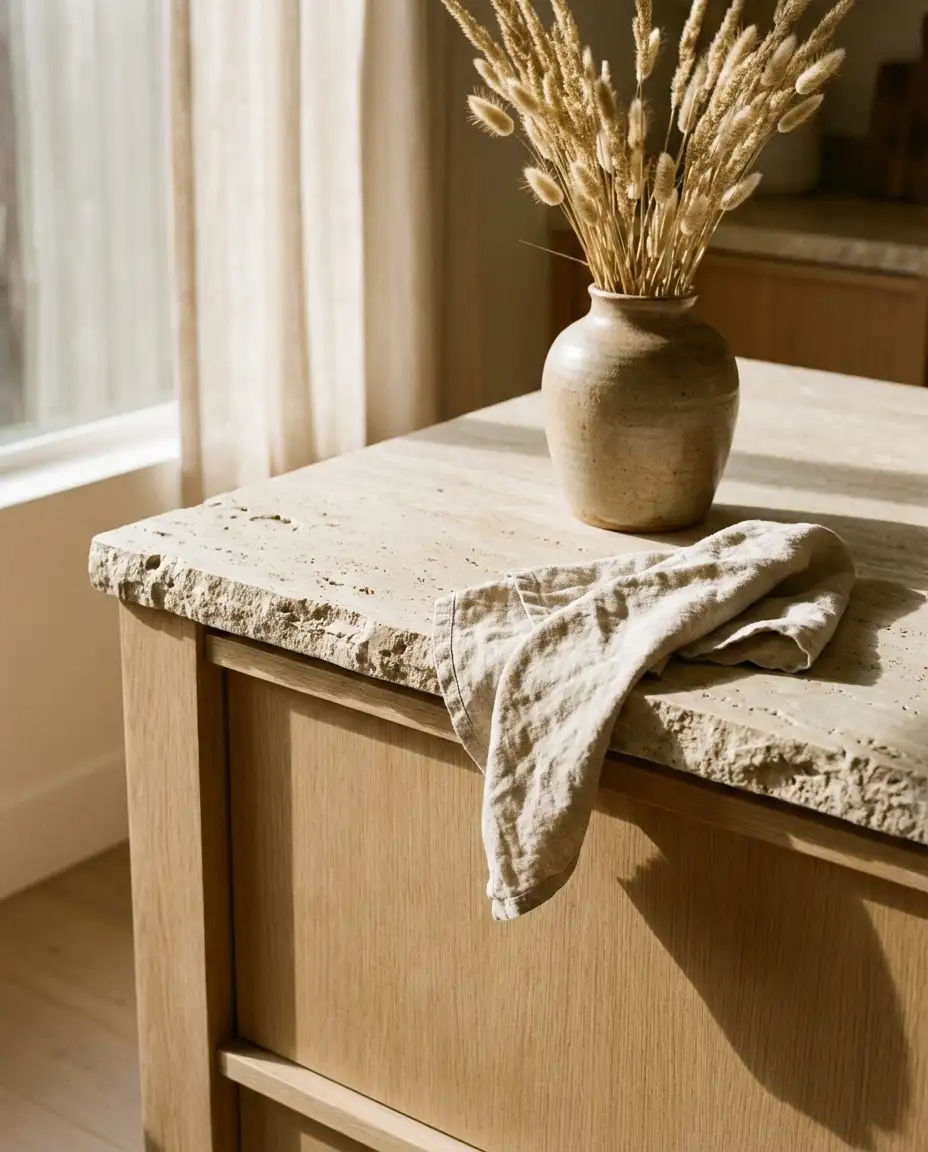
Organic modern blends the simplicity of modern design with the warmth of natural materials—think wood cabinetry with visible grain, stone countertops with irregular edges, and muted earth tones throughout. It’s a style that feels both curated and livable, avoiding the coldness that can come with ultra-minimalist spaces. The palette is neutral but layered: cream, taupe, soft gray, and warm browns. Shapes are clean but not severe, with rounded corners and organic forms showing up in hardware, lighting, and even the island silhouette.
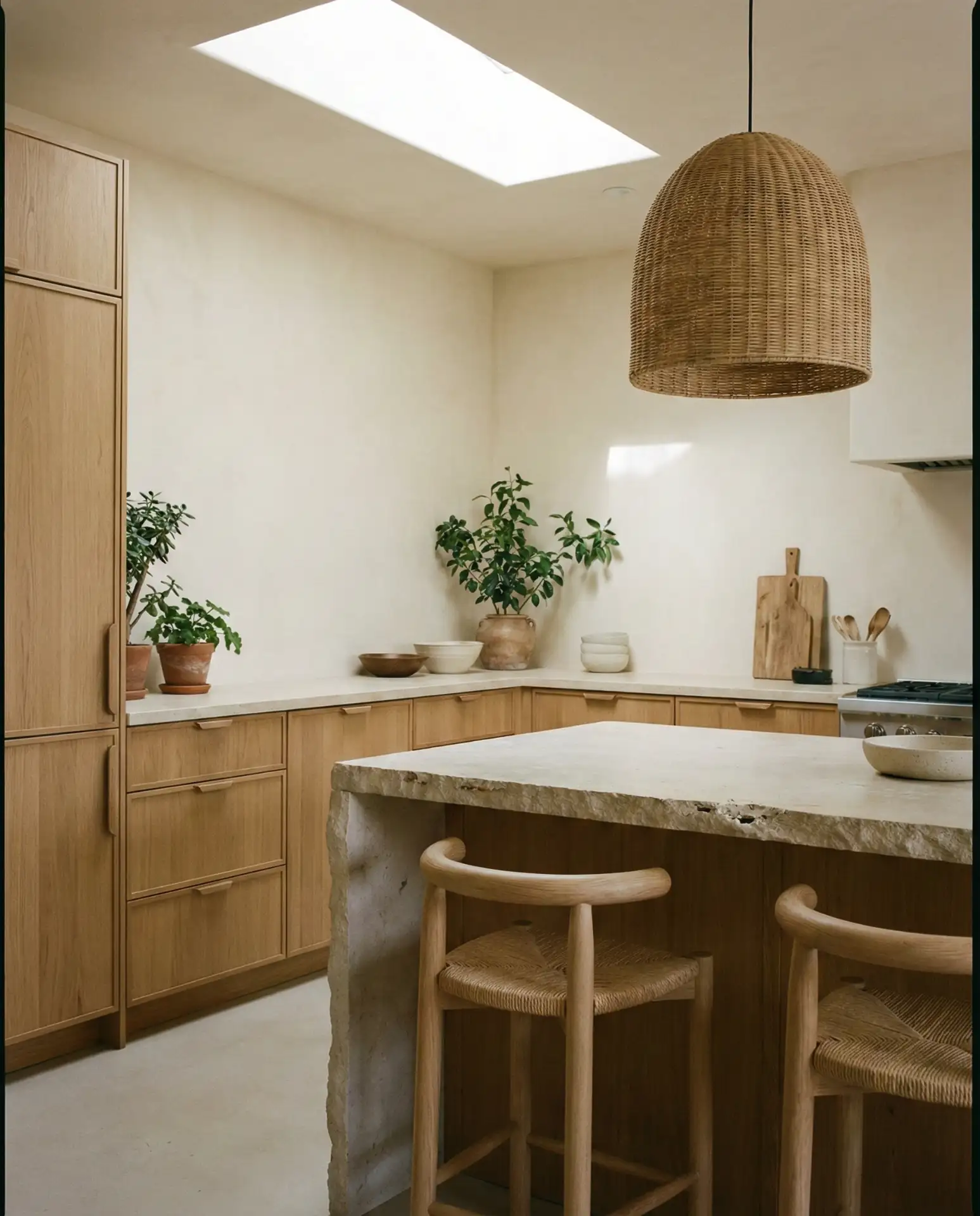
This aesthetic thrives in California and the Southwest, where indoor-outdoor living is a priority and the light is strong enough to show off the nuances in natural materials. It’s also forgiving: a little mess doesn’t ruin the vibe because nothing is trying to be too precious. Homeowners in Austin and Phoenix are especially drawn to this look, pairing it with large sliding doors that open to patios and native landscaping just outside.
10. Industrial Exposed Brick and Metal Shelving
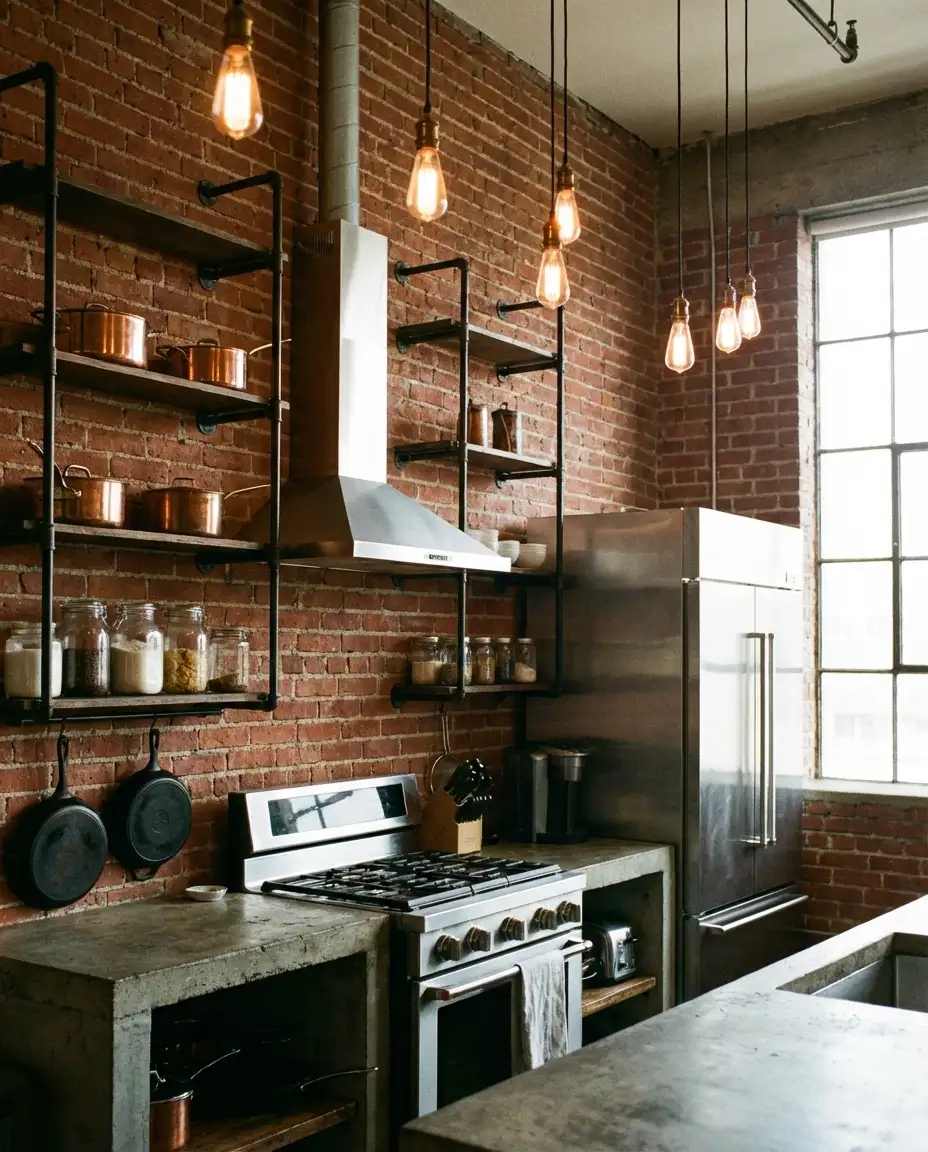
The industrial kitchen takes its cues from old factories and warehouses: exposed brick walls, open metal shelving, concrete or stainless-steel countertops, and Edison-bulb lighting. It’s a style born in loft conversions but now popular in suburban homes where owners want an edgier, more urban feel. The materials are honest and durable—no veneers or fake finishes. Everything is designed to show its construction: visible screws, welded joints, and raw surfaces that age gracefully rather than looking worn out.
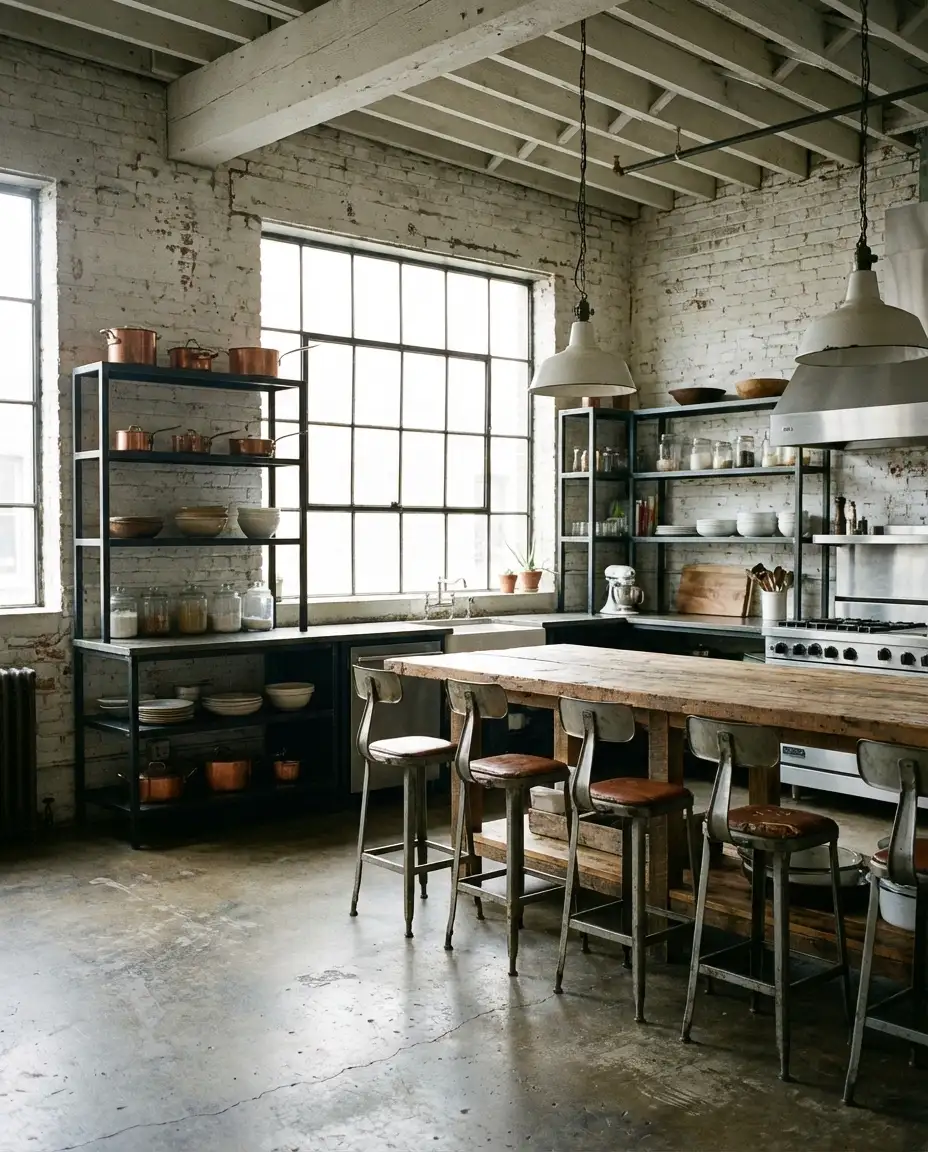
Where it works best: cities like Brooklyn, Chicago, and Denver, where the industrial aesthetic aligns with the local architectural history. In newer suburban builds, it can feel forced unless you commit fully—half-hearted industrial touches like a single exposed bulb in an otherwise traditional kitchen just look confused. Either go all in with raw materials and a cohesive palette, or choose a different direction entirely.
11. Tiny Kitchen with Pull-Out Pantry Solutions
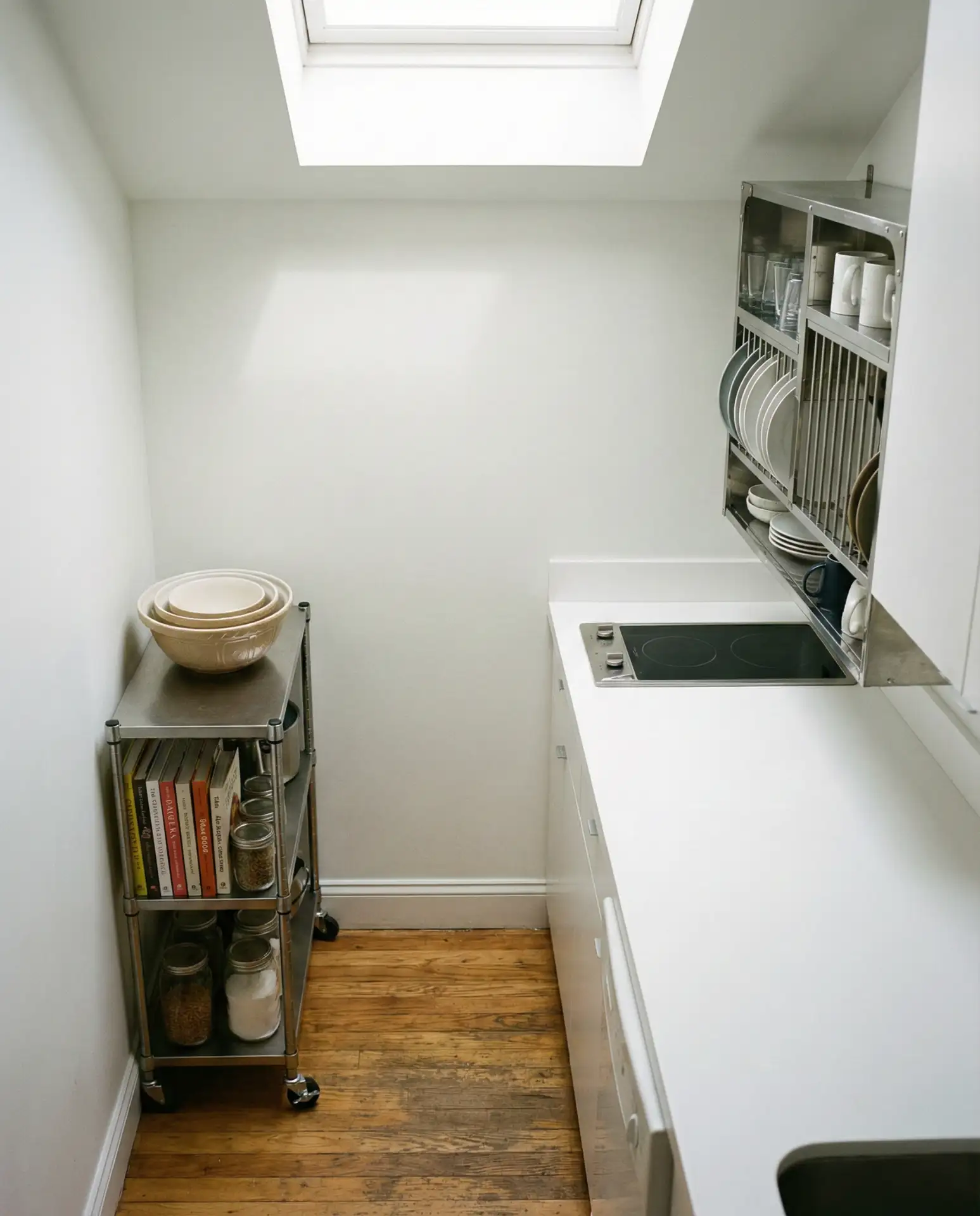
Tiny kitchens demand creativity and precision—every inch matters when you’re working with 50 square feet or less. Pull-out pantries, narrow rolling carts, and vertical storage are non-negotiable. Instead of standard base cabinets, consider tall pull-out units that fit between appliances and hold everything from spices to canned goods. Wall-mounted magnetic knife strips, fold-down tables, and nesting bowls all help maximize function without adding visual bulk. The goal is to make the space feel open and usable, not cramped and cluttered.
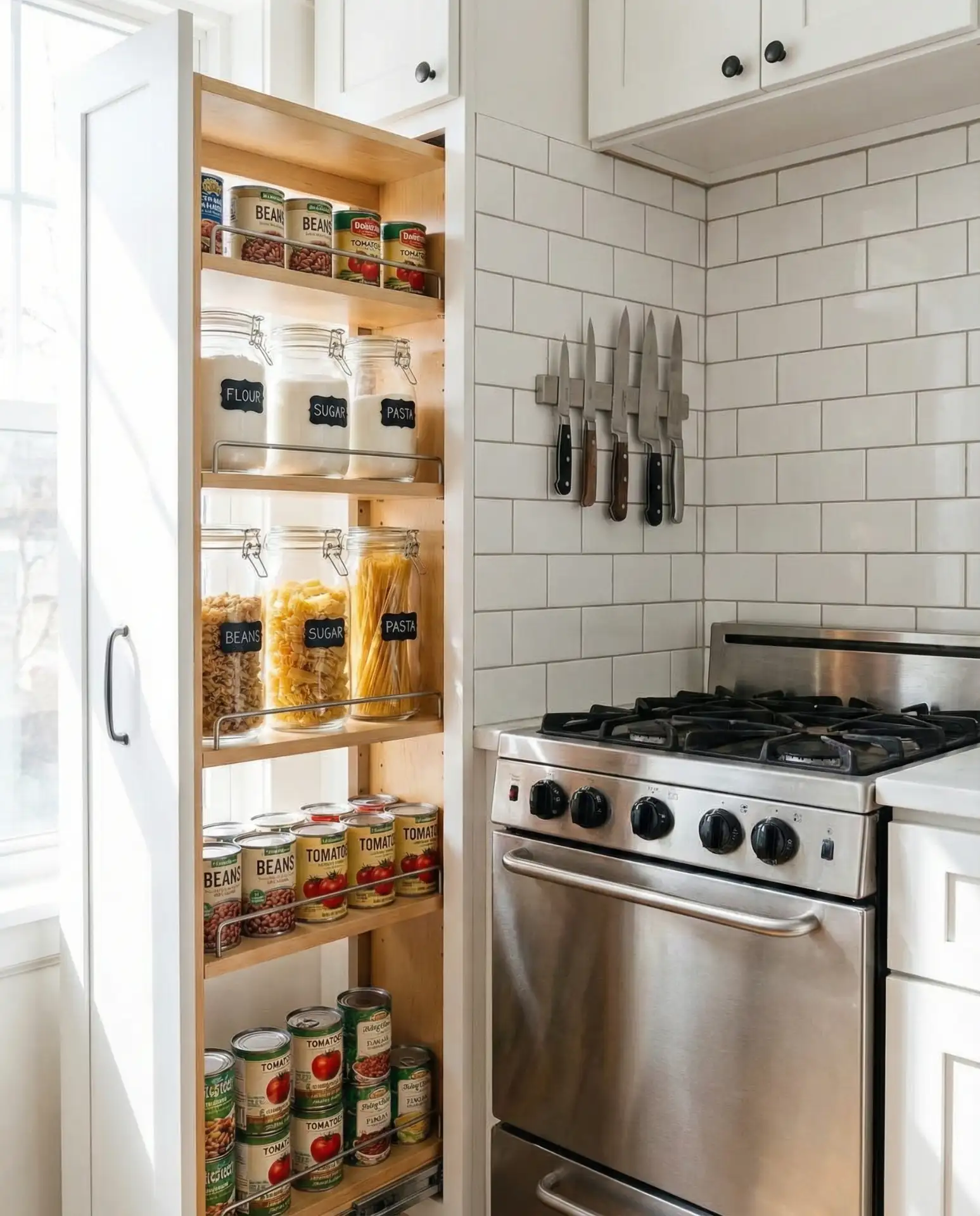
Real homeowner behavior: people in studio apartments and tiny homes often prep meals in batches and store leftovers in stackable glass containers, so a small but efficient fridge becomes essential. They also tend to own fewer, higher-quality tools—one great chef’s knife instead of a block of mediocre ones, a single cast-iron pan instead of a full set. It’s minimalism by necessity, but it often leads to better cooking habits and less waste.
12. Scandinavian Light Wood and White Palette
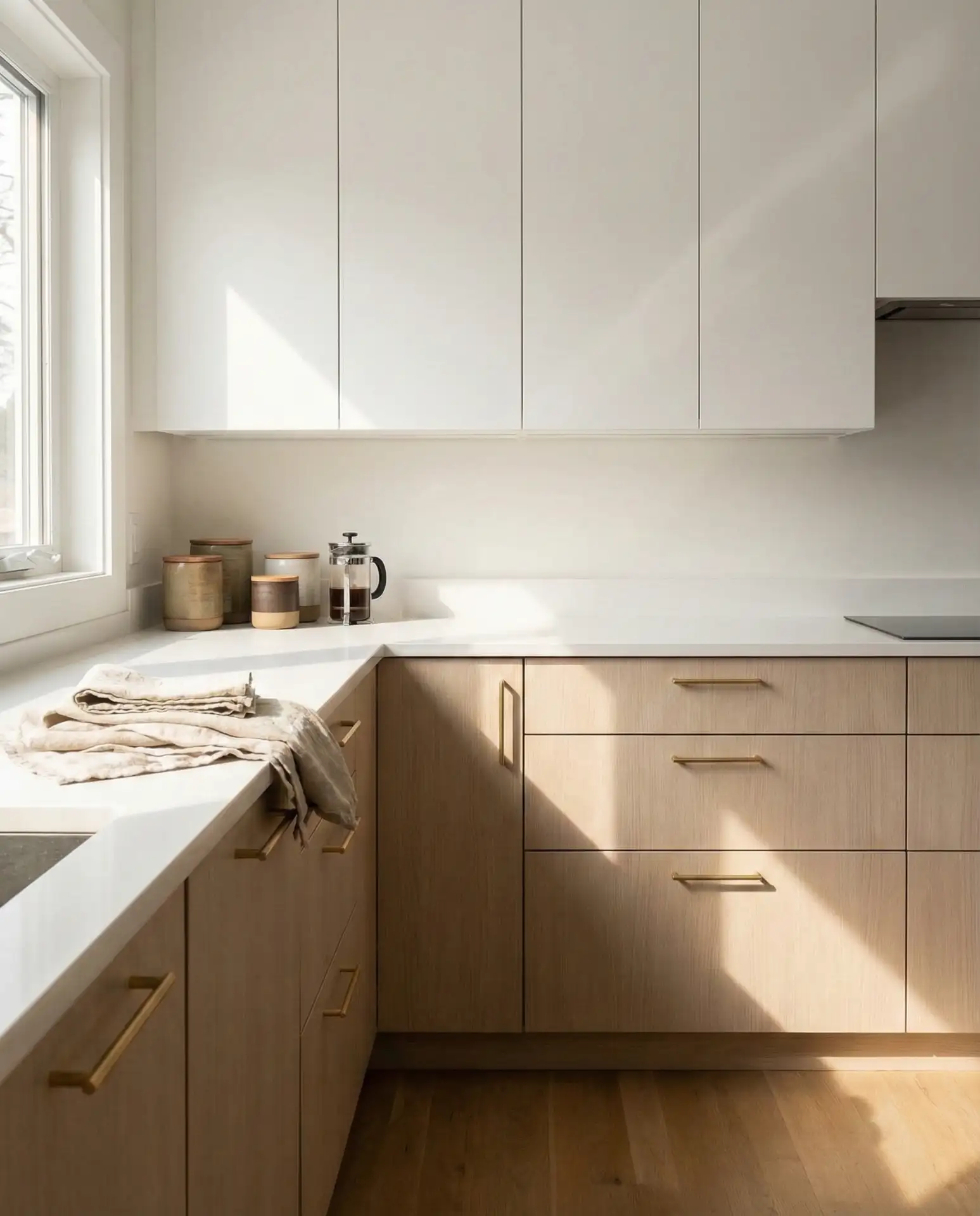
Scandinavian design is defined by light wood tones—birch, ash, or light oak—paired with crisp white walls and cabinets. The aesthetic is clean, functional, and deeply calming, with an emphasis on natural light and simplicity. Open shelving often displays everyday dishes in white or soft gray, and you’ll see woven baskets, linen textiles, and a few carefully chosen plants. The overall effect is airy and uncluttered, perfect for small spaces that need to feel larger or homes in northern climates where maximizing daylight is essential.
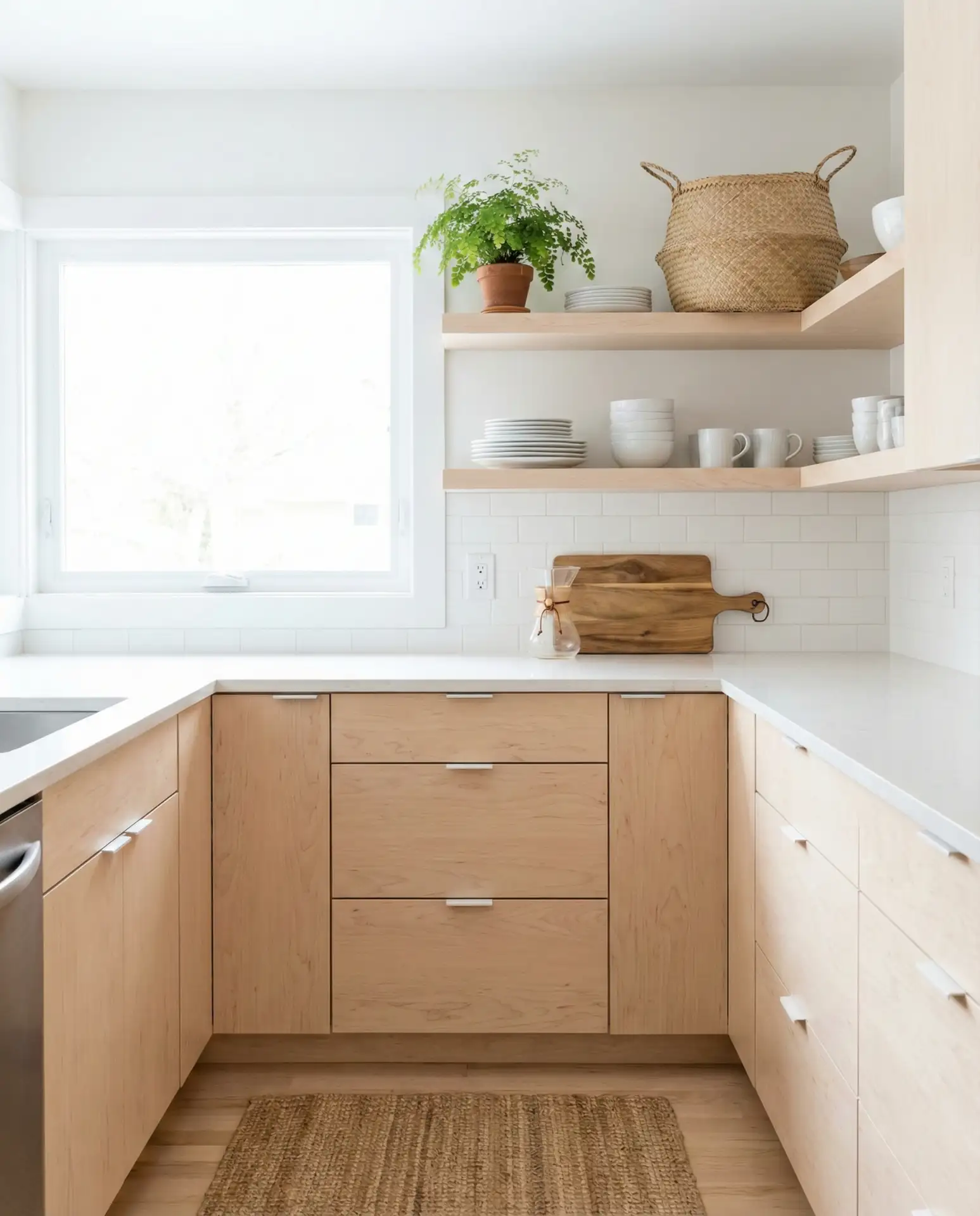
Budget angle: Scandinavian style can be achieved affordably through smart IKEA hacks and secondhand finds. The key is restraint—don’t fill every surface. A few well-made pieces in light wood and white, combined with plenty of empty space, will always look more expensive than a crowded room full of trendy accessories. Thrift stores in college towns often have great vintage Scandinavian furniture and kitchenware at a fraction of retail prices.
13. Contemporary High-Gloss Lacquer Cabinets
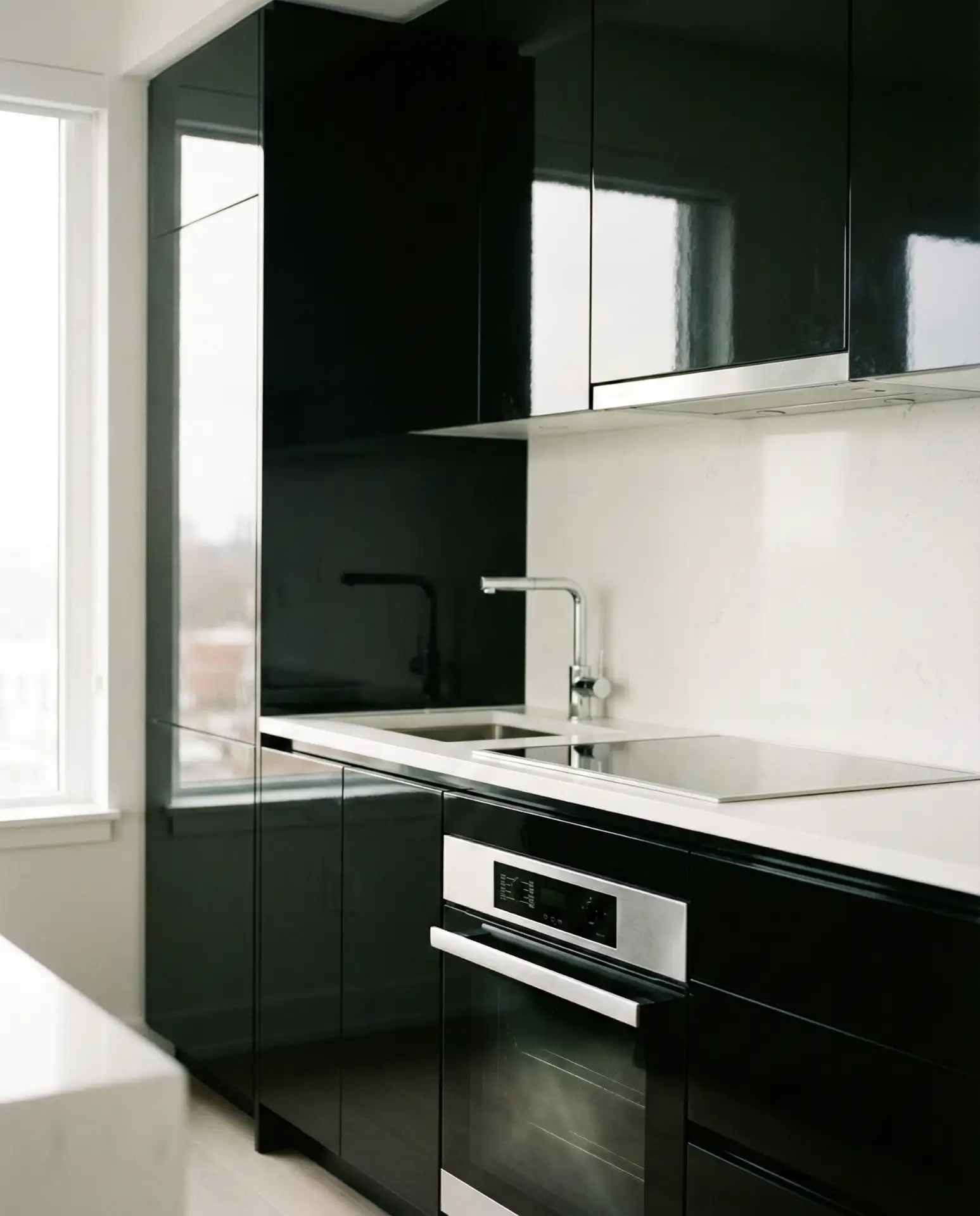
Contemporary kitchens often feature high-gloss lacquer cabinets in bold colors—navy, forest green, or classic black—that reflect light and add drama. The finish is smooth and mirror-like, creating a polished, almost futuristic look. This style works especially well in homes with abundant natural light, where the reflective surfaces amplify brightness throughout the day. Pair with sleek hardware (or none at all) and minimalist countertops in white or gray to let the cabinetry be the focal point.
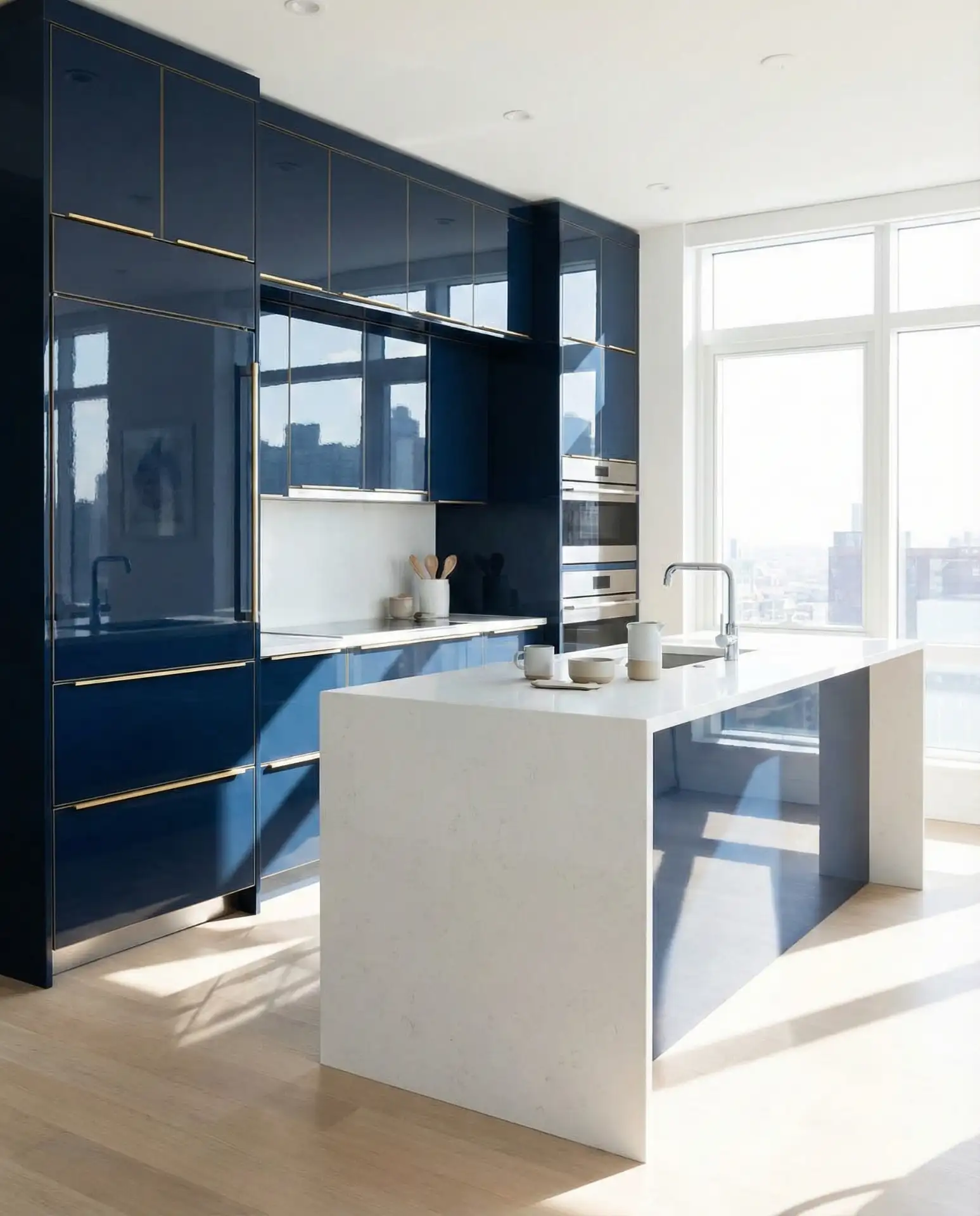
Common mistake: high-gloss finishes show fingerprints and smudges more than any other surface, so if you have kids or aren’t prepared to wipe down cabinets daily, this might not be your best choice. It’s a high-maintenance look that requires commitment. Some homeowners compromise by using gloss on upper cabinets only and matte on lower ones, which balances drama with practicality.
14. Kitchen Design Trends 2025 Carried Forward
Many 2025 trends are still going strong this year: mixed metals (brass with matte black), integrated appliances that disappear into cabinetry, and a move toward warmer neutrals like greige and taupe. The trend toward sustainability continues, with homeowners choosing reclaimed materials, energy-efficient appliances, and low-VOC finishes. Statement range hoods—often in plaster, wood, or custom metalwork—remain a popular way to add personality without overwhelming the space. These aren’t fleeting fads; they’re shifts in how we think about kitchens as long-term investments.
Practical insight: integrated appliances cost more upfront—sometimes 20 to 30 percent more than standard models—but they create a seamless, built-in look that can increase home resale value. If you’re planning to stay in your home for at least five years, the investment often pays off in both daily enjoyment and eventual return. It’s one of the few upgrades that genuinely appeals to a wide range of buyers.
15. Small Space Galley Layout Optimization
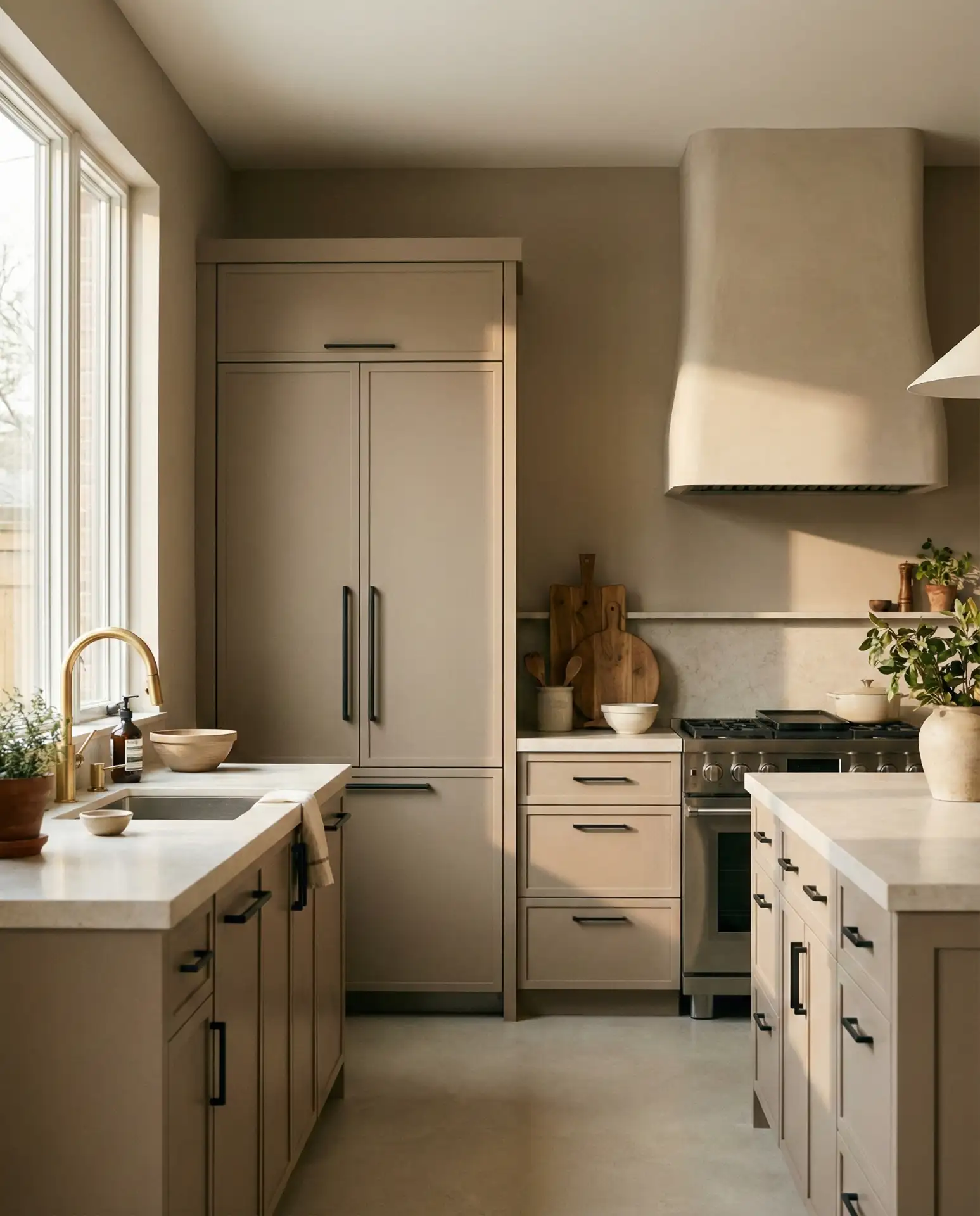
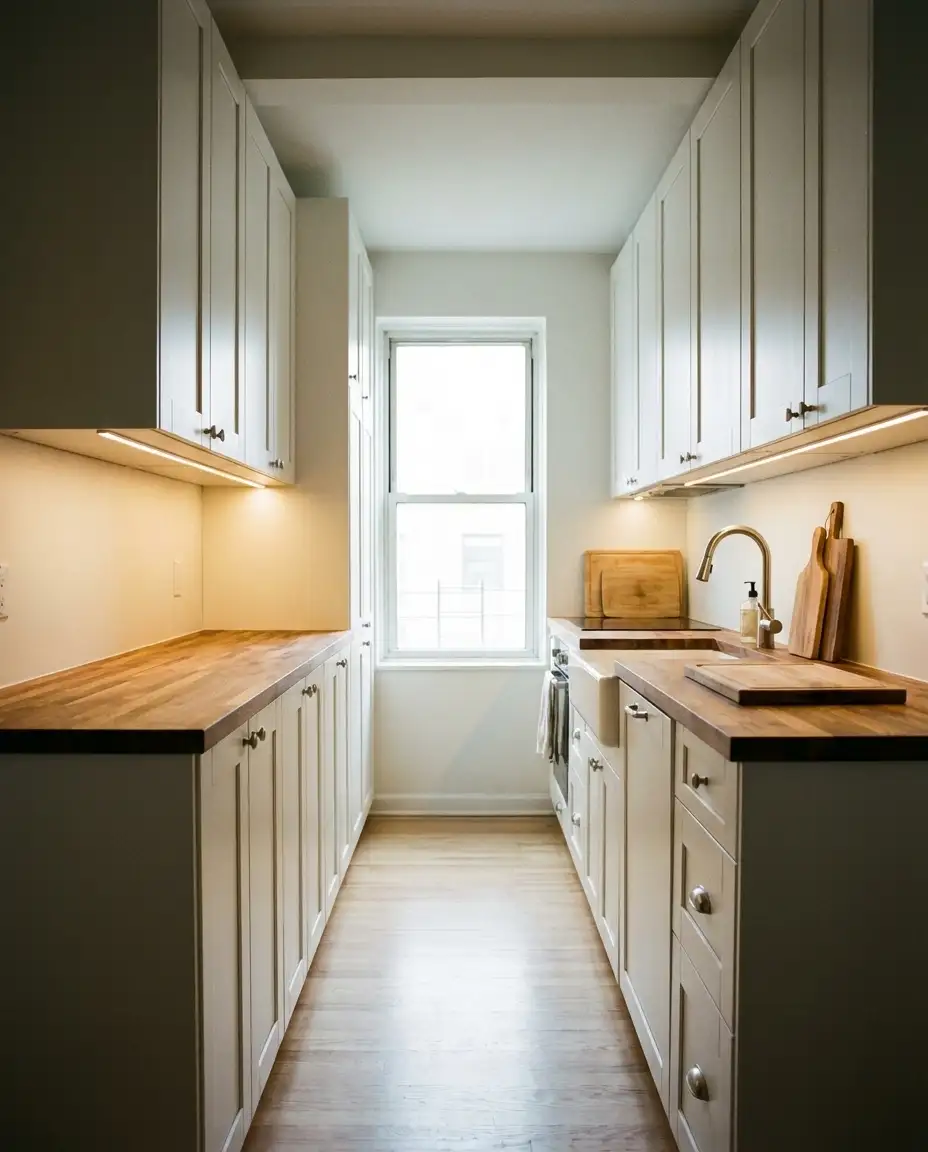
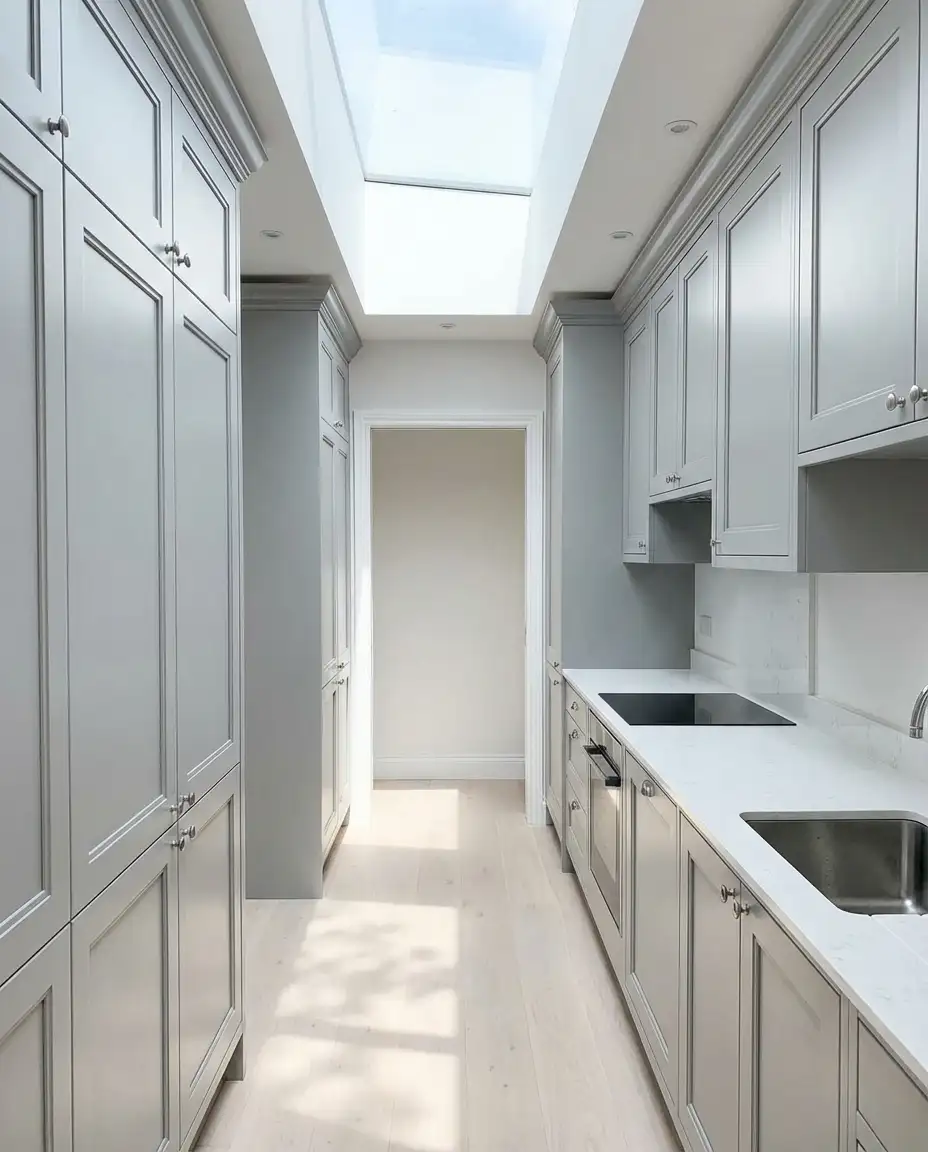
A galley kitchen—two parallel counters with a walkway between—is the most efficient layout for small spaces, keeping everything within arm’s reach. The key is maximizing vertical storage and ensuring the walkway is at least 42 inches wide so two people can pass comfortably. Light colors and reflective surfaces help the narrow space feel less claustrophobic. Upper cabinets that go all the way to the ceiling provide extra storage for items you don’t use daily, while under-cabinet lighting brightens work surfaces without taking up counter space.
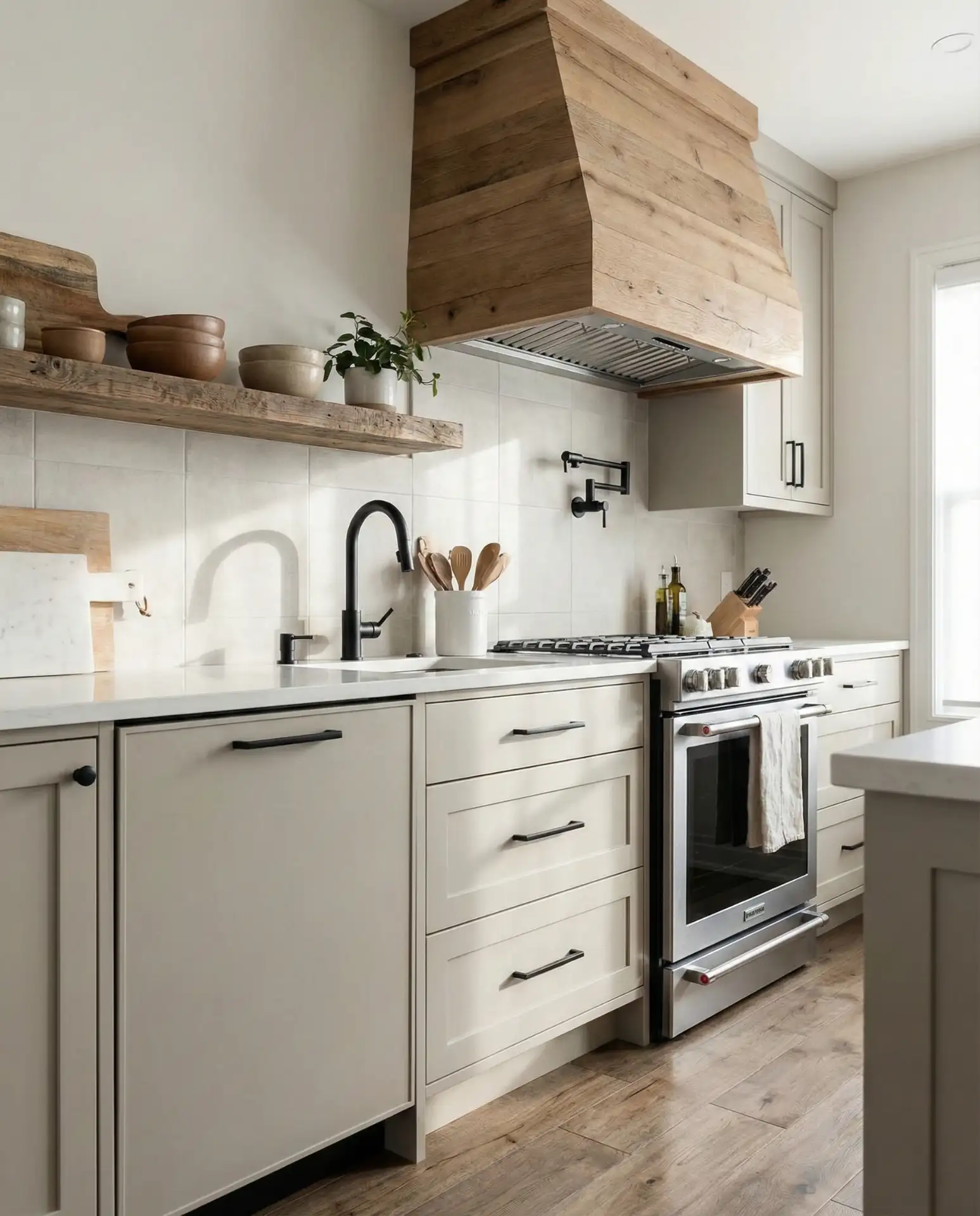
Where it works best: urban apartments, condos, and older homes where the original footprint doesn’t allow for an island or open plan. Galley kitchens are common in pre-war buildings in cities like New York, San Francisco, and Boston. Done right, they’re highly functional and can feel surprisingly spacious. The mistake is trying to force an island into a galley layout—it just creates a traffic jam and makes the space feel even smaller.
16. Home Kitchen with Breakfast Nook Integration
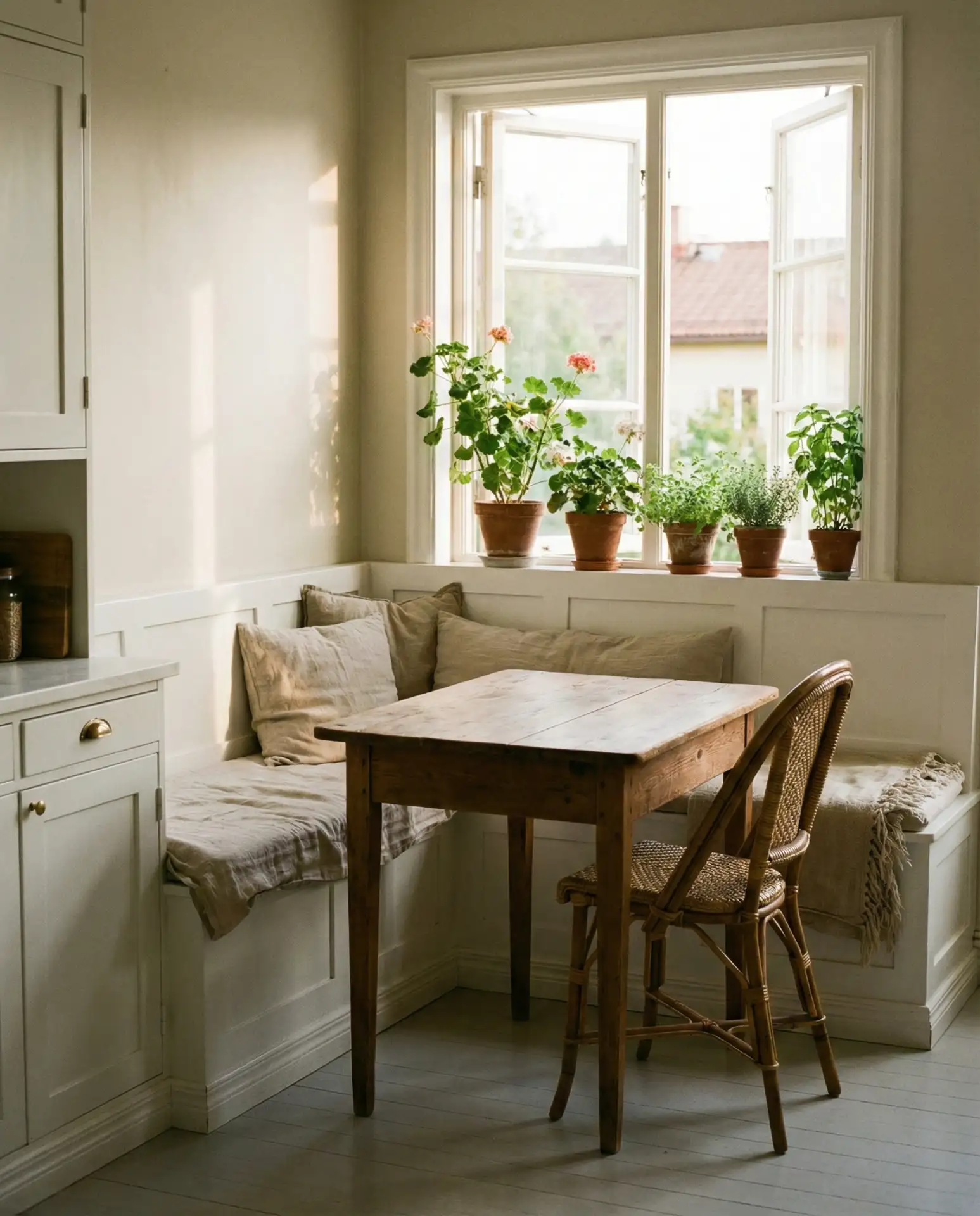
A home kitchen that incorporates a breakfast nook—whether a built-in banquette or a small table tucked into a corner—creates a cozy spot for morning coffee and casual meals. This setup is especially popular in suburban homes where families want a less formal alternative to the dining room. The nook can be positioned by a window to take advantage of natural light, and built-in seating often includes hidden storage underneath for linens, cookbooks, or kids’ art supplies. It’s a multitasker that adds charm and function without requiring a lot of square footage.
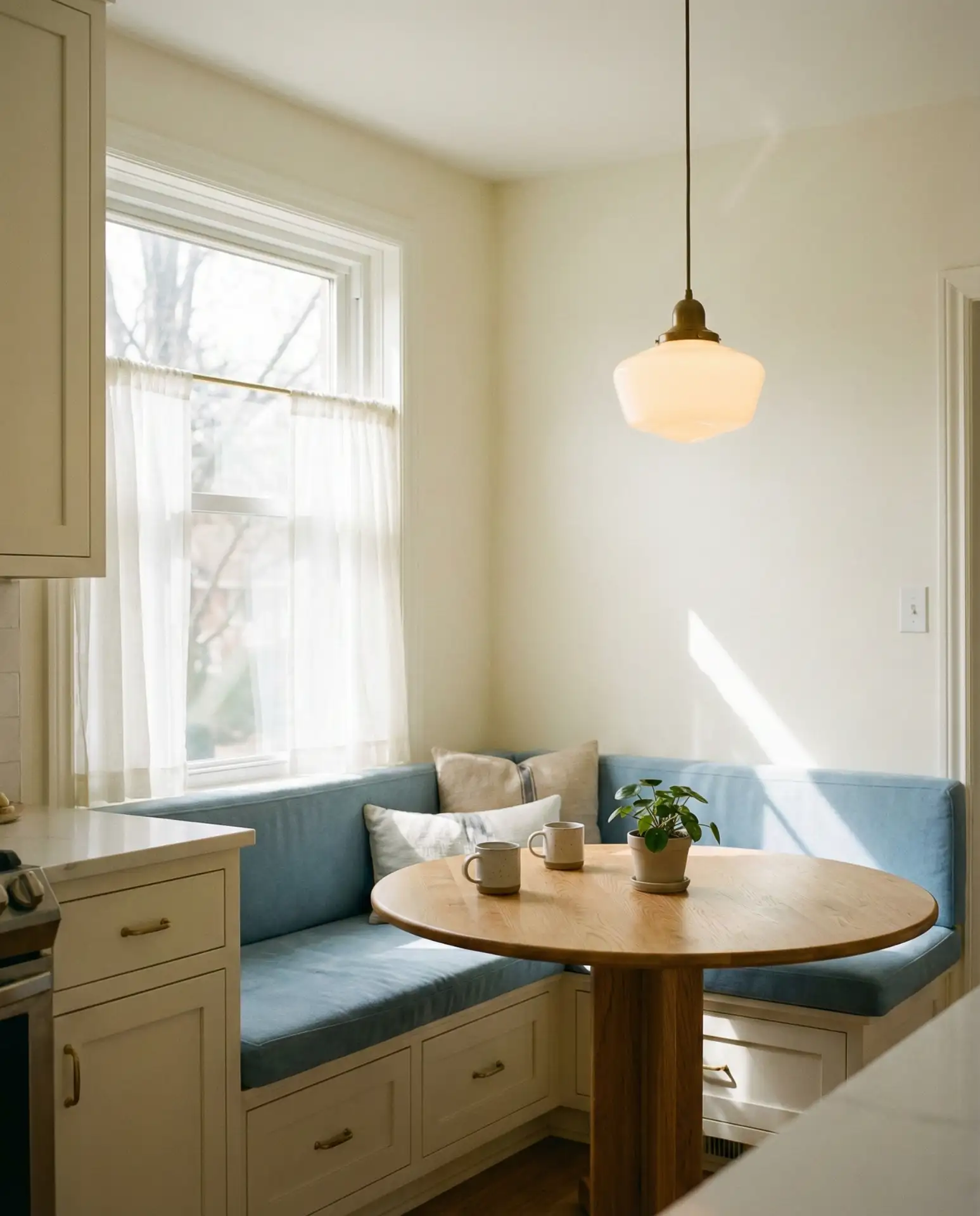
Expert commentary: a well-designed breakfast nook needs at least 24 inches of table space per person to feel comfortable, and the bench should be 18 inches deep with cushions that are firm enough to provide support but soft enough to linger over a second cup of coffee. Avoid benches that are too shallow or too hard—they’ll go unused. This is one area where investing in custom upholstery really pays off in daily comfort.
17. White Shaker Cabinets with Marble Backsplash
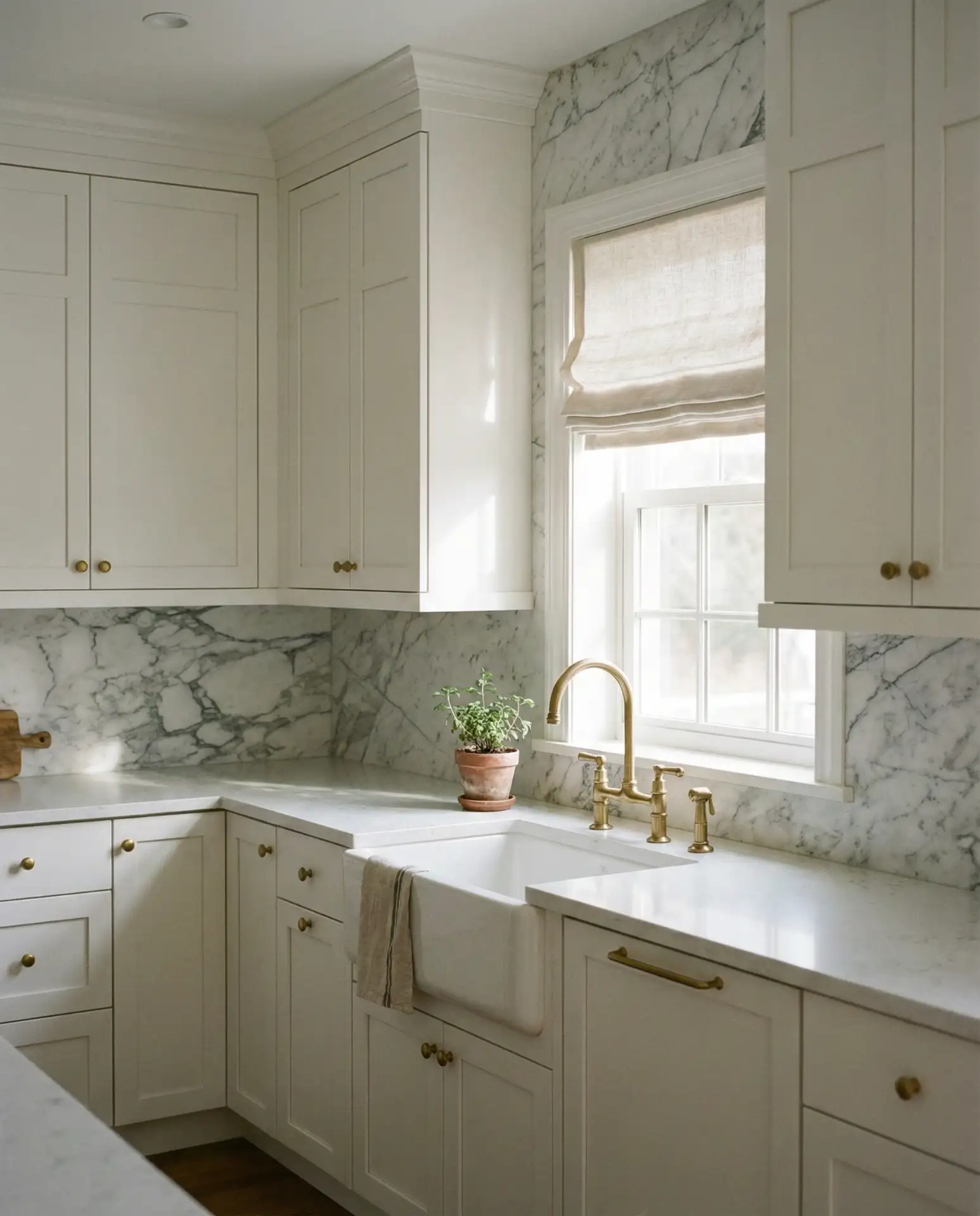
The combination of white shaker cabinets and a marble slab backsplash is a timeless choice that works in nearly any American home, from colonial revivals to modern farmhouses. The simple, recessed panel of the shaker door keeps things classic without feeling dated, while marble adds a layer of luxury and visual interest. It’s a pairing that appeals to a broad range of buyers, which is why designers recommend it for homes that might be sold within a few years. The look is clean, bright, and endlessly adaptable to different hardware and countertop choices.
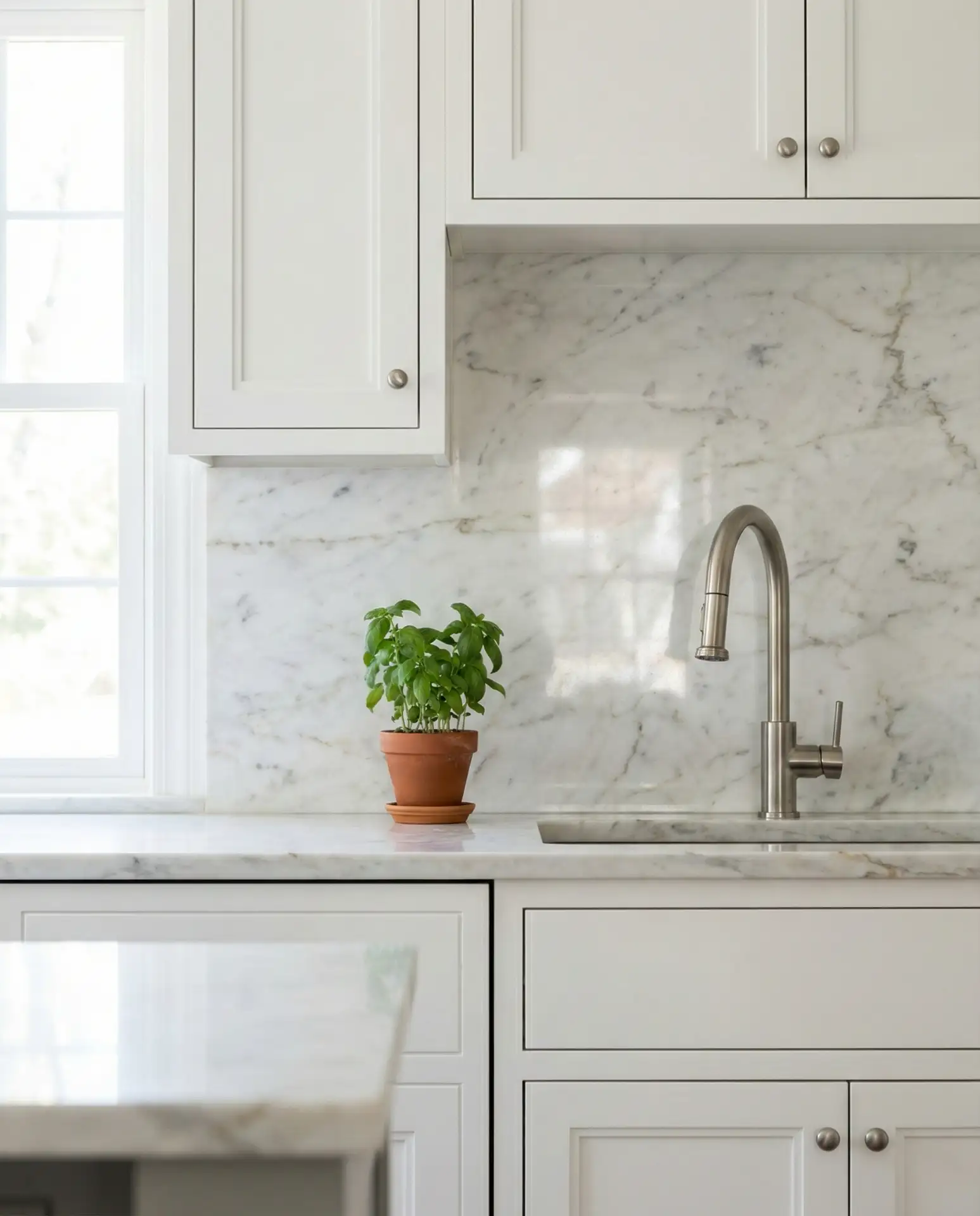
A couple in suburban Maryland recently told me they chose this exact combination after testing bolder options and realizing they’d tire of them. They wanted something that would still feel fresh in ten years, and white shakers with marble fit the bill. The key to making it feel current rather than boring is in the details: oversized hardware, a unique faucet, or a statement light fixture can all add personality without committing to a trend that might feel dated soon.
18. Modular Kitchen Systems for Flexibility
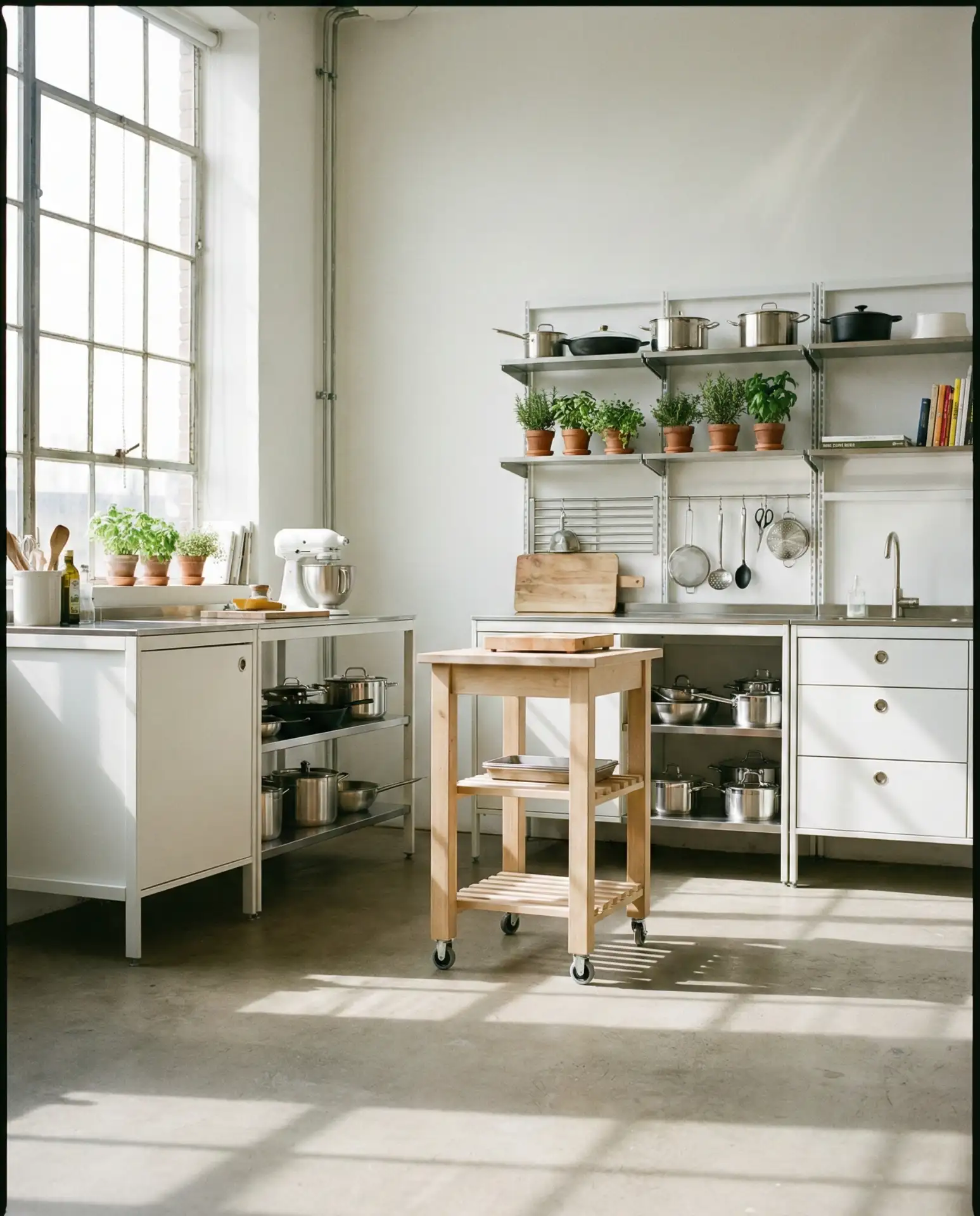
Modular kitchens use prefabricated cabinet units that can be mixed, matched, and reconfigured as needs change. This approach is popular among renters and homeowners who move frequently, as well as people who like to update their space every few years without a full remodel. Modules come in standard sizes and can be stacked, wall-mounted, or freestanding. The flexibility is appealing: you can start with a basic setup and add a pantry tower or wine rack later. It’s a more forgiving system than built-in custom cabinetry, which locks you into a single configuration.
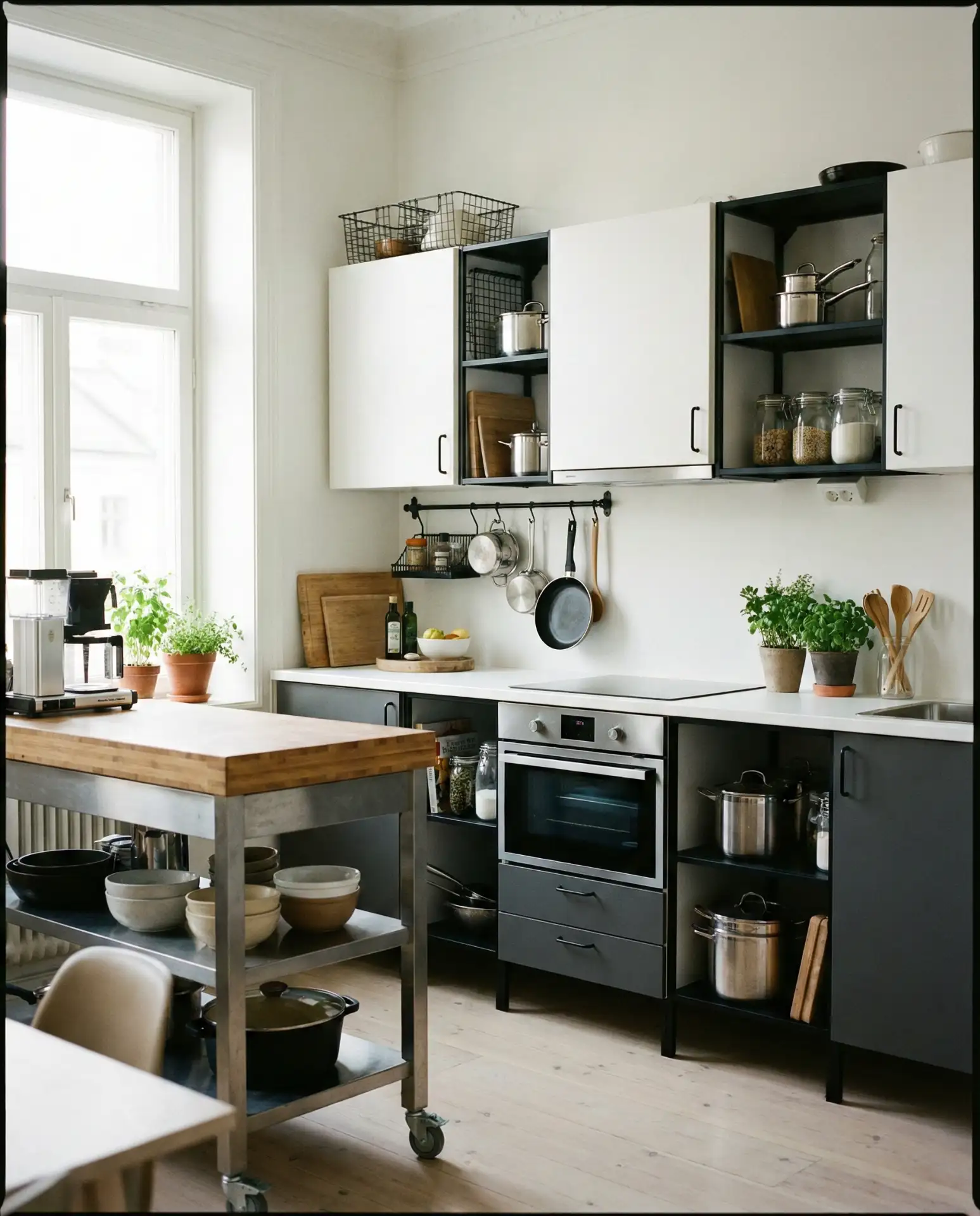
In cities with high turnover like Seattle and Austin, modular kitchens are becoming more common in rental properties. Landlords appreciate that they can upgrade or replace individual units without gutting the entire kitchen, and tenants like that the systems look contemporary and functional. It’s a win-win that’s likely to become even more widespread as housing mobility increases and people seek adaptable solutions.
19. Restaurant-Style Stainless Steel Prep Zone
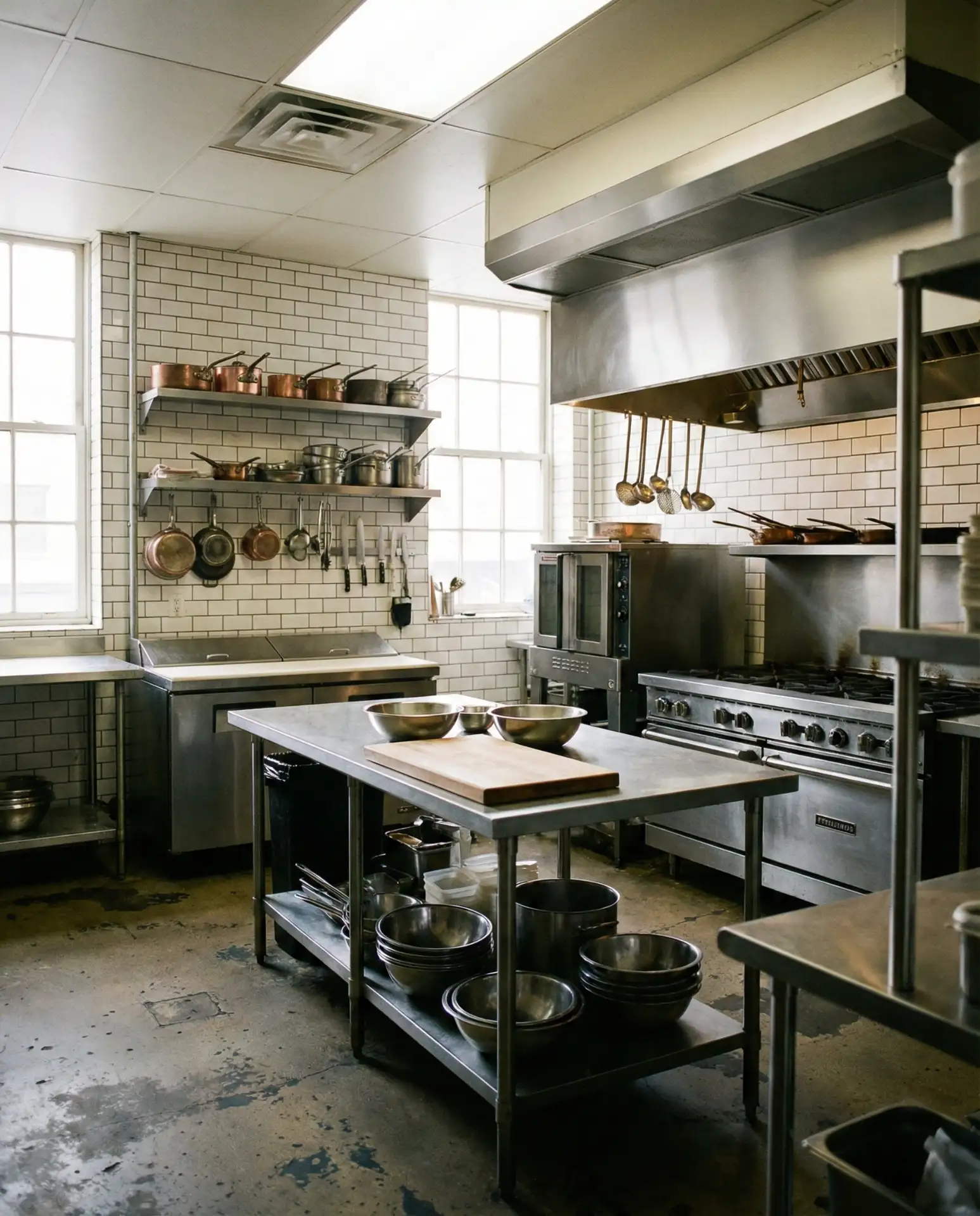
A restaurant-style kitchen brings commercial-grade equipment and materials into the home: a stainless-steel prep table, a professional range with high BTU burners, and open shelving for pots and utensils. This aesthetic appeals to serious home cooks who want the durability and efficiency of a professional kitchen without opening a business. Stainless steel is easy to clean, heat-resistant, and ages well—scratches and patina just add character. The look is utilitarian and honest, with no pretense about being anything other than a workspace designed for cooking.
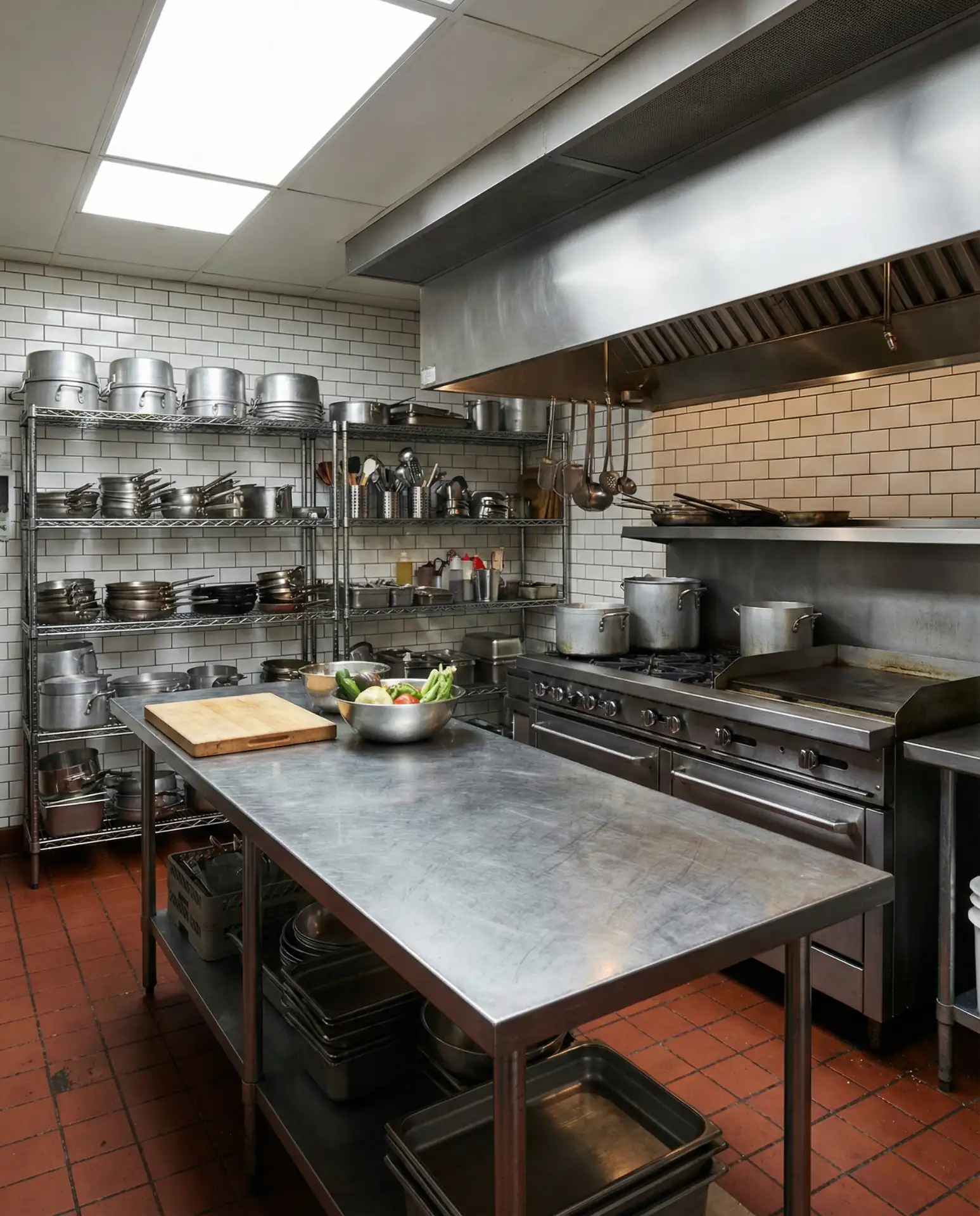
Common mistake: thinking you need top-of-the-line commercial equipment when mid-tier residential versions will serve you just as well. A true commercial range requires special ventilation and gas lines that can cost thousands to install, and many commercial appliances aren’t even legal in residential buildings due to safety codes. Look for “pro-style” or “commercial-inspired” ranges made for home use—they deliver the performance and aesthetic without the headaches.
20. Modern Open Shelving Display Kitchen
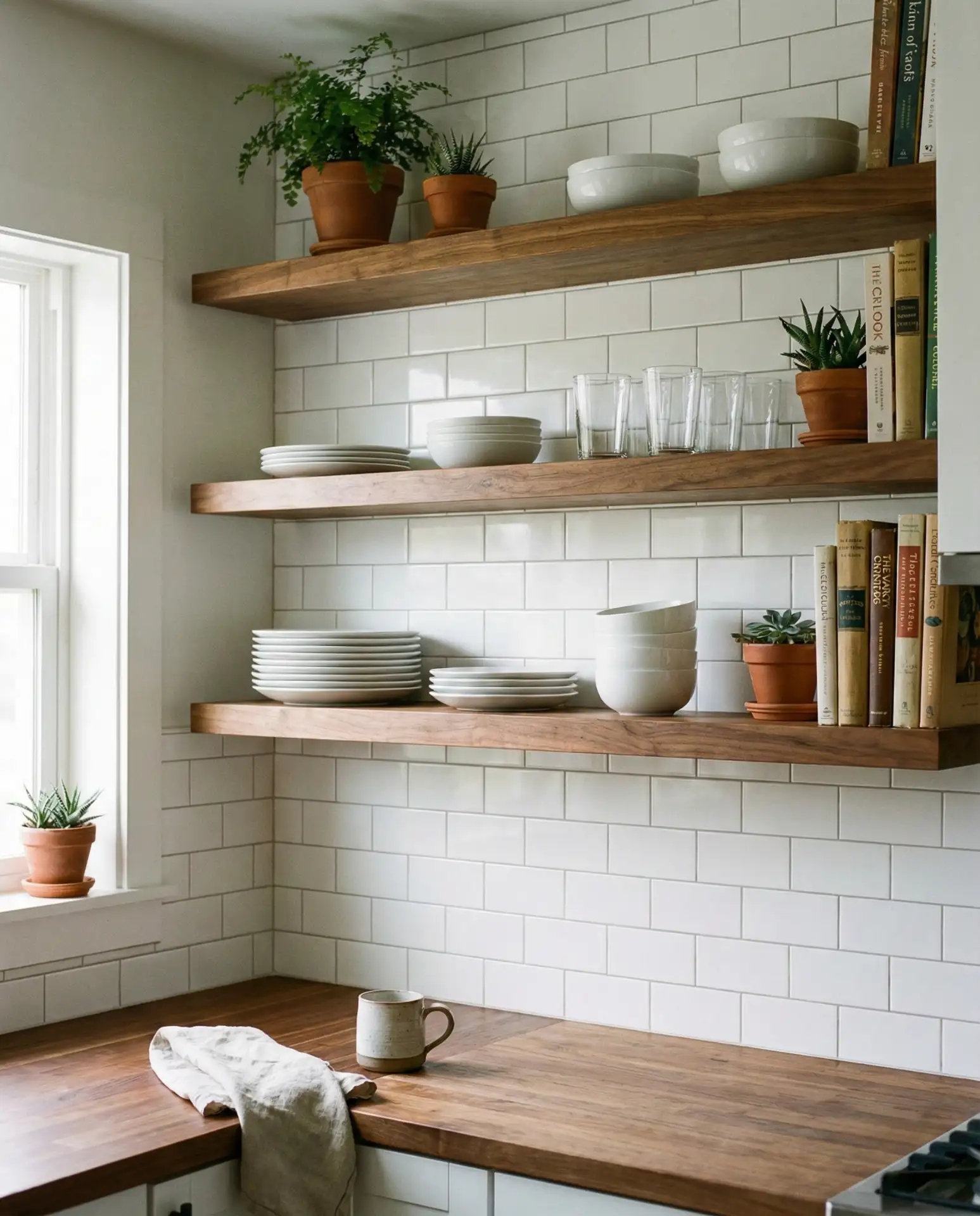
A modern open-shelving kitchen replaces upper cabinets with floating shelves, displaying dishes, glassware, and cookbooks as part of the decor. This approach makes the space feel larger and more breathable, while also forcing you to be more intentional about what you own. Everything on display needs to earn its place—chipped mugs and mismatched plasticware won’t cut it. The aesthetic is curated but approachable, with items that are both beautiful and functional. It’s a style that works especially well in lofts and contemporary homes with high ceilings and lots of natural light.
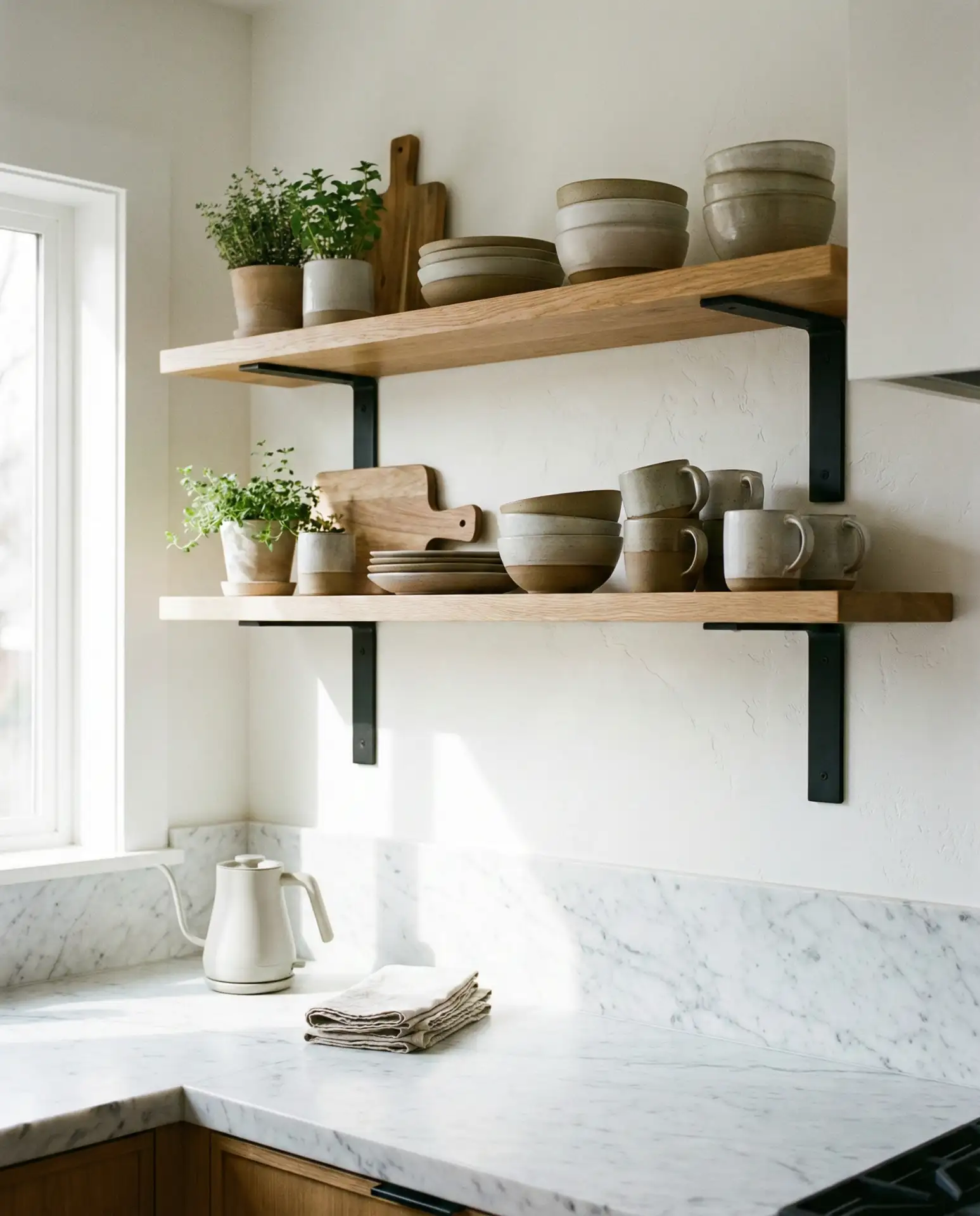
Real homeowner behavior: people who commit to open shelving tend to cook more mindfully and keep their kitchens cleaner because everything is visible. There’s no hiding clutter behind closed doors. Some find this liberating, while others find it stressful. If you’re someone who accumulates dishes in the sink or has a lot of mismatched storage containers, closed cabinets might be the better choice. Open shelving is for those who genuinely enjoy the daily ritual of keeping things tidy and visually pleasing.
21. Modern 2026 Smart Appliance Integration
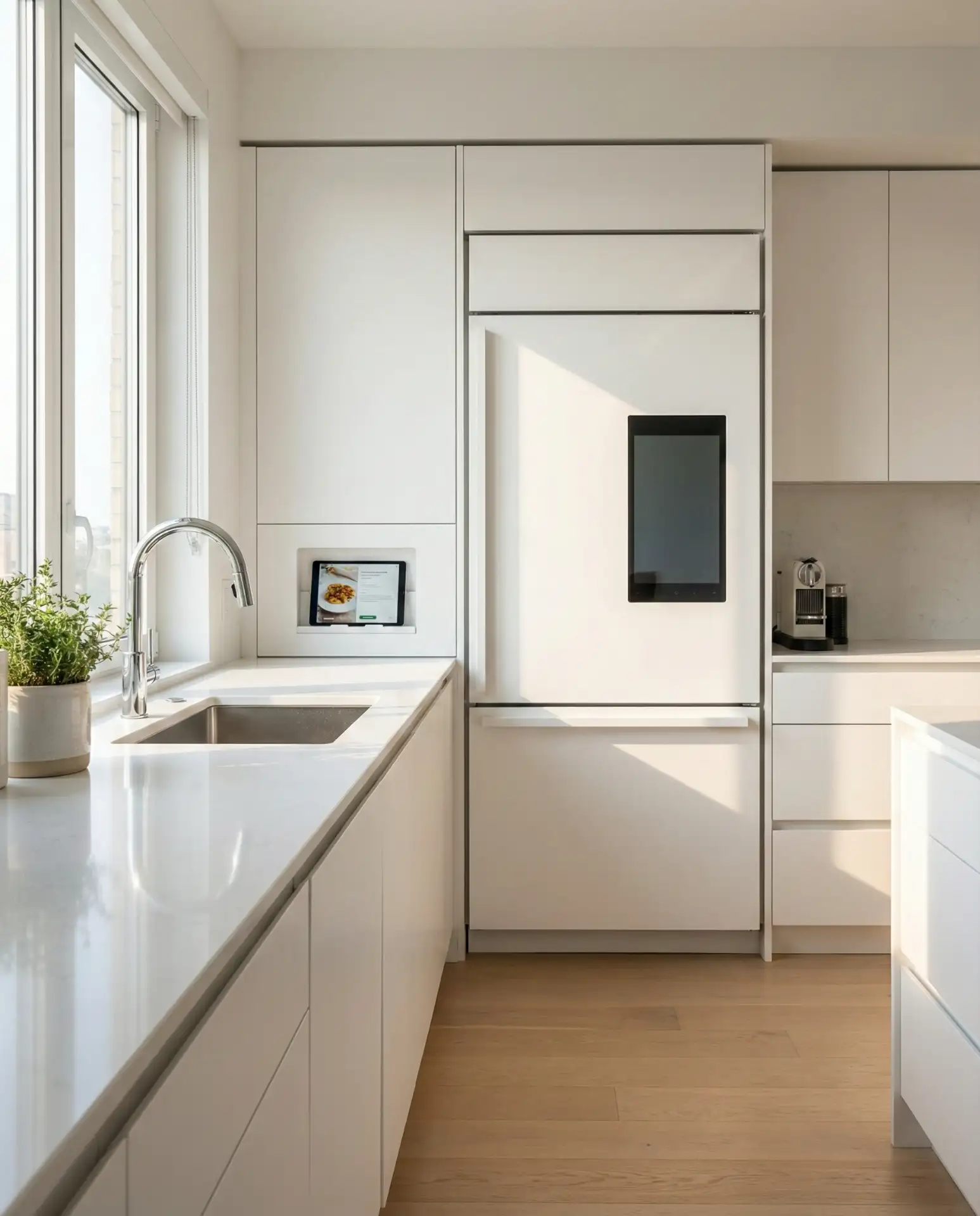
The modern 2026 kitchen increasingly incorporates smart technology: refrigerators with interior cameras you can check from your phone, ovens you can preheat remotely, and voice-activated faucets that dispense precise measurements. These aren’t gimmicks—they’re genuinely useful tools for busy households. A smart fridge can alert you when milk is expiring or suggest recipes based on what’s inside. Touchless faucets reduce the spread of germs, which became a priority during the pandemic and has stuck around. The integration is subtle; the tech enhances function without dominating the aesthetic.
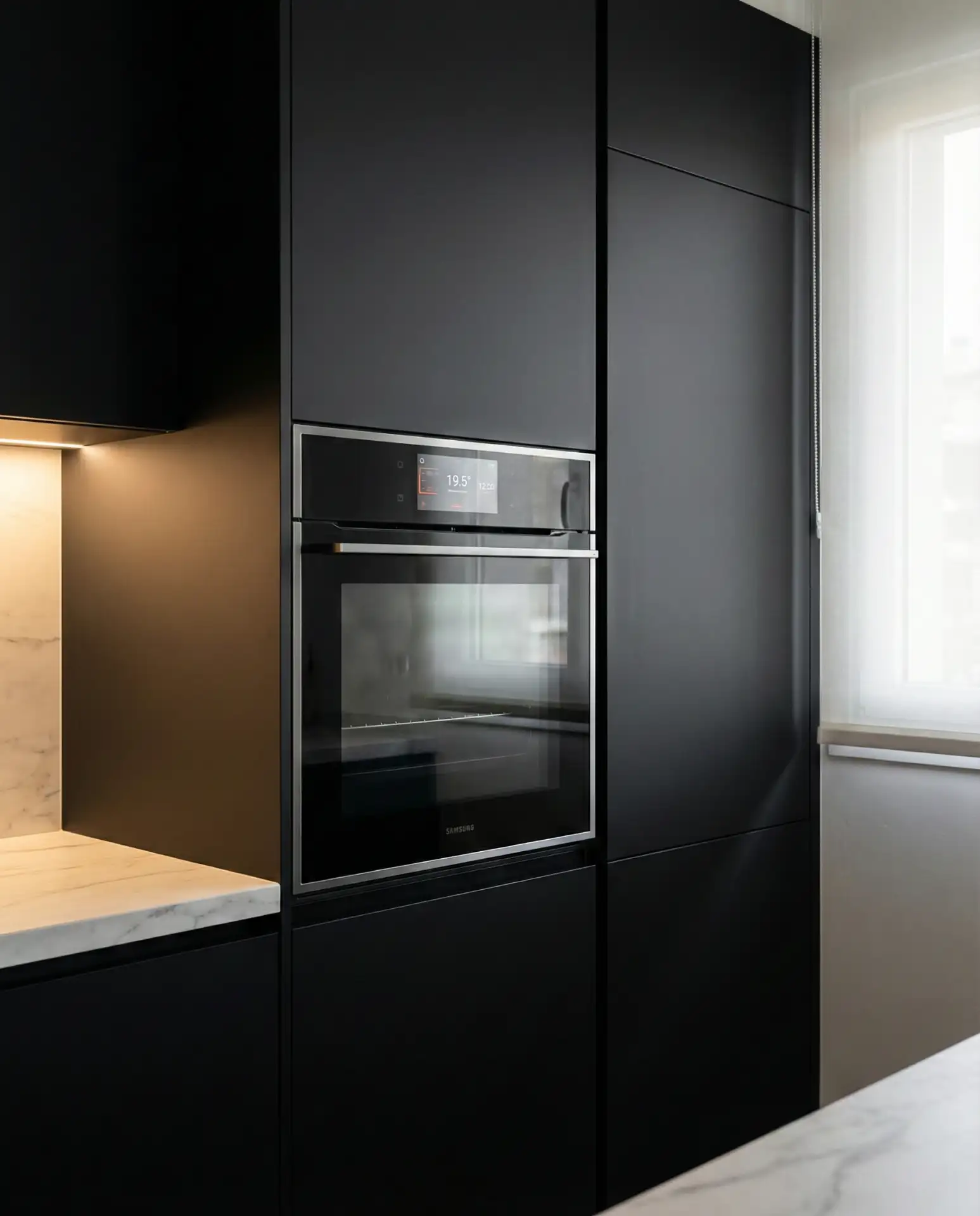
Budget angle: smart appliances carry a premium—typically 15 to 40 percent more than standard models—but the gap is narrowing as the technology becomes mainstream. If the budget is tight, prioritize one or two smart features that align with how you actually cook. A smart oven makes sense if you bake a lot; a smart fridge is great for large families who shop infrequently. Don’t feel pressured to upgrade everything at once—you can always add more later as prices drop and your needs evolve.
22. Transitional Style Blending Classic and Modern
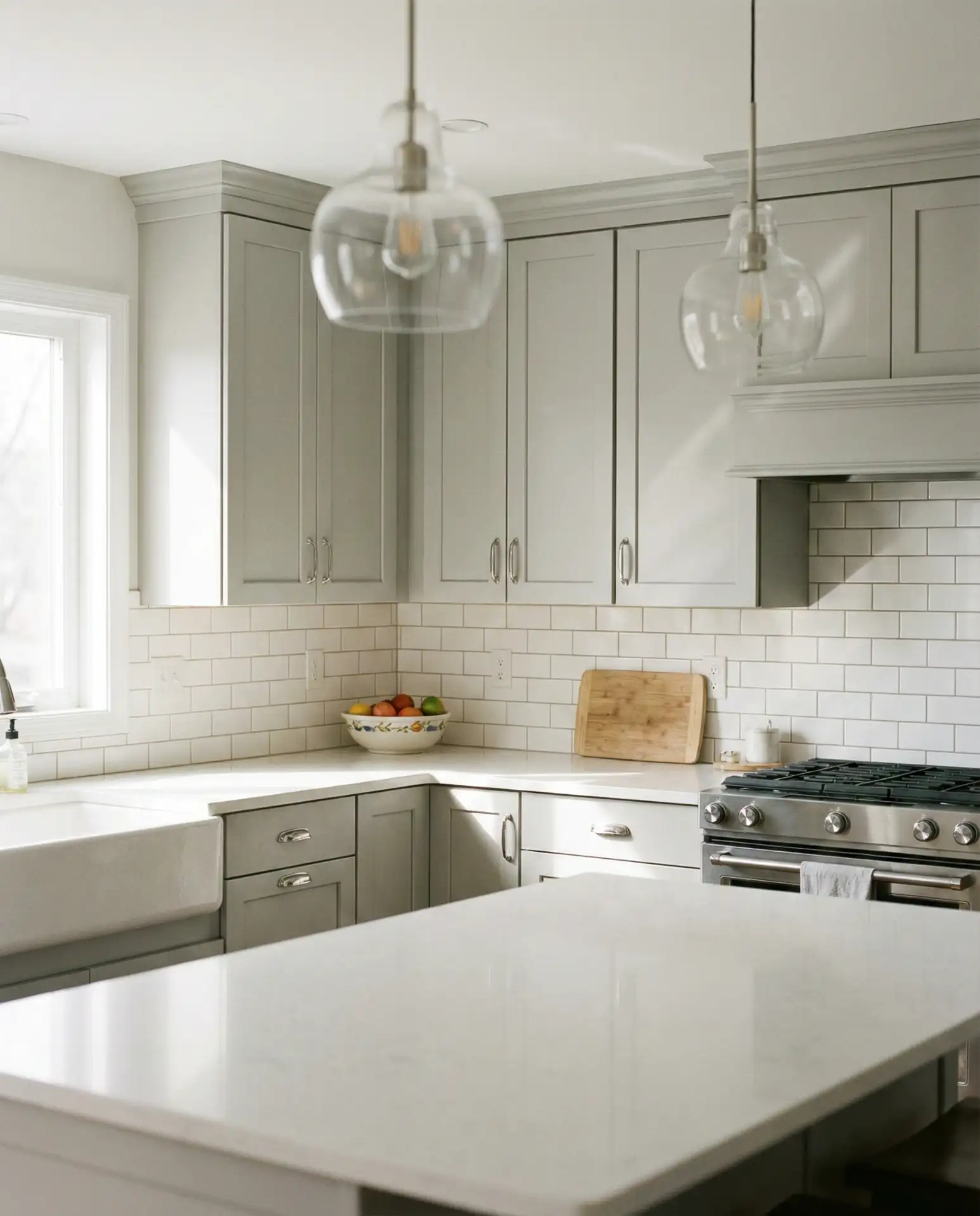
Transitional kitchens sit comfortably between traditional and contemporary, borrowing elements from both to create a balanced, timeless look. You might see shaker-style cabinets in a soft gray paired with sleek quartz countertops and modern pendant lights. The palette is neutral, the lines are clean but not stark, and there’s room for both ornate and minimal details to coexist. It’s an approach that appeals to homeowners who want their kitchen to feel current without being trendy and classic without feeling dated. This flexibility is exactly why transitional is one of the most requested styles in American remodels.
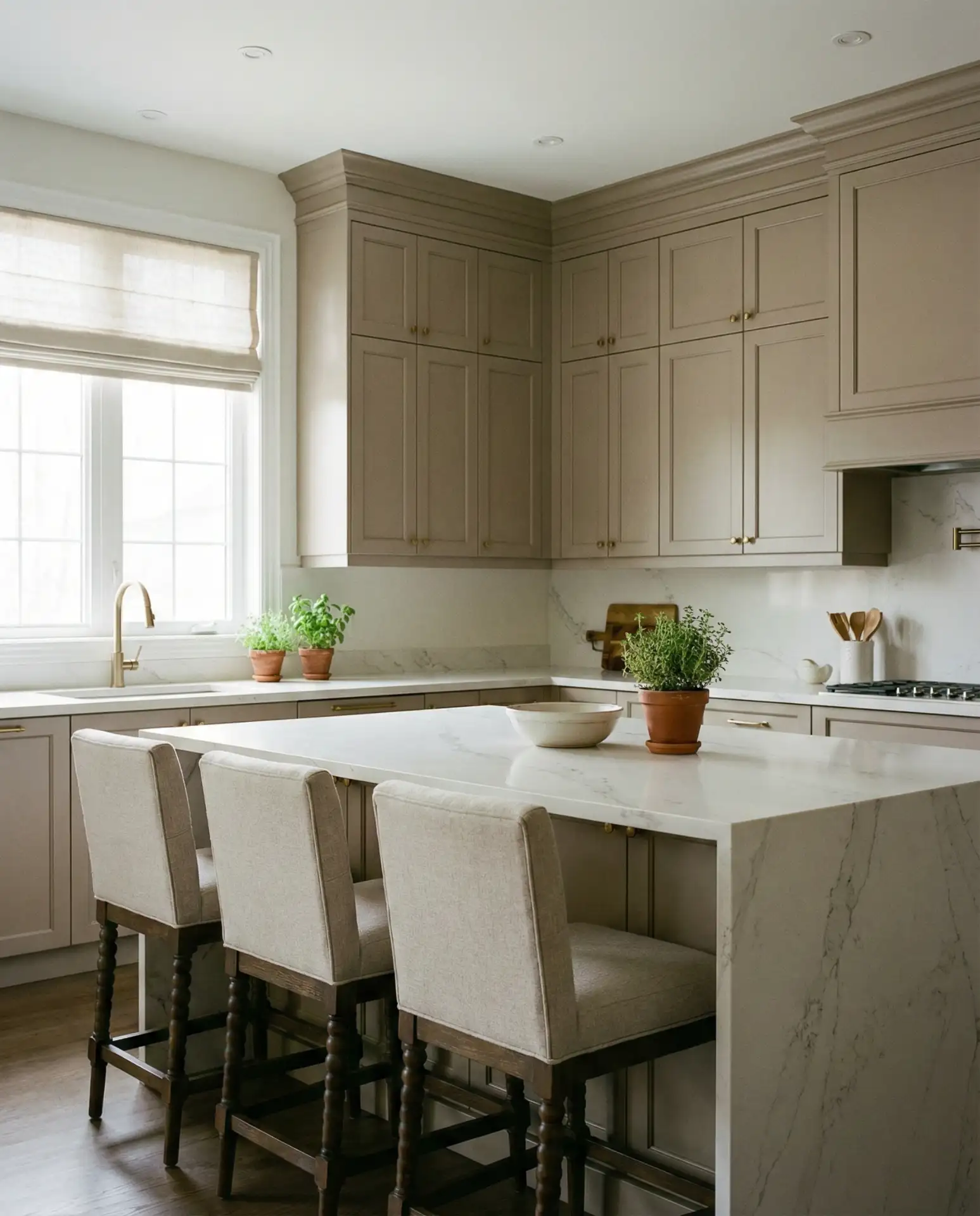
Across the Midwest and Mid-Atlantic, transitional kitchens dominate new builds and remodels because they suit a wide range of home styles—from Craftsman bungalows to split-level ranches. They’re safe in the best way: elegant, adaptable, and unlikely to feel out of place in five years. For homeowners who value longevity and resale potential, it’s a smart choice that balances personal taste with broad market appeal.
Conclusion
These ideas represent where American kitchen design is right now—rooted in real needs, inspired by diverse aesthetics, and always evolving. Whether you’re drawn to the warmth of rustic materials, the efficiency of a galley plan, or the sleekness of contemporary finishes, there’s room to make it your own. Share your favorite idea or your own kitchen project in the comments—we’d love to hear what’s working in your home.