Honey oak cabinets are making a serious comeback in American kitchens, and it’s not just nostalgia driving the trend. Homeowners are discovering that these warm, golden-toned cabinets don’t have to feel dated or stuck in the past. With the right updates, styling, and fresh color pairings, honey oak can anchor a kitchen that feels both timeless and completely current. Whether you inherited them in a new home or you’re reconsidering a full cabinet replacement, there are dozens of ways to make honey oak work beautifully in 2026. This guide walks you through real-world ideas that blend inspiration with practical advice.
1. Soft Sage Green Walls with Honey Oak
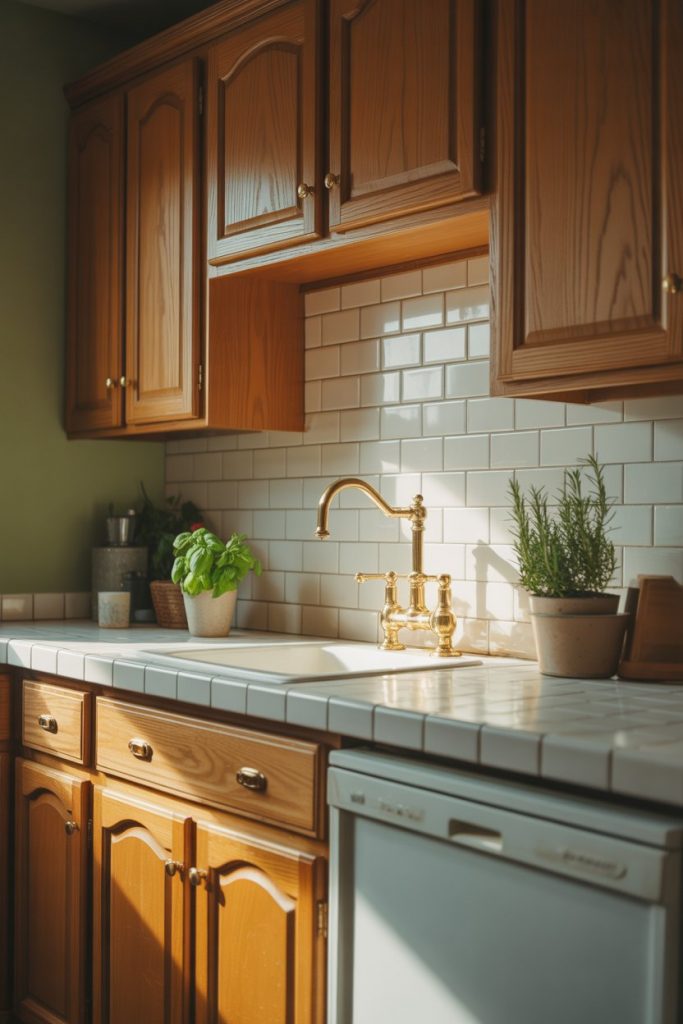
Pairing honey oak kitchen cabinets with green walls creates an organic, grounded feel that’s become wildly popular on Pinterest boards this year. The golden undertones in the wood play beautifully against muted sage or olive shades, especially when you choose a wall color that leans cooler rather than too yellow. This combination works particularly well in kitchens with good natural light, where the green shifts throughout the day and the oak glows warmly. 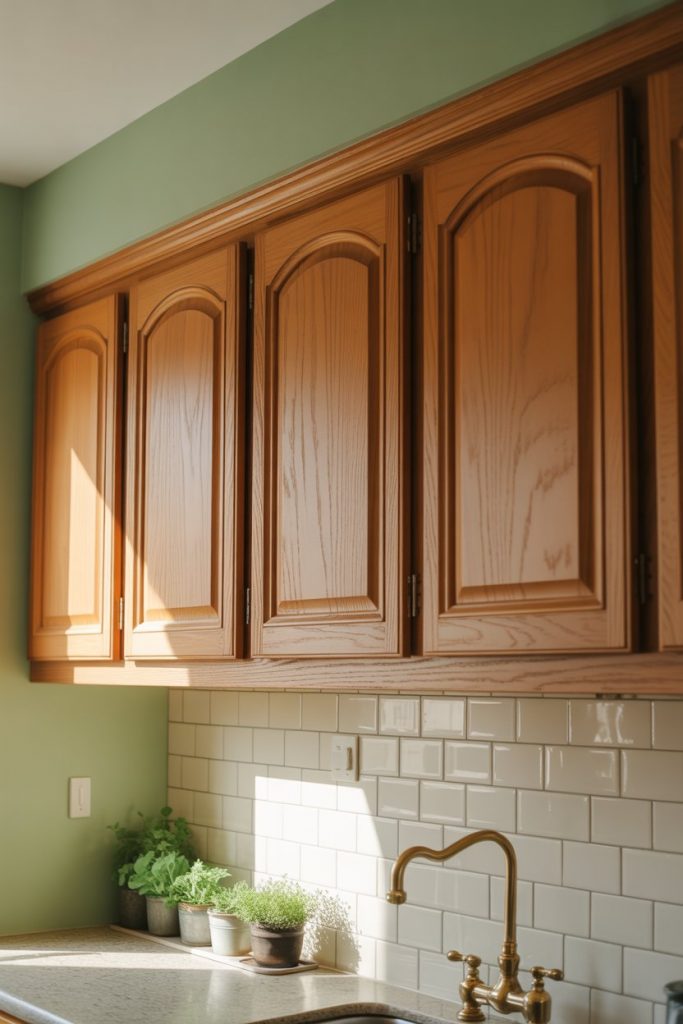
This setup works best in kitchens that already have plenty of natural light, since darker greens can feel heavy in north-facing rooms. If you’re working with a smaller galley kitchen, stick to the palest sage tones and keep upper cabinets minimal or open. The green grounds the warmth of the oak without fighting it, and it’s a forgiving choice if your cabinets have any orange cast that you’re trying to soften.
2. Charcoal Backsplash for Instant Contrast
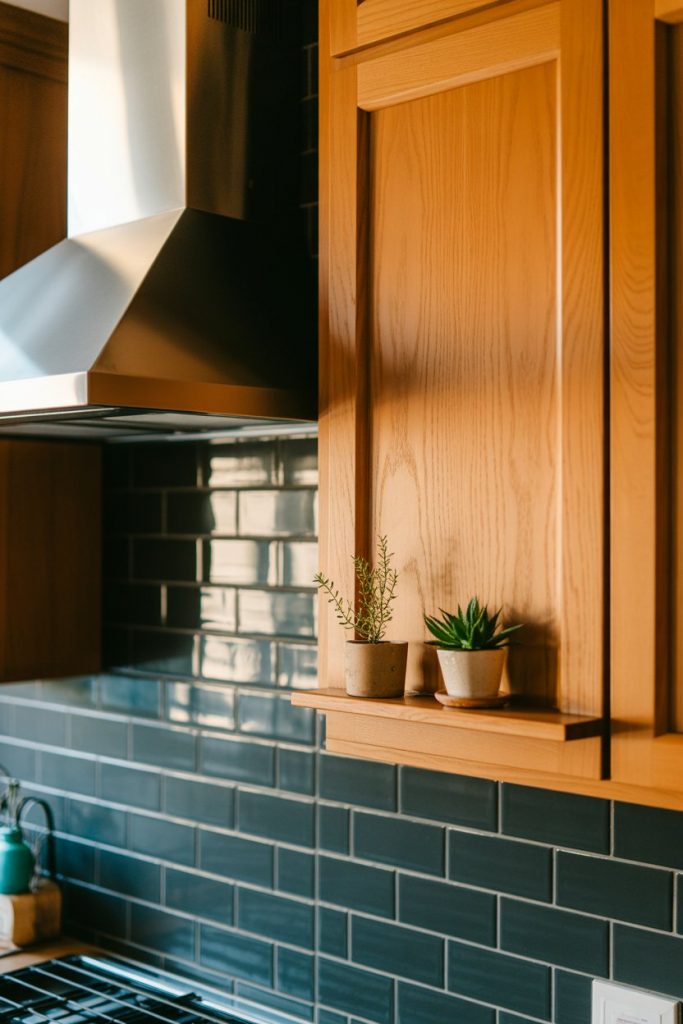
A black backsplash might sound bold, but it’s one of the fastest ways to update honey oak cabinets without touching the wood itself. Matte black subway tiles, soapstone-look ceramic, or even a dark zellige tile instantly modernizes the space and draws the eye upward. The contrast between the deep tile and the golden wood creates a sophisticated tension that feels intentional, not accidental. 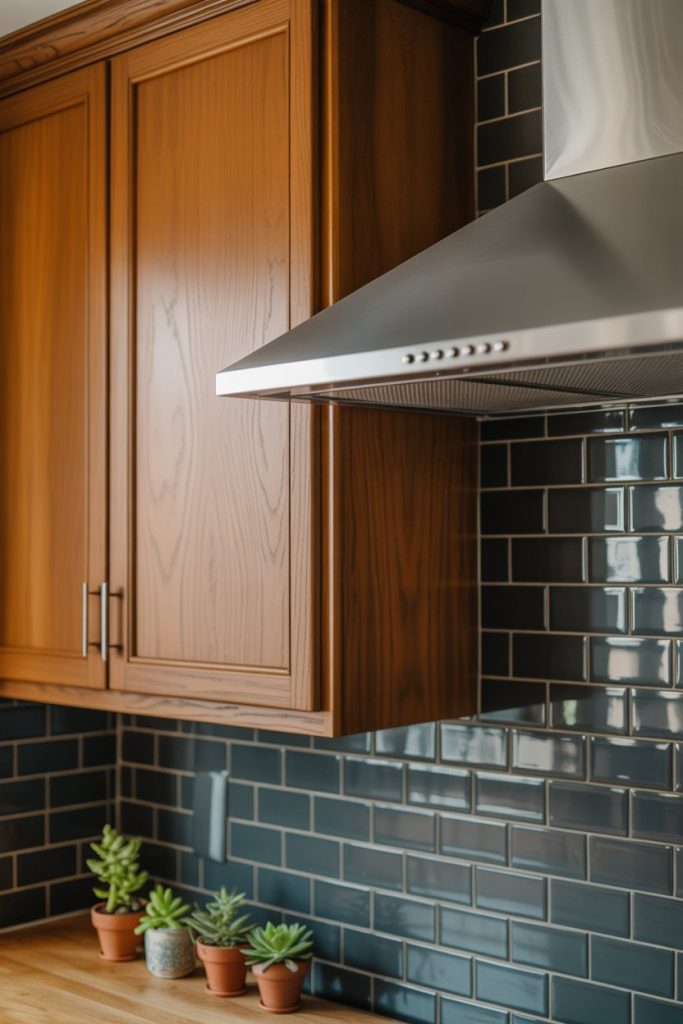
One homeowner in Portland told me she installed a charcoal geometric tile behind her stove, and it completely changed how people saw her kitchen. Suddenly the oak felt curated, not leftover. The key is choosing a backsplash with some texture or dimension so it doesn’t read flat. Avoid high-gloss finishes, which can feel too stark, and consider extending the tile all the way to the ceiling for a more cohesive look.
3. Embrace the 90s Aesthetic with Modern Styling
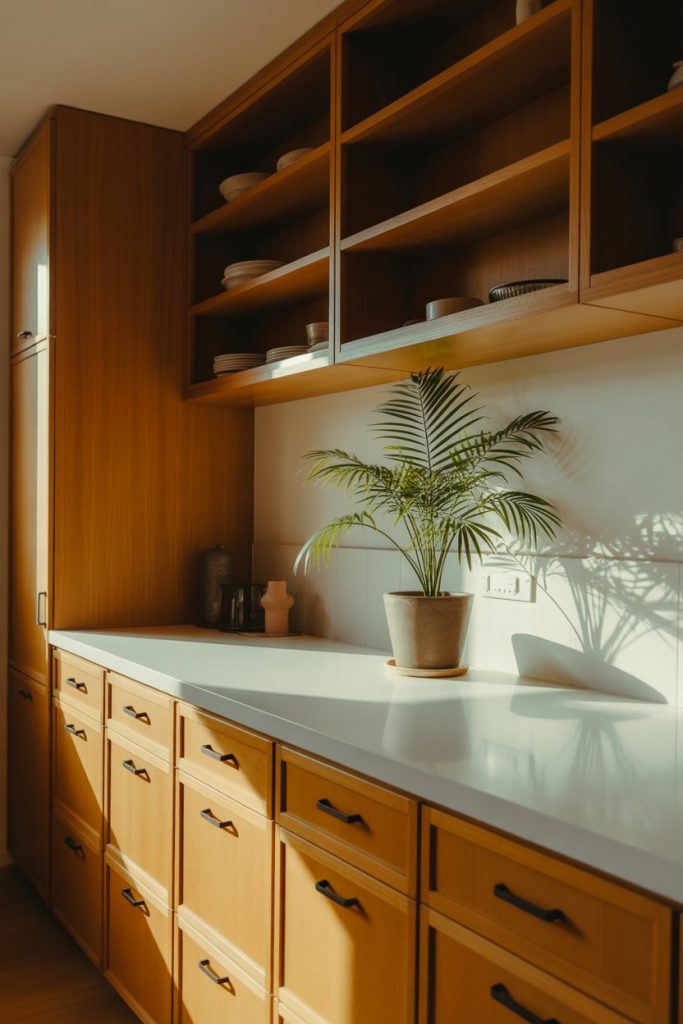
Honey oak cabinets were everywhere in 90s kitchens, and instead of running from that era, some designers are leaning into it with a wink. The trick is balancing the nostalgia with updated elements like modern hardware, streamlined countertops, and edited decor ideas that nod to the decade without feeling like a time capsule. Think less country cottage, more minimalist warmth. 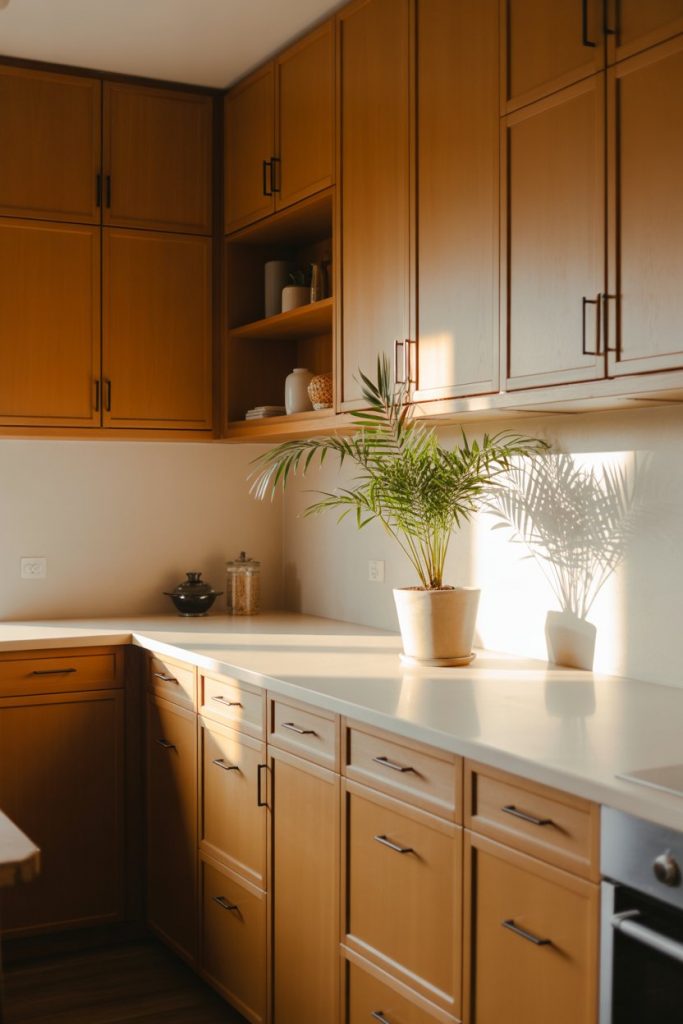
This approach is especially popular in the Pacific Northwest and parts of the Midwest, where honey oak was standard builder-grade and homeowners are finding creative ways to work with what they have. Instead of covering up the cabinets, they’re celebrating them as a marker of a specific design moment and building around that. It’s a budget-friendly way to refresh a kitchen without a full gut, and it feels a lot more honest than trying to disguise perfectly functional cabinets.
4. White Appliances for a Softer Look
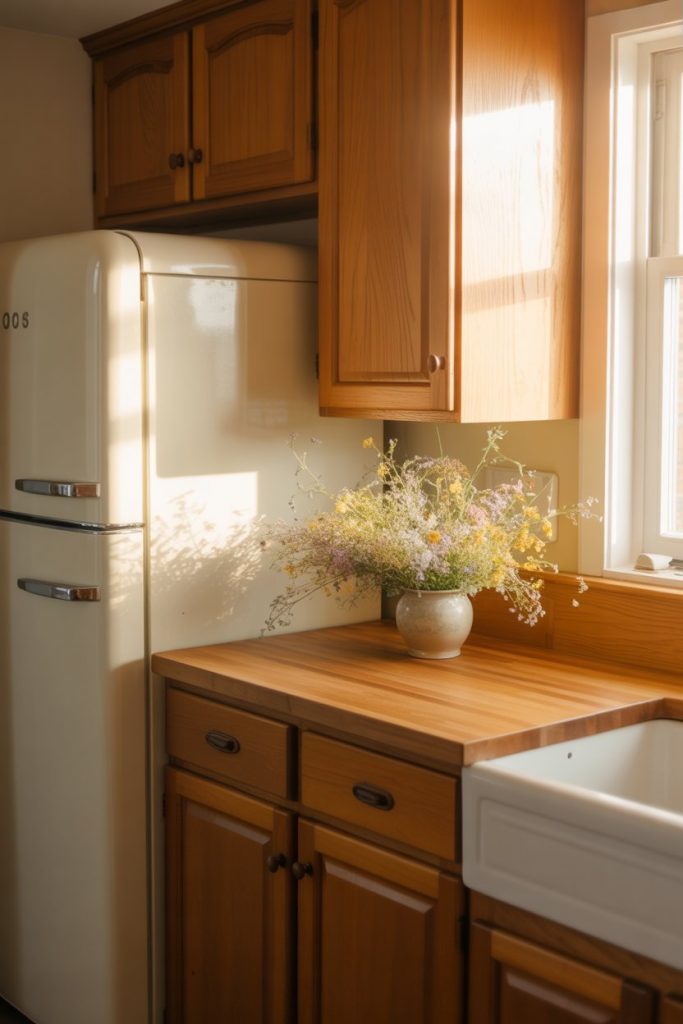
Stainless steel has dominated for years, but white appliances are quietly becoming the go-to choice for homeowners with honey oak cabinets. The soft contrast between creamy white and golden wood feels gentler than the cool shine of stainless, and it can make a kitchen feel more collected and less matchy. This works especially well if you’re aiming for a cottage or farmhouse vibe without going full rustic. 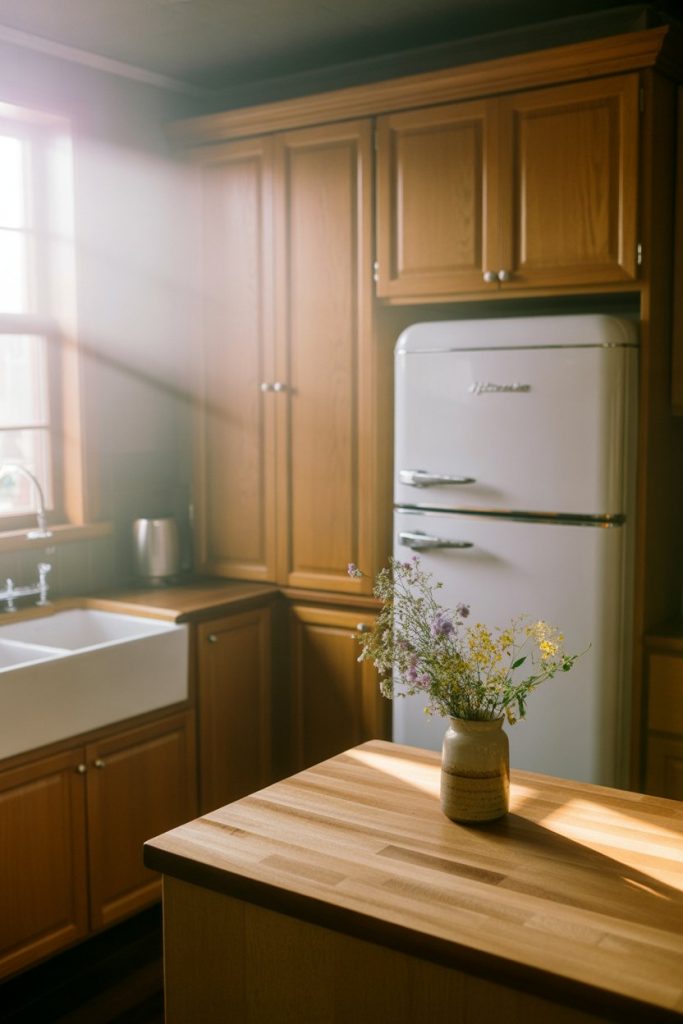
White appliances are also significantly cheaper than high-end stainless or panel-ready options, which makes this a smart move if you’re updating on a tighter budget. A white range and refrigerator can run you $500 to $1,200 less than comparable stainless models, and the visual payoff is surprisingly high. Just make sure your whites match—some lean blue, others lean cream—and choose a finish that’s easy to wipe down.
5. Gold Hardware for an Elevated Touch
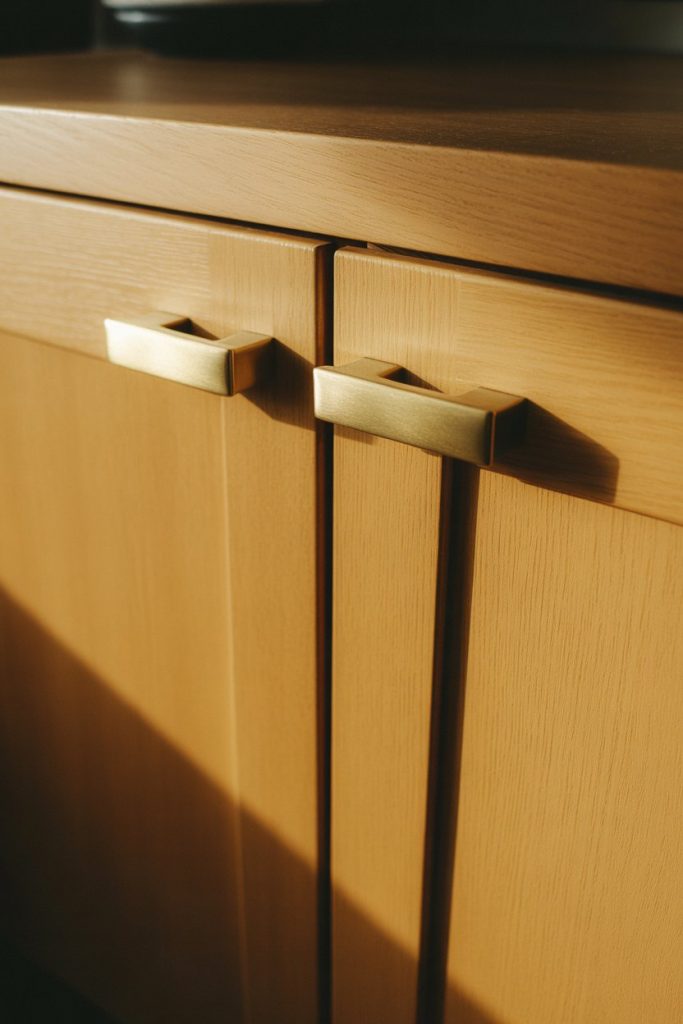
Swapping out dated brass or wooden knobs for sleek gold hardware is one of the easiest and most impactful changes you can make. Brushed gold or champagne bronze pulls bring warmth that complements the oak without looking too traditional. The key is choosing hardware with clean lines—avoid anything too ornate or overly vintage, which can push the space back into the 80s.
Hardware is one of those details that people touch every day, so it’s worth spending a little extra on quality. Expect to pay $3 to $8 per pull for solid brass options that won’t tarnish or feel flimsy. If you’re working with a lot of cabinets, buy a few extra in case you need replacements down the line. And don’t mix metals unless you’re very intentional about it—stick with one finish throughout the kitchen for a cleaner result.
6. Black Countertops for Drama and Depth
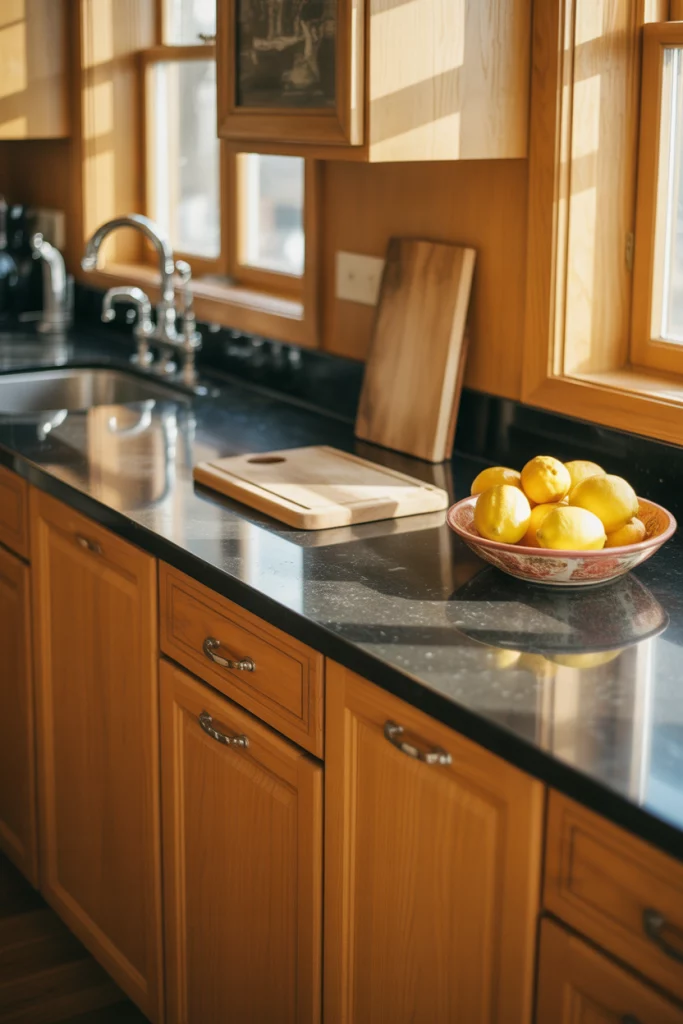
A black counter brings instant sophistication to honey oak cabinets, especially when you choose a material with subtle movement or flecks of gold and brown. Soapstone, honed granite, and engineered quartz in deep charcoal tones all work beautifully. The dark surface grounds the warmth of the wood and makes the whole kitchen feel more intentional, like every element was chosen with care. 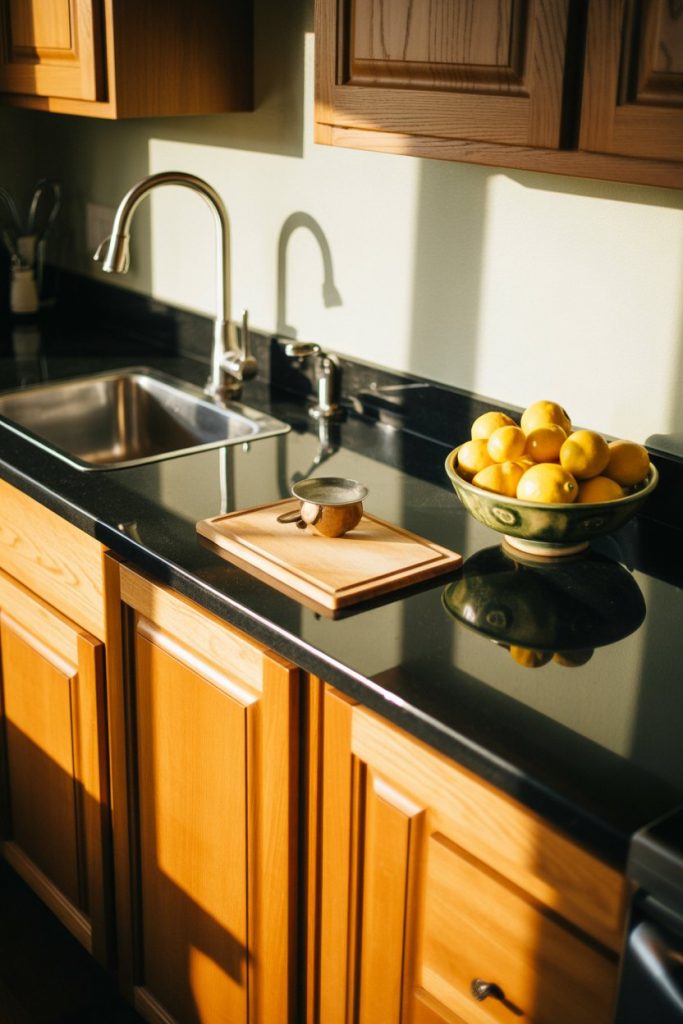
One mistake people make is choosing a black counter that’s too shiny or uniform. High-gloss black can feel stark and show every fingerprint, while a completely solid black lacks the nuance that helps it play nicely with the wood. Look for stones or quartz with warm undertones or subtle veining, and consider a leathered or honed finish for a softer, more lived-in feel that still reads as elevated.
7. Neutral Wall Color in Benjamin Moore’s Pale Oak
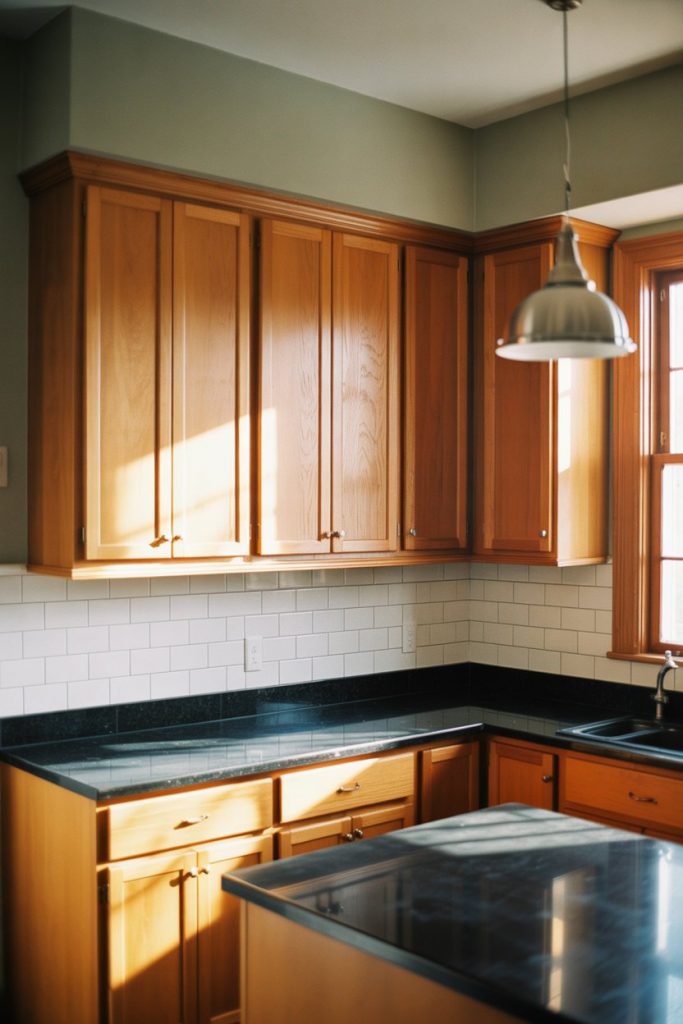
If you’re looking for a safe, sophisticated wall color paint, Benjamin Moore’s Pale Oak is a designer favorite for honey oak kitchens. It’s a soft greige that shifts between warm gray and beige depending on the light, and it doesn’t compete with the cabinets. This shade works especially well if you’re also incorporating black countertops or dark flooring, since it lightens the overall palette without feeling cold or sterile. 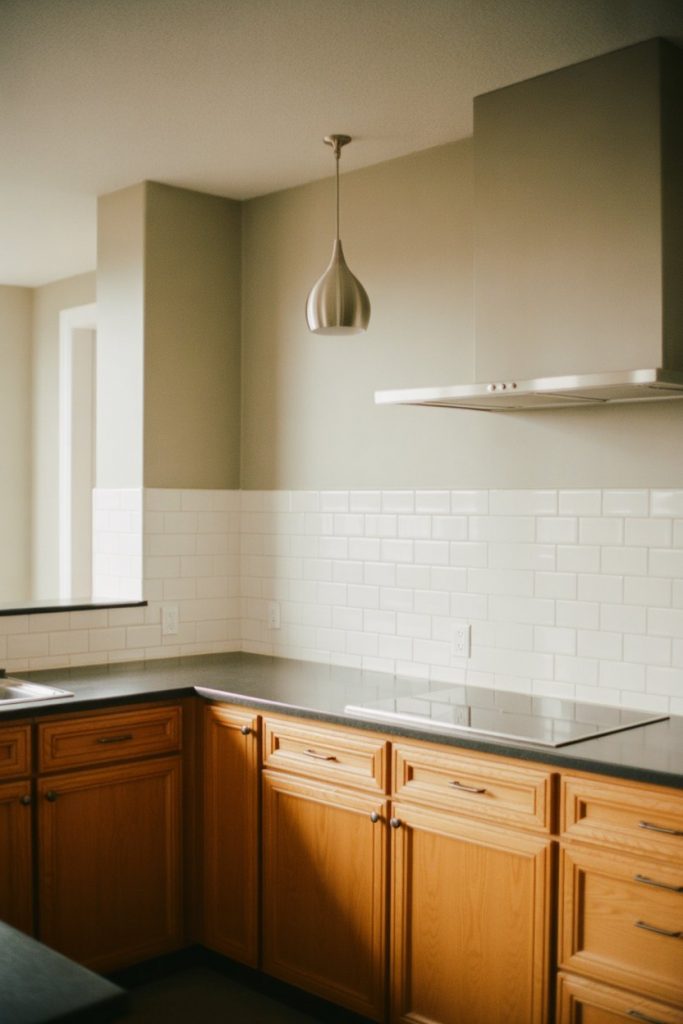
Pale Oak is particularly popular in open-concept homes where the kitchen flows into the living or dining area. It’s neutral enough to work throughout the house, which means you’re not stuck with a jarring color shift from room to room. If your cabinets lean more orange than golden, this color’s gray undertones help cool things down just a touch without washing out the warmth you want to preserve.
8. Dark Flooring to Anchor the Space
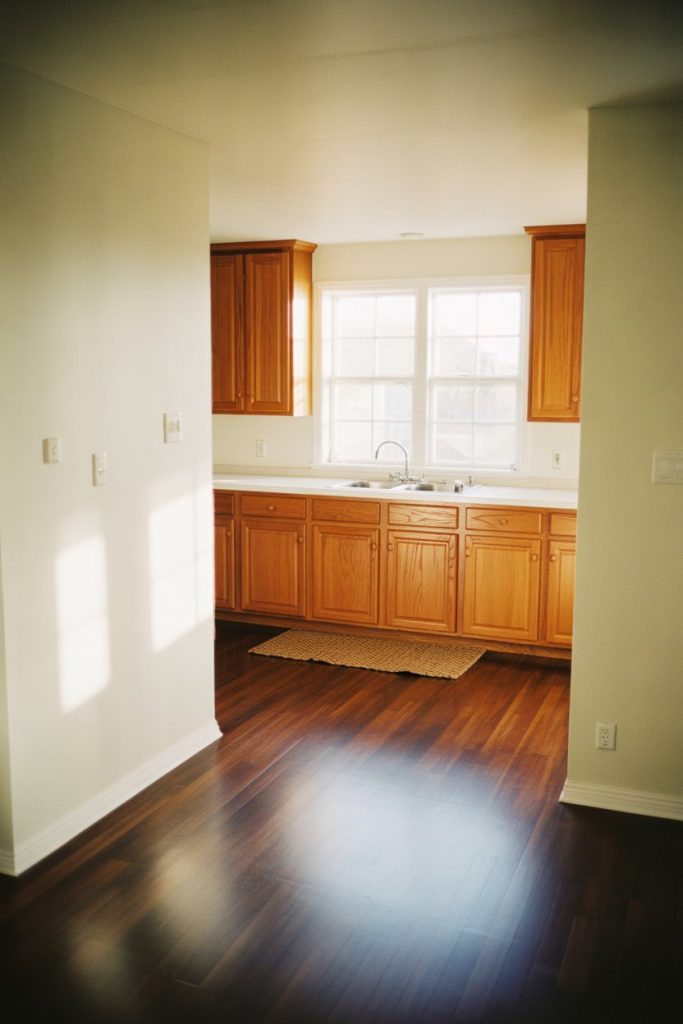
Honey oak cabinets can sometimes feel like they’re floating without a visual anchor, which is where dark flooring comes in. Deep walnut, espresso-stained oak, or even charcoal tile creates a strong base that lets the cabinets shine without overwhelming the room. This is especially effective in larger kitchens or open layouts where you need to define the cooking zone from adjacent spaces. 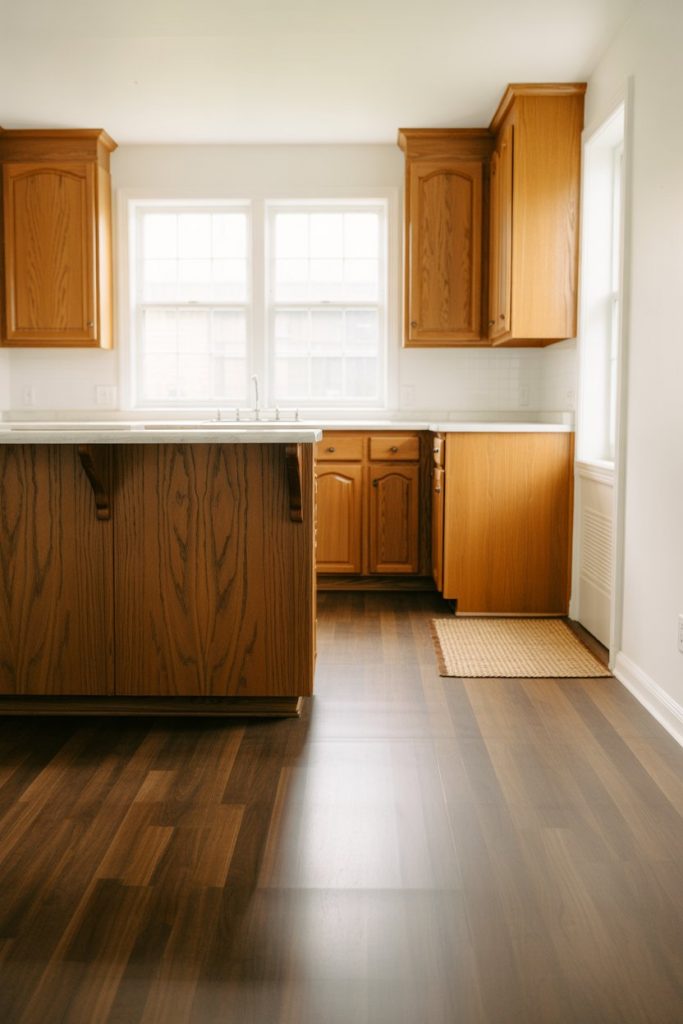
This combination works best in homes with plenty of natural light. In darker kitchens, the contrast can feel too heavy, so consider using dark floors only in areas that get strong morning or afternoon sun. If you’re installing new flooring, luxury vinyl plank in a matte finish is a budget-friendly option that holds up well to kitchen traffic and won’t show scratches as easily as real wood.
9. Green Backsplash with Honey Oak Warmth
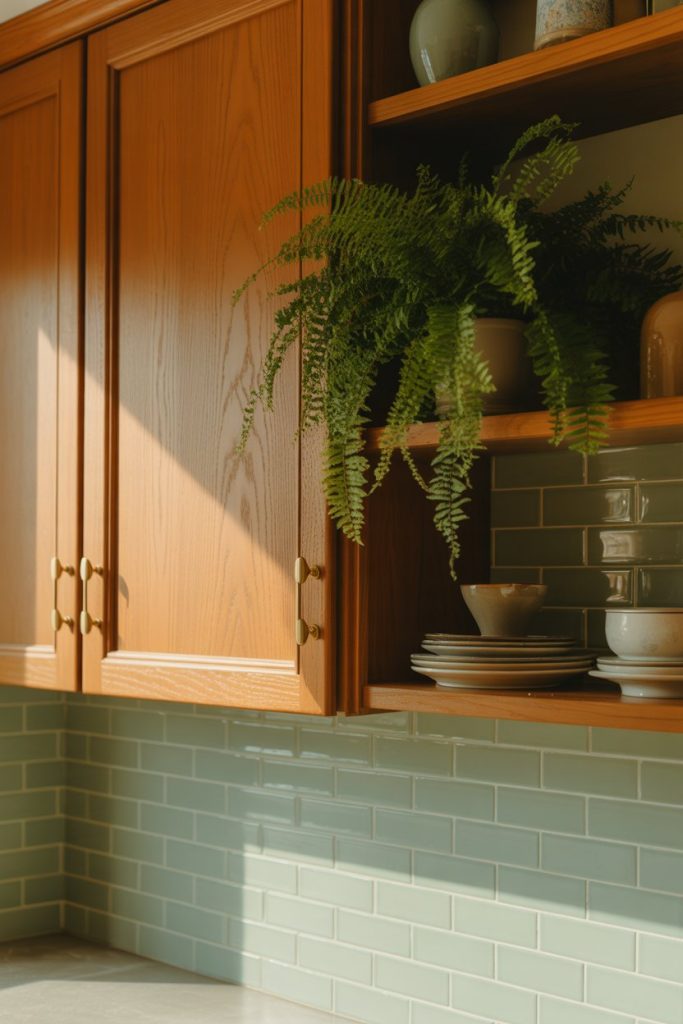
A green backsplash in a soft celadon or forest tone brings an earthy, organic feel that complements the natural grain of honey oak cabinets. This works especially well in kitchens that lean into a nature-inspired aesthetic, with plants, wood cutting boards, and woven textures. The green doesn’t have to be loud—even a muted sage subway tile or a glazed ceramic in a mossy tone can shift the entire mood of the space. 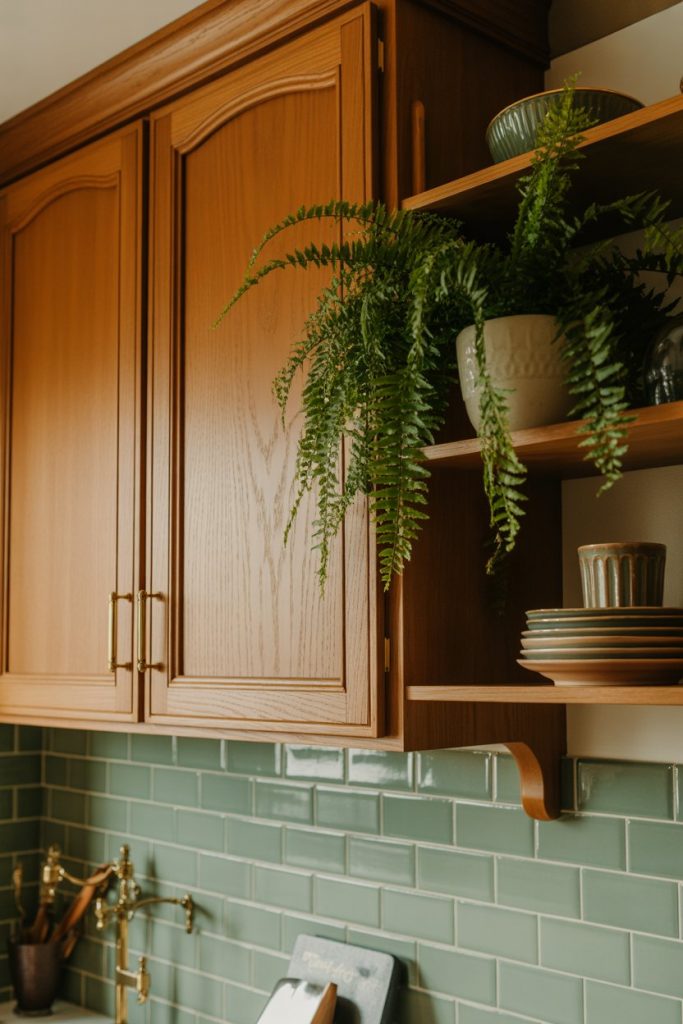
Green backsplashes are having a moment in the South and Southwest, where homeowners are embracing earthy palettes that feel connected to the landscape. The color is forgiving if your cabinets have a slightly orange cast, and it reads as fresh rather than trendy. Pair it with brass or gold fixtures to bring out the warmth in both the tile and the wood, and keep the rest of the palette fairly neutral so the green can be the star.
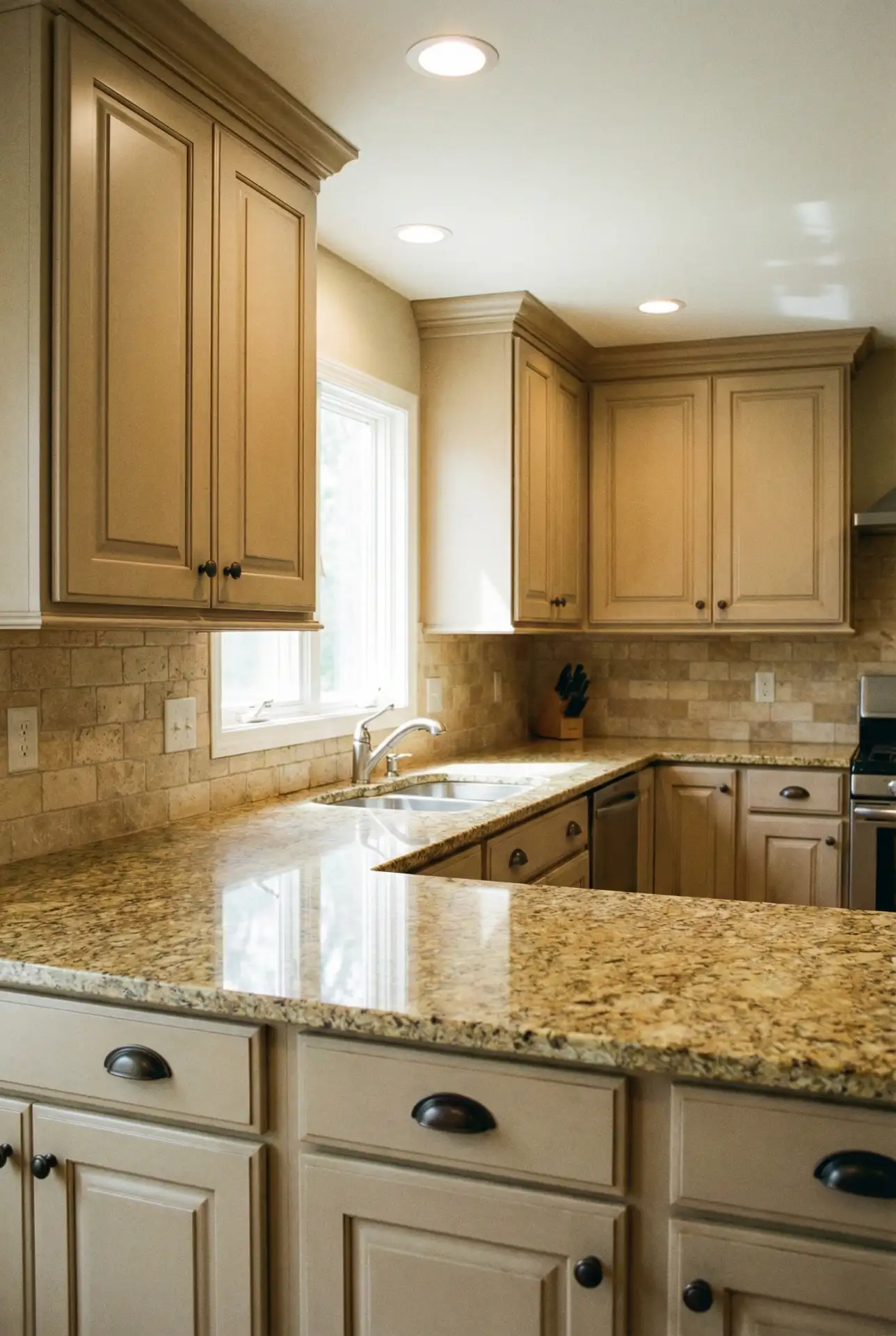
10. Granite Countertops in Warm Browns and Creams
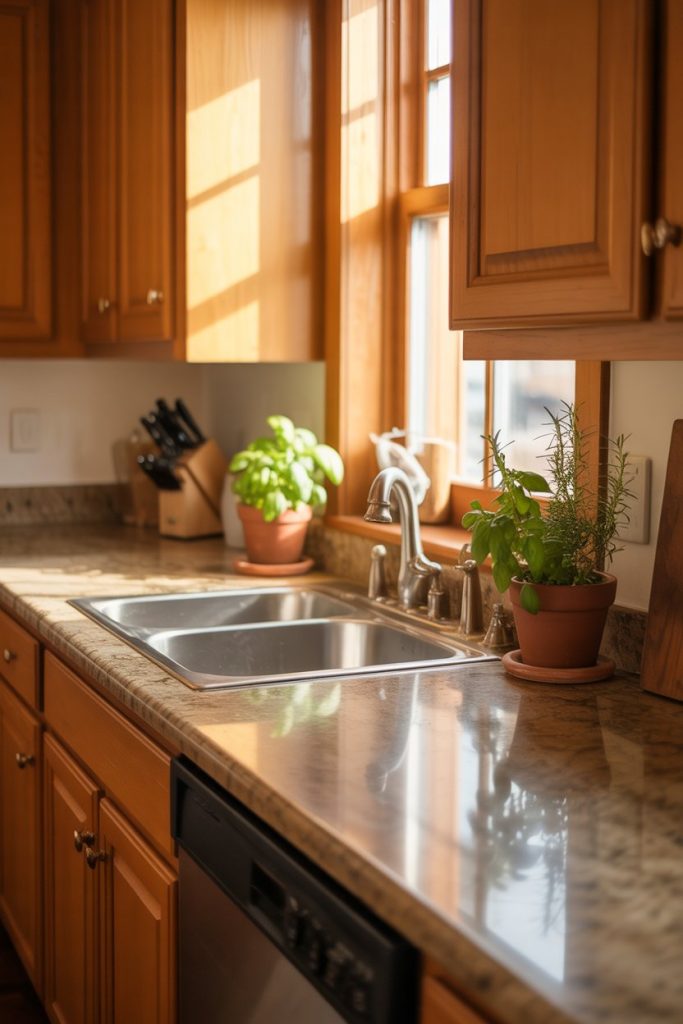
If you’re working with a tighter budget or you already have granite countertops, don’t assume you need to replace them. Warm-toned granite with caramel, tan, and cream veining can actually be a beautiful partner for honey oak cabinets, especially if the stone has enough movement to keep things interesting. The key is making sure the granite doesn’t have too much orange or rust, which can make the whole kitchen feel muddy. 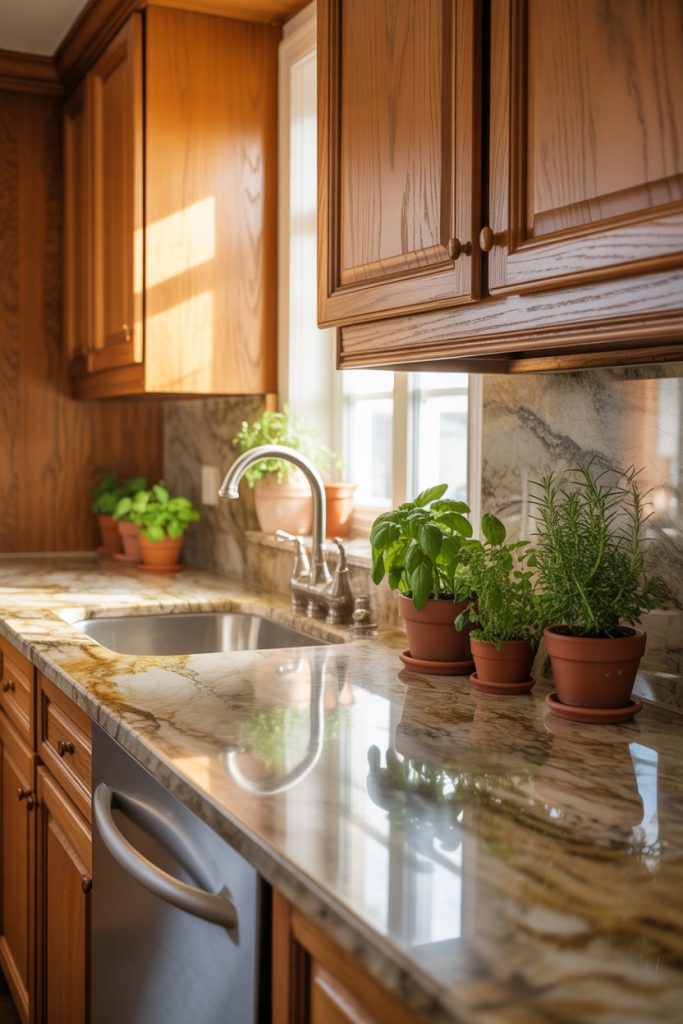
Granite gets a bad rap in design circles, but the reality is that it’s still one of the most durable and practical countertop materials, especially for families. If your granite has a busy pattern, balance it with solid-color walls and a simple backsplash. And if you’re buying new granite, look for slabs with more cream and taupe than gold—it’ll feel more modern and give you more flexibility with the rest of your finishes.
11. Light and Airy with White Subway Tile
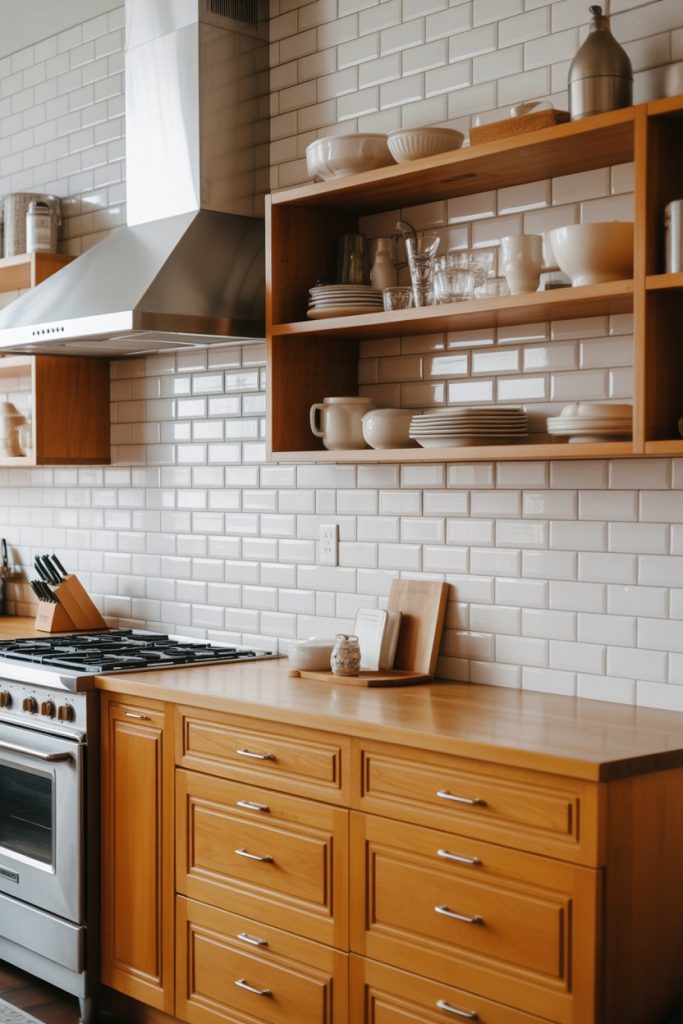
Classic white subway tile is a reliable backsplash choice that lets honey oak cabinets take center stage without competing for attention. The clean lines and bright surface reflect light beautifully, which is crucial in kitchens that might otherwise feel heavy or dark. This combo feels timeless rather than trendy, and it’s a smart move if you’re planning to sell in the next few years and want broad appeal. 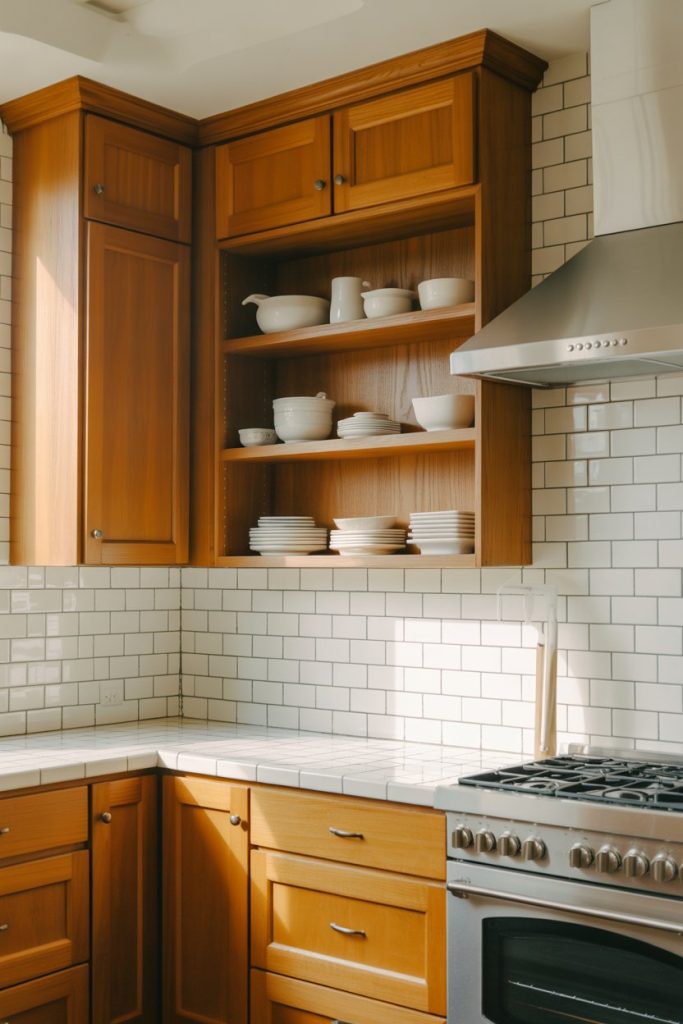
I’ve seen this combination work beautifully in smaller city apartments and in sprawling suburban homes alike. The white tile doesn’t add visual weight, which is especially important if you’re dealing with a lot of upper cabinets or limited counter space. Go with a classic 3×6 tile and a simple running bond pattern—anything fancier can start to feel dated quickly. And skip the bright white grout; a soft gray or warm cream keeps the look from feeling too clinical.
12. Warm Gray Walls for a Balanced Neutral
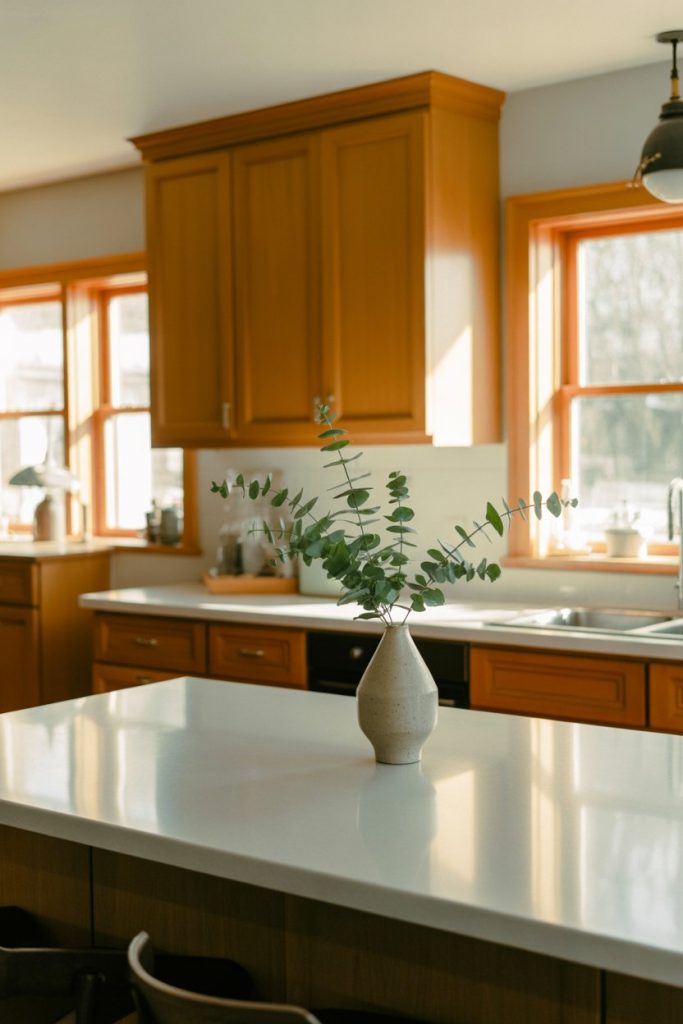
A warm gray wall color is one of the most versatile backdrops for honey oak cabinets, especially if you’re trying to bridge traditional and modern styles. The gray tones down the orange in the wood without making the space feel cold, and it pairs beautifully with almost any countertop or backsplash you choose. This is a go-to for homeowners who want a neutral palette but don’t want plain white or beige walls. 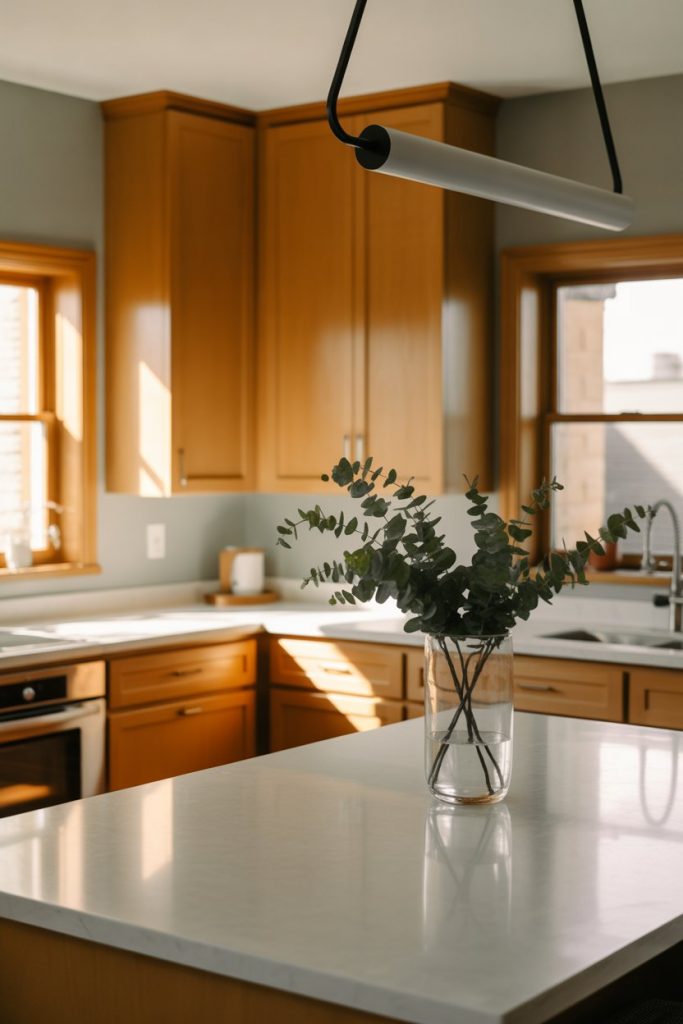
This wall color is particularly popular in the Midwest and Northeast, where homeowners are balancing the warmth of wood with the clean lines of contemporary design. Warm grays with a hint of beige or taupe work best—avoid anything too cool or blue-toned, which can make the oak look sallow. Test your paint in different lighting conditions before committing, since gray is notoriously tricky and can shift dramatically between morning and evening light.
13. Pops of Orange for Unexpected Energy
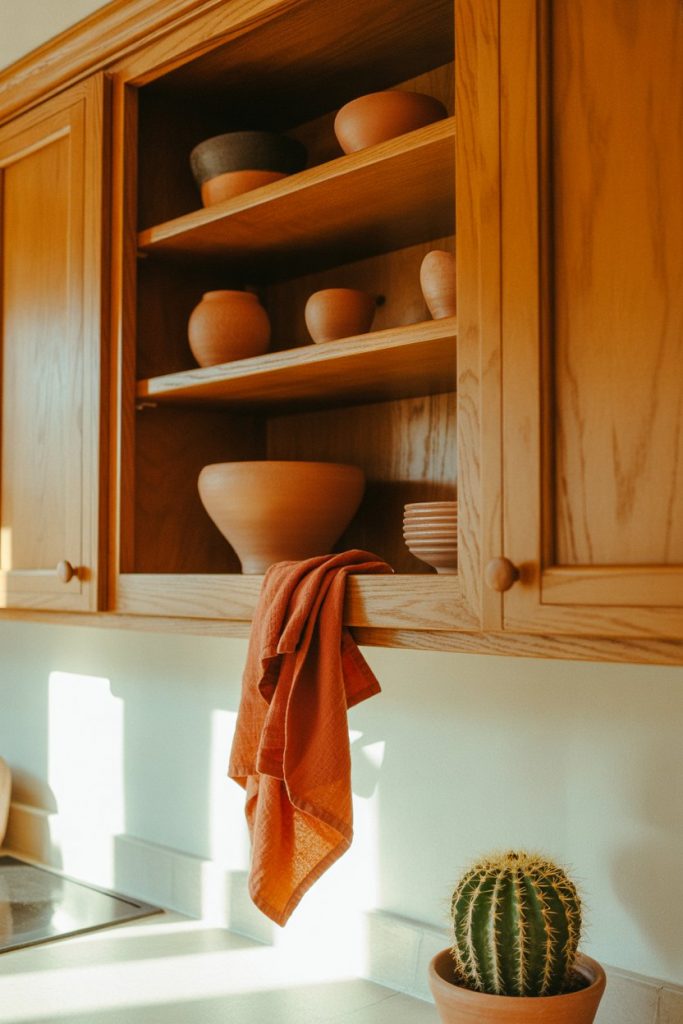
It might sound counterintuitive, but leaning into the orange undertones of honey oak with intentional pops of warm terracotta, rust, or burnt orange can create a cohesive, energetic look. This works best as an accent—think a vintage runner, a collection of pottery, or even a single painted accent wall in a soft peachy tone. The idea is to embrace the warmth rather than fight it and to make it feel deliberate rather than accidental. 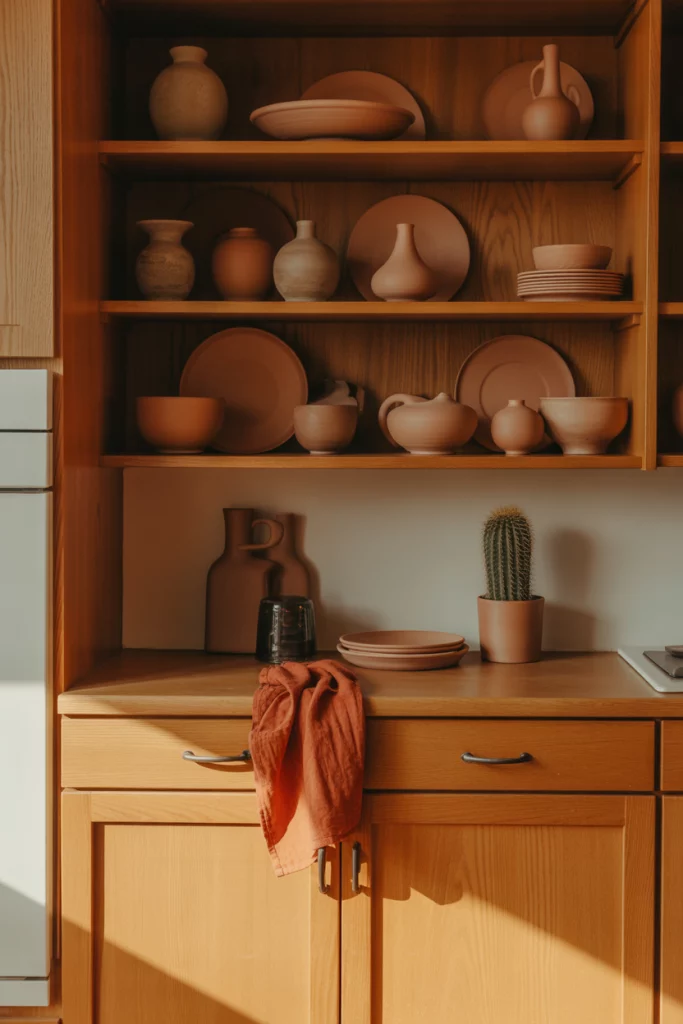
This approach is big in Arizona, New Mexico, and Southern California, where desert and southwestern influences shape a lot of home design. It’s also a smart way to work with cabinets that have a strong orange cast—instead of trying to neutralize it, you lean in and make it part of a larger warm palette. Just be careful not to go overboard; one or two orange elements are usually enough to tie the look together without overwhelming the space.
14. Painted Lower Cabinets for a Two-Tone Look
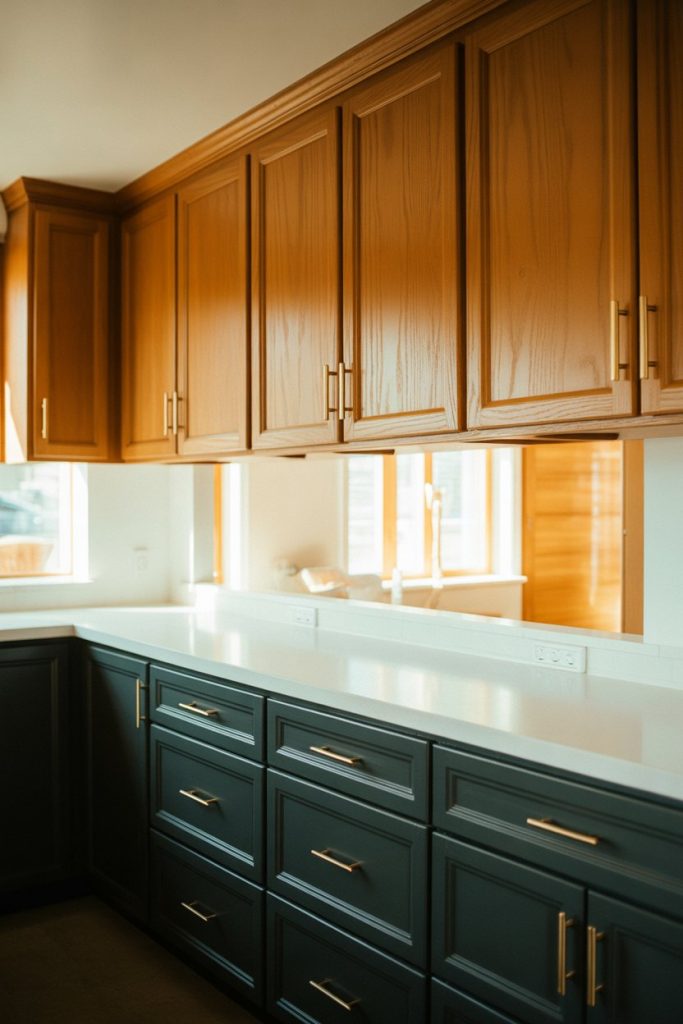
One of the most popular update strategies is painting the lower cabinets a deep charcoal, navy, or forest green while leaving the honey oak uppers intact. This two-tone approach adds depth and visual interest, and it’s a budget-friendly way to break up a wall of wood without losing the warmth entirely. The painted lowers ground the space, while the oak uppers keep things from feeling too dark or heavy. 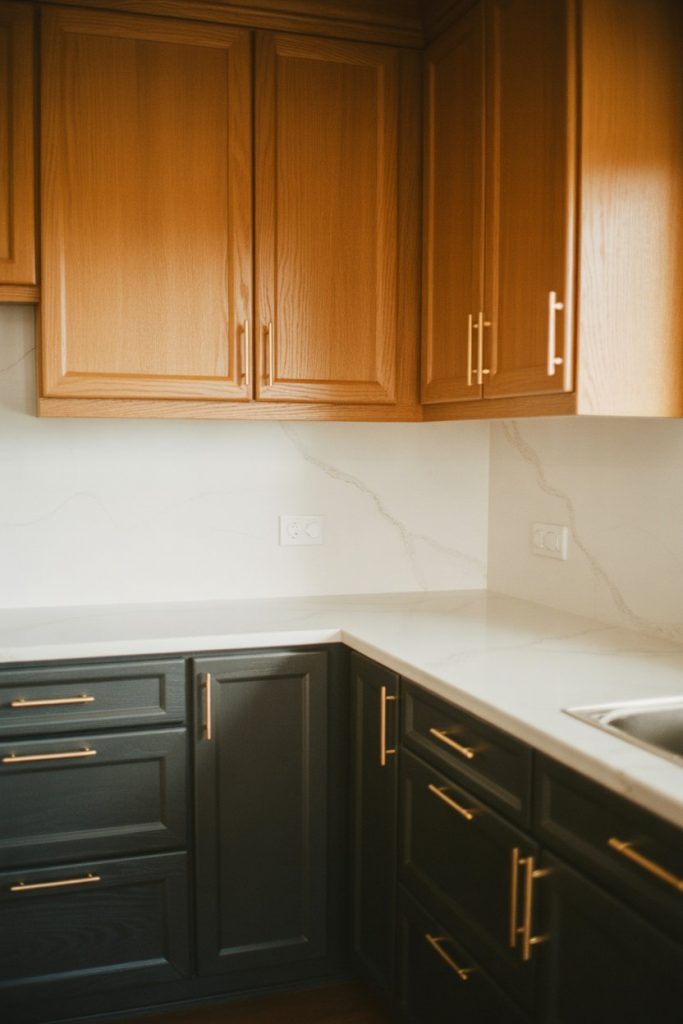
This technique works best in kitchens with good natural light and a clear division between upper and lower cabinets. If your layout is more complex—lots of angles, different cabinet heights—it can start to feel busy. One common mistake is choosing a paint color that’s too cool, which makes the oak look orange by comparison. Stick with colors that have a hint of warmth or brown in the base, and always test your paint next to the cabinets before committing to the whole room.
15. Brass and Copper Accents for Warmth
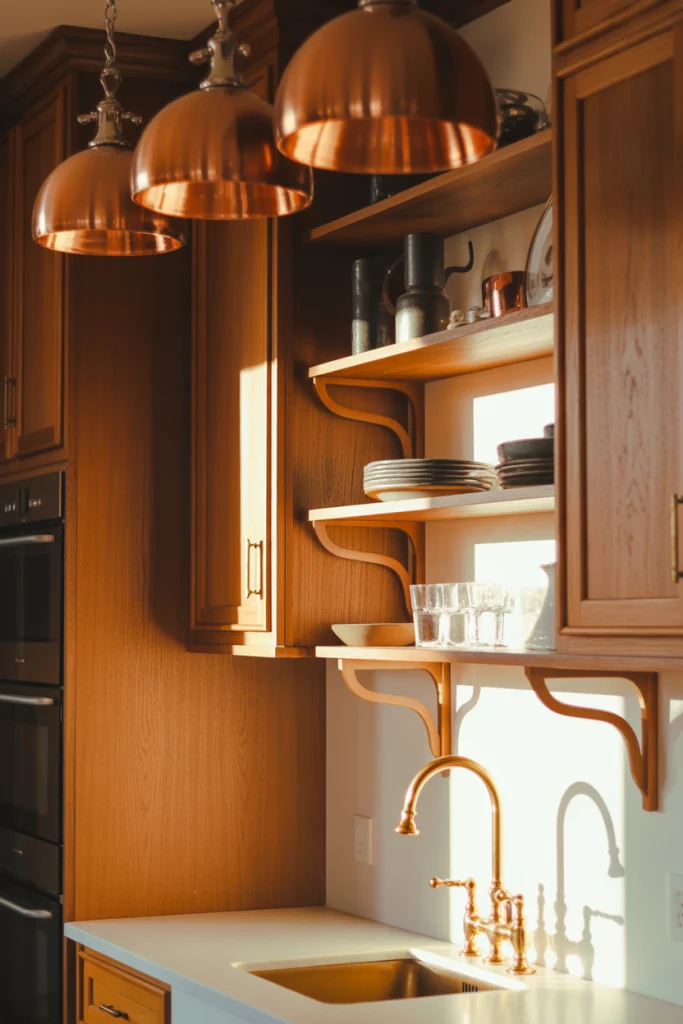
Layering in brass or copper accents—think lighting, cabinet hardware, faucets, or even a copper sink—amplifies the warmth of honey oak cabinets and makes the whole kitchen feel more cohesive. These metals have been trending hard over the past few years, and they’re especially flattering with golden-toned wood because they share similar undertones. The result is a kitchen that feels intentionally warm rather than accidentally dated. 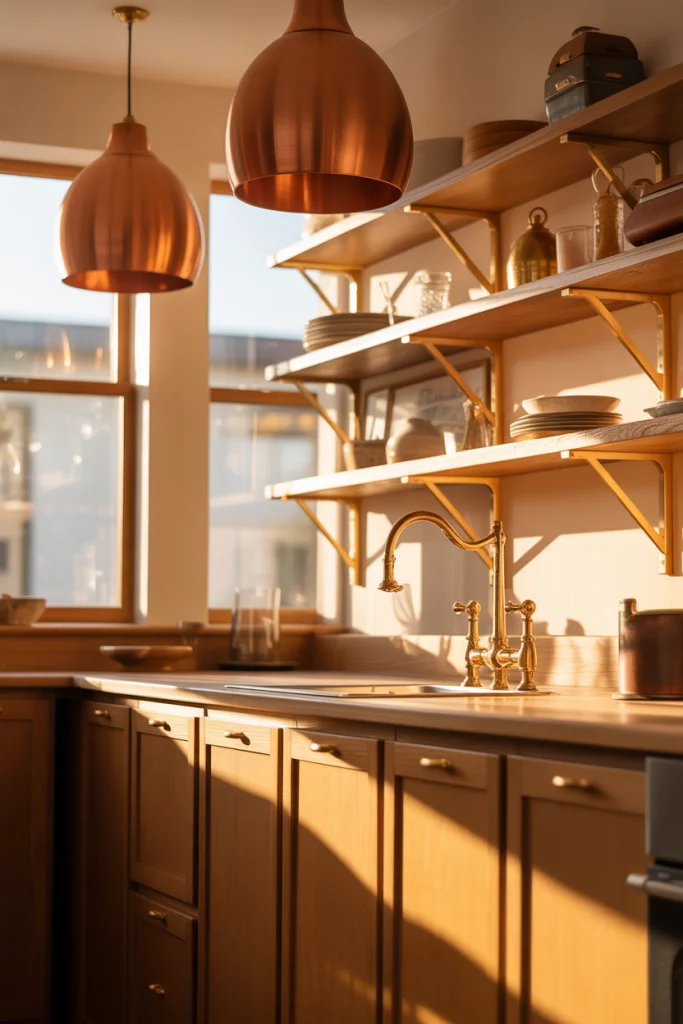
Brass and copper do require a bit of maintenance—they can tarnish or develop a patina over time—but many homeowners love that lived-in look. If you prefer a consistent finish, look for lacquered or PVD-coated options that resist tarnishing. Mixing metals is fine as long as you’re intentional about it; a good rule of thumb is to pick one dominant metal (brass, for example) and let other finishes play a supporting role.
16. Minimalist Open Shelving for a Modern Edge
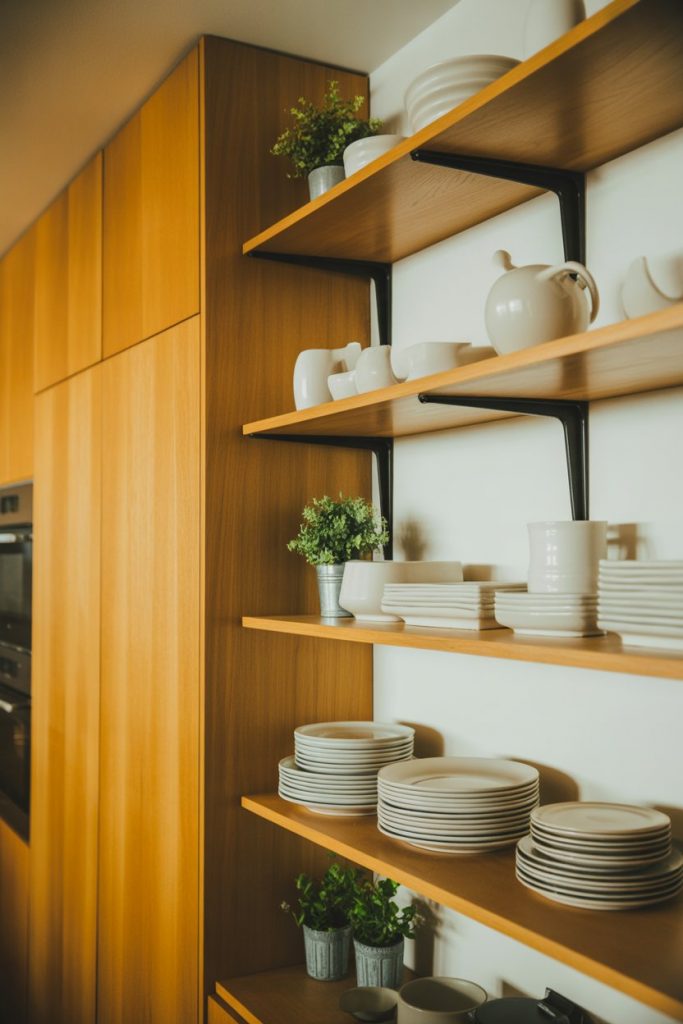
Replacing a few upper cabinets with open shelving instantly makes honey oak kitchens feel lighter and more modern. The key is keeping the shelves minimal and highly edited—a few beautiful dishes, a couple of plants, maybe a wooden cutting board or two. This approach works especially well in smaller kitchens where upper cabinets can make the space feel closed in, and it’s a great way to introduce other materials like matte black brackets or reclaimed wood shelves. 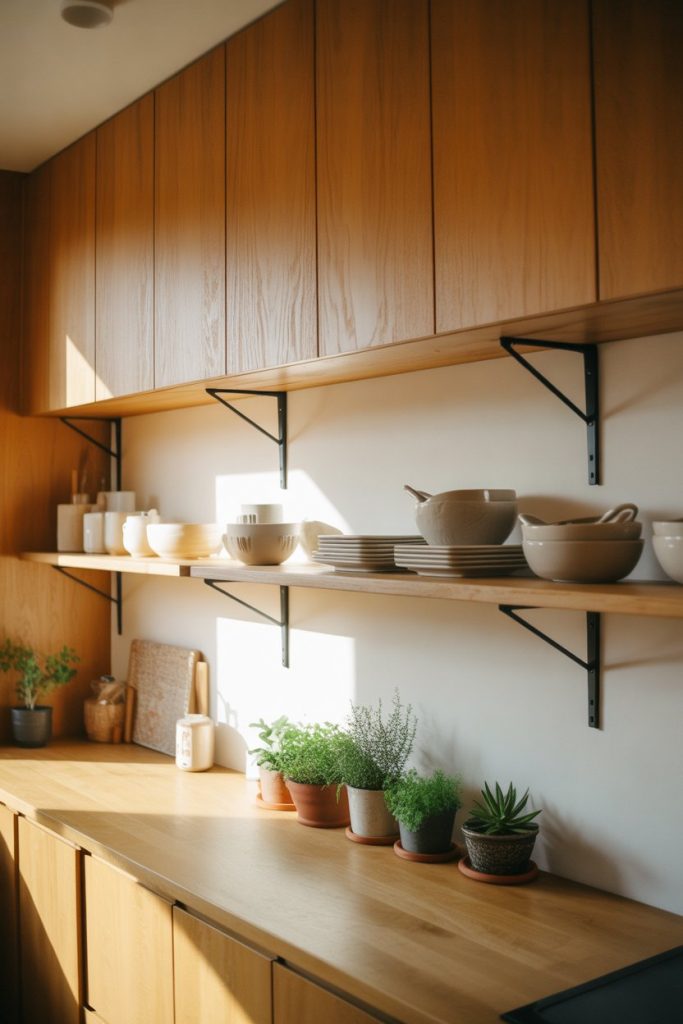
Open shelving isn’t for everyone—it requires more upkeep and a willingness to keep things tidy—but it’s a smart move if you’re trying to lighten up a kitchen without replacing all the cabinets. One designer I spoke with in Brooklyn swears by this trick for rentals and starter homes, where budgets are tight and you’re working with what you’ve got. Just be realistic about how much you’re willing to dust and rearrange, because open shelves do require regular attention.
17. Soft Blue-Gray for a Coastal Feel
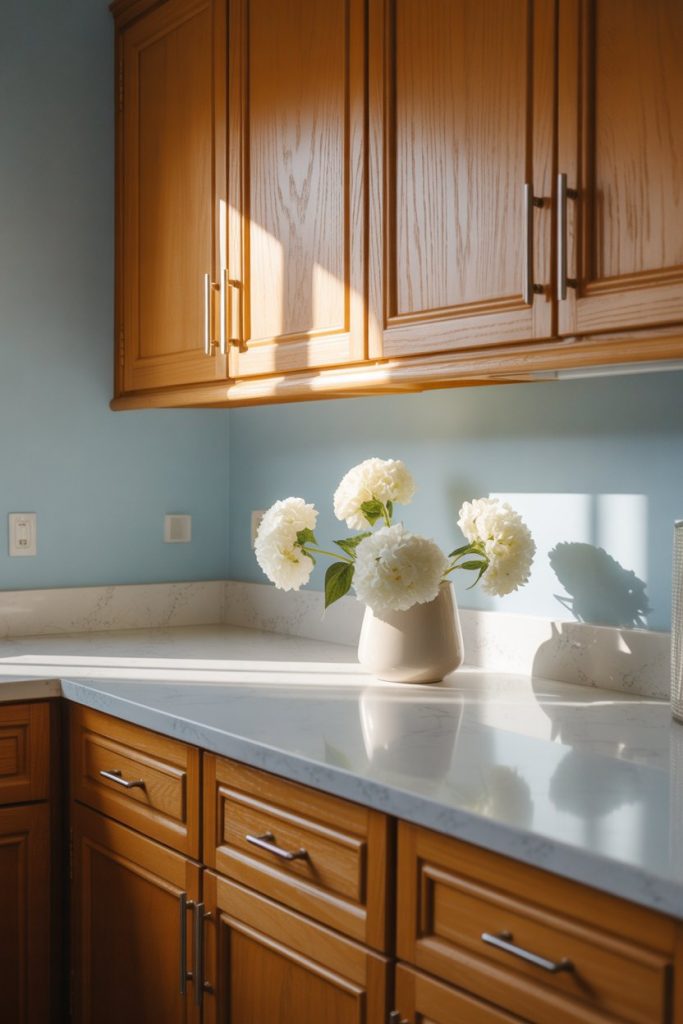
A soft blue-gray wall color can give honey oak cabinets a surprising coastal or Scandinavian vibe, especially when paired with white countertops and plenty of natural light. The cool tones balance the warmth of the wood without clashing, and the result is a kitchen that feels calm, airy, and just a little unexpected. This palette works especially well in homes near water or in regions where coastal design is popular. 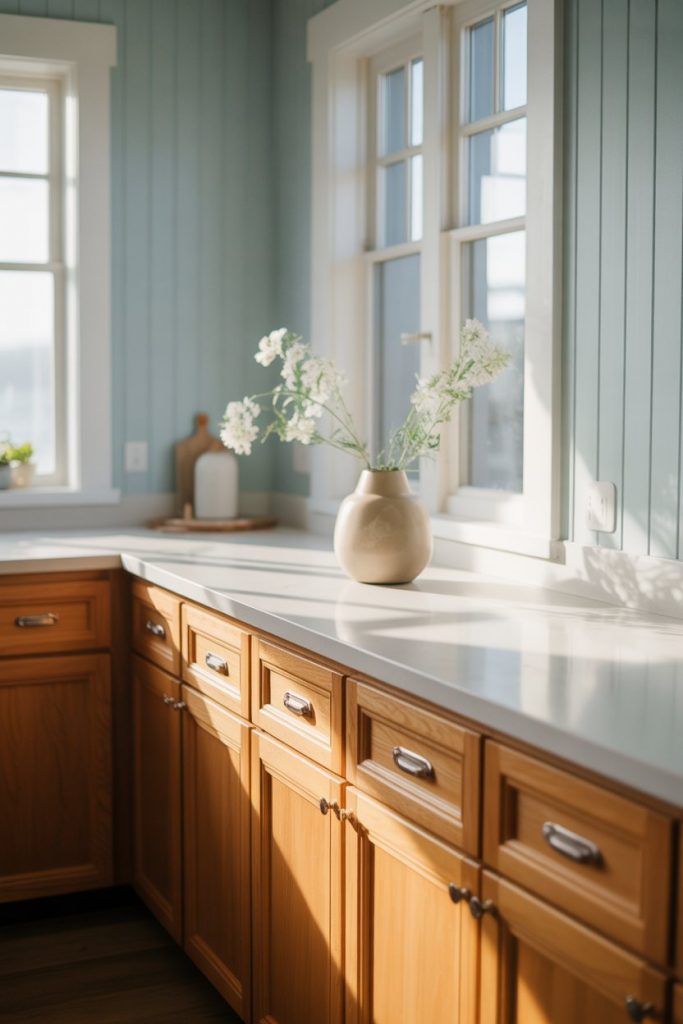
This combination is especially popular along the coasts—think Cape Cod, the Carolinas, and Northern California—where homeowners want a beachy feel without going full nautical. The blue-gray keeps things from feeling too warm or heavy, and it’s a forgiving choice if your cabinets have any pink or red undertones you’re trying to downplay. Just make sure your blue leans more gray than pure blue, or it can start to feel too cool and disconnected from the wood.
18. Patterned Cement Tile for Bold Personality
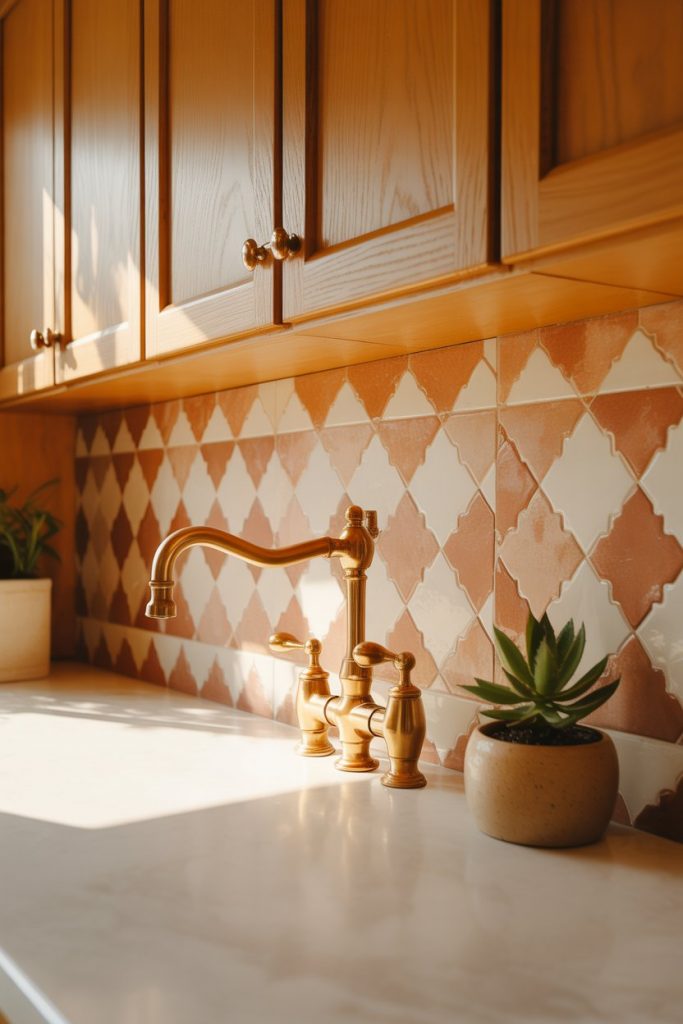
If you’re ready to take a risk, a patterned cement tile backsplash can transform honey oak cabinets into a showstopper. Look for designs with warm tones—terra cotta, mustard, charcoal, and cream—that pull out the colors in the wood without fighting them. This works best in smaller doses, like behind the stove or sink, so the pattern doesn’t overwhelm the space. The contrast between the organic, handcrafted tile and the warm wood feels intentional and curated. 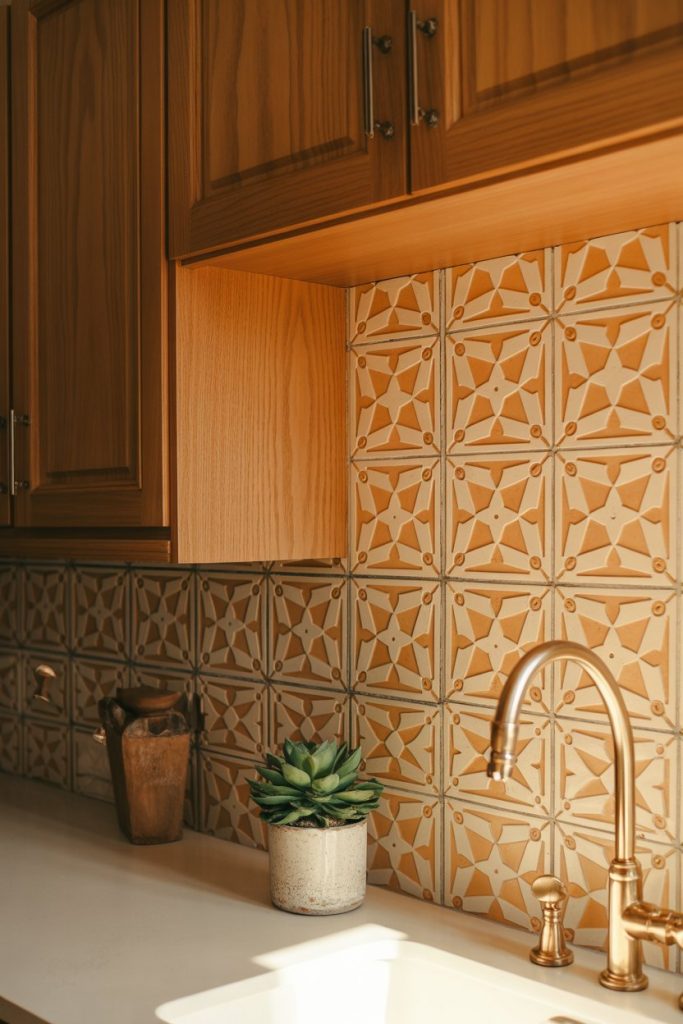
Cement tile isn’t cheap—expect to pay $10 to $20 per square foot, plus installation—but it’s one of those finishes that feels special and unique. If budget is a concern, use it sparingly as an accent rather than covering every wall. And make sure to seal the tile properly, since cement is porous and can stain if it’s not protected. This is a great option for homeowners who want their kitchen to have personality and aren’t afraid of a little pattern.
19. Leather Bar Stools for Textural Contrast
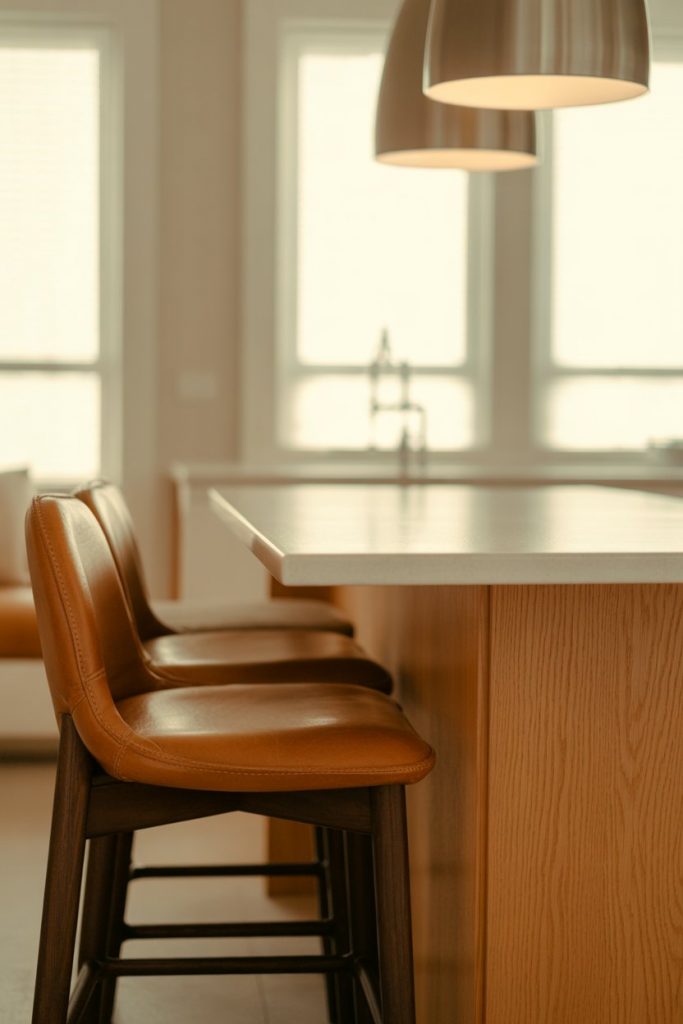
Adding leather bar stools in rich cognac, caramel, or even black introduces a textural contrast that plays beautifully with honey oak cabinets. The leather’s warmth and patina echo the natural feel of the wood, and over time, both materials develop character that makes the space feel more personal. This is a simple decor idea that doesn’t require any construction but has a big visual impact, especially in kitchens with an island or peninsula. 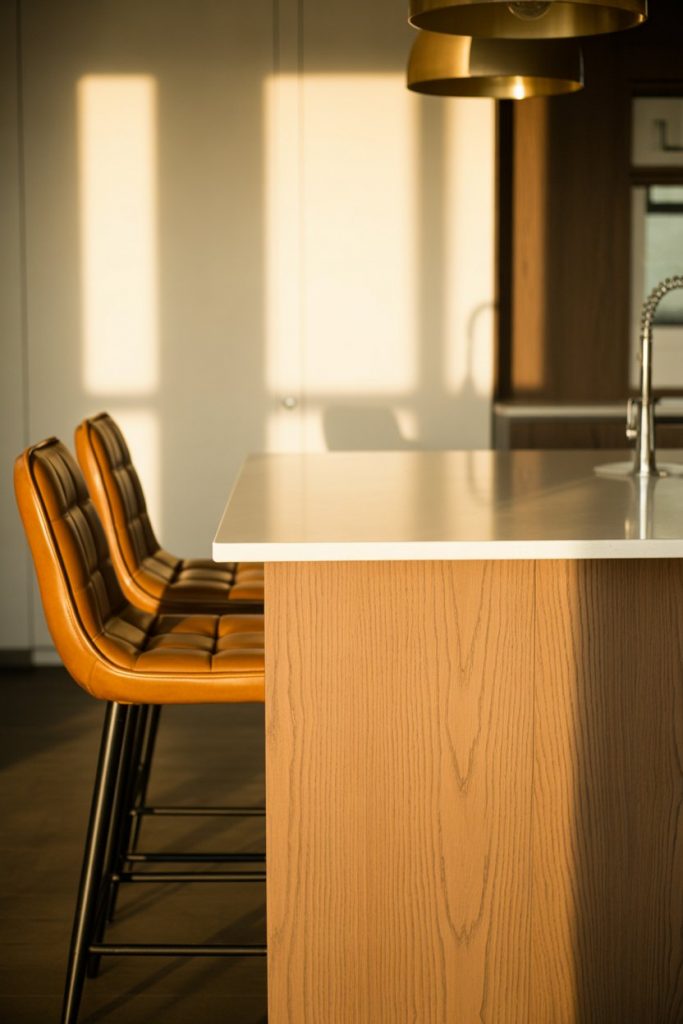
Leather is forgiving and ages gracefully, which makes it a smart choice for busy kitchens. I’ve seen families with young kids embrace this material because spills wipe off easily and the patina actually gets better over time. If you’re worried about maintenance, look for top-grain leather with a protective finish, or consider faux leather options that offer a similar look with less upkeep. Just avoid anything too shiny or plastic-looking, which won’t have the warmth or texture you’re going for.
20. Warm White Walls to Brighten the Space
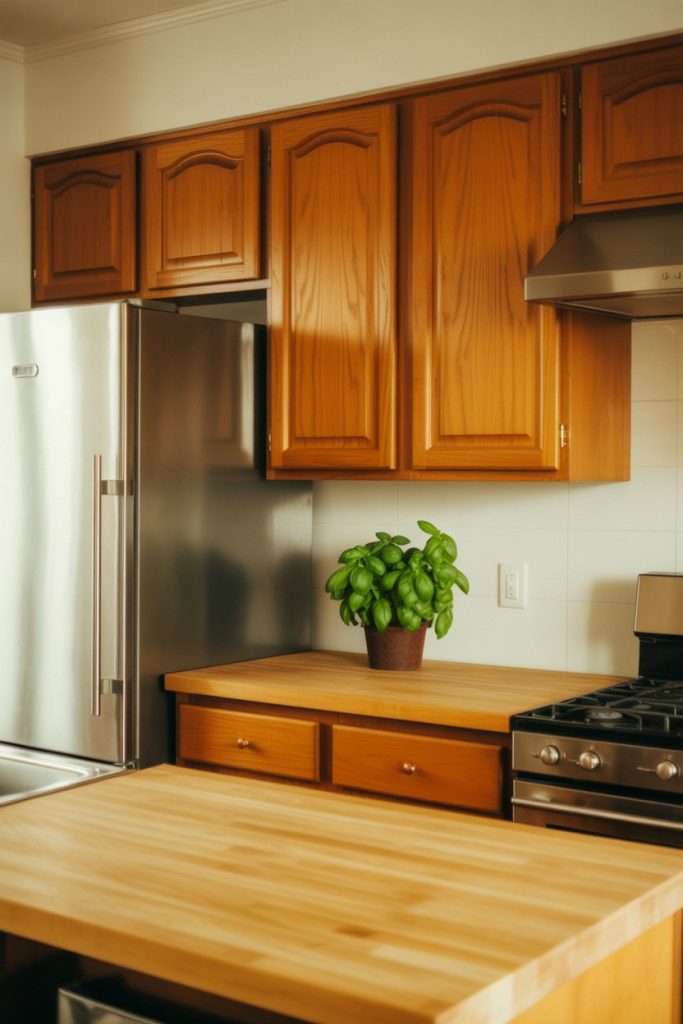
A warm white wall color—something with a touch of cream or ivory—can make honey oak cabinets feel fresh and intentional rather than outdated. The soft white reflects light beautifully, which is especially important in kitchens that don’t get a lot of natural sun, and it creates a clean backdrop that lets the wood be the focal point. This is a safe, timeless choice that works in almost any home, from modern farmhouses to traditional colonials. 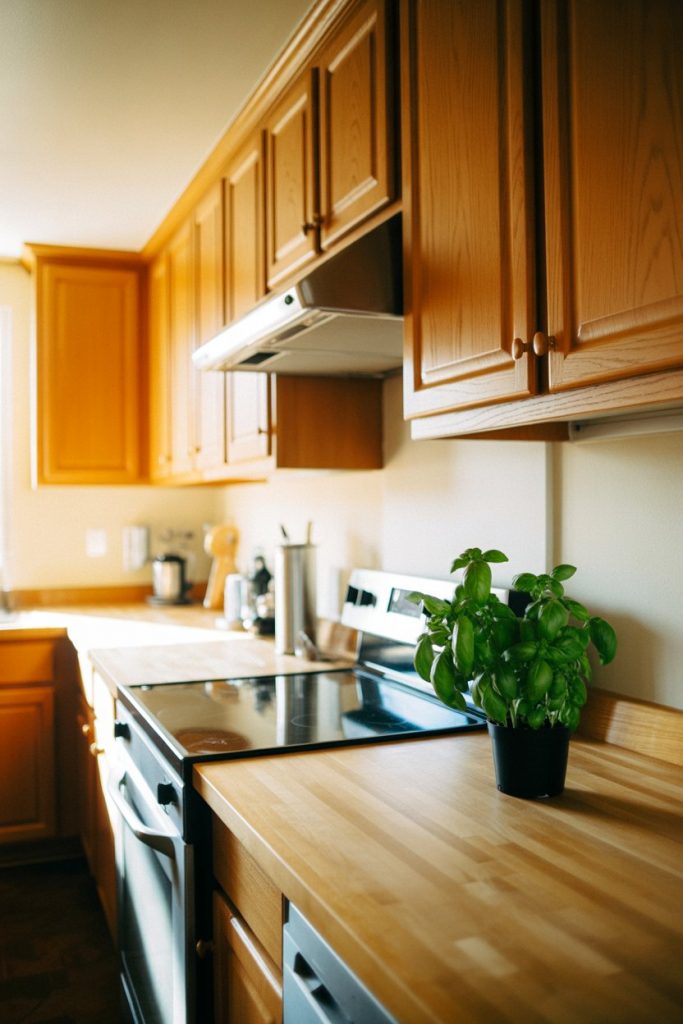
This wall color is a favorite among real estate agents and home stagers because it appeals to a wide range of buyers without feeling bland. It’s also a forgiving choice if you’re still deciding on other finishes like countertops or backsplash, since warm white pairs well with almost anything. If your cabinets lean more orange, choose a white with a hint of pink or peach to balance things out; if they’re more golden, a white with a touch of yellow will feel more cohesive.
21. Vintage-Inspired Runner for a Cozy Touch
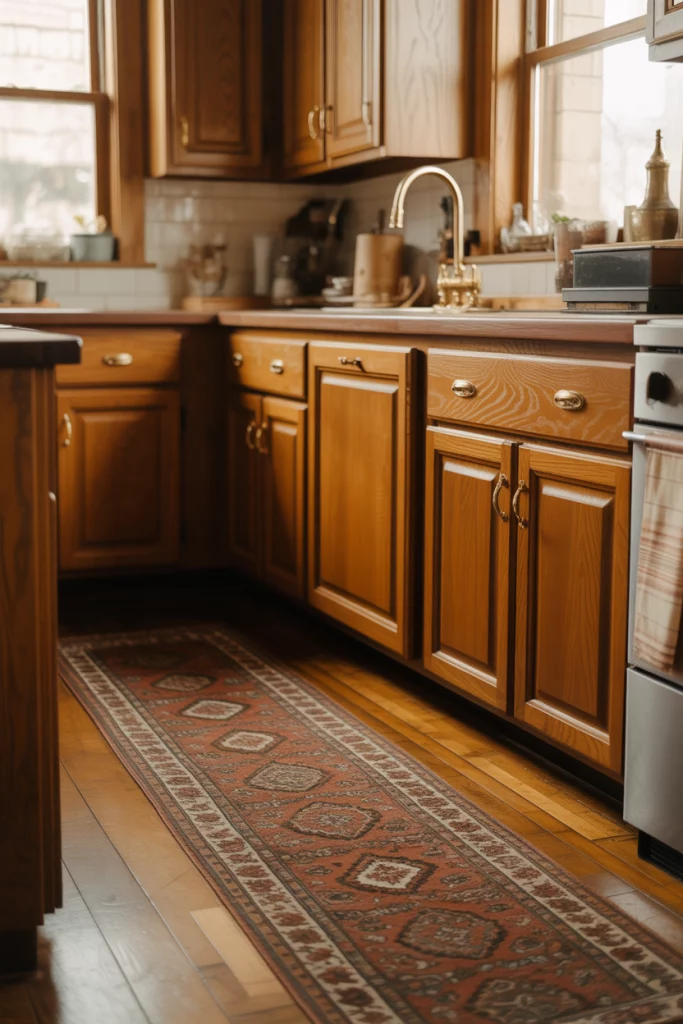
Layering in a vintage-inspired runner or area rug in warm tones adds softness and personality to a kitchen with honey oak cabinets. Look for rugs with terra cotta, rust, gold, and cream that pull from the natural colors in the wood. This is an easy, non-permanent decor idea that instantly makes the space feel more finished and lived-in, and it’s a great way to introduce pattern without committing to tile or paint. 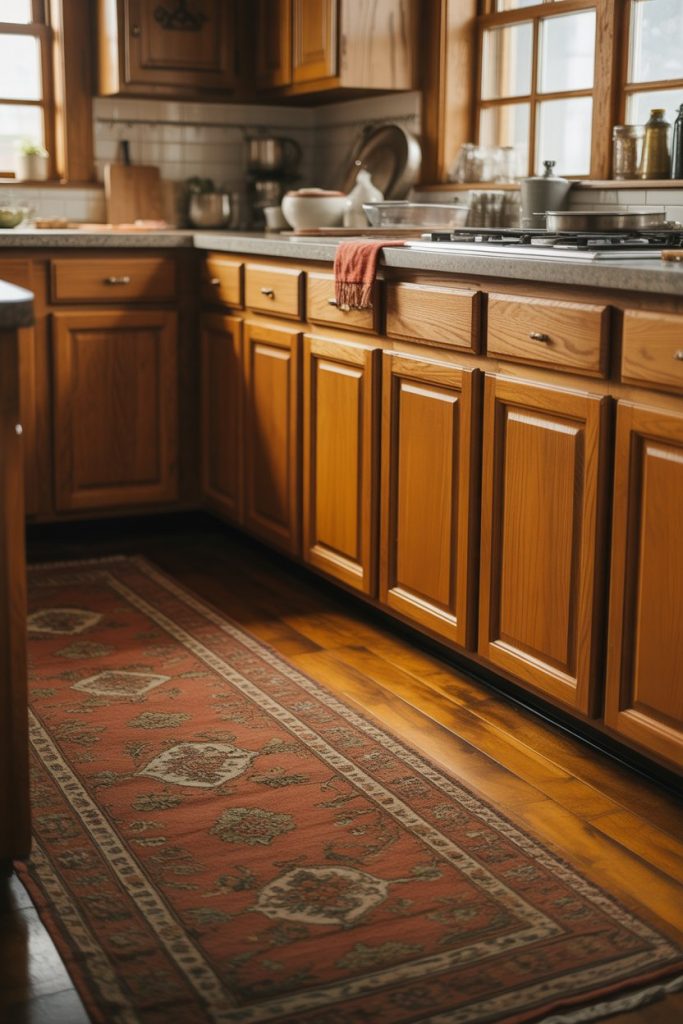
Rugs in the kitchen used to be controversial, but washable and low-pile options have made them much more practical. A 2.5×8 runner fits perfectly in front of the sink or stove, and it’s easy to toss in the wash or shake out when it gets dirty. Just make sure you’re using a non-slip pad underneath, especially on tile or hardwood, to avoid any slipping hazards. This is one of those finishing touches that takes a kitchen from functional to truly inviting.
22. Reclaimed Wood Accents for Warmth and Character
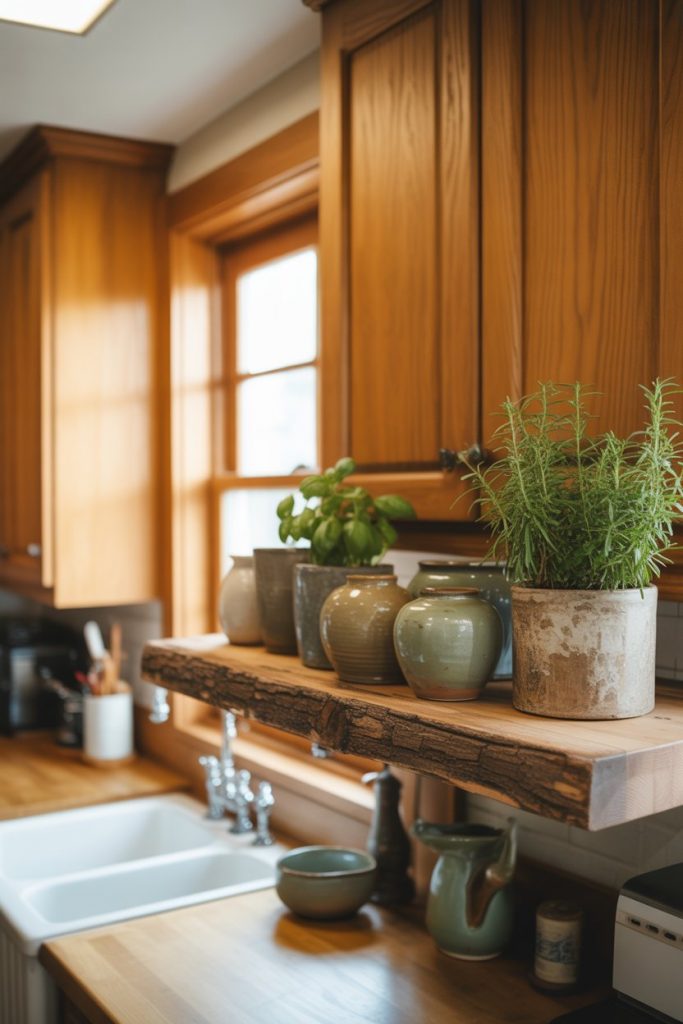
Bringing in reclaimed wood through a floating shelf, a hood surround, or even a DIY kitchen island introduces texture and history that complements honey oak cabinets beautifully. The weathered, varied tones of reclaimed wood add depth without feeling too matchy, and the imperfections make the space feel more authentic and collected over time. This is especially effective in kitchens where you want to lean into a rustic or farmhouse aesthetic without going too country. 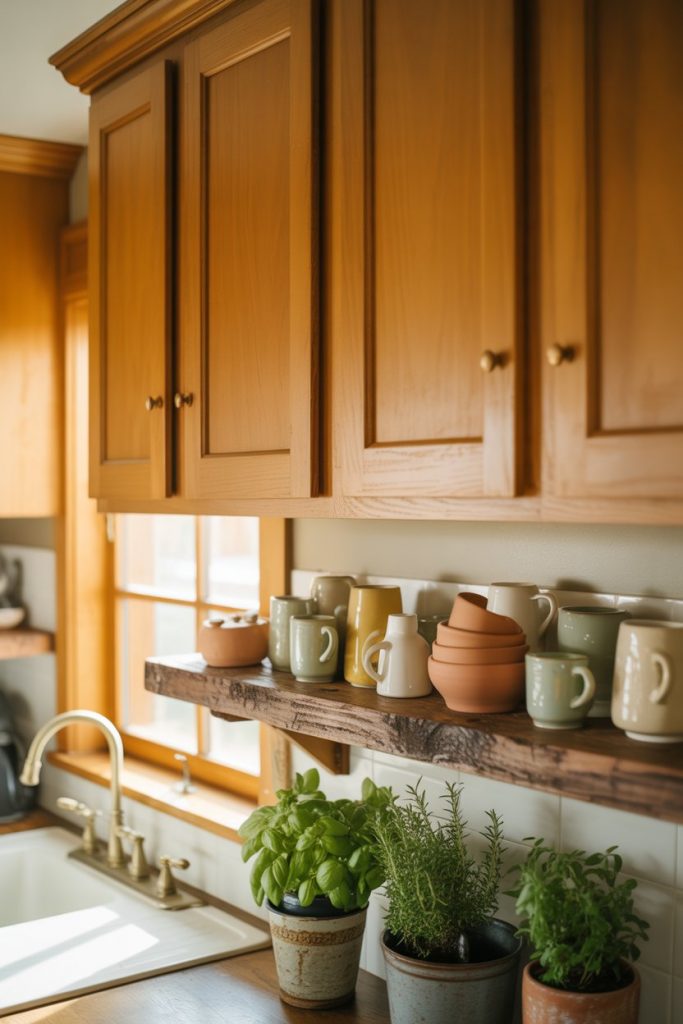
Reclaimed wood is one of those materials that tells a story, and it’s a great way to add character without replacing your cabinets. You can find salvaged barn wood, old factory beams, or even repurposed pallets at salvage yards or online marketplaces for a fraction of what new lumber costs. Just make sure the wood is properly cleaned, sealed, and stable before you install it. The contrast between the newer oak cabinets and the older reclaimed wood creates a layered, collected look that feels intentional and warm.
Conclusion
Honey oak cabinets don’t have to be a compromise or a placeholder. With the right colors, finishes, and styling choices, they can anchor a kitchen that feels both warm and completely current. Whether you’re painting walls, swapping hardware, or adding vintage rugs, each small change builds toward a space that reflects your style and works beautifully for your everyday life. Share your favorite ideas or your own honey oak transformations in the comments—we’d love to hear what’s working in your kitchen.