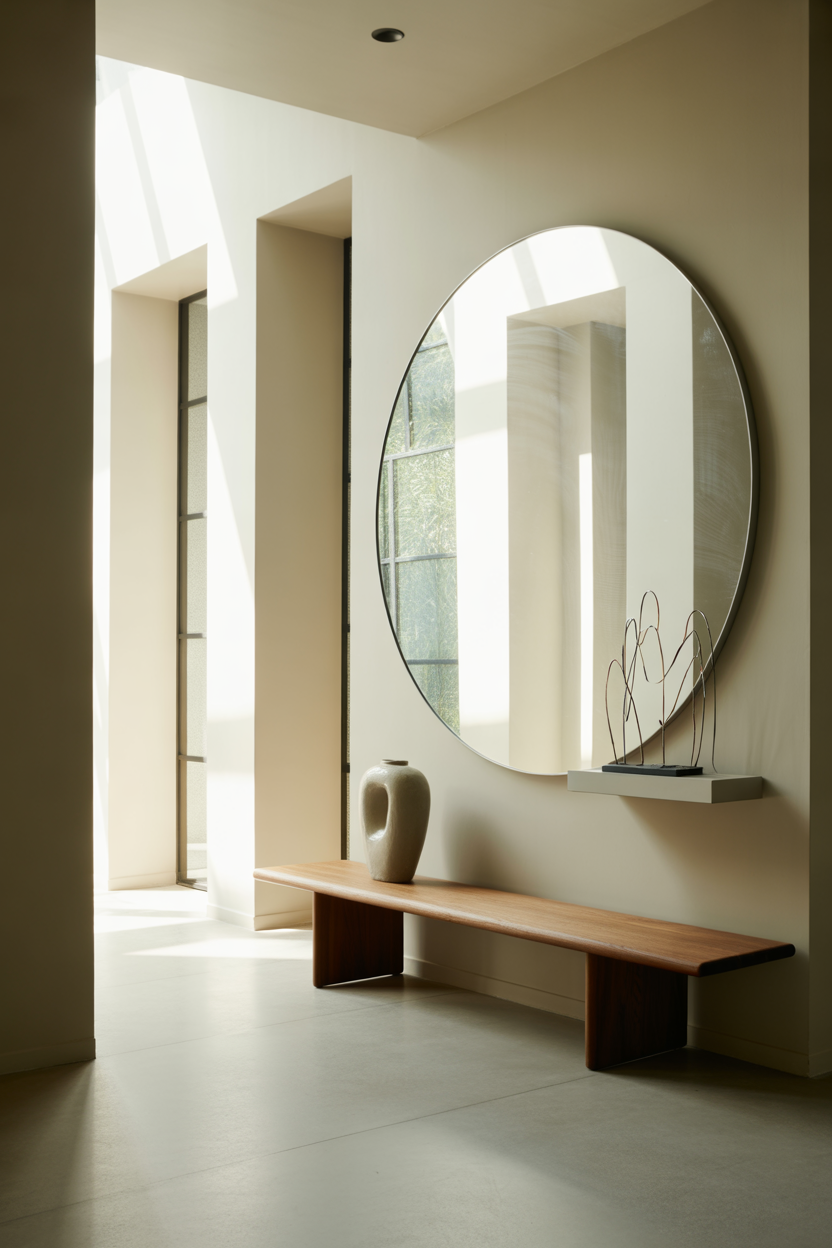
Hallway lighting has become one of the most searched home design topics on Pinterest in 2026, as homeowners across America realize that these transitional spaces deserve more than an afterthought. Whether you’re working with a narrow Victorian corridor in Boston or a long ranch-style hallway in Arizona, the right lighting transforms a simple passageway into a welcoming, functional part of your home. From sleek modern fixtures to vintage-inspired sconces, today’s hallway lights blend style with smart illumination. In this guide, you’ll discover height, architectural style, or budget.
1. Sleek Linear LED Fixtures for Modern Hallways: Fresh
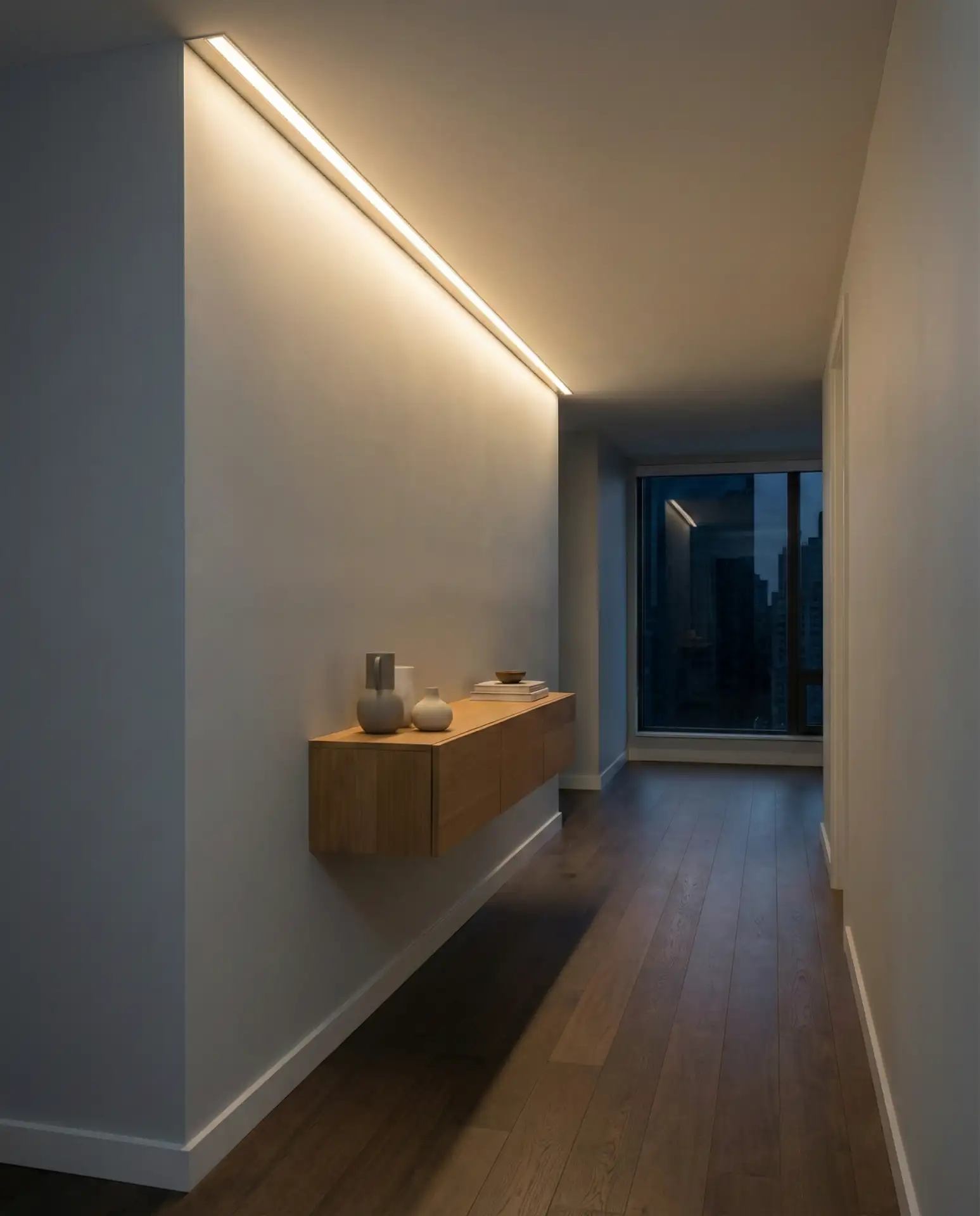
Contemporary homes demand modern hallway solutions, and linear LED fixtures deliver clean lines that emphasize architectural geometry. These streamlined lights mount flush or semi-flush against the ceiling, making them ideal for spaces where visual clutter feels overwhelming. The continuous light strip creates an uninterrupted flow that guides the eye down the corridor while providing even illumination from end to end.
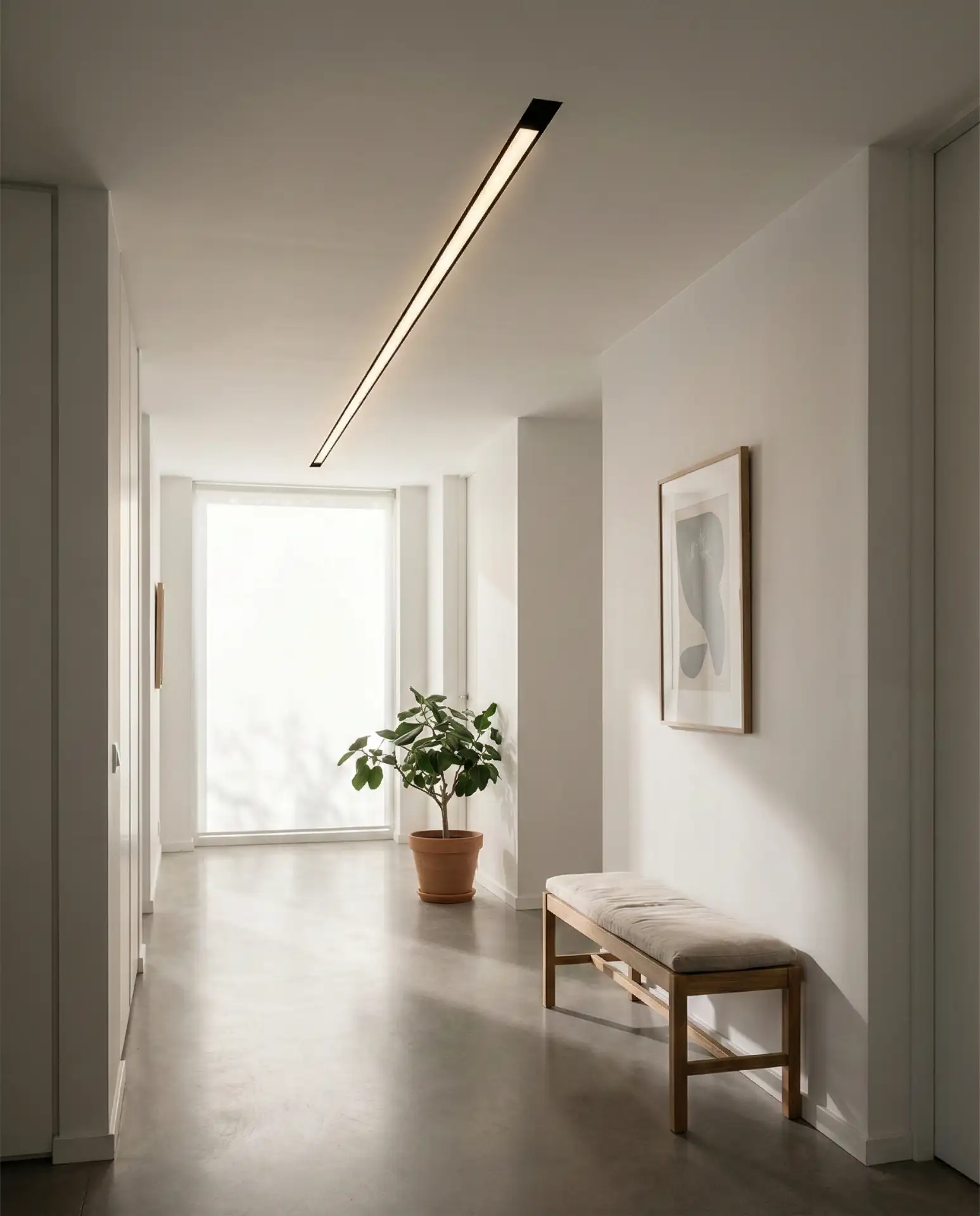
LED technology has dropped in price significantly over the past two years, with quality fixtures now starting around $80–$150 for an eight-foot hallway. Energy savings add up quickly since LEDs use about 75% less electricity than traditional bulbs and last up to 25 years. Installation is straightforward for anyone comfortable with basic electrical work, though hiring a licensed electrician typically costs $100–$200 for a simple swap.
2. Statement Flush Mount Fixtures for Low Ceilings
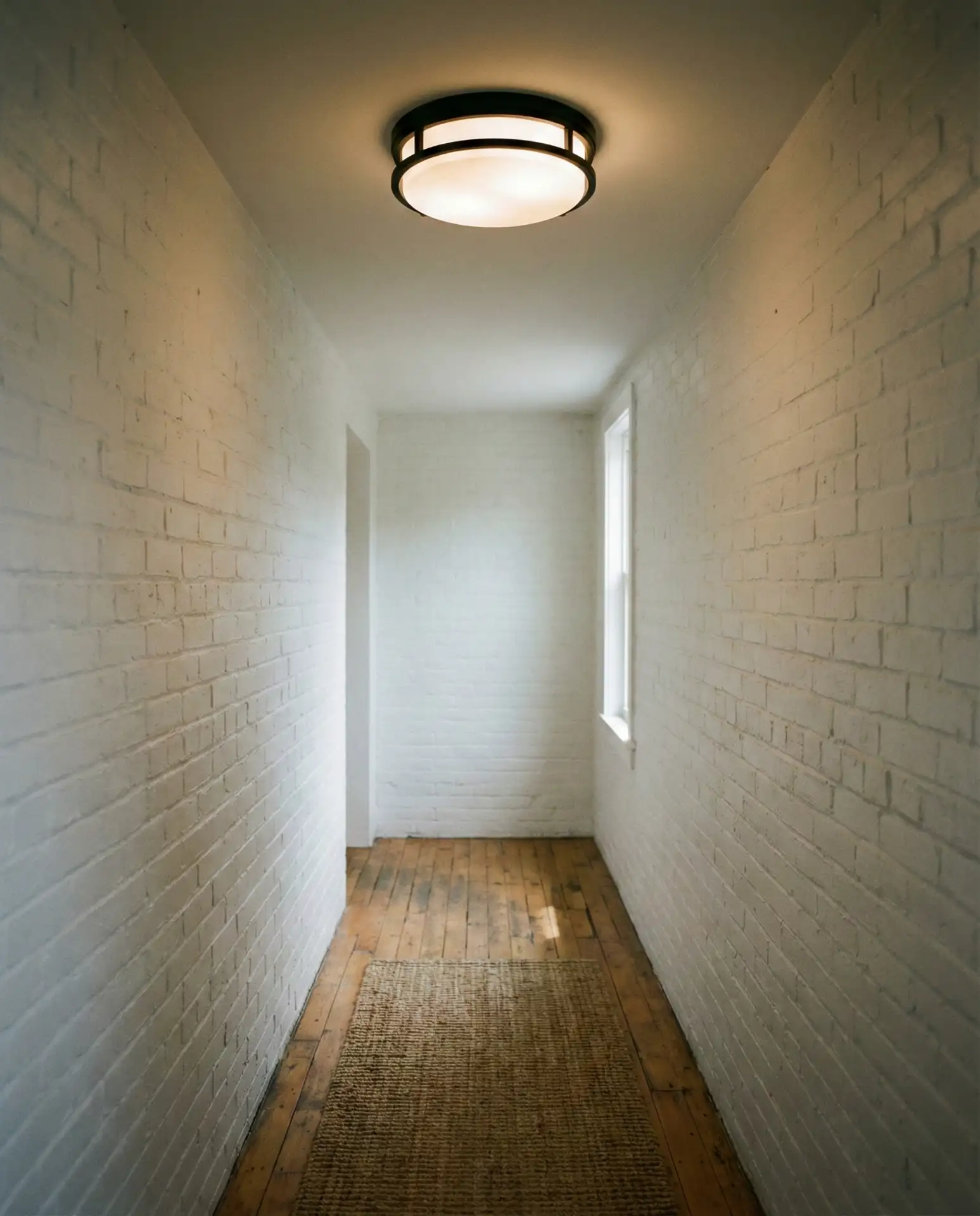
When you’re dealing with low ceilings, the right flush mount fixtures become essential rather than optional. Many American homes built in the mid-20th century feature seven-foot ceilings in hallways, where pendant lights would hang directly in the walking path. Modern flush mounts have evolved far beyond the builder-grade dome lights of decades past, now offering intricate patterns, mixed materials, and sculptural forms that catch attention without sacrificing headroom.
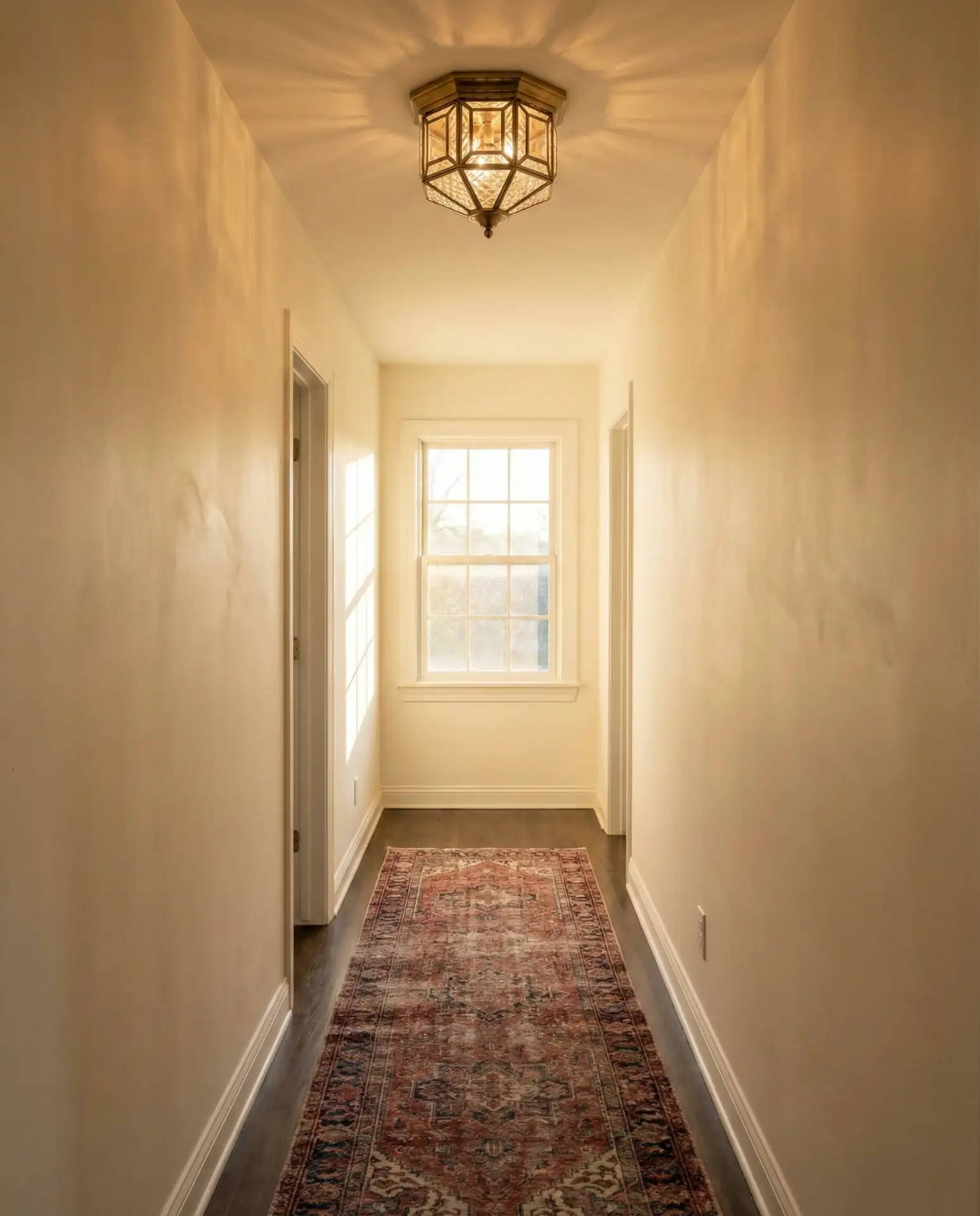
Where flush mounts work best: Homes with ceiling heights under 7’6″, apartments with concrete ceilings, beach cottages, and any space where you want decorative impact without vertical projection. Look for fixtures with at least 800 lumens for a standard eight-foot hallway to ensure adequate brightness. A neighbor recently installed three matching flush mounts down her 1950s ranch hallway, and the transformation turned what felt like a cramped tunnel into an inviting gallery space.
3. Vintage Glass Sconces for Character Walls
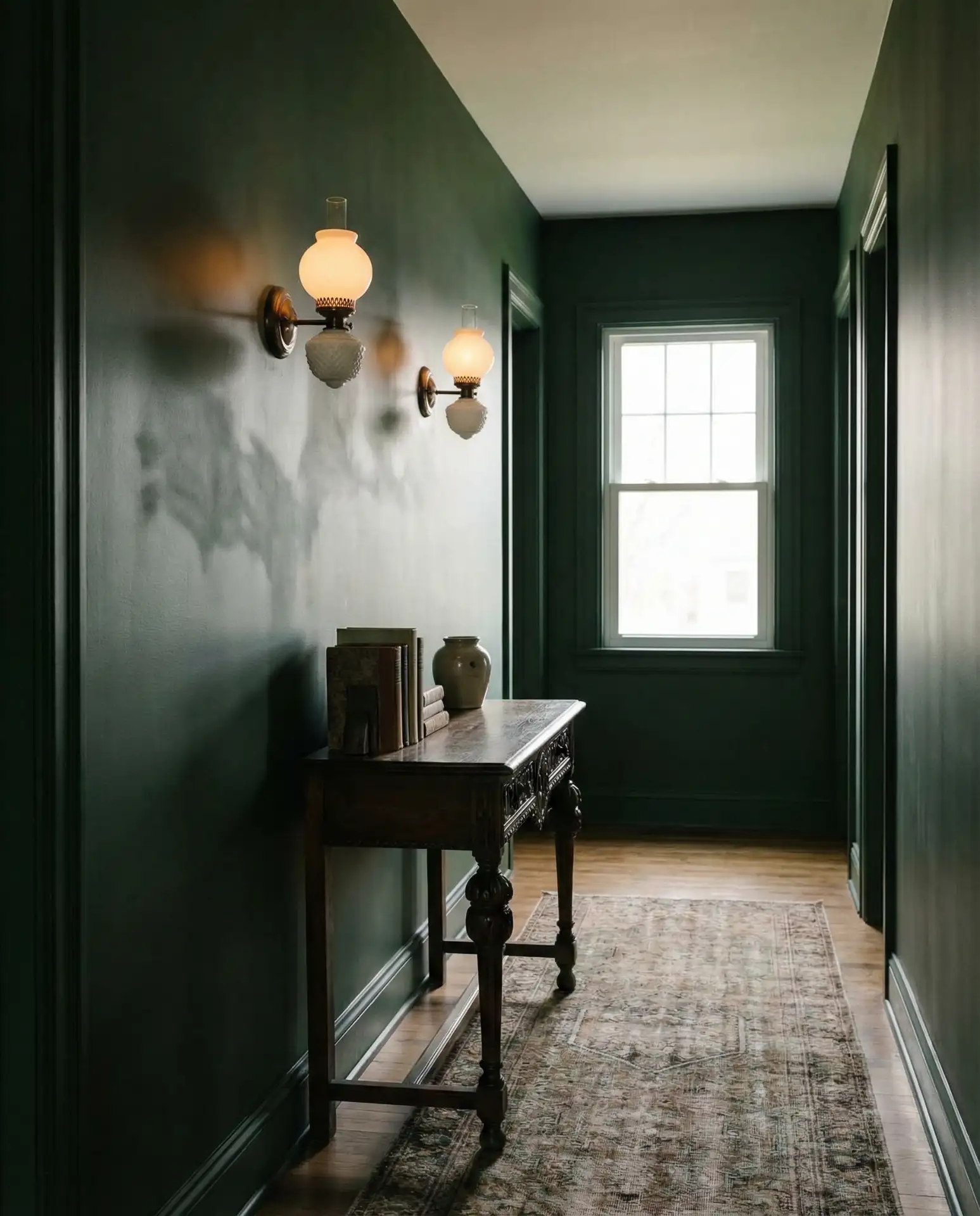
Vintage-inspired wall lights bring warmth and personality to hallways that feel too sterile or generic. These fixtures work particularly well in homes with architectural details like crown molding, wainscoting, or exposed brick where overhead lighting alone creates harsh shadows. Milk glass, seeded glass, and mercury glass finishes all reflect light beautifully while adding texture to plain walls.
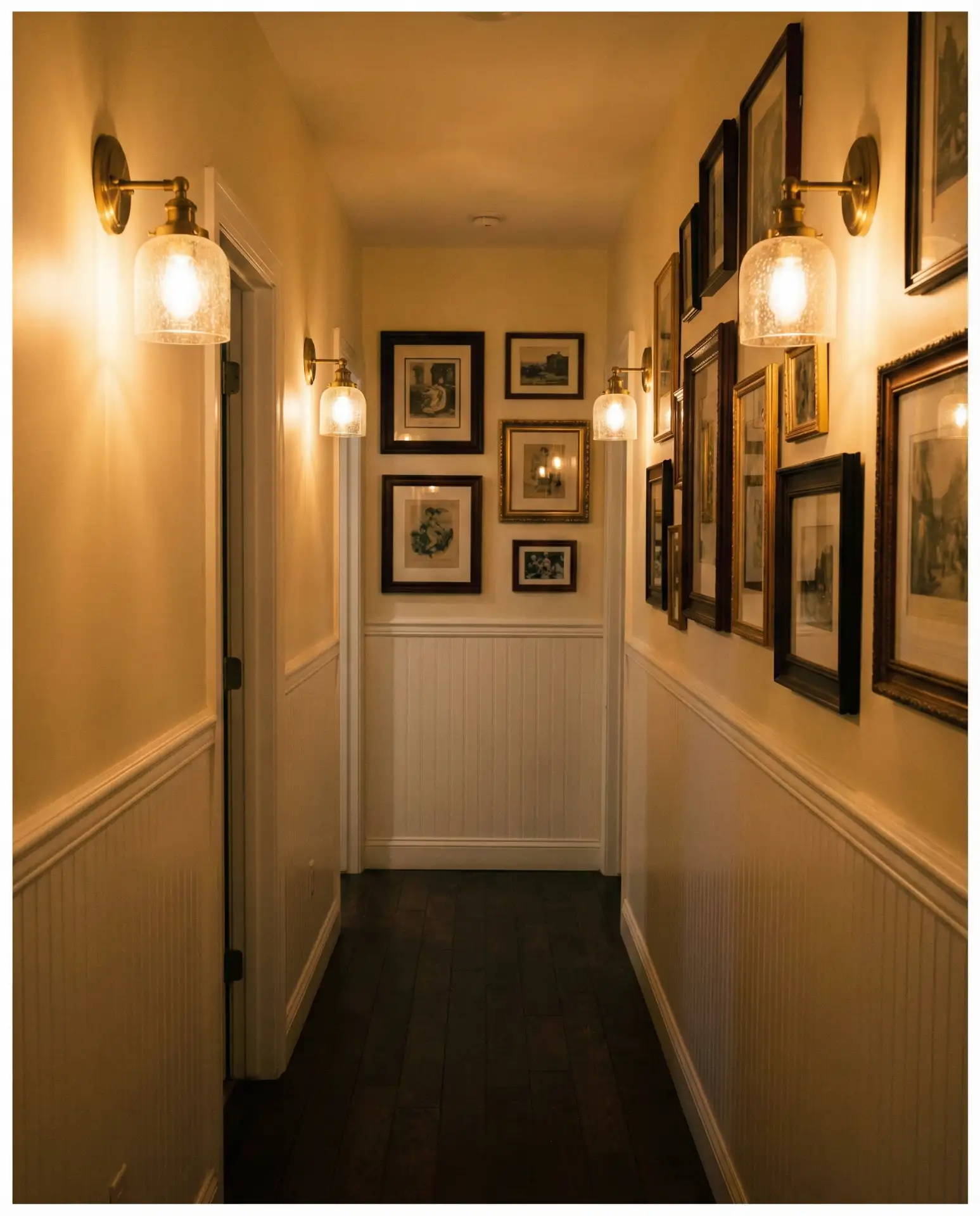
Install sconces at 60–66 inches from the floor for optimal lighting that illuminates faces without creating unflattering shadows. Spacing them every six to eight feet along a long hallway creates rhythm and balance. Many homeowners make the mistake of choosing sconces that are too small for their wall height—a fixture should be proportional to the space, typically 10–14 inches tall for standard eight-foot ceilings.
4. Minimalist Track Lighting for Narrow Passages
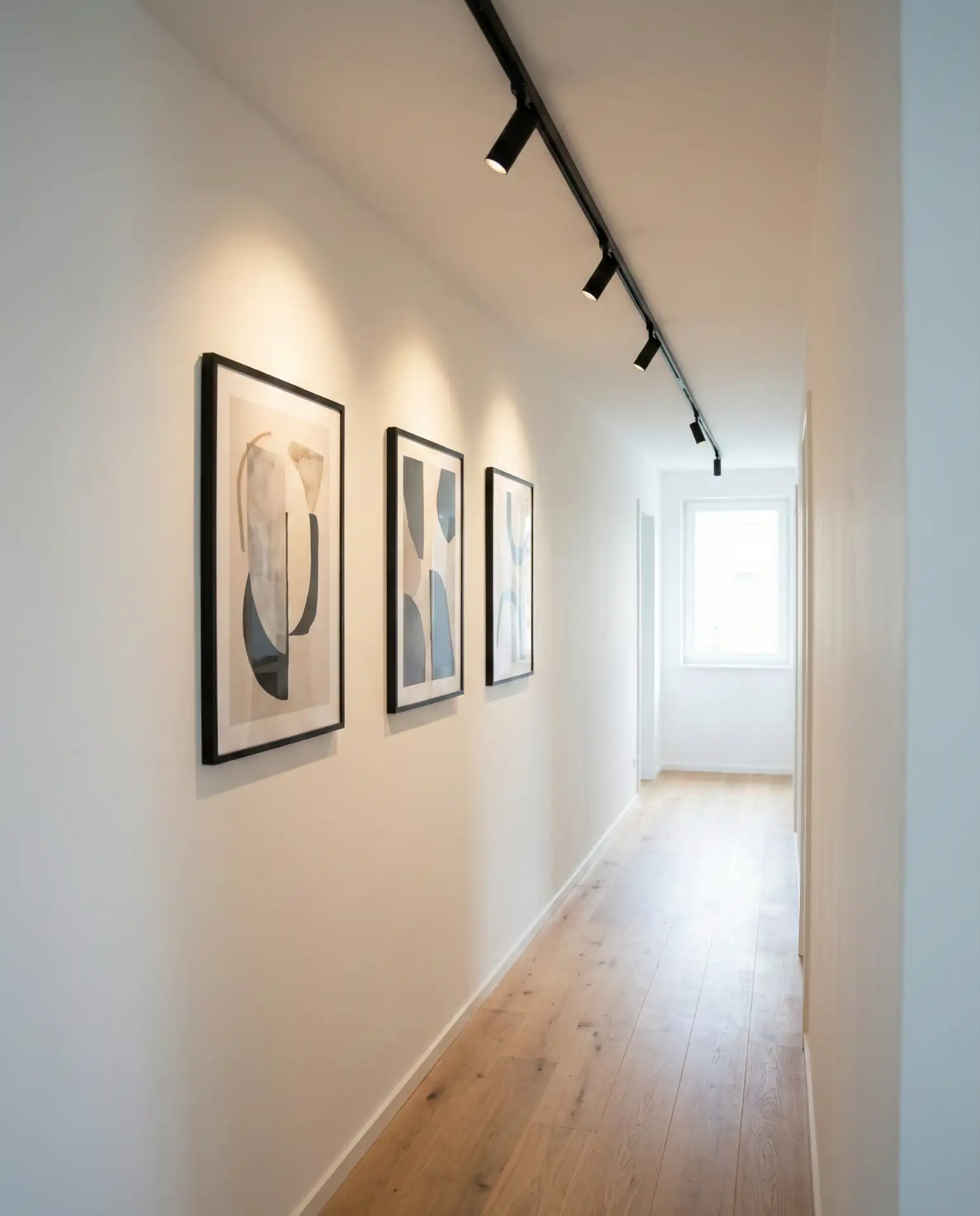
In narrow hallways where every inch of width matters, track lighting offers flexible illumination without the bulk of traditional fixtures. The adjustable heads let you direct light exactly where needed—toward artwork, architectural features, or simply down the corridor for safe navigation. Modern track systems have shed their industrial reputation and are now available in refined finishes like matte black, brushed gold, and satin nickel that suit residential design.
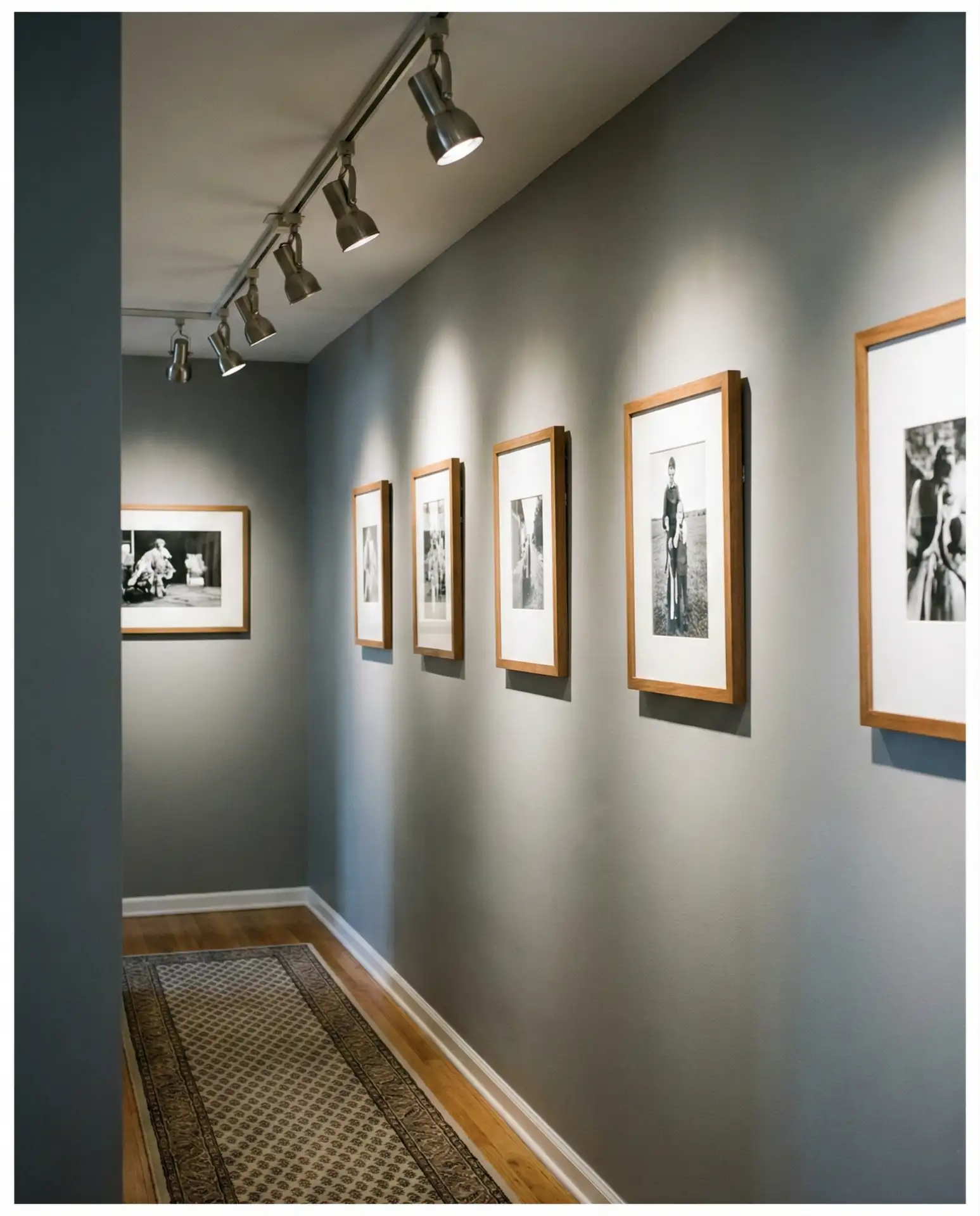
Track lighting particularly shines in condos and apartments where the existing electrical box might be off-center or poorly positioned. Since the track runs along the ceiling, you can position individual lights wherever they’re needed regardless of junction box location. Across the Midwest and Northeast, homeowners appreciate how easily track systems adapt to seasonal decor changes—simply redirect a head to spotlight your latest gallery wall or console display.
5. Crystal Chandeliers for Grand Entrances
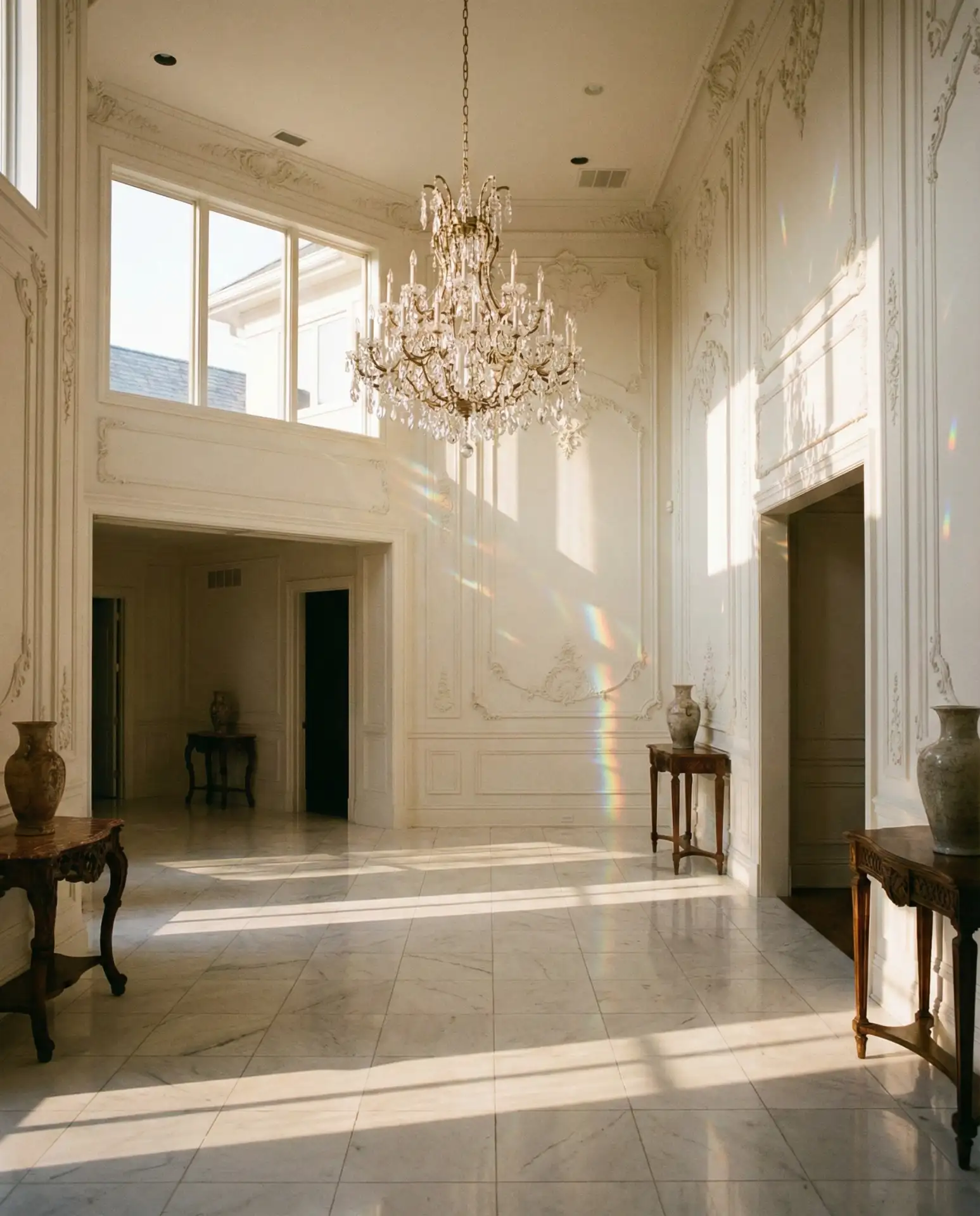
When your entrance hallway makes a first impression, a crystal chandelier delivers the dramatic impact that flat ceiling lights simply cannot match. These hanging fixtures work best in entry corridors with ceiling heights of at least nine feet, where the sparkle and verticality enhance rather than overwhelm the space. Today’s options range from traditional tiered designs to linear contemporary interpretations that suit modern architecture.
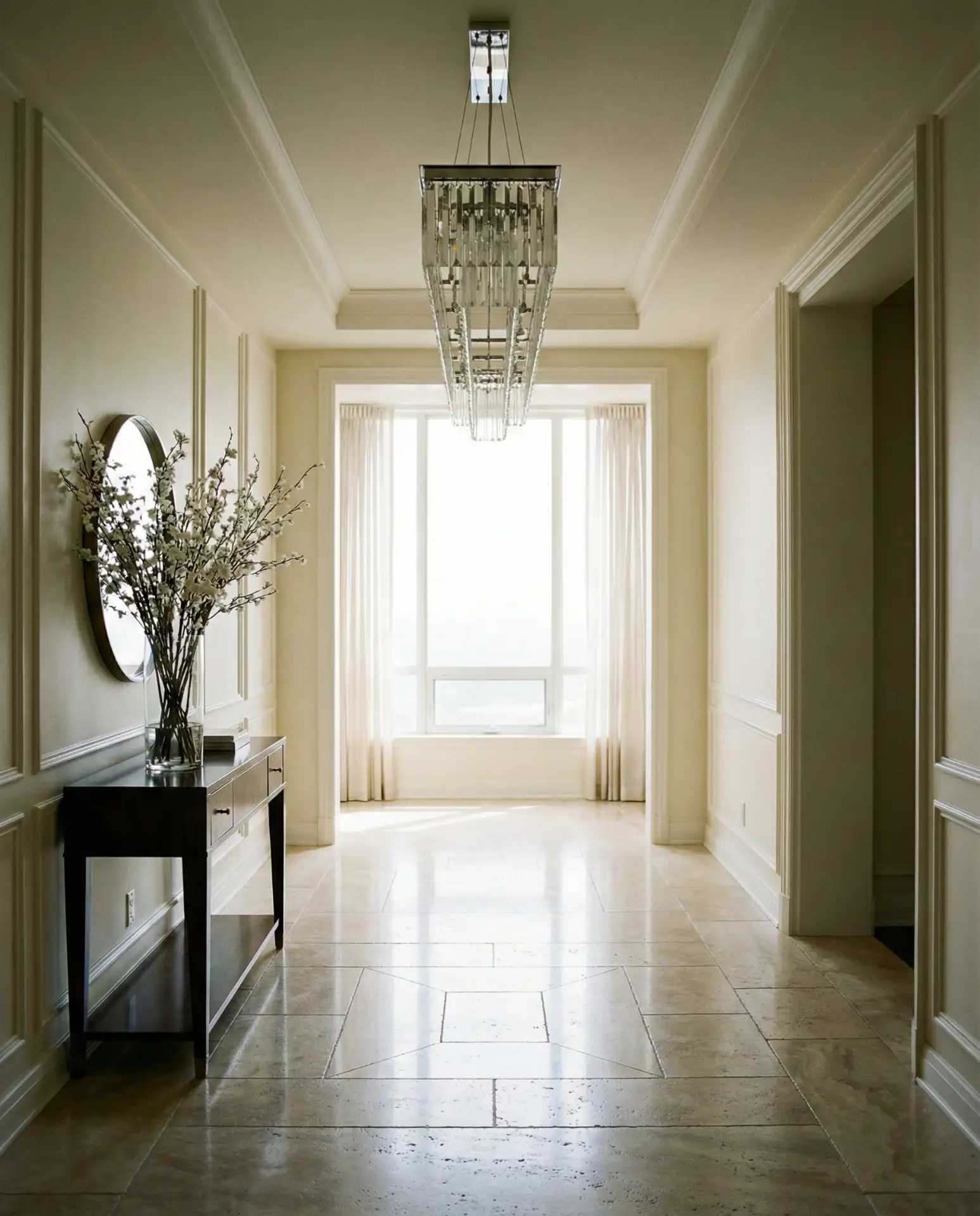
Expert designers recommend hanging chandeliers so the bottom sits at least 7’6″ above the floor in hallways to prevent tall visitors from bumping their heads. For two-story foyers with hallway access, position the fixture so it’s centered in the vertical space rather than too high or too low. Professional installation runs $200–$400 depending on the fixture’s weight and complexity, since proper support matters enormously with heavier crystal pieces.
6. Industrial Cage Fixtures for Urban Lofts
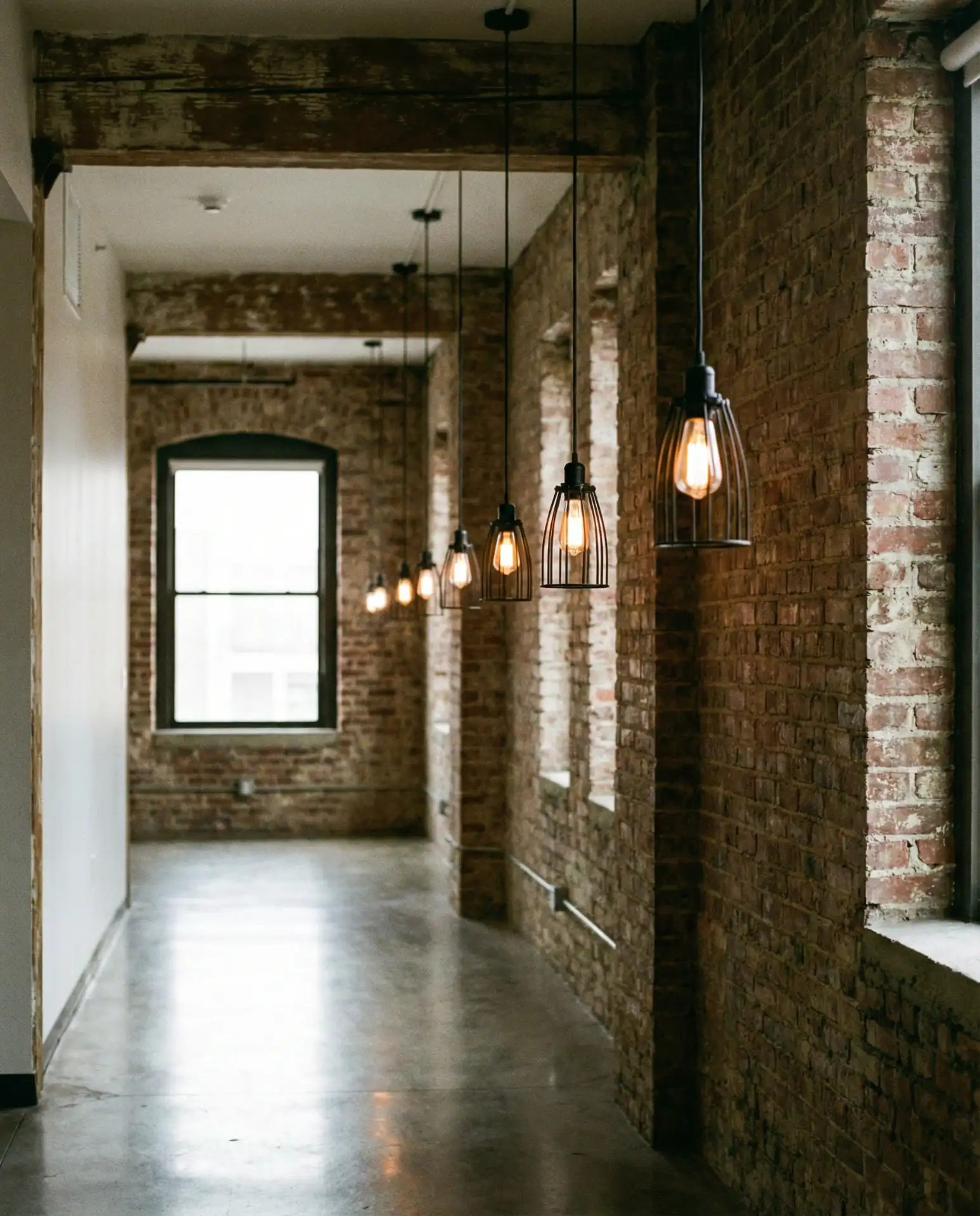
Open-grid metal cage lights bring raw texture and honest materials to hallways in converted lofts, warehouses, and urban apartments. These fixtures complement exposed brick, concrete floors, and steel beams while providing functional illumination that doesn’t feel precious or delicate. The wire framework casts interesting shadow patterns that add visual depth to otherwise plain walls, creating movement even in static spaces.
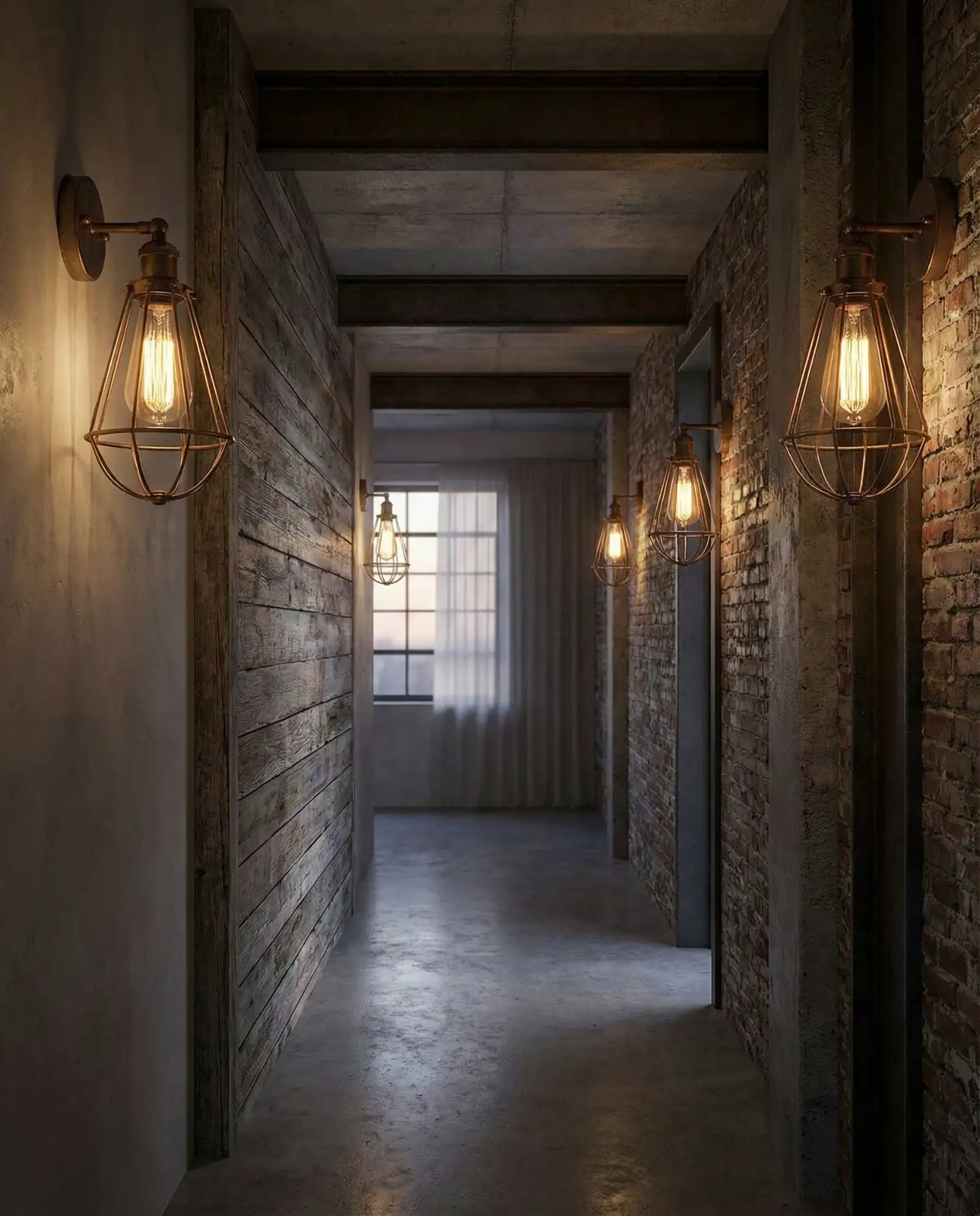
Cage fixtures typically cost $60–$180 each, making them one of the more budget-friendly options for updating multiple hallway lights at once. The exposed bulb design means you’ll want to invest in quality LED filament bulbs that look good when visible—they’re the jewelry of the fixture. In Brooklyn and Portland, these lights appear in nearly every renovated industrial space, proving their versatility across both residential and commercial applications.
7. Recessed Lighting for Seamless Ceilings
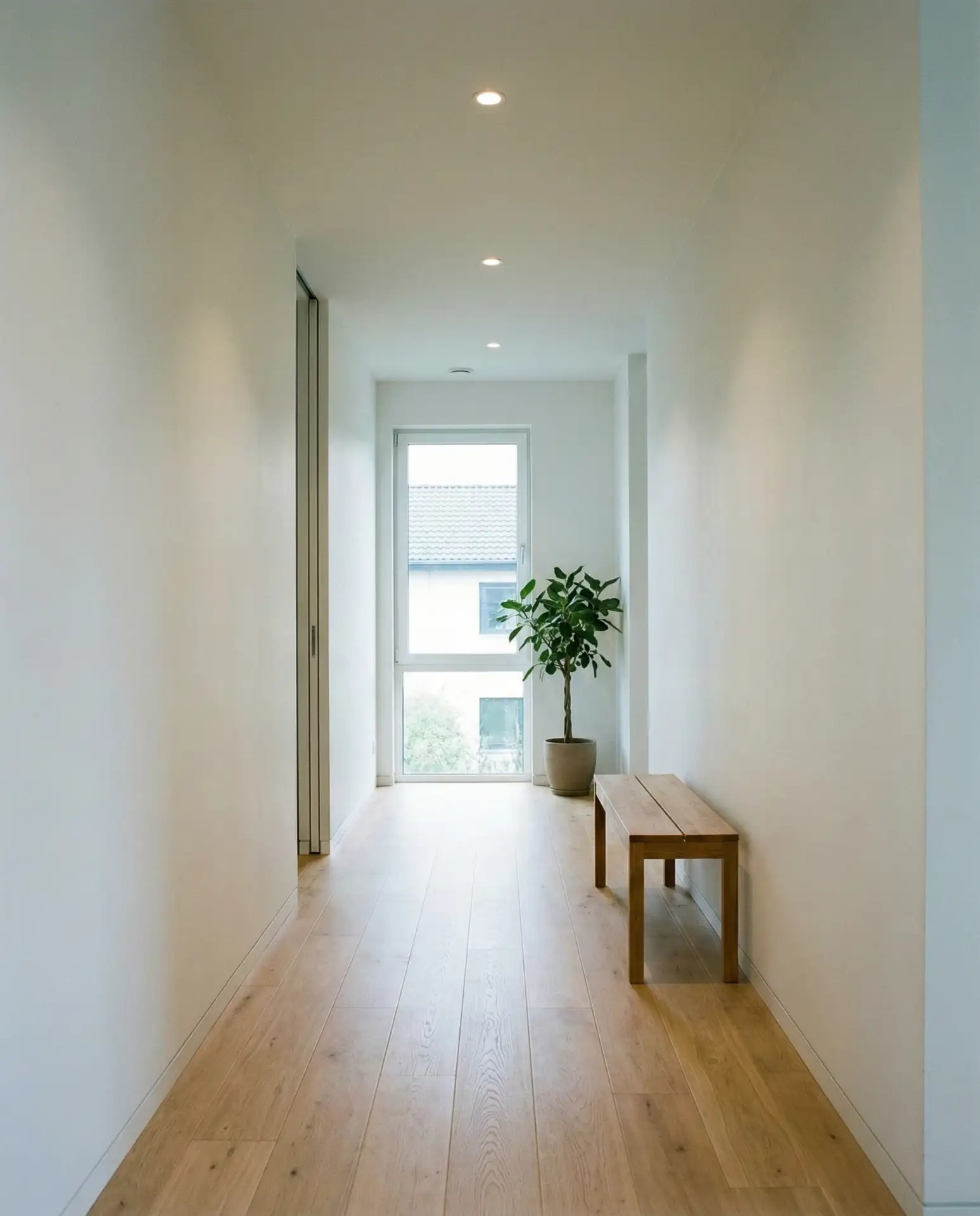
When you want light without visible fixtures, recessed cans create clean ceilings that emphasize architecture rather than lighting hardware. This approach suits modern minimalist homes where every decorative element needs justification. Properly spaced recessed lights—typically every four to six feet—eliminate the shadowy patches that single central fixtures leave behind in long hallways.
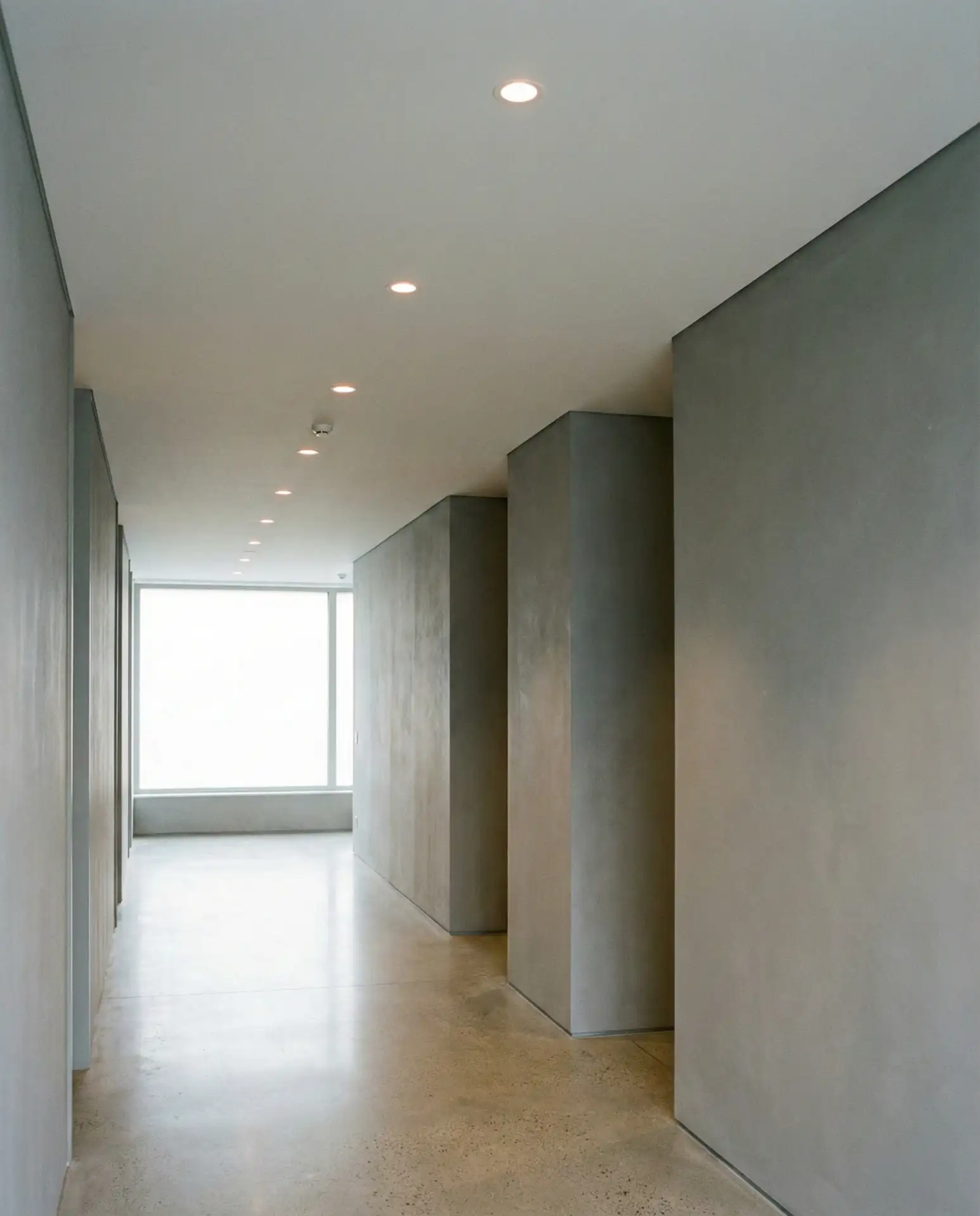
A common mistake is installing recessed lights on a single switch, which forces you to illuminate the entire hallway even when you only need light at one end. Smart homeowners wire lights in zones or install dimmer switches for flexible control. Retrofit LED recessed kits have made this lighting accessible for existing homes without major construction—you can often install them through the existing ceiling opening without accessing the space above.
8. Farmhouse Lanterns for Rustic Charm
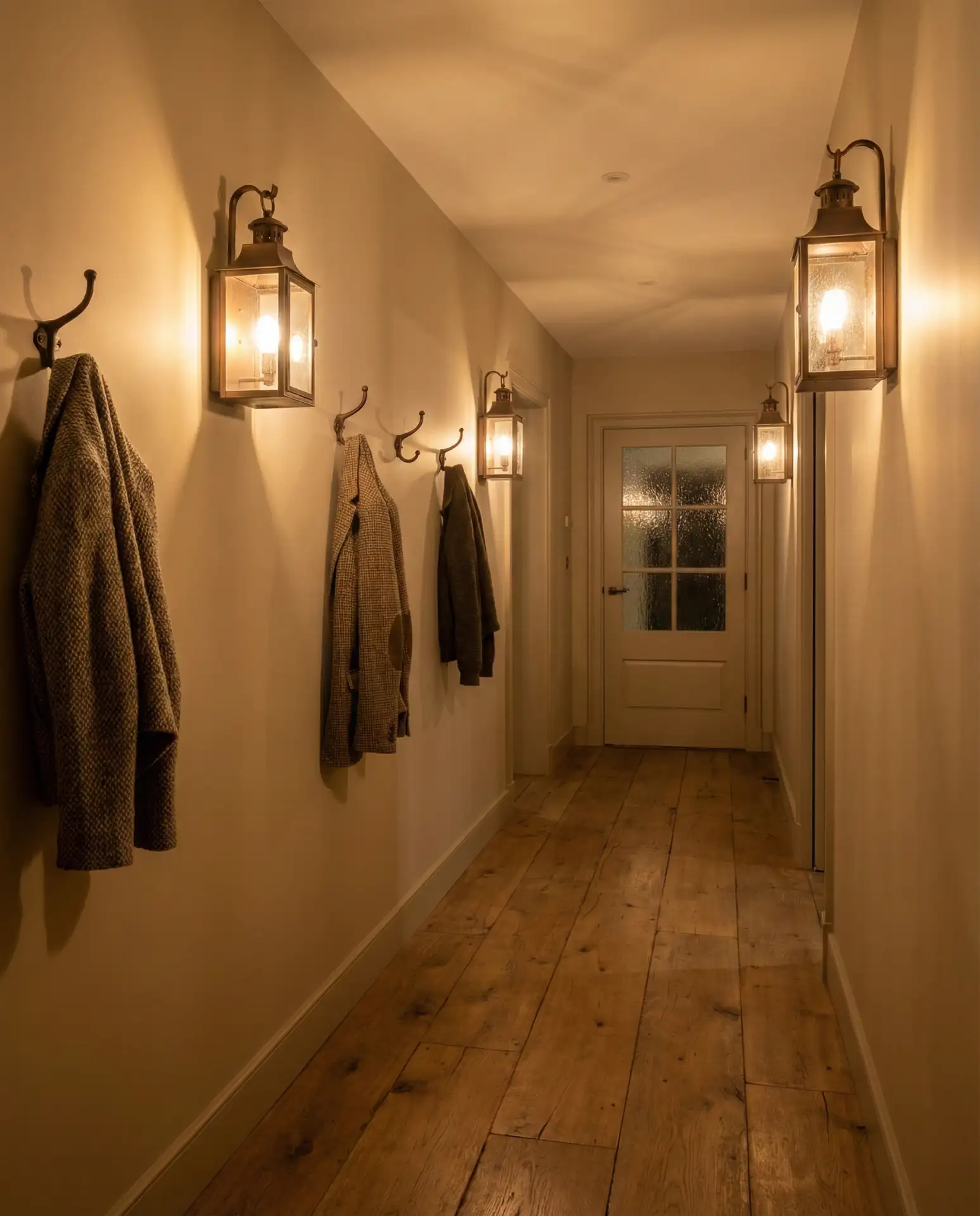
Farmhouse lantern-style fixtures have dominated Pinterest boards for three consecutive years, and their appeal shows no signs of fading in 2026. These lights balance rustic warmth with practical illumination, working beautifully in actual farmhouses as well as suburban homes seeking that relaxed, lived-in aesthetic. Metal frames in black, bronze, or galvanized finishes pair with clear or seeded glass panels that soften the light while maintaining brightness.
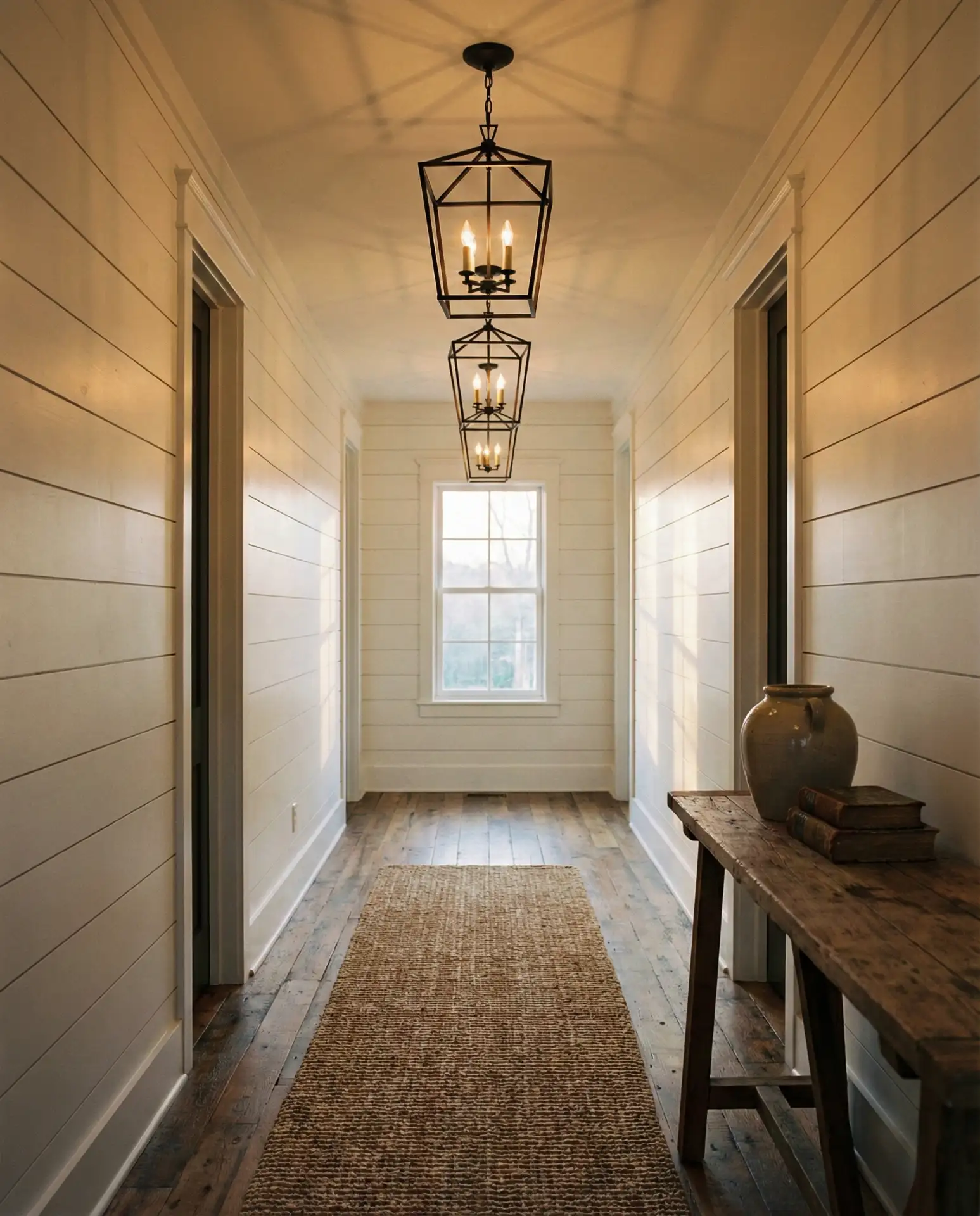
Lantern fixtures work best in homes with traditional or transitional architecture—think Craftsman bungalows, Colonial revivals, and Texas ranch houses. The squared-off silhouette complements rectangular doorways and windows better than round globes. Throughout the South and Midwest, these fixtures appear in new construction developments, proving their broad appeal beyond dedicated farmhouse enthusiasts. Price points range from $90 for basic models to $350 for handcrafted artisan pieces.
9. Art Deco Sconces for Vintage Glamour
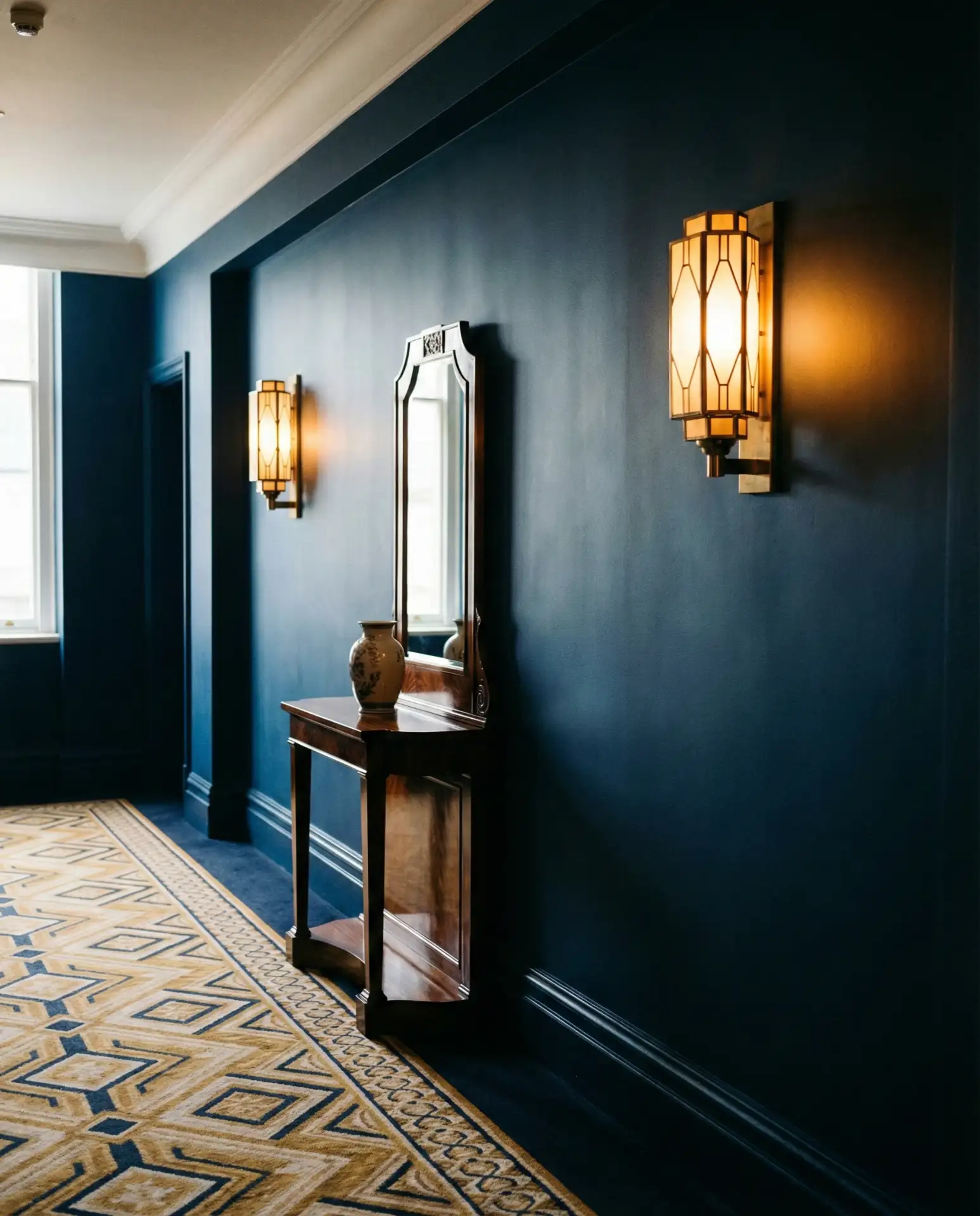
Vintage Art Deco wall lights bring the elegant geometry of the 1920s and 30s into contemporary homes through stepped forms, sunburst patterns, and gleaming metallics. These fixtures suit upstairs hallways in older homes where architectural details like picture rails and plate rails deserve lighting that matches their period. Frosted glass shades with etched patterns diffuse light beautifully while creating a sophisticated glow that feels both nostalgic and timeless.
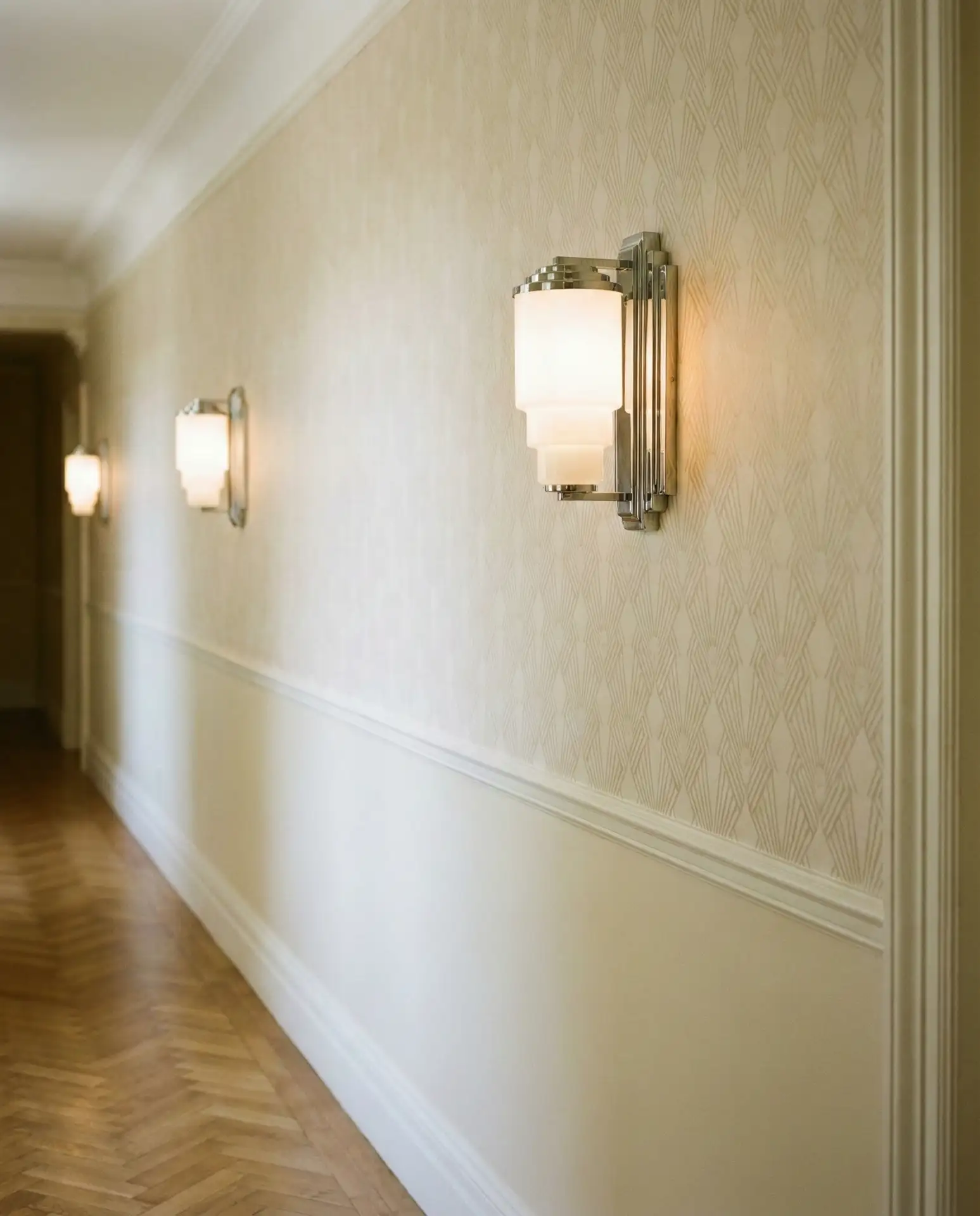
In cities like Chicago, San Francisco, and New York, where Art Deco apartment buildings remain popular, original fixtures command premium prices at architectural salvage shops. Reproduction sconces offer the same aesthetic at $120–$280 per pair, making them accessible for budget-conscious renovators. The symmetrical nature of Deco design means these lights look best installed in pairs flanking doorways or mirrors rather than scattered randomly along a wall.
10. Globe Pendants for Mid-Century Spaces
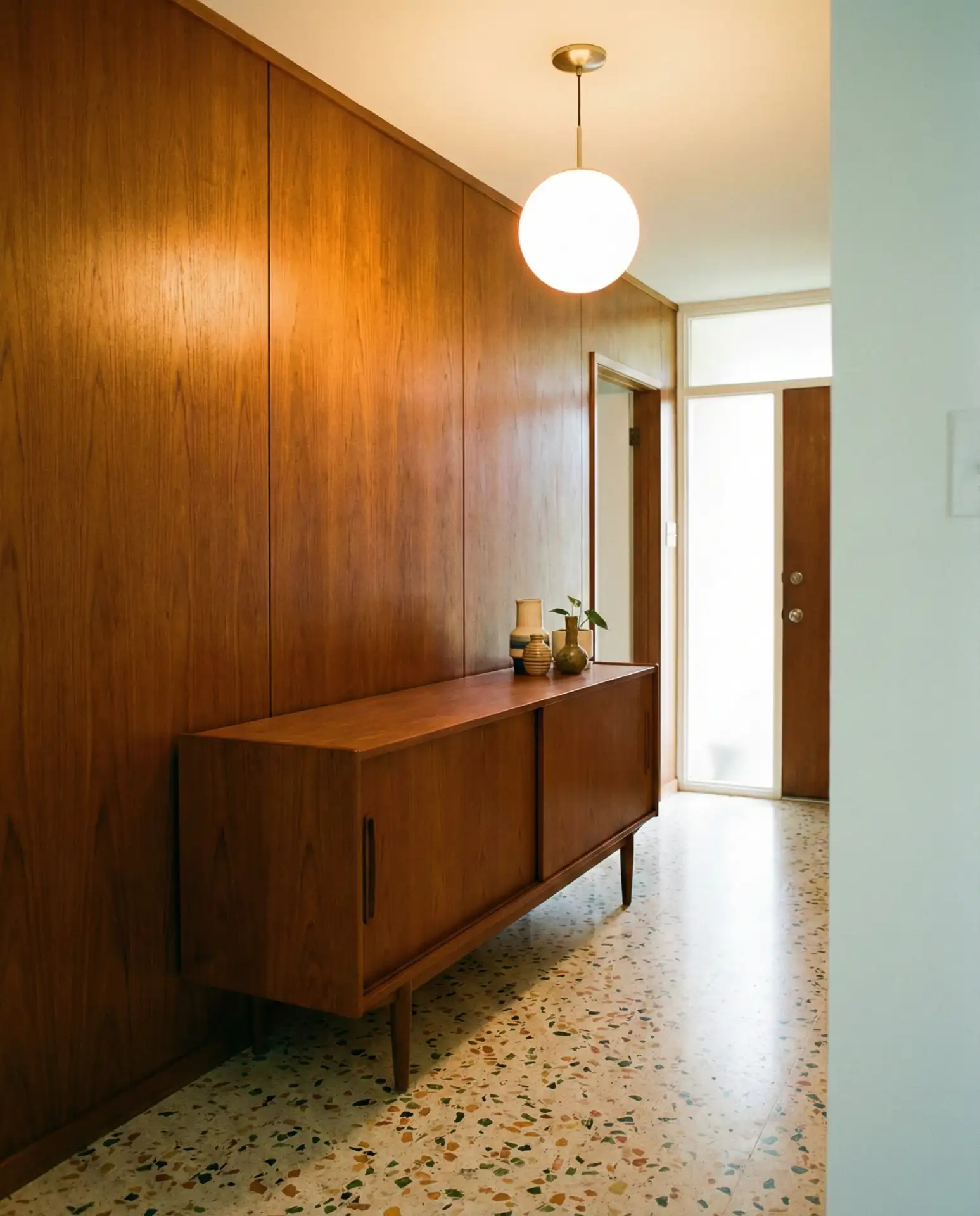
Mid-century modern design celebrates clean spherical forms, and globe pendants deliver exactly that aesthetic in hallway applications. These hanging lights work particularly well in homes built between 1945 and 1970, where the rounded silhouette echoes the period’s furniture and architectural details. Milk glass, smoked glass, and brass-wrapped globes all reference authentic mid-century materials while providing soft, diffused illumination that avoids harsh shadows.
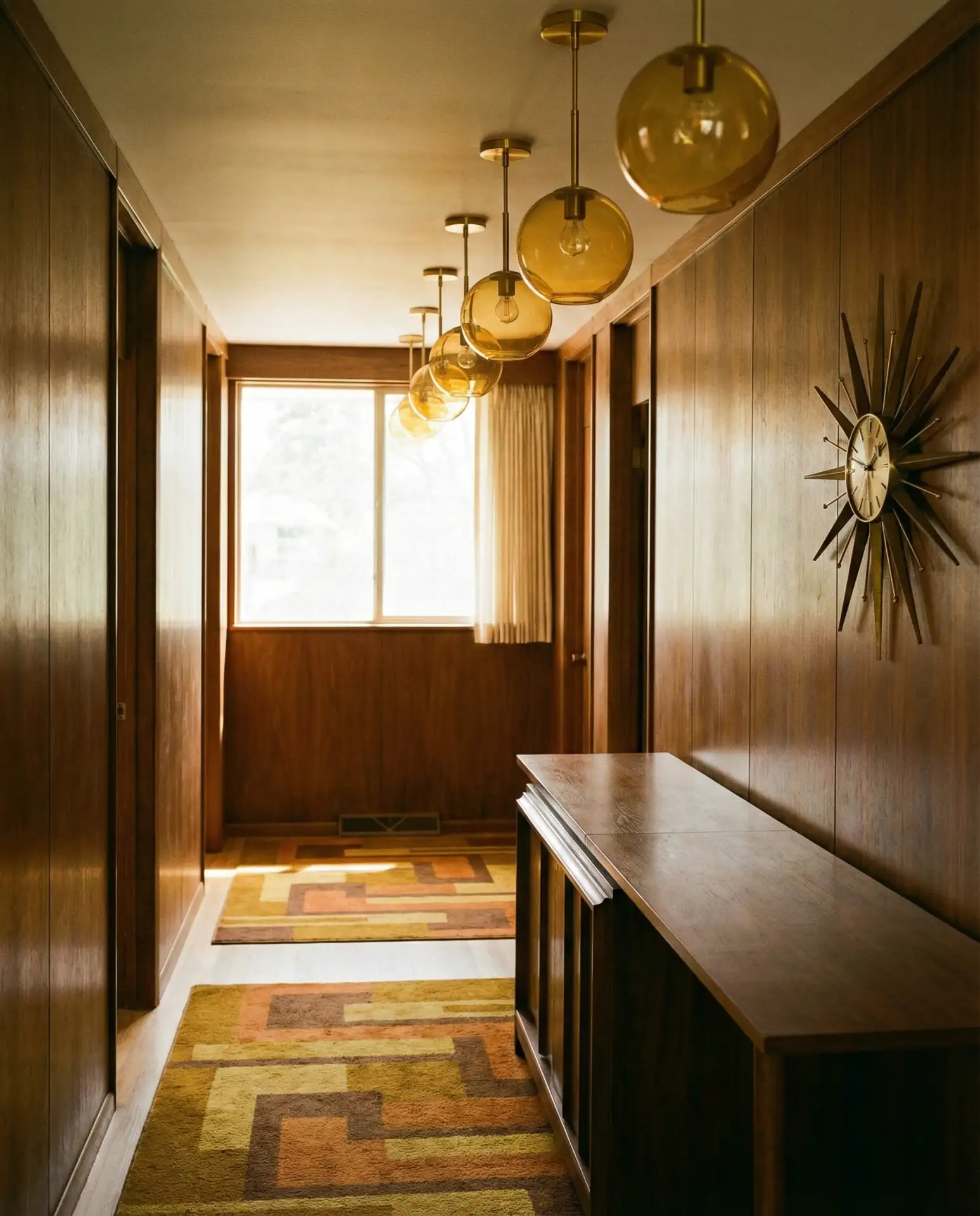
Real homeowners often install multiple smaller globes rather than one large statement piece, creating a rhythmic repetition that guides movement through the space. In California ranch houses and split-level homes across the country, these fixtures appear in original installations that still function perfectly after 50+ years—a testament to quality mid-century manufacturing. Expect to pay $85–$200 per globe for quality reproductions, though vintage originals occasionally surface at estate sales for similar prices.
11. Picture Lights for Gallery Hallways
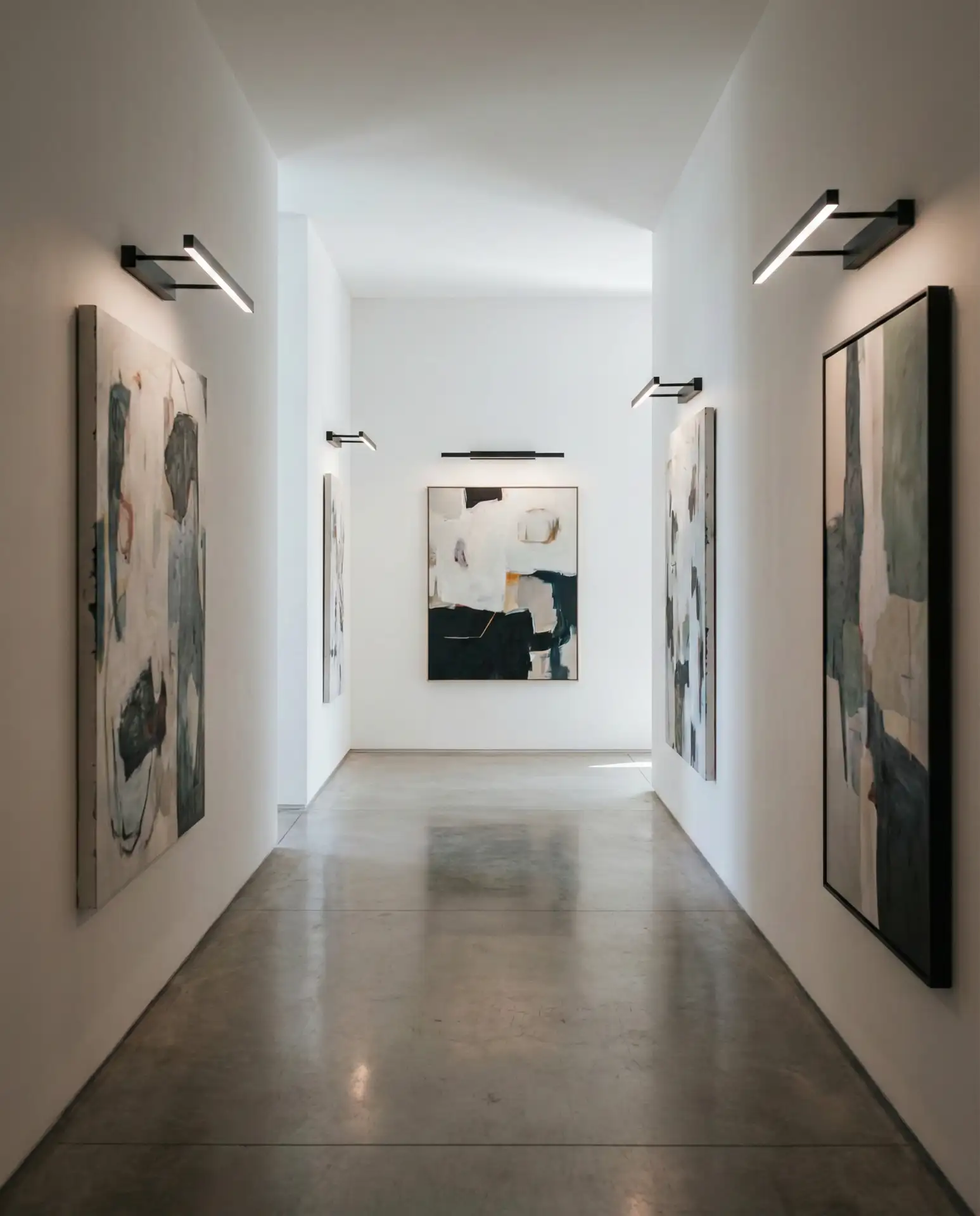
When hallways double as personal galleries, dedicated picture lights transform framed art into focal points that deserve professional-level illumination. These specialized fixtures mount directly above or below artwork, directing focused beams that eliminate glare while highlighting color and detail. Modern LED picture lights produce minimal heat compared to older halogen versions, protecting valuable pieces from damage while reducing energy costs.
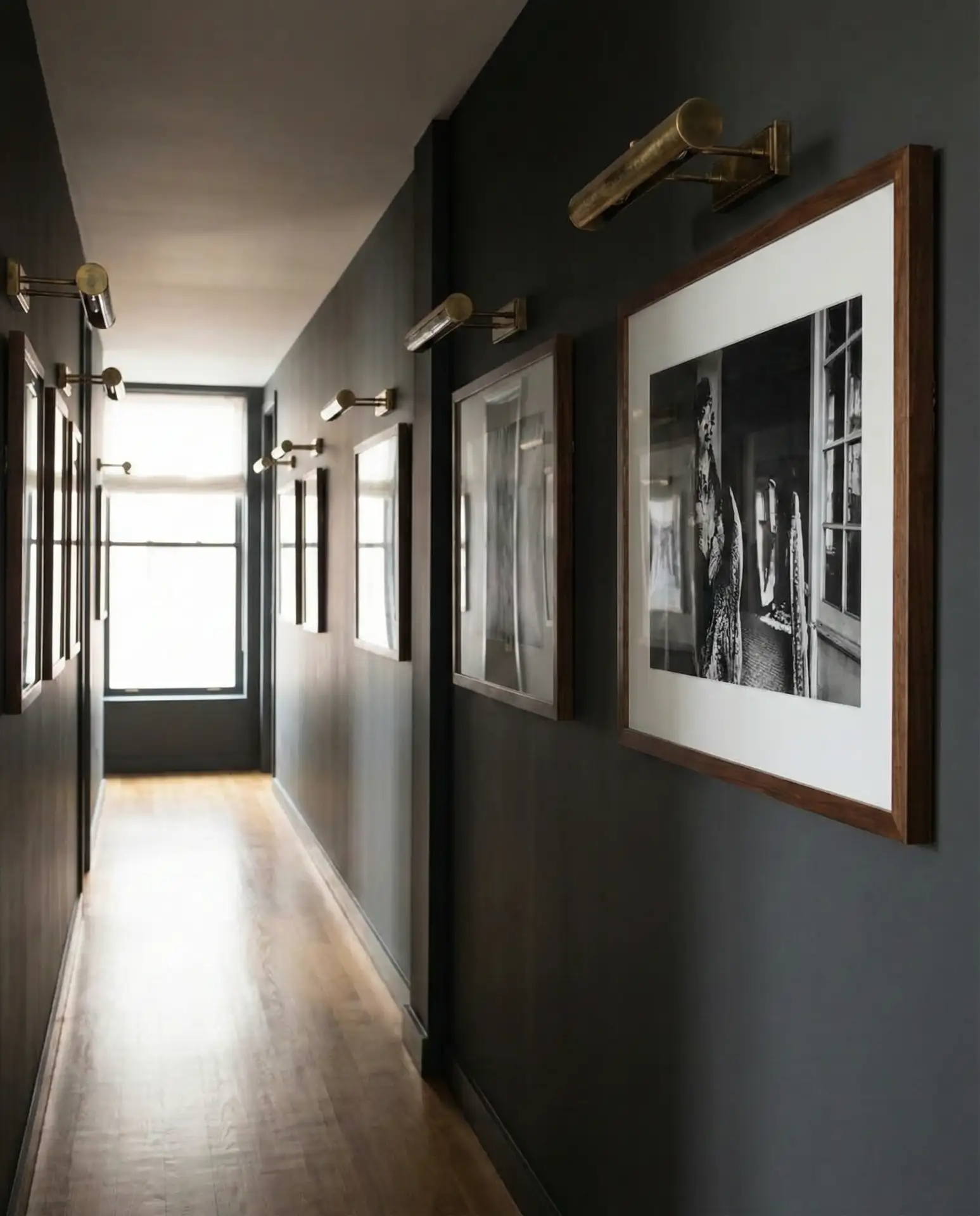
Picture lights work best when you’ve committed to a specific art arrangement that won’t change frequently, since they’re hardwired in place. Battery-operated versions offer flexibility for renters or people who rotate their collections seasonally. My sister installed seven picture lights down her 20-foot hallway last spring, and guests now linger in what used to be a pass-through space, actually stopping to examine the photography she’s collected over the years.
12. Victorian Ceiling Medallions with Period Fixtures
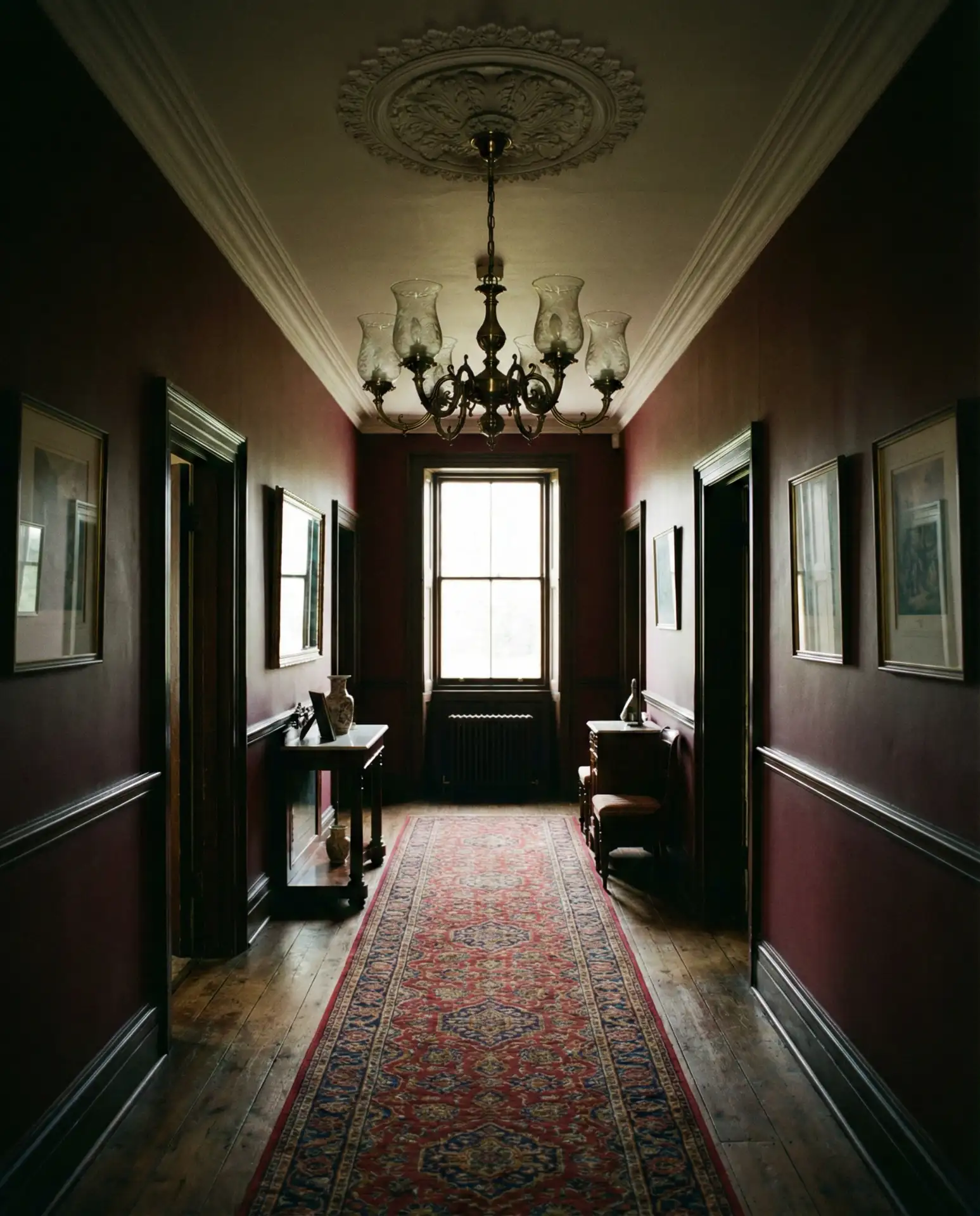
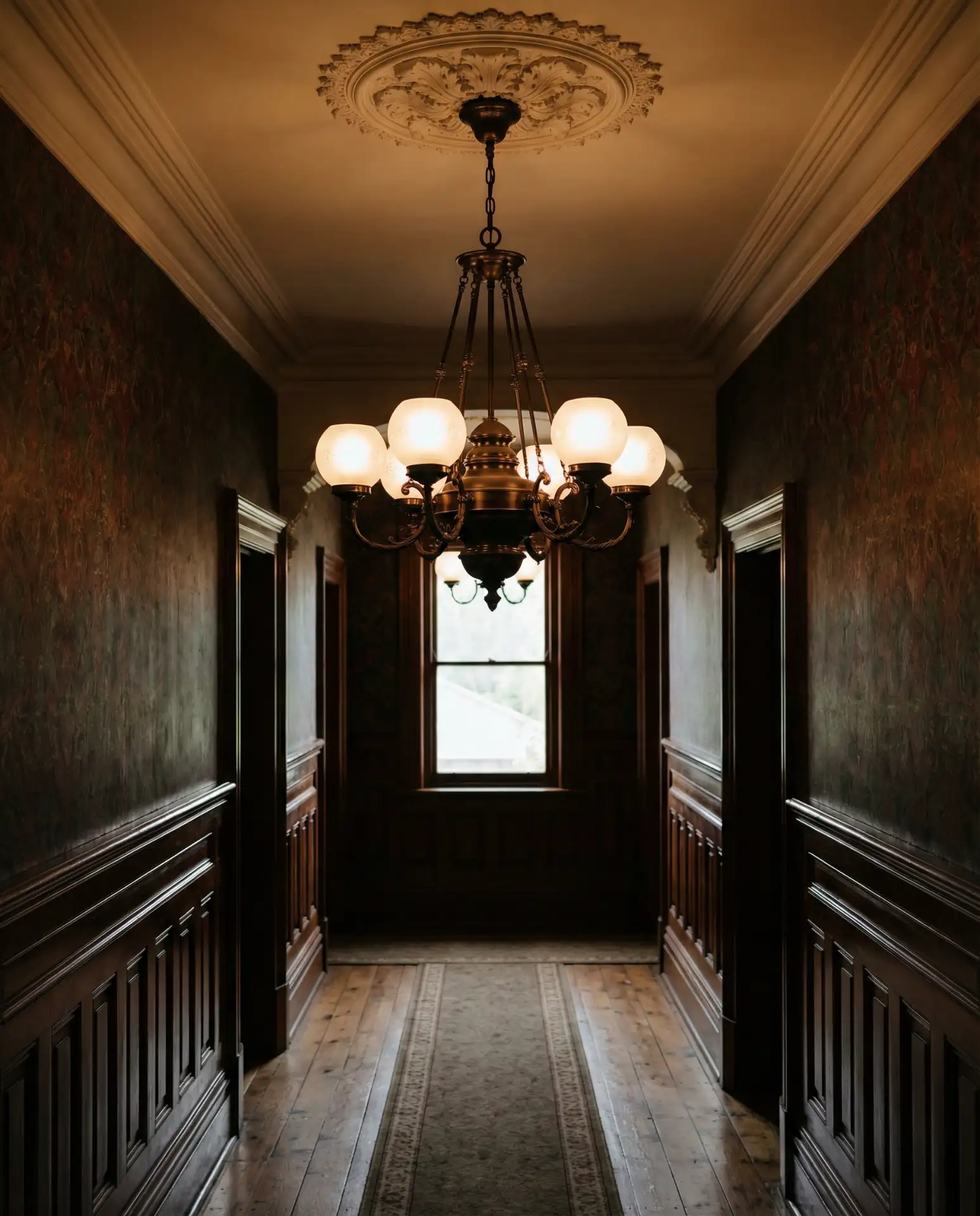
Victorian homes with original plasterwork deserve lighting that honors their architectural heritage, and ornate ceiling medallions paired with authentic-style fixtures achieve exactly that balance. These medallions—often featuring acanthus leaves, floral patterns, or geometric designs—frame the junction where the fixture meets the ceiling, adding visual weight and finished detail. Period-appropriate fixtures might include converted gas-electric combinations, etched glass shades, or crystal prism drops that reference the home’s original era.
Installing a ceiling medallion is simpler than most people expect—lightweight polyurethane versions weigh just a few pounds and attach with construction adhesive and a couple of screws. The medallion hides imperfect ceiling joints or previous fixture holes while adding architectural authenticity. In neighborhoods with historic Victorian stock like San Francisco’s Painted Ladies or Philadelphia’s rowhouses, properly matched lighting and medallions significantly boost resale value by maintaining period integrity.
13. Rope Lights for Coastal Pathways
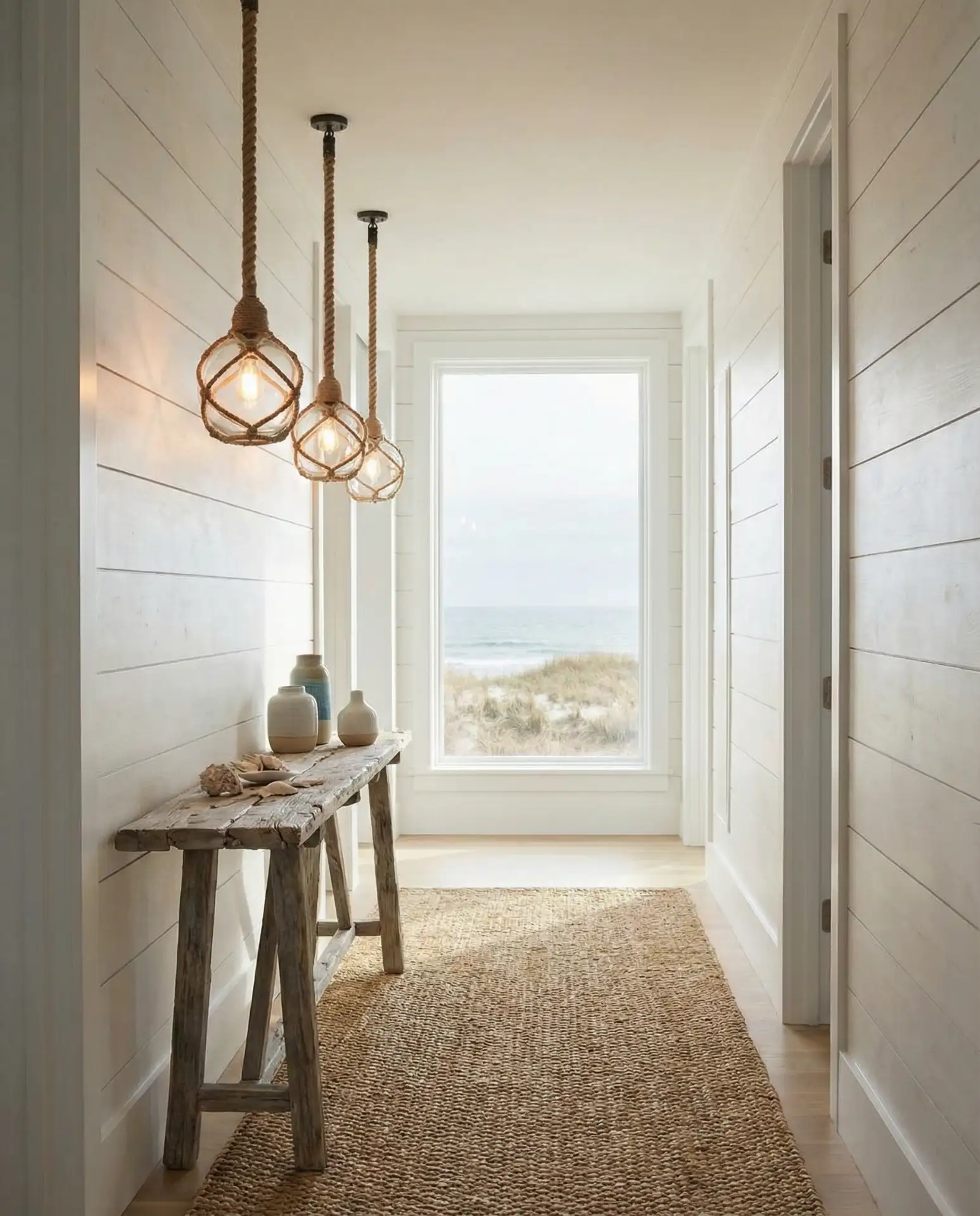
Nautical-inspired rope-wrapped pendants and fixtures bring relaxed coastal style to hallways in beach houses, lake cottages, and homes channeling that breezy maritime aesthetic. These hanging lights feature jute, manila, or sisal rope wound around metal frames or glass globes, creating texture and warmth that plain fixtures lack. The natural fiber material softens the hard edges typical of many modern fixtures, introducing an organic element that grounds the space.
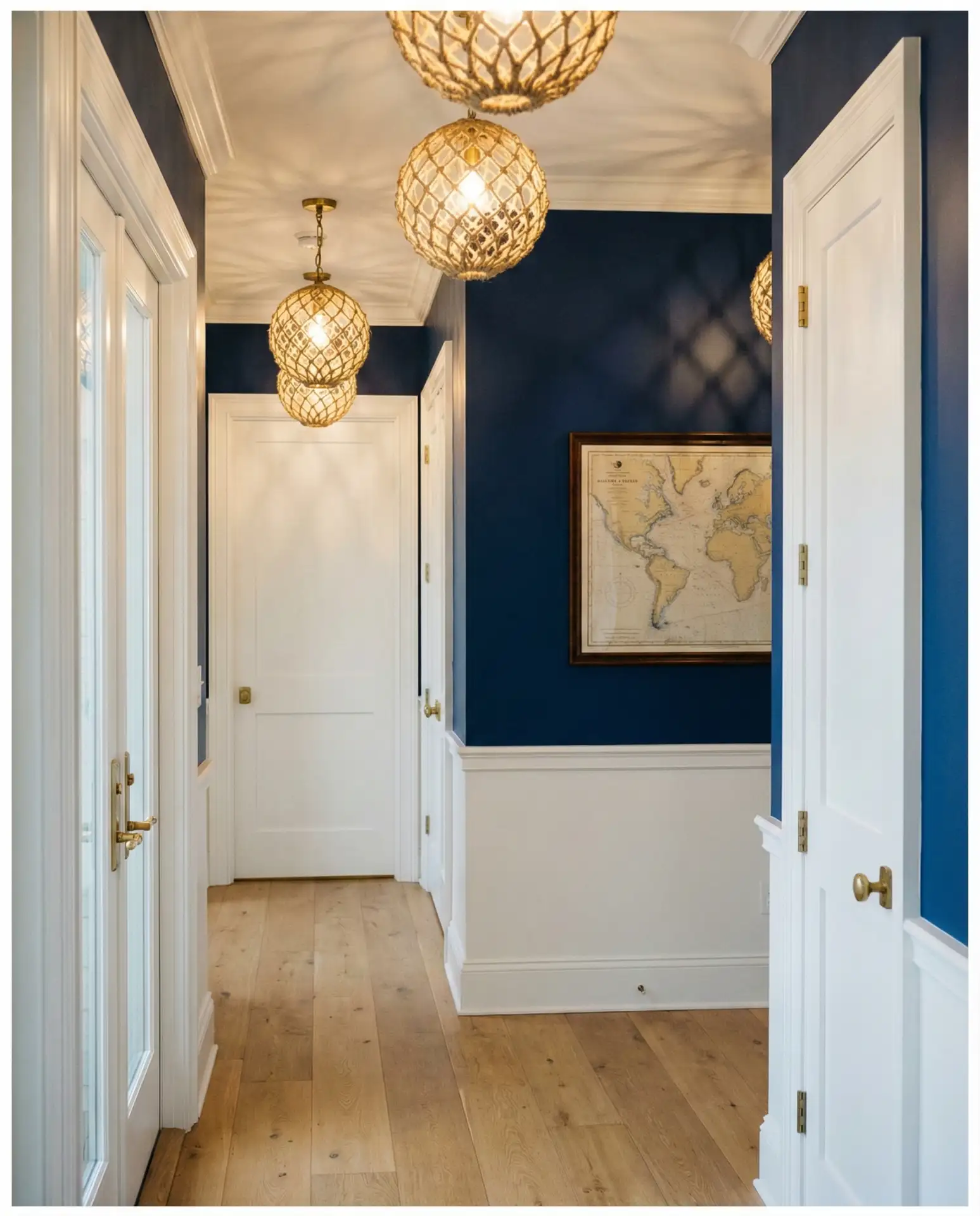
Coastal properties from the Outer Banks to Southern California embrace this lighting style, where the casual elegance suits vacation homes and primary residences alike. Natural rope does collect dust more readily than smooth metal or glass, so plan for occasional gentle vacuuming or wiping. Quality rope fixtures range from $110 to $280, with handmade artisan versions commanding higher prices for tighter, more uniform wrapping.
14. Smart LED Strips for Customizable Color
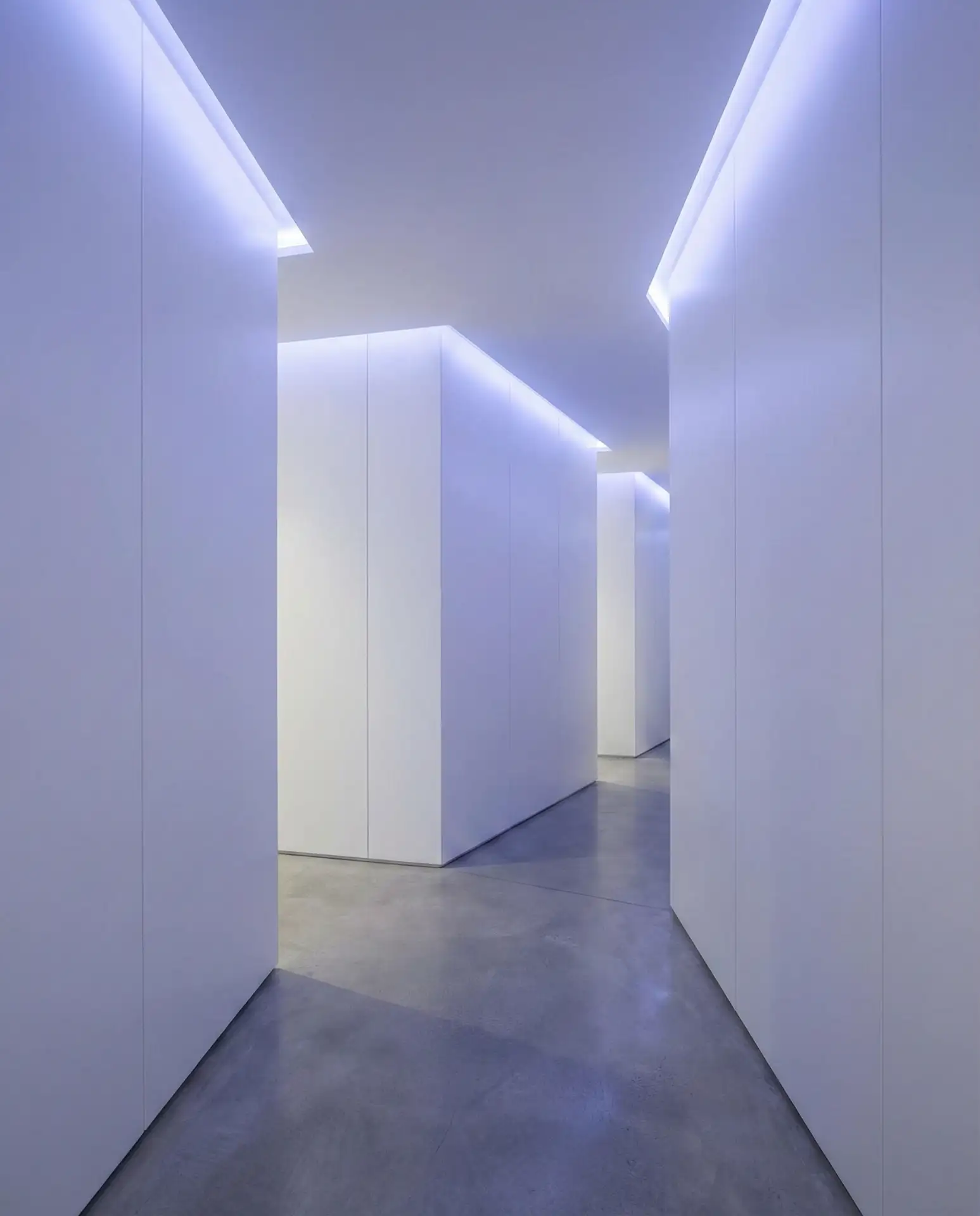
Smart LED strips offer unprecedented control over hallway ambiance, allowing you to shift from cool blue morning light to warm amber evening tones with a phone app or voice command. These flexible fixtures mount along ceiling coves, behind baseboards, or under handrails, creating indirect illumination that feels magical and modern. The technology integrates seamlessly with home automation systems, enabling motion-activated lighting that conserves energy while ensuring safe passage at night.
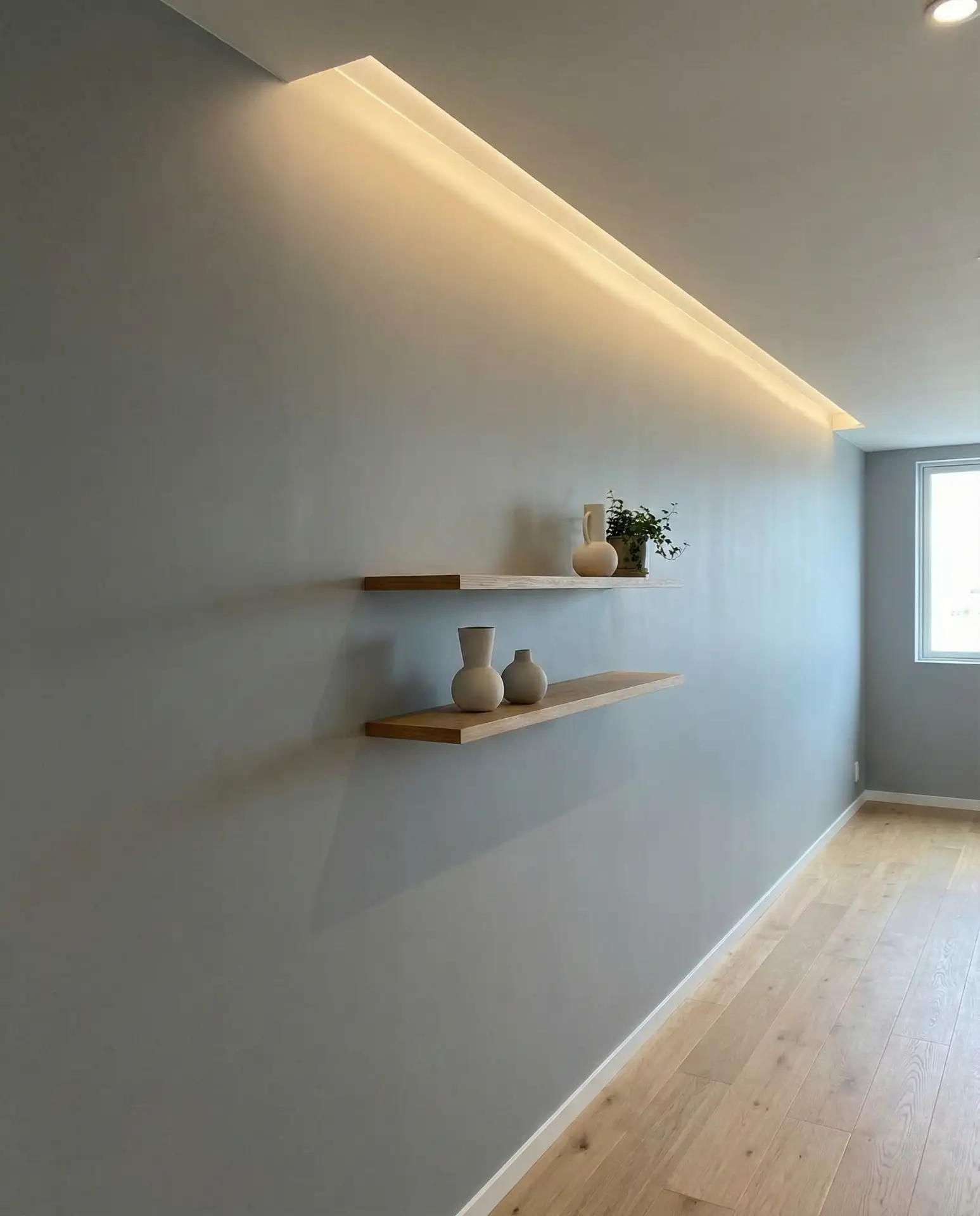
Practical insight matters here: Choose LED strips rated for at least 80 CRI (Color Rendering Index) to ensure accurate color representation of artwork, walls, and finishes. Lower CRI strips produce flat, washed-out light that does no favors to your decor. Installation requires basic electrical knowledge for hardwired versions, though plug-in strips work fine for shorter hallways. Families with young children appreciate motion-sensing capabilities that provide gentle nighttime illumination without harsh overhead lights.
15. Drum Shade Pendants for Soft Diffusion
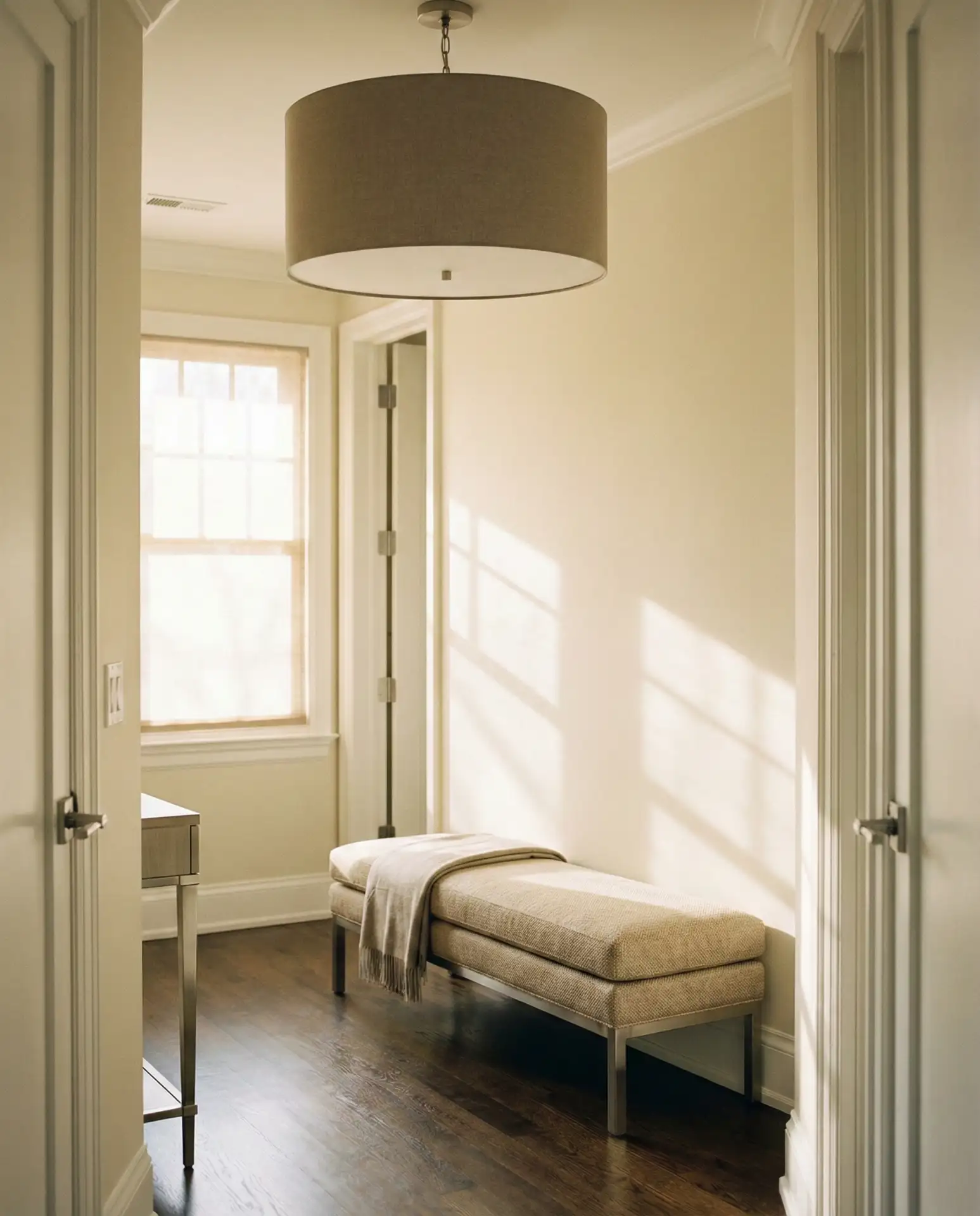
Fabric drum shades transform harsh bulb light into gentle, diffused illumination that flatters faces and creates a welcoming atmosphere in hallways. These cylindrical fixtures suit spaces with adequate ceiling height—at least eight feet—where their vertical presence enhances rather than crowds. Available in linen, silk, burlap, or metallic-lined fabrics, drum pendants bridge traditional and contemporary design languages with equal success.
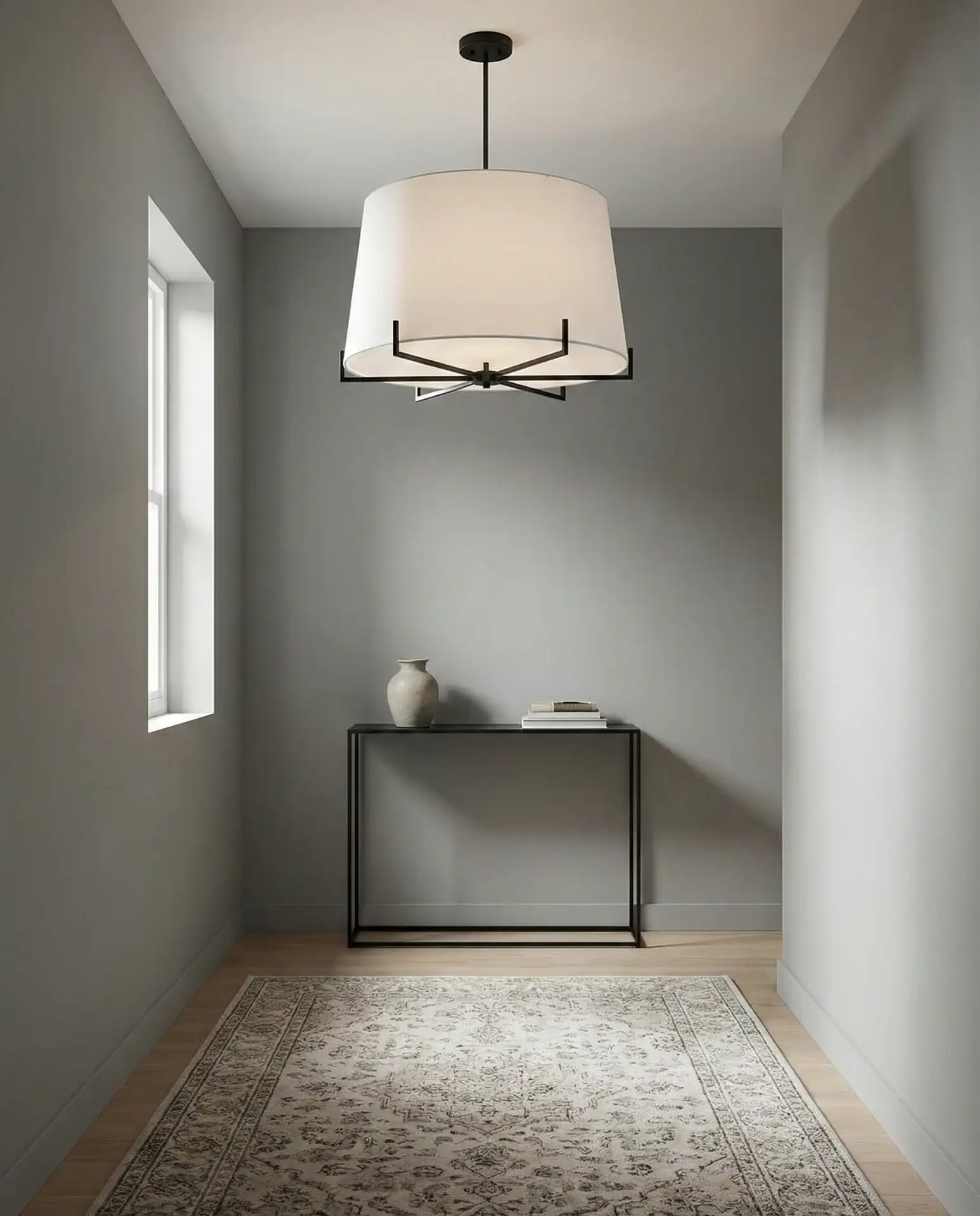
Expert commentary suggests sizing drum pendants at roughly one-third the width of your hallway to maintain visual proportion—a four-foot-wide corridor pairs well with a 16-inch-diameter shade. Metallic-lined shades (gold, silver, or copper interior) bounce additional light into the space while creating subtle shimmer. In Chicago townhouses and Denver condos, drum pendants appear frequently in entry hallways, where they establish a sophisticated tone from the moment guests arrive.
16. Chandelier Clusters for High-Ceiling Impact
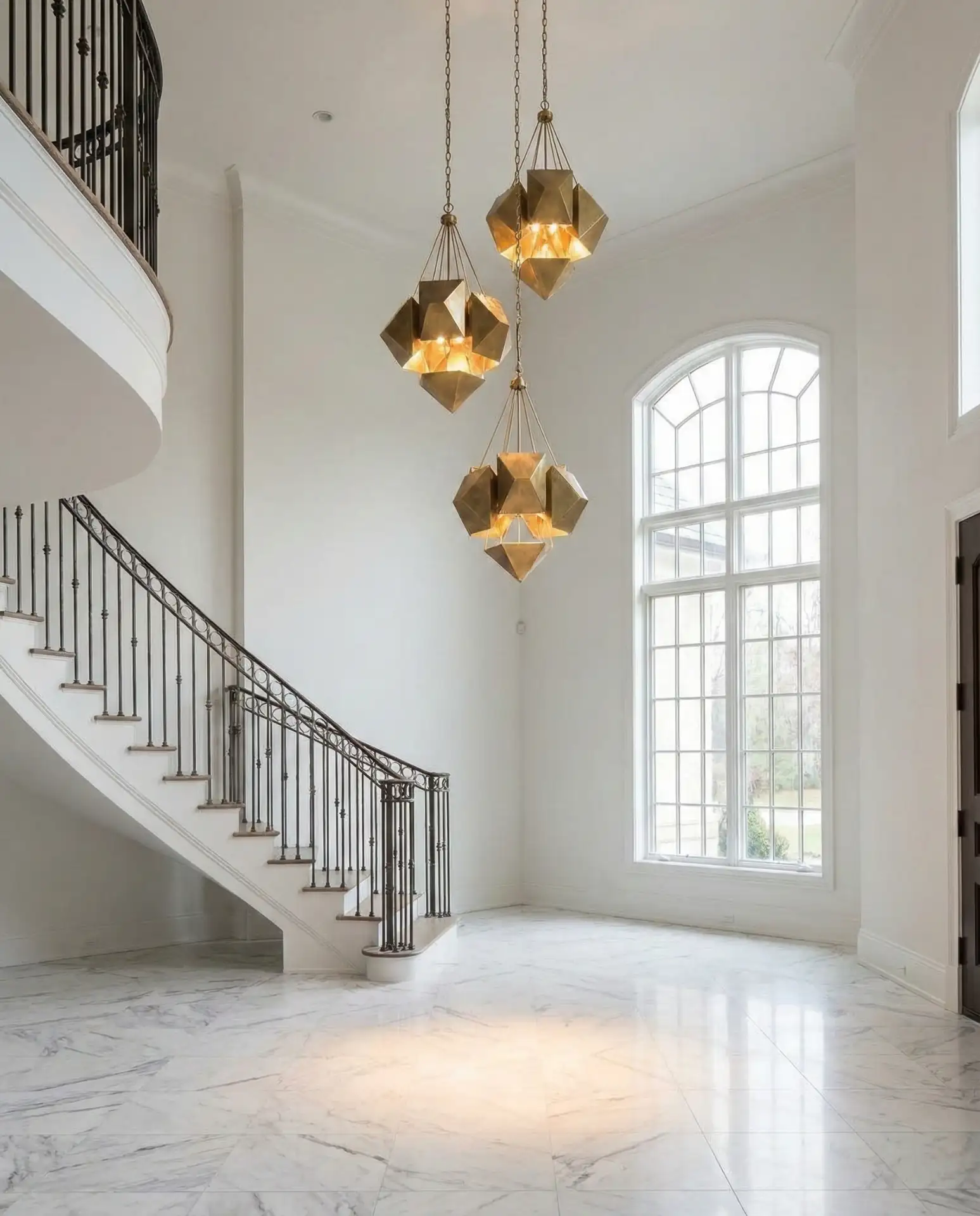
Multi-level homes with soaring ceilings above staircases and entrance halls benefit from clustered chandelier installations that fill vertical space with light and drama. These grouped fixtures—often three to five pendants hung at staggered heights—create dimension and movement that single large chandeliers cannot match. The contemporary approach mixes shapes, finishes, or sizes within a cohesive style family rather than using identical repetition.
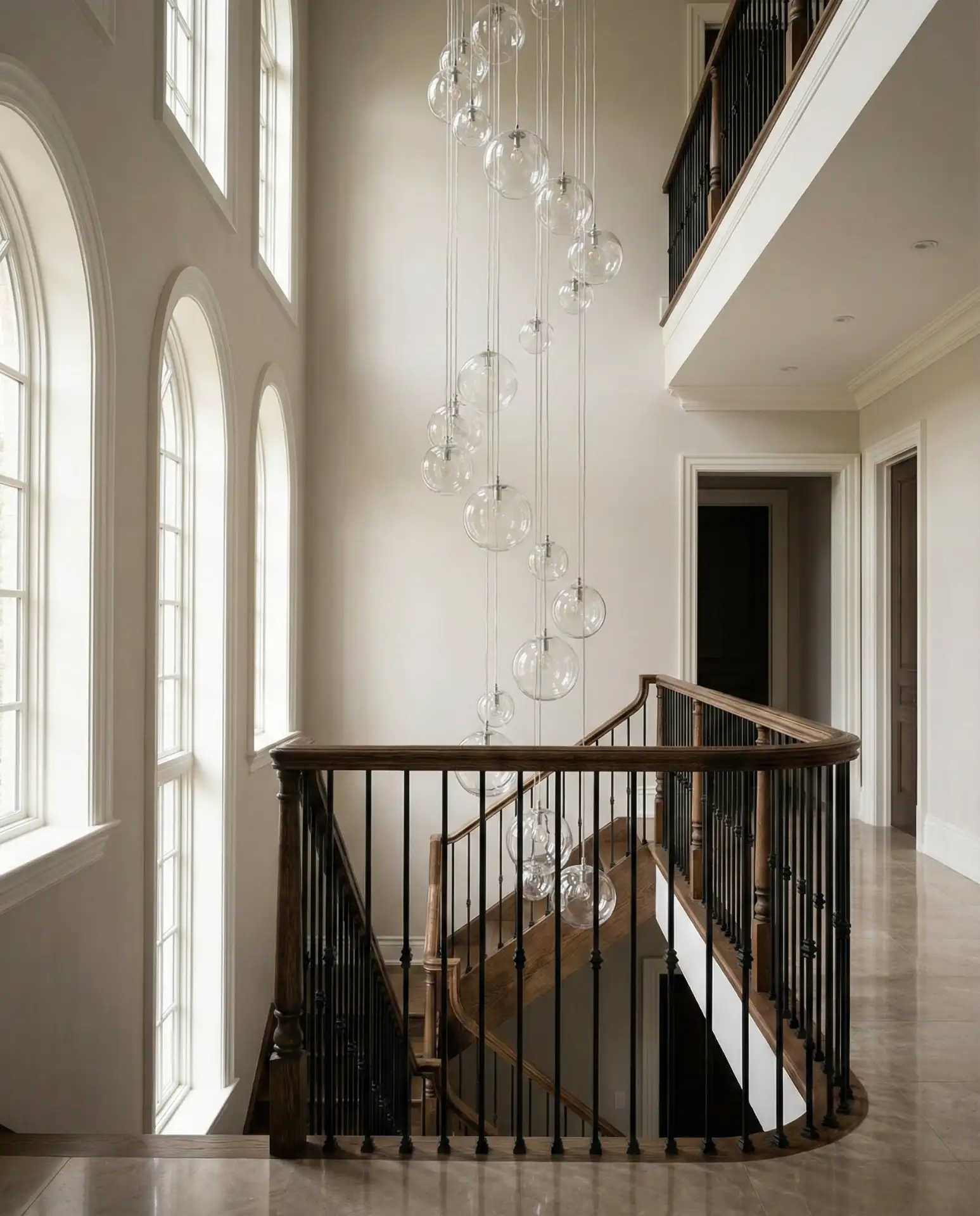
Budget expectations run higher for this approach—$600 to $2,000 total depending on fixture quality and quantity. Professional installation is strongly recommended since working at heights above 12 feet requires specialized equipment and electrical expertise. The visual payoff justifies the investment in luxury homes and custom builds where the entrance hallway serves as the home’s signature space. Maintenance accessibility matters too; install fixtures with reachable heights or plan for annual professional cleaning.
17. Sconce Pairs Flanking Mirrors
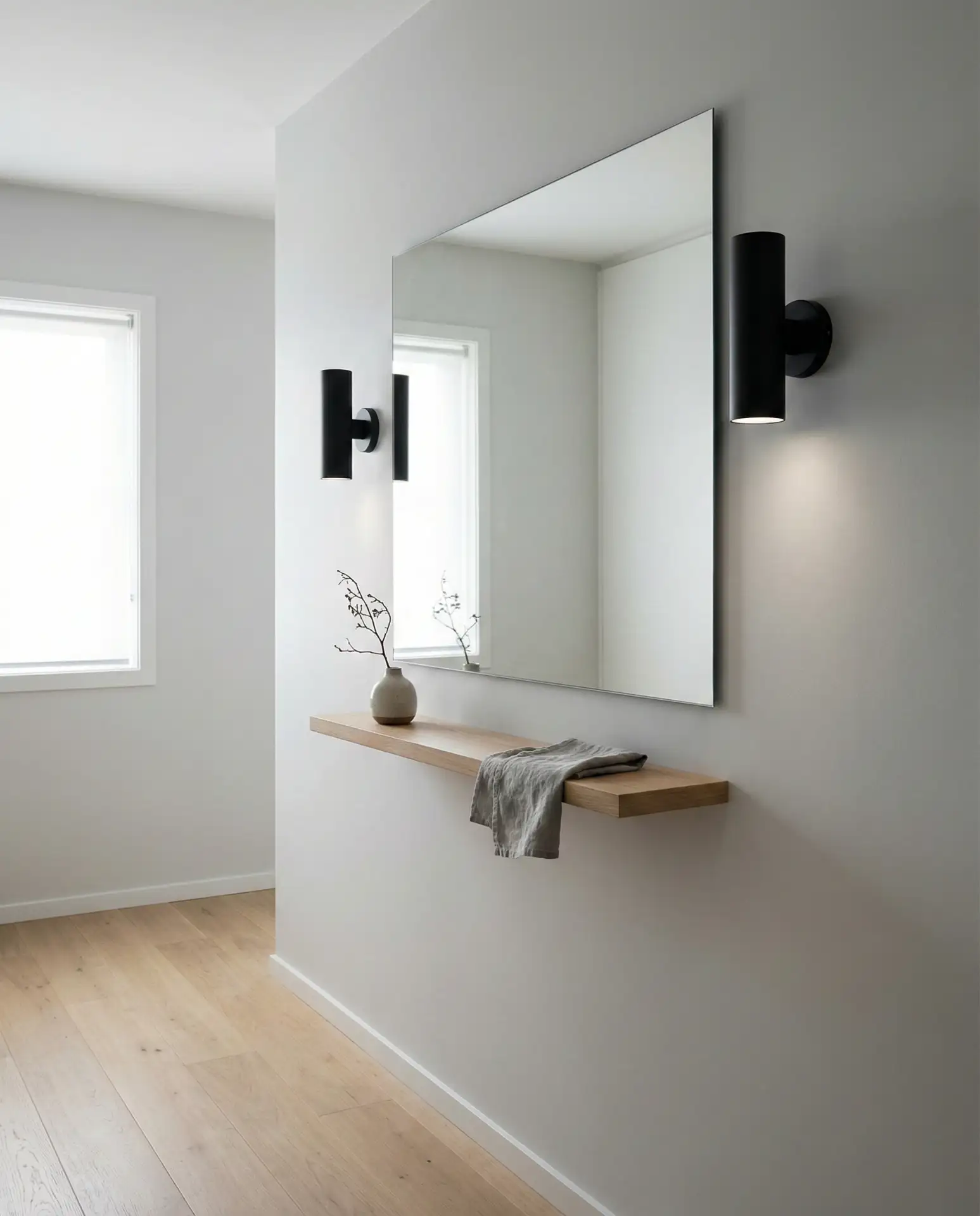
Symmetrical wall lights on either side of hallway mirrors create balanced illumination perfect for final appearance checks before heading out the door. This hotel-inspired approach brings vanity-level lighting precision to residential corridors while adding architectural rhythm. Sconces positioned 60–65 inches from the floor and 30–36 inches apart eliminate the unflattering shadows that overhead lights cast across faces.
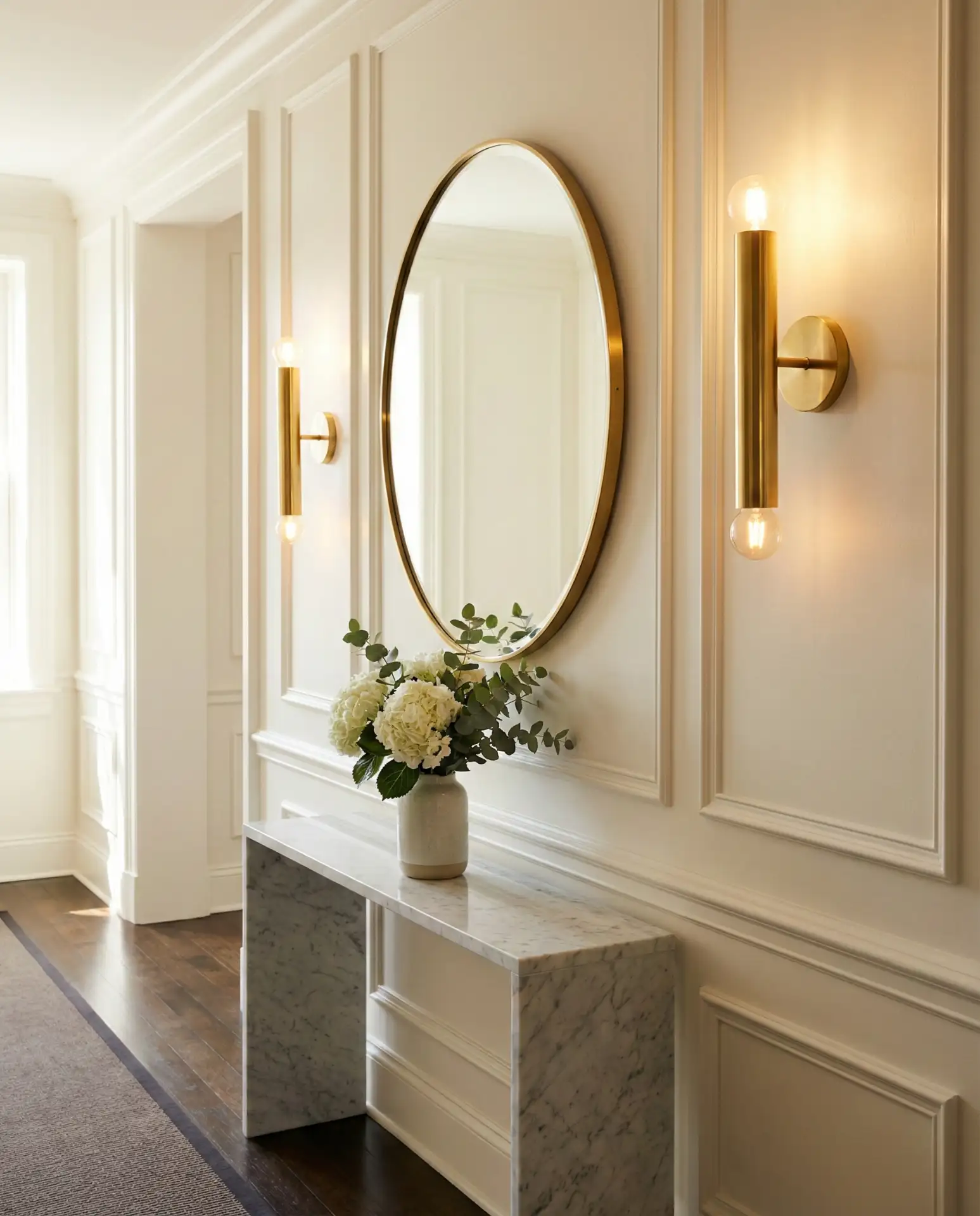
Common mistakes include mounting sconces too high (creating raccoon-eye shadows) or too wide (leaving dark spots near the center). Measure carefully and consider using painter’s tape to mock up positions before drilling. Throughout the Southeast and Pacific Northwest, this sconce-and-mirror combination appears in powder room hallways and entry corridors where the practical lighting supports daily routines. Quality sconce pairs range from $140 to $400 depending on materials and brand.
18. Rustic Wood Beam Fixtures for Mountain Homes
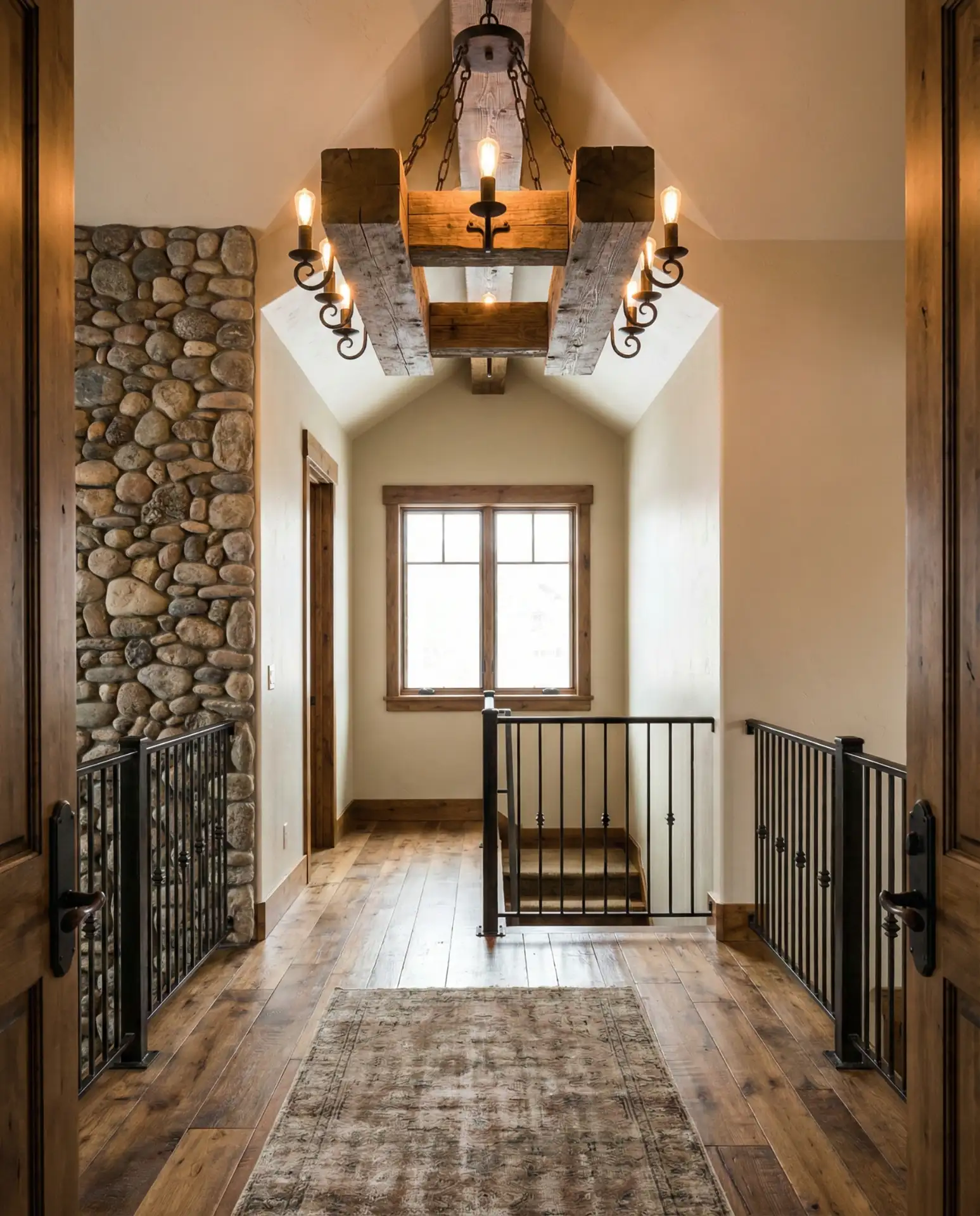
Reclaimed wood beam chandeliers and pendants suit mountain lodges, ski chalets, and homes embracing organic materials and natural textures. These substantial fixtures often incorporate aged barn wood, hand-hewn timbers, or distressed oak combined with metal accents and exposed bulbs. The hefty proportions require adequate ceiling structure to support 30–80 pound installations, so consult an electrician or contractor before purchase.
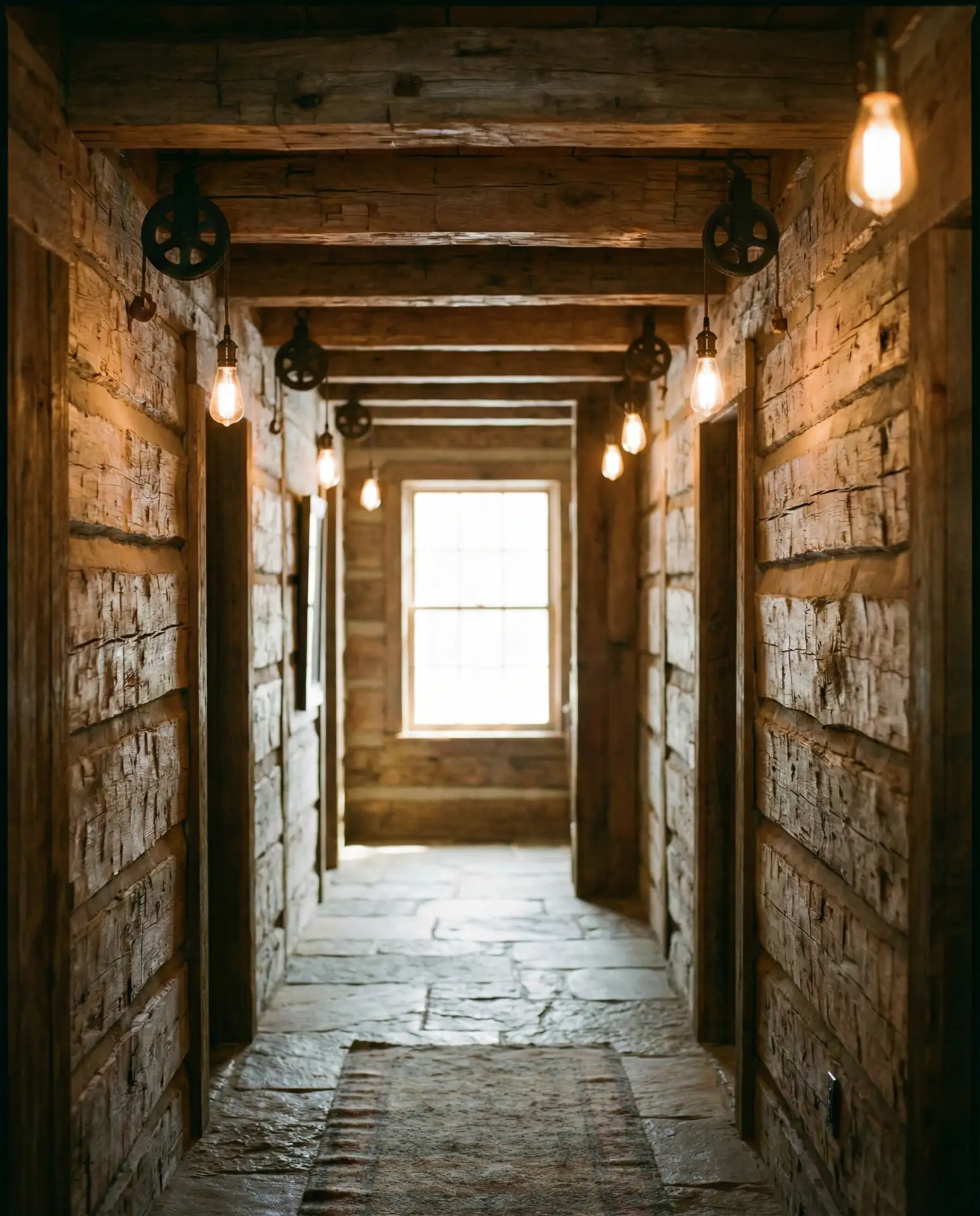
Where this works best: Colorado mountain communities, Tennessee cabins, Pacific Northwest timber-frame homes, and anywhere else where nature remains part of daily life rather than a weekend escape. The wood’s natural variation means each fixture carries unique character—knots, grain patterns, and weathering all contribute to one-of-a-kind appeal. Pricing reflects the handcrafted nature, with quality pieces starting around $280 and custom commissions reaching $1,200 or more for large-scale installations.
19. Festive Christmas Hallway Lighting
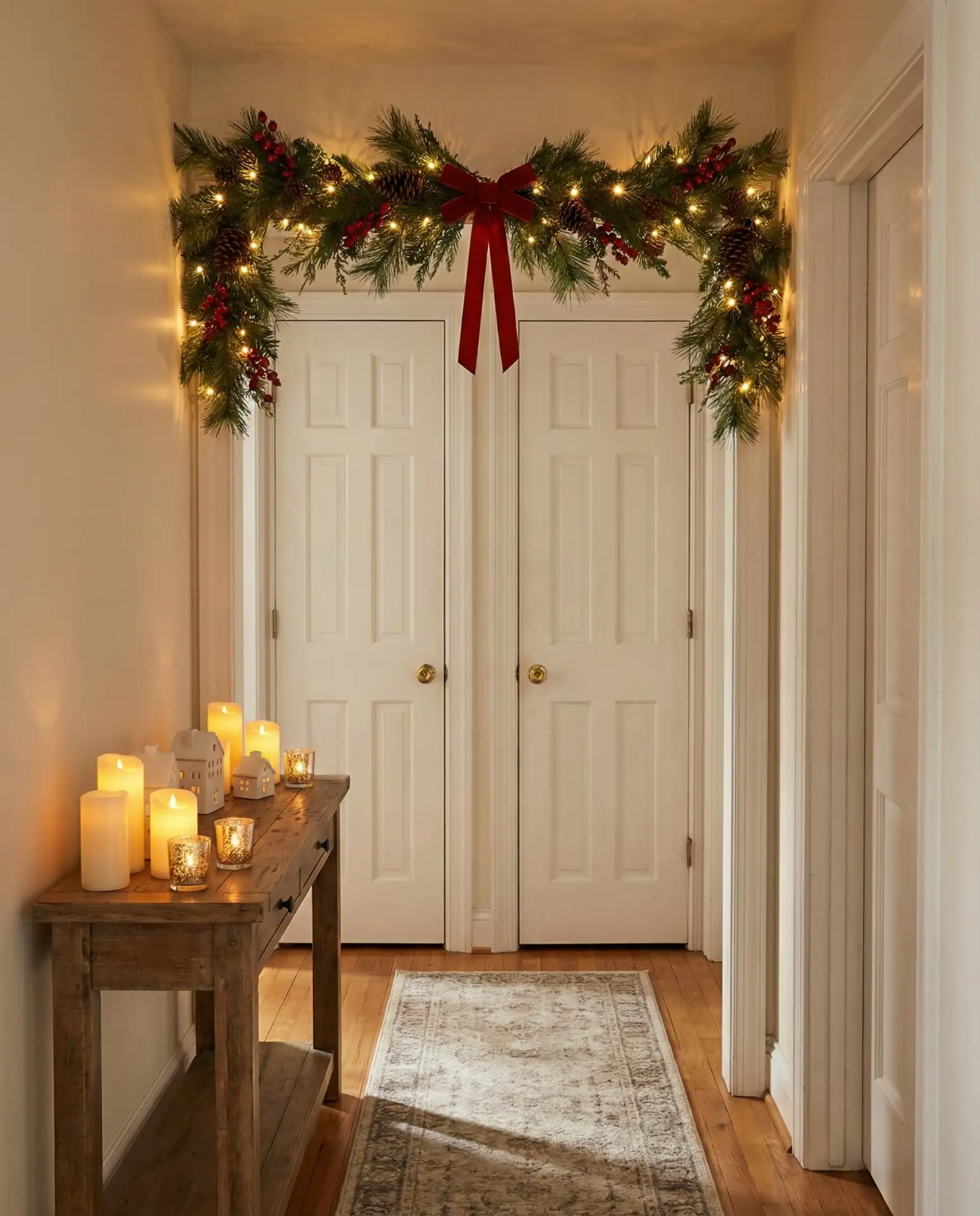
Christmas transforms ordinary hallways into enchanted passages when thoughtful seasonal lighting layers over existing fixtures. Garland-wrapped banisters illuminated by battery-powered fairy lights, vintage C9 bulbs strung along picture rails, and timer-controlled LED strips tucked behind crown molding all create a festive atmosphere without permanent installation. The key is integrating seasonal elements that enhance rather than compete with your year-round lighting scheme.
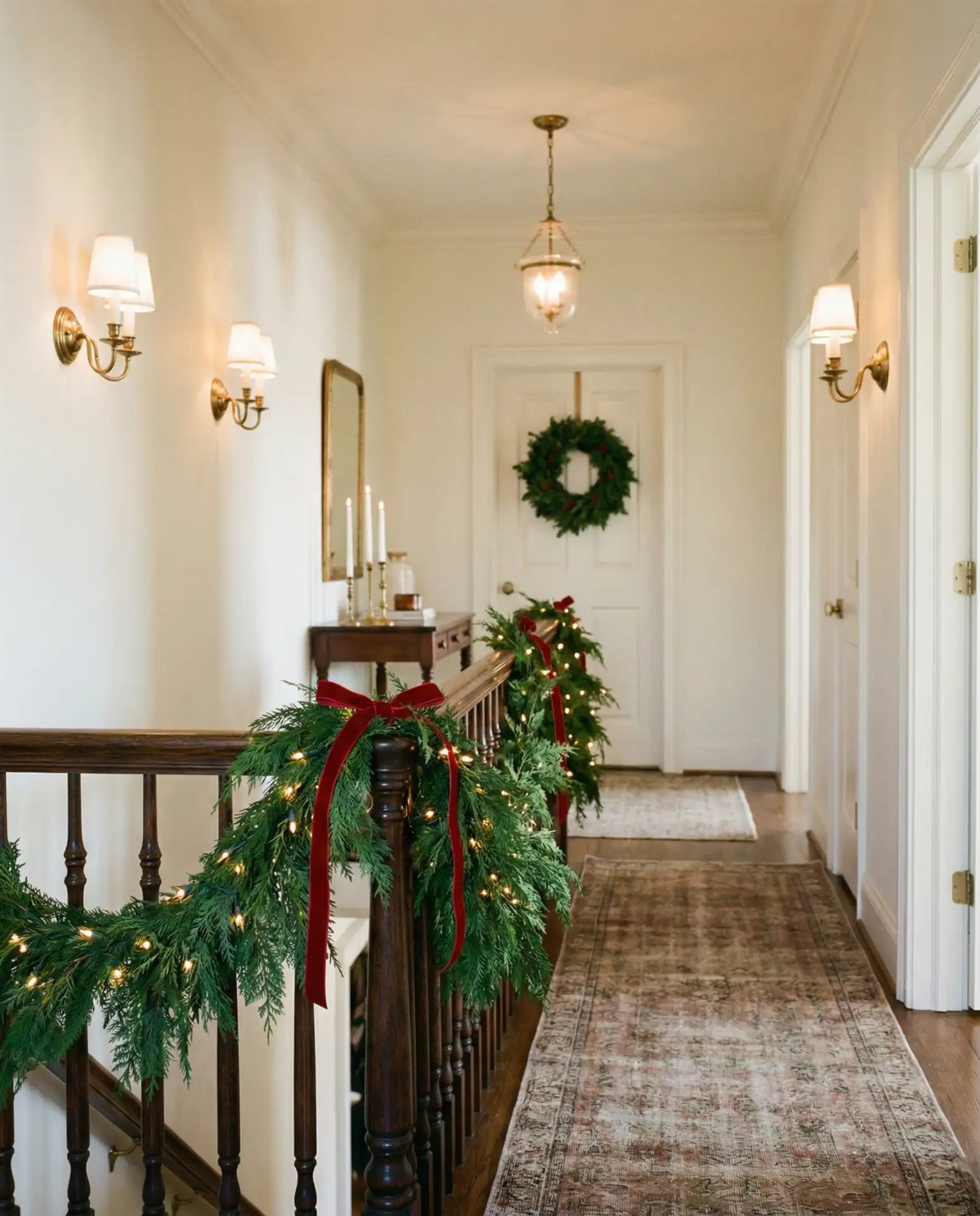
American homeowners in colder climates appreciate hallway Christmas lighting more than those in year-round warm regions—the extended indoor time during winter months makes the investment worthwhile. Battery-powered options have improved dramatically in recent years, now offering 60+ day runtime on quality lithium batteries. A contractor friend suggests installing concealed outlets specifically for seasonal lighting, eliminating visible cords and making annual decoration significantly easier.
20. Moroccan Pendant Lanterns for Global Style
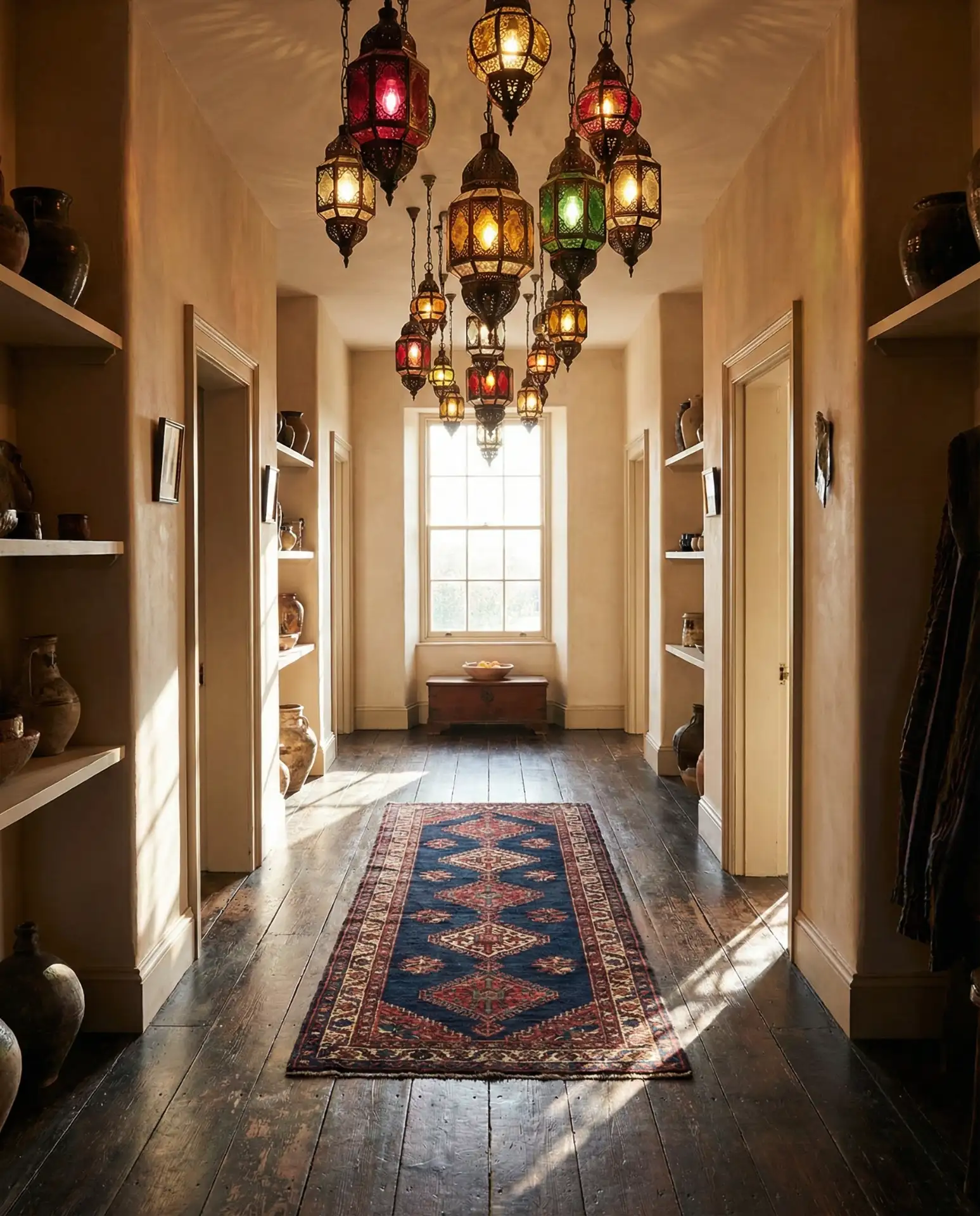
Pierced metal lanterns casting intricate shadow patterns bring exotic global inspiration to hallways seeking something beyond conventional American design. These hanging fixtures feature hand-punched brass, copper, or tin in geometric Islamic patterns that project mesmerizing light shapes across walls and ceilings. The dimensional quality creates movement and visual interest even in narrow spaces where floor area limits decorative opportunities.
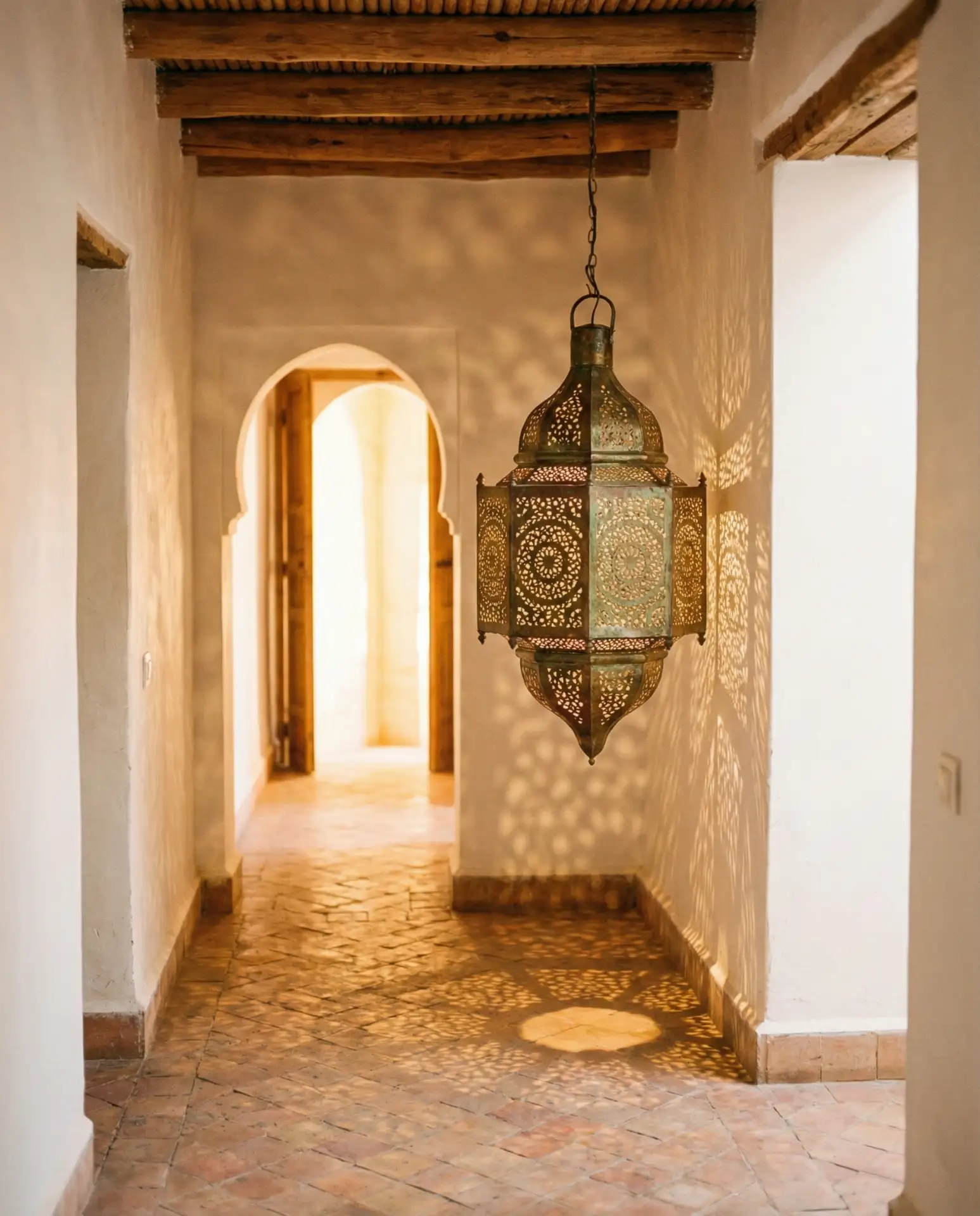
Real homeowner behavior shows that Moroccan lanterns work best as statement pieces—one or two stunning fixtures rather than matching sets that risk feeling theme-park contrived. Mix them with simpler sconces or recessed lights to let the decorative elements shine without overwhelming the space. In Austin, Miami, and Los Angeles, where global design influences mix freely, these lanterns appear in otherwise minimalist homes as carefully chosen focal points that reflect travel experiences and cultural appreciation.
21. Art Deco-Inspired Neon Accent Lighting
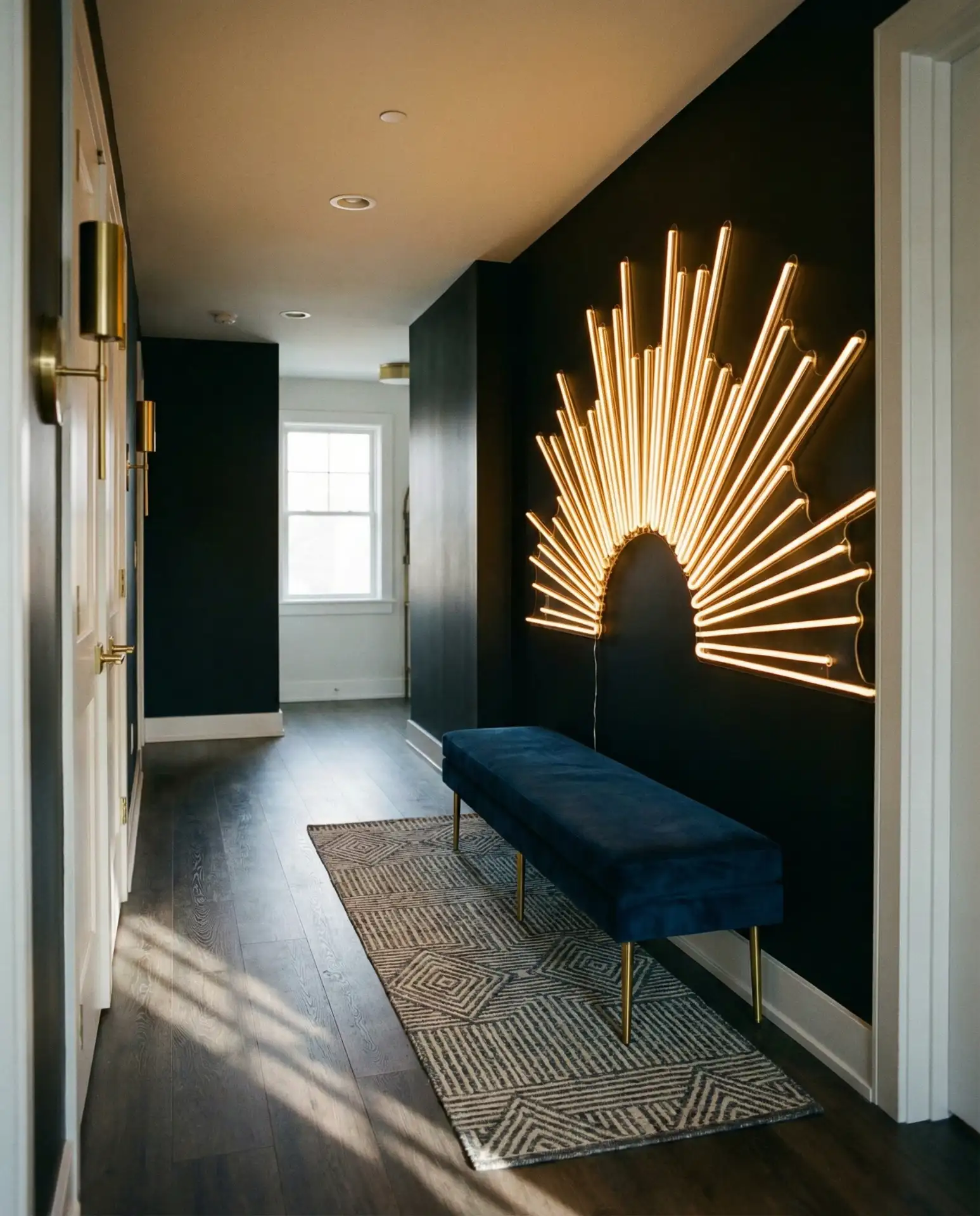
Contemporary LED neon strips shaped into geometric Art Deco patterns offer bold design statements in hallways where convention feels boring. Unlike harsh vintage neon tubes, modern LED versions consume minimal electricity, generate almost no heat, and last 50,000+ hours. The linear flexibility allows custom shapes—zigzags, stepped patterns, and sunburst motifs—that reference 1920s glamour through modern technology.
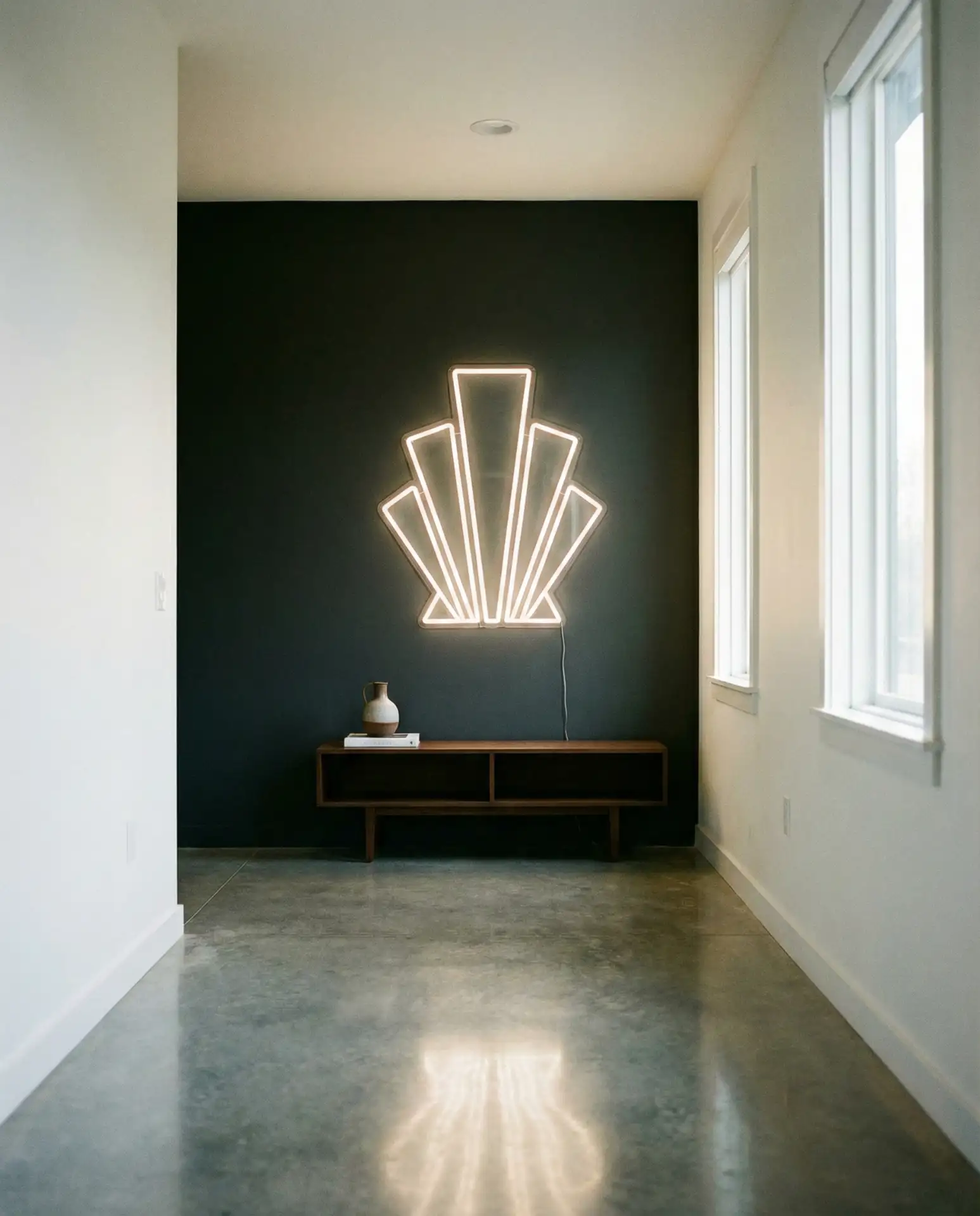
Avoid the common mistake of treating neon as your primary light source—it works best as accent lighting supplementing traditional fixtures that provide functional illumination. Custom LED neon installations range from $300 for simple geometric shapes to $1,500+ for complex patterns requiring professional design and installation. Urban lofts and contemporary homes in cities like Seattle and Denver embrace this approach, where the artistic lighting becomes conversation-worthy architecture.
22. Minimalist Japanese-Style Paper Lanterns
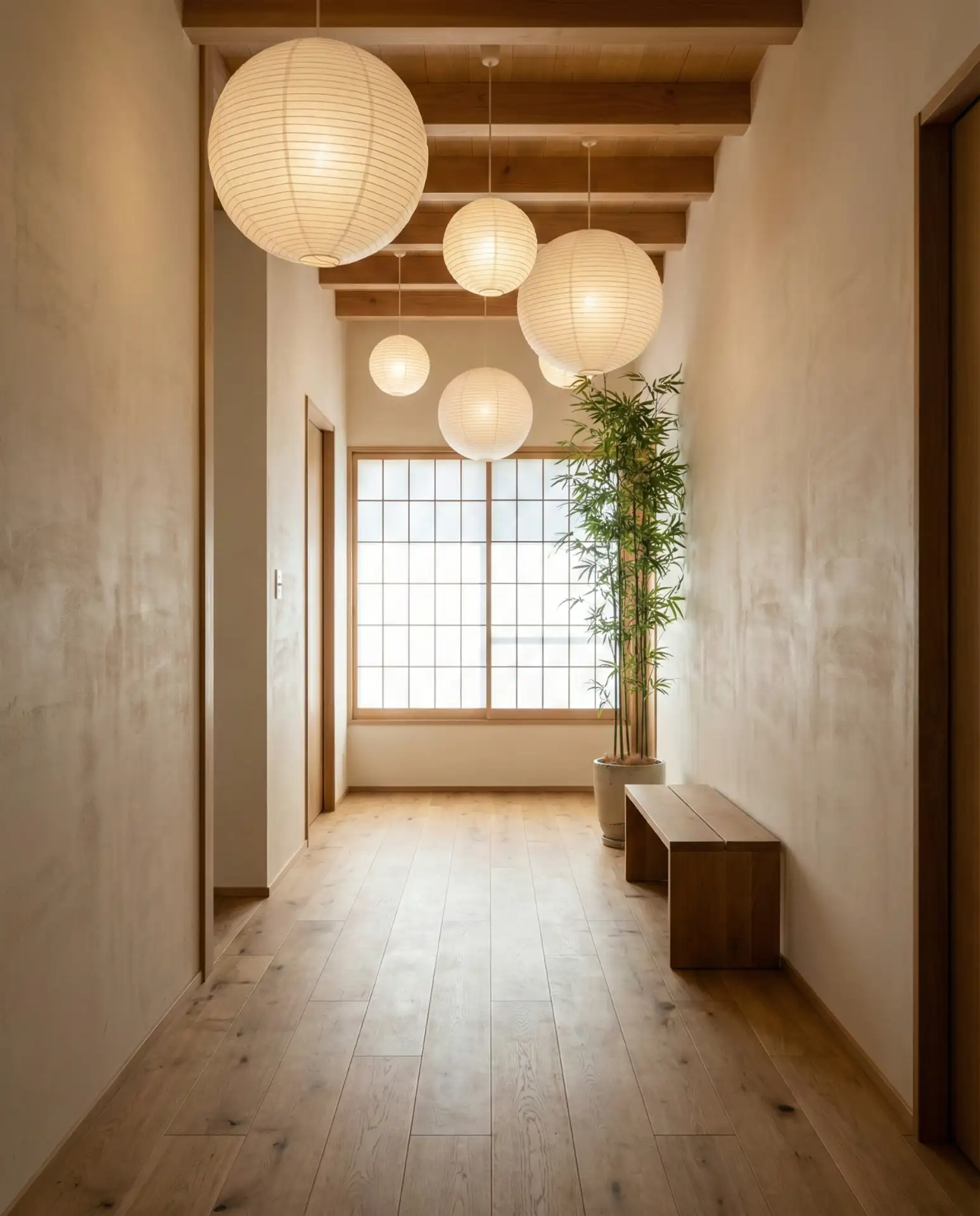
Shoji-inspired paper lanterns diffuse light through translucent rice paper or fiberglass panels, creating serene illumination perfect for hallways designed around calm and simplicity. These spherical or cylindrical fixtures complement modern minimalist interiors where soft textures balance hard architectural surfaces. The lightweight construction makes installation simple even for ceiling boxes that cannot support heavy chandeliers.
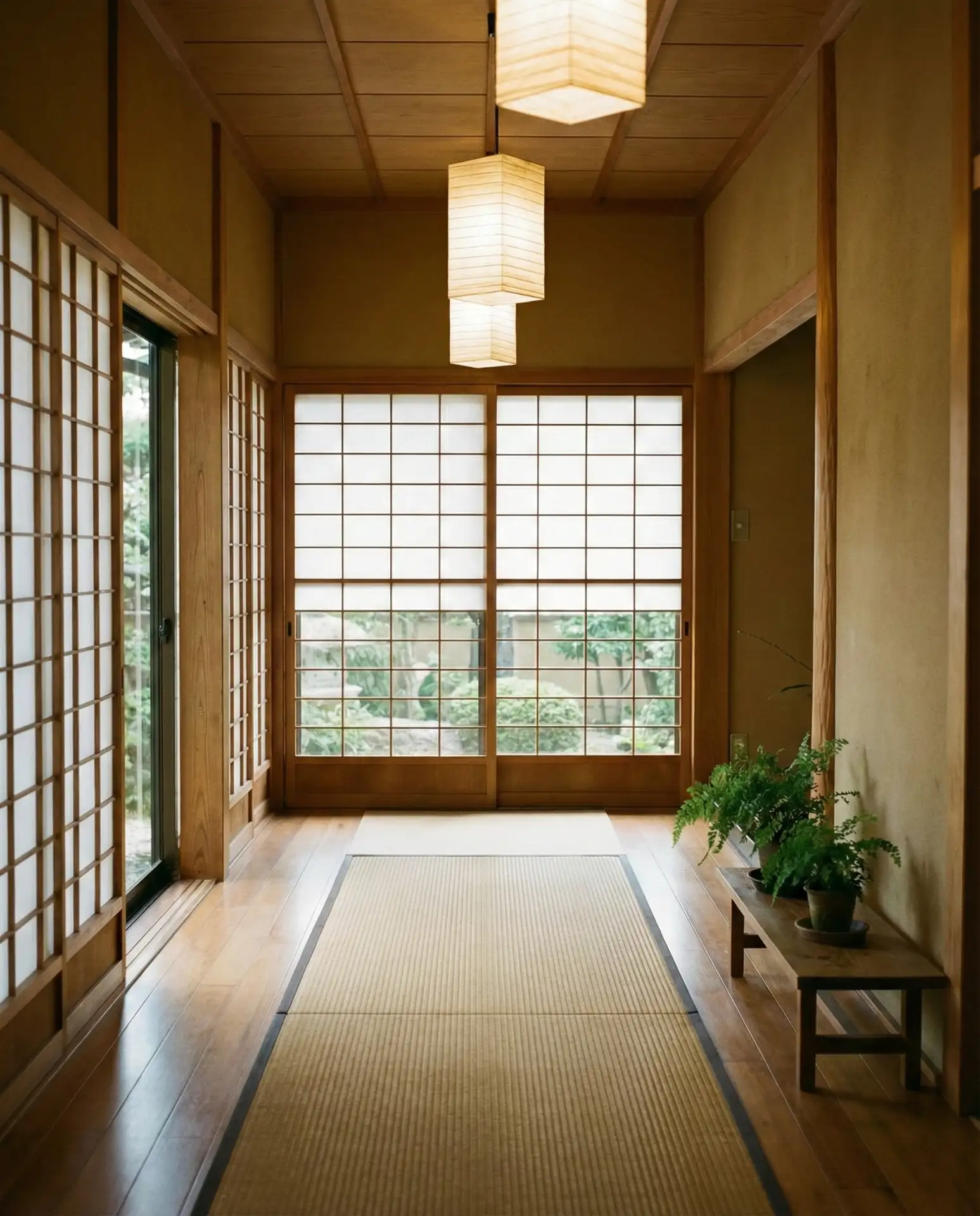
Price and accessibility make paper lanterns appealing—quality versions start at just $35, making them the most budget-friendly option in this entire list. The trade-off comes in durability; paper fixtures require gentle handling and don’t tolerate moisture, ruling them out for hallways near bathrooms or exterior doors in humid climates. West Coast homes from San Diego to Portland embrace Japanese-influenced design principles, where these lanterns align perfectly with the broader aesthetic commitment to simplicity and natural light.
Conclusion
Hallway lighting continues evolving beyond simple functionality into genuine design opportunity, and the 22 ideas presented here demonstrate the remarkable range available to American homeowners in 2026. Whether you’re drawn to the rustic warmth of farmhouse lanterns, the sleek efficiency of LED strips, or the dramatic impact of crystal chandeliers, there’s a lighting solution that matches your space, style, and budget. Consider sharing your own hallway transformation in the comments below—what fixtures worked best for your unique space, and what unexpected challenges did you encounter along the way?