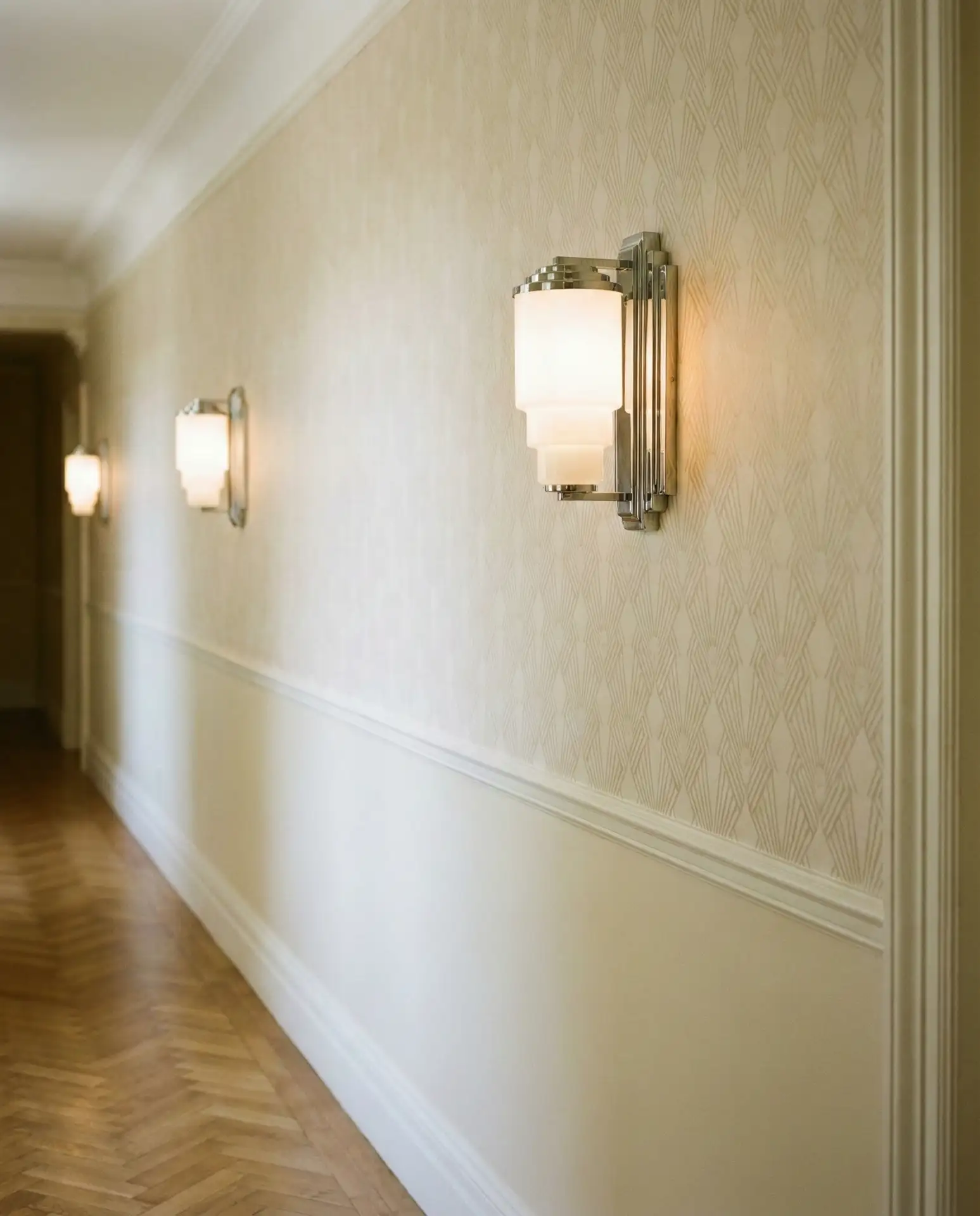
Hallway Ideas 2026 with modern narrow entryway designs and stylish small apartment hallway decor tips

Creating a memorable hallway is more important than most people realize. It’s the first space we step into at home and often the one we rush through without thinking. Design voices like Emily Henderson and Apartment Therapy’s style editors often remind us that good transitions define good homes. In 2026, hallway design leans toward personality, calm colors, practical layout solutions, and small upgrades that work even in tiny or narrow spaces. Below are ideas shaped by real-life observations and the way American homes are evolving today.
1. Maximizing Style in a Narrow Hallway
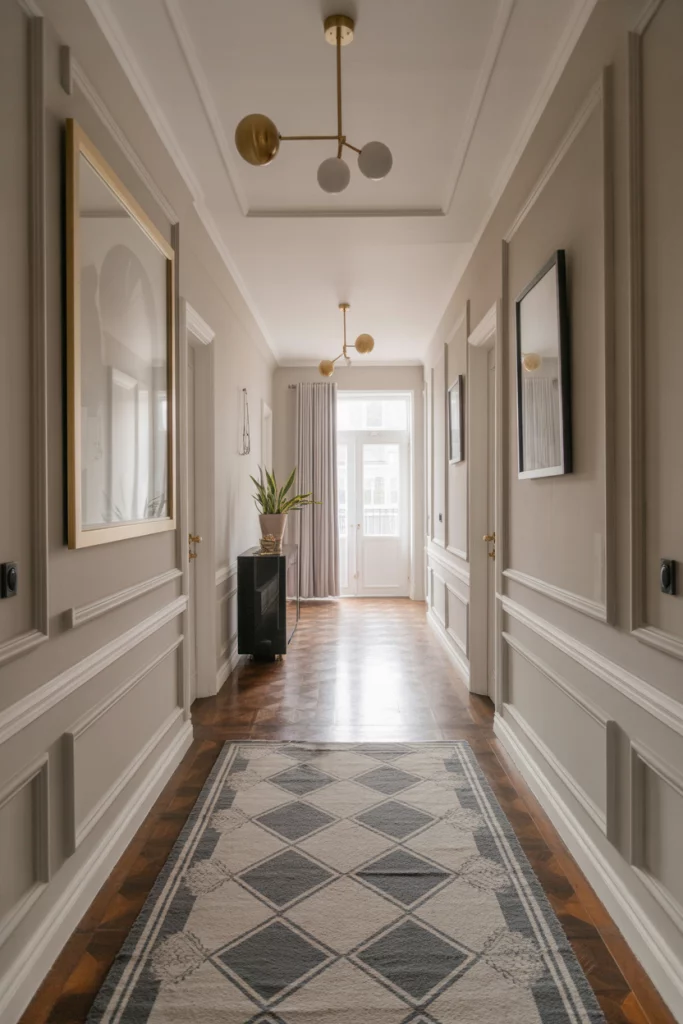
Even a narrow, tiny, or long narrow hall can become charming with intentional details, especially if your entry or entrance feels overlooked. One trick I’ve seen work in countless apartments is using soft, diffused lighting and a runner that visually stretches the path. Homeowners inspired by Ikea solutions often choose slim consoles or floating rails to keep the walkway clear. Whether in a small narrow downtown apartment or a compact front hall in a starter home, this idea focuses on balancing comfort with flow, proving that even the smallest passage can feel curated rather than cramped.
2. Stairs and Hallway Transitions
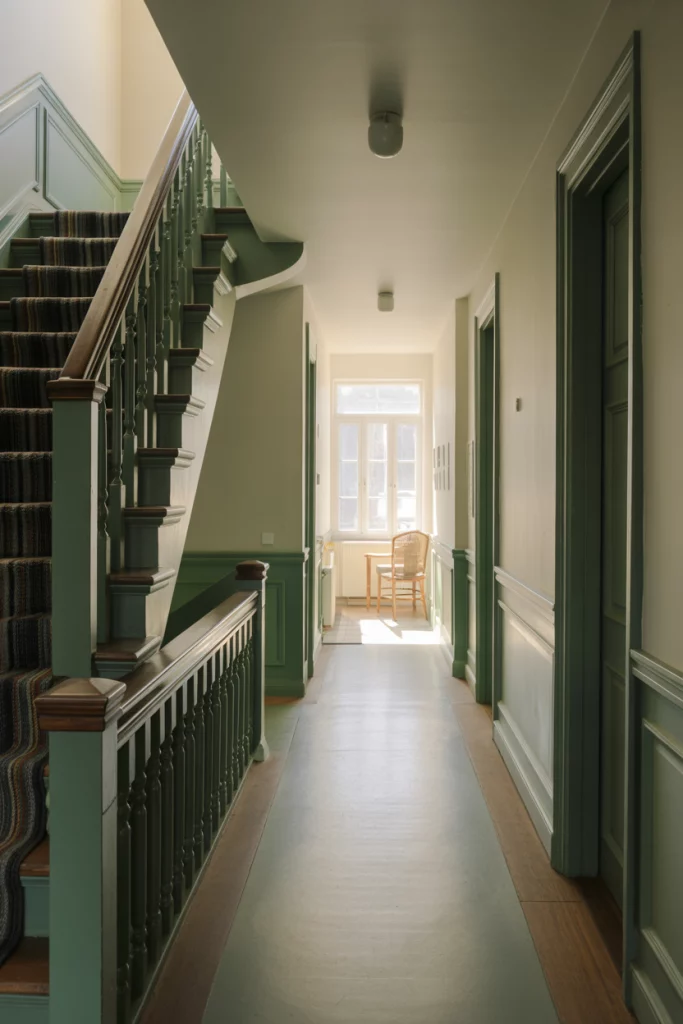
Blending stairs and hallway areas seamlessly has become a hallmark of thoughtful 2026 design. In many homes, especially upstairs corridors or older buildings, these zones feel disjointed. I’ve noticed that painting stair stringers or railings a contrasting tone—like deep green or blue—creates a visual link without overwhelming the space. This approach works well in homes with long hallways that wrap toward the staircase, giving the transition a unified look. When done right, it feels intentional and adds architectural character, elevating both the passage and the staircase itself.
3. Victorian Touches in a Modern Hallway
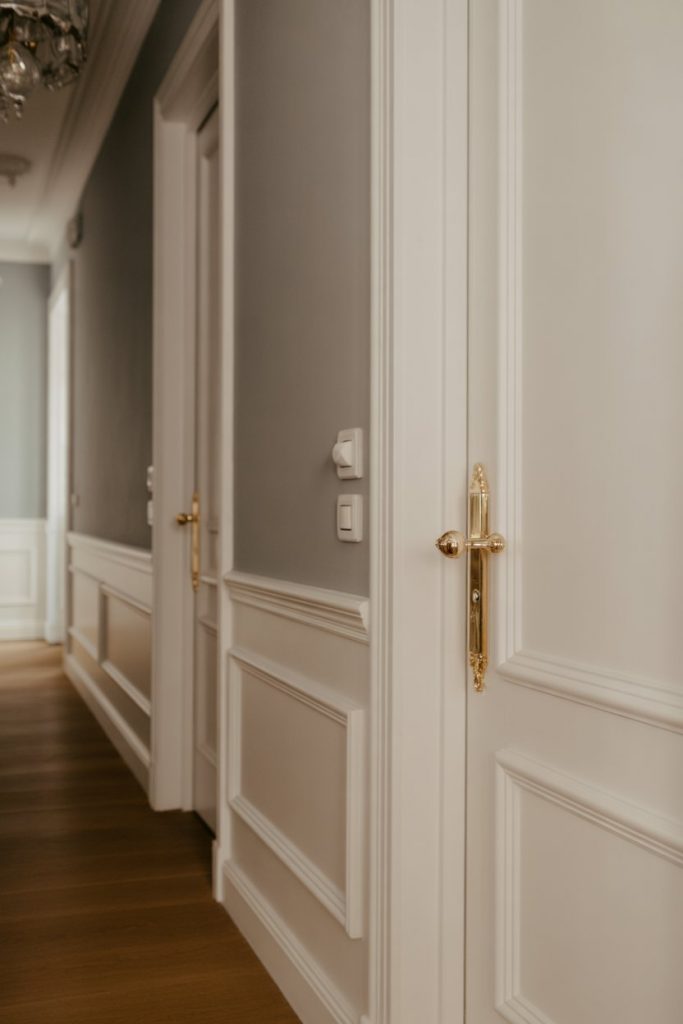
Adding subtle Victorian details to a hall—especially a long entryway or front corridor—brings personality without requiring a full historic restoration. I’ve always loved how even small nods like picture-frame molding or warm brass hooks create that lived-in elegance many designers rave about. When paired with neutral paint or muted grey, the details feel modern rather than heavy. This idea works particularly well in city apartment conversions or older family homes where period charm is already present but underappreciated.
4. Embracing Color with Green Accents
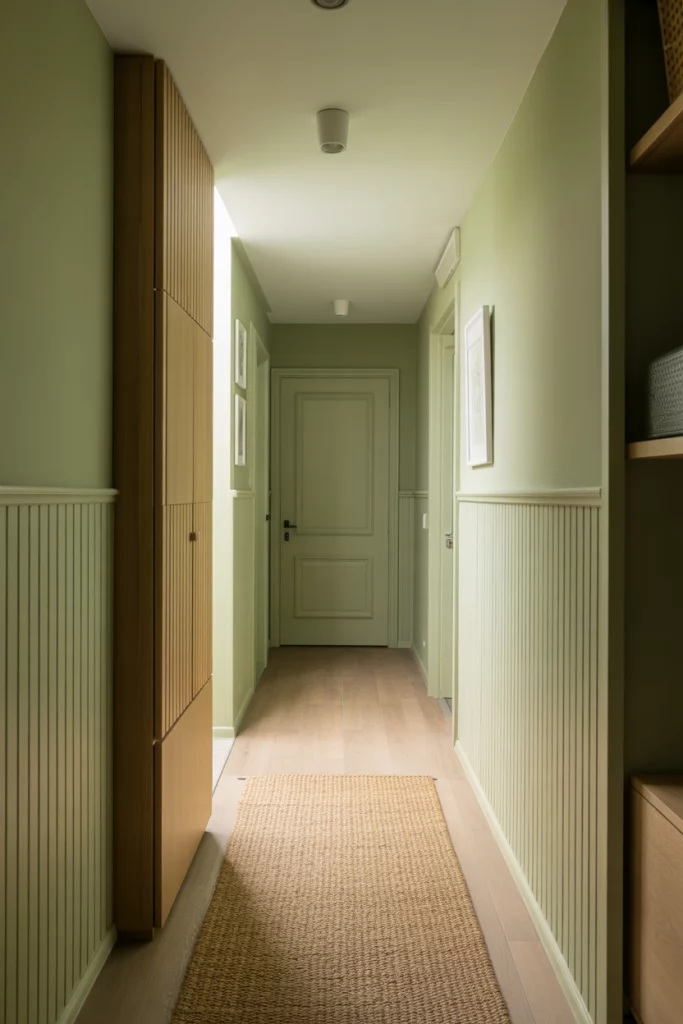
Especially in diminutive, narrow spaces, incorporating green in a hallway brings in a revitalizing touch of nature that complements the design rather than overpowering it. Homeowners who tend to shy away from color are surprised by how much they adore soft sage or deep olive the moment they test it out on an accent wall. House Beautify designers suggest green for transitional spaces. It helps to ease the transition for the eye as one moves through the home. A green accent wall in a long narrow entry condo corridor or small condo entrance works especially well as it green tones are coupled with warm wood finishes and minimalist lighting.
5. Blue Hallway Ideas for a Calm Transition
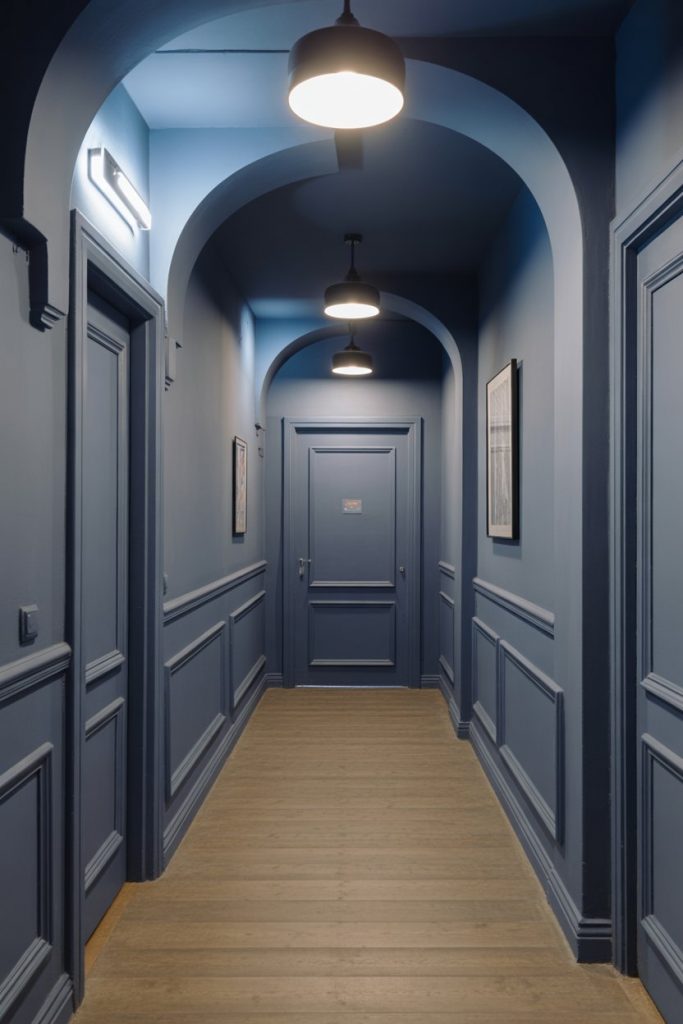
Creating a peaceful transition between rooms, a blue hallway, especially in upstairs corridors or long entry spaces, provides a calming transition that is especially useful in boxy spaces. Blue is a classic color that visually widens narrow areas, a trait I discovered after my soft steel hallway. Blue works with neutral floors, creating a subtle, elegant design popular with designers. It’s especially helpful in spaces with minimal natural light, helping make the hall feel purposeful rather than simply functional.
6. Pink Accents for Playful Elegance
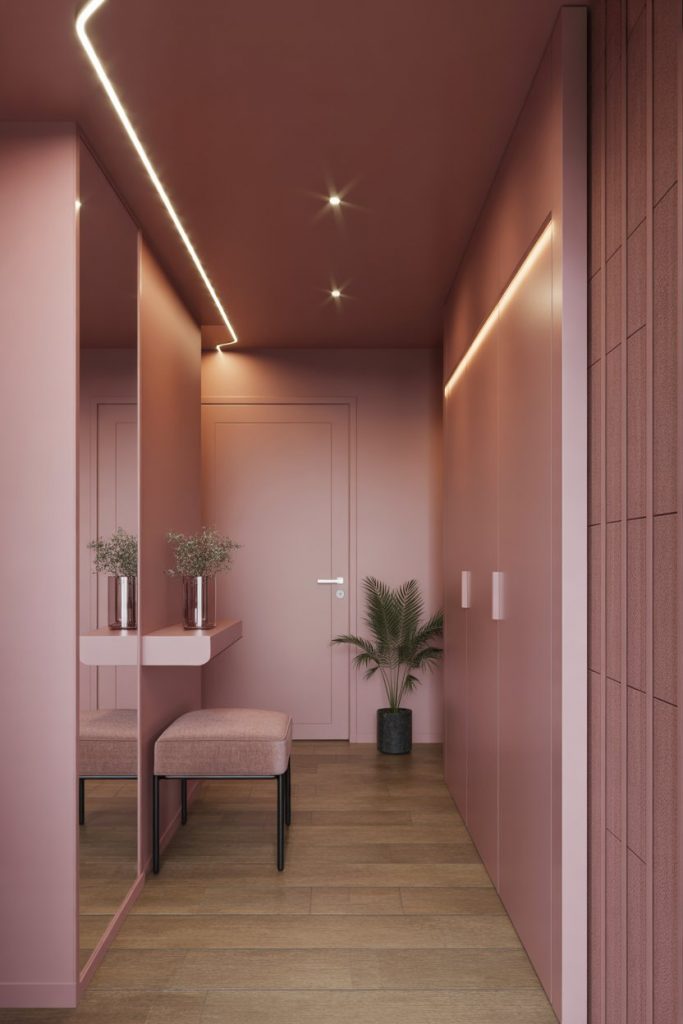
A light pink hallway surprises people—in the best way. Even in a narrow or tiny corridor, dusty rose or blush softens harsh lines and creates a welcoming glow as guests walk through the entryway. I first saw this in a friend’s apartment, where pink instantly transformed what used to feel like dead space. Designers like those at MyDomaine note that pink works beautifully with metallic accents and natural textures, making it both charming and unexpectedly sophisticated.
7. Neutral Hallway for a Modern Minimal Look
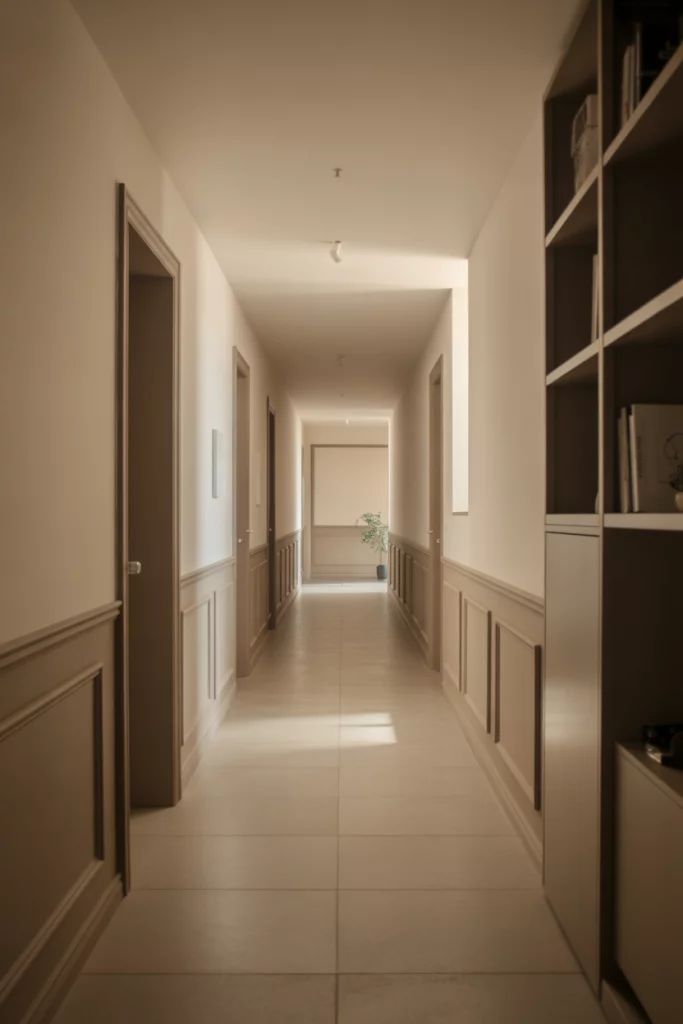
A neutral hallway is always timeless, especially for a modern home with a naturally long narrow corridor or a busy front entrance. Warm taupe, ivory, and pale grey create a smooth transition between rooms without distracting from the overall home palette. In many American houses, hallways lack windows, so a neutral palette brightens and expands the space. I’ve noticed how homeowners often rediscover their hallway once neutrals replace harsher colors—they suddenly feel calmer walking through it.
8. Large Hallway Styling for Spacious Homes
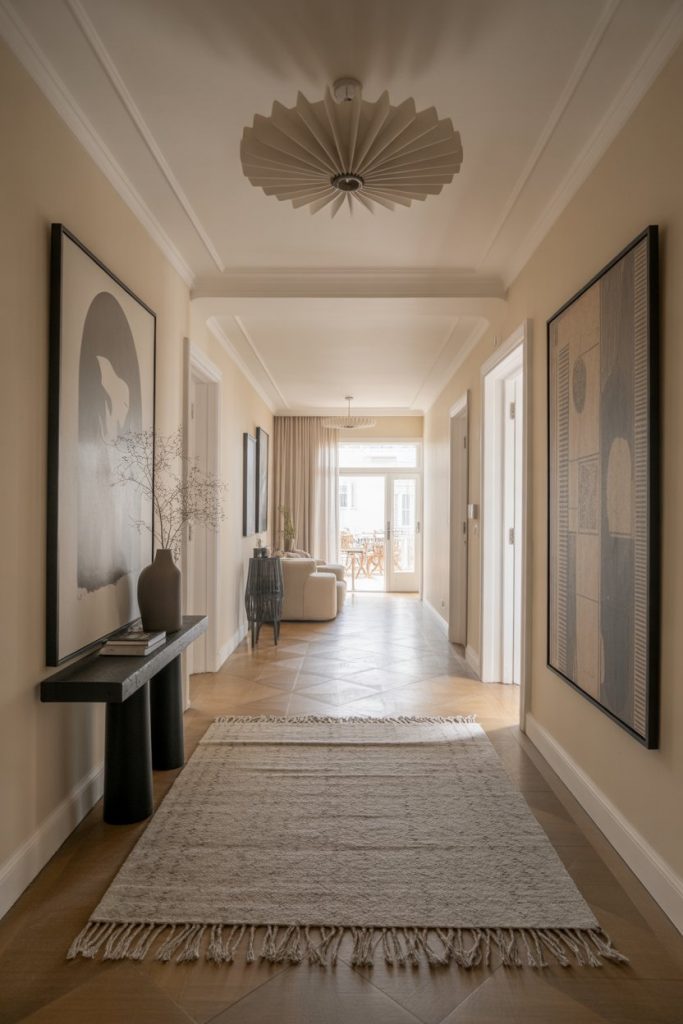
A large hallway offers freedom many homeowners rarely get. Wide entry or entrance spaces often feel “too big” unless styled thoughtfully. Designers recommend a console table paired with oversized art to ground the room, while subtle patterns help define the walkway. In homes where the hallway leads to the bedroom wing or an open living space, adding warm elements—like textured rugs or sculptural lighting—creates a sense of welcome. I’ve always loved how a large hallway becomes a gallery when curated properly.
9. Seasonal Hallway Decor with Halloween Flair
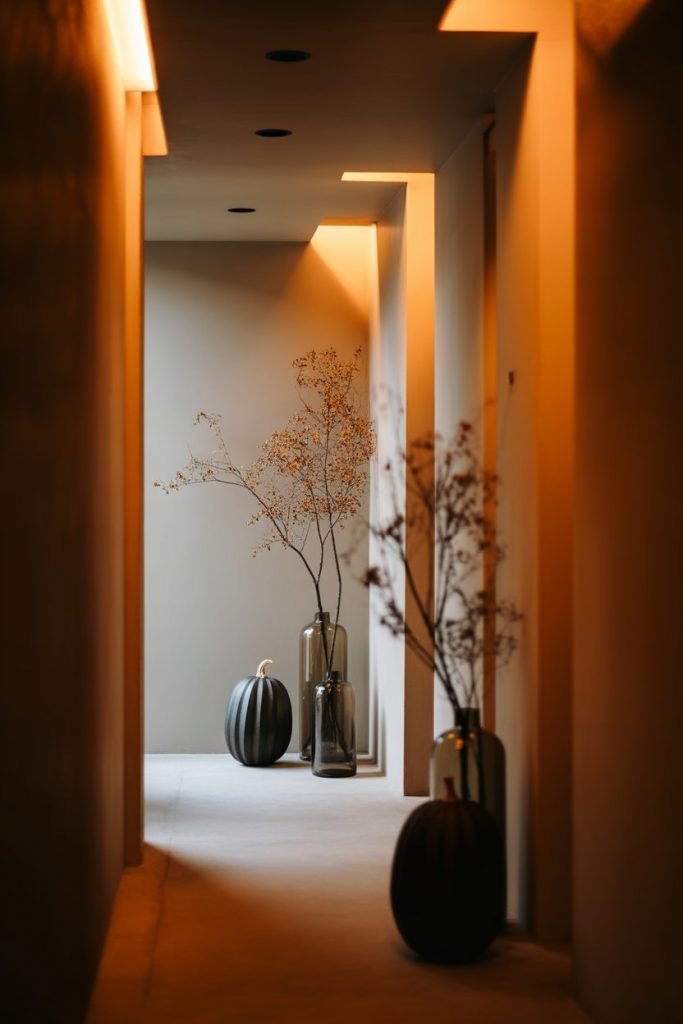
Seasonal decor can bring unexpected joy to a hallway, especially during Halloween. Whether in a small narrow condo hall or a family-home entryway, light-handed seasonal touches—like subtle pumpkins, warm orange lighting, or minimalist wall hangings—create a festive mood without cluttering the walkway. I’ve seen neighbors transform modest apartment entrances into warm, welcoming spots that delight guests. The key is staying playful but keeping the path clear, blending celebration with practical movement.
10. Modern Hallway with Sleek Materials
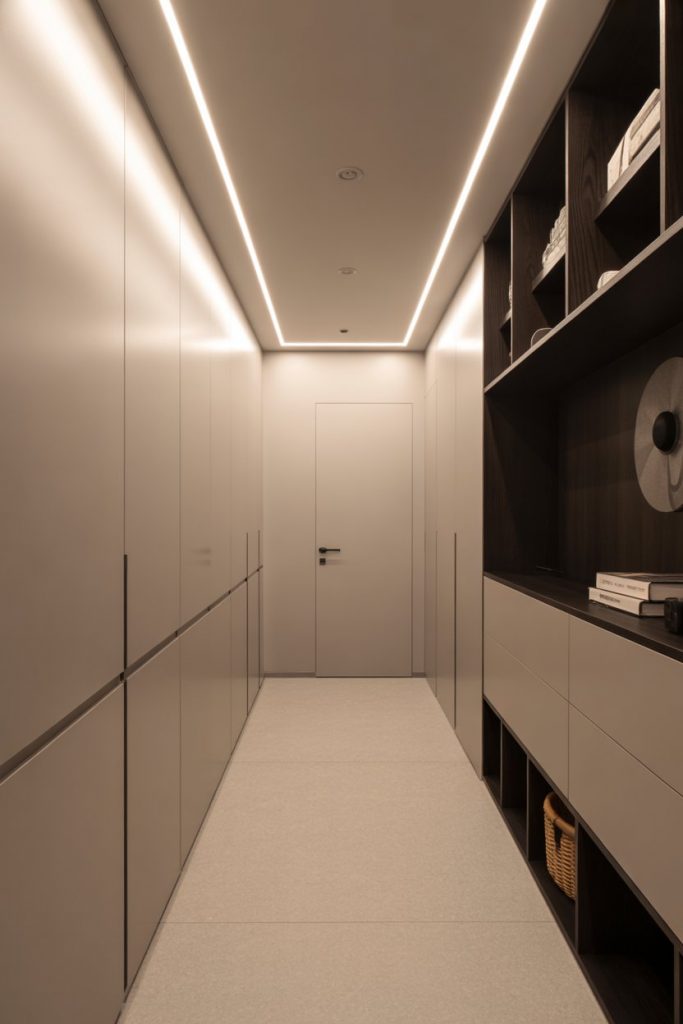
A modern hallway thrives on simplicity—clean lines, streamlined storage, and practical accents. Whether in a narrow apartment hall or a suburban front entrance, modern styling focuses on flow. Think matte finishes, linear lighting, and muted tones that support daily life instead of competing with it. I’ve always appreciated how modern halls feel like a breath of fresh air after busy rooms, guiding you calmly through your home. This idea works beautifully alongside other contemporary design themes.
11. Minimal Grey Hallway for Soft Transitions
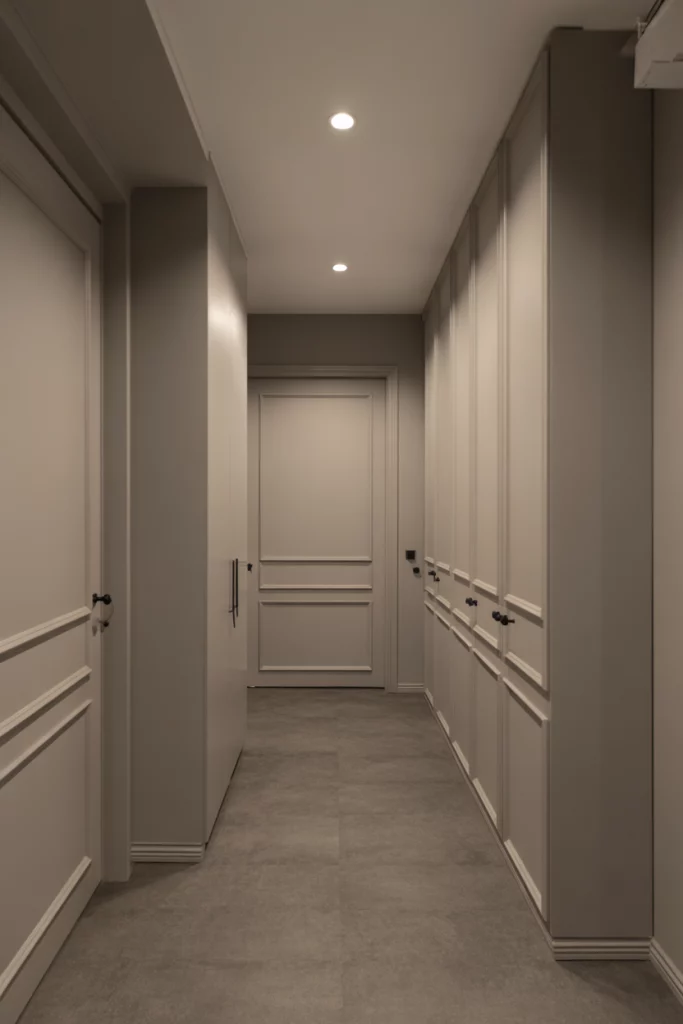
Using grey in a hallway continues to trend in 2026, especially in narrow and small layouts where homeowners want calm transitions without sacrificing personality. Soft dove tones work wonderfully in apartment spaces or older homes with stairs and landings that lack natural light. I’ve noticed designers often pair grey with slim-profile lighting to keep the look clean and intentional. Whether the hall leads to the front door or toward bedroom areas, grey creates balance and subtly elevates the entire interior without overwhelming the architecture.
12. Long Entry Hall with Layered Lighting
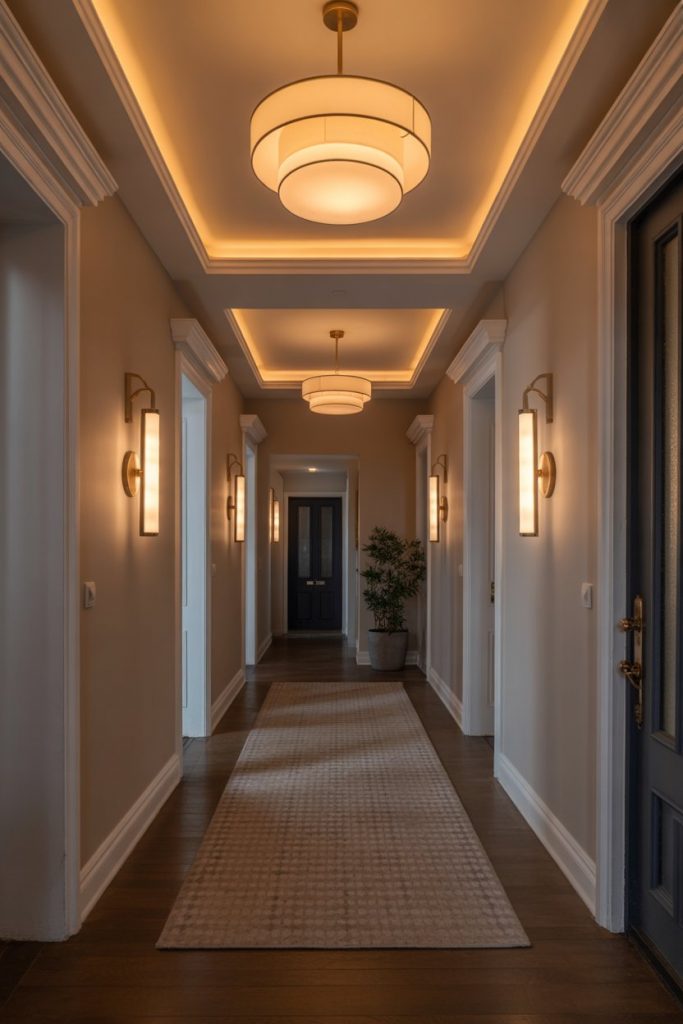
A long entry hall can feel endless unless you introduce layered lighting, a trick I’ve seen many stylists use for long or long narrow corridors. Soft sconces, warm ceiling fixtures, and small accent lamps help break the tunnel effect while highlighting architectural features. This idea works beautifully in townhomes with heavy circulation or upstairs halls that link multiple bedroom doors. Even Ikea-style fixtures can create a surprisingly high-end look with thoughtful placement, adding both function and atmosphere to a hard-working part of the home.
13. Green Bedroom-Adjacent Hallway
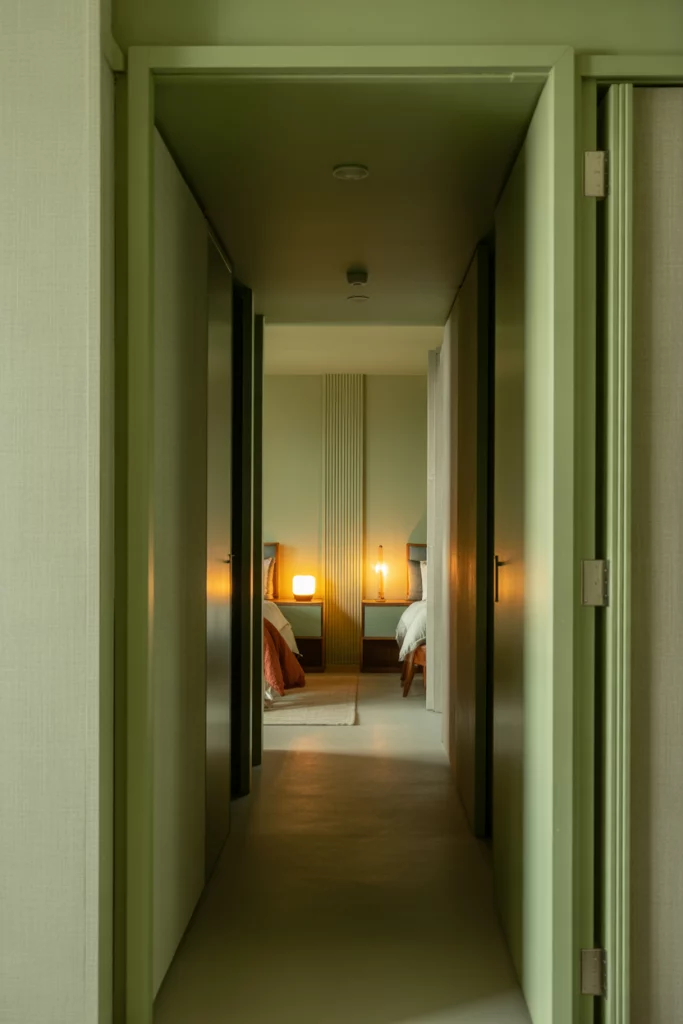
A hallway leading to the bedroom wing often benefits from soothing tones like green, which designers recommend for calming nighttime routines. It’s especially effective in narrow or tiny apartment halls where visual clutter can feel overwhelming. I’ve seen homeowners use muted eucalyptus or moss tones to add character without overt color-blocking. If the corridor includes stairs and transitions or small reading corners, the green palette gently ties everything together, making nighttime strolls feel peaceful and inviting.
14. Neutral Apartment Hallway with Textured Walls
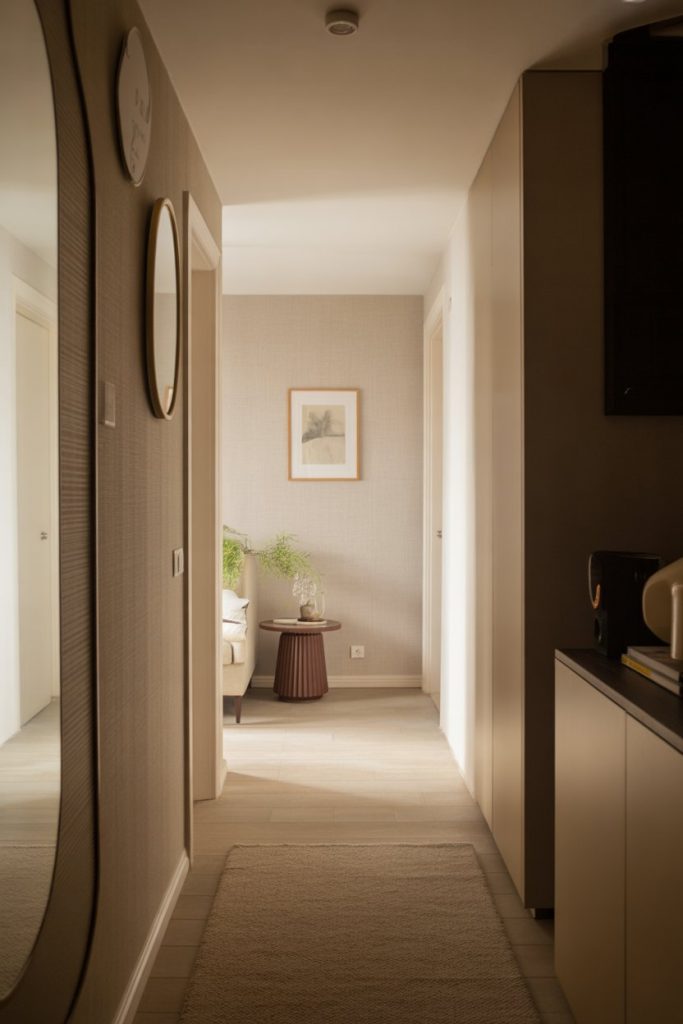
In a modern apartment, adding subtle wall texture transforms a neutral hallway from basic to boutique. This works especially well in narrow or small narrow entries where color alone can feel flat. I once saw a renter use peel-and-stick linen wallpaper to elevate her entryway, creating warmth without overpowering the space. Texture interacts beautifully with soft lighting, making even the tightest entrance feel intentional. Designers often pair this look with slim shelving or muted accessories for an upscale but minimalist finish.
15. Large Entryway with Oversized Mirror
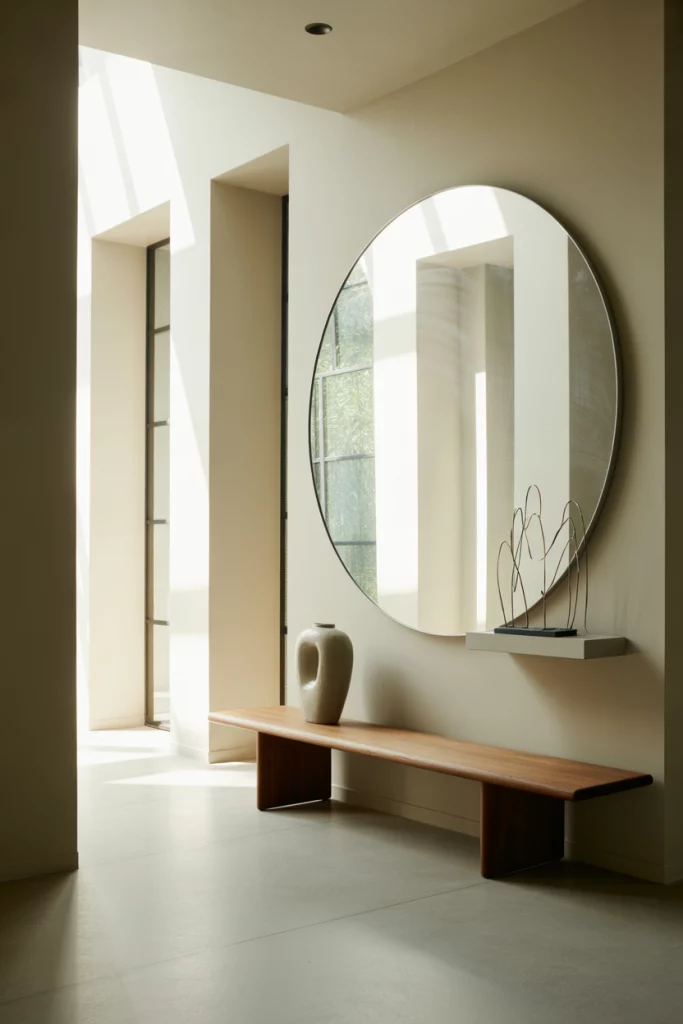
For homes with a large entry or front hall, an oversized mirror creates breathing room while anchoring the layout. I’ve always admired how mirrors instantly brighten dim corners and visually expand long spaces. Many stylists recommend arched or metal-framed designs to add personality without clutter. This idea works especially well when paired with greenery or slim seating that keeps the area practical. The combination of reflection and scale makes even spacious halls feel thoughtfully composed and welcoming.
16. Bloxburg-Inspired Hallway for Playful Aesthetics
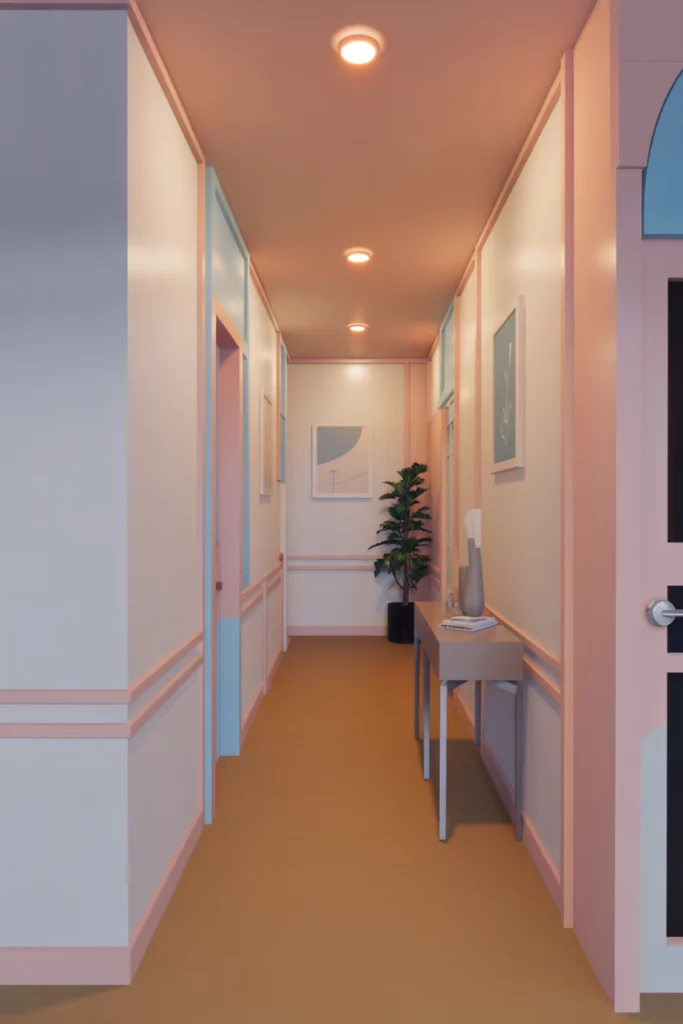
Many younger homeowners love adding Bloxburg-inspired touches—clean lines, pastel accents, and low-profile furniture—to their narrow or tiny hallways. While playful, the aesthetic still feels surprisingly grown-up when paired with matte finishes and soft pink or blue tones. I’ve noticed this trend especially among first-time buyers and apartment dwellers who enjoy customizing their interiors in a creative, youthful way. The look is tidy, modern, and approachable, making the hallway feel fun rather than forgotten.
17. Modern Front Hallway with Concealed Storage
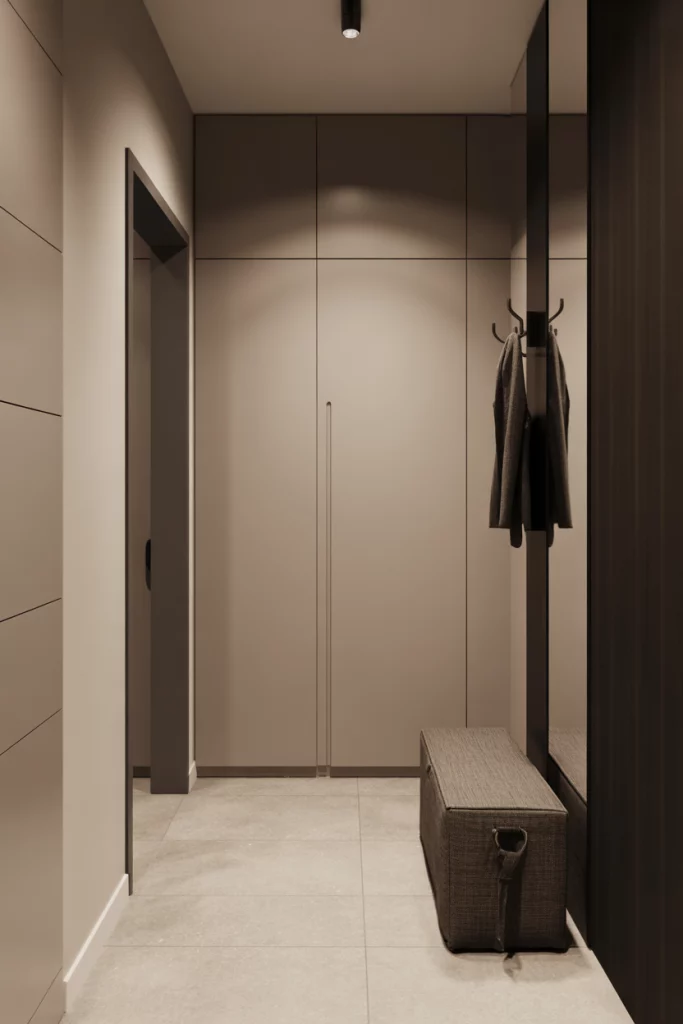
A modern front hallway benefits immensely from concealed storage, especially in narrow or busy family homes. Hidden cabinets, flush shoe drawers, and sleek wall hooks keep visual noise to a minimum. I’ve seen designers emphasize the psychological relief that organized entries offer—it sets the tone for the whole home. This idea works beautifully whether you’re in a suburban house or a compact city apartment, helping maintain order without sacrificing style.
18. Blue and Neutral Blend for Soft Contrast
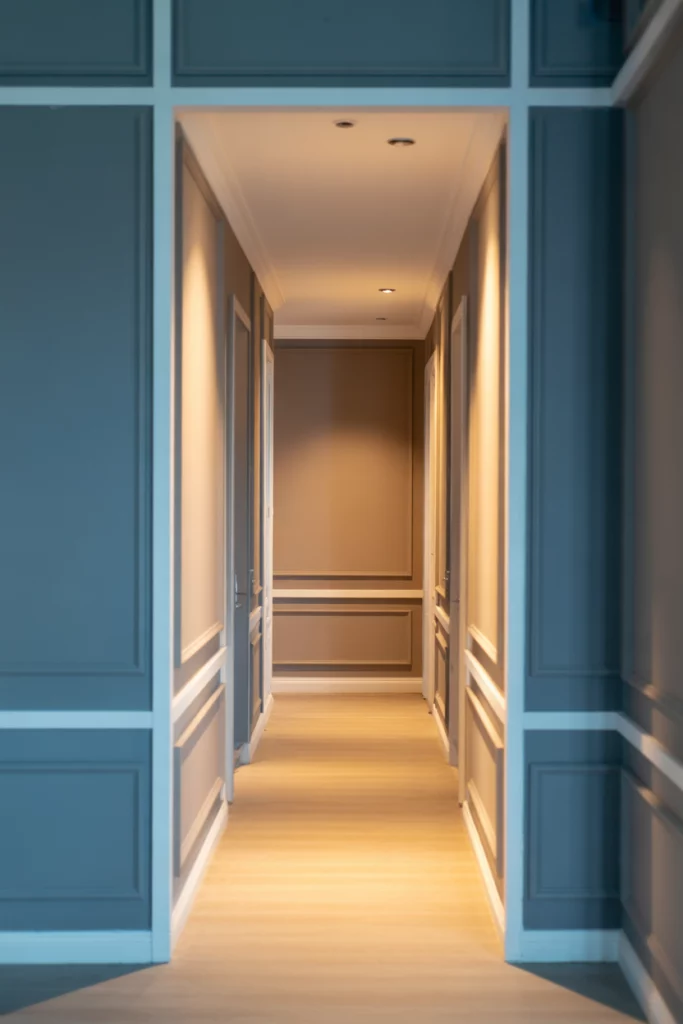
Pairing blue with neutral tones creates a beautifully balanced hallway, especially in long or long narrow transitional spaces. I love how this combination makes a corridor feel airy without the chill of an all-blue palette. Designers often suggest using blue for the lower half of the walls and keeping the upper portion neutral for visual balance. This approach works perfectly in entrance zones where you want charm and approachability without overwhelming visitors.
19. Pink Hallway with Brass Accents
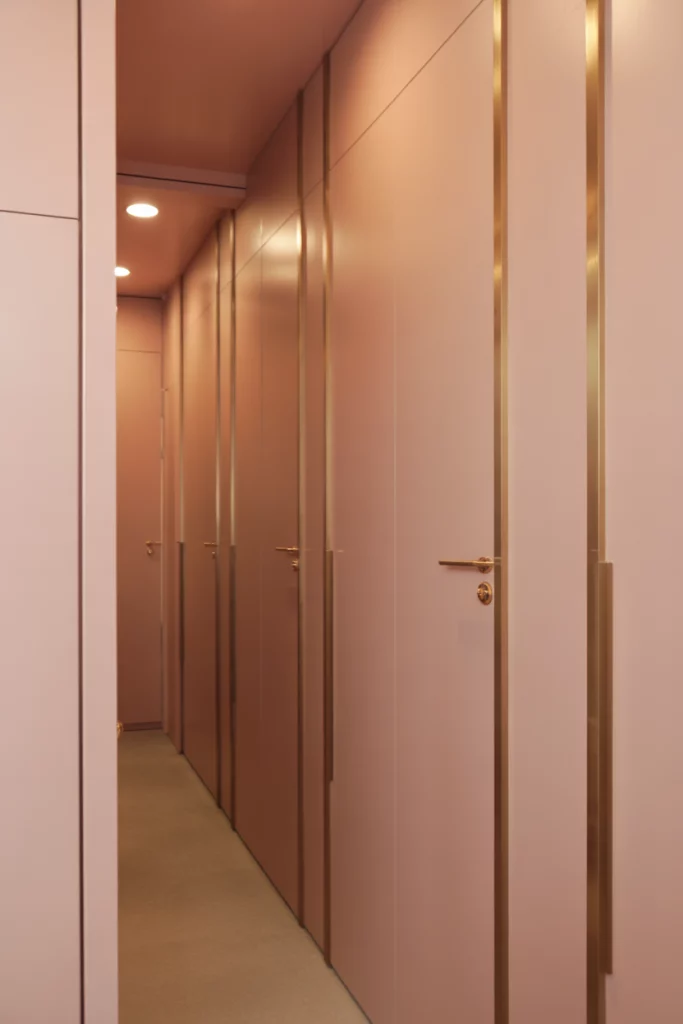
Soft pink paired with brass creates an instant sense of charm, making even narrow or tiny halls feel elevated. I once visited a friend’s home where blush walls paired with brass hooks created a warm welcome that felt both modern and timeless. This look is especially effective in entryways or upstairs corridors where you want something gently expressive. The brass details add structure without overpowering the pastel base, making the hallway glow beautifully.
20. Grey Modern Corridor with Linear Lighting
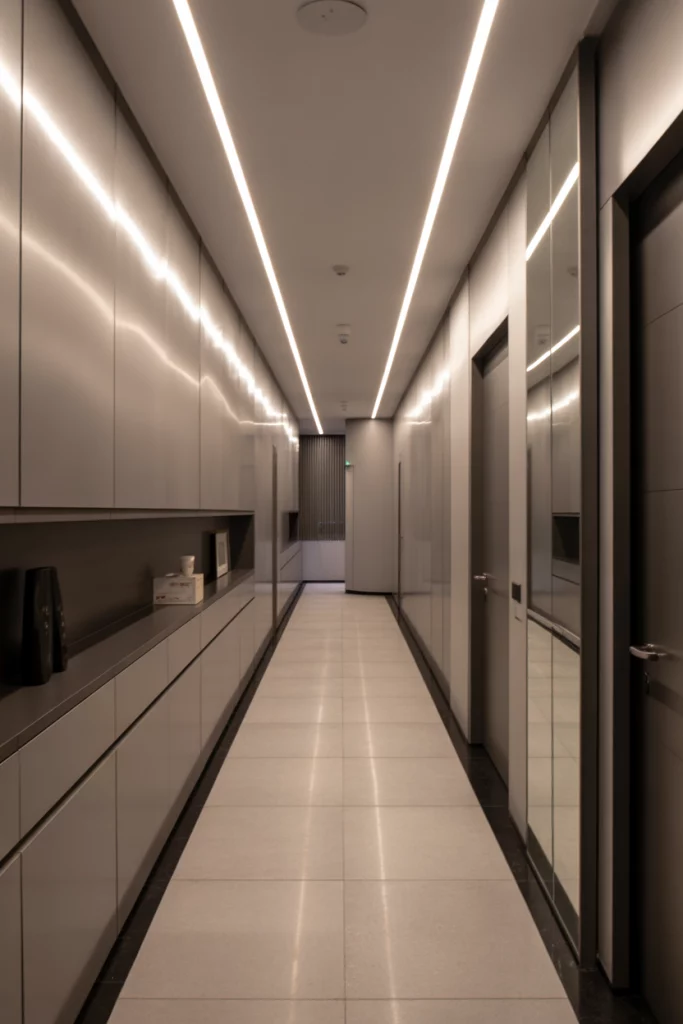
A gray palette pairs perfectly with sharp, modern linear lighting for a sophisticated hallway upgrade. This works well in apartment layouts where long corridors need structure or in stairs and transition zones that feel visually inconsistent. Designers often choose grey because it supports both cool and warm lighting, allowing homeowners to tailor the atmosphere. The combination brings clarity and subtle drama, elevating everyday movement through the home.
21. Victorian Entryway with Contemporary Art
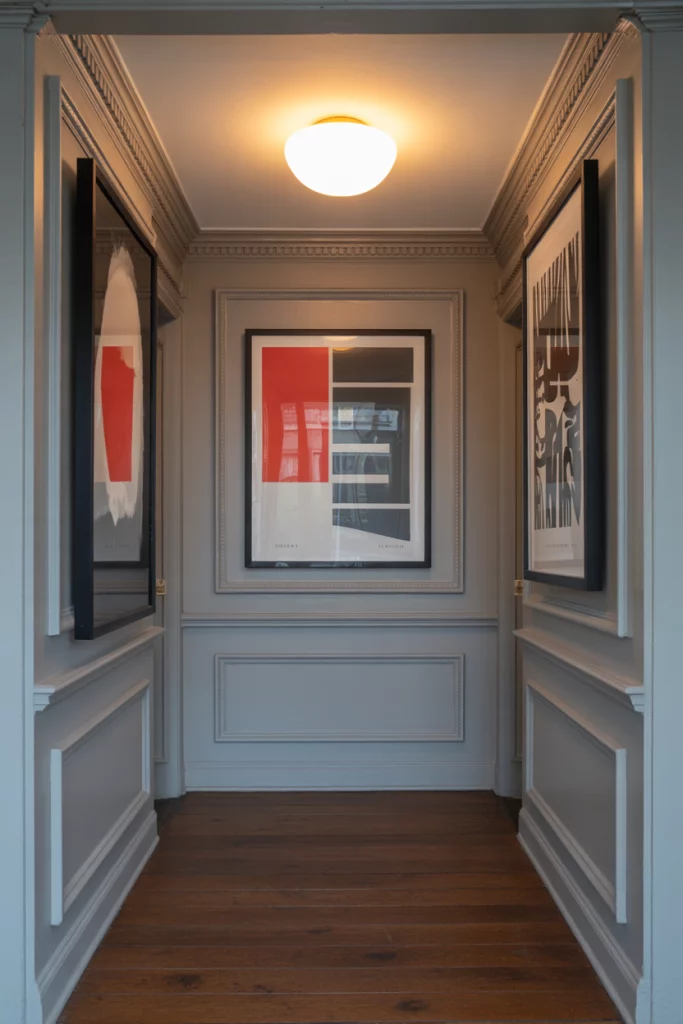
Blending Victorian charm with bold contemporary art creates a hallway with personality and warmth. This is especially effective in entry or front halls where ornate trim is already part of the architecture. I’ve seen homeowners pair traditional molding with modern prints to create a meaningful contrast. It softens the formality of older homes and adds an unexpected twist. This approach brings elegance without feeling outdated, making it perfect for transitional design lovers.
Conclusion
A well-designed hallway doesn’t just connect rooms—it connects moments in daily life. If any of these styles resonate with you, feel free to share your thoughts in the comments. I’d love to hear how you’ve shaped your own hallway or which 2026 trends you’re excited to try next.