Garage doors are no longer just functional barriers—they’ve become one of the most impactful design elements for curb appeal, interior conversions, and creative home projects. As we move through 2026, American homeowners are searching Pinterest for fresh ways to modernize, personalize, and transform garage spaces, whether that means upgrading a tired exterior, converting a garage into livable square footage, or creating seasonal statement pieces. From bold paint colors to glass panels and farmhouse-inspired wood tones, the garage door has evolved into a canvas for self-expression. In this article, you’ll discover inspiring garage door ideas that reflect the latest trends, regional preferences, and real-world applications across the U.S.
1. Rich Brown Garage Doors with Natural Wood Grain
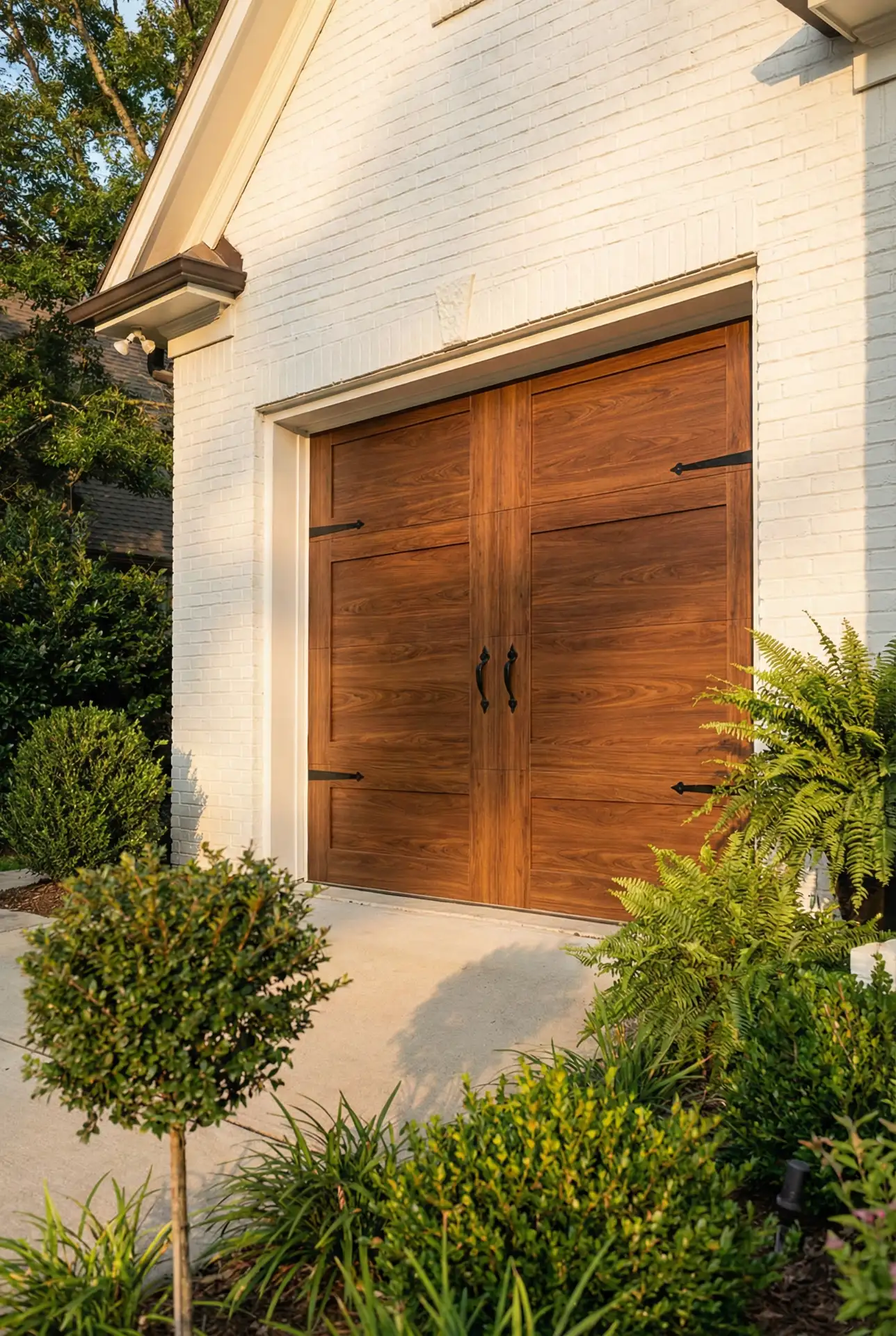
For homeowners seeking warmth and timeless elegance, brown garage doors with visible wood grain offer a sophisticated alternative to stark white or gray. This look works especially well on farmhouse-style homes, rustic ranches, and Craftsman exteriors where natural materials are celebrated. The depth of a chocolate or walnut stain can anchor your home’s facade, creating visual weight that balances lighter siding or stone accents.
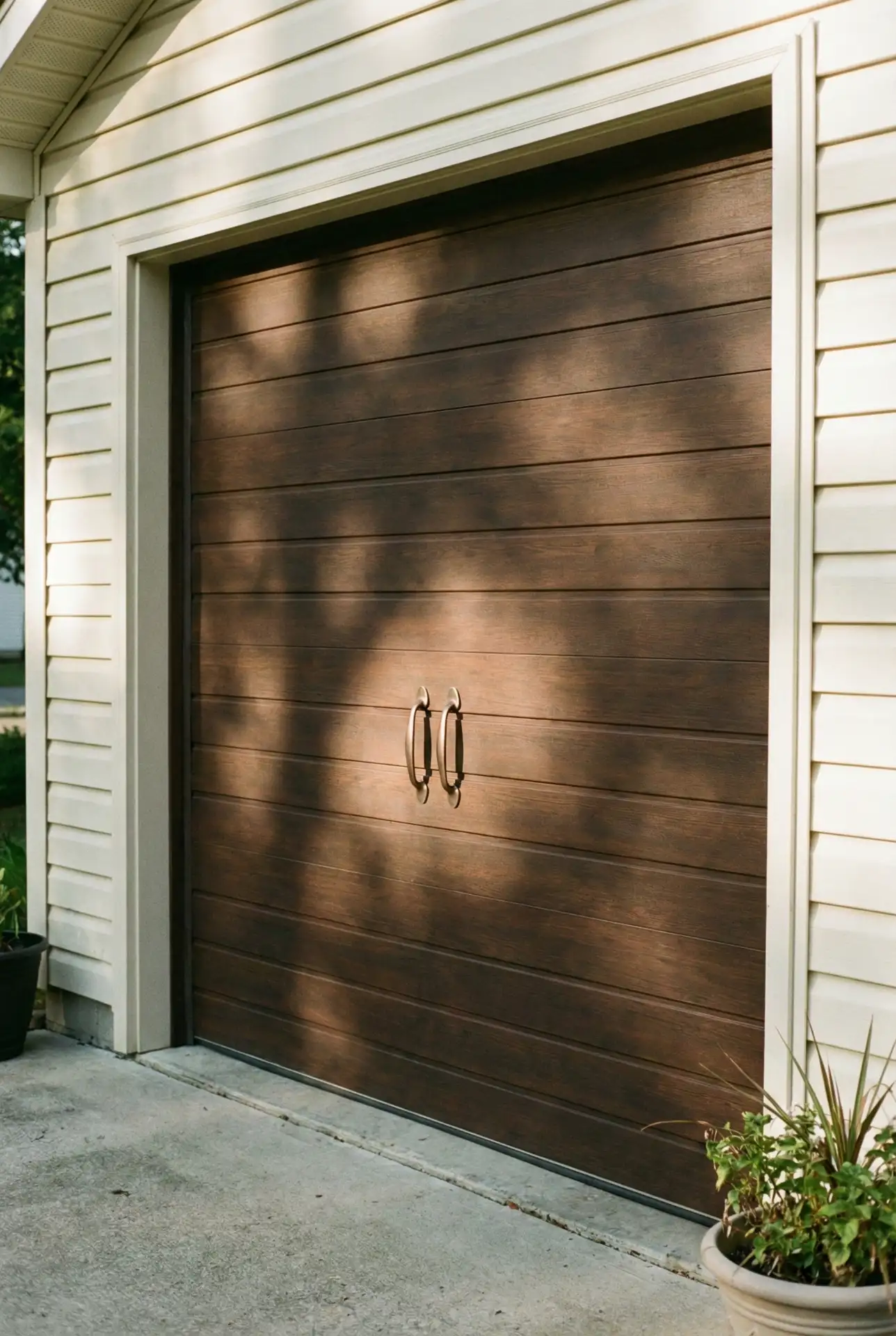
One common mistake is choosing a brown that’s too red or orange-toned, which can clash with cooler exterior colors. Test samples in different lighting conditions—morning and evening sun will reveal undertones you might miss indoors. Pair brown doors with black or bronze hardware for a cohesive, grounded look that doesn’t compete with architectural details.
2. Sleek Black Garage Doors for Modern Curb Appeal
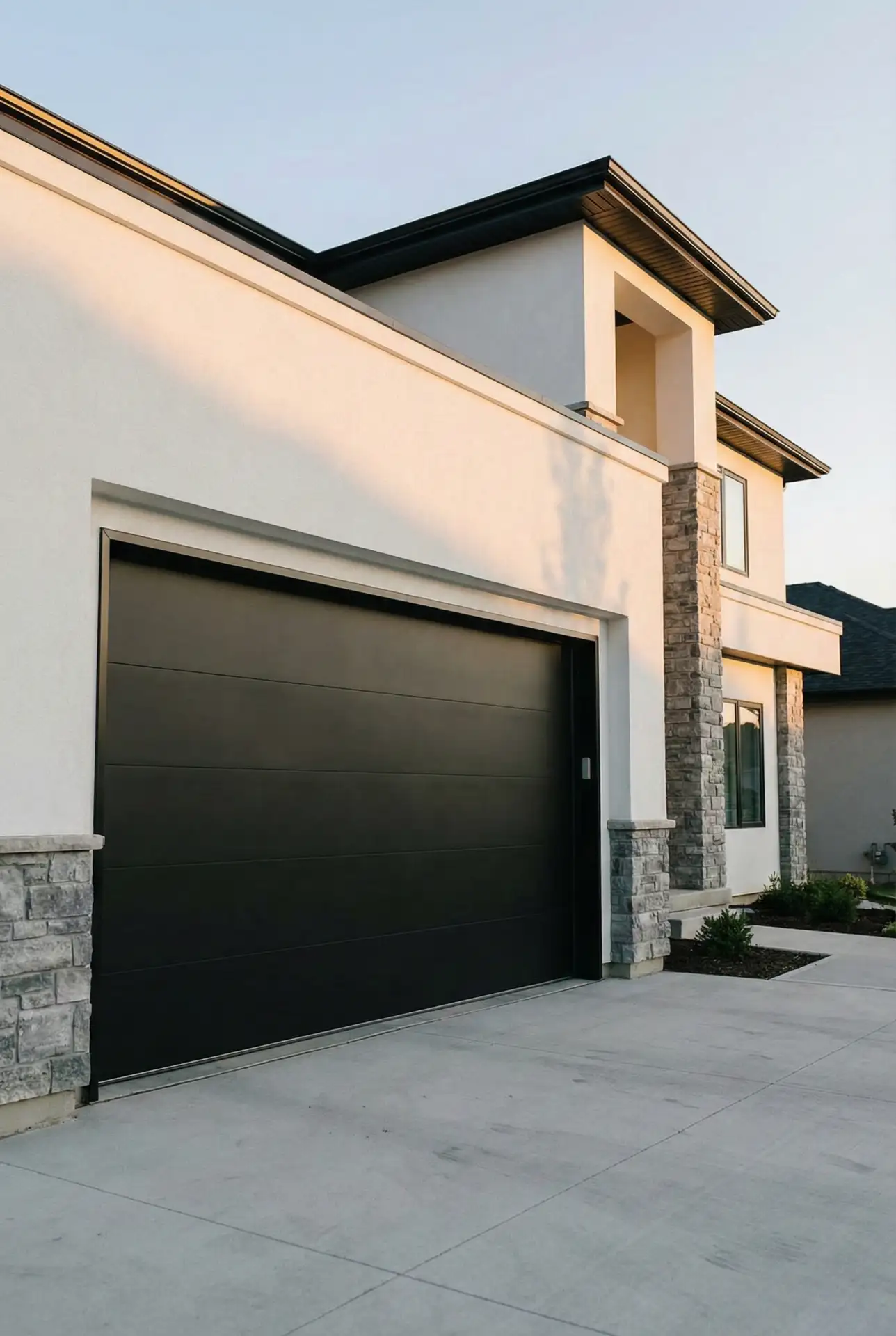
A black garage door makes an instant statement, offering the kind of high-contrast drama that’s everywhere on Pinterest in 2026. This choice elevates curb appeal by creating a focal point that draws the eye and pairs beautifully with white, gray, or natural wood siding. Modern homes benefit most from this bold move, especially when the door has clean lines and minimal hardware.
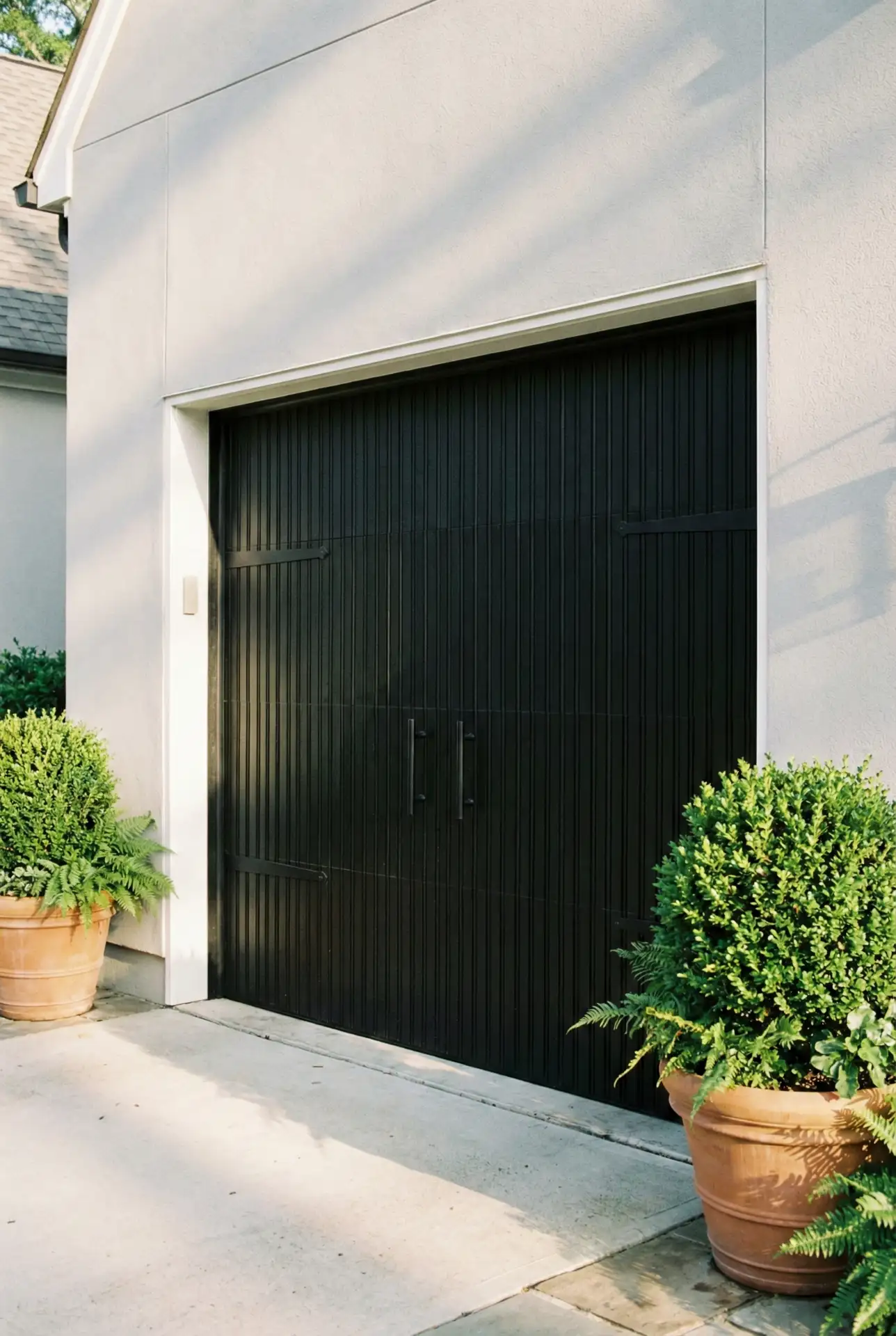
This works best in neighborhoods with updated architecture or urban settings where contemporary design is already established. In more traditional suburban areas, a black door can feel out of place unless the home’s other features—windows, trim, landscaping—support the modern aesthetic. It’s a confident choice that signals intentionality.
3. Glass Panel Garage Doors for Natural Light
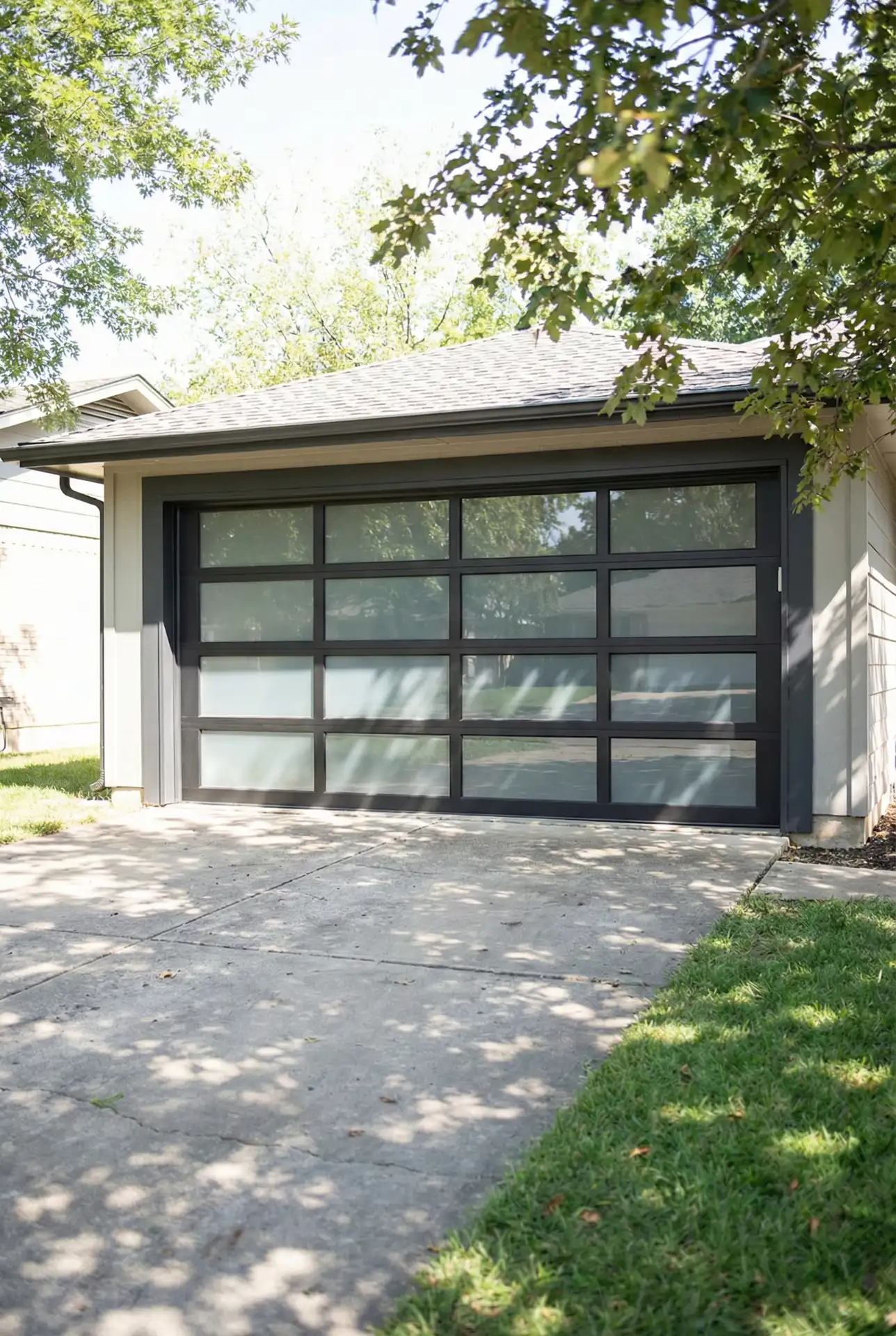
When you want to blur the line between inside and out, glass panel garage doors deliver both function and beauty. These doors flood the garage with daylight, making the space feel less utilitarian and more like an extension of your home. Frosted or tinted glass options provide privacy while maintaining the airy, open feel that’s become a hallmark of modern design.
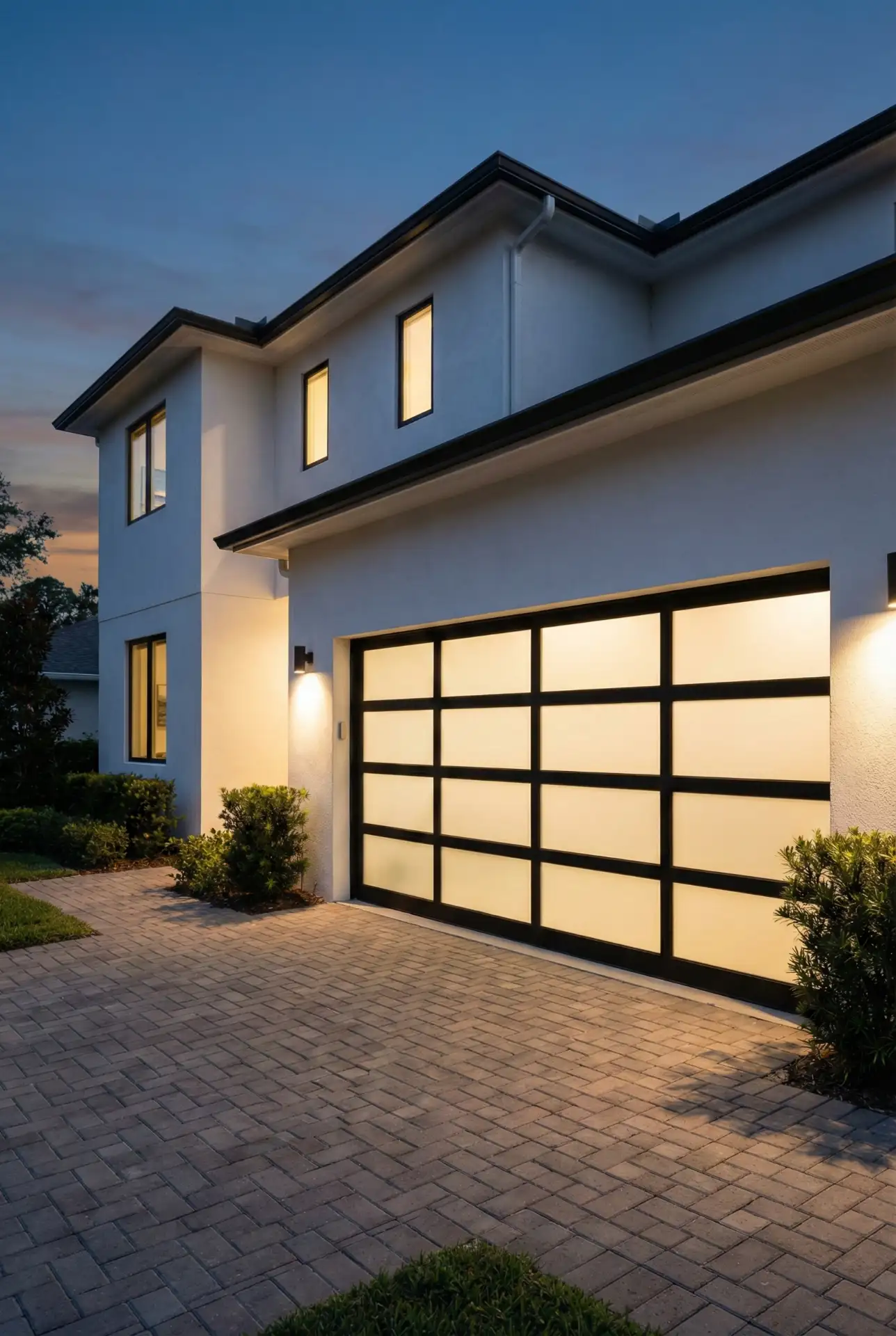
Expect to invest more upfront—glass panel doors typically run $2,000 to $5,000 depending on size and insulation. However, if you’re converting your garage into a home gym, studio, or workshop, the natural light can reduce your need for artificial lighting and make the space infinitely more pleasant to spend time in.
4. Mid-Century Modern Garage Doors with Horizontal Lines
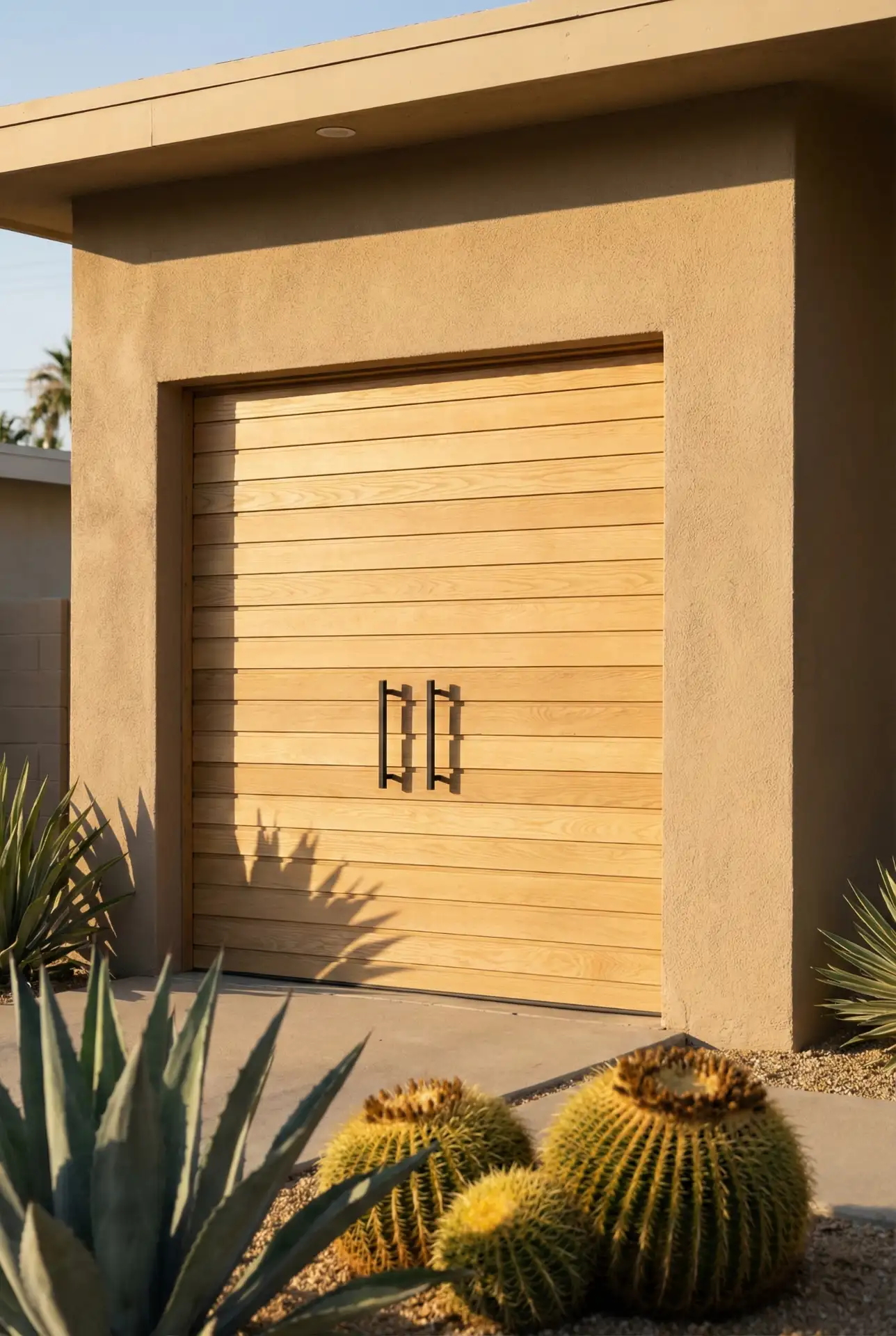
The enduring appeal of mid-century modern design has homeowners seeking garage doors that echo the clean, horizontal lines of 1950s and ’60s architecture. These doors often feature wood or wood-look panels with subtle grooves running across the width, creating a sense of calm geometry. Pair them with low-pitched rooflines, large windows, and natural landscaping for a cohesive retro-contemporary vibe.
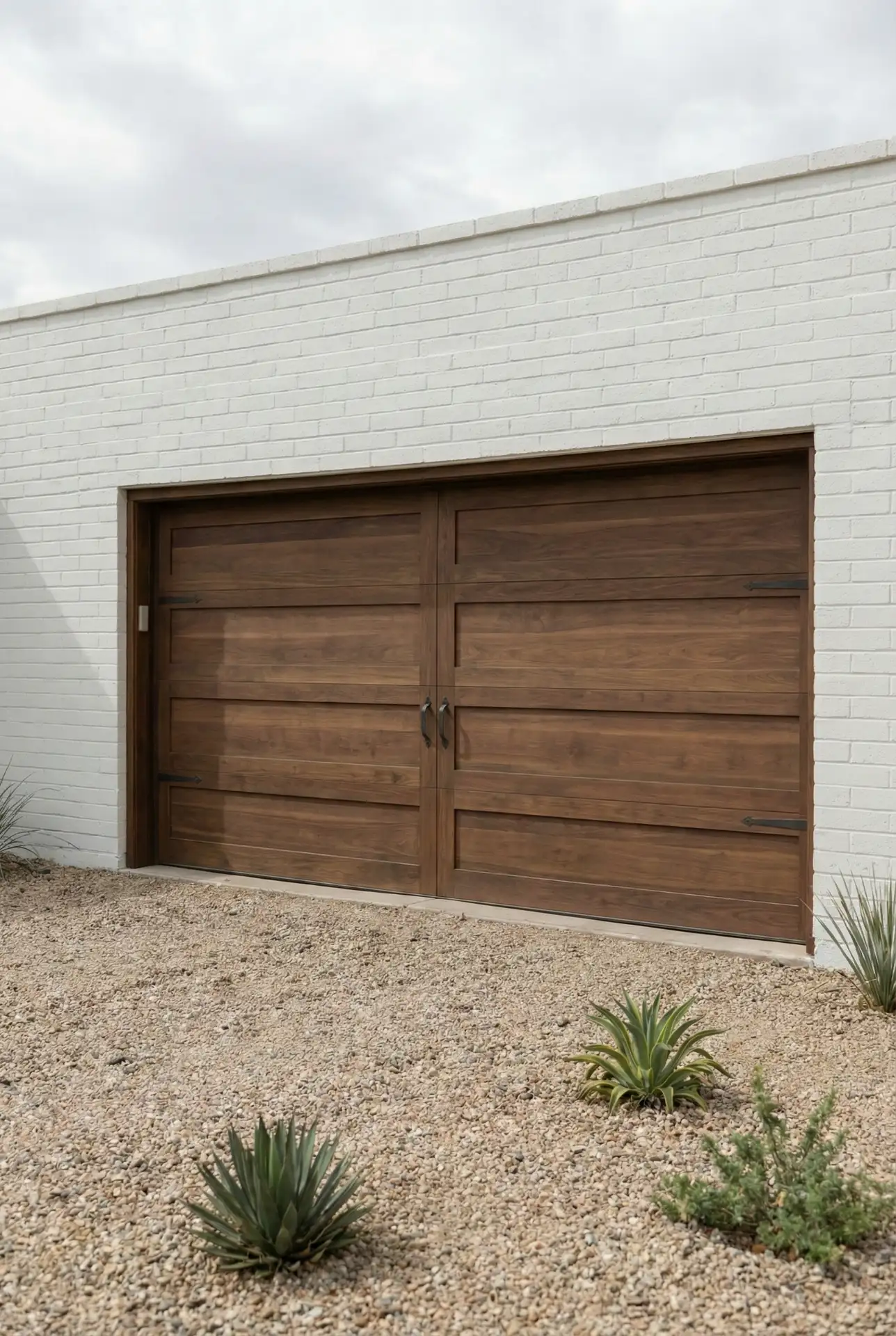
A neighbor in Palm Springs replaced her dated carriage-style door with a horizontal-paneled design and said it felt like the house finally “made sense” again. The right garage door can unlock the original character of a mid-century home that’s been obscured by decades of mismatched updates.
5. Painted Garage Doors in Bold Accent Colors
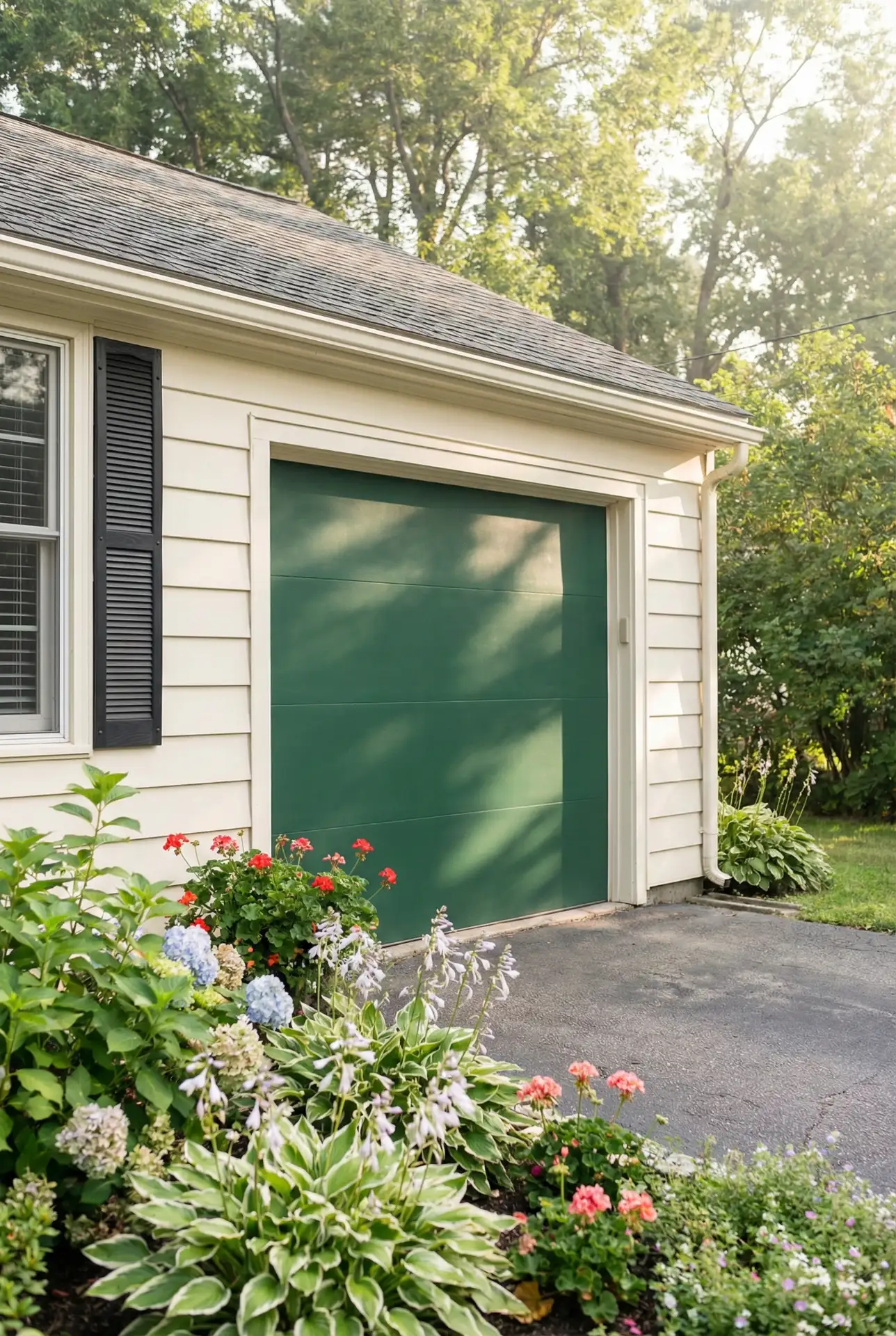
If you’re ready to make a statement, a painted garage door in a bold hue—think deep navy, forest green, or even terracotta—can transform your home’s exterior. This approach is especially popular in neighborhoods where homes have similar layouts, allowing you to differentiate your property and boost curb appeal without major renovations. A simple coat of paint is one of the most cost-effective ways to refresh your home’s look.
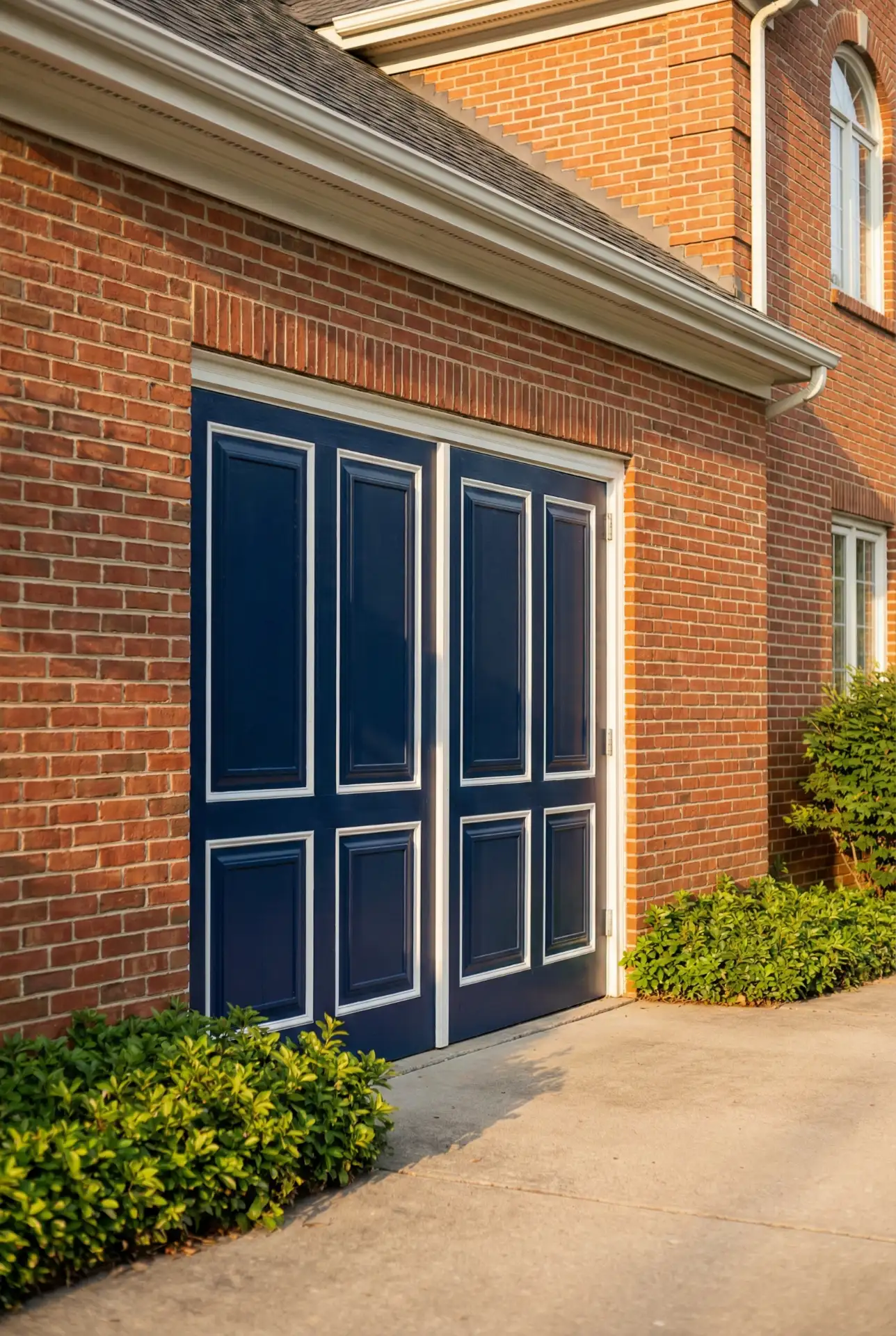
Many homeowners worry about resale value, but real estate agents often note that a well-chosen accent color can actually increase buyer interest by making the home more memorable. The key is to choose a color that complements your existing palette rather than fighting it—test large swatches on the door before committing.
6. Farmhouse-Style Wooden Garage Doors
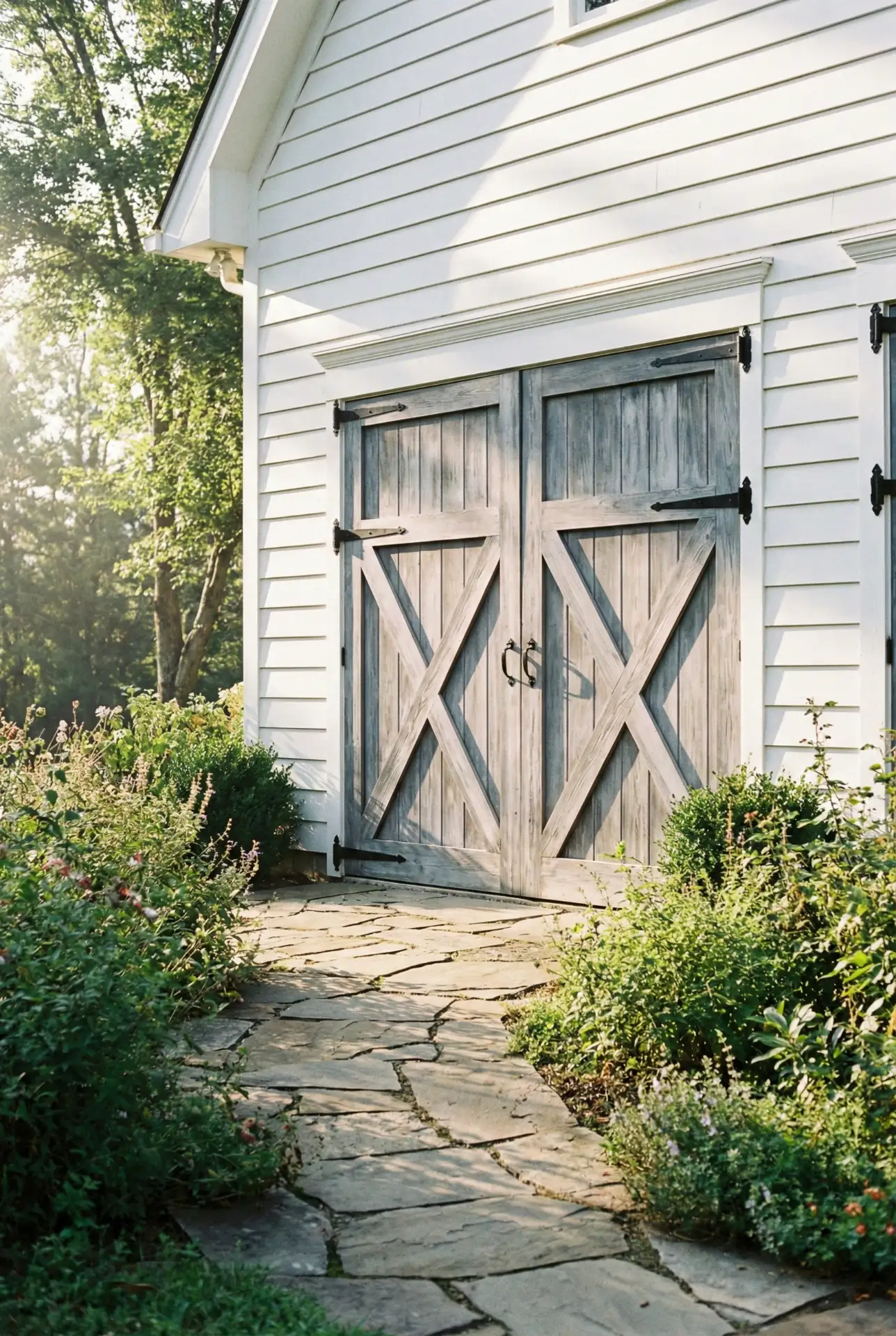
The farmhouse aesthetic continues to dominate American home design, and wooden garage doors are central to achieving that rustic, welcoming look. These doors often feature board-and-batten styling, X-bracing, or carriage house details that evoke a simpler, more handcrafted era. They work beautifully on white or gray homes with wraparound porches, shiplap siding, and vintage-inspired hardware.
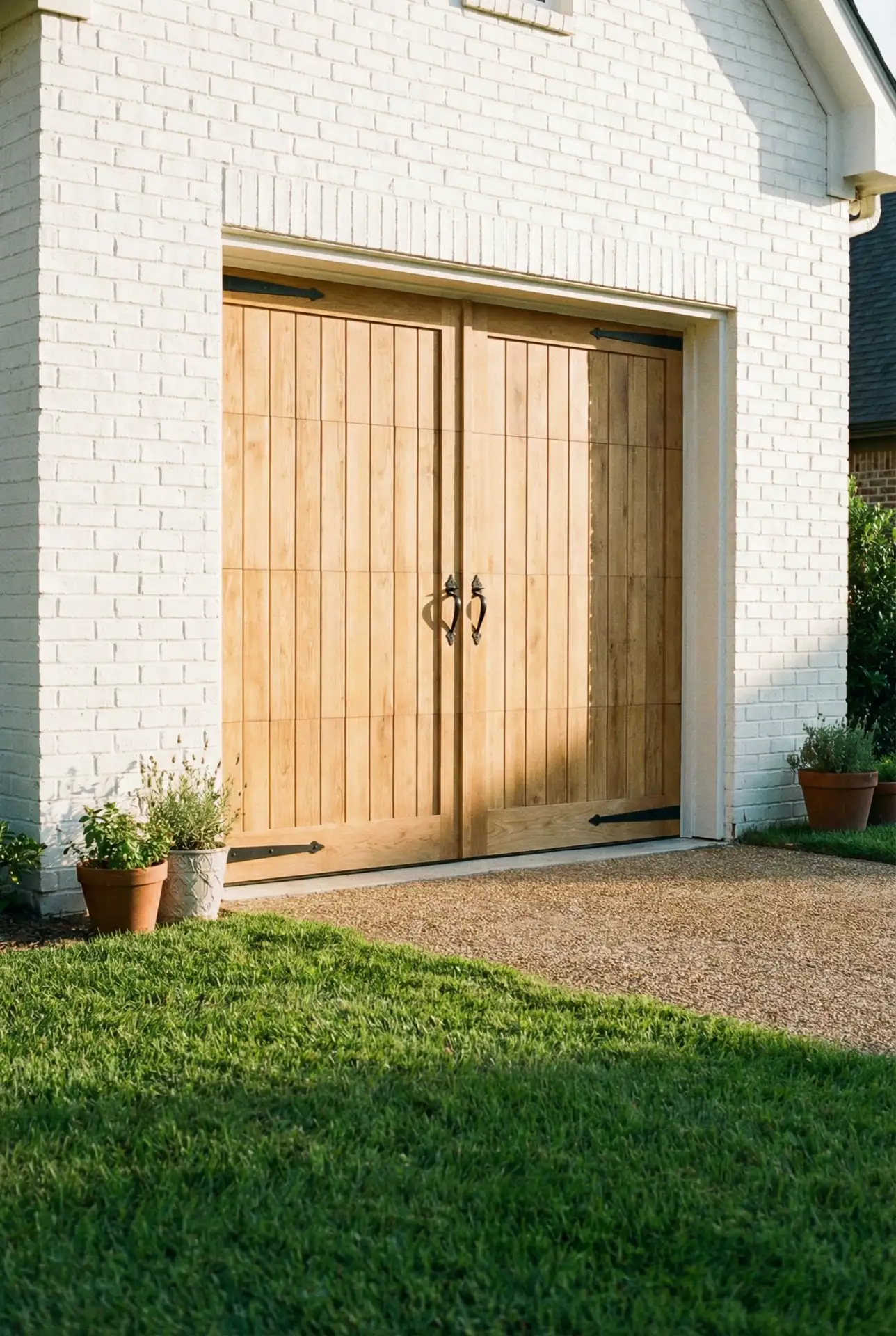
This style is most at home in rural areas or suburban developments with larger lots, where there’s space for the door to breathe and not feel oversized. In tighter urban settings, a farmhouse door can look out of scale—consider proportions carefully and pair with other rustic elements to create visual harmony.
7. Roll-Up Garage Doors for Space-Saving Functionality
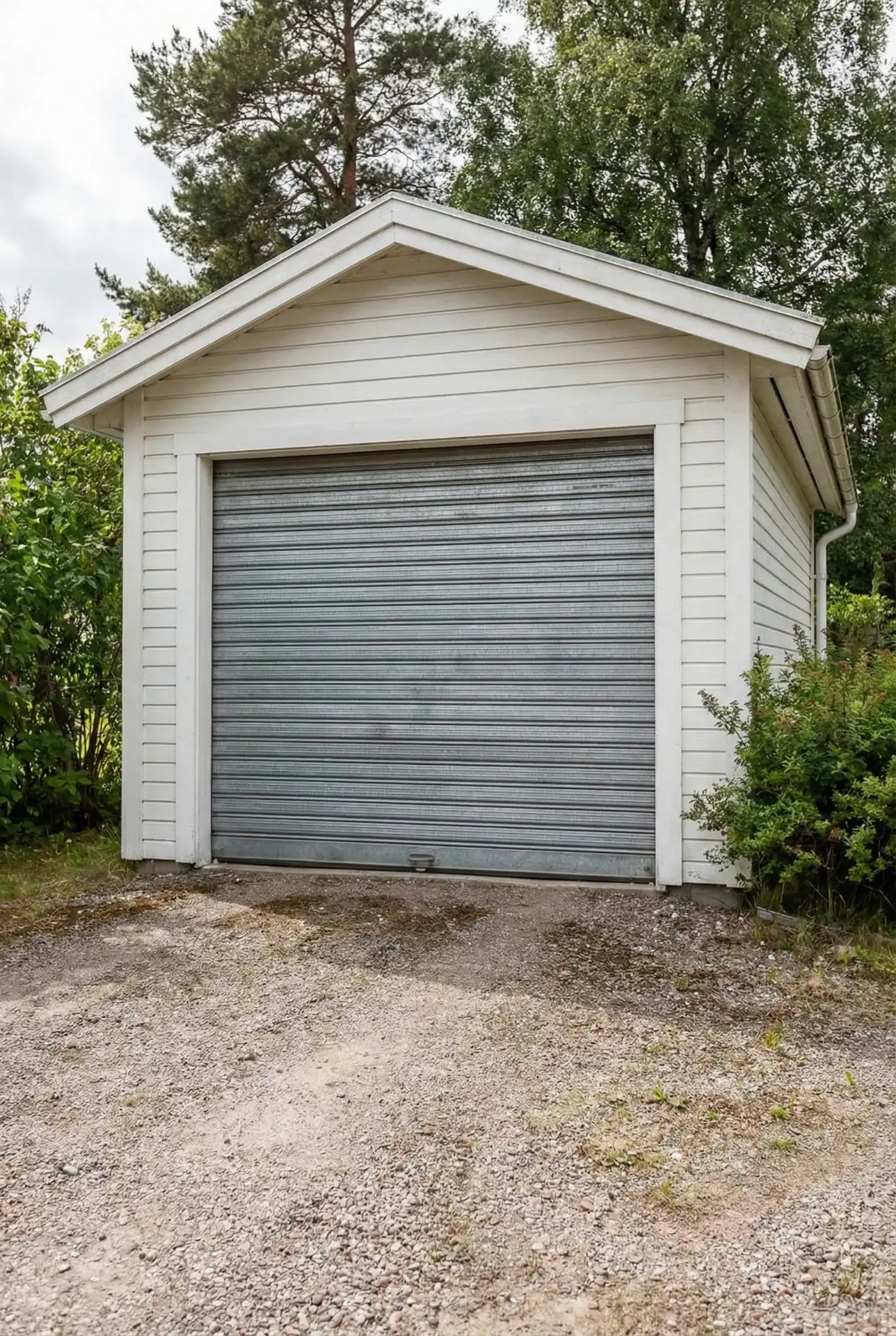
When ceiling clearance is tight or you’re dealing with a low-profile garage, a roll-up door offers a practical solution without sacrificing style. These doors coil vertically into a compact housing, freeing up overhead space for storage racks or mechanical systems. They’re especially useful for carport conversions or detached garages where every inch of interior space counts.
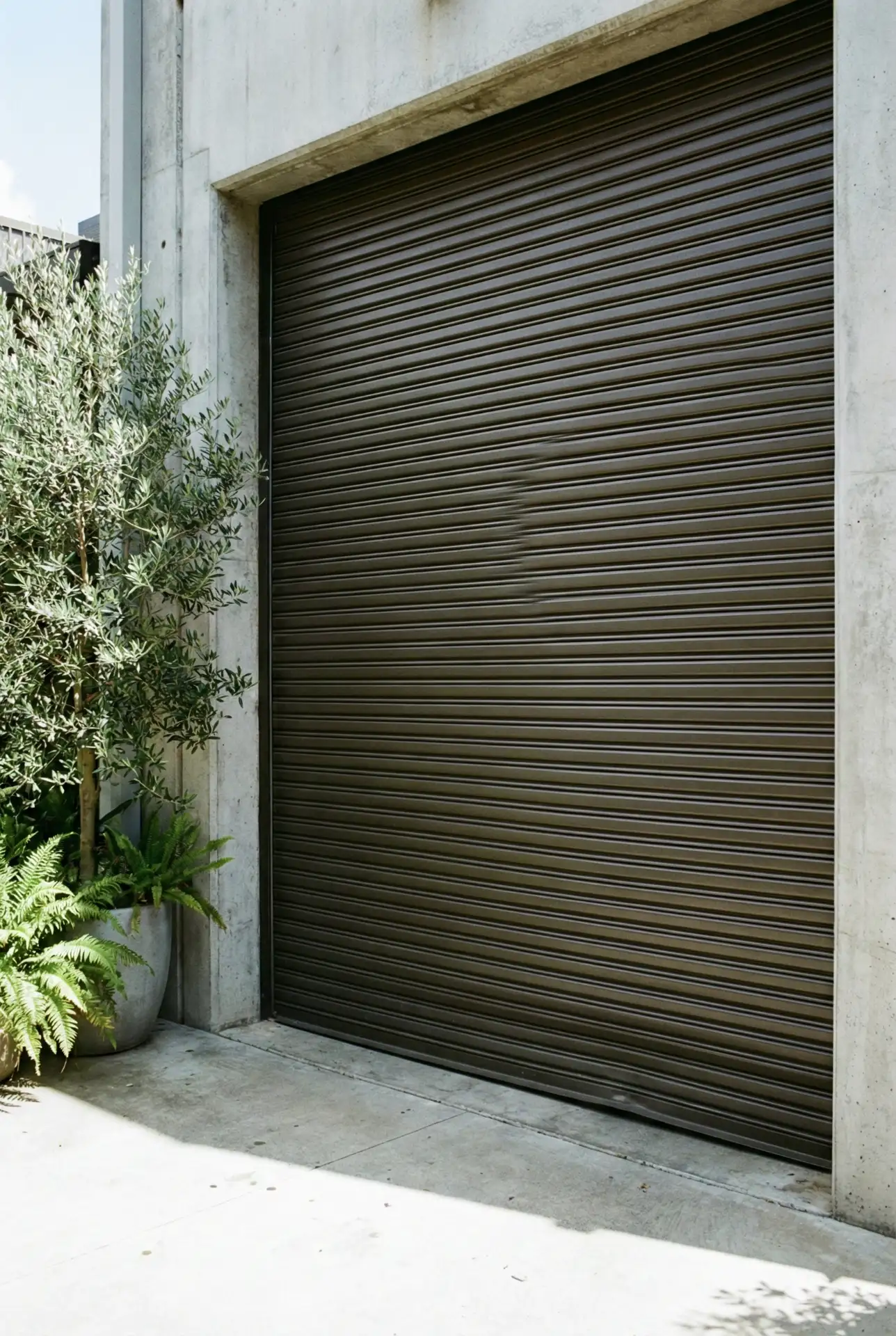
Roll-up doors are often less expensive than sectional options, with basic models starting around $500 to $1,200. However, insulated versions for climate-controlled garages will cost more. If you’re using the garage as a workshop or studio, budget for an insulated model to keep energy costs down.
8. Garage Doors with Fake Window Inserts
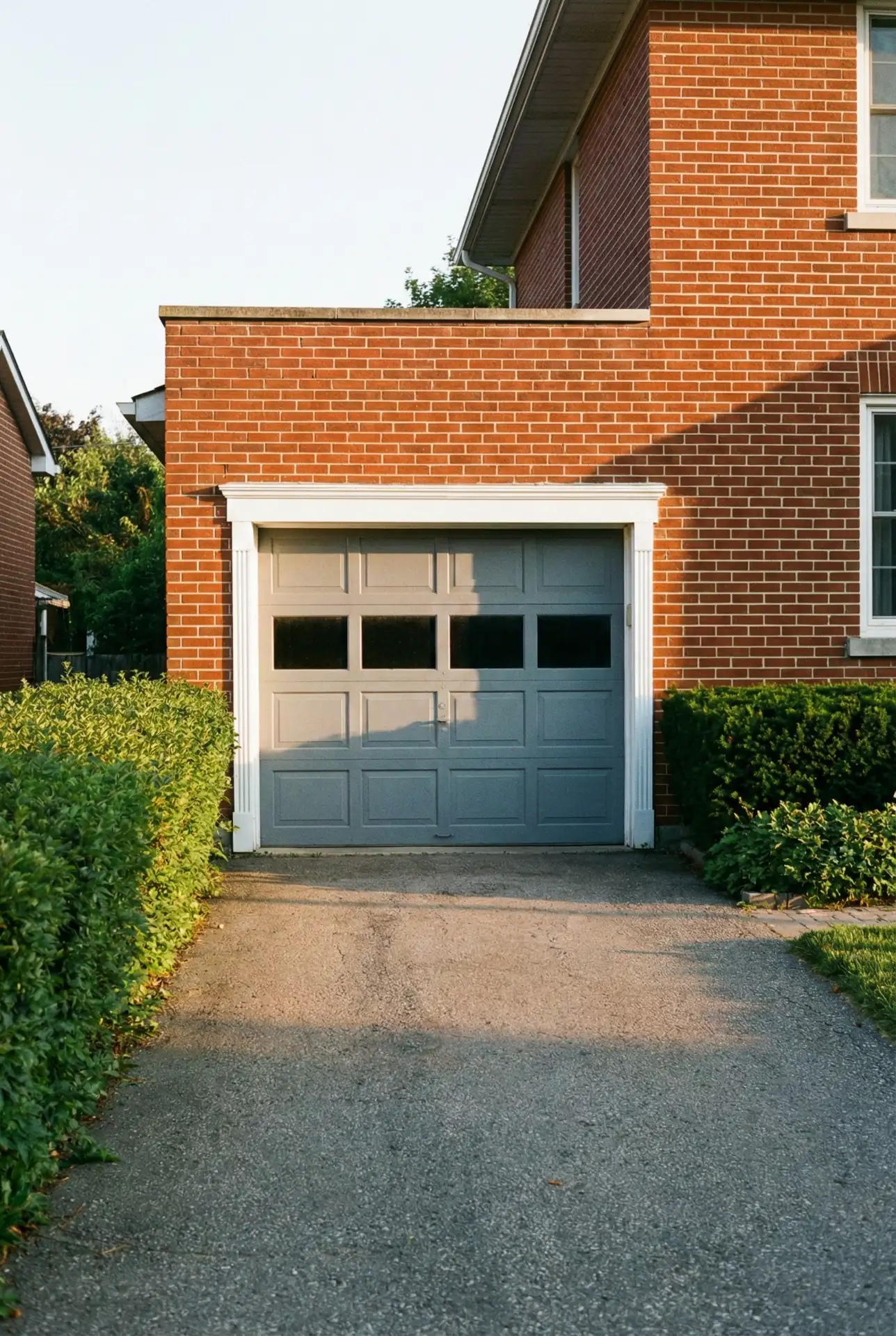
Not every homeowner wants to sacrifice privacy or security with real glass, which is where fake window inserts come in. These decorative overlays mimic the look of traditional carriage house windows without the maintenance or vulnerability of actual glass. They’re a clever way to add architectural interest and break up a large, flat door surface while keeping the inside of your garage completely private.
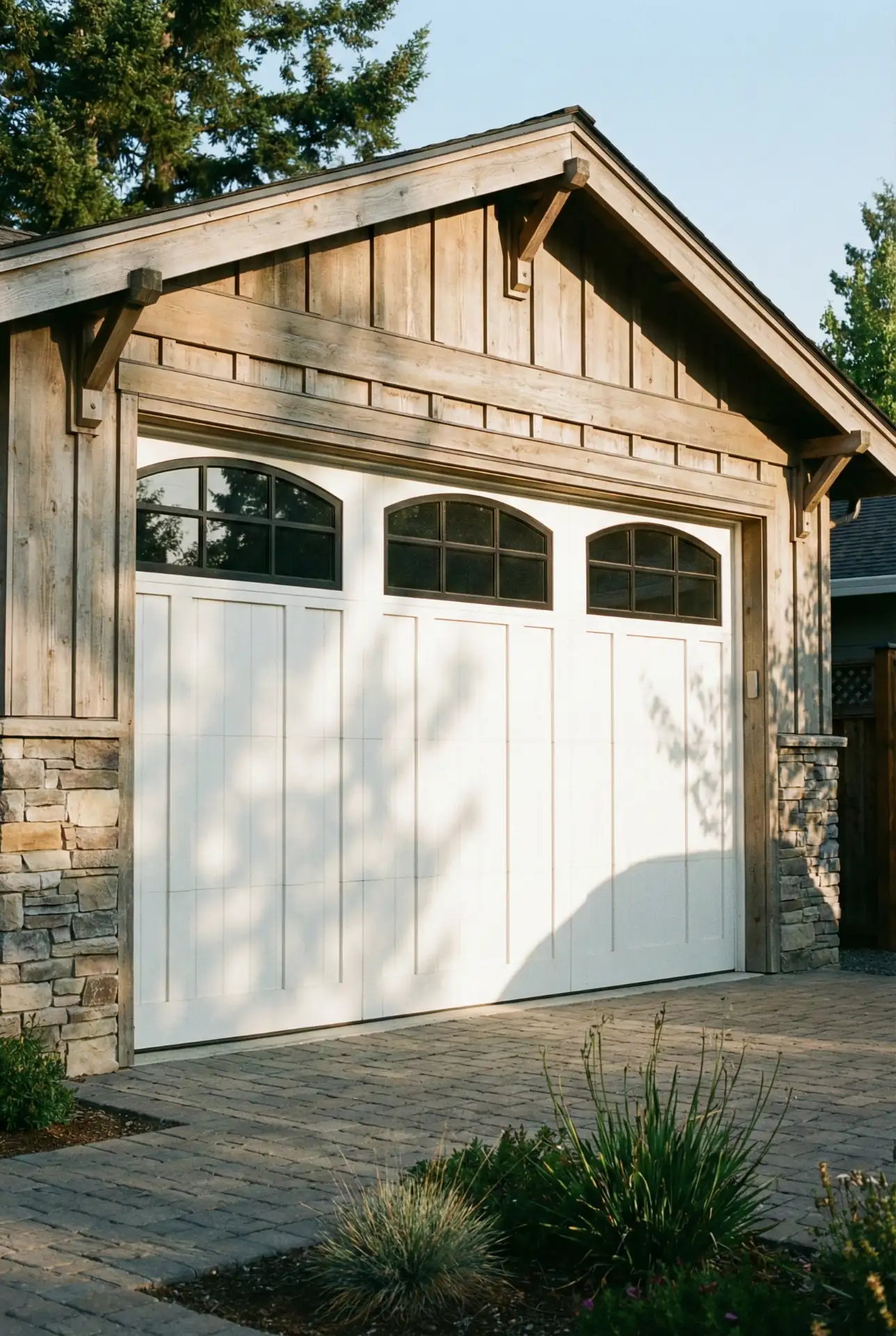
Expert installers recommend using magnetic or adhesive-mounted inserts rather than permanent ones, so you can swap them out if you change your home’s color scheme or decide you want real windows later. It’s a low-commitment upgrade that makes a noticeable difference from the curb.
9. Triple-Wide Garage Doors for Larger Homes
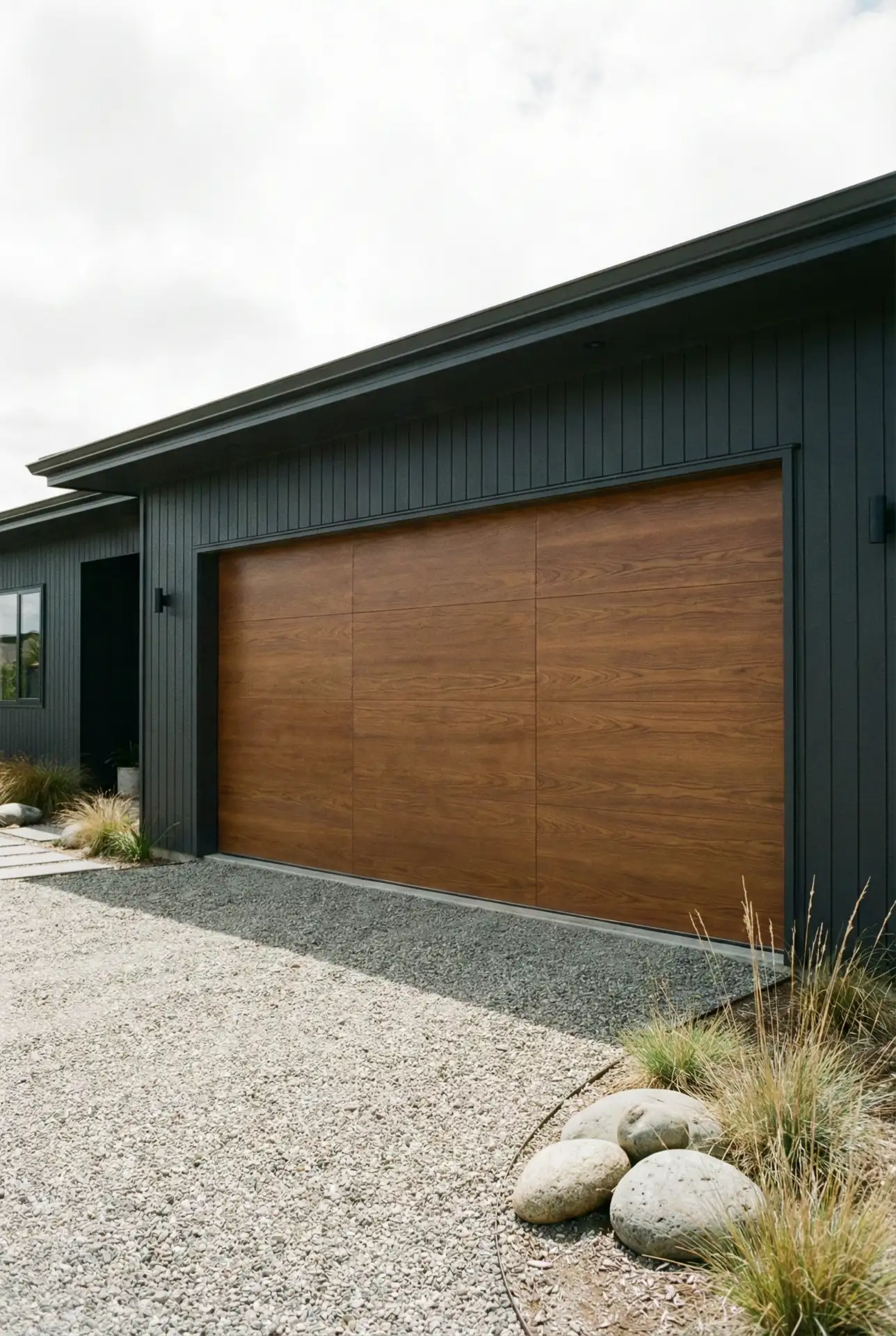
For families with multiple vehicles, RVs, or home workshops, a 3-car garage door setup provides the storage and access you need. These configurations can be designed as three separate single doors or one massive triple-wide door, depending on your aesthetic preference and structural requirements. Either way, they make a significant visual impact and require careful planning to ensure they don’t overwhelm your home’s facade.
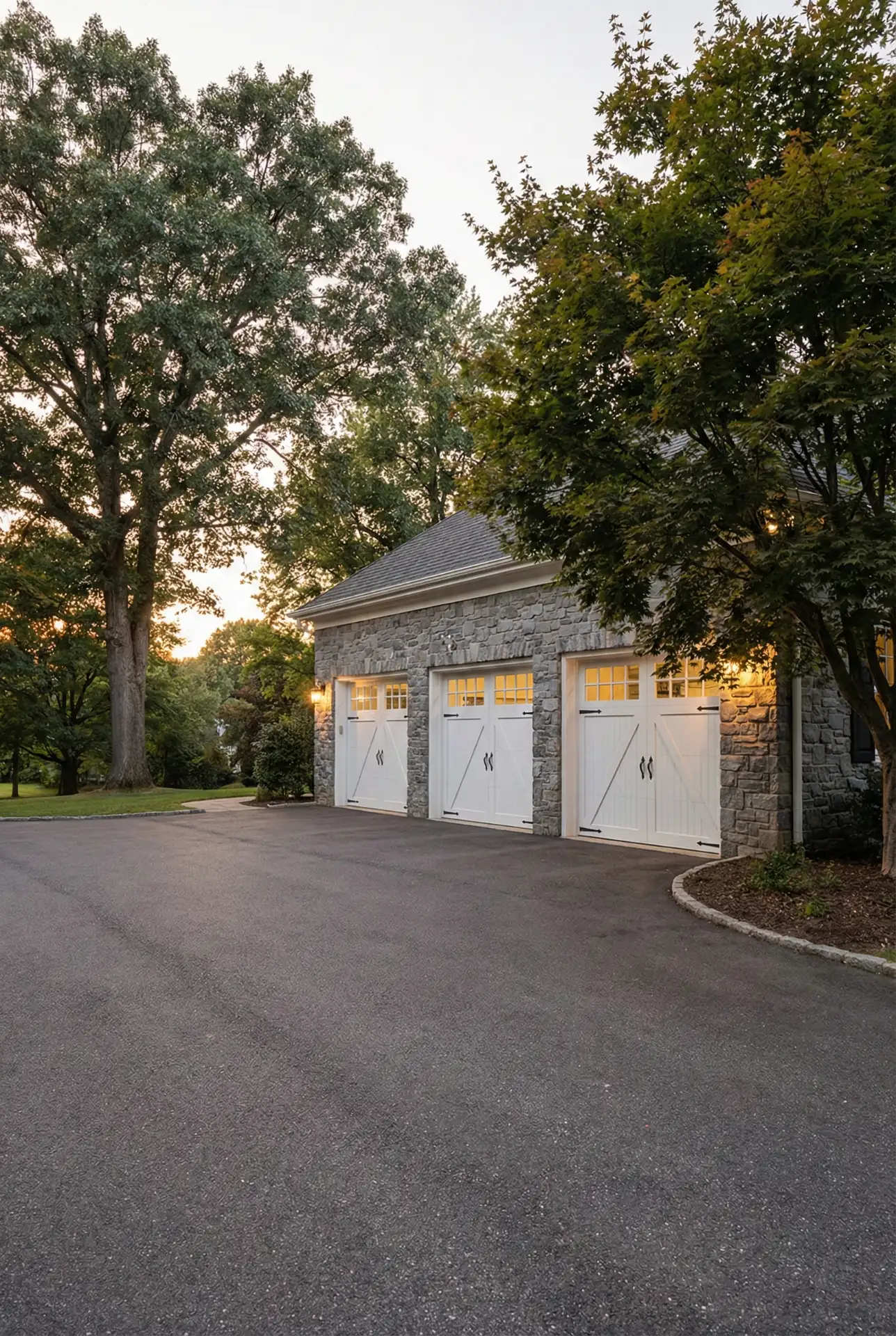
This setup is most common in suburban developments built after 2000, particularly in states like Texas, Arizona, and Colorado, where larger lots and vehicle ownership are the norm. If you’re renovating an older home, check local building codes—some municipalities have restrictions on garage door width relative to overall home frontage.
10. Christmas Décor for Garage Doors
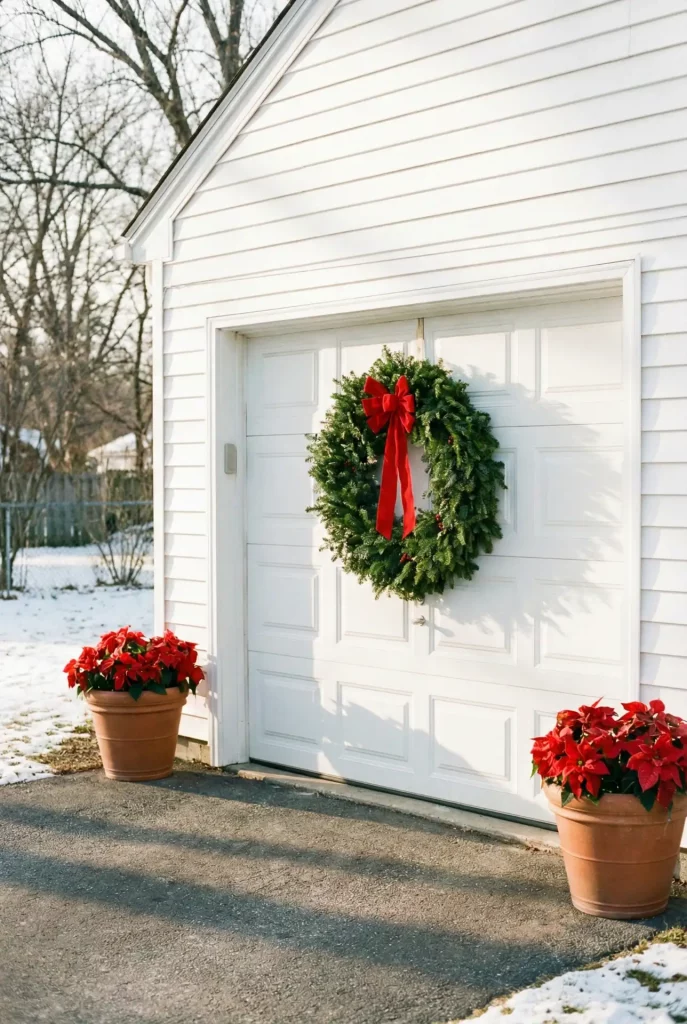
Your garage door is prime real estate for seasonal displays, and Christmas is the perfect time to get creative. From projecting animated light shows to hanging oversized wreaths and garland, your garage door can become a focal point of holiday cheer. Many homeowners use magnetic hooks and panels specifically designed for garage doors, making it easy to swap decorations without damaging the surface.
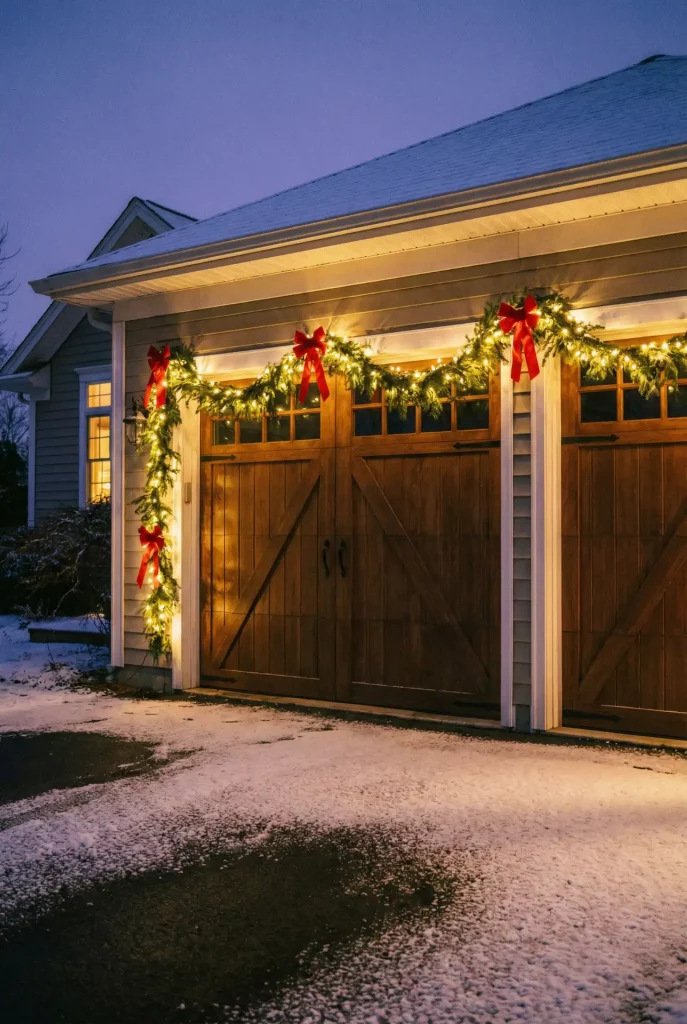
One homeowner in Michigan shared that she uses removable vinyl decals to transform her door into a giant present each December—it takes 20 minutes to apply and comes off cleanly in January. It’s become a neighborhood favorite and costs less than $50.
11. Halloween-Themed Garage Door Displays
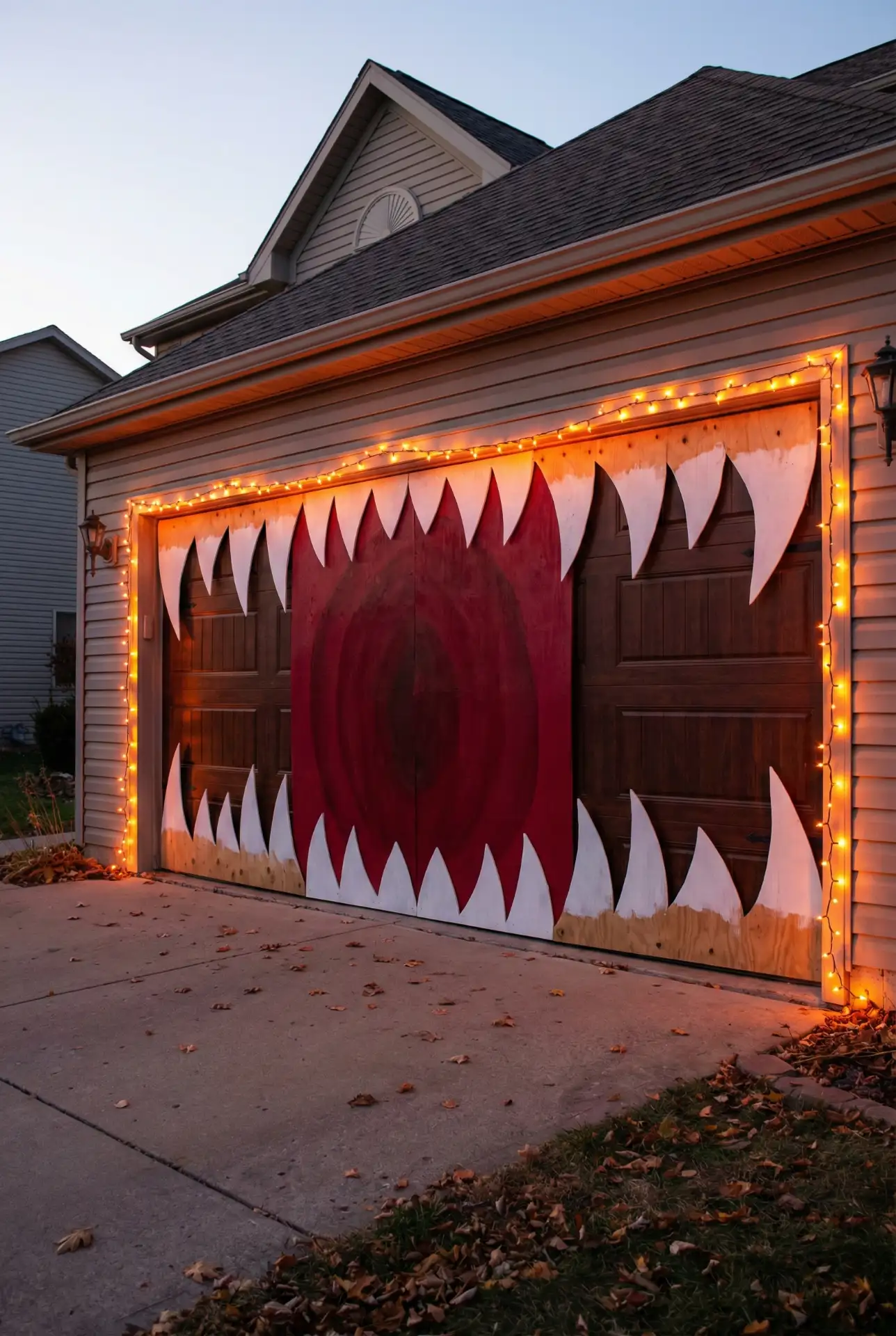
If Christmas gets your garage door decked out, Halloween deserves equal attention. Garage door covers, projection mapping, and oversized spider webs turn this often-overlooked surface into the centerpiece of your spooky décor. Pinterest is flooded with DIY ideas for creating monster mouths, haunted house entrances, and glowing jack-o’-lanterns—all scaled to fit a standard double garage door.
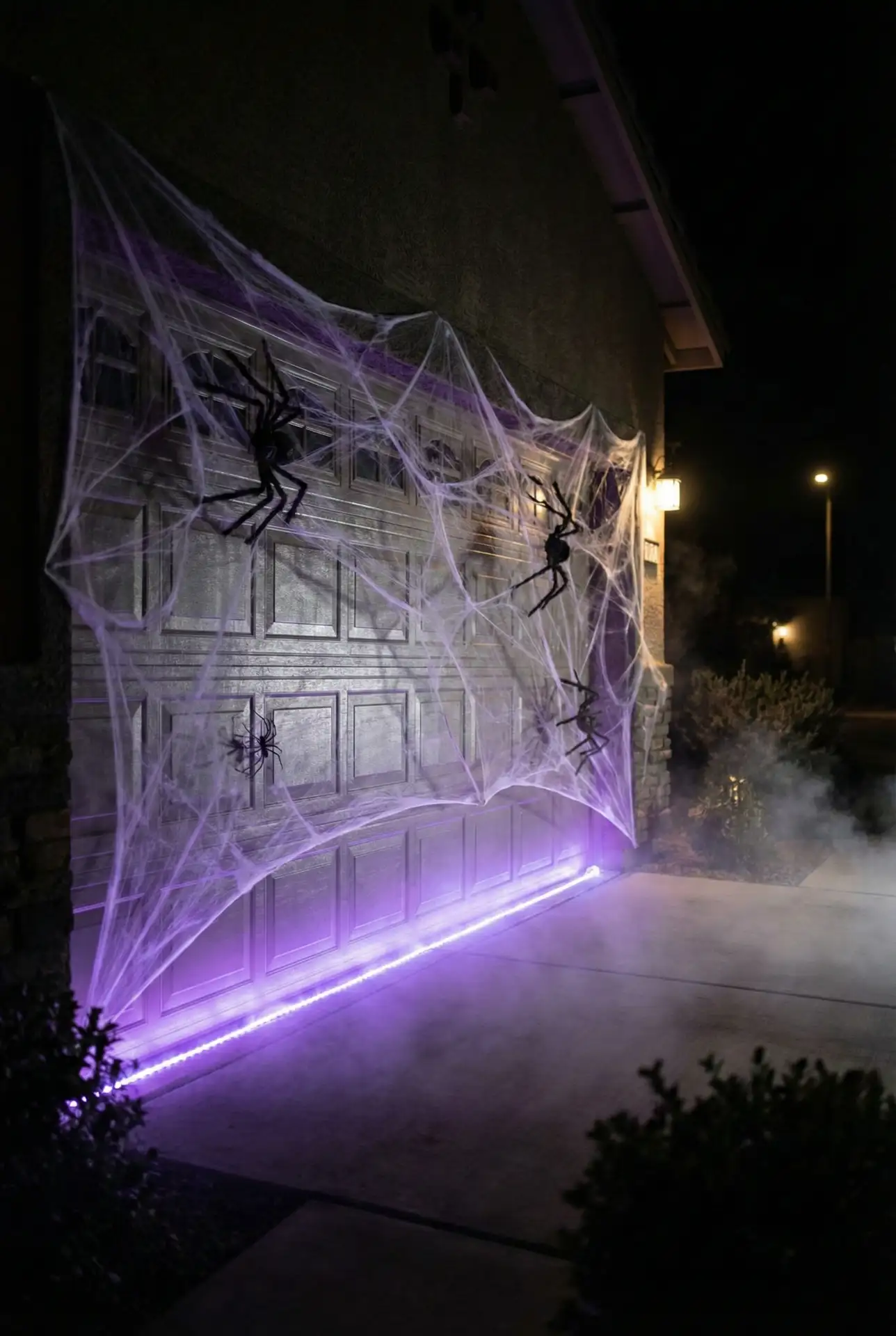
Budget-conscious decorators can use black plastic tablecloths, foam core, and dollar-store props to create impressive effects for under $30. The key is scale—what looks good on a front door will disappear on a garage, so think bigger and bolder.
12. Converting a Garage into Living Space with Interior Door Access
As housing costs climb, more Americans are converting garages into rental units, home offices, or guest suites. A critical step in this process is adding a door from the kitchen to the garage or another interior access point that makes the space feel integrated. This often involves reframing part of the wall, adding insulation, and meeting local code requirements for fire separation and egress.
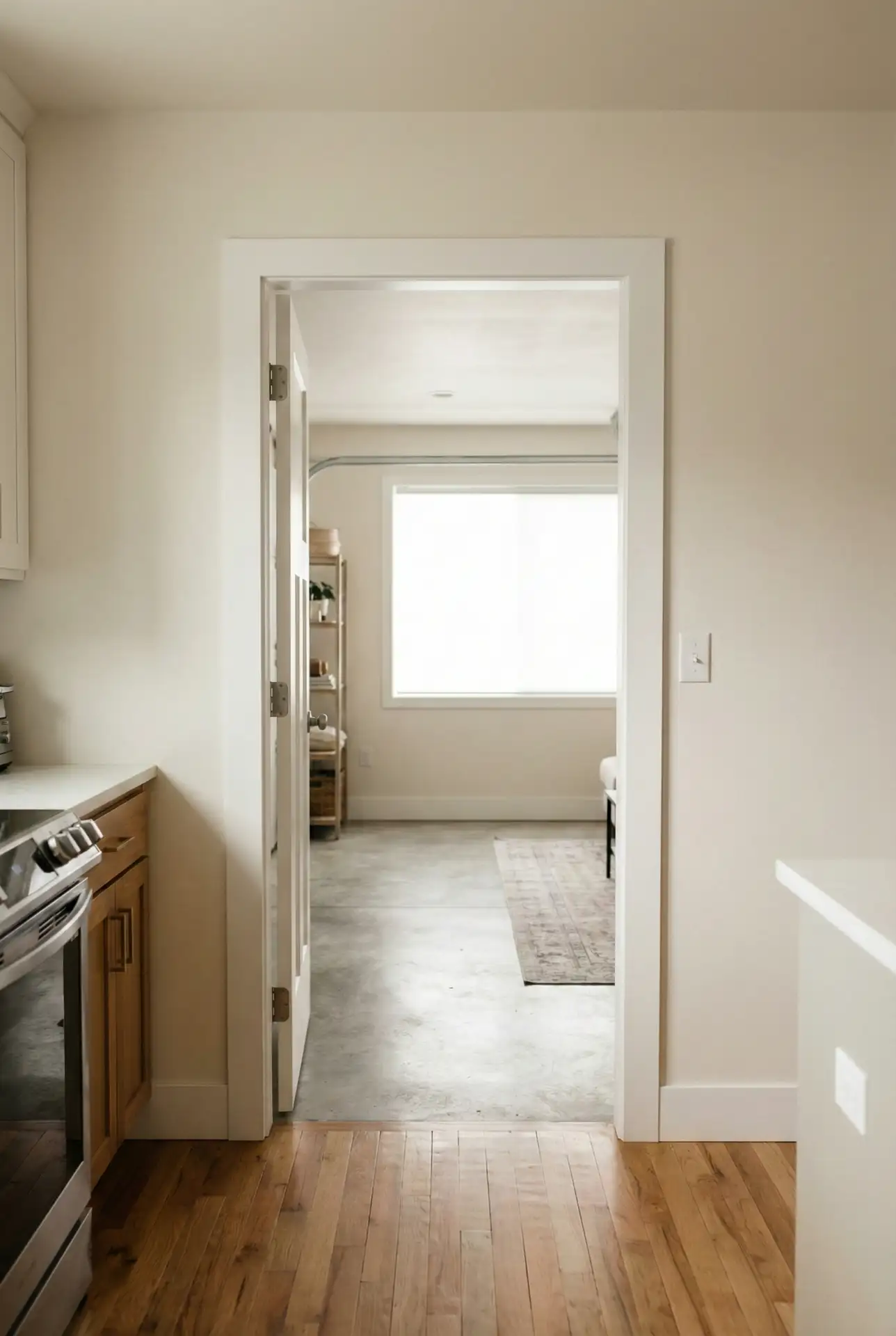
Before starting, check with your local building department—some areas require permits, inspections, and permanent changes to property records. In California, for example, garage conversions must include a certain number of parking spaces to remain legal, while other states are more flexible.
13. Closing Off an Open Carport with a New Door
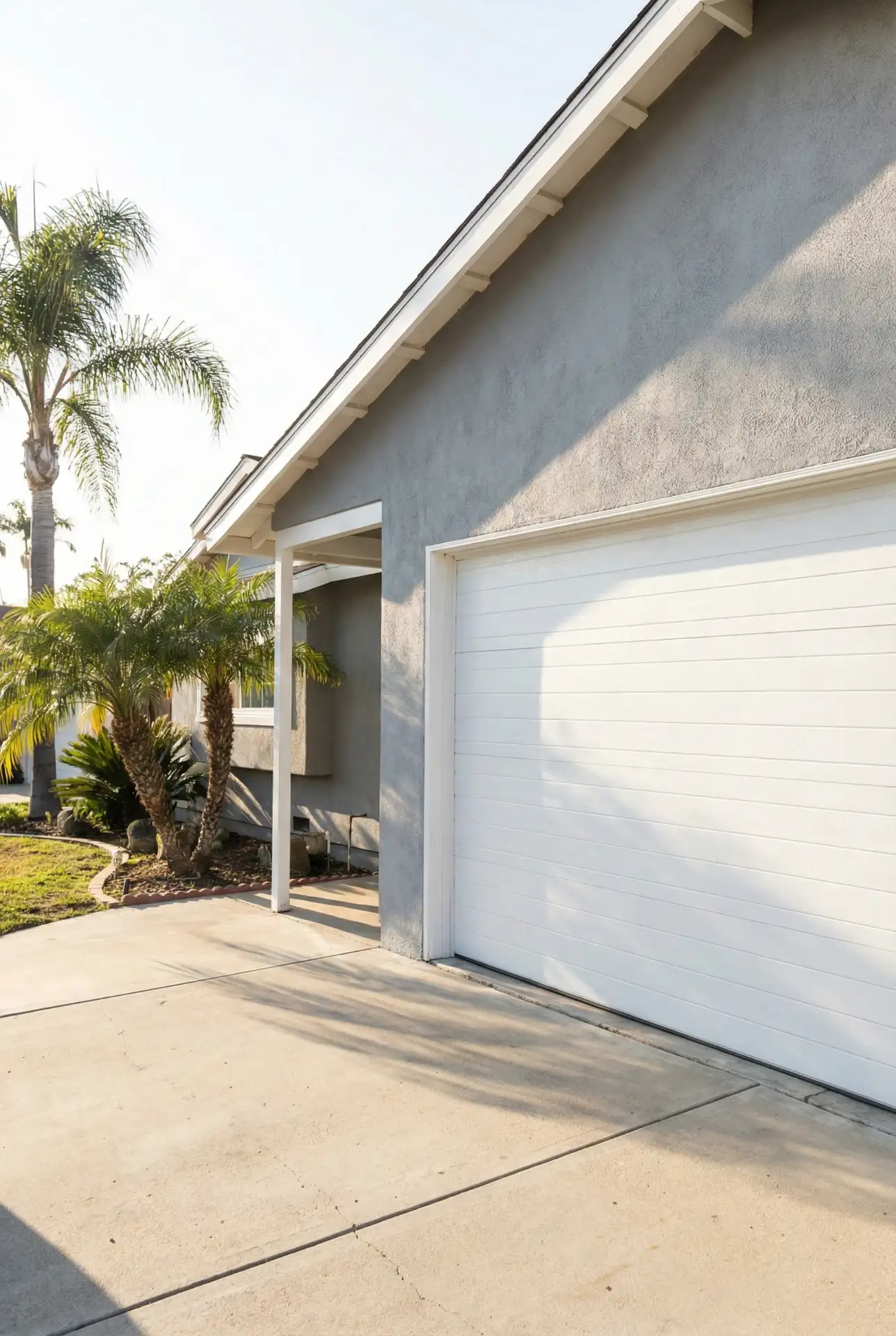
Many mid-century homes and ranch-style properties feature open carport designs that leave vehicles exposed to the elements. Closing in a carport by adding a garage door not only protects your car but also creates valuable enclosed storage. This project typically involves building a front wall, installing a header beam, and selecting a door that matches your home’s existing architecture.
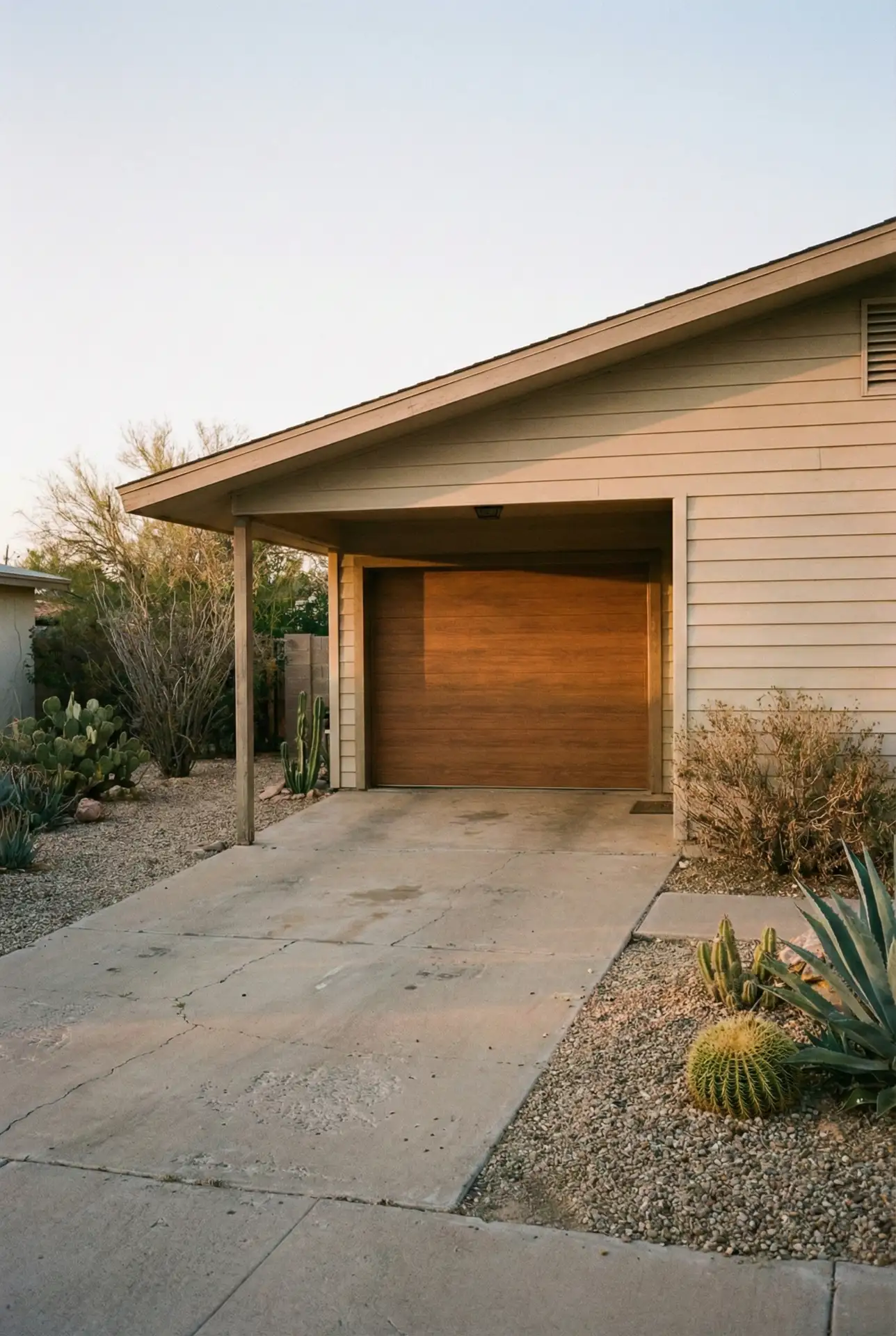
Common mistakes include underestimating the structural work required—most carports weren’t built to support the weight of a door and opener system. Consult a contractor to ensure the roof framing and supports are adequate before you order materials.
14. Closing Off a Garage Opening to Create a Room
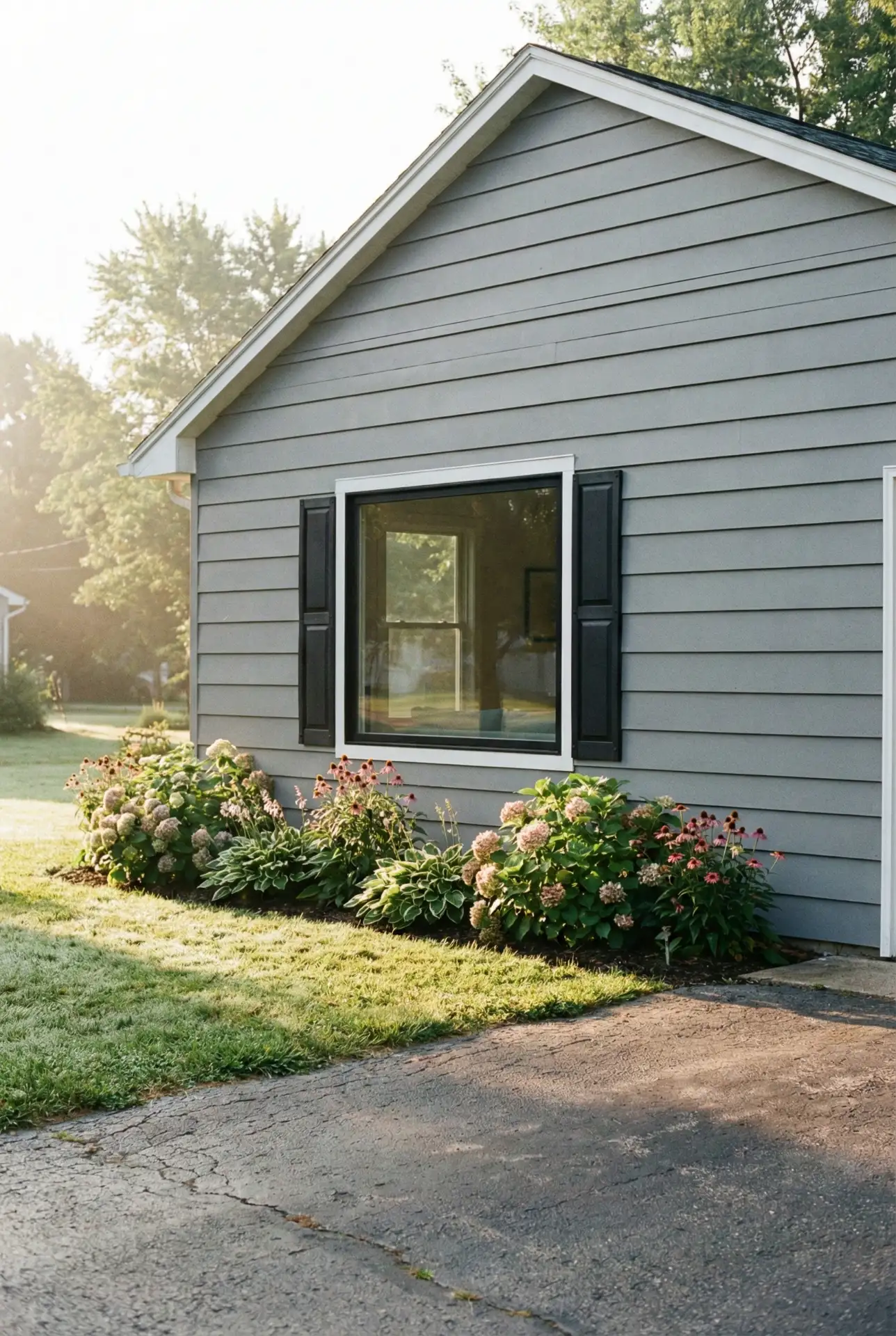
If you’re not converting the entire garage but simply want to reclaim some square footage, closing off the garage door opening and replacing it with a wall and windows can create a finished room. This is a popular approach for home gyms, playrooms, or craft studios where you don’t need vehicle access but want the space to feel like part of the main house.
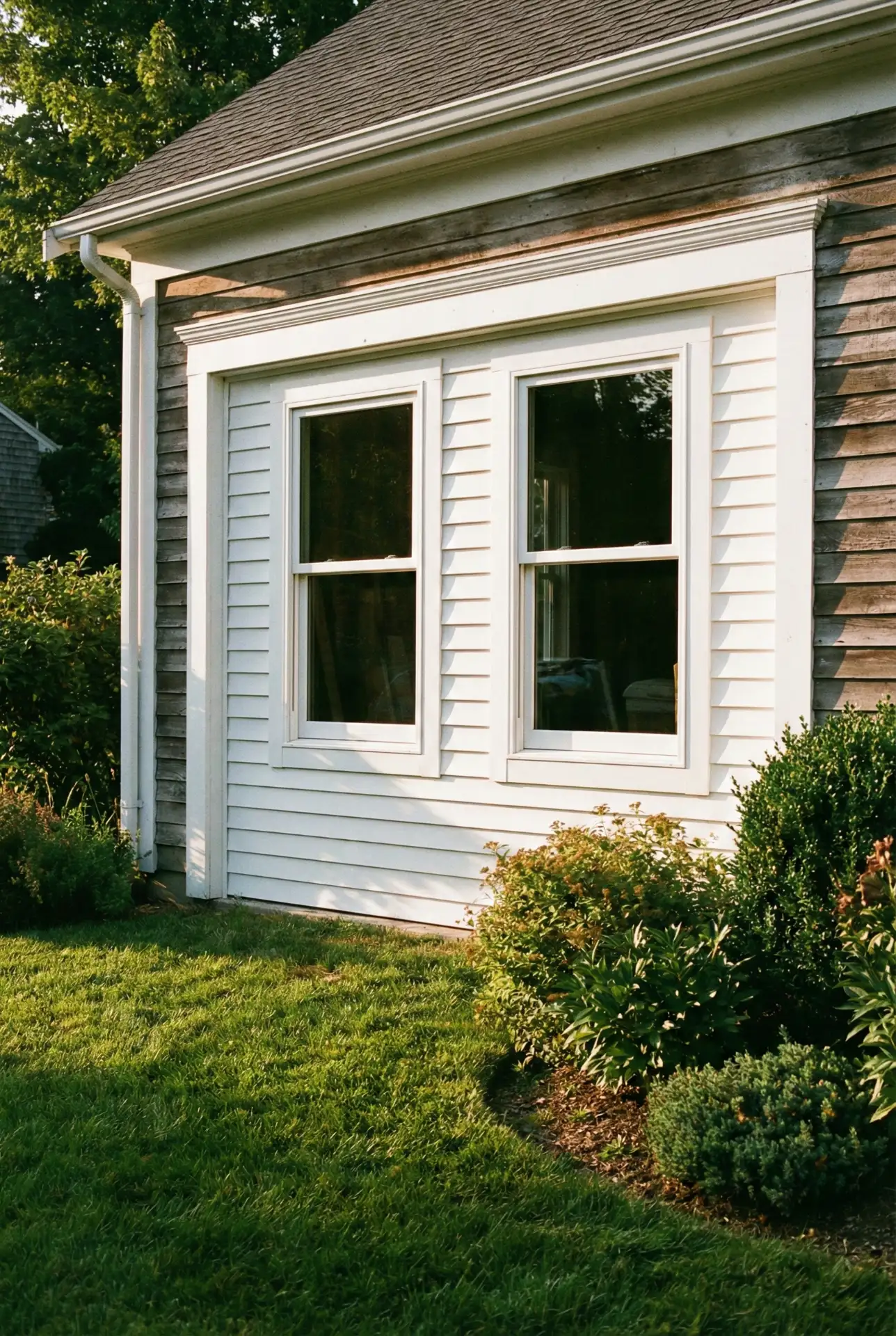
Expect to spend $3,000 to $8,000 on framing, insulation, drywall, and finish work, not including windows. If you add HVAC, electrical, and flooring upgrades, costs can climb quickly. Get multiple quotes and ensure your contractor pulls the necessary permits.
15. Garage Door Opening onto a Patio Space
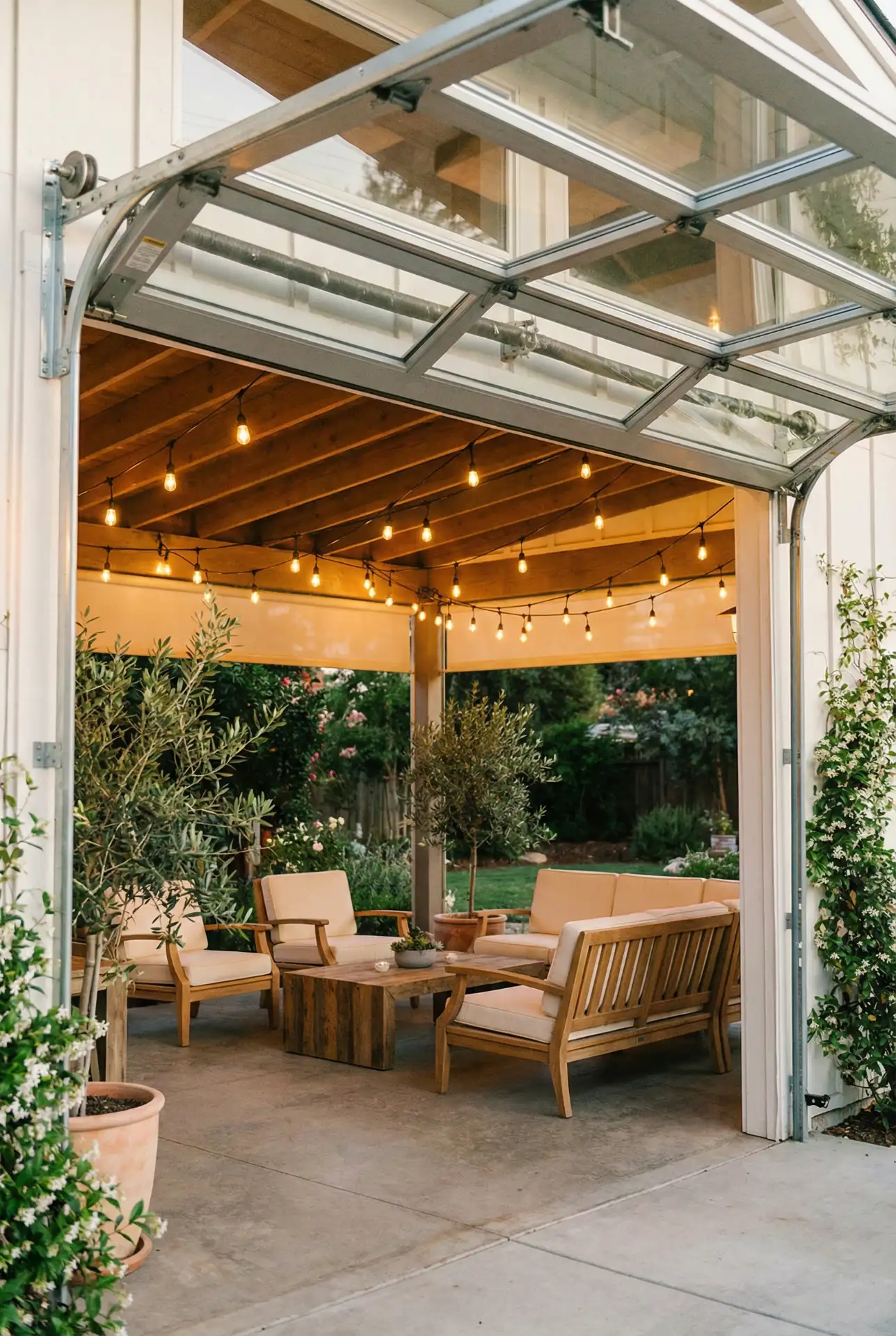
Some homeowners are rethinking the traditional garage layout altogether, designing spaces where a roll-up or bifold garage door opens directly onto a patio or outdoor living area. This creates a seamless indoor-outdoor flow perfect for entertaining, especially in warmer climates. When the door is open, the garage becomes an extension of your backyard; when closed, it’s secure storage.
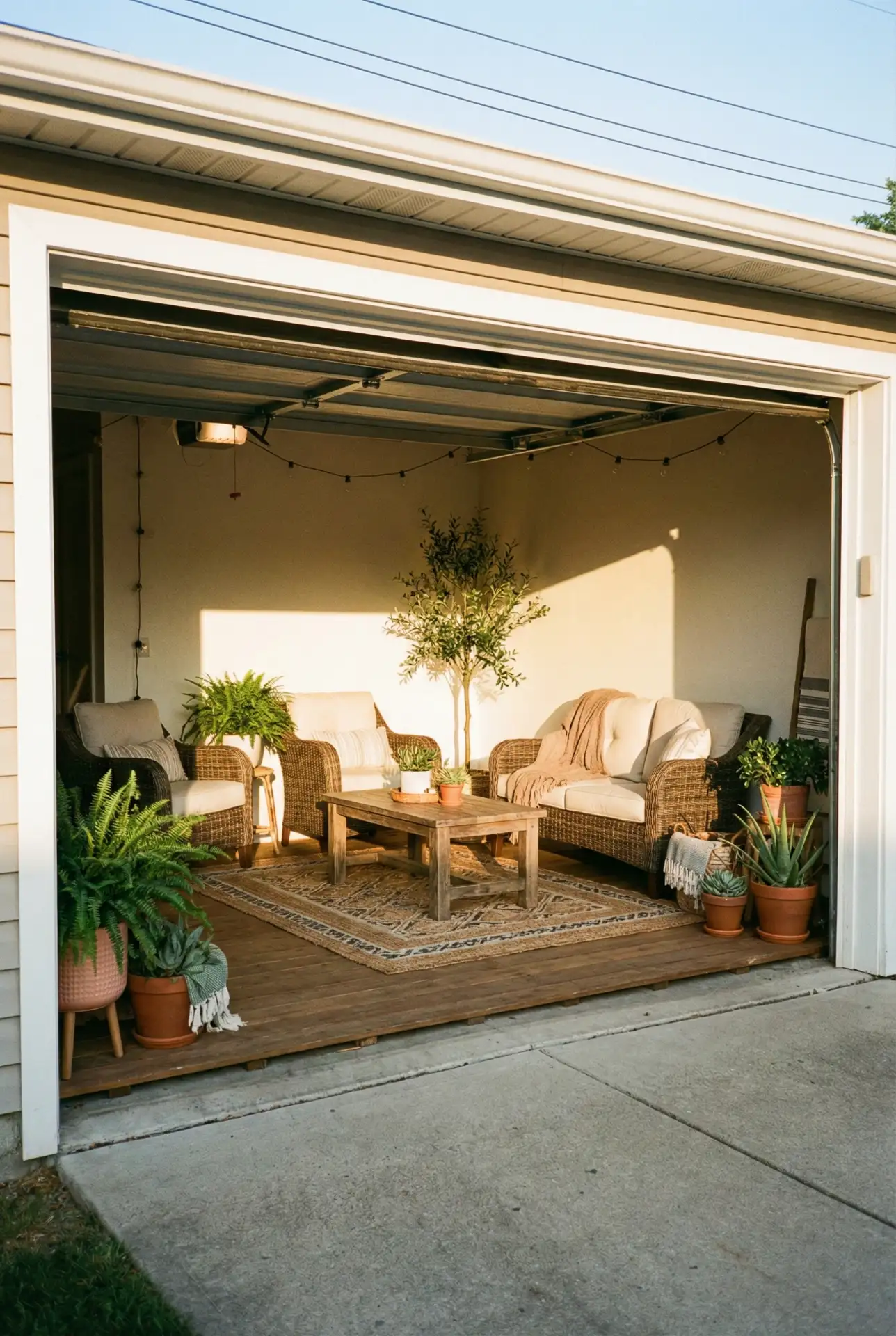
This setup works best in the South and Southwest, where mild winters allow for year-round outdoor use. In the Midwest or Northeast, seasonal temperature swings make it less practical unless you’re only using the patio during warmer months.
16. Garage Door Alternative Materials: Metal and Composite
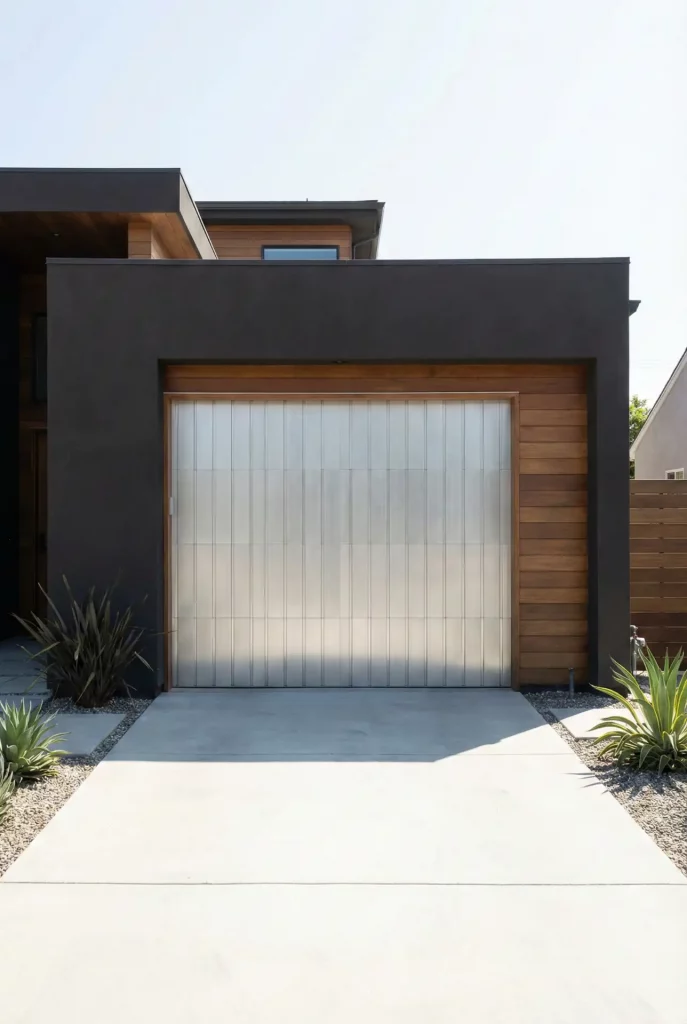
If traditional wood or steel isn’t your style, alternative materials like aluminum, fiberglass, and composite panels offer fresh possibilities. These materials resist rust, warping, and fading, making them ideal for coastal climates or regions with extreme weather. Composite doors can mimic the look of wooden doors without the maintenance, while powder-coated aluminum delivers a sleek, industrial vibe.
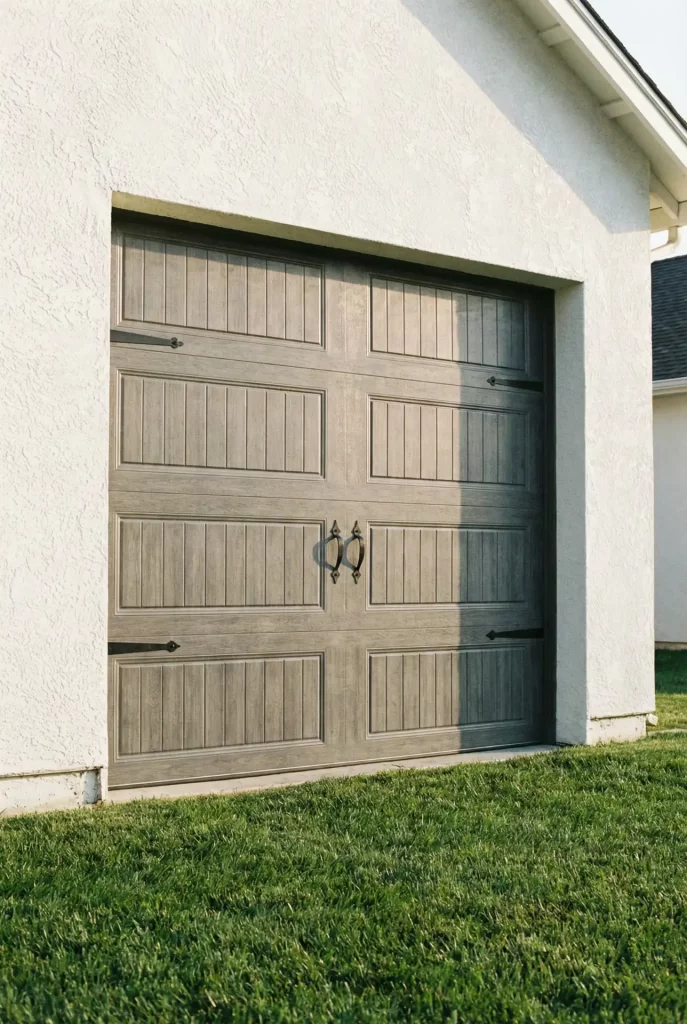
Many real homeowners choose composite for its durability—one couple in Florida reported their composite door survived a hurricane with no damage, while their neighbor’s wood door swelled and required replacement. Upfront costs are higher, but long-term savings on maintenance and repairs can justify the investment.
17 Simple Garage Door Upgrades on a Budget
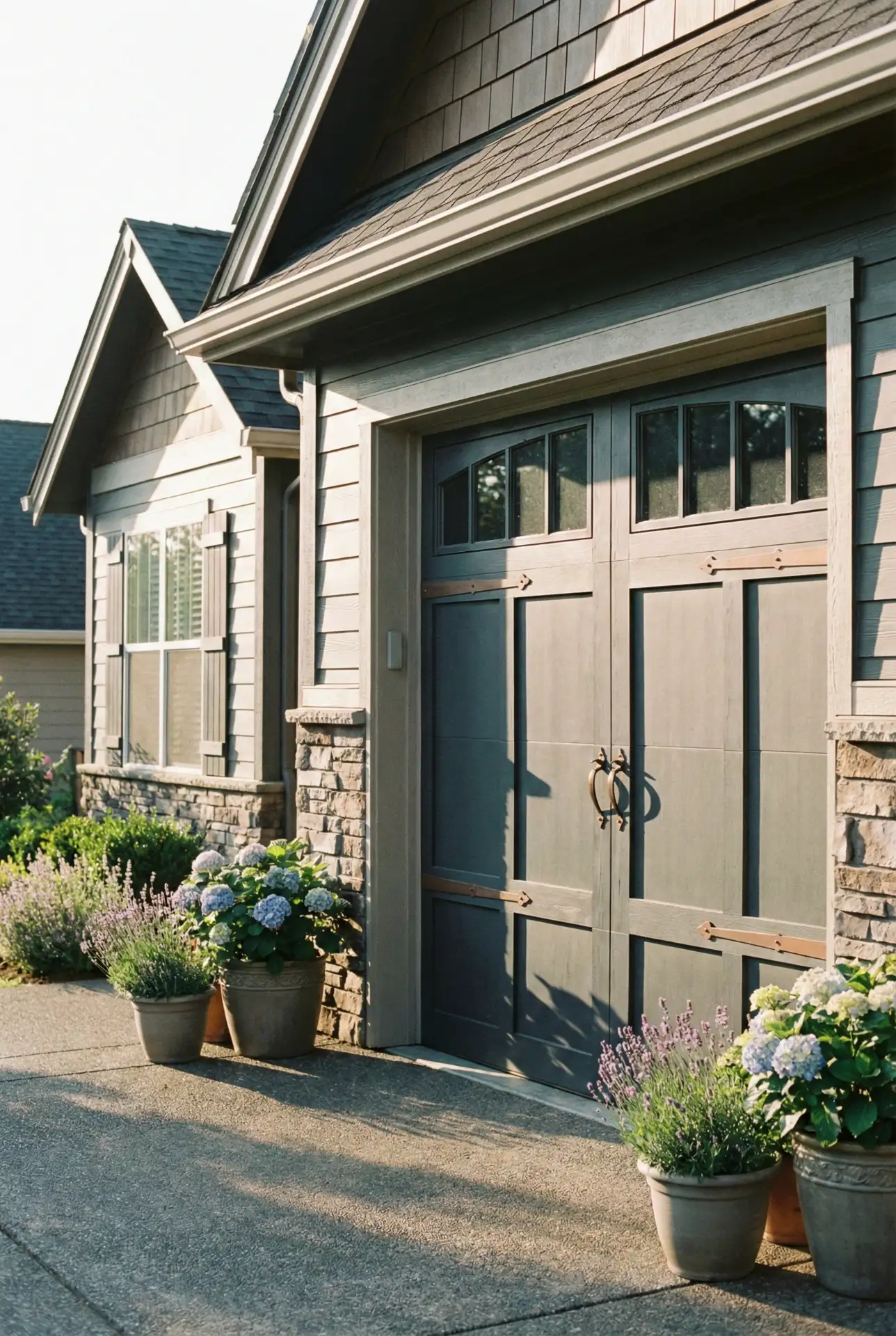
Not every garage door transformation requires a full replacement. Simple upgrades like painting, adding decorative hardware, or installing new handles can dramatically improve your home’s appearance without breaking the bank. Even swapping out dated hinges for black or bronze versions can create a more cohesive, intentional look.
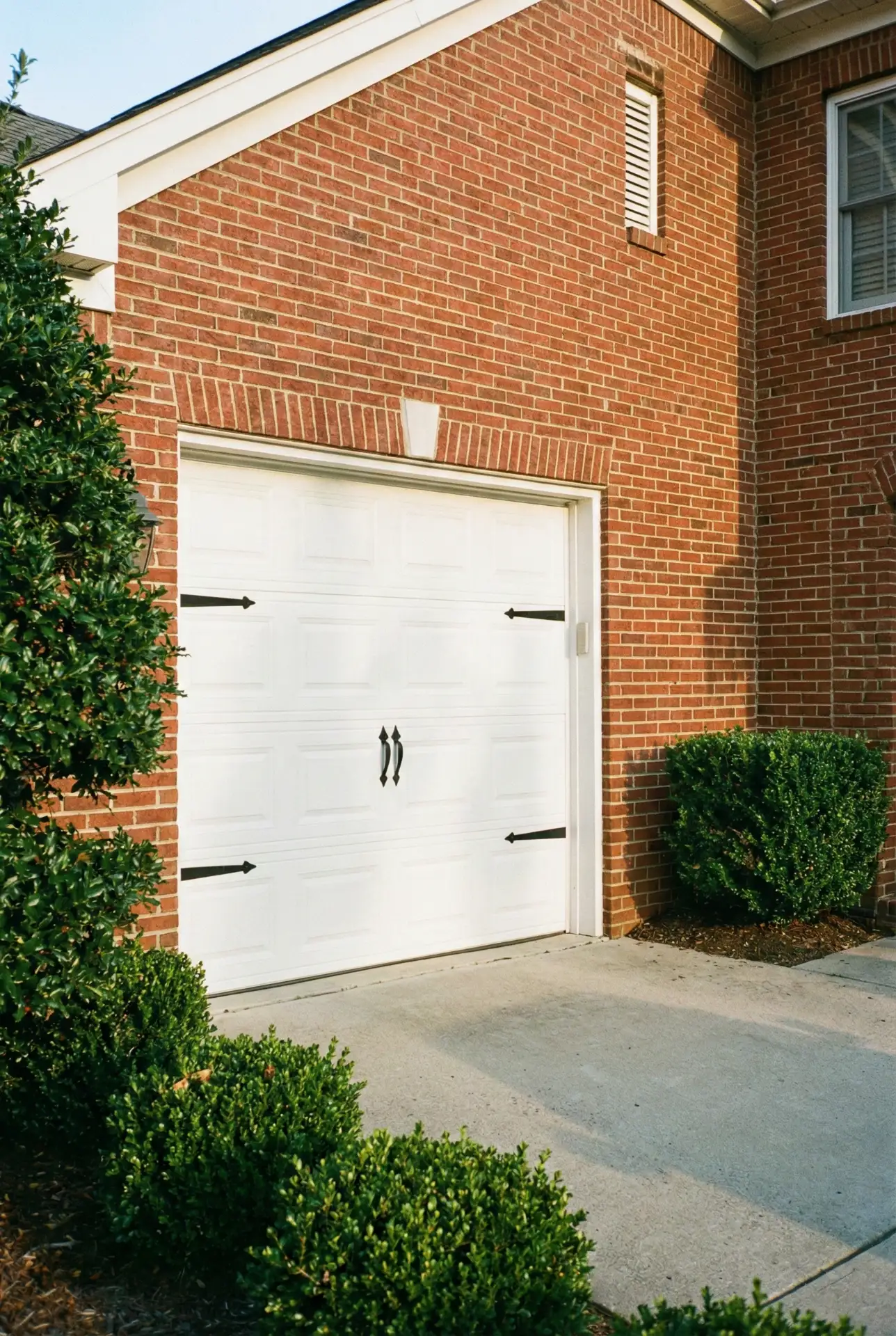
For under $200, you can refresh a tired garage door with new paint and hardware. Choose exterior-grade paint designed for metal or wood, and clean the door thoroughly before applying. This is a weekend project that delivers immediate visual impact and increases your home’s perceived value.
18. Double Garage Doors with Symmetrical Design
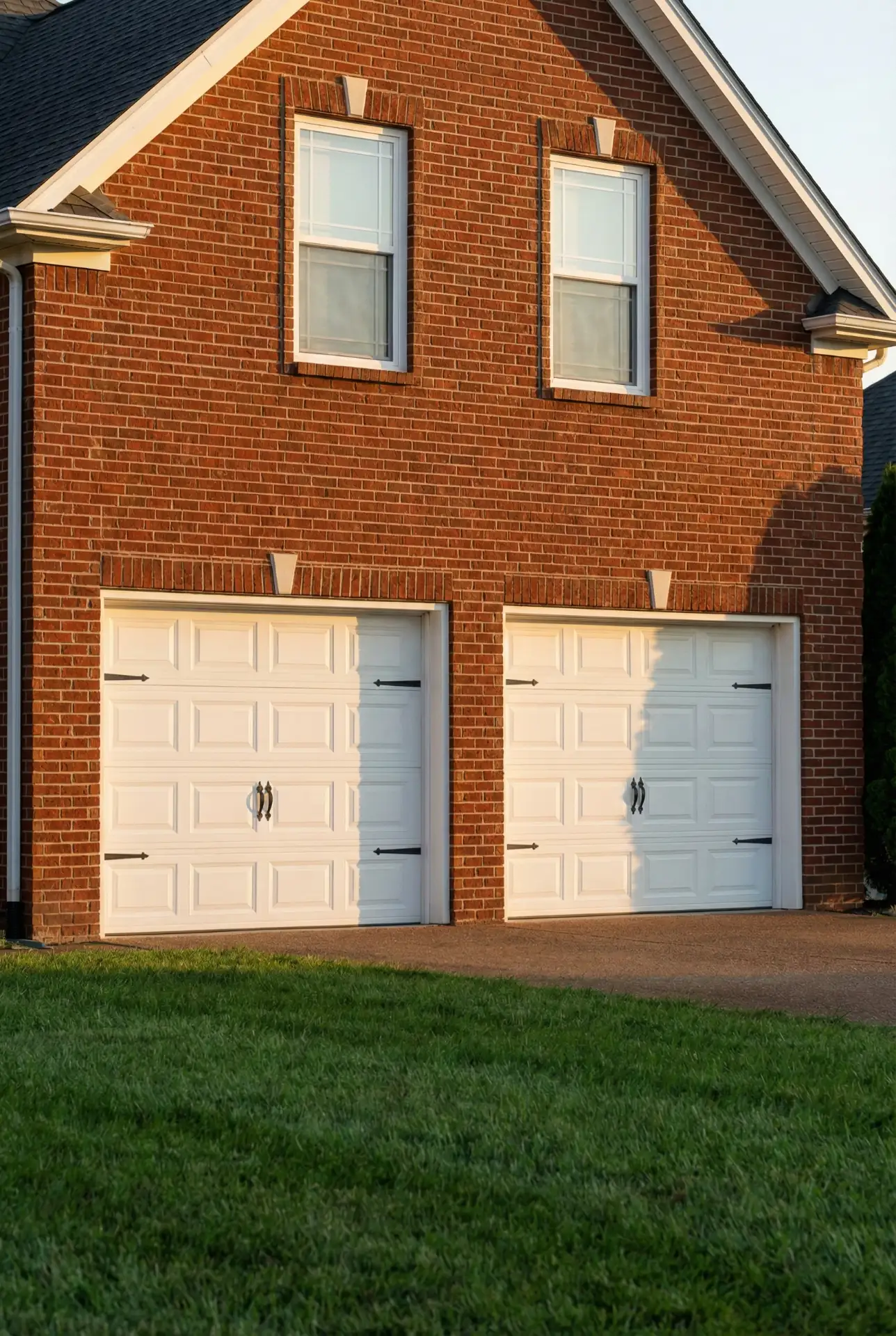
A double garage door layout creates architectural balance and visual rhythm, especially on traditional or colonial-style homes. Two matching doors side by side frame the garage opening and allow for more flexible use—you can open one side for small tasks while keeping the other closed. This setup also tends to look more proportionate on wider homes where a single large door might feel out of scale.
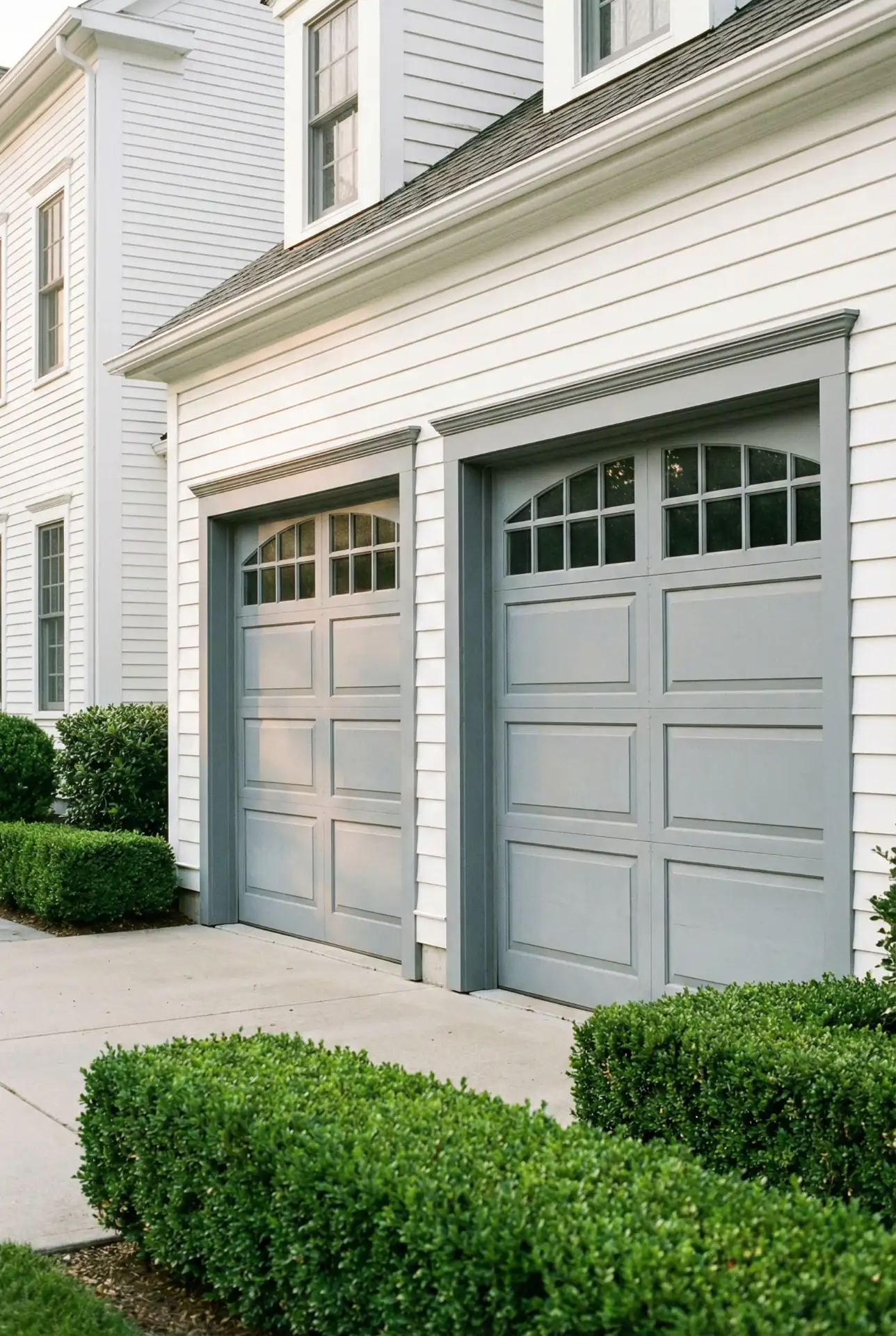
Architects often recommend this configuration when the garage faces the street and dominates the front elevation. The symmetry makes the garage feel intentional rather than an afterthought, especially when paired with coordinating trim, lighting, and landscaping.
19. Transforming Your Garage Interior for Multi-Use Functions
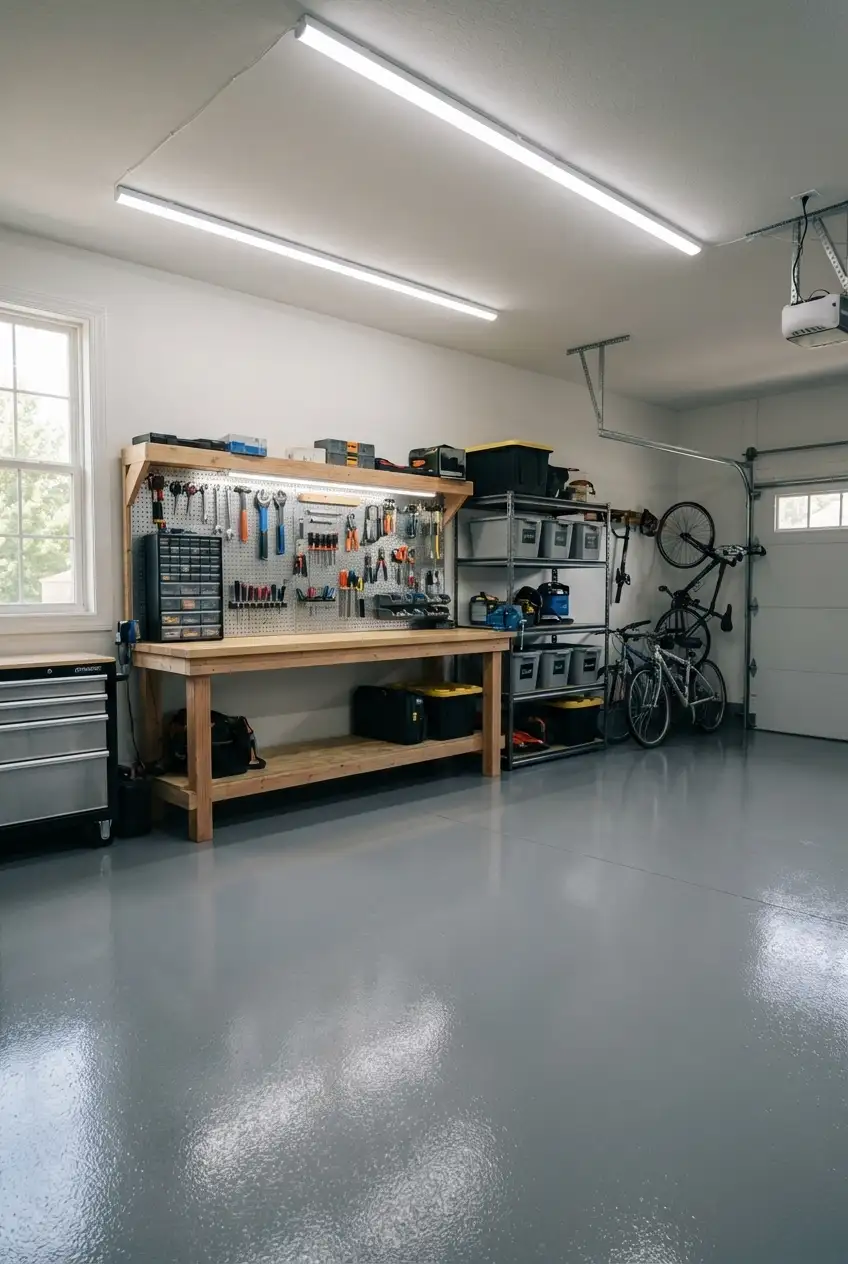
The interior of your garage doesn’t have to be an afterthought. With the right planning, it can serve as a workshop, gym, mudroom, and storage hub all at once. Key upgrades include insulated walls, epoxy flooring, built-in shelving, and task lighting. A well-designed inside space makes daily life more efficient and can even increase your home’s value.
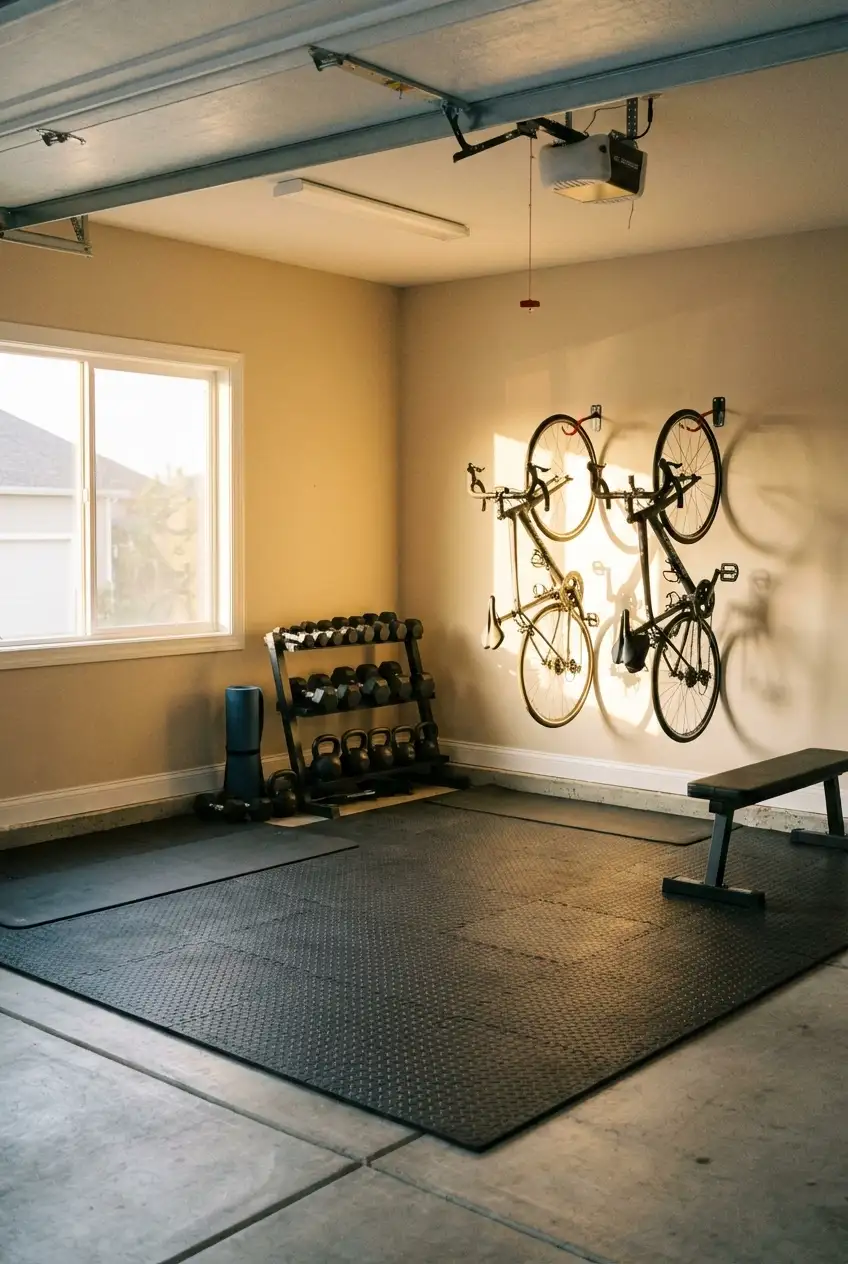
One common mistake is neglecting climate control. An uninsulated garage in Arizona or Minnesota will be unusable for months each year. Budget for a mini-split system or space heater if you plan to spend serious time working or exercising in the space.
20. Carriage-Style Garage Doors for Classic Charm
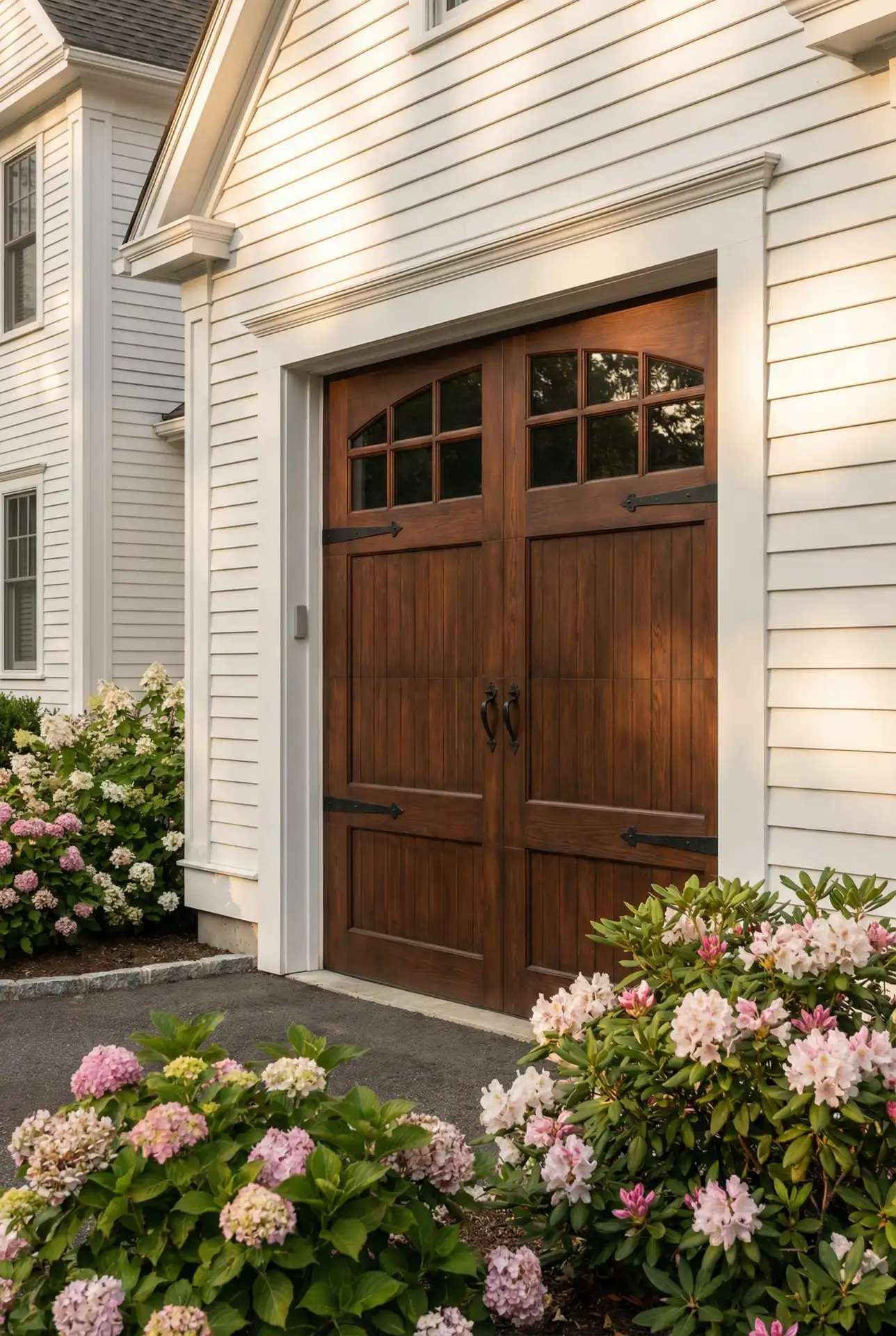
Carriage-style doors bring old-world elegance to any home, evoking the look of historic carriage houses with arched windows, decorative hardware, and panel detailing. These doors work beautifully on farmhouse, colonial, and cottage-style homes where authenticity matters. Many modern versions use overhead tracks and openers, combining vintage aesthetics with contemporary convenience.
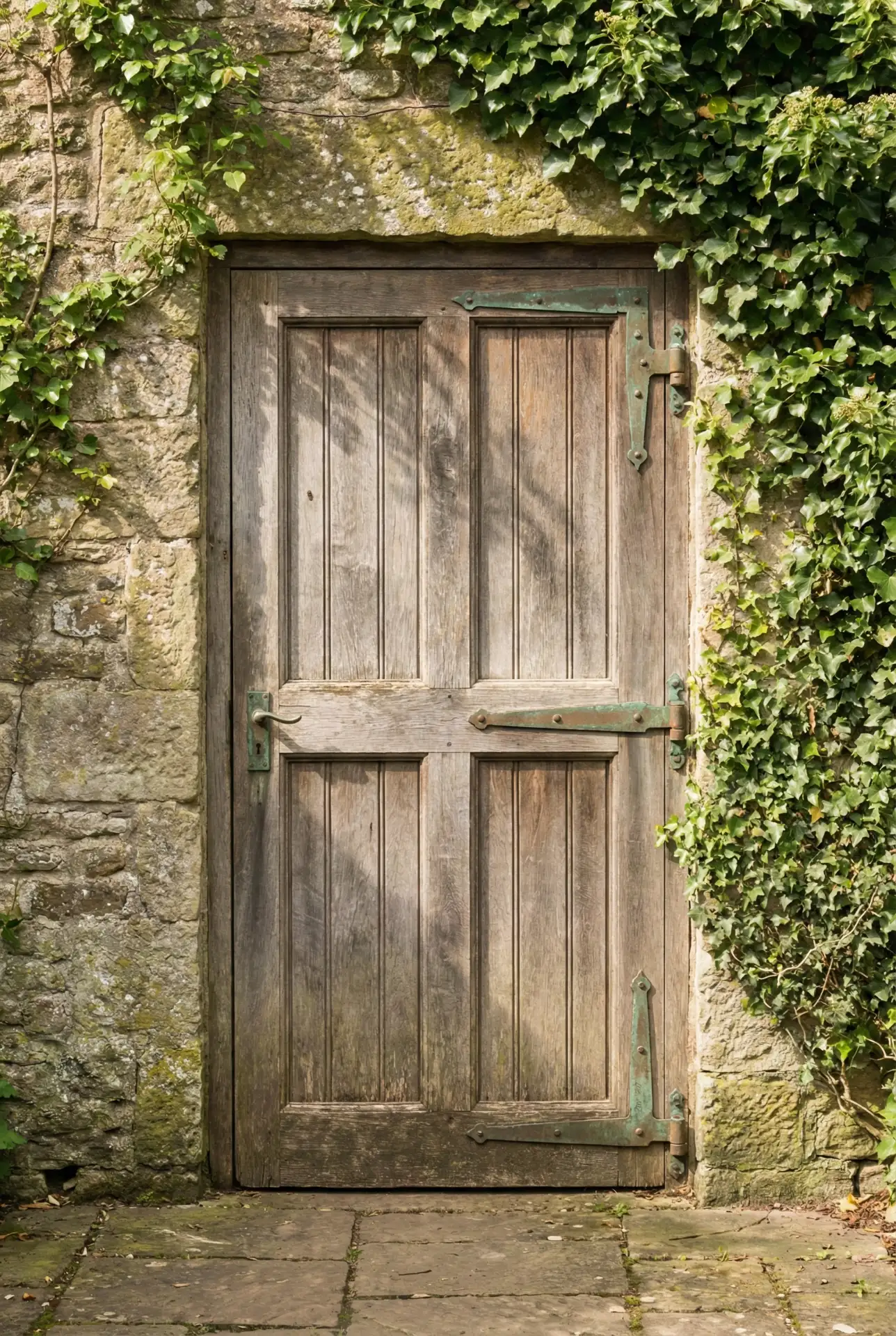
This style is everywhere in New England, the Mid-Atlantic, and parts of the South where historic architecture is celebrated. If your neighborhood leans traditional, a carriage-style door can help your home blend in while still standing out for its attention to detail.
21. Minimalist Garage Doors with Flush Panels
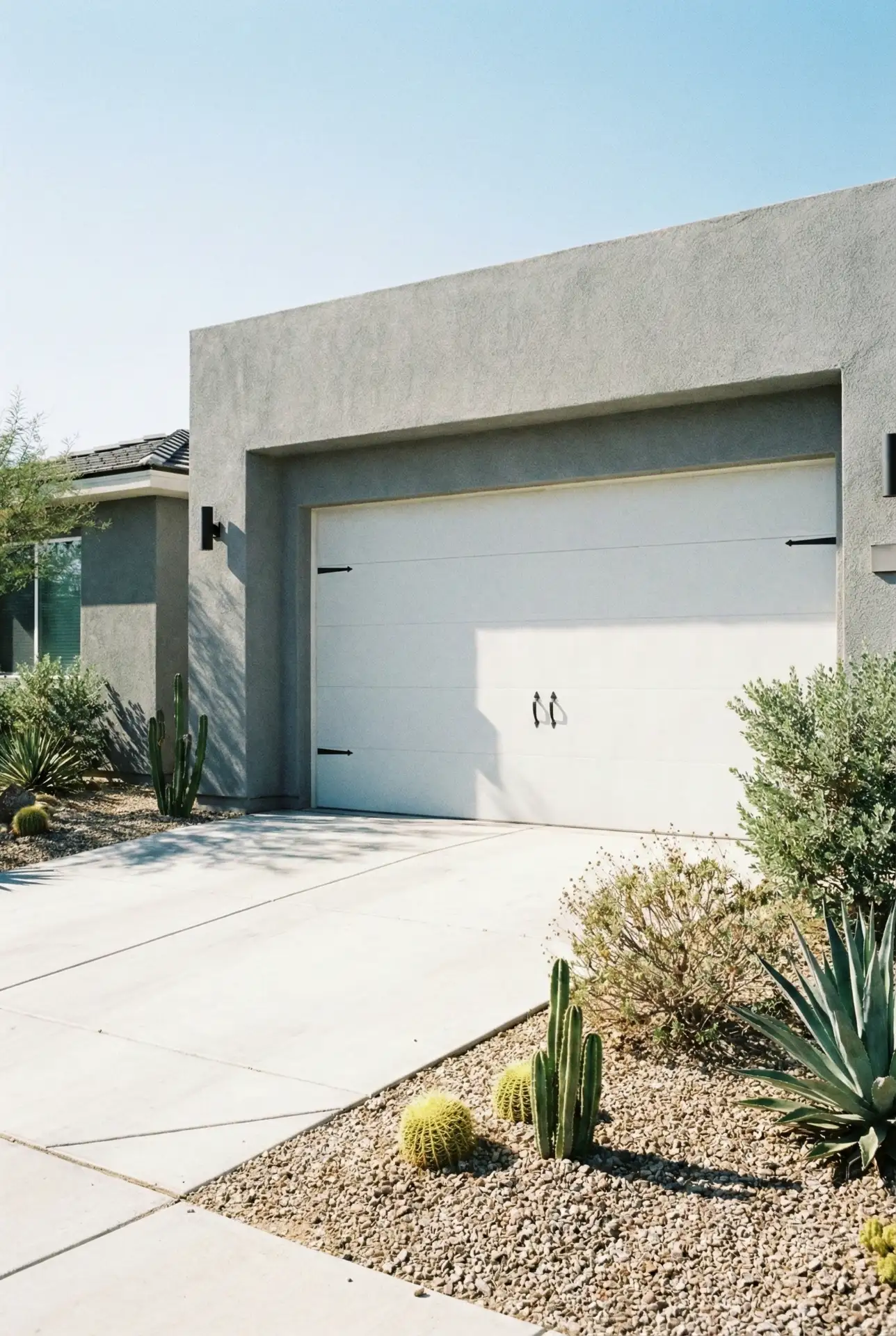
For those who prefer clean lines and understated elegance, a flush-panel garage door in a neutral color offers a modern minimalist aesthetic. These doors lack raised panels or texture, creating a smooth, uninterrupted surface that pairs beautifully with contemporary architecture. They’re often seen in mid-century modern and Scandinavian-inspired homes where less is more.
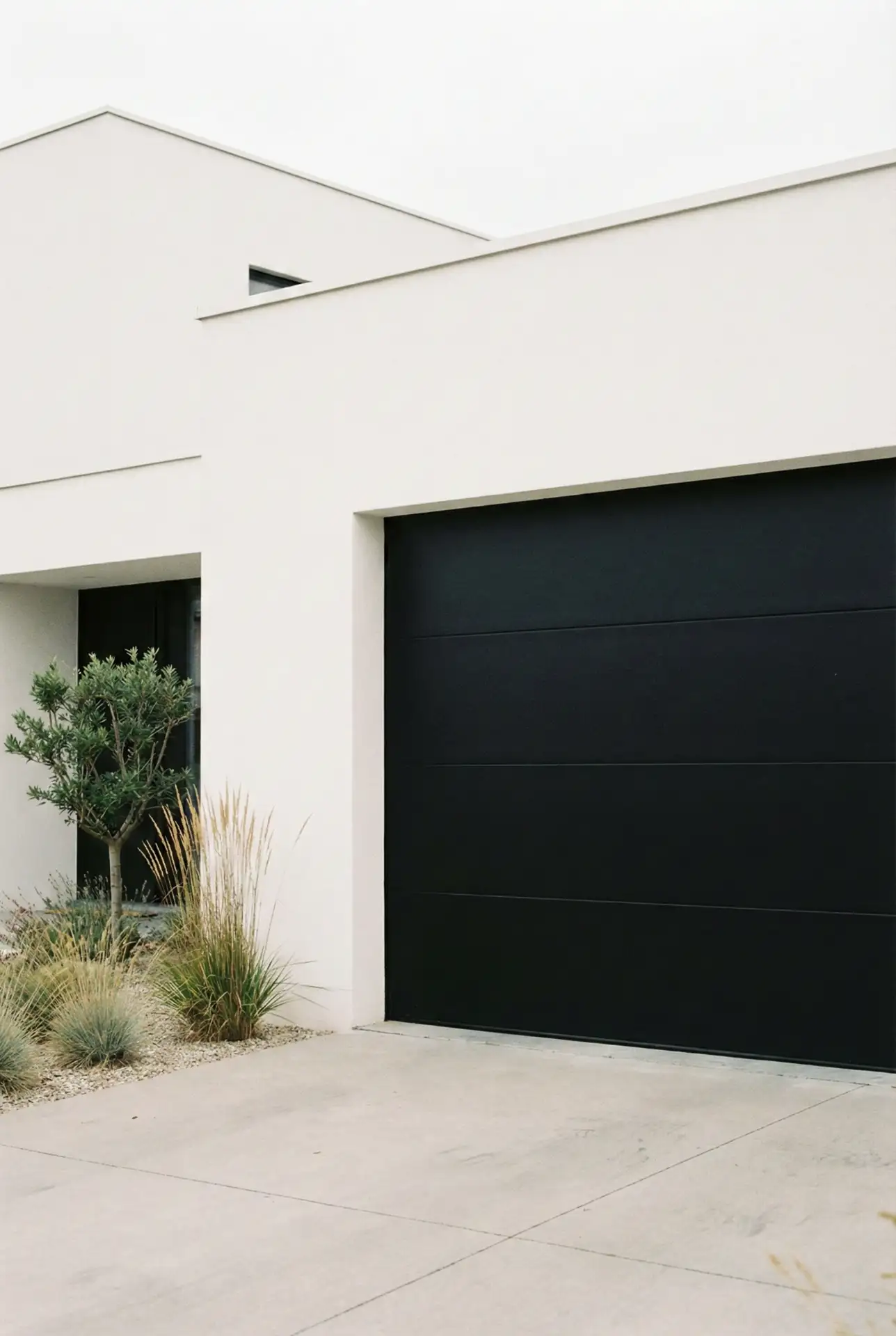
Homeowners who choose this style appreciate its versatility—it never feels dated and works with virtually any exterior color scheme. It’s a safe bet if you’re planning to sell in the next few years and want broad appeal.
22. Garage Doors with Smart Technology Integration
In 2026, many garage door openers come with built-in Wi-Fi, smartphone controls, and integration with home automation systems. This means you can open or close your door from anywhere, receive alerts when it’s been left open, and even grant temporary access to delivery drivers. It’s a practical upgrade that enhances security and convenience, especially for busy families or frequent travelers.
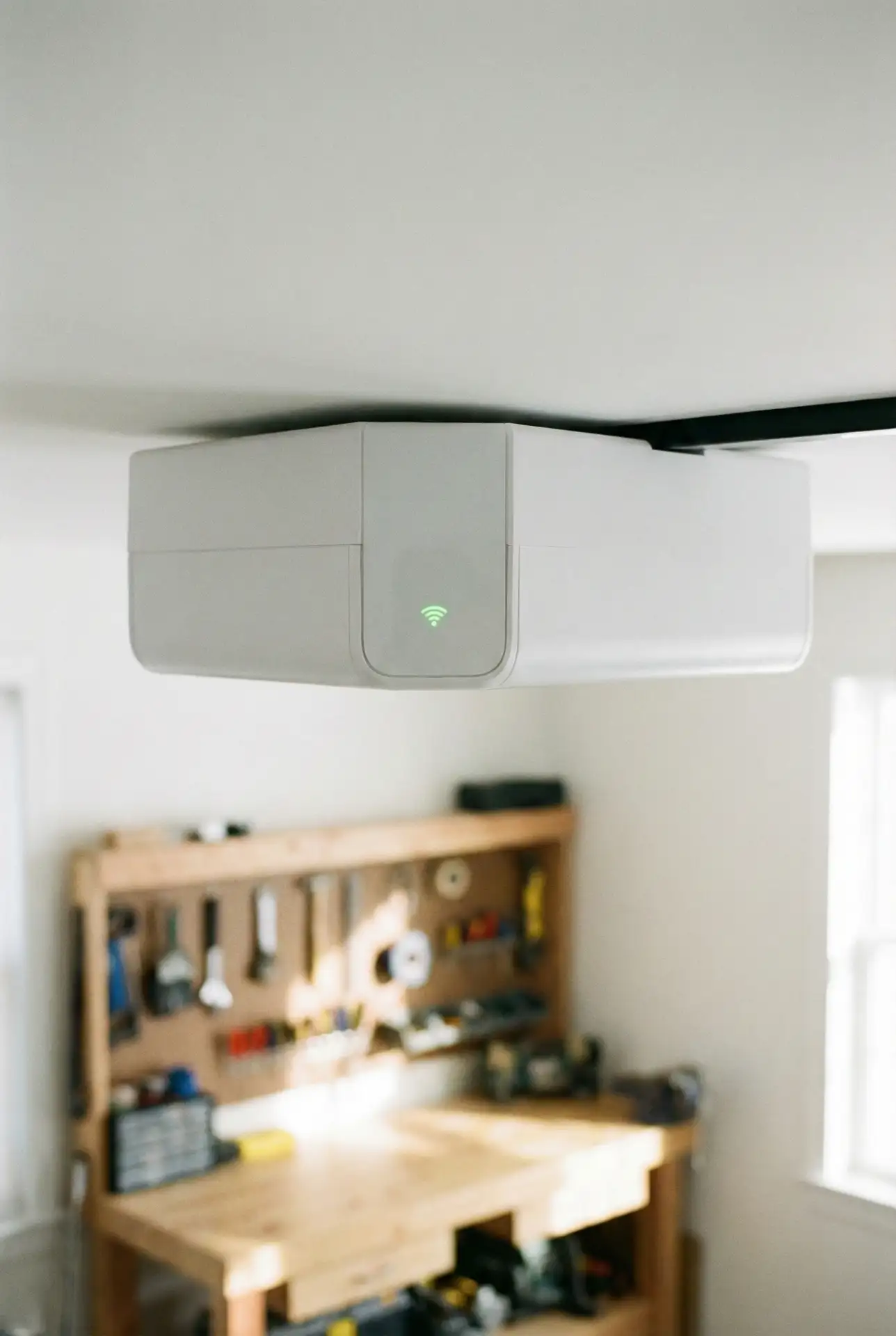
A friend in Seattle installed a smart opener after repeatedly driving back home to check if she’d closed the door. She says the peace of mind alone was worth the $300 investment, and the app’s activity log gives her a record of every time the door opens—useful for tracking teenage drivers.
23. Mixing Materials for a Custom Garage Door Look
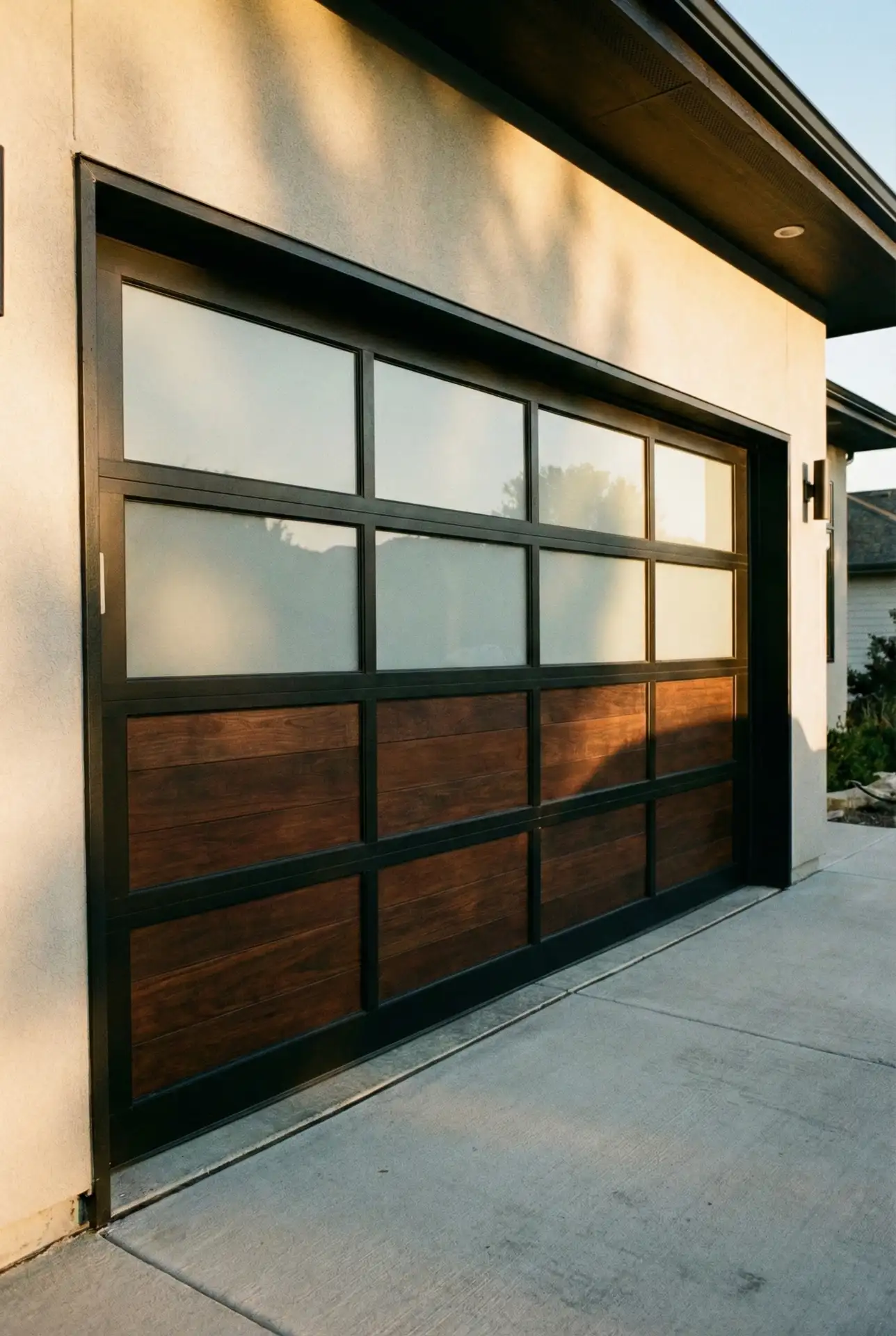
Why settle for a single material when you can combine wooden panels, metal framing, and glass panel inserts for a truly custom look? This approach allows you to tailor your garage door to your home’s unique character, whether that means pairing reclaimed wood with industrial steel or mixing stained cedar with frosted glass. It’s a bold move that requires careful planning but delivers a one-of-a-kind result.
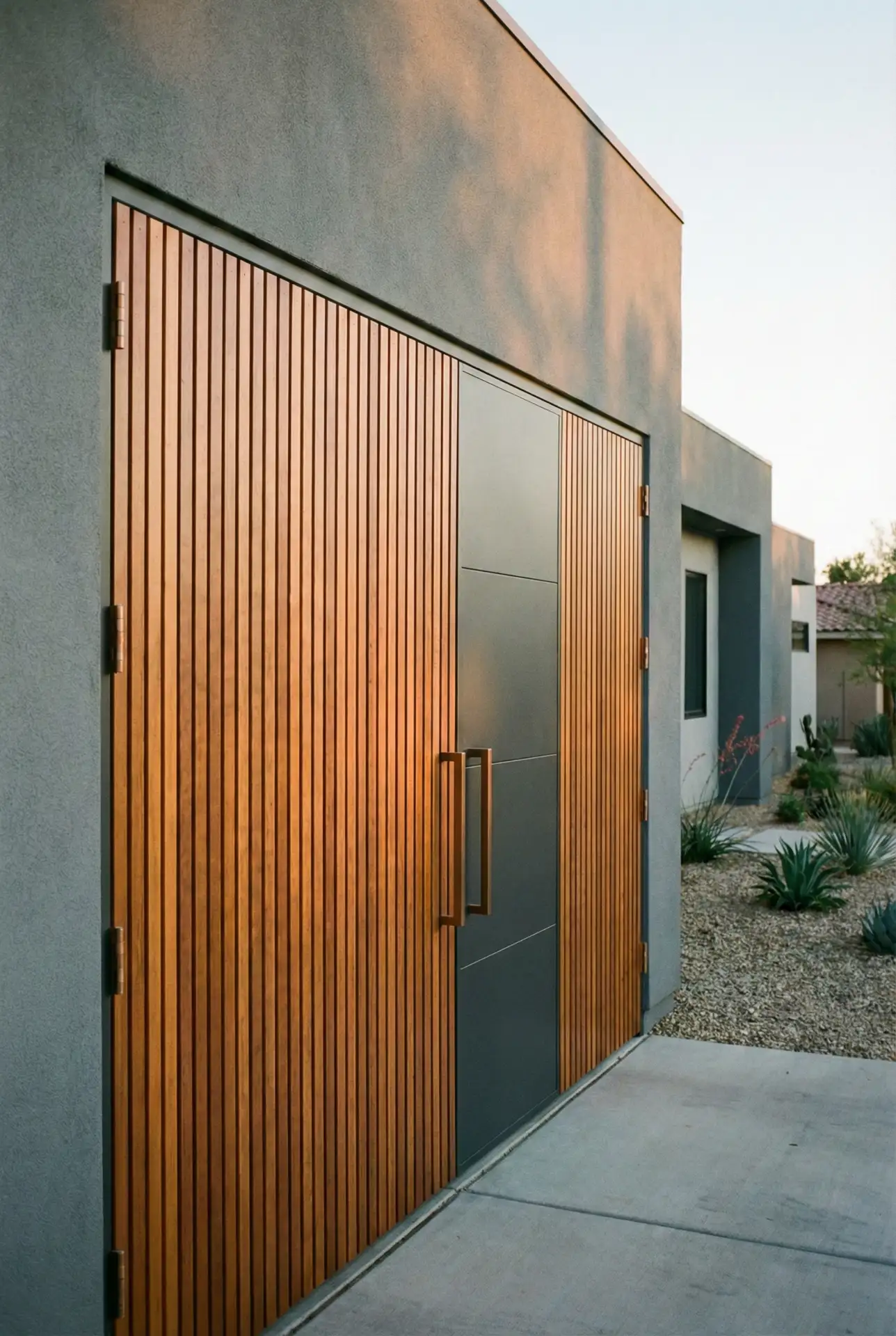
Custom doors typically start around $4,000 and can climb to $10,000 or more depending on size, materials, and complexity. Work with a specialty door manufacturer who can help you balance aesthetics with structural requirements and weather resistance.
Conclusion
Garage doors have come a long way from purely functional fixtures to powerful design statements that reflect your style and enhance your home’s overall appeal. Whether you’re drawn to the warmth of farmhouse wood, the sleekness of modern glass, or the bold simplicity of a freshly painted door, there’s an option here that fits your vision and budget. We’d love to hear which ideas resonate with you—drop a comment below and share your own garage door transformations or plans for 2026.