Front Yard Landscaping Ideas 2026 for low maintenance modern yards with curb appeal upgrades

First impressions begin in front yards, and Front Yard Landscaping Ideas 2026 aim to create a moment that feels intentional, inviting, and personal. American homeowners are heading to Pinterest to figure out how to balance style, maintenance, and budget without losing character. In this guide, you’ll find real-life friendly ideas you can adapt to your region, from easy rock borders to farmhouse porches and corner lots that finally make sense.
1. Clean Modern Entry With Simple Planting
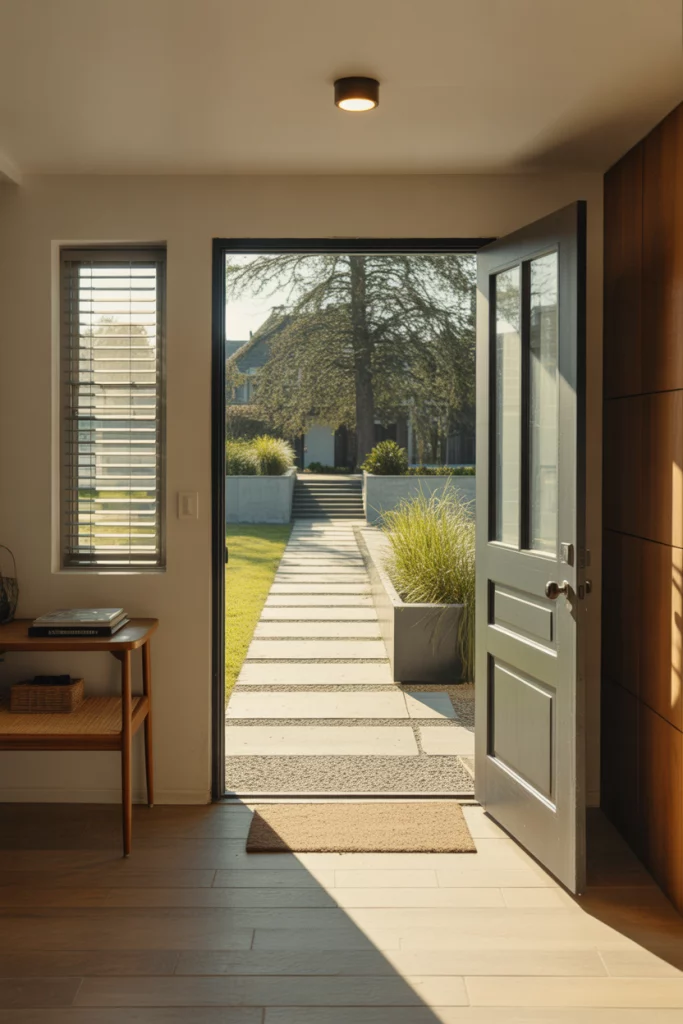
This first idea keeps your entry sleek and calm, perfect if you crave a modern look but want truly low-maintenance care. Think smooth concrete pavers leading to the front door, a narrow band of tidy ornamental grasses, and a crisp line of grass instead of fussy beds. The effect feels airy and current, while still softening the architecture with movement and texture around the walkway. 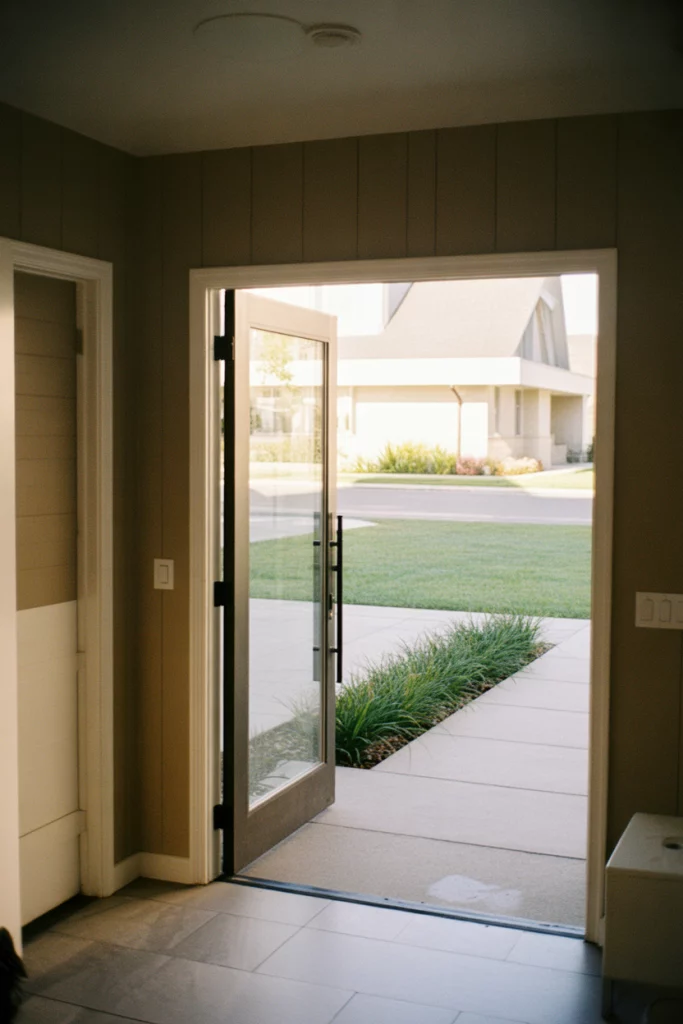
For practical impact, focus your budget on the walkway and front step, since those are the surfaces you touch daily. Choose pavers or poured concrete with a lightly textured finish so they stay safe in rain or snow. Then add just a couple of hardy perennials near the door for color. This small upgrade alone can make the entire home feel more finished without needing to redo the whole yard.
2. Flower Pot Clusters for Small House Charm
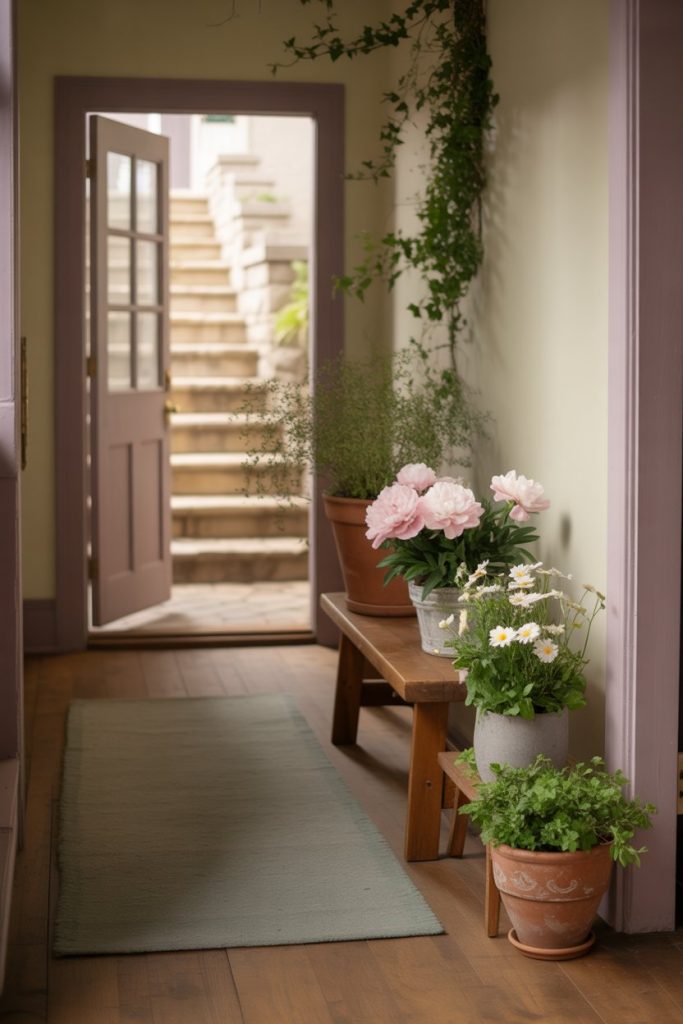
If you have a small house, a few well-placed containers can completely change your front elevation and boost curb appeal. Instead of scattering random planters, group three to five flowerpots of different heights near the front steps. Use one dominant color story—soft pinks, fresh whites, or sunny yellows—to keep the look cohesive and avoid visual clutter from too many plant varieties.
This approach suits American neighborhoods where porches sit close to the sidewalk and you want passersby to see something cheerful. Concentrating containers by the door also makes watering easier, since everything is within a few steps. Choose lightweight pots if you like to rearrange seasonally, and consider a rolling plant stand for the largest container so you can shift it when cleaning or hosting guests.
3. Rock Border for Sloped Front Yards
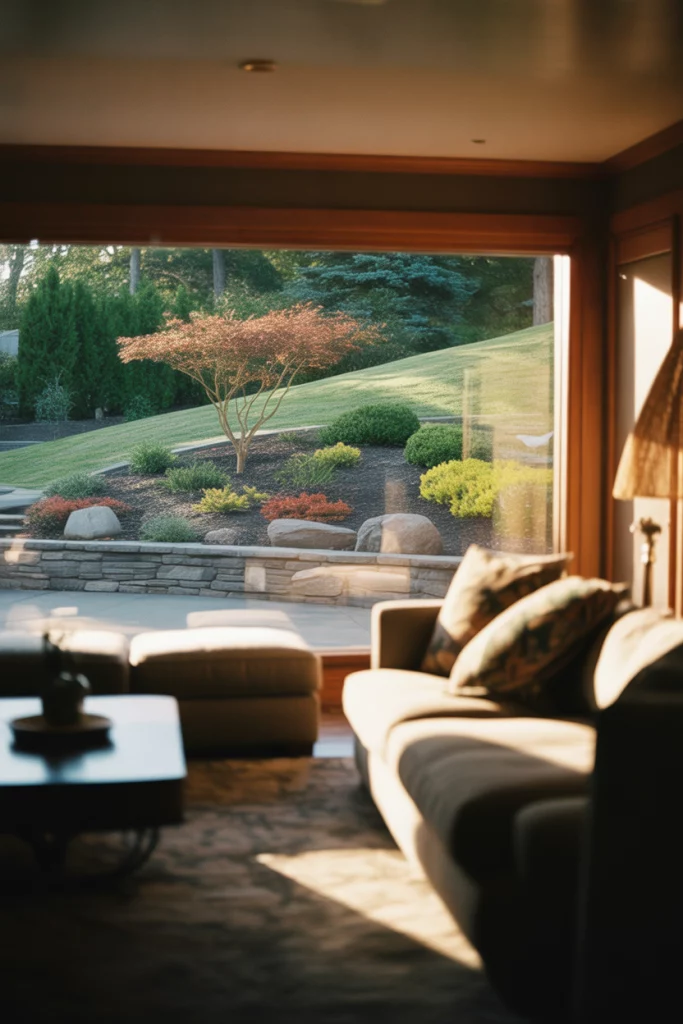
When your front yard is slightly sloped, use natural rocks to create a low retaining border that feels organic instead of engineered. Arrange stones in a loose, staggered line following the contour of the hill, then tuck in groundcovers and shrubs behind them. Add a tree just uphill from the entry path so it anchors the space and visually balances your home’s façade without blocking windows. 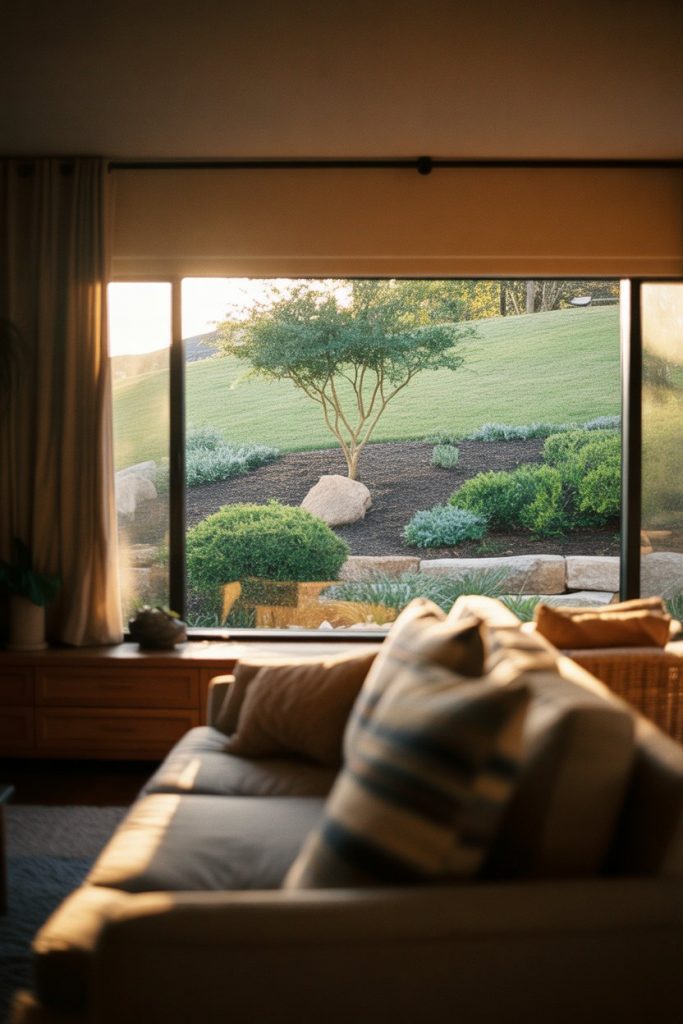
Where this works best is on lots that feel awkward to mow or edge. Turning the slope into a planted vignette reduces the turf you need to maintain while stabilizing soil. Opt for native plants with deep roots to help prevent erosion, and choose rock sizes that are comfortable to sit on in case kids like to climb. The goal is a slope that looks intentional, not like a mowing accident.
4. Cozy Farmhouse Porch With Layered Greenery
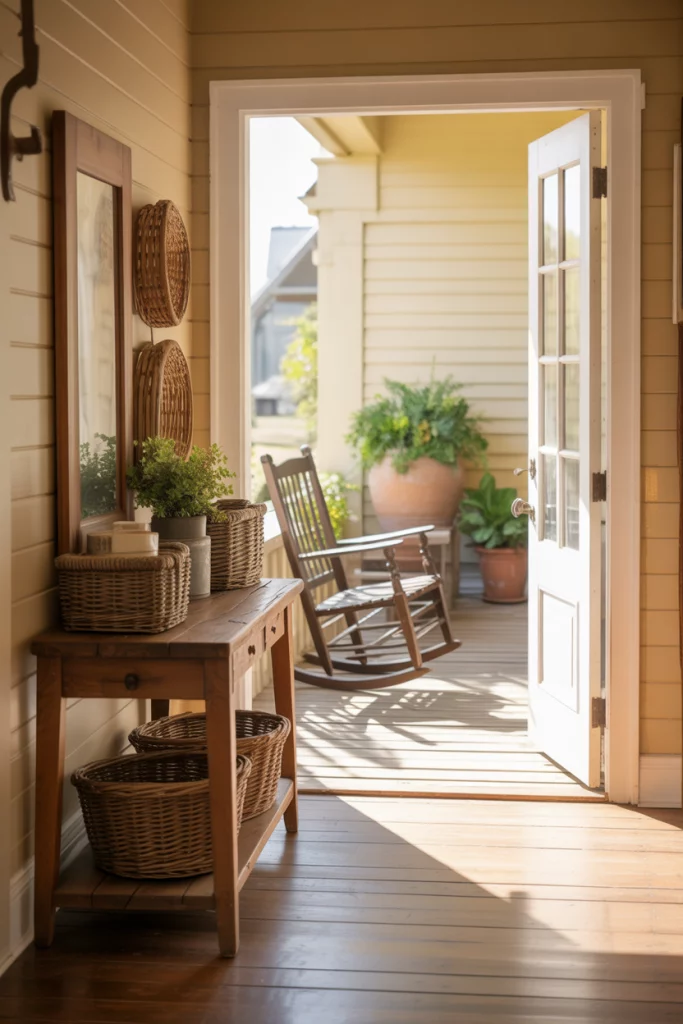
A farmhouse-inspired front yard is all about warmth and welcome, and it does not have to be complicated or fussy. Start with a few DIY touches like painted lanterns and repurposed crates as plant stands. Keep the layout simple: a pair of rocking chairs, a jute rug, and a soft wreath on the door. Low flower beds along the porch edge tie everything together without feeling overdesigned. 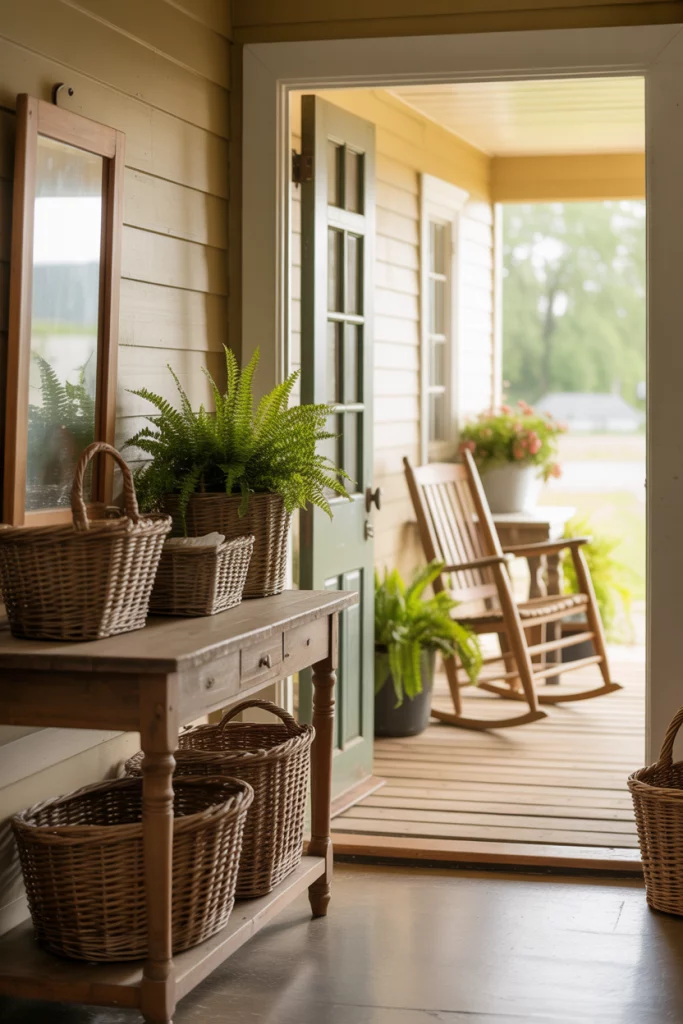
The budget angle here is friendly: many Americans reuse pieces they already own, like old stools or galvanized buckets turned into planters. Add low-maintenance perennials so you are not replanting constantly. Avoid overcrowding the porch; leave clear space for deliveries and guests so the area feels generous rather than jammed, especially during holidays when decor naturally multiplies.
5. California-Inspired Gravel and Drought Plants
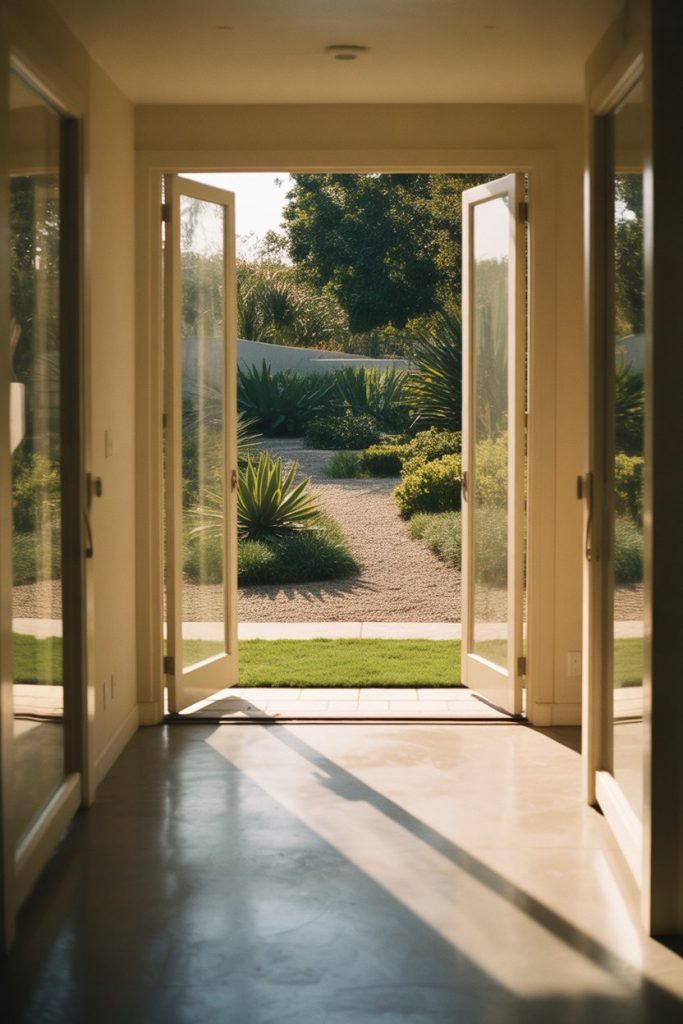
For anyone dreaming of a Californian aesthetic or living in warmer regions, consider switching out thirsty lawns for drought-hardy plants and gravel. Decomposed granite pathways with wide planting bands are an excellent combination, yielding a modern and relaxed feel. Incorporate sculptural shrubs or silvery foliage in pockets. Apart from a remainder of a grass or groundcover ribbon as a contrasting softness, all the stone and architectural shapes are balanced quite nicely. 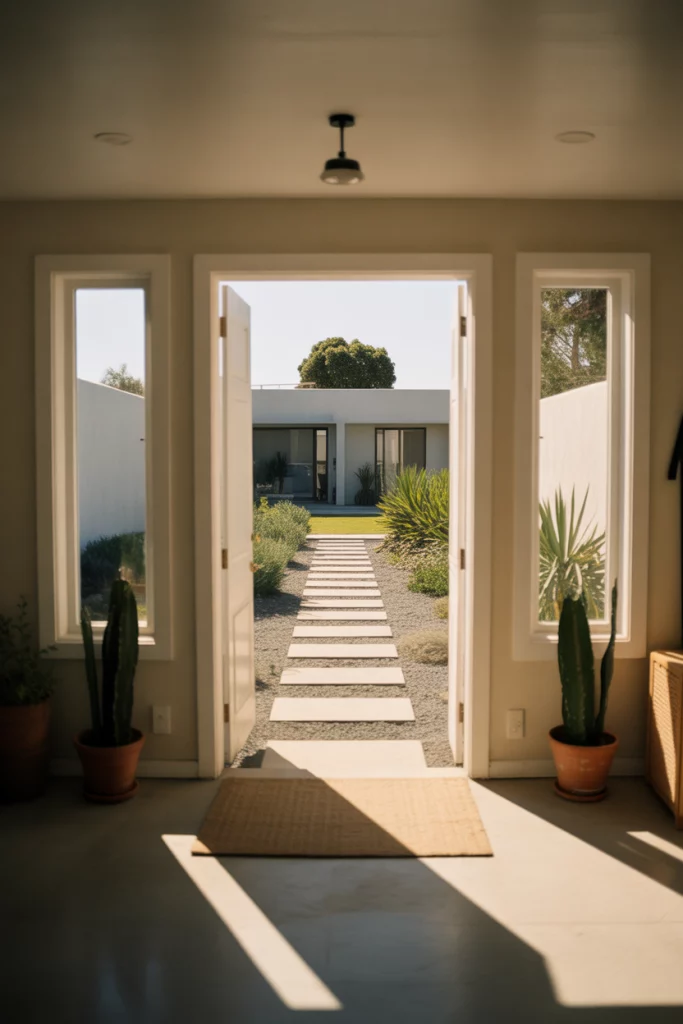
American homeowners in dry climates can benefit from huge reductions in water and weekend chore use as well. If you are removing turf, choose gravel that complements your house with a color scheme instead of fighting it, and a few boulders can be added for height. To make sure your front yard does not feel stark, the lighting along the path can be adjusted for when the front yard is more inviting during the night.
6. Big Welcome for Large Front Yards
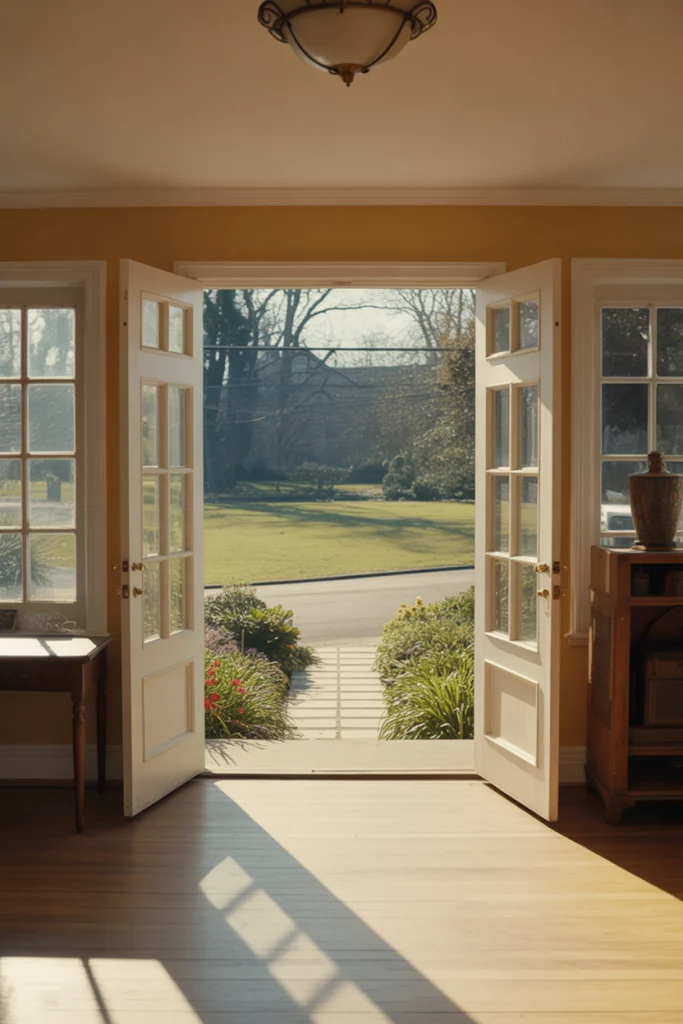
If you are lucky enough to have a large front yard, it can still be low maintenance with smart planning. Instead of wall-to-wall lawn, define broad planting islands that break up the space and create a gentle, park-like feel. A central path, flanked by layered shrubs and perennials, pairs with a wider swath of low-maintenance large turf that is easy to mow in long, efficient passes. 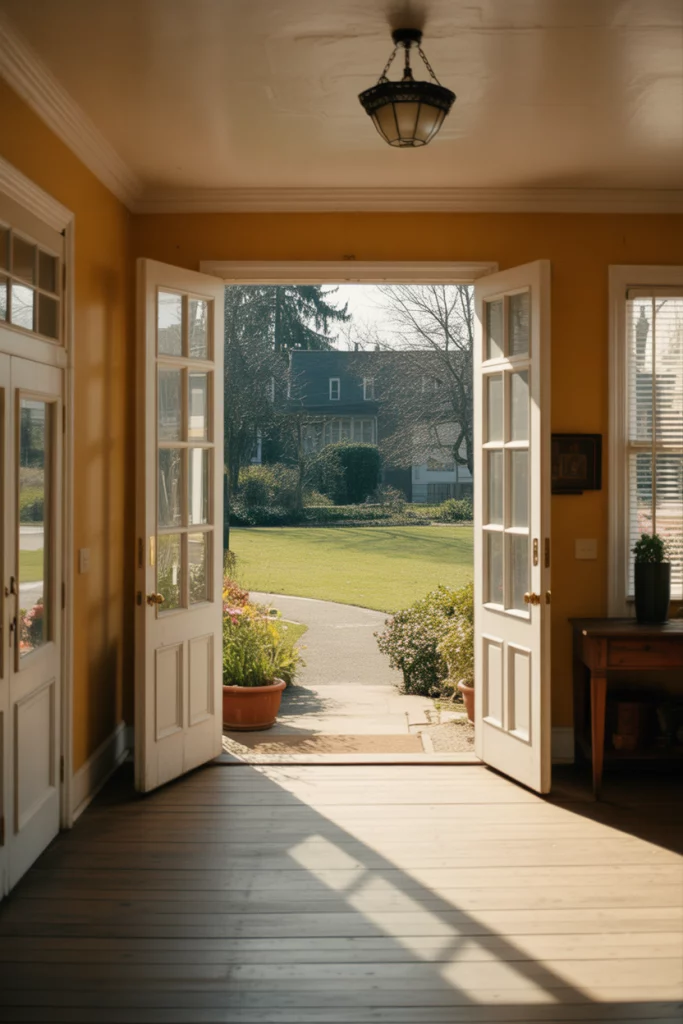
Think like a landscape architect: design in big, simple shapes rather than many tiny beds. Large curves are easier to maintain and look better from the street. Place taller plants closer to the house and shorter ones near the lawn edge for a gentle slope of height. This structure helps the yard feel intentional year-round, even when some plants are not in bloom.
7. Corner Lot Layers for Extra Curb Appeal
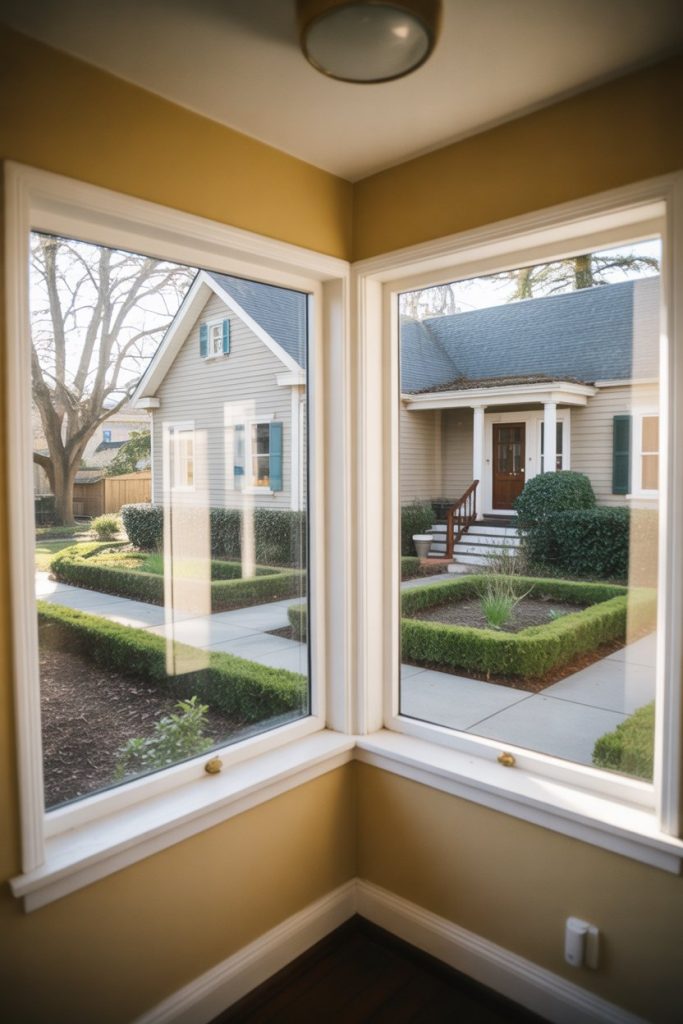
Corner properties often feel exposed, but with the right layers they can become neighborhood showpieces. Use soft shrubs and low trees to define the corner, then tie them back toward the porch with a strong path and planting. In warm states like Florida, mix evergreen structure with seasonal color, keeping the palette Simple so the intersection looks cohesive rather than busy. 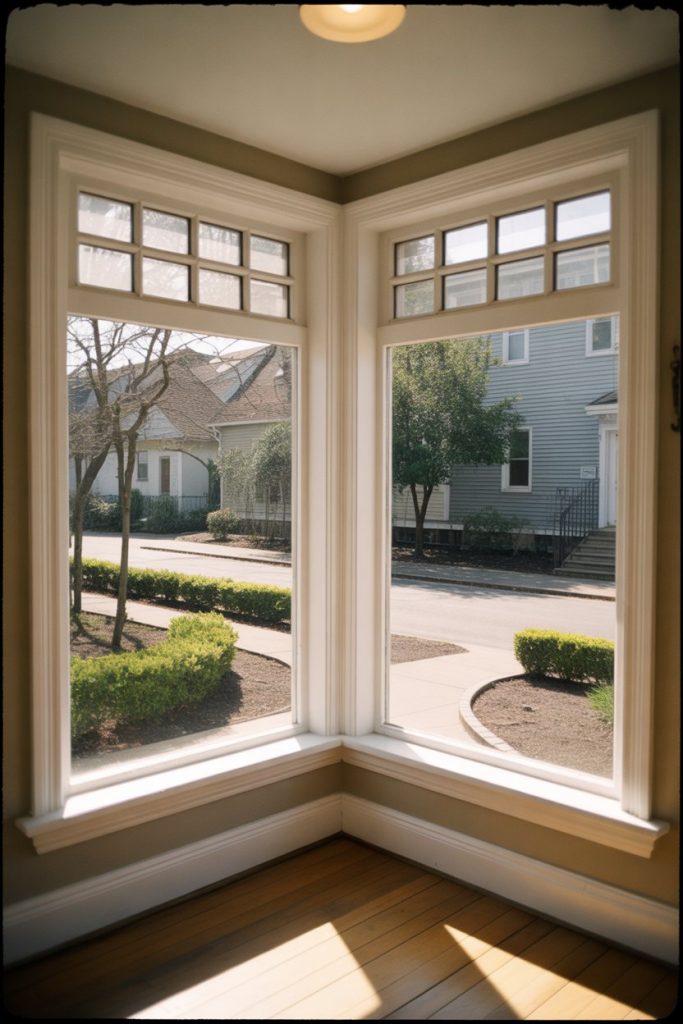
From a lifestyle perspective, corner lots mean more visibility and sometimes more foot traffic. Use this to your advantage by creating safe sightlines at the intersection—keep taller plants away from driveways and corners so drivers can see clearly. A curved bed that softens the corner adds charm without feeling like a wall, and a clear house number near the door helps guests orient quickly.
8. Rock Garden Strip Along the Drive
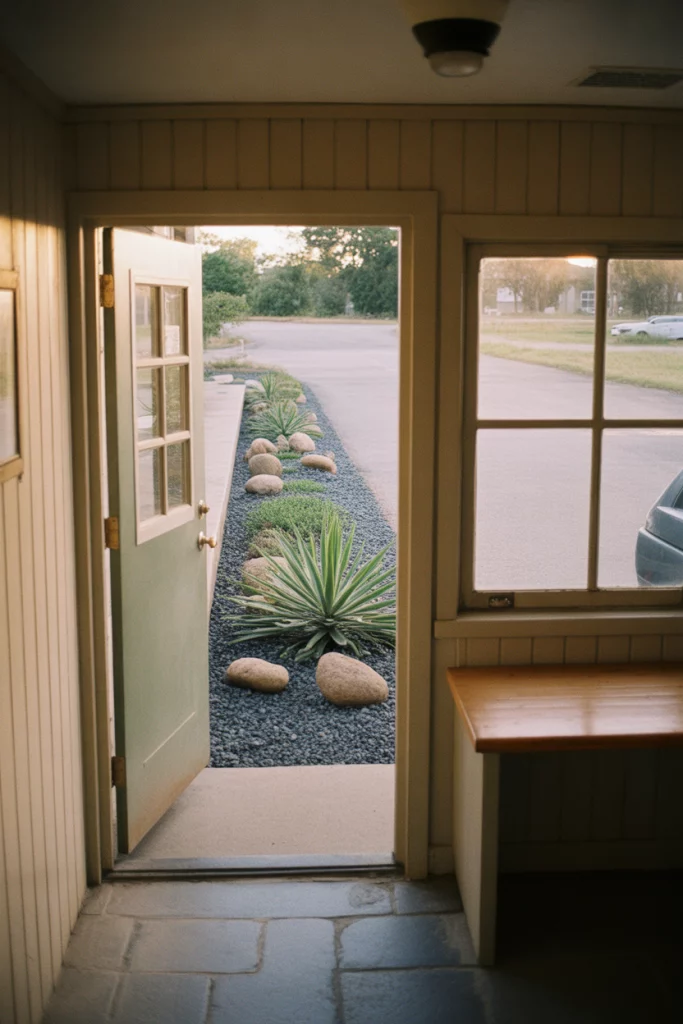
A narrow strip between driveway and walk is the perfect spot for a mini rock garden that reads Low-maintenance but high style. Combine small rocks with drought-tolerant groundcovers and a few sculptural plants. If your home leans farmhouse, choose softer, rounded boulders; for a crisp look, go with angular stones and spiky grasses to echo modern lines. 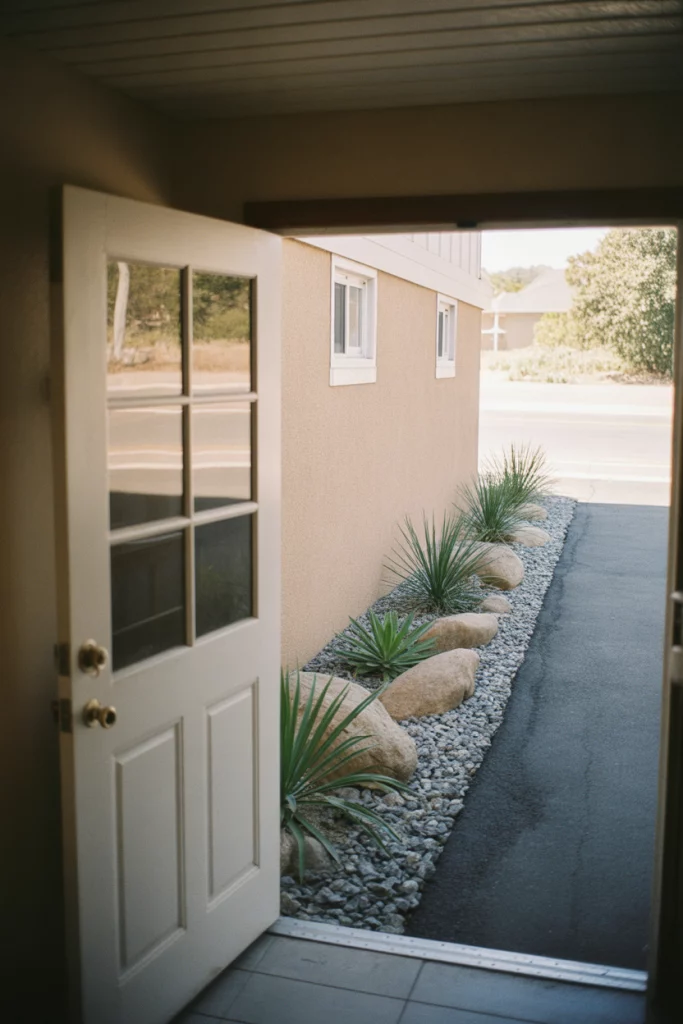
Common mistakes here include using too many different rock types or planting species that grow too tall and flop onto the pavement. Stick to one or two stone colors and keep the tallest plants below knee height. Layer mulch or gravel deep enough to suppress weeds, and use edging so stones do not creep into the driveway. The goal is a tidy ribbon of texture that never feels messy.
9. Easy Front Bed Refresh on a Budget
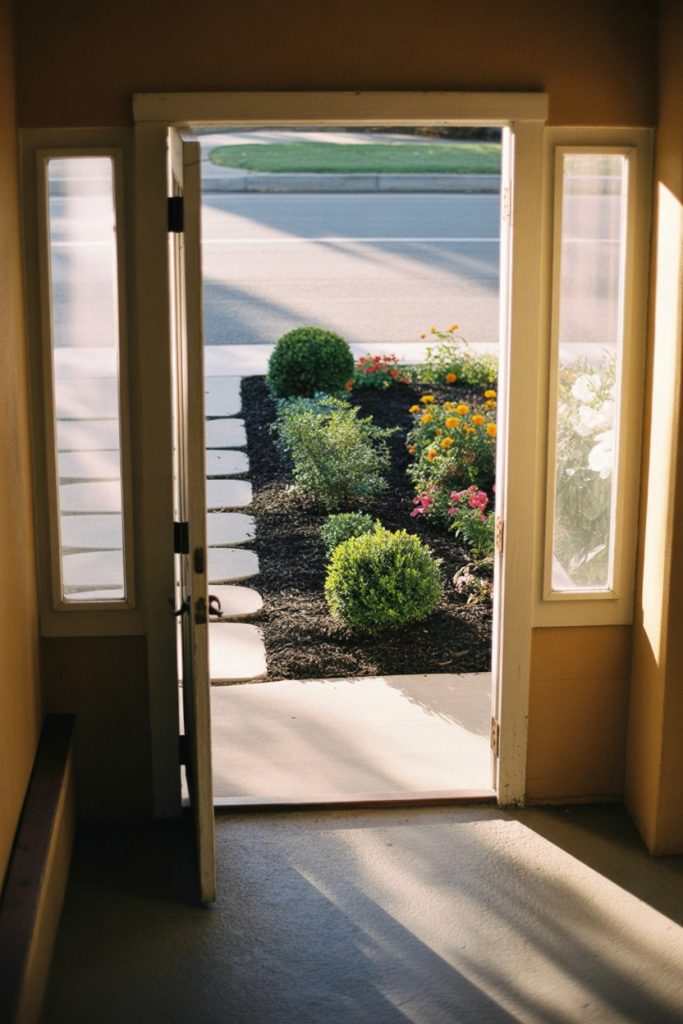
If you want that fresh look but don’t need a full redesign, simply refreshing the front bed will do the trick. Start by cleaning up edges, pulling weeds, and adding a fresh layer of mulch. Then, tucking in a few new perennials and shrubs that match your home’s style should do the trick. If you want to keep it realistic with a budget mindset, reuse any healthy plants instead of just ripping everything out. 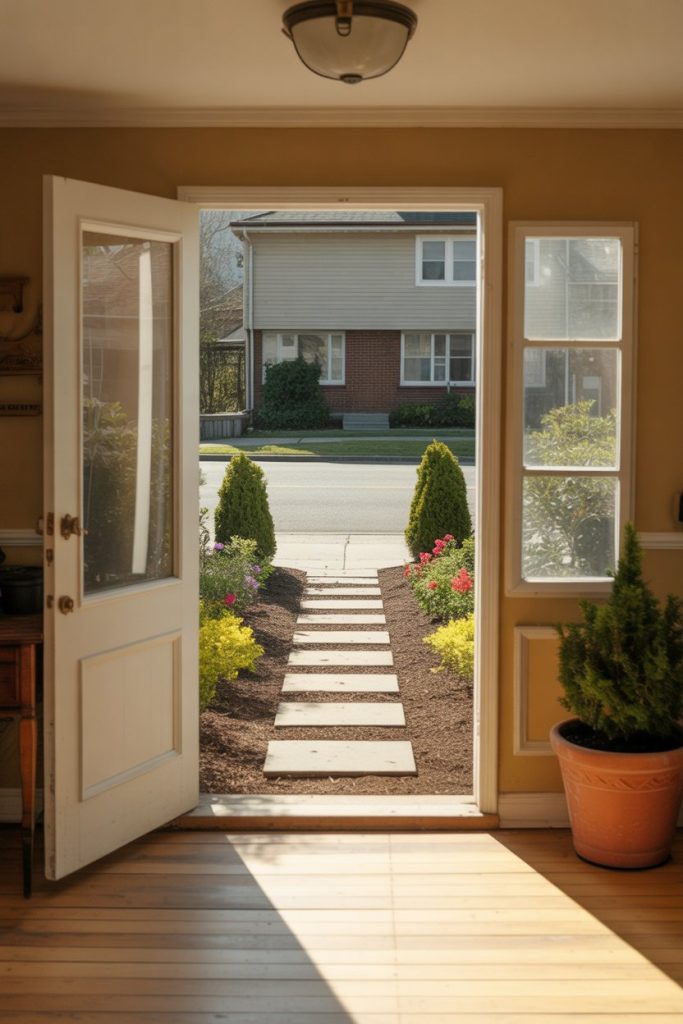
Real homeowner behavior shows that most updates happen in stages, and it’s completely fine to do the same with your home. One weekend can be for cleanup, the next for planting, and maybe a third for adding in some lighting. If you are new to gardening, track what thrives and what doesn’t for an entire season before making any big alterations. Slower paces are beneficial for both your wallet and your enthusiasm.
10. Gravel Path and Grass Ribbons
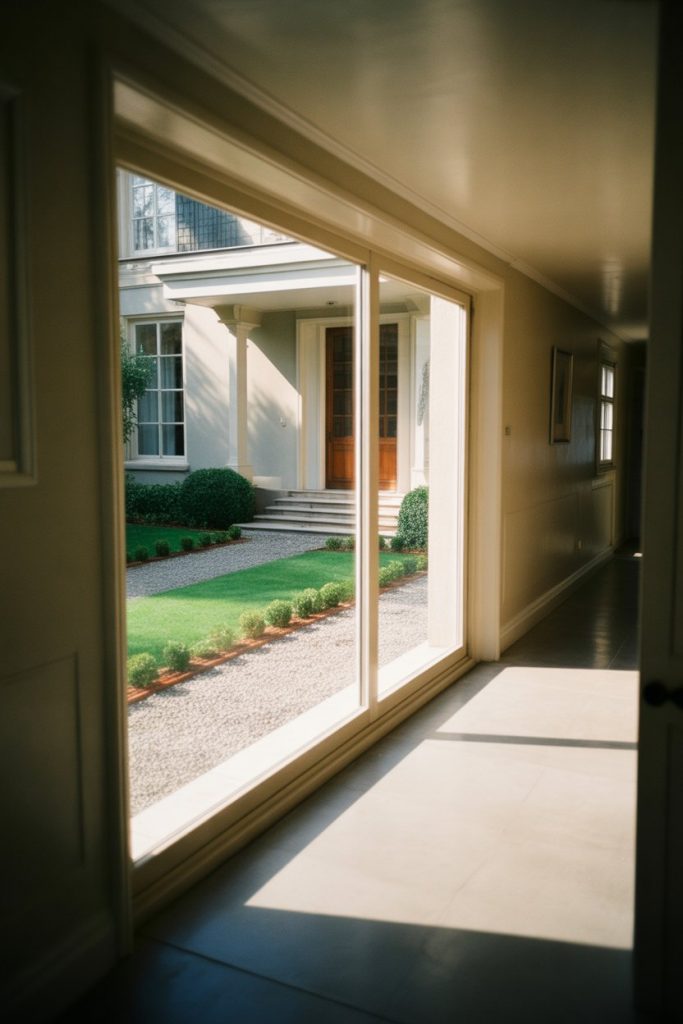
A gravel path with narrow grass ribbons on either side feels both casual and tailored, ideal for Front Yard Landscaping Ideas 2026. Choose a neutral stone that complements your facade, then frame it with metal or plastic edging for clean lines. Add a few scattered rocks and low shrubs near the porch to bridge between the hardscape and your home’s architecture.
As a practical insight, gravel can be friendlier for regions with freeze-thaw cycles because it flexes with temperature changes. Add stepping stones where you step most to keep gravel from shifting too much. Rake the surface occasionally to smooth footprints and refresh texture. This style pairs beautifully with both cottage and modern homes, depending on plant choices and edging details.
11. Flower Pot Stairway for Instant Color
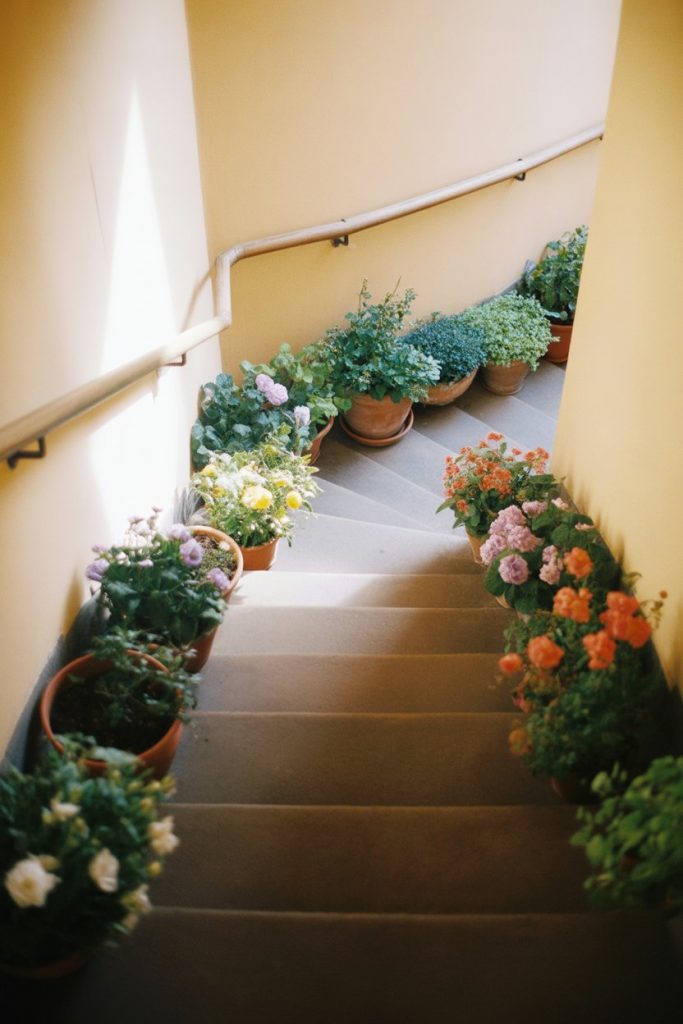
If your front steps feel bare, turn them into a mini garden by lining the edges with flowerpots. Choose a mix of heights so the plants stair-step up with the architecture. Use mostly low-maintenance annuals and perennials that bloom for months, adding one big foliage plant as a focal point. This idea works especially well when the porch itself is simple and neutral. 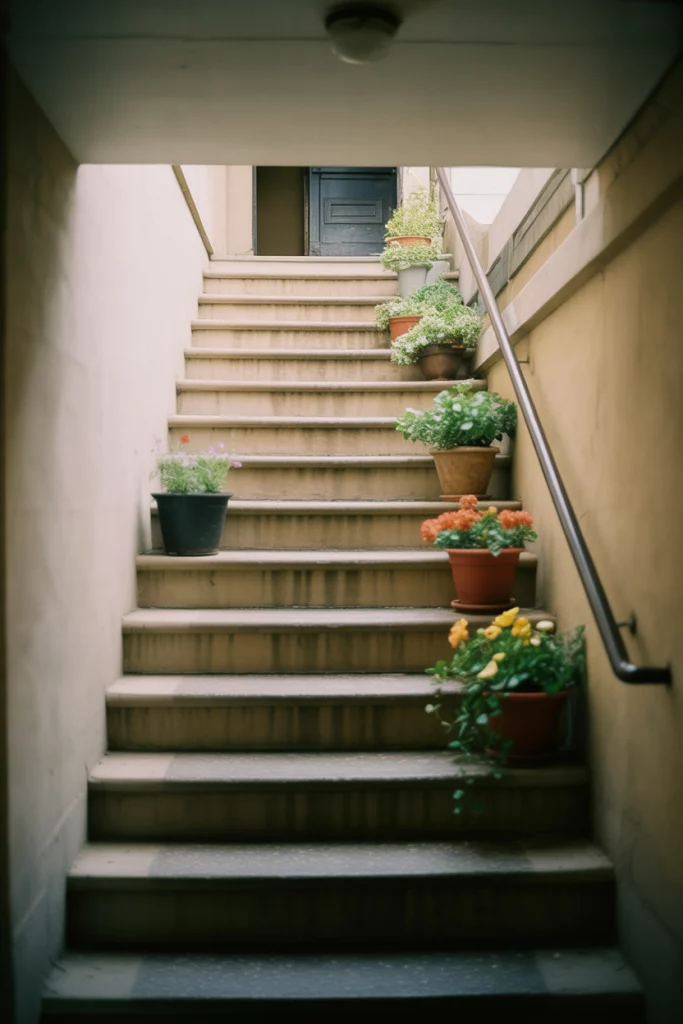
12. Small House, Big Front Bed Impact
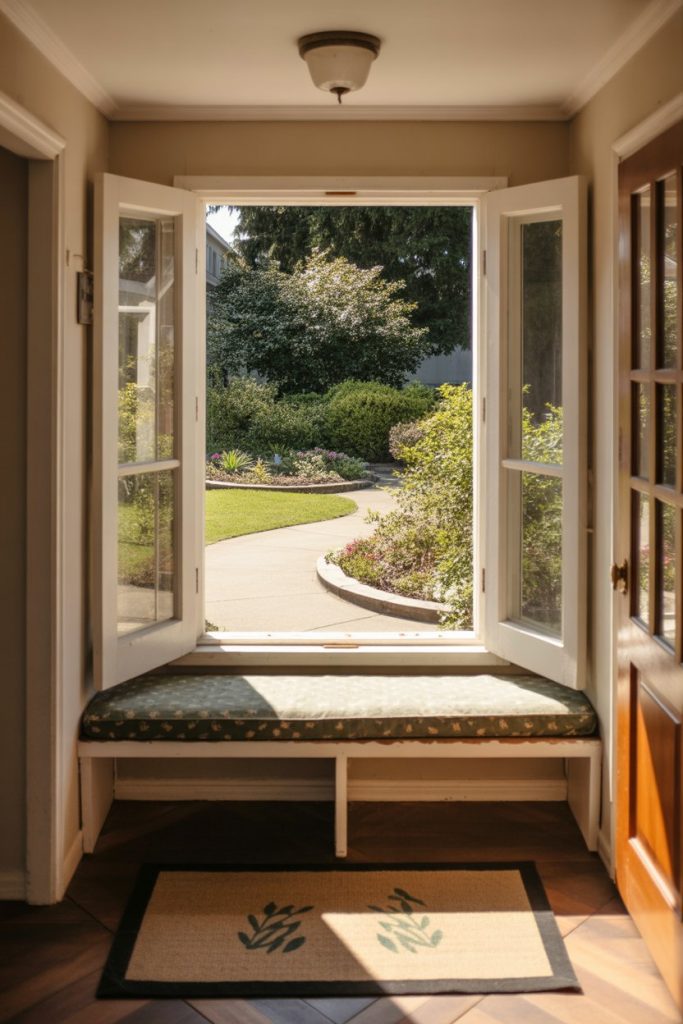
In cases of small houses, front beds serve a huge purpose visually. Make a sweeping curve motion starting off near the driveway and ending close to the porch, where you can generously plant within that shape. In order to achieve a cozy farmhouse style, combine airy perennials with flowering shrubs while keeping the palette simple to allow the architecture to shine, remaining the main focal point. 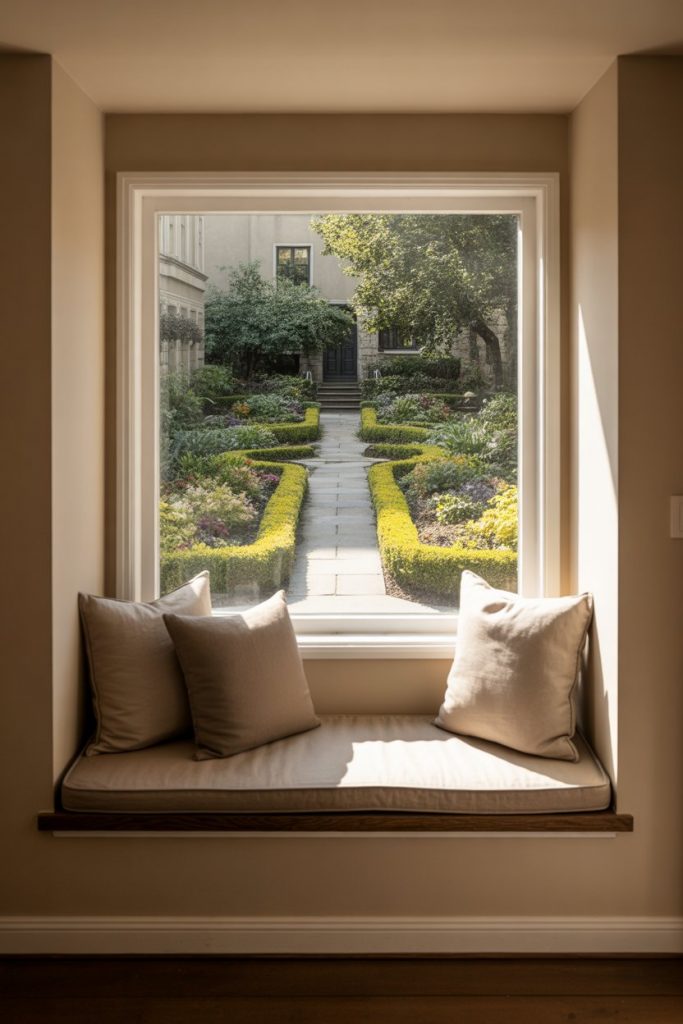
Thin lots near the main road work best for this. The curved bed softens the boxy lines and draws the eye to the front door, rather than to the nearby garages. Make sure that the taller plants do not exceed the window height so that even light can come in the living room. A narrow band of mulch or grass between the bed and the sidewalk gives breathing room and an efficient strip for mowing.
13. California Ranch With Low Lawn
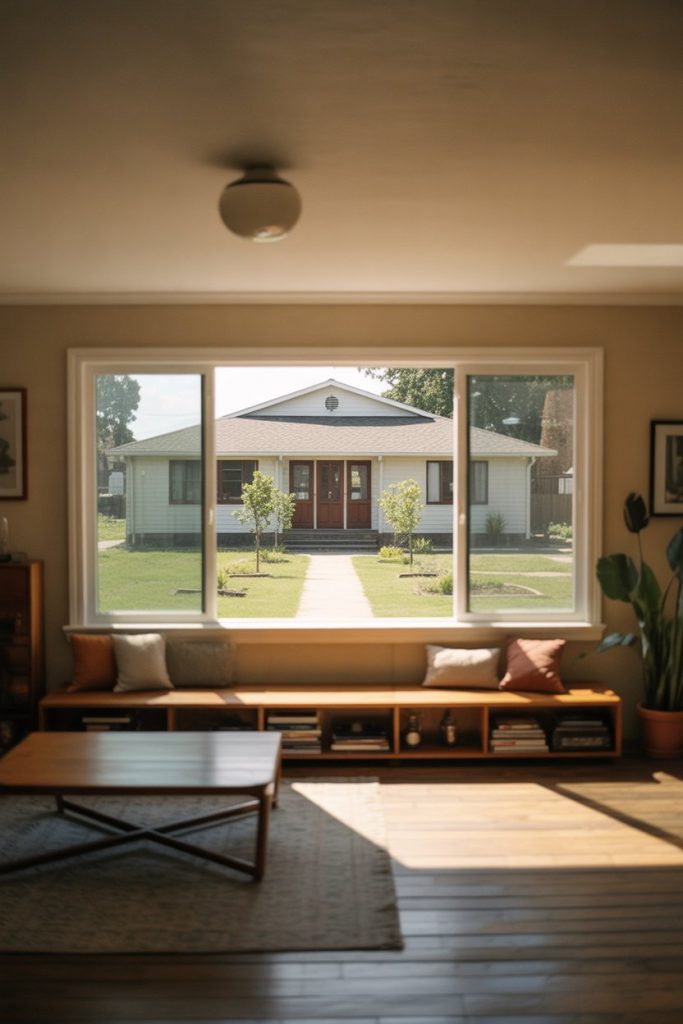
For single-story layouts or ranch homes, aim for a relaxed Californian feel with the use of low-spreading plants and minimal turf.
Replace half of the front lawn with a mix of bedded shrubs, ornamental grasses, and flowering groundcovers. An appealing path also provides curb appeal, while a few boulders and an expanded front step help the entryway feel generous and grounded. 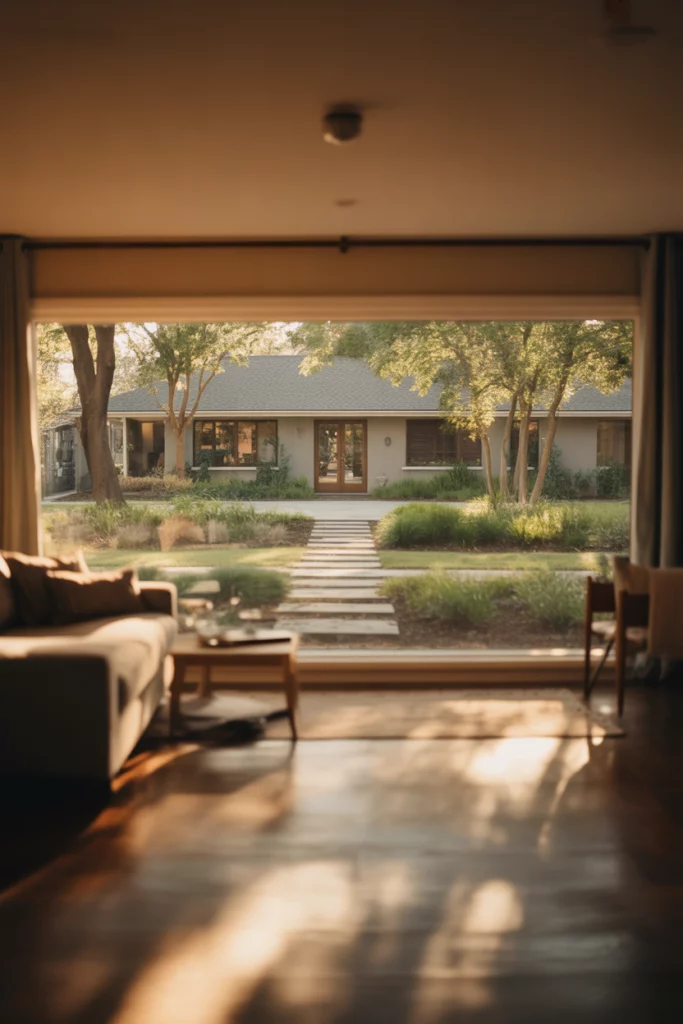
Note with some expertise: horizontal line focus. Long, low plantings complement the ranch-style spread and architectural design. For repetition in plantings, prefer three or five of the same shrub, a design choice, to a collection of many singular shrubs. This will ease the view.
14. Texas-Friendly Full Sun Front Yard
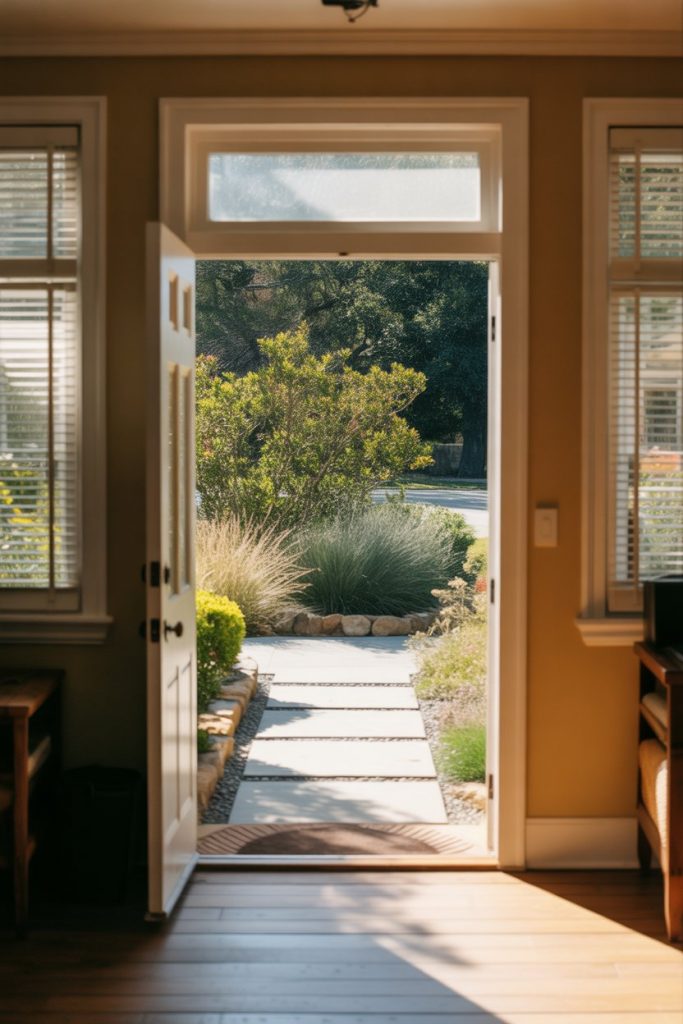
In hotter states like Texas, a front yard that thrives in full sun is essential. Choose tough shrubs, native grasses, and flowering perennials that can handle heat and long summers. Keep the plan Simple: one main bed along the foundation and a second smaller island near the street. Use stone or gravel mulch to reflect the regional look and reduce evaporation.
Budget-wise, invest in good soil preparation first; sun-loving plants still need drainage and nutrients. Many Texas gardeners split plants with neighbors or friends, trading divisions of perennials to save money. Install drip irrigation where possible to target water at roots, and set it on a timer during peak heat months so your front yard stays resilient even on the busiest weeks.
15. Florida Front Yard With Tropical Notes
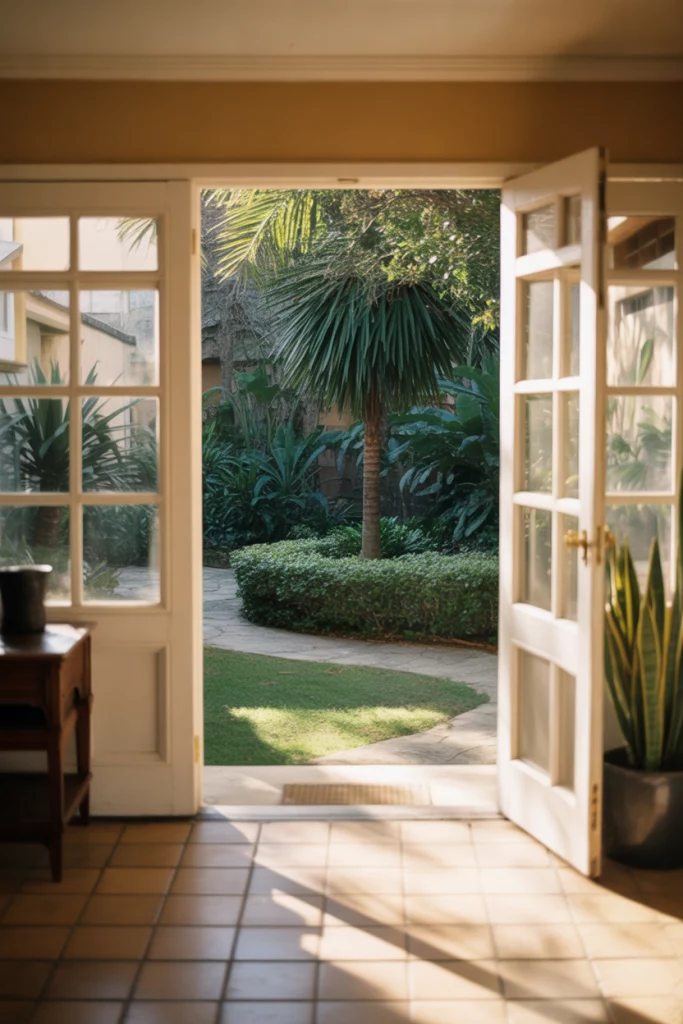
In humid climates like Florida, leaning into lush foliage makes sense. Build your front bed around one statement palm or ornamental A tree, then layers of colorful crotons, ferns, and flowering shrubs underneath. Keep some open grass near the sidewalk or drive to prevent the space from feeling overgrown, and use a curving path that suggests a relaxed, vacation-like mood. 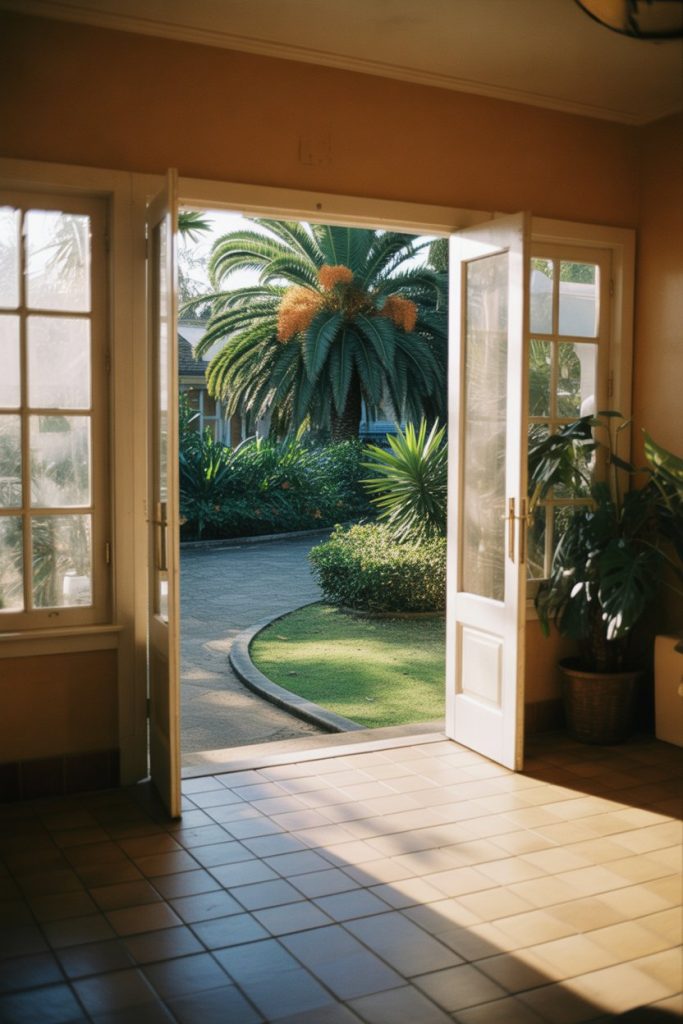
Where it works best is in neighborhoods that already have a bit of tropical character, so your landscape feels cohesive with the street. Be mindful of plant placement near windows to keep views open and allow breezes. In hurricane-prone areas, choose species with good wind resistance and keep taller trees pruned properly. A few well-placed solar lights help the lush planting feel like a destination after dark.
16. Low-Maintenance Sweep for Larger Lots
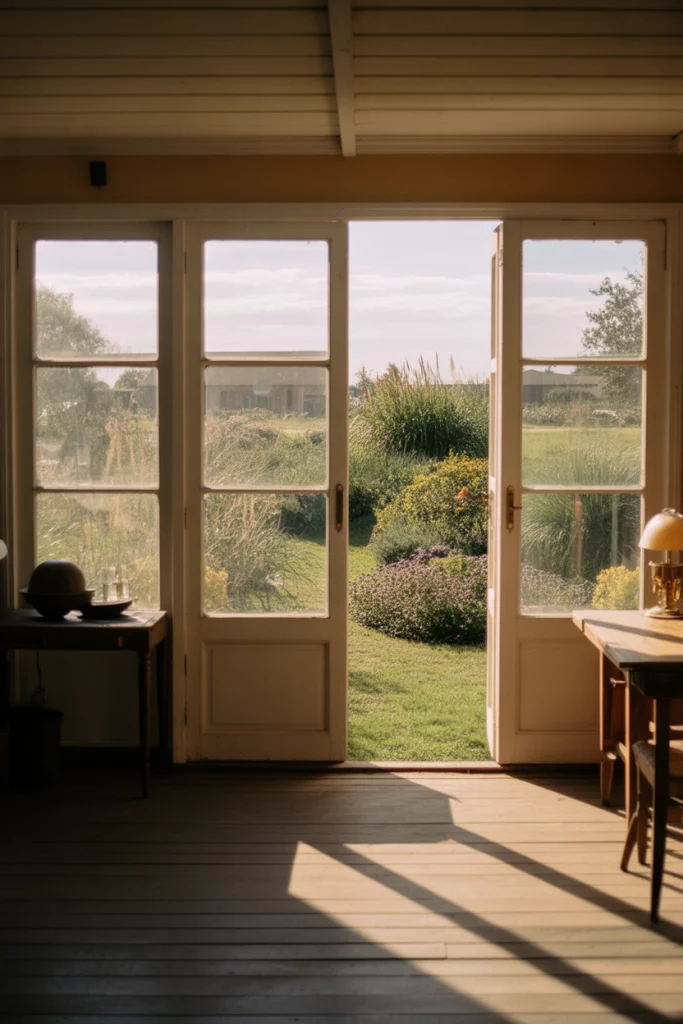
If you are juggling work, family, and home projects, a front yard that is both pretty and low-maintenance is a gift. For large or medium-sized lots, create broad, flowing beds with shrubs and ornamental grasses that rarely need pruning. Pair them with low-maintenance large stretches of turf or groundcover so you spend more time enjoying the view and less time wrestling with problem areas.
Common mistakes include planting high-maintenance species just because they are on sale or look pretty in a nursery pot. Before buying, check how often each plant needs pruning, watering, or staking. Favor those labeled “low maintenance” and confirm with local garden centers. The more you repeat easy-care plants, the simpler your weekend routine will become, and the more consistent the front yard will look.
17. Corner Path for Small Urban Lots
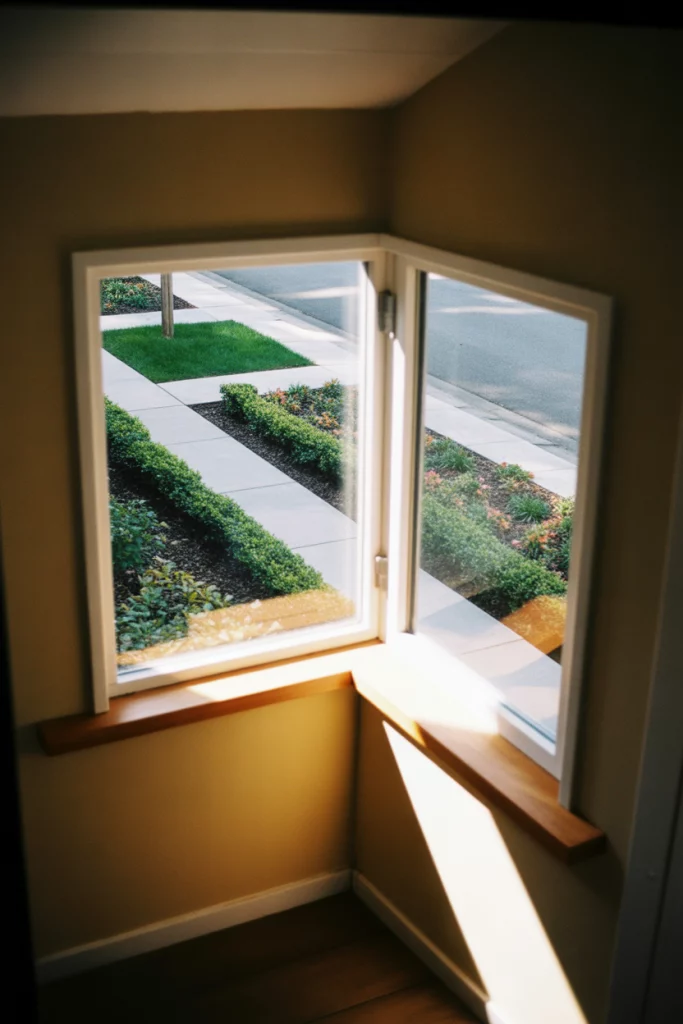
On compact city properties, a diagonal path from driveway to porch can make a tiny front yard feel bigger. If your lot has a visible corner, start the walk there and angle it toward the door, keeping planting beds along each side. Choose easy-care shrubs and groundcovers so the design stays tidy. A small patch of grass near the sidewalk offers softness without dominating the layout. 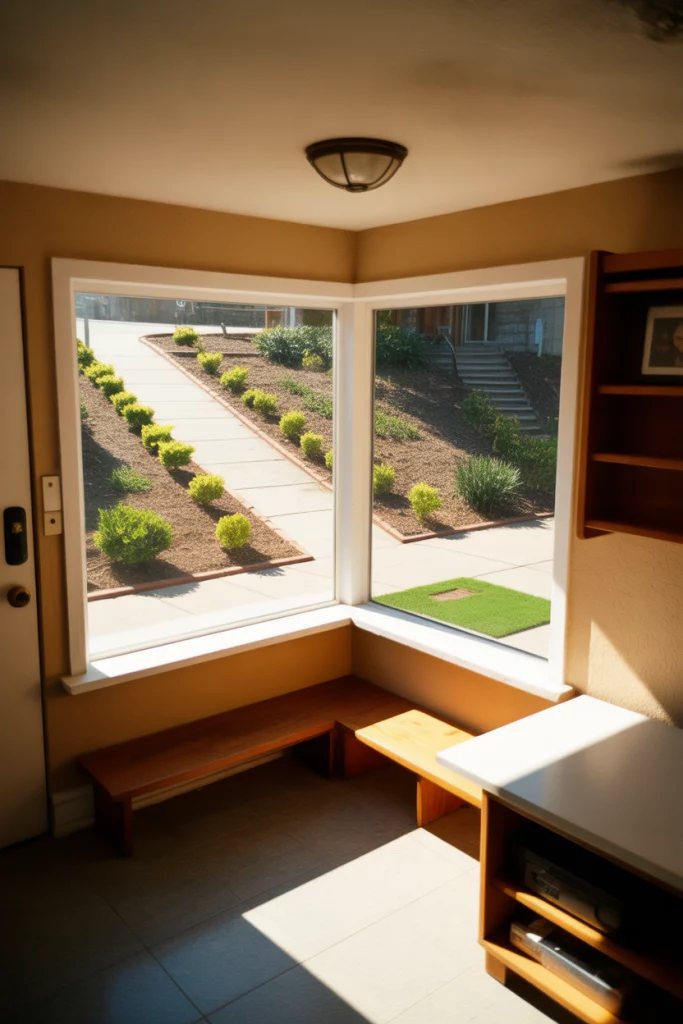
American urban homeowners often want enough green to feel connected to nature but not so much that maintenance becomes a burden. A diagonal path shortens the walk from car to door and visually stretches the yard. Keep plant varieties limited so the space feels calm, and use lighting at key turns in the walkway for safety when coming home after dark.
18. DIY Front Yard Lighting Upgrade
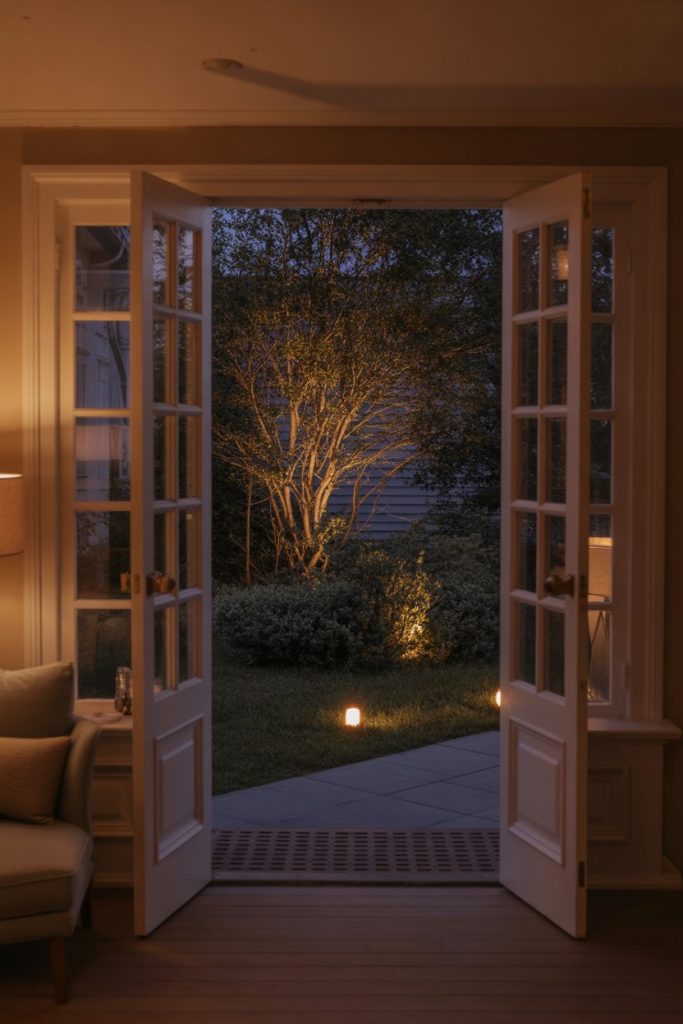
Thoughtful lighting can transform your front yard after sunset, and many options are weekend-friendly DIY projects. Start with path lights leading to the entry, then add a soft spotlight on a favorite shrub or small tree. Working with a budget in mind, choose solar fixtures or low-voltage kits that plug into an outdoor outlet rather than requiring complex wiring.
From a practical standpoint, good lighting improves safety for guests and delivery drivers while also making your home look more polished. Aim for a gentle glow rather than stadium brightness. Place fixtures where they illuminate steps or elevation changes, and tilt beams away from neighbors’ windows. Test placement at night before committing so you can fine-tune angles and avoid glare.
19. Budget-Friendly Mulch and Edge Makeover
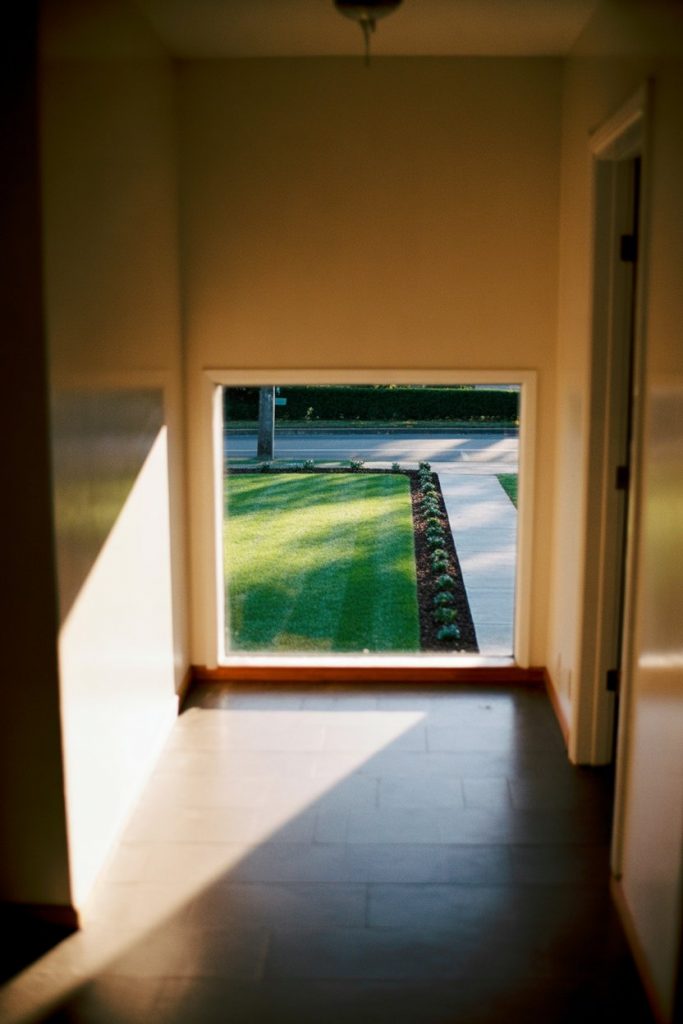
One of the quickest A budget-simple upgrade is sharpening your bed edges and adding fresh mulch. Clean, curved borders instantly make front plants and grass look intentional. Use a flat shovel or half-moon edger to create a defined line, then add two to three inches of mulch. This refresh supports many front yard landscaping ideas for 2026 without needing a full redesign.
As a value element, think budget strategy: buy mulch in bulk if you have several beds to cover. It is often cheaper than bags and reduces plastic waste. Refresh the top layer each spring rather than digging it all out. Edging and mulch also help keep weeds down, meaning less time bent over the front yard and more time enjoying a coffee on the porch.
20. Low-Maintenance Front Yard With Seasonal Color
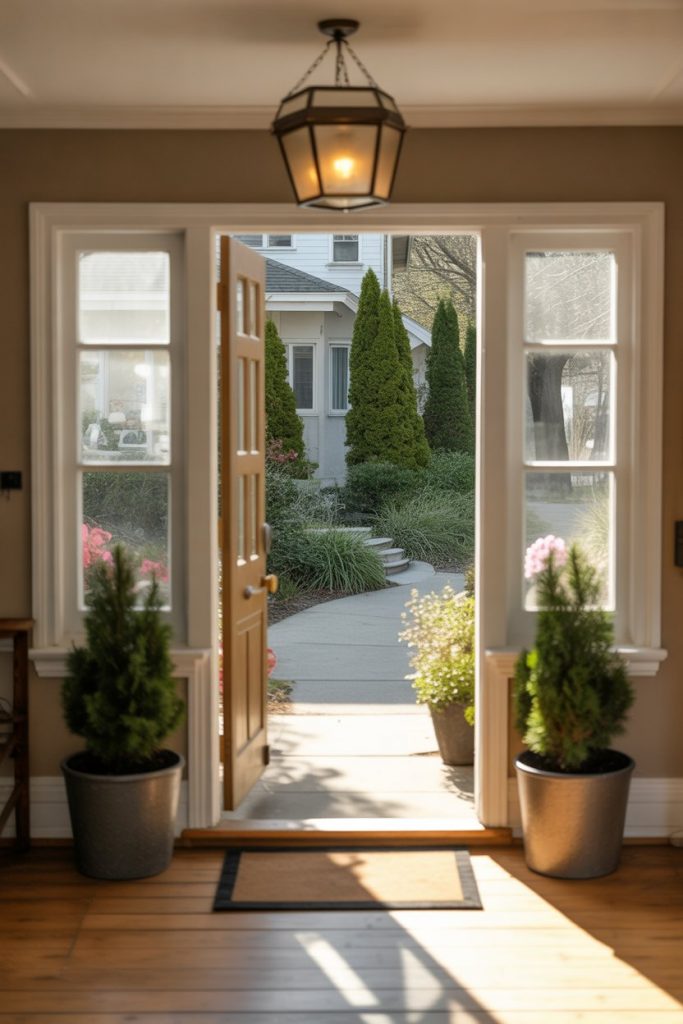
If your schedule is packed, build a backbone of shrubs and evergreens that stay tidy with low-maintenance care, then sprinkle in seasonal color with containers or small beds. Repeat the same hue in your porch flowerpots and near the mailbox for cohesion. Keep the planting plan Simple so the structure of your design still reads clearly in the off-season. 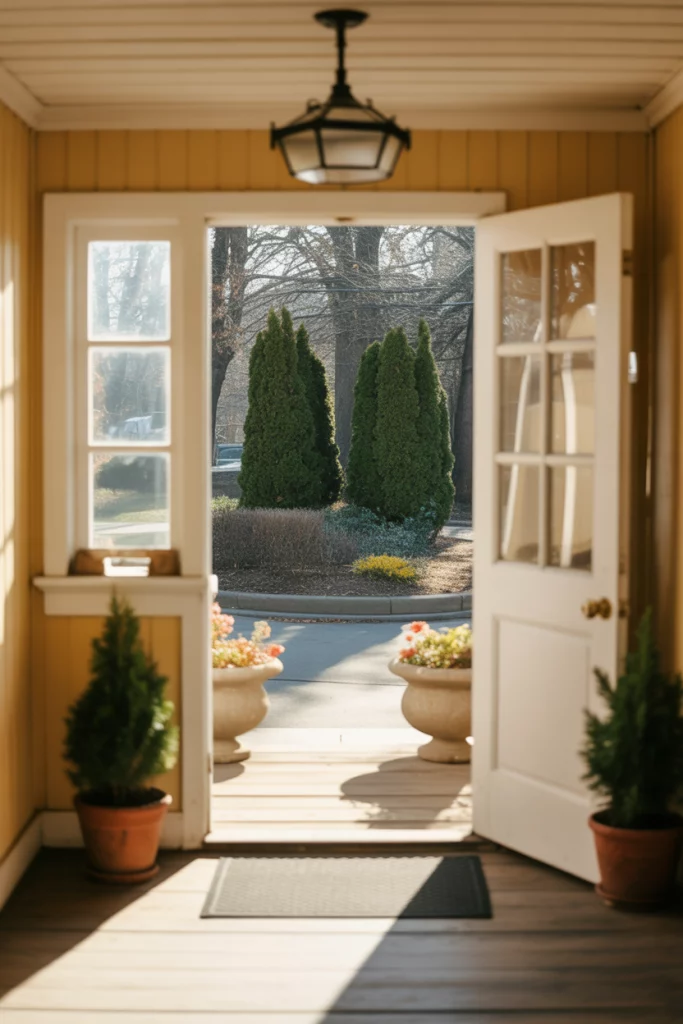
Real homeowner behavior shows that many people only truly garden during a few weekends each year. Designing with that in mind keeps guilt at bay. Choose shrubs that stay attractive without constant clipping, and confine most “fussy” annuals to pots you can change out quickly. This approach lets the front of your home look cared for even when life gets busy.
21. Simple Budget Plan for First-Time Homeowners
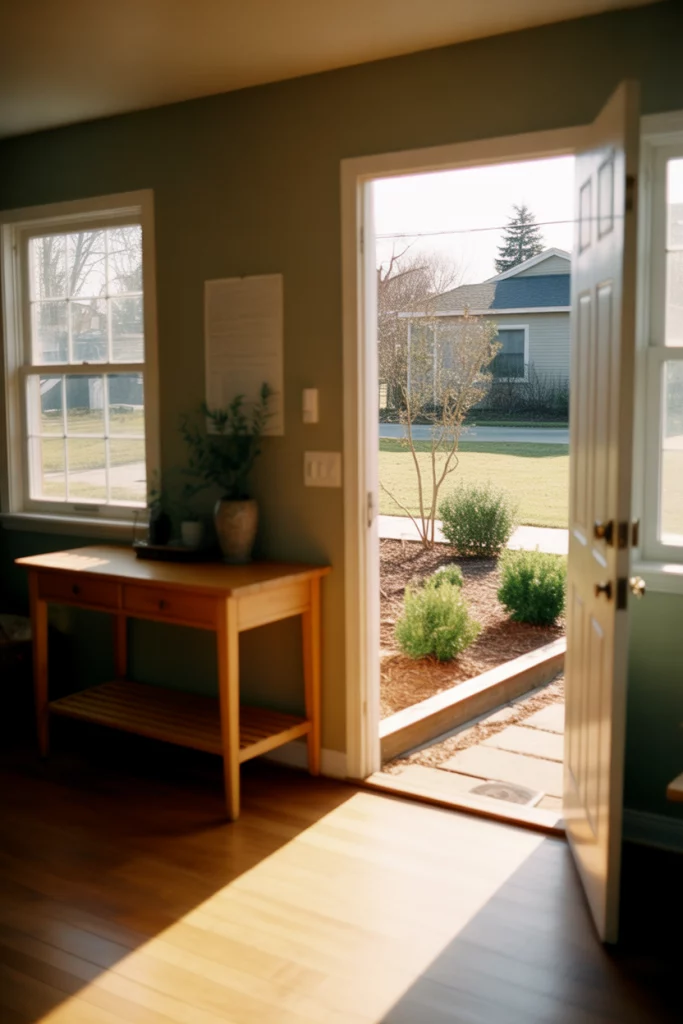
If you are just starting out, aim for a simple landscaping plan you can build over time. Begin with basic foundation shrubs, a clear walkway, and one statement bed near the porch. Add small touches like a simple budget ideas list on your phone—future plants, lighting, or decor you will add as money and energy allow. Keep shapes bold and easy to mow around. 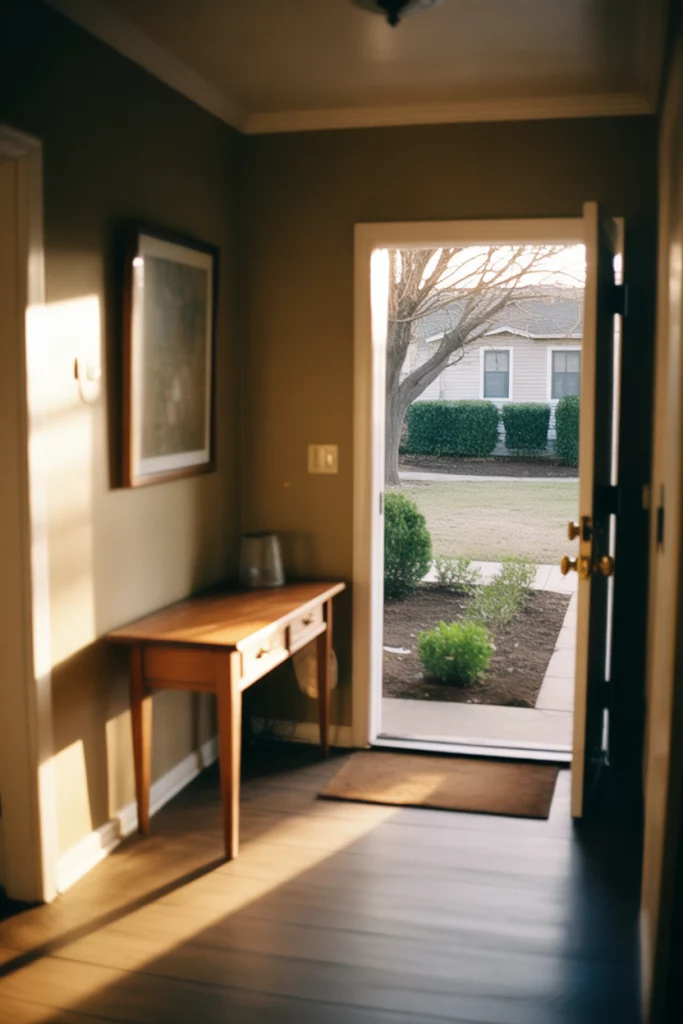
For first-time American homeowners, pacing yourself is key. Start with projects that improve daily life—safe steps, a clear path, some lighting—before splurging on specialty plants. Take photos each season so you can see progress, even when changes feel slow. Over a few years, your front yard will tell the story of your home, evolving as your life and tastes do.
Conclusion
Front yard projects do not have to be overwhelming or expensive to make a difference. Whether you are refreshing a single bed or rethinking the whole space, these Front Yard Landscaping Ideas 2026 are meant to feel adaptable to real American homes and busy lives. Use them as a starting point, then share what you are trying in the comments so other homeowners can learn from your experiments too.