As we move into 2026, outdoor living continues to evolve into something more intentional—less about trends and more about creating spaces that feel like yours. Fire pits remain at the heart of this shift, transforming backyards into year-round gathering spots where conversations last longer and evenings feel warmer. Americans are searching Pinterest not just for inspiration, but for real ideas they can actually build, afford, and enjoy. Whether you’re working with a sprawling yard or a narrow side patio, there’s a fire pit solution that fits your space, your style, and your life. Here are ideas that reflect where backyard design is heading this year.
1. Sunken Fire Pit with Built-In Bench Seating
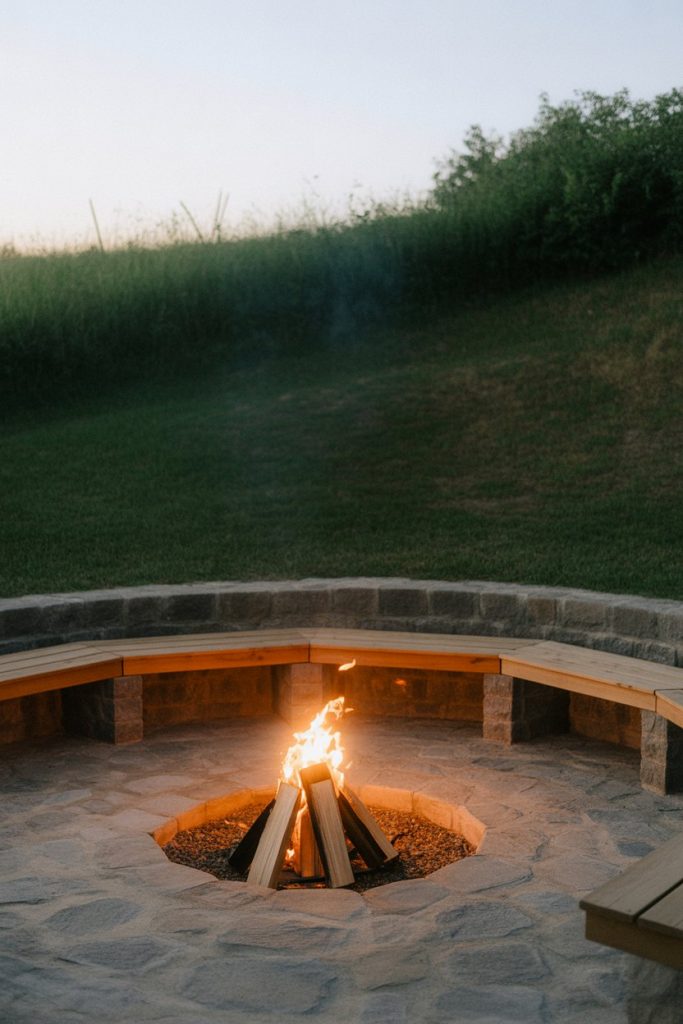
A sunken fire pit creates a natural conversation circle without blocking sightlines across your yard. This seating style works beautifully in sloped landscapes where you can carve out a leveled area and frame it with stone or timber retaining walls. The built-in benches eliminate the need for dragging chairs around, and the lowered floor makes the space feel sheltered even on breezy nights. It’s a smart use of grade changes that many homeowners overlook. 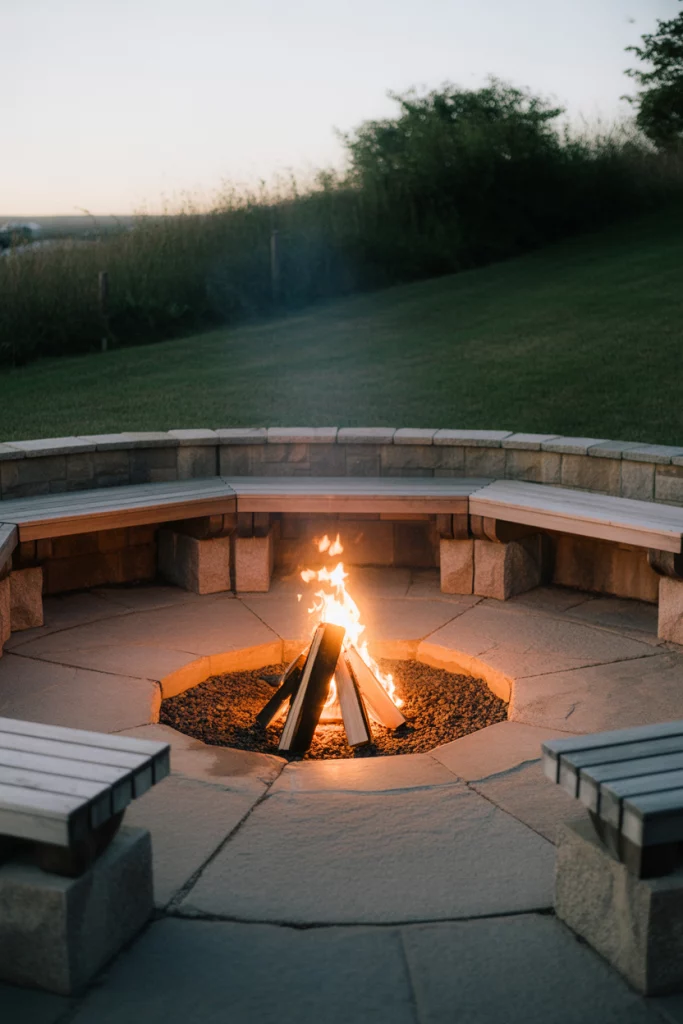
This design works best in properties with existing elevation shifts—hillside lots in places like Colorado or the Pacific Northwest make this feel effortless. The sunken layout also keeps smoke traveling upward and away from faces, which matters more than most people realize until they’re sitting in it. If your yard is flat, you can still achieve this by raising the surrounding lawn slightly with fill dirt and landscaping.
2. Budget-Friendly Cinder Block Ring
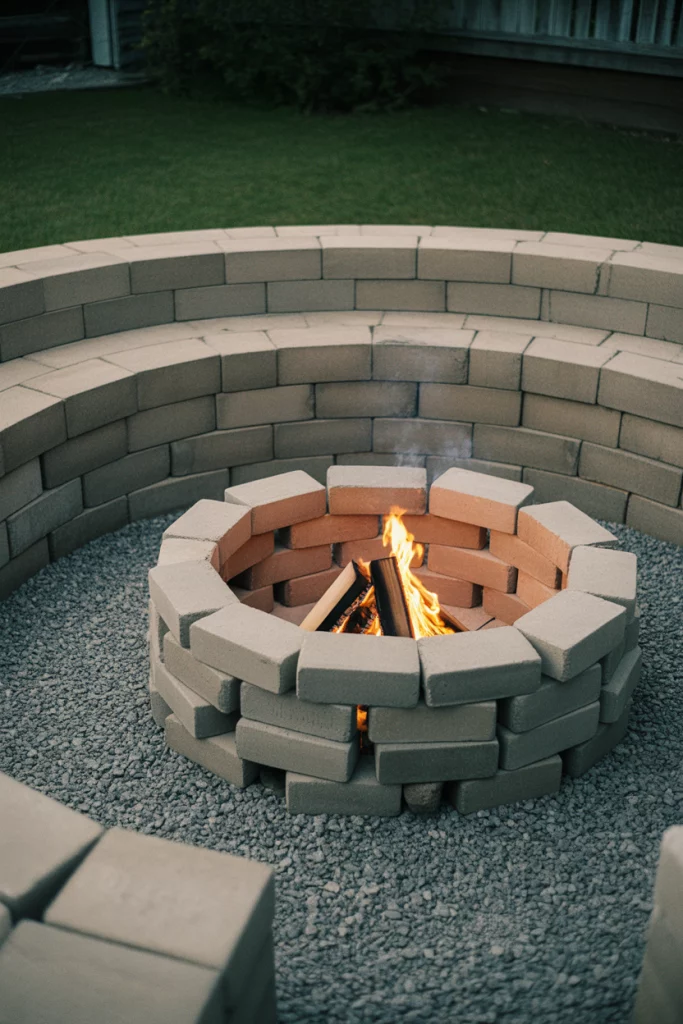
You don’t need to spend a fortune to create a functional fire pit. A budget build using stacked cinder blocks offers a clean, simple look that you can finish in an afternoon. The blocks provide natural ventilation, they’re widely available at any home improvement store, and you can paint or leave them raw depending on your aesthetic. This is one of those cheap solutions that doesn’t look or feel cheap once it’s in place. 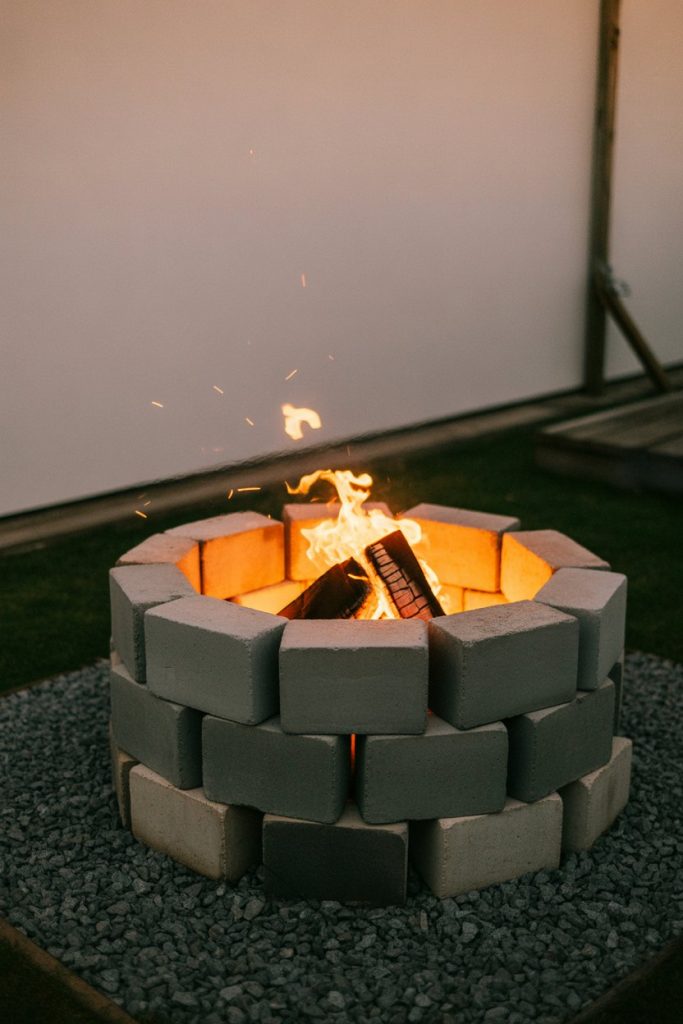
Where it works best: smaller suburban yards where a permanent stone installation feels like overkill, or rental properties where you want something semi-permanent that won’t damage the lawn. The modular nature of cinder blocks also means you can adjust the diameter or height later without starting over. Just make sure to use fire-rated blocks, not the kind meant only for structural support.
3. Modern Steel Bowl with Paver Surround
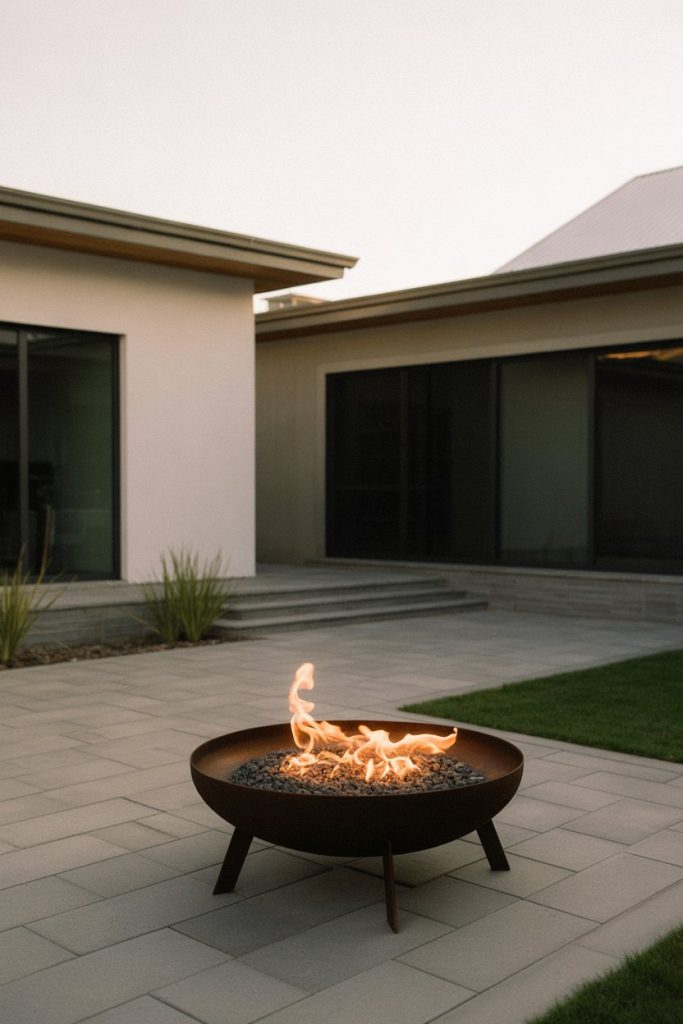
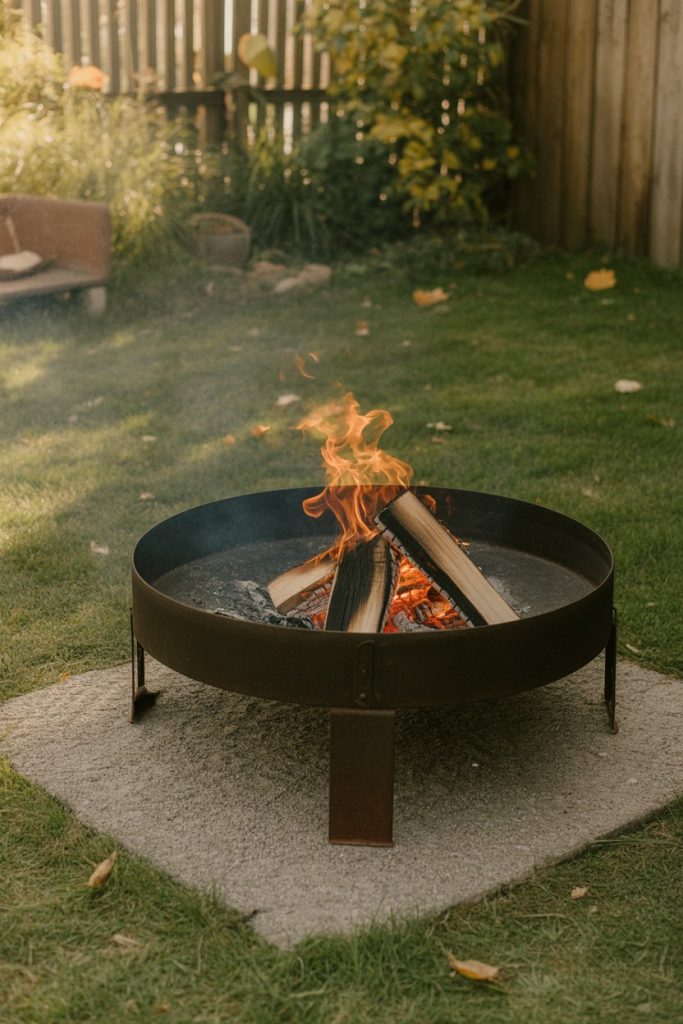
A sleek steel fire bowl set into a modern grid of pavers creates a Scandinavian-inspired look that feels current without trying too hard. The outdoor space stays clean and low-maintenance, and the contrast between raw metal and neutral stone works in almost any climate. This setup also gives you flexibility—you can move the bowl if needed, and the paver base can double as a small patio for chairs or planters. 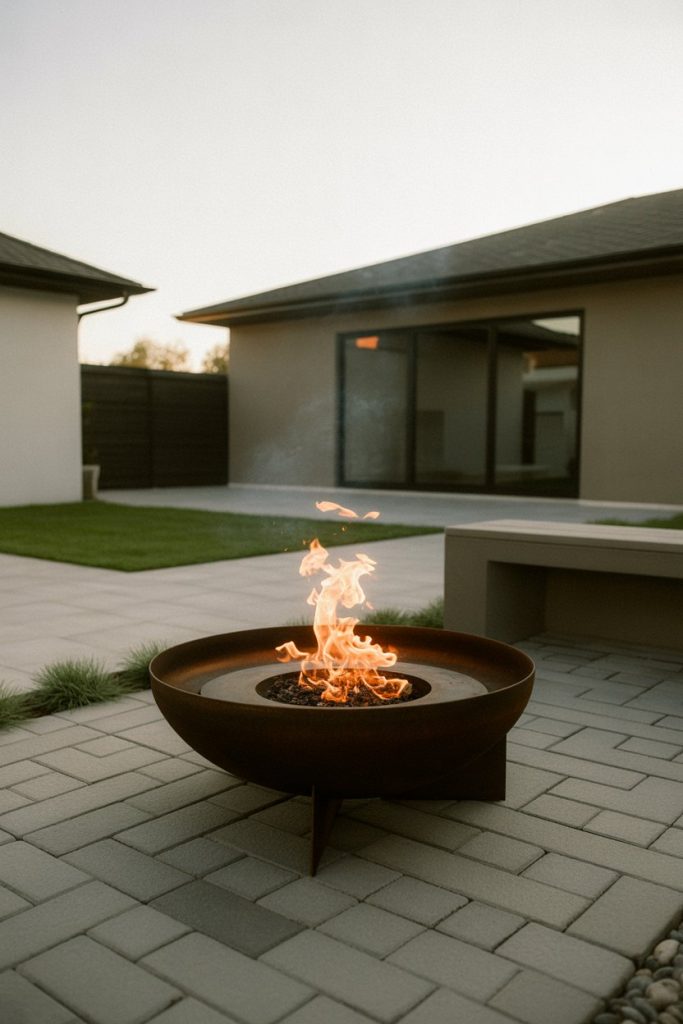
One common mistake here is choosing pavers that are too light in color—they show soot and ash stains quickly. Go with charcoal, slate, or darker gray tones that age well and hide the inevitable scuff marks. Also, make sure the pavers are rated for high heat exposure; not all decorative stone can handle direct contact with fire bowl edges over time.
4. DIY Brick Fire Pit with Herringbone Pattern
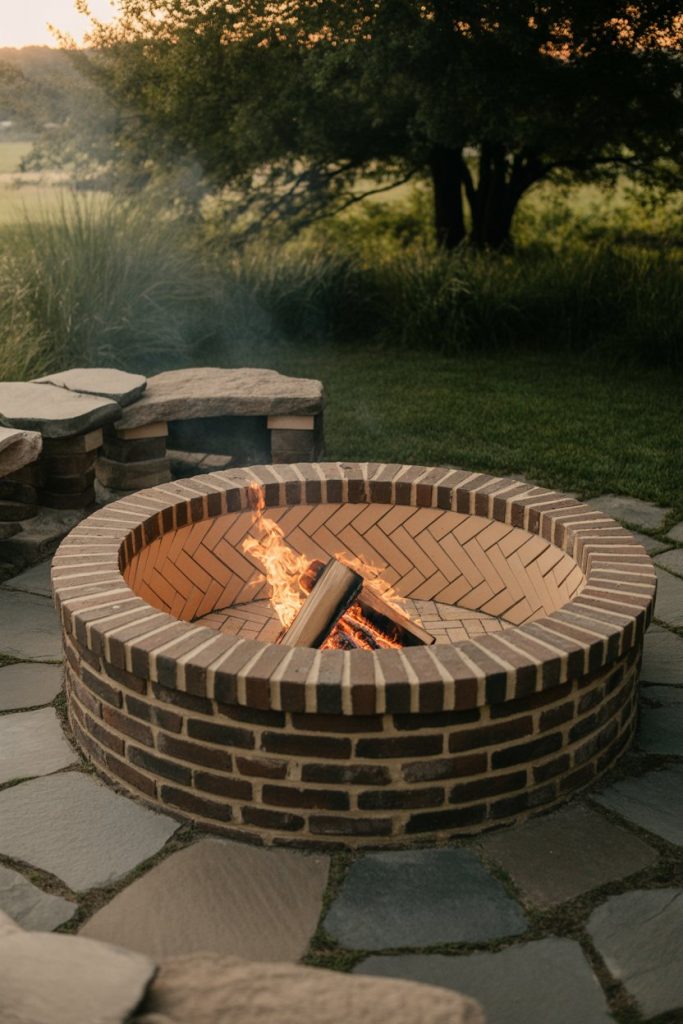
If you’re comfortable with a weekend DIY project, a brick fire pit laid in herringbone offers a rustic charm that feels handmade in the best way. The pattern adds visual interest without complicating the build, and firebrick is affordable and widely available. This is the kind of project that becomes a point of pride—you’ll tell people you built it, and they’ll believe you because it looks intentional. 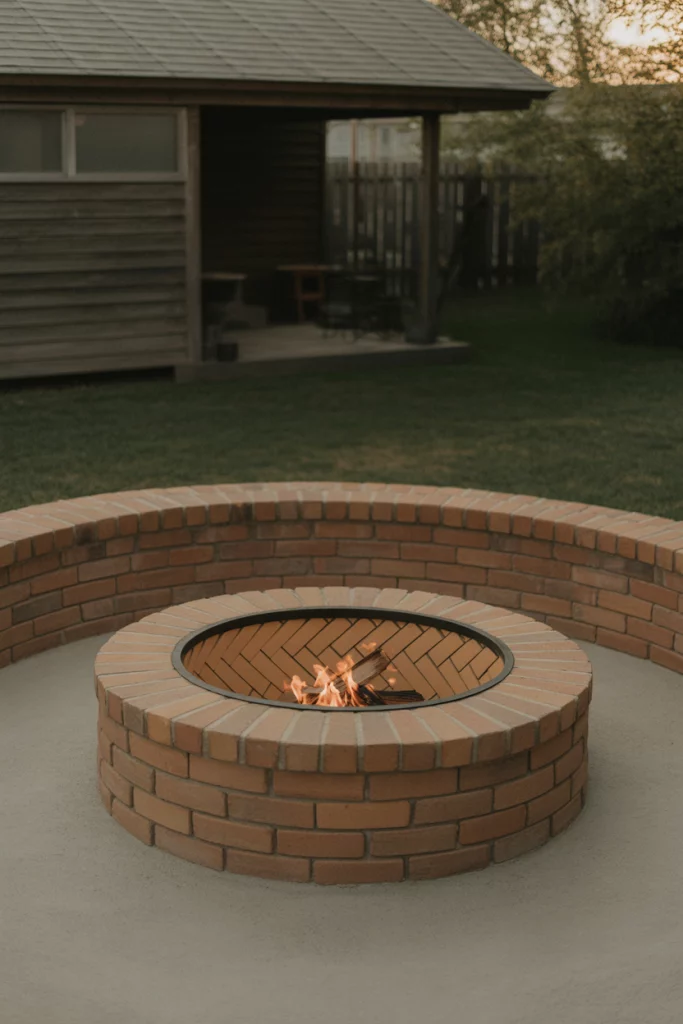
Practical insight: use firebrick for the interior ring and standard brick for the outer decorative layer. This saves money while ensuring the materials in direct contact with heat can handle it. Also, leave small gaps between bricks for airflow—a fully sealed pit will struggle to draw oxygen and you’ll end up with a smoky, frustrating fire every time.
5. In-Ground Fire Pit for Small Spaces
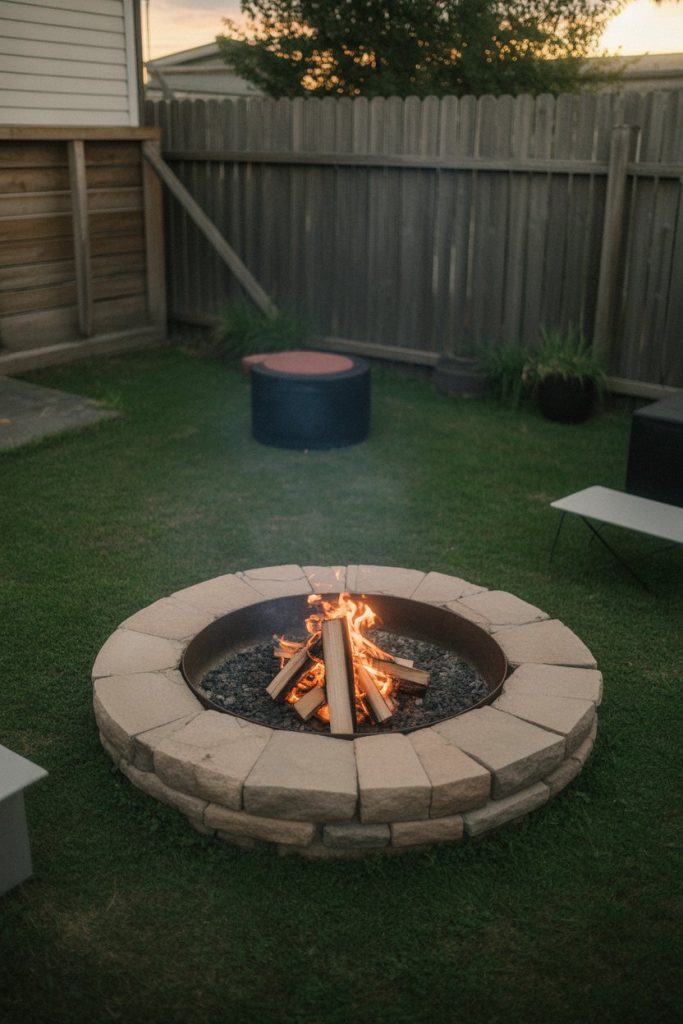
When your yard is tight, a ground level or dug in fire pit maximizes usable space without creating a visual barrier. This approach works especially well in small space backyards where every square foot matters. The fire sits flush with the lawn or patio, so you’re not losing room to a raised structure, and it creates a campfire vibe that feels more connected to the earth. 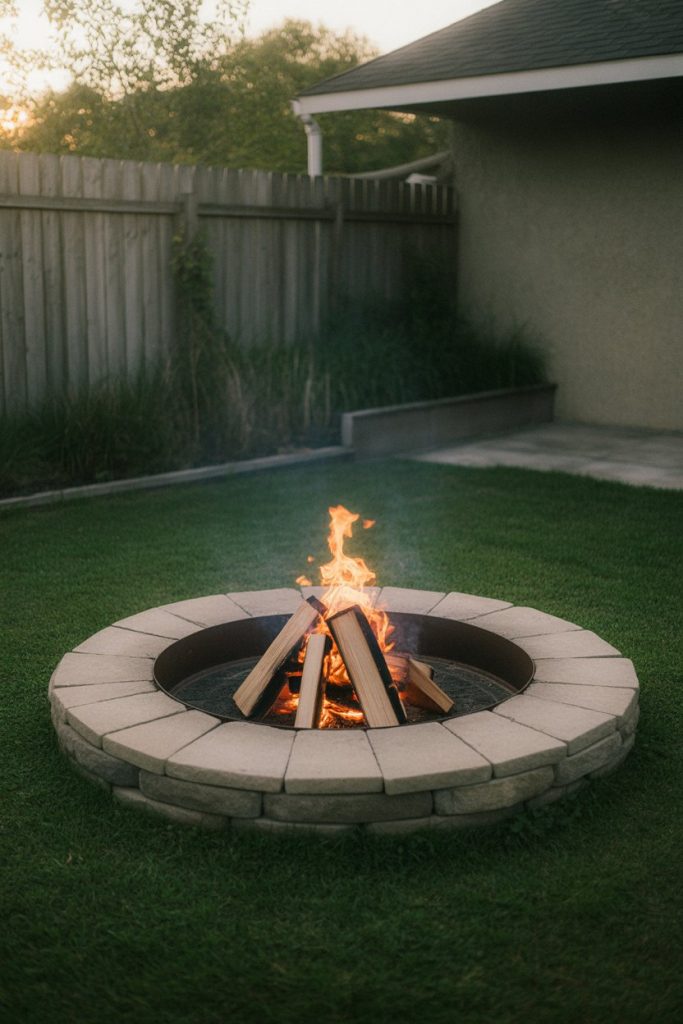
Where it works best: urban backyards, narrow side yards, or courtyards where zoning and setback rules limit above-ground structures. Just be sure to check local fire codes—some municipalities require a certain clearance from fences or structures, and an in-ground pit can sometimes fly under the radar better than a raised one. You’ll also want to install a gravel or sand base for drainage.
6. Gas Fire Pit with Glass Rock Fill
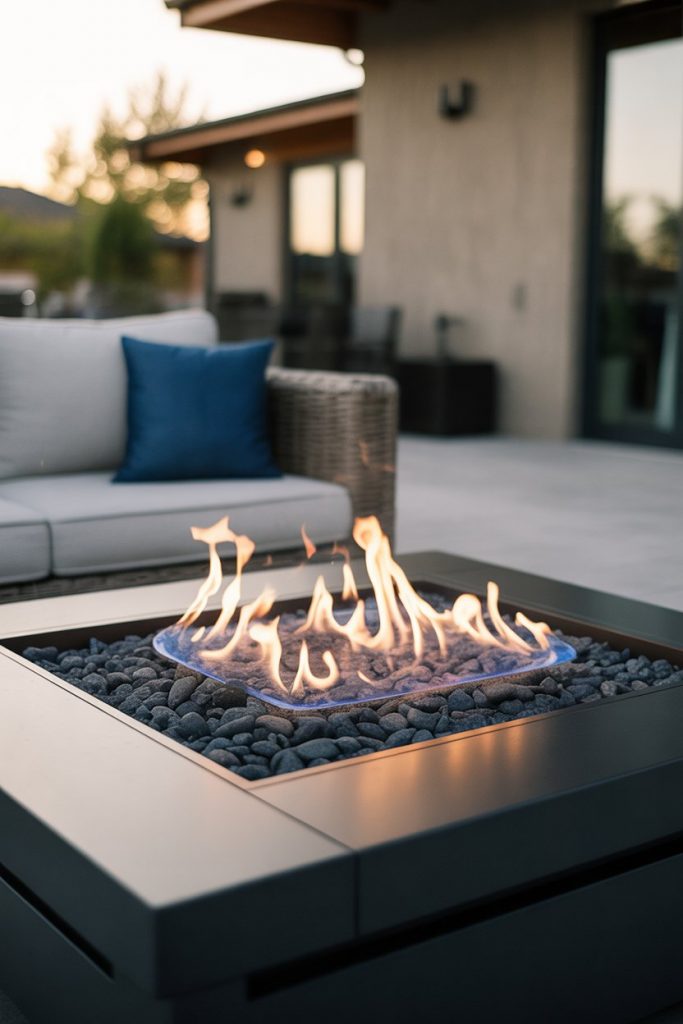
A gas fire pit eliminates the mess of wood and ash, making it a go-to for homeowners who want ambiance without the cleanup. Fill the bowl with tempered glass rocks in copper, cobalt, or clear for a modern twist that catches and reflects light beautifully. The flame height is adjustable, it lights with a switch or remote, and you’re not dealing with smoke that clings to clothes and hair. 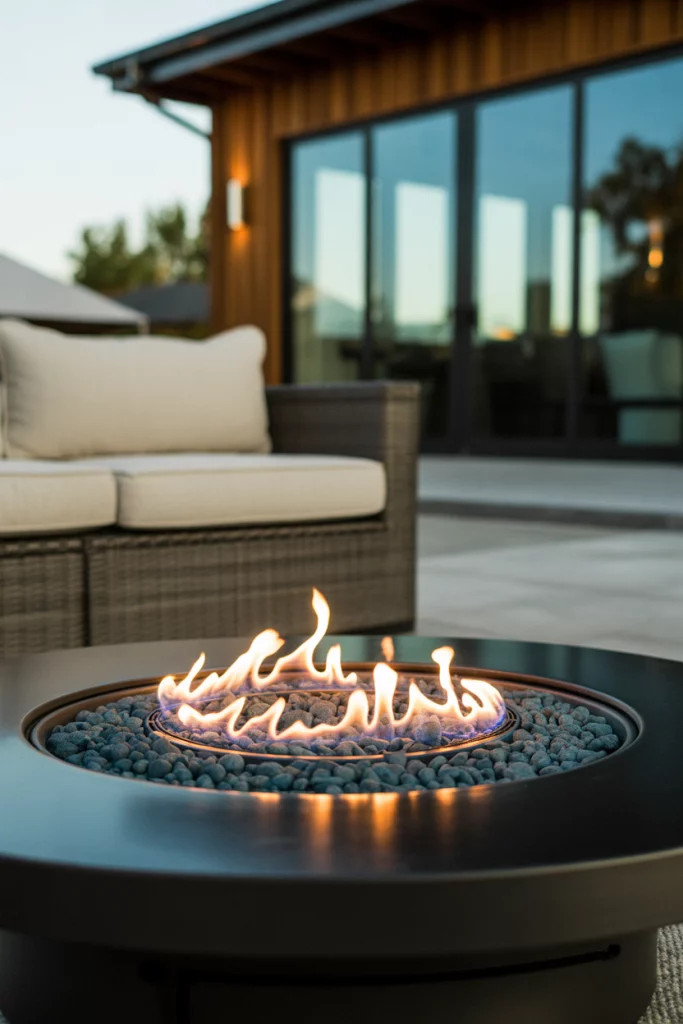
Real homeowner behavior: people who install gas fire pits use them far more often than those with wood-burning versions, simply because there’s no barrier to starting a fire on a Tuesday night. The convenience factor is real. Just budget for professional gas line installation unless you’re certified—this isn’t a DIY situation, and doing it wrong creates serious safety risks.
7. Smokeless Fire Pit for Close Quarters
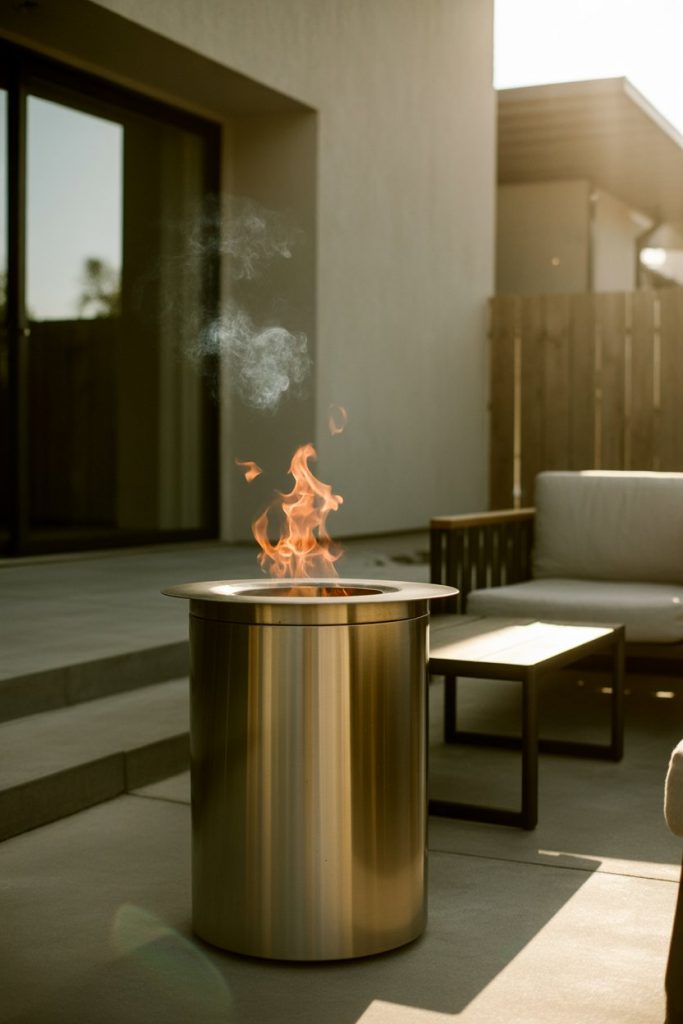
A smokeless fire pit uses a double-wall design to create secondary combustion, drastically reducing smoke output. This is a game-changer for small space yards, patios near the house, or neighborhoods where smoke complaints are common. Brands like Solo Stove have made this technology accessible, and the difference is immediately noticeable—you can sit downwind without tearing up. 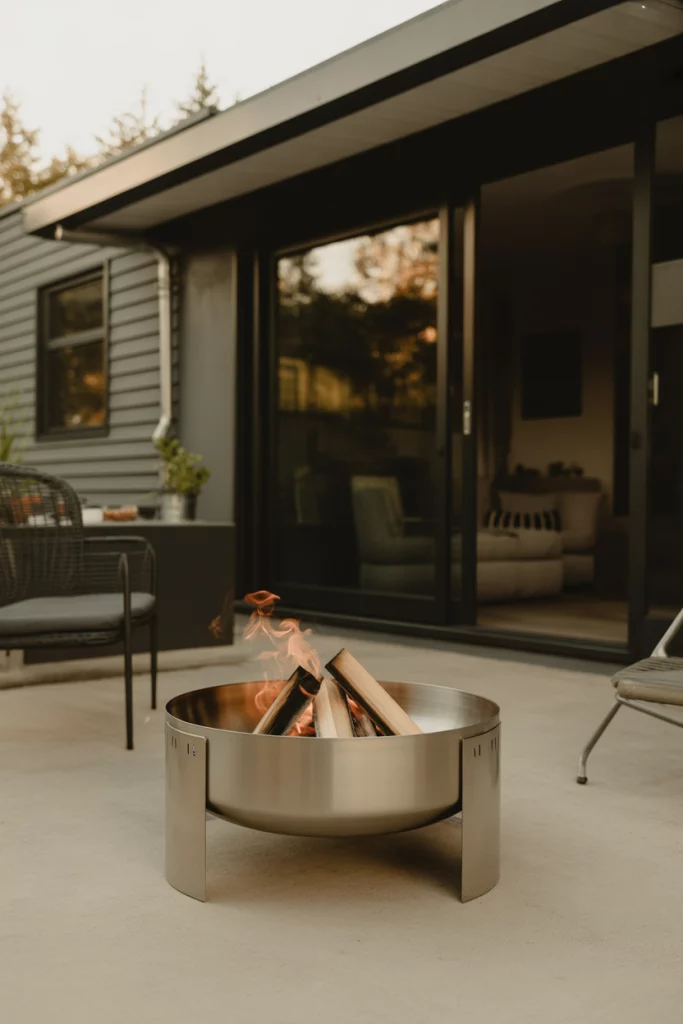
Expert-style commentary: the key to keeping a smokeless pit performing well is using properly seasoned hardwood, cut small enough to fit the firebox without crowding. If you overload it or use damp wood, you’ll defeat the airflow design and end up with smoke anyway. These pits also burn hotter and faster than traditional models, so you’ll go through wood more quickly—but the tradeoff in comfort is usually worth it.
8. Square Fire Pit with Linear Burner
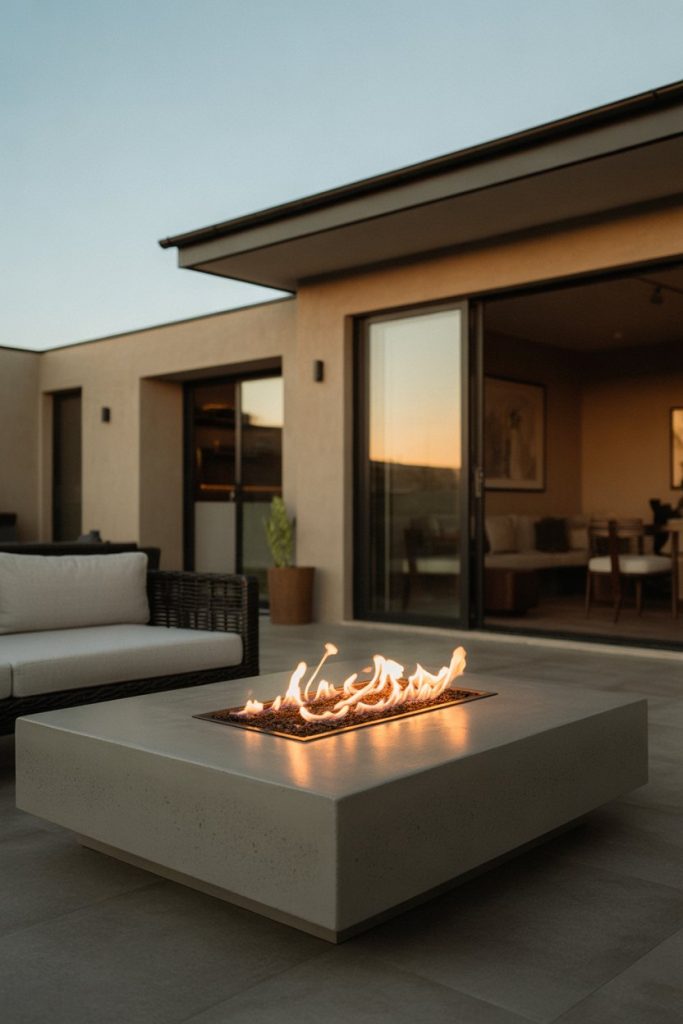
A square fire pit with a long, narrow burner creates a striking centerpiece that feels architectural rather than decorative. This shape fits naturally into modern patio layouts, especially when paired with L-shaped seating or modular furniture. The linear flame provides even heat distribution along its length, so more people can get close without crowding one side. 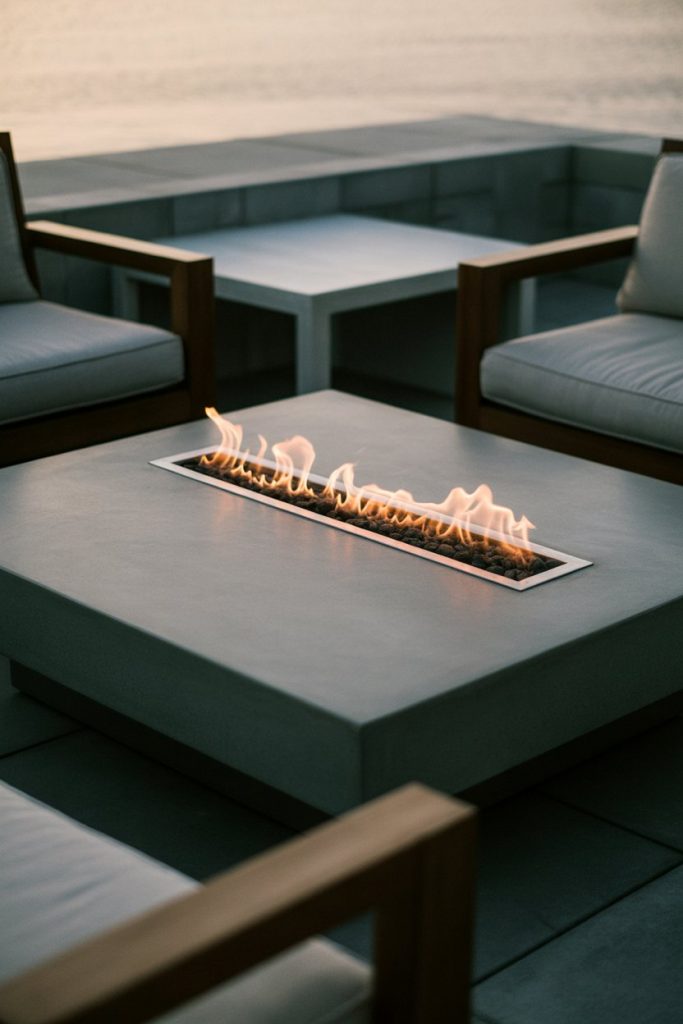
This design works particularly well in the Southwest and Southern California, where outdoor living spaces function as extensions of the indoor floor plan. The square footprint also makes it easier to integrate into hardscaping projects—you’re not trying to fit a circle into a grid. Just make sure the burner is rated for outdoor use and protected from wind, which can blow out certain models.
9. Repurposed Washing Machine Drum
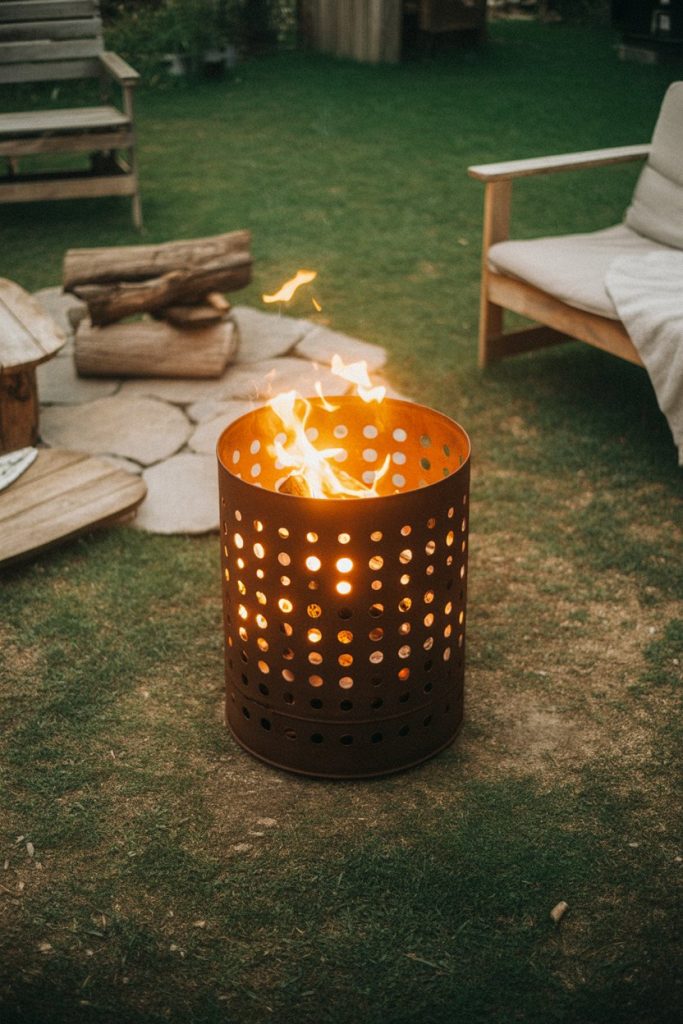
A stainless steel washing machine drum makes for an unexpectedly brilliant cheap DIY fire pit. The perforations allow for excellent airflow, the material is built to withstand heat, and the industrial look has a certain rustic appeal. You can find these for free or cheap on Craigslist, salvage yards, or appliance repair shops. It’s one of those ideas that sounds odd until you see it in action. 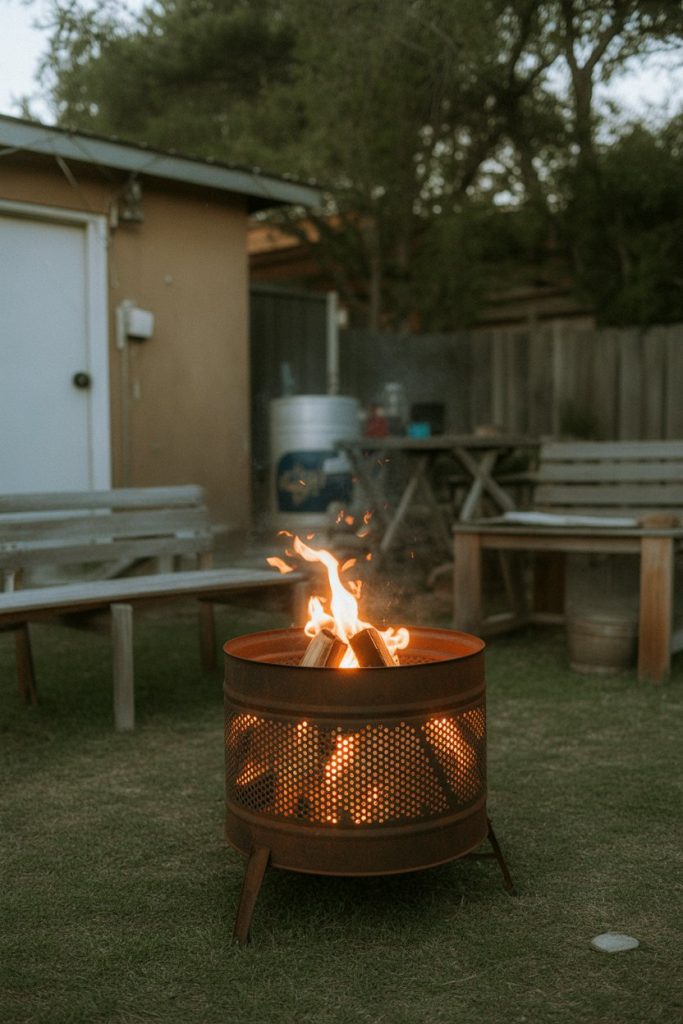
Micro anecdote: A neighbor in Portland did this three years ago as a temporary solution and never upgraded—it became the conversation starter at every gathering. People are drawn to things that feel resourceful and a little irreverent. Just elevate the drum slightly off the ground with bricks or pavers to protect your lawn or deck from scorching.
10. Fire Pit Paired with Pool Lounging Area
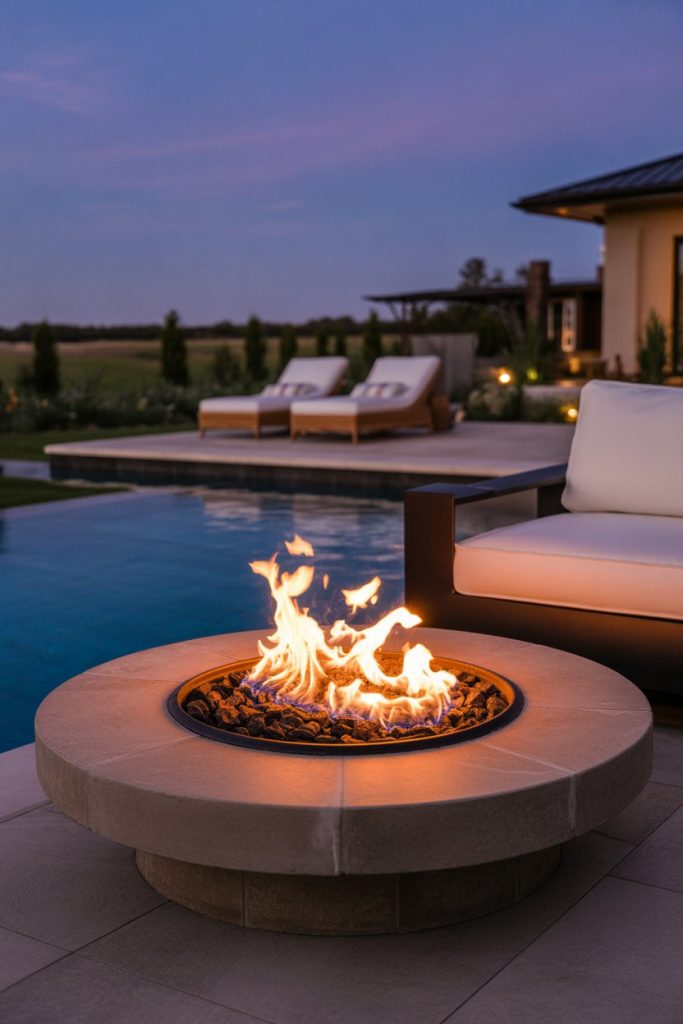
Positioning a fire pit near your pool and lounge zone extends the usability of both spaces into cooler months. The warmth from the fire makes poolside evenings in spring and fall far more comfortable, and the glow on water creates a resort-like atmosphere. This pairing works especially well in the Sun Belt, where you’re swimming later into the year but still want cozy nights outdoor. 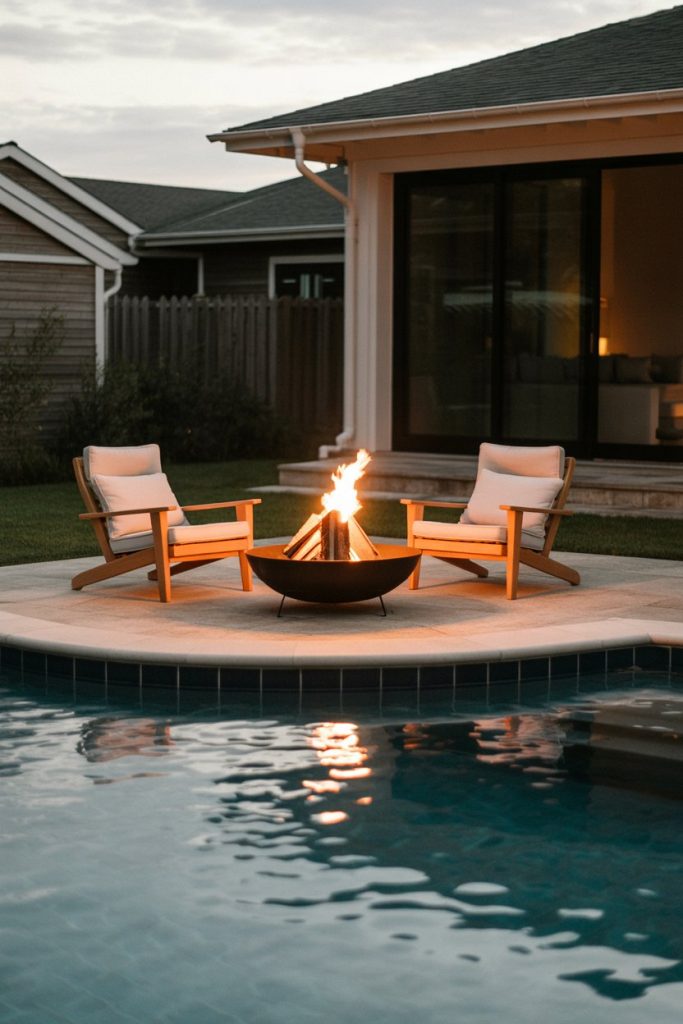
American lifestyle context: in states like Arizona, Texas, and Florida, this setup has become almost standard in new builds because it maximizes the investment in outdoor infrastructure. The fire pit doesn’t compete with the pool—it complements it by creating a second focal point. Just keep the fire at least 10 feet from the pool deck to avoid soot settling on wet surfaces.
11. Cheap and Easy Gravel Pad Fire Ring
A metal fire ring set on a cheap easy gravel pad is one of the most forgiving setups for beginners. Gravel drains well, it’s non-flammable, and it defines the fire zone without requiring mortar or masonry skills. This is also a great budget option for rental properties or temporary setups where you want something functional but not permanent. You can complete the whole thing in under two hours. 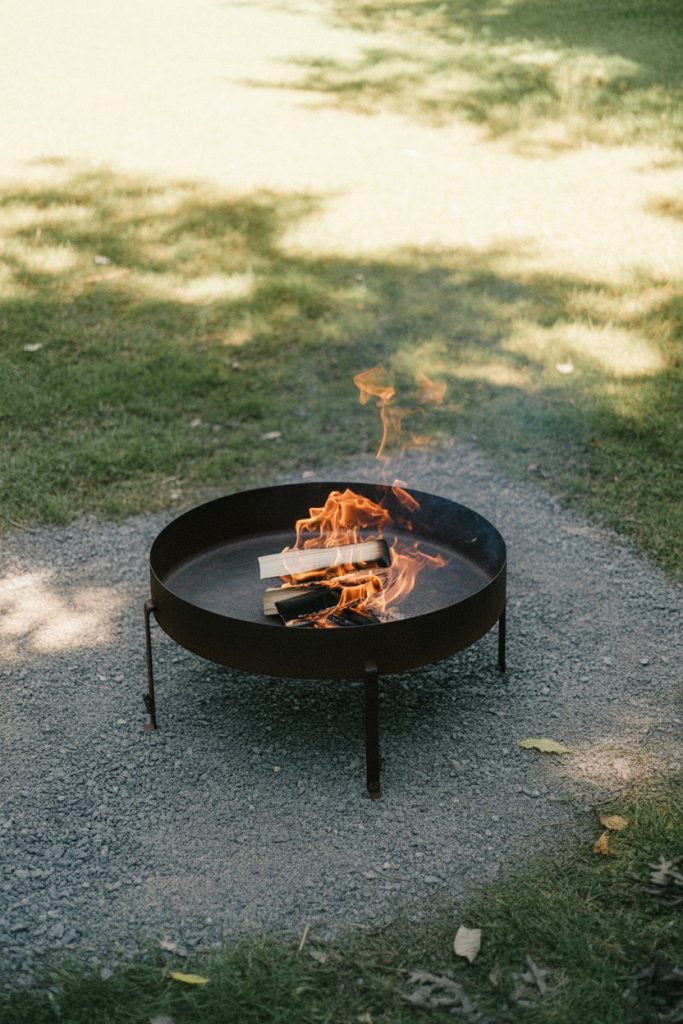
Budget angle: you’ll spend around $50 to $80 total—$30 for a basic steel ring and another $30 to $50 for a few bags of pea gravel. That’s less than a single dinner out, and you’ll get years of use if you maintain it. The gravel also makes it easy to rake out ash and debris, keeping the area tidy with minimal effort.
12. Natural Stone Fire Pit with Irregular Edges
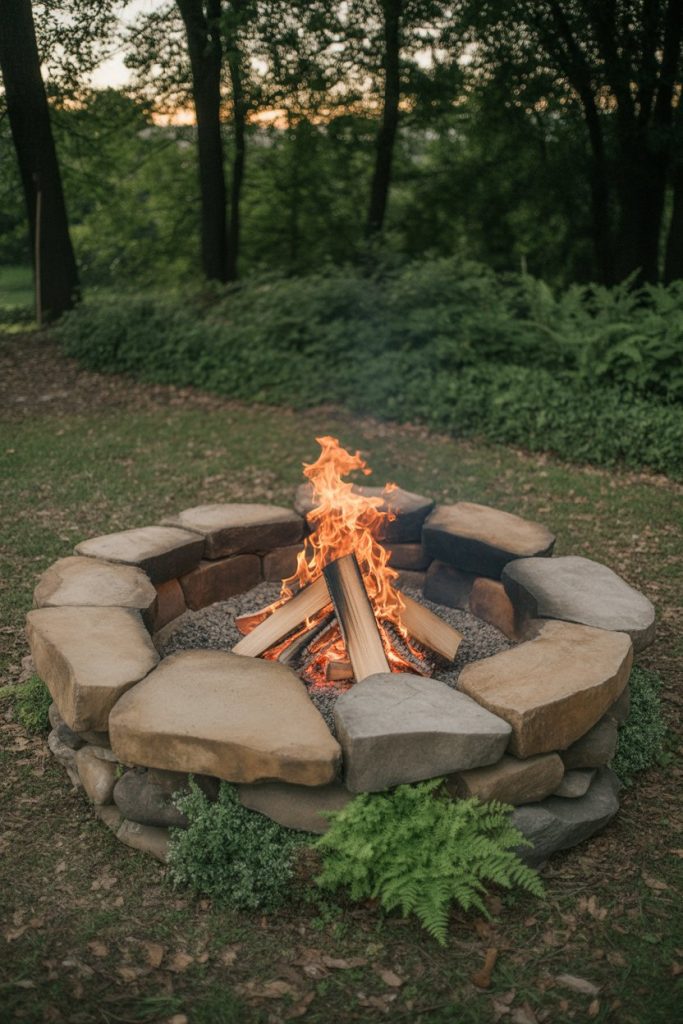
A fire pit built from irregularly shaped natural stone brings a rustic organic quality that feels like it’s always been part of the landscapes. Each stone is different, so the finished product has character that manufactured pavers can’t replicate. This works beautifully in wooded or mountainous settings where the goal is to blend the fire pit into the natural surroundings rather than stand out. 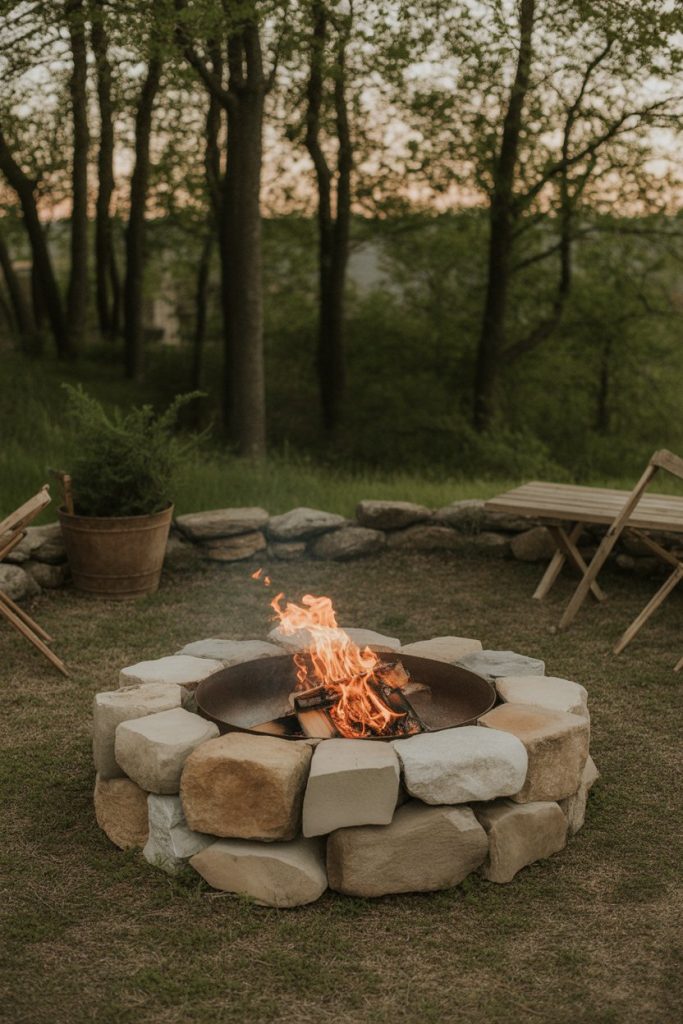
Where it works best: properties in the Appalachians, Pacific Northwest, or New England where natural stone is abundant and the landscape already leans toward rough-hewn beauty. The irregular shape also means you’re not locked into a perfect circle—you can adapt the design to fit the available space or work around existing trees and roots. Just take your time with the stacking; stability matters more than speed.
13. Portable Fire Pit for Renters
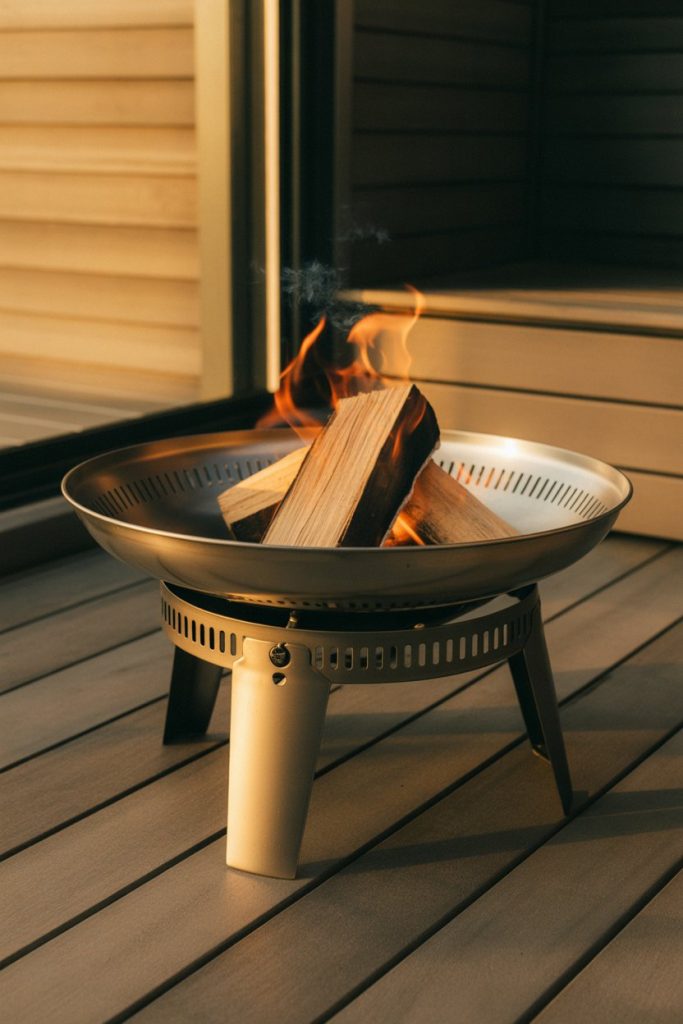
A portable steel fire pit is the smartest move for renters or anyone who might relocate. These come in modern or rustic finishes, they’re lightweight enough to move around the yard, and they don’t require installation or permanent changes to the property. This is also a good cheap solution if you’re still figuring out your long-term outdoor layout and don’t want to commit to a fixed location yet. 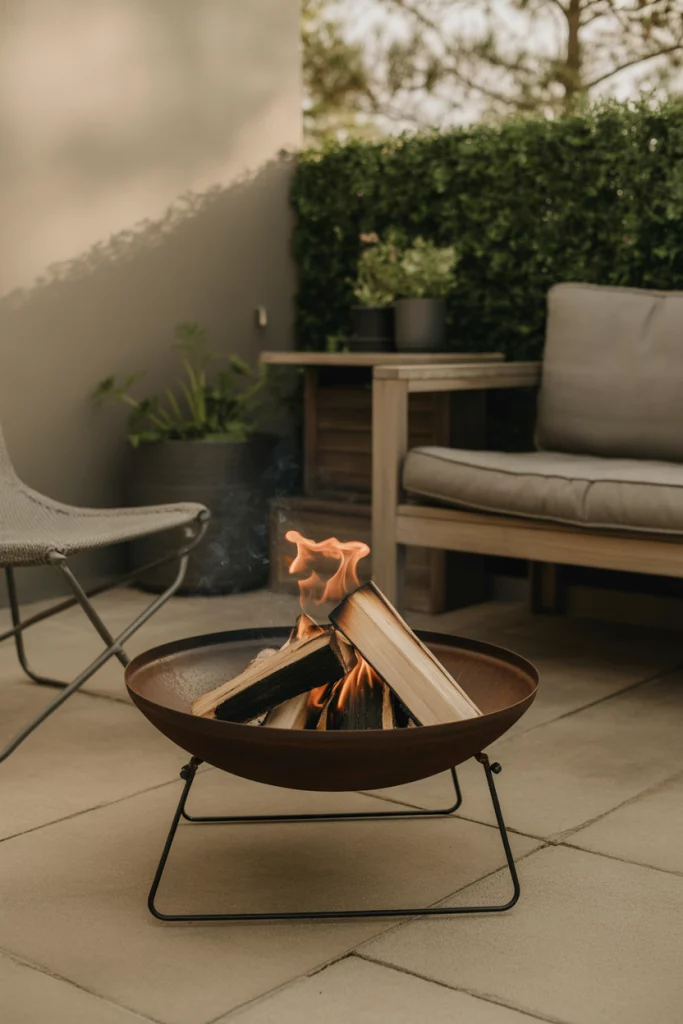
Real homeowner behavior: people who start with a portable pit often keep it even after buying a house, using it as a secondary fire source for different zones in the yard. You might have a built-in pit near the patio and a portable one by the garden or near the play area. The flexibility is addictive once you realize you’re not locked into one spot.
14. Fire Pit with Swinging Grill Grate
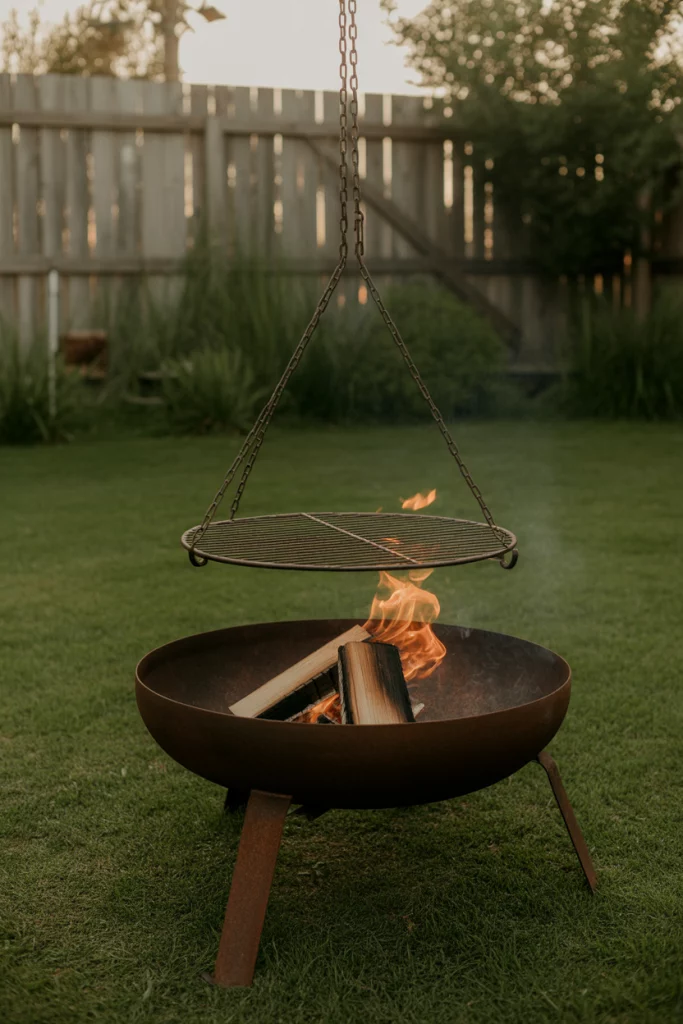
Adding a swinging grill grate over your fire pit turns it into a dual-purpose cooking and gathering space. The grate pivots over the flames for grilling, then swings away when you just want to enjoy the fire. This outdoor cooking setup taps into the growing interest in live-fire cooking, and it’s especially popular with the DIY crowd who appreciate functional design. It’s also just plain fun to use. 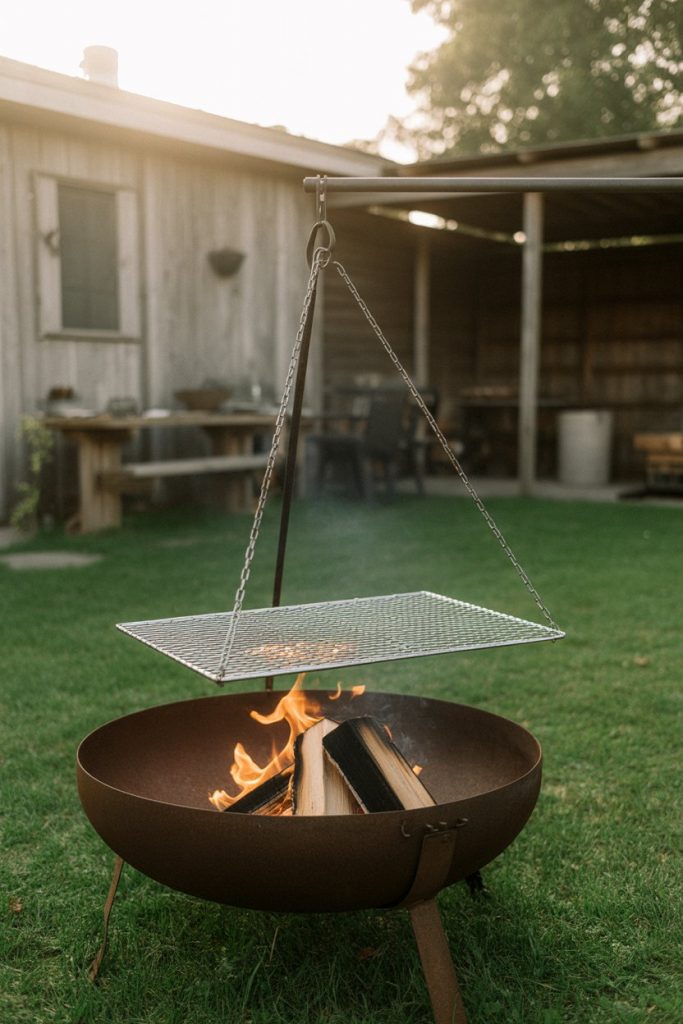
Practical insight: the grate needs to be made from heavy-gauge steel or cast iron to avoid warping under high heat. Cheap versions bend after a few uses and become frustrating to adjust. Also, make sure the pivot post is sunk deep and stable—there’s nothing worse than a wobbly grill when you’re trying to flip burgers over an open flame.
15. Minimalist Concrete Bowl
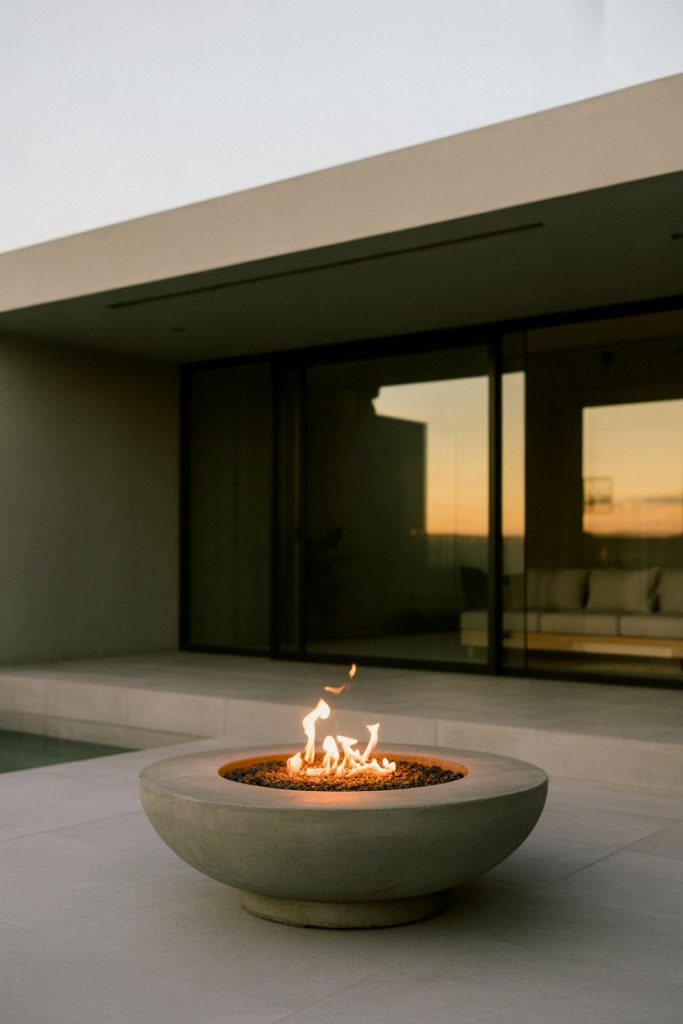
A poured concrete fire bowl offers a modern minimalist aesthetic that ages beautifully. The material develops a natural patina over time, and the heavy mass retains heat well into the evening. This is a simple design that works in both outdoor contemporary settings and more eclectic yards where you want a neutral anchor piece. You can DIY this with a mold, though buying a pre-cast version is often easier. 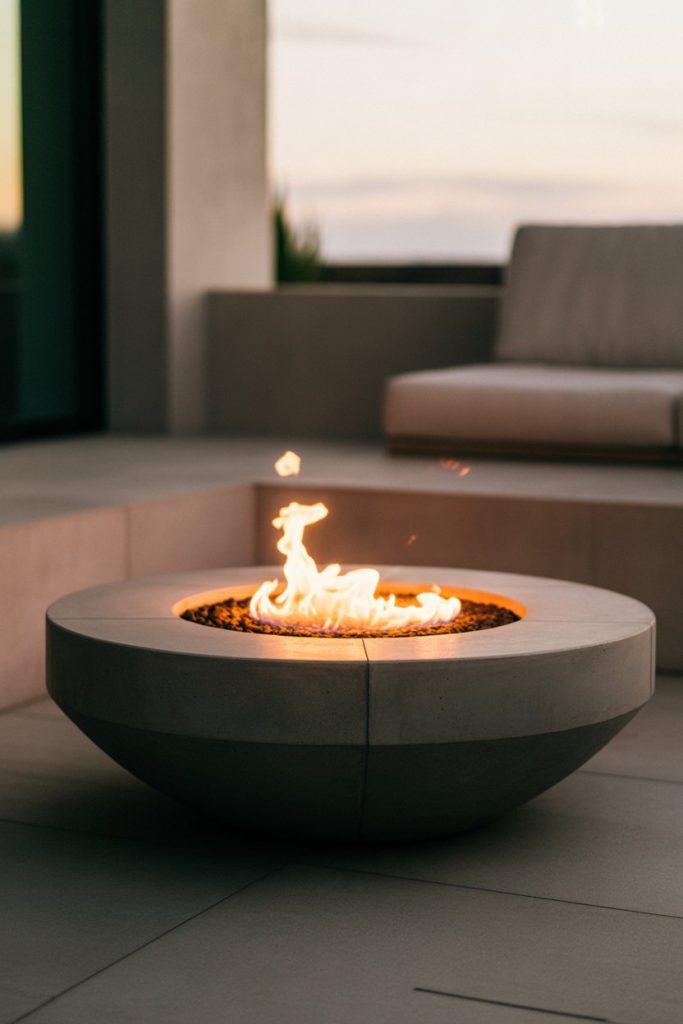
Expert-style commentary: concrete fire pits need to be sealed properly to prevent cracking from thermal expansion. Use a high-temperature sealant designed for outdoor masonry, and reapply every couple of years. Also, avoid sudden temperature swings—don’t light a roaring fire in a bowl that’s been sitting in freezing rain. Gradual heating prevents stress fractures.
16. Fire Pit with Built-In Wood Storage
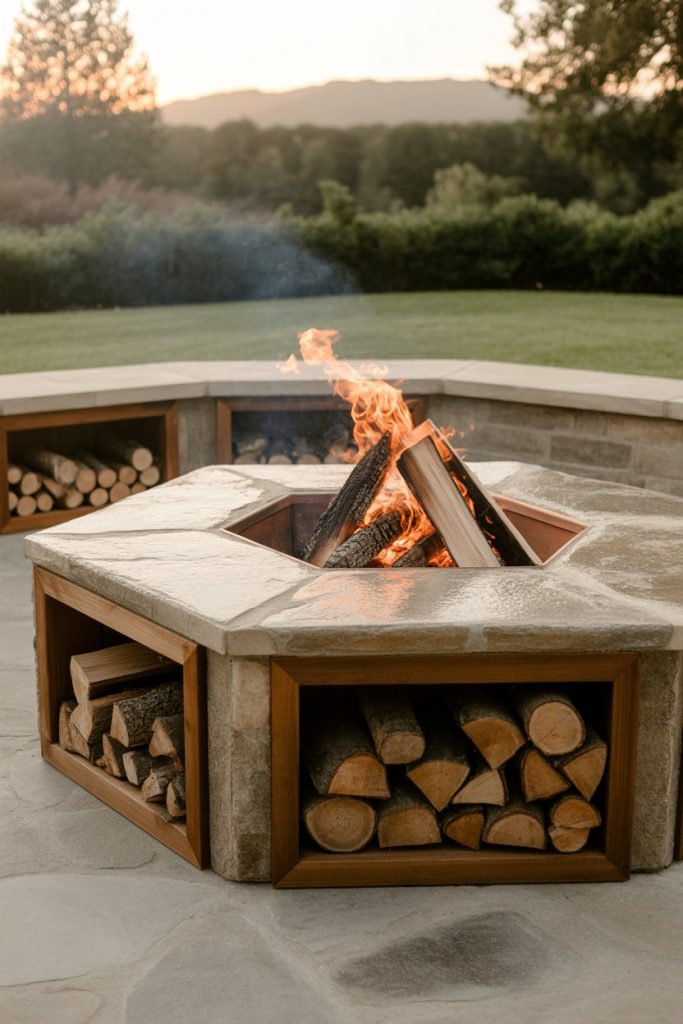
Integrating firewood storage into the fire pit surround keeps everything you need within arm’s reach and eliminates the need for separate log racks. This is a smart seating and storage combo that often includes built-in benches flanking the storage bays. The wood stays dry under cover, and the whole setup feels organized and intentional. It’s especially useful in landscapes where you’re trying to reduce visual clutter. 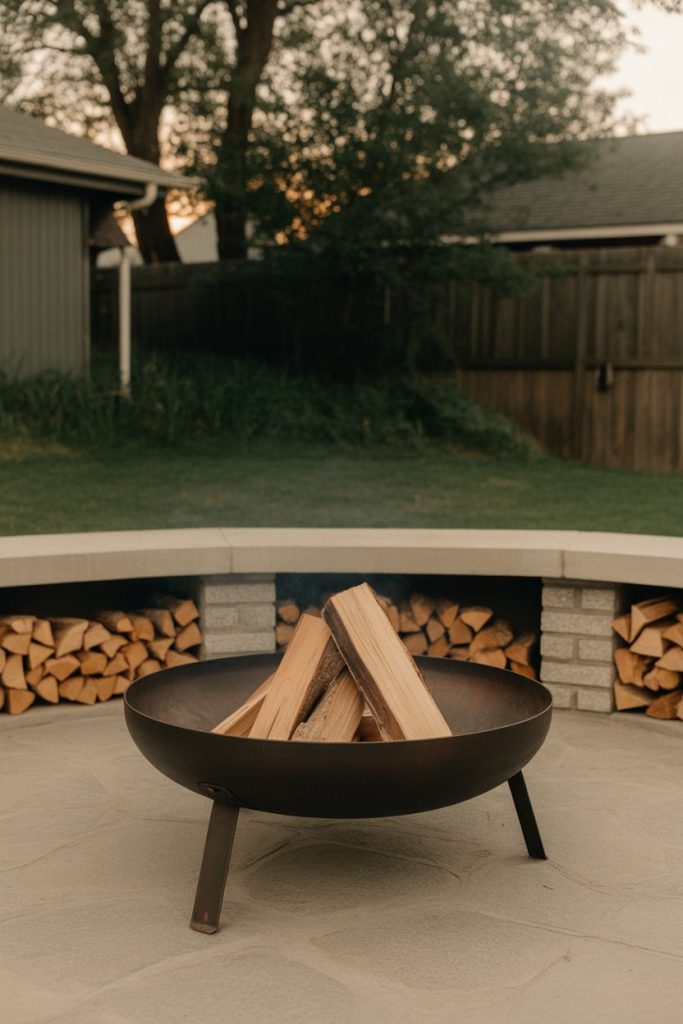
Where it works best: larger properties where you’re burning wood regularly and need a functional system to keep logs accessible but out of sight. This also works well in mountain or rural areas where you’re cutting and storing your own wood rather than buying bundles. Just make sure the storage section has ventilation—trapped moisture leads to mold and rot.
17. Fire Pit with Paver Patio Extension
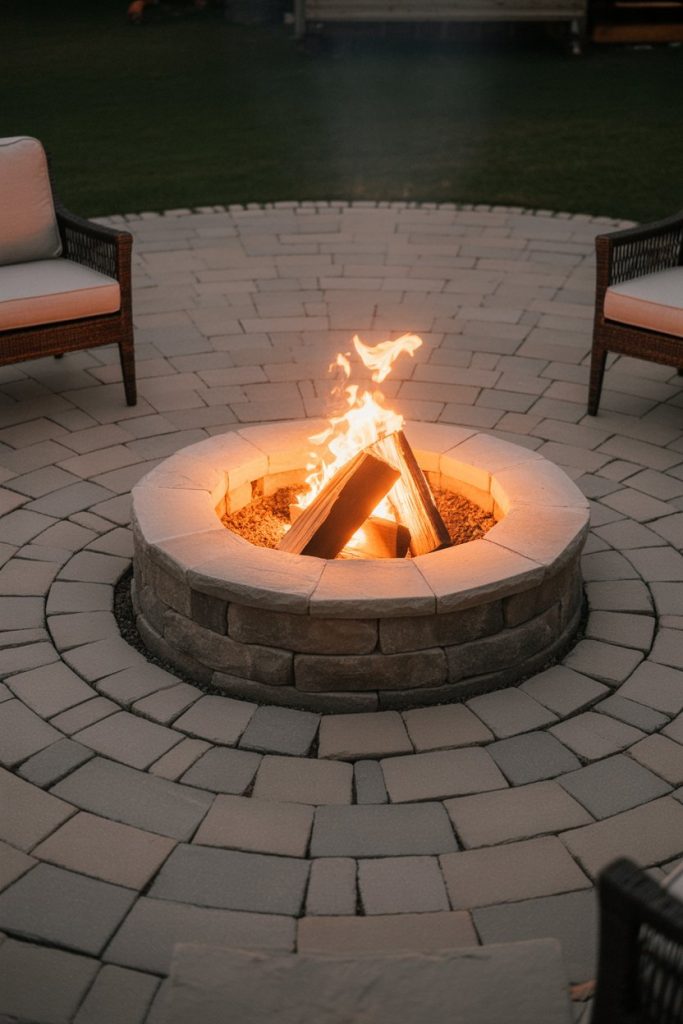
Surrounding your fire pit with a generous pavers patio creates a stable, level surface for seating and eliminates the muddy grass problem that comes with heavy foot traffic. The paved area also defines the zone visually, making the fire pit feel like a destination rather than an afterthought. This is one of those upgrades that makes the space usable in all weather, not just during dry spells. 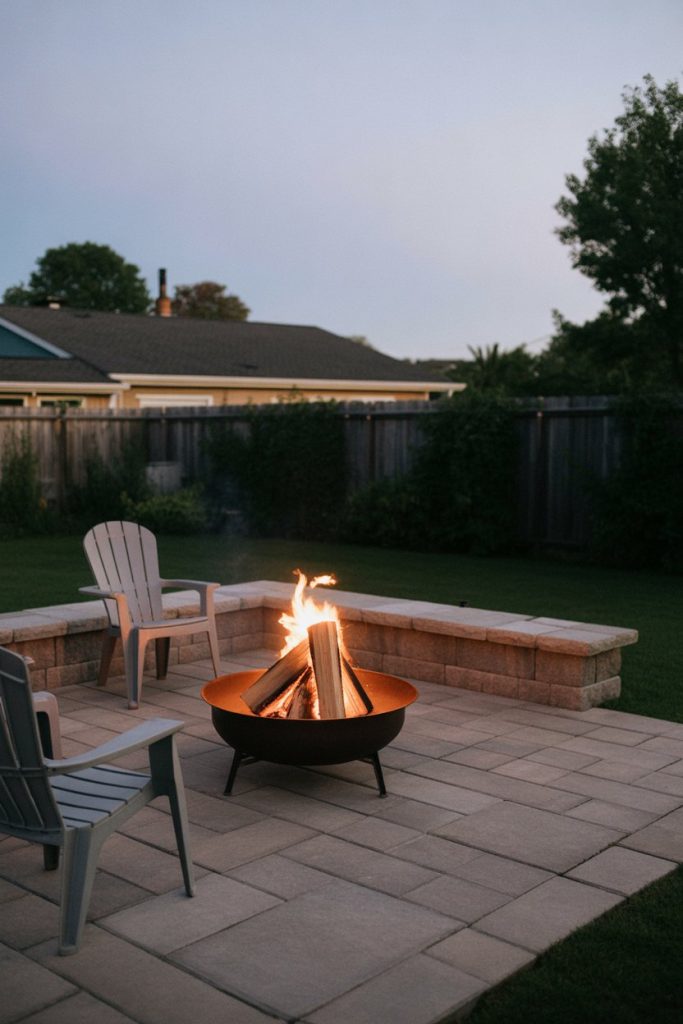
Common mistake: people underestimate how much paver area they actually need. A 10×10 foot pad feels cramped once you add chairs and a few people. Go with at least 12×12, or 14×14 if you’re planning for gatherings. The extra space makes movement around the fire easier and prevents that crowded, hemmed-in feeling.
18. Retaining Wall Fire Pit on Slope
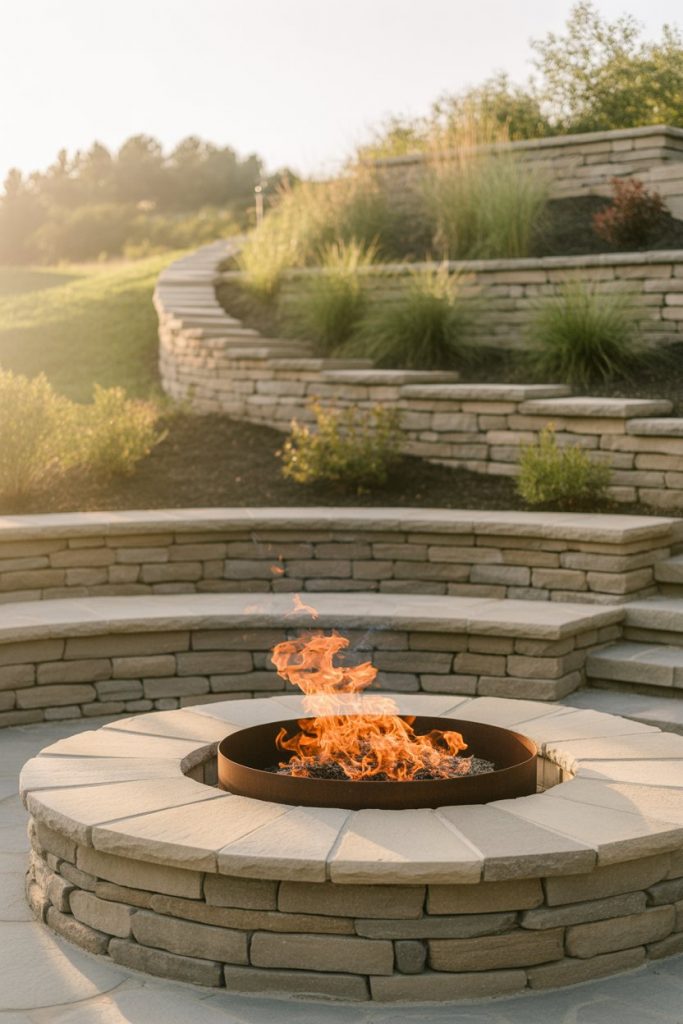
If you’re dealing with a sloped yard, building a fire pit into a retaining wall turns a challenging landscapes feature into an asset. The wall provides seating on one side, stabilizes the grade, and creates a flat zone for the fire. This is especially useful in hilly regions where every usable square foot requires thoughtful grading. The fire pit becomes part of the terracing solution rather than something you’re working around. 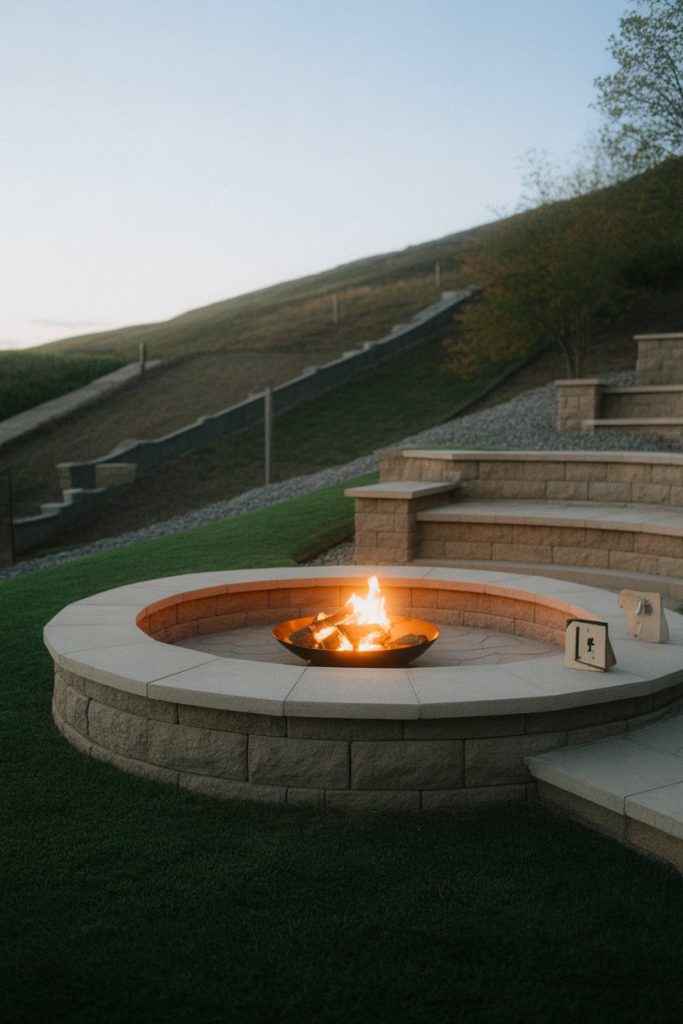
American lifestyle context: in California, Colorado, and parts of the Pacific Northwest, sloped lots are the norm rather than the exception. Homeowners are getting more creative about integrating fire pits into retaining wall projects because it solves two problems at once—grade management and outdoor living space. Work with a structural engineer if the slope is severe; retaining walls under load need proper drainage and footing.
19. Fire Pit with Adirondack Chair Circle
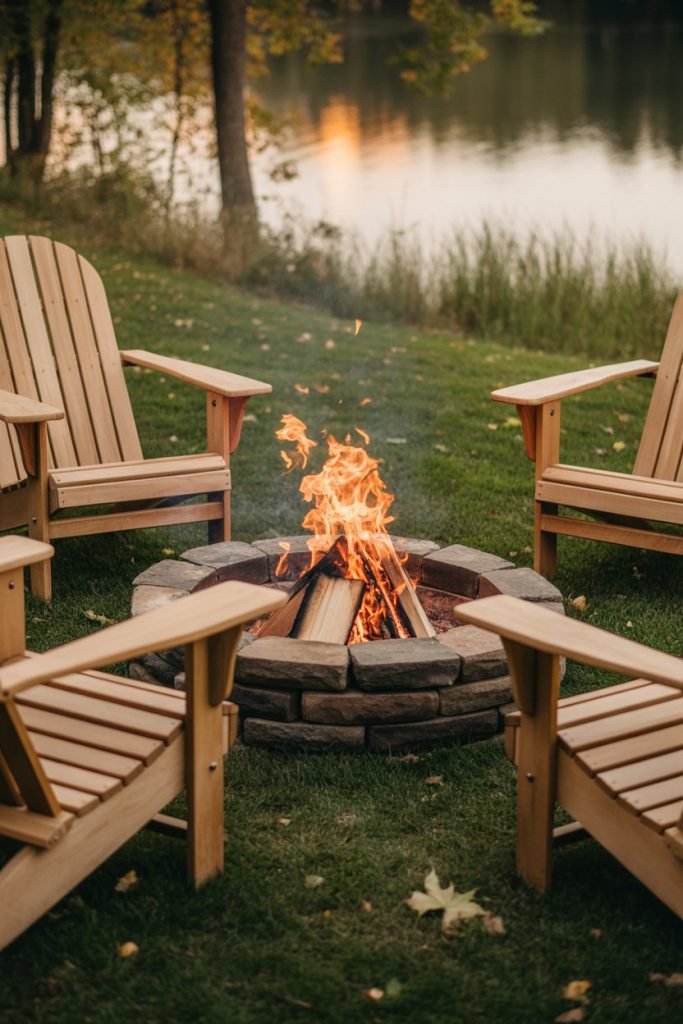
Adirondack chairs arranged around a simple fire pit create an instant rustic vibe that feels vacation-ready. The low, reclined seating is comfortable for long evenings, and the chairs are widely available in weather-resistant materials that require minimal upkeep. This setup works whether you’re going for a lakeside cottage aesthetic or just want something easygoing and unpretentious in a suburban outdoor space. 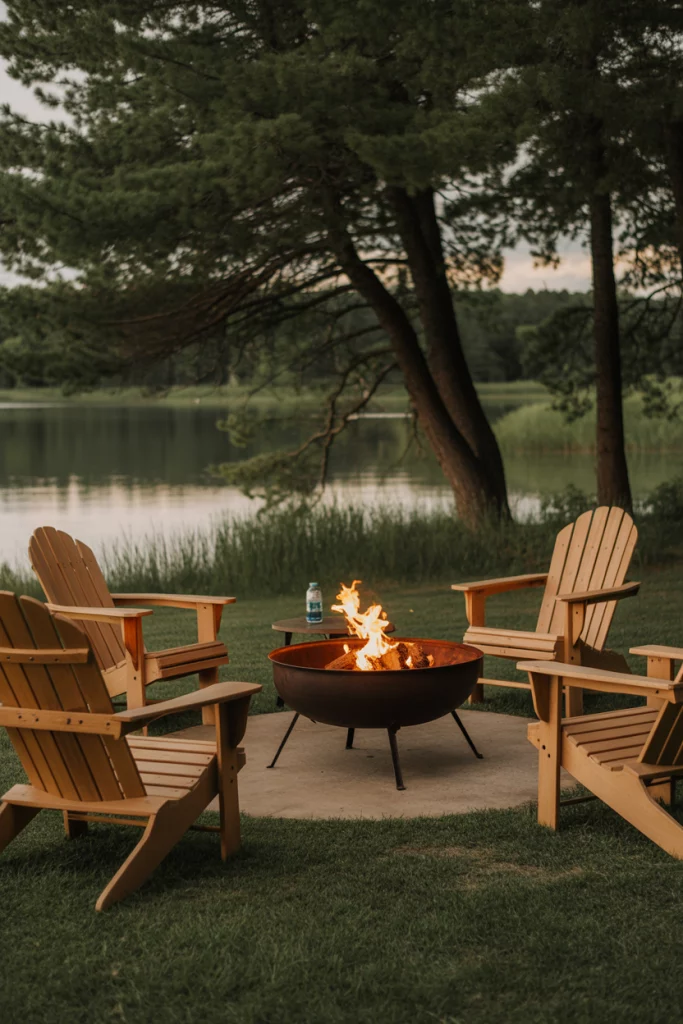
Budget angle: Adirondack chairs range from $40 for basic plastic versions to $300+ for cedar or composite models. You can mix and match quality levels—invest in two nice chairs for the prime spots and fill in the rest with budget options. People won’t notice once they’re sitting down with a drink in hand, and you’ll have saved a few hundred dollars.
20. Fire Pit with Hammock Zone Nearby
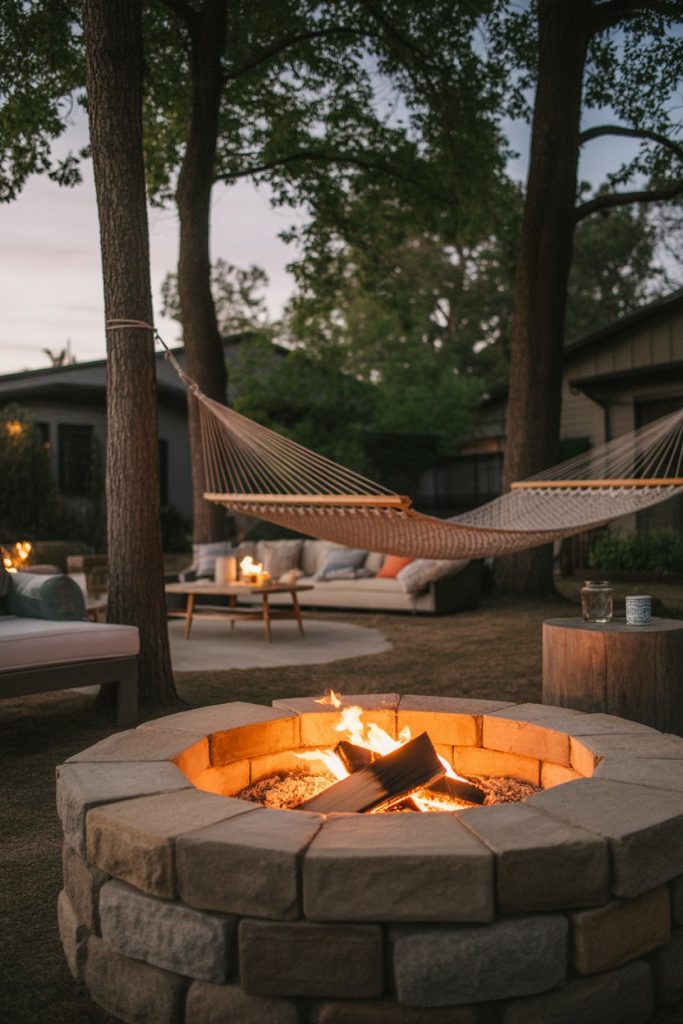
Placing a fire pit within view of a hammock or swings creates a layered outdoor experience where people can drift between active socializing and quiet relaxation. The fire provides warmth and light for the hammock zone after dark, extending the time you can comfortably lounge outside. This is a great layout for families or anyone who wants their backyard to accommodate different moods and energy levels. 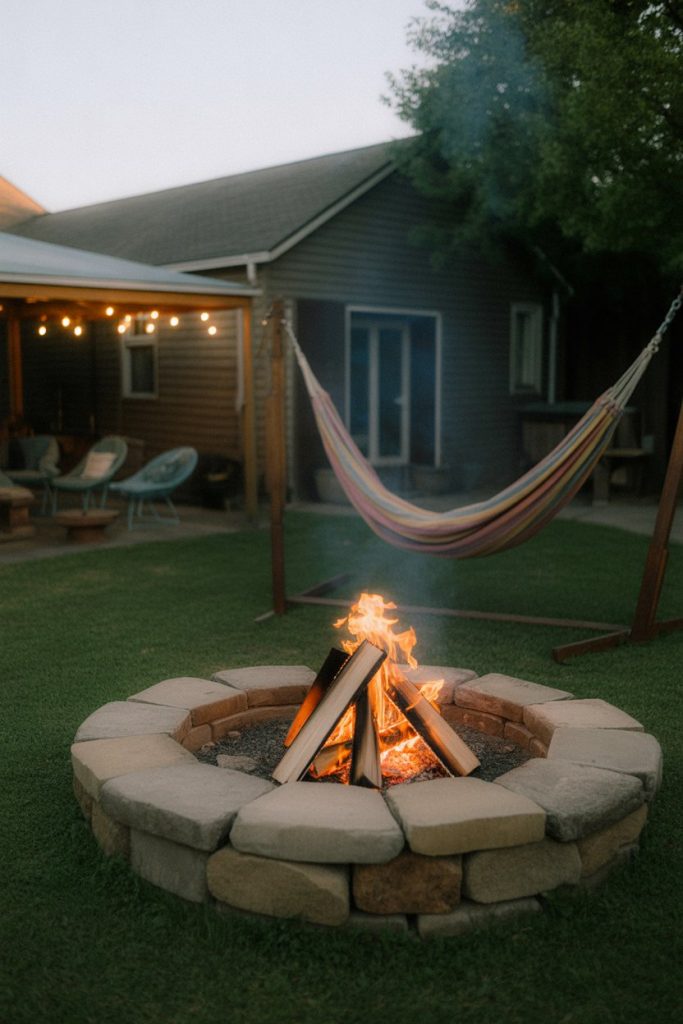
Micro anecdote: A friend in North Carolina set this up and found that the hammock became the preferred spot for their teenager during fire nights—close enough to be part of things but with a built-in exit when the conversation gets boring. It’s a small design choice that quietly accommodates different social needs without anyone having to leave the yard.
21. Fire Pit with Low Voltage Landscape Lighting
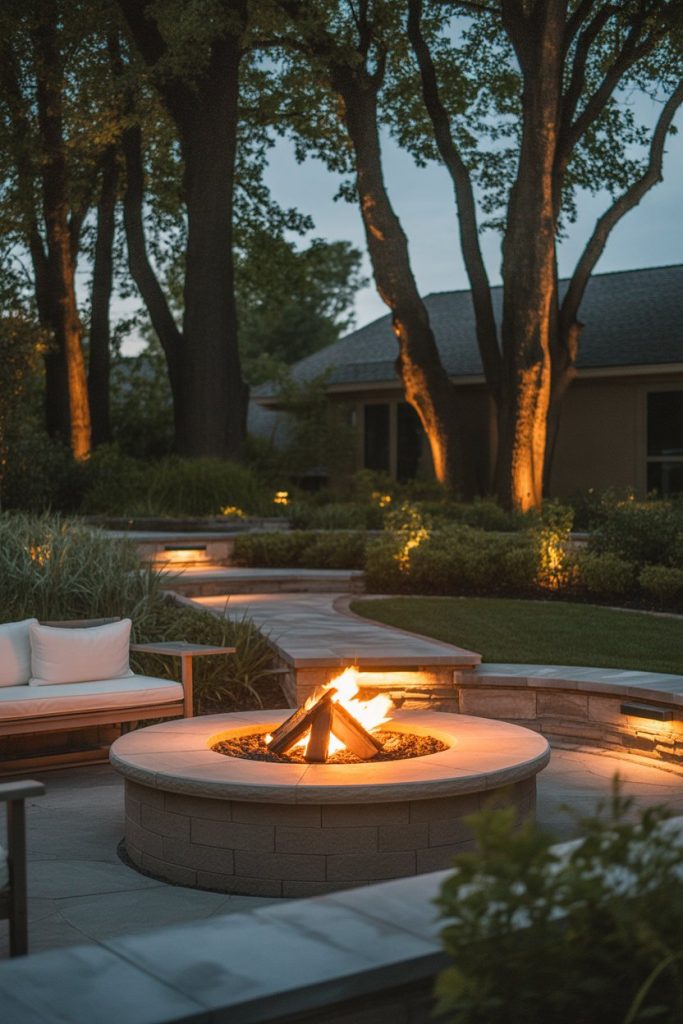
Pairing your fire pit with low voltage landscape lighting creates a complete evening experience that’s both functional and atmospheric. Path lights guide people safely to and from the fire, while uplighting on nearby trees or plantings adds depth to the landscapes. This is the kind of detail that makes a modern backyard feel finished rather than improvised, and it’s easier to install than most people assume. 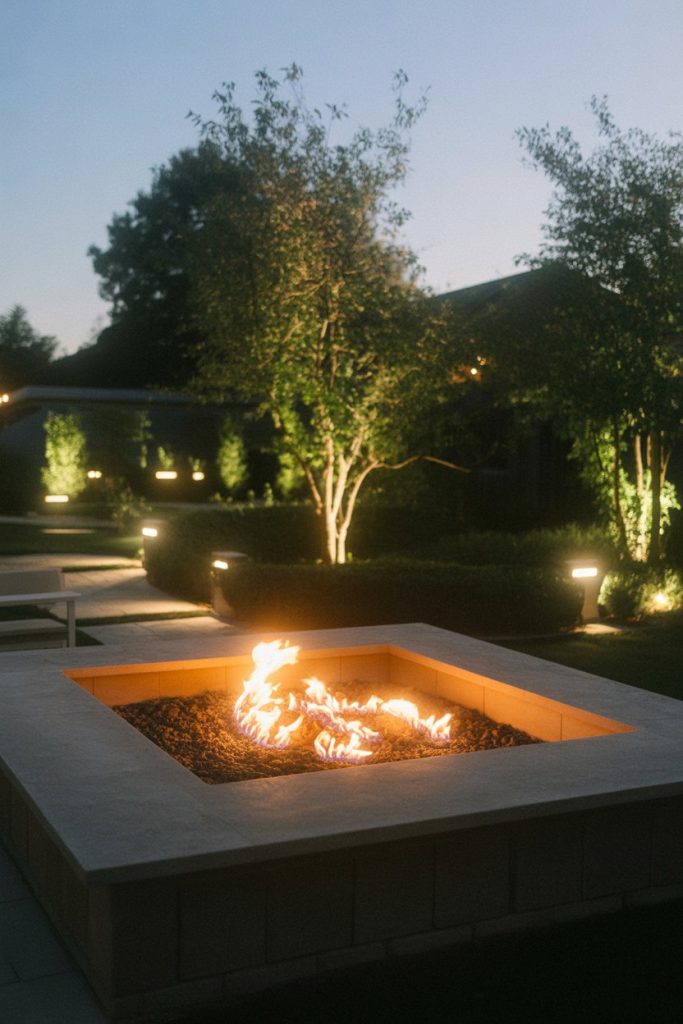
Practical insight: use warm white LEDs (2700K to 3000K) rather than cool white—the warmer tones complement firelight instead of competing with it. Also, put the lighting on a timer or smart switch so it comes on automatically at dusk. You’ll actually use it that way, whereas manual switches tend to get forgotten until someone trips over a chair in the dark.
22. DIY Fire Pit with Recycled Granite Blocks
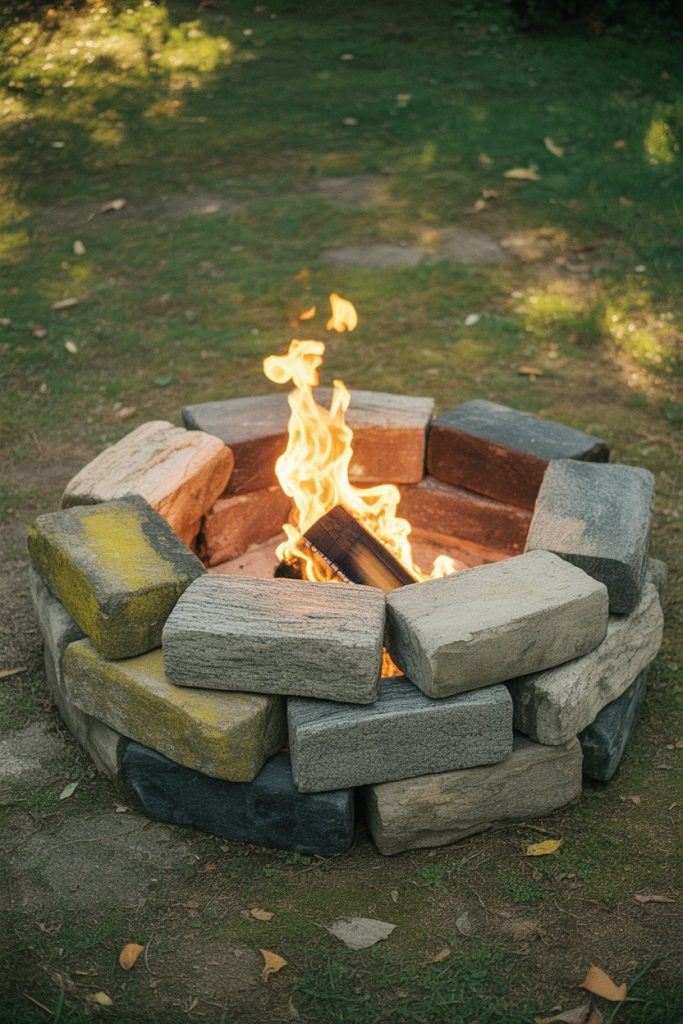
Recycled granite blocks salvaged from old curbing or construction sites make for a beautiful cheap DIY fire pit with a high-end look. The material is incredibly durable, it handles heat without issue, and the weathered surface has character that new stone lacks. This is one of those projects where sourcing the materials is half the fun—you’ll find granite for free or cheap on Craigslist, municipal salvage yards, or landscape supply clearance sections. 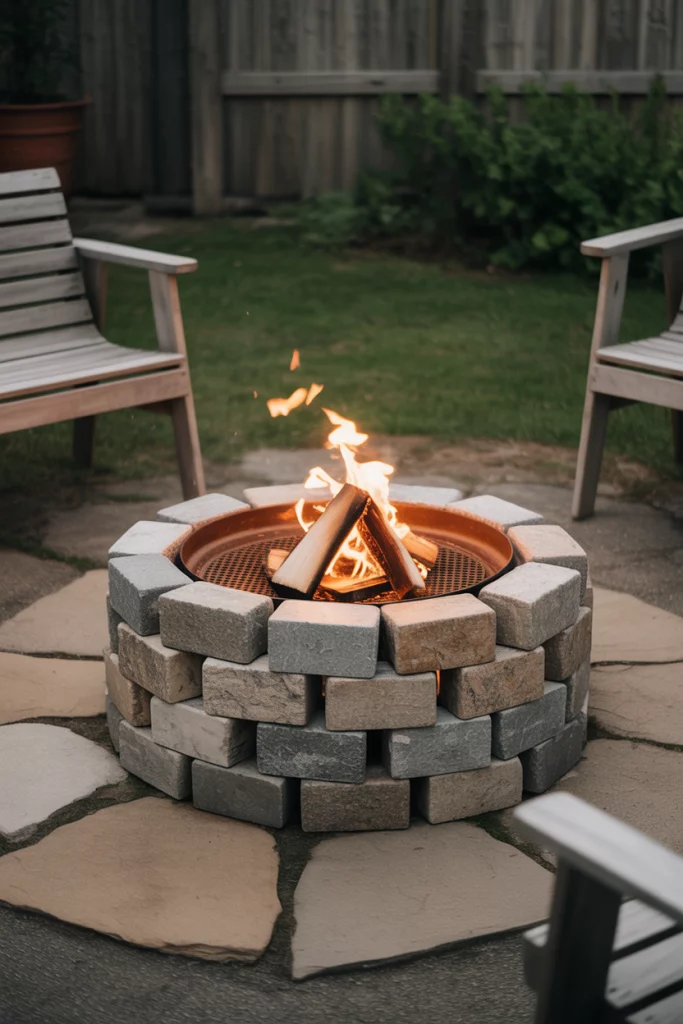
Real homeowner behavior: people who build with salvaged materials tend to become evangelists for it—they’ll tell you exactly where they scored the granite, how much they saved, and why it looks better than anything they could have bought new. There’s a pride of ownership that comes with resourcefulness. Just clean the blocks thoroughly before stacking; old curbing can have road grime or paint residue you don’t want near food or flames.
23. Fire Pit with Outdoor Rug and Layered Textiles
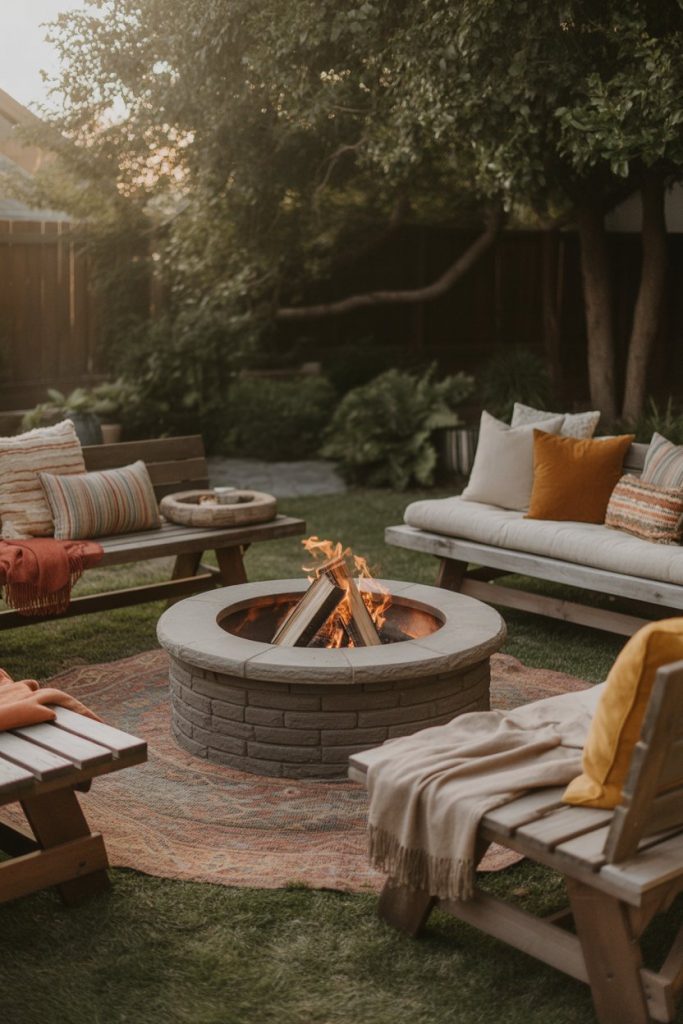
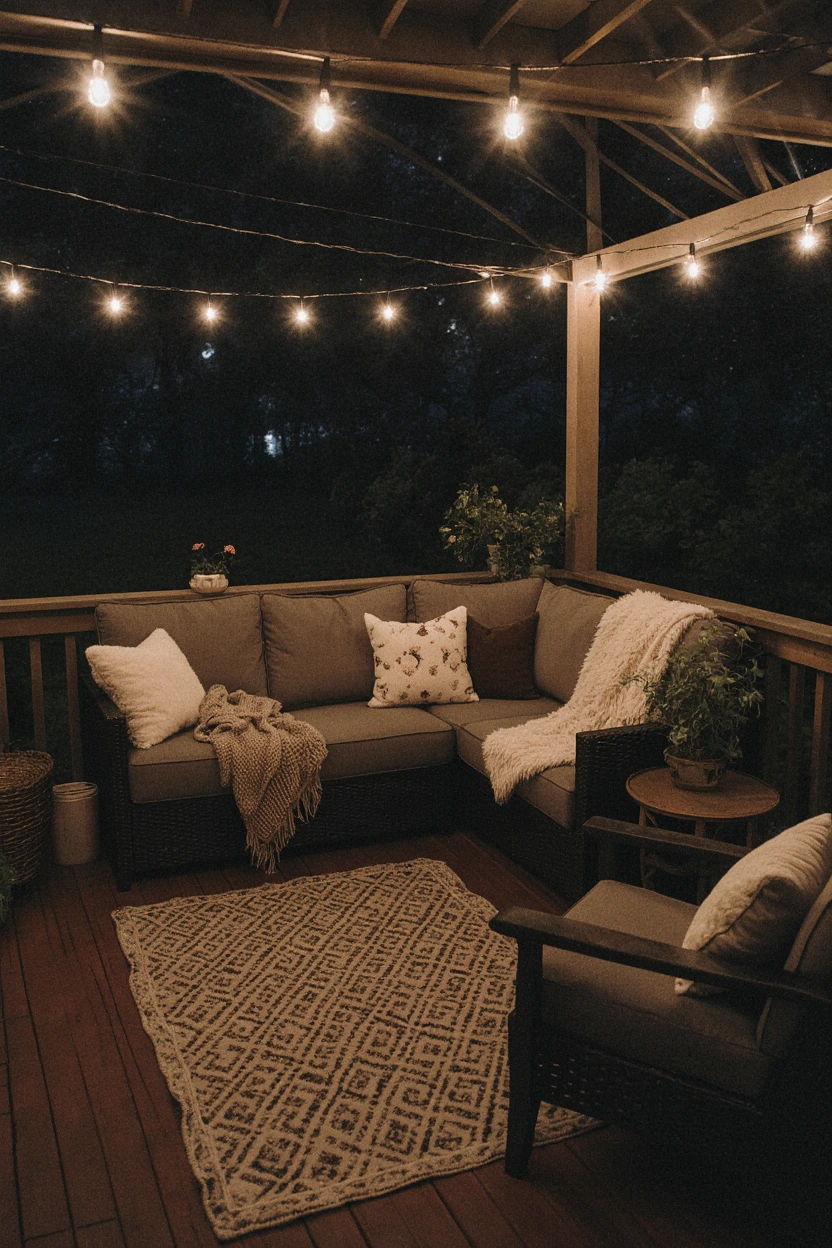
An outdoor rug anchors the fire pit zone and makes the space feel more like an intentional room than a patch of yard. Add weather-resistant cushions, throws, and pillows to the seating, and you’ve created a layered, inviting atmosphere that feels curated without being fussy. This approach is especially effective in modern or bohemian-style yards where comfort and aesthetics are equally important. 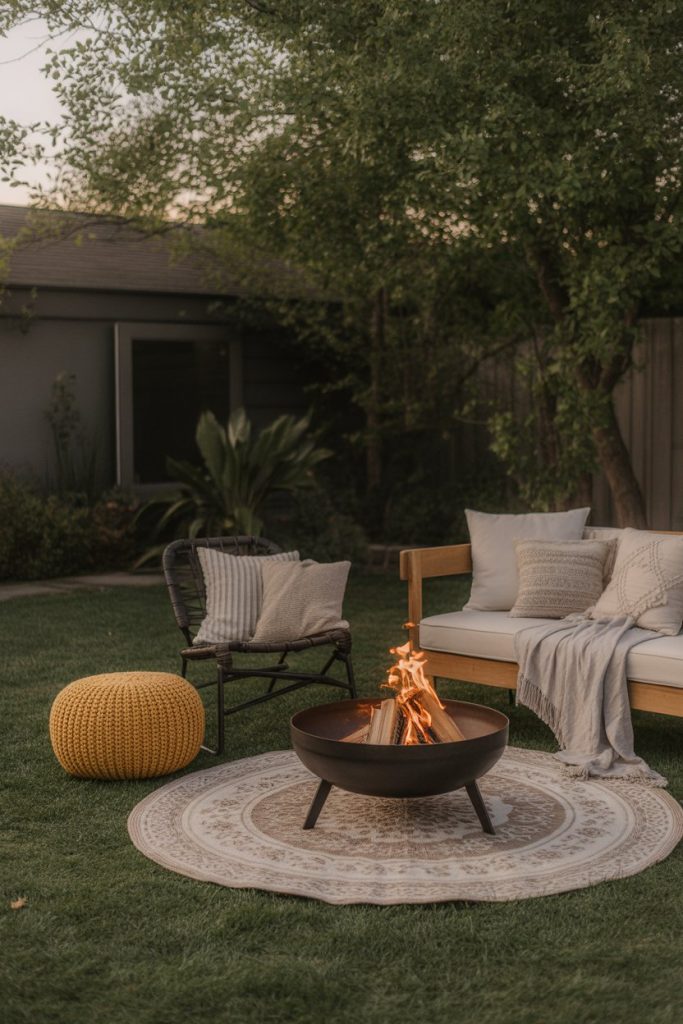
Common mistake: people choose rugs that are too small. The rug should extend at least 18 to 24 inches beyond the furniture on all sides—anything smaller looks like an afterthought and gets kicked around every time someone stands up. Also, invest in a rug pad designed for outdoor use; it prevents slipping and protects the rug from moisture and mildew underneath.
Conclusion
The best fire pit is the one you’ll actually use, which usually means it fits your space, your budget, and your lifestyle without requiring constant upkeep or complicated maintenance. Whether you’re drawn to a quick weekend build or a more involved design project, the goal is the same: creating a gathering spot that makes your backyard feel like the place people want to be. If one of these ideas sparked something, drop a comment and let us know which direction you’re heading—or share what you’ve already built. We’d love to hear what’s working in your yard.