Family rooms are the heart of American homes, where most of living happens—movie marathons and game nights, homework time and social gatherings, restful reading on quiet afternoons, and quiet Sunday mornings. Navigating through 2026, homeowners are looking to Pinterest for designs that strike the balance between comfort and style, functionality and beauty, and personal expression with timeless taste. Whether you are remodeling an old basement, repurposing a second living room, or just updating your current space, these family room designs will help you decide what to do with the heart of your home. You will find rooms that range from minimalist serenity to eclectic maximalism, and they are all designed in mix-and-match fashion (to make them work for actual families living in actual homes).
1. Warm Neutrals Meet Natural Textures
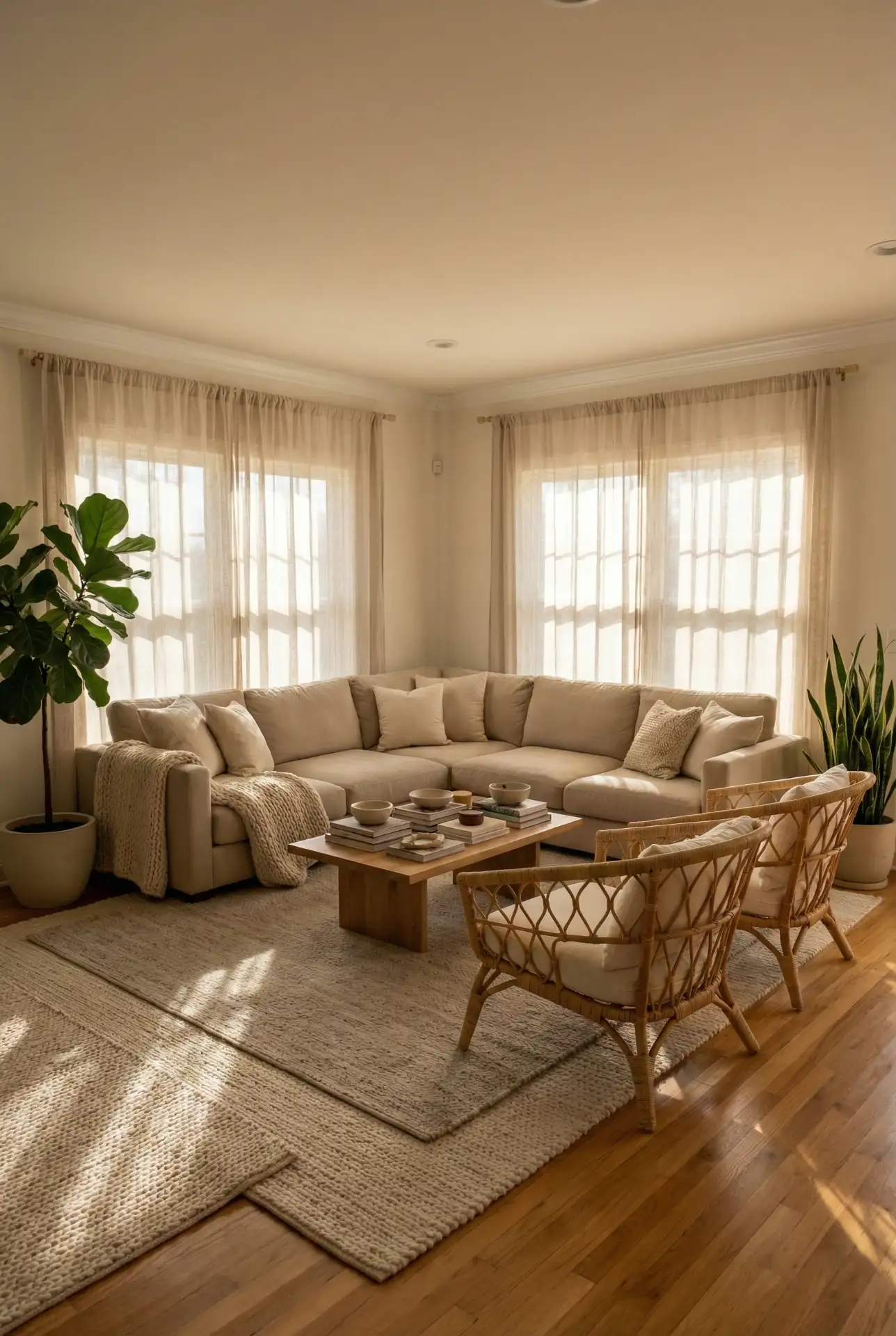
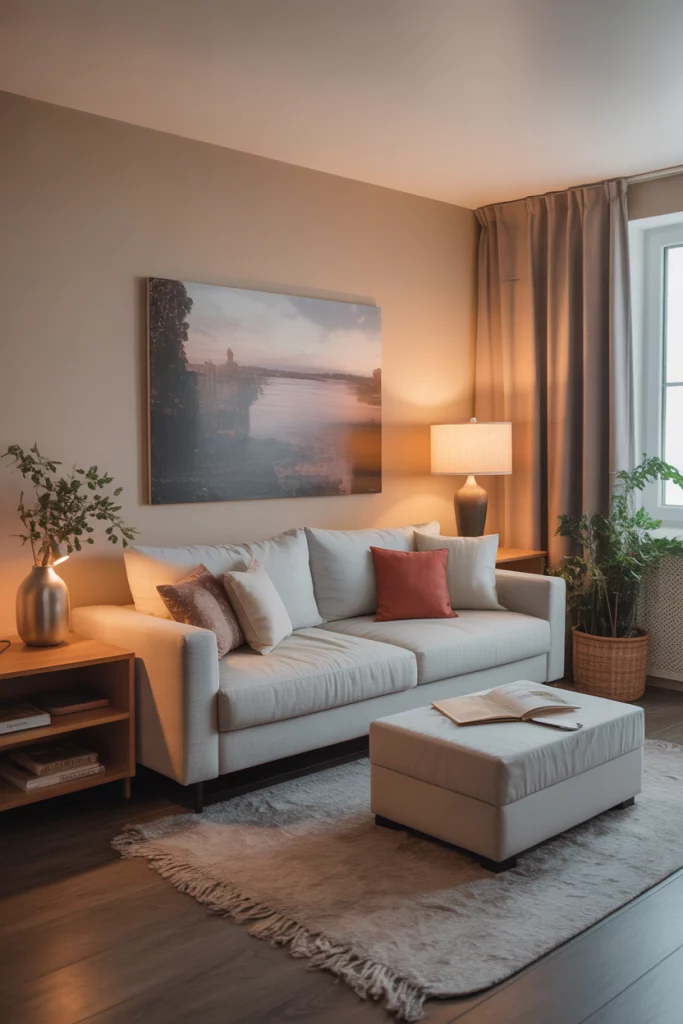
This cozy family room anchors itself around a palette of warm beiges, soft taupes, and creamy whites, allowing natural materials to take center stage. A chunky wool area rug grounds the seating arrangement, while a low-profile sectional upholstered in linen provides ample lounging space. Rattan accent chairs and a live-edge coffee table introduce organic shapes that feel both contemporary and inviting, creating a foundation that works beautifully in suburban homes across the Sun Belt and Pacific Northwest alike. 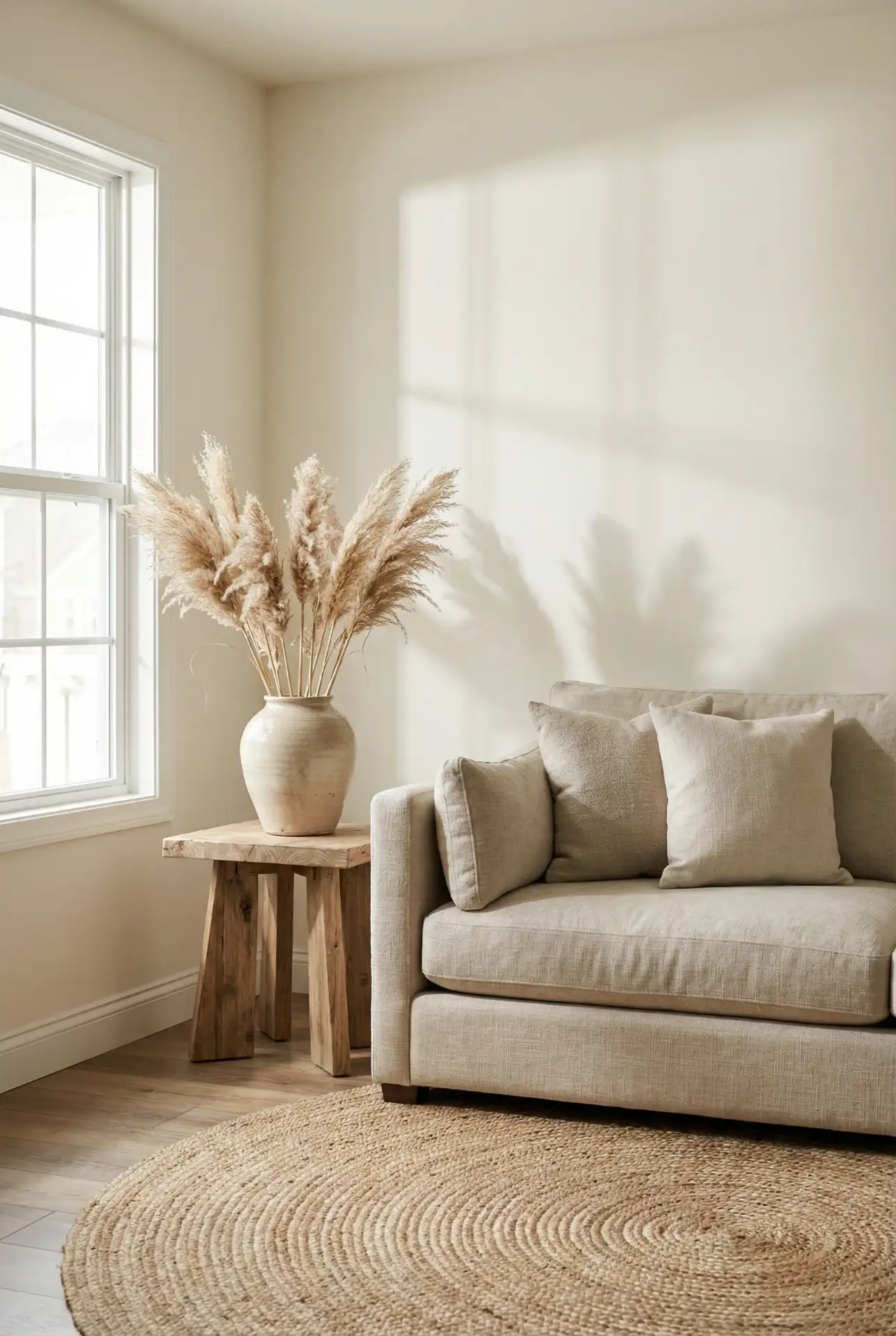
Wall-mounted shelving in light oak shows off a careful collision of books, ceramics, and framed family photos without adding visual noise. It’s an especially successful strategy when you have a family room that opens directly into the area where you eat, because it creates visual flow without requiring constant commingling of colors You want to use where this element is working particularly well in homes with the familial room/kitchen/dining room families. A designer I spoke with told me she is finding that clients want spaces to feel “put together but not ”precious”—rooms they can live in without worrying about sticky fingers and muddy paws, while still being able to look good for the camera on a video call.
2. Statement Fireplace as Focal Architecture
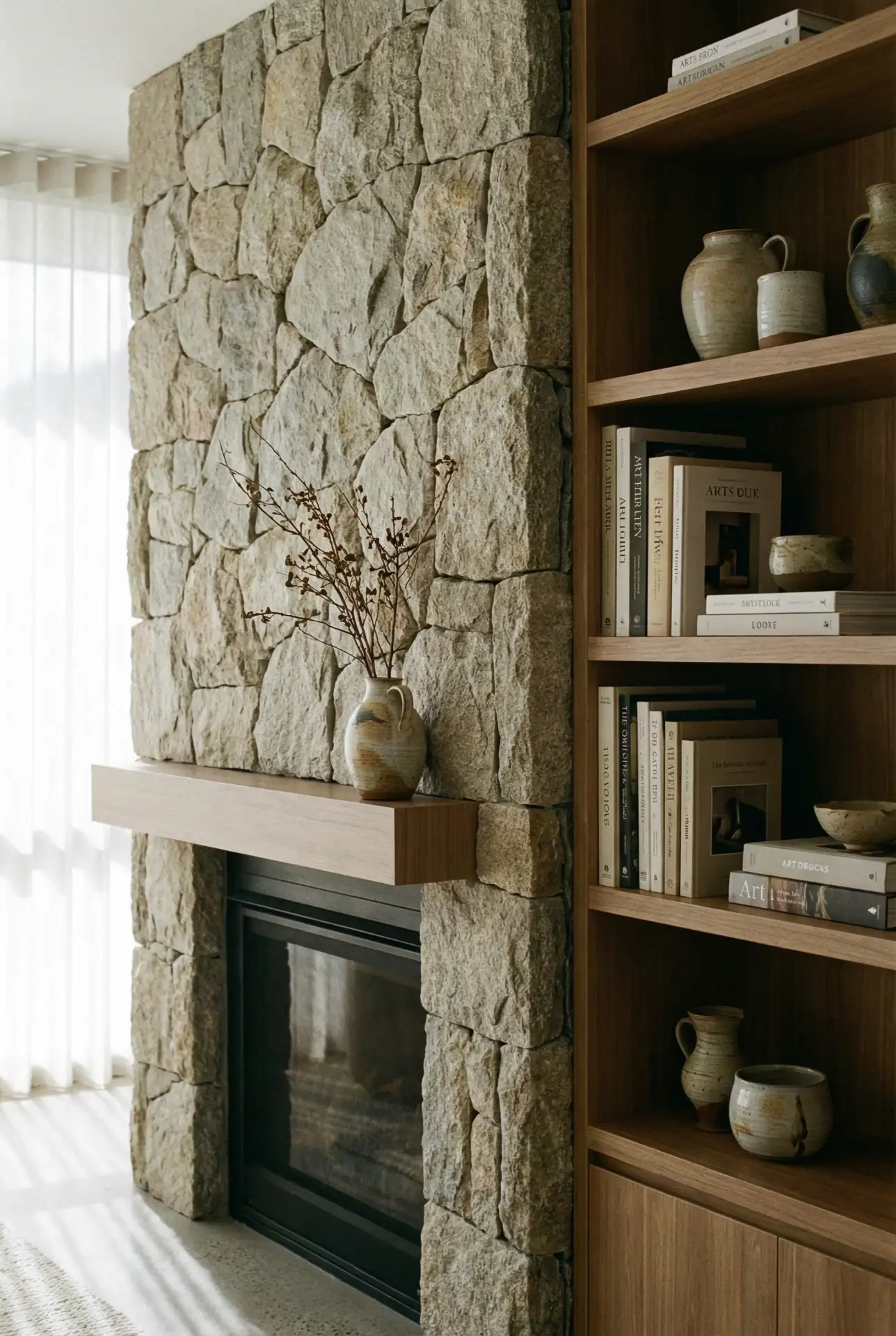
A floor-to-ceiling fireplace clad in charcoal limestone creates an unmistakable anchor in this transitional family room, drawing the eye upward and establishing a strong vertical element that balances the room’s horizontal sprawl. The hearth extends into a low bench on one side, offering additional seating during gatherings while maintaining clean lines. Flanking built-ins painted in a soft greige house everything from board games to blankets, their symmetry lending traditional formality without feeling stuffy or overly formal. 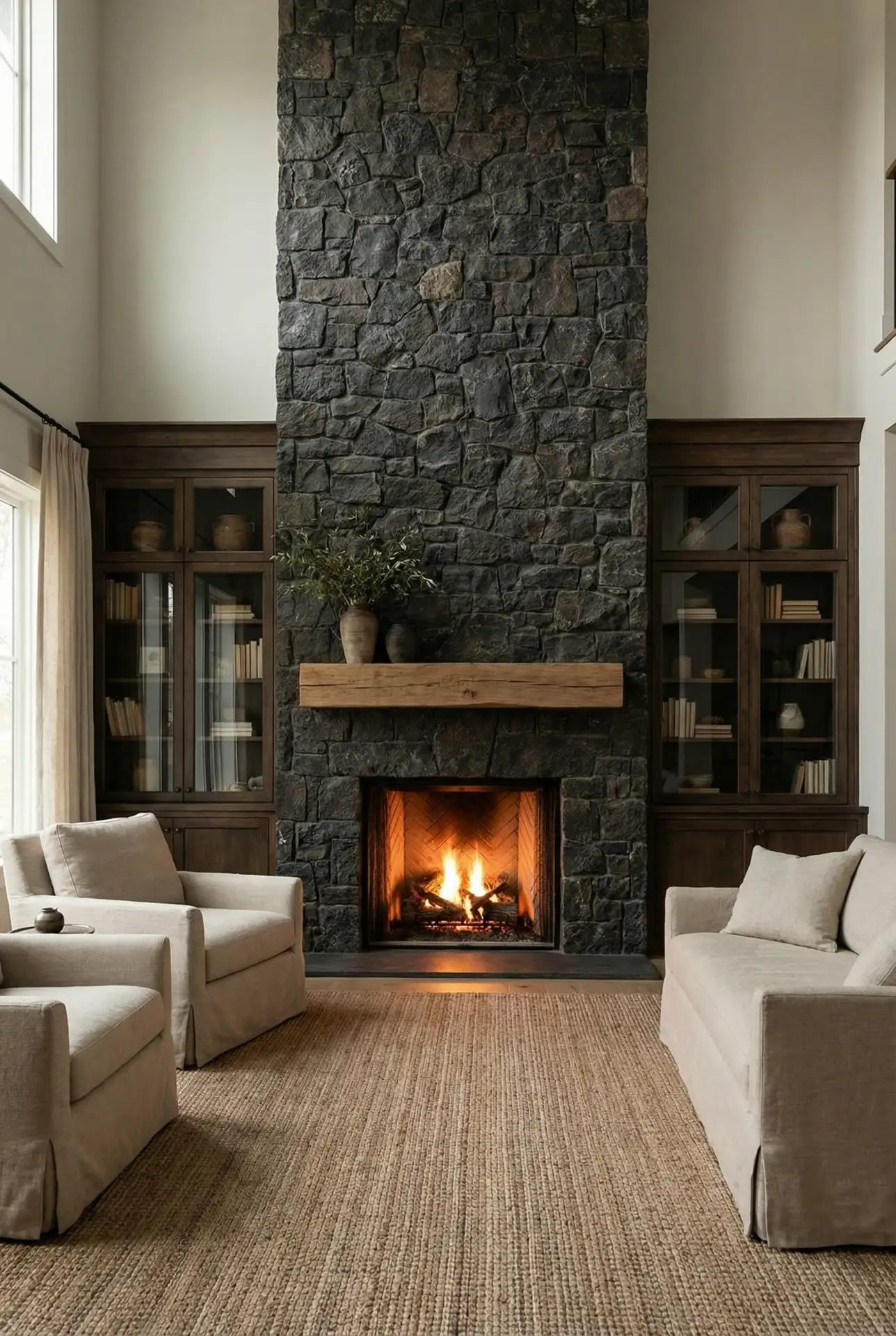
This configuration works best in homes with vaulted or higher ceilings, particularly in colder climates where the fireplace serves both aesthetic and practical purposes. A homeowner in Vermont told me her family gravitates to this room on winter evenings precisely because the fireplace “feels like the room was designed around gathering, not just watching screens.” The key is ensuring the fireplace doesn’t compete with the television—either integrate the TV above the mantel with careful planning for viewing angles, or position it on an adjacent wall to create two distinct conversation zones.
3. Integrated Media Wall with Hidden Storage
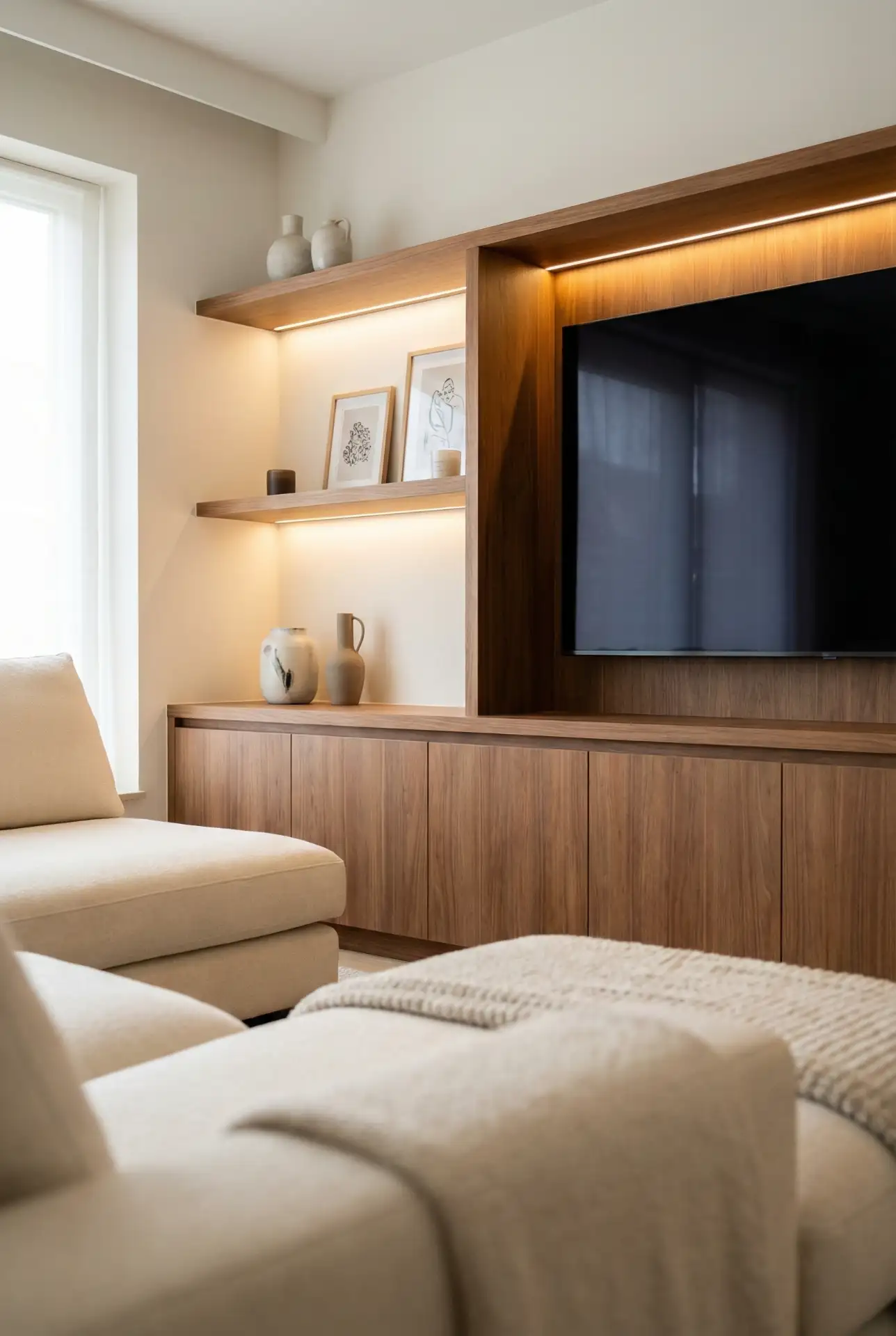
Custom millwork transforms an entire wall into a streamlined entertainment center, addressing the eternal struggle between housing technology and maintaining visual calm. The TV sits flush within a panel of vertical-grain walnut, surrounded by closed cabinetry that conceals gaming consoles, streaming devices, and the tangle of cords that typically plague media setups. Open shelving breaks up the expanse with carefully styled vignettes, while integrated LED lighting adds warmth during evening viewing. This built-in media wall approach has become increasingly popular in 2026 as families seek furniture-quality solutions that don’t scream “entertainment center.” 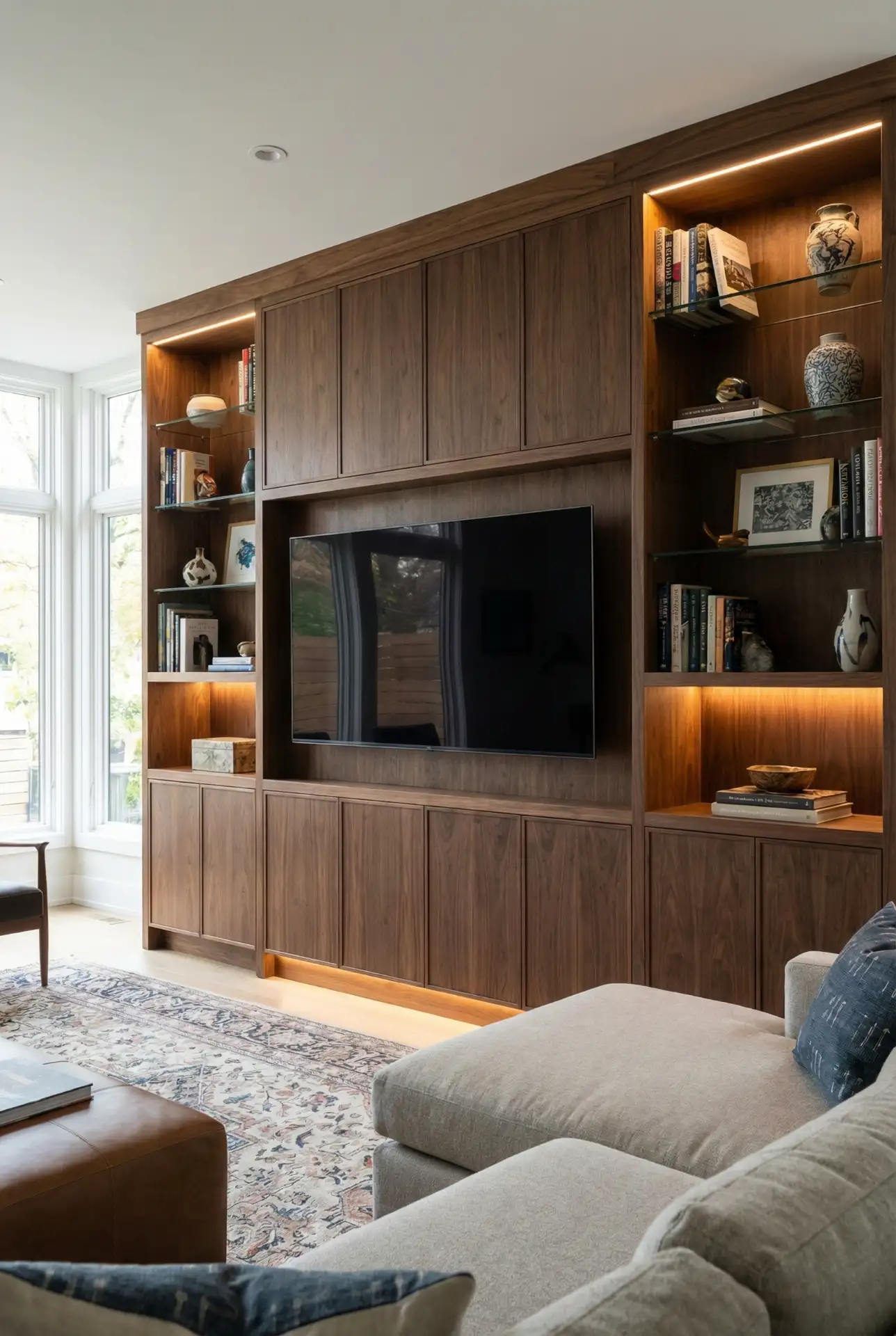
While the investment in custom cabinetry often costs between $8,000 and $25,000, depending on materials and complexity, homeowners rarely regret including it among their upgrades. Unlike freestanding entertainment units, which can quickly become dated within a few years, built-in creations provide lasting value and will remain relevant as technology evolves. Think of ventilating heat-producing equipment and cable management pathways during the planning phase; it is much more difficult and expensive to add these in after everything is said and done.
4. Sunken Conversation Pit Revival
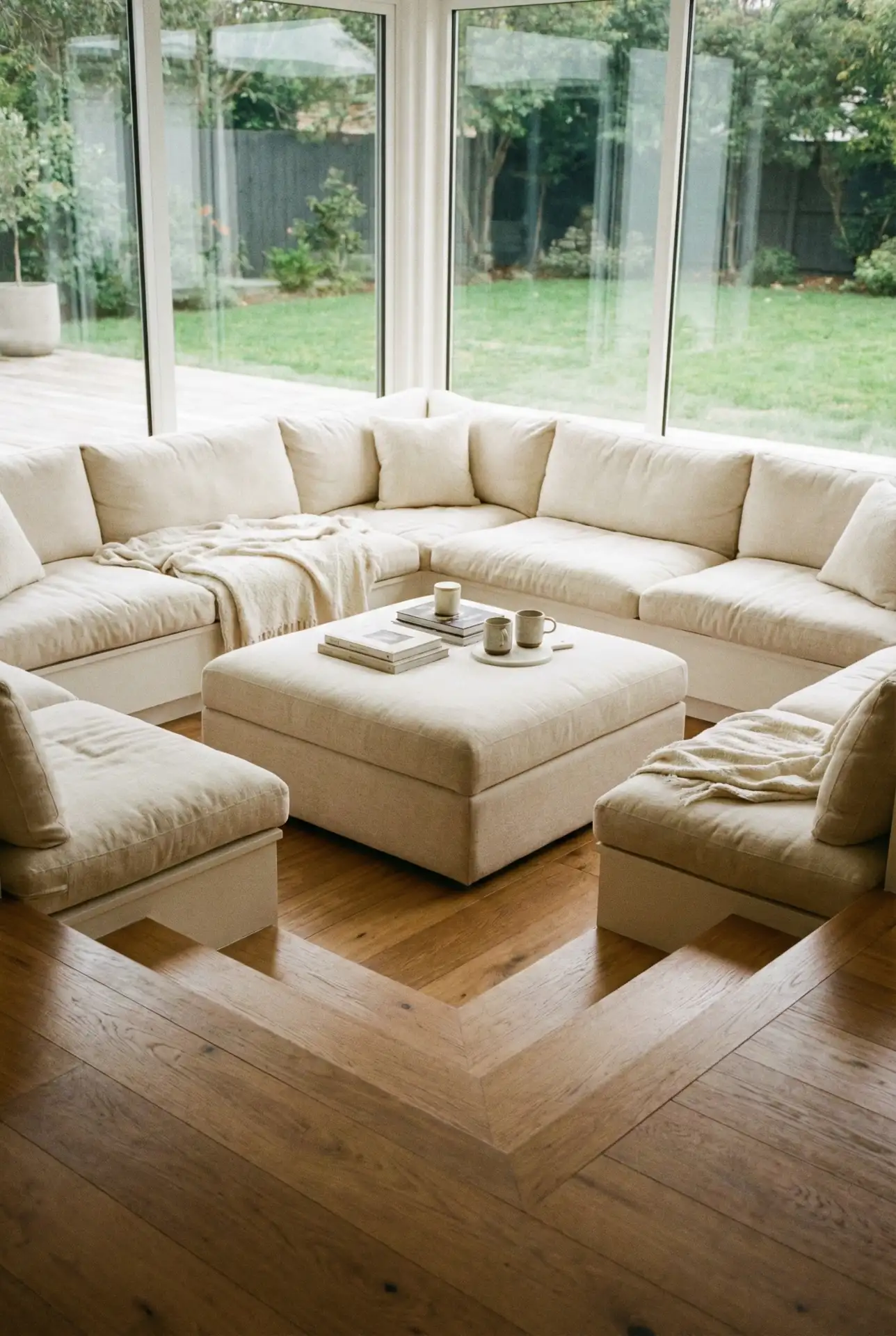
The conversation pit—a signature detail of the ’70s—is back, but with new proportions and modern finishes that make it feel like anything but a revival. A large family room with a seating area set below the level of the main floor forms an intimate, wall-free enclosure. Plush modular cushions wrap in soft, extra-thick foam upholstered in boucle poly-weave that holds up as you unwind day to night. A large ottoman doubles as a footrest and game night buffet table when venturing beyond the open-concept floor plan. Its slight level change naturally delineates its area of the room. 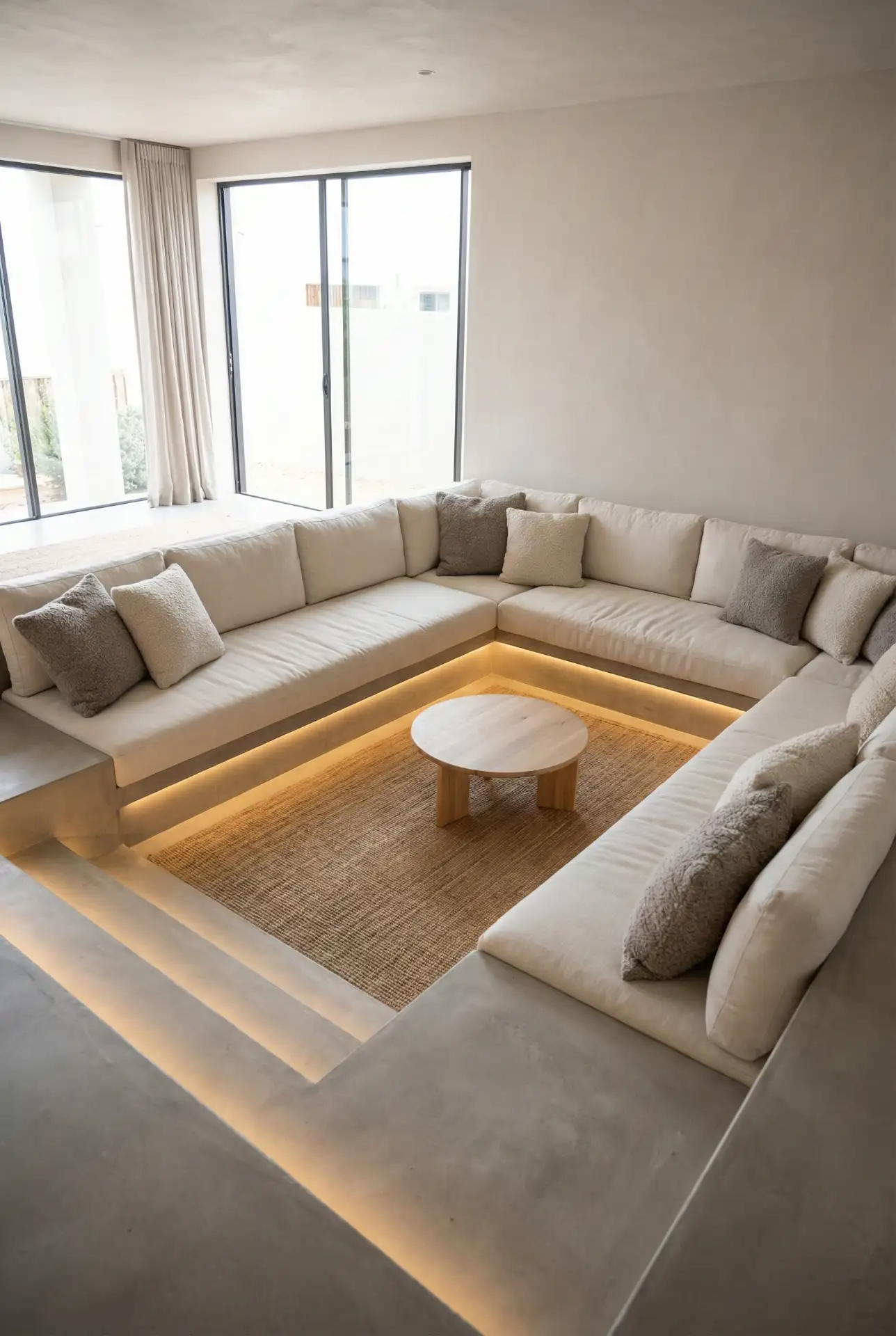
This design works best in new construction or major renovations where structural modifications are already underway, particularly in homes with concrete slab foundations in warmer states like Arizona, Texas, and Southern California. A couple in Austin mentioned that their sunken family room has become the preferred gathering spot for their teenagers and their friends—the lowered space creates a subtle sense of privacy and ownership that appeals to young people seeking their own territory within the family home.
5. Japandi Simplicity Meets Function
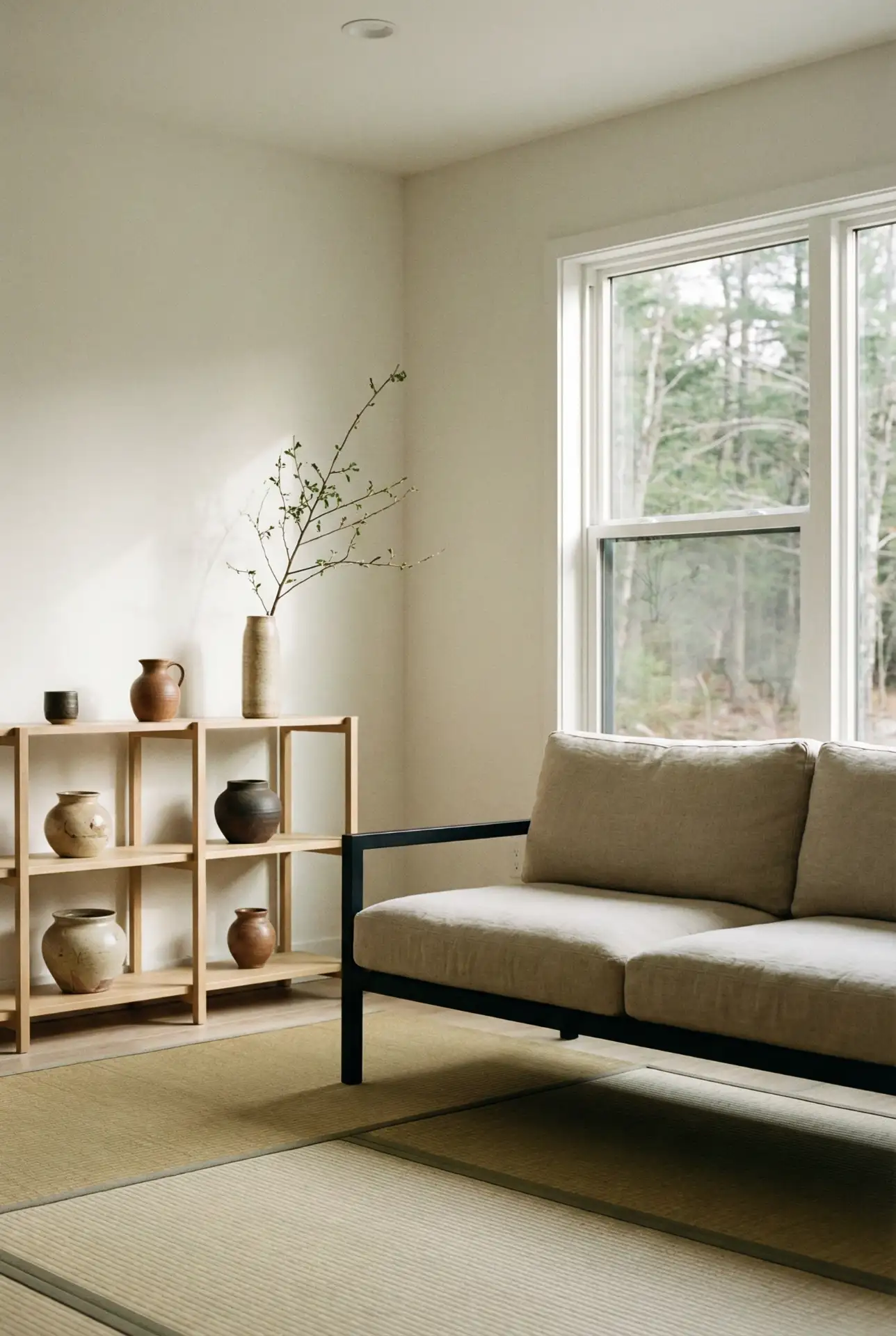
Japandi design principles guide this serene family room where Scandinavian functionality intersects with Japanese aesthetics, resulting in a space that feels both minimalist and deeply livable. Low-profile furniture in light ash and black walnut maintains visual lightness, while a palette of white, charcoal, and warm wood tones creates harmony without sterility. Shoji-inspired screens provide flexible room division, paper pendant lights cast a soft ambient glow, and the careful absence of clutter allows architectural details and a few well-chosen objects to command attention. 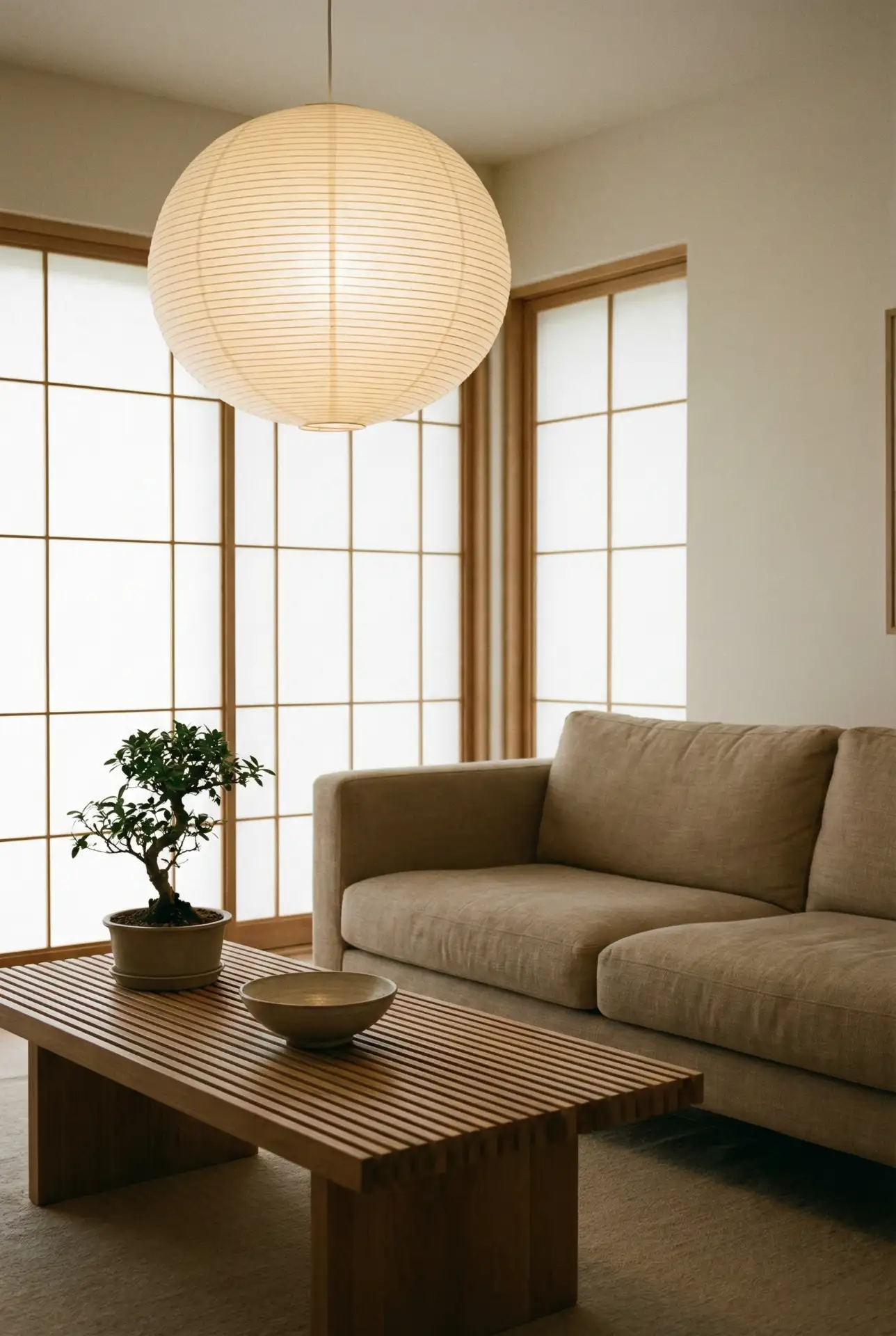
Common mistakes with Japandi design include making the space feel cold or unwelcoming through excessive restraint. Combat this by incorporating textural warmth through natural fibers—linen, wool, cotton, and jute—and ensuring adequate task and ambient lighting beyond the minimal fixtures. The style thrives in smaller to medium-sized family rooms where every piece must earn its place, making it particularly successful in urban homes and thoughtfully downsized spaces where intentionality replaces accumulation.
6. Cozy Modern Farmhouse Layers
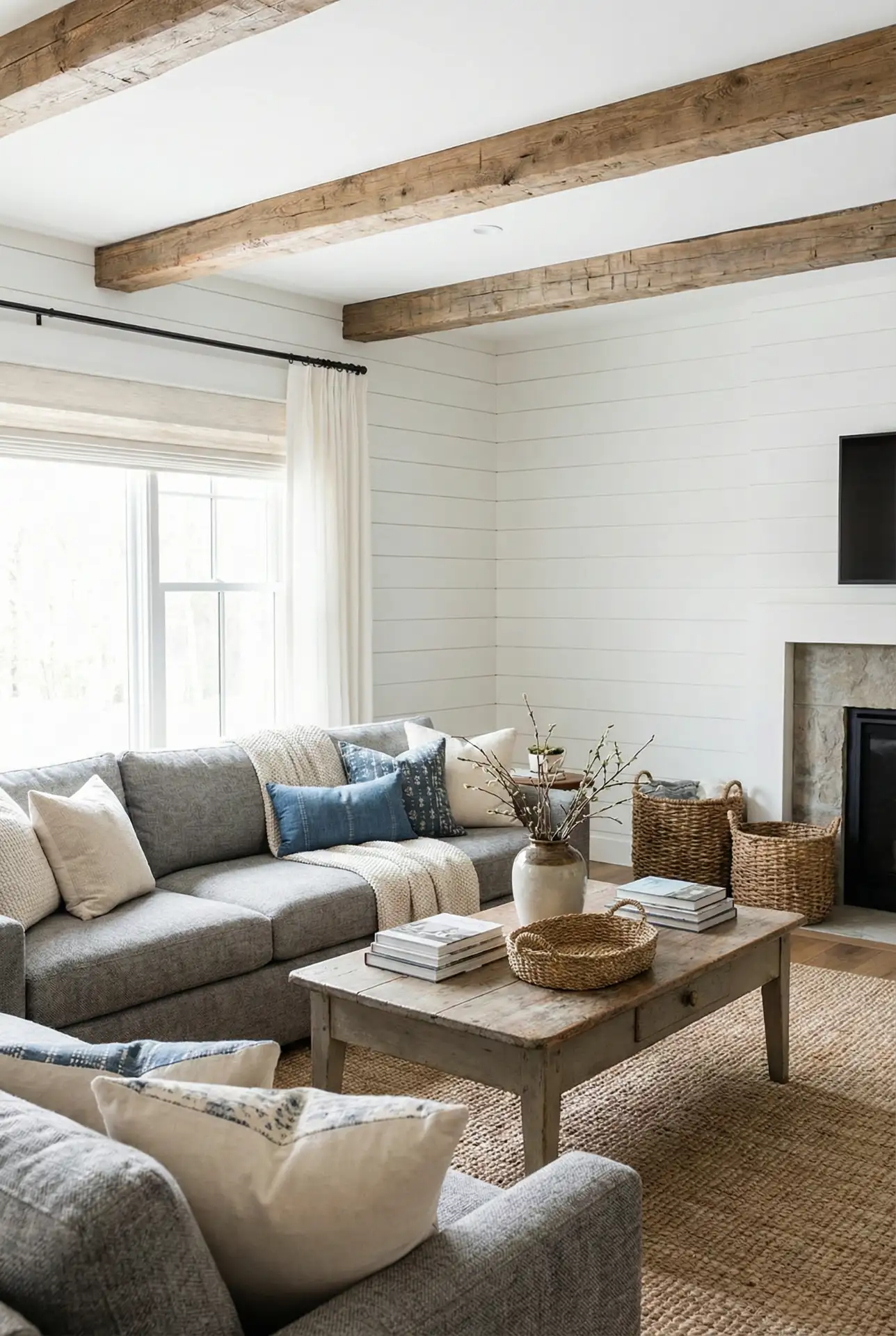
This cozy modern farmhouse family room strikes the delicate balance between rustic charm and contemporary comfort, layering textures and finishes that read as collected rather than coordinated. Shiplap accent walls painted in warm white provide architectural interest without overwhelming the space, while a reclaimed wood beam across the ceiling adds horizontal emphasis. The sectional sofa in charcoal gray grounds the room with modern simplicity, dressed in an abundance of throw pillows in varied patterns—ticking stripe, grain sack, subtle florals—that inject personality and tactile appeal. 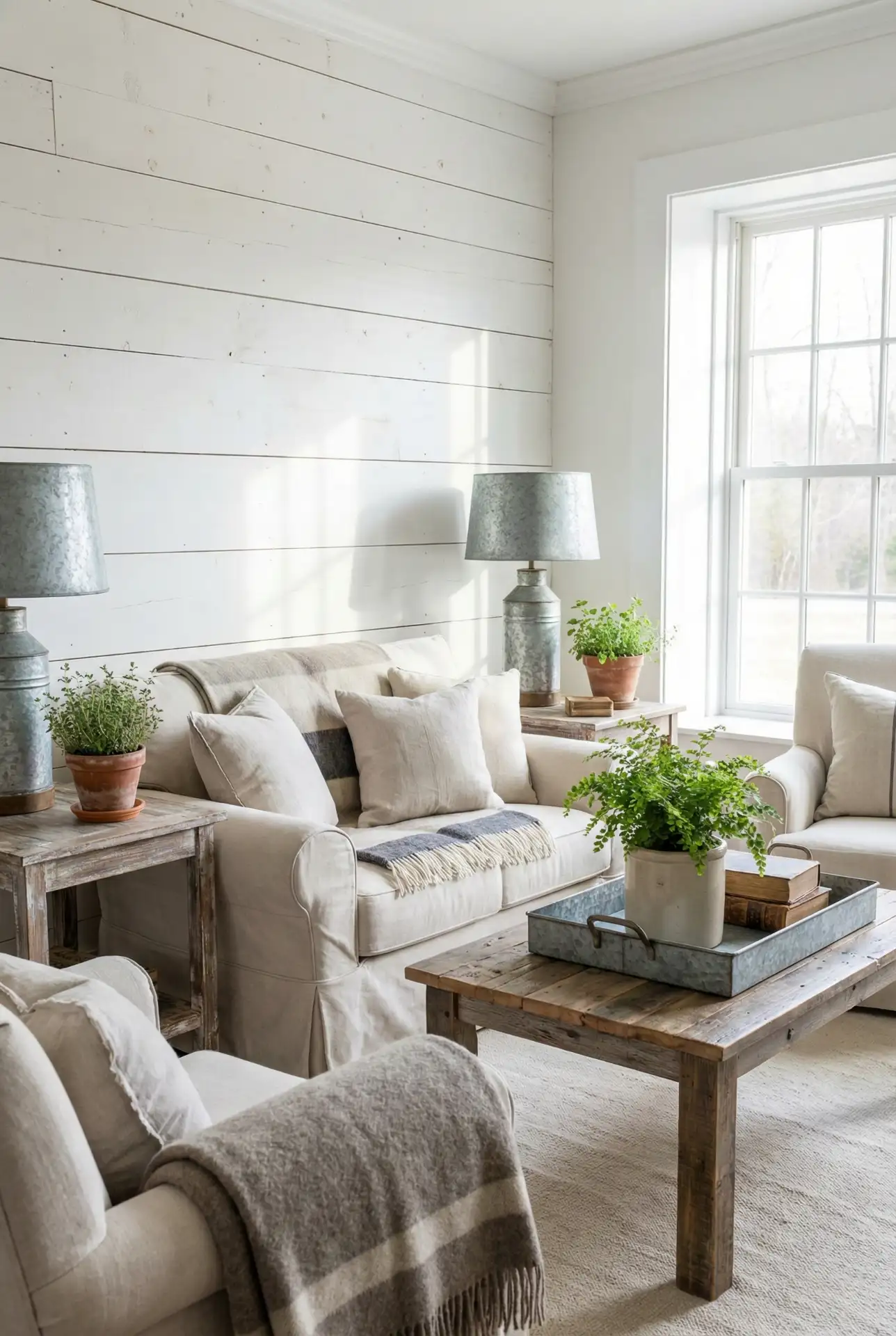
This design sentiment does best in suburban and country regions of the Midwest and South, especially in states like Tennessee, Georgia, and the Carolinas, where farmhouse style feels geographically “natural.” The trick is to avoid the cutesiness and clutter that characterized earlier iterations—ditch the literal “gather” signs, gourds, and rooster motifs in favor of truly vintage finds, quality reproductions, and pieces with real patina. Throwing in some truly modern elements, such as a sleek lighting fixture or contemporary art, keeps the space from feeling like a time capsule.
7. Bold Jewel Tones for Drama
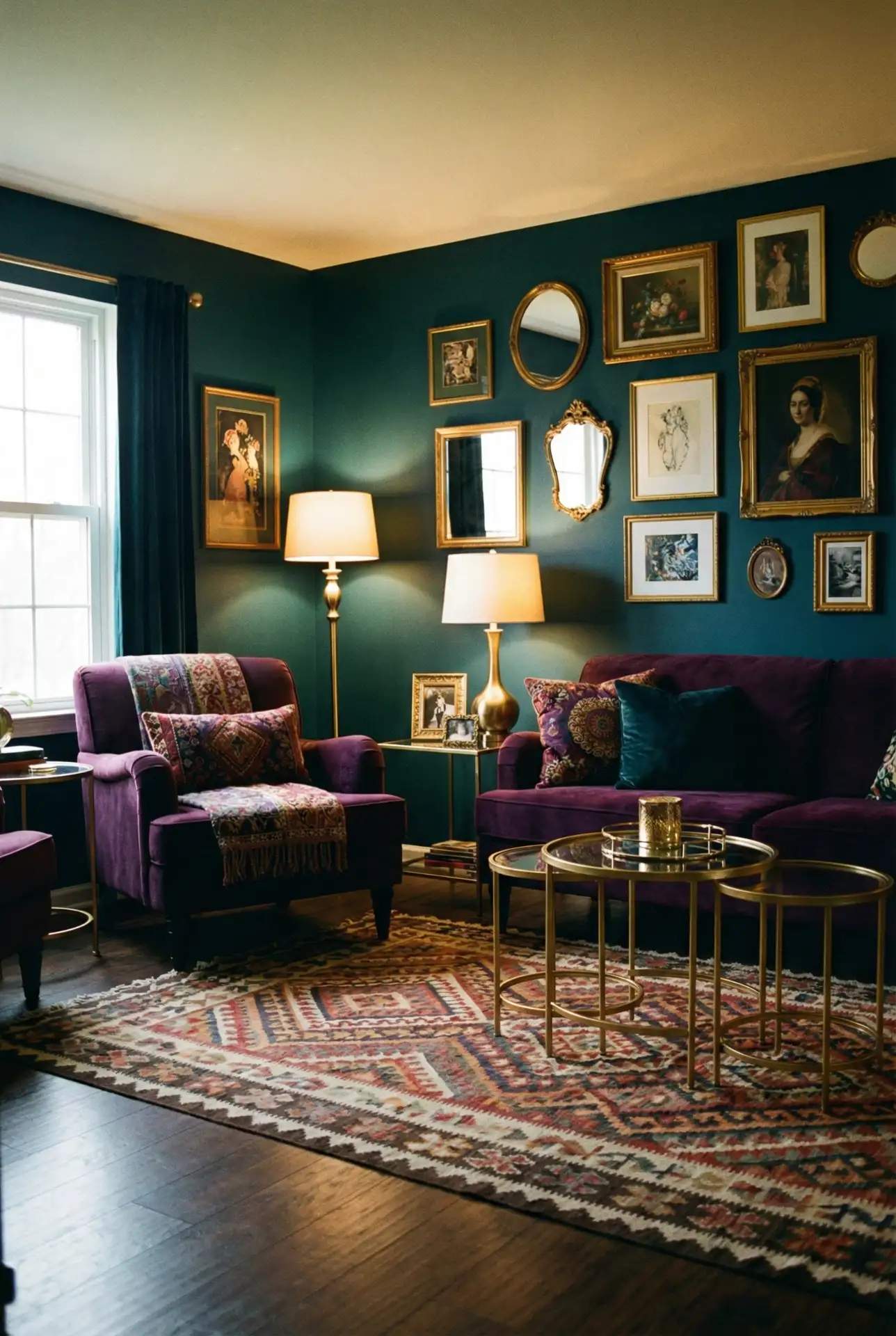
Deep emerald walls create an enveloping backdrop in this confident family room that rejects safe neutrals in favor of saturated color and theatrical presence. The eclectic furnishing mix includes a vintage velvet sofa in sapphire blue, brass floor lamps with generous shades, and an antique Persian rug whose complex pattern pulls together the room’s varied hues. Artwork in gilded frames leans against the wall rather than hanging perfectly aligned, contributing to an atmosphere that feels curated by a passionate collector rather than a decorator following formulas. 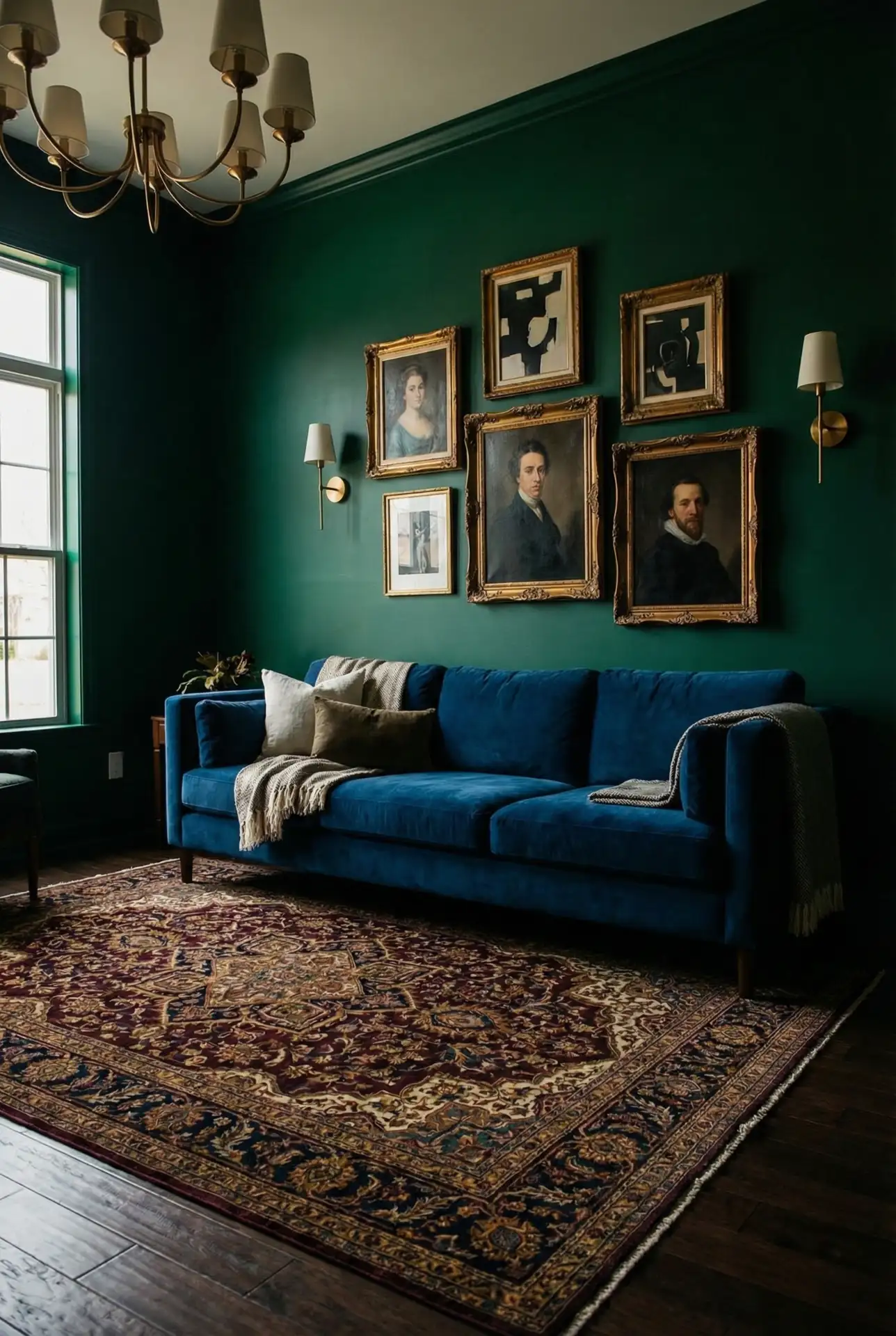
Best places to use it: light (not a biggie on light, but any window will do) and dark (lit at night is a whole other ball game; see floods of bright colors in the “at night” section below). North-facing rooms can make jewel tones look muddy, while south-facing spaces help the colors glow beautifully all day long. If you are painting an entire room, consider purchasing large paint samples and applying them to a couple of different walls in the room to see how the colors look at various times during the day—what feels magical as the sun sets may feel oppressive on a gray Tuesday morning.
8. Kid-Friendly Durability Without Sacrifice
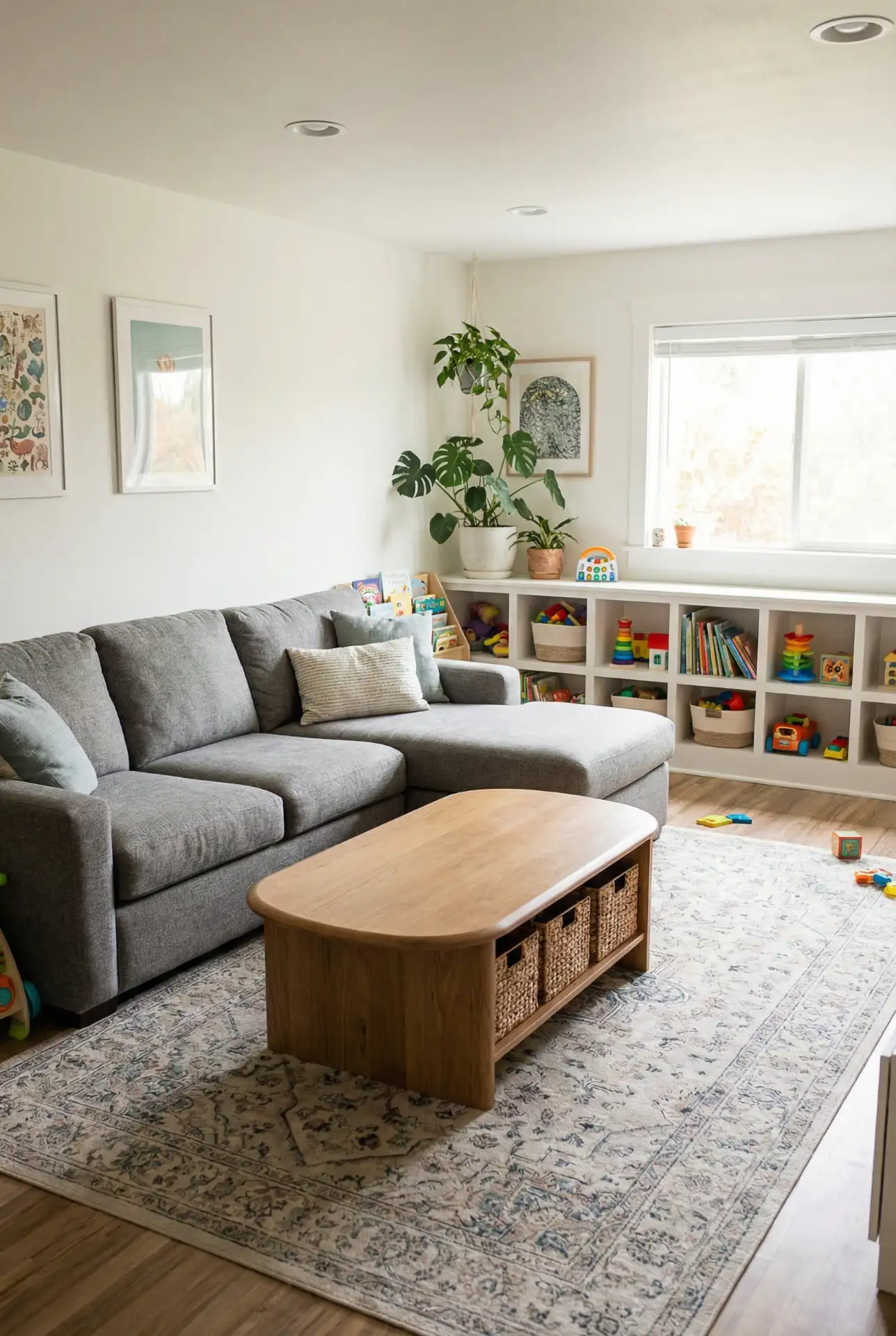
Designing a kid-friendly family room no longer means surrendering style to practicality, as this space proves through smart material choices and thoughtful planning. Indoor-outdoor performance fabric on the sofa and chairs resists stains and wipes clean with minimal effort, upholstered in a sophisticated heathered gray that disguises minor mishaps. The coffee table features rounded corners and a lower shelf for basket storage where toys can be quickly corralled, while a large washable area rug defines the play zone and protects hardwood floors from dropped blocks and toy cars. 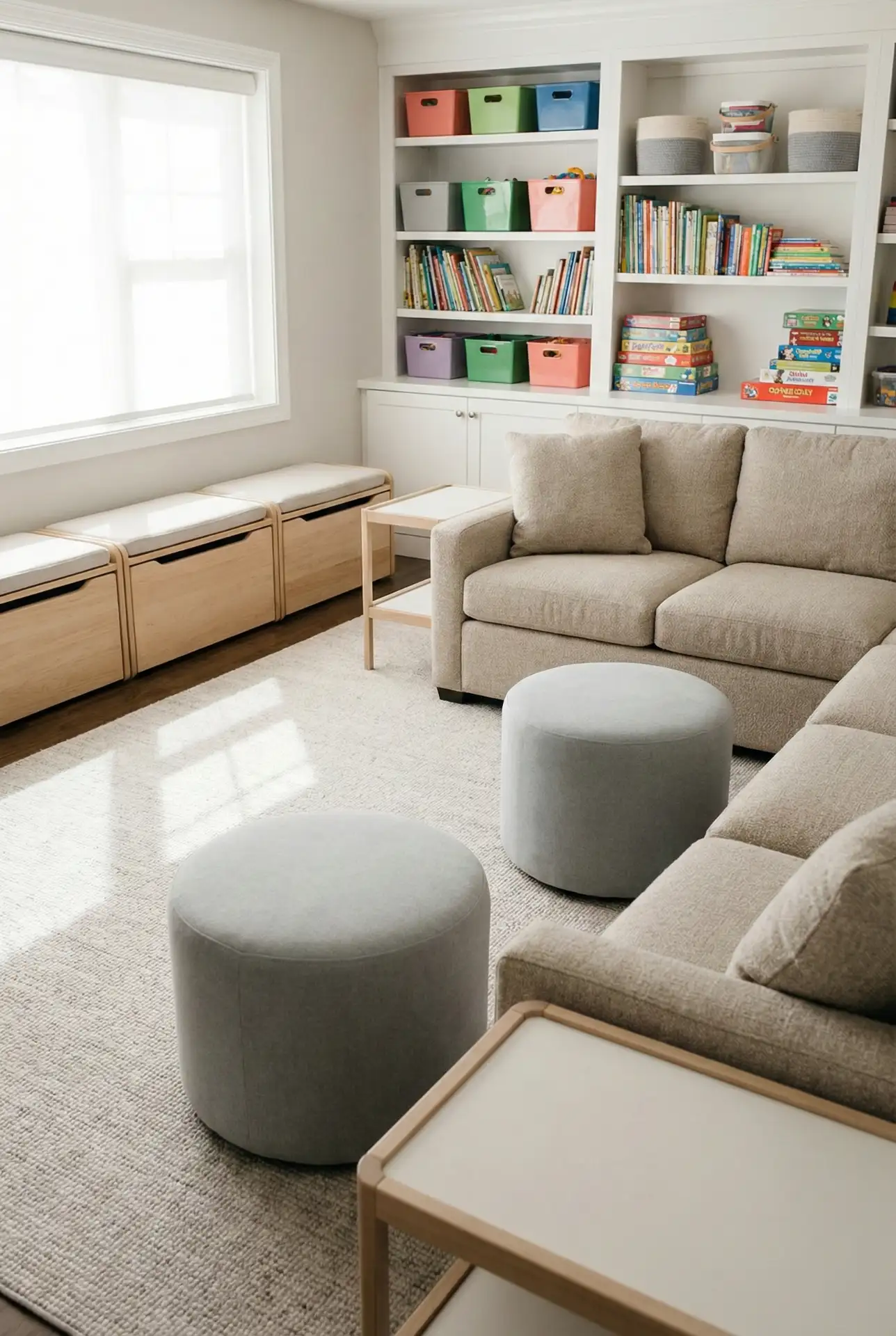
Real homeowner behavior reveals that families with young children benefit most from designated storage that’s accessible to kids—low bins, open cubbies, and labeled baskets that children can actually use independently. One mother in Portland mentioned that since installing a built-in bench with lift-top storage, cleanup time dropped from twenty minutes of negotiation to five minutes of teamwork. Avoid white or cream upholstery regardless of performance ratings, as even the best fabrics show accumulated wear; instead, choose medium-toned colors or subtle patterns that gracefully absorb the realities of daily living.
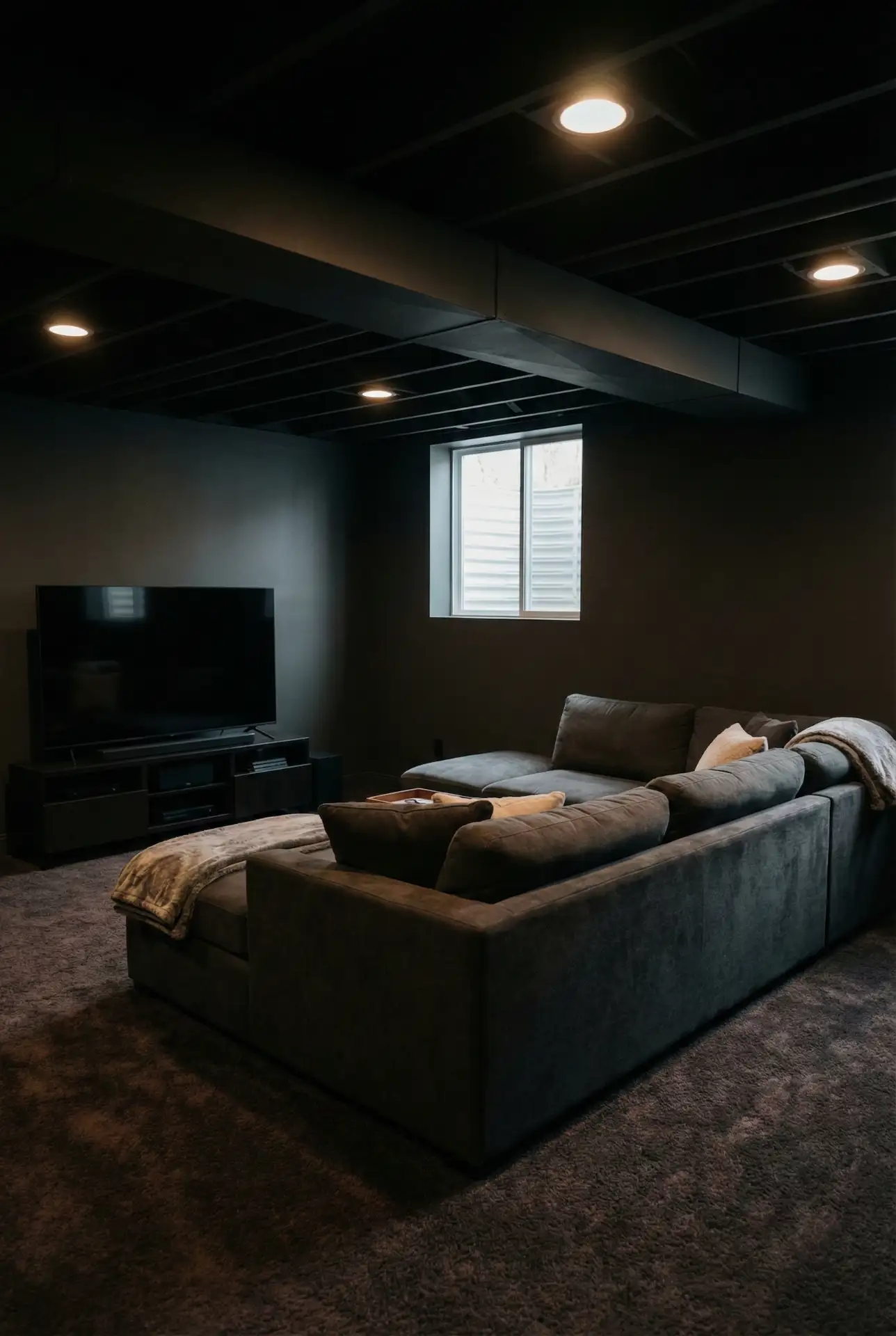
Transforming a basement into a family room requires embracing rather than fighting its inherent characteristics—lower ceilings, limited natural light, and cocoon-like proportions. This design leans into the darkness with charcoal walls and ceiling, creating an intentionally den-like atmosphere perfect for movie watching and gaming. Recessed lighting and strategically placed sconces provide adequate illumination without harsh overhead fixtures, while a sectional in deep navy maximizes seating within the space’s footprint. Acoustic panels disguised as fabric art improve sound quality for the media system while contributing visual interest. 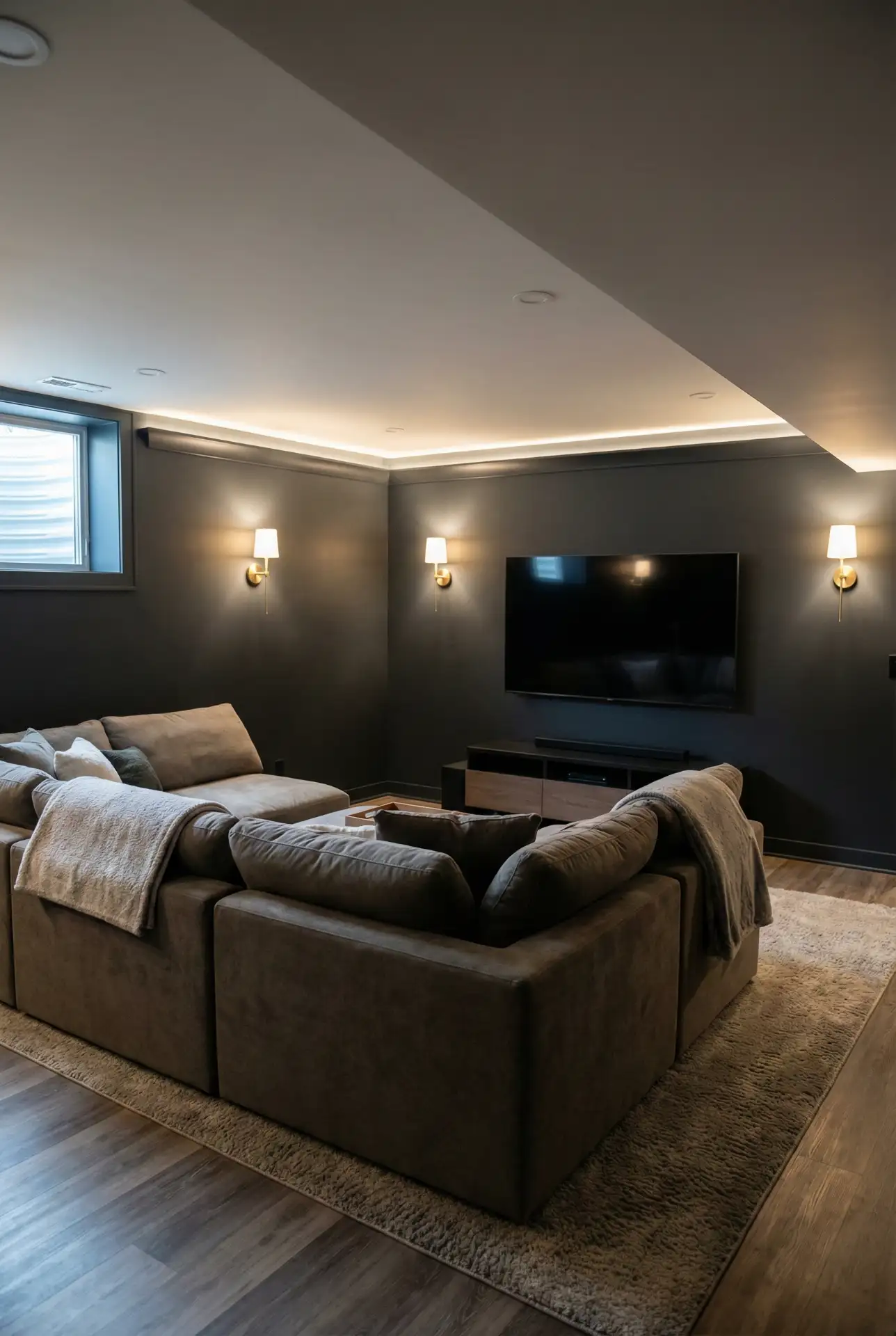
Basement family rooms do best when they have a clear-cut mission beyond simply “extra space”—be it a home cinema, game room, teen hangout, or adult entertaining spot. This priority steers both material decisions and layout choices, which keep the space from evolving into a messy catchall. Aesthetic options aside, moisture remains a key concern. You have good waterproofing and dehumidification in place before investing in finishes. A contractor in Michigan said basement projects often succeed or fail based on whether homeowners bother to solve for moisture, explaining that when they don’t try, those poor decisions can result in warped materials, mold, and money flushed down the drain.
10. Classic Symmetry and Balance
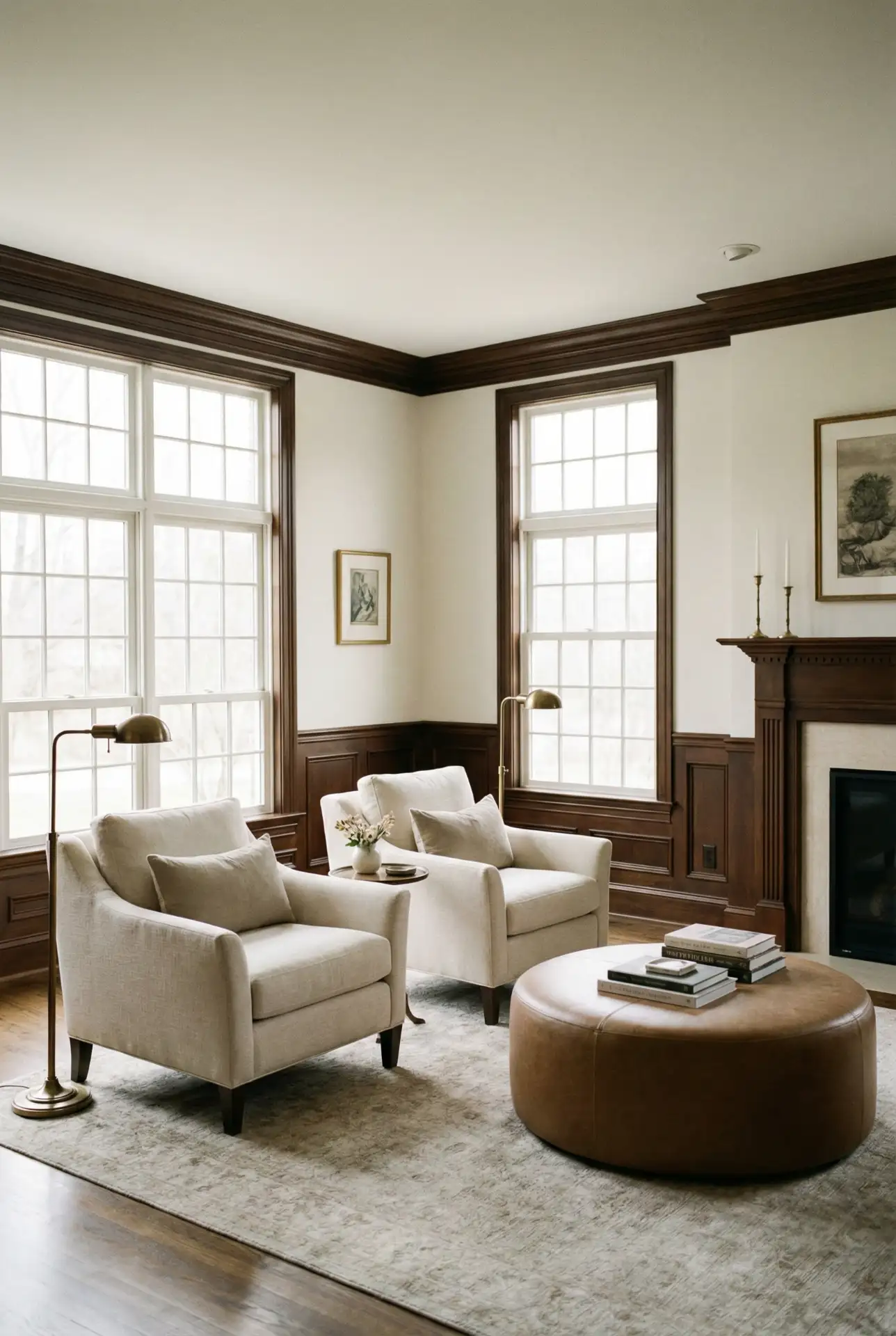
This classic family room is a perfect example of how established design principles make for tranquil spaces with evenly proportioned and symmetrical layouts. Adjacent sofas mirror each other on either side of a good-size coffee table, anchored by a central fireplace that acts as an organizing axis for the rest of the room. Identically scaled table lamps bookend the seating, with their warm light providing visual bookends that telegraph the room’s formal bones. The addition of crown molding, wainscoting, and a coffered ceiling makes for architectural richness without crossing over into fussiness, keeping with the presentation of a fine wine that ages well. 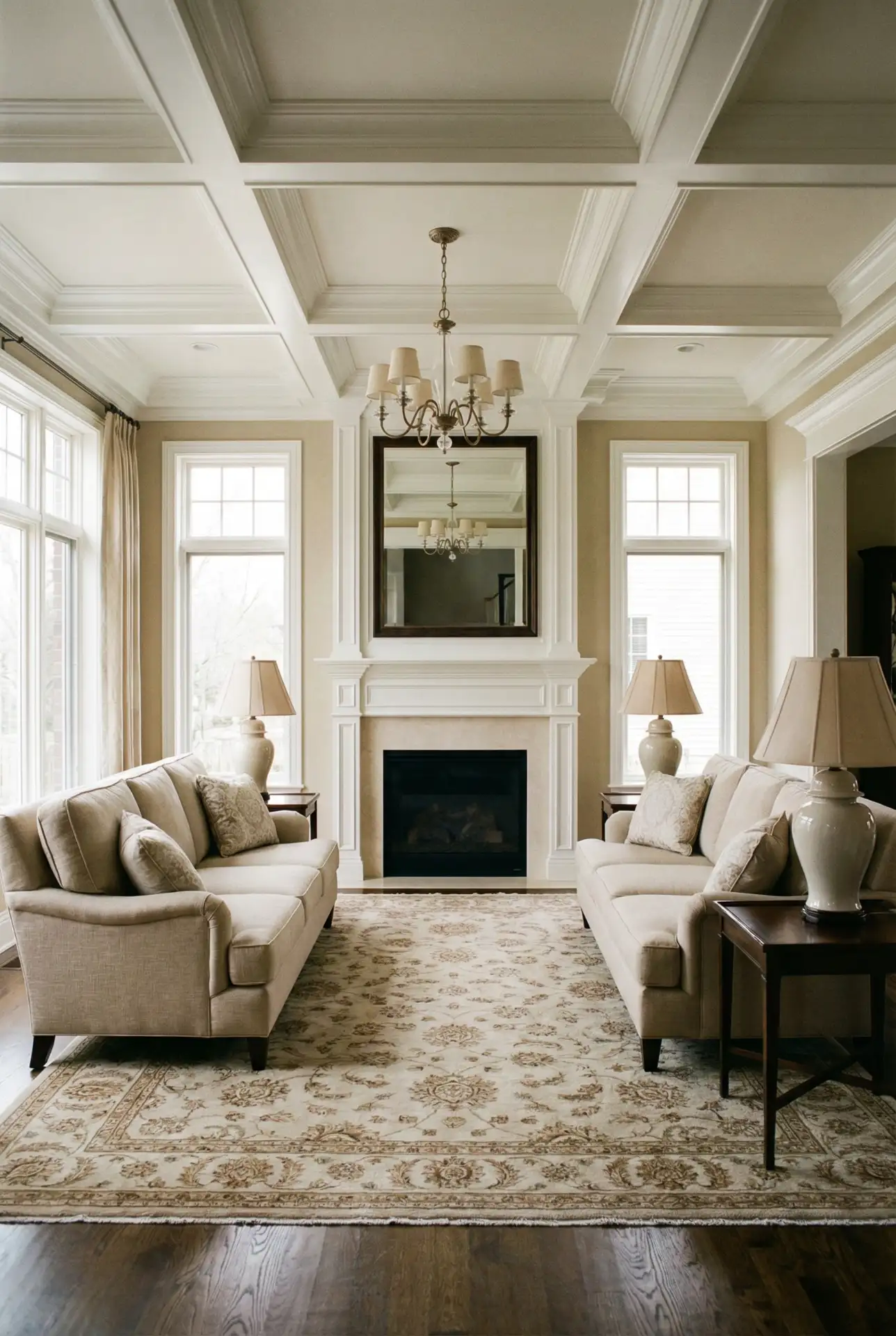
Expert designers note that symmetrical rooms photograph beautifully but can feel static in practice unless you build in opportunities for asymmetry through accessories and styling. A throw casually draped over one sofa arm, books stacked on one side table, or a floor plant in a corner introduces the lived-in quality that prevents the space from reading as a showroom. This approach thrives in Colonial, Georgian, and Federal-style homes across the Northeast and Mid-Atlantic, where it complements existing architectural vocabulary while accommodating modern family needs.
11. Light and Bright Coastal Casual
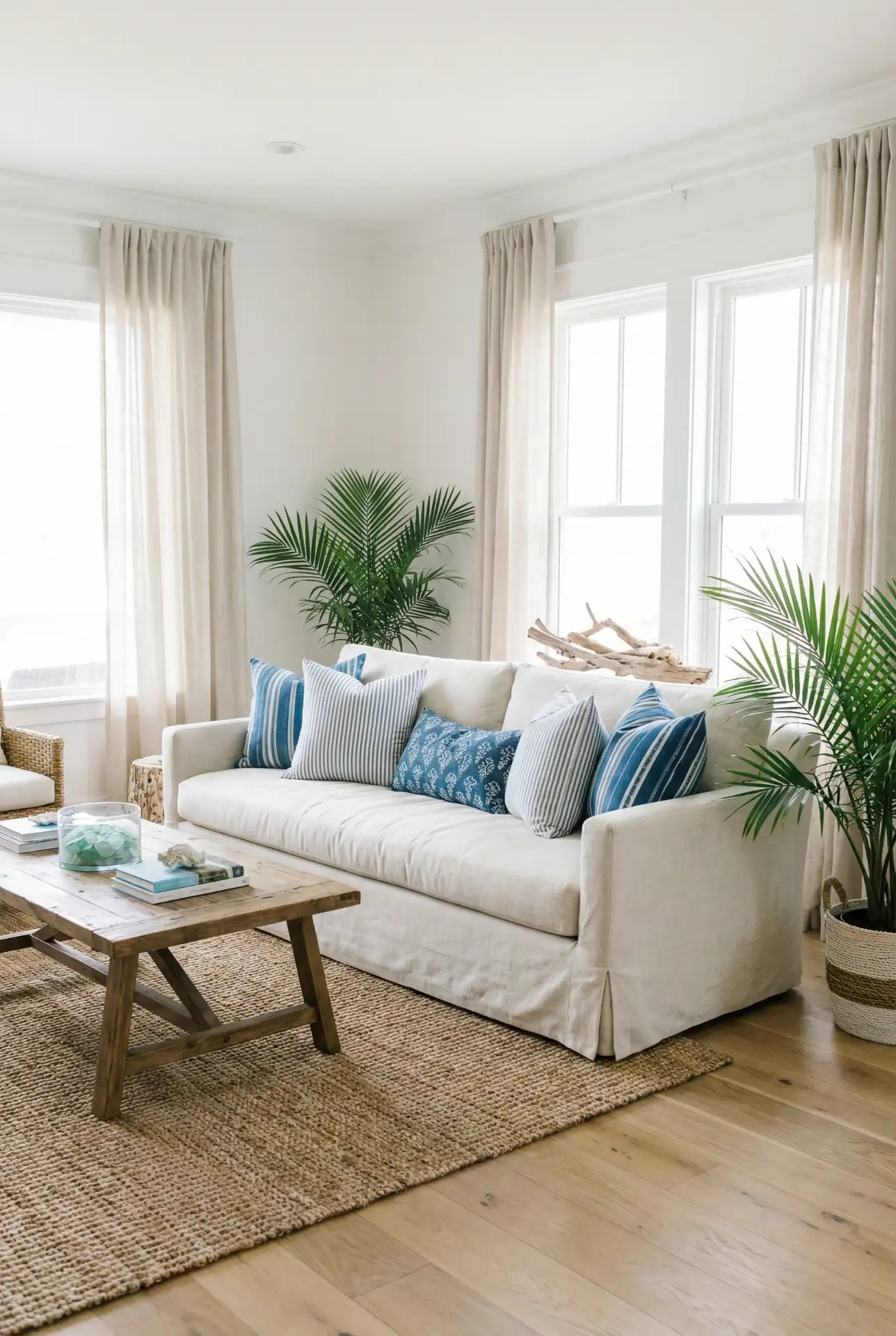
\_11•\_Light\_and\_Bright\_Coastal\_Casual 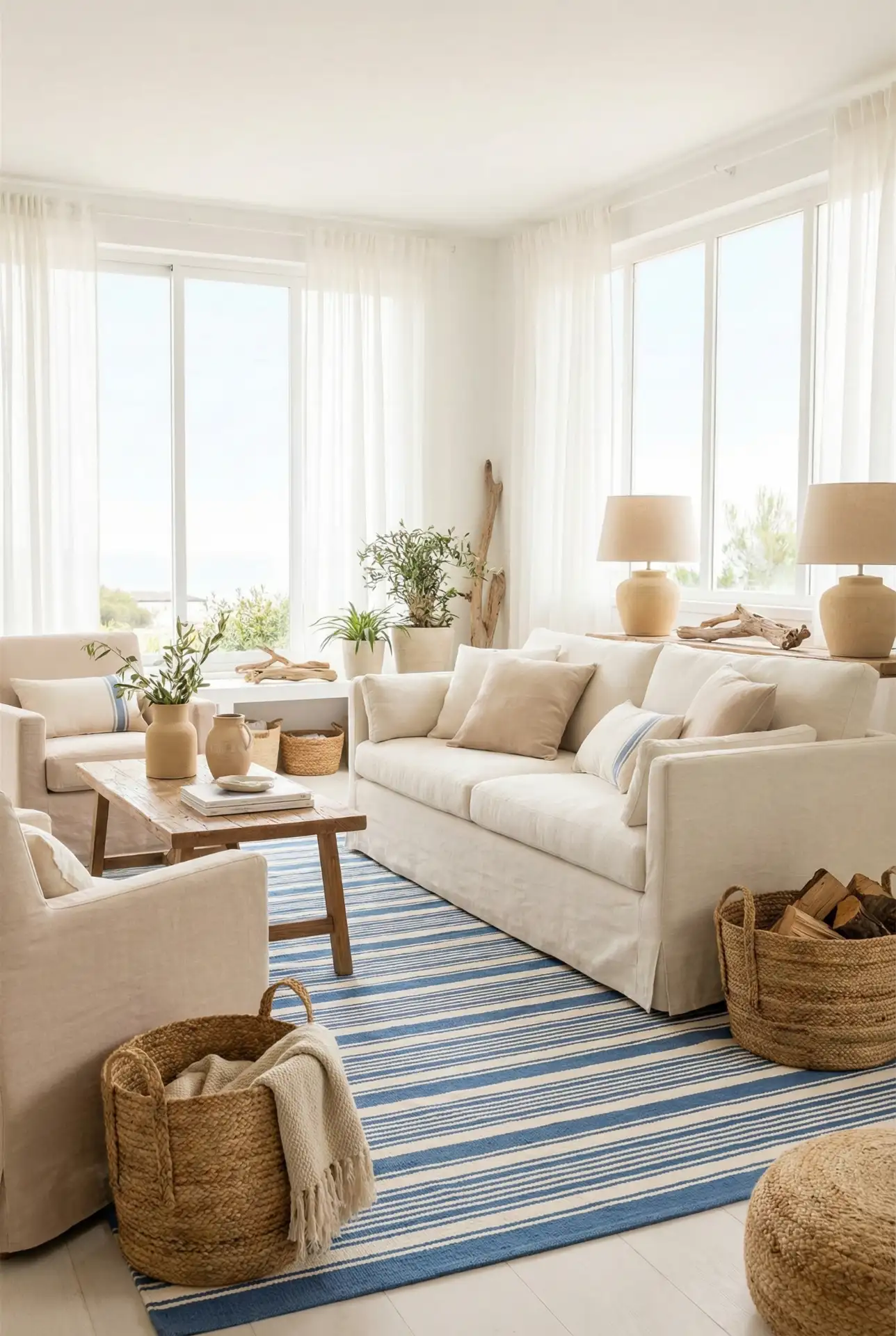
Budget considerations make this approach particularly appealing—painted surfaces and slipcovers cost considerably less than custom cabinetry and elaborate window treatments, while the relaxed aesthetic forgives imperfections that would stand out in more formal schemes. Homeowners in Florida, the Carolinas, and California embrace this style naturally, though it translates successfully anywhere people seek lightness and informality. The key is maintaining enough contrast and texture to prevent the space from washing out; otherwise, the bright palette reads as sterile rather than serene.
12. Industrial Edge Softened
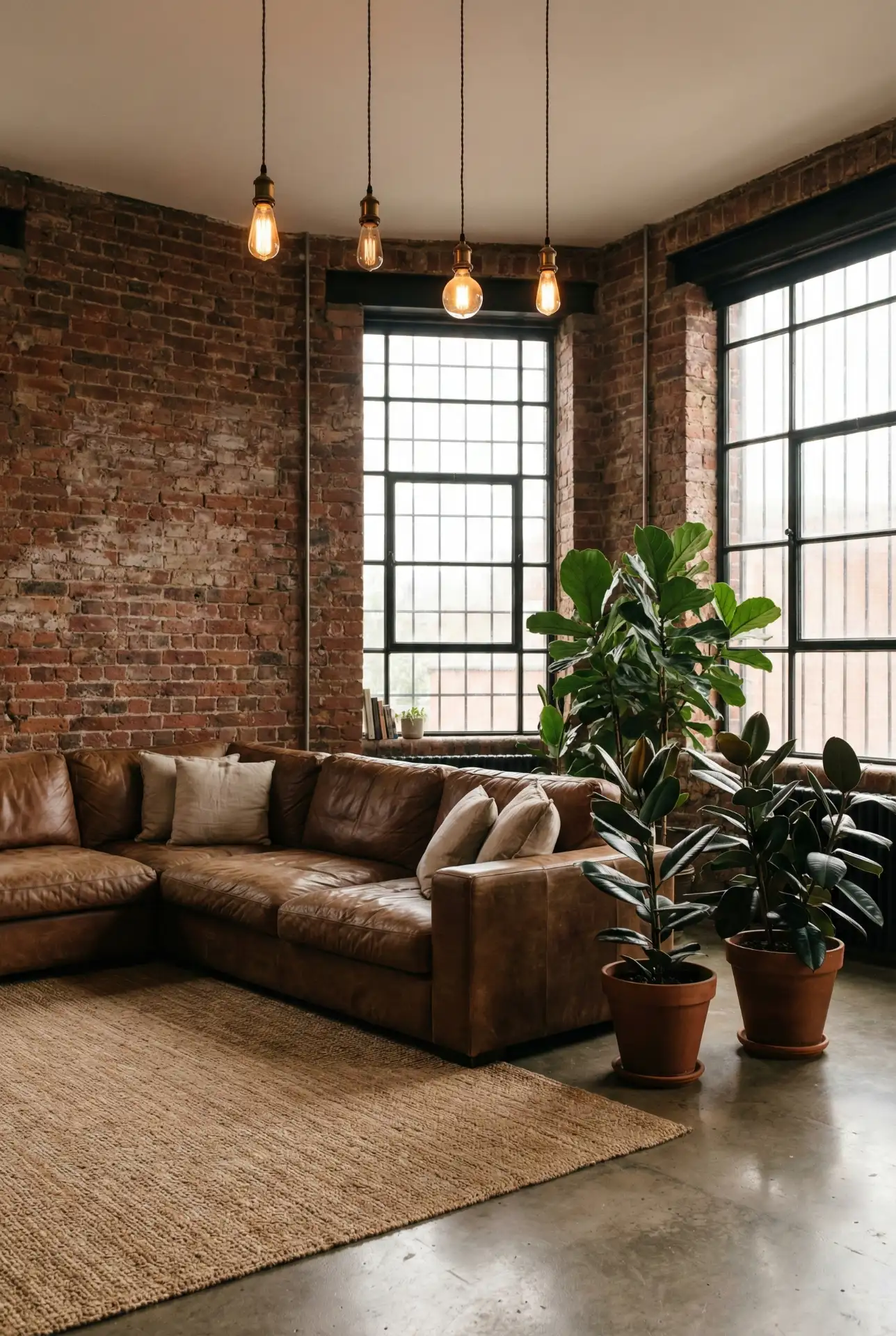
Exposed brick walls and visible ductwork anchor this family room in industrial honesty, their raw materiality balanced by comfortable furnishings that prevent the space from feeling cold or warehouse-like. A large leather sectional in cognac brown introduces warmth and softness, its aged patina complementing rather than competing with the architectural bones. Metal-framed windows, factory-style pendant lights, and a rolling bar cart maintain the urban loft aesthetic, while houseplants in various sizes bring necessary life and color to the primarily neutral palette. 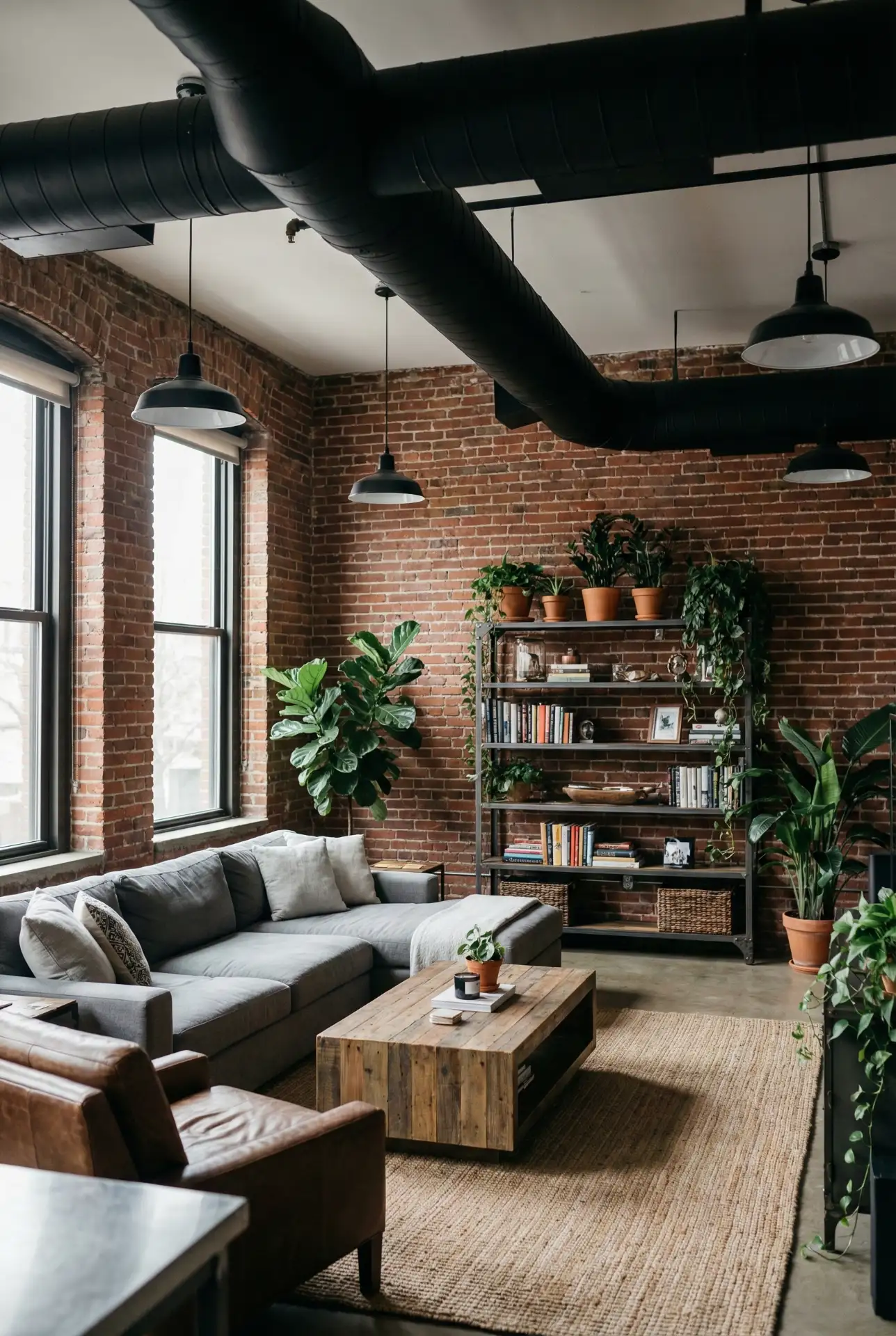
This look really shines with real loft conversions and more recent construction that mimics the industrial vibe—especially in city areas such as Brooklyn, Chicago, Denver, or Portland, where turning a warehouse into living space continues to be in demand. One common error is to shoehorn the industrial design into suburban tract homes, where it feels inauthentic—the style needs some legitimate architectural underpinnings, or you’ve got nothing. If your house doesn’t have exposed beams or brick or cool bones of any kind, you might be asking yourself if another aesthetic would feel more “right” in your home.
13. Global Eclectic Collector’s Haven
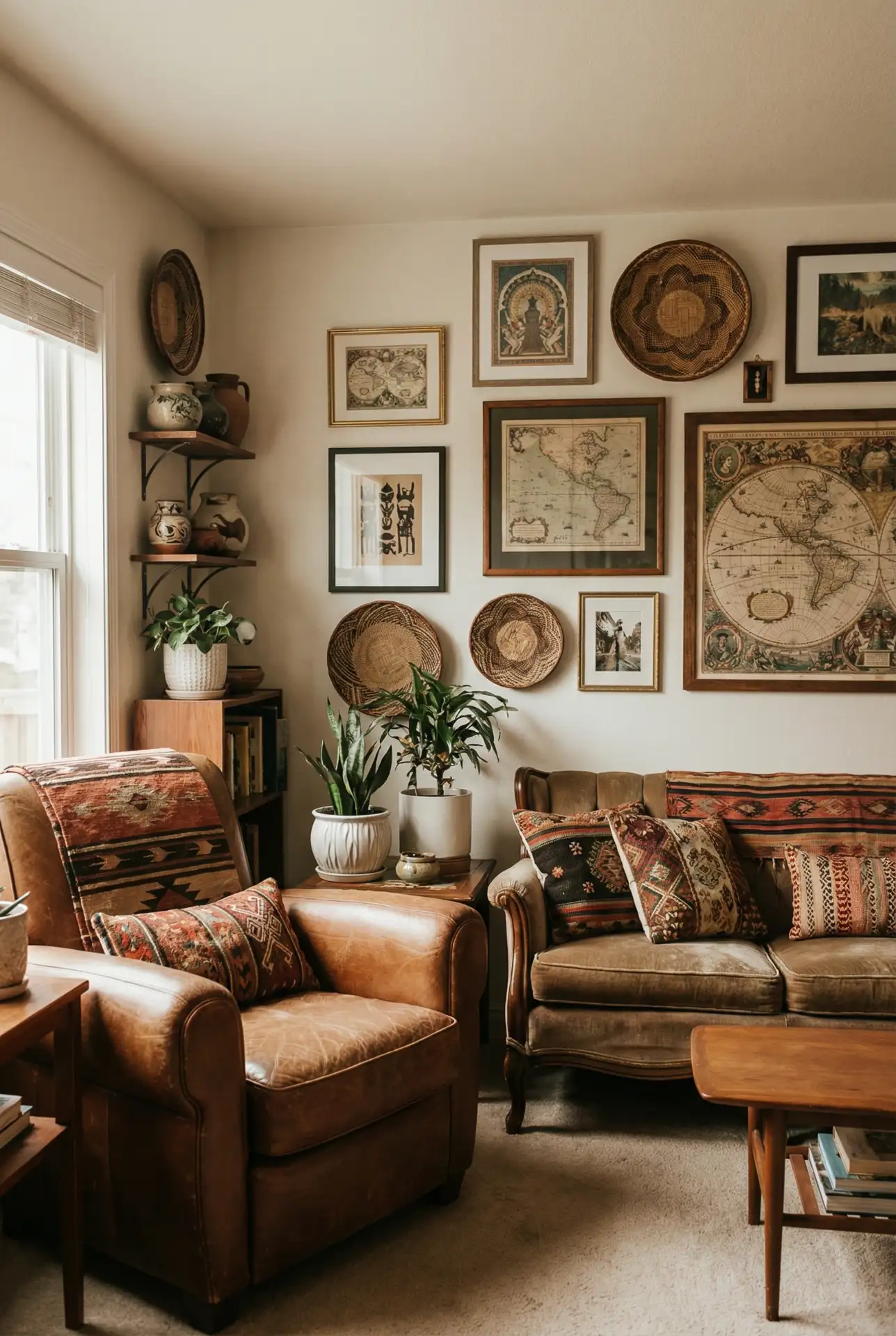
This family room that celebrates personal history and global effects is a fearless mix of patterns, periods, and provenance, all somehow coming together into a harmonious whole. A Moroccan wedding blanket drapes across a mid-century sofa, African mudcloth pillows slot in alongside embroidered suzanis, and an array of masks from across the continent enlivens one wall. The joy is in the jumble—unexpected pairings, like a modern and low coffee table countering more elaborate tableaux; a context of neutral walls allowing layered textiles and objects to play while acquiring patina, without visual cacophony. 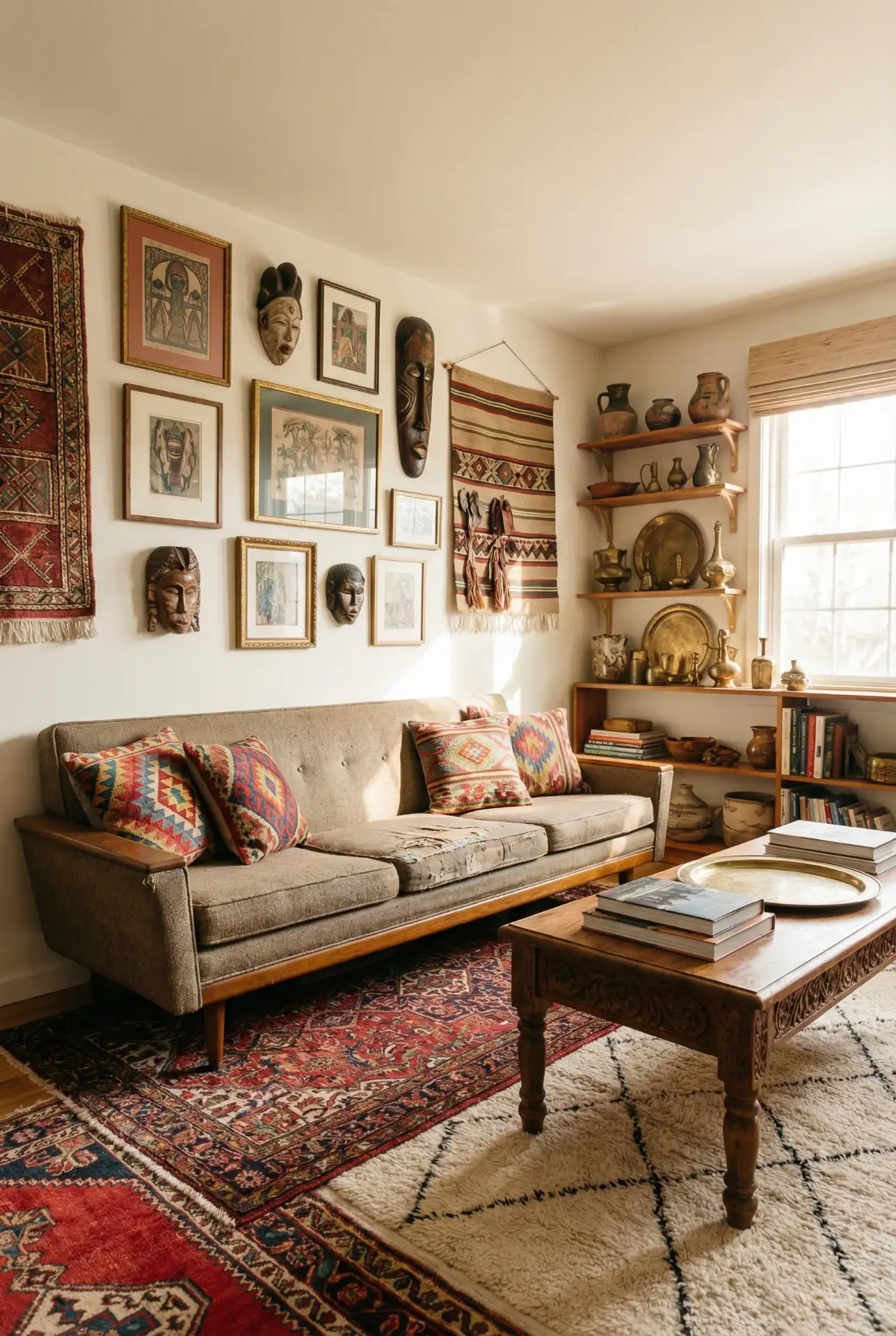
Designer tip: The most successful eclectic rooms still maintain a sense of cohesion and order, visually if not necessarily stylistically, through repeated colors or materials or similar scale among furnishings. Without this invisible grid, the room could easily veer into cluttered territory rather than looking like a well-curated oasis of quiet. Begin with more substantial anchor pieces in relatively neutral colors, and then layer in pattern and color via easily changeable textiles and accessories. This makes the collection grow with you more naturally so you don’t have to redo your entire room.
14. Open Concept Flow with Defined Zones
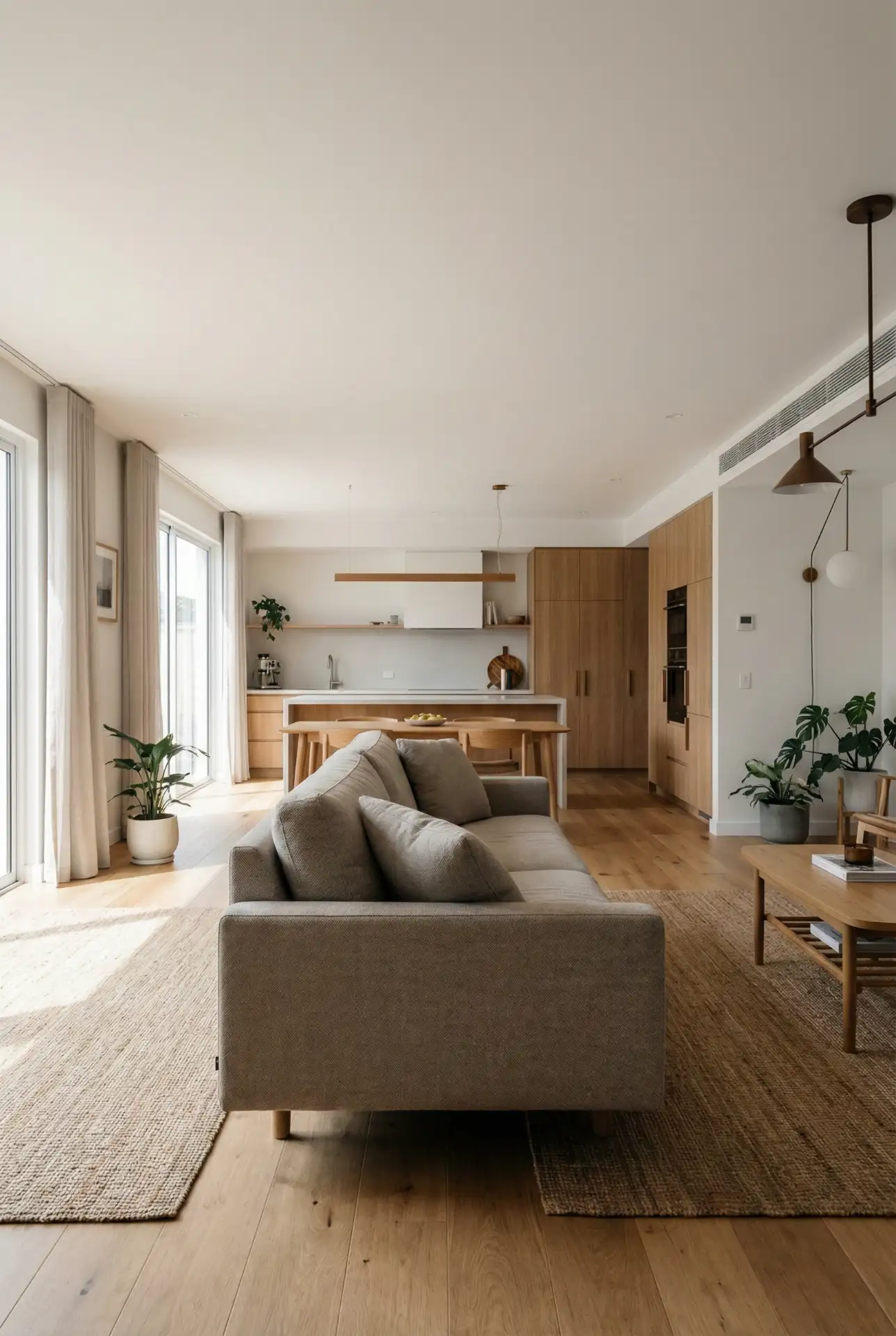
Create Zones in an Open-Concept Family Room This open-concept TV family room is a perfect example of how to make distinct activity zones within connected spaces—including the living space, kitchen, and dining area! One seating zone is anchored by a large area rug, and the territory is clearly defined (without walls to contain it) for where the family room begins. The back of the couch serves as a modest barrier, giving me a visual stopping point so that this eensy bit of apartment feels intentional instead of infinite. Continuous flooring keeps things fluid, and different ceiling treatments (like beams over the family room and recessed lighting in the kitchen) allow each zone to stake out its own turf. 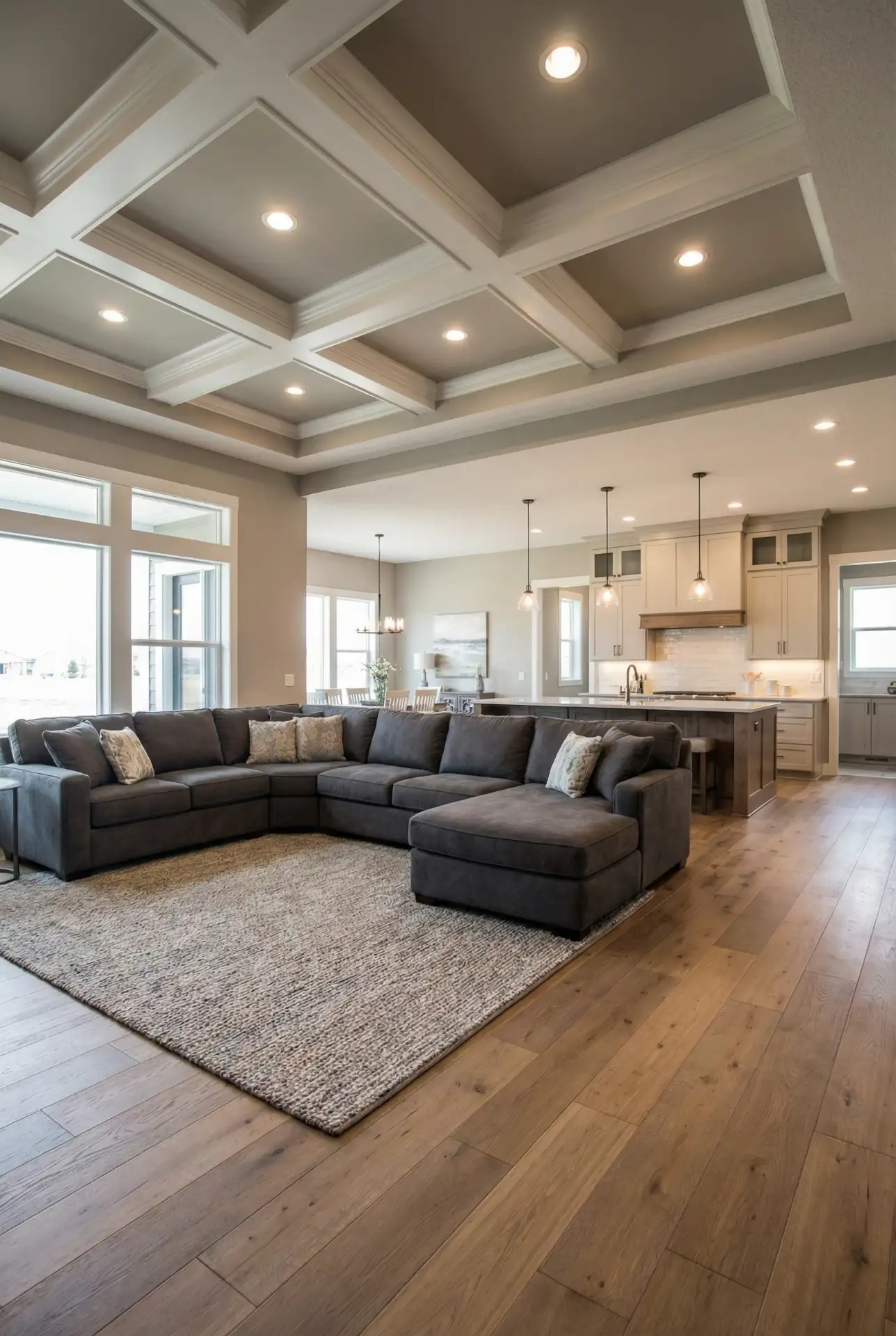
Where it works best Open concept designs work well in homes where families want to keep an eye on the kids in other spaces of a house—parents cooking dinner while overlooking homework taking place in the family room—or entertain guests who freely wander between kitchen and living areas. The downside is when the sound from the television competes with kitchen cleanup or one person’s desire for quiet reading conflicts with another’s podcast listening. Think about acoustic treatments (or noise-dampening rugs and upholstery), strategic furniture positioning to optimize sound direction, or house rules about noise levels that allow open-concept living to work without conflicts for all.
” class=”size-thumbnail wp-image-33439″ src=”#”/> ### 15. Monochromatic Sophistication
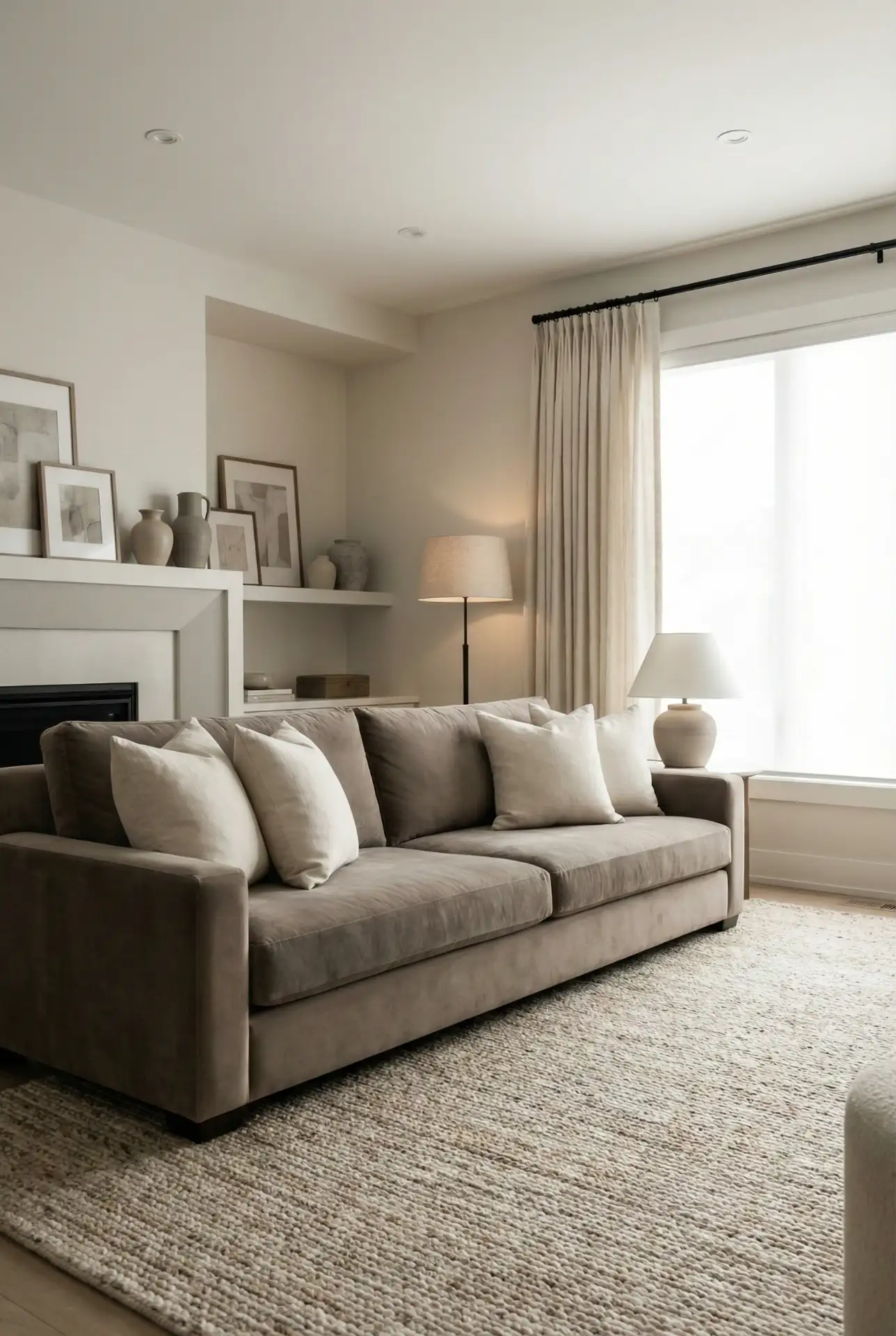
A monochromatic color palette in various shades of taupe adds subtle depth to the comfortable and cozy modern luxe family room, showing that limiting your colors does not equal a boring view. Different textures give the contrast you need—a velvet sofa, linen drapery, a sisal rug, and lacquered side tables will all feel like different hues while actually fitting within that same palette. There’s a layering of light from multiple directions that prevents the space from looking flat and monotonous, with table lamps, sconces, and architectural lighting adding their own sorts of illumination at different times of day.” 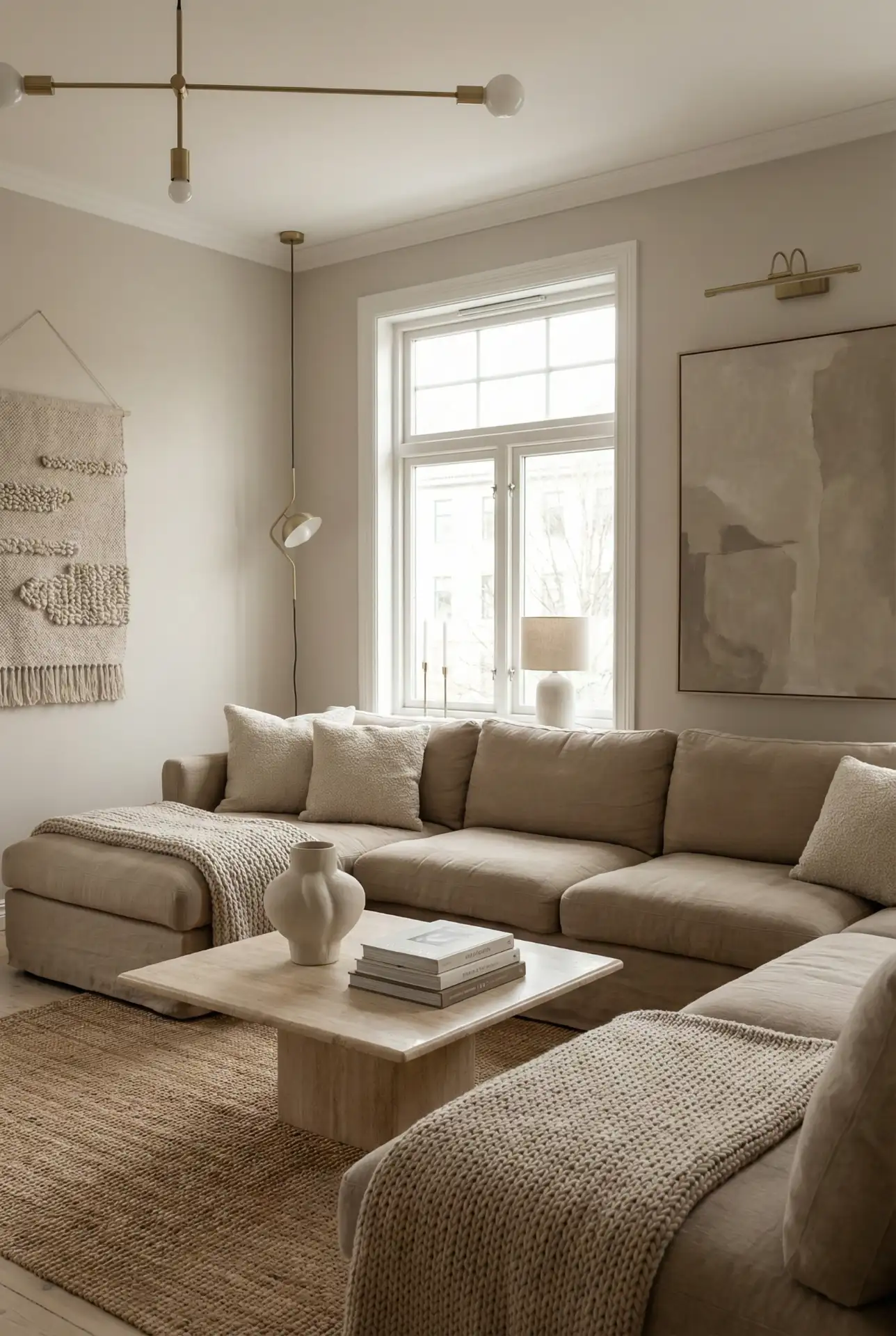
American lifestyle considerations also favor the use of single-color schemes: homeowners who want a look that has low-maintenance elegance will likely prefer staying within one color family, meaning something can be added or replaced without requiring an exact color match. It also photographs well for the many who document their homes on social media, since the cohesive palette results in an instantly recognizable aesthetic signature. The trick is in preventing the space from feeling too serious or hotel-style; personal objects, books, and the organic chaos of day-to-day life actually enhance rather than detract from these very carefully composed rooms.
16. Double-Height Drama
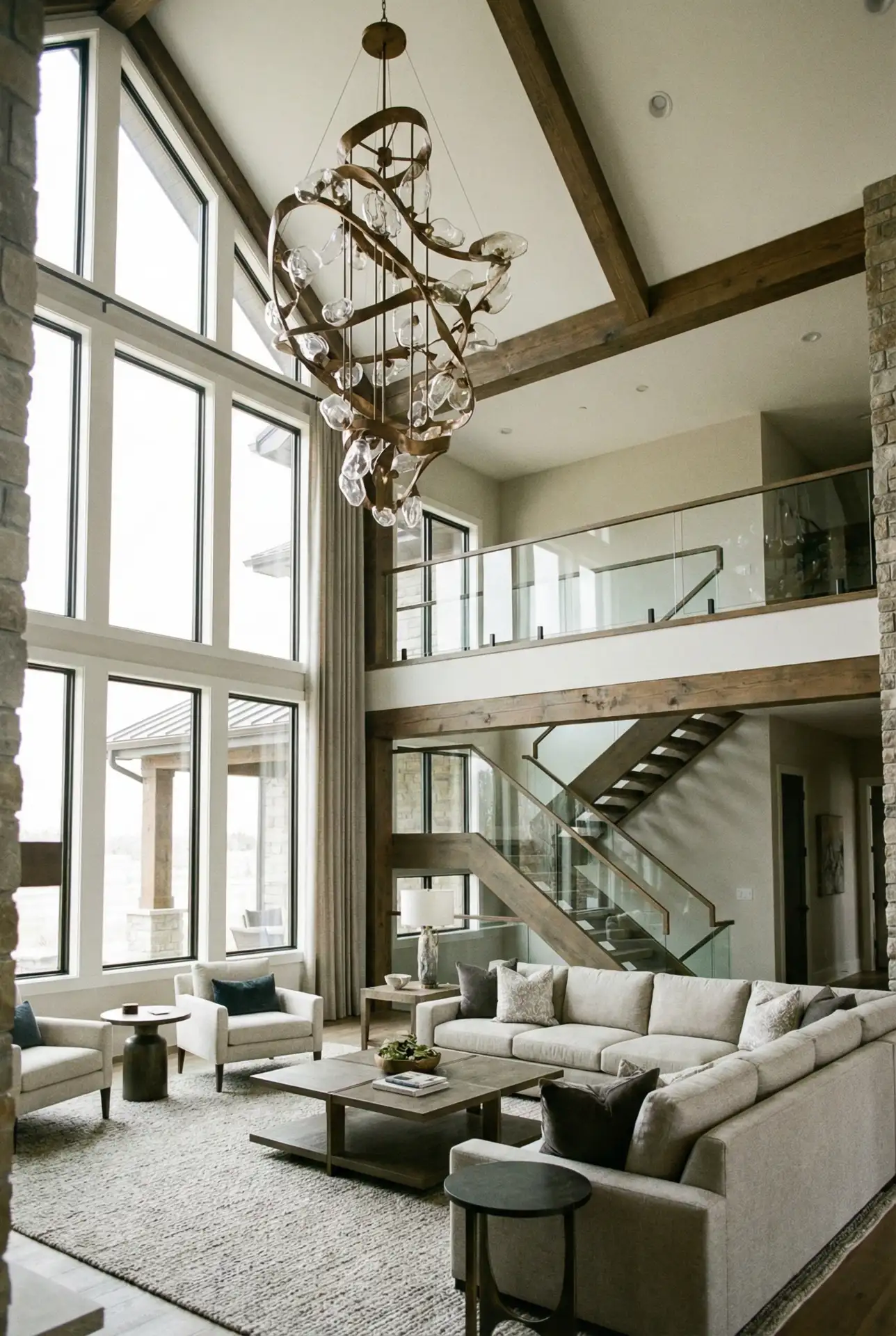
Soaring ceilings grant this luxury family room a sense of grandeur typically reserved for more formal spaces, yet the furnishing approach keeps it grounded in everyday livability. A statement chandelier hangs at an appropriate scale for the volume, drawing the eye upward while providing ambient lighting that reaches both levels. Tall built-ins flank a fireplace, their height proportional to the room and offering display opportunities for artwork and objects that would overwhelm standard eight-foot ceilings. A second-floor balcony overlooks the space, creating a connection between floors while maintaining the dramatic vertical emphasis. 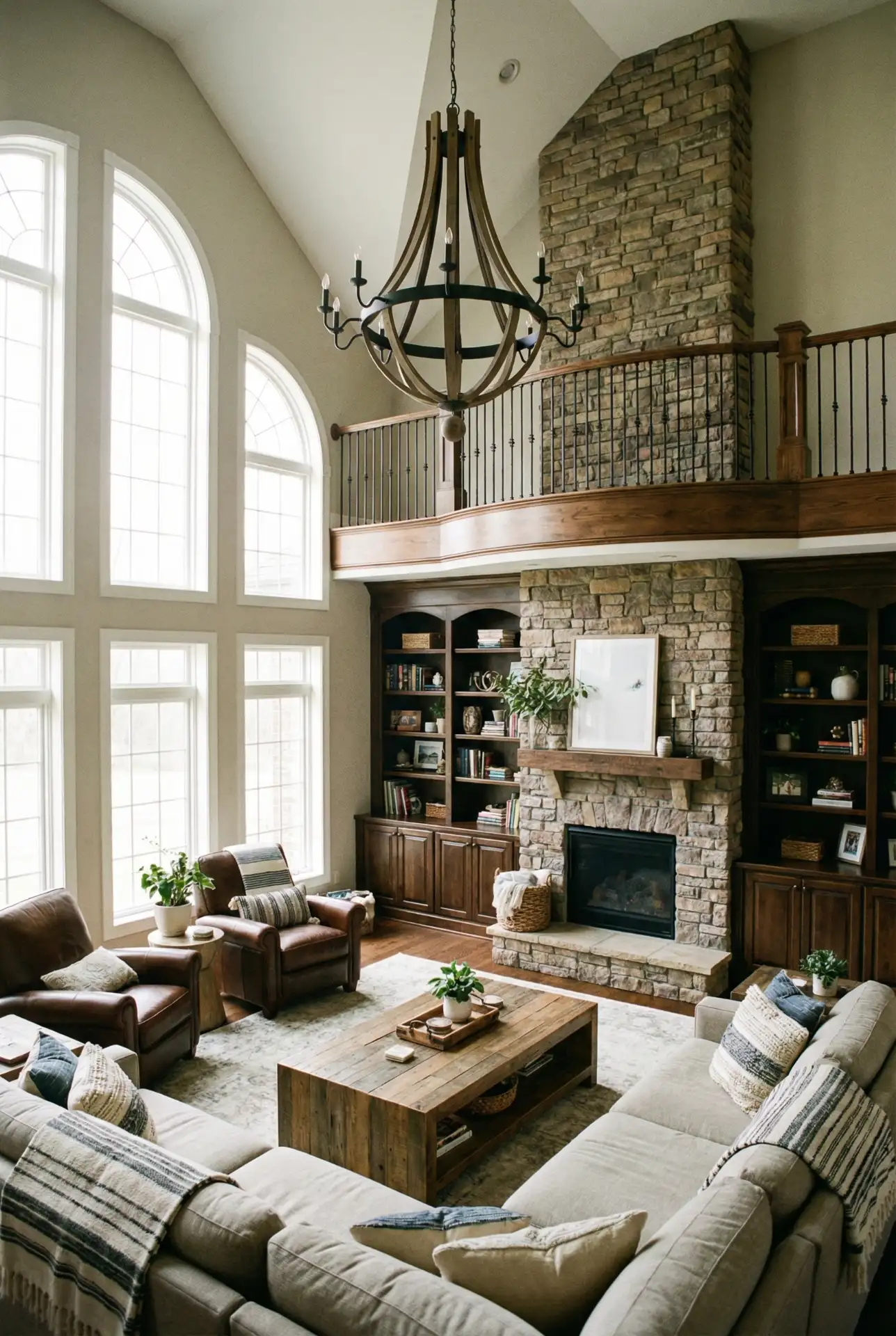
Heating and cooling pay-line items, especially in log volume spaces In many parts of the US, conditioned air does stratify. Ceiling fans circulate air, and zone-based HVAC systems cut down on energy wasted to condition volumes that don’t need constant conditioning. And I can personally attest to the heating costs of this style of home, as a Colorado homeowner friend once told me that their double-height family room with almost no walls doubled or tripled heating prices That, however, changed when they added whole-house fan system Rendering for Brockloch House is high architecture made affordable.
17. Multipurpose Flexibility
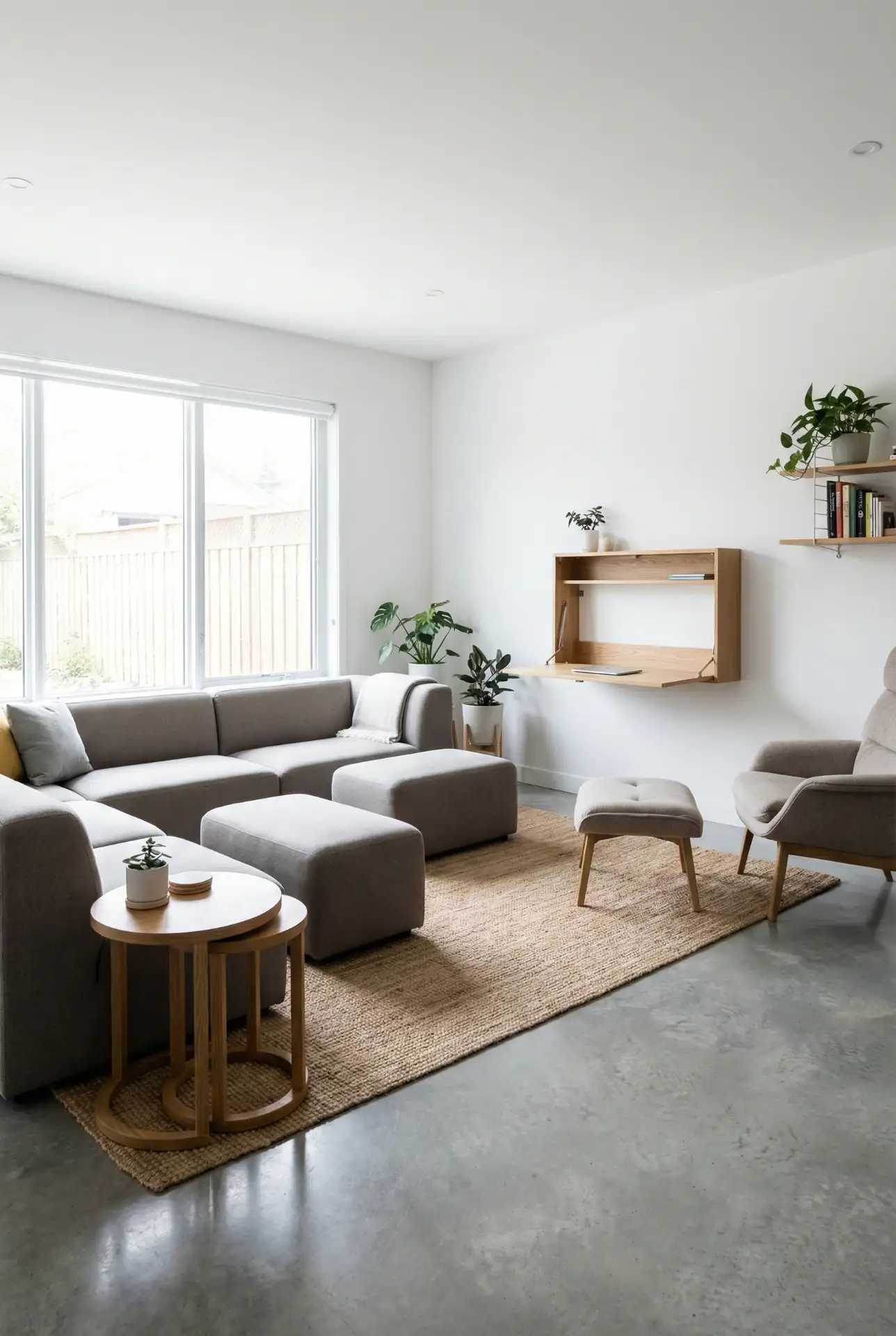
When designing for multiple uses, you need flexible furniture that doesn’t commit—this is demonstrated by this modern family room’s smart choices. Modular seating shuffles from movie night arrangement to party seating, nesting tables become storage when floor space is needed for yoga or playtime, and a sleeper sofa masquerades as handsome quality upholstery while functioning as an extra sleep space when company calls without ever giving away its slumber time secret. Wall-mounted fold-down desktops materialize as homework requires them and disappear when it doesn’t, preserving the room’s clean lines while responding to practical needs. 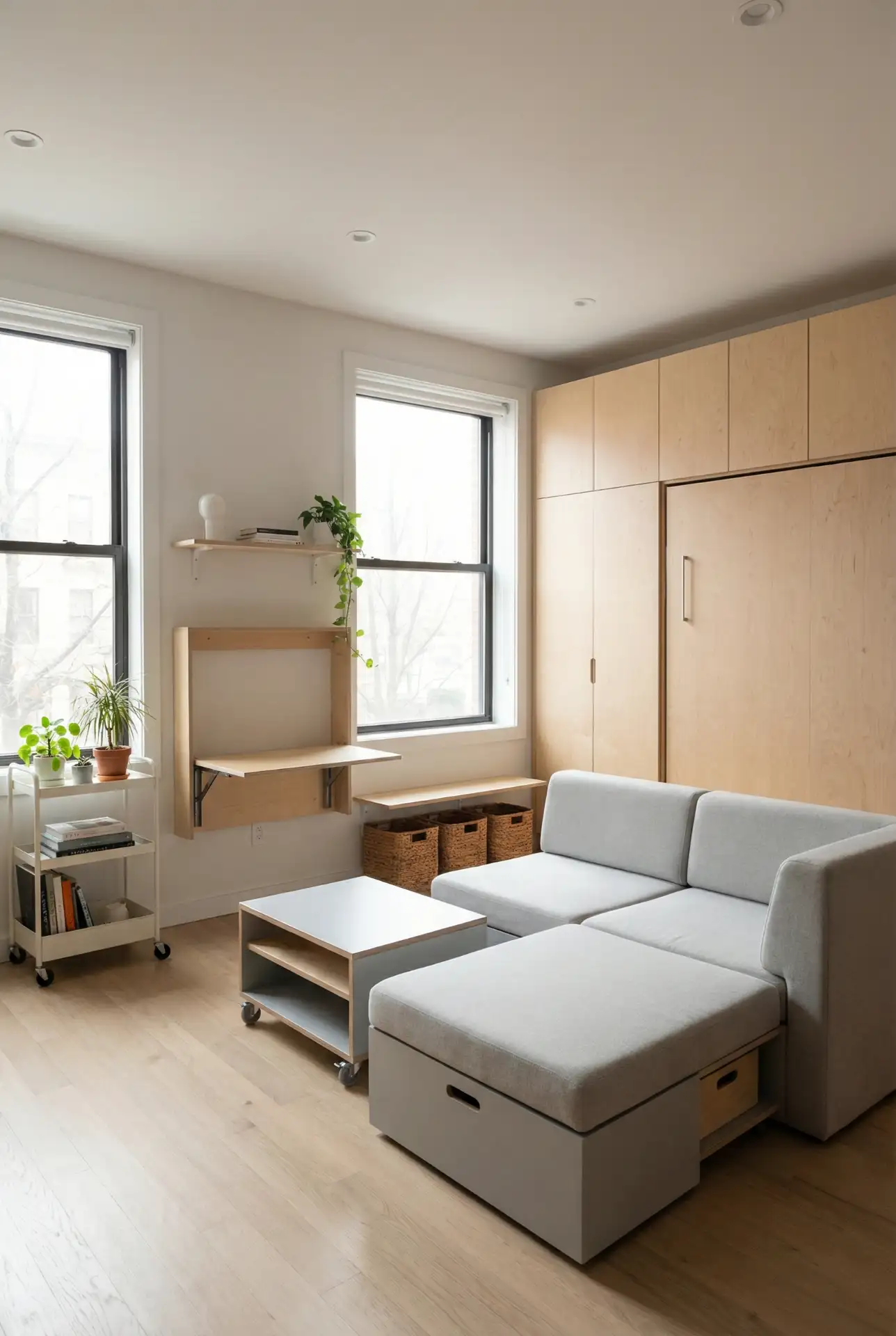
This approach is especially well suited to city dwellers, young families in starter homes, or anyone whose needs change often. A marketing executive in Seattle shared how her family room changes from a home office during the workweek to a playroom after school to an entertaining area on weekends—flexibility that would not be feasible with built-in or heavy traditional furniture. The trade-off is that you get a bit of lighter-weight construction and avoid the sort of substantial permanence many more traditional room sets demand, but for a lot of households, versatility wins out over such considerations.
18. Library-Inspired Book Walls
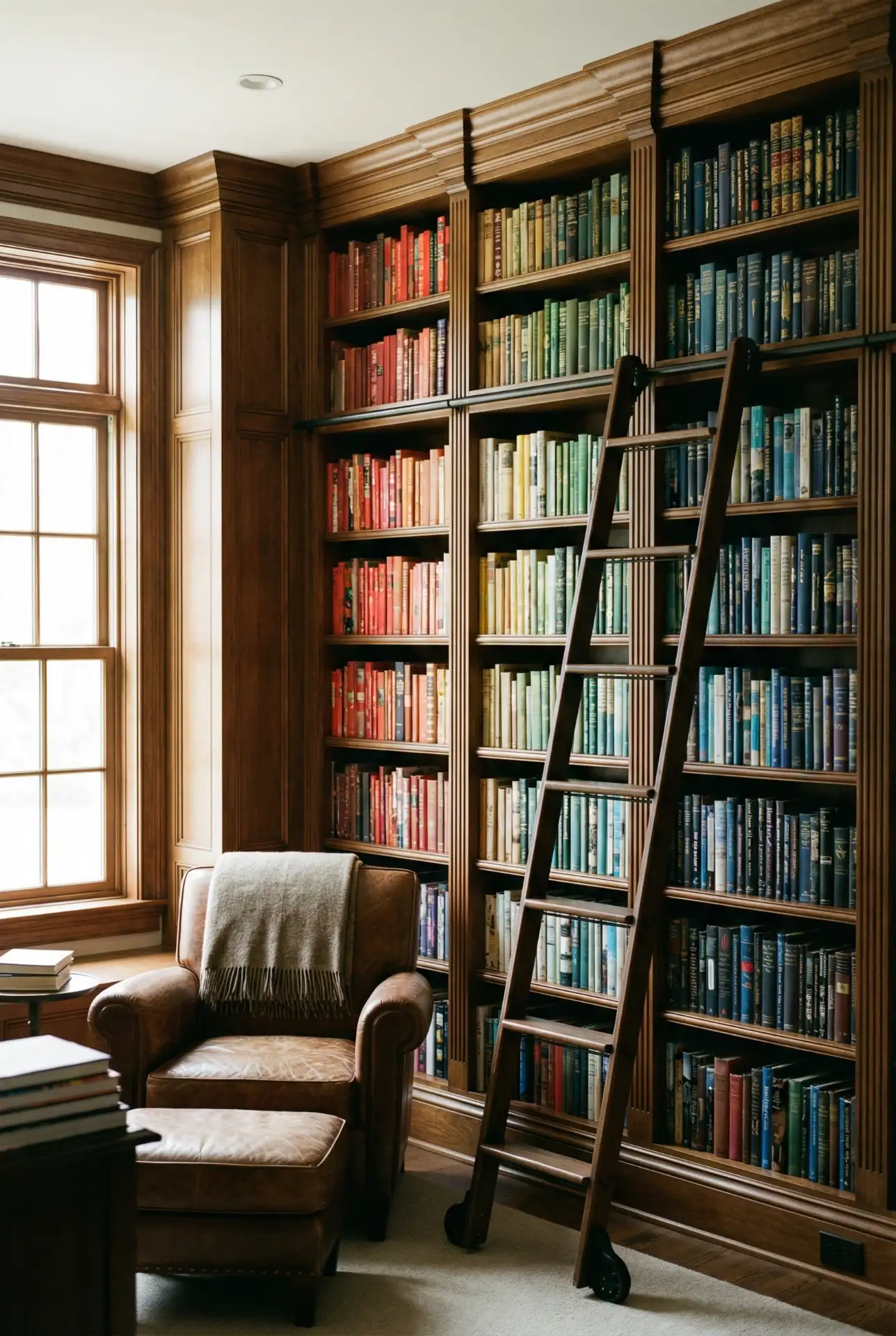
A floor-to-ceiling bookshelf turns a wall into a library in the family room, where readers will want to gather, and has an architectural mass that drywall cannot offer. A rolling ladder, a piece of furniture and living accessory, to access the upper shelves: a sign that evokes plenty and potential. Color-grouped books have a bold visual impact from afar, but individual titles are harder to find—a compromise that many people seem happy to make in order for things to look gorgeous. Reading chairs near windows, with task lighting, are appointed as dedicated spots for actual page-turning—ensuring the books actually feel useful rather than a decorative backdrop. 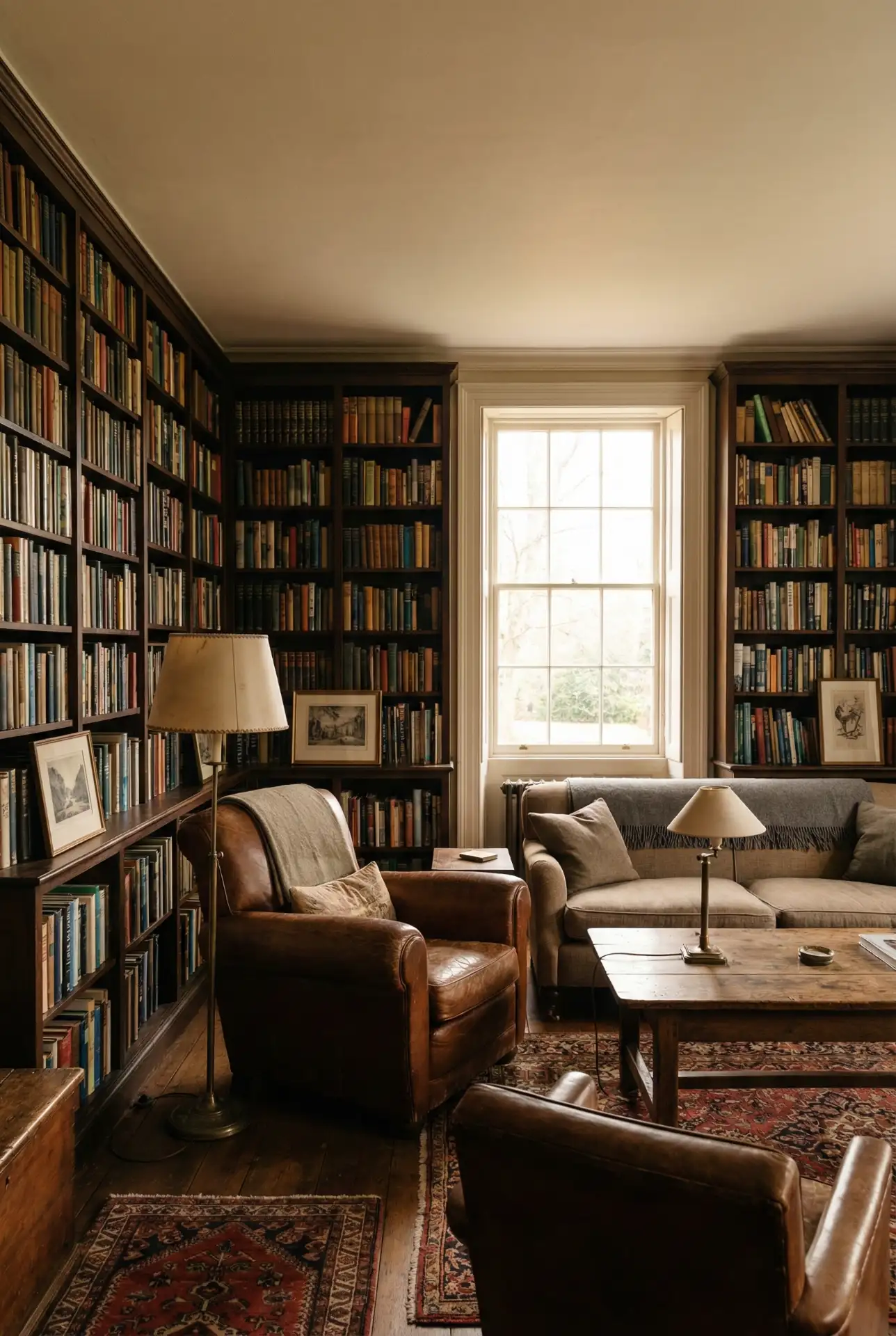
Regional context matters with book walls—in humid climates like the Southeast, consider dehumidification to protect paper and bindings, while in arid regions like the Southwest, books naturally fare better. Professional organizers suggest the eighty-twenty rule: fill eighty percent of shelf space with books, reserving twenty percent for objects, photographs, and visual breathing room. This prevents the wall from reading as overwhelming while maintaining the library atmosphere that makes the feature special.
19. Minimalist Material Focus
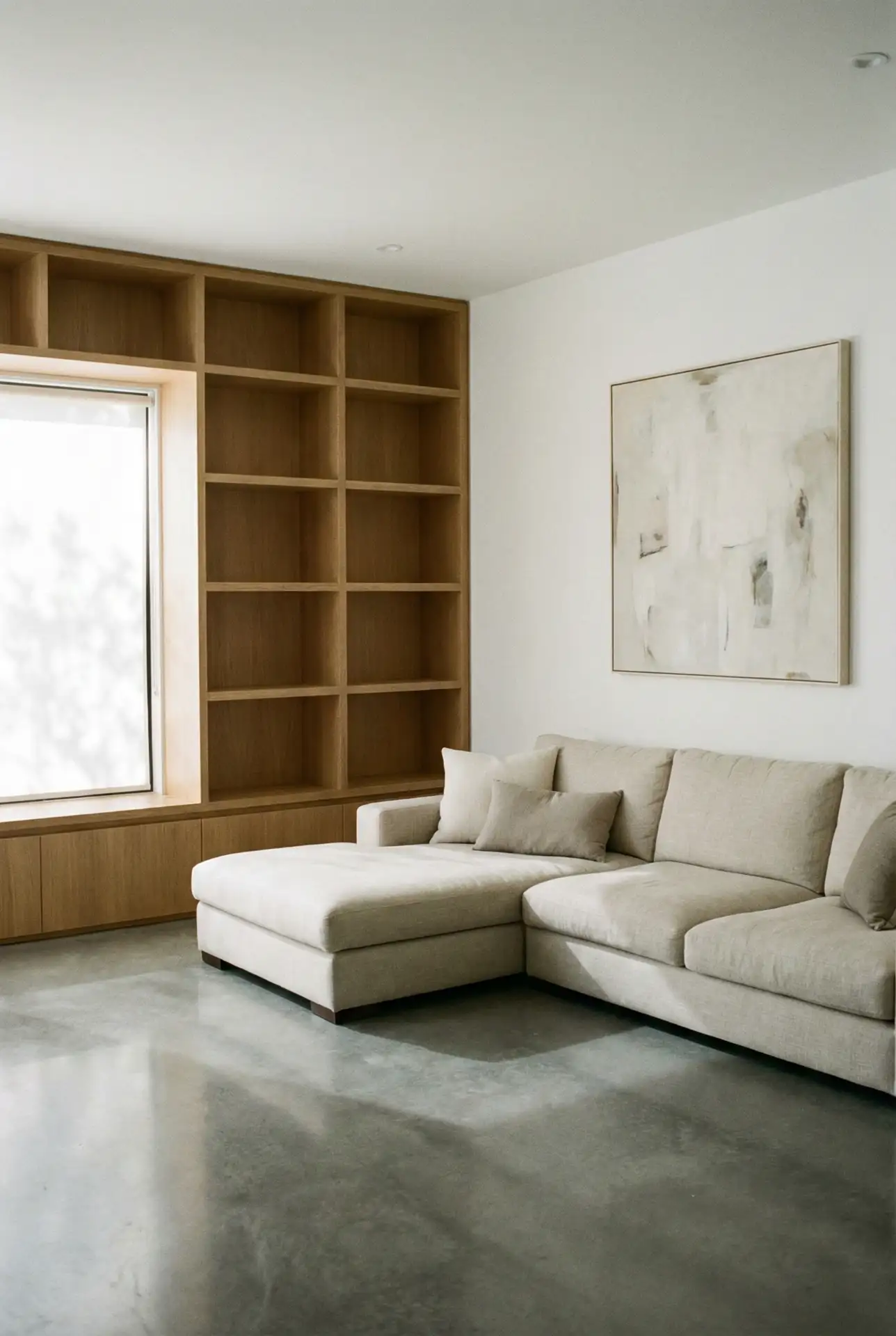
This minimalist family room proves the point of how narrowing down our material palette can create an immensely cohesive and calm space, with only concrete, oak, linen, and steel making a presence in this living area. White oak cabinetry offers warmth without fussiness, and a polished concrete floor represents thermal mass and industrial cool. The natural linen sectional works in the neutral scheme and helps to provide needed softness, its unfussy lines taking a backseat as the materials themselves become all the visual interest the space needs. One large piece of art dominates one wall, and its size suits the pared-down space. 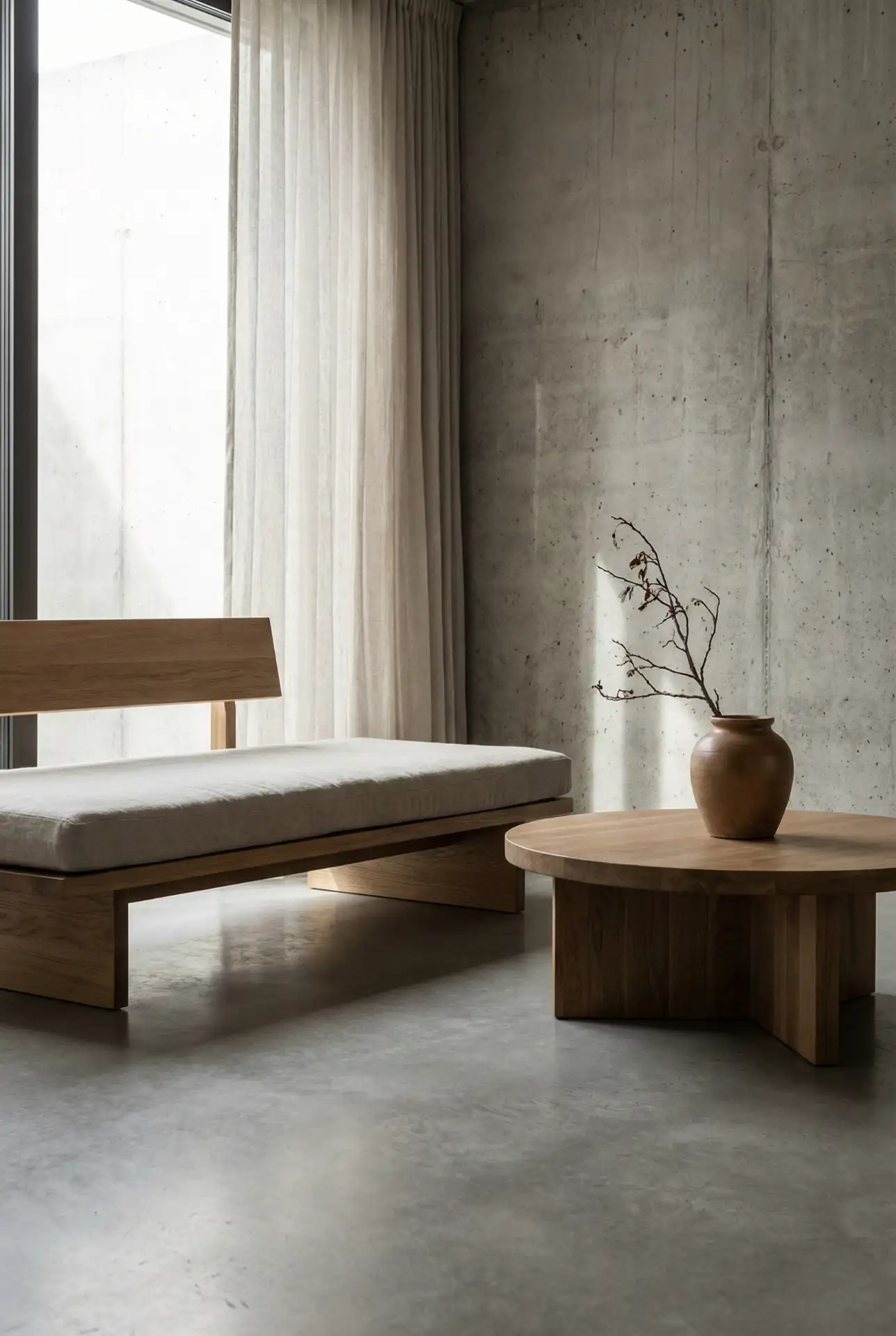
Common mistakes with minimalism include confusing it with deprivation or creating spaces so austere they feel inhospitable. True minimalism celebrates the objects and materials that remain through their careful selection and display—each piece earns its presence. This requires discipline during the design phase and ongoing vigilance against accumulation, making it better suited to individuals and couples than families with young children whose belongings naturally proliferate. One designer I spoke with mentioned that successful minimalist family rooms almost always include abundant closed storage elsewhere in the home where daily chaos can be contained.
20. Transitional Bridge Between Styles
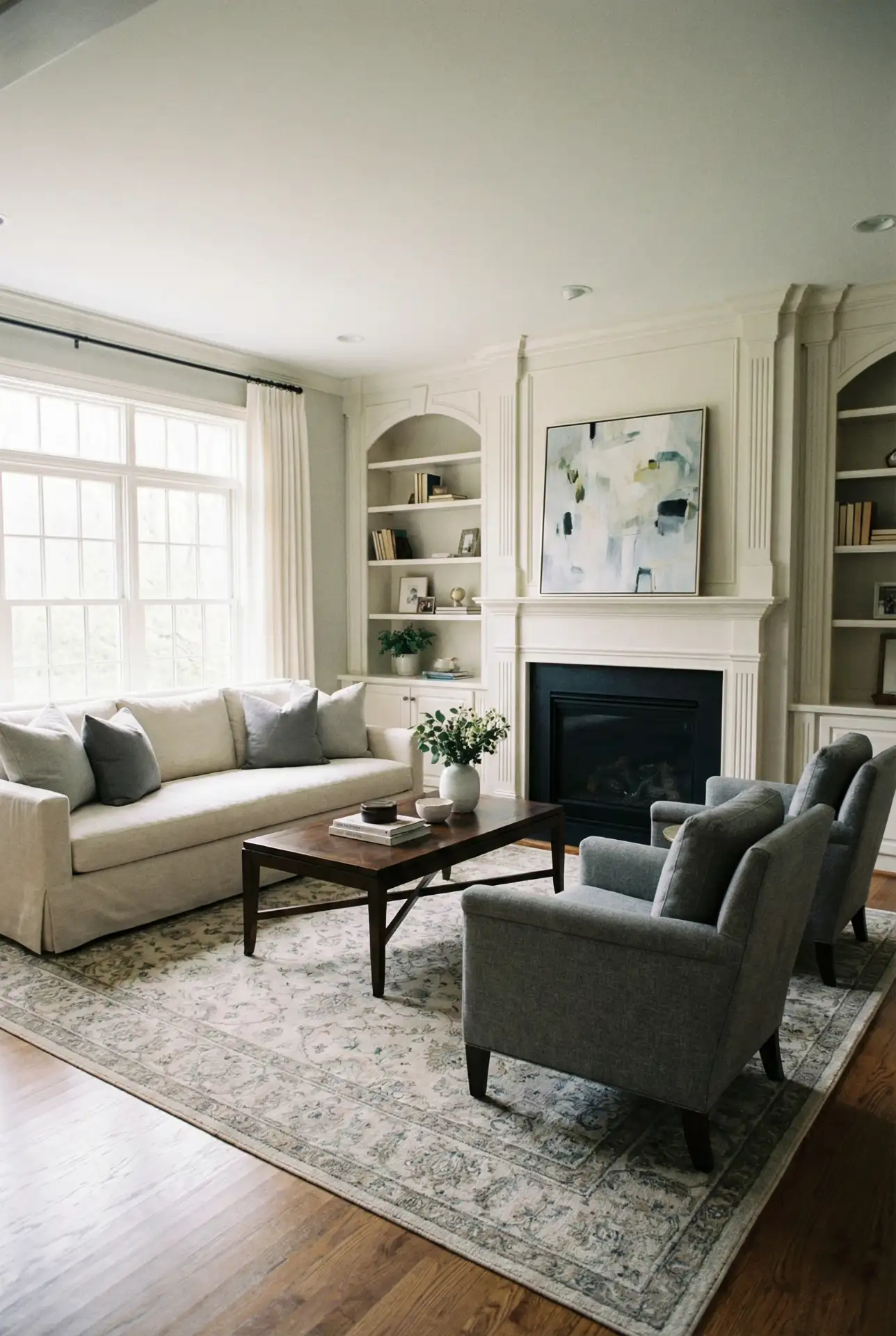
Transitional design occupies the comfortable middle ground between traditional and contemporary, borrowing from both vocabularies to create rooms that feel current without abandoning classical proportions and comfort. This family room features clean-lined furniture with traditional silhouettes—a camelback sofa updated in performance linen and bergère chairs with exposed wood frames but simplified carving. Crown molding and wainscoting provide architectural detail, while the color palette of soft grays and creams reads as modern. The overall effect splits the difference between Grandmother’s parlor and a design magazine spread. 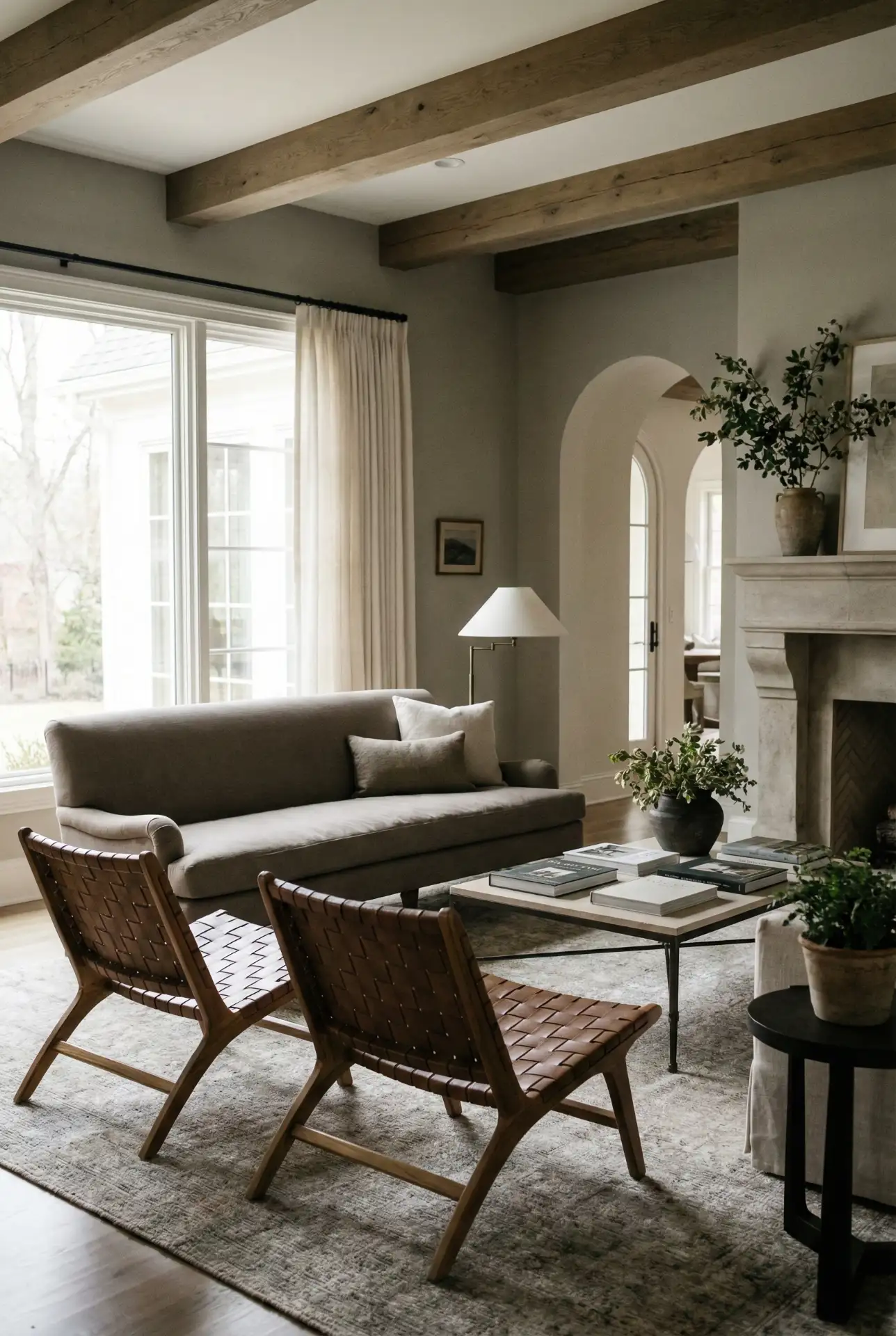
Expert designers consider transitional the safest approach for homeowners uncertain about committing fully to one direction, as it provides flexibility to lean more traditional or contemporary through accessories and styling changes. This makes it particularly popular in move-up homes across suburban America, where buyers want sophistication without trend risk. The style’s broad appeal also supports resale value better than more polarizing design choices, though this commercial consideration shouldn’t drive personal spaces where individual expression matters most.
21. Wellness-Focused Natural Elements
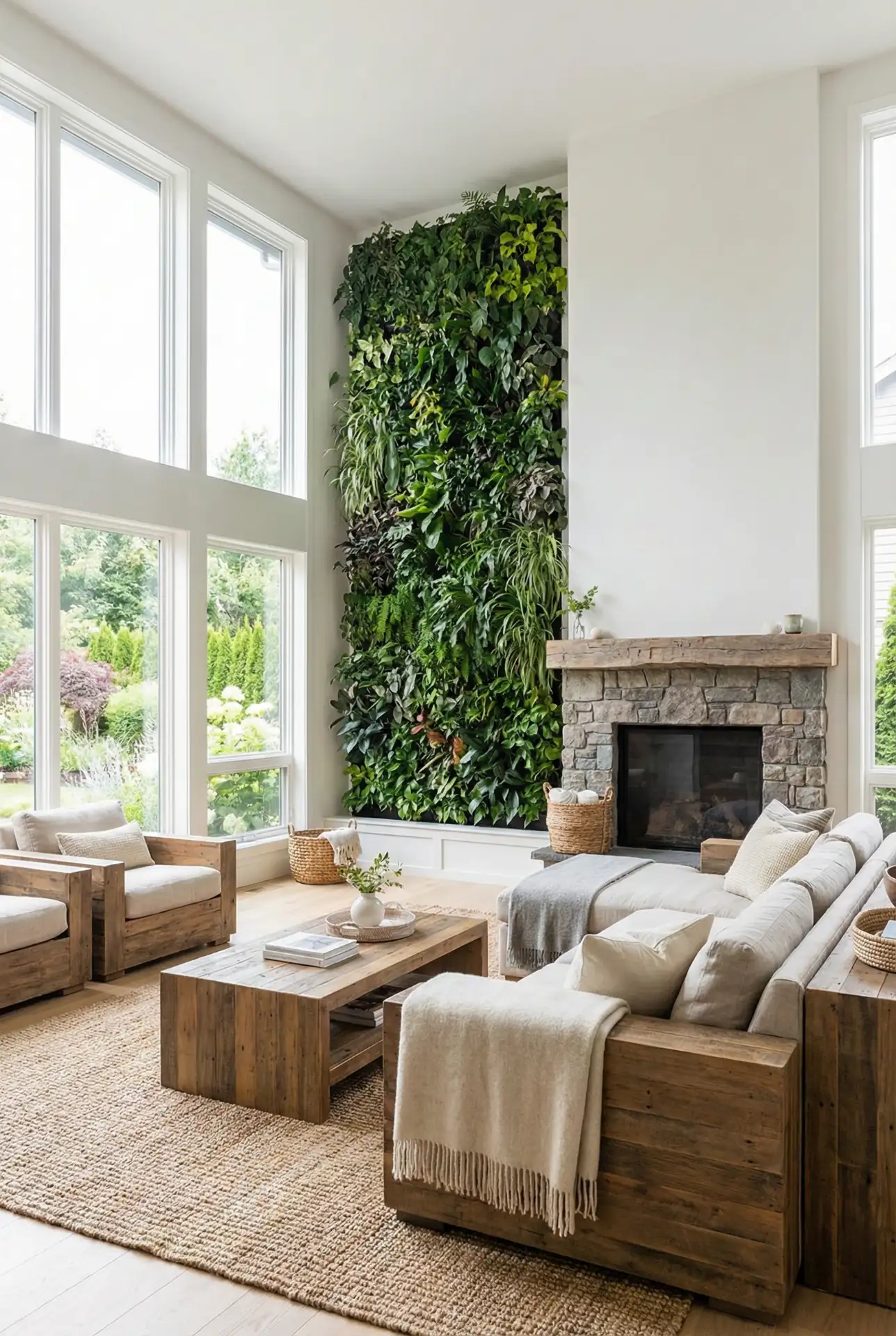
In this family room, biophilia is key, where connection to nature transcends fashion, creating a rich environment that supports the human experience. Our large windows open the gardens to view with their generous proportions and let in more natural light, so artificial lights are a rare necessity. Living plant walls bring literal greenery indoors, while enhancing air quality with their irrigation systems tucked into architectural structures. Natural materials reign here—stone, wood, wool, and cotton—with synthetic finishes kept to a minimum in favor of substances that will age well and off-gas as little as possible. 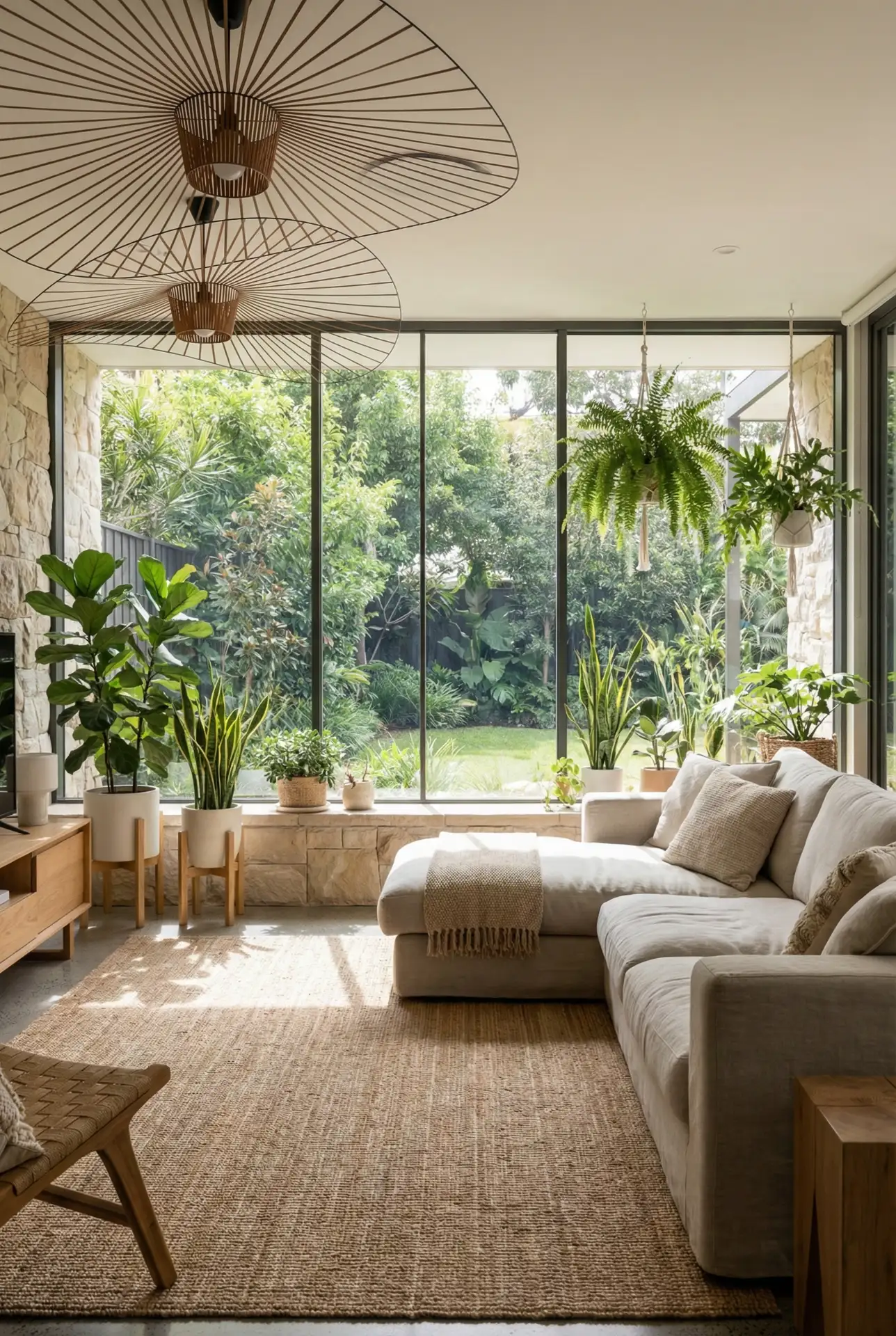
An Oregon family told researchers that following the redesign of their family room with biophilic themes, they now spend significantly more time in it and less time feeling pressure to seek stress relief outdoors—the room itself is restorative. The up-front premium for quality natural materials and operable windows usually runs more than builder-grade options, but advocates say the long-term health advantages and durability make it worth spending extra. Think of this as a good option, especially if anyone in the household has seasonal affective disorder, allergies, or just prioritizes wellness in design.
22. Hotel-Inspired Luxury Lounge
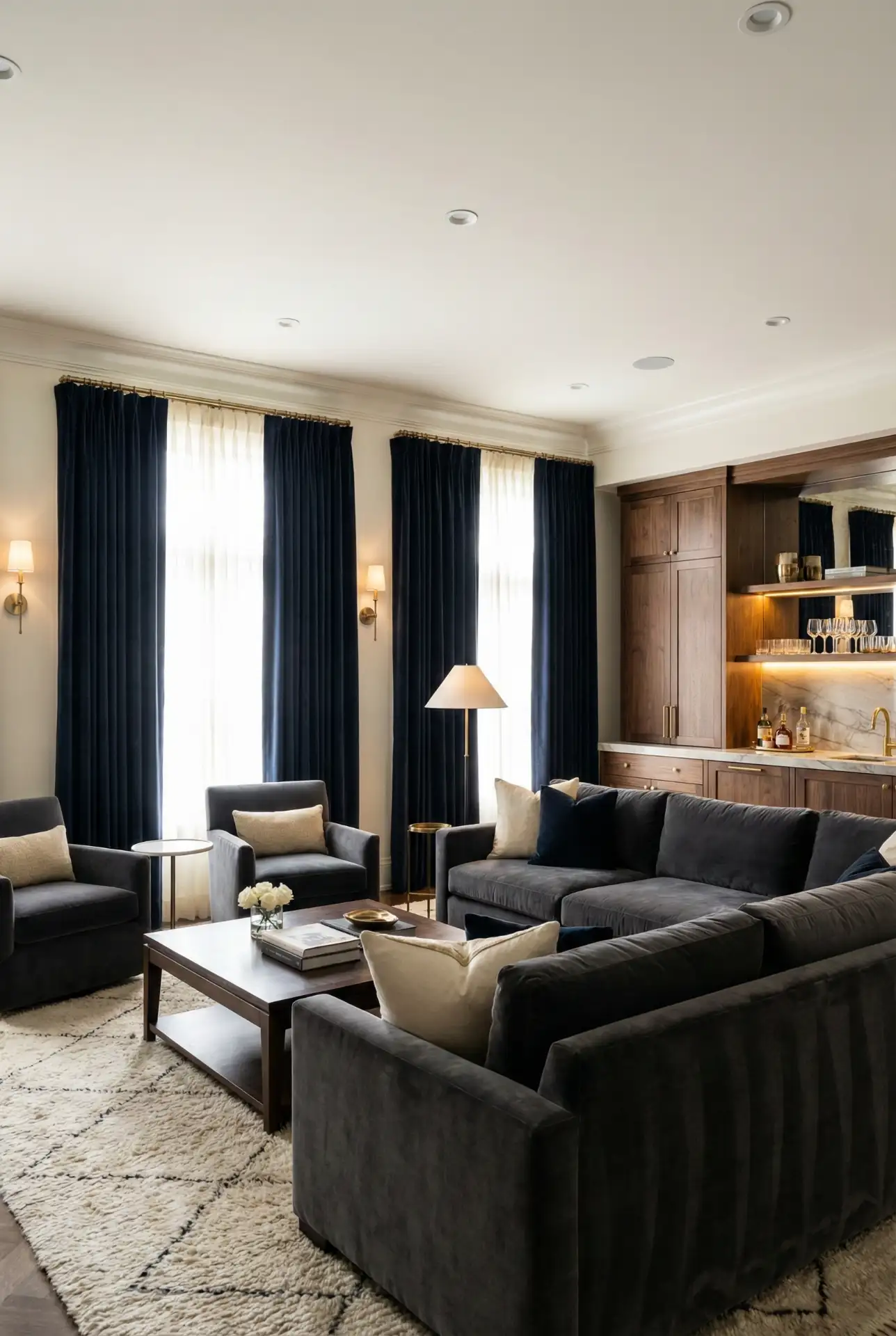
Taking cues from hotel design by prioritizing instant relaxation and intense visual effect, this family room sets a vacation mood among the home’s ordinary conditions. There’s plenty of plush oversize seating to sink into instead of perch on, upholstered in lush fabrics that announce luxury through the sense of touch. A bar area in the kitchen and living room features undercounter refrigeration and stemware storage; blackout drapery and layered lighting let the mood range from sunlit morning coffee to after-hours cocktails. The floor plan is all about adult relaxation and would be perfect for empty nesters or couples without young kids. 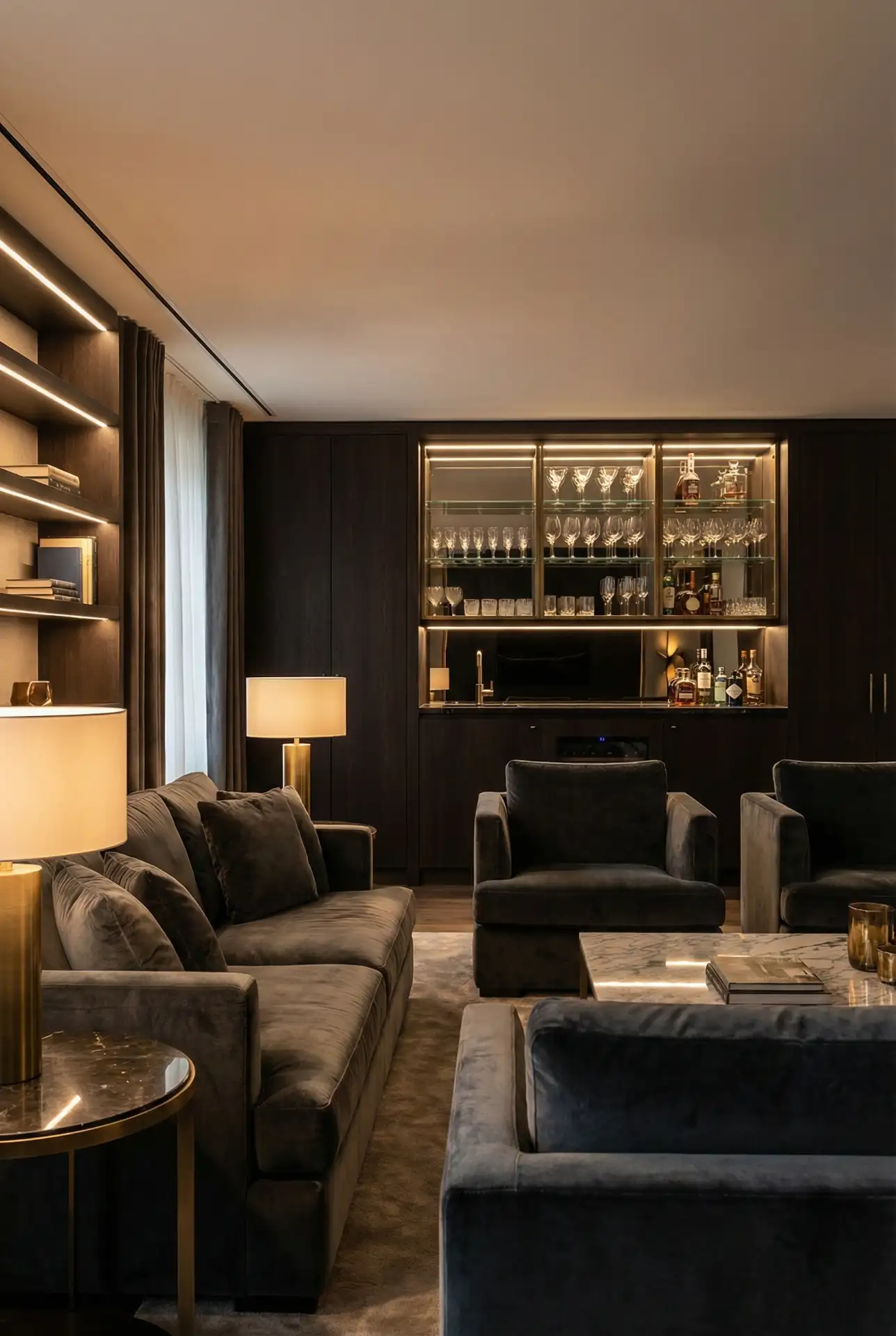
Budget profiles underscore the fact that hotel-quality design at home may be cheaper than you think: commercial furniture suppliers often sell to residential customers, and some high-end hotel decor comes down more to skillful styling than expensive individual pieces. Spend the budget on seating quality and lighting design; hotels spend big money on these, as they directly correlate to guest experience. Background components can afford to be more humble without diminishing the impact, as long as they play nice at their price point.
23. Digital-Age Gaming Headquarters
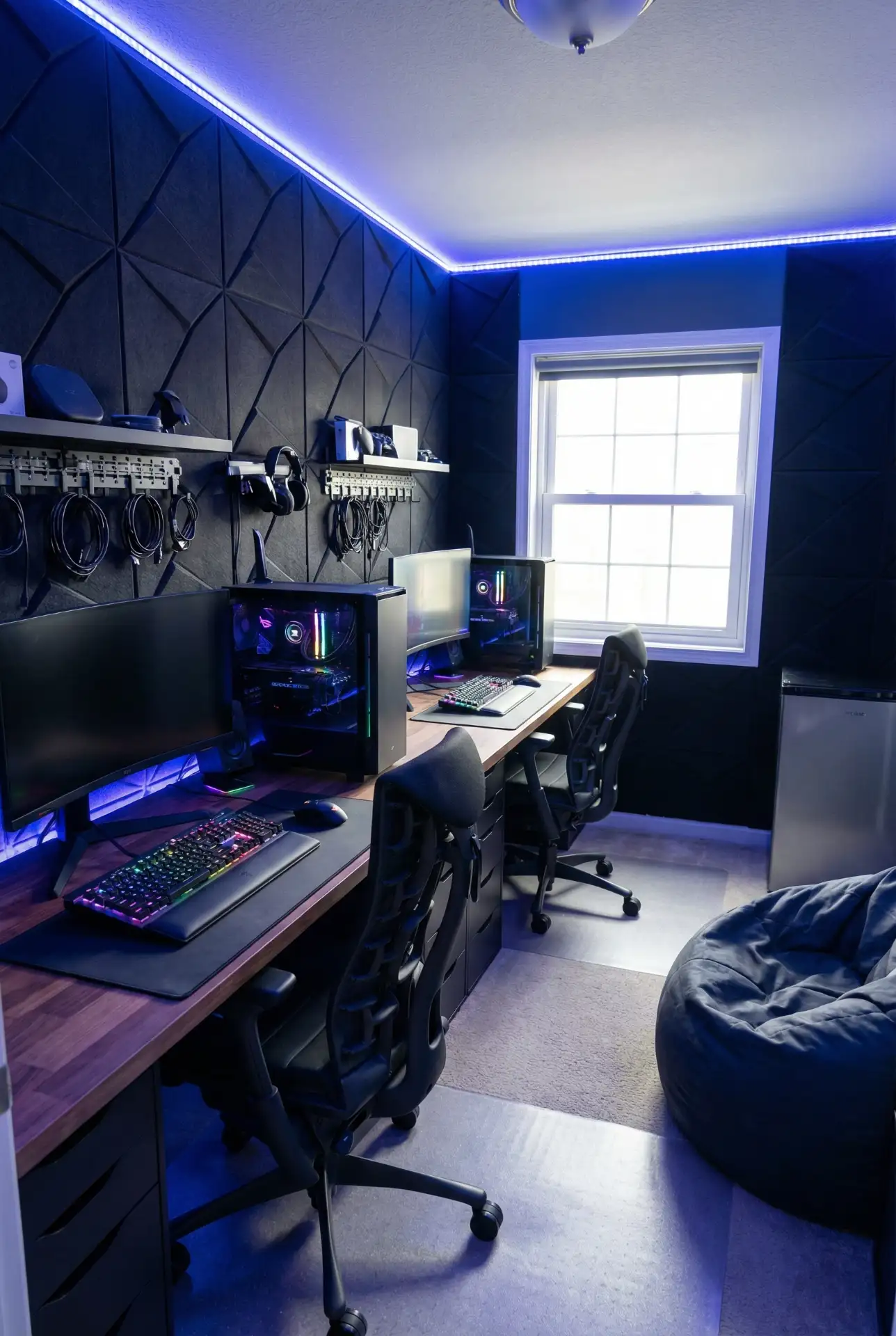
Purpose: Gaming-Base and digital entertainment Description: Bloxburg-inspired family room with a focus on integration, technology & comfort for those long-screened hours. On one wall, there are several gaming stations equipped with dedicated monitors, gaming chairs, and neatly arranged cabling, opposed by a big-screen TV for console games and streaming. The atmospheric gaming glow enjoyed by gamers is provided by LED accent lighting that adorns the space and is smart-control enabled to change colors when the mood changes. Echoing sounds will be a thing of the past when sound absorption panels are disguised as geometric wall art, improving audio quality for gaming and video chat. 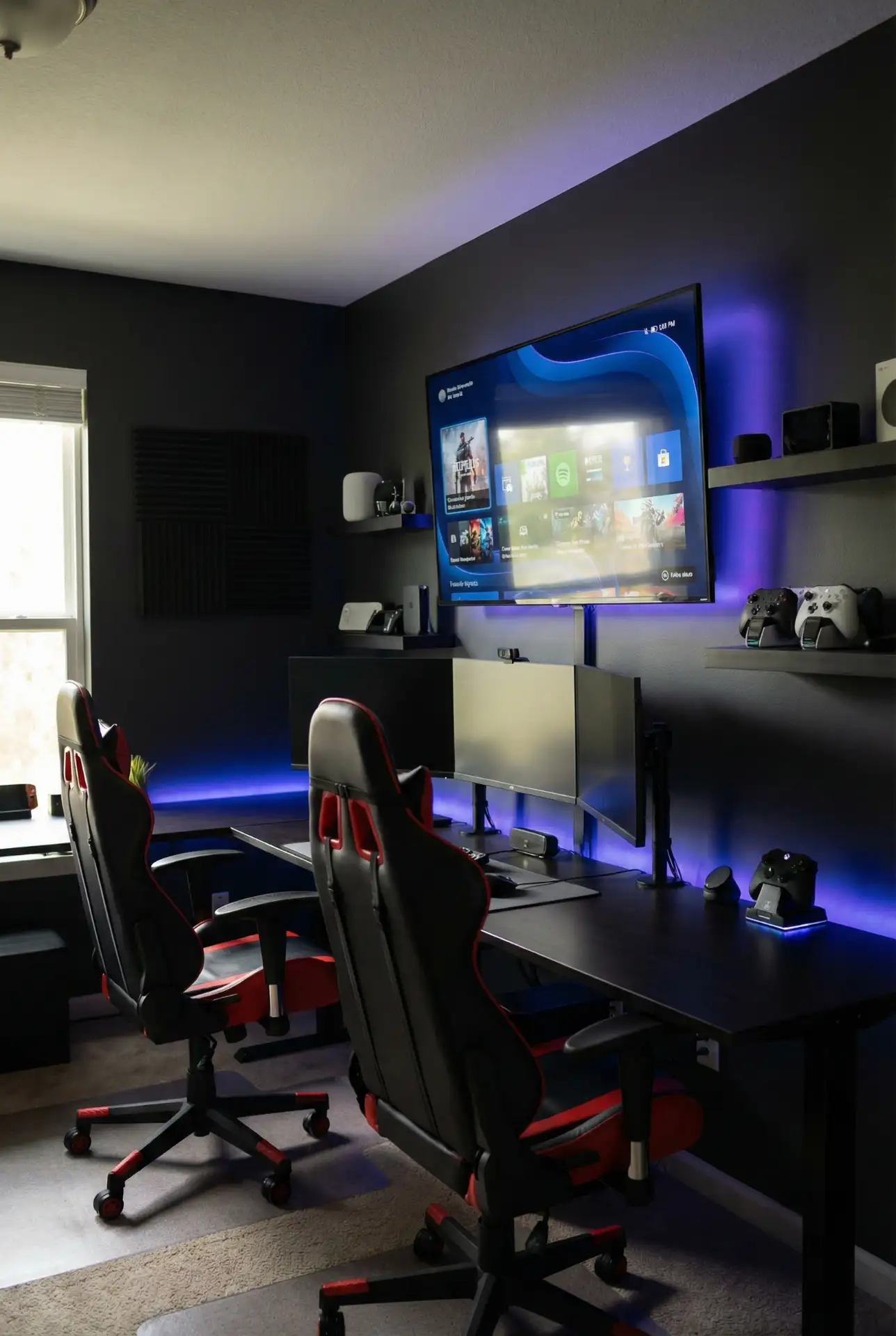
Real homeowner behavior: Gaming rooms work best when they embrace, not battle against, what they’re used for—trying to hide the tech or keep things looking as they always have in other parts of your home (which isn’t even dedicated to digital entertainment) is counterintuitive. Lean into the tech-forward identity while still providing adequate ventilation so that heat-emitting equipment doesn’t overheat over time, task lighting to guard against eye strain, and enough general seating for friends who’ve come just to watch others play. Parents who create these spaces for teenagers say having a designated gaming zone keeps technology from colonizing the entire home while giving youth control over their domain.
Conclusion
The family room is evolving as American home life changes and as we rethink our priorities about flexibility, technology, wellness, and personal expression. Whether you’re attracted to the calm simplicity and sense of style in Japandi design, the well-traveled warmth of global eclectic, or the purposeful function of kid-friendly spaces, 2026 brings never-before-seen resources for rooms that actually cater to your family’s individual rhythms and needs. Tell us in the comments below what you like most—we’d love to hear what designs spark your imagination and which challenges you’re having trouble solving on your own family room projects.