Dark Exterior House Colors 2026: 44 Modern Ideas with White Trim, Wood & Stone Accents

Dark exterior house colors have quietly become one of the most searched home design trends heading into 2026, especially among homeowners scrolling Pinterest for bold, sophisticated inspiration. Whether you’re drawn to the drama of charcoal siding, the warmth of deep forest greens, or the timeless elegance of matte black trim, going dark outside is no longer just for modern minimalists. From farmhouse charm to mid-century cool, these rich, moody hues work across architectural styles and climates. In this article, you’ll find curated ideas that blend current color trends with real-world application—helping you choose the perfect dark palette for your home’s exterior transformation.
1. Charcoal Gray Farmhouse with White Trim
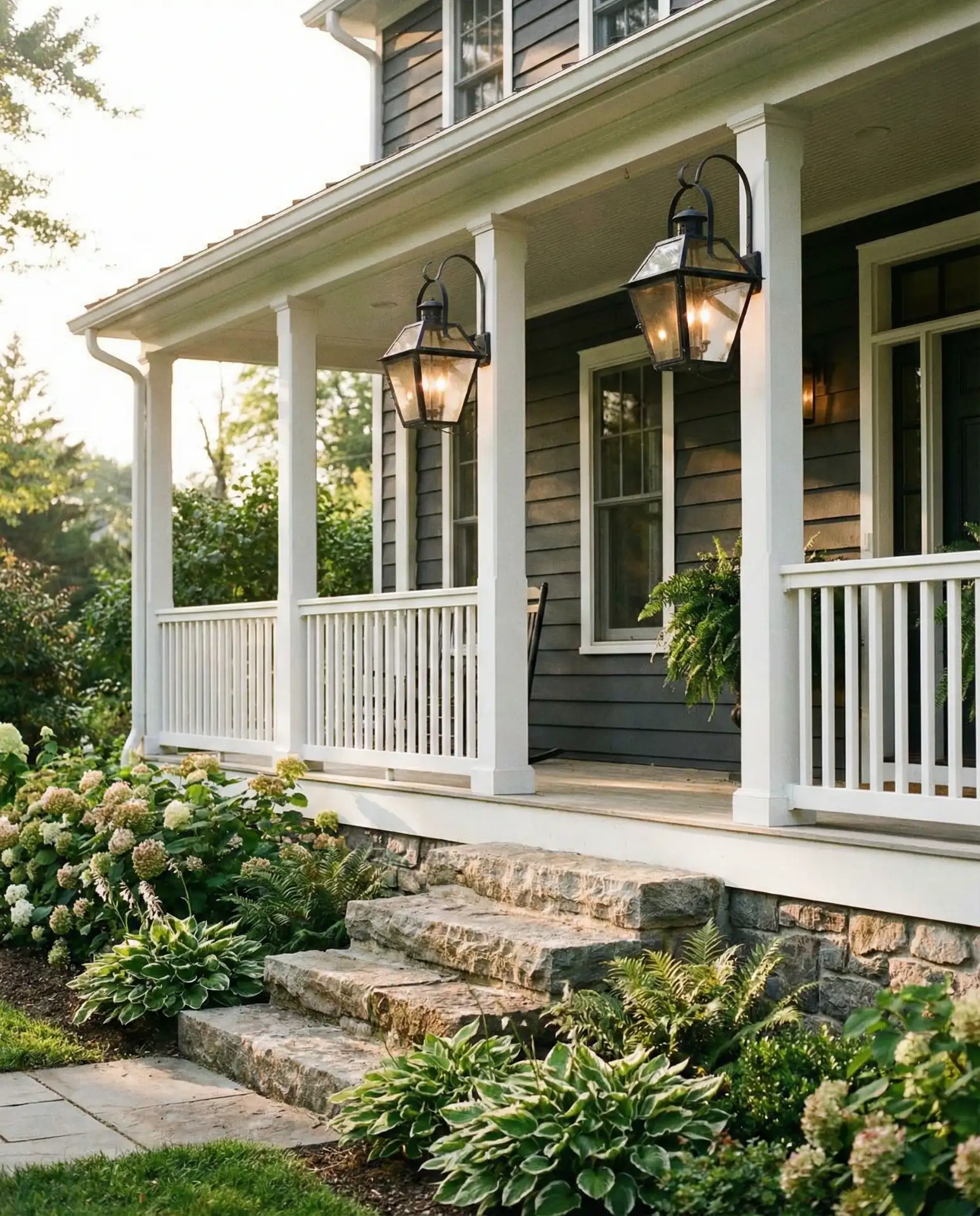
This look pairs deep charcoal siding with crisp white trim and white windows, creating a striking contrast that highlights architectural details without overwhelming the home’s farmhouse roots. The dark base grounds the structure while allowing lighter accents to pop, making it ideal for homes with gabled roofs, board-and-batten siding, or wraparound porches. It’s a safe yet impactful choice for those transitioning from traditional beige or cream exteriors.
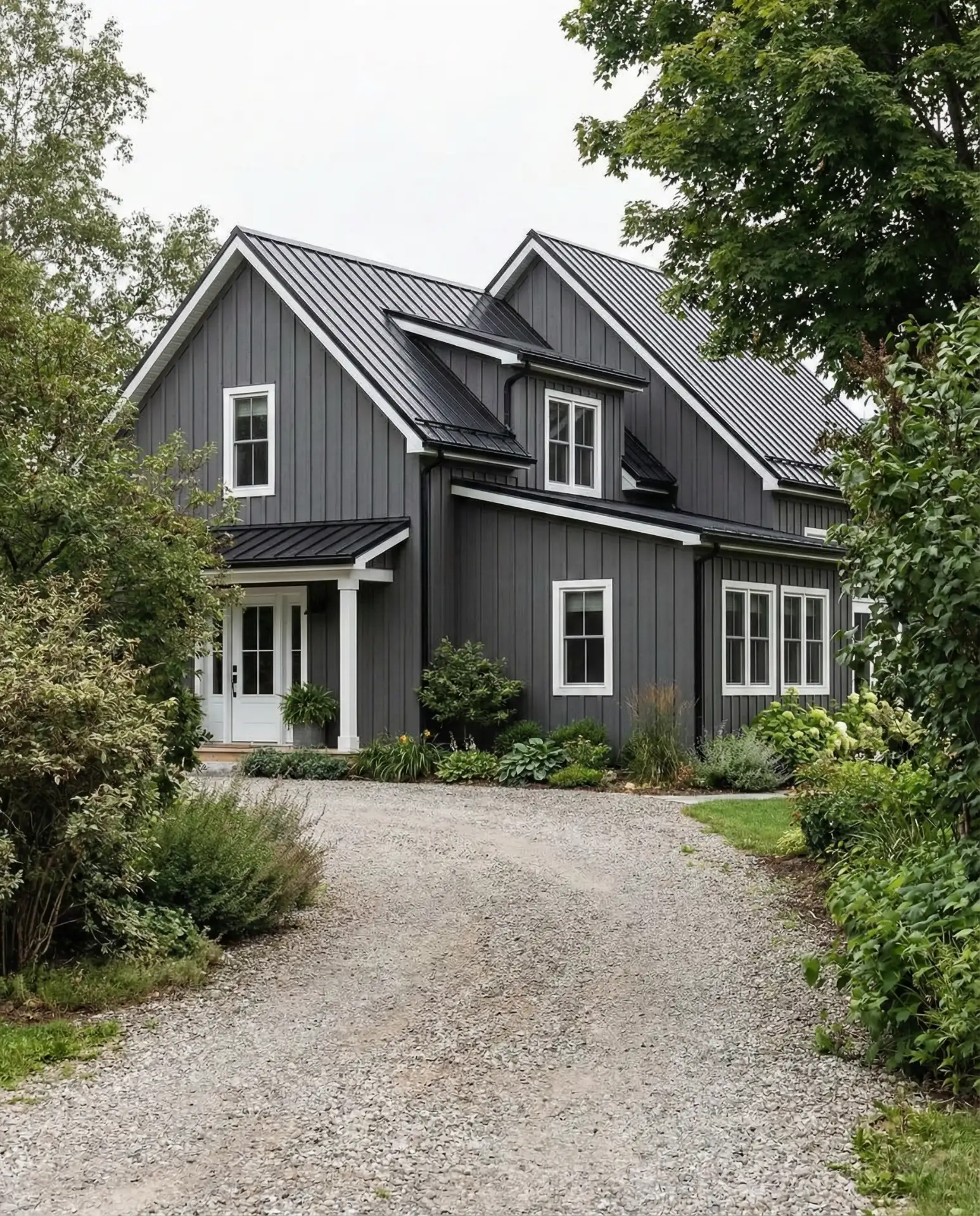
This combination works especially well in the Midwest and Northeast, where traditional farmhouse aesthetics are deeply rooted but homeowners crave a fresh, updated look. The dark color hides dirt and weather stains better than lighter shades, which is a practical bonus in regions with harsh winters or dusty rural settings. It’s also forgiving during the inevitable gaps between power washing sessions.
2. Matte Black Modern with Natural Wood Accents
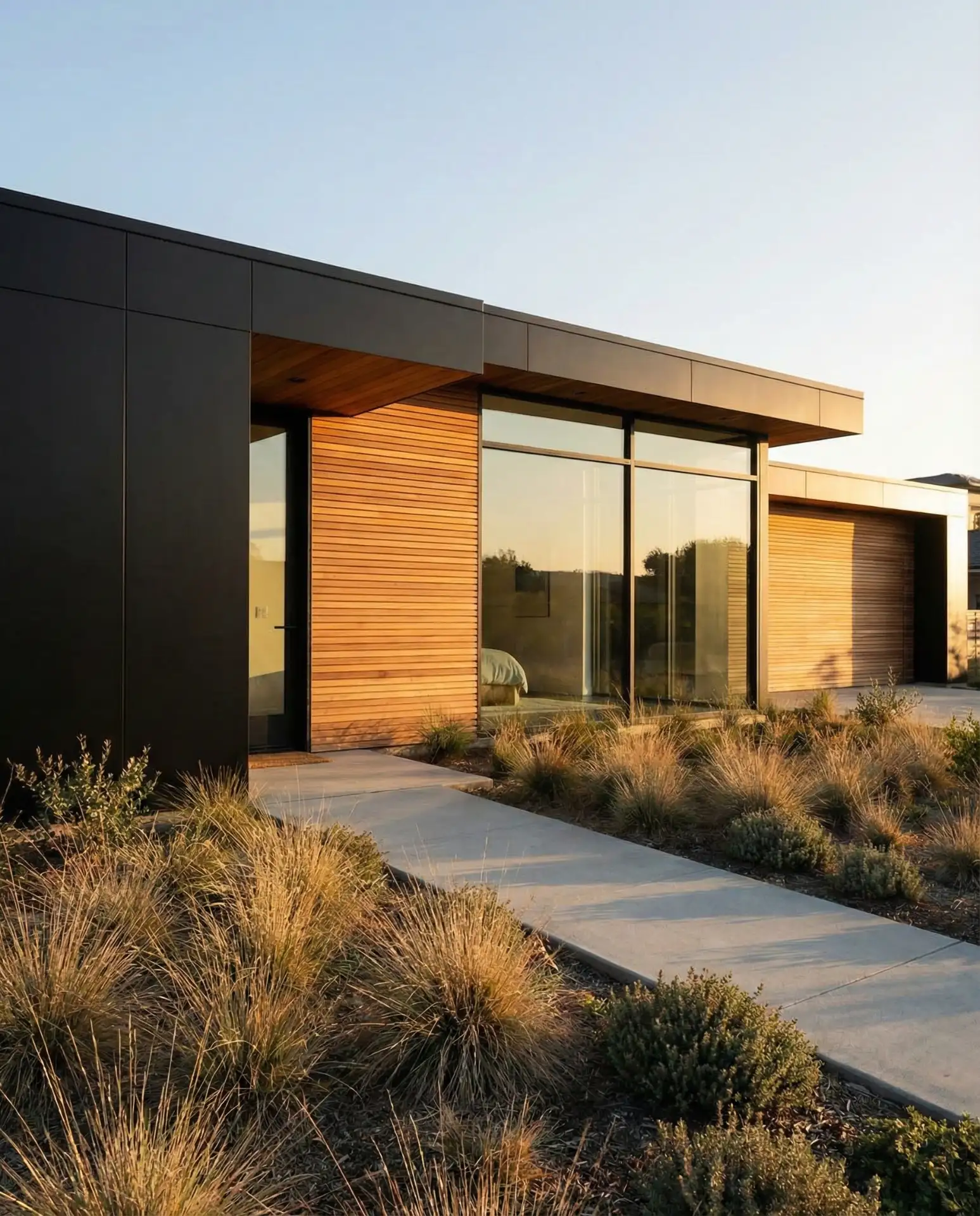
Matte black exteriors have become synonymous with modern architecture, but adding natural wood accents—like horizontal slat fencing, cedar garage doors, or timber framing—softens the intensity and adds organic warmth. This pairing works beautifully on flat-roofed designs, cube-shaped homes, or minimalist structures where clean lines are the focal point. The wood introduces texture and prevents the black from feeling too stark or industrial.
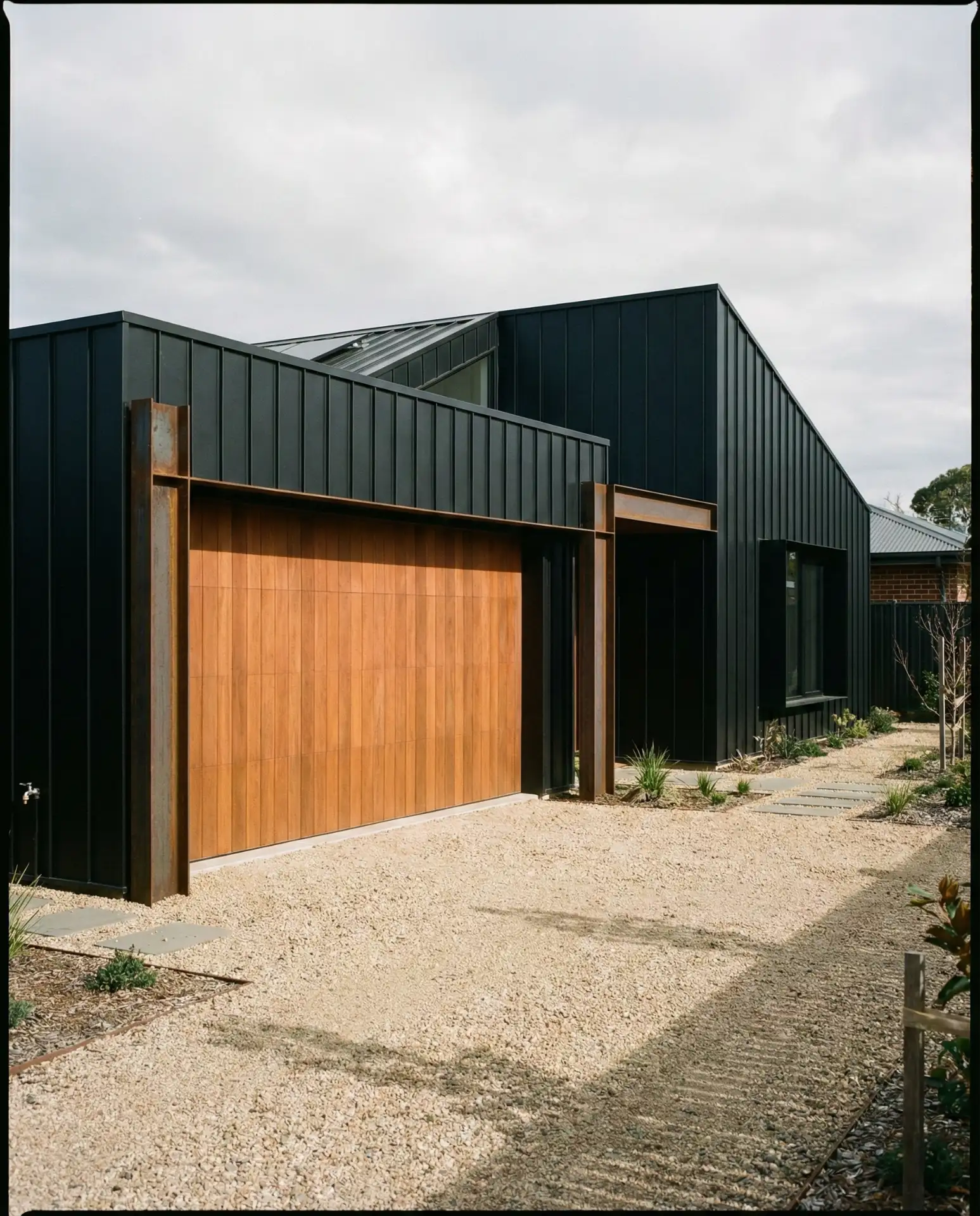
One common mistake here is choosing wood stains that are too red or orange-toned, which can clash with the cool neutrality of black. Stick with natural cedar, weathered gray finishes, or even charred wood (shou sugi ban) for a cohesive, high-end look. This pairing is especially popular in the Pacific Northwest and Southern California, where modern design meets nature-forward living.
3. Navy Blue Ranch with Stone Foundation
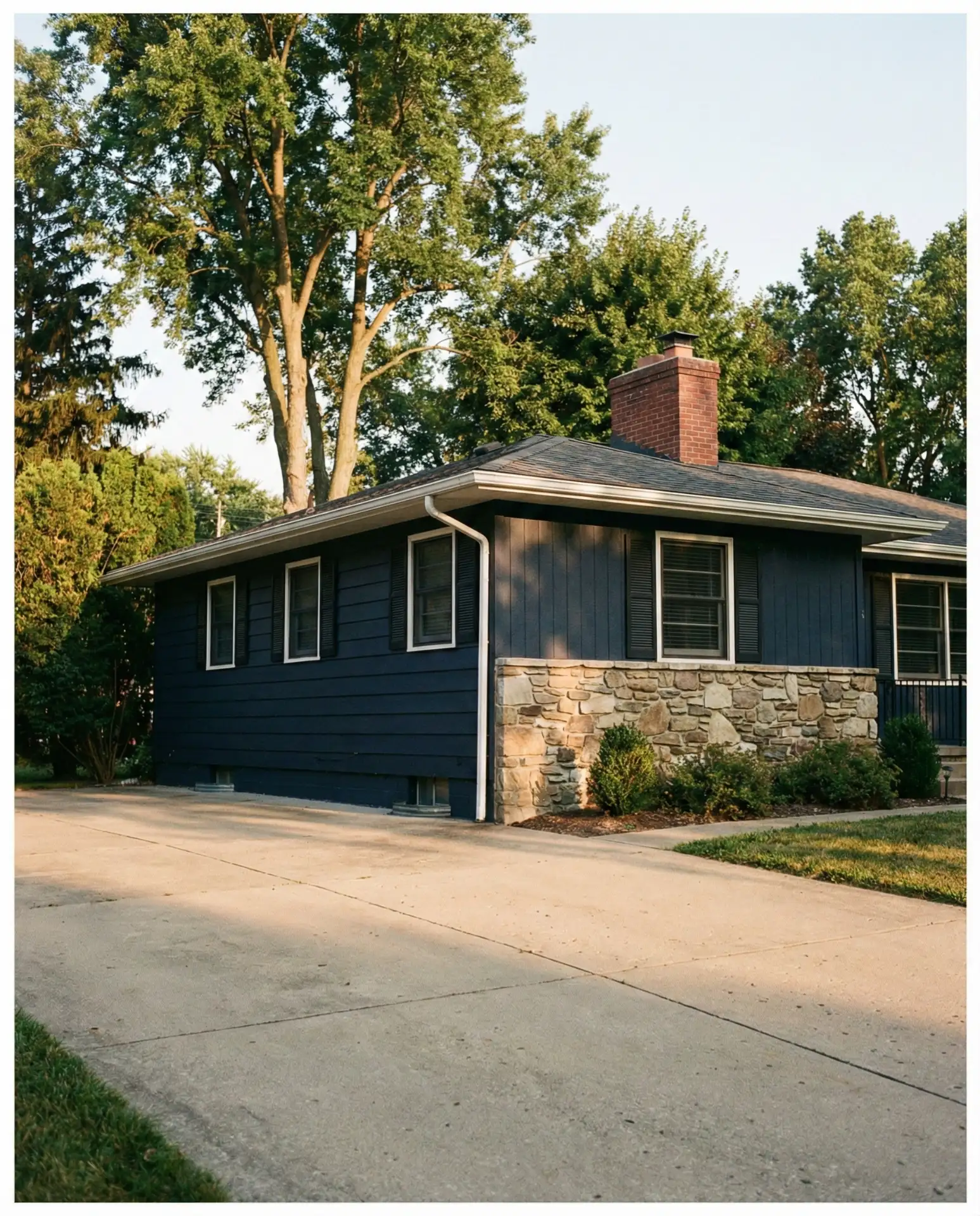
A deep navy blue body paired with a stone foundation brings unexpected elegance to a classic ranch-style home. The stone adds weight and permanence at the base, while the navy offers a refined alternative to black that still reads as bold and contemporary. This combination works particularly well on single-story homes with horizontal lines, where the color can stretch uninterrupted across the facade.
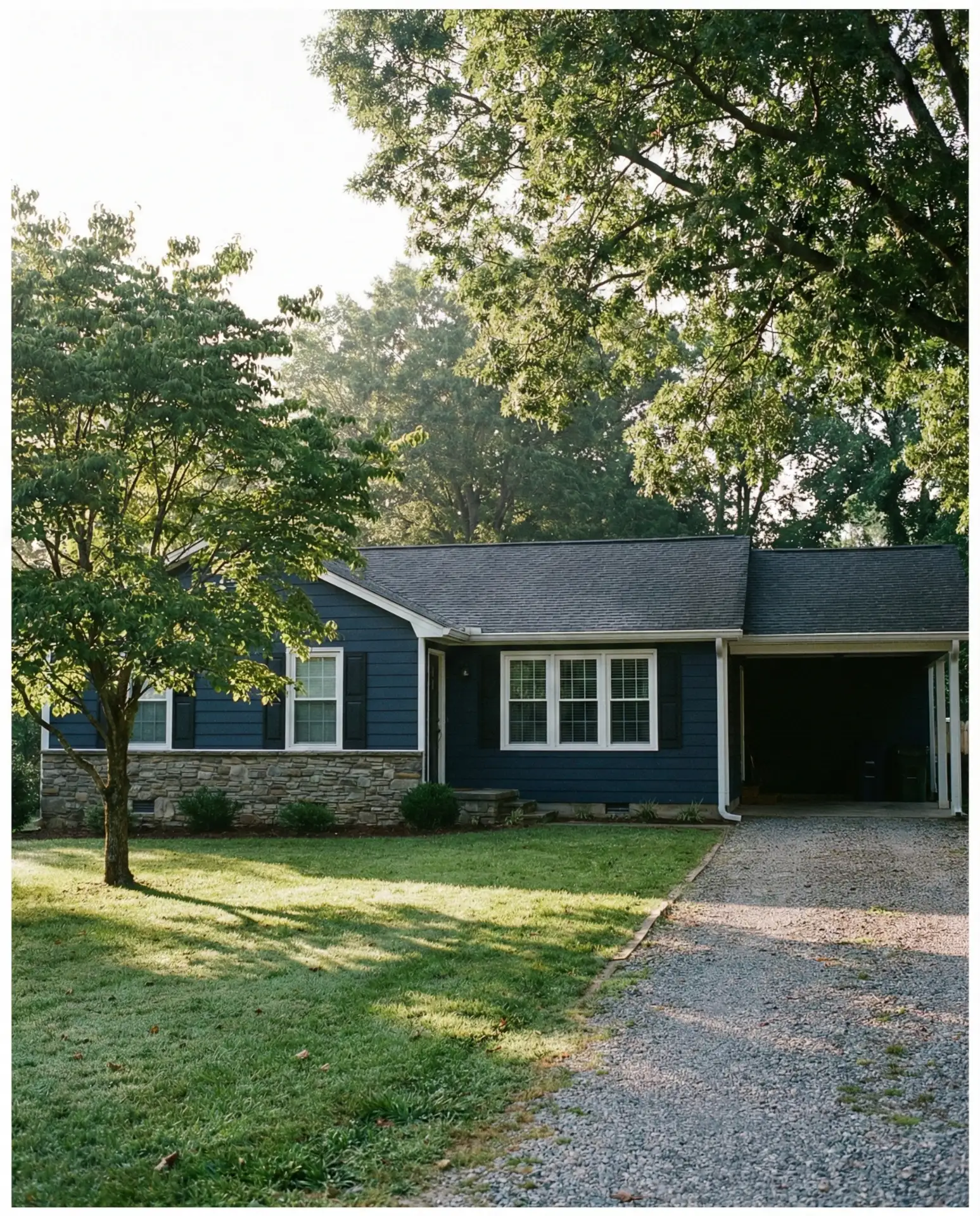
Navy works best in neighborhoods where HOA restrictions might reject pure black but still allow for drama. It’s also more forgiving in direct sunlight, where true black can show fading or color shift over time. This palette is especially beloved in suburban Texas and the Carolinas, where ranch homes dominate and homeowners want to stand out without alienating neighbors.
4. Dark Green Cottage with White Windows and Brick Accents
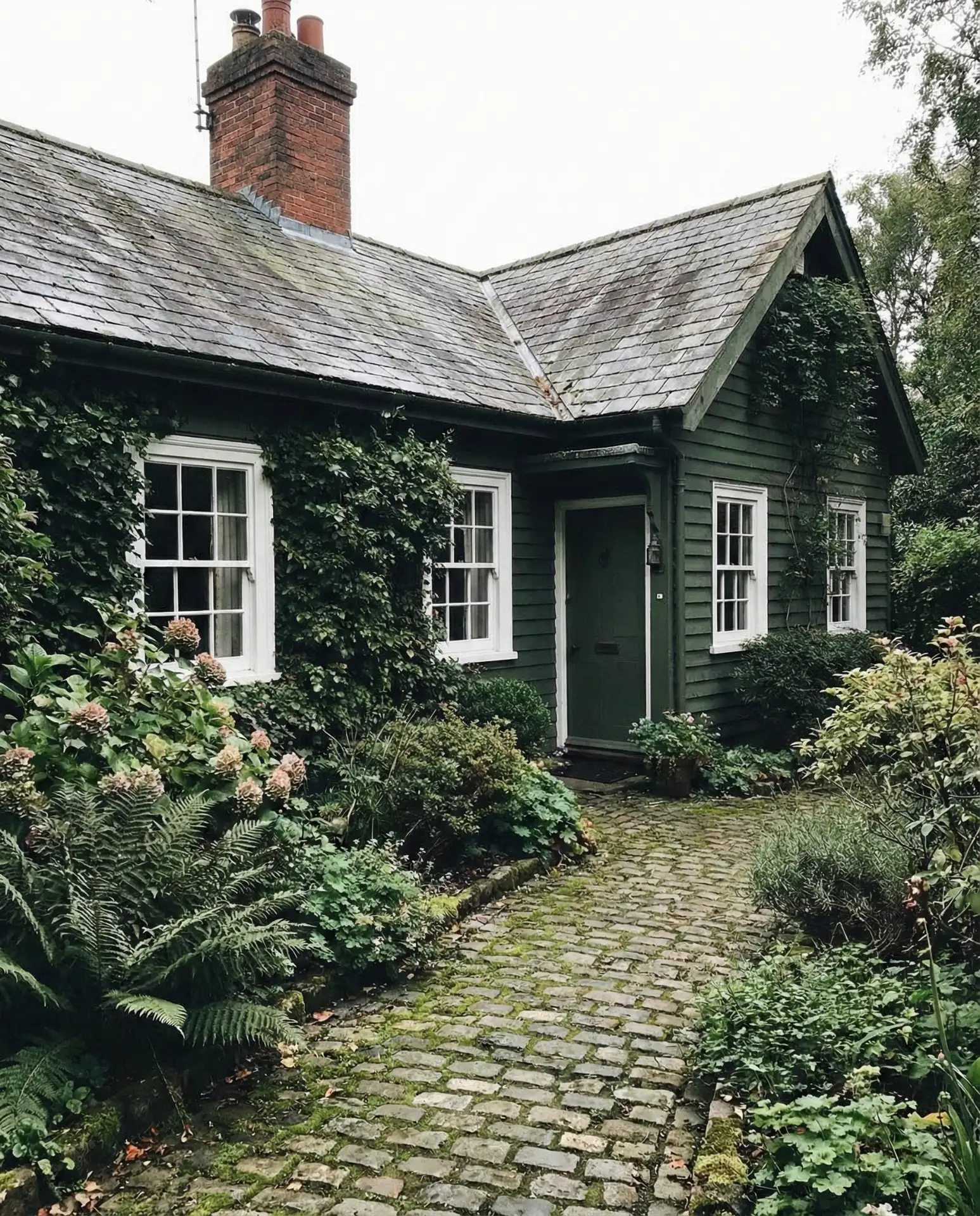
Forest green or deep olive exteriors evoke a sense of calm and connection to nature, especially when paired with white windows and warm brick accents around the chimney or entryway. This combination feels rooted and timeless, ideal for cottage-style homes, Cape Cods, or English-inspired architecture. The green blends beautifully with the surrounding foliage, making the home feel like part of the landscape rather than imposed upon it.
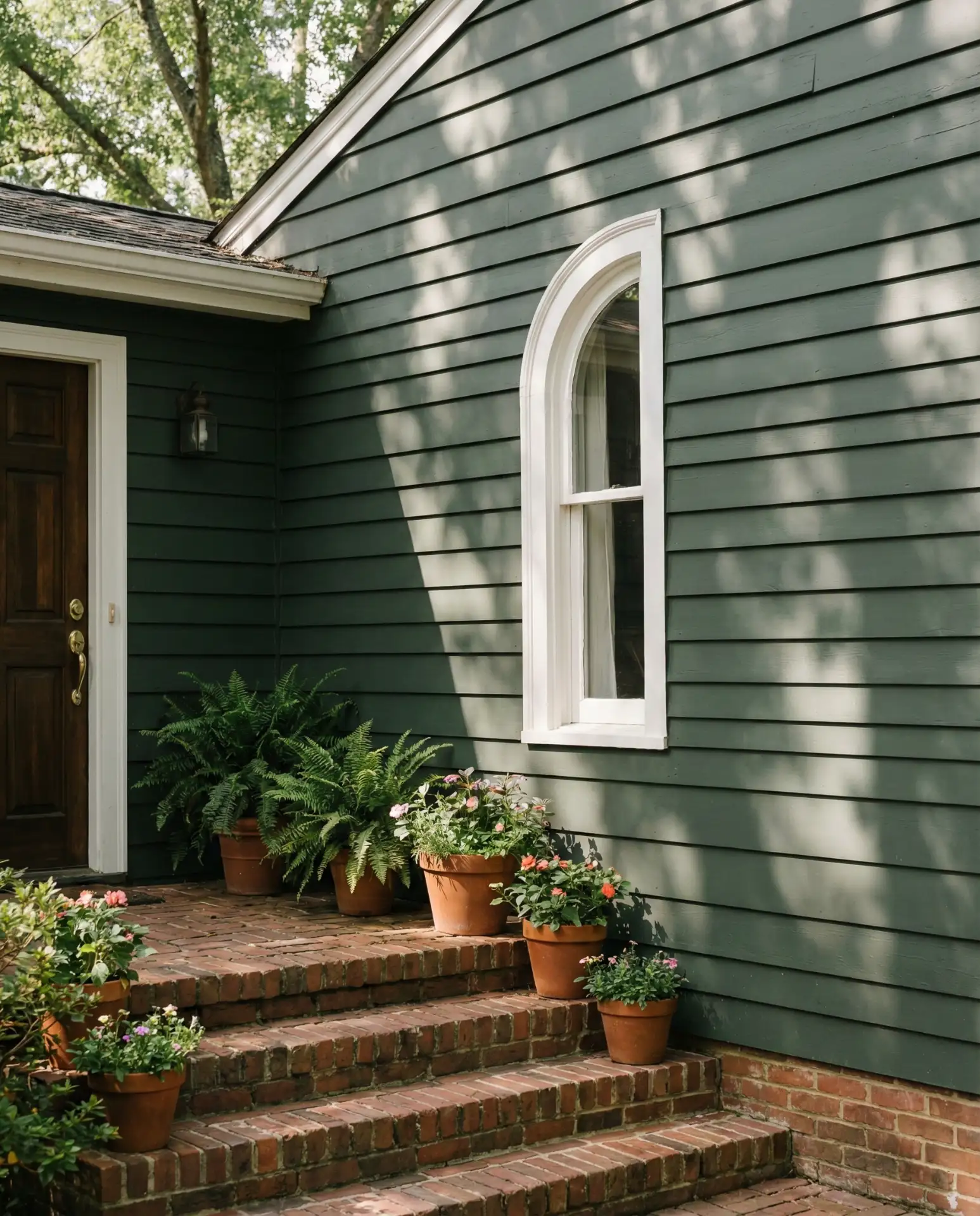
In New England and the mid-Atlantic, this palette is practically a regional signature, blending seamlessly with wooded lots and historic neighborhoods. One homeowner in Vermont mentioned that switching to a deep green made her home “disappear into the hillside in the best way”—a sentiment echoed by others seeking a less conspicuous, more organic presence.
5. Black Board and Batten Modern Farmhouse
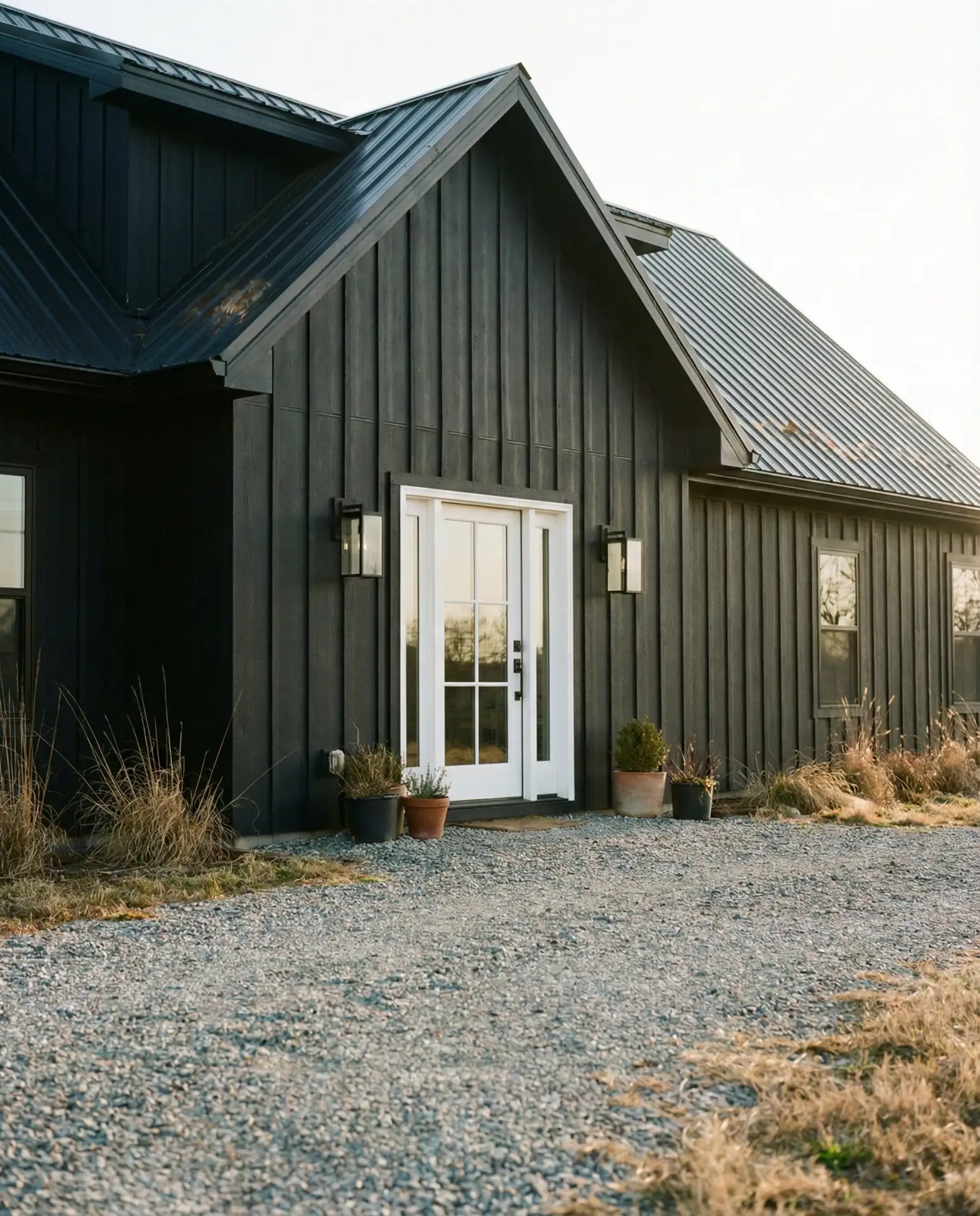
Vertical modern board and batten siding in matte black creates dramatic shadow lines that add depth and texture to an otherwise flat facade. This approach is especially popular on modern farmhouse builds, where the clean geometry of the battens contrasts beautifully with rustic elements like metal roofing or reclaimed wood beams. The vertical orientation also makes homes appear taller and more stately.
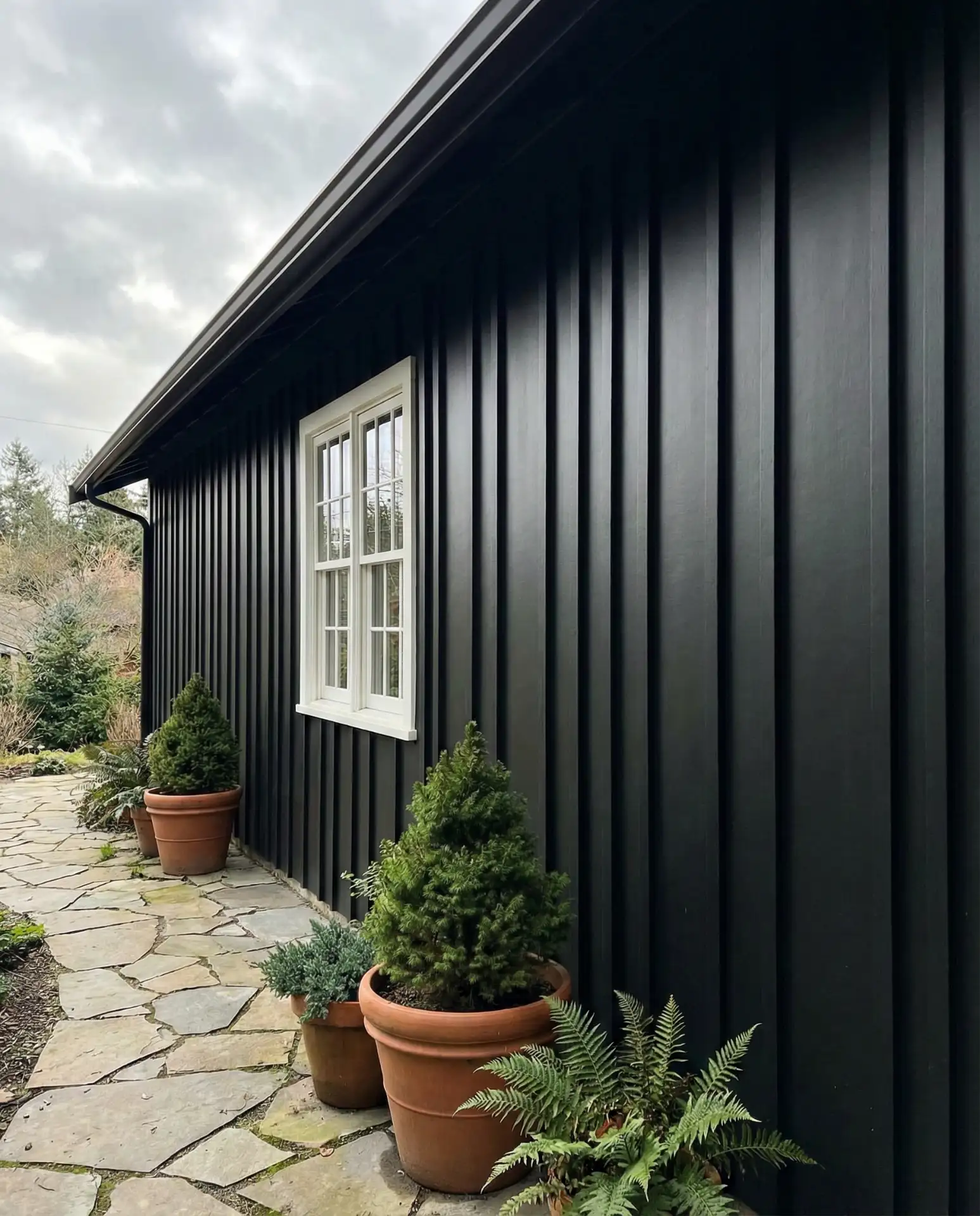
Board and batten siding typically costs 15–25% more than traditional lap siding due to the extra labor and materials, but the visual payoff is substantial. It’s also more forgiving of imperfections in wall framing, as the vertical battens can hide minor irregularities. This style is trending heavily in suburban developments across Tennessee, Georgia, and Colorado.
6. Charcoal Stucco with White Trim and Terracotta Roof
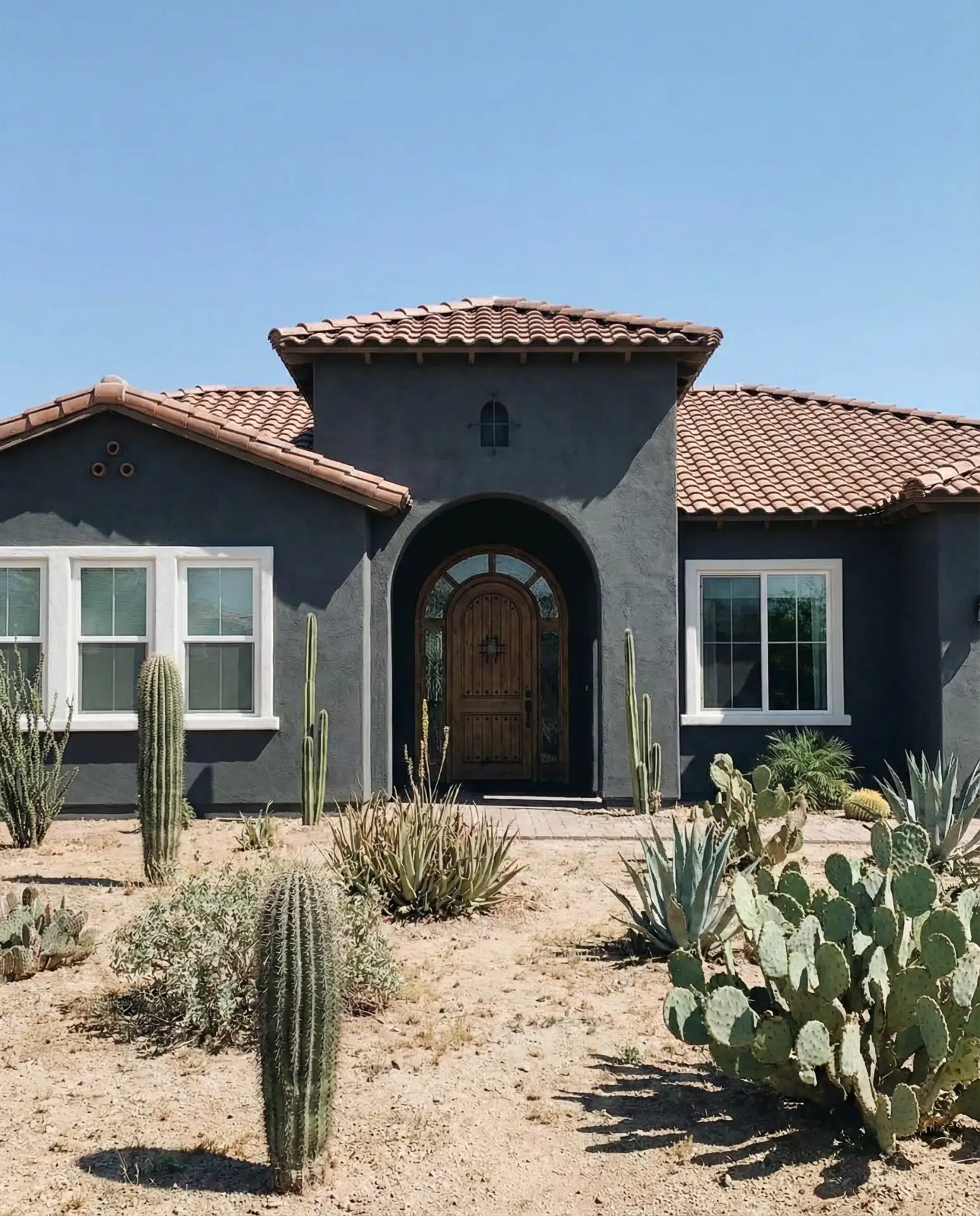
Dark gray stucco paired with white trim and a warm terracotta tile roof offers a Mediterranean-meets-contemporary vibe that’s particularly stunning in sunny climates. The stucco’s smooth texture contrasts with the clay roof’s handmade irregularity, while the charcoal base provides a modern twist on traditional Spanish or Italian styles. This combination works best in the Southwest, Southern California, and parts of Florida.
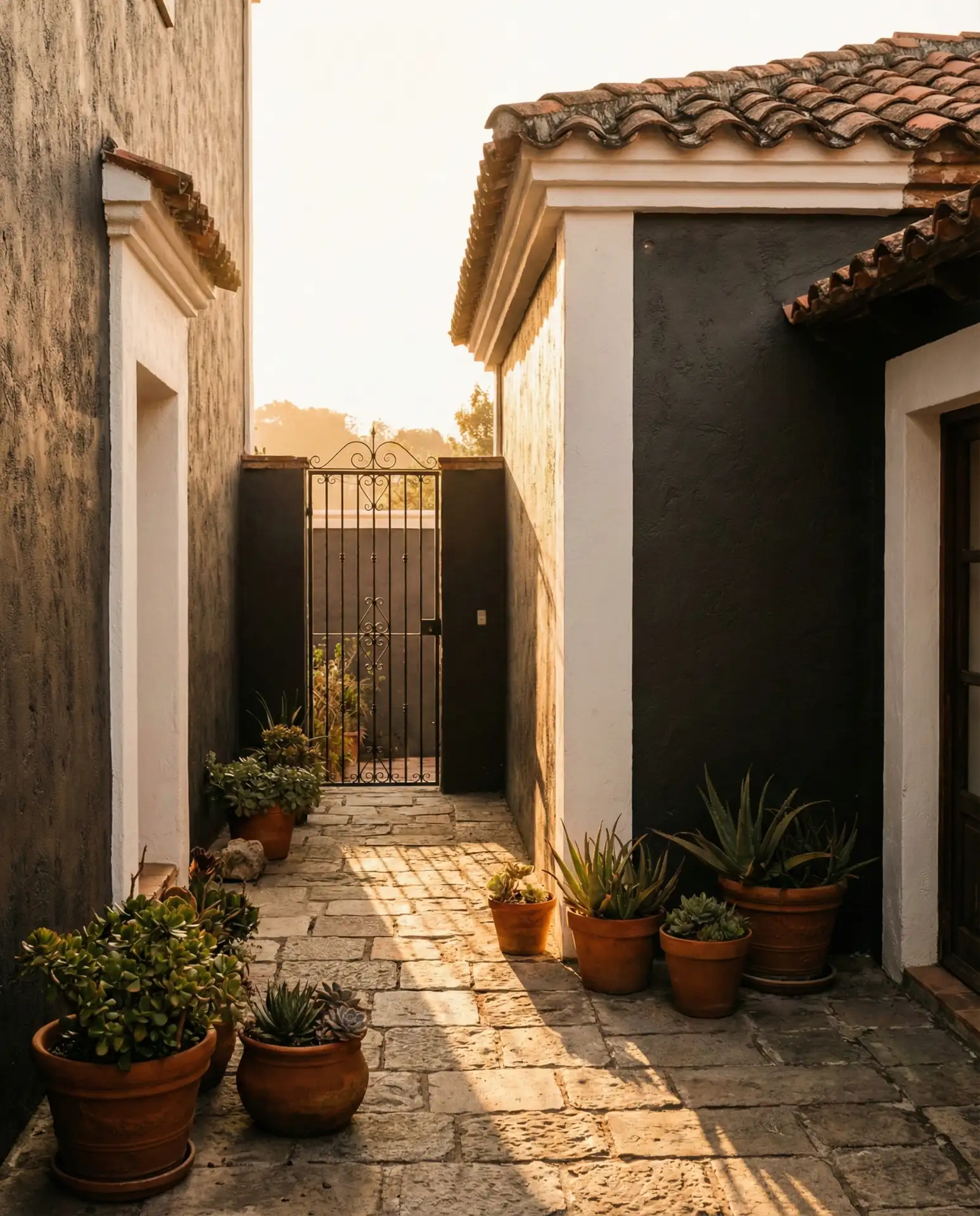
Stucco exteriors require proper waterproofing and occasional maintenance, but in dry climates they’re incredibly durable and low-upkeep. The dark charcoal hides dust and minor staining far better than lighter stucco, which can show every splash and scuff. It’s a practical choice for homes near dirt roads or in areas with frequent dust storms.
7. Deep Plum Modern with Metal Roof
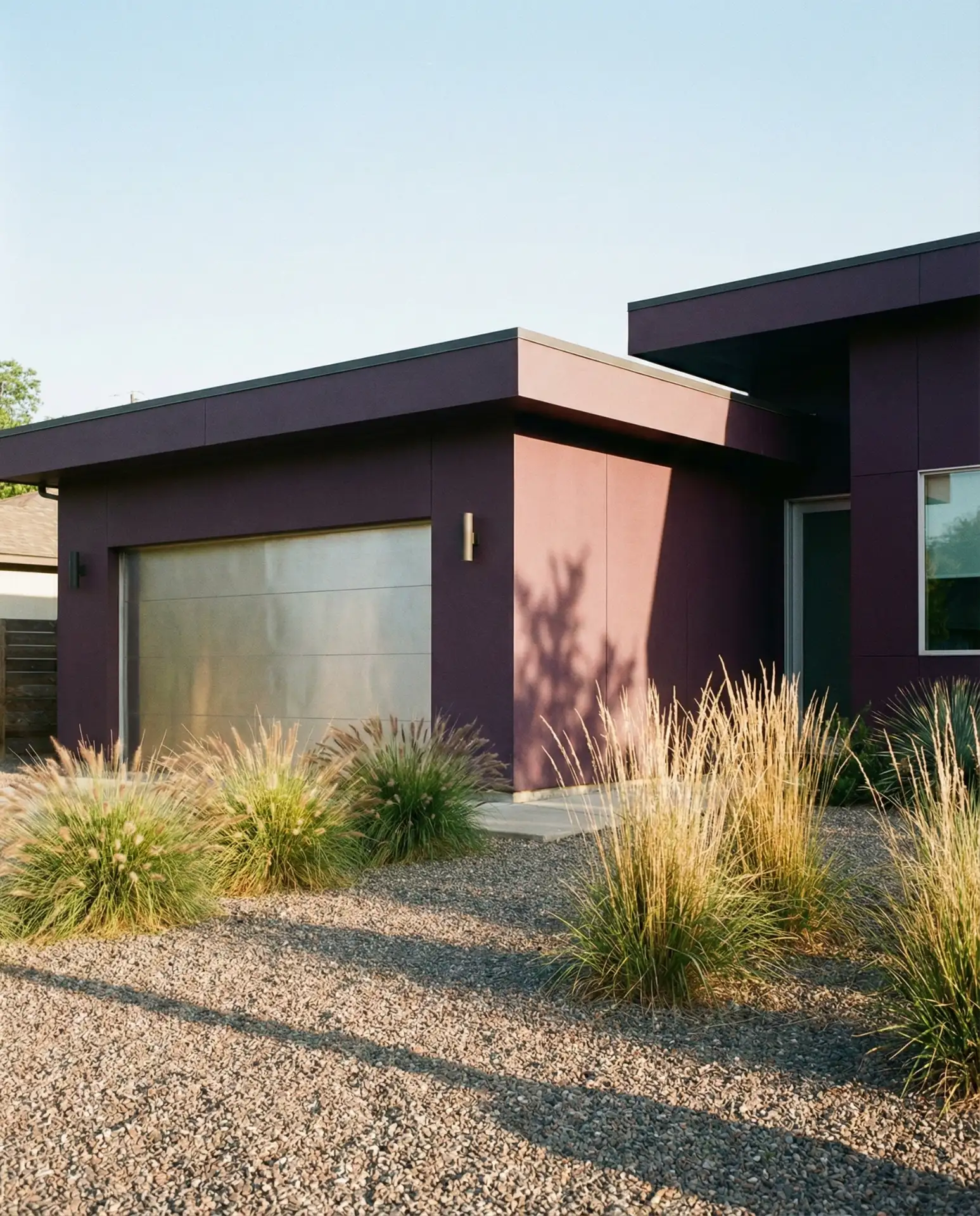
For those seeking a dark palette that’s not quite black or navy, deep plum or eggplant tones offer richness and individuality. Paired with a sleek standing-seam metal roof in charcoal or black, this look is unmistakably modern and feels both sophisticated and unexpected. It’s ideal for homeowners who want to make a statement without relying on the usual suspects.
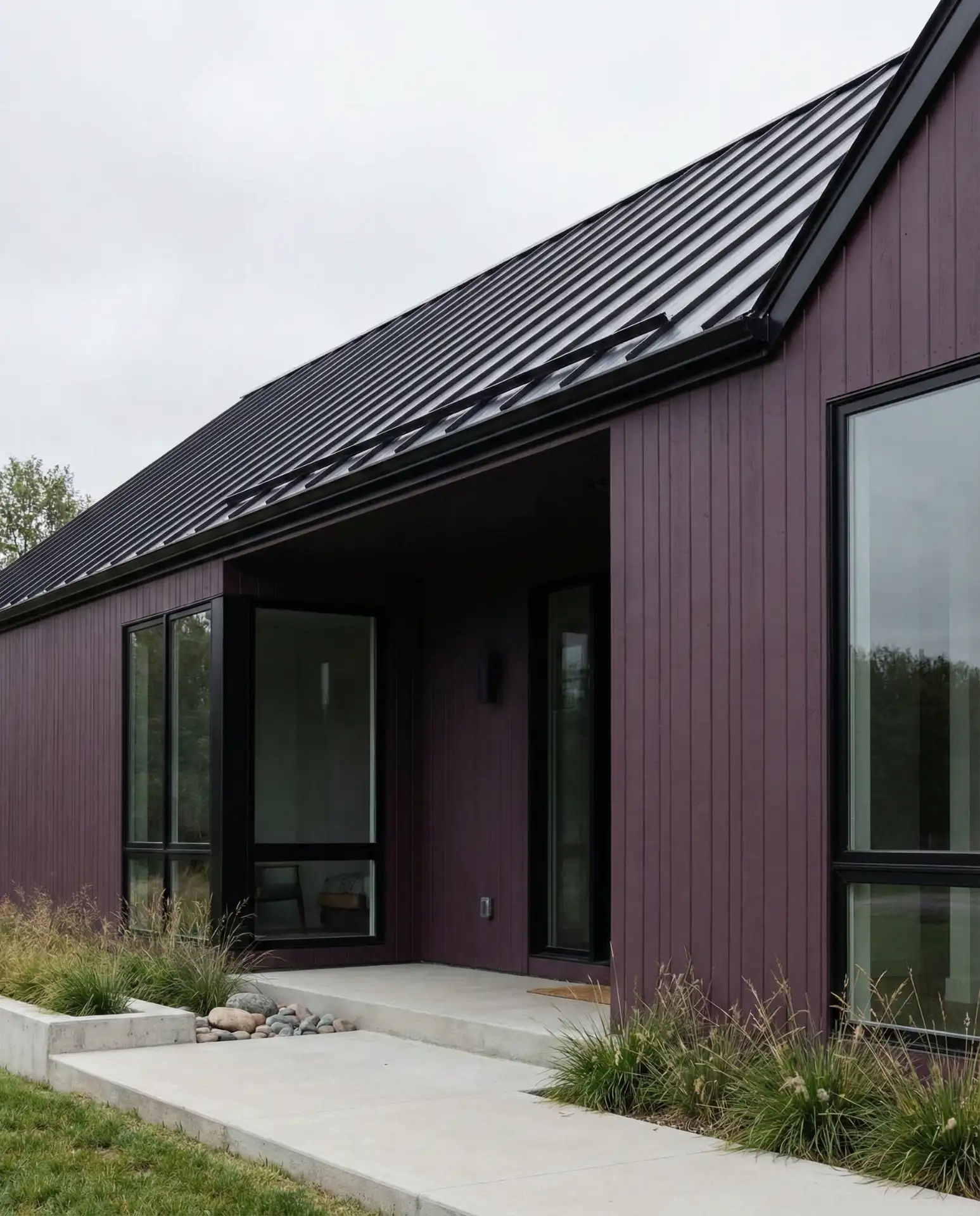
This palette works best on homes with clean, geometric lines where the color can be appreciated as a bold design choice rather than a distraction. It’s especially striking in neighborhoods with a lot of neutral or pastel homes, instantly setting the property apart. One designer noted that plum reads as “warm black” in certain light, giving it versatility throughout the day.
8. Black Brick Ranch with White Window Frames
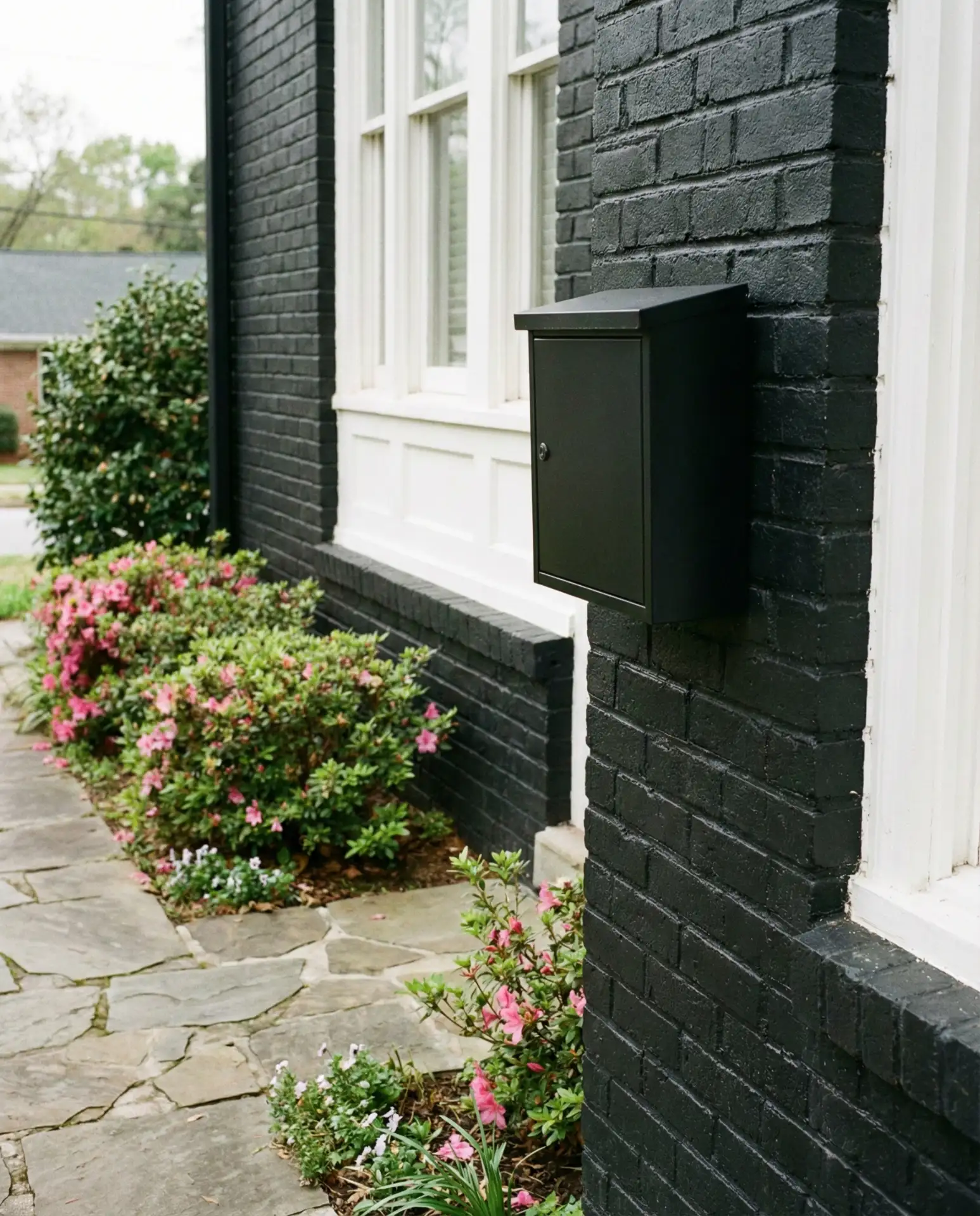
Painting existing brick in a deep black or charcoal transforms a dated ranch into a contemporary showpiece, especially when contrasted with bright white windows. The texture of the brick remains visible beneath the paint, adding subtle dimension that flat siding can’t replicate. This approach is budget-friendly for homeowners who want a dramatic update without replacing entire exterior walls.
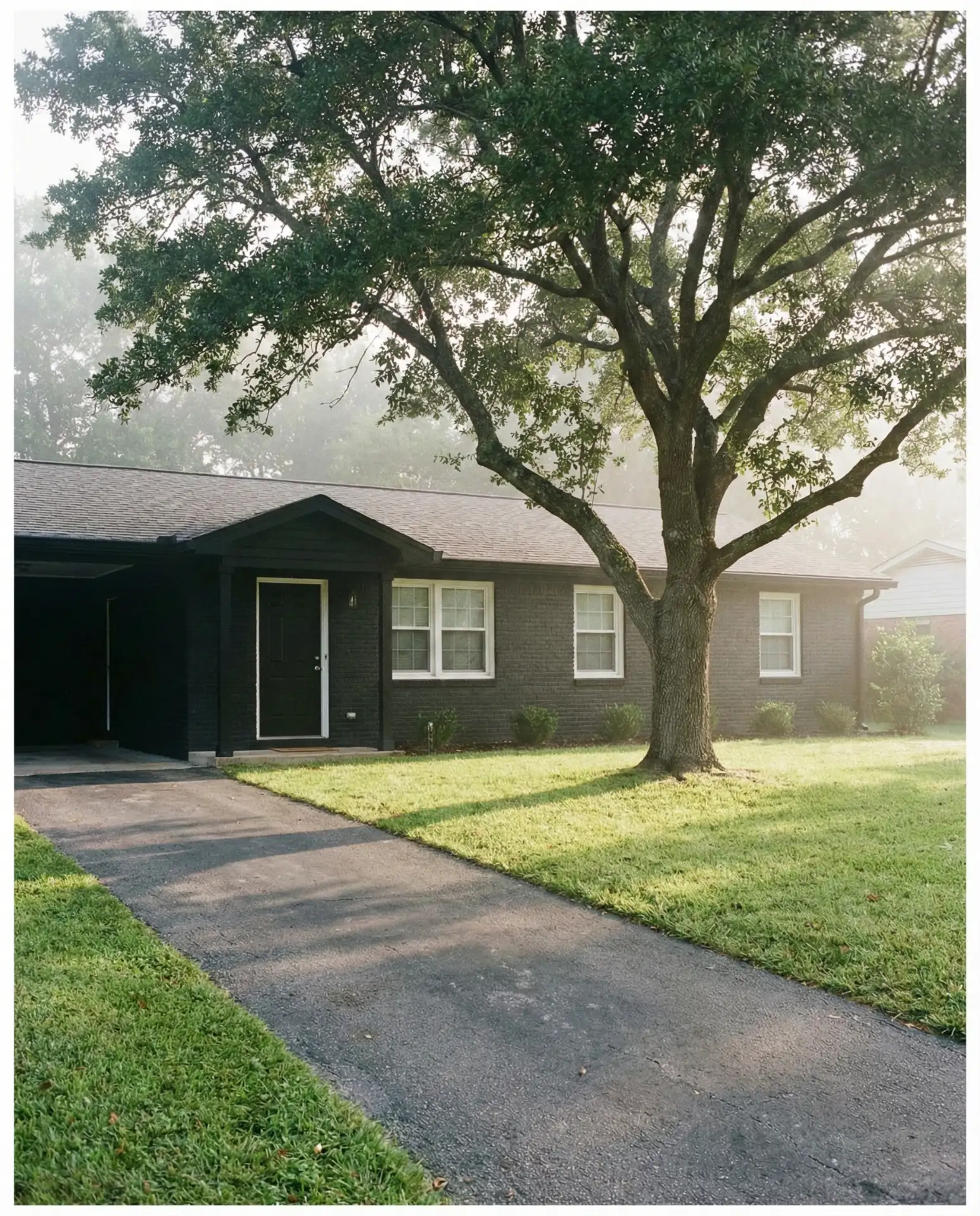
Painting brick is controversial among purists, but it’s a reality for many suburban homeowners dealing with orange or yellow brick from the 1970s and ’80s. Use a breathable masonry paint to avoid trapping moisture, and be prepared for the commitment—once painted, brick is difficult to return to its original state. This trend is surging in suburban Atlanta, Phoenix, and Dallas.
9. Forest Green Modern Mid-Century with Natural Wood Trim
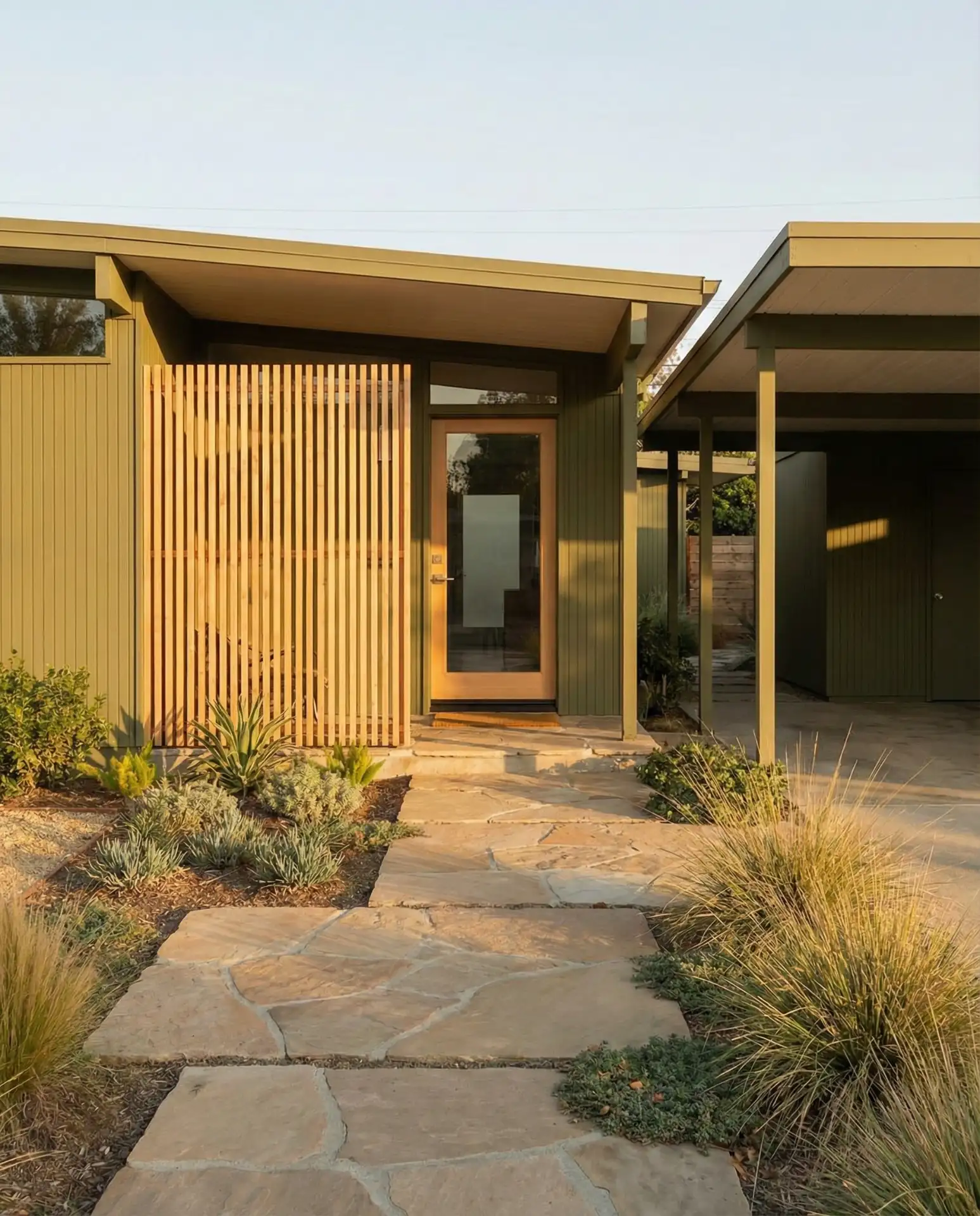
Deep forest green siding paired with warm natural wood accents on a modern mid-century home creates a balanced, organic aesthetic that feels both retro and current. The green grounds the home in nature, while horizontal wood siding or trim panels echo the era’s love of natural materials and seamless indoor-outdoor flow. This palette honors mid-century principles without feeling like a time capsule.
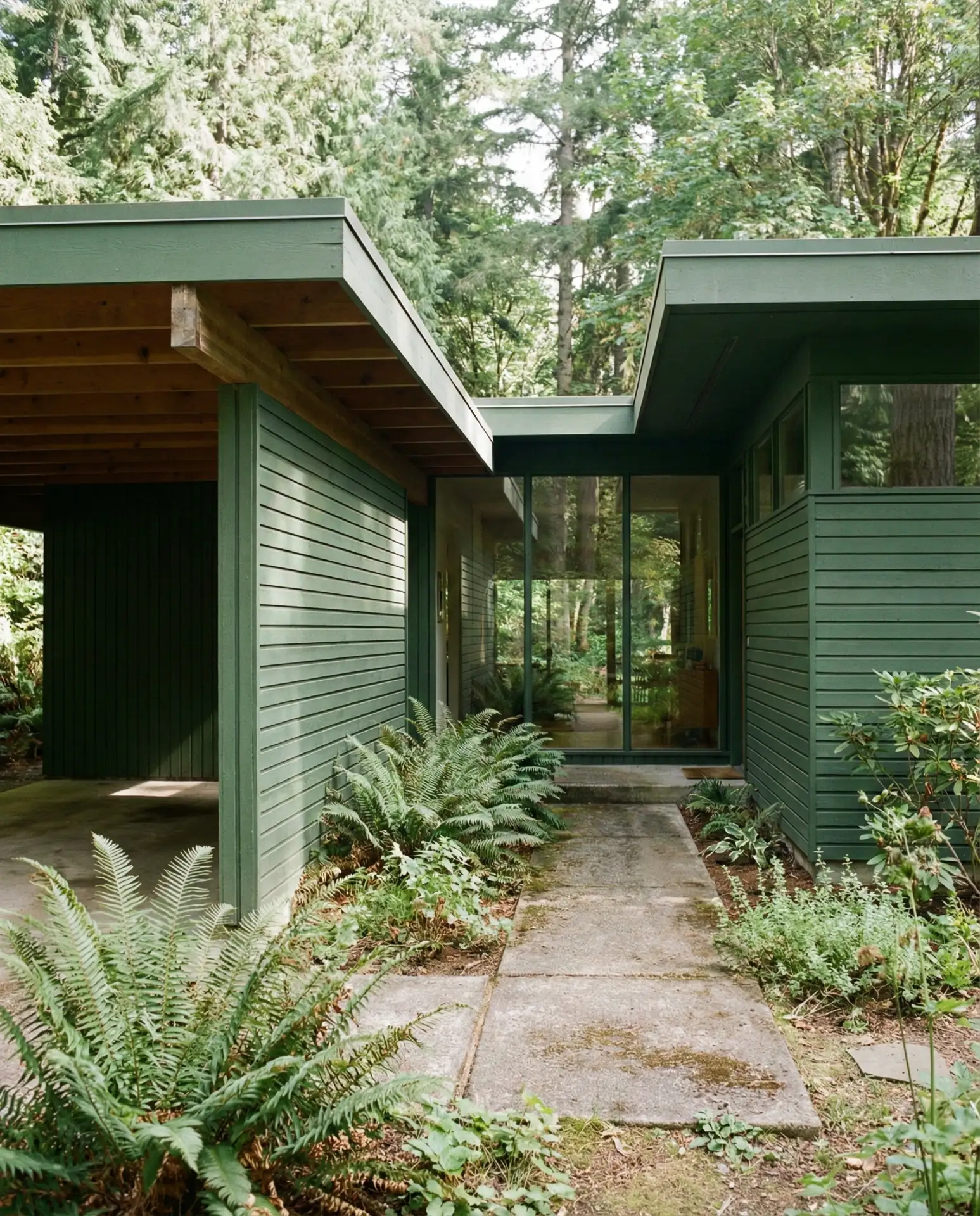
Mid-century homes often sit on wooded or sloped lots, making green a natural choice that blends with the surroundings. Where it works best is in neighborhoods with mature trees and established landscaping—places like Portland, Seattle, and parts of Northern California, where the home can feel nestled rather than exposed. The wood trim should be left natural or stained in warm tones to avoid a washed-out look.
10. Charcoal with White Board and Batten and Black Metal Roof
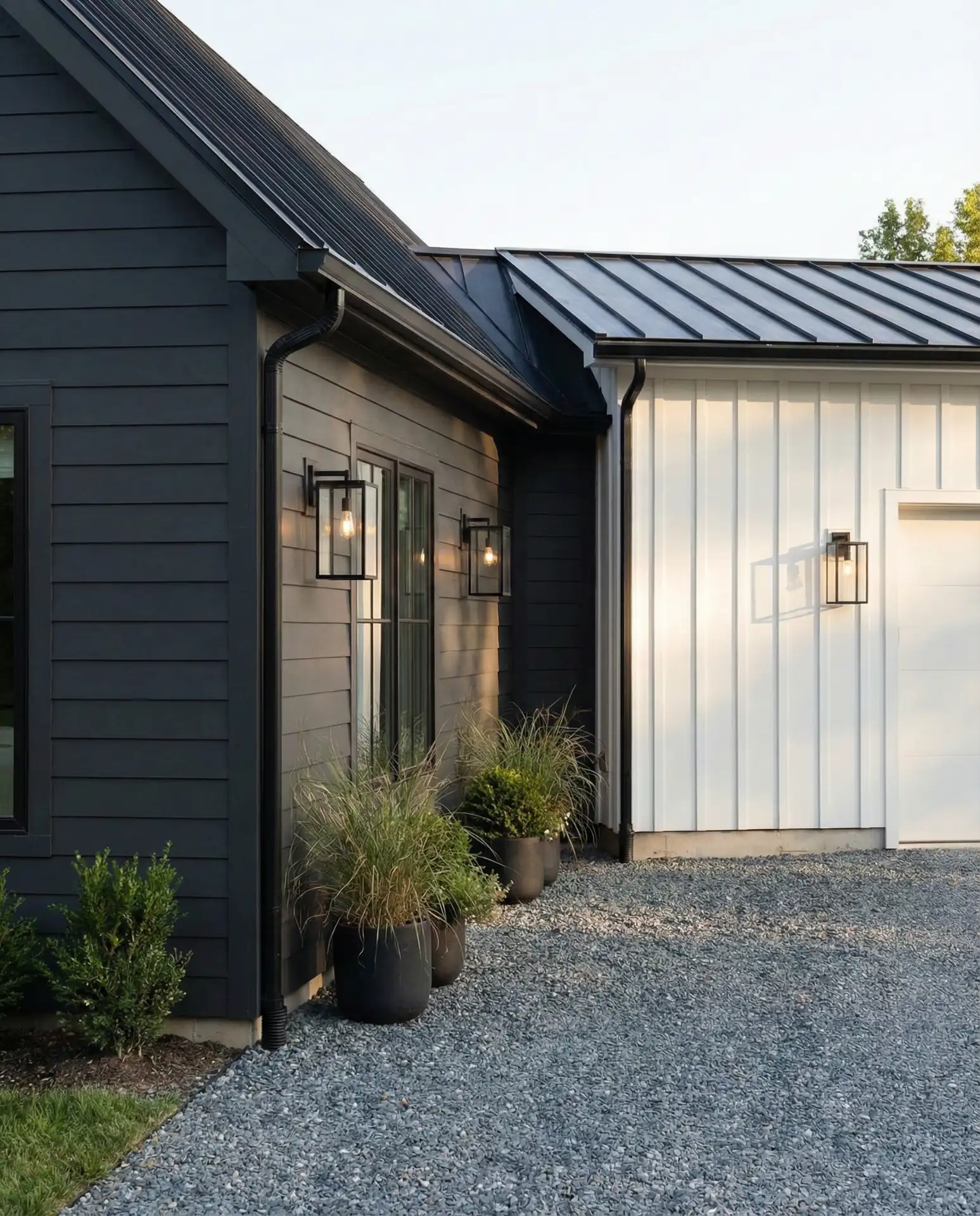
Charcoal lap siding combined with white trim on board and batten sections and a black metal roof creates a layered, high-contrast exterior that feels polished and architectural. This approach allows you to highlight specific features—like gables, entryways, or window bays—while keeping the overall tone cohesive and grounded. It’s a favorite among custom builders who want to add visual interest without busy patterns or multiple colors.
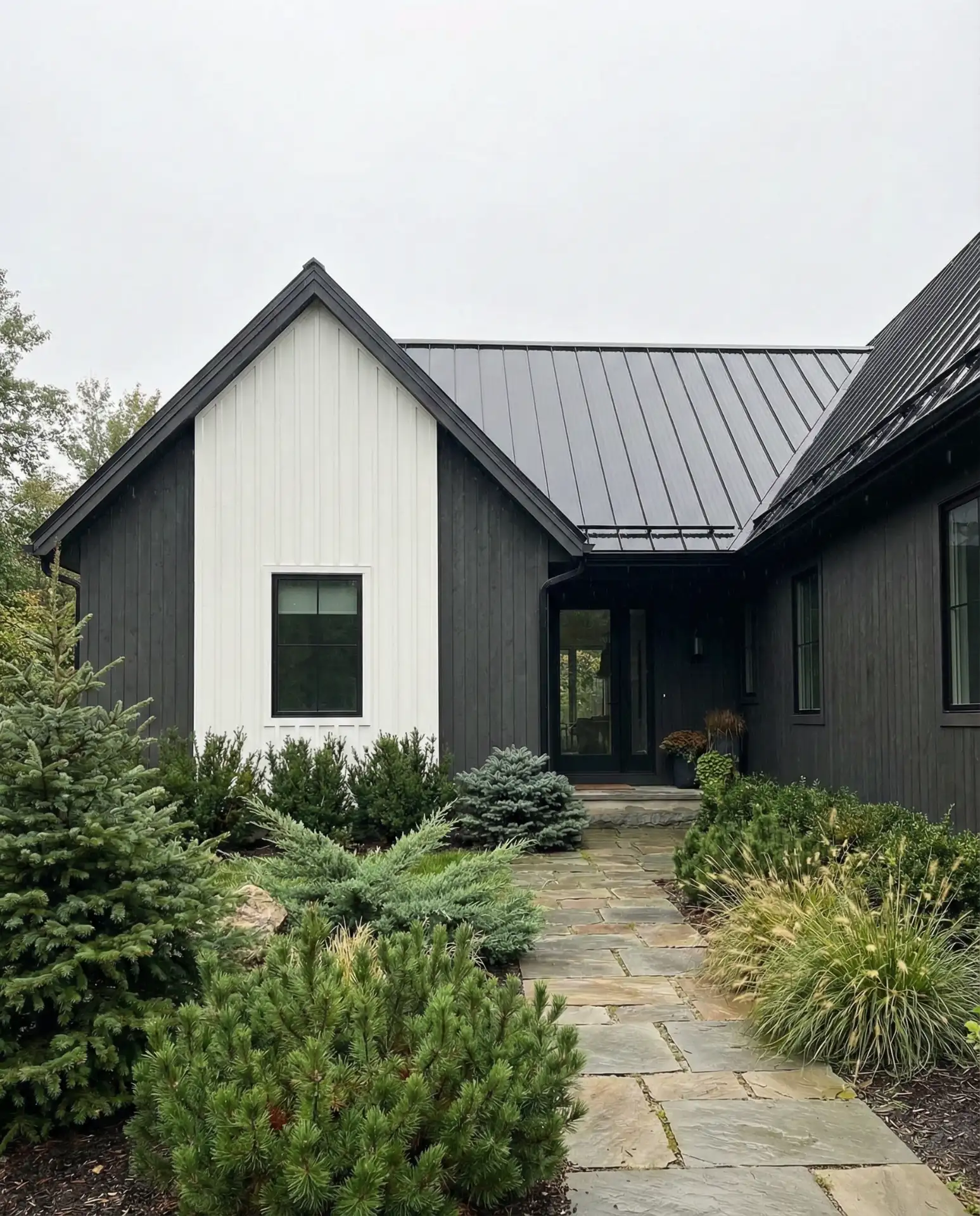
One expert tip: use the white batten sparingly, on no more than 20–30% of the facade, to avoid a cluttered look. It should feel intentional, not arbitrary. This combination is especially popular in new construction across the Mountain West and upper Midwest, where metal roofs are practical and aesthetics lean contemporary.
11. Slate Blue Farmhouse with Natural Stone and White Trim
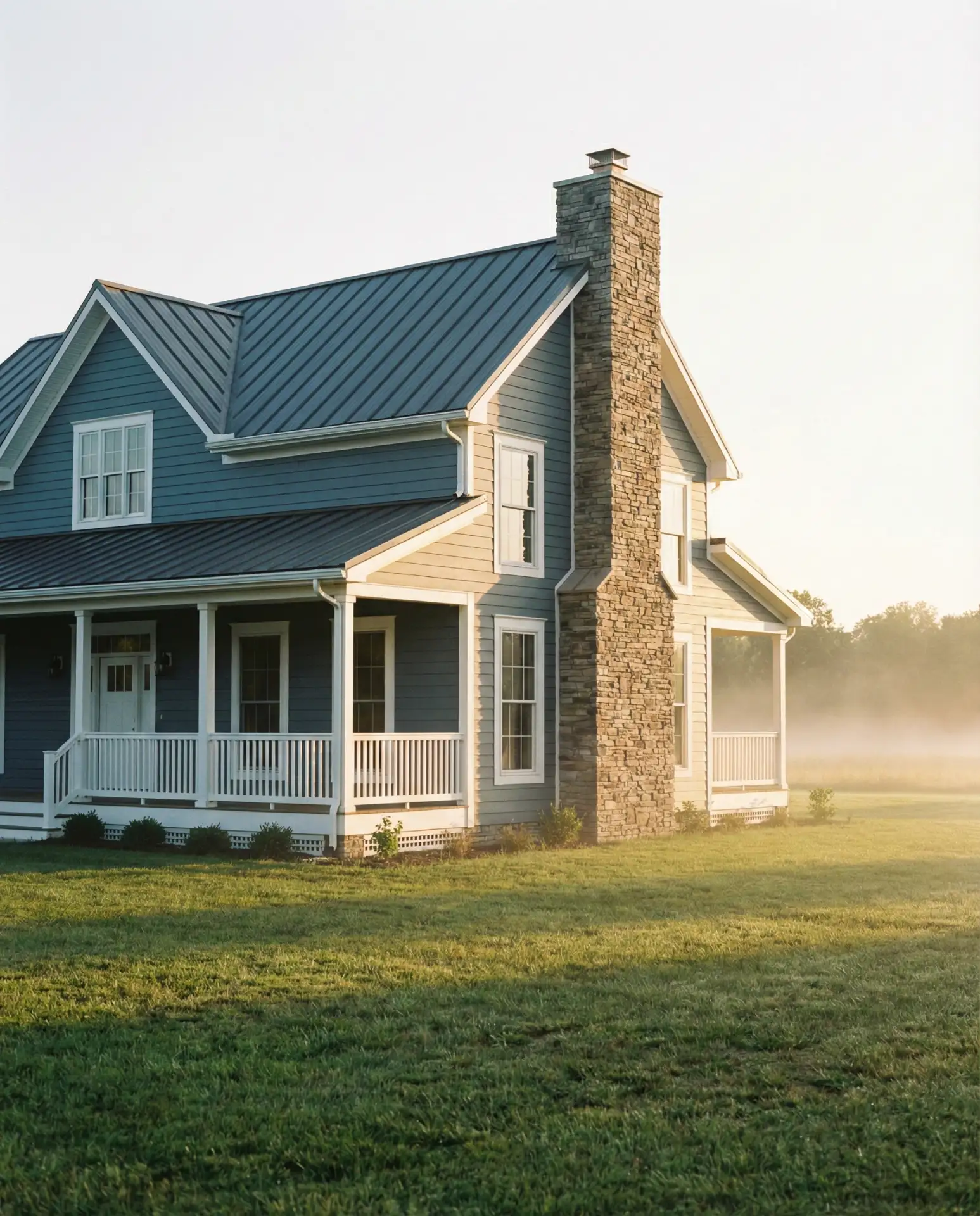
Slate blue strikes a middle ground between navy and gray, offering a softer dark option that still feels substantial. Paired with stone accents on the foundation or chimney and bright white trim, it’s the best choice for farmhouse designs that want personality without going too bold. The blue adds a hint of color that plays beautifully with natural light throughout the day.
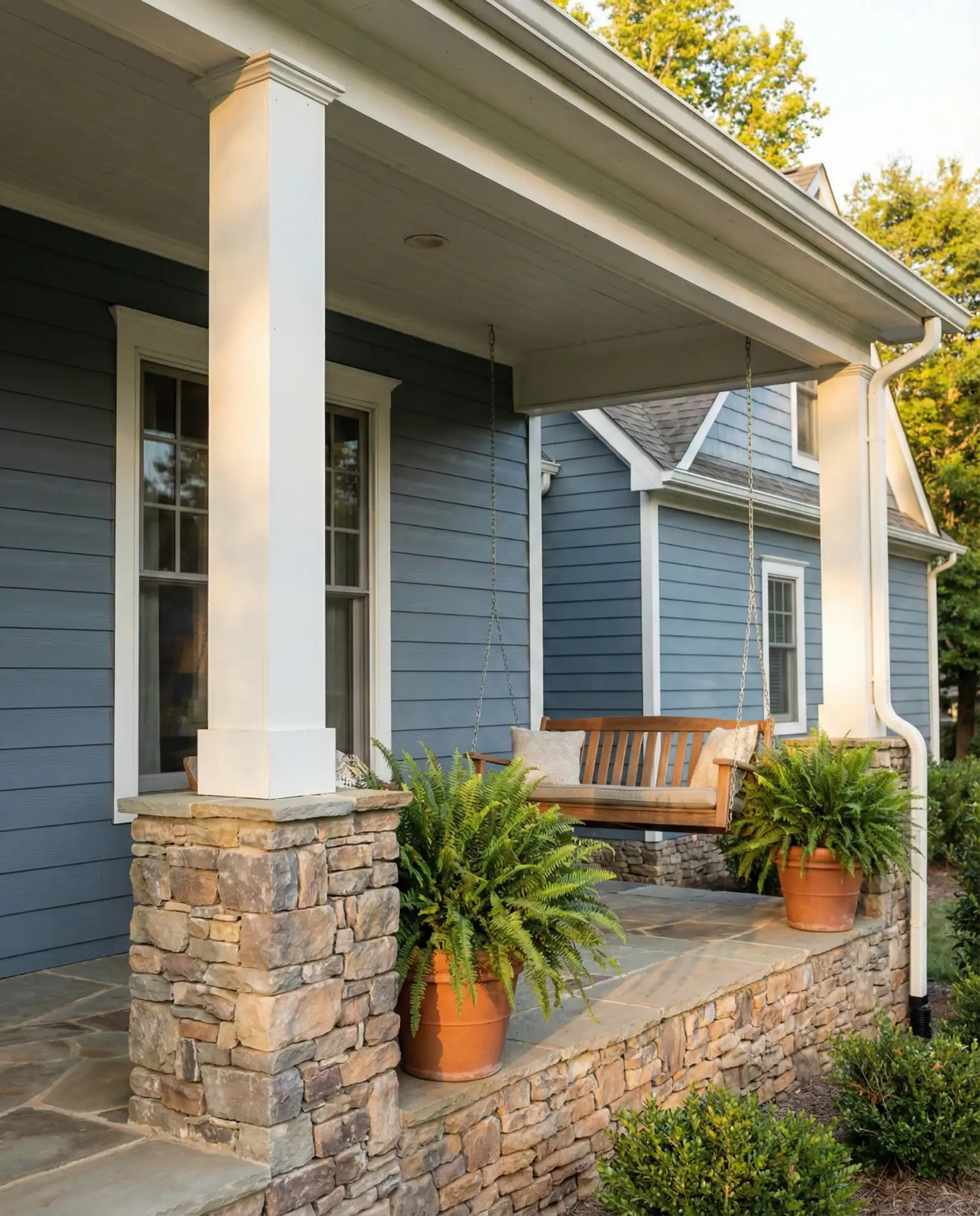
Slate blue is forgiving in terms of upkeep and doesn’t show pollen, dust, or water stains as readily as pure white or light gray. It’s a practical pick for homes near farms, gravel roads, or construction zones. Budget-wise, it’s in the same range as any quality exterior paint, but the color itself adds perceived value by feeling curated and intentional.
12. Matte Black Modern with Green Roof Accents
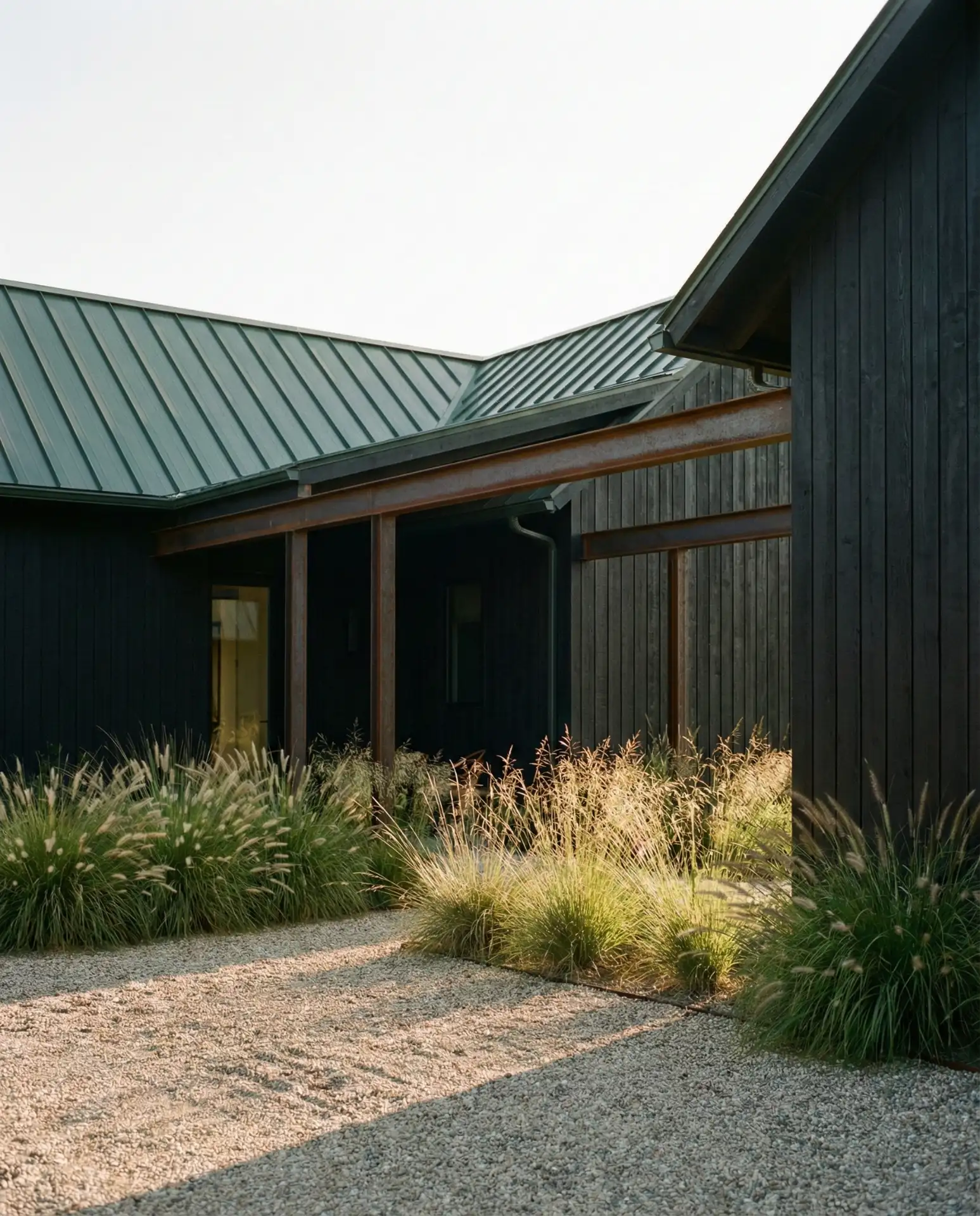
A matte black exterior paired with a green roof—whether living vegetation or dark green metal panels—creates an unexpected eco-modern statement. The contrast between the industrial black and the organic green feels fresh and forward-thinking, ideal for modern homes designed with sustainability in mind. This combination is visually striking and aligns with growing interest in green building practices.
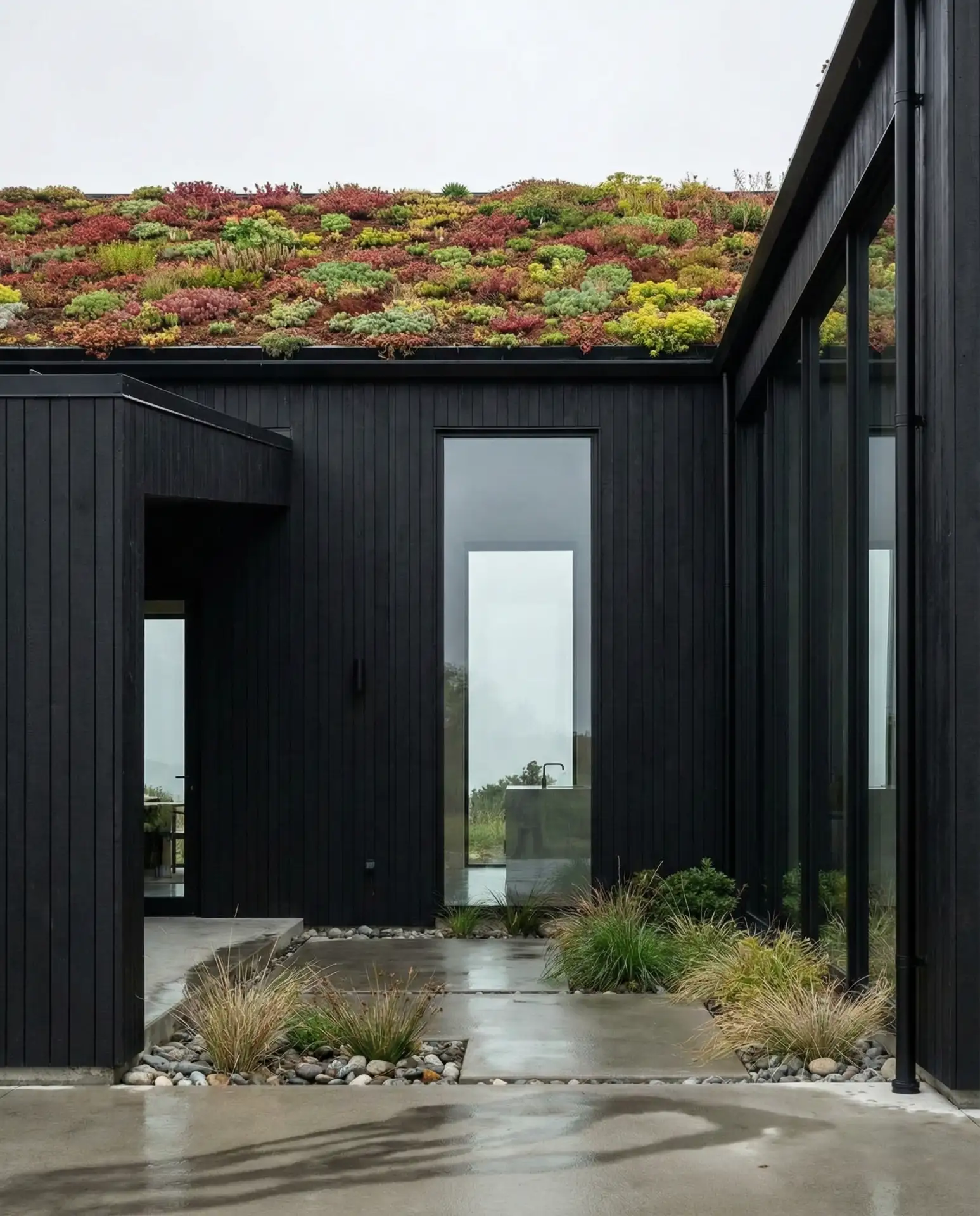
Living roofs require specialized installation and maintenance, including waterproofing, drainage systems, and plant care, so they’re not a casual DIY project. However, dark green metal roofing offers a similar visual effect with far less complexity. This palette is most common in progressive urban areas like Portland, Denver, and Austin, where environmental consciousness and modern design overlap.
13. Deep Charcoal with Sherwin Williams Iron Ore
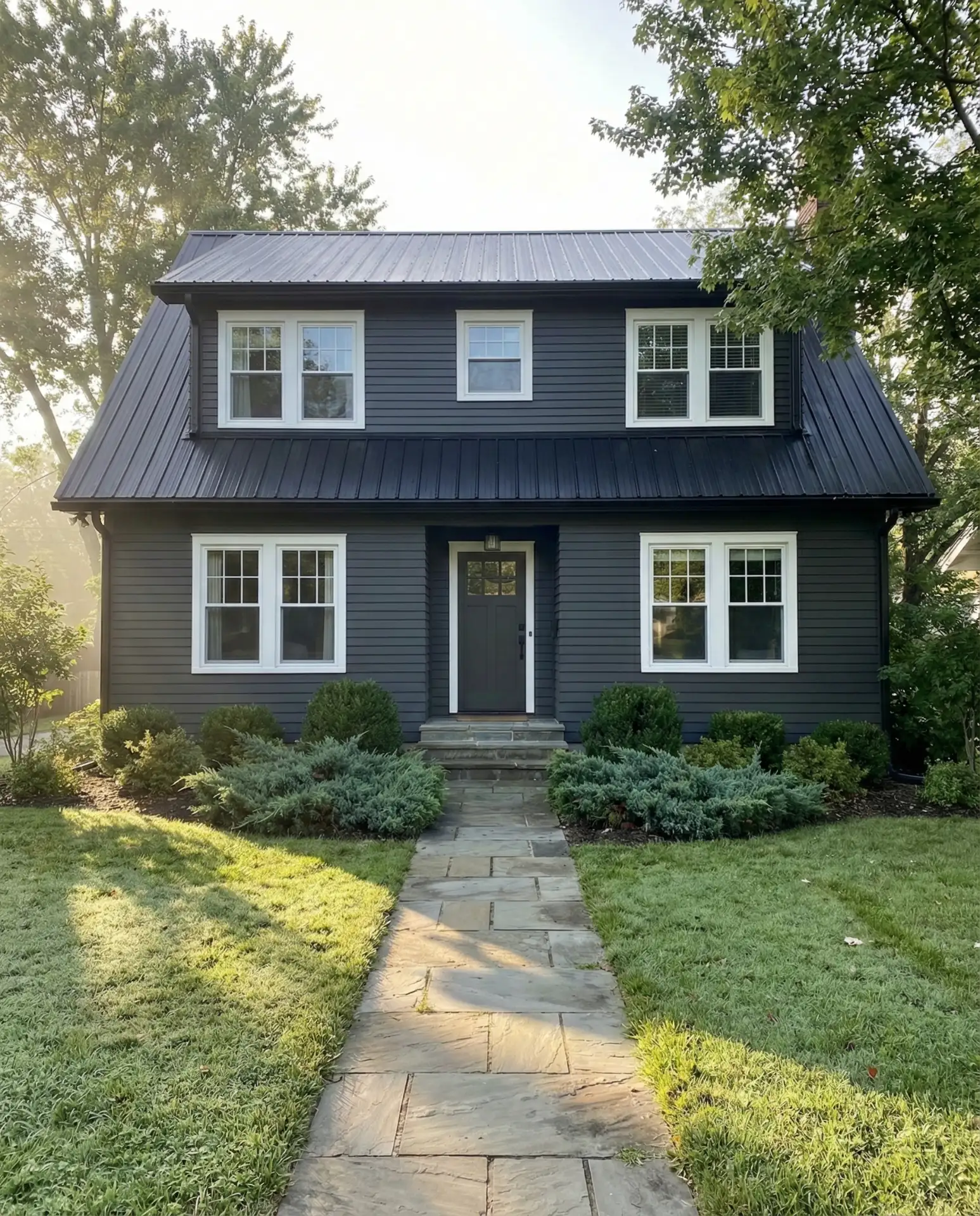
One of the most popular dark exterior colors in America right now is Sherwin Williams Iron Ore (SW 7069), a rich charcoal with subtle warm undertones that prevent it from feeling too stark or cold. It’s versatile enough to work on modern, traditional, and transitional homes alike, and it pairs beautifully with white, wood, stone, and metal accents. This color has become a go-to for designers and homeowners looking for a safe yet sophisticated dark option.
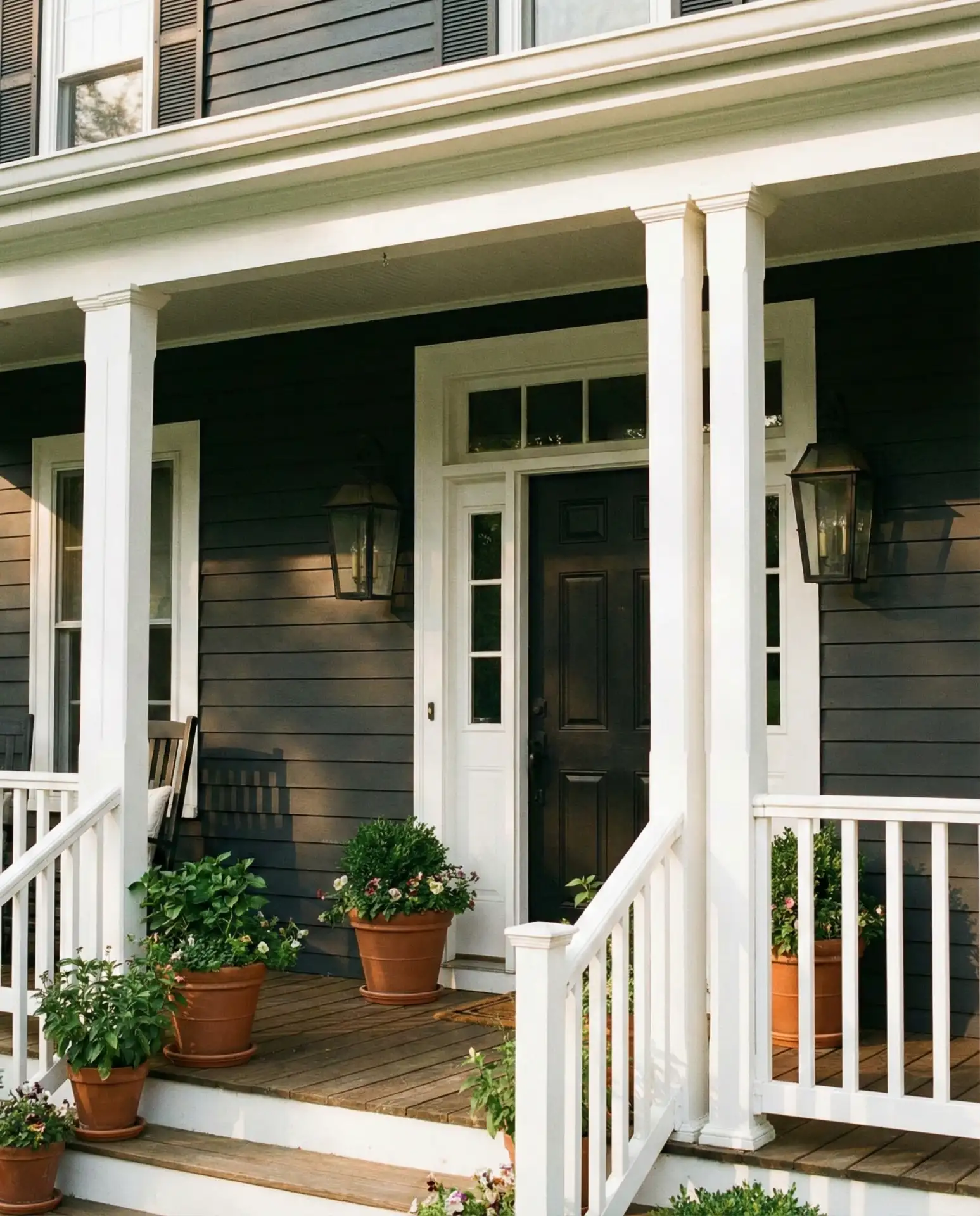
Real homeowners consistently praise Iron Ore for its ability to look different throughout the day—nearly black in shadow, warm gray in direct sun. It’s also incredibly forgiving of surface imperfections, which makes it ideal for older homes with textured siding or minor wear. Many report that neighbors stop to ask about the color within weeks of painting.
14. Black Modern Paint with Steel and Glass
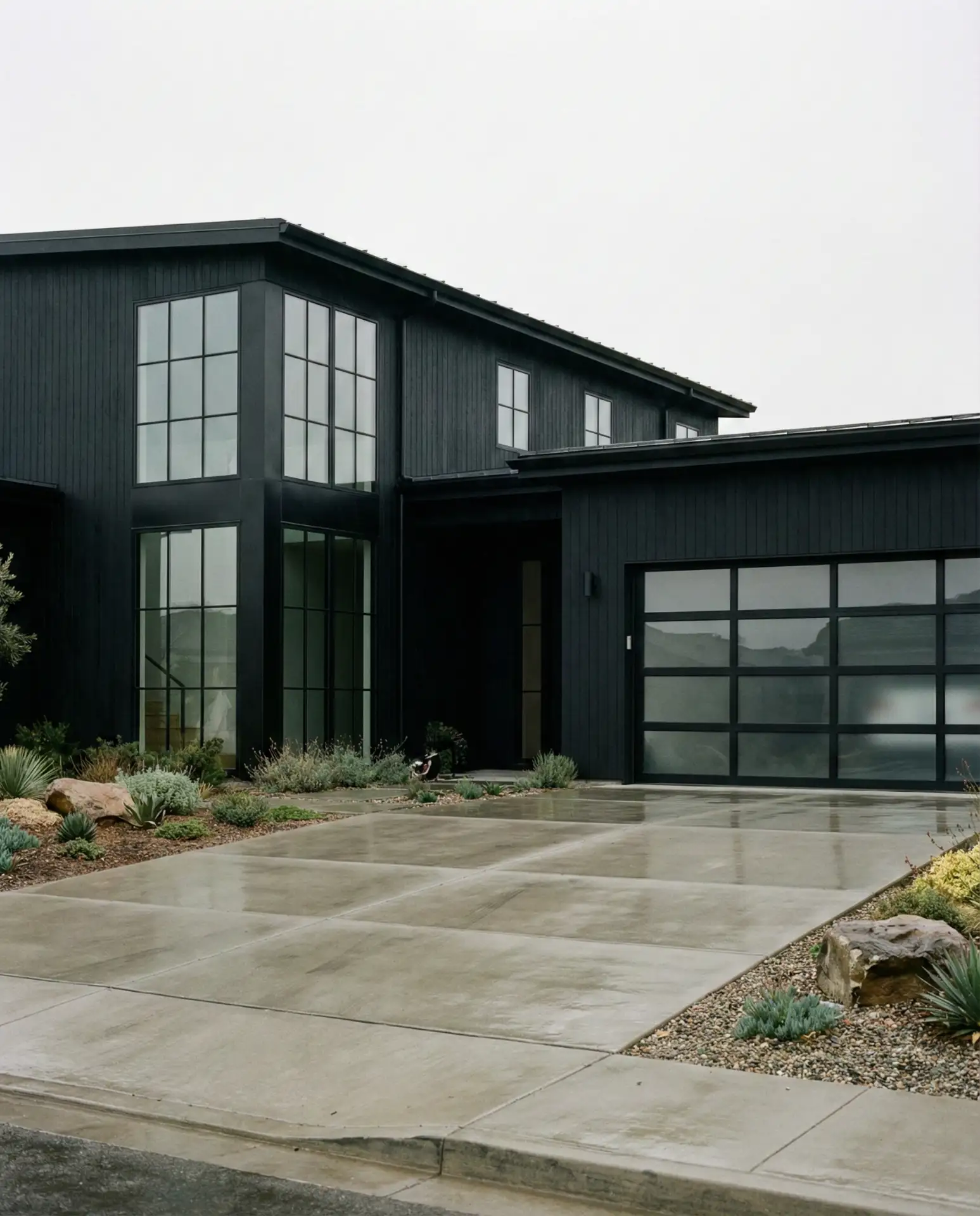
For a truly contemporary look, pair modern paint in matte black with expansive steel-framed windows and glass garage doors. This industrial-chic combination maximizes transparency and blurs the line between inside and out, while the black frame anchors the home and provides dramatic contrast. It’s a bold choice that works best on homes with strong architectural bones and plenty of natural light.
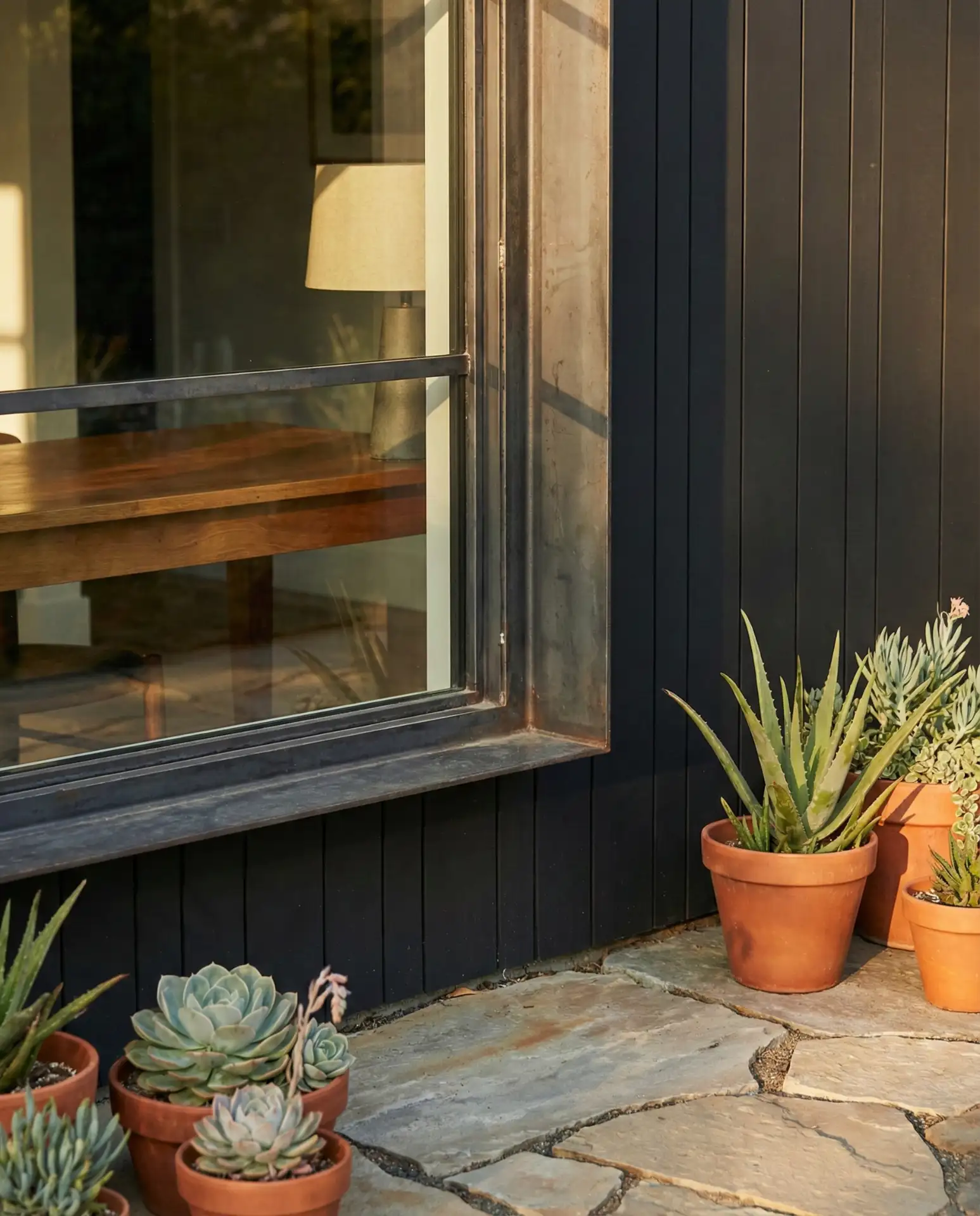
A common mistake is using black paint on a home with insufficient window coverage—the result can feel heavy and cave-like. Aim for at least 20–25% glazing on the facade to balance the darkness with light. This style is most successful in urban or suburban settings with enough lot space to appreciate the architecture from multiple angles, particularly in cities like Los Angeles, Miami, and Chicago.
15. Navy Blue with White Trim and Black Shutters
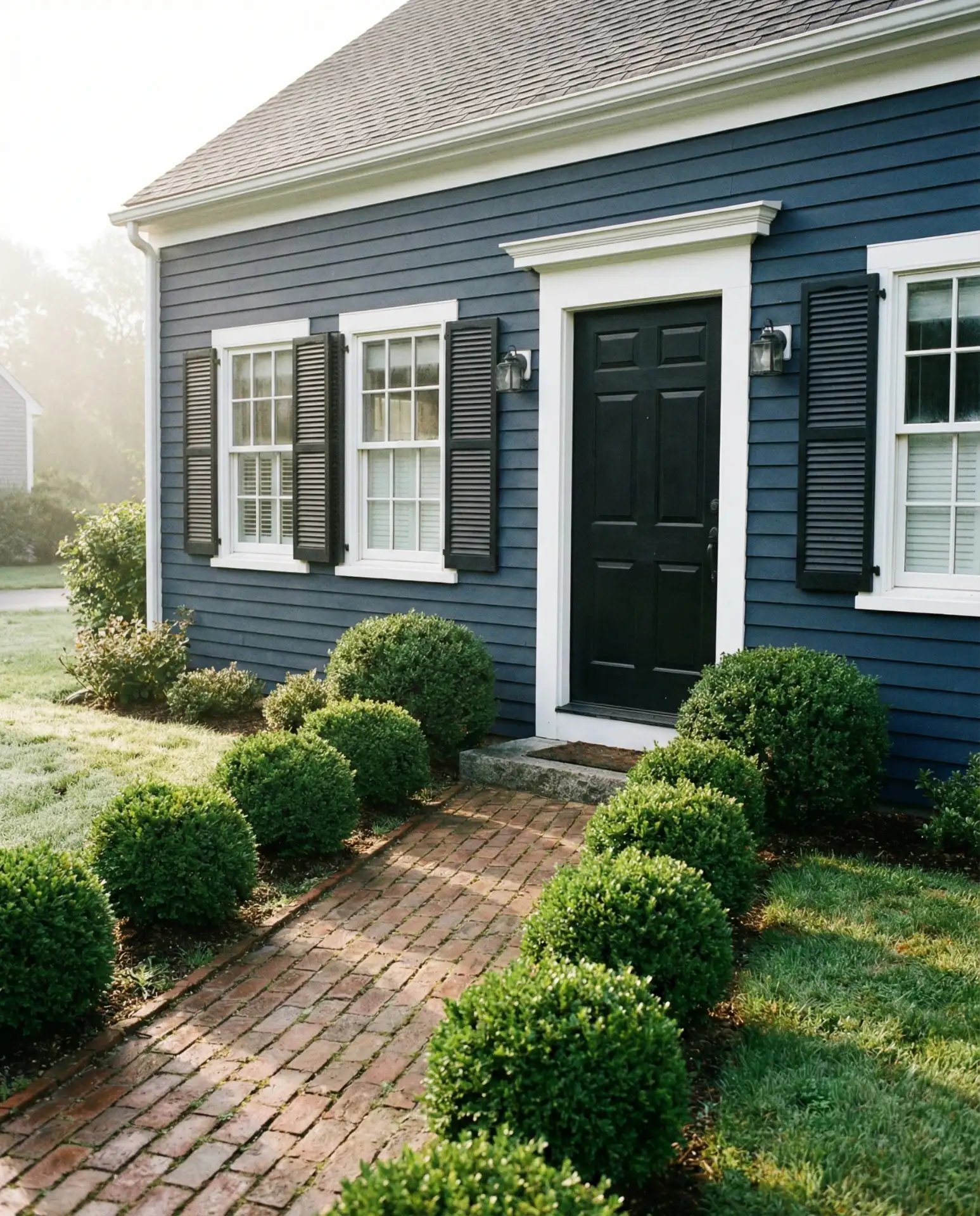
The classic combination of navy blue siding, white trim, and black shutters creates a crisp, nautical-inspired exterior that feels both traditional and current. This palette works across architectural styles—from Colonial to Cape Cod to Craftsman—and offers a refined alternative to the ubiquitous gray-and-white schemes flooding suburban neighborhoods. The navy provides depth without the intensity of black, making it more approachable for cautious homeowners.
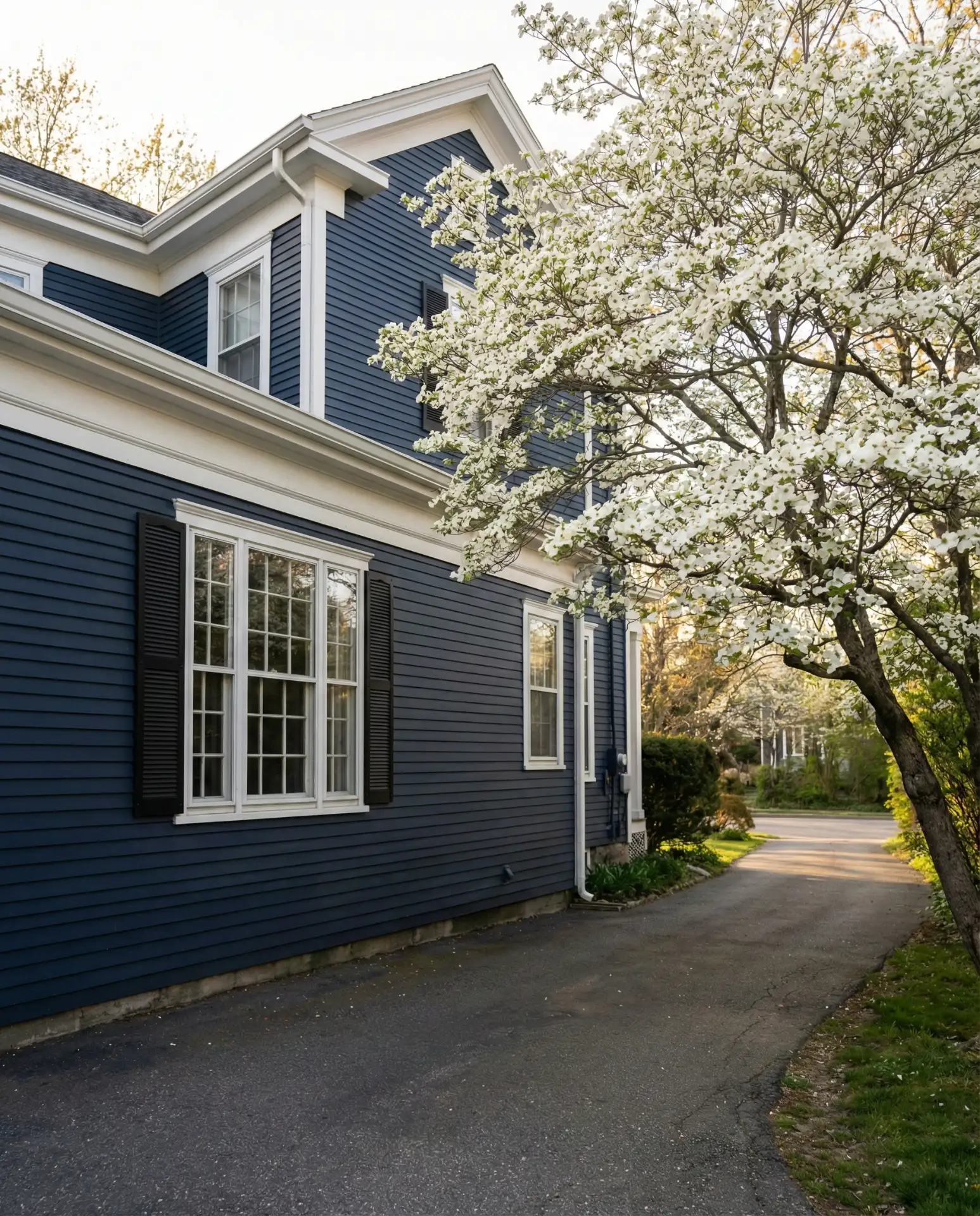
This color scheme is especially popular in coastal communities from New England down to the Carolinas, where it echoes maritime heritage without being too literal. It also holds up well in humid climates where mildew and salt air can degrade lighter colors. Budget-conscious homeowners appreciate that this look requires no exotic materials—just quality paint and attention to prep work.
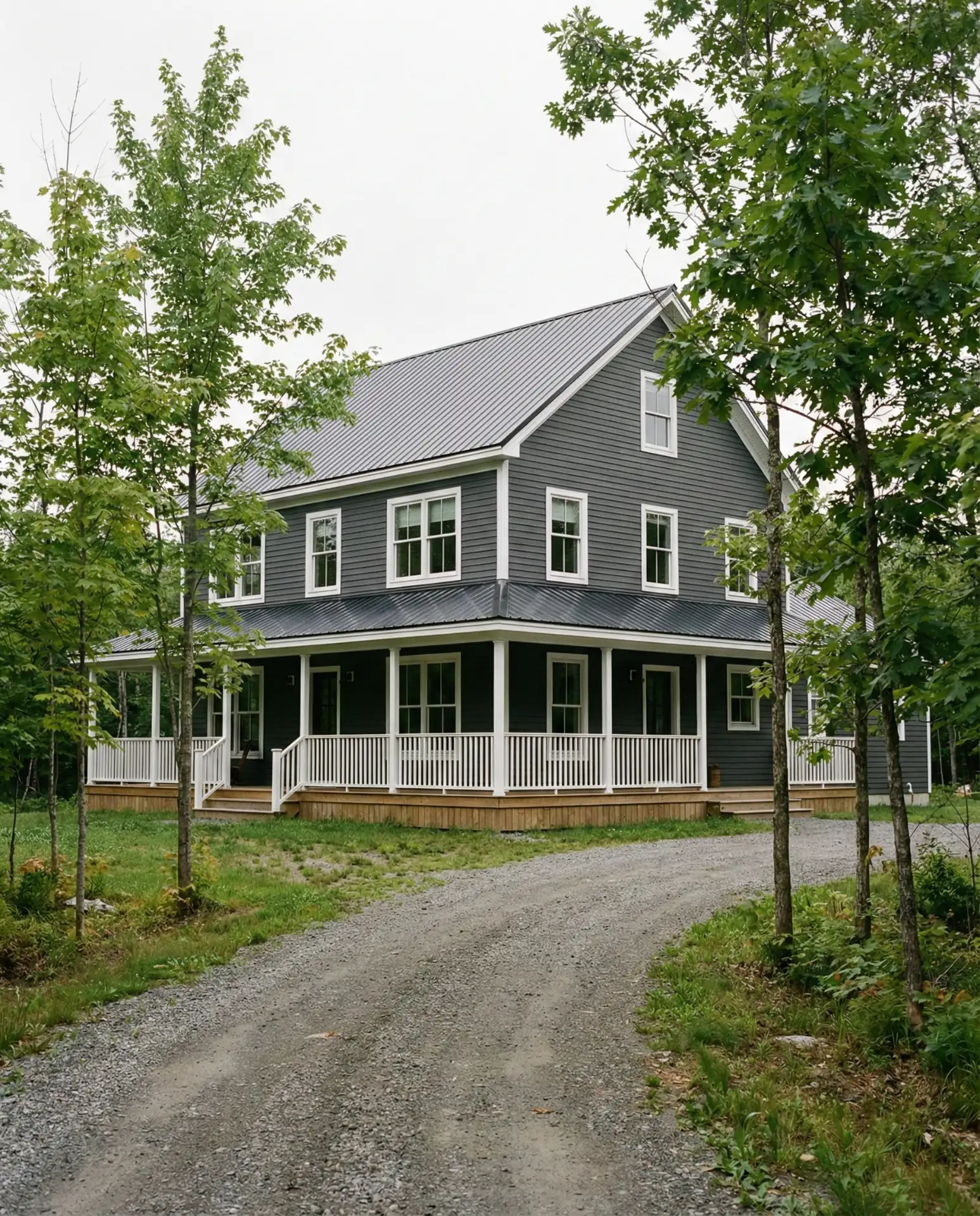
16. Charcoal Gray Modern Farmhouse for Bloxburg Builds
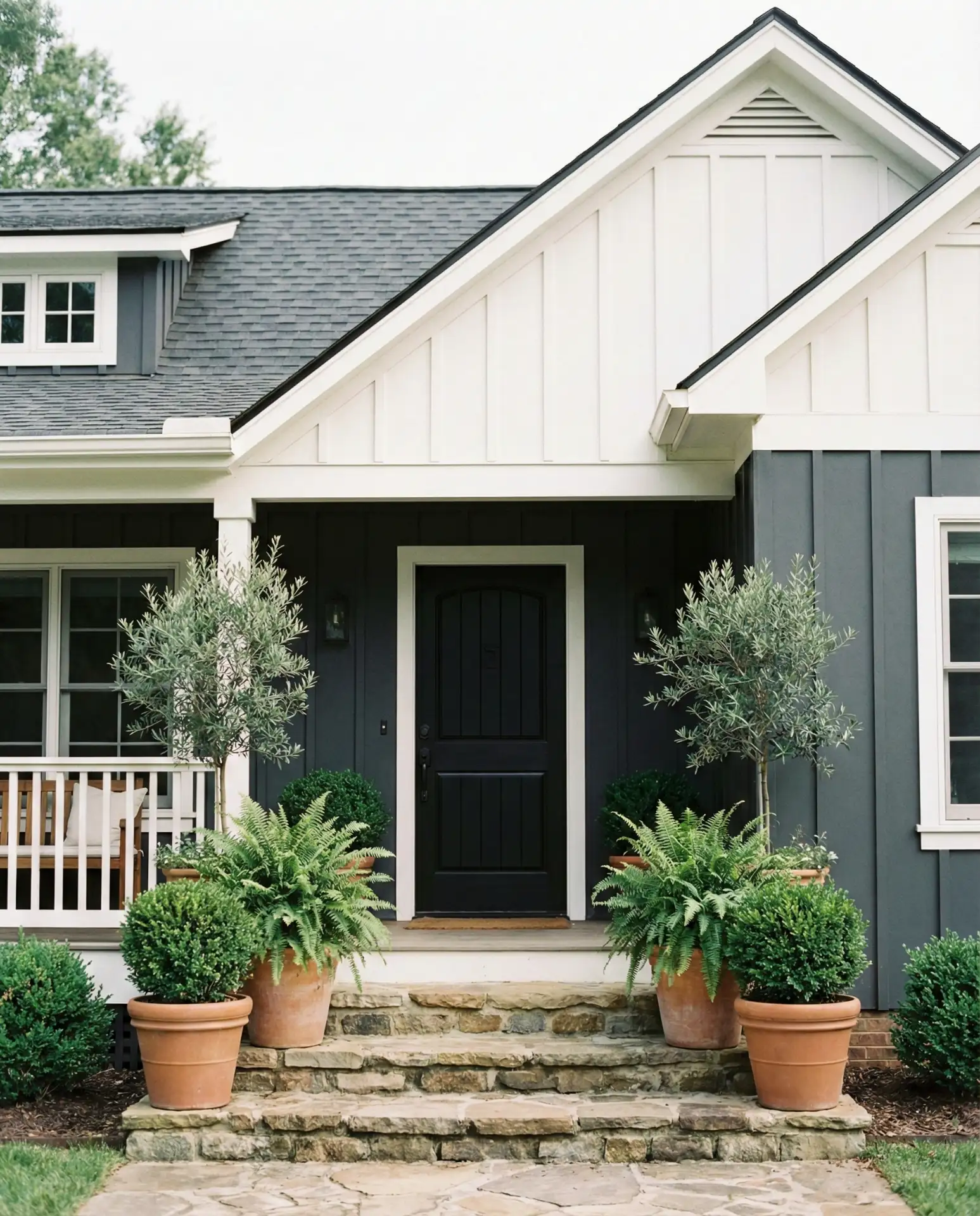
For fans of virtual home design in Bloxburg, charcoal gray farmhouse builds with white trim translate beautifully into real-world inspiration. The clean lines, high contrast, and mix of rustic and modern elements that make these designs popular in-game are equally effective in actual construction. This aesthetic bridges the gap between digital creativity and tangible architecture, proving that virtual design trends can inform real-life choices.
Many younger homeowners and first-time builders cite platforms like Bloxburg and Pinterest as major influences on their exterior color choices. The process of designing virtually helps them visualize proportions, material pairings, and color interactions before committing to real-world paint and siding. This trend is especially strong among millennials and Gen Z buyers in rapidly growing markets like Texas, Arizona, and Florida.
17. Forest Green with Natural Stone and Cedar Shake Roof
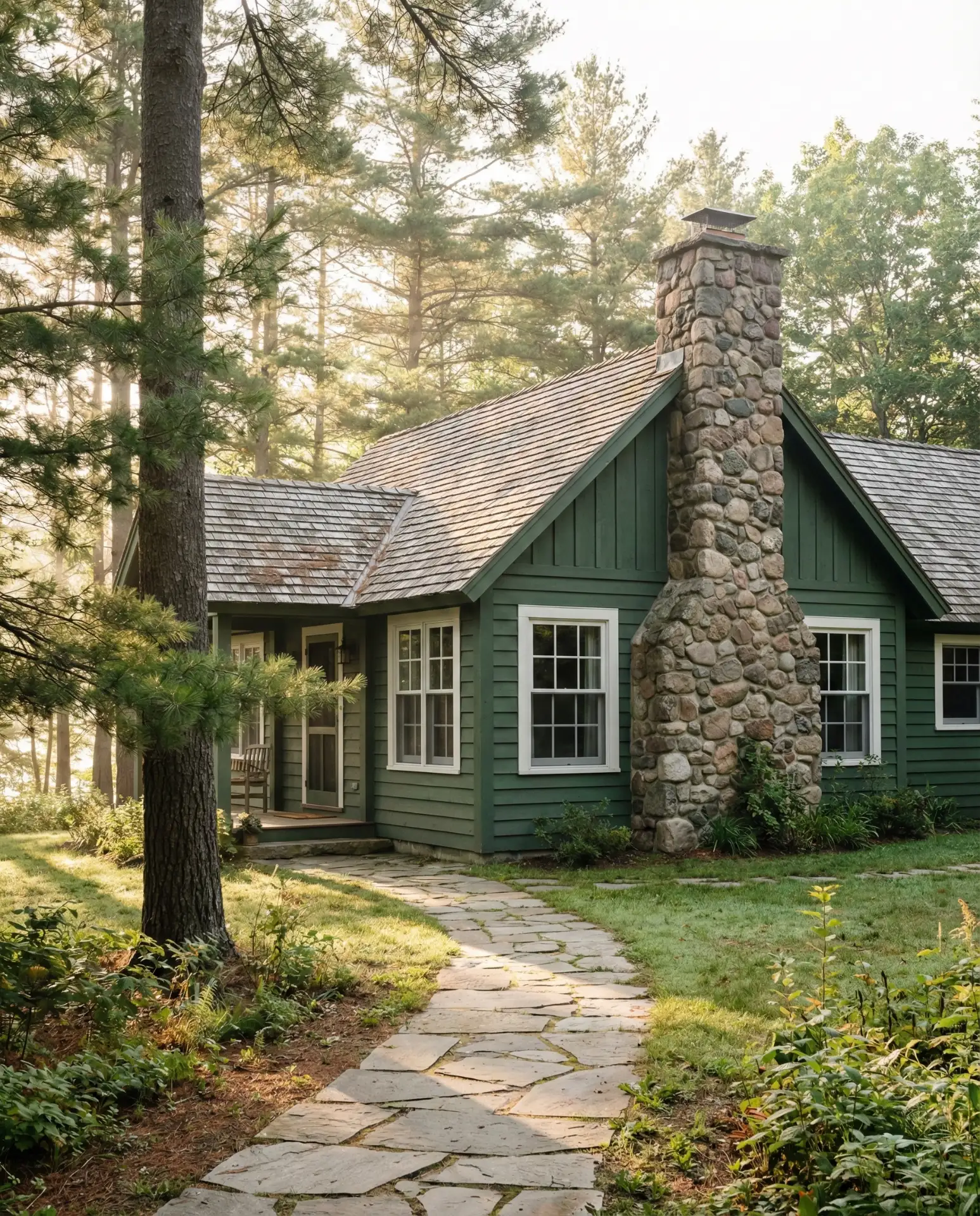
Deep forest green siding paired with natural stone accents and a weathered cedar shake roof creates a mountain lodge aesthetic that feels both rugged and refined. The green blends into wooded surroundings, the stone adds texture and permanence, and the cedar roof introduces warmth and age. This combination is ideal for homes in forested or mountainous regions where blending with nature is a priority.
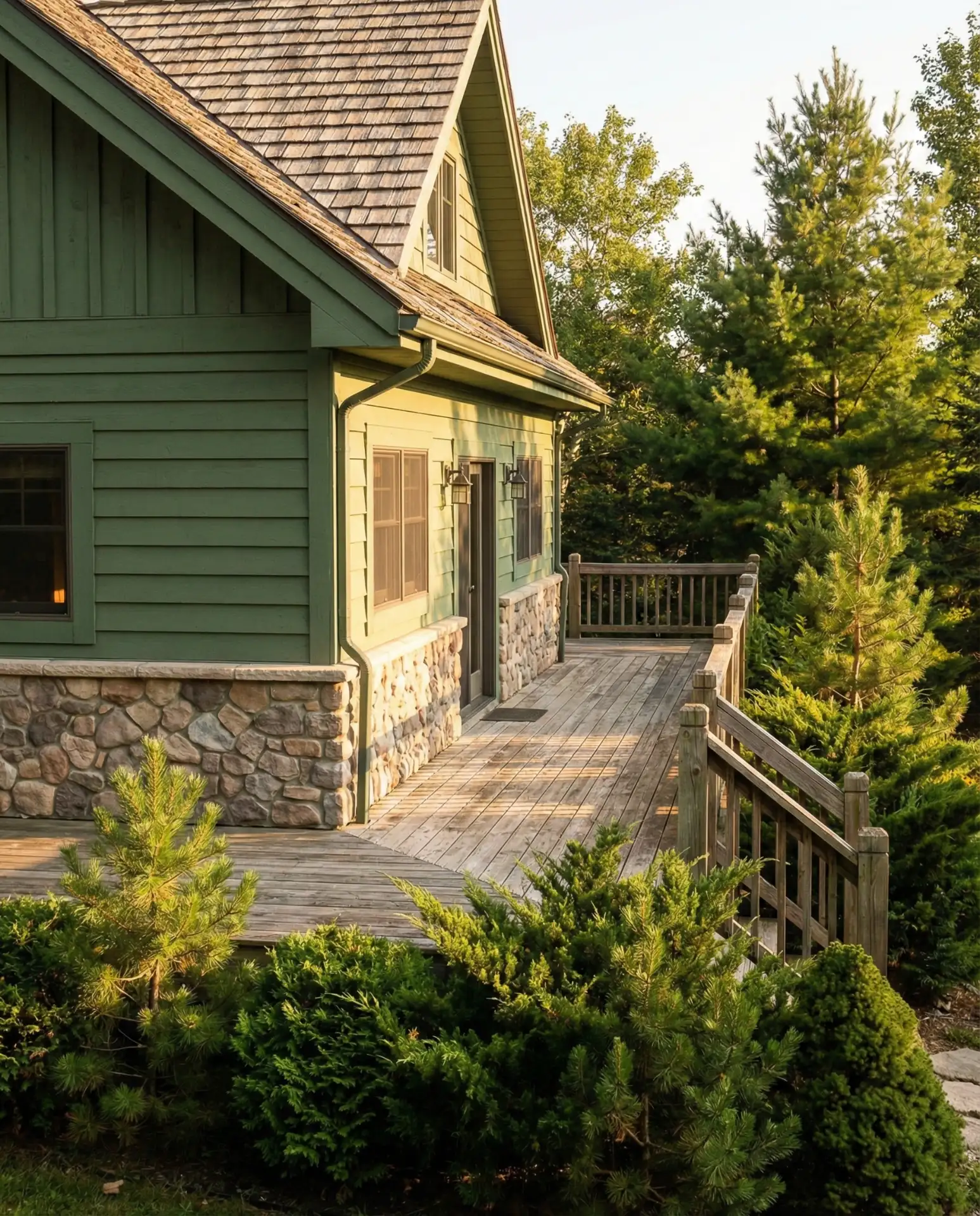
Cedar shake roofs require more maintenance than asphalt shingles—expect to treat for moss, mildew, and insect damage every few years—but they age beautifully into silvered gray tones that complement the green siding. This look is particularly beloved in the Pacific Northwest, the Rockies, and New England, where natural materials and earthy palettes are deeply ingrained in regional architecture.
18. Matte Black with White Trim and Brass Hardware
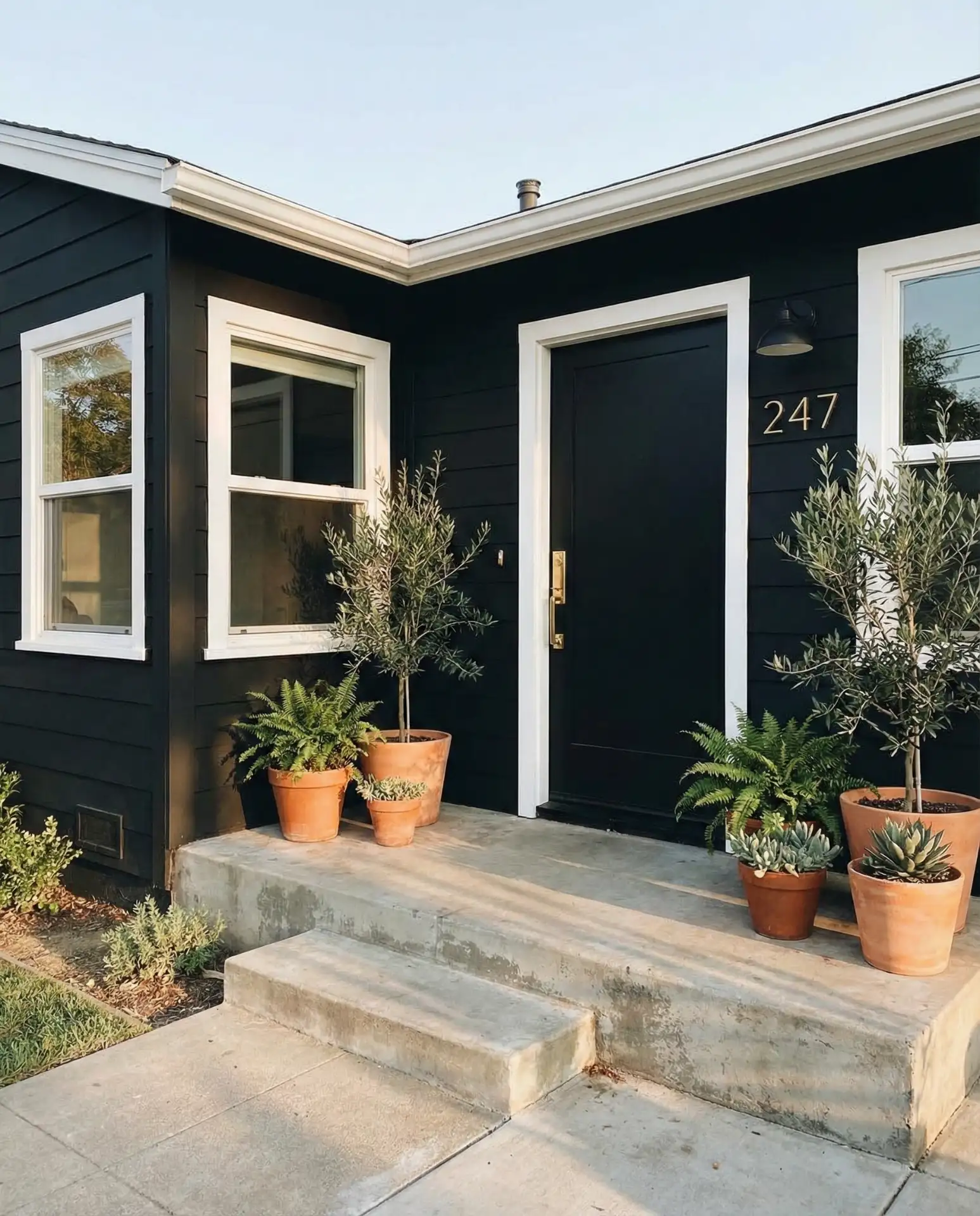
Matte black siding with white trim and warm brass or gold hardware—think door handles, house numbers, and light fixtures—adds a layer of elegance and warmth that prevents the black from feeling too severe. The metallic accents catch light and draw the eye, creating visual interest and a sense of luxury. This approach works especially well on modern homes where the details matter as much as the overall form.
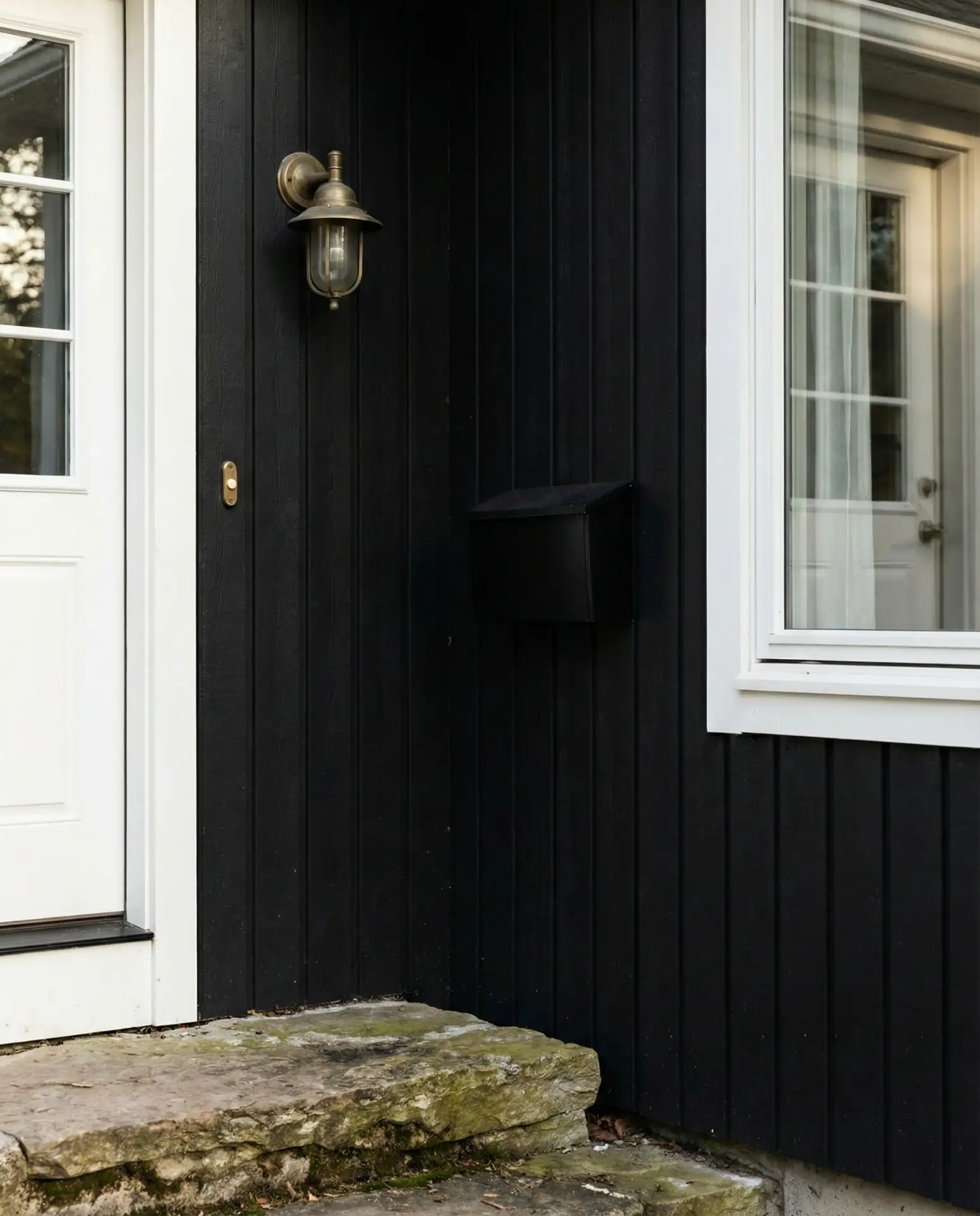
Expert designers recommend lacquered or coated brass finishes rather than raw brass, which can patina unevenly and require frequent polishing. The warm metallic tone also complements outdoor lighting, making the home feel welcoming after dark. This palette is trending in upscale suburban developments and urban infill projects across California, New York, and Illinois.
19. Dark Teal with White Trim and Copper Accents
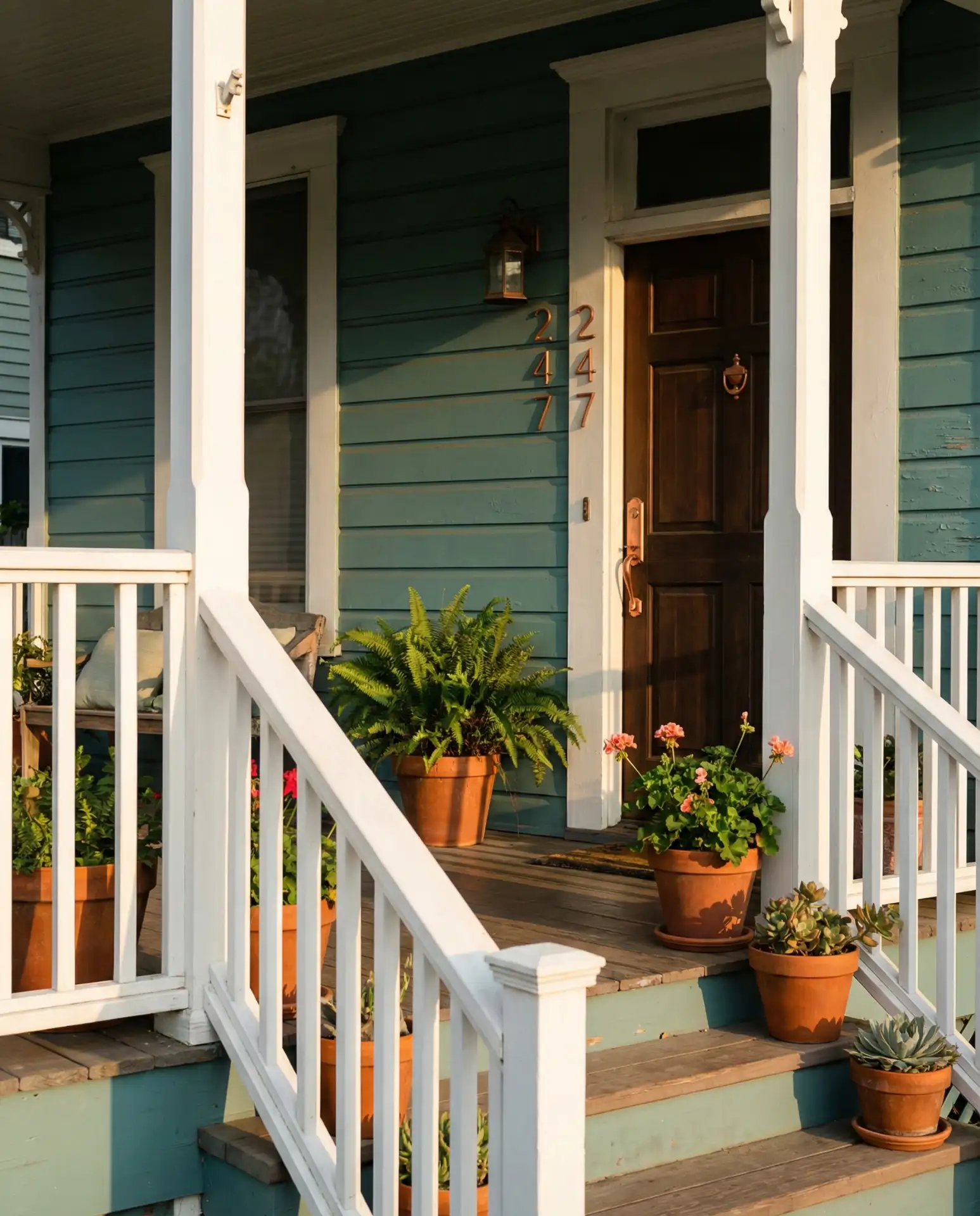
Dark teal offers a unique alternative to navy or forest green, providing depth with a hint of blue-green complexity. Paired with white trim and copper gutters, downspouts, or light fixtures, it creates a sophisticated coastal or craftsman look that feels both timeless and unexpected. The copper will naturally patina over time, adding character and a living finish that evolves with the home.
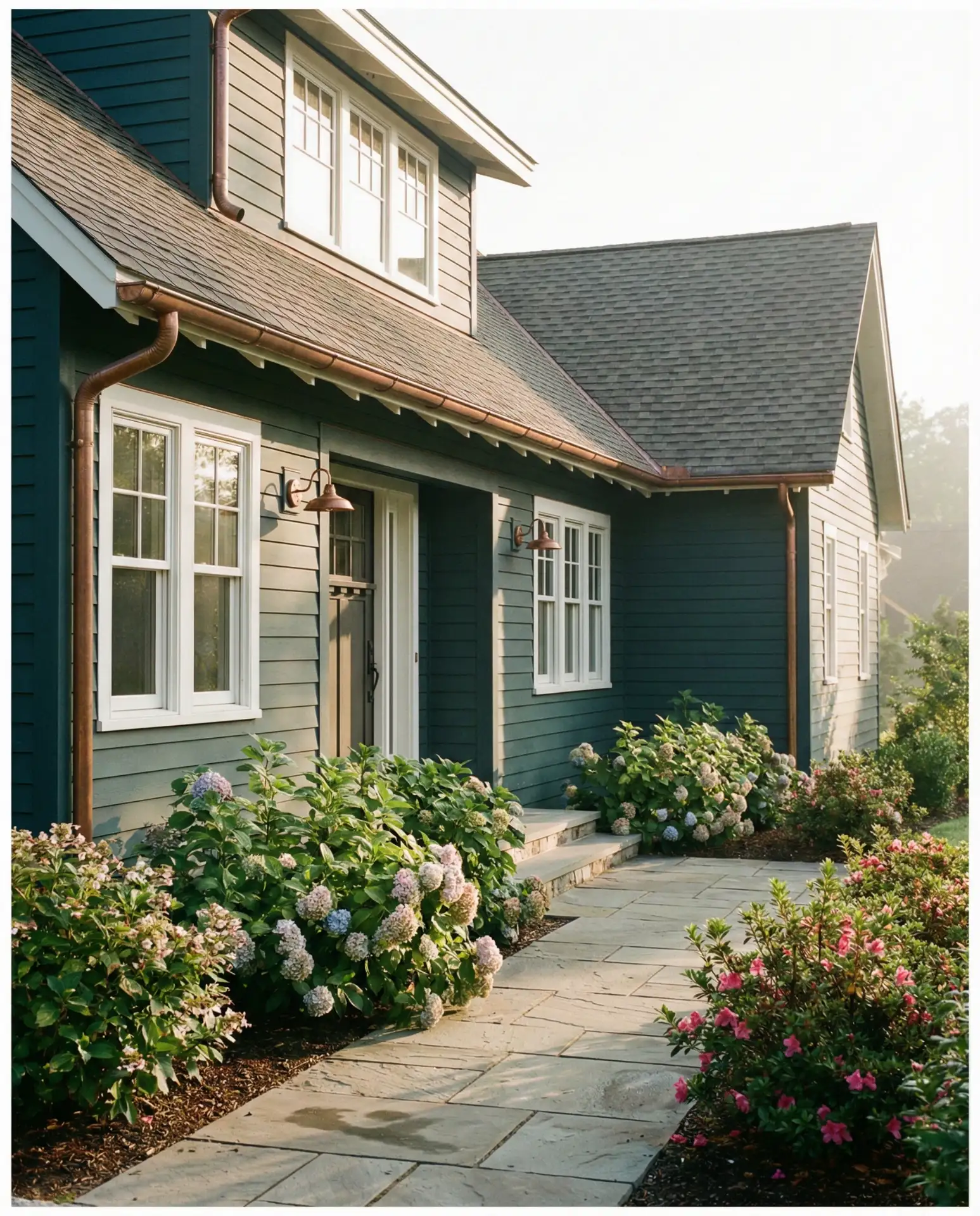
Where this works best is in neighborhoods with established landscaping and mature trees, where the teal can echo the blue-green tones of foliage and sky. It’s particularly popular in coastal New England, the Pacific Northwest, and lakeside communities where water views or proximity make the color feel contextually appropriate. The copper accents should be used sparingly to maintain a refined rather than busy appearance.
20. Charcoal with White Windows and Natural Wood Garage Door
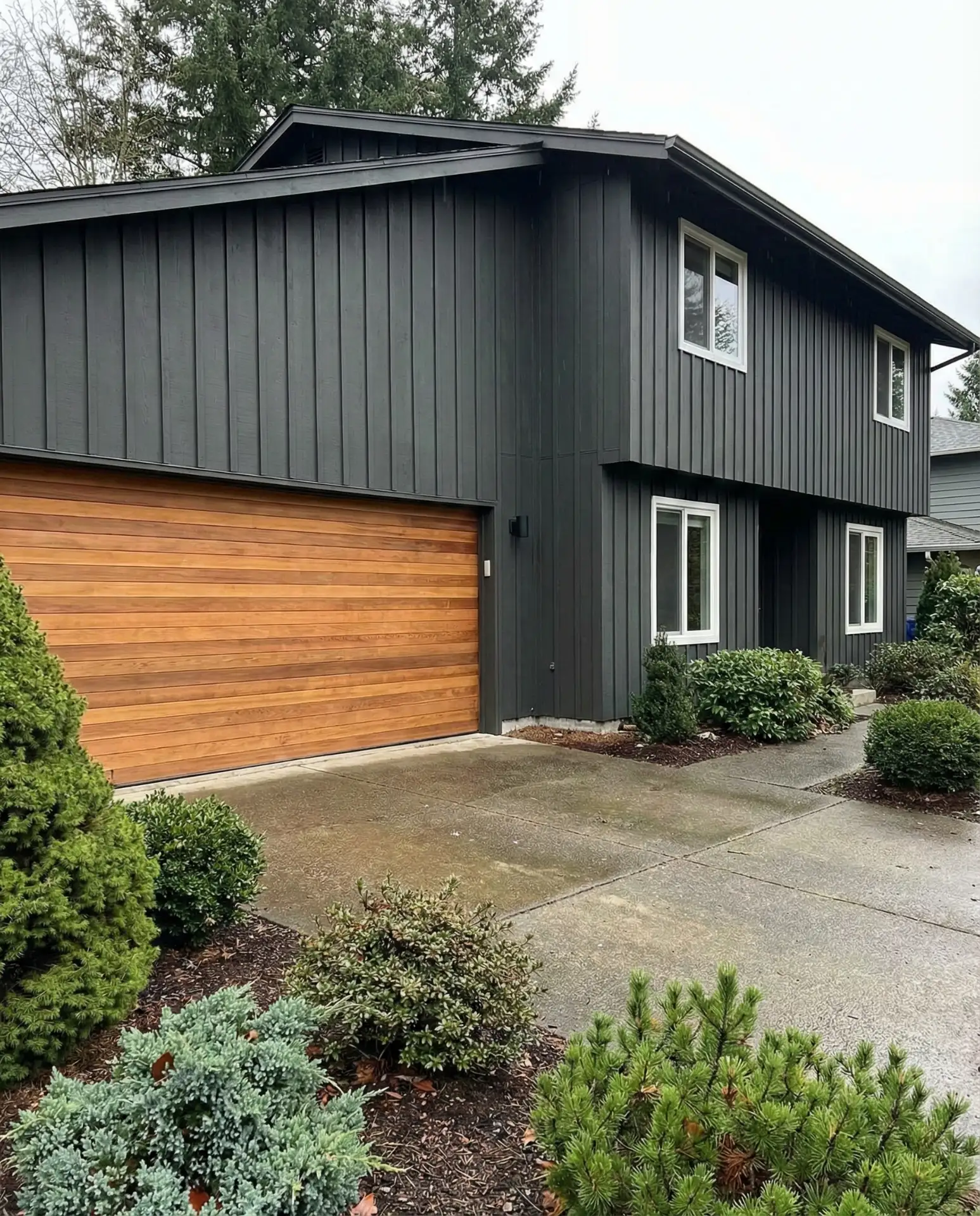
A charcoal exterior with white windows and a natural wood-accented garage door balances industrial and organic elements beautifully. The wood garage door becomes a focal point, adding warmth and texture that softens the overall look. This combination is especially effective on homes where the garage is a prominent architectural feature rather than hidden or recessed.
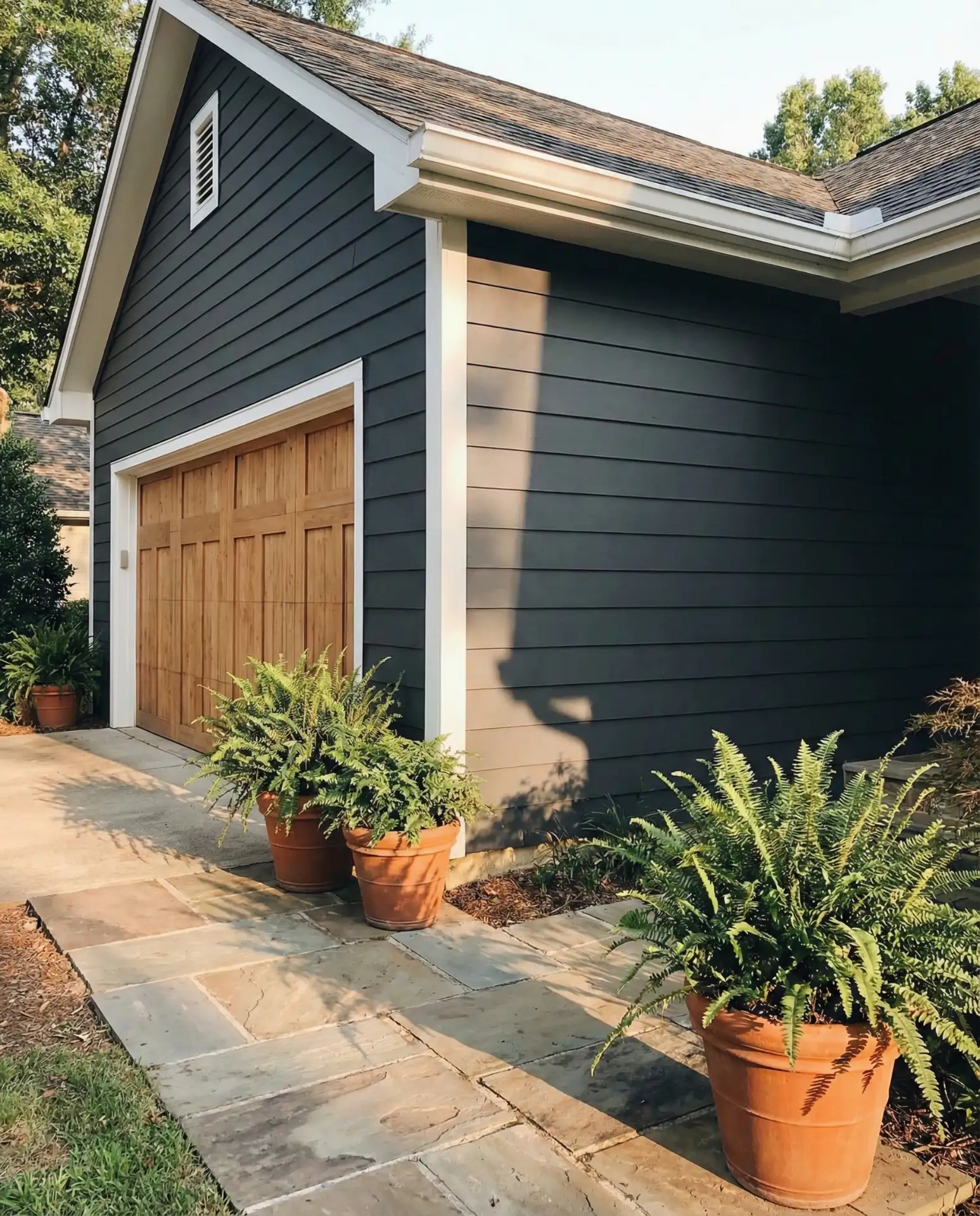
Wood garage doors require more maintenance than steel or aluminum—plan on annual sealing or staining—but the visual payoff is undeniable. They instantly elevate curb appeal and signal attention to detail. This look is especially popular in suburban neighborhoods across the Mountain West and Midwest, where attached garages are standard and often dominate the front facade.
21. Deep Charcoal with Brick Foundation and Metal Roof
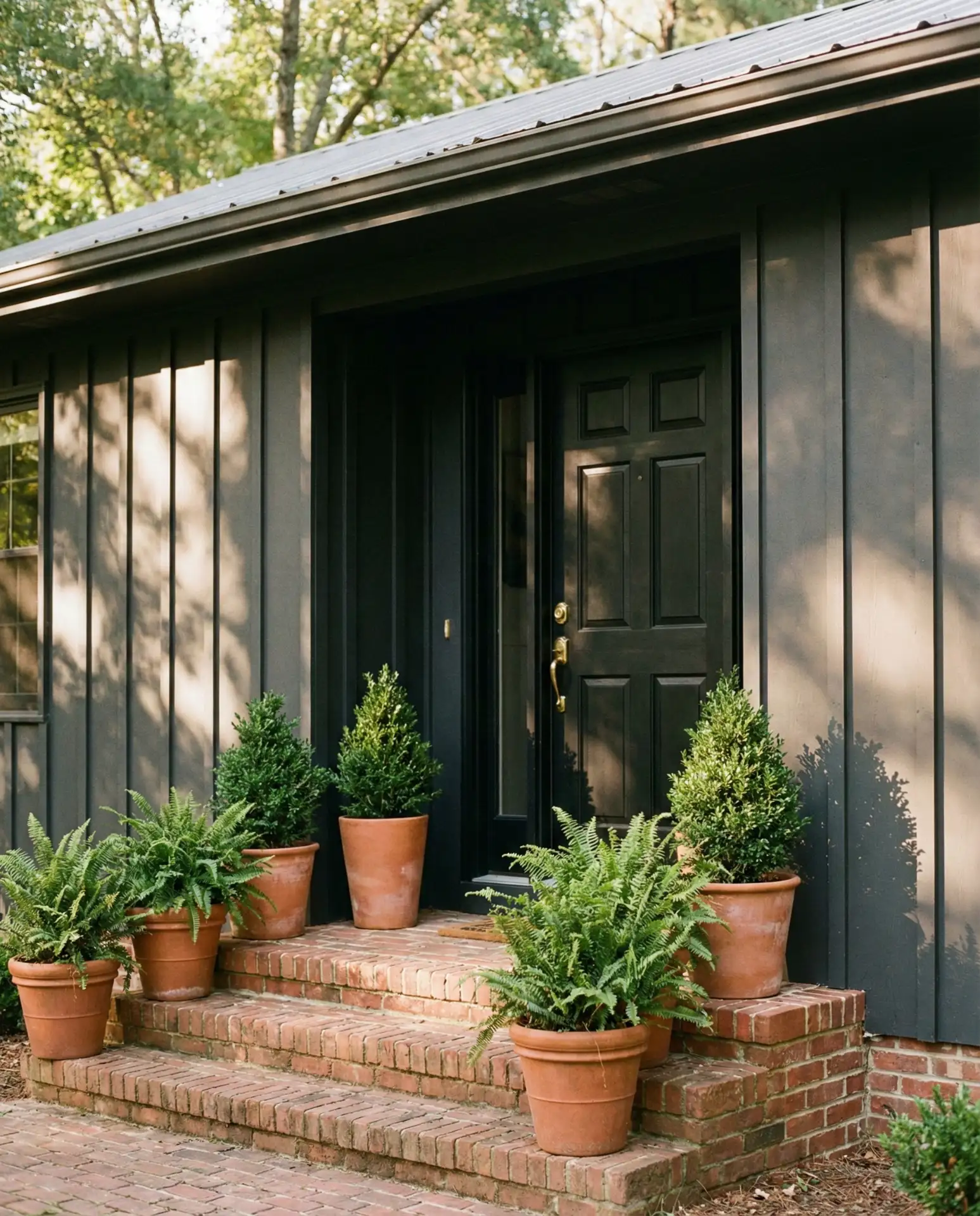
Deep charcoal siding combined with a warm brick foundation and a dark metal roof creates a grounded, enduring aesthetic that blends traditional materials with contemporary color. The brick adds weight and permanence at the base, while the charcoal and metal roof keep the look current and streamlined. This palette works across a range of ranch and two-story home styles, particularly those with simple, unpretentious forms.
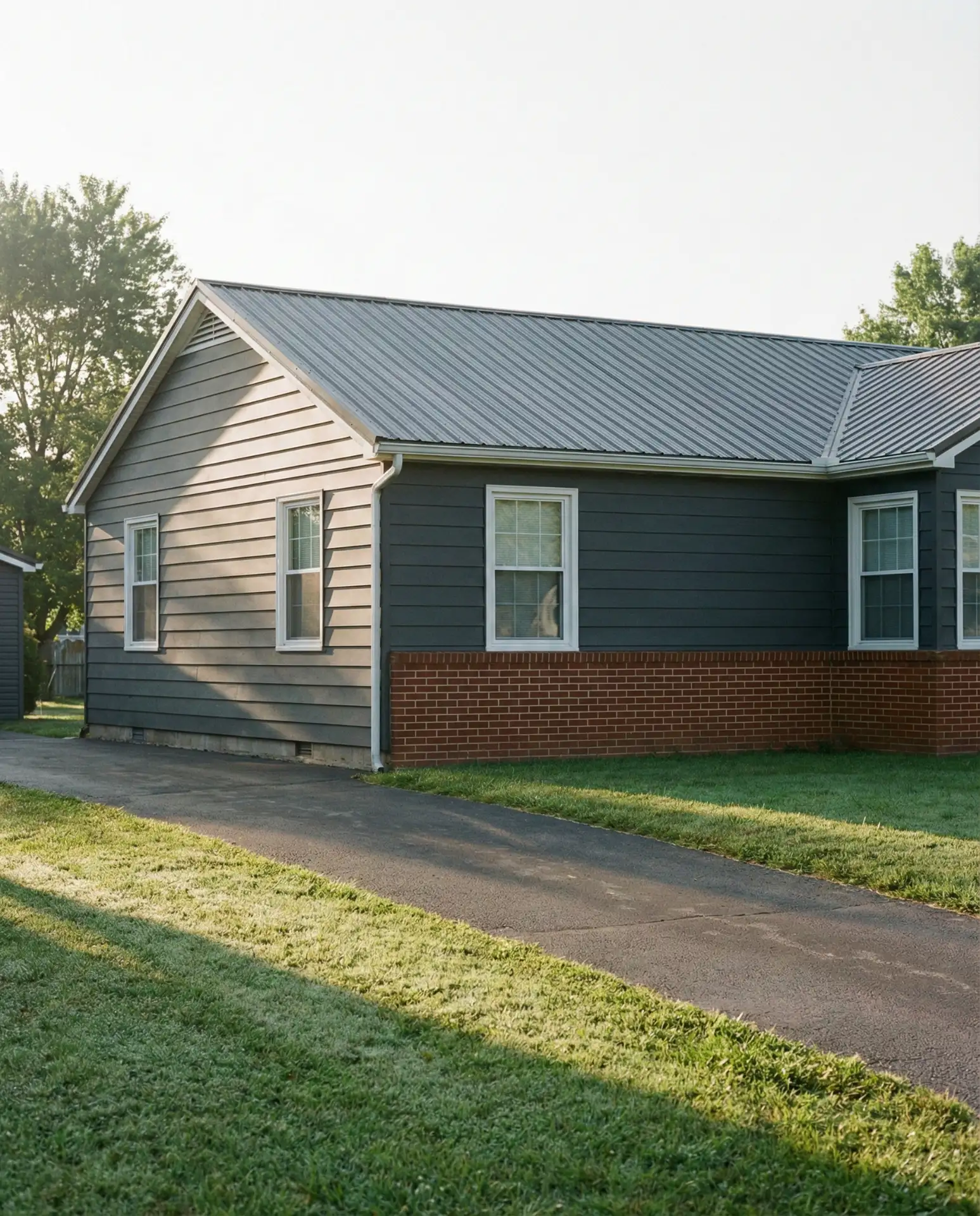
One practical insight: avoid painting brick foundations unless absolutely necessary. Natural brick adds texture and visual interest that’s difficult to replicate, and painted brick in high-splash zones can show wear quickly. This combination is widely appreciated in transitional neighborhoods—places where older homes are being updated but not completely rebuilt—across Ohio, Indiana, and Missouri.
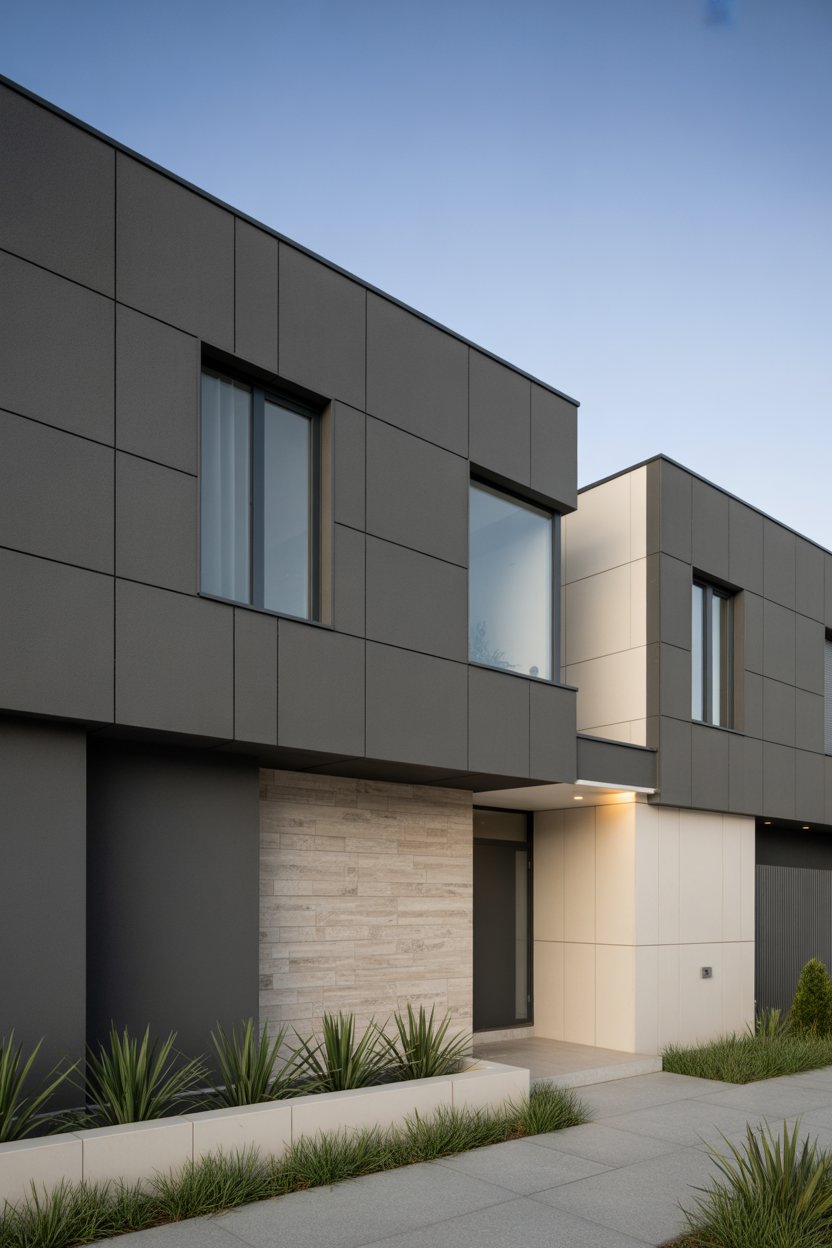
22. Slate Black with Natural Stone Veneer and White Windows
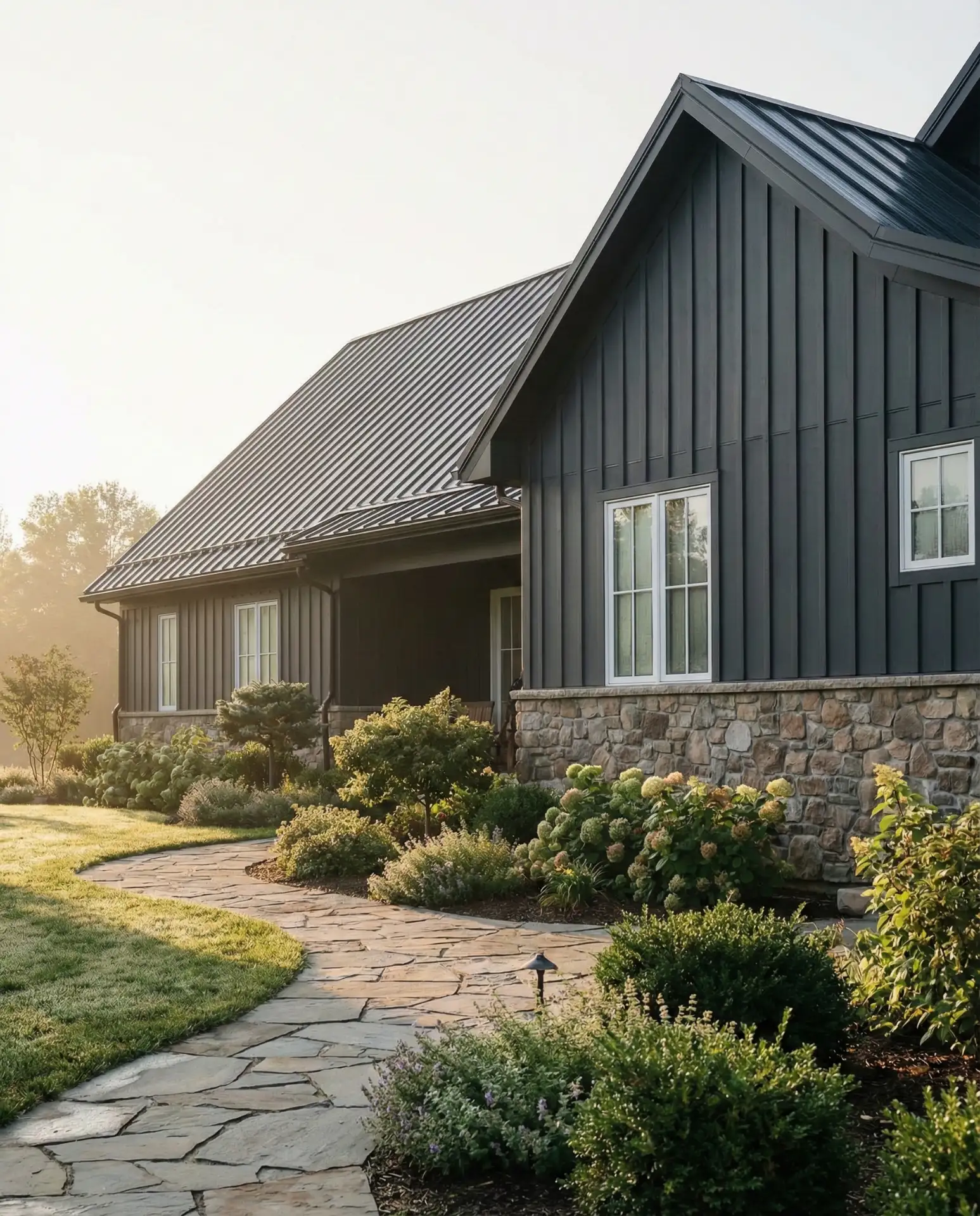
Slate black siding paired with natural stone veneer accents and crisp white windows creates a high-contrast, architecturally rich exterior that feels both timeless and current. The stone veneer adds dimension and a handcrafted quality, while the black provides a dramatic backdrop that makes the stonework pop. This is the best choice for homeowners who want a statement exterior that still feels grounded and livable.
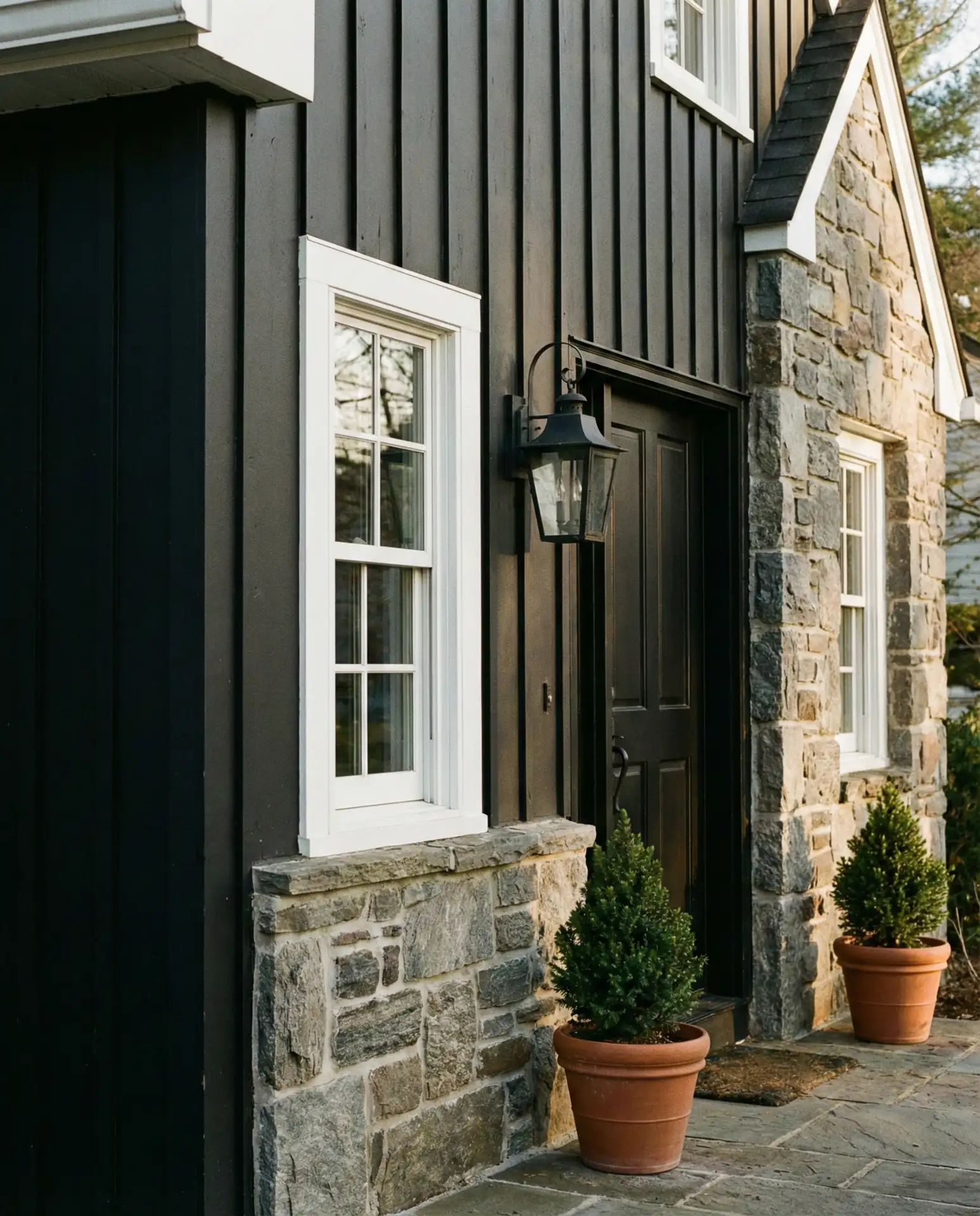
Stone veneer is lighter and more affordable than full stone construction, but it still requires proper installation to avoid moisture issues. Choose veneer stones with natural color variation—grays, browns, and tans—that complement the black without competing. This palette is surging in new construction communities across North Carolina, Virginia, and Tennessee, where homeowners want the look of mountain luxury without the mountain price tag.
Conclusion
Dark exterior house colors in 2026 are about more than just following a trend—they’re about creating a home that feels intentional, grounded, and unmistakably yours. Whether you’re drawn to the drama of matte black, the warmth of forest green, or the sophistication of navy, there’s a dark palette that fits your style, climate, and architectural context. Take your time exploring these ideas, experiment with paint samples in different light, and don’t be afraid to trust your instincts. Share your favorite dark color combinations in the comments below—we’d love to hear what’s inspiring your next exterior project.