Corner pantries have become one of the most searched kitchen solutions on Pinterest in 2026, especially among homeowners looking to maximize every inch of their space. Whether you’re working with a compact galley setup or planning a full kitchen remodel, these tucked-away storage zones offer surprising versatility and style. From walk-in designs to clever blind cabinet solutions, corner pantries address both function and aesthetics in ways that feel fresh and intentional. This guide explores inspired ideas that blend smart organization, beautiful design, and real-world practicality—all tailored to how Americans actually cook, shop, and live today.
1. Pull-Out Corner Pantry with Rotating Shelves
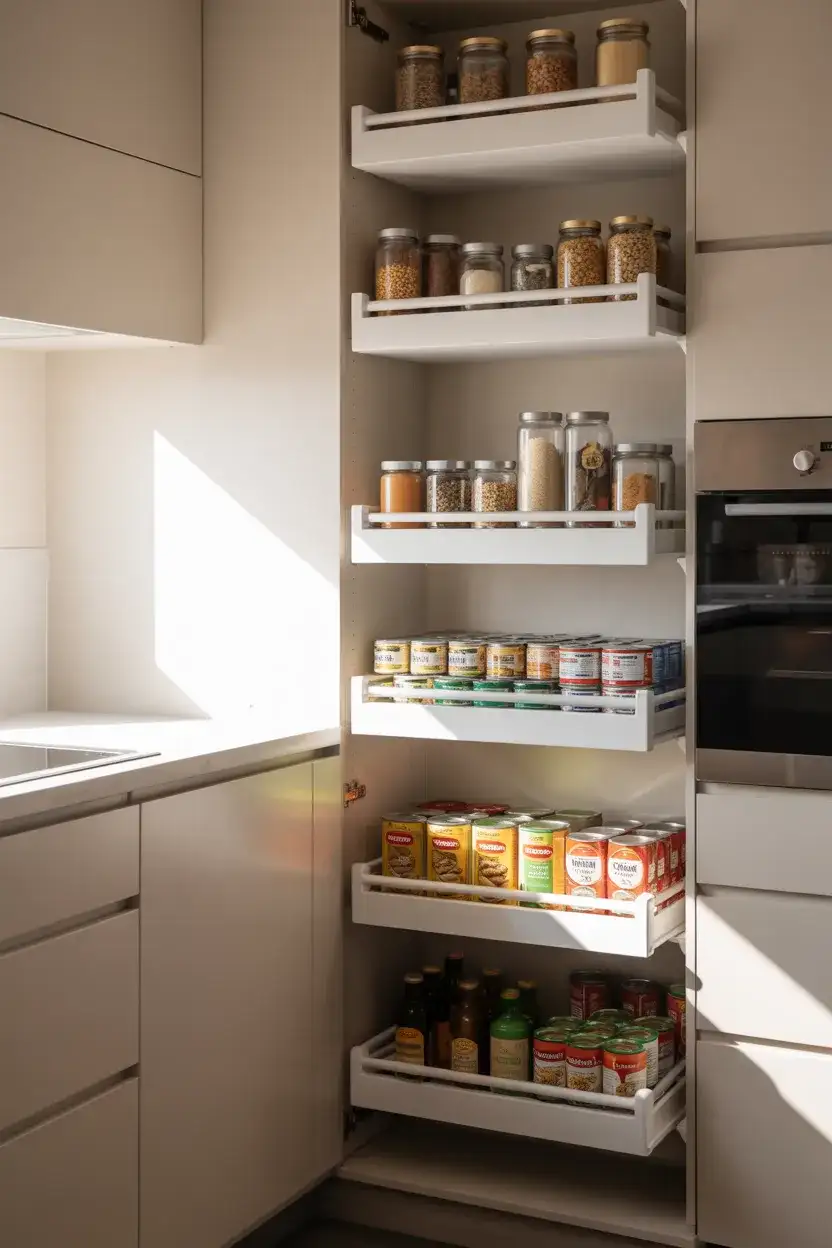
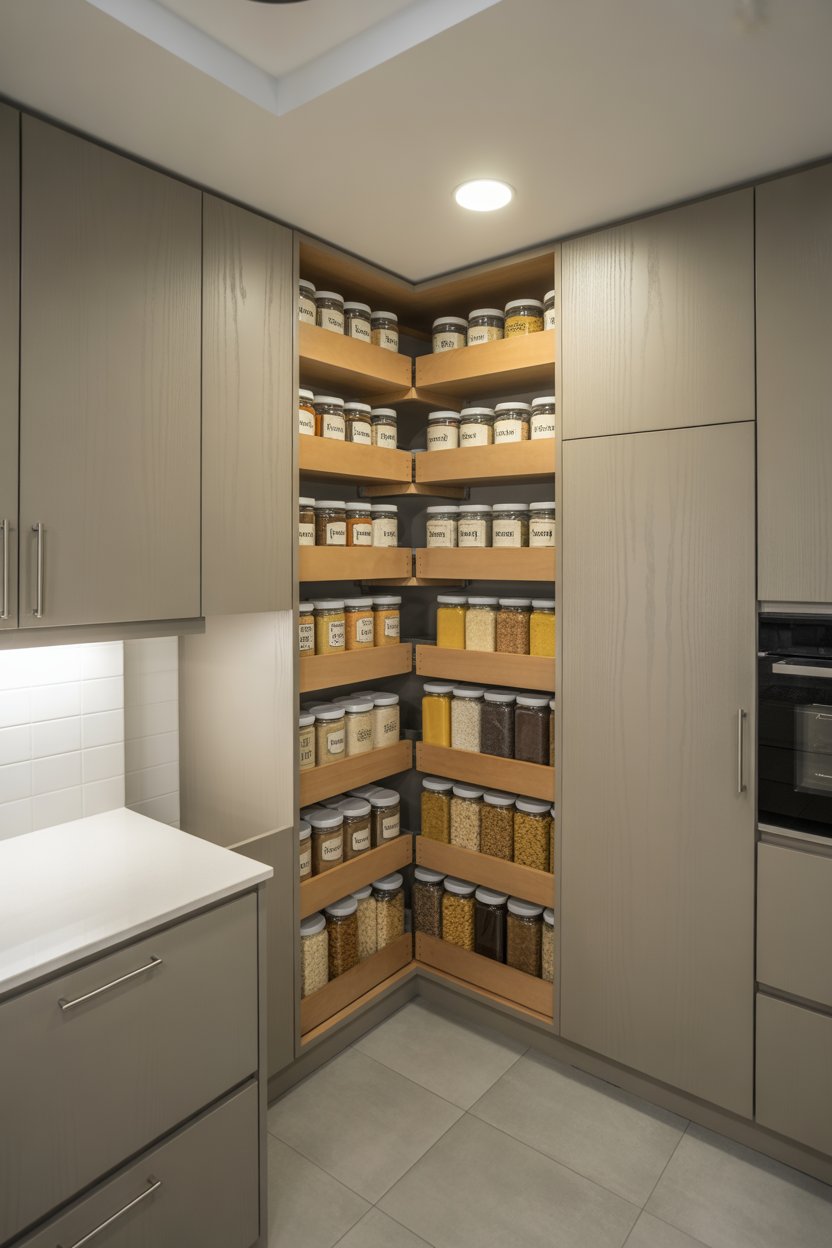
A pull-out corner pantry with rotating shelves transforms what would typically be a blind spot into a highly functional storage area. This system uses tiered carousels that swing out smoothly, allowing you to see and access every item without reaching into dark corners. It’s especially useful in small kitchens where every square foot counts, and it works beautifully in L-shaped or U-shaped layouts. The mechanism is surprisingly quiet and can hold canned goods, spices, oils, and boxed staples with ease.
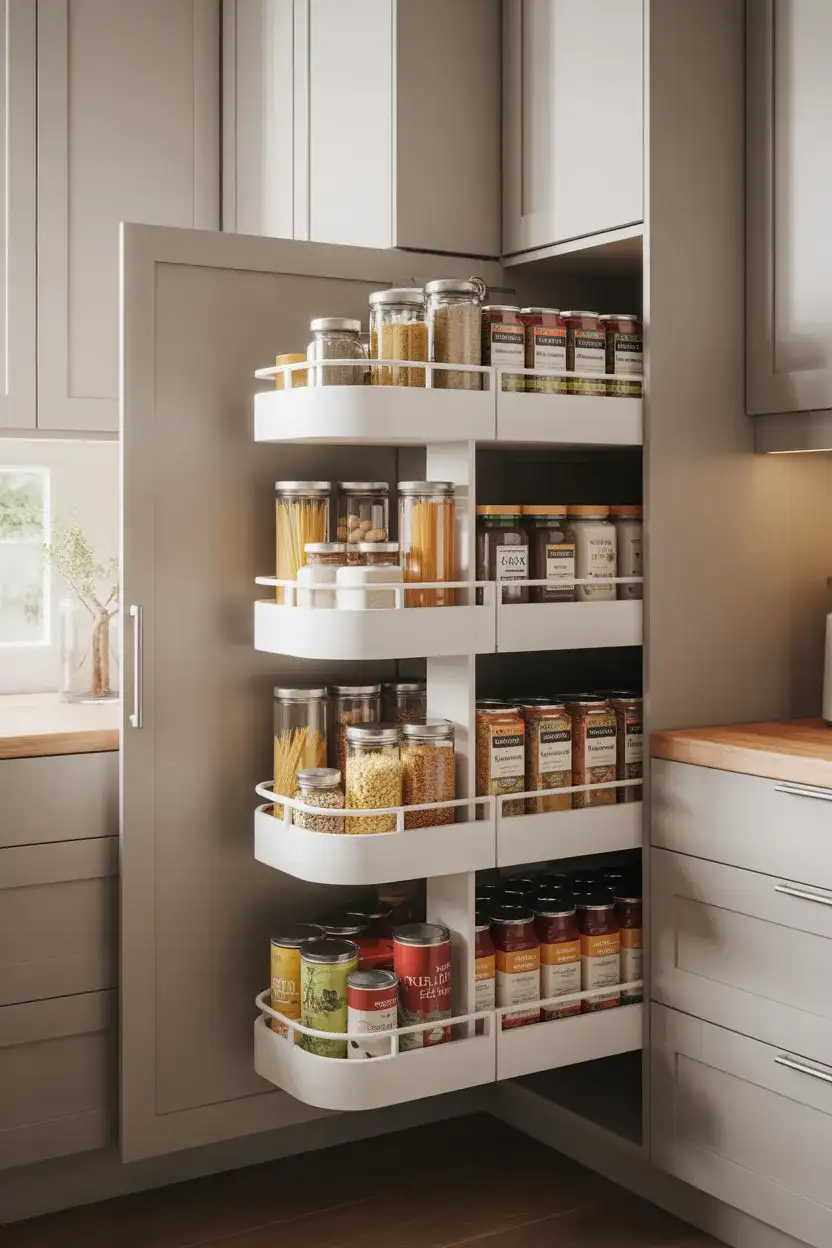
Homeowners often underestimate how much dead space exists in corner cabinets until they install a system like this. The rotating mechanism keeps everything visible, which reduces food waste—a real win for busy families who bulk-shop at Costco or Trader Joe’s. Installation typically costs between $300 and $600 depending on size and brand, but the payoff in daily convenience is immediate. Just make sure the unit is rated for the weight you plan to store, especially if you’re stocking heavy items like jarred sauces or large bags of rice.
2. Walk-In Corner Pantry with Custom Shelving
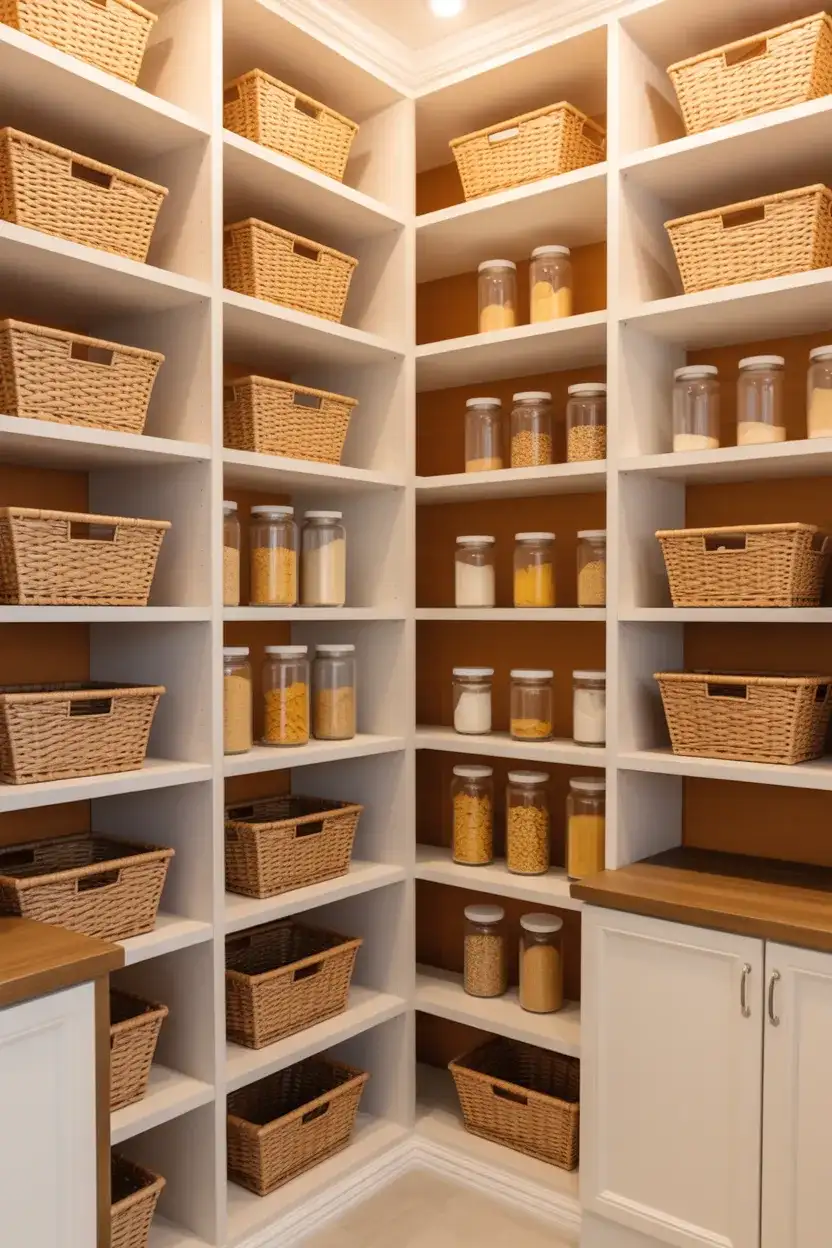
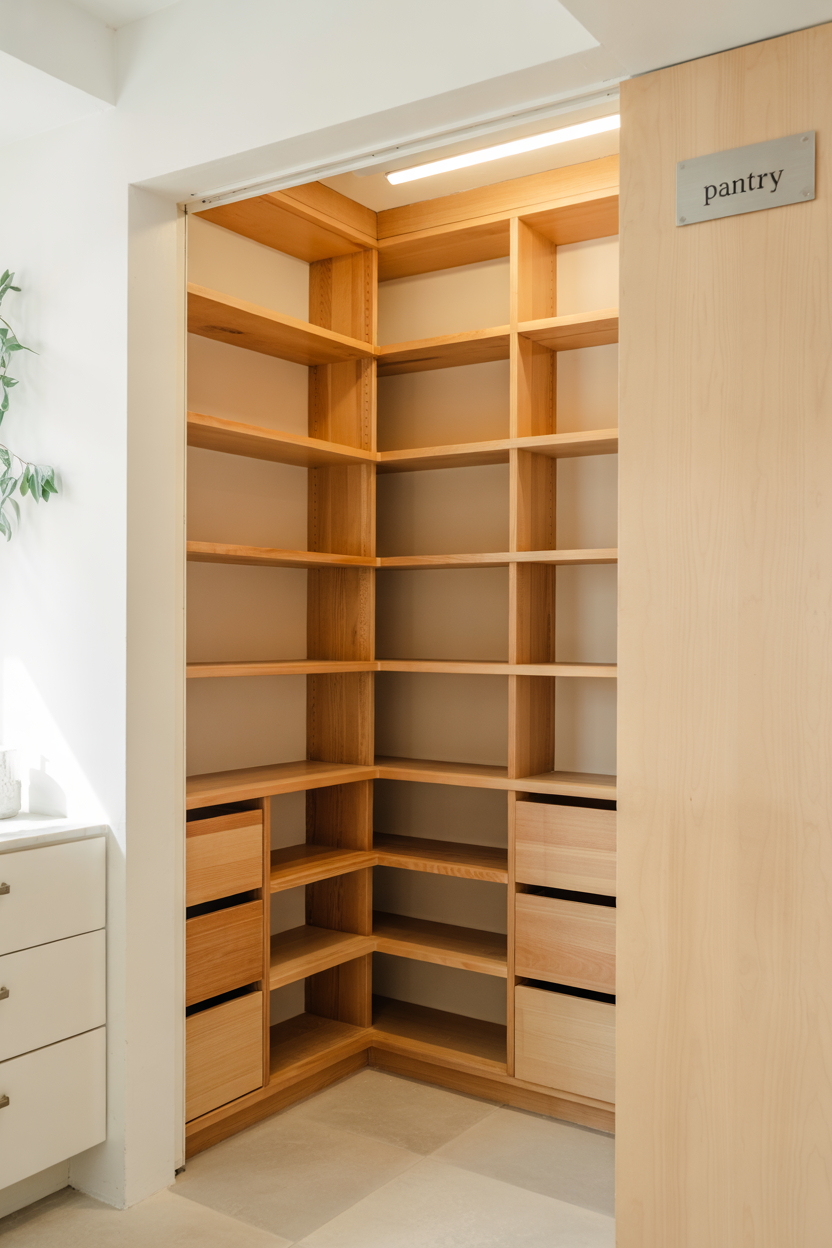
A walk-in corner pantry offers the luxury of a dedicated food storage room, even in homes where space feels tight. By claiming an underused corner near the kitchen, you can build a compact walk-in with floor-to-ceiling shelving that holds everything from dry goods to small appliances. The key is maximizing vertical space with adjustable shelves that adapt as your needs change. This setup is ideal for families who cook from scratch, meal prep on Sundays, or simply enjoy the peace of mind that comes with a well-stocked pantry.
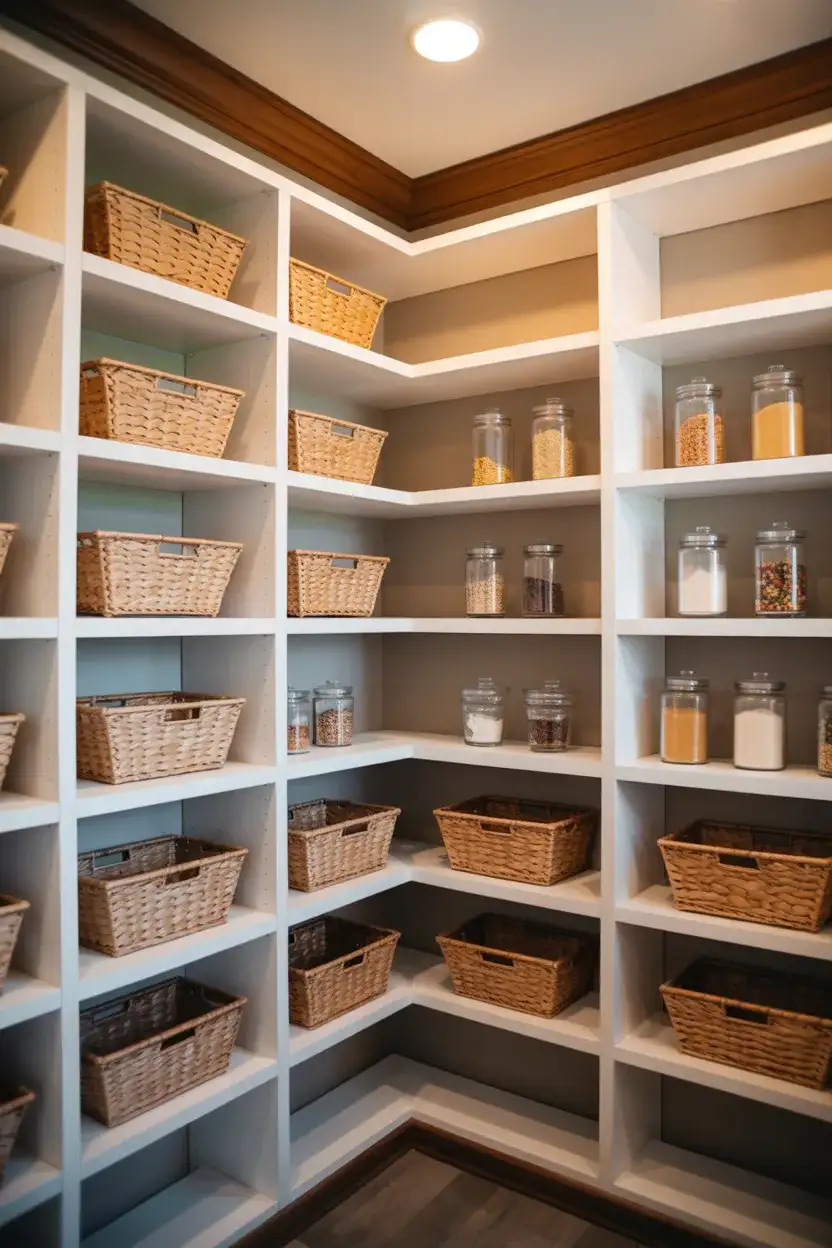
In the Pacific Northwest and Midwest, where basements and mudrooms are common, homeowners often carve out walk-in pantries in transitional spaces between the kitchen and garage. This works best when you have at least 4 feet of depth to allow for comfortable movement. Consider adding a small step stool or library ladder if your shelving goes above seven feet—it keeps high shelves accessible without the need for awkward stretching or risky balancing acts.
3. Hidden Corner Pantry Behind a Cabinet Door
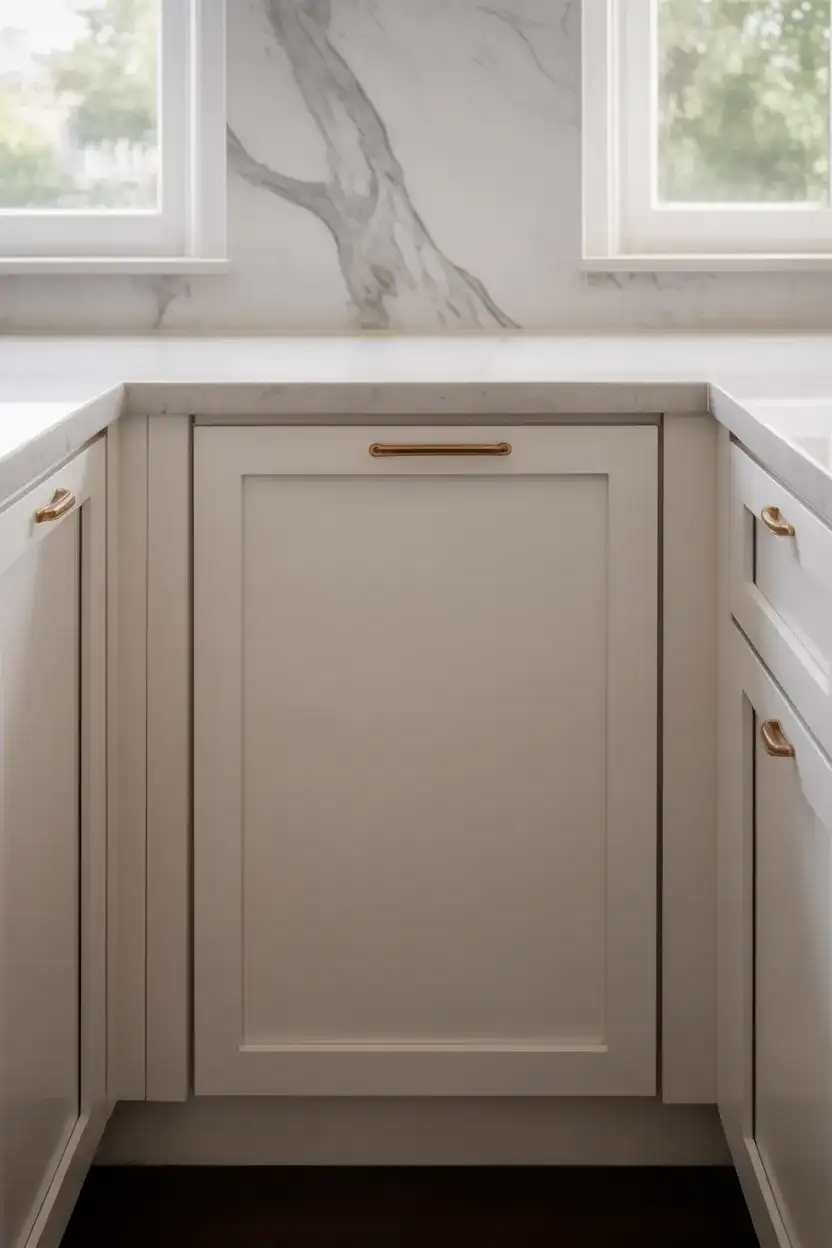
A hidden corner pantry concealed behind a standard cabinet door is a sleek solution for modern, minimalist kitchens. The exterior looks like any other cabinet, but inside, you’ll find deep shelving or pull-out drawers designed to hold dry goods, snacks, and baking supplies. This approach maintains a clean visual line across your kitchen layout, which is especially important in open-plan homes where the kitchen is constantly on display. It’s also a smart choice for renters who want to add storage without structural changes.
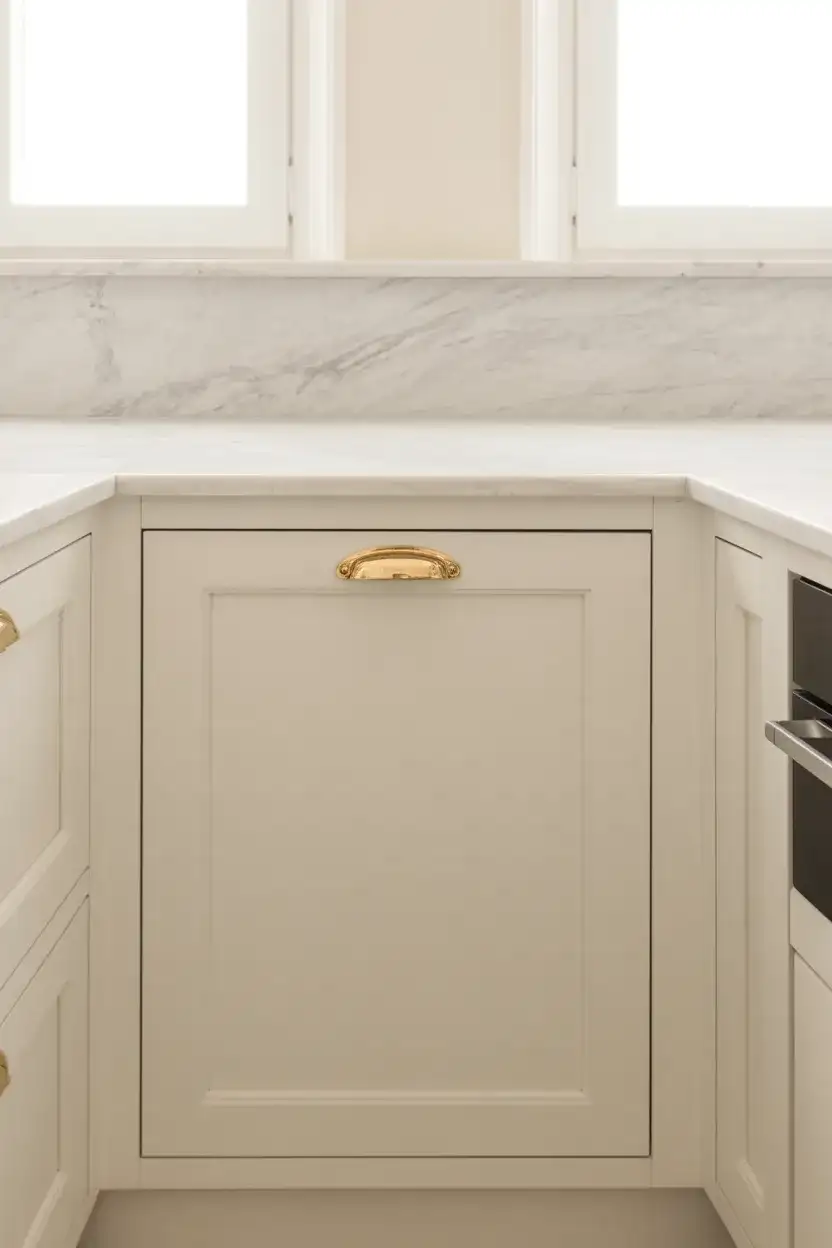
One common mistake is installing a hidden pantry without considering door clearance. Make sure the door swing doesn’t block your main traffic flow or interfere with adjacent appliances. Soft-close hinges are worth the extra $30—they prevent the door from slamming and add a polished, high-end feel. If you’re working with a designer, ask them to mock up the door in an open position to confirm it won’t create awkward bottlenecks during meal prep.
4. Corner Pantry with Frosted Glass Doors
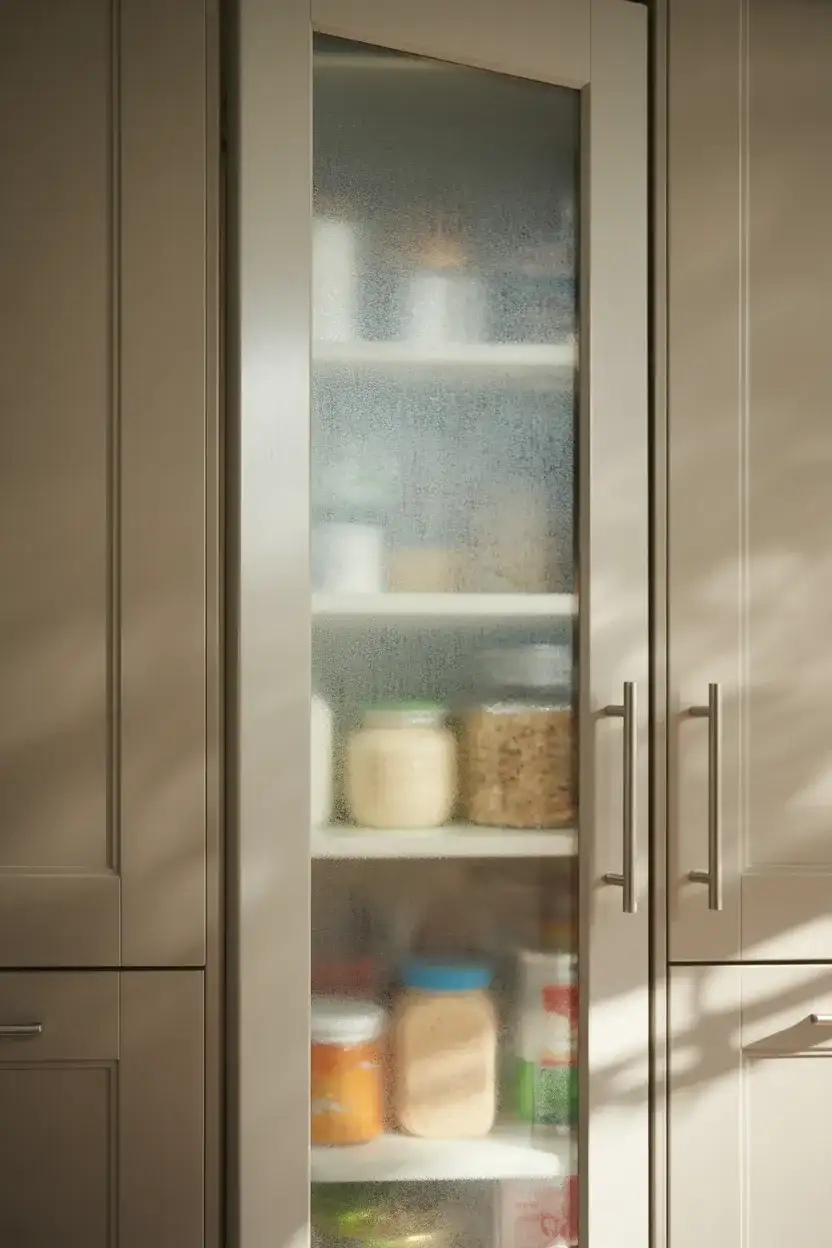
Frosted glass door ideas bring a touch of elegance to corner pantries while keeping contents semi-visible. This design works especially well in kitchens with contemporary or transitional styling, where transparency and light are valued. The frosted finish softens the view, so you don’t have to worry about perfect organization at all times, but you can still see the general outline of what’s inside. It’s a middle ground between open shelving and solid doors, and it pairs beautifully with brushed nickel or matte black hardware.
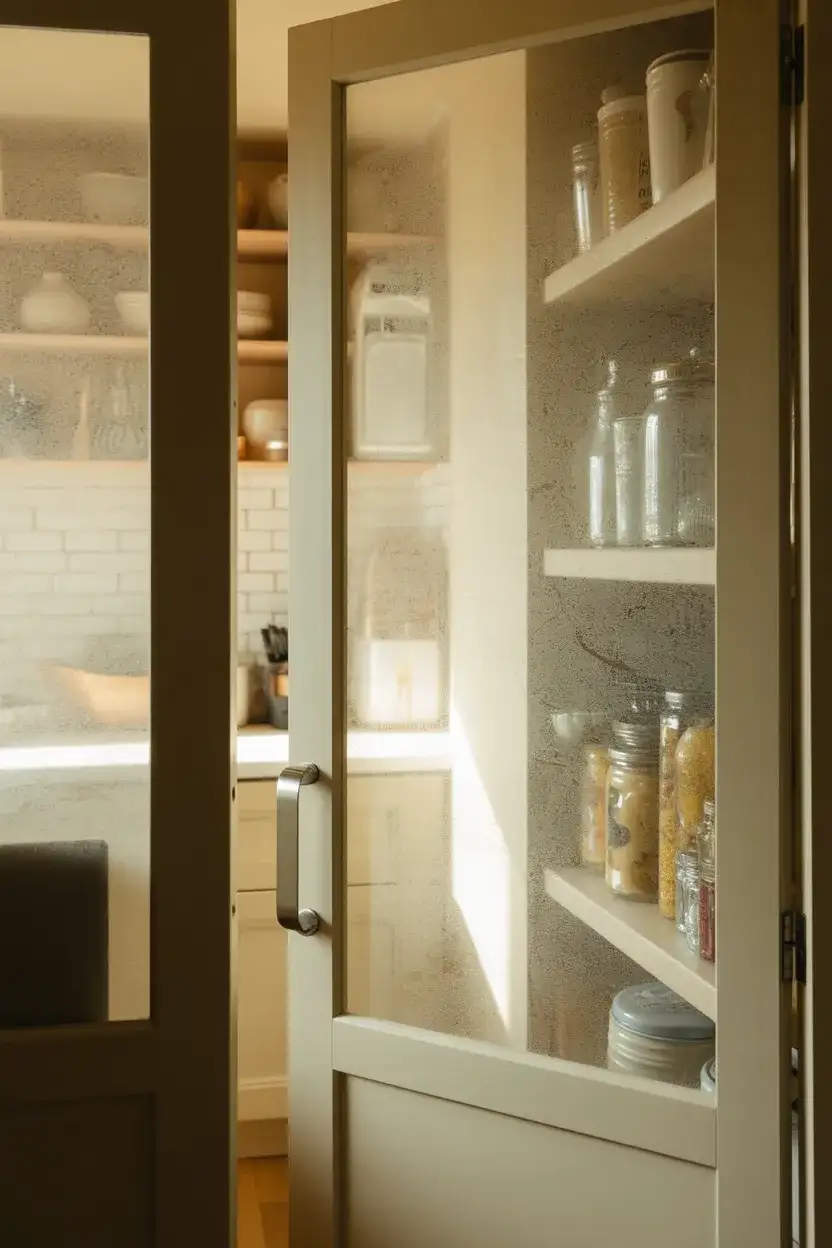
A neighbor in Austin installed frosted glass doors on her corner pantry and found it changed how she approached meal planning. Because she could vaguely see what was inside without opening the door, she started shopping more intentionally and wasting less. The visual reminder of what’s stocked—without the pressure of perfection—made the space feel both functional and forgiving. It’s a small psychological shift, but one that makes daily cooking feel lighter.
5. Compact Corner Pantry for Small L-Shaped Kitchens
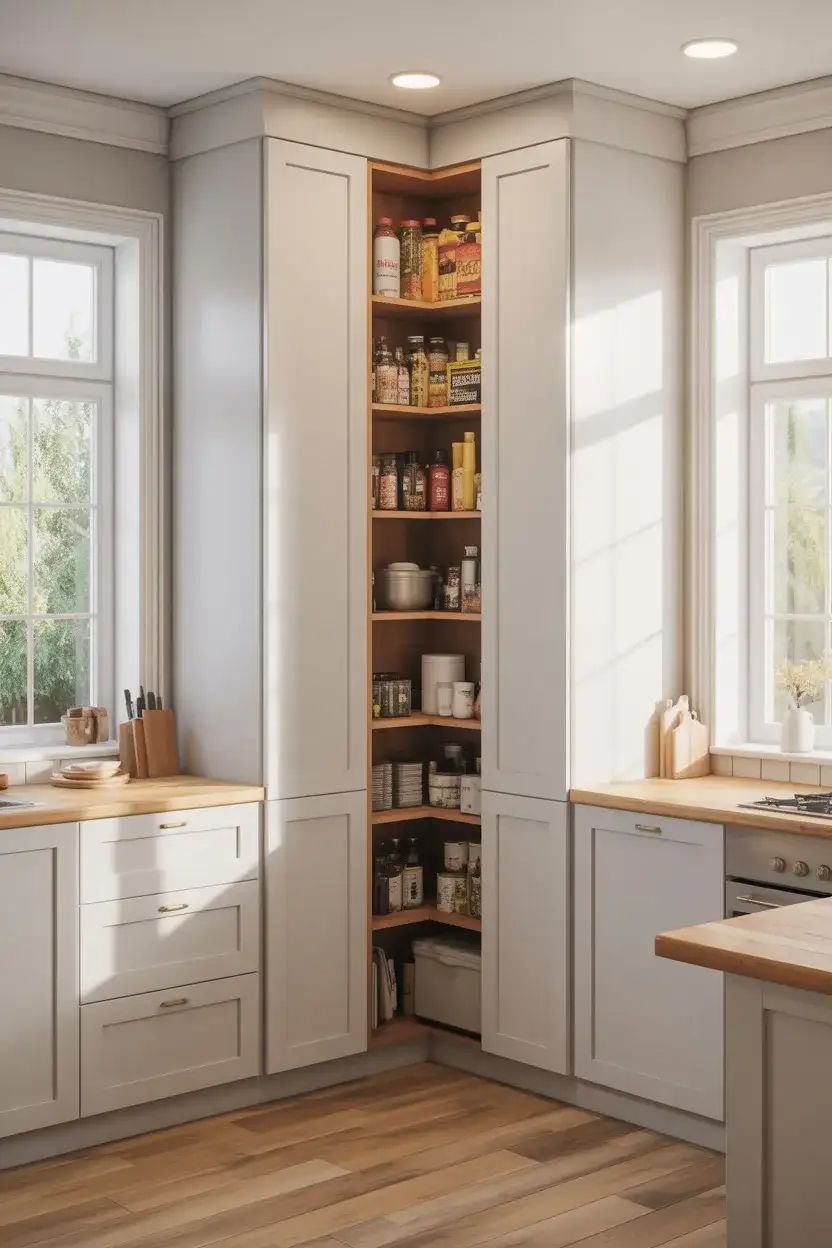
In a small L-shaped kitchen with an island, a compact corner pantry can fill the gap between your two cabinet runs without feeling bulky. This setup typically features a narrow cupboard or tall unit that fits snugly into the corner, offering vertical storage without eating into your floor space. It’s perfect for condos, starter homes, or urban apartments where every inch matters. The narrow profile means it won’t interfere with the work triangle, and it keeps frequently used items within arm’s reach.
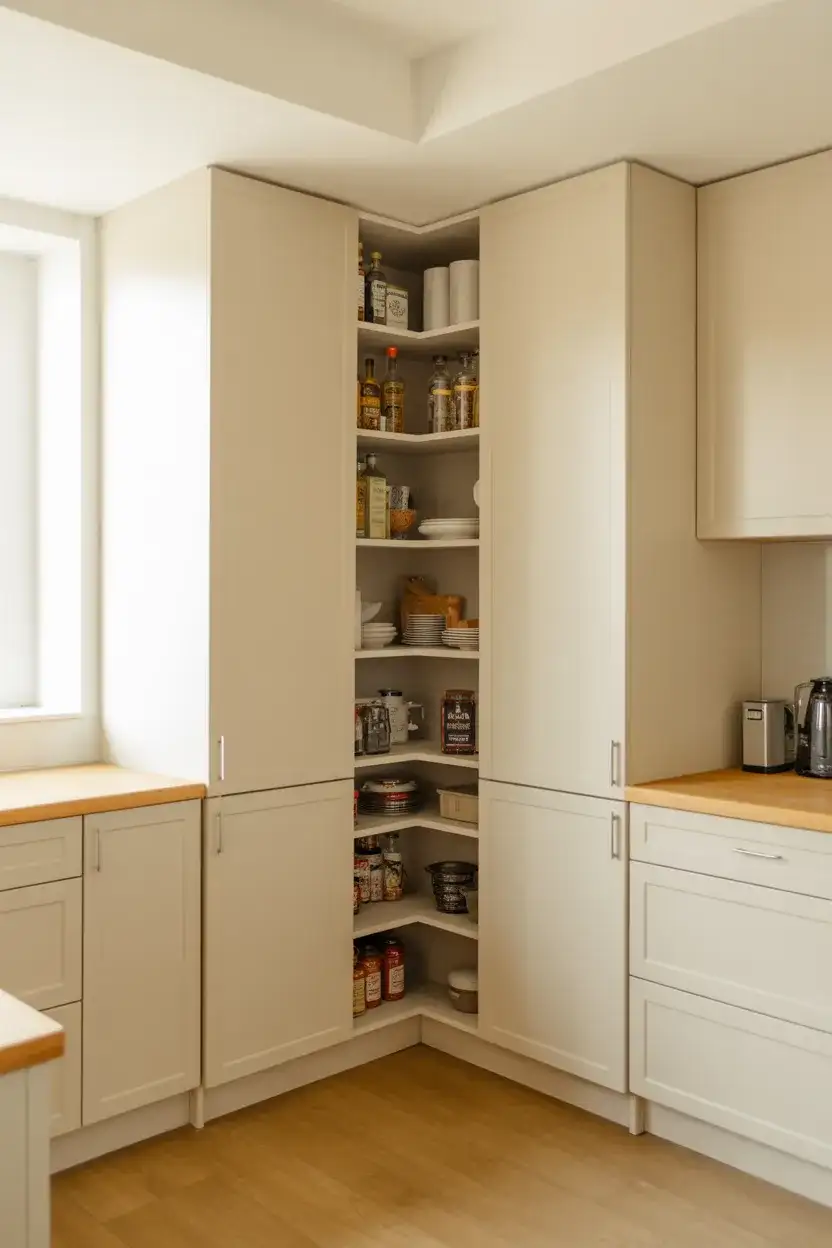
Budget-conscious renovators can find prefab corner pantry units at IKEA or Home Depot starting around $200, making this one of the most affordable ways to add serious storage. If you’re handy, you can even customize a basic unit with paint, new hardware, and interior organizers. The key is measuring your corner carefully—don’t assume standard dimensions will work. Bring a tape measure to the store and double-check clearance for doors and drawers before you commit.
6. Corner Pantry with Sliding Barn Door
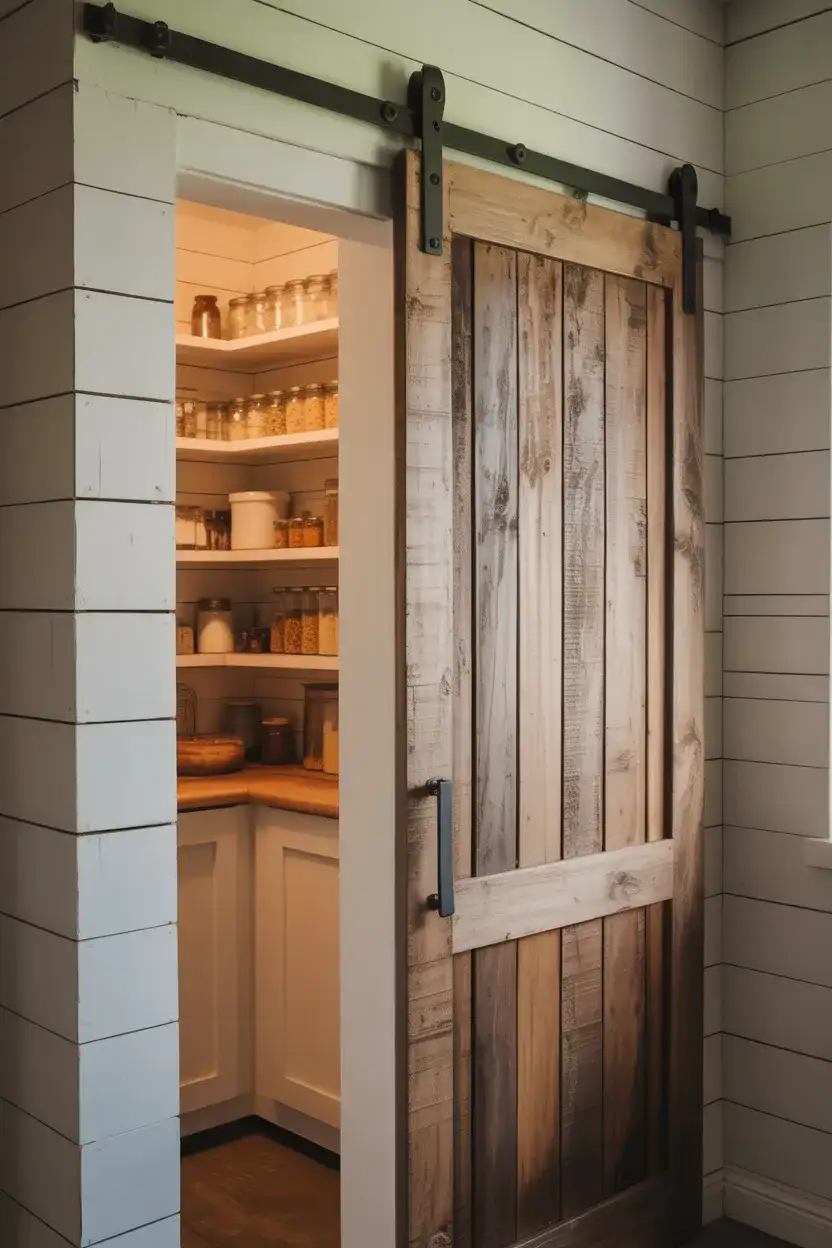
A sliding barn door adds farmhouse charm to a corner pantry while saving space in tight layouts. Unlike traditional swing doors, barn doors glide along a track, which means you don’t need to account for door clearance in narrow hallways or galley kitchens. This style works beautifully in homes with rustic, industrial, or modern farmhouse aesthetics, and it’s become a popular makeover choice for homeowners looking to refresh their kitchen without a full remodel. The hardware is available in a range of finishes, from oil-rubbed bronze to matte black.
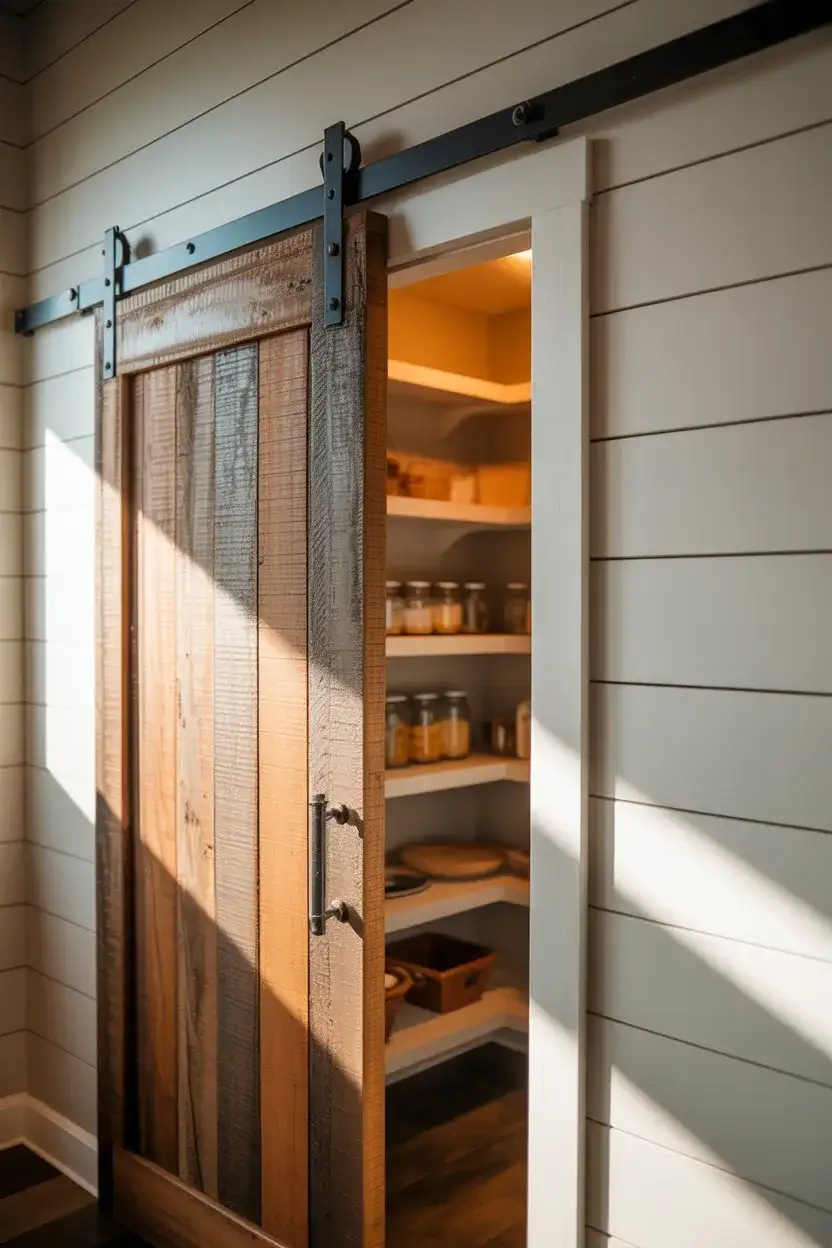
This style works best in homes where the corner pantry is positioned along an open wall, allowing the door to slide freely without obstruction. In the South and Midwest, where farmhouse aesthetics remain strong, sliding barn doors are especially popular. Just be aware that they don’t seal as tightly as traditional doors, so if you’re storing temperature-sensitive items, you may want to add weatherstripping or choose a different door style.
7. Open Corner Shelving for Everyday Essentials
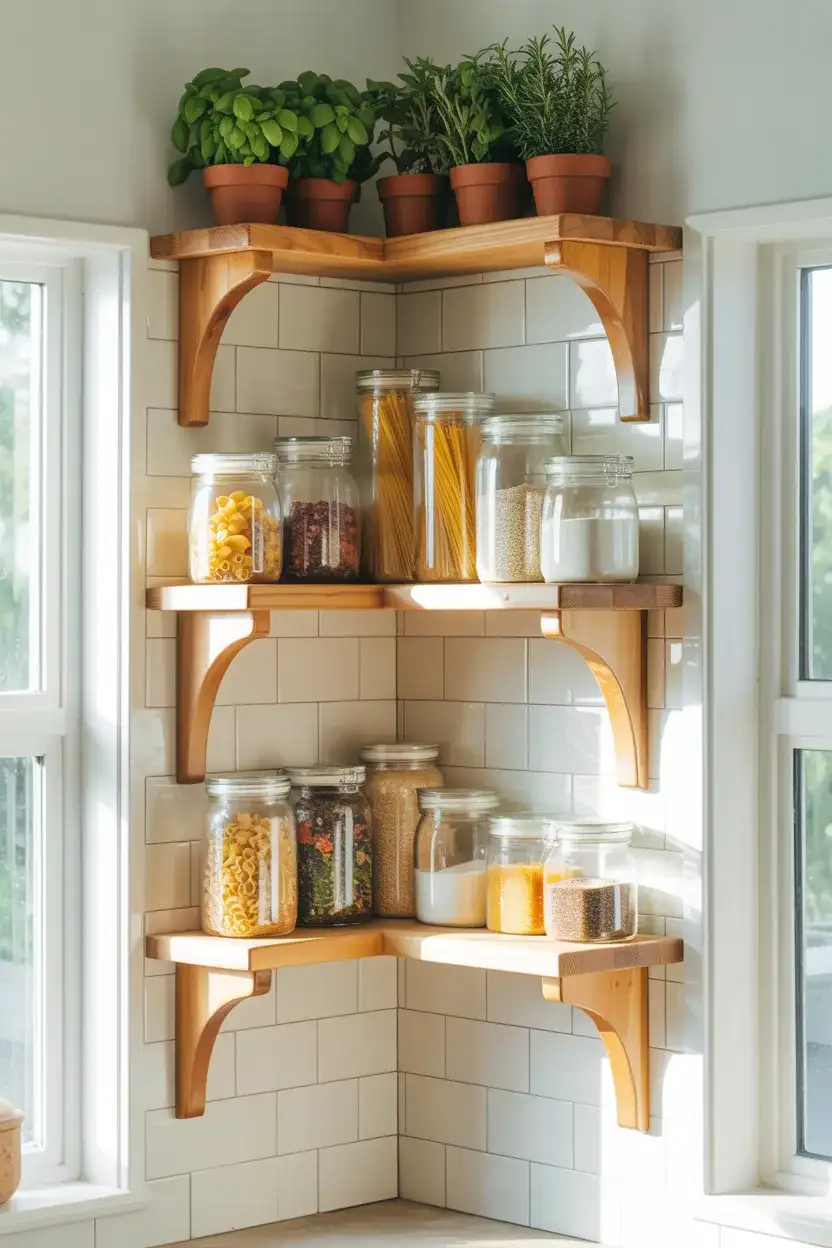
Open corner shelving ideas are ideal for homeowners who want easy access to everyday essentials without the fuss of opening and closing doors. This approach turns a corner into a display zone where you can store attractive jars, cookbooks, or frequently used spices. It’s a great fit for small kitchens where visual openness helps the space feel larger, and it encourages you to keep only what you actually use. Just be prepared to dust more often—open shelves require a bit more upkeep than closed cabinets.
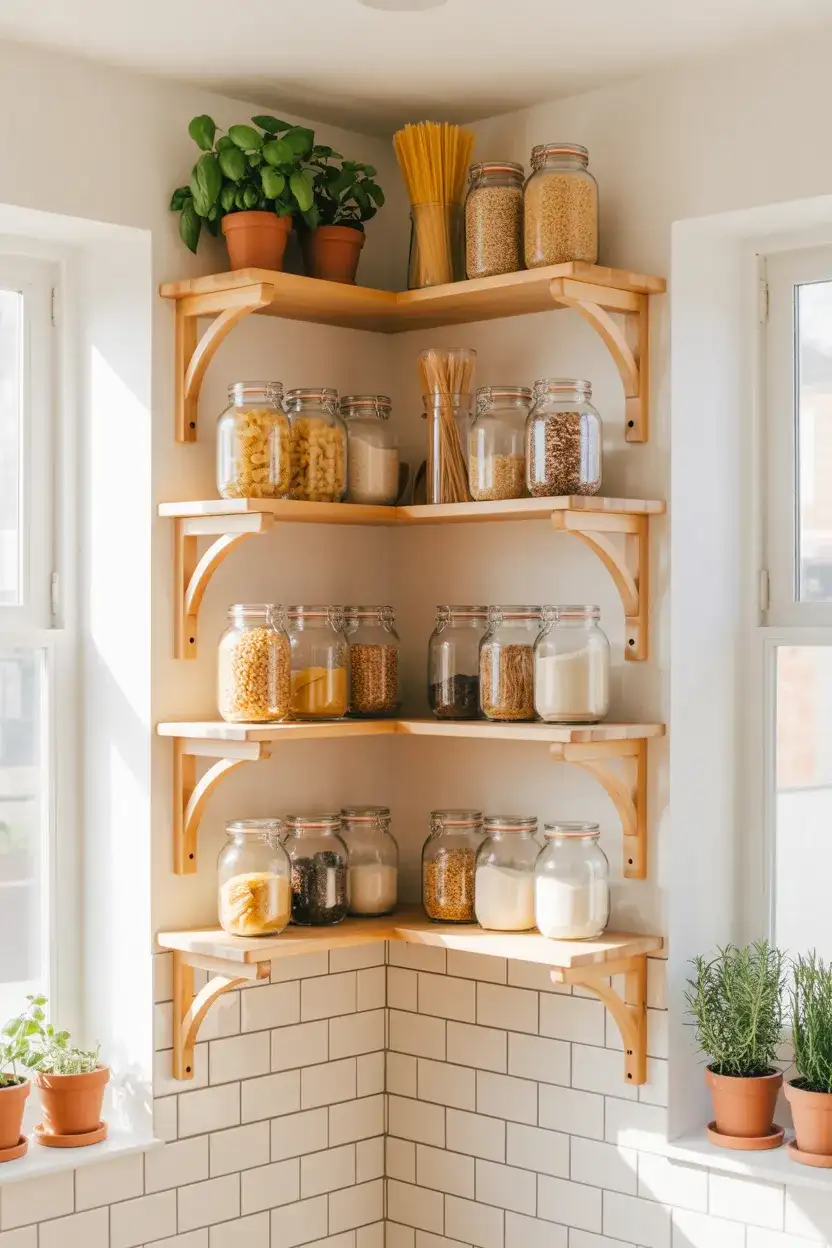
A common mistake is overloading open corner shelves with too many mismatched items. To avoid a cluttered look, stick to a consistent color palette—think matching glass jars, uniform baskets, or a curated collection of ceramics. In California and the Pacific Northwest, where casual, laid-back aesthetics dominate, open shelving has become a signature style. It works especially well in homes with high ceilings, where vertical storage doesn’t feel cramped or overwhelming.
8. Built-In Corner Pantry with Chalkboard Door
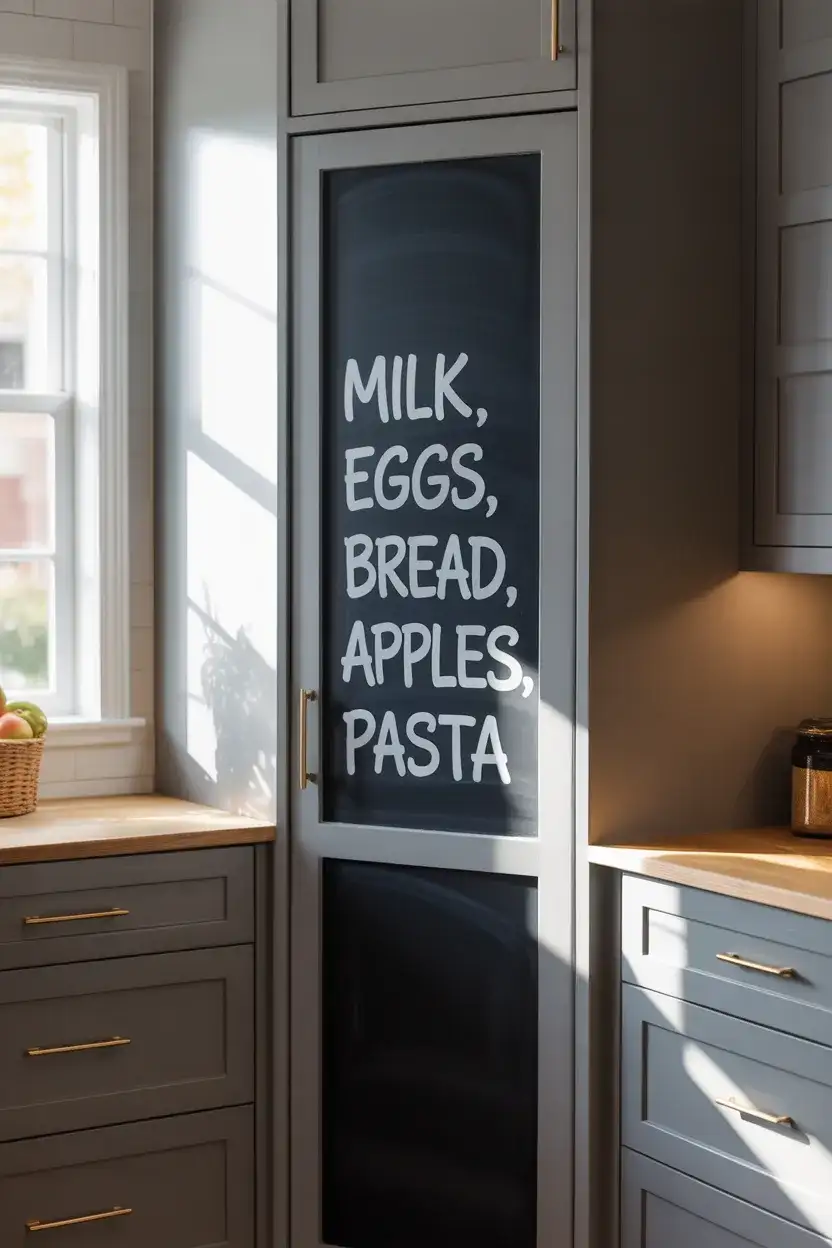
A built-in corner pantry with a chalkboard door combines function and fun, offering a spot to jot down grocery lists, meal plans, or family reminders. This setup is especially popular with parents who want a central hub for household communication, and it turns a simple storage space into an interactive feature. The chalkboard paint can be applied to any flat door surface, and it adds a playful, personalized touch that feels both practical and homey. It’s a small detail that makes a big impact in busy family kitchens.
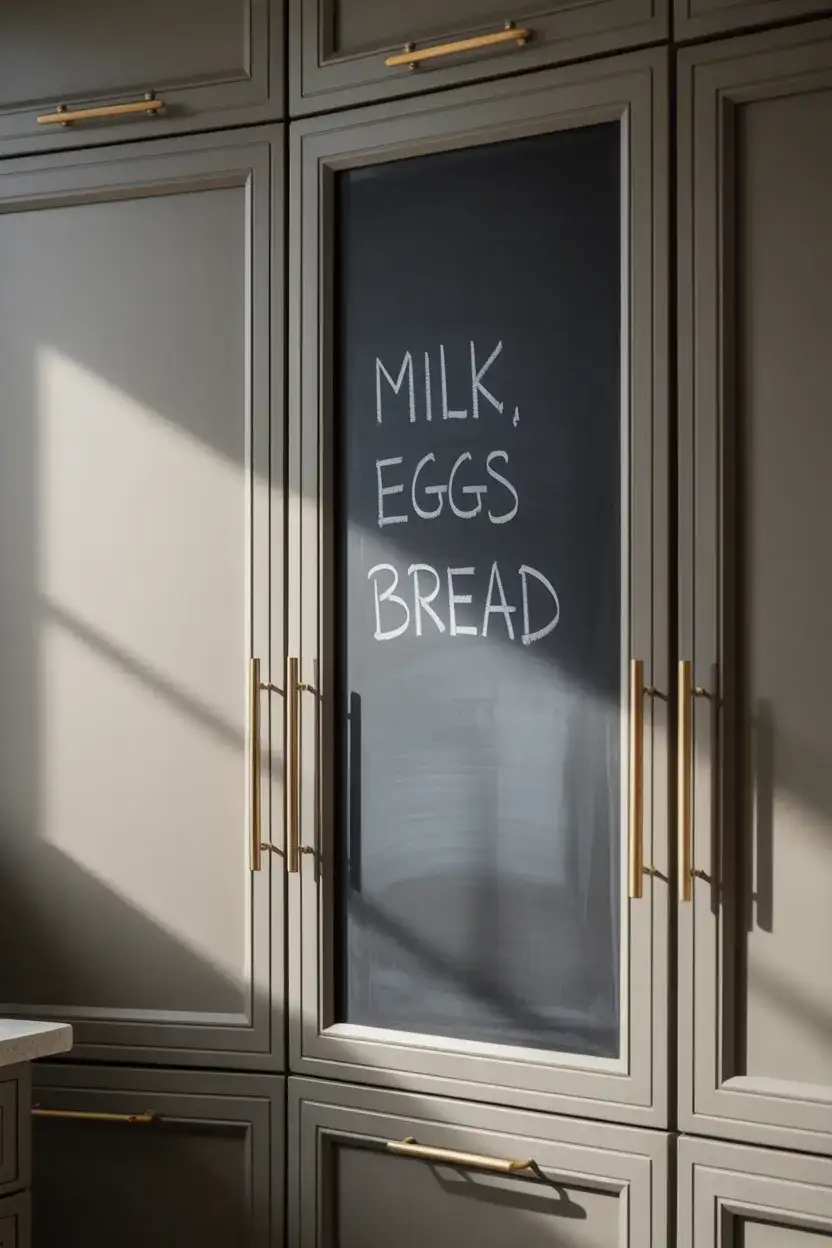
One homeowner in suburban Chicago mentioned that her chalkboard pantry door became the family’s favorite spot to doodle and leave notes for each other. It started as a practical grocery list surface but evolved into a creative outlet for her kids. The best part? Chalk markers are easier to erase than traditional chalk and don’t create dust, which keeps your kitchen cleaner. Just make sure to seal the paint properly for a smooth writing surface.
9. Corner Pantry with Pull-Out Drawers
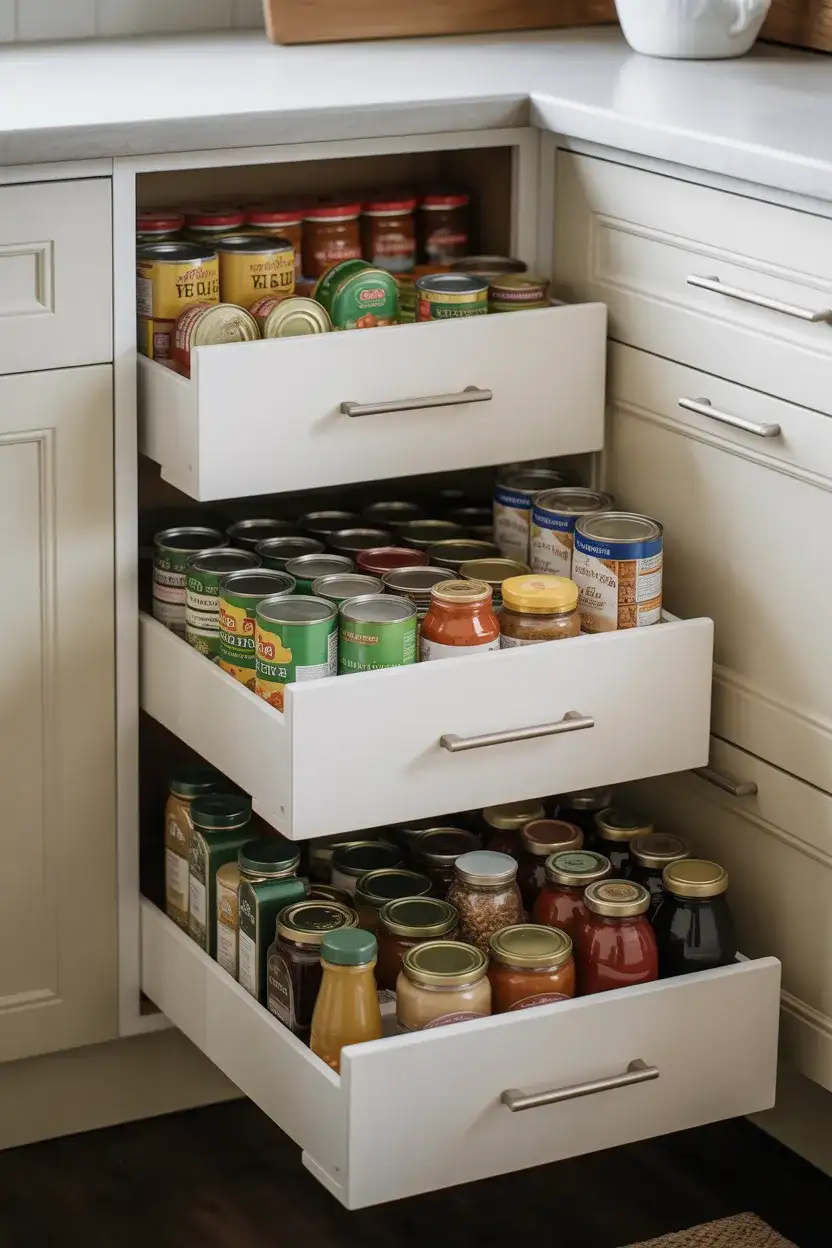
Pull-out drawers in a corner pantry eliminate the need to dig through deep, dark spaces. This system uses wide, shallow drawers that glide out fully, giving you a bird’s-eye view of everything stored inside. It’s particularly useful for organizing ideas focused on canned goods, baking supplies, or snack bins, and it’s a favorite among homeowners who love the satisfying click of soft-close drawer mechanisms. In terms of dimensions, most systems require at least 24 inches of depth to function smoothly.
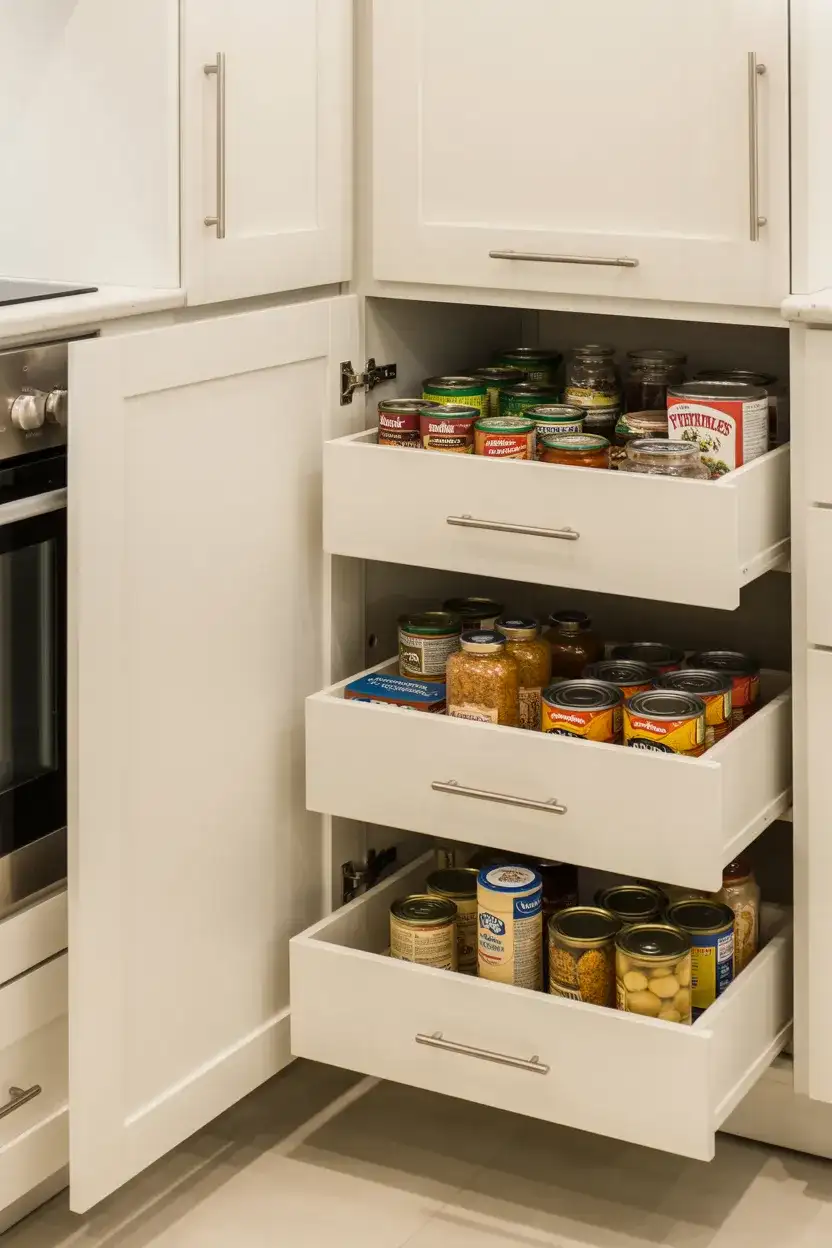
Expert kitchen designers recommend pull-out drawers for households with mobility concerns or back issues, as they reduce the need for bending and reaching. The upfront cost is higher than fixed shelving—typically $500 to $1,200 depending on quality and size—but the long-term convenience often justifies the investment. Many homeowners report that pull-out drawers change their relationship with their pantry, making it easier to keep track of inventory and avoid duplicate purchases.
10. Corner Pantry with Vertical Dividers
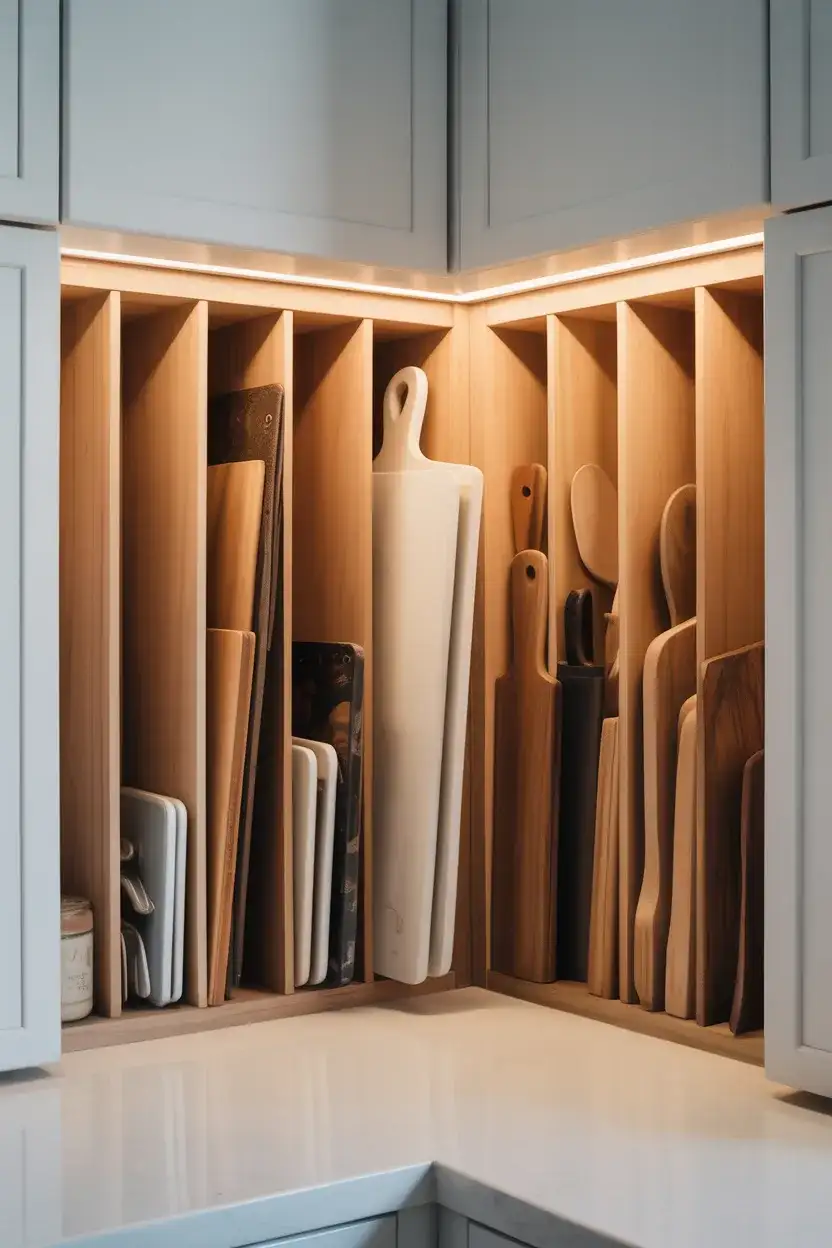
Vertical dividers in a corner pantry are a game-changer for storing baking sheets, cutting boards, and serving trays. Instead of stacking these items horizontally—where they topple and slide—vertical dividers keep them upright and easy to grab. This organization strategy works beautifully in small kitchen settings where drawer space is limited, and it prevents the frustration of having to unstack an entire pile just to reach the item at the bottom. The dividers can be adjustable or fixed, depending on your needs.

In the Northeast, where holiday baking and entertaining are big traditions, vertical dividers are especially popular. They allow homeowners to store specialty pans and platters without sacrificing everyday accessibility. Budget options start around $40 for DIY divider kits, while custom-built solutions can run $200 or more. Either way, the investment pays off quickly in terms of daily convenience and reduced clutter.
11. Angled Corner Pantry for Awkward Spaces
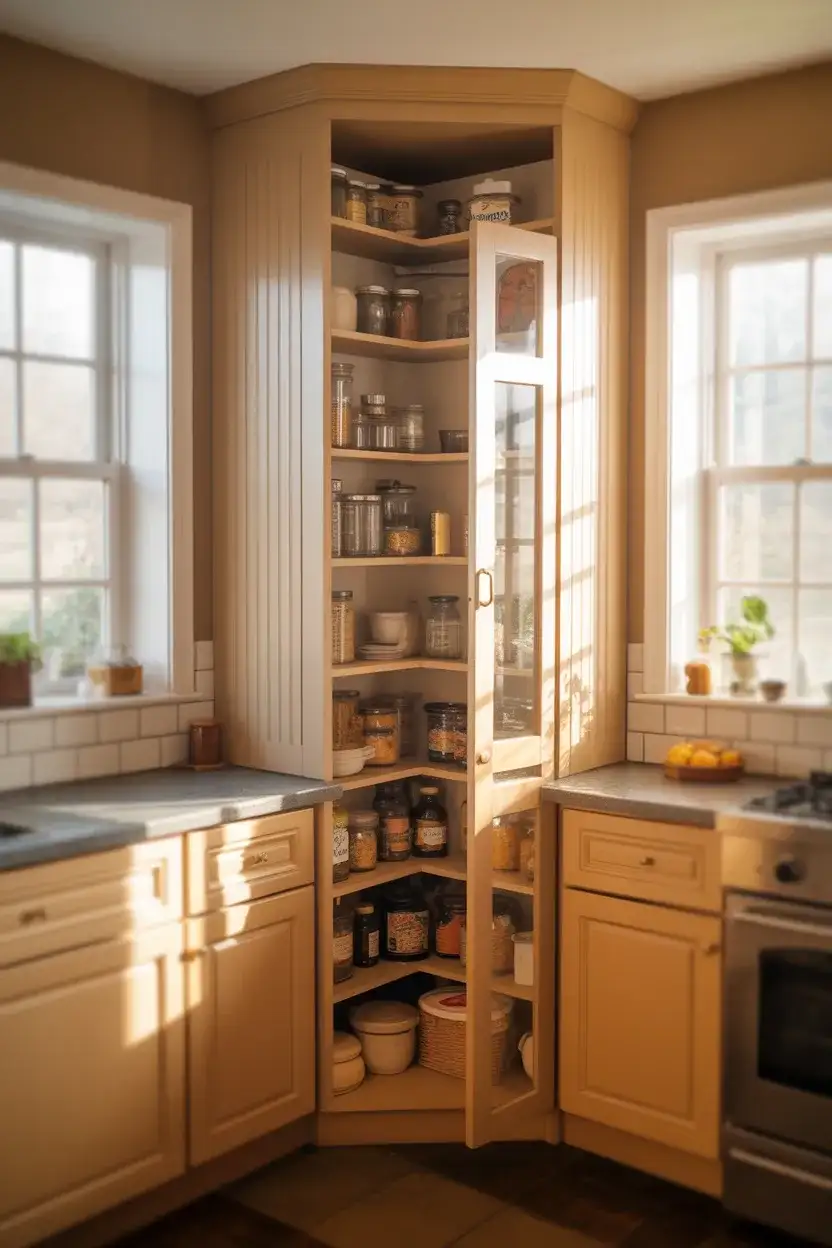
An angled corner pantry is designed to fit into odd or irregular layouts, making the most of spaces that would otherwise go unused. Instead of a standard 90-degree corner, this style features a diagonal front that improves accessibility and visibility. It’s a clever solution for older homes with quirky floor plans or for kitchens that have been reconfigured over the years. The angled design also creates a more open feel, as it softens the hard lines of traditional corner cabinets.
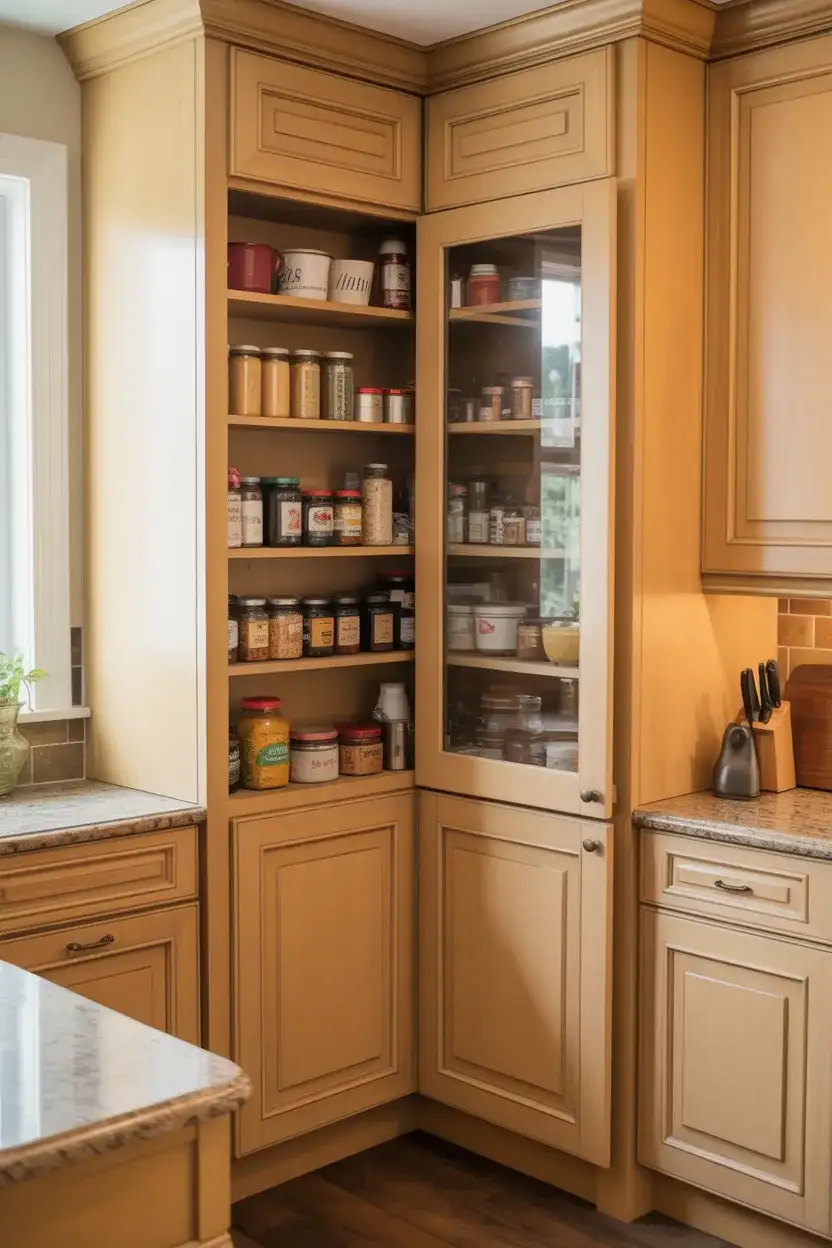
This design works best in kitchens where the corner isn’t perfectly square or where you want to maintain better sightlines across the room. In Southern homes with open floor plans, angled pantries are popular because they don’t block the view between the kitchen and living areas. Custom cabinetry is usually required, which can add to the cost, but the result is a tailored solution that feels intentional and polished.
12. Corner Pantry with Adjustable Shelving
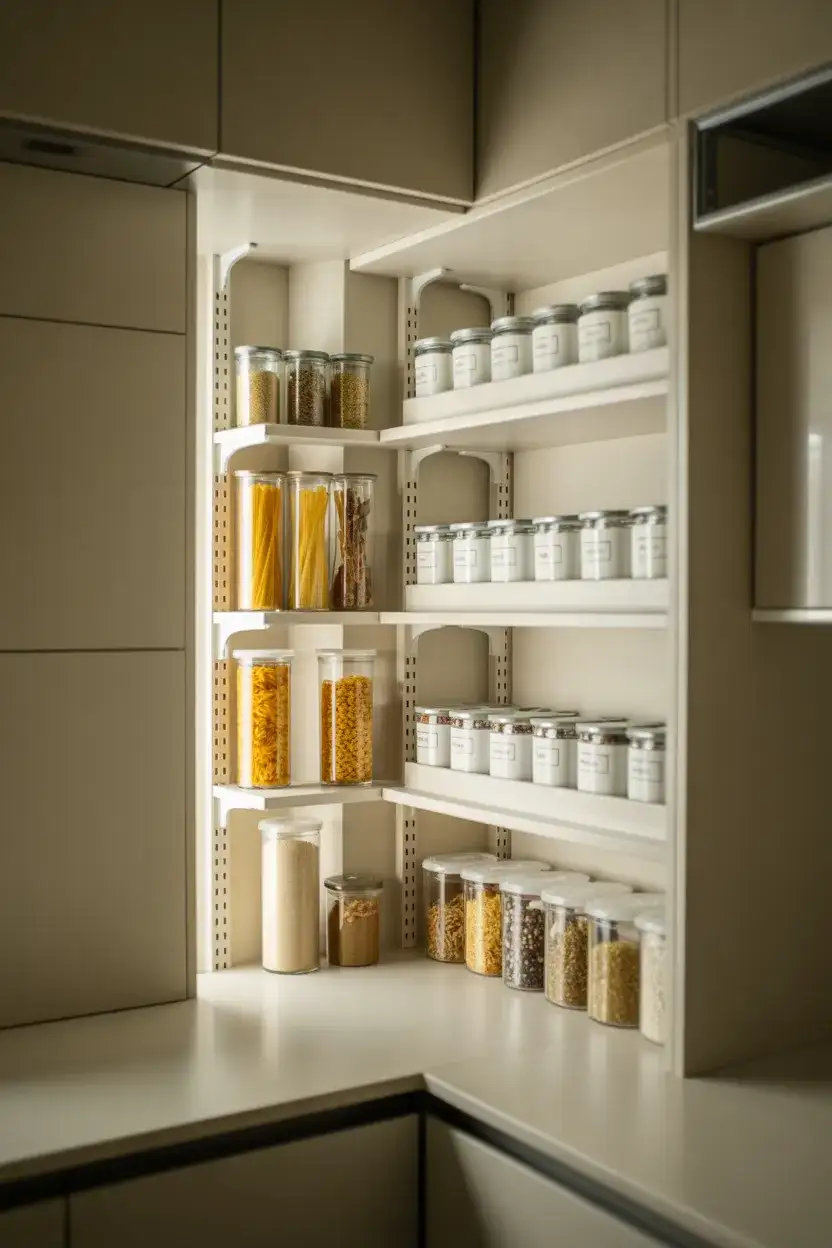
Adjustable shelving in a corner pantry gives you the flexibility to reconfigure your storage as your needs evolve. Whether you’re storing tall cereal boxes one month and short jam jars the next, adjustable shelves let you customize the spacing without tools or permanent changes. This adaptability is especially valuable in households with changing dietary habits or growing families. Most systems use peg-and-hole or track-mounted hardware, which is simple to adjust and widely available.
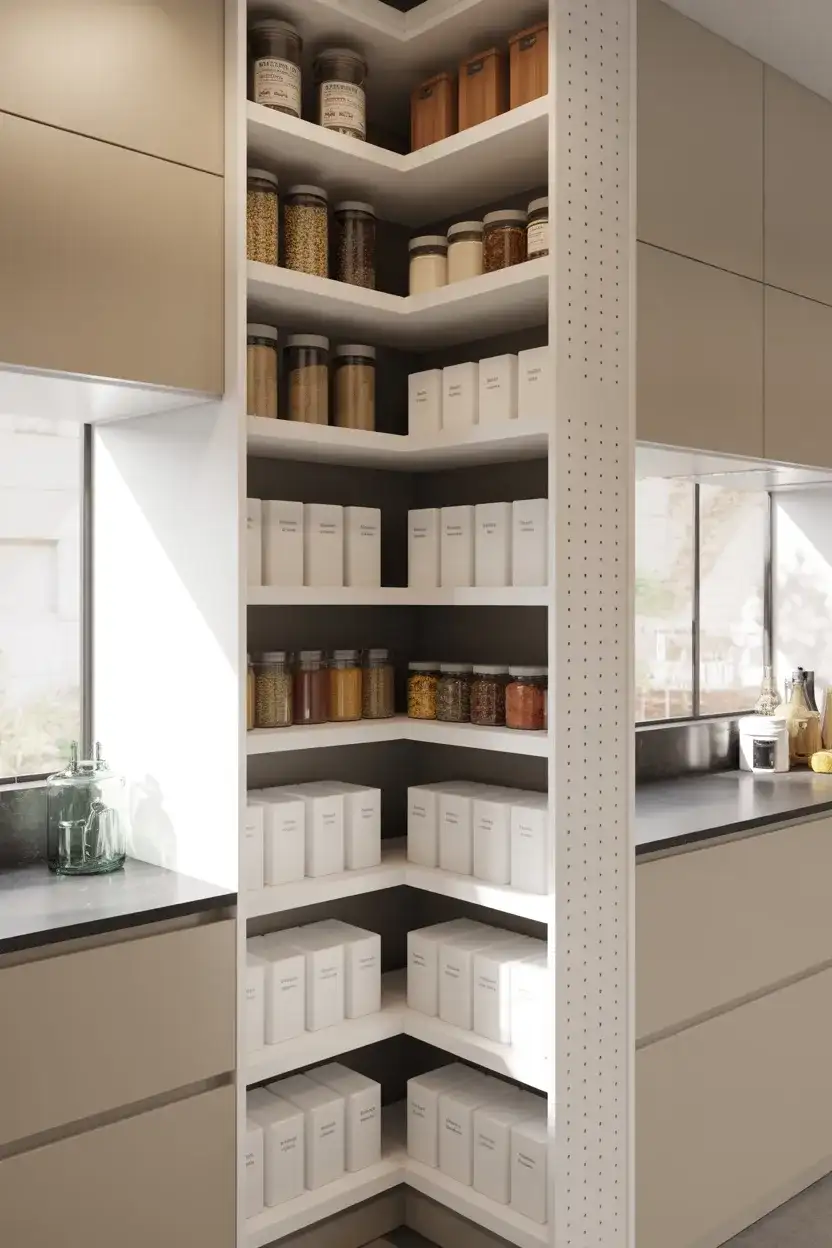
Real homeowners report that adjustable shelving is one of the most underrated features in pantry design. It’s easy to install, affordable (often under $100 for a full pantry), and incredibly practical. If you’re planning a DIY pantry build, prioritize adjustable shelving over fixed options—you’ll thank yourself later when your storage needs inevitably shift. It’s one of those small decisions that quietly improves your daily life.
13. Corner Pantry with Integrated Wine Rack
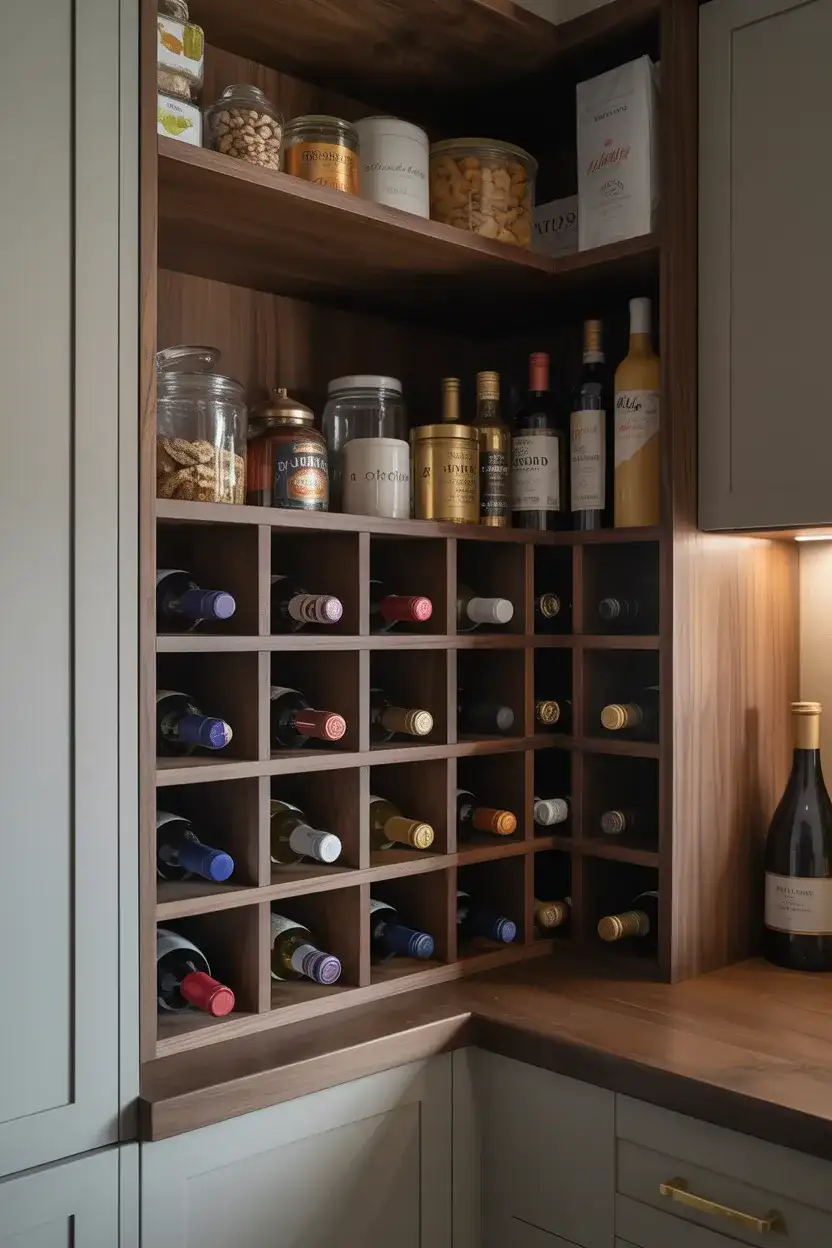
A corner pantry with an integrated wine rack combines food storage with beverage display, creating a dedicated spot for your wine collection without sacrificing kitchen functionality. This design ideas approach is perfect for homes where entertaining is a regular activity, and it adds a touch of sophistication to your storage zone. The wine rack can be built into the lower section of the pantry, leaving upper shelves free for dry goods and snacks. It’s a practical luxury that feels special without being overly formal.
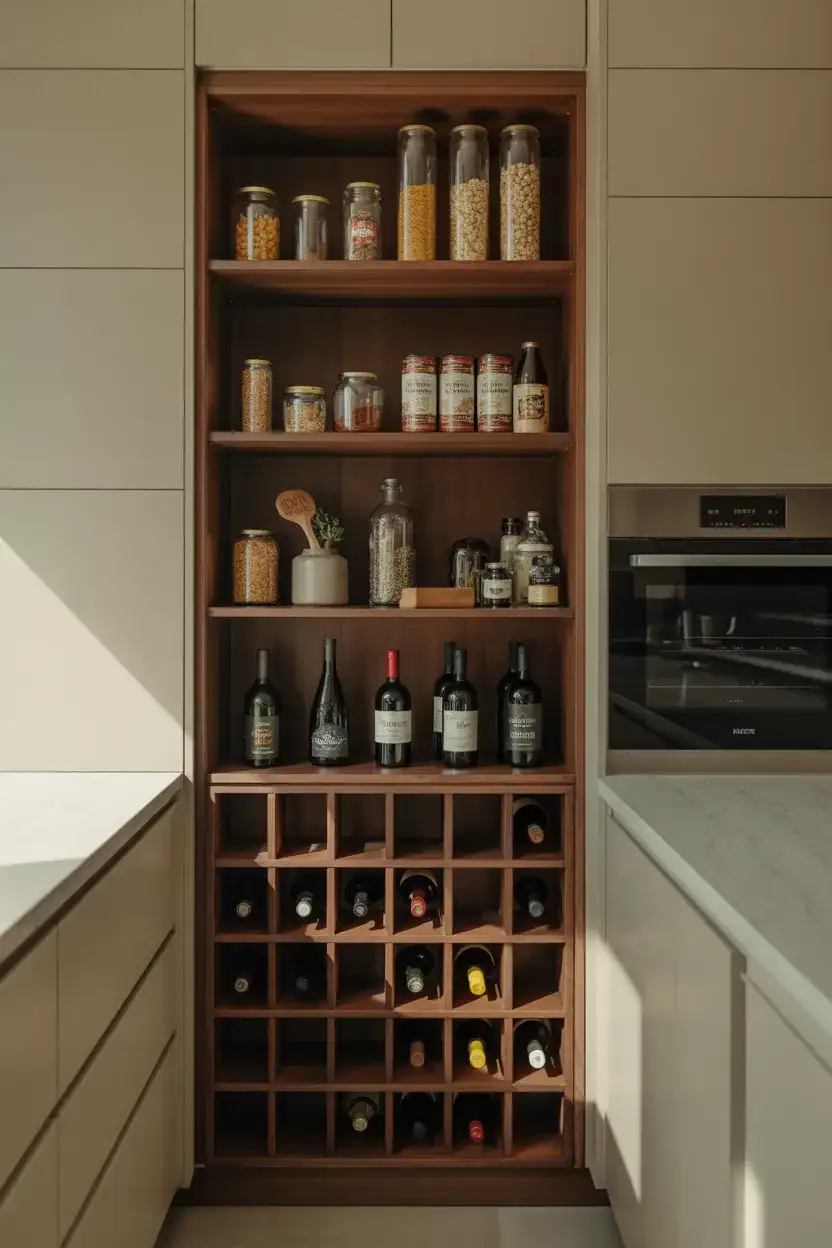
In wine-loving regions like California’s Napa Valley or the Pacific Northwest, integrated wine racks are a common request in kitchen remodels. They keep bottles at the right angle and temperature (assuming your pantry is climate-controlled), and they make your collection part of the kitchen’s visual story. Just avoid placing the wine rack near heat sources like ovens or dishwashers, as temperature fluctuations can affect wine quality over time.
14. Corner Pantry with Labeled Bins and Baskets
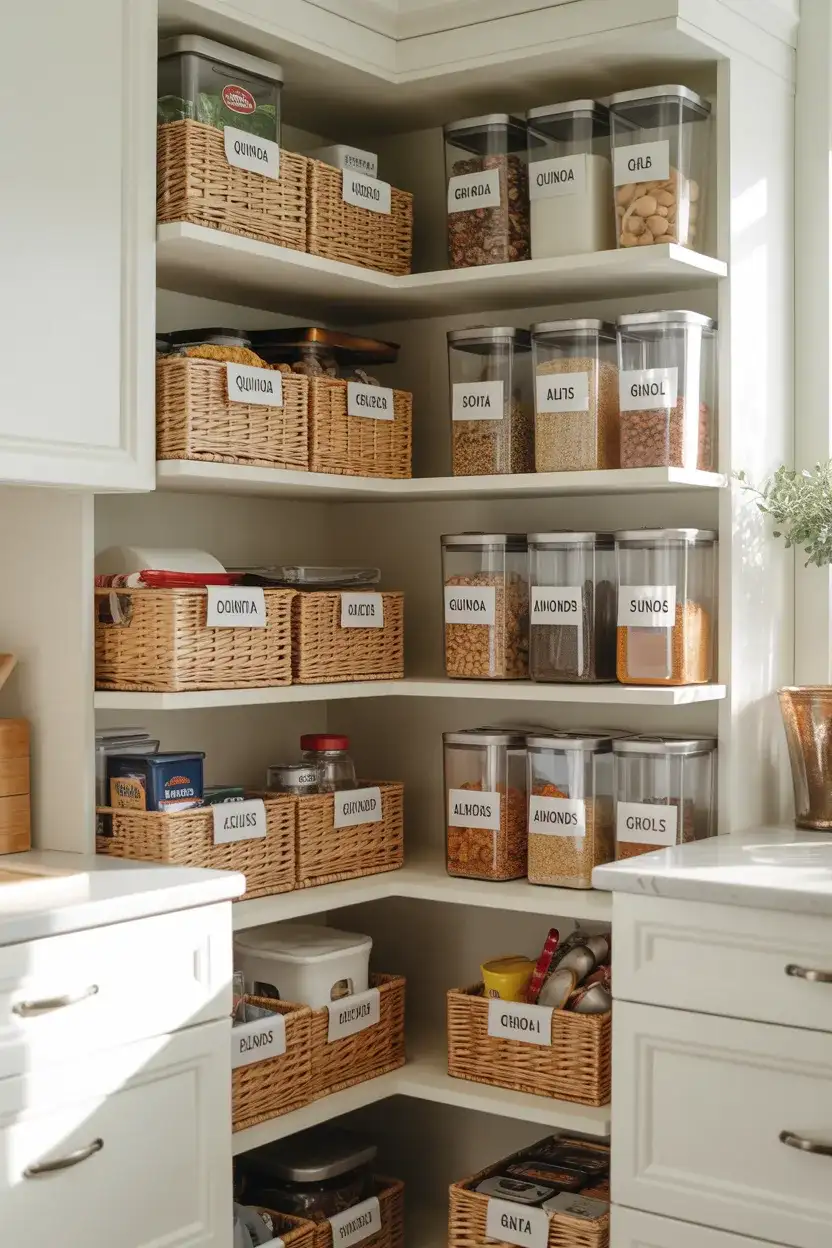
Labeled bins and baskets transform a corner pantry into a highly organized system where everything has a designated home. This organization idea strategy is especially helpful for families with kids, as it makes it easy for everyone to find snacks, lunch supplies, or baking ingredients. The labels can be handwritten, printed, or even chalkboard-style, and they eliminate the guesswork of what’s stored where. In small kitchen spaces, this level of organization prevents duplicate purchases and reduces food waste.
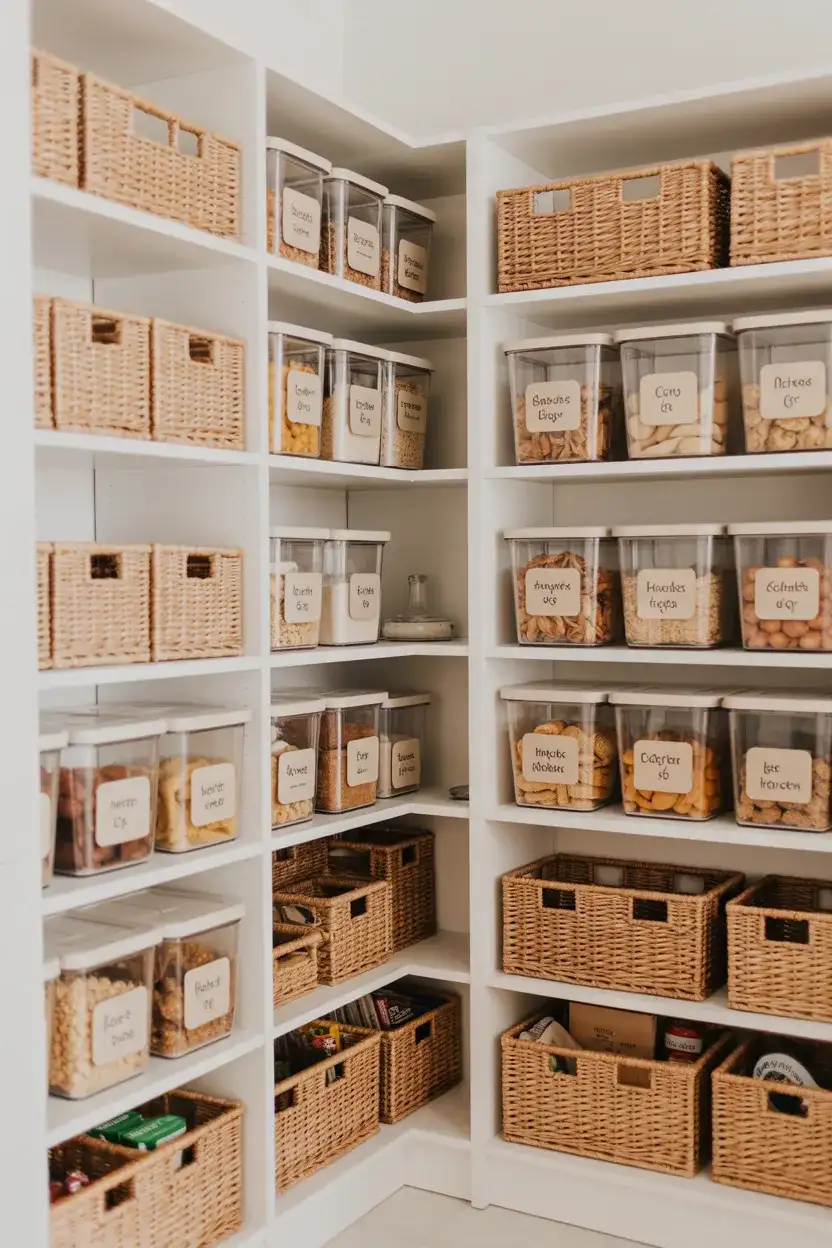
Practical insight: Start with just a few bins and labels, then expand as you see what actually gets used. Many people overbuy organizing products in a burst of enthusiasm, only to realize they don’t need 20 matching containers. Focus on labeling categories that genuinely confuse you—like baking supplies versus breakfast items—and let the rest stay flexible. This approach keeps your system sustainable and prevents it from feeling overly rigid.
15. Double-Door Corner Pantry for Large Families
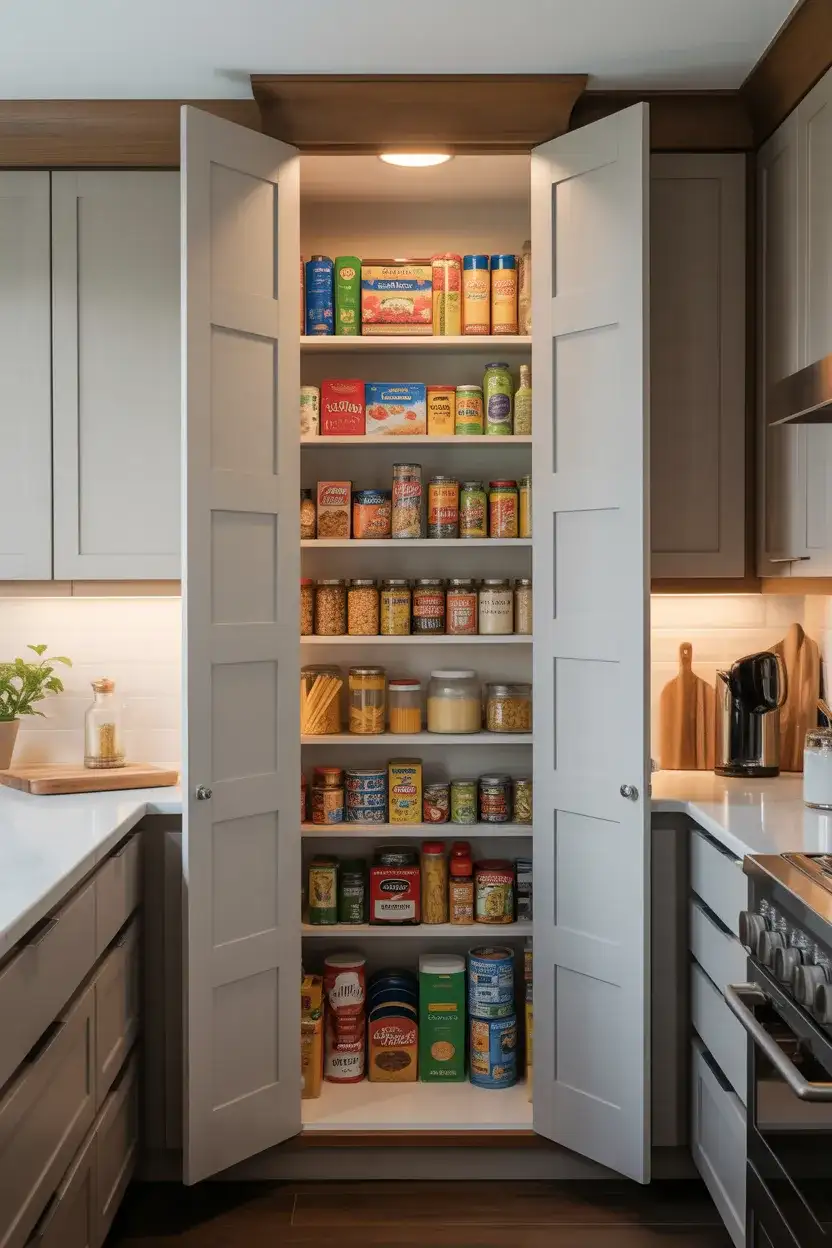
A double-door corner pantry offers generous access and storage capacity, making it ideal for large families who buy in bulk or cook multiple meals at once. The two doors swing open to reveal a spacious interior with ample shelves or pull-out systems, and the wide opening makes it easy to load groceries or retrieve large items. This setup is particularly popular in suburban homes with five or more people, where pantry inventory can quickly become overwhelming without proper dimensions and planning.
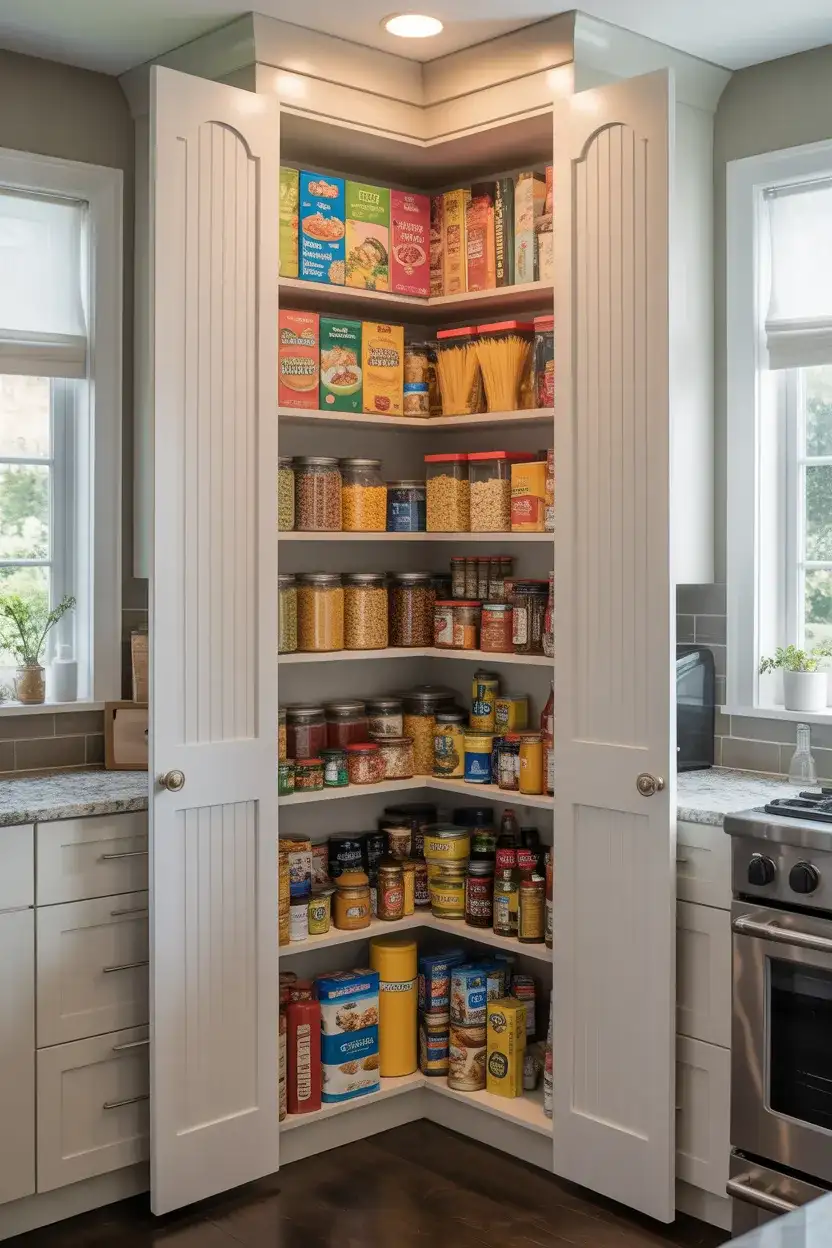
In Texas and the Midwest, where larger homes and bigger kitchens are common, double-door pantries are a staple. They work especially well in homes where Costco runs are a weekly ritual, as the extra width accommodates bulk items like 25-pound bags of rice or cases of canned goods. If you’re installing a double-door pantry, make sure the doors are hung properly to avoid sagging over time—heavy-duty hinges are worth the extra investment.
16. Corner Pantry with LED Strip Lighting
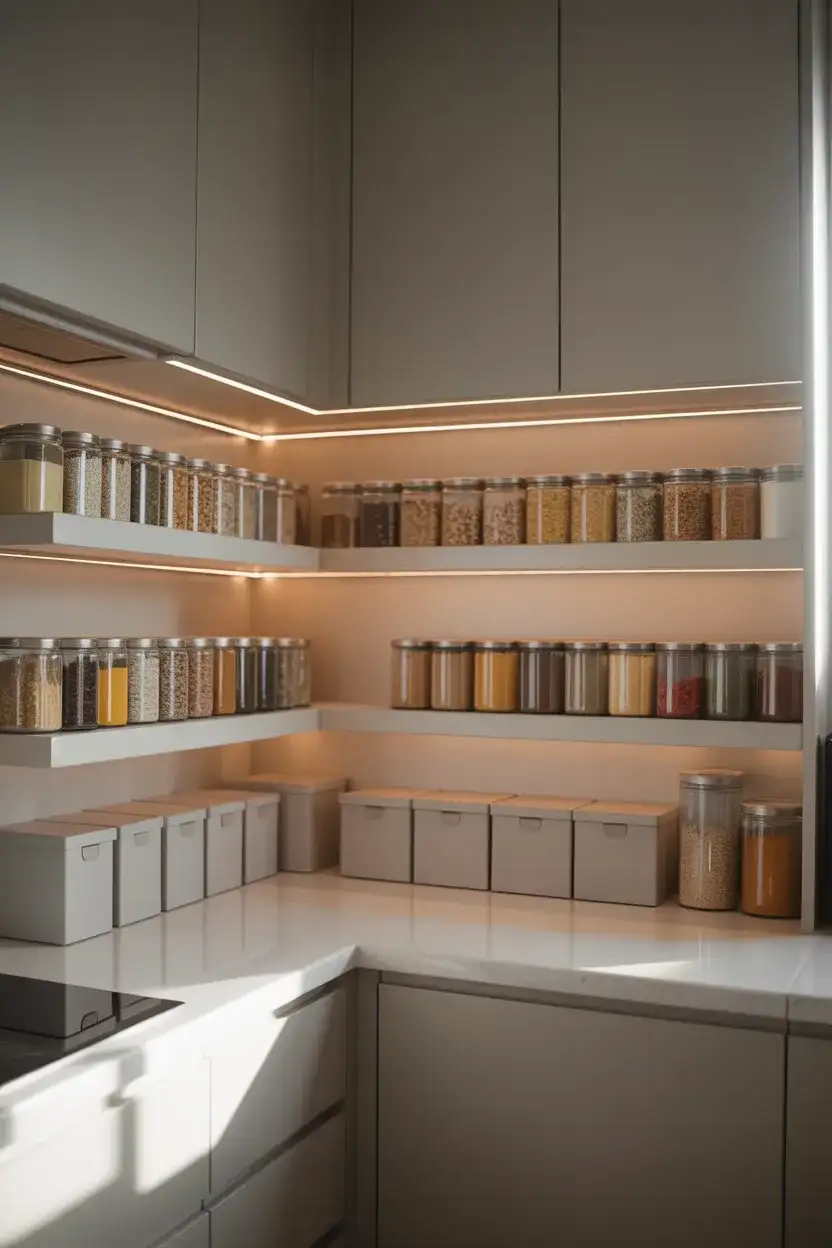
LED strip lighting inside a corner pantry eliminates dark corners and makes it easier to see what’s stored on every shelf. This simple upgrade is surprisingly affordable—usually under $50 for a full pantry—and it can be battery-powered or hardwired depending on your preference. The lighting is especially helpful in blind corner configurations where natural light doesn’t reach, and it adds a polished, high-end look that elevates the entire kitchen. Motion-sensor options are available, so the lights turn on automatically when you open the door.
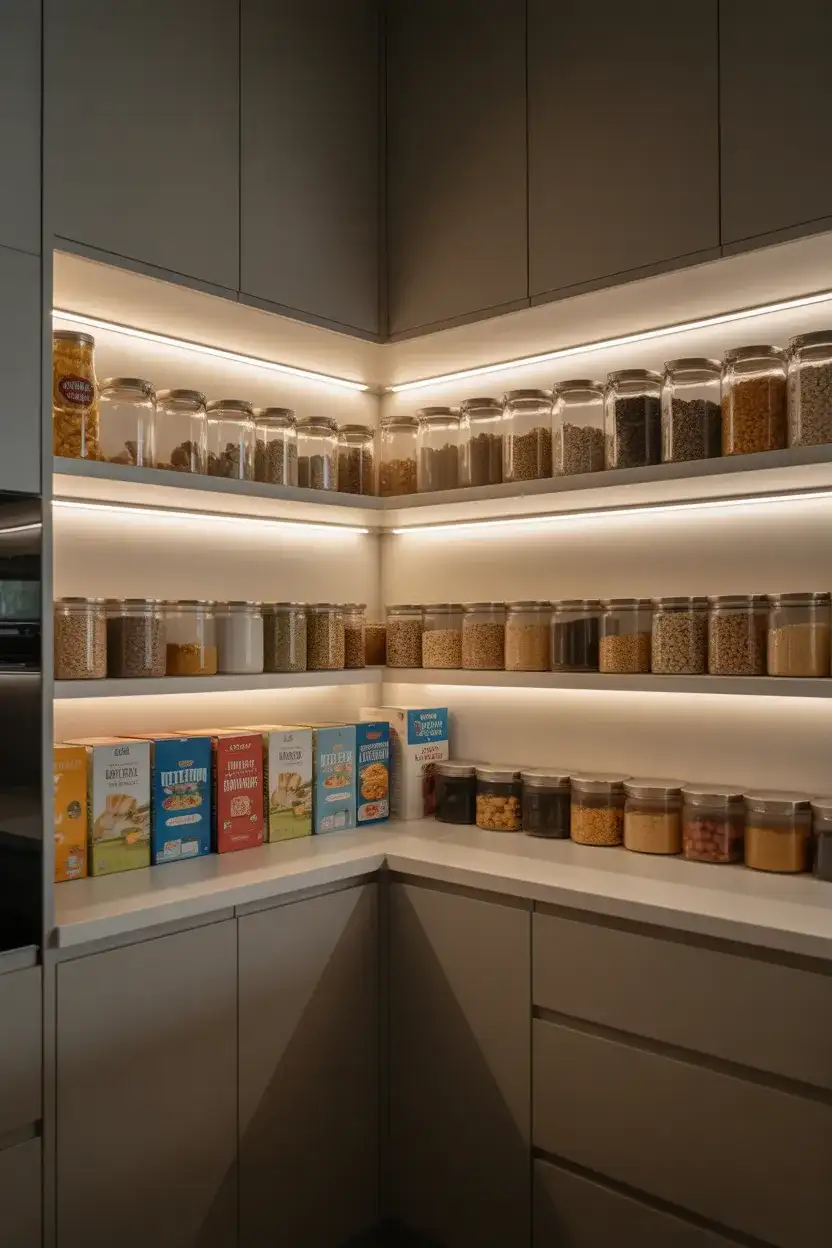
A practical tip: Choose warm white LEDs (around 3000K) rather than cool white or daylight tones. Warm white feels more inviting in a pantry setting and doesn’t create the harsh, clinical look that cooler temperatures can bring. If you’re handy with electrical work, hardwiring is the cleanest option, but battery-powered strips are perfectly functional for renters or quick upgrades. Just keep spare batteries on hand.
17. Corner Pantry with Deep Drawers for Bulk Storage
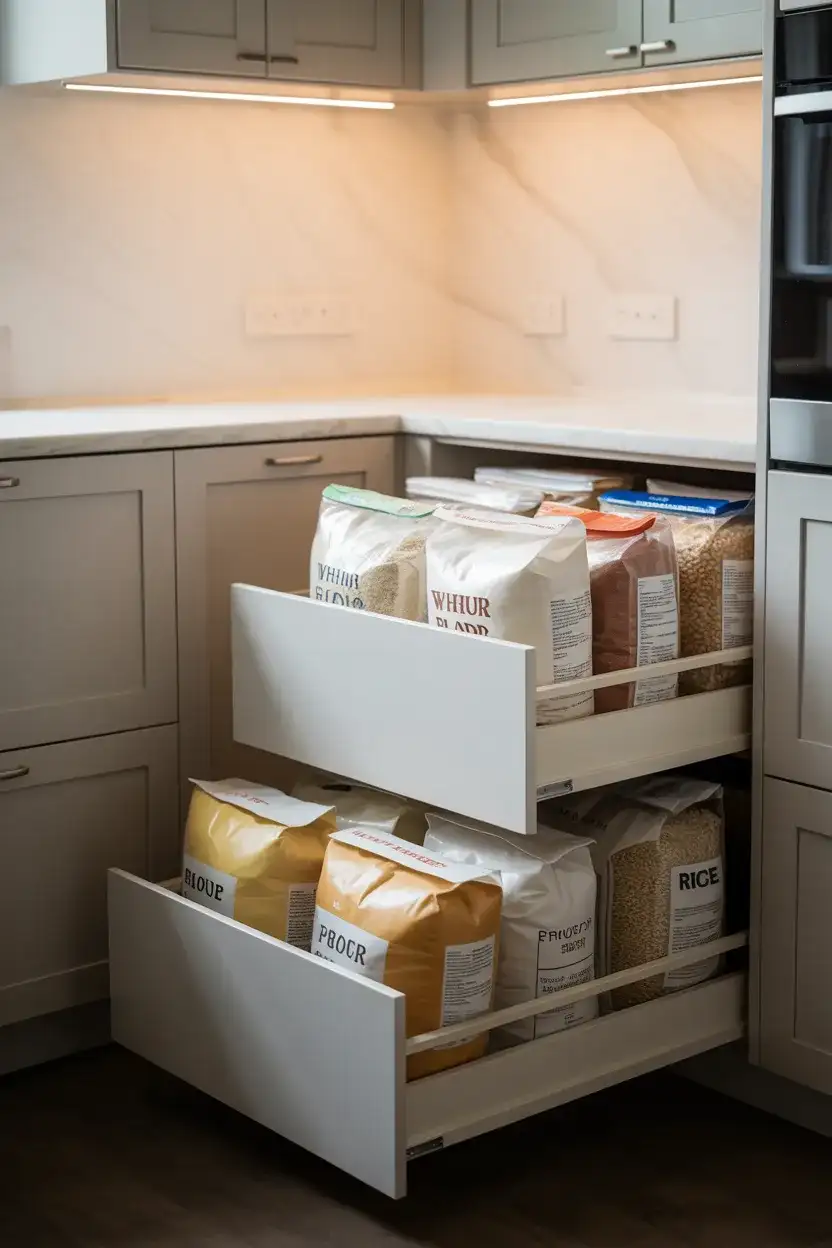
Deep drawers in a corner pantry are perfect for storing bulk items like 10-pound bags of flour, large rice containers, or cases of sparkling water. Unlike standard shelves, deep drawers prevent items from getting lost in the back, and their full-extension design means you can see and reach everything easily. This setup is particularly useful in kitchens where bulk shopping is the norm, and it reduces the need for additional storage in basements or garages. The drawers can be fitted with dividers or bins to keep smaller items from rolling around.
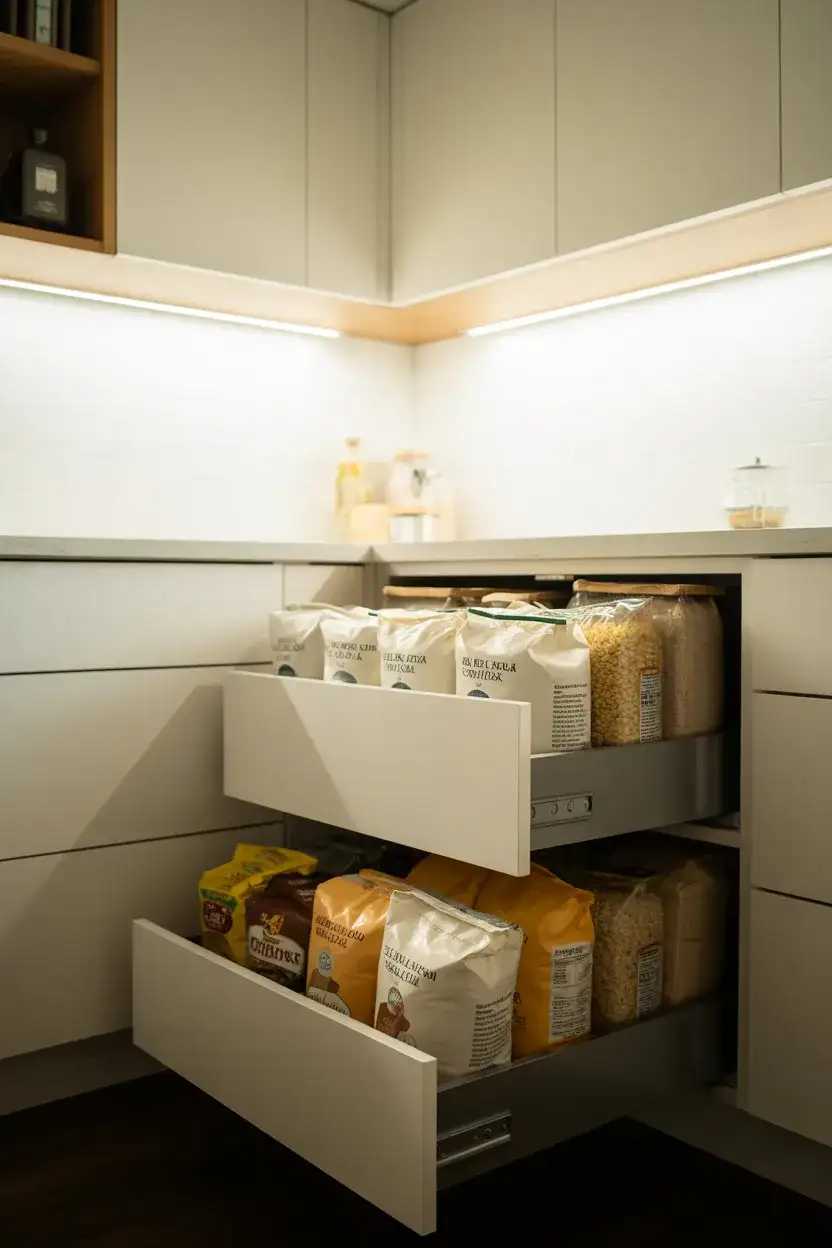
In households that prioritize meal prep or follow specific diets (like keto or gluten-free), deep drawers make it easier to keep specialty ingredients organized and accessible. The upfront cost is higher than fixed shelving, but the long-term convenience is worth it for active cooks. Make sure the drawer slides are rated for at least 100 pounds—cheap hardware will fail quickly under the weight of bulk goods.
18. Corner Pantry with Pocket Door
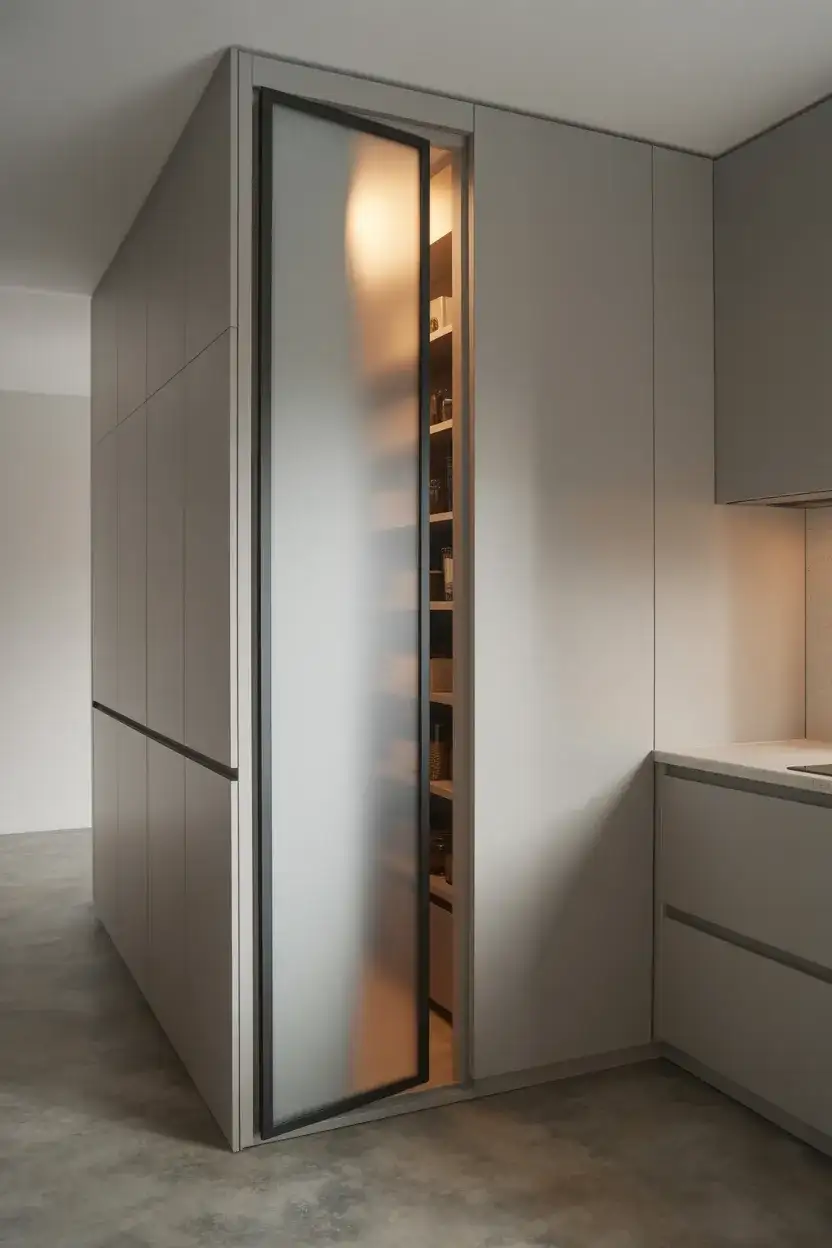
A pocket door slides into the wall, freeing up floor space that would normally be reserved for a swinging door. This design is ideal for narrow layouts or homes where every square foot counts, and it’s a popular choice for modern and contemporary kitchens. The pocket door mechanism requires some planning during construction or remodeling, as the wall cavity needs to be deep enough to accommodate the door. Once installed, though, it’s a sleek and functional solution that feels effortless to use.
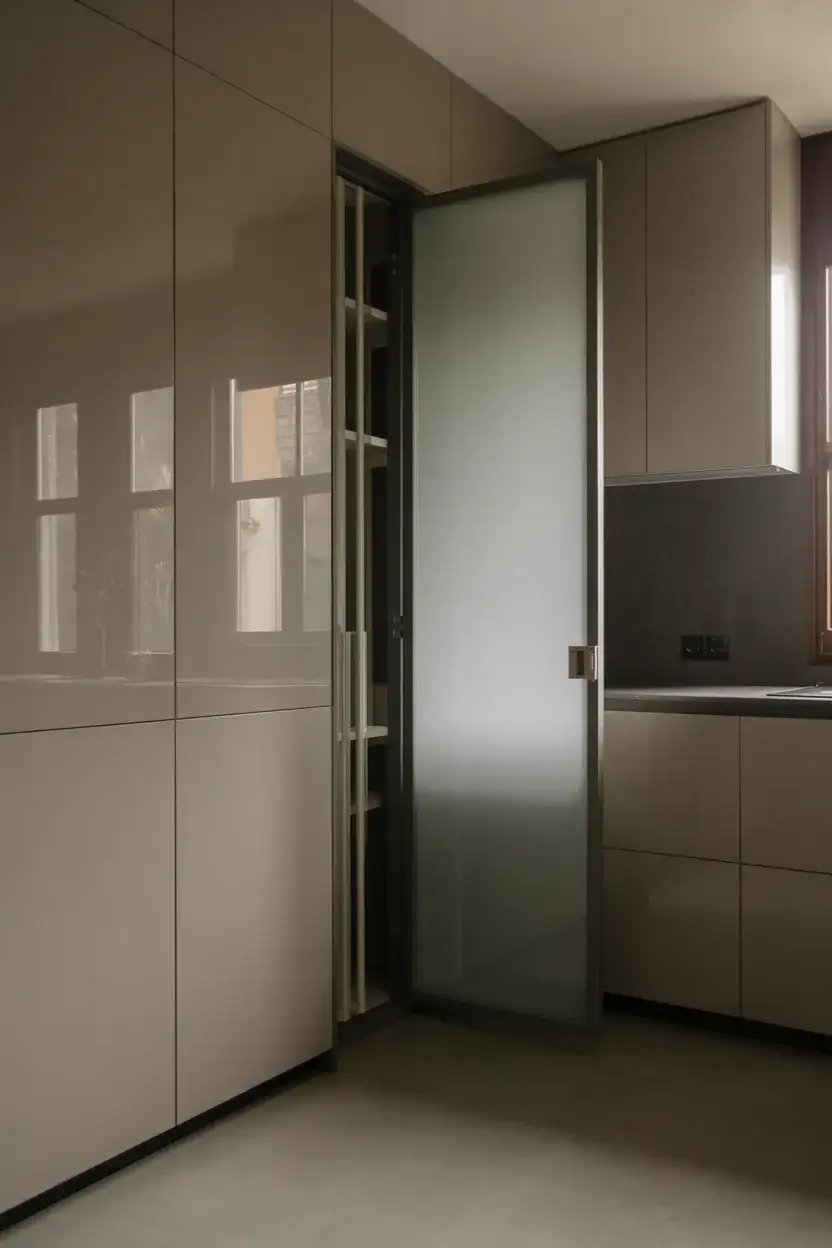
Pocket doors are especially popular in urban lofts and condos where space is at a premium. In cities like New York, San Francisco, and Seattle, designers use pocket doors to maximize usable floor area without sacrificing storage. The installation can be tricky if you’re retrofitting an existing wall, so it’s worth hiring a professional. Expect to pay $1,000 to $2,500 for materials and labor, depending on the door style and hardware.
19. Rustic Corner Pantry with Reclaimed Wood Shelves
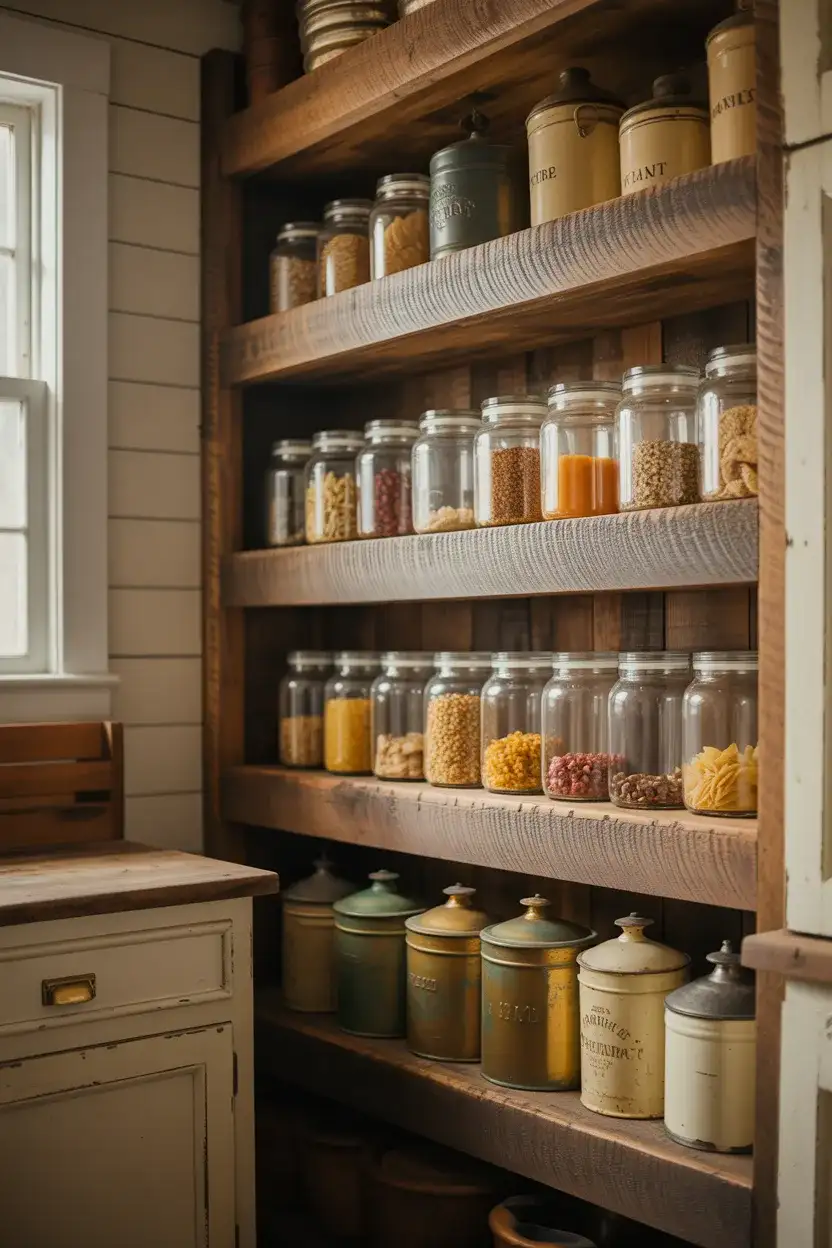
Reclaimed wood shelves bring warmth and character to a corner pantry, especially in homes with farmhouse, rustic, or industrial aesthetics. The weathered texture and natural grain of reclaimed wood add visual interest, and each piece tells a story of its previous life. This style works beautifully in kitchens with exposed beams, brick walls, or vintage fixtures, and it’s a sustainable choice that reduces demand for new lumber. Pairing reclaimed wood with simple brackets keeps the look grounded and authentic.
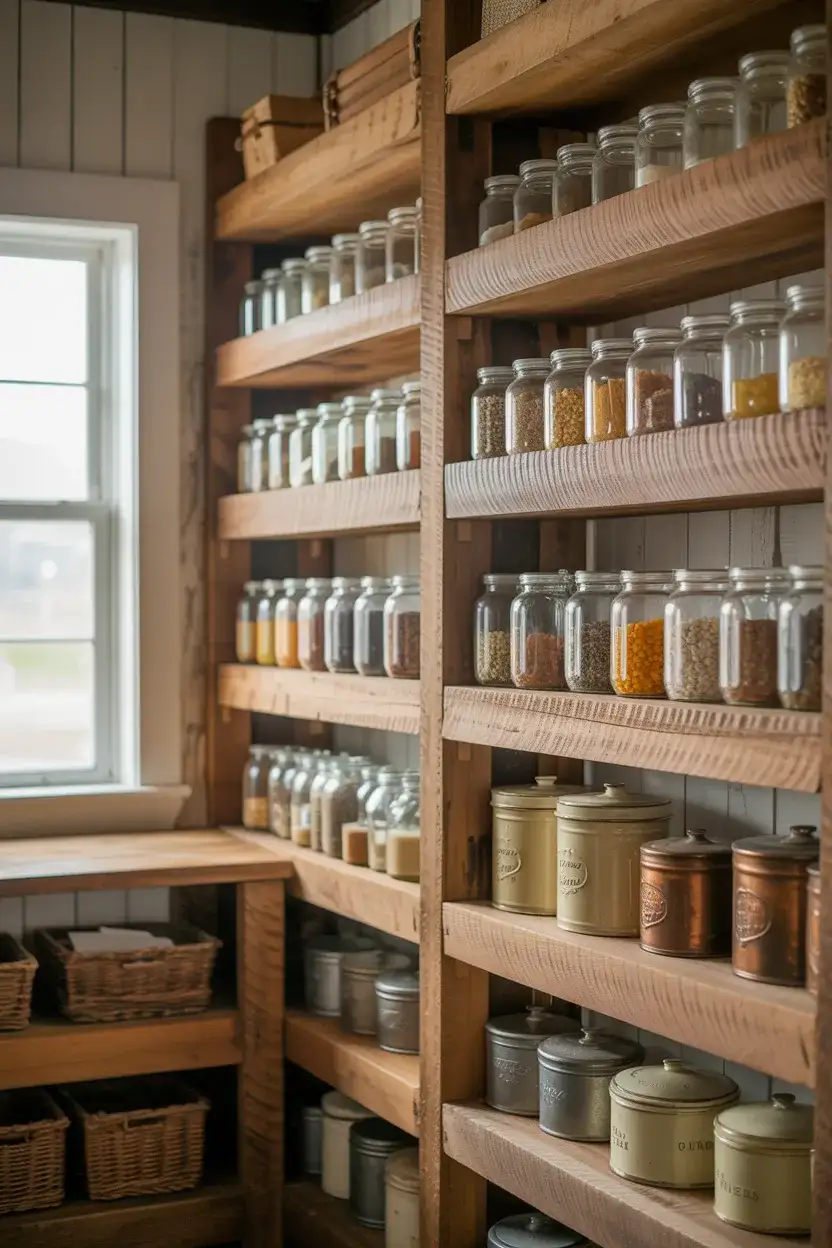
Where it works best: Reclaimed wood shelves are a natural fit in homes built before 1950, where the existing architecture already leans toward rustic or traditional styles. They’re also popular in mountain towns and rural areas where the outdoor-indoor aesthetic is prized. Just make sure the wood is properly sealed to prevent splintering or warping from humidity, especially if your kitchen experiences temperature swings.
20. Corner Pantry with Pull-Down Shelves
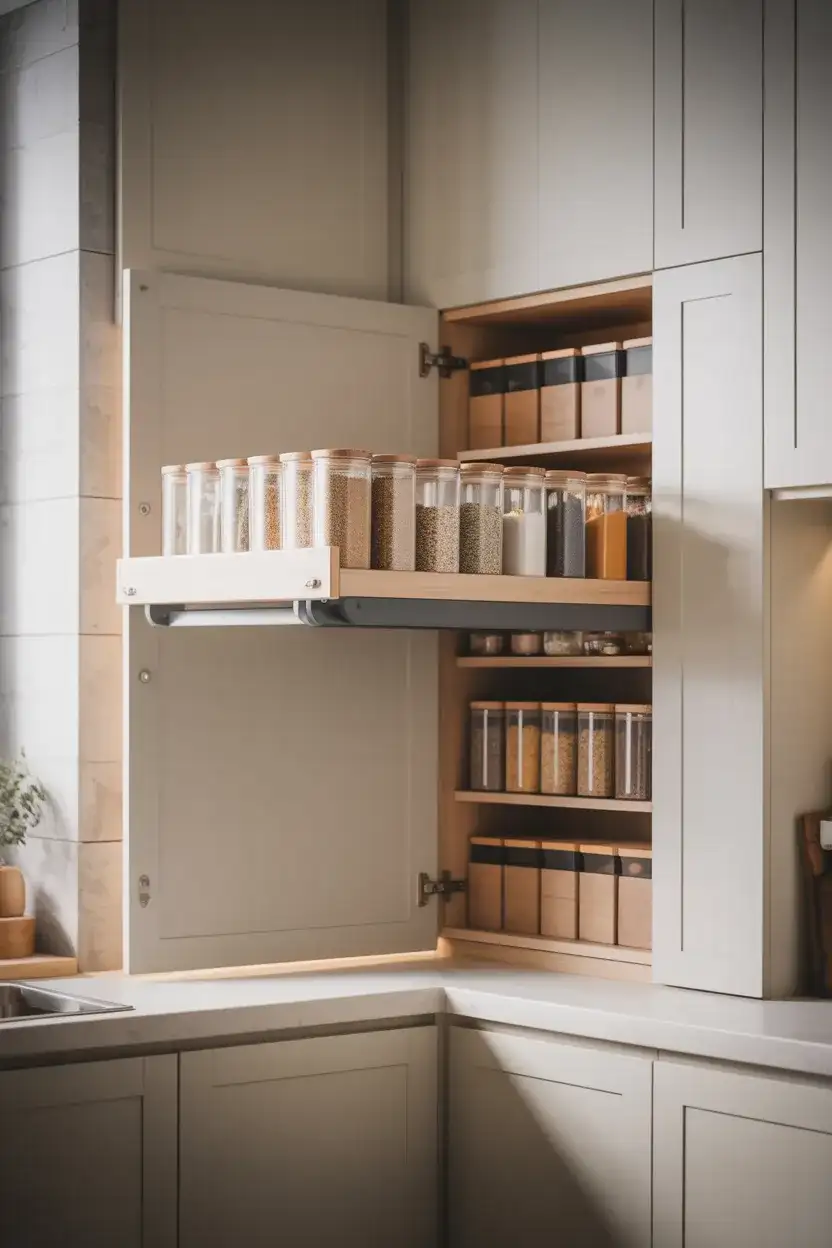
Pull-down shelves are a clever solution for reaching high corner pantry storage without a step stool. This system uses a spring-loaded or motorized mechanism that lowers the shelf to eye level, making upper storage accessible even for shorter users. It’s particularly valuable in kitchens with high ceilings, where vertical space is abundant but often goes unused. The mechanism is smooth and safe, and it can hold a surprising amount of weight—typically up to 30 pounds per shelf.
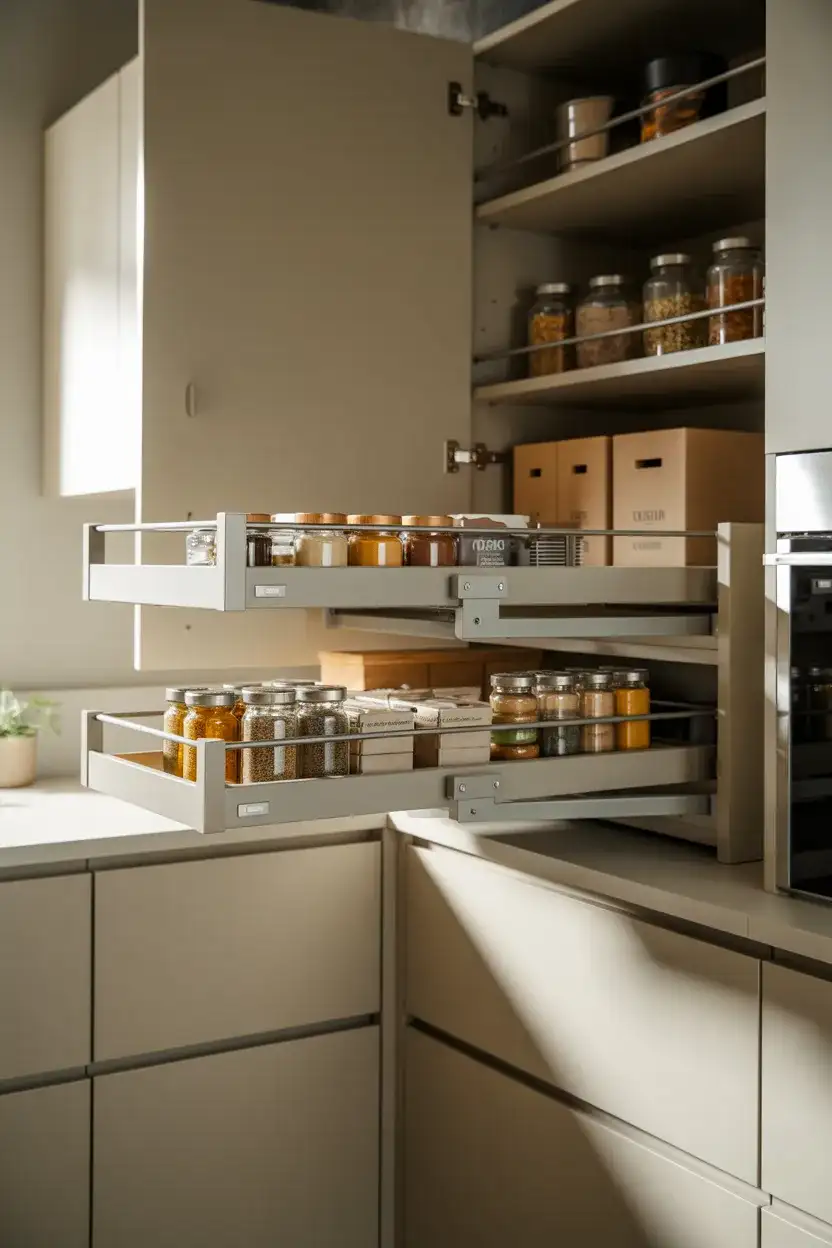
This feature is especially popular among older adults and people with mobility challenges, as it eliminates the need for climbing or stretching. It’s also a favorite in homes where kitchen design prioritizes universal accessibility. Installation requires professional help, as the mechanism must be securely mounted and calibrated. Costs typically range from $400 to $800 per shelf, but the investment pays off in safety and convenience.
21. Corner Pantry with Mesh or Wire Baskets
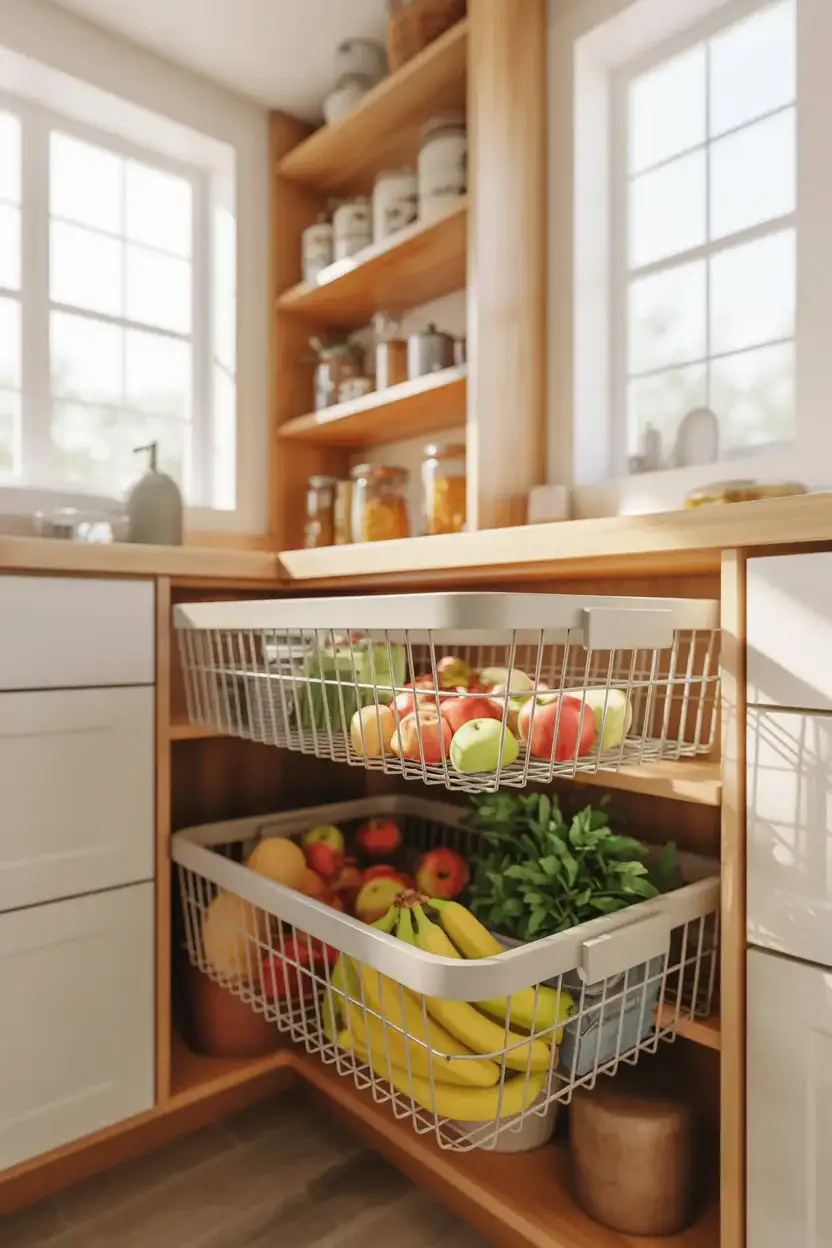
Mesh or wire baskets in a corner pantry offer excellent ventilation, which is especially useful for storing produce like potatoes, onions, or garlic. The open design prevents moisture buildup and keeps items visible, reducing the risk of forgotten or spoiled food. This organization’s ideas approach is also visually lighter than solid bins, making it a good fit for small kitchen spaces where you want to maintain an airy feel. The baskets can be mounted on runners for easy sliding access.
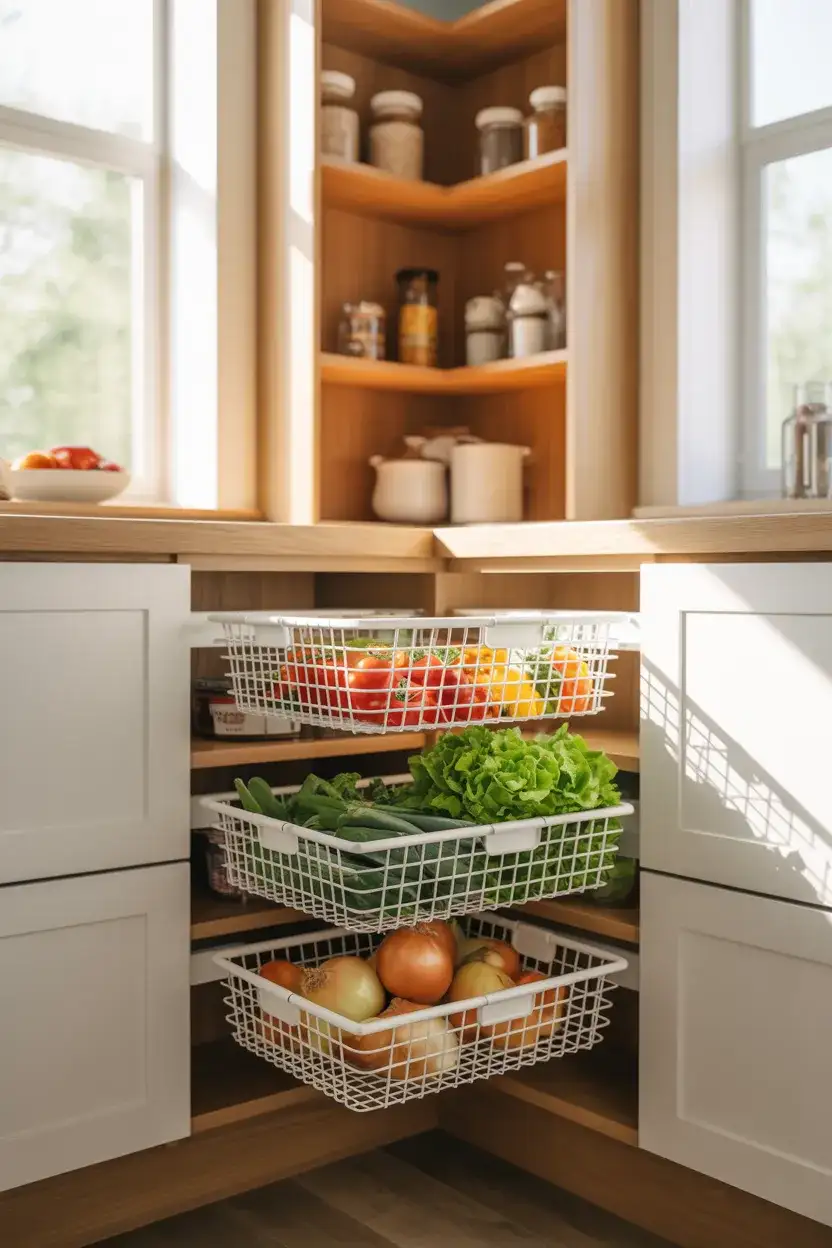
Common mistake: Using wire baskets for small, loose items like spice packets or tea bags. These small items can slip through the gaps, creating a mess at the bottom of your pantry. Reserve wire baskets for larger produce, snack bags, or bulky items that benefit from air circulation. For smaller goods, stick with solid bins or drawer inserts that keep everything contained.
Conclusion
Corner pantries in 2026 are about more than just storage—they’re about creating systems that support how you actually live and cook. Whether you’re drawn to sleek modern designs, rustic charm, or clever mechanical solutions, there’s a corner pantry idea here that can transform your kitchen. Take a moment to consider which features resonate most with your daily routines, then share your thoughts or questions in the comments below. What corner pantry style are you most excited to try?