College apartment decor in 2026 is all about making small spaces feel intentional, personal, and livable without breaking the bank. Whether you’re settling into a studio near campus or sharing a multi-bedroom unit off-campus, the challenge remains the same: how do you create a space that feels like home when you’re working with tight square footage, limited budgets, and landlord restrictions? This year, students are turning to Pinterest for inspiration that balances style with practicality—think modular furniture, clever storage hacks, and design choices that can travel from dorm to first apartment. From cozy living rooms anchored by a black couch to aesthetic bedrooms that double as study zones, the ideas below will help you transform your rental into a space you’re proud to call your own.
1. Modular Seating Around a Black Couch
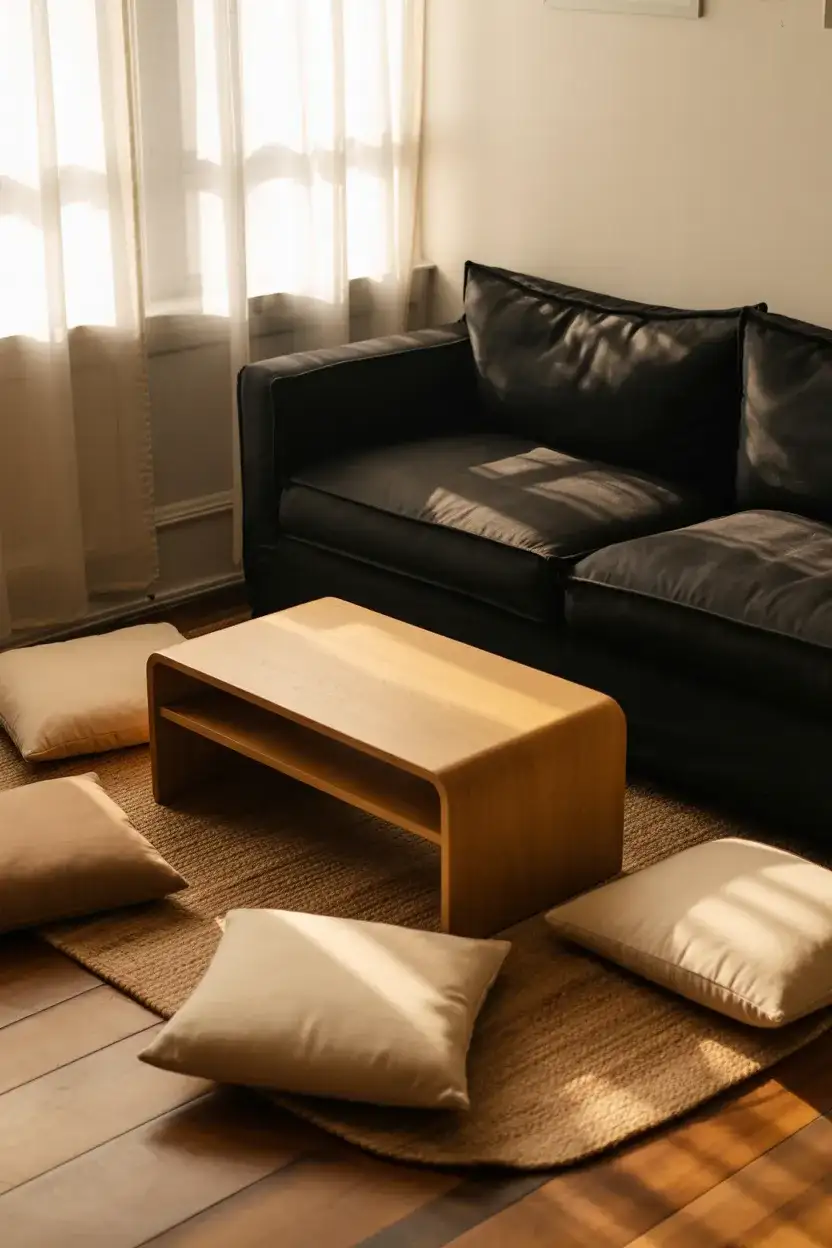
A black couch anchors nearly any living room layout, especially in small apartments where you need one solid piece to ground the space. Pair it with a low-profile coffee table, a couple of floor cushions, and a woven pouf to create flexible seating that adapts when friends come over. Layering textures—linen throws, a jute rug, maybe a faux sheepskin draped over one arm—keeps the look from feeling too stark or dorm-like.
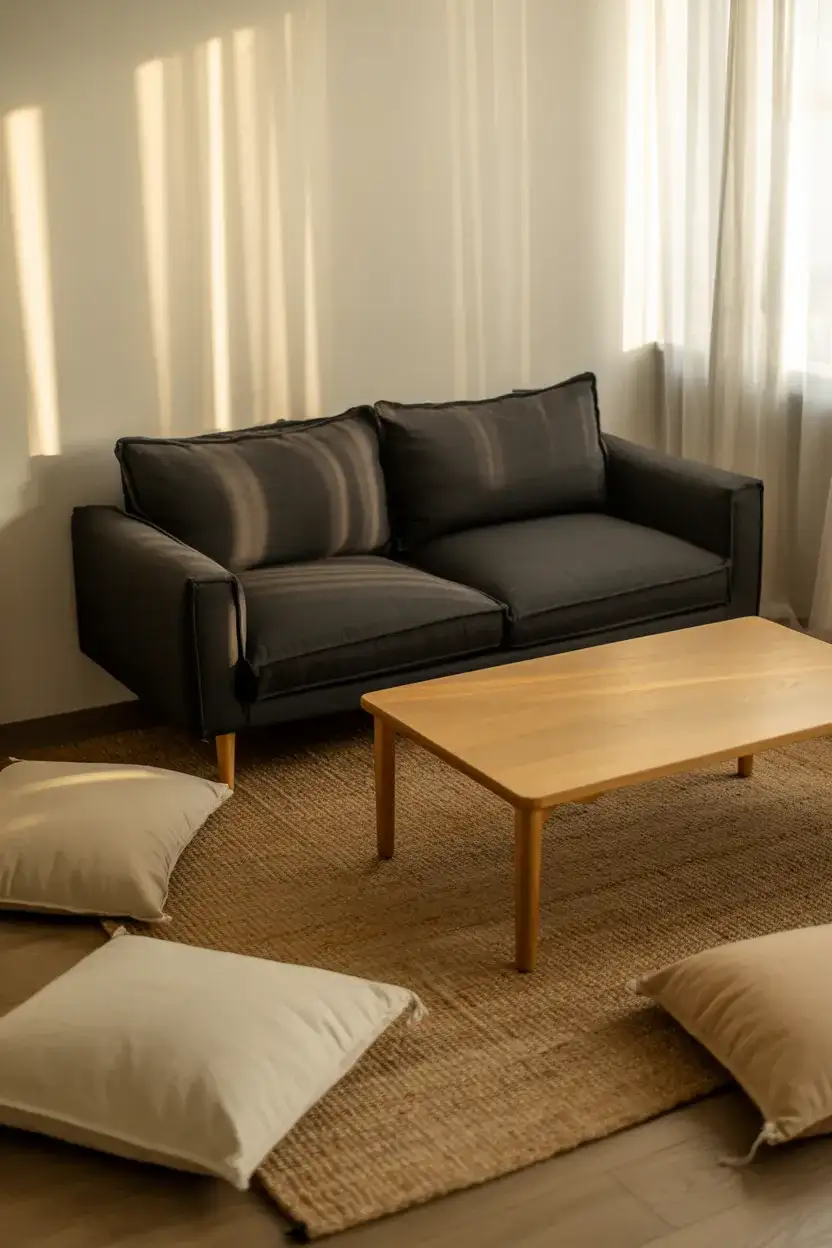
This setup works especially well in open-plan studios where the living zone bleeds into the kitchenette. A common mistake is overcrowding the area with mismatched chairs—stick to one anchor piece and let the floor seating do the heavy lifting. It’s budget-friendly, easy to rearrange, and gives the room a laid-back, lounge-worthy vibe that still feels pulled together.
2. Pegboard Wall Storage in Small Bedrooms
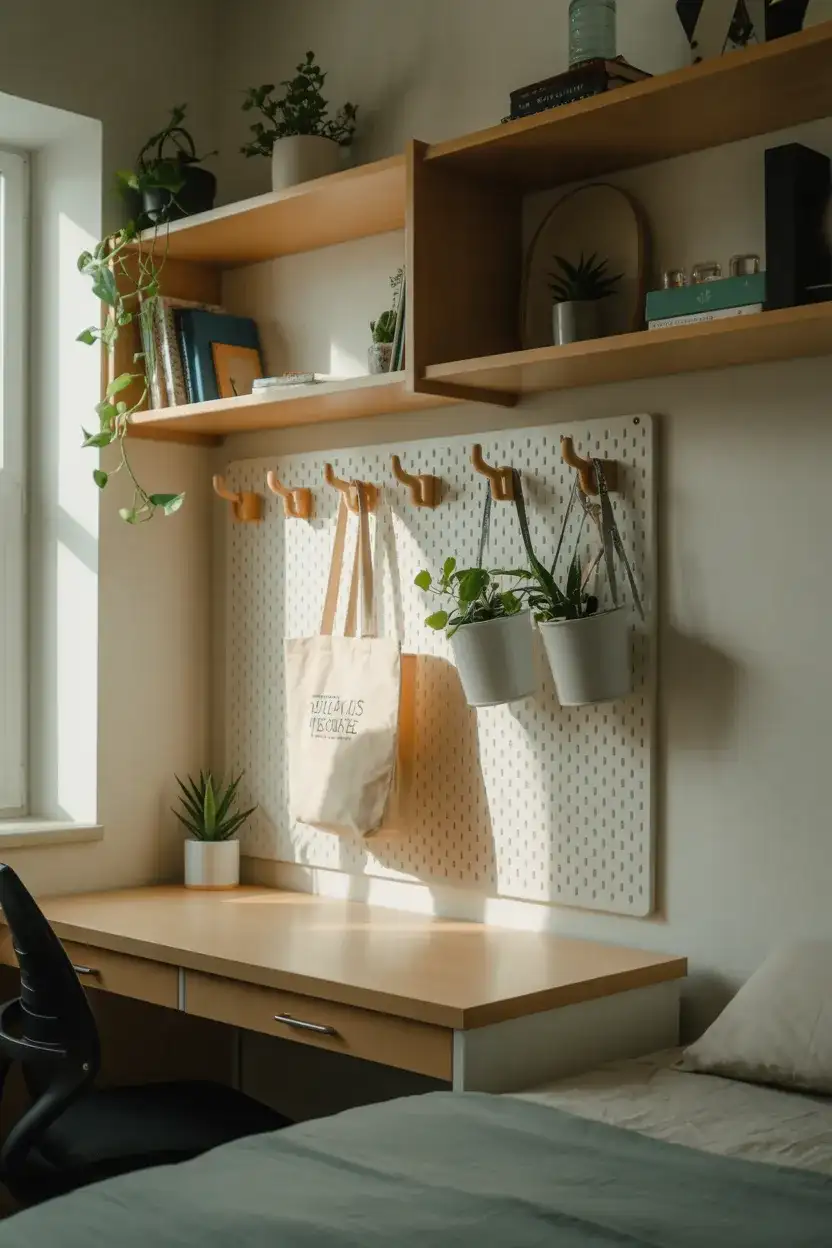
Pegboard isn’t just for garages anymore—it’s become a go-to DIY solution for bedrooms in small spaces where every inch counts. Mount a painted pegboard above your desk or dresser and use hooks, shelves, and bins to organize everything from headphones to succulents. It’s endlessly customizable, renter-friendly if you use command strips or minimal nails, and adds a sculptural, grid-like element that feels intentional rather than cluttered.
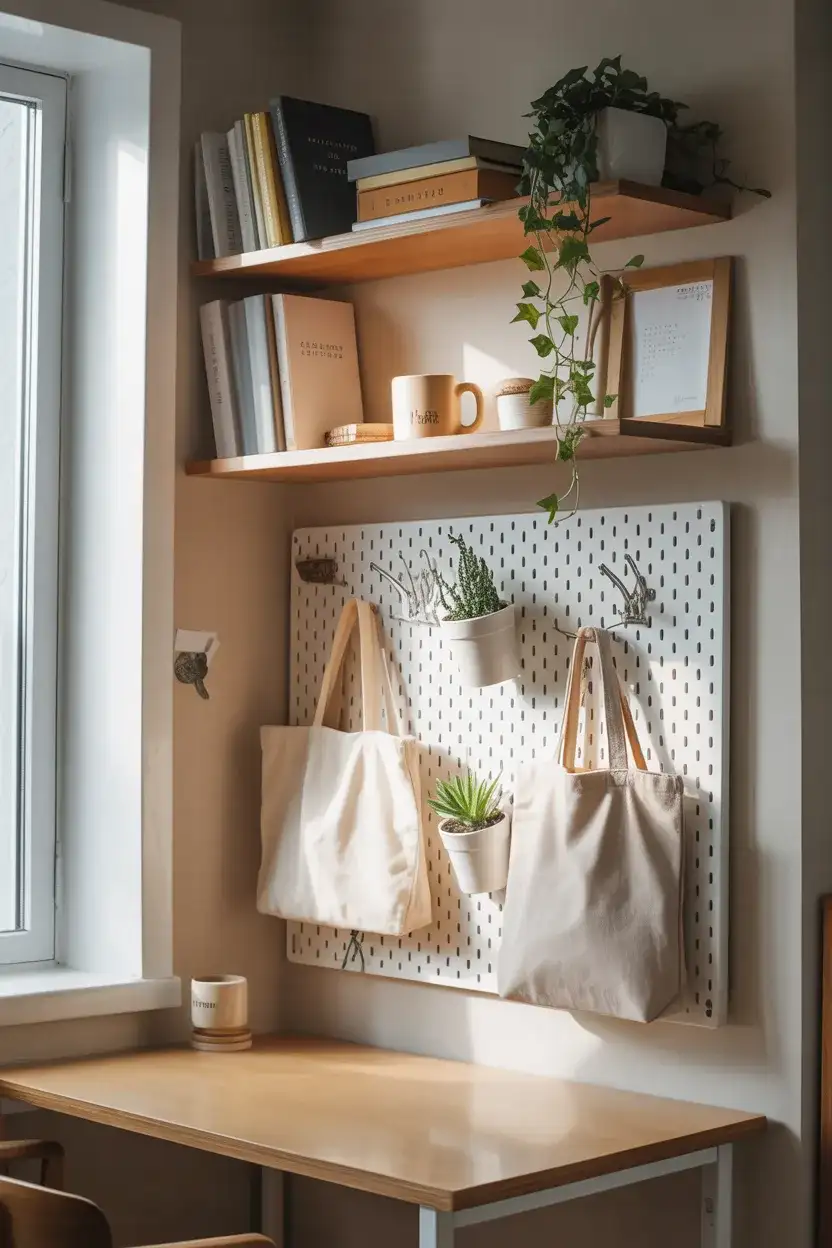
Where it works best: in shared apartments where closet space is divided unfairly, or in studios where you need to keep essentials visible but tidy. Paint the pegboard to match your wall color for a seamless look, or go bold with a contrasting shade to make it a focal point. Either way, it’s a smart, low-cost upgrade that makes the room feel more curated.
3. Floating Desk by the Window
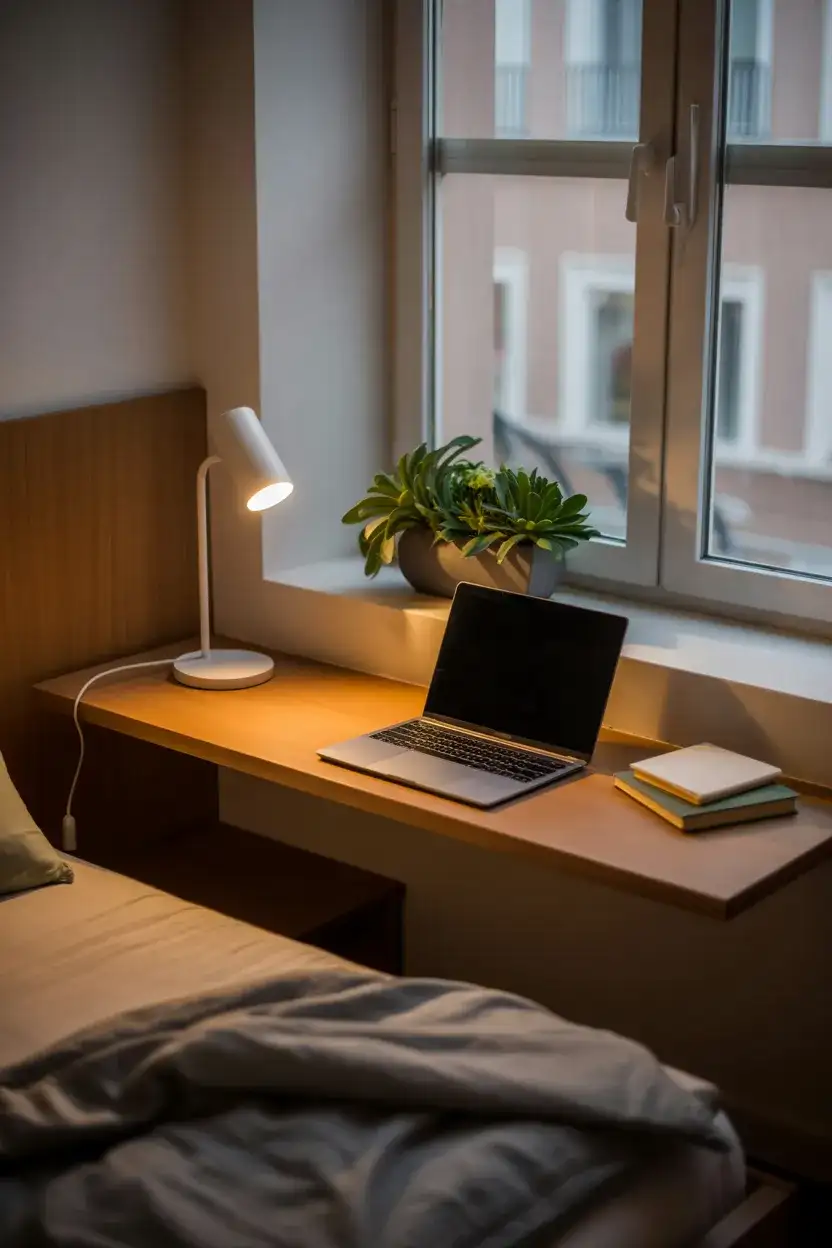
A wall-mounted floating desk transforms an awkward corner or narrow wall into a productive study zone without eating up floor space. Position it under a window for natural light during the day, and you’ll instantly have a spot that feels more like a coffee shop nook than a cramped dorm setup. Pair it with a sleek task lamp and a small shelf above for books or plants, and you’ve got a cozy workspace that doesn’t require a bulky desk footprint.
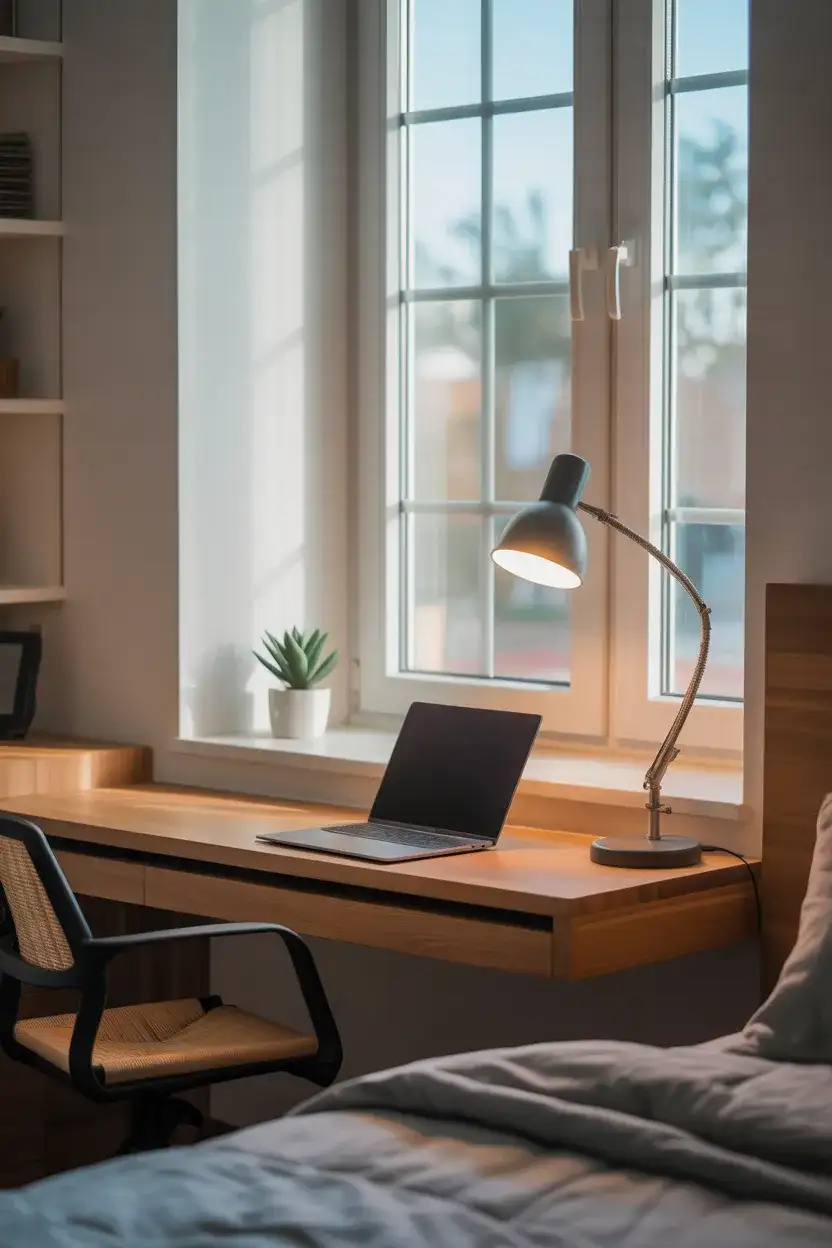
One designer trick: choose a desk with a depth of 16 to 18 inches—deep enough for a laptop and notebook, but shallow enough that it doesn’t dominate the room. In cities where studio apartments are the norm, this setup is a lifesaver. It also gives you the flexibility to add a stool or fold-down chair that tucks away when you’re not working.
4. Blue Accent Wall Behind the Bed
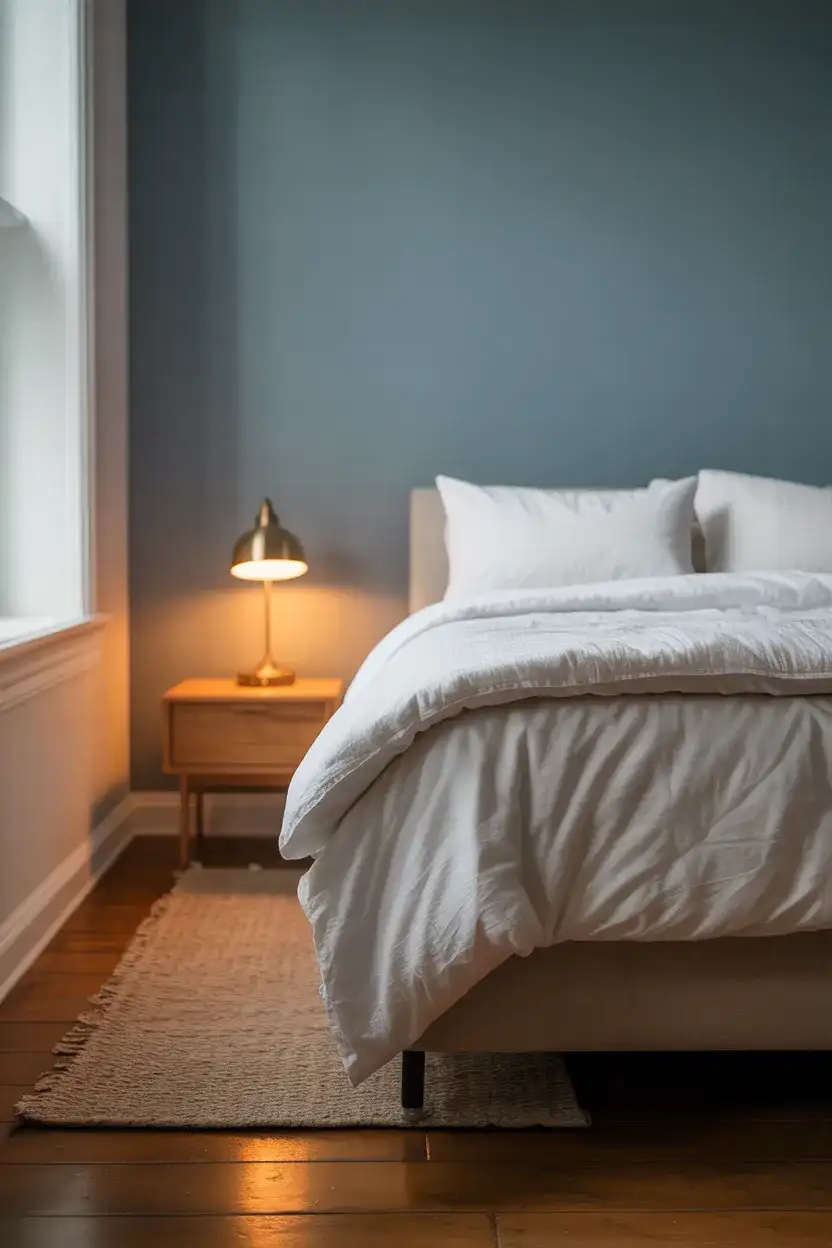
A single blue accent wall can completely shift the mood of a bedroom, making it feel calmer and more grounded without requiring a full repaint. Soft slate blues, dusty teals, or muted navy tones work especially well in rentals where you want impact but also want to keep your security deposit intact. Use peel-and-stick wallpaper or removable paint if your lease allows, and let the rest of the room stay neutral so the wall becomes the focal point.
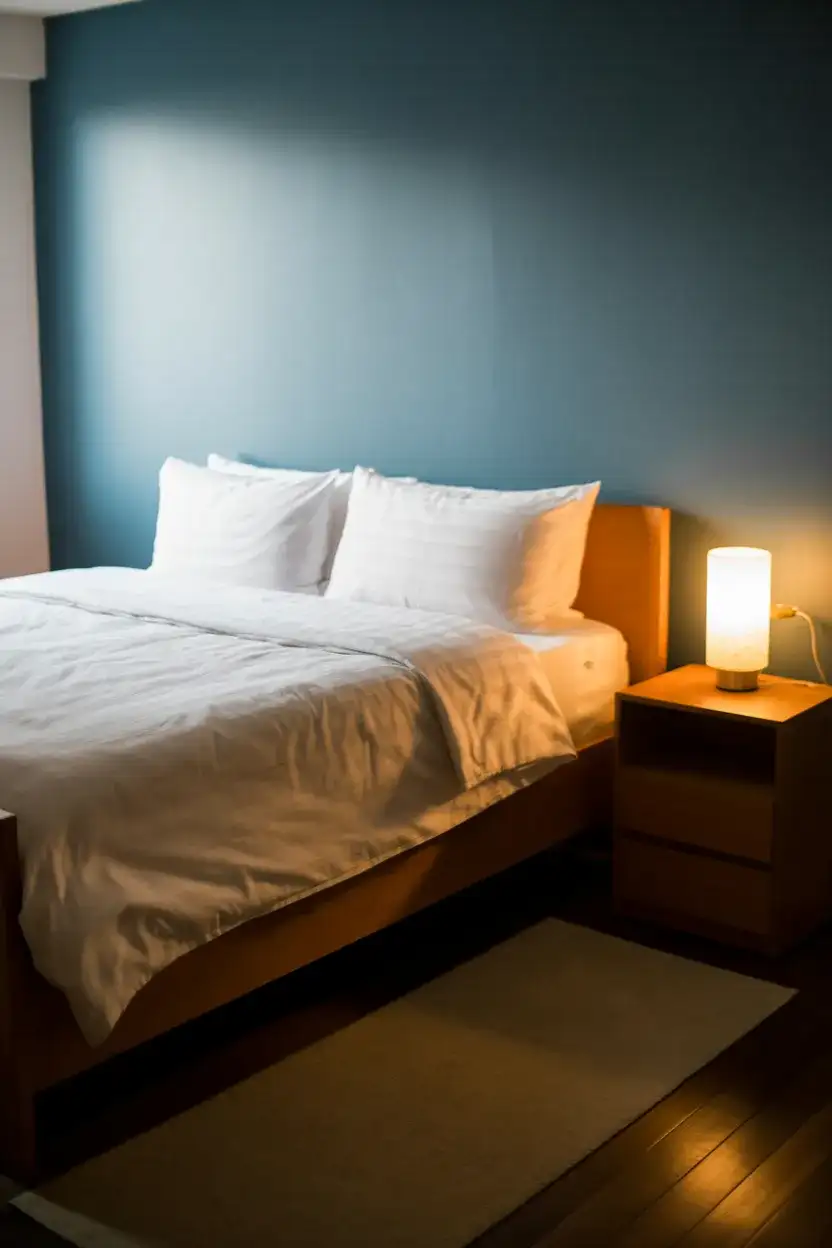
A lot of students skip the accent wall because they assume it’s too permanent, but removable options have come a long way. You can apply them in an afternoon and peel them off when you move out. The result is a room that feels intentional and personal, not just a blank box with a mattress on the floor.
5. Open Garment Rack as a Closet Alternative
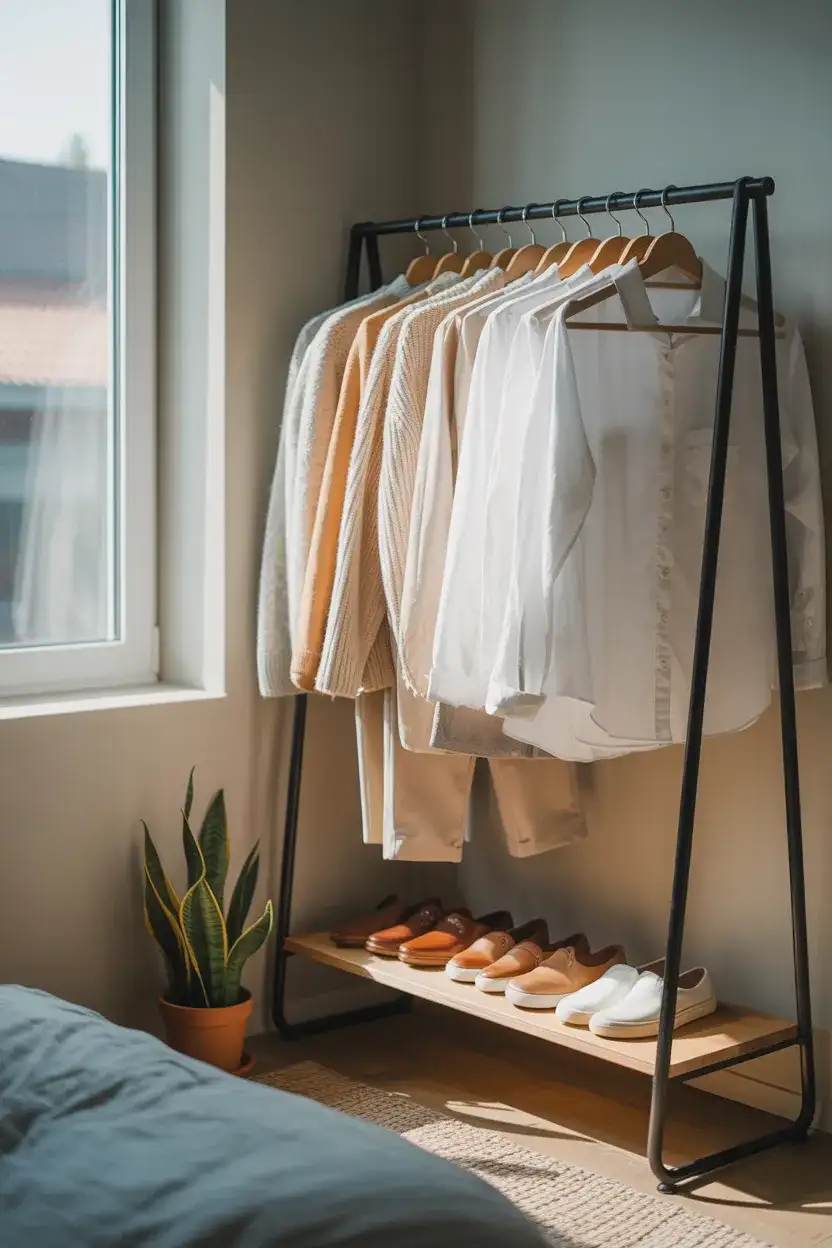
When your apartment comes with a closet the size of a shoebox—or no closet at all—an open garment rack becomes both storage and decor. Choose one in matte black or natural wood, keep your hanging items color-coordinated, and add a shelf below for shoes or folded basics. It’s a budget fix that actually looks curated, especially if you treat it like a boutique display rather than a dumping ground.
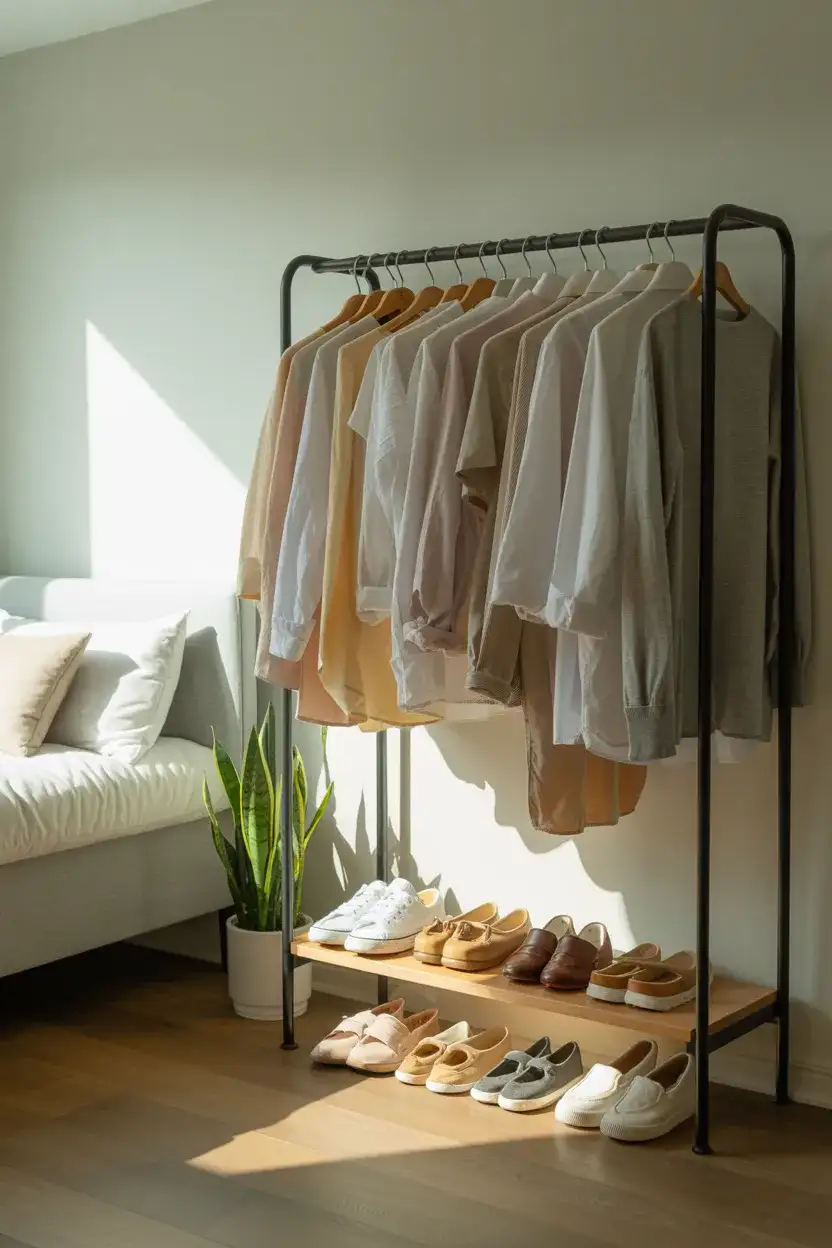
This is especially popular in older buildings across the Northeast and Midwest, where closets weren’t built to modern standards. The trick is to edit ruthlessly—if it’s wrinkled, stained, or hasn’t been worn in six months, it doesn’t belong on display. Keep it tight, and the rack becomes a design feature rather than an eyesore.
6. String Lights as Primary Evening Lighting
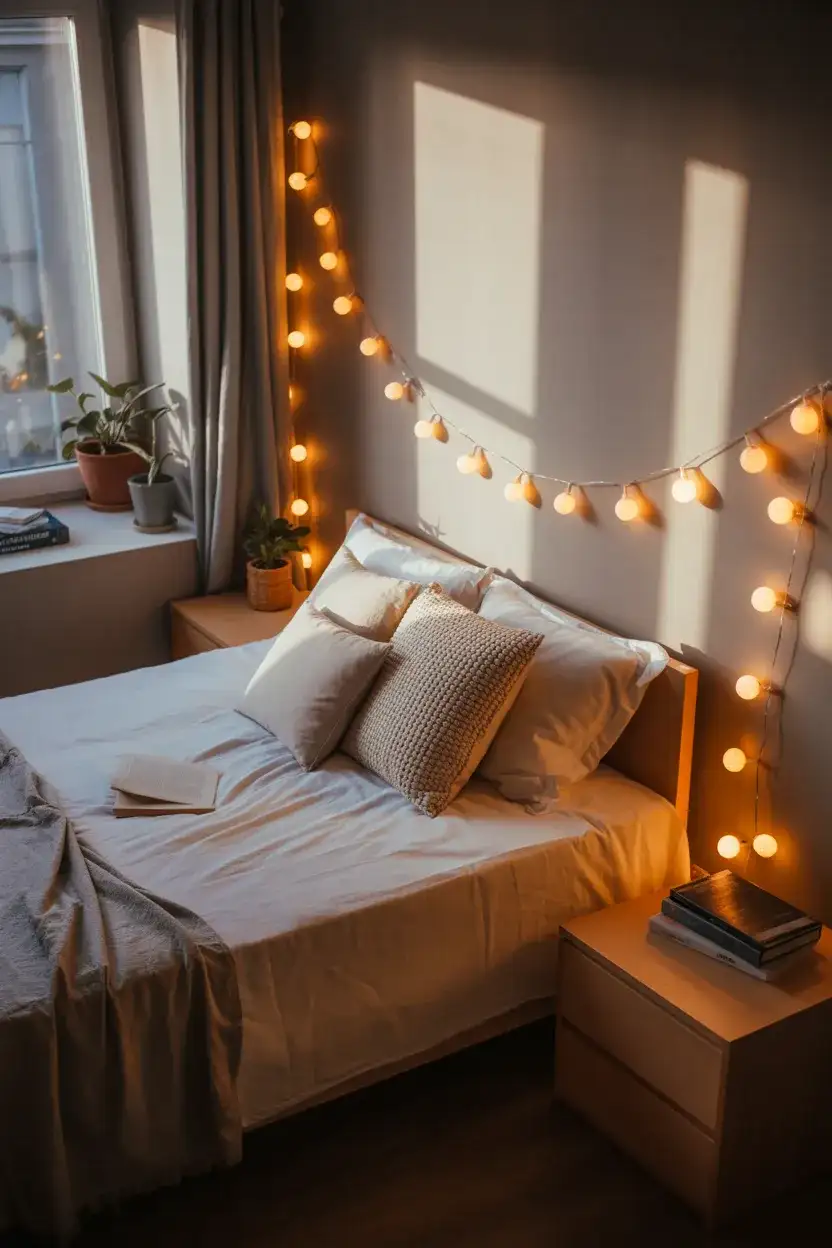
Overhead lighting in most rentals is harsh, unflattering, and impossible to control—so string lights have become the unofficial lighting solution for cozy college apartments. Drape them along a wall, weave them through a headboard, or hang them from ceiling hooks in a loose grid. The warm glow softens the space instantly and gives you control over the mood without rewiring anything.
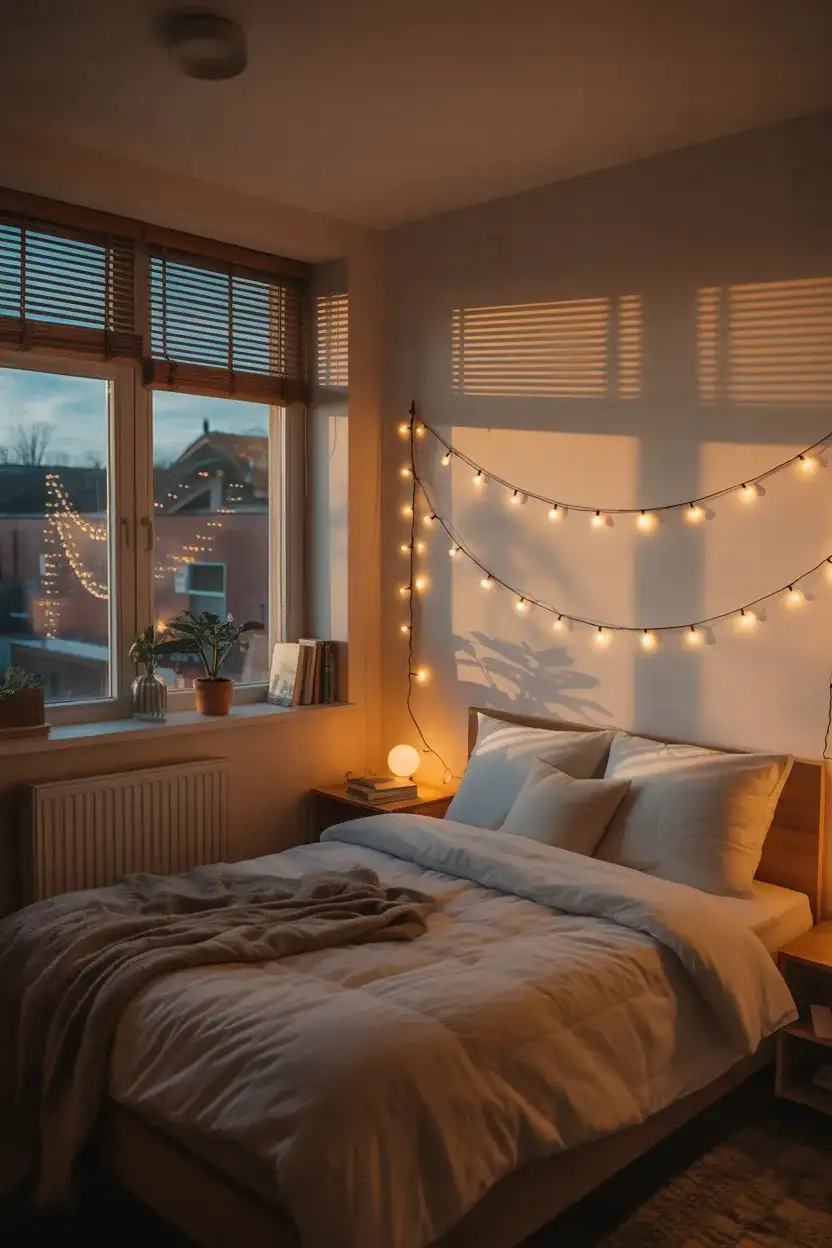
Real homeowner behavior: most students leave them on all evening and only flip the overhead switch when they’re cleaning or looking for something. It’s a low-effort upgrade that makes any room feel more lived-in and less institutional. Just make sure to use LED bulbs so they don’t overheat or run up your electric bill.
7. Bathroom Caddy with Minimalist Toiletries
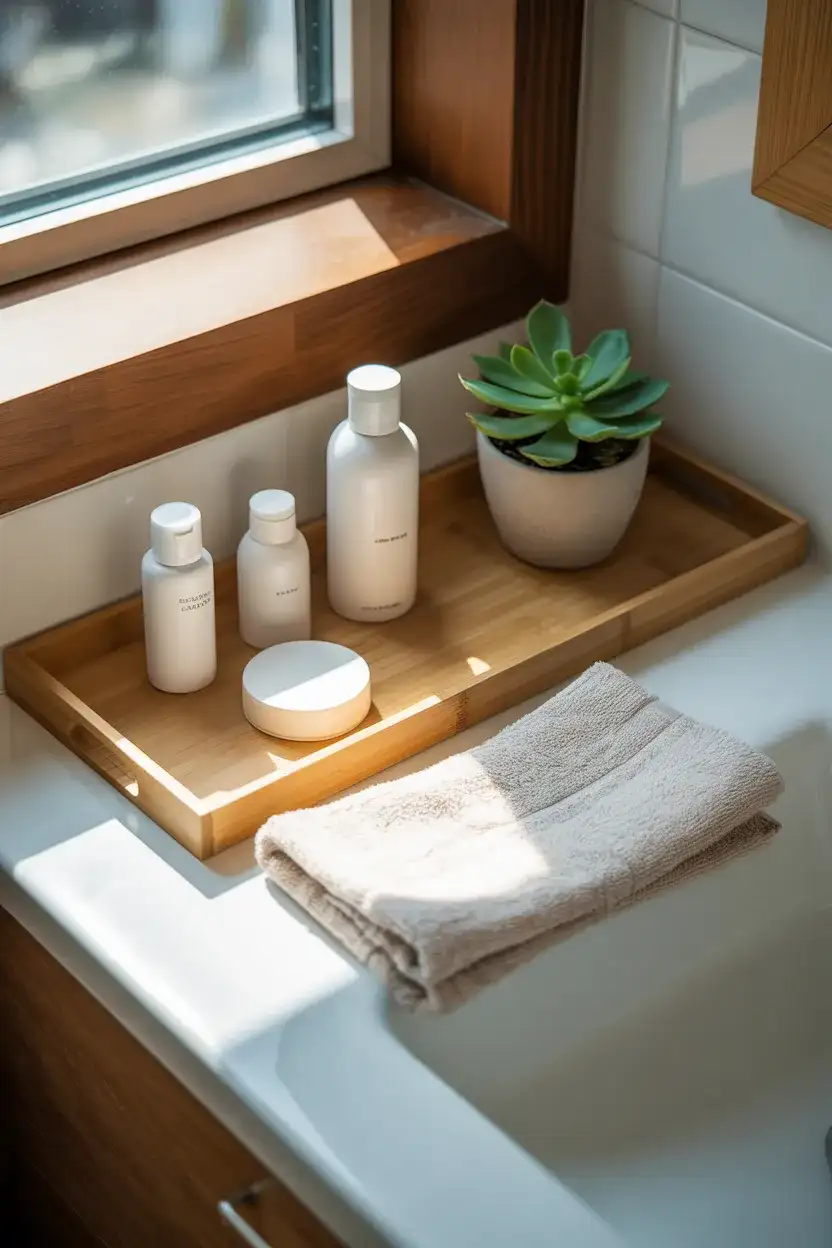
Shared bathrooms in college apartments can feel chaotic fast, but a simple shower caddy or countertop tray keeps your essentials corralled and visually clean. Stick to refillable bottles in matching neutrals, skip the ten half-empty shampoo bottles, and use a rust-proof metal or bamboo caddy that won’t fall apart after a semester. It’s a small move, but it makes the space feel more adult and less like a communal locker room.
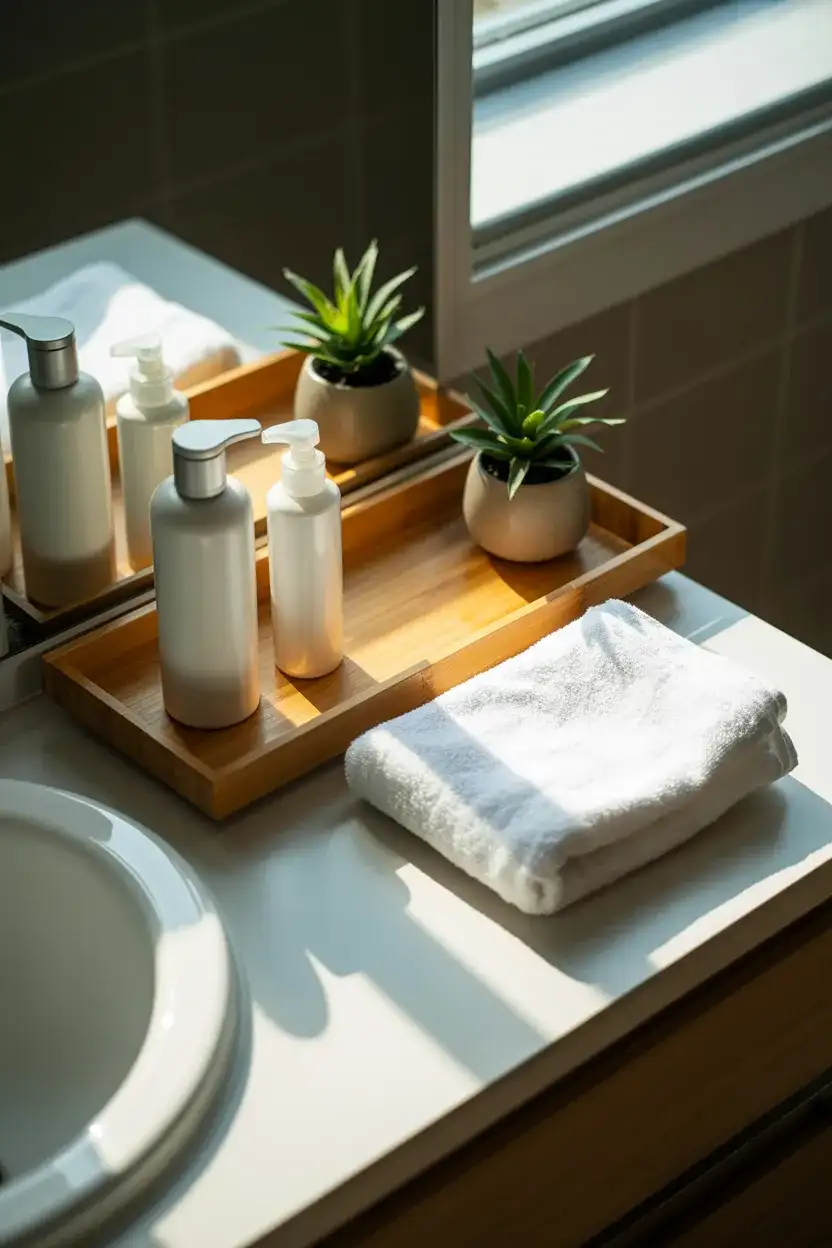
In apartments where counter space is nonexistent, a hanging caddy or over-the-door organizer works just as well. The goal is containment and consistency—if everything looks like it belongs together, the bathroom instantly feels more intentional. It’s also a subtle way to set boundaries in shared spaces without needing a label maker.
8. Corner Plant Shelf with Mixed Greenery
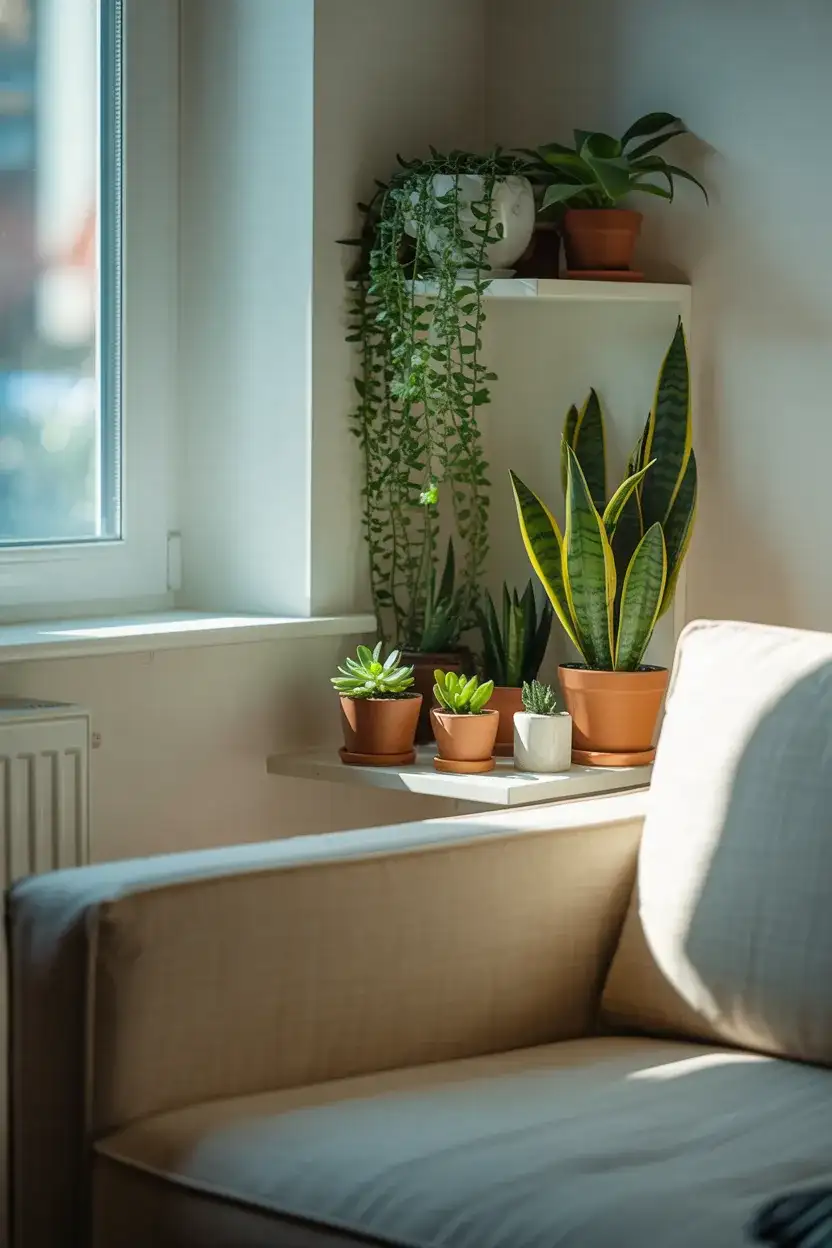
A tiered corner shelf stacked with low-maintenance plants—pothos, snake plants, succulents—turns dead space into a living focal point. It’s especially effective in small spaces where horizontal surfaces are already maxed out. Choose a metal or wood ladder-style shelf that fits snugly into the corner, and rotate your plants every few weeks so they all get enough light.
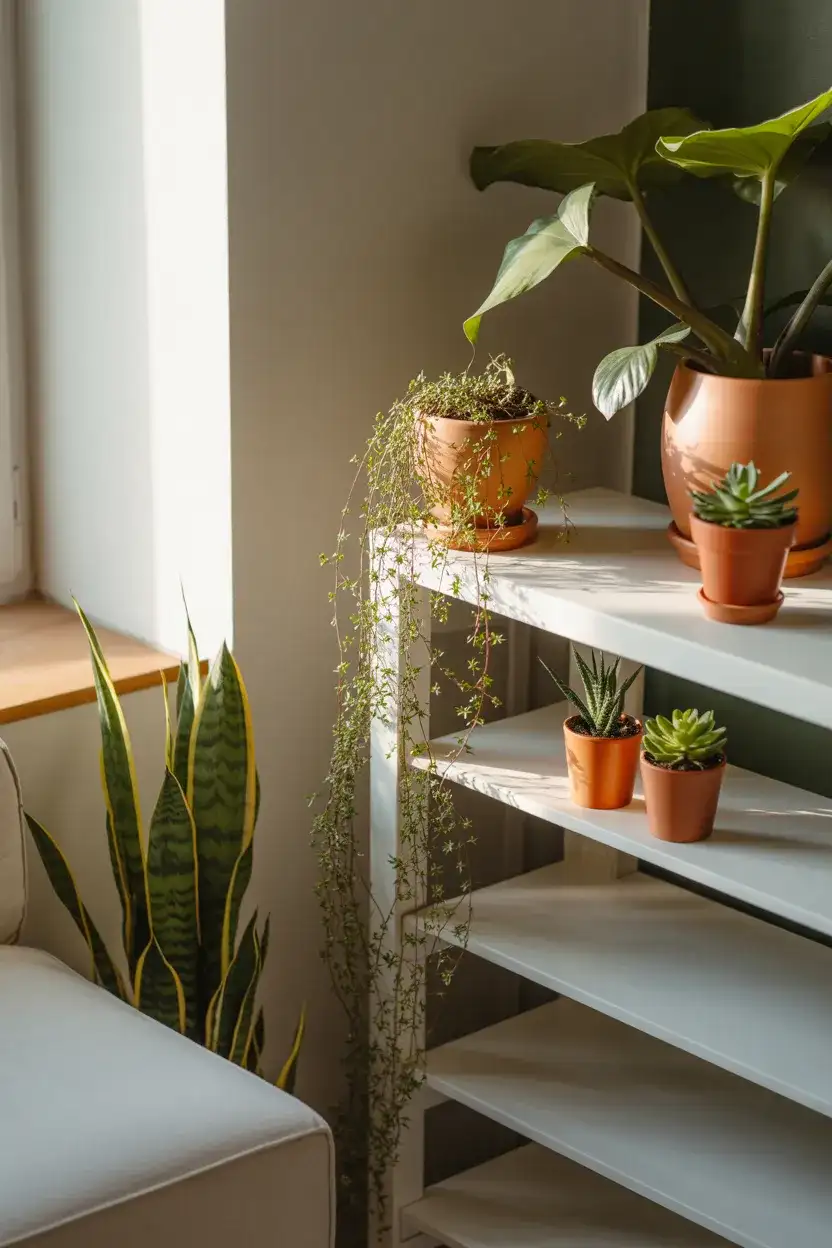
This setup is popular in West Coast apartments where natural light is abundant, but it works anywhere as long as you match the plant selection to your lighting conditions. A common mistake is overwatering or choosing high-maintenance varieties—stick to forgiving plants that can handle a missed watering or two. The result is a space that feels alive and personal without requiring a green thumb.
9. Fold-Down Wall Table for Dining
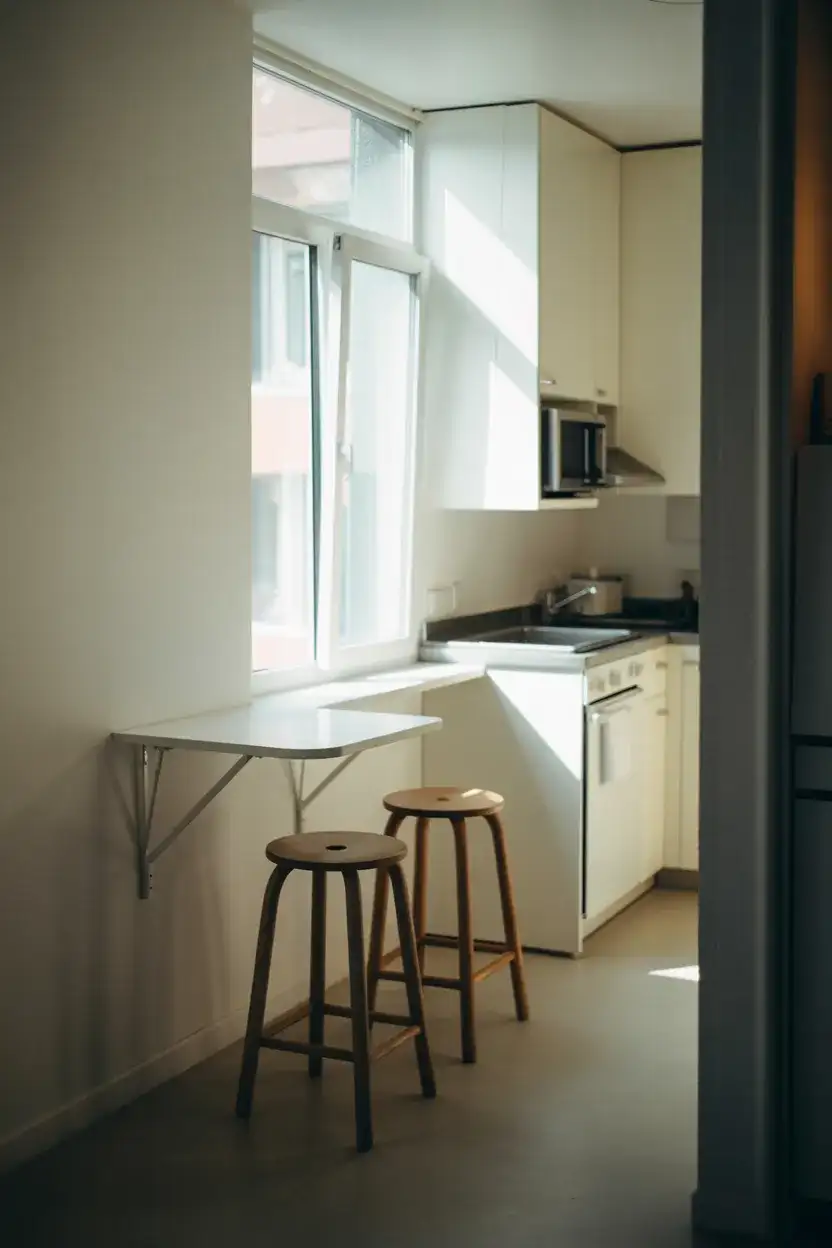
A fold-down table mounted to the wall gives you a proper dining or work surface that disappears when you don’t need it. It’s perfect for studios where a full table would block traffic flow or make the room feel cramped. Pair it with a couple of folding chairs or stools that stack or hang when not in use, and you’ve got a fun, functional setup that adapts to your day.
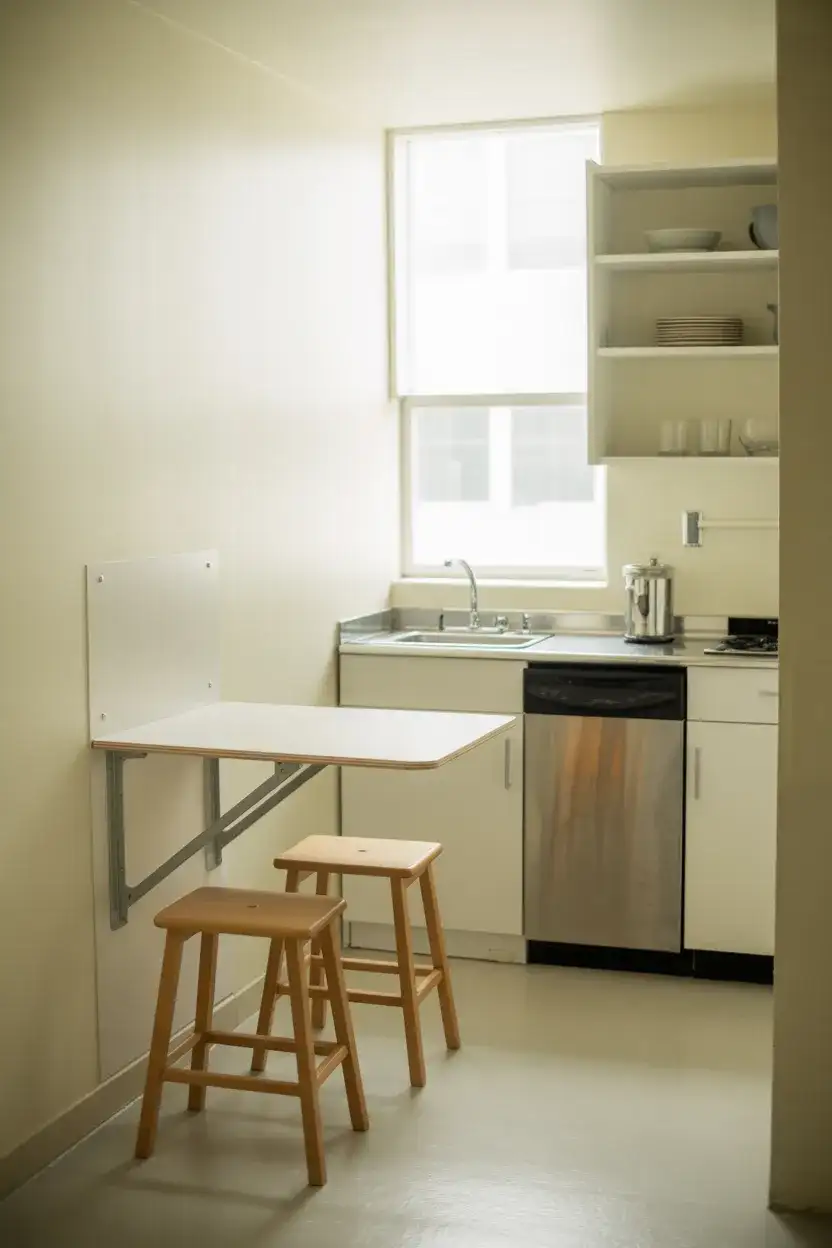
Budget-wise, this is one of the smarter investments you can make in a small apartment. It costs less than a traditional dining table and gives you more flexibility. Just make sure it’s securely anchored to studs—drywall alone won’t hold up under regular use, and the last thing you want is a collapsed table mid-dinner.
10. Layered Rugs for Zoning
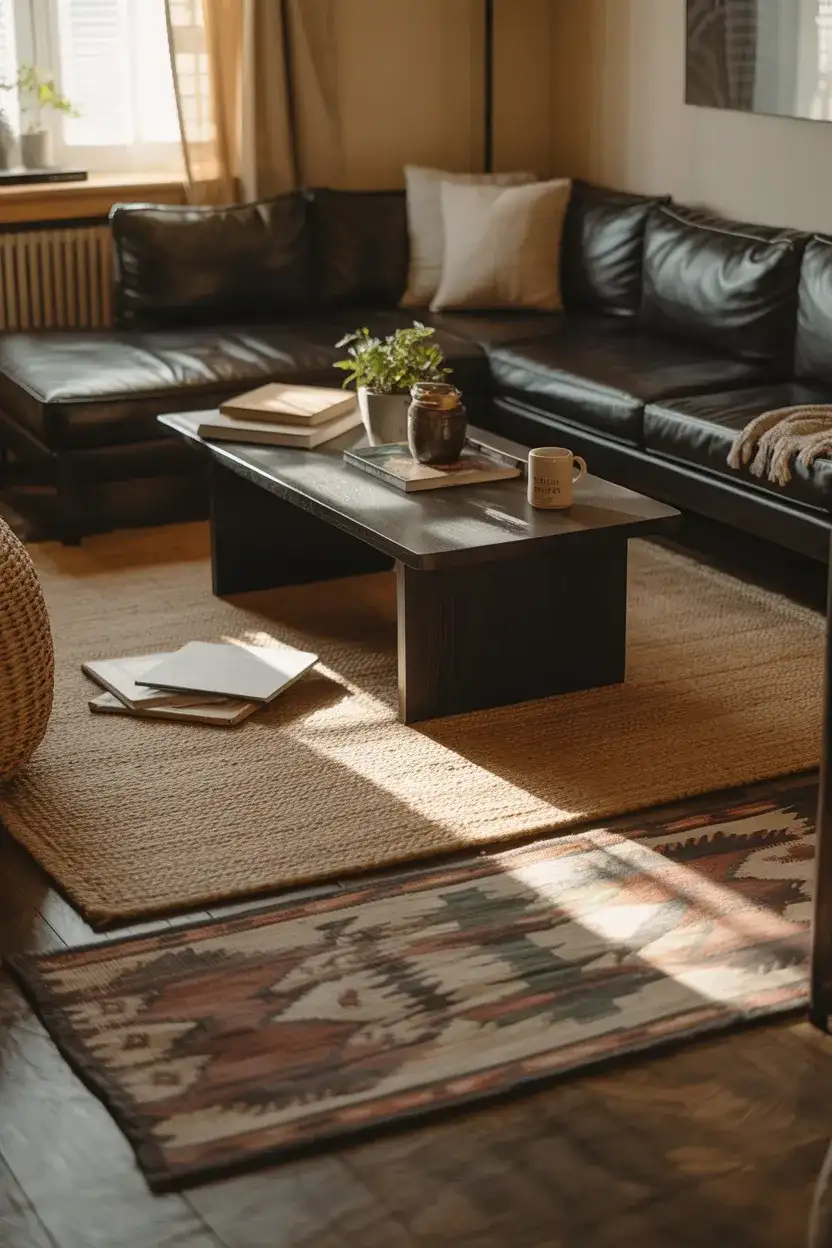
Layering a smaller patterned rug over a larger neutral base is a designer trick that works especially well in open-plan apartments where you need to define different zones. Use a jute or sisal rug as the foundation, then layer a vintage-style runner or geometric print on top to anchor your seating area or bed. It adds depth and texture without requiring major furniture rearrangement.
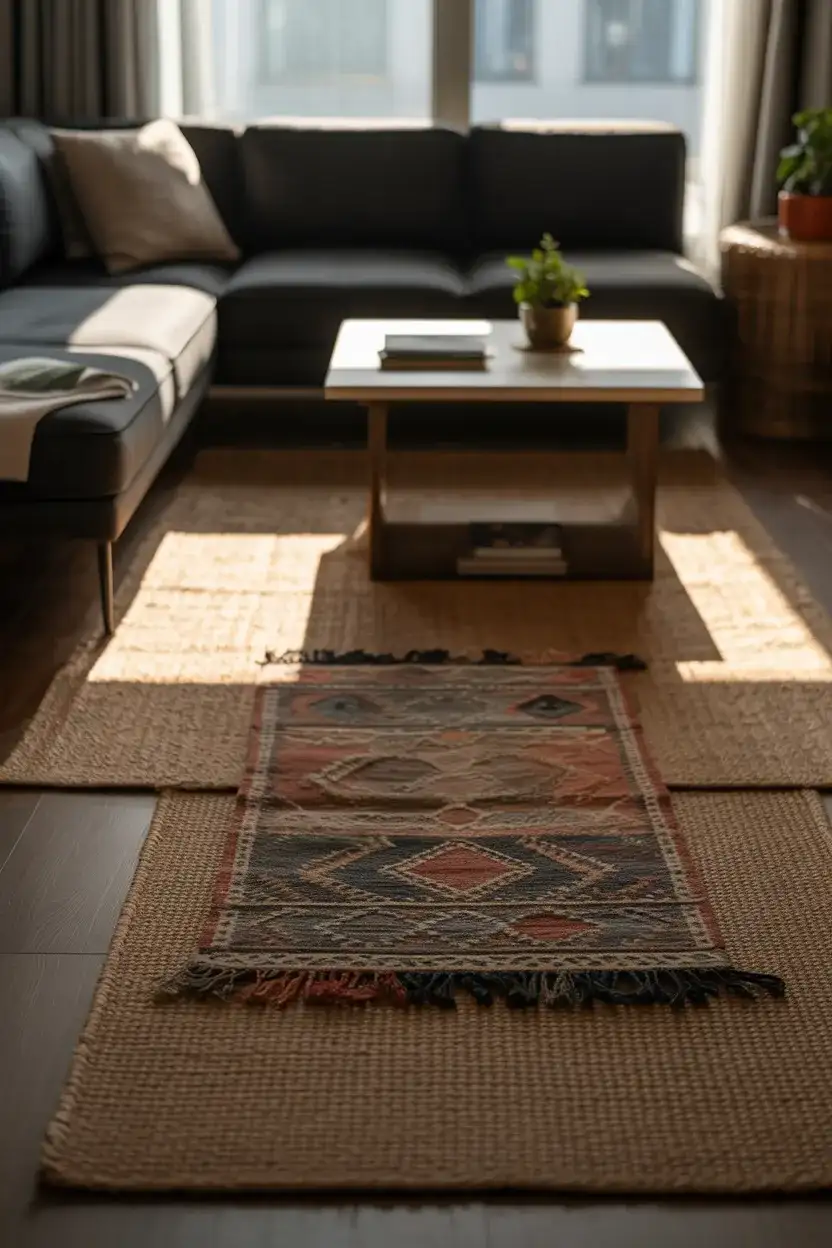
This works best in apartments with hardwood or laminate floors where rugs are essential for warmth and sound dampening. It’s also a practical way to hide stains or wear on an older rug—just layer a fresh one on top. Keep the top rug smaller than the base so both edges are visible, and avoid clashing patterns unless you’re confident in your eye.
11. Over-the-Door Hooks for Jackets and Bags
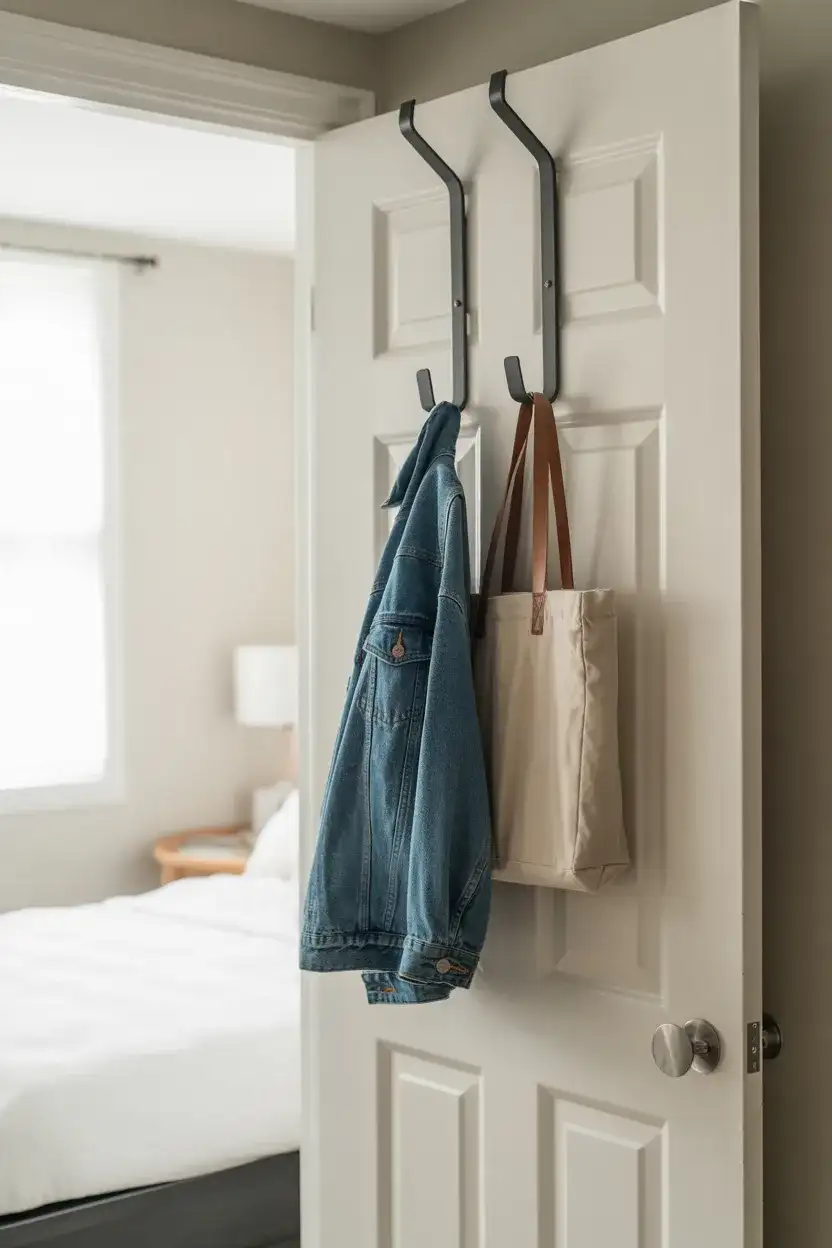
Over-the-door hooks are the ultimate budget hack for apartments with zero entryway storage. Hang them on your bedroom or bathroom door, and suddenly you’ve got a spot for jackets, tote bags, scarves, or towels that doesn’t require drilling or damage. Choose hooks with padding or rubberized edges to protect the door finish, and keep the load balanced so the door still closes smoothly.
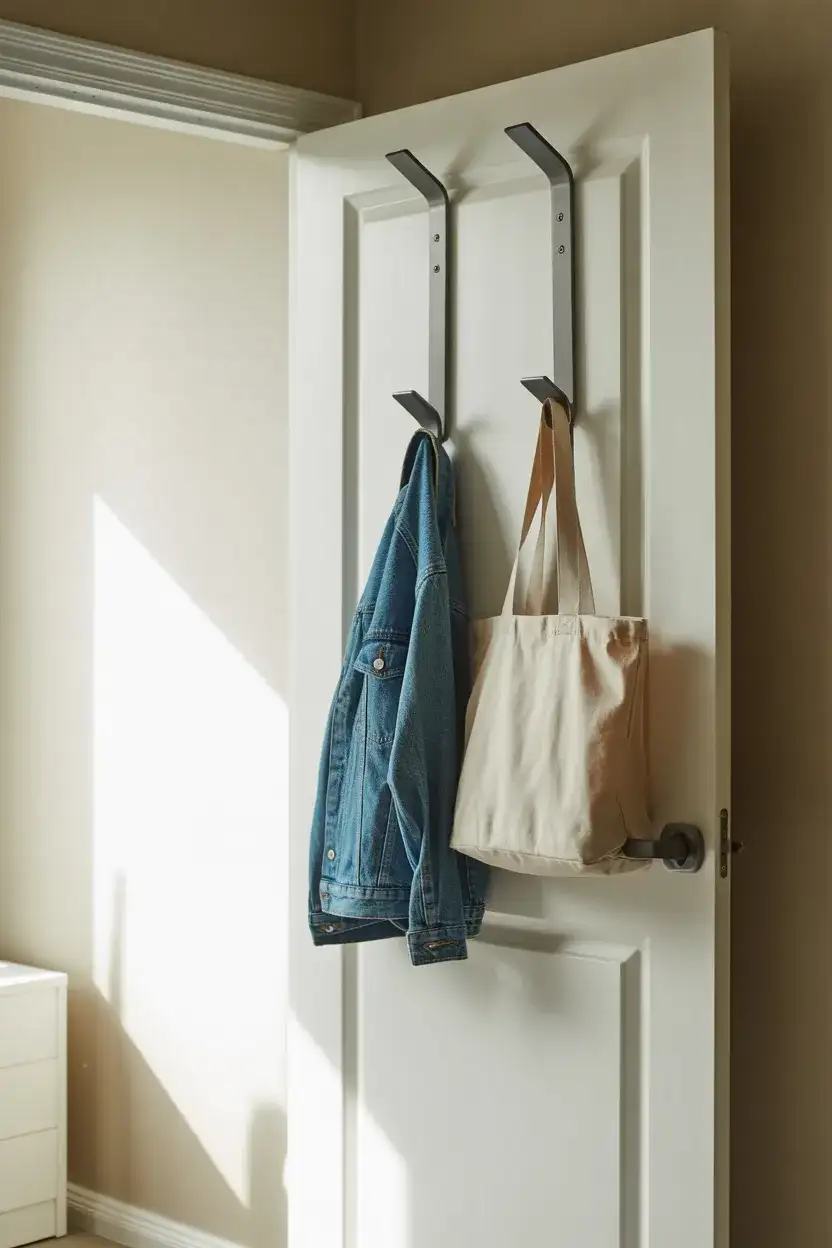
In shared apartments, this is also a subtle way to claim personal space without encroaching on common areas. It’s a small upgrade, but it keeps daily-use items accessible and off the floor. Just avoid overloading them—two or three items max per hook, or the whole thing starts to sag and look messy.
12. Freestanding Mirror to Expand the Space
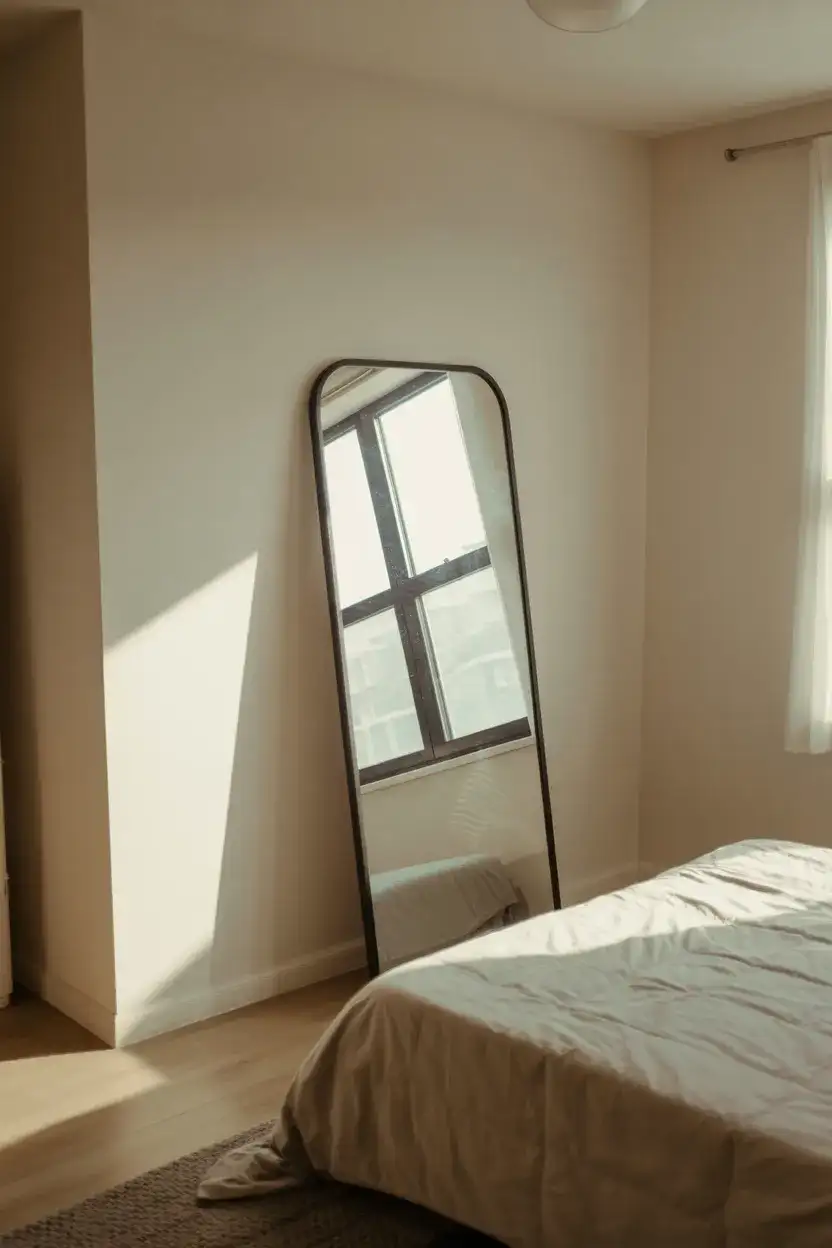
A full-length freestanding mirror does more than help you check your outfit—it reflects light and makes small rooms feel twice as large. Position it across from a window or near your brightest corner, and it’ll bounce natural light around the space all day. It’s a low-commitment piece that you can lean against the wall or prop on a stand, and it works in bedrooms or living rooms equally well.
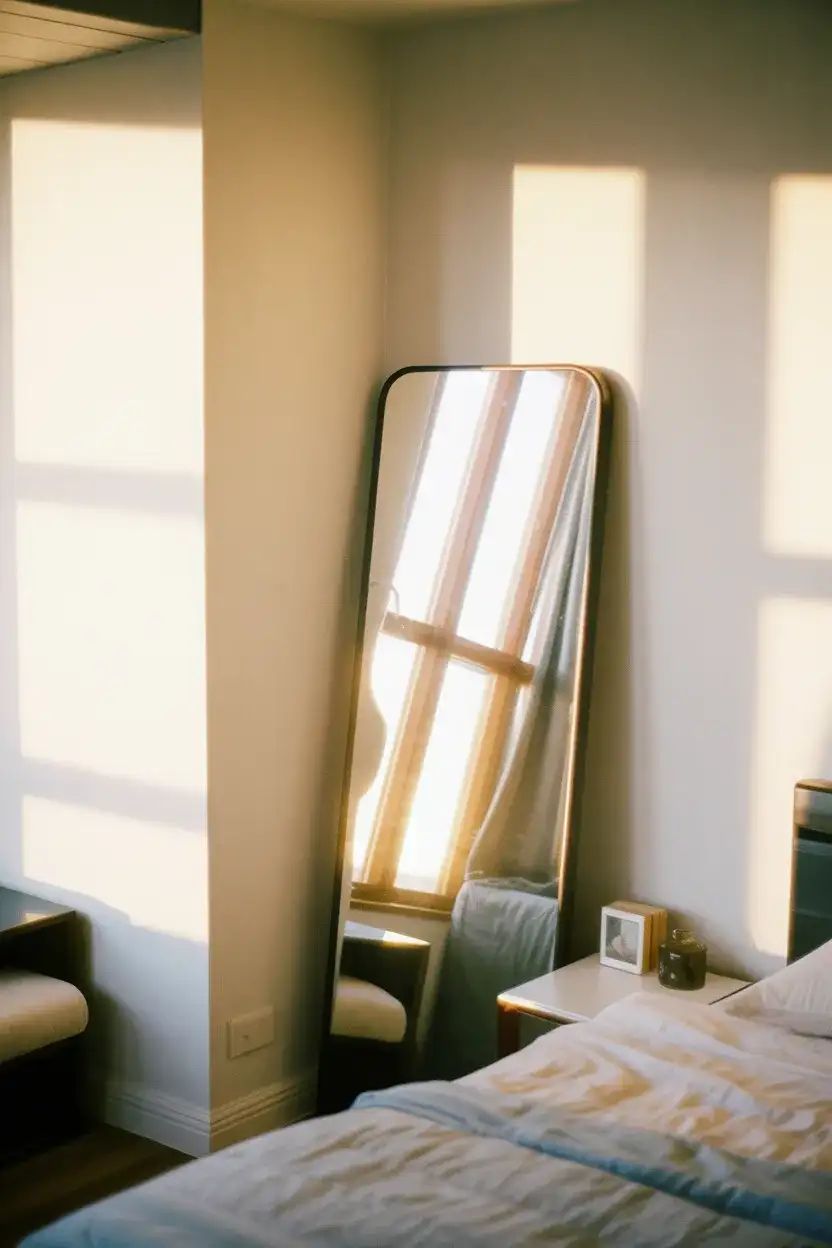
Practical insight: mirrors with thin metal or wood frames tend to look more intentional than frameless or plastic options, which can read as dorm-room leftovers. If you’re moving frequently, a freestanding mirror is easier to transport than something wall-mounted, and it’s one of the few decor items that actually serves a function beyond looking good.
13. Magnetic Spice Rack on the Fridge
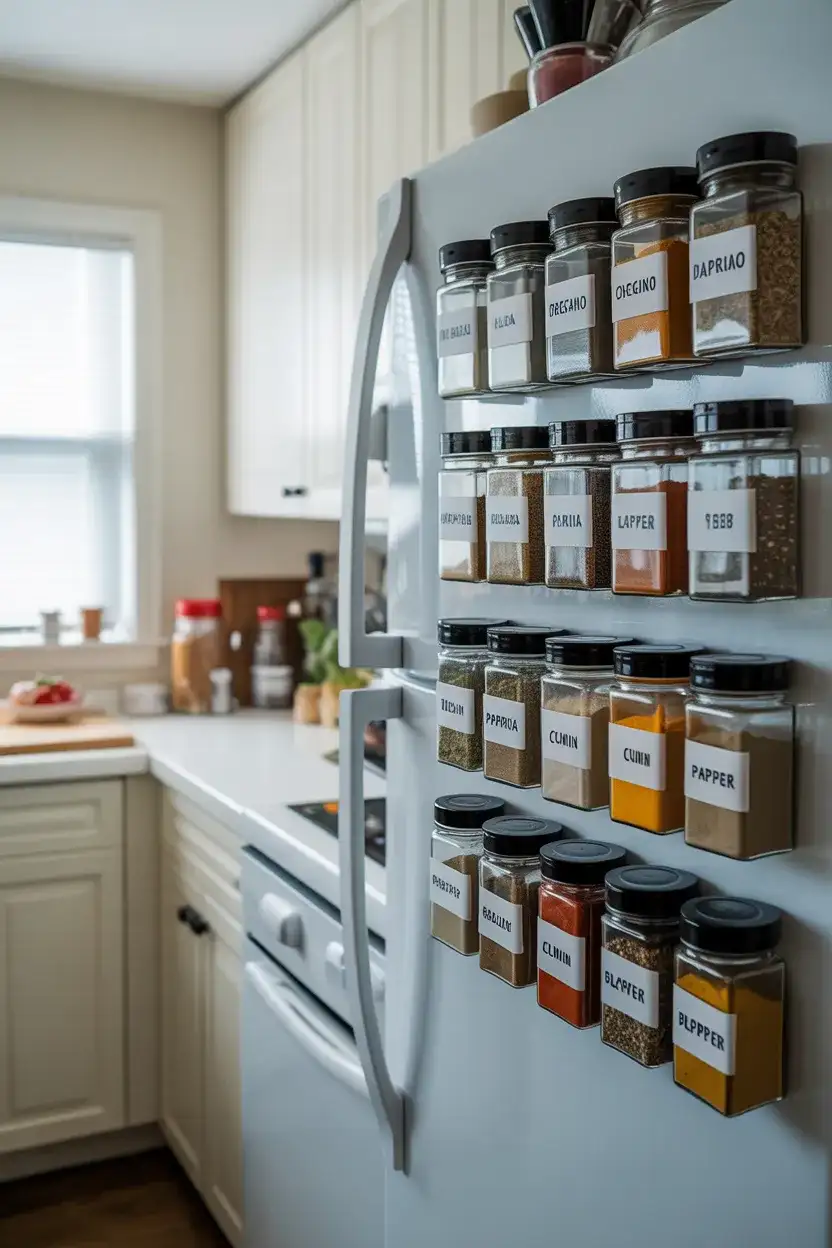
When counter and cabinet space are both nonexistent, a magnetic spice rack that sticks to the side of your fridge is a game-changer. Use matching tins or jars, label them clearly, and suddenly your spices are organized, visible, and easy to grab while cooking. It’s a DIY upgrade that takes ten minutes to set up and makes your kitchen feel more functional and less chaotic.
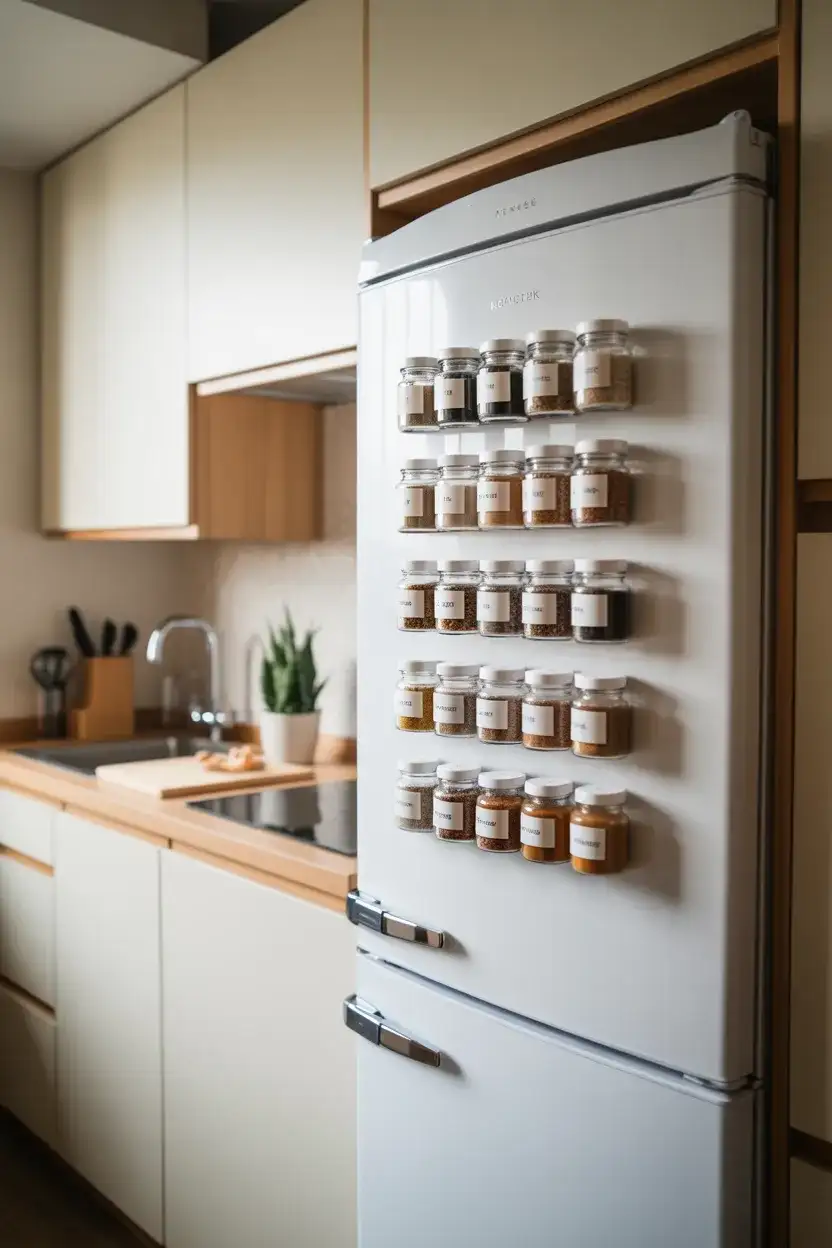
This is especially useful in galley kitchens or studios where every surface is already claimed. The magnetic setup means no installation, no damage, and total portability when you move. Just make sure your fridge is actually magnetic—some stainless steel finishes aren’t—and keep the jars uniform so the display looks cohesive rather than cluttered.
14. Tension Rod Curtain as a Room Divider
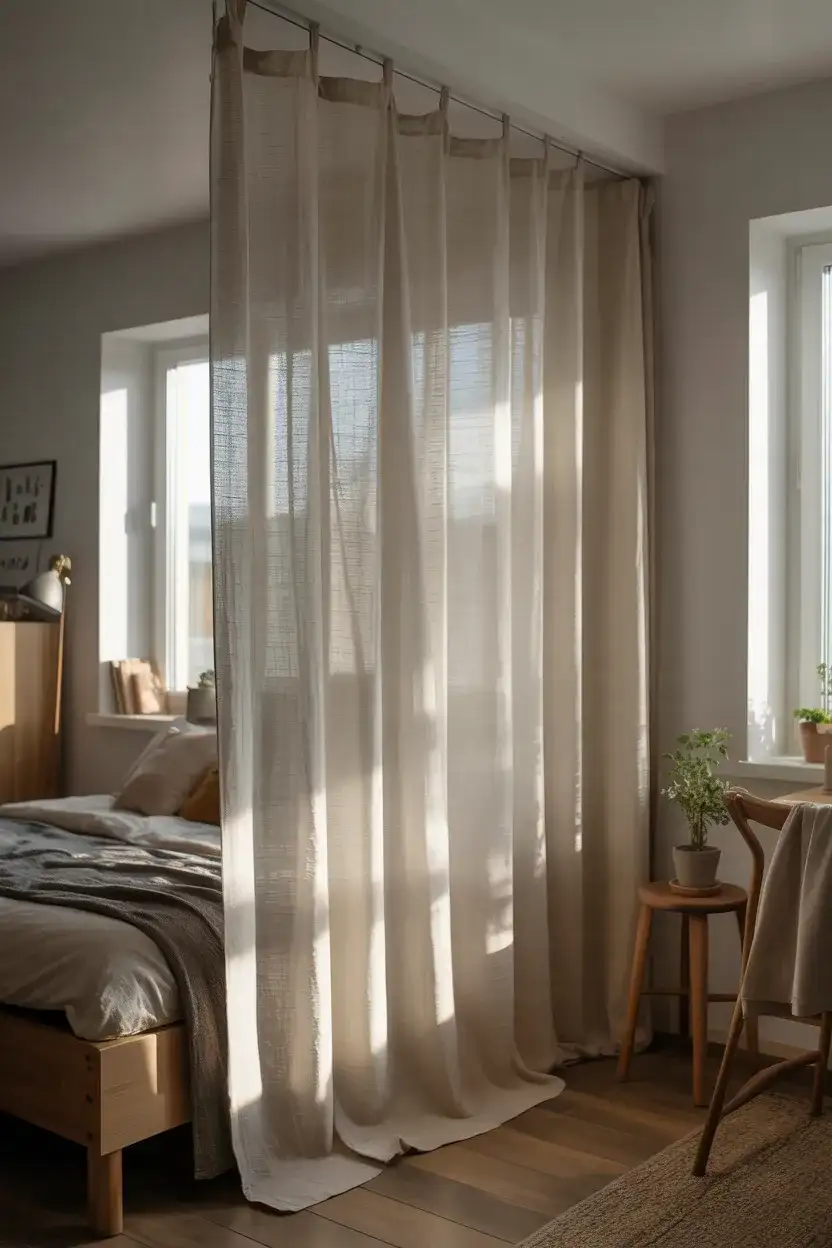
A tension rod and a lightweight curtain can carve privacy out of an open studio or shared bedroom without permanent construction. Hang it between your sleeping area and the rest of the room, or use it to section off a makeshift closet or storage zone. It’s renter-friendly, easy to install, and gives you flexibility to adjust the layout as your needs change.
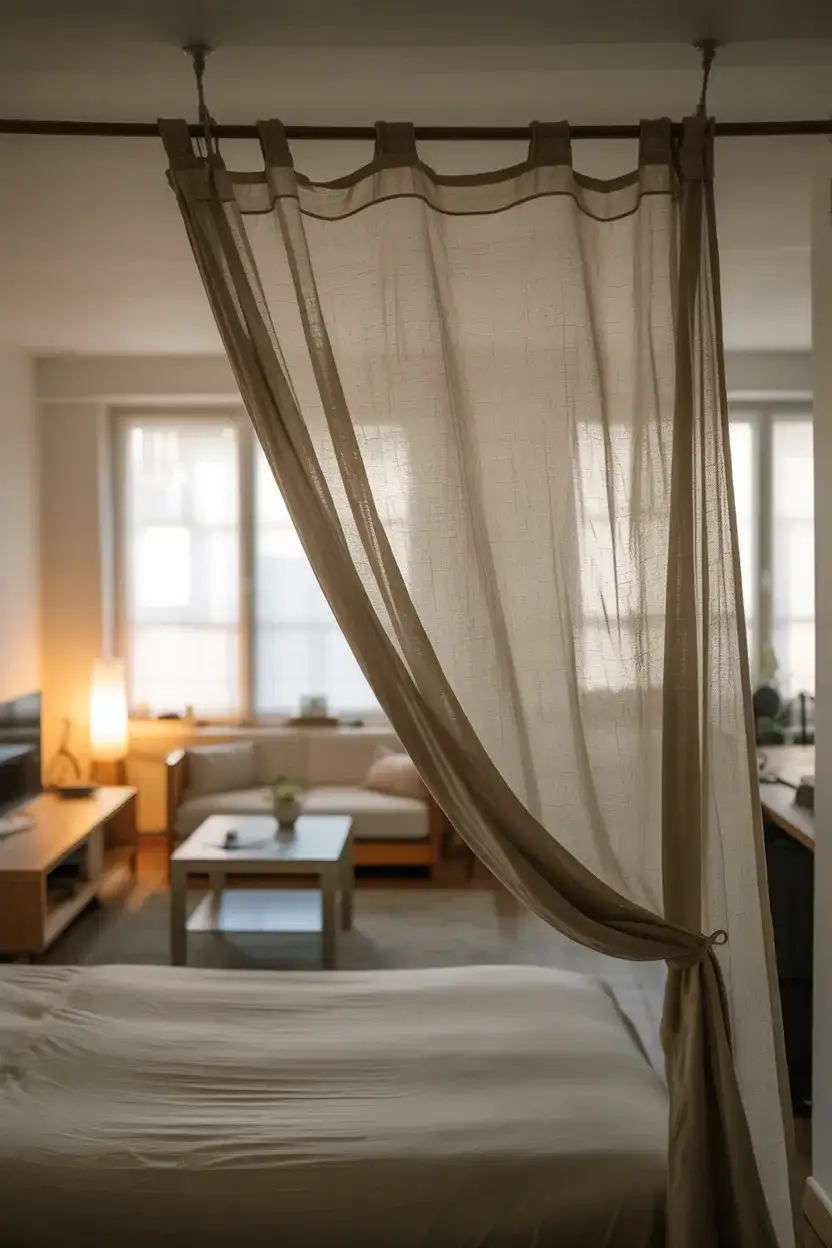
Where it works best: in studios or split bedrooms where you need a sense of separation but can’t build a wall. Choose a curtain that matches your color scheme so it blends rather than screams “temporary fix.” Sheer fabrics let light through but still create a boundary, while heavier linens offer more privacy and sound dampening.
15. Rolling Cart for Kitchen Overflow
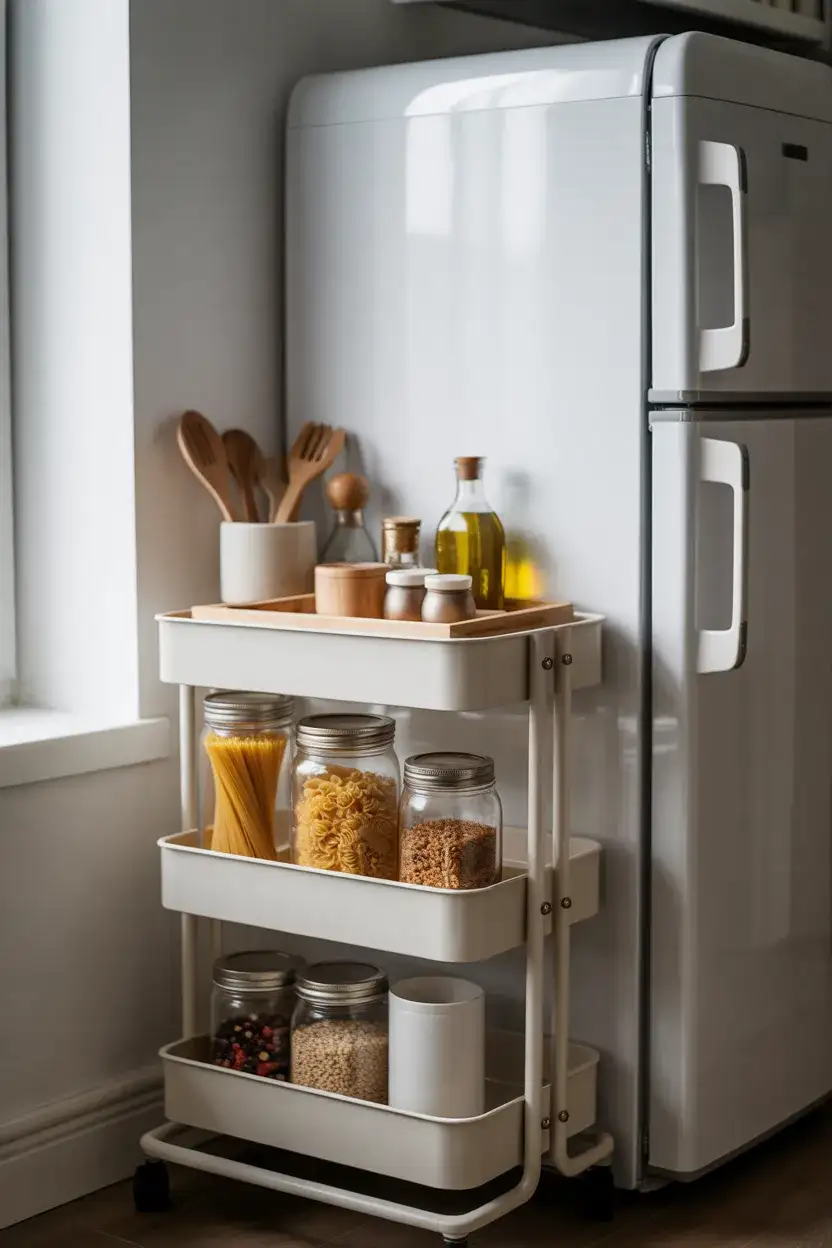
A slim rolling cart fits into narrow gaps beside the fridge or stove and holds the overflow items that don’t fit in your cabinets—oils, canned goods, snacks, or cleaning supplies. The wheels mean you can pull it out when you’re cooking and tuck it away when you need floor space. It’s a practical, budget-friendly addition that makes cramped kitchens feel more manageable.
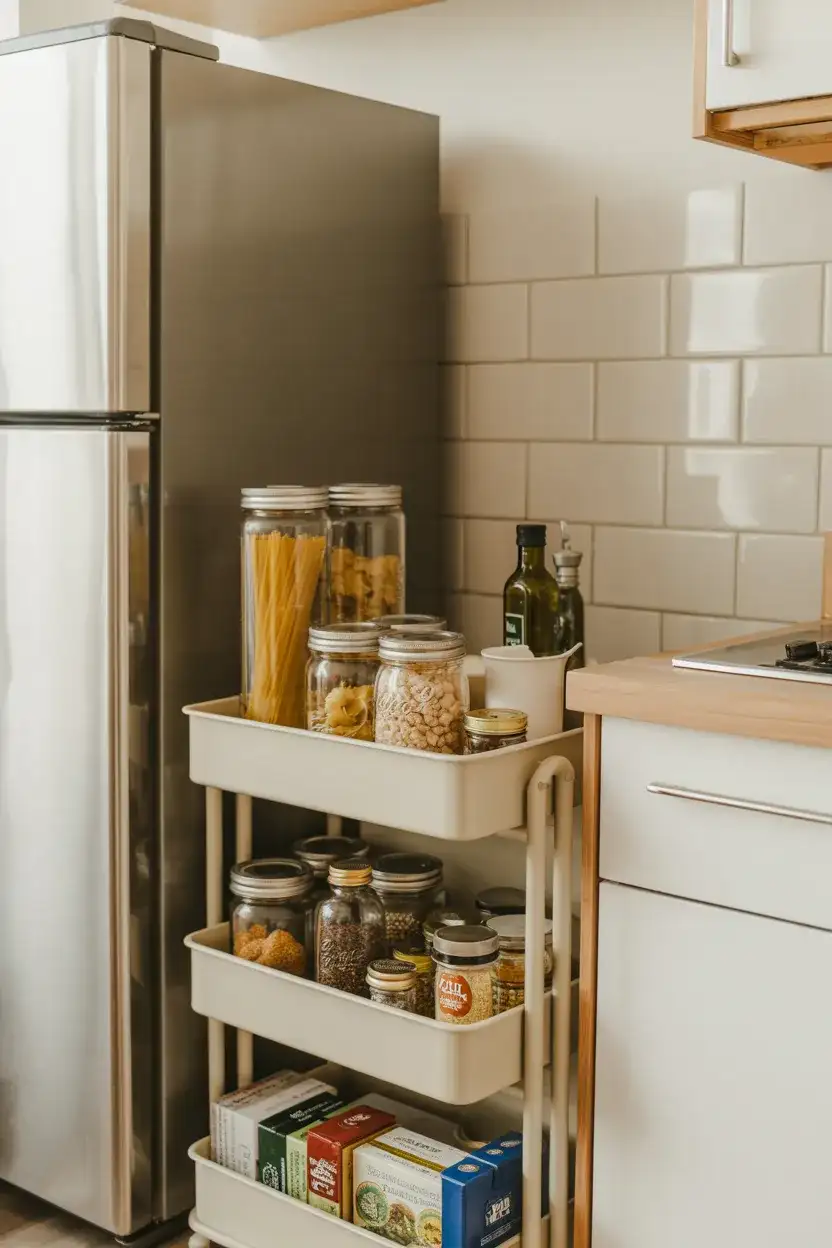
American lifestyle tip: in apartments where kitchens weren’t designed for actual cooking, a rolling cart doubles as a prep station or bar cart depending on the occasion. Keep the top tier reserved for daily-use items and the lower shelves for backstock. It’s one of those pieces that earns its square footage by doing more than one job.
16. Underbed Storage Bins for Seasonal Items
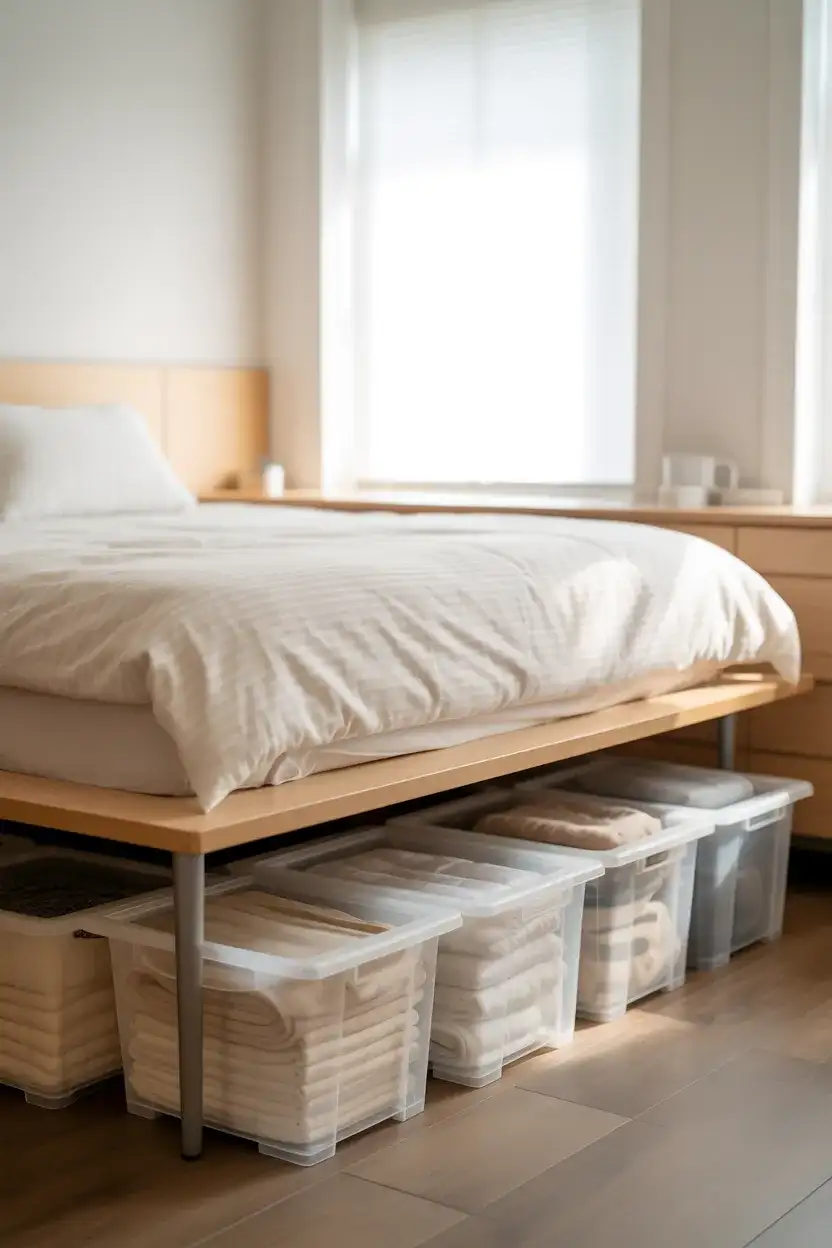
Underbed storage bins turn wasted space into a home for off-season clothes, extra bedding, or sports equipment. Choose low-profile bins with wheels or handles for easy access, and consider clear plastic so you can see what’s inside without digging. It’s a simple fix that keeps clutter out of sight and frees up closet space for everyday items.
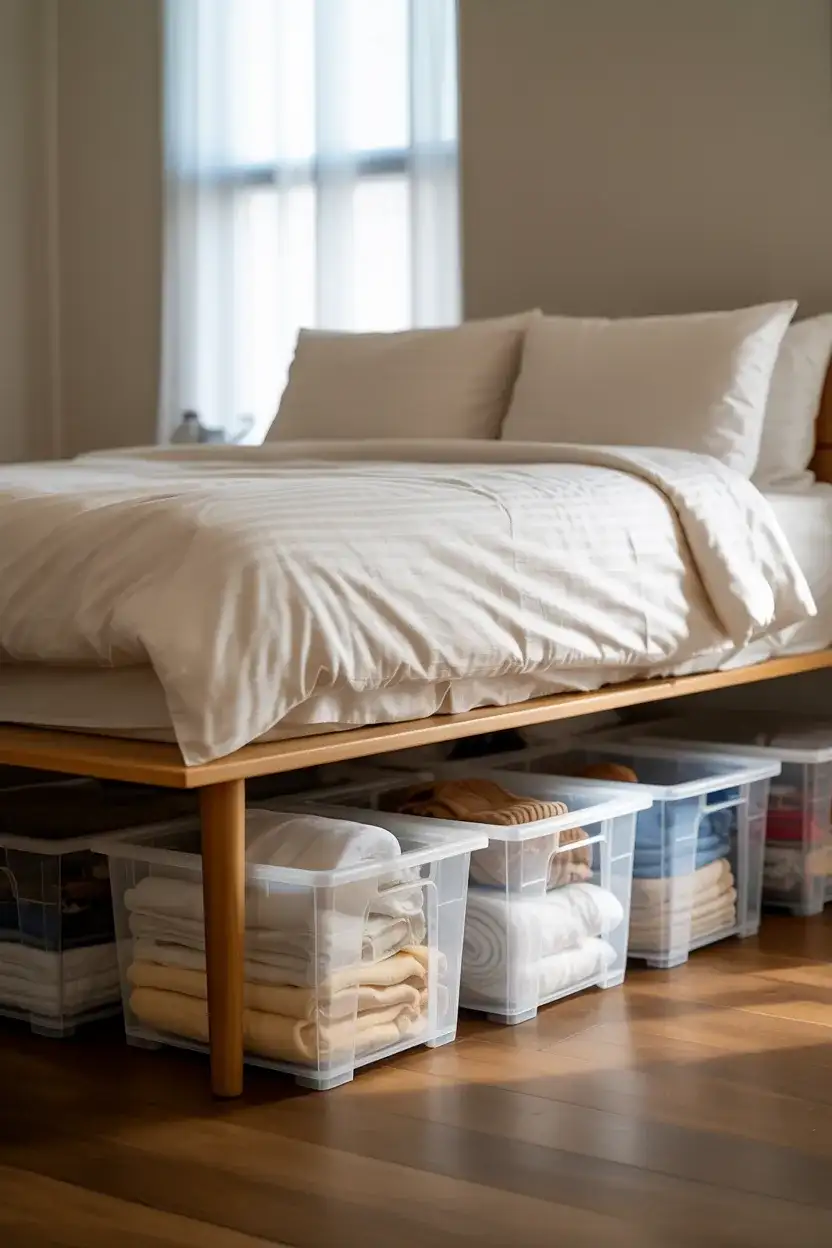
Common mistake: shoving random items under the bed without organization. Label your bins by season or category, and commit to rotating them when the weather changes. This keeps your bedroom feeling clean and prevents that dreaded “I have nothing to wear” spiral when your winter coat is buried under a pile of summer shorts.
17. Cork Board Gallery Wall for Rotating Art
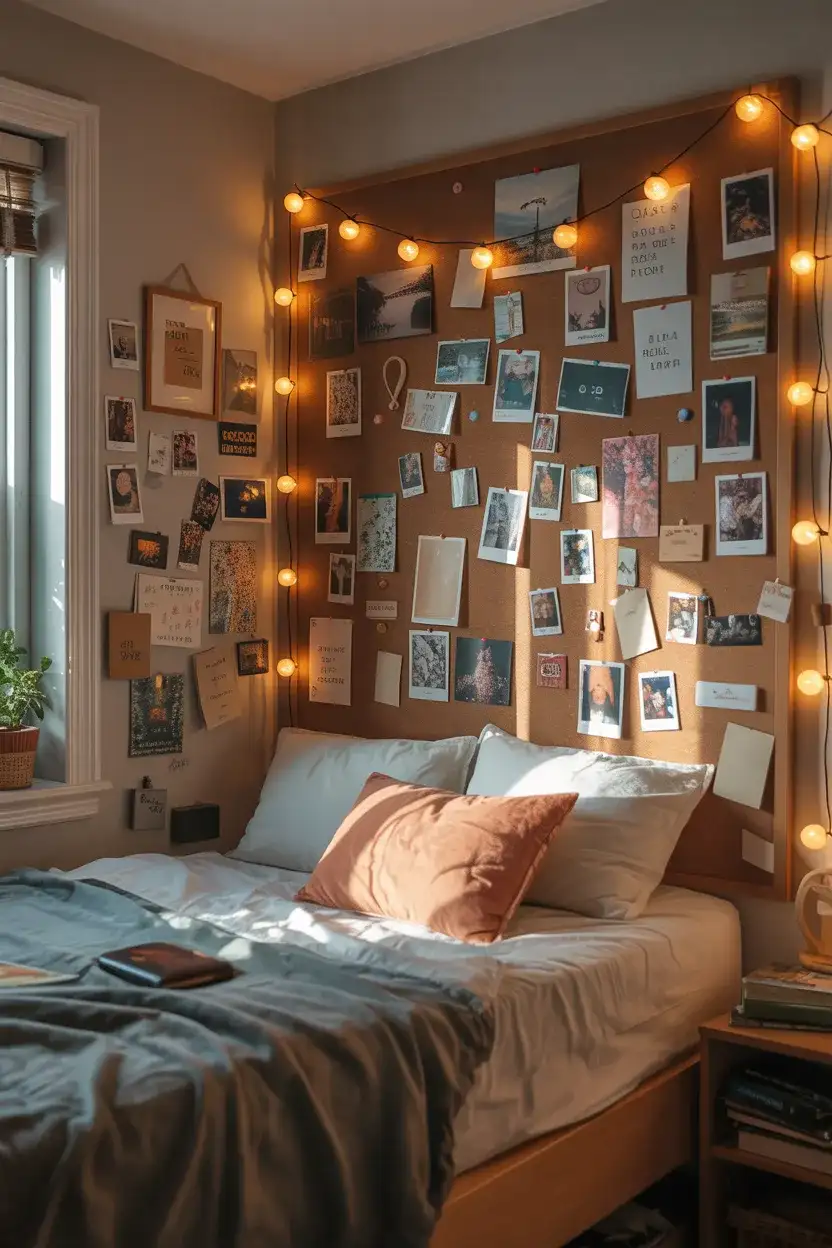
A large cork board or cluster of smaller ones gives you a damage-free way to display photos, postcards, concert tickets, or prints without committing to frames or nail holes. It’s especially useful for renters who want to personalize their space but know they’ll be moving in a year. Arrange the boards in a grid or staggered layout, and refresh the pinned items every few months to keep the display feeling current.
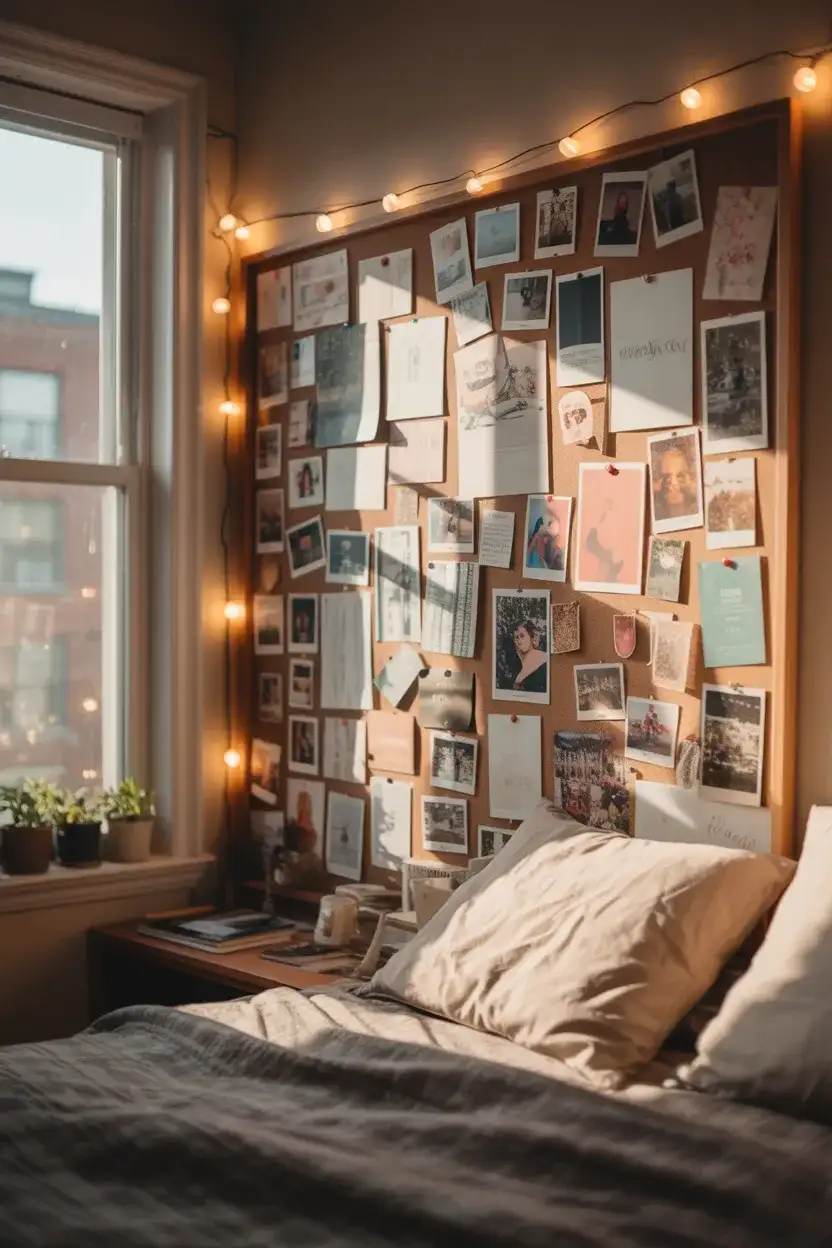
Expert-style commentary: treat the cork board like a curated mood board rather than a chaotic collage. Leave some breathing room between items, vary the sizes and orientations, and stick to a loose color palette so the display feels intentional. It’s a low-commitment way to make your apartment feel like yours without the permanence of wallpaper or paint.
18. Daybed with Throw Pillows for Dual Function
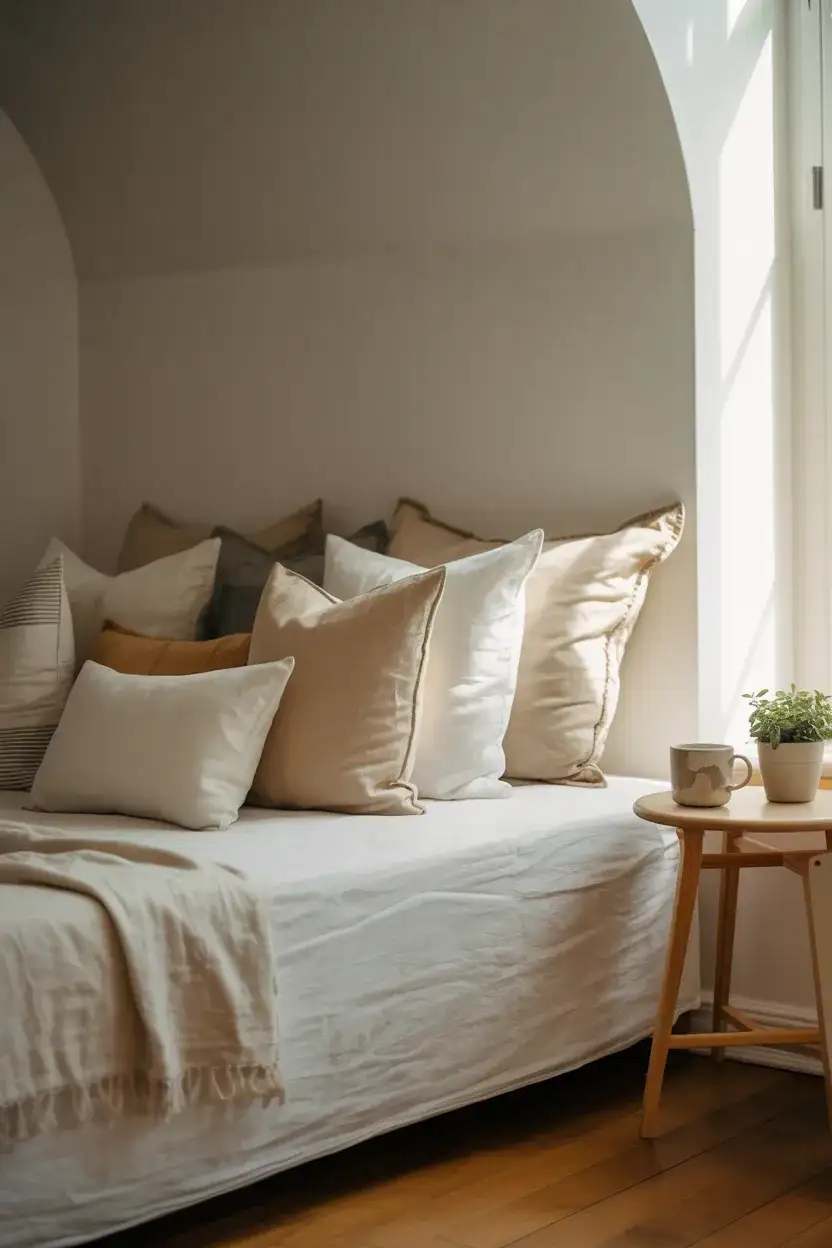
A daybed lets your bedroom pull double duty as a guest room or lounge space without requiring a separate sofa. Pile it with throw pillows during the day so it reads as seating, then clear them off at night when it’s time to sleep. It’s especially smart in studios where every piece of furniture needs to work overtime, and it gives you a place for friends to crash without inflating an air mattress.
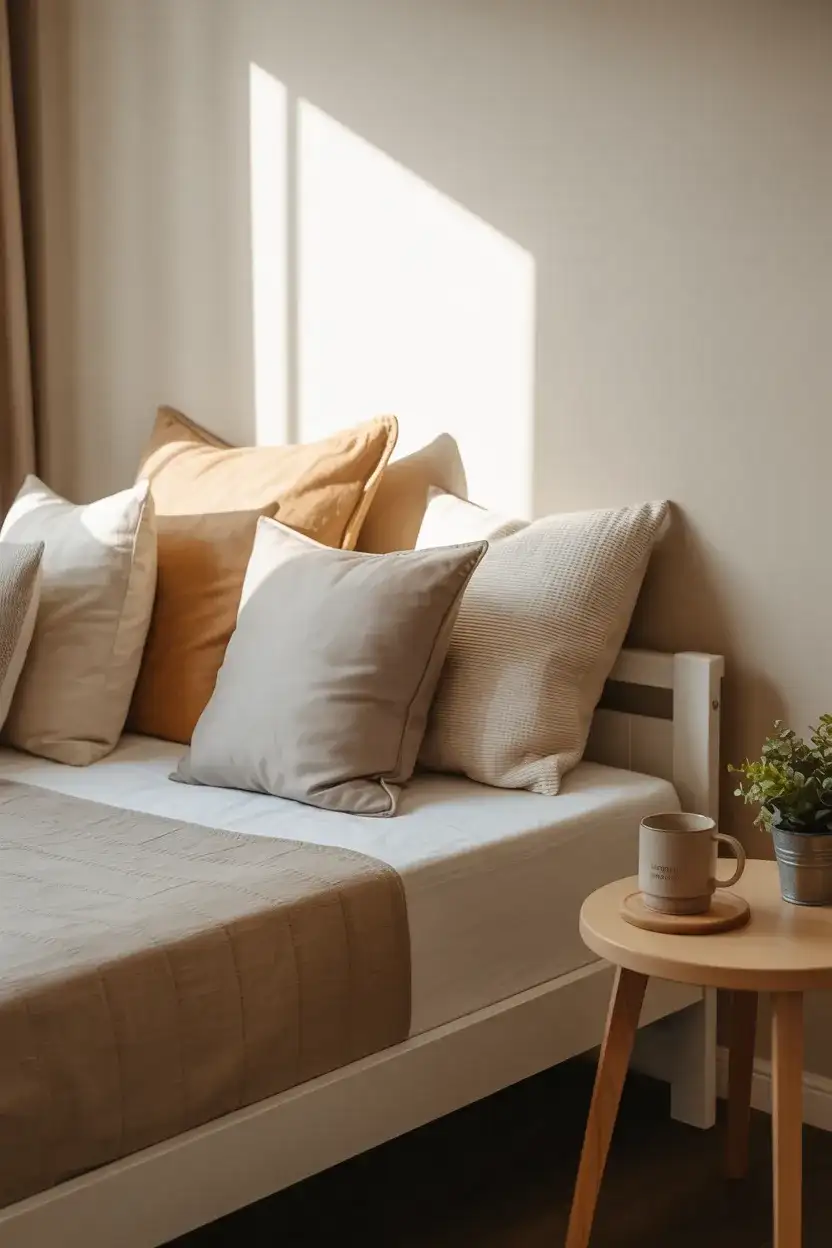
This setup is common in apartments across college towns where space is tight and visitors are frequent. The key is choosing a daybed with a solid back or side rail so it feels more like a couch than a bed. Add a lightweight duvet or coverlet that’s easy to fold up, and the transformation takes seconds.
19. Wall-Mounted Shelves Above the Toilet
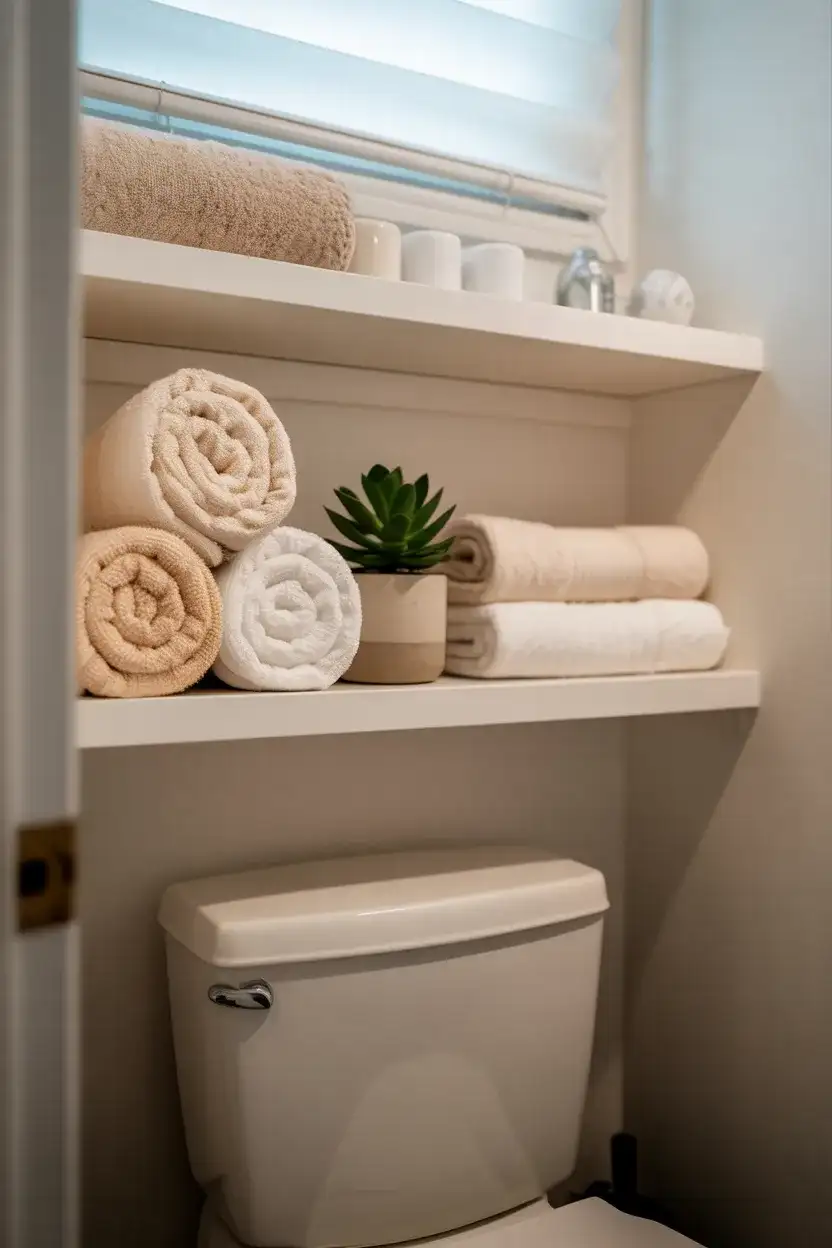
Wall-mounted shelves above the toilet unlock vertical storage in bathrooms where counter space is basically nonexistent. Use them for rolled towels, small plants, or extra toiletries, and keep the styling tight so it doesn’t feel cluttered. It’s a renter-friendly upgrade that works in any bathroom layout and takes advantage of space that’s usually wasted.
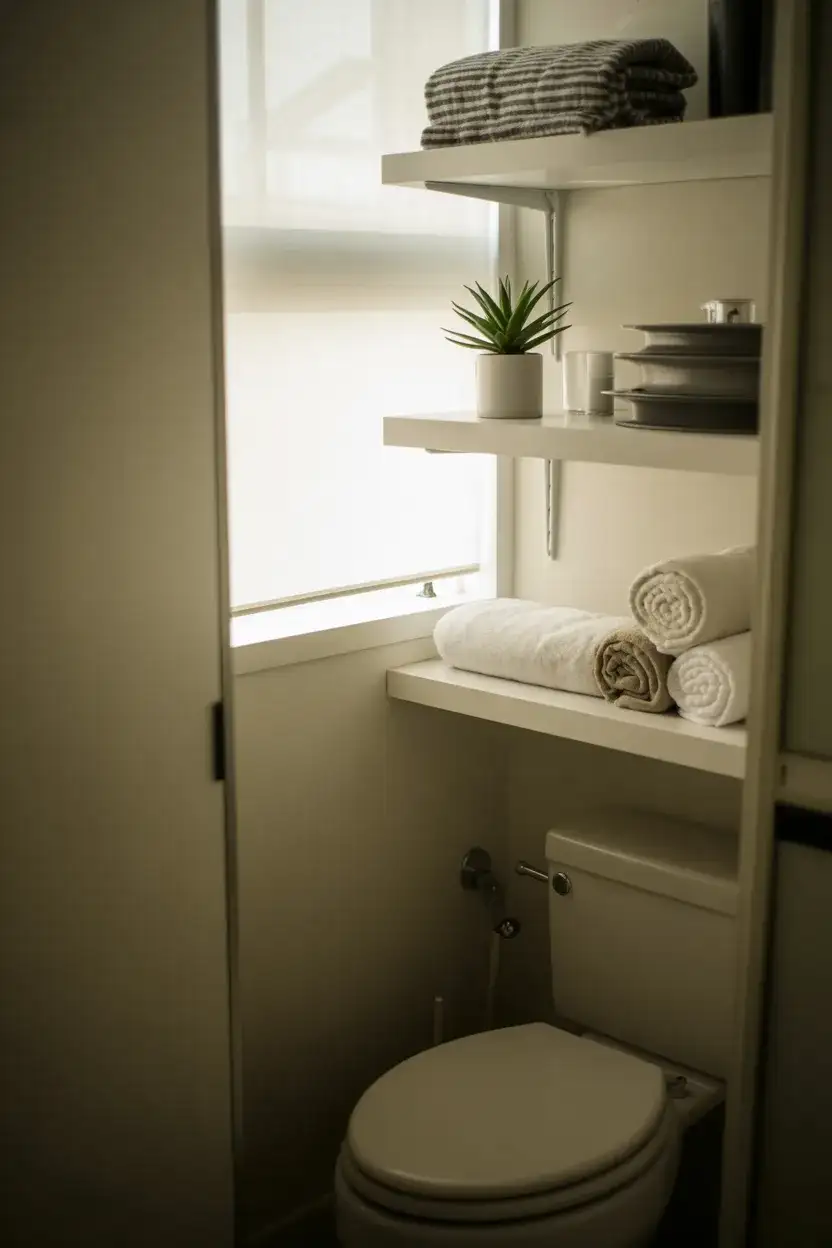
Budget angle: a set of basic floating shelves from a hardware store costs less than twenty dollars and installs in under an hour. Just make sure you’re mounting them to studs or using heavy-duty anchors, especially if you’re storing anything with weight. The result is a bathroom that feels more put-together and less like a temporary pit stop.
20. Minimalist Christmas Decor for Small Spaces
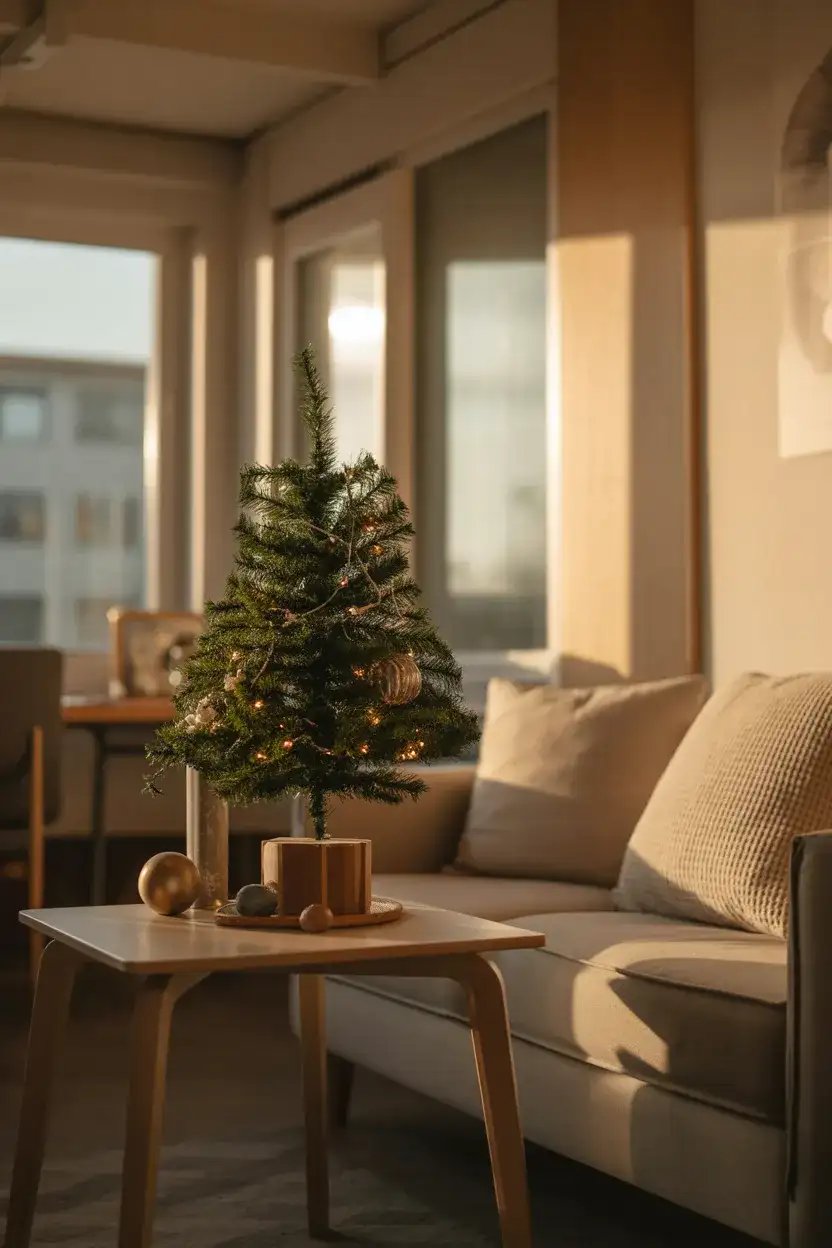
You don’t need a full-size tree to make your apartment feel festive—opt for a tabletop version, a wall-mounted tree made of lights, or a simple garland draped over a mirror or doorway. Stick to one or two Christmas accents rather than overwhelming the space, and keep the color palette minimal so it blends with your existing decor. It’s seasonal without sacrificing your hard-won square footage.
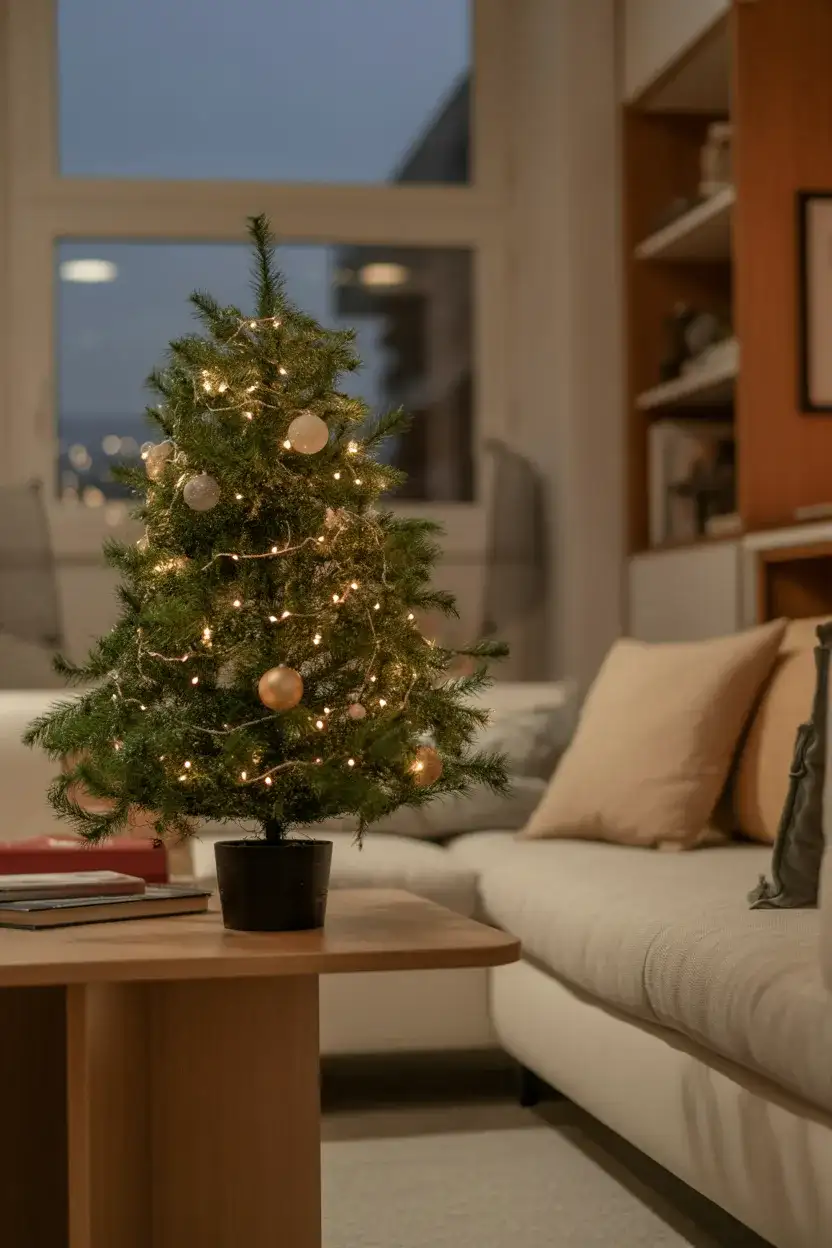
Regional context: in warmer climates like the Southwest or Southern California, Christmas decor in apartments tends to be lighter and less traditional, leaning into natural textures and metallic accents rather than heavy pine garlands. The goal is to acknowledge the season without letting it dominate your space or storage closet.
21. Nook Reading Corner with Floor Cushion
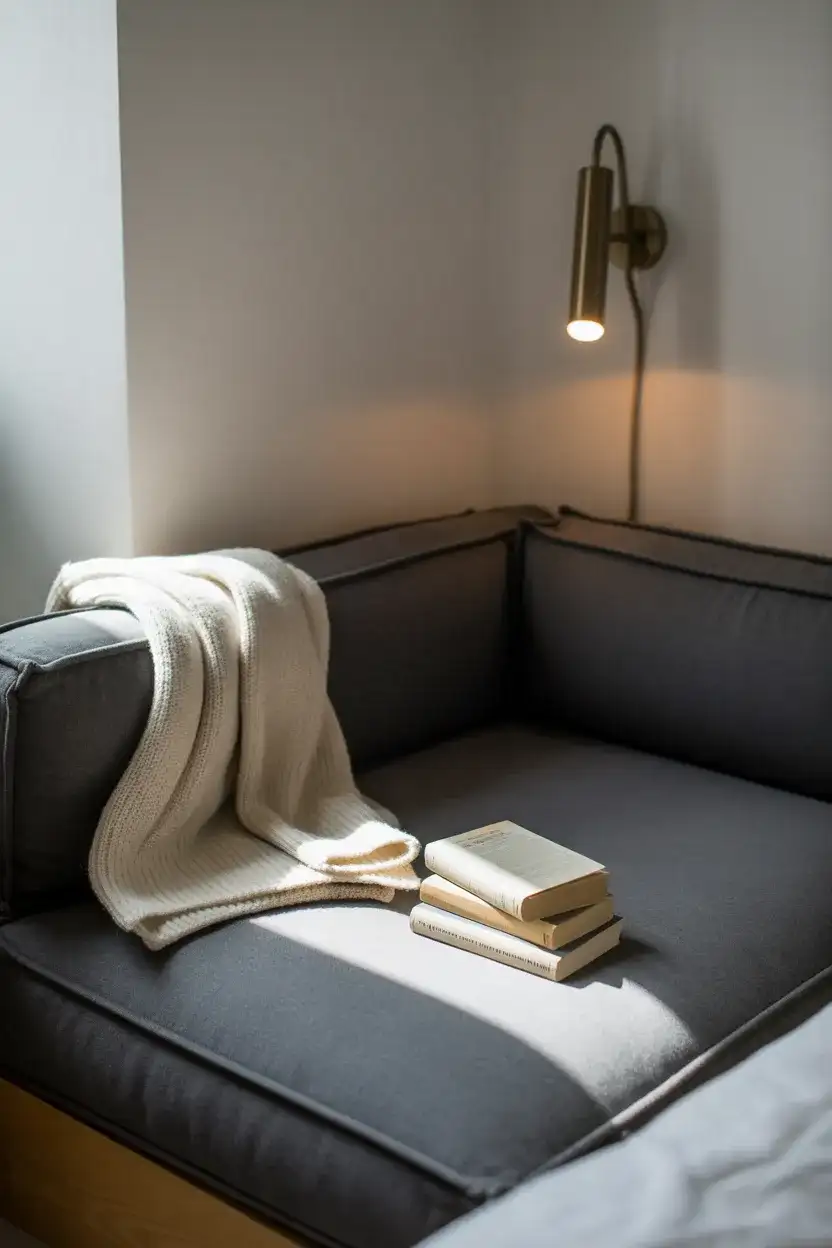
A corner with a floor cushion, a throw blanket, and a small side table becomes an instant reading nook that doesn’t require a full armchair. Add a wall-mounted reading light or a clip-on lamp, and you’ve got a cozy retreat that fits into even the smallest bedroom or living room. It’s low-maintenance, easy to move, and gives you a designated spot to unwind without needing a full furniture suite.
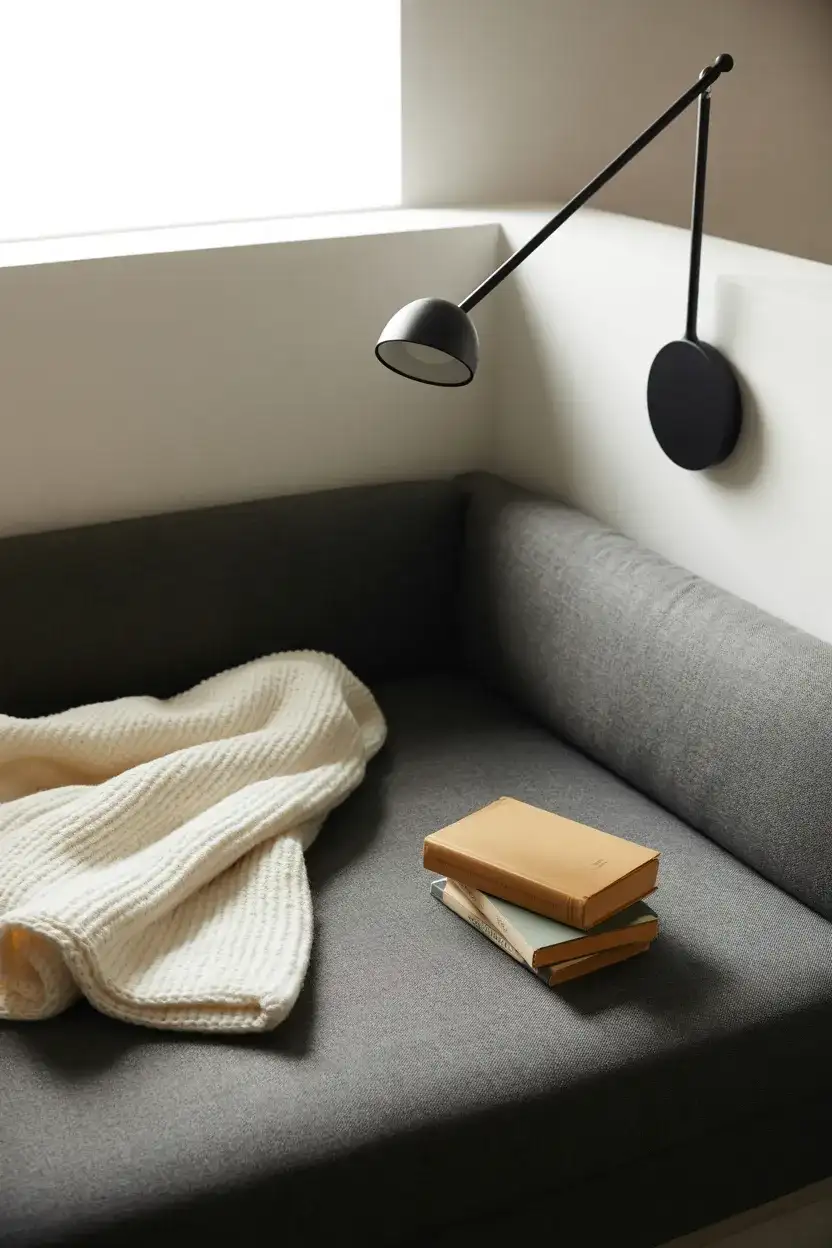
Real homeowner behavior: most people end up using this spot more than they expect, especially on lazy weekends or when they need a break from screens. Keep the area clutter-free so it stays inviting, and rotate the blanket or cushion cover seasonally to keep it feeling fresh.
22. Open Shelving for Display and Storage
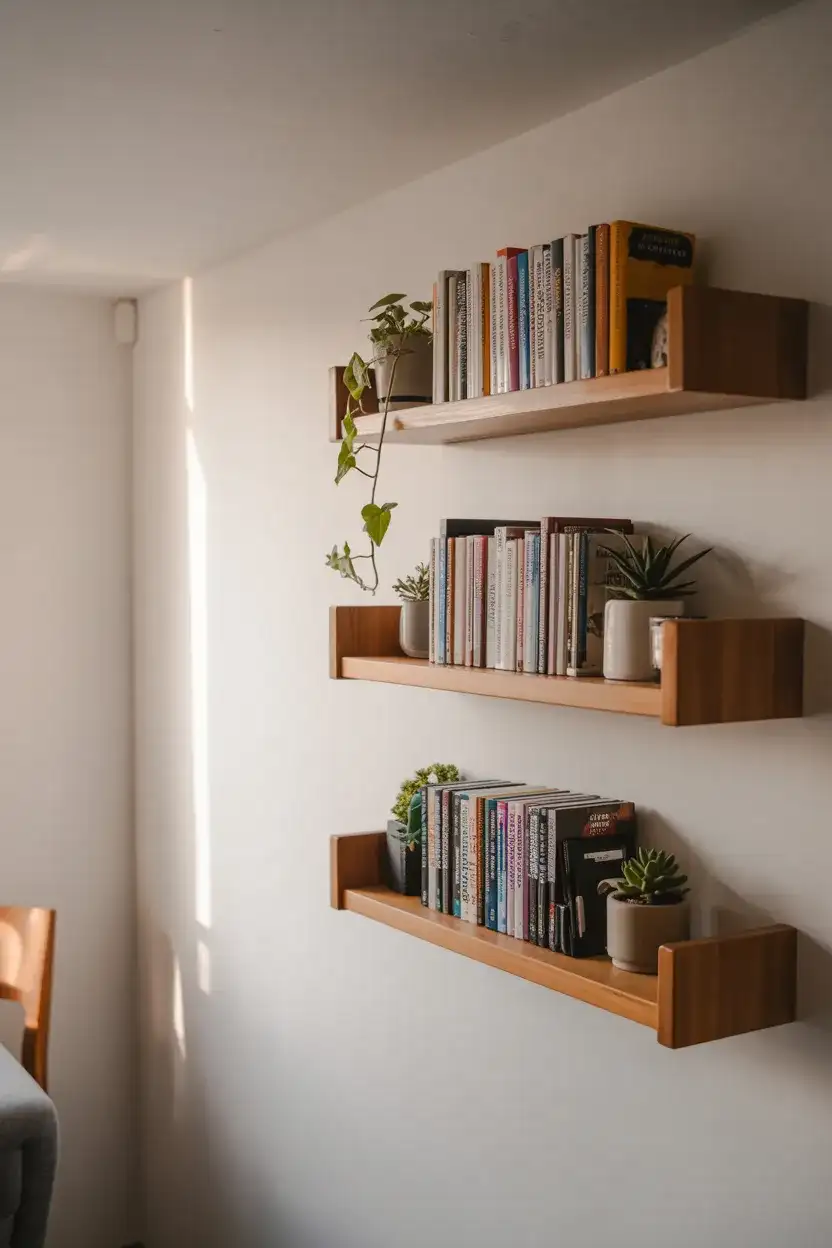
Open shelving on a blank wall gives you a place to store and display books, plants, framed photos, or everyday items without the bulk of a bookcase. Use matching brackets and boards for a cohesive look, and style the shelves with a mix of functional and decorative pieces so they don’t feel too staged. It’s a budget upgrade that adds personality and storage in equal measure.
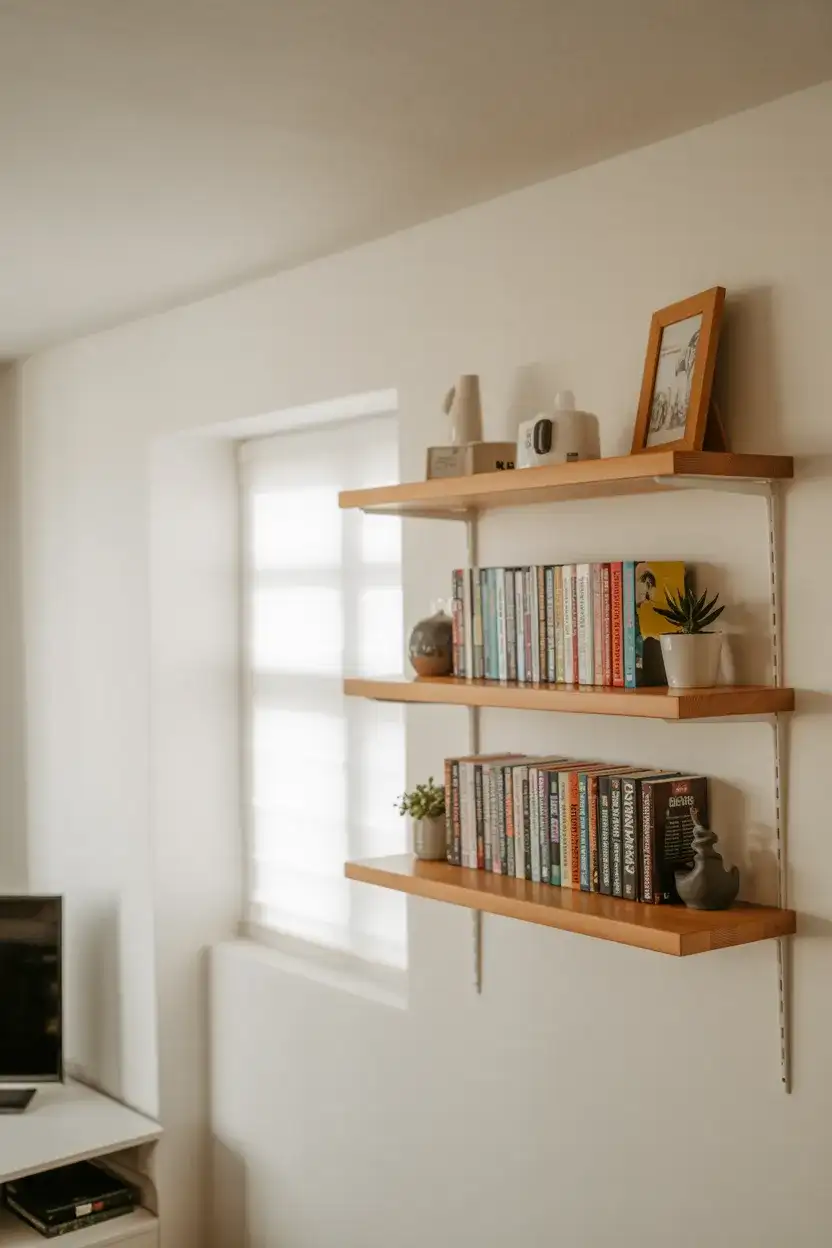
Common mistakes: overcrowding the shelves or mixing too many styles. Stick to a loose rule of thirds—one-third books, one-third decorative objects, one-third empty space. This keeps the display breathable and prevents it from looking like a thrift store stockroom. Open shelving works best when it feels curated, not crammed.
Conclusion
Making a college apartment feel like home in 2026 doesn’t require a massive budget or a design degree—it just takes a little intentionality and a willingness to get creative with the space you have. Whether you’re working with a studio, a shared unit, or a bedroom in a larger apartment, the ideas above are designed to be flexible, affordable, and easy to take with you when the lease ends. Try one or two, see what fits your lifestyle, and don’t be afraid to make it your own. Drop a comment below with your favorite setup or any questions—we’d love to hear what’s working in your space.