Coffee tables remain one of the most searched home décor categories on Pinterest in 2026, especially among American homeowners looking to refresh their living spaces without a full renovation. Whether you’re drawn to minimalist modern setups, cozy farmhouse charm, or seasonal styling for autumn and the holidays, your coffee table offers a surprisingly versatile canvas. This guide walks through fresh, realistic ideas that blend function with beauty—from round glass surfaces to rustic wooden trays, and from everyday elegance to festive seasonal touches. Each concept is rooted in what’s actually working in real homes right now, with practical tips that go beyond the styled-for-camera look.
1. Layered Tray on a Round Glass Table
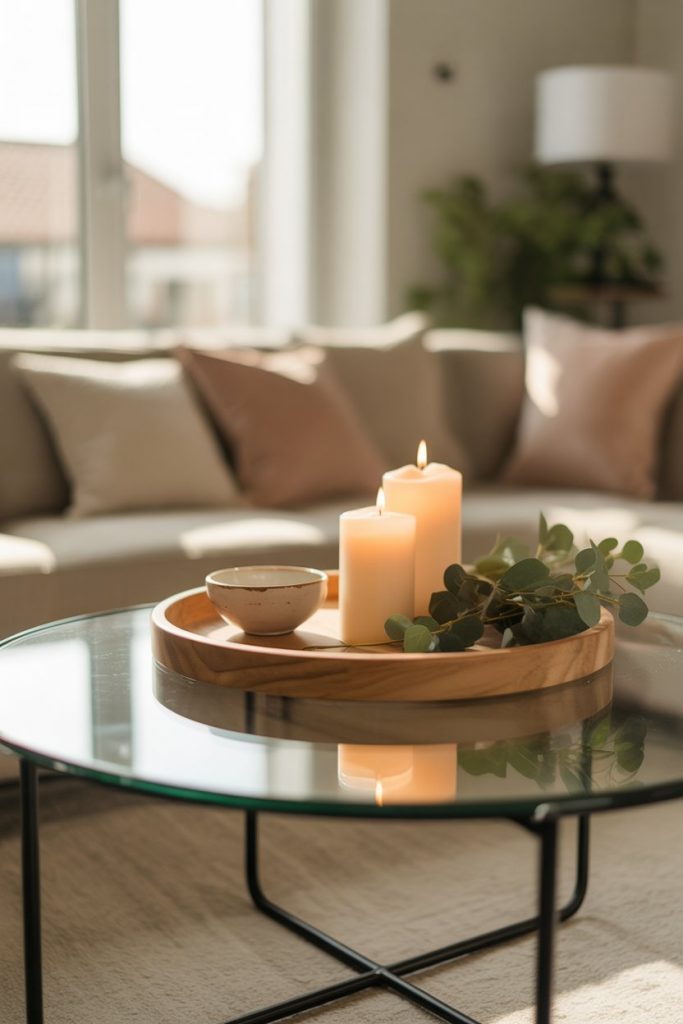
A round glass coffee table paired with a tray creates instant structure without blocking the light and openness that glass provides. The tray anchors smaller objects—candles, coasters, a small vase—while keeping the surface from feeling cluttered. This approach works especially well in smaller living rooms where visual weight matters, and it’s one of the most pinned setups for simple styling that still feels intentional. 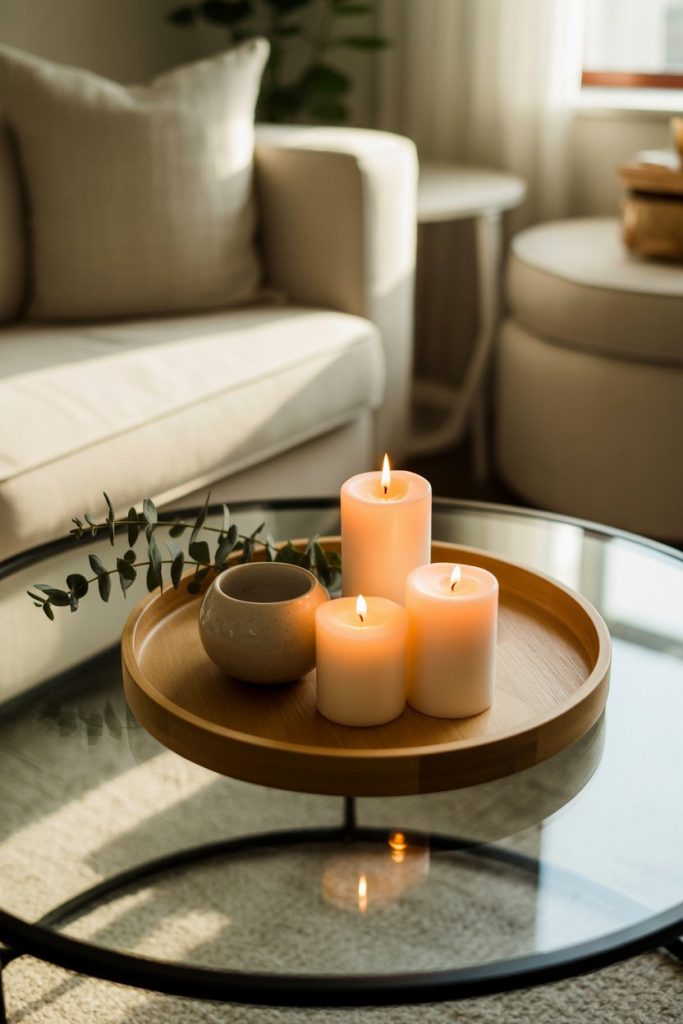
This setup is forgiving for busy households—you can swap out what’s in the tray seasonally without rethinking the entire table. A common mistake is choosing a tray that’s too large; aim for one that covers about a third of the table’s surface. If you’re working with a budget under $50, thrift stores often carry beautiful vintage trays that add character without the markup.
2. Farmhouse Stack with Vintage Books and Greenery
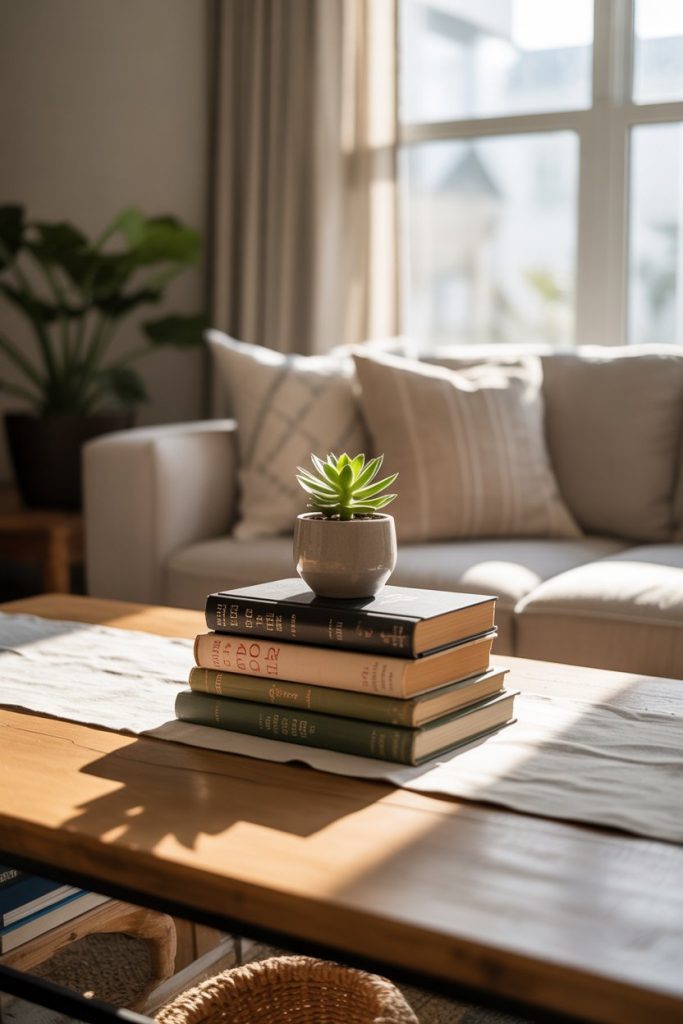
The farmhouse aesthetic remains strong across the Midwest and South, where vintage books stacked horizontally create both height and a nod to collected-over-time charm. Topping the stack with a small plant or a bundle of dried wheat keeps the look grounded and seasonal. This idea works on rectangular tables where you have room to balance the stack on one side with a candle or decorative object on the other. 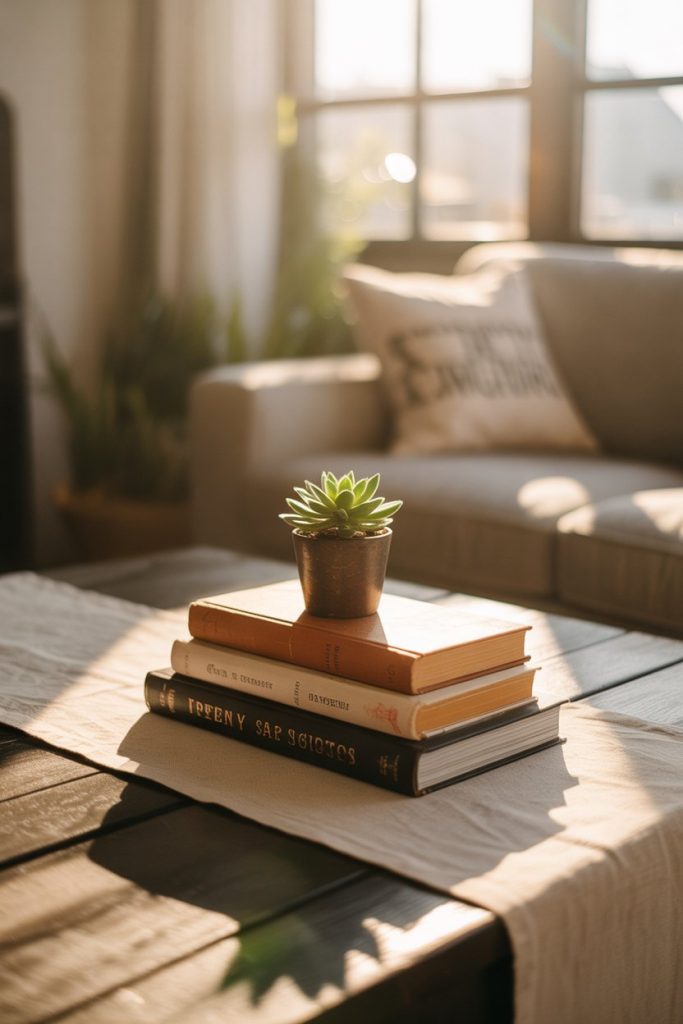
In practice, real homeowners often underestimate how much height variation matters. If everything on your table is the same level, the eye has nowhere to go. Books are an easy fix, and they double as conversation starters if you choose titles that reflect your interests. Avoid overstyling—three to four books max, or it starts to look like a prop rather than a functional surface.
3. Coastal Simplicity with Driftwood and White Ceramics
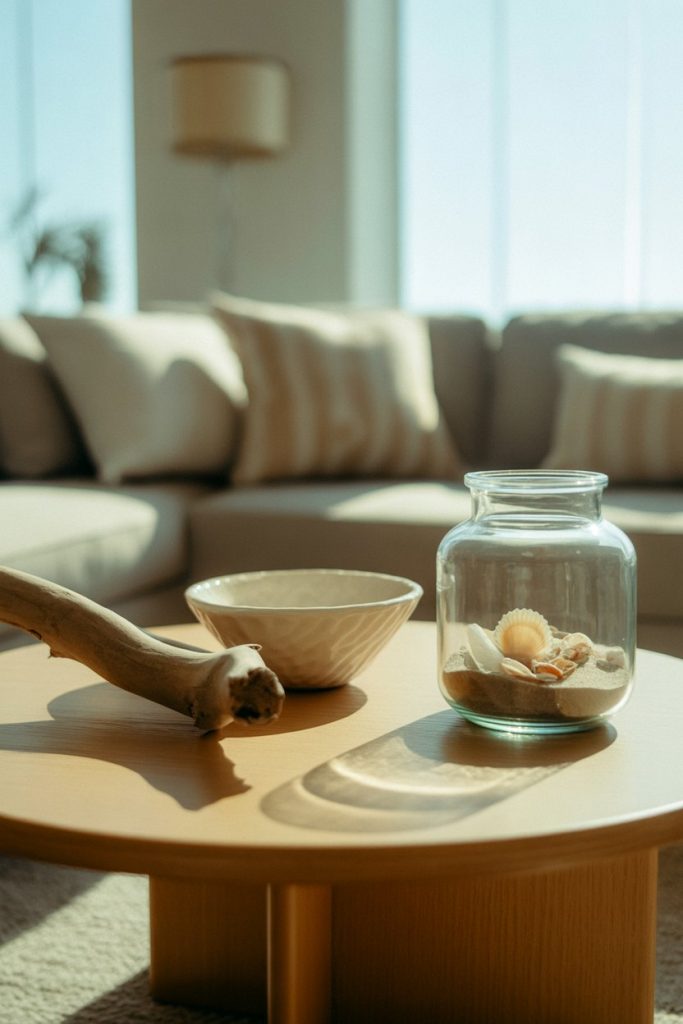
A coastal coffee table setup leans on natural textures and a muted palette—think driftwood, white or cream ceramics, and maybe a hint of soft blue. This style resonates in coastal states but also appeals to anyone craving a calm, beach-house vibe year-round. A wooden table base enhances the organic feel, and keeping the arrangement simple prevents it from tipping into theme-park territory. 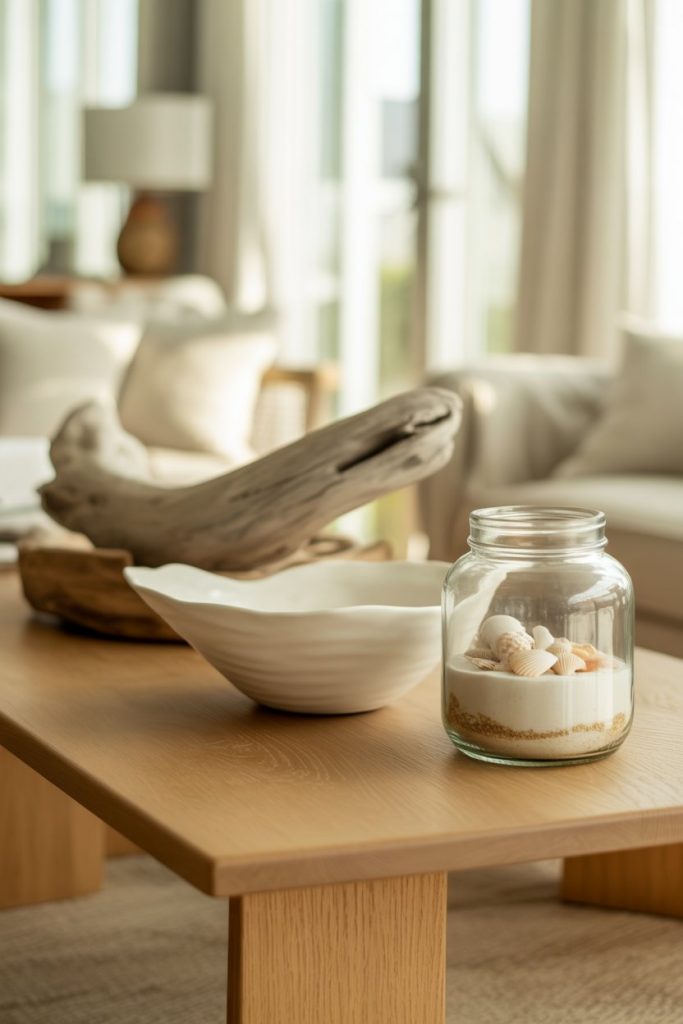
Where it works best: open-plan spaces with plenty of natural light, especially in beach towns or homes with large windows facing water. The key is restraint—one or two natural elements go further than a crowded collection. If you live inland, this look still translates well; just skip anything overly literal like anchor motifs and stick to texture and tone.
4. Modern Black and Brass Contrast
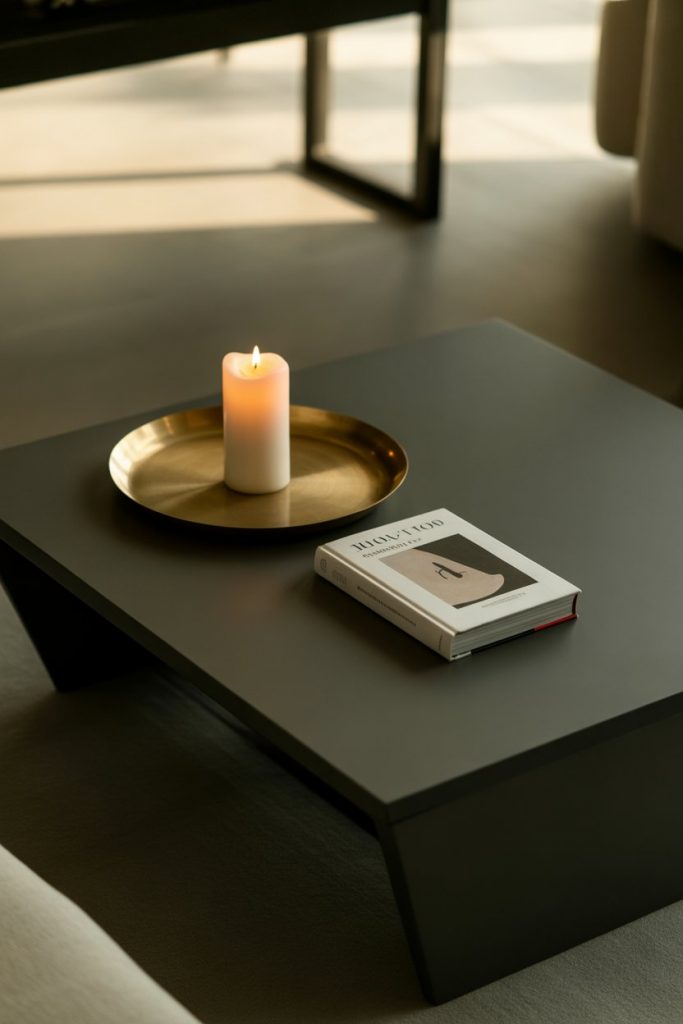
A black coffee table offers a bold anchor in a neutral room, and pairing it with brass or gold accents creates a sophisticated contrast that feels current without chasing trends. This combination shows up frequently in urban apartments and modern lofts, where a touch of metallic warmth softens the sleekness of dark surfaces. Add a low brass tray or a geometric candleholder to introduce the metallic without overwhelming the space.
From a practical standpoint, black surfaces show dust and fingerprints more readily than lighter finishes, so plan for weekly wiping if you have kids or pets. That said, the visual impact is worth it—black grounds a room in a way that wood or glass can’t, and it pairs beautifully with nearly any color palette. Expert designers often recommend limiting yourself to two metallics per room; here, brass and black create enough tension on their own.
5. Autumn Harvest Table with Pumpkins and Warm Tones
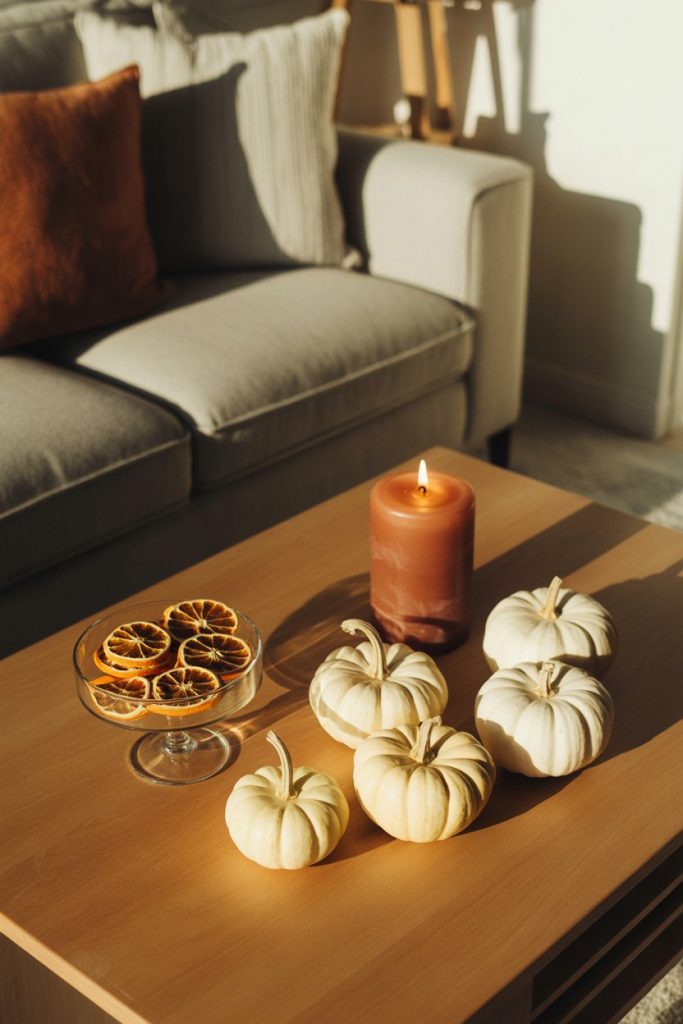
When autumn arrives, coffee tables become a natural spot for seasonal styling—small pumpkins, cinnamon-scented candles, and rust-colored accents signal the shift without requiring a full room makeover. This approach is especially popular in New England and the Pacific Northwest, where fall is a cultural moment. A tray helps corral these items so you can remove them easily when the season ends. 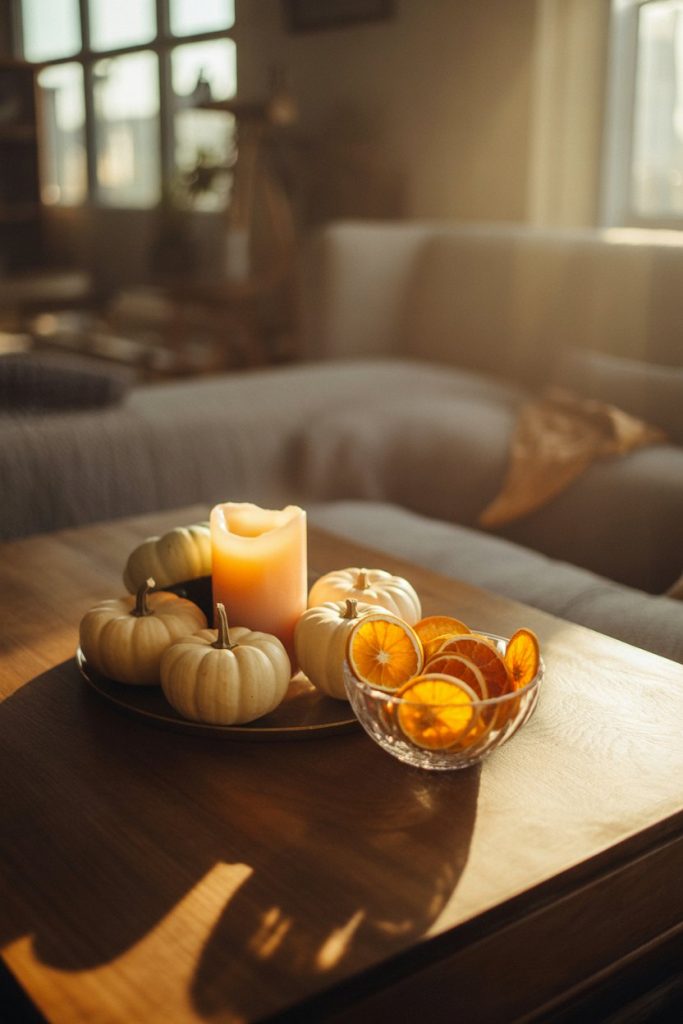
A micro story: one homeowner in Vermont swaps out her coffee table décor every six weeks, treating it like a rotating gallery. She finds it keeps her space feeling intentional without the commitment of repainting or new furniture. The trick with autumn styling is knowing when to stop—two or three elements are enough. Overdoing it can make your living room feel like a seasonal display rather than a home.
6. Holiday Coffee Table with Evergreen and Candles
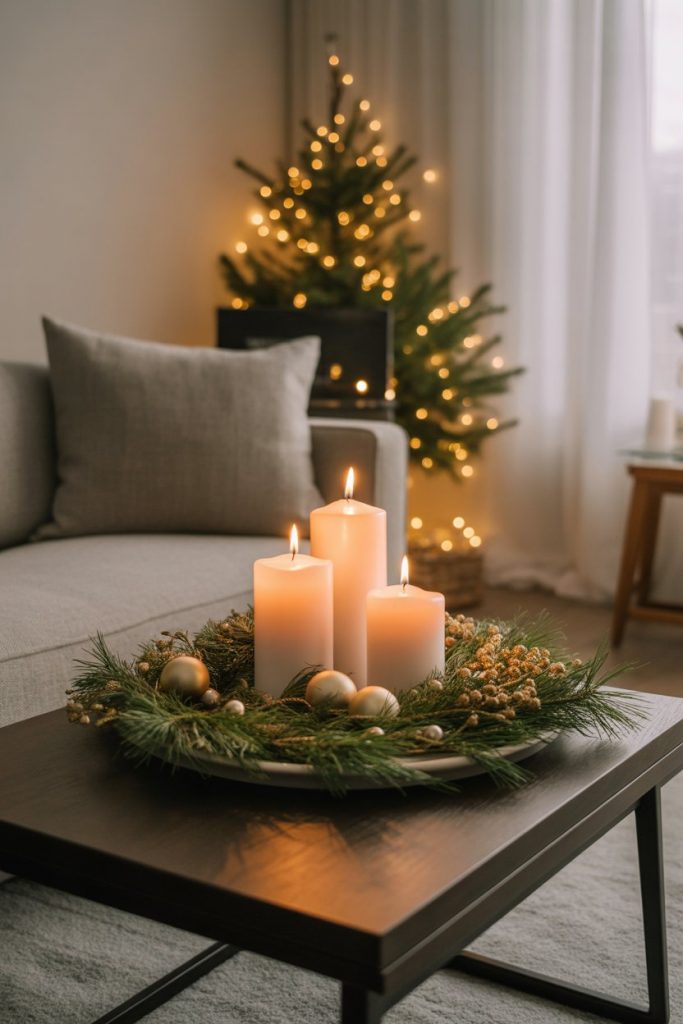
For the holiday season, evergreen sprigs, pillar candles, and a few metallic ornaments create a festive table without blocking sightlines during gatherings. This setup works on both rectangular and round tables, and it’s one of the most practical approaches for homes that host during December. The greenery can be real or high-quality faux—either way, it brings a natural element that softens the formality of candles and metallics. 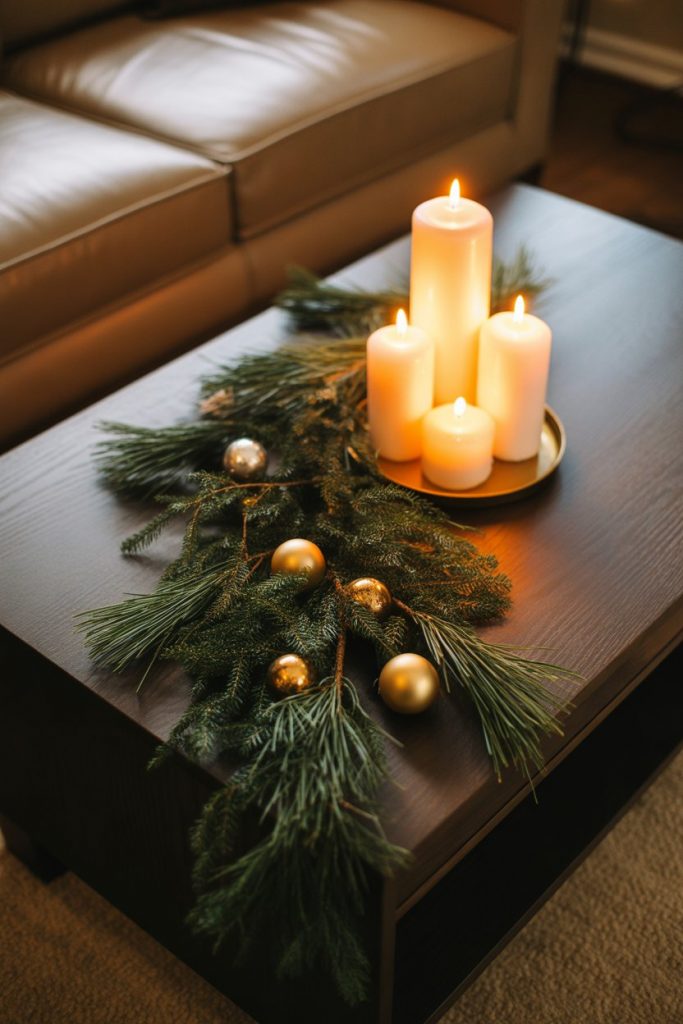
Real homeowner behavior shows that most people don’t want their coffee table to become unusable during the holidays—guests need somewhere to set drinks. Keep your arrangement low and clustered to one side or in a tray, leaving at least half the table clear. If you’re hosting kids, battery-operated LED candles eliminate the worry of open flames near curious hands.
7. Small Round Table with Stacked Books and Single Stem
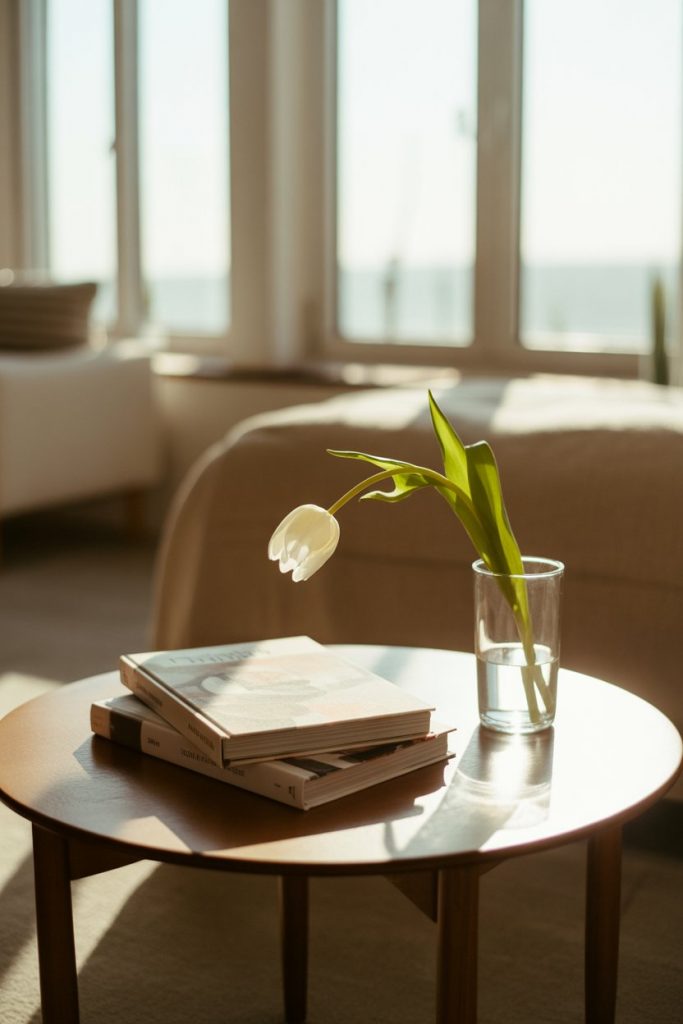
A small round coffee table benefits from vertical styling—stacked books create height, and a single flower stem in a narrow vase adds life without crowding the limited surface. This is ideal for studio apartments or compact living rooms where every piece needs to work hard. The simple approach prevents the table from feeling overwhelmed, which is a common issue when people try to replicate larger-table setups on a smaller scale. 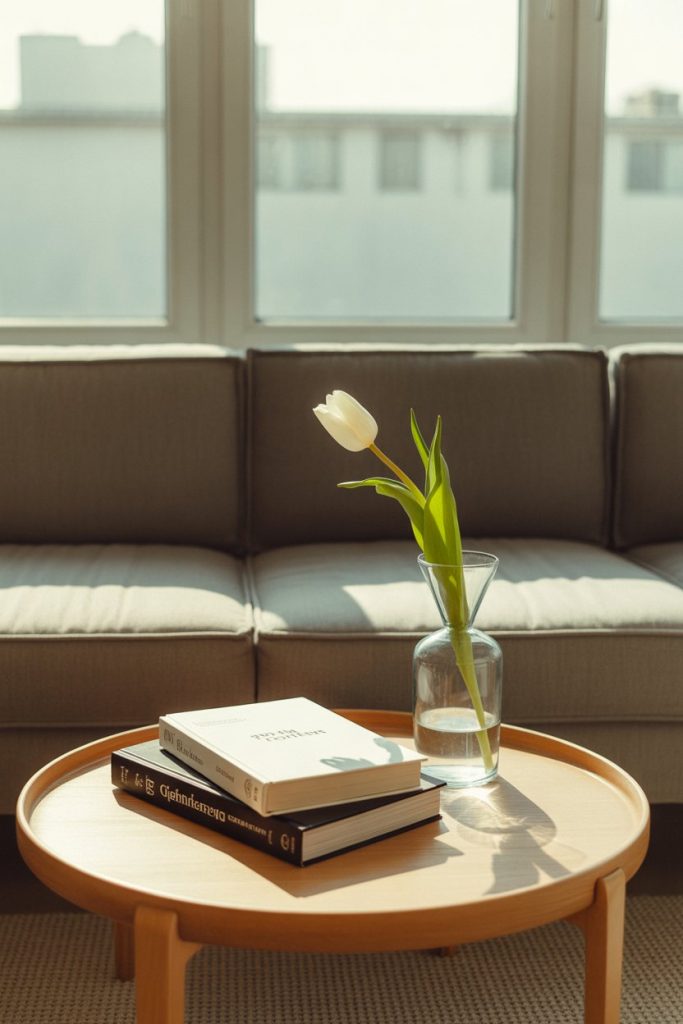
Budget-wise, small tables are often more affordable, but they expose every styling choice—there’s no room to hide clutter. The upside is that you only need one or two well-chosen objects to make an impact. A common mistake is using a vase that’s too wide; slim vessels maintain the clean lines that small round tables need to avoid looking top-heavy.
8. Ottoman Coffee Table with Oversized Tray
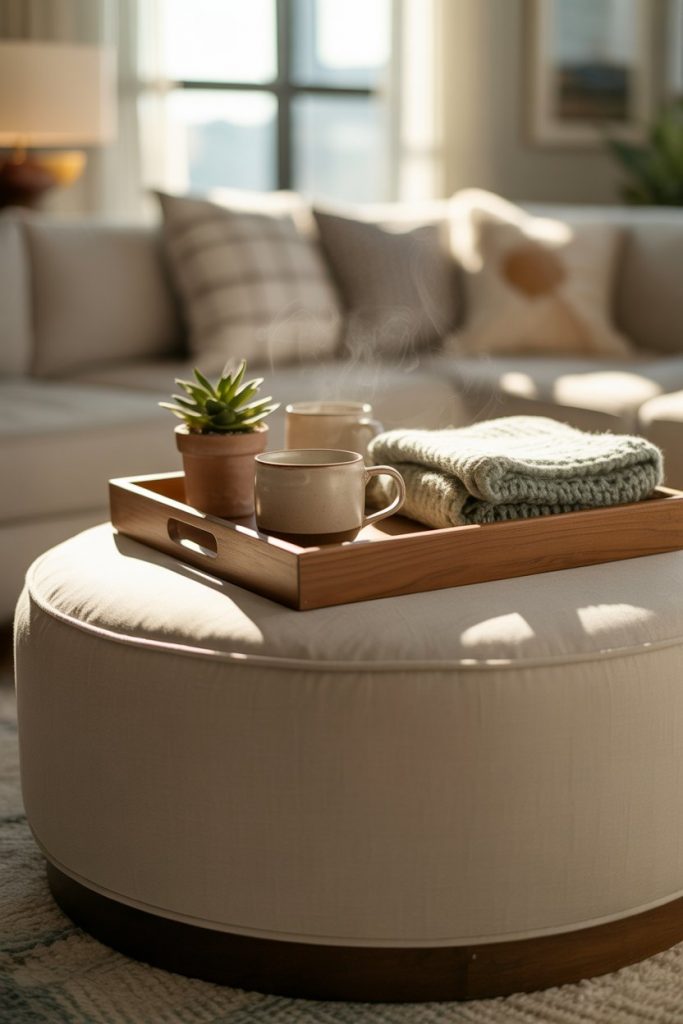
An ottoman used as a coffee table introduces softness and flexibility, especially in family homes where sharp corners are a concern. To make the surface functional, an oversized tray provides a stable platform for drinks and remotes while preserving the ottoman’s plush texture. This hybrid approach is increasingly common in American homes, particularly in the South and Midwest where comfort-first design prevails. 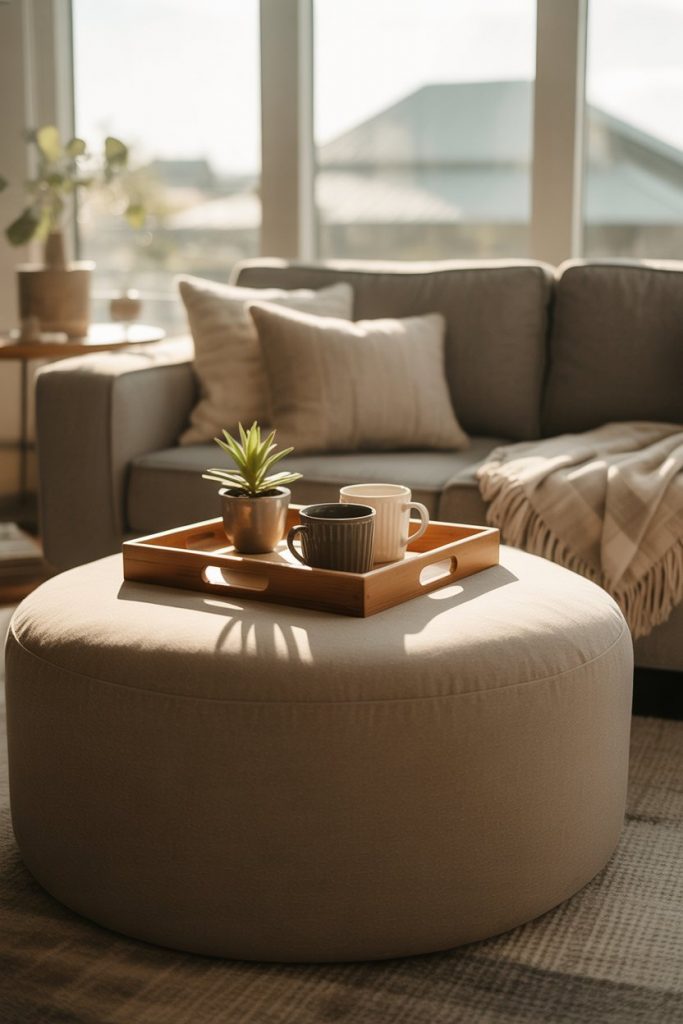
Where it works best: homes with young children or elderly family members who benefit from rounded edges and extra seating. The tray also makes it easy to clear the surface quickly when you need the ottoman for footrest duty. If you’re considering this setup, measure carefully—the tray should be large enough to feel substantial but not so big that it overhangs the ottoman’s edges.
9. Christmas Morning Table with Plaid and Pinecones
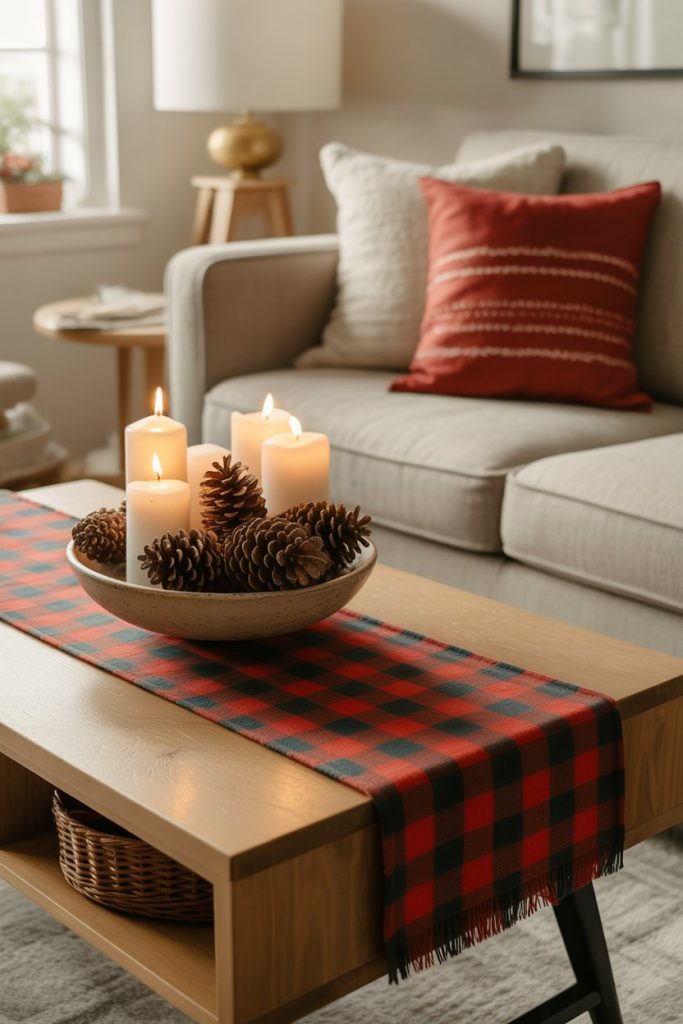
A Christmas coffee table can lean into cozy textures—plaid fabric runners, natural pinecones, and warm white lights create a nostalgic, welcoming vibe that’s perfect for December mornings. This styling is especially popular in the Mountain West and Northeast, where winter aesthetics align with the season’s natural elements. Keep it simple by choosing one or two statement pieces rather than crowding every inch. 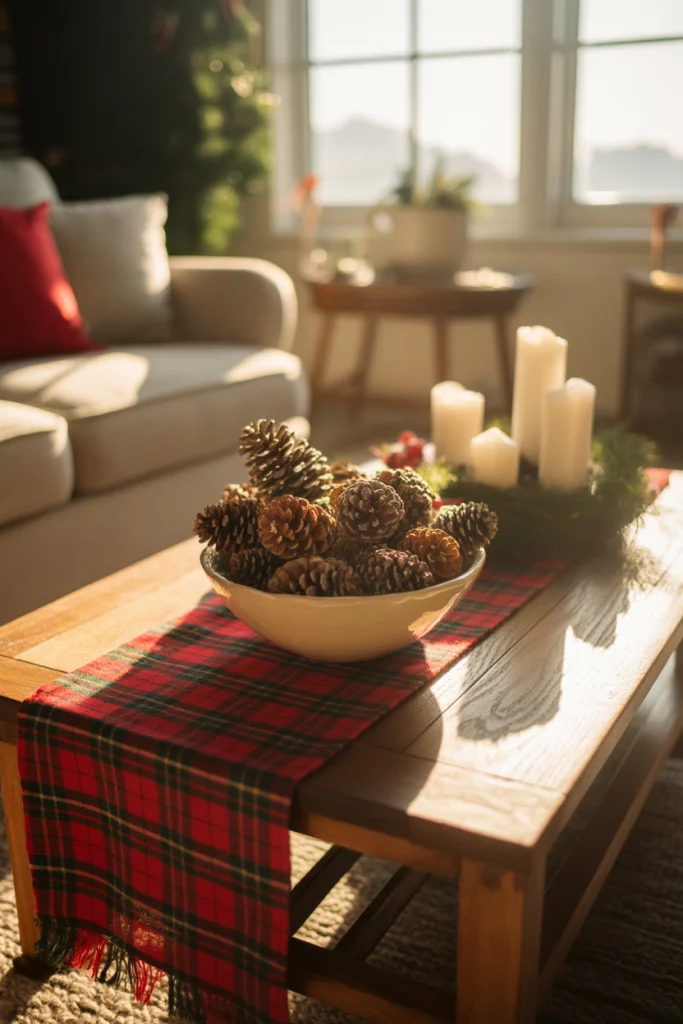
Expert-style commentary suggests that Christmas décor on coffee tables should feel lived-in rather than museum-perfect. Real homes have mugs of cocoa and cookie plates during the holidays, so plan your arrangement to accommodate that reality. Battery-operated string lights tucked under pinecones add a gentle glow without requiring an outlet nearby, which is a small detail that makes a big difference in evening ambiance.
10. Outdoor Coffee Table with Weathered Teak and Succulents
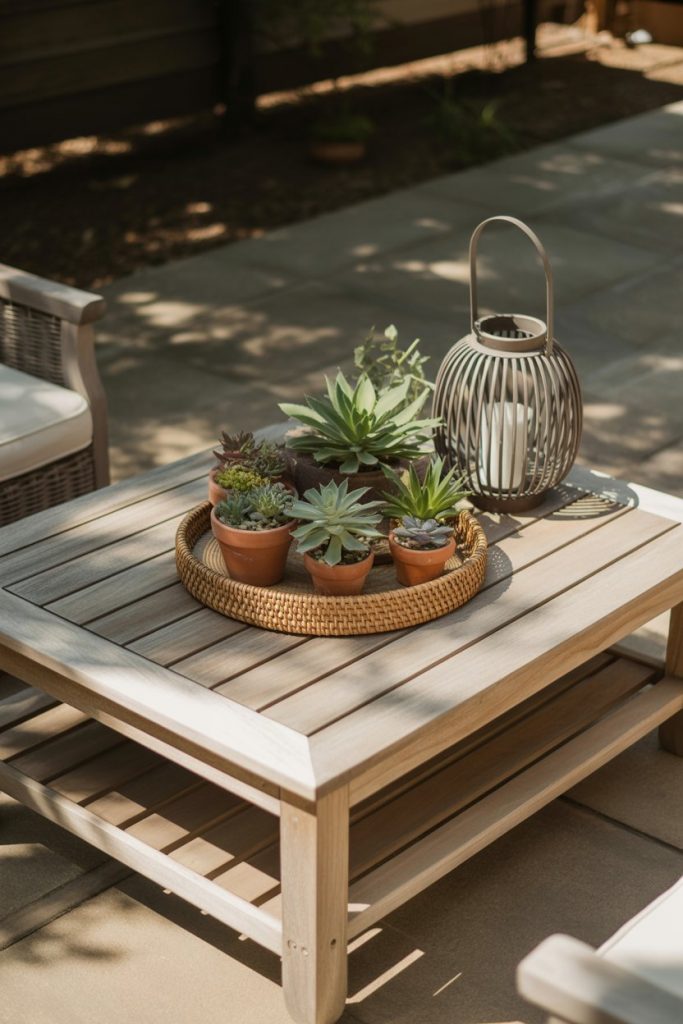
An outdoor coffee table faces different demands—weather resistance, durability, and ease of cleaning. Weathered teak paired with potted succulents creates a low-maintenance setup that looks intentional year-round. This approach is common in California, Arizona, and Texas, where outdoor living spaces function as extensions of the home. A simple tray keeps smaller items from blowing away in the wind. 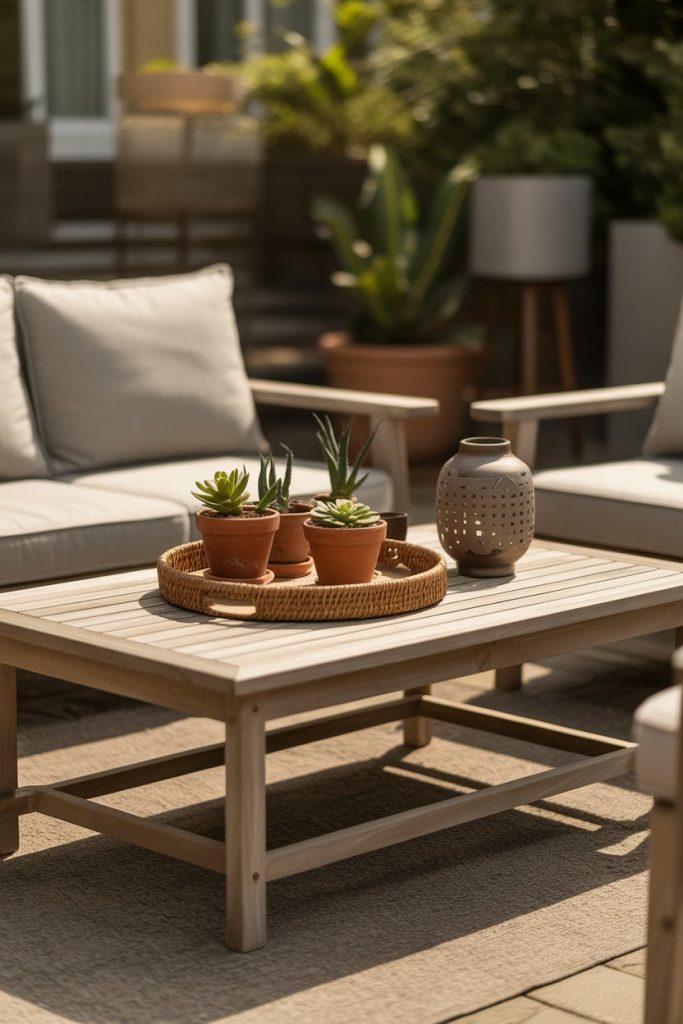
Practical insight: outdoor tables need to be cleared or covered during heavy rain or snow, but the daily styling should be resilient. Avoid lightweight decorative items that can become projectiles in strong winds. Succulents are ideal because they tolerate heat and irregular watering, and their sculptural shapes add visual interest without requiring constant upkeep.
11. Square Table with Symmetrical Candle Arrangement
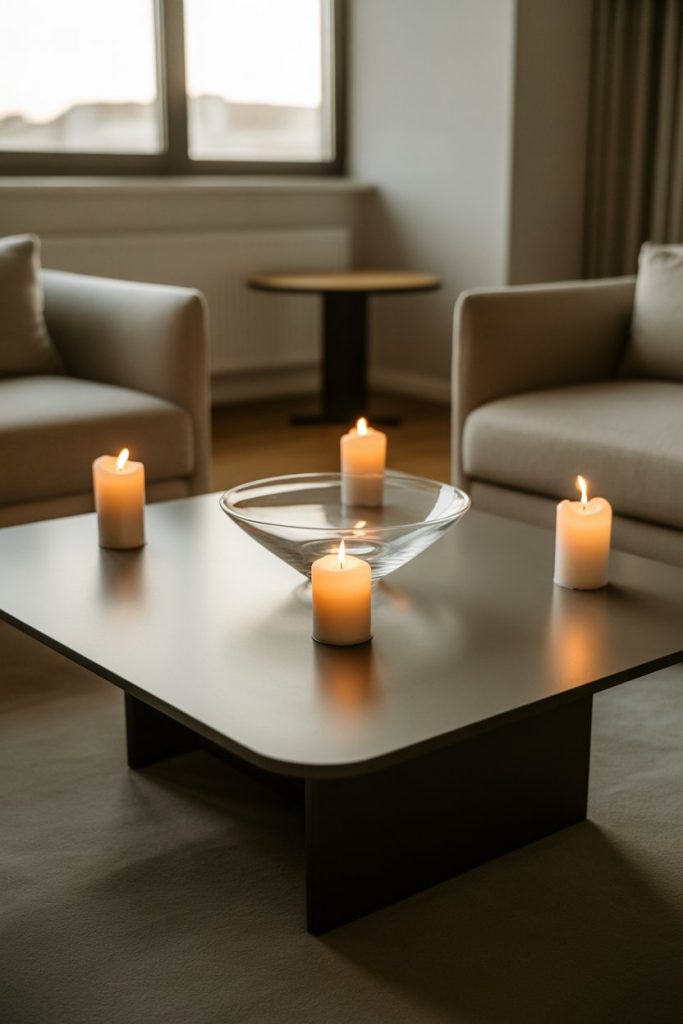
A square coffee table invites symmetry—four matching candles at each corner or a centered cluster creates a balanced, calming visual. This setup appeals to those who appreciate order and modern design, and it works particularly well in open-concept spaces where the table is visible from multiple angles. The symmetry also makes the arrangement foolproof, which is helpful if you’re not confident in your styling instincts. 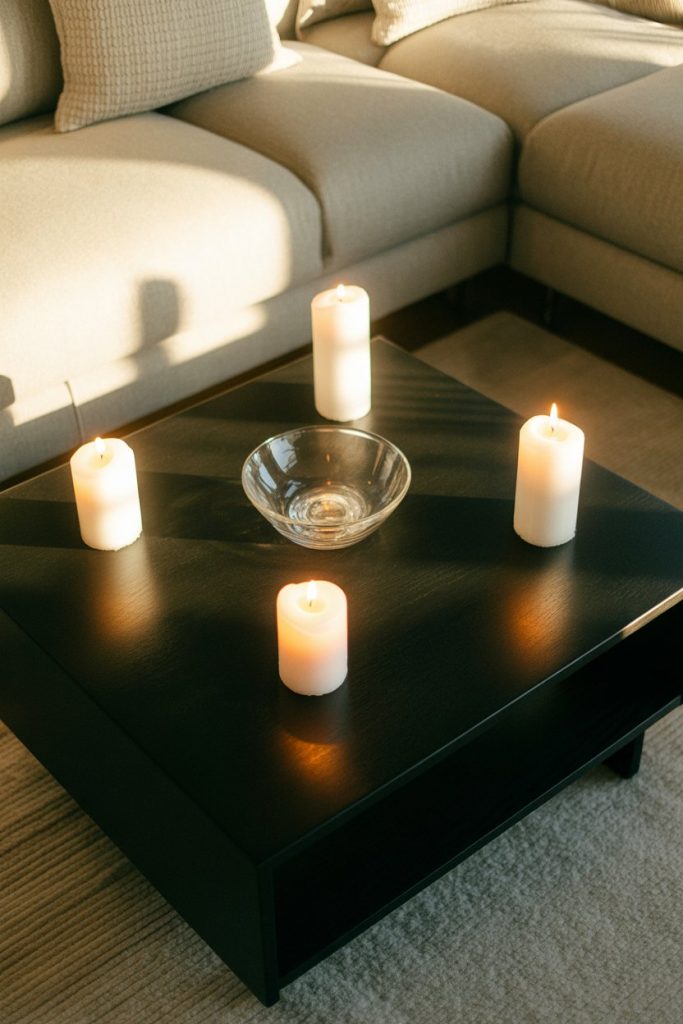
From a real homeowner perspective, symmetrical arrangements are easier to maintain—you know immediately if something’s been moved or is missing. The downside is that symmetry can feel rigid if overdone throughout a room, so balance it with asymmetrical elements elsewhere. Candles at corners also keep the center of the table clear for actual use, which is a practical bonus.
12. Rectangular Farmhouse Table with Galvanized Accents
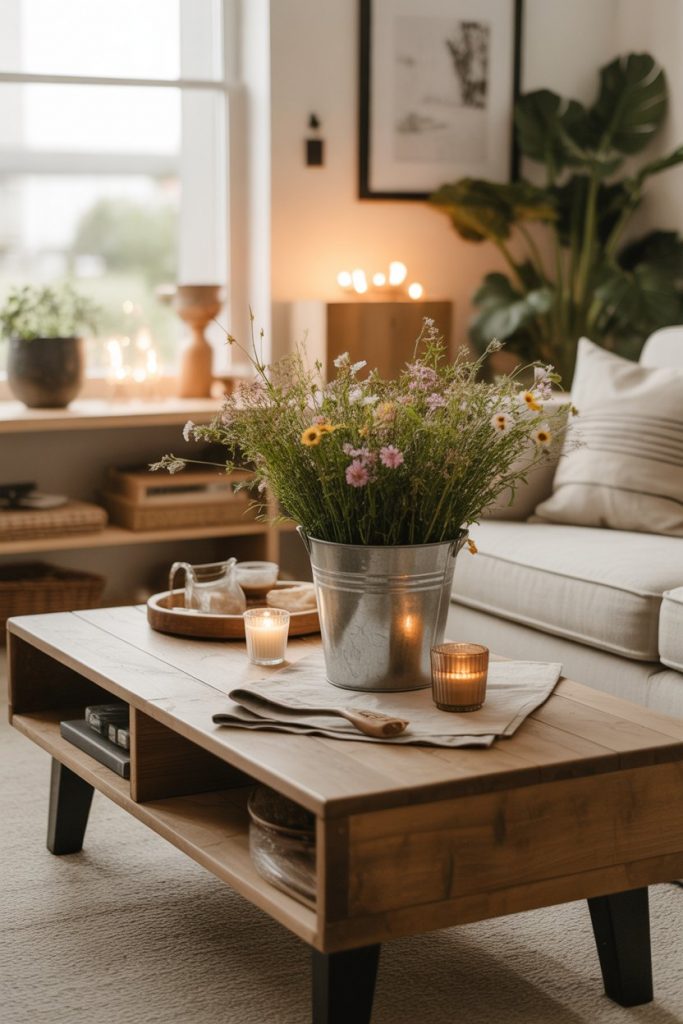
A rectangular farmhouse table gains character when paired with galvanized metal containers—whether it’s a bucket filled with seasonal stems or a metal tray holding candles and coasters. This look is deeply rooted in American farmhouse culture, especially in rural areas and renovated barns turned homes. The metal’s industrial edge balances the warmth of wood, creating a lived-in, collected-over-time aesthetic. 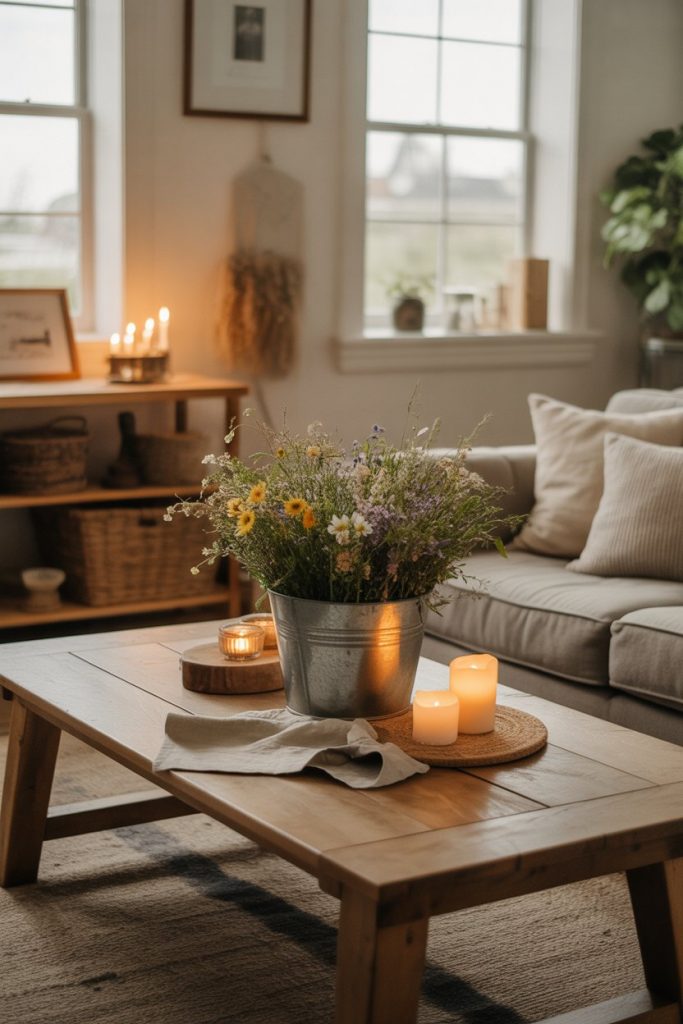
A micro anecdote: a homeowner in Tennessee uses her grandmother’s old milk bucket as a permanent fixture on her coffee table, rotating what goes inside with the seasons. It’s become a conversation piece that ties her family history into her daily décor. The beauty of galvanized metal is that it ages gracefully—rust and patina only add to the charm rather than detracting from it.
13. Circle Table with Layered Texture and Neutral Tones
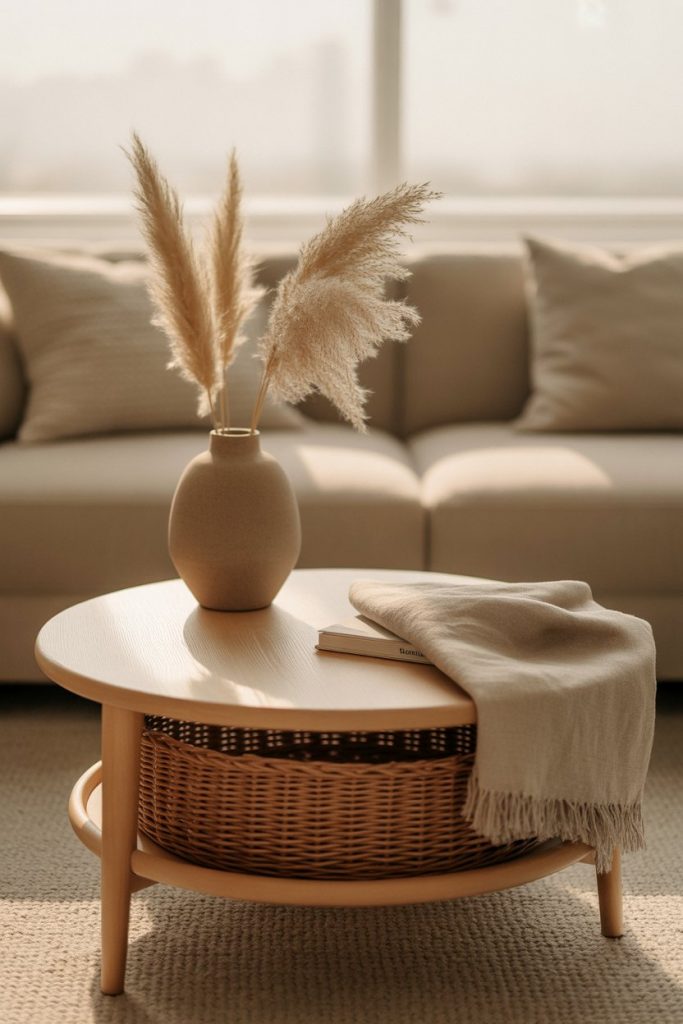
A circle coffee table naturally softens a room’s geometry, and layering textures—woven baskets, linen runners, ceramic bowls—enhances that gentle effect. This approach is popular in coastal and Scandinavian-inspired homes where natural materials and neutral palettes dominate. The circular shape also encourages intimate conversation, making it a smart choice for spaces centered around connection rather than screens. 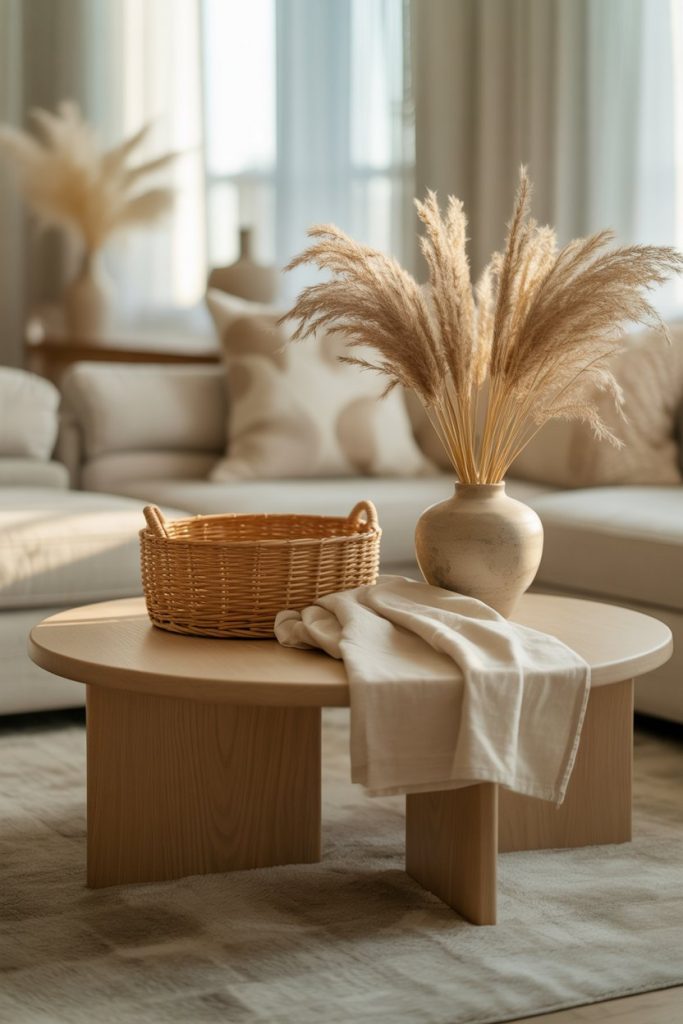
Where it works best: homes with young children, since round tables eliminate sharp corners, and smaller spaces where the absence of angles helps foot traffic flow more easily. The layered texture approach is forgiving—you can add or remove elements without disrupting the overall balance, which makes it ideal for people who like to refresh their décor frequently.
14. Halloween Table with Black Candles and Dried Florals
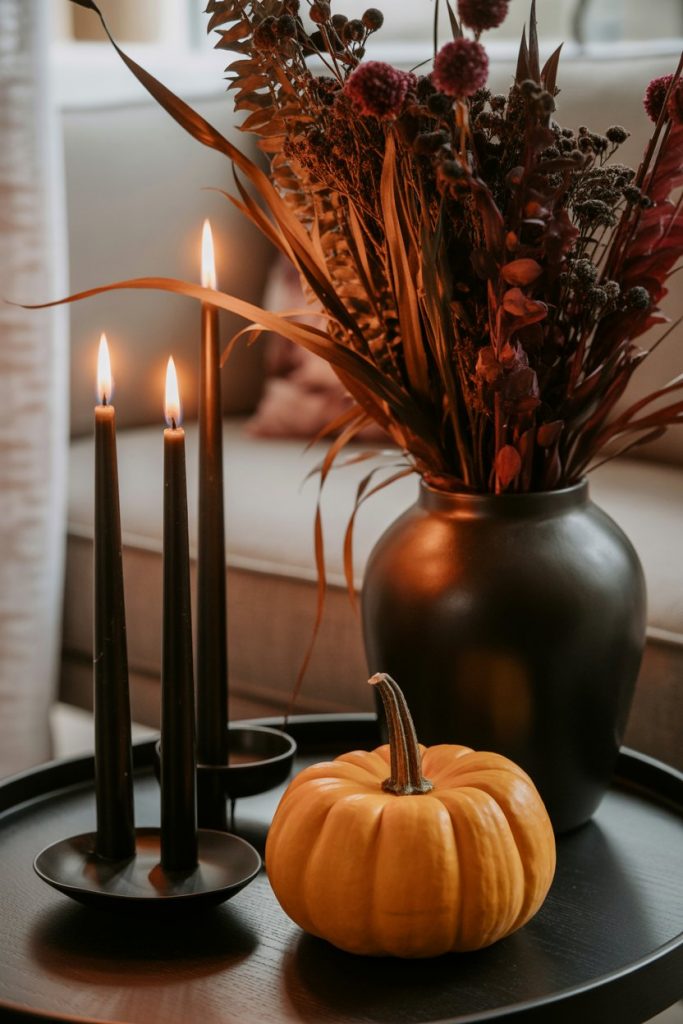
For Halloween, a coffee table can embrace moody elegance rather than cartoonish props—black candles, dried grasses in muted tones, and perhaps a single dark floral arrangement create a sophisticated seasonal moment. This approach is gaining traction among adults who want to acknowledge the holiday without overwhelming their everyday aesthetic. It works on any table shape but feels especially striking on round glass surfaces where the dark elements contrast with light and transparency. 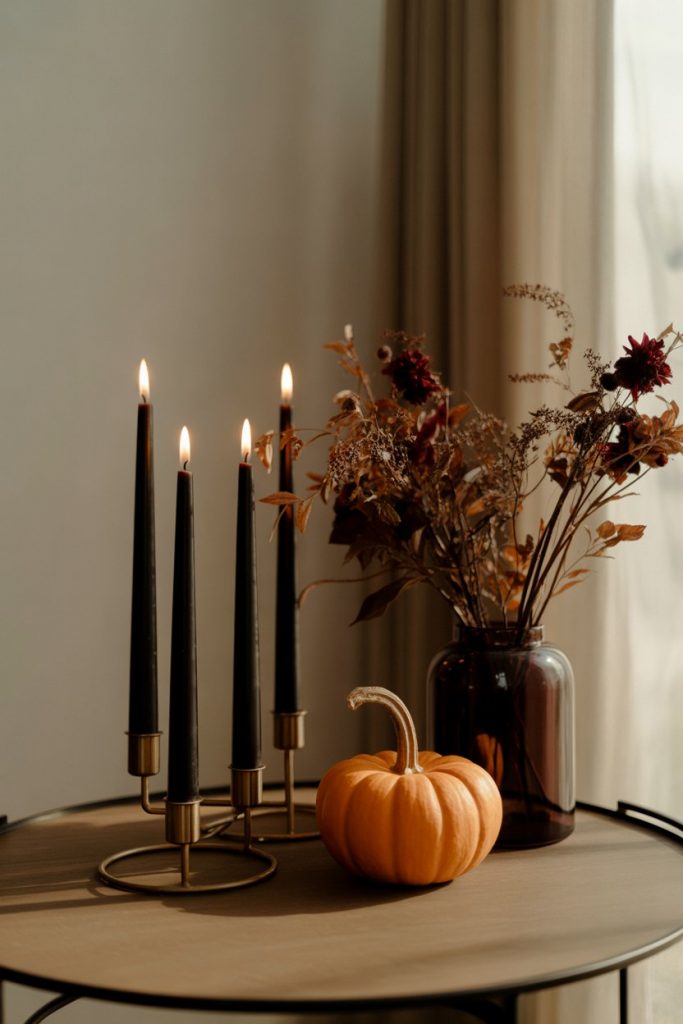
Common mistakes include going too literal with plastic skulls or neon orange, which can clash with the rest of your décor. Instead, treat Halloween styling like any other seasonal shift—choose a color story (blacks, deep reds, charcoals) and stick with natural materials. This look transitions easily into November if you swap the candles for warmer tones.
15. Oval Table with Vintage Brass and Fresh Flowers
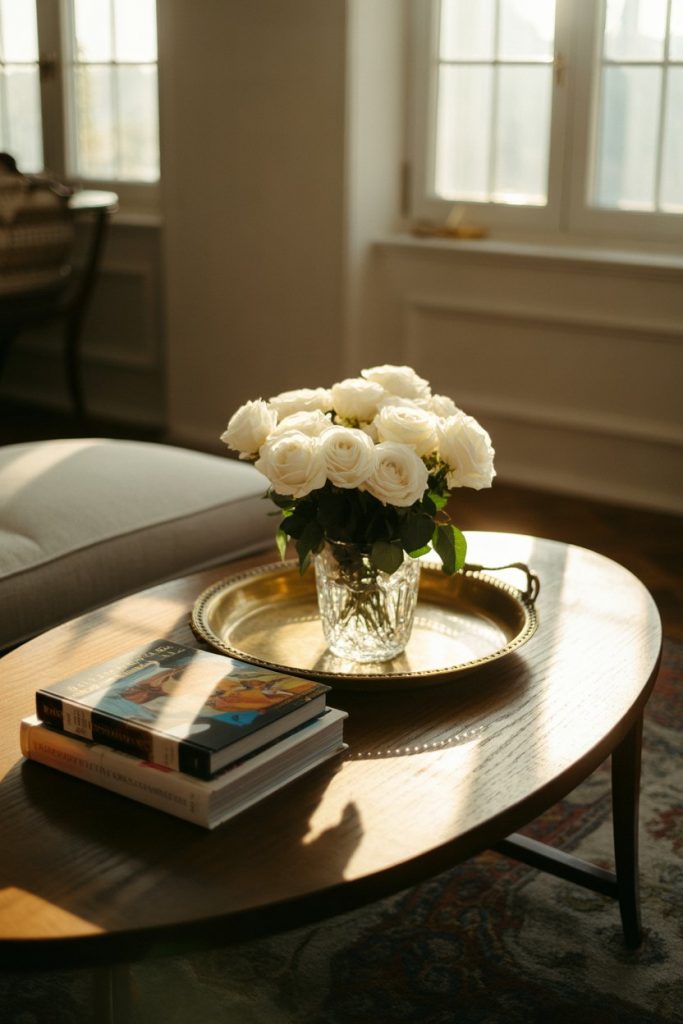
An oval coffee table is less common, which makes it a standout choice—it offers the softness of a round table with the directionality of a rectangle. Pairing it with vintage brass accents and fresh flowers creates a refined, Old World elegance that’s still approachable. This style resonates in historic homes and neighborhoods where preserving character matters, particularly along the East Coast. 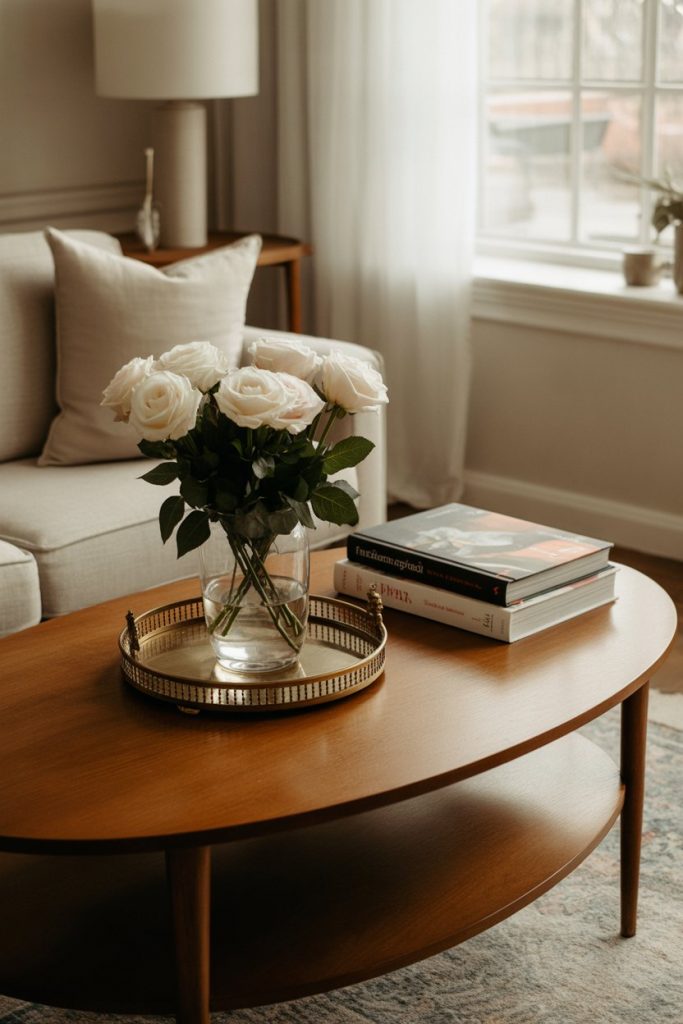
Budget angle: vintage brass is widely available at estate sales and thrift stores, often for under $20. The patina doesn’t need to match perfectly—in fact, mixed metals with varied finishes add depth and authenticity. If you’re worried about fresh flowers being a recurring expense, choose varieties that dry beautifully, like eucalyptus or statice, so they can transition into long-term décor.
16. Living Room Table with Seasonal Rotation Strategy
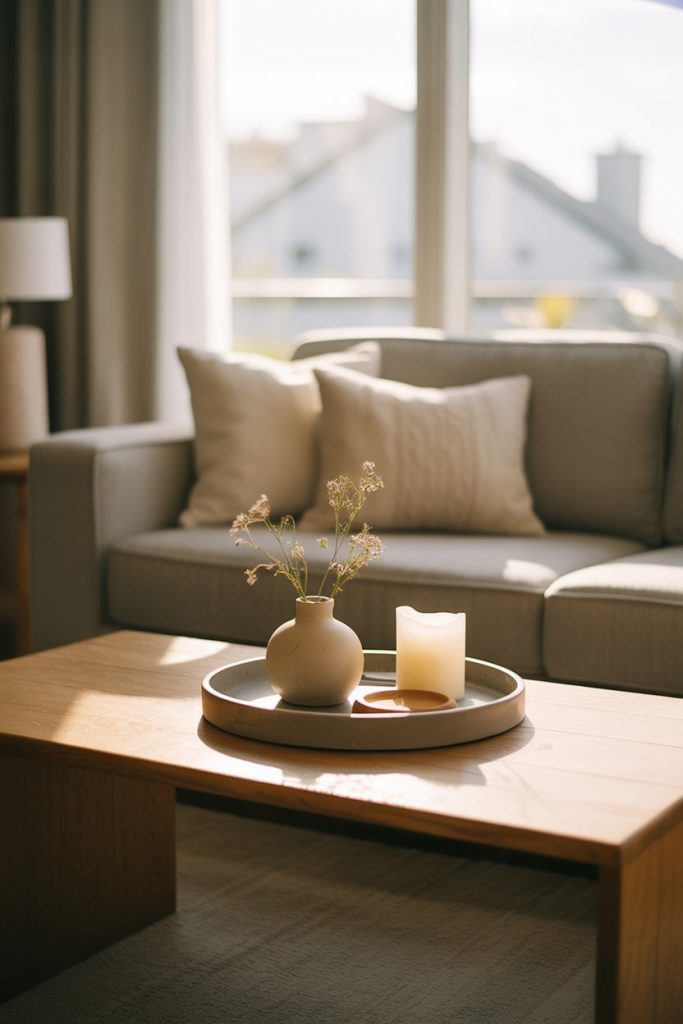
Rather than committing to one look, many American homeowners now treat their living room coffee table as a rotating display that shifts with the calendar. A core set of neutral items—a tray, a ceramic bowl, a candle—stays constant, while smaller seasonal accents change every six to eight weeks. This approach is practical, cost-effective, and keeps the space feeling fresh without requiring a full redesign. 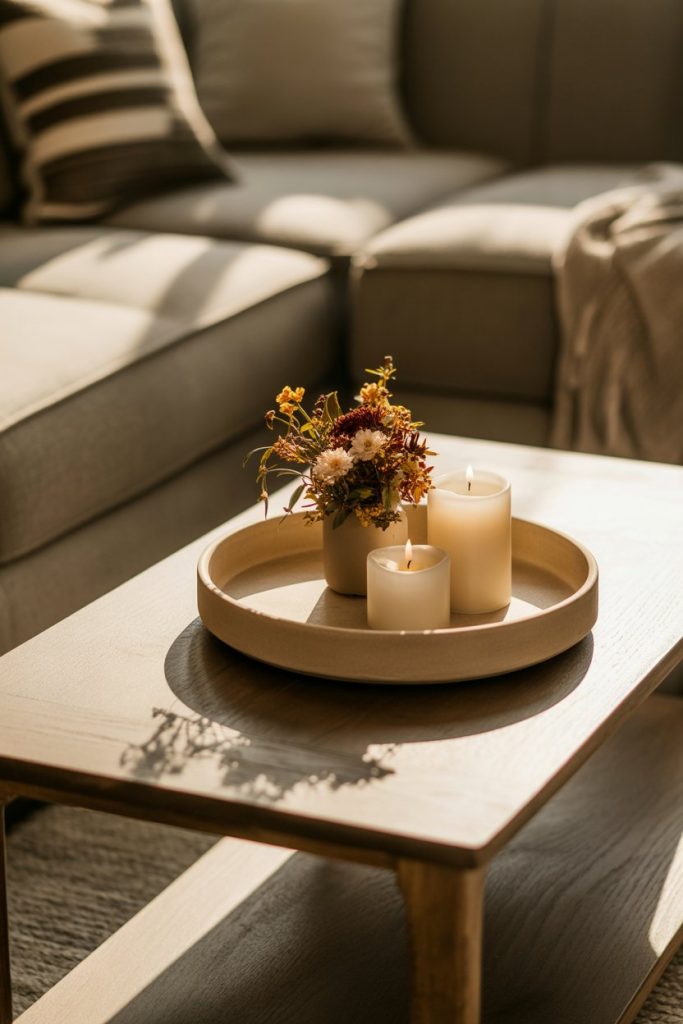
Real homeowner behavior shows that people are more likely to maintain a rotation if they store seasonal items in labeled bins. A January bin might hold winter whites and evergreens, while an April bin has pastels and spring florals. The mental shift here is viewing your coffee table as a dynamic element rather than a static one, which can make decorating feel less like a chore and more like a creative outlet.
17. Rectangular Modern Table with Monochromatic Palette
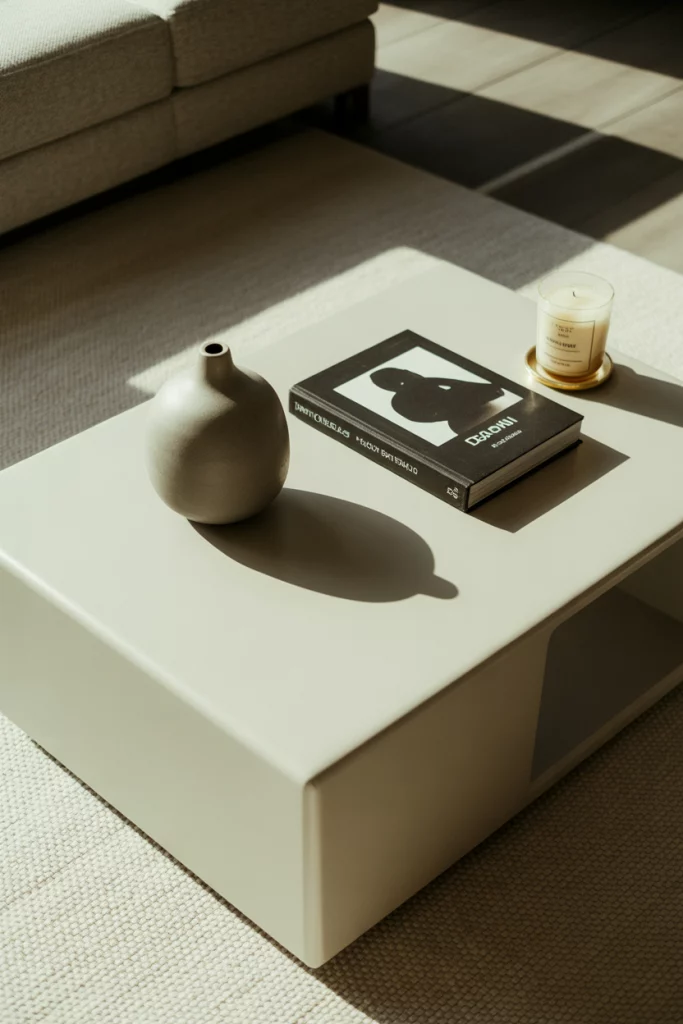
A rectangular modern table in a monochromatic color scheme—think whites, grays, and blacks—delivers a gallery-like precision that appeals to minimalists and design purists. This setup is common in urban lofts and contemporary new builds where clean lines and restraint define the aesthetic. The challenge is making it feel warm rather than sterile, which is where texture becomes critical. 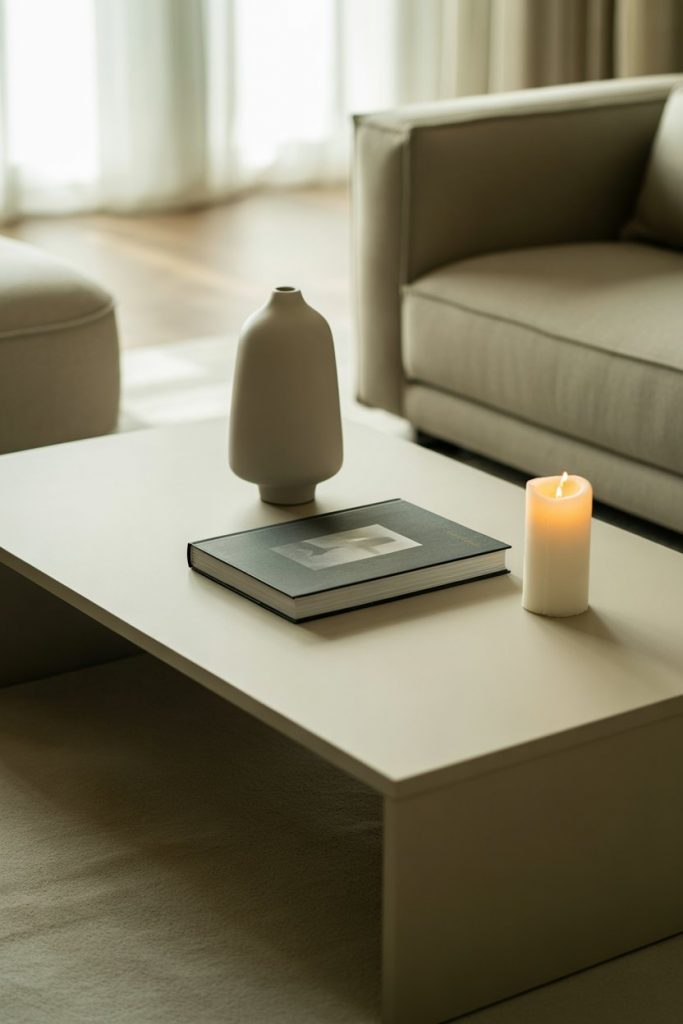
Expert-style commentary points out that monochrome doesn’t mean monotonous—varying the finish (matte, gloss, textured) within your color range keeps the eye engaged. A common pitfall is neglecting scale; in a monochrome setup, every object’s size and proportion becomes more visible, so choose deliberately. This look is unforgiving of clutter, making it a good choice if you’re motivated to keep surfaces clear.
18. Small Wooden Table with Personal Collections
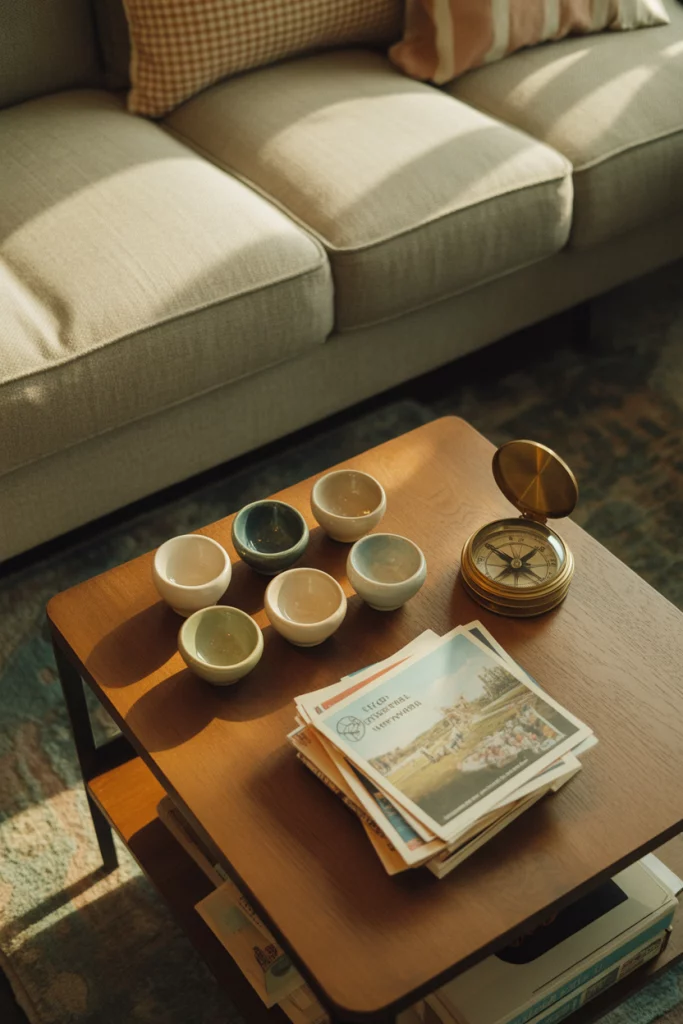
A small wooden coffee table can become a personal gallery for collections—vintage matchboxes, found stones, small ceramics—displayed in a way that feels curated rather than cluttered. This approach works best when there’s a unifying thread, whether it’s color, material, or provenance. It’s popular among travelers and collectors who want their décor to tell a story. 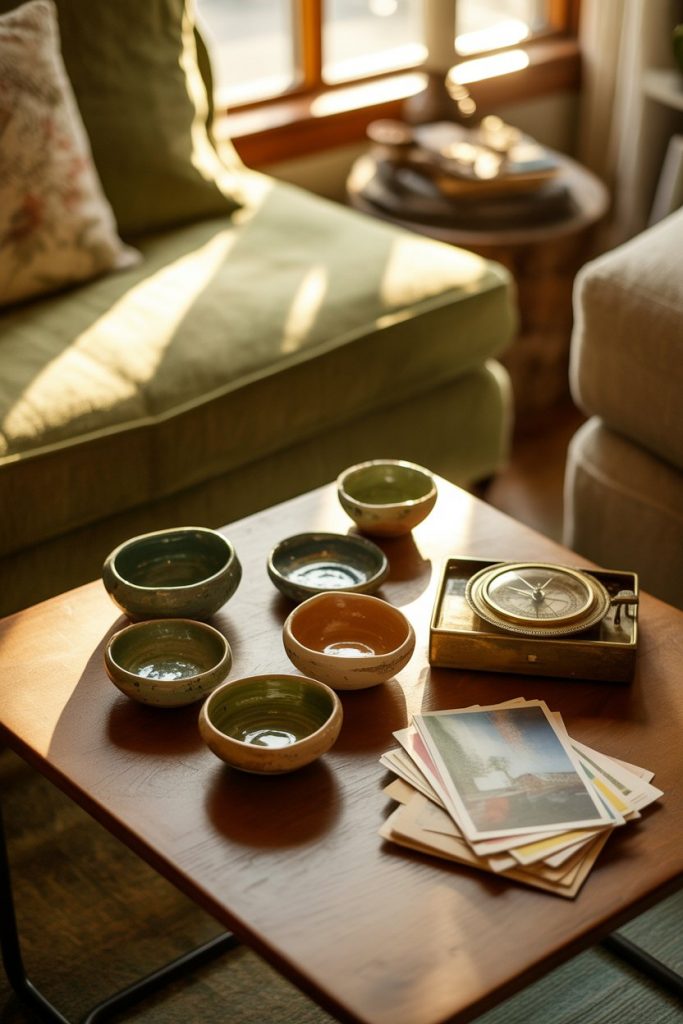
A micro story: a couple in Portland uses their coffee table to display ceramics they’ve collected from road trips across the Pacific Northwest. Each piece has a story, and guests often ask about them, turning décor into conversation. The key is rotation—if you display everything at once, nothing stands out. Choose three to five items at a time, and swap them out when you feel ready for a change.
19. Round Christmas Table with Velvet Ribbon and Greenery
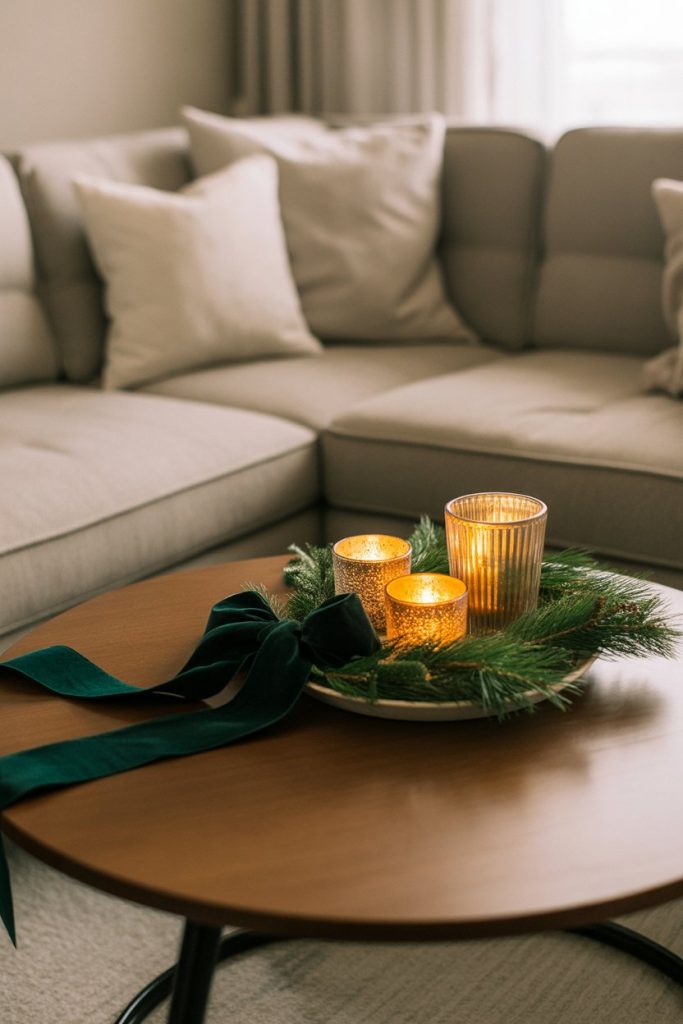
A round Christmas coffee table benefits from soft, organic shapes—coiled velvet ribbon, clusters of fresh greenery, and mercury glass votives create a festive look that doesn’t rely on hard-edged ornaments. This style is particularly effective in traditional and transitional homes where warmth and nostalgia are valued. The round shape keeps the arrangement feeling cohesive from every angle. 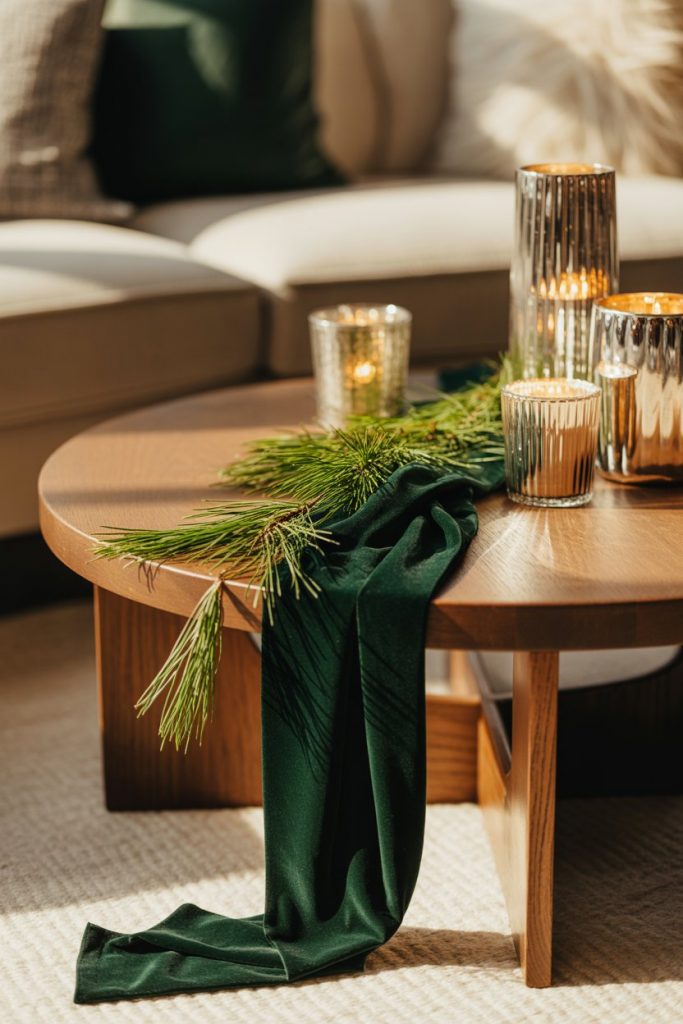
Practical insight: fresh greenery lasts longer if you mist it daily and keep it away from direct heat sources like fireplaces or radiators. If you’re hosting during the holidays, this arrangement is low enough that it won’t obstruct conversation across the table, and the natural elements bring a subtle fragrance that artificial decorations can’t replicate. Velvet ribbon adds a touch of luxury without the price tag of high-end ornaments.
20. Simple Modern Table with Single Statement Piece
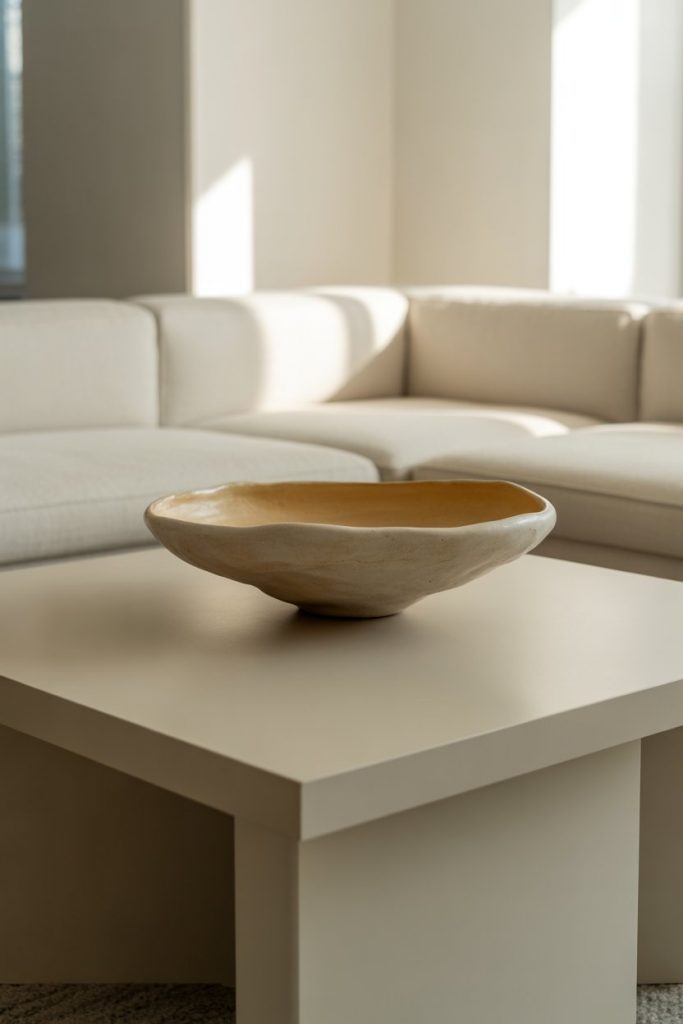
Sometimes the most effective coffee table styling is the simplest—a simple modern table with one large, sculptural object. This could be a ceramic bowl, a piece of driftwood, or a unique vase. The single-object approach is favored by designers who want the table itself to shine, and it’s a smart choice if your table has interesting legs or a distinctive finish that you don’t want to obscure. 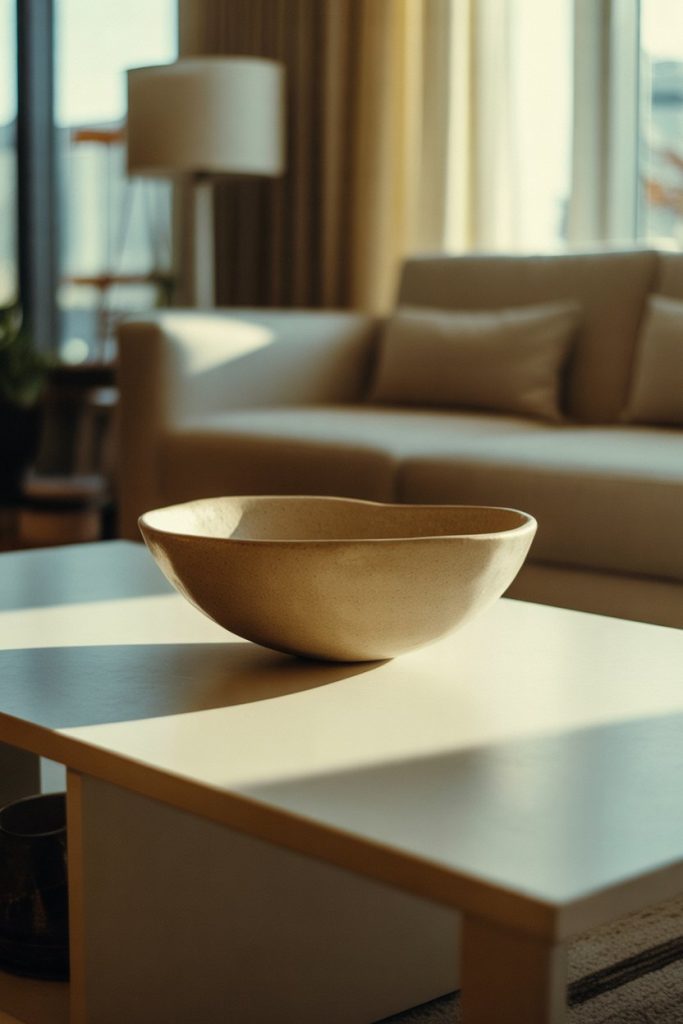
Where it works best: minimalist homes, small spaces where visual clutter is a concern, and rooms with bold artwork or furniture that already provide plenty of visual interest. The risk is that a single object can feel sparse if it’s too small for the table—aim for something that takes up about a quarter of the surface. This approach is also the easiest to clean, which is a practical win for busy households.
21. Holiday Layered Look with Ornaments and Candles
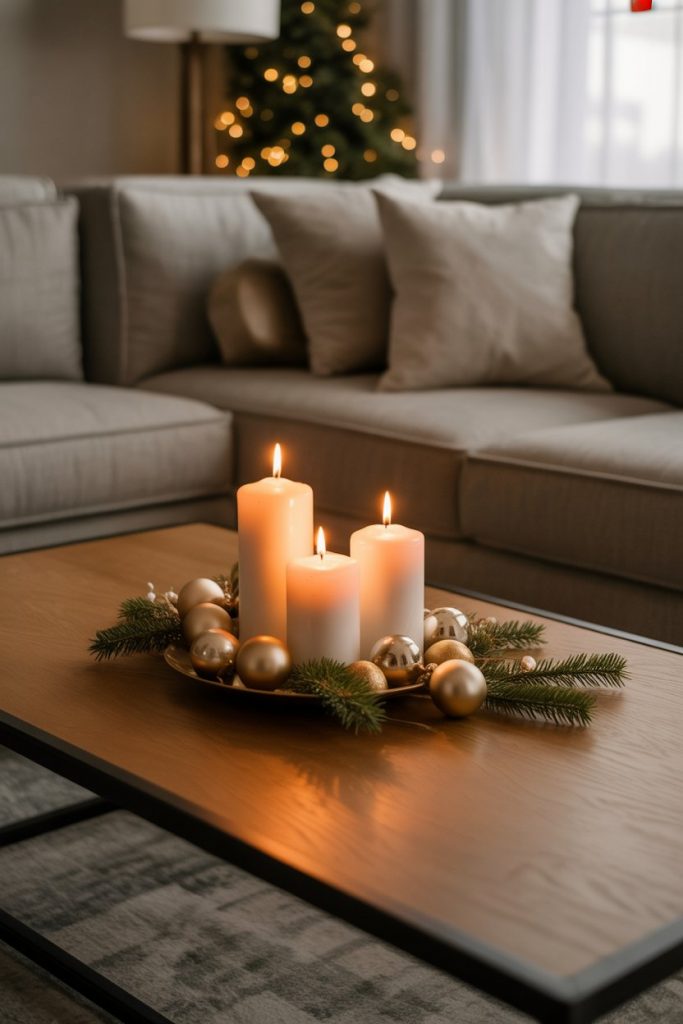
For the holiday season, a layered approach—ornaments scattered artfully around pillar candles, maybe a strand of beads or a small wreath—creates festive abundance without feeling chaotic. This setup works on rectangular tables where you have length to work with, and it’s ideal for homes that go all-in on seasonal décor. The key is keeping everything low enough that it doesn’t block sightlines. 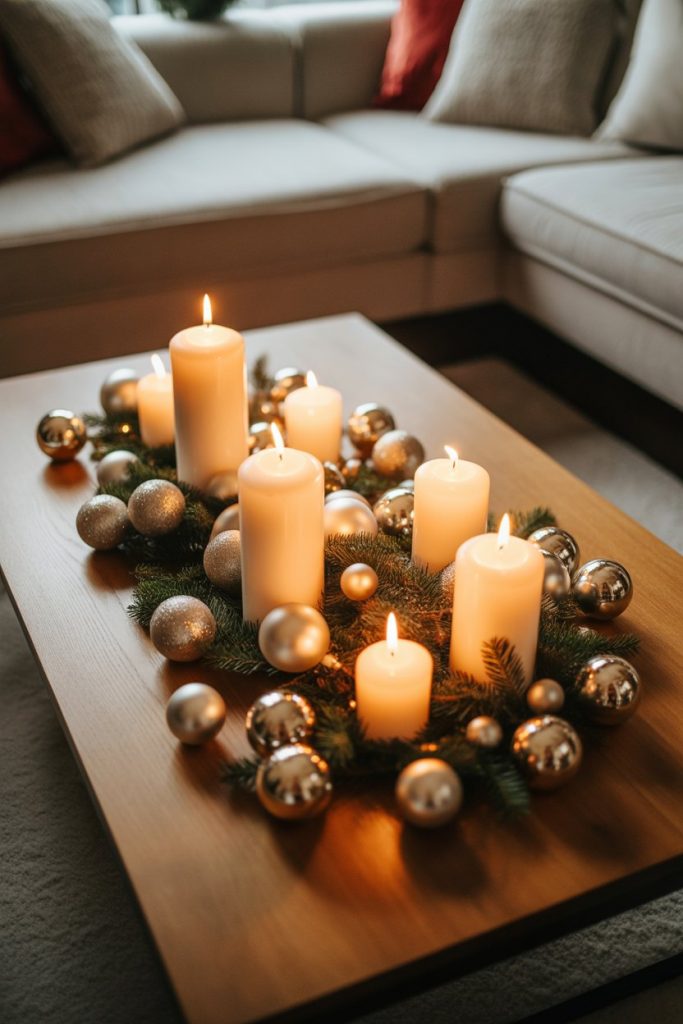
Common mistakes include using ornaments that are too large or too many in number, which can make the table feel like a retail display rather than a home. Stick to a consistent color palette—two or three colors max—and leave some breathing room between elements. If you have pets or small children, secure candles in sturdy holders and consider LED alternatives to avoid accidents.
Conclusion
These ideas are meant to spark your own creativity—coffee table styling isn’t about perfect replication but about finding what feels right for your home and your rhythm. Whether you’re drawn to the simplicity of a single vase or the warmth of seasonal layers, the best approach is the one you’ll actually enjoy maintaining. Try one or mix elements from a few, and share what worked (or didn’t) in the comments below—real insight from real homes is always the most valuable.