Blue Kitchen Ideas 2026 for Modern Homes Navy Pastel Two Tone Designs with Storage Style Tips

Blue kitchens are having a major moment in 2026, and it’s easy to see why. From soft pastels that evoke seaside calm to rich navy tones that anchor modern interiors, blue brings versatility, warmth, and timeless appeal to one of the home’s most important spaces. American homeowners are turning to Pinterest in droves for blue kitchen inspiration—whether they’re renovating a dated galley or refreshing cabinetry on a budget. This color works beautifully across styles, from French country charm to sleek contemporary designs, and pairs effortlessly with natural wood, crisp white, and even unexpected accent hues. In this guide, you’ll discover stunning blue kitchen ideas that blend style, function, and real-world livability.
1. Navy Shaker Cabinets with Brass Hardware
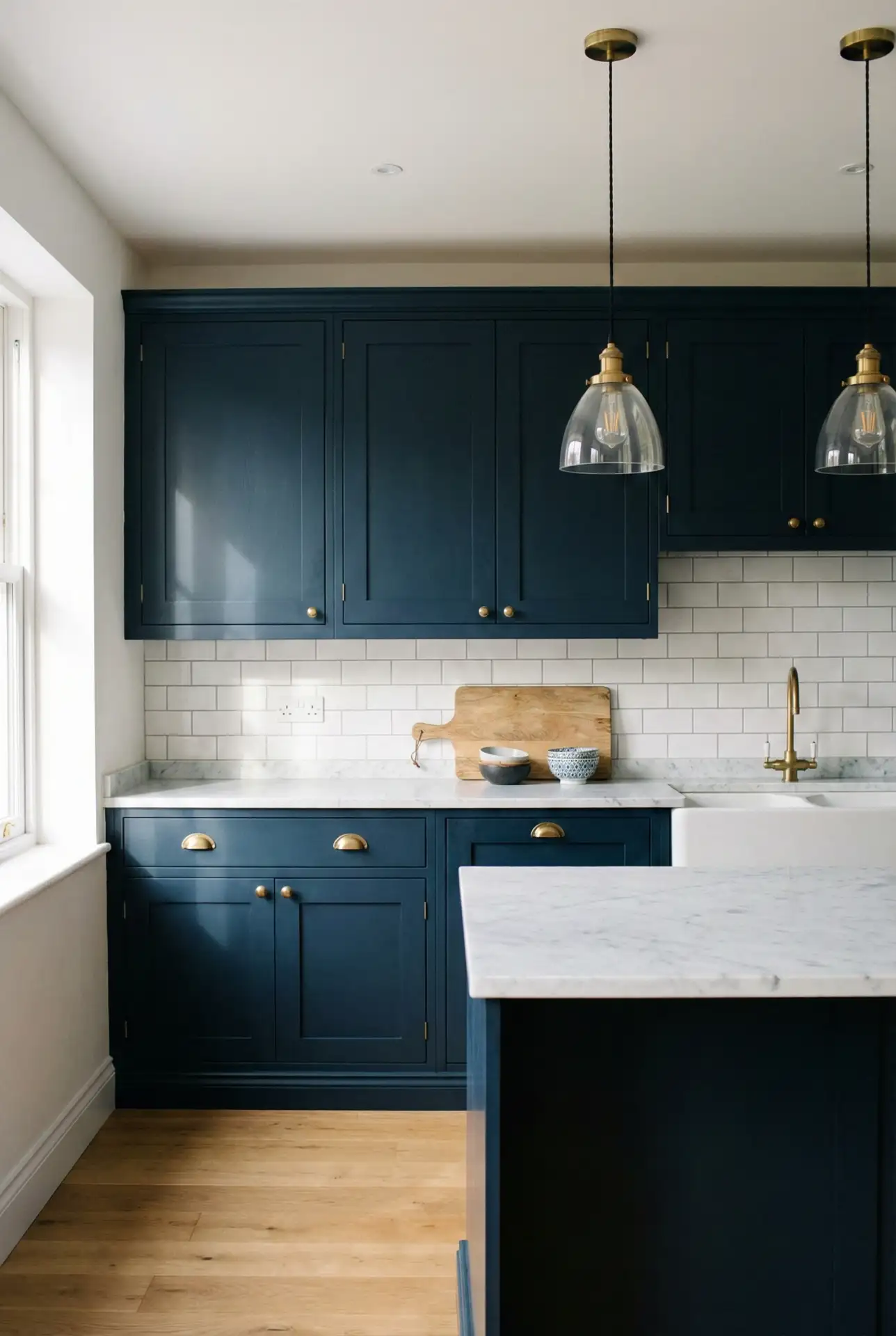
This classic combination brings sophistication and depth to any kitchen layout. Navy Shaker-style cabinets offer a grounded, tailored look that feels both traditional and current, while warm brass pulls and knobs add just the right amount of shine. The simplicity of the Shaker profile keeps the space from feeling too ornate, making it ideal for open-plan homes where the kitchen flows into living areas. Pair with white subway tile or marble countertops to let the cabinetry take center stage.
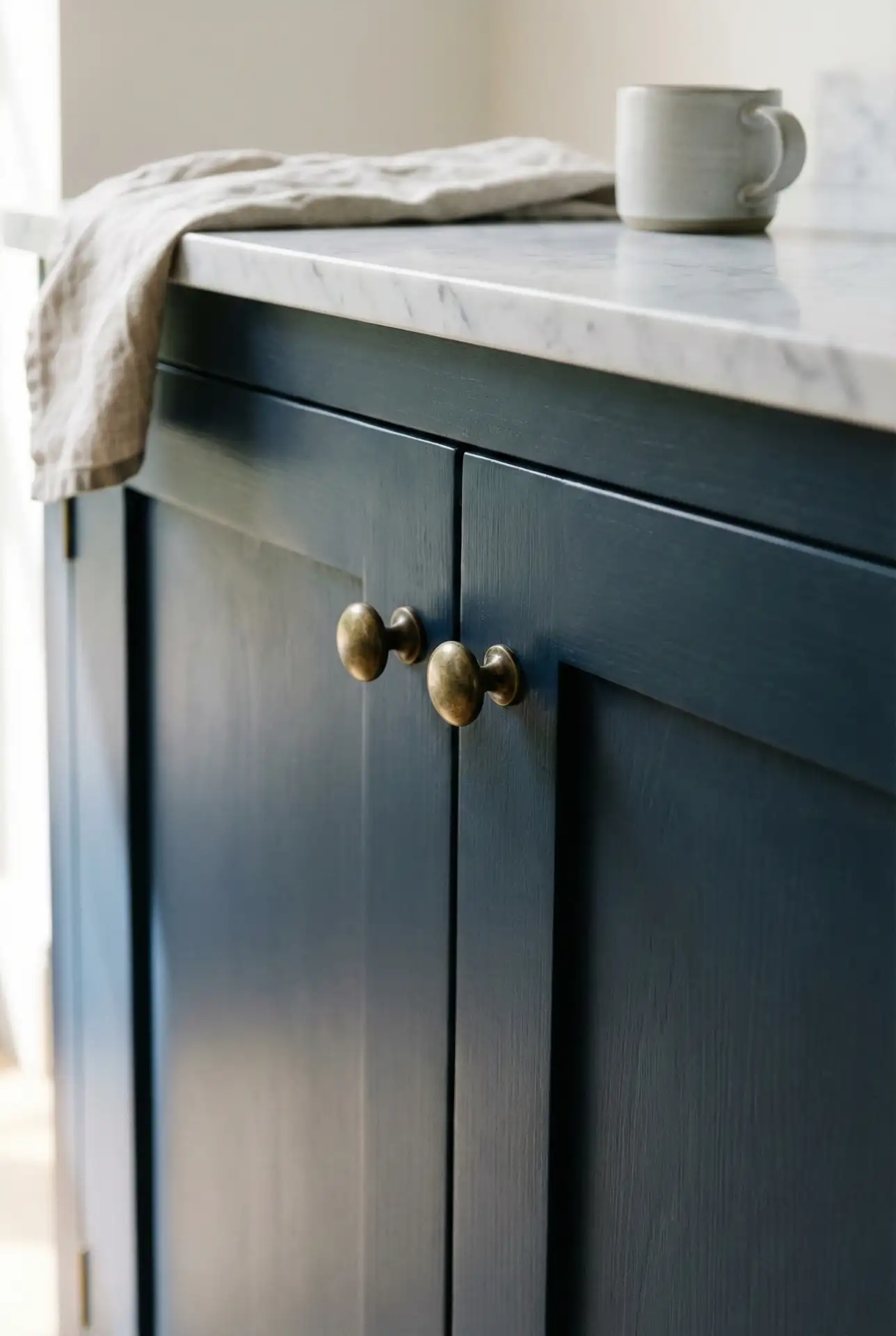
This look works especially well in suburban homes and newly built condos, where buyers want something more distinctive than builder-grade white. Navy holds up beautifully over time and hides fingerprints and wear better than lighter finishes. One homeowner in Ohio shared that switching to navy cabinetry made her kitchen feel “like a real room, not just a place to cook. ” It’s a small change that creates a big impact, especially when natural light pours in through large windows.
2. Pale Blue Walls with Open Shelving
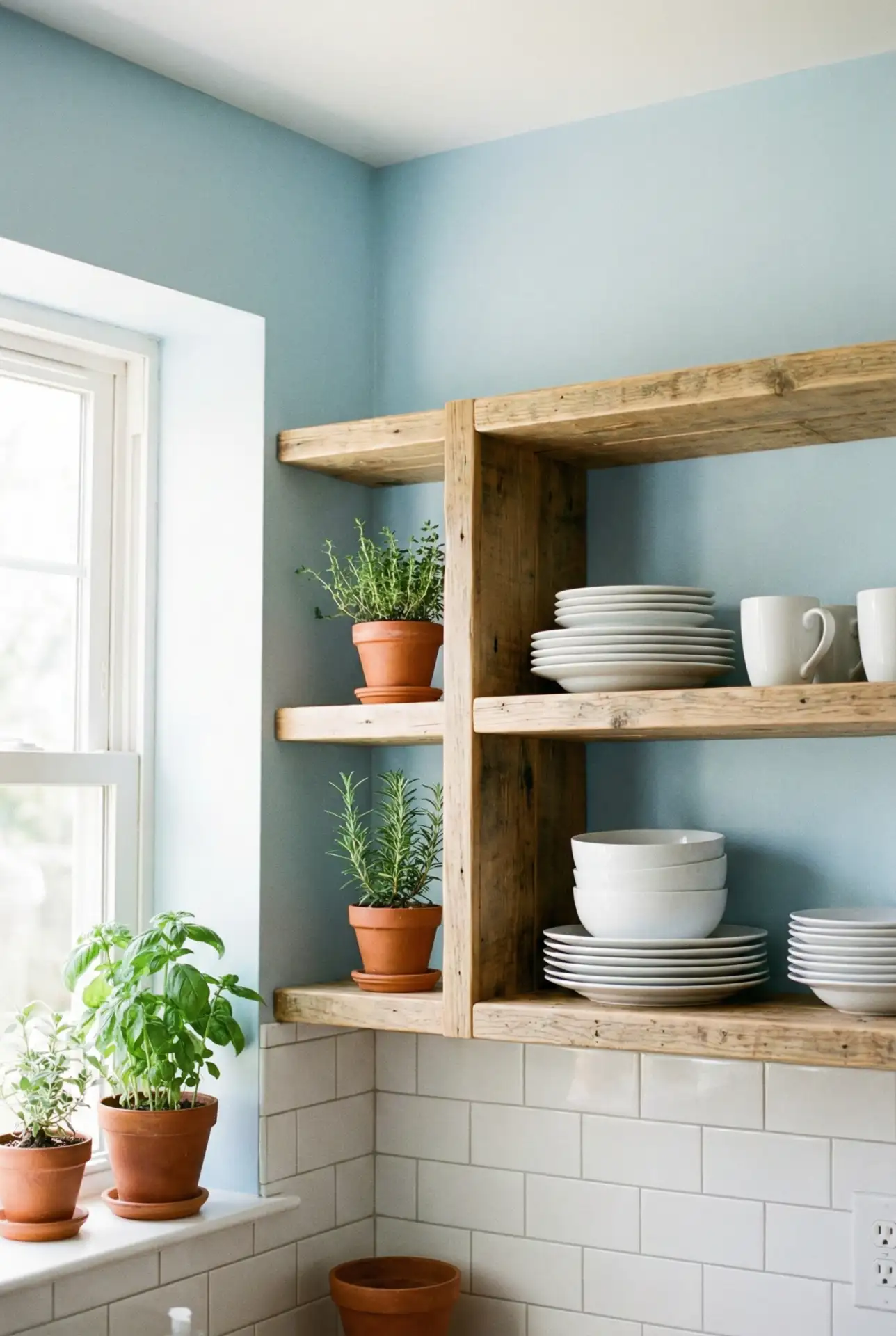
Soft, pale blue walls create an airy, calming backdrop that makes the kitchen feel larger and more inviting. This shade works beautifully in smaller kitchens or spaces with limited natural light, reflecting what little brightness is available. Open shelving in natural wood or white keeps the look light and accessible, allowing you to display everyday dishes, glassware, and a few decorative touches. It’s a budget-friendly way to introduce color without committing to a full cabinet overhaul.
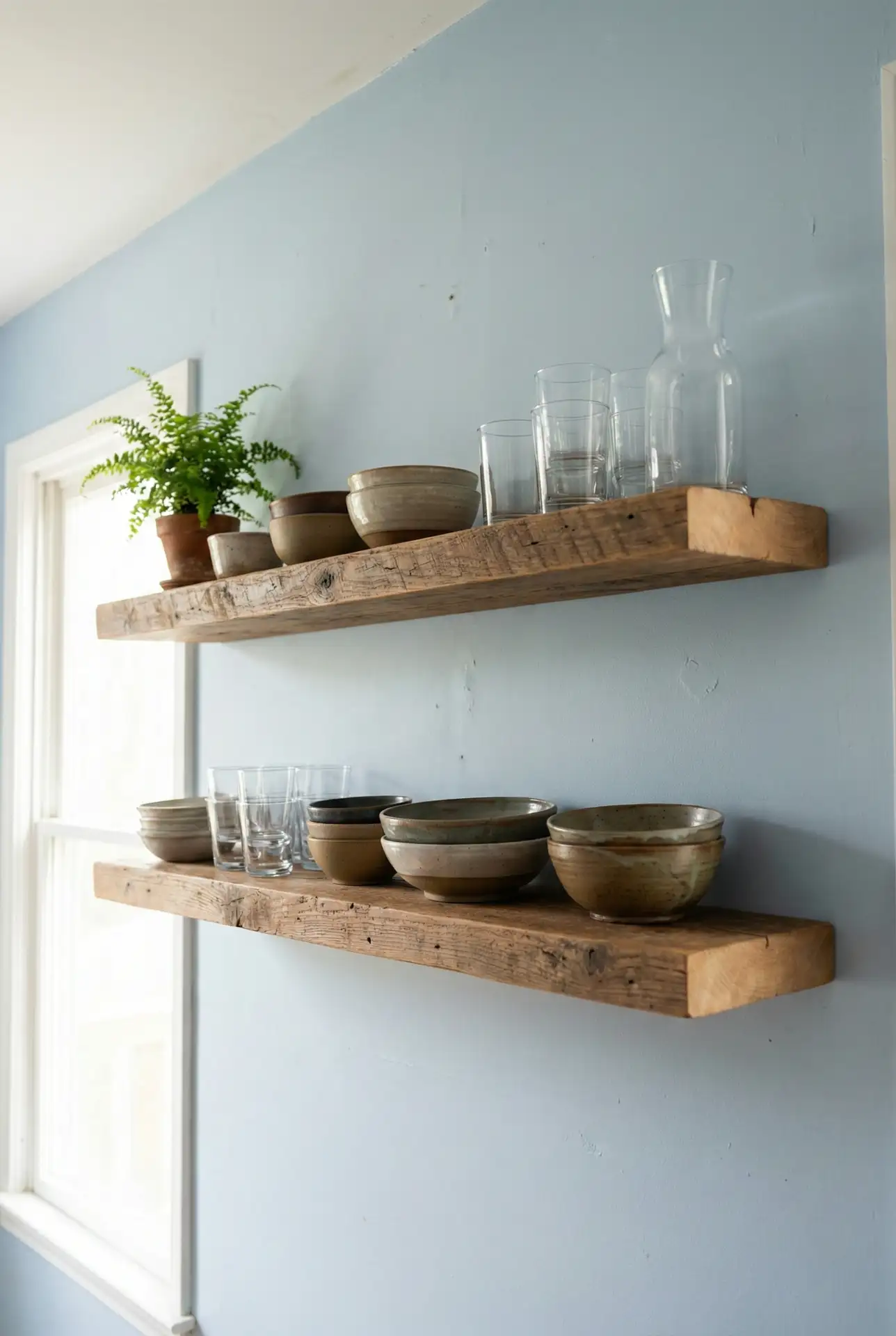
Painting walls pale blue instead of cabinetry keeps costs down—most homeowners spend under $200 on paint and supplies for an average-sized kitchen. It’s also a renter-friendly option that can be easily reversed. If you’re worried about the color feeling too cool, balance it with warm wood tones, brass fixtures, or terracotta accents. This approach is especially popular in coastal towns and Sunbelt states, where a breezy, relaxed vibe is part of the local aesthetic.
3. Duck Egg Blue Island with Marble Waterfall Edge
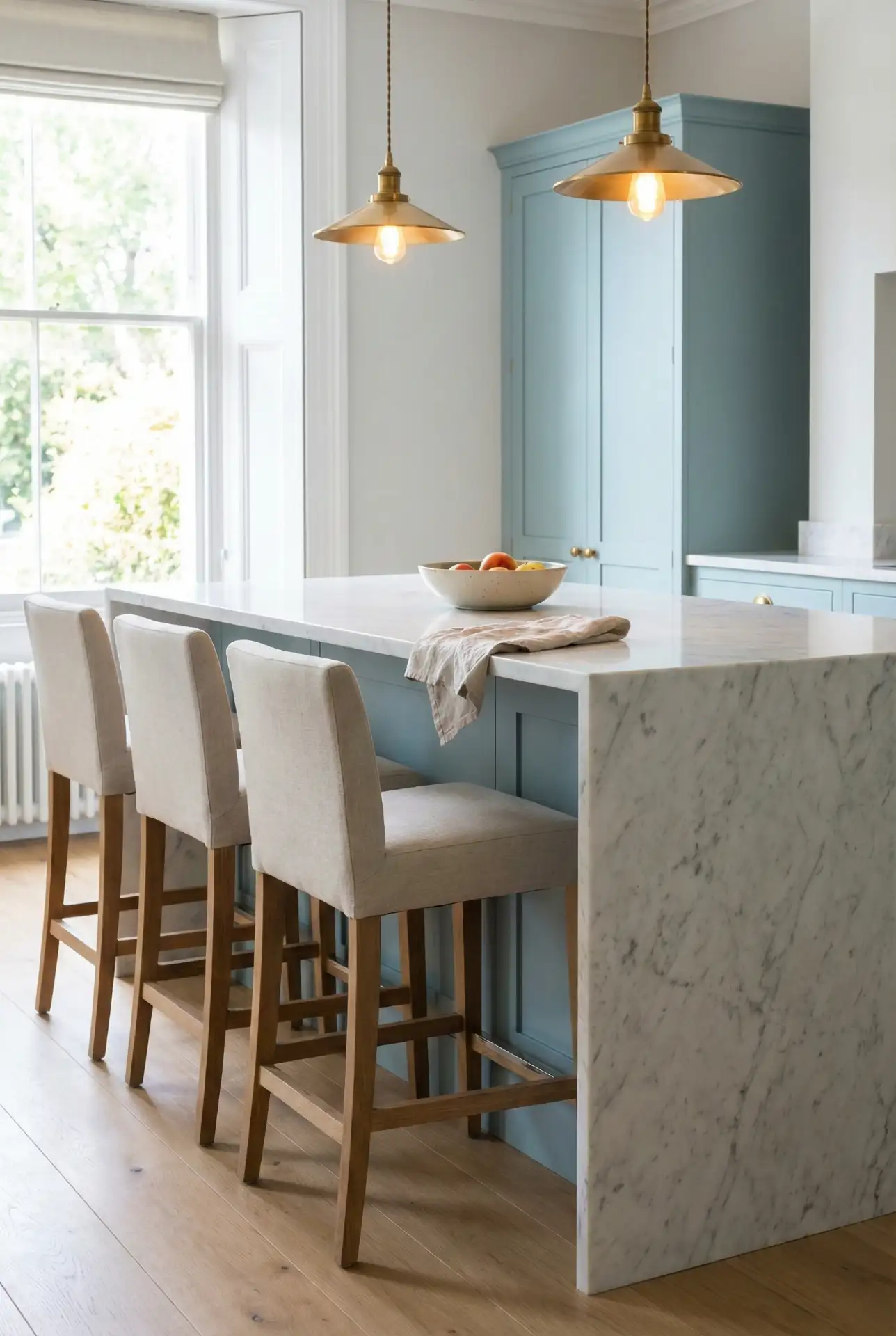
A duck egg blue island offers a subtle, sophisticated focal point without overwhelming the room. This soft greenish-blue tone has a vintage charm that pairs beautifully with marble countertops, especially when finished with a waterfall edge that cascades down the sides. The result is a statement piece that feels both elegant and approachable. Surround it with neutral cabinetry in white or light gray to let the island stand out, and add upholstered stools in linen or leather for a refined touch.
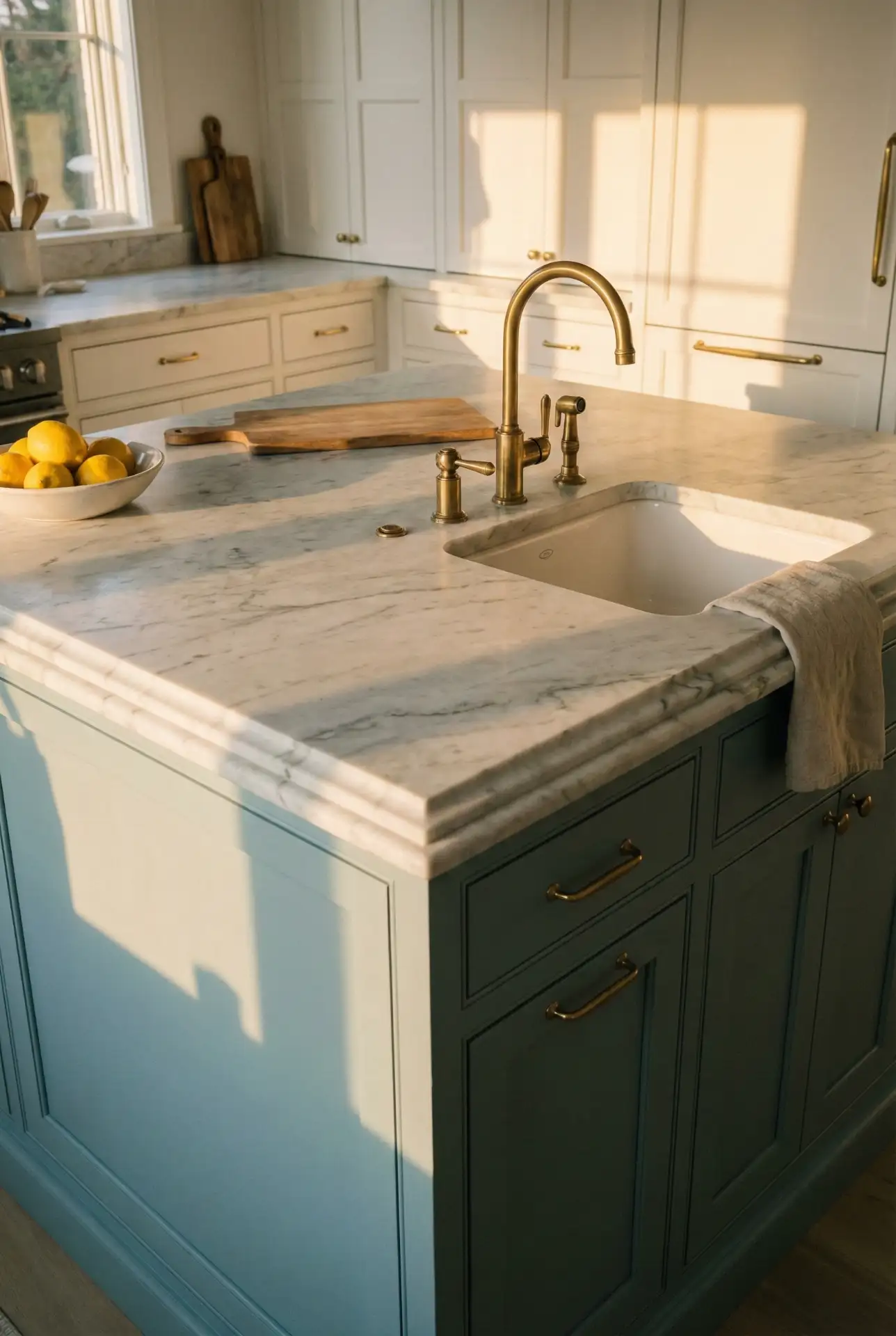
This design is particularly popular in open-concept homes where the island serves as both a cooking and entertaining hub. Duck egg blue reads as calming but not cold, making it a great choice for busy households. Designers often recommend this shade for clients who want color but are hesitant to commit to darker tones. The marble waterfall edge adds a high-end look without requiring custom cabinetry, and it’s surprisingly durable for families with kids.
4. Sky Blue Upper Cabinets with White Lowers
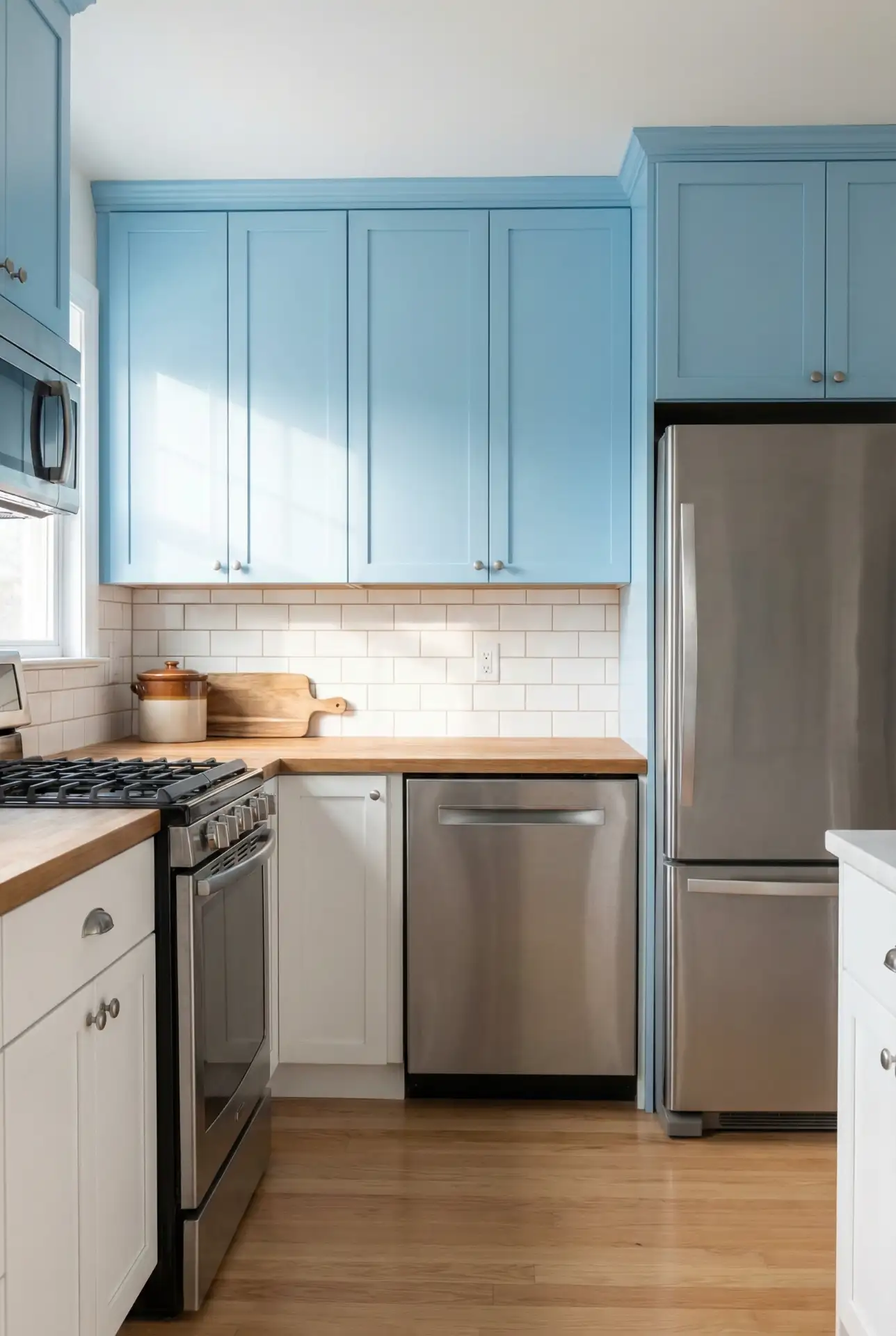
Two-tone cabinetry is one of the most requested kitchen trends in 2026, and sky blue uppers paired with white lowers hit the perfect balance. The lighter blue on top keeps the room feeling open and airy, while the white base cabinets ground the space and provide a clean, cohesive foundation. This layout works especially well in kitchens with high ceilings or large windows, where the blue can catch and reflect natural light throughout the day.
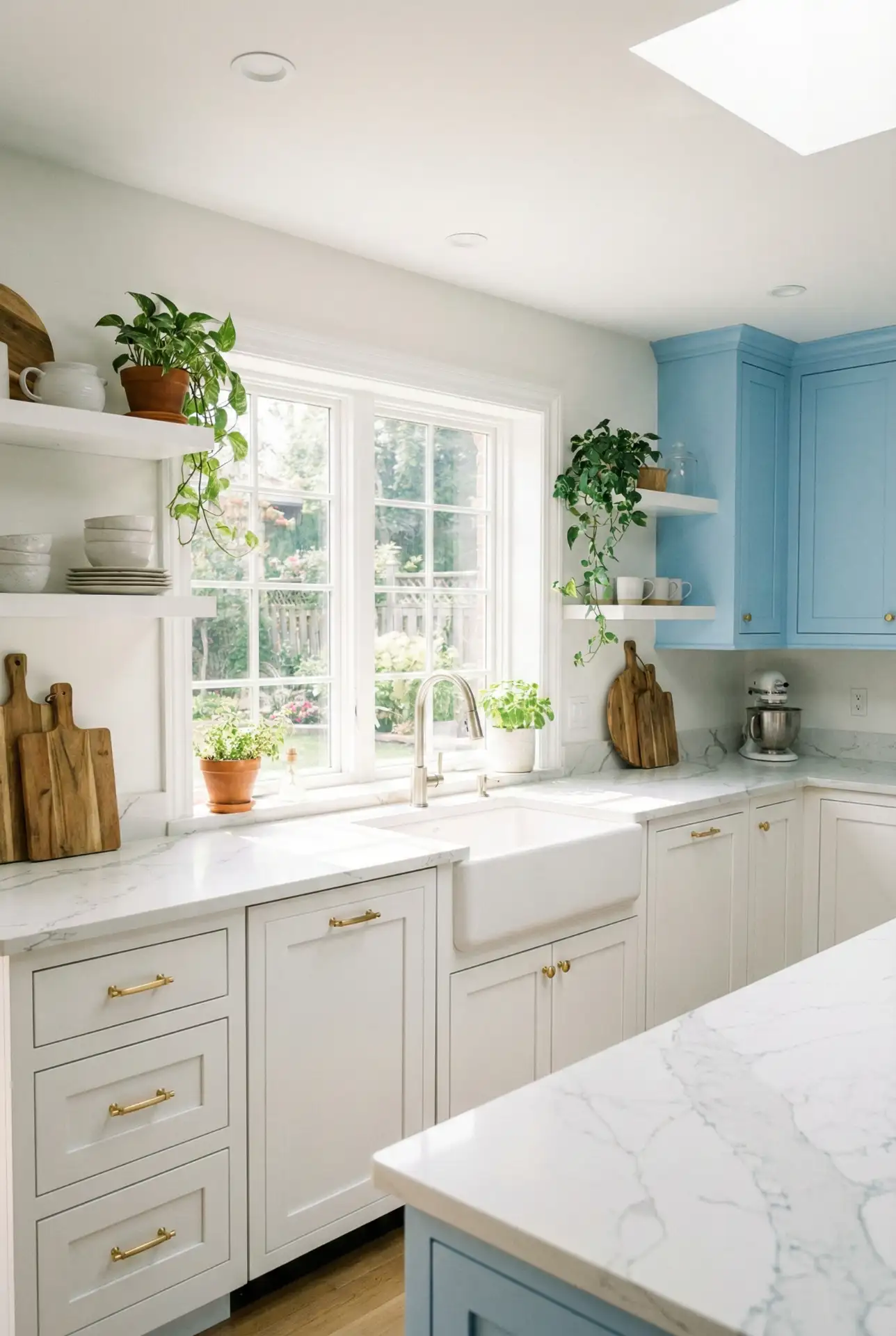
A common mistake with two-tone kitchens is choosing colors that compete rather than complement. Sky blue and white work because they share a similar lightness and tone, creating harmony instead of contrast overload. Many homeowners who’ve made this switch report that the kitchen feels more intentional and less generic. If you’re on a budget, consider painting just the upper cabinets yourself—it’s a manageable DIY project that delivers maximum visual impact.
5. French Country Blue with Distressed Finish
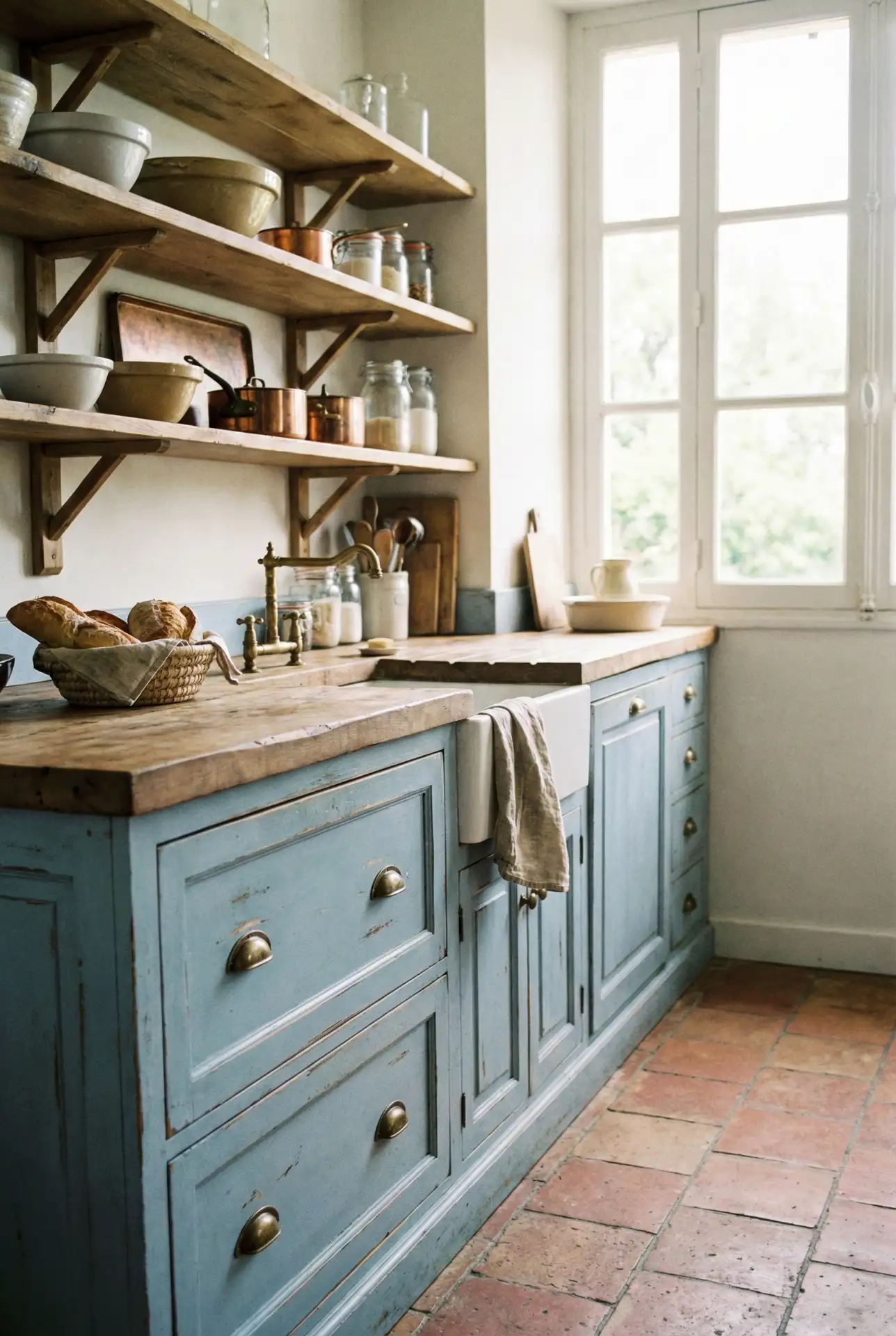
For those drawn to Old World charm, a French-inspired blue kitchen brings warmth, texture, and a lived-in feel. Think soft powder blue or faded cornflower tones applied to inset cabinets with a gently distressed finish that reveals hints of wood beneath the paint. Pair with butcher block countertops, open shelving displaying ironstone dishes, and vintage-style hardware in aged brass or pewter. This style is all about creating a space that feels collected over time rather than bought all at once.
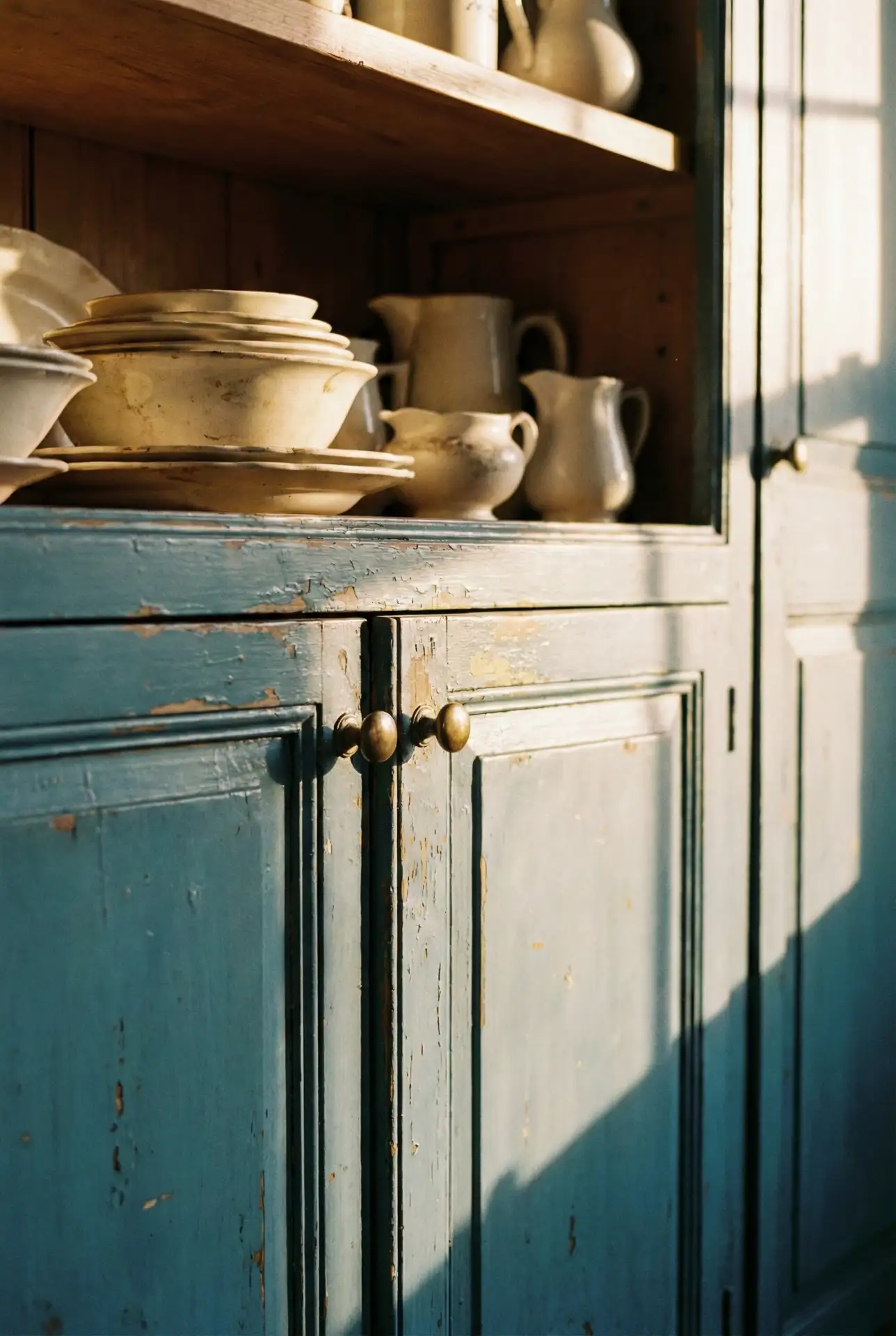
This look works best in homes with architectural character—think older farmhouses, cottages, or renovated bungalows. The distressed finish is forgiving, hiding dings and wear that would stand out on sleek, modern cabinetry. In rural areas and small towns across the Midwest and South, this style resonates with homeowners who value tradition and craftsmanship. One designer in Tennessee noted that clients often bring in photos of French kitchens from Pinterest, asking for that same sense of timeless, effortless beauty.
6. Cornflower Blue Cabinets with Brass Range Hood
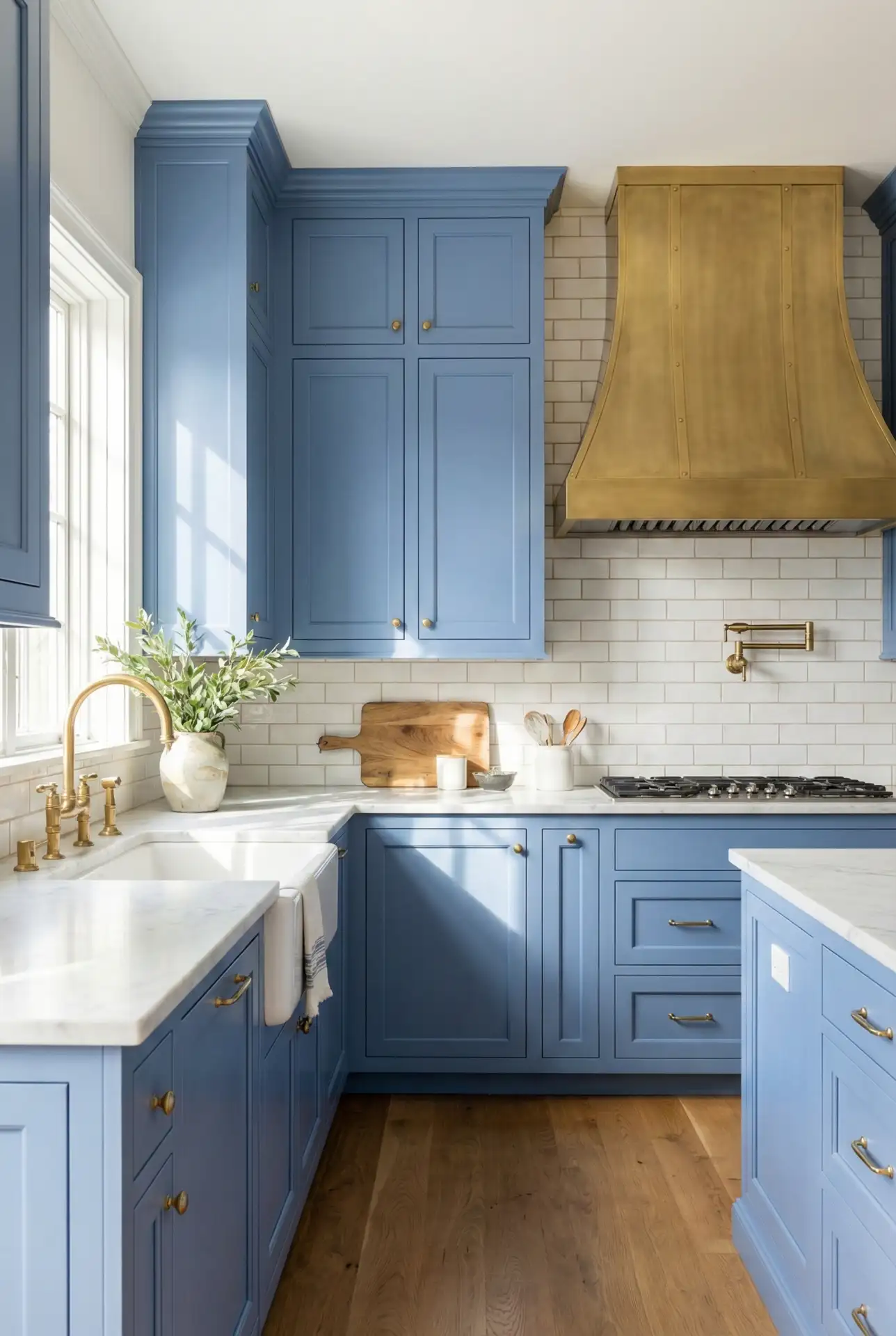
A cornflower blue finish brings energy and brightness to the kitchen without veering into overly playful territory. When paired with a brass range hood—whether custom-made or a high-quality prefab—the combination feels luxurious and carefully curated. The warmth of the brass balances the coolness of the blue, while the hood becomes a stunning architectural feature. Add in white marble or soapstone countertops and simple subway tile to keep the focus on these two hero elements.
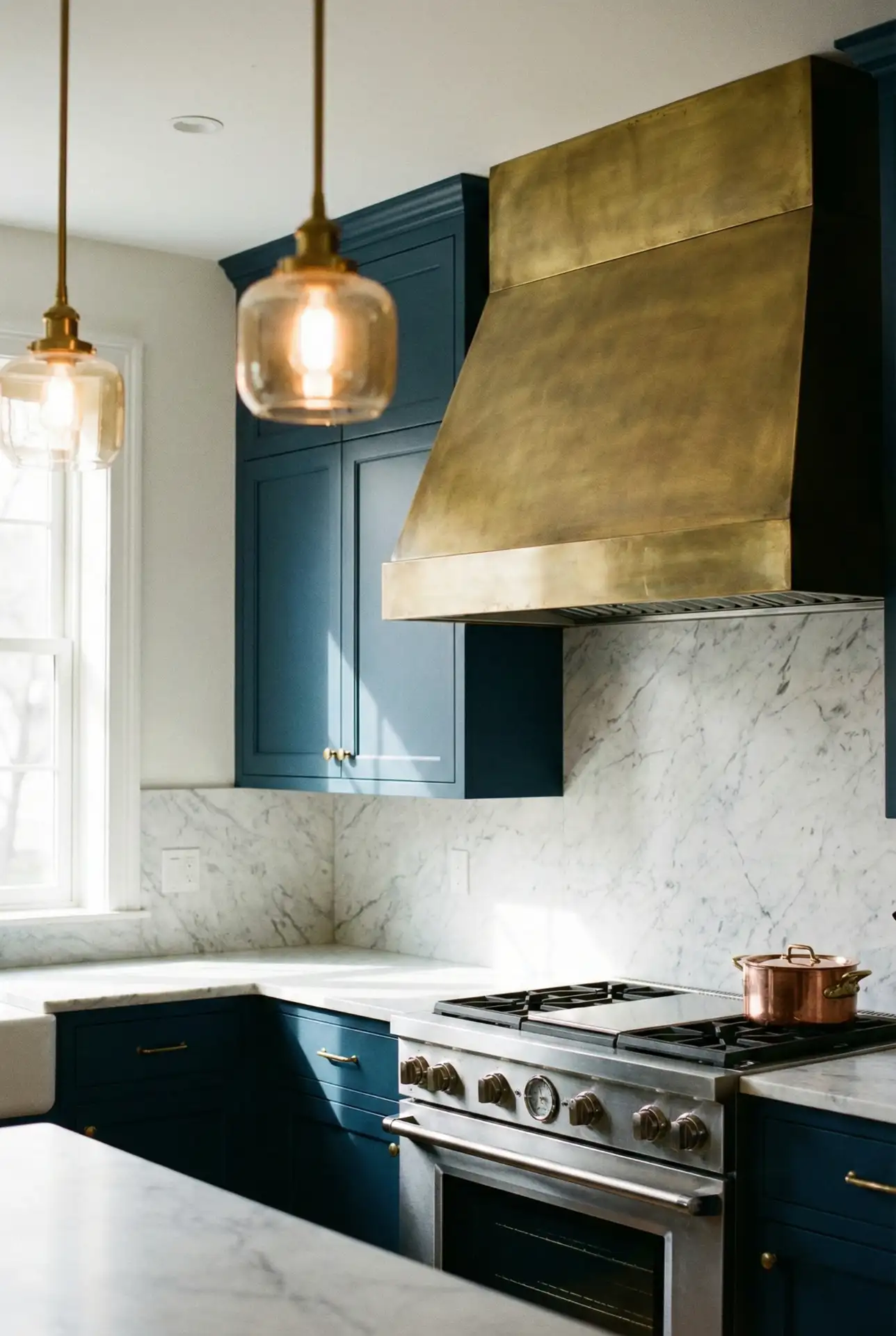
This design is particularly popular in upscale remodels and new construction homes where homeowners want to make a statement. A custom brass hood can run anywhere from $3,000 to $10,000, but the investment transforms the entire room. If that’s outside your budget, several companies now offer brass-look finishes on steel hoods for a fraction of the cost. The key is ensuring the finish has warmth and depth, not a cheap, shiny appearance.
7. Pastel Blue Cabinets with Patterned Tile Backsplash
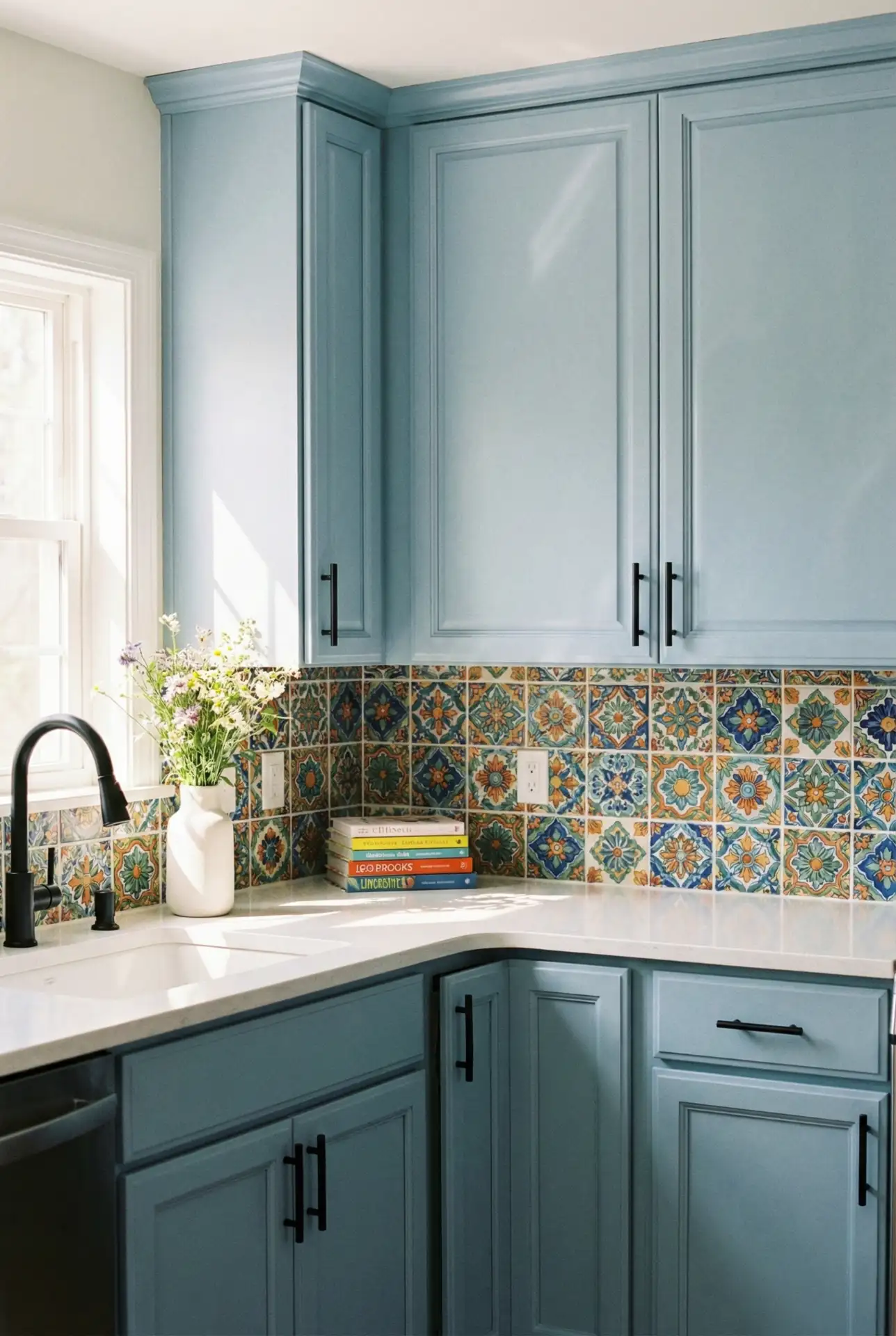
Soft pastel blue cabinets create a dreamy, vintage-inspired kitchen that feels fresh and fun. To elevate the look, add a patterned backsplash—think Moroccan zellige, encaustic cement tiles, or hand-painted ceramic. The pattern introduces visual interest and personality without clashing with the gentle blue. Keep countertops simple in white quartz or light butcher block, and choose minimal hardware in matte black or brushed nickel to let the tile and cabinetry shine.
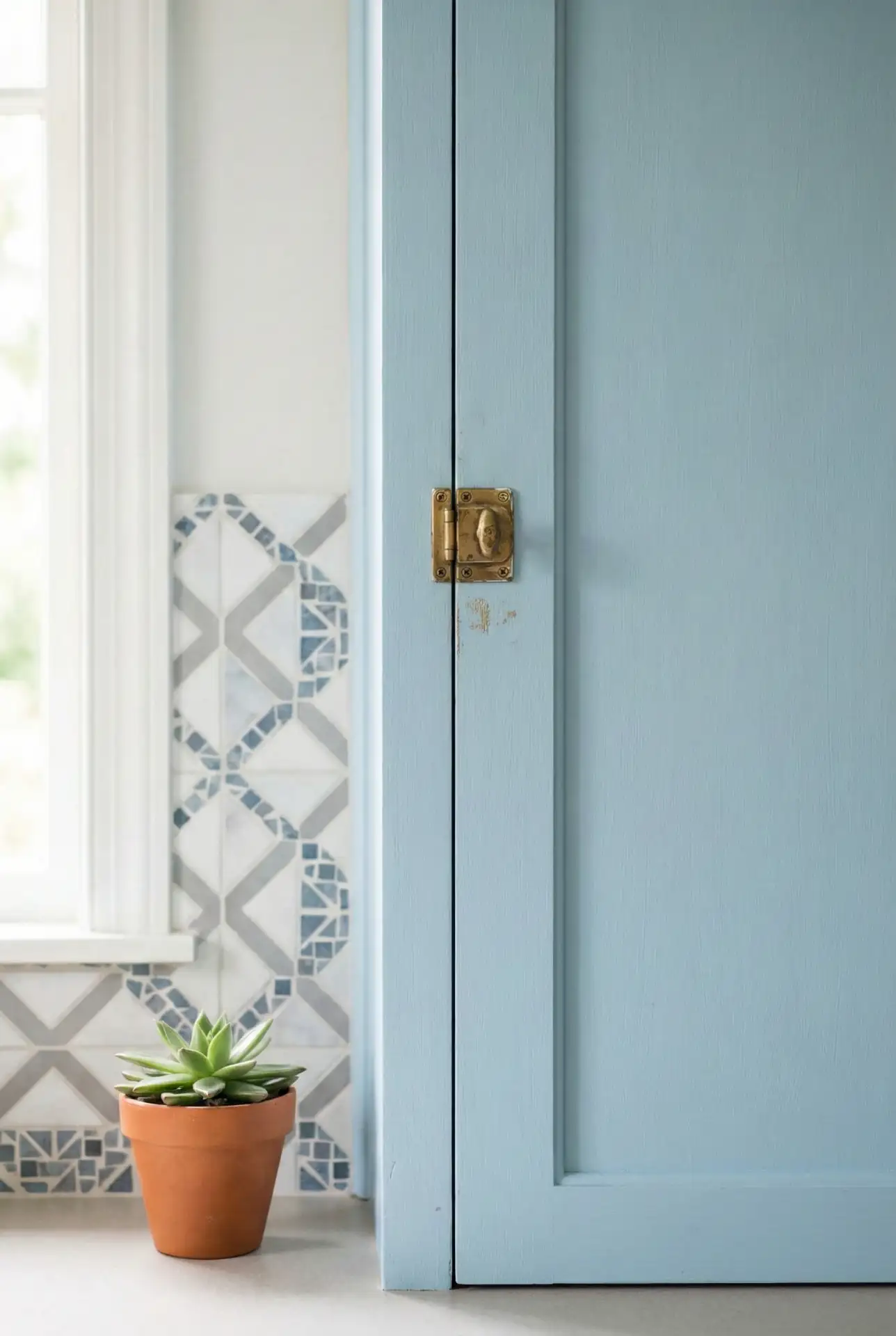
Many homeowners in California and the Southwest gravitate toward this style because it pairs beautifully with Spanish and Mediterranean architecture. The patterned tile adds a handmade, artisanal quality that feels personal and unique. One mistake to avoid: going too bold with both the cabinets and the tile. If your tile is busy, keep the blue soft and muted. If you want a richer blue, opt for a simpler, more subtle tile pattern.
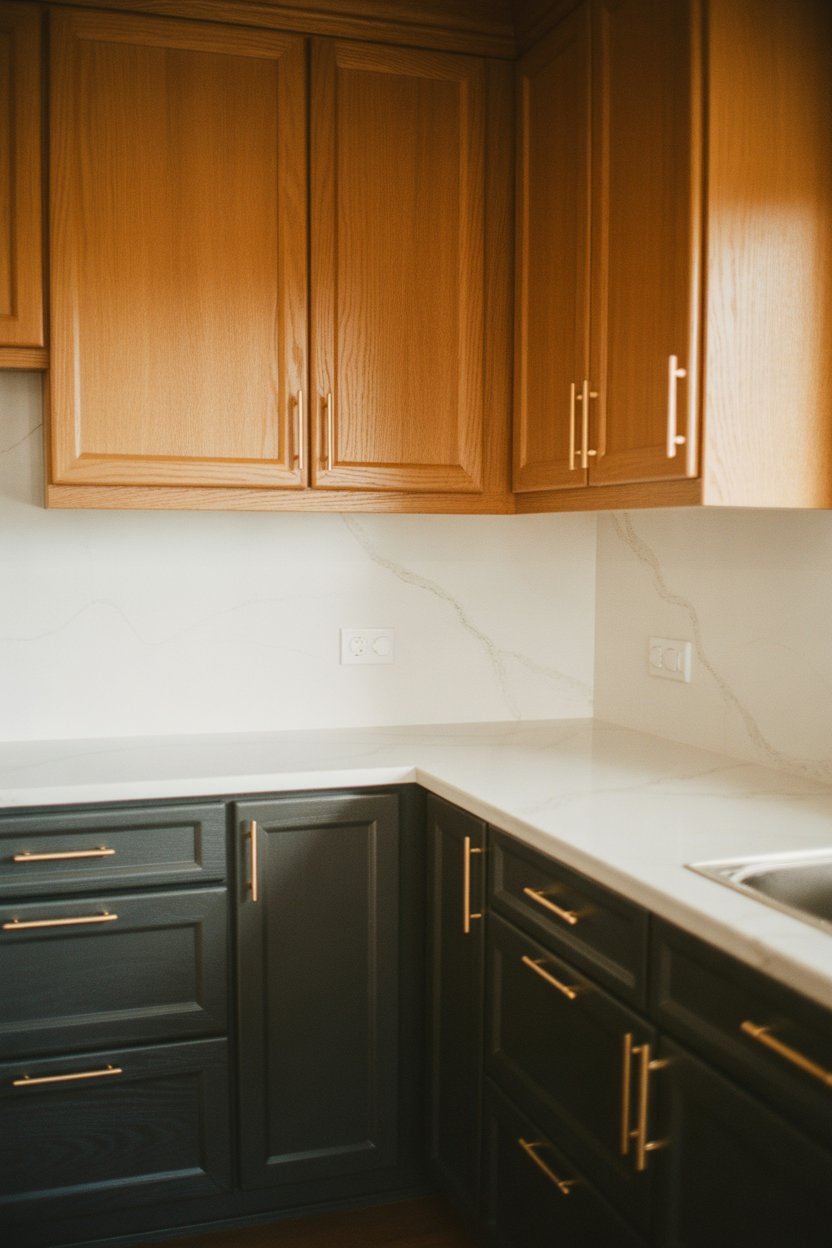
8. Dark Teal Lower Cabinets with Open Upper Shelves
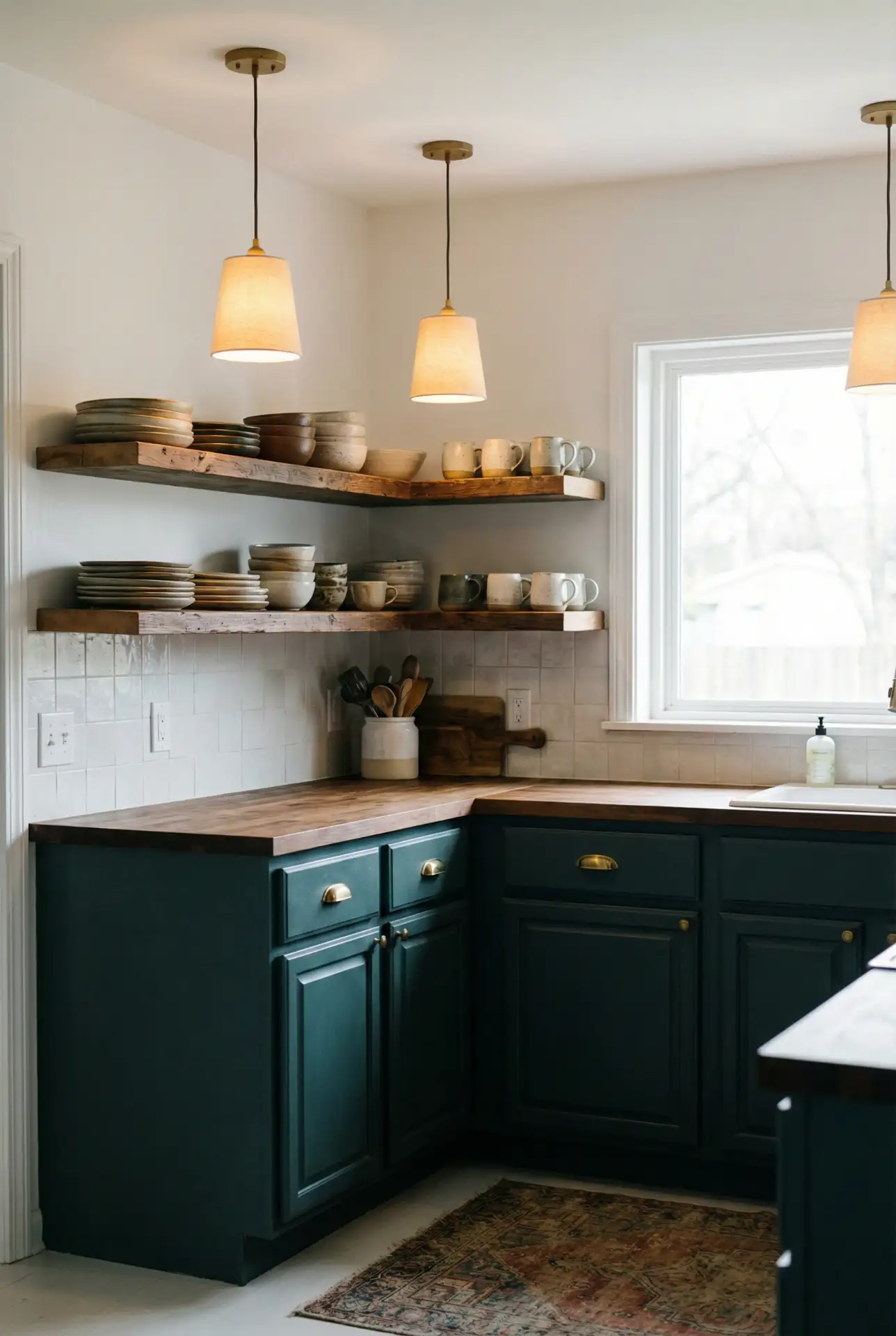
A dark teal on lower cabinets grounds the kitchen with richness and drama, while open shelving on top keeps the space from feeling too heavy. This combination is perfect for homeowners who want the moodiness of a dark kitchen but still crave some lightness and airiness. Use the shelves to display glassware, ceramics, or cookbooks, and choose a light-colored wall paint—soft white or warm beige—to create contrast and depth.
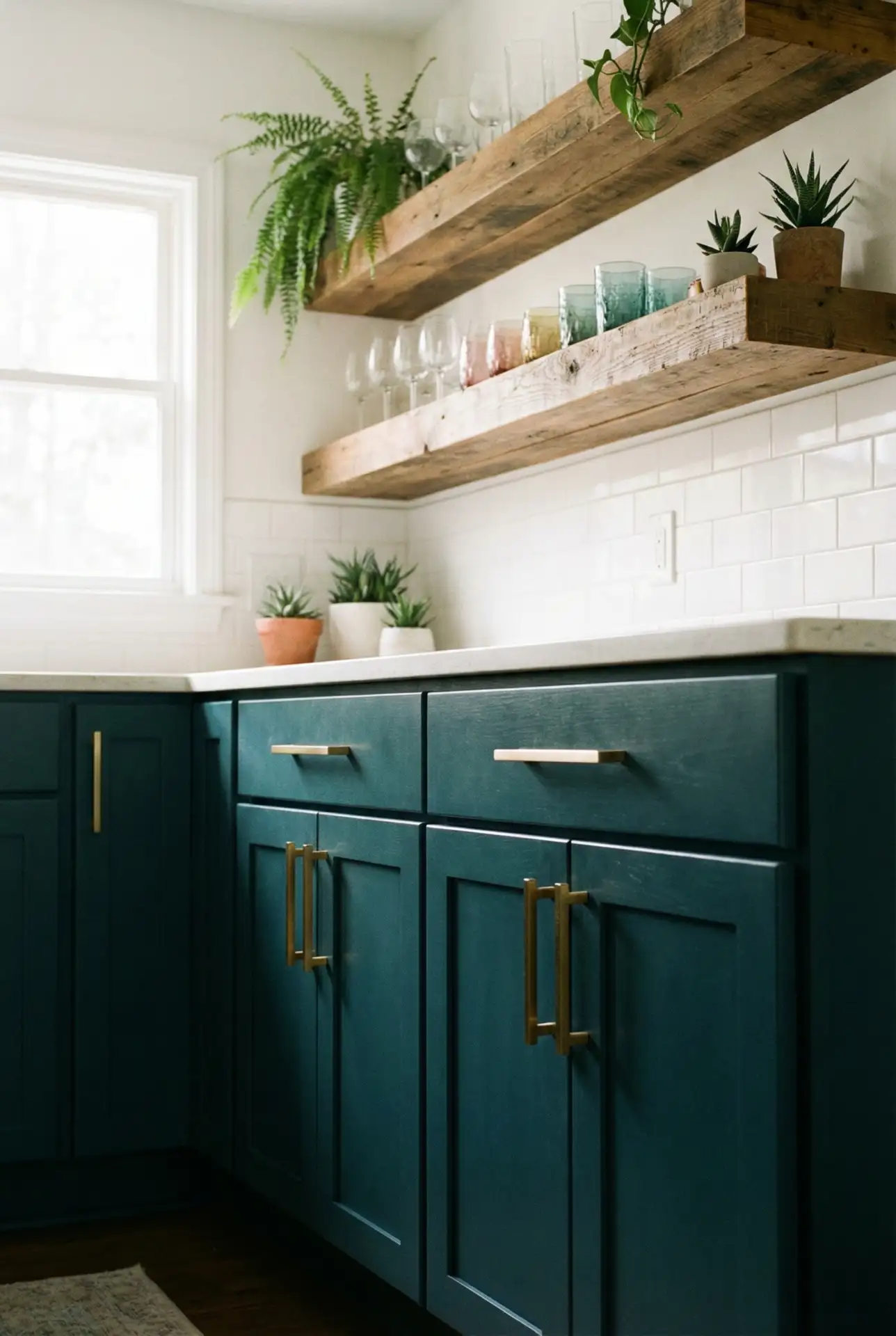
This style is gaining traction in urban lofts and smaller homes where every design choice needs to work hard. The open shelving makes the kitchen feel less boxy, while the dark base cabinets add sophistication. It’s also a smart way to test out a bold color without fully committing—if you tire of the teal, you can repaint just the lowers without redoing the entire kitchen. Many homeowners appreciate the flexibility this layout offers.
9. Blue-Grey Cabinets with Marble and Wood Accents
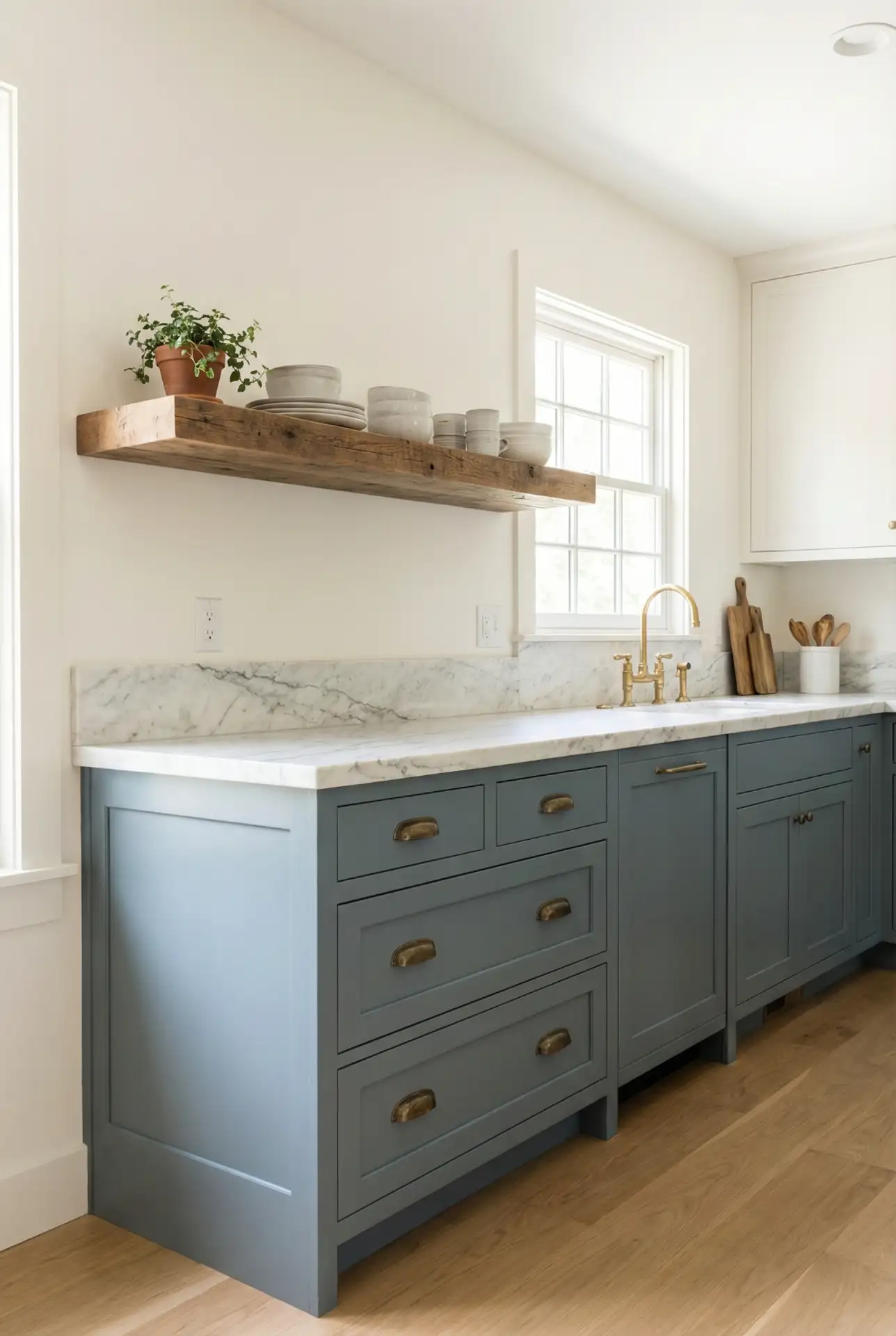
A muted blue-grey strikes the perfect middle ground between cool and neutral, making it incredibly versatile. Pair these cabinets with white or grey marble countertops and introduce wood accents through open shelving, floating islands, or even a reclaimed wood beam. The mix of materials—painted cabinetry, natural stone, and warm wood—creates a layered, sophisticated look that feels both modern and timeless. This palette works across a range of home styles, from transitional to contemporary.
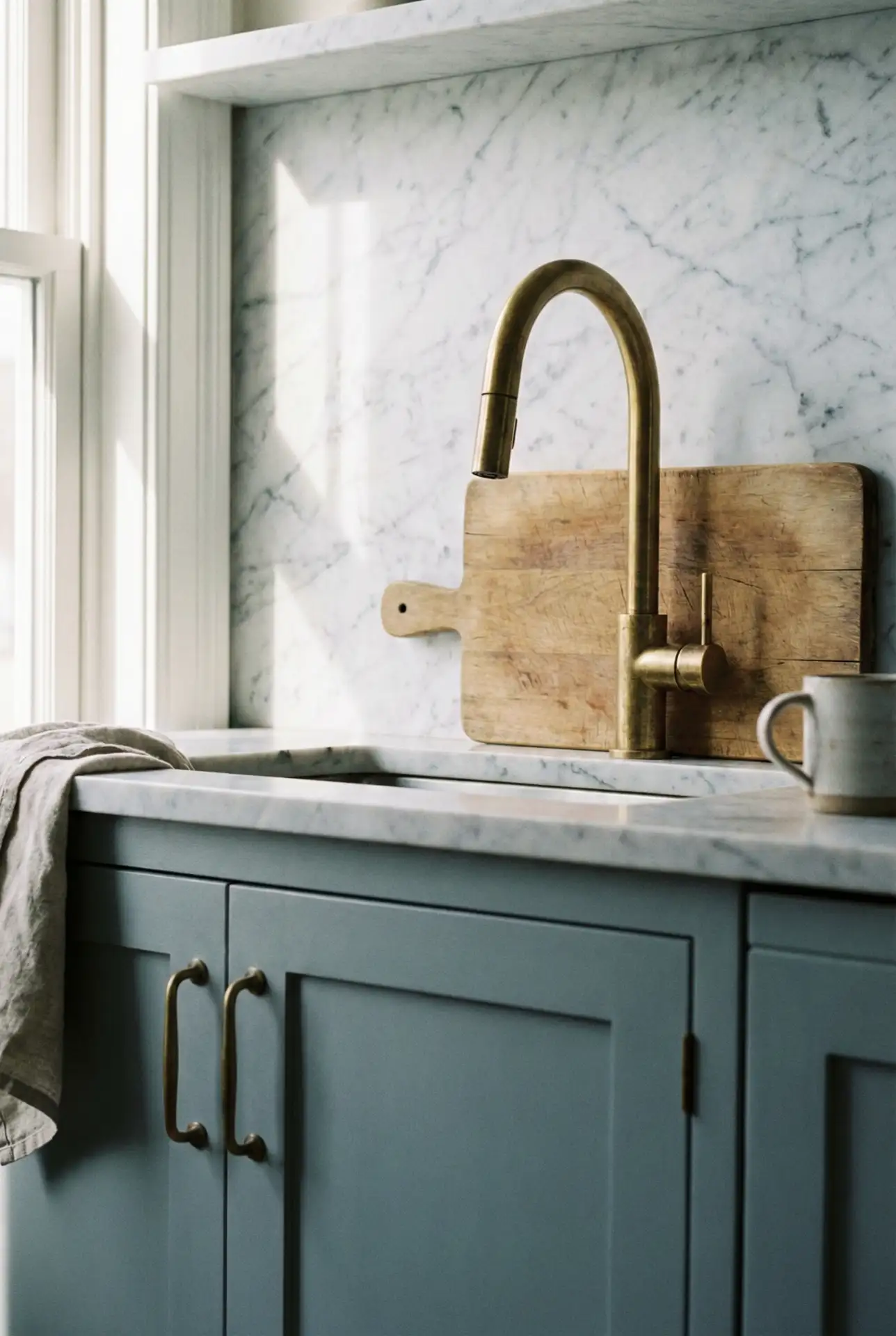
According to kitchen designers, blue-grey is one of the most requested shades because it reads as sophisticated without being stark. It’s easier to live with than pure grey and more grounded than pastel blue. This color is especially popular in the Pacific Northwest and New England, where homeowners favor understated elegance. The combination of marble and wood also softens the coolness of the blue, making the kitchen feel warm and inviting rather than clinical.
10. Cobalt Blue Island with White Perimeter Cabinets
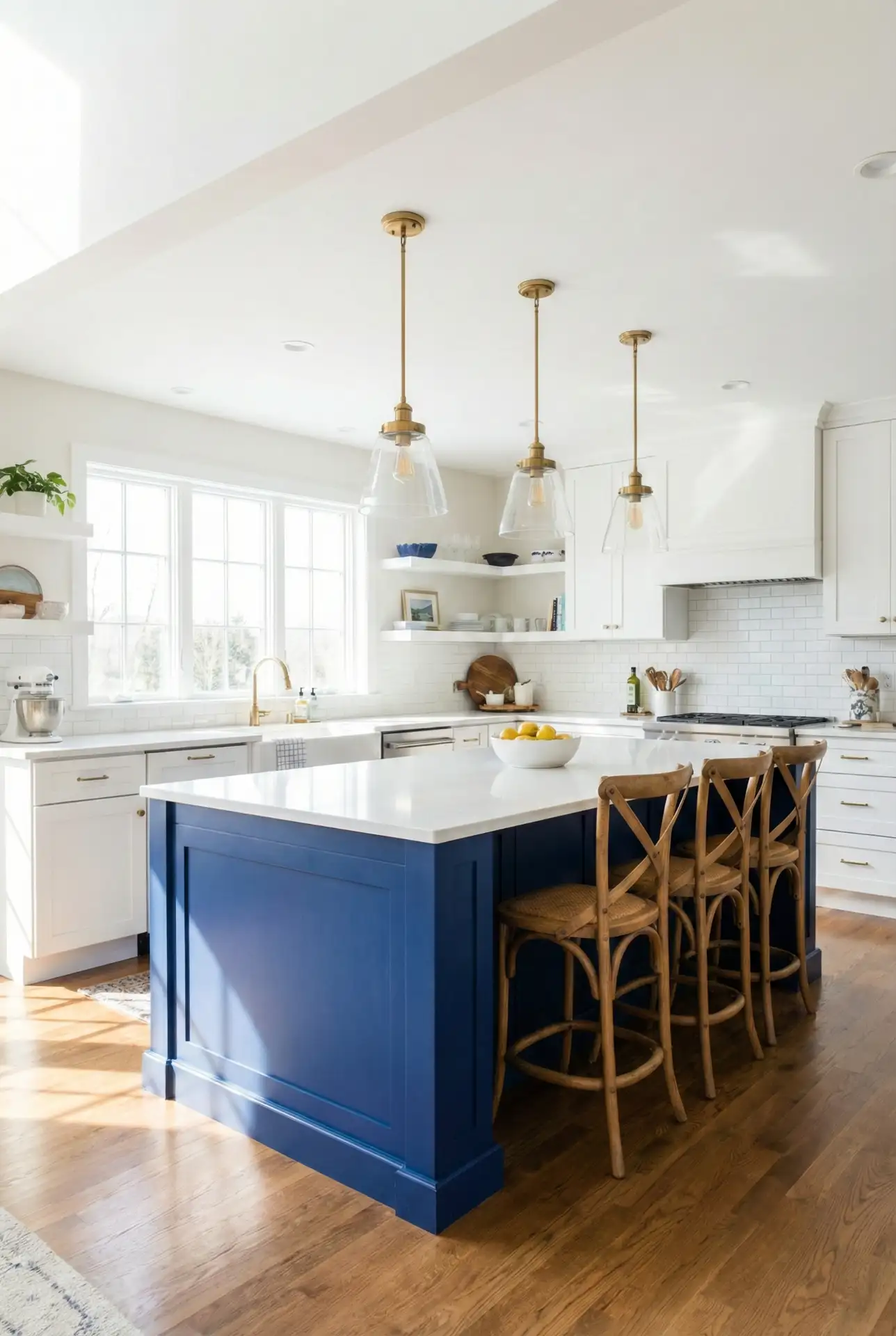
A bold cobalt blue island serves as the heart of the kitchen, anchoring the room with saturated color and confidence. Surround it with white perimeter cabinets to create balance and prevent the space from feeling too intense. The contrast is striking but still approachable, especially when softened with natural wood stools, woven pendant lights, or brass fixtures. This layout is ideal for homeowners who want a statement piece but aren’t ready to commit to blue throughout the entire kitchen.
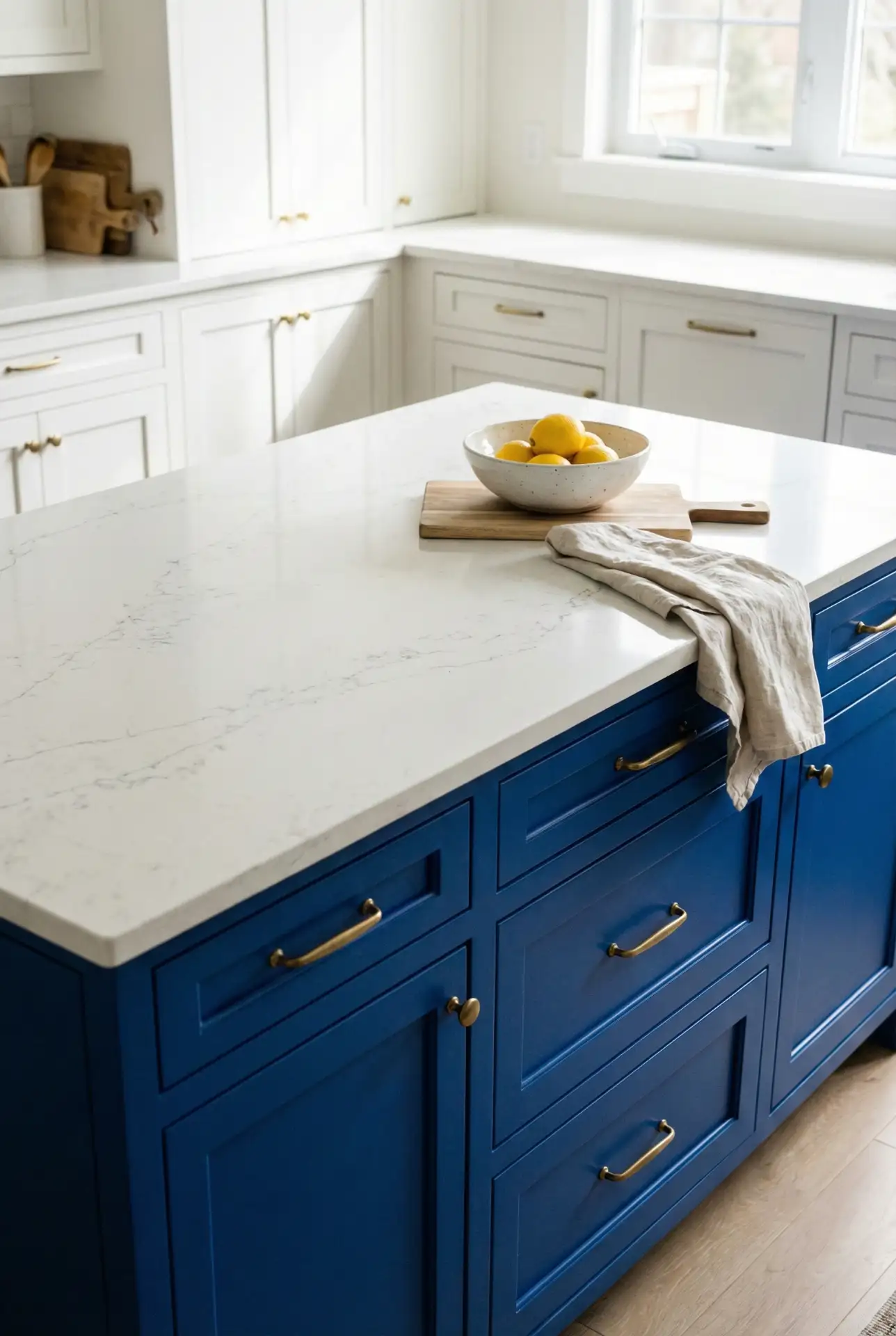
This design is particularly popular in suburban homes with open floor plans, where the kitchen island doubles as a social hub. The cobalt blue makes it feel intentional and curated, while the white cabinets keep the space from feeling too heavy. One homeowner in Texas mentioned that painting just her island transformed the entire room and cost less than $150 in materials. It’s a high-impact, low-cost update that delivers a serious visual punch.
11. Light Turquoise Cabinets with Natural Wood Countertops
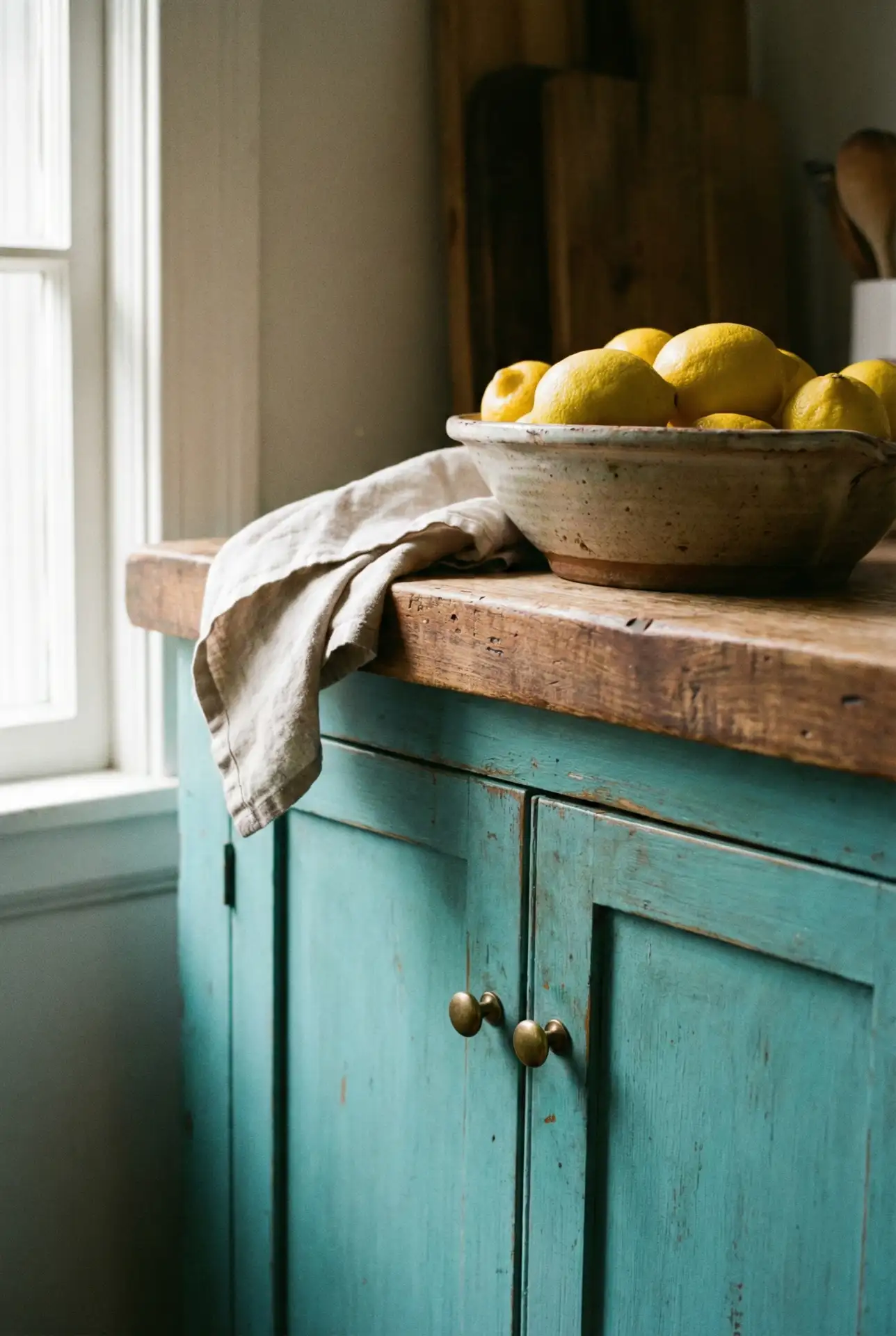
A light turquoise brings a beachy, laid-back vibe that’s perfect for coastal homes or anyone who wants their kitchen to feel like a vacation retreat. Pair these cabinets with thick wood countertops in a honey or walnut tone to add warmth and organic texture. The combination of cool blue and warm wood creates a balanced, inviting space that feels casual yet polished. Add woven baskets, linen curtains, and a few potted herbs to complete the look.
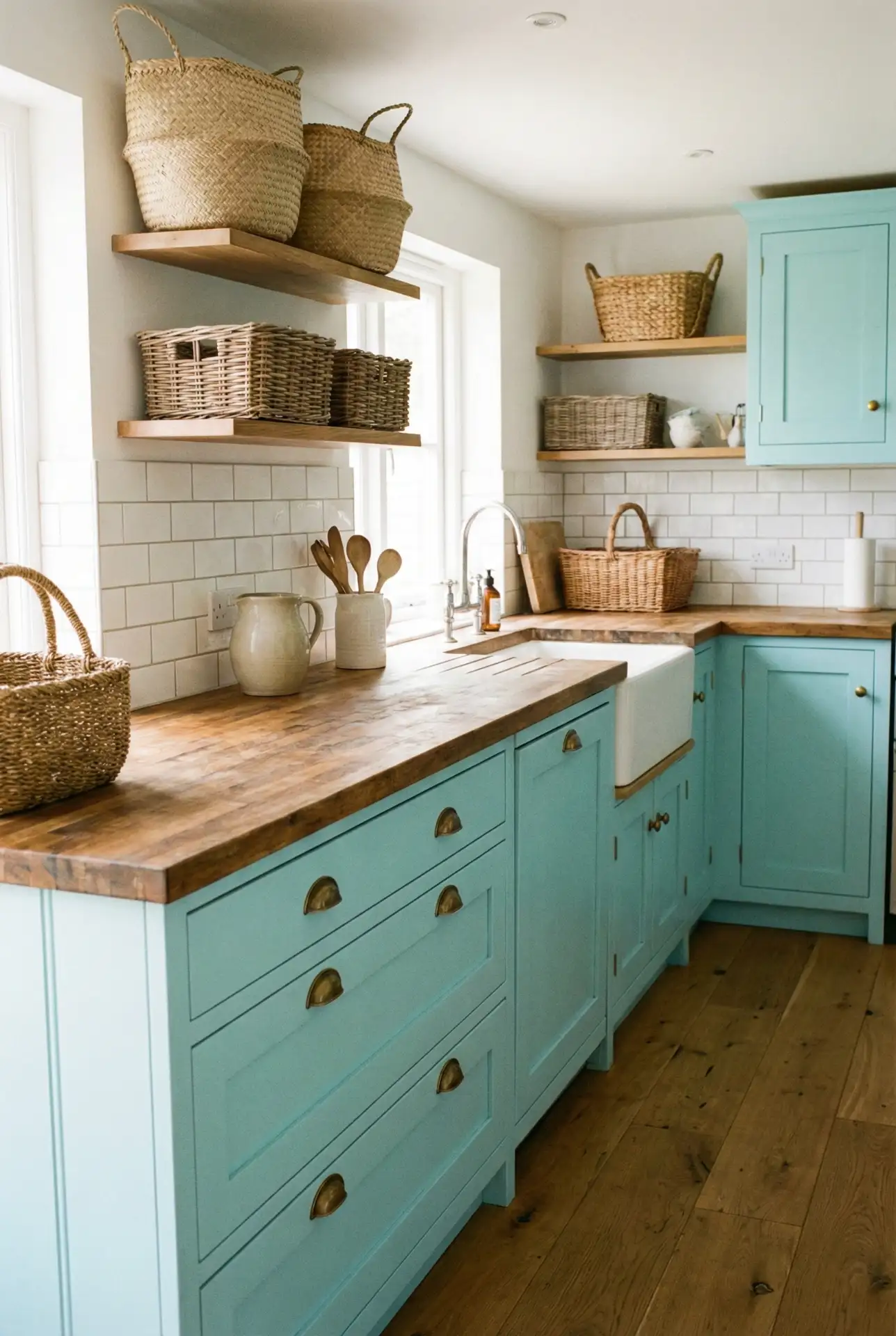
This palette is especially beloved in Florida, Southern California, and beach towns along the East Coast. The light turquoise doesn’t take itself too seriously, which makes it a great choice for families with kids or anyone who wants a more relaxed kitchen environment. Butcher block countertops are also more affordable than stone, running around $40–$80 per square foot installed, making this a smart choice for budget-conscious renovations.
12. Dusty Blue Kitchen with Gold Fixtures
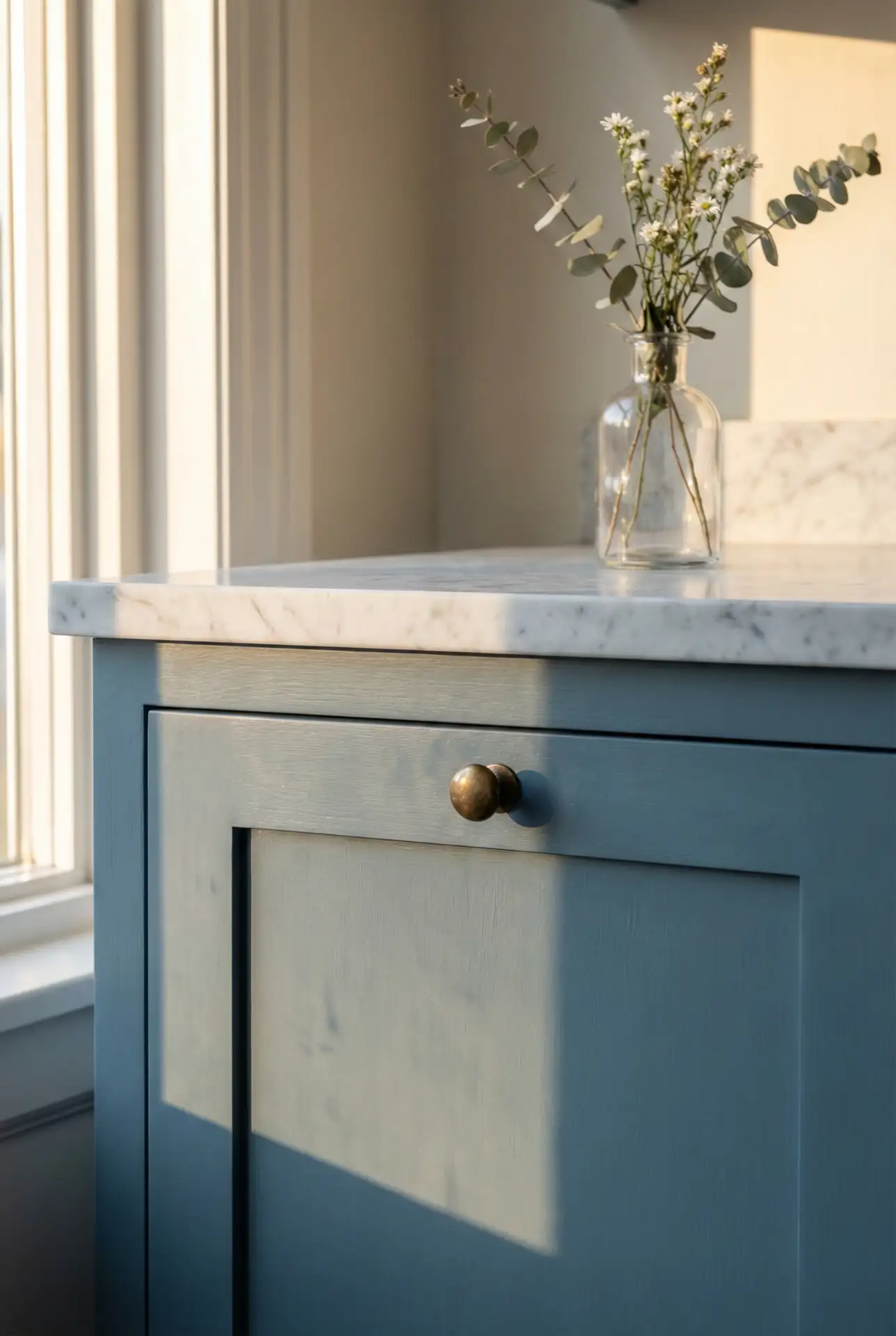
A dusty blue finish offers a soft, muted alternative to brighter blues, creating a calming and sophisticated backdrop. When paired with gold or brass fixtures—faucets, cabinet pulls, pendant lights—the combination feels elevated and intentional. The dusty blue acts as a neutral, allowing the gold to shine without overwhelming the space. This color works beautifully in both traditional and modern kitchens, adapting easily to different styles and decor choices.
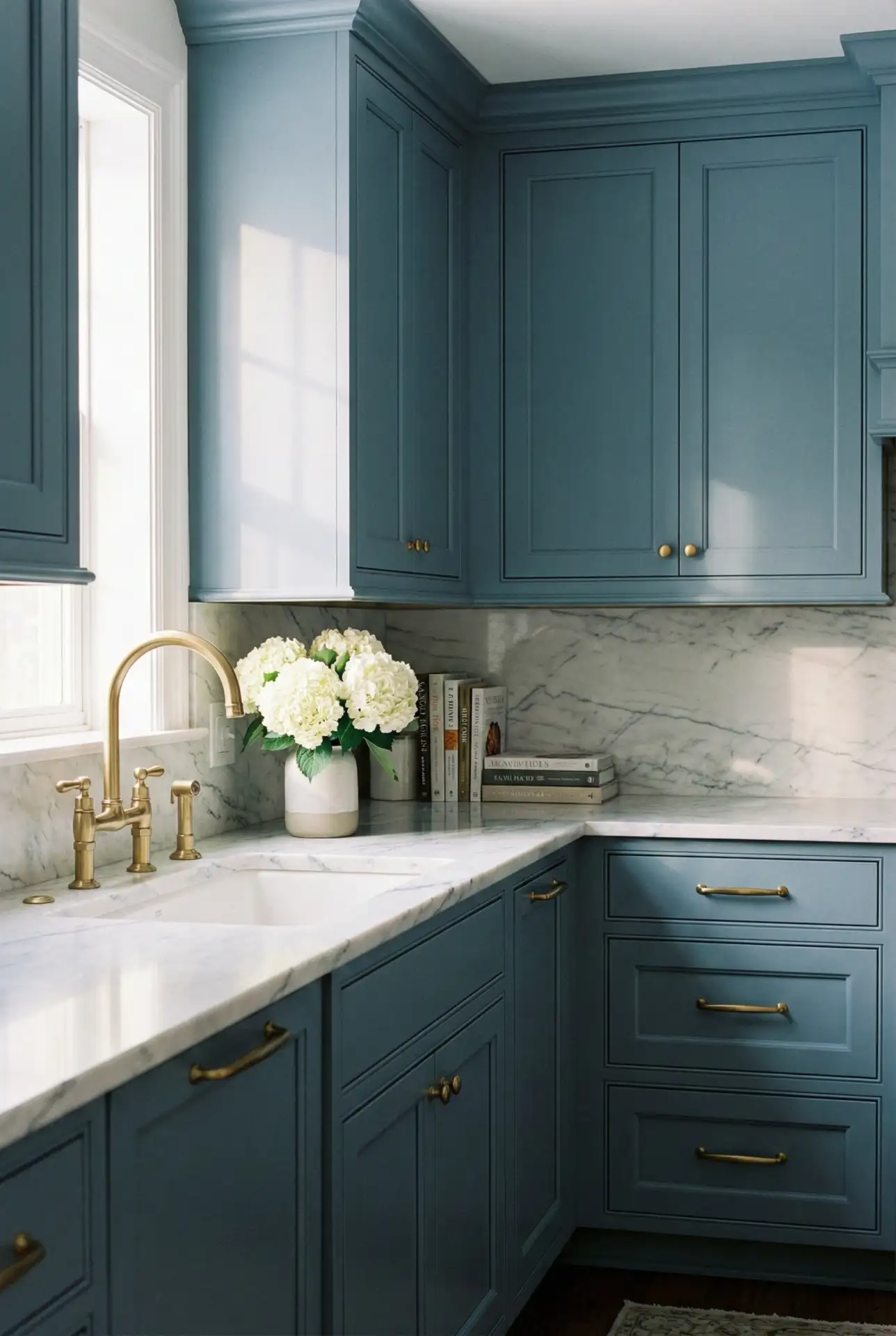
Dusty blue is forgiving—it doesn’t show dirt or smudges as easily as white, and it pairs well with a wide range of materials and colors. Gold fixtures have become more accessible in recent years, with quality options available at every price point. Expect to spend anywhere from $150 to $600 on a faucet, depending on brand and finish quality. This combination is particularly popular with homeowners who want a refined, grown-up kitchen that still feels approachable.
13. Blue-Green Cabinets with Concrete Countertops
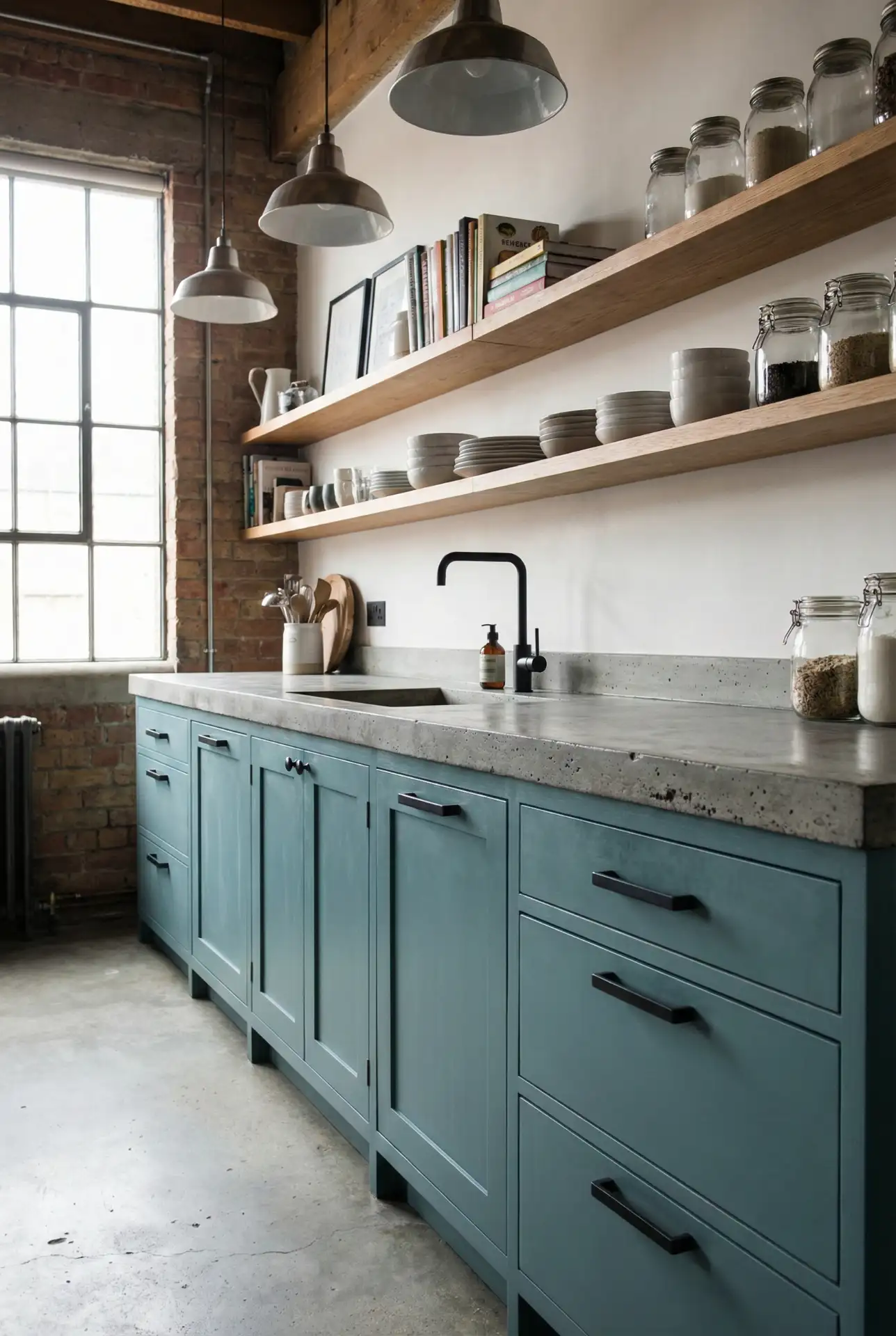
A blue-green hue—somewhere between teal and sage—brings an earthy, organic feel to the kitchen. Pair these cabinets with poured or prefab concrete countertops for an industrial-meets-natural aesthetic that’s both rugged and refined. The concrete adds texture and visual weight, while the blue-green softens the overall look. This combination is perfect for modern farmhouses, lofts, or anyone drawn to a more raw, authentic interior style.
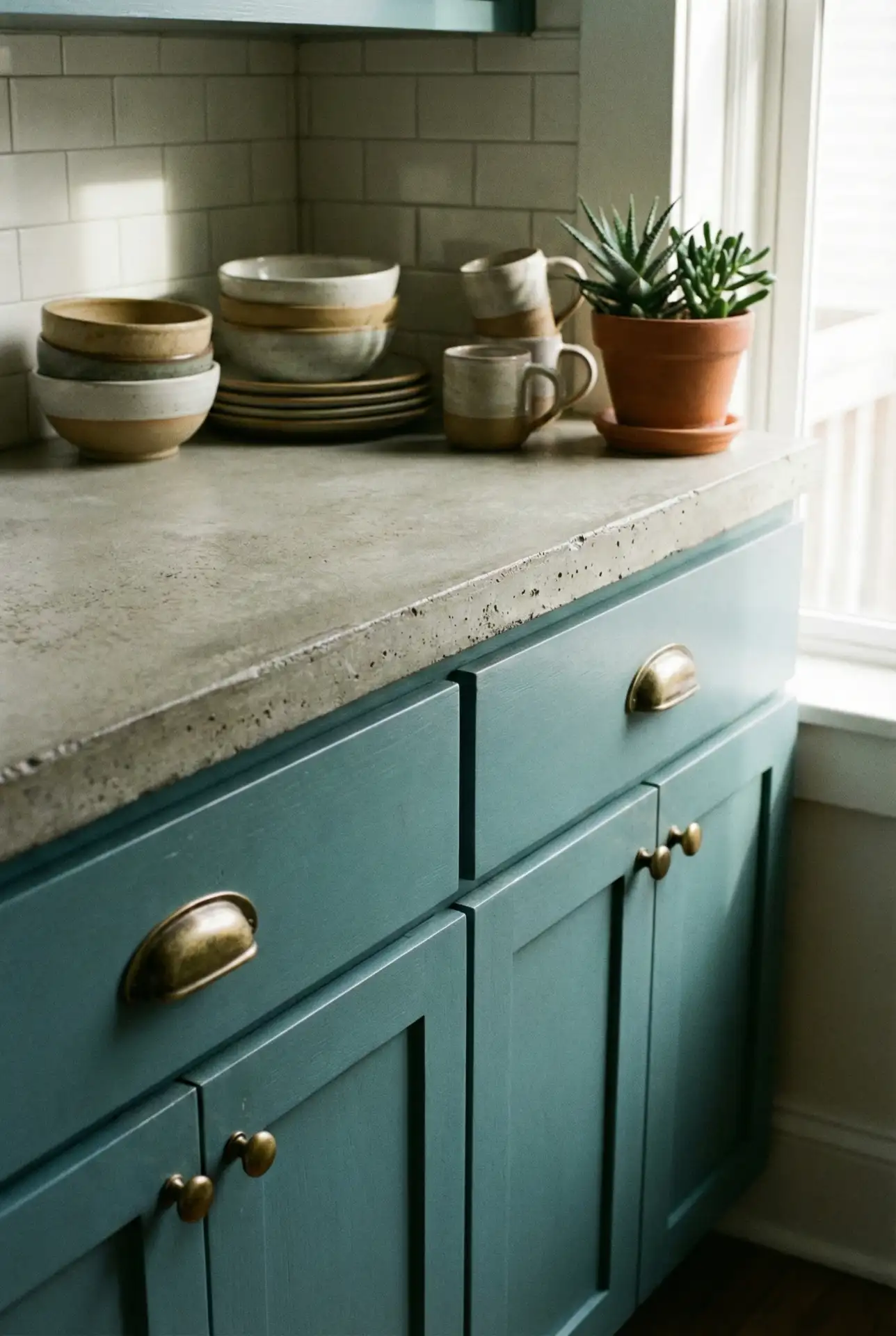
Concrete countertops have gained traction in recent years as a more affordable and customizable alternative to natural stone. Costs typically range from $65 to $135 per square foot installed, and the material can be stained, sealed, and shaped to fit any kitchen layout. Blue-green cabinetry with concrete counters is especially popular in Portland, Austin, and Denver—cities known for their love of handmade, eco-conscious design. The pairing feels intentional and creative without being overly trendy.
14. Periwinkle Blue Cabinets with White Subway Tile
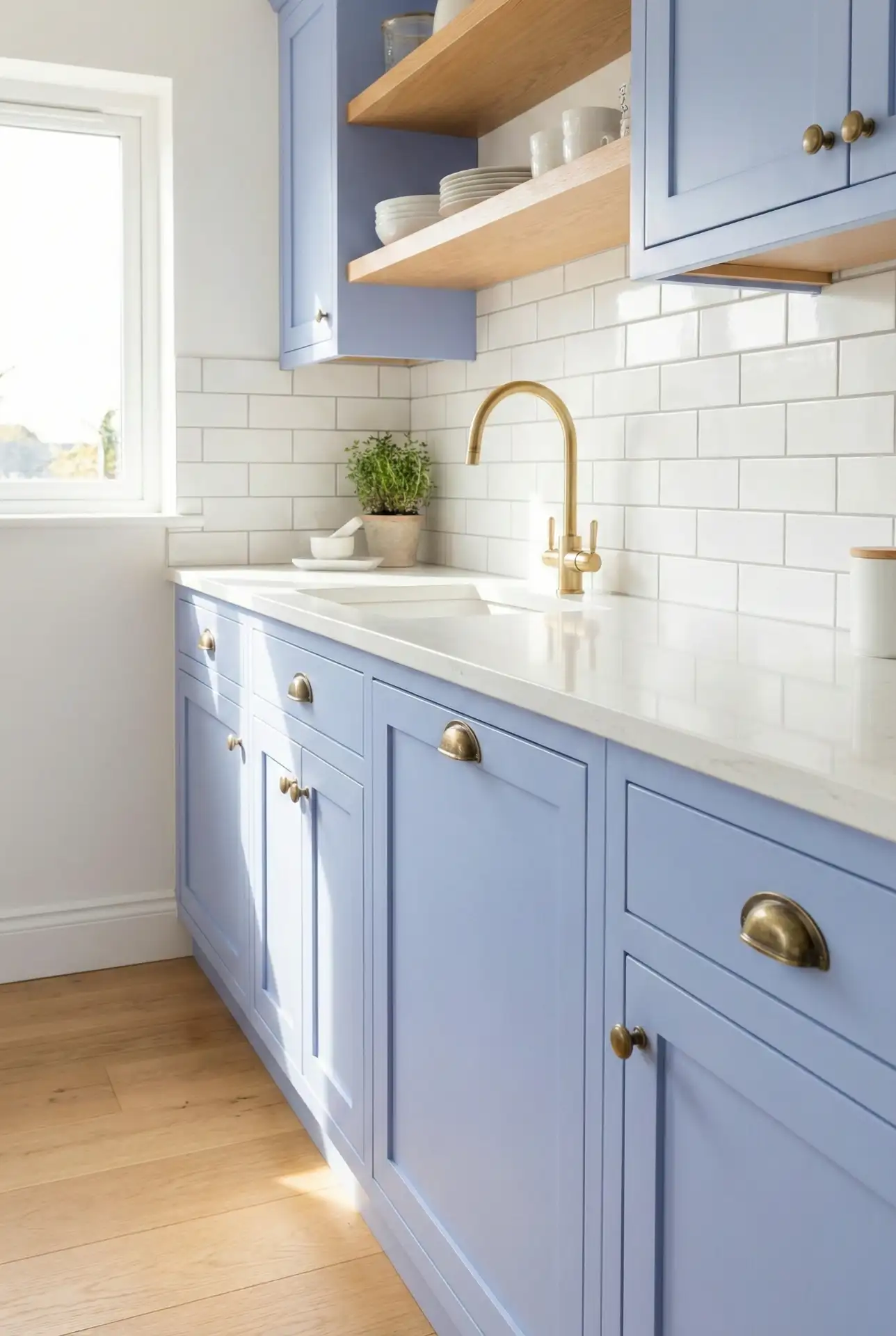
Periwinkle is a fresh, unexpected shade that sits between lavender and sky blue, offering a playful yet sophisticated alternative to more common blues. Pair it with classic white subway tile to keep the overall look clean and timeless. The simplicity of the tile allows the periwinkle to take center stage without competing for attention. Add vintage-inspired hardware in polished nickel or ceramic knobs to enhance the nostalgic, charming vibe.
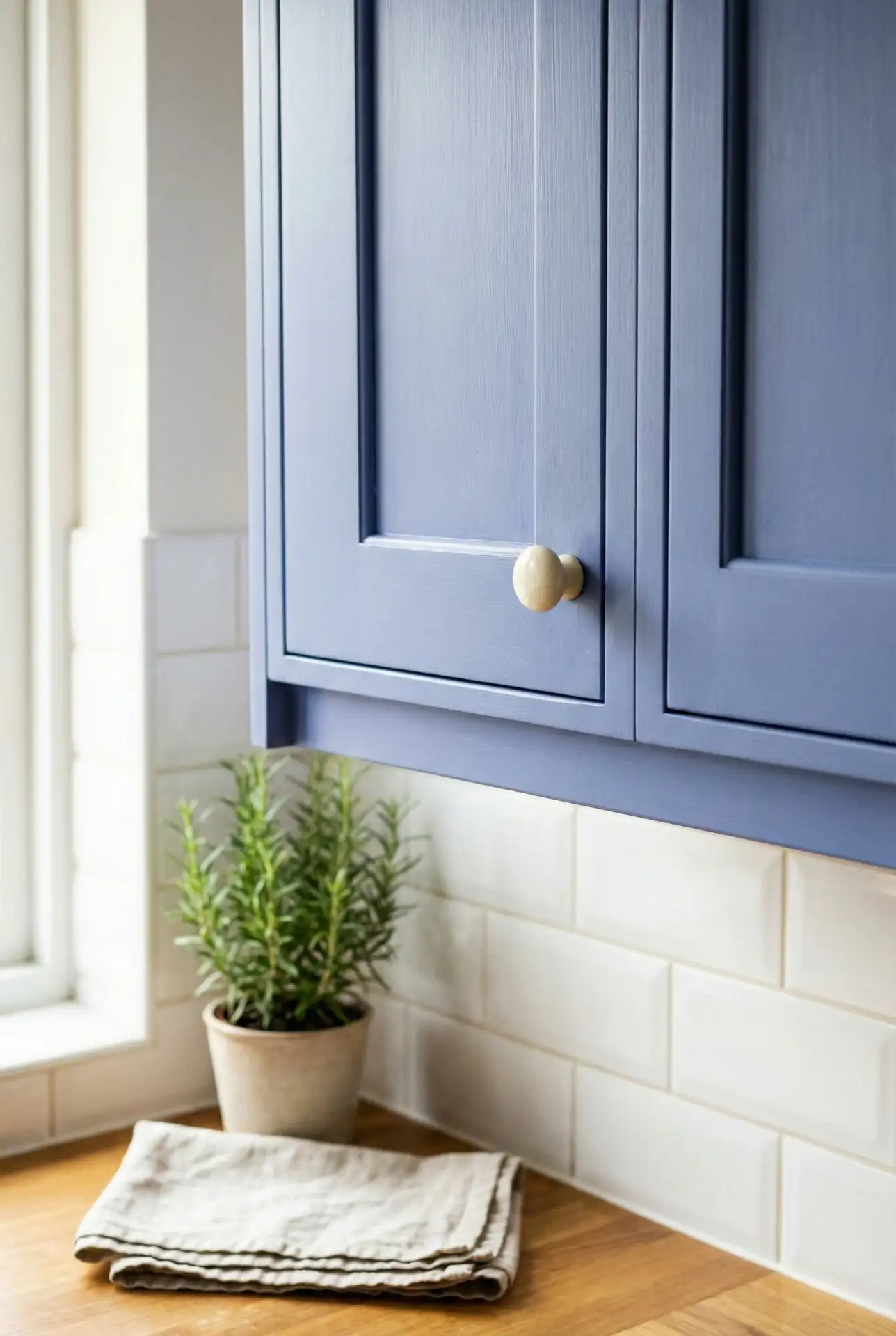
This color is especially popular with younger homeowners who want something different from the standard navy or grey-blue. Periwinkle feels joyful and optimistic, making the kitchen a space people actually want to spend time in. One designer in Brooklyn shared that clients often describe periwinkle as “the color that makes me smile every time I walk in.” It’s a small detail that can have a big emotional impact, especially in a room you use every day.
15. Navy and White Checkerboard Floor with Blue Cabinets
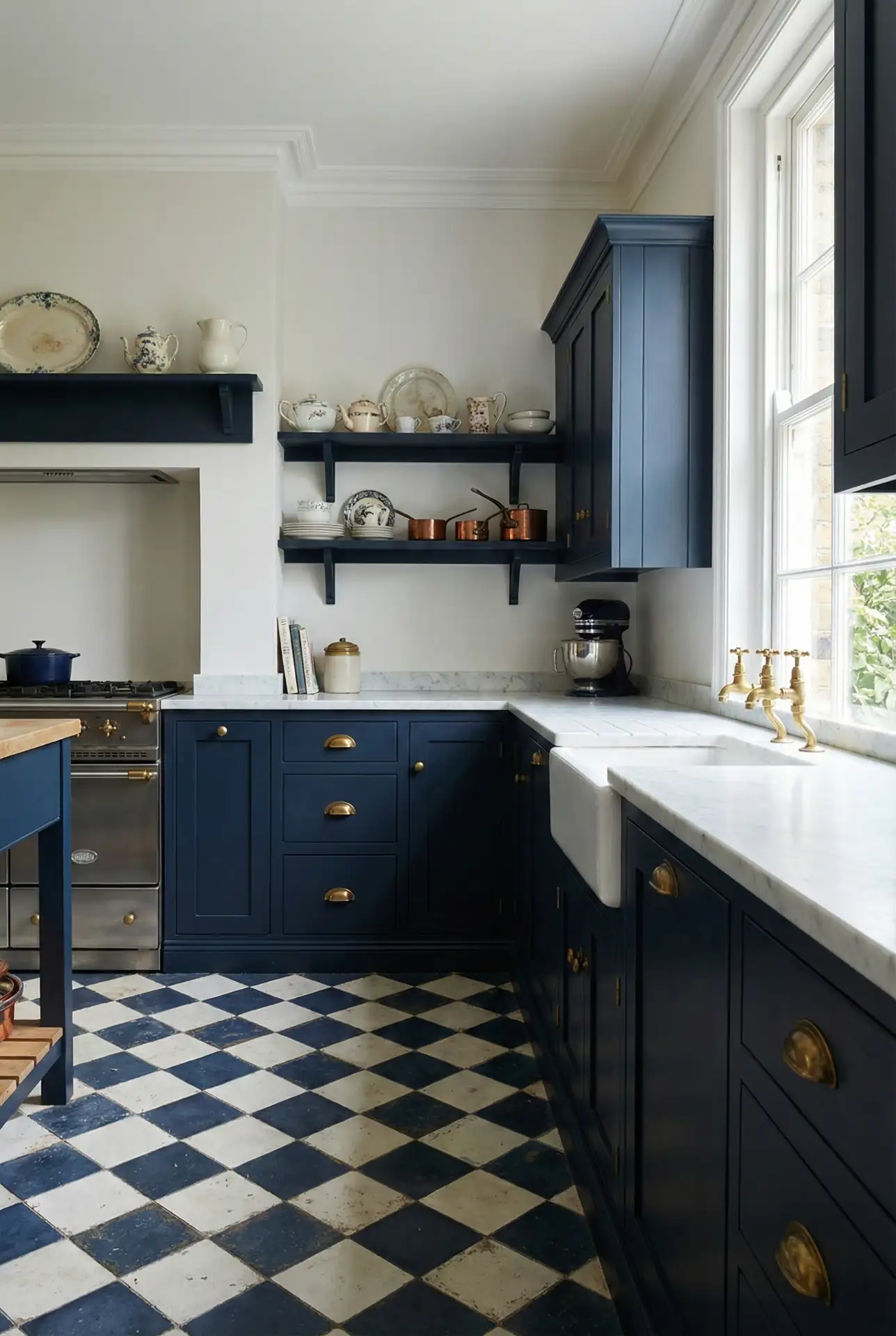
A navy and white checkerboard floor brings vintage charm and graphic punch to the kitchen. When paired with coordinating navy cabinets, the overall effect is cohesive and intentional, like a room pulled straight from a classic American home. The floor pattern adds energy and movement, so keep the rest of the design relatively simple—white countertops, minimal hardware, and a few well-chosen accessories. This look is perfect for anyone who loves retro design but wants it to feel fresh and livable.
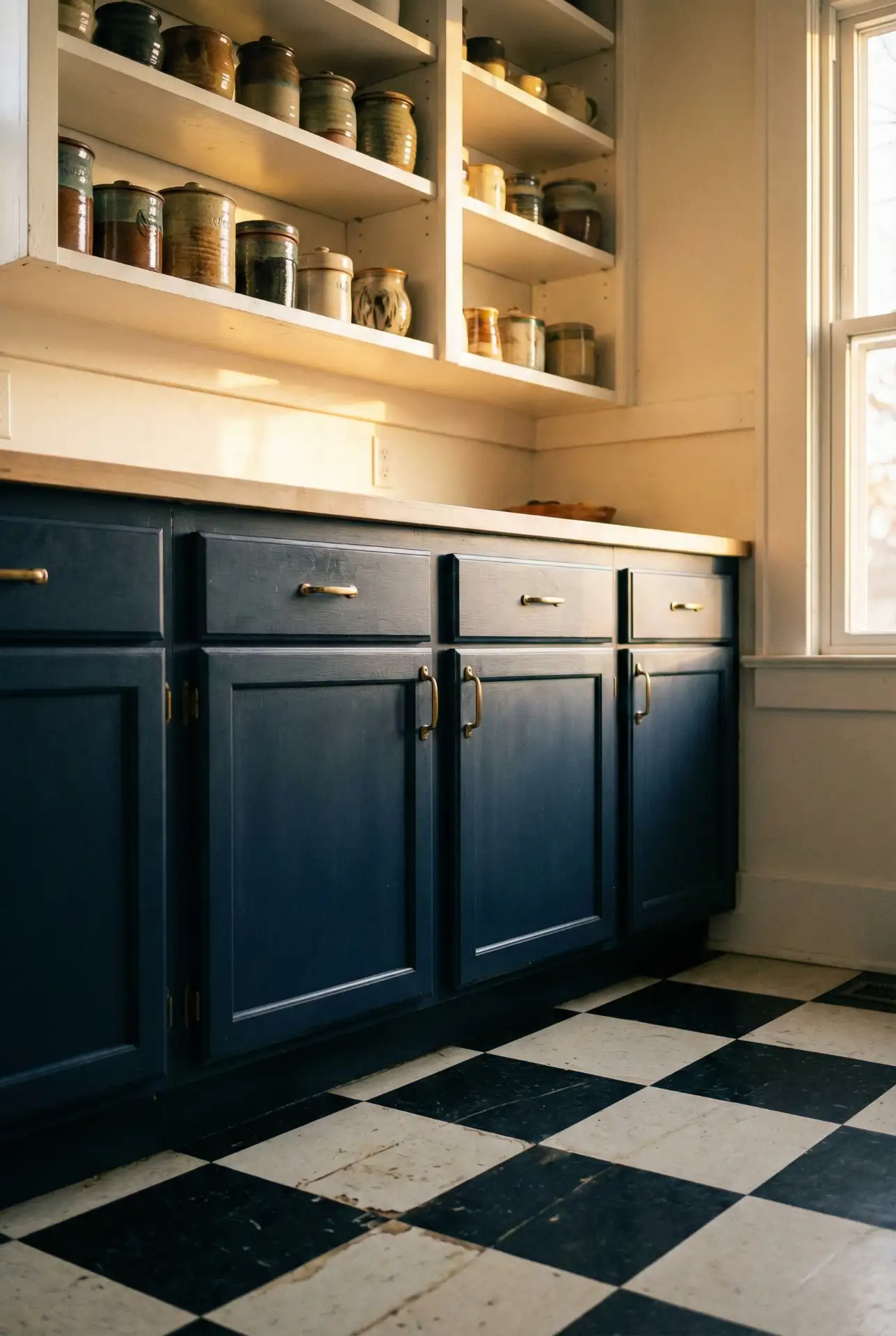
Checkerboard floors are experiencing a resurgence, particularly in older homes undergoing restoration or in new builds aiming for a classic aesthetic. Vinyl options make this style accessible at around $2–$5 per square foot, while porcelain or ceramic tiles run $5–$15 per square foot. The pattern works best in medium to large kitchens where it won’t overwhelm the space. Many homeowners appreciate how the floor hides dirt and scuffs, making it as practical as it is stylish.
16. Soft Blue Kitchen with Rattan and Wicker Accents
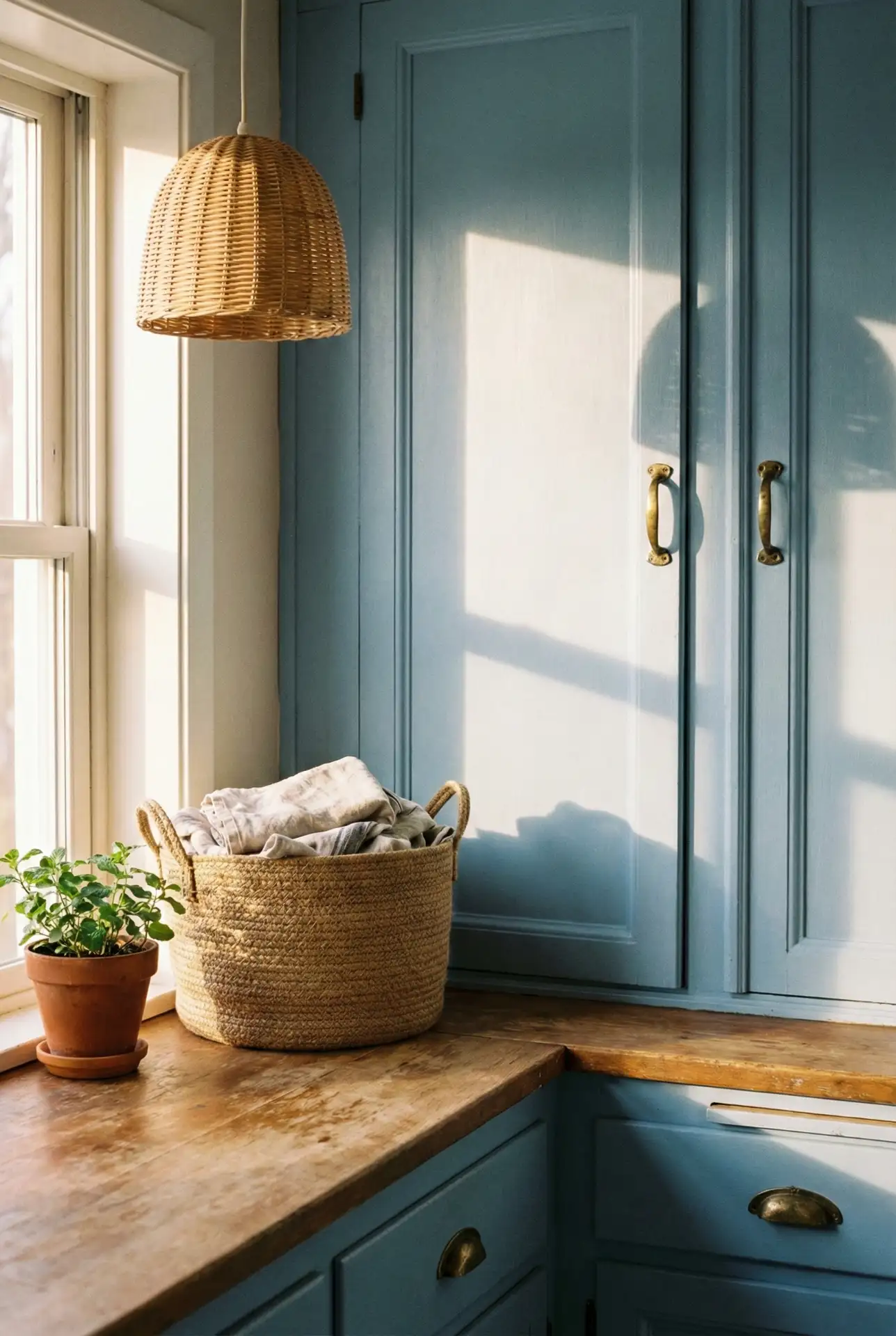
A soft, pale blue kitchen paired with rattan or wicker accents creates a relaxed, bohemian vibe that’s perfect for casual family homes or vacation properties. Use woven bar stools, rattan pendant lights, or even wicker baskets for storage to introduce natural texture and warmth. The combination of soft blue and natural fibers feels effortless and inviting, encouraging people to gather, cook, and linger. Keep walls and countertops neutral to let the materials and color shine.
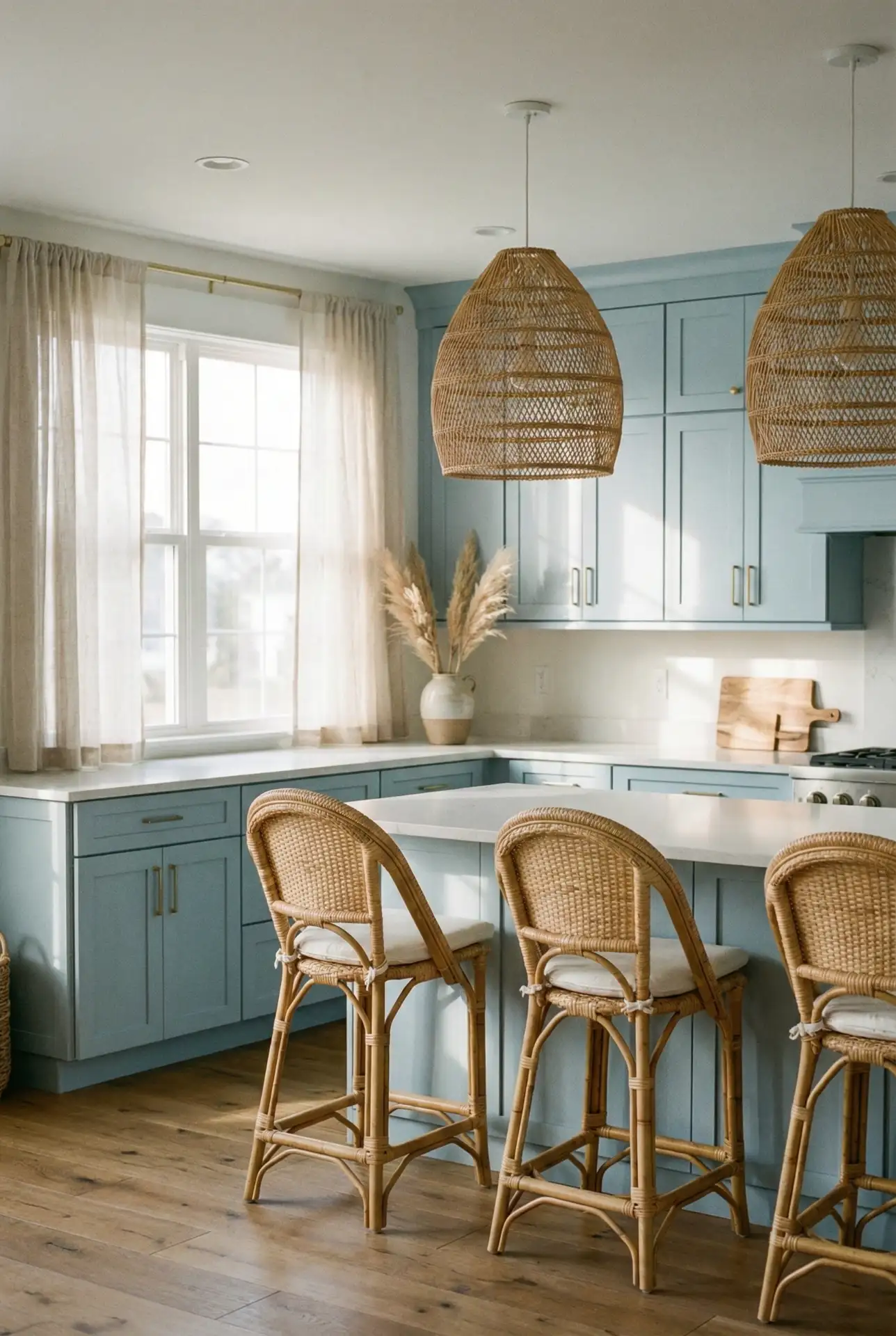
This aesthetic is particularly popular in the South and in coastal regions, where natural materials and laid-back styling are part of the local design language. Rattan and wicker are also affordable and widely available, making them accessible to homeowners at any budget level. The soft blue acts as a serene backdrop, while the woven textures add personality and depth. It’s a style that feels collected and personal rather than decorator-perfect.
17. Blue Cabinets with Yellow and White Accents
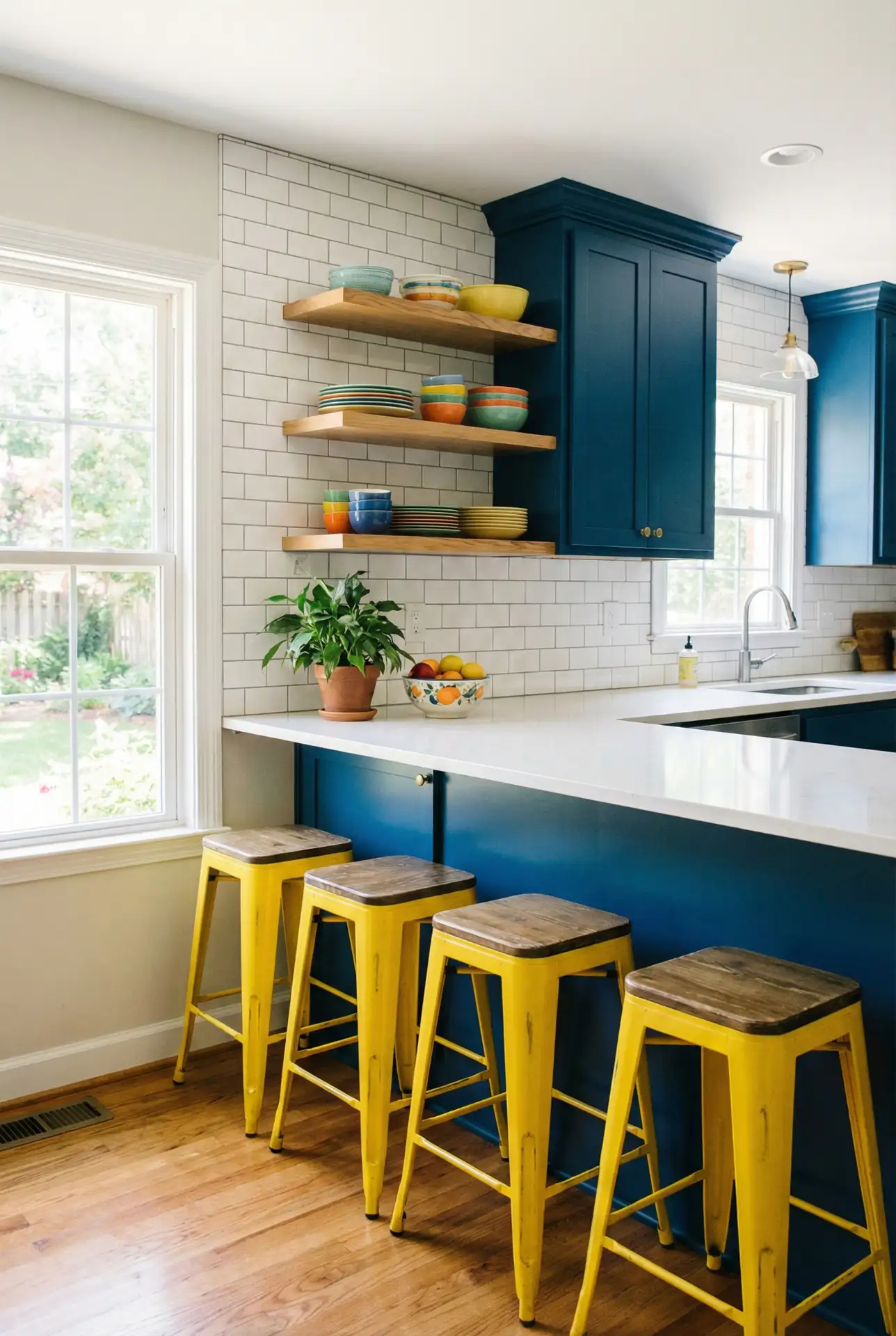
Pairing blue cabinets with yellow and white accents creates a cheerful, energizing kitchen that feels bright and optimistic. The yellow—whether in the form of a backsplash, bar stools, dishware, or small appliances—adds warmth and contrast without overwhelming the space. White countertops and walls keep the palette balanced and prevent it from feeling too busy. This combination is especially appealing to families with kids or anyone who wants their kitchen to feel lively and welcoming.
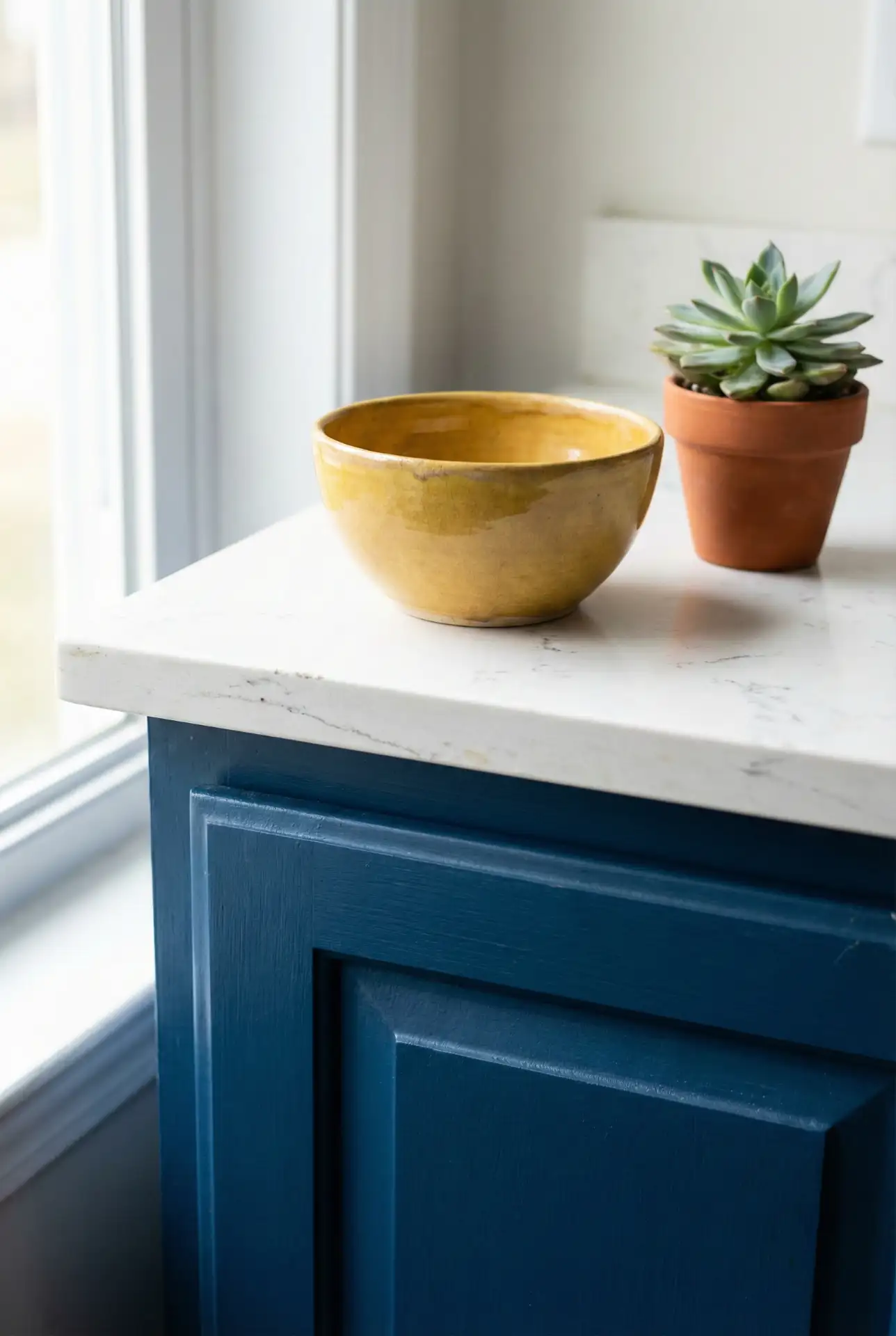
Blue and yellow is a classic color pairing that works across a range of blue shades—navy, sky blue, powder blue, or even teal. The key is to use yellow sparingly so it acts as an accent rather than competing with the blue. Many homeowners introduce yellow through removable or changeable items like dish towels, cutting boards, or small appliances, making it easy to refresh the look over time. This approach is particularly popular in Midwestern and Southern homes, where sunny, cheerful kitchens are a cultural touchstone.
18. Slate Blue Cabinets with Black Countertops
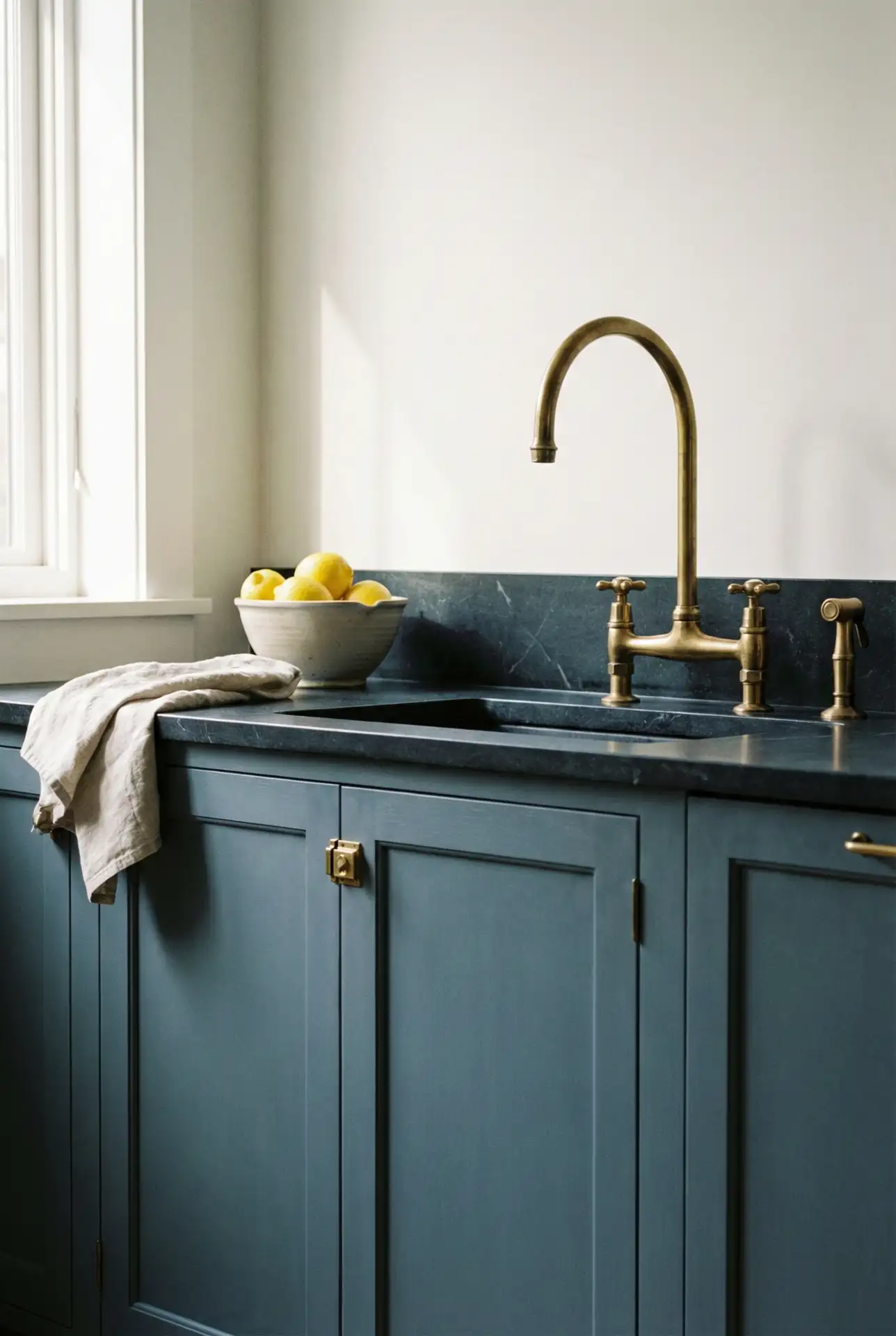
Slate blue is a deeper, more grounded shade that brings sophistication and drama without feeling as heavy as pure navy. Pair it with black countertops—whether granite, soapstone, or quartz—for a modern, high-contrast look that’s both bold and timeless. The dark countertops anchor the space, while the slate blue adds softness and warmth. Use brass or gold hardware to introduce a touch of luxury, and keep walls light to prevent the room from feeling too enclosed.
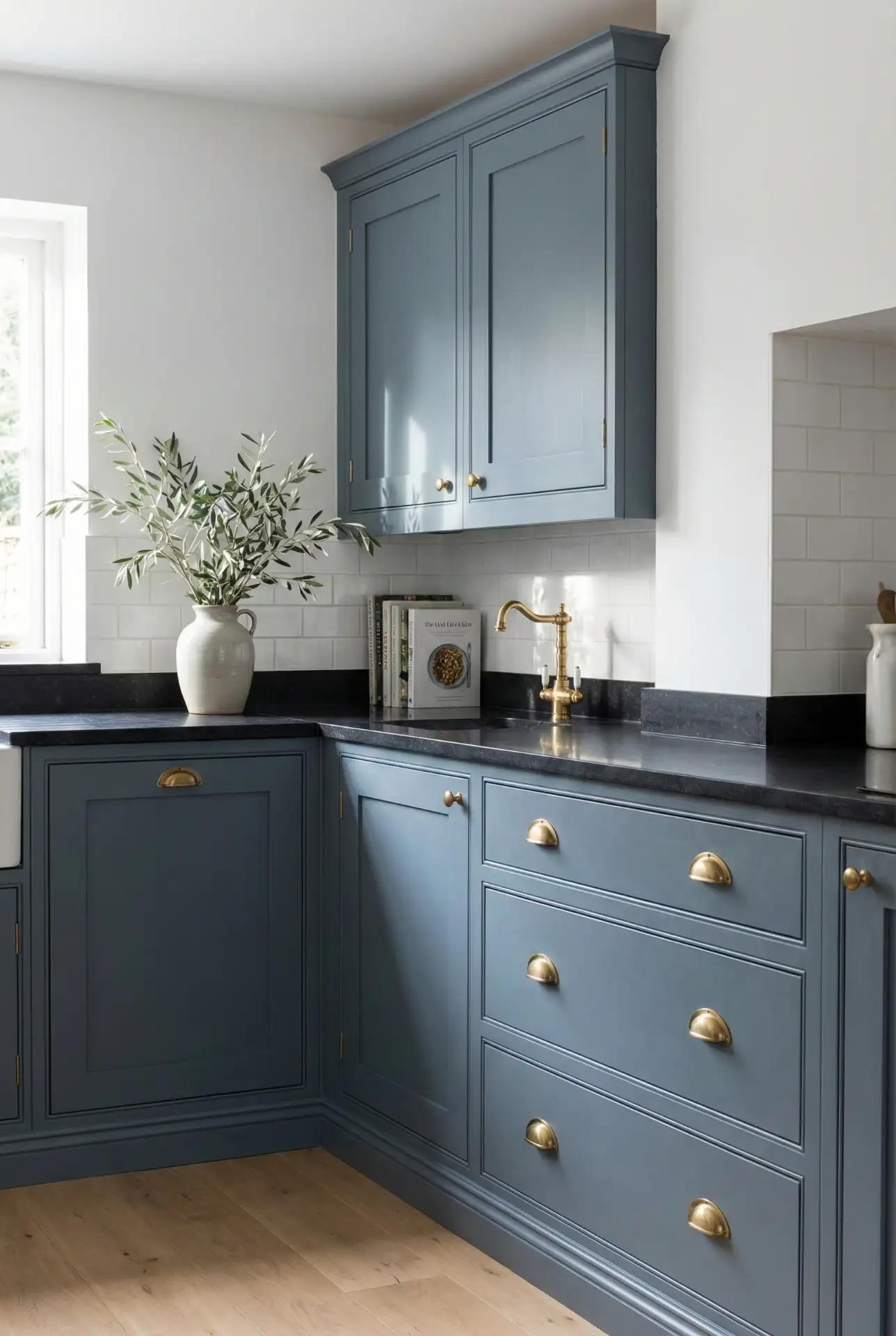
This combination is a favorite among design-savvy homeowners who want something more distinctive than the standard white or grey kitchen. Slate blue feels current but not trendy, meaning it’s likely to age well over the next decade. Black countertops are also practical—they hide stains and scratches better than lighter surfaces, making them ideal for busy households. A common mistake is pairing dark cabinets with dark counters and dark walls, which can make the space feel cave-like. Always keep at least one element light to maintain balance.
19. Blue Kitchen with Pink and Brass Details
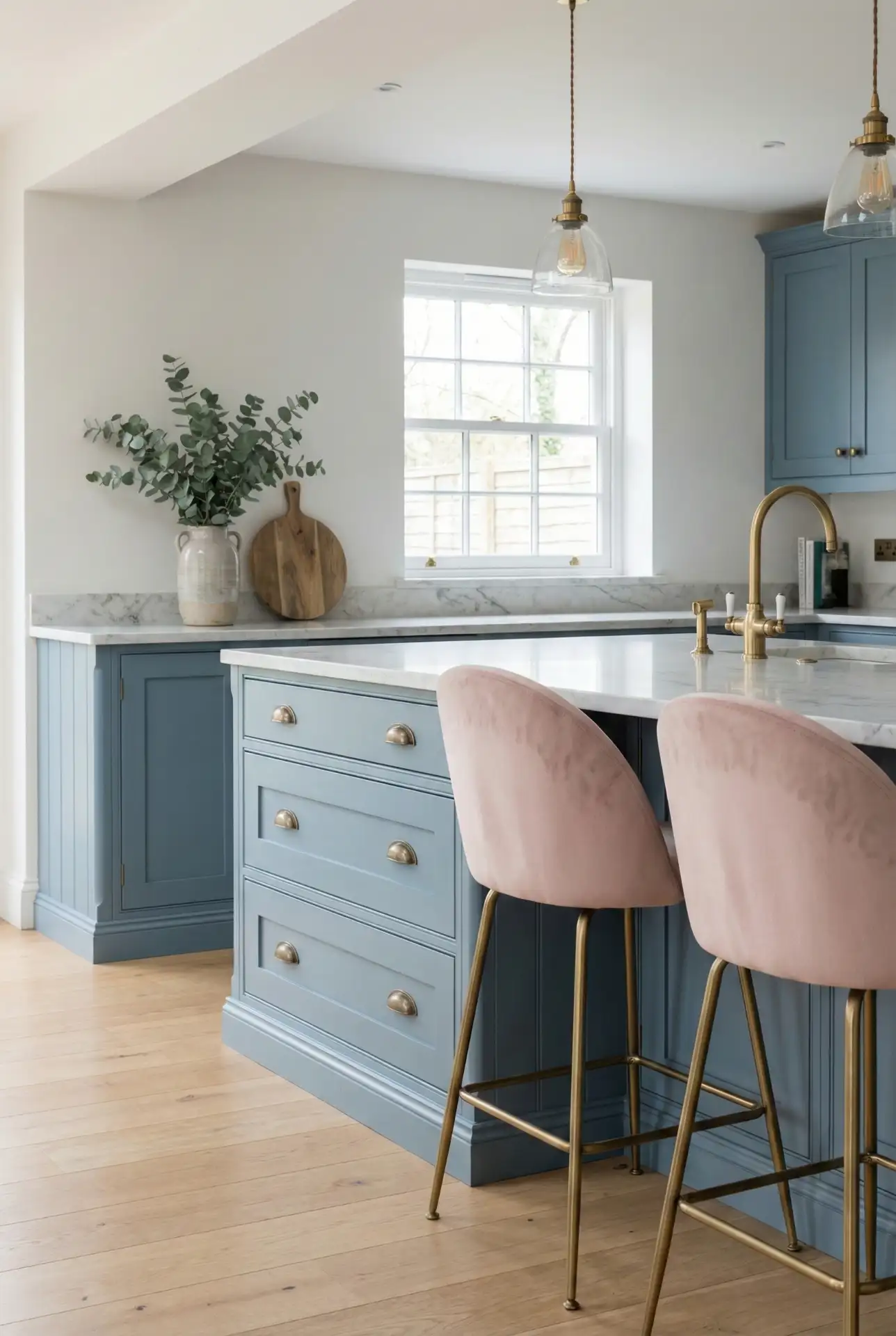
Blue and pink may sound unexpected, but the combination is surprisingly sophisticated when done right. Choose a muted or dusty blue for the cabinets, then introduce blush or terracotta pink through bar stools, dishware, or a painted accent wall. Add brass fixtures and hardware to tie the palette together and give it a polished, intentional feel. The result is a kitchen that feels feminine without being overly sweet and modern without being cold.
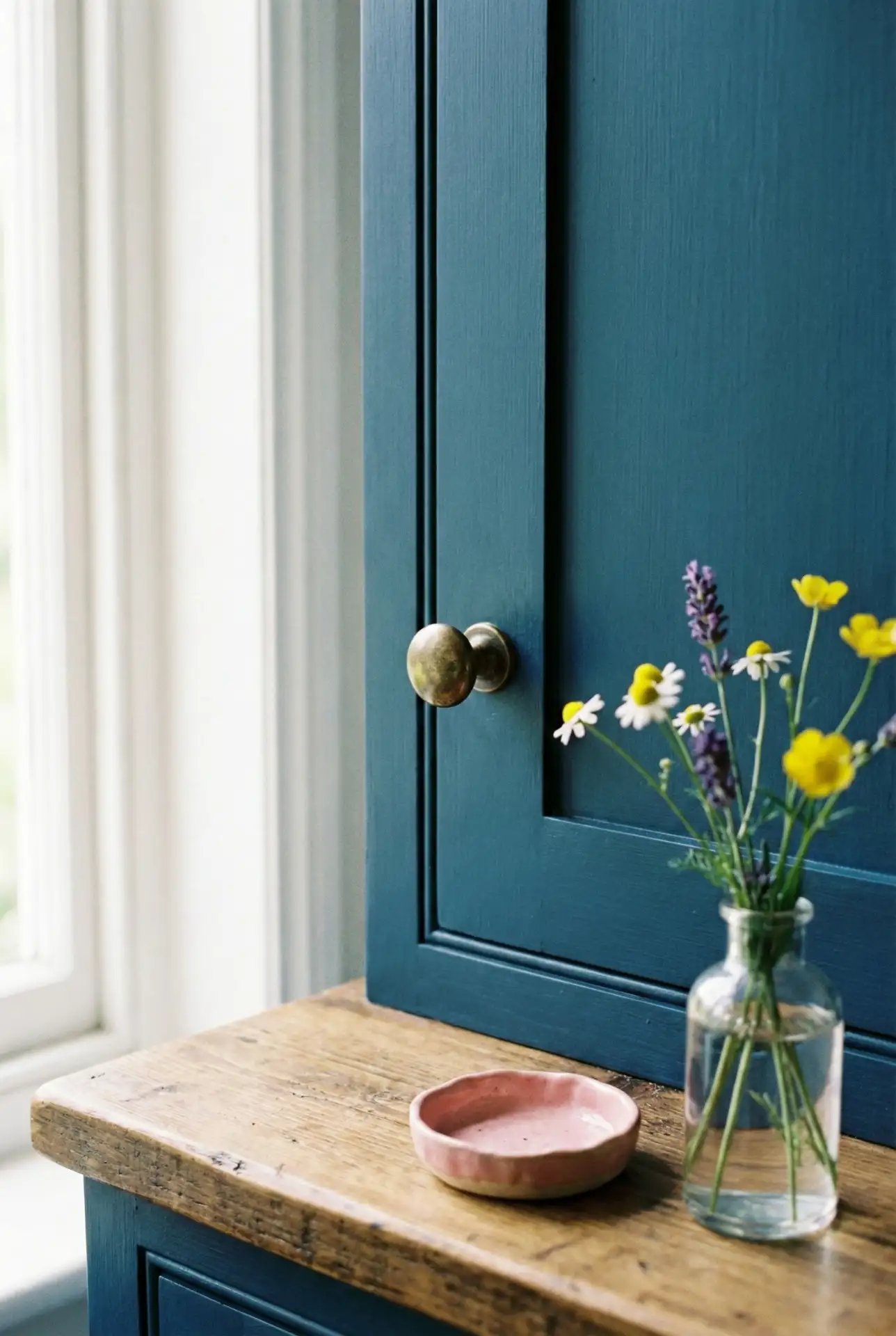
This palette is particularly popular in urban apartments and newer suburban homes, where homeowners want to inject personality and warmth into builder-grade spaces. Pink and blue together feel fresh and current, and the brass adds just enough glamour to elevate the look. Many Pinterest users search for this combination specifically, drawn to its balance of color and sophistication. It’s a trend that feels more like a long-term design movement than a passing fad.
20. Blue Kitchen with Exposed Brick and Industrial Lighting
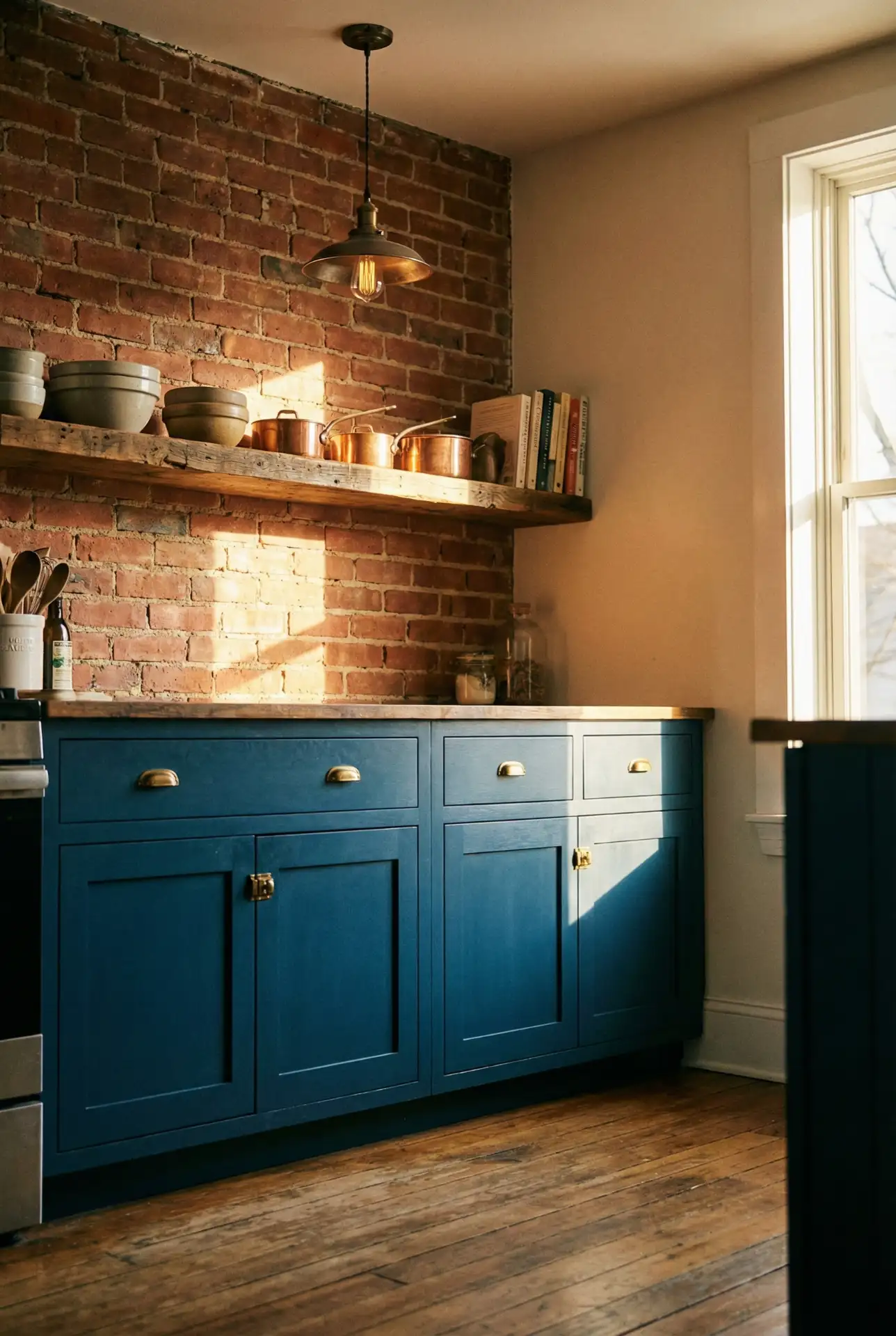
Exposed brick brings texture, history, and warmth to a kitchen, and it pairs beautifully with blue cabinets in shades ranging from navy to slate. The combination of rustic brick and painted cabinetry creates a layered, lived-in look that feels both industrial and inviting. Add metal pendant lights, open shelving, and concrete or butcher block countertops to complete the aesthetic. This style works especially well in lofts, renovated warehouses, or older homes with original brick walls.
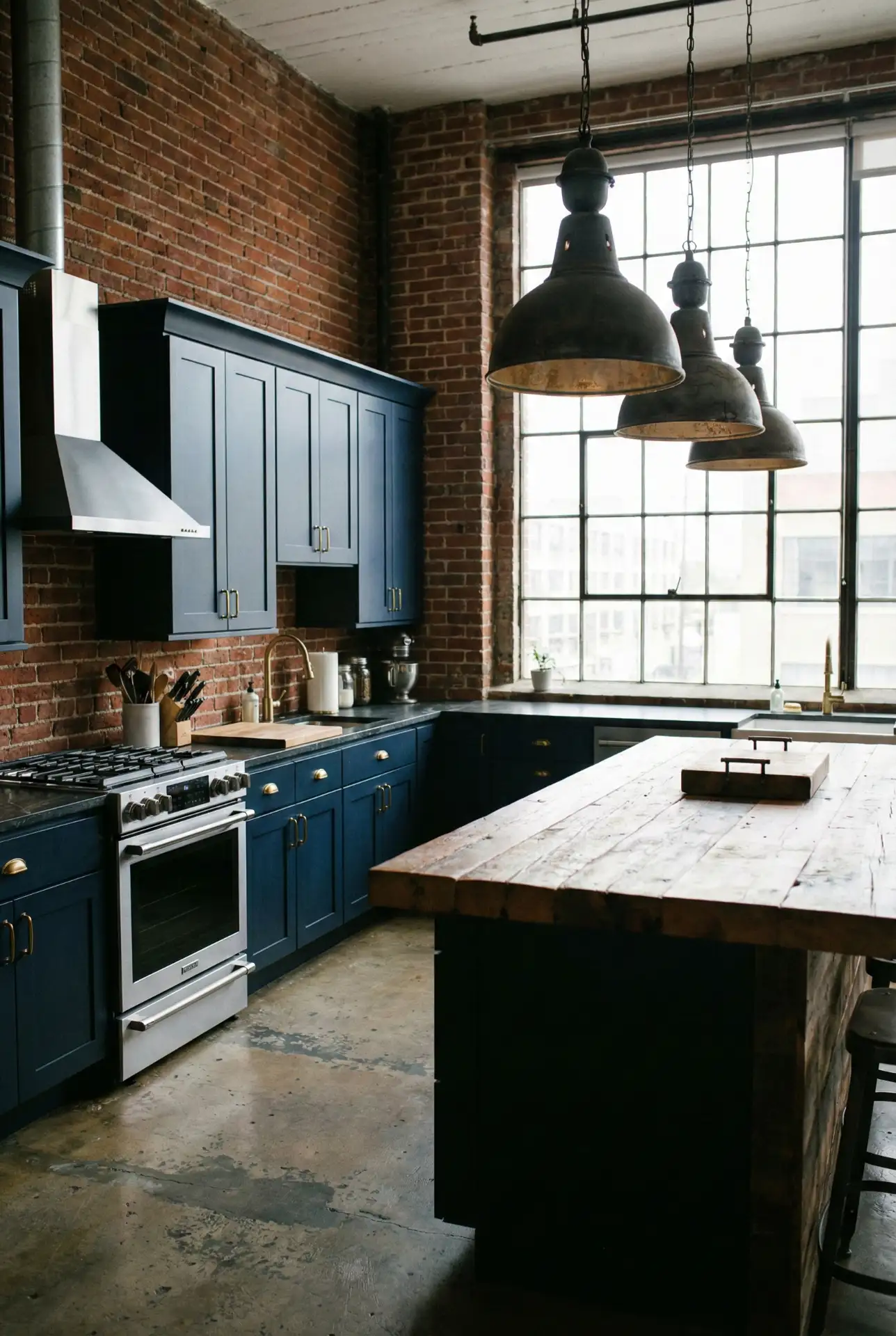
Exposed brick is a hot commodity in cities like New York, Chicago, and San Francisco, where older buildings with original character are highly prized. If you’re lucky enough to have brick in your kitchen, resist the urge to paint over it—leave it natural and let it serve as a textural counterpoint to the smooth cabinetry. If you don’t have brick, faux brick panels or reclaimed brick veneer can achieve a similar look at a fraction of the cost.
21. Robin’s Egg Blue Cabinets with Chrome Hardware
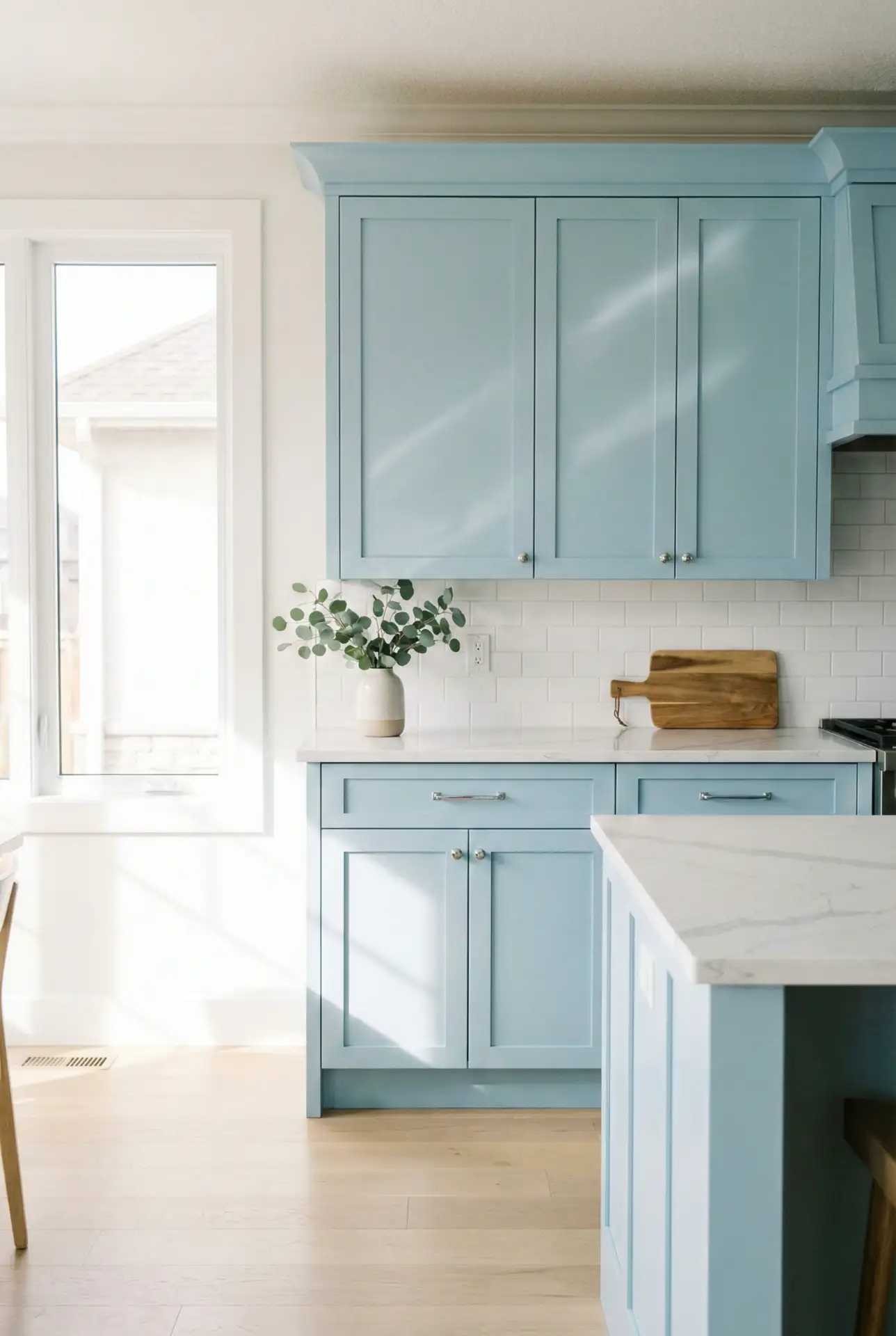
Robin’s egg blue is a bright, cheerful shade that brings instant energy and freshness to the kitchen. Pair it with sleek chrome hardware for a clean, modern look that feels both retro and current. The cool-toned chrome complements the blue beautifully, creating a cohesive, polished aesthetic. Keep countertops and backsplashes simple—white quartz or marble works best—to let the cabinetry be the star. This color is perfect for anyone who wants a bold, happy kitchen that doesn’t take itself too seriously. 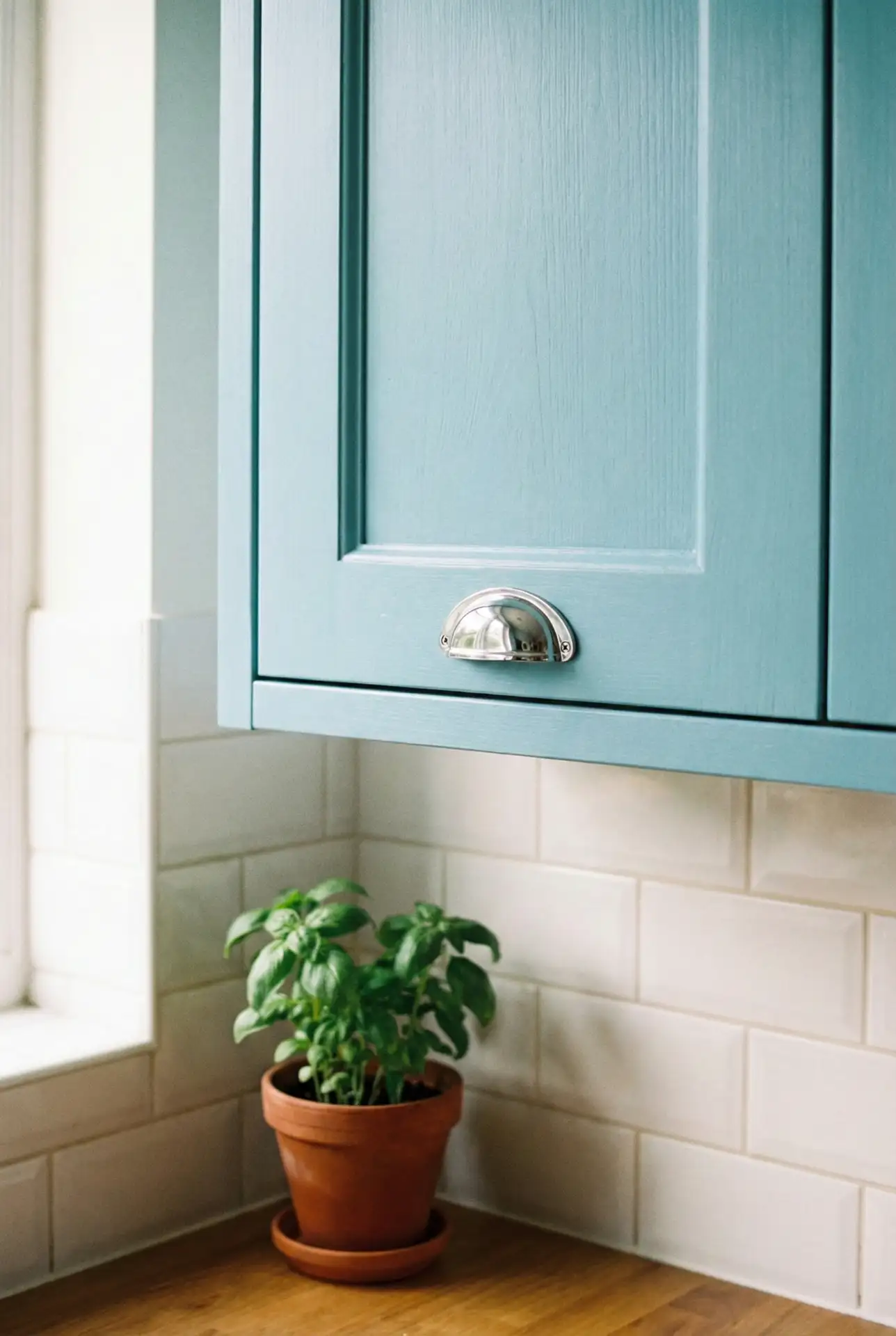
This shade is especially popular in smaller kitchens or spaces with limited natural light, where it helps brighten and open up the room. Chrome hardware is also more affordable than brass or bronze, making it a budget-friendly choice for large kitchens with lots of cabinets. One homeowner in Arizona mentioned that her robin’s egg blue kitchen became the most photographed room in her house, with visitors constantly asking for paint color details.
22. Blue Kitchen with Terrazzo Countertops and Matte Black Fixtures
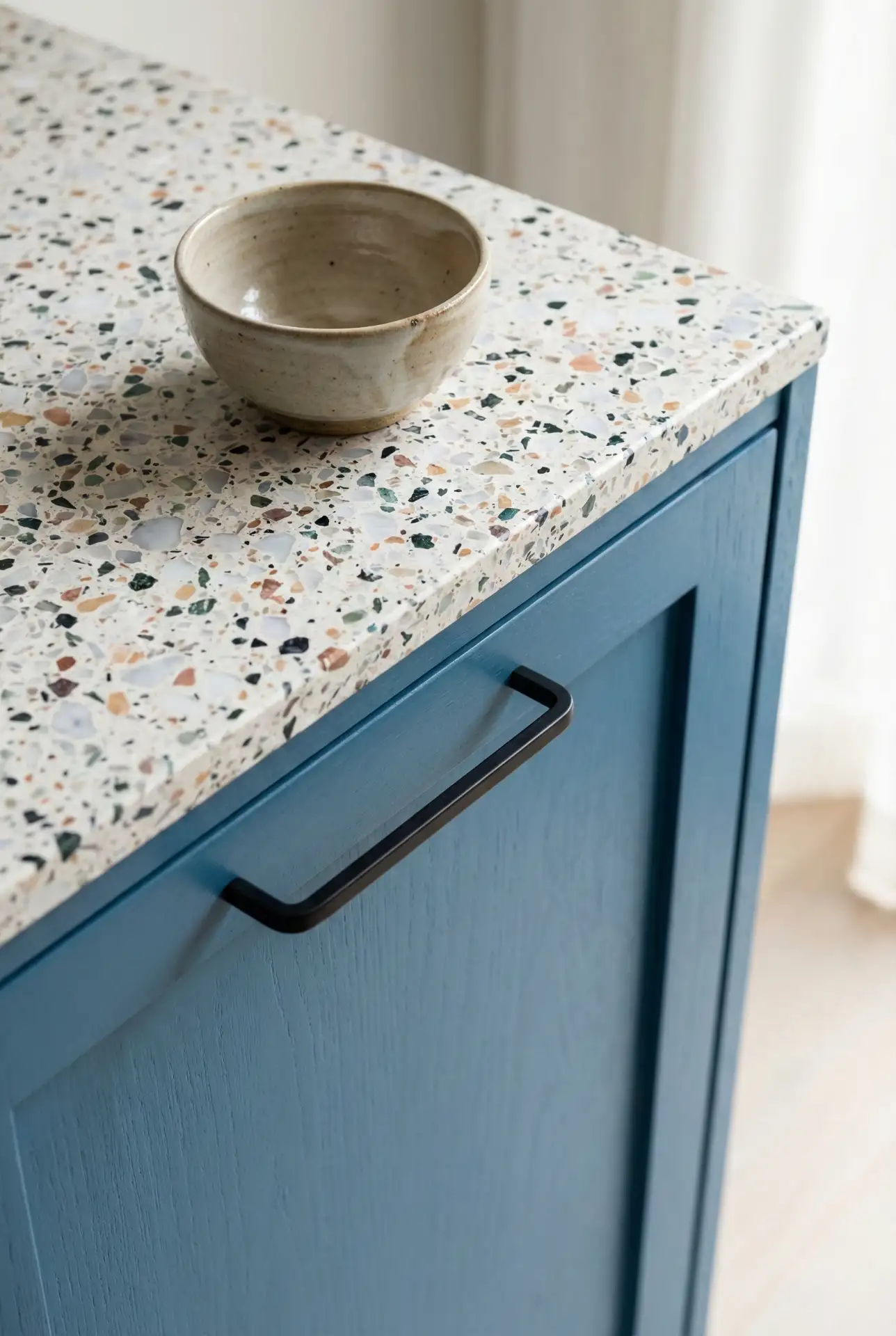
Terrazzo is making a comeback, and it pairs beautifully with blue cabinets for a look that’s both playful and sophisticated. The speckled pattern adds visual interest and movement, while the blue grounds the space and prevents it from feeling too busy. Matte black fixtures—faucets, cabinet pulls, and light fixtures—introduce a modern edge and contrast beautifully with both the blue and the terrazzo. This combination works across a range of styles, from mid-century modern to contemporary eclectic.
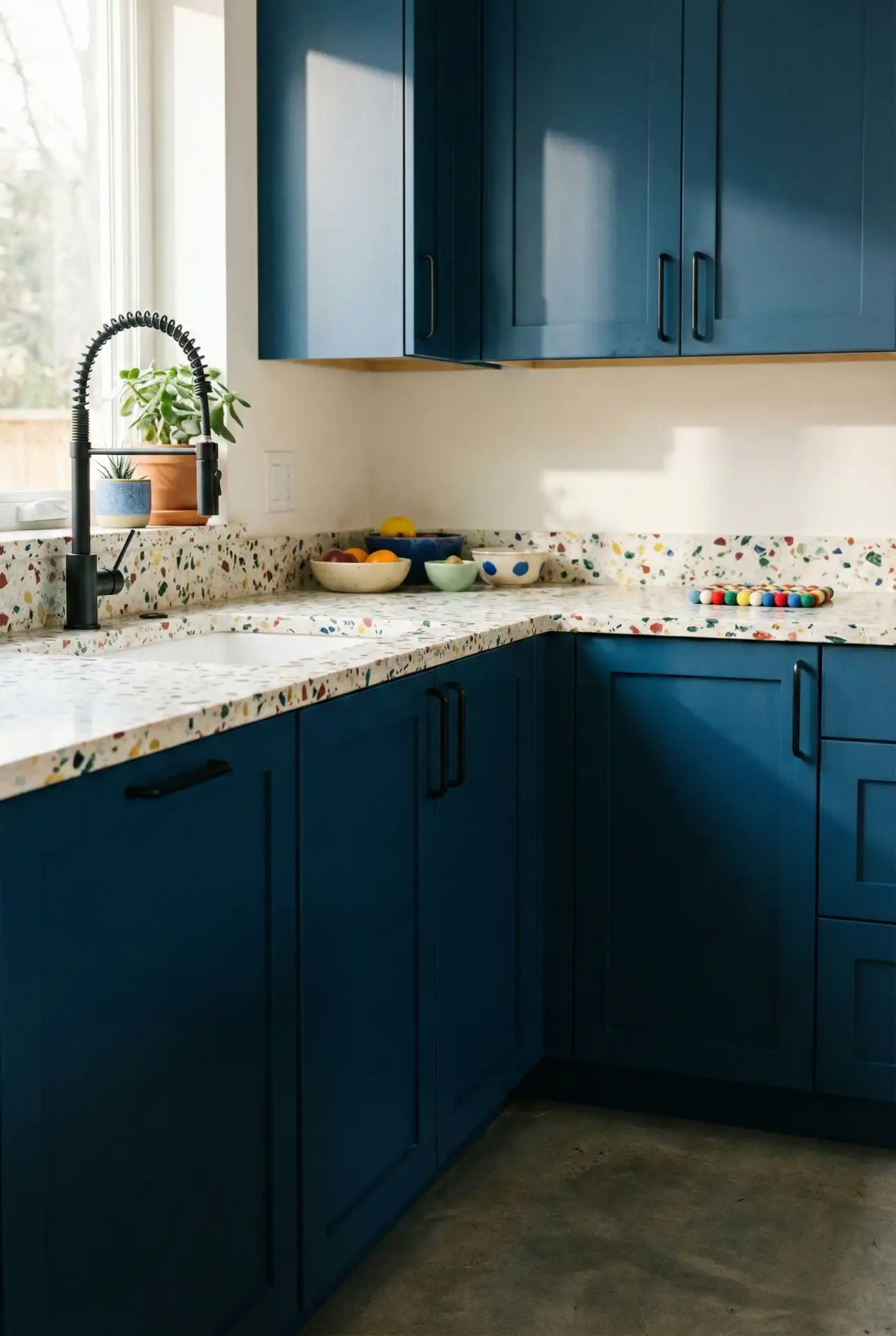
Terrazzo countertops range from $50 to $100 per square foot installed, depending on whether you choose prefab or custom poured. The material is durable and low-maintenance and adds a unique, artisanal quality to the kitchen. Matte black fixtures have become increasingly popular as an alternative to chrome and brass, offering a sleek, understated look that won’t date quickly. This pairing is especially loved by design enthusiasts who want something different from the standard marble-and-brass combination.
23. Two-Tone Blue Kitchen with Light Upper and Dark Lower Cabinets
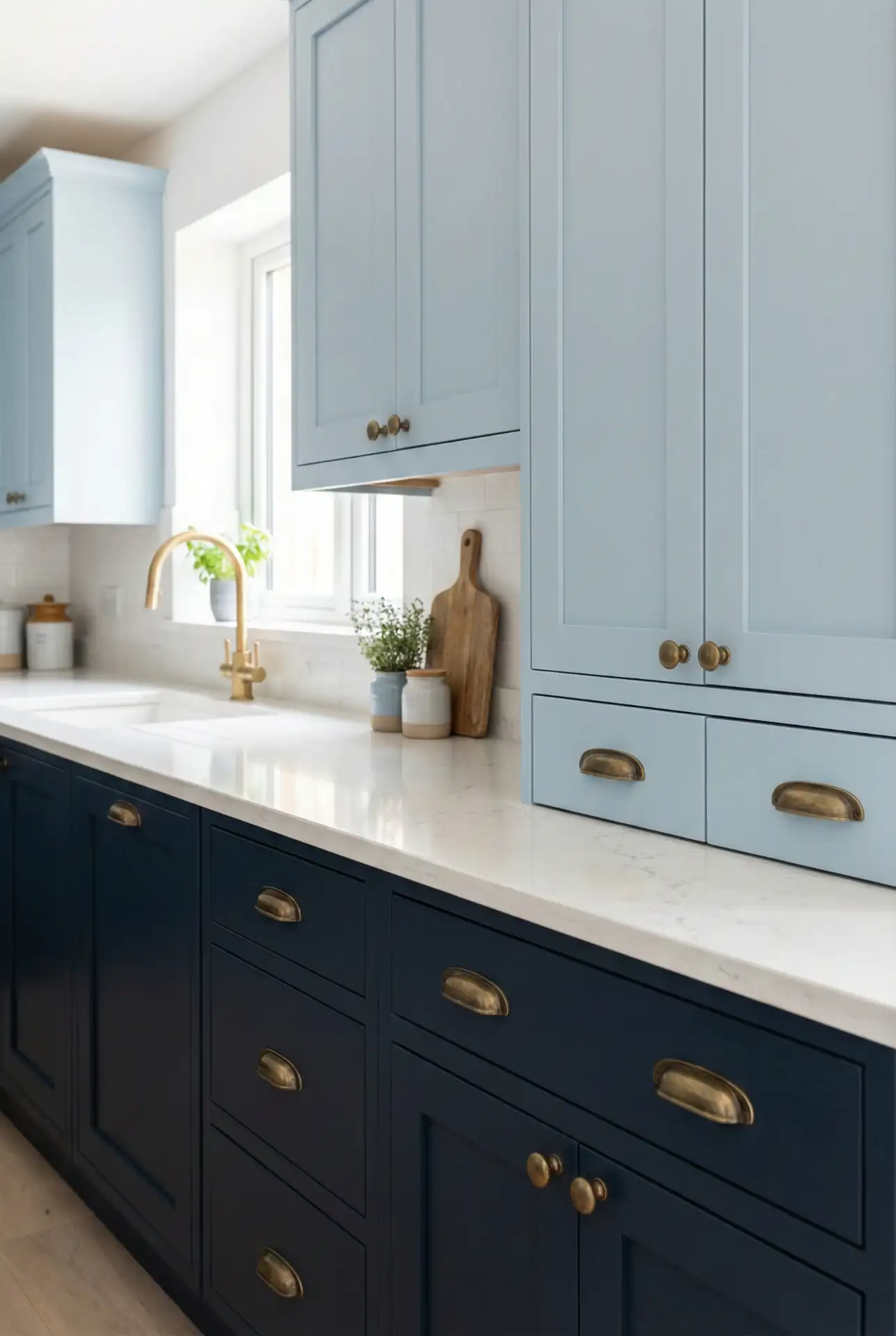
A two-tone approach using both light and dark blue creates depth and dimension in the kitchen. Paint upper cabinets in a soft, airy blue—like sky or powder—and lower cabinets in a deeper shade like navy or slate. The contrast is striking but cohesive, and the lighter top half keeps the room from feeling too heavy or enclosed. This layout works beautifully in kitchens with tall ceilings or large windows, where the light upper cabinets can reflect and amplify natural light.
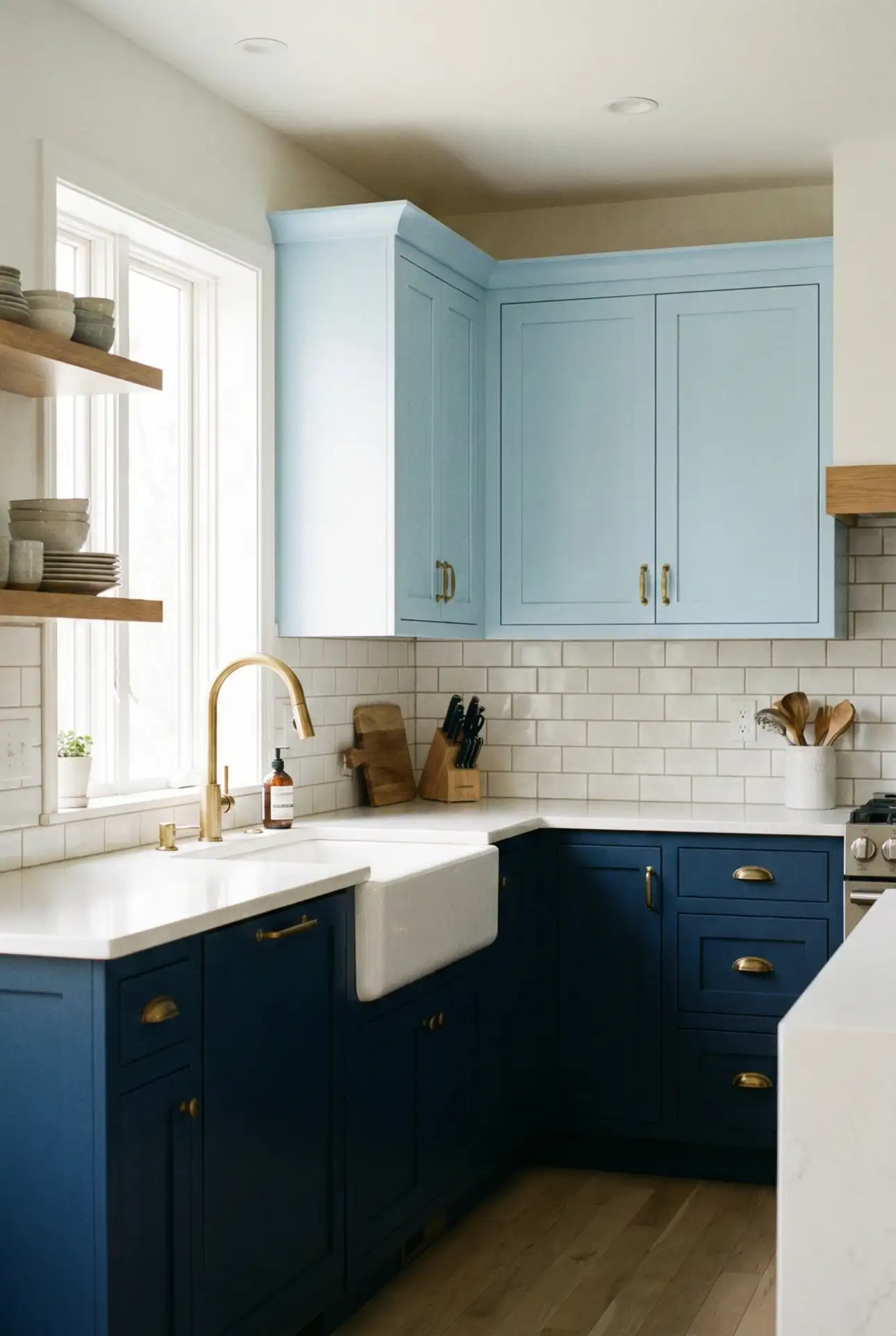
This style is perfect for homeowners who want the sophistication of a dark kitchen but worry about it feeling too closed-in. The light uppers provide visual relief and keep the space feeling balanced. Many designers recommend this approach for galley kitchens or smaller spaces where an all-dark palette might feel overwhelming. Painting cabinets in two different shades does require careful taping and prep work, but the payoff is a custom, high-end look that stands out from standard single-color kitchens.
Conclusion
Blue kitchens offer endless possibilities for personalization, from soft pastels to bold statement hues, and from classic pairings to unexpected combinations. Whether you’re drawn to the timeless elegance of navy, the breezy charm of sky blue, or the earthy appeal of blue-green, there’s a shade and style that will work beautifully in your home. We’d love to hear which idea resonates with you most—drop a comment below and share your favorite blue kitchen inspiration or tell us about your own renovation plans.